Blog

  • Trump again appeals to Supreme Court on mail-voting restrictions with midterm elections looming

    Trump again appeals to Supreme Court on mail-voting restrictions with midterm elections looming

    BOSTON — The Trump administration on Thursday asked the Supreme Court to reject an order by a federal judge that halts it from implementing a new rule regulating mail ballots, hours after being unable to tell that judge whether the computer system that would govern the entire project was operational yet.

    The administration filed its appeal the afternoon before mail ballots were scheduled to be sent out by North Carolina, which on Friday kicks off a wave of states shipping ballots out for the rapidly approaching midterm election. Its appeal was part of a flurry of last-minute litigation as the federal government struggles to implement President Donald Trump’s restrictions on mail ballots before the midterm elections in November, and came even as legal wrangling over President Donald Trump’s executive order continued in lower courts.

    The high court’s conservative majority previously allowed the president’s plan to move ahead, but they have not decided whether it is legal.

    Under Trump’s executive order, the U.S. Postal Service could refuse to deliver ballots from states that do not follow a uniform envelope style and submit lists of eligible voters to an online portal that was apparently still inactive Thursday.

    During a hearing in Boston, U.S. District Court Judge Indira Talwani repeatedly questioned Department of Justice attorney Michael Velchik about whether the Postal Service could actually implement Trump’s plan from an executive order he issued last spring. The key piece is the online portal, which would track tens of millions of mail ballots. States would be required to upload their list of mail voters to the portal to have ballots delivered, and if the data there didn’t match what was on the envelopes, the ballots would not be sent.

    Unclear if key system has been set up

    “I don’t even have a declaration from the Postal Service: ‘This is how it will work.’ I don’t have it. I have nothing,” Talwani said, adding later that it felt like the government was running an “experiment” to see if the system would work in the upcoming election.

    “As you sit here today, you can’t tell me the government has a program ready to go?” Talwani asked.

    Velchik repeated that the Postal Service would “fully implement the rule” that it published last month, triggering the latest round of litigation. He argued the main issue is whether Talwani has the legal power to stop it.

    “The $64,000 question is, is this authorized by the statute?” Velchik said.

    Talwani is considering whether to extend her temporary order barring the Postal Service from requiring use of the system through Sept. 10. The first state to send out all its mail ballots, North Carolina, is scheduled to begin shipping them out Friday, with other states quickly following.

    Talwani has been here before. In June, she prohibited the administration from implementing Trump’s executive order for the November election, ruling the changes came too close to voting for the federal government to embark on such a project.

    But the Supreme Court late last month ruled that Talwani’s order was premature because the Postal Service had not yet published regulations governing how it would apply Trump’s order. The agency did so just before the high court ruling came down, prompting Democrats and voting rights groups to swiftly re-file their lawsuits.

    They counter that the president has no authority to set election rules, which is a power designated by the Constitution to the states and, in some cases, to Congress.

    Tangled legal fight goes up to election deadlines

    They won an initial victory with Talwani’s 14-day restraining order. In a sign of the pressures on the administration, its lawyers already appealed that order to the 1st Circuit Court of Appeals in Boston, but they added the Supreme Court appeal Thursday and urged the top justices to act quickly.

    Trump has long opposed mail voting and falsely blamed it for his 2020 election loss to Democrat Joe Biden, even though he often uses that method to cast his own ballot.

    Election officials say there’s simply no way they can comply with the Postal Service directives, which could require a complete overhaul of their operations. Before it delivers mail ballots for any state, the Postal Service would have to approve the design of the envelopes that contain them and have the state upload a list of voters receiving them to an online portal.

    Some ballots have already gone out. A few municipalities in Wisconsin opted to send mail ballots to voters earlier this week, but Friday marks the full kickoff of voting as North Carolina starts shipping its mail ballots to all voters who requested them.

    The administration has contended the changes are relatively minor and legal.

    “While the States have primary authority to regulate the manner of elections, they cannot choose to use the federal mails to carry out their elections but then insist that their election-related mail is somehow exempt from the Postal Service’s rulemaking authority, conferred by Congress, to regulate envelope design and addressee information,” Trump’s solicitor general, John Sauer, wrote in the appeal.

    No red states have said they’ll use system

    Still, the hearing before Talwani focused more on practicalities — especially that the portal was still not active, while most election offices have already printed their envelopes and ballots.

    Velchik told the judge that the federal government is offering states the choice to opt into the system, but the Postal Service has yet to identify a single state that has done so. None of the 12 states that intervened in the lawsuit to argue the Trump administration has the right to require the program have announced that they have voluntarily opted into it.

    Talwani scolded Missouri Solicitor General Lou Capozzi for arguing on behalf of the project.

    “You want the voters in your states to be disenfranchised,” Talwani said. “I don’t understand the interest.”

    Capozzi said that was misinformation: “There is no risk that people would be disenfranchised.”

    A whistleblower report made public this week warns that the postal system’s requirements could lead to millions of mail ballots never being sent. The new rule requires all ballots to be physically brought to post offices before being mailed to voters. But if a single one’s bar code registers an error, the whole batch gets thrown out, even if it contains tens of thousands of legitimate ballots.


  • Campbell’s cut hundreds of jobs and plans to hike prices to combat lower sales

    Campbell’s cut hundreds of jobs and plans to hike prices to combat lower sales

    The Campbell’s Co. has cut 13% of its salaried workforce, roughly 515 employees, amid declining sales.

    The Camden-headquartered soup, snack, and sauce business has suffered from inflation among other challenges, president and CEO Mick Beekhuizen said in an earnings call Thursday, highlighting multiple cost-cutting efforts. He did not provide information on where the workforce reductions took place, and a company spokesperson declined to offer more details on how many were impacted in Camden.

    The company reported $9.7 billion in net sales for its most recent fiscal year, which ended Aug. 2, a decrease of 5% from 2025.

    “Our results remain unacceptable,” Beekhuizen said. “But instead of waiting for the environment to improve around us, we are addressing reality head-on.”

    Beekhuizen said inflation is expected to continue being an issue in the coming year amid an “external environment that we expect will remain volatile.”

    The company is embarking on a $500 million cost-cutting initiative over four years to get back to “profitable growth,” Beekhuizen said. He said the company is making “difficult but necessary” decisions.

    Some of that work is already underway. The company has recently cut costs in part by reducing its salaried workforce by 13% through voluntary early retirements and layoffs. The company had 13,700 full-time and part-time employees as of September 2025.

    Campbell’s also recently closed two snack facilities and plans to increase prices on roughly 60% of its products.

    The company’s snack division, which includes Goldfish, Pepperidge Farm, and Cape Cod, saw a 12% decrease in net sales last quarter. The meals and beverages segment, which includes Rao’s Homemade, Swanson, and Prego, saw a 4% decrease.

    “Our performance is not where it needs to be, and we are taking decisive action to improve it,” Beekhuizen said.

    Since Beekhuizen became CEO last year, the company’s leadership team has been “strengthened” through internal promotions and some external hiring, he said.

    “Looking ahead, our top priority is to get closer to the consumer in everything we do,” he said. “This is not new, but it’s a philosophy we must follow with greater speed and discipline.”

  • I spent the night at ground zero on 9/11. I’ve lived the trauma ever since.

    I spent the night at ground zero on 9/11. I’ve lived the trauma ever since.

    I have been faking it for 25 years. Not about the people and issues that matter to me. Not my work or anything like that.

    But in the way everyone tells you to “fake it till you make it.” Get up. Go to work. Act like you’re doing fine when you’re not, hope nobody notices, and hope you’ll eventually get better.

    When I got to ground zero late on Sept. 11, 2001, nothing felt real. Therapists have since explained that I may have slipped into what they call a dissociative state, and it was frightening.

    I hadn’t exactly lost my grip on reality, but I felt detached, like I was living in a movie, feeling uncertain about what was real and what wasn’t.

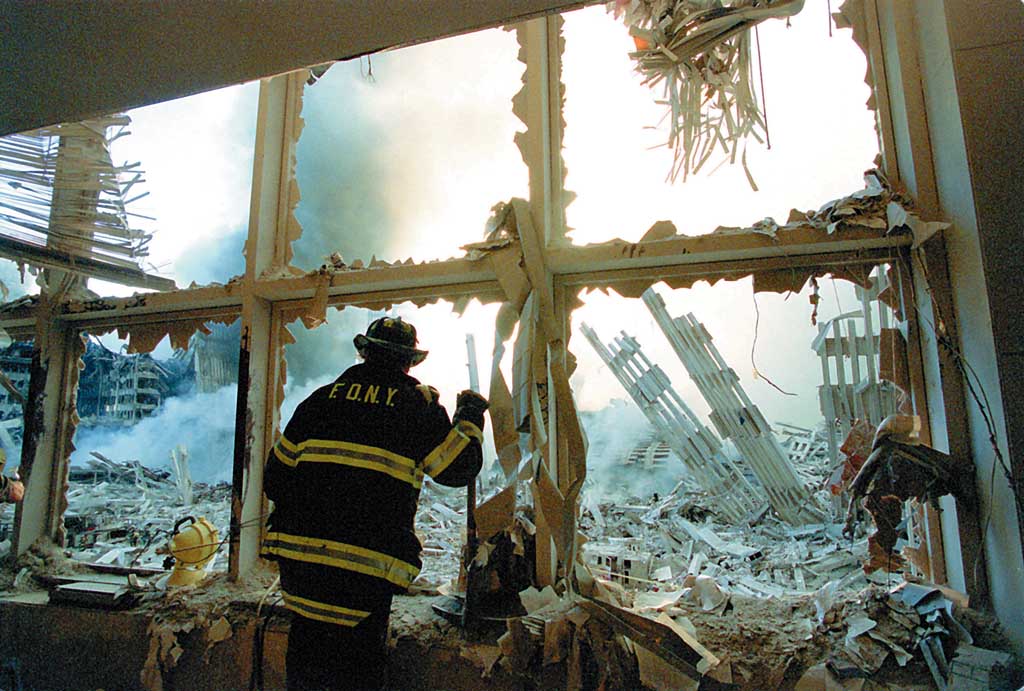
    A New York City firefighter looks out onto the collapsed World Trade Center on the morning after the attack of Sept. 11, 2001. Chronicling the devastation there has haunted the author over the years.

    I managed to keep taking pictures, leaning into the parts of myself that were still working, as I have in some ways every day since.

    My friend and colleague Chris Brennan, the reporter with whom I had gone to the scene for the Daily News, later wrote about our journey together and the early aftermath.

    A harrowing aftermath

    The next 18 months were the worst for me, filled with flashbacks, nightmares, extreme insomnia, memory blackouts, mood swings, and broken relationships.

    Serendipitously, a psychiatrist wrote to me in early 2003 about acquiring some of my photographs for instructional use. She also sensed what I was going through, and provided the treatment I needed to get the most crippling symptoms under control.

    But that wasn’t the end of the story. Far from it.

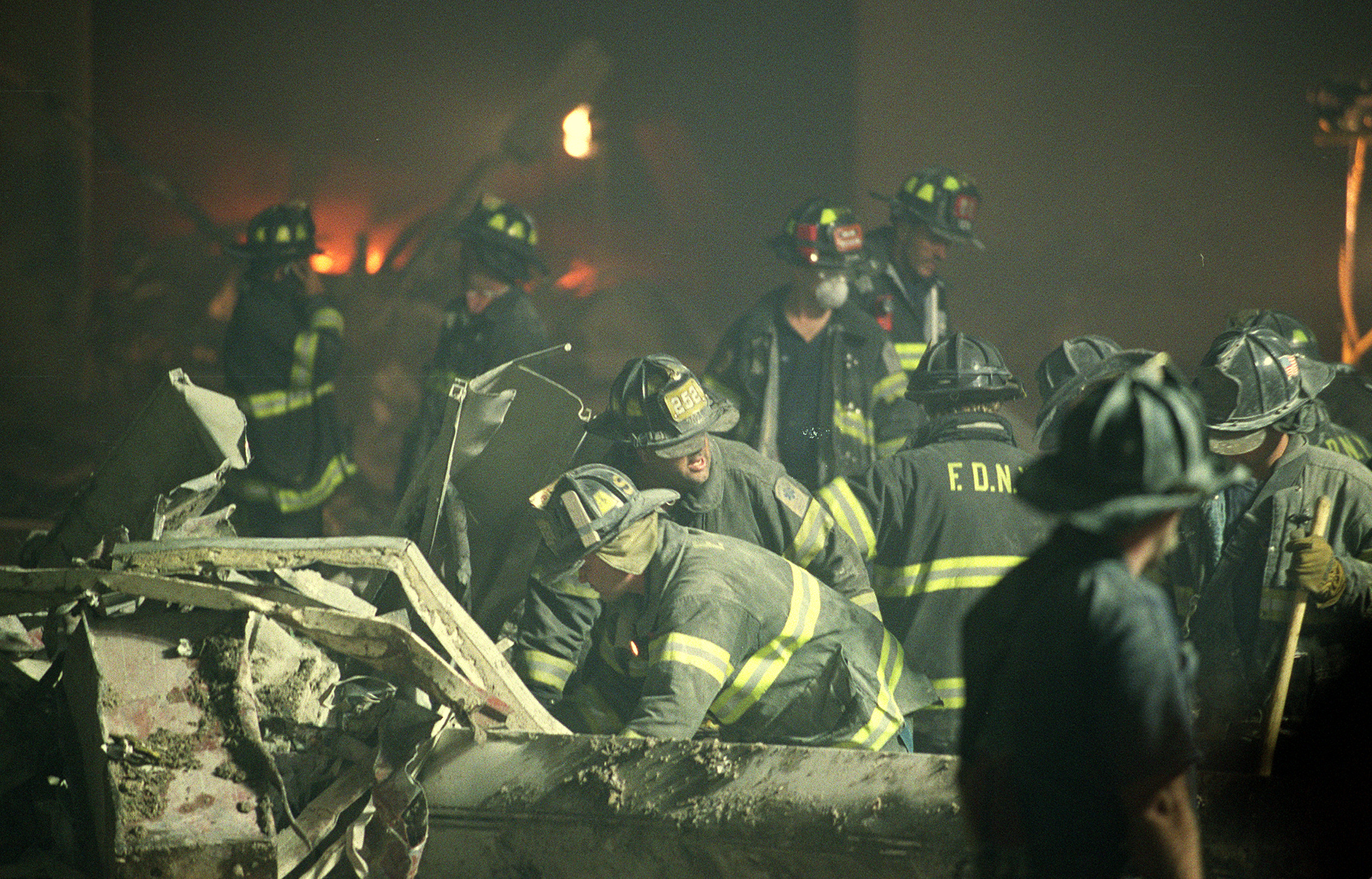
    New York City firefighters sift through the rubble of the World Trade Center on the evening of Sept. 11, 2001.Jim MacMillan

    From the outside, what followed looks almost ridiculously good: a career filled with fellowships, faculty appointments, and even a Pulitzer Prize in 2005 for my photographs from the war in Iraq.

    I had accompanied U.S. troops on hundreds of combat missions over the course of a year, feeling indestructible following my initial recovery, but then some new and old symptoms emerged, and I needed more care when I got back. I got better again, although I still overreact when startled.

    One of my pictures from 9/11 went on to have a remarkable life of its own. The New York Times wrote about the time it toured alongside some of the great artworks of the 20th century. My alma mater, Tufts University, hung it in a gallery next to a Picasso.

    Looking back now, it feels painfully obvious that I have also spent the past 25 years stockpiling accomplishments as if to prove I was OK, probably to myself as much as anyone else.

    We talk a lot in the news about surviving terrible events and their immediate aftermaths. And we love stories of recovery. But we don’t talk much about the long tail of trauma.

    Our traumatic pasts aren’t so easily fooled. There is no unseeing what we have seen.

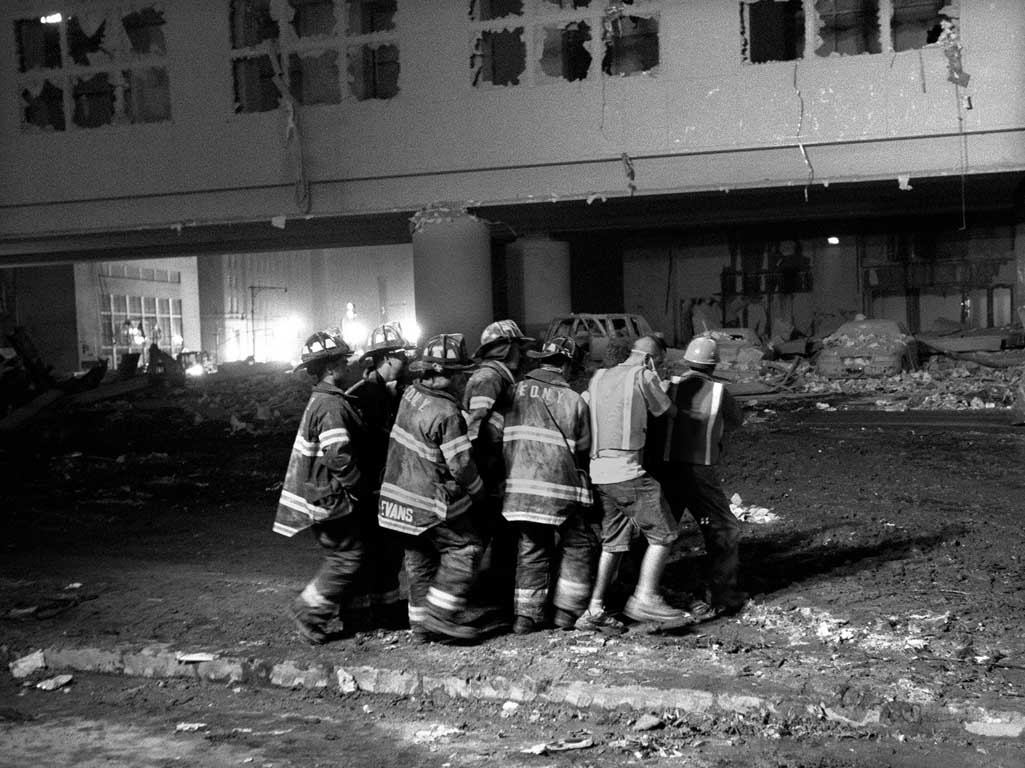
    Rescue workers carry a body from the ruins of the World Trade Center to a temporary morgue at the heavily damaged Dow Jones Building in the early morning after the Sept. 11 attack.

    I still have occasional nightmares and persistent phobias that seem obviously related to things I saw at ground zero.

    And random reminders can bring me back there in every sense. The smoke and rubble appear behind my eyelids in an instant. I can hear the sounds and taste the dust. My breath deepens, and my skin crawls again.

    Giving back

    Most of the time I am completely fine. Sometimes I get triggered, and I’ve got my hands full again for a couple of days or a couple of weeks. I had a bad year not so long ago.

    Living my best life takes maintenance, just as I imagine countless people quietly manage other long-term health challenges.

    Since 2006, I have also spent a lot of time studying and teaching students and journalists about trauma. Giving back has felt both cathartic and critical to maintaining my well-being.

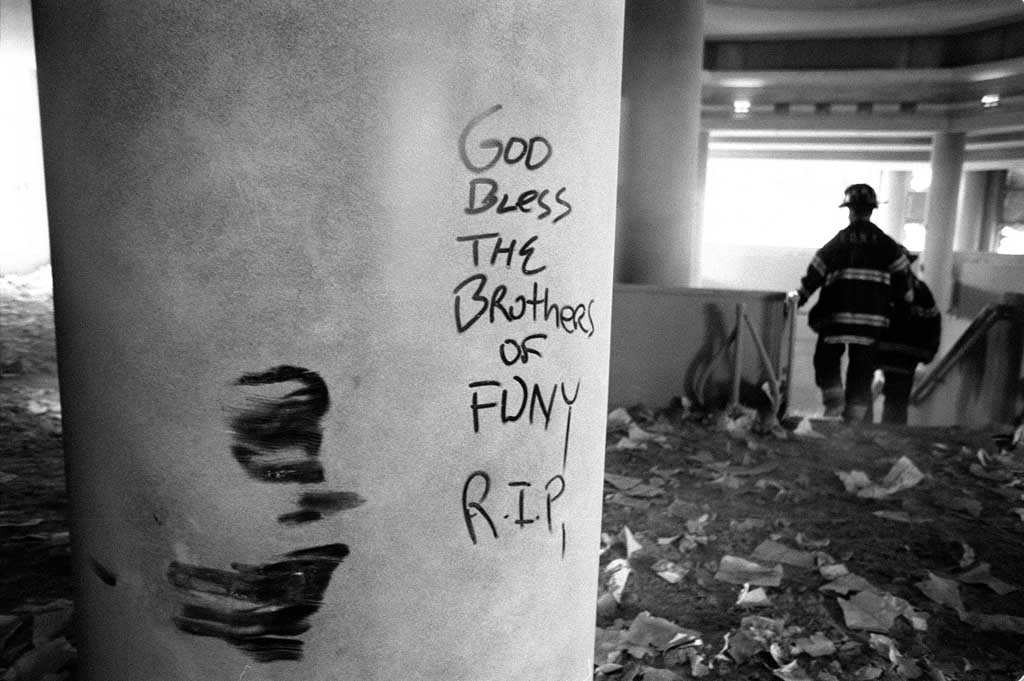
    A message is scrawled in ash on a column inside One Financial Center, adjacent to the World Trade Center ruins at ground zero.Jim MacMillan / Staff Photographer

    I have spoken previously about covering the Oklahoma City bombing, Hurricane Katrina survivors, violent demonstrations in American cities, and endless gun violence in Philadelphia.

    But while journalists and other first responders are frequently invited onto stages for these conversations, most people carrying trauma will never get the spotlight.

    Domestic violence and other crimes can alter lives without ever making the news. Trauma can accumulate alongside structural violence, from racism and concentrated poverty to overpolicing and mass incarceration.

    Rescued from Lower Manhattan, a family lands in Liberty State Park in New Jersey hours after the attack on the World Trade Center. The trauma from that day lives on for survivors and witnesses.

    Communities most vulnerable to trauma are often the least likely to have access to the kind of care that helped me endure.

    Too many are left to carry their burden alone, while resources seem perpetually overstretched, and horrifying headlines keep coming at us with relentless frequency.

    If nobody is coming to save us, we’ll need to get better at taking care of one another, now more than ever.

    I’m no clinician, but I can tell you what I needed: Listen when people tell you about their struggles. Don’t turn up the heat or ask when they’re going to get over it. Ask what they need, ask how you can help, and help them find more support.

    A New York City firefighter surveys the wreckage of the collapsed World Trade Center on the evening of Sept. 11, 2001.Jim MacMillan

    I recently moved to Ireland, where my grandparents were born, thinking I might have one more chapter to write in my career and that, for once, I might step away from all the trauma.

    Instead, every new relationship and opportunity seems to be leading me back to the same work: helping journalists stay safe and healthy while reporting responsibly on survivors.

    The distance has also helped me see more clearly what I’ve carried all these years, and what we can’t fake.

    Jim MacMillan spent 17 years as a photojournalist at the Daily News. His photographs from ground zero now reside in the Special Collections Research Center at the Charles Library at Temple University, and one was acquired last year by the National September 11 Memorial and Museum. He founded the Philadelphia Center for Gun Violence Reporting in 2019 and served as its director until June.

  • Phillies prospect Aidan Miller is ‘progressing very well’ and could be close to playing again

    Phillies prospect Aidan Miller is ‘progressing very well’ and could be close to playing again

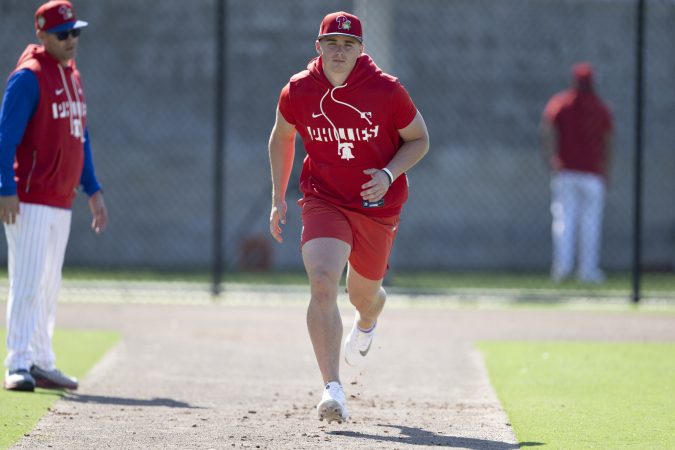
    Aidan Miller may be close to playing again.

    Miller, the Phillies’ top position player prospect, has missed the season because of a back condition. But in an appearance this week on Phillies Extra, The Inquirer’s baseball podcast, minor league director Luke Murton said the 22-year-old shortstop is “progressing very well.”

    “I don’t want to overpromise and underdeliver, but there may be a surprise in the near future,” Murton said. “I’ll say that. I’ll leave it at that for now.”

    The Phillies have been intentionally vague with updates on Miller, especially since a June 5 spinal procedure to relieve recurring low-back pain. At the time, the Phillies set a “goal to return to game activity in six to eight weeks.” But Miller only resumed all baseball activities, including swinging a bat, last month.

    Murton suggested the Phillies have taken a conservative path with Miller.

    “He wants to be on the field,” Murton said. “It’s hard. But he also understands the big picture. He’s got a long career ahead of him. … Just from seeing him move around of late, he’s moving as good as I’ve ever seen him. And so I’m excited about where he’s at right now. I’m excited about where he’s going to go.”

    The minor league season is nearing an end, with both A-ball levels wrapping up Sunday, double A on Sept. 13, and triple A on Sept. 20. But the Phillies’ low-A Clearwater team qualified for the Florida State League playoffs next week, a logical starting point for Miller’s return to game action.

    Double-A Reading also is closing in on a second-half title in the Eastern League, which would net a spot in the postseason and provide additional opportunity for Miller to get into games.

    Aidan Miller was the 27th pick of the 2023 draft.David Maialetti / Staff Photographer

    The Phillies also could choose to send Miller to the Arizona Fall League, which begins on Oct. 3. He was scheduled to play there last year, but the Phillies withdrew him because of late-season discomfort in his back.

    Miller, the 27th overall pick in the 2023 draft, had an .825 OPS, 27 doubles, 14 homers, and 59 stolen bases last season, mostly in double A. He got promoted to triple A in September and went 9-for-27 (.333) with one homer and seven steals.

    The Phillies hoped Miller would contribute in the majors this season, even purposely placing his spring training locker in the high-rent district of the clubhouse, in between Bryce Harper and J.T. Realmuto. But the back pain resurfaced in spring training after subsiding with rest in the offseason.

    After seeing multiple spine specialists, Miller was diagnosed with discogenic pain and facet inflammation in the lumbar spine, according to the team in June. He underwent a radiofrequency ablation of the facet joints, a procedure described by the Phillies as “minimally invasive.”

    It’s unclear whether Miller will have to manage the condition throughout his career.

    “As far as the long-term effects, positive, negative, I would let the [medical] experts speak to that,” Murton said. “But I feel pretty confident, [based on] what we’ve been seeing lately, that he’s on the right trajectory to be with us and be a good player for a long time.”

    The full episode of Phillies Extra will be available Friday on inquirer.com, The Inquirer’s YouTube channel, or by subscribing on Spotify or Apple Podcasts.

  • Trump administration pushes to remove tax exemption for private colleges with DEI policies

    Trump administration pushes to remove tax exemption for private colleges with DEI policies

    WASHINGTON — The Trump administration is proposing a new rule that would strip private schools and colleges of their tax-exempt status if they provide targeted help to students based on their race, a significant escalation in the White House’s campaign to eradicate diversity programs directed at Black, Hispanic and other minority students.

    The Treasury Department proposed the change Thursday in a new regulation that, if made final, would kick in after May 2027. The rule is broadly aimed at ending any policies or programs that help students because of their race, and it specifically says such benefits in admissions, scholarships, and facilities “would be incompatible” with the rule.

    It’s the latest attempt by the Trump administration to pressure schools and colleges to weed out diversity, equity, and inclusion policies that had become common before President Donald Trump returned to the White House with a promise to end them. Trump officials have used Civil Rights-era laws to unwind the policies, saying they discriminate against white and Asian American students.

    Higher education leaders criticized the proposal.

    “The administration’s latest rules changes are its most blatant attack to keep working class Americans and people of color from accessing higher education and a better life,” Mike Gavin, Alliance for Higher Education president and CEO, said in a statement. “By claiming that efforts to increase fair opportunity for all students are discriminatory, the administration is trying to gaslight the American people into believing that up is down and black is white.”

    Thousands of colleges could be affected

    Scores of universities have shut down or rebranded their DEI offices and ended scholarships and clubs designed for minority students under pressure from the White House. In a statement announcing the proposal, Treasury Secretary Scott Bessent suggested that even policies that are no longer under the banner of DEI could be targeted.

    “Schools rebranding race-based preferences as equitable, inclusive, or diversity-enhancing does not change their discriminatory nature,” Bessent said.

    The Treasury Department and IRS estimate that up to 18,000 private schools, colleges, and other education institutions could be affected by the proposal.

    America’s private universities have been exempt from many taxes for more than a century because they provide a public good. The benefit saves many universities millions of dollars every year.

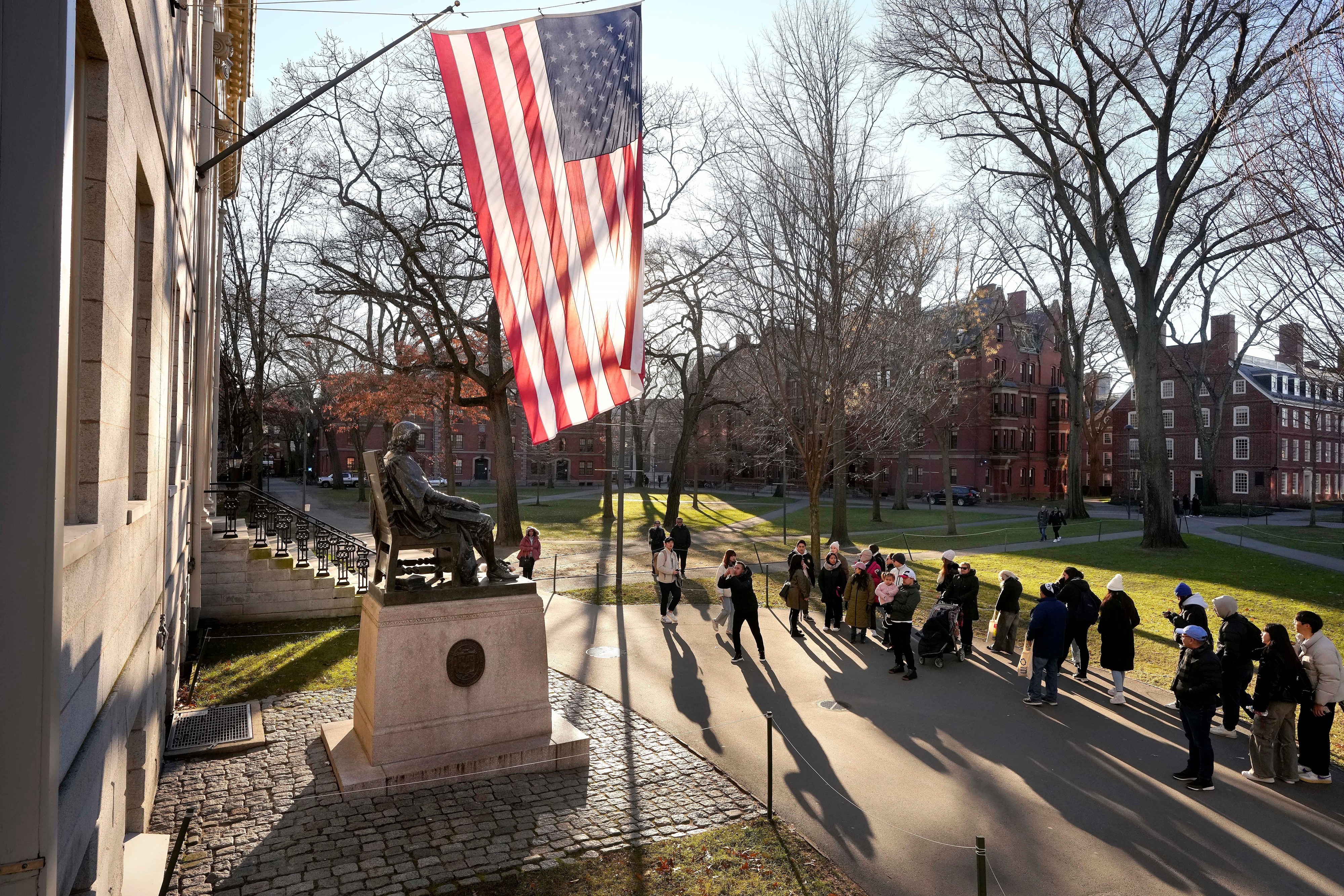
    Trump has seen the tax-exempt status as a lever to pull in his pressure campaign against colleges that he describes as hotbeds of “wokeness.” He threatened to cut the benefit for Harvard University last year during his battle with the nation’s oldest college. In a response, Harvard officials said there was no legal basis for doing so and argued it would force cuts to financial aid and crucial medical research.

    In the 1970s, a college lost tax-exempt status over a ban on interracial dating

    It’s incredibly rare for the federal government to go after a college’s tax-exempt status, but there’s one notable precedent. Bob Jones University, a small Christian school in South Carolina, lost the benefit in the 1970s over a ban on interracial dating and marriage on campus. The Supreme Court upheld the IRS’s decision to deny the school its exemption. The school has since ended the ban and regained tax-exempt status in 2017.

    Laws forbid the IRS from targeting individuals and organizations for ideological reasons, and federal officials are not allowed to direct IRS investigations.

    To maintain nonprofit status, which allows donations to be tax-deductible, organizations must follow IRS rules on lobbying, political campaign activity, and annual reporting requirements, as well as other obligations.

    The Trump administration describes the new proposal as a move toward restoring merit in the nation’s education systems.

    Marjorie Hass, president of the Council of Independent Colleges, said the change would most likely impact donations, which are often earmarked for scholarships.

    The uncertainty around the proposal also will create challenges for schools, said Tim Powers, a vice president of the National Association of Independent Colleges and Universities.

    “Our institutions are committed to complying with applicable civil rights laws and maintaining safe and supportive campuses free from discrimination,” Powers said. “However, the proposed rule may create new compliance burdens and legal uncertainties for institutions of higher education that are already operating in line with existing nondiscrimination rules.”

    The Justice Department has separately opened investigations into several medical schools that it accuses of favoring Black and Hispanic students in admissions. Trump officials say any such favoritism violates Title IV of the Civil Rights Act of 1964, a federal law that forbids discrimination in education and was created to fight segregation and its impact.

    A statement from IRS Chief Executive Officer Frank J. Bisignano said private schools that promote discriminatory practices will no longer be exempt from taxes.

    “Today’s proposed regulations put institutions on notice and schools that continue to engage in racial discrimination should expect to lose that status,” he said.

  • Flyers announce rookie camp schedule and roster headlined by Porter Martone

    Flyers announce rookie camp schedule and roster headlined by Porter Martone

    While the majority of the Flyers still have a little time to enjoy the fleeting moments of summer before reporting to training camp on Sept. 17, the countdown for others is down to just over a week.

    On Thursday, the Flyers released the roster and schedule for the team’s rookie camp, which will commence on Sept. 11. This year, the team’s rookie camp will begin at the PPL Center in Allentown, where the Flyers will play games on Sept. 12 (7:05 p.m.) and Sept. 13 (5:05 p.m.) against the New York Rangers. The camp then shifts back to the Flyers Training Center in Voorhees for three practices beginning on Sept. 14.

    The 27-man roster is highlighted by several players who are expected to be key contributors for the big club, led by forwards Porter Martone, Alex Bump, and Denver Barkey. The 19-year-old Martone, who tallied four goals and 10 points in nine games to help the Flyers make the playoffs, will be participating in his first rookie camp. He was heading off to college at this time last year and thus was not eligible to attend.

    Former first-round picks Oliver Bonk (2023), Jett Luchanko (2024), and Maksim Sokolovskii (2026) will also be present, with Bonk expected to push hard in main camp for a spot on the Flyers’ blue line after getting into a couple of games late last year. The 6-foot-7 Sokolovskii will head back to juniors with London in September, so this will represent the final chance to see the defenseman up close this season.

    Speaking of Luchanko, he figures to be desperate to build some positive momentum for training camp on the heels of an underwhelming season in the OHL. The speedy center is likely ticketed to start the season with Lehigh Valley, as are a couple of organizational favorites in defensemen Ty Murchison and Spencer Gill, and center Cole Knuble. The three listed goalies for the camp are 2023 second-rounder Carson Bjarnason and 2026 draft picks Martin Psohlavec and Marek Sklenička.

    Forwards Jack Nesbitt, Jack Berglund, NUShane Vansaghi, and Jack Murtagh, defenseman Carter Amico, and goaltender Egor Zavragin are among the most high-profile absences. Nesbitt is off to the University of Michigan for his freshman season, while Amico and Murtagh are heading back to Boston University. Vansaghi will be a junior at Michigan State this fall. The Flyers revealed last month that Berglund would play this season on loan at his hometown club Färjestad BK, while Zavragin remains under contract in Russia and was recently traded to Metallurg Magnitogorsk.

    Flyers prospect Jack Berglund, seen here playing for Sweden, will not be at rookie camp as he prepares for his pro season in Sweden.Matt Krohn

    One Russian player who will be present is Ilya Pautov. The winger, who was a sixth-round pick in 2024, signed with the Flyers in June and is making the move to North America this season. Phoenixville’s Owen McLaughlin, a seventh-round pick in 2021, will also participate after wrapping up his collegiate career last season at BU. Forward Sawyer Dingman, the son of former NHLer Chris Dingman, is one of two camp invites alongside defenseman Riley Steen.

    The Rookie Camp on-ice sessions in Voorhees are free and open to the public. Fans interested in attending the Rookie Series games can purchase tickets at PPLCenter.com.

    Rookie Camp schedule

    2026 FLYERS ROOKIE CAMP SCHEDULE (ALL TIMES EST):

    Full rookie camp roster

    Forwards (16)

    #12 Devin Kaplan

    #20 Alex Bump

    #37 Riley Thompson

    #45 Alex Čiernik

    #49 Sawyer Dingman (Camp Invite)

    #50 Noah Powell

    #54 Cole Knuble

    #60 Brady Berard

    #62 Nathan Quinn

    #70 KJ Sauer

    #72 Owen McLaughlin

    #77 Jett Luchanko

    #82 Matthew Gard

    #86 Denver Barkey

    #94 Porter Martone

    #97 Ilya Pautov

    Defensemen (8)

    #40 Brek Liske

    # 42 Spencer Gill

    #59 Oliver Bonk

    #61 Maksim Sokolovskii

    #67 Luke Vlooswyk

    #92 Jackson Edward

    #93 Riley Steen (Camp Invite)

    #96 Ty Murchison

    Goalies (3)

    #33 Marek Sklenicka

    #34 Martin Psohlavec

    #64 Carson Bjarnason

  • Evesham Library is getting its first upgrade in nearly 30 years

    Evesham Library is getting its first upgrade in nearly 30 years

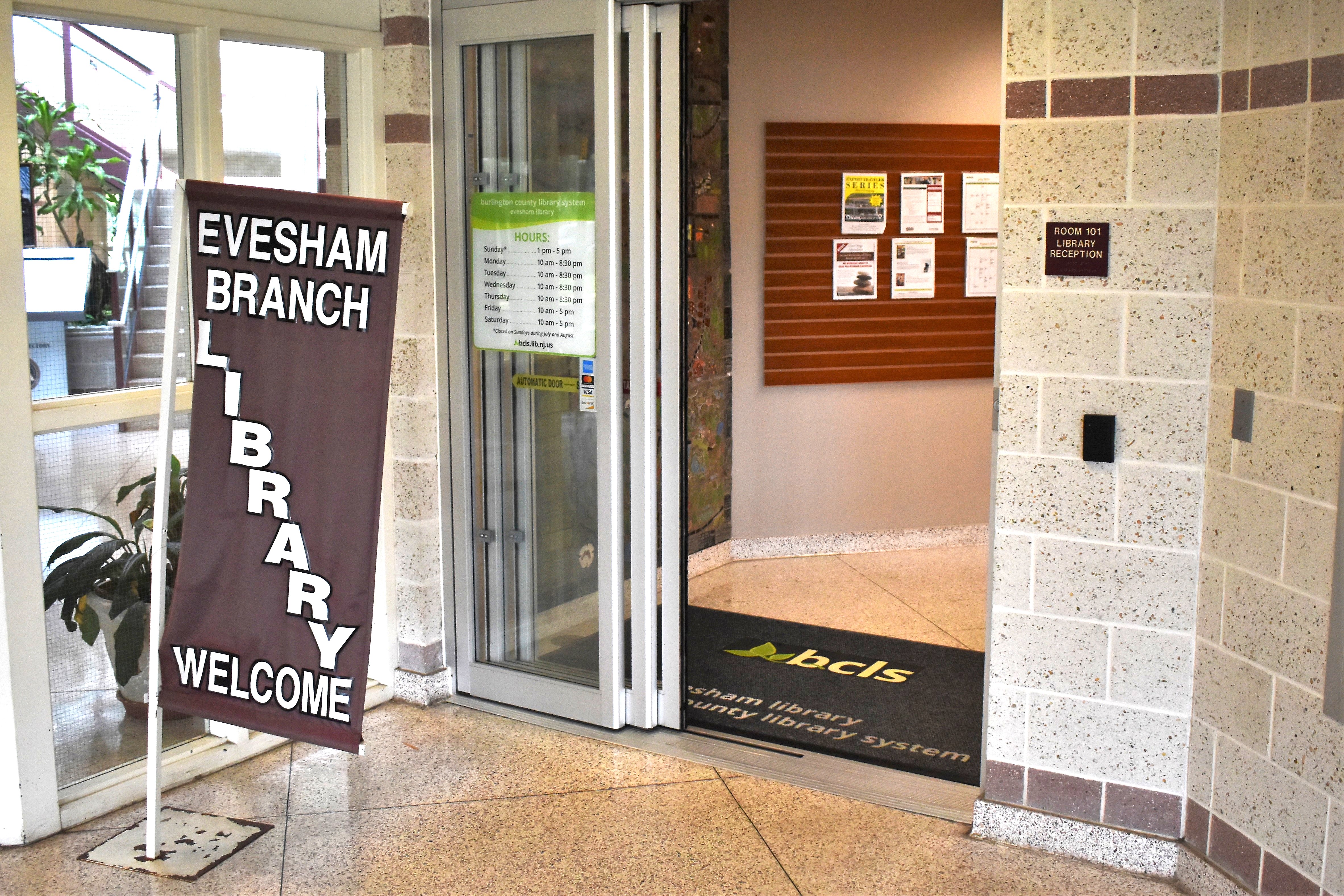
    One of Burlington County’s most popular public libraries is getting a major upgrade — its first in nearly three decades.

    The Evesham Library in Marlton, part of the Burlington County Library System (BCLS), will be getting a new technology center and expand its children’s area and activity/meeting room as part of the $500,000 project.

    “The improvements planned for the Evesham library will allow it to better serve residents of all ages and become an even greater resource for the community,” Burlington County Library Commission Chair Jonathan Chebra said in a statement announcing the effort.

    Renovations are underway and expected to wrap up by the end of the year, the county said.

    The library, which opened in 1998 as part of Evesham Township’s new municipal building complex, will remain open for visitors during the renovations.

    The Evesham branch is the second most-used location in the BCLS, the county said, recording more than 215,390 checkouts in 2025. The Evesham location also has the second-highest active library users in the BCLS with nearly 10,000 active accounts.

    “Evesham is Burlington County’s most populous municipality, so it’s absolutely essential that it continue to have a state-of-the-art library to serve the town and the surrounding communities,” Burlington County Commissioner Tom Pullion, liaison to the BCLS, said in a statement.

    Half the funding for the project came from a $1 million state grant for capital improvements to the BCLS as part of the New Jersey’s 2023 budget. The library system matched the remaining $250,000 for the renovations in Evesham, the county said.

    Burlington County’s main library branch in Westampton and the libraries in Pemberton and Cinnaminson will share the rest of the state funding, according to the county.

    Pemberton branch’s renovation wrapped earlier this year and work on the Cinnaminson library is expected to finish in the fall, the county said. Meanwhile, renovations at the main branch in Westampton are still in the early stages of planning and design.

    “Burlington County’s libraries are proven difference-makers and the investments we make to improve them directly benefit our residents and communities,” Burlington County Commissioner Randy Brolo said in a statement.

  • Cherry Hill PTA is hosting a forum for residents to meet Board of Education candidates

    Cherry Hill PTA is hosting a forum for residents to meet Board of Education candidates

    Special education and the student use of electronic devices will likely be two hot topics when candidates for the Cherry Hill Board of Education are questioned at a forum in two weeks.

    Jamie Marchese, chair of the Zone PTA for South Jersey’s largest school district, said special education usually comes up at candidate forums and, this year, screen time by students is a big issue.

    Cherry Hill schools also are in the midst of a massive renovation program, financed by a $363 million bond referendum passed by voters in 2022.

    The forum for the eight school board candidates, sponsored by the parent–teacher association and moderated by the League of Women Voters, will be held on Tuesday, Sept. 15 from 6:30 to 8:30 p.m. in the Cherry Hill High School West auditorium — the first in-person forum since the pandemic. The audience also can join in remotely by Zoom.

    The five-member Zone PTA board represents the school district’s 18 school PTAs and the special education PTA.

    Marchese said residents have been asking for a live audience for the annual forum.

    “Not everyone likes to sit in front of a screen and watch,” she said.

    Voters will cast their ballots in advance or go to the polls on Nov. 3 to select three board members for three-year terms.

    The candidates, in the order they are listed on the ballot and their slogans, are:

    • Melissa Manzano (incumbent), Experience in Education
    • Darby Malvey, Experience in Education
    • Renee Cherfane (incumbent), Learn, Then Rebuild
    • Joseph Lynch, Leadership, Results, Integrity
    • Harold “Hal” Melleby Jr., Experience-Leadership-Community
    • Steven Redfearn, Experience-Leadership-Community
    • Ineda “Corrien” Elmore-Stratton, Experience-Leadership-Community
    • Anne Einhorn

    Residents have until Sept. 11 to submit their questions for the candidates, said Marchese, who lives in the Windsor Park neighborhood and has three children in Cherry Hill schools. Questions can be submitted via Google form.

    Marchese said that some questions may be combined because of the time constraints on the two-hour forum.

    The forum will open with candidates spending two minutes each to present their platforms. Each candidate will also get a two-minute closing statement at the end of the forum.

    Candidates are also given one minute to respond to each of the questions.

    All community members are invited to attend, Marchese said. In November, voters will select Board of Education members “to represent us in our wants and needs for our public schools,” she said.

    70and73.com is a hyperlocal news site focused on South Jersey, including the communities of Cherry Hill, Evesham, Mount Laurel, Voorhees, Medford, Medford Lakes, and Moorestown.

  • unCovering the Birds: Talent and Question Marks

    unCovering the Birds: Talent and Question Marks

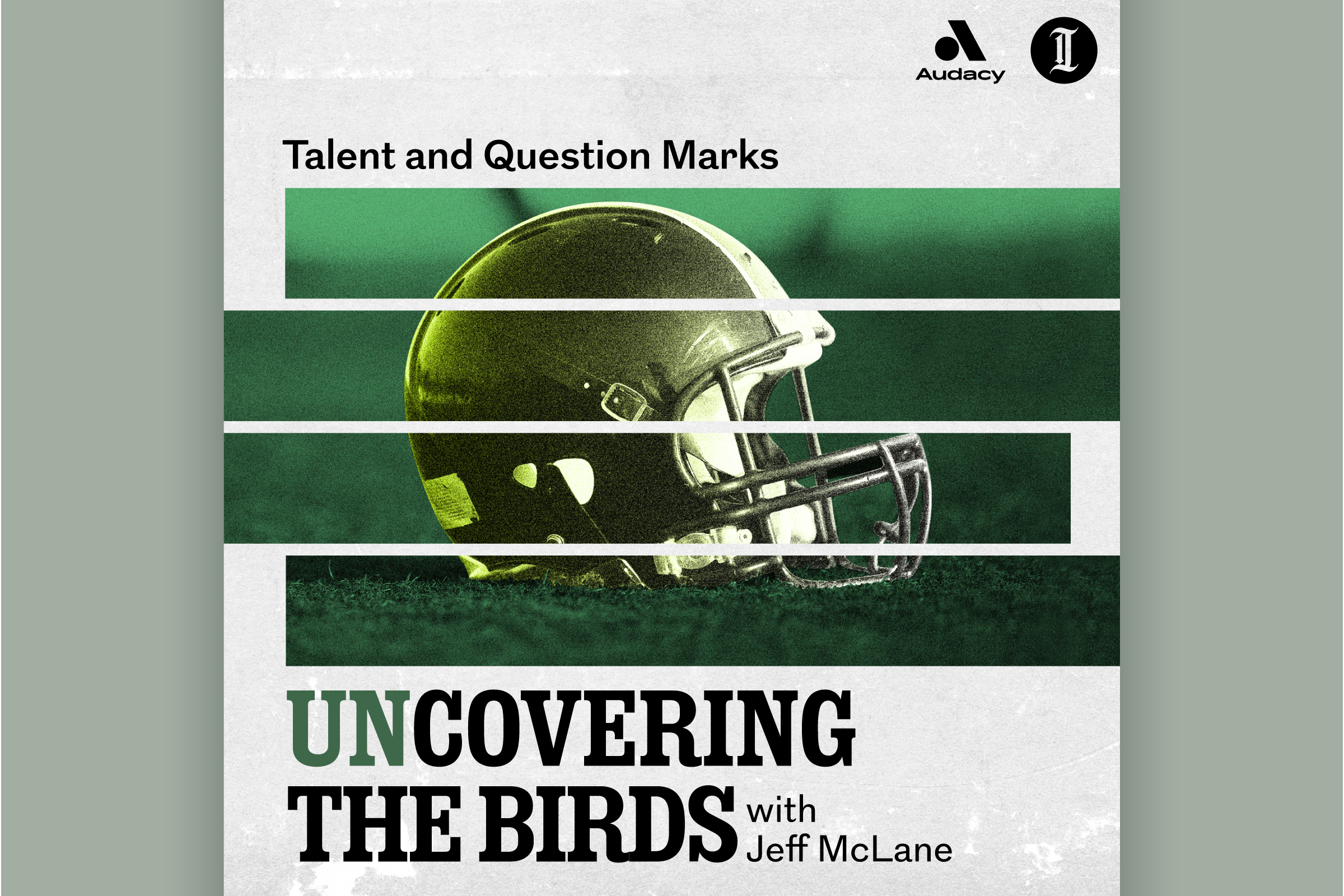
    The Eagles’ regular season roster is set – for now. How ready is the team for the new year, and will the talent be enough for the Eagles to get back to Super Bowl contention? The Philadelphia Inquirer’s Jeff McLane and Mike Sielski examine general manager Howie Roseman’s final roster decisions in the aftermath of cutdown day.

    00:00 Eagles’ 2026 regular season roster overview

    04:10 How ready is the wide receiver group after A.J. Brown’s departure and Makai Lemon’s injury?

    11:51 Is tight end the biggest area of concern?

    21:10 The importance of the run game and offensive line

    28:04 Could the defense carry the day?

    unCovering the Birds is a production of The Philadelphia Inquirer and KYW Newsradio Original Podcasts. Look for new episodes throughout the season.

  • The Athletic says Diana Russini’s relationship with Patriots coach Mike Vrabel was a ‘clear violation’ of its standards

    The Athletic says Diana Russini’s relationship with Patriots coach Mike Vrabel was a ‘clear violation’ of its standards

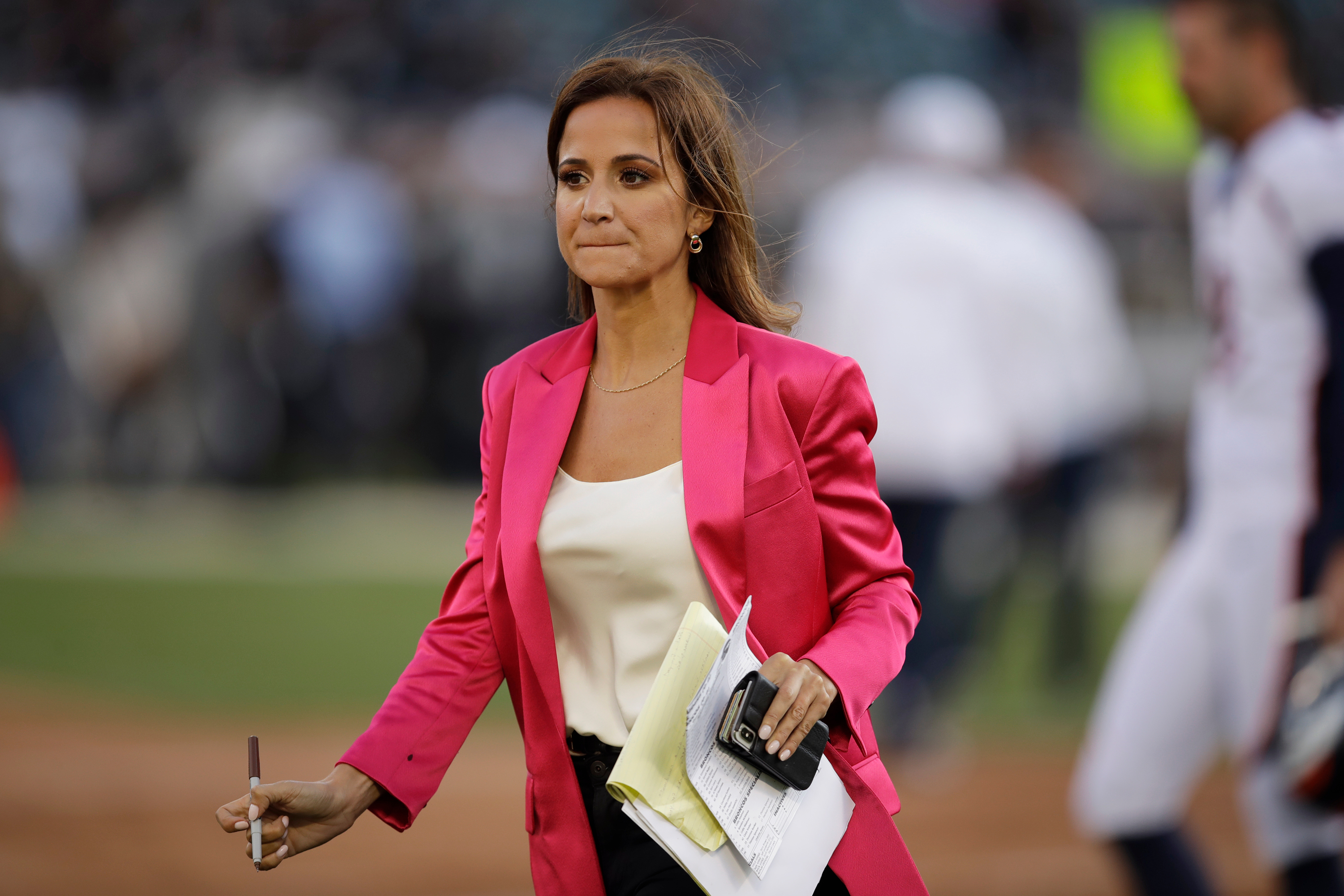
    An internal investigation by The Athletic found that the relationship between Dianna Russini, its former senior NFL reporter, and Mike Vrabel, the coach of the New England Patriots, was a “clear violation” of the company’s standards.

    In a report released Thursday detailing findings of its monthslong investigation, The Athletic said that it was unable to determine the “nature of their full relationship” but that it gave the appearance of a conflict of interest.

    “Regardless of whether the relationship was romantic,” The Athletic said in the report, “it was a breach and should have been disclosed.” The Athletic is owned by The New York Times Co.

    The Times Co. and The Athletic declined to comment beyond what is in its investigation. A Patriots spokesperson did not immediately respond to a request for a comment from the team or Vrabel. Russini did not immediately respond to a request for comment.

    Revelations about Russini’s relationship with Vrabel emerged nearly five months ago and ricocheted around the sports and media worlds, raising questions about the journalistic ethics of a prominent NFL reporter. The controversy also highlighted Russini’s role as an NFL insider, a type of reporter hyperfocused on getting scoops about players and coaches.

    The investigation was prompted by photographs published in the New York Post on April 7 showing Russini and Vrabel together at an exclusive resort in Sedona, Ariz.

    Russini, according to the report, told her editors at The Athletic that the relationship was “close” but “strictly professional.”

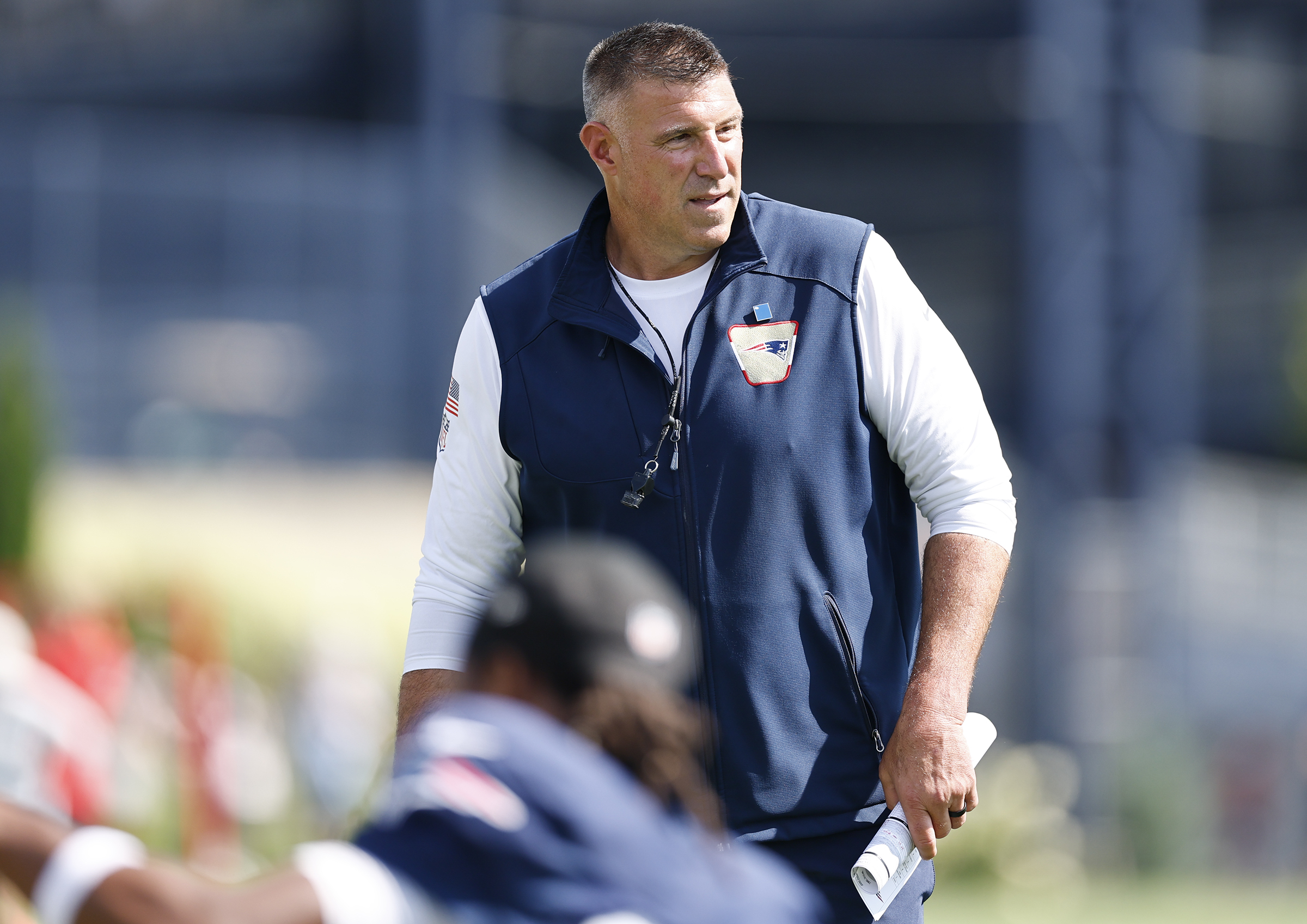
    New England Patriots coach Mike Vrabel before a joint practice with the Eagles last month at Gillette Stadium.Yong Kim / Staff Photographer

    Initially, The Athletic publicly defended Russini. But days after the photographs were published, the company began an investigation into her work. On April 14, Russini resigned from The Athletic, saying in a letter to the company, “I have built a body of work I am proud of.”

    In its report, The Athletic said it had not “reached any conclusion about the nature of the full relationship between Vrabel and Russini, but the totality of the public photographs are enough to conclude a violation of company policy.”

    Specifically, The Athletic said Russini had failed to comply with its policy that requires its journalists to “reveal those sources or affiliations that may put into question our ability to be credible.”

    The report also noted, without elaborating, that Russini had shared with them “a story to explain the photos that did not align with facts, raising issues of trust.”

    After she resigned, more photos of Russini and Vrabel emerged, including images of the pair at a New York bar in March 2020.

    After she stepped down, The Athletic stopped its look into her personal conduct, the report said, “but continued its investigation into her journalism.”

    Mike Semel, The Athletic’s editorial director for standards and editorial quality, conducted the company’s review of Russini’s work.

    As part of the process, the report said, Semel looked into 903 articles, 77 videos, 204 episodes of the podcast she hosted, and about two dozen appearances she made on other platforms. He also interviewed Athletic employees who worked with her.

    Russini, seen here interviewing Mark Ingram before the 2020 Pro Bowl, worked at ESPN before The Athletic.Gregory Payan / AP

    The review found that 5% of her work product included mention of Vrabel or his teams — and that none carried inaccuracies. It also said her professional relationships were numerous: “It was clear Russini was sourced up around the NFL, not just with Vrabel or the Patriots.”

    Semel recommended that The Athletic include an editors’ note on one of her columns and three of her videos. In one of the videos, Russini described how Vrabel intervened in a fight between players on the Patriots and the Washington Commanders. “He comes out as somewhat heroic,” the report said of Vrabel.

    The report also described the tone of some of her work about the Patriots coach as “gushing” and “effusive” and provided examples of Russini “writing glowingly of Vrabel that in hindsight are awkward or even uncomfortable.”

    The report does not mention a widely publicized incident in which Russini used her position as an Athletic reporter to avoid a speeding ticket and then bragged about it on a podcast, saying she had a video call with the police officer’s favorite head coach in her successful attempt to win the officer over. Body camera footage later revealed she never called the coach. This spring, a Times spokesperson called her behavior “unacceptable conduct.”

    In its report, The Athletic recommended a series of steps the publication should take to “safeguard the confidence of our audience,” including requiring that all new newsroom employees meet with the standards editor.

    The report also recommended that “editors should stay vigilant about their reporters’ sourcing.”

    “Recurring use of the same sources should spark additional conversation between reporter and editor about the nature of the source relationship,” the report said.