The Camden Department of Public Works spends about $4.5 million annually to clean up illegal dumping.
City officials say the disrespect shown by landlords, outsiders, and even residents is just as problematic as the use of taxpayer money.
“These bad actors who dump illegally simply don’t care about our city,” Mayor Victor Carstarphen said. “So we’re trying to hit them where it counts. We’re hitting them in their pockets.”
Carstarphen, along with city and county officials, outlined astrategy on Wednesday to tackle the problem and released detailed photos and videos showing those who have been charged with dumping.
They say an aggressive push to combat widespread blight and improve neighborhood quality will use a combination of stepped-up enforcement, drones, high-tech camera networks, and steep penalties.
Violators face fines of up to $10,000.
In addition, officials are offering a $1,000 reward forresidents who provide information, such as video from doorbell cameras, that leads to a violator being caught.
Camden City Mayor Victor Carstarphen address the illegal dumping problem in the city during a press conference Sept. 9, 2026.Frank Kummer
A widespread problem
Carstarphen said the problem is widespread and the dumping comesfrom contractors and landlords who live outside the city, as well as within.
Camden County Police Department Capt. Gordon Harvey gave a presentation detailing those who have been charged.
Most are from Camden or nearby communities such as Pennsauken, Cherry Hill, Pine Hill, Mount Laurel, and Maple Shade. But people from Bernville, Pa., Ashburn, Va., and Union, N.J., have also been charged.
So far this year, the Camden County Police Department has pursued 68 illegal dumping incidents — about the same as in all of 2025.
In 2026, 27 people have been charged in 31 incidents.
About 40% of the illegal dumping activity has been located in the Waterfront South neighborhood.
Harvey said other neighborhoods, such as Bergen Square, Fairview, and Beideman, all have been hit.
Educating the community about the problem is key,he said.
“We need you to help us. We need you to report these incidents,” Harvey saidin a direct plea to residents. “Tell us when they’re happening, where they’re happening.”
Officials say residents can report dumping anonymously through the STOPit mobile phone app.
Harveyshowed videos of people brazenly pulling up in vehicles to dump in parks, streets, alleys, and secluded areas. Materials ranged from construction waste to bags of household waste.
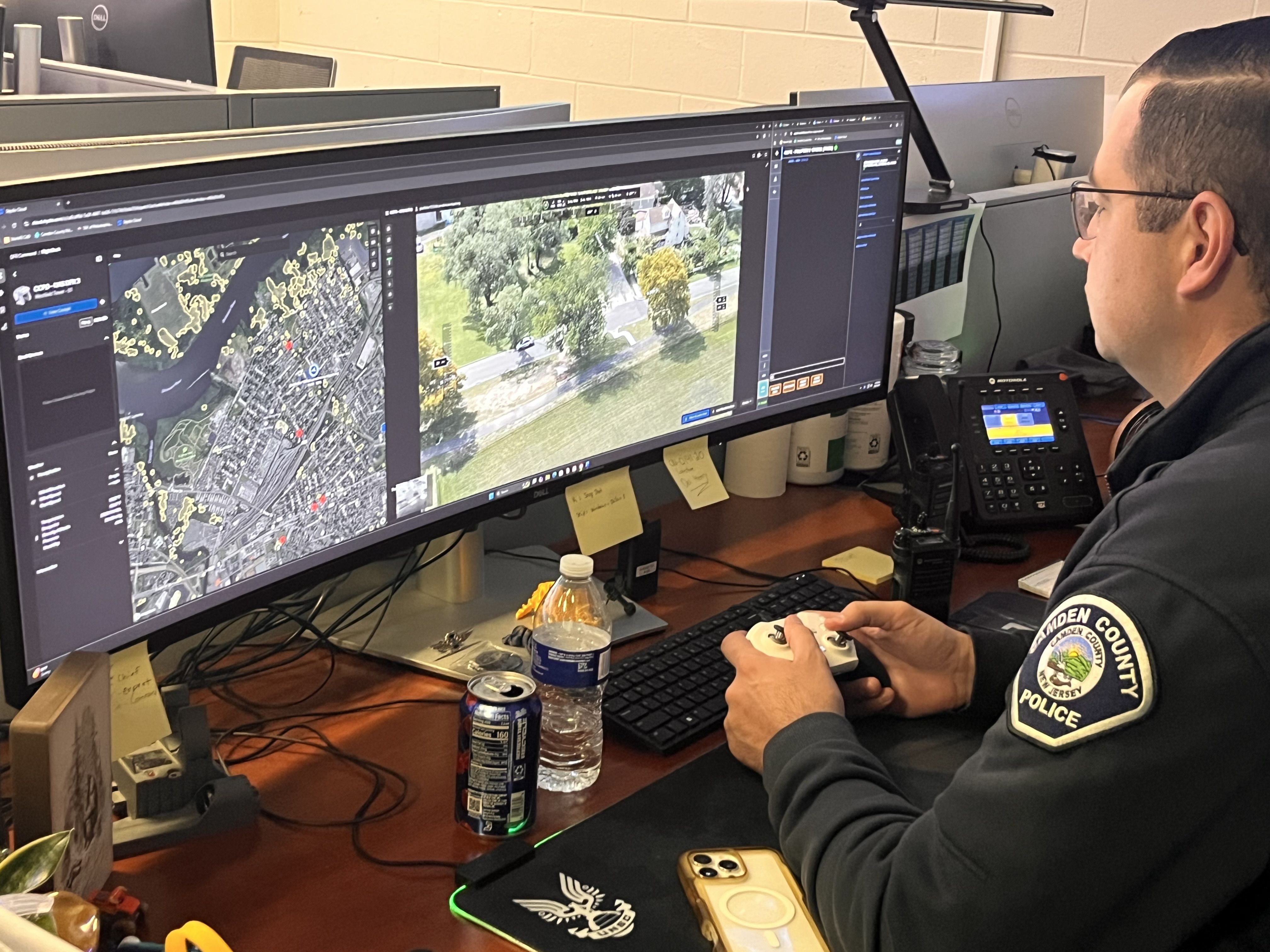
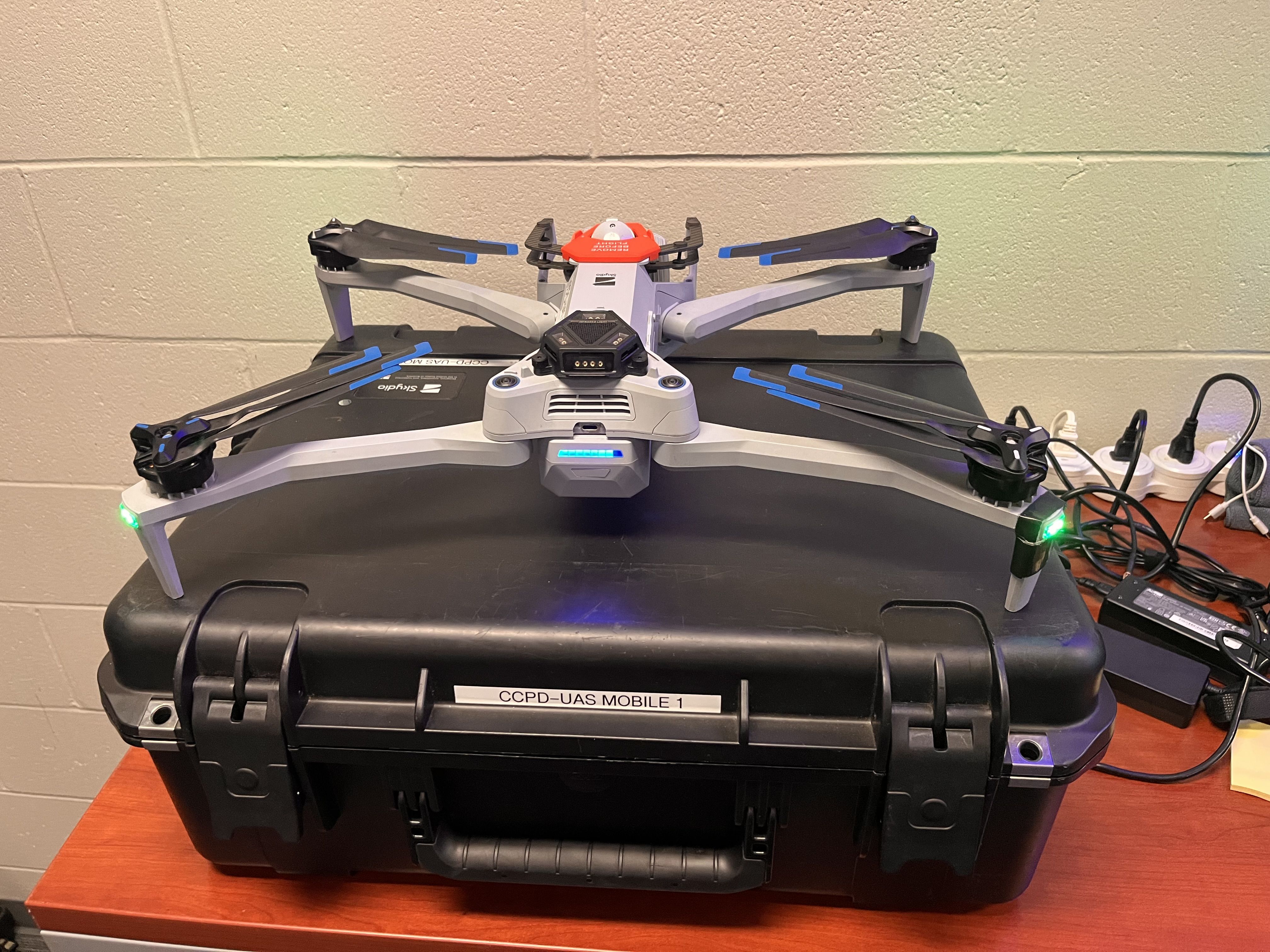
Camden County police are using drone such as this to help identify illegal dumping and track the dumpers.Frank Kummer
‘Eye in the sky’
Some people have been charged the same day they dumped waste because they were caught by police-controlled drones owned by the county, or by the city’s “eye in the sky” network of video cameras.
The network provides “1,000 unique views within the City of Camden,” Harvey said.
Most cameras are fixed, but the city has five mobile cameras dedicated to identifying illegal dumping. They can be moved to a hot spot in less than an hour.
In addition, the police department has two full-time drone pilots, though they scan the city for many other issuesbeyond dumping. Five drones are stationed on rooftops throughout Camden, and all can reach a site in minutes.
City Public Works Director Keith Walker said the city has spent $3.2 million on new equipment that can be used to tackle illegal dumping. That includes five compact waste-collection trucks, a large front-end loader, and a range of dump trucks.
Equipment and cleanup costs divert funds from community parks, playground equipment, and youth programming, he said.
“We spend most of our time dealing with the new dumping, and it cuts into our budget,” Walker said.
Officials say they hold community cleanups andclean out dumps, only to find the areas blighted againwithin days.
“Enough is enough,” said Angel Fuentes, Camden City Council president. “We won’t tolerate this type of behavior.”
Editor’s note: This story has been updated to correctly attribute a quote.
I’m not saying the world’s most coveted beef is an international marketing conspiracy to compel us all to pay more for steak. I have eaten genuine A5 Wagyu fresh off a grill in Tokyo, and the unique sensation of biting into that cube of quivering-hot meat laced with molten fat and feeling it dissolve into buttery richness is unforgettable. Japan’s famously pampered breed of cattle — whose expense results from an intense feeding regimen over a longer duration than conventional beef — can be very special. Especially in small quantities.
Back here on the front lines of all-you-can-eat wagyu feasting at Ogyu in Ardmore, however, I could not escape the feeling I was in for an experience long on flash — sizzling tabletop grills, swirling plumes of dry ice smoke, digital sparks flying across the room’s giant LED screens — and short on satisfying flavors.
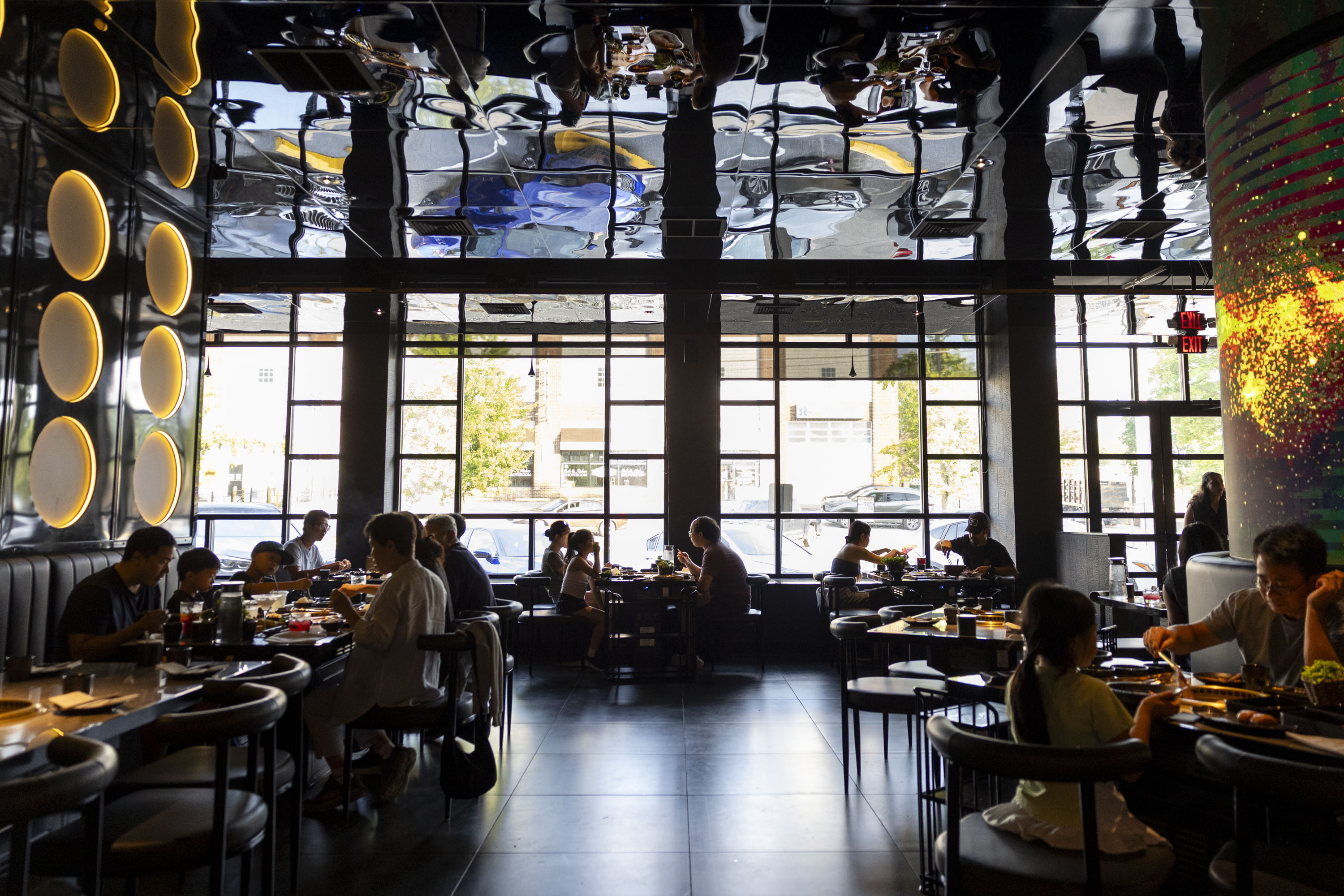
Guests dining in at Ogyu on Friday, Aug. 28, 2026, in Philadelphia.Tyger Williams / Staff Photographer
I was prepped for a 90-minute sprint of carnivorous endurance, limited only by my ability to navigate a DIY iPad menu, forced timing breaks, and the need for a maximalist ordering strategy for Ogyu’s tiered packages,ranging from $39 to $99 per person. Should my appetite stumble? A potential 20% “wasting fee” loomed. (Diners are potentially charged extra if they don’t eat what they order.)
I didn’t want to let our server James down after he successfully upsold us into one of the more expensive packages, whose overlapping lists of meat perks, which gradually increase in quality, reminded me of sussing through the various mysterious options available at a car wash. Sure, my car will be clean no matter which hot wax I select, just as I’ll be full no matter which all-you-can-eat menu I go for. But will I emerge with that ruddy Wagyu shine of beefy bliss?
Definitely not with the entry-level “Silver” ($39) or “Gold” ($59) options, which James wordlessly dispatched as unworthy by comically sticking out his tongue in disdain and slashing his throat with his fingers: “The ‘Diamond’ tier is our most amazing experience,” he counseled.
The Bluefin tartare at Ogyu on Friday, Aug. 28, 2026, in Philadelphia.Tyger Williams / Staff Photographer
We settled on the second-most extravagant option, the $79 “Platinum,” in which some genuine Japanese Wagyu is made available along with prime-grade beef and less-marbled American wagyu from the lower levels of the menu.
As a newcomer to the all-you-can-eat universe, I immediately fumbled the challenge of prioritizing our orders properly. Diners are limited to ordering a maximum of 10 items every 10 minutes, and we foolishly crowded our limited table space with mundane belly-fillers like wagyu dumplings (raggedy), hand rolls (mushy with too much panko filler), spring rolls (so greasy), and pencil-size wands of tempura-fried crustacean so thickly breaded they were unrecognizable as lobster tail. The truffled wagyu stir-fried rice was burnt.
I did appreciate the slow-steeped richness of the bone marrow soup. We also enjoyed the thick-cut bluefin tuna sashimi, as well as a toro tartare with avocado and ponzu. (Ogyu’s owner, Sam Li, says several regulars come here to get their money’s worth exclusively in bottomless sashimi.)
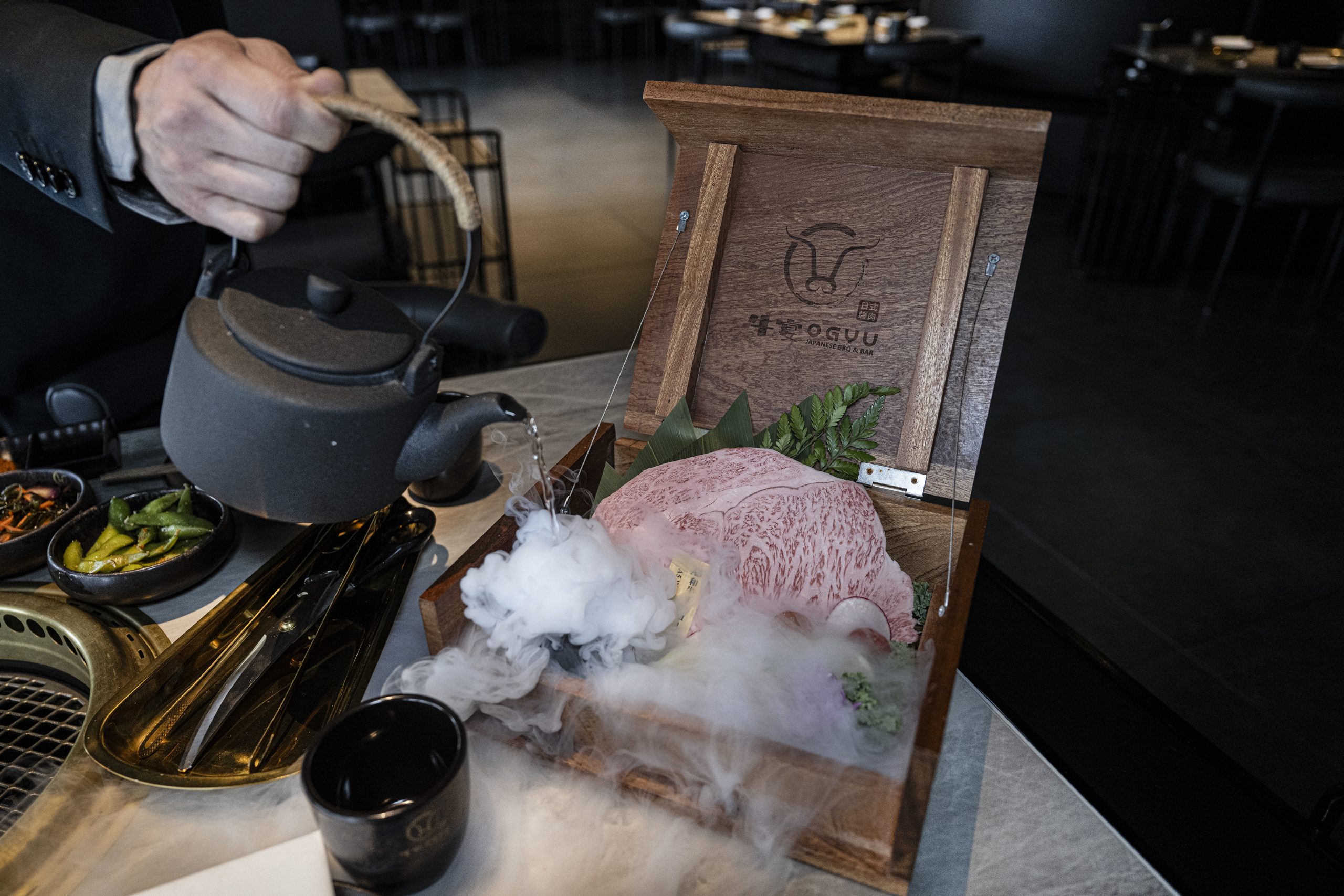
But we were here for the beef. James finally took pity on us, commandeered our iPad, scrolled down to multiple menu panels I’d missed, and began punching up orders for the maximum amount of the A5 Wagyu cuts allowed from Miyazaki Prefecture. I was impressed with the dramatic presentation of the fat-marbled Wagyu rib cap that arrived at our table in branded wooden boxes fuming with smoke — until a server tipped the box too far and the cold water that activated the dry ice smoke streamed right out onto my guest’s lap.
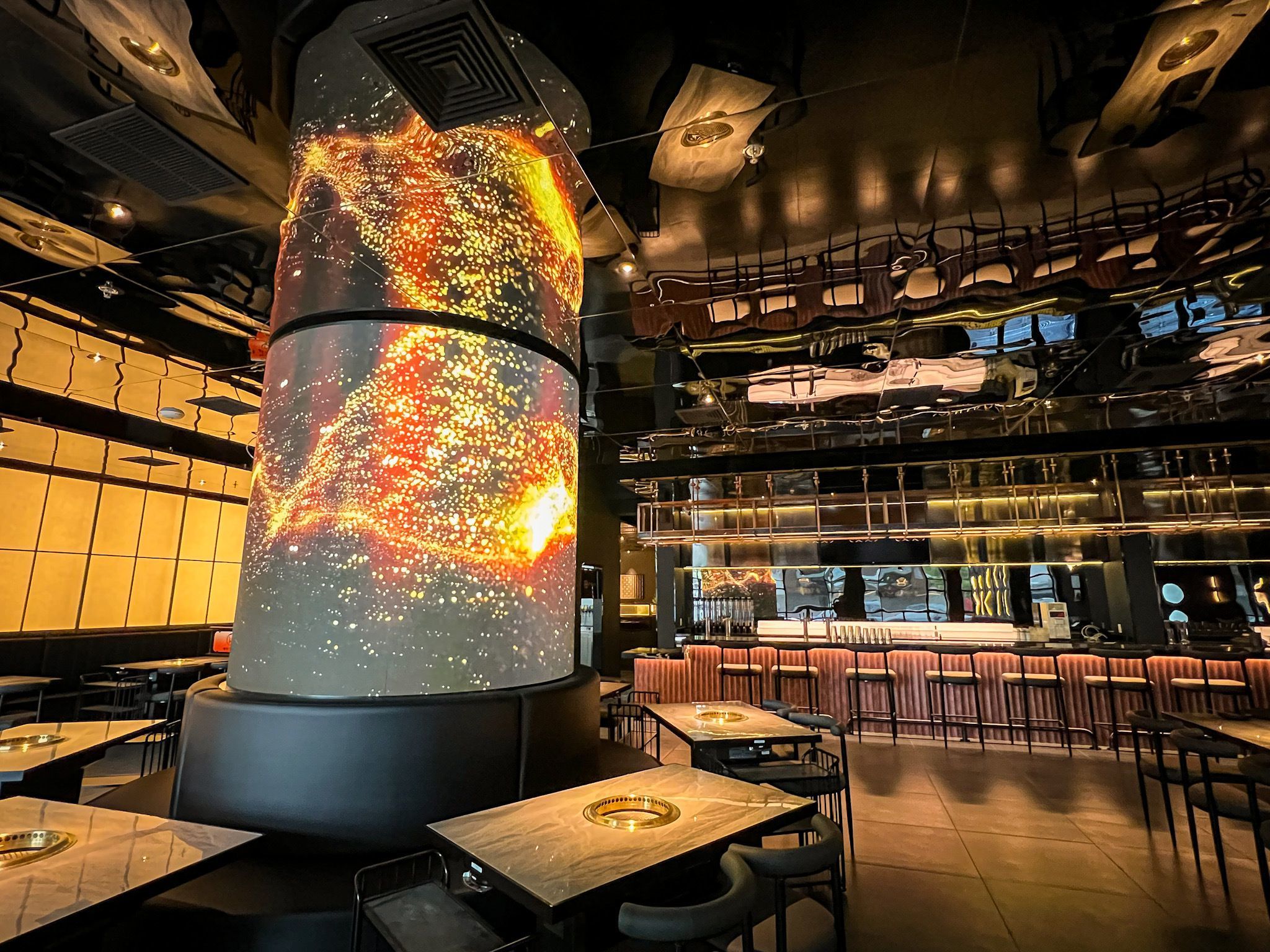
Ogyu Japanese BBQ restaurant is shown on Tuesday, July, 7, 2026 in Ardmore, Pa. The new restaurant by Sam Li offers a modern Japanese steakhouse experience with tabletop cooking, adding to Ardmore’s growing portfolio of restaurants.Jose F. Moreno / Staff Photographer
Ogyu (pronounced “Oh-Gee-You”) is a snazzy space. Li, a chef and sushi entrepreneur who also owns three Osushis (in Ardmore, Wayne, and Marlton) as well as Newtown Square’s Hiramasa, spent $3 million transforming the former Iron Hill into a 300-seat meat palace with sleek black fixtures, marble accents, and illuminated walls. The all-you-can-eat format, a national trend in luxury foods, has been a smart move for this three-month-old restaurant, which grills 1,000 pounds of beef each week, 75% of which is wagyu, roughly 20% of which is from Japan. (A la carte options are launching soon.)
But the overall details do not add up to theluxuryexperience the $120 check average should command, from the cruise ship-level tropical drink program to the tiny plastic plates our servers never bothered to clear between courses until I asked. (Nonetheless, our server preselected a 22% gratuity as the default tip on Ogyu’s mobile payment machine.)
Jason Kan, of Wynnnewood, Pa., and wife Megan Kan, are dining in for the first time at Ogyu on Friday, Aug. 28, 2026, in Philadelphia.Tyger Williams / Staff Photographer
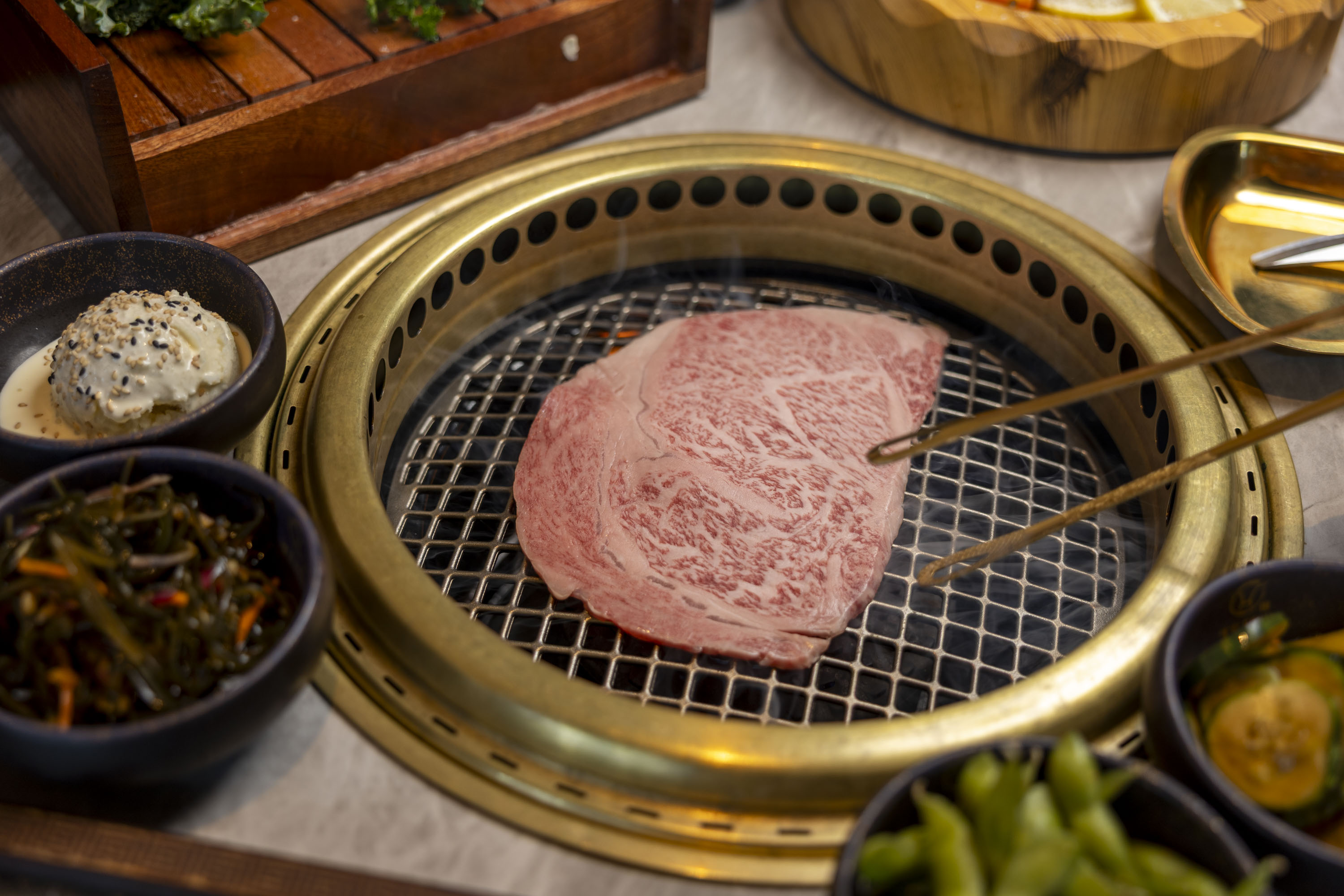
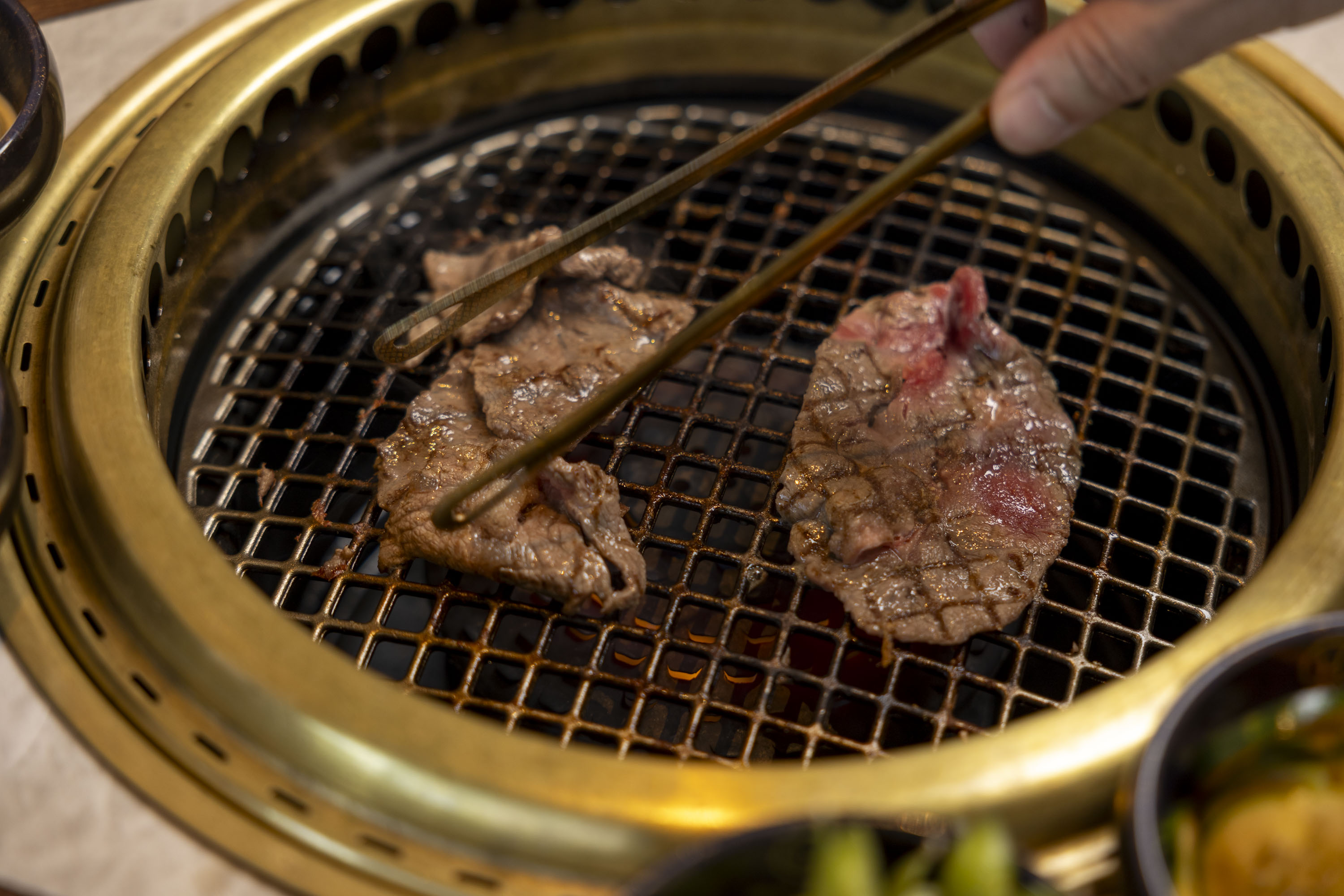
Habitués of all-you-can-eat may understand their task, target, and the rules of the game. Unlike flavorful, marinade-boosted Korean barbecue, this beef is presented relatively unseasoned, in the Japanese yakiniku tradition, to “focus on the quality of the meat itself,” says Li. I only wish someone had bothered to show us the temperature controls on the side of our tabletop grill, which wasn’t set nearly hot enough to properly sear the beef. The A5 Wagyu rib cap itself was legitimately tender and glossed with fatty richness. But served in less-than-prime circumstances, with customers in charge of their own grilling — usually overcooking the meat while simultaneously trying to socialize — it fell flat for me.
A $79 fee, or even $99, is technically a fair deal for a big meal spun around an ingredient that, at its highest quality, sells locally at Barclay Prime for $210 or more for a half-pound portion. But I don’t enjoy Japanese Wagyu in that kind of portion. It’s rich and tender to the point of being mushy. A little goes a long way. But the wider world’s growing appetite for wagyu as a prestige label synonymous with the good life (the global market is projected to grow from $29 to $49 billion between 2025 and 2034) leaves me skeptical.
The Wagyu Mt. at Ogyu on Friday, Aug. 28, 2026, in Philadelphia.Tyger Williams / Staff Photographer
Is wagyu really the lifestyle upgrade we need — not just for occasional splurges, but our everyday burgers and cheesesteaks, too? I don’t think so. It’s just the latest in a long line of token bites of privilege — truffles, caviar, uni — that lose their luster once the industrial food complex latches on for maximum profit, even as standard beef prices hit all-time highs. There is some excellent American wagyu available now, but there’s also enough fake wagyu on the market, let alone less-marbled hybrid versions raised in both America and Australia, to make one question all of it.
Personally, I’d rather sink my teeth into a thick, dry-aged porterhouse that delivers the beefy texture and complex savor of carefully handled meat, not just the fat that gives it richness. I’ll take a well-marinated Korean galbi with all the ssam and banchan fixings at Kim’s, a perfectly cured slice of brisket pastrami (hello, Radin’s deli!), or a grass-fed Brazilian cut roasted over live coals at Picanha over the soft pads of a fatty wagyu splurge.
The Miyazaki rib eye at Ogyu on Friday, Aug. 28, 2026, in Philadelphia.Tyger Williams / Staff Photographer
But the competitive nature in me chafed to learn from James, when I asked him after our meal, that my table of four’s consumption of 32 savory dishes was “below average” for Ogyu. Li later confirmed that his regulars typically order 50 to 60 dishes.
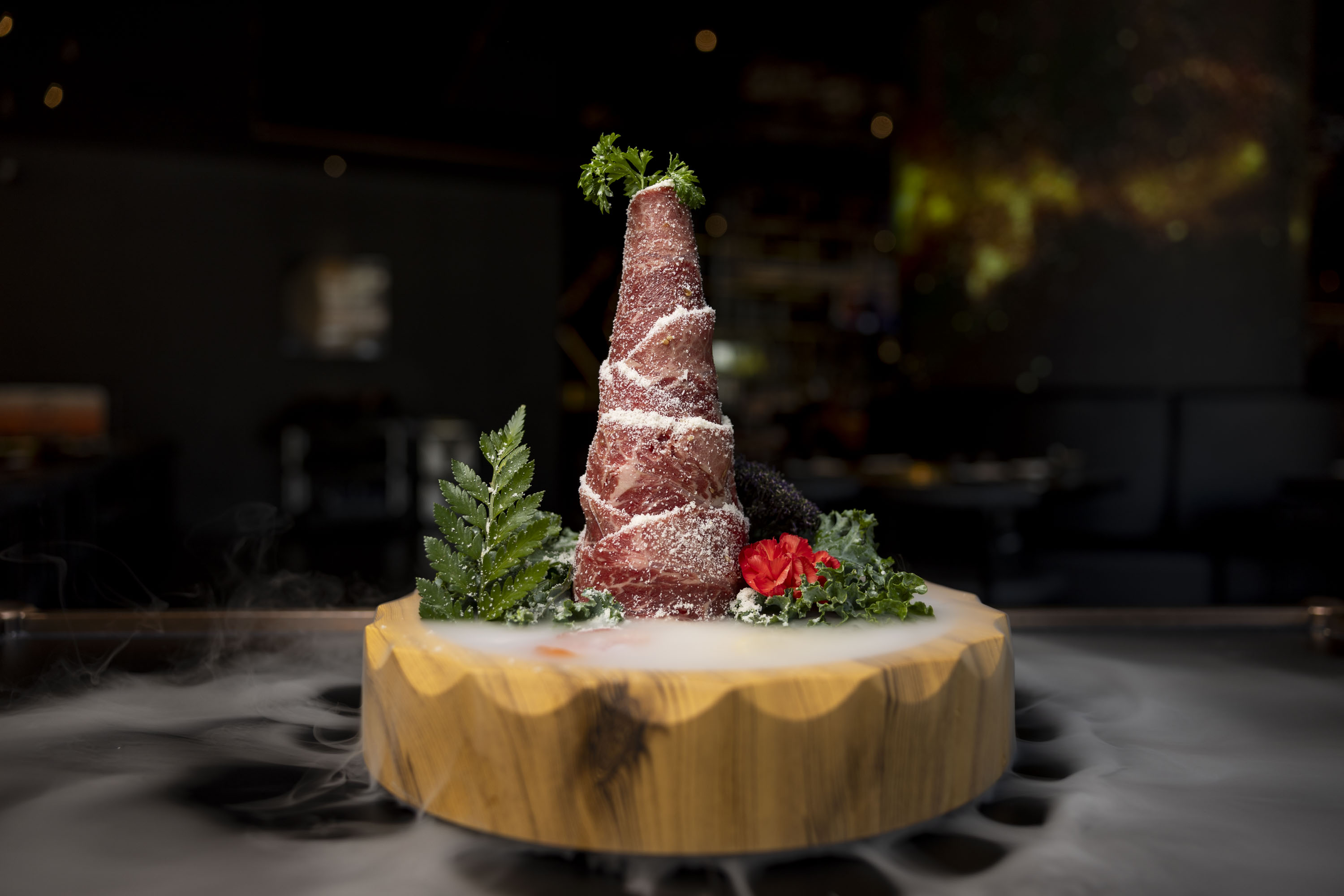
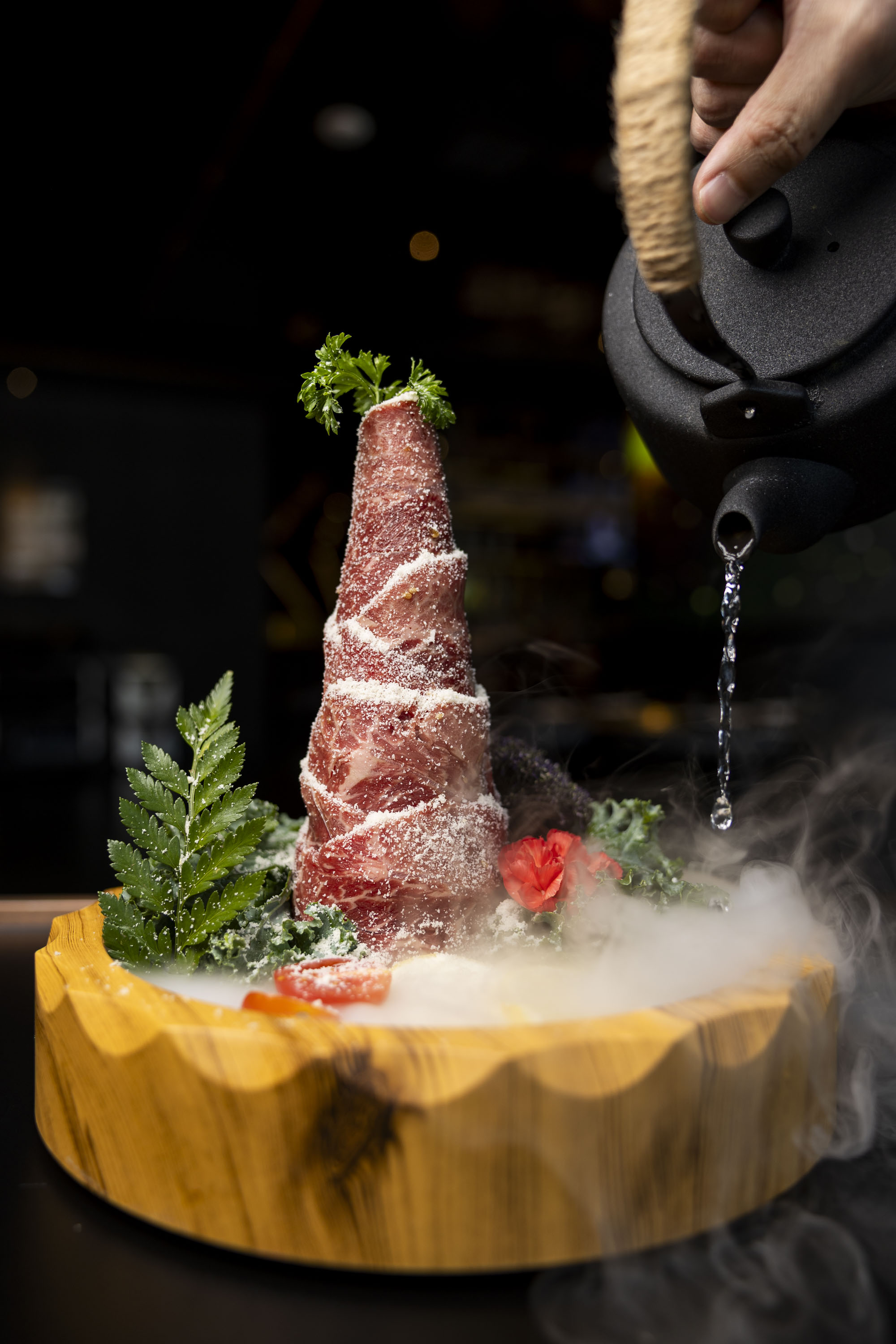
I became determined to run it back for another visit, this time at Diamond-level indulgence, with a disciplined game plan to start with beef and order, order, order at every 10-minute interval. We started at the peak, quite literally, with “Wagyu Mt. Fuji,” a pylon-shaped prong wrapped in American-raised wagyu blade steak whose snow-effect decoration of grated Parmesan had the unfortunate effect of sticking to the grill and causing the beef to shred into worthless flakes whenever we tried to pry it off. Our server whisked away the grill plate before we’d even eaten half.
The Wagyu Mt. Fuji dish at Ogyu in Ardmore, featuring American wagyu blade steak.Tyger Williams / Staff Photographer
I tried the black pepper-marinated eye-of-round to sample a non-Wagyu cut, but these prime-grade strips quickly roasted into unpleasantly twiny ropes that prompted my own impression of James’ pantomimed nixing. It would be almost all Wagyu from here on in as we cycled through multiple 3.3-ounce portions of truffled chuck rib, short rib, strip loin, and thin-cut tongue (too crunchy for my crowd). Piles of empty service trays cluttered our table as the staff arrived with waves of more meat. But few cuts really wowed me, except for the tender New Zealand lamb chops, which I highly recommend.
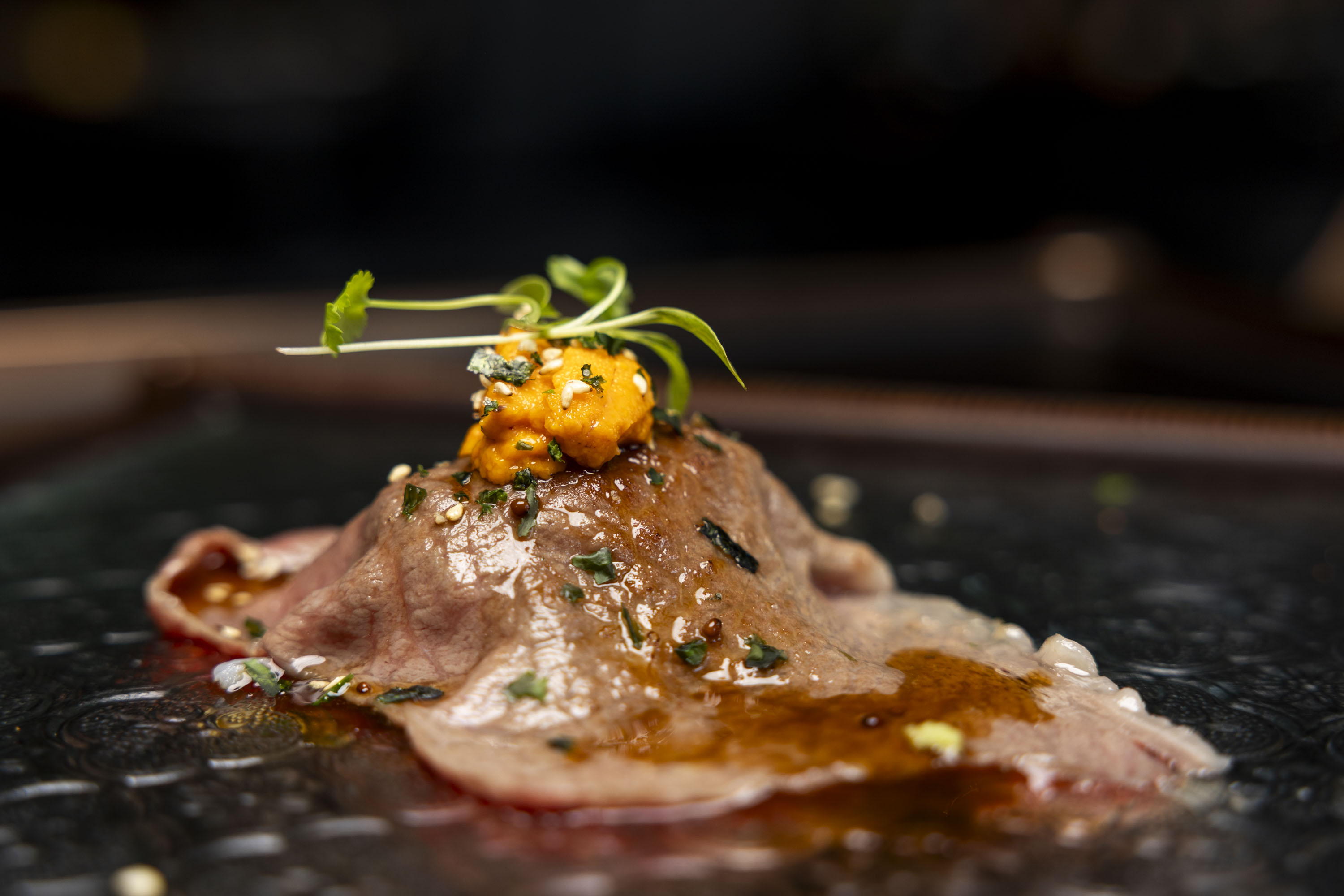
Among the best menu items was the “Meet Wagyu” nigiri, a sheer strip of beef draped over a nub of rice, topped with a nugget of your choice — uni, caviar, truffles, or foie gras — then briefly torched in the kitchen. It was a composed one-bite delight that highlighted Wagyu’s signature virtues. The one knockout cut that impressed on its own was the A5 rib eye from Miyazaki, a succulent pad of velvety soft beef that our server snipped into glistening morsels.
The Wagyu nigiri topped with uni at Ogyu on Friday, Aug. 28, 2026, in Philadelphia.Tyger Williams / Staff Photographer
After 3 pounds of grilled meat between us, I could have kept going. But my tallow-saturated guests could not. Despite my best efforts, we’d only managed a small bump over the previous visit: just 37 plates. We’d maxed out our quotient on the premium Japanese Wagyu, but as plate volume went, we were still way “below average.”
Once the dry-ice smoke settled, I needed a caffeine boost — only to find that Ogyu won’t even brew a simple pot of tea (lest you linger beyond your 90-minute welcome). At least there’s refreshing green tea-flavored ice cream extruded into strands of “matcha snow ice.” Li says they mix their own ice cream base and pair it with red beans to temper the sweetness. After a meal of such unbridled beefy excess, the final restrained note was perfect.
The matcha snow ice at Ogyu on Friday, Aug. 28, 2026, in Philadelphia.Tyger Williams / Staff Photographer
Lunch served 11:30 a.m. to 3 p.m. Monday through Friday; dinner 3 to 10 p.m. Monday through Thursday, until 11 p.m. Friday, and 11:30 a.m. to 11 p.m. Saturday and Sunday
All-you-can-eat packages through four tiers from $39 to $99.
Wheelchair accessible.
About 70% of the menu (including most meats) are gluten-free or can be modified.
Menu highlights: As much of the A5 Japanese Wagyu as your package allowed. Also, the Wagyu nigiri combos, the lamb chops, bone marrow soup, and matcha snow ice.
Drinks: The tropical cocktails are fine and on-theme but not memorable. There’s plenty of sake and Japanese whiskey for big spenders. Otherwise, stick with a draft of Sapporo or Dogfish Head 60 Minute IPA.
Lounge area at Ogyu Japanese BBQ, 60 Greenfield Ave., Ardmore, on May 21, 2026.Michael Klein / Staff
About a year ago, Jaylen Brown and Que Gaskins were searching for creative teams to help Brown’s brand, 741 Performance, launch what they called its “second album” — a sneaker rollout named “NOT from HERE.”
Longtime sneaker designers Sean O’Shea and Geoff Deas, whose resumés include brands like Nike, Adidas, Puma, Converse, and Anta Sports, were among the candidates. O’Shea and Deas were Anta’s general manager and creative director, respectively, and key figures in launching the China-based brand in the U.S. They offered their expertise to Brown’s brand.
“That’s our major goal: How do we get [Brown] off the ground because there aren’t that many players who have had their own brand,” O’Shea recently told The Inquirer. “So I think that’s where we came in. That’s our biggest focus. … Not that we don’t want to get paid, but it’s way more important, from our point of view, that it gets off the ground and becomes successful and is a competitor with some of the big guys.”
New world order
As Brown, who was traded to the Sixers in July, and Gaskins, the CEO of 741 Performance, approached the brand’s second sneaker rollout, they wanted to push “the status quo and challenge different traditions and standards and boundaries” of the sneaker industry.
The shoe will come in three colorways, which Gaskins calls “worlds”: black, gray, and red.
The “NOT from HERE” collection will also include clothing, a “performance recovery shoe” that can serve as a lifestyle sneaker, and a “recovery slide” to wear after workouts. The brand plans to add more colorways and potentially a running shoe next spring.
Brown already has immersed himself in Philly, but the “NOT from HERE” collection has taken on a new meaning after his decade-long run in Boston.
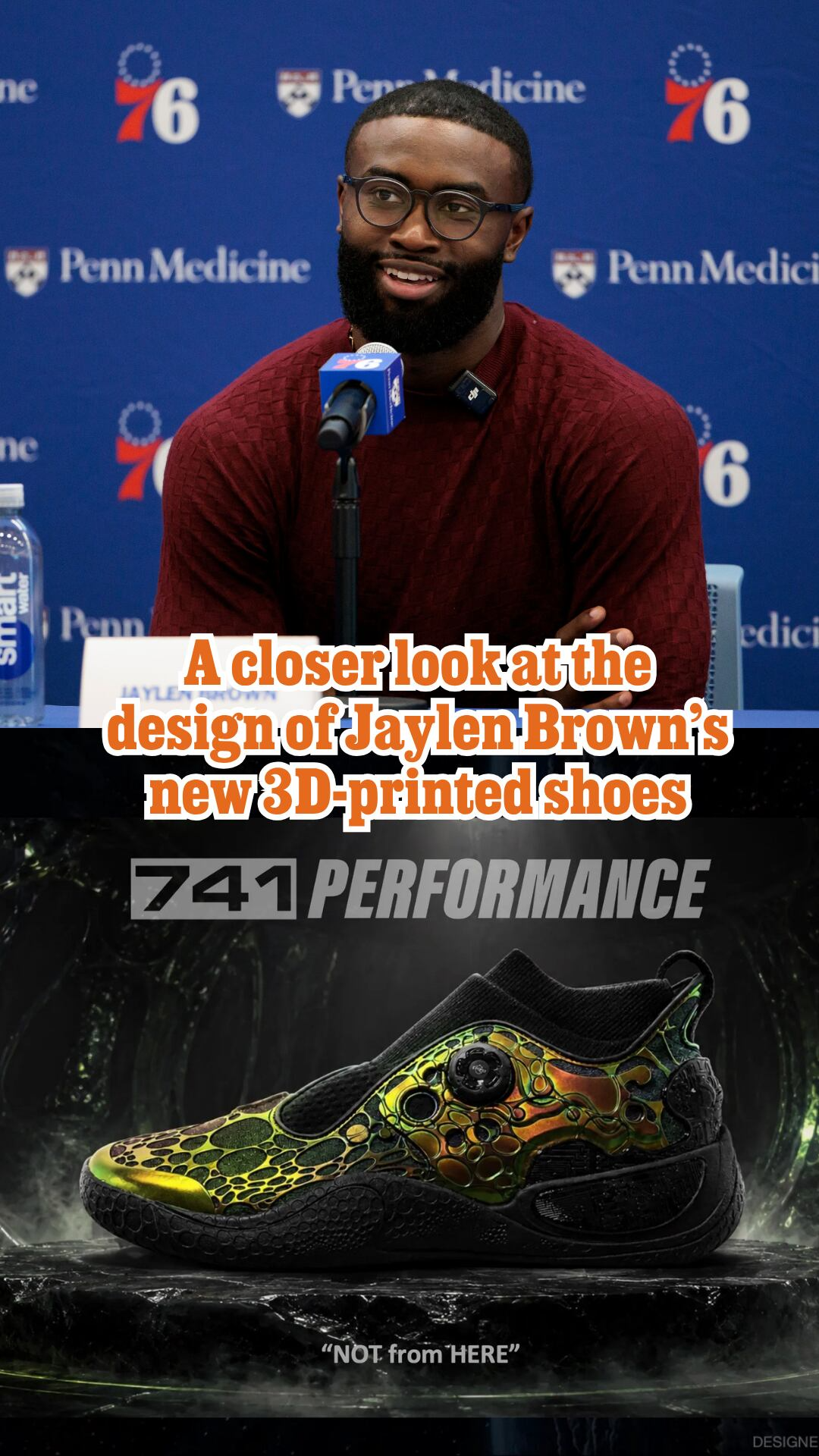
Detailed look of Jaylen Brown’s new shoes via his 741 Performance brand.Courtesy of Geoff Deas and Sean O'Shea
“I think him understanding, ‘I want to be able to open up young people’s minds and have them think about even places that they’re not even aware of.’ I think all of that symbolism, all of that energy, all of that frequency is a part of what we’ve been trying to build,” Gaskins said. “Even the idea of this album being called ‘NOT from HERE’ and how it’s played out now because he’s even playing on the [Sixers] when this product will launch in Philly, where he’s not from.
“Now, being in a new market … and being able to tell that story is ultimately what we were trying to do with this project and with this collection.”
Gaskins will have a large hand in helping Brown’s brand compete in the industry. He is no stranger to the sneaker business or Philadelphia athletes. He played a key role in Allen Iverson landing at Reebok 30 years ago. Gaskins was responsible for the “Iverson business,” and the RBK division of the brand, he says. He also served in several leadership roles in the National Basketball Players Association, where he met Brown in 2017. He helped advise Brown when he was weighing sneaker deal options before creating his own in 2024 and has been the CEO of 741 Performance since March 2025.
“I really think [Brown’s] trying to build something bigger that’s really representative of the work I’ve always done,” Gaskins said. “Even with the work I did with Allen and the cultural impact that he was having on the world — I’ve always felt like these guys had great power, great influence, and I think someone like Jaylen understands that.
“What Jaylen is building, I think it’s bigger than just a shoe company. If I’m being honest, I think he’s really trying to create a new reference standard for how athletes can take ownership.”
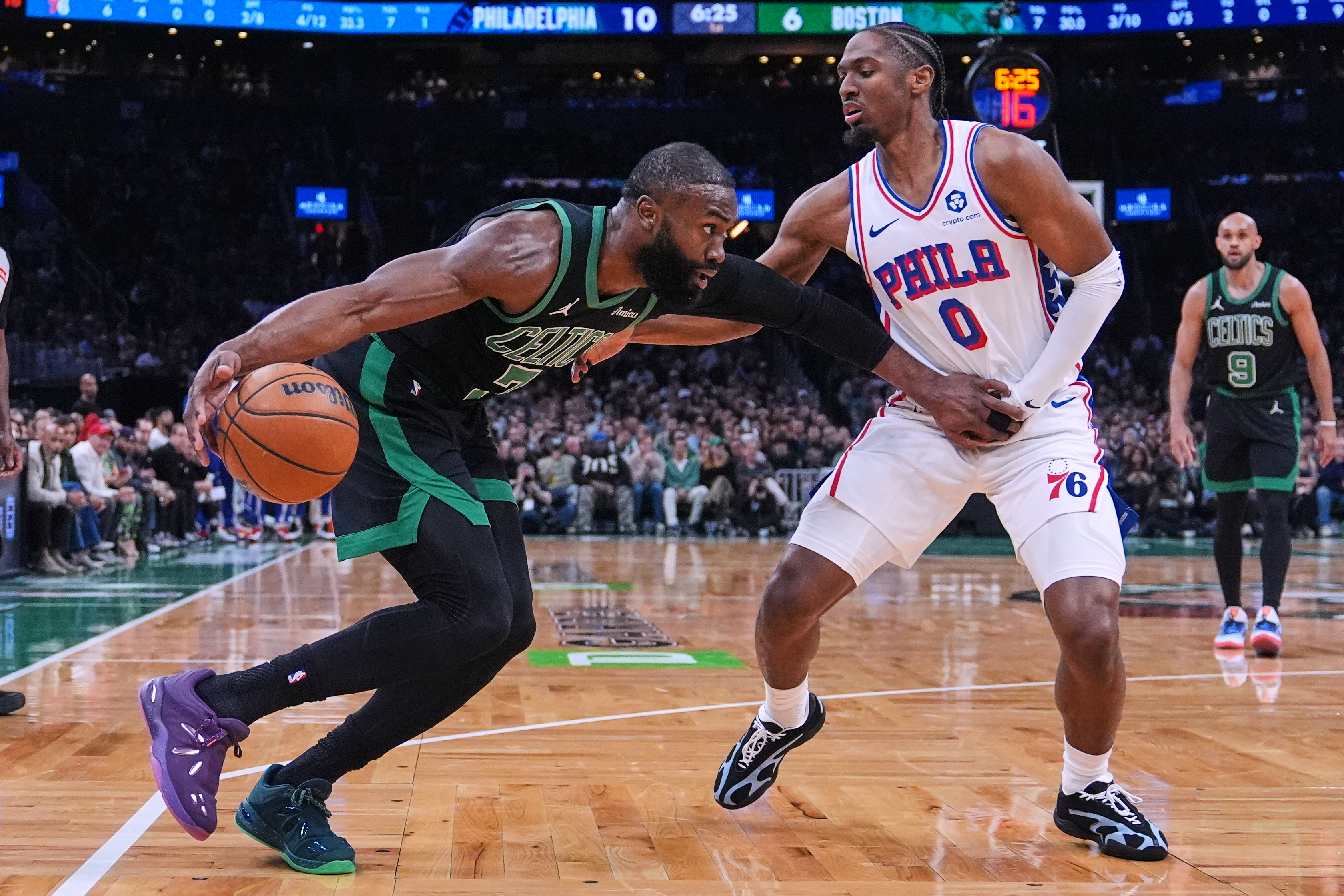
Jaylen Brown (left) wearing his 741 Rover signature shoes during the playoffs last season for Boston.Charles Krupa
Brown released his debut sneaker, the Rover 741, in 2024. But Gaskins, who calls himself Brown’s “sous chef,” didn’t want to “stall or hurt or hinder” the progress of the brand by sticking with the same designers on every new project. Gaskins noted that Brown “had this ability to connect with a lot of types of different people, a lot of types of creators.”
That’s where O’Shea and Deas come in. They have taken over production of Brown’s debut shoe along with “all the design, apparel, footwear, everything for the second [shoe rollout].”
“If this was the music industry, we weren’t just making music. We were doing everything that like a Capitol Records or somebody [like that] was trying to do also,” O’Shea said. “So it’s like we were printing albums. We’re trying to do all of it. That’s the cool thing about Jaylen and what he’s trying to do is he wants to make sure he owns, or at least understands, all of it.”
Deas estimates the newest shoe is “about 90% there right now,” with some adjustments still to come, including a drop-in footbed to account for basketball players who use orthotics in their shoes.
The planned initial release of the shoe to retailers is late November, but O’Shea says Brown “will be ready to go to play in it” by Sixers media day on Sept. 28. The shoe will make its regular-season debut in the team’s opener against the Knicks on Oct. 20 (7 p.m., NBC10).
The design and model for the “NOT from HERE” shoe is based on Brown’s love for outer space, says Gaskins. After getting acclimated to Brown’s vision, O’Shea and Deas worked on creating and executing a design “with the limited innovations and materials and technologies we have here.”
A sketch rendering of Jaylen Brown’s new shoes, “NOT from HERE,” shoes, designed by Geoff Deas and Sean O’Shea.Courtesy of Geoff Deas and Sean O'Shea
“We’re trying to mirror, I think, the vision of the growth of his brand. So the [741 Rover], the first shoe … it’s like from Earth to the journey to getting out there and just like his brand, the exploration of it,” O’Shea said. “The design language is very human design language, the way it’s engineered. And then we took that and we said, ‘Hey, from there, let’s do it as if you’re out there and now you’re in this open space.’
“It’s more about what’s out there [in space]. Even the design language is as if it was made in space and organically. There’s no human lines on it. It’s like it almost the technology grew symbiotically. It’s technology meets something that’s really not from here.”
Added Deas: “[We were] just building out the inspiration boards and trying to see what kind of organic shapes can mash together — like if a spaceship went through space and it was catching some sort of creature.”
The low top shoe’s design in the black colorway mimics “technology circuit boards” on the upper part with a green underlay to “lean into that metallic, iridescent finish” of the prototype to lean into the space theme with a midsole “popping out and [that] locks [the shoe] in place” to ensure Brown’s feet don’t slide while he’s playing.
Video: A closer look at the design of Jaylen Brown’s new 3D-printed shoes
The laces are hidden because the pair are hoping to add a boa system for the shoe, which is an adjustable dial to make the shoe tighter around an ankle. Gaskins said the boa system, which is uncommon in basketball sneakers, likely won’t be in the first wave of the shoe’s release — but hopes to provide it “later in the year, maybe for a playoff run.”
Brown has played in the new sneakers and posted them on Instagram, including during the viral workout video with new teammates LeBron James and Tyrese Maxey. Because the shoe is a prototype, Brown is using this time to test it during workouts and other events he’s participated in this summer. The feedback, said Deas and O’Shea, “was pretty immediate,” and O’Shea added that Brown is “very, very involved.”
“We really wanted to get in there and think for him almost so that creatively,” O’Shea said, “we could produce stuff that really encompasses his vision and where he wants to go with the brand and creatively, how he connects to the kids.”
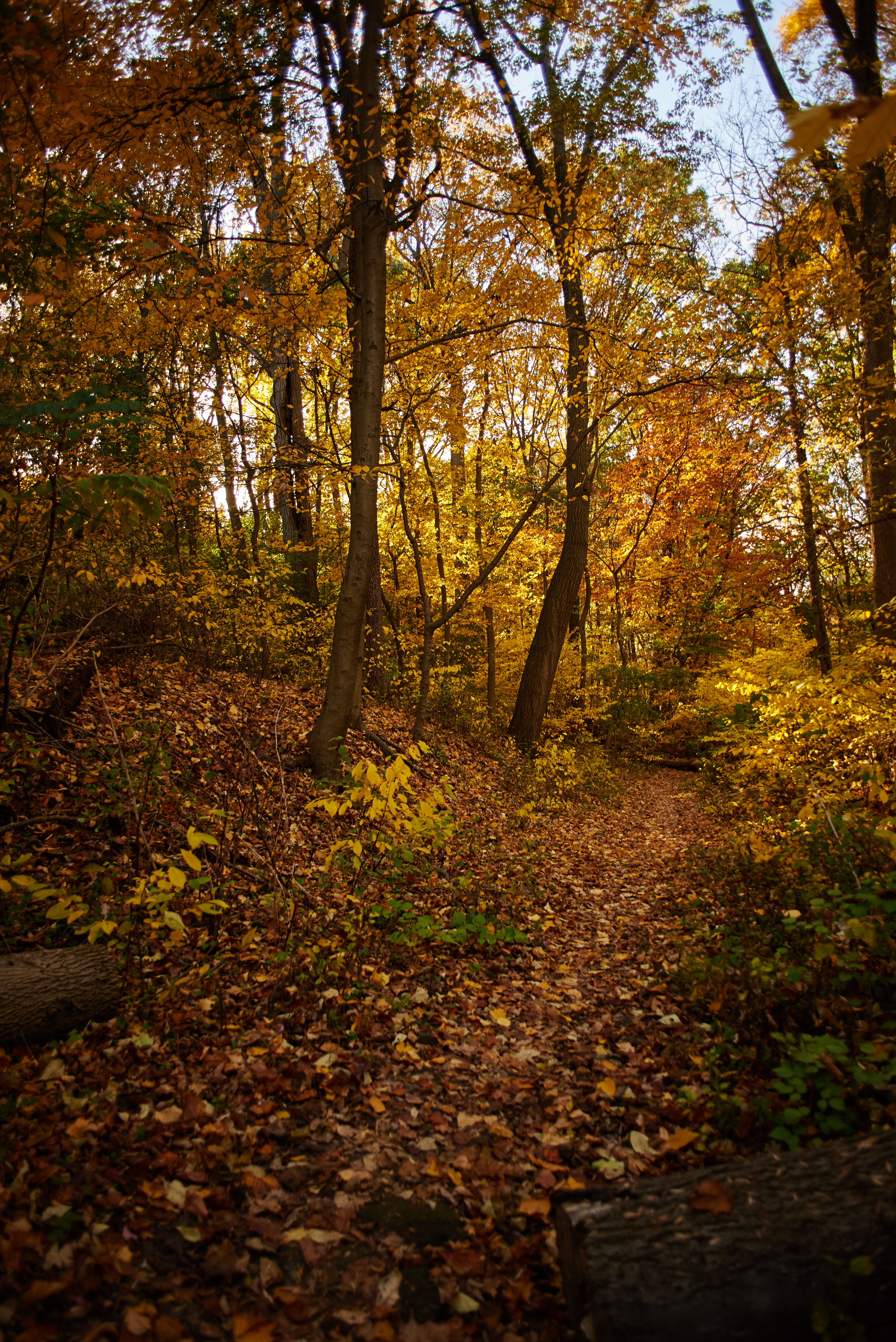
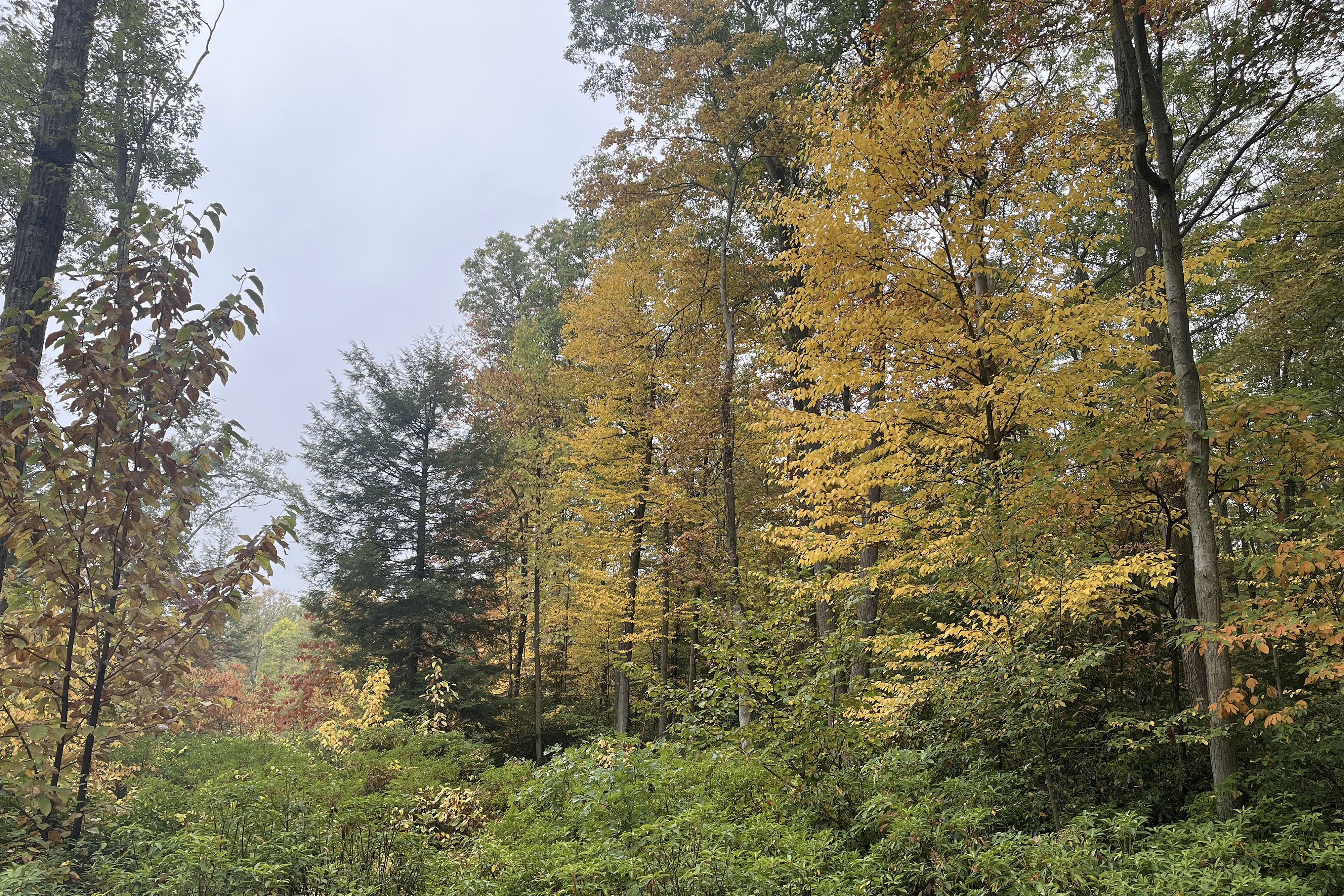
As temperatures drop, the vibrancy of the area’s fall foliage becomes more striking, with peak viewing times throughout October.
From russet reds and fiery oranges to burnt yellows and smoky bronze, here are our top recommendations for leaf peeping in Philadelphia and the surrounding areas. Whether you’re walking, biking, hiking, canoeing, enjoying a picnic, or simply driving by, plan your viewing activities accordingly for these optimal, not-to-be-missed views.
City Cruises Philadelphia
1 mile from Center City
Enjoy breathtaking views of the city’s foliage along the Delaware River on this three-hour cruise. Witness a spectacular display of Atlantic white cedar and black willow in Camden’s Cramer Hill Waterfront Park, swamp white oaks in Spruce Street Harbor Park, and American sweet gums at Race Street Pier.
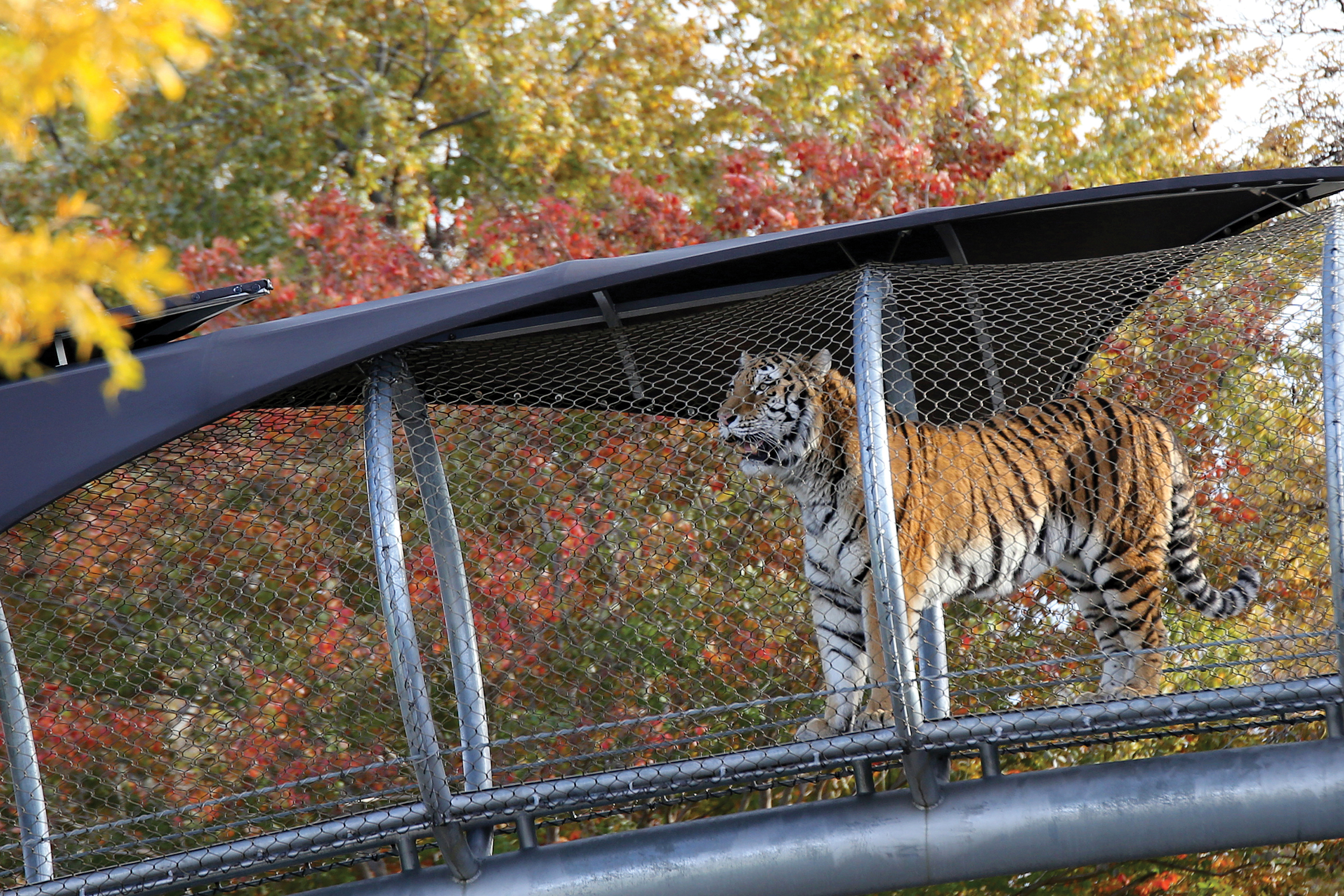
An Amur tiger at the Philadelphia Zoo in fall.Philadelphia Zoo
Philadelphia Zoo
4 miles from Center City
Home to 1,900 animals and more than 1,500 trees, the Philadelphia Zoo is packed with vibrant reds, oranges, yellows, and browns through autumn. Notable tree species include the nearly glowing yellow ginkgo trees at Outback Outpost and Impala Plaza, the burgundy crape myrtles just south of the Tiger Terrace eatery, and the distinct orange of the katsura tree near the Solitude. Go around mid-October for peak hues.
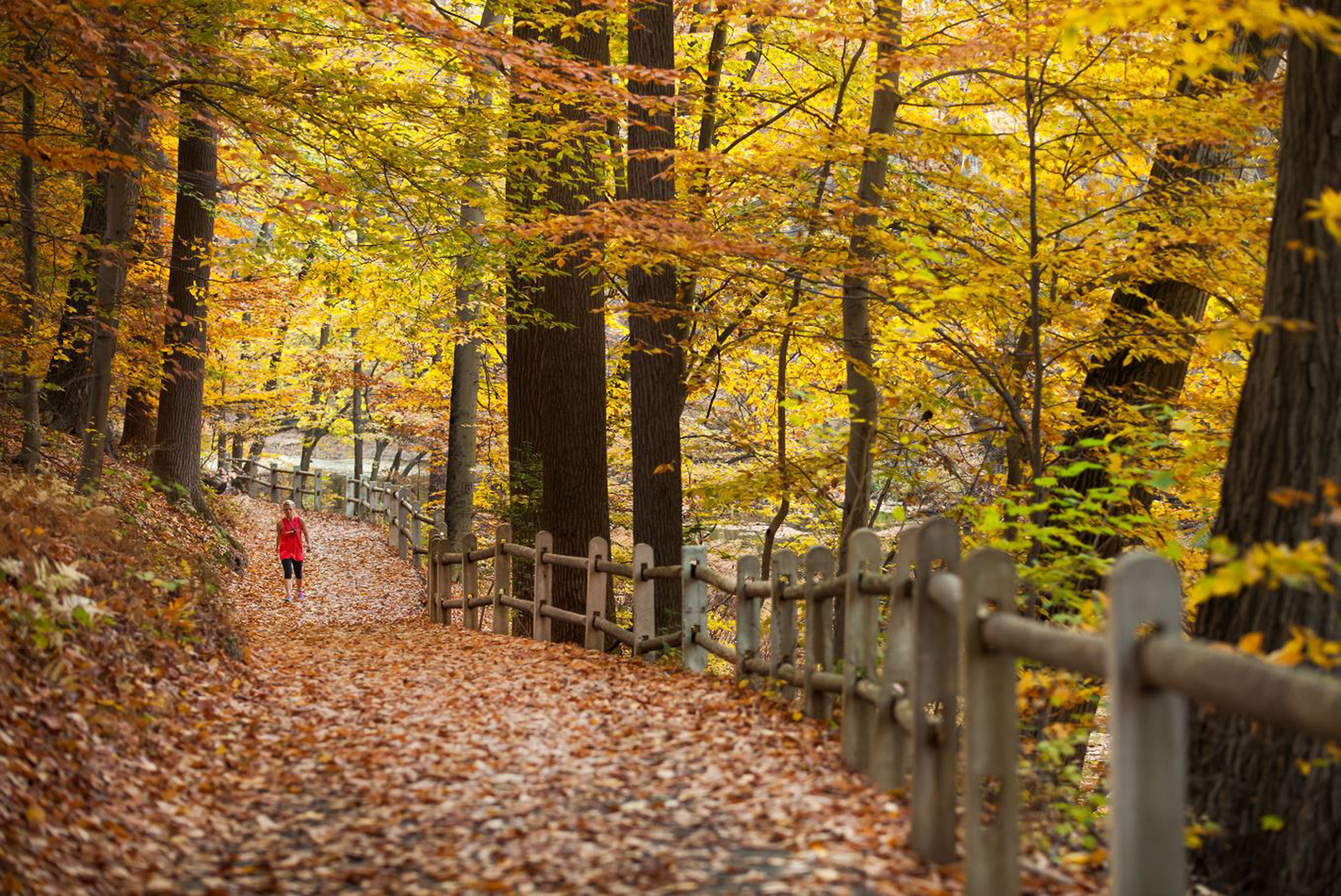
Chamounix Trolley Trail in West Fairmount Park.Albert Yee
West Fairmount Park
6 miles from Center City
With ideal viewing throughout this 1,400-acre park, be sure to visit the Trolley Trail. Runners, hikers, and cyclists can surround themselves in stunning nature through a 4.5-mile loop through the woods. Don’t miss the views around the Skew Arch Bridge, which was recently restored by the Fairmount Park Conservancy. The bridge is a vestige of the trolley line infrastructure featuring distinctive engineering with “ribs” of arching brickwork.
This historic, 33-acre pond in Camden County is ideal for leaf viewing, offering amenities like a self-guided looped tree trail, hiking, biking, and picnic area to enjoy the surrounding trees.
Pennypack Trail is part of the Circuit Trails, a network of multiuse trails that spans over 500 miles across the Philadelphia region and Southern New Jersey. This 16.8-mile multi-surface, wooded trail travels through Montgomery and Philadelphia counties and offers a serene getaway amid vibrant maples, oaks, and other native trees.
Five miles of trails around a 15-acre campus, with the best viewing of oaks and red maples for brilliant reds, American beech trees for fiery oranges and copper tones, and walnut trees for golden yellows in late October. Ideal places include the plant gardens close to the museum building and along the River Trail.
This beautiful park, part of both Bucks and Northampton Counties, is ideal for viewing fall foliage. From sunrise to dusk, stroll, kayak, or canoe along the 58-mile towpath, maintained by the Friends of the Delaware Canal and Delaware Canal State Park, to determine which way you best enjoy the fall scenery.
Head to this 7,730-acre state park — the largest block of continual forest between Washington, D.C., and New York City — the last week of October for the most colors. A mix of forests, lakes, wetlands, and fields, all ideal for scenic views.
Named after the Loyalsock Creek, a stream that runs through it, this park consists of 114,552 acres, including portions of Sullivan, Lycoming, and Bradford Counties. Viewing consists of northern hardwoods with peak viewing early to mid October.
This forest spreads across the high ridges of the Laurel Highlands, including the 3,213-foot Mount Davis, the highest point in Pennsylvania. The forest comprises 15 tracts totaling almost 59,000 acres in Fayette, Somerset County, and Westmoreland Counties. Peak foliage viewing is mid to late October.
Cole Run Road is a short, scenic route within the Forbes State Forest in Somerset County, leading to Cole Run Falls and the nearby Barronvale Covered Bridge. View stunning foliage surrounded by one of the region’s most photogenic waterfalls. Peak viewing is mid to late October.
It is one of the eight state forests located within the Pennsylvania Wilds, comprising over 16,761 acres. Its border ranges from the Clarion and Allegheny Rivers to the Allegheny Plateau, providing a wide collection of diverse trees. Enjoy the gorgeous foliage views via horseback riding, picnicking, hiking, or mountain biking in mid to late October.
Donald Trump wants to penalize private colleges that continue to consider diversity, equity, and inclusion in their admissions decisions. He says that approach discriminates against white students, and that he wants admission for those with the most merit. But merit is always defined by those in power. Unions give the first choice of plum jobs to those with the most seniority, not necessarily those who are the hardest workers. Civil service exams give extra points to veterans depending on their service records. Universities give some preference to low-income students who may also bring different perspectives into the classroom because it is good for the educational process. We all discriminate, consciously or unconsciously. Affirmative action and DEI are simply measures of accountability. If a bank robber is caught and says he will return the money, “Just trust me,” we would want to count the money returned, would we not?
John Kovach, Wallingford
Flock misguided
The controversy over Flock cameras is misguided. For example, if you live in Philadelphia, the chance you are picked up by a camera is already exceedingly high. The city has deployed hundreds of cameras. Added to that are hundreds more operated by the University of Pennsylvania, Temple, and Drexel — and hundreds more owned by businesses or private citizens. The issue isn’t about whether you are an innocent person whose picture suddenly appears in some database, because, in most cases, it’s already there. If you are in a public place, you have no expectation of privacy.
The real issue is policy around how the information is accessed and used, as well as the security of the data collected. Whenever a serious crime occurs, access to the camera data is often critical to arresting the perpetrator. Politicians should look to tighten the rules governing access to camera data rather than eliminating one of the most useful tools law enforcement has because, even if Flock cameras are banned, cameras are here to stay.
Charles Brennan,retired deputy commissioner, Philadelphia Police Department, Philadelphia
Philly’s loss
As a longtime volunteer at the Academy of Natural Sciences museum, I have been shocked and grieved at the neglect and inattention that went on there for years. The idea that Drexel University, with its financial woes, could adequately support this gem of a museum once it took over its administration was never realistic. There were minimal efforts to deal with the shabbiness, to make the place more comfortable for visitors, to give the public access to — and knowledge about — the many treasures hidden inside, including Thomas Jefferson’s fossils, a staggeringly beautiful collection of rocks and minerals, a chair sent by Albert Einstein’s daughter, and so on. Nevertheless, the museum was popular with tourists and a haven for parents who brought their young children. But there was no infusion of money to make the place as bright and inviting as it used to be.
During the Semiquincentennial celebrations, there has been much attention given to Philadelphia’s many firsts — but what about the oldest science museum in the United States? People are lamenting the closure of the museum — but the state, the city, the many foundations and philanthropists in the area, all seem to be turning a blind eye. And it’s a black eye for Philadelphia.
Carole W. Soskis, Bala Cynwyd
Join the conversation: Send letters to letters@inquirer.com. Limit length to 150 words and include home address and day and evening phone number. Letters run in The Inquirer six days a week on the editorial pages and online.
DEAR ABBY: I have a younger brother who has moved back to the area where the rest of our siblings live. He went for 30 years without keeping in close contact with anyone during that time. He’s the youngest of 10 children, and our mother spoiled him rotten. He’s in his 60s now and still acts like an immature spoiled child. Our father had to bail him out of financial situations more times than I can count. Despite that, he hated our father and announced it when he came home for Dad’s funeral.
The problem we’re having now is that he constantly tries to stir up problems between the rest of us. Until he returned, we were a close-knit family. None of my other family members want anything to do with him, and they refuse invitations to get together if he will be there.
Abby, I love my brother, but I’m tired of his behavior. He had a drug problem when he lived out of state. He claims he’s clean now, but he has now replaced the drugs with alcohol. How can I get my family back without him if he isn’t willing to admit he is the problem?
— SIBLING SITUATION IN WISCONSIN
DEAR SIBLING: Stop inviting your brother to these gatherings. The sooner you do, the sooner he will learn the consequences of trying to stir up trouble among the siblings. Unless there are consequences for his behavior, it won’t stop. His behavior isn’t unusual for an addict. By that, I mean it is common for an addict to replace his drug addiction with another one and even more common to deny having a problem.
There’s a program that was created decades ago called Al-Anon. Al-Anon (al-anon.org) is an offshoot of Alcoholics Anonymous, created for anyone who is affected by a loved one’s drinking. It holds meetings everywhere, and you should have no trouble locating one near you. Attend some of those meetings, which are free of charge. When you do, you will meet others with problems similar to the one you are having.
** ** **
DEAR ABBY: I have been planning a dream trip to Europe with some family members. The people I’m traveling with are young and like to take selfies everywhere, which takes a lot of time. I don’t care about doing that type of thing. They are “girly girls,” and I am plain. I never know what to do while they are doing these things. They love hair and makeup and take up valuable time with these activities. I don’t begrudge them this, but do you have any advice on what to say or do while I wait around?
— FRETTING THIS TRIP
DEAR FRETTING: When people take selfies as they travel, part of the fun is capturing themselves against picturesque landscapes, famous landmarks or works of art. If you don’t want to be in the photos, keeping a visual record of your journey can still be fulfilling. Develop your photo or video skills by focusing on the scenery the girls are using as backdrops. If you are artistically inclined, a sketchbook may be more your speed. If images aren’t your thing, bring a travel journal in which you can jot down your impressions and favorite aspects of the places you visit.
ARIES (March 21-April 19). Maybe identity is a group of ideas you pull together about yourself. And maybe changing just a few in the constellation is enough to flip the whole image. You’ll challenge what you think of yourself and suddenly see someone new in the mirror.
TAURUS (April 20-May 20). You keep returning to something you suspect is a waste of time. But there must be something there or you wouldn’t participate. Once you name it, you’ll feel more in control of what this pastime actually does for you.
GEMINI (May 21-June 21). Striving for efficiency sometimes means spending leisurely hours with the people who have ways to help you. Since relationships are often a shortcut to the goal, building them can be one of the most “efficient” things you do.
CANCER (June 22-July 22). When everything feels good at home, the rest of your life seems to move without friction. You save time by cutting to the chase. You have the confidence to say no to things that won’t make much of a difference.
LEO (July 23-Aug. 22). It doesn’t seem like it should be true, but looking the part will have an outsized effect on what you can accomplish. People will do their best for you because you seem powerful — like someone they don’t want to let down.
VIRGO (Aug. 23-Sept. 22). This is your moment to be new in whatever way you wish. You can start the things you think will make a difference. You can end the things that were dragging you down. You’re in complete control.
LIBRA (Sept. 23-Oct. 23). You’re no conformist, not in the world and not even in your own mind. You saw yourself one way, and you won’t stick with that. Fresh examples drop into your world for a kind of success you hadn’t considered.
SCORPIO (Oct. 24-Nov. 21). Everything is expensive whether it’s recession times or not, because life takes energy. You’ll look at that energy cost even more than dollar cost, especially when emotions are involved. Emotions can be the most expensive energy expenditure of all.
SAGITTARIUS (Nov. 22-Dec. 21). Memories are a way of marking time, and travel is a way of creating memories. In that way, the money you spend on travel seems to give you more life because it gives you more memories. In the end, the dollar cost hardly registers.
CAPRICORN (Dec. 22-Jan. 19). If a situation isn’t going to work, it’s better to know quickly so you can get on with the business of finding an arrangement that all parties can sustain instead of wasting time in the limbo of “maybe.”
AQUARIUS (Jan. 20-Feb. 18). For Band-Aid rips and intergalactic travel, faster is better. For many other things, speed is a thief of experience. Don’t go so fast you miss the scenery, the joke or the dull moment that’s a chance to connect with a stranger.
PISCES (Feb. 19-March 20). Today’s problem brings out the scientist in you. You’ll come up with a hypothesis, test it and collect the data. The last part is key to making your effort count and figuring this one out.
TODAY’S BIRTHDAY (Sept. 10). Your heart will often be made giddy in this, your Year of Cupid’s Arrow. It’s not all about romance. It’s finding exactly the thing that captivates you, aiming well and enjoying the unbridled joy that comes with actually having your heart’s desire. More highlights: You’ll belong to a small, skilled and powerful group making a difference. Your generosity changes a life. New vitality and athleticism. Scorpio and Sagittarius adore you. Your lucky numbers are: 10, 2, 32, 48 and 6.
David Kidd is an expert in something that some people hate and others tend to just tolerate: seat-belt warning systems — the “ding ding ding” chimes and flashing dashboard lights that serve as reminders to buckle up.
He’s spent years testing different systems in cars and trucks as part of his work at the Insurance Institute for Highway Safety. So he knows very well that the incessant chimes can be annoying.
They’re “an irritant,” he admits. But he prefers a different term.
“We use the word ‘motivating,’” Kidd said.
The lowly seat belt is still considered the best way to avoid serious injury or death in a crash. Forget air bags, anti-lock braking systems, or any other new-fangled safety technology. Unbelted occupants are roughly twice as likely to be killed in a car crash.
Buckling up works.
So does nagging. Kidd’s research found that belt warnings came in a variety of tones and volumes, but if they are “heard and persistent,” people respond.
The seat-belt chime is such a recognizable refrain that when pop star Olivia Rodrigo needed an iconic car sound to open her hit song “Drivers License” a few years ago, she reportedly used a recording of the seat-belt beep in her mom’s car.
The “buckle up” reminders were set to become even more widespread this month, when new federal safety regulations were supposed to require more persistent chimes not just for the driver’s seat but for the front passenger seat, as well. But automakers objected, saying they couldn’t be ready in time. Regulators backed down. So the new rules have been delayed for another two years — 2028 at the earliest — when some rear-seat warnings would be required, too.
The National Highway Traffic Safety Administration said in a statement that it found the automakers’ worries “have merit.”
Others were not convinced.
“It was a bit of mystery to us why this has taken so long already. And now it’s going to take even longer,” said Peter Kurdock, general counsel for Advocates for Highway and Auto Safety, which began pushing for the new rules in 2007.
“It’s disappointing,” he said.
The technology is not cutting-edge. Europe has required seat-belt alarms in new vehicles since 2021. Some automakers, such as Volvo and Subaru, already have voluntarily installed them in vehicles sold in the U.S.
But the fight over the warning chimes feeds into Americans’ long-running love-hate relationship with seat belts.
Seat belts are still seen by some as a question of choice and freedom.
State laws and education campaigns have helped soften some of those attitudes. Today, 49 states require adults in the front to buckle up. The lone holdout is New Hampshire, which lives up to its license plate motto of “Live Free or Die.” Just 34 states plus D.C. require adults to wear seat belts in rear seats. (Children are covered by different restraining-device requirements.)
Still, researchers know some people remain militant in their opposition. They’re the ones buying $6 devices and printing 3D tools to fool the alarm. They sit on top of buckled seat-belt straps. They watch online videos claiming to reveal the hidden tricks to deactivate the warning chimes.
“Those that don’t like seat belts are really hardcore against buckling up,” Kurdock said.
These holdouts are why U.S. seat-belt usage rates have largely flatlined in the last decade, according to NHTSA observational studies. The unbuckled make up a minority of all vehicle occupants, but they die at a much higher rate in crashes: Roughly half of all vehicle fatalities involve unbuckled occupants.
At one point, federal officials tried a much tougher tactic than just chimes.
In 1974, the federal government required many cars to have ignition interlock devices that prevented a car from even starting until the front occupants were buckled up. Motorists hated it. It blew up in NHTSA’s face.
“That got a lot of blowback that reached Congress,” Kidd said.
The idea was quickly pulled, and Congress banned NHTSA from requiring interlocks. Lawmakers then went further and limited seat-belt warning chimes to a fleeting eight seconds.
Some advocates say this is why NHTSA has seemed reluctant ever since to even tinker with seat-belt warnings.
In 2007, Public Citizen and Advocates for Highway and Auto Safety petitioned NHTSA to change the belt-reminder rules and add them for rear seats.
Little happened for years.
In 2012, Congress passed a bill that abolished the eight-second chime limit and required federal officials to create new warning rules for seating positions besides the driver’s seat. It was a start, but a very slow one.
“The chime is very important,” said Shaun Kildare, research director for the Advocates for Highway and Auto Safety.
While NHTSA worked on a plan, the lack of government action created an opening for the Insurance Institute for Highway Safety, which rates vehicles on a series of safety metrics. It began rating cars and trucks on the quality of their seat-belt reminders with the 2021 model year.
IIHS wants seat-belt chimes to last at least 90 seconds and be easy to hear, among other criteria. The chimes should annoy drivers enough to get them to buckle up — but not so much that they complain.
“It was: Get them to wear a seat belt, but at the same time not email their congressperson to demand a change,” Kidd said.
Compliance has been voluntary, but some automakers have jumped at the chance to make a good showing. IIHS saw rapid adoption, even without federal regulations, Kidd said.
At first, less than 20% of vehicles scored IIHS’s top “good” ranking for seat-belt reminders. Five years later, 71% of vehicles qualified.
“You’ve had a complete change in the seat belt reminders in the new vehicles,” he said.
In 2025 — 13 years after Congress asked for a plan — NHTSA finally unveiled its blueprint for overhauling the nation’s seat-belt warning system.
The new rules will require a chime lasting at least 30 seconds for either an unbuckled driver or front passenger when the vehicle starts up, and if they are still unbuckled when the vehicle reaches slightly faster than 6 mph, a second chime will play endlessly until the seat belt is secured.
That’s the rule that was supposed to hit new vehicles on Sept. 1. A rule requiring a 30-second chime if someone unbuckled a seat belt in the rear seats was set to start in September 2027.
But in April, NHTSA acquiesced to arguments from the Alliance for Automotive Innovation, an industry trade group, that the changes “require significant hardware and software changes” and would need more testing.
Now, regulations for both front- and rear-seat warnings are being pushed back to September 2028.
Despite the delay, automakers still “support efforts to increase seat belt use and for decades have voluntarily and proactively installed seat belt reminder systems across the vehicle fleet,” Audrey LaForest, communications director for the Alliance, said in a statement last week.
Kurdock, whose group first petitioned for this change nearly 20 years ago, was in disbelief.
“This is not a new technology. Seat-belt reminders have been in cars for a very long time,” he said.
Kidd said he was frustrated with what he saw as an unnecessary delay. He has estimated that nearly 1,600 lives could be saved annually if all vehicles had more noticeable and persistent seat-belt warnings leading to more people buckling up.
“The disappointing piece is we’ve known what to do for a long time,” he said, “but we just haven’t done it.”
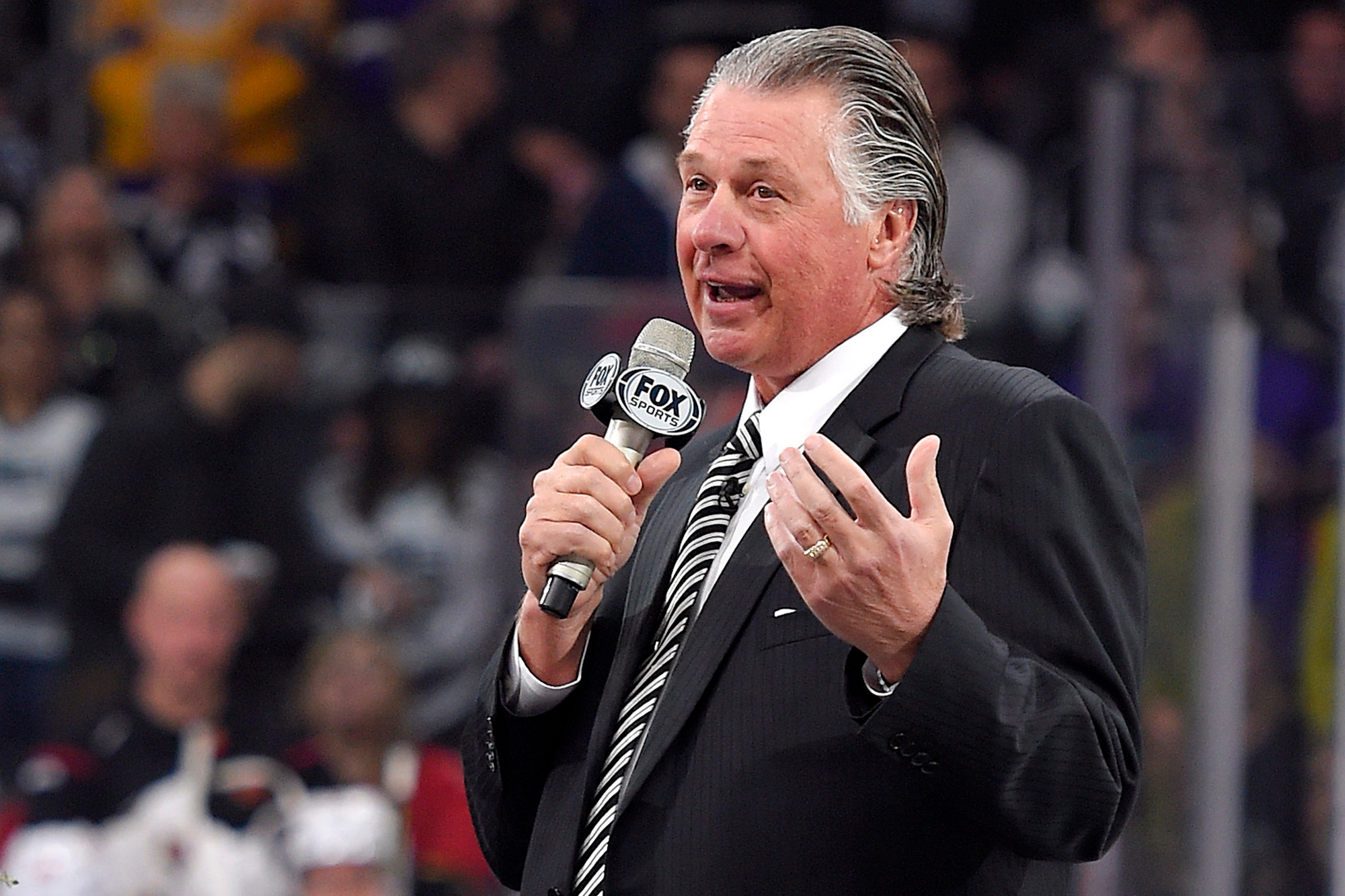
Barry Melrose, a hockey player-turned-coach who led the Los Angeles Kings to the 1993 Stanley Cup Final before going on to a long career in broadcasting the sport, has died. He was 70.
ESPN announced Melrose’s death Wednesday after his wife informed the network.
“From the flowing locks of his distinctive mullet to the flared lapels of his trademark long suit coats, Barry Melrose cut an unmistakable figure whenever you were fortunate enough to run into him at a rink or catch him on your television screen,” NHL Commissioner Gary Bettman said. “You were even more fortunate if you engaged him in conversation or listened to his analysis because he never failed to boost your love of the game of hockey.”
Melrose stepped away from his analyst role in 2023 after being diagnosed with Parkinson’s disease. Wayne Gretzky at the time said Melrose was “bigger than any team.”
Melrose had a relatable everyman’s broadcasting style, bringing a sense of humor to his insights, and was easily recognized by his goatee and slicked-backed hair.
“For decades, Barry Melrose was one of the most distinctive and trusted voices in hockey,” ESPN said in a statement. “His knowledge of the game was deep, his candor was refreshing and his passion was unmistakable.”
From rural Kelvington, Saskatchewan, Melrose broke into pro hockey with the Cincinnati Stingers of the now-defunct World Hockey Association in 1976. He played three seasons in Cincinnati — the last teaming with a young Mark Messier — and, following the WHA’s demise, made the transition to the NHL with Winnipeg in 1979.
Melrose went on to play for Toronto and Detroit, where he closed his career following the 1985-86 season.
He finished with 10 goals and 33 points and 728 penalty minutes in 300 career NHL regular-season games, and he skated in seven more in the playoffs. His WHA totals were five goals and 32 points and 343 penalty minutes in 178 games with Cincinnati.
Melrose turned to coaching and led the Adirondack Red Wings to win the American Hockey League Calder Cup championship in 1992.
The following year, Melrose was hired by the Kings, where he brought a sense of colorful flare and instant success to Los Angeles. In his rookie season, he coached a Kings team that featured Gretzky to make a memorable playoff run. They reached the final before losing to Montreal in five games.
Melrose finished with a record of 79-101 and 29 ties over two-plus seasons in L.A. before being fired midway through the 1994-95 season.
He was hired by ESPN in 1996 and left broadcasting for what became a brief stint coaching the Tampa Bay Lightning in Steven Stamkos’ rookie season in 2008-09. Melrose was fired 16 games into the season following a 5-7-4 start and returned to broadcasting.
Melrose also was known for his long-ball hitting prowess in fast-pitch softball, joining fellow Kelvington-area NHL players Wendel Clark, Joey Kocur, Kelly Chase and Kevin Kaminski and others in the offseason in Saskatchewan to form what some call the “the toughest team there ever was.”
DALLAS — In an arena littered with President Donald Trump’s image — from the photos that lined the concourse to the gift shops selling merch depicting the president as a cowboy — one of Pennsylvania’s most vulnerable Republican lawmakers this fall went all-in.
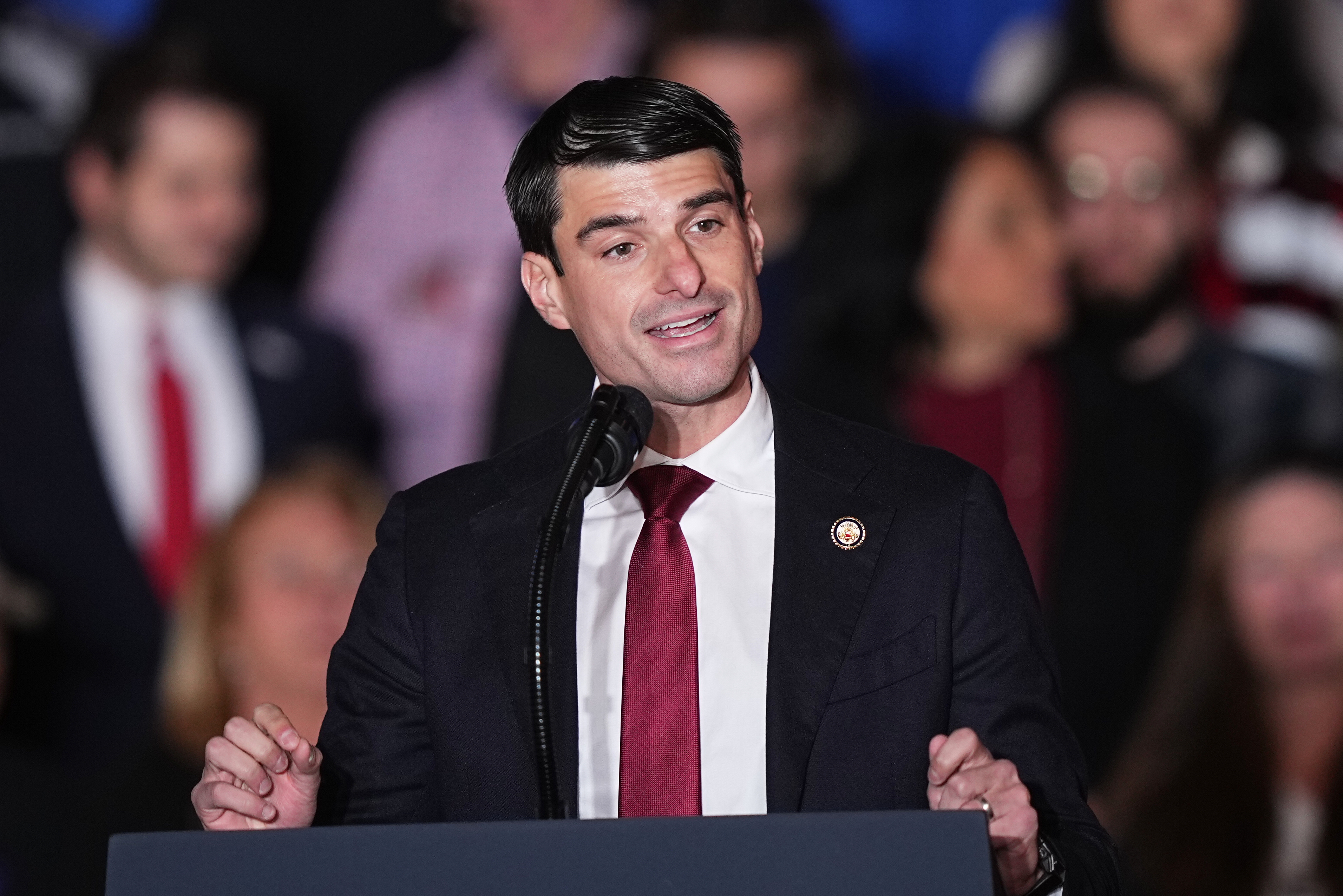
U.S. Rep. Rob Bresnahan, running for reelection in a Scranton-based district that is one of the most competitive in the nation, addressed the Republican Party’s first-ever midterm convention during its opening night on Wednesday.
His decision to attend “Trump-a-palooza” (as the RNC has described it) at all was notable. Some Republicans in tight races decided to stay away out of concerns of associating themselves with a president with low approval ratings. U.S. Rep. Brian Fitzpatrick (R., Bucks), for example, is not attending and has distanced himself from parts of Trump’s agenda.
Bresnahan promoted Trump’s signature tax policy in a brief speech focused on supporting workers and their families.
“Tax relief matters,” Bresnahan told hundreds of party loyalists at the American Airlines Arena in a speech that followed Ken Paxton, the controversial Trump-backed U.S. Senate candidate in Texas. “In Northeastern Pennsylvania, we work until the job is done. And those extra hours should mean more money in your pocket.”
Democrats have used Bresnahan’s vote for the One Big Beautiful Bill Act, which included cuts to Medicaid and food assistance, as a wedge against Bresnahan and other vulnerable Republicans. But Bresnahan contended the income tax cuts and other policies in the legislation, like no tax on tips, are paying dividends for families.
Two other Pennsylvania GOP lawmakers in similar situations, U.S. Reps. Ryan Mackenzie (R., Lehigh) and Scott Perry (R., York), are also attending the two-day convention, with Mackenzie slated to speak Thursday.
Bresnahan spoke to a somewhat sparse crowd compared with Republican National Conventions during presidential election years, which served as a model for the novel midterm convention this year as the party looks to energize its base of voters while seeking to defend narrow majorities in the House and Senate.
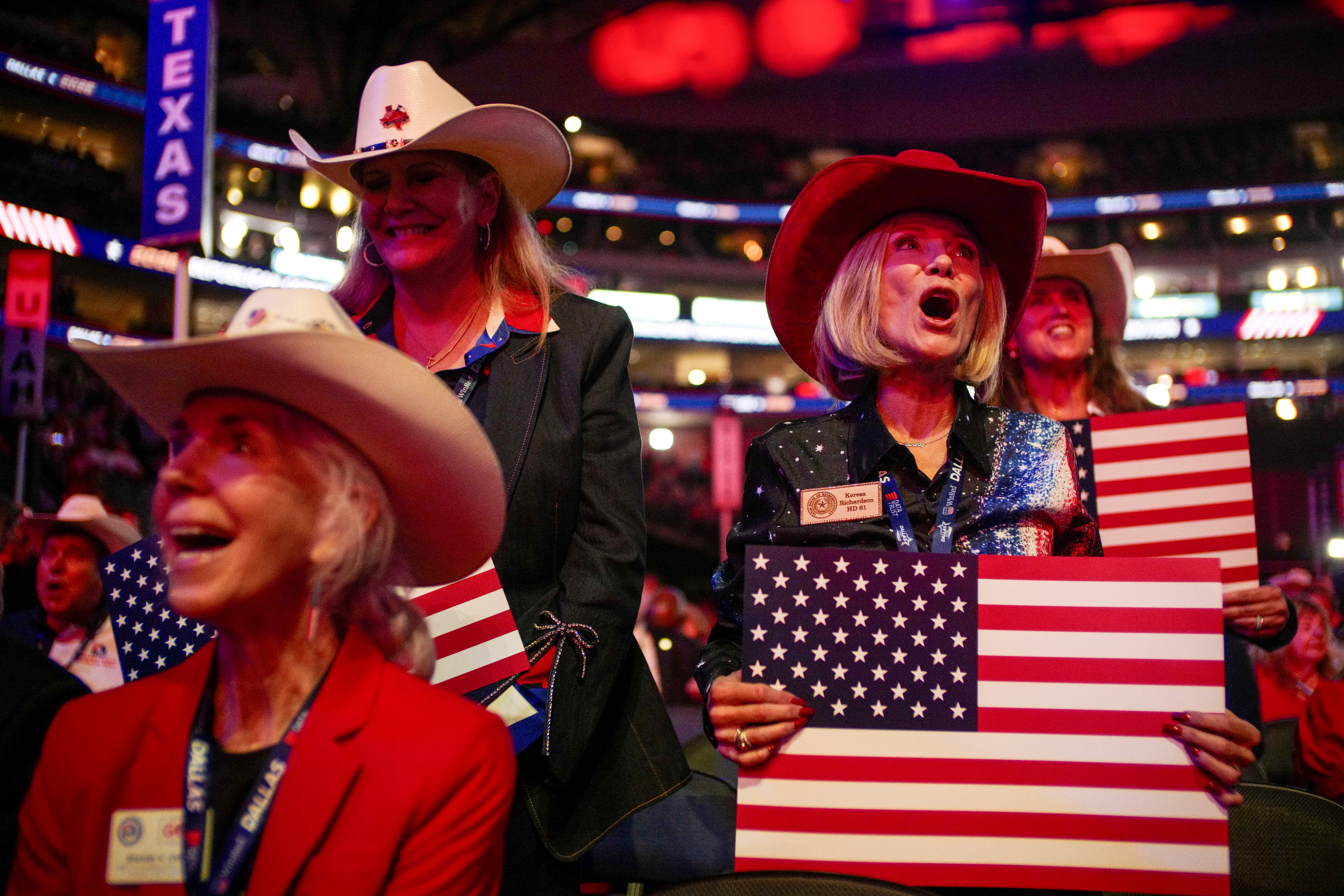
Delegates, clustered by state on the convention floor, cheered and waved signs reading “Keep the majority” and “Republicans are fixing Democrats’ mess.” The stands in the roughly 19,000-person arena remained largely empty, at least for the first few hours before Trump’s speech.
Merchandise shops were packed with Trump’s typical MAGA merchandise, copies of his son Eric Trump’s book, Under Siege, and new mugs and shirts showing Trump on a horse in cowboy gear. Red, white, blue, and — in an unmistakable nod toward the president — gold balloons waited in the rafters for the grand finale on Thursday.
“I’m asking you to pretend that I’m on the ballot. I’m on the ballot, just one more time,” Trump told the cheering crowd in prime time, noting there were about 35 “swing” races the party was prioritizing.
President Donald Trump speaks at the Republican convention Wednesday, Sept. 9, 2026, in Dallas. (AP Photo/Alex Brandon)Alex Brandon
About 1,500 miles away, in another town called Dallas, one of Bresnahan’s constituents hatched a plan to tune in.
On the opening night of the annual Luzerne County Fair — in a booth yards from deep-fried Oreos, flying elephant kiddie rides, and life-size cardboard cutouts of Abraham Lincoln, Donald Trump, and Jesus — Dwayne McDavitt fiddled with his tablet to see if he could stream the convention.
The symmetry of Dallas, Texas, and Dallas, Pa., was “too good to pass up,” said McDavitt, the head of a conservative group called Thunder and Liberty PAC and also the Pennsylvania chapter of Bikers For Trump.
He said he supports Bresnahan, who lives in Luzerne County, over Scranton Mayor Paige Cognetti, the Democratic nominee.
“He shares our values of faith, family, and freedom — meaning free and fair elections,” McDavitt said.
Interviews with other voters in the district on Wednesday underscored the potentially risky nature of Bresnahan’s leaning into the Trump administration.
Malcolm Mabry, 28, of Wilkes-Barre, said he had been victimized by a “Trump bait and switch” as a Republican who voted for the president two years ago. He picked Trump, believing that better policing of the Southern border was paramount.
And while Trump has been using ICE to “grab up people,” as he said, Mabry said much of what else the president promised, like lowering prices and avoiding war, has not occurred.
“Trump just said what he had to, to get into office,” said Mabry, who was unaware of the convention happening at the same time.
A campaign about workers and affordability
Bresnahan won his seat by less than 2 percentage points in 2024 to take down a six-term Democrat in the northeast corner of the state. Trump won the district by more than 8 percentage points.
His Democratic challenger, Cognetti, has garnered high-profile supporters like Gov. Josh Shapiro, who is also up for election, and she has repeatedly targeted Bresnahan for trading stocks while in office despite his previous statements that he would not do so.
Bresnahan, the former head of a family-run electrical contracting business, has made jobs and the workforce a top focus in his campaign and in his brief congressional career.
On a few occasions, he has broken with House Republican leaders to support bills that would strengthen union protections for federal workers. He has said that he hopes his party changes tactics to support those kinds of bills.
“We need the unions that have trained generations of some of the most skilled workers in American history,” Bresnahan said onstage Wednesday. “We have those workers in Northeastern Pennsylvania, and communities across this country are ready for the same opportunity.”
Texas state Rep. Keresa Richardson (R), right, attends the GOP midterm convention. (Joel Angel Juárez/For The Washington Post)Joel Angel Juárez
Bresnahan has racked up a series of union endorsements that are otherwise rare for Republicans. While major unions like the AFL-CIO and the Pennsylvania State Education Association have backed Cognetti, he has won support from organizations like the American Federation of Government Employees and the Teamsters — groups that, in a region with a long history of union issues, could make a difference in a close race.
In his speech, Bresnahan talked generally about supporting workers and manufacturing in the U.S. He spoke about tax policies that put “more money in your pocket” and help “build communities where people can stay, raise a family, and build a life.”
They and other speakers did not address other affordability issues that Democrats have seized on and that polls show voters have top-of-mind heading into early voting.
Trump has mocked the Democratic attacks on the issue as a hoax, including in a speech in Bresnahan’s district last year. But it is a message, and a reality, that has resonated with voters in Pennsylvania, according to polls and interviews.
“I’m on a fixed income,” Bill Dudeck, 83, of Nanticoke in Luzerne County, said Wednesday. “But under Trump, gas, groceries, and utilities are skyrocketing.”
Trump promised a lower cost of living, “but now all our money is out the window,” said Dudeck, a Democrat and former construction worker in Bresnahan’s district.
Bresnahan, whose campaign said earlier this week that he was looking forward to bringing “NEPA to the national stage,” appeared onstage instead with a sheet metal worker and mother of seven from Baltimore.
Cognetti’s campaign noted the pairing in a comment Wednesday that criticized Bresnahan, in part, for trading stocks in office.
“That’s probably why he didn’t have a Pennsylvanian on stage with him tonight,” a Cognetti campaign spokesperson said in a statement. “His speech is just more empty words to try and distract from his broken promises.”
Nora Pruitt, who joined Bresnahan, had previously been recognized by the White House as a beneficiary of Trump’s second term. Listed on the agenda as an “everyday American, factory worker, working mother and manufacturing success story,” Pruitt said “things have really improved for our family since President Trump returned to office.”
“We are so grateful President Trump and Republicans in Congress like Congressman Bresnahan vote for families like ours,” she said.