The unprecedented comeback by Texas to knock off Ohio State moved the Longhorns to No. 1 in The Associated Press Top 25 college football poll Sunday and pushed the Buckeyes out of the top five for the first time in two seasons.
Oregon, meanwhile, plummeted 15 spots to No. 21, its lowest ranking in four years, after its 39-31 road loss to an Oklahoma State team that had lost 21 straight against Football Bowl Subdivision opponents.
Michigan, which fell out of the Top 25 after needing an extra second and second-chance Hail Mary try to beat Western Michigan a week ago, returned to the poll at No. 19 following its 17-10 win over No. 11 Oklahoma. The Sooners dropped 13 spots to No. 24.
Texas’ comeback from 20 points down in the fourth quarter to win 24-23 was the largest fourth-quarter rally ever for a win against an AP No. 1 team, according to Sportradar, and avenged a season-opening loss to the Buckeyes a year ago that knocked the Longhorns out of the No. 1 spot.
Texas received 56 first-place votes from the voting panel of writers and broadcasters and holds down the No. 1 spot in the regular season for the first time since Oct. 13, 2024.
Oregon’s fall is the biggest surprise of the season to date. The Ducks came in with a cast of returning stars and a transfer class that raised the program’s hopes of winning its first national championship. But they struggled to beat Boise State at home in the opener and then allowed 554 yards and generated just 281 in their first loss to an unranked opponent since 2021.
In and out
Michigan rebounded from its controversial win over Western Michigan to beat Oklahoma as a 4.5-point home underdog and returned at No. 19.
A second straight uninspired performance sent Washington out of the rankings. A week after the Huskies beat Washington State 24-10, they won 16-14 over Utah State as a 26.5-point home favorite. Washington became the first 2-0 team to win and drop out of the rankings since 2014.
ISTANBUL — Turkish authorities cracked down on multiple LGBTQ+ groups and individuals early Sunday morning, detaining dozens of members, breaking into association offices, and raiding popular hangouts.
In an escalation of decade-long hostility toward LGBTQ+ groups, particularly in the lead-up to elections, simultaneous police raids beginning at 1 a.m. took place in the major cities of Istanbul, Ankara, Izmir, Aydin, and Mersin.
Justice Minister Akin Gurlek announced on social media that the investigation into 162 suspects, nine associations, and 13 businesses was to “protect children, the institution of the family, and public order” in line with President Recep Tayyip Erdogan’s 10-year executive order relating to families and children.
“As per the duty to protect families and children given to the state by the constitution, no criminal organization, abuse network, or illegal activity which targets children, youths, or families will be tolerated!” Gurlek said.
The raids targeted both current and former members of multiple prominent LGBTQ+ rights and HIV awareness groups. The organizations’ websites were also blocked.
Gurlek also noted that such associations were found to receive significant funding from international sources and agencies.
The Human Rights Association condemned the raids. “This is not a judicial investigation; it is a political operation aimed at forcing society into a monolithic family model and purging LGBTI+ and independent civil society under the guise of protecting the family and children,” it said.
“To include unrelated charges such as ‘forming a criminal organization,’ ‘drugs,’ ‘prostitution’ and ‘obscenity’ serves not to reveal the truth but to incriminate the entire community.”
The religious conservative Justice and Development Party has been increasingly vocal against LGBTQ+ groups to play up to the more conservative elements of its base. In 2015, it banned Istanbul Pride, which had tens of thousands of attendees in previous years. Since then, authorities have violently dispersed any attempted gatherings for Pride.
This summer, an LGBTQ+ cruise ship that tours the Mediterranean and has docked in Turkey multiple times in the past was refused permission to dock there.
The Ottoman Empire, predecessor to the modern republic of Turkey, decriminalized homosexuality in 1858; however, there is still significant social discrimination.
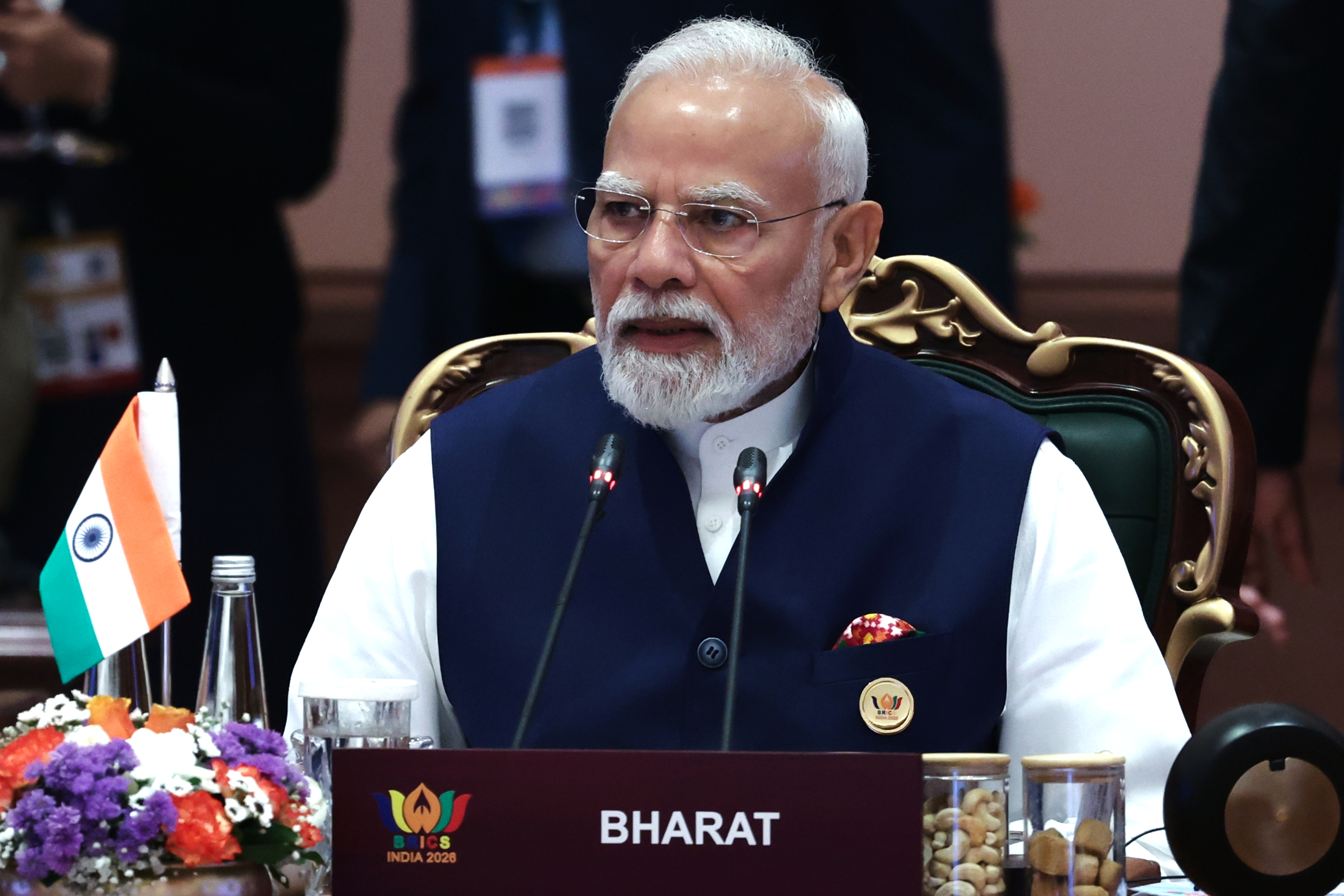
NEW DELHI — Indian Prime Minister Narendra Modi on Sunday warned that rising geopolitical tensions, supply chain disruptions, and climate crises are increasingly affecting people worldwide and called for strengthened cooperation and support across the Global South.
Addressing the BRICS summit of leading developing nations on its second day in New Delhi, Modi also warned that the “weaponization of technology and critical minerals” could hinder global development and shared prosperity.
Founded in 2006 by Brazil, Russia, India, and China, BRICS has expanded to 11 members representing about half the world’s population and a significant share of global economic output. It has sought greater representation for developing countries in global institutions and promoted alternatives to Western-dominated financial systems.
“The number of conflicts and tensions in the world is continuously increasing, and this is having an increasingly negative and far-reaching impact on the lives of ordinary people,” Modi said, alongside bloc leaders, including Chinese President Xi Jinping, Russian President Vladimir Putin, and Iranian President Masoud Pezeshkian.
“Pandemics, climate disasters, and supply-chain disruptions have shown that in today’s interconnected world, no crisis remains confined to a single region,” Modi said, while announcing that the bloc agreed to establish an integrated early warning system for infectious diseases, aimed at boosting preparedness and response to future outbreaks.
In his closing remarks at the summit, Modi urged the bloc nations to convert the summit’s agreements into tangible and time-bound action and move them from “files to real-life impact.”
The discussions over the past two days, he said, reinforced the belief that “BRICS is not merely a group of countries, but an ecosystem of solutions.” He wished China success as it takes over the BRICS chair for the next term.
The group in a joint declaration Saturday had expressed concern over escalating tensions in the Middle East and Sudan, and called for disputes to be resolved through dialogue and diplomacy.
The bloc reiterated support for a multipolar world order and reforms to the United Nations, including its Security Council, as well as global financial institutions such as the World Bank and the International Monetary Fund.
The leaders opposed unilateral sanctions and coercive economic measures and criticized sanctions not authorized by the U.N. They also criticized rising tariffs and nontariff barriers, saying they undermine global trade and supply chains.
The bloc backed greater use of local currencies in trade and stronger cross-border payment systems, while calling for cooperation on food security, energy, digital infrastructure, artificial intelligence, and climate action.
The declaration was a significant breakthrough, as forging consensus among Iran, Saudi Arabia, and the United Arab Emirates — which hold competing positions on key regional and geopolitical issues — posed a complex diplomatic challenge amid ongoing conflicts and heightened tensions.
ATLANTA — The beleaguered Phillies bullpen got a reinforcement on Sunday.
The club activated lefty Tanner Banks from the 60-day injured list, reinstating him from his rehab assignment. In a corresponding move, they optioned right-hander Grant Holman to triple-A Lehigh Valley. Minor league outfielder Christian Cairo was designated for assignment to clear a spot on the 40-man roster for Banks.
Banks has not appeared in a major league game since July 8, after which he was shut down with a left forearm strain. He made five rehab appearances for the IronPigs, allowing three hits and one earned run over nine innings. Banks recorded 14 strikeouts and one walk.
Prior to the injury, he had been inconsistent. Banks had worked his way into higher-leverage opportunities in a career year in 2025, but slipped down the depth chart and was even optioned at one point after extended struggles this season. Banks has a 7.14 ERA in the majors in 2026.
When Banks first landed on the injured list in July, interim manager Don Mattingly said the forearm had been bothering him for a while and theorized it could have been a contributor to his struggles.
Now that he’s back, the Phillies plan to use him in a different role. Mattingly said that Banks is stretched out to 45 pitches and is expected to be a multi-inning option. In the first half of the 2026 season, he rarely pitched more than one inning.
Adding a bulk arm could be helpful for a relief unit that has been taxed yet again this week. The Phillies used five bullpen arms in the series opener against Atlanta, an 11-inning loss, and then were forced to go with a bullpen game on Saturday after Jesús Luzardo was scratched from his start with shoulder stiffness.
Tanner Banks is expected to be used in a different role, where he’s stretched out to 45 pitches and expected to be a multi-inning option.Yong Kim / Staff Photographer
The lopsided 12-2 final score did help save an arm or two as backup catcher Garrett Stubbs wound up securing the final four outs. But the Phillies still used five other pitchers.
That included Holman, who Banks replaced on the 28-man roster. The right-hander needed 34 pitches to record one out after an error from Bryson Stott extended the fourth inning and snowballed into five unearned runs.
Cortes update
Nestor Cortes pitched one inning for triple-A Lehigh Valley on Monday, allowing one earned run on a bunt single followed by two groundouts. Cortes’ fastball topped out at 91.6 mph.
It marked Cortes’ second outing since the Phillies signed him to a major league deal as pitching depth on Aug. 19, and his first at the triple-A level. The 31-year-old missed most of the 2026 season after undergoing surgery to repair a torn tendon in his left bicep in October.
“Still progressing, and sounds like he’s doing OK,” Mattingly said.
He added that there are no expectations necessarily for Cortes to join the major league club before the end of the season. It would hinge on whether Cortes is able to get ready and the needs of the team.
Extra bases
Luzardo is not throwing on Sunday or Monday after skipping his scheduled start on Saturday for extra rest. The Phillies will reevaluate him Tuesday. … After Monday’s off day, the Phillies play a two-game set in Washington. Cristopher Sánchez (17-5, 2.79 ERA) will start the series opener against Nationals left-hander Jackson Kent (1-4, 6.59).
ADEN, Yemen — The conflict in Yemen intensified on Sunday, as government forces launched attacks against Iran-backed Houthi rebels along the Red Sea and Houthis fired into neighboring Saudi Arabia, which supports Yemen’s government.
The Yemeni government vowed to send more forces to the Red Sea coast after conceding a “painful” defeat last week when Houthis captured the port city of Mokha and an island on the Bab el-Mandeb Strait, a crucial shipping alternative to the Strait of Hormuz.
The escalation — especially Houthi attacks on Saudi oil infrastructure and its shipping in the Red Sea — adds pressure on global oil supplies and prices, and that could give Iran leverage in its war with the United States.
As Yemen risks descending into another civil war, the United Nations estimated that more than 80,000 people in the impoverished country have been displaced by the fighting since the start of September.
One woman said a mortar shell fell nearby as she fled in the middle of the night from the town of Khawkha in Hodeida province along the Red Sea, shortly before it was captured by Houthis.
“I saw with my own eyes cars and buses burning, and bodies of children and women were lying on the road in a horrific scene,” said the woman, who spoke on condition of anonymity out of concern for her and her family’s safety.
Houthis claim attacks against Saudi Arabia
Saudi authorities sounded sirens Sunday afternoon in the southern city of Abha and Khamis Mushait province, warning residents to take shelter from potential incoming fire. Both areas were repeatedly attacked by the Houthis in recent weeks.
The Houthis claimed to have used drones and missiles to target Saudi Arabia, including a military base just over the border with Yemen. Houthi military spokesperson Brig. Gen. Yahya Saree didn’t provide evidence or say when the attack occurred.
The Saudi civil defense overnight said a projectile fell in a different area near the border with Yemen along the Red Sea, injuring two people and damaging a mosque and several other buildings. The statement blamed the Houthis.
Saudi Arabia did not announce any new attacks targeting the Houthis.
The Houthis are targeting Saudi oil infrastructure and shipping as part of a recently declared blockade. While the Houthis have said they do not intend to threaten other countries’ commercial shipping, markets remain wary and oil prices have risen again.
Yemen says 500 soldiers killed, vows to fight back
The National Resistance, a government-allied force that had controlled coastal areas, said more than 500 government fighters were killed on the west coast over the past four weeks — its first comprehensive toll. It said about 1,500 others had been wounded in the fighting since Aug. 9.
Its statement said more than 1,000 Houthis had been killed in Hodeida and Taiz provinces. A spokesperson for the Houthis didn’t respond to a request for comment.
Yemen is home to over 40 million people who fear a return to the civil war that killed 150,000 and brought many others to the brink of famine in one of the world’s most sprawling humanitarian crises. Yemen’s internationally recognized government and Saudi Arabia have been battling the Houthis for 12 years. A ceasefire that began in 2022 had mostly halted the fighting.
A senior government official in Yemen said its forces will return to the Red Sea coast and fight back. People fleeing the Houthi advance told the Associated Press they saw forces withdrawing and urging people to run.
Sultan al-Arada, a member of the ruling presidential council, described the collapse of government forces in the port city of Mokha and elsewhere on Yemen’s west coast as “painful and regrettable.”
Al-Arada said in the televised interview aired late Saturday that forces “are currently regrouping and will return to the battle in one form or another.”
On Sunday, the Yemeni military said it launched airstrikes on Houthi positions in Mokha and the coastal town of Dhubab, and elsewhere in Taiz province. The rebels also reported strikes by the Saudi-backed forces in the province as well as artillery shelling in the province of Saada, the Houthi stronghold on Yemen’s northern borders with Saudi Arabia.
Advance puts Houthis closer to a major U.S. base in Djibouti
The Houthis’ advance puts them just 20 miles from the U.S. military base in Djibouti, on the other side of the Bab el-Mandeb Strait. It’s the main U.S. base in Africa and one of several foreign military bases in Djibouti, including those of China, France, and Japan.
The small Horn of Africa nation is already seeing the arrival of displaced Yemenis making the perilous water crossing. More than 2,000 Yemenis have reached Djibouti, the International Organization for Migration said Sunday.
Djibouti’s Economy and Finance Minister Ilyas M. Dawaleh said on X that the country’s navy, coast guard, and other specialized agencies were conducting rescue operations and providing emergency assistance.
Yemenis displaced by fighting worry about survival
The U.N. migration agency said Sunday that more than 82,000 people in Yemen have been displaced since the beginning of September.
“The displaced people are in a very bad condition,” said Ahmad al-Masawi, the director of the Al Salam camp in the southern port city of Aden, who appealed to international organizations for assistance. “They left their homes quickly without any clothing or anything. They are crammed in camps, houses, and even on roads.”
Hussein Haydara sat outside a shelter at the camp in a white undershirt, as his children waited to be assigned to a tent. He worried about how far the shelter is from schools, hospitals, and markets, and wondered how they will survive the next weeks or months.
Haydara had fled his home in Hodeida once before, when the Houthis took it over in 2015. But this time feels more precarious.
“With the first displacement, we had time to plan things but this time we were forced to escape all of a sudden. One could hardly take their children and the lightest stuff possible,” he said.
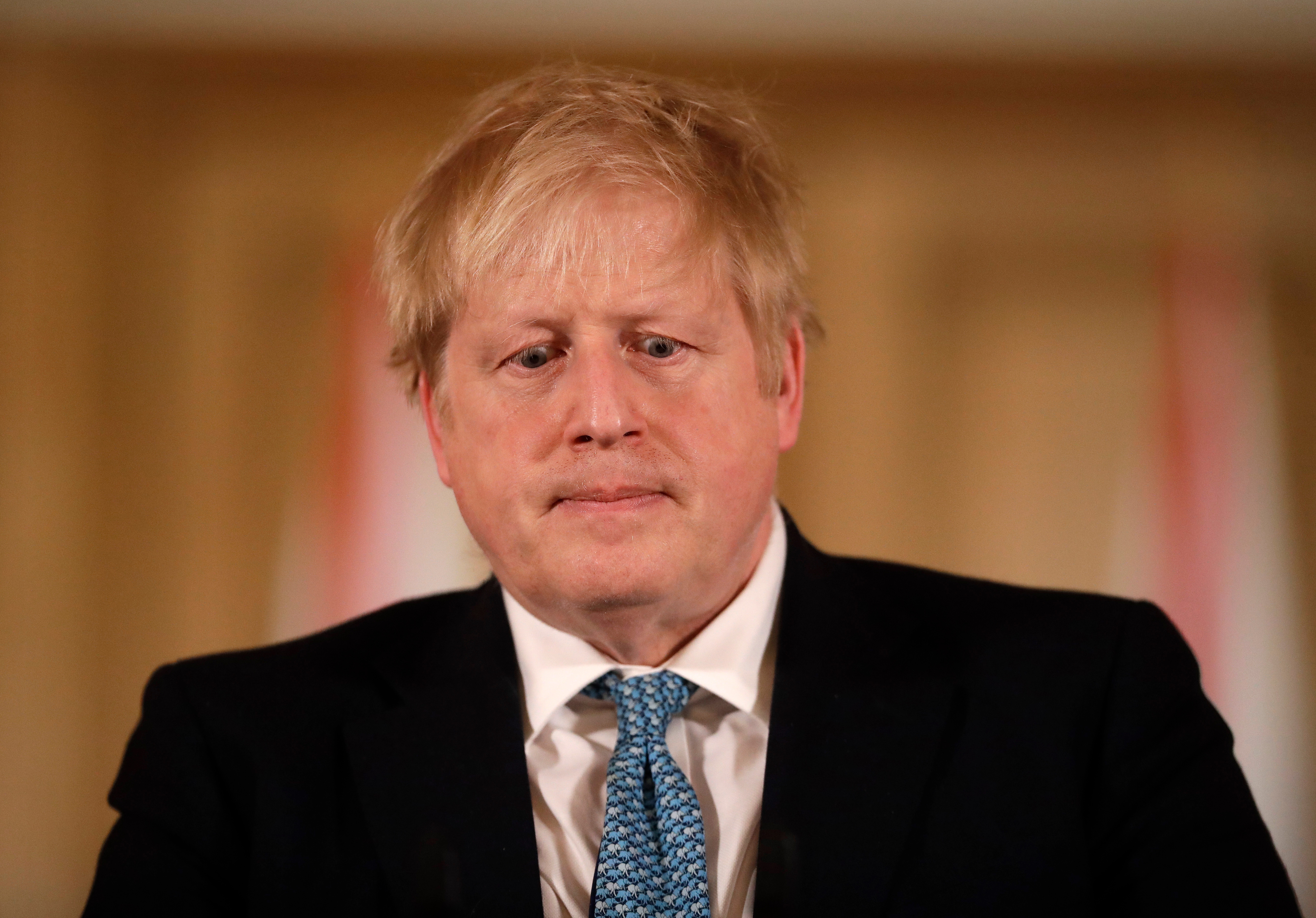
KYIV, Ukraine — A Russian drone struck a train near the Ukraine- Poland border on Sunday shortly after senior visiting officials — including the former prime ministers of the U.K. and Sweden — passed through, Ukraine’s state rail operator said.
According to Ukrzaliznytsia, a diplomatic train carrying Boris Johnson, Carl Bildt, and security advisers from several European Union states had purposely left the station at Yahodyn ahead of schedule. The visitors were on their way back from a security conference in Kyiv.
“It is highly probable that the Russian drone‘s intended target was in fact the diplomatic train, which had departed the station earlier than scheduled,” the company said in a Telegram post.
Bildt, the former Swedish PM, shared a video on X of the attack at Yahodyn station, near the Yahodyn-Dorohusk border crossing with Poland.
“This wasn’t our train, but the one just minutes after us by the Polish border crossing,” Bildt said. “It was evacuated as the Russian drone approached and no one was hurt. Very good safety system. Our train just had an evacuation warning.”
Bildt, Johnson, and fellow passengers had been in Kyiv for the Yalta European Strategy conference, which is an annual gathering of leaders and experts across politics, business, security, and media.
Another train, with former CIA Director David Petraeus on board, was still at Yahodyn station when the drone struck, according to Ukrzaliznytsia.
There were no immediate reports of casualties on any of the trains.
Ukrzaliznytsia said it “constantly adjusts train schedules” to guard against strikes.
“I don’t know what warped logic drove Putin to blow up a stationary Ukrainian locomotive on the Polish border this morning,” Johnson wrote in a post on X.
“What we can say for sure is that this is the kind of random and senseless attack Ukrainians are enduring every day — even on civilian railways,” he added.
Earlier on Sunday, a Russian drone hit a truck less than a mile from Polish territory, according to border guards, forcing the temporary closure of the Yahodyn-Dorohusk crossing.
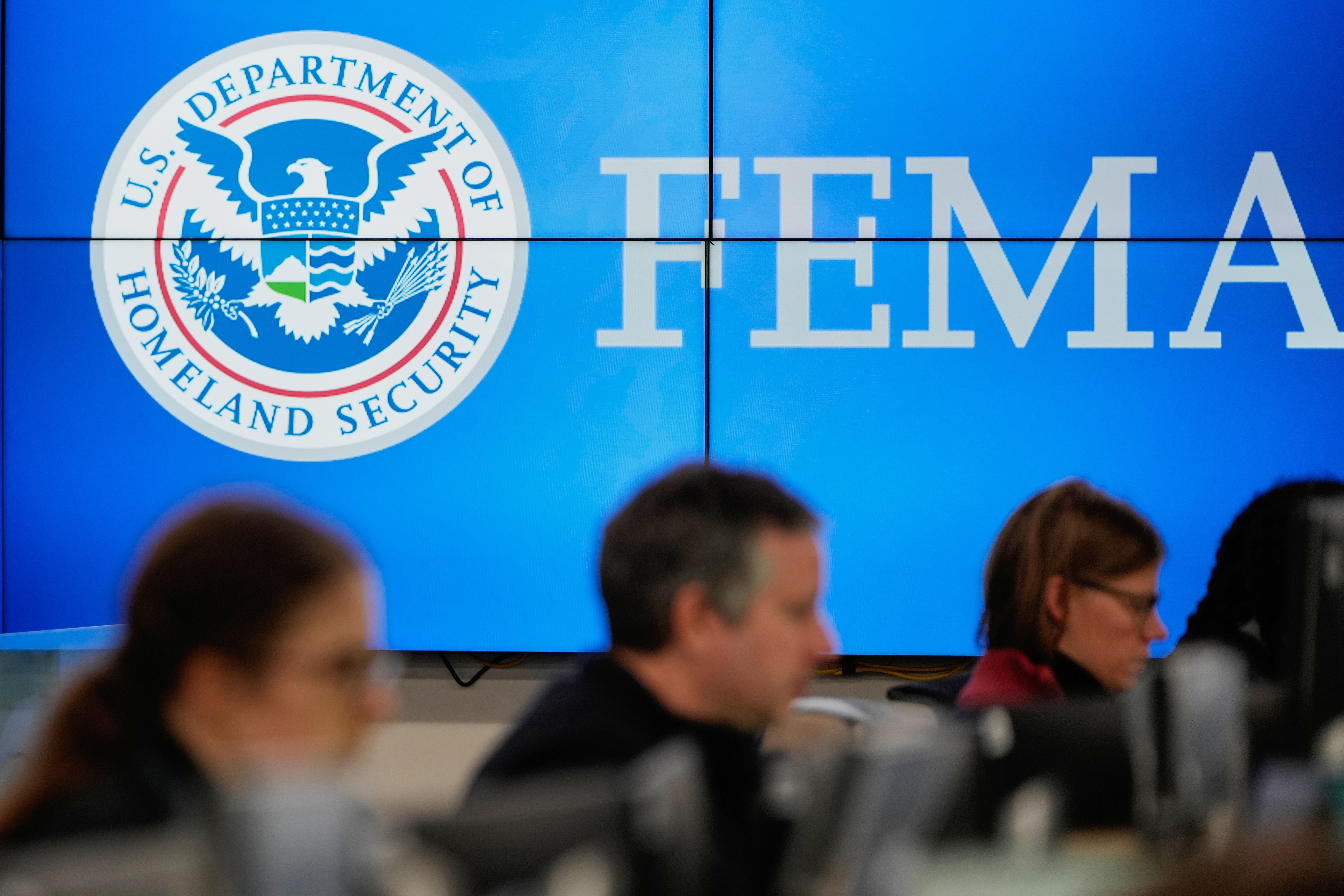
A federal judge ruled that the Trump administration acted unlawfully when it ordered that the Federal Emergency Management Agency’s workforce be cut in half.
In her ruling on Friday, U.S. District Judge Susan Illston of the Northern District of California wrote that the Department of Homeland Security undercut the agency’s authority with an “arbitrary and capricious” plan to reduce FEMA’s workforce by more than 11,000 agency employees by the end of September. Included in that number were thousands of temporary, full-time federal employees who help communities prepare for and recover from disasters around the country.
“Frankly, the FEMA staffing plan number appears as if pulled from thin air,” Illston wrote.
The administration did not ultimately carry out the full 50% reduction, though FEMA’s workforce had already shrunk significantly.
The American Federation of Government Employees, a labor union, had argued in a lawsuit that the department’s proposed cuts would deeply affect the agency’s ability to respond to emergencies.
The Homeland Security Department and the labor union did not immediately respond to a request for comment.
A spokesperson for FEMA said on Saturday night that the agency was “ensuring workforce stability and a strong, deployable force for upcoming national events and potential disasters.”
Those temporary employees, known as Cadre of On-Call Response/Recovery, or CORE, employees, make up about 40% of FEMA’s staff. Their assignments typically last for two or four years and have historically often been renewed, allowing FEMA to adjust its workforce as disasters and recovery needs change. They became a target under Kristi Noem, the former secretary of homeland security who was ousted by President Donald Trump in March.
A FEMA spokesperson told the New York Times in January that the number of CORE employees was “designed to fluctuate based on disaster activity, operational need, and available funding.”
The Trump administration has drastically shrunk the workforce across the federal government. Trump himself has said FEMA should “go away.” He has called for the responsibility for disaster response to shift to the states.
A federal watchdog report found the sharp reductions in staff had limited the agency’s ability to respond to hurricanes and other natural disasters, especially those that occur at the same time. Cameron Hamilton, Trump’s FEMA administrator, acknowledged in June that the reductions posed “challenges” to the country’s disaster readiness.
The judge ordered the parties to meet and try to reach an agreement on “the scope of relief” by Oct. 9. If they cannot come to an agreement by then, Illston wrote, the court will issue a ruling on the relief.
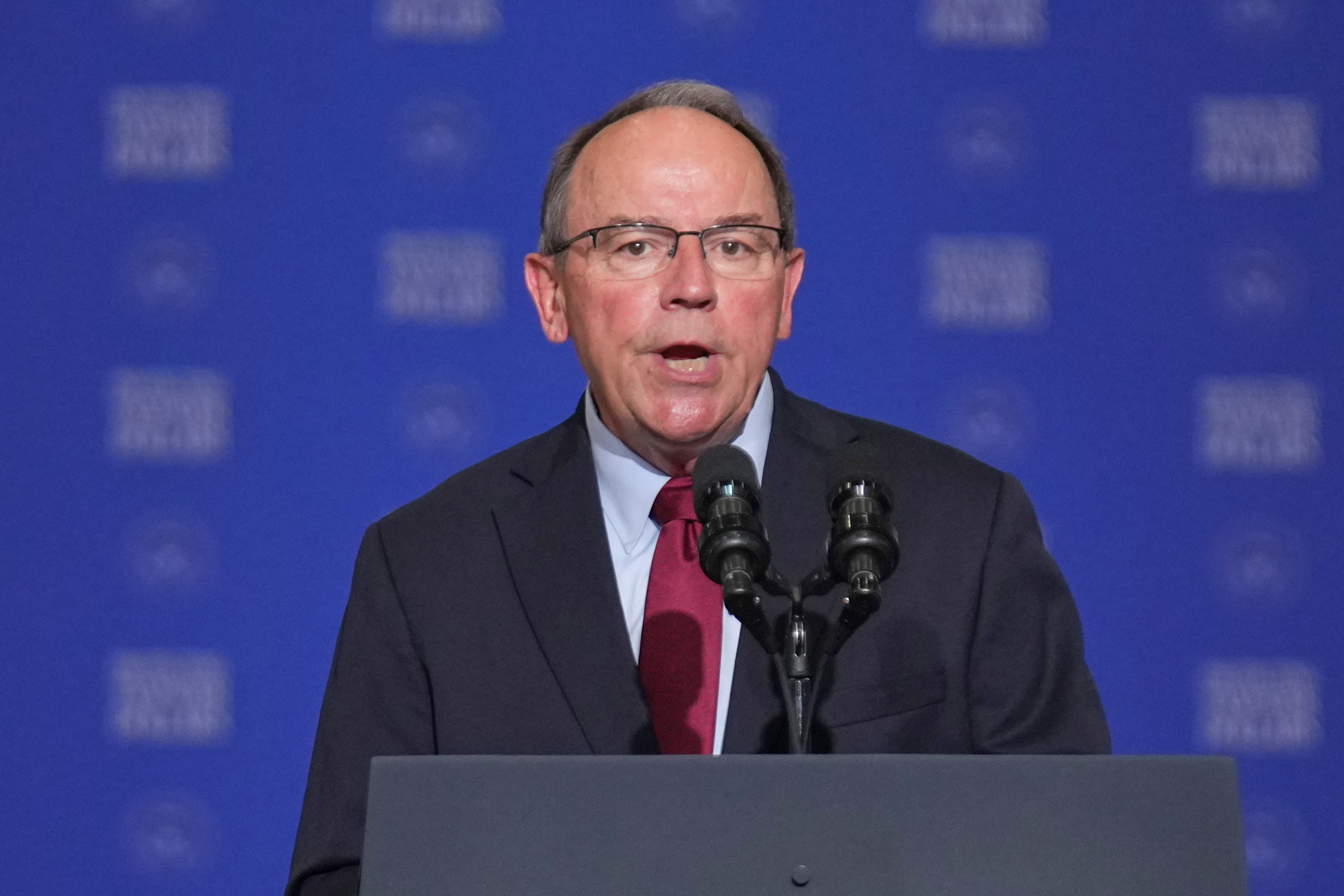
WAUSAU, Wis. — A Republican congressman and candidate for governor said he had to swim to safety after a plane he was traveling in made an emergency landing in a lake late Saturday.
U.S. Rep. Tom Tiffany says he was returning from the La Crosse County Lincoln Day Dinner when the light aircraft lost power as it approached Wausau Downtown Airport. The pilot made an emergency landing in Lake Wausau. Tiffany and the pilot ended up in the water and swam to safety.
“After landing, we called 911. As the plane began to submerge, we exited the aircraft and swam to a shallow area, where we waited until emergency responders reached us by boat,” he wrote on X.
The Marathon County Sheriff’s Office said in a statement that the emergency landing happened just before 9 p.m. Saturday. Tiffany and the pilot, Leonard Boltz, got out of the plane and called 911. They were rescued by emergency responders in a fire department airboat just after 9 p.m.
Both men were taken to a nearby hospital, where they were treated for minor injuries and released. Tiffany suffered a cut above his right eye that required stitches, his campaign said in an emailed statement.
A no-wake buoy was placed near the plane, which remained in the lake, and boaters were being asked to avoid the area until the plane can be removed, the sheriff’s office said. A Federal Aviation Administration spokesperson said the agency would investigate the incident. A National Transportation Safety Board spokesperson said that agency is waiting for the FAA to assess the plane as to whether the damage was substantial enough for it to get involved.
Tiffany is running for governor on the Republican ticket in Wisconsin and has been endorsed by President Donald Trump.
David Crowley, the Democratic candidate, wished Tiffany a “quick recovery” in a post on X and lauded the “heroism of the pilot.”
The plane Tiffany was traveling in was a single-engine, four-seat Beechcraft Bonanza aircraft.
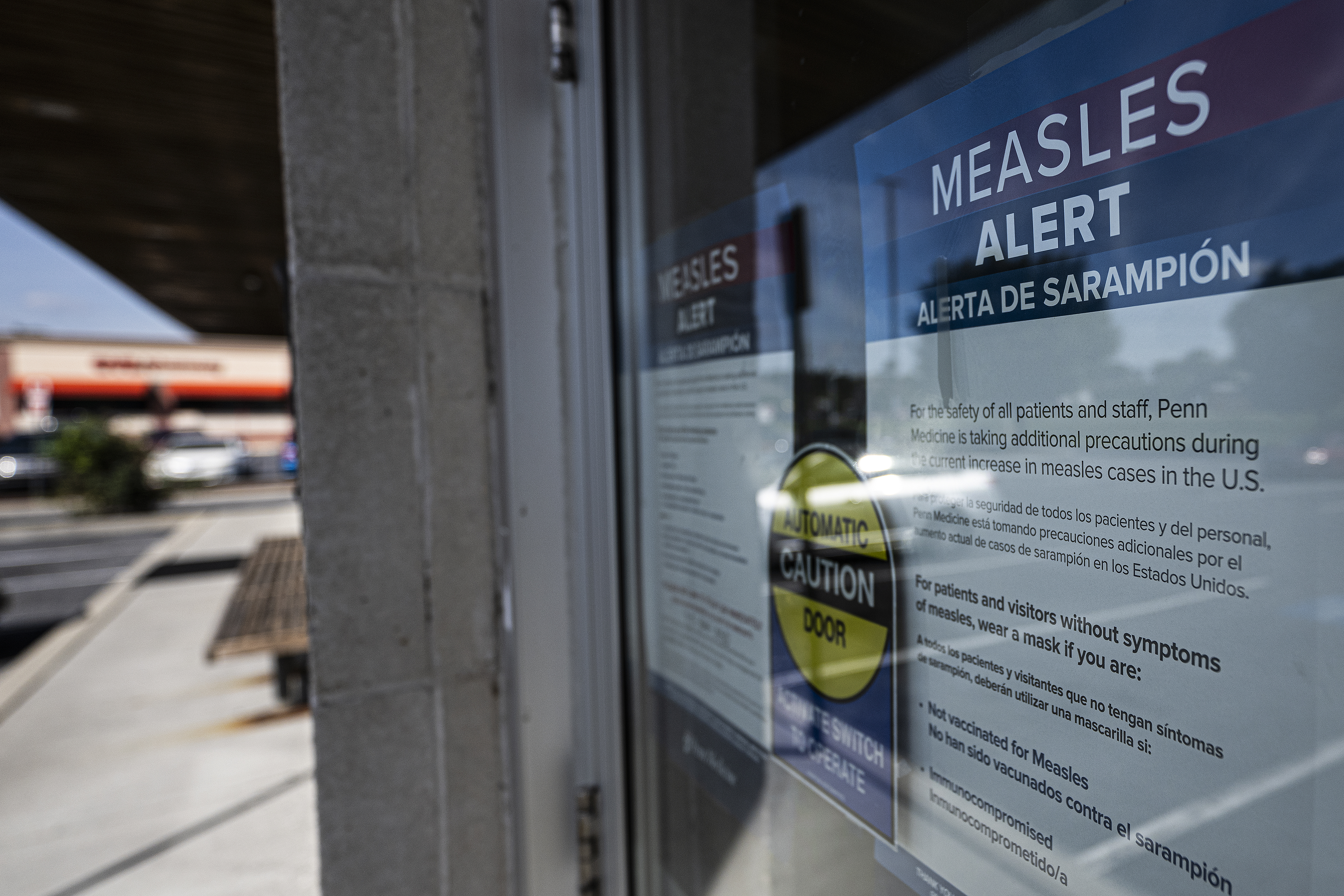
A suspected case of measles led to a Jefferson County woman’s death on Saturday, county coroner Greg Furlong has confirmed.
The 40-year-old woman was unvaccinated and developed telltale symptoms of an infection after known exposures, Furlong said in an interview Sunday. She also had underlying respiratory conditions that would make her particularly vulnerable to complications, he said.
Furlong, an elected Republican, said the woman died Saturday morning and that his office had reported the death to the state health department.
The state health department said in a statement they were aware of the coroner’s report and conducting a “thorough review” of the case.
“We are in touch with the coroner and appreciate his commitment to keeping the public informed,” the statement said. The department “will provide the public with updated information when it becomes available,” itsaid.
The woman’s death certificate lists her cause of death as “acute on chronic hypoxemic and hypercapnic respiratory failure” due to “suspected measles,” chronic obstructive pulmonary disease, and asthma, Furlong told The Inquirer.
The certificate also lists “supplemental oxygen dependence” as a “significant condition contributing to death but not resulting in the underlying cause.”
The woman also had hypertension and high cholesterol, Furlong said.
Pennsylvania’s measles outbreak so far this year has sickened 676 people and hospitalized 124. Two other deaths, reported by the state as measles-associated have led to a politically-charged dispute with federal health officials over the nature of the deaths.
Jefferson County has reported 26 measles cases so far this year.
Furlong said the woman had serious respiratory issues and used supplemental oxygen 24 hours a day.
Family members told the coroner she declined to be tested for measles before her death, but she had been exposed to several people with both confirmed and unconfirmed cases of the highly contagious disease, Furlong said.
She developed measles symptoms, including a rash and a fever, several days before her death, he said.
“‘Suspected’ means they had all the symptoms, all the signs, and they were exposed,” he said.
Furlong declined to name her.
Unvaccinated people with respiratory conditions face greater risks
Paul Offit, a physician and vaccine expert who heads the Children’s Hospital of Philadelphia’s Vaccine Education Center, said patients with respiratory conditions are at particular risk from measles.
“This person was particularly compromised, with chronic obstructive pulmonary disease and asthma,” he said. “That’s a person who could well die from this virus.”
Measles can linger in the air for up to two hours and infect up to nine in 10 unvaccinated people. Two doses of a measles vaccine are 97% effective at preventing the disease.
Nearly every reported case of measles in Pennsylvania this year has occurred among people who were not fully vaccinated, although on Friday state officials said they had identified four cases in people “appropriately vaccinated for their age.” These “breakthrough cases” tend to be milder and less likely to infect others.
The two deaths reported last month were Pennsylvania’s first in three decades associated with measles.
According to the health department’s website on Pennsylvania’s measles outbreak, the state defines a “measles-associated death” as one that occurs within 30 days of symptom onset in a person with clinical evidence of infection and a positive laboratory test.
The state also considers additional information on a case, including their medical records and whether a person was exposed to measles before their death.
Deaths without lab evidence of infection, deaths of people who have fully recovered from measles before death, and deaths from unrelated causes, like a car crash, are not counted as measles-associated.
State and federal officials spar over reporting measles-associated deaths
In its latest update Friday, the CDC still had not listed two deaths reported by the state on its website highlighting data on ongoing measles outbreaks around the country.
State and federal officials have clashed over whether those deaths were tied to the state’s measles outbreak. In announcing the two deaths, Democratic Gov. Josh Shapiro criticized President Donald Trump’s Health and Human Services Secretary, Robert F. Kennedy Jr., for spreading misinformation about vaccine safety through his longtime anti-vaccine activism. Kennedy then accused the state of “fabricating” the deaths, although he later acknowledged one had been caused by measles.
Lancaster County’s coroner has said he investigated one death caused by measles, in an infant with a severe genetic disorder, and another in an infant who contracted measles before birth and died shortly after.
There’s actually three things that are pretty certain in life: death, taxes, and the fact that the 22nd Amendment to the U.S. Constitution explicitly bars Donald Trump from seeking a third term as president.
Even Trump, for all his occasional pep-rally bluster and online merch about running in 2028, has kind of, sort of, begrudgingly acknowledged this reality. “You know the law is very strong on that,” the president admitted to reporters during a gaggle just last month.
That’s actually a good answer for Trump, because it avoids the obvious follow-up of how a president who’ll be 82 on Election Day in 2028, can barely stay awake now during important moments like a 9/11 memorial service, has probablyconsumed more Big Macs than the late Morgan Spurlock — and, oh, has a 32% approval rating — could expect to win, or even make it up the steps of his Qatari bribe jet in two years.
Still, I wish that one of those tarmac journalists would throw on a Peter Falk-style overcoat and ask, Columbo-like, just one more thing of the 47th and possibly last president:
If you’re not running for office ever again, why have you raised some $850 million — and counting — in campaign funds since your last and supposedly final campaign? Why are you sitting on most of this money? Are you planning to take it with you on Jan. 20, 2029?
I’d been mulling this column for a while when it was announced late last week that Trump’s best-known political action committee, the super PAC called MAGA Inc., with about $400 million in the bank, is finally cracking open the vault, slightly.
MAGA Inc. just transferred $49 million to yet another new PAC, No Going Back Inc. — the more money laundering, the better, apparently — that’s actually going to buy ads supporting some GOP candidates in the November midterms, especially in tight Senate races in Texas, Michigan, Ohio, and New Hampshire.
Indeed, expenditures like that are the only legitimate argument for Trump to have such a large political slush fund — to elect sympatico lawmakers who can support the president’s agenda, whatever that is. Whatever else happens in this election, two more years of a Republican-led Senate would allow Trump to keep appointing right-wing judges and at least limit the investigations of his gross misconduct.
Still, even some Republicans are acknowledging the $49 million, and presumably some additional funds over the next seven weeks, are too little and too late. In August, when voter opinions tend to harden ahead of the fall campaign season, MAGA Inc. spent a piddling $825,000 to prop up the new, Trump-supported South Carolina Sen. Darlene Graham in a GOP primary battle, and nothing more.
“Our threat level should be up and people are going to have an expectation that you deploy all your resources,” one GOP donor told Politico, before the $49 million drop was announced. “He’s sitting on hundreds of millions of dollars, not doing that. We’re in September.” Interestingly, MAGA Inc. has spent virtually nothing on House races, even though a Democratic House is likely to impeach Trump for the third time in 2027.
Republicans should be alarmed. We all should be alarmed, for a number of reasons. Boomers like me remember, vaguely, an old-school TV game show that was called You Don’t Say, with a tagline I’ve never forgotten: “Remember, it’s not what yousay. It’s what you don’t say.”
When it comes to MAGA Inc. — and several other massive piles of Trump-connected cash — political reporters ought to realize it’s not what you spend. It’s what you don’t spend.
If Trump is freeing up $49 million to try and sway close Senate races, where is the other $800 million going? And where am I getting this figure? It was buried in a recent MS Now article, which noted, correctly, that there is a separate, so-called dark-money arm of MAGA Inc. called Securing American Greatness that’s believed to hold as much as $450 million, most from secret donors.
That figure comes from Trump himself, who told reporters last month at an airport press gaggle: ”I’ve raised a lot, and nobody knows what it is, but I will tell you it’s about $850 million. I’ll be spending a lot of that money for — and my own money — but I’ll be spending a lot of that money for candidates that I think are good, Republican candidates.”
Nobody knows what it is. You can thank Trump’s pals on a right-wing rogue U.S. Supreme Court for a generation of bad rulings that have sold American elections to the highest, secret bidders.
The other thing about Trump’s comments is that, despite what he said, he’s actually so far not spending a lot of that money. Even though, by laws that are now honored in the breach, there’s supposed to be a clear separation between Trump and these super PACs, the president sees these funds as his own money.
“This is my money, that I control,” Trump told reporters earlier this month. Increasingly, anxious Republicans and other political observers worry Trump is hoarding the money not to elect GOP candidates, but to spend on his legal defense once those candidates lose and investigation-minded Democrats retake the House and maybe the Senate.
The law does say Trump can’t legally pocket the money when he leaves office. And we all know what a stickler Trump is for following the law, right?
Protest organizers gather in August 2025 outside the Moshannon Valley Processing Center, an ICE detention center near Philipsburg, Pa., run by the GEO Group, which contributed more than $1.4 million to a Trump-aligned PAC in June.Tom Gralish / Staff Photographer
It’s worth noting there are other piles of cash we know far too little about. For example, Trump’s 2025 inaugural committee raised a staggering $250 million — more than double his 2017 record — from the usual assortment of billionaires, tech companies, etc., and yet there’s been virtually no accounting of how that money was spent. And Team Trump is hoping to raise a gobsmacking $950 million by next year for his utterly amorphous plans for a presidential library, honoring a POTUS who doesn’t read.
Add it all up, and you’ve got a potential slush fund of roughly $2 billion. That’s appalling, but even worse with the knowledge that — and this cannot be repeated enough — with Trump never running for office again, the donors to these funds are almost all millionaires and billionaires who simply want something from the government for themselves or their corporations.
Earlier this year, reporters used tax records and other available reports to sleuth out three of the donors to the secretive Securing American Greatness Inc., including the Bitcoin Advocacy Project, which gave $2 million as Trump was boosting that industry through deregulation. The tech firm Qualcomm had been outed earlier as a $1 million donor to this massive fund that is largely a mystery.
There arenumerous examples of donors giving money to MAGA Inc. around the time of favorable government actions. For example, a subsidiary of the private-prison giant GEO Group gave $1.4 million to the Trump-aligned PAC in June at the same time U.S. Immigration and Customs Enforcement was awarding the firm $165 million in additional contracts. Michelle D’Souza, the chief executive officer of Pentagon contractor Unified Business Technologies, gave MAGA Inc. $4 million last October.
That’s in addition to the family members of those seeking presidential pardons, who made huge donations to MAGA Inc. right before Trump granted clemency to their relatives. That tally includes $3.5 million from the daughter of a Venezuelan billionaire who’d reached a plea bargain on federal bribery charges before he was freed by Trump, or Paul Walczak, a convicted tax cheat pardoned after his mom gave $1 million to MAGA Inc.
Many of MAGA Inc.’s donors are billionaires, and while some surely share Trump’s authoritarian worldview, many of them want something from the White House — and they are getting what they want. It is legal graft, a massive pay-to-play scheme that gets a giant shrug in the unholy world created by a right-wing master plan.
It’s time to stop shrugging. When Democrats retake the House, an almost certainty at this point, an investigation into Trump’s $1 billion to $2 billion in assorted slush funds, and whether any corruption laws were violated in raising all this cash, needs to pole vault to the top of their very long list of possible probes into this rogue president.
It’s kind of nuts when you think about it: A president corruptly raising hundreds of millions of dollars he’ll end up spending to hire lawyers to defend himself from the looming corruption charges. Maybe it would have been better — not just for the sake of democracy, but for Trump himself — not to have gone down this road in the first place?
But then, nothing makes sense anymore. And nothing makes less sense than the lack of energy, so far, in accounting for Trump’s pay-to-play dollars and how they are being spent. Keeping an American republic depends on answering these questions, and then making sure this never, ever happens again.