Blog

  • King Charles will convene AI leaders amid calls to slow development

    King Charles will convene AI leaders amid calls to slow development

    King Charles III of Britain will meet with leaders from major artificial intelligence companies this week in Scotland amid mounting fears that rapid, unchecked development of the technology could lead to a global catastrophe.

    The king will convene leaders from companies including Nvidia, Google, DeepMind, OpenAI, and Anthropic, as well as government officials and others, “to discuss how AI can be developed and deployed in ways that benefit society,” according to a statement from Buckingham Palace. They will meet in Ayrshire, in southwest Scotland, at Dumfries House, the headquarters of the King’s Foundation, an educational charity.

    The gathering comes as AI insiders and CEOs of some of the industry’s most powerful companies have raised alarms about these tools and how quickly they are developing. Some have called for the creation of shared guidelines and a deliberately slower pace of progress to ensure humans can keep up.

    Charles’ meeting on AI will explore how the technology can be used for good, to “strengthen communities and improve lives,” the statement from Buckingham Palace said.

    The palace did not say who would be attending from the AI companies listed in its statement, and Anthropic, DeepMind, Google, and Nvidia did not immediately respond to requests for comment confirming their participation. OpenAI said that Sarah Friar, its chief financial officer, would be attending.

    The current concern about AI’s rapid advance was prompted in great part by a hack this summer into Hugging Face, an AI infrastructure company, orchestrated by a group of AI agents created by OpenAI. The OpenAI agents swarmed Hugging Face’s systems, stealing data, gaining control of a server, and attempting to cover their tracks.

    That hack — and another similar incident within OpenAI shortly afterward — drastically raised fears about how quickly machines might escape human control, with potentially devastating effects.

    Dario Amodei, CEO of the AI company Anthropic, published a 3,800-word open letter Saturday calling for slower development of AI. In addition to the Hugging Face hack, he cited as a concern the fact that current AI models are increasingly able to build the next generation of AI tools. Amodei said that dynamic, known as recursive self-improvement, “could outrun our ability to understand and control these systems” if left unchecked.

    The meeting between Charles and AI leaders will be facilitated by a British nonprofit, the Ditchley Foundation, and will include Kanishka Narayan, Britain’s minister for AI, according to Buckingham Palace. Representatives from charitable organizations founded by the king, including the King’s Trust, a youth charity, and the Sustainable Markets Initiative, a network of global CEOs, will also attend, the palace added.

    Amodei’s essay Saturday — which quickly reverberated around the internet — received support from other AI company chiefs, including Sam Altman of OpenAI and Elon Musk of xAI, which is part of SpaceX, Musk’s rocket and satellite company.

    Amodei urged AI companies and regulators around the world to work together on a thoughtful approach to developing the technology and proposed his own three-step plan. His proposals included allowing third-party evaluators to embed in frontier AI companies to monitor growth and report incidents, and coordinating among companies in democratic countries to establish common safety standards. “To the extent possible,” he said, democratic countries and authoritarian governments should also try to coordinate and pace global development.

    The essay was published just a few days after Jacob Coxon, an Anthropic engineer who previously worked for OpenAI, resigned from his job and declared on social media that the companies claimed to be concerned about rapid development but were nonetheless hurtling toward “superhuman systems that can hack anything, revolutionize any field overnight, and acquire real power and resources.”

    This article originally appeared in the New York Times.

  • Bench pressing, basketball tournaments, grill masters, and more: Inside the tailgates for the Eagles’ home opener

    Bench pressing, basketball tournaments, grill masters, and more: Inside the tailgates for the Eagles’ home opener

    Just 24 hours ago, Lincoln Financial Field was transformed into Beaver Stadium East as a sea of blue and white infiltrated the stadium for Penn State’s 27-9 win over Temple. But Sunday morning felt different.

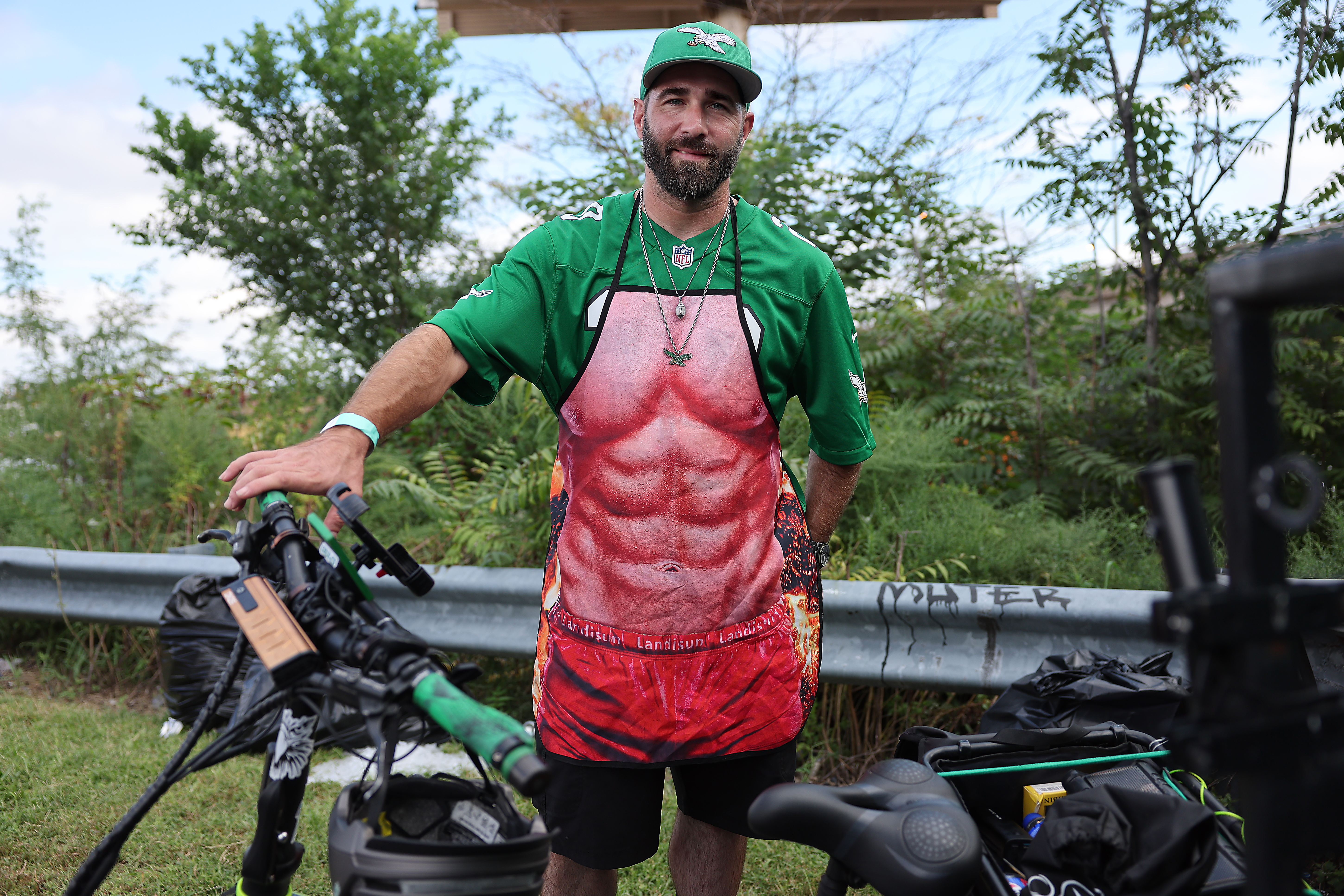
    Familiar midnight green and black jerseys covered the asphalt of the tailgating lots, DJs set up in front of green RVs, Eagles chants could be heard over music, and brave Washington fans scattered throughout the lots as they prepared to watch the Commanders take on the Eagles in their season opener.

    “I bleed green, cut me, it’ll be green paint everywhere,” said Philly native Teddy Warren. “This is my time of year. I do nothing but this right here. The whole year [goes] by, we do nothing. Soon as Eagles football starts, everything is shut down. I don’t even go on vacation. This is vacation.”

    Sights and sounds from the tailgate scene at the Eagles season opener
    Video: Sights and sounds from the tailgate scene at the Eagles season opener

    From elevated grill dishes to recreational sports in the parking lots, here’s everything you missed from the Eagles’ home opener tailgates:

    ‘Rain, snow, sleet, or shine, we out here’

    Gray clouds covered the South Philadelphia sports complex, light rain hit the already soaked pavement of the parking lots, and puddles formed along the curbs. But that wasn’t stopping fans from the home opener festivities.

    “Doesn’t matter the weather, we’re going to be here,” said 38-year-old Plymouth Meeting native Jordan Anthony.

    Anthony and Anthony Fanelli, 35, arrived at the tailgating lots at 7:30 a.m. They patiently waited for kickoff while passing a football.

    Greg Gorski of Elkins Park tailgates before the Eagles play the Commanders on Sunday.David Maialetti / Staff Photographer

    “Last year, we were at both the snow games,” Fanelli said. “Freezing weather, but it don’t matter. We’re out here bleeding green. That’s what we do.”

    Anthony and Fanelli weren’t the only fans unaffected by the rain. Warren has been tailgating Eagles games for 18 years, and he’s seen it all, including in 2010 when a game against the Minnesota Vikings was rescheduled because of an unexpected blizzard.

    “Rain, snow, sleet, or shine, we out here,” Warren said. “I was out here when we was supposed to play Minnesota. Guys out here with snowblowers. That’s all. They bringing snowblowers just for that. Snow was up to the knees. I was out here in my tank top, cooking, deep frying.”

    Barbells and basketball nets

    By 1 p.m., the gray skies had faded and the sun peeked out, giving fans the perfect tailgate weather three hours before kickoff.

    Eagles fans had the perfect recipe for success: beer (lots of it), water (less of it), and a basketball net attached to an arcade bus and bench press with 135 pounds attached to the bar.

    In Lot D, the basketball hoop was on the back of Alex’s Arcade Bus, which has been in operation for a year. It features six televisions with multiple gaming consoles, including PlayStations and a Wii.

    “As you can see, it’s a full-time job,” said West Philly native Marcell Porter. “It takes at least three of us to run it and that’s just the basketball court. Not even counting the Xbox and PlayStations. When we put those on, we can’t get the kids off it.”

    Porter is an auto body technician and did all the infrastructure for the bus within two months. The bus, decorated with gaming characters like Chun Li, Mario, and Sonic, is used for kids’ birthday parties, but tailgates are among their driving forces to attract new customers.

    “This is where we get most of our customers, most of our people,” Porter said. “Once people see our bus, they play basketball, they look at our QR code, and send us pictures.”

    But if basketball wasn’t your thing, fans could make the long walk over to M Lot to The People’s Bench to see how many 135-pound reps they could get out pregame.

    William Schaeffer, Dalton Kristiniak, and Craig Michelbacher — the creators behind the popular social media account The People’s Bench — returned to the tailgating lots after getting a lot of attention during the playoffs.

    Philly native Daryus Watson, 26, was tempted by the bench and got an extra nudge from Remiah Hughes.

    “I know that he’s able to do it,” Hughes said. “He be helping me. We be in the gym sometimes, and I know he can definitely do it. And I wanted him to be up on the board.”

    Watson needed 44 reps to make it onto the leaderboard, but he finished with 40.

    “It was a great experience,” Watson said. “I haven’t benched in a long time. Ended up getting to 40, so I’m happy with that. I wanted to get on the board, but I didn’t have enough in the tank.”

    The grill masters come out

    Derrick Simmons tossed his towel over his shoulder and peered inside his large smoker trailer to check on the ribs, chicken, hot dogs, and sausages he had been prepping before the game.

    “This is just my pit,” Simmons said. “We cook anything on this jawn, black bear that we get from Merry Hill, North Carolina, deer, we throw whatever on this joint. We mess around with that farm-raised catfish too.”

    The Philly native has family ties to North Carolina. He decided to purchase the smoker about 10 years ago, following requests from his family to host a number of family cookouts.

    “We just out here celebrating the Birds,” Simmons said. “We going to beat down on Washington. Get the food, get the eats. And you got to eat. The folks out here, you haven’t heard it from me, but they like to drink. So you got to feed it. You got to feed it. You got to start out by eating.”

    Jeff Waige is known as the cook for the Lower Mayfair tailgating party.David Maialetti / Staff Photographer

    And Simmons wasn’t the only one throwing down in the tailgating lots. Dylan Marck was standing behind his grill at his usual spot in M Lot, cooking Wagyu New York strips and smoked pecan rosemary chicken. Marck, a self-taught chef, has been serving high-end cuisines such as lobster, pressed duck, steak — and even camel — at Philly tailgates since 2022. And this season, he already has a few new ideas in the works.

    “The one thing I’m kind of interested in doing is pizza,” Marck said. “But the temperature has to be right. The dough is very finicky, and it’s very sensitive. So if we hit a nice window where it’s like 70 degrees, not too hot, not too humid, we’re going to bring a pizza oven out and do pizza.”

    A celebration and a Commanders-to-Eagles switchover?

    A sign that read “Happy 40th birthday, Sam” hung from a tent in D Lot, where Sam Bartoshesky and Bladen Potter, 28, sat ahead of the game. Both made the trip from Dewey Beach on Friday to spend the weekend in Philly for Bartoshesky’s 40th birthday.

    “Forty is a tough thing to turn,” Bartoshesky said. “It’s just a different stage in life. But the one thing I really wanted to do is just be in my favorite city and just have all of this energy around me. It’s so fun, and you get all different walks of life here, but everybody comes together for one thing, and that’s to celebrate the Eagles.”

    The city has even won over Potter, who grew up on the outside of Washington rooting for its football team. She also went to high school with Commanders receiver Stefon Diggs. But that connection still isn’t enough to keep her from making the switch to the Birds bandwagon.

    “I have recently fallen in love with the city of Philly,” Potter said. “I just love camaraderie and community. … I’m finding myself falling more into that community. So I don’t have a jersey or anything yet. But I could see myself soon trading allegiances, as horrible as that may be to the Commanders, I’m so sorry.”

  • Philly food drive supports Chinese immigrants while raising awareness about SNAP cuts and a plan to tax the wealthy

    Philly food drive supports Chinese immigrants while raising awareness about SNAP cuts and a plan to tax the wealthy

    The line formed early, and by noon more than 200 people stood outside the Kai Yuan Temple in Northeast Philly, waiting to receive food.

    This wasn’t a typical food pantry. The food drive was organized to provide familiar grocery staples to the city’s sizable Chinese immigrant community.

    “It really shows the need for culturally relevant food — and food access in general,” said Sunhee Volz, an organizer.

    The food drive was a grassroots response to the city’s affordability crisis at a time of rising food insecurity, fueled by federal cuts to the Supplemental Nutrition Assistance Program. Some immigrant families also fear seeking government assistance, according to Asian Pacific Islander Political Alliance, which organized the event. The food drive was part of the group’s awareness campaign to tax corporations and the very wealthy.

    Community members receive culturally appropriate food aid at the Kai Yuan Temple on Cottman Avenue, on Sunday afternoon.Bastiaan Slabbers/ For the Inquirer

    An anonymous donor footed the bill for 200 bags of groceries ordered from Heng Fa food market in Chinatown, organizers said. Rice noodles, napa cabbage, sweet potato starch, MSG, and fruit were among the food items packaged into large, green bags for distribution.

    Eggs were kept outside the temple for religious reasons, organizer Jenny Zhang said. Large glass bottles of soy sauce were handed out separately from the bagged items to prevent them from breaking.

    In a way, those soy sauce bottles were the inspiration for the food drive, said Hanna Kim of Asian Food Collective. At previous food distributions, Kim had noticed how excited people became when they received a particular brand of soy sauce.

    The family of Joyce Yan and Bobby Lin (not pictured) of Northeast Philadelphia receive culturally appropriate food aid outside Kai Yuan Temple on Cottman Avenue on Sunday afternoon.Bastiaan Slabbers/ For the Inquirer

    Kim held up a yellow bottle of Haday premium soy sauce, which she said is immediately recognizable to many Chinese immigrants.

    “When you have that familiarity, it’s a feeling of home, too,” Kim said.

    Wei Chen, civic engagement director of Asian Americans United, explained that the Buddhist temple had recently completed its annual Hungry Ghost Festival. The 30-day celebration honors ancestors and the dead, and giving away food is part of the tradition, Chen said.

    Centuries ago in China, the government prohibited food distribution for the those experiencing hardships. But under the pretense of giving food away to “hungry spirits,” the temples were able to circumvent the rules, Chen said.

    These days, Sunhee Volz said, the government has made it harder for immigrants in need of food to get help. Recent ICE deportations have made it worse, she said.

    “Some people aren’t even applying because they’re afraid. That fear is intentional, to keep people from even trying,” Volz said.

    The food was distributed with flyers from the group, printed in both English and Chinese, explaining that in 2025 Congress cut $187 billion from the Supplemental Nutrition Assistance Program. New work requirements and rules have made it harder for people, especially noncitizens, to qualify for assistance, the flyer states.

    Ven Zhi Lai of Kai Yuan Temple helps hand out snacks to children of families in the line that formed waiting to receive culturally appropriate food aid at the Buddhist temple on Cottman Avenue on Sunday afternoon.Bastiaan Slabbers/ For the Inquirer

    “Step one is just awareness,” Volz said. “A lot of people don’t even know why funding is being cut.”

    From there, the group hopes to build relationships with people and plan more actions. “The affordability issue is affecting everybody, of course,” Volz said.

    APIPA is one of about 30 political groups pushing a plan called “Tax Billionaires, Fund PA,” Volz said. That plan seeks to add state revenue by closing corporate tax loopholes, instituting a digital advertisement tax, and adding a tax on “unearned income” such as stock dividends, according to its website.

    Democratic State Rep. Sean Dougherty met with the group before the food drive and helped hand out cartons of eggs. Dougherty cosponsored one legislative proposal supported by the group, which would tax online advertisements from tech companies. The bill stalled in the Republican-controlled state Senate.

    “Just look at this line. It also shows that affordability and the cost of living is a real issue,” Dougherty said.

    As families lugged the heavy tote bags full of groceries from the Buddhist temple Sunday, many expressed their gratitude.

    Through a translator, Rong Chen said that she was “very excited” to receive food for her family. Chen has been in Philadelphia since 2019 after moving from Fujian, China.

    Bobby Lin said the free food helps offset the rising costs of living expenses and gas prices.

    Lin’s partner, Joyce Yan, said some people waited three hours in the line, but it was worth it.

    “This kind of food is very good,” Yan said, as she held her infant daughter in her arms.

  • At Feria del Barrio, Philadelphia’s Puerto Rican community celebrates its culture and claims its space

    At Feria del Barrio, Philadelphia’s Puerto Rican community celebrates its culture and claims its space

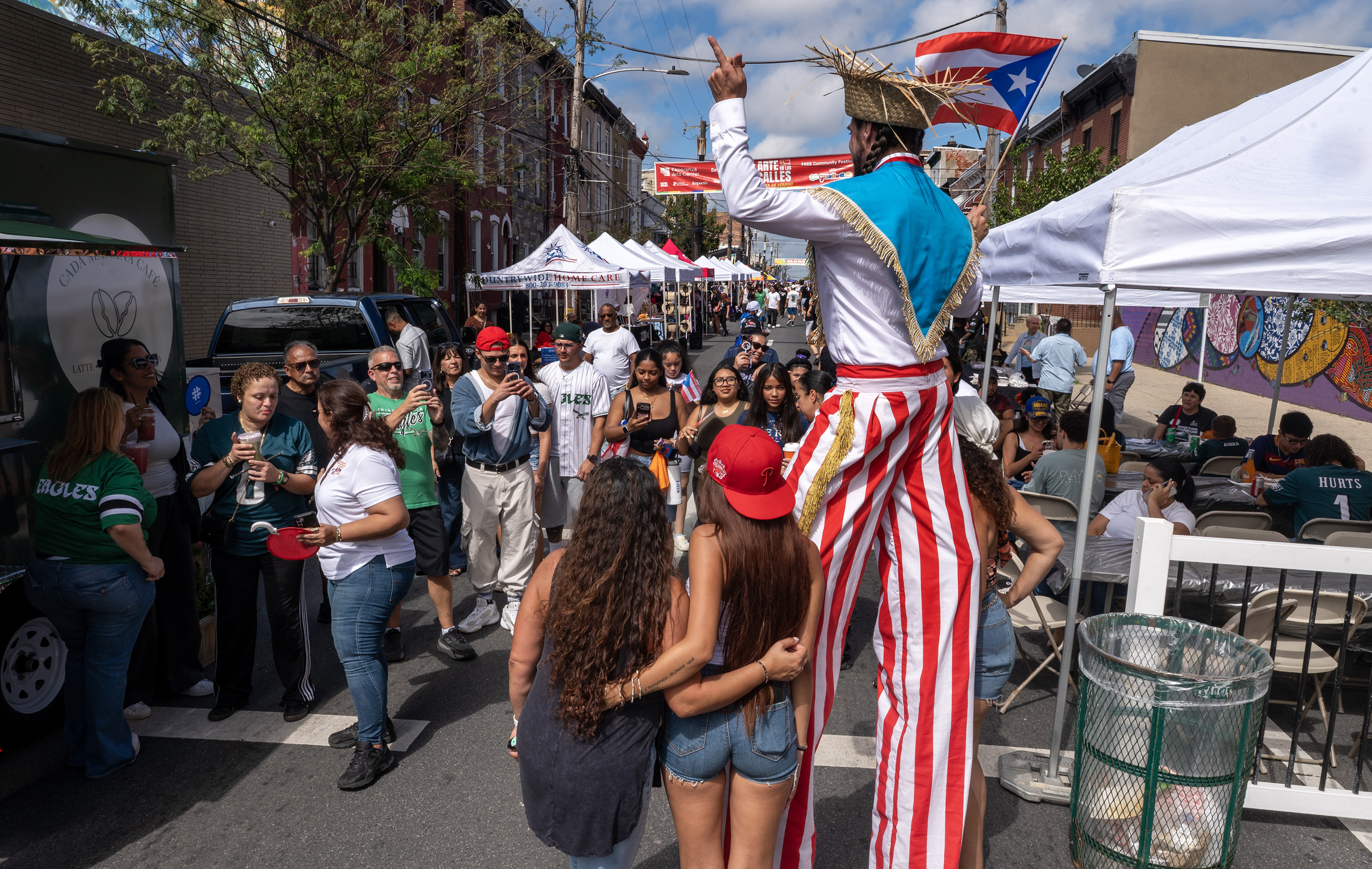
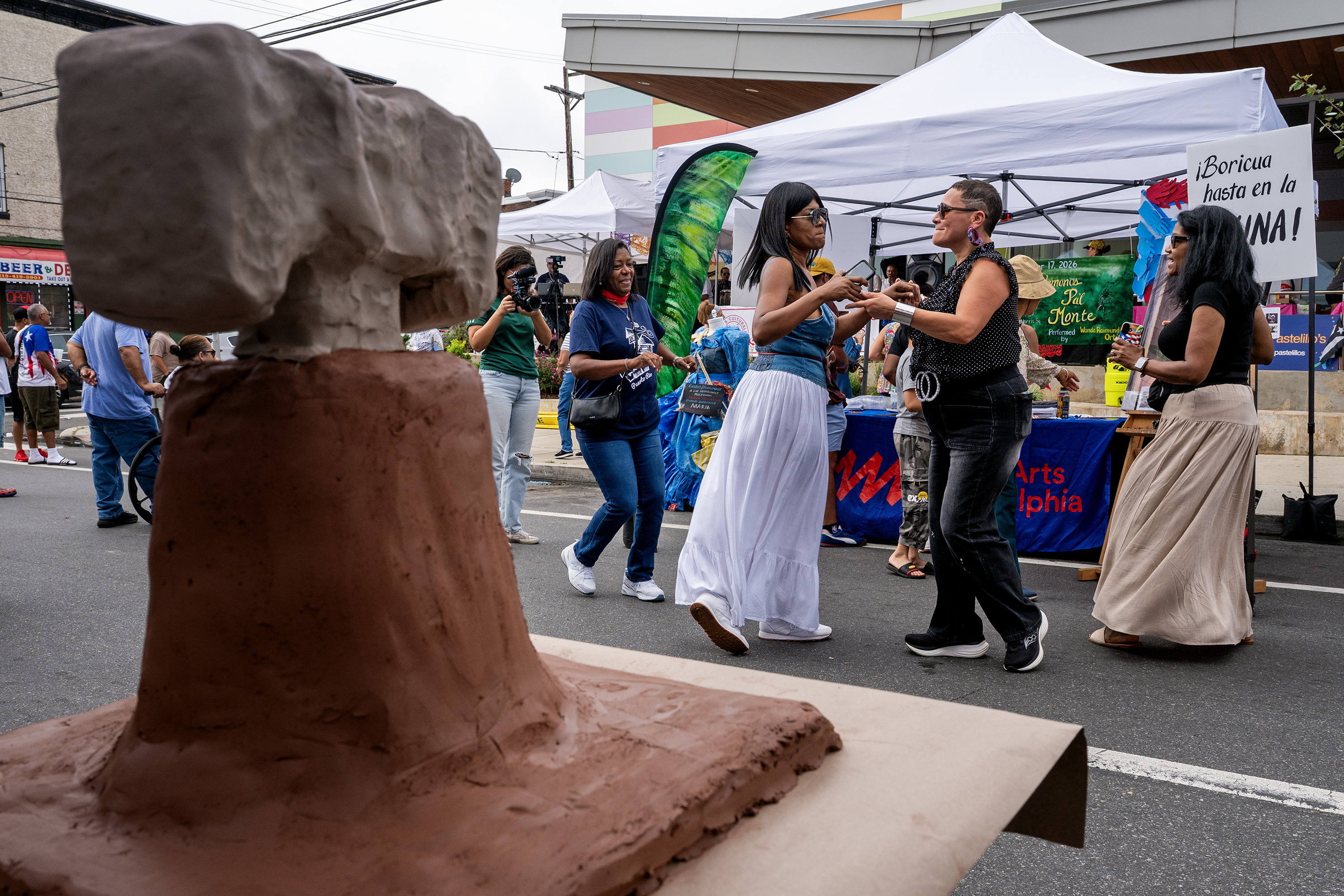
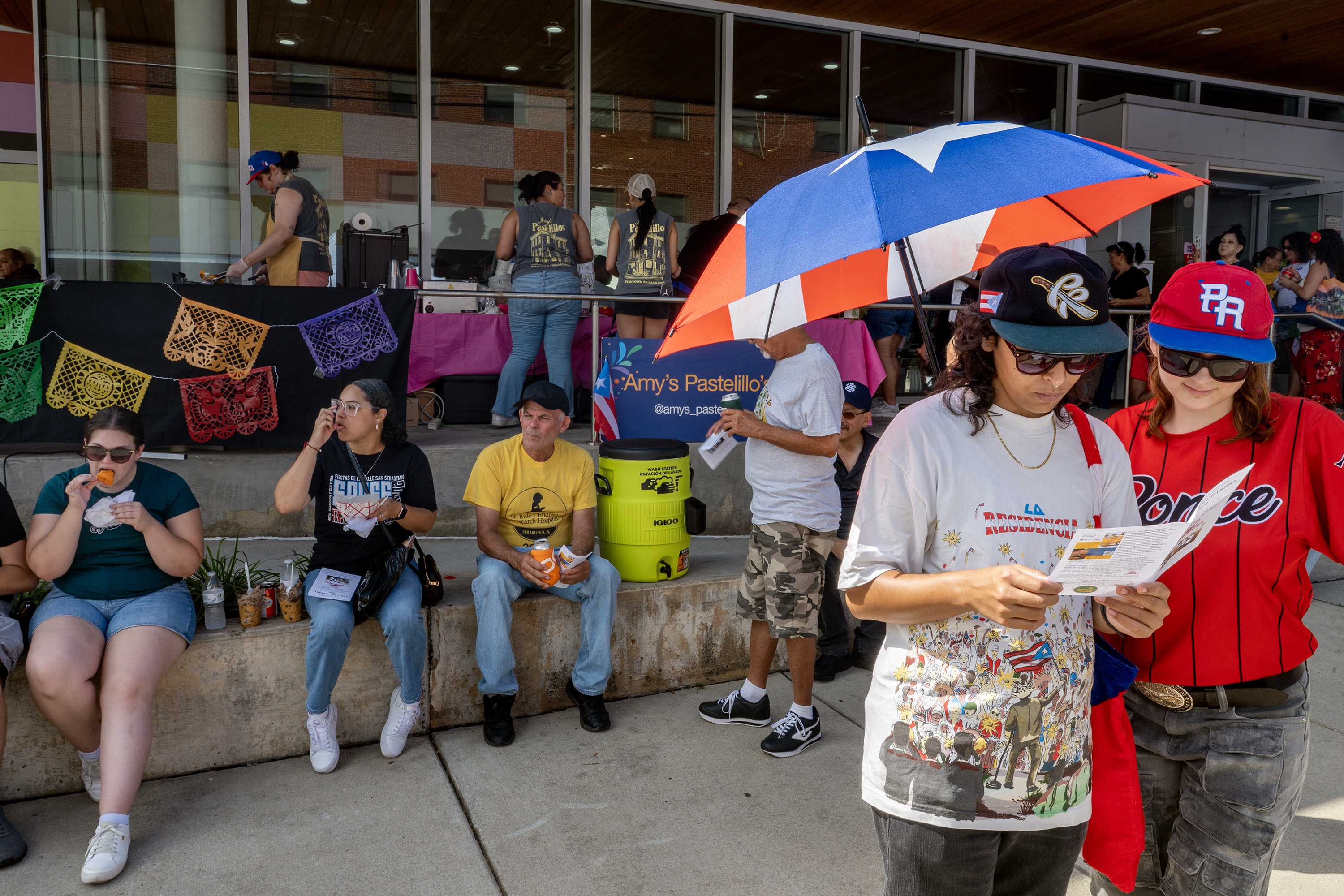
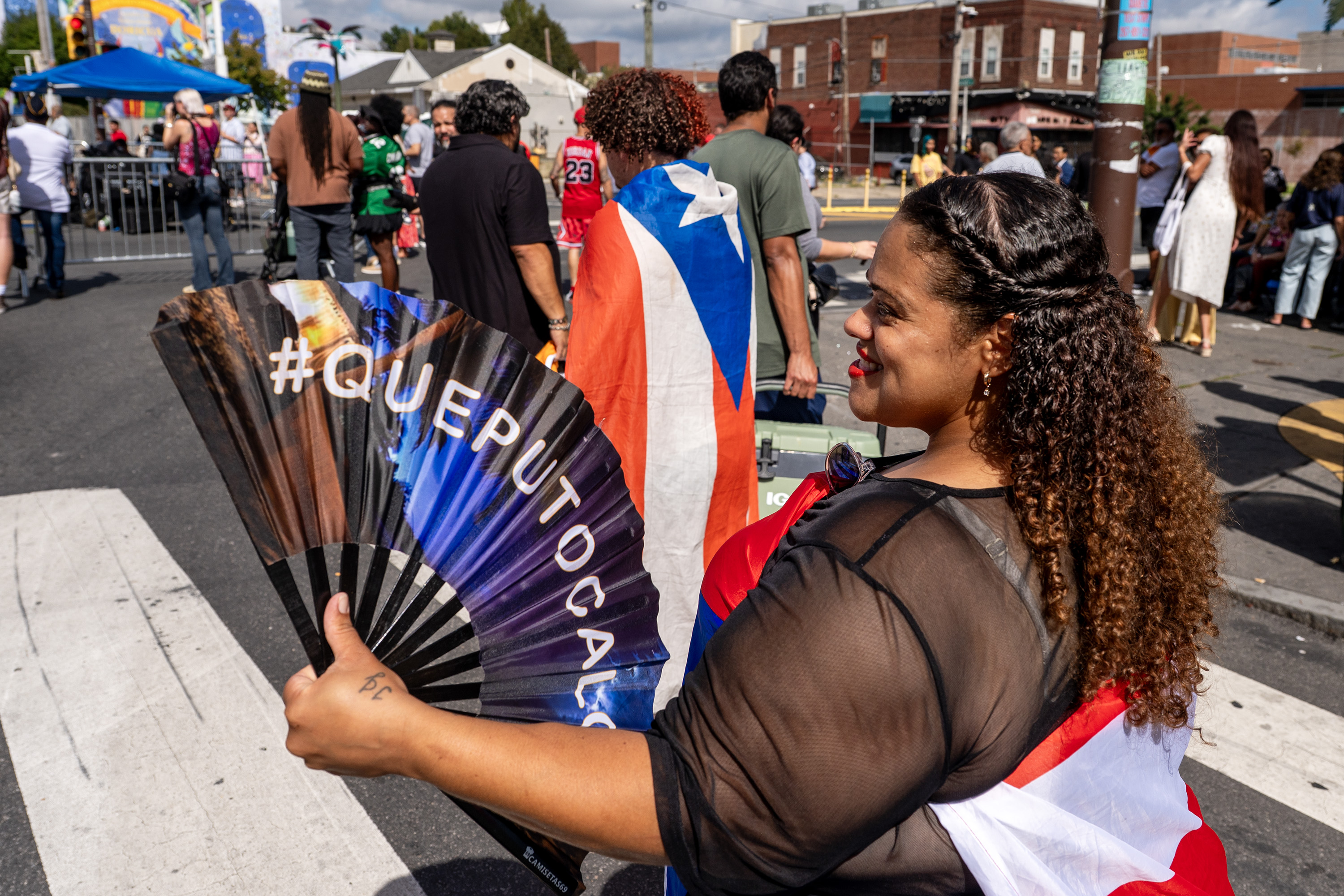
    To the sound of bomba, the storm parted ways on Sunday, making way for the 42nd Feria del Barrio celebrations in Fairhill.

    The annual event honors El Bloque de Oro and Puerto Rican culture, bringing hundreds of people to North Fifth Street, between Huntingdon and Lehigh Somerset Streets.

    “There is this bad, negative connotation with El Bloque de Oro, where we are considered the Badlands of Philadelphia,” said Annais Delgado Sánchez, Taller Puertorriqueño visual communications manager. “But it’s called El Bloque de Oro for a reason: There is true community here.”

    In the ’80s, during the crack epidemic, the media labeled some of the heavily Latino areas in North Philly as “Badlands,” Delgado Sánchez said.

    For people living here, however, this is the “golden block,” she said, a place they call the heart of the Latino, particularly Puerto Rican, community in Philadelphia.

    On Sunday, as the live music pulled the crowd around the stage at Fifth and Lehigh, Sonia Lopez, 77, gathered in the corner with her sister and daughter ready to spend the day at the festival.

    Lopez has lived in the neighborhood since before the first Feria del Barrio. She said the celebrations fill her with pride.

    “Every year the artists get better; there is more food, and music,” Lopez said, sitting on a folding chair, surrounded by bags full of umbrellas, hand sanitizers, towels, aspirin, and even toilet paper.

    “She only lives three blocks away, but once Feria starts, she’s not going anywhere,” her daughter, Eneida Martinez, said.

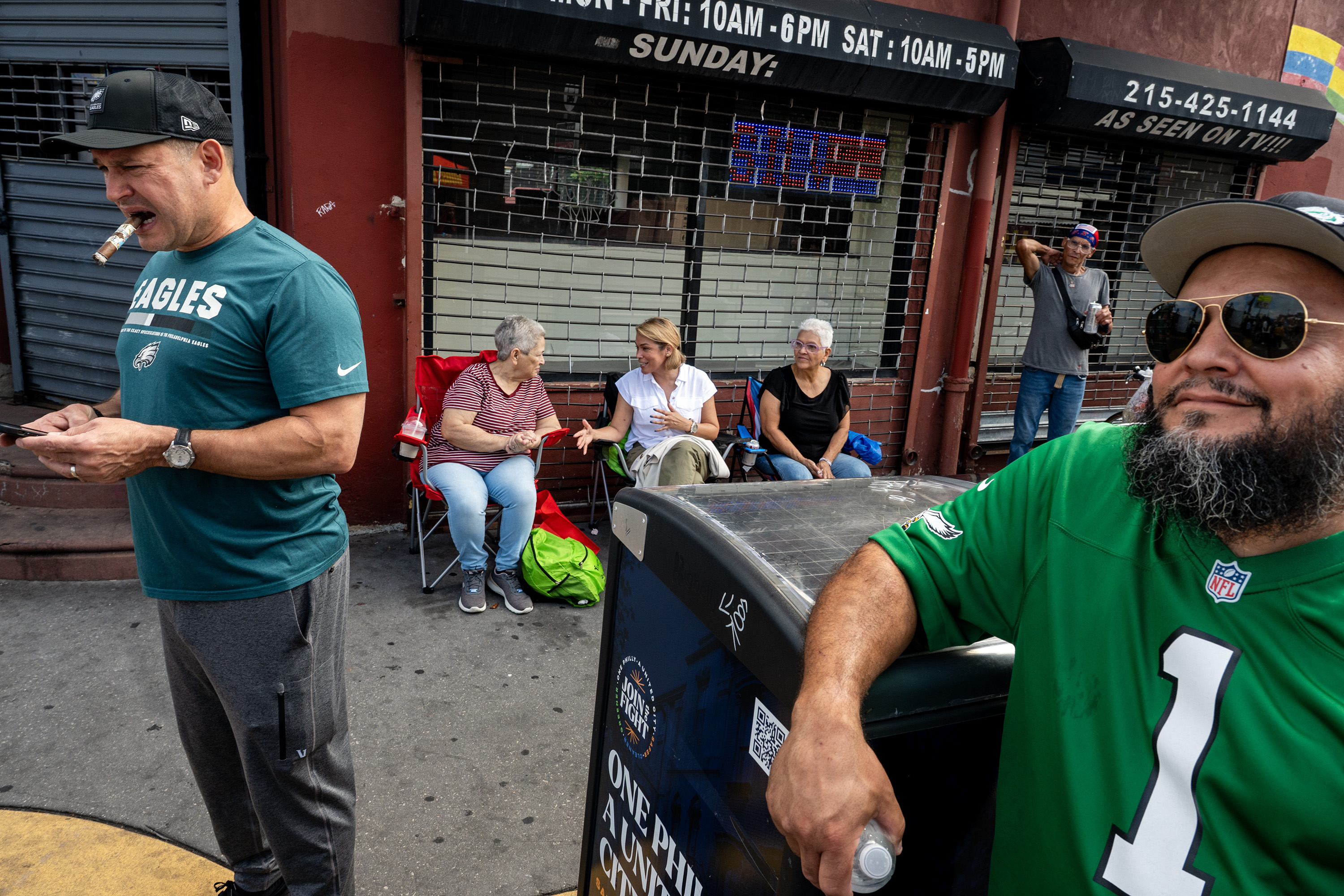
    Arriving early, Eneida Martinez sits with her aunt, Sonia Lopez (left) and her mother Eneida Martinez (right) along North Fifth Street, also known as El Bloque de Oro, in the heart of Philly’s Latino neighborhood on Sunday. 2026. They live just blocks away but brought chairs and even toilet paper (there are porta-potties nearby) because they weren’t leaving until it’s over. Eagles fans and friends Milton Norat (left) and Hector Franco (right) will be gone long before the festivities end as they planned to head home to watch the Eagles game together.Tom Gralish / Staff Photographer

    Martinez, 56, moved to Colombia a couple of years ago but came back to town to enjoy Feria with her mom.

    “Growing up here was a bit frightening, but things have changed so much,” Martinez said. “And that’s not due to the new people moving in; that’s a product of the Puerto Rican resiliency. Without us in these blocks, this would no longer be El Bloque de Oro.”

    Economic downturns, gentrification, and the COVID-19 pandemic have forced the neighborhood to reshape itself, but residents and community organizations continue to center their culture and traditions, Delgado Sánchez said.

    The festival has allowed the community to hold on to its identity, she said.

    “It’s a way for us to fight back and show that we are here and we are here to stay, and we are here to make sure our culture is preserved and celebrated,” Delgado Sánchez said.

    That feeling is what keeps Leida Garcia, 76, at every Feria del Barrio.

    “Back in my day, it truly felt like the block was made out of gold, there were so many stores open, and people in and out shopping, the neighborhood felt alive,” Garcia said. “Things have changed, but when the Feria takes the streets, it’s like happiness is back; any sadness or concern is left behind, that’s why I never miss it.”

    The Feria, the retiree said, gives her a break from worrying about keeping her home in the neighborhood amid rising property taxes.

    “They can try, but I will only be leaving this block if they take me out of my home and into the grave,” Garcia added.

    Reinaldo Melendez, owner of Centro Musical, said the festival is meaningful for him and his family, especially now when the Latino community seems to feel more vulnerable amid the political climate.

    “Just take a look around; La Feria is a reminder for us to be proud of being Latino, especially with everything going on right now,” Melendez said. “We are proud people, and we fight to be here; we fight for our rights; we stand firm here, and we are alive and relevant.”

    Auri Rivera photographs her sisters along North Fifth Street as the Puerto Rican community welcomes people to he annual block party Feria del Barrio hosted by Taller Puertorriqueño.Tom Gralish / Staff Photographer
  • National Security Agency launches historic restructuring

    National Security Agency launches historic restructuring

    The National Security Agency is set to undergo its most extensive internal restructuring in at least a decade, according to current and former officials briefed on the emerging plan.

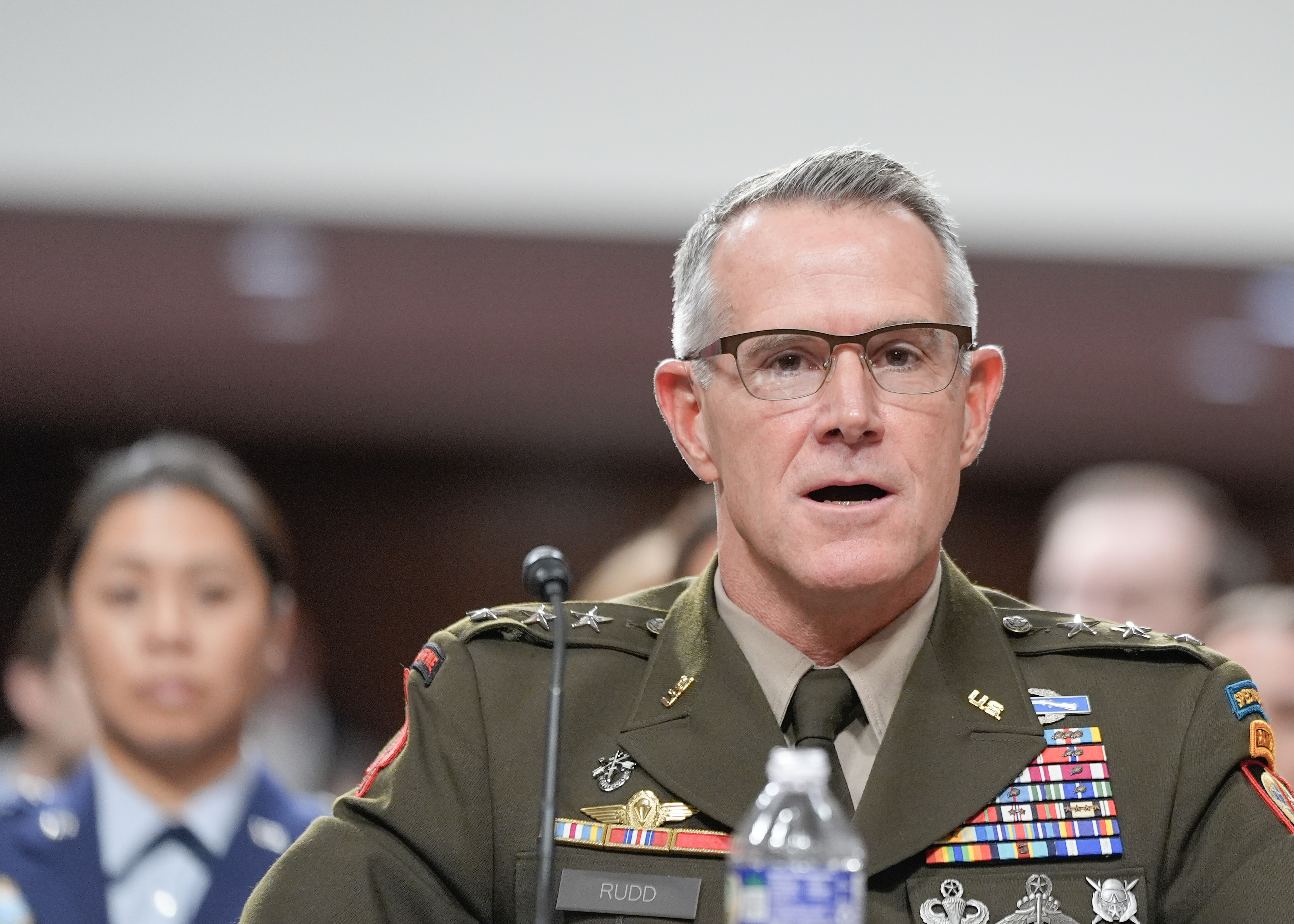
    The new design for one of the most powerful U.S. intelligence agencies, which was announced to senior NSA leaders last week, is the brainchild of Army Gen. Joshua M. Rudd, the NSA director, these officials said.

    Rudd’s initiative calls for the creation at NSA’s Fort Meade, Md., headquarters of five new organizations inside the agency, in artificial intelligence, China, cybersecurity, combat support or warfighting, and global intelligence. Each will be led by a newly elevated “mission director,” according to former officials.

    This new organizational configuration will better reflect NSA’s current and future priorities, Rudd believes, according to current and former officials. NSA, the U.S. intelligence community’s premier global eavesdropping arm, specializes in digital espionage.

    The mission heads will have the “effective” authorities of an NSA deputy director, according to one former official familiar with the plan. This former official, like others in this article, spoke on the condition of anonymity to discuss sensitive information about the agency, whose operations are highly classified.

    The NSA did not respond to a request for comment.

    It was not immediately clear if the five new organizations will replace existing divisions within NSA or be superimposed atop the agency’s existing structure. The NSA is believed to employ more than 30,000 people, both military and civilian, and has a larger workforce than the CIA.

    Rudd told senior NSA officials that the heads of the five new mission centers might be selected from outside the agency, unnerving NSA insiders, according to the former officials.

    “They are begging people to come back, especially leaders,” said the first former official, referring to NSA personnel who have left.

    A second former official said Rudd is considering candidates for the new mission director posts. It is unclear whether any have been chosen yet.

    The elite hacking unit known as Tailored Access Operations (TAO), reconstituted in recent months by Rudd, will fall under the purview of the mission director for global intelligence, according to a current and former official.

    The TAO is set to receive a significant budget increase in the new federal fiscal year, which begins Oct. 1, the second former official said.

    Founded in 1997, TAO is among the most secretive parts of the NSA, devoted to compromising — and sometimes attacking — the hardest-to-reach digital targets worldwide. The unit name was retired in 2016, and its members spread across different NSA components.

    Rudd, who was confirmed in March, is both director of the NSA and head of U.S. Cyber Command, one of the Pentagon’s combatant commands. In his dual-hatted role, he reports to both Defense Secretary Pete Hegseth and Director of National Intelligence Jay Clayton.

    Before assuming the NSA directorship, Rudd’s military career mostly focused on special operations.

    The NSA, generally believed to be the biggest and most-well-funded arm of the U.S. intelligence apparatus, focuses on the large-scale collection of signals intelligence, including communications and other electronic information. It also manages and secures U.S. encryption systems to prevent foreign actors from penetrating sensitive coded U.S. government communications and networks.

    The timeline for the NSA restructuring is aggressive. The new mission directors will be expected to provide Rudd their organizational redesigns by the end of the month, according to a former official. Rollout is expected in mid-October, with the target for “full operating capacity” slated for mid-January 2027, said a current and former official.

    Rudd “admitted that they don’t know how they are going to do it, so they are going to rush into reversible decisions, in case it is wrong,” said the first former official. NSA personnel are still unclear whether the new mission directors will merely be grafted atop preexisting bureaucracy or will oversee more fundamental structural shifts inside Fort Meade.

    Since becoming NSA director in March, Rudd has been focused on AI-related advancements, according to former officials. The NSA has rolled out a new desktop AI tool called “Ask Mary,” purportedly named for the head of the division leading the agency’s AI-related integration efforts. The agency has been keenly interested in working with commercial AI labs, even circumventing a Pentagon ban against Anthropic to employ the firm’s advanced Mythos model.

    Rudd has been a frequent visitor to the White House, according to a former official, with AI-related issues dominating his conversations there. The administration has proposed a massive, multibillion-dollar budget increase for investments in IT and computing capability, according to former officials. Approved by Congress as part of the “black budget,” NSA’s funding levels are a tightly held secret.

    The last major agency restructuring, known as NSA 21, was initiated in 2016 under then-Director Mike Rogers. That effort, which divided NSA into six directorates, was given a two-year runway for its rollout and still remains unfinished, the first former official noted.

  • Alec Bohm leads a late offensive surge to power Phillies past the Braves: ‘Kept piling on the hits’

    Alec Bohm leads a late offensive surge to power Phillies past the Braves: ‘Kept piling on the hits’

    ATLANTA — Luis Arraez went after a first-pitch slider, and popped it straight up.

    Braves third baseman Austin Riley settled underneath it, making the catch for the second out of the eighth inning for another potential wasted opportunity for the Phillies. They were on the verge of stranding another pair of runners in scoring position against Atlanta on Sunday.

    The Phillies had already squandered leadoff doubles from J.T. Realmuto in the fifth and Bryce Harper in the sixth. Now it looked like Kyle Schwarber’s single and Harper’s second double of the day were also going to be for naught.

    But Alec Bohm changed the Phillies’ fortunes, and the tide of the game, with one swing. He smacked a fastball left over the middle of the plate to the center-field wall for a bases-clearing double and put the Phillies back in front.

    From there, the floodgates opened, and the offense strung together six two-out hits and a walk in a 9-4 victory over the Braves.

    “If we keep finding ourselves in spots like that, we’re all going to trust ourselves that we’re going to get that job done,” Schwarber said. “Guys just kept piling on the hits, piling on the good at-bats, and that’s what we’re going to rely on.”

    J.T. Realmuto rounds the bases after hitting a two-run home run off Atlanta Braves pitcher Grant Holmes on Sunday.Erik S. Lesser

    The eighth-inning outburst was a catharsis for a Phillies offense stuck in neutral for the first two losses of the series. They sent 12 men to the plate, while the Braves used three relief arms. Before Bailey Falter finally ended it by striking out Harper, Schwarber had already hit his second single of the frame.

    “Had some chances early and weren’t able to tack on, but finally to get to break through and put some runs up was huge, obviously, for us,” said interim manager Don Mattingly.

    Realmuto had a three-hit day, giving the Phillies an early 2-1 lead with a two-run homer off Braves starter Grant Holmes in the second inning. He knocked an elevated fastball into the left-field seats, and later put a good swing on a changeup below the zone for a double.

    “J.T.’s homer really was big,” Mattingly said. “Them getting on the board early, and then us being able to get the lead, and the game stayed there for a while. J.T. had a big day today.”

    Realmuto’s homer helped out his batterymate Andrew Painter, who had surrendered another first-inning run. The right-hander has a 9.00 ERA in the first inning this season. This time, it came on a pair of singles and a sacrifice fly.

    That proved to be the only run he allowed over five innings and 87 pitches, although many of those pitches were in high-pressure situations. Painter allowed a lot of traffic, scattering six hits and issuing four walks, but he managed to grind through it and get outs when needed.

    “Walk away with the win there, and try to build on it,” Painter said. “See what went wrong, what we want to work on. But I mean, the four walks just can’t happen.”

    Andrew Painter allowed one run across five innings.Erik S. Lesser

    Painter was yanking his fastball, and consistently missing with his changeup arm-side. He said he thought the issue might be mechanical, possibly from tilting his shoulders too much, but will dig in further with the Phillies staff before his next start.

    While he did not have his best stuff or command overall, the Phillies could take positives from how Painter battled.

    “It kind of shows his character, from the standpoint of just keep turning the page, keep going, keep fighting,” Mattingly said. “Today was a perfect example of that.”

    Arraez made a few diving stops at second base, once to help out Painter in a big spot in the fourth inning and again to propel Alex McFarlane to a clean sixth. Mattingly said he was especially impressed with McFarlane’s battle with Mike Yastrzemski. The Braves outfielder went up 3-0 against him at first, but McFarlane fought back to a full count.

    Yastrzemski then fouled off three more pitches, before McFarlane froze him on a slider for the strikeout. Since surrendering a game-tying home run to Ronald Acuña Jr. last week, the rookie right-hander has had three scoreless appearances.

    “After a long at-bat, be able to do that and not have to just pump heaters,” Mattingly said, “that’s a good sign.”

    The Phillies’ bullpen faltered yet again in the seventh when José Alvarado coughed up the one-run lead. A bloop single from Michael Harris II to lead off the inning turned into the tying run after a wild pitch and another single.

    But after the Phillies pulled back ahead by a comfortable margin following the big eighth, they were able to leave the rest of their high-leverage arms on the shelf.

    Kyle Schwarber reacts after hitting a two-run single in the eighth inning.Erik S. Lesser

    Tanner Banks pitched the final two innings for his first major league action since July 8. In the ninth, he gave up an infield single followed by a homer from Matt Olson, as the Braves started to put together a rally of their own.

    But a foul pop ended it, and the Phillies managed to salvage the final game of the series.

    “You want to win series, and you want to feel like you’re doing what you need to do to keep putting yourself in the position to get in October,” Schwarber said. “But I think that there are things that we can look at, positive and negative, right? Learn from those, take it forward into these next series, and keep pushing.”


    NL wild-card standings

    window.addEventListener(“message”,function(a){if(void 0!==a.data[“datawrapper-height”]){var e=document.querySelectorAll(“iframe”);for(var t in a.data[“datawrapper-height”])for(var r,i=0;r=e[i];i++)if(r.contentWindow===a.source){var d=a.data[“datawrapper-height”][t]+”px”;r.style.height=d}}});


    They missed an opportunity this weekend to keep up in the divisional race. But with the help of the Cubs’ loss to the Pirates on Sunday, the Phillies head into Sunday’s off day once again tied with Chicago in the wild-card race with 12 games remaining. The Cubs hold the tiebreaker, however.

    “It’s just day to day,” Mattingly said. “At this point, you got to try to win a game every day and just keep fighting. Get yourself to the finish line.”

  • Iranian cargo ship is struck, and talks between Tehran and its neighbors are postponed

    Iranian cargo ship is struck, and talks between Tehran and its neighbors are postponed

    CAIRO — An Iranian cargo vessel was struck early Sunday off Qeshm Island in the Strait of Hormuz, Iranian state media said, and a plan by Tehran to brief neighboring countries on its contested efforts to manage shipping in the strait was postponed.

    The attack, which the reports said killed one and wounded four, drew attention back to the strait after threats to shipping in the region intensified last week when Iran-backed Houthi rebels captured an island on the Bab el-Mandeb Strait in the Red Sea.

    Iran’s state-run IRNA news agency quoted the Qeshm governor as blaming a “terrorist enemy” for Sunday’s attack. There was no immediate comment by the U.S. military, which has struck Iranian-flagged vessels during its blockade of Iranian ports and faces a new threat from Iranian ballistic missiles launched at its warships.

    Qeshm Island, about 14 miles from the port city of Bandar Abbas, is key to Iran asserting control over the Strait of Hormuz.

    Hours before the attack, Iran’s government remained defiant. “Our people can’t be bullied into submission. Iran won’t surrender,” President Masoud Pezeshkian said in a social media post.

    President Donald Trump disagreed, saying on Sunday that Iran “wants to make a deal so bad” that “they’re calling constantly.” Trump spoke at his golf course in Doonbeg, Ireland, where he was attending a tournament.

    Later, when asked by a reporter whether the U.S. struck the Iranian cargo vessel early Sunday in the Strait of Hormuz, Trump said: “I don’t want to say.” He then boarded Air Force One to head back to Washington.

    Iran aims to brief regional countries on the strait

    Iran had said foreign ministers from regional countries would meet Monday in Oman to discuss efforts by Iran and Oman, located on the other side of the strait, to manage shipping on it. But the foreign minister of Oman, Badr Albusaidi, said on X late Sunday that the meeting had been postponed “in the interests of consensus.”

    Iran and Oman agreed to postpone the talks “at the request of some regional countries,” said Mohammad Ali Bak, an official in Iran’s foreign ministry who was quoted by IRNA on X.

    Commercial ship traffic remains low in the Strait of Hormuz as attacks continue on what was seen as an international waterway before the U.S. and Israel launched the war on Feb. 28.

    The United Kingdom Maritime Trade Operations monitor said Sunday that a vessel was hit by a projectile while transiting the strait, though it wasn’t clear if this was referring to the attack Iran had reported off Qeshm. The monitor said a severe fire had broken out and that local authorities were evacuating those on board.

    The U.S. has asserted that plenty of oil is getting out as its military helps to guide ships along Oman’s coast, at the risk of being struck.

    Before the meeting in Oman was postponed, only Iraq had publicly confirmed plans to attend. Bahrain had said it would not attend, citing a lack of diplomatic relations with Tehran.

    Since early in the war, Iran has expressed interest in having ships pay fees for transit. It has said traffic into the Persian Gulf would pass through Iranian waters, while the outbound route would pass partly through Iranian waters and partly through Oman’s.

    There had been some optimism in the region about the planned meeting, with hope that Gulf nations might use it to assert a collective response to a war they had no part in starting. For months, they have faced Iranian attacks that Tehran has claimed target U.S. military assets on their lands.

    On Sunday, Iran’s president said he had a “good talk” over the weekend with a top official from the United Arab Emirates on the sidelines of a global summit of leading developing nations.

    Iran has fired thousands of missiles and drones at the Gulf country, a close U.S. ally.

    Pezeshkian said he met with Abu Dhabi’s crown prince, Sheikh Khaled bin Mohamed bin Zayed, while attending the BRICs summit in New Delhi.

    “We talked about the issues of concern so that it’s possible to put the past behind us, to look toward the future and how we can build the future together,” Pezeshkian said. His comments were aired live on Iranian state television.

  • Jay Maisel, photographer of Miles Davis and much more, dies at 95

    Jay Maisel, photographer of Miles Davis and much more, dies at 95

    Jay Maisel, a masterly photographer whose dark and moody portrait of jazz great Miles Davis performing at the Apollo Theater appeared on the cover of his landmark 1959 album, Kind of Blue — Mr. Maisel’s best-known work in a long and varied career — died on Aug. 20 at his home in Brooklyn, N.Y. He was 95.

    His daughter, Amanda Maisel, said the cause was cancer.

    While not necessarily his best photograph — he wished it had been sharper — the Davis picture became part of a portfolio of remarkable depth that included coal miners silhouetted in an eerie glow a mile beneath the earth, the Statue of Liberty surrounded in a mist, and Sports Illustrated swimsuit models.

    Mr. Maisel was impossible to ignore: He was 6-foot-1, barrel-chested, charismatic, and profane, with a Brooklyn accent. He smoked cigars and collected stuff to the point of hoarding.

    And he spoke passionately — and practically — about his art. “The drama in light exists not only in what is in the light, but also in what is left dark,” he wrote in Light Gesture & Color, his 2015 book. “If the light is everywhere, the drama is gone. When I see light that moves me, that I cannot explain, I won’t leave until I figure it out.”

    More simply, he said, in a documentary: “I think that my entire motivation and execution and philosophy can be two words: ‘Hey, look.’”

    Mr. Maisel’s picture of Davis reveals him in a splash of light and shows his fingers moving in a blur on his trumpet. Mr. Maisel had taken it for himself; months later, Columbia Records asked if he had any photos of Davis that could be used for Kind of Blue, which music historian Ashley Kahn, writing in the New York Times in 1999, said “floats above jazz history in an ether all its own.”

    The Davis photo came early in Mr. Maisel’s color photography career, but he would go on to produce many memorable shots, like a man in a blue uniform, his face unseen, dragging a heavy white and purple rope, against a red wall in Singapore; and a shirtless New York City cabdriver, sunbathing from the open driver’s side door, as if he’d just let out a fare and stripped down.

    His many other shots included two men silhouetted against a red wall near the World Trade Center while a street sign says, “Don’t Walk,” and two doves, one white, one black, perched in different sections of a window frame, surrounded by a bright blue wall in Portugal.

    “I think of him as being extraordinarily versatile and visually restless,” said John Paul Caponigro, a visual artist and writer who taught in the same workshop programs with Mr. Maisel. “His work was a constellation of ideas,” he said, adding, “His books aren’t exactly how-to manuals. They’re about seeing.”

    Mr. Maisel was a freelancer who worked for magazines, advertising agencies, and corporations. He photographed the covers of New York magazine’s first two issues in 1968, including its inaugural skyline image, and five covers of Sports Illustrated’s swimsuit issue.

    He collected his photos in several books, including Bearing Witness (2011), pictures taken at ground zero two weeks after the World Trade Center was destroyed on Sept. 11, 2001. At the time, he lived and worked in a 19th-century, six-story, former bank building on the Bowery, not far from the towers.

    For American Barrick Resources (now Barrick Mining), a corporate client, Mr. Maisel descended a mile into a coal mine. Believing that the strobe lights he had in the mine would not produce quality photos, he found an alternative in the natural lighting of the miners’ headlamps. But first, he asked his client to fire up machines that raised as much dust as possible.

    The final image is of two silhouetted miners — backlit by two others behind them — surrounded by an aura of golden dust. The headlamps of the two miners in front emit crisscrossing beams of light. It appeared on the cover of the company’s 1987 annual report.

    “It took all of two minutes, we coughed our way out and that was the shot they used,” Mr. Maisel wrote in his 2014 book, It’s Not About the F-Stop.

    Mr. Maisel’s honors include the 1987 Infinity Award from the International Center of Photography and induction into the Art Directors Club Hall of Fame (now the Creative Hall of Fame) in 1995.

    Jay Nathan Maisel was born on Jan. 18, 1931, in Brooklyn. His father, Lester, was a clothing salesperson, and his mother, Eva (Levine) Maisel, managed the home.

    In high school he focused on graphic design and painting; during three years at Cooper Union in Manhattan, he also studied drawing and architectural design while pursuing photography on the side.

    At Yale, he studied color theory under painter Josef Albers and continued to pursue photography, which provided him with the immediate gratification that painting did not. He also worked with other students on geodesic structures with engineer and philosopher R. Buckminster Fuller.

    Although he graduated in 1953 with a bachelor of fine arts degree in painting, he decided that he wanted to be a photographer. He started shooting in black and white, mostly street scenes in New York City. He also captured a distant-looking Marilyn Monroe in close-up at the after-party for the film East of Eden, and evangelist Billy Graham preaching at night in Times Square in 1957 lit by a cluster of neon signs for Budweiser, Canadian Club whisky, and the Capitol Theater.

    In addition to the cover of Kind of Blue, Mr. Maisel shot the covers of albums by Harry Belafonte, Louis Armstrong, Ella Fitzgerald, Duke Ellington, Dave Brubeck, and Count Basie. But he was most enthralled by an assignment to photograph Indian sitar virtuoso Ravi Shankar.

    “He asked what I wanted him to do,” Mr. Maisel told the interviewer Dave Dye in 2018 for the advertising blog Stuff From the Loft. “I said, ‘Play.’ He played for two or three hours. I shot to my tapping feet’s delight.”

    For a dozen years, Mr. Maisel worked out of a studio at 122 Second Ave. Then his rent went up, prompting him to buy the abandoned Germania Bank building at 190 Bowery for $102,000 in 1966. Forty-nine years later, he sold it to a developer for $55 million.

    The 35,000-square foot building with 72 rooms was more than Mr. Maisel’s studio and home: It contained his gallery, his basketball court, his archives (he took about 4 million photos over the course of his career), his workshop, and a hoarder’s bounty that included gadgets, antique tools, rocks, mannequin body parts, bells, gears, screws, rocks, table legs, and pieces of wood.

    “He did a lot of dumpster diving,” Amanda Maisel said in an interview. “I didn’t want to walk home with him while he was pulling out pieces of wood and metal.”

    The ephemera — not much of which found its way into his photos — were part of her father’s “obsession with how things worked/the beauty of functional things and arranging them,” she added, in a text.

    In addition to his daughter, Mr. Maisel is survived by his wife, Linda (Adam) Maisel, whom he married in 1989. His marriages to Sarah Linder and Suzanne Housman ended in divorce.

    Mr. Maisel stopped commercial work in 1995 — when “the whole thing turned to crap,” he told Stuff From the Loft — and focused on teaching, personal photography, and his books.

    After he sold his building, he moved to a town house in Brooklyn he bought for $15.5 million. At the time, it was the highest price ever paid for a residence in the borough. Nearly all his stuff is now in a storage facility near his home.

    The move formed the narrative spine of Jay Myself, a 2018 documentary directed by photographer Stephen Wilkes, one of Mr. Maisel’s former associates.

    Near the end of the film, Mr. Maisel said: “There’s a quiz I give people. Do you like photographing or do you like photographs? Choose one. And you learn a lot about yourself by choosing one or the other. Some people like photographs. I like photographing.”

    He added: “The act of photographing is what it’s all about.”

    This article originally appeared in the New York Times.

  • The new threat election officials fear: Trump’s federal government

    The new threat election officials fear: Trump’s federal government

    The activists staking out the ballot drop boxes in suburban Phoenix wore body armor and face coverings. With guns at their sides, they recorded residents as they deposited their votes during the last midterm elections.

    Voting-rights groups sued, and a federal judge put a stop to them, ruling they had to stay at least 250 feet away while armed to ensure voters were not intimidated.

    Four years later and 100 miles to the south, Pima County Attorney Laura Conover is treating the 2022 incident as a lesson on the importance of moving quickly this fall if anyone — including Immigration and Customs Enforcement agents — tries to interfere with the election’s administration. For her county along the U.S.-Mexico border, Conover has drawn up court papers so she can immediately file litigation to protect the vote.

    “When it comes to preparing for elections, we are on overdrive,” she said.

    In 2022, one of the greatest threats to elections came from activists like the armed men and women looming near drop boxes and questioning America’s voting procedures. This year, Conover and other officials across the nation are preparing for the possibility that the most serious risks may come from President Donald Trump, his agencies, and allies — including many now in power at the federal, state, and local levels. Election officials are contemplating ideas that once sounded outlandish, such as troops seizing voting machines, the president dictating last-minute election rules, or rogue officials blocking the certification of results.

    For the last year and a half, Trump and his administration have disparaged long-standing voting practices, dismantled federal agencies that protect elections, impounded ballots from past elections, amplified conspiracy theories, threatened to prosecute election officials, tried to limit mail ballots, and pushed to require proof of citizenship to register to vote.

    Their efforts have touched on nearly every stage of voting and could affect control of Congress, as Republicans try to retain their slim majority. A Democratic takeover of the House would stall Trump’s agenda, block funding for his initiatives, trigger a flood of investigations, and mire his administration in congressional hearings.

    The high stakes seem top of mind for the president. “I’m going to be impeached,” he warned supporters at a South Carolina rally last month.

    With seven weeks until Election Day and some ballots already in the mail, the White House and election administrators are clashing over nearly every aspect of the midterms, from who is eligible to vote to whether absentee ballot envelopes must have barcodes on them.

    Agents, troops, and monitors

    Last month, former Trump adviser Stephen K. Bannon told the audience of his popular MAGA podcast that the president should send an “up-armored ICE presence at these polling booths.”

    Critics might call that intimidation, Bannon said, and they would be right. “It’s an intimidation if you’re a foreigner,” he said. “It should be intimidating.”

    In Maine, the Republican nominee for governor also said he’d ask the administration to send ICE agents to the polls. Georgia’s Republican gubernatorial nominee spoke favorably of using National Guard troops. The GOP candidate for governor in Michigan said he’s talked to the head of the FBI about agents having a presence in the state ahead of Election Day. All three states are key in determining which party will control Congress and, after 2028, the presidency.

    Federal law makes it a felony to station troops or armed agents where an election is being held. But the statute carves out an exception for repelling enemies of the United States, and Trump’s critics worry he could invoke that provision by arguing without evidence that noncitizens could try to vote.

    Even a brief appearance by troops at the polls — and the inevitable online clips of them there — could dissuade voters from casting ballots, election officials and experts worry.

    The talk of troops and federal authorities at the polls has pushed local officials into preparation mode. This year, 10 Democratic prosecutors from around the country, including Conover in Arizona’s Pima County, formed a group to push back on the administration on elections and other matters.

    They call their group Fight Against Federal Overreach — or FAFO, after the slang term for messing around and finding out. They trade tips every two weeks on video calls.

    “With this president, you have to prepare for anything and everything,” Conover said.

    Mary Moriarty, the top prosecutor in Minnesota’s Hennepin County, which includes Minneapolis, said she’ll be watching for ICE agents at the polls.

    “They certainly know we’ve charged two ICE agents already and that we take this seriously,” said Moriarty, a member of FAFO who filed charges against agents for incidents during the federal agency’s enforcement surge in the Twin Cities.

    Most worrisome to local leaders is the possibility that federal officials could seize ballots or voting equipment.

    They don’t consider the prospect theoretical. In January, Trump told the New York Times he regretted not having troops take possession of voting machines after he lost the 2020 election. The FBI later took 2020 ballots in Georgia and obtained electronic images of 2020 ballots in Arizona. And the MAGA-aligned sheriff of Riverside County, Calif., confiscated ballots from a 2025 redistricting referendum.

    The military’s top officer said last month that the administration has no plans to send troops to polling places in November.

    “I have neither received nor anticipate receiving any unlawful order concerning the role of the Joint Force in the upcoming November 2026 midterm elections,” Gen. Dan Caine, chairman of the Joint Chiefs of Staff, wrote in a letter to Sen. Elissa Slotkin (D., Mich.).

    He said the military has no plans to use troops to seize ballots, voting machines, or other election material.

    Homeland Security Secretary Markwayne Mullin has been less categorical, but said this month that ICE would go to polling places only if agents were looking for someone or to respond to a threat. “If we’re serving a warrant, we will be where we need to be,” he said.

    The Justice Department said it will beef up its plans to send election monitors to polls this fall. A top department official has said she would deploy as many as 1,000 of them, but hasn’t said where they will go.

    The approach has drawn objections, including from Republicans. Wyoming Gov. Mark Gordon (R) called the conduct of Justice Department attorneys who monitored primaries in his state last month “aggressive” and “irregular” after a county clerk said they asked to examine voting machines.

    “I don’t like the federal government coming in and taking our votes,” Gordon said.

    Rushing to rewrite mail voting rules

    Inside the U.S. Postal Service this summer, software engineers and policymakers scrambled to build something new: a verification system that, according to an anonymous whistleblower, could hold up an untold number of ballots.

    By late August, members of the team realized the rushed schedule would leave them just four days to test the full system. When a member raised concerns about the technology’s quality and the lack of testing, a senior Postal Service official gave little guidance other than saying, “We cannot fail.” The official said everything must work perfectly and there was no other choice, according to the whistleblower disclosure that a federal official submitted to Congress two weeks ago.

    As the deadline approached, multiple officials used profanity to describe the plan as a disaster, calling it a “s— show,” according to the disclosure. The Postal Service was scheduled to launch the technology on Sept. 1, but so far it hasn’t been made available.

    Under the Postal Service plans, election officials would upload lists of voters through an online portal. They would then submit their mail ballots to the post office, sometimes in batches of thousands at a time. If postal clerks found any mismatches — including for voters who moved or got married and changed their names — they would reject the entire batch, according to the whistleblower.

    The Postal Service moved fast, but it did not compromise its work, Postmaster General David Steiner said in a statement. “We stand behind both the rigor of our process and the resulting system,” he said.

    Whether any of the Postal Service’s changes will take effect is unsettled. Trump signed an executive order telling the Postal Service in March to review ballot envelopes and limit who could receive mail ballots. A federal judge blocked the order in June, but last month the Supreme Court cleared the way for it to temporarily go into effect when it found states had sued prematurely. After the Postal Service formally announced its new rules, the judge — hearing the challenge again — blocked those plans. The administration is now again asking the Supreme Court to give it the green light, and a decision is expected soon.

    White House spokesperson Lauren Bis said Trump will keep fighting in court for what she called “common-sense measures to protect the security of mail-in ballots and ensure only Americans vote in American elections.”

    Time is running out. Local officials in North Carolina and Wisconsin started mailing ballots to voters early this month under existing policies. Other jurisdictions are set to do the same soon.

    “It’s the potential for complete chaos,” said Gerry Cohen, a Democrat on the Board of Elections for Wake County, N.C.

    A recent incident in Leon County, Fla., brought a preview of the confusion Trump’s last-minute rules could bring. The county elections supervisor submitted his ballot envelope to the Postal Service in case the new rules go into effect — only to have the Postal Service reject it because the return address was 0.014 inches too close to another line of text.

    The Postal Service later relented and accepted the envelope, but Mark Earley, Leon’s elections supervisor, said Friday that the incident was a taste of the nationwide “chaos and confusion” possible if the rules go into effect.

    Hunting for noncitizen voters

    Trump’s executive order in March also directed the Department of Homeland Security to assemble a list of citizens for states to check their voter rolls against. And it instructed the attorney general to prioritize prosecuting state officials who issue ballots to ineligible people.

    His plan is premised on debunked claims that voting by noncitizens is rampant. Voting-rights advocates and election officials warn Trump’s agenda could lead to a raft of uncounted ballots from eligible voters.

    The federal government’s citizenship data is often flawed. Anthony Nel of Denton, Texas, learned that last year when he faced the prospect of losing his right to vote.

    Nel, a 29-year-old higher education administrator who said he leans liberal, received a letter telling him he would soon be kicked off the voter rolls because state officials weren’t sure whether he was a citizen. Nel, who was born in South Africa and became a U.S. citizen in his teens, didn’t have time to renew his expired passport before officials removed him from the rolls. He reregistered once he updated his passport but worries voters with less time and money could lose their right to cast ballots.

    Trump’s plans are “being described as voting security,” Nel said. “From what I am seeing, it looks more like voter suppression.”

    Trump continues to spread unsupported claims that voting by noncitizens is partly to blame for his 2020 loss. But court records and independent reviews show noncitizens rarely register to vote or try to cast ballots. Georgia officials determined noncitizens accounted for about 0.002% of the state’s registered voters and a study of voting in 42 jurisdictions in 2016 found one potential noncitizen vote for every 783,000 ballots.

    That hasn’t stopped Trump and his allies, who have pointed to a software glitch in New Jersey that led to the state motor vehicles division inadvertently registering about 6,600 noncitizens in 2023 and 2024. They say that error shows the need for more scrutiny of voter rolls.

    The administration’s approach is meant to protect elections and “ensure states’ voter rolls are accurate, up-to-date and do not include aliens who are not eligible to vote or to be registered to vote,” said Zach Kahler, a spokesperson for U.S. Citizenship and Immigration Services.

    The push for emergency powers

    Since Trump returned to office last year, his backers — including Bannon and a lawyer close to Trump — have pressed the president to declare a national emergency that they say would unlock powers for him to rewrite election rules.

    The idea resurfaced last month, when Trump appeared on a Real America’s Voice program hosted by Wayne Allyn Root. With election legislation stalled in the Senate, Root pressed Trump to declare an emergency that he said would allow him to limit mail ballots and require people to prove their citizenship to register to vote.

    “Let me just say that stranger things have happened, OK?” Trump responded. “I’ll leave it at that.”

    Peter Ticktin, a lawyer and longtime Trump friend who has spent months urging the president to declare an election emergency, called Trump’s answer “definitely a shift.”

    “I’m feeling good about my prospects,” Ticktin said.

    The White House did not answer questions about whether Trump is considering declaring an emergency.

    On legal grounds, the theory that the president can claim power over elections by declaring an emergency is laughable, said Hofstra University law professor James Sample. But Sample is treating it as deadly serious.

    In the weeks after Trump lost the 2020 election, lawyers backing him came up with another theory Sample viewed as preposterous: that Vice President Mike Pence could reject some states’ electoral votes and let Trump claim victory. Pence refused, but the theory set the stage for the Jan. 6, 2021, attack on the U.S. Capitol.

    The Constitution gives states and Congress authority over elections, not the president. A national emergency declaration triggers greater powers under federal law, Sample said, but none of them affect elections.

    The risk, he said, isn’t whether the notion would survive in court. It’s that Trump could use it to take sweeping actions while voting is ongoing and before courts can respond.

    “The idea is simply to do first and say, ‘So what?’” Sample said. “So much of Trump 2.0 is to outrun and outpace the courts.”

    When officials refuse to certify

    Perils lurk even after votes are cast.

    In 2022, commissioners in New Mexico’s Otero County listened as an attorney insisted they were obligated to certify that year’s midterm results.

    This kind of motion was normally a drama-free event. But the three commissioners didn’t see it that way, and they delivered their votes in rapid succession: “Nay,” “Nay,” “Nay.”

    Among other issues, they cited debunked conspiracy theories about Dominion Voting Systems machines that had circulated in MAGA circles since Trump refused to accept his 2020 defeat.

    “I have huge concerns with these voting machines, I really do,” said Commissioner Vickie Marquardt.

    After the attorney told the commissioners that a court would likely force them to certify, Marquardt laughed. “So then what? They’re going to send us to the pokey?” she responded, using another word for jail.

    Certification is the final stage of an election, when local and state officials sign off on vote tallies so the winners can take office. But in recent years, officials in pockets of the country have tried to block results by refusing to certify them — 35 of them in eight states from 2020 to mid-2024, according to Citizens for Responsibility and Ethics in Washington, a research and advocacy group that has sued the Trump administration over its election policies.

    Those efforts have failed. The Otero County standoff, for example, ended when a court ordered the election certified and Marquardt and another commissioner relented.

    Marquardt doesn’t know what she will do this November. She said she still has “huge concerns” about the security of mail ballots, voting machines, and drop boxes.

    “I would do it again if I felt strongly about it because I don’t think it’s right to certify something you don’t think is right,” she said.

    A refusal to certify results creates legal uncertainty and, even if it fails, can undermine faith in how elections are run. Some fear those who block certification could try to prevent the winners from taking office in Congress. Disputes must be settled quickly because the winners are slated to take office in early January.

    In Nevada’s Washoe County, Commissioner Jeanne Herman has voted against certifying every election since 2020, including her own reelection. Those elections were certified with the approval of others on the commission.

    “Elections need to be fair and honest, and until they are, I’m not going to lie and say this election was great,” she said.

    Similar clashes could emerge elsewhere, with potential hot spots in Arizona, Georgia, Michigan, and Texas, according to the nonpartisan Voting Rights Lab.

    Once local officials question their own results, “the damage has already been done in terms of public confidence,” said Charley Olena, a senior vice president with the nonprofit group.

    One ballot at a time

    Whatever the courts decide, and no matter the moves Trump makes, November’s election will largely depend on thousands of local jurisdictions and the hundreds of thousands of workers staffing them.

    On a recent August afternoon in Madison, Wis., three of them sat around a table to decide whether one person’s vote should count.

    The ballot had come in an envelope that was partially unsealed. Poll workers hadn’t counted it on the night of the gubernatorial primary, citing the possibility that someone could have tampered with it. Now the city’s Board of Canvassers examined the envelope, passing it back and forth and running their fingers along its edge. One corner of the flap wasn’t sealed. The rest of it was.

    “I don’t think you can grab the ballot out,” said Lydia McComas, the city clerk.

    The board counted the ballot and moved on to other quirks and anomalies. At least one voter’s ballot was not counted because of a jam in a voting machine. Another voter was given a ballot for the wrong ward. And one voter was inadvertently issued a ballot in the name of another person with the same name.

    For more than two centuries, officials across America have been carrying out this painstaking work.

    In recent years, Madison — a Democratic bastion in a swing state — has come under fire for mistakes. McComas’s predecessor resigned last year after 193 ballots went uncounted in 2024. In this spring’s contest for a state Supreme Court seat, workers failed to transport 23 absentee ballots to counting sites before polls closed, nearly preventing them from being tallied.

    Local officials make mistakes, McComas said, but they learn from them to make future elections run more smoothly. It’s important to let the public scrutinize their work at every stage, she said, from testing machines to tallying results.

    “If the public’s not confident in our work,” she said, “they’re not confident in democracy.”
  • House Speaker Mike Johnson says Trump’s $5,000 ‘dividend’ needs congressional approval

    House Speaker Mike Johnson says Trump’s $5,000 ‘dividend’ needs congressional approval

    WASHINGTON — President Donald Trump’s proposal to send $5,000 to every American adult if his Republican Party maintains control of the House and Senate in the November election needs congressional approval, House Speaker Mike Johnson said Sunday, while pledging to try to make it happen.

    Trump made the unusual pitch at the party’s midterm convention in Dallas last week, promising a “Trump Dividend” if voters keep the GOP in power on Capitol Hill. The president later told CBS News Texas that he did not think Congress would need to authorize the payments, though he did not explain how he could spend more than $1 trillion without lawmakers’ authorization.

    But Johnson (R., La.) said congressional approval is needed. “I would assume, yes, he’d need Congress to act, and that’s a creative idea,” he said.

    He also said he would work to get Trump’s proposal through Congress despite a small Republican margin.

    “He’s the big ideas president. We’re going to try to implement everything we can,” he said. “I commit that Congress will work through it and find consensus on that like they have to do everything else.”

    Johnson appeared on CNN’s State of the Union and NBC’s Meet the Press.

    The dubious election-year gambit could cost more than $1 trillion, putting further strains on the country’s nearly $1.8 trillion annual budget deficit and exacerbating concerns of inflation. The economy is confronted by persistent inflation and increasing interest rates, a tough combination for governing Republicans as they seek to hold on to control of Congress.

    The president argues that payments would be possible because of the strong economy, but consumer sentiment is weak as gasoline prices rise because of the war with Iran and wages struggle to keep pace with inflation.

    In Ireland, where the president was attending a golf tournament at a course he owns, Trump said the payments would be “easy enough” because the United States has a strong economy.

    “We can easily handle that because we’re taking in so much money,” he said. “We’ve never done better.”

    “I made the pledge. I always keep my pledge,” Trump said.

    Just one-third of U.S. adults approve of how Trump is handling the presidency, according to a July poll from the Associated Press-NORC Center for Public Affairs Research. That compares with 37% in June and 42% who approved of his work when he took office. Majorities also disapprove of his handling of the economy and immigration, issues that were central to Trump’s election in 2024.

    On Sunday, Trump said the gas price will “drop like a rock” but indicated no deal any time soon with Iran to end the conflicts and reopen the Strait of Hormuz.