Blog

  • Philly’s first rat czar, a very Eagles wedding, and a museum for sale | Weekly Report Card

    Philly’s first rat czar, a very Eagles wedding, and a museum for sale | Weekly Report Card

    A wedding for the Byrds: A+

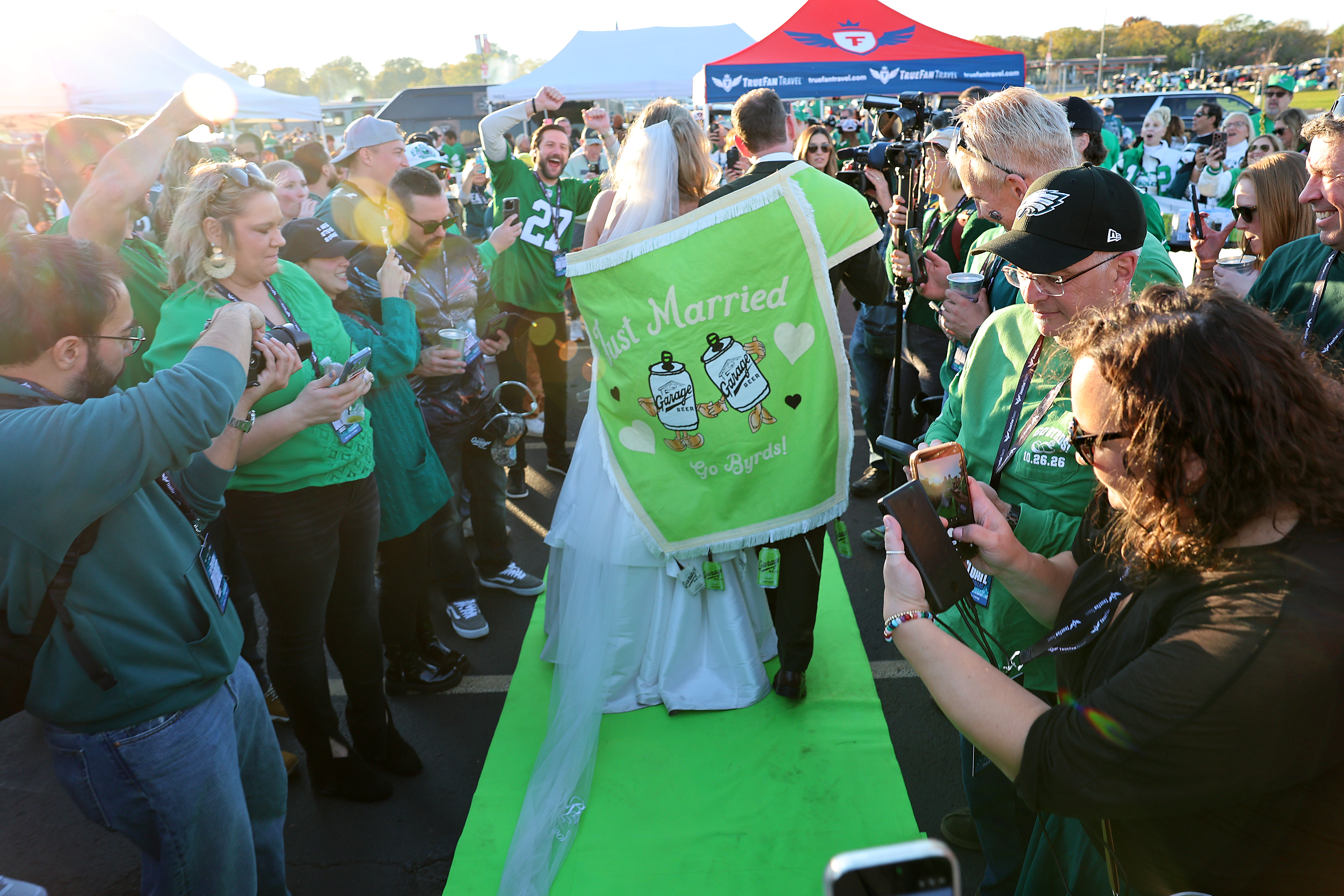
    Only in Philadelphia could two people get married in a parking lot, have Jason Kelce hand out beers instead of a flower girl tossing petals, and somehow end up with a wedding more elaborate than most people could afford.

    Lindsey Carl and Brandon Byrd won a contest to get married outside Lincoln Financial Field before Monday’s Eagles-Cowboys game. And yes, their last name really is Byrd.

    The ceremony featured Kelce, Beau Allen, Shane Victorino, the Philly Pops, and a performance of “Total Eclipse of the Heart” by Delco Donny, who naturally changed the lyrics to “I need youse now tonight.”

    The bride wore sparkling kelly green boots. The groom wore a midnight green tuxedo. Their guests wore tailgate attire.

    And while most couples spend months agonizing over seating charts, centerpieces and whether their relatives will behave, these two just showed up and let Philadelphia handle the wedding planning.

    The only thing missing was someone yelling “Go Birds!” when the officiant asked if anyone objected.

    All hail Philly’s new rat czar: A-

    Philadelphia has officially appointed its first rat czar, which sounds like a title someone would earn after surviving 30 years of living in South Philly.

    Adrian Jordan, a longtime city health department employee, will now oversee Philadelphia’s war on rodents, coordinating six departments and eventually launching a public dashboard to track rat complaints.

    A rat dashboard. We’re going to be able to monitor the city’s rat activity like they’re SEPTA arrival times.

    And remember, just last week PETA suggested putting Philly’s rats on birth control. So in the span of a few days, we’ve gone from discussing rodent family planning to appointing someone to oversee their downfall.

    To be fair, residents in the Lower Northeast have been dealing with a serious infestation, including rats chewing through car wiring. They deserve a solution, and Jordan has spent more than 20 years fighting these things.

    But imagine working your entire career in public health and finally getting promoted to rat czar… that’s definitely a business card you keep forever.

    So we’re rooting for Jordan. The rats, presumably, are not.

    A rendering of a possible future use for the Wanamaker’s Grand Court, envisioning diners seated around the famous eagle statute.MSC

    Meet me at the Eagle (for happy hour): A

    For generations of Philadelphians, “Meet me at the Eagle” meant meeting someone beneath the giant bronze bird at Wanamakers. Soon, it might mean grabbing a cocktail there, too.

    Developers have unveiled plans that could turn the historic Grand Court into a dining destination, complete with a bar surrounding the famous Eagle and tables spread across the floor.

    And we have to admit, we’re intrigued.

    After watching Macy’s close and the once-bustling department store sit largely empty, the idea of bringing people back into that magnificent space is exciting. Especially if it means we can admire the architecture with a martini in hand.

    Of course, these are just concepts. No restaurants have been announced, and there’s still plenty to figure out.

    The developers say the Grand Court would remain accessible to everyone, not just paying customers.

    Now, if someone could just figure out how to bring back the Christmas light show, we’d really have something to celebrate.
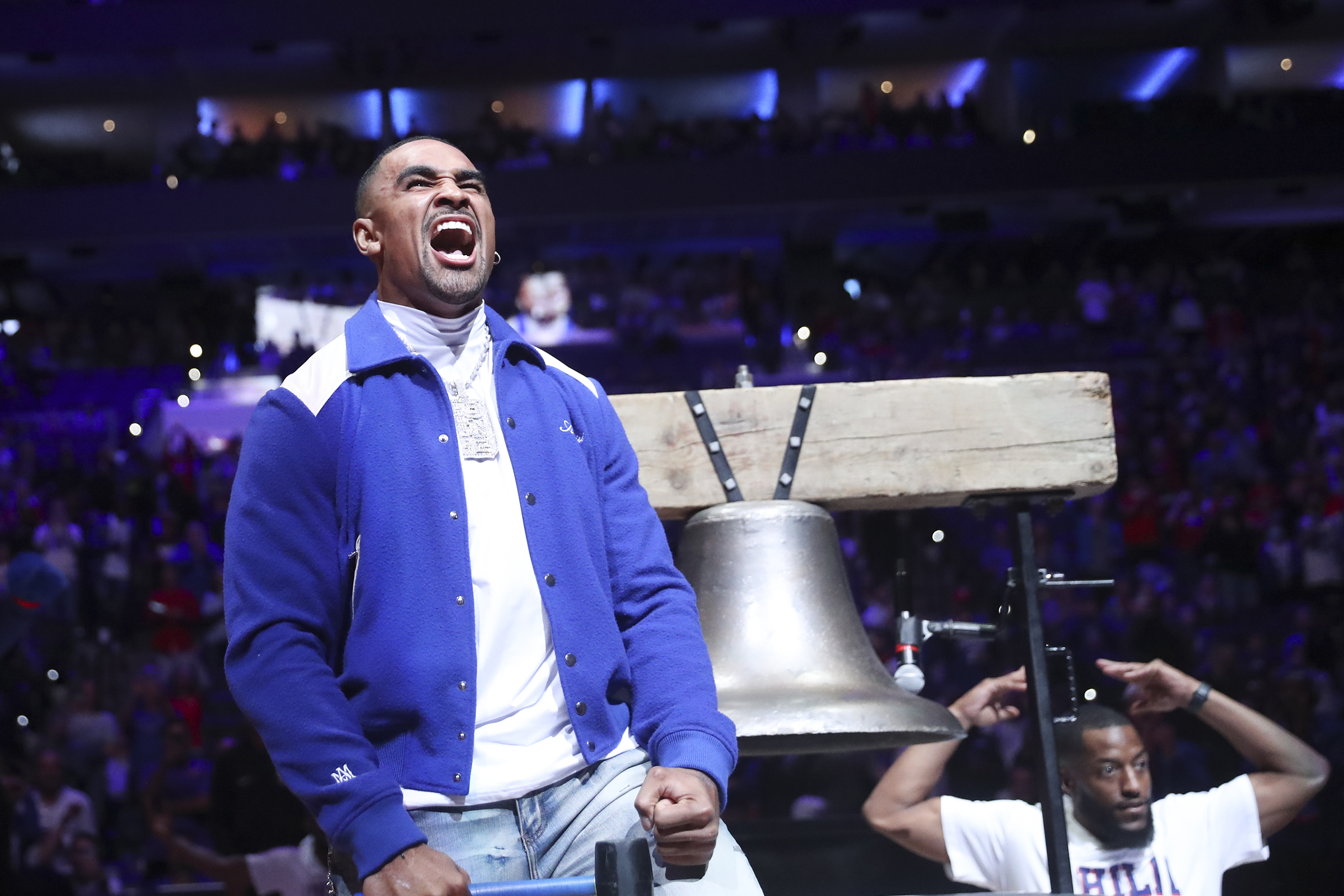
    Eagles quarterback Jalen Hurts does his signature celebration after ringing the bell before the start of a game between the Philadelphia 76ers and the San Antonio Spurs at the Wells Fargo Center in Philadelphia on Saturday, Oct. 22, 2022.Heather Khalifa / Staff Photographer

    The Sixers are ringing in disappointment: D-

    Apparently, the Sixers have decided that ringing a bell before a basketball game is now a special occasion.

    After years of inviting everyone from Philly sports legends to local celebrities to ring the ceremonial bell before every home game, the team is cutting the tradition back to just 13 games a season, Philly Voice reported.

    Why 13? Something about the original 13 colonies and the team’s Circle of Stars logo. Sure. Whatever.

    The Sixers say limiting the ceremony to marquee matchups will make it more exciting. But wasn’t the whole point that it was a fun, distinctly Philly tradition? Not everything needs to be reserved for a nationally televised game.

    And let’s be serious. The bell-ringing ceremony was never the thing keeping fans from getting excited at the Wells Fargo Center.

    After years of playoff disappointments, we’ve finally got LeBron James in a Sixers uniform and a reason to feel optimistic. This is when you lean into the fun stuff, not start rationing it.

    Free the bell. Let the people ring.
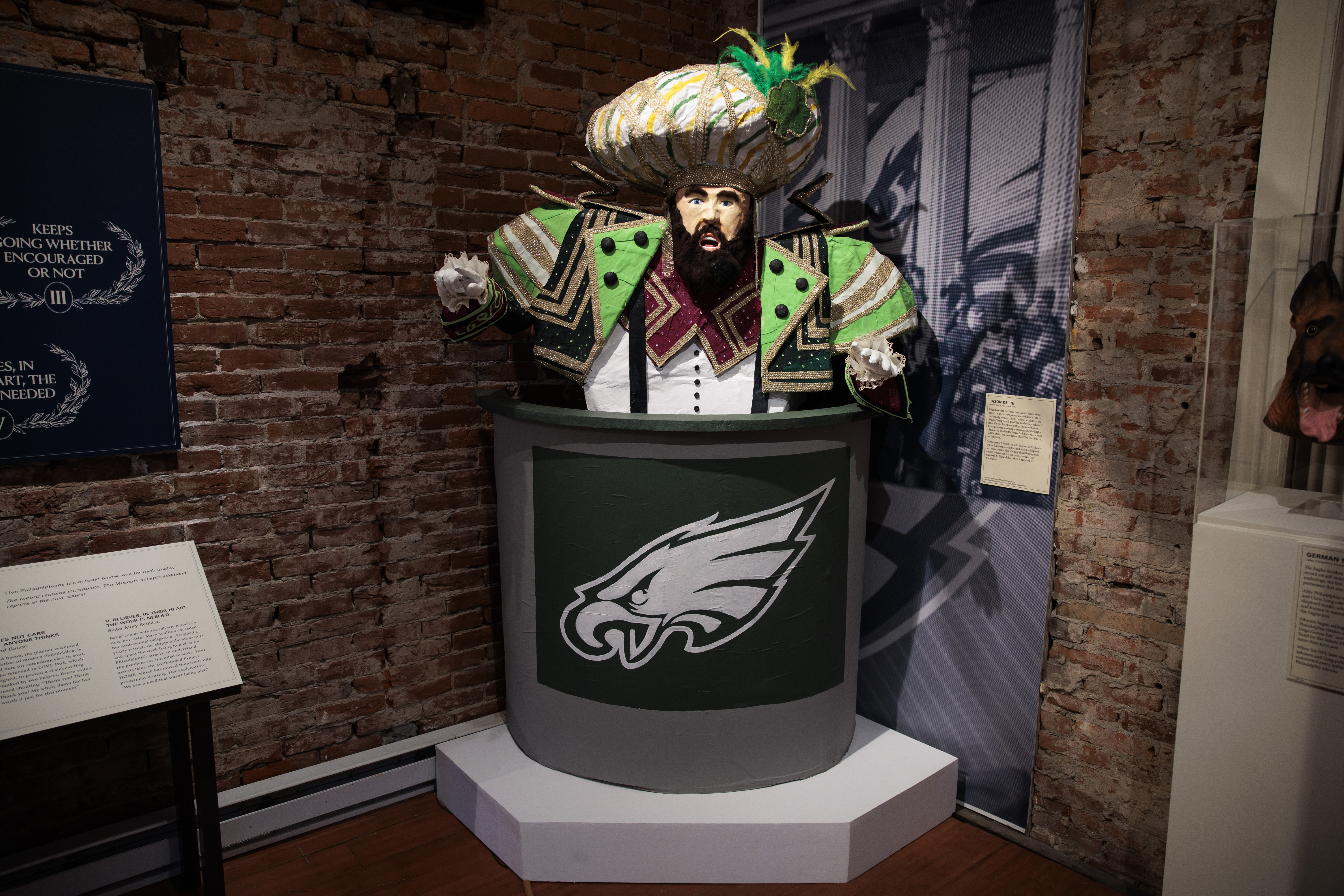
    A papier-mâché Jason Kelce featured in his Mummers costume from the 2018 Philadelphia Eagles Super Bowl parade at the Museum of the Philadelphian on Tuesday, Sept. 22, 2026.Monica Herndon / Staff Photographer

    Philly’s weirdest museum is for sale: B

    If you’ve got $65,000 burning a hole in your pocket, you could buy a nice new car, put a down payment on a house, or become the proud owner of a papier-mâché Jason Kelce head.

    The Museum of the Philadelphian, a 300-square-foot shrine to everything wonderfully ridiculous about this city, is for sale on Facebook Marketplace.

    And yes, the listing is real.

    You can own a collection that includes a rearview mirror from a car flipped during the Phillies’ 2008 World Series celebration, tributes to our beloved rotisserie chicken guy, and reminders of the time Philadelphia murdered a hitchhiking robot.

    Where else would these things be considered museum-worthy artifacts?

    Creator Brian Adoff is hoping someone will give the collection a permanent home after its six-week Fishtown run ends Sunday. And somebody absolutely should.

    The fact that you can purchase an entire museum of Philadelphia nonsense on Facebook Marketplace might be the most Philadelphia thing in the museum.

    Now we just need someone with $65,000 and a deep appreciation for our city’s questionable behavior.

    Back on top, for all the wrong reasons: F

    Philadelphia has reclaimed its title as the poorest big city in America. Congratulations to absolutely nobody.

    After briefly surrendering the top spot to Houston, we’re back at No. 1, with more than 20% of Philadelphians living in poverty.

    And unlike our sports teams, this is one championship we’d be thrilled to lose.

    The frustrating part is that Philadelphia had been making progress. Our poverty rate had been falling for years, but now it’s stalled. Meanwhile, groceries, housing, and other basic necessities keep getting more expensive, and assistance programs that help families get by are facing cuts.

    Mayor Cherelle L. Parker called the numbers unacceptable, and she’s right. But the bigger issue isn’t whether we’re first or second on some depressing national ranking. It’s that one in five Philadelphians is struggling to afford basic necessities, and that hasn’t meaningfully changed in years.

    We can celebrate new developments, big events, and everything else happening in this city. But none of that means much if the people who live here can’t afford to stay afloat.

    Philadelphia deserves better than being known for how many of its residents are struggling.
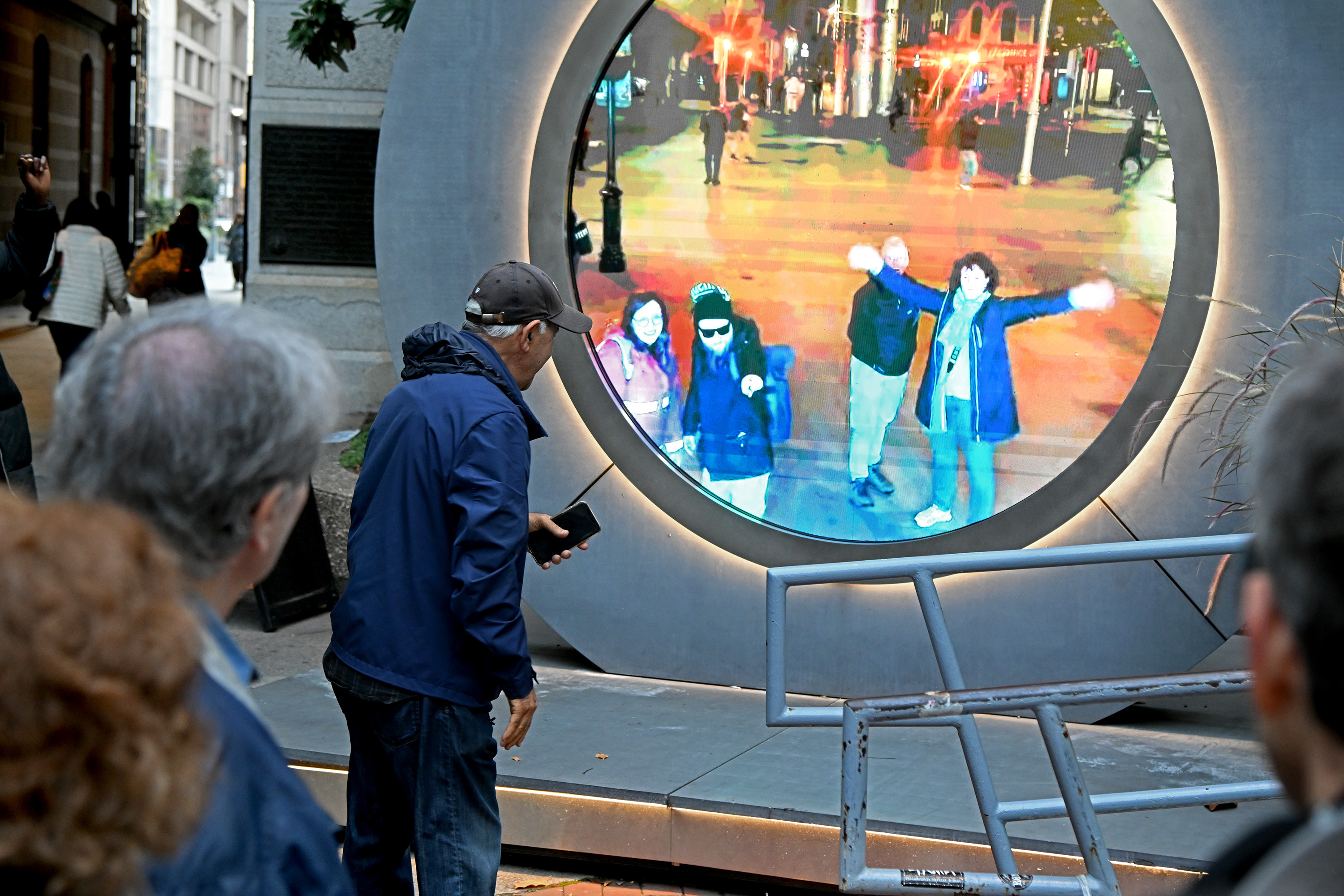
    The portal in City Hall Courtyard Nov. 3, 2025Tom Gralish / Staff Photographer

    The Portal lives to see another day: A

    Philadelphia was all set to say goodbye to the Portal this week. Apparently, somebody decided we weren’t ready for a long-distance breakup.

    The giant circular screen connecting Philly to strangers around the world was supposed to leave Saturday, but a last-minute intervention means it’s staying put, at least for now.

    And we’re glad! Where else can you make awkward eye contact with someone in Dublin, wave at a stranger in Lithuania, or watch a Philadelphian attempt to communicate an entire conversation through increasingly aggressive hand gestures?

    The Portal has had a very Philly existence. It arrived in LOVE Park, got vandalized, moved to City Hall, and was nearly evicted to make room for Christmas Village.

    Now an unidentified “generous patron” is helping keep it here while the city figures out long-term funding.

    We don’t yet know who’s paying to save the Portal, but we appreciate someone recognizing that Philly needs more opportunities to embarrass itself on an international stage.

  • Flyers searching for that collective identity that made them so successful last year: ‘It’s not about me, me, me’

    Flyers searching for that collective identity that made them so successful last year: ‘It’s not about me, me, me’

    Last season, the Flyers were one of the NHL’s hardest teams to face.

    Coaches said it pregame, and opponents lined up knowing they were in for a dogfight. Teams expected a night against a stingy defense — they averaged the ninth-fewest goals against last season — and a team that loved to bang — fourth-most hits — and grind — eighth-most blocked shots.

    The last two things, banging and grinding, have shaped the Flyers’ identity not just the last few seasons but since Ed Snider built the team up from the studs.

    For most of the team’s 15 games this season, that identity has fallen to the wayside.

    Wednesday night after their 12th loss, captain Sean Couturier said in Washington: “At times this year, we’re soft, I would say.”

    Defenseman Nick Seeler, who also fittingly hails from Minnesota, followed it up by invoking 1980 Miracle on Ice coach Herb Brooks’ saying about how the name on the front of the jersey is more important than the name on the back.

    “It’s not about ‘me, me, me.’ It’s about the team and playing for each other and sacrificing for each other,” Seeler said. “And it’s really not that difficult to understand. You play for the guy next to you; that’s what Flyers hockey is all about, and when we can start figuring that out at the start … we will be a better hockey team.”

    Famously, Brooks made the Americans bag skate (hockey’s version of conditioning sprints) over and over again after a disastrous exhibition game performance against Norway. “You guys don’t want to work during the game,” Kurt Russell, who portrayed Brooks in the movie “Miracle,” says to the team. “No problem, we’ll work now.”

    There was no bag skate in Voorhees on Friday, but the Flyers did have a practice that ran well over an hour, with several battle and reactionary drills. Even Travis Konecny, sporting a yellow non-contact jersey as he works his way back from a lower-body injury, was going at it with Denver Barkey — notably swatting at his stick to set the tone before the drill even started.

    Before they got on the ice, the Flyers held a team meeting. Tocchet said it was a typical game review chat but the message this time was about guys needing to show that they want the puck. They spoke about solutions and looking forward, not back.

    “A term that was used in the meeting was fragile,” forward Noah Cates said. “Whether it’s our mindset, whether it’s on the ice in the corners, we just can’t be fragile.

    “This game’s … it’s hard, it’s messy, it’s just hockey. So you’ve got to play hard, and bounces happen for and against. So you just got to roll with them, and back each other up on and off the ice.”

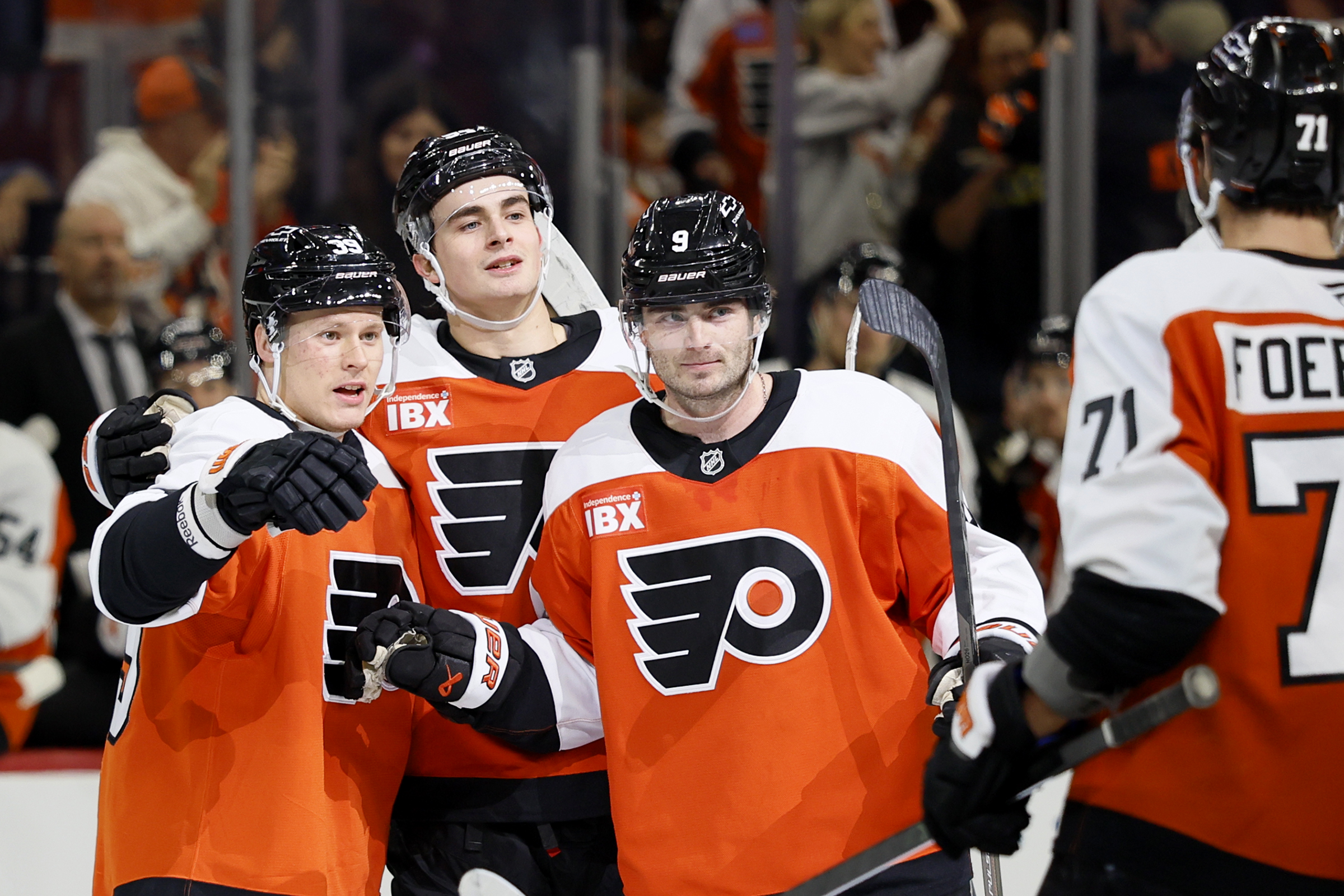
    Flyers captain Sean Couturier called out his team on Wednesday after a third straight loss.Yong Kim / Staff Photographer

    The Flyers are first in the NHL in blocked shots, partially because, according to Natural Stat Trick, they rank first in shot attempts against (932) and second in shots against (454). They have the second-lowest goals for percentage (36.7%) and fourth-worst expected goals for (42.6%) and high-danger chances for percentages (41.5%).

    “When you say play for the crest, I feel like that’s all kind of in us, always,” Treor Zegras said on Friday. “We just have small periods of time throughout the game where we just don’t connect the dots.”

    The Flyers need to get back to playing like five-man units, which was easily visible in the second and third periods against the Columbus Blue Jackets or most consistently in the team’s wins against the Ottawa Senators, Colorado Avalanche, and Buffalo Sabres.

    They would be well served by embracing the uptempo, hard-nosed game that helped them save their season last year and advance to the second round of the playoffs. That was part of the structure to Friday’s practice at the Flyers Training Center, the first of two straight days getting on the ice as a group in Voorhees for the first time since the start of training camp.

    With 69 games left, there is still an opportunity to right the ship and get reconnected. Playing as a team would be a great place to start.

    “That’s how great teams win. Us in London, that’s how we won. Every person had a role to fill, and you just filled it,” said rookie defenseman Oliver Bonk, who won a Memorial Cup alongside Barkey with London of the Ontario Hockey League.

    “Everything worked together. It’s like a car. [If] even the smallest little things missing, you don’t have a full car, it’s not going to run. Everyone’s just got to be the piece of the car that they need to be, and the car is going to run.”

  • Ed Hastings played at Villanova, became a priest, and now helps athletes find the joy in losing

    Ed Hastings played at Villanova, became a priest, and now helps athletes find the joy in losing

    It’s been more than 50 years but Ed Hastings can still feel the sting of leaving the Palestra in March of 1969 after losing in the Catholic League playoffs.

    “That’s a long time ago,” Hastings said of Monsignor Bonner’s overtime loss in the semifinals to North Catholic. “But I can go over certain things and where it took place on the Palestra floor.”

    And Hastings can still feel the comfort of his uncle, who was waiting for the teenager at his home in Drexel Hill. Bob Devine played at West Catholic and captained the hoops team at Notre Dame before becoming a priest. He told Hastings he knew how he felt — “I was hurting,” Hastings said — but promised that the loss would prove beneficial.

    “He was giving me perspective and he was also giving me hope,” Hastings, 75, said. “There would be more challenges to come but also maybe I would respond better the next time after I’ve gone through this kind of loss. I took that with me.”

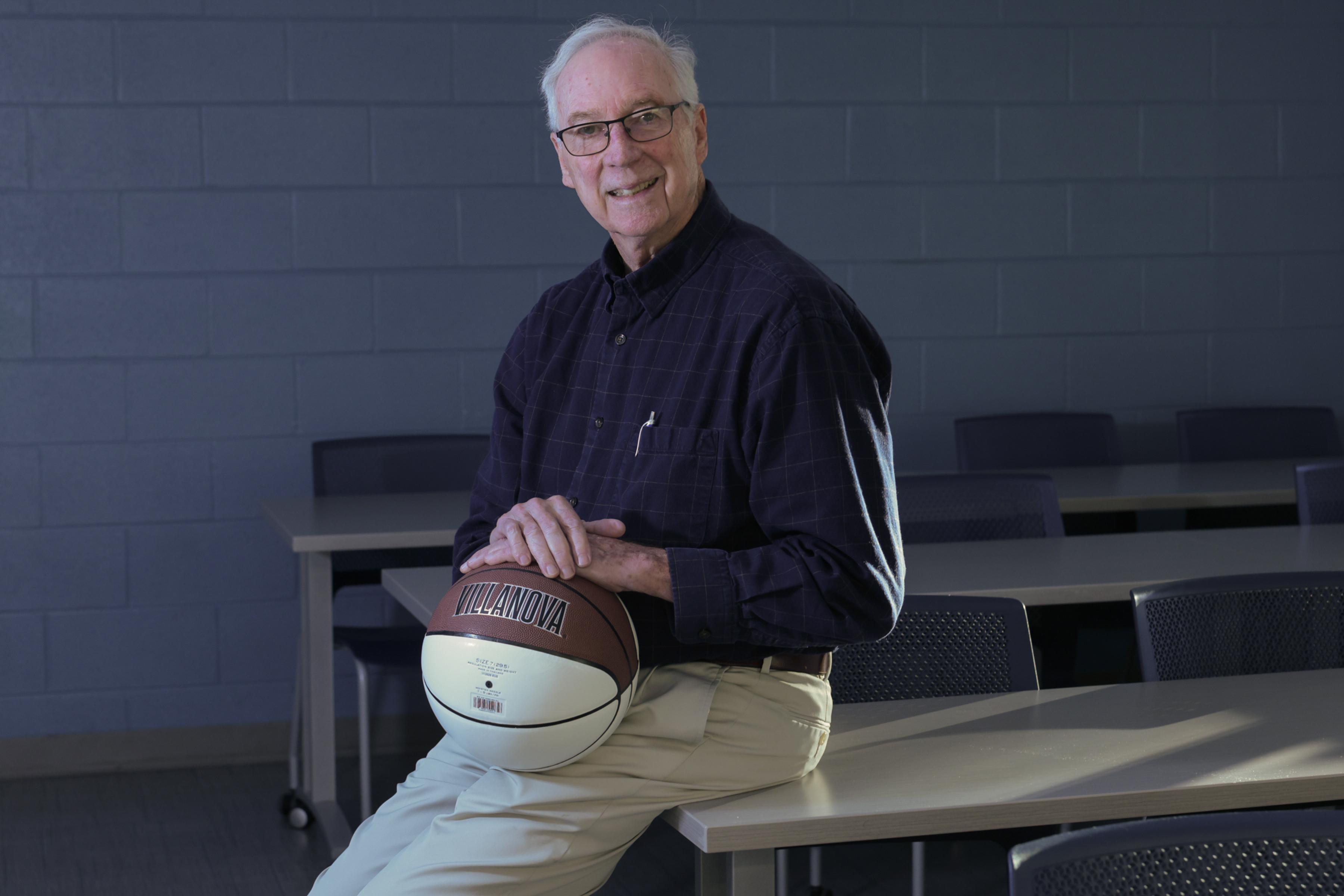
    That loss at the Palestra prepared Hastings for what was to come: a knee injury at Villanova that cost him the chance of playing for the 1971 national title, 16 years as an Augustinian priest, and now a trip to Rome to speak to a sold-out crowd a day before Villanova opens its season there.

    Hastings, who left the priesthood in 1999 and now teaches theology at Villanova, will focus his talk on what athletes can learn from losses. He might even mention that afternoon against North Catholic — Hastings hit a go-ahead shot with 12 seconds left before North forced OT — and the lesson he learned.

    “I did a lot of winning, but certain losses stick and they can inform us perhaps more than anything,” Hastings said. “Spirituality has since informed me that the necessary suffering can help us more than anything. Winning is great. I promise you, I never went on a field or in a gym being content with losing. But through the hard times, I’ve learned that losing — if we use it well — can be the very thing that helps us develop the most spirituality.”

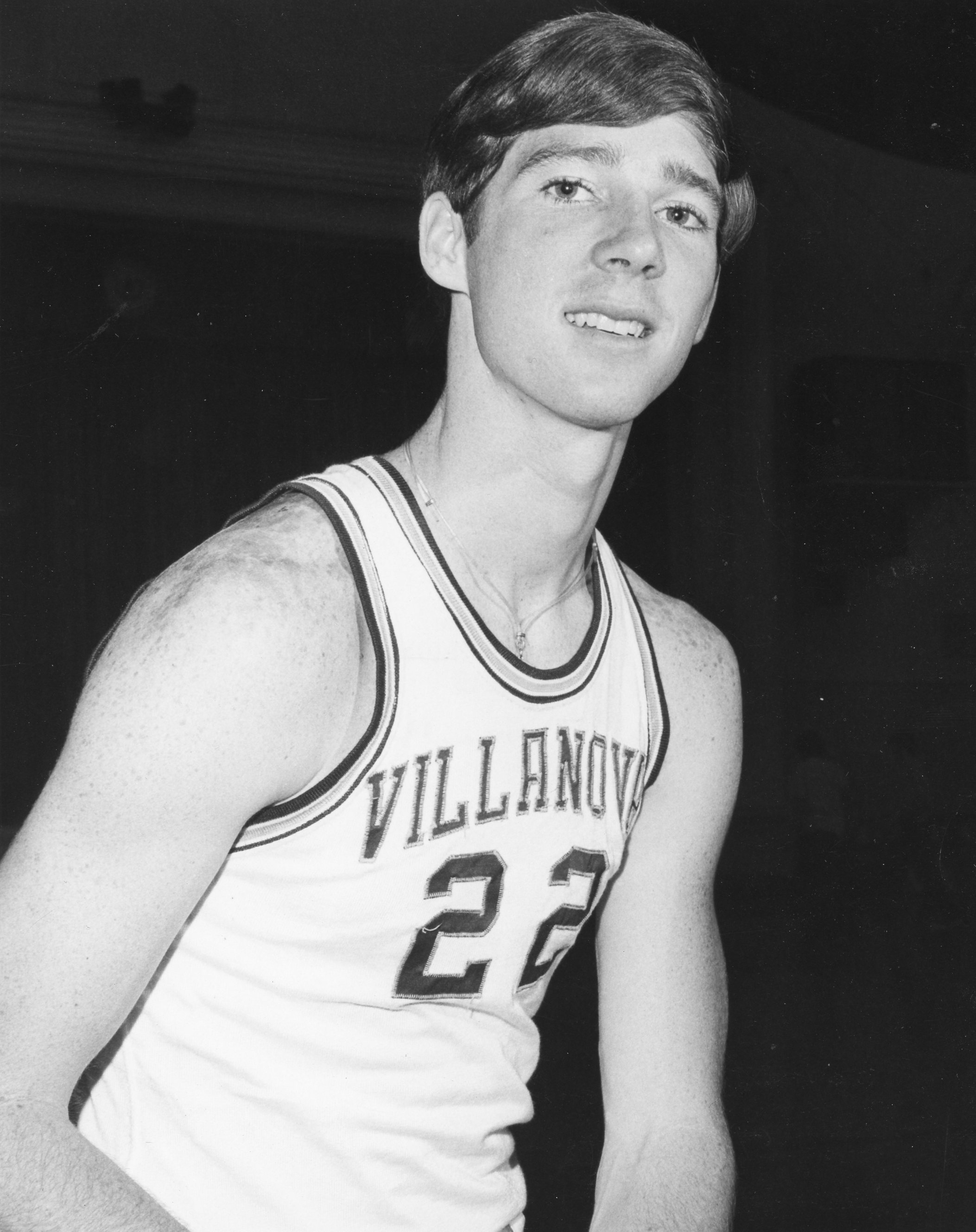
    Ed Hastings during his playing days at Villanova.Villanova University Athletics

    Dealing with losses

    Jack Kraft knew Hastings wasn’t happy to sit after injuring his knee weeks earlier, so the Villanova coach inserted Hastings late in a blowout game in Hawaii.

    “I brought the ball up court,” Hastings said. “I planted my foot, and my knee went one way and my body went the other way. I tore my ACL.”

    His sophomore season — and his role as the team’s sixth man — was over. Hastings didn’t go to practice or travel with the team to road games. His roommate was fellow guard Tom Inglesby, who is now his brother-in-law, but Hastings struggled to find his place with the team without being able to play.

    “My community at Villanova was the basketball team,” Hastings said. “That was really hard.”

    He was allowed to travel with the team to Houston for the Final Four. He watched them beat Western Kentucky and then give UCLA enough trouble in the national championship that John Wooden slowed down his up-tempo offense to force Villanova to come out of Kraft’s famed “ball defense.” Hastings could only watch as the Wildcats lost by six. It was another loss to learn from.

    “That was exciting,” Hastings said. “But I thought, ‘Wow, I could be playing in the national championship against John Wooden, of all people.’”

    Hastings played two more seasons at Villanova and co-captained the squad as a senior. He wanted to be a basketball coach, so he stayed at Villanova after graduating in 1973 to be a graduate assistant under new coach Rollie Massimino. He was a character, Hastings said. One season was enough for Hastings to find a new calling. He entered the seminary.

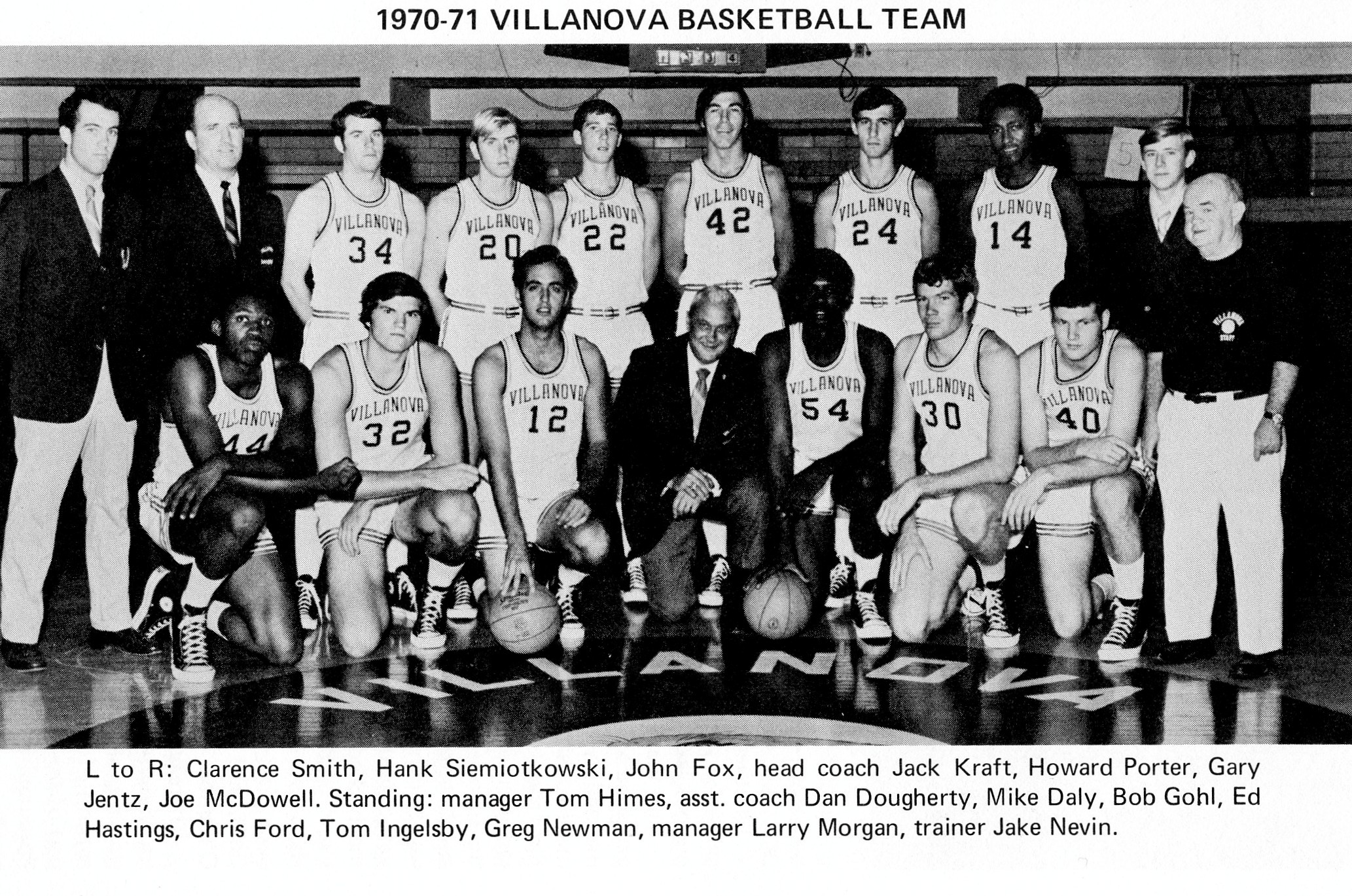
    The team photo for the 1970-71 Villanova Final Four Four team.Villanova University Athletics

    ‘Sports and Spirituality’

    Hastings graduated from Villanova a few months before Pope Leo XIV arrived on the Main Line. But Hastings knew him when they were both in the seminary.

    “I asked a couple people, ‘How are we going to refer to him?,’” Hastings said. “Because to me, he was Bob Prevost. But I guess it’s ‘Your Holiness’ or something like that. It’s honestly hard to believe. When we first heard this, it was like, ‘This is amazing.’ It gave me great hope for the church that he was elected.”

    It was a relief, Hastings said, that the pope won’t be in attendance for his speech in Rome as the former Villanova guard didn’t need any more pressure. Hastings said the vow of celibacy pushed him out of the priesthood and he now lives in Haverford with his wife, Kathy. He will be joined in Rome by Villanova’s minister for sport and spirituality David Walsh and Notre Dame’s assistant vice president of campus ministry Rev. Peter M. McCormick. Their talk is titled “Win or Lose, Be Fully Alive” and will focus on what Hastings has spent most of his life centered on: finding spirituality in sports.

    Hastings founded Neumann University’s Center for Sport, Spirituality and Character Development in 1999 shortly after leaving the priesthood. He shows his Villanova students examples of “spirituality in the sports page,” and thinks back to how impactful the pickup games were in Delaware County. He learned how to shoot by watching Herb Magee, Jim Lynam taught him how to play point guard, and Fran Dunphy was stiff competition. More so, they showed Hastings how to carry himself while they played at places like the Aronimack Swim Club.

    “I looked up to them,” Hastings said. “These people are classy people. They were really good people. So I became involved with them and saw how they treated others. I could see something going on there.”

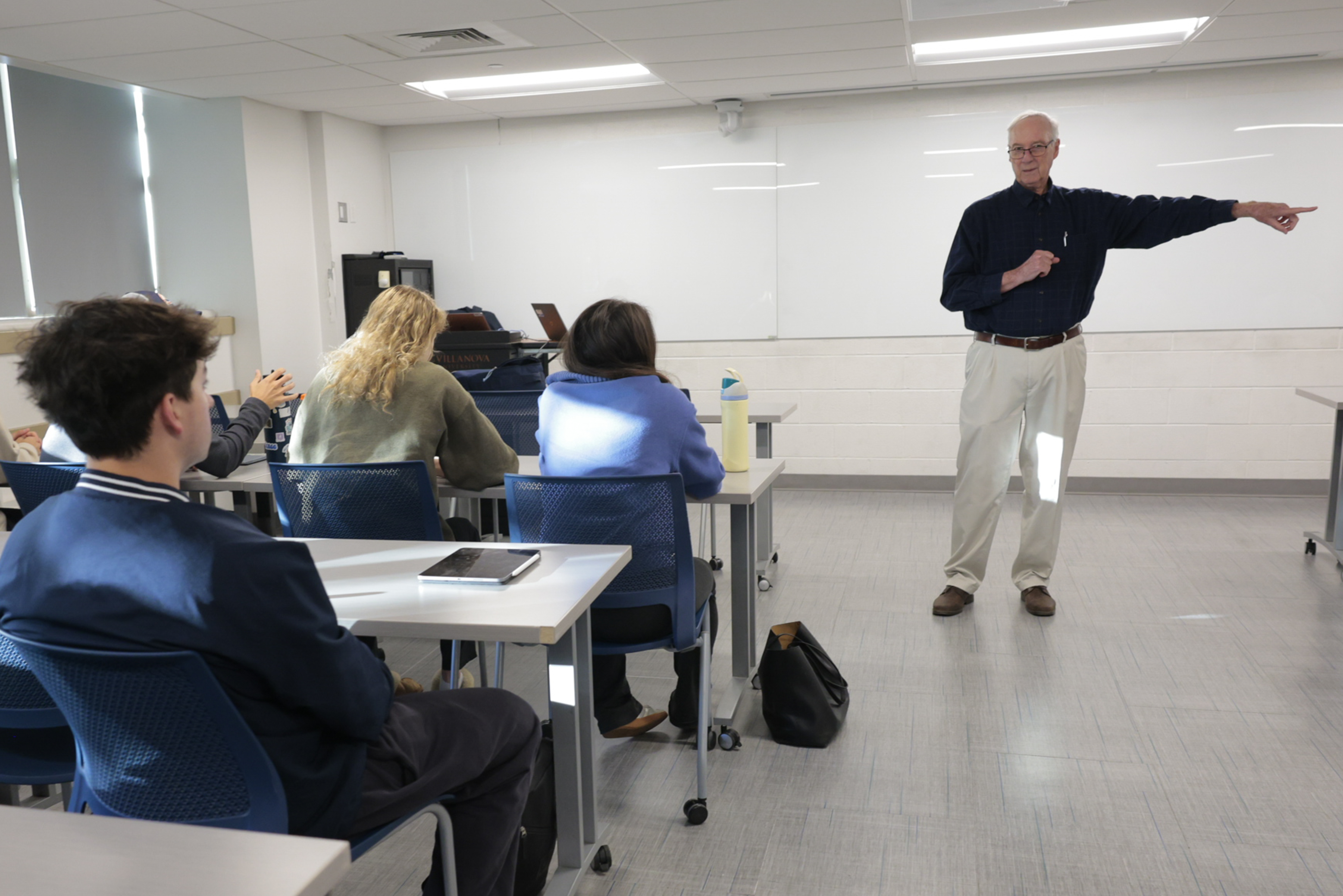
    One of Hastings’ classes at Villanova is titled “Sports and Spirituality.” Sports, he said, is the hook to get students to sign up.

    Ed Hastings, who was on the 1970-71 Villanova Final Four team, is a theology teacher at the school.Steven M. Falk / For The Inquirer

    “But then I’m sneaking in spirituality and teaching them spirituality through the experience of playing sports,” Hastings said. “That’s what I’m doing. My expertise is spirituality. It’s how we can look at sports and see spirituality.”

    He teaches his class at Villanova like his uncle taught him that night years ago in Drexel Hill. He was crushed about losing in the Catholic League playoffs. But his uncle saw a chance to use sports as a way to guide the teen’s spirituality. Yes, he still remembers the disappointment of losing to North Catholic. But he also remembers the hope his uncle gave him. And that’s what he’ll carry to Rome.

    “Winning is great and everyone wants it and I’m for it,” Hastings said. “But it’s losing that can really teach us about life. That’s what I want to talk about.”

  • In broad daylight, Smithsonian readies a once-secret stealth fighter for debut

    In broad daylight, Smithsonian readies a once-secret stealth fighter for debut

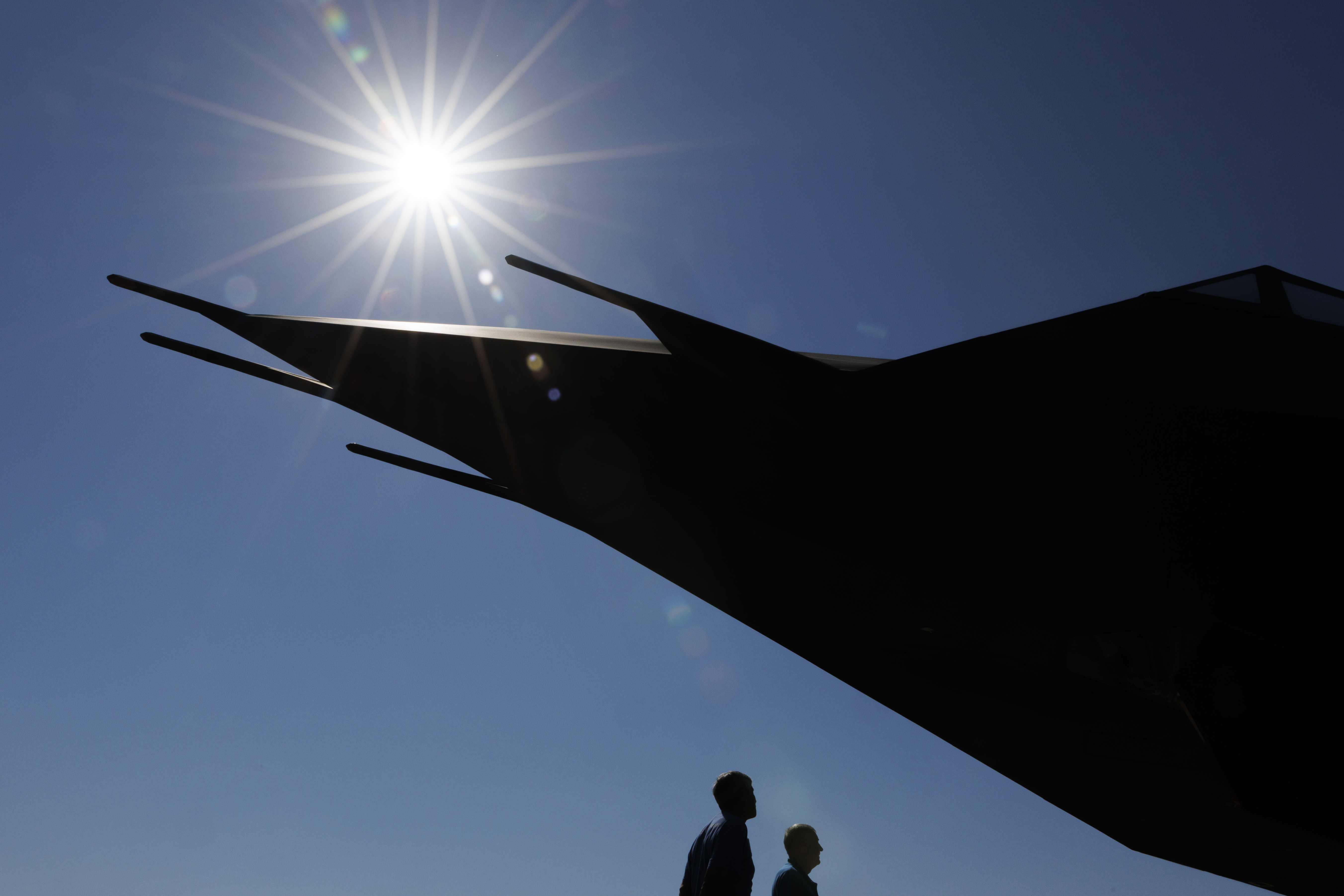
    The safety alarm sounded as the hangar door at the Smithsonian museum slid open and the mysterious, dark-colored jet was pushed out into the glare of the sun.

    Daylight was not the realm of the F-117 Nighthawk. Its world was the dark sky over its targets. Its weapon was stealth. Its role was to fly unseen through enemy fire, attack, and disappear.

    But this jet, named “the Overachiever,” was 41 years old and a veteran of four conflicts. The F-117 line was retired from combat in 2008. And last week, on a tarmac outside Washington, tail number 85-0818 was prepared for its debut in a museum.

    The aircraft, famous for a sci-fi design that made it almost invisible to enemy radar, was scheduled to go on display Wednesday at the National Air and Space Museum’s Udvar-Hazy Center near Washington Dulles International Airport in Virginia.

    “This is an incredibly important airplane historically, technologically,” said Michael Hankins, the Air and Space museum’s curator for post-World War II military aviation.

    “It’s also just really cool,” he said. “It’s very interesting looking. It’s very different than anything else we have.”

    It’s the first operational stealth aircraft, which means it’s very difficult to detect via radar, he said. Radar has long been used to help locate and shoot down combat aircraft.

    But the F-117’s multifaceted shape and radar-absorbing surface made it difficult for radar to spot, he said. (Only one F-117 was ever shot down — in 1999 over Serbia. It was reportedly hit by a Yugoslav missile battery that, among other things, guessed the route the jet would be flying.)

    “This one does not have any bullet holes,” Hankins said of the Smithsonian’s Nighthawk.

    In 1991, Matt Byrd, then an Air Force fighter pilot, flew 44 missions in F-117s during Operation Desert Storm, the allied campaign that defeated the forces of Iraqi leader Saddam Hussein after his invasion of Kuwait.

    All were at night. Some were in the Overachiever, he said.

    “We were told [Baghdad] was the most heavily defended place on the planet,” he said. “We were very nervous. We were told by the engineers that this airplane was invisible. Our hope as pilots was: ‘We sure hope the engineers got it right.’”

    On one mission to the Iraqi capital, the anti-aircraft fire was so heavy it felt like you could get out and walk on it, he recalled.

    “I didn’t think I was dead, I knew I was dead,” he said. “I knew there was no way I could fly through this hail of bullets.” But he and his F-117 did. Thank the Lord and the engineers, he said.

    On another Baghdad mission, he saw two missiles that looked like they were headed right for him.

    “The panic sets in,” he said. “Did I leave my lights on? Are my antennas out? Is my radar cross section up?”

    In other jets, he might have tried to dodge the missiles. “But that’s where you recall what they told you in training: ‘You’re invisible,’” he said. “So you sit there and you just think small,” that the airplane is just a dot in the sky.

    Seconds later he heard two big explosions — “Boom! Boom!” — close but off target.

    “They missed,” he said. “Huge relief. You’re not going to die.”

    He went on to finish his attack.

    “It was … a great testament to the technology of that airplane,” he said. “The engineers got it right. The tracking radar could not see me.”

    Last week, after the jet was moved outside, technicians from Lockheed Martin’s Skunk Works, the California plant where it was built, prepared it for display.

    It had already been modified and demilitarized.

    “There are certain things on the aircraft that have to be done to it to protect classified information,” Hankins said. “That stealth coating has to be removed.” And certain parts of the wings have to be changed.

    But the experts at Lockheed “did a very meticulous job of trying to restore it to as close to the original as can be” displayed publicly, Hankins said.

    The wings and tails had also been removed so it could fit in the huge Air Force cargo jet that carried it from Palmdale, Calif., to Dulles Airport this month.

    After the Overachiever was pushed from the museum’s Mary Baker Engen Restoration Hangar, it sat alone in the sun, casting a shadow on the tarmac. Lockheed experts, clad in black T-shirts bearing a skunk logo, brought the wings out on large dollies.

    Shortly after noon, a forklift raised the left wing to the level of the aircraft. And after some pushing and shoving, Lockheed fabrication mechanic Jeff Dutton stood on a yellow ladder and began working on the bolts that attach the wing to the body.

    Dutton had spent months earlier this year helping to modify the Overachiever for the museum. He had done maintenance on F-117s before they were retired almost 20 years ago.

    “Brings back memories,” he said as he stood in the aircraft’s shadow. “It really does. I loved working on the program.”

    The wing bolts have to be tightened in just the right sequence, he said, marveling at the plane’s construction.

    “You look at the structural integrity of the airplane, it is well built,” he said. “Well built.”

    “I love this jet,” he said.

  • They were sorority sisters at Penn. Sixty years later, they’re roommates again.

    They were sorority sisters at Penn. Sixty years later, they’re roommates again.

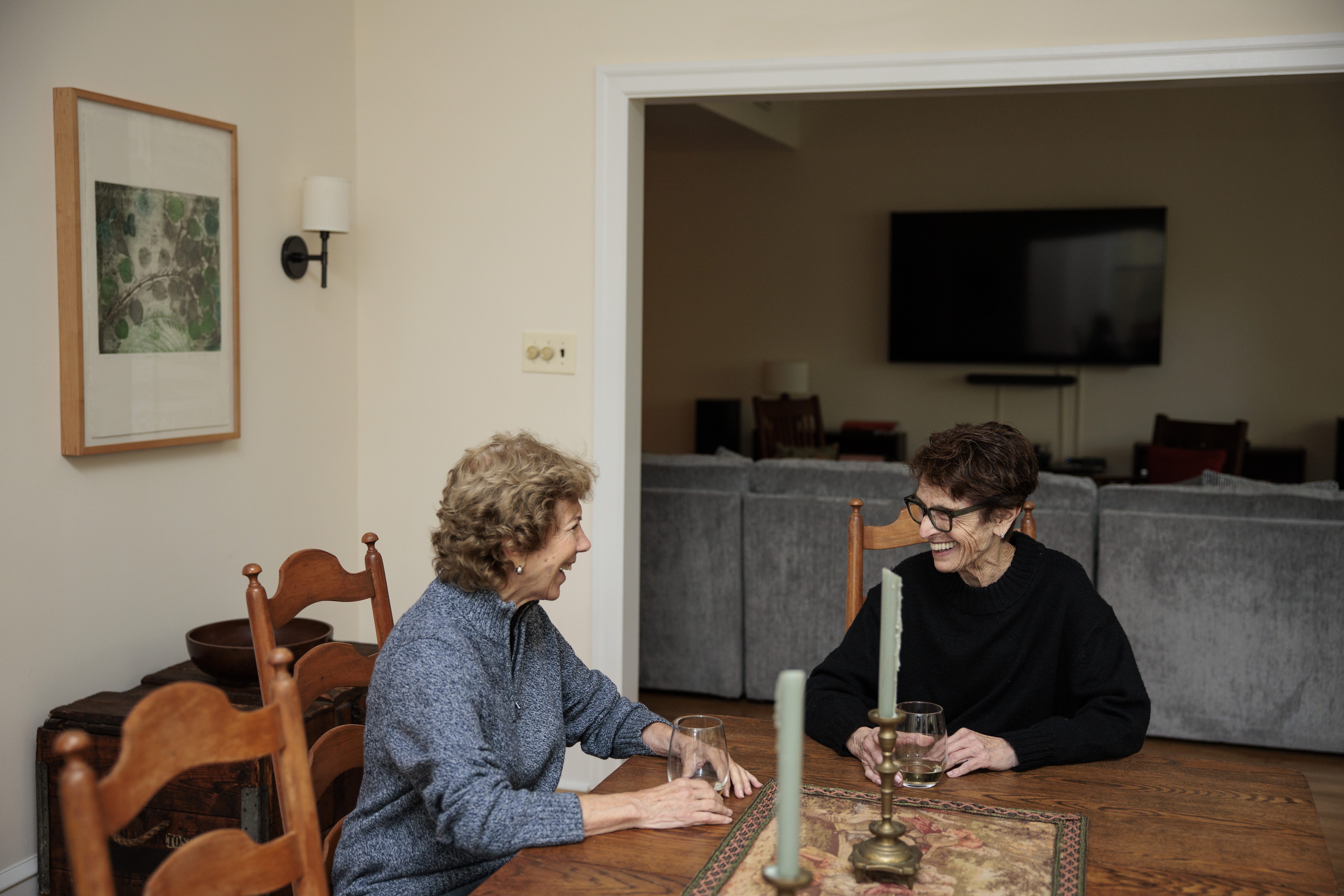
    In the fall of 1966, Susan Dannenberg and Michele Mathes moved into a small room together on the third floor of the Delta Phi Epsilon sorority house at the University of Pennsylvania. It was not clear whether they would make it as roommates. Mathes was an analytical pre-law student focused on the future, while Dannenberg was a struggling art student with a penchant for bringing home small rodents as pets.

    Sixty years later, the two women, both now 79, have once again moved in together.

    In the intervening decades, they married, raised children, built careers, got divorced, and lived alone. But they remained connected and always thought they might end up as housemates once more.

    “I’ve never had to explain myself to her,” Mathes said.

    This time, instead of a cramped sorority room, they are sharing a spacious apartment in Chestnut Hill, where they each have their own bedroom and bathroom.

    In pooling their belongings, Mathes brought the books, music, and handwoven rugs; Dannenberg brought furniture from 50 years of flea market scavenges. (They each brought a male Tuxedo cat.) They opened a joint bank account to pay for their rent and other shared expenses.

    They see their non-romantic living arrangement as a way to spend the older years of their lives in companionship, doing exactly what they want to do.

    “It’s not just about being roommates,” Mathes said. “We give special priority to figuring out how you meld two lives.”

    The following, as told to Zoe Greenberg, has been edited for length and clarity.

    On being roommates 60 years ago

    Dannenberg: At the end of every day, no matter what went on, we would get the hardbound dictionary out, and we would pick out a word that neither of us knew. We would learn that word, and we would commit to use it the following day.

    Mathes: The following year we were in different rooms. But every night, after everyone else was asleep, Susan and I would sit on the stairs and sing show tunes.

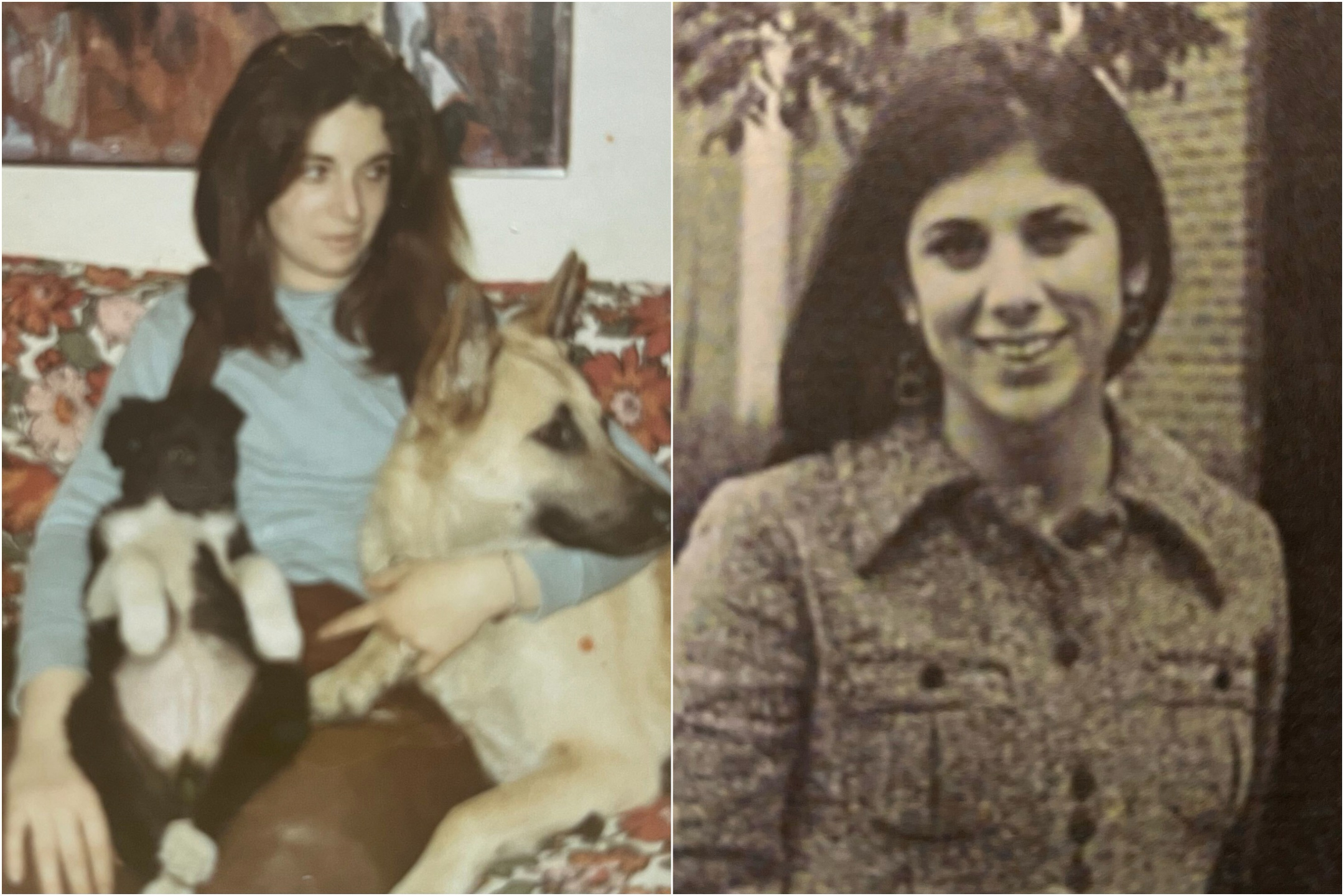
    Susan Dannenberg, left, and Michele Mathes in 1971, five years after they met in the Delta Phi Epsilon sorority at Penn.Courtesy of Michele Mathes

    On their marriages

    Dannenberg: In both my marriages, each of my husbands was aware that I had a strong relationship with Michele, and accepted that was a big part of my life. It was hard to navigate sometimes. I never believed that anybody else had a relationship like this. What other people meant when they said “best friend” didn’t capture the complexity and the depth of this relationship.

    Mathes: You have to understand that by the time we got married, we had such an incredibly strong friendship. It didn’t detract from the marriage, but it coexisted with the marriage. It was braided into the marriage.

    On difficult years of friendship

    Dannenberg: From about 1977-87, I withdrew from Michele. Those years were challenging. I was so deep in my own struggles that I can’t say I even saw other people’s lives.

    Mathes: My life was going swimmingly at the same time that Susan was struggling. So that made it very difficult. I was hurt. Susan was not in touch, but she was still Susan, and I was still me.

    On making plans to be roommates again

    Dannenberg: Fifty years ago, I remember thinking: At some point the best way to live is for women to live with women. I was married at the time. Everybody was married at the time. We made a commitment to each other that we were going to do the work it took to be in a place where the two of us could live these years together.

    On what they worried about before moving back in together

    Mathes: Because we are very different, I had some concerns about how accommodating we could be to each other. Part of my baggage going back to the way I grew up was I felt that I was run over a lot. I was concerned because Susan is very orderly and likes to do things a certain way.

    Dannenberg: My concern is the flip side — I worry that I’m going to make a misstep, and Michele’s going to get angry.

    Susan Dannenberg and Michele Mathes prepare dinner in their kitchen. They’re learning to meld their lives after years of living alone. Monica Herndon / Staff Photographer

    On their new daily ritual

    Dannenberg: We’re figuring out our own desires, how to spend our time and how we can do it together. We have a ritual at 4 o’clock. We stop what we’re doing. I pour a nice glass of wine. Sometimes Michele will have a little bit of wine, but more likely iced tea. We call it cocktail hour.

    On sparing their children (and themselves)

    Dannenberg: My son will always say, “If something happens to you, mom, you can always come live with us.” Living with them would not be my dream. I would have to re-locate, and I wouldn’t want them to be responsible for looking after me. I think it’s such a relief to them that Michele and I have each other.

    Mathes: We’d both taken care of parents who had become frail or ill. I wanted another stage where I’m living the way I want to live — not to support other people, or take care of responsibilities. You’re old enough to reflect back on your life. I want to live with someone I love in an environment where we can decide what we want to do, and have that be the last part of my life. And that’s what we’re doing.


    This story is part of a series about life partners across the Philadelphia area.

    If you want to share your story about who you’re navigating life with, romantically or otherwise, write to lifepartners@inquirer.com. We won’t publish anything without speaking to you first.

  • What happened to the Neanderthals?

    What happened to the Neanderthals?

    For most of our evolutionary history, humankind was made up of many human kinds.

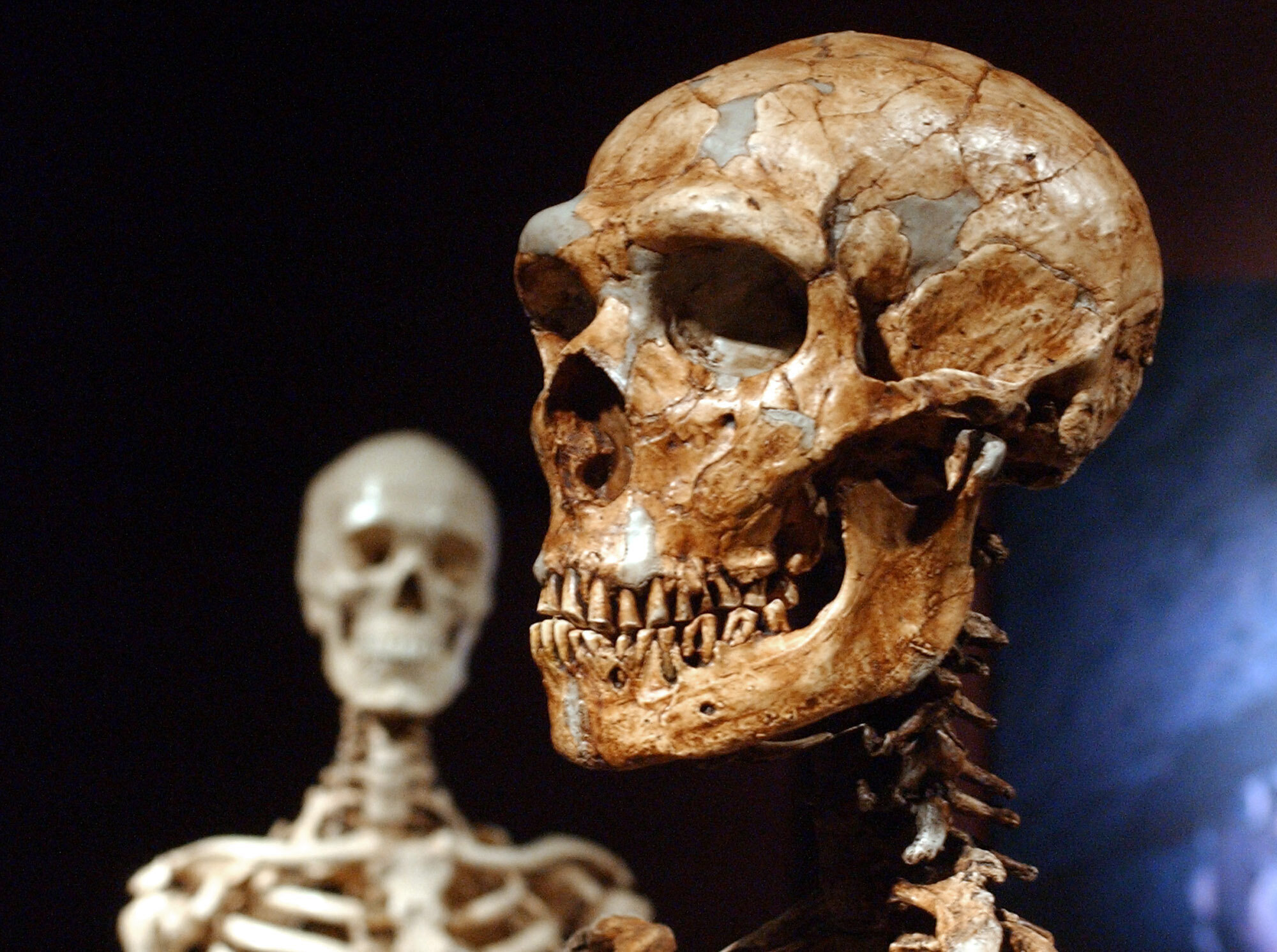
    Take the last 100,000 years or so. The oft-caricatured, big-browed Neanderthals roamed across Europe and into western Asia. The mysterious, towering Denisovans hunted and gathered in Asia. The diminutive, hobbit-like Homo floresiensis dwelled on an Indonesian island. The last of Homo erectus had just died out in Java. Our species, Homo sapiens, was merely another variation on the type.

    It’s tempting to assume the monolithic human world we live in now is the normal one. But for many scientists who study the ancient past, the present is the puzzle.

    “This is a strange time,” said Chris Stringer, a paleoanthropologist at the Natural History Museum in London. “Why are we the last ones left, and what happened to all the others?”

    For decades, humanity’s narrative of its own origins was intertwined with presumptions of biological exceptionalism. Human evolution was often portrayed as a march toward the big brains, adept tool use, and social complexity of modern day people.

    In that story, the other hominins — human ancestors and evolutionary cousins — were primitive discards. They deservedly died out. We were the happy ending.

    “Everything else was brutish,” said Eleanor Scerri, an archaeological scientist at the Max Planck Institute of Geoanthropology, reflecting on the ideas that dominated discussions of human evolution in the 1980s, when as a child she first became hooked on the field. “That was very much in vogue: ‘And we survived, because we were the greatest.’”

    Over the course of Scerri’s career, however, the story about human origins has been rewritten and revised, as new lines of evidence have emerged. That includes the narrowing of the cognitive gap between Homo sapiens and our close cousins, with evidence that they also had sophisticated abilities — to make art, bury their dead, and wield fire. Still, there are now more than 8 billion humans on the planet, of only one type.

    Amid the daunting saga that is human evolution, the Neanderthals, so recent and closely studied, are in many ways the accessible celebrities of the story. Their fate seems to offer a toehold on the big questions about how we came to be the last species standing. What happened to the Neanderthals, then?

    One glib answer is that they are still here, lurking in the DNA of present-day people in tiny amounts. Ancient DNA studies revealed that Neanderthals and Denisovans, and possibly others, didn’t so much as die out as become absorbed, through mating, into who we are today.

    But if it were possible to ask Neanderthals, they probably wouldn’t see themselves present on the planet. So why are modern humans alone now? How much of our success stems from unique abilities? How much of our advantage was just luck? Can the past teach us anything about how to think about the existential risks of the present and the future?

    Are we triumphant survivors — or just next on the evolutionary chopping block?

    Were Neanderthals just like us?

    Picture a day in the Pleistocene. A group of humans kindle a fire to cook, striking a flint against pyrite. They hunt big game. They also gather plants to eat and, perhaps, use as medicine. They draw on the walls of caves. They care for sick and disabled compatriots, even performing something like a root canal to relieve a throbbing toothache.

    But “they” aren’t Homo sapiens — they are Neanderthals.

    The process of human evolution was long seen as akin to climbing a ladder, with more primitive species on the lower rungs.

    But archaeological discoveries have turned human evolution into more of a tangled bush, filled with hominin species that aren’t clearly more or less advanced than one another. The fossil record now includes hominin species who overlapped in time, interbred with each other — and most likely possessed incipient versions of some of our abilities.

    When Neanderthals were discovered in the 19th century, scientists’ “assumption was they were halfway to chimps,” said John Hawks, a paleoanthropologist at the University of Wisconsin-Madison. “And today we understand they are 95% of the way to modern humans.”

    Notions of human uniqueness have also crumbled repeatedly — and not just for our closest relatives. In 2010, Zeray Alemseged, a paleoanthropologist at the University of Chicago, made a discovery that challenged the dominant view that stone tools were a special innovation of our genus, Homo. He found evidence of animal bones that had been cut by stone tools associated with Australopithecus afarensis, the prehuman species made famous by the fossil Lucy, discovered in the Afar region of Ethiopia. The finding pushed back the use of stone tools by 800,000 years to 3.4 million years ago.

    “It was very, very controversial,” Alemseged recalled.

    Other evidence continues to emerge showing the resonance between Neanderthal and Homo sapiens abilities. Stringer points to the 176,500-year-old Bruniquel Cave in France, where archaeologists discovered mysterious ring structures built from broken stalagmites, with evidence that fires had topped them.

    “A group of Neanderthals went deep into this cave, carried with them all the materials they needed in terms of lighting and fuel,” Stringer said. The people who made these structures would have had to plan, communicate and work together. “That, on its own, is a window into the complexity of the mind,” he said.

    Despite this growing list of similarities, some experts think that the pendulum has now swung too sharply to a “Neanderthals, they’re just like us” interpretation of the fossil record. Paleoanthropologists like to pose a thought experiment: If a Neanderthal were riding on the New York subway, some suggest, people wouldn’t blink.

    Even if our cultures were similar, was it a sign Neanderthals and other species were copying our behaviors and technology? How much were they also influencing us?

    Putting human abilities on a continuum makes the mystery of our present-day solo existence even more profound. If we shared so much with these closely related creatures, why us, and not them?

    Ancient DNA changes the story

    The Neanderthal genome landed in 2010, containing a bombshell: “They” didn’t evolve directly into us, nor did they die out completely.

    Instead, Neanderthals were absorbed into modern human populations and are among our ancestors — making up about 2% of the DNA of present-day people with non-African ancestry. Denisovans, too, mated with humans. And a growing raft of studies suggests that the Homo sapiens genome contains “ghost lineages” from unknown ancestors.

    The scant evidence on these prehistoric couplings leaves pretty much everything else up to the imagination. Geneticists can pinpoint the interactions in time — for example, a 7,000-year span beginning more than 50,000 years ago, when Neanderthals and modern humans had babies together — but how frequent were these interactions? Were they voluntary? Was there violence?

    A recent Science study found evidence that couplings followed a distinct pattern: Neanderthal males with modern human females. But the salacious details remain murky. “It’s striking, the things we still don’t know,” said Joshua Akey, a geneticist at Princeton University, who said often the first thing he’s been asked when he’s given a talk is how many times modern humans mated with Neanderthals. The answer to that question would tell us if those couplings were “an interesting side note to human history or whether it was something fundamentally important to who we are,” he said.

    One interpretation of the evidence is that Neanderthals are still with us, though they clearly aren’t on the ground anymore.

    To look for clues about why, scientists are now using biotech tools to explore the function of individual Neanderthal genes. For example, they’re experimenting with putting the Neanderthal or Denisovan version of genes into mice or cells in a dish to see if they grow or behave differently. Those studies will continue to flesh out the function of Neanderthal genes in coming years, and so far have found the genes play a role in immunity, circadian rhythms, and anatomy.

    But many scientists think DNA is just one part of a dynamic and complicated story that includes population dynamics and climate. The number of humans, of any kind, on the landscape would have been relatively sparse, and the environment could be harsh. Sometimes Neanderthals seemed to succeed, sometimes humans did — and sometimes small populations of both species died out, leaving no modern descendants.

    There could be a “luck of the draw” element, Scerri said, where Homo sapiens, a tropical African species with a bigger population, simply had the edge against species living in areas of the world “more constrained by the brutality of the Ice Age.”

    “It’s probably just chance — when the climate was nice enough, they could make it there,” Hawks said. “They kept trying, again and again, and to me that’s the bottom line of humans, that throughout the Pleistocene, we just kept coming.”

    The unknowable

    In terms of sheer numbers, Neanderthals were smaller than Homo sapiens populations.

    The hunter-gatherer life was never an easy one. Abrupt swings in the climate, competition with Homo sapiens, and other factors could have left small, isolated groups of Neanderthals living on the edge. The one thing we do know: Some Neanderthals became human ancestors, living on in the DNA of present-day people.

    But as a group, they’re gone.

    A growing number of archaeologists think the answer to why we outlasted them isn’t as simple as some new stone tool. Instead, studies explore a web of interacting factors less easy to read in the fossil record — resilience against disease, the pace of cultural development, social intelligence, the ability to build political alliances.

    Many specifics of the ancient past will remain obscure; the data is scant compared with the depth of human curiosity. Each new find spurs more questions than it answers.

    But some scientists argue it has never been more urgent to grapple with our deep history, as existential risk rears on multiple fronts. Human origins aren’t esoteric; a long view may also help to think about the future trajectory of our existence.

    “It’s important to recognize that our species, Homo sapiens, has not been on the earth very long — so our survival is not guaranteed,” said Michael Petraglia, who directs the Australian Research Council’s Centre of Excellence for Transforming Human Origins Research.

    Looking across seven million years of human evolution, it’s not even a done deal that Homo sapiens — though remarkably adept at colonizing the planet and using technology — will turn out to be a success. Homo erectus was around for more than one million years; Neanderthals for 400,000. Scientists are still debating the emergence of Homo sapiens, but many think we’re only about 300,000 years into our existence.

    “I’m not so impressed by Homo sapiens; we think we’re so successful, we’re so amazing,” Petraglia said. “From a contextual standpoint, we’re nothing.”

    This article originally appeared in the New York Times.

  • Why so many pet owners can’t afford a veterinarian

    Why so many pet owners can’t afford a veterinarian

    This article was produced by Capital & Main. It is published here with permission.

    One day in 2024, Justin Laudadio found his cat, Chicken, writhing on the floor of his home in Feasterville, Bucks County, apparently in the midst of a seizure. Laudadio put Chicken in a carrier and raced to a veterinary hospital, preemptively grieving the whole way.

    The veterinarians were able to stabilize Chicken, a brown tabby who was about 12 years old and diabetic, during a three-day hospital stay. Though he was diagnosed with acromegaly, a hormonal disorder caused by a benign pituitary gland tumor, it never became entirely clear what caused the seizure.

    But one thing was very clear: Chicken’s care was going to be costly. Even before extra testing that would add thousands of dollars, the bill was $9,500. It was an eye-watering figure, but Laudadio and his wife, Airy, agreed to cover it before they even knew whether Chicken would make it. “You do what you have to do,” Justin said.

    Justin and Airy Laudadio’s cat, Chicken, needed emergency care that cost thousands of dollars.Courtesy of Justin and Airy Laudadio

    Veterinary care in the United States has grown much more advanced in recent years; Chicken, for example, has his own cardiologist. It’s also become much more expensive, partly because of the costs of more sophisticated medicine. At the same time, vet bills have climbed as the industry has become increasingly consolidated, with more clinics and emergency hospitals now owned by corporate groups and private equity firms.

    The consequences of these rising costs vary widely depending on pet owners’ ability to pay. Some can afford human-level care for their pets. Others may be forced to take on debt, forgo treatment, or even surrender or euthanize their animals.

    “The biggest struggle in access to care is certainly the cost of it,” said Donald Consla, a veterinarian at Animal Friends, a Pittsburgh animal shelter with a low-cost veterinary clinic.

    Since 2017, veterinary prices have increased about 67%, much faster than overall consumer prices, which rose about 38% during the same time period, according to the Bureau of Labor Statistics.

    (function(){function e(){window.addEventListener(`message`,function(e){if(e.data[`datawrapper-height`]!==void 0){var t=document.querySelectorAll(`iframe`);for(var n in e.data[`datawrapper-height`])for(var r=0,i;i=t[r];r++)if(i.contentWindow===e.source){var a=e.data[`datawrapper-height`][n]+`px`;i.style.height=a}}})}e()})();

    “Veterinary medicine has had a big transformation in the last decades,” said Jennifer Quammen, president of the American Veterinary Medical Association. Pet owners now have access to technologies such as MRI and ultrasound that “at one point [were] found in human hospitals only,” she added. “That equipment certainly comes with a cost.”

    Higher operating expenses, pharmaceutical prices, and general inflation are also contributing to bigger bills, Quammen said.

    Pet owners may be responding: Vet visits have declined over the past year even as industry revenues increased, according to the veterinary association. “We are seeing people delay routine care, preventive care,” Quammen said.

    The low-cost Pittsburgh clinic has seen greater demand for its services in recent years, Consla said, as more owners sought out affordable vaccinations and wellness exams.

    While it’s hard to compare the business model of a low-cost clinic with that of a typical private practice, Consla said, he has seen some extraordinary prices quoted by other veterinarians. “Some of the estimates people come in with are truly wild,” he said.

    Private equity and your pet

    For most of the industry’s history, the vast majority of veterinary practices were small and independently owned. Today the landscape is increasingly shaped by large veterinary groups backed by private equity and corporations such as Mars Veterinary Health, controlled by the wealthy family behind Mars candy. (Chicken was treated at two Mars-owned BluePearl hospitals.)

    National Veterinary Associates, owned by the investment firm JAB Holding Co., has more than 1,000 veterinary hospitals in the United States and Canada. Many of them kept their original local names, making their corporate ownership less obvious.

    Corporate ownership of vet practices has grown rapidly in recent years, from 11% of the sector in 2017 to about 30% in 2024, according to Brakke Consulting. It’s much higher among specialty and emergency clinics, 75% to 80% of which are owned by corporate and private equity groups. Such clinics together with corporate-owned primary-care practices account for roughly half the industry’s revenue.

    Veterinary care is appealing to investors for several reasons. It’s easy to consolidate fragmented pet care markets, for example, and pet owners typically pay for services out of pocket rather than relying on insurance companies with more power to contest prices. But perhaps the most important factor is demand: If a pet owner can afford to pay for the care a vet recommends for an animal they consider part of their family, they will.

    While it’s not clear whether corporate- and private-equity-backed practices are uniformly charging more than independent vets in the United States, a recent investigation by the U.K.’s Competition and Markets Authority found that five large veterinary groups charged on average about 18% more than independent practices.

    U.S. regulators have worked to limit the market power of large veterinary groups in recent years. During the Biden administration, the Federal Trade Commission required the private equity firm JAB to divest several specialty vet clinics as a condition of its more than billion-dollar acquisitions of two veterinary groups, a move regulators said would prevent the firm from “gobbling up competitors in regional markets that are already concentrated.”

    The cost of companionship

    Ongoing research by Lauren Powell, an assistant professor of animal welfare and behavior at the University of Pennsylvania’s School of Veterinary Medicine, shows low-income people report strong attachment to their animals — sometimes stronger than that of other income groups. As a result, they “will do everything they can within their means sometimes to try and find ways to access veterinary care,” she said. And sometimes they will exceed their means.

    The Philadelphia Animal Welfare Society is a shelter committed to doing all it can to keep people of limited means with their pets, offering low-cost care, free pet food, and even temporary foster home placements for animals whose owners are experiencing homelessness or other hardships. Philadelphia is a high-poverty city where many people “are living paycheck to paycheck, and the [choice] between feeding themselves and their pets is a reality,” said Cory Topel, the communications and grants manager at PAWS. She said pet owners will sometimes go hungry themselves to afford food for their animals.

    PAWS will never turn anyone away for lack of funds, Topel said. “If you turn them away, then they’re in a situation where they can no longer afford to keep their pet,” she said. That only forces owners to surrender their pets to a shelter or, worse, “Tie them to a bench or let them run free.”

    Other organizations aim to intervene before the cost of care forces difficult choices. The Bethlehem, Pa., nonprofit For the Love of Alex raises money to help low-income pet owners across the country pay for necessary vet care.

    Daisy, a dog from Pennsylvania, was one such pet. Daisy escaped during a walk earlier this year and eventually found her way home with a broken leg and tail; a vet believed she had been hit by a car. Daisy’s owner covered the cost of her hospitalization with CareCredit, a credit card for health and wellness expenses, including pet care.

    But Daisy needed a leg amputation that wasn’t approved for financing. For the Love of Alex covered the remaining cost, more than $7,000.

    “Owning a pet has become dramatically expensive,” said the group’s executive director, Carla Isenberg.

    Isenberg, a former veterinary technician, said emergency vet bills amounting to several thousand dollars used to be unusual. But in fielding requests for help lately, she has noticed big differences in prices between smaller, “mom-and-pop” clinics and those owned by corporate chains.

    The high-priced care Chicken received after his seizure led to a happy result. He is “thriving” today, his owners said, living the standard snoozing life of a senior cat. His health has improved with the help of specialized food and daily medication, a “luxury” that Justin and Airy feel lucky to be able to afford.

    Airy said she now wonders whether the low life expectancy of cats with acromegaly is “because of the disease or because the [cost of the] treatment is so prohibitive for so many people.” If Chicken had fallen ill a few years earlier — before Airy and Justin were married and both had stable jobs — the calculus might have been different. They may have faced what Justin called a “heartbreaking choice.”

    Copyright 2026 Capital & Main

  • A celebration for Dick Vermeil, the Sixers make a deal, and other thoughts

    A celebration for Dick Vermeil, the Sixers make a deal, and other thoughts

    First and final thoughts …

    On the night before he turned 90, Dick Vermeil took hold of a microphone, stood at the front of a packed banquet room Thursday at Downingtown Country Club, and looked out at the faces looking back at him.

    There were more than 200 of those faces. Several members of his 1980-81 Eagles Super Bowl team were on hand: Ron Jaworski, Wilbert Montgomery, Roynell Young, Keith Krepfle, coaches, team employees, their family members, and more. Herm Edwards was in town from Monterey, Calif. Former Eagles head coach Doug Pederson flew in from South Florida. Dante Hall, who with the Kansas City Chiefs in the early 2000s had been the NFL’s most dynamic kick returner while playing for Vermeil — he called Hall “my Black son” — made the trip. Vermeil’s friends and former players and business partners filled the room. His wife, Carol — they’ve been married 70 years — and their three children and 10 of their 11 grandchildren took up a couple of tables.

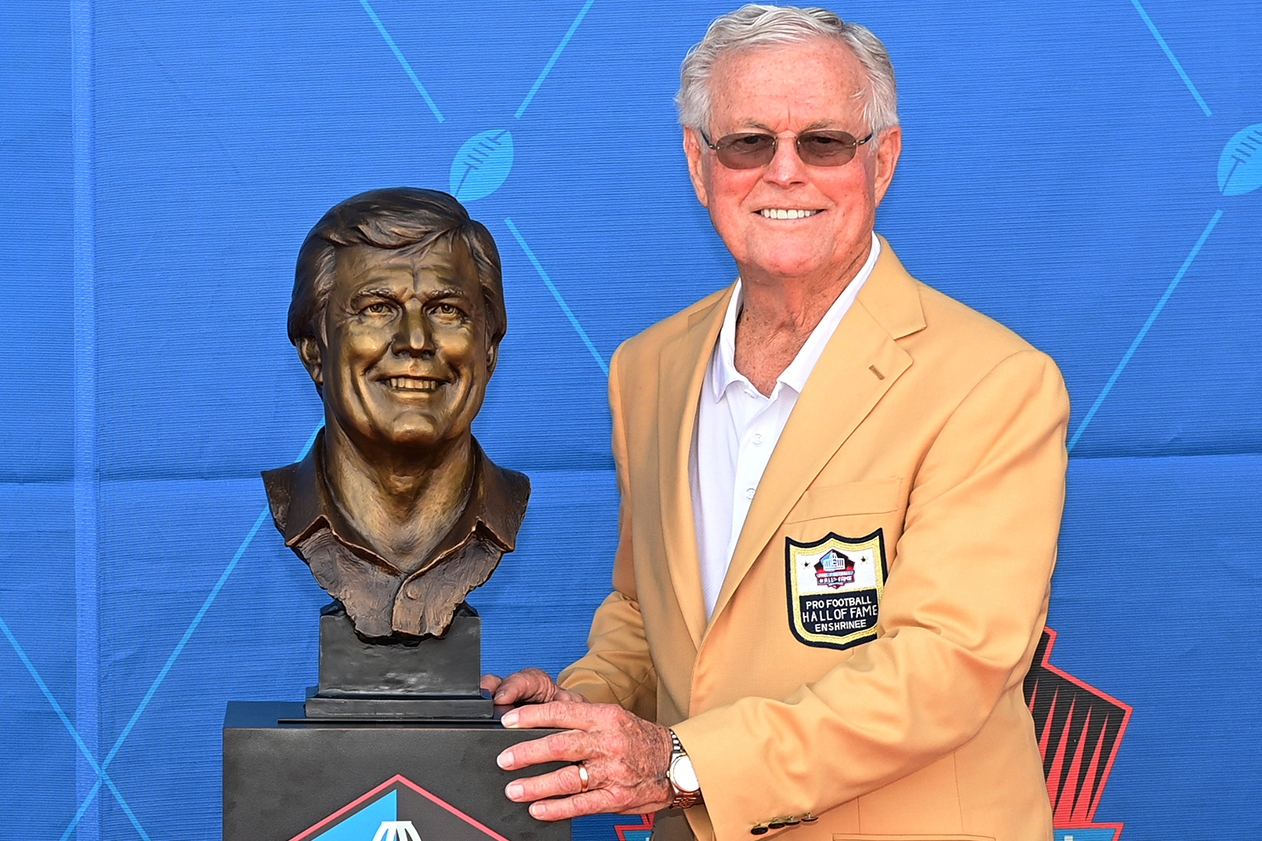
    Former NFL coach Dick Vermeil poses with his bust during an induction ceremony at the Pro Football Hall of Fame in Canton, Ohio in 2022. David Dermer / AP

    He wore his gold Pro Football Hall of Fame blazer. He started with a single word, “Wow,” and continued speaking for 45 minutes, and the most surprising part of his remarks was not that he acknowledged one person after another in the crowd, not that his recall of his connections to those people was perfect, but that he did not cry. Vermeil is famously emotional, but not Thursday night. He could have been hosting a dinner party or delivering a locker-room speech to one of his teams or motivating a group of executives at a sales conference. He was that engaged and engaging and joyful.

    A birthday party for a 90-year-old man might seem a pre-death wake, a commemoration of a life soon to end while the subject is still around to savor and appreciate it. This was not that. This was a celebration of a still-vigorous man, a coach who in his way still is coaching, a teacher who in his way still is teaching, a husband and father and friend as open-hearted as he has always been.

    “There is nothing more important than my family,” Dick Vermeil said Thursday night, as if he were speaking of everyone in the room, which he was. It was a remarkable night for a remarkable man. Happy Birthday, Coach.

    Don’t bet on it

    The 76ers announced Friday that they had reached a sponsorship deal with the predictions market company Kalshi, less than two months after LeBron James reached a sponsorship deal with the predictions market company Polymarket. Professional sports keeps opening its arms to snuggle betting and gambling and all their obvious ethical issues in its warm embrace, and neither these leagues nor their athletes appear to care about the cynicism they’re fostering.

    As more of these unholy partnerships form, more people might start wondering whether everything they see on the field or the court is on the level, if they haven’t already. As one example, it now will be fair to examine the dates, the circumstances, and the frequency of the games that James misses this season because of “load management” or a “coach’s decision.” And it will be fair to ask why a man who already was a multibillionaire chose to align himself with such a problematic industry for the sake of a few more bucks.

    The trend the Phillies missed

    The Milwaukee Brewers’ charge to the first World Series title in their history and the Tampa Bay Rays’ run through the American League proved just how far the Phillies were from competing for a championship. And for all the rightful complaints about the flaws within the 2026 Phillies — a top-heavy lineup, bad defense, a lousy bullpen — the Brewers and Rays also showed that Dave Dombrowski and his staff made a giant miscalculation that has loomed over not just this season but this entire era of Phillies baseball.

    It’s not a coincidence that Milwaukee and Tampa Bay, which didn’t just reach the World Series but were the best teams in their respective leagues, were tied for the major league lead in batting average (.258). Ahead of the 2023 season, MLB implemented several rules changes, including a ban on the kinds of infield and outfield shifts that had transformed hundreds of ground balls and line drives from hits to outs.

    Brewers catcher William Contreras had 19 hits in the playoffs for a team that was about way more than the longball. Matt Rourke

    The discussion about the need for such legislation had been swirling around the sport for years. There was a groundswell of fans and people within baseball who understood that widespread emphasis on the “three true outcomes” — home run, walk, strikeout — was making the sport boring. The pendulum was bound to swing back toward creating more action, encouraging more athleticism, and incentivizing teams to put the ball in play more often.

    The Brewers and Rays got ahead of that. The Phillies didn’t. With Bryce Harper and Rhys Hoskins already here, Dombrowski leaned into constructing a team that could hit the ball over any shift and out of any ballpark. To a roster that already had Harper and Hoskins, he added Kyle Schwarber, Nick Castellanos, and Trea Turner, all of whom were, or have become, swing-from-the-heels hitters and subpar fielders (at best). One of the undermentioned aspects of Turner’s underwhelming tenure is that, even though he has averaged more than 20 home runs over his four seasons with the Phillies, he actually had a higher home-run percentage over his four previous seasons (3.7%) than he has here (3.2%).

    Put simply, Dombrowski and the Phillies adjusted too late to what was coming. Now they’re not built for what baseball once was and has become again.

  • Sixers are playing grown man hoops. LeBron James and Tyrese Maxey were again the adults against the Knicks.

    Sixers are playing grown man hoops. LeBron James and Tyrese Maxey were again the adults against the Knicks.

    Tyreese Maxey was a man in search of a shirt.

    The Sixers superstar glanced toward his locker on the opposite side of the room. A throng of media members clogged his passage. He glanced back toward the training room but found little help there. After a few more moments of deliberation, a nearby teammate tossed him a sleeveless black T-shirt. Maxey slipped it on and stepped in front of the cameras. There was only one problem: LeBron James’ shirt size is a heck of a lot bigger than his own.

    “This shirt,” Maxey said with a rueful smile at the shirt’s gigantic armholes, his biceps suddenly reduced to a formless prepubescence.

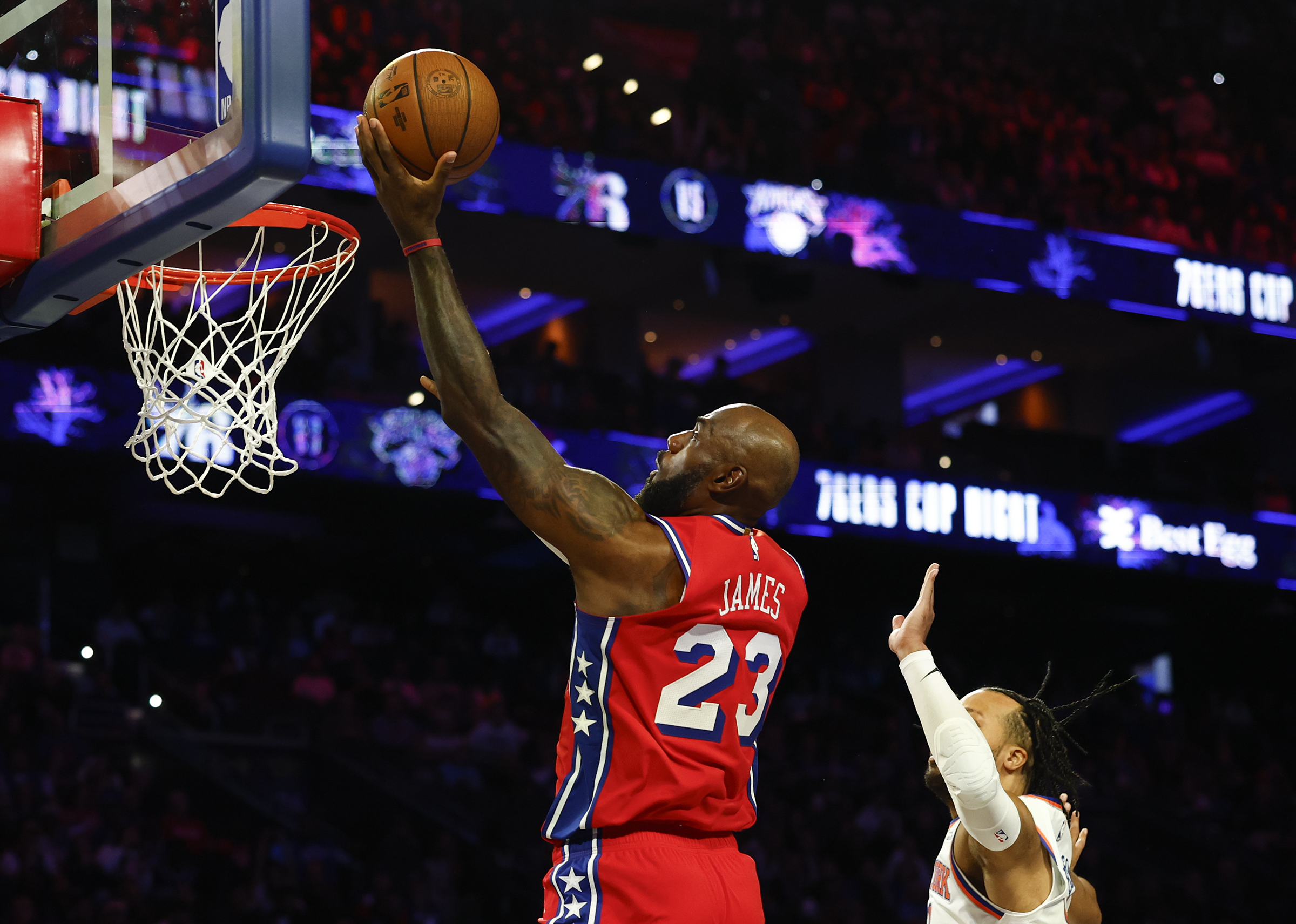
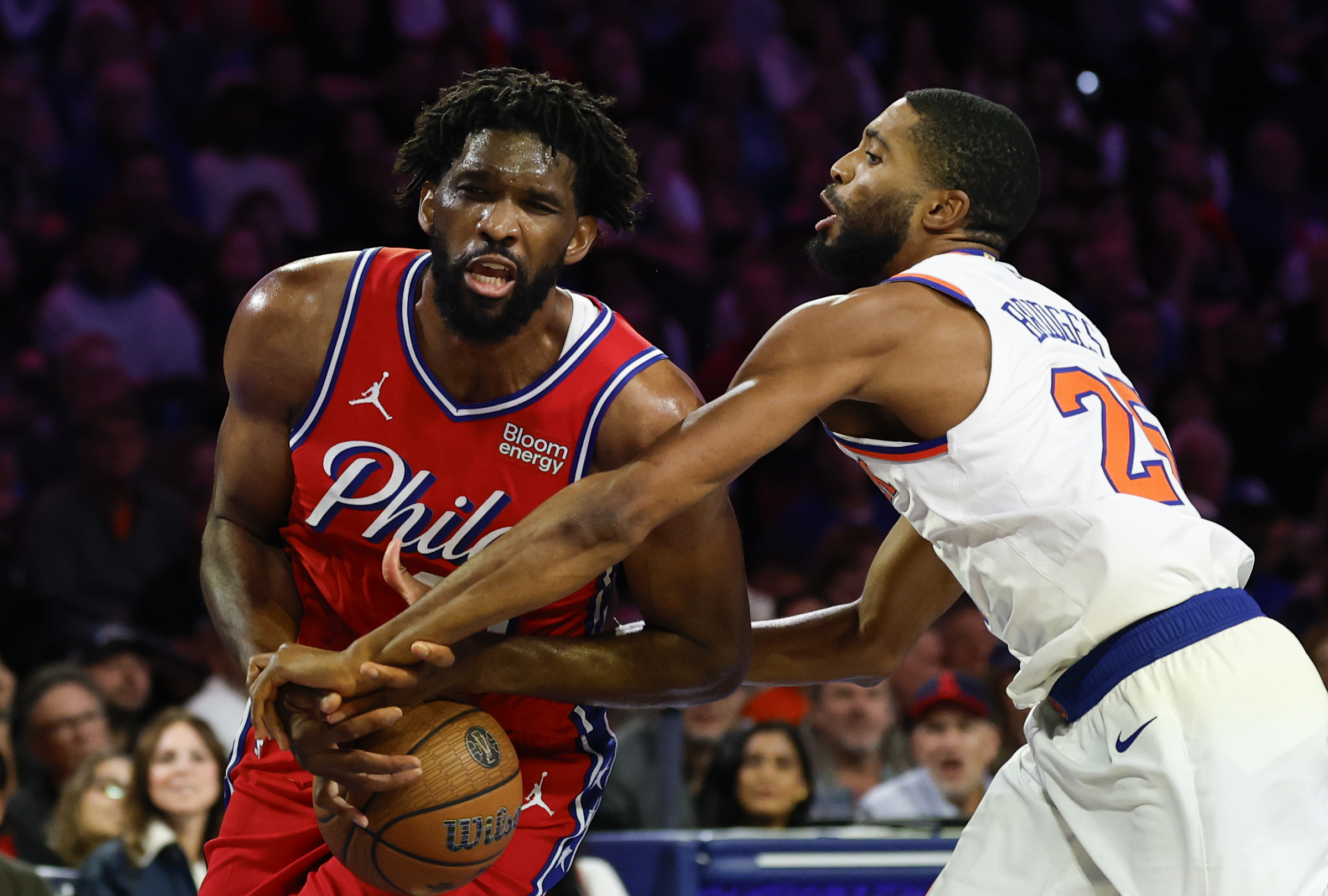
    Some nights, it would be a funny story. On this particular night, it was a metaphor. Less than an hour earlier, Maxey and James had led the Sixers to a 98-93 win over the Knicks, their second victory over the defending NBA champs in 10 days. The decisive bucket had come with 11.9 seconds left, Sixers up three, Maxey driving to the rim late in the shot clock, James crashing to put back the miss. The points were James’ 19th and 20th of the night, and the rebound his ninth. It was a fitting end to a night on which the Sixers, again, were the biggest, baddest adults in the room.

    We are past the point of revelation. The continuation is the story. Six games in, five of them wins, the Sixers have an identity. They have out-Knicksed the Knicks. They have out-Pacered the Pacers. They have done to the Cavaliers what good teams do when the Cavaliers analytically win a game. They are winning in ways that teams must win when the sum of their parts is lacking. And, well, they have the parts.

    Except, they didn’t have all of them on Friday. That was a big part of the story. Earlier in the day, Jaylen Brown’s name popped up on the injury report. An hour before tipoff, he was downgraded to doubtful with what the team has called “jumper’s knee.” It was a potentially fatal blow, as reflected in a Vegas line that jumped a couple points in the Knicks’ favor. Brown’s physical two-way prowess played a big role in the Sixers’ season-opening 106-100 win over the Knicks at Madison Square Garden. Team president Mike Gansey said on draft night that a team can never have too many guards. However true, it certainly can have too few wings of a certain size.

    And yet …

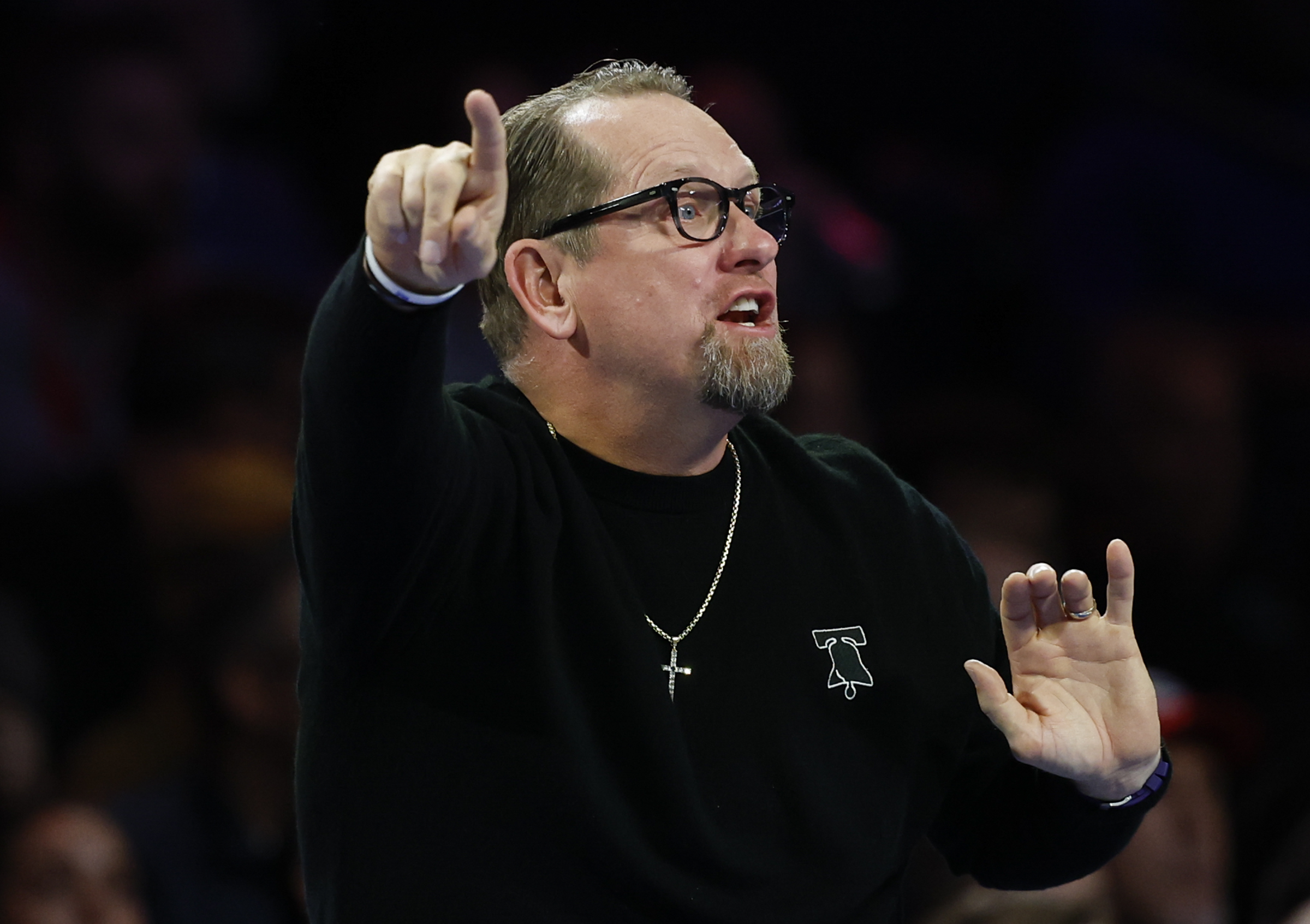
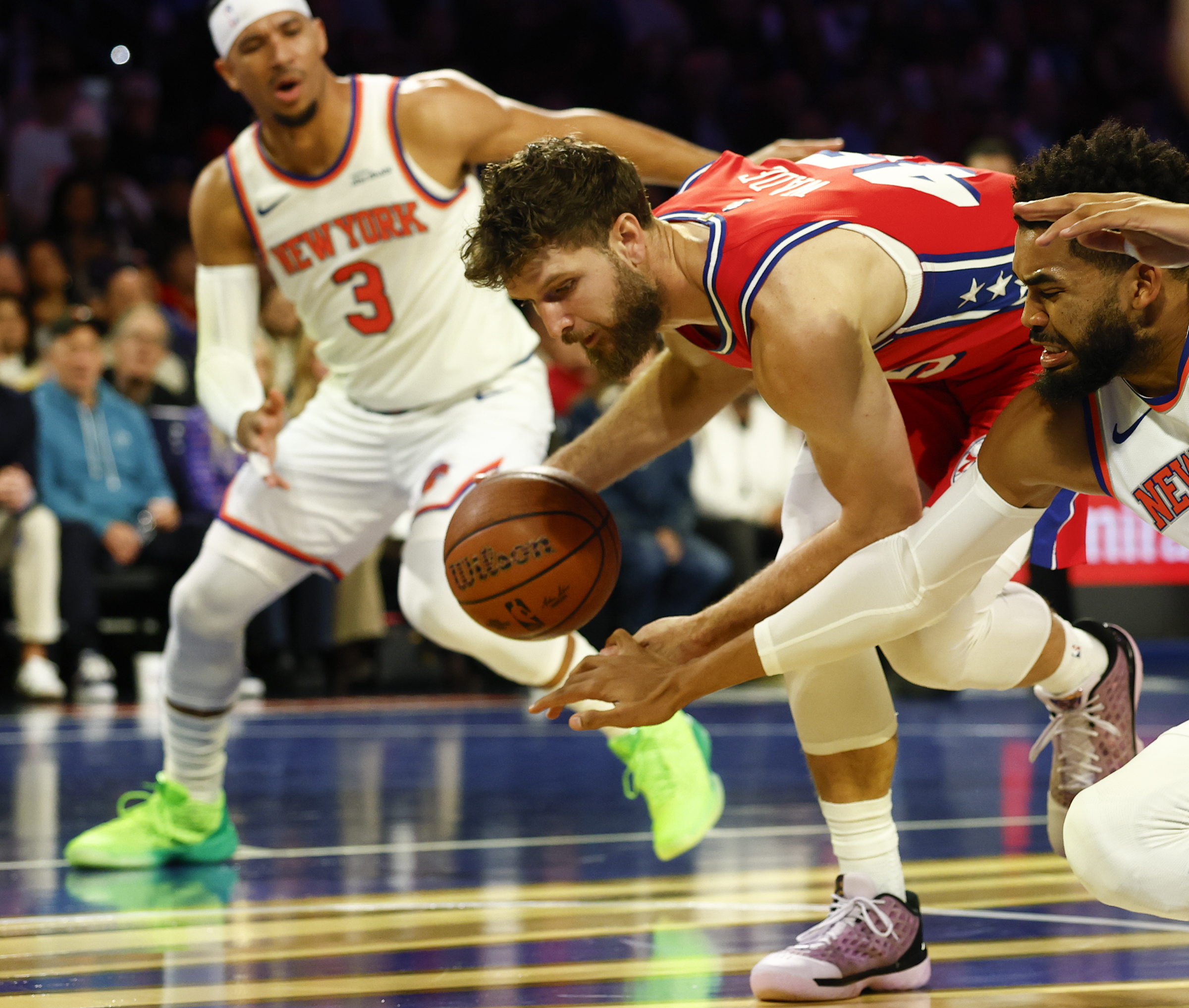
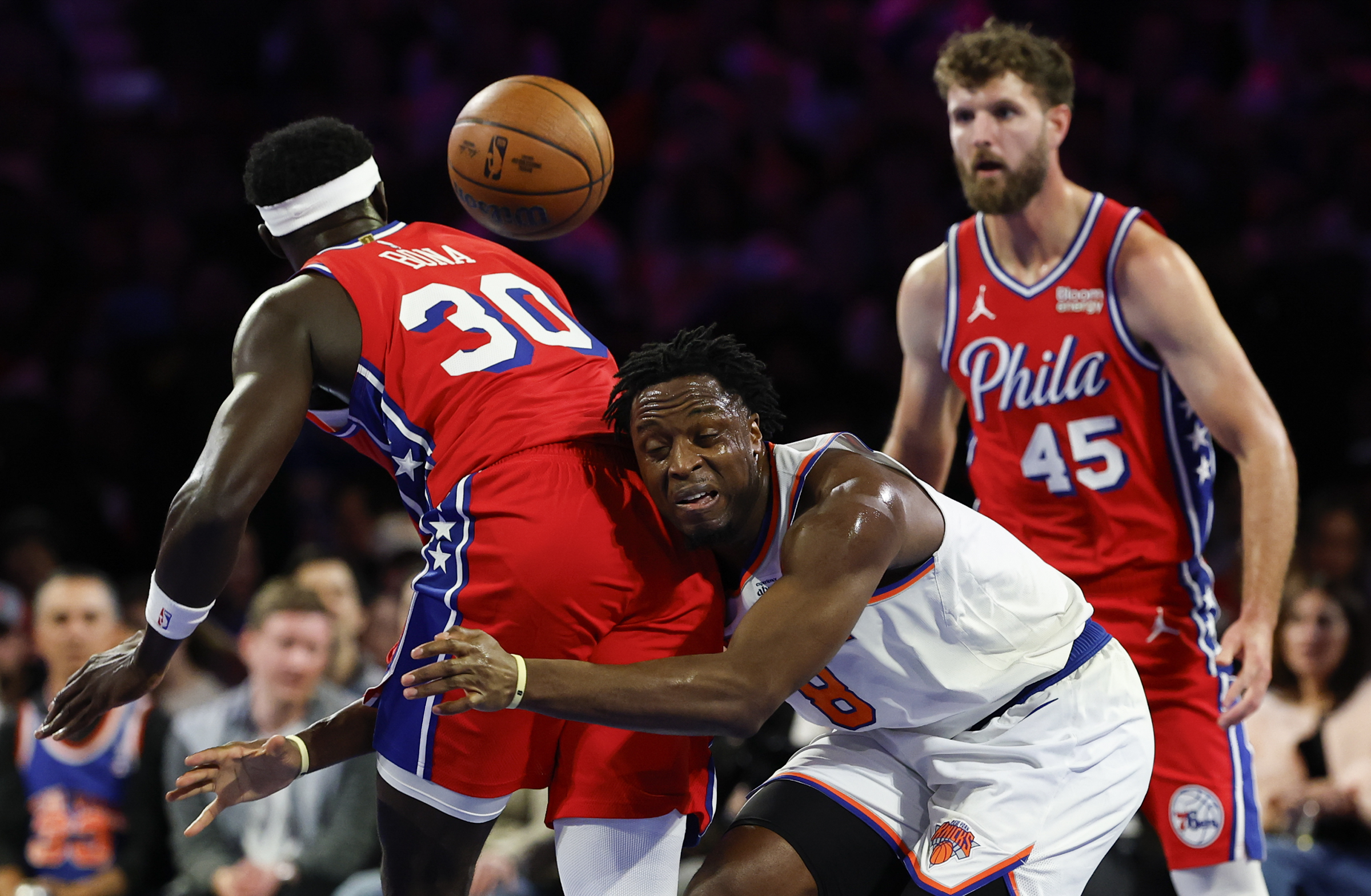
    Nick Nurse knew what he was doing when he inserted Dean Wade into the starting lineup in place of Brown. A 6-foot-9, 228-pound defensive force masquerading as yeoman, Wade almost single-handedly derailed the Knicks early on by preventing them from doing what they thought they’d be able to do. The Sixers jumped out to a 29-19 lead and basically held it until the latter stages of the second half. They did it with a possession-to-possession intensity on the defensive end. Credit Maxey and VJ Edgecombe and even Anfernee Simons for their on-ball defense against Knicks dynamo Jalen Brunson. Credit Joel Embiid, who is moving as easy and controlled as he ever has, in conjunction with his usual physical presence in the middle.

    But credit Wade, too.

    “You can always be in every game when you defend at a high level,” James said.

    Wade’s front-line defense on OG Anunoby, combined with his ability to switch and his nose for the ball, were everything the Sixers needed to make up for Brown’s absence on the defensive end. That he scored zero points is the kind of thing a team like the Sixers can live with. Let’s not forget: There was a brief moment in time when Wade was the team’s marquee offseason signing.

    “When you have that many good defensive possessions, it’s going to take you a long way,” head coach Nick Nurse said.

    Nobody expected this. The defense. The intensity. The exertion of possession-to-possession competitiveness that inevitably coalesces into an outcome that feels like the natural order of things. When the Sixers traded for Jaylen Brown and then signed James, the potential outcomes were presumed to range from the early-ish 2000s Miami Heat-les to a late-stage casino act whose original lead singer passed away decades beforehand.

    Turns out, the Sixers are the bouncers.

    “We definitely know it’s going to be a physical battle when you play those guys,” said Maxey, who scored 27 points on 10-of-19 shooting. “If you’re going to play them, and you’re going to try to win a basketball game against them, you’re going to have to get into a physical battle. That’s just how it is.”

    Maxey played a big role in that. Before the Sixers’ home opener, Cavaliers coach Kenny Atkinson was asked what he’d seen on film from his opponent. His first reaction: Maxey has somehow gotten better. Before Friday night’s game, Nurse explained it as Maxey’s natural-born maturity manifesting in a self-understanding that he is the best player on the court. It has been most evident in Maxey’s strength and confidence at the rim, along with his readiness and willingness to pull it from deep.

    On Friday, you saw it in the way he commanded through deference. The Knicks stormed back to take a 90-89 lead, which the Sixers quickly answered. Then, with 33.6 seconds left, Maxey passed out of a double team to Edgecombe, who drilled a three-pointer from the top of the arc to put them up by two possessions.

    More than anything, though, this was a night when you saw James’ presence manifest itself. He has always been a shape-shifting superstar, capable of being whatever he needs to be, given the setting and circumstance. Here, we saw what that looks like with five games under his belt. His 20 points, nine rebounds, eight assists somehow understate his involvement. They do not give him credit for speed and decisiveness of his passing as a connector on the perimeter, nor do they illustrate the intentionality of each of his buckets, from his off-ball back-cuts to his bully-ball drives against Mikal Bridges.

    Know who you are. Know who those around you need you to be. These are the hallmarks of adulthood. The Sixers suddenly look like a bunch of guys who know what it means.

  • The best thing Mike Klein ate this week: Khao soi at a swanky suburban Thai BYOB

    The best thing Mike Klein ate this week: Khao soi at a swanky suburban Thai BYOB

    The khao soi at Baan Atelier in Conshohocken makes a dramatic entrance: The shimmering pool of sunset-orange coconut curry arrives with a tangle of soft egg noodles and a tousled crown of crisp, golden fried noodles flanked by thick slices of braised beef shank. Cilantro, chopped red onion, and pickled mustard greens provide flashes of green and purple.

    It’s a dish that seems right at home in the lovely, elegant surroundings of Baan Atelier, the Northern Thai BYOB that opened in May in the former Blackfish space at 119 Fayette St. It’s the posher sibling of the long-running Chiangmai across the street, which delivers familiar favorites such as pad Thai, pad kee mao, stir-fries, and curries in a casual setting.

    Baan Atelier takes a more refined approach, emphasizing Northern Thai specialties, along with more elaborate preparations informed by French technique.

    Executive chef and partner Kwan Charoennan offers khao soi with chicken or beef. The meltingly tender beef shank is braised for at least five hours until tender, then rolled into a roulade to help it hold its shape before being sliced into substantial rounds. The dish is a satisfying interplay of textures and flavors, with the fried noodles delivering crunch against the soft, slippery noodles beneath.

    The velvety broth balances coconut richness with chile heat and savory depth. The red onion, cilantro, and tangy pickled mustard green garnishes cut through that richness, keeping each spoonful lively.

    In sum, it’s the sort of elaborate presentation that makes you reach for your phone camera before your fork, though the aromas rising from the bowl make delaying that first bite difficult.