Blog

  • Who’s running in the county commissioner races in Gloucester, Burlington, and Camden Counties

    Who’s running in the county commissioner races in Gloucester, Burlington, and Camden Counties

    Amid national midterm buzz, voters in Gloucester, Burlington, and Camden Counties will cast ballots for their county commissioners.

    The three South Jersey county commissioners have staggered terms, which means only some seats are up for election this year.

    In Gloucester County, a fiery slate of candidates is trying to increase Republican power on the board, which is a majority Democratic.

    In Burlington County, two Republican candidates are campaigning together with hopes of getting GOP representation on an all-Democratic board.

    And in Camden County, two longtime Democratic incumbents face a challenge from only one Republican who unsuccessfully ran for the post before.

    Gloucester County commissioners

    The seven-member board currently has five Democrats and two Republicans. Three Democrats and three Republicans are running to fill three positions on the board. The terms are three years and the seven positions are staggered, so candidates are not all up for reelection at the same time.

    The two sitting Republican commissioners, Chris Konowel and Nick DeSilvio, flipped commissioner posts in 2021 after Democrats had all the seats on the board, and both were reelected in 2024.
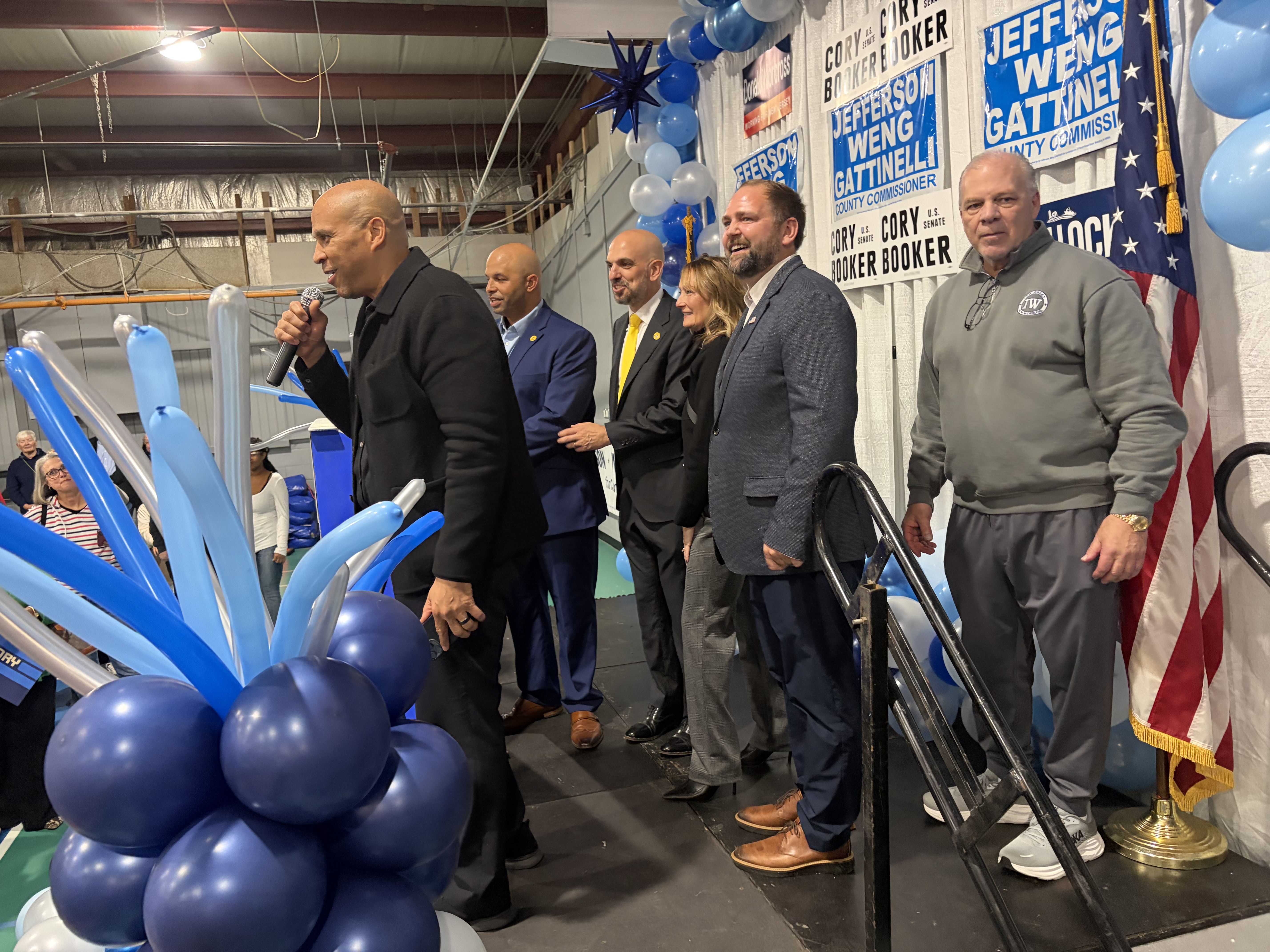
    U.S. Sen. Cory Booker campaigns with local Democrats. Behind him (from left) are Gloucester County Commissioners Jim Jefferson, Matthew Weng, and Joann Gattinelli, as well as congressional candidate Cape May Mayor Zack Mullock and Gloucester County Democratic Committee Chair Steve Sweeney, who is also the county administrator.Aliya Schneider / Staff

    Democrats: County Commissioner Deputy Director Jim Jefferson and Commissioners Joann Gattinelli and Matthew Weng are running for reelection.

    Jefferson, 44, a Woodbury-based minister who has traveled the country to minister in prisons, is finishing his fourth term on the board and his first as deputy director.

    In remarks at a Gloucester County Chamber of Commerce candidate forum last month, he said he has been a liaison for the county’s health and human services department for his 12 years as a commissioner, and he has been particularly passionate about lowering overdoses in the county with the use of Narcan.

    “A lot of people came to me and said, ‘Jim, you’re just enabling those who struggle with substance abuse.’ I said, ‘No, they can’t get help unless they’re alive,’” he said.

    Gattinelli, 61, a former mayor of Washington Township, and Weng, a Pitman-based attorney, are finishing their first terms, which began in January 2024.

    The three commissioners are campaigning together on a platform of saving taxpayers money, building up the local economy, and protecting the quality of life in the county.

    They tout getting the highest bond rating from Moody’s, forging partnerships between Rowan University and community colleges, and preserving open space.

    “Throughout my tenure here the last three years, we have accomplished so much,” Gattinelli said at the candidate forum. “You don’t just get a AAA rating through Moody’s by sitting back and just signing off or rubber-stamping, as they say.

    “We ask questions. We are there with people who are explaining to us, within government, what is happening and how we can be fiscally responsible,” added Gattinelli, a former small-business owner who serves as an economic development liaison.

    Weng, 45, who previously served on the Pitman Borough Council and worked as the staff attorney to the New Jersey State League of Municipalities, has recently touted online the county’s efforts to preserve farmland and open space.
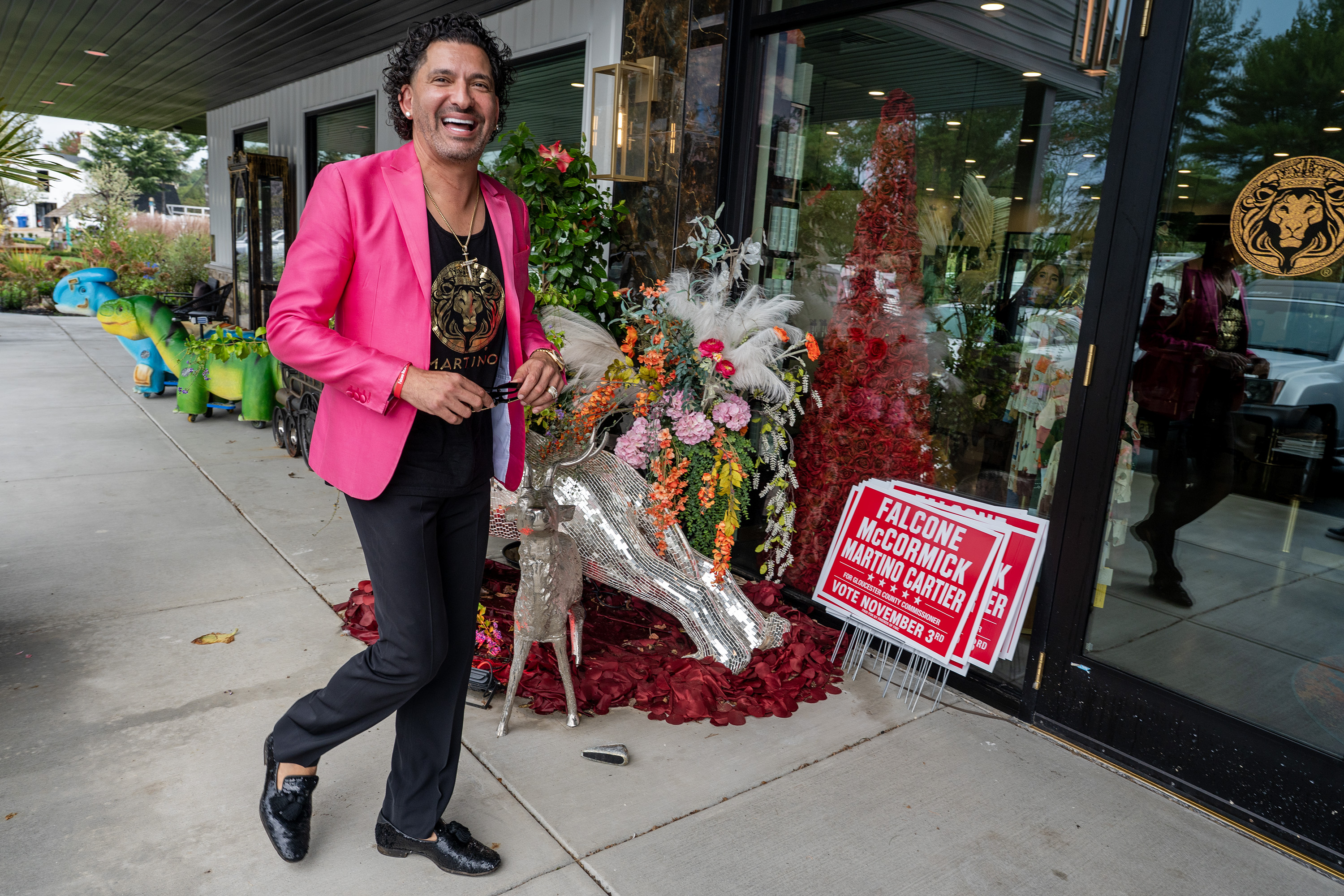
    Campaign yard signs for celebrity hair stylist Martino Cartier’s slate are seen outside his salon, Wednesday, Oct. 14, 2026.Tom Gralish / Staff Photographer

    Republicans: Martino Cartier, Barbara McCormick, and Katherine Falcone are running in hopes of ousting the three Democratic commissioners up for reelection.

    Cartier, 51, is a celebrity hairstylist who runs the nonprofit Wigs and Wishes. He has faced scrutiny over controversial comments on his Christian podcast, past legal issues, and issues with his charity. Before launching his campaign, he had been embraced by local Democrats who celebrated his charity and lauded him as a “hometown hero.”

    Cartier said in an interview that if elected, his priority would be seeking counsel on how to fire Gloucester County Democratic Committee chair Steve Sweeney as county administrator and Michelle Coryell as deputy administrator. He echoed criticism from sitting Republican commissioners about Sweeney’s high salary, which Democrats have defended in part because of his extensive experience in government as former state Senate president. Sweeney has a five-year contract with the county.

    Cartier accused the county of having a “hostile work environment.”

    “I would clean that up so that people are efficient and they want to serve the seniors with a smile, and they want to serve people with disabilities with a smile, and the veterans, and the list goes on and on,” he said in an interview.

    McCormick, 63, retired from a career as a nurse and Air Force lieutenant colonel. She said she has advocated in Trenton and Washington for issues such as workplace violence and sepsis awareness and for veteran support initiatives.

    “I believe responsible stewardship of taxpayer dollars must remain a top priority,” she said at the Gloucester County Chamber of Commerce forum. “I will work to strengthen our economy, support public service, and ensure county government operates efficiently and transparently.”

    Falcone, 67, is the founder and CEO of SOS Group, a home construction company aimed at accommodating people with disabilities. She served on the Monroe Township Council from 2019 to 2022, and left the Democratic Party to become a Republican in 2022.

    Falcone said in a video on Facebook that the Republican candidates are running on three main principles: transparency, affordability, and accountability.
    Democrats running in Burlington County (from left): Surrogate Brian Carlin, Commissioner Randy Brolo, and candidate Jonathan Chebra.Courtesy Burlington County Democratic Committee

    Burlington County commissioners

    One or two members of the five-member board are elected each year for a three-year term. This year, voters will pick two candidates out of the four running on their ballots. Each candidate is on the ballot separately, but commissioners on both sides of the aisle are campaigning as a slate.

    Democrats gained unanimous control of the board in the 2020 election after it had been fully Republican just a few years prior.

    Candidates for county surrogate are campaigning with commissioner candidates. The county surrogate oversees the county’s Surrogate Court, which deals with wills, estates, and the appointment of guardians and administering adoption.

    Democrats: Commissioner Randy Brolo is running for reelection and Jonathan Chebra is running to fill an open seat.

    Brolo, 48, of Lumberton, is finishing his first term as a commissioner. He has had a career in the labor movement and currently works as an organizer for Laborers’ Local 172, which represents heavy and highway laborers as well as plant and manufacturing employees.

    Serving kids and adults with special needs is particularly important to Brolo, as one of his kids is on the autism spectrum. He hosted an event in April called Autism in my Shoes that he said he wants to hold again.

    He said he would like to provide support to municipalities that want to pursue affordable housing opportunities. He previously served on the Rancocas Valley Regional High School Board of Education as well as the Mount Holly Municipal Utilities Authority and the Lumberton Planning Board.

    “I was out in the community right away, day one on the job. … I’m always out and about,” Brolo said in an interview.

    Chebra, 39, of Bordentown, is running for office for the first time because he wants to “give back in a new way,” he said in an interview. Chebra has served as the chair of the Burlington County Library Commission for the last seven years.

    “Keeping Burlington County affordable, keeping taxes low, is job number one,” he said, noting that the county ranked lowest for average tax rate in the state.

    He said he is passionate about supporting seniors as they age in the county.

    Chebra works as vice president of regulatory and community affairs for Hackensack Meridian Health. He previously worked for the New Jersey Department of Human Services and the New Jersey Hospital Association. From 2012 to 2016, he worked as Democratic U.S. Rep. Herb Conaway’s chief of staff when he was a member of the New Jersey Assembly, and before that he had roles in the U.S. Senate.

    Brian Carlin, 65, who has served as county surrogate since 2022, is running for reelection alongside them.
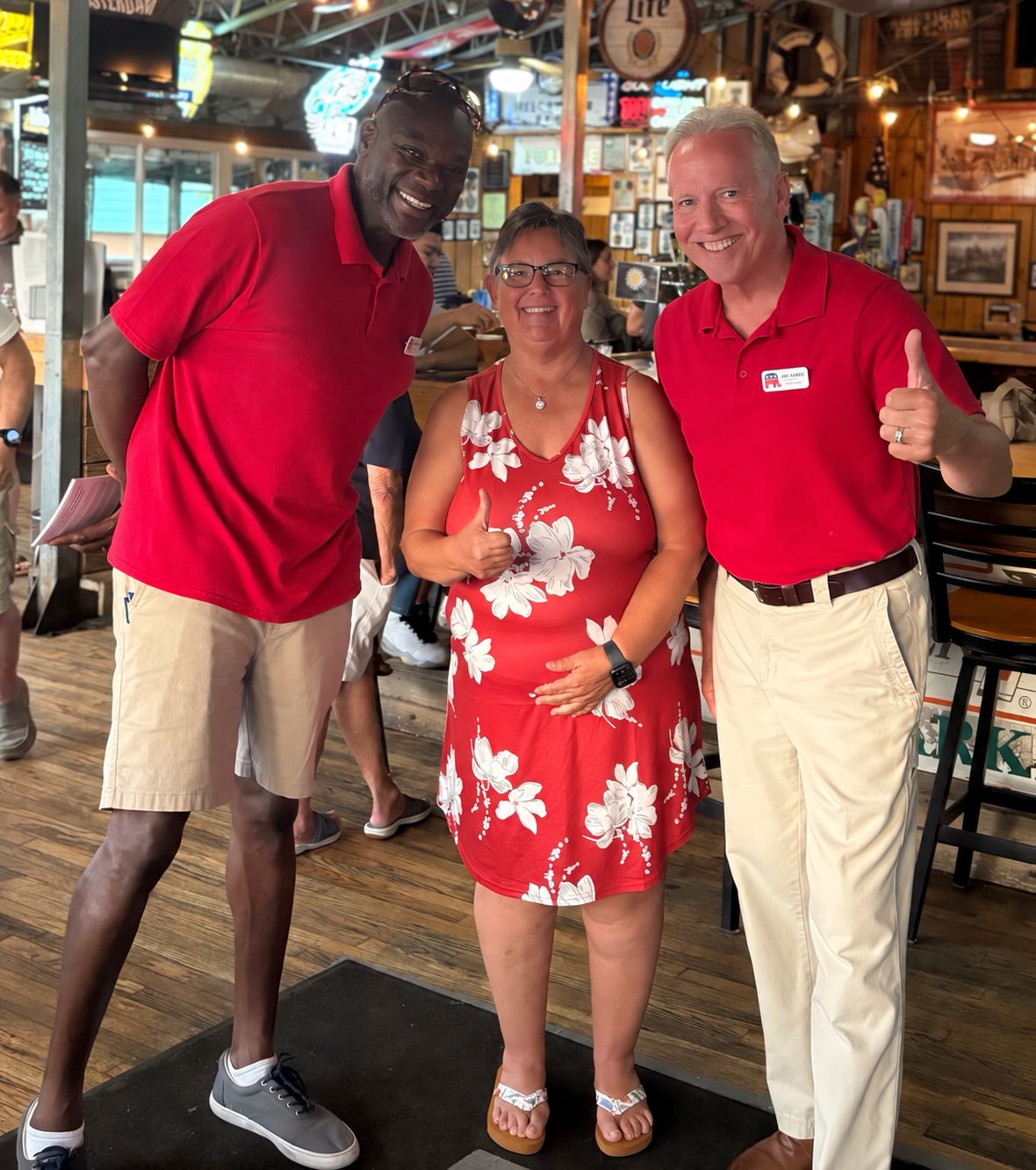
    Republican candidates in Burlington County (from left): James Melton, Dale McPeak, and Joseph Abegg.Courtesy Burlington County GOP

    Republicans: Joseph Abegg and James Melton are hoping to bring Republican representation to the board, which is currently all Democratic. If they both are elected, they would still hold a minority on the five-member board.

    Abegg, 67, of Eastampton Township, unsuccessfully ran for commissioner last year against Democratic Commissioner Allison Eckel, who serves as the body’s deputy director. He garnered a little more than 39% of the vote. He is a retired Air Force and commercial pilot and holds several volunteer positions.

    The former Democrat said in an interview that he and Melton are determined to rein in spending in the county budget. They want to create a committee of “overseers” with various subject matter expertise and different political leanings to assess the county’s finances.

    “I’m against all these warehouses and low-income housing areas unless the community wants it,” Abegg said. “But the real reason I’m in this is because I see the mindless overspending that’s going on. It’s causing our property taxes to soar, and our people can’t afford to live here.”

    Melton, 58, of Burlington City, is a Navy veteran who works as a security officer and volunteers coaching underserved youth. He is a retired Camden city police detective and also worked as a corrections officer, yeoman petty officer, and drill sergeant. He said in a written statement that he wants “to prioritize the protection of our natural landscapes and farmland from overdevelopment.”

    The two candidates are running on a slate with surrogate candidate Dale McPeak, who earned a spot on the ballot through a write-in campaign in the primary after being removed from the ballot. McPeak, 64, of Southampton Township, is a retired physical therapist.

    “We want Joe and James — knowing that we’re not going to be the majority — to at least be the checks and balance in there,” she said.
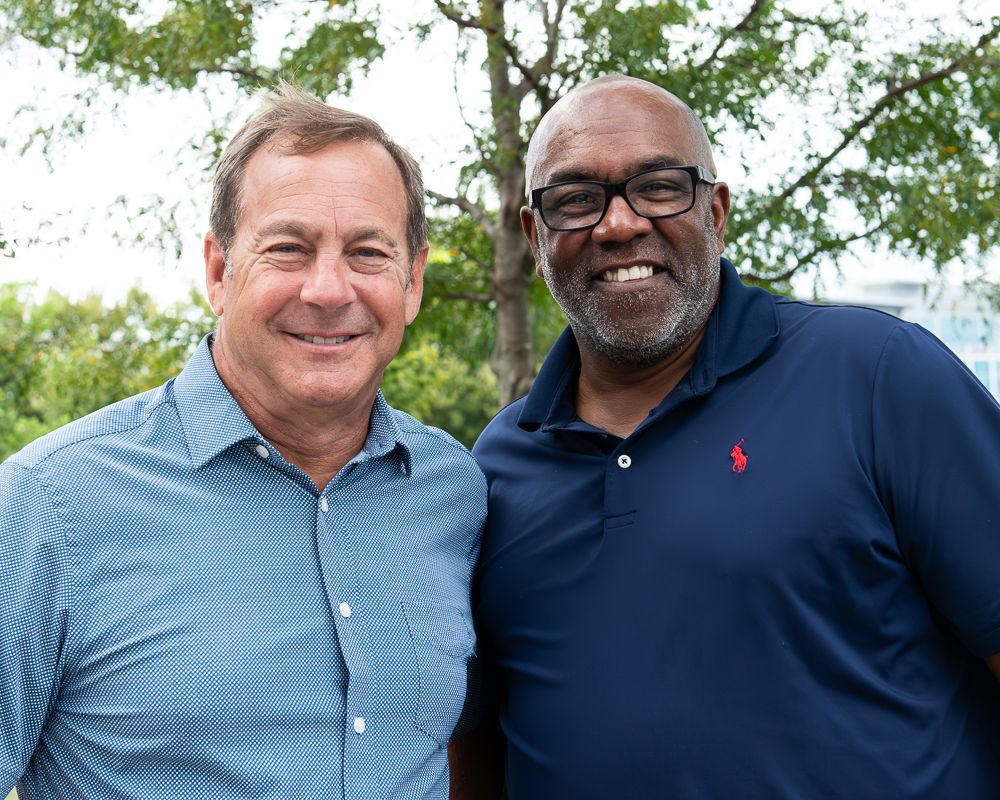
    Camden County Commissioner Director Louis Cappelli Jr. (left) and Commissioner Jonathan Young.Courtesy Louis Cappelli, Jr.

    Camden County commissioners

    Voters pick two candidates for county commissioner. Two Democrats and one Republican are running for two seats on the seven-member board. Commissioners serve three-year staggered terms, so only two or three run for reelection at a time.

    Republicans are running one repeat candidate against two Democratic incumbents.

    Republicans have not elected a commissioner — or, under the previous name, a freeholder — in Camden County since 1990.

    Democrats: Commissioner Director Louis Cappelli Jr. and Commissioner Jonathan Young are running for reelection.

    Cappelli, 64, a Haddonfield resident and attorney, was first elected to the board in 2003 and has been its director for two decades. In his county bio, he touts creating the Camden County Police Department as well as a decrease in violent crime, upgrades to the county’s 911 system, and the establishment of the Camden County Office of Mental Health and Addiction. He also was at the forefront of leading the community through the COVID-19 pandemic, according to his bio.

    Young, 57, of Berlin Township, has been on the board since 2015. He is a political director for the Eastern Atlantic State Regional Council of Carpenters.

    He serves as a liaison to the Camden County Department of Corrections, the Juvenile Detention Center, the county’s one-stop career center and workforce development board, and the Camden County Department of Sustainability, according to his county bio.

    He also works closely with the Camden County Technical Schools Advisory Committee.

    Republicans: Robert Stone, 66, of Stratford, has worked for 32 years as a 911 responder and emergency medical services professional, according to his biography on the Camden County Republican Committee website.

    His biography says he has also held management positions in Fortune 500 companies but does not say which ones.

    He describes himself as a “Full time Disney and Universal Studios expert” on Facebook, which says he owns Mouse Dreams Vacations, a company for planning Disney vacations.

    He has unsuccessfully run for commissioner multiple times, including last year, and does not appear to have a platform available online. His recent Facebook posts do not mention running for office. He declined to speak Friday, saying he would only do an interview in person and is away on vacation until after the election.

    Republican Shane Bernat, 38, a real estate investor who has also run in the past, was planning to run in the race but did not get on the ballot.

  • A City Hall security guard sketches during his breaks. He just had his first show.

    A City Hall security guard sketches during his breaks. He just had his first show.

    In 2025, Councilmember Rue Landau went in to work through City Hall’s northwest entrance and saw Khalik White sketching in a small sketchbook. It wasn’t the first time Landau had seen White, who works as a security guard, sketching away in the notebook he always had on him.

    Both Landau and White began their tenures at City Hall in 2024.

    “We all started to notice that on Khalik’s break time, he was always sketching,” she said.

    Landau got him a set of colored pencils, and word about White’s complex, layered, linework-based drawings spread throughout City Hall.

    “We all wanted to see more and find out about his art,” said Landau.

    White, a native of East Orange, N.J., moved to Philadelphia nine years ago and lives near Tioga. He has never taken a drawing class and credits his childhood love for skateboarding for informing his creative pursuits over the years.

    Skateboarding, White said, “saved” him. Learning to fall and get back up was vital.

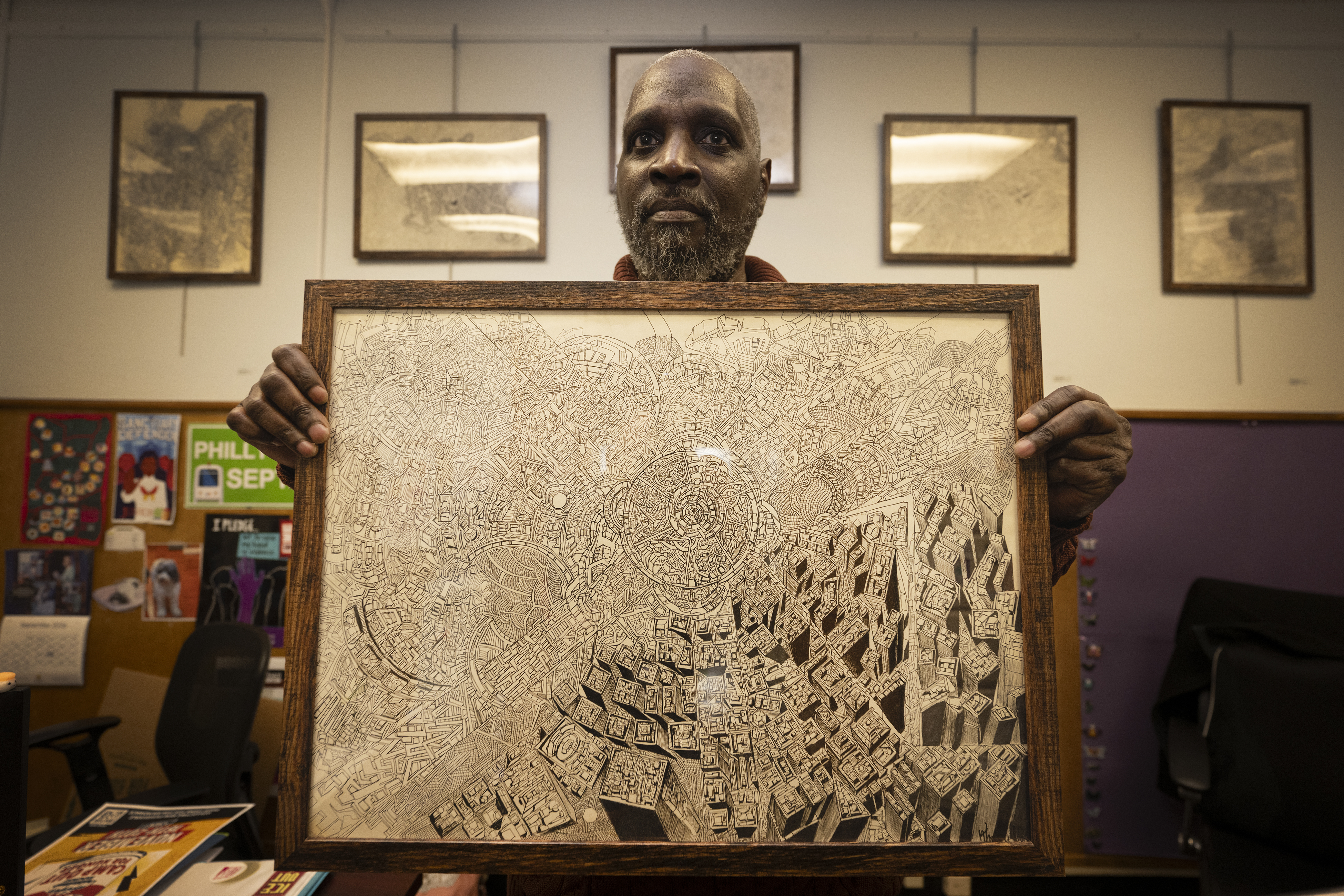
    Khalik White poses with his artwork at Philadelphia City Hall on Oct. 5. White, a City Hall security guard, quietly sketches while working at the entrance used by City Council members. Jose F. Moreno / Staff Photographer

    The soft-spoken artist dreamed of becoming a successful voice actor, but after he had his thyroid removed in 2015, it affected the timbre of his voice. After managing to book only a few small roles, he lost his vocal range. He also struggled with housing insecurity and alcoholism, and finally found a job at City Hall as a security contractor in 2024. He is thankful for the help he received from the recovery house Ready, Willing, and Able, which helped get him back on his feet as he embarked on his sobriety journey.

    “I just draw to go somewhere else,” said White, who started drawing and posting on Instagram in 2022. At one point, he says, he was called the “worst artist” on the internet.

    It only made him want to keep trying. He cites artist Laurie Lipton and her pencil drawings as an inspiration.

    A fan of White’s work, Landau mentioned his art to Barbara Kigozi, her office’s director of special operations. When Kigozi caught him sketching at work, White said he was worried she’d think he was slacking. Instead, she and Landau’s art liaison Lauren Rinaldi asked if White had more work at home. They were both surprised by the sheer volume of his work.

    Khalik White poses with his artwork on display at Philadelphia City Hall on Oct. 5. White, a City Hall security guard, quietly sketches while working at the entrance used by City Council members. Jose F. Moreno / Staff Photographer

    “I found him to be an artist with such depth,” Kigozi said. “He’s so private,” she added. “The curiosity for me is how he expresses himself; how it begins and builds.”

    The two immediately got to organizing a show of White’s work.

    The show, “A World of Lines,” opened last month with a vibrant and joyful evening celebrating White’s art. Landau directed several attendees — a mix of City Hall employees and friends of White’s — to Untitled, which she says is her favorite piece.

    It is a drawing of a pill bottle surrounded by diverging black and white pathways and lines.

    “To me, [White’s art] speaks to the pressures, tensions, and complications in the world,” she said, adding jokingly that she might have to put in a bid of her own if anyone bought it.

    White works with colored pencils — one of his striking pieces features a vibrant yellow figure made of blocks rising from a swirl of colored lines, followed by a similar figure in a shade of gray. His pieces are a feast for the eyes, combining complex patterns and linework in ways that draw in the viewer’s attention. Another piece depicts a person’s profile in focus against an abyss covered in colored squares.

    His sobriety and recovery have informed White’s work; he is especially inspired by people in recovery and their different coping mechanisms. The city’s unhoused population also inspires his work that intends to be a “commentary on society.” He doesn’t go into his drawings with set plans, but he takes pencil to paper and goes through his emotions, and sees where the journey takes him.

    Khalik White poses with his artwork at City Hall on Oct. 5.Jose F. Moreno / Staff Photographer

    This approach, he said, is tied to his “lack” of formal training.

    Fresh off his first show, White has already found collaborators. Rayshawn A. Johnson Jr., who works as a legislative director at City Hall, is also an aspiring science fiction novelist. White will be illustrating Johnson’s book cover.

    “This is for everybody who said I can’t draw a straight line,” he joked.

    “A World of Lines” is on view through Nov. 13, inside and outside Room 592, Councilmember Rue Landau’s office in City Hall.

  • ‘It’s going stronger and stronger all the time’: WXPN’s ‘World Cafe’ is celebrating 35 years on the air

    ‘It’s going stronger and stronger all the time’: WXPN’s ‘World Cafe’ is celebrating 35 years on the air

    Shortly after she moved to Philadelphia, a stranger in a Center City bar reminded Raina Douris she has a really cool job.

    “I was out at the Locust Bar with John” — then boyfriend and now husband, writer John Semley — “and we were talking to this guy who asked: ‘What do you guys do?”

    “I told him I host World Cafe,” Douris recalled this week, in her studio at the University of Pennsylvania public radio station where the nationally syndicated public radio music and interview show is produced.

    “At first he didn’t believe me. And I said ‘No really, I host World Cafe, the radio show.’ And he said: ‘Who’d you have to kill to get that job?!“

    Thankfully, no one.

    In 2019, World Cafe executive producer Bruce Warren hired her to replace exiting host Talia Schlanger after being impressed with the Stouffville, Ontario, native’s work on the Canadian Broadcast Company’s Mornings radio show.

    This month, World Cafe — which is broadcast on XPN from 2 to 4 p.m. Monday through Friday and airs on 311 stations around the U.S. — is celebrating 35 years on the radio.

    That birthday coincides with the seventh anniversary on the air for Douris, who did her first World Cafe show on the final day of October 2019. That Halloween show was followed by her debut interview, with The Who’s Pete Townshend.

    “I probably prepped more for that than I’ve ever prepped for anything in my life. I was so nervous, but he was very kind,” said Douris.

    She is just the third principal host in the program’s history, whose name was coined by late Philadelphia radio legend Gene Shay as an ad man for hire.

    World Cafe was meant for a world music-focused show, which didn’t test well with listeners. Instead, XPN settled on the singer-songwriter sensibility that remains at the core of the station, with artists like Brandi Carlile, Jeff Tweedy, Lucinda Williams, Arlo Parks, and Josh Ritter.

    (So what’s the difference between World Cafe, the radio show, and World Cafe Live, the music venue? When Hal Real founded the latter in 2004 — and XPN moved its headquarters from digs on the Penn campus at 39th and Spruce to the building at 3025 Walnut St. — Real leased the World Cafe name from the station.

    That’s led to confusion about the relationship between the station and the venue — which are separate businesses — especially since 2025 as World Cafe Live has been in the news while going through a slow death spiral. It is closing Halloween, with final shows under the name World Stage, which it began using in March.

    ‘More pop, less public radio’

    David Dye helmed World Cafe, the radio show, from the 1991 beginning, when it was on a total of five stations. In 2016, he gave it up and made room for Schlanger.

    Dye, who’s still heard on XPN on his Sunday morning show Dave’s World, conducted 200 or so interviews a year for a quarter century.

    “I was privileged,” he says. “I got to sit across from Sonny Rollins.”

    Other highlights: Yo-Yo Ma, Gillian Welch and David Rawlings, Jeff Buckley, Beth Orton, Les Paul, and Rudy Van Gelder, at his North Jersey studio where many jazz classics were recorded.

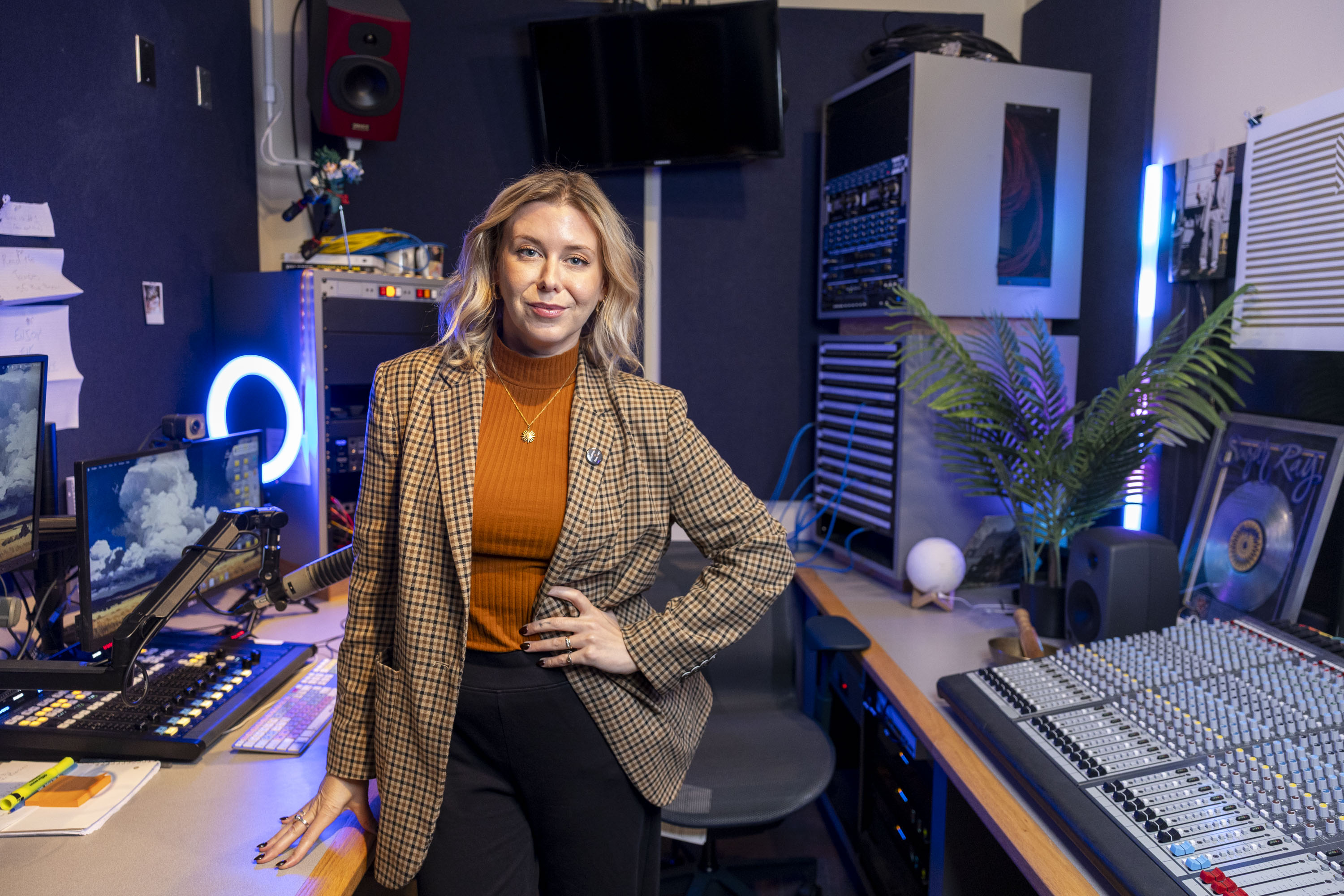
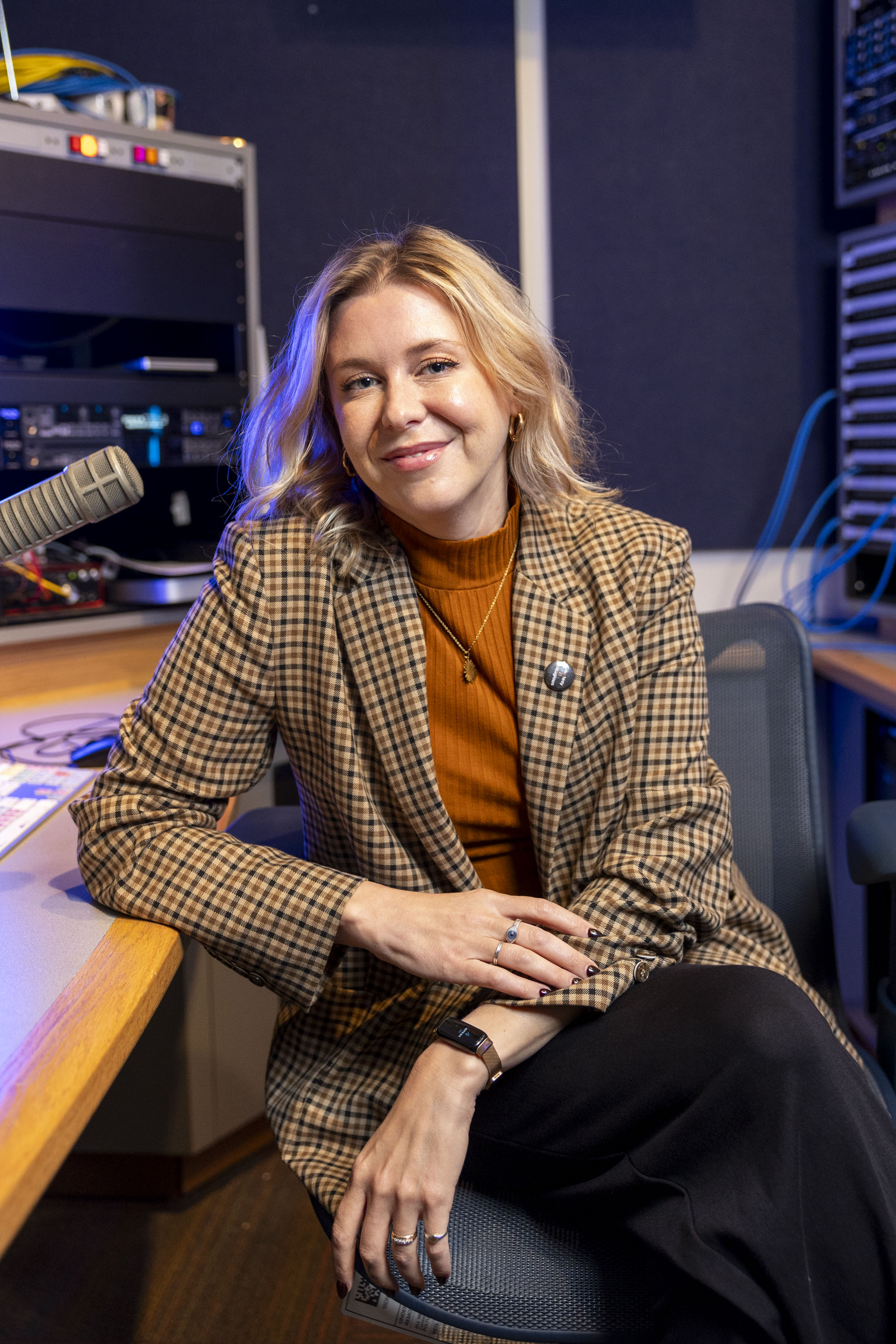
    Raina Douris, of WXPN’s World Cafe, poses for a portrait on Tuesday, Oct. 27, 2026, in Philadelphia, Pa.Tyger Williams / Staff Photographer

    Not to mention Elvis Costello at the old XPN studios when his band’s equipment didn’t show. Warren crossed the street to the Pi Lam fraternity house — famous for “Human Barbecue” punk shows — hoping they had a keyboard for Costello’s cohort member Steve Nieve to play. They did, and the show went on.

    Ten years after his departure, World Cafe “is a better show,” Dye says. “It’s incredible that it’s gone on so long and it’s doubly incredible that it’s going stronger and stronger all the time.”

    Dye praises both Douris and contributing host Stephen Kallao, who tends to do two artist interviews a week to Douris’ three. She hosts most of the show’s high-profile features, such as the “Sense of Place” series that has recently taken deep dives into the music of Ireland, Japan, and Philadelphia. Asheville, N.C., is next.

    “They’re both really good interviewers and both really approachable and smart,” Dye says. “It’s not precious. The show is more pop, and less public radio, which is a good thing.”

    World Cafe has become more visual since the arrival of Douris who, during her early years in radio, hosted a video music show from her Toronto basement called Rain’s World.

    You can listen to World Cafe on XPN or other terrestrial radio stations, or by clicking on episodes on Fruit Bats or Remi Wolf (featured on the show’s actual 35th anniversary on Oct. 13) or Low Cut Connie or the Womack Sisters on NPR’s World Cafe page.

    Full interviews and performances are also seen on the show’s YouTube page, with teaser clips on Instagram. Over time, Warren says, “the internet forced us to be ubiquitous.’

    Between radio and digital, says the executive producer who’s retiring from the role at the end of the year, “approximately 1.2 million fans engage with World Cafe content weekly.”

    From Toronto to Fishtown

    Douris’ Philadelphia story began when — by chance — she and Semley visited in February 2019. They checked out Philly institutions like the Philadelphia Museum of Art and Bob & Barbara’s.

    “I remember walking around Old City and saying to John, ‘I could live here.’”

    Eight months later, she was working at XPN and residing near Fitler Square. She chose the “Go Birds!” route to make friends. “I got an Eagles jersey and would just go watch games by myself,” at local bars like Doobie’s or Ten Stone. “It was the fastest way to feel part of anything. People were so welcoming.”

    Douris, who now lives in Fishtown, is a booster for her adopted city. She takes visitors to the Barnes Foundation and Please Touch Museum and shouts out her favorite dive bar, Les and Doreen’s Happy Tap.

    “And just being here and seeing how alive and on fire the music scene is, it’s so exciting.”

    She and Semley (who freelances for several publications including The Inquirer) had a wedding celebration at Philadelphia Brewing Company in 2023, but her Philly fandom is such that, when the Eagles won the Super Bowl in 2025, she said to her husband: “This is the best day of my life!”

    ‘Radio is such an intimate thing’

    Douris’ transition to full-on Philadelphian didn’t go entirely smoothly, however. When the pandemic hit, she went back to Toronto to do remote shows for over a year.

    That changed the way the World Cafe was made.

    “They’d been making this show a certain way for a long time,” Douris said. “And then it changed so drastically. With Zoom, you could get anyone anywhere at any time, and the artist was so comfortable because they’re on the living room couch in their sweatpants. So even though you weren’t together in the same room, it was the most intimate it could be.”

    Those kind of casually conversational online interviews have since become the norm on podcasts like the Kelce Brothers’ New Heights or Amy Poehler’s Good Hang, which are both World Cafe’s competition in landing big-name stars. But Douris’ show has its own niche, combining in-depth interviews with well-known and newer artists, and opening listeners’ ears to music discovery, just by playing records.

    “We do Bruce Springsteen, Ringo Starr, Neil Young,” Douris said, “and then bands like [Pittsburgh indie rockers] Feeble Little Horse, little bands that people maybe aren’t super familiar with.

    “The thing I think about us is if you turn on your radio and hear the band we have on and you’re like ‘I don’t even like this,’ or ‘I’ve never heard of this,’ you will still be engaged enough with the conversation. That you’ll at least give it a chance, find it interesting in some way. To me, that is the most exciting part.”

    Interviews with Nick Cave, PJ Harvey, and Orville Peck are the host’s recent favorites, and she’s had insightful conversations with queer country artists Andrew Sa and Boy Golden. She’ll get to talk to lifelong hero Young for the second time next week. Missy Elliott and Joni Mitchell are on the top of her wish list.

    And as she adds to the trove of World Cafe interviews — somewhere around 7,000 artists in 35 years, Warren says — Douris says that when she looks through the archives, “I’m astonished when I see the stuff that’s in there.”

    “There was a Herbie Hancock performance of ‘Watermelon Man’ we played a little while ago. For Christmas one year, David interviewed all the cartoon characters from Aqua Teen Hunger Force, which is so funny.”

    “There’s a relationship that this show has with artists. Neil Young and David Byrne have been on a number of times. They trust us, and I feel a responsibility to carry that on and make sure it stays that way.

    “Radio is such an intimate thing. People listen when they’re alone in their cars. A voice like David’s was in people’s ears for a long time, and that feels like a familiar, special thing. I knew when I started it wasn’t going to be like that right away. But my hope is that eventually, it does feel like that.”

  • ‘We’ll figure it out’: Six key questions from Villanova men’s loss to Notre Dame in Rome

    ‘We’ll figure it out’: Six key questions from Villanova men’s loss to Notre Dame in Rome

    ROME — There were off-court reasons why the last four days in Italy were a success for Villanova, and coach Kevin Willard called meeting the pope “a once-in-a-lifetime opportunity.”

    “To see his love for Villanova, to see what he’s done for the Catholic church and really for people all over, it was a little bit … I don’t have the words yet, to be perfectly honest with you,” Willard said. “That’s how special it was.”

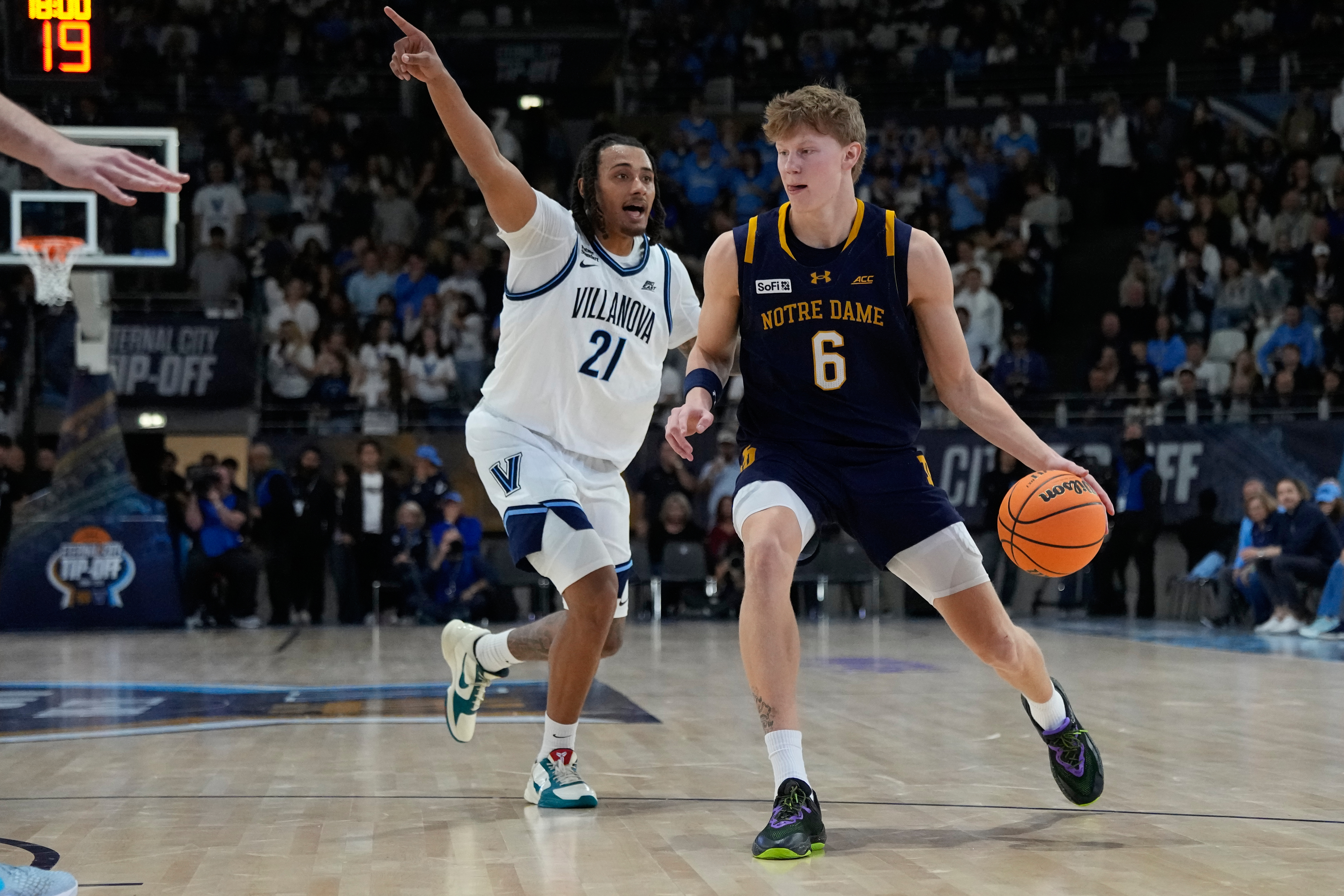
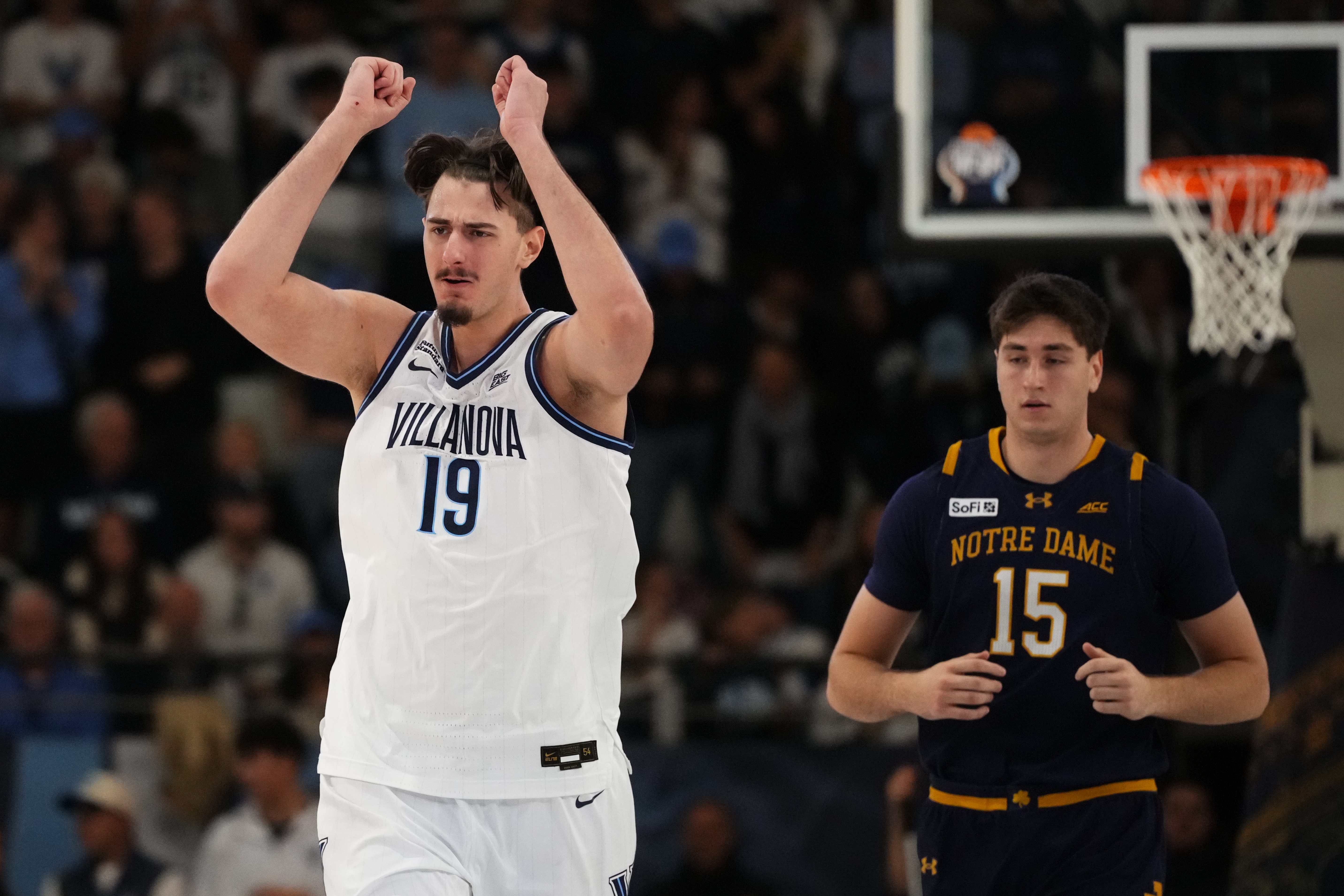
    But the four-day spectacle ended for the men’s basketball team with a 74-72 loss to Notre Dame in which the Wildcats held a 10-point lead with 10 minutes to go.

    It was an ugly start to the season, and there were plenty of worrying things about how it happened.

    “I think it’s going to be a good learning process for us,” Willard said. “When you put a team together, you’re learning stuff new every day.”

    What do the Wildcats need to learn most? Here are six key questions — a full slate of who, what, when, where, why, and how — that come to mind after Sunday’s loss.

    What’s Villanova’s best lineup?

    Villanova’s first starting lineup of the season featured Darryl “Buddy” Simmons, Jake Fiegen, Tyler Perkins, Devin Royal, and Luigi Suigo.

    Kwame Evans Jr., a 6-foot-10 Oregon transfer who may be the key to Villanova’s defensive connectivity this season, came off the bench. Evans missed the entire three-game exhibition slate while working his way back from an offseason leg injury. He still played 22 minutes and had seven points and seven rebounds, but he led Villanova with five turnovers.

    “I think until Kwame gets acclimated with being on the court for as long as he needs to, that lineup probably gives us our best chance to defend and rebound,” Willard said afterward.

    Villanova forward Kwame Evans Jr. reacts to a call on Sunday.Alessandra Tarantino

    There was some tinkering, though. Willard played only eight guys, but the Wildcats had different combinations out there. Evans got the backup center minutes when Suigo was on the bench. That may be the case regardless, but Villanova didn’t have reserve center Nico Onyekwere, who had a visa issue and didn’t travel with the team.

    There seemed to be more consistent stretches with Elijah Crawford and not Simmons on the floor. Which begs the question …

    Who is the point guard?

    Simmons started, but Crawford played the bulk of the second-half minutes.

    Bonus question: If you have two point guards, do you even have one?

    Crawford, a transfer from Illinois-Chicago, was expected to be the starter when he signed with Villanova. But Crawford had a rough time during the exhibitions, and Simmons, who was one of the best scorers in the Atlantic 10 last season with St. Bonaventure, earned the start.

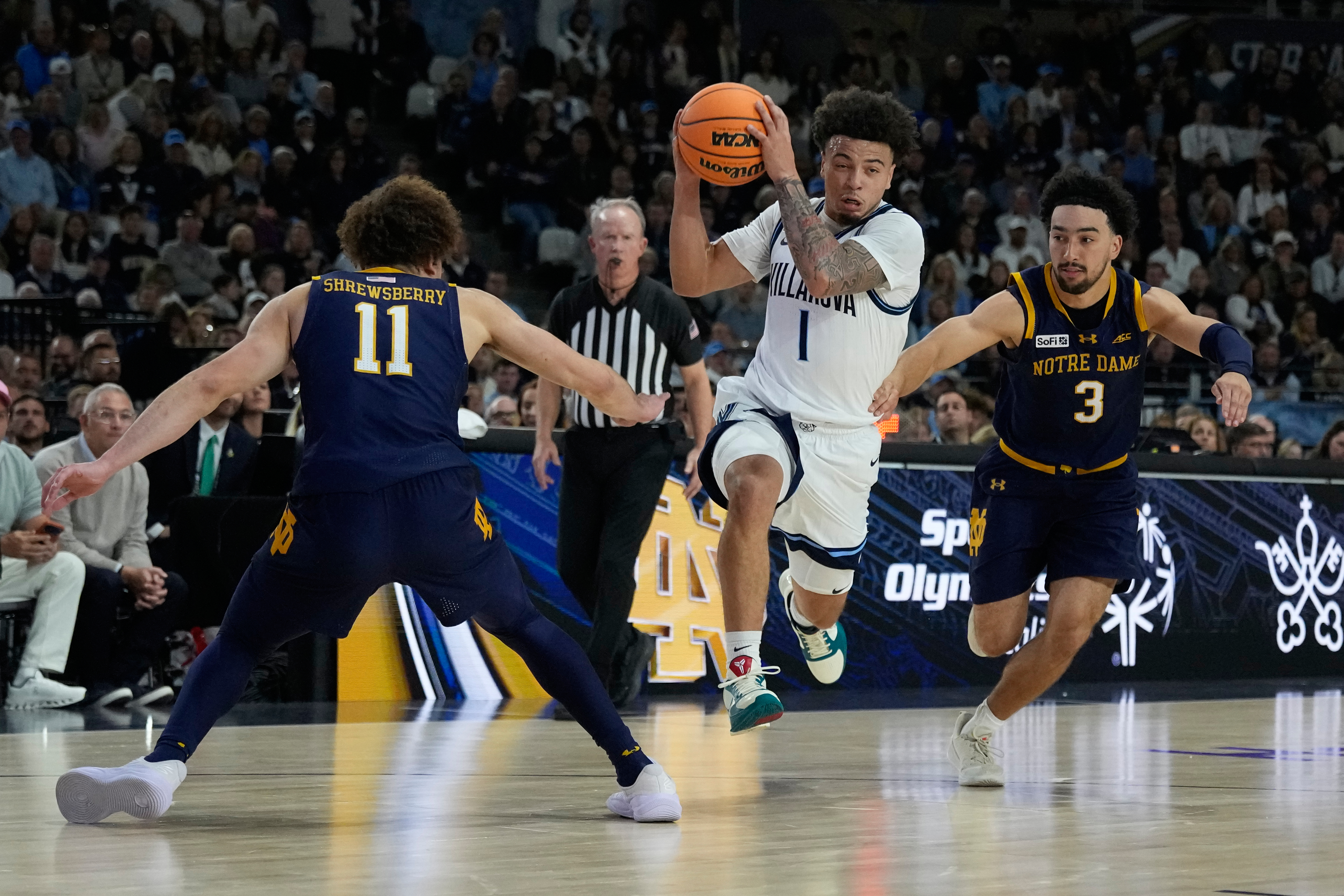
    Crawford turned 25 minutes into 12 points on 4-for-7 shooting (he made all four of his free-throw attempts) to go with five assists, three rebounds, and three steals. But he canceled out those steals with four turnovers.

    Villanova guard Elijah Crawford (1) turned 25 minutes into 12 points on 4-for-7 shooting.Alessandra Tarantino

    Simmons was inconsistent, too. They are different players. Crawford is more of a creator who thrives on ball screens while Simmons is more of a score-first guard.

    “I think we’re still trying to figure out which lineups work well with each other,” Willard said. “I think they both bring unique abilities, but just trying to figure out which guy fits with each guy has been a little bit of a challenge. But we’ll figure it out.”

    Simmons made just one of his six three-point attempts and finished with five points and three assists in 15 minutes. He also turned the ball over twice.

    Turnovers were a major storyline for Villanova. The Wildcats had 15 in the first half and finished with 20. More than half of them came from forwards or centers, but a better or more consistent initiator on offense would limit some of those miscues.

    Where was Royal?

    The star of the preseason schedule was nowhere to be found on Sunday.

    Royal, who scored 20 vs. Rutgers, 25 vs. George Mason, and 21 vs. Virginia during the exhibitions, barely was noticeable.

    The Ohio State transfer scored five points and missed the only shot attempt he wasn’t fouled on. He was 5-for-6 from the free-throw line and grabbed eight rebounds.

    Villanova forward Devin Royal scored five points and missed the only shot attempt he wasn’t fouled on.Alessandra Tarantino

    He, too, had turnover problems, including a pivotal giveaway out of a timeout inside of two minutes with Villanova clinging to a one-point lead.

    Notre Dame deserves credit for denying Royal opportunities, but he’s too important of a scoring option on this roster to have that kind of stat line. Willard and his staff are going to have to figure out how to get him more involved.

    How painful will the Suigo ‘growing pains’ be?

    Suigo had two big moments on the offensive end Sunday. The first resulted in a nice crowd pop in his home country after Crawford found him on a lob and he finished an alley-oop dunk to give Villanova its first double-digit lead early in the second half.

    He later hit a three-pointer, prompting the Italian PA announcer to yell “Luigi Su Su Su Suigo!”

    But Suigo’s debut was far from perfect. Willard used the phrase “growing pains” two weeks ago to describe what this process will be like for Suigo acclimating to a different style of basketball.

    That was evident on Sunday. Twice in the first half Suigo put the ball on the floor from the perimeter and either had it stolen or lost control.

    Villanova center Luigi Suigo had some big moments on the offensive end Sunday.Alessandra Tarantino

    Villanova also struggled mightily on the defensive glass, allowing 17 offensive rebounds. Suigo is 7-3 and had only four defensive rebounds. Villanova needs more in that department from the 19-year-old freshman.

    There were flashes from a player who was a potential late-first-round pick in this past NBA draft. But it also has been apparent in the last few weeks why Suigo is playing college basketball this year.

    Why didn’t Adam Oumiddoch play more?

    There weren’t many positives to take from a first half that saw Villanova turn it over 15 times, but freshman Adam Oumiddoch made a major impact in seven minutes, scoring seven points on 3-for-4 shooting.

    He hit a corner transition three as well as a contested layup and a well-defended fadeaway in the paint.

    Willard then had him on the floor for two minutes in the second half. The offense did not have any rhythm over the final 10 minutes, and it’s fair to wonder why Willard didn’t try Oumiddoch for a few minutes during a prolonged scoring drought.

    When will Matt Hodge return?

    A run-stopping three. A defensive rebound. A stop. Villanova could’ve used any of those a few different times Sunday.

    Matt Hodge, who can help in those categories, didn’t dress Sunday and it’s unclear when he’ll be ready to make his debut.

    Hodge, who tore his ACL and had surgery in March, looked good at practice on Thursday in Rome going through a workout with assistant coach Ashley Howard, but he did not take part in most of the practice drills.

    Willard recently said Hodge hadn’t yet been cleared for full contact. The sooner that happens, some of these concerns may be solved for Villanova. But that still may be some time from Sunday, and of all the questions that Sunday brought to mind, it’s the one with the least clear answer.

  • Philly sports team owners are sending big checks to Josh Shapiro. But he’s not the only one.

    Philly sports team owners are sending big checks to Josh Shapiro. But he’s not the only one.

    Their teams influence our mental health multiple times a week. But their money also has a big influence on Pennsylvania and national politics.

    The individual owners of Philadelphia’s major sports teams have contributed nearly $2 million to political causes and candidates since 2021, an Inquirer analysis of campaign finance reports found.

    That includes spending during the 2026 midterms, when the biggest giver of the 2025-26 cycle was Philadelphia Phillies owner John Middleton, who contributed more than $350,000.

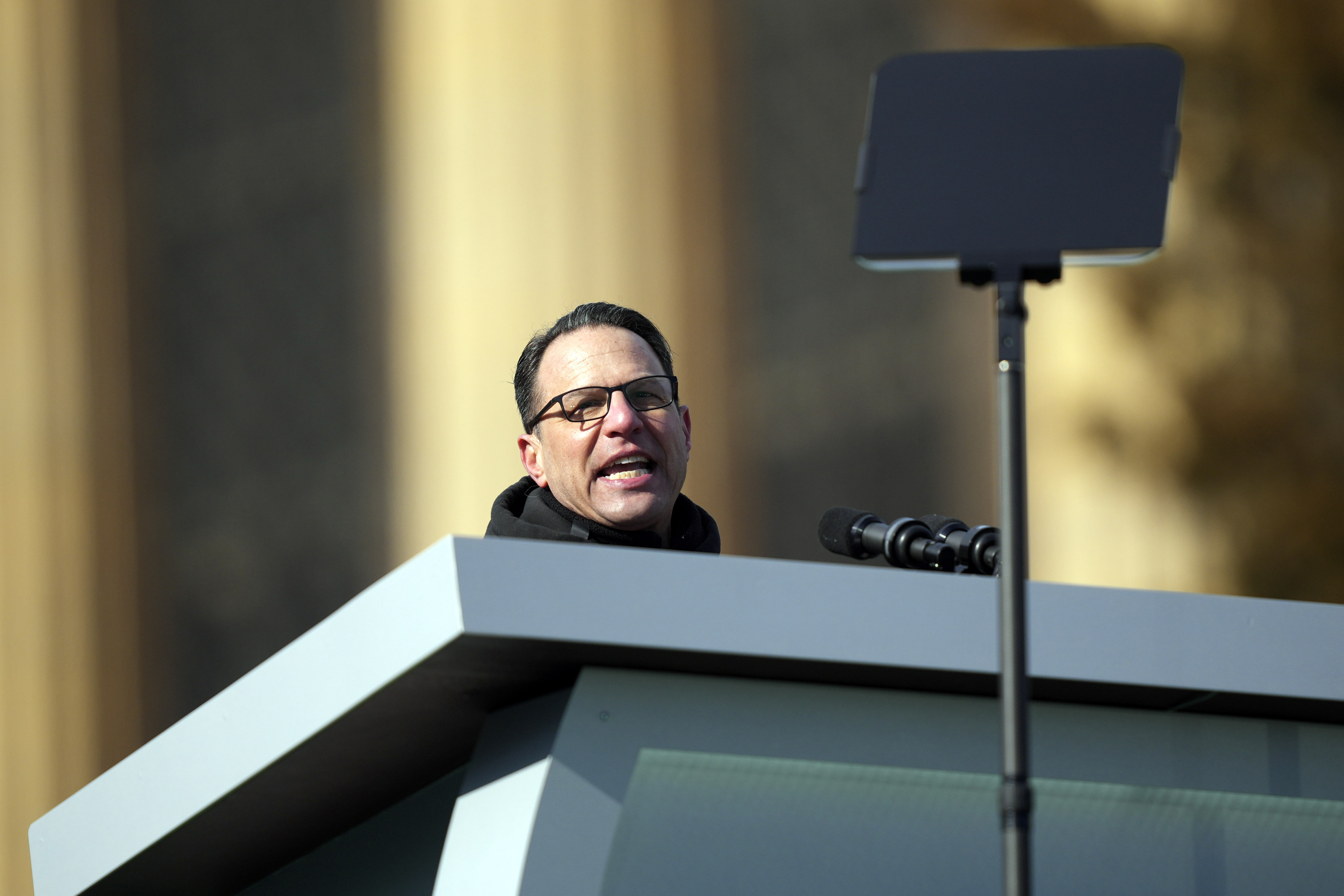
    The overwhelming majority of that — $275,000 — went to Pennsylvania Gov. Josh Shapiro, a Democrat expected to easily win reelection Tuesday.

    But Middleton doesn’t give just to Democrats.

    He has also crossed the political aisle, steering nearly $70,000 to Republican U.S. Sen. Dave McCormick’s joint fundraising committee in 2025 shortly after the senator won his first term. McCormick will not face reelection until 2030.

    That bipartisan philosophy rang true for almost all the Philadelphia team owners.

    Spokespersons for the Phillies, Eagles, Sixers, and Flyers governor Daniel Hilferty did not respond to requests for comment. A spokesperson for the Union declined to comment.

    Here is what to know.

    (function(){function e(){window.addEventListener(message,function(e){if(e.data[datawrapper-height]!==void 0){var t=document.querySelectorAll(iframe);for(var n in e.data[datawrapper-height])for(var r=0,i;i=t[r];r++)if(i.contentWindow===e.source){var a=e.data[datawrapper-height][n]+px;i.style.height=a}}})}e()})();

    More than $600,000 for Josh Shapiro

    There seems to be one thing that many of the team owners can agree on — sending a check to Shapiro.

    The governor, who is seeking a second term on Tuesday, has made his loyal fandom to Philly sports a huge part of his personal brand (he was rumored to have made a direct appeal to LeBron James to come to the Sixers).

    And it seems he has a few fans among the owners.

    Middleton has given $425,000, including contributions for Shapiro’s 2022 run.

    The Union’s Jay Sugarman gave $10,000 to Shapiro in 2024.

    And Jeffrey Lurie, owner of the Eagles, gave $200,000 to Shapiro four years ago and has not made that big of a contribution to state or federal candidates or causes since.

    Pennsylvania Gov. Josh Shapiro speaks at the Eagles’ Super Bowl parade and celebration Feb. 14, 2025, in Philadelphia. Matt Rourke

    (Shapiro did get to speak at the Eagles’ Super Bowl victory parade in 2025 — which was probably better than a donation to this year’s campaign anyway.)

    Lurie gave $15,000 in total between 2021 and 2023 to the NFL’s Gridiron PAC and $10,000 to the liberal-leaning Our Future United PAC.

    With their lease at Lincoln Financial Field expiring in 2032, the Eagles have begun “exploratory research” on a new or renovated stadium. Lurie said all options and locations are on the table.

    Shapiro, for his part, has reassured fans the team would be staying in Philly.

    Phillies owner John Middleton speaks during a preview event the renovated Cadillac Hall of Fame Club at Citizens Bank Park on March 24.

    All levels of government on both sides of the aisle

    State and local leaders, unsuccessful campaigns, and a former vice president — just a few of the recipients whom Philly sports team owners have given their money to over the last five years.

    And both sides of the political aisle have benefited.

    Middleton, for example, gave $200,000 in total to State Rep. Jared Solomon (D., Philadelphia) between 2023 and 2024 and $100,000 to Republican Bill McSwain’s unsuccessful bid for governor in 2022. On the federal level, he has given to a PAC supporting McCormick in 2025 and more than $23,000 total to Major League Baseball’s political action committee almost every year since 2021.

    He has also brought his money to the local level, such as giving $50,000 to Montgomery County Commissioner Neil Makhija, a Democrat, in December.

    Outside of Pennsylvania, Sugarman gave $5,000 to Rob Lubin, an unsuccessful 2024 Democratic House candidate from New York, and $5,000 to a real estate PAC.

    David Blitzer, cofounder of Harris Blitzer Sports & Entertainment, which owns the Philadelphia 76ers, donated $32,000 in support of GOP Maryland Senate candidate Larry Hogan (also the state’s former governor) in 2024. He also donated $25,000 to a joint fundraising committee for former Vice President Kamala Harris.

    Blitzer, whose enterprise also owns the NHL’s New Jersey Devils, gave $19,400 apiece to New Jersey Democratic U.S. Reps. Donald Norcross and Josh Gottheimer.

    But his largest contribution since 2021 was $100,000 to the Democratic Majority for Israel political action committee.

    Blitzer’s partner, Josh Harris, has given $300,000 to federal candidates since 2021, most of that in a $250,000 check to the Senate Leadership Fund PAC, which supports Republican candidates. He has also donated to several Democratic House and Senate candidates.

    David Blitzer at a New Jersey Devils news conference Aug. 15, 2013, in Newark, N.J. Julio Cortez / AP

    What about the Flyers?

    Besides the individual sports team owners, Comcast owns the Philadelphia Flyers through Comcast Spectacor, a subsidiary.

    Comcast’s political action committee has given more than $1.1 million to state politicians in Pennsylvania and PACs and more than $11 million to federal committees and candidates across the nation.

    As is standard with many large corporations, Comcast’s spending was all over the map, contributing to various groups pertinent to company interests.

    Comcast gives to candidates across the political spectrum who “appreciate the significance and complexity of the legislative and regulatory challenges confronting our business” and support favorable public policy, according to the Comcast Corp. Statement on Political and Trade Association Activity.

    “This measured, broad, and bipartisan approach seeks consensus and agreement on specific issues across party lines, and results in support of candidates with whom we do not agree on all issues,” the statement reads.

    Hilferty, the CEO of Comcast Spectacor and governor of the Flyers, has made $400,000 in contributions to state candidates since 2021, including to Shapiro in 2025, and more than $220,000 in donations to federal politicians and committees in both parties.

    That includes a $50,000 donation this year to the Democratic Grassroots Victory Fund.

  • Volunteer firefighters in Pa. are battling faster-burning fires with a tenth of the staff they once had

    Volunteer firefighters in Pa. are battling faster-burning fires with a tenth of the staff they once had

    Some Montgomery County fire departments say they are responding to calls with fewer volunteers, even as house fires burn faster than they used to, according to federal authorities. The volunteer firefighter force has plummeted statewide and nationally in the last 50 years, while calls — mostly for non-fires — have tripled.

    Some departments have a mixed paid and volunteer force, but not all towns can make up the difference: All-career fire departments could cost some Montco municipalities almost as much as their police, adding millions of dollars to the budget.

    “Everyone is well aware of the astronomical cost it would be for Cheltenham to have an all-career department,” said the township’s fire marshal, Scott Lynch.

    Cheltenham and other towns, including Gladwyne, Jenkintown, and Fort Washington, are getting creative to fill boots — with grant-funded recruitment campaigns, subsidized housing, on-site gyms, and stipends — and fire chiefs say it’s helping.

    “We are trending in the right direction, which is not something a lot of volunteer fire companies can say these days,” Fort Washington Fire Company Chief Andrew Rathfon said. “We’re doing everything we can.”

    The gym in the basement of La Mott Fire Company recently replaced a meeting room, pictured here on Oct. 22 in Elkins Park.Monica Herndon / Staff Photographer

    Pennsylvania fire companies depend on dwindling volunteer force

    Pennsylvania was home to the first volunteer fire company in the United States and, outside of major cities, remains heavily dependent on them: In 2023, at least 70% of Pennsylvania’s registered departments were all or mostly volunteer.

    But their ranks have shrunk: In the 1970s, the statewide force numbered roughly 300,000 volunteers, according to data shared in a Pennsylvania state Senate report; by 2018, there were just 38,000.

    La Mott Fire Company president Ken Hellendall, who has dedicated more than 40 years of service as a firefighter, remembers when the department had 35 to 40 active volunteer firefighters in the late 1970s. Some worked within running distance from the fire station, at the local bowling alley, beer distributor, or auto body shop.

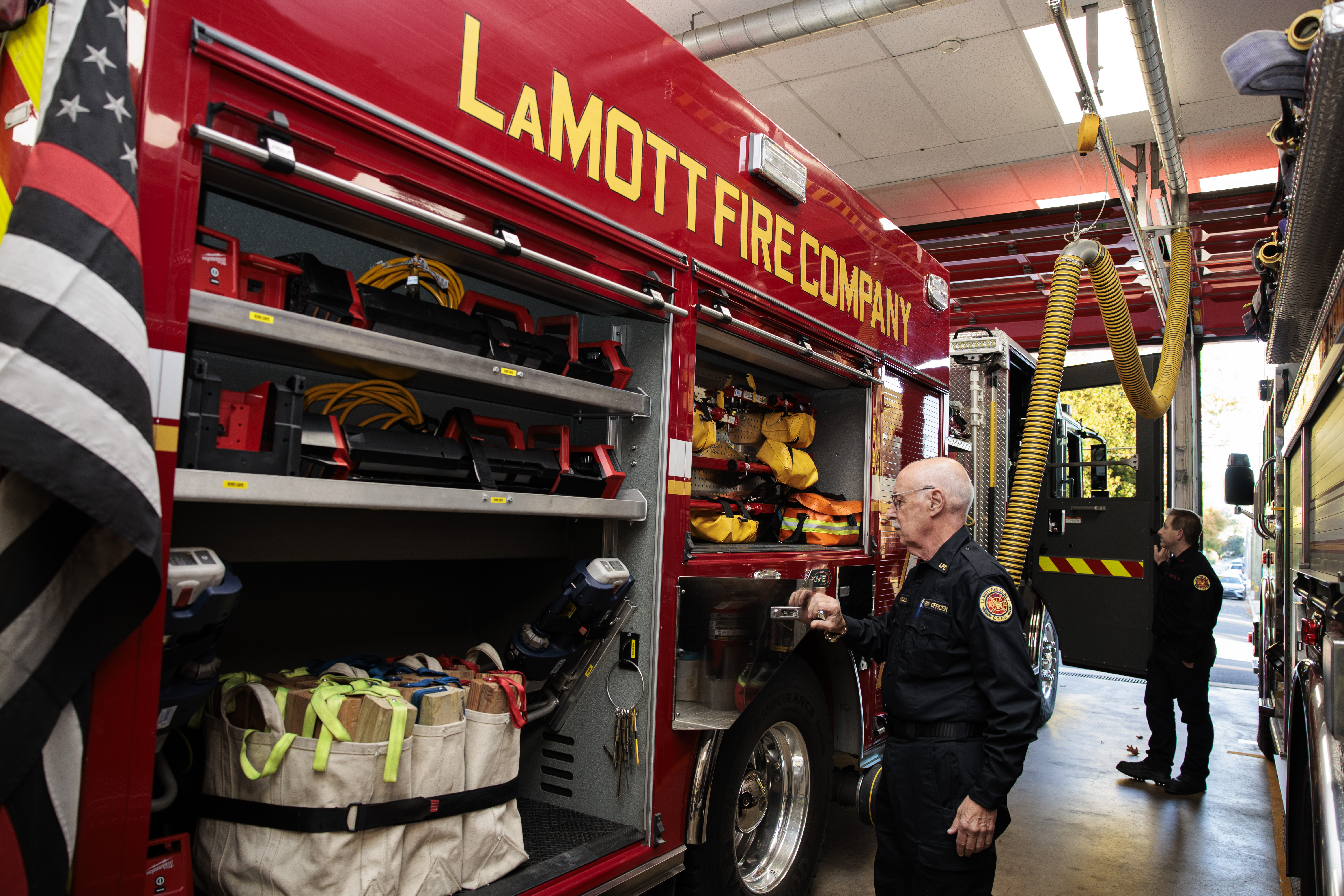
    Ken Hellendall (left) and Dave Schwartz talk about the different tools and compartments on the truck at the La Mott Fire Company on Oct. 22.Monica Herndon / Staff Photographer

    Changing work patterns — including longer commutes and the rise of dual-income families — have made Pennsylvania volunteers less available, reports in 1998 and 2006 found. In Cheltenham, even the rise of youth travel sports is affecting the volunteer force, La Mott firefighter Dave Schwartz said.

    Volunteers have also been priced out of some towns.

    “No one can afford to live in Gladwyne,” Gladwyne Fire Company Chief Blaine Leis said.

    “That’s the biggest challenge, honestly, for some of the suburbs in recruiting younger people, is the cost of living,” Rathfon, of the Fort Washington company, said.

    House fires have become faster and more toxic

    As the volunteer force has dwindled in recent decades, fires have become more dangerous for the firefighters who remain.

    The oldest homes in the region are often made from natural wood that takes longer to collapse than modern, engineered materials, a 2011 study found.

    Newer safety measures like sprinkler systems and fire blocking between stories reduce risk, but the synthetic materials that fill most modern homes can both accelerate the burn and release toxic chemicals into the smoke.

    Firefighters used to expect they had about 20 minutes to rescue trapped residents, according to a 2018 Philadelphia Fire Department report. Today, homes can collapse in as little as three minutes, an experiment conducted by the Underwriters Laboratories Fire Safety Research Institute found.

    The growing density in suburban towns also presents new challenges, as apartment fires require a larger force to extinguish them, firefighters said. And with so little time to respond, unpermitted home renovations can be deadly.

    Investigators of a 2016 Norristown fire that killed four people found the property owners had converted the single-family home into six apartments without a license, meaning the borough never had the opportunity to conduct a rental safety inspection. The building had no fire escapes.

    “If it’s an addition on the back on the house and it’s on fire, we don’t know what the construction is — we don’t know what materials were used,” said Lynch, the Cheltenham fire marshal, who is also the township’s building and codes director. “How quickly is there going to be a failure in this part of the house?”

    Weighing the expected burn time and the risk to firefighters are part of “decisions you have to make when you’re standing there watching someone’s house burn,” Leis, from Gladwyne, said.

    Montco fire companies are recruiting new volunteers

    But after years of decline, some companies said they are turning a corner.

    A decade ago, La Mott Fire Company was in crisis, officials said. Both numbers and morale were low. The team was disorganized, and there were arguments at fire scenes. Cheltenham imposed three restrictions on the company, including requiring La Mott to respond with at least one other company on calls.

    “There was a point that La Mott was looking at being shut down,” said Chief Joe Stuckert, who joined the department from Glenside Fire Company.

    When Stuckert and other new leaders came in, they restored standards, fostered a positive culture, and reinvigorated the force, firefighters said.

    Now, La Mott aims to continue rebuilding its force, using many of the strategies the company and other Montco departments have seen success with.

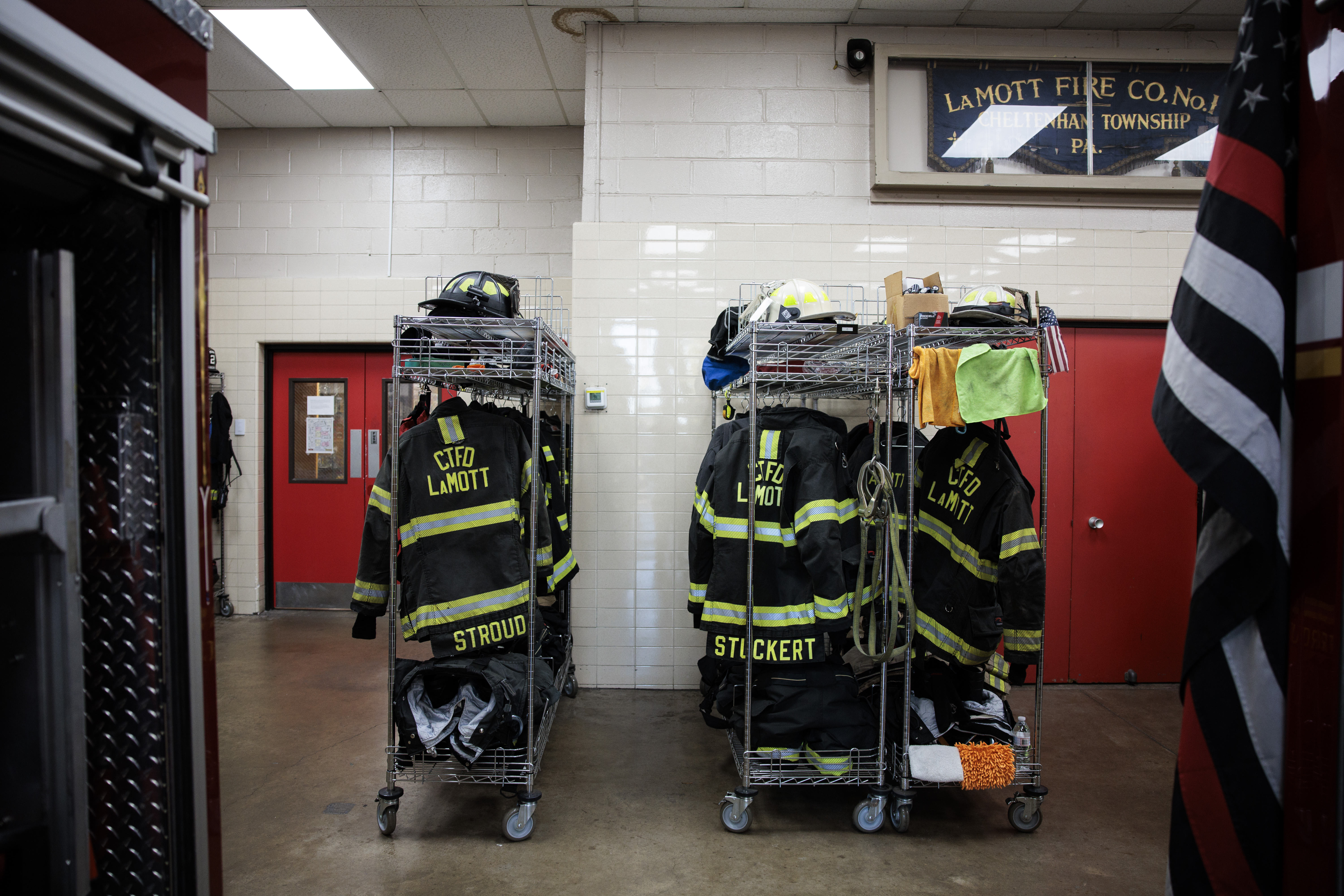
    Firefighting gear hangs on racks at the La Mott Fire Company on Oct. 22.Monica Herndon / Staff Photographer

    That includes economic incentives: La Mott now pays one full-time and five part-time staffers to make sure there is someone at the station who can drive the truck. The county also offers property tax rebates to volunteers — both active firefighters and administrators.

    La Mott is also following in the footsteps of Gladwyne, which owns multiple properties to offer reduced rent to firefighters, and Elkins Park — which just expanded its firefighter apartments — by building four one-bedroom units behind the La Mott station.

    Like several other companies, La Mott also just received a federal grant to fund a recruitment campaign. Jenkintown has netted 15 new volunteers from its recently ended campaign, Fire Chief Ken Lynch said, expanding the force by 60%.

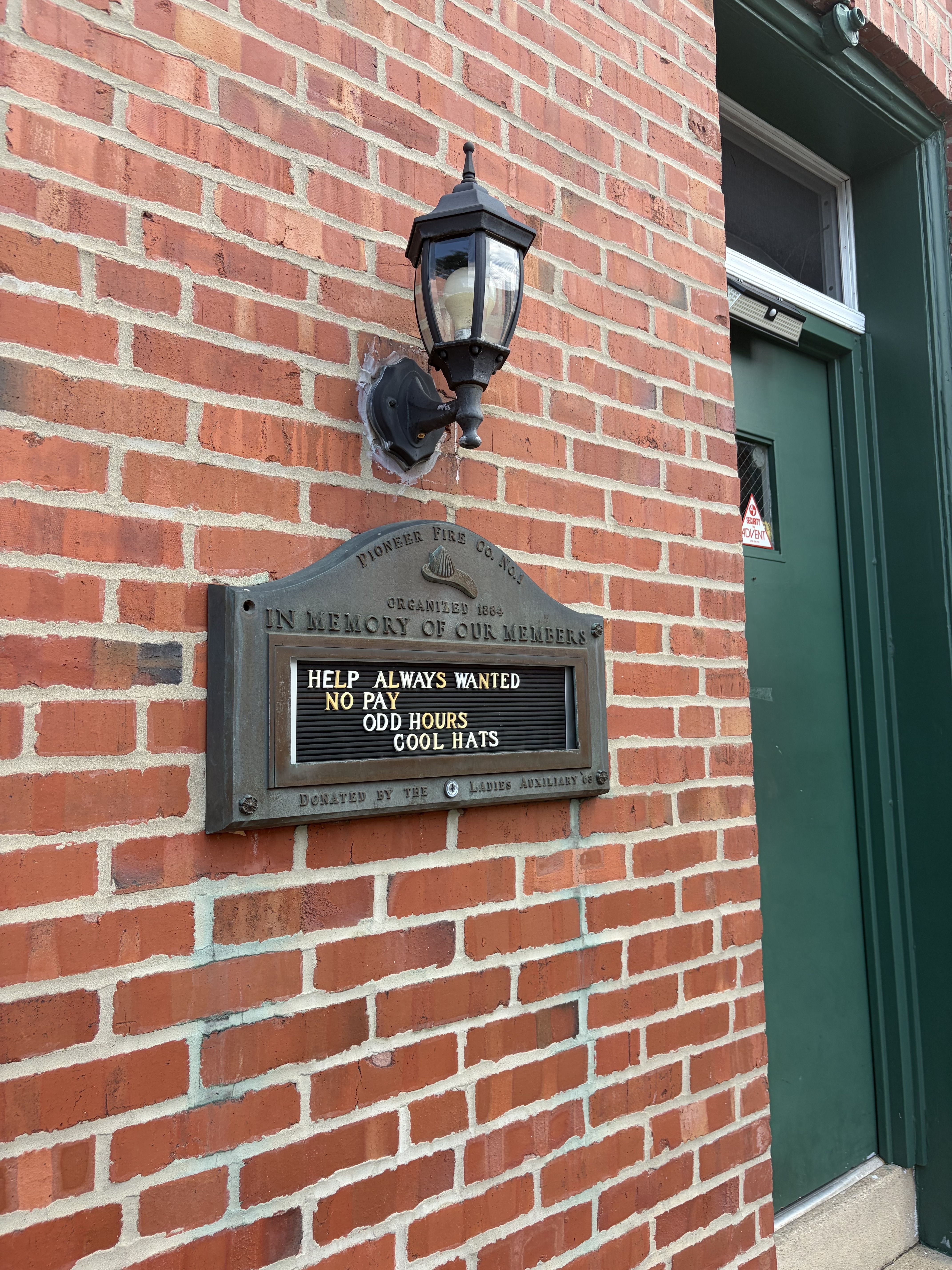
    A sign soliciting volunteers outside Pioneer Fire Company in Jenkintown in June 2026.Jess Rohan

    La Mott turned a basement meeting room into a gym, something Gladwyne also has, to encourage volunteers to spend more time there.

    Having a mix of programs is most effective, Rathfon said, because each volunteer responds to different incentives.

    Telling recruits up front what they are getting into is also important, he said. “We’re not trying to sugarcoat it.”

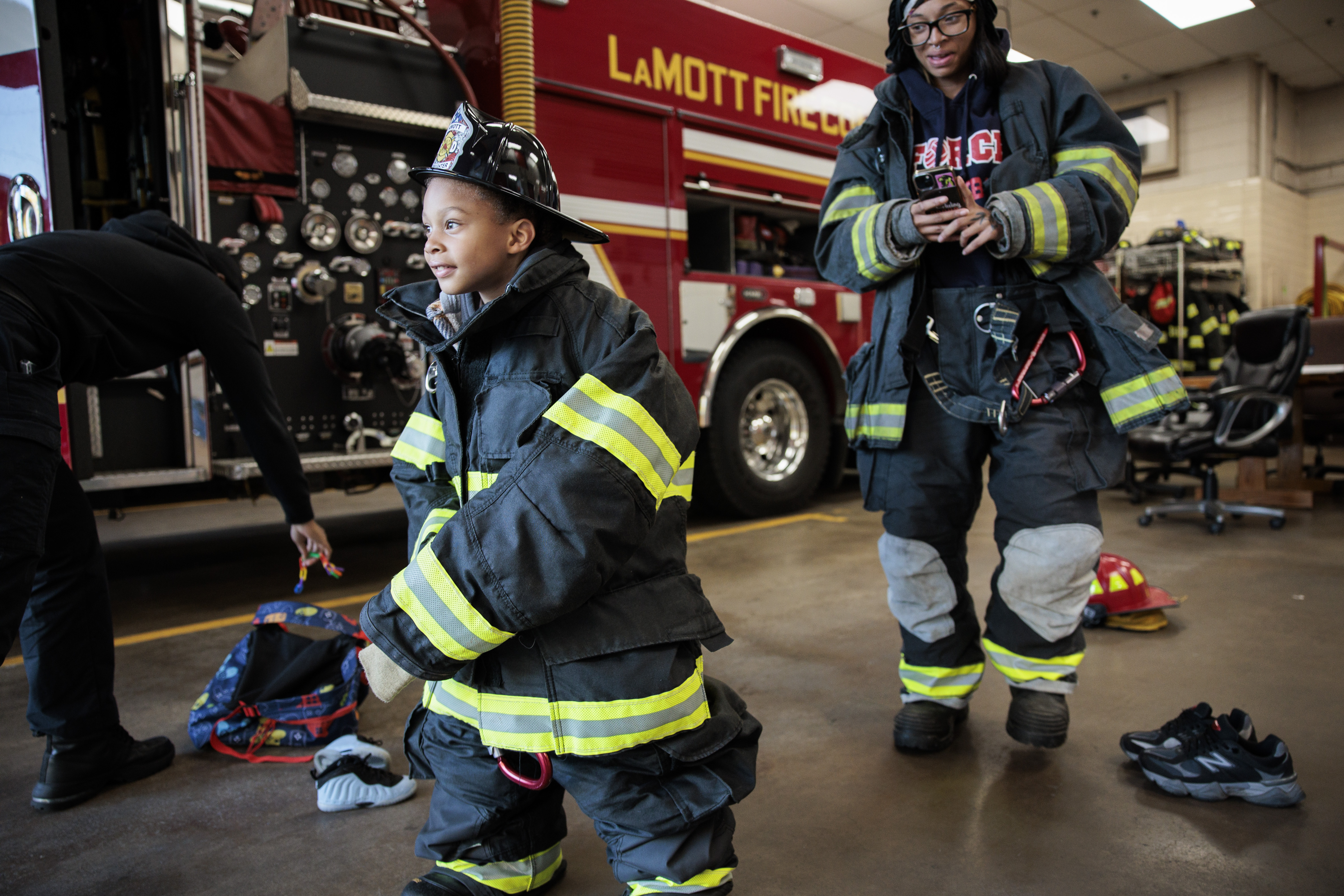
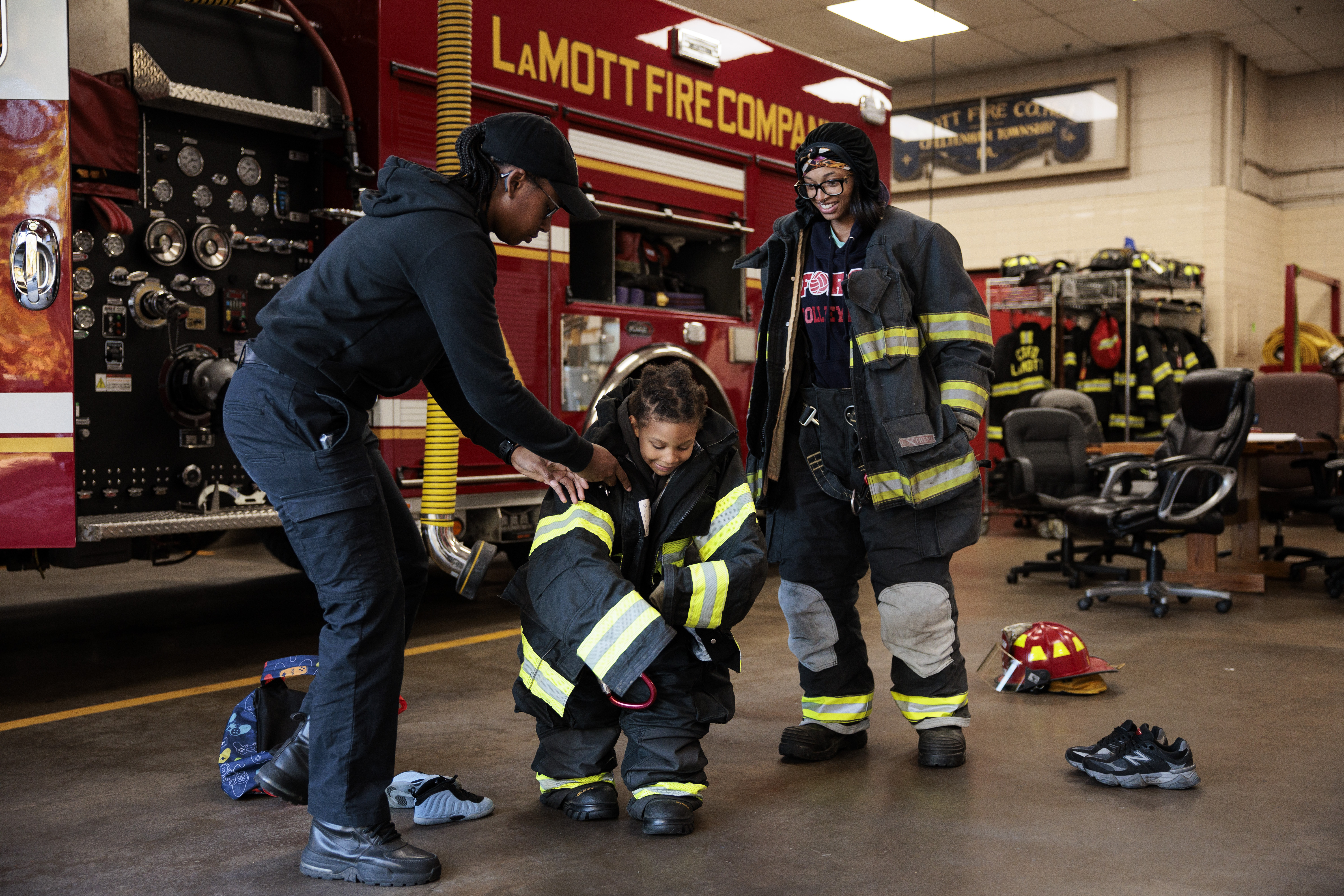
    In October, a mom stopped at La Mott’s open garage door to ask if her 5-year-old son could use the bathroom. Soon, the pair were trying on the turnout gear and sitting in a truck.

    Hellendall talked to the mom about volunteering.

    Firefighter Teryn Dark helps Messiah Williams, 5, (center) and Trenyce Hart (right) try on firefighting gear at the La Mott Fire Company on Oct. 22.Monica Herndon / Staff Photographer

    This suburban content is produced with support from the Leslie Miller and Richard Worley Foundation and The Lenfest Institute for Journalism. Editorial content is created independently of the project donors. Gifts to support The Inquirer’s high-impact journalism can be made at inquirer.com/donate. A list of Lenfest Institute donors can be found at lenfestinstitute.org/supporters.

  • Price tags everywhere are under scrutiny. Shoppers don’t trust them.

    Price tags everywhere are under scrutiny. Shoppers don’t trust them.

    Americans don’t trust price tags anymore.

    Digital labels on shelves enable retailers to alter prices in an instant, and artificial intelligence has made it easier for stores to set rates as demand fluctuates. That has led to greater scrutiny from shoppers and regulators.

    Even the old analog methods have come under fire.

    Last Monday, the Federal Trade Commission sued Dollar General, the nation’s largest dollar store chain, and accused the retailer of charging consumers more than advertised. The agency’s suit was joined by 20 states, including Tennessee, where Dollar General is based.

    In the complaint, the FTC said Dollar General’s stores had not employed enough staff to manually update the labels on shelves quickly enough to ensure that all prices are accurate. It also said that prices at the cash register often differed from the weekly circulars that the retailer had distributed.

    “The company has routinely charged customers more at the register than the prices displayed on shelves, price tags and advertisements,” the FTC said in its lawsuit. “This pattern of inaccurate pricing has persisted for years and affects millions of purchases across the country.”

    Dollar General denied the allegations in a statement and said it was surprised to see the lawsuit after attempting to resolve the matter with the FTC without litigation. The company said it would “defend this litigation vigorously.”

    The situation at Dollar General reflects a broader distrust of price tags among Americans, who have become more skeptical and vigilant about prices as they try to manage rising grocery and fuel costs.

    “Consumers have this experience of seeing prices rise before their very eyes,” Kate Muhl, an analyst at Gartner, a research and advisory firm, said of shoppers who have seen their grocery bills climb in recent years. “Trust erodes when they see examples of prices that don’t feel fair.”

    Only 32% of consumers in the United States trust retailers to offer fair prices, and the majority would trust stores less if they found out that prices changed based on their personal data, according to an August survey by Akeneo, a product information management firm.

    Tactics such as surveillance pricing, in which personal indicators and location data are used to adjust prices based on what an individual may be willing to pay; and surge pricing, where rates rise in response to high demand, have increased consumer skepticism.

    Last month the CEO of Walmart, John Furner, wrote an open letter to customers to try to convince them that they could trust the digital price tags displayed by the world’s largest retailer.

    “I’ve heard concerns about companies using that information and technology to charge you more,” Furner wrote. “I want to tell you where we stand: We price the product, not the person.”

    The Dollar General suit followed several other high-profile pricing sagas. In July, New Jersey Gov. Mikie Sherrill signed the Fair Price Protection Act, which aimed to protect shoppers from surveillance pricing. In September, the Justice Department said that it had expanded an investigation into meat pricing to additional retailers including Walmart and Costco.

    In California, the state’s attorney general has been wrestling with Amazon for several years over a major antitrust lawsuit that accused the online retailer of price fixing. A civil trial is set to begin next year. Amazon has denied that it engaged in any price fixing.

    “Our policies are designed to deliver low prices, vast selection and unmatched convenience to our customers, and we look forward to demonstrating that in court,” a spokesperson for Amazon said in a statement. Walmart declined to comment. Costco didn’t respond to a request for comment.

    There have been few class-action lawsuits from consumers regarding prices, but that may soon change, according to Ceren Canal Aruoba, a managing director at the Berkeley Research Group, a management consulting firm.

    “A storm came together,” Canal Aruoba said. “The persistent consumer frustration with the cost of living. Prices are top of mind for everyone.”

    This article originally appeared in the New York Times.

  • Travis Konecny’s return sparked a different type of effort from the Flyers: He ‘kind of brings everyone in the fight’

    Travis Konecny’s return sparked a different type of effort from the Flyers: He ‘kind of brings everyone in the fight’

    It showed on the ice, with a goal and an assist, and a familiar game of getting under the opponent’s skin. It showed when he got the Flyers’ player of the game boxing gloves. And it showed when he stood in front of the media in the locker room at Xfinity Mobile Arena after Sunday’s 6-3 win over the Utah Mammoth.

    Travis Konecny was happy to be back.

    “Yeah, I was hoping to come in and make a difference that way,” said the winger, between smiles, about energizing the group.

    “Coming into the game, I was hoping maybe a big hit or something would come along. But, I mean, that stuff, yeah, I probably got a little out of hand just when I was so excited to be back. And just, yeah, I just got to stay in the game and focus on my next shift sometimes.”

    The past few weeks were hard for Konecny. An alternate captain and the team’s leading scorer for six of the past seven seasons, the winger missed 10 games with a lower-body injury and watched his teammates lose seven.

    Konecny was around the rink — he watched several home games from the press box at Xfinity Mobile Arena — and saw what his teammates were going through.

    “I see how hard these guys are working, and how mad they are after the game, where it’s like they’re right there, and it’s one mistake. It’s frustrating, I want to help, and I can’t, so I just try to stay light a little bit … and be around the best I could,” he said.

    On Sunday, Konecny was a sparkplug. As Sean Couturier said: “The game within the game, where he’s emotionally invested, yapping out there, and getting himself involved after whistles, it kind of brings everyone in the fight, and I think that’s the kind of energy that we’ve been missing lately.”

    The feisty winger, who got into one big scrum, earning an unsportsmanlike minor, had two points, created three individual shot attempts and scoring chances, and was plus-three. Konecny led the team with a 60.71% share of the shot attempts across all situations (Corsi %).

    He also threw four hits, although one almost took Trevor Zegras out in the second period. Konecny bowled Utah’s Artem Duda awkwardly into a prone Zegras on the ice. “I asked one of the coaches, and then he said that he kind of fell on him, and I said, ‘Oh [no]. I’m sorry.’”

    Travis Konecny was a much-needed spark against the Utah Mammoth as the Flyers snapped their three-game losing skid.Yong Kim / Staff Photographer

    Zegras left the game but returned quickly. And it’s a good thing because their line was playing connected all game long.

    Although Konecny’s first goal of the season came when his centering pass went in off of Duda in the second period, his linemates played a big role. It started with crisp passing, including a sweet threading of the needle by Zegras to Jamie Drysdale, and Dvorak shooting one off the crossbar.

    Konecny and Zegras were still on the ice — albeit Zegras was down hurt — when Noah Cates, who had just swapped with Dvorak, scored later in the frame.

    Then early in the third, the trio forechecked and kept the pressure on with Zegras all over Nick Schmaltz deep in the left corner, Konecny hitting Clayton Keller to create a turnover, and eventually Konecny setting up Dvorak for the goal.

    Konecny and Dvorak scored 66 and 62 seconds, respectively, into each period to help set the tone.

    “I think you always want to start the period off on the right foot, and yeah, we did that,” said Dvorak. “Build momentum off that throughout the period, in the game, and [it] gets everyone feeling good about themselves, and you kind of build off that.”

    According to Natural Stat Trick, across more than nine minutes together at five-on-five, Zegras, Dvorak and Konecny were on the ice for two goals, 10 shot attempts, and five scoring chances. It was a continuation of last season, when they played over 280 minutes together at five-on-five and outscored opponents 20-14 at five-on-five.

    “I think there’s some chemistry,” coach Rick Tocchet said. “Obviously, Ziggy kind of knows where to go [when] TK gets it. Whether he shoots it, he’ll find Zegras [and] he’ll find him [and] give it to him [and] then they’ll give and go. I’m a big give-and-go guy.

    “Obviously, [Dvorak’s] goal, these are the type of goals you need when you give it to a skill guy. If you watch Keller and those guys, once they give it to them, they fill holes. Same thing that we got to do. I think that line fills holes well, especially when Trevor’s got the puck.”

    Now the hope is that with Konecny and Owen Tippett, who also returned after a six-game absence due to an upper-body injury Sunday, the Flyers can right what has been a sinking ship. They entered the game with 12 losses in the first 15 games.

    The hope is they can dig themselves out.

    “There’s obviously noise, but as far as our group, there’s no talk about that,” Konecny said of the team’s tough start. “Let’s get back on track; let’s chip away and see where we are at the end.

    “People can doubt us. That’s fine, they did last year. We didn’t know we were going to get in [to the playoffs] last year; we just put our heads down and went to work. And that’s kind of our plan right now. Do our best, see where we’re at by Christmas time, and reevaluate then.”

  • The SS United States has a sink date. It’s the hottest ticket along the Florida Panhandle.

    The SS United States has a sink date. It’s the hottest ticket along the Florida Panhandle.

    The SS United States is set to enter its new chapter as the world’s largest artificial reef some 22 nautical miles southwest of Destin-Fort Walton Beach in Florida on Nov. 12 — some two years since it left its berth in South Philadelphia.

    And there’s no shortage of ways to commemorate the long-awaited event, barring any inclement weather.

    Area charter companies are already selling seats to their vessels to get as close as possible to the sinking as it won’t be visible from shore. Okaloosa County expects hundreds of boats to come out for the big day.

    “This is once in a lifetime,” reads the pitch from Marler Fishing Charters, which is selling 240 seats at $99 per person.

    “No second sinking. No rerun. On one day this November, the fastest liner ever built leaves the surface for good, and the people on the water that day get a story they will tell for the rest of their lives.”

    Philadelphia-based artist Brooke Lanier didn’t need much convincing.

    She snagged tickets for her and her parents, even though, like most other people traveling from out of state to see the bon voyage, she has very little else planned out. Okaloosa County made the announcement with just over two weeks’ notice.

    Lanier had never heard of the SS United States before she started volunteering aboard a different ship at Penn’s Landing and subsequently creating artwork of the rusty ships there. People who saw her art kept pointing her to “the biggest and rustiest one,” she remembers.

    Lanier has crafted a collection of oil paintings of the less publicly accessible parts of the 990-foot vessel over the last four years. She even got to tour the gutted ocean liner three times before it was bought by Okaloosa County.

    The trip and viewing will be a networking opportunity to sell her art and a bittersweet goodbye for Lanier.

    “I have kind of come to terms with it over time because I think it would have been nice if it was feasible to repurpose her as a ship that people could actually visit and use in an educational capacity, but that it was logistically and cost-wise not realistic,” she said.

    Yet for a disparate group of SS United States enthusiasts, letting go is not so easy. The self-described “never reefers” see the planned sinking as a dark chapter in the vessel’s history and they continue to ask if there’s any way to stop the final descent, or at the very least protest.

    It’s unclear how much momentum the movement has left.

    The ocean liner was in Philadelphia for nearly 30 years, during which time various owners spent more than $40 million buying, maintaining, and reimagining the vessel’s future. The grand aspirations of a second life clashed with poor economic conditions or proved to be unattractive to investors. Even eleventh-hour appeals to various state governors and presidents fell short. So did a lawsuit filed by a New York-based group, which was eventually dismissed.

    Despite the critics, Okaloosa County spokesperson Nick Tomecek expects the week to be “one big, giant, long party” thanks to the international interest the SS United States has drawn.

    In preparation, the county has arranged a “send-off ceremony” the Wednesday before free and open to the public at the Destin-Fort Walton Beach Convention Center. Susan Gibbs, granddaughter of the ship’s designer and who led the conservancy that tried to save the ship from sinking, will be in attendance.

    There will also be a viewing party at AJ’s Seafood and Oyster Bar in Destin the morning of, where people can mingle and watch the sinking on a large outdoor screen.

    Tomecek said a few hours after the sinking is complete — once the dust settles and the water becomes less cloudy — county divers will be the first to so around the vessel to ensure everything is in order.

    They will be accompanied by marine biologists from the Woods Hole Oceanographic Institution who plan to return periodically to see how ocean life adapts to the 990-foot artificial reef.

    Kirstin Meyer-Kaiser, a marine biologist with the organization, has described the research as a “prime opportunity to study the formation of a marine community from scratch.”

    But barring any major complications, divers can begin exploring the SS United States’ new home the following day with local companies now accepting bookings.

    Andy Ross, owner of Niuhi Dive Charters, said he already has customers lined up for November and December. Part of the appeal, he says, is that the vessel’s size means there’s something for every kind of diver.

    “It’s really going to be great because a lot of these super huge wrecks are deep, and while this one is going to be 175 foot deep, it’s still going to have the top half in pretty shallow water, so most anybody can dive it,” he said.

  • The 2028 race for John Fetterman’s seat starts soon — and one Pa. Democrat is getting a head start

    The 2028 race for John Fetterman’s seat starts soon — and one Pa. Democrat is getting a head start

    Just under 300 miles from the Pittsburgh-area district where he was up for reelection in 12 days, U.S. Rep. Chris Deluzio smirked as he waited on the second floor of an Upper Bucks County periodontist’s office.

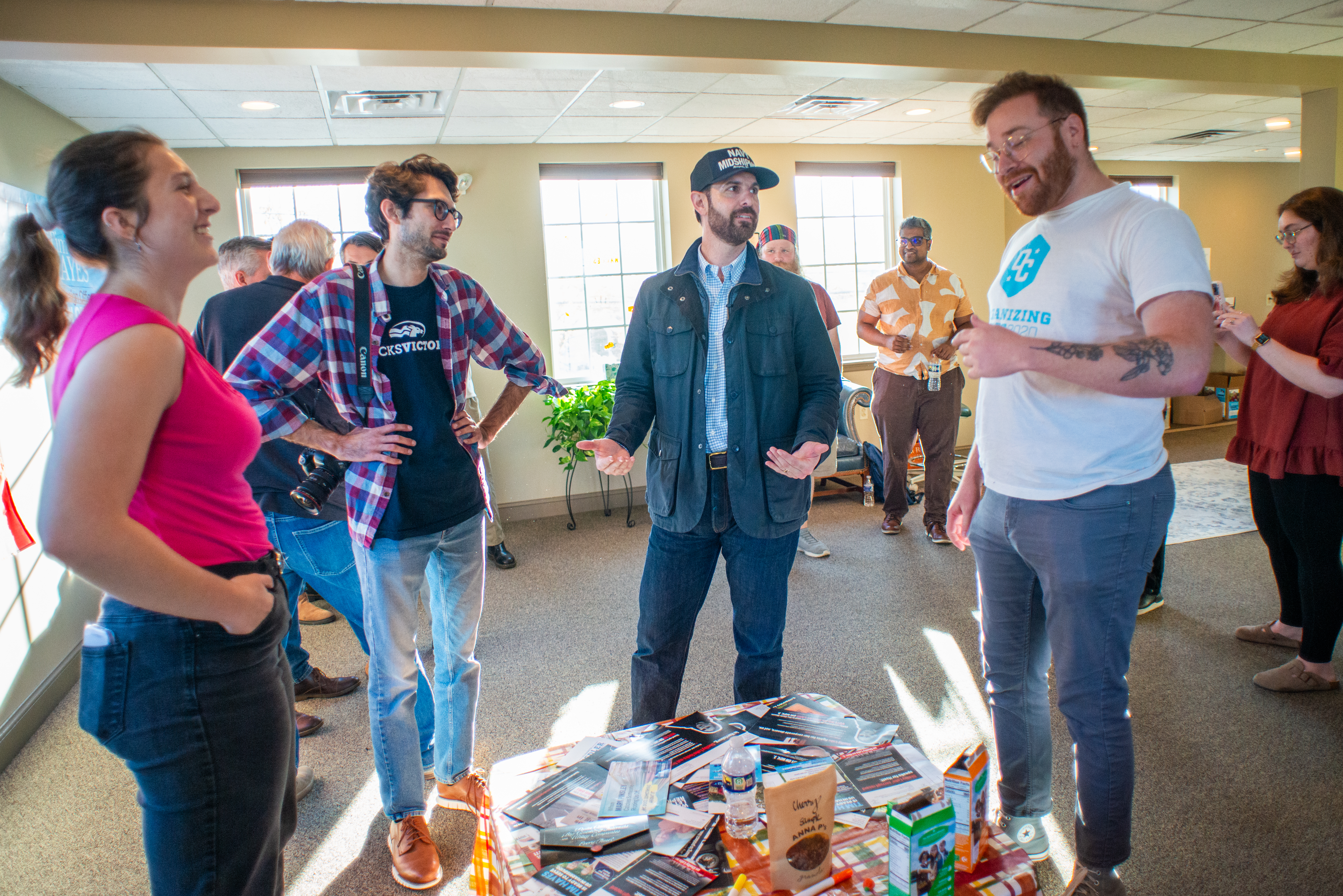
    The Democrat stepped forward in the makeshift campaign space, standing near a dentist’s swivel chair and a folding table littered with campaign flyers, to address a small group of supporters before they went out to canvas voters. He blamed President Donald Trump for rising costs and corruption, then turned to Bucks County Commissioner Bob Harvie on his left. What he needed in Washington, he said, were reinforcements.

    “This is a bellwether district in a bellwether state,” Deluzio said of the 1st Congressional District, where Harvie is in a heated race against Republican U.S. Rep. Brian Fitzpatrick. “I’m from a swing district. Believe me, I know what a competitive race looks like.”

    Left unmentioned was that bellwether state’s next, much larger, competitive race — one that Deluzio has signaled he is highly likely to jump into some time after Tuesday’s midterms: the 2028 contest for John Fetterman’s U.S. Senate seat.

    Fetterman has not said whether he will seek a second six-year term. But as he has alienated his former Democratic base and faced criticisms of being an absentee senator, a competition to replace him is anticipated either way.

    Candidates are expected to launch or consider launching campaigns soon after this year’s elections. And more than anyone else who has publicly signaled an intention to run, Deluzio has positioned himself for a head start — frequently traveling and fundraising for candidates up and down the ballot, building his own campaign war chest, criticizing Fetterman, and becoming a leading Democratic messenger on issues like the war in Iran and affordability.

    The 42-year-old Navy veteran and lawyer, in an interview after his speech for Harvie and state House candidate Tim Hayes in Dublin, said he is getting asked about the Senate race “all the time” as he campaigns for candidates across the state.

    U.S. Rep. Chris Deluzio (right) listens at a Democratic canvas launch with Bucks County congressional candidate Bob Harvie (left) while US Rep. Morgan McGarvey (center) of Kentucky speaks. William Thomas Cain / For The Inquirer

    After a similar event the next day for Lehigh Valley congressional candidate Bob Brooks and other local Democrats at a Bethlehem union hall, Deluzio told The Inquirer he had no timeline for making a decision. He also said his “goals and ambition are not about a job” but about “what I want our country to be.”

    The comment had echoes of a recent line from one of Deluzio’s colleagues whose future is also the source of widespread speculation. U.S. Rep. Alexandria Ocasio-Cortez (D., N.Y.), asked during a forum about a potential run for president in 2028, said people “assume that my ambition is a title or a seat” when her “ambition is way bigger than that. … [It’s] to change the country.”

    Deluzio, who has carefully aligned himself both with progressives and moderates in his party, said the decision for him could be the House, the Senate, or “something altogether different.” The answer is not just about him, personally, though he weighed some of the personal factors that would determine whether he runs.

    “Can my family support this? Can I win? And will I be the best damn senator possible?” Deluzio said. “If the answer to any of those things is not a resounding yes, then I won’t go do this. If it’s a yes, then maybe I will. But that’s how I think about it. And what John Fetterman does doesn’t affect it one bit for me at this point.”

    Preparing for an expensive, possibly crowded 2028 race

    Deluzio is seeking a third term in Congress this week in a slice of Western Pennsylvania once represented by Republicans.

    His district, which covers Beaver County along the Ohio border and most of Allegheny County around Pittsburgh, flipped blue during Trump’s first term with a 2018 win by former U.S. Rep. Conor Lamb, who later gave up the seat to run against Fetterman in the 2022 Senate primary.

    Fetterman, then the lieutenant governor, had barnstormed the state multiple times over more than six years and won all 67 counties in the primary. Lamb became a vocal critic as the senator went on to forgo parts of the job and increasingly support the Republican agenda. He has also remained active in Democratic politics across the state and has not ruled out running again in 2028.

    Other potential candidates to challenge Fetterman or run for the open seat are U.S. Rep. Brendan Boyle, who has represented a Philadelphia district since 2015, and State Rep. Malcolm Kenyatta, a Philadelphia Democrat who also ran in 2022 and is now a Democratic National Committee vice chair.

    The list of contenders could grow long, including on the Republican side.

    GOP U.S. Sen. Dave McCormick narrowly won the state’s last Senate race in 2024 in an upset against longtime Democratic U.S. Sen. Bob Casey.

    But political observers and strategists say Deluzio has taken the early steps needed to create the kind of statewide network, donor base, and messaging for a successful bid.

    “He’s had several fundraisers just in our zip code. He’s always been around. To the people who give money and to the activists, he’s never been a stranger,” said Larry Ceisler, a Philadelphia-based public affairs executive.

    U.S. Rep. Chris Deluzio (third from left) chats with volunteers after a canvas launch for Democratic nominee Bob Harvie in the 1st Congressional District. Deluzio, who represents Western Pennsylvania, has barnstormed around the state for fellow Democrats. William Thomas Cain / For The Inquirer

    Ceisler said fundraising and making connections in the Philadelphia area — home to the largest bloc of Democratic voters — are imperative for Western Pennsylvania politicians looking to run statewide.

    “A lot of people say, let’s get through this cycle,” Ceisler said. “But it’s not like he’s out there raising money and taking money away from the four competitive Democratic nominees. He’s just out there helping out, meeting people.”

    Deluzio’s campaign said he has raised or directly donated $300,000 for congressional candidates in Pennsylvania this election cycle, when four tightly contested U.S. House races could help determine control of the chamber. With consequential state legislative races on the line, he has also raised or donated $350,000 for state candidates and $65,000 for the Pennsylvania Democratic Party, his campaign said.

    Deluzio’s public reports with the Federal Election Commission, meanwhile, show he has raised $3.8 million total this cycle, which is more than any of the state’s other six House Democrats. His fundraising numbers spiked last year after Trump denounced him and five other Democrats — including U.S. Rep. Chrissy Houlahan of Chester County — who invoked their backgrounds in the military and intelligence agencies to call on service members to “refuse illegal orders” from the administration. Trump accused the Democrats of “seditious behavior” that was “punishable by death,” leading to threats and an attempt to indict them.

    Deluzio’s fundraising has also outpaced that of Fetterman — who has a much larger public profile — as the senator’s Democratic donor base dried up. Fetterman’s fundraising rebounded slightly in the most recent quarterly reports, a period that covered his more overt fundraising appeals to Republicans.

    Fetterman, who has said his future will become more clear after this week’s midterms, also revamped his campaign website in recent weeks. It now includes a recurring donation option that is described like a subscription service called “Fetter Nation,” with rewards including merchandise and virtual conversations with the senator, depending on the donation level. His campaign and Senate office did not return a request for comment.

    At the same time, Deluzio has highlighted his donations from every part of Pennsylvania.

    “I’m building an operation that’s helping me help candidates like Bob Brooks, Bob Harvie, and would be something you’d want in a race like that,” Deluzio said, referring to a Senate race that will cost tens of millions of dollars.

    Before the recent two-day swing in eastern Pennsylvania that primarily supported Brooks and Harvie, Deluzio posted a photo of himself eating a cheesesteak at Tony & Nick’s Steaks in South Philadelphia. Not mentioned was the fundraiser he also headlined nearby.

    Dustin Dove, a Philadelphia lawyer and president of the Fairmount Civic Association, met Deluzio for the first time at the fundraiser that night and left impressed. Dove said that he voted for Kenyatta in the 2022 primary and that Fetterman has been “an embarrassment.” He is hoping for another robust field of candidates in 2028, he said, but Deluzio’s record of winning in a competitive area, even if Lamb flipped it first, indicates he might be able to win statewide.

    “For me, it’s important to have someone who has experience doing that,” Dove said. “It’s not important that they must have that, but it’s definitely a good experience.”

    A campaign against ‘tinkering around the edges’

    Deluzio has developed a consistent stump speech on the trail.

    Trump’s reckless war with Iran has cost innocent lives and billions of taxpayer dollars, he says. Instances of corruption in the administration are too lengthy to rattle off in anything less than several hours.

    He starts every speech by asking for a show of hands from those whose lives became more expensive since Trump took office, then works toward a broad vision for “restoring the American dream” and revisiting the country’s “founding ideals.”

    In Congress, Deluzio has leaned into economic populism — becoming a founding member of a band of Democrats calling themselves the New Economic Patriots and describing their party as “spineless” for not pushing back hard enough early in Trump’s term. He has taken on a distinctly anti-corporate message, railing against special interests and the role of money in politics in a way similar to how State Rep. Chris Rabb, the democratic socialist who is almost certain to win one of Philadelphia’s congressional seats on Tuesday, has also spoken about them.

    Both he and Rabb appeared together at a gathering of progressives on Capitol Hill in June. After Rabb talked about the momentum around leftist Democrats and referred to Fetterman’s name only as “the F word,” Deluzio agreed with his argument that voters are expressing a deep desire for disruption.

    “They don’t want us tinkering on the edges, and God help us if Democrats are lucky enough to take power in 2028 and don’t fundamentally change things,” Deluzio said at the time. “I think people expect us to fix it and turn it around, and that’s not going to happen if you’re just doing some nonrefundable tax credits here and there. It’s not enough.”

    Deluzio did not speak of radical change in brief remarks in Bucks and Northampton Counties earlier this month. The swing-district candidates he boosted have run campaigns that stayed clear from aligning themselves with democratic socialists like Rabb.

    U.S. Rep. Chris Deluzio (right) and Bucks County Commissioner Bob Harvie (left) stand together at an event on behalf of Harvie’s congressional campaign. Deluzio has been campaigning for other Democrats in the lead-up to Tuesday. William Thomas Cain / For The Inquirer

    But both candidates said Deluzio has been an invaluable and active supporter, stumping in public and taking frequent calls to provide advice and motivation.

    “He knows this is his fault,” Brooks, a 53-year-old retired firefighter and union leader whom Deluzio had recruited to run, joked in an interview. “When I leave the campaign for the night, if I need to talk to somebody, or vent a little bit, Chris is good for that.”

    Brooks, a first-time candidate, declined to say if he thought Deluzio should run for Senate but said he would “support Chris in whatever decision he makes.” Harvie similarly said: “If he wants to take that next step, I think it certainly makes sense and I think it would be good for everybody.”

    U.S. Rep. Morgan McGarvey, a Kentucky Democrat who cochairs the Democratic Congressional Campaign Committee’s “red to blue” program that aims to flip GOP-held House seats, accompanied Deluzio on the swings through both districts. In an interview, he said Deluzio was an early and authoritative advocate for the national party to invest in the Pennsylvania races — which have now all seen significant investments as polls show the Democratic nominees on the verge of victory.

    Asked if Deluzio could mount a winning Senate campaign, McGarvey said that he had only seen Deluzio be successful and that “any opportunity he has to serve is a good thing.”

    “For me personally, man, I’m gonna miss him,” he said.