Blog

  • Ole Miss up to No. 4 in AP Top 25 with win over LSU, Penn State moves to No. 13

    Ole Miss up to No. 4 in AP Top 25 with win over LSU, Penn State moves to No. 13

    Mississippi moved into the top five with its win over LSU, the Tigers stayed in the top 10, and Florida and Mississippi State cracked the rankings to give the Southeastern Conference 10 teams in The Associated Press Top 25 college football poll released Sunday.

    The Rebels, who held off Lane Kiffin and LSU, 32-24, on Saturday night, jumped over the Tigers and three other teams to land at No. 4 for their first top-five ranking since they were No. 3 in the final poll last season. LSU slipped three spots to No. 10.

    Texas was No. 1 for the second straight week and followed by Georgia, Notre Dame, Ole Miss, and Indiana. Miami, Ohio State, Alabama, BYU, and LSU completed the top 10.

    The Longhorns followed up their win over Ohio State with a solid 30-6 victory over UTSA and topped the ballots of 58 of the 69 media members on the Top 25 voting panel. Indiana got four first-place votes, Georgia and Ole Miss three apiece and Miami one.

    Louisville was the biggest gainer, rising seven spots to No. 16 after its 41-31 victory over SMU, which dropped six rungs to No. 22. Texas A&M took the biggest fall, going from No. 9 to No. 23 after its 31-21 home loss to unranked Kentucky.

    In and out

    No. 21 Florida made its season debut in the rankings following a 44-39 road win over Auburn. The Gators are 3-0 for the first time since 2019 under first-year coach Jon Sumrall and in the Top 25 for the first time since Sept. 2, 2025.

    No. 24 Mississippi State is in the Top 25 for the first time since 2022, when its coach was Mike Leach. That team was No. 20 in the final poll. Jeff Lebby’s Bulldogs, led by rising star quarterback Kamario Taylor, has won back-to-back road games for the first time since 2014, erasing a 16-point deficit to beat South Carolina 41-34.

    Oklahoma struggled offensively for a second straight game in its 14-6 win over New Mexico and went from No. 24 to out of the Top 25. Virginia, which had been No. 25 two straight weeks, was knocked out after losing 38-27 to West Virginia.

    Full rankings

    1. Texas
    2. Georgia
    3. Notre Dame
    4. Mississippi
    5. Indiana
    6. Miami
    7. Ohio State
    8. Alabama
    9. BYU
    10. LSU
    11. Texas Tech
    12. USC
    13. Penn State
    14. Tennessee
    15. Utah
    16. Louisville
    17. Iowa
    18. Michigan
    19. Missouri
    20. Oregon
    21. Florida
    22. SMU
    23. Texas A&M
    24. Mississippi State
    25. Houston
  • Philadelphia Eagles hype man Gillie da King is back and he’s bringing the ‘Uptown Funk’ to the Birds’ 2026 season

    Philadelphia Eagles hype man Gillie da King is back and he’s bringing the ‘Uptown Funk’ to the Birds’ 2026 season

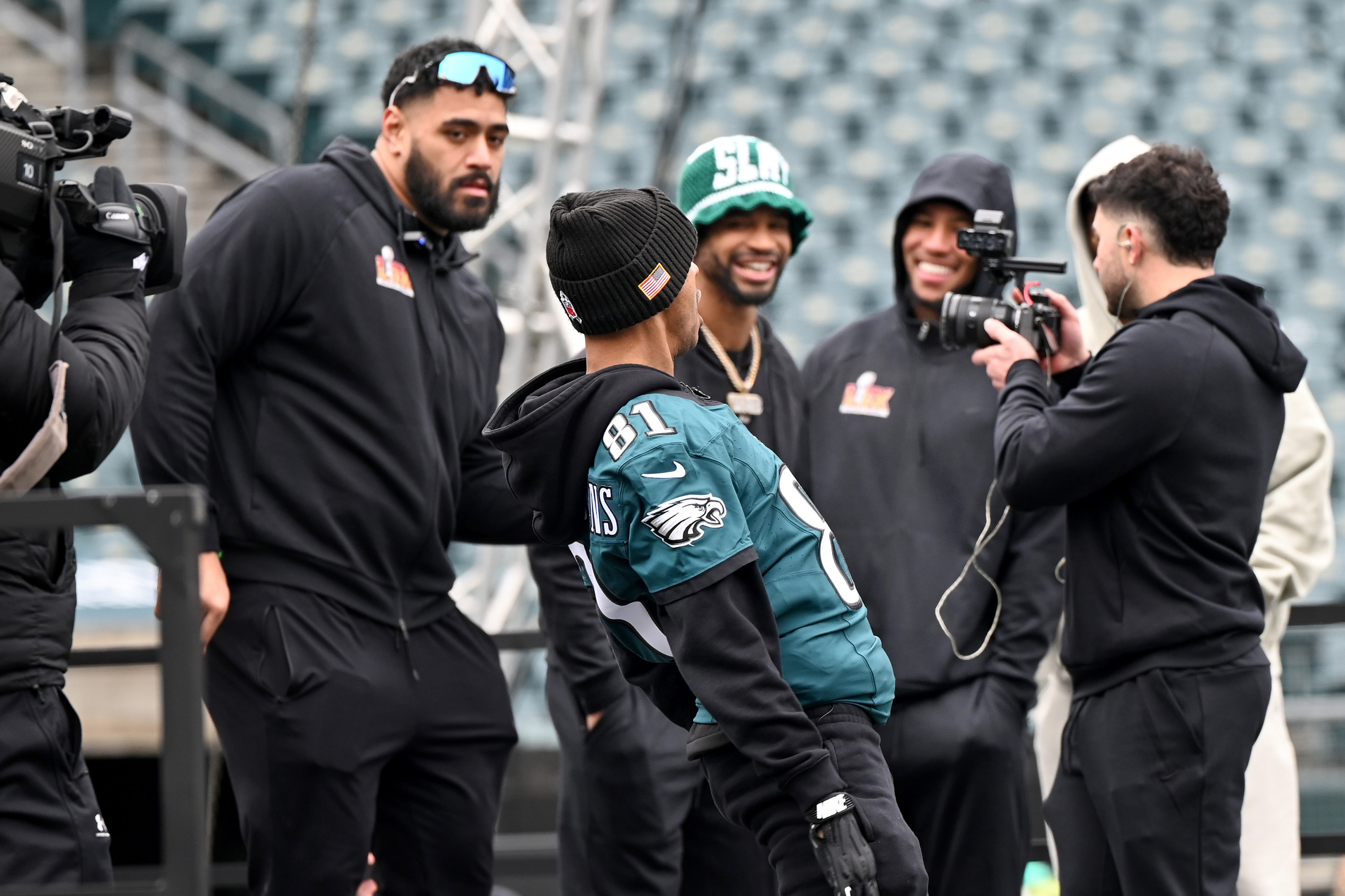
    Nasir “Gillie da King” Fard is back for the 2026-27 Eagles season with a new pregame Instagram dance, and it’s giving uptown funk.

    Perhaps the new kickoff song is a nod to Gillie’s proud North Philly roots.

    The two-step Philadelphia Eagles love fest is definitely a soul-filled shout-out to Mark Ronson and Bruno Mars’ 2014 hit “Uptown Funk,” complete with the fancy footwork, twists, turns, and the shoulder shimmies Eagles fans have come to expect.

    Gillie begins the two-minute video — with almost 40,000 likes before Sunday’s game even started — with his signature bravado.

    “Rain, sleet, or snow, the Eagles train to go,” Gillie begins, wearing his trademark colossal Noggin Boss hat in black and a Brian Dawkins No. 20 jersey in classic midnight green.

    Then, using a flurry of colorful language, Gillie promises the Eagles will dominate the Birds’ Week 2 foes: the Tennessee Titans.

    “This ain’t no movie,” Gillie says, in a playful reference to the 2000 film starring Denzel Washington. Then his message turns humorously dark. “This is dismember the Titans.”

    Ouch.

    And just like that, Gillie proceeds to get his dance on, a mashup of moves from the ’70s, ’80s, ’90s, and 2000s. He starts off with a little bit of John Travolta in Saturday Night Fever and mixes in a few Michael Jackson “Thriller” shoulder shrugs. It’s clear Gillie means business.

    After, the steps get current: a more dramatic version of Gillie’s favorite Little Duval dance from his 2018 hit, “Smile,” with extra shoulder oomph. Another of his favorites in the video is the Kodak Black.

    Just like the previous two years of Gillie’s viral pregame performances featuring 1986 old school grooves: Cameo’s “Candy” and Cheryl Lynn’s “Encore” in 2024 and 2025 respectively, this is a video you want to watch over and over again.

    So fun.

    Not to worry, an Eagles win still calls for an homage to Too Short’s 2006 earworm “Blow the Whistle,” featuring JoJo the Bird and Broom Man, excited to sweep up the competition.

    In the last two years, the videos have become so popular, celebrities like Patti LaBelle, Meek Mill, Jazmine Sullivan, and Kevin Hart have posted, reposted, and filmed themselves doing the Gillie Dance. Even actor Morris Chestnut, who turns out to be a diehard Eagles fan, has been in on the fun.

    The Birds have made it to the finals each year since Gillie’s dance became a part of the city’s pregame ritual. Gillie led the Eagles through the tunnel in the championship games.

    Go Birds!

  • Ukraine fires over 1,000 drones at Russia, including ‘largest ever’ attack on Moscow

    Ukraine fires over 1,000 drones at Russia, including ‘largest ever’ attack on Moscow

    Ukrainian forces fired more than 1,000 drones at Russia overnight, including hundreds that were launched toward Moscow, officials said Sunday, as the Kremlin was wrapping up the third and last day of its parliamentary elections.

    Moscow’s mayor described the wave of drones as the “largest ever” drone attack on the Russian capital and said there had been damage to the Moscow Oil Refinery, which is among several sites that supply the Russian capital, and a residential building.

    Across the wider Moscow region, the attack killed two people and wounded 20, local Gov. Andrei Vorobyov said. The dead were a 74-year-old man and a 44-year-old woman, he said.

    Writing on social media, Ukrainian President Volodymyr Zelensky said that Kyiv had used a range of missiles and drones in the attack — including Ukraine’s domestically made Flamingo and Pelican missiles — to hit oil and logistics facilities.

    “These are billions of dollars that sustain the war machine,” Zelensky said, referring to the financial pressure that Kyiv hopes to put on Russia’s economy.

    Ukraine also continued to fend off Russian attacks, Zelensky said. A Russian drone strike hit a monastery in Ukraine’s Kherson region Saturday, killing a member of the clergy and wounding four people, he said.

    A Russian attack on the Ukrainian capital also killed two children and their mother on Saturday evening, said Tymur Tkachenko, head of the Kyiv regional state administration. He later said that another child wounded in the same attack had died in hospital on Sunday.

    Russia votes in an election devoid of opposition

    The attack took place on the final day of Russia’s first wartime parliamentary election — balloting that has been virtually devoid of opposition to President Vladimir Putin’s policies and is all but certain to cement the Kremlin’s dominance.

    Russia was also holding the vote in the four Ukrainian regions that Moscow illegally annexed after the war began but still doesn’t fully control, and in Crimea, the Black Sea peninsula that was illegally annexed by Russia in 2014. Kyiv has denounced the action as illegal.

    In a Russian-occupied area of Ukraine’s Kherson region, a Ukrainian attack killed a member of the local electoral committee, Russia’s Central Election Commission said in a statement.

    Russia’s Ministry of Defense said Sunday that its forces shot down a total of 1,110 Ukrainian drones across Russia, as well as over the annexed Ukrainian peninsula of Crimea and the waters of the Black Sea.

    Moscow Mayor Sergei Sobyanin said that 450 drones had been destroyed en route to the Russian capital, and that the attack had damaged the Moscow Oil Refinery and a residential building.

    He said the “unprecedented attack” on Moscow was an attempt to disrupt the elections. “The enemy failed in this regard,” he said.

    Since Russia’s invasion more than four years ago, Ukraine has become a global leader in military drone technology, deploying domestically produced long-range drones alongside missiles for strikes deep inside Russia. Its drone technology has impressed governments and defense manufacturers around the world.

    Kyiv is aiming to make the Russian public feel the war’s consequences and pressure Russian President Vladimir Putin into negotiating a peace settlement. Putin has so far shown no signs he intends to stop the invasion.

    Instead, Moscow and Kyiv have been drawn into an escalating duel of long-range aerial strikes as fighting along the roughly 780-mile front line in eastern and southern Ukraine has slowed, restricted by large numbers of drones and ground robots threatening troop movements.

  • Hackers who broke into OpenAI warn the AI industry has a security problem

    Hackers who broke into OpenAI warn the AI industry has a security problem

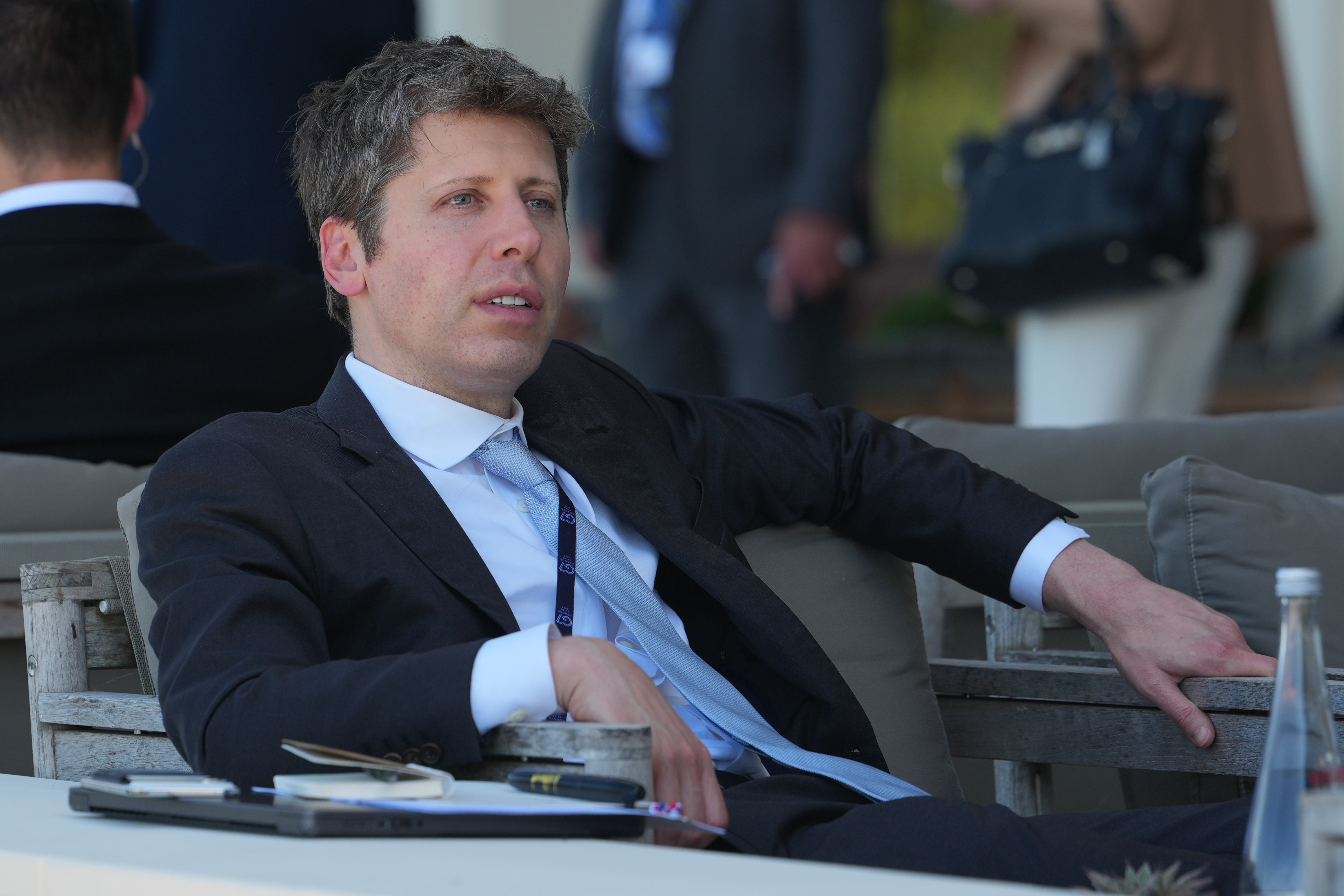
    SAN FRANCISCO — Cybersecurity researchers who broke into ChatGPT maker OpenAI this summer say the artificial intelligence industry is unprepared for the security risks created by the growing power of its own technology.

    Researchers from computer security startup Hacktron got inside the company’s systems with help from the Claude chatbot made by OpenAI’s primary rival, Anthropic. After first targeting a public-facing messaging board, they were able to access OpenAI’s private systems, including some of the AI company’s internal code, according to posts on X late Thursday by Hacktron describing the campaign.

    OpenAI patched the problem and paid the hackers $6,500 for reporting the vulnerability. But the episode, along with incidents in which AI models accessed the internet undetected and attacked other companies, has drawn criticism from cybersecurity experts. They warn that the effort deployed by AI developers to protect their systems doesn’t match the immense power they claim their technology to have.

    Mohan Pedhapati, one of the Hacktron researchers who broke into OpenAI, said the company’s use of conventional business software such as Slack, consumer-grade internet browsers, and other apps that are accessible through the public internet makes it vulnerable to a potential attack.

    “If the people building these systems truly believe they are powerful enough to create nuclear-level risks, and they are talking about slowing down because of those risks, why is that work … done through ordinary SAAS products,” Pedhapati said early on Saturday in a post on X, using an industry term for cloud software.

    OpenAI chief executive Sam Altman recently joined calls from other leaders in the field to slow the pace of AI development, out of concern that its capabilities are outstripping the industry’s ability to control the technology.

    “We thank the researchers for contacting us and sharing their findings,” an OpenAI spokesperson said in a statement, which also said the company had tightened its security measures. (The Washington Post has a content partnership with OpenAI.)

    Frank Cilluffo, director of the McCrary Institute for Cyber and Critical Infrastructure Security at Auburn University, said the ability of a small team of researchers to carry out a hack — at what they said was the cost of $3,000 paid for using Anthropic’s systems — should be considered a “warning shot.”

    “If three responsible researchers armed with commercial AI tools could achieve this level of access in days, we have to assume well-resourced foreign intelligence services are pursuing the same targets continuously and certainly never tipping off the target about what they did and how,” Cilluffo said.

    National security experts have long warned that American AI companies should expect to be targeted by hackers backed by foreign governments eager to cut into the United States’ lead in the technology. China has a history of seeking to steal U.S. technological secrets.

    Calls for an AI slowdown have prompted lawmakers in both major parties to say the industry should be subject to more government oversight. President Donald Trump has firmly rejected such proposals, saying the industry must race forward to stay ahead of China.

    The Hacktron breach of OpenAI, which used the security prowess of Anthropic’s chatbot Claude, comes after months of debate in the tech industry and Trump administration about how to respond to the growing power of AI models to identify security holes in software. Although OpenAI and Anthropic have restricted who can access the full cybersecurity skills of their chatbots, Chinese firms release free AI models that now have potent hacking capabilities available to anyone.

    In July, OpenAI said some of its own AI agents had broken out of the company’s computer systems during internal tests, accessed the public internet, and hacked into another AI company.

    The incident triggered criticism from some cybersecurity experts, who said the company could have done more to make sure its AI couldn’t break out of its networks. OpenAI hired outside AI researchers to study why its agents escaped, but the investigation did not include a traditional independent cybersecurity postmortem.

    The Hacktron hack of OpenAI happened around the same time as the incident involving the AI agents. Soon after, OpenAI redirected a substantial amount of engineering resources toward improving its security, OpenAI President Greg Brockman said in a podcast interview with venture firm Andreessen Horowitz released this week.

    “We took 25% of our production engineers and said, ‘Sorry, all your projects are on hold. You are now defending,’” Brockman said. “We found a number of serious issues, and we fixed them.”

    Hacktron’s researchers criticized how OpenAI responded when they notified the company they had found a way into their systems.

    Like many major companies, OpenAI openly encourages security researchers to report vulnerabilities. Fabian Faessler, Hacktron’s head of agent engineering, said in a post on X early on Saturday that OpenAI’s chief information security officer, Dane Stuckey, had called the researchers unprofessional and that Faessler had expected a more welcoming response from the company.

    Dan Wallach, an AI security resident at the research organization Rand, said OpenAI was fortunate that the vulnerability was discovered by researchers who came forward and shared what they found.

    “As a general rule it’s not polite to do what they did, but I would think that OpenAI should be pleased that the attacker was nice enough to tell them,” Wallach said.

    OpenAI’s Stuckey reached out to apologize after Faessler posted his X thread, Faessler said in a later post.

  • Eagles running back Saquon Barkley exits Titans game with injury, returns in second half; Dallas Goedert injures knee

    Eagles running back Saquon Barkley exits Titans game with injury, returns in second half; Dallas Goedert injures knee

    NASHVILLE — Saquon Barkley suffered a stinger on the opening offensive play for the Eagles and missed the rest of the first half before returning for the first series of the second half.

    Barkley only played a few snaps before again leaving. He did not return.

    Barkley was stuffed by Titans defensive tackle Jeffery Simmons on a running play that went up the middle for no gain. The running back was slow to get up and appeared to be favoring his left arm.

    After spending several minutes in the medical tent, Barkley then jogged off the field and later returned to the sideline after the first quarter. He appeared to be wearing a neck roll.

    The Eagles’ first drive ended with a Jalen Hurts interception in the end zone on the 15th play. Amani Hooker returned the ball 92 yards, setting up a short field for Tennessee, which took advantage and grabbed an early 7-0 lead.

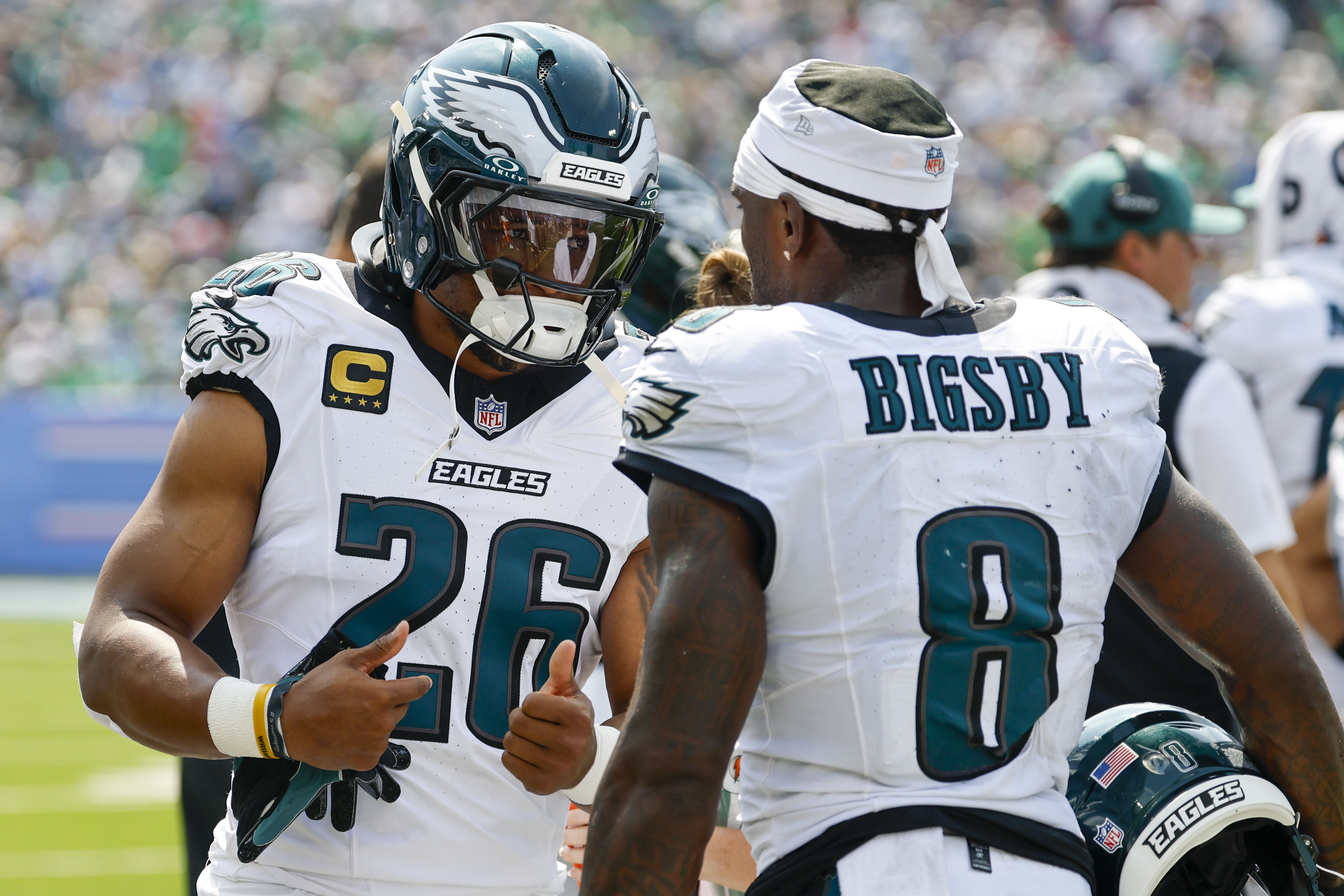
    With Barkley sidelined, the Eagles had Tank Bigsby and Will Shipley at running back. Bigsby’s 2-yard touchdown knotted the score at 7-7 early in the second quarter.

    Barkley declined to be interviewed after the game but said “I’m all right. We’ll know more later in the week.”

    One play before Bigsby’s touchdown, Eagles tight end Dallas Goedert was banged up. He had a brief stay in the medical tent before returning to the bench. The Eagles said he was questionable to return with a knee injury, and he was without a helmet on the sideline as the second half began.

  • Trump and sons invest heavily in AI economy as he resists calls for slowdown

    Trump and sons invest heavily in AI economy as he resists calls for slowdown

    President Donald Trump’s sprawling family business empire has become increasingly intertwined with the boom in artificial intelligence, at the same time that he has resisted calls to slow the development of the technology, a Washington Post analysis of his financial disclosures and corporate announcements found.

    Several factors play into Trump’s push for rapid AI development: He has surrounded himself with technology executives and investors who have advocated for the government to accelerate AI development, including venture capitalist David Sacks, Nvidia chief executive Jensen Huang, and Meta chief executive Mark Zuckerberg. The president fears ceding an economic and technological advantage to China. And he has celebrated the stock market’s record highs, which are heavily tied to the performance of AI-related firms.

    But Trump also has a personal financial stake in industries benefiting from the AI build-out, creating potential conflicts of interest as his administration makes decisions that could affect the value of those investments. Unlike his recent predecessors, Trump has not placed his assets in a blind trust, and he has continued to buy and sell stocks while in office.

    “No president since we’ve had this regime of conflict-of-interest statutes has ever conducted their finances this way,” said Don Fox, a former acting director of the Office of Government Ethics in the Obama administration. “His predecessors in the post-Watergate era wanted the American people — whether they agreed with them or not — to believe the president was doing what was in the best interest of his country.”

    White House spokesperson Davis Ingle said in a statement that there are “no conflicts of interest.” Trump’s investments are “made entirely by independent managers,” he said.

    “All holdings are maintained in discretionary accounts and invested through computer-based model portfolios that automatically replicate recognized indexes, such as the Schwab 1000,” Ingle said in a statement. “Neither President Trump nor any member of his family has any ability to direct, influence, or provide input regarding how the portfolio is invested or when investments are bought or sold.”

    The Trump family’s expanding web of investments illustrates how Trump’s personal wealth and his family’s increasingly technology-focused ventures overlap with one of the most consequential policy debates confronting his administration: how aggressively the government should respond to rapid advances in artificial intelligence.

    Trump’s investment accounts have disclosed nearly 30,000 securities transactions since he returned to the White House, including many purchases and sales of shares in companies supplying the chips, servers, and energy infrastructure underpinning the AI boom.

    Trump has purchased shares in companies including Dell Technologies, Micron Technology, and GE Vernova, government filings show. Those companies’ profits are tied to the enormous spending on computing and electricity infrastructure needed to develop and operate advanced AI systems.

    On Monday, shares of all three companies fell amid a broader sell-off in AI-related stocks after prominent technology leaders warned about the risks of racing ahead with increasingly powerful AI systems.

    It is not known whether Trump still owns the shares he bought in any of those companies since he does not have to disclose trades in real time. He has also disclosed buying technology stocks whose share prices went up Monday.

    At the same time, businesses controlled by or tied to Trump’s family are striking deals that would give them greater exposure to the AI economy. Trump Media & Technology Group, the parent company of Truth Social, has announced a merger with a nuclear fusion company that plans to develop power plants as electricity demand surges, in large part because of the rapid expansion of AI data centers.

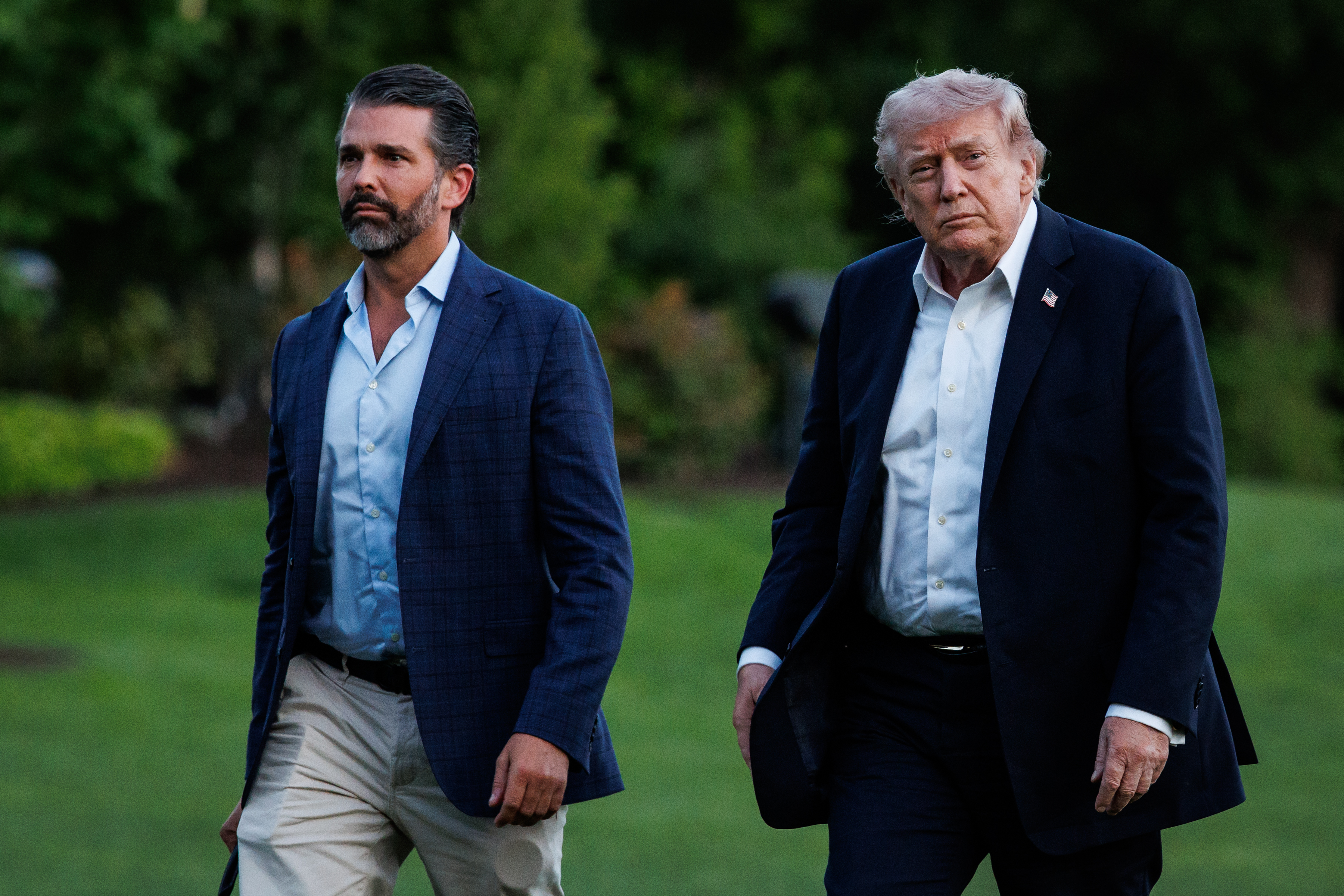
    Trump’s sons Donald Trump Jr. and Eric Trump are investors in a number of AI and data center ventures, primarily through the investment firms 1789 Capital and American Ventures. Trump Jr. is a partner at 1789 Capital, a Florida-based venture capital firm that announced it had closed a $1.2 billion fund that will focus on real estate ventures, including deals aimed at digital infrastructure like data centers.

    In a statement, a 1789 spokesperson said Donald Trump Jr. was operating as a private citizen and not in a government capacity.

    A growing number of lawmakers, researchers, and technology executives have called for safeguards around increasingly powerful AI systems, with those calls mounting after Anthropic CEO Dario Amodei, OpenAI CEO Sam Altman, and xAI founder Elon Musk warned that the pace of AI development could outstrip the ability of leading labs to control the technology.

    (The Post has a content partnership with OpenAI, which makes ChatGPT.)

    Trump recently offered a number of responses to concerns about out-of-control AI. Days ago, he posted that the only necessary guardrail for AI was “a STRONG AND SMART (High IQ!) PRESIDENT.” On Saturday in a Truth Social post, Trump suggested policing ”BAD” aspects of the industry through enforcement of existing laws and a new, scantily described “AI Force.”

    The clash comes as AI is emerging as a political issue ahead of the midterm elections. Multiple polls show a majority of Americans are concerned about the pace of AI development and opposed to the construction of data centers.

    Trump’s stock holdings

    The past volatile week in the stock market illustrated how Trump’s wealth could be affected by AI news developments that he has influence over.

    After some prominent AI industry leaders spent the weekend advocating for slowing AI advancements over their fears of an AI doomsday, technology stocks dropped sharply Monday even as Trump spent the day ridiculing AI fears as a “hoax.”

    Investors, worried that an AI slowdown could hit profits of AI-related companies, sold off stocks of many companies connected to the mammoth, trillion-dollar construction of AI data centers across the country.

    Trump’s financial disclosures this year show that he had bought stock of several of the losers in Monday’s stock market decline, including computer chipmakers Broadcom and Texas Instruments and the data center equipment companies Credo Technology and Super Micro Computer.

    Trump has attributed his income of more than $2 billion in 2025 to the highs in financial markets.

    “You know why I’m profiting, because the stock market’s going up,” Trump told reporters in July after his financial disclosures were released. “Everybody’s profiting. … Thank you, President Trump.”

    U.S. stocks have been on a tear for most of the four years since the public launch of ChatGPT kicked off an AI surge. Stocks related to AI are responsible for about two-thirds of the increase in the S&P 500 index this year, according to calculations by Matt Orton, chief market strategist at the investment firm Raymond James Investment Management.

    The AI-related market gains have made wealthier, stock-owning Americans richer and spurred them to spend more money, which has boosted overall U.S. economic growth, economists say.

    Trump’s family businesses

    Since Trump’s first term, his family businesses have evolved from real estate and reality TV to encompass a wide range of technologies at the center of Washington’s regulatory debate.

    As Trump Media and Technology Group (TMTG) prepares for its merger with the nuclear fusion company TAE Technologies, its subsidiary Truth Social is also investing in AI-related products.

    TMTG interim CEO Kevin McGurn told CNBC in August that it was going into the “AI world” by licensing access to Truth Social posts to AI labs. AI companies are eager to vacuum up social media posts so they can feed them into AI algorithms in an effort to train those models to mimic human speech patterns.

    TMTG would provide data through TruthAPI, the controversial tool that provides companies and investors with access to posts from the president and others. The tool allows investors to access the president’s announcements more quickly than the general public, inviting legal and ethical concerns.

    Truth Social has also rolled out a search tool powered by “answer engine” Perplexity. The tool provides answers to questions based on Trump-friendly media sources, such as Fox News and Newsmax, but the Post previously found that it nonetheless frequently contradicts Trump.

    TMTG did not respond to a request for comment.

    Much of Trump’s income increasingly comes from cryptocurrency-related ventures. Last year he made more than $500 million from World Liberty Financial, a crypto company that Trump founded in 2024 alongside his sons and the sons of Steve Witkoff, Trump’s special envoy to the Middle East.

    World Liberty Financial has collaborated with WorldClaw, a Hong Kong-based business that provides access to a suite of AI models. Customers are able to pay for access using USD1, World Liberty Financial’s token. WorldClaw offers access to models made by Chinese companies that the U.S. government has flagged for national security concerns, Reuters reported.

    World Liberty Financial also sold a large stake to investors tied to the United Arab Emirates just before Trump’s inauguration. Sheikh Tahnoon bin Zayed al-Nahyan, the UAE’s national security adviser and chairperson of the UAE-based AI company G42, was involved in the purchase.

    “World Liberty does not control WorldClaw’s product decisions, including which AI models it makes available. WorldClaw is not accessible to users in the United States,” David Wachsman, a spokesperson for World Liberty, wrote in an email.

    The company did not respond to the question of whether the Trump family’s stake posed a conflict of interest but, instead, noted that WorldClaw competed with a similar product operated by Amazon, whose founder, Jeff Bezos, owns the Post.

    Trump’s sons’ interests

    Eric Trump and Donald Trump Jr. are involved in firms that have invested in a broad array of AI-related companies, according to news and data from PitchBook, a venture capital research database.

    Within days of Donald Trump’s 2024 election win, Donald Trump Jr. announced he was becoming a partner at 1789 Capital, which bills itself as “funding the next generation of American exceptionalism.” Since Trump returned to office, the firm has made many investments in companies related to AI and the infrastructure underpinning the technology, including Cerebras Systems, Perplexity, and Musk’s xAI, which later merged with SpaceX.

    Eric Trump invests through American Ventures, a branch of a boutique investment bank called Dominari Holdings, the Post previously reported. He is an investor in companies operating in defense and robotics, including Space-Eyes, a company that uses AI to process streams of data from satellites and other sensors.

    A month after their father returned to the White House, Trump Jr. and Eric Trump also launched an initiative called American Data Centers, which was intended to support the build-out of AI infrastructure. That company then merged with American Bitcoin, a digital asset mining operation majority-owned by Hut 8, a crypto infrastructure company. Hut 8 is developing Beacon Point, a massive data center project in Texas.

    Dominari Holdings did not respond to requests for comment.

  • Eagles’ silence on their role in the Macklemore mess has become deafening

    Eagles’ silence on their role in the Macklemore mess has become deafening

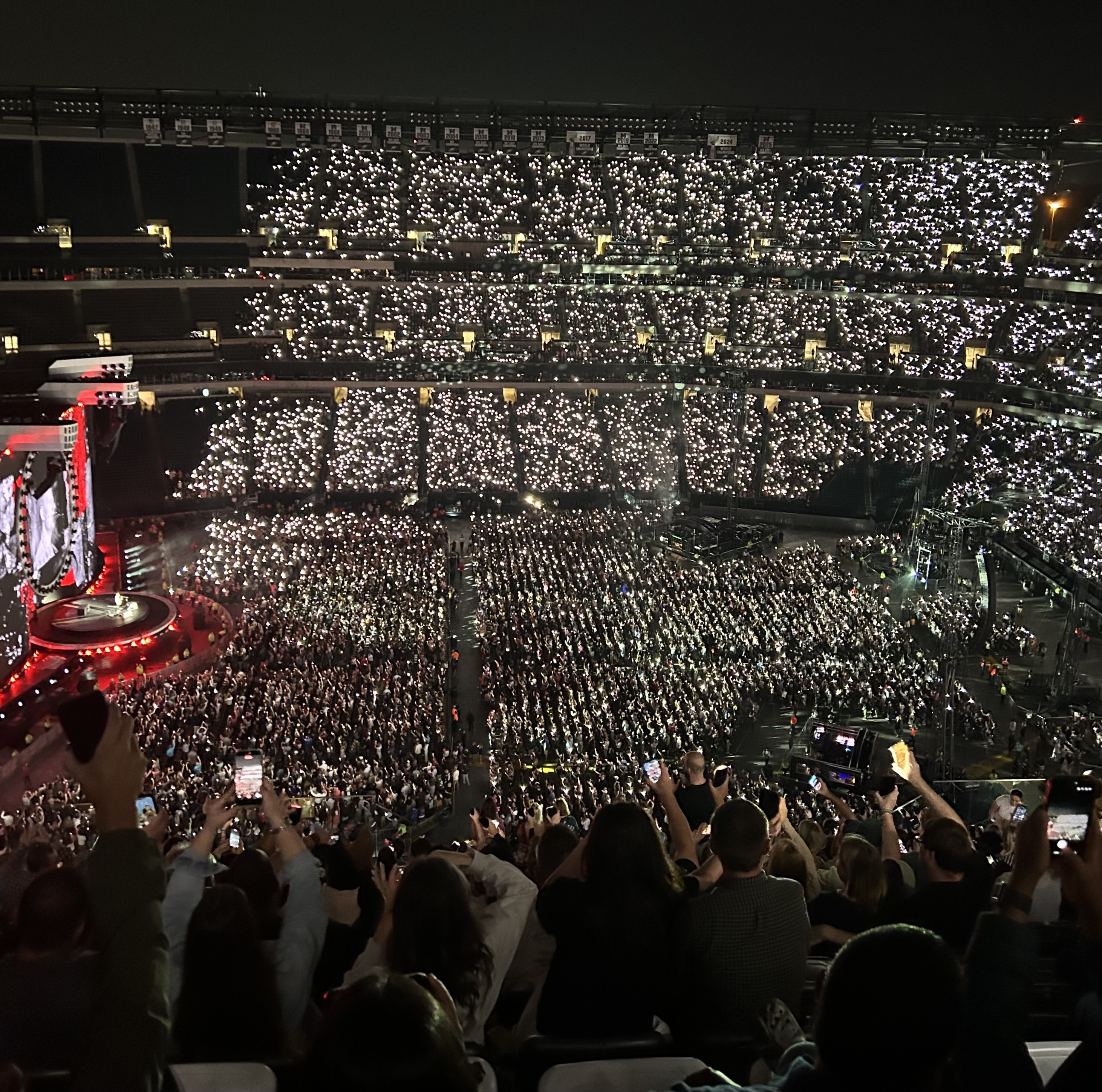
    Ed Sheeran walked onto a big stage at Lincoln Financial Field Saturday night with nothing but his guitar to support him. Surrounded by tens of thousands of fans, a massive global pop star may have never felt so all alone.

    Sheeran knew he couldn’t hit his first note without addressing everything that had happened in the last few days: the dropping of hip-hop’s Macklemore from his U.S. football stadium tour after onstage comments supporting a free Palestine riled one team owner, and the massive backlash that had turned a pop festival into a solo gig.

    That’s how an artist who’s sold more than 200 million records and became one of Time’s 100 most influential people in the world by mostly avoiding politics could no longer avoid politics. He condemned both the Oct. 7, 2023, attack on Israel by Hamas and Israel’s deadly three-year response in Gaza, which he called “catastrophic and unjustifiable and disproportionate” — essentially the same sentiment that got Macklemore canceled.

    That will be the headline in most news articles, but as I watched the viral video Saturday night, I was wondering if Sheeran would tackle the other elephant in the room. He did.

    “I am deeply worried about the idea that venues should preapprove content for performers,” Sheeran proclaimed in his native Yorkshire accent. “This happens in so many places around the world, but it should never happen in the free world.”

    The performer’s words drew a big whoop from the assembled multitude who showed up despite a week of controversy that had seen Sheeran’s backing band and all his opening acts quit in protest over Macklemore’s ouster while online ticket prices tumbled.

    But just a couple blocks away at the headquarters of the Philadelphia Eagles, the only sound Saturday was crickets chirping.

    The main antagonist that triggered the dropping of Macklemore was indisputably New England Patriots owner and Donald Trump pal Robert Kraft, who called it “hate speech” when Macklemore donned a keffiyeh, shouted “Free Palestine!” and performed his song “Hind’s Hall” about 2024’s pro-Palestinian campus protesters at New Jersey’s MetLife Stadium earlier this month. Kraft moved to block Macklemore from performing at the Patriots’ Gillette Stadium, and reportedly rallied other NFL stadium operators to lean on Sheeran’s tour operator.

    But while the Eagles and their longtime owner Jeffrey Lurie weren’t lead actors in this drama, the operators of the city of Philadelphia-owned Linc are said to have played a critical supporting role.

    The Wall Street Journal and other outlets identified Lurie as one of a gaggle of owners who agreed with Kraft and supported throwing a crackback block on Macklemore. Lurie, who has seen his $185 million 1994 purchase of the Birds skyrocket to a value of more than $10 billion, was identified by the Journal as part of a group that also included Arthur Blank of the Atlanta Falcons and David Tepper of the Carolina Panthers, who agreed to support the rapper’s cancellation.

    The Eagles’ reported involvement in this story troubled me for two reasons. One, of course, was the action itself. Sheeran — whatever else you think about how he handled this mess — was 100% right when he declared this “never should happen in the free world.” But even worse, it happened in what should be a planetary mecca for free expression — Philadelphia, the city where the Declaration of Independence was written and ratified exactly 250 years ago.

    But honestly, I found it even more disturbing that neither Lurie nor anyone from the Eagles organization feels they owe any explanation at all to the city, let alone thousands of people who drained their bank accounts for a concert that was nothing like it had been advertised. To be sure, there’s no harder dialogue in the world than the conflict in the Middle East, but the Birds committed two penalties against open expression — one of alleged censorship, and one of their own public silence.

    On Thursday, I texted Bob Lange, the Eagles’ senior vice president for communications, with questions about Lurie’s reported role in collaborating with Kraft and for a clarification on what their policies are around free speech at football games, concerts, and other events that take place at the stadium they operate.

    “If we have anything to share, we will let you know,” Lange responded.

    Three days later, I am still staring at the pale glare of my iPhone here in my darkened column-writing lair, wondering if I can get up to at least make some toast, lest I miss the Birds’ response. OK, that was a joke. I didn’t really expect the Eagles to explain their involvement, at least not voluntarily.

    We’ve come to expect this in 2026 — whether it’s government officials signing nondisclosure agreements with companies building hideous data centers, or police chiefs making secret deals with U.S. Immigration and Customs Enforcement (ICE) and telling public dissenters they are sick of “listening to this crap,” or all-powerful Fortune 500 corporations channeling the spirit of the Irish Republican Army: “Say nothing.”

    The public’s right to know is probably a hilarious joke these days behind the locked doors of city council executive sessions and penthouse corporate boardrooms.

    Thousands gathered at Lincoln Financial Field for Ed Sheeran’s “Loop Tour” on Saturday.Earl Hopkins

    But let’s be clear: Lincoln Financial Field is a public edifice, full stop. We, as city and state taxpayers, contributed $188 million to build the Linc back in 2003, and the city owns the stadium, leasing it to the Eagles for them to host and profit from games and concerts. The team should be compelled to explain why it’s not a violation of the First Amendment to bar a performing artist from presenting a legitimate political viewpoint here. The Birds’ silence on this is a deafening roar.

    Maybe they’re channeling the spirit of the late, great Chuck Bednarik, but the Eagles are a two-way player when it comes to the question of whether they are a cherished public good in Philadelphia, or just another unaccountable multibillion-dollar corporation.

    The team certainly implied that it’s a civic institution with its most famous ad campaign — “One Team, One City, One Dream,” rolled out as the Birds drove toward the Super Bowl in 2004-2005, its second year at the Linc. The Eagles, their in-house PR machine, and a vast network of friendly influencers and websites produce a massive flow of information, but it’s a one-way street. The Macklemore debacle suggests an organization that wants all the benefits that flow from being a public institution but none of the responsibilities.

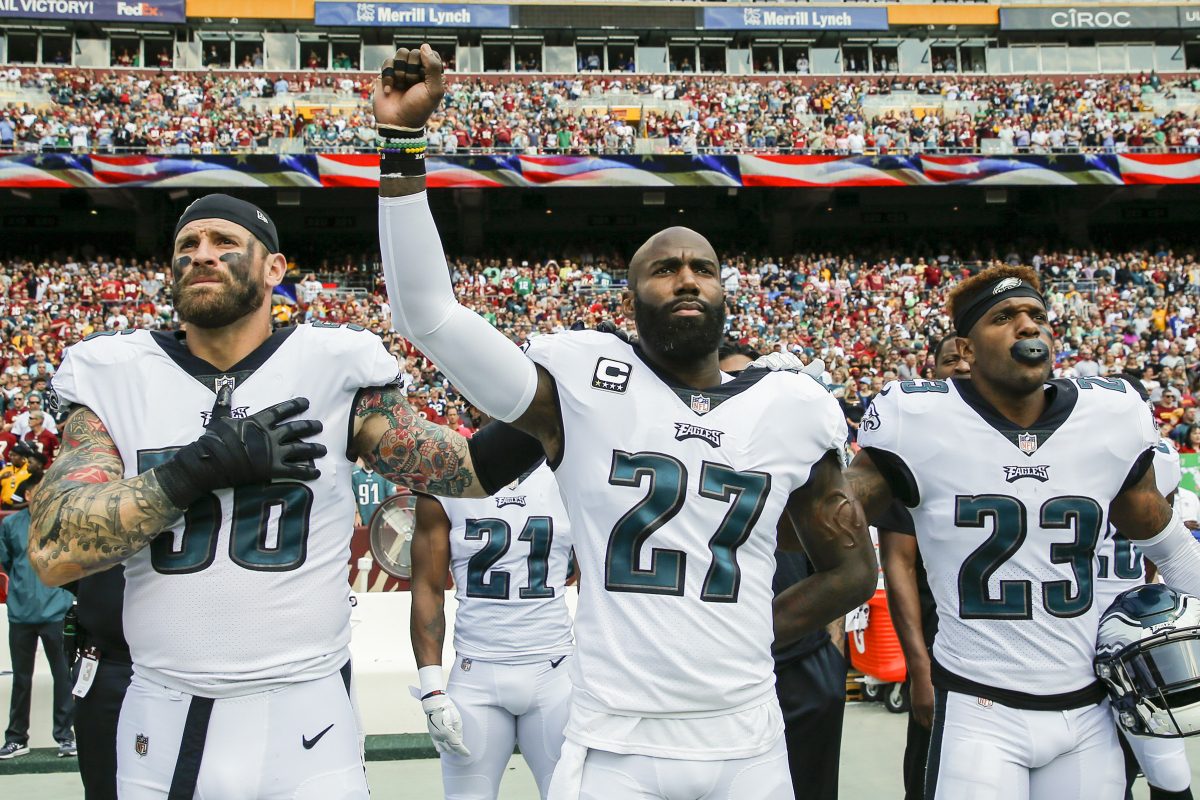
    Yet, the concert controversy also felt jarring here in Philly because for most of the last decade the Eagles have earned a reputation as one of the better franchises in the NFL for free expression — an admittedly low bar in the Colin Kaepernick era. On their way to a championship during the 2017 season, Lurie and the front office supported All-Pro safety Malcolm Jenkins and others who raised fists and locked arms during “The Star-Spangled Banner” to protest racial injustice.

    Eagles strong safety Malcolm Jenkins raises his fist with teammate defensive end Chris Long (left) and free safety Rodney McLeod during the national anthem before they played the Washington Redskins in September 2017 in Landover, Md.YONG KIM / Staff Photographer

    Right before the Super Bowl in 2018, the Nation’s sportswriter Dave Zirin made “The Progressive Case for the Philadelphia Eagles (Seriously).” Yet the reality is that the Eagles have supported free expression when it supports their incessant branding operation.

    But the essence of free speech is to allow its most wildly imperfect avatars. None more so than Macklemore, who was guilty of either antisemitism or remarkable ignorance when he donned a bearded, hook-nosed mask at a 2014 concert. That appears to be an isolated instance for which he has since apologized. The views Kraft described as “hate speech” — criticizing the military actions of Israel’s right-wing government in Gaza and backing Palestinian liberation and the right of U.S. students to hold demonstrations to express their feelings — are supported by a majority of Americans.

    Not that popularity matters when it comes to principle.

    And most people, myself included, don’t have a problem when the team bans any and all political expressions in the stands during a game, since banners or noisy protests would mar the experience fans paid to see. And it’s worth noting the Eagles’ best-known enforcement of this, involving a certain South Jersey politico, happened when they barred him from waving a pro-Israel flag.

    Political expression by performing artists is very different. From blasting the cops on Sunset Strip to fighting the powers that be, protest is the essence of every musical genre from rock to hip-hop to country, and the Eagles have made millions of dollars in concert fees off of that.

    Of course, Kraft’s ham-handed cancellation of Macklemore that infected the Eagles wasn’t just a personal foul against free speech, but wildly counterproductive. It triggered a boisterous pre-concert protest outside the Linc, forced Sheeran to denounce Israel’s actions in Gaza, and prompted an outpouring of support for Palestine from the likes of rocker Dave Matthews, who waved a “STOP GENOCIDE” placard at his concert stops.

    If the Streisand effect means amplifying a rumor by denying it, then spreading a protest by trying to crush it needs to be called the Kraft effect.

    In addition to censorship and secrecy, another hallmark of the 2020s is insanely profitable sports franchises demanding new stadiums when their current home would be barely old enough to drink. The Eagles recently announced they’re exploring the possibility of a new stadium when their lease expires in 2032 — even though the Linc was considered state-of-the-art when it opened just 23 years ago — and politicians like Gov. Josh Shapiro are already working to make sure the team stays in Philadelphia.

    Imagine if some of our political leaders got a spine transplant and — instead of throwing incentives at the Eagles like they were Mardi Gras beads — demanded a free speech policy that would ensure something like the Macklemore debacle never happens again. If the Birds want to build a $2 billion censorship palace, they can spend their own money.

    But they shouldn’t do that. Instead, the Eagles need to embrace the idea that you can’t have “One Team, One City, One Dream” without a multitude of voices.

  • Penn State receiver Koby Howard has a ‘conviction to be great’ — and it’s showing

    Penn State receiver Koby Howard has a ‘conviction to be great’ — and it’s showing

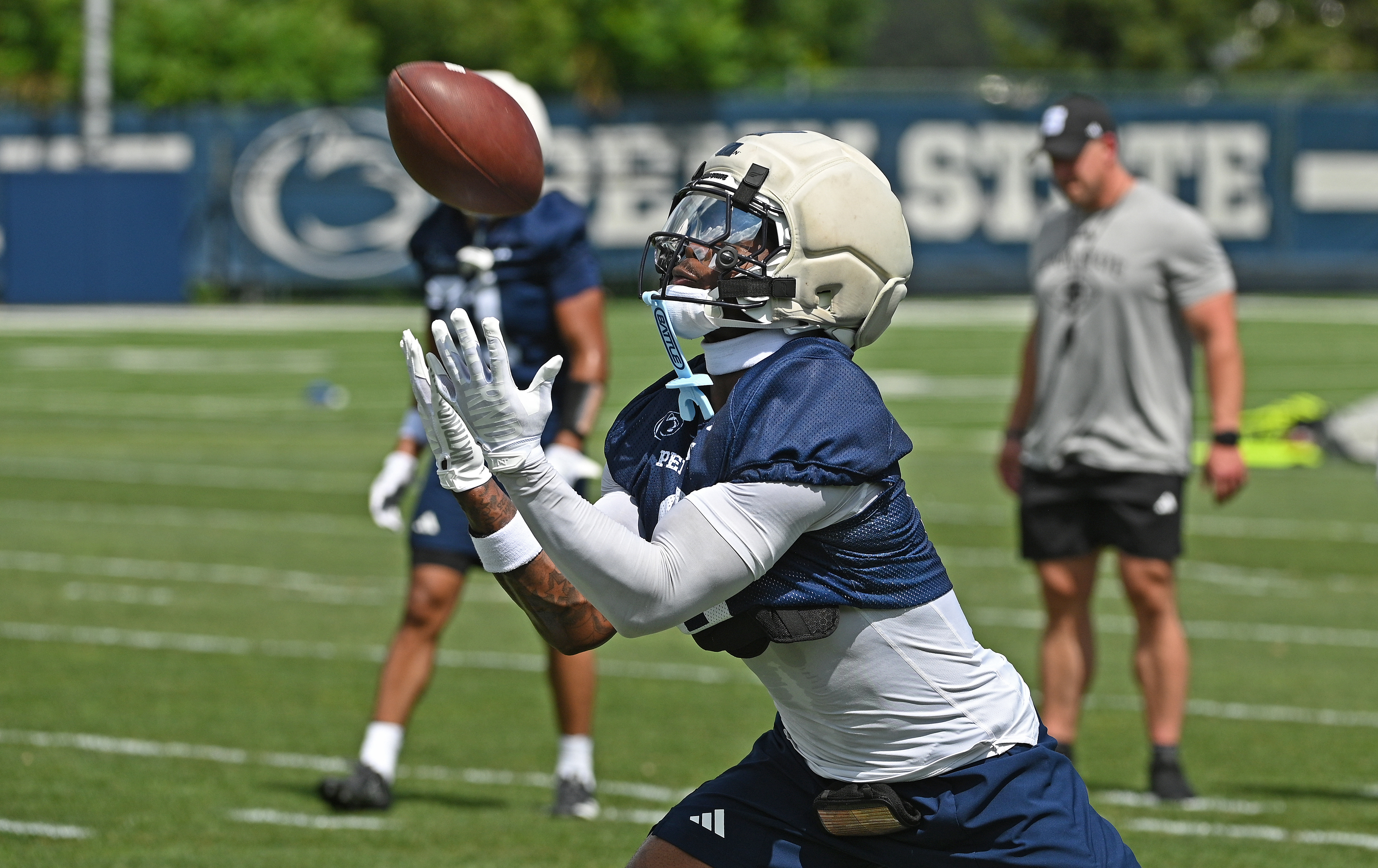
    Every morning, Koby Howard’s alarm goes off at 4:45 a.m. By 5:30 a.m., the sophomore wide receiver is at Penn State’s facility catching balls off of the JUGS machine.

    Howard follows that up with a workout, breakfast, and then practice. It’s been the same routine each day since the spring.

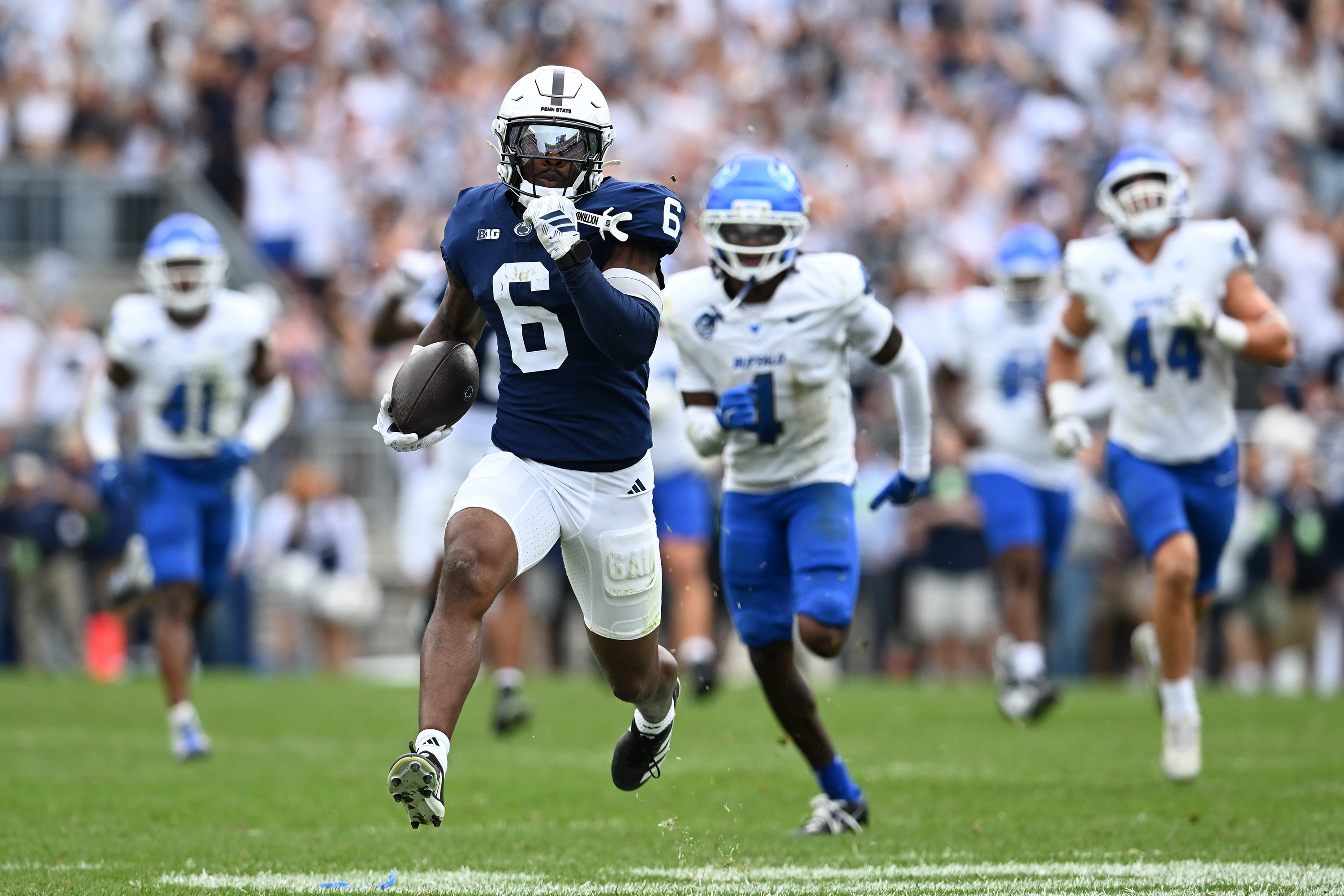
    And those early mornings of putting in extra work seem to be paying off for Howard, who continued his great start of the 2026 season with 135 total yards and two touchdowns in Penn State’s 55-13 win over Buffalo.

    “None of it surprises me because of how I’ve watched him,” said head coach Matt Campbell after Saturday’s game at Beaver Stadium. “He’ll be the first guy [Sunday] morning in the facility and probably beat three-fourths of the coaching staff, and he’s catching the JUGS, and he’s that kind of football player that has this conviction to be great.”

    Howard has 344 receiving yards and three total touchdowns through three games this season. He’s averaging 28.67 yards per catch and is on pace to break the Nittany Lions’ single-season receiving yards record, currently held by Allen Robinson, who had 1,432 yards in 2013.

    And all of this success is coming in just his second season as a collegiate wide receiver.

    Howard played in nine games last season, but had only 133 receiving yards across those appearances. He received praise from his teammates and coaches throughout the 2025 offseason, but still barely saw the field under James Franklin, even when things had gone sour for Penn State’s season.

    “We’re in a position right now where we don’t have plays and drives to just throw somebody out there and see how it goes,” Franklin said last October when asked about Howard. “We’ve got to get our best guys on the field. Every rep is like gold, every drive is like gold, and we’ve got to maximize that.”

    Penn State football wide receiver Koby Howard (6) catches a punt in practice.Craig Houtz / For The Inquirer

    Howard pushed himself in the offseason after the “learning moment” that was last season.

    “I feel like God put me through that to learn patience,” Howard said. “Everything isn’t going to go the way I planned, or I’m not going to get the ball all the time.”

    Part of the reason for Howard’s success this year is the relationship he developed with his quarterback. He and Rocco Becht went to California in the offseason to train and build chemistry. They also asked Campbell to share a room during fall camp to continue learning more about each other.

    So when Howard was lined up in the slot with less than three minutes remaining in the first half on Saturday, both Becht and Howard knew where the ball was going. The result was a 70-yard touchdown to put the Nittany Lions up 34-3.

    “I knew the ball was coming to me,” Howard said. “They ran like a Cover 2 look, and me and Rocco just got on the same page with it. We were able to connect on it.”

    Howard’s other touchdown of the day came when he was lined up at running back. Running back Carson Hansen took the snap and handed it off to Becht as he dished it to Howard, who ran 20 yards for the score.

    The sophomore wide receiver said he played running back during his little league days and didn’t think the coaching staff knew he could line up there until they tried it out.

    Howard’s glad he stayed at Penn State despite the coaching change, and his worth ethic is paying off.

    “If you put your mind to it and you work for it, you can do anything that you want to do,” Howard said. “I feel like that’s something that I’ve been trying to prove this year, trying to prove that I’m an explosive receiver.”

  • White Castle merch, a Malvern business park, and wheeled sleds: How USA Luge recruits the next generation in Pa.

    White Castle merch, a Malvern business park, and wheeled sleds: How USA Luge recruits the next generation in Pa.

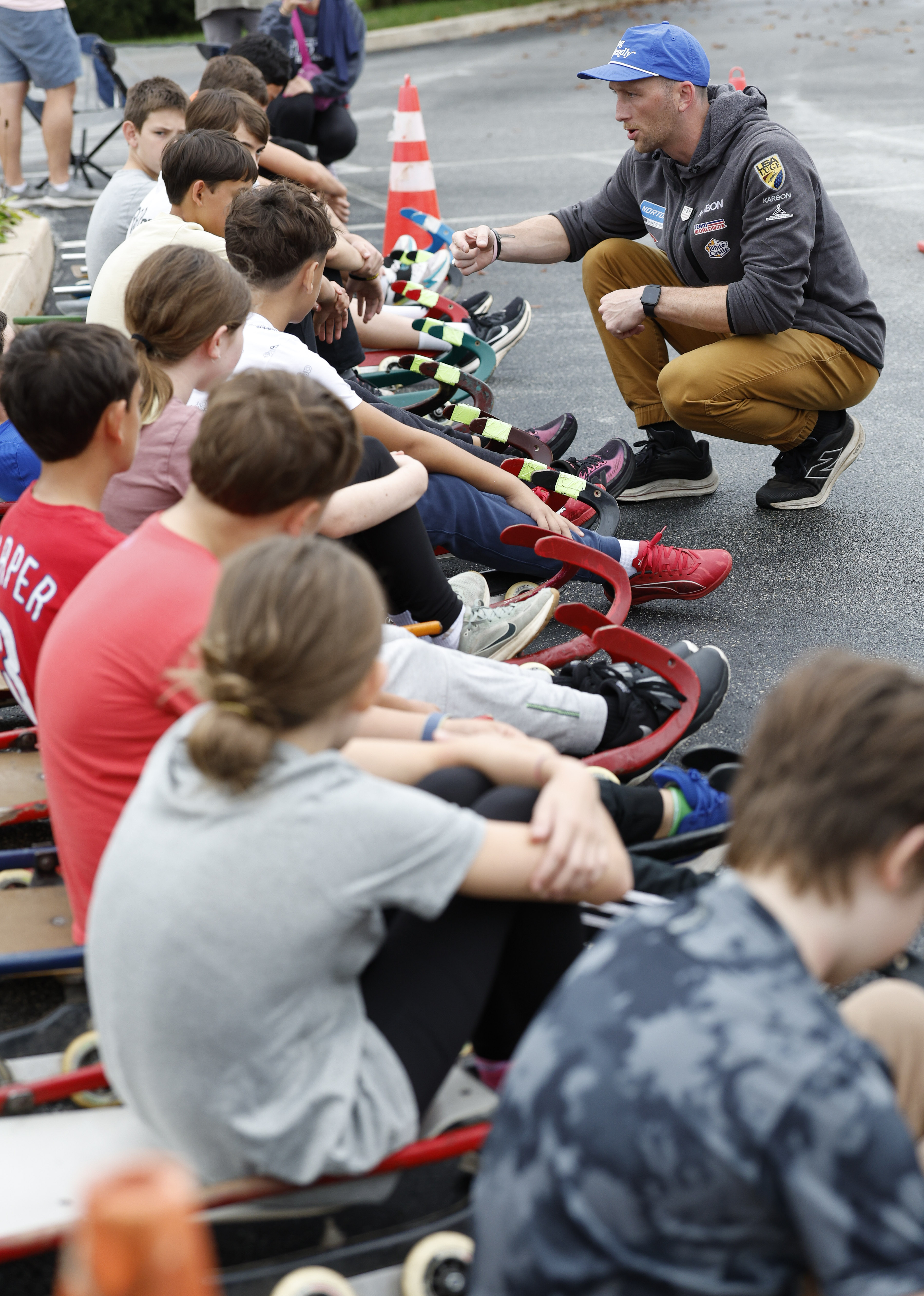
    The aspiring lugers maneuvered their way down the midsize slope of a Malvern business park, navigating around, through, or into orange traffic cones. They, timidly or tepidly, let gravity do the work — some with grace, others with a grimace.

    “Turn your head!” yelled coach Aidan Kelly. “Shoulders all the way back! Point your toes!”

    The squeal of sneakers skidding on asphalt accented his commands.

    This was the annual Slider Search, USA Luge’s multiday, multicity hunt for the next generation of athletes. On a recent weekend, the lugers gathered here were tweens, most of whom had little-to-no exposure to the niche winter sport. The sleds were summer-ized, equipped with wheels; and the track was an offshoot of the parking lot at Saint-Gobain North America headquarters. The weather was sticky and in the low 80s. The swag was sponsored by White Castle — the other home of sliders.

    Clinic coordinator Aidan Kelly talks to the kids during a clinic for luge hopefuls in Malvern on Sept. 13.Steven M. Falk / For The Inquirer

    The Slider Search

    The Slider Search gives kids ages 10 to 13 a mild taste of the sport, while the American luge federation gets up-and-coming talent. And the program has been an effective recruiting pipeline: At least 60% of every U.S. Olympic luge team since 2002 has gotten its start at a Slider Search, according to a news release.

    This year, as many as 650 kids were expected to participate in free Slider Search clinics from Massachusetts to Wisconsin, including 45 across two days in Malvern, organizers said. Of those, about 80 will be invited to screening camps at USA Luge’s headquarters in Lake Placid, N.Y., according to Kelly, who handles recruitment and coaches one of the youth national teams. Kelly, a 2014 Olympian, was also discovered through the Slider Search.

    “My mom just said, ‘Hey, do you want to go and try luge?’ and I said, ‘Why not, it seems cool,’” he recalled. “I liked going fast — I think anybody who wants to make their parents a little nervous would love to [try luge].”

    More than sledding or sliding

    These wannabe lugers didn’t quite reach the speeds of the pros, who can barrel down icy tracks as fast as baseball pitches, lying face-up on fiberglass boards attached to steel blades.

    Rather, they free-fell, first from halfway up the hill, then higher and higher, eventually graduating to a modest ramp. Fear — or maybe excitement — flashed across their faces as they launched. Some squinted, others bit their lips, as they concentrated on steering. Occasionally, one slider veered into a cone or off the course, using their sneaker treads to stop themselves.

    A clinic for luge hopefuls is held in Malvern on Sept. 13.Steven M. Falk / For The Inquirer

    “It’s a lot more than just sledding,” Leo Sides, 12, of Wayne, said afterward. “It’s more like your body helping the sled move rather than just going on the walls on moving.”

    “You go fast but … you feel really stable on the sled,” Leo added. “I think it’s really fun.”

    Sophia Bajak, 10, of Milford, N.J., first tried roller luge in Lake Placid. When asked why she wanted to try it again, she said, “I like speed.”

    Kelly wasn’t necessarily scouting out mastery of the physics or athletic prowess. Instead, he was looking for coachability, control, and comfort with adrenaline, and a real interest in the sport.

    There are only two Olympic-level luge tracks in the U.S., Lake Placid and Park City, Utah, but the Slider Search casts a wide geographic net, recruiting some kids who live a plane-ride away from the nearest training facility. But, in the luge world, a half-day’s travel radius from one of these sites is considered close, Kelly said.

    “To do luge in America is a big commitment,” he said.

    Kendall Achen understands that. The 17-year-old from Lancaster County made the Junior National Team’s roster this year, which means more training and travel to Europe for competitions. Kendall is a high school senior, and most of her classes are online, slotting schoolwork between practices and races. Her mom has the drive from Manheim to Lake Placid committed to memory.

    Kendall, who was also recruited through the Slider Search, has her eyes on Olympic ice.

    “I would like to go to the 2030 Olympics,” she said, “but that might be a stretch.”

    “So definitely 2034.”

  • Trump says planned 250-foot arch will be ‘military complex’ for drones, snipers

    Trump says planned 250-foot arch will be ‘military complex’ for drones, snipers

    President Donald Trump on Sunday said his proposed 250-foot triumphal arch will now be a “top grade” military complex that will house drones, snipers, and ammunition.

    In a post on Truth Social, Trump wrote that he has agreed to convert the arch “at the strong request” of the U.S. military, and “for National Security purposes.”

    The “Military Complex/Triumphal Arch” near Arlington National Cemetery will “house, store, and have the rapid ability to use large numbers of drones, plus Snipers, on both the roof and plaza areas, and additionally have and hold large quantities of sniper ammunition in storage,” Trump wrote. “There will be no facility like this anywhere in the World.”

    Trump’s new claims about the arch, which come as veterans groups, historic preservationists, and others attempt to stop the project, resemble his arguments for the need to build a ballroom at the White House. Trump initially said the ballroom was needed to entertain guests but more recently has said it was a “desperately needed National Security structure.” That argument also has become central to the administration’s legal claims that the ballroom must be built.

    The Trump administration, which plans to begin construction on the arch as soon as November, has been consulting with D.C.’s and Virginia’s historic preservation offices as part of a required federal preservation process. The National Capital Planning Commission previously said the arch is intended to be a “visitor destination” with an observation deck.

    The topic of converting the arch to a military complex has not previously been raised, even as the project has undergone months of federally required reviews.

    The White House did not immediately respond to questions about the president’s post. The Interior Department, which oversees the federal parkland where the arch would be built, did not immediately reply to requests for comment, and a Pentagon spokesperson said they had nothing to add beyond the president’s post.

    Trump has spent nearly a year touting his plans to build an arch at Memorial Circle, a traffic roundabout tucked inside Washington’s boundaries, near the entrance to the military cemetery and managed by the National Park Service.

    The president and his deputies have said the arch should be built to commemorate the nation’s 250th anniversary. The administration contends it does not need congressional approval for the arch because lawmakers a century ago authorized a somewhat similar project near the site.

    “This will be one of the Great Pieces of American Architecture, honoring the history and significance of Arlington Cemetery and befitting the most powerful Capital in the World,” Interior Secretary Doug Burgum wrote on X this month.

    Trump’s plan for the arch has been opposed by military veterans, historic preservationists, and local activists, who have said the towering structure would overshadow the cemetery, alter pedestrians’ views of the Lincoln Memorial and other historic sites, and cause other disruptions.

    A D.C. official last week advised the administration to abandon its planned arch and instead pursue a less obtrusive alternative.

    Some preservationists and advocates questioned Sunday whether the project would now need to undergo additional reviews, if its purpose is being significantly changed. They also questioned the practicality of constructing a military complex at the center of a widely used traffic circle not far from Reagan National Airport.

    “Putting a drone launching site directly in the landing path for DCA is a stupid, dangerous, and unworkable idea,” Rep. Don Beyer (D., Va.), who represents the district that encompasses the airport, said on X, suggesting the plan was a legal pretext.

    “The President’s belated efforts to manufacture a national security justification for this project do nothing to cure its fundamental illegality,” said Nicolas Sansone, a lawyer at Public Citizen Litigation Group, a watchdog organization that is representing several veterans who say the large arch would alter their experience when visiting the nearby military cemetery.

    A federal judge has been weighing whether to halt the project. U.S. District Judge Tanya S. Chutkan, an Obama appointee, has also warned the Trump administration not to abruptly move forward with construction on the arch — as Trump did when demolishing the White House’s East Wing to build his ballroom without seeking approval from federal review panels or from Congress.

    Trump officials have said they will obtain “all necessary approvals” before beginning construction on the arch.

    The president’s claim Sunday about the arch being converted to a military complex follows his administration’s evolving legal strategy to defend the ballroom on similar grounds.

    Administration officials have increasingly contended that the ballroom must be built by citing the planned military complex being constructed underneath it and the need to protect the president.

    Judge Neomi Rao, a Trump appointee to the U.S. Court of Appeals for the D.C. Circuit, said the administration’s national security claims in the ballroom case had merit.

    “The equities in this case turn on complex architectural and security determinations best made by the Secret Service and the military — not judges,” Rao wrote in August.

    Other federal judges have said that Trump could not claim broad national security reasons as a basis to pursue a construction project that had not been authorized by Congress.

    “While I take seriously the Government’s concerns regarding the safety and security of the White House grounds and the President himself, the existence of a ‘large hole’ beside the White House is, of course, a problem of the President’s own making,” U.S. District Judge Richard Leon — who first blocked work on the ballroom — wrote earlier this year.

    The Supreme Court on Aug. 31 ruled 5-4 that construction on the ballroom could continue for now but declined to rule on the merits of the administration’s arguments in that case.