Blog

  • Jason Kelce confronted his fear of heights with a ‘Go Birds’ while visiting West Point cadets on a PBS special

    Jason Kelce confronted his fear of heights with a ‘Go Birds’ while visiting West Point cadets on a PBS special

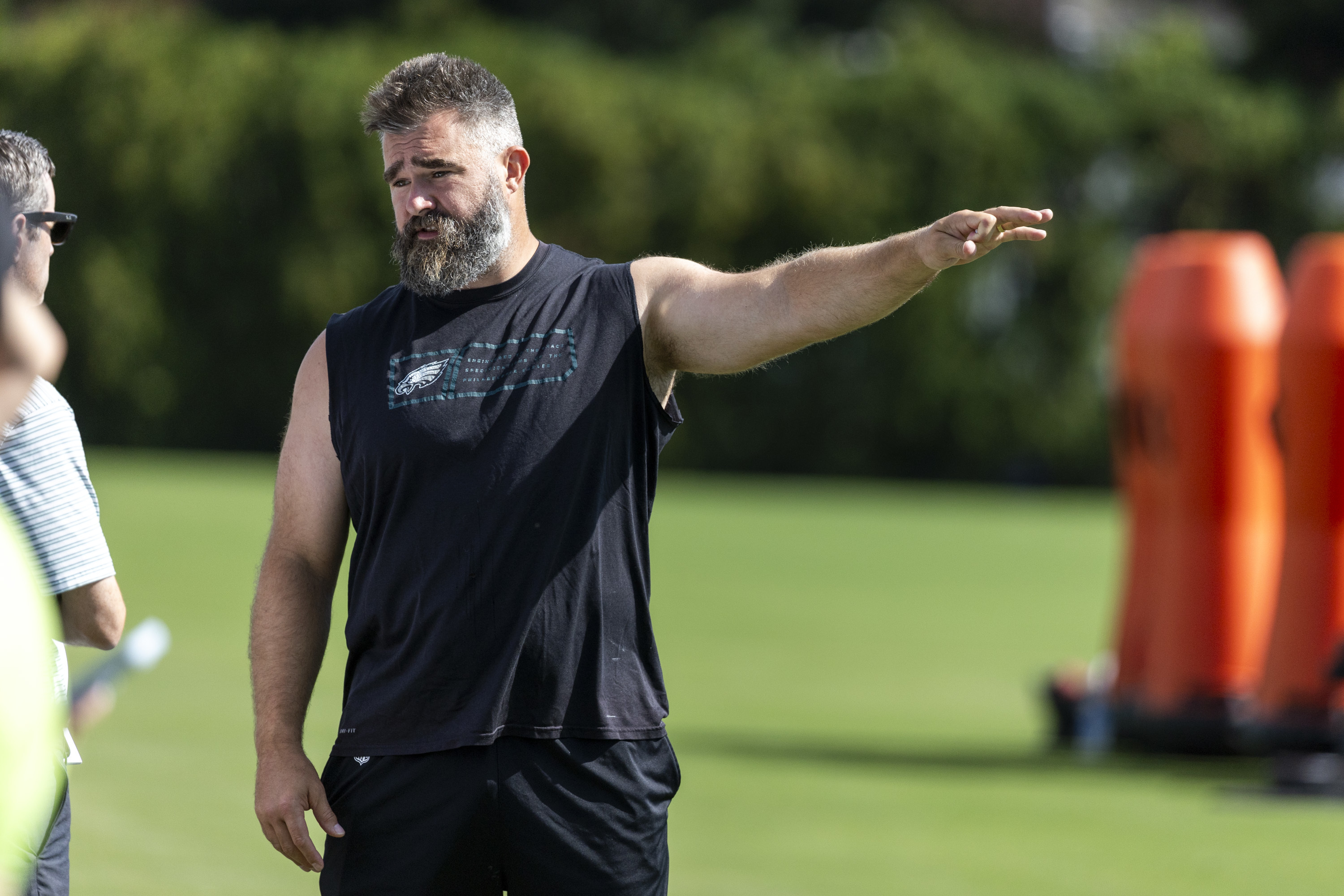
    Jason Kelce has already made a name for himself on the football field, in the broadcast booth, and in the podcast world.

    The former Eagles center can now add completing military obstacle courses and playing the saxophone with the U.S. Army Field Band to his resumé.

    Recently, Kelce hosted PBS’s Salute to Service 2026: A Veterans Day Celebration, which aired Friday. The hourlong episode honored veterans and active-duty service members through musical performances, conversations, and a behind-the-scenes look at military life.

    Kelce, who was joined by eight-time Grammy Award-winning musician Jon Batiste and former NFL offensive tackle and Army veteran Alejandro Villanueva, who graduated from West Point in 2010, experienced some of the challenges and traditions of military service on the show.

    They rode a helicopter, spoke with Army football players, and even completed the water confidence course, a test of strength and endurance every cadet must complete to graduate from West Point.

    Kelce spoke with the football team ahead of him trying the water obstacle course.

    “I am afraid of heights,” he said. “How bad of an issue is that for me?”

    Laughing in unison, the cadets said that it would be “a bit of an issue, sir.”

    First, Kelce navigated a beam walk 25 feet in the air with a rope drop in the water. He then had to climb a 75-foot tower that led to a zip line into the water.

    “I get nervous climbing a ladder to the roof of my house,” Kelce said before taking on the zip line. “Seventy-five feet is going to be terrifying.”

    Before plunging into the water, 5Kelce yelled out a loud, energetic “Go Birds.”

    <iframe src="https://www.facebook.com/plugins/video.php?height=476&href=https%3A%2F%2Fwww.facebook.com%2Freel%2F1871983850612698%2F&show_text=true&width=267&t=0" width="267" height="591" style="border:none;overflow:hidden" scrolling="no" frameborder="0" allowfullscreen="true" allow="autoplay; clipboard-write; encrypted-media; picture-in-picture; web-share" allowFullScreen="true"></iframe>

    He also got a taste of life as a member of the 3rd U.S. Infantry Regiment, better known as The Old Guard, the Army’s ceremonial unit and escort to the president. Kelce participated in drills, including pushups, squats, and a 5-mile run; learned how to carry the American flag during a national anthem; and got an inside look at the training required to serve at Arlington National Cemetery.

    Villanueva, who served three combat tours in Afghanistan and played for the Pittsburgh Steelers and Baltimore Ravens in a seven-year NFL career, spoke candidly to Kelce about the difficulties of leaving the military and returning to life as a civilian.

    “The transition was probably one of the hardest transitions I’ve ever had in my life,” Villanueva said. “When you put on your [military] uniform every morning, you have a lot of respect for yourself. It fills you with pride to be wearing that uniform. And then you stop wearing that uniform, and now you’re a practice-squad player. You don’t look at yourself with the same amount of respect.”

    They also discussed the correlation of stepping away from the military and retiring from football.

    “It was easy in the sense of when you’re on a football team, you’re always surrounded by people,” Villanueva said. “It becomes very much like the Army. But leaving the military is a very difficult decision. Your identity changes, very similar to leaving the NFL. You are no longer the person you used to be. You’re on the outside looking in, and that feels a little bit lonely.”

    Kelce also joined the U.S. Army Field Band, which is celebrating its 80th anniversary this year, for a rendition of “Gonna Fly Now,” the iconic theme song from Rocky.

    “Veterans Day gives us the chance to come together,” he said, “not just to say thank you, but to celebrate the men and women from every generation who answered the call to serve.”

  • Norristown police said they shot and killed a man wielding a knife

    Two Norristown Police Department officers fatally shot a man who was allegedly wielding a knife Friday night, the Montgomery County District Attorney’s Office said.

    The shooting happened just before 9 p.m., when the officers encountered the man in Elmwood Park in Norristown. Officials said the man approached the officers while holding the weapon, which Norristown police described in a statement as a “large knife.”

    After firing at the man and striking him, the officers rendered medical aid, the district attorney’s office said. He was pronounced dead a short time later.

    Officials have not yet identified the man pending family notification of his death. The officers involved in the shooting have also not been publicly identified.

    Following the shooting, Montgomery County detectives responded to the scene and launched an investigation, following protocol, officials said.

    “Any loss of life is a tragedy, and our thoughts are with everyone affected by last night’s events,” Norristown police said in a statement. The department added that it was cooperating with the investigation into the shooting.

    Officials asked that anyone with further information about the incident contact the Montgomery County Detective Bureau at 610-278-3368.

  • La Salle launched a $125 million fundraising campaign. Here’s what the university wants to do with the money.

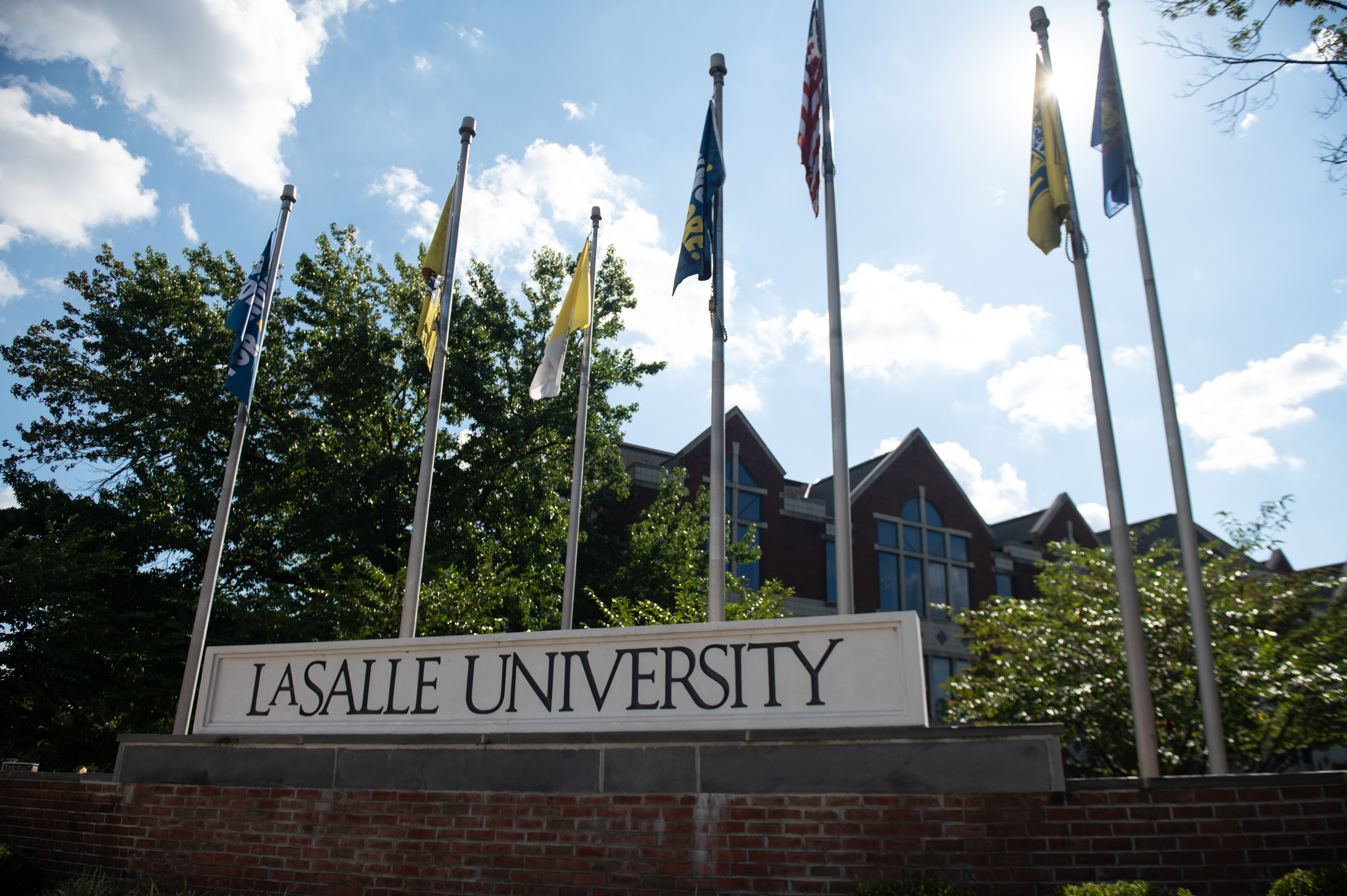
    La Salle launched a $125 million fundraising campaign. Here’s what the university wants to do with the money.

    La Salle University launched the public phase of a $125 million fundraising campaign on Friday night during homecoming weekend.

    It is the largest campaign in the Catholic university’s history, a La Salle spokesperson said.

    The school already has raised $64 million during the quiet phase, and the funding is for student scholarships, experiential learning opportunities, and facility upgrades, the school said in a news release.

    The university in Philadelphia enrolls over 4,000 students, according to its website.

    “Supporting La Salle University is an investment in our students and in the future of our storied institution,” president Daniel J. Allen said in a statement.

    The campaign funds also will support emergency financial aid to help students stay enrolled, professional development for faculty, a student success center, and upgrades to the health and wellness center, student union, labs, and other areas, according to the news release.

    The university raised $19.6 million during the 2026 fiscal year, a record, the school said.

  • Israeli opposition candidate will get first chance at forming government

    Israeli opposition candidate will get first chance at forming government

    Israel’s president has tapped opposition candidate Gadi Eisenkot to form a new government in a setback for Prime Minister Benjamin Netanyahu.

    Iran’s Revolutionary Guard says it has lifted a self-imposed limit of 1,200 miles on the range of its ballistic missiles, suggesting the country may seek to develop missiles capable of reaching more distant targets as fears of renewed all-out war rise.

    Meanwhile, airstrikes near Yemen’s capital killed at least 27 people, according to a spokesperson for Yemen’s Houthi-run Health Ministry. Heavy rains lashed the Gaza Strip, flooding tents and intensifying the misery of hundreds of thousands of Palestinians.

    Israeli president gives Eisenkot first chance at forming government

    Israeli President Isaac Herzog said Saturday night that he was giving opposition candidate Gadi Eisenkot the first opportunity to form a governing coalition following elections on Oct. 27.

    Eisenkot, a former military chief, ran as the main challenger to Prime Minister Benjamin Netanyahu, leading a bloc of parties seeking to oust Israel’s longest-serving premier.

    Neither Eisenkot nor Netanyahu won a clear majority in the vote. But in marathon discussions with the president this week, representatives from most of Israel’s main parties recommended Eisenkot be tasked with assembling a new government.

    Iran’s Revolutionary Guard lifts its missile-range limit

    The comments by the spokesperson of Iran’s paramilitary Revolutionary Guard came days after the country’s supreme leader, Ayatollah Mojtaba Khomeini, warned that “any kind and level of threat” from the U.S. or Israel would face a response without geographic limits.

    Asked at a Tehran news conference about the limit on missile ranges, Gen. Hossein Mohebbi said, “That restriction has been lifted for us.”

    He did not say whether Iran had missiles capable of exceeding the limit, saying only Iran would “demonstrate these capabilities in practice” rather than make statements.

    Iran is not known to have missiles that can go beyond the 1,200-mile limit — a range that puts parts of Greece and the Balkans, the entire Arabian Peninsula, the Levant, and most of Egypt within reach. However, U.S. officials have said technology from Iran’s space program can be repurposed to build intercontinental ballistic missiles.

    The Iranian military, meanwhile, said a tanker east of the Strait of Hormuz had hit a mine and caught fire. It did not identify the tanker’s flag or destination. It said the vessel had turned off its navigational beacon and was sailing in a “prohibited area.”

    Houthis say strikes kill more than 2 dozen near Yemen’s capital

    Airstrikes in a village near Yemen’s capital, Sanaa, killed at least 27 people and wounded 36 others, mostly women and children, on Saturday, said Anees al-Asbahi, a spokesperson for Yemen’s Houthi-run Health Ministry.

    The Associated Press could not independently verify the claims. The Houthi spokesperson accused Saudi Arabia, whose Information Ministry did not immediately reply to an AP request for comment.

    Since the summer, fighting has escalated between the Iranian-backed Houthis — who control Sanaa, the north and the west of the country — and their Saudi-backed opponents based in the south and east.

    Rains mark return of winter misery for Gaza’s Palestinians

    In the Gaza Strip, displaced families spent a sleepless night as heavy rain flooded their fragile tents, soaking mattresses and belongings, and turning camp pathways into pools of muddy water.

    The rain marks the start of another difficult winter for the more than 1.6 million Palestinians living in tents or other makeshift shelters in the territory, where nearly the entire population has lost its homes during Israel’s campaign triggered by the Oct. 7, 2023, Hamas-led attacks.

    Majed Al-Omari, who lost a limb during the war, struggled to make his way between tents on crutches after the rains tore down the wooden frame and plastic sheeting of his shelter.

    “We will have to sleep in the street tonight, or find somewhere else to stay,” he said.

    The U.N. humanitarian office has said 294,250 families need shelter assistance for the rainy season, but available supplies are enough to provide only partial assistance to 18% of those in need. It said a lack of funds, slow procurement procedures, and delayed approvals by the Israeli authorities mean additional supplies may not reach Palestinians until more than halfway through winter.

    Midterms suggest frustration with Israel among both U.S. parties

    The results of the U.S. midterm elections suggest that long-standing U.S. support for Israel is on rocky ground on both sides of the aisle. Democrats, who gained control of Congress, are fiercely divided, and many Republicans are increasingly critical of Israel’s government, particularly its wartime conduct in Gaza.

    On Tuesday, as Americans went to the polls, President Donald Trump suggested cutting off aid to Israel. Then, a staunch critic of Israel, Abdul El-Sayed, became the first Muslim elected to the U.S. Senate.

    The Democratic senator-elect from Michigan addressed U.S. Vice President JD Vance as “JD, habibi” — a common Arabic term of affection — in his victory speech. And Vance partly blamed the Republicans’ massive electoral losses across the country on U.S.-Israel relations, including the war in Iran the two countries launched jointly on Feb. 28.

    “Something fundamental has shifted,” said Michael Oren, a historian and former Israeli ambassador to the U.S.

    U.S. says its blockade on Iranian port continues

    U.S. Central Command said Saturday that “strict enforcement” of the U.S. blockade on Iranian ports in the Strait of Hormuz continues.

    It also announced a new task force focusing on hampering Iran’s options to transport what it called “advanced weapons and other materials” through its land borders and the Caspian Sea.

    Iran established a chokehold on the strait, a vital strategic waterway in global trade, at the beginning of the war, and has claimed attacks on tankers. The U.S. says its blockade had redirected 144 commercial vessels through the end of October.

  • Murphy will not return to Senate next week after stroke

    Murphy will not return to Senate next week after stroke

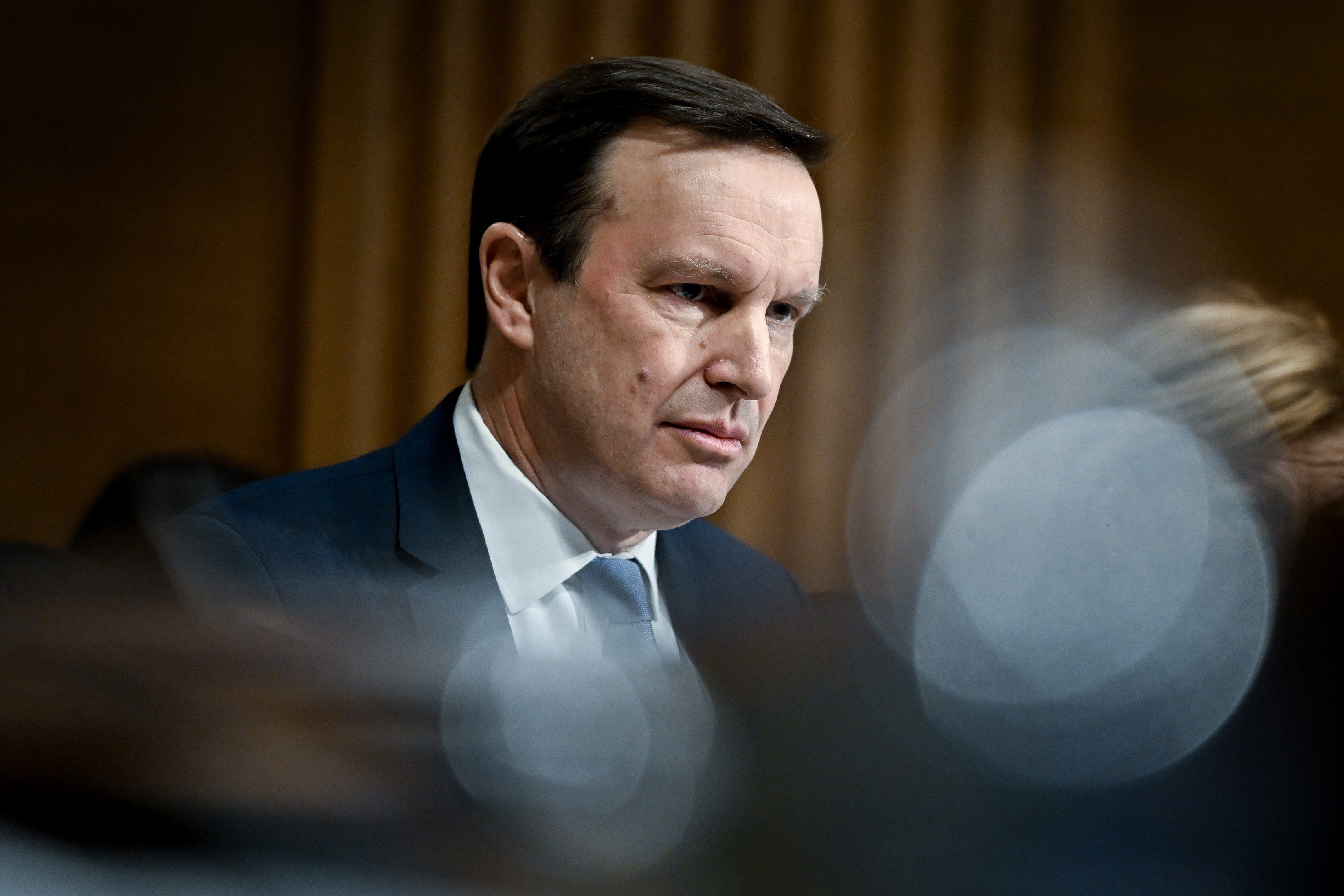
    Sen. Chris Murphy (D., Conn.), who had a stroke last weekend, does not plan to return to the Senate next week for a postelection session, his office said Friday, announcing that he will spend several weeks recovering at a rehabilitation center.

    In a statement, Murphy, 53, said he had been discharged from the hospital and was “working towards a full recovery.”

    “The doctors are very encouraged by the progress I’ve made so far,” Murphy said. “In order to take my recovery seriously and get back to work on the quickest timeline possible, I will be spending several weeks at a rehabilitation center after being discharged from the hospital today.”

    The senator’s statement did not make clear when he expected to return to the Capitol. Murphy’s office did not provide more detail about his condition.

    While attending his son’s hockey game Oct. 31, Murphy experienced numbness in his arm, called 911, and was taken to a nearby hospital, where doctors diagnosed a stroke. In his statement Friday, he said he had been “diagnosed with a small bleed in the thalamus region of my brain.”

    The senator, who has been mentioned as a possible 2028 presidential candidate, is the latest lawmaker whose health issues have kept them from the Capitol this year. His absence comes as his party is preparing to take control of the Senate, and as Republicans weigh what priorities they can advance in their final weeks in power.

    A vocal critic of President Donald Trump who has become prominent on television, Murphy traveled across the country last month, appearing with Democratic candidates to try to help them get elected. He had been hospitalized at Johns Hopkins Hospital in Baltimore since the stroke.

    His illness comes as politicians are facing greater scrutiny over the amount of information they share with the public about their health. Murphy has not been photographed or recorded since his stroke, and while members of his team have maintained that he is recovering, they have declined to share any specific information.

    Jose Suarez, director of the neurocritical care division at Johns Hopkins Hospital, was quoted in the statement saying that the senator had a “small hemorrhagic stroke,” but “has shown tremendous progress, and at the current rate of improvement, we expect that he will make a full recovery following rehabilitation.”

    Earlier this year, Sen. Mitch McConnell (R., Ky.) spent more than three months absent from the Capitol after a fall at his home. The 84-year-old’s absence provoked a storm of speculation given that his office waited about a month to release details of his condition and kept him out of the public eye during his lengthy convalescence, releasing no video footage that would show the state of his health.

    Rep. Tom Kean Jr. (R., N.J._, who just lost his reelection bid, disappeared from the public eye for more than 100 days this year with no explanation. When he returned to work in June, he said he had been hospitalized for depression.

    Besides Murphy, at least three sitting senators have had strokes in the past several years. Sen. Ben Ray Luján (D., N.M.) was gone from the Capitol for five weeks after a stroke at the beginning of 2022.

    Months later, Sen. Chris Van Hollen (D., Md.) spent a week in the hospital after what he called a “minor stroke.” Sen. John Fetterman (D., Pa.) nearly died from a stroke just days before his primary in 2022 in what was one of the most closely watched Senate races in the country.

    This article originally appeared in the New York Times.

  • A Villanova group that Jim Croce once sang for has gone viral by surprising students with birthday serenades

    A Villanova group that Jim Croce once sang for has gone viral by surprising students with birthday serenades

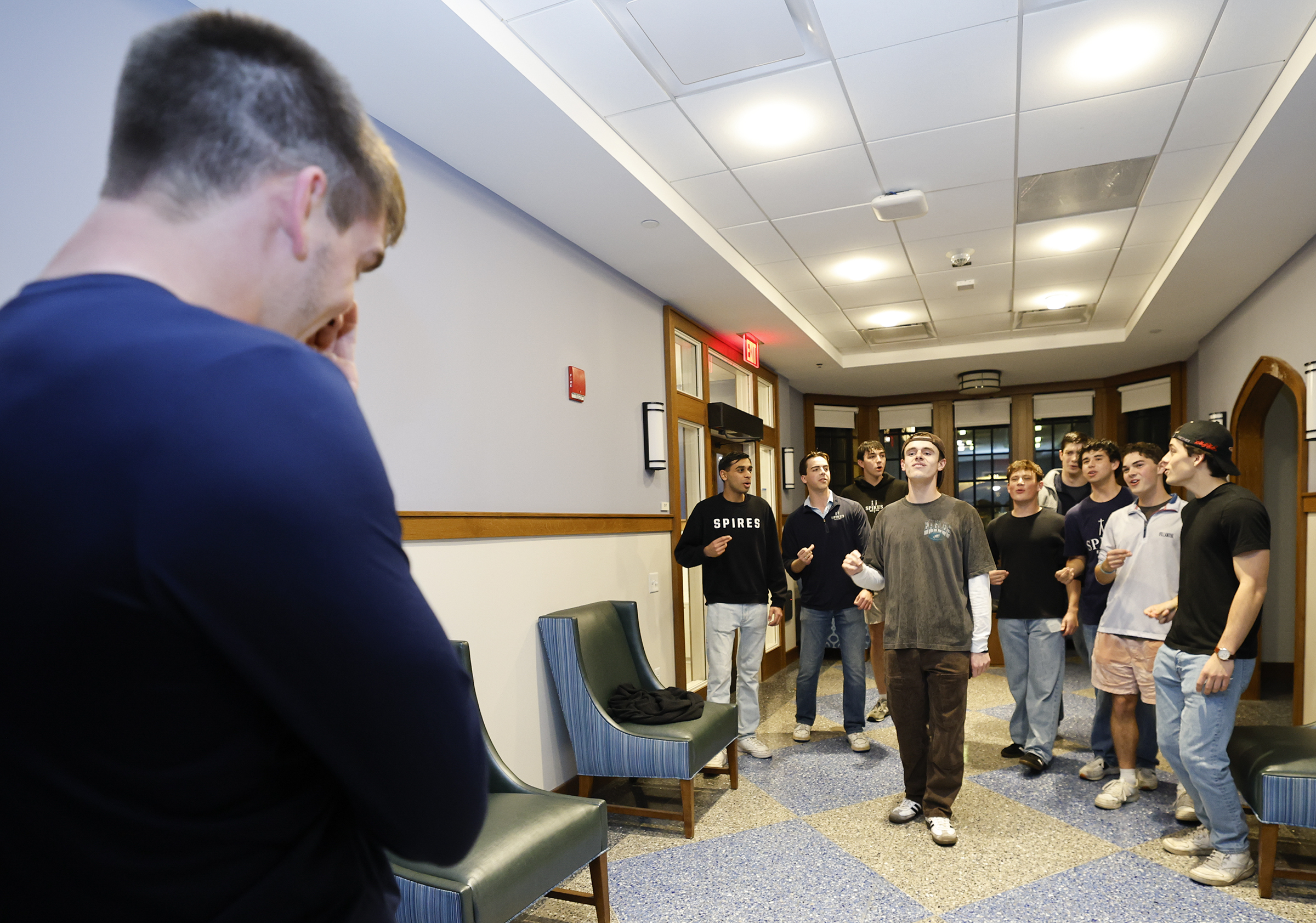
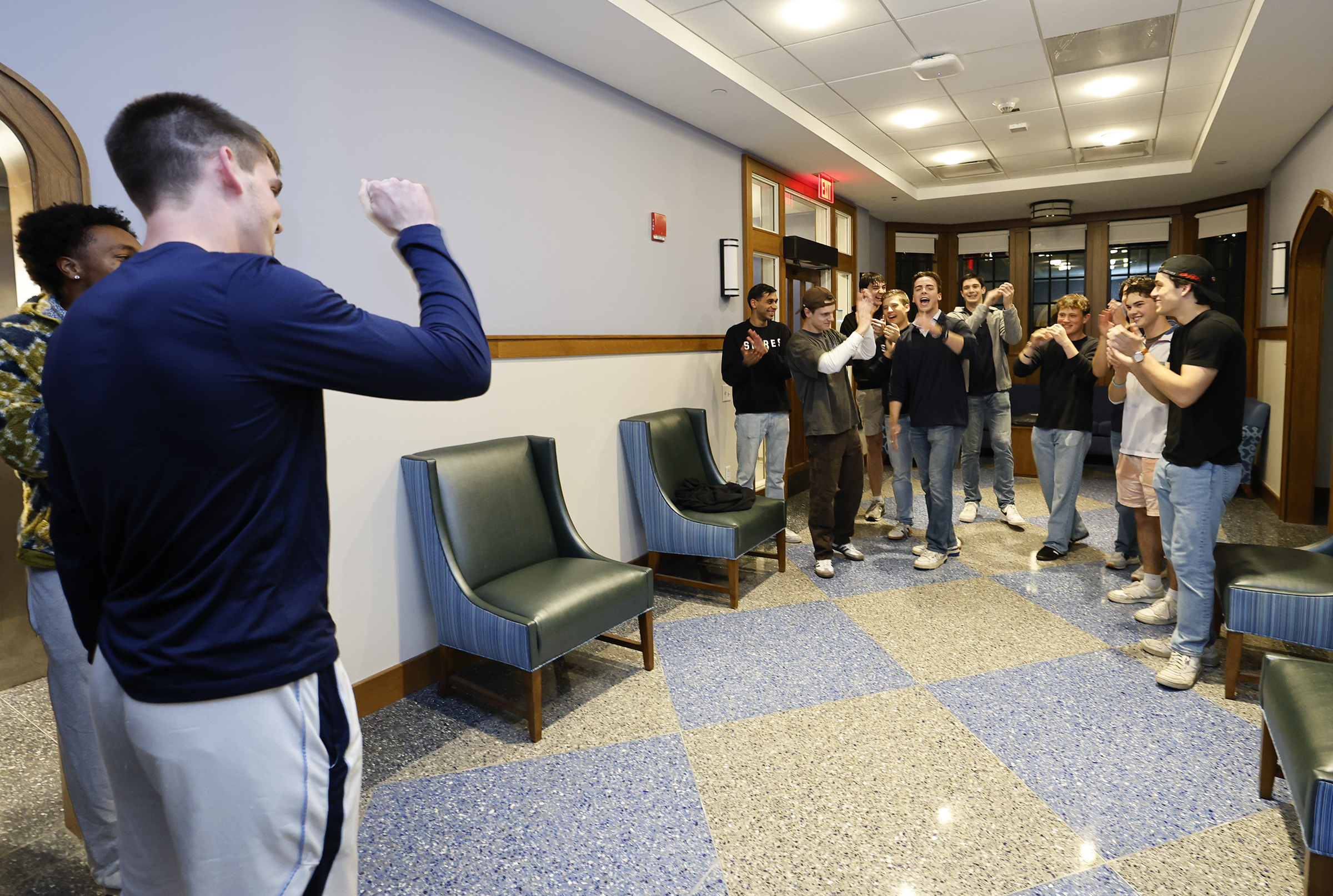
    On a recent weeknight, Ryan Kennedy was just rounding a corner of his campus residence hall at Villanova University when he was ambushed by a rendition of “Shoo bee doo whop, shoo bee doo whop. Haaaaapppy birthday, Ryan.”

    The Villanova Spires — an all-male student a cappella group — had come to call. They were hired by Kennedy’s football teammates to deliver the special birthday greetings. Over the next nearly four minutes, the singers performed an alumni piece called “Good Ol’ A Cappella” with a birthday twist, the traditional “Happy Birthday to You,” and what has become their signature tune: “Birthday Sex” by Jeremih.

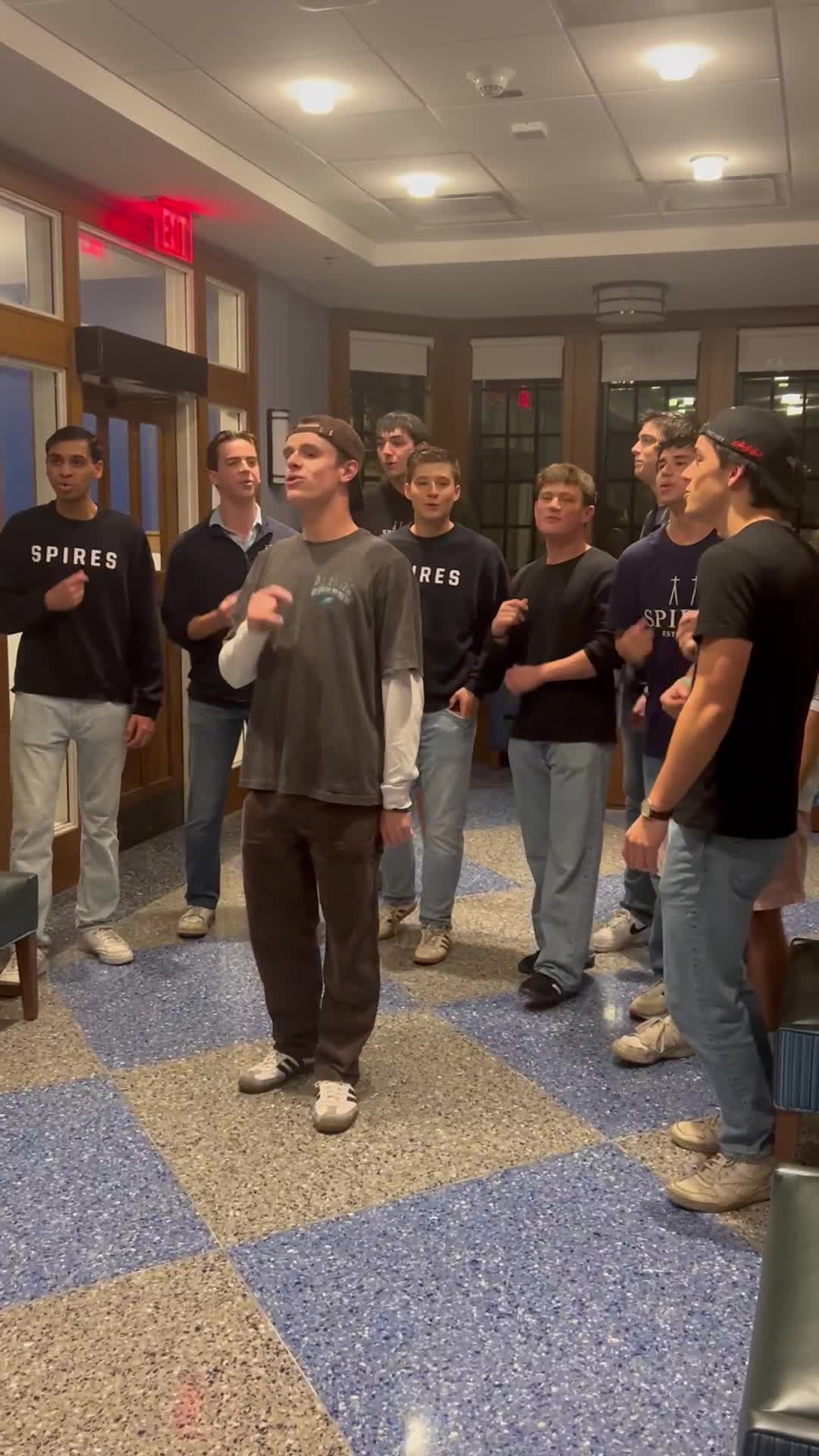
    The Villanova Spires a cappella group sings happy birthday songs
    Video: The Villanova Spires a cappella group sings happy birthday songs

    “That was cool,” Kennedy, 22, a mechanical engineering major from Cleveland, said. “I thought we were going to get cookies.”

    And just like that, the Spires were out the door and off to their next gig — this one for a female freshman in another residence hall on Villanova’s South campus. There would be two more performances before the night was over.

    Members of the Villanova Spires sing personalized a cappella birthday songs to freshman Ellie Gerran (right) on the Villanova University campus on Thursday, Nov. 5, 2026.Yong Kim / Staff Photographer

    How did the a capella group go viral?

    The Spires are the oldest a cappella group at Villanova, founded in 1961. They once counted the late singer Jim Croce — a 1965 Villanova graduate — music producer Tommy West, and Tim Hauser of the Manhattan Transfer among their members. The group leaned toward folk music at that time. Over the decades, the Spires have toured around the country and internationally as their music evolved.

    But it is the birthday singing on campus over the last year that has attracted much attention, locally and beyond.

    “What began as a fun way to celebrate our fellow students has unexpectedly taken off on TikTok, with our videos generating 9.3 million views in just the past month and a half,” Cole Joyce, 22, the group’s president, said.

    Since last November, the Spires have performed more than 150 times on and off campus. They charge $50 per performance and now they get so many requests, they cannot accommodate everyone, said Joyce, a senior marketing major from St. Louis. They are full-time students, too.

    Last month, they filmed a video of the group performing seven birthday gigs in one night, the most they have had.

    Reactions to their performances range from screaming and crying to singing along. There have been a few angry or uncomfortable looks, too, from boyfriends when they sing “Birthday Sex” to females, said Connor Feick, a junior communications major from Harleysville, who is the group’s musical director.

    The group’s TikTok videos are attracting interest from potential students.

    “Maybe I should go to Villanova,” one commenter said. “Transferring immediately,” another said.

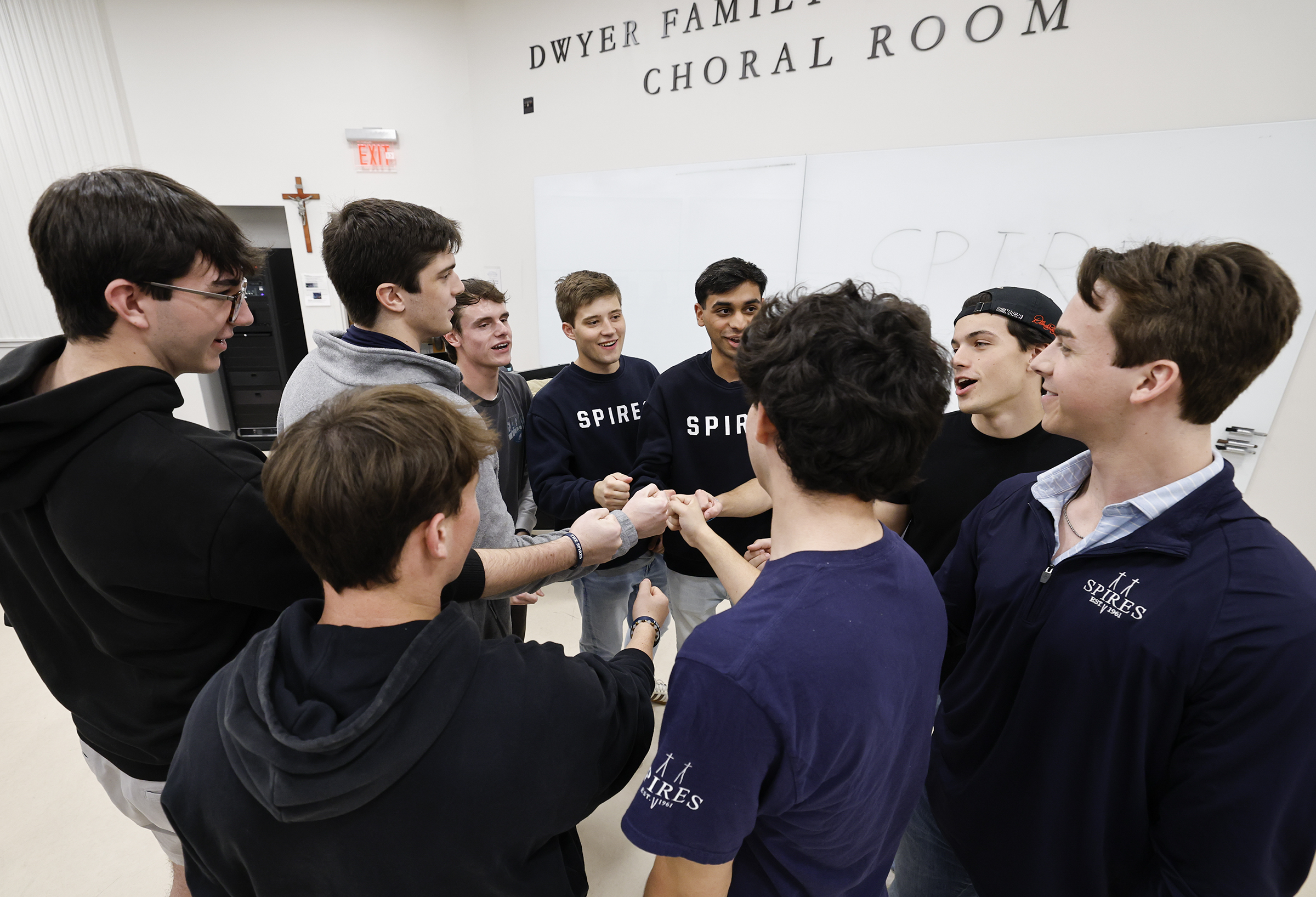
    Villanova Spires Music Director and junior Connor Feick (center) leads rehearsal in the Dwyer Family Foundation Choral Room at the Mullen Center for the Performing Arts on the Villanova University campus. Yong Kim / Staff Photographer

    The Spires are one of nine a cappella groups on campus, a surprising number given that Villanova does not have a music major, said Christine Nass, associate director of student performing arts. The group is made up of chemical engineering, biology, communications, finance, and political science majors.

    “They’re all super talented,” Nass said. “This is their outlet. It’s all fun.”

    The Spires have the most releases on Spotify and released their first studio album, House Rules, earlier this year, Joyce said. They were also the first Villanova a cappella group to release records decades ago, Nass said.

    At the end of every practice, they huddle in a group and shout: “Jim Croce, pray for us.”

    Members of the Villanova Spires gather at the end of rehearsal where they give a shout-out to the late singer Jim Croce, who was a member of the group in the 1960s. Yong Kim / Staff Photographer

    Nass said the birthday performances “took off” before she or other administrators even knew students were doing them.

    Now, the Spires are recognized by students, faculty, and staff everywhere they go, members said.

    Joyce said when he first came to Villanova, he planned on joining a fraternity, but opted for the Spires instead and has taken a lot of ribbing over the years from friends and family.

    “That’s so dorky,” they would tell him.

    But that has changed.

    “Now they’re like, ‘Oh, my gosh, I literally see you all over TikTok,’” he said.

    How did the Spires start singing birthday surprises?

    Joyce said he got the idea after watching TikTok videos of singing groups at other colleges deliver birthday greetings, including “Birthday Sex.” And for years, the Villanova Singers, an all-male student chorus that the Spires are all a part of, have sung surprise Valentine’s greetings around campus.

    “I thought we could totally do something like that and monetize it and get exposure,” Joyce said.

    The late Jim Croce sings to a female student at Villanova University in 1965. Croce was a graduate of Villanova and a member of the Villanova Singers and the Spires.Courtesy of Villanova University

    They stay away from the “Birthday Sex” song for some performances, such as those in restaurants. For a tennis coach, they substituted “birthday tennis,” and instead of saying “girl,” they said “Steve,” the coach’s name.

    But the song is almost always in their repertoire for on-campus performances, many of them delivered in dorm bedrooms.

    When they book requests, customers “almost always say please sing ‘Birthday Sex,’” Joyce said. “So we always do.”

    Customers are mostly women and mostly students, though sometimes parents will order for their Villanova student, Joyce said.

    “I just love doing it,” said Feick, the music director, who presides over practices and makes the musical selections. “I never get bored.”

    Members of the Villanova Spires sing a personalized a cappella birthday song to Ryan Kennedy (left) on the Villanova University campusYong Kim / Staff Photographer

    Spires member Brady Keane, a junior political science and communications major from upstate New York, is in charge of booking and organizing the birthday gigs. He shared his color-coded spreadsheet for keeping track.

    He is also Villanova’s student body president.

    “A lot of times I find myself telling people I’m a Spire before student body president,” he said. “This group has been the most important and transformative thing I’ve ever done.”

    Joyce said the 13 Spires members are also best friends and most of them live together.

    “It’s ended up being one of the most profound experiences of college for me and my life,” Joyce said.

    The other members are: senior Eric Van Zele; juniors Nick Leyesa and Lucas Scotto; sophomores Grayson Bucher, Mannan Pandey, Nick Sherbondy, and Andrew Trueman; and freshmen Steven Blanco, Matthew Geiger, and Michael Rose.

    After the Spires finished practice on Thursday, they grabbed their backpacks and headed to the Commons for Kennedy’s birthday performance. It was raining hard, and they had a five-minute walk.

    “Snow, sleet, or rain, we show up,” said Van Zele, who is from South Carolina.

    Members of the Villanova Spires walk on the Villanova University campus to sing personalized a cappella birthday songs to those on campus. Yong Kim / Staff Photographer
  • Nithya Raman to take charge in LA amid homeless crisis and political division

    Nithya Raman to take charge in LA amid homeless crisis and political division

    LOS ANGELES — In her bid for Los Angeles mayor, Nithya Raman ran as an outsider. The democratic socialist didn’t win a single endorsement from her 14 colleagues on the city council. The police union opposed her, she had friction with the Jewish community, and the Democratic establishment lined up squarely behind the incumbent, Karen Bass.

    She now has to show she can lead.

    As mayor-elect following a stunning upset, Raman will need to navigate political rifts in balkanized City Hall while taking on an array of problems that have defied her predecessors, including a long-running homeless crisis, an exodus of Hollywood jobs, and boundless miles of crumbling streets and sidewalks — all with a strained budget.

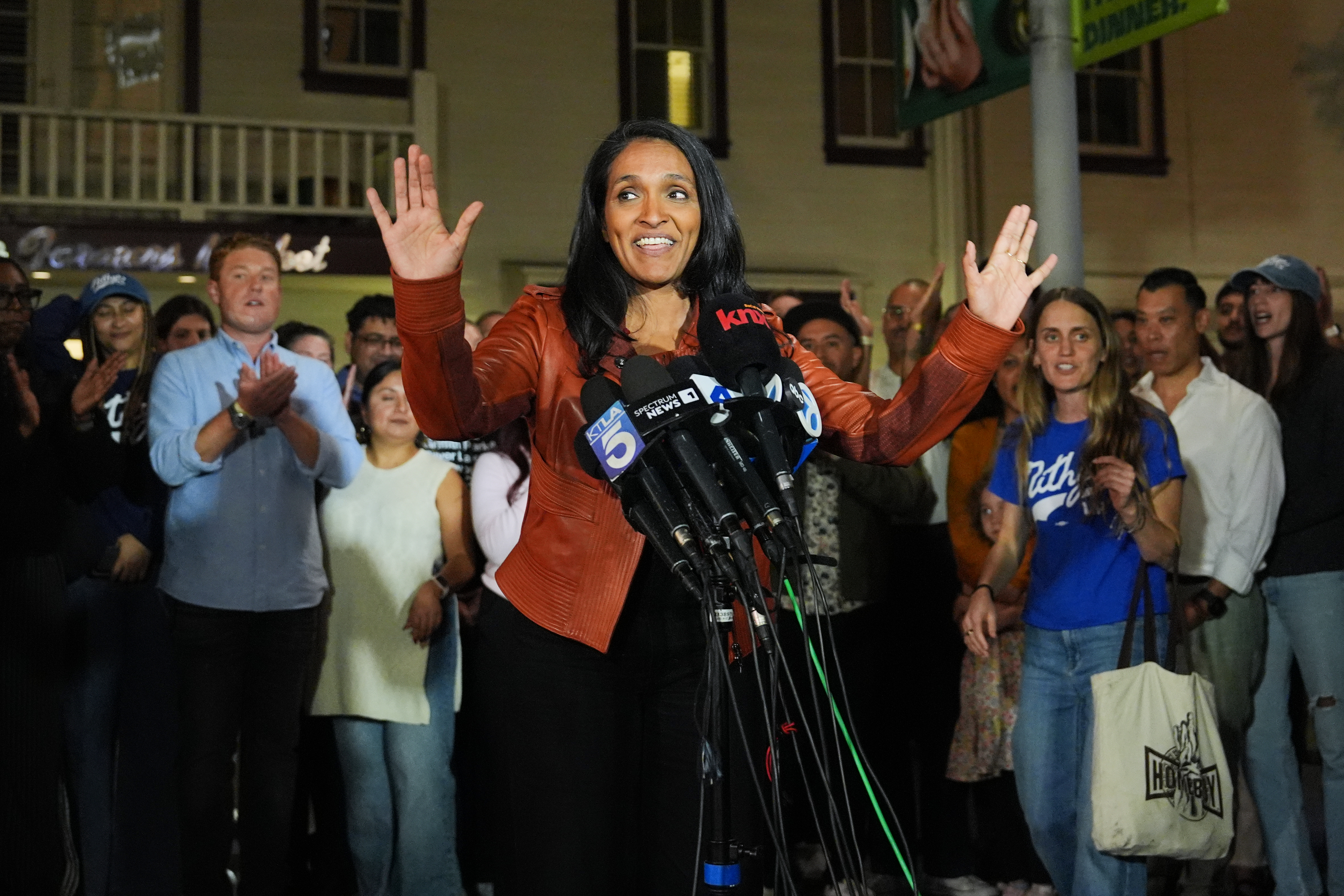
    Appearing before reporters Thursday for the first time as mayor-elect, Raman was succinct about her agenda.

    “Homelessness, housing costs, and public safety,” she said. “These will have to be the priorities that I take on in the city.”

    Even after the campaign, the millennial, India-born Raman will be a new face to many Angelenos in a city that tends to shrug at local politics. But how she governs the nation’s second most populous city will be closely watched nationally, especially as she prepares to welcome the world to LA for the 2028 Olympics.

    Raman joins a new crop of democratic socialist mayors

    When she takes office in mid-December, Raman will join the vanguard of democratic socialists in municipal government that includes Zohran Mamdani in New York and Katie Wilson in Seattle. Janeese Lewis George was elected Tuesday as mayor of Washington, D.C.

    While she is expected to steer the city to the political left, she has been outspoken about her willingness to break from the Democratic Socialists of America when she believes their agenda conflicts with interests of the city. “My independence will always be paramount,” Raman said at a candidate forum in September.

    At a time when the Democratic Party has been deeply divided over the war in Gaza and aid to Israel, Raman has faced questions about her interview with progressive commentator Hasan Piker last spring in which she responded “I do, yes,” when asked if she believed Israel had committed genocide. At a forum co-hosted by the Jewish Federation Los Angeles, she said she recognized genocide is “a deeply painful word” but said she was compelled to speak out after seeing images of “the targeting of hospitals, the deaths of children,” prompting murmurs in the audience.

    At the same time, she faced pushback from within the DSA, where some believed her positions on Israel was not sufficiently tough.

    After her surprise win, the federation called on Raman to “rebuild trust with Jewish Angelenos that was strained during the campaign.”

    A win for democratic socialists without Mamdani star power

    To Occidental College political scientist Caroline Heldman, Raman needs to propose concrete solutions to address the day-to-day headaches that frame life in LA, whether fixing potholes or thousands of broken streetlights or clearing homeless encampments.

    “She didn’t win the election by positioning herself as being really ideologically distinct from Karen Bass,” Heldman said. “She positioned herself as the pothole politician, very similar to Zohran Mamdani. I see her taking a page out of his playbook.”

    Raman, however, never had the star power known as a Mamdani trademark. The contest in LA was relatively low key and overshadowed by turmoil in Washington and the fight for control of Congress.

    Mike Bonin, a former LA city council member and executive director of the Pat Brown Institute for Public Affairs at California State University, Los Angeles, described Raman as philosophically progressive but temperamentally moderate.

    “She got painted in this campaign as a crazy socialist ideologue or a flip-flopper with no core values,” said Bonin, who served with Raman from December 2020 to 2022. But, he said, “she wanted to work with people. She is very focused on results.”

    Raman is just starting to assemble her City Hall team

    She has not delivered a financially detailed plan on how she will take on some of the city’s persistent maladies.

    There are few issues in LA — birthplace of the car culture, where driving is part of everyday life for most residents — that prompt more grumbling than traffic and potholes. In 2013, former Mayor Eric Garcetti campaigned on a “back to basics” platform to deal with street paving, yet little happened.

    Under Bass, the city began focusing on filling potholes rather than resurfacing streets. Raman has said she will recast that policy, but how much money will go toward streets — and how quickly they can be repaved — is not yet known.

    In remarks on election night, before she was declared the winner, Raman depicted a city in statis and broadly sketched her vision for what Los Angeles could be.

    “LA stopped being a place where we could build things, where we could open things, where we could film things, where we could create things,” she said. Raman added that she wanted to revive “that ambitious Los Angeles, that joyful Los Angeles, that creative Los Angeles, that entrepreneurial Los Angeles.”

    On the city council, the reaction to her election was somewhat muted. Council member Traci Park, who voted for Bass and said she had “concerns about the leadership and effectiveness” of both candidates, said in a statement she looked forward to working with Raman in a city with “great challenges.”

    Raman won against a wounded incumbent

    Raising 10-year-old twins with her TV writer and producer husband in the Silver Lake neighborhood, Raman had an unlikely rise to the mayoralty, at least in part because she was running against a wounded incumbent at a time when voters nationwide were eager for change. Bass was undone by the deadly Palisades Fire, which ignited when she was out of the country and caught the fire department unprepared.

    Raman is an urban planner, educated at Harvard University and the Massachusetts Institute of Technology, whose background includes founding a homelessness outreach nonprofit in LA.

    Mayors in LA don’t have the clout of their counterparts in New York and Chicago — power is shared with the city council. Bonin described it as an accordion, which can expand or contract depending on who holds the office.

    He said former Mayor Antonio Villaraigosa, known for his chatty personality and charm, “swung for the fences.” Bass, by nature a compromiser, was different. Raman will set her own course.

    “I can’t think of a mayor who had to take office with so many problems,” Bonin said. “Everybody leaves unpopular. … It’s not a job that makes you well loved.”

  • Trump’s grip on his party is in question as Republicans reel from the midterm wipeout

    Trump’s grip on his party is in question as Republicans reel from the midterm wipeout

    WASHINGTON — Republicans aren’t holding back.

    Florida Gov. Ron DeSantis described this week’s elections as an “extinction-level event” for the GOP. Texas Sen. Ted Cruz likened it to a “Watergate-level repudiation.” Former Vice President Mike Pence called it a “reckoning.”

    For all the apocalyptic talk emerging from a midterm that relegated Republicans to their thinnest ranks on Capitol Hill in decades, there’s little agreement on how the party should move forward.

    A return to the bedrock fiscal and national security conservatism that defined Republicans under President Ronald Reagan risks alienating the more hard-line conservatives welcomed into the party under President Donald Trump under the “Make America Great Again” banner.

    But leaning even further into Trump’s coarse brand of politics could lead to more voter rejection.

    “We have soul-searching to do,” Alex Latcham, the executive director of the Senate Leadership Fund, which spent $810 million to support Republicans, said in an interview. “We need to first understand and honestly admit why we just endured a wipeout of this magnitude. And then we have to regroup and agree to a path forward.”

    GOP faces questions about Trump’s future role

    As has been the case for the past decade, the central question is the role Trump will play in shaping the party’s future. His insistence on loyalty reached a zenith this year as he intervened in GOP primaries and pressed voters to make the elections a referendum on his second term. He held dozens of rallies in the final weeks of the campaign for candidates, most of whom lost their races.

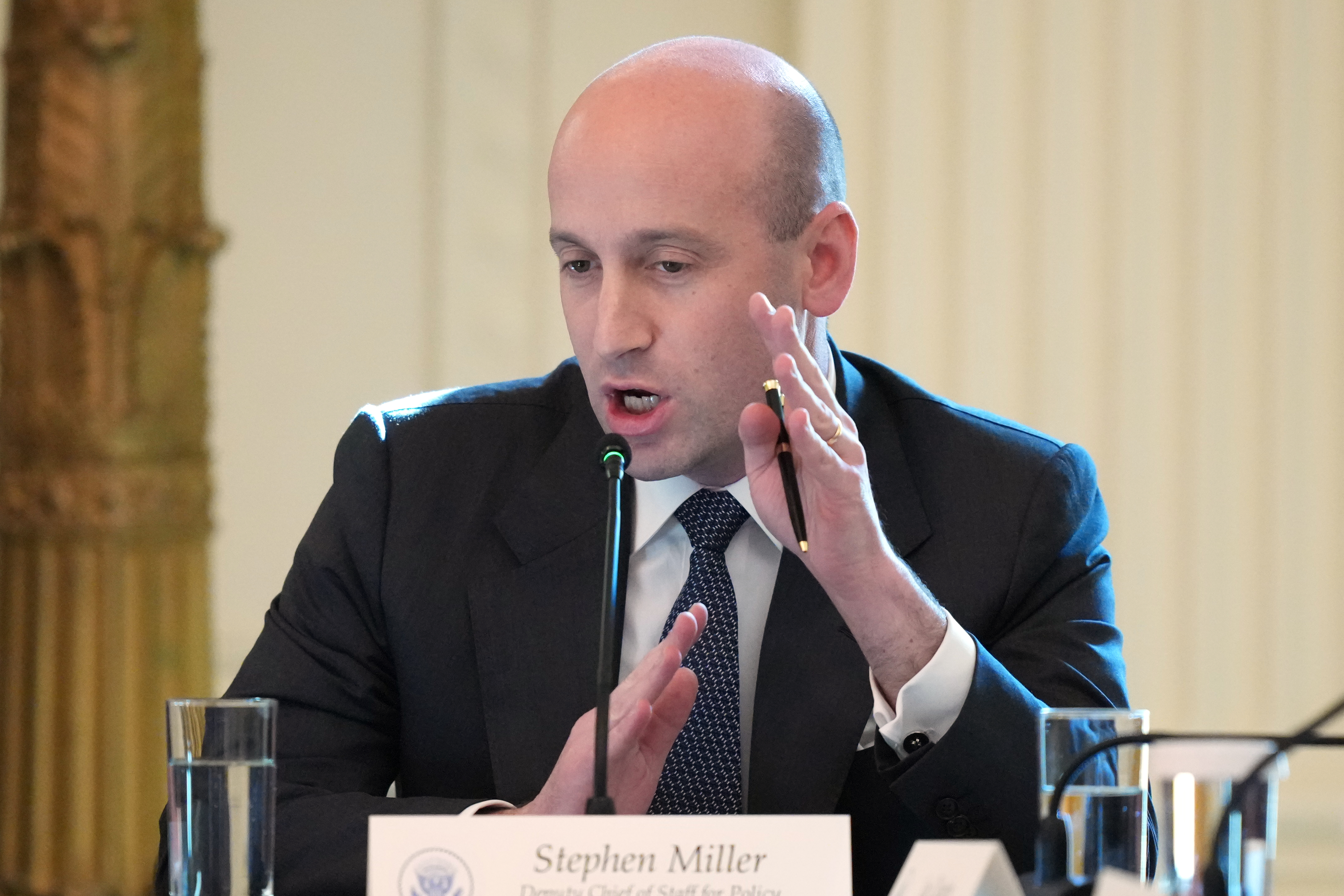
    Since Tuesday’s election, he’s refused to acknowledge any responsibility, placing blame on the candidates. His public events have focused on his pet projects in Washington, which have proven unpopular with voters. On Friday, he elevated Stephen Miller, the architect of some of his most contentious policies, to White House chief of staff.

    In an interview, Oklahoma Gov. Kevin Stitt, a Republican, said the election results were “shocking” but that Trump could still steer the conversation around issues such as immigration. The governor described the GOP’s current dynamic as a natural process for a party whose leader is deep in his second term.

    “It just tells you that the American people, after 10 years, they’re pretty much tired of whoever’s in office,” Stitt said. “I think people want a little more stability. They want people to be nice to people, to say, ‘Hey, we’re all Americans.’”

    Others were more blunt.

    Longtime conservative commentator Tucker Carlson said the midterms marked “the end of the Trump era.” John Sununu, a Republican who lost his bid for a Senate seat in New Hampshire, blamed Trump.

    “It seems like he or his family is in on every transaction and deal that goes on in Washington,” Sununu told John Kasich, a former Republican congressman from Ohio, on SiriusXM. “Those two things, I think, caused people to say, ‘You know, I just can’t vote for a Republican while he’s still in office.’”

    Republican infighting is likely to intensify

    The GOP infighting is poised to intensify quickly.

    When Republicans return to Capitol Hill next week, they’ll have to choose between Reps. Steve Scalise of Louisiana and Jim Jordan of Ohio to lead the party in the House. They may weigh whether to impeach Defense Secretary Pete Hegseth. There could also be tough votes on defense spending and keeping the federal government open after Dec. 11.

    Already a leadership fight is brewing at the Republican National Committee, where there are early conversations about limiting Trump’s influence in picking the next chair. KC Crosbie, currently the co-chair, circulated a letter this week calling the midterms a “serious setback” and announcing plans to run for chair at the committee’s January meeting in Arizona.

    Trump announced his support Friday for the party’s current chair, Joe Gruters.

    That’s to say nothing of the emerging contest for the 2028 Republican presidential nomination. Vice President JD Vance, seen as a leading contender, will likely face a broad range of opponents if he enters the race. Stitt is among the Republicans calling for a “big open primary.”

    “I don’t think we should crown anybody,” he said.

    There will be pressure to revive the coalition of voters, particularly Latinos, who have lifted the party to success in previous elections but swung to Democrats this week. Former Rep. Carlos Curbelo (R., Fla.) said he thought Secretary of State Marco Rubio is best positioned to win Latinos.

    “The two main constituencies that Republicans have to quickly regain are white suburban voters and Hispanic voters,” Curbelo said in an interview. “Vance was out on the campaign trail this year and it doesn’t appear that he was able to move the needle in terms of Hispanic voters.”

    A representative for Vance didn’t comment on that characterization.

    Broad election fallout for the GOP

    Still, the fallout for the GOP is broad, according to the AP Voter Poll, an expansive survey of about 80,000 voters in all 50 states.

    Younger Republican voters who supported the Republican candidate in their House race were less likely to approve of the way Trump is handling his job as president, and more likely to say he worsened the economy with his policies.

    About two-thirds of Republican voters under 30 said they approved of how Trump was handling the presidency, compared with about 9 in 10 Republican voters age 65 and older. About one-third of younger GOP voters said Trump had worsened the country’s economic conditions, compared with about 2 in 10 older Republican voters.

    The war with Iran also appeared to divide Republican voters, with about 6 in 10 Republican voters under 45 saying the U.S. made the right decision in taking military action against Iran. That rose to about 8 in 10 among Republican voters who were 45 and older.

    Young Republican voters were more likely to say the U.S. support for Israel was “too strong.” Roughly half of Republican voters under 30 said the country’s backing of Israel was “too strong,” compared with about 1 in 10 voters 65 and older.

    Despite rosy outlooks from top Republicans including Trump and House Speaker Mike Johnson (R., La.) in the final weeks of the campaign, Republican strategists had long seen the country’s confidence in the party unraveling.

    In late August, the Senate Leadership Fund convened a donor retreat in Laguna Beach, Calif., where Latcham told the group that Republicans had lost the confidence of voters on handling the cost of living and the economy, according to two Republican Senate campaign sources who attended the event. They spoke on condition of anonymity to discuss a private meeting.

    In defeat, Republicans are trying to take a broader view, knowing that it may take several election cycles before they one day return to power.

    Rep. Christopher Smith was reelected to his 24th term this week and is New Jersey’s last Republican in Congress. He took a long view on the party’s current struggles.

    “The pendulum swings back and forth,” he told reporters. “These are cycles.”

  • In his words: Miller is an immigration hard-liner and a bombastic critic of Democrats

    In his words: Miller is an immigration hard-liner and a bombastic critic of Democrats

    WASHINGTON — President Donald Trump’s new White House chief of staff, Stephen Miller, is behind many of the administration’s signature domestic policy initiatives — especially its sweeping crackdown on immigration.

    An outspoken defender of Trump’s most far-reaching goals to remake government going back to his 2016 run for president, Miller is known for his harsh language and unapologetic bombast, attracting outsized attention from supporters and critics alike. His record is likely to be scrutinized by Democrats in his powerful new role as he leads Trump’s White House through a difficult lame duck period after the Republican Party lost both houses of Congress.

    Here are some memorable things Miller has said through the years:

    On immigration: ‘We are being conquered’

    During a 2023 spike in illegal border crossings, Miller described migrants as invaders, even though many were escaping poverty and violence in their home countries.

    “We are being conquered,” he told Fox News Channel in December 2023, commenting on the sharp rise. “We have millions of people coming in from different cultures and different ways of living and different belief systems.”

    Miller also warned that “a generation from now,” people “will not know the country that they are living in. These consequences are permanent. Unless there’s massive large-scale deportations by the millions, it will be irrevocable.”

    He called a Minneapolis man killed by ICE a ‘domestic terrorist’

    After federal agents shot and killed Alex Pretti during protests against the Trump administration’s hard-line immigration policies in January, Miller posted on social media that the 37-year-old Minneapolis resident was a “domestic terrorist” and an “assassin” who had “tried to murder federal agents.”

    Later, Miller said in a statement that the federal officers in Minneapolis “may not have been following” protocol.

    U.S. ‘created’ Venezuela’s oil industry

    In January, after a daring U.S. military operation captured Venezuelan President Nicolás Maduro, Miller used a lengthy post on X to decry “reverse colonization” in which he suggested that Western nations were sacrificing too much for the developing world and that such a practice “has been a long self-punishment of the places and peoples that built the modern world.”

    In another post, he defended the right of the U.S. to take over Venezuela’s vast oil reserves, writing: “American sweat, ingenuity and toil created the oil industry in Venezuela. Its tyrannical expropriation was the largest recorded theft of American wealth and property. These pillaged assets were then used to fund terrorism and flood our streets with killers, mercenaries and drugs.”

    He defended Trump’s assertion that the U.S. was now running Venezuela, telling CNN’s Jake Tapper: “You can talk all you want about international niceties and everything else. But we live in a world, in the real world, Jake, that is governed by strength, that is governed by force, that is governed by power. These are the iron laws of the world.”

    In the same interview, Miller also argued that the U.S. could seize Greenland by military force from NATO ally Denmark. “Obviously, Greenland should be part of the United States,” he said.

    “Nobody’s going to fight the United States militarily over the future of Greenland,” Miller said.

    Speeding up deportations by suspending habeas corpus

    In May of 2025, Miller suggested that the Trump administration was looking for ways to expand its power to deport migrants who are in the United States illegally. To achieve that, he said officials were “actively looking at” suspending habeas corpus — the constitutional right for people to legally challenge their detention by the government.

    “The Constitution is clear — and that of course is the supreme law of the land — that the privilege of the writ of habeas corpus can be suspended in a time of invasion,” Miller said.

    “So, I would say that’s an option we’re actively looking at,” Miller said. “Look, a lot of it depends on whether the courts do the right thing or not.”

    In the nearly 18 months since, the idea has not been publicly pursued by Trump and his administration.

    Family separation: ‘No one is exempt from immigration law’

    During Trump’s first term, Miller championed a strict immigration deterrence policy that previous administrations had been hesitant to adopt: family separation. It called for routinely having federal agents separate children from their parents if families were apprehended illegally crossing the border.

    Miller defended the policy to the New York Times in 2018, saying it “was a simple decision by the administration to have a zero tolerance policy for illegal entry, period.”

    “The message is that no one is exempt from immigration law,” he added.

    The tactic sparked widespread outcry, and the Trump administration did not revive it in its second term. Still, Miller has helped promote mass deportations of people already living illegally in the U.S. that has divided families according to legal status.

    Arguing about the true meaning of the Statue of Liberty

    During Trump’s first term in 2017, Miller appeared in the White House briefing room to detail for reporters plans to cut back on the number of green cards issued, while prioritizing English speakers and skilled workers.

    Asked if doing so might violate the spirit of the poem on the Statue of Liberty, that reads in part, “Give me your tired, your poor, Your huddled masses yearning to breathe free,” Miller responded, “I don’t want to get off into a whole thing about history here.” He then did just that.

    “The poem that you’re referring to, that was added later, is not actually a part of the original Statue of Liberty,” Miller said.

    Birthright citizenship is ‘suicide’

    When the U.S. Supreme Court blocked Trump’s attempt to throw out birthright citizenship — which grants citizenship to any child born on U.S. soil — Miller said immigrants and their children pose an existential threat to the nation.

    “This is absolutely a deep knife wound in the heart of the American republic,” he told Fox News Channel in June. “If your ruling requires you to suicide your civilization, your reading of the Constitution is wrong.”

    On vaccines: ‘Nobody has studied it’

    Miller is one of many members of the administration who has expressed skepticism about childhood vaccines. In August, he praised the president for signing an executive order aimed at curtailing the vaccine schedule for children.

    “Millions and millions of parents feel they’ve been pressured when their children are just weeks out of the hospital to take five shots, six shots, seven shots all at once,” said Miller, a father of four, including an infant born in June. “Nobody has studied it. Nobody’s looked at it. Nobody’s thought about it.”

    His comments contradict what the Centers for Disease Control and Prevention has said, which is that research shows getting several vaccines simultaneously “does not cause any chronic health problems.”

    The Democratic Party ‘does not care’ about U.S. citizens

    In August 2025, Miller appeared on Fox News Channel to respond to criticism from Democrats over Trump’s deployment of the National Guard in Washington and other U.S. cities — brushing aside concerns that the presence of troops was frightening residents, while having only a questionable impact on crime.

    Miller used the occasion to take aim at Democrats more broadly.

    “The Democrat Party does not fight for, care about, or represent American citizens,” he said. “It is an entity devoted exclusively to the defense of hardened criminals, gang bangers, and illegal alien killers and terrorists.”

    Miller added: “The Democrat Party is not a political party. It is a domestic extremist organization.”

  • LeBron James receives warm reception in Cleveland, where his 24-year NBA journey started: ‘It’s kind of a special night’

    LeBron James receives warm reception in Cleveland, where his 24-year NBA journey started: ‘It’s kind of a special night’

    CLEVELAND — More than two hours before Friday’s tipoff between the 76ers and Cavaliers, four young men wearing different LeBron James jerseys crossed a street near Rocket Arena. Wine and gold for the Cavs. Black for the Miami Heat. Purple for the Los Angeles Lakers.

    And the Sixers’ throwback black.

    That quartet represented those from Northeast Ohio who have watched James embark on a legendary NBA journey — as the superstar of their hometown Cavaliers for two stints spanning 11 seasons, and as a visitor for 12-plus more. Friday marked James’ first return as a Sixer, after he chose Philly as his likely final stop over another Cleveland reunion (among other destinations) in free agency.

    While the reception for James — an Akron, Ohio, native who morphed into arguably the greatest player of all time and a global celebrity — mostly was warm, his individual and new team’s performances in a 119-95 blowout loss fell flat of any pregame hoopla. To James, the crowd environment landed in between the “depths of hell” of Dec. 2, 2010 — aka, his first time back here after leaving the Cavaliers for the Heat in “The Decision” — and “all the way to the heavens above” when he delivered Cleveland its long-awaited 2016 NBA title.

    “Anything in between is easy money,” James said from his locker postgame.

    Even the day before Friday’s matchup, one could recognize the percolating intrigue.

    While deplaning a Thursday morning flight from Philadelphia to Cleveland, a three-person conversation about James concluded with one participant saying, “It would have been nice to have him close the loop back here, but it’s fun to watch the Sixers.” A rideshare driver heading downtown, who acknowledged he preferred watching baseball over basketball, shared that he has friends who still brag about watching James play in high school (“He was a man among boys”) and appreciates James opening the I Promise School in Akron. A billboard on Huron Road across from Rocket Arena still commemorates the Cavaliers’ 2016 championship team, featuring James pictured in the center along with his now-iconic “Cleveland, this is for you” declaration.

    Before the Sixers’ Friday’s shootaround, reserve forward Dean Wade — a fellow former Cavalier who already had experienced several of James’ return games in Cleveland — said he expected the arena to be “a madhouse.” Coach Nick Nurse echoed that sentiment and noted that there had been internal discussions about an anticipated “electric” atmosphere. All-NBA guard Tyrese Maxey quipped that he has quickly gotten used to the constant hubbub surrounding this talent-rich roster that has started the season 8-2, saying “it’s like Broadway every game.”

    Cavaliers coach Kenny Atkinson, who acknowledged feeling “depressed” for a couple days after James picked the Sixers, called Friday the type of game “you celebrate and try to enjoy.”

    “It just doesn’t happen like this all the time,” Atkinson said. “So it’s kind of a special night.”

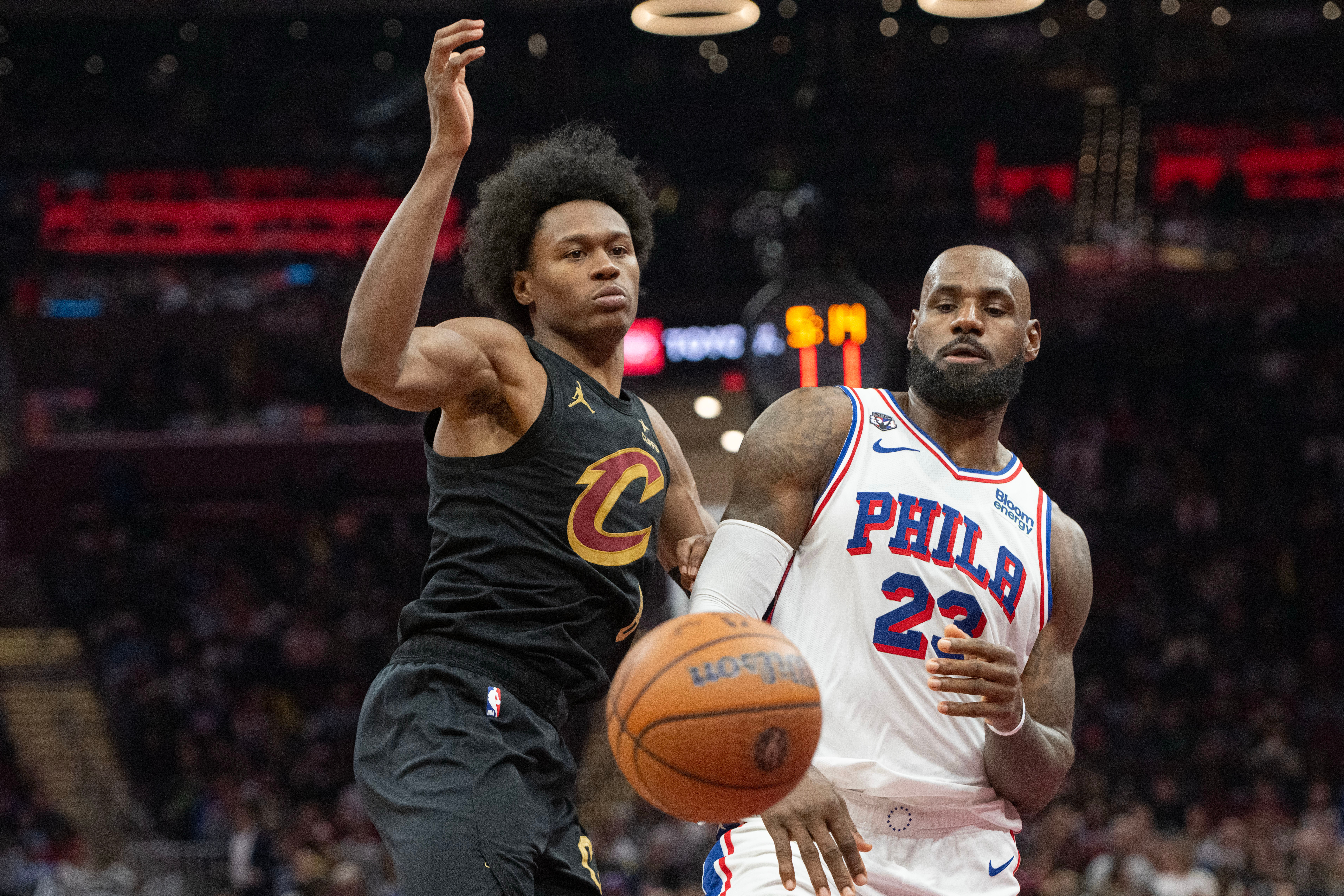
    LeBron James (23) finished with eight points in 3-of-12 shooting in his first game back in Cleveland as a Sixer.Phil Long

    Fans had already populated the stands as James went through his pregame warmup — and greeted several familiar faces, such as the in-house DJ — more than an hour before tipoff. The concourse was flooded with more people wearing James jerseys — including the green and gold from St. Vincent-St. Mary High School — along with T-shirts bearing his “Witness” slogan. Three younger boys sitting together in the lower bowl resembled the guys spotted earlier outside, wearing James jerseys from various teams, but backward so his name and No. 23 were prominently displayed across their chests.

    There was no tribute video for James on Friday, after a January retrospective shown while he was back as a Laker elicited a teary reaction. He was introduced last in the Sixers’ starting lineup, with more gusto from the public address announcer than the typical visitor would receive. Cheers outnumbered any smattering of boos.

    “From pregame shooting times, it was rocking the whole time,” Wade said.

    Yet once the actual game began between two likely Eastern Conference contenders, James sputtered to his worst performance as a Sixer. He went 3-of-12 from the field for eight points. He totaled six turnovers against three assists. In one second-quarter sequence, he gave the ball away on offense and then got called for goaltending while trying to reject Peyton Watson’s layup at the opposite end. It took until the fourth quarter for James to grab a rebound and push it down the court for an authoritative finish.

    James received a standing ovation when he checked out at the 3-minute, 54-second mark of the fourth quarter, with his team trailing by 20 points. But he did not linger on the court following the final buzzer, instead heading straight for the tunnel toward the visitors’ locker room.

    “I definitely did not feel in a good rhythm offensively,” James said.

    More benchmark games are on deck for these star-studded Sixers.

    Jaylen Brown will face his old team, the Boston Celtics, for the first time on Tuesday, then is expected to play in Boston as a visitor for the first time on Jan. 21. James on Christmas Day will return to Los Angeles for the first time since leaving the Lakers in free agency, and on Jan. 30 will be back in Miami, where he also previously starred and considered returning this summer.

    But none of those are Cleveland, the city that defines so much of James’ historic NBA career. He spent part of this past offseason celebrating the 10th anniversary of the Cavaliers’ title with former teammates. And even after Friday’s clunker, James entertained a question about the magnitude of the day his jersey is finally raised into Rocket Arena’s rafters.

    “The journey from being an 18-year-old rookie, to leading a franchise to a championship,” James said. “And everything in between.”