Blog

  • Across the country, homebuyers have the upper hand. But it’s a seller’s market in Montco, Chesco, and Bucks.

    Across the country, homebuyers have the upper hand. But it’s a seller’s market in Montco, Chesco, and Bucks.

    In most of the country’s largest housing markets, more people are selling homes than buying them, giving buyers more chances to get a home.

    But in most of Philadelphia’s collar counties, buyers outnumber sellers, which gives sellers an advantage as more people compete for their properties.

    In August, the combined market that the real estate brokerage Redfin calls Montgomery, Chester, and Bucks Counties was one of only five seller’s markets out of the 49 most-populous U.S. markets that Redfin analyzed. There were about 5,800 sellers and almost 7,300 buyers in the market last month.

    The area’s place in Redfin’s list reflects strong demand for homes and a housing supply that isn’t keeping up.

    “You actually have increasing demand,” said Chen Zhao, head of economics at Redfin. And “your supply is actually decreasing rather than increasing, which is what you see in most parts of the country.”

    But the region is more buyer friendly than it used to be. In the years after the start of the pandemic, the gap between the shares of sellers and buyers was twice what it was this August. Only last year did the gap start narrowing significantly as more sellers entered the market, Zhao said.

    Redfin used a model to estimate the number of homebuyers and home listing data to estimate the number of sellers.

    (function(){function e(){window.addEventListener(`message`,function(e){if(e.data[`datawrapper-height`]!==void 0){var t=document.querySelectorAll(`iframe`);for(var n in e.data[`datawrapper-height`])for(var r=0,i;i=t[r];r++)if(i.contentWindow===e.source){var a=e.data[`datawrapper-height`][n]+`px`;i.style.height=a}}})}e()})();

    A lot of buyer’s markets

    Almost three-quarters of the major metros Redfin looked at — 36 of 49 — were buyer’s markets in August, meaning sellers outnumbered buyers. (One of the country’s 50 biggest metros, Fort Lauderdale, Fla., did not have enough data for the analysis.)

    Homebuyers in buyer’s markets tend to have the upper hand in negotiations, because they have more choices, and sellers compete for them instead of the other way around. Housing supply has increased as homes hit the market that builders started constructing years ago and homeowners who didn’t want to give up their low mortgage rates are forced by life circumstances to sell, Zhao said.

    But the picture isn’t all rosy for the country’s buyers. Home prices and mortgage interest rates continue to climb, pricing some people out of the housing market. Nationally, home-buying demand has dropped slowly and steadily over the last few years, Zhao said.

    But there are opportunities for those who can afford to purchase a home, whether with household wealth or homebuyer assistance programs.

    The combined market that Redfin defines as Philadelphia and Delaware County is a buyer’s market. It had about 5,900 buyers and about 8,900 sellers in August.

    But because of continuing demand, it’s still one of the five markets where sellers were least likely to give concessions to buyers in August, according to a separate Redfin report. These buyer incentives include covering closing costs and paying for repairs.

    Comparing markets

    The Nashville area had the strongest buyer’s market in the country in August, according to Redfin. It had more than double the number of home sellers compared to buyers.

    That was also true in the metros of Miami, Orlando, and Las Vegas, and the Texas metros of Houston, San Antonio, Austin, and Dallas.

    In the Nashville metro, the market turned more strongly in favor of buyers last month, because the number of home listings rose 4% from the previous month, while the number of buyers dropped by only 0.4%.

    Redfin considered eight housing markets to be balanced, with roughly the same number of buyers and sellers in August. Balanced markets include New Brunswick, N.J.; New York; and Baltimore.

  • 🐟 Fishtown’s fuzzy borders | Morning Newsletter

    🐟 Fishtown’s fuzzy borders | Morning Newsletter

    Happy Monday, Philly. We’re in for some sunshine, with highs near the low 70s.

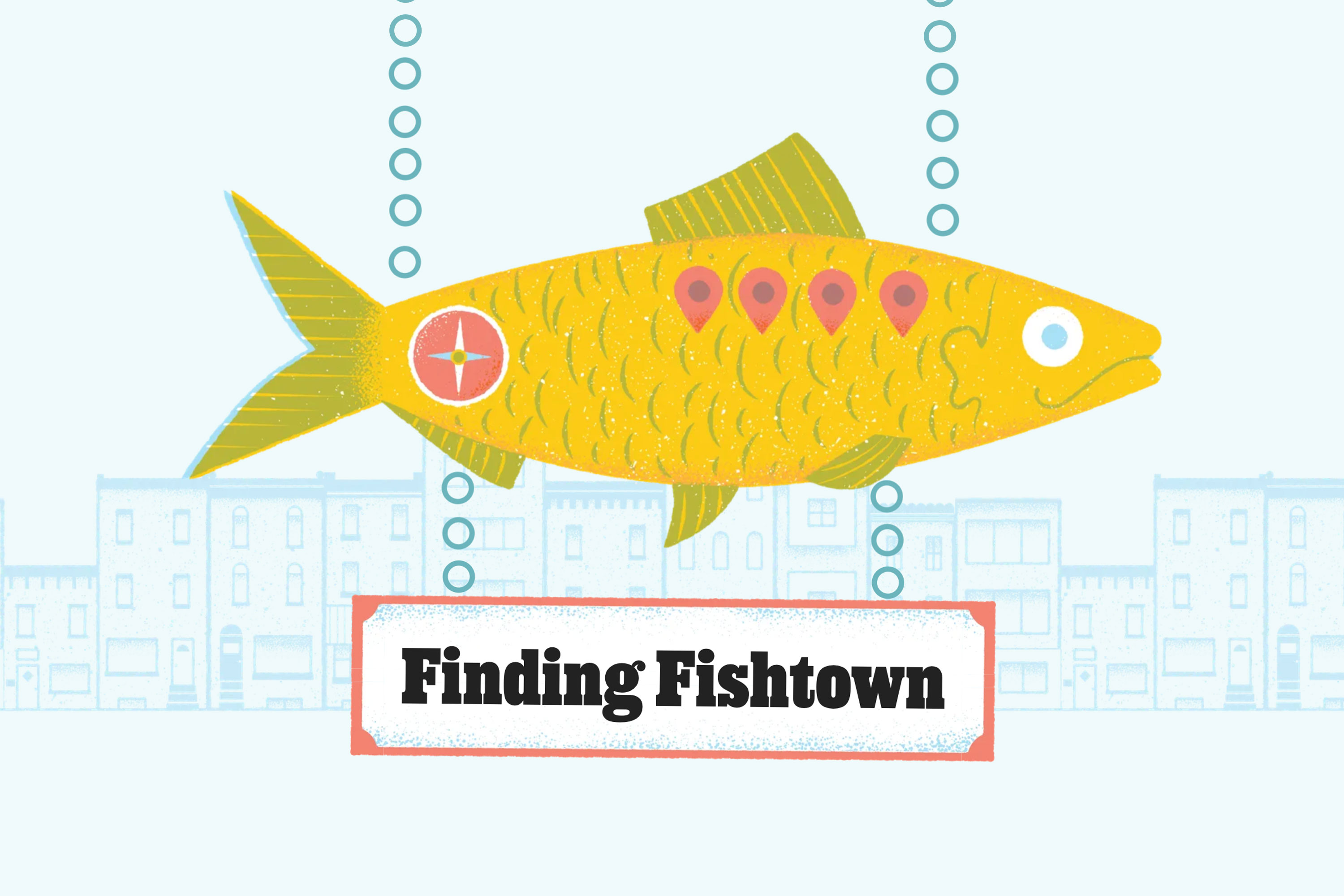
    Today, we start with a question: Where, exactly, does Fishtown begin and end?

    Then, our reporters have uncovered an uncanny connection to a crematorium in the sprawling missing persons investigation centered on the Olney home of Raymond “R.C.” Horsch.

    Plus, Pennsylvania officials struggle to balance transparency and privacy concerns in measles cases, and more news of the day.

    — Laura Benshoff (morningnewsletter@inquirer.com)

    If someone forwarded you this email, sign up for free here.

    What’s in a name?

    Decades of gentrification in the River Wards have blurred Fishtown’s borders.

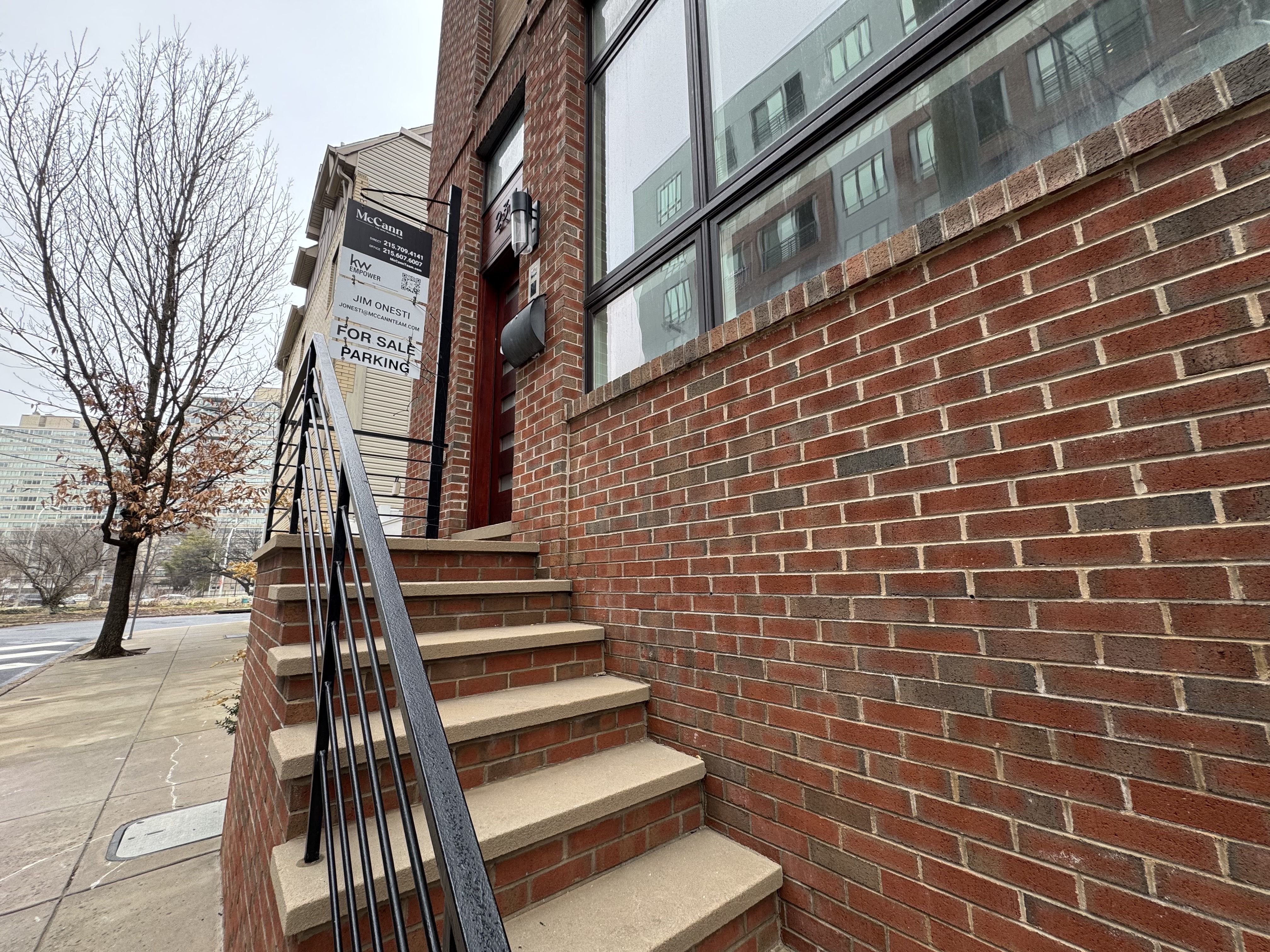
    Developers tagged their properties with the desirable neighborhood name as they ventured into sections of Kensington.

    New residents also adopted the moniker, hanging fish placards on homes well north of what would have been considered Fishtown years ago.

    What’s at stake is more than what to call a few blocks: A neighborhood name can shape a place’s identity, its perceived desirability, and even how it is marketed and valued.

    At the same time, these borders can be informal by design.

    “There never really was a Fishtown, government-wise. It was a localism,” explains Kenneth Milano, a Kensington-born historian and cofounder of the Kensington History Project.

    The Inquirer’s Michael Klein and Sam Morris investigate Fishtown’s changing boundaries.

    Ashes in Kensington

    A piece of art created by the late Raymond “R.C.” Horsch points to a bizarre connection.

    It shows a woman’s body being loaded into an incinerator.

    Horsch, who died of a lung condition last year, is at the center of a sweeping investigation into the disappearances of seven women, some of whom were last seen at his home in Olney. So far no remains have been recovered.

    Horsch was also an artist and pornographer, capturing women in addiction, sometimes in violent scenarios. Some of those images were staged. But local and federal investigators believe others show evidence of harm.

    In a 2014 art exhibition, Horsch played a video of an autopsied body in a crematorium. The Inquirer has uncovered that it was taken in a facility affiliated with the notorious Garzone Funeral Home, which was shut down in 2007 over illegal body parts sales. Police are now investigating that connection.

    Read more from The Inquirer’s Ryan W. Briggs, Max Marin, Barbara Laker, and Ellie Rushing.

    What you should know today

    Quote of the day

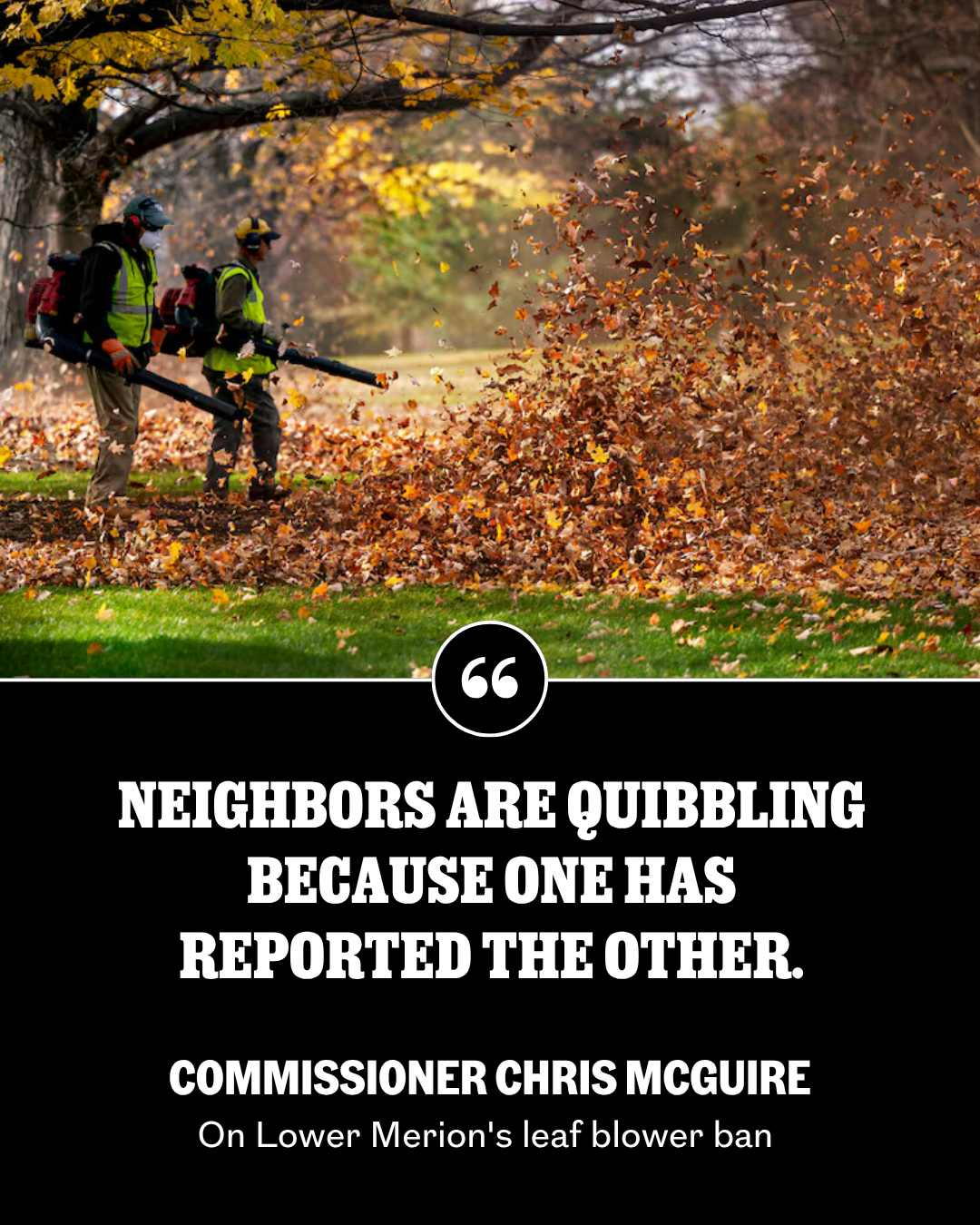
    Enforcing Lower Merion’s ban on gas-powered leaf blowers seemed like it would be a breeze.

    But now, the policy is pitting neighbors against each other and straining township resources, reports The Inquirer’s Denali Sagner.

    🧠 Trivia time

    For one weekend in September, Phoenixville will transform into this fictional town from Gilmore Girls.

    A) Mayberry

    B) Springfield

    C) Widow’s Bay

    D) Stars Hollow

    Think you know? Check your answer.

    What we’re…

    ❄️ Forecasting. With the fall equinox on Tuesday, The Inquirer’s weather reporter Tony Wood turns his attention to predictions about the upcoming winter.

    🪡 Profiling. Many small businesses close when owners can’t find a successor, but a tailor shop in Bucks County bucks that trend. A fifth generation is set to take over, writes The Inquirer’s Jess Rohan.

    🛷 Checking out. Do you dream of hurtling down an icy track at speeds befitting a local highway? The Inquirer’s Maggie Prosser visited a Malvern business park to see how USA Luge recruits the next generation of sliders.

    🧩 Unscramble the anagram

    Hint: Rapper and cohost of the podcast Million Dollaz Worth of Game.

    ALIKE GLIDING

    Email us if you know the answer. We’ll select a reader at random to shout out here.

    Cheers to Mattingly Cohen, who correctly guessed Sunday’s anagram: Michelle Zauner. The Crying in H Mart author and leader of the Philly-born pop band Japanese Breakfast has a new memoir on the way.

    Photo of the day

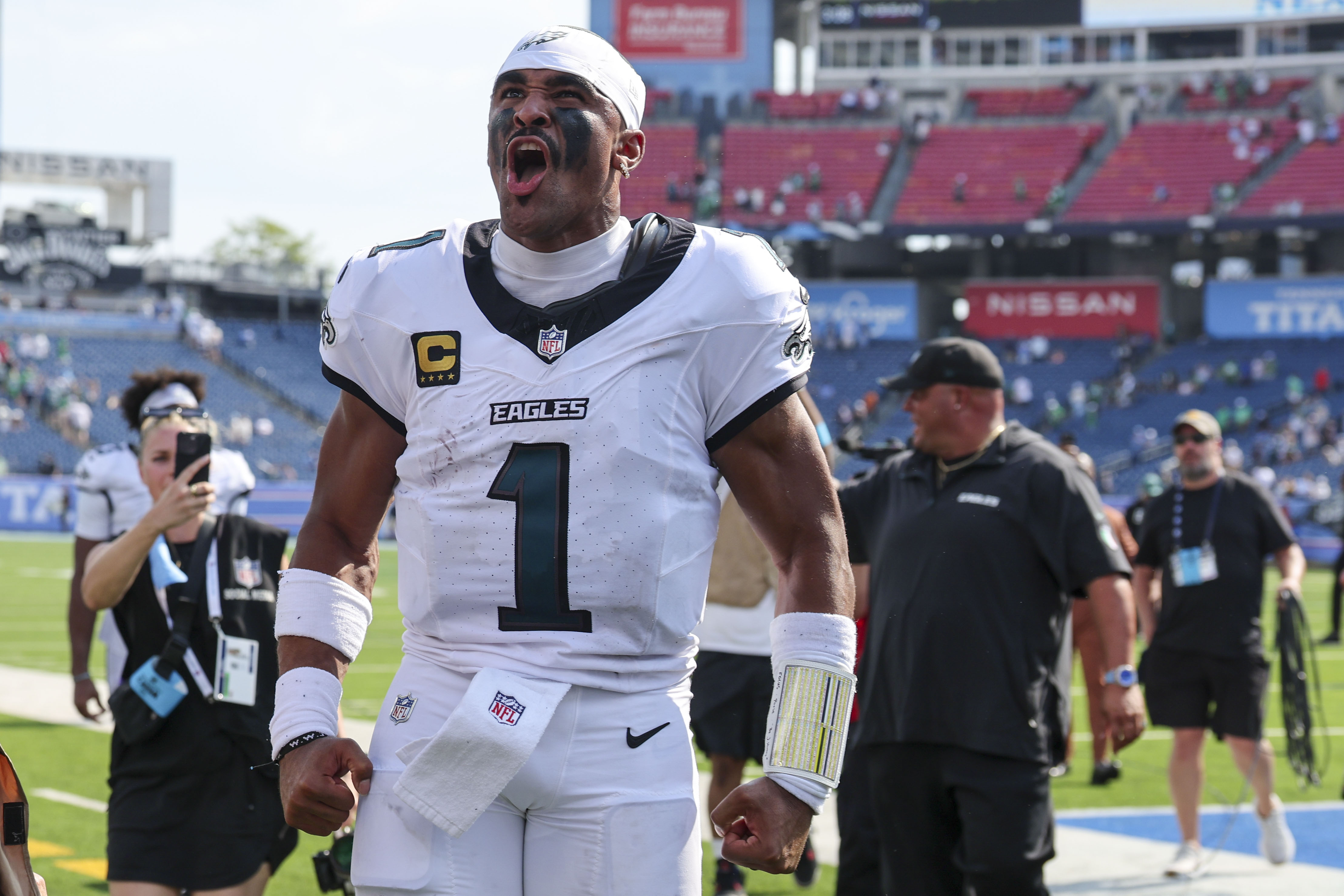
    Eagles wide receiver Darius Cooper catches the game-winning touchdown late in the fourth quarter against the Tennessee Titans at Nissan Stadium in Nashville, Tenn., on Sunday, Sept. 20, 2026.Yong Kim / Staff Photographer

    📬 Your ‘only in Philly’ story

    It’s time for our weekly ‘only in Philly’ feature, where we elevate stories from our readers. Email us a colorful anecdote about life in Philly for a chance to be featured in the Monday edition of this newsletter.

    This “only in Philly” story comes from me! A couple of weeks ago, I was walking near my home in South Philly, when I encountered the following:

    Three little girls who must have been 7 or 8 years old stopped me on the street and asked if they could sing me “a carol.”

    I said “Sure,” and looked around to see if any parents nearby had put them up to it. I didn’t see anyone.

    They launched into a song mostly in unison that I couldn’t quite place until they got to the chorus: “I don’t want to lose your love, toniiiiiight.” They hit that line with gusto and then stopped, the tallest giving a small nod of satisfaction with their performance. Then, they traipsed off into the early evening.

    The mid-’80s Outfield hit “Your Love,” about a one-night stand is not my idea of a carol but it was cute nonetheless.

    👋 Thanks for spending some of your Monday with The Inquirer.

    By submitting your written, visual, and/or audio contributions, you agree to The Inquirer’s Terms of Use, including the grant of rights in Section 10.

  • After decades of fund growth, Vanguard pivots

    After decades of fund growth, Vanguard pivots

    “Trees don’t grow to the sky,” the late Vanguard Group founder John C. Bogle Jr. was fond of warning — meaning that it’s a mistake to think happy days and profitable trends will go on forever.

    Malvern-based Vanguard itself seemed to defy Bogle’s warning. Led by Vanguard’s index funds simulating the S&P 500 and other broad market benchmarks, founded 50 years ago on Aug. 31, Vanguard grew relentlessly, even accelerating after the dot-com bust and in the Great Recession, when rival Fidelity and other investment firms shrank and cut staff.

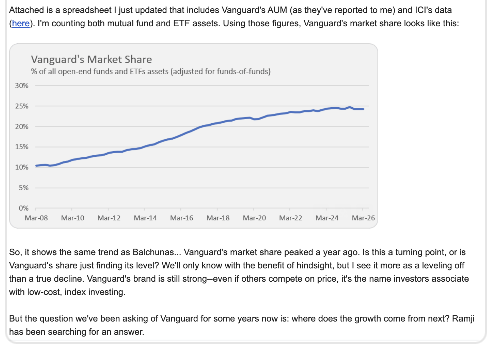
    But data posted by Morningstar Inc. and confirmed by other investment trackers show Vanguard’s share of the U.S. mutual fund and exchange-traded industry, a business that now totals $40 trillion, has plateaued in recent years and actually shrank to 27% from 28% over the past year.

    Vanguard Group’s market share of U.S. mutual funds and exchange-traded funds (EPS), as measured by Jeff DeMaso, publisher of the Independent Vanguard Adviser, using data collected from the Investment Company Institute and other industry sources. The text also references similar findings by Eric Balchunas, a Bloomberg investments analyst and author of a book on Vanguard’s founder, “The Bogle Effect.”Jeff DeMaso

    “SHOCK: Vanguard’s market share of US fund assets has begun to DECLINE after rising for 50 years,” Eric Balchunas, a Bloomberg LP fund analyst and author of The Bogle Effect, posted earlier this month on social media.

    It’s not that Vanguard took its eye off the ball, Balchunas said in an interview. Like other fund groups, Vanguard has shifted some retirement-plan assets — it won’t say how much — into other accounts that don’t show up in the publicly traded fund listings.

    But the shift marks the end of an era, he said, not so much a loss for Vanguard but “a dream realized” as the legacy of founder Bogle, who died in 2019. Fidelity, BlackRock, Schwab, and other Vanguard rivals “lowered fees and increased value” to shareholders because Vanguard’s strategy forced them to compete with low prices and simple products.

    “Vanguard’s market share peaked a year ago,” said Jeff Del Maso, publisher of the Independent Adviser for Vanguard Funds, after reviewing industry data. “I see it more of a leveling off than a true decline. But where does the growth come from next?”

    More Vanguard effects?

    Salim Ramji, a former BlackRock fund executive tapped by Vanguard’s board in 2024 as the company’s first “outside” CEO, has outlined in public interviews some other areas where Vanguard hopes to transfer its energy. He declined to be interviewed for this article.

    Under Ramji, Vanguard has:

    • Added dozens of new bond funds and other debt investments, which tend to attract investors when interest rates go higher, economic expansion slows, and stock prices slow.
    • Emphasized a new generation of cash savings accounts, years after Vanguard did away with its old bank-style checking accounts. Under Ramji, Vanguard has expanded promotion of its FDIC-insured Vanguard Cash Plus Account, with yields comparable to bank certificates of deposit in an effort to keep Vanguard customers from moving short-term money to banks and outside firms and to lure in new investors.
    • Added investor advice. Ramji’s predecessors built advisory services since the 1990s with phone-based, digital, and hybrid systems. Seeing a big still-untapped market, Ramji in August agreed to pay $4.6 billion for Altruist, whose founder, self-described Bogle disciple Jason Wenk, developed Hazel, an “AI-forward” financial tech and custody platform popular with independent investment advisers who sell Vanguard funds. Wenk will run the business, separate from Vanguard’s Digital Advisor and Personal Advisor units, when the deal closes.
    • Partnered with Wellington Management and Blackstone to launch private investment funds, starting in July. The WVB funds expect to report their holdings after Sept. 30. WVB All Markets and a smaller WVB Blackstone All Privates fund are being sold for now through Bank of America and its Merrill Lynch affiliates.

    But Ramji has stopped short of following other investment houses into predictions markets and cryptocurrency investments.

    “We believe investments deliver cash flows or have prospects of cash flows,” which these speculative investments don’t, Ramji said last month in an interview with Peter Mallouk of $800 billion asset, Kansas-based financial adviser Creative Planning LLC. Ramji compared such products to “a slot machine where the house always wins. That does harm to the individual investor.”

    Avoiding activism

    Under Ramji, Vanguard has promised not to use its extra clout — its funds own around 8% of most U.S. stocks — to pressure companies to change policies.

    Vanguard has backed off “environmental, social and governance” commitments. In March‚ Vanguard agreed to pay $30 million to Texas and other Republican-run states to settle litigation alleging that Vanguard violated antitrust laws when it joined environmentally minded groups that sought to reduce U.S. reliance on coal and other carbon energy sources.

    The settlement with the states helped lower Vanguard’s profile in the fraught world of political investing. Ramji went further than other firms. BlackRock and others sued by the states have so far declined to settle similar lawsuits.

    Analyst Balchunas is bullish that Ramji has cleared the way to reach more customers, extending “the Vanguard effect,“ even if its fund business has plateaued for a time.

    “The Vanguard effect is bigger than Vanguard now,” Balchunas said.

    This story has been updated to delete an incorrect figure for the WVB All Markets Fund.

  • Black and Jewish Philadelphians must rebuild an essential alliance

    Black and Jewish Philadelphians must rebuild an essential alliance

    Black and Jewish communities in America share a long history of supporting each other against hate and discrimination.

    Together, our people helped advance laws that challenged discrimination in housing, employment, and education. Together, we supported initiatives that helped move our country closer to its highest ideals.

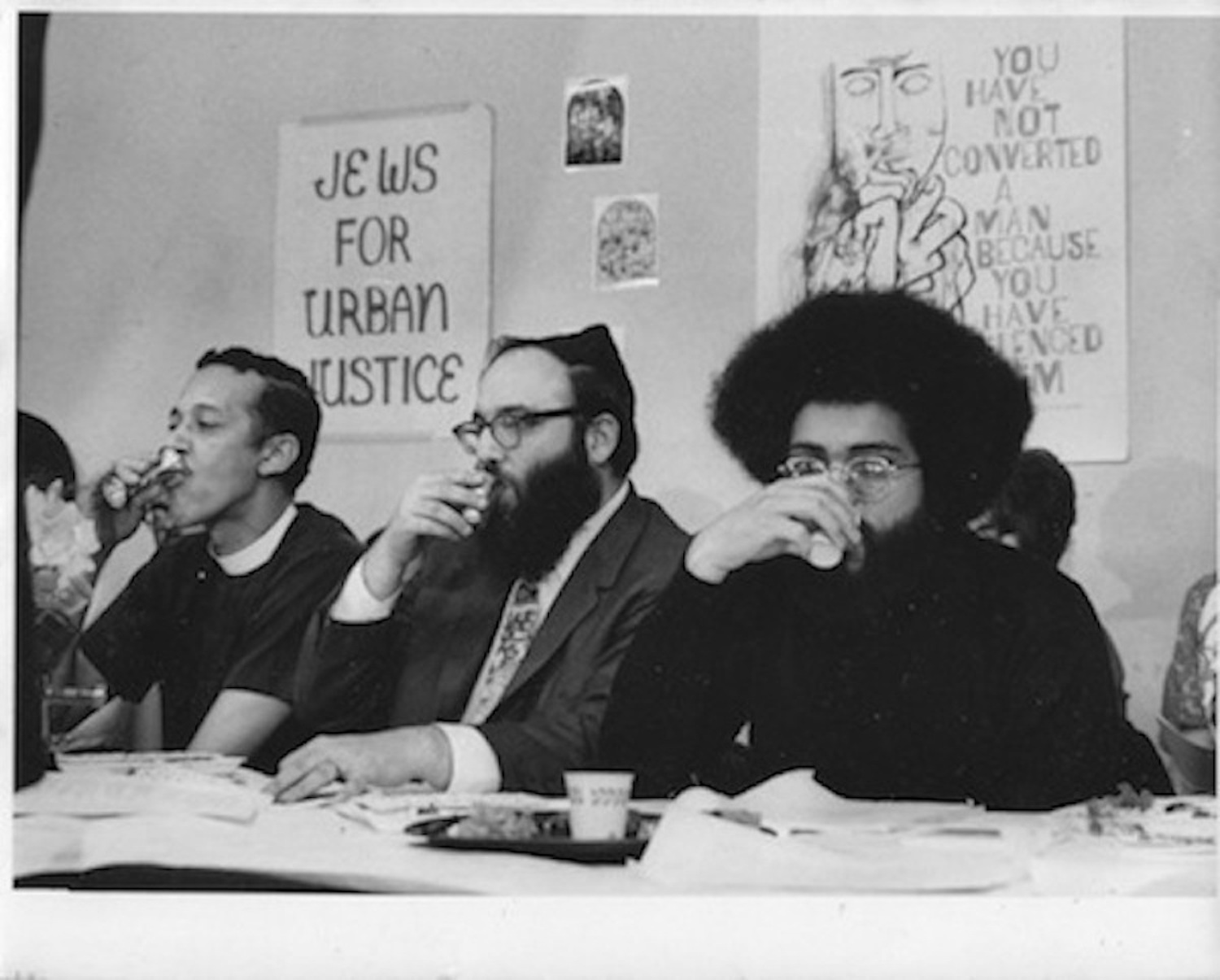
    Rabbi Arthur Waskow (center) with the Rev. Channing Phillips (left) and TV director Topper Carew (right) at the first Freedom Seder held in April 1969, at Lincoln Temple United Church of Christ in Washington, D.C.Courtesy of the family

    But in recent years, the relationship between the Black and Jewish communities has become strained, even as antisemitism and racism threaten us all.

    That is why the two of us — each a rabbi from the Main Line — recently went to Georgia, along with dozens of clergy from across the country, for the Atlanta Summit of Black Pastors and Rabbis. We gathered at the Temple, Ebenezer Baptist Church, and the King Center, locations that made us recall the accomplishments and the sacrifices of the Black-Jewish alliance. We came to explore what is required to rebuild the partnership now.

    Rabbi Geri Newburge stands outside The Main Line Reform Temple in Wynnewood in April 2020.JOSE F. MORENO / Staff Photographer

    As we experienced firsthand, the Black and Jewish communities do not always understand each other. Views on diversity, equity, and inclusion (DEI), Zionism, racial justice, power, and vulnerability can contrast sharply based on our personal experiences. But we were able to speak candidly about the times our communities had felt unseen or abandoned by each other.

    One exchange brought those differences into focus.

    Black participants described economic precarity following federal workforce cuts associated with the Department of Government Efficiency (DOGE) and attacks on DEI, particularly for Black women. Jewish participants spoke, in turn, of social precarity amid rising antisemitism. Hearing both made our shared responsibility clearer.

    Those conversations led to the understanding that Black and Jewish Americans need an agreement against abandonment. It is a simple but demanding idea: When your community is threatened, ours will not disappear. When disagreement becomes painful, we will not walk away. We will listen, speak honestly, and doggedly refuse to give up on our relationships.

    That does not mean we will see eye to eye on every issue. It means we will have the commitment to hear hard truths without turning disagreement into disdain.

    Speakers like civil rights organizer Eric Ward helped us to understand how the challenges are interconnected. As he explained, many people understand antisemitism to just be the hatred of Jews, but in reality, it is also a conspiracy theory about how society works. Because antisemitic conspiracy theories ignore the real roots of societal issues — such as socioeconomic inequality and structural oppression — and instead focus on tropes and pat narratives, they help sustain racism and authoritarianism as well, creating a toxic blend that threatens both Black and Jewish communities.

    The comments from Black Jews in attendance were, perhaps, most illuminating. Because they sometimes experience racism in Jewish spaces and antisemitism in Black spaces, their lives counter the perception of a neat division between “our community” and “theirs.” With their unique experiences, their voices must be central to the work ahead.

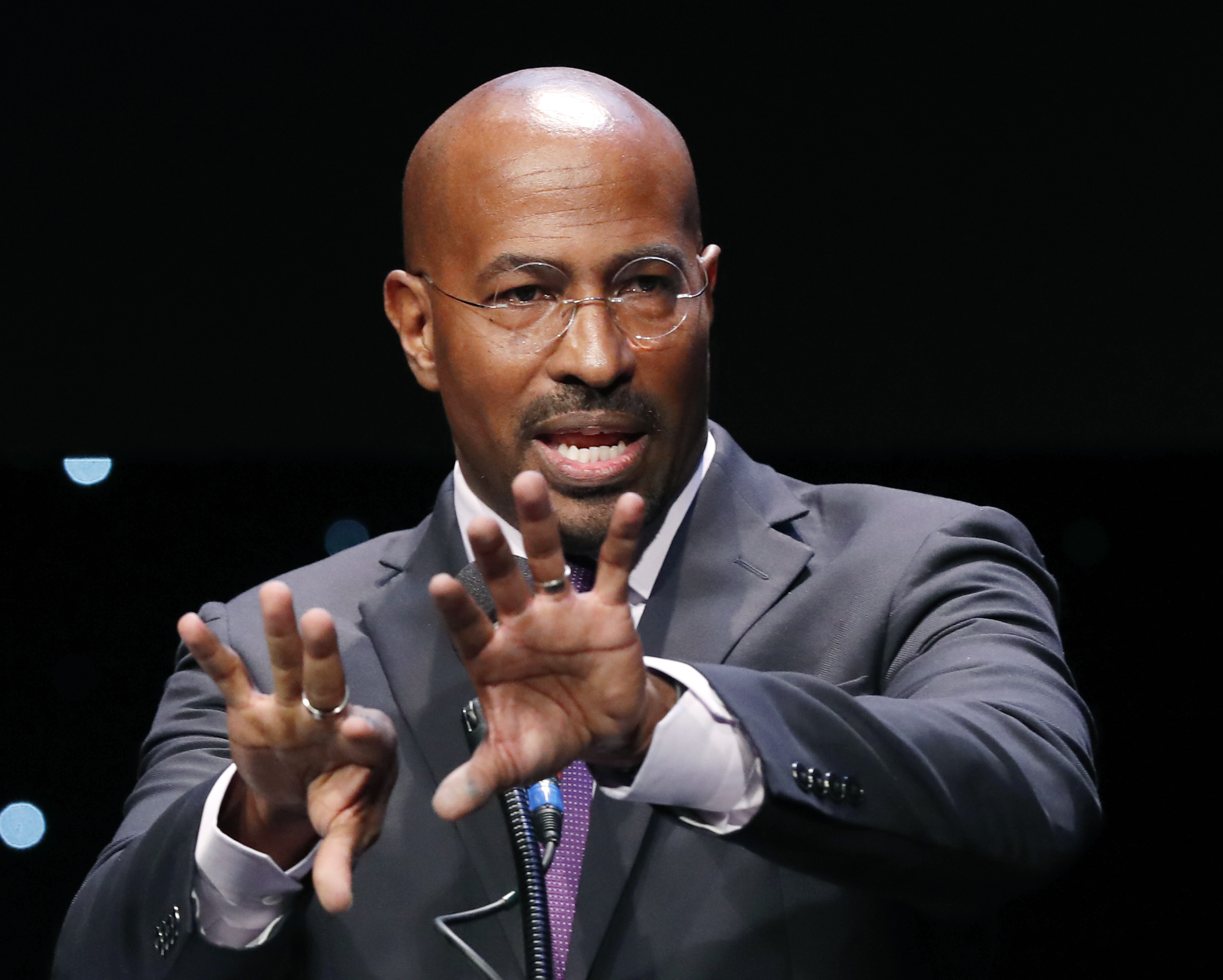
    Political commentator Van Jones told those gathered for the Atlanta Summit of Black Pastors and Rabbis that a Black and Jewish alliance today must harness the diverse strengths each community possesses.Kathy Willens

    Another speaker, political commentator Van Jones, cautioned that the alliance we are building cannot simply recreate the one from the 1960s. Back then, Jews were still reeling from the direct memory of the Holocaust, while Black Americans were still living under the restrictions of Jim Crow. That alliance grew from shared vulnerability, but the next iteration must harness the diverse strengths each community possesses today.

    Jones invoked the image of a relay runner receiving and passing a baton. Honoring the generation that came before, he said, means accepting responsibility for the next leg of the race.

    For us, that work begins right here in Greater Philadelphia.

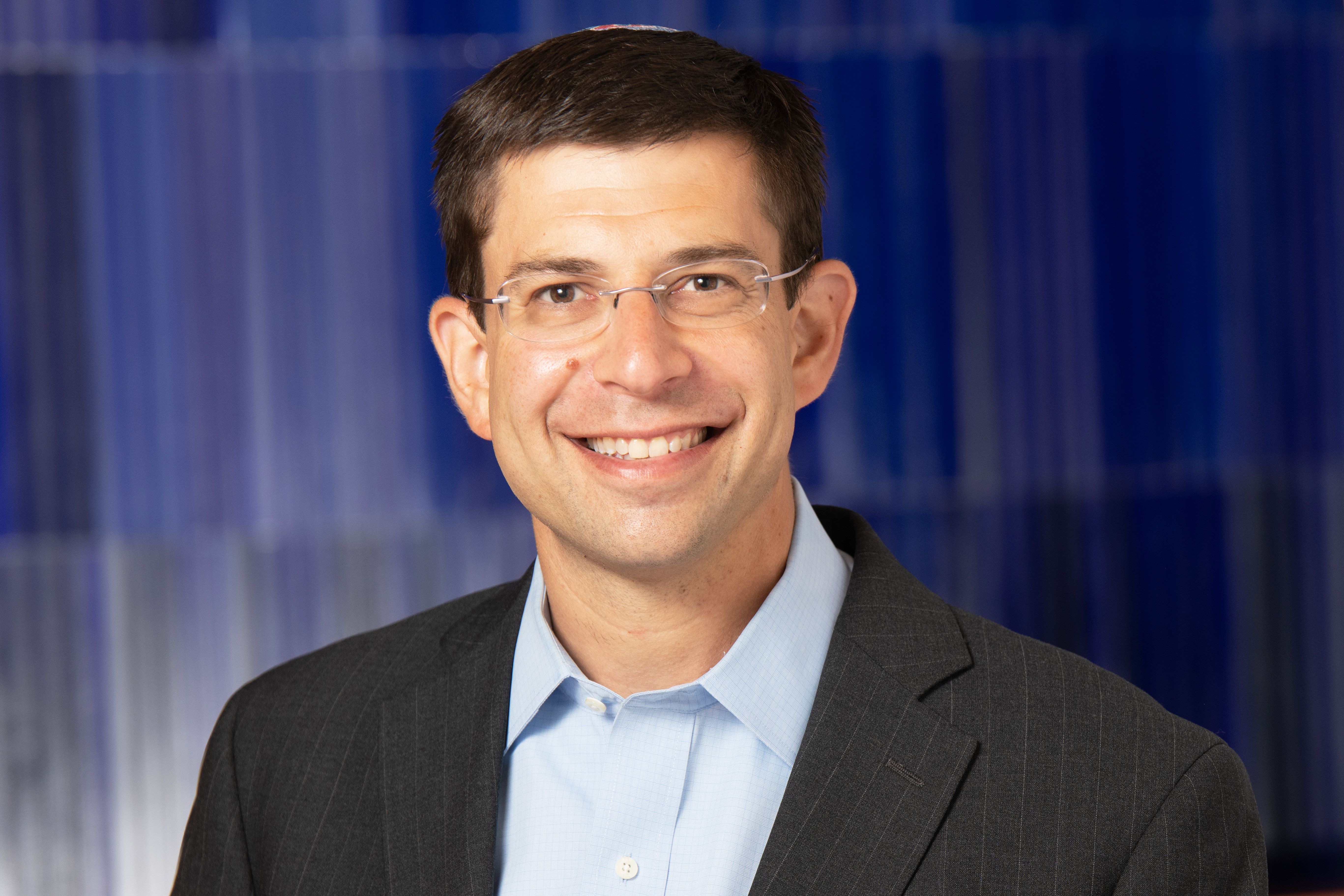
    Rabbi Eric Yanoff serves Adath Israel on the Main Line in Merion Station.Courtesy of Eric Yanoff.

    We returned home committed to building and securing stronger relationships between the Black and Jewish communities before a crisis makes them necessary. We will come together with our colleagues in the Black Christian community and invite our congregations to learn from each other. We will create opportunities for shared study, worship, and community service. We will speak honestly about racism and antisemitism.

    Ultimately, we will build the trust that allows us to call on each other when our communities are hurting.

    Relationships require intention, humility, and time. They also require both communities to reject the idea that advocating for someone else diminishes our ability to defend our own people. We will not always see the world in the same way. But we can promise not to leave each other alone in it.

    Rabbi Geri Newburge serves Main Line Reform Temple-Beth Elohim in Wynnewood. Rabbi Eric Yanoff serves Adath Israel on the Main Line in Merion Station.

  • You should feel safe, not judged, at a doctor’s visit | Expert Opinion

    You should feel safe, not judged, at a doctor’s visit | Expert Opinion

    A friend and colleague recently told me that he can feel anxious about going to see his doctor for follow-up care if he has not accomplished the health goals discussed at his last visit.

    When I asked why, he said he worried that he would be labeled “nonadherent” or scolded for being unprepared. He did not want to waste his doctor’s time.

    I was surprised, since many of my own patients come in for visits without completing every goal we set out. I may not have communicated the plan clearly, and sometimes, as the saying goes, life gets in the way.

    Then I began to wonder about patients who cancel appointments, miss follow-up visits, or never schedule them at all. Could some be avoiding care because they fear being judged for not meeting expectations?

    As physicians, we often emphasize treatment plans and health goals. Less often do we consider whether patients feel safe admitting when they have struggled to follow them.

    I would never scold a patient if they did not complete everything on the to-do list. At the same time, I don’t think I have ever directly said that I want to be sure they come back for follow-up regardless. I realized that I could address this with phrasing like:

    I trust you will try your best to follow our plan. But whether you are able to get these things done or not, I still want to see you back in a few months.

    Astute problem-solving, empathy, compassion, and clear communication are qualities clinicians aspire to in our professional roles. Equally important, though less emphasized, is creating a psychologically safe environment. This means ensuring patients can speak honestly without feeling at risk of being judged.

    Psychological safety was originally studied in workplace teams, based on the work of Harvard researcher Amy Edmondson. To reach high performance, Edmondson found team members need to feel comfortable taking risks, admitting mistakes without fear of shaming or reprisal.

    The principles of psychological safety apply to many settings. Planet Fitness, for example, posts signs on the walls and equipment declaring “Judgement Free Zone” and “No Gymtimidation” in an effort to make members feel welcome regardless of their level of fitness.

    In medicine, a psychologically safe office or exam room may help patients feel more comfortable being vulnerable and discussing more emotionally sensitive concerns. It may also improve the likelihood of scheduled follow-up.

    So what did I tell my friend-colleague? I suggested that he think about the source of his follow up worries. Some of this may require self-exploration, but there may also be areas where his own medical practice could do a better job at creating a psychologically safe, nonjudgmental environment that encourages follow-up.

    Patients should know that a missed goal is not a failed appointment. In health, as in life, progress is rarely linear. In fact, the times when things have not gone according to plan are often the times when medical follow-up matters most. Clinicians should make that message clear.

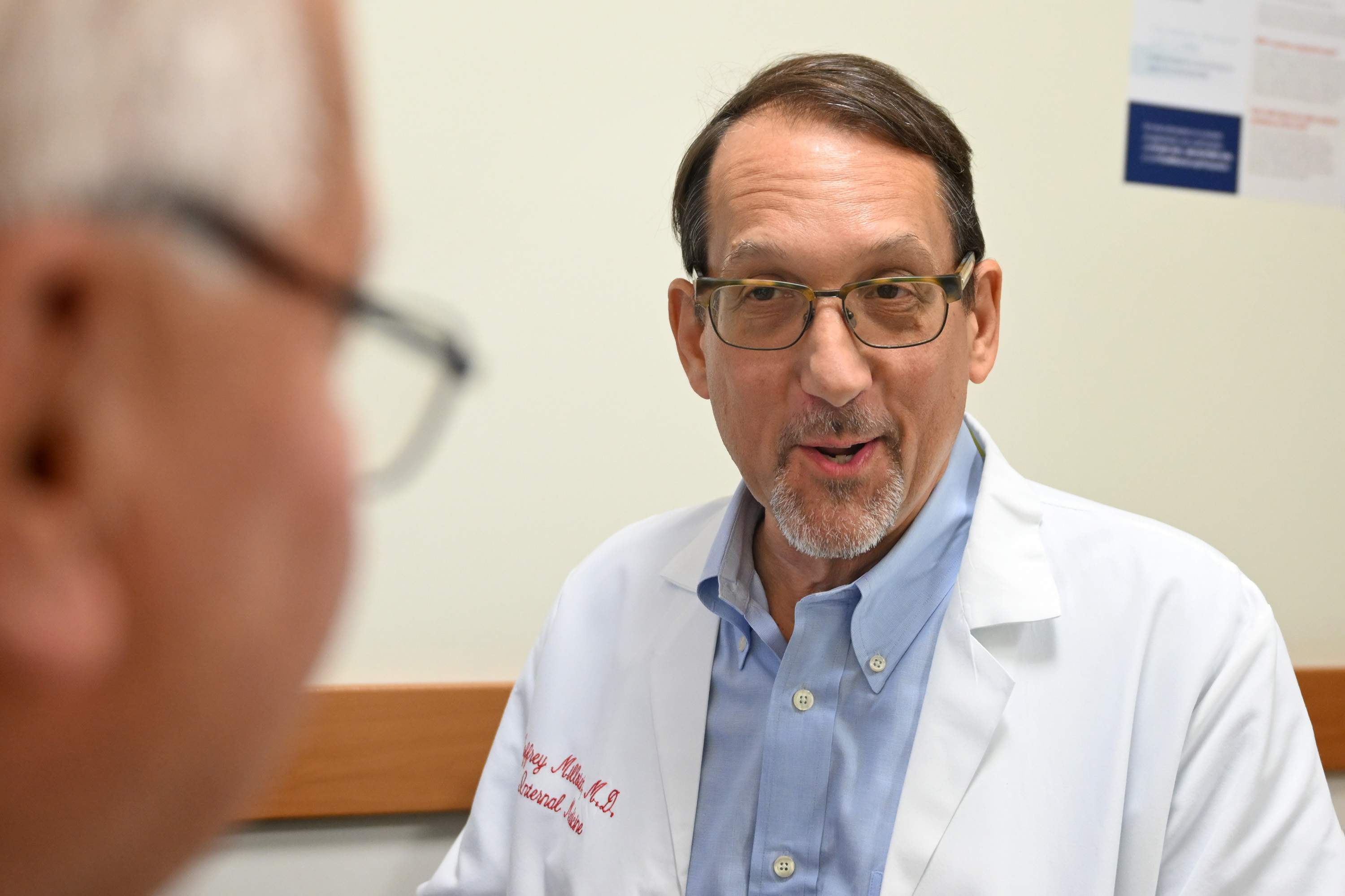
    Jeffrey Millstein is an internist and regional medical director for Penn Primary and Specialty Care.

  • Villanova star Jasmine Bascoe represents home nation on global stage: ‘What more could you ask for?’

    Villanova star Jasmine Bascoe represents home nation on global stage: ‘What more could you ask for?’

    In her first two seasons with Villanova, Jasmine Bascoe has established herself as one of the best women’s basketball players in the Big 5. Now, she’s establishing a role with Canada’s national team.

    In August, Bascoe was named to Canada’s 12-player roster for a FIBA women’s basketball Olympic prequalifying tournament later that month in Guadalajara, Mexico.

    While the tournament marked Bascoe’s senior team debut with Canada, she previously represented her home nation at the FIBA U19 Women’s Basketball World Cup in 2025. At 20 years old, the junior guard was now playing for the country’s top women’s team.

    Canada went 5-0 in the tournament, capped by an 83-53 win over Mexico in the final on Aug. 23. With the tournament win, Canada secured the only available spot in the FIBA women’s Olympic qualifying tournament in March 2028.

    Bascoe led Canada in assists with 5.4 per game, and was second in points with 10.8 per game.

    At training camp for the tournament, Bascoe, who was coming off an injury, said she learned from watching those around her before she could get involved herself. By the time the tournament began in August, she was getting used to playing alongside Olympians like Yvonne Ejim, Sami Hill, Shaina Pellington, and Syla Swords.

    She said the veterans’ constant communication allowed the team’s younger players, like Bascoe, to learn more.

    “They weren’t on us right away to be perfect, which obviously gives us a lot more confidence as well,” Bascoe said. “They were everything we needed them to be. They were leaders, but then at the same time, they were great friends. Like they honestly were some of my closest friends this whole summer, which was just amazing, and just getting to hear stories from them and their other pro experiences and their NCAA experiences, I mean, what more could you ask for?”

    Villanova women’s basketball junior guard Jasmine Bascoe (right) is back with the Wildcats after a summer representing her home nation.Yong Kim / Staff Photographer

    The fifth Olympian on the team was Kayla Alexander, who represented Canada in Tokyo in 2020 and in Paris in 2024. At 35, she currently plays for the WNBA’s Toronto Tempo and holds Canada’s all-time career rebound record. She’s also from the same hometown as Bascoe: Milton, Ontario.

    After the tournament, Bascoe told Alexander just how much fun she had playing with someone she said is “an amazing person” and “a great leader.”

    “I’ve always looked up to her as a person, but it’s so great,” Bascoe said. “She keeps everyone so level-headed and always on the same page. And she’s a great lifeline between us and the coaches. And so it just made the whole summer very smooth.”

    In her sophomore season at Villanova, Bascoe led the Big East in assists (4.9) and scoring (18.9), finishing ahead of UConn’s Azzi Fudd, who was the No. 1 overall pick in the WNBA draft this year, and Sarah Strong. She also was named the Big 5 Player of the Year.

    Bascoe said the pace and physicality of a tournament involving professionals further improved her game, and it’s something she hopes to implement during her junior year with the Wildcats. As an upperclassman now, Bascoe said sheer speed is no longer going to work for her, and she wants to start incorporating physicality into her style of play.

    “I just think it was a summer full of learning for me,” she said. “Playing at that level is not easy. It’s physical, it’s fast, and it just prepares you so good for everything else, like NCAA, everything. So it was amazing, and I was just fortunate to be able to get some games under my belt with the senior team and end on a good note. … It was a very fulfilling summer, and now I’m ready to bring everything back here to Villanova.”

  • Two-minute thriller | Sports Daily Newsletter

    Two-minute thriller | Sports Daily Newsletter

    It came down to the final two minutes on a steamy Sunday in Nashville.

    The Eagles were down by three points after the Titans made a 32-yard field goal late in the fourth quarter. It was the Birds’ final chance with the ball to either score or tie the game.

    So all eyes turned to Jalen Hurts, who threw two interceptions Sunday, and his performance that followed made up for it.

    Hurts orchestrated a nine-play, 65-yard scoring drive, capped by a 3-yard Darius Cooper touchdown to seal the Eagles’ 24-20 comeback victory.

    Sean Mannion’s offense struggled to find its rhythm for much of the day. The offensive line’s play made the win more difficult than it should have been, which impacted the run game.

    Also, Saquon Barkley suffered a stinger and ran just four times Sunday.

    The defense also suffered some big lapses that almost cost the Eagles a win, but some positives were the wide receiver and tight end rooms. Jeff McLane shares with us his instant grades on the Eagles’ performance.

    Let’s give wide receiver DeVonta Smith some credit. Just when the Eagles looked finish the star receiver came through with a 19-yard sideline catch with 14 seconds remaining.

    It may have not been perfect, but for the fourth time in five years, the Eagles are 2-0.

    — Isabella DiAmore, @phillysport, sports.daily@inquirer.com.

    If someone forwarded you this email, sign up for free here.

    ❓What did you think of Jalen Hurts’ play against the Titans? Email us back for a chance to be featured in the newsletter.

    Three’s the magic number

    Justin Crawford hit a three-run triple to power the Phillies past the Mets on Sunday.Noah K. Murray

    Alex McFarlane has been put in a lot of tough situations. He inherited a runner from Cristopher Sánchez in the seventh inning, and had then allowed two singles to flip the Mets’ lineup back over.

    To get out of the jam, he had to contend Juan Soto, and the rookie did just that. Then an inning later, Justin Crawford delivered a three-run triple in the Phillies’ 7-2 win over the Mets, as the club shrank their magic number to clinch the playoffs to three.

    And the Phillies are optioning reliever Orion Kerkering to triple A, following his second-half struggles. In four appearances in September, Kerkering had an 18.68 ERA.

    Up next: After an off day on Monday, the Phillies begin their penultimate series of the season at home Tuesday against the Brewers (6:40 p.m., NBCSP).

    What we’re …

    🏈 Watching: Highlights from the Eagles-Titans broadcast. And did you see what Jalen Hurts said about Titans DT Jeffery Simmons?

    🙌 Praising: Friends and family coming together in Maple Shade in support of Xavier Taylor, who is still recovering after being struck by a baseball.

    🤔 Wondering: What happened to Adem Bona? According to the Sixers, he suffered a left foot sprain in FIBA World Cup Qualifiers.

    📖 Reading: Villanova star Jasmine Bascoe played on Canada’s national team. Here’s what she learned from the experience.

    Changing the narrative

    Heroics from the Union led to a 4-3 come-from-behind win against Sporting Kansas City at Children’s Mercy Park on Saturday.Courtesy / Philadelphia Union

    The Union changed the narrative in what might be one of the best come-from-behind wins of the season on Saturday against Sporting Kansas City.

    Union interim manager Ryan Richter and Co. continue to surge up the Eastern Conference ladder as a team that was written off in June — after limping into the World Cup break with just one win in 15 matches. Now, the Union have scored 14 goals in their last three games and are on an 11-game unbeaten streak.

    ‘Conviction to be great’

    Penn State wide receiver Koby Howard finished with 135 total yards and two touchdowns against Buffalo on Saturday.Barry Reeger

    Koby Howard has been putting in extra work since the spring and it seems to be paying off. The sophomore receiver continued his great start of the 2026 season with 135 total yards and two touchdowns in Penn State’s 55-13 win over Buffalo.

    (The win also bumped Penn State from No. 14 to No. 13 in the AP Top 25 college football poll.)

    Howard has 344 receiving yards and three total touchdowns through three games this season. He’s averaging 28.67 yards per catch and is on pace to break the Nittany Lions’ single-season receiving yards record. Matt Campbell isn’t surprised by the sophomore’s success.

    In other college football news:

    David Murphy’s take

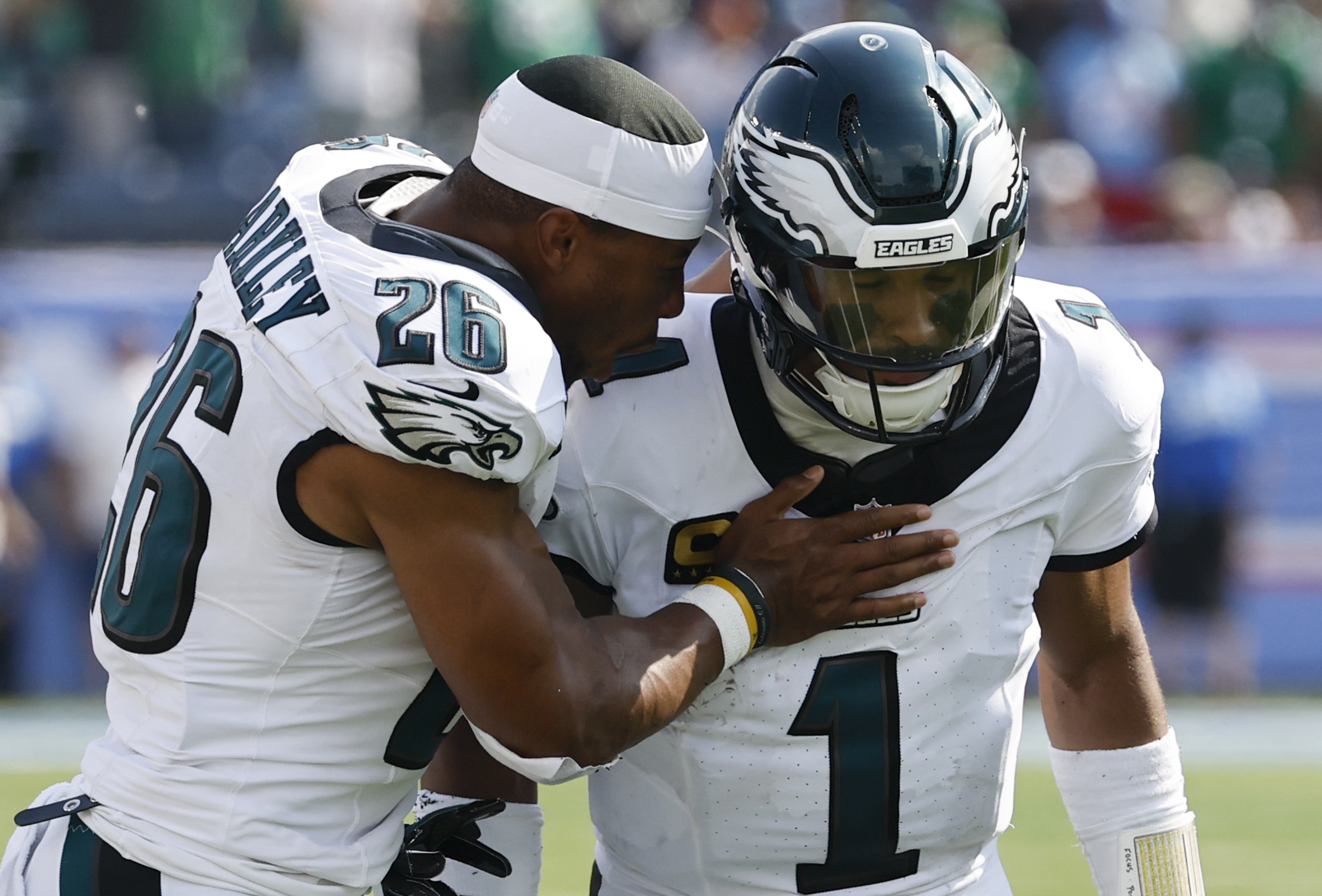
    Saquon Barkley (center) and Eagles quarterback Jalen Hurts celebrate Hurts’ late touchdown pass in Sunday’s win.Yong Kim / Staff Photographer

    You can say a lot of things about Jalen Hurts, but he has shown time and again at every level of football that talent and self-belief prevails. Rarely will you see a quarterback make a more consequential series of throws than the ones Hurts made late on a muggy afternoon in Week 2.

    There are lots of things to be ironed out, but it is far better to iron these things out while 2-0. And once again, Hurts was the difference, writes columnist David Murphy.

    We compiled today’s newsletter using reporting from David Murphy, Olivia Reiner, Jeff McLane, Jeff Neiburg, Kerith Gabriel, Ryan Novozinsky, Lochlahn March, DeAntae Prince, Mia Messina, Conor Smith, Lexie Linderman, Mike Livingston, Dylan Johnson, and Hannah Chang.

    By submitting your written, visual, and/or audio contributions, you agree to The Inquirer’s Terms of Use, including the grant of rights in Section 10.

    Thanks for starting off your Monday with our newsletter. We’ll be back in your inboxes on Tuesday. — Bella

  • The equinox arrives Tuesday in Philly, and it finally feels like fall

    The equinox arrives Tuesday in Philly, and it finally feels like fall

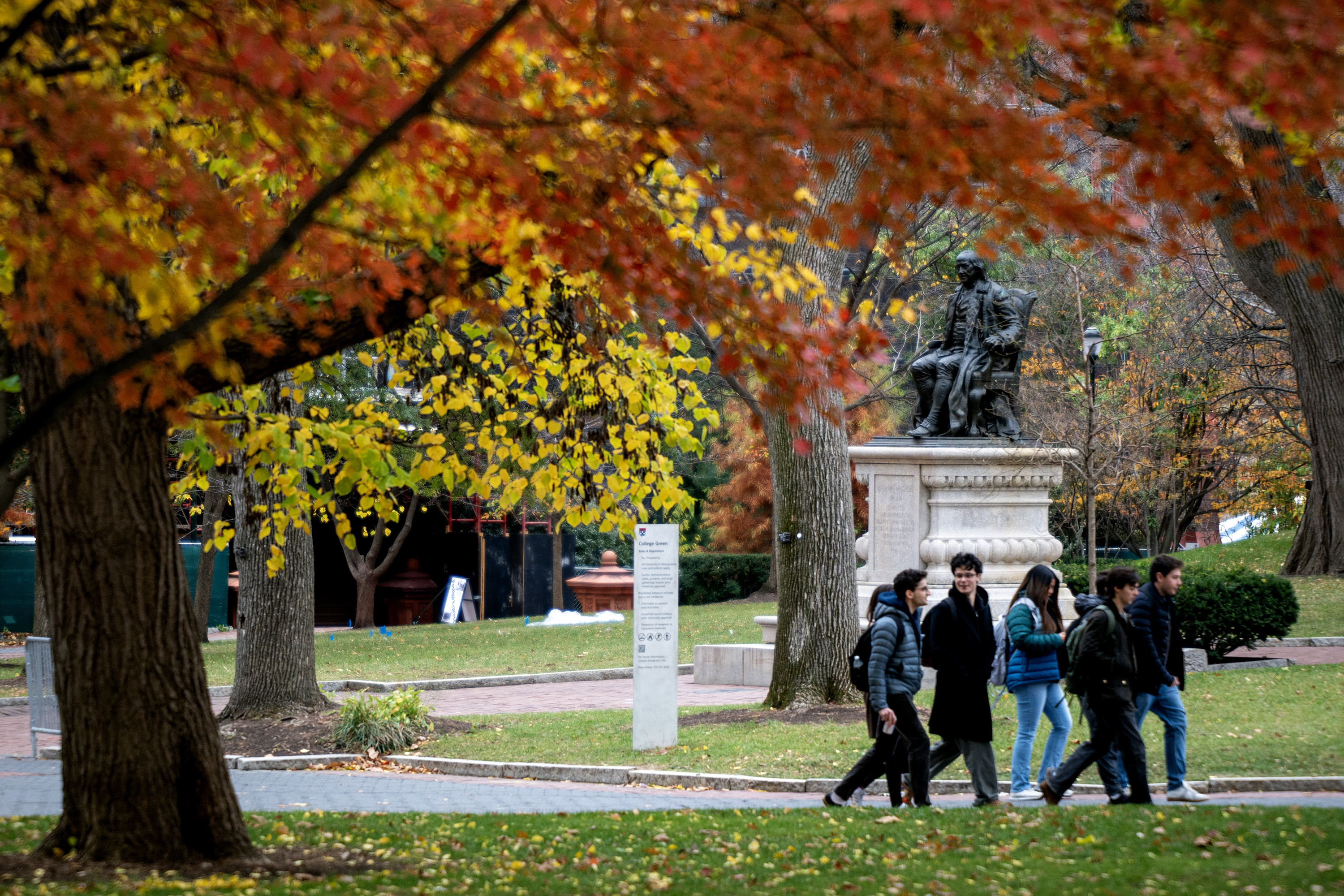
    Nature already is splashing its flecks of yellow on the trees, and soon the Technicolor waves of foliage will ripple toward Philadelphia in what the experts predict will be quite a spectacular season.

    Right on schedule, at 8:04 p.m. Philadelphia time Tuesday, the astronomical fall begins with the instant of the autumnal equinox, when the sun beams its direct light on the equator and nature continues to turn down the dimmer switch in the Northern Hemisphere. It is as though the trees brighten to compensate for our daily loss of 2½ minutes of daylight.

    It’s the season when the night skies are stunningly crowded with winged traffic, when a remarkable 2-inch-long, Halloween-hued creature has its days in the sun.

    And on the nation’s 251st autumnal equinox, we take a look at what nature might offer in the only season with two widely accepted names, “autumn” and “fall.” And we peek at the coming winter — for which a lot of people around here have other names.

    Another Red October?

    A beautiful view along Kelly Drive during a sunny day in the quite warm October of 2024.Jessica Griffin / Staff Photographer

    For the third time in the last four years, an equinoctial cooldown is due this week, with daytime highs in the 60s, as much as 10 degrees below normal.

    But the federal Climate Prediction Center on Thursday had the odds tilted toward above-normal temperatures in October in Philly.

    Monthly readings have been above normal in 15 of the last 16 Octobers. In 2024, it hit 84 degrees on Halloween. In that period, annual average temperatures at Philadelphia International Airport have been about 1.3 degrees above normal, but the Octobers have been a full 2 degrees above.

    A very early line on winter

    The intensifying El Niño in the equatorial Pacific is a major player in the center’s winter outlook, posted Thursday. It favors above-normal temperatures here and in most of the nation. The center eschews snow forecasts, but it does foresee a potentially active storm track along the East Coast.

    A cautionary note: This whole seasonal-forecast exercise remains quite the work in progress, and last winter was yet another victory for atmospheric chaos over science. No one foresaw the 30 inches of snow for Philly or a historic snow-and-ice cover.

    The ‘woolly bears’ vs. science?

    A “woolly bear” caterpillar. Do those rings say anything about the coming winter?Wiki Commons

    The so-called woolly bear caterpillar had long held a legendary place nationally in weather folklore, but in 1948 the forecasting reputation of the incipient Isabella tiger moths took wings.

    That year a respected entomologist with the Natural History Museum in New York City ventured to a state park and announced that, based on his analysis of the caterpillars’ black-and-orange-ish rings, the subsequent winter would be mild in the New York region. His forecast was dutifully reported in a New York newspaper, and, indeed, the winter was quite mild.

    He continued reporting his annual analyses (however waggishly) that correctly foretold of several mild winters.

    As it happened, some of the winters in that period were so snow-deprived in the Northeast they became the impetus for the snow-making industry that has forever changed skiing.

    Don’t credit or blame the woolly bears, said Douglas S. Richmond, entomology professor at Purdue University. Their ubiquitous presence this time of year all over North America indicates little more than a 100% probability that it is autumn.

    A single crimson tree in Cherry Hill’s Wallworth Park greets Michel and Brigitte Mistler, from Normandy, France, as they take a morning walk while visiting their daughter in the township Oct. 22, 2025. Tom Gralish / Staff Photographer

    They are quite fascinating creatures, he notes, that survive winters by producing “body fluids that function as cryoprotectants — essentially biological antifreeze.”

    Their bodies actually may contain clues about the behavior of a previous season, according to Richmond.

    “It’s probably better to think about woolly bears as being much better equipped with a rearview mirror than a crystal ball,” he said.

    A natural place to look for clues

    Bill Cullina, executive director of the Morris Arboretum and Gardens of the University of Pennsylvania, holds a collection of acorns in November 2019. Regardless of what the acorns said, that winter was virtually snowless.Jessica Griffin / Staff Photographer

    Humans have had a long history of forgoing global forecast models and oscillation indexes in favor of consulting nature for winter clues.

    One popular myth cited by The Old Farmer’s Almanac holds that if the acorns keep raining down from the trees like hailstones, get ready for a big chill.

    Leaves would be another indicator: If they drop early, winter will be a breeze. If they linger late, those breezes might be cold.

    Among Native Americans, beavers were bellwethers. The thicker their autumnal coats and stronger their lodges, the harsher the winter.

    The natural world is where to look for clues about the season to come. The waning sun may dim human energy, but it is an ultra-busy time for a lot of other species. It is prime mating season for animals such as birds, bears, deer, moose — and porcupines. We won’t ask how they hug.

    And birds — billions of them — are on the move.

    An avian air force in the night sky

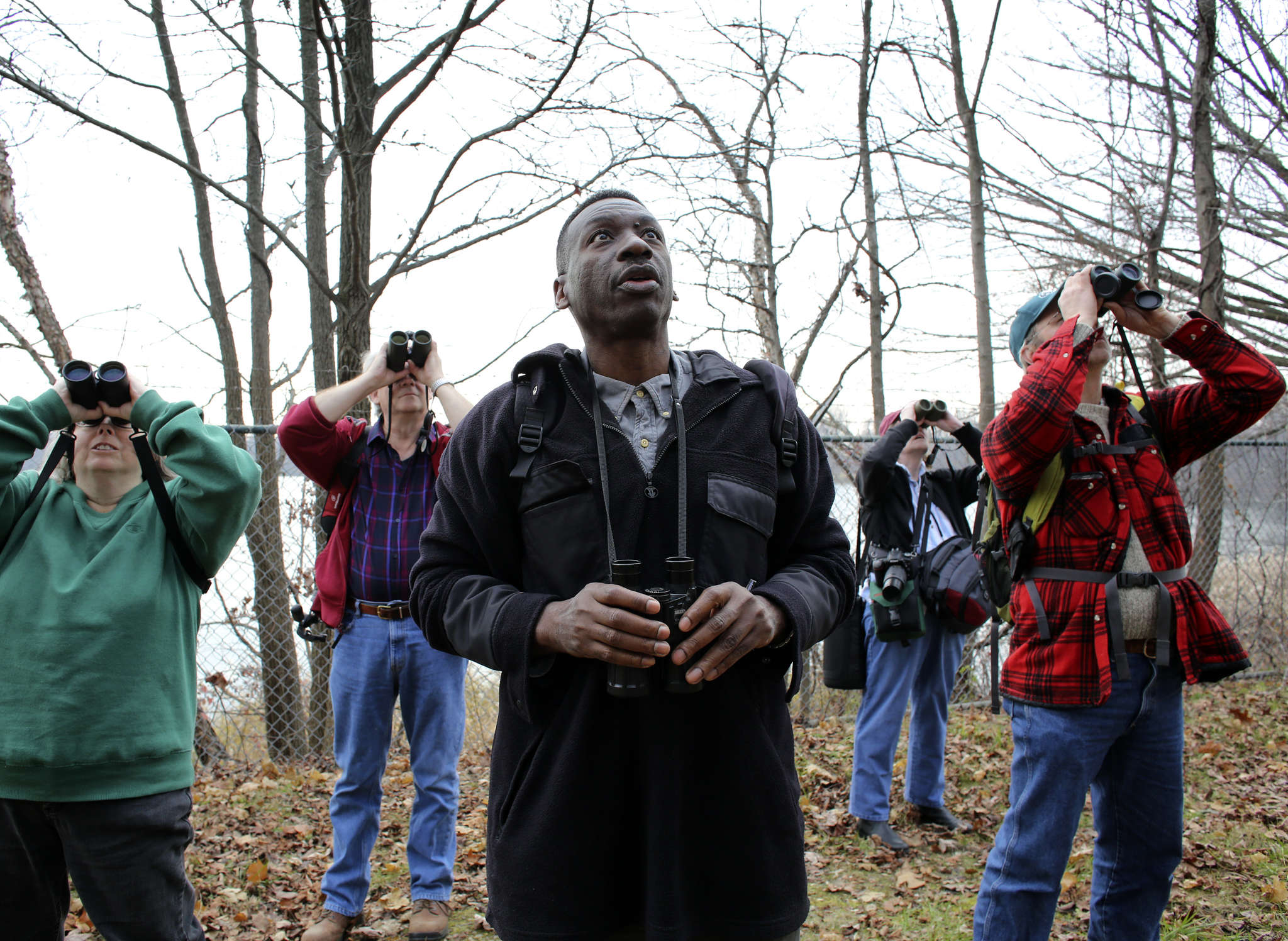
    Audubon’s Keith Russell looking to the skies over Strawberry Mansion while leading a tour.JOSEPH KACZMAREK

    The bird feeders and baths are getting ever emptier these days, but something quite amazing is happening after nightfall about 3,000 feet over our heads.

    An estimated 1.3 million birds flew across Philadelphia on Friday night and early Saturday. And Chester County was the regional hot spot, with 3.8 million heading south-southwest, according to the Cornell University Ornithology Lab’s radar-powered BirdCast dashboard, With a tail wind from the north, they were zipping along at 25 to 30 mph about 1,600 to 1,800 feet above our heads. On the site, you can track bird traffic live, county by county.

    This is the peak migration season, continuing into the first week of October, says Keith Russell, urban-conservation program manager for Audubon Mid-Atlantic, with about 300 species racing through the region, including ruby-crowned kinglets and black-throated green warblers.

    To travel thousands of miles, the birds evidently use a remarkable assortment of clues from the sun, the stars, the Earth’s magnetic field, and even landmarks, according to the Cornell lab.

    If anyone calls you a “bird brain,” be flattered.

    Be grateful for the Earth’s equinoxes

    A NASA/Johns Hopkins University Applied Physics Laboratory/Carnegie Institution of Washington image of Mercury in 2013. You probably don’t want to visit. It has lots of equinoxes but it’s mighty hot, mighty cold, and it has no atmosphere. AP

    Our planet is arguably in the solar system’s sweet spot for equinoxes, which occur twice a year.

    By contrast, Saturn gets one only every 15 Earth years, and Neptune every 82 years, says Harry J. Augensen, director of the Widener University Observatory and a physics and astronomy professor emeritus.

    Mercury has four a year, but temperatures range from 800 degrees Fahrenheit to 290 degrees below zero.

    Earth never looked so good.

  • Why haven’t state officials revealed more about Pennsylvania’s measles deaths?

    Why haven’t state officials revealed more about Pennsylvania’s measles deaths?

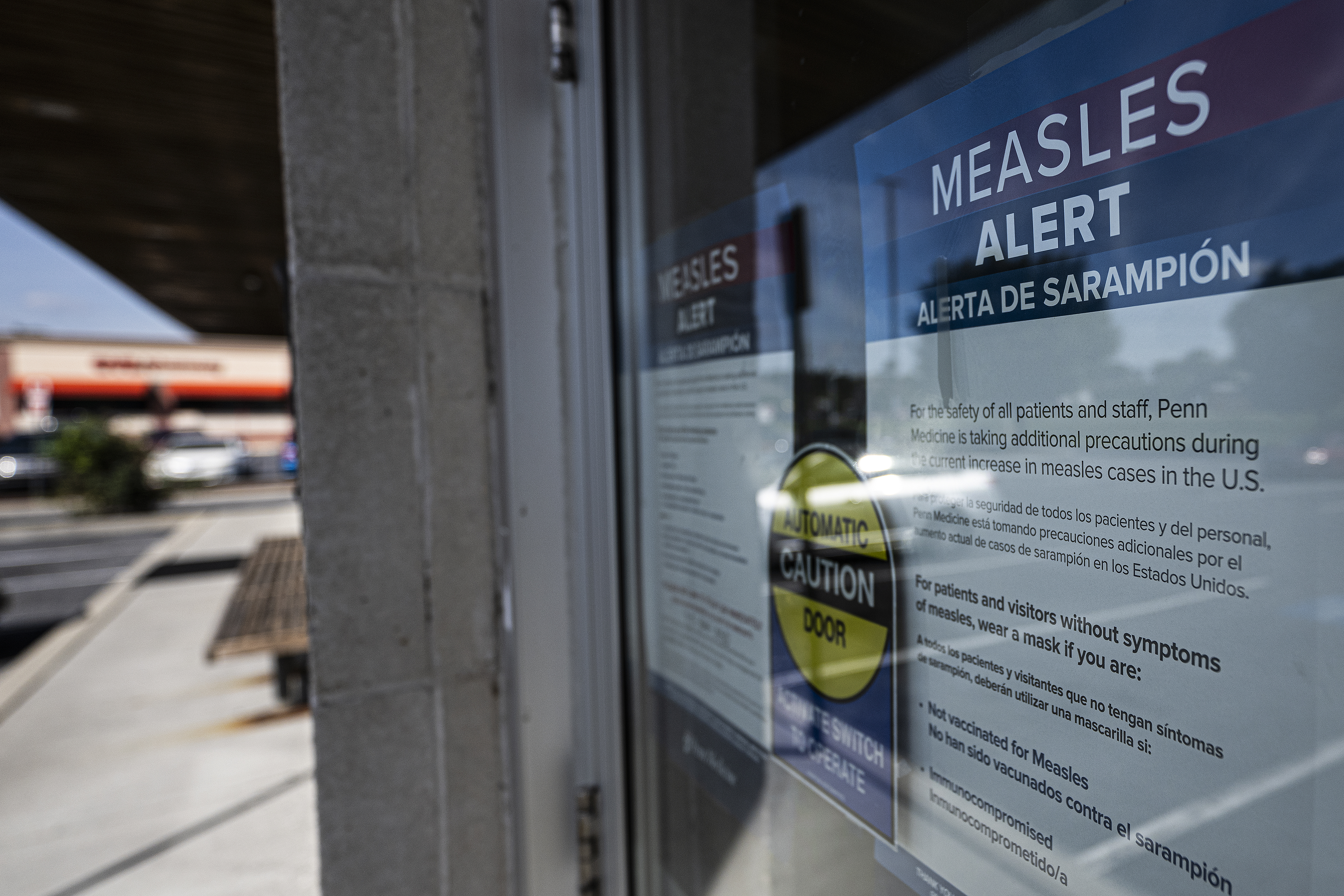
    In the last month, Pennsylvania health officials have announced four measles-associated deaths but have been tight-lipped about almost every detail, beyond sharing their county of residence and that all were unvaccinated.

    Most of what the public knows about the four deaths linked to the outbreak — ranging in age from a newborn to a 40-year-old — has come from local coroners in Jefferson, Mifflin, and Lancaster Counties. In one case, a family also spoke to the media.

    Pennsylvania’s health department has cited state privacy laws that they say prohibit them from releasing more information. Legal and public health experts acknowledge the state faces legal restrictions, but some argue that the state should do whatever it can to ensure more information about the deaths is made public.

    More details about a death, they say, help the public to understand the risks of measles and the benefits of vaccination to prevent the spread of the highly contagious disease.

    Transparency around how the state defines measles-associated deaths and unvaccinated people can also head off misinformation, they said, in a highly politically charged environment.

    The spreading outbreak has sickened 767 people — now the largest outbreak in the United States — and hospitalized 150 people as of Friday. The deaths reported by the state mark Pennsylvania’s first in 35 years, and the most seen nationally from measles in three decades.

    Here’s what to know about Pennsylvania’s privacy laws and how officials communicate in infectious disease outbreaks.

    What is known about the measles-associated deaths in Pennsylvania?

    State officials announced two “measles-associated” deaths in Lancaster County late last month, though they did not define the term in an initial news release on the cases. They did not provide any additional information, beyond saying both victims were unvaccinated and residents of Lancaster County.

    Lancaster County’s coroner subsequently shared that he had investigated one of the deaths, involving an infant who contracted measles in utero and died shortly after birth. The baby tested positive for measles, but, the coroner said, died from a ruptured spleen. Physicians have pointed out that measles can damage a person’s spleen, putting it at higher risk for rupture.

    The state has continued to characterize the Lancaster County infant’s death as “measles-associated,” meaning it occurred within 30 days of symptom onset in a person with clinical evidence of infection and a positive laboratory test for measles, and who did not die of another unrelated cause, like a car crash.

    Lancaster’s coroner said a second death, in a 6-week-old Lancaster County baby, was caused by measles. The child also had Amish lethal microcephaly, a fatal genetic disorder that makes it especially risky to contract a respiratory illness like measles.

    State officials confirmed two more measles-associated deaths last week.

    Jefferson County’s coroner said measles led to the death of a 40-year-old unvaccinated woman with severe respiratory conditions. A postmortem test showed the woman had an active measles infection, and she had also been exposed to a person with a lab-confirmed measles case.

    Mifflin County’s coroner also confirmed that an unvaccinated 18-year-old died of a rare neurological complication of measles.

    (function(){function e(){window.addEventListener(`message`,function(e){if(e.data[`datawrapper-height`]!==void 0){var t=document.querySelectorAll(`iframe`);for(var n in e.data[`datawrapper-height`])for(var r=0,i;i=t[r];r++)if(i.contentWindow===e.source){var a=e.data[`datawrapper-height`][n]+`px`;i.style.height=a}}})}e()})();

    Why are state and federal officials clashing over the deaths?

    Starting with the initial news conference to announce the first two deaths, Democratic Gov. Josh Shapiro has traded barbs with President Donald Trump’s Health and Human Services secretary, Robert F. Kennedy, Jr., over the outbreak.

    Shapiro has accused Kennedy, a longtime anti-vaccine activist, of spreading misinformation contributing to a decline in vaccination rates. Kennedy said in a social media post that Shapiro’s staff may have “fabricated” the deaths, after the Lancaster County coroner’s comments, though Kennedy later acknowledged one infant’s death was caused by measles.

    Federal officials said Tuesday they were aware of the third and fourth deaths reported in Pennsylvania but have not updated the federal website tracking measles cases to reflect any of the deaths reported by Pennsylvania. They have said they will record measles-related deaths when the National Center for Health Statistics “identifies measles as the underlying cause based on death record information submitted by the states.”

    Democrats and public health experts have harshly criticized the decision, saying it’s a departure from established procedures for recording infectious disease deaths.

    State health officials said they have discussed the details of each case with CDC professional staff, “at length.”

    “At no point did CDC staff express any concern or issue with the data we provided,” they wrote in a statement.

    Why is the health department not releasing more information on measles-associated deaths? Why can coroners give out more information?

    Pennsylvania health officials have cited two state laws: one prohibiting public access to death records and another that requires the state to keep records of diseases confidential, except when it’s necessary to inform the public of the risk of communicable disease.

    But coroners and medical examiners are county officials who operate by different rules, the state said in a frequently-asked-questions document posted online last week. Laws governing coroners’ duties and the state’s right-to-know statute allow them to provide the public with identifying details like a person’s cause and manner of death, the state says.

    “Releasing additional details beyond what we did could have led to the unnecessary identification of individuals and their families. Further, the specific details of a single case do not change the important message that measles is a highly contagious virus that can cause severe illness and complications, and the MMR vaccine is the best protection against it,” state health officials said in a statement.

    Legal experts say decision-making around what to reveal about a death during a measles outbreak is difficult, and privacy laws do apply to health departments.

    Robert Field, a professor emeritus at Drexel University’s Thomas R. Kline School of Law, said health departments typically release aggregate data about disease outbreaks, not individual deaths.

    “Confidentiality and privacy are major issues for any health department, which is why the regulations are stricter,” he said. With just a few measles-associated deaths reported, he said, releasing further details about the deaths could risk identifying families.

    “A newborn dying with a ruptured spleen — there aren’t a lot of those,” he said, referencing one case in Lancaster County. “In terms of additional information, further details that would ID the patients — that would be off-limits.”

    Why are some experts criticizing state officials over their communications strategy?

    Releasing less information about a death risks creating an “information vacuum,” especially in a highly politically charged environment, said Amesh Adalja, an infectious disease physician at the University of Pittsburgh Medical Center.

    Unlike the first two deaths, announced by the state last month without further detail, the public immediately knew more about the two disclosed last week, he noted, crediting coroners in Jefferson and Mifflin Counties who have been forthcoming with information about the deaths.

    “Coroners talking in detail about cases they’ve been handling, as well as the parents of the neonate that died” provided “really important information that helped bring a lot of clarity to an information vacuum,” said Adalja, who is also a senior scholar at the Johns Hopkins Center for Health Security.

    Adalja has said the state should have been clearer from the onset about how it defines measles-associated deaths, and could have provided information about the victims’ general age ranges — for example, whether they were adults or children. And the state could involve other officials who are not restricted by the same privacy laws, he said.

    “If they assess they are bound by Pennsylvania state law in a way that county coroners are not, include coroners in the press conferences,” Adalja said.

    He added that Shapiro and Kennedy’s political fight over the nature of the deaths risks overshadowing a serious measles outbreak that has sickened hundreds.

    “The anti-vaccine movement has really made inroads here — people are calling this a hoax,” he said. “It’s obviously not a hoax. And there are real actions that need to be taken. It’s much harder to do that work when you [are] engulfed in some political problem.”

    (function(){function e(){window.addEventListener(`message`,function(e){if(e.data[`datawrapper-height`]!==void 0){var t=document.querySelectorAll(`iframe`);for(var n in e.data[`datawrapper-height`])for(var r=0,i;i=t[r];r++)if(i.contentWindow===e.source){var a=e.data[`datawrapper-height`][n]+`px`;i.style.height=a}}})}e()})();

    Arthur Caplan, a New York University professor emeritus, wrote in an Inquirer op-ed Thursday that the state should provide “maximum information” about the deaths “in order to prevent further harm.”

    He sharply criticized Kennedy, accusing the nation’s top health official of spreading misinformation about vaccine safety and the threat of measles: “[Nothing] the federal government has to say about measles is trustworthy,” he wrote.

    In an interview, he said state should weigh privacy obligations with the need to inform the public about whether victims had exposed others to measles.

    “In the middle of an epidemic, those laws need to be pushed as far as you can,” he said.

    Drexel’s Field said the state could also have emphasized that “unvaccinated” does not necessarily mean that a person chose not to take a measles, mumps, and rubella vaccine. Some people, like newborns, pregnant women, and people with weakened immune systems, are unable to be vaccinated.

    “People should know that if they choose not to be vaccinated and contribute to the spread, it could affect people who did not decline vaccination by choice but are in such fragile health that there is no choice,” he said.

    State officials have said that even revealing that someone was too young to be vaccinated would be enough to identify the deceased in small communities.

    It’s imperative that health officials balance the need to inform the public and maintain trust amid the growing outbreak, Field said, especially as vaccination rates drop.

    “If the credibility of the state health department is questioned by the public, then I think we’re in big trouble. And that would be a very unfortunate outcome of this,” he said.
  • More U.S. households are struggling financially, analysis finds

    More U.S. households are struggling financially, analysis finds

    A growing number of American households became financially strapped over the past year and had a harder time keeping their heads above water, a long-running analysis finds.

    The share of households considered vulnerable — those that have trouble saving, paying bills, repaying debts, and planning for future needs — rose to 17% from 15% last year, according to findings from the Financial Health Network, a nonprofit focused on financial stability.

    And more households are reporting high levels of financial stress — 16%, up from 13% last year.

    The findings come as families continue to face rising costs for basics like groceries and gas and for bigger-ticket purchases like homes and cars as well as a pullback in federal assistance for healthcare and food purchases.

    The increase this year reversed a small improvement measured in 2025 and matched the highest level recorded since the network began publishing its annual report, Financial Health Pulse, eight years ago, researchers said.

    “Households are struggling,” said Taylor Nelms, the network’s vice president of research and insights. The 2026 report, which will be publicly available Tuesday, is based on a survey of more than 7,600 households conducted this spring. The survey uses a nationally representative sample drawn from the Understanding America Study, a probability-based panel administered by the University of Southern California, to estimate findings about all U.S. households. The survey has a margin of error of plus or minus 1.1%.

    The share of households considered financially healthy held steady, at just under a third, the report said. That level has remained flat for five years. The network defines healthy households as those able to meet current financial needs, stay on track to meet future needs, and recover from unexpected expenses or a drop in income.

    Households may shift over time among the study’s different tiers — vulnerable, coping, and healthy. Those considered to be coping are successfully managing at least some aspects of their finances.

    About 7.8 million households that were seen as coping in the spring of 2025 found themselves vulnerable this year, the report found. At the same time, about 6 million ascended from vulnerable to coping. The result was that the vulnerable segment grew by about 1.8 million households.

    Low-income households were hit hard, researchers found. The share of those families paying all their bills on time, for instance, fell to 49% from 54%.

    What’s pressuring Americans’ finances?

    A number of challenges, including high costs for food, housing, and utilities, and less generous student loan and healthcare policies, are buffeting Americans, the report found. Financial vulnerability among student loan borrowers, for instance, rose to 27% from 21%, as the government began charging interest on loans that had been in a multiyear pause during the COVID-19 pandemic.

    The share of households reporting unmanageable debt rose to 31% — the highest level in eight years — from 29% last year, while the share saying they paid all their bills on time fell by 3 percentage points, to 68%.

    Changes in government programs have also pressured family finances, including the end of subsidies that had lowered the cost of Affordable Care Act health plans and new restrictions on SNAP food benefits, the report noted.

    Were there any bright spots in household finances?

    Household emergency savings held roughly steady this year, the analysis found, possibly because of larger tax refunds around the time the survey was conducted. (The bigger refunds followed a basket of tax breaks enacted as part of the budget law.)

    But with less than half of households reporting that they are spending less than their income, it is unclear how long that cushion can last, Nelms said.

    Mingli Zhong, a senior research associate in the family and financial well-being division at the think tank Urban Institute, said it was not easy to save when costs were high, but even $50 a month could add up over time. Saving the equivalent of one month of income is often an adequate buffer for many families, she said. “Emergency savings is about preventing people from falling into poverty in the first place.”

    Where can I get help building an emergency fund?

    More employers are offering options to help workers build emergency savings, either as part of traditional retirement offerings or through separate programs managed by outside providers like Sunny Day Fund.

    Sid Pailla, CEO of Sunny Day Fund, said the program encouraged saving for unexpected bills but also for longer-term goals like starting a family, buying a car, or taking a vacation. “Otherwise,” he said, “it comes off as a chore.”

    The program’s suggested target of $2,000 may be a “stretch goal,” Pailla said, yet it is “one they feel they can get to.” Employers typically offer incentives, like a $25 or $50 sign-up bonus. Funds are deducted from workers’ paychecks and held at a federally insured bank currently paying just over 3% interest, he said. Withdrawals average $376.

    Abner Rivera, 61, a production manager in Lakeland, Fla., for TRG Packaging & Display Solutions, said he had no emergency savings account, whether because money was tight or from “procrastination,” until his employer partnered with Sunny Day. He began saving $25 a week a year ago. “Before I knew it, I had $500,” he said, adding that he was able to use the funds for a $400 car repair. That encouraged him to increase his savings to $70 a week, and he is now nearing his $2,000 goal. Next, he aims to save even more, for a trip to Spain. He said he liked that Sunny Day sends him a weekly email updating his progress. “There’s a structure to it,” he said, which makes it easier to save.

    What if I haven’t built up any reserves?

    Some employers offer grants for workers facing a crisis, often through third-party coordinators. Rachel Schneider, CEO of Canary, a company that manages workplace hardship grants for employers, said workers could request relief for a variety of setbacks, like a natural disaster, an eviction notice or a utility shut-off order, a sudden medical event, or a car accident leaving the employee without transportation. “People don’t have to put money in,” she said, “and they don’t have to pay it back.”

    Companies set the rules for their programs, which Canary administers. Employers can fund grants themselves or raise donations from their workforce. Canary reviews applications submitted via an online portal so workers do not have to be embarrassed by approaching their manager.

    “If you just got an eviction notice,” she said, “you don’t want to tell your boss that.”

    Ari Medoff, CEO of home care services provider Arosa and a Canary board member and investor, said his company’s employees could request a total of $1,500 in grants over three years. Most of the money comes from Arosa’s workers who contribute a few dollars from each paycheck or at fundraising events. “I think, at its core, a healthy fund gets workers to participate,” he said. “It says, ‘Your peers are here for you.’”

    This article originally appeared in the New York Times.