Blog

  • Chris Van Hollen fought when no one else would. Make him Dems’ leader.

    Chris Van Hollen fought when no one else would. Make him Dems’ leader.

    It’s been nearly a week since the political earthquake of Tuesday’s historic midterm election that rebuked Donald Trump by flipping Congress to the Democrats by huge margins, and my friends and neighbors out here in the Trump-resisting Philly suburbs are still giddy, like an inversion cloud of laughing gas has settled over the region.

    But if the Democratic Party wants to keep this era of good feeling going, it’s important to remember a much darker time just 19 months ago, in the spring of 2025, as Trump accelerated America’s slide into authoritarianism.

    Stunned rank-and-file Democrats watched as the institutions once counted on to help defend democracy — corporate CEOs, media owners, law firms — bowed down to the 47th president as he twisted the rule of law. Many Democrats, including their leaders on Capitol Hill — New Yorkers Chuck Schumer in the Senate and Hakeem Jeffries in the House — acted like Trump’s 49.8% of the 2024 vote was a mandate for strongman rule.

    On March 15, 2025, the Trump regime tested the outer limits of autocracy when federal immigration agents arrested a then-29-year-old Maryland laborer named Kilmar Ábrego García and swiftly deported him to El Salvador — a move that even a Justice Department lawyer conceded was an error because of a judge’s earlier ruling that Ábrego García would face danger back in his native country.

    But the empire — in the style we’d see again and again over the next 19 months — doubled down. Not only did the Trump regime refuse to seek Ábrego García’s return from one of the world’s most notorious hellhole prisons, El Salvador’s CECOT, but its media lackeys and online influencers slandered a Maryland dad and essential worker as a dangerous gang member, despite little supporting evidence.

    In this photo released by U.S. Sen. Chris Van Hollen’s press office, Van Hollen (right) speaks with Kilmar Ábrego García, a Salvadoran citizen who was living in Maryland and deported to El Salvador by the Trump administration, in a hotel restaurant in San Salvador, El Salvador, in April 2025.Uncredited

    From many Democrats, the initial silence over this crime against humanity was deafening. California Gov. Gavin Newsom — who’s been creating a road map for how not to run for president in 2028 — brushed aside a question about the Ábrego García case, calling it “the distraction of the day” to avoid a debate about tariffs. The Hill, a bible of the lamest Beltway conventional wisdom, published an op-ed begging Democrats not to fall into “the narrative trap” of backing this undocumented immigrant.

    One senator ignored the pundit claptrap and followed his conscience.

    Sen. Chris Van Hollen of Maryland — Ábrego García’s adopted state — threw himself into the fight for Ábrego García’s freedom. In mid-April 2025, Maryland’s senior senator flew to El Salvador and demanded to meet with the detained immigrant, who was being held incommunicado at CECOT. He drove to the prison, only to be turned away by soldiers.

    At the same time, the Trump’s regime’s efforts to slime Van Hollen as a dangerously out-of-touch left-wing lunatic were already underway. The president labeled the Democrat on social media and in news conferences as “a fool” and a “grandstander,” while then-White House press secretary Karolyn Leavitt brought a Maryland woman whose husband had been killed by a Salvadoran immigrant to her daily press briefing, to amp up the condemnation.

    Nevertheless, Van Hollen persisted. Shortly after his initial rebuff, Salvadoran officials allowed the senator to meet with Ábrego García in a restaurant — the world’s first proof he was alive and healthy — and despite a clumsy effort to sabotage the moment by bringing margaritas to their table, things started to change.

    Other Democrats followed Van Hollen’s lead and traveled to El Salvador. Authorities there moved Ábrego García to a better prison, the first step in a monthslong fight for the freedom of a wrongly imprisoned man with too many twists and turns to recap here.

    The bottom line is that today, Ábrego García is a free man reunited with his wife and children in Maryland, although still fighting civil deportation. On Capitol Hill, more and more Democrats — following Van Hollen’s lead, and egged on by everyday people’s massive No Kings protests and the resistance to immigration raids in Minneapolis and elsewhere — abandoned the idea of capitulation. The momentum reached a crescendo with Tuesday’s rejection of Trump at the ballot box.

    When Van Hollen returned from El Salvador that April, he was greeted at Washington Dulles International Airport by a gaggle of grateful supporters, including one who held aloft a sign: “THIS IS WHAT LEADERSHIP LOOKS LIKE.”

    Hold that thought.

    The Democratic landslide on Tuesday happened not because of the party elites — as epitomized by Schumer and Jeffries — but in spite of them. This revolution was bottom-up, thanks to the angry masses and a handful of renegades like Van Hollen.

    It had to overcome top-down resistance from the likes of Schumer — whose failure to grasp the threat from American fascism was epitomized by last November’s cave-in on a government shutdown that failed to save healthcare subsidies for millions of struggling families — and Jeffries, who notoriously held a meeting seeking common ground with Trump’s greed-soaked son-in-law Jared Kushner.

    The evidence is overwhelming that the base of the Democratic Party that powered last week’s “blue tsunami” desperately wants a change at the top to lead the Trump resistance going forward. “NO SCHUMER CORONATION” was the headline on a post from the anti-Trump group Indivisible, the lead organizer of the No Kings protests, that went out to its massive following on Wednesday.

    “Yesterday, voters made it very clear that they want a new generation of Democratic fighters,” Indivisible posted. “We need a leader in the Senate who is capable of leading that fight. It’s time for Senate Democrats to choose new leadership.”

    Those sentiments were quickly echoed by none other than Van Hollen, who last week called for “a discussion” on who should lead Senate Democrats in January. He noted that voters wanted more than just a change, but also “an economy that’s not rigged in favor of the very wealthy and big corporations and stacked against working people.”

    Van Hollen is clearly not alone among his colleagues in wanting turnover at the top. Several newcomers, including Michigan’s Abdul El-Sayed, South Carolina’s Annie Andrews, and Kansas’ Adam Hamilton, have said they want Schumer replaced, while a so-called Fight Club of returning incumbents such as Elizabeth Warren of Massachusetts and Chris Murphy of Connecticut have also urged radical change.

    Nothing stirs this lifelong politics lover’s soul more than that scene in Mr. Smith Goes to Washington when Jimmy Stewart’s Sen. Jefferson Smith declares that lost causes “are the only causes worth fighting for,” and “for the only reason anyone fights for them, because of just one simple truth — love thy neighbor.”

    That’s a fitting description of Van Hollen’s courageous stand for Ábrego García — but also for this column.

    For starters, the Beltway crowd — not just the Democratic establishment, but the “savvy” political journalists at places like the New York Times — seem determined to ram the return of Schumer and Jeffries down the throats of voters as a done deal, like it or not.

    “Schumer, Once Besieged, Is on Track to Remain Leader After Election Blowout,” the Paper of Record declared this weekend, in a story that read like it was written by the senator’s staff, with no comments from his critics and an overhyping of his very mixed role in recruiting Senate candidates for the midterms.

    House Minority Leader Hakeem Jeffries (D., N.Y.) speaks as Senate Minority Leader Chuck Schumer (D., N.Y.) (left) and Vice Chair Rep. Pete Aguilar (D., Calif.) (right) listen during a news conference on Capitol Hill in May.Mariam Zuhaib

    Jeffries has benefited from an even more forceful coronation campaign, with the media racing to anoint him as the first Black House speaker, pretending there isn’t widespread dissatisfaction with him among the Democratic base. The Rev. Al Sharpton hopped on MS NOW to insist progressives would be making a big mistake if they opposed Jeffries. It looks like fighting the ascension of this milquetoast corporate Democrat might, unfortunately, be a bridge too far.

    Not so with Schumer.

    Still, there’s a second reason why this is a lost-cause column. For now, Van Hollen is saying he’s not the one to challenge Schumer — even after El-Sayed endorsed him last week. He appears to be eyeing a presidential run in 2028. That’s understandable, but my reading of the Democratic base is that they want real leadership on Capitol Hill right now, while they are looking for youth and charisma (cough, cough … Sen. Jon Ossoff) for the next White House contest.

    There’s still time to fight for a cause that isn’t lost until the Democratic caucus actually votes on a leader later this month. First, call Van Hollen’s office and urge him to run for the job. But more importantly, call your own Democratic member of the Senate and tell them Schumer cannot return as leader, and that if they support the status quo, you will work for their primary opponent at the next opportunity.

    The next two years are not going to be easy. Democrats’ good vibes won’t last if the party doesn’t fight for democracy with the same level of courage with which Van Hollen fought for the life of the neighbor he did not know. Now is the time to pay it forward.


  • Olivia Rodrigo is a cultural force. It was evident on her first of two sold-out nights in South Philly.

    Olivia Rodrigo is a cultural force. It was evident on her first of two sold-out nights in South Philly.

    No need to give Olivia Rodrigo her flowers just yet: She has more than enough of her own.

    On Saturday, the pop star brought her “The Unraveled Tour” to South Philly for the first of two sold-out shows at the Xfinity Mobile Arena, where she performed on a horseshoe-shaped stage laid out with thousands of pink, purple, and white (fake) flowers.

    The show mirrors Rodrigo’s third and best album, You Seem Pretty Sad for a Girl So in Love. The two-hour evening loosely followed a love that blooms in spring and withers in winter — before the seasonal cycle renews, with hope springing eternal and confetti falling from the sky.

    Before the 24-song show began — with Rodrigo, 23, hitting the stage at 8 p.m. sharp — there was an audible buzz in the room.

    No, not in anticipation of the Filipino American songwriter and former child actress’ return to Philadelphia after first playing two shows at the Met in 2022 — the year she broke out with the song “Drivers License” and her Sour debut album — and one night at the then Wells Fargo Center in 2024.

    There was plenty of that among an extremely excitable crowd who made up a sea of pink and whose youngest members were less than half of Rodrigo’s age. Most adults were parents, and almost all the dudes were dads.

    (No lines at the bar or men’s room; endless queues at the merch table.)

    Olivia Rodrigo at the opening night of her The Unraveled Tour in Hartford, Conn., in September. She played the first of two sold-out shows at Xfinity Mobile Arena in South Philly on Saturday.Chris Polk @polkimaging / Courtesy of the Lede Company

    But no, the ambient noise in the room was from the sound of tweeting birds and buzzing insects that preceded the singer appearing on stage in full Flower Child mode, outfitted in a baby-doll dress and opening with You Seem’s lead-off love song “Drop Dead” while lying partially hidden amid the abundant blossoms.

    It didn’t take long for Rodrigo to rise up and begin bounding about the stage in a high-energy performance divided into six acts. She was backed by a band of women and nonbinary musicians that featured star turns by lead guitarist Emily Rosenfeld and drummer Jordan Radnoti.

    The sense of camaraderie between Rodrigo and her band was amply evident. The show’s “Summer” second act included “My Way” (not the Frank Sinatra song) and the single “Serena Joy,” plus “Bad Idea, Right?” and “Ballad of a Homeschooled Girl” (both from 2023’s Guts). During this act, Rodrigo not only shouted out each player but she also operated the hand-held camera that spotlighted each musician on the giant curved video screen.

    Among the female songwriters that have dominated the pop charts in recent years — from Taylor Swift to SZA, to Billie Eilish to Charli XCX, to Narberth’s own Lizzie McAlpine, who has moved up to arena-sized status and is playing the XMo Arena next June — Rodrigo is the one who’s a rocker at heart.

    Olivia Rodrigo at the opening night of her The Unraveled Tour in Hartford, Conn., in September. She played Xfinity Mobile Arena in South Philly on Saturday and was scheduled to perform again on Sunday night.Chris Polk @polkimaging / Courtesy of the Lede Company

    Her songs have plenty of hooks, and she has a way with tucking clever, heartfelt, and stinging lyrics into a ballad like “Favorite Crime,” which she sang while accompanying herself on piano, joined by a three-piece string section.

    But Rodrigo’s heroes include guitar-playing dudes like Jack White, and, especially lately, Robert Smith of the Cure. The latter British goth-pop star’s influence is all over You Seem. It shows up in the song “The Cure” as well as in a “Drop Dead” lyric about a guy so hot he knows “all the words to ‘Just Like Heaven.’”

    The tormented-by-love “What’s Wrong With Me,” which is sung as a duet with Smith, and is a standout on the album, has inexplicably been left off the set list for most of tour. But Philadelphians got lucky on Saturday: Rodrigo, who’s become a more skilled vocalist with each successive tour, added it as a surprise song on the set list.

    Rodrigo the rock star also came forward with her own modest guitar solo on “Maggots for Brains,” and in pop punk rave-ups like “All-American Bitch,” which wouldn’t have sounded out of place on an early Green Day record.

    Until she got around to that one as part of a three-song encore, I was thinking it hadn’t been all that much of a screamy Saturday night out, with less shrieking with delight than I heard at recent Charli XCX and Phoebe Bridgers concerts in the same building.

    Fans were for the most part happy to reverentially sing along, with no need of assistance from the key lyrics that occasionally flashed on screen as if to express the essence of Rodrigo’s world view. Such as “They say modern love’s a cruel endeavor / And to that I say, [expletive] it, whatever” from “U + Me + <3.”

    In “All American Bitch,” however, Rodrigo channeled all the pent-up energy into one moment, which the crowd was ready for, on cue. “I don’t get angry when I’m pissed, I’m the eternal optimist,” she sang. “I scream inside to deal with it.”

    With that, the crowd let out an astonishingly loud collective wail of release.

    The show avoided many of the trappings of the contemporary pop spectacle. No choreographed dancers, for instance. The only people on stage were the ones actually playing music (or camera operators running around tracking Rodrigo’s every move).

    Olivia Rodrigo at the opening night of her The Unraveled Tour in Hartford, Conn., in September. She played Xfinity Mobile Arena in South Philly on Saturday and was scheduled to perform again on Sunday night.Chris Polk @polkimaging / Courtesy of the Lede Company

    There was one magic trick, however.

    Rodrigo spent a good bit of the show on an auxiliary stage toward the back of the standing room-only floor. That’s where she was, wearing a white dress when she sang “The Cure,” the song about the dissolution of a relationship with a repeated incantation that give the tour its name: “‘Cause baby, I’m unraveled, I’m unraveled, I’m unraveled.”

    As Rodrigo sang those words, (real) rain poured down on her from overhead, melting her dress little by little until dissolved it into nothing, revealing a blood-red undergarment beneath it. Thank goodness her microphone was waterproof. Children, don’t try this at home!

    In her brief, stunningly successful career — she’s the first artist ever to have the lead singles from their first three albums top the Billboard Hot 100 — Rodrigo has become a cultural force.

    She’s demonstrated that in the past by choosing opening acts like Chappelle Roan that have catapulted to stardom. And in September, she presented her own Daisy Chain Fields music festival in California which featured all female headliners including Sarah MacLachlan, Doechii, Mitski, and Santigold; and raised $20 million for women-focused nonprofit organizations.

    Among the up-and-comers on that bill was Devon Again, the Colorado-raised songwriter whose given name is Devon Johanningmeier.

    On Saturday, Johanningmeier began a run as the opening act for the latest leg of “The Unraveled Tour.” The alt-pop singer and bandleader, who has worked with Rodrigo collaborator Dan Nigro, captivated the crowd.

    With Alysa Liu-style two-toned hair and a so-excited-to-be-here energy, her raucous set was highlighted by her own “Snake the Drain” and “Cherry Cola” as well as covers of songs by Zara Larsson and Rage Against the Machine.

    Olivia Rodrigo with Devon Again at Xfinity Mobile Arena, 3601 S. Broad St., at 7 p.m. on Sunday, Nov. 8. xfinitymobilearena.com

  • For Trump and America, a clear election verdict leaves a murky future

    For Trump and America, a clear election verdict leaves a murky future

    WASHINGTON — In the days since his defeat, he has sounded like a man in denial.

    With his party still picking through the wreckage of a political earthquake, a seemingly oblivious President Donald Trump signed a steel beam for his new White House ballroom and flew to Florida to give a speech on the space program. He seems flat these days, maybe a little dazed.

    If Donald Trump is still processing the election that swept his party from power in Congress last week, so too is Donald Trump’s America. Both parties are still absorbing the stunning reality of sweeping Democratic victories in states like Texas, Kansas, and South Carolina that were long GOP strongholds — and possibly even Mississippi.

    But as clear as the midterm verdict was, the future is cloudier. After a decade in which Trump has dominated national politics, the country now faces a period of profound uncertainty, an interregnum between the time that Americans effectively decided that they were done with Trump and the time when he is actually done.

    How does an unpopular, lame-duck president spurned by the electorate govern in his final two years in office? How does a shattered Republican Party rebuild itself for a post-Trump era while Trump is still around and unwilling to cede the stage? How do newly empowered Democrats use their new majorities in Congress and define themselves beyond simply being the anti-Trump party?

    To those who wondered whether Trump would choose conciliation or confrontation in response to his party’s defeat, his decision Friday to install Stephen Miller, his top ideological warrior, as the next White House chief of staff provided an answer — and it was not conciliation. In case the message was not received, on Saturday he posted an offer on social media for Dana White, the UFC CEO, to be his press secretary. Trump may be wounded, but a wounded animal can thrash around powerfully.

    Yet those in his circle wasted no time looking past him. Two senior members of his team, Vice President JD Vance and Defense Secretary Pete Hegseth, quickly went public with sharply divergent views of the Iran war and the wisdom of prosecuting it. In effect, they began to set the parameters for a debate that will consume their party for the next year.

    On Capitol Hill, Speaker Mike Johnson promptly indicated that he would step down, opening a leadership contest for the vanquished Republicans. And Democrats began mapping a path forward balancing the desire to investigate and hold Trump’s team accountable with the imperative of passing legislation addressing voter concerns about the cost of living.

    “People are conveying: ‘Yes, we feel joy, we feel relief,’” said Rep. Hillary Scholten (D., Mich.). “But also: ‘Get to work, Congress. We do not want political theater, we don’t want drama, we don’t want infighting.’”

    One thing seems certain — the days of virtual one-man rule are over. In the nearly 22 months since Trump took office again, he has sought to impose his will not just over the executive branch but over big business, the tech industry, major universities, law firms, the central bank, private banks, entertainment, sports, museums, the news media, national parks, the financial sector, the energy sector, the military, and nonprofit foundations.

    He has turned the prosecutorial power of the FBI and Justice Department against his adversaries and, while he has been blocked at times by judges and grand juries, the Supreme Court has validated many of his assertions of authority. He has sent the National Guard into the streets of Washington and other cities, while turning Immigration and Customs Enforcement into a paramilitary force to haul away not just criminals but otherwise law-abiding migrants with deep roots in their communities.

    He has even sought to remake the face of Washington, tearing down the East Wing of the White House to make room for his new ballroom-qua-drone-launcher, building a helipad on the South Lawn, proposing a new triumphal arch, renovating the Lincoln Memorial Reflecting Pool, overhauling Lafayette Square, and replacing the East Potomac golf course. By his own count the other day, he has created or restored 83 statues, fountains, and monuments in the city.

    He can still be expected in these final two years to exert power in ways that previous presidents did not, but he will now face pushback from an opposition Congress armed with subpoenas and the power of the purse. Moreover, the fear that consumed private institutions in the early part of his second term and prompted them to buckle under to demands for money, policy changes, and personnel decisions has certainly eased. If anything, some of them will now worry about offending the ascendant Democrats by appearing too deferential to Trump.

    “The spell is broken, and the veil of invincibility pierced,” said Daniel M. Price, a former international economic adviser to President George W. Bush. “The genuflection is likely to cease, and those who paid tribute — whether for ballrooms or meme coins or to settle frivolous lawsuits or to make ‘documentaries’ or to secure regulatory favors or government contracts — may well be called to account.”

    Michael Beschloss, a presidential historian, said that no other commander in chief in the past 80 years had touched so many sectors of society, leaving many nervous about what would come next. “It’s hard to find any precedent for that kind of sweeping, unpredictable change in any other post-World War II administration,” he said. “As a result, you could see apprehension on more than a few faces in this capital.”

    This might be the most overwhelming moment of whiplash in an era that has been defined by sharp swings: Trump came out of nowhere in 2016 and shocked the world by winning the presidency, then crashed in defeat four years later and spread lies in an effort to overturn the election and hold onto power. He was indicted, put on trial, and convicted, then staged an audacious comeback to reclaim the White House and now has endured what by some measures is the most devastating midterm repudiation of a president in half a century or more.

    Through it all, the country has been through a plethora of ordeals — the worst pandemic in a century, the biggest economic upheaval in generations, the most widespread racial unrest in decades, the first sacking of the Capitol since the British invasion of the early 19th century, the disastrous end of one overseas war, and the rash start of another. All of which might still not eclipse the impact on society of artificial intelligence in the next few years.

    This has certainly been a drama for the ages, one that would have been hard to imagine not long ago.

    “We’ve just been through the looking glass, and Wonderland wasn’t Wonderland,” said Max Stier, president of the Partnership for Public Service, a nonprofit group that aims to make government work more effectively. “It was craziness and destruction.”

    Tevi Troy, a presidential historian who previously worked for Bush, said all the disorder finally got to the public. “Now we’re looking at the tumult,” he said. “People aren’t happy. I think they wanted normal, and they’re not getting normal from either party.”

    No president since Franklin D. Roosevelt has dominated the national conversation for as long as Trump has. Even while President Joe Biden occupied the White House, Trump was still a central focus of attention. He drove dinner-table conversations and wedges among families, friends, and neighbors. But last week’s election suggested that the public has grown weary, even in places he won handily in the past in the South and Sunbelt.

    Unlike other presidents who suffered midterm defeats, Trump has largely not acknowledged the setback. After Bush’s Republicans lost both houses in 2006, he admitted it was a “thumping.” After President Barack Obama’s Democrats lost the House in 2010, he admitted it was a “shellacking.” Trump, by contrast, has offered no expression of humility or much recognition of public discontent with him.

    Like other presidents after midterm defeats, Trump now faces an inevitable erosion of influence. After President Bill Clinton’s Democrats were swamped in 1994, he was left to argue plaintively that “the Constitution gives me relevance.” There were echoes of that last week when the White House was reduced to posting an online message saying, “TRUMP IS STILL YOUR PRESIDENT.”

    Clinton came back to win reelection two years later, but Trump does not have that opportunity under the Constitution. Each of the five presidents who were elected twice and served two full terms since World War II — Dwight D. Eisenhower, Ronald Reagan, Bush, Clinton, and Obama — had an opposition Congress in the final two years of his tenure.

    Even so, presidents can still make a difference in that final stretch without Congress, especially in foreign policy, Troy noted. His old boss, Bush, after the 2006 midterm elections, surged more troops to Iraq and changed strategy there, helping to turn around the war. Clinton in his final two years successfully prosecuted the Kosovo war.

    “They didn’t go away,” said Troy, who is now a senior fellow at the Ronald Reagan Institute. “They didn’t have huge legislative accomplishments — none of them had control of Congress. But they all did important things. Things can and do happen in the last two years.”

    Indeed, Trump in his second term has not sought to govern through Congress even when his fellow Republicans were in charge, so in that sense he has less to lose. Other than his tax cut bill, he has pursued his priorities largely through executive action.

    Still, time is short and with each passing day, the focus will turn relentlessly to the next presidential election. The first scheduled primary is just 441 days away. And it will be wide open, the first contest since 1976 without a Bush, Clinton, Obama, or Trump on the ticket. If Vance is as weakened as Republican strategists say, it could arguably be the most wide-open presidential race in a century, the first since 1928 without an incumbent or clear front-runner in either party at the start.

    “I’m already getting outreach from 2028 contenders who are going to pass through Michigan,” Scholten marveled. “It’s wild.”

    This article originally appeared in the New York Times.

  • Poles mourn rare mass killing as authorities say attacker had far-right views

    Poles mourn rare mass killing as authorities say attacker had far-right views

    KRAKOW, Poland — Poland began two days of national mourning on Sunday, after a 24-year-old man with far-right views drove into a busy central square in Krakow and opened fire, killing six people and wounding 15 others before police shot and wounded him.

    The attack, which Poland’s defense minister described as an “act of terror,” happened on Saturday in the Main Square, in the heart of Krakow’s Old Town. It is a major tourist hub in the country’s second-largest city.

    By Saturday evening, mourners had left candles in memory of the victims. The square remained partially closed on Sunday as authorities continued their investigation.

    St. Mary’s Trumpet Call, a traditional five-note melody played every hour from the highest tower of St. Mary’s Basilica on the Main Square, was paused overnight in tribute to the victims. It was the first time the call had been missed since World War II.

    On Sunday afternoon, St. Anne’s Church in Krakow filled with mourners attending a memorial service for the victims of the tragedy.

    Authorities also found the bodies of the assailant’s sister, mother, and father at the man’s family home in Ostrowiec Świętokrzyski, a city about 93 miles northeast of Krakow. They likely died from gunshot wounds.

    Witnesses hid in nearby shops to avoid bullets

    Marie-Ange Collaer wrote on Facebook that she and her family survived the shooting during a trip to Krakow from Brussels.

    “We literally ran for our lives and managed to hide from the bullets flying around,” she wrote. “Lying on the floor in a shop like in a bad police movie whilst you hear bullets everywhere.”

    U.K. resident Neil Thaxton and his wife also lived through the attack.

    “We had just walked through the main square and heard the gunshots,” Thaxton wrote on Facebook. “We thought it was fireworks then people started running, we went into a gift shop and the staff took us in the back of the shop and locked the doors and turned the lights off.”

    Alexandros Maronitis, a tourist from Greece, told the Associated Press that he couldn’t get back to his lodgings for five hours after the tragedy.

    “We saw the shooter when they picked him up with the ambulance,” Maronitis said. “So, we’re a bit afraid. It’s our first time in Poland. We heard it’s a safe country.”

    American tourist Marylin Green mourned the losses in the “beautiful city” during her first trip to Poland that also included the capital.

    “I’m Polish, my parents were from here,” she said. “I loved Warsaw. So I was really looking forward to coming here, too.”

    Witness Andy Hill told the BBC that he’d felt like he was in a movie scene.

    “It doesn’t feel real,” the British tourist said. “And the trouble is, you have such an instantaneous moment to make a decision: Run. Stand still. There’s an element of shock. But I just thought the easiest thing to do is dive through a doorway and just take refuge behind the windows.”

    Police officers described as heroes

    Prosecutors said Sunday they had opened an investigation into the murder and attempted murder of numerous people, including police officers, with the act “constituting a terrorist offense.”

    Four women and two men were killed in the Main Square shooting. Three of the women and one of the men were Polish, Krzysztof Jan Klęczar, the Malopolska regional governor, said on Sunday. A man from the U.K. and a woman from Austria were also among the dead.

    A video posted on social media showed a police officer repeatedly shooting the attacker, who was lying on the street. The officer later slowly collapsed to the ground.

    The two police officers who stopped the gunman, in actions authorities hailed as heroic, remain in the hospital. They were both conscious by Sunday afternoon.

    “If it weren’t for the efficient and selfless intervention of these two young men, the number of victims could have been significantly higher,” Klęczar said.

    Michał Pędziwiatr and Mateusz Wierdak, two local surgeons who were having a bite to eat nearby, also stepped in.

    Wierdak “took care of the officer who subdued the attacker because he truly needed urgent help,” Pędziwiatr told Polish news website onet. “Without protection, without gloves, he simply focused on the officer, stopping the bleeding in his chest. This probably saved his life.”

    Five foreigners are among the wounded. They come from the U.K., Portugal, Russia, Germany, and Austria.

    The suspect is in critical condition after undergoing multiple surgeries. There was confusion on Saturday about his age, with authorities first saying 24 and later 25. On Sunday they confirmed that he is 24.

    The suspect’s dead sibling was a young artist studying at the Krakow Academy of Fine Arts. “Nothing will ever be like before. The delicate tissue of our academic community was painfully wounded,” the academy wrote in a statement on Sunday, confirming that Magdalena Oksińska was a third year student and that, additionally, the sister of an employee of the academy was shot twice on Saturday.

    “Magdalena Oksińska, 21 years old, a queer person, was an absolutely talented painter, photographer, poet, and writer,” architect Pavko Krajka wrote in a post on social media, accompanied by images of the artist’s colorful paintings. “Her death is a great loss for Krakow, Polish, European, and queer culture.”

    The mass killing marks a grim first for Poland

    Interior Minister Marcin Kierwiński said the suspect holds “very radical” and “ultranationalistic” views.

    “Everything indicates that he was fascinated by far-right ideologies,” Kierwiński said at a news conference.

    Local officials in Ostrowiec Świętokrzyski said they seized seven weapons from the family home, bringing the total number recovered to 11, including four found on the suspect or in his car in Krakow. Both father and son had gun permits, they said.

    Around 411,000 people hold gun permits in Poland, which has a population of 37 million, and interest in gun ownership has been rising.

    The Swit shooting club in Starachowice, where the suspect is believed to have trained, issued a statement on Sunday saying it offered only “static shooting,” which involves firing from a fixed position at a stationary target. The club added that the suspect “was never trained in our club in the areas of dynamic, tactical, or combat shooting.”

    Mass shootings are uncommon in Poland. However, in mid-October three attacks at schools in the central province of Mazovia took place within four days, leaving one person dead and many wounded, including children. The young attackers used knives or other sharp objects. Officials blamed the school attacks on online “glorification of violence,” and said that some of the attackers were active in the far-right environment.

    The Krakow shooter’s military gear, guns, and overall look were similar to those of other “extreme right lone actors” committing attacks around Europe, said Kacper Rekawek, a senior researcher at the International Center for Counterterrorism in the Hague.

    “We have had attempts before, but now we can say that these kinds of attacks have become successful in Poland,” he said.

  • The controversial ‘Boycott Ride’ drew a large rally in support of Philadelphia’s Jewish-owned eateries

    The controversial ‘Boycott Ride’ drew a large rally in support of Philadelphia’s Jewish-owned eateries

    Hundreds turned out Sunday in support of six Center City eateries owned by Jewish restaurateurs — rebuking a bike-ride protest that had roiled social media in recent days and unsettled Philadelphia’s Jewish community.

    The dueling demonstrations were the latest local flashpoint in the fraught politics of the Israel-Hamas war. Police estimated there were 300 pro-Palestinian protesters, including 200 on bikes, and 200 counterprotesters, while hundreds of others patronized the businesses in solidarity.

    The “Boycott Ride” — described as a protest against what organizers called “Zionist establishments” — had been widely denounced by officials as antisemitic and hateful, eliciting ire and admonishments from City Hall to the U.S. Congress.

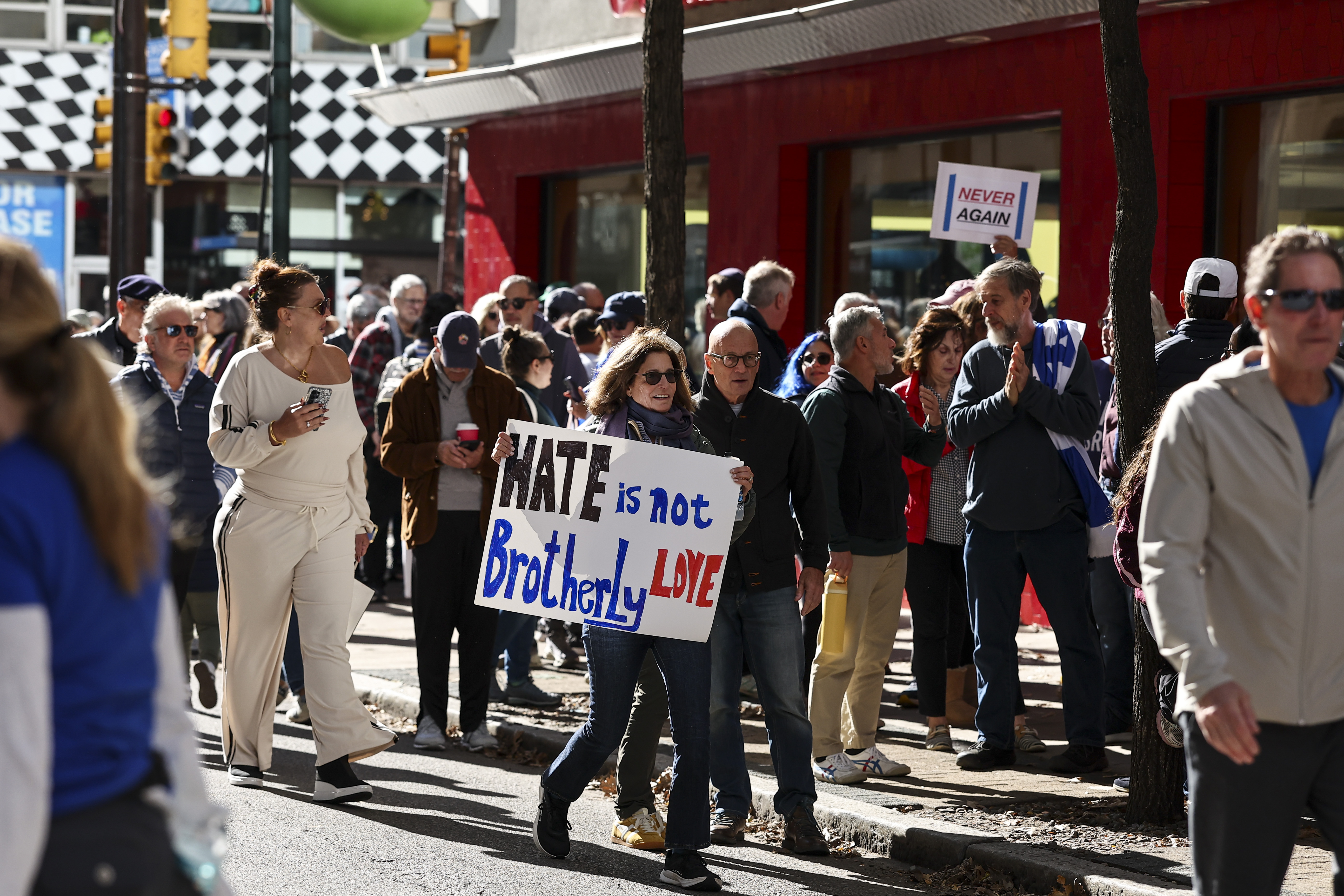
    As the bikers rode through Center City, the counterprotesters jeered and waved Israeli flags, while hundreds of others rallied in support of the businesses and the mood veered between combative and surreal.

    Crowds gather and pass outside of Huda on Sunday, Nov. 8, 2026 in Philadelphia.Monica Herndon / Staff Photographer

    Police said three people were arrested: a woman for assault, a man for disorderly conduct, and a 17-year-old for assault on police. Two officers sustained minor injuries that didn’t require medical treatment. One woman, a counterprotester, said she was assaulted, and no property damage was reported, police said.

    Meanwhile, patrons packed the eateries, where lines for milk bun sandwiches and lunch meats wrapped around city blocks. On X, Gov. Josh Shapiro said “the City of Brotherly Love showed up to support our neighborhood businesses and prove once again that hate has no place in our Commonwealth.”

    The crowd at Huda was unlike anything owner Yehuda Sichel had seen before.

    When he first learned of the bike ride, he was “pretty hurt and pretty upset,” Sichel said. The timing of the protest — on the eve of the anniversary of Kristallnacht — was especially painful for Sichel, who said his grandfather survived the Holocaust and witnessed the dayslong pogrom on Jewish communities in Nazi Germany in 1938. During Kristallnacht, Nazis assaulted and killed Jewish people, imprisoned about 26,000 Jewish men in concentration camps, trashed businesses, and burned more than 1,400 synagogues.

    Protesters ride down South 18th Street.Monica Herndon / Staff Photographer

    Bike-ride organizers, Philly Bike On Your Left, said in a statement posted to Instagram on Saturday that they stand against antisemitism and that they were boycotting the businesses because of their owners’ support for Israel.

    The group said their “ride has been grossly misrepresented,” and that “any suggestions about the timing of our ride are simply false.”

    “We firmly stand with indigenous Palestinians in their struggle for freedom and justice,” the organizers wrote in part.

    Responding to a list of questions from The Inquirer via Instagram, Philly Bike On Your Left said, “I can assure you we had no idea when [Kristallnacht] was. That’s not something we would ever do.”

    It’s unclear who is behind the account. The user direct messaging with The Inquirer declined to identify themselves, saying they feared for their safety. Members of their group have received death threats and been doxxed, the statement said.

    Sichel believes he was targeted because he raised a few thousand dollars for injured and traumatized Israeli children after the Oct. 7, 2023, Hamas attack on Israel, when Hamas militants killed about 1,200 people and took 251 hostages. Since then, Israel has responded with an offensive that has killed more than 74,000 Palestinians, according to Gaza’s Health Ministry.

    The money he raised went directly to the municipality the children were in, Sichel said.

    “I didn’t send it to any military,” he said. “I’m an American. I’m a Jew. I’m a proud supporter of the Israeli cause, but that does not mean I’m in the government over there.

    “I don’t even have any influence on the government in Philadelphia.”

    Mac Mart owner Marti Lieberman said in a text Sunday evening she was “exhausted and overwhelmed in the best way.”

    “We successfully overshadowed this act of intimidation and hate, and we did it with love and fun, and above all things humanity and good food,” she said.

    Protesters and counterprotesters engaged with the police during the bike-ride boycott at Rittenhouse Square on Sunday, Nov. 8, 2026 in Philadelphia.Monica Herndon / Staff Photographer

    ‘Boycott Ride’ and a hope for change

    A flyer for the “Boycott Ride” began circulating on social media as early as Oct. 30, promoting a bike ride to show pro-Palestinian solidarity and protest six businesses: Mac Mart, K’Far Cafe, Huda, Goldie, Dizengoff, and Schlesinger’s Deli. The widely circulated flyer reads, “No business for Zionists! These Zionist Establishments must go! Not in our city!”

    K’Far Cafe, Dizengoff, and Goldie — as well as a handful of other restaurants throughout the city — are owned by CookNSolo, renowned Israeli-born chef Michael Solomonov’s restaurant group. In the wake of the Oct. 7 attack, CookNSolo, Solomonov, and his business partner, Steve Cook, fundraised more than $100,000 for the Friends of United Hatzalah, an Israeli nonprofit that describes itself as a volunteer EMS organization.

    For rider Carmen Guerrero, the demonstration was meant to draw attention to people who she said have helped finance Israel in the war. Guerrero, of Montgomery County, wore the words “Stop Genocide” on her headband.

    Protesters ride down South 18th Street on Sunday, Nov. 8, 2026 in Philadelphia.Monica Herndon / Staff Photographer

    “I’m here because I am Native American,” she said. “The blood of my people had disappeared on this land. Now they are trying to disappear the people of Palestine.”

    James Ray, 28, said the ride was more about supporting fellow activists and raising awareness than attacking individuals.

    “I hope [the business owners] look at this and reflect on their own positions,” Ray said. “My hope is for positive change. Not focusing on the stores so much as using it as an opportunity to educate the community.”

    Allan Domb, owner of Schlesinger’s Deli, said it was heartwarming to see so many people support the businesses.

    “They didn’t come for the food — they came to show their support, which was really amazing,” Domb said. “The Philadelphia community really stepped up.”

    A spokesperson for CookNSolo did not immediately respond to an email seeking comment Sunday.

    Long lines and crowds outside of K’Far Cafe during the boycott ride in Rittenhouse Square on Sunday, Nov. 8, 2026.Monica Herndon / Staff Photographer

    Officials rebuke protest and community steps up

    In recent days, many had thrown their support behind the restaurants and the broader Jewish community. A nonprofit, JewBelong, bought billboards across the city, urging people to “boycott the boycott ride” as reactions and commentary continued to flood social media. Others came to Philly Bike On Your Left’s defense: Philadelphia Democratic Socialists of America called the trove of statements of politicians “bad-faith condemnations,” and nearly 20 pro-Palestinian organizations had signed onto a statement of solidarity as of Sunday morning.

    “Everyone has the right to peacefully protest and express their political views,” Philadelphia Mayor Cherelle L. Parker said in a statement last week. “But singling out businesses because their owners are Jewish is unacceptable and has no place in our city.”

    U.S. Rep. Brendan Boyle (D., Philadelphia) said the proximity to Kristallnacht’s anniversary “evokes the darkest chapters of history,” while Sen. John Fetterman called it a “sick parade of rank antisemitism.”

    In a video, Philadelphia District Attorney Larry Krasner told people who denounce the Israeli government or the war: “[Prime Minister Benjamin] Netanyahu’s your target, the leadership of the Israeli government is your target, … as opposed to blaming all Israelis, or all Jewish Israelis, or all Jews all over the world for their beliefs, for their faith, for their ethnicity.”

    Counterprotester Alexa Epstein, 37, was elated to see so many people defending the restaurants. Epstein, who is Jewish, said she doesn’t support some of what has happened in Gaza. But she is a proud Zionist, which she said means supporting Jewish people’s right to a homeland. The bike ride’s attack on Zionism, she said, feels like broad disapproval of Jewish people.

    “We’re not here for any sort of violence,” Epstein said. “We’re just here to stick up for what we believe — and these restaurants, which have nothing to do with anything in the Middle East.”

    Alan Reisberg, 66, who came from Baltimore, joined the crowd outside Huda after reading about the bike ride on social media. He believes American Jews should not be made to answer for Netanyahu’s decisions.

    “I don’t love every leader of our country. I don’t love Bibi Netanyahu and the way he’s orchestrated his government but certainly this antisemitism and hate is not the answer,” he said.

    Even after waiting an hour-and-a-half outside Schlesinger’s, Phil Duncanson, of Logan Square, wasn’t close to the front. Duncanson, 49, said he’d never been to Schlesinger’s, but after learning of the bike protest on CNN he felt he had to support the restaurants.

    “I just don’t think the tactic of targeting individual businesses is the right approach to advance any movement, regardless of what it is,” Duncanson said.

    Duncanson said he defends pro-Palestinian protesters’ right to say what they feel. But from growing up in the United Kingdom — where World War II’s devastation could still be seen firsthand — Duncanson was quick to think of how calls to “shut down” restaurants could escalate.

    Nearby in line, Reese Revak, 39, of Roxborough, said protesters may have good intentions in opposing the Israel government. However, the professional piano player, who teaches music at Curtis Institute of Music, said there’s a big difference between intent and how it affects people.

    “And I think this protest has a terrible impact on the Jewish community,” Revak said.

    Revak was encouraged by the long line — a sign to him that the counterprotest has far overshadowed the bike rally. The longtime Schlesinger’s fan said it’s was worth the wait.

    “Even if I don’t get a sandwich I’m happy to be here.”

    Staff writer Michael Klein contributed to this article.

  • ‘This Much I Know:’ InterAct’s latest production is an intricate puzzle, crammed with ideas and standout performances

    ‘This Much I Know:’ InterAct’s latest production is an intricate puzzle, crammed with ideas and standout performances

    With the lights still up, a bearded South Asian man with a British accent implores us to turn off our cellphones, not merely silence them. As he challenges the audience, we start to wonder: Is this prologue or play? What sort of reality are we in?

    Within moments, we realize we have become students in a lecture hall, and our interlocutor is a psychology professor, Lukesh (Sorab Wadia). Using illustrative projections, he articulates the dicta that will frame the action and set the thematic stakes of Jonathan Spector’s 2022 drama, This Much I Know.

    “We can’t really reconstruct past beliefs or thought processes,” Lukesh declares.

    Mark Worth (left) and Sorab Wadia in InterAct Theatre Company’s “This Much I Know” at the Proscenium Theatre at the Drake.Ashley Smith with Wide Eyed Studios

    “We make sense of things, even things there’s no sense to be made of.” And this: “False ideas can be dangerous” because “they’re sticky” and “we are so desperate to make things connect.”

    The playwright’s initial sleight of hand is so compelling that, during Thursday’s opening night performance, some audience members believed a fire alarm that emptied the Proscenium Theatre at the Drake was scripted. (It was not, and the normally two-hour, 15-minute performance resumed after a short delay.)

    Under producing artistic director Seth Rozin, InterAct Theatre Company has always been drawn to plays of ideas. This Philadelphia premiere, directed by Rozin, is among the densest of such dramas.

    Its themes include the tension between reality and illusion, and Spector, who loves to literalize his metaphors, injects a few magic tricks into the show. But he doesn’t stop there.

    Because the plot is an intricate set of puzzle pieces, one character, an aging alcoholic Russian, must be an aficionado of jigsaw puzzles. Another, an angst-ridden white nationalist, wrestles with a college thesis on H.G. Wells and his dystopian 1895 science fiction novel, The Time Machine, as the play itself shifts back and forth in time.

    From left: Mark Worth, Jessica DalCanton, and Sorab Wadia take on numerous roles during InterAct Theatre Company’s production of “This Much I Know.”Ashley Smith with Wide Eyed Studios

    Both these figures are played, with complete physical commitment and impeccable accents, by the same actor, Mark Worth. Worth’s metamorphosis into multiple characters, including Russians of diverse ages and inclinations, is this production’s indisputable highlight.

    There is considerable (self-conscious) cleverness and craft in the script. And Rozin’s fluid direction is aided by Nick Embree’s minimalist set, Michael Long’s projections, Lindsay Alayne Stevens’ lighting, and Alison Roberts’ quick-change costuming. But all this is in service to arguments, influenced by the behavioral economist Daniel Kahnemann, that aren’t always lucid and a narrative that isn’t fully convincing.

    InterAct’s This Much I Know nevertheless offers substantial pleasures. The play’s shape-shifting, with all three actors (Worth, Wadia, and Jessica DalCanton) skillfully taking on numerous roles, is fun to watch. And its ruminations on both the persistence and transitoriness of belief systems, as well as the seductions of storytelling, make for meaty post-theater debate.

    Spector is a graduate of New College of Florida, a public honors college and progressive bastion that was the object of a recent conservative takeover by GOP Gov. Ron DeSantis. (Patrick Brosnan’s 2026 documentary, First They Came for My College, shown at the Philadelphia Film Festival, offered a tendentious, grassroots view of the conflict.)

    Eureka Day (2018), Spector’s best known play, is a prescient, comic take on “woke” culture and vaccine denialism that lampoons the rigidity of both sides. InterAct mounted a production in 2019, and a Broadway revival won a 2025 Tony Award. Spector’s Birthright (2025), dramatizing the fierce debates of six Jewish friends who once took a “birthright” trip to Israel together, had a successful off-Broadway run earlier this year.

    This Much I Know focuses on Lukesh’s problematic relationships with his writer wife, Natalya, and his white nationalist student, Harold. Natalya is working on what she calls “an imagined family history,” neither novel nor memoir, “a hundred percent factual but totally made-up.”

    A tragedy in her own life propels her back to Russia to learn more about her family’s Soviet-era relationship with Joseph Stalin’s daughter, Svetlana, a tragic figure in her own right. DalCanton plays both (traumatized) women, who blur, perhaps intentionally, in the course of the drama. Wadia doubles as the gentle Indian man, Brajesh Singh, whom Svetlana describes as her greatest love.

    Harold is the scion of a prominent white nationalist, and from the beginning he insists that he agrees only in part with his father’s extremist views — a story with parallels to Svetlana’s. As Harold tracks the evolution in Wells’ ideology for his thesis, he experiences a profound transformation of his own.

    One key narrative question is whether Svetlana used her influence with her tyrannical father to plead for the lives of Natalya’s unjustly targeted great-grandparents. Her actions matter intensely to Natalya, but less so to us.

    Svetlana, a defector to the United States who abandoned her children in the process, represents the unsatisfactory murkiness and moral ambiguity of the stories we tell ourselves. “Once you have gained sight, it is impossible to feign blindness,” the character asserts. But that vision, she adds, was just “the first piece of a puzzle I did not know I was assembling.”

    InterAct Theatre Company’s “This Much I Know” runs through Nov. 22 at the Proscenium Theatre at the Drake, 302 S. Hicks St. 215-568-8079 or boxoffice@interacttheatre.org

  • The Union’s run to the playoffs was great, but they know they’ve now reached the hard part

    The Union’s run to the playoffs was great, but they know they’ve now reached the hard part

    When the Union looked across the field at Subaru Park on Saturday, they saw a Toronto FC team that looked every bit like one already out of the playoff race. The hosts treated their guests the right way, racing them off the field in a 4-1 rout.

    That won’t be possible anymore this year.

    Yes, the Union went 13-2-4 in league games after Ryan Richter took over during the World Cup break. But only when the playoffs kick off later this month will fans finally know the depth of all that success.

    Twelve of those wins and two of the ties came against teams that finished the regular season below the Union in the leaguewide standings. The one win against a team ranked higher, at Chicago last month, came with a man advantage in the second half that turned the game.

    Among those losses was a 2-1 home defeat to New England, the same team that now awaits the Union in the first round. The score matched that of a loss in Foxborough, Mass., back in May — when Bradley Carnell was in charge, Kai Wagner was in England, and Quinn Sullivan was two months from full health.

    They know this in the River End stands, where the fans suspected for a few weeks that they’d need to make time for a Thanksgiving weekend home game. Now that’s a certainty.

    They know it in the Union’s locker room, too, and it did not spoil the mood to bring it up after Saturday’s game.

    “It’s going to be a big step up,” Richter said. “And what we have to make sure that we do. And even a lesson we can learn from tonight [is]: we can’t be conceding goals in set pieces like this. We have guys that are too good at their man-marking, too good attacking the ball, too good in the air.”

    That was a reference to Toronto’s goal just before halftime, a header by former U.S. national team striker Josh Sargent off a corner kick. Along with being a badly defended set piece, it came shortly after what should have been the Union’s third goal, ultimately ruled out on a controversial offside call.

    “There’s going to be games, and in the playoffs you’re playing against quality teams and quality players, that sometimes you clap your hands and say, ‘Well done’ if a great player pulls off a great moment and makes a goal, or [there’s] a great team goal, and good teams can score like this,” Richter said. “But what we can’t have is lapses in focus on our end. Make sure that we’re at our best in every game if we’re going to want to go on the kind of run that we think that we can.”

    Of course, it’s Richter’s job to believe that his team can beat New England, and his message about that is just as clear.

    “Let’s not make it now like, ‘Guys, good second half of the season, this is a positive story for the year, and now it’s over,’” he said. “Like I’ve said over the last few weeks, when we have competed against the best teams in the Eastern Conference, I think that’s exactly where we belong. We can beat any team, and we’re going to approach the playoffs in that way.”

    Ryan Richter (left) embraces Frankie Westfield after the right back scored a goal that was disallowed for a controversial offside call.Elizabeth Robertson / Staff Photographer

    But it’s everyone else’s job to understand that winning the series would be an upset, and not just because of the seed numbers. A matchup with Miami would have seen wide-open play, not just the star matchup of Lionel Messi and Cavan Sullivan. This one will be much more of a grind, with the extra annoyance of Gillette Stadium’s artificial turf.

    The motto has been said here a few times now, and it’s still true. If the Union don’t win, don’t say you weren’t warned.

    Damiani’s latest milestone

    Bruno Damiani’s penalty kick goal wasn’t just the game’s icing on the cake. His 13th tally of the season was also his first since earning his first invitation to Uruguay’s senior national team.

    La Celeste’s attack isn’t as star-studded as it used to be, but Damiani still gets to be companions with some big names: former Liverpool striker Darwin Nuñez, current Liverpool (and longtime Barcelona) centerback Ronald Araújo, Tottenham Hotspur centerback Rodrigo Betancur, and Real Madrid midfield general Federico Valverde.

    “It’s a dream come true,” Damiani said. “It’s going to be an amazing experience. I wish I get some minutes, but everything else is going to be great, to play with top players.”

    Uruguay’s program also has a history of respecting players from MLS, from Real Salt Lake’s Juan Manuel Sanabria right now to Nicolás Lodeiro, Facundo Torres, Brian Rodríguez. That tradition is continuing under new manager Diego Forlán.

    If you’ve followed world soccer for a while, you instantly know that name. Forlán was a superb striker for his country and for huge European clubs including Manchester United, Atlético Madrid, and Inter Milan.

    Before becoming the coach of Uruguay’s men’s national team, Diego Forlan was one of its greatest players.

    Even though Uruguay will only play friendlies in this window, at eternal rival Argentina and home vs. the Dominican Republic, for Forlán to pick Damiani in just his second FIFA window in charge is a real compliment.

    “Forlán is, for the Uruguayans of my age, the first idol we had in the 2010 World Cup. He was our best player,” Damiani said. “It means a lot that someone like him values the work that I put in, and MLS. He’s showing that he is watching the league and cares about the players here, and that’s a good sign for sure.”

  • To help those living with dementia, a Jewish Family and Children’s Service program includes care for their caregivers | Philly Gives

    To help those living with dementia, a Jewish Family and Children’s Service program includes care for their caregivers | Philly Gives

    It has been hard enough for Annette Reyman to deal with the reality that — day by day, month by month — she’s losing her 100-year-old mother to dementia.

    But two summers ago, amid the demands of caring for her mom, Reyman faced another jarring realization: She was on the verge of losing herself, as well.

    The sleepless nights — half-listening for her mother to get up and maybe fall on the way to the bathroom. The time her mother tried to walk the dog and instead tumbled to the ground. Reyman had no life. She couldn’t go out with her husband or have lunch with a friend. Her business, helping people organize for moving, nearly tanked.

    “I didn’t know who I was. I didn’t know what I wanted. I’d ask for help, but people didn’t know what to do,” Reyman said. “I couldn’t even go to the grocery store. I was feeling trapped.”

    And then Brie Yousaitis came along.

    Director of senior services for Abramson Senior Care of Jewish Family and Children’s Service of Greater Philadelphia (JFCS), Yousaitis visited Reyman and her mother, Florence Lauria, in their home in Media as part of JFCS’s GUIDE program. GUIDE (Guiding an Improved Dementia Experience) provides comprehensive care management for seniors with dementia — care that also includes help for the caregivers, people like Reyman.

    For Reyman, JFCS’s GUIDE program was a lifesaver, but GUIDE is only one of many JFCS programs that serve seniors, Holocaust survivors, children and families, teens, people living with disabilities, and the Orthodox Jewish and LGBTQ+ communities. Services include help with housing, socialization, workforce development, substance use, hoarding, and suicide prevention.

    At that first visit in August 2025, Reyman did a lot of the talking. Yousaitis listened and held Lauria’s hand. More than anything, that’s what Reyman noticed.

    “She was holding her hand, but supporting me,” Reyman said.

    Barbara Kurland works with Rhea Huber as they make challah bread. Behind them are Maxine Goldman (Apple Watch), Hope Kirschner (white shirt), Joyce Avrach (green shirt), and others.I. George Bilyk

    The feelings are so complicated. Reyman’s an achiever by nature, so surely, she thought, she could be the Wonder Woman who can do anything, handle anything.

    “But no, I’m human,” she said. “I can’t do it.”

    She wrestled with anger at herself and at the situation with her mother. She struggled with guilt for feeling angry. After all, being 100 wasn’t her mother’s fault. Having dementia wasn’t her mother’s fault. “It felt like anger, but there was also guilt and defeat,” she said.

    But Yousaitis understood all of it. “She took the guilt out of it,” Reyman said.

    Instead, there was practical help — even something as simple as watching Yousaitis hold her mother’s hand mattered. Touch can be effective in reaching through the fog of dementia. Yousaitis modeled the behavior. Reyman modeled Yousaitis.

    Yousaitis told Reyman about a statewide art contest for seniors. Reyman entered a painting her mother made of flowers. It was one of 30 paintings to be exhibited at the governor’s mansion in Harrisburg. Both she and Lauria traveled to Harrisburg to attend the ceremony.

    The GUIDE service includes a 24-hour hotline for emergencies, like what to do when a parent wanders out of the house at 3 a.m. in the winter wearing a nightgown, or when an older person won’t get out of the car at midnight because he thinks he’s about to go on a trip.

    Jewish Family and Children’s Service serves caregivers of people living with dementia | Philly Gives
    Video: Jewish Family and Children’s Service serves caregivers of people living with dementia | Philly Gives

    The care management component involves making sure the myriad medications dementia patients take don’t conflict with one another. There’s also a home-safety check. JFCS has connections with contractors who not only do the construction work, but also understand the reasoning behind it.

    “Care plan development, that’s another big component,” Yousaitis said. “And then the resources — if you can think of [a problem], we have a resource for it.”

    And there’s expertise. For example, Yousaitis and her staff may suggest hanging a picture of a toilet on the bathroom door, and a photo of mugs on the kitchen cupboard where they’re kept. Worried about someone leaving the house? Wrap the door in paper that looks like a bookshelf. Put baby gates at the stairs and paste neon-green strips on them, since neon green appears to be the last color lost to those with dementia.

    Susan Wolff displays a heart-shaped piece of challah bread that she created during a recent baking event at the Barbara and Harvey Brodsky Enrichment Center in Bala Cynwyd.I. George Bilyk

    Beyond that, there are support groups for people like Reyman. She remembers going to one, and what she noticed at first was that everyone looked tired, extremely tired. But they trade tips and jokes, and somehow the load gets lighter.

    Sometimes there are activities — arts and crafts for the elderly while their caregivers get a chance to relax and unwind in another room.

    A favorite activity involves making challah bread, with caregivers and their loved ones working separately to fold strips of dough into braided loaves that they’ll eat together later, when it’s hot, fragrant, and fresh from the oven.

    “When the challah is baking, the aroma radiates through the building, and sometimes the aroma therapy triggers remembrance and reminiscence, and the client is able to verbalize,” even if they hadn’t spoken much for months, said Lana Pozdnyakov, chief senior care officer for Abramson Senior Care of JFCS.

    “The caregiver is actually able to hear that their loved one still has the memory to verbalize. It brings tears to their eyes to see, for a fleeting moment, that they can verbalize something with their loved one,” she said.

    The traditional Jewish challah loaf seems symbolic in the way it braids the dough together — the same way preparing the bread brings many groups served by the JFCS together.

    Just before Yom Kippur this past September, nearly a dozen elderly bakers gathered in the spacious kitchen in the Barbara and Harvey Brodsky Enrichment Center in Bala Cynwyd.

    They are part of the Social Programs for Positive Aging group that meets for field trips and activities. Besides the challah baking, there’s the group’s “travel” club. They see slides and movies of countries around the world, from Egypt to Morocco. Afterward, they share a meal with food from the region.

    What does the group mean to them?

    “Oh my God, it makes my hair stand up just to hear that question,” said Barbara Kurland, of Warminster, who recently moved to Florida to live with her family. “To be part of a community like this? No more fish out of water.”

    Over time, she said, ties with family and friends diminish. People die. People move away. Children and grandchildren have their own busy lives. And all of a sudden, where did everybody go?

    “I had no meaningful connections with either family or friends,” she said. “But here, I love us.”

    Among the bakers were several Holocaust survivors, including Ruth Shiloh, 90, who sang a blessing in Hebrew, echoing the sentiments of another reading earlier: “Blessed are You, Lord our God, King of the universe, who has kept us alive, sustained us and brought us to this season.”

    Eight-year-old Daniel Ben-Ari helps apply a coating to trays of challah bread alongside Odile G. Silberberg. His father, Or Ben-Ari, is the JFCS director of programming at the Barbara and Harvey Brodsky Enrichment Center.I. George Bilyk

    Her father, Shiloh said, had the foresight to get her family, including eight siblings, out of Lithuania before the Nazis took over. She lived in Russia and Poland and Israel before coming to the United States. As an adult, everywhere she lived, she taught mathematics and physics, including at Benjamin Franklin High School in Philadelphia. She speaks or understands at least nine languages.

    “I come here for the camaraderie,” she said, before sitting down for a bowl of soup, some salad, and hunks of freshly baked challah. “At my age, I don’t have many neighbors and friends, so this is my connection to my Jewishness.

    “Wherever we are in the world, we Jews contribute to growth, yet we were always treated like pariahs,” she said. “When I come here, I am among my own people. I am home.”

    About Jewish Family and Children’s Service of Greater Philadelphia, Bala Cynwyd

    Mission: Driven by the Jewish values of community, dignity, and repairing the world, Jewish Family and Children’s Service of Greater Philadelphia works to strengthen families and individuals across generations and cultures to achieve stability, independence, and community.

    People served: Over 33,000 annually

    Annual spend: $16.470 million for FY2025

    Points of pride: Helping Hands Summer Work Readiness Program for 52 students in a citywide collaboration with Philadelphia’s Department of Behavioral Health and Intellectual disAbility Services, the Mental Health Network, an innovative collaboration of mental health providers to increase access to care, and expanded senior services following a recent merger with Abramson Senior Care. JFCS will further expand its senior services in a new building in Northeast Philadelphia, set to open soon.

    You can help: Volunteers can sort donated clothing, package food in collaboration with people living with disabilities, and prepare food for people in need, among many other volunteer opportunities.

    How your donations support the communities we serve:

    • $25 buys a warm winter coat for a child.
    • $50 purchases a grocery store gift card for a family.
    • $100 pays the heating bill for an individual with a disability.
    • $360 subsidizes the cost of therapy for an individual experiencing a mental health crisis.
    • $500 covers medical bills for an aging senior.
    • $1,000 funds suicide prevention training for at-risk teens.
    • $2,500 installs a chair lift in the home of a Holocaust survivor.
  • St. Joseph’s women’s hoops roster hasn’t changed much. Here’s how it looked in the season opener against Kutztown

    St. Joseph’s women’s hoops roster hasn’t changed much. Here’s how it looked in the season opener against Kutztown

    Roster continuity is hard to find in college athletics, but for St. Joseph’s women’s basketball, that’s never really been a problem.

    However, bringing in some reinforcements doesn’t hurt.

    With a mixed effort from returning veterans and new faces, St. Joe’s routed Kutztown, 95-27, in its season opener at Hagan Arena on Saturday.

    Transfer Deja Evans scored 16 points in her Hawks debut, all in the first half. The senior forward shot a perfect 8-for-8 from the field.

    The Hawks, the unanimous preseason favorites to finish first in the Atlantic 10, returned 10 players from last year’s roster, including eight of their nine top scorers.

    Among the returners were seniors Gabby Casey (game-high 19 points and six steals), and Aleah Snead (eight points).

    Head coach Cindy Griffin said the addition of Evans and junior transfer Maddy Potts has worked well for the Hawks because of the maturity that they bring.

    Saint Joseph’s Aleah Snead goes up for a shot against Kutztown University on Saturday.Tyger Williams / Staff Photographer

    “You have that going for you, plus, you also have the continuity of the group that was already here,” Griffin said. “So I don’t think we really missed the beat.”

    Evans, a Conshohocken native, had familiarity with St. Joe’s. The Archbishop Wood alumna spent her freshman season at Albany, before transferring to another Big 5 school, Drexel, for her sophomore and junior seaons. She faced the Hawks twice with the Dragons.

    Evans said it made for an “amazing transfer process,” which allowed her to learn the plays and be “aggressive on the court” right away.

    “It’s definitely helped me understand a lot,” Evans said. “Just knowing the girls, they’ve made it easier for me. Being able to go talk to them, Aleah and Gabby, they’re leaders for me as well, even though we’re in the same grade. But they’re definitely big leaders on the court.”

    Evans and the other starters were pulled in the third quarter when the Hawks were up by over 40 points, giving the younger players a chance to play.

    Among them was Jahzara Green, a freshman forward from Gloucester Catholic, who scored nine points in 18 minutes. She also contributed eight rebounds for St. Joe’s, making “an impact right away,” Griffin said.

    “She’s again another spark off the bench,” Griffin said. “She’s aggressive. She’s assertive. She’s strong. She rebounds. Great communicator. So really pleased.”

    The Hawks finished with 21 assists on 38 field goals and had 18 steals. Still, as the Hawks hit the road for their next game against Cincinnati, Griffin said she wants them to focus on being a great road team as well as at home. That comes with staying focused and getting the right shots, something she wants to see her team improve.

    “We got some really great shots, but sometimes maybe we rushed it a little bit,” Griffin said. “I think we got a little bit ahead of ourselves sometimes, but that that’s going to come. I thought we did a nice job taking care of the ball, but, I think the continuity of continuing to share the ball and see the open person.”

    Up next…

    The Hawks’ first road trip will be to face the Cincinnati Bearcats on Wednesday (6:30 p.m., ESPN+).

  • This interactive map helps you find Philly’s modernist buildings

    This interactive map helps you find Philly’s modernist buildings

    In a city as old as Philadelphia, historical buildings designed in the Colonial or Victorian styles get a lot of attention. But a yearslong project by Thomas Jefferson University researchers and nonprofit volunteers aims to put a spotlight on the city’s collection of modernist buildings.

    Researchers at the university’s Center for the Preservation of Modernism and members of the Philadelphia-area chapter of Docomomo US, which advocates for modernist sites, have created an interactive map of almost 700 mid-century modern buildings. They include the Municipal Services Building at 1401 John F. Kennedy Blvd., Three Penn Center, and the Roundhouse, which the map calls “one of Philadelphia’s most iconic, and most contested, examples of modernism.”

    Residential buildings, hotels, schools, houses of worship, libraries, and fire houses are among the structures the map highlights. Researchers are continuing to comb through records and walk the streets of Philadelphia searching for more.

    The Roundhouse, the former headquarters of the city police, is one of Philadelphia’s most prominent examples of modernist architecture. Jessica Griffin / Staff Photographer

    “It is exciting to think they’re out there,” said Suzanne Singletary, director of the Center for the Preservation of Modernism and a Jefferson professor who specializes in historic preservation and architectural history. “They’ve been pretty much overlooked, and we’re trying to change that.”

    Singletary said modernism is an important architectural style that “creates Philadelphia just as much as Colonial or Victorian or any other style.” And this map, she said, gives “a sense of the scale and the scope of modernism in Philadelphia.”

    Researchers hope bringing attention to the city’s modernist buildings can promote appreciation for the style and help protect structures from demolition.

    Mid-century modern buildings generally have clean, straight lines and don’t have ornamentation. Hallmarks include expansive walls of windows, flat roofs, and interconnected interior spaces. Metal, glass, and stone are primary building materials.

    The Municipal Services Building at 1401 John F. Kennedy Blvd. is a mid-century modern building included on the map. Michaelle Bond / Staff

    These buildings are “characterized by off-the-shelf materials and simple forms,” said Kevin King, a graduate student in Jefferson’s historic preservation program and a member of the steering committee at the Center for the Preservation of Modernism.

    “They don’t jump off the street, if you will, in the way some high styles do,” King said. But “both are worthy of appreciation and preservation.”

    Paul Steinke, executive director of the Preservation Alliance for Greater Philadelphia, said modernism “is meant to kind of signify a departure from historical architectural styles rooted in European precedent.”

    Parkway House apartments tower above 2201 Pennsylvania Ave. Alejandro A. Alvarez / Staff Photographer

    Creating the map

    King said the modernism map is “a huge undertaking, and we could not have done it without a huge group of people.”

    The Center for the Preservation of Modernism partnered with the Philadelphia-area chapter of Docomomo US to create the map. Local architectural photographers contributed photos. The database of the Philadelphia Architects and Buildings Project provided a wealth of information.

    Researchers started with a mid-century modern inventory that the Preservation Alliance built more than a decade ago.

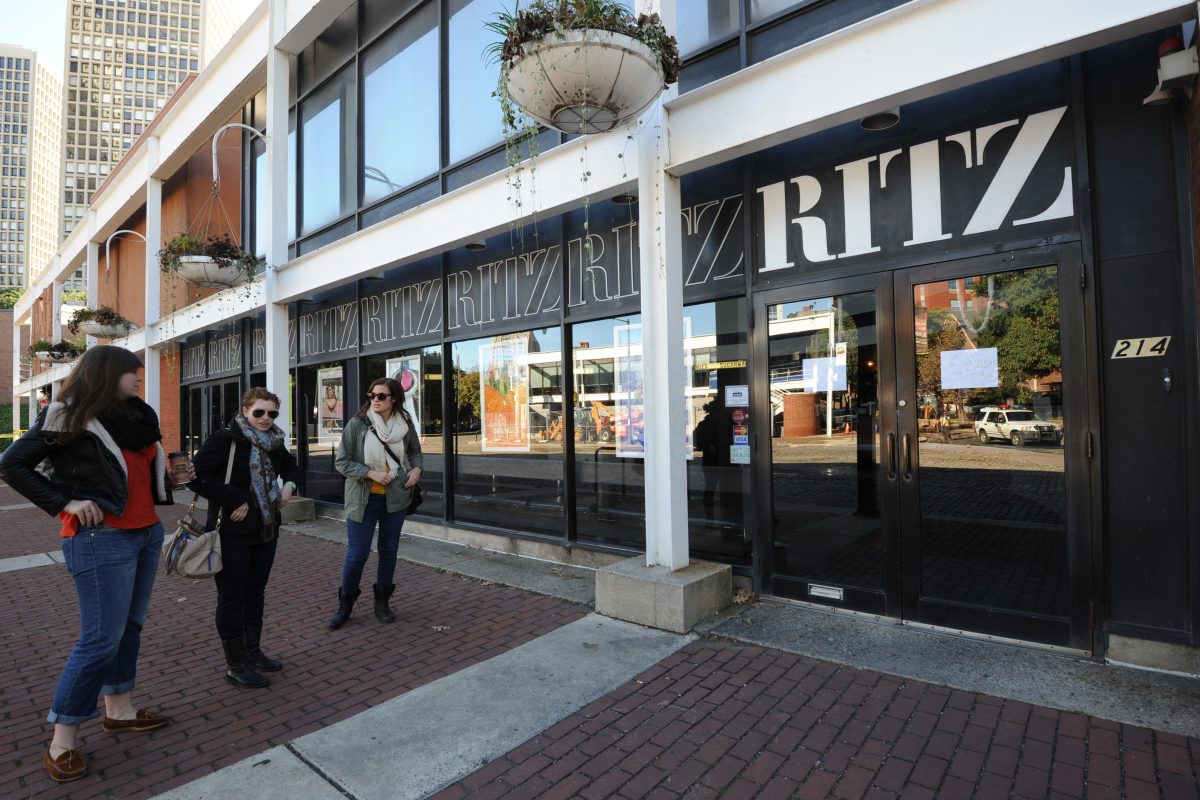
    The Landmark Ritz 5 movie theater at 214 Walnut St. is included in the map of modernist architecture.APRIL SAUL / File

    The organization created the inventory as part of efforts to nominate modernist buildings for historic preservation, protect them from demolition, and encourage their reuse.

    The Preservation Alliance was spurred by the demolition of the Sidney Hillman Medical Center at 2116 Chestnut St., a modernist building constructed in 1950 and designed by architect Louis Magaziner.

    The modernism map went live in September after about five years of legwork, and researchers want to expand it to include more sites in Philadelphia and beyond city limits.

    Modernist examples

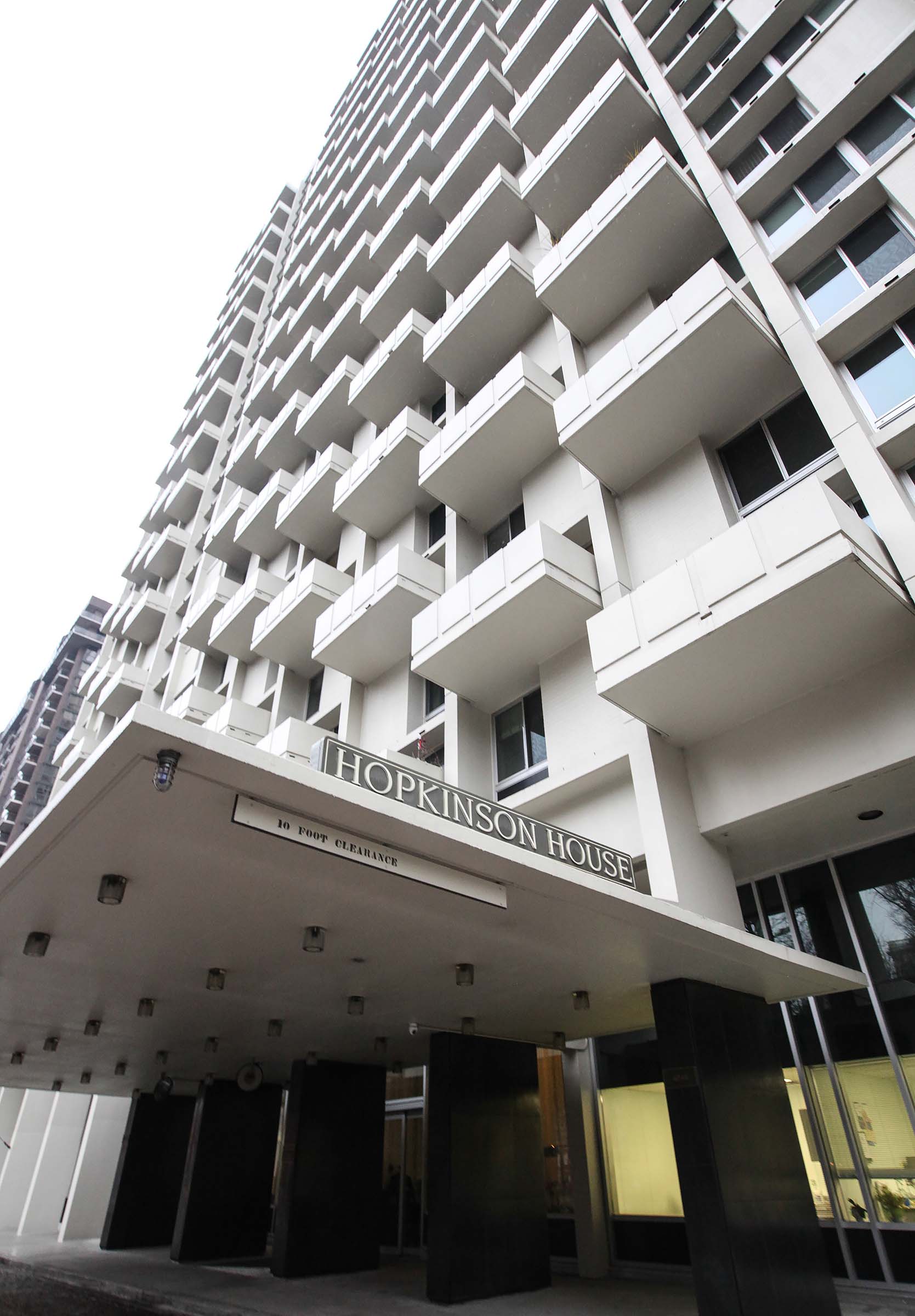
    Included on the map are residential buildings, such as the Philadelphian at 2401 Pennsylvania Ave., which is the city’s largest condo building; the Hopkinson House condo building on Washington Square; the Academy House condo building at 1420 Locust St.; and the Parkway House apartment building at 2201 Pennsylvania Ave., which was one of the first luxury apartment buildings built in the city after World War II.

    The Landmark Ritz Five movie theater at 214 Walnut St. also is on the map. And so is the U.S. Mint at Fifth and Arch Streets.

    Sites include those designed by acclaimed architects such as Louis Kahn; Frank Weise; and Elizabeth Hirsh Fleisher, the first woman in Philadelphia to get an architecture license.

    Designed by Elizabeth Hirsh Fleisher, the first woman to receive architectural accreditation in Philadelphia, in 1960, this unusual round building that was a landmark for half a century in South Philadelphia’s Columbus Square was demolished in 2019.Inga Saffron

    The map has buildings that are on the Philadelphia Register of Historic Places, ones whose historic nominations have been rejected, and others that haven’t been nominated as historic.

    The map also includes buildings that already have been demolished.

    Using the map

    Users of the map can click on locations to learn about the city’s modernist sites and search by architect or building name, for example.

    Jefferson researchers are working to fill in data so that each location includes a photograph, information about the architect or designer, the date a building was constructed, historical notes, and descriptions.

    The Hopkinson House at 604 S. Washington Square is one of Philadelphia’s many modernist buildings. Steven M. Falk

    They hope the map can be useful to preservationists, students, and residents who want to know more about the city and its buildings.

    Singletary called modernism one of the least understood and appreciated of Philadelphia’s architectural styles.

    “Before people start to realize this is something valuable, it could be demolished, because it’s not appreciated,” she said.

    The Center for the Preservation of Modernism welcomes submissions of modernist buildings for the map.

    Editor’s Note: This story has been updated to clarify Docomomo’s role in creating the map.