Blog

  • Tyson Foerster is ready to roll after last year’s injury setback: He ‘could score 40 goals in this league’

    Tyson Foerster is ready to roll after last year’s injury setback: He ‘could score 40 goals in this league’

    Tyson Foerster skated through the neutral zone, stepped to his right, and ripped a shot past Carson Bjarnason in the Flyers’ scrimmage on Saturday.

    The shot brought to mind what could have been last season had the winger been healthy for the full 82-game slate.

    Foerster suffered an upper-body injury while attempting a one-timer against the Pittsburgh Penguins on Dec. 1 that required surgery two weeks later. At the time, he led the Flyers with 10 goals across the team’s first 25 games, hitting double digits in the game he got hurt.

    The 24-year-old returned in April after missing 49 games, notching three goals in the final eight contests of the regular season, before adding one in 10 playoff games. He finished the regular season with 13 goals in 29 games.

    Last year’s setback came after Foerster had surgery in the 2025 offseason because of a right elbow injury he suffered during that spring’s World Championships that became infected.

    “Yeah, this summer was completely different,” Foerster told The Inquirer on Friday. “This is the first summer I went home in like five years — I’ve been in Voorhees training here for the last five years — so it was good to go home and see my family more.

    “And had a great trainer and skated like three to four times a week, so it was really good and a lot of shoulder rehab stuff just to make sure they’re both strong, and heavy legs. Kind of the usual stuff for everyone.”

    After a summer to heal up, Tyson Foerster has looked more like himself again in the early days of training camp.Jose F. Moreno / Staff Photographer

    Foerster trained with David Blaise, who he had been with since he was a kid playing hockey in Ontario. He would spend time in the gym upstairs in between work on the rink downstairs with a skating coach. The winger also went to Muskoka Hockey and skated with NHLers there; former Flyers forward Sam Gagner leads the program.

    Finally being able to train properly has boosted Foerster’s confidence. When he came back in April, he acknowledged that “for sure I felt a little tentative,” but at a certain point he forgot about it, and now feels 100%.

    “I do. I’m not just saying that, I do,” coach Rick Tocchet said on Monday when asked if he sees a difference from last year’s training camp.

    “He’s been rehabbing for two years, and it’s nice to go home for the summer and not rehab, and just work on your game. You can see it. He looks quicker, and he just looks good. You can tell he put a good summer in, and he’s refreshed. So that really helps us in the department of shot-quick guys, right? He can shoot the puck off passes. … When you get those guys in the lineup, hard to find those guys because they can shoot from anywhere and score.”

    Foerster’s shot is much talked about and is a major reason the Flyers made an eight-year, $56.7 million commitment to the winger this summer. Tocchet consistently mentioned how much they missed Foerster’s shot when the season dipped around the Olympics, and how it could have further boosted the offense as the team started to surge.

    Across his 195 regular-season games in orange and black, Foerster has 61 goals. His 0.31 goals per game mark ranks third among Flyers who have played at least 100 games since he made his NHL debut on March 9, 2023.

    “I think my shot’s always been one of the stronger suits for me,” he said. “And I worked on it all summer too. It’s more about deception and getting the shot off quick than being hard. And honestly, picking the spot too. There’s a bunch of spots that you see the goalie and trying to time it right where he pushes off, and you shoot the other way, so just little stuff like that.”

    Foerster couldn’t really work on his shot last summer because of his elbow injury, so he spent this summer working on finding lanes, his hands, wall play, and getting pucks through defenders. He practiced beating opponents one-on-one, specifically using his body more to protect the puck.

    It will help at five-on-five but also on the power play, where Foerster is expected to play a key role.

    On Monday, after practice with the non-game group, he stayed on the ice with Trevor Zegras, Jamie Drysdale and Matvei Michkov. They appeared to be working on the power play while getting direction from assistant coach Jaroslav “Yogi” Svejkovský, who is in charge of the Flyers’ man advantage. Zegras was on the right flank, Drysdale at the point, Michkov around the crease, with Foerster on the right flank and taking one-timers.

    “I think Tyson’s awesome,” winger Porter Martone said on Monday. “I’ve gotten pretty close to him this year specifically; since I’ve been here, I’ve been hanging out a lot, and I try to pick his brain as much as I can. I always say this: He could be a first-line guy who could score 40 goals in this league, but he could also be a third-line guy who shuts down other teams’ top lines every night.

    “So I think that’s someone who you look at. He works extremely hard, and he just does it the right way. And I think it’s someone who just cares about winning, and that’s exactly what we need.”

    The thing with Foerster is that while, yes, he’s a goal scorer, he’s also a monster defensively. It’s why Tocchet called him a “jack of all trades” on Monday, noting he can be out there when they need a goal or need to stop one.

    The Flyers are expecting big things from Tyson Foerster (left) after signing him to an eight-year, $56.8 million contract in July.Yong Kim / Staff Photographer

    “He does everything right, everything the right way,” said forward Noah Cates, who has primarily been Foerster’s center for several seasons and is his penalty-killing compatriot.

    “He plays so hard, protects pucks, and when he’s going, he honestly can be our best player and dominate games in such different ways, especially with his stick and defensively. But that shot is just, it’s lethal as well. So yeah, he’s really come around these past couple years, and [with] him healthy for a full year, who knows how many goals he can score; he can get up there. So really excited for him.”

    Breakaways

    Forward Nikita Grebenkin skated with the non-game group on Monday in a regular jersey. He had spent the first few days of training camp in a yellow non-contact jersey. Flyers general manager Danny Brière had said the forward’s status for the start of training camp was a little up in the air after “a little flare-up” in early September of an upper-body injury that occurred in March and caused him to miss the rest of the season and playoffs. … Goaltender Joseph Woll will get his first start in orange and black on Monday in the Flyers’ first preseason game against the Washington Capitals (7 p.m., NBCSP). According to Tocchet, he will play two periods, and Bjarnason will play the third. … Other notable names playing on Monday are forwards Jett Luchanko, Denver Barkey, Porter Martone, and Alex Bump, and defensemen David Jiříček, Ty Murchison, Oliver Bonk, and Simon Benoit.

  • Pennsylvania measles cases near 800 in ongoing outbreak

    Pennsylvania measles cases near 800 in ongoing outbreak

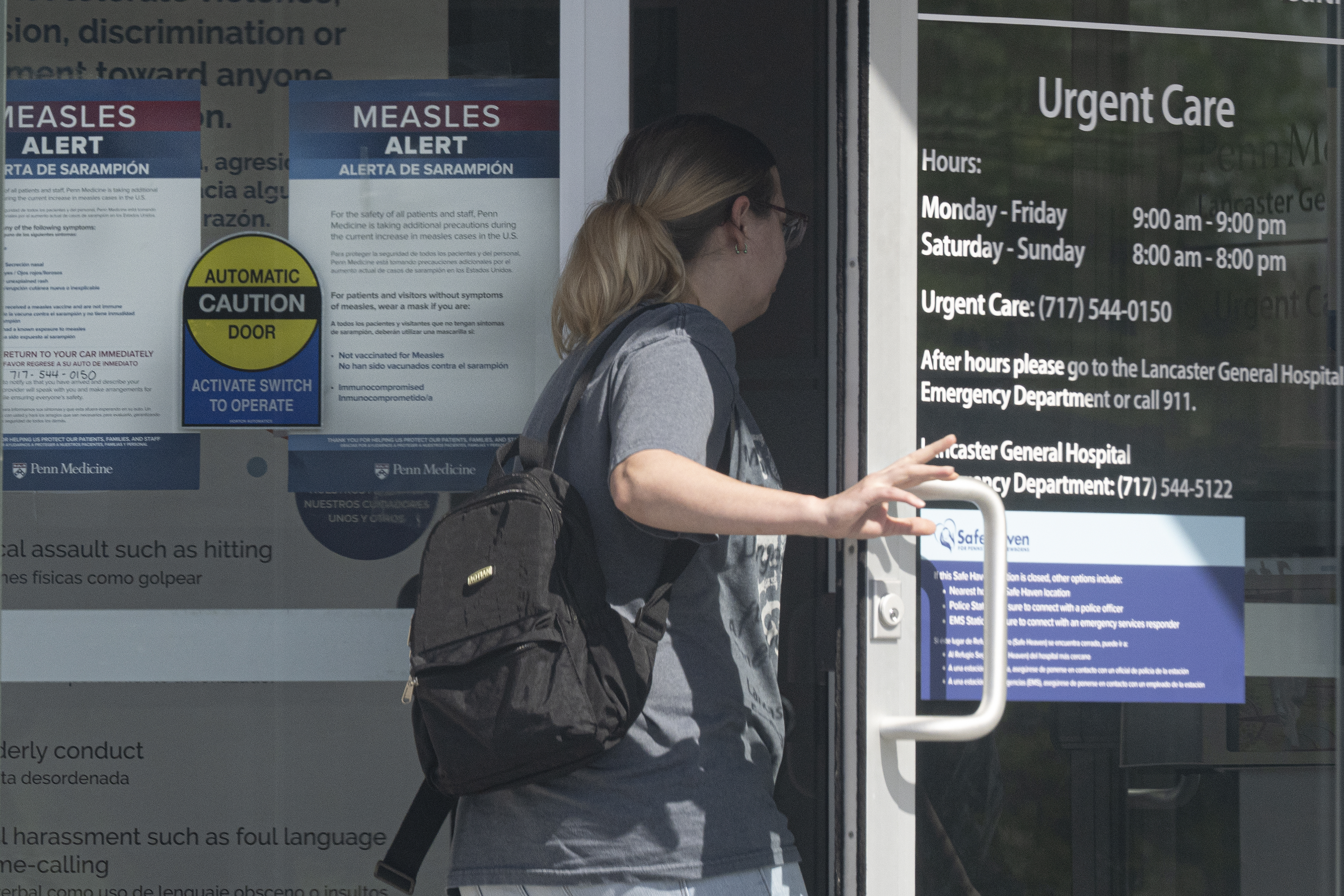
    Pennsylvania recorded nearly 100 new cases of measles in the last week, bringing the total case count for this year to 792, state officials said Monday.

    The state’s measles outbreak is the largest in the country in 2026 and is centered in Lancaster County, which has reported more than 300 cases this year.

    Chester County has confirmed 76 measles cases so far this year, the third-highest total in the state behind Mifflin County in Central Pennsylvania, which has reported 93 cases.

    State officials have reported four deaths associated with the outbreak: two infants in Lancaster County, a 40-year-old woman in Jefferson County, and an 18-year-old in Mifflin County.

    (function(){function e(){window.addEventListener(`message`,function(e){if(e.data[`datawrapper-height`]!==void 0){var t=document.querySelectorAll(`iframe`);for(var n in e.data[`datawrapper-height`])for(var r=0,i;i=t[r];r++)if(i.contentWindow===e.source){var a=e.data[`datawrapper-height`][n]+`px`;i.style.height=a}}})}e()})();

    The state defines a “measles-associated” death as one that occurs within 30 days of symptom onset in a person with clinical evidence of infection and a positive laboratory test for measles, and who did not die of another unrelated cause, like a car crash.

    Lancaster County’s coroner said one of the infants died from a lacerated spleen, not measles, though the baby tested positive for the disease. Physicians have noted that measles can weaken a spleen and make it more vulnerable to rupture.

    Federal officials have clashed with the state over its characterizations of the deaths.

    Democratic Gov. Josh Shapiro has faulted President Donald Trump’s Health and Human Services secretary, Robert F. Kennedy, Jr., a longtime anti-vaccine activist, for spreading misinformation about the safety of the measles vaccine and contributing to declining vaccination rates.

    Kennedy, in turn, suggested Shapiro’s administration “fabricated” two of the deaths, though he later acknowledged one death was caused by measles.

    The Centers for Disease Control and Prevention still has not listed the deaths on its data dashboard for measles outbreaks.

    (function(){function e(){window.addEventListener(`message`,function(e){if(e.data[`datawrapper-height`]!==void 0){var t=document.querySelectorAll(`iframe`);for(var n in e.data[`datawrapper-height`])for(var r=0,i;i=t[r];r++)if(i.contentWindow===e.source){var a=e.data[`datawrapper-height`][n]+`px`;i.style.height=a}}})}e()})();

    Officials there have suggested the state is not cooperating with the agency and said officials had not requested emergency help from its Epi-Aid program, which provides short-term technical assistance and subject matter expertise during health crises, as other states with outbreaks have. Trump, in a White House appearance with Kennedy on Friday, called Shapiro “close to incompetent.”

    “Incompetence is denying the tragedy of four measles-associated deaths in Pennsylvania,” Shapiro wrote on X in response.

    Pennsylvania health secretary Debra Bogen said last week the state was already working with CDC staff, and had begun the process of requesting an Epi-Aid team — on the condition that the agency acknowledges the deaths in Pennsylvania.

    Measles exposures in Philadelphia

    Chester County is the only county in the Philadelphia area that has reported measles cases in the current outbreak, which began in April. (Montgomery County confirmed three cases in a separate outbreak in the winter.)

    But Philadelphia health officials have reported two potential measles exposures, at the Children’s Hospital of Philadelphia and the Philadelphia International Airport.

    On Sept. 11, city health officials said, a person with measles visited a neonatal intensive care unit and several other areas at the hospital at 3401 Civic Center Blvd. in University City. Infants exposed in the NICU were isolated and treated with antibodies to help decrease their chances of acquiring or becoming seriously ill from the highly contagious disease, CHOP officials said.

    Two days later, on Sept. 13, a person with measles traveled through Terminals B and F at the airport, as well as areas connecting to Terminals C, D, and E, health officials said. The potential exposure was unconnected to the CHOP incident.

    Measles infects up to nine in 10 unvaccinated people exposed to it, and young children are at particular risk for complications from the virus, which can include pneumonia and brain swelling.

    State efforts to vaccinate

    About 95% of a community must be vaccinated against the virus to prevent its spread, but vaccination rates across Pennsylvania have been dropping for years. Hundreds of kindergartens in the Philadelphia region report vaccination rates well below this “herd immunity” rate.

    State officials said in a statement Monday that more Pennsylvanians have expressed interest in getting vaccinated as the outbreak spreads.

    The health department will offer free measles, mumps, and rubella vaccinations from Sept. 26 through Oct. 3 at the Bloomsburg Fair in Columbia County, which has reported two measles cases.

    The clinic is “just the latest way the department is meeting Pennsylvanians where they are, to ensure they have the facts and evidence to make decisions about vaccination for themselves and their family,” officials said.

    State workers have hosted 148 pop-up vaccination clinics and given out more than 4,800 MMR vaccinations in affected areas since April, with “dozens” more scheduled in the weeks and months ahead, officials said, “based on community interest and need.”

    Other healthcare providers have also seen renewed interest in vaccination this year, state officials said. Typically, providers give out about 25,000 MMR doses a month, but in August, more than 46,000 doses were administered, and more than 25,000 doses were given out in the first two weeks of September.

  • White House plan to subsidize stay-at-home parents divides conservatives

    White House plan to subsidize stay-at-home parents divides conservatives

    WASHINGTON — Republicans are sharply divided over a new plan being drafted by the Trump administration that would allow stay-at-home spouses to collect childcare subsidy payments from a federal program intended to assist working parents.

    Some commentators and lawmakers called the policy, which could help realize a vision of stay-at-home motherhood championed by Vice President JD Vance, a “grand slam,” “no-brainer,” and “President Trump’s greatest legacy.”

    Others eviscerated it as “socialism,” “rank politics,” and “stupid.”

    The split reaction reflects one of the emerging fractures in Donald Trump’s MAGA coalition. Traditional Republicans, religious conservatives, and America First populists have jostled for influence with the pronatalist movement, which aims for women to have more children and stay home to raise them, and supporters of Health Secretary Robert F. Kennedy Jr.’s Make America Healthy Again movement.

    And the role of the federal government in shaping family policy has proved to be a key flashpoint.

    When news of the plan broke over Labor Day weekend, Rachel Campos-Duffy, the co-host of Fox & Friends, declared on air, “I think this might be my favorite policy, like, ever, that Trump has brought.”

    Campos-Duffy, the wife of Transportation Secretary Sean Duffy and a mother of nine, is a prominent voice in the pronatalist movement. She and others in the movement said the proposed subsidy would be the administration’s largest step toward achieving pronatalists’ goals.

    Conservative podcasts, broadcasts, and social media buzzed with excitement. A coterie of conservative lawmakers, some of whom have tried but failed to push through legislation to pay stay-at-home parents, including Sen. Eric Schmitt of Missouri and Rep. Anna Paulina Luna of Florida, cheered their support.

    But many on the right, even those who embrace Vance’s promotion of traditional families, said that handing out government money to parents so they could stay at home would go against core conservative tenets. They also maintained that the proposal contradicted the administration’s efforts to require Americans to work to get other forms of federal support.

    “Add work requirements here, but take them away there, just to use the power of the state to promote the family?” said Douglas Holtz-Eakin, an economist who served under President George W. Bush and now runs the American Action Forum, a conservative think tank. “A traditional conservative would say this is none of the government’s business.”

    And Erick Erickson, the conservative pundit and radio host, wrote on social media, “Didn’t realize how many conservatives want to be or want their wives to be welfare queens, dependent on a government handout.”

    If carried out, the transformation of the childcare subsidy program would be the federal government’s most concrete policy for advancing the family structure championed by Vance, who since his days as an Ohio senator has called to reform childcare subsidies and to promote stay-at-home parents.

    Under the draft proposal being considered by the Trump administration, parents who stay home with their children could get a payment from an existing Health and Human Services Department fund set up to help low-income and working-class parents afford childcare so they could work or go to school, the New York Times previously reported. The current program typically provides annual subsidies of about $9,000 per child.

    The proposed change to open the program to stay-at-home parents, which originated in the White House, has not yet been finalized or released.

    News of the proposal was immediately met with some sharp criticism on the right, revealing a willingness among some conservatives to challenge Vance, who is seen as a likely presidential contender in 2028.

    Critics of the proposal said that the administration’s proposal was at stark odds with its push for work requirements for federal benefits.

    Trump’s signature domestic policy law, passed last year, included strict new work requirements for certain recipients of Medicaid and expanded work requirements for recipients of federal food assistance benefits. Those changes have already contributed to a loss of about 5 million recipients of food assistance and are projected to cause more than 5 million people to lose health insurance.

    “When JD steps out and has a government expansion program, a government handout, we should be calling it out,” said Marc Short, who served as chief of staff to Vice President Mike Pence. “I don’t question his commitment to nuclear family. I just question a policy that stinks.”

    An administration official, who discussed the draft proposal on the condition of anonymity, wrote in a text message that the discussion of the proposal was based on speculation. The official said that the draft rule would apply work requirements to households but “not every individual in the household,” and that it would strengthen anti-fraud measures.

    In a fiery keynote speech on Sept. 10 at the Republican midterm convention in Dallas, Vance celebrated “the nuclear family.” He did not specifically mention the childcare proposal, but claimed that Democrats were “radicals who wish to abolish my family and the thousands and millions of other families all across our country.”

    Some defenders of the subsidy for stay-at-home parents acknowledged that was an imperfect policy, but said that it would serve to redirect current federal funding toward a conservative goal.

    Kevin Roberts, president of the Heritage Foundation, the influential conservative think tank, wrote on social media: “The welfare state already exists. The subsidies already exist. And conservatives do not have the votes to dismantle either. Until that changes, taxpayer dollars should reward family formation, not subsidize its decline. That is the conservative option.”

    Beccah Williams, a married, stay-at-home mother in Edon, Ohio, said the reworked program could help her family.

    “The $9,000 a year would definitely help a lot with groceries and being able to stay home,” she said. “I feel like it’s important to have one parent that stays home. It goes by so fast.”

    Williams, who said she voted for Trump, said she had looked into applying for the childcare subsidies when her son, Isaiah, was born six years ago and she was employed in a package factory. But she learned that her joint household income, which included that of her husband, a dockworker, was too high to qualify.

    Williams instead arranged free childcare with her sister-in-law for two years, until her daughter, Madelyn, was born.

    When her sister-in-law went back to work, the family could not afford childcare. So Williams quit her job, reducing the family’s income so much that the children are now on Medicaid and Madelyn is on a government voucher program for women, infants, and children, known as WIC.

    “I’m kind of stuck in a way that I can’t get a full-time job because childcare costs too much, but when I’m not working we don’t have that income,” said Williams, adding that a federal subsidy “wouldn’t make up for the lost paycheck, but it’s better than what it is now, which is zero.”

    Since the 1990s, the $12 billion Child Care and Development Fund has subsidized the care of children up to age 13, offsetting the costs for caring for about 1.3 million children. There are also about 400,000 children on waitlists for the subsidies.

    Under the current rules, most of the money is distributed to states, which in turn disburse it to parents, usually in the form of vouchers or direct payments to childcare providers.

    To qualify, parents must prove that their income is lower than 85% of their state’s median income and that they are working, in school, or receiving job training. Some states set a lower threshold of 60% of the state’s median income.

    Under the proposed rule changes, the same pot of money would also be used to pay married parents who meet the income requirements when one parent works and the other cares for the child. The money would be intended to help offset the lost income of the stay-at-home parent.

    Opening up the subsidy program to stay-at-home parents could tilt the resources away from working parents, particularly one-parent households, critics have said. About 80% of families that receive the subsidy have single working parents, most of them mothers.

    This article originally appeared in The New York Times.

  • Swarthmore College renames hall for two prominent Black scholars with Philadelphia ties

    Swarthmore College renames hall for two prominent Black scholars with Philadelphia ties

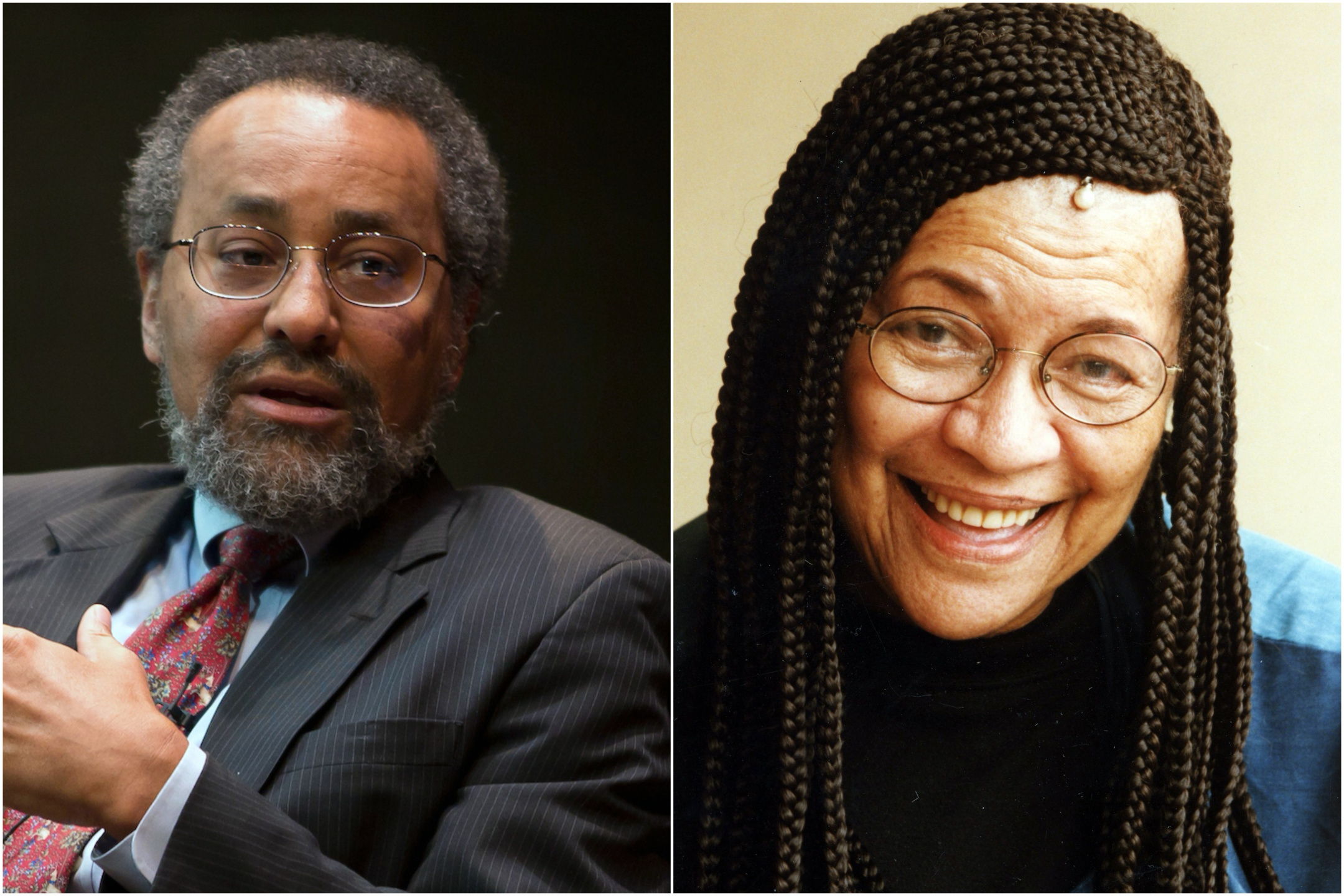
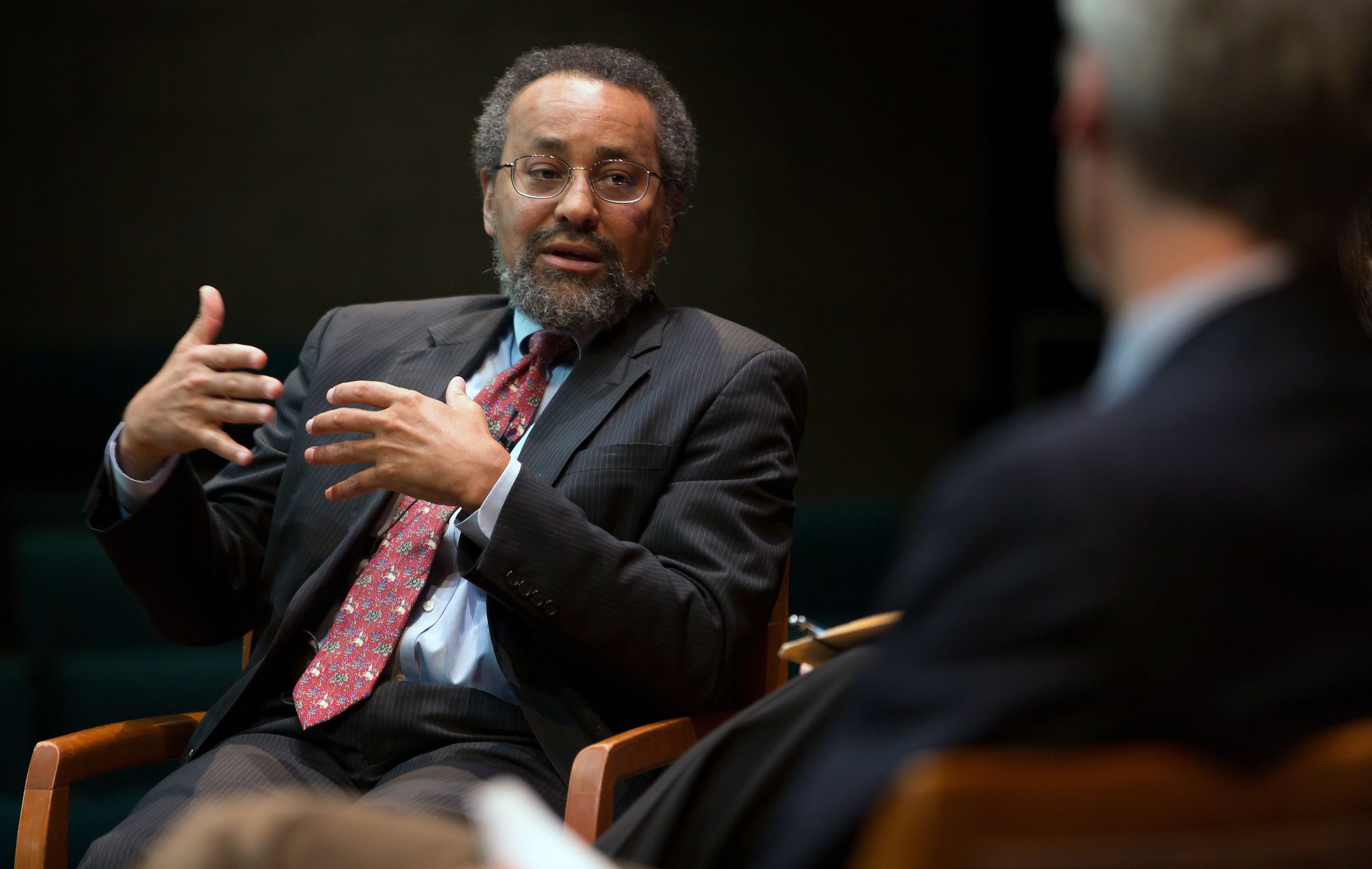
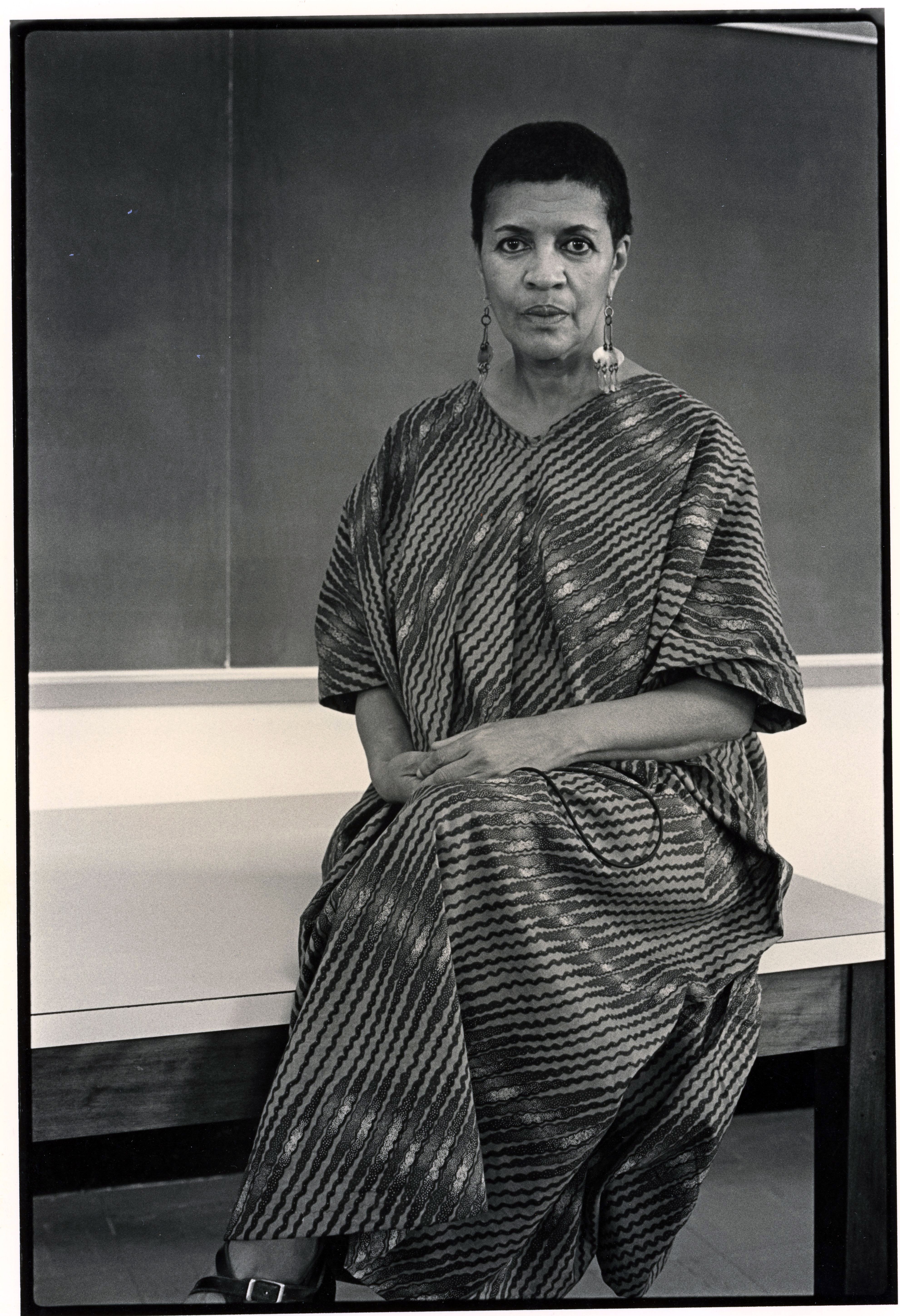
    Swarthmore College has renamed the former Trotter Hall and its adjacent lawn for two Black scholars who feature prominently in its history: the school’s first African American professor and an alumnus who served as a policy adviser to several U.S. presidents and formerly led the University of California, Berkeley School of Law.

    The move comes after the college last year stripped former professor Spencer Trotter’s name from the hall after the school learned Trotter had dug up a Native American burial ground in Chester County in 1899 and displayed human remains on campus.

    Effective immediately, the hall and its adjoining lawn will be known as Edley-Morgan Hall and Edley-Morgan Lawn, named for Kathryn L. Morgan, the late Swarthmore professor emerita of history, and Christopher F. Edley Jr., the late legal scholar and proponent of affirmative action who worked closely with three Democratic presidents and with six presidential campaigns.

    “This renaming is an important milestone, but not the end of this work,” Swarthmore president Valerie Smith said in a message to campus Monday. “Our further efforts will also ensure that this reckoning with the past is appropriately documented and acknowledged so our community can continue to learn and heal.”

    The late Christopher F. Edley Jr. is a legal scholar and Swarthmore College alumnus. Swarthmore announced it is naming the former Trotter Hall and its adjoining lawn for Edley and Kathryn L. Morgan, the late Swarthmore professor of history, who was the college’s first African American professor.Courtesy of Swarthmore College

    The college undertook an extensive process that included input from more than 500 students, faculty, and staff through a campus survey, a panel discussion with other college leaders who had gone through renaming processes after controversies, a session with a leader of the Delaware Tribe of Indians, and research on potential new namesakes.

    Through the process, the community concluded the new namesake or namesakes should be someone with a direct connection to the college and honor departments based in the building — history, political science, classics, and the writing associates program. The community also wanted the new namesake or namesakes to be “consistent with or expand the diversity of representation on campus.”

    When the process began, of Swarthmore’s 70 primary buildings, 67% were named for people, and of those, 53% were named for one or more men, 26% for one or more women, and 21% for both, the college had said. All but two of the namesakes were white and about half were Quakers.

    More than 75 names were considered for the hall, which initially opened in 1882, the college said.

    Swarthmore hired Morgan in 1970, and she joined the history department as its first folklorist, according to a 2011 Swarthmore story about her passing in 2010. She got her bachelor’s degree from Virginia State University, a master’s degree from Howard University and another master’s degree and doctorate from Penn.

    She taught classes including Folklore and Folklife Studies, History through Folklore and Literature, Black Women in Historical Perspective, and Black Culture and Consciousness, according to the college. Though she initially was denied tenure, she eventually became the first Black woman to get it at Swarthmore and talked about tensions in her department in a 2000 Swarthmore College Bulletin interview, the college said in its piece.

    Her work Children of Strangers: The Stories of a Black Family (1980), was the first work of African American family folklore by a folklorist.

    In 2000, a scholarship was established in her name and a poetry festival in her name was held in 2009.

    “One of the first things I tell my students,” Morgan said, according to the Swarthmore piece, “is to go home, look to your families, to the stories you were told as children. They’re the most important stories in the world.”

    Morgan, who was born and raised in Philadelphia, was described in the Swarthmore piece as “a wise, charismatic woman who intellectually bridged the gap between W.E.B. Du Bois and Malcolm X, a militant yet gentle soul who embraced everything of interest with intensity, and a radiant presence who drew on lessons learned from her ancestors as others draw breath.”

    The late Kathryn L. Morgan, professor emerita of history at Swarthmore College, was the first African American professor at the school. The college is renaming the former Trotter Hall and its adjoining lawn for Morgan and legal scholar Christopher F. Edley Jr., a Swarthmore alumnus.Courtesy of Swarthmore College

    Edley, who died in 2024 and spent part of his youth in Philadelphia, got a degree in mathematics and economics from Swarthmore in 1973 and later a master’s in public policy and a law degree from Harvard. Before serving as law school dean at Berkeley from 2004 to 2013, he was a professor at Harvard. He served on Swarthmore’s board of managers from 1982 to 1993.

    He worked for the White House domestic policy staff in the 1970s when Jimmy Carter was president, advising on issues including food stamps, child welfare and disability, according to an article on the Swarthmore website. During Bill Clinton’s administration, he worked in the Office of Management and Budget and served as special counsel to the president. And in 2008, he worked on Barack Obama’s successful presidential campaign and served on his presidential transition board. Obama had been a student of Edley’s at Harvard, according to Edley’s obituary in the Washington Post.

    When he received an honorary degree from Swarthmore in 1999, Edley talked about what he learned at the school.

    “I learned to face the limits of my intelligence, without fear,” he said, according to the Swarthmore piece. “I learned what it means to really understand something hard, only to realize that I was dead wrong, or that there was another, perhaps better way to understand it … And I learned that when there is trouble, find a grove of lilac bushes, lie down, get drunk on the fragrance, and think about important things.”

    Swarthmore’s renaming process started after a 2022 article in The Inquirer that mentioned how a former Swarthmore professor and student had dug up a burial ground and moved a skeleton and objects buried with it to the college.

    Swarthmore researched and discovered the professor was Trotter. The college first checked to make sure there were no remains from Trotter’s collection being improperly handled at the school; there were not. Officials found a collection of unidentified human bones that the college likely had obtained legally — but probably were initially acquired unethically — and moved them into storage.

    The college renamed the building Old Science Hall last December when Smith named a task force of students, faculty, and staff members to consider the next steps.

  • Kamala Harris launches into the 2026 midterms as her 2028 decision looms

    Kamala Harris launches into the 2026 midterms as her 2028 decision looms

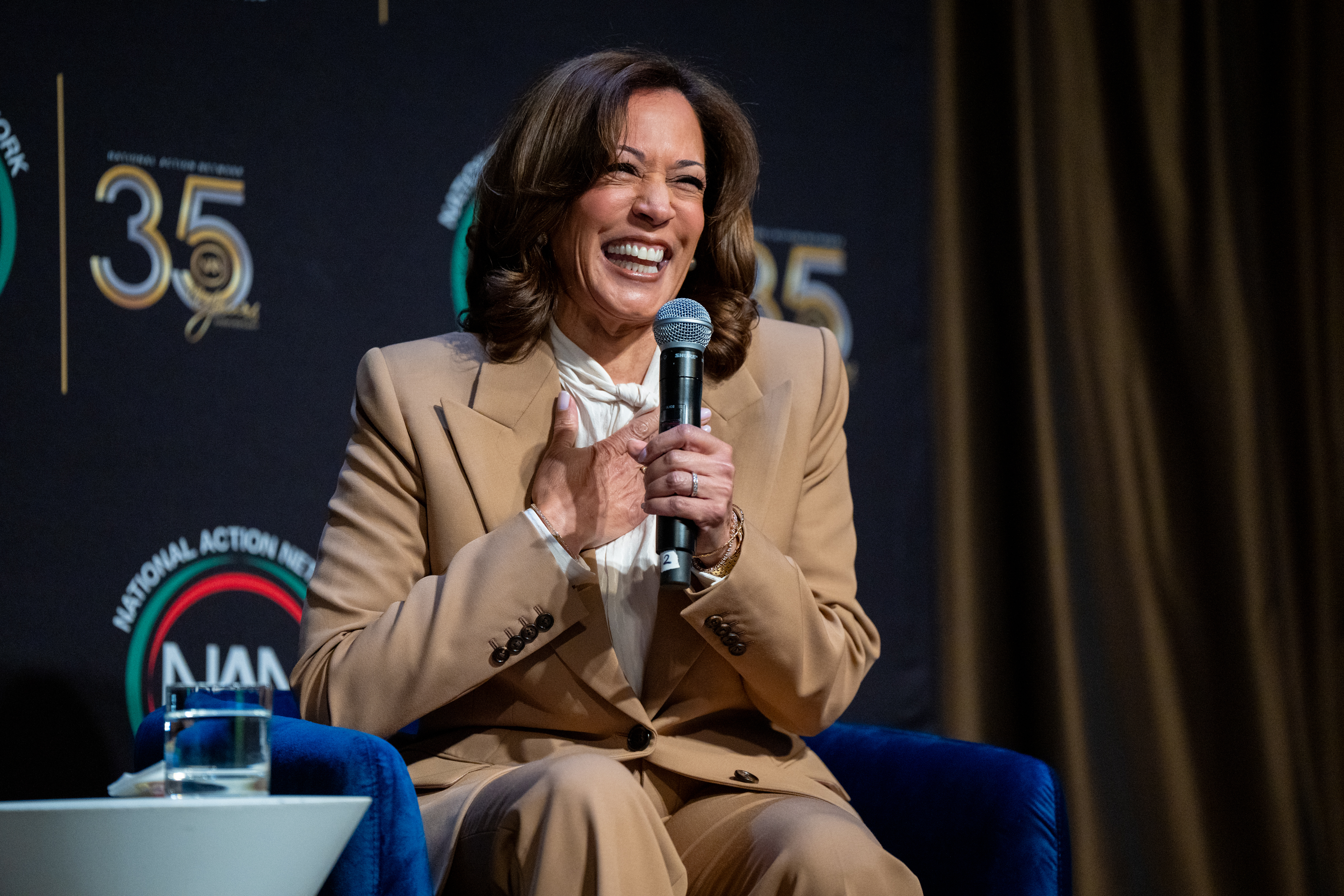
    As Kamala Harris mulls whether to run for president again, she’s throwing herself into the midterms by campaigning with fellow Democrats, starting with a Tuesday trip to Michigan on behalf of Senate nominee Abdul El-Sayed.

    It’s an especially notable destination for the former vice president. Michigan was one of seven battlegrounds she lost to Donald Trump two years ago, and it’s now one of six states that will start Democrats’ next presidential nominating process. Harris has additional rallies scheduled in Nevada and Georgia, two other key places on the political map.

    Her campaigning could serve to solidify or undermine her status as a potential Democratic front-runner. Although she’s one of the nation’s best-known politicians and a barrier-breaking figure, there are others eager to turn the page after she failed to defeat Trump when she replaced President Joe Biden on the top of the ticket.

    “I think she’s run her course,” said Barry Goodman, a Democratic National Committee member from Michigan who raised money for Biden and then Harris. “I just don’t think her running again would be the right thing for America moving forward.”

    Some Democratic candidates, especially in places Trump won handily, have curtly dismissed any possibility of campaigning with Harris. “No thanks,” Iowa gubernatorial nominee Rob Sand told Politico. “Let’s move on. We need some new leadership.”

    But plenty of Democrats, including some influential Black women who helped convince Biden to select Harris as his running mate in 2020, said she has more than earned the space to consider her options without being rushed or pilloried. Underscoring her unique position, California Gov. Gavin Newsom recently told CNN that he would not seek the nomination if Harris does.

    “Kamala isn’t under any deadline to run for anything,” said Donna Brazile, a former Democratic National Committee chair who managed Al Gore’s presidential campaign in 2000. She called it a “waste of time” to relitigate Harris’s truncated 2024 campaign and said any White House hopefuls “should follow Kamala’s lead and get out there” by trying to help midterm candidates.

    Harris has not announced any upcoming trips to South Carolina, where Democrats will hold their first primary. Antjuan Seawright, a political consultant in the state, said she could make a strong case for herself but another campaign would need to look and sound different.

    “She’s going to have to admit that she was wrong about some things,” he said.

    Michigan presents risk and opportunity

    Harris has painful political history in Michigan. During the 2024 campaign, the state’s prominent Arab American communities were outraged over Biden’s support for Israel’s military operations in Gaza, and they were disappointed when Harris did not break with him after she became the party’s nominee.

    El-Sayed, on the other hand, is an outspoken critic of Israel who has described the war as a genocide against Palestinians, an accusation rejected by Israel. He’s been viewed warily by some Jewish voters, which he’s tried to address by apologizing for some past controversial comments.

    El-Sayed told MS NOW that “there were some hurt feelings” in Michigan over the 2024 election, with some Black voters feeling like Arab Americans didn’t do enough to help Harris.

    With the former vice president coming to visit, he said it’s a chance “to bring communities together that have often been torn apart by recent events.”

    Their joint appearance will be closely scrutinized for other reasons too. Harris has a strained relationship with the party’s progressive wing, which includes El-Sayed, and El-Sayed is eager to solidify establishment support during his campaign against Republican nominee Mike Rogers, a former congressman.

    “We can build together on the areas of agreement, and we can come to understand each other far better on the areas where we might have seen eye to eye, and I think her coming into town will help us to do that,” El-Sayed said.

    Harris’ political travel has been light compared to potential presidential candidates like Pete Buttigieg, who ran in 2020 before serving as Biden’s transportation secretary. He recently visited South Carolina and he’s been stumping for other Democrats in the midterms.

    Harris went to South Carolina in the spring, but for smaller, local party events. She recently spoke on an organizing call aimed at registering and turning out 1 million more Black voters.

    “There’s value in doing a lot of stuff behind the scenes instead of being front and center, especially for her,” said Bre Maxwell, a Democratic National Committee member from South Carolina. She said there’s little benefit for Harris to insert herself into news cycles knowing “she’s still a target of Donald Trump right now.”

    Jaime Harrison, a South Carolinian who served as national party chair when Biden and Harris were in the White House, said the former vice president’s stature affords her the advantage of time that other potential candidates will not have.

    “Many of these folks who do get in quickly would love to have that type of name ID, would love to have that type of network, to have that type of email list,” Harrison said.

    Harris herself has said multiple times, including in an Associated Press interview last year, that she feels no rush to decide her next move. “Right now – midterms, midterms, midterms,” she told Megan Rapinoe on a recent podcast. Harris spokesperson Eduardo Negrón declined to comment when asked about her timeline.

    Harris’ other campaign events this fall include stops for Nevada’s Democratic candidate for governor, Aaron Ford, and Georgia Sen. Jon Ossoff, who has generated 2028 chatter of his own as he seeks reelection.

    “She is certainly being strategic,” said Seawright, the South Carolina political consultant.

    He noted that Harris’ tour for her campaign memoir, 107 Days, hit virtually every major Southern city in states where Black voters hold strong sway in presidential primaries that come early in the nominating process.

    Meanwhile, Goodman said he’s heard no evidence that Harris is working the party’s top donor network. Harrison said he hasn’t heard from her since last December.

    Past campaigns offer Harris lessons

    Harris first ran for president in the 2020 cycle, when she was a U.S. senator from California. But she dropped out late in 2019, before any primary votes were cast.

    Some progressives saw the former prosecutor as part of a criminal justice establishment that disproportionately imprisons Black men. Some moderates saw her as another San Francisco liberal.

    Biden chose Harris as his running mate, and she became the first woman and Black person to serve as vice president.

    When Biden dropped his reelection bid after a disastrous debate performance, Harris generated visible enthusiasm, drawing crowds that rivaled or exceeded Trump’s. She delivered a convention address and debate performance that most analysts lauded.

    But she could not distance herself from Biden on inflation or immigration. Harris infamously told friendly interviewers on The View that she couldn’t think of anything she’d have done differently than Biden. Trump hammered her with advertisements exploiting her support for transgender rights, saying “Kamala is for they/them. President Trump is for you.”

    If she runs again, Seawright said, Harris would need to emphasize moderate positions and “be willing to say, you know, ‘I’ve rethought some things.’” Voters, he said, “reward that kind of authenticity and humility.”

    Harrison argued it would be easier for Harris to articulate her own agenda than when “she was a sitting vice president, somebody else’s No. 2.” But, he warned, she would also have to shed the pomp and circumstance of the vice presidency, not just its political burdens.

    “You can’t act like a sitting vice president, standing up on that stage,” he said. “I’d tell her she has to run hard, just as hard as everybody else, working every rope line, taking every selfie.”

    Unlike Biden’s handoff to her in 2024, Harrison said, “This is going to be the wild, wild west.”

  • Congressional leaders warn White House against adding controls over NIH grants

    Congressional leaders warn White House against adding controls over NIH grants

    Leaders of the House and Senate appropriations committees on Monday warned the White House not to impose new controls on how the National Institutes of Health awards billions of dollars in research grants.

    Sens. Susan Collins (R., Maine) and Patty Murray (D., Wash.), the Senate panel’s chair and vice chair, and Rep. Rosa DeLauro (Conn.), the top Democrat on the House panel, said White House officials were threatening to further politicize the federal grant-making process.

    The Washington Post first reported Friday that administration officials had discussed an executive order to create a commission that would review NIH grants. Some White House officials were frustrated that the $47 billion health agency had funded projects that they said clashed with President Donald Trump’s agenda.

    The White House budget office “should not be involved in agency decisions on the awards of grants,” Collins said in a statement, adding that any attempt “to politicize grant-making at the National Institutes of Health” goes against the intent of Congress.

    “NIH funding doesn’t belong to Donald Trump — it belongs to the patients and families waiting on the next medical breakthrough,” Murray added in a statement.

    The appropriations leaders and other top lawmakers have previously clashed with the White House over its efforts to place new constraints on NIH funding. Earlier this year, Collins publicly opposed a 15% cap on indirect research costs. Last year, Collins and Sen. Katie Boyd Britt (R., Ala.) led a letter signed by a dozen other Senate Republicans urging the White House’s Office of Management and Budget to quickly disburse NIH funds that they said had been delayed.

    Russell Vought, the White House’s budget chief, and other officials met with Trump on Friday to discuss the potential executive order, the Post reported. Vought has criticized the NIH for awarding grants that he and other administration officials say fund “woke” initiatives and go against Trump’s executive order barring “equity-related” grants and contracts.

    Jay Bhattacharya, the Trump appointee who leads the NIH, which is the nation’s largest single funder of biomedical research, defended the agency’s grant-making process to the president Friday, the Post reported. The NIH quickly moved last year to terminate some grants after Trump took office.

    Spokespeople for OMB and the NIH did not immediately return requests for comment Monday on the lawmakers’ statements. Rep. Tom Cole (R., Okla.), chair of the House Appropriations Committee, also did not immediately respond to a request for comment.

    Healthcare advocacy groups, university leaders, and other organizations have urged the administration not to pursue the plan.

    “Americans want investments in cures and treatments,” said Erika Sward, executive director of United for Cures, a network of patient advocacy groups. “Politically hijacking those kind of advancements is not American, and it’s going to mean that those cures and treatments won’t be there for people across the country.”

    OMB has recently moved to assert more control over federal grant-making through a proposed rule that would require political appointees to review grants before they’re awarded to ensure projects advance the president’s priorities.

    In their recent government funding measure, congressional appropriators blocked implementation of the rule through December.

    Collins defended the NIH’s grant-making process.

    “Imposing a political review on awards that have already been selected through a rigorous scientific and merit-based process undermines the long-standing principle that the government funds awards based on scientific need and merit, rather than political ideology,” she said in her statement.

  • Iran’s Revolutionary Guard warns U.S. over escalation

    Iran’s Revolutionary Guard warns U.S. over escalation

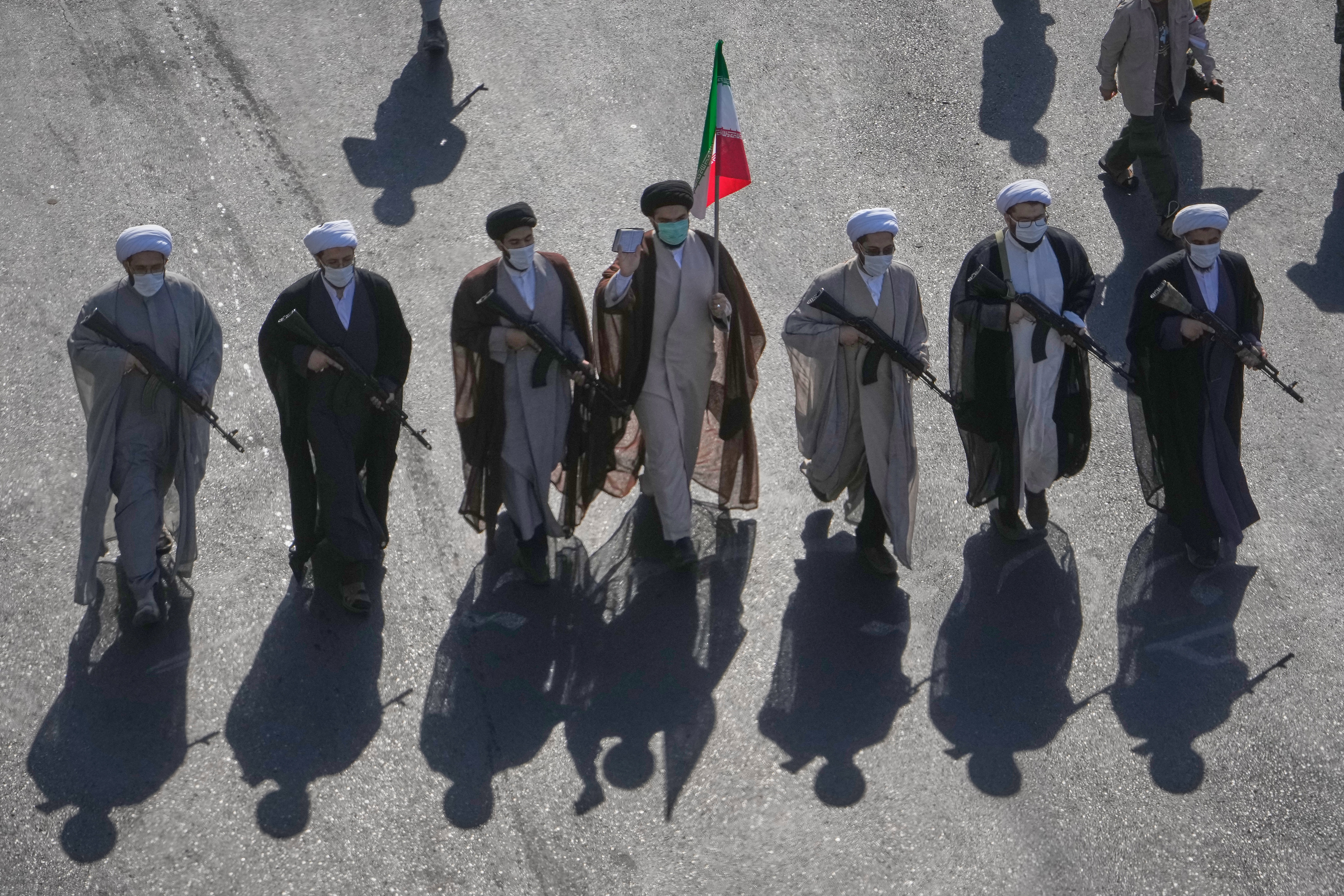
    Iran’s Revolutionary Guard warned Monday that it would “change the geography of the war” if the United States escalates the conflict.

    Meanwhile, the British military said an “unknown projectile” struck a tanker as it entered the Strait of Hormuz on Monday, injuring two crew members.

    The Israeli military remained on alert as much of the country shuts down for Yom Kippur, the holiest day in Judaism.

    Iran’s Revolutionary Guard says ‘war is not over’

    A spokesperson for Iran’s paramilitary Revolutionary Guard, Hossein Mohebbi, said Monday that “the war is not over” and warned that Iran would change its weapons, military tactics, and targets if the conflict with the U.S. escalates.

    “We will certainly change the geography of the war,” Mohebbi said in a statement carried by Iranian state media. “We will certainly bring new weapons with new capabilities into the battle.” He said the Guard had prepared for a long-term war.

    “Our targets will no longer necessarily be the same as before,” he said, according to the Islamic Republic of Iran Broadcasting, adding that Iran has targets that have not yet been struck.

    The more than six-month war began with U.S. and Israeli strikes on Iran on Feb. 28. The conflict has included repeated attacks and efforts to negotiate an end to the fighting, with no agreement reached to reopen the Strait of Hormuz or revive talks over Iran’s nuclear program.

    Projectile strikes tanker in Strait of Hormuz, British military says

    The United Kingdom Maritime Trade Operations Center (UKMTO) said a tanker was struck by an “unknown projectile” as it headed into the Strait of Hormuz. Two crew members sustained minor injuries.

    The UKMTO said Monday the vessel is reportedly continuing to its next port of call under its own power. No reports indicated any environmental impact at this time.

    Tehran has asserted control over much of the Strait of Hormuz since the U.S. and Israel launched the war on Feb. 28. In peacetime, about 20 million barrels — roughly a fifth of the world’s oil supply — passed through Hormuz each day.

    Some tankers are again traversing the strait, but traffic is well below what it once was.

    Houthi leader lashes out at Saudis in televised speech

    In Yemen, the leader of the Iran-backed Houthi rebels used the anniversary of his group’s overthrow of the Yemeni government to lash out at Saudi Arabia.

    In a recorded speech aired Monday, Abdul Malik al-Houthi said his group’s demands include an end to what he called Saudi “aggression” and the blockade the Saudi-led coalition has imposed on the rebels for about a decade.

    “Stop the aggression and end the blockade. Our demands represent the legitimate rights of our people,” he said in the speech aired by the Houthi-run al-Masirah channel.

    The Houthis descended from their stronghold in northern Yemen, taking over the capital of Sanaa in September 2014 and forcing the country’s government into exile in Saudi Arabia.

    The following year, Saudi Arabia led a multi-national coalition that entered the war in an attempt to restore the government. The coalition imposed an air and sea blockade on the Houthi-held areas, as part of its war efforts.

    WHO reports 680 new casualties in a week in Yemen

    The World Health Organization says 680 people were killed or injured across Yemen over the course of a week as fighting between the Houthi rebels and Saudi-backed government forces continues.

    WHO said on Monday in a post on X that 164 people were killed and 516 injured between Sept. 13 and Friday. This brings the total number of casualties since Aug. 6 to 3,672, including 674 deaths and 2,998 injuries.

    Lahj province in southwestern Yemen is currently an active front line where 58 deaths and 226 injuries were reported within six days, according to the U.N. agency.

    Fighting between the Houthis and government forces has so far displaced 129,438 people across seven provinces, the International Organization for Migration says.

    The IOM said in an update Monday that people escaping the conflict inside the country were forced from their homes in only a few weeks, with many already fleeing more than once.

    Israeli military on guard on Jewish faith’s holiest day

    Israel’s military remained on alert even as the country woke up to the silence and empty streets of Yom Kippur, the Day of Atonement, considered the holiest day for the Jewish faith.

    Streetlights blinked yellow Monday as the faithful walked to the Western Wall in Jerusalem’s Old City.

    “For the next 25 hours, Israel is offline,” the foreign ministry said on X after sundown Sunday. But the military said it bolstered its frontline forces following the killing of an Israeli settler Sunday in the occupied West Bank. The Palestinian suspect was detained after a search.

  • States settle lawsuit over Paramount-Warner merger, clearing key hurdle for $81 billion deal

    States settle lawsuit over Paramount-Warner merger, clearing key hurdle for $81 billion deal

    CHICAGO — California Attorney General Rob Bonta announced a settlement with Paramount in a lawsuit his state led challenging the company’s acquisition of Warner Bros. Discovery on Monday, effectively paving the way for the mega merger to move forward, with some new commitments.

    The $81 billion blockbuster deal will bring together two of Hollywood’s oldest studios, key TV networks like CBS and CNN, and streaming platforms HBO Max and Paramount+, as well as decades of libraries with titles ranging from Harry Potter to Top Gun.

    But terms of Monday’s agreement include what Bonta called “court enforceable” requirements for Skydance-owned Paramount to increase domestic production and establish monitoring of editorial independence of the company’s news operations.

    The settlement still needs final court approval. Bonta maintained that Monday’s agreement “is not a vote of support for this merger” — but that he was always willing to come to the table and “find a strong solution that protects competition and consumers.”

    The coalition of states — including entertainment heavyweights like California and New York — sued to block the merger back in July, alleging a Paramount-Warner combo would “extinguish competition” and lead to fewer choices for consumers, particularly movie theatergoers and cable customers across the U.S.

    Accompanied by a complaint also filed by the Writers Guild of America, the challenge was headed toward a full antitrust trial set to kick off in March.

    Paramount said the allegations were meritless, but previously agreed to delay its transaction well into next year so the case could make its way through court. It then quickly called for a settlement — arguing that it had satisfied all regulatory clearances worldwide (including from the Trump administration’s Justice Department ) and the states’ challenge was its “final obstacle.”

    As reports of the states reaching a settlement with Paramount emerged Monday, critics decried the deal — while warning of what further consolidation could mean in an industry already controlled by just a few major players.

    “Today, billionaires have yet again bribed, censored, and bullied their way to the top,” Alvaro Bedoya, senior adviser at the American Economic Liberties Project and former FTC commissioner, said in a statement earlier Monday. “Layoffs will follow. People from L.A. to Atlanta will lose their jobs, small businesses will lose their contracts, your cable bill and movie ticket will be even more expensive.”

  • U.N. General Assembly to confront familiar crises, new conflicts and AI

    U.N. General Assembly to confront familiar crises, new conflicts and AI

    World leaders converge in New York this week for the United Nations General Assembly with the Middle East in turmoil, war raging between Russia and Ukraine, old alliances in peril, energy prices rising, and scientists warning that artificial intelligence could imperil humanity.

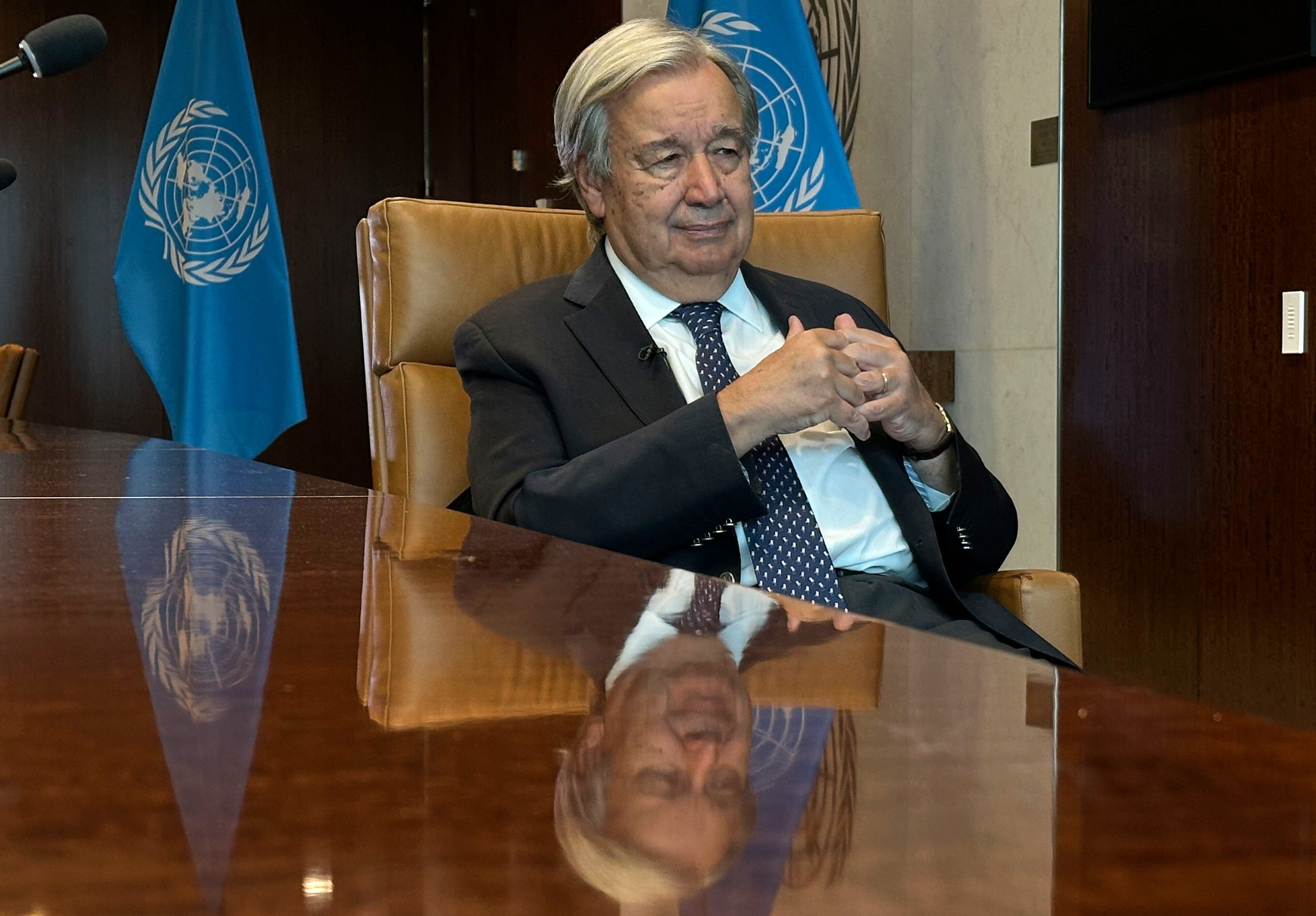
    “It would be hard to imagine a scenario as threatening as the one we’re facing right now,” acknowledged António Guterres, who has served two terms as the U.N. secretary-general since 2017 and will step down at the end of December.

    The U.S.-Israeli war with Iran and its reverberations on the world economy and oil supplies will be a major topic. And Ukrainian President Volodymyr Zelensky is expected to implore world leaders not to forget his country.

    But for the first time at the world body, the threat posed by artificial intelligence has jumped to the top of the agenda. U.N. leaders plan to seek global cooperation for guardrails around the rapidly advancing technology.

    Against the backdrop of these challenges, the U.N. is searching for its next leader, who will take the helm in January. Seven candidates are in the running after Michelle Bachelet, former Chilean president and ex-high commissioner of the U.N.’s Human Rights Council, dropped out. But so far no clear front-runner has emerged, diplomats said, because the U.N. Security Council, the body responsible for selecting the secretary-general, has not reached a consensus.

    Guterres will deliver his final address to the General Assembly on Tuesday, and he is expected to close his tenure by urging world leaders to defend international law, protect human rights, invest in sustainable development, and push for peace.

    “At a time when the world faces three existential threats — runaway artificial intelligence, the climate crisis, and the intolerable deepening of inequalities — international cooperation is more necessary than ever,” Guterres said at a recent news conference.

    He said that when he took charge of the institution years ago no one could have predicted that the world would be as it is today, roiled by conflicts and facing a multitude of crises like climate change and the seemingly unrestrained growth of artificial intelligence.

    The U.N. has defined the theme of this year’s gathering as “Restoring Trust, Managing Transformations: A United Nations That Delivers for All.” Trust and transformation have been among the biggest challenges for the U.N. as it has faced questions of relevance from donors and the public, experienced severe funding cutbacks from the Trump administration and made efforts to streamline its operations. At the same time, its 15-member Security Council stands paralyzed by divisions among its five permanent members with veto-holding powers.

    Still, while the organization said in January that it was facing imminent financial collapse and would run out of money by the summer if member states — namely the United States, its top donor — didn’t pay their annual dues, it has survived.

    Last week, the United States paid $725 million to the U.N. as part of its dues for the regular budget and $102 million for peacekeeping, but it still owes $1.3 billion in annual dues, said Farhan Haq, a U.N. spokesperson.

    Many U.N. staff members and diplomats had expressed anxiety that President Donald Trump could withdraw from the organization altogether, given his exit from U.N. agencies such as the World Health Program and the defunding of some programs as part of a policy to cut foreign aid significantly. Analysts said last year that the U.N. was in a “free fall” as it observed its 80th anniversary.

    But those fears have not materialized. Analysts said that while the U.N. was still facing a crisis, the United States had remained engaged, albeit seeking to change and bend the institution to the administration’s vision.

    Richard Gowan, a U.N. expert at the International Crisis Group, said of the United Nations, “It is still standing, and if you compare the U.N. to some of the really bad periods during the Cold War, it’s still actually far more active than it was in its darkest hours.”

    He added, “But every single year it’s a little bit less relevant; it’s a little bit more under restraint.”

    Trump is set to speak to the General Assembly on Tuesday morning, the first day of the gathering. Last year, he lectured the United Nations and other countries about how they were failing and aired a list of grievances.

    “Your countries are going to hell,” he said.

    This year, he will be facing a world rattled by his imposition of tariffs, his open disdain for allies, and the instability resulting from his war against Iran.

    The biggest hurdle for the U.N. in resolving conflicts in the past few years has been the geopolitical divisions among the five permanent powers of the Security Council: the United States, Russia, China, France, and Britain. The council, which is in charge of preventing global conflict and safeguarding stability, has been frozen over the wars in Ukraine, the Gaza Strip, and Iran because action has been blocked by permanent members with stakes in the fighting.

    The Ukraine war is more than 4 years old, the conflicts in Sudan over 3 years old, the one in Gaza closing in on 3 years old, and the United States’ war with Iran nearing its seventh month. The conflict in Iran has sent energy and oil prices soaring and has upended supply chains that rely on shipping in the Strait of Hormuz. The Houthis in Yemen and Saudi Arabia have intensified fighting in the past few weeks with another critical waterway, the Bab el-Mandeb Strait, in the Indian Ocean, under threat.

    “There is clearly a vacuum here in terms of dealing with these growing number of wars we have and other crises,” said Robert A. Wood, a U.S. ambassador to the U.N. during the Biden administration. “It is critical that we get a next secretary-general who has experience, and Rolodex, and kind of energy and background in managing, not only dealing with great powers, but in dealing with major international crises.”

    Among the speeches by leaders that will be watched closely will be the ones by Iranian President Masoud Pezeshkian; Zelensky; and Venezuela’s leader, Delcy Rodríguez, who will be making her debut on the world stage after the United States captured her predecessor, Nicolás Maduro. Others of note will be by leaders of the Arab countries in the Persian Gulf; Israeli Prime Minister Benjamin Netanyahu; and Palestinian leader Mahmoud Abbas, who will address the assembly virtually for a second year because the United States denied visas to the Palestinian delegation.

    This year, discussion of a possible two-state solution for Israel and Palestinians is expected to be more low-key than in the past, with France, Britain, Canada, and Saudi Arabia hosting a session Thursday on the sidelines of the General Assembly meeting.

    A notable number of world leaders will be absent from the General Assembly. Xi Jinping of China is traveling to Washington to see Trump on Thursday, and the meeting is expected to overshadow the speeches at the assembly in New York.

    The leaders of two nations from the so-called global south — India’s prime minister, Narendra Modi, and South Africa’s president, Cyril Ramaphosa — will also not attend.

    The Security Council will hold a session on Ukraine, as it has done for the past four years during the General Assembly meeting, and this year it has drawn new criticism that European members of the council have ignored other pressing conflicts every year to keep the spotlight on Ukraine during the high-level week.

    Despite their global repercussions, Iran and the conflict in the Persian Gulf are not on the council’s public agenda this week. Arab countries in the Gulf are expected to hold a closed-door meeting with council members and Trump on the sidelines, diplomats said.

    The council will discuss AI and the threats it poses to global security and stability. Guterres was also set to host a side event Monday to urge countries to create global regulations for the technology, and a private, invitation-only event at the U.N. that brings together heads of states and leaders of AI to debate how to govern the field.

    But a clash of opinions and visions is expected.

    The United States, China, and Russia have indicated that they oppose external rules on their own development of AI technology, and Trump recently denounced such efforts as a “sick conspiracy.”

    Guterres said the world cannot “afford a race to the bottom on AI safety.” He added, “We need guardrails to build trust, and that make AI safe, transparent, accountable, with human dignity at the center.”

    This article originally appeared in the New York Times.

  • Ukraine marks Putin’s scripted election win with assault on Moscow refinery

    Ukraine marks Putin’s scripted election win with assault on Moscow refinery

    As the first parliamentary elections in Russia since the 2022 invasion of Ukraine delivered a scripted victory on Sunday to Vladimir Putin, Ukraine pummeled the Moscow region with drones and missiles, hitting a key oil refinery and showing that winning the war remains out of reach for the Russian leader.

    The Ukrainian air attack, one of its largest on Russia’s capital area, killed at least three people, local officials said, and damaged the refinery in Kapotnya, on Moscow’s southeastern edge, which supplies a large share of the city’s fuel, including for diesel and aviation. Videos on social media showed it on fire.

    The strike contradicted President Donald Trump’s assertion last week that Ukraine and Russia had agreed to halt attacks on energy targets. Trump insisted that the war in Ukraine — not his own war against Iran — is driving up diesel prices in the United States. Experts more commonly cite the war in the Middle East.

    The refinery in Kapotnya has been hit several times, and the Moscow region has experienced intermittent fuel shortages in the aftermath of each attack. On Monday, lines formed again at gas stations, which began rationing supplies.

    A day before claiming the supposed energy truce, Trump urged Ukrainian President Volodymyr Zelensky to “stop knocking out diesel fuel” targets in Russia, saying the attacks were contributing to a global shortage. Late on Sunday, Zelensky said that he had spoken with Trump and that they had agreed to meet on the sidelines of the U.N. General Assembly in New York.

    “There are ideas for de-escalation steps and for addressing fundamental security issues — energy security, food security, and the protection of human life,” Zelensky posted on X. “We are working together with the American team and are ready to take really serious steps.”

    Zelensky also thanked Trump for signing into law what the Ukrainian leader called the “sanctions from hell” legislation, a bill co-written by Sen. Lindsey Graham (R., S.C.) before his death that authorizes the president to impose sweeping sanctions on Moscow and additional tariffs on countries that continue to buy Russian energy.

    The law gives Trump considerable latitude in its implementation, including over which countries could face tariffs and at what rates, as well as discretion to waive sanctions for certain countries.

    The Kremlin said Monday that the signing “certainly does not contribute to the revival of bilateral relations” between Russia and the United States. “And, of course, it is unlikely to contribute to more successful progress toward a resolution of the Ukrainian conflict,” Kremlin spokesperson Dmitry Peskov told reporters.

    Moscow Mayor Sergei Sobyanin said more than 1,600 drones had been intercepted and shot down Sunday, 450 of them aimed at Moscow. Russian officials have been accused of inflating such figures.

    “The unprecedented attack was obviously planned with the aim of disrupting the elections,” Sobyanin posted on Telegram. “The enemy did not succeed.”

    With 95% of ballots counted in Russia’s national parliamentary vote, the Central Election Commission said Monday morning that United Russia, the party that serves as an extension of Putin’s policies, was in first place with 57.8% and the Communist Party in second at 13.8%.

    The election was decried as sham by Russian opposition leaders, election watchers, and foreign officials.

    “United Russia has ‘won’ an election it was never allowed to lose. There was no genuine political competition and little room for voices outside the Kremlin’s line,” Slovenian Prime Minister Janez Jansa wrote on X. “This was not a mandate. It was political theatre designed to manufacture support for Putin’s war.”

    The core mechanism of staged elections in Russia is local authorities pressuring public-sector workers to go to the polls in support of the government, with employers tracking turnout and demanding that employees send photos of their ballots as proof that they voted to achieve the desired result.

    This year, however, criticism of the election procedures also came from Gennady Zyuganov, the longtime leader of the Communist Party, who described the campaign and the vote count as a “return to the wild ’90s.”

    In an interview with state media, Zyuganov lamented pressure on voters, and he alleged numerous irregularities. In one region, he said, his party’s poll observers “were removed, completely illegally.” Zyuganov said the party would compare its copies of polling station protocols with the official count.

    In Russia, uncertainty has swirled over many aspects of life, even as the election outcome was a foregone conclusion.

    The results announced Monday guarantee that Putin will remain firmly in control, amid inevitable speculation over who will succeed him when he is gone.