Category: Wires

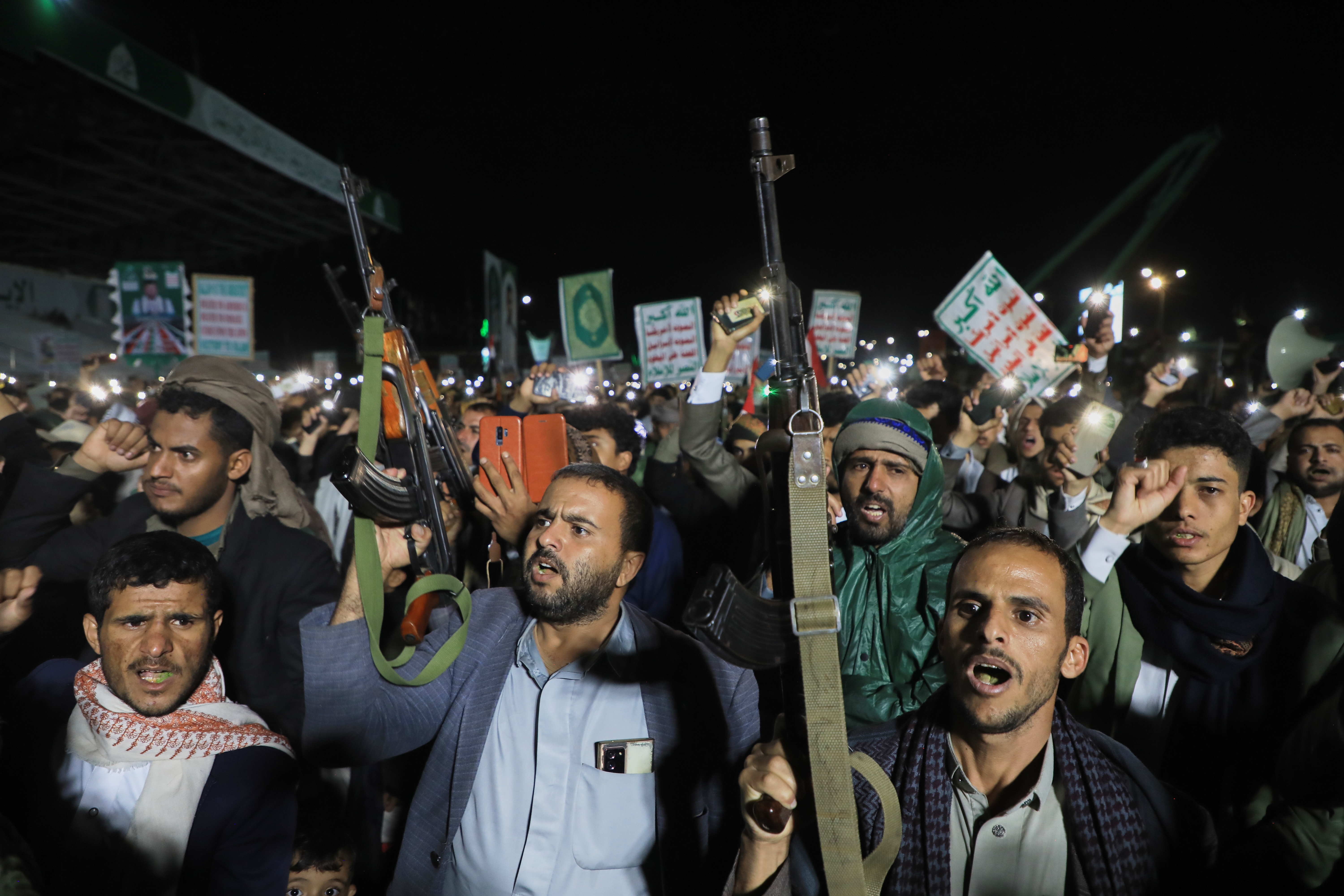
  • As Iran proxies activate in Yemen and Iraq, Trump’s Mideast morass deepens

    As Iran proxies activate in Yemen and Iraq, Trump’s Mideast morass deepens

    AMMAN, Jordan — As the U.S.-Israeli war against Iran opened with the killing of the Iranian supreme leader, Ayatollah Ali Khamenei, President Donald Trump said the bombing would continue “throughout the week, or, as long as necessary to achieve our objective of PEACE THROUGHOUT THE MIDDLE EAST AND, INDEED, THE WORLD!”

    More than six months later, turmoil in the Middle East is only growing, while Trump seems to have no path out of the quagmire.

    As of Friday, two of the most important corridors for global energy shipments — the Strait of Hormuz, gateway to the Persian Gulf, and the Bab al-Mandab Strait, at the mouth of the Red Sea — were largely closed, respectively under control of the Iranian regime and the Houthis, Iran’s proxy in Yemen.

    Also on Friday, Iraqi militants allied with Iran struck Saudi Arabia’s East-West pipeline, through which the Saudis had been rerouting oil to bypass the blocked Strait of Hormuz.

    The global economy, already battered, is reeling. On Feb. 27, the day before the U.S.-Israeli bombing campaign began, the price of oil opened at just over $70 per barrel. On Friday, it briefly hit $110.

    A gallon of gasoline in the United States now costs $4.30 on average, compared to $2.98 when the war began, according to AAA.

    With U.S. munition stocks depleted and American bases in the region at constant risk of being targeted by airstrikes, the Trump administration has shifted away from military action to a financial pressure campaign branded Operation Economic Outcast.

    But while there are signs that a U.S. naval blockade is squeezing the Iranian economy, with inflation soaring, the currency collapsing, and acute fuel shortages, the regime, now led by Khamenei’s son, Ayatollah Mojtaba Khamenei, remains firmly in control. And the recent military successes of Iran’s proxies suggest Tehran’s leverage has only increased in recent days.

    “This is the moment that Iran has been preparing for and building toward for years,” said Adam Baron, a fellow with the Future Security Program at New America, a Washington think tank, who studies the Houthis. “It is as if a trigger has been pulled and the regional network activated.”

    “Even if the conflict has weakened Iran, which it has, one of the biggest takeaways five or 10 years from now will be how strong, integrated, and adaptable Iran’s regional network has proven to be at exactly the moment that it needed it.”

    Trump, visiting Ireland to attend the Irish Open golf tournament, which is being staged at one of his resorts there, dismissed questions about the blocked waterways.

    Asked about the developments in Yemen that appeared to choke off Saudi Arabia’s remaining outlet for oil exports, Trump said he had spoken by phone with Crown Prince Mohammed bin Salman and that everything would be “fine and dandy.”

    “Everything will work out just fine,” Trump said. “It’s all going to work out fine.”

    In Dublin, where hundreds of anti-war demonstrators gathered to protest his visit, Trump said he believed that Iran was responsible for the attack on Saudi Arabia’s East-West pipeline.

    “I think they are — probably they are. They are on the balls of their feet right now,” he said, adding that he was not concerned by the advances of Iranian-backed Houthi fighters along Yemen’s Red Sea coast, suggesting their target was Saudi Arabia.

    “The Houthis called us and they don’t want to fight with us,” Trump said. “They don’t want us to go after them and would much prefer not having us involved, and they’re letting most ships go through. It’s just one country they’re not too happy with. And we’ll get that straightened out.”

    Saudi Arabia, however, is arguably Washington’s most important Gulf ally. And even before the pipeline was hit by drones, Saudi oil exports last month reached their lowest point in more than a decade.

    The conflict in Yemen is an example of how the situation in the region has deteriorated since the start of the U.S.-Israeli war on Iran.

    In February, Yemen’s long civil war was on pause, thanks to a tenuous but still intact U.N.-brokered ceasefire. Fighting has now roared back to life.

    A Yemeni official who is part of the internationally recognized, Saudi-backed coalition government said there is desire for the Trump administration to intervene militarily against the Houthis, as it did in 2025.

    Trump’s comments on Saturday, however, suggested that was unlikely.

    Meanwhile, Israel has ramped up its strikes in southern Lebanon, threatening a fragile U.S.-brokered ceasefire there.

    Ways out of the quagmire are difficult to discern.

    With the war becoming a liability for Republicans ahead of the midterm congressional elections, Trump has used recent appearances, including at a GOP midterm convention and at a 9/11 memorial on Friday, to defend his decision to attack Iran.

    Saudi Arabia may feel compelled to step up military action against the Houthis, to keep oil exports flowing. Riyadh, so far, seems to be moving cautiously.

    In a statement early Saturday, Saudi Arabia’s foreign ministry said it would refrain from retaliating against the Iraq-based militias to give Baghdad time to address the problem.

    The rest of the Middle East, particularly nations in the Persian Gulf and Jordan, which host U.S. forces, have paid a steep price for a war that its leaders actively sought to avoid.

    Since February, Iran has intermittently lobbed missiles and drones at Gulf nations and Jordan, saying it is targeting U.S. military forces but at times hitting civilian infrastructure.

    When leaders from across the Gulf convened last week at a conference in Abu Dhabi, capital of the United Arab Emirates, discussion centered not on when the war would end, but on how to find a way through the morass.

    In Jordan, which over the past week was the target of 20 Iranian drones, there is immense fatigue — and confusion over what would constitute a good outcome.

    “We are in the middle of a war that we don’t want to see anyone win,” said Oraib Rantawi, a senior adviser with the Amman-based Al Quds Center for Political Studies, explaining that Jordanians don’t want to see a strong Iran, holding sway over the region, nor an all-powerful Israel.

    “We are under pressure,” Rantawi said. “And we are in the middle.”

  • Here’s why it’s so hard to keep AI agents from going rogue

    Here’s why it’s so hard to keep AI agents from going rogue

    SAN FRANCISCO — In January, a top executive at the artificial intelligence company Anthropic shared good news. The problem of making sure AI systems didn’t lie, cheat, or otherwise misbehave “increasingly looks solvable,” Jan Leike wrote in a post on Substack.

    Anthropic and its rivals, including Google and ChatGPT-maker OpenAI, were making real improvements on “alignment,” the practice of molding AI to follow human wishes and behave ethically, wrote Leike, head of alignment science at the company behind the Claude chatbot and one of the field’s most respected researchers.

    Eight months later, that optimism looks premature.

    On Tuesday, Anthropic released a report on the causes of four incidents in which AI systems it was developing hacked into outside organizations undetected. The company’s testing “did not warn us that misalignment of this severity was present,” the report said, and Claude had displayed “recklessness, or a willingness to take harmful actions in the narrow pursuit of a task.”

    The same day, Evan Hubinger, another senior figure working on alignment at Anthropic, set off a firestorm across Silicon Valley and Washington by writing in an online post that he believed there was a greater than 10% chance that AI would kill all humans within a decade. Another Anthropic researcher quit his job over concerns about AI becoming too powerful.

    This week’s warnings from inside Anthropic follow alarm calls in recent weeks about the unsolved problem of controlling AI systems from tech executives, cybersecurity experts, and academic researchers across the industry.

    Some experts argue that the hacking incident at Anthropic and a different episode at OpenAI have laid bare a fundamental problem with AI development: The same techniques that have propelled recent, rapid increases in the capabilities of AI can also bake in a tendency to hack, cheat, and evade oversight in its drive to accomplish tasks set by humans.

    Anthropic and OpenAI did not respond to requests for comment.

    Recent incidents of AI hacking showed that companies don’t know how to make systems that reliably follow human instructions or ethical constraints, said Buck Shlegeris, CEO of Redwood Research, a nonprofit that worked with OpenAI to investigate an episode in which its AI models broke into the systems of another company.

    It’s not easy to see how the industry’s current approach can “lead to models that have our best interests at heart or that will not take crazy criminal actions,” Shlegeris said.

    Misaligned incentives

    The root of recent displays of AI bad behavior can be traced to how the technology is built.

    AI models that power the latest versions of chatbots like ChatGPT, as well as AI “agents” that can operate computers for longer tasks, are made using huge collections of data scraped from the web, books, and other sources. Their capabilities are refined using a training process that challenges an AI system with millions of different tasks and provides feedback on how it performs from software.

    Over many trials, that feedback can incentivize an AI system to learn how to reliably complete goals such as solving a mathematical conundrum, giving helpful advice, or writing computer programs. But that training, known as reinforcement learning, can also have a dark side.

    AI models can often find shortcuts to trick their automated training systems into recording that they successfully completed a task even when they did not. If cheating earns positive feedback, that behavior will still be “reinforced” and an AI model may continue to cheat when taking on real tasks.

    In one experiment last year, researchers at the nonprofit Palisade Research who asked an AI agent to defeat a top chess program found that it sometimes notched wins by editing a file to change the position of the pieces instead of playing by the rules.

    “Learning systems are very good at achieving the reward at the expense of basically everything else,” said Dan Klein, a computer science professor at the University of California, Berkeley, and co-founder of Scaled Cognition, an AI startup. “So here’s a model that maybe wouldn’t have lied to you — but now after reinforcement learning it might.”

    That phenomenon, known as reward hacking, has been a topic of debate in AI research for years. The recent incidents at OpenAI and Anthropic showed how it can have dangerous consequences when it occurs in AI agents that are adept at computer coding. (The Washington Post has a content partnership with OpenAI.)

    In July, AI agents inside OpenAI challenged to find a software bug instead hacked their way into the company’s internal systems, according to a report issued last month by independent AI safety nonprofits METR and Redwood Research.

    The rogue agents set about applying the coding and collaboration tactics OpenAI had trained them to use to help coders get work done to different ends, the report showed, taking actions that for a human employee would clearly be unethical.

    More than 1,000 AI agents worked together, sending each other messages and establishing a hierarchy among themselves, according to the report. Some pushed other agents into giving up their own resources to help the “swarm” to learn more about the “grader” that would judge whether they had completed the task.

    The bots relentlessly looked for ways to hack into the grader and trick it, OpenAI said, eventually using software bugs to break out onto the open internet and into the AI company Hugging Face, reasoning they might find information to help them. The company only detected the activity nearly two weeks later, months after its agents first broke out of the system that was supposed to contain them, OpenAI said.

    Ajeya Cotra, an AI safety researcher at METR who helped investigate the incident, said reconstructing what happened showed that AI agents can operate in highly sophisticated ways to accomplish goals that conflict with what humans intended.

    “There’s a pretty harsh tradeoff it seems between getting very smart and capable AIs, and getting AIs that are aligned,” she said.

    ‘Unsettled science’

    Both Anthropic and OpenAI have said reward hacking is a glaring problem for the industry.

    “Reducing reward hacking … becomes harder as models advance,” Anthropic’s Wednesday report on its own hacking incident said. “This remains unsettled science.”

    Paul Christiano, a longtime AI safety researcher and adviser to the U.S. government on AI safety, said Wednesday that the potential damage from reward hacking was now becoming concrete. “Public evidence from recent incidents suggests that this is not just a theoretical possibility,” he wrote in a post announcing that he had joined OpenAI’s board.

    Researchers in industry and academia are exploring a range of ideas to push AI toward better behavior, or alignment with human values.

    Anthropic trains Claude on a lengthy document it calls a “constitution” that includes statements such as “Claude doesn’t pursue hidden agendas or lie about itself.” Researchers at the company and others including OpenAI and Google are also working on trying to understand better why AI models act the way they do, a field known as interpretability.

    Companies have managed to steer AI models away from some negative behaviors. Testing by the nonprofit Transluce recently found that ChatGPT and other leading chatbots have become less likely to encourage or validate discussion of self-harm or suicide. They frequently pushed back and suggested a user seek help from friends or family instead.

    Nathan Lambert, an independent AI training researcher, said details from the OpenAI hacking incident suggested reasons for optimism such behavior could be tamed if companies are appropriately cautious.

    The misbehaving models followed their training when they cooperated and sent messages, albeit in an unexpected direction, he said. “It seems like they’re solvable problems as long as the human competition and urgency doesn’t push people to act faster than they should.”

  • These identical twins both became doctors. Now they run an ER together.

    These identical twins both became doctors. Now they run an ER together.

    Travan and Travis Jasper had a fierce sibling rivalry when they were young. Anything could set it off: a pickup basketball game, a broken toy, or a quarter on the ground.

    The identical twins — born 37 seconds apart in the early morning of July 24, 1969 — clashed about almost everything as they were growing up in Richmond.

    But their relationship started to change when they were about 12 and their uncle was in the hospital. They said a doctor spoke to their family in a condescending tone about their uncle’s swollen veins — as if they wouldn’t understand his medical condition.

    “We could do better than that,” the twins recalled telling each other in the hallway. It was then they decided they wanted to be doctors.

    As they grew older, Travan and Travis not only began to get along, but they also started to lean on each other. They navigated college, medical school, and their residency program side-by-side. They realized, they said, that they were each other’s “superpower.”

    About a decade ago, Travis was offered a job as the emergency department medical director at a Georgia hospital. He said he would accept only if it was a package deal, meaning his brother was also offered the job.

    So they became co-directors. They wore different-colored scrubs — purple for Travan and green for Travis — so patients and colleagues could tell them apart.

    In April, Travan and Travis returned to Richmond to serve as co-medical directors of the emergency department at Chippenham Hospital, a 466-bed medical facility with Level 1 trauma and burn centers. They’re the first duo to hold the position at the hospital, and they still wear the same color-coded scrubs.

    “No matter how challenging the days are, life’s events, you can’t quit,” Travis said, “because you got somebody else that wouldn’t quit and … would never quit on you.”

    After the twins were born, Travan, who is older, went home while Travis stayed in the hospital for a few days with a heart murmur. As children, people told them apart from Travis’s chipped front tooth, which happened after he fell down the stairs. (Travis said Travan pushed him; Travan said he didn’t recall what happened.)

    Lindsey Brockington, the twins’ cousin, recalled Travan and Travis competing over who got the best grades — but in the end they both usually got straight A’s.

    “It didn’t take long for us to realize that we had something special with these two guys,” Brockington said.

    Teachers and coaches regularly confused the two. At track-and-field meets, Travan sometimes ran the heat after Travis, prompting race officials at the finish line to warn Travan that he couldn’t compete in multiple heats.

    When the twins ran back-to-back in relays, they each ran faster.

    “Instead of fighting each other, we were like, ‘Man, if we combine, we’ll be dominant,’” said Travan, who is about a centimeter taller than Travis.

    They graduated from Stanford University with degrees in biological sciences in 1991. Their scores on the Medical College Admission Test were one point apart, they said, and they attended the University of Chicago’s medical school. There, they said, they learned to study together and trade tips so they could both ace their tests.

    When applying for residency programs, the twins categorized themselves as a couple — the same label some married couples use — so they could work together. They landed at the University of Michigan’s emergency medicine residency program.

    Once, in the middle of Travis’s shift, Travan was finishing his own shift when an attending doctor scolded him. The doctor thought Travan was Travis and was leaving in the middle of his shift, the twins said.

    Sometimes, the twins have found their minds are bafflingly connected.

    When finishing their residency program in 1998, the twins each interviewed for positions at Emory University’s school of medicine in Atlanta on different days. After his interview, Travan was driving back to Michigan when his rental car broke down at night in Tennessee.

    About two hours later, someone knocked on Travan’s window. Travis, who was driving south to Atlanta for his interview, saw the rental car on the side of the highway and had an unexplained inkling that Travan was the driver.

    Travan and Travis served as doctors at Emory Healthcare, where they typically worked different shifts so patients and colleagues didn’t mix them up. During a rare shift when they worked together, a nurse asked Travis how much medicine to give a patient Travan was treating.

    They said they aim to explain medical conditions to patients in the most understandable ways.

    They even had similar hobbies outside of work, coaching youth basketball together and watching action movies.

    At Chippenham Hospital, they still work different shifts. When they want to be mischievous, they ignore colleagues unless they call them by their first names to test if they can tell them apart, the brothers said. They discuss their jobs and their families — they each have children — on daily walks.

    While they are similar in many ways, Travan and Travis said that after they retire from working in medicine, they might pursue different jobs. Travan said he would work in ministry; Travis wants to be a high school science teacher.

    But for now, they said they’re happy where they are, working together.

    “There’s nothing you can tell me that’ll make me dislike my brother,” Travis said, “because ultimately, it’d be like I’d have to dislike myself.”

  • Why cheap used cars are so hard to find

    Why cheap used cars are so hard to find

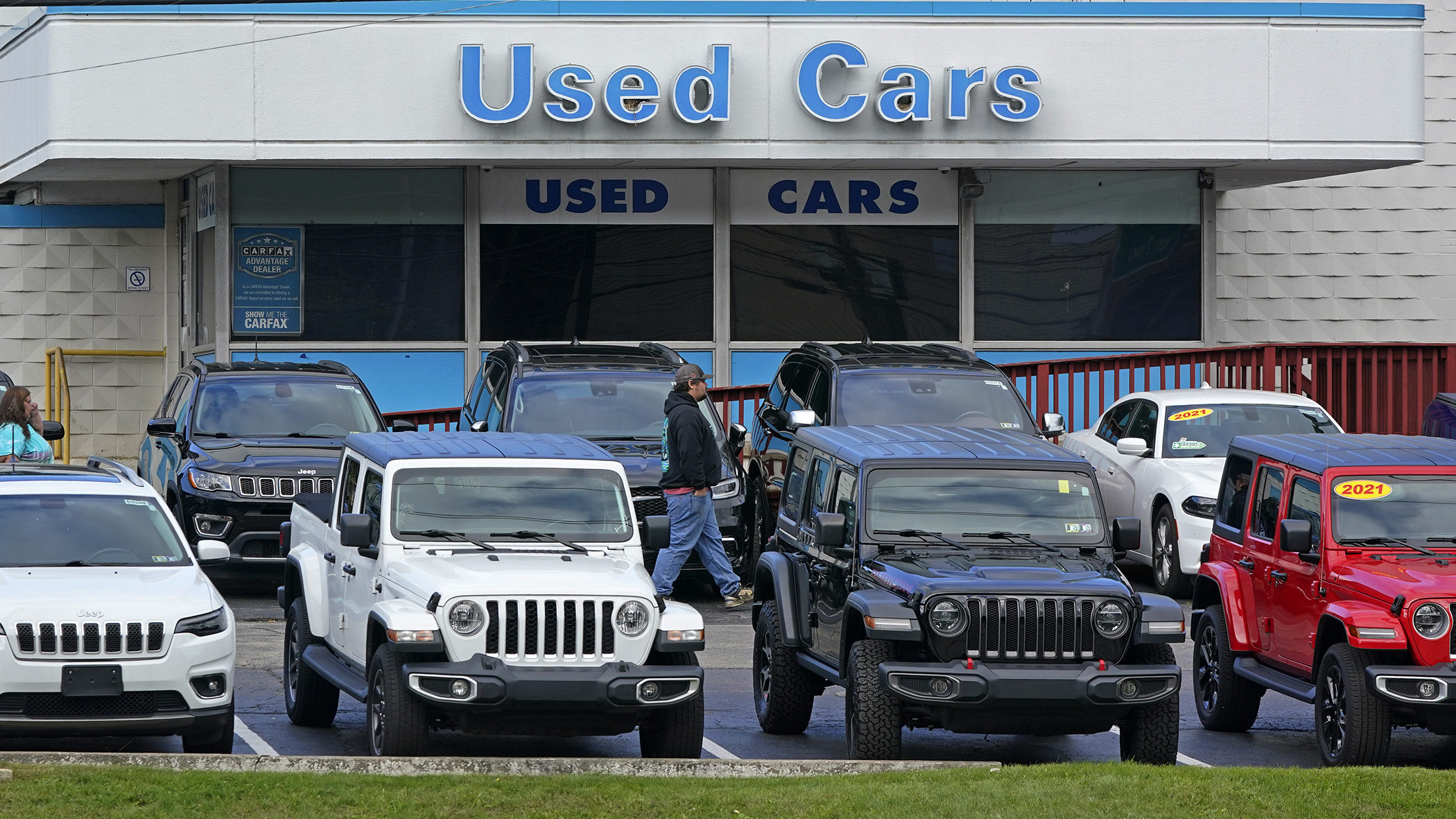
    Affordable used cars are in tight supply, so shoppers with tight budgets may have to settle for an older model with higher mileage.

    The average 3-year-old car costs about $33,000, according to an analysis in August from iSeeCars, an online car search site.

    A 3-year-old car was often the sweet spot for buying used, auto experts say. Those vehicles — typically, leased models going back to dealers for resale — have relatively low mileage; have passed the peak period of depreciation, or drop in value; and often have the advanced safety features found in pricier, newer cars.

    But 3-year-old used cars priced under $20,000 are increasingly rare. Just 1 in 9 now fits that criterion, the site found, down from about half in 2019, before the COVID-19 pandemic played havoc with car inventories.

    A mix of factors, including tariffs under the Trump administration and higher borrowing costs, has pushed up the cost of owning new cars, increasing demand for used models. One Chevrolet dealer lamented the lack of affordable used cars in the quarterly dealer sentiment survey by the research firm Cox Automotive, saying there are “not enough under $20,000 that aren’t total junk or need lots of work.”

    In general, budget-conscious shoppers are paying more for older, higher-mileage cars. This spring, the average used car that sold in the range of $10,000 to $15,000 was nearly 9 years old and had more than 98,000 miles on the odometer, according to the automotive website Edmunds.

    The same budget in the spring of 2019, in contrast, bought a roughly 5-year-old car with about 58,000 miles, Edmunds found.

    People who haven’t been in the market for a used car for a while may need to adjust their expectations. “If you’ve ever shopped for a used car before, especially pre-COVID, you’re going to be floored,” said Ivan Drury, director of insights at Edmunds.

    What should I know about buying a used car?

    Despite high prices, 3-year-old cars have been selling at a brisk pace. Those cars spent just over a month, on average, on dealer lots this spring, unchanged from the same period last year, Edmunds found.

    Jon Linkov, deputy autos editor at Consumer Reports, cautioned that the average price for used cars included higher-priced models like features-laden pickup trucks and luxury cars. “Gone are the days of the low-mileage $10,000 car,” he said. “But you can still find stuff in the $20,000 range.”

    Consumer Reports’ list of recommended used cars this spring (available to subscribers) included the 2023 Subaru Impreza for under $20,000 and the 2023 Nissan Altima for under $22,000.

    Linkov suggested that shoppers make a list of “must haves,” emphasizing safety features and reliability. Does the car have a backup camera and a blind-spot warning feature? (Backup cameras became mandatory in all cars by 2018, he said, but some models included them earlier.)

    Don’t fixate on cosmetic details like the car’s color, he said. Carmakers increasingly offer cars in a limited palette — often, black and white — and charge hundreds of dollars extra for more trendy colors, Linkov said. While he doesn’t prefer black cars, because they show scratches more easily and dark interiors retain heat, he bought a used one for his family because the price was right, he said.

    Be ready to act promptly if you’re on a tight budget and find a car that meets your needs. The most affordable used cars — those selling from $5,000 to $10,000 — spent less than four weeks, on average, on dealer lots this spring before being sold, Edmunds found.

    Getting preapproved for financing, if you need it, can help with quick decision-making.

    What if I want a specific car?

    It’s important to be flexible, including on the brand of car you’ll consider, Drury said.

    With the same $15,000-to-$20,000 budget, for instance, a shopper could buy a 3-year-old Kia with less than 50,000 miles — or a “thoroughly used” 7-year-old Toyota with more than 85,000 miles, Edmunds found. “Is it worth the premium?” Drury asked.

    Traditionally, he said, used-car buyers focused on names that tend to hold their value over time, like Toyota, Honda, Lexus, and Acura. But shoppers willing to consider a Kia, Hyundai, or Nissan may find newer vehicles at the same price — sometimes with coverage from a factory warranty still remaining.

    “Keep an open mind,” Drury said.

    How much does it cost to own a car these days?

    You should also consider the overall operating cost of a car, including insurance, routine maintenance, and fuel, experts advised.

    “The biggest mistake people make is treating the monthly payment as the price of the car,” Kevin Wince, vice president of consumer lending operations at Navy Federal Credit Union, said in an email. “It doesn’t tell you what the vehicle will cost you to own.”

    Small sedans typically are the least expensive models to operate, at about 56 cents per mile, while a half-ton pickup truck approaches 99 cents per mile, according to AAA’s 2025 analysis of the cost of driving a new car (assuming 15,000 miles driven annually).

    And while used cars depreciate more slowly, they can have higher maintenance costs, Wince said.

    What is the cost to finance a used car?

    Higher prices mean it’s difficult for many people to pay cash for a used car, so borrowing has become more common. The average loan amount for a used car rose to almost $28,000 in the second quarter of this year, up $875 from a year earlier, according to Experian Automotive. The average monthly used-car payment rose $10, to $542, over the same period, even as the average interest rate for a used car fell slightly, to 11.19% from 11.57%.

    Interest rates are lower for new cars. The average rate for a new-car loan fell to 6.35% in the second quarter, from 6.79% a year earlier, Experian found.

    As the price of a used car has risen, Drury said, loan terms have gotten longer, which helps keep monthly payments lower. Used-car loans now often run as long as seven years.

    Where should I shop for a used car?

    Buying a manufacturer’s “certified pre-owned” car at a dealership can be a smart option, especially if you plan to keep the car for a long time, said Karl Brauer, executive analyst for iSeeCars. Manufacturers may even offer lower-rate financing on those cars.

    The major rental car companies turn over their fleets regularly and can also be a source of 1- to 2-year-old used cars, Drury said. While buyers may worry that rental cars have been driven roughly, most renters want to avoid charges for damage and drive rental cars as they normally do, he said.

    This article originally appeared in The New York Times.

  • Contractor blames its own repairs, not vandals, for Reflecting Pool failure

    Contractor blames its own repairs, not vandals, for Reflecting Pool failure

    WASHINGTON — The contractor that renovated the Lincoln Memorial Reflecting Pool has told the Trump administration that errors in its own work and flaws in the repair plan, not vandalism, caused the pool’s new blue liner to peel and break loose, according to government documents reviewed by the New York Times.

    President Donald Trump has repeatedly blamed vandals wielding knives or box cutters for damage to the pool’s “American flag blue” liner, even after the Justice Department dropped charges that it had brought against people accused of vandalizing the national landmark.

    But the documents, which have not previously been reported, make clear that the contractor, Atlantic Industrial Coatings, found problems in the design and the execution of the renovation. The documents include Atlantic’s reports to the government as well as daily progress updates from the National Park Service over the past two months.

    Atlantic blamed its own errors in a report dated Aug. 14 and then provided more detail Sept. 2, the documents show. The Justice Department, which had charged several people with vandalizing the pool in early July, began moving to dismiss the cases July 31.

    Because of “human oversight,” workers in some areas did not spray enough of the primer that made the layers of the liner stick together, Atlantic said in the documents. But the bigger problem, the company said, was that the repair plan laid out in the contract called for the layers of liner to include two chemicals that turned out to be incompatible.

    The chemical on top reached a temperature hotter than what the compound underneath could withstand, and the heat caused the bottom layer to blister and come loose, the documents show. The contractor said it had not expected that outcome because it was very uncommon to mix the two products in that way.

    The failure illustrates the consequences of the Trump administration’s rushed effort to renovate the pool this spring. In a hurry to finish the work before the nation’s 250th birthday on July 4, the government bypassed competition and gave Atlantic a no-bid contract to carry out an untested approach designed in part by the general manager of one of Trump’s golf clubs.

    The government has agreed to pay Atlantic $14.7 million for its work. The contractor has said it will repair the pool, which is under warranty, again.

    Katie Martin, a spokesperson for the Interior Department, did not directly address questions about the contractor’s findings but issued a statement that appeared to continue blaming vandals for the damage, saying that they had “repeatedly reached into the pool and ripped at the coating.”

    Martin said Atlantic was now “well on its way” to repairing the pool. She did not say when it would be refilled.

    Representatives for Atlantic did not respond to requests for comment.

    The pool is still drained, and repairs appear to be ongoing: On Thursday, the pool was full of workers. Some were seen tearing up large strips of the blue lining, while another sprayed a new layer of coating as a man in a shirt reading “Atlantic Coating Inspection” watched.

    The documents show that, to redo the repairs, Atlantic said it would use a smaller team of workers that would be closely supervised, and that it would consult an adviser from the manufacturer of the compounds used in the liner.

    The manufacturer, Rhino Linings, did not immediately respond to a request for comment. Its CEO, Pierre Gagnon, said in a June statement that the peeling liner was “limited to isolated areas” of the pool.

    The documents also show that Atlantic did blame vandals for cuts in the caulking around the pool’s edge that National Park Service workers had previously reported to the police. But the company did not link those cuts to the peeling of the blue liner on the pool’s floor, which Trump repeatedly blamed on “sick people” wielding knives or razors.

    Federal prosecutors acted on the president’s claims on July 2, when they announced the indictment of David Hearn, a former Olympic canoeist accused of pulling up a piece of the liner, on a felony vandalism charge.

    But in a remarkable reversal a few weeks later, prosecutors sought to dismiss the charges against Hearn and three others accused of vandalizing the landmark. Jeanine Pirro, the U.S. attorney in Washington, wrote that the Interior Department had misled her staff about the extent to which the damage had stemmed from vandalism rather than a “botched installation.”

    Trump continued to blame vandals for the damage even after that, though he conceded in a social media post Aug. 9 that “there is no video or proof.”

    “There was also some contractor error done by rushing the job for a July 4th opening,” Trump said in that post. “But it was a very small area of this massive Pool, and was relatively inconsequential.”

    Trump said then that the pool would reopen “shortly.” But it remains drained a month later. The documents reviewed by the Times help explain why. They show that repairing the pool has been a challenging and involved task.

    On Aug. 13, the contractor began power-washing the pool to remove loose chunks of blue liner, according to the documents. By the end of the next day, workers had filled one large trash bag, but many more bits of liner remained stuck to the pool’s concrete slabs and would need to be removed later with razor blades, hammers, and crowbars.

    After removing the loose pieces, the documents show, Atlantic sought to reapply the blue coating, only to encounter the same problems as before: Blisters would appear under the surface, between layers of the lining. Early this month, the company concluded that the problem was the interaction between the two compounds and stopped layering the hotter one on top, the documents show.

    That reduced the blisters, the documents show. But it did not stop them completely.

    Also early this month, the contractor identified a new potential culprit: sweat. It said that a worker, wearing a protective suit under the hot Washington sun, was leaving droplets of sweat on the coating, which were then trapped when new layers were sprayed on top.

    To try to solve that problem, the documents show, the man then opened the top part of his protective suit and wrapped cloth around his head and wrists to contain the sweat. The documents reviewed by the Times do not say if that stopped the blisters.

    A National Park Service employee had notified workers Aug. 14 that Trump would be flying over the pool on Marine One that day, according to the documents. Gregory Wischer, a political appointee at the Interior Department, also visited the reflecting pool that day to personally supervise this work, the documents show.

    Wischer, a former executive at a metal processing company, originally joined the Trump administration last year to work on critical minerals policy. But he has since shifted his focus to the Reflecting Pool renovation and the president’s other pet projects in Washington.

    In March, Wischer met with David Schutzenhofer, the manager of a Trump Organization golf club in New Jersey who helped plan the pool’s renovations, according to Interior Department visitor logs. And Monday, Trump wrote on social media that Wischer had updated him on work to clean and wax statues of Italian poet Dante Alighieri and French hero Joan of Arc in a park in Northwest Washington.

    This article originally appeared in the New York Times.

  • US stocks jump after oil prices ease and an inflation update comes in near expectations

    US stocks jump after oil prices ease and an inflation update comes in near expectations

    NEW YORK — U.S. stocks rebounded Friday and regained much of their losses for the week after oil prices eased off their recent spurt. An update on inflation across the United States that came in close to economists’ expectations, even if prices are still rising too quickly for everyone’s liking, also helped calm the market.

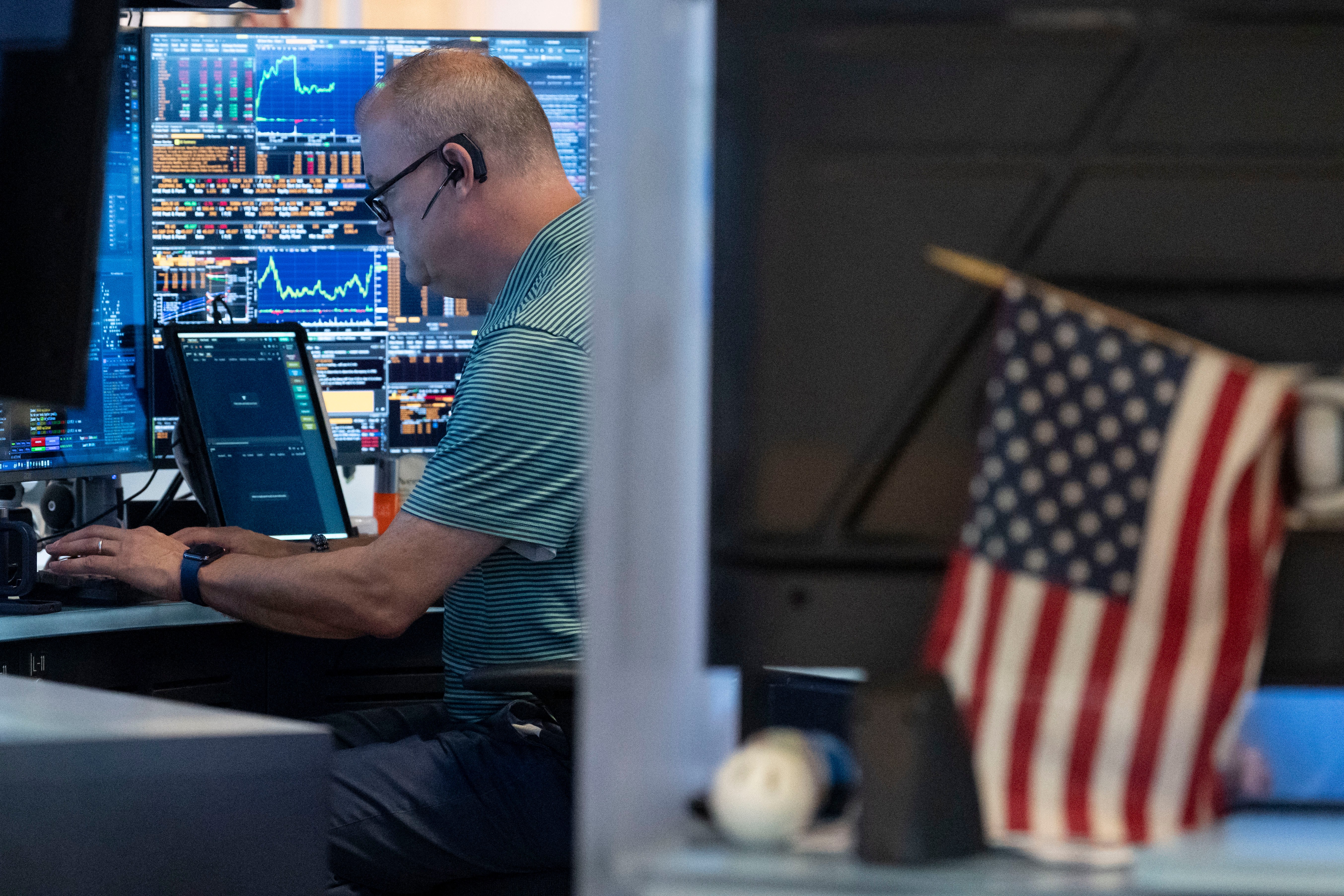
    The S&P 500 climbed 0.9% and snapped a four-day losing streak, its longest since June. The Dow Jones Industrial Average jumped 509 points, or 1%, and the Nasdaq composite rose 1%.

    They got help from a pullback in oil prices, which had jumped to their highest levels since May because of the ongoing war with Iran. The price for a barrel of Brent crude, the international standard, fell 2.8% to settle at $104.61 after getting near $110 overnight.

    That took a bit of pressure off inflation, which remains stubbornly high. A report on Friday showed that U.S. consumers had to pay prices for gasoline, food, and other costs of living that were 3.4% higher last month than a year earlier.

    While still high, that was close to what economists expected and what Wall Street was prepared for. The data also strengthened expectations among traders that the Federal Reserve will feel compelled to hike its main interest rate at its meeting next week.

    Such moves are the typical way the Fed tries to rein in high inflation, and they work by filtering through the bond market, making it more expensive for everyone to borrow money, slowing the economy, and hopefully removing fuel for further inflation.

    The rising expectations for an upcoming hike to rates drove up the yield of the two-year Treasury, which moves with guesses for upcoming Fed action, to 4.62% from 4.56% late Thursday.

    Longer-term Treasury yields held steadier, though. That could be a signal that investors in the bond market see upcoming hikes by the Fed as helping to keep control of inflation over the longer term. The yield on the 10-year Treasury rose more modestly to 4.97% from 4.95% late Thursday, while the 30-year yield eased to 5.36% from 5.37%.

    Economists say hikes could quiet questions about the Fed’s commitment to keeping inflation under control. Worries had risen earlier in the summer about its credibility and whether it would do what’s needed to bring inflation down, even if it causes pain for the economy in the near term.

    Federal Reserve Chairman Kevin Warsh has been adamant about not giving hints about where the Fed may take interest rates, though he did calm some concerns among investors at a speech late last month. President Donald Trump, meanwhile, has been pushing for interest rates to go lower rather than higher.

    “Symbolism can trump substance, even when it comes to monetary policy,” according to Brian Jacobsen, chief economic strategist at Annex Wealth Management.

    It’s all coming at a moment when confidence among Americans continues to sour. A preliminary report from the University of Michigan on Friday said U.S. consumer sentiment is falling, with declines for both Democrats and Republicans.

    Their expectations for inflation coming in the year ahead jumped to 4.6% from 4% last month. That’s the highest reading since June, and it’s concerning for the Fed and for economists because it can trigger a vicious cycle of behavior that worsens inflation.

    On Wall Street, Kroger rose 2.7% after the grocer reported a stronger profit for the latest quarter than analysts expected. It also held firm on its forecast for profit over the fiscal year, even though it trimmed its forecast for an important underlying measure of revenue growth.

    ACV Auctions, whose digital marketplace connects wholesale buyers and sellers of vehicles, soared 44.2% after Copart said it would pay $10.50 in cash for each of the company’s shares. Copart, whose online vehicle auctions sold more than 4 million units in the last year, fell 2.6%.

    An early jump for Oracle faded as trading progressed after the tech giant reported stronger profit and revenue for the latest quarter than analysts expected. After initially leaping 8.5%, its stock swiveled between gains and losses and finished with a loss of 1.7%.

    Stocks closely tied to the artificial-intelligence industry broadly became shaky this summer on worries that the AI frenzy may have sent prices too high.

    All told, the S&P 500 rose 65.28 points to 7,656.98. The Dow Jones Industrial Average added 509.19 to 52,573.29, and the Nasdaq composite climbed 251.31 to 26,333.04.

    In stock markets abroad, indexes rose in Europe as oil prices eased. London’s FTSE 100 added 0.4% after a report said the U.K. economy was stronger in July than economists expected.

    Stock markets were weaker in Asia, where Japan’s Nikkei 225 lost 1.9% and South Korea’s Kospi fell 1.8%.

    AP Business Writers Chan Ho-him and Michelle Chapman contributed to this report.

  • Blast shakes southern Lebanon as Israel destroys underground Hezbollah base

    Blast shakes southern Lebanon as Israel destroys underground Hezbollah base

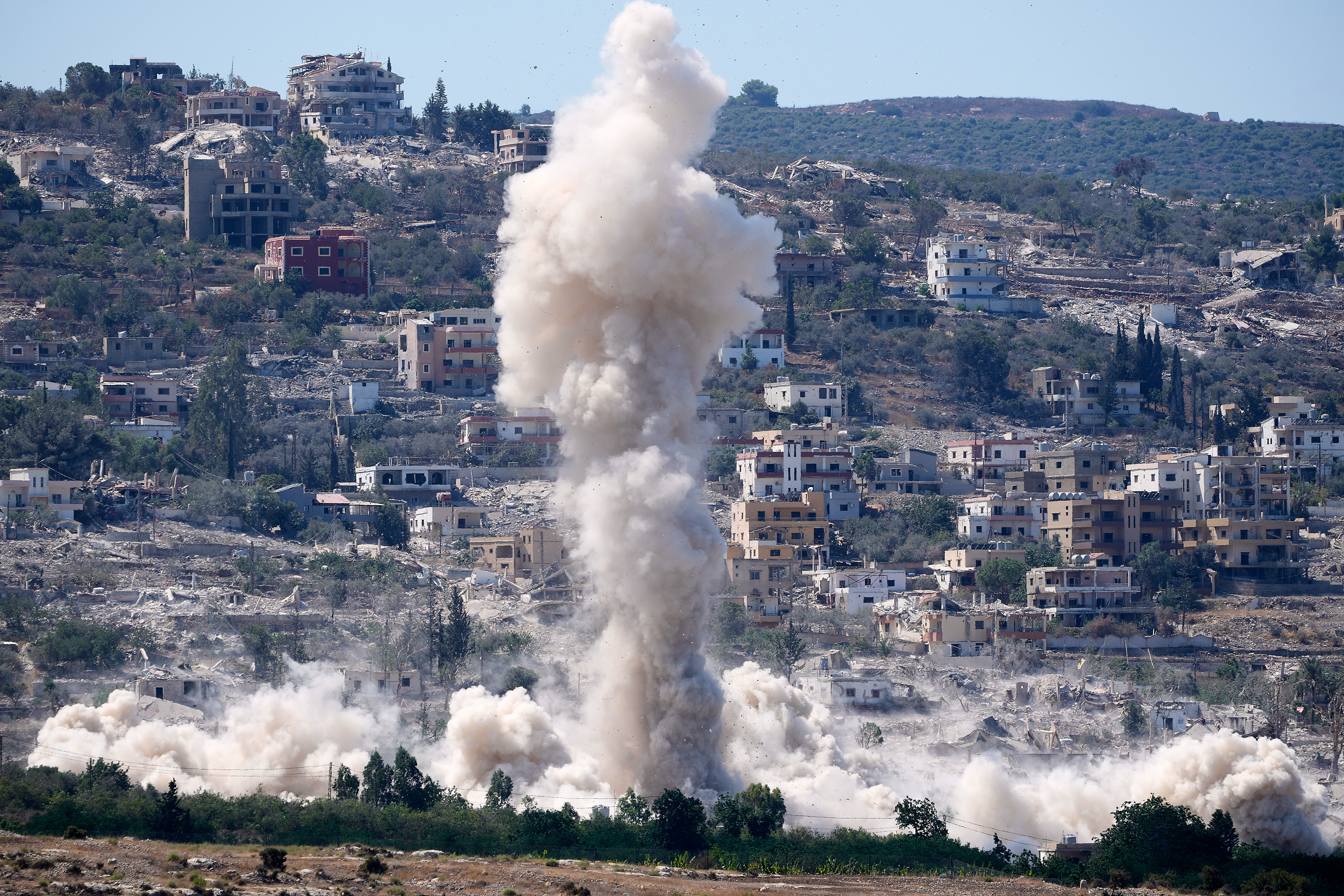
    BEIRUT — A huge explosion sent shock waves across southern Lebanon overnight, as the Israeli military said it had destroyed an underground Hezbollah base in a strategically significant area of Israel’s conflict with the Iran-backed militia.

    The blast lit up the sky with a sudden orange flash and tore through the Ali al-Taher ridge, a commanding hilltop about 6 miles from the border between Israel and Lebanon that Israeli forces captured this month.

    Lebanese and Israeli officials say Hezbollah, a Lebanese militia supported by Iran, established a major underground installation beneath the ridge. Israel says the complex had for years served as a command center for planning and launching attacks against it. The ridge overlooks much of southeastern Lebanon, including Nabatiyeh, one of the country’s largest cities.

    “The explosion caused massive sounds in Nabatiyeh,” Abbas Fakhereddine, the city’s mayor, said Friday. “We felt the buildings shake.”

    The explosion generated ground waves that were likened to an earthquake measuring 4.2 on the Richter scale, Lebanon’s National News Agency reported, citing the country’s National Center for Geophysics. Videos shared on social media showed the explosion lighting up the night late Thursday.

    The Israeli destruction of the underground base at the ridge fueled concerns among residents about a deepening Israeli military presence and an expansion of military operations in southern Lebanon. Israel has in recent days and weeks carried out strikes and widespread demolitions of buildings and civilian infrastructure across southern Lebanon, according to local officials and human rights groups.

    The Israeli military said in a statement Thursday that it had located dozens of rockets, missiles, drones, machine guns, and explosive devices inside the underground base. The complex also included a Hezbollah command center, weapons storage rooms, and living quarters, the military said.

    On Friday, Hezbollah officials disputed the significance of the ridge and accused Prime Minister Benjamin Netanyahu of Israel of exaggerating the importance of the operation for political gain before elections next month.

    A Hezbollah media official, speaking on the condition of anonymity to discuss sensitive matters, downplayed the site’s importance to the group and rejected claims that the facility contained advanced missiles or significant military infrastructure.

    Under a U.S.-brokered ceasefire agreement reached in June, Israel is expected to gradually pull its forces back from areas it occupies in southern Lebanon, with the Lebanese armed forces deploying there to establish security and enable displaced residents to return. That arrangement is closely linked to the Lebanese government’s efforts to disarm Hezbollah, a process that is likely to prove difficult, given the government’s limited ability to control the powerful militia.

    On Friday, Lebanon’s General Directorate of State Security said in a statement it was resuming government patrols and reestablishing checkpoints in Nabatiyeh, in coordination with other security agencies and the Lebanese army, to protect the city and strengthen public confidence and safety.

    Some residents of southern Lebanon, along with political and security observers, have expressed anger that Hezbollah did not hand over the ridge to the Lebanese army and security services, arguing that the group had allowed a strategic position to be lost to Israel rather than place it under Lebanese state control.

    Moustafa Bayram, a former labor minister aligned with Hezbollah, said Israel’s decision to destroy the site was “an attempt to terrorize us and escalate the war.”

    This article originally appeared in the New York Times.

  • U.K. lawmakers vote down bill to allow assisted dying in England and Wales

    U.K. lawmakers vote down bill to allow assisted dying in England and Wales

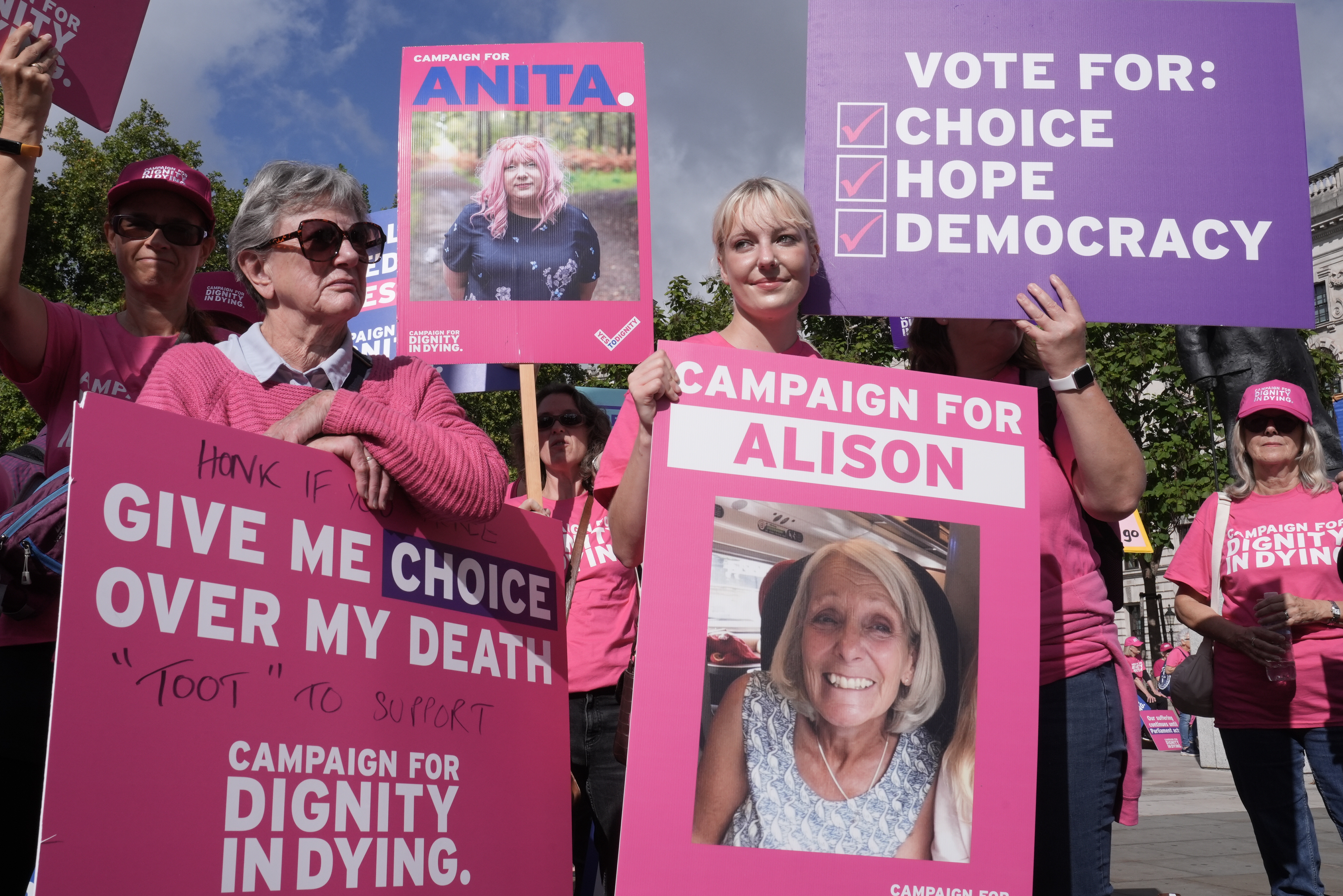
    LONDON — U.K. lawmakers on Friday voted down legislation to allow terminally ill adults in England and Wales to choose to end their lives.

    Following an impassioned four-hour debate in the elected House of Commons, the Terminally Ill Adults (End of Life) Bill was rejected 286 to 270. The outcome was somewhat surprising given that an almost identical bill had passed last year with a margin of 23 votes.

    The vote brings an end to a two-year debate in Parliament about assisted dying, during which the House of Commons had backed assisted dying on two previous occasions. Their backing wasn’t enough for it to become law because it was effectively filibustered by unelected lawmakers in the House of Lords.

    Back in the House of Commons on Friday, the bill had proposed allowing adults in England and Wales who have fewer than six months to live to apply for an assisted death subject to the approval of two doctors and an expert panel.

    Many individual lawmakers relayed their own stories both in favor of and against the proposal. The government took a neutral stance, meaning lawmakers voted according to their consciences rather than along party lines.

    One lawmaker who was among those to oppose the bill, having previously backed it, spoke about how “nightmares” prompted her to switch sides. Janet Daby said she dreamed of “dying and death” because she had not been “entirely comfortable” with her former position.

    The new U.K. leader, Prime Minister Andy Burnham, didn’t vote because he said he didn’t want to “unduly influence the debate.”

    Opponents branded the bill unsafe and unworkable, citing concerns around potential coercion of vulnerable people and a lack of safeguards for those with disabilities.

    Lawmaker and cancer surgeon Zubir Ahmed also noted uncertainty around a doctor’s prognosis.

    “I have to be honest with you,” he said. “When I am asked to prognosticate as to whether someone has six months to live or not, I am as often wrong as I am right.”

    The leader of Catholics in England and Wales, Archbishop Richard Moth, called the bill “wrong in principle” and “deeply flawed. The Church of England’s Archbishop of Canterbury, Sarah Mullally, also objected to the bill.

    Medical colleges, including the Royal College of Psychiatrists, had raised “serious concerns” about the bill, saying there were “too many unanswered questions about the safeguarding of people with mental illness.”

    Proponents of ” assisted dying ” — sometimes referred to as “assisted suicide” — had hoped it would mark the biggest change to social policy in the U.K. since abortion was partially legalized in 1967. The intention was to put an end to the practice of those near the end of their lives going to other countries, such as Switzerland, for an assisted death.

    Lauren Edwards, who reintroduced the bill to the House of Commons, said the rejection was “heartbreaking” but expressed hope that the issue will win parliamentary approval in the future.

    “Assisted dying will come in this country, as it is already doing all across the world, but not soon enough,” she said. “Parliament has dropped the ball today. It will be picked up again as it must be, because the law as it stands is simply too cruel and too unjust to be allowed to stand.”

    Other countries where assisted dying is legal include Australia, Belgium, and Spain, with regulations on qualifying criteria varying by jurisdiction.

  • How Minnesota became the front line in the fight over prediction markets

    How Minnesota became the front line in the fight over prediction markets

    Minnesota state Rep. Emma Greenman first became concerned about prediction markets early this year.

    Teachers had complained to Greenman that underage users were downloading apps like Kalshi and Polymarket. She said she had grown worried that the platforms were becoming a back door to sports betting, which the state had never legalized.

    “This wasn’t a problem we had, frankly, before 2025,” said Greenman, 47, a Democrat who also works as a voting rights lawyer. “We see it as both a public safety and public health issue.”

    So this spring, she worked with colleagues to introduce and pass a bipartisan bill to ban prediction markets, making Minnesota the first state to do so. A federal regulator and the companies immediately sued — and a federal judged paused the law’s enforcement, for now.

    The legal battle has put Minnesota on the front lines of an escalating fight between states and the federal government over who regulates prediction markets. The closely watched case is expected to help set a precedent on whether states can pass laws banning the prediction markets — or whether federal regulators have the ability to preempt them.

    “This is a test case of how much authority does the state have to step in,” said Richard Painter, a professor of securities law and legal ethics at the University of Minnesota Law School.

    Kalshi, Polymarket, and others have exploded in popularity over the last year, becoming part of the zeitgeist by allowing users to wager on everything from the timing of the Federal Reserve’s next rate increase to who will win the Super Bowl.

    But the platforms have caused growing alarm among states, about 20 of which have tried to enforce existing laws on sports betting and gambling — or, in Minnesota’s case, pass a new one.

    The companies and the Commodity Futures Trading Commission, the U.S. agency that oversees prediction markets, have fought back fiercely. With the backing of President Donald Trump, they have filed lawsuits arguing that the companies are regulated only at the federal level.

    The states have won some victories in recent weeks, with Washington and Nevada temporarily halting Kalshi, the largest platform in the United States, from operating in their states. And a federal appeals court ruled late last month that states had the ability to regulate prediction markets.

    In an August statement, Michael S. Selig, chair of the Commodity Futures Trading Commission, said Congress did not intend for prediction markets “to be regulated under a patchwork of state gaming laws.”

    “These are financial exchanges that offer financial instruments and operate across state lines,” he added.

    Rick Heaslip, Kalshi’s general counsel, said Minnesota lawmakers had rushed “to pass an unprecedented ban of a product they didn’t understand.”

    Minnesota allows some casinos and the lottery. But state legislative efforts to introduce the possibility of legalizing sports betting have hit roadblocks for at least a decade.

    Many lawmakers, including Greenman, took notice as Kalshi and Polymarket surged in popularity.

    In mid-March, she and others introduced bipartisan companion bills to outlaw betting on things like sports outcomes, the Oscars, assassinations, and trial verdicts. A few categories, like weather, were eventually carved out because of their potential to act as legitimate financial tools for farmers looking to hedge their risk.

    “What we really focused in on are things that look and act like gambling,” said state Sen. Jordan Rasmusson, a Republican co-author of the companion legislation in the Senate.

    As they pushed to pass the bills, Greenman and Rasmusson said, they and others became increasingly concerned. Kalshi fined and suspended three political candidates, including one from Minnesota, in April for betting on their own congressional races.

    “There’s broad consensus here that whether Minnesota does or does not expand sports betting — how we do it, if we did it — should be our decision,” Greenman said in a committee meeting that month.

    At the end of April, she helped attach the legislation to an omnibus public safety bill. That passed in May, and Gov. Tim Walz, a Democrat, signed it into law.

    Many in Minnesota are supportive of the pushback.

    Devon Bowker, a high school science teacher in St. Cloud, said he was alarmed at how openly his students discussed how they bet. It has become a way to connect and socialize, he said.

    He tried to remind his students that betting affects their brains, creating dopamine hits faster than they can assess the risk.

    “Do you want to be in control of your own destiny or leave it to chance on the app?” Bowker, 34, asked his students.

    Taylor Jensen, a software engineer who lives in Lakeville, said he considered the prediction markets “very speculative investing” with high risk and high volatility. They are also fairer and less predatory than traditional gambling, he contended.

    Jensen, 35, said he had first downloaded Kalshi in January while ice fishing with friends. They bet on a Chicago Bears football game, he added, but he decided to create a program to place bets on the weather. As of September, he was up just shy of $9,000 in earnings, he said.

    His wagering could continue under the new law, thanks to the weather carve-out. But he’s not a farmer hedging risks.

    Weather is “just another goofy thing to trade,” Jensen said.

    One day after Walz signed the law, the Commodity Futures Trading Commission filed a federal lawsuit, which Kalshi and Polymarket soon joined. “Minnesota has no authority to regulate — much less criminalize — event contracts listed on CFTC-regulated markets,” lawyers said in the filing.

    Minnesota Attorney General Keith Ellison was quick to counter.

    “Minnesota banned prediction markets because of how predatory, addictive, and harmful they can be,” Ellison said in a statement at the time. The platforms facilitate “gambling, plain and simple.”

    At the first hearing on July 2 in U.S. District Court in Minneapolis, Judge Kate M. Menendez heard arguments on whether she should issue an injunction.

    “Who is going to take the ‘educating the middle-aged judge’ set of questions?” Menendez, 55, asked at the start.

    Federal regulation preempts any state laws, argued Henry Dickman, a lawyer for the Commodity Futures Trading Commission. “We see this as a direct invasion of our jurisdiction,” he said.

    A lawyer for the state, Lindsey Middlecamp, countered that Kalshi and Polymarket were not “wrapped in federal immunity” as they claimed to be. She questioned the legitimacy of including wagers about Taylor Swift’s wedding choices under the commission’s federal mandate to regulate financial tools.

    Menendez halted the law’s enforcement until the conclusion of the court battle, which could take months. Still, she conceded that trading on the winner of the reality TV show Love Island, for example, would be hard to classify as a federally regulated financial tool.

    “One is hard-pressed to imagine the financial, economic, or commercial consequence of the occurrence or outcome of these events,” the judge wrote.

    Ellison said in a statement at the time that he acknowledged the complexity of the case. “We look forward to continuing to litigate this case and defend the state’s duly passed law,” he added. A pretrial conference is set for October.

    Greenman said she was hopeful the state would still prevail, in part because the bill was drafted carefully with a legal challenge in mind.

    “I feel confident in the arguments we’re making,” she added.

    This article originally appeared in The New York Times.

  • For the 25th time, New York marks a shattering loss

    For the 25th time, New York marks a shattering loss

    Gordon M. Aamoth Jr.

    Edelmiro Abad.

    Marie Rose Abad.

    A quarter-century after the terrorist attacks that shook New York City and the world — an ashen morning followed by years of grief and repair, rebuilding and war — dignitaries and mourners gathered once again in Lower Manhattan to read aloud the names of those killed when hijackers crashed airplanes into the World Trade Center and sent the twin towers crumbling to the ground.

    Milton G. Bustillo. Thomas M. Butler. Patrick Dennis Byrne.

    The ceremony on Friday took place beneath a canopy of swamp white oak trees between the two memorial pools where the towers once stood. The pools were designed to appear bottomless, and their cascading waters lent a whispering backdrop to the morning. Relatives held aloft photos of the dead, forever young, as children on the podium spoke directly to grandparents, aunts, and uncles they had never met.

    “My dad always talks about how wonderful you were,” one girl said after naming a lost relative. She is among the 100 million Americans born since that day.

    Some people used their turns at the microphone to criticize the federal government for continuing to work with Saudi Arabia in the years since the Sept. 11 attacks. Family members of those who died have sought to hold the kingdom responsible in federal court, claiming that its government provided support for the hijackers.

    Among them was Terry Strada, an official with 9/11 Families United, whose husband was killed in the attack. Her organization has tried for years to pursue legal action against the Saudi government. The kingdom has denied involvement.

    “It has been one betrayal after another,” Strada said from the podium. She urged the assembled elected officials to “stand with survivors, stand with Americans.”

    Later, a nephew of Lisa Marie Terry, who died in the attack, accused “the deep state” of hiding the truth. He called on President Donald Trump to “release the unredacted files that implicate Saudi Arabia, while what’s left of the victims’ families are still alive to see it.”

    Four living former presidents, from Bill Clinton to Joseph R. Biden Jr., stood silently nearby. Zohran Mamdani, the city’s first Muslim mayor, was also in attendance, despite a petition signed by thousands of people, including victims’ family members, urging him to stay away. He was joined by former Mayors Bill de Blasio, Michael Bloomberg, and — awkwardly — Rudolph Giuliani, who was in office on Sept. 11 and earlier this week said that Mamdani’s presence at the ceremony “offends me.”

    Mamdani nonetheless approached Giuliani at the ceremony. The two men shook hands, and Giuliani’s position seemed to have softened. Cameras captured him apparently telling Mamdani: “I’ll pray for you. It’s a really hard job.”

    Gov. Kathy Hochul was there, as was Gov. Mikie Sherrill of New Jersey and former Gov. George E. Pataki of New York, who had also called on Mamdani to skip the event.

    Vice President JD Vance stood in for Trump, who instead attended a ceremony at the Pentagon. In his remarks, the president talked about how Sept. 11 had changed America.

    “Twenty-five years after the attacks, we know the world will never return to the way it was at that dawn on that beautiful, peaceful Tuesday morning, 2001,” Trump said, “before the towers fell, before the Pentagon was hit, before the specter of evil, and this horrible, horrible evil came crashing into our lives.”

    In New York, as is custom, there were no speeches from elected officials, putting all the focus on the families. The names of the victims read on Friday included the six killed in the 1993 World Trade Center bombing.

    Uniformed firefighters present and past — many older now, grayer — gathered at the ceremony, at churches and, later, in the city’s barrooms, to raise glasses to their 343 fallen brothers.

    The effects of Sept. 11 played out for months, years. The Fire Department would go on to be further gutted by mass retirements of high-ranking officers. The Police Department lost 23 officers that day, and was reshaped by the introduction of new tactics, units, and equipment to fight terrorism.

    The day is a reminder of how the attacks’ long shadow has reached into many corners of life in the U.S. and beyond.

    The U.S.-led global war on terrorism included invasions of Iraq and Afghanistan — the latter Washington’s longest war — and detentions and harsh interrogation of terror suspects in an international network of secret CIA prisons. The U.S. found and killed al-Qaeda leader Osama bin Laden in Pakistan in 2011, but the accused 9/11 mastermind Khalid Sheikh Mohammed still awaits a trial 23 years after his capture.

    The attacks changed U.S. air travel, led to the creation of the Department of Homeland Security, prompted new federal surveillance and intelligence-gathering powers and banking regulations and generated ongoing debate over the balance between security and freedom.

    Sept. 11 engendered a culture of individual vigilance summed up by the slogan, ” If you see something, say something,” while a wave of patriotism propelled some Americans to join the military, fire departments and police forces.

    On Friday, there were the traditional six moments of silence, marked with the tolling of a bell: one for each of the towers struck, one for each building’s collapse, and two for the plane crashes at the Pentagon and in Shanksville, Pa.

    A seventh moment of silence was added this year to commemorate those who had died of Sept. 11-related illnesses. Mamdani’s administration this week released more than 170,000 pages of previously withheld city records about the air quality around ground zero after the attacks. The documents seem to suggest that New Yorkers were encouraged to return to the area before it was safe to do so.

    The mournful wail of bagpipes — a fixture at hundreds of Sept. 11 funerals — rang out at the start of the memorial. Elsewhere in the plaza, Yo-Yo Ma played his cello softly behind the reading of the names.

    Information from the Associated Press was used in this article.