Category: Wires

  • MIT report warns AI is causing ‘cognitive surrender.’ Universities are in a bind.

    MIT report warns AI is causing ‘cognitive surrender.’ Universities are in a bind.

    The worries that artificial intelligence is degrading education have been building for months. Students are using it for everything, including cheating, and a recent report out of the Massachusetts Institute of Technology said it is triggering “cognitive surrender.”

    Many university leaders are embracing AI with enthusiasm anyway.

    As AI leaders warn about the dangers of their own technology, the dissonance between the optimism of university leaders and the fears of many students and professors may increase. Professors and students are often in a bind about what they should do: Use more AI to stay relevant, or dial back to preserve learning and thinking?

    While some politicians and AI leaders are warning about possible doomsday scenarios for humanity as AI models advance, many campus leaders are focused on the existential threat the technology poses to universities.

    The committee at MIT studying AI use released a number of alarming findings, including that the technology has caused “major shifts in campus culture,” isolating students who are skipping office hours and ditching communal studying. Getting answers from a bot can create “the illusion of learning” for students who reach for AI “at the first hint of struggle,” the MIT committee wrote in its August report.

    At the same time, “the potential of these technologies to augment work across campus is immense,” the committee wrote.

    The MIT report crystallized some of the thinking in higher education about AI, but top administrators have been embroiled in debates for several years. Administrators have often been the most eager to champion AI efforts, while many faculty and students remain more skeptical.

    “I think you have to lean in, but you have to do so in a way that’s thoughtful and ethical and asks the right questions,” said Wendy Hensel, the president of the University of Hawaii, where she presented an AI strategy to regents in July. “The right answer to AI is not just ‘no.’ It can’t be. It has to be approached with curiosity and understanding of the implications.”

    The hodgepodge of policies universities have created to respond to AI often reflect the confusion about how to proceed — with some clear do’s and don’ts, but often a lot of wiggle room for faculty and students to figure it out on their own.

    Experts warn that AI harms learning

    For a motivated student, an AI chatbot can function as a sort of tutor. Chatbots can break down the steps in a math problem, surface unexpected sources for research papers, and offer feedback on writing.

    Still, a growing body of research suggests that AI use can also harm learning.

    A recent study of 26,000 Chinese secondary-school students found that AI adoption led to an 18% increase in homework scores, but a 20% decline in scores on secure exams. The implication was that rushing through homework with help from chatbots degraded the deeper learning needed to perform well when the technology was not available.

    One 2025 study out of MIT found that people who used chatbots as writing assistants struggled to remember what they had written only minutes after finishing their essay. “You basically didn’t engage any of the memory networks that would actually help you remember,” said Nataliya Kos’myna, an MIT researcher who worked on the study.

    Other research has shown that people who have greater trust in AI and rely on it more are more likely to have lower cognitive engagement.

    But AI can be hard to avoid. Chatbots are embedded within the Google Classroom suite, which is nearly ubiquitous in schools, and within many online learning systems used by universities.

    Some tools block outright cheating or plagiarism and allow professors to toggle specific AI capabilities on and off. But the most popular chatbots among students will instantly complete entire assignments, including research papers, on a student’s behalf.

    Many universities are embracing AI anyway

    Sian Leah Beilock, the president of Dartmouth College, has argued that preparing graduates to use AI is an existential requirement of institutions of higher education.

    “In a world that promises to be defined by AI, universities that fail to produce graduates who can use it productively will consign themselves to irrelevance,” she wrote recently.

    Harvard University President Alan Garber said in public remarks this month that AI-backed research is on the cusp of a boom that may drive the pace of knowledge faster than at any other time in human history. Garber has said that researchers in many fields are now unlikely to be at the leading edge of their disciplines without AI.

    Ohio State is integrating AI into every major, with the expectation that every student will be fluent in their field of study by graduation. The university has directed every department and major — from business and engineering, to English and veterinary medicine — to train students on how to use AI in their respective fields, and when not to.

    “What is OK to off-load to AI, and what is not?” Ohio State University President Ravi V. Bellamkonda said in an interview in July. “The answer to that depends on the field and depends on your stage of learning.”

    Elizabeth Kiss, the president of Union College, said universities have to educate students on both the thoughtful use of AI and on the things AI doesn’t do, such as “lead teams, push the boundaries of knowledge.”

    Still, some schools are creating boundaries

    The University of Chicago has banned AI in certain required social sciences courses, while the university’s law school banned phones, tablets, and laptops in first-year classrooms. The university is one of a handful that recently adopted new academic integrity rules.

    The law school at the University of California, Berkeley, adopted a policy forbidding the use of AI “to conceptualize, outline, draft, revise, and edit” work submitted for credit.

    Cornell University has created a disciplinary process meant to correct AI cheating while avoiding black marks on students’ records. Now, students accused of minor misuse will be allowed to accept responsibility and complete a workshop and some reflective work.

    Steve Jackson, the vice provost for academic innovation, said the program would not be used for plainly egregious misconduct. “This is a chance to sanction something, catch it, not let it go unnoted or to let it pass,” he added.

    Like many institutions, Harvard does not have a central set of AI rules. David Deming, dean of Harvard College, wrote in a note to students arriving for the fall semester that he favors more AI where “it can deepen learning,” but that the school was also looking to AI-proof some assignments.

    That would mean more in-class tests, Deming said, and fewer take-home assignments, where the temptation to cheat is powerful. He said he intends to produce a set of guidelines for AI use at the college by the end of the academic year.

    For younger students, some school districts are proceeding cautiously. This month, the nation’s largest school district, in New York City, vastly limited student AI use in grades K-8, while the second-largest district, in Los Angeles, essentially banned student use of chatbots at every grade level.

    Policing ai use is hit or miss

    Students are often navigating this landscape without clear guidance from their colleges.

    Most institutions leave it up to individual instructors — who may have little experience with AI — to set rules on how the technology is used in each class.

    It may seem clear that submitting chatbot-generated text is cheating, while using a chatbot to revise one’s own writing is allowed. But the line between those two capabilities is thin, and much AI use lies in an ethical gray zone.

    Many educators “don’t even know where to start,” said Annie Chechitelli, chief product officer at TurnItIn, a company that makes software that can detect plagiarism and track and guide AI use. “What is OK? What’s not OK?”

    Many instructors have already moved to on-paper assignments in the classroom, or locked-down computer browsers that limit AI misuse. Others report success in using AI detection software, which has recently improved in its ability to flag chatbot-written text while avoiding false positives.

    Some see AI as a crucial partner for thinking and writing and put few limits on how students use the technology. Others subscribe to the notion of “AI literacy,” assigning students to use chatbots to produce an essay or poem, for example, and then critique and try to improve the output.

    In Australia, the University of Sydney has adopted the “two-lane approach,” seen as a global model. Across disciplines, students must complete some assessments in person, under secure conditions meant to restrict AI. But other assignments must use AI, to help familiarize students with the technology that is reshaping the economy.

    “It’s almost like sex ed,” said Anita Sarma, a professor of computer science at Oregon State who has studied the impact of AI on student cognition. “They will do it anyway,” she said. “How do we teach them responsible use?”

    This article originally appeared in the New York Times.
  • Crashing a plane for clicks: Influencers push shock content to get views

    Crashing a plane for clicks: Influencers push shock content to get views

    In 2021, Trevor Jacob, a former U.S. Olympic snowboarder, flew a 1940 Taylorcraft plane far above the hills of Los Padres National Forest in Southern California and made a decision he would spend years wishing he could undo.

    Cameras he had mounted to record his flight for an online audience captured him announcing that the plane had engine trouble before he bailed out.

    A camera attached to a selfie stick he held recorded him parachuting safely to the ground, while cameras fixed to the plane captured it slamming into a hillside.

    He posted a 13-minute video on YouTube titled I Crashed My Plane, which amassed some 5 million views. As it turned out, it was a confession.

    Federal investigators later determined that the plane had never malfunctioned: Jacob had staged the crash, hoping for online fame.

    The attention was fleeting.

    The stunt eroded his life and led to a federal prison sentence.

    Jacob is among a growing number of social media influencers who push the boundaries of safety and good taste in the quest for views, experts said.

    Influencers, sensing that the algorithms reward extreme content over routine videos, are navigating this landscape, one where outrage, fear, and awe hold viewers’ attention a little longer than tamer fare.

    Gone are the years when internet fame was within reach for a teenager filming dance routines in a bedroom, or a parent teaching recipes from a kitchen.

    Attention is currency, and sometimes it’s costly.

    Around the world, aspiring influencers trespass on skyscraper roofs. They block highway traffic. They provoke strangers in grocery stores, airports, and malls. They dangle from helicopters, cranes, trains, and cliffs for clips lasting only seconds.

    Some are arrested. Others are hospitalized. And, in tragic cases, some have died.

    Psychologists who study this field are not surprised.

    “As the tech has evolved and influencers stand to earn fame and wealth, it is probably not surprising that some people are willing to risk prison or even death,” said Kaveri Subrahmanyam, a psychologist at California State University.

    That bet — fame and wealth weighed against the risk of prison or worse — is one that Dalton Eatherly appears to have made.

    To his thousands of followers he’s known as Chud the Builder. A self-described “America-first” influencer, he has garnered views by livestreaming confrontations with Black people, which often included racial slurs and harassment.

    In May, one of Eatherly’s confrontational pursuits for clicks almost proved fatal.

    A dispute with a man outside the Montgomery County Courthouse in Clarksville, Tenn., ended with gunfire as both men wielded firearms.

    A video later surfaced of Eatherly on a stretcher with a microphone attached to his lapel.

    Eatherly claimed self-defense but was later charged with several counts, including attempted murder. The case remains pending.

    He and his lawyer could not be immediately reached for comment.

    Social media platforms TikTok, Kick, and YouTube (which is owned by Google’s parent company, Alphabet) and Facebook and Instagram (which are owned by Meta) said that they enforce community guidelines meant to restrict objectionable and dangerous content and that they ban users who violate their policies.

    “To prevent copycat behavior, we prohibit people from facilitating, organizing, or promoting harmful activities,” a Meta representative said in a statement.

    Experts who have studied digital behavior and online incentives said boundary-pushing stunts are unlikely to ease as long as social media platforms reward such content.

    “In many cases, that means escalating toward ever more extreme claims and risky behaviors that can endanger not only creators themselves but also their audiences, for whom it’s increasingly difficult to distinguish between what’s truly beneficial and what may be outright harmful,” said Jasmina Tacheva, an assistant professor at the School of Information Studies at Syracuse University.

    Eatherly is not the only influencer to have courted danger.

    In Loudoun County, Va., Sheriff Mike Chapman’s department responded to a call involving Tanner Cook, a YouTuber behind a channel called Classified Goons.

    Cook, who is known for harassing unsuspecting strangers, repeatedly confronted a DoorDash driver in the Dulles Town Center in Sterling, Va.

    Cook shoved a phone into the driver’s face while a vulgar phrase played in a loop in what was an escalation of confrontational stunts he has filmed in other places.

    The driver, Alan Colie, shot Cook, who survived.

    A jury acquitted Colie of aggravated malicious wounding, finding that he acted in self-defense, but convicted him of discharging a firearm in an occupied building.

    After the verdict, Cook said the shooting would not change his approach.

    “We are going to continue the videos and keep it pushing,” said Cook, whose YouTube channel has 66,000 subscribers. “It is what it is.”

    Recent uploads show him streaming in stores, falsely accusing a stranger of stealing and of him being thrown out of businesses. A video posted in early 2026 is titled “I almost got shot again!”

    Cook and Colie did not respond to multiple requests for comment.

    Chapman’s office regularly warns residents about viral challenges and online trends. The pursuit of a laugh, he said, can carry real-world consequences.

    “You may think this is funny,” Chapman warned, “but this could end up as a disaster.”

    The trend stretches beyond the United States.

    The British government recently called on social media companies to remove more dangerous content, including videos of users filming themselves driving dangerously, after a string of deadly crashes that were linked to online stunts.

    A press officer for Ofcom, the government’s regulator of communications services, said it opened an investigation into TikTok’s compliance with its child-safety responsibilities in July.

    “Online content which encourages dangerous behavior and treats it as entertainment is totally unacceptable, and can have tragic and heartbreaking consequences,” the official said in a statement.

    A TikTok representative said content that promotes dangerous behavior or could lead to serious injury violates its community guidelines, which prohibit criminal behavior, hate speech, and physical or sexual abuse, among other categories.

    The platform has been redirecting videos of dangerous challenges to a safety center page. Violators can also be permanently banned, the representative said.

    In France, Raphaël Graven, an internet personality who routinely subjected himself to acts of violence and verbal humiliation for an audience, died last year during a live broadcast on the platform Kick.

    Some bruises on Graven’s body were found during an autopsy but none that could explain his death, French officials said.

    The two men who ran the livestream channel, Owen Cenazandotti and Safine Hamadi, were not accused of causing the death but were convicted in August of aggravated violence, incitement to hatred, and violence online. Both received suspended prison terms and were fined.

    In a statement, Kick cited its community guidelines and terms of service, saying that users “must comply with all laws and regulations in their country” and that violators could have their content removed, be suspended, or banned.

    The company’s rules prohibit extreme violence, depictions of self-harm, and graphic gore as well as content that puts personal safety at risk.

    Kick said it moderates livestreams while considering “the full context” to evaluate potential violations.

    Today, Jacob reflects on the lessons he learned from his plane crash stunt.

    “I don’t regret what I did because it’s taught me a massive life lesson, and I’ve become somebody that I never otherwise would have become,” he said. “But that doesn’t mean that it was OK, and that I didn’t make a terrible decision.”

    Looking back, he said there were other motivations, including money, curiosity, and a desire to make a spectacular feat a reality. But attention was always part of the calculation.

    He decided then that the risk was worth taking. Federal authorities and YouTube concluded otherwise.

    “We have clear policies prohibiting extremely dangerous challenges, dangerous or threatening pranks, and other harmful or dangerous acts,” a YouTube representative said in a statement. “For example, the plane crash video was removed and the creator was suspended from the YouTube Partner Program after the incident.”

    Prosecutors later said that Jacob intentionally destroyed evidence by removing the wreckage and lying to investigators about its location.

    Jacob, who pleaded guilty to one federal count of destruction and concealment and served a little over four months of a six-month prison sentence, said that the legal case consumed roughly five years.

    The consequences stretched far beyond the courtroom.

    “It completely decimated my entire life,” he said. “I was homeless. I lost all my money. It’s been a hell of a climb out of hell.”

    (STORY CAN END HERE. OPTIONAL MATERIAL FOLLOWS.)

    For younger viewers, the rewards from creating a spectacle — which come in the form of comments and views — may leave a strong impression, tempting them to perform their own dangerous acts.

    Often, experts said, younger viewers give little thought to the consequences.

    “When you’re younger, you’re thinking less about the possible outcomes,” said Anton Ivanov, an assistant professor of information systems at the Gies College of Business at the University of Illinois. “You’re more interested in the immediate results.”

    This article originally appeared in the New York Times.
  • Trump withdraws Lance Schroyer, a former Oklahoma state trooper, as his nominee to lead ICE

    Trump withdraws Lance Schroyer, a former Oklahoma state trooper, as his nominee to lead ICE

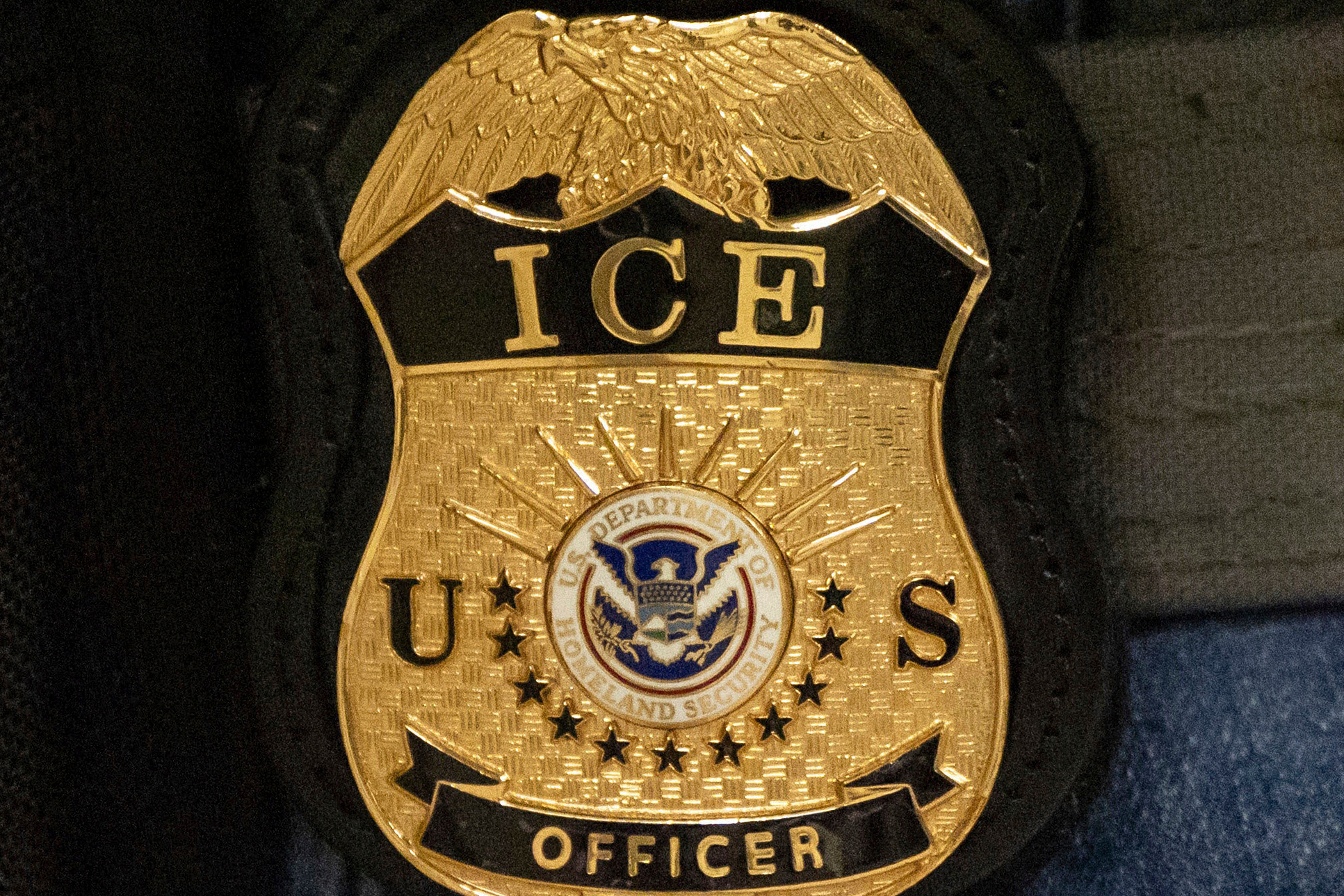
    WASHINGTON — The White House said Thursday that it was withdrawing its nomination of Lance Schroyer, a former Oklahoma state trooper, to lead U.S. Immigration and Customs Enforcement, ensuring that an agency at the forefront of President Donald Trump’s domestic agenda will remain without a Senate-confirmed leader for at least a while longer.

    Schroyer, who has little experience in immigration, is close to Homeland Security Secretary Markwayne Mullin, a former U.S. senator from Oklahoma.

    The White House offered no comment in a brief statement.

    The latest setback comes as the agency remains under withering scrutiny over its handling of enforcement operations. Critics have question how ICE has recruited and trained officers as it raced to hire thousands to carry out Trump’s promise of mass deportations. Officers have shot and killed multiple people, including two American citizens in Minneapolis earlier this year.

    Sen. Rand Paul, the chairman of the Senate Homeland Security and Governmental Affairs Committee, had refused to hold a hearing on the nominee until DHS provided him with information he had been seeking about civilian deaths during ICE enforcement operations.

    “I don’t have a concern with who the nominee was. I had asked them to give me an update on the internal investigation into civilian deaths,” Paul (R., Ky.) told the Associated Press.

    “And I’m still waiting.”

    When Mullin took over DHS in March, he pledged a lower-profile approach to immigration enforcement, pulling back on the aggressive, tumultuous crackdown on the streets of large cities that sparked widespread public condemnation.

    Arrests have continued to accelerate, reaching nearly 51,000 in August, the highest single monthly arrest total during the second Trump administration.

    Paul said he intended to hold a hearing on Schroyer’s nomination but it never came to that. He only heard about the nomination being withdrawn when the White House made it public Thursday.

    ICE has not had a Senate-confirmed leader since the Obama administration. David Venturella, a former executive at a private prison operator, returned to the agency as acting director earlier this year after Todd Lyons resigned.

    When Trump nominated Schroyer in June, Trump said on his Truth Social platform that his pick was “a PATRIOT with real operational experience” and a “proven leader with DECADES of experience locking up the worst of the worst.”

    The administration did not indicate when it might announce another pick for the position.

  • Hundreds arrested in Indiana during recent five-day ICE crackdown

    Hundreds arrested in Indiana during recent five-day ICE crackdown

    U.S. Immigration and Customs Enforcement arrested more than 400 undocumented immigrants in Indiana during a five-day operation in late August and early September, the agency announced this week.

    Most of the arrests occurred in Indianapolis, the state’s capital city and population center.

    The agency didn’t specify how many of the 426 immigrants detained in Operation Safe Community-Indiana have a criminal history. But it said some had records including sex crimes, assault, domestic violence, and drug trafficking.

    The arrests were part of a summer surge of ICE enforcement that has drawn less public attention than the mass deployments of agents to Minneapolis and other cities early this year. ICE arrests nationwide totaled more than 49,000 in July, the highest single-month tally during the second term of President Donald Trump. More than half of the people arrested did not have a criminal record.

    ICE applauded unnamed local police partners in the Hoosier State for cooperating with the recent crackdown. Gov. Mike Braun, a Republican, last year signed an executive order encouraging local law enforcement agencies to partner with ICE and assist in immigration arrests and requiring state law enforcement agencies to do so. As of early September, 39 Indiana departments had signed on to ICE cooperation agreements, according to the Indianapolis Star.

    “This is what it looks like when ICE has a blank check to do enforcement,” said Lisa Koop, the Indiana-based director of legal services at the National Immigrant Justice Center. “It’s just devastating for communities.”

    Also in 2025, the state agreed to a Department of Homeland Security request to add about 1,000 beds for immigrant detainees at the Miami Correctional Facility, a state prison about 60 miles north of Indianapolis. In a statement, then-DHS Secretary Kristi L. Noem dubbed the facility the “Speedway Slammer.”

    Indianapolis Mayor Joe Hogsett, a Democrat, denounced the recent ICE arrests, saying in a statement that his office got no advance notice of increased enforcement activity and pledging support for immigrant communities.

    “Our city prides itself on being a welcoming community and firmly recognizes the invaluable contributions of all our neighbors,” he said.

    Many undocumented immigrants who are arrested face detention and eventual deportation, although some are able to fight it in U.S. immigration courts.

    A report published this week by Minnesota Public Radio showed that a large majority of the undocumented immigrants arrested in that state earlier this year ended up removed from the country.

    That crackdown, known as Operation Metro Surge, sparked a huge public backlash, along with widespread outrage at the deaths of two U.S. citizens who were protesting ICE actions.

    More than 3,700 immigrants were arrested, and at least 2,300 ended up deported or out of the country, according to an analysis of data from the Deportation Data Project, a group of academics and lawyers that obtained the material though a Freedom of Information Act lawsuit.

  • Why Karl Rove, a father of the modern Texas GOP, is voting for a Democrat

    Why Karl Rove, a father of the modern Texas GOP, is voting for a Democrat

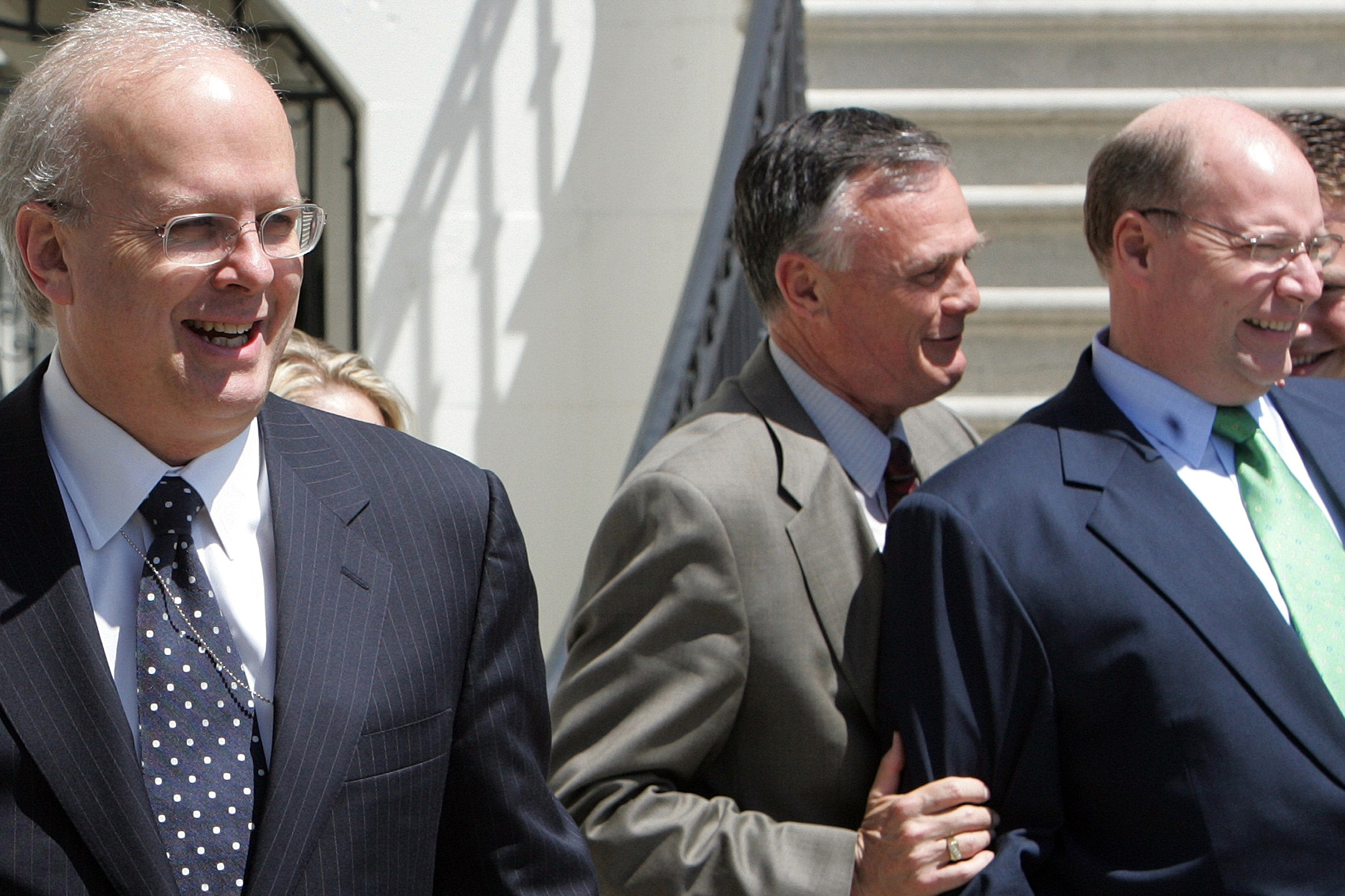
    Legendary Republican operative Karl Rove has said that he plans to do something in November that, for him, is radical: For the first time since 1994, he will vote for a Democrat.

    His reason, as Rove explained in his Wall Street Journal column Wednesday, is the unsubtle racism and nativism regularly expressed by Bo French, the GOP’s nominee for a seat on the powerful Texas Railroad Commission, which regulates the oil and gas industry.

    The final straw for Rove was when, after the University of Texas at Austin’s stunning win Saturday night over top-ranked Ohio State, French posted a photo of jubilant brown-skinned students celebrating and wrote: “I heard UT graduation this year looked like this. I didn’t believe it. The problem is now obviously far worse than anyone imagined.”

    Rove wrote: “These people are diminishing the Republican Party, not building it. I’ll have no part of it.” So he will vote for Democrat Jon Rosenthal.

    French’s comment brought denunciations from many Texas Republicans, including the state’s lame-duck U.S. senator John Cornyn. But two powerful and influential party leaders, both of whom are on the ballot this year, were notable for their refusal to condemn French.

    Gov. Greg Abbott, without addressing French’s comment directly, issued a statement saying it was “not my message,” but also boasted that Texas leads the country in having “the toughest immigration laws of any state in America and freezing H1B visas at our universities.”

    Attorney General Ken Paxton, who trounced Cornyn in the U.S. Senate primary, responded by accusing his Democratic opponent, state Rep. James Talarico, of racism.

    Rove would understand better than most that the modern Republican Party in Texas did not start out this way. Nor did it reach this point overnight.

    He is best known as George W. Bush’s bare-knuckled chief political strategist, whom Bush credited in his presidential reelection victory speech as “the architect.” But starting decades before that, Rove was instrumental in making Texas the Republican stronghold it is today.

    When Rove arrived in the Lone Star State from Virginia as a direct-mail consultant in late 1970s, the GOP held exactly one statewide office. By the time he left for Washington with Bush in 2001, Republicans were sitting in all 29 of those positions. Most of those officials — including the governor, lieutenant governor and both senators — had at one time or another employed Rove.

    But where Bush and Rove espoused “compassionate conservatism” as their brand of politics, the party they left behind in Texas has since taken hard turns to the right — nowhere more drastically than on immigration.

    Texans traditionally took a live-and-let-live attitude toward peaceful residents who were living without documentation in their midst. Illegal immigration helped shape the state’s culture and drive its economy.

    In 2001, for instance, Texas had passed a first-in-the-nation law allowing qualified undocumented residents who had lived and attended high school in Texas to pay lower in-state tuition rates at state colleges. The law’s passage had the support of virtually the entire legislature, including all but two Republicans in the House and three in the Senate.

    “We must say to every Texas child learning in a Texas classroom, ‘We don’t care where you come from, but where you are going, and we are going to do everything we can to help you get there.’ And that vision must include the children of undocumented workers,” then-Gov. Rick Perry said several months later.

    When Perry was running for the 2012 Republican presidential nomination, he touted the in-state tuition law and said of his opponents, led by eventual nominee Mitt Romney, who criticized it: “I don’t think you have a heart.”

    However, that law went by the wayside in 2025, when President Donald Trump’s Justice Department filed a lawsuit against it, which was quickly and enthusiastically joined by the state.

    “Today, I entered a joint motion along with the Trump Administration opposing a law that unconstitutionally and unlawfully gave benefits to illegal aliens that were not available to American citizens,” Paxton said in a statement at the time. “Ending this discriminatory and un-American provision is a major victory for Texas.”

    Nor was that the only question on which Texas Republicans took a U-turn with regard to immigration. In 2012, for instance, the state party adopted as part of its platform a business-backed “Texas solution” calling for a national guest-worker program. At its convention two years later, the party voted to remove that plank.

    Alarm over illegal immigration grew in Texas with the rise of the tea party movement a decade and a half ago, and increased drug-gang violence on the border. It was fanned by Trump and by the Biden administration’s inaction regarding the massive influx of migrants that sparked chaos on the border during its watch.

    But as the issue moved to the forefront, so did toleration of what would earlier have been denounced as bigotry and xenophobia. “The GOP has a growing number of Bo Frenches — and not only in Texas,” Rove wrote.

    Ironically, the University of Texas at Austin has moved toward becoming more of a meritocracy. Under its current policy, students who graduate in the top 5% of Texas high school classes are automatically admitted.

    So the celebrating Longhorn fans to whom French pointed are among the state’s best and brightest. They are also part of the hope for its future.

  • Sweden swings back left, bucking a trend in Europe

    Sweden swings back left, bucking a trend in Europe

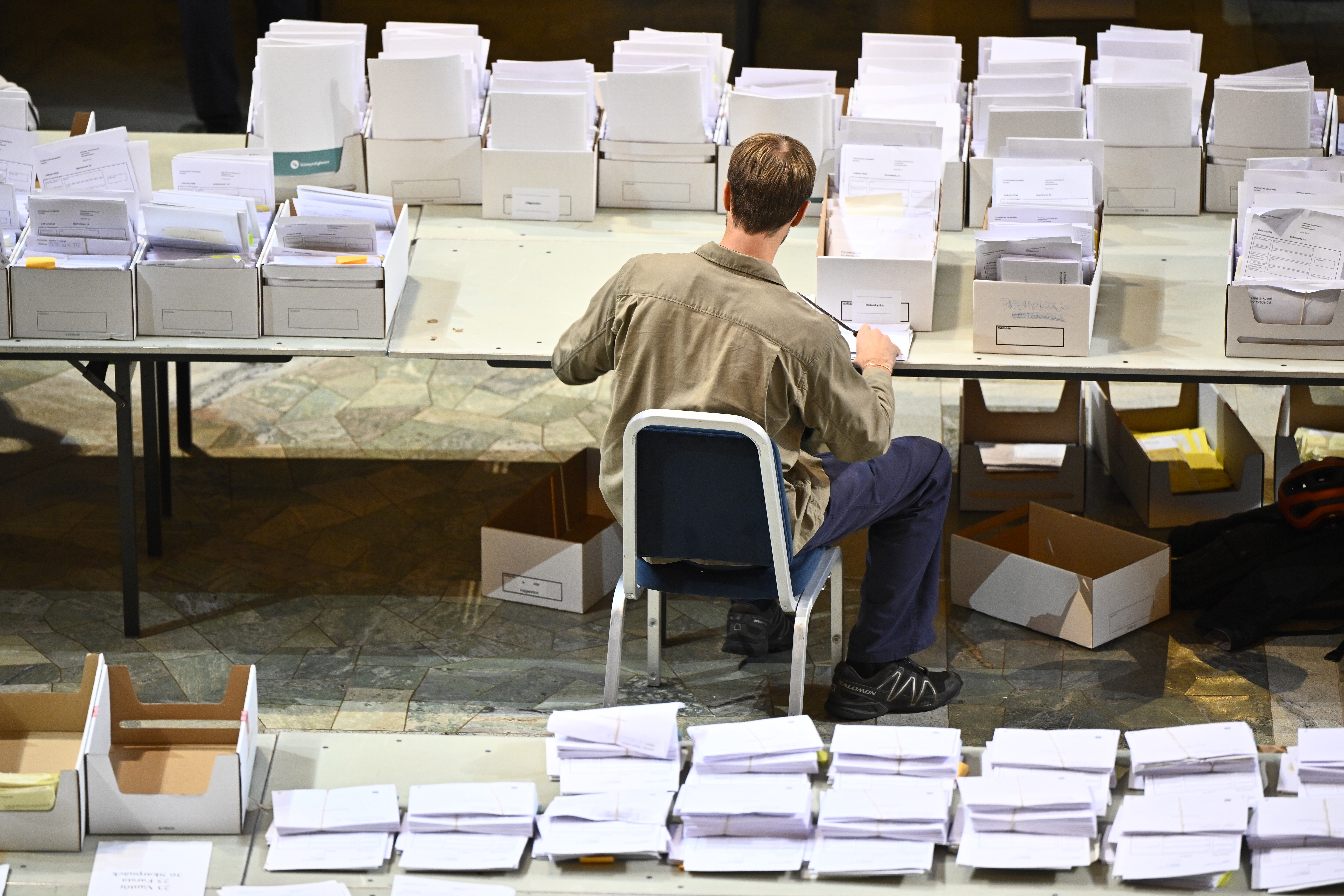
    Sweden’s center-left political parties squeaked to victory in elections this week, according to results released Thursday, making the country one of the first in Europe to tap the brakes on the far right’s seemingly steady march toward power.

    Voters cast their ballots Sunday, but the contest was so tight that it took days to count the last stray votes before a conclusion could be reached.

    The next prime minister is likely to be Magdalena Andersson, leader of Sweden’s stalwart center-left party, the Social Democrats, though experts predicted that there could be weeks of sticky negotiations before the next government is announced.

    As in other parts of Europe, Swedish nationalists had made big gains in recent elections by railing against migration and blaming migrants for crime.

    This election showed that in Sweden at least, the far right, which was essential to the outgoing center-right coalition’s hold on power, had become a victim of its own success. Experts said the country had cracked down so decisively on crime and migration that it essentially took those issues off the table.

    “The general sense is crime is now under control; migration is now under control,” said Lisa Pelling, the director of a progressive research group in Stockholm.

    The consequence, she said, is that “people want something else from the government.”

    Polls before the election showed that voters were prioritizing healthcare and education, issues that tend to favor the left.

    According to the election results, the center-left won 49.5% of the vote, compared with 48.8% for the center-right. That gives them a slight edge in parliament: 176 seats to 173. The turnout was characteristically high, at 85%.

    Andersson, a familiar face, was chosen as Sweden’s first female prime minister a few years ago and served as finance minister before that, when her Social Democratic Party dominated Swedish politics.

    If she can hash out a government in the coming weeks, it is likely to embrace many of the positions the party had pushed before, including what it called a “feminist foreign policy” that prioritized reproductive freedom and got into tangles with Saudi Arabia over its treatment of women.

    But forming a government won’t be easy. Sweden’s center-left is a real mishmash. It includes a formerly communist party and a pro-business one influenced by farmers. Parts of the coalition have already voiced doubts about working with each other.

    And Andersson’s Social Democrats are coming into this as a weakened force, having earned just 28% of the vote, one of their worst performances ever.

    Social democratic parties across Europe have lost ground to right-wing parties that present themselves as the new protectors of the working class, said Ann-Cathrine Jungar, a political scientist at Sodertorn University in Sweden.

    “What is noteworthy about this election is that socioeconomic issues were their home turf, and yet they were unable even to maintain their support,” she said of the Social Democrats.

    Part of the explanation, Jungar said, may be that center-left politicians have themselves moved toward tougher positions on immigration and crime, driven by the far-right Sweden Democrats, the biggest loser in this election.

    The Sweden Democrats have tried hard to distance themselves from their neo-Nazi roots. But in this election, they went from being the second-most popular party to the third, going from 20.5% of the vote in the last election to 17.5% this time. It was the party’s first significant erosion of support since it roared onto the scene in the late 1980s, which could raise questions about its future.

    Jonas Hinnfors, a political scientist at Gothenburg University, said Swedish society was growing uncomfortable with the extreme positions the far right has been advocating on migration, such as deporting large groups of lawful migrants, including teenagers. That is too extreme for most Swedes, Hinnfors said, and many people in Sweden have come to appreciate how important migration is for their labor market.

    “There is a kind of developing consensus that immigrants are needed,” he said. “And that is not where the Sweden Democrats are.”

    He doesn’t expect the far right to evaporate. But he said this election was “a big blow to them.”

    This article originally appeared in The New York Times.

  • Judge orders Kennedy Center to provide 30 days’ notice before making any major physical changes

    Judge orders Kennedy Center to provide 30 days’ notice before making any major physical changes

    WASHINGTON — A federal judge on Thursday ordered the Kennedy Center to provide 30 days’ notice before making any major physical changes to the building, including demolishing it as President Donald Trump has threatened.

    U.S. District Judge Christopher Cooper said his ruling would “avoid any confusion on that score given more recent events,” including the sudden closure of the building to the public on Wednesday.

    Matt Floca, the Kennedy Center’s executive director and chief operating officer, said he closed the iconic performing arts center temporarily due to “acute risks to public safety resulting from continued structural deterioration” of the aging building. The building will be closed for at least seven days to “assess existing safety risks in those portions of the main building exhibiting severe structural deterioration,” Floca said.

    The temporary closure, which occurred without notice Wednesday, is separate from a vote Tuesday by the Kennedy Center’s board to close the performing arts center indefinitely for repairs, Floca and other officials said. The closure was based on an inspection of the roof terrace canopy and a partial ceiling collapse earlier this month, Floca said. The closure may be extended after evaluation next week, he said.

    The announcement of the closure came in response to a court case filed by a Democratic congresswoman who is a trustee and sought an emergency court hearing to prevent what she called the building’s “unlawful closing.”

    Rep. Joyce Beatty, an Ohio Democrat and an ex-officio member of the Kennedy Center board, has led efforts to block President Donald Trump’s name from being added to the building. Beatty had a verbal confrontation with the Republican president Tuesday during a virtual board meeting.

    Beatty’s lawyers said in a court filing Thursday that the board members’ “rationale that they are only temporarily closing the Kennedy Center is a plain pretext to justify shutting down the Center permanently. The facts before the Court are deeply concerning.”

    Cooper denied a request by Beatty’s legal team to hold a hearing to clarify the board’s actions and intent. But he agreed to their request “to make crystal clear” that his order prohibits demolition of the building.

    The Trump-aligned board, chaired by the president, voted to close the center after Cooper blocked the institution from returning Trump’s name to the building.

    Trump, who was named the Kennedy Center’s chairman last year by loyalists on the board, said Wednesday that his efforts to restore the aging building deserve recognition, “because frankly, if we don’t do that, it’s going to close. It’ll end up being ripped down. It’s in very, very bad shape, very dangerous shape.”

    Congress has allocated $257 million to cover the repairs, but Trump said they only would happen if the board was permitted to move forward with plans to add his name to the building.

    On Thursday, Barbra Streisand, a Kennedy Center honoree in 2008, questioned the closing of the center for repairs and called the controversy surrounding its operation “galling and painful to witness.”

    Of Trump’s attempts to add his name to the center, she said in a statement to The Associated Press: “You can easily imagine my indignation at seeing this revered institution become the subject of such a bitter struggle over one man’s name and unchecked ego.”

    The Kennedy Center board voted in August to inscribe Trump’s name on the Kennedy Center’s facade so it would read “The John F. Kennedy Center for the Performing Arts Restored and Renovated By President Donald J. Trump.” If the Trump Kennedy Center Fund reached $100 million, another inscription would be added reading “Endowed by the Trump Kennedy Center Fund.”

    The plaza in front of the Kennedy Center would also have been renamed in Trump’s honor.

    All of those proposals were shot down Tuesday by Cooper, who ruled that nothing could happen “without Congress’s blessing.”

    Cooper ruled in May that the Kennedy Center illegally added Trump’s name to the building, ordering it removed. The institution’s leaders complied in June but left a tarp and scaffolding in place where Trump’s name was once displayed.

    Streisand told AP she was deeply honored to be included in the 31st annual class of Kennedy Center Honorees, adding, “for me, and for so many artists, that honor represented something larger than a career recognition. It represented a belief in the importance of art to the life of a democracy.”

  • A global AI safety strategy depends on U.S.-China cooperation. They each see the other as the problem

    A global AI safety strategy depends on U.S.-China cooperation. They each see the other as the problem

    HONG KONG — As concern rises over the risks of artificial intelligence, hopes for any kind of global approach depend on cooperation between the U.S. and China — superpowers that seem only to be more skeptical of each other’s AI strategy.

    AI governance is expected to be on the agenda in a meeting planned for next week in Washington between President Donald Trump and Chinese leader Xi Jinping. The topic has gained urgency in both countries, with American tech leaders saying that averting worst-case scenarios for rogue AI depends on a degree of cooperation with China.

    But both countries are vying for a decisive advantage on AI, with Trump warning that any efforts to regulate the technology would help China. That sets up a meeting in which any agreements might be superficial but a possible start to something larger.

    “A formal agreement or consensus may be near impossible, but they do not need to go that far,” said Samm Sacks, a senior fellow at the Johns Hopkins School of Advanced International Studies’ Institute for America, China, and the Future of Global Affairs. “Trump and Xi just need to create political space by acknowledging AI poses risks to both countries.”

    China and the U.S. are increasingly at odds on AI

    Trump has pushed back on calls to strengthen regulation of the technology, claiming that doing so could cause China to eclipse America on AI. He has repeatedly declared that the nation that leads on the technology “wins.”

    “We are leading China, and all others,” Trump said Monday on social media.

    The two countries are moving the technology forward in different ways. U.S. companies are chasing AI frontiers with computing power supported by cutting-edge chips and the country’s rapidly expanding data center infrastructure. China is pursuing wide global adoption of its open-source, more affordable models.

    Chinese AI models have made major advances and gained traction with American companies even as U.S.-led restrictions bar China from getting the world’s most advanced AI chips. While most American frontier models are closed-source, with their design elements kept secret, U.S. Treasury Secretary Scott Bessent said Tuesday the U.S. needs to develop more open-source models to counter China.

    The U.S. has accused China of “aggressive, malicious” efforts to extract capabilities from American AI systems. China has hit back, accusing the U.S. of trying to suppress Chinese companies so it can build a “monopoly of the AI industry.”

    David Sacks, a top AI adviser to Trump, said that China has “already rejected” slowing down the pace of developing the most advanced forms of AI. He said on Fox News’ “The Ingraham Angle” that unlike the nuclear tensions with the Soviet Union during the Cold War it would be impossible to verify whether China honored any AI commitments.

    “In this case, we don’t have trust and we can’t verify,” Sacks said. “So let’s not be foolish about this and just hand the whole ball game to China.”

    Still, those with ties to the Chinese government see coordination on AI as helpful.

    At an annual security and defense conference in Beijing, Cui Tiankai, a former Chinese ambassador to the U.S., said Tuesday that AI is an area where “we should go ahead and build up” dialogue between Beijing and Washington. “Because there is a need, a growing need, for cooperation,” he told the Xiangshan Forum. “So how can we manage the balance?”

    American AI leaders call for keeping China in check — and cooperating with China

    Two leading American AI companies, Anthropic and OpenAI, each restrict access in China and have said the U.S. has a national security imperative to protect its lead on AI technology. But they also have called for cooperation with China to manage safety.

    In his essay last weekend calling for a slowdown of AI development for safety reasons, Anthropic CEO Dario Amodei said the U.S. should slow China’s progress, including keeping up U.S. restrictions on China’s purchases of the world’s most advanced AI chips.

    He also added, however, that “global pacing will require cooperation with China, the autocratic country with by far the most advanced AI capabilities.”

    His essay quickly drew criticism from Beijing, with China’s Ministry of Foreign Affairs saying on Monday that “fearmongering, confrontation, and vicious competition will only disrupt the process of global AI governance which serves no one’s interest.”

    China’s state-run Global Times newspaper went further, calling his remarks “packed with containment provisions targeting China and is, in essence, a ‘Cold War playbook’ for the AI sector.”

    Trump has consulted with Nvidia CEO Jensen Huang, even calling the maker of the world’s most advanced computer chips in the middle of a Monday podcast interview. Nvidia has generally favored some chip exports to China as a way to create an American ecosystem for the technology and a more open relationship on AI given the number of researchers in China.

    Both countries have been alarmed by emerging AI capabilities

    In both the U.S. and China, AI’s increasingly powerful capabilities have alarmed top officials and policymakers.

    The head of China’s Ministry of State Security, its spy agency, warned in an article Sunday that AI poses many threats to the country, from political and ideological security to cyberattacks.

    In the article, Chen Yixin argued that AI could threaten China’s political and ideological security if used by those “with ulterior motives,” while singling out Anthropic’s and OpenAI’s powerful AI models. It said they could be used to “weaponize” cybersecurity vulnerabilities and threaten China’s critical information infrastructure.

    Several other recent AI-related events were also causing concern in China when it comes to AI governance. That includes a U.S. security firm’s recent discovery of AI vulnerabilities in WeChat, China’s key messaging app that also offers payment services among other functions, said Paul Triolo, a partner at DGA-Albright Stonebridge Group.

    While Chinese officials said after Trump’s Beijing summit with Xi in mid-May that China and the United States had agreed to pursue dialogue on AI development and governance, little progress has been made.

    At the same time, China and the U.S. have been working to form AI alliances with like-minded nations.

    In July, China launched the World Artificial Intelligence Cooperation Organization, a group with 29 initial founding member countries, including Russia and Pakistan, meant to promote global AI governance. This month, China’s Xi has called on BRICS member countries to accelerate the setting up of a global AI governance framework and establish an open-source AI community.

    Some political observers saw the China-led organization as a response to the U.S.-led Pax Silica initiative, which launched last year focusing on strengthening collaboration with countries including Japan, the U.K., and Australia on AI supply chains.

    Asked about his expectations on AI from the Trump-Xi meeting on AI in an interview with CBS’ Face the Nation, Amodei said “the more long-term thing would be working together to put a speed limit on the rate of AI progress.” But he said it likely would be very difficult.

    In the run-up to the Trump-Xi meeting, a recent social media post by Yuyuantantian, a Chinese state media-linked account, was similarly circumspect.

    “Only after the United States first demonstrates that the safety rules are equally effective for its own model companies can substantive discussions between the U.S. and China take place,” the post said.

  • Cases of Black people found hanged in the U.S. South are a reminder of nation’s lynching history

    Cases of Black people found hanged in the U.S. South are a reminder of nation’s lynching history

    The death of a Black Mississippi woman found hanging from a tree has stirred distressing memories of the grim history of lynchings across the U.S. South.

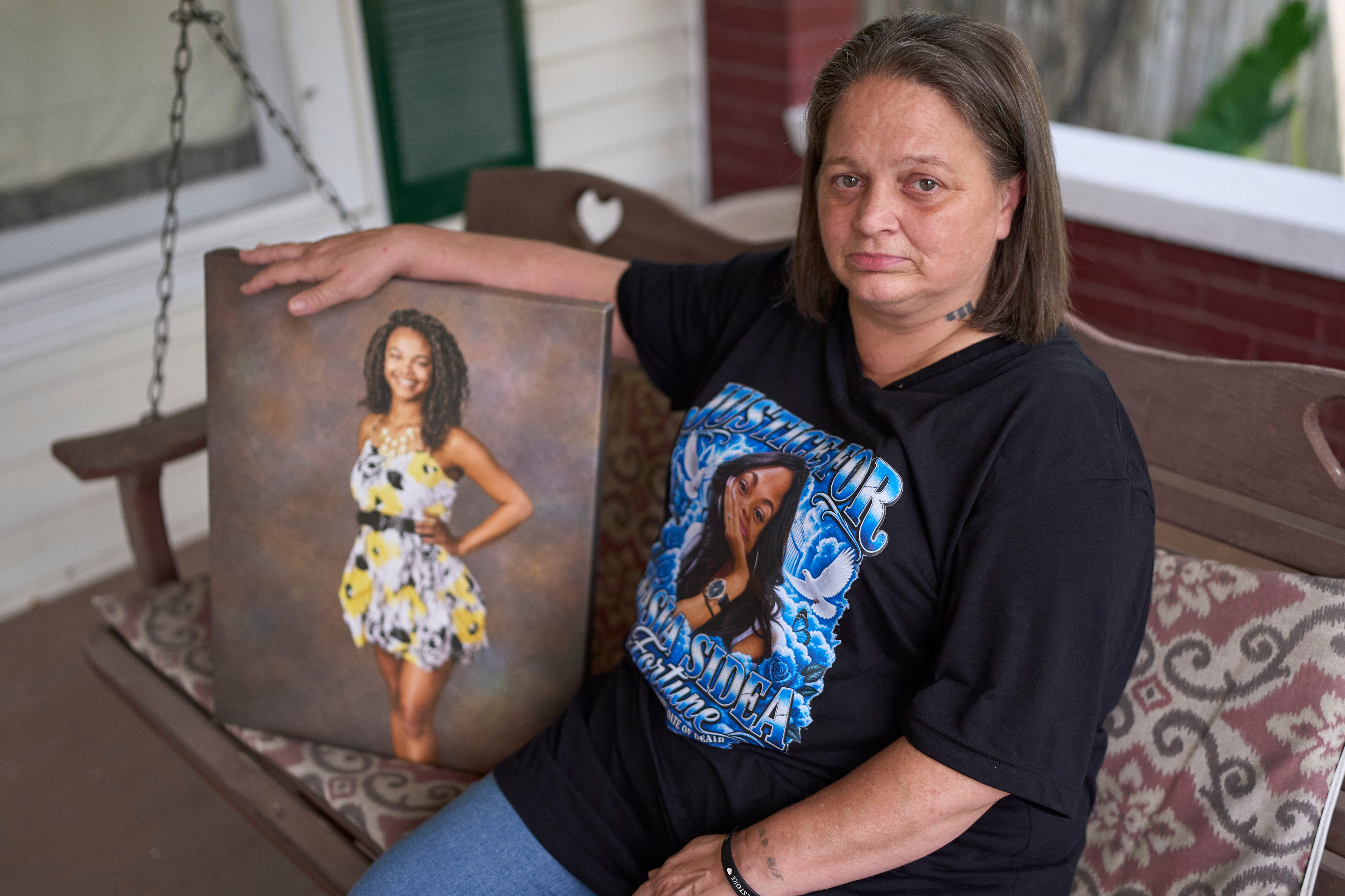
    The body of Tasia Fortune, 29, was found behind an abandoned home in Jackson, the state capital, on Aug. 3. Jarques Ratliff, 51, who is also Black, pleaded not guilty to murder on Monday. Police and prosecutors haven’t given a suspected motive and say more arrests are expected.

    Regardless of the circumstances of the case, for many Black people, the imagery of a rope and noose evokes the legacy of lynching and vigilante violence against Black people in the U.S. and brings with it deep pain and trauma.

    “Black folks down here in 2026, we are feeling and experiencing some of the same things we felt in 1956 and 1966 and that should not be happening,” Jackson activist Brad Franklin said of Fortune’s death.

    “But because it’s Mississippi and the racist history of our state, our skin has been toughened a lot to deal with it.”

    Fortune’s mother, Christy Spivey, told The Associated Press that she doesn’t believe race had anything to do with her daughter’s death. Spivey is white. She said Fortune’s father is Black.

    “I think this is something very personal, very personal,” Spivey said, insisting that someone who was acquainted with Fortune was involved.

    Recent cases have triggered skepticism — and private autopsies

    Over the past two years, about a half-dozen Black women and men have been found hanged across the South. Police in some of those cases quickly deemed them suicides — often eliciting historically grounded skepticism when investigators provide limited evidence ruling out foul play.

    “I say let the evidence show,” said Sean Joe, a professor of social work at Washington University in St. Louis and a nationally recognized authority on suicidal behavior among Black people. “But if … you go into a definition or a conclusion of suicide, you have to show some evidence for that.”

    Spivey says she is certain her daughter would not have killed herself. “Absolutely not. Even if she could climb that tree, no, no, she would never, ever, ever,” Spivey said.

    In Roanoke Rapids, N.C., police are investigating the Aug. 21 death of Demetrius Eugene Fleming, 38. Police Chief Lawrence Wiggins said Tuesday that his office is waiting on reports from a medical examiner.

    In February, police in Cobb County, Georgia, found the body of 21-year-old Kyle Bassinga in a park. While investigators said there was no indication of foul play, Bassinga’s death “caused many to think of the days of slavery and of Jim Crow,” said Cobb County Commission Chairwoman Lisa Cupid.

    The September 2025 death of 21-year-old Black student Trey Reed at Mississippi’s Delta State University was ruled a suicide, as was that of Dennoriss Richardson, 39, in September 2024 in Alabama’s rural Colbert County.

    Richardson’s wife, Leigh, has said she doesn’t believe he killed himself and, as has occurred in other cases, a private autopsy was conducted, finding his death consistent with a hanging, according to news reports.

    Leigh Richardson told ABC News that despite chronic asthma and other breathing problems that would cause her husband anxiety attacks, “that is just not a way that he would even process to leave this world.”

    Group has chronicled thousands of lynchings in U.S.

    More than 4,400 lynchings occurred in the U.S. between Reconstruction and World War II, according to the Alabama-based Equal Justice Initiative. The 1955 lynching of teenager Emmett Till in Mississippi over accusations he flirted with a white woman helped catalyze the civil rights movement.

    “These were public, intentionally public in order to convey terror, not just to the individuals and their families, but to a whole community,” said Karlos Hill, professor of African and African American Studies at the University of Oklahoma and author of Beyond The Rope: The Impact of Lynching on Black Culture and Memory.

    Nearly 60 members of Congress signed a letter in September demanding the Justice Department investigate hanging deaths of Black individuals and enforce the 2022 Emmett Till Antilynching Act, which made lynching a federal hate crime.

    “In this moment of anti-Blackness and emboldened white supremacy, we cannot stand idly by while the strange fruit of Black bodies hang from trees across the country,” U.S. Rep. Ayanna Pressley said in a statement.

    The Justice Department confirmed it received the letter but has not responded, according to the office of Pressley, a Massachusetts Democrat and the letter’s lead author.

    ‘I know the skin I’m in’

    Trent Thompson, 58, of Florence, Ala., says the recent hangings and deaths of Black people led to talk in the Black community about the death this summer of Nolan Xavier Wells.

    Wells, 18 and Black, joined friends on a Fourth of July boat excursion to an island off Mississippi’s Gulf Coast but did not return with them. His body was found two days later. Scrutiny of the investigation has deepened with the state’s history of racist violence and distrust of law enforcement — triggering suspicion in the Black community toward many cases involving deaths of Black people, Thompson said.

    “I know the skin I’m in,” he said.

  • Body found in Grand Canyon was missing hiker, wife says, bringing flood death toll to 3

    Body found in Grand Canyon was missing hiker, wife says, bringing flood death toll to 3

    GRAND CANYON NATIONAL PARK, Ariz. — Human remains found in the Grand Canyon this week were those of the last remaining person missing after the deadly flash flooding in late August, the victim’s wife said Thursday.

    The discovery of Timothy Allen Smith brought the death toll to three from flooding that devastated the Phantom Ranch area at the canyon bottom and damaged the water pipeline serving the South Rim.

    Smith, 53, was a pilot from western Wyoming’s Star Valley. His remains were found Monday near Crystal Rapids on the Colorado River that runs through the canyon.

    The remains of Smith’s two backcountry companions, Brent Rosenkranz, 42, and John Giusti, 46, both of Granbury, Texas, were found earlier.

    Smith grew up in Granbury and lived with his wife in Star Valley Ranch, about 40 miles southwest of Jackson.

    He, Rosenkranz and Giusti were on a multiday hiking, fishing, and camping trip when flooding swept through the Grand Canyon.

    During the two-day deluge, searchers used night vision and other equipment to find people in need of rescue. They relied on the Grand Canyon National Park’s permit system and checked vehicle license plates to track those still missing. More than 80 people were rescued.

    Soon, only Smith was missing. In a Facebook video at the time, his wife, Carrie, and their children thanked people for their support and prayers.

    On Tuesday morning, Carrie Smith posted on Facebook that the family was aware a body had been found a day earlier and asked others to pray with them.

    Smith confirmed in a Facebook post on Thursday that the remains had been identified as her husband’s.

    “My family has done a lot of waiting over the last three weeks … waiting and hoping Tim (Daddy) would come home, waiting and wondering if the remains found were Tim (Daddy),” she wrote. “We no longer have to wait, Tim was found two days ago by the Rangers at Grand Canyon National Park. Not in the way we had hoped, but we know that he was doing something he loved with John and Brent.”

    She added, “We know that these three men loved the Lord and were a shining light for Him. The impact their lives had on others is still being shown to our families daily.”

    The National Park Service and Department of the Interior did not immediately return email messages seeking comment Thursday. The agencies have not publicly identified the remains found this week.

    The flooding began Aug. 29 during the summer monsoon, or rainy, season when clear skies can quickly give way to thunderstorms and heavy rain. A desert landscape can funnel water from a deluge into sudden torrents that rage down previously dry gullies and canyons.

    The rain fell on part of a North Rim burn area left after a lightning-caused wildfire in July 2025. The fire destroyed the historic Grand Canyon Lodge, cabins and other structures.

    Burn areas can worsen flash flooding because there’s less vegetation to absorb runoff.

    The flooding damaged a pipeline spanning the canyon that supplies water to millions of tourists and residents. Insufficient water caused all overnight lodging to be halted until the pipeline could be restored. National Park Service officials said recently that they expected to restore a reliable water supply in the canyon in weeks — not months — after determining most of a near-complete pipeline project was not damaged during the flash flood.

    Many hiking trails and lodging areas remain closed, and water has been shut off in the inner canyon, prompting advisories that hikers bring their own water or water filtration devices.

    Another flash flood hit the canyon along Bright Angel Creek and the Colorado River during a storm Wednesday, park officials said. No injuries were reported. Authorities said efforts to minimize personnel in the canyon before the storm, as well as flash flood warnings, enabled crews to reach safety. Damage assessments were underway.