Category: Wires

  • Poll of Jewish-Americans reveals complex attitudes toward Israel, antisemitism

    Poll of Jewish-Americans reveals complex attitudes toward Israel, antisemitism

    WASHINGTON — The Associated Press surveyed more than 1,000 Jewish adults in the U.S. to better understand their views on Israel’s military actions in Gaza, their opinions of the political parties, and their experiences with prejudice in the United States.

    The survey of 1,022 Jewish adults — including people who identify as Jewish by religion and religiously unaffiliated people who identify as Jewish through culture, ethnicity, or family background — offers a rare detailed accounting of a key demographic that sits at the very center of some of the nation’s most divisive political debates.

    Here are five takeaways from the AP-NORC survey:

    Jewish adults have complicated views about Israel, war in Gaza

    Among Jews with a religious affiliation, views on Israel’s recent military actions are far from uniform or uncritical.

    About 7 in 10 Jewish adults overall identify as Jewish when asked about their religious affiliation. The rest, about 3 in 10 Jewish adults, say they are atheists, agnostics, or have no particular religious affiliation, but still identify as Jewish in other ways.

    While about 8 in 10 of those with a religious affiliation say Israel’s immediate military response to Hamas’ attack on October 7 was “justified,” only about half say Israel’s ongoing military operations in Gaza are justified. Among Jewish adults without a religious affiliation, only about half saw Israel’s immediate response as justifiable. Now, only about 2 in 10 say the ongoing military operations are acceptable.

    About one-quarter of Jewish adults with a religious association believe Israel has committed genocide against Palestinians in Gaza, an accusation that’s been leveled by some major human rights organizations and a team of independent experts commissioned by the United Nations. That accusation has been vehemently denied by Israel and the U.S. government. Roughly 4 in 10 Jewish adults without a religious affiliation say Israel has committed genocide.

    Many Jewish adults feel unsafe in the U.S.

    About 6 in 10 Jewish adults say prejudice against Jewish people is an “extremely” or “very” serious problem in the United States today.

    About one-third of Jewish adults in the survey say they feel “very” or “somewhat” safe as a Jewish person in the U.S. today, while about one-third feel “very” or “somewhat” unsafe. The remaining roughly 3 in 10 say they feel neither safe nor unsafe.

    A significant share of Jewish adults, about 3 in 10, say they or someone in their household has experienced physical assault, verbal abuse, online harassment, or damaged property because of their Jewish background over the last year, according to the survey.

    The survey points to how Jewish adults’ attitudes toward their own personal safety have changed over a relatively short period as more Americans became critical of the United States’ close alliance with Israel and the war in Gaza. The poll found that Jewish adults who feel a close emotional tie to Israel are particularly likely to feel unsafe in the country today.

    Most American Jews don’t feel politicians support Jewish people

    Few Jewish adults believe that President Donald Trump — or the Democratic or Republican parties — are doing a good job supporting Jewish people in the U.S.

    Only about 2 in 10 Jewish adults say Trump supports Jewish people in this country “extremely” or “very” well. That’s similar to the slight share who find the Republican Party and the Democratic Party highly supportive, but Jewish adults are more likely to say the Democratic Party is at least “somewhat” supportive.

    Americans overall are more likely than Jewish adults to see Trump as “extremely” or “very” supportive of Jewish people in the United States. About 3 in 10 U.S. adults say Trump is highly supportive of Jewish people, compared to about 2 in 10 Jewish adults.

    The poll also found most Jewish adults have negative views of Trump. About 7 in 10 Jewish adults have a “very” or “somewhat” unfavorable opinion of Trump, compared to about 3 in 10 who have a favorable view.

    Division over whether protesting Israel is a form of antisemitism

    Protests around events conducted in support of Israel became more common following the backlash over Israel’s military action in Gaza.

    The war in Gaza began with Hamas’ Oct. 7, 2023, attack on Israel that killed roughly 1,200 people, most of them civilians. Israel responded with a yearslong counterattack that has killed more than 73,000 people, according to the Gaza Health Ministry, which is part of the territory’s Hamas-run government. Its casualty figures are viewed as generally reliable by U.N. agencies and international organizations but don’t distinguish between civilians and militants.

    The poll found that about half of Jewish adults say protesting an event that is supportive of Israel is not a form of antisemitism, but roughly 4 in 10 say it is. About 1 in 10 are uncertain.

    Jewish adults are more unified in deeming some actions as definitively antisemitic. The overwhelming majority say vandalizing synagogues or Jewish-owned businesses because of Israel’s actions is antisemitism. The same goes for denying the reality or scope of the Holocaust, putting responsibility for Israel’s actions on Jewish people in the United States, or saying Israel shouldn’t exist as a Jewish state.

    Support for Israel less of a priority for younger Jewish adults

    Support for Israel is a key component of the religious identity of many older Jewish adults in the United States, but younger Jewish adults appear less likely to prioritize it.

    About half of older religious Jewish adults — those 45 and older — say that supporting Israel is “extremely” or “very” important for their Jewish identity. By contrast, only about 4 in 10 younger religious Jewish adults emphasize support for Israel.

    Younger Jewish adults are more likely to prioritize other forms of connection, like celebrating Jewish holidays. About 7 in 10 Jewish adults under 45 say celebrating Jewish holidays is at least “very” important to their Jewish identity, compared to about half of older Jewish adults.


  • Federal agents were told FBI will no longer investigate ICE confrontations

    Federal agents were told FBI will no longer investigate ICE confrontations

    WASHINGTON — Federal agents around the country were told in recent days that the FBI would no longer investigate confrontations with immigration agents — cases that sometimes yield evidence that could be used to prosecute Department of Homeland Security agents implicated in violent encounters, according to people briefed on the decision.

    If enacted, such a change would sharply limit law enforcement scrutiny of immigration agents, as the Trump administration draws mounting criticism over killings at the hands of federal officers. In the past two weeks, two fatal shootings by Immigration and Customs Enforcement agents in Texas and Maine have thrust the government’s tactics back into the spotlight.

    FBI managers around the country received a written notice informing them of the change Thursday, according to the people familiar with the matter who spoke on condition of anonymity to describe internal communications. The same day, some ICE agents around the country were notified by their FBI counterparts.

    The guidance shared with them said that the bureau would stop investigating claims of assaults against Department of Homeland Security agents, the people said. Even though such investigations are intended to determine whether the officers were in fact attacked, they can provide a crucial means of gathering evidence implicating the agents themselves.

    A joint statement by the Justice Department and the Department of Homeland Security, however, denied that any such change was underway.

    “The relationship between DHS and DOJ in investigating assault on federal officer cases has not changed, and FBI will continue to investigate in accordance with agency policy,” the statement said. “This administration has been clear, anyone who assaults law enforcement will be prosecuted to the fullest extent of the law.”

    Under the change, responsibility for investigating cases involving federal immigration officers would likely fall to Homeland Security Investigations, an arm of ICE, effectively leaving the agency to investigate itself, according to guidance circulated among FBI and ICE agents.

    Cases involving an assault on a federal officer have been a source of tension inside federal law enforcement agencies for more than a year. White House and Justice Department officials have pushed prosecutors to bring charges in as many of them as possible, particularly as Americans protest the administration’s immigration crackdown.

    Under the federal statute, felony charges can be brought against anyone who “forcibly assaults, resists, opposes, impedes, intimidates, or interferes” with a federal law enforcement officer.

    Trump administration officials have claimed that language means anyone who makes physical contact with an agent should be charged with felony assault, which is punishable by up to eight years in prison.

    “It’s abhorrent to ever, ever touch a law enforcement officer, which is why anytime anybody does that and it’s a federal officer, we’ll prosecute them,” the acting attorney general, Todd Blanche, said in an interview in May on CNN.

    An investigation by the New York Times found that the Trump administration had filed charges against more than 550 people for assaulting federal officers. Of the more than 400 cases that had been resolved, nearly half had unraveled, with charges being thrown out or withdrawn, or the defendants being acquitted.

    Under the Trump administration, when ICE agents have shot and killed people, the FBI has been assigned to scrutinize a narrow question: whether the agents were assaulted before the gunfire.

    While the bureau in past administrations has investigated potential civil rights abuses and law enforcement misconduct, it has been limited from doing so in high-profile ICE shootings over the past year, according to law enforcement officials.

    However, FBI investigations involving an assault on a federal officer could yield evidence that is valuable to other cases, including future civil rights investigations or prosecutions of an ICE agent. If that responsibility shifts to Homeland Security Investigations, it would leave a gap in holding immigration agents to account, according to the people familiar with the matter.

    Homeland Security Investigations does not have jurisdiction to investigate civil rights violations, so putting the change into practice would make it far less likely that shootings of unarmed people by ICE agents would be investigated to determine if the agents broke federal law.

    The enforcement crackdown in President Donald Trump’s second term has resulted in nearly two dozen people being fired on by federal immigration agents since January 2025. Six people, including three U.S. citizens, have been killed as a result of those shootings, nearly all of which involved officers firing into vehicles.

    On July 7 in Houston, an ICE agent killed Lorenzo Salgado Araujo, a Mexican immigrant who had lived in the country for more than three decades, during a traffic stop while he was driving to work with three passengers. He was not the target of the ICE operation, federal officials later acknowledged.

    In Maine on July 13, an ICE agent shot and killed a Colombian man, who was also in his vehicle. He was identified as Joan Sebastian Guerrero, according to a spokesperson for Sen. Angus King, a Maine independent.

    This article originally appeared in the New York Times.

  • What to know about the Tate brothers, social media influencers facing rape and trafficking charges

    What to know about the Tate brothers, social media influencers facing rape and trafficking charges

    LONDON — Influencer brothers Andrew and Tristan Tate were arrested Saturday in Miami after U.K. prosecutors said they brought further rape and sex trafficking charges against them.

    Britain’s Crown Prosecution Service said the new charges relate to four further victims and were brought after authorities received evidence from Bedfordshire Police in southeastern England. The charges include rape, assault, trafficking, and offenses relating to “indecent images of a child and extreme pornography.”

    The charges announced Saturday, which bring the total number of alleged victims in the U.K. to seven, are the latest in a long-running international legal saga involving the brothers that has spanned the U.S., Britain, and Romania. The brothers have denied wrongdoing.

    Here are some things to know about the Tate brothers:

    Who the Tate brothers are

    Andrew Tate, 39, and Tristan Tate, 38, are dual U.S.-British citizens known for their social media empire promoting wealth, male dominance, and misogyny.

    Andrew Tate is a former professional kickboxer and self-described misogynist who has amassed more than 10 million followers, most of them boys and young men, on X. He has been banned from platforms like YouTube, TikTok, and Instagram for violating hate speech guidelines.

    He also runs an online academy where he says he teaches young men how to get rich and attract women. Tristan Tate is also a former kickboxer.

    The brothers are avid supporters of U.S. President Donald Trump.

    What the Tates are charged with

    Andrew Tate and his brother have faced multiple charges in the U.K. and Romania, where they moved in 2016.

    British prosecutors said the new charges relate to alleged offenses that took place between 2010 and 2017. They said Andrew Tate was charged with seven further counts of rape, three counts of arranging or facilitating trafficking for sexual exploitation, three counts of assault, and 19 charges for offenses relating to indecent images of a child and extreme pornography.

    Tristan Tate was charged with one count of sexual assault, two counts of rape, and three counts of arranging or facilitating sex trafficking.

    The Crown Prosecution Service said in a statement it “has requested the extradition of the Tates from the U.S. They have been arrested and await extradition proceedings to the U.K.”

    The Tates already face previous charges of rape, bodily harm, human trafficking, and controlling prostitution for gain relating to three other alleged victims in the U.K. between 2012 and 2015.

    In June, a U.K. High Court judge threw out a legal bid by the Tates to be told the names of their accusers.

    In Romania, the siblings were arrested in late 2022 along with two Romanian women. The four were accused of participating in criminal schemes to lure women for sexual exploitation. They denied those allegations and the Romanian case hasn’t gone forward because of legal and procedural problems.

    The case hasn’t been closed, and there is also a separate legal case against the brothers in Romania.

    Andrew Tate has repeatedly claimed that prosecutors in Romania have no evidence against him and that there is a political conspiracy to silence him.

    How the extradition process could work

    The brothers are expected to appear this week in a U.S. federal court, where a judge will make an initial determination about whether they meet the conditions for extradition. If they do, they are unlikely to get bail, which is rarely granted to those held for international extradition.

    The decision about whether to order the extradition will then fall to U.S. Secretary of State Marco Rubio. While the State Department has some discretion to deny extradition requests from the U.K., it has granted nearly every British request since ratifying a strengthened extradition treaty in 2007.

    One exception came during Trump’s first term, when the U.S. declined an extradition request for the wife of a former American diplomat involved in a fatal crash in England, citing diplomatic immunity. The rejection prompted an international outcry.

    Why the Tates were in the U.S.

    British police previously sought the Tates’ extradition to the U.K. once their legal proceedings in Romania concluded.

    But in February 2025 they were allowed to leave Romania after authorities lifted travel restrictions, and they flew to Florida on a private jet.

    Romania’s foreign minister said at the time that a U.S. official in the Trump administration had expressed interest in the brothers’ legal case in Romania.

    Trump said he knew “nothing about” the case when asked if his administration pressured the Romania government to release the Tates.

  • Mount Olympus, home of the ancient Greek gods, vies for World Heritage status

    Mount Olympus, home of the ancient Greek gods, vies for World Heritage status

    LITOCHORO, Greece — Snow-capped for much of the year, Mount Olympus, mythological home of ancient Greece’s Olympian gods, has captured the imagination through the millennia. The mountain rises to 9,573 feet from a base practically at sea level, and the ancient Greeks believed the throne of Zeus, king of the gods, stood on the highest of its craggy, often mist-shrouded peaks.

    Now, modern Greeks hope their tallest mountain will be inducted into UNESCO’s World Heritage List as a mixed cultural and natural site. The nomination was set to be discussed as the World Heritage Committee meets in Busan, South Korea, from July 19 through July 29.

    “Olympus is our life. It is the place we grew up in,” said Evagelos Geroliolios, mayor of Dion-Olympus, based in Litochoro, the mountain’s main town. “It is the place we see every day, but at the same time, it is also a place which carries with it myth, history, biodiversity, extraordinary beauty, and a very great cultural weight.”

    Seat of the gods

    Few locations are as central to ancient Greek mythology as Mount Olympus. It was here that Zeus was said to have established his court after overthrowing his father, Cronus, in a 10-year war that ended the reign of the Titans.

    Interest in Olympus may receive another boost with the theatrical release of Christopher Nolan’s The Odyssey, a new adaptation of Homer’s epic, in which the mountain serves as the home of Zeus and the Olympian gods who influence Odysseus’ journey.

    On one of Olympus’ lower peaks, excavations have uncovered an open-air sanctuary, with the oldest finds dating to the Hellenistic period, which ran from 323 B.C. to 30 B.C. According to Greece’s original UNESCO nomination, the sanctuary is believed to have been one mentioned by the ancient philosopher and historian Plutarch, who in the 2nd century wrote of processions to one of Olympus’ peaks for animal sacrifices to Zeus.

    The mountain retained religious significance into the Christian era. A chapel on the peak of Prophet Elias, at 9,196 feet, is believed to be the highest altitude chapel in the Christian Orthodox world. The mountain’s Enipeas Gorge holds the remains of a monastery founded in 1542, while a roughly 20-minute walk from there leads to the Holy Cave of St. Dionysios, a chapel built into a cave from where a small spring flows, believed to carry holy water.

    The mountain’s slopes, which reach practically to the sea, also host a wealth of flora and fauna, including endemic species. It is this blending of culture, myth, natural beauty, and biodiversity that locals hope will see their mountain declared a World Heritage site.

    “It is a place we love. It is a place that many people from all over the world visit to see, to live, to experience. We want to protect it,” Geroliolios said. Its inclusion on UNESCO’s list would be “something very big that goes beyond not just local boundaries, but national boundaries. It is something that concerns the entire world. It is very important.”

    Inclusion in World Heritage List far from certain

    Greece began the process to have Mount Olympus recognized as a World Heritage site in 2014, inscribing it on its Tentative List — the mandatory first step in any nomination. The Tentative List is where countries include sites they can then formally nominate over the next five to 10 years.

    The nomination process includes a preliminary assessment followed by submission of a full nomination file, which is then evaluated over 14 months by advisory bodies, including the International Council on Monuments and Sites and the International Union for Conservation of Nature.

    Recommendations by the advisory bodies are then discussed during the World Heritage Committee’s annual meeting, where representatives of 21 countries vote on nominated sites.

    Greece’s Mount Olympus nomination is far from certain. A draft of the Busan meeting’s agenda indicates the committee will refer the nomination back to Greece and request further details.

    Still, locals hope the mountain’s cultural and natural wonders will secure it a place and will play a role in gaining more protection for the mountain.

    The need for protection

    The mayor, Geroliolios, said inclusion on the World Heritage list “places some greater obligations on our part to protect this environment.”

    Environmental protection is also foremost in the mind of mountain guide Babis Marinidis, president of the Alpine Club of Litochoro.

    Including Olympus on UNESCO’s World Heritage list would likely attract more people to the mountain and the surrounding area, Marinidis said. “How many people can this mountain, this ecosystem, bear?” he asked. Although much of Olympus was designated a national park decades ago and there are regulations in place, many are openly flouted, with Marinidis saying visitors regularly ignore “no swimming” or “no camping” signs.

    The ever-growing number of visitors had led local authorities to consider imposing entrance fees and registering visitor numbers. “I used to be against that,” Marinidis said. “But now with so many people, I believe some limit must be imposed.”

    Mount Olympus has claimed many lives

    The mythological home of the gods attracts hikers and mountaineers from across the world. While technical climbing experience isn’t mandatory to reach the summit, the mountain is also not to be trifled with.

    With its combination of changeable weather and treacherous terrain, it has claimed many lives. The most recent fatality was on July 11, when a 64-year-old Greek hiker died after collapsing on a trail. In May, rescue crews found the body of a 25-year-old Spanish man days after he went missing while attempting to reach the summit in the snow.

    “You need to be careful,” and safety measures must always be kept in mind, said 32-year-old hiker Triantafyllos Giannospyros, who was visiting the mountain for the first time. “But with care and with good organization, it isn’t something you should be afraid of.”

    Stavroula Vourou, who runs a hotel in Litochoro, the town from where many hikers set off, echoed his sentiment.

    “Everyone sets off to go up and conquer a mountain that needs respect,” she said. “You respect this mountain, it respects you too.”

  • Red wolf litters bring hope of ‘incredible comeback’ for endangered animal

    Red wolf litters bring hope of ‘incredible comeback’ for endangered animal

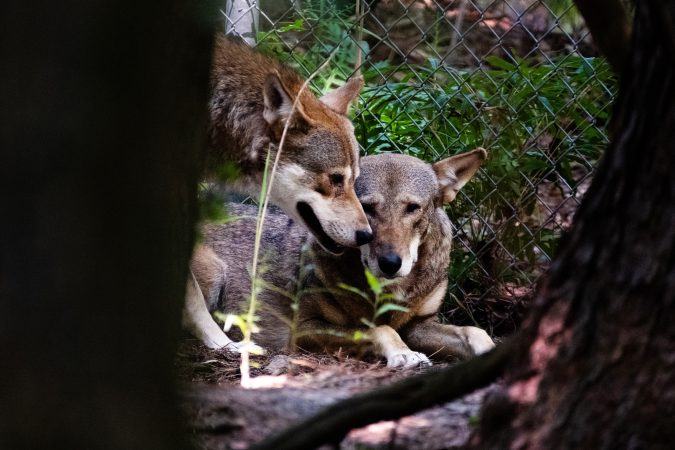
    Nearly two dozen red wolf pups were born in the wild this spring in eastern North Carolina, giving a remarkable boost to one of the most endangered species on the planet.

    “It’s inspiring to see these underdogs making another incredible comeback,” said Will Harlan, southeast director for the Center for Biological Diversity, in an statement about the births.

    The 23 pups born in the wild this year marked the most since 2013. While not all the pups ultimately survived, their arrival briefly doubled the number of red wolves living on the landscape.

    There are only 22 known adult or adolescent red wolves living on or near the Alligator River and Pocosin Lakes national wildlife refuges, according to the U.S. Fish and Wildlife Service, which oversees the decades-long effort to restore a native animal that once roamed widely throughout the southeastern United States.

    The number of wild adult red wolves had dipped perilously into the single digits in the not-so-distant past, but the modest population growth of recent years remains far below the number needed for red wolves to sustain themselves over time.

    That makes this year’s births a joyous and encouraging moment for those invested in resurrecting a species that has long stood on the brink of extinction.

    “This is such a huge improvement over the disastrous years of 2019 to 2021, when no pups were born in the wild at all for four years straight — a trend that was rapidly becoming a death knell for a species that typically only lives for three to six years in the wild,” said Ron Sutherland, chief scientist for the Wildlands Network, who has long worked on red wolf issues.

    Federal officials said four litters of red wolf pups were born to breeding pairs in the wild earlier this spring. Some died early on — survival of red wolf pups in the wild is typically around 50% — but a significant number remain.

    “With the mortalities of some of the young pups detected during our monitoring, we know there are a minimum of 12 pups remaining in the wild and possibly up to 16,” the agency wrote in a recent update.

    “The other four pups do not have transmitters, but we confirmed their presence on the landscape as recently as late May. We will continue to monitor the pups using radio telemetry and remote sensing cameras,” the statement added.

    The push to save red wolves in the wild has experienced dramatic ups and downs over the past four decades on North Carolina’s Albemarle Peninsula, with its massive swamp forests, farmland, and marshes.

    Red wolves had been hunted to near-extinction in the 1970s and were reintroduced to eastern North Carolina in 1987. By 2011, more than 120 roamed the wild. But that growth did not last, and their numbers eventually plummeted.

    Among the most significant threats facing red wolves over time were unnatural deaths at the hands of humans. Vehicle strikes along Highway 64, a popular route to the Outer Banks, and other roads have become the largest cause of mortality for red wolves. Others have died of gunshots.

    The fate of the species also has risen and fallen alongside shifting priorities of the federal government, conflict with nearby landowners, scientific disputes, and legal challenges.

    Changes in federal policy and personnel, as well as legal challenges from conservation and environmental groups, have led to a recommitment to the recovery program.

    While officials have outlined plans to strategically release some of the nearly 300 captive-bred wolves into the wild over time, the ongoing birth — and survival — of new pups in the wild is an essential element to reestablish the species across its native region.

    “We’ve still got a long way to go,” Joe Madison, the red wolf recovery program manager in North Carolina for the U.S. Fish and Wildlife Service, told the Washington Post one morning in 2024 as he drove through the Alligator River refuge. “I don’t think anybody thinks it’s going to be easy or short.”

    He spoke at the time about how the work of restoring endangered red wolves is slow and tumultuous, but very much worth it.

    “They are a missing piece of the ecosystem out here,” he said. “And without that, things are out of whack.”

    Sutherland said that while this spring’s surge of births is promising, one key will be to make sure the world’s most endangered wolves, young and adult, have the best chance to survive and thrive on the landscape.

    A key piece of that is unfolding now, as state and federal officials have committed tens of millions of dollars toward building wildlife crossings over the next several years in an effort to reduce traffic-related deaths near the refuges where red wolves roam. Environmental groups have helped to raise millions more.

    “Wolves can grow their population quickly when they are protected from mortality,” Sutherland said, “and when there are enough unrelated animals out there to form pairs, and we could see some remarkable growth over the next few years.”

  • The world wants more high-protein products, but there’s not enough whey to go around

    The world wants more high-protein products, but there’s not enough whey to go around

    Global consumers want more protein in every bite, but the dairy industry is struggling to give it to them.

    Athletes and older adults have long used smoothies and shakes blended with whey protein concentrate — a powdered byproduct of cheese-making — to build or maintain muscle. More recently, food companies have sprinkled it into everything from breakfast cereals, Pop-Tarts, and potato chips to bagels, tortillas, and Starbucks drinks to meet growing consumer demand.

    The average U.S. supermarket now has 38,708 products advertising their protein content, according to NielsenIQ, a market research company. But the eagerness to appeal to ingredient-focused shoppers is causing shortages of food-grade whey protein and pushing prices to new records.

    “Demand is very firm and seemingly outpacing supply for right now,” said Kathleen Wolfley, vice president of Ever.Ag Insights, a data provider and consulting company for the agriculture industry.

    Wholesale prices for whey protein began rising in 2024, and the pace accelerated last year and so far this year, Wolfley said.

    Whey protein concentrate with 80% protein — the type often used by food makers and supplement companies as a booster — is trading on the dairy commodities market at more than $13 per pound in the U.S., up 250% from a year ago, according to Ever.Ag. Whey protein isolate, a more refined version that contains at least 90% protein, is 150% more expensive than last year, the company said.

    That’s raising prices for consumers. U.S. prices for whey protein concentrate powder have increased by around 15% over the past year, while more premium whey isolate powder has seen steeper gains, according to Datasembly, a price-tracking company.

    It’s a similar story in Europe. In late May, 80% whey protein concentrate hit a record average of 26,450 euros ($30,518) per metric ton, a price more than double from less than a year earlier, according to DCA Market Intelligence, a Netherlands-based commodity pricing firm.

    Here’s what’s happening with whey protein and when strained supplies might be alleviated.

    Curds and whey

    Milk contains two proteins: casein and whey. During the cheese-making process, the casein — which forms solid curds — is separated from the liquid whey, which is dried to form a powder. Every pound of cheese yields nine pounds of whey, according to the U.S. Department of Agriculture.

    U.S. milk consumption has fallen for decades as Americans shifted to beverages like sodas. But the appetite for cheese remained strong, Wolfley said. A nation of cheese-eaters generated a lot of whey protein, and some of the excess used to be exported to China and other countries.

    The domestic hunger for high-protein snacks and meals is now keeping more whey protein in the U.S. for use as a food additive or a nutritional supplement. U.S. exports of 80% whey protein concentrate and whey protein isolate to China fell 47% from January through April compared to the same four-month period a year ago, according to Vesper, an Amsterdam-based company that tracks commodity prices.

    “There simply isn’t enough product for the U.S. customer, and exports have therefore been paused as much as possible,” said Jasper Endlich, a Vesper dairy analyst.

    China is seeking more whey protein from Europe, which also is seeing shortages thanks to reduced U.S. exports, Endlich said.

    Whey and weight loss

    Use of GLP-1 weight-loss drugs is one of the factors that has supercharged demand for whey protein concentrate, Wolfley said.

    Obesity drugs like Wegovy and Zepbound are designed to suppress the appetites of people taking them. The foods they do eat need to be nutritionally dense, experts say. GLP-1 users often are advised to consume enough protein to help them feel full for longer and to retain muscle mass as they lose weight.

    Around 6% of obese and diabetic patients in the U.S. and 2% of obese and diabetic patients worldwide were using GLP-1 drugs last year, according to an estimate by the investment bank Morgan Stanley. Some estimates have put GLP-1 use as high as 12% of the U.S. adult population, since not everyone on GLP-1 drugs is obese or diabetic.

    Food and nutrition companies are creating added-protein products to attract those consumers as well as people who think drinking protein shakes to replace meals will help them lose weight.

    Pricey protein

    Tight supplies and higher costs have caused some manufacturers to increase the prices consumers pay for protein powder or protein-enriched products.

    Now Foods, an Illinois-based maker of health foods and nutritional supplements, said tubs of whey protein powder are consistently the biggest seller in its sports nutrition category. But after two years of paying more for raw ingredients, the company raised the price of its own whey protein products earlier this year.

    Bryan Morin, the sports brand manager at Now, said the company doesn’t anticipate further price increases on whey protein powder this year. It’s trying to absorb some of its increased costs by cutting back on discounts. It’s also considering expanding its portfolio to include products made with milk protein concentrate, a powder that contains less whey and is cheaper.

    “From our perspective, broader market dynamics continue to indicate a tight and evolving protein landscape,” Morin said.

    More on the whey

    Wolfley, at Ever.Ag, said manufacturers are investing in whey protein production, which should eventually improve supplies. But the relief won’t be immediate.

    Glanbia, an Irish nutrition company, said in November that it planned to increase its whey protein isolate production in New Mexico, but the additional capacity won’t be in place until 2027. In February, Canadian dairy company Agropur said it intended to increase whey protein manufacturing at plants in Quebec, Nova Scotia, South Dakota, and Wisconsin by 2029.

    In the meantime, higher prices could cause some consumers to stop buying whey protein powders, especially at a time when groceries are getting more expensive overall, Wolfley said. Reduced retail demand might reduce shortages at the wholesale level.

    “The supply-demand dynamics could start to improve, but I don’t know if that’s a tomorrow dynamic or within a year. Some of these things are going to take time,” Wolfley said.

  • Ontario wildfires rage on, forcing rescues and evacuations

    Ontario wildfires rage on, forcing rescues and evacuations

    THUNDER BAY, Ontario — Out-of-control wildfires in Ontario continued to force evacuations and affect major cities in Canada and the United States on Saturday as the province’s leader made his first visit near the devastated area.

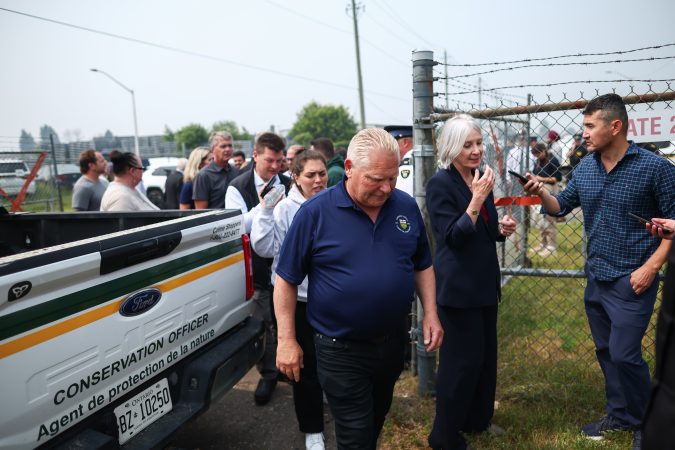
    Speaking from a parking lot in Thunder Bay on Saturday, Premier Doug Ford said that 191 wildfires — seven more than Friday — were burning northwest of the city and that 73 were raging out of control.

    Ten communities have been evacuated, and 300 people have been rescued from campsites in 40 operations, Ford added. Roughly 1.7 million acres have burned in Ontario, data from the Canadian Interagency Forest Fire Center shows.

    In a short address, Ford said it was critical that people in the area did not return to their campsites or homes, especially because water bombers did not drop fire suppression loads when they saw people in the bush from overhead. He said there were 155 fire crews at work and 80 water bombers and helicopters flying, with 40 additional aircraft ready to deploy.

    Ford has faced harsh criticism by his political opponents for budgeting 150 million Canadian dollars ($107 million) for the current wildfire season after spending CA$271 million, last year.

    “It’s not time to politicize these emergencies,” Ford said. “It’s absolutely disgusting in my opinion that they want to politicize and play games when people’s lives are on the line,” he added, vowing there would be “no limit to spending.”

    Under Canada’s division of powers, most forest lands are owned and managed by provinces, which collect royalties for commercial tree cutting and, with some exceptions like national parks, are also responsible for firefighting.

    On a late flight to Thunder Bay from Toronto on Friday night, the pilot was forced to make three approaches on landing because of unsafe conditions from the thick smoke, earning loud applause from the passengers when the twin turboprop touched down at Thunder Bay Airport. At least one plane could not land in the smoke and was forced to return to Toronto.

    On the ground, smoke hung heavy over the road and diffused the light of street lamps, casting an eerie glow that was replaced at dawn Saturday by the piercing orange light from the sun breaking through the hazy sky.

    Mount McKay, a landmark in Thunder Bay visible from most places in the city, was mostly lost in the smoke, only a faint outline visible.

    While Thunder Bay remains safe from flames — the closest fires are burning roughly 90 miles to the northwest — heavy smoke has seriously affected air quality.

    There was rain in the region Friday, and on Saturday temperatures remained fairly cool at 70 degrees Fahrenheit. Local air quality alerts warned of a high health risk caused by toxic particles in the smoke that drifted on light wind and smelled like a campfire.

    Provincial officials said they had delivered 3,000 N95 masks to an evacuation support center to be distributed to residents.

    Thunder Bay is quickly becoming overcrowded with people fleeing their homes. Some evacuees have been sent to Toronto and other locations. Indigenous communities have been among the worst affected by the fires.

    All week, smoke from the Ontario wildfires has darkened skies from Toronto to Detroit, New York, and beyond. Air quality for millions of people across the United States and Canada has plummeted to unhealthy, even hazardous levels.

    New York, Toronto, and Washington, D.C., had the worst air quality in the world Saturday morning, and the plume of smoke floating far above Earth’s surface since Wednesday had not drifted clear.

    On Friday, President Donald Trump threatened to charge Canada tariffs to pay for harms caused by the wildfire smoke, joining a handful of Republican lawmakers who have criticized the Canadian government over what they called poor forest management.

    Canadian Prime Minister Mark Carney did not immediately address the accusations Friday, but he suggested this past week that the United States should do more to combat climate change.

    Ford on Saturday called the U.S. lawmakers’ comments “unacceptable” and said they should focus more on helping a neighboring country — Canada has often contributed firefighting resources to the United States — than assigning blame.

    “I find it a shame the administration in the U.S. and congresspeople writing these letters and blaming us and so on and so forth,” he said. “They have a very short, short memory.”

    This article originally appeared in the New York Times.

  • Taylor Farms expands iceberg lettuce recall to 27 states, including Pa. and N.J.

    Taylor Farms expands iceberg lettuce recall to 27 states, including Pa. and N.J.

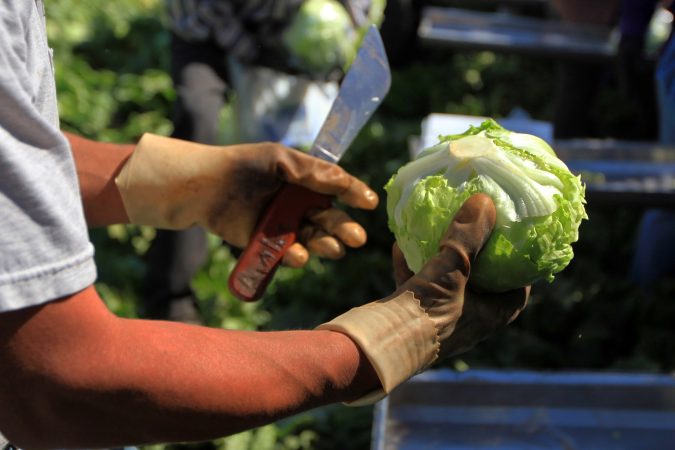
    Taylor Farms announced late Friday that it was recalling iceberg lettuce that had been shipped to retailers in 27 states, including Pennsylvania and New Jersey, because it was potentially contaminated with cyclospora, a parasite that can cause severe illness, including vomiting, cramping, and explosive diarrhea.

    Although an investigation by the Centers for Disease Control and Prevention tied the parasite to lettuce that Taylor Farms shipped to Taco Bell in five states, the company’s recall notice suggests far broader distribution of potentially contaminated greens. The announcement listed eight brand codes but did not say what they stood for. The company did not immediately respond to questions about them on Saturday morning.

    The recalled products were shipped starting June 29 through as recently as Thursday and have expiration dates through Aug. 3. The company said on social media that no Taylor Farms-branded salad kits were involved but did not provide a list of the restaurants or grocers that may have sold its iceberg lettuce, which was mixed with romaine in some products.

    “At this time, Taylor Fresh Foods has not publicly provided distribution information or a list of customers who received the product that was voluntarily removed from the market,” the Food and Drug Administration said in its recall notice.

    FDA regulations do not require the company to do so, a source of frustration for food safety leaders.

    “Food safety advocates have urged FDA over the years to make this a requirement,” said Sandra Eskin, executive director of Stop Foodborne Illness. “Without this essential information, a recall is not going to be effective.”

    She added: “The whole point is to quickly identify the product and make sure no one else eats it.”

    States listed as part of the recall include Florida, Illinois, Texas, Pennsylvania, New Jersey, North Carolina, Missouri, and others. The recall notice does not list California or New York, but it is unclear if Taylor Farms supplied lettuce to companies in states affected by the recall that then distributed it widely.

    Sysco, the nation’s largest food distributor, said in an emailed statement Friday evening that it was withdrawing all iceberg lettuce products from Mexico in its supply chain at the request of Taylor Farms.

    “We will continue to actively monitor the situation and work with regulators as needed,” the company said, adding that it stopped selling and distributing those Taylor Farms products on Thursday.

    US Foods, another large food distributor, said it had also notified affected customers about the recall on Friday, a spokesperson said in an email.

    So far, at least 1,645 people have fallen ill and 141 have been hospitalized, most of them after consuming the lettuce sent to Taco Bell, which said it has removed all of the lettuce from its restaurants. The CDC made that determination through scientific detective work, starting with case reports about people who fell ill and tracking back to a common food source. The case count is likely to rise as the CDC factors in the scope of the recall.

    The United States is on track to have more cyclospora cases in 2026 than in any previous year. The agency said it is investigating more than 5,100 additional illnesses that may have been caused by the parasite, which is transmitted through food or water contaminated with feces.

    On Thursday, Taylor Farms executives met with the White House and the FDA to try to distance the company from the outbreak and air concerns about the official investigations into the outbreak.

    On Friday, the company said the information the FDA presented led it to remove its iceberg lettuce from the market. The company said its Mexican processing plant, Taylor Farms de Mexico in Guanajuato, was voluntarily removing all iceberg lettuce grown in central Mexico.

    The FDA is planning to inspect the Guanajuato facility in coming days to determine how the cyclospora parasite got on the lettuce and track it through the supply chain.

    This article originally appeared in the New York Times.

  • Chinese human rights lawyer seeking asylum is arrested by ICE in Pennsylvania

    Chinese human rights lawyer seeking asylum is arrested by ICE in Pennsylvania

    For years, Shaoping Wu was part of an increasingly endangered group of human rights lawyers in China.

    His work culminated in 2019, when he attended a meeting with other prominent lawyers and activists. Within days, the Chinese government began to detain the participants. Wu quickly fled to the United States, where in 2020 he applied for asylum.

    On Wednesday, Wu was detained by Immigration and Customs Enforcement in Pennsylvania, where he had been living with his family and working as a contract delivery driver for Amazon.

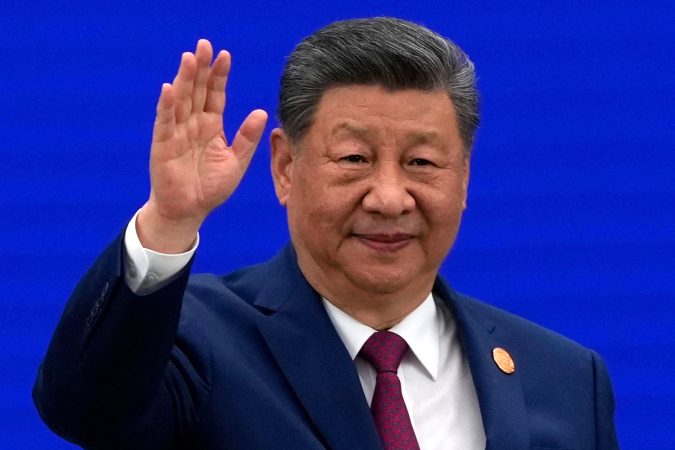
    Supporters and relatives now fear that Wu could be deported to China, where he would likely face persecution from the Chinese Communist Party. Under Chinese President Xi Jinping, the government has gone to great lengths to snuff out political expression, including by arresting human rights lawyers and activists. Two of the participants in the 2019 meeting are still serving lengthy prison sentences.

    Wu’s wife, Caoliu Li, said that her husband had been subject to questioning and harassment by China’s security apparatus over the years but had remained dedicated to the cause of championing rights for ordinary Chinese.

    “All along, he has been very focused on the things that are unfair in China and how to change them,” Li said in an interview Thursday from Lancaster, Pa., where the couple lives with their 17-year-old daughter.

    John Visher, Wu’s lawyer, said that Wu had been delivering packages near Mount Holly Springs, Pa., when a police officer pulled him over as part of a traffic stop.

    Visher said that Wu had entered the United States on a tourist visa in 2019 and that he had told the police officer about his pending asylum application and employment authorization document. Because Wu lacks legal status, police notified immigration officials, who detained him and brought him to the Moshannon Valley Processing Center in Pennsylvania, where he is now being held.

    Wu is scheduled to appear in immigration court on July 27, Visher said.

    The Department of Homeland Security said in an unsigned statement that Wu had overstayed his expired visa by six years and that he would receive due process. It noted that the department was offering $2,600 and a free flight to self-deport.

    Wu’s case shows how even opponents of the United States’ biggest geopolitical rival are not guaranteed favorable treatment if their legal status is in question. And it is the latest test of how far the Trump administration is willing to go in its campaign to carry out mass deportations and curb the presence of asylum seekers.

    This year, another Chinese dissident, Heng Guan, won his asylum case after he was detained by U.S. immigration officials who had tried to send him to Uganda. The department did not appeal the decision, and Guan was released.

    Other cases involving Chinese nationals remain unresolved. Several Uyghurs, members of a predominantly Muslim ethnic group that has been systematically oppressed by the Chinese government, remain in ICE detention. They face deportation to third countries, according to Rushan Abbas, executive director of Campaign for Uyghurs, a Washington-based nonprofit.

    The immigration actions have happened even as Trump has personally pushed for the release of two prisoners held by the Chinese government.

    In May, during a summit with Xi in Beijing, Trump raised the case of Jin Mingri, a pastor who was detained in October as part of a major crackdown on Christians in China. This month, Jin was released and allowed to leave for the United States. The other prisoner, Jimmy Lai, a Hong Kong pro-democracy media tycoon, remains in Chinese custody.

    In 2015, Wu was working as a commercial attorney in Shanghai when China, under the tightening grip of Xi, initiated its largest crackdown on human rights lawyers in decades. Many lawyers and activists who were arrested faced lengthy sentences. Some who remained went underground or stepped away from the work.

    It was against that background that Wu joined the movement of rights defenders.

    He began to take on more politically sensitive cases. His clients included Zhang Kun, an anti-corruption activist; Zhu Chengzhi, a human rights defender; and practitioners of Falun Gong, a spiritual movement banned in China.

    “He defended some defendants that most lawyers would avoid,” said Fengsuo Zhou, executive director of Human Rights in China, a group based in New York.

    At the 2019 meeting, which Wu attended with prominent human rights defenders like Xu Zhiyong and Ding Jiaxi, participants discussed China’s besieged human rights movement and democratic change.

    Even after he came to the United States, Wu continued his work for human rights and civil society in China. This month, Zhou noted, Wu had spoken at an online gathering commemorating the government’s sweeping 2015 crackdown on lawyers.

    “To the outside world, human rights lawyers might seem like a group of idealistic and tragic heroes,” Wu told the audience. “However, for us, this is not a romantic or performative act, but rather our unavoidable mission and responsibility.”

    This article originally appeared in the New York Times.

  • Federal appeals court rules that New Jersey’s assault weapons ban is unconstitutional

    Federal appeals court rules that New Jersey’s assault weapons ban is unconstitutional

    A federal appeals court ruled Friday that New Jersey’s bans on assault firearms and magazines that can hold more than 10 rounds are unconstitutional.

    This is the first time a federal appeals court has struck down a state ban on such weapons, and it comes as the U.S. Supreme Court is set to consider whether bans on semiautomatic rifles violate the Second Amendment. Just last week, a different federal appeals court upheld Illinois’ ban on semiautomatic weapons.

    Friday’s appeals court ruling in the New Jersey case goes further than a July 2024 ruling from a federal judge, who said that the state’s ban on AR-15s specifically was unconstitutional but upheld the provision barring larger magazines. The 3rd U.S. Circuit Court of Appeals said Friday in its opinion that the state’s ban on all semiautomatic rifles it deems to be “assault firearms” and restriction on “large capacity ammunition magazines” were unconstitutional.

    New Jersey Attorney General Jennifer Davenport, a Democrat whose office defended the law, said in a statement that the decision is “as unfortunate as it is legally incorrect.”

    “Every other federal circuit court to consider the issue has come out the other way,” Davenport said. “Assault weapons and large capacity magazines play a dangerous role in the modern epidemic of mass shootings, and New Jersey acted reasonably and lawfully in restricting them. We are considering our options.”

    John Commerford, executive director of the National Rifle Association Institute for Legislative Action, called the ruling a “historic victory for the NRA, the Second Amendment, and law-abiding Americans.”

    In addition to New Jersey, 10 states, as well as the District of Columbia, have laws that generally ban the manufacture, sale, and transfer of assault weapons, according to the Giffords Law Center to Prevent Gun Violence. The District of Columbia, New Jersey, and 11 other states cap magazine capacity at 10 rounds generally or for certain types of firearms.

    Adam Winkler, a law professor at the University of California, Los Angeles, said that Friday’s ruling was surprising because federal courts of appeals have upheld assault weapons bans in the past. On the other hand, he added, the decision “may be foretelling the Supreme Court’s coming opinion on assault weapons bans.”

    “What this Third Circuit opinion shows is that there are very few gun laws that are safe from being struck down right now,” Winkler said.