Category: Wires

  • Yemen’s Iranian-backed Houthis say they will block Saudi shipping at Red Sea gateway

    CAIRO — Yemen’s Iranian-backed Houthi rebels on Monday announced they are imposing a maritime embargo against Saudi Arabia in retaliation for a blockade on Yemen and a recent attack on Sanaa International Airport, threatening another vital waterway for global shipping and raising fears of renewed conflict.

    A Houthi military spokesperson, Yahya Saree, said in a video statement that the maritime ban against Saudi Arabia will be effective immediately, describing it as an “equation of ‘an eye for an eye.’”

    There were few details on how the embargo might work, but the deputy head of the Houthi media office, Nasruddin Amer, said on X that the Bab al-Mandeb strait will be closed to the Saudis in response to what he called the kingdom’s “unjust blockade on Yemenis for over 10 years.”

    Bab el-Mandeb, at the southern tip of the Arabian Peninsula, is the gateway to the Red Sea through which around 12% of the world’s trade usually passes. A fourth of global container trade transits through the 20-mile-wide strait to and from the Suez Canal.

    The Houthis earlier demonstrated their ability to disrupt shipping there when they targeted ships for months over the Israel-Hamas war in Gaza, with over 100 vessels attacked. It is unclear whether the Houthis will resume that level of attack against neighboring Saudi Arabia.

    There was no immediate response from Saudi Arabia. The kingdom already faced pressure as it uses its East-West Pipeline to the Red Sea as an alternative to the Strait of Hormuz, which remains in the grip that Iran imposed shortly after the U.S. and Israel attacked it on Feb. 28. The Saudis have been sending millions of barrels of crude oil a day through the pipeline.

    Saudi Arabia leads a coalition against the Houthis and imposed an air and sea blockade on Yemen in 2015. Yemen’s civil war began in 2014 when the rebels seized the capital, Sanaa, and much of northern Yemen and forced the government into exile. A truce was reached in 2022.

    That truce has been threatened in recent days after the Houthis said the Saudis struck the Sanaa airport in an attempt to affect a flight carrying Houthi leaders back from Iran, where they attended the funeral of Supreme Leader Ayatollah Ali Khamenei. The plane landed safely at another airport.

    The Houthis then launched missiles and drones at Saudi Arabia’s Abha International Airport in the most significant confrontation in years.

    By allowing a direct international flight to land without the approval of the Saudi-led coalition, the Houthis sought to establish a new reality in which they could independently make decisions over Yemen’s airspace, experts told the AP.

    “We affirm the right of our great people to respond to the blockade with a blockade,” Saree emphasized on Monday, adding that Houthis are prepared to confront “any foolish act committed by the reckless Saudi enemy … with a comprehensive and decisive escalation.”

    Houthi-run Al Masirah TV broadcast footage of hundreds of supporters gathering in the city of Ibb, south of Sanaa, to back the embargo against Saudi Arabia. Similar rallies were held in the governorates of Saada, Marib, Hajjah, and Taiz.

    The Houthis are a crucial part of Iran’s so-called “Axis of Resistance,” which also includes militant groups in Lebanon, Iraq, and the Palestinian territories.

    The rebels have had a large stockpile of drones, but several Houthi members previously told the AP that the stockpile is running low after its attacks during the Israel-Hamas war. The Iran war has further impeded the flow of weapons, said the members, who at the time spoke on condition of anonymity because they weren’t authorized to talk to the media.

    The U.S. and Israel responded to the Houthis’ earlier attacks on shipping with a punishing air campaign across Houthi-held areas in Yemen until a deal that saw the rebels stop their assaults.

    Disrupting transit through the Bab al-Mandeb forces shipping firms to route vessels around the Cape of Good Hope off South Africa, significantly increasing costs. The U.S. government in the past has said going around the cape would add about 2,700 miles to the journey from Saudi Arabia to the U.S.

  • Ex-soldier started a fire and fired a pellet gun outside a New York federal building, FBI says

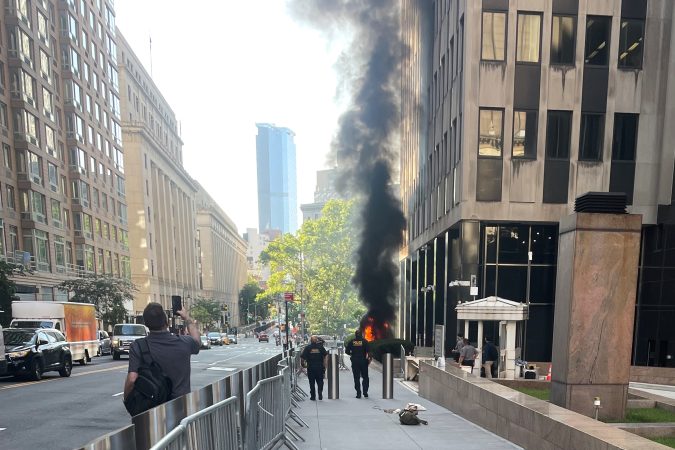
    Ex-soldier started a fire and fired a pellet gun outside a New York federal building, FBI says

    NEW YORK — A former U.S. Army soldier set off fireworks, lit a fire, and fired a pellet gun in front of a New York building housing an immigration court and other government offices Monday morning, an FBI official said.

    Andrew Arrabaca, who was a mechanic on Patriot missile systems, is in custody and has been interviewed, said James Barnacle, assistant director in charge of the FBI’s New York field office. No charges have been announced yet against Arrabaca, and it was not immediately clear if he has a lawyer.

    “Mr. Arrabaca was looking to injure people and harm people,” Barnacle said at a news conference.

    Arrabaca was tackled by a security officer and taken into custody about 8:20 a.m. as flames erupted outside an entrance to the building at 26 Federal Plaza, which has become a focal point for demonstrations against the immigration policies of President Donald Trump’s administration.

    Barnacle said Arrabaca, 43, “came armed with bad intentions” and had various weapons, including a pellet gun, knives, axes, a hammer, and a machete. Arrabaca fired five to seven pellets from an airsoft rifle toward the building, he said.

    “He is an anti-American, anti-government extremist,” Barnacle said.

    He said Arrabaca had a cart with “anti-ICE literature” on it and “yelled derogatory terms” toward Immigration and Customs Enforcement as he was being arrested. New York City Police Commissioner Jessica Tisch said Arrabaca had a sign affixed to his cart that read “ICE off our streets” and was wearing a military style helmet.

    “In that post-arrest interview, he did say he was targeting the building and he was OK if he hurt or killed people going in and out of the building, whether they were federal employees or civilians,” Barnacle said.

    Barnacle said three people had minor injuries: one civilian and two government employees. DHS said a bystander was grazed by the fireworks, and the security officer who tackled the person sustained minor injuries, the agency said. The New York Fire Department said one person was transported to the hospital, but their injuries weren’t life-threatening.

    Barnacle said the civilian who was injured was an immigrant who had a hearing Monday.

    “What occurred outside 26 Federal Plaza this morning was deeply disturbing,” New York Mayor Zohran Mamdani said on social media. “I’m relieved no one was seriously injured and that a suspect is in custody.”

    Mamdani said his team was in touch with police and will support the federal investigation. The FBI said its New York Joint Terrorism Task Force was investigating.

    The building houses several government offices — including the New York office of the FBI — and the immigration court where agents have carried out chaotic and sometimes violent arrests in the hallway as migrants leave hearings.

    Videos and photos from the scene showed a fire with a plume of smoke on the sidewalk outside the building, as well as officers restraining a person and taking them away.

  • FDA retracts test result but still links Taylor Farms lettuce to cyclosporiasis

    FDA retracts test result but still links Taylor Farms lettuce to cyclosporiasis

    The Food and Drug Administration said Sunday that a laboratory finding showing cyclospora contamination in a sample of shredded iceberg lettuce supplied by Taylor Farms de Mexico was a false positive.

    But the agency did not back away from its conclusion that the company remains linked to a multistate outbreak of cyclosporiasis through its traceback investigation.

    “It does not mean they are walking it back,” Susan Mayne, a former head of the FDA’s center on food safety that oversees outbreak investigations, said in a text message Monday. “Absence of evidence (of a positive test result) is never evidence of absence.”

    Numerous outbreaks are solved on the basis of basic disease detective work, talking to people who have fallen ill, tracing back what they ate, and finding connections among others who were infected. Laboratory tests are one part of a wider investigative analysis.

    The FDA said laboratory experts reanalyzed the sample and determined that the initial result “does not represent true amplification and should be considered a false positive.” The agency said there are currently no confirmed positive product samples for cyclospora.

    Cyclospora is detected by running chemical reactions that double the amount of DNA in a sample until there is a noticeable signal, said Don Schaffner, a food scientist at Rutgers. Detecting a parasite after just a few tests points to a strong presence, but that conclusion weakens as more and more tests are run — one potential source of false positives, he said.

    “If you have a sample that, let’s say, has no cyclospora DNA, but you run enough reactions,” he said, “you’ll eventually amplify noise — stuff that’s not real — and it’ll turn into something that’s real.”

    The updated laboratory finding — that the FDA did not find the parasite in a particular lettuce sample — does not change the rest of the agency’s investigation. The sample that the FDA tested was not part of the original recall; the evidence around the recall is based on epidemiological and traceback determination linking the outbreak to Taylor Farms-supplied iceberg lettuce.

    The top line of the notice on the FDA website continues to say: “Do not eat recalled iceberg lettuce from Taylor Farms de Mexico.” It says the FDA’s investigation is ongoing.

    In a statement late Sunday, Taylor Farms spokesperson Mindi Mayhew said the company had “completed a voluntary recall of iceberg from central Mexico.” She said the recalled product was limited to iceberg lettuce grown and processed in central Mexico.

    All other Taylor Farms products, including all Taylor Farms-brand products available for purchase, are not involved in the recall, she said. “We are committed to working with public health authorities as the ongoing outbreak investigation continues.”

    Taylor Farms announced Friday that it was initiating a recall hours after it said it was voluntarily removing iceberg lettuce sourced from central Mexico from the U.S. market.

    Unlike a voluntary product hold or removal, a recall requires a company to actively notify customers and work to recover affected products from commerce, making it a broader and more costly response.

    Late Friday, Taylor Farms de Mexico published a detailed 27-state recall list covering all iceberg lettuce sourced from central Mexico and distributed from June 29 through July 16. The products — many of them bulk food service packages — had “best if used by dates” extending to Aug. 3.

  • Andy Burnham becomes the U.K.’s seventh prime minister in a decade after Starmer resigns

    Andy Burnham becomes the U.K.’s seventh prime minister in a decade after Starmer resigns

    LONDON — Prime Minister Andy Burnham acknowledged his precarious perch Monday as the seventh British leader in just over a decade as he set out an ambitious but vague vision to create a new political and economic establishment.

    Burnham used his inaugural speech as prime minister to renew his theme of decentralizing power as he promised to end street sleeping by homeless people. He said he would deliver a “circuit breaker” for a system he says has taken wrong turns since the 1980s when many public services were privatized.

    “We will change politics to make it more collaborative, more about problem-solving than point-scoring,” he said. “We will take power out of here and carry it into every postcode in the land so that they can do more and in doing more, build a new economy where we put life’s essentials back under stronger public control to make them affordable to you again.”

    After weeks as leader-in-waiting, Burnham officially became prime minister during a meeting with King Charles III at Buckingham Palace, where the monarch asked him to form a government.

    He succeeded Keir Starmer, who stepped down just two years after winning a landslide election victory, on a day when Britain’s political turbulence gave way, at least temporarily, to smooth choreography.

    Buckingham Palace has released a photo of the king and Burnham shaking hands. The ceremony known as “kissing hands” marks the transfer of power, but didn’t actually involve any hand kissing.

    Burnham said he was “acutely conscious” of the revolving door he was walking through at 10 Downing Street.

    “This a moment for reflection and new resolution,” he said. “It requires my generation of politicians to raise our game and rise to the new challenge. Britain needs to show the world that we can regain our stability once again, and that is our challenge to make politics work, to make it work better.”

    Burnham became the seventh U.K. prime minister since 2016 in a now well-rehearsed handover after replacing Starmer as leader of the center-left governing Labour Party on Friday. Starmer announced last month he would resign after missteps and judgment errors that eroded his standing with his party and the public.

    Just over an hour earlier, Starmer made a short farewell speech in the same place outside the prime minister’s residence, saying, “My work is done.”

    The outgoing leader said Britain is now “stronger and fairer than it was two years ago,” when he took office.

    “I go with good grace, I go with a smile, and I go proud of everything that we have achieved,” Starmer said before heading to Buckingham Palace to offer his resignation to the king. It was an offer “His Majesty was graciously pleased to accept,” the palace said in a statement.

    Changing leaders in midterm

    Britain’s parliamentary democracy allows governing parties to change leaders, and thus prime ministers, without the need for a general election. The next national poll doesn’t have to be held until 2029, though Burnham can call one sooner if he wants.

    Burnham was the only candidate in a contest to become the party’s new leader, securing nominations from 379 of the 403 Labour lawmakers in the House of Commons.

    Burnham will confront many of the same struggles as his predecessor: a sluggish economy, a cost-of-living crisis, overstretched public services, concerns about migration, and foreign affairs that include wars in Ukraine and the Middle East.

    The new leader pledges a new style of politics

    The former mayor of Greater Manchester previously pledged to make politics “less toxic,” improve living standards across the country, and “bring back the hope we have all been missing.”

    Critics and supporters alike will be clamoring for details of how Burnham plans to fulfill his pledges when he announces parts of a 10-year plan today.

    “Fundamentally, it only will work if you can generate significant economic growth, because it’s the lack of growth that’s really holding the country back,” said Joshi Herrmann, who has followed Burnham’s career as founder of Manchester news site the Mill.

    Attention will quickly turn to who Burnham will appoint to his Cabinet. He’s expected to make changes to Starmer’s top team, especially to the biggest jobs of Treasury chief, foreign secretary, and home secretary.

    Burnham has praised Starmer’s achievements, saying he would “build on the foundation laid” by his predecessor.

    Starmer became Labour leader in 2020 after one of the party’s worst election defeats, and led it to a landslide victory four years later. But he was soon defeated by the challenges of governing.

    At his final Prime Minister’s Questions session in Parliament on Wednesday, Starmer defended his government’s record on the international stage — especially its support for Ukraine — and its domestic policy achievements. He mentioned stronger protections for working people, a reduction in child poverty, a law designed to stop official cover-ups after tragedies, and higher defense spending.

    “In 6½ years, I took our party from a historic defeat in 2019, changed it so it was fit to face the country, and won a landslide general election victory in 2024,” Starmer said in his final remarks before leaving Downing St, hand-in-hand with his wife, Victoria.

    “Since then, it has been the privilege of my life to serve you and this great country as prime minister. I am confident that Britain is now stronger and fairer than it was two years ago.”

  • Ebola death toll in Congo rises to at least 930, including dozens of health workers

    Ebola death toll in Congo rises to at least 930, including dozens of health workers

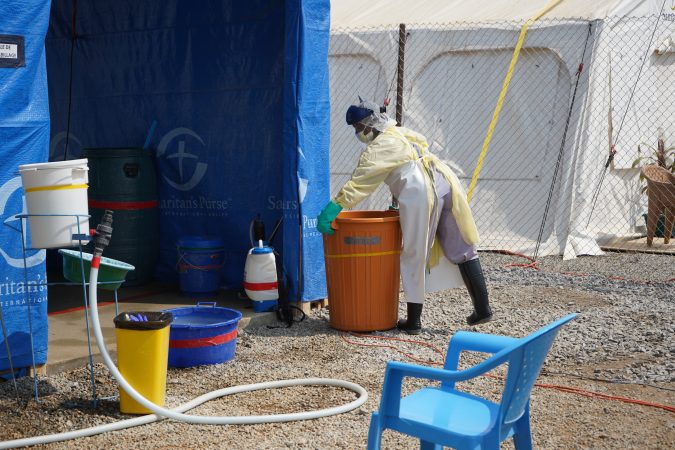
    BUNIA, Congo — The death toll in Congo’s Ebola outbreak has risen to at least 930, the country’s Ministry of Health said on Monday, with 37 new deaths reported in a 24-hour span Friday into Saturday, one of the highest totals.

    The deaths were recorded out of the 2,344 cases confirmed as of Saturday, the health ministry said.

    The Ebola outbreak that was declared in eastern Congo on May 15 is the fastest-growing Ebola outbreak on record. The Bundibugyo virus responsible for the outbreak is less common than others that cause Ebola disease, and there is no approved vaccine or treatment.

    Ebola is highly contagious and can be transmitted to people from wild animals. It spreads in the human population through contact with bodily fluids such as vomit, blood, or semen, and with contaminated surfaces and materials such as bedding and clothing. The disease is rare but severe and often fatal.

    The surge in deaths comes as safety fears have restricted the response in the worst-affected province of Ituri. A total of five provinces have been affected, all in the eastern region where rebel violence is rampant.

    At least 12 attacks — mostly fueled by skepticism and rumors — have been recorded against health facilities and teams since the outbreak was declared in mid-May, authorities said Saturday. Many health workers meanwhile have walked off their jobs as they protest lack of payment.

    At least 36 health workers infected with the virus have died.

    The World Health Organization last week expressed concerns that 80% of new Ebola cases were emerging from unknown chains of transmission, a sign the outbreak is spreading faster than health officials can track despite an expanding response.

    In the more than two months since the outbreak started, it recorded an average increase of about 272 cases and 111 deaths per week, according to data from Congo’s Health Ministry. The data also show that the weekly increases accelerated over time, particularly in July, when both reported cases and deaths rose more rapidly than in the earlier weeks.

    The ministry’s latest update said that 724 patients are currently in isolation and in hospitals, and that it is intensifying response efforts in affected health zones.

    “Patient care and support capacities are consolidating, with 22 new recoveries recorded in 24 hours,” the ministry said.

  • Pentagon withheld dozens of U.S. military injuries in Iran war

    Pentagon withheld dozens of U.S. military injuries in Iran war

    In the week leading up to the Iranian attack Friday that killed two U.S. soldiers and left one service member missing in Jordan, Iran carried out three other strikes against U.S. forces in the country.

    Those attacks injured dozens of U.S. service members and damaged several helicopters, according to several U.S. officials, who spoke on the condition of anonymity to discuss operational matters.

    But the Pentagon did not disclose the earlier strikes, nor the casualties and damage they inflicted.

    The episode is the latest example during the Iran conflict of the tension between what the Pentagon says is the need for operational security and the government’s obligation to inform the public about the conduct of the war.

    In statements after airstrikes against Iranian military sites last week, U.S. Central Command said it was retaliating for Iran’s attacks against commercial ships transiting the Strait of Hormuz, never mentioning Iran’s strikes on bases in the region, including in Jordan.

    Central Command is not required to release information about injured service members, especially when they quickly return to duty, a U.S. military official said.

    Moreover, another U.S. military official added, why would the Pentagon divulge information that could help Iran zero in on its deadly ballistic missiles and drone attacks in Jordan and other bases in the Middle East where thousands of U.S. troops are stationed?

    Central Command has also stopped announcing how many sites in Iran it hits each day for the same reason, U.S. officials say.

    In the days since the collapse of a fragile truce, the Pentagon has provided little information about the U.S. military strategy after nearly five months of war. The last major Pentagon briefing on the war was in early May.

    In the past several months, the Trump administration has failed to disclose how the Iran war has drained U.S. supplies of critical, costly weapons, and how Iran retained and rebuilt substantial missile capabilities.

    The subject of American casualties in the war is similarly sensitive. The deaths of two Army soldiers in Jordan on Friday and another service member in northern Iraq bring to 17 the total number of U.S. military personnel killed since the United States and Israel launched attacks on Iran on Feb. 28.

    The Pentagon’s casualty reporting protocols call for publicly identifying deceased service members only after 24 hours have passed since next of kin were notified. The names of troops wounded in action are not typically released.

    In a statement on Saturday, Central Command said four U.S. service members wounded in Friday’s attack were taken to Jordanian hospitals and had been discharged. More U.S. troops received minor injuries and had returned to duty, the statement said, but it did not specify how many.

    And the statement did not mention service members injured in the three previous attacks in Jordan last week.

    In a brief phone call with NewsNation, President Donald Trump said the troops died “in service of our country” and reiterated the war’s primary goal of “never allowing Iran to have a nuclear weapon.”

    Defense Secretary Pete Hegseth said on social media on Saturday that the loss of the two U.S. soldiers would stiffen American resolve.

    More than 400 U.S. service members have been injured in the Iran conflict, according to Central Command. The Pentagon had periodically reported the total number of service members injured and returned to duty since early in the war, but it has stopped updating the overall figure in recent weeks.

    In previous administrations, the Pentagon usually delayed providing any details on injured service members until family notifications were completed. During the Biden administration, the Pentagon typically reported the number of service members injured in attacks by Iran-backed militias on U.S. bases in Syria and Iraq.

    More than 1,700 Iranian civilians have died in the war, according to estimates.

    This article originally appeared in the New York Times.

  • JD and Usha Vance welcome a baby boy, the first child born to a sitting VP in more than 150 years

    JD and Usha Vance welcome a baby boy, the first child born to a sitting VP in more than 150 years

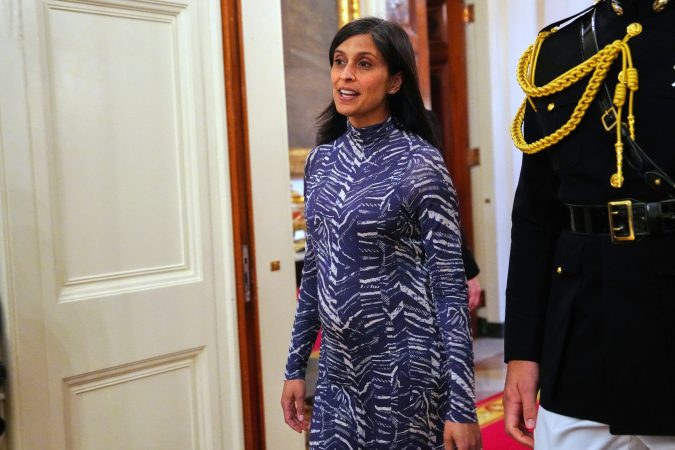
    WASHINGTON — Vice President JD Vance and his wife, second lady Usha Vance, on Sunday announced the birth of their fourth child, the first born to a sitting vice president in more than 150 years.

    Born Sunday, Alec Neel Vance joins older siblings Ewan, 9; Vivek, 6; and Mirabel, 4.

    Vance announced the birth on social media with a statement signed by him and his wife.

    “We are excited to announce that our baby boy, Alec Neel Vance, was born this morning. Usha and the baby are happy and healthy, and our kids are overjoyed to meet their little brother,” the statement said.

    They thanked doctors and staff at the Walter Reed National Military Medical Center and with the White House medical team.

    The Republican vice president’s growing family is in keeping with his passionate advocacy for Americans to have more children. He has also suggested that the 2025 killing of conservative activist Charlie Kirk, who was his friend, factored into the decision to have another child.

    Vance, a former U.S. Marine, repeatedly expressed alarm about declining birth rates in America as he launched his political career in 2021 with a bid for a U.S. Senate seat from Ohio. As vice president, he said in Washington at the 2025 March for Life anti-abortion rally, “I want more babies in the United States of America.”

    The vice president, who’s 41, has been accompanied on overseas trips by Usha Vance, 40, and their children, with the kids often pajama-clad as they board Air Force Two for the overnight flights.

    Usha Vance, the daughter of immigrants from India, had already been the subject of some public fascination because of her husband. Her pregnancy, which was announced in January, amplified that spotlight since it is rare for occupants of the United States’ highest public offices to add to their families while serving.

    The last time a sitting vice president became a new father was in the 1800s.

    Schuyler Colfax and his second wife, Ellen Wade, had a son, Schuyler Colfax III, in 1870 when Colfax was serving as vice president, according to the White House Historical Association. Decades before that, John C. Calhoun and his wife, Floride Bonneau, had a son, William, in 1829 when Calhoun was vice president, the association said.

    The newest addition to Vance’s family was part of a recent mini baby boom among top members of President Donald Trump’s administration. White House deputy chief of staff Stephen Miller’s wife, Katie Miller, recently gave birth to the couple’s fourth child, and White House press secretary Karoline Leavitt had her second child with her husband, Nicholas Riccio, in May.

    Usha Vance recently came under scrutiny after the New York Times’ fashion critic called attention to the stomach-hugging, coral maternity dress she wore for a Father’s Day episode of Storytime with the Second Lady, a video podcast she launched during the pregnancy.

    The Times wrote that the attention that Vance, Miller, and Leavitt had put on their pregnancies offered “an image of idealized womanhood that gives literal shape to the pronatalist movement,” which encourages couples to have as many children as possible to counter declining birth rates.

    The second lady responded on social media, writing, “Now that we know the political significance of my $8.75 coral maternity dress from Old Navy, can’t wait to hear what the New York Times has to say about my elastic-waistband pants and compression socks! In the meantime, enjoy my pregnancy fashion (or lack thereof) and a good story with your kids on Storytime with the Second Lady.” She later shared the receipt for the dress, and her husband applauded her frugality.

    “She bought a $50 dress for $8.75. America: meet your next director of the federal budget!” the vice president wrote on social media.

    JD Vance has said it was Kirk’s widow, Erika Kirk, telling them that she wished she’d had more than two children with her husband before he was assassinated last September in Utah that led him and the second lady to decide to grow their family. Usha Vance, a former attorney who once clerked for Supreme Court Chief Justice John Roberts, concurred — in part.

    “It was very powerful, what (Erika) said about her own family, and certainly very moving to both of us. I think I had already started to open my mind to the possibility,” Usha Vance said during a joint interview with her husband for CBS Sunday Morning that aired in June. “I wouldn’t say that this was, for me in any way, the decisive factor. But it came in the middle of a conversation that we were already having.”

  • Lillian Roberts, crusading New York labor leader, dies at 98

    Lillian Roberts, crusading New York labor leader, dies at 98

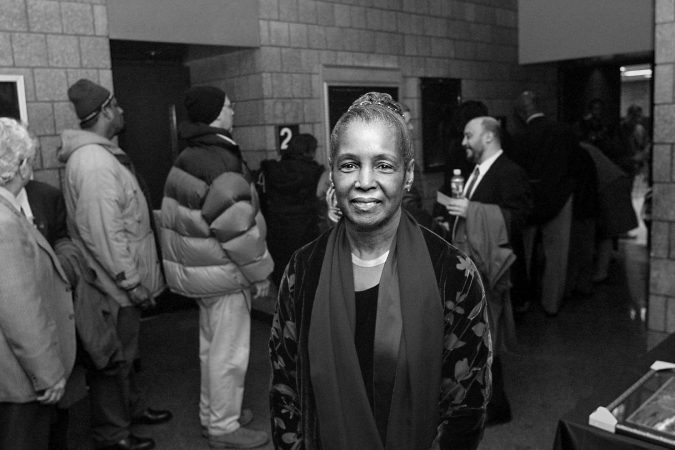
    Lillian Roberts, a crusading labor leader hailed as a “tiger” — and briefly jailed — during her fiery tenure at the nation’s largest municipal workers union, which now represents more than 150,000 nurses, pothole fillers, zookeepers, and other New York City employees, died July 9 in Manhattan. She was 98.

    Her death, at a nursing facility, was from cardiac arrest, said Ivan Smith, her sister’s son, whom Ms. Roberts raised as her own after her sister’s death.

    Starting in the 1960s, Ms. Roberts established a reputation as a firebrand, working for — and, eventually, as a de facto partner of — Victor H. Gotbaum, the notoriously combative executive director of District Council 37.

    The district council — part of the American Federation of State, County and Municipal Employees, or AFSCME — has long been considered the nation’s most powerful public employees union, representing more than 1,000 job titles and nearly a third of the city’s municipal workers.

    Rising to prominence at a time when labor leadership was dominated by white men, Ms. Roberts, a Black woman, spent nearly 14 years as the associate director of District Council 37, which roughly quadrupled in membership during that period. Her biggest coup was unionizing 20,000 workers at the city’s public hospitals, in what the New York Times later called one of the largest organizing drives in American history.

    After a lengthy absence, she returned to District Council 37 as executive director in 2002, when she was 74, and served for 12 years.

    “I always felt that I had a job to do,” she said in an interview for the 2005 reference book Black Women in America. “It transcends whether I am male or female.”

    She added: “I never thought about not doing the job and not being aggressive.”

    In her quieter moments, she came across as the “embodiment of serenity,” the Times observed in 2002. But Ms. Roberts was often pugnacious.

    In 1968, she spent two weeks behind bars after leading a strike against three New York state mental hospitals, thus violating the state’s Public Employees’ Fair Employment Act, or Taylor Law, which bans public sector strikes. In the 1970s, she decried Mayor Abraham D. Beame’s plans to shutter several public hospitals, insisting that city residents would die as a result.

    “When Lillian’s angry, she can really blow her head off at people — those from her own side of the table as well as the other,” Deputy Mayor Basil A. Paterson, the city’s chief labor negotiator, told the Times in 1978. “But never in a meeting — she will always take them into another room to let them have it.”

    Lillian Davis was born Jan. 2, 1928, in Chicago, the second of five children of Henry Davis, a janitor and barber, and Lillian (Henry) Davis.

    The couple, who were transplants from rural Mississippi, struggled to survive during the Great Depression, and Lillian spent hours over a washboard helping her mother keep the household running.

    “I never really had a childhood,” she was quoted as saying in Black Women in America. “I had to be an old lady at a very young age.”

    An honors student in high school, she earned a scholarship to the University of Illinois Urbana-Champaign. But unable to afford room and board, she dropped out after less than two years.

    “I was so angry at society that here I was on welfare,” she recalled. “I did not want welfare, I was humiliated by it, and they were doing absolutely nothing to get me out of that situation.”

    Instead of receiving a diploma, she became the first Black nurse’s aide at the University of Chicago’s hospital, although she lacked the money to go on to nursing school. She remained in the aide job for more than a decade, eventually becoming active with her AFSCME local as a shop steward and secretary.

    She was taken under the wing of Gotbaum, then in charge of the Chicago district council of the AFSCME, who “noticed that I was aggressive, that I was responsible,” Ms. Roberts later said. In 1965, she followed Gotbaum to New York when he took over District Council 37.

    Ms. Roberts burnished her credentials as a labor hero by flouting Gov. Nelson A. Rockefeller and the Taylor Law during the 1968 hospital strikes. On her way into the 19th-century Civil Jail on West 37th Street, she was greeted with the chant, “Rocky in, Roberts out!”

    Sentenced to a month in jail, she was released after two weeks following a public outcry.

    In 1981, Ms. Roberts became the first Black woman to be appointed New York state labor commissioner, then known as the industrial commissioner, and she fought for improving workplace safety, for fair wages and for stronger unemployment insurance programs. After resigning in 1987, she joined the private sector as an executive at a health management organization.

    In addition to Smith, Ms. Roberts is survived by his brothers, Carl and Ralonzo Smith, whom she also raised as sons after her sister’s death. Her marriages to William Roberts and Enoch Jenkins ended in divorce.

    When she returned in 2002 to lead District Council 37, the union had “Cinderella-like, suffered through its own midnight,” the Times observed, “and turned into a squalid outfit in which officials embezzled millions of dollars and stuffed ballot boxes.”

    In essence, the Times wrote, she was coming back as a “fairy godmother.” But it was not all magic wands and glass slippers. Ms. Roberts clashed with the union’s board, as well as with Mayor Michael Bloomberg, a conflict that included sharp-tongued attacks over planned city layoffs in 2011.

    “The relationship between the mayor and Roberts,” the Times noted that year, “is far worse than that between previous mayors and leaders of District Council 37.”

    But she remained in her post until 2014, when she retired at 86. “This union,” she once said, “was my life’s work.”

    This article originally appeared in the New York Times.

  • Walt Odets, psychologist who delved into the minds of gay men, dies at 79

    Walt Odets, psychologist who delved into the minds of gay men, dies at 79

    Walt Odets, a psychologist whose work with gay men in the Bay Area at the height of the AIDS epidemic led him to write a book on a nearly taboo topic, the survivor’s guilt and depression experienced by men who were not infected with HIV, died July 5 at his home in Berkeley, Calif. He was 79.

    The cause was complications of Alzheimer’s disease, said his companion, Armen Davoudian.

    Mr. Odets’ 1995 book, In the Shadow of the Epidemic: Being HIV-Negative in the Age of AIDS, appeared more than a decade into the crisis — before effective treatments arrived and as thousands of men dying in their prime continued to grip gay communities in grief, fear, and anger.

    Mr. Odets, who was gay, wrote that there was also a “psychological epidemic” among those who were HIV-negative, who were “anxious and lonely in their ‘wellness.’”

    “For many,” he added, “survival is so difficult they sometimes wish they had not survived and sometimes hope they will not.”

    Speaking about this population, he acknowledged, was fraught.

    “It has often seemed selfish, inappropriate or simply ridiculous for the uninfected to have any important feelings about themselves,” he wrote. “Feelings about oneself seemed the exclusive right of those who were infected, sick or dying.”

    But such feelings mattered, he continued, because a sense of fatalism among HIV-negative men encouraged unsafe sex.

    Reviewing In the Shadow of the Epidemic for the New York Times Book Review, David L. Kirp, a professor of public policy at the University of California, Berkeley, wrote that it belonged on the same shelf as two classic studies of populations living with trauma: Robert Coles’ Children of Crisis, about the effects of racism, and Robert Jay Lifton’s Death in Life, about Hiroshima survivors.

    Walt Whitman Odets was born Feb. 4, 1947, in Los Angeles. He was the son of playwright Clifford Odets, the author of Waiting for Lefty, Awake and Sing! and other works, and an actor, Bette Grayson. An older sister, Nora, was born with a mental disability; their parents chose not to institutionalize her, and she grew up with the family.

    Both of his parents died by the time he was 16, and Mr. Odets spent part of his late adolescence in New York with his legal guardians, Lee Strasberg, the Method acting pioneer, and Strasberg’s wife, Paula.

    He received a Bachelor of Arts in philosophy from Wesleyan University in 1969. He was married to Paula Harrington, a journalist in the Bay Area, from 1983 to 1986. His sister died in 2008. His companion, Davoudian, is his only immediate survivor.

    Photography was Mr. Odets’ first career. His works are in the collections of the Oakland Museum of California, the Brooklyn Museum, and the Cantor Arts Center at Stanford University.

    After training in clinical psychology at the California Professional School of Psychology in San Francisco, he received his doctorate in 1989 and offered therapy in Berkeley to gay men as individuals or couples. In the years before his first book appeared, Mr. Odets was best known in the Bay Area as a fierce critic of AIDS prevention campaigns that had failed to slow infections among younger men.

    He juggled his practice with writing some of the earliest and most influential watch reviews on the internet in the late 1990s. He disassembled timepieces, examined their mechanics with a microscope, and wrote knowing assessments for TimeZone, a website catering to watch collectors and horology buffs.

    A quarter-century after In the Shadow of the Epidemic, he wrote an update on gay men’s psychology, Out of the Shadows: Reimagining Gay Men’s Lives (2019).

    Despite evidence of progress — treatments, beginning in 1996, that drove AIDS mortality sharply downward; same-sex marriage becoming the law of the land — Mr. Odets dismissed the notion that America had outgrown its deep homophobia.

    He wrote that shame remained an ever-present emotion for many gay men and “still often lurks unconsciously behind the most successful of gay lives.”

    Gay identity, he maintained, entailed far more than merely a physical attraction to other men. Because his mother had died when he was a child and his sister was disabled, his emotional attachment to his father, he wrote, was a major influence on how he understood what it meant to be a gay man.

    “I have emotional feelings for men that I’m cautious about with women,” he explained to Publishers Weekly. “That’s really the crux of the whole book, that being gay is a whole internal life and a sensibility, and it’s much broader and much richer than the conventional male identity that’s so heavily promoted.”

    Out of the Shadows ends with an affecting account of the lifelong bonds that Mr. Odets forged with a gay college classmate and the man’s live-in lover. For decades, they were a bicoastal throuple, which sometimes expanded romantically to others, including a partner of Mr. Odets’, Robb Caramico, who died of AIDS in 1992.

    “There’s sadness in Odets’ life story,” Benoit Denizet-Lewis wrote in a Times review of the book, “but there’s mostly resilience, tenderness and a willingness to fashion an unapologetic gay life, sometimes against all odds.”

    This article originally appeared in the New York Times.

  • MyPillow founder not registered to vote in state he wants to lead

    MyPillow founder not registered to vote in state he wants to lead

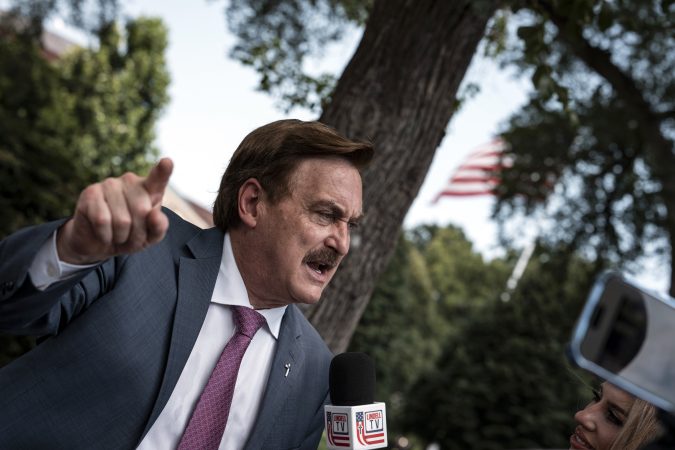
    Mike Lindell, the CEO of MyPillow and a leader of the election denial movement who was endorsed by President Donald Trump for Minnesota governor this week, acknowledged that he is not registered to vote in the state he seeks to lead.

    Lindell, 65, said his biggest problem was not his registration status but that the Minnesota Republican Party had not supported his campaign, even after Trump publicly endorsed him.

    “They are saying, ‘Mike Lindell can’t win,’” Lindell said in an interview Saturday morning. He pointed to a statement from the Minnesota Republican Party that raised skepticism around Lindell’s electability.

    “It’s disgusting,” he said. “They are trying to discredit the endorsement.”

    In Minnesota, voters are allowed to register to vote on Election Day. Lindell, who is registered in Texas, said he was not concerned that he was not yet registered in his home state, something first reported by the Minnesota Star Tribune.

    Lindell said he was registered to vote in Texas when he moved there for one year in 2024, soon after he married his current wife, Kendra. He said he returned to Minnesota, where he was born and raised, the following year, because he wanted to run for governor.

    “Obviously I’m going to vote,” he said.

    Since 2021, Lindell has tirelessly pushed, without evidence, claims that the 2020 presidential election was “rigged” to prevent Trump from winning reelection.

    He has been sued for defamation over his claims that voting machines were manipulated in 2020. Dominion Voting Systems, a manufacturer of voting machines, recently settled its lawsuit against Lindell, but last year, he was ordered to pay $2.3 million in damages to a former employee of Dominion after a federal jury found him guilty of defamation. A federal judge also found that Lindell defamed Smartmatic, another voting company, but has not specified how much he owed in damages.

    The mounting legal fees have contributed to Lindell’s financial troubles. According to Hennepin County property records, Lindell owed $27,000 in unpaid taxes in 2025. He said on Saturday that he had recently paid off the debt, and that his financial situation was irrelevant to his campaign. The Times could not immediately verify if the property taxes had been paid.

    Minnesota has not elected a Republican to statewide office in two decades, and Sen. Amy Klobuchar is seen as the leading Democratic candidate to replace the state’s current governor, Tim Walz, who dropped out of the race last year. Lindell faces two main rivals in the Aug. 11 primary: Kendall Qualls, a businessperson who was endorsed by the state Republican Party, and Lisa Demuth, speaker of the Minnesota House of Representatives.

    Lindell said he was running because there was “rampant fraud” in Minnesota and it was becoming unaffordable to live there. “Minnesota needs a business person running this state,” he said. “We are going downhill in every category.”

    This article originally appeared in the New York Times.