Category: Wires

  • U.S. actions harm global efforts to prevent and treat HIV in dozens of countries, new report says

    U.S. actions harm global efforts to prevent and treat HIV in dozens of countries, new report says

    The Trump administration’s disruptions to a global AIDS relief program have forced organizations to close clinics, lay off staff, and cut services, seriously impeding efforts to prevent and treat the disease in dozens of countries, a new report released Tuesday shows.

    The President’s Emergency Plan for AIDS Relief, known as PEPFAR, is credited with saving at least 26 million lives since its inception in 2003. But last year, it was impaired by the dismantling of the U.S. Agency for International Development and cuts to thousands of global health grants.

    “The disruptions were very widespread,” with services for young women, orphans, and children impacted, said Elise Lankiewicz, policy associate for the nonprofit amfAR, the Foundation for AIDS Research, which released the report.

    Researchers contacted groups that got PEPFAR funding to deliver HIV services last year. Nearly a quarter — 166 groups from 46 countries — responded to an electronic survey conducted between last November and April, providing information on their funding, staff, and services.

    The survey didn’t reach all PEPFAR groups and certain types of organizations — like those that were most severely disrupted or still receiving U.S. funding — may have been less likely to respond. That could result in an underestimate or an overestimate of disruptions, depending on which organizations were missed. Nevertheless, the findings are a window into the struggles that some groups faced last year.

    Some key findings were:

    — Most organizations had at least one award terminated or payment delayed last year. Terminations led to the closure of more than 1,700 clinics, drop-in centers, and other service delivery sites, and to the loss of more than 16,000 full-time staff members.

    — Even though the U.S. government directed services providing HIV treatment, testing, and prevention of mother-to-child transmission to continue, a majority of partners still reported a disruption to those services.

    — Cuts were concentrated on services for populations most impacted by HIV. Most organizations previously serving groups such as sex workers, men who have sex with men, transgender people, and people who inject drugs reported permanently ending a service for these groups. Even among organizations that didn’t lose funding, some reported stopping a service for one of these key populations to comply with U.S. policy.

    — HIV prevention has been sharply reduced, with many organizations stopping condom programs or services offering what’s called PrEP, preventive medicines to guard against sexually transmitted HIV. From fiscal years 2024 to 2025, prevention spending fell 51%, according to PEPFAR expenditure data.

    — Locally-based partners were much more likely than international organizations to have an award terminated and to close service delivery sites. Funding disruptions also destabilized interconnected HIV service systems.

    “Taken together, these results describe widespread degradation of the infrastructure built to deliver HIV services worldwide, with the deepest damage falling on the populations and partners most essential to controlling the epidemic,” the report says.

    The survey doesn’t provide data at the country level, but amfAR officials point out that the majority of responses came from African countries.

    When asked about the report, a State Department spokesperson said in an email that the Trump administration has “strengthened PEPFAR through clear, strategic direction.”

    “As a result, the number of children testing positive and on treatment for HIV has continued to decline,” the spokesperson said.

    In April, the U.S. State Department released PEPFAR data for one quarter in 2025: July through September. Officials said PEPFAR-supported programs provided standard HIV treatment for 20.6 million people in more than 50 countries, which they said is stable from the same reporting period in 2024. They also said PEPFAR started 103,000 pregnant and breastfeeding women on PrEP, up from 43,000 the previous year.

    The data from that quarter “demonstrates the resilience and strength of the program,” the spokesperson said.

    But researchers from amfAR and the International AIDS Society combined that quarter’s data with another data release that included all four quarters and found substantial disruptions across PEPFAR services.

    Other research, published in the journal Nature Health in June, specifically examined treatment globally using PEPFAR data. It found that nearly 2 million fewer people living with HIV were receiving PEPFAR-supported antiretroviral treatment in fiscal year 2025 as compared with the previous fiscal year — about a 10% decline.

    “That does raise really important questions about program stability,” said Ramona Godbole, an author of that study who wasn’t involved in the latest report.

    AmfAR’s report made numerous recommendations to help restore care. It said the U.S. government and PEPFAR leaders should reinstate support for all HIV services, not just treatment. It also called on other national governments to spend more on HIV services and contract with nongovernmental organizations, including those led by people in key vulnerable populations.

    But Jennifer Sherwood, amfAR’s director of research and public policy, said even if money is put back into the system, it will take time to get the services up and running and regain the trust of communities.

    “And unfortunately, with HIV and infectious disease, each day is deadly,” she said. “Each day that we don’t have those systems in place, you see new infections.”
  • Trump officials seek to weaken public, state input on federal projects

    Trump officials seek to weaken public, state input on federal projects

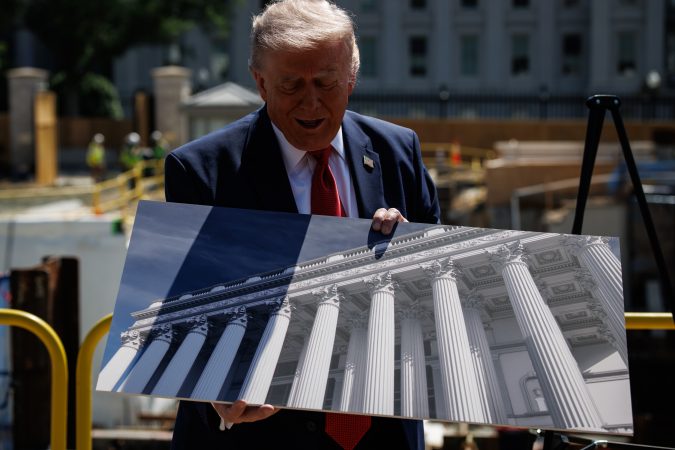
    The Trump administration is seeking to loosen federal rules intended to protect historic sites, alarming outside groups who say the changes would allow government agencies and developers to pursue major projects — such as President Donald Trump’s planned triumphal arch — without soliciting public input.

    The Advisory Council on Historic Preservation, a low-profile federal agency that oversees preservation reviews and advises the president and Congress, on Friday proposed significant revisions to a federally required process that governs changes to landmarks such as the National Mall, sites that are significant to Indigenous tribes, and other properties eligible for listing on the National Register of Historic Places. The process currently applies to any construction projects that are on federal land or receive federal funding, as well as private projects that require any type of federal approval.

    Under the current rules, federal agencies must undertake a multistep Section 106 review assessing the potential effects of construction projects and soliciting public input, among other requirements. The revised rules would let federal agencies build their own projects or grant approval for construction by private developers without public input, according to a proposed rule and an accompanying document obtained by the Washington Post.

    Trump officials have previously said the 60-year-old rules can hamper development projects and needed renovations and had called for the regulations to be overhauled. But the timing of the administration’s announcement and the breadth of the proposed changes caught many historic preservation groups off guard.

    “What is going to happen regularly is communities are not going to know that major projects are happening in their backyard until the bulldozers show up,” said Marion F. Werkheiser, a founding attorney at Cultural Heritage Partners, who has reviewed the proposed changes. Werkheiser’s firm is involved in litigation against the Trump administration over plans to alter the Eisenhower Executive Office Building and the Kennedy Center.

    Sara Bronin, who led the ACHP under the Biden administration, called the proposed rules a “sloppy, ill-conceived draft” and predicted they would be challenged in court.

    Travis Voyles, a Trump appointee who serves as the council’s vice chairman, asked council members to vote on the proposed changes to Section 106 by this coming Friday, according to an email obtained by the Post. If council members support the new regulations, they could advance to the White House for the next step in the formal rulemaking process, Voyles wrote.

    ACHP did not immediately respond to questions about the planned changes and whether the White House had directed them. The White House declined to comment. The Atlantic previously reported the proposed changes.

    Experts said the rules govern changes to 1.4 million properties across the country, ranging from several thousand national landmarks to local historic districts and sites in many communities.

    Several Trump administration projects, such as the president’s planned triumphal arch near Arlington National Cemetery, have been bound up in the ACHP’s historic-preservation reviews. Outside groups have said that the rules are essential to protecting key sites and public spaces and warned that the planned changes would undercut decades of precedent.

    “This is not only a massive assault on laws that have benefited that nation for some 60 years, it almost completely eliminates the role of the public,” Charles A. Birnbaum, the CEO of the Cultural Landscape Foundation, an education and advocacy organization, said in a statement. “The proposal actually eliminates language that says: ‘The views of the public are essential to informed Federal decision making in the section 106 process.’ How un-American is that?”

    The proposal narrows what is considered a “historic property” that can be protected, tightens the scope on what is considered an “undertaking” affecting that property under the law, and makes the process of consulting states and the public optional. What qualifies as a historic property is now limited to places that are “geographically compact” and have been improved by humans at some point.

    “For the avoidance of doubt, noncompact, unimproved natural features such as mountains, valleys, bodies of water, or landscapes, including ethnographic landscapes, do not qualify as property,” according to the proposal.

    Outside groups said they had little chance of stopping this week’s vote. Twenty of the 24 seats on the ACHP are either directly appointed by the president or are reserved for the heads of federal agencies, such as the Interior Department, which are controlled by Trump.

    The Trump administration has separately remade other federal panels, such as the Commission of Fine Arts and the National Capital Planning Commission. Those panels have swiftly advanced some of Trump’s pet projects, such as his planned White House ballroom.

    Several Trump officials at an ACHP meeting last month shared their frustration about the existing Section 106 rules and said they supported reforms.

    Michael Boren, an Agriculture Department official who oversees the Forest Service, said that some efforts to replace unsafe, decades-old infrastructure at ski areas that are on national land had been stymied by the regulations.

    “When they’re over 50 years old, they’re historic structures and when we’re trying to replace them, we sometimes are delayed for years just by the historic piece,” Boren said.

    Werkheiser said the change would exclude landscapes that tribes hold sacred that would have been previously considered under the existing rules, potentially opening them up to development and destruction by industry. That could also remove the law’s protections against projects such as one that would build power lines near Thomas Jefferson’s Monticello estate and spoil the view from the historic site, she said.

    Bronin said that provision would allow the Trump administration to expedite some controversial projects, such as a planned copper mine in Arizona located on a sacred Apache site known as Oak Flat. Democrats and historic preservationists have said that the planned mine will destroy the site.

    “In the urban context, taken to the extreme, this phrase may be used to limit protected properties to just a building or a handful of buildings — making larger historic districts, like the French Quarter in New Orleans or historic Savannah vulnerable to needless destruction,” Bronin wrote in a message.

    The proposal would also give federal agencies a new way to approve projects without reaching agreement with states, tribes, or other parties involved in the review process. Historically, those decisions were memorialized through a “memorandum of agreement” negotiated with state or tribal authorities and other interested parties.

    The new rules would create an alternative called a “memorandum of decision,” allowing an agency to move forward on its own, without consultation with the states or the public. States and tribes would no longer be able to try to block a project or invoke a dispute-resolution process if they object. Agencies would still have to consult affected tribes but would not have to incorporate their feedback.

    Several experts also noted that the current Section 106 rules have required the Trump administration to take public feedback on some of Trump’s projects. Under the new regulations, the federal government could unilaterally decide that public input is not in the general interest, exclude the public from the process, and issue its decision unilaterally.

    “The agency is going to decide if it’s in the public interest to inform the public about what they’re getting ready to do in that public’s local community. And that just seems so Orwellian to me,” Werkheiser said.

  • U.S. soldier killed in Iraq was a 30-year-old father from North Carolina

    U.S. soldier killed in Iraq was a 30-year-old father from North Carolina

    A U.S. soldier killed in Iraq during a controlled detonation of an Iranian drone was a 30-year-old father from North Carolina who had served for nearly a decade, according to a military statement Tuesday and his family.

    Sgt. Michael Emmanuel Swinton, of Fayetteville, will receive a Bronze Star, Purple Heart, and Combat Action Badge, and will be promoted posthumously to staff sergeant. The Army said it was investigating the circumstances of his death Sunday at an air base in Irbil.

    He leaves behind a 6-year-old son and a 4-year-old daughter, his mother said.

    “I will never recover from this, you should be home,” his wife, Mia Gonzalez-Swinton, posted Monday on Facebook. “We had so many plans for when you got back, I’m sick to my stomach.” She said she was notified Sunday that he had been killed.

    Two U.S. Army soldiers were also killed in Jordan last week while defending against Iranian ballistic missile and drone attacks. They were the first U.S. troop deaths from direct Iranian fire since the opening days of the war.

    Swinton’s mother, Christel Swinton Andujar, told WRAL-TV on Tuesday that her son’s family was “the center of his world.”

    “Every decision he made and every sacrifice he endured was with them in his heart,” she told the television station from her home near Fort Bragg.

    Swinton enlisted in the Army in 2017 and was assigned to the 55th Air Defense Artillery Regiment, 108th Air Defense Artillery Brigade, out of Fort Bragg, N.C.

    “Sgt. Swinton was an experienced noncommissioned officer who took great pride in his work and the people around him,” said Brig. Gen. John L. Dawber, commanding general of the Army Air and Missile Defense Command. “He answered the call to duty with courage, honor, and selfless dedication.”

    Renewed fighting between the U.S. and Iran is now in its 10th day, with both sides launching barrages of strikes. Iran has attacked U.S. allies in the region, and American soldiers are stationed across the Middle East.

    The Defense Department identified the soldiers killed in Jordan as 1st Lt. Tyler James Feehan, 25, of Ewa Beach, Hawaii, and Pvt. Isabella Gonzales, 19, of Carrollton, Texas. They were also with Army Air and Missile Defense Command units.

    A third service member was reported missing after the attack. U.S. Central Command, which oversees the Middle East, said “unidentified remains” have been found and were being examined.

    Iranian authorities say U.S. strikes in just the past three weeks have killed at least 50 people and wounded more than 500 others.

    Both sides have targeted civilian infrastructure relied on by millions of people. Workers on ships, as well as foreign workers and others in Gulf nations, Israel and Lebanon have also died in the conflict.

    The U.S. State Department said in a new warning to Americans that “Iran and groups supportive of Iran may target other U.S. interests overseas or at locations associated with the United States and Americans throughout the world.”

    U.S. President Donald Trump has said the war is necessary to stop Iran from developing nuclear weapons. Trump, a Republican, now faces political pressure to bring the war to a close and avoid the kind of prolonged Middle East conflict he had campaigned against. The escalation has pushed oil prices higher in recent weeks.

  • Trump continues overhaul of White House grounds with new Rose Garden statues

    Trump continues overhaul of White House grounds with new Rose Garden statues

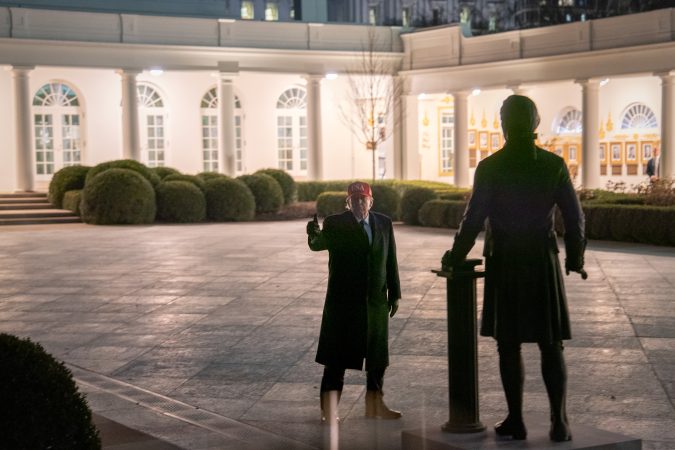
    President Donald Trump installed a statue of Thomas Jefferson in the Rose Garden in mid-July, according to two people who spoke on the condition of anonymity to describe the yet-to-be-announced move — continuing Trump’s effort to remake the White House and Washington.

    The bronze, life-size statue depicts the nation’s third president seated with a draft of the Declaration of Independence. It was sculpted by George Lundeen, who told the Washington Post that he received a congratulatory call from Trump this month.

    “I just wanted to thank you. The sculpture looks really beautiful,” Trump told Lundeen, in audio that Lundeen shared with the Post.

    The piece brings to five the number of sculptures Trump has installed in the Rose Garden, joining George Washington, Benjamin Franklin, and Alexander Hamilton, as well as a sculpture called Freedom’s Charge, which honors Revolutionary War soldiers. The Franklin, Hamilton, and Freedom’s Charge sculptures are on loan from Harlan Crow, a conservative art collector and political donor who had installed them on his Old Parkland corporate campus in Dallas, a spokesperson for Crow confirmed. The White House has not previously disclosed where the statues originated, saying only that they were on loan from “generous private American patriots.”

    The White House declined to comment on Crow’s loan of the statues. A spokesperson wrote in a statement that the president is pushing “to beautify and honor our Nation’s Capital during America’s historic 250 anniversary celebrations.”

    Trump on July 19 posted a flurry of messages related to his Washington renovation projects to Truth Social, including photos of cleaned-up statues outside of the White House and Union Station. He has spent years calling for more statues that recognize prominent Americans, particularly the nation’s Founding Fathers, past U.S. presidents, and other figures that Trump says deserve special recognition.

    “The President enjoys showcasing American Excellence and those Americans who exemplify excellence,” Rodney Mims Cook Jr., a designer and Trump appointee who chairs the Commission of Fine Arts, wrote in a text message.

    “I think he’s spot-on after the billions in Patrimony we destroyed after George Floyd died,” he added, referring to damage done to monuments during protests that followed Floyd’s killing in 2020. Trump responded by issuing executive orders calling for existing statues to be protected, the damaged statues to be restored, and new ones to be constructed. He also required that federally commissioned statues of historic figures be lifelike or realistic — and specifically barred abstract or modernist representations.

    “These statues are silent teachers in solid form of stone and metal,” Trump wrote in one of his 2020 orders. “They preserve the memory of our American story and stir in us a spirit of responsibility for the chapters yet unwritten.”

    Some art critics argue that Trump’s emphasis on memorializing specific people, rather than commissioning abstract works that evoke broader themes and feelings, is a lost opportunity.

    “All told, the statues dating to his second term are of negligible artistic value,” Maxwell Anderson, the former president of the Association of Art Museum Directors, wrote in an email. Anderson also drew comparisons between Trump’s preferences and what he said were similar practices by dictators who led North Korea and the Soviet Union.

    “President Trump’s embrace of an official classicizing style in art and architecture finds its closest equivalent in authoritarian regimes,” Anderson wrote.

    The sculptures have given Trump an unusually direct way to reshape the White House grounds and the broader capital city — albeit with moves that can be more easily reversed than his construction projects, such as his White House ballroom addition. Trump has planned an expansive sculpture garden in West Potomac Park, where he hopes to feature 250 “American heroes,” ranging from athletes such as Muhammad Ali and Kobe Bryant to Canadian TV host Alex Trebek. The president is also overseeing the cleaning and renovation of existing statues in parks across Washington, and he has celebrated the regilding of several statues near the Lincoln Memorial.

    He has also sought to restore some controversial statues to even greater prominence.

    Trump has overseen a new statuary exhibition in downtown Washington featuring a statue of Caesar Rodney, a signer of the Declaration of Independence, that was removed from public view in Delaware during protests in 2020 after criticism of Rodney’s role as an enslaver.

    Trump in March also installed the recreation of a Christopher Columbus statue that was torn down in Baltimore in 2020 on the White House grounds.

    The president has long said he was troubled by efforts to tear down and remove statues honoring Rodney, Columbus, and other historical figures, repeatedly broaching the topic in public remarks during his first term.

    “I like the idea of building new statues to people, to great people, people that have done something. And I think that’s OK,” Trump said in June 2020. “But you don’t want to take away our heritage, and our history and the beauty.”

    Two people who spoke on the condition of anonymity to discuss private conversations said Trump — who has faced his own share of protests — has in the past privately said he identified with figures such as Columbus, who was hailed for centuries as a great explorer before his role in colonization and enslavement made him controversial.

    Several satiric statues have appeared around Washington mocking Trump before being swiftly removed.

    Lundeen, who sculpted the Jefferson statue and whose work is displayed in museums, on campuses, and in capitals throughout the country, has also sculpted Trump himself. Last year, he met the president when installing a 7-foot bronze behemoth at his golf club in West Palm Beach. In the sculpture, Trump holds a MAGA hat in one hand. His other is raised in a fist, inspired by his “fight, fight, fight” stance following the assassination attempt in Butler, Pa.

    In the run-up to the country’s 250th anniversary, Lundeen said his friend Steven Barber, a filmmaker, facilitated communication with the administration in the hopes of getting one of his Jefferson statues to the White House.

    Lundeen, who has worked with his brother Mark to sculpt prominent statues, such as three Apollo 11 crew members for the Kennedy Space Center to celebrate the 50th anniversary of the first human moon landing, said he was delighted to receive the thank-you voicemail from Trump, which the president left on July 4.

    “When you’re a farm boy from the middle of Nebraska, it’s kind of neat to get a call from the president,” said Lundeen, 77. “You get a call like that, and you don’t know if it is one of your buddies playing a trick on you. If it’s a hoax, it’s a really good one.”

    The White House did not immediately respond to questions about Trump’s call to Lundeen. The New York Post first reported plans to install the Jefferson statue in the Rose Garden.

    The arrival of Lundeen’s Jefferson statue follows Trump’s decision to take a George Washington statue that was displayed at the Washington Monument and place it in the Rose Garden last year. The Hamilton and Franklin statues subsequently arrived in the Rose Garden in March, on loan from Crow.

    “Unbelievable statues,” Trump told reporters that month as he walked through the Rose Garden. He has also shown off the Rose Garden statues to foreign dignitaries and U.S. lawmakers.

    Freedom’s Charge — a sculpture by Chas Fagan, whom Trump appointed to the Commission of Fine Arts during his first term, and is on loan from Crow — also now sits in the Rose Garden. The sculpture features two life-size figures of American soldiers who fought during the Revolutionary War.

    Crow, a billionaire real estate mogul who has donated to a wide array of Republican politicians and been linked to conservative figures such as Supreme Court Justice Clarence Thomas, had previously distanced himself from Trump. In a lengthy piece in the Atlantic in 2023, Crow said he had self-diagnosed with “Trump Derangement Syndrome,” and he supported Trump’s rival Nikki Haley in the 2024 presidential campaign.

    Crow’s collection of outdoor sculptures in Dallas — which included a portion he once dubbed “The Garden of Evil” — drew national attention in 2023 for Crow’s selection of deposed dictators and other tyrants.

  • His doctor’s prescription for his unbearable pain seemed absurd. It worked.

    His doctor’s prescription for his unbearable pain seemed absurd. It worked.

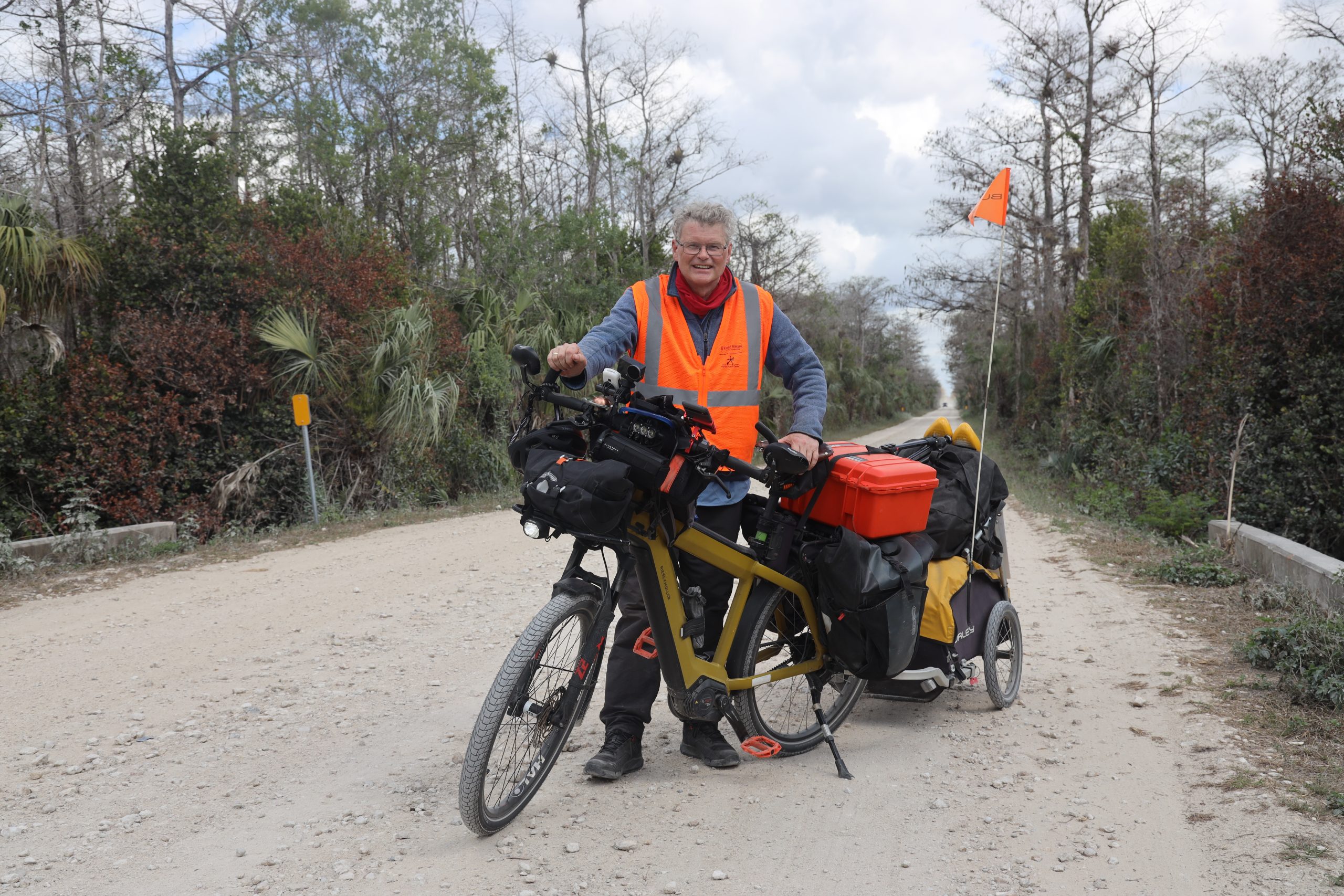
    The burning sensation started near the top of Gregory Maassen’s left arm. It quickly spread to his upper back and chest, and within a month, his whole body was burning — from his ears to his feet.

    Maassen, 51 at the time, spent most days in bed but struggled to sleep. He visited doctors who administered tests, including blood draws and an endoscopy, but none could pinpoint his medical condition. One doctor, Maassen said, thought the pain was due to mental illness.

    He got sicker and sicker over a few months. He feared he was going to die.

    More than a year after his symptoms began, Maassen was losing hope of ever identifying his medical condition when he found Ahmet Hoke, a neurologist in Baltimore.

    After a quick look at Maassen’s symptoms, Hoke correctly diagnosed him. The recovery plan Hoke gave Maassen in the following months changed Maassen’s life and unexpectedly led him to a therapy that became his passion: cycling.

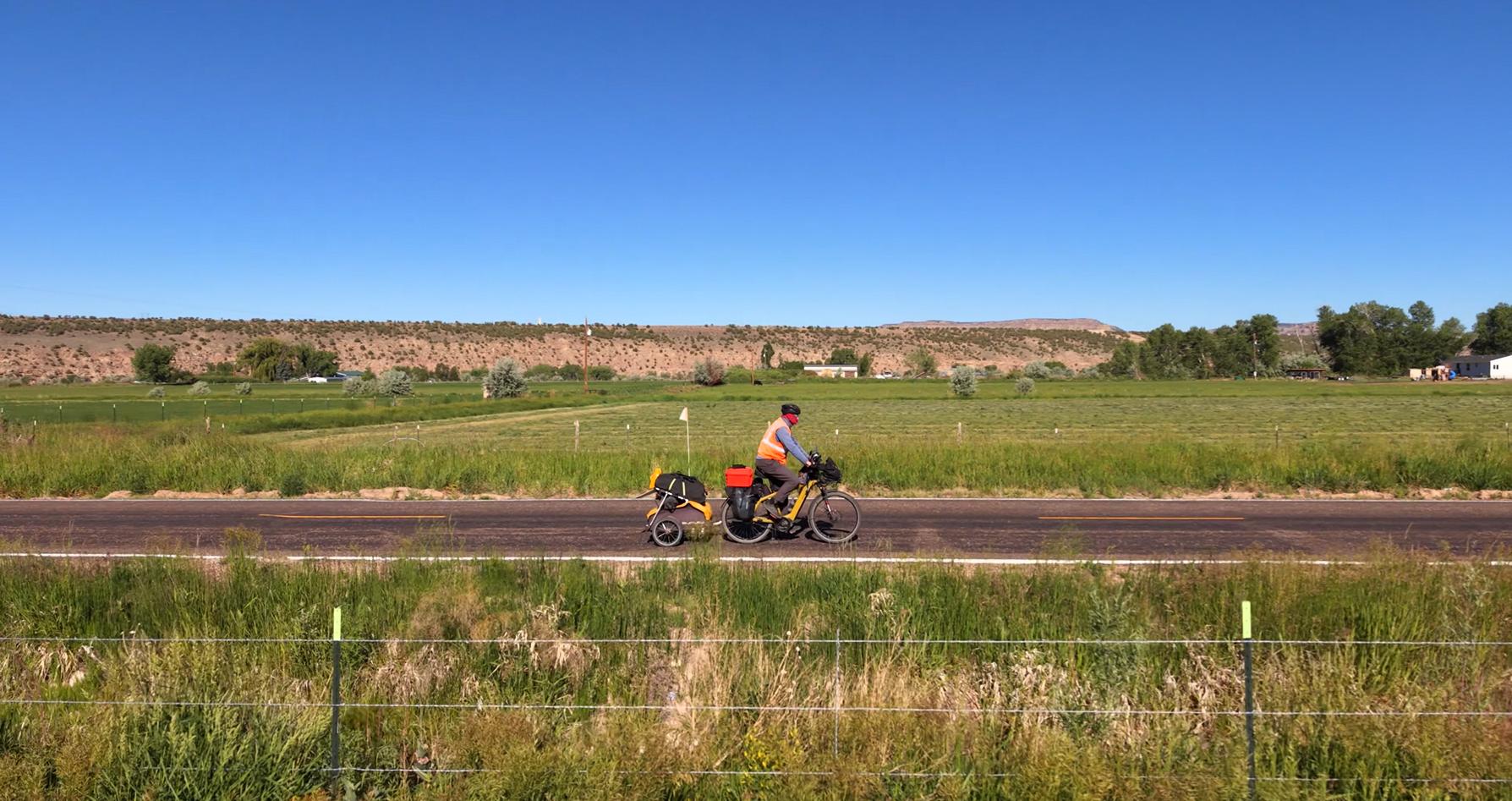
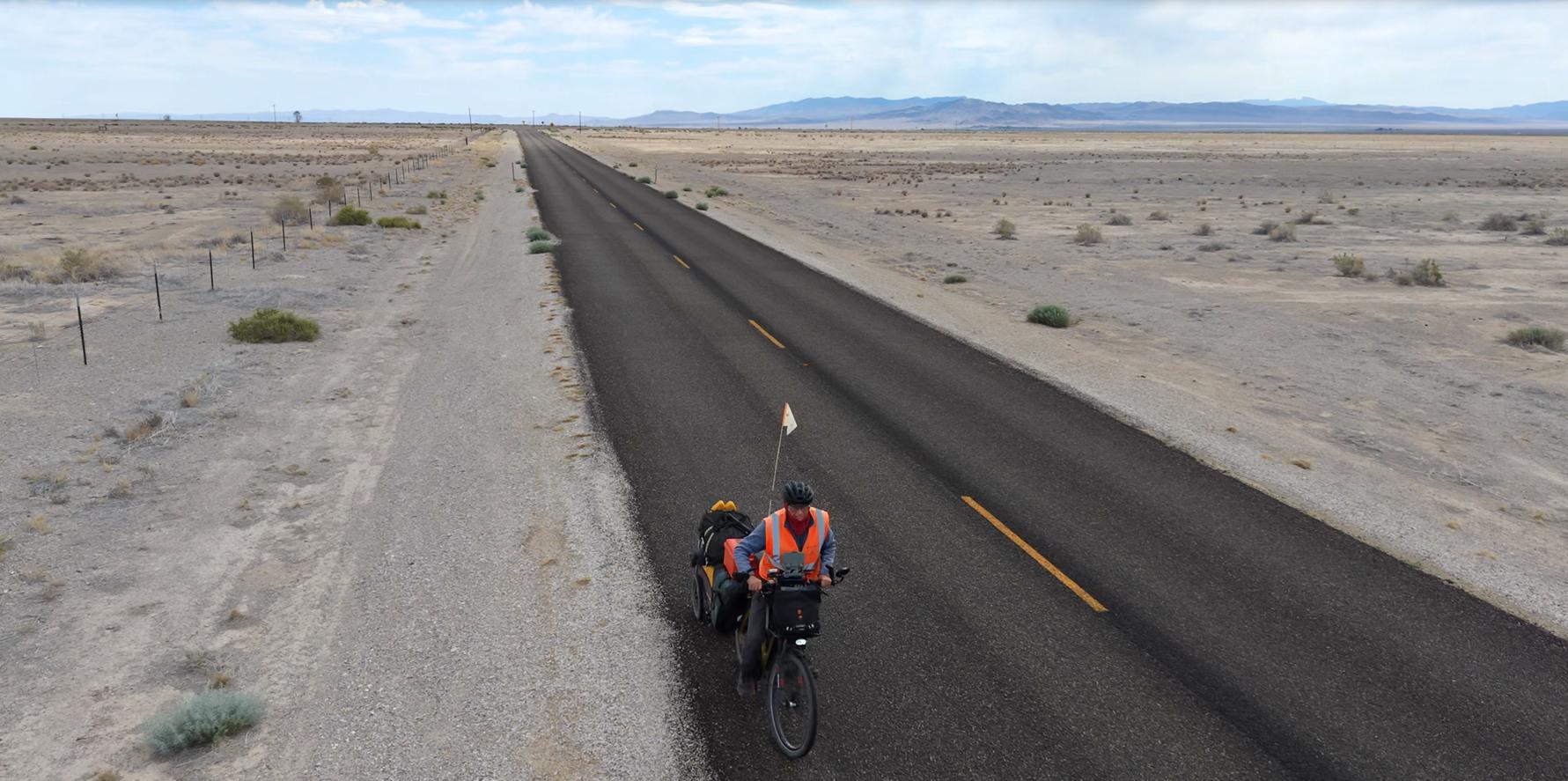
    Gregory Maassen biking near Duchesne, Utah, in June.

    After considering Maassen’s sudden and severe symptoms, Hoke diagnosed Maassen with small-fiber sensory neuropathy, a rare type of peripheral neuropathy that damages small nerve fibers. Since nerve conduction tests examine large nerve fibers, Hoke said, Maassen’s condition can sometimes go undiagnosed. While the likelihood of neuropathy increases with age, Hoke said about 0.1 percent of neuropathy cases match Maassen’s.

    A skin biopsy in April 2019 confirmed Maassen’s condition. Many factors can contribute to neuropathy, including diabetes, chemotherapy, and autoimmune disorders, but Maassen said he believes he developed it from tick bites.

    Hoke, who works for Johns Hopkins Medicine, prescribed Maassen medicine to manage his pain, including a gabapentinoid to treat nerve pain and an antidepressant that can also help with nerve pain. Maassen was relieved, but he was skeptical of Hoke’s other treatment plan: exercise.

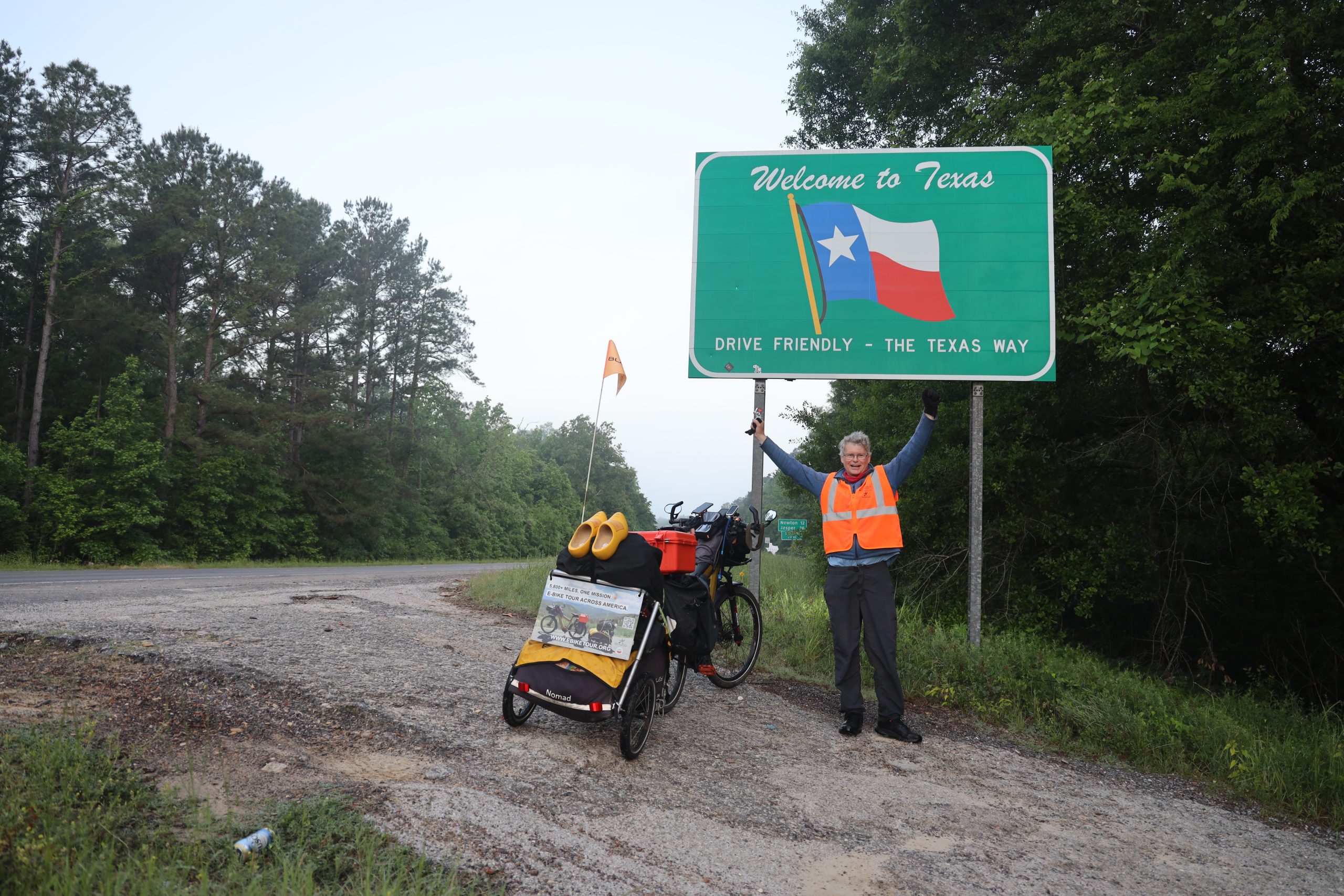
    Gregory Maassen rode into Texas in April.

    “Are you out of your mind?” Maassen recalled thinking. He was so tired and sore that moving through daily life was difficult. He could hardly imagine exercising.

    Exercise can regenerate nerve fibers and improve chronic pain for some neuropathy patients, Hoke said. Maassen, who left his contractor job with the U.S. Agency for International Development because of his illness, said he had no other hope.

    He tried swimming and hiking but said the workouts were too demanding. He joined a biking group near his home in Northwest Washington that mostly consisted of 60- and 70-year-olds, thinking their pace would be moderate. But Maassen couldn’t keep up.

    Gregory Maassen biked along the Mississippi River on his way to Los Angeles.

    Some of the bikers were riding electric bicycles, which Maassen had not seen before. E-bikes come with a battery and a motor that can make cycling less taxing and reduce resistance on hills, but bikers still get exercise by pedaling, balancing, and steering. Maassen thought he found the perfect solution.

    Still, after buying an e-bike in September 2019, Maassen felt exhausted on his first few rides around his neighborhood in North Cleveland Park and to-and-from local parks. But he said exercising improved his mood, so he kept returning to his e-bike. After a few weeks, his pain began to subside. His body felt better the more he rode.

    “I never had a day that I said, ‘Oh no, I have to do it again,’” Maassen said.

    Gregory Maassen biked in South Florida in March.

    Maassen started an e-bike group in the D.C. area in December 2019 called E-bike Lovers.

    He had cycled thousands of miles and stopped taking his pain medication by the time he had a more ambitious idea in 2021: He would e-bike from D.C. to San Francisco over four months in 2022 by riding along the Lincoln Highway. Meanwhile, he would fundraise money for neuropathy research.

    Even Hoke, who typically advises his neuropathy patients to walk, lift light weights or do Pilates, told the Post that he thought Maassen was “nuts.”

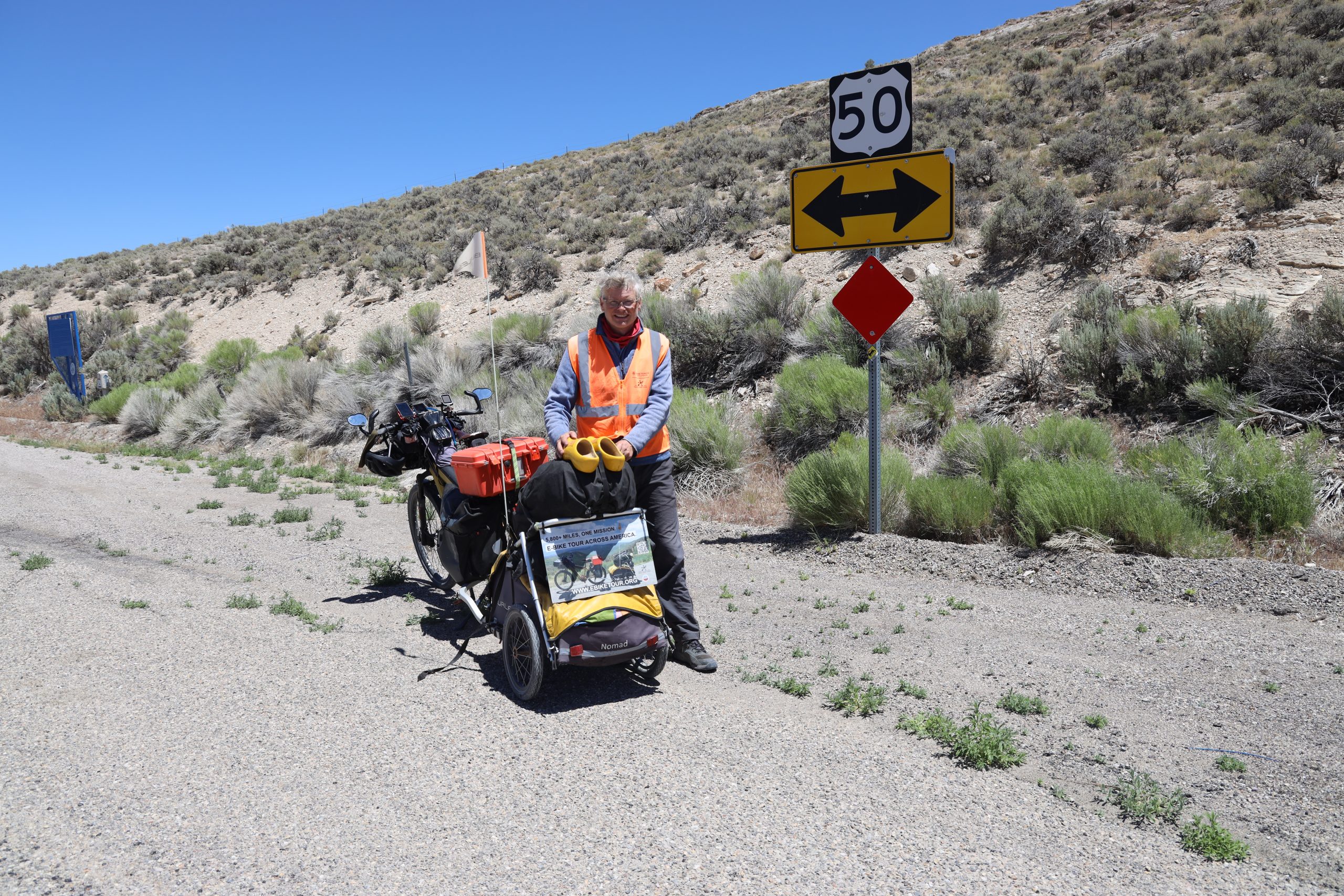
    Gregory Maassen biking in Baker, Nevada, in June.

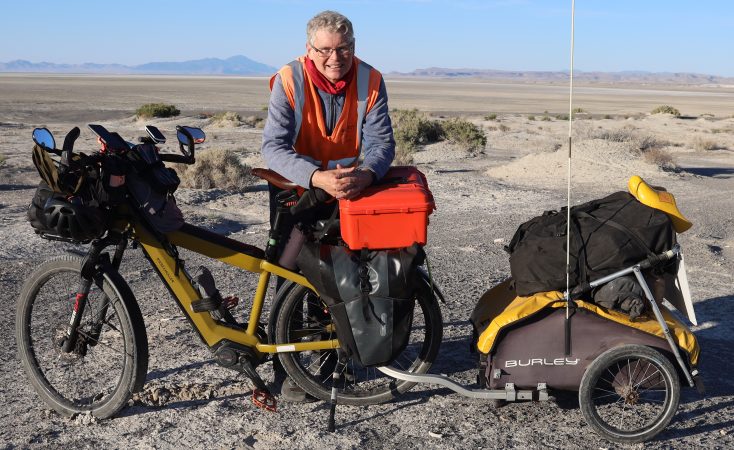
    Maassen rode his e-bike with a nearly 80-pound trailer attached that included a tent, clothes for camping, an orange safety vest, a drone, a camera, an electric toothbrush, and jars of creamy peanut butter. He biked through snow, pouring rain, and heavy winds. He passed deserts, cornfields, and mountains. Each day, he tracked down outlets to charge his bike.

    After traversing about 4,685 miles — about 65 miles per day — he had raised more than $179,000 from people he met along his route, other neuropathy patients, neurologists, family members, and friends, he said.

    This year in March, Maassen started another cross-country bike ride traversing about 7,250 miles. He departed from West Palm Beach, Fla., and was expected to finish in Los Angeles on Tuesday morning. He has raised more than $31,500 for Johns Hopkins Medicine’s neuropathy center.

    Gregory Maassen biked in Nevada in June.

    “I haven’t had a day in 2022, and also this year, that I say, ‘Well, do I really need to do this?’” Maassen said.

    With the money Maassen is raising, Hoke said he’s working to develop medicine that will hopefully regenerate nerves as effectively as exercise for neuropathy patients.

    Maassen, 59, said this will be his last cross-country bike trip, but he’ll find other ways to support neuropathy research. He promised his wife, Janet, that he would spend more time with her and their cat, Queenie.

    “That doesn’t mean that I will stop cycling,” Maassen said.

    Gregory Maassen biking in Texas in April.
  • 5 mosquito-fighting methods that work and 4 that don’t

    Layering on the bug spray might be the first thing that comes to mind when you think about avoiding itchy mosquito bites and the diseases that can come with them. But that’s far from the only tactic that mosquito experts use to minimize bites.

    For starters, Eva Buckner, an assistant professor and state extension specialist at the UF/IFAS Florida Medical Entomology Laboratory, recommends taking a step back and considering the source of the bugs, especially if you live in a home with a yard, deck, or other outdoor areas. Your No. 1 move, she said, is to clear the pockets of water that might be luring the bugs to your space in the first place.

    From there, she recommends a variety of products to repel the biting adults — some of which you might already have at home.

    Remove standing water and set traps

    “Mosquito eggs require water to hatch, and the larval stage is aquatic,” Buckner said. Walking around your home once a week and dumping even the smallest amounts of standing water — for example, in plant pot saucers, dog pools, tarps, or garbage can lids with indentations — can eliminate mosquito larvae and cut down on the habitat necessary for adult mosquitoes to breed, she said. A chat with your neighbors to make sure they’re doing the same can also go a long way toward reducing the number of biting adults that end up in your vicinity.

    If there’s a source of standing water near your home that you can’t or don’t want to remove, such as a bird fountain or pond, Buckner suggests tossing in mosquito bits (granules) or mosquito dunks (doughnut-shaped disks) once a month. These contain Bacillus thuringiensis israelensis, or Bti, a bacteria that can kill developing mosquito larvae without harming other wildlife.

    You can also make a DIY mosquito trap by filling a dark bucket with water and some leaves, and popping in a mosquito dunk. Female mosquitoes will be drawn to the bucket to lay their eggs, but the Bti will ensure they never hatch.

    Use EPA-registered repellent sprays, wipes, gels, and lotions

    The same active ingredients that repel mosquitoes in EPA-registered bug sprays can be found in other topical formats such as lotions, gels, and wipes — and to similar effect, said Buckner.

    “I like using products that contain DEET, which I know may not be everyone’s favorite ingredient because it can be a little oily-feeling and may damage plastics,” Buckner said, such as eyeglass frames, watch faces, and synthetic clothing, but “it is the absolute gold standard for preventing mosquito and tick bites.”

    If you’re looking for another option, she recommends products containing the following EPA-approved ingredients for this purpose: picaridin, a synthetic chemical mimicking compounds in black pepper plants; oil of lemon eucalyptus (OLE); para-menthane-diol, the active compound in OLE that can be synthesized in a lab; or IR3535, a synthetic compound similar to a natural amino acid.

    Among the above choices, the best format is just a matter of personal preference, Buckner said.

    Try permethrin-treated clothing

    Loose-fitting long-sleeve shirts and pants are a great defense against mosquitoes because “they create an effective barrier between you and the mosquito proboscis,” or its tubelike mouthpart, Buckner said. If you’re wearing tighter-fitted clothing, it may pierce right through it.

    To make it less likely that a mosquito approaches you in the first place, you could also wear clothing that’s been treated with permethrin, a synthetic insecticide that mimics a repelling compound naturally found in chrysanthemums, Buckner said. (It can also ward off ticks.)

    You can buy clothing that’s been pretreated with permethrin, or if you want to save some money, you could buy a 0.5% permethrin spray and spritz down a couple articles you own.

    Buckner emphasized following the package instructions when using any at-home permethrin product. It’s important to wait until treated clothing is dry before wearing it and to avoid using permethrin directly on your skin as it can be severely irritating.

    Permethrin is generally safe for dogs but can be highly toxic for cats. However, once a spray has dried onto clothes, it should be fine. Just make sure to use caution.

    Buy spatial and clip-on emanators

    These devices create a bubble of protection by slowly releasing an invisible, odorless vapor containing a mosquito-deterring ingredient. The key is to look for ones that have the chemical actives metofluthrin, transfluthrin or d-allethrin, Buckner said. Thermacell and Off! make several versions, including tabletop and patio lanterns — which can create a protective cloud spanning the surrounding 15- to 20-foot space — as well as smaller battery-powered devices and clip-ons you can take or wear on the go.

    Spatial emanators, also called spatial repellents, are most effective in still, non-windy conditions, Buckner noted, when the chemical cloud is less likely to be dispersed or blown away. Unless you’re holding or wearing a clip-on emanator, it’s also best to stay close to the emanating device, she added. The farther away you move, the less coverage you’ll receive.

    Set up a box or oscillating fan

    If you’ll be staying in one place for a while, for instance having dinner in your backyard or hanging out on the porch, it’s worth setting a big box or oscillating fan nearby, whether on a table or the ground.

    “Mosquitoes aren’t super strong fliers,” Buckner said.

    The breeze created by a fan set on high speed can make it tricky for mosquitoes to fly near you and land, or may even physically push them away from you, she explained. (If you’re already using a spatial emanator, however, it’s best not to involve a fan, too, as the extra airflow could blow away the protective scent cloud.)

    Repellent products to skip

    Combining any number of the above repellents will give you a supercharged dose of protection.

    What won’t help, however, is opting for the below products and tactics, which Buckner said aren’t proven, effective mosquito solutions:

    • Candles, wristbands, clip-ons, and topical repellents using botanical oils like citronella, geranium and peppermint. While these plant oils do have repellent properties, they evaporate rapidly, making them poor substitutes for EPA-registered repellents. (Different from these raw oils, the EPA-registered oil of lemon eucalyptus is an extract that’s been chemically refined to increase the concentration of the bug-repelling compound within it.)
    • Bug zappers, which use light to attract bugs and then electrocute them. “They might kill some mosquitoes, but they’re also going to kill any other insect or arthropod that is attracted to light,” Buckner said, “so they can have a lot of non-target effects.”
    • Mosquito-repelling plants. “For essential oils to have repellent properties, they have to be extracted from the plant and then concentrated by up to 10 or 20 percent,” Buckner said. So a plant that’s still in the ground won’t reliably ward off bugs.
    • A bat box. “Bats want to eat something that offers a high caloric intake, so they’re more likely to go for a big, juicy moth vs. a scrawny mosquito,” Buckner says. “I love bats and want to support their conservation — but they’re just not going to be your solution for mosquito control.”
  • Tropical Storm Bertha forms on track approaching US Gulf Coast

    Tropical Storm Bertha forms on track approaching US Gulf Coast

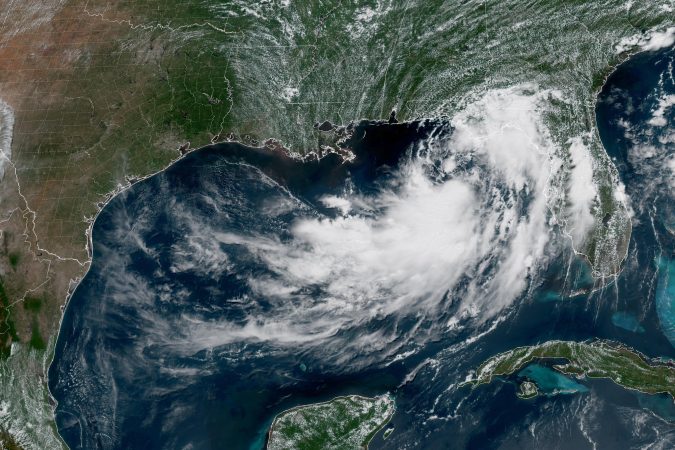
    NEW ORLEANS — Tropical Storm Bertha formed Monday evening in the Gulf of Mexico off the Florida Panhandle and could bring heavy rain and storm surge flooding to U.S. coastal areas, forecasters said.

    The center of Bertha was located about 110 miles south of Panama City, Fla. Maximum sustained winds were around 40 mph, according to an evening advisory from the Miami-based National Hurricane Center.

    The slow-moving storm has been drifting erratically but is expected to stay near or along the northern Gulf Coast early this week, bringing heavy rainfall to areas of northern Florida, Alabama, Mississippi, and Louisiana as it pushes westward toward Texas. Forecasters said some additional strengthening is expected in the coming hours.

    Bertha is the second tropical storm of the Atlantic hurricane season. Tropical Storm Arthur last month brought heavy rainfall to the southeastern United States.

    A storm surge watch has been issued, extending from the mouth of the Mississippi River to the Alabama-Florida border on the Gulf Coast.

    A tropical storm watch also is in effect from the Ochlockonee River in Florida westward to southeastern Louisiana at the Jefferson and Plaquemines parish line.

    The National Weather Service office in New Orleans said storm conditions may set in from the Florida Panhandle westward into Louisiana by Tuesday. It warned of wind gusts of 40 mph and noted a possible “life threatening” storm surge watch for the Alabama, Mississippi, and southeastern Louisiana coasts.

    Storm surges of up to 4 feet could occur in portions of the Louisiana and Mississippi coastlines, the hurricane center said, warning there also could be an isolated tornado or two possible over the Florida Big Bend region this week.

    Areas of flash flooding will also be possible through Friday along the coast, from western Florida to middle Texas, the weather service said. It added that rainfall could reach 3 to 5 inches along the Louisiana coastline with higher amounts expected in some areas, notably south of Lake Pontchartrain.

    Meanwhile, in the eastern Pacific Ocean, Tropical Storm Fausto strengthened Monday and was nearing hurricane status far out to sea from Mexico.

    Fausto had top sustained winds of 70 mph on Monday and was located about 745 miles southwest of the southern tip of Mexico’s Baja California Peninsula. The hurricane center said it was moving northwest at 10 mph while posing no threat to land.

  • Paramount Skydance’s $110B merger with Warner Bros. Discovery paused by judge

    Paramount Skydance’s $110B merger with Warner Bros. Discovery paused by judge

    A federal judge on Monday paused Paramount Skydance’s $110 billion merger with Warner Bros. Discovery — a deal that has promised to reshape Hollywood and the TV news industry — in response to an antitrust lawsuit brought by 12 Democratic state attorneys general last week.

    U.S. District Judge Araceli Martínez-Olguín granted the states’ request for a temporary restraining order, finding that they raised serious questions about the anticompetitive nature of the deal.

    If the merger closes, it would combine the Paramount and Warner Bros. studios, the TV giants CNN and CBS, and streaming services HBO Max and Paramount+.

    In a statement after the ruling, California Attorney General Rob Bonta called the decision a “critical first win in our case to ensure this megamerger never sees the light of day.” California is the lead plaintiff in the case.

    “History tells the tale of what happens when a few people have great power over markets that are central to Americans’ lives: fewer opportunities for more people, worse products and services for all people,” he said.

    Paramount Skydance said in a statement that it is “confident the evidence will demonstrate that the State AGs’ antitrust arguments are without merit as their alleged markets and claims of anticompetitive effects are without any basis in modern market realities.”

    “This merger is lawful, pro-competitive, and will benefit consumers, creators, workers, and the entertainment industry,” the statement added. “We will continue to vigorously defend the transaction and will look forward to the hearings on the substance of the State AGs’ action.”

    The emergency ruling, pausing the merger for 14 days, comes after a Friday hearing in which California’s attorneys presented their case for the first time. The judge asked the parties to reconvene in court on Aug. 3, when she will consider motions for a longer-lasting preliminary injunction.

    The states aren’t the only parties trying to get courts to stop the deal.

    A group of consumers has sued in federal district court in Northern California, as has the Writers Guild of America, the union representing Hollywood screenwriters and many journalists.

    A shareholder lawsuit was separately filed in Delaware’s state chancery court.

    British regulators, too, are considering efforts to intervene, although it’s unclear whether they could fully block the deal.

    The deal would put David Ellison — son of billionaire Oracle founder Larry Ellison, an ally of President Donald Trump — in charge of one of the most powerful companies in American media.

  • Wall Street drifts as AI stocks hold steadier after last week’s losses

    Wall Street drifts as AI stocks hold steadier after last week’s losses

    NEW YORK — Wall Street drifted to a quiet finish Monday after stocks of chipmakers and other winners of the artificial-intelligence boom trimmed some of their recent losses.

    The S&P 500 dipped 0.2%, coming off its first losing week in the last three and just its third since the end of March. The Dow Jones Industrial Average dropped 307 points, or 0.6%, and the Nasdaq composite was basically flat after slipping by less than 0.1%.

    Nvidia added 0.2% and held firmer following its drop on Friday, when it was the heaviest weight on the S&P 500. Sandisk climbed 2.7% after tumbling 29% last week.

    Advanced Micro Devices rose 1.6% after announcing an expanded partnership where Microsoft will use its products for AI, including its new Helios product starting in the second half of the year.

    Such stocks have been under pressure for weeks on worries that their prices shot too high in the euphoria around AI. On one hand, companies are making billions of dollars in revenue as customers pour money into AI chips and data centers. But all that spending may fizzle out if AI doesn’t produce as much profit and productivity as promised.

    Wall Street may get some hints on that soon as some of the biggest spenders on AI report their latest quarterly results. On Wednesday, Alphabet will tell investors how much it made during the spring and give updates on its AI efforts.

    All kinds of companies are under pressure to report strong growth in profit for the spring. They will need to in order to justify the big moves their stock prices have made. Indexes are near their records, even with the recent shakiness for AI stocks.

    AMC Entertainment jumped 26.8% after the movie-theater operator reported stronger revenue for the latest quarter than analysts expected. It also said some of its theaters in Los Angeles and other cities ran “The Odyssey” for more than 85 straight hours from Thursday through Sunday to meet demand.

    Domino’s Pizza climbed 2.1% after delivering stronger revenue for the spring than expected. CEO Russell Weiner said the company saw growth in orders for both its carryout and delivery businesses, even with the broad industry continuing “to face pressure on consumer demand.”

    Another restaurant chain, Jersey Mike’s, is beginning its roadshow to raise interest in its stock, which it’s planning to sell on the New York Stock Exchange for between $21 and $25 per share in an initial public offering.

    It and other businesses are facing pressure in selling to U.S. households feeling crunched by still-high inflation, thanks in large part to high gasoline prices. The average cost for a gallon of gasoline in the United States has gotten back above $4 because of higher crude oil prices.

    After dropping below $72 early this month, roughly back to where it was before the war with Iran began, the price for a barrel of Brent crude has been jumping recently as fighting continues in the Middle East.

    On Monday, the price swung between roughly $86 and $91 before settling at $89.22, up 1.3%.

    The war with Iran is keeping oil tankers from using the Strait of Hormuz to deliver crude from the Persian Gulf to customers, which pushes up oil’s price. S&P Global counted only 127 vessels crossing the strait during the week through Sunday, down nearly 50% from the week before.

    Worries about expensive oil and high inflation have sent Treasury yields higher in the bond market, which threaten to slow the economy and undercut prices for stocks and other investments.

    The yield on the 10-year Treasury climbed to 4.59% from 4.55% late Friday and from just 3.97% before the war with Iran. Higher yields have already sent the average 30-year mortgage rate to its highest level in nearly a year.

    The higher yields weighed on the broad U.S. stock market, and the majority of stocks fell on Wall Street.

    A 3.8% drop for Warner Bros. Discovery also helped erase a gain for the S&P 500 early in the day. A federal judge ordered it and Paramount to halt their $81 billion merger for at least two weeks, allowing states that are challenging the deal more time to see their case through in court.

    All told, the S&P 500 fell 14.41 points to 7,443.28. The Dow Jones Industrial Average dropped 307.16 to 51,839.26, and the Nasdaq composite slipped 12.17 to 25,508.07.

    In stock markets abroad, indexes ended mixed in Europe.

    The moves were sharper in Asia, where South Korea’s Kospi fell 4.5%. It’s been at the center of the huge swings for AI stocks because it’s dominated by two tech companies, Samsung Electronics and SK Hynix.

    Stocks were stronger in China, where indexes rose 2.4% in Hong Kong and 0.9% in Shanghai.

    AP Business Writers Chan Ho-him and Matt Ott contributed to this report.

  • Trump imposes 50% tariffs on Canadian goods, citing disputes over autos, alcohol, and cheese

    Trump imposes 50% tariffs on Canadian goods, citing disputes over autos, alcohol, and cheese

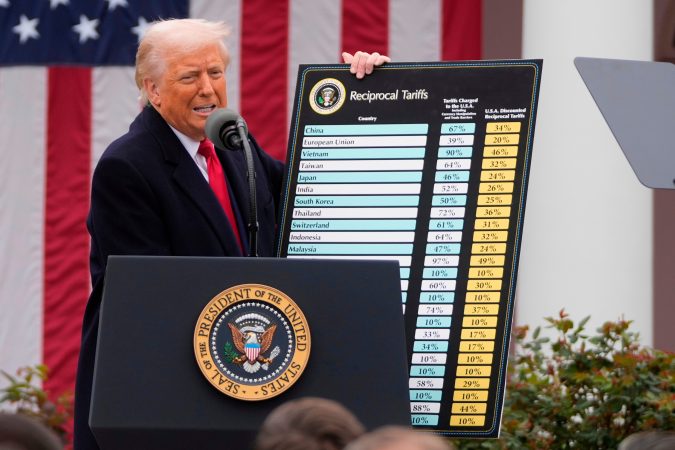
    WASHINGTON — President Donald Trump on Monday imposed 50% tariffs on most Canadian goods, declaring that Canada has unfairly discriminated against American autos, alcohol and dairy products.

    The move could unleash a new wave of economic chaos, with risks of higher inflation and further fraying of relations between two nations that had been closely woven together before Trump’s return to the White House. The administration official previewing the action said that Canada was one of the only nations other than China that retaliated against Trump’s previous tariffs and must be held accountable.

    The official insisted on anonymity on a call with reporters to preview the president’s actions and said that Trump signed three proclamations to launch the tariffs under Section 338 of the 1930 Trade Act. Several Democratic lawmakers last year proposed repealing the section because they said Trump could use it to destabilize the economy.

    The new 50% tariffs would exclude energy products, potash, fish, and critical minerals, but they would include goods that had previously been protected from import taxes by the United States-Mexico-Canada Agreement, or USMCA. That 2020 trade pact was not renewed by the U.S., triggering a new set of negotiations that could run until 2036.

    The White House said in a fact sheet that the tariffs would go into effect in 30 days, meaning there is time for negotiations as Trump has not always followed through on his announced tax hikes on imports.

    Still, the tariffs could escalate into a wider trade war as Canada seeks to defend its economy.

    The Canadian federal government did not immediately comment on the tariff, but Ontario Premier Doug Ford saw a possible showdown ahead.

    “If these tariffs proceed, Canada should respond tariff for tariff, dollar for dollar,” Ford posted on social media.

    Candace Laing, CEO of the Canadian Chamber of Commerce, said the Trump administration’s moves were “regrettable” but the two countries need to use the 30-day window before the tariffs start “to make meaningful progress in advancing formal talks.”

    Chris Swonger, CEO of the Distilled Spirits Council of the United States, also called for a deal: “We encourage policymakers on both sides of the border to pursue a negotiated solution that restores market access for U.S. spirits and avoids further harm to the U.S. hospitality sector.”

    But the use of a Great Depression-era law to impose the tariffs broadens some of the risks, as those tariffs could be applied to other U.S. trading partners, not just Canada, and inject “massive uncertainty” into the global economy, said Scott Lincicome, vice president of general economics at the Cato Institute, a libertarian think tank.

    “We crossed the Rubicon,” Lincicome said. “The invocation of 338 is the nuclear option for Trump tariffs.”

    Tariffs are also a political challenge for Trump

    The new tariffs carry serious political and economic risks for Trump ahead of the November midterm elections for control of Congress. His “Liberation Day” tariffs last year in April provoked a financial market meltdown over concerns about inflation and a recession, prompting him to walk back the rates for a period of negotiation.

    The Supreme Court ruled this February that Trump had lacked the legal authority to impose the tariffs by declaring an economic emergency, causing the administration to find alternative ways to raise import taxes based on a series of legal authorities.

    Tariffs are taxes on imports, which companies can then pass along to consumers in the form of higher prices. The president maintains that the costs created by tariffs will cause manufacturing to relocate to the U.S., though there is little evidence of that in the economic data.

    “These new taxes will raise prices on American families and likely lead to retaliation against the very industries Trump purportedly wants to protect,” said Rep. Suzan DelBene (D., Wash.), who is chair of the Democratic Congressional Campaign Committee.

    The latest import taxes could worsen Trump’s weak ratings on the economy. He promised voters when running for the presidency that he would bring prices down, but the annual inflation rate has risen since he became president because the tariffs and the war in Iran are pushing up oil prices.

    Trump has repeatedly targeted Canada on trade issues

    The Trump administration official said the president had also requested that his aides look into additional tariffs on Canada because its wildfires hurt air quality in the U.S. He had publicly threatened to do so in social media posts.

    At the World Cup final on Sunday, Trump watched the game with Canadian Prime Minister Mark Carney, who has openly challenged the U.S. president and has sought to expand Canada’s trade relations with other nations. The Trump administration official said their time together at the game was not a working visit to discuss trade and tariffs.

    Trump claims in the proclamations that Canada discriminates against American autos, alcohol, and cheese relative to other nations, but his argument rests in large part on retaliatory actions taken by Canada after the U.S. president imposed tariffs on Canada under the pretext that it should do more to stop fentanyl smuggling.

    Trump noted in his autos proclamation that Canada maintained, starting in April 2025, a 25% tariff on the imports of U.S. motor vehicles that did not qualify for preferential treatment under the USMCA.

    The White House said that, regarding alcohol, all but two Canadian provinces and territories halted the purchase and retailing of American alcoholic beverages beginning last year, which was also a response to Trump’s tariffs and taunts of making Canada the 51st state.

    But Trump has long objected to Canada’s treatment of U.S. cheese, saying in his proclamation that Canada discriminates against the U.S. compared to Europe on dairy products.

    Trump has had a frosty relationship with Carney, a former central banker, who pledged to stand up for Canada during his election campaign last year.

    At the World Economic Forum in Davos, Switzerland, in January, Carney called out Trump — without naming him — by saying that the “most powerful” countries are using the economy to coerce less powerful nations.

    Trump responded at the time by saying: “Canada lives because of the United States.”