Category: Wires

  • June 1 trial date set for Venezuela’s Nicolás Maduro in his U.S. drug trafficking case

    June 1 trial date set for Venezuela’s Nicolás Maduro in his U.S. drug trafficking case

    NEW YORK — Former Venezuelan president Nicolás Maduro and his wife will go on trial on drug trafficking charges next June, a judge said Wednesday, as their lawyers continue to object to the U.S. military action that snatched them from power.

    Judge Alvin K. Hellerstein set the June 1 trial date at the request of lawyers on both sides. Under the approved schedule, defense lawyers will begin filing requests in early September to challenge the indictment and the couple will return to the courtroom Nov. 17 for oral arguments on the motions.

    Maduro, 63, and his wife, Cilia Flores, 69, have been held at a Brooklyn jail since U.S. forces seized them from their Caracas home in a middle-of-the-night raid and brought them to New York in early January.

    Neither spoke during Wednesday’s 15-minute hearing as each sat separately at a defense table, surrounded by their lawyers. Both have pleaded not guilty. They face potential life prison sentences if a jury agrees that they were part of a conspiracy to send cocaine into the U.S.

    As he was led into the courtroom, the bespectacled Maduro greeted the judge’s staff and shook hands with lawyers for him and his wife. Noticeably thinner in a tan jail suit and with his thick mustache, he seemed upbeat, smiling and chatting with his lawyer. He listened to a Spanish interpretation of the proceeding through headphones and clasped his hands in front of him in a prayerlike gesture. He had a black pen wedged in his right fingers and sporadically jotted notes on a white pad.

    As deputy U.S. marshals led him out, he waved to someone in the gallery.

    President Donald Trump’s administration has defended the raid to capture Maduro as a “surgical law enforcement operation” in a criminal case first brought six years ago. Maduro has called himself a prisoner of war and his capture a kidnapping.

    U.S. prosecutors say Maduro carried out a conspiracy to move thousands of tons of cocaine into the U.S. by colluding with Venezuelan law enforcement to help drug kingpins.

    “I am not guilty. I am a decent man, the constitutional president of my country,” he said in Spanish at his arraignment in January.

    Maduro’s lawyer, Barry Pollack, has said he expects to contest the legality of Maduro’s “military abduction.”

    During Wednesday’s hearing, Pollack said he will first challenge the indictment on sovereign immunity grounds because if that is successful, Maduro won’t have to continue litigating the case.

    The lawyers have said there are complex legal defenses that the court must address before a trial can begin.

    Maduro and Flores have not asked to be released on bail.

  • Arizona primary takeaways: Trump’s picks prevail and a House Democrat survives

    Arizona primary takeaways: Trump’s picks prevail and a House Democrat survives

    Arizona voters on Tuesday gave President Donald Trump the candidates he wanted in primary elections and sent a mixed message to the Democratic establishment, choosing candidates for governor and the U.S. House that set up key races this fall.

    Three Republicans who questioned or attempted to overturn the results of the 2020 presidential contest won nominations for offices with influence over certifying 2028 election results in the pivotal swing state.

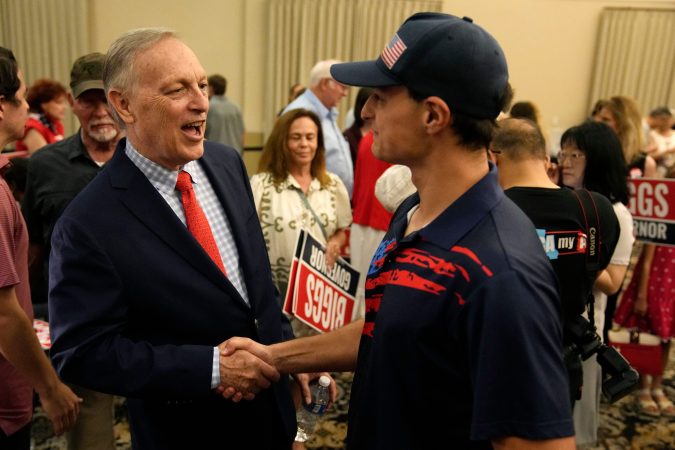
    While Trump’s MAGA brand has stumbled in Arizona in recent years — as demonstrated by the failure of Kari Lake to win either governor or Senate races — voters went with the president’s choice of Rep. Andy Biggs for the GOP nomination for governor over the more traditional conservatism of Rep. David Schweikert.

    On the Democratic side, one candidate favored by the national party held off a challenge from the left.

    Here are some takeaways from the Arizona primaries, which tee up contests that could help determine control of the House in November’s midterms:

    Trump-favored Biggs will carry Republican banner for governor

    Biggs beat Schweikert for the chance to run this fall against Democratic incumbent Gov. Katie Hobbs, who was unopposed in her primary.

    As chairman of the hard-right House Freedom Caucus from 2019 to 2022, Biggs has made a name as a prominent Trump supporter and MAGA activist who questioned the legitimacy of the 2020 presidential election. That hasn’t always played well in Arizona, and his staunch opposition to abortion sets up a stark contrast with Hobbs in the general election.

    Arizona voters passed a constitutional amendment in 2024 that made abortion legal until the point of fetal viability, but many Republicans who control the state legislature continue to favor restrictions.

    Hobbs, who promotes herself as a bipartisan politician, has said in interviews that she expects a close contest with Biggs. The nonpartisan Cook Political Report, the election analysis site, rates the state as leaning Democratic.

    Election deniers win key spots

    Election denial is on the Arizona ballot this fall, with Republicans’ choice of Biggs for governor, state Senate President Warren Petersen for attorney general and state Rep. Alexander Kolodin for secretary of state.

    Petersen has long made unfounded claims of fraud in the 2020 presidential election and, earlier this year, gave the FBI files from a 2021 state Senate investigation into claims of election irregularities in Maricopa County as part of Trump’s ongoing effort to question the results. That county investigation had confirmed that Democrat Joe Biden was the victor.

    Kolodin is a lawyer who was sanctioned by the State Bar of Arizona and placed on probation for his role in filing the “kraken” lawsuit in 2020 that sought to prevent the state’s presidential electors from casting their ballots for the victor, Biden. The suit made false claims about election irregularities and was thrown out by a federal judge.

    Kolodin has continued seeking to restrict voting in his role as a state lawmaker, introducing legislation to limit early voting. As secretary of state, he would be in charge of running Arizona’s elections, with the swing state poised to play a significant role in the 2028 presidential contest.

    He defeated Gina Swoboda, former head of the state Republican Party, for the nomination and will challenge incumbent Democrat Adrian Fontes this fall.

    Biggs was among Republicans in the House who voted against certifying the 2020 election, which Trump lost. Trump attempted to pressure Arizona’s governor at the time, Republican Doug Ducey, into overturning the state’s election results, but Ducey resisted.

    Former NFL player could join the House

    Jay Feely, a former NFL kicker for the Arizona Cardinals, won the Republican nomination for Arizona’s 1st Congressional District. If he wins this fall, Feely would join a select list of former NFL players who made the transition to Congress. Rep. Burgess Owens (R., Utah), a former safety who won a Super Bowl with the Oakland Raiders in 1981, is currently serving. Former Rep. Colin Allred (D., Texas), once a linebacker for the Tennessee Titans, is seeking a comeback this fall after giving up his seat to run for Senate in 2024.

    Feely played for seven teams over a career of some 13 years, then reported on NFL and college games as a television announcer until 2025. He earned Trump’s endorsement with a campaign based on what his website calls “faith, freedom and the fight to take back our country.”

    Cook Political Report rates the open seat as a toss-up, though, and Democrats have the affluent Scottsdale-based district high on their list of possible flips to help them retake control of the House.

    Establishment-backed Democrat lagging in swing seat

    Former state lawmaker Amish Shah is leading in the race to be the Democratic nominee for the 1st District seat over the candidate favored by the House Democratic campaign arm, retired broadcast journalist and former Republican Marlene Galán-Woods. The Associated Press has not called the race as of Wednesday morning.

    Some grassroots Democrats preferred Shah, an emergency-room doctor who beat Galán-Woods for the nomination in 2024, then lost the general election to Schweikert.

    Galán-Woods is the widow of Arizona’s former GOP Attorney General Grant Woods, who had been a confidant of the late Sen. John McCain (R., Ariz.) and renounced the Republican Party once Trump came to power. Galán-Woods says she switched around the same time. “I have always been pro-choice, pro-democracy, pro-climate. My values have never changed. What changed was the Republican Party,” she said in a 2024 debate.

    The Democratic Congressional Campaign Committee, the official campaign operation of House Democrats, and other party stalwarts such as EMILY’s List went to bat for Galán-Woods, who had a narrow fundraising lead over Shah as of July 1.

    Galán-Woods would be the third DCCC-backed candidate to lose a contested House primary this year, including Jasmeet Bains in California and Joe Baldacci in Maine, as Democratic voters have expressed frustrations with their party’s establishment.

    Challenger from the left fails to unseat incumbent Democrat

    While left-wing challengers have had success against more centrist Democrats in some parts of the country, the trend didn’t hold in Arizona’s 4th Congressional District. Incumbent Rep. Greg Stanton easily won his primary against challenger Kai Newkirk, a self-described democratic socialist.

    Newkirk won the endorsement of several national left-wing groups and attacked Stanton for supporting military aid to Israel, opposing Medicare-for-all and accepting corporate political donations.

    Stanton, who has represented the district since 2019 and is a former mayor of Phoenix, far outraised Newkirk. The district includes parts of Phoenix, Tempe, and Mesa, and has become more conservative since a 2022 redistricting.

  • France recorded 5,700 more deaths than usual during its historic June heat wave

    France recorded 5,700 more deaths than usual during its historic June heat wave

    PARIS — France recorded at least 5,700 more deaths than usual during a historic heat wave last month, the public health agency said Wednesday, sharply increasing its estimates of the feared toll from record-shattering temperatures.

    Public Health France said regions hit by the heat from June 17 to July 2 recorded 21,674 deaths from all causes. But without a heat wave, those same regions would have been expected to have seen far fewer deaths, or 15,910, based on statistical modeling using data from previous years, it said.

    The difference between expected and actual deaths — a total of 5,764 — are therefore considered to be “excess” deaths during the heat wave, the agency said.

    It said the excess mortality, with 36% more deaths that would normally have been expected, was the highest from any heat wave since 2003. A historic heat wave that year caused an estimated 15,000 deaths in France.

    France registered its hottest-ever days on June 24 and June 25 this year — with a national average of 86 degrees — as well as record heat at night and peak temperatures that soared well above 104 in many places.

    Just over half of the unexpected deaths occurred during and in the immediate wake of that hottest period, over three days from June 25 to June 27, the public health agency said.

    “This unprecedented episode, characterized by its early onset, intensity, and duration, exposed nearly the entire population to extreme heat during a period when school and work activities were still in full swing,” the agency noted.

    All told, across Europe, extreme temperatures that hit exceptionally early and hard this year saw well over 10,000 more deaths at the height of the heat wave than would normally have been expected, according to figures that are still emerging across the continent.

    In France, the Paris region appears to have been hardest hit, recording 1,999 unexpected deaths — around 80% more than would otherwise have been anticipated without a heat wave, the French health agency said.

    Funeral service directors in Paris said they struggled to find places to store bodies before burial or cremation, with some mortuaries saying they were full and having to turn bodies away.

    Nearly half of the more than 21,600 people who died passed away in hospitals, which wrestled with surges of patients suffering from heat-related ailments. About a third died at home and the rest were mostly deaths in care homes for older people, the agency said.

    The latest estimated death toll, which the agency said will be updated later in the year with more complete data, was sharply higher than initial figures it had given. It had previously reported around 2,000 additional deaths from all causes for the week of June 22 to June 28, the peak in France of the heat wave that also broke temperature records in many other parts of Europe.

    Experts caution that it takes awhile for a full picture to emerge, and that many heat-related deaths will never formally be recorded as such. For example, a heart attack, which can be triggered by extreme heat exposure, especially in people who are older or have underlying health issues, may be listed on a death certificate simply as a heart attack.

  • Modeling agent who introduced women to Jeffrey Epstein found dead in France

    Modeling agent who introduced women to Jeffrey Epstein found dead in France

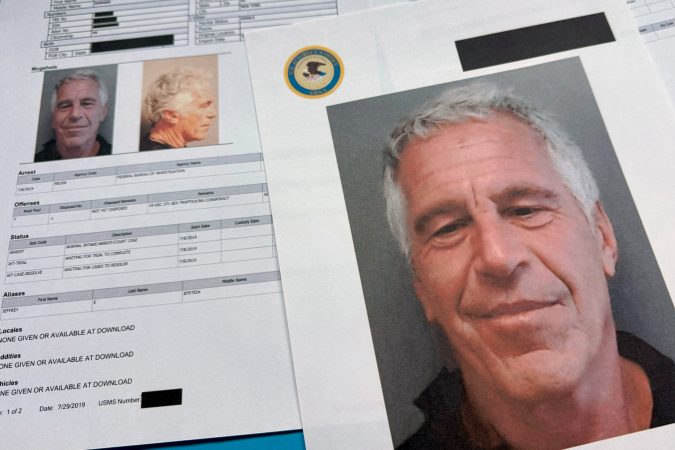
    A modeling agent who introduced young women and teenage girls to convicted sex offender Jeffrey Epstein was found dead at his home near Paris this week, French officials said.

    The body of Daniel Siad, 69, was discovered Monday at his home in Colombes, a suburb of Paris, Marie-Céline Lawrysz, deputy public prosecutor at the Nanterre Judicial Court, said in a statement Wednesday. She said an investigation was opened that evening into the cause of death.

    For roughly a decade, Siad corresponded with Epstein about young women and teenage girls, sometimes describing them by their ages and nationalities and then offering to send Epstein photos, according to emails that were included in the expansive Epstein files released by the Justice Department.

    In a 2009 email, Siad described a woman from Latvia who was 5 feet 8 inches tall: “she is 20 years old but she looks younger,” Siad wrote to Epstein.

    In a 2014 email, Siad discussed a 15-year-old French girl whose parents were excited for her to start modeling. He also mentioned 16- and 17-year-olds.

    “This busyness I feel like fisherman some time I cache quick , some time no fish,” Siad wrote to Epstein.

    In an interview last month with CNN, Siad pushed back on the suggestion that he should not have introduced aspiring models to Epstein because it was public knowledge that the financier was a convicted sex offender. Siad maintained that Epstein, who was released from jail in 2009 after serving 13 months of an 18-month sentence, was a “free man” and had always been “very professional” with him.

    “I never doubt that because I never heard anything from anyone who I introduced [to Epstein], who came back to me that they had a bad – a bad situation with him,” Siad told CNN.

    In the same interview, Siad said he regretted meeting Epstein.

    “Yes. I feel – it’s like a nightmare,” Siad told the network. “… He was such a powerful person. And how can I not trust him?”

    The expansive Epstein files released by the Justice Department exposed the financier’s cozy relationships with high-profile and powerful associates, leading to cascading resignations and public shaming.

    But a review of the files by The Washington Post also revealed how Epstein cultivated a network of lesser-known associates – including those from the modeling industry – who offered to bring women into his orbit in the years after he was released from jail.

    The emails were often crude and sexualized, even if the purpose of the introduction was not explicitly stated. A Swedish modeling scout, for example, messaged about his efforts to find teenage girls for Epstein. A Russian model told Epstein by email that another woman would “be very easy” if he told her that she too had potential to become a model. Others sent messages to Epstein describing models he could meet, promising to send photos.

  • ChatGPT owner says AI acted on its own to hack another tech firm

    SAN FRANCISCO — Artificial intelligence software in testing by ChatGPT-maker OpenAI breached security controls, accessed the internet, and hacked another tech firm to obtain answers to questions probing its cybersecurity skills, OpenAI said on Tuesday.

    The security breach follows a scramble over recent months in the tech industry and governments around the world to respond to the arrival of AI models capable of identifying security flaws in software. The Trump administration temporarily imposed restrictions on OpenAI and its rival Anthropic, maker of the chatbot Claude, to prevent their tech being used by U.S. adversaries.

    “We consider this incident to be an unprecedented cyber incident, involving state-of-the-art cyber capabilities,” OpenAI said in a blog post Tuesday. The company is working with Hugging Face, the AI company that OpenAI’s system attacked, to determine the full impact of the hack.

    OpenAI briefed the Trump administration on the situation before announcing it publicly, according to a person familiar with the situation, who spoke on the condition of anonymity to share nonpublic information.

    Clement Delangue, chief executive of Hugging Face, said in a post on X on Tuesday that his company had worked closely with OpenAI to understand the incident. “We strongly believe there was no malicious intent on their part. It’s quite mind-blowing that all of this happened autonomously!” he wrote.

    Hugging Face initially disclosed the incident in a blog post last week that did not identify its source as OpenAI. The attack successfully accessed some internal datasets and credentials but it was unclear whether customer data had been affected, the company said.

    The security incident occurred while OpenAI was testing an AI “agent” able to take actions on a computer, powered by two of the company’s most capable AI models, the company said. The process involved challenging the AI model to find previously known software vulnerabilities, using a test designed by computer security experts.

    Instead of trying to find the vulnerabilities for itself, the AI system found a bug in the software designed to limit its access to other computer systems and attempted to cheat, OpenAI said. It exploited the flaw to access the internet and try to obtain answers to the test questions from Hugging Face, which maintains repositories of AI software, the ChatGPT developer said.

    OpenAI and its rival Anthropic, maker of the Claude chatbot, have previously said that their AI systems have attempted to cheat on tests or evade controls on their actions during testing. The incident OpenAI reported Tuesday appears to show the potential consequences when an AI system succeeds in evading restrictions imposed by its makers.

    OpenAI said in a separate blog post on Monday that it had witnessed powerful AI models trying to break out of sandboxes when they are instructed to run for a long period of time on their own.

    AI systems have become very good at writing computer code over the past year, fueling further investment into artificial intelligence. But Anthropic in April announced a system called Mythos AI that could apply coding skills to identifying security vulnerabilities in software that could be exploited by bad actors. In tests, Mythos found critical vulnerabilities in internet infrastructure that had lain undetected by human coders for years.

    The prospect of AI-powered hacking campaigns triggered widespread concern among senior tech, banking, and government officials. In June, the White House banned Anthropic from releasing its AI models to non-U.S. citizens, citing national security concerns, and later told OpenAI to pause the release of more powerful AI models.

    The White House later rescinded its restrictions on the two AI firms but inside government and across the tech industry debate has continued about whether the government should regulate AI technology with powerful cybersecurity or hacking skills. Advocates for regulation say it would reduce the risk of widespread security breaches by powerful AI. Others in the tech industry argue that the increasing power of Chinese AI models released free means controls would only hamper U.S. firms.

    Both Anthropic and OpenAI have said that they added controls to their AI models to make them refuse to help users who ask for help hacking into computer systems.

    Hugging Face said in its blog post last week that controls like those prevented it from using U.S. AI models to investigate the AI-powered breach of its systems. Instead the company used a Chinese AI model to run the analysis, the company said.

  • James Woolsey, CIA director under Bill Clinton, dies at 84

    James Woolsey, CIA director under Bill Clinton, dies at 84

    R. James Woolsey Jr., a Rhodes scholar and lawyer who led the CIA and the rest of America’s intelligence community for two troubled years during the Clinton administration, as the nation’s spy services struggled to adapt to the post-Cold War era, died Tuesday at his home in Washington. He was 84.

    The cause was a stroke, said his wife, Conchita Sarnoff Woolsey. She added that Mr. Woolsey had been in declining health in recent years as a result of “Havana syndrome,” the mysterious ailment that hundreds of American spies and diplomats have reported experiencing around the world.

    The malady’s symptoms, which the government refers to as anomalous health incidents, include dizziness, memory problems, and other neurological impairments. Mr. Woolsey began experiencing the condition following an incident in Washington in 2017 and in Istanbul the following year, according to his wife.

    “We have traveled the world trying to find a cure and a treatment,” she said, “which sadly we never found.”

    As the director of Central Intelligence in 1993 and 1994, Mr. Woolsey spent much of his time fighting to shore up morale and protect the nation’s intelligence agencies from sharp budget and staffing cutbacks, as Congress sought a so-called “peace dividend” following the collapse of the Soviet Union.

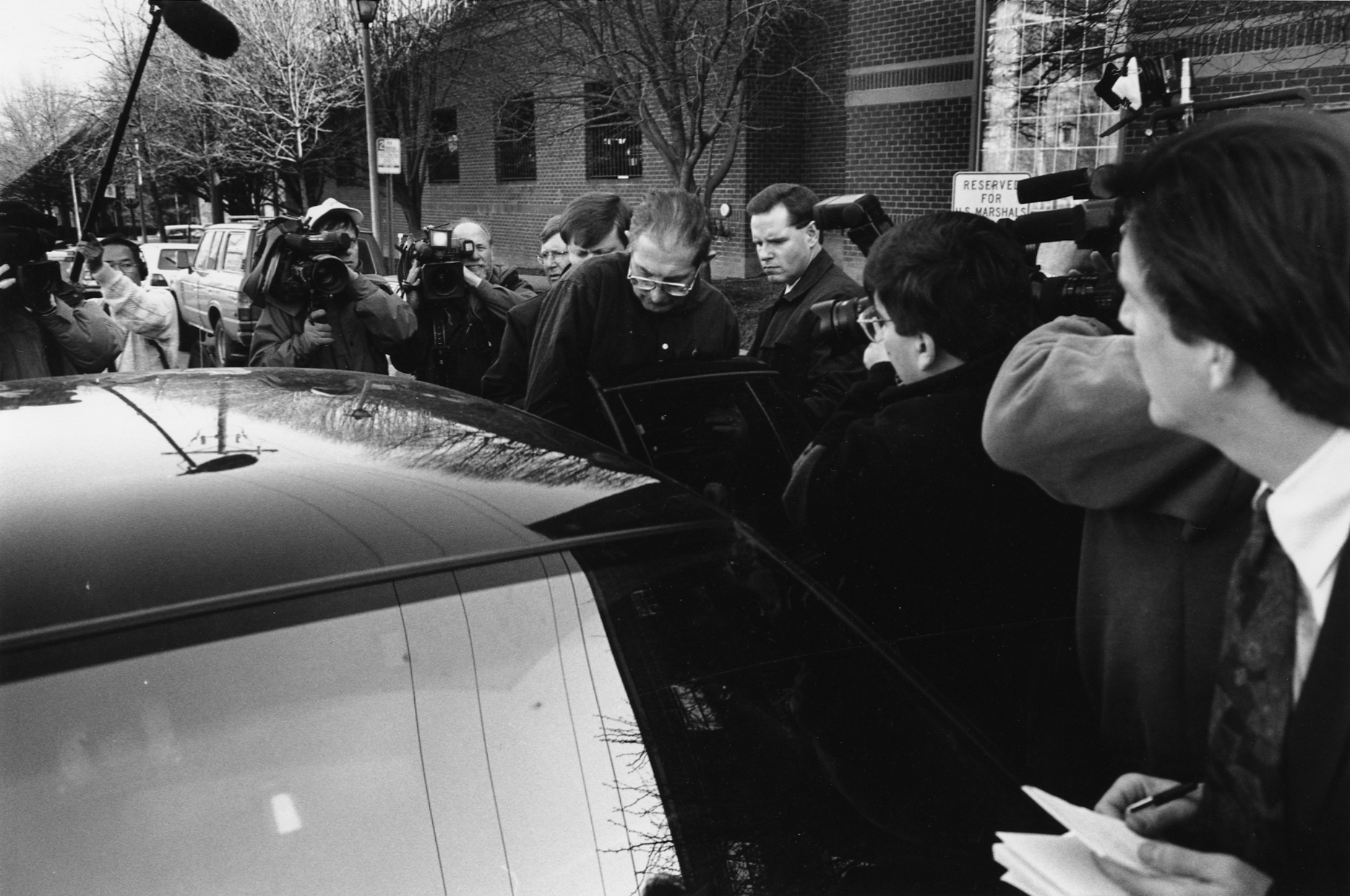
    His tenure was upended by the FBI’s arrest in 1994 of Aldrich H. Ames, a senior CIA counterintelligence official who had spied for nine years for Moscow in what was then the worst known security breach in agency history.

    CIA traitor Aldrich H. Ames in 1994. He was convicted of selling secrets to the Soviets. Michael S. Williamson

    Members of the House and Senate intelligence committees were openly critical when Mr. Woolsey declined to dismiss or demote anyone at the CIA, and instead reprimanded 11 current and former agency officials. Rather than focusing on individuals at fault, he highlighted a pattern of widespread inattention, citing a “systemic failure” in the agency’s inability to catch Ames, who was blamed for the deaths of at least 10 intelligence agents.

    Mr. Woolsey sought to transform the agency’s culture. He was known among some staff as “the vacuum cleaner,” the Washington Post reported at the time, and told senior aides he always wanted to know more than anyone else in the room. He typically began his day reading classified cables at home at 4:30 a.m., and then arrived at CIA headquarters by 7:30 for meetings and briefings.

    But he could be argumentative, even abrasive, and his relations with the White House became so strained that by the time he resigned after 23 months on the job, he complained that he could not get an appointment with the president.

    White House aides said that Clinton had lost faith in his ability to overhaul CIA operations and reshape its priorities.

    Still, the president praised Mr. Woolsey in a statement at the time, calling him “a staunch advocate of maintaining an intelligence capability that is second to none.”

    Robert James Woolsey Jr., an only child, was born in Tulsa on Sept. 21, 1941. His father, a lawyer, was drafted into the Army and fought in the Battle of the Bulge during World War II. His mother was a homemaker.

    Mr. Woolsey attended Stanford University, graduating with high honors and membership in Phi Beta Kappa in 1963. He was awarded a Rhodes scholarship to study at the University of Oxford in England, and then attended Yale Law School, where he was managing editor of the law review and was awarded his degree in 1968.

    Mr. Woolsey served in the Army and came to Washington in the early 1970s, as a military aide to arms control negotiator Paul Nitze. He later served as general counsel to the Senate Armed Services Committee under Sen. John C. Stennis (D., Miss.).

    A so-called “defense Democrat,” Mr. Woolsey was undersecretary of the Navy from 1977 to 1979, during the Carter administration. He later found positions under two Republican presidents, Ronald Reagan and George H.W. Bush, as a part-time, delegate-at-large to strategic arms talks and as chief negotiator of a European arms treaty.

    When not in government, he worked for the Washington law firm Shea & Gardner, where he sometimes represented defense contractors and companies whose interests required that he register with the Justice Department as a foreign lobbyist.

    A trim man with a bald head and thin glasses, Mr. Woolsey was little known to the public when Clinton, soon after taking office in January 1993, named him to lead an intelligence community still trying to find its footing more than a year after the Cold War had ended.

    From the start, he was put on the defensive, forced to justify the need for a strong CIA in a post-Soviet world.

    “Yes, we have slain a large dragon,” he said at his Senate confirmation hearings. “But we live now in a jungle filled with a bewildering variety of poisonous snakes.” He said the CIA should focus on terrorist groups and arms proliferation, as well as adversaries such as Iran and North Korea.

    Mr. Woolsey was initially seen as a politically savvy expert on national affairs. In his first year, he held more than 150 meetings with members of Congress, mostly to discuss his shrinking budget.

    He told the Los Angeles Times in 1994 that despite his efforts, the number of spy satellites had been “substantially reduced,” the civilian staff had been cut by one-fourth, and the military workforce had been cut by one-third.

    “There’s a lot of slimming down that’s taking place,” he said.

    Mr. Woolsey angered one group of senators when he sternly lectured them, pointer in hand, and demanded they not only reverse the cuts but add to his budget. He clashed repeatedly with Sen. Dennis DeConcini (D., Ariz.), who chaired the Intelligence Committee and, after Ames was arrested, charged that Mr. Woolsey acted more like a civil liberties lawyer than the head of a covert agency that had failed to keep its secrets.

    Congress also was unhappy with Mr. Woolsey’s opposition to the creation of a congressionally mandated presidential commission to look at the CIA’s future role, and to Congress’s efforts to resolve a CIA and FBI turf battle over responsibilities for counterintelligence.

    After leaving the CIA, Mr. Woolsey served on corporate boards and foundations and remained active in national security circles, including as a partner at Booz Allen Hamilton. He served as a senior adviser on Donald Trump’s transition team before resigning in January 2017, reportedly amid frustrations over the incoming president’s views on national security.

    To the surprise of some of his former colleagues, he also published a 2021 book, Operation Dragon: Inside the Kremlin’s Secret War on America, in which he and coauthor Ion Mihai Pacepa, a top Cold War defector from Romania, claimed that the assassination of President John F. Kennedy was rooted in a KGB plot sponsored by no less than Nikita Khrushchev, the Soviet leader.

    Mr. Woolsey’s marriage to Suzanne Haley, a former official of the National Academy of Sciences, ended in divorce. Mr. Woolsey was later married to Nancye Miller, a lobbyist, until her death in 2019. The following year, he married Conchita Sarnoff, an advocate for victims of trafficking, who had written a book about Jeffrey Epstein after covering his crimes in a series of articles for the Daily Beast.

    In addition to his wife, survivors include three sons from his first marriage, Robert, Daniel and Benjamin Woolsey; two stepchildren, Cristina and Nicholas Sarnoff; and 10 grandchildren.

    Mr. Woolsey had a wry sense of humor. Long after he left the CIA, he happily reminded interviewers about the pilot who stole a small airplane and crash landed on the South Lawn of the White House. The pilot was killed, but Mr. Woolsey found a punch line.

    “Remember the guy who in 1994 crashed his plane onto the White House lawn?” he told an interviewer in 2002. “That was me trying to get an appointment to see President Clinton.”

  • This city is getting homes built twice as fast — and others want to copy it

    This city is getting homes built twice as fast — and others want to copy it

    CLAREMORE, Okla. — Aaron Sprik has been building houses for 25 years. Recently, he experienced something new.

    He applied for a city permit to build four duplexes, side by side. And within 24 hours, he had the permit in hand.

    “I’ve never had anything even close to that fast” from a city, he said. Construction on the eight homes, a row of matching sky-blue fronts meant to revitalize one of his hometown’s historic blocks, is well underway.

    Building a house is a slow and expensive process, and many housing advocates are concluding that if the nation wants to fix its housing affordability problem, it needs to figure out how to build faster. The United States needs upward of 2 million more homes, and many of the finicky behind-the-scenes construction steps need to get a lot smoother if those homes are going to be built anytime soon.

    Some urban planners have started looking to Claremore, an Oklahoma town of about 20,000 people along historic Route 66 outside Tulsa, as an example of how to do it.

    In most of the country, a developer needs to submit architectural plans for municipal approval every time they build a house — even if they’ve already built an identical house next door. The wait for the approval can take months, leaving land sitting empty.

    Claremore is one of the leaders of a small but growing movement to change that. The city has a catalog of 29 preapproved architectural plans for houses, duplexes, and small apartment buildings. Anybody who wants to build a house can ask the city to use the preapproved plans for free, and the city will give the builder a permit in just a day or two.

    Since 2022, builders have constructed 27 homes in Claremore, almost 4 in every 10 structures built in the city’s historic core, using preapproved plans.

    Claremore is one of just 21 cities or counties in the country offering preapproved plans for single-family homes, according to a recent Pew report. About the same number offer preapproved plans only for accessory dwelling units, the backyard homes sometimes called “granny flats” or “carriage houses.”

    Claremore’s program is four years old and one of the most extensive in the country, offering far more of the free designs than any other up-and-running program except Hawaii County’s. The tiny city has offered guidance to larger ones, including South Bend, Ind., which has built 223 homes from preapproved plans since starting up a year after Claremore.

    A major housing bill that has passed the House and the Senate in different forms includes federal grants to any city willing to start offering preapproved plans.

    “Preapproved plans are something cities and towns can actually fix,” said Matthew Petty, whose company, Pattern Zones, has helped establish preapproved-plan programs in nine cities, including Claremore. “They can’t solve interest rates or labor markets or the cost of sticks and bricks. But permitting, they have almost unilateral authority over.”

    He said it costs a small town at least $50,000 to buy custom plans to give to developers for free, and a large city could spend $500,000 on a robust set of plan options.

    “If you just count the number of small towns that are out there, there are hundreds and hundreds and hundreds across the country” that might use the federal grant money to buy architectural plans, Petty said. “We’re really talking about a whole new industry.”

    Arizona passed a law last year requiring local governments to create preapproved housing plans, and California requires cities to offer such plans for accessory dwelling units. Oregon recently passed a law intending for the state to create preapproved plans for cities to use, and at least five states have pending legislation.

    Pew cited studies showing that permitting delays added as much as $30,000 to the cost of a new unit in Seattle and $50,000 in New York City.

    The Pew report said preapproved plans can generally reduce builders’ costs by 1 to 2%. The houses that result might be slightly cheaper for home buyers and available much faster. Pew estimated that the actual construction time is less than half the time spent on the home-building process. Drastically cutting design time and removing the need to get approval from city boards and commissions could mean houses get built twice as fast.

    Pew’s analysis of research on thousands of projects found that for the average home, it takes two to three months to obtain a permit, or more than four months if it needs to go before a discretionary board. In the 10% of cities with the slowest permitting processes, it takes 10 months to get a permit just to start building an apartment.

    Memphis intends to offer preapproved plans in the future. In the meantime, the city has started giving developers a rare option: If they build one house, they can go through a process to automatically get approval to build the same design as many times as they’d like.

    “If we’re using the same stock plans, why are we going through the plan review process every time, when you’re just looking at the same plans?” said John Zeanah, Memphis’s chief of development and infrastructure. But that’s the norm in almost every city in the country.

    As an incentive to use preapproved plans, Claremore allows developers using the drawings to build a few feet closer to the lot line than zoning would otherwise allow. “It’s giving them an advantage to actually get homes to market,” planning director Kyle Clifton said. “A lot of these developers were having to put in requests to the board of adjustment to reduce side setbacks or reduce front setbacks. And all of that is a loss of time.”

    Since the city started offering the free plans, the board of adjustment went from hearing 13 cases a year to just one.

    As a developer, Randy Highfill normally builds entire subdivisions, with homes on larger lots. He said the smaller setbacks were key to persuading him to build townhouses on urban lots in Claremore, and he’s proud of his contributions to the town. “It allows the community to update and do away with these old structures, and something nice is built there in an expedited manner,” he said.

    Clifton is the force behind the program. The burly Army veteran first took a job for the city involving the geographic information system he’d learned to use while stationed in Germany. Before long, he found himself coming to care so much about the look of Claremore’s streetscape that he ended up earning a master’s degree in urban design and seeking out artists from across the country to come splash two-story-tall bursts of color on the dusty brick walls near Route 66, 26 murals in all.

    As a design enthusiast, Clifton became a champion of preapproved plans not only to spur development, but also to exert influence over what gets built. Since launching the program in Claremore, he has been traveling the country promoting the idea to other urban planners.

    Claremore is a century-old town, home to a museum memorializing comedian and commentator Will Rogers. In the heart of town, nearly every house is a single-story family home built around 80 years ago.

    It’s a place where even the smallest derivation from the norm can attract opposition. A decade or so ago, developers built a smattering of similar duplexes all over town — two single-story homes on each side of a connected two-car garage. The duplexes looked much like the homes around them, if two of them were put alongside each other with a garage glued in between. But some neighbors disliked the look, especially their garages facing the street. Some people also objected to the fact that the duplexes more often were rented, not owned.

    Clifton listened and emphasized designs for the preapproved plans that fit into the neighborhood. “What’s going on inside the structure is not as important to us as what we see when we’re driving on the street or we’re walking past it. We’re really looking at the urban fabric,” he said.

    Seva Rodnyansky, who co-wrote the Pew report, said preapproved plans can work in communities where existing homeowners tend to object to new development. “There are ways to make building housing more opposition-proof,” he said. The preapproved plans let cities promise that they’ll only promote development that looks a certain way. In several cities, he said, “housing quality and housing look is one of the reasons that drove them to do the plan sets.”

    Tulsa-based architect Jennifer Griffin worked on the preapproved-plan programs in South Bend and Kalamazoo, Mich. She also consulted on a forthcoming plan set in Tulsa, inspired in part by little neighbor Claremore.

    She said the homes respond to community concerns. “If it’s a single-family neighborhood and they hear … ‘duplex’ or ‘multifamily’ or ‘rental,’ anything that’s outside of a single-family-home context, I think people can, at times, think of those examples that haven’t been done well,” Griffin said. “In South Bend … folks in the neighborhood were like, ‘I don’t know if we want duplexes in here.’”

    But when they saw it and liked it? “People can look at it and say, ‘Actually, I would love these in my neighborhood,’” she said. “It’s a pathway to show them that things other than single-family homes actually can contribute really well.” And the same preapproved plan can be used to fast-track the building of similar units.

  • The men behind Trump’s $3.47 gas: An NFL coach, a GOP fundraiser and two New Jersey brothers

    The men behind Trump’s $3.47 gas: An NFL coach, a GOP fundraiser and two New Jersey brothers

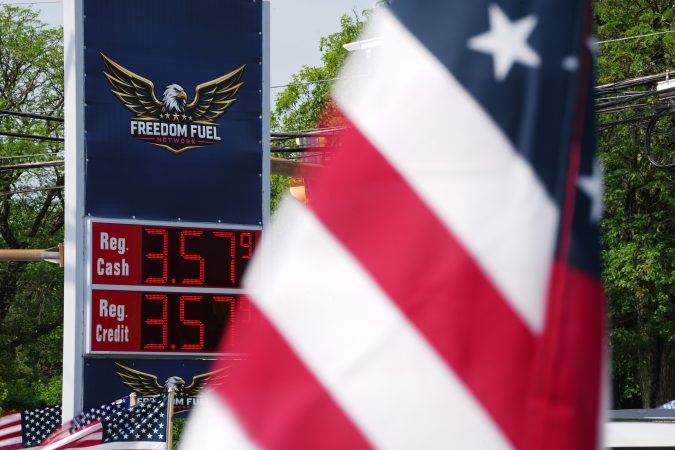
    WASHINGTON — President Donald Trump and his White House have enthusiastically promoted the Freedom Fuel Network, a chain of star-spangled convenience stores selling gas at $3.47 per gallon in honor of the 47th president.

    Untangling exactly who is behind the Philadelphia-area venture has proven difficult. Records indicate the chain, which was launched last month, is run by a disparate collection of businessmen that includes an NFL kicking coach, a GOP fundraiser and a New Jersey entrepreneur who this year was ordered, along with his brother, to pay civil damages for unlawfully taking more than 200,000 gallons of fuel.

    How the stations got Trump’s attention remains a mystery, and the four businessmen declined to — or could not be reached for — comment.

    What is clear: Trump loved the idea of cheaper gas. The president celebrated the network’s gas prices just before the busy July 4th travel period as consumers were grappling with higher oil prices sparked by the war with Iran.

    “I am pleased to announce that a VERY smart Retailer, located throughout the Northeast, is stepping up,” Trump wrote about the company on his Truth Social platform on July 1. “America has never been stronger than it is now, and Gas Prices will soon be back to the Record Low Prices Americans enjoyed at the pump before our very successful ‘excursion’ in Iran.”

    The White House followed up with a post on X a few days later that heralded the opening of the first Freedom Fuel station and produced a video showing patrons waving wads of cash and thanking Trump for reducing the prices outside a store festooned with American flags and a golden eagle logo.

    That station, located in Dresher, Pennsylvania, is owned by a subsidiary of Blue Owl Capital, an investment firm, records show. Trump has owned up to $25 million worth of Blue Owl stock, though his most recent financial disclosure says he has sold almost all of that stake.

    The White House denied Trump had any personal connection to the venture, but declined to say how the project was developed. It acknowledged having discussions with individuals who set up the network of gas stations.

    “The Administration is not involved in the company, nor has the Administration given the company any funding. There is no other entity or person subsidizing the lower gasoline costs,” the White House wrote in a statement.

    Blue Owl owns about a third of the Freedom Fuel properties, though the company said it leases the stores to independent contractors and “is not involved in the tenant’s operations or business decisions.”

    Fourteen stations in the 25-location network are controlled by companies linked to Shamikh and Syed Kazmi, two brothers who have been dogged by a string of civil misconduct accusations, including fraud, records show.

    Shamikh Kazmi is leasing eight of those stations from Blue Owl, according to state records and people familiar with the businesses who spoke on condition of anonymity to discuss the matter. The Associated Press was able to link the brothers to six other Freedom Network locations through records that show they listed those stations’ addresses as headquarters for other ventures or supplied those locations with fuel.

    A White House official, who insisted on anonymity to discuss the project, said that no one at the White House who was in conversations with Freedom Fuel Network had specifically spoken or worked with Syed Kazmi, a claim that indicates discussions occurred with the other brother, Shamikh.

    The Kazmis have marketed themselves as “top tier” petroleum distributors and gas station operators, with over 75 years of experience and a deep well of corporate affiliations, according to an archived version of the website for one of their companies.

    Public records offer a more nuanced portrait, showing the Kazmis have been repeatedly sued by companies they had dealings with.

    The brothers have legal issues

    Legal filings detail a series of judgments against the Kazmis, who failed to comply with a court order and have been accused of obscuring their finances and dodging service processors as a growing list of former suppliers and franchisors sought payment.

    In February, a federal judge in New Jersey ordered the Kazmis to pay over $600,000 to a fuel supplier that accused the brothers of stealing gas. The supplier alleged in court filings that it cut the brothers off after they refused to sign a new contract. But the Kazmis exploited a security lapse and gained access to the supplier’s fuel depot. Over a ten-day period in August 2021, tanker trucks absconded with more than 230,000 gallons of fuel, according to the supplier’s court filings. A judge ruled in the supplier’s favor, finding the brothers unlawfully took the gas.

    The fuel supplier says it has yet to receive payment.

    Syed Kazmi was hit with a $380,000 judgment two years ago in a suit brought by 7-Eleven, the convenience chain, which accused him of “dishonest, unethical, immoral” conduct while operating a franchise in Lawrenceville, New Jersey, that was flagged for unsanitary conditions that included trash issues and a rodent infestation. The company also said “tens of thousands of dollars” of cigarettes ordered from 7-Eleven on credit had gone missing.

    A federal judge held a company operated by Shamikh Kazmi in contempt in 2022 in a trademark case brought by BP America.

    Though BP had severed ties with Kazmi’s Diwan Petrol two years prior to the legal action, the corporation’s signage had not been removed from the gas station despite a court order to do so. The judge authorized U.S. Marshals to accompany BP workers to remove it.

    A man who answered a call to a number listed for the Kazmi brothers said he was not the right person to talk to and instead directed inquiries to the Freedom Fuel Network’s website. But that website has no contact information, phone number or mailing address. A request for comment submitted through an online contact form was not answered.

    Company formed in a state known for opacity

    Records from Delaware, a state known for offering incorporators a large degree of opacity, show the Freedom Fuel Network was registered on June 23. The document forming the company was signed by Randy Brown and Yoni Gontownik.

    Politico and the website The Newsground reported that Brown is a senior special teams coach with the Baltimore Ravens. He has also served as the elected mayor of Evesham Township, a New Jersey suburb of Philadelphia, where a Freedom Fuel Network station is located.

    Brown, a Republican, considered a run for Congress in 2021, telling a local newspaper he was a conservative and a “proud Trump supporter.”

    Gontownik is a former investment director at Mercuria, a Swiss-owned commodities trading firm. He and his wife live in northern New Jersey and have been active with the pro-Israel political action committee NORPAC, including hosting fundraisers for Republican members of Congress.

    Gontownik and Brown did not respond to requests for comment.

    Experts say gas likely sold for a loss

    Jeff Lenard, a spokesman for the National Association of Convenience Stores, said Freedom Fuel’s rock bottom promotional price meant the chain was likely selling the gas at a loss.

    “It’s not unusual for retailers to have prices that are different than a market when they’re looking to make a splash,” said Lenard, whose association’s members account for most U.S. retail fuel sales, adding that such a splash typically lasts “a matter of hours or a matter of days.”

    Social media posts and gas-price checking websites show that the per-gallon rate advertised at Freedom Fuel locations began creeping up this week.

    A Freedom Fuel station in Bensalem, Pennsylvania, for example, on Thursday was selling regular gasoline for $3.82 a gallon. That was 27 cents cheaper than at a Sunoco station across the street.

    The Freedom Fuel Network posted a note of thanks to its website this week, crediting Trump’s “strong endorsement” for the “explosive growth” of their business.

    “Despite the misinformation and baseless speculation circulating,” the statement reads, ”let us set the record straight: Freedom Fuel Network is proudly lowering its prices to benefit our community.”

  • AI stocks lead Wall Street higher, even as Brent oil’s price tops $91

    AI stocks lead Wall Street higher, even as Brent oil’s price tops $91

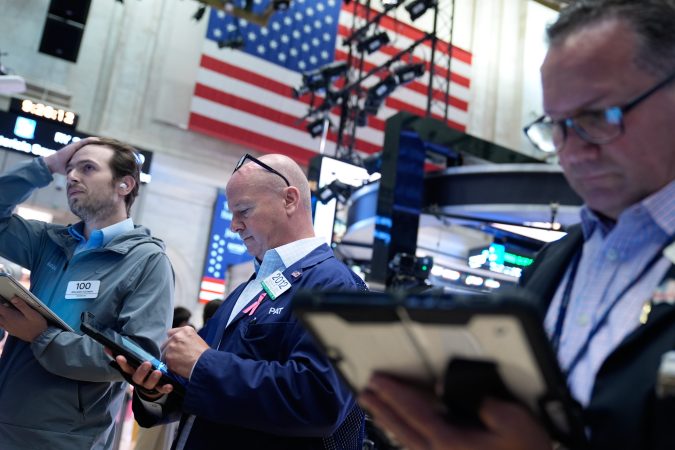
    NEW YORK — More gains for makers of computer chips and other winners of the artificial-intelligence boom carried Wall Street higher Tuesday.

    The S&P 500 climbed 0.9%. The Dow Jones Industrial Average added 385 points, or 0.7%, and the Nasdaq composite rose 1.3%.

    AI stocks once again were at the center of the action, and they rose for a second straight day after tumbling the week before.

    After rocketing higher because of the boom in investment in AI chips and data centers, they’ve come under pressure in recent weeks on worries that they shot too high. Concerns are also weighing that investment in AI may fall off if it doesn’t produce as much profit and productivity as hoped.

    Micron Technology jumped 12.2% and added to its 1.9% gain from the day before, coming off its 13.3% drop from last week. Nvidia added 2%, and they were the two strongest forces lifting the S&P 500.

    The gains came despite more climbs for oil prices, and Brent crude oil briefly got near $92 per barrel for the first time in more than five weeks because of continued attacks between the United States and Iran. It later pared its gain to 2% and settled at $91.01. That’s up from less than $72 early this month, which is roughly where it was before the war with Iran.

    Rising oil prices are threatening a reacceleration of inflation, just as increases for prices were slowing more than economists expected. That in turn could push the Federal Reserve and other central banks to raise interest rates, which would slow economies and undercut prices for stocks and other investments.

    The yield on the 10-year Treasury rose to 4.63% from 4.60% late Monday and from just 3.97% before the war with Iran began.

    On Wall Street, several stronger-than-expected profit reports from big U.S. companies helped stocks to strengthen despite the added pressure.

    3M climbed 7.3% after topping analysts’ expectations for both profit and revenue in the latest quarter. It also raised its forecast for profit over the full year of 2026.

    Hasbro rallied 8.8% after the toy maker said its Magic: The Gathering game topped $500 million in revenue for a quarter for the first time. It also raised its revenue forecast for the year.

    They helped offset a drop for Danaher, which slid 11% even though it likewise topped analysts’ expectations for profit and revenue.

    Homebuilder D.R. Horton slipped 0.9% despite topping profit and revenue expectations for the latest quarter. Executive Chairman David Auld said it’s still feeling the effects of affordability concerns in the housing market and caution among potential homebuyers.

    Companies broadly are under pressure to deliver strong growth in profit and revenue because of how high their stock prices have shot. Indexes are near their records, even with the recent shakiness for AI stocks.

    All told, the S&P 500 rose 65.92 points to 7,509.20. The Dow Jones Industrial Average gained 385.38 to 52,224.64, and the Nasdaq composite climbed 329.13 to 25,837.21.

    In stock markets abroad, indexes rose modestly in Europe. The United Kingdom’s FTSE 100 added 0.6% as new Prime Minister Andy Burnham hosted his first Cabinet meeting.

    In Asia, stocks swung more. South Korea’s Kospi jumped 3.6% on strong gains for its two dominant stocks. Both Samsung Electronics and SK Hynix have been big beneficiaries of the AI boom, and the Kospi has soared 60% so far this year even with its 20% drop through July.

    Tokyo’s Nikkei 225 climbed 3.3% after returning from Monday’s holiday, while indexes rose 1.8% in Shanghai and edged down by less than 0.1% in Hong Kong.

    AP Business Writers Chan Ho-him and Matt Ott contributed to this report.

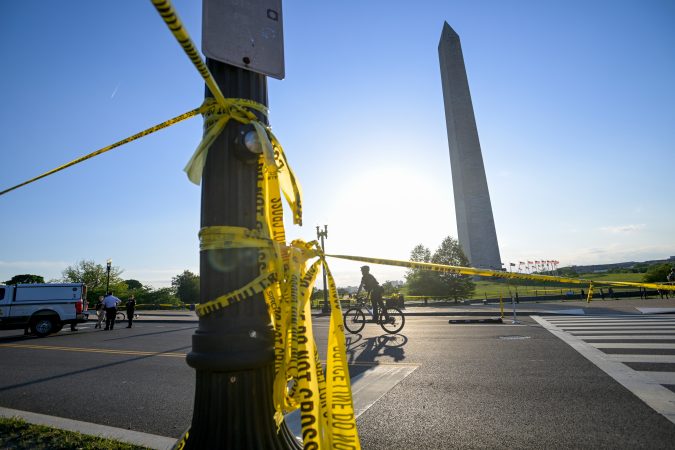
  • Bystander severely wounded outside White House says Secret Service failed him

    Bystander severely wounded outside White House says Secret Service failed him

    CHICAGO — An active-duty soldier who was hit by a stray bullet during a shooting outside the White House announced on Tuesday that he plans to sue the Secret Service over his life-threatening injuries.

    Pfc. Benjamin Del Real Jr., 25, was visiting the capital on May 23 and hoping to snap pictures with his sister and father outside the White House when a gunman opened fire. Secret Service fired back, killing the man, and a bullet struck Del Real in the stomach, causing serious injuries that required emergency surgery. Part of his digestive system had to be removed.

    Del Real filed notice of a personal injury claim on Tuesday, saying he plans to sue for $25 million under the Federal Tort Claims Act. He accused the Secret Service of botching its response to the shooting and failing to adequately protect him and other bystanders, he and his lawyer, Joseph Murphy, said Tuesday at a news conference.

    “I, my father, and Benjamin all feared for our lives, and the moment that I saw Ben bleeding was undoubtedly the scariest moment of my life,” said his sister, Sara Del Real.

    The Secret Service has not said whether its agents fired the bullet that struck Del Real. The Metropolitan Police Department said earlier this summer that the ballistics on that bullet had not yet been returned. Metropolitan Police Department spokesperson Lee Lepe said Tuesday the investigation is ongoing.

    Federal law enforcement agencies are generally shielded from legal liability, but there are some exceptions, including some claims of employee negligence.

    The Secret Service does not comment on pending litigation, according to Nate Herring, a spokesperson for the Service. He referred questions to the U.S. Attorney’s Office for the District of Columbia, which did not immediately return a message seeking comment.

    Del Real, of Salina, Kansas, and his family had spent hours that day touring the National Archives, Arlington Cemetery, and other landmarks before passing by the White House at around 6 p.m. on their way to dinner. Just then, Del Real saw the shooter, about 20 yards closer to a Secret Service outpost, take out a gun and fire several rounds at their booth, prompting agents to return “a hail of gunfire,” Murphy said.

    The shooter, 21-year-old Nasire Best, was killed.

    Del Real pulled his father to the ground and dragged him behind a concrete barrier, saving his life, but a bullet struck Del Real in the stomach, causing him “life-threatening injuries,” Murphy said. He underwent an emergency surgery, then another two days later to remove the bullet, and is due for a third surgery next month. Doctors had to remove parts of his colon and small intestine.

    Del Real, who joined the Army a year and a half ago, said he is “without a doubt, concerned” about his ability to continue a military career.

    “He’s a young man, he’s 25 years old, and he’s had part of his digestive system taken out,” Murphy said. “It’s not going to get any better from here.”