Category: Wires

  • This mini pig has a big job

    This mini pig has a big job

    In the Beaux-Arts grandeur of Union Station’s main hall, beneath the gold-leafed ceiling, towering columns, and 46 Roman centurion statues, there is a pig.

    She is very small (5.2 pounds) and very young (7 months).

    Her name is Synergy.

    Her footsteps click-clack as she toddles on the marble floor, and she can’t walk more than a few yards before someone stops her to take a photo. Today, she’s on the job.

    About 100,000 people pass through Union Station in Washington, D.C., daily — tourists hoisting duffel bags, or locals bustling to their offices. Train stations also tend to attract a disproportionate share of unhoused people, who come for amenities that are hard to access when you’re without a physical home: air-conditioning, heat, Wi-Fi, bathrooms, restaurants, and, occasionally, generous strangers.

    Union Station is also the headquarters of the h3 Project, a crisis intervention and anti-human-trafficking group, founded in 2020. Ami M. Angell started the project, which stands for home, health, and happiness.

    Synergy is her pig. Angell is her real last name.

    “It is a little pig! I’ve always wanted one!” shouts Logan McGraw, Angell’s client, from across the plaza.

    He makes toward Angell with his wife, Evone. As they scratch behind her ears, Synergy rubs her back against the foot pedal of Evone’s wheelchair.

    “Can I take her home with me?” she asks.

    In the last year, Angell has matched 93 individuals with housing, administered 217 doses of the overdose reversal drug Narcan, and ordered 537 documents, including legal identification. But the year also brought challenges, including decreased funding, directives from a Trump task force to sweep homeless encampments. and the long-standing notion that homelessness outreach organizations attract more unhoused people.

    Angell has long partnered with Amtrak police, who know to call her team if they witness someone experiencing a crisis. She says the influx of federal law enforcement officers at Union Station, most of whom are unfamiliar with her work, has led to heightened interactions between armed guards and her clients, often at their worst moments.

    But Angell’s clients have also adapted. Several have told her that instead of posting up somewhere semi-permanently, they break down their tent every morning and wait to pitch it until late at night.

    “Our folks are so resilient,” she says.

    Difficult moments require creative solutions. Synergy, for example.

    ‘Moving forward because of Synergy’

    Angell isn’t a smoker, but she always keeps a pack in her bag. She can’t count how many times she’s offered a cigarette to someone in a crisis, often mental-health- or substance-induced. It buys her the time and calming distraction she needs to de-escalate and provide case management.

    “We have to think outside the box, because every individual is unique,” she says. “What works for one individual may not work for another person. It’s figuring out the way in, and if you can get that door open a little, then you can get it open a lot larger.”

    So when a friend of a friend told her about Juliana pigs — a hypoallergenic, friendly breed colloquially known as mini pigs — she started thinking about her clients.

    “A lot of the folks that we work with, they’ve never seen a pig, let alone touched one,” she says. “With pigs, it doesn’t matter your age, your race, your gender; they love you equally.”

    She found a breeder in Michigan and waited for a litter to be born in late December. Synergy moved into her home in March.

    Every day that Angell goes to work, Synergy tags along. In the h3 Project office donated by Union Station, she’s hidden now under a mountain of blankets. The vast space is crowded with shelves and bins of donations — tees and sneakers organized by size, toothbrushes and deodorant stashed in boxes. And in the center is Synergy’s pen, with a litter box and a bowl of apple juice.

    “Synergy!” Angell calls.

    Up pops a little pink head with blue-gray eyes and a perpetual smile. Her flat nose is damp, and her skin is wrinkled and covered in wiry hair, a miniature Benjamin Button.

    “Want a treat?” Angell asks.

    Synergy presses her snout to a green button atop the carpet, which chimes out “Yes yes yes yes yes.”

    “Do you want it right now?”

    “Yes, baby!” says Synergy via a button. Angell obliges with a treat.

    At her young age, Synergy already knows how to pass a tunnel-and-ring agility course and play a toy piano. She’s learning how to skateboard. Like many toddlers, she is still learning how to like vegetables.

    Angell says she’s already helping people.

    One woman in her late 60s, whom Angell has known for seven years, has continually refused case management. “She’s not rude or anything,” Angell says. “She just wasn’t ready.”

    When she saw Synergy, her face erupted into a smile, and she shook her head. It was the icebreaker Angell needed.

    “Now she wants to work with me,” she says. “As long as the pig is right there, she will answer my questions, she will do the work with me. She’s moving forward because of Synergy.”

    ‘That’s my pig!’

    The pig is, notably, not called Babe or Wilbur. Angell instead chose a name that spoke to what she hoped her pig would be. We are where we are, Angell says, because of our positive and negative experiences.

    “There is a synergy to it all,” she says. “I just wanted her to ground folks and remind them that there’s always more to life and more to be than what is right now. For my homeless, they aren’t defined by who they are now. This is just one piece of their life. They deserve to be somewhere better.”

    And it seems like Synergy knows it, too. Because now, as Angell and her pig take the elevator down to Union Station’s west porch to work with clients, her stringlike tail is wagging.

    “That’s my pig!” says Randall Baldree, with whom Angell has worked for several years.

    “Well, you’ve definitely kissed her more than anyone,” Angell responds.

    Baldree describes himself as “one of the originals of h3.” He’s among Synergy’s biggest fans.

    “She helps me when I’m down, helps me when I am depressed and when I can’t get through life,” he says. “I have somebody to depend on.”

    According to Angell, pets are a lifeline for some unhoused people — they can help prevent substance use or motivate people to seek stability. A man most people know by the name Cheez It (legally Joshua Bunker) has been working with h3 for eight months but is just meeting Synergy today. He didn’t bring his pit bull, Dot Dot, but thinks they would get along.

    “I’ve always had dogs, and a bird, and a turtle,” he says. “They say what humans can’t say. They see what humans can’t see.”

    Working, please do not disturb

    When they see Synergy tip-tapping through Union Station, people tend to react as if they’ve seen a celebrity — phone cameras whip out, hands cover open mouths, gasps of delighted shock erupt.

    With her nails painted red and her pink cheetah print harness, she does look like a diva.

    As she’s working with clients, Angell tends to brush off other conversations with a business card that links to information about h3 and Synergy’s Instagram. She trades Synergy’s leash sash from one that reads “I Am Working, Please Do Not Disturb” to one that reads “Wellness Ambassador for the Homeless.”

    The questions come immediately.

    “Can I get a picture?” asks one traveler.

    “How old is she?” questions another.

    “Will you be able to carry her forever?”

    “It’s diet and genetics,” Angell answers, over and over again. “One parent is 12 inches tall, one is 13 inches tall. She will get bigger.”

    But to Angell, the best questions are the ones that give her an opportunity to talk about the h3 Project.

    “Are you a vet?” says Wendy Lesko, who was shopping in the station.

    Angell responds that she worked in international law. “I came here for human trafficking, but in D.C., homelessness is closely intertwined.”

    Synergy isn’t just a way in for unhoused people — she’s also a conversation starter with the public at large. And for the people who work with h3, she can be the difference between accepting help and going it alone.

    “Hey little piggy!” calls one of Angell’s clients, Dannitta Jenkins.

    Her voice echoes under the stone awning. “She’s such a cutie pie!”

    “I can’t believe you haven’t met Synergy,” Angell responds as Jenkins hustles over.

    Jenkins goes in for a hug. Synergy, cradled snugly in Angell’s arms, aims a lick at Jenkins’s bag of cinnamon sugar pretzels.

    “I’m so glad you’re in your house now,” Angell whispers. “It’s been a long time.”

  • U.S. military says it’s launching new strikes on Iran as clashes escalate over shipping routes

    U.S. military says it’s launching new strikes on Iran as clashes escalate over shipping routes

    CAIRO — The U.S. military announced Thursday that it is conducting the 13th night of strikes against Iran as clashes escalate over shipping routes. Earlier Yemen’s Iran-backed Houthi rebels said they attacked two Saudi oil tankers in the Red Sea, potentially widening the Iran war as international oil topped $100 a barrel.

    U.S. Central Command said the latest attacks are designed to “further degrade Iran’s ability to threaten civilian mariners and commercial vessels transiting regional waters” as the Americans push to regain control over the Strait of Hormuz and restore the flow of international shipping.

    A short time later, Iranian state media reported explosions along the strait in Bandar Abbas and Qeshm, as well as to the northwest near Andimeshk and Omidiyeh.

    Meanwhile, the Houthis threatened to shut down another key trade route, with the world economy already reeling from Iran’s closure of the Strait of Hormuz. The threat came as Iran and the U.S. have stepped up attacks as they vie for control of the strait, through which a fifth of the world’s oil and gas transited in peacetime, setting off a scramble for alternative routes.

    President Donald Trump threatened “major military punishment” against the Houthis if their attacks on ships continue.

    “If they do this again, the U.S. will hold Iran responsible, in that the Houthis are a Surrogate and/or Proxy of Iran, and major military punishment will be inflicted upon Iran and, of course, the Houthis, themselves,” Trump wrote on social media.

    As the rhetoric escalated, so did the economic fallout. The price of Brent crude oil, the international standard, spiked more than 6% Thursday, to about $100 a barrel. That is the highest level since May, before the two sides reached a preliminary peace agreement last month that has since collapsed.

    Prime Minister Ali al-Zaidi of Iraq, which has close ties to both the U.S. and Iran, was in Tehran on Thursday to call for peace and dialogue, and he promised not to allow Iraqi territory to be used for attacks on Iran, his office said. Al-Zaidi met with Trump earlier this month in Washington.

    U.N. Secretary-General António Guterres warned Thursday that the region is being pulled “into an ever-widening circle of confrontation” with one crisis feeding another and every escalation triggering the next.

    “Diplomacy is the only way forward,” Guterres told the U.N. Security Council. He called for Pakistan’s efforts to mediate an end to the war to be strengthened.

    Houthi attacks are a ‘double whammy’ on oil shipments

    The Houthis’ SABA news agency said the rebels had struck two tankers, the Encelia and the Layla, in the Red Sea, causing fires on both. There were no reports of casualties.

    It was the first reported Houthi attack on a vessel since they announced a blockade of Saudi-linked shipping through the Bab el-Mandeb Strait earlier this week in retaliation for the kingdom’s blockade on Yemen and a recent attack on the international airport in Yemen’s rebel-held capital, Sanaa.

    Bab el-Mandeb, at the southern tip of the Arabian Peninsula, is a vital shipping chokepoint connecting the Red Sea to the Gulf of Aden. Around 12% of the world’s trade, including a fourth of global container traffic, passes through there, moving between Europe and Asia via Egypt’s Suez Canal.

    The state-run Saudi Press Agency reported an attack set the Encelia ablaze overnight in the Red Sea. It did not mention the Layla.

    The United Kingdom Maritime Trade Operations Center said it received a report of a tanker being struck by “an unknown projectile” 80 miles southwest of Al Shuqaiq, Saudi Arabia, in the Red Sea.

    The Houthi attacks put at risk oil shipments from Saudi Arabia’s Yanbu port on the Red Sea and present a “double whammy” on top of the disruption in the Strait of Hormuz, said maritime data and analysis firm Lloyd’s List Intelligence.

    Saudi Arabia has diverted millions of barrels a day of oil exports to Yanbu via an overland pipeline as the war has bottled up the Persian Gulf.

    The Houthi threat “raises questions on the viability of this route,” Lloyd’s said in slides accompanying an online webinar Thursday.

    The rebels say they are blockading Saudi Arabia, but during their announced blockade of Israel at the height of the war in Gaza, they targeted many vessels with little or no connection to that conflict, disrupting global trade.

    Both sides dig in over Strait of Hormuz

    Iran says it has the right to manage traffic and potentially charge fees in the Strait of Hormuz, which was open to all toll-free before the war. It has attacked ships using a route through the strait that is overseen by U.S. forces and intended to be outside Tehran’s control.

    Trump said on social media Thursday that sanctioned Iranian funds in the possession of the U.S. will cover the expense of fixing boats damaged in the war.

    “Please let this statement serve to represent, until further notice, that from this point forth, any and all damages done to Ships, Cargo, or anything related thereto, will be paid for by Iranian Money that the United States has in its possession, and controls,” Trump said.

    It was unclear what legal mechanisms Trump would use to access and spend the funds, but he said that doing so would be “the fair and equitable thing to do.”

    In response to Iran’s attacks, the U.S. began the widening campaign of strikes across Iran and restored a naval blockade of Iran’s ports. U.S. Central Command said it has redirected about a dozen commercial vessels and disabled one since the blockade resumed.

    The war of words has also escalated. Iranian Foreign Minister Abbas Araghchi said Tehran would adopt an “eye for an eye” policy on U.S. strikes against its infrastructure. U.S. Secretary of State Marco Rubio retorted that Trump’s policy is “a head for an eye.”

    “The price will continue to get higher every single night until they come to their senses,” Rubio told reporters while traveling in the Philippines for a regional summit.

    Iran’s health ministry said Thursday that 55 people have been killed and 629 have been wounded since renewed U.S. airstrikes began on June 27.

    Iran has responded to U.S. attacks by targeting energy infrastructure and desalination plants providing drinking water in parched neighboring Gulf countries.

    Polls have shown the war is unpopular among Americans, a fact reflected in the narrow passage Thursday of a resolution in the U.S. House to halt the war. Though a handful of Republicans crossed party lines to support the measure, the vote remained largely symbolic.

  • Brent oil tops $100 per barrel, as tumbles for Tesla and Alphabet yank Wall Street lower

    NEW YORK — Brent oil shot to its highest price since May after increased fighting in the Middle East on Thursday threatened to slow the global flow of crude. At the same time, sharp drops for two of Wall Street’s most influential companies, Alphabet and Tesla, yanked the U.S. stock market to its worst loss in a month.

    The S&P 500 fell 1.2% and is on track for its first back-to-back weekly loss since March. The Dow Jones Industrial Average dropped 506 points, or 1%, and the Nasdaq composite sank 2.2%.

    Stocks fell under the pressure of rising oil prices, which raise costs for businesses and erode their customers’ ability to spend. The price for a barrel of Brent crude oil, the international standard, jumped 7% to settle at $100.69.

    It touched $102 during the day, the highest price since May for the most actively traded Brent contract in the market. The cause: attacks on two Saudi oil tankers in the Red Sea. That threatens another avenue that oil companies use to move their crude from the Middle East to customers worldwide, along with the Strait of Hormuz.

    Underscoring the importance of the sea route for the economy, President Donald Trump threatened “major military punishment” against the Houthi rebels in Yemen, who are backed by Iran, if they keep attacking ships.

    It was just a few weeks ago that Brent had dropped below $72 per barrel, roughly back to where it was before the United States and Israel attacked Iran to begin their war, on hopes that a wind-down in the war would fully reopen the Strait of Hormuz.

    The jumps in oil prices will worsen inflation, just when it had begun to decelerate by more than economists expected. That in turn could push the Federal Reserve and other central banks to raise interest rates, which would slow economies and undercut prices for stocks and other investments.

    The European Central Bank held its main interest rates steady at its meeting Thursday. But traders are betting on a 36% chance the Fed will hike the federal funds rate at its meeting next week. That’s up from the nearly 12% probability seen a week ago, according to data from CME Group.

    An increase by the Fed would be the first since 2023.

    Higher oil prices pushed the yield of the 10-year Treasury up to 4.69% from 4.67% late Wednesday and from just 3.97% before the war with Iran began. That’s a significant increase, and it’s already brought long-term U.S. mortgage rates to their highest levels in nearly a year.

    Gasoline prices tend to follow oil prices higher, and a gallon of regular costs an average of $4.09 across the United States, according to AAA. That’s still below highs of roughly $4.56 in May, but it was at just $3.93 a month ago.

    On Wall Street, stocks of companies with big fuel bills fell to sharp losses on worries about higher expenses.

    American Airlines fell 8.4% even though it reported a much bigger profit for the spring than analysts expected, something that usually sends a stock’s price higher. It raised airfares, which helped it offset its higher fuel prices, during the latest quarter.

    Southwest Airlines lost 6.2%, even though it also reported better profit and revenue than analysts expected.

    One of the heaviest weights on the U.S. stock market was Tesla, which tumbled 14.5% after Elon Musk’s electric-vehicle company reported a weaker profit for the latest quarter than analysts expected. Because it’s one of the largest stocks in the S&P 500 by market value, its stock has more influence on the index than nearly every other.

    One of the few that’s larger is Alphabet, and its stock fell 7.1% even though the parent company of Google delivered stronger profit and revenue than analysts expected.

    Investors focused instead on how much Alphabet is planning to spend on artificial-intelligence investments. Alphabet raised its forecast for capital spending over the full year after its investments last quarter doubled to nearly $45 billion from a year earlier.

    CEO Sundar Pichai said AI helped its cloud revenue growth accelerate to 82% last quarter, but unease nevertheless remains about whether all the money going into AI will pay off in terms of productivity and profits.

    Such worries have been shaking the AI industry broadly in recent weeks, leading to big swings for the overall stock market.

    All told, the S&P 500 fell 90.66 points to 7,408.30. The Dow Jones Industrial Average dropped 506.93 to 51,711.65, and the Nasdaq composite sank 553.21 to 25,137.69.

    In stock markets abroad, indexes fell sharply in Europe after oil prices jumped. France’s CAC 40 dropped 1.6% for one of the larger losses.

    Indexes in Asia were stronger earlier in the day, and South Korea’s Kospi jumped 4.4%.

    AP Business Writers Matt Ott and Elaine Kurtenbach contributed to this report.

  • Government withdraws subpoenas of 3 reporters for the New York Times after admitting legal errors

    Government withdraws subpoenas of 3 reporters for the New York Times after admitting legal errors

    NEW YORK — Criticized by a federal judge for sloppy legal work, the government on Thursday grudgingly withdrew subpoenas that would have compelled three New York Times reporters to testify about their sources for articles about President Donald Trump’s Qatari-gifted Air Force One jet.

    The withdrawals in U.S. District Court followed a remarkable back and forth between a visibly irritated Judge Arun Subramanian and government lawyers. They come at a time when the Trump administration is vigorously going after news organizations whose reporting and coverage it doesn’t like — and also trying to crack down on leaks inside the government.

    The government’s retreat in the face of vigorous legal opposition and a stern reprimand from a judge marked the latest instance of the Justice Department pulling back on its aggressive efforts to compel journalists to identify their sources before a grand jury. The administration recently withdrew similar subpoenas that sought to compel testimony in Virginia from journalists for the Washington Post and the Wall Street Journal related to separate national security coverage.

    Subramanian said he otherwise would have granted the newspaper’s request to reject the subpoenas because laws and regulations pertaining to subpoenas served on journalists maintain that they should be issued as a last resort in an investigation.

    “Subpoenas are the last step, not the first step, but the last step,” the judge said, citing rules set to protect against violations of the First Amendment. He said the government’s actions had turned the law and the regulations “on its head.”

    “When you see something like this, if this were a civil proceeding, what I would normally do is ask the parties to show causes why sanctions should not be issued,” the judge said, referencing punishment for lawyers for egregious actions.

    After the hearing, the Justice Department lashed out at the judge in a statement, saying he “threatened our attorneys with sanctions unless subpoenas were withdrawn, and blocked us from presenting the meticulous process of this investigation.”

    “The grand jury has a right to hear testimony from all material witnesses in a federal criminal investigation. This judge’s conduct overrides clear longstanding principles and common sense — blocking the grand jury from receiving core evidence in a national security investigation,” the statement said.

    “Make no mistake,” it added, “this investigation remains ongoing, and we will pursue justice against those threatening national security by leaking classified information, a serious federal crime.”

    Government attorneys upbraided by judge

    Subramanian noted that with protections for journalists at stake, the government was required to ensure it could not obtain what it needed from any other sources before issuing subpoenas to journalists.

    A Justice Department lawyer, Sean Buckley, cast the government’s missteps as inadvertent errors and said “no one was trying to pull a fast one.” Buckley apologized for other subpoenas that sought records for phone numbers belonging to one reporter’s mother and two of the journalists’ spouses.

    “That was an error, judge, which we own,” Buckley said. “It was a consequence of trying to move quickly.”

    “These things are starting to pile up,” Subramanian said, becoming increasingly testy.

    The hearing was held publicly despite efforts by the Trump administration to keep secret the litigation spawned by subpoenas it served on the Times’ journalists to try to get them to divulge their sources.

    The newspaper’s lawyers had challenged the validity of the grand jury subpoenas, along with subpoenas issued for phone records of several Times journalists and some of their relatives. Senior Times officials, including the paper’s managing editor and general counsel, sat in the gallery watching during Thursday’s proceedings.

    The request for phone records raised questions about the extent of the investigation being carried out by the Justice Department.

    David McCraw, the Times’ chief newsroom lawyer, said after the hearing in a statement that it “was an important affirmation of our country’s commitment to a free press.”

    “We are pleased that the government finally conceded that the subpoenas violated the law, but they should never have been issued in the first place,” he said. “We will not be deterred in the face of tactics like these.”

    Court action comes after reporting on new Air Force One jet

    The new jet in question, a present from Qatar that Trump’s administration spent $400 million to retrofit and upgrade, recently entered service. But Trump used an older model Air Force One jet to leave a NATO summit in Turkey earlier this month.

    The Times, citing anonymous sources, reported that the switch had come at the urging of the Secret Service and that the newer plane lacked some of the advanced security features of the older Air Force One aircraft, including antimissile capabilities. On social media, Trump rejected claims of security concerns.

    The Times wrote in a letter to the judge several days ago that two subpoenas seek records beginning on Jan. 1, long before the newspaper published articles on July 8 and July 9 that became the basis for the grand jury subpoenas.

    It said that lengthy stretch of records sought would indicate that the purpose of the subpoenas might have been “to forage for information about the Journalists’ source relationships more broadly.”

    The Times argued for the phone records subpoenas to be disallowed on the grounds that the government had acted in “bad faith” and ignored its own protocols by not giving the journalists advance notice that records were being sought and by demanding the information “without first conducting any serious investigation.”

    The Justice Department has justified the grand jury subpoenas by saying that “reporters are not the targets, those leaking classified information are.”

    The Justice Department also said it had complied with its own regulations in issuing the subpoenas and had taken investigative steps before seeking them. It said it was authorized to delay disclosing the subpoenas but decided to alert the journalists’ lawyers so they could challenge them.

    In fighting the subpoenas, the Times’ lawyers highlighted how the government’s carelessness could have exposed sensitive information that had nothing to do with the journalists. The mother whose phone records were mistakenly sought is a mental health professional with confidential client relationships and one of the two spouses is the general counsel of a law firm, the lawyers said.

    At Thursday’s hearing, a final rebuke from the judge to the government came when he asked its lawyers to assure him that it won’t repeat a scenario that left one journalist being served a subpoena by an FBI agent while he was home watching the family-friendly movie The Sheep Detectives, about sheep on a quest to solve the murder of their shepherd.

    Said the judge, to loud courtroom laughter: “I can’t think of anything more inconsistent with ‘Sheep Detective’ than an FBI agent showing up at your door.”

  • Fatal police shooting of man with knife roils Madison, Wisconsin

    Fatal police shooting of man with knife roils Madison, Wisconsin

    MADISON, Wis. — Protesters burst into a Thursday news conference about the police shooting of a homeless man in Madison, taking the microphone from the police chief and arguing with some attendees who said they wanted to hear more about the investigation.

    The group of roughly 20 protesters burst into the room at the Madison police station, shortly after Mayor Satya Rhodes-Conway and Common Council President Sabrina Madison identified the man killed by police as Corey Durell Ruiz, a homeless resident.

    Ruiz, 38, was shot and killed Wednesday after police said he resisted arrest and injured an officer with a knife.

    Police Chief John Patterson stepped away from the microphone when the protesters were shouting, and one man in the group took his spot at the podium. The event quickly devolved into a shouting match.

    One protester held a sign saying “Corrupt cops deserve to die too!!!”

    Moments earlier, the mayor said the shooting will be “rigorously investigated.”

    “It does not matter who you are or what your past is, you should not lose your life as a result of an encounter with law enforcement,” Satya Rhodes-Conway said.

    Madison, for her part, said “Corey could have been my brother because my brother is homeless and he often rides a bike.”

    Court records show Ruiz had been in and out of jail over the past decade on charges including failing to pay child support, driving a vehicle without consent, jumping bail, threatening authorities, taking a vehicle without consent, possessing drug paraphernalia, resisting an officer and retail theft.

    “He’s a human being. He had a family. He has parents who loved him who brought him home, who cared for him,” Madison said, adding that she’s struggling to understand what she’s seen in videos of the shooting that have circulated on social media.

    “My first thought is, when the officer’s walking away, why isn’t he walking away in cuffs,” Madison said. “I’m angry, there’s no way around it.”

    Once the protesters quieted down, the chief resumed his presentation, promising his department’s full cooperation with the state investigation.

    Police have released few details

    The shooting has roiled Wisconsin’s capital city, with Gov. Tony Evers calling for “transparency and accountability” and Madison community members gathering Thursday at a growing memorial.

    None of the four officers who were detaining the man wore body cameras, but passersby recorded the confrontation on video, and accused the officers of overreacting.

    “I thought, ‘Holy cow — what could have warranted that?’ It looked to me like they had him under control,” David Ortiz-Whittingham, who saw officers swarming and heard the gunshots, said Thursday. “Even now, knowing about the knife, did he have to die for it? Could this have been de-escalated without him losing his life?”

    The police chief released few details Thursday, saying the Wisconsin Department of Criminal Investigation into the officer-involved shooting must run its course.

    Earlier Thursday, Madison’s independent police monitor, Aeiramique Glass, said police have not yet shared evidence or the officer’s identity with her office, which will review the case and can recommend to the district attorney that charges be filed if warranted. She said the department and city are “obstructing what the community and the public” want.

    “Let me do my job,” she said.

    Patterson said the police were committed to cooperating with Glass as the independent monitor’s investigation is carried out, at the same time as the state’s probe.

    The chief urged people not to draw conclusions

    Patterson has urged caution in reading too much from the cell-phone videos. He said none show the perspective of the officers, and additional video that hasn’t been released is being reviewed.

    The officer who fired his weapon is a veteran of the force, the chief said. He and the three other responding officers will be placed on administrative leave pending an independent investigation by the Wisconsin Department of Criminal Investigation, as required under state law.

    Patterson said police were responding to calls that someone was attempting to enter parked vehicles, and the suspect fled on a bike before the officers surrounded him. One deployed a taser, but Patterson said he didn’t know if the taser worked. Those efforts failed to control the man, Patterson said.

    In the videos circulating online, the man can be seen standing before he’s brought to his knees as the officers struggle to force him into a prone position. Then he falls quickly to the pavement after what sounds like three gunshots, and seems motionless as the officers handcuff him behind his back. Arriving officers then escort one of the officers a short distance away.

    Patterson said he did not know the extent of the injuries sustained by the officer who was injured by the knife.

    “This situation was clearly dangerous,” Patterson said. He later continued, “I am incredibly saddened by the loss of life.”

    A neighborhood now accustomed to police shootings

    The shooting happened in the middle of an intersection in the popular Marquette neighborhood, which is lined with restaurants, bars, shops, and homes less than 2 miles from the state Capitol. The bystander videos show numerous cars at the scene, with people watching and commenting as it unfolded.

    “I saw everything! I saw everything! You did not need to kill him! … We watched it all!” a woman yelled in the video recorded by Ortiz-Whittingham. Three loud shots could be heard among the sirens, followed by screams.

    Residents who dealt with two other police killings within the same few blocks expressed their frustration on Thursday.

    In 2015, a white police officer shot and killed Tony Robinson, who was biracial, on the same street. Large protests followed, but the district attorney filed no charges, determining the officer was justified. In 2012, Paul Heenan, a white musician, was fatally shot after he had been drinking and mistakenly entered his neighbor’s house. That officer was exonerated as well.

    The chief acknowledged that the neighborhood “has experienced a lot of trauma” and urged people to support one another.

    “I want transparency, I want accountability,” Patterson said.

    Questions about race and technology emerge

    The race of the officer who fired his gun on Wednesday and that of the man he killed were not released by police.

    But Black advocacy groups, protesters, and politicians spoke out against the crime and said they believe the man was Black.

    The shooting also focused attention on the Madison Police Department’s lack of body-worn cameras. The force of around 500 is among the largest in the Midwest that doesn’t use the devices.

    Common Council President Sabrina Madison said Thursday that she expects a police request for $400,000 to be approved, enabling the cameras to be phased in over the next three years. Others lamented that cameras aren’t already being used.

    “Nobody can agree on anything,” said Katey Nelson, a member of the police civilian oversight board and operations director at YWCA Madison, a racial justice group. “Now we’re here, looking at another police shooting where we don’t have what we need to make sure the officers are held accountable.”

    The mayor said her budget, which has not yet been released, will include funding for body-worn cameras. Rhodes-Conway said the city needs to put together a policy for the use of the cameras, and said that will be completed before the budget takes effect in January.

    And now it’s a talking point in the governor’s race

    Madison, home to the University of Wisconsin, has a long history of organized protest dating back to the 1960s. More than 100,000 people marched on the state Capitol in 2011 in favor of union rights. There were large demonstrations that turned violent after the George Floyd shooting in 2020.

    And so the shooting quickly infused itself into the race to succeed Evers as governor, with voting already underway in the Aug. 11 primary.

    “This state sanctioned violence was an execution,” posted Francesca Hong, a democratic socialist candidate who appeared with a bullhorn at the scene just a few blocks from her campaign office. She has called for defunding the police.

    Another Democrat in the race, Milwaukee County Executive David Crowley, said while the details must become public, “these reports are painfully reminiscent of the tragedies we have witnessed in Kenosha, Minneapolis, and far too many communities across our country.”

    Republican U.S. Rep. Tom Tiffany called on his rivals to let the state investigation “establish the facts without politicians rushing to judgment or stoking division” in a statement that also said he would “work to end revolving-door criminal justice policies.”

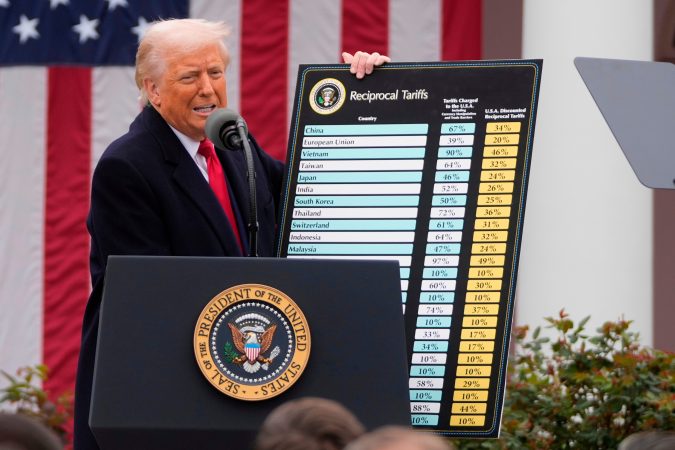
  • Trump imposes double-digit tariffs on dozens of countries as his 10% levies are set to expire Friday

    Trump imposes double-digit tariffs on dozens of countries as his 10% levies are set to expire Friday

    WASHINGTON — President Donald Trump is going ahead with new double-digit tariffs on dozens of U.S. trading partners just as the clock runs out Friday on stopgap levies he imposed after a stinging defeat at the Supreme Court.

    The United States will slap taxes of 10% to 12.5% on imports from 60 countries accounting for 99% of U.S. imports, charging that they have inadequately enforced bans on goods produced by forced labor.

    “The United States has had a forced labor import ban for nearly a century, and rigorously enforces it; it’s well past time for our trading partners to do the same,” said U.S. Trade Representative Jamieson Greer. “Today’s action will begin to correct what is both a human rights abuse and distortive trade practice to improve the welfare of workers everywhere.

    The new tariffs will take effect just as temporary 10% worldwide tariffs expire at 12:01 a.m. Friday. Trump had turned to those temporary levies after the Supreme Court struck down his biggest and boldest tariffs in February.

    Now he’s tapping more durable tariffs under Section 301 of the Trade Act of 1974, which permits the president to impose import taxes and other sanctions against countries found to engage in “unjustifiable,” “unreasonable,” or “discriminatory” trade practices. Trump used Section 301 to impose big tariffs on China in his first term, and they survived court challenges.

    More Section 301 tariffs are likely coming: The U.S. Trade Representative’s office has launched a probe into whether 16 countries — accounting for 70% of U.S. imports — have overproduced goods, pushing down prices and putting U.S. companies at a disadvantage in global markets. The administration has yet to complete that investigation.

    Trump, who argues that high tariffs will revive American manufacturing, last year overturned decades of U.S. policy that favored lower tariffs and ever-freer trade. Invoking the 1977 International Emergency Economic Powers Act (IEEPA), he imposed double-digit tariffs on imports from almost every country on Earth, saying America’s longstanding trade deficit amounted to a national emergency.

    But the Supreme Court ruled that IEEPA did not authorize tariffs. The decision forced the administration to pay refunds to importers that had paid the tariffs.

    In response, Trump announced 10% worldwide tariffs under Section 122 of the Trade Act of 1974. But he can only use Section 122 levies for 150 days; time runs out on them Friday.

    The administration initially proposed the forced labor tariffs last month. Since then, some countries have tightened forced labor enforcement and qualified for lower tariffs, said a senior administration official who spoke under condition of anonymity. For example, the official said, the tariff on imports from India initially was set at 12.5% but now will be 10%.

    Some products — including oil and gas and fertilizer — are exempted from the new tariffs announced Thursday. Also being spared are products that qualify for duty-free status under the US-Mexico-Canada Agreement, the North American trade pact Trump negotiated in his first term.

    Tariffs are paid by companies in the United States that import foreign products. The importers usually try to pass along the cost by charging consumers higher prices. Americans are already frustrated by the high cost of living. So the administration is taking a risk in rolling out new tariffs ahead of the Nov. 3 midterm elections.

    Human rights watchers say that it’s reasonable to be skeptical of the motivation behind the tariffs. But they say the levies could make an impact on the problem of forced labor.

    Forced labor is defined by the International Labor Organization Forced Labor Convention of 1930 as “all work or service which is exacted from any person under the menace of any penalty and for which the said person has not offered himself (or herself) voluntarily.”

    According to the latest statistics from the ILO, which is a U.N. agency focused on human and labor rights, about 27.6 million people were in forced labor worldwide on any given day in 2021.

    “We’ve gone on record for years now advocating for import bans, not as a magic bullet, it’s not a silver bullet, but as a potentially effective tool in combating forced labor across the globe,” said Martina Vandenberg, founder and president of The Human Trafficking Legal Center.

    “It’s possible to be extremely critical of tariffs, as we are, and to be very concerned about blanket tariffs used as bludgeons against countries,” she said. “And yet I think it’s undeniable that there is a significant response in terms of the adoption of import bans.”

    However Vandenberg and her organization urged in testimony that the tariffs be implemented in a phased approach to give countries time to implement a ban or a plan for enforcement.

    “Our concern is that the import bans will be thin slips of paper with no enforcement,” she said. “Countries need time to build import ban mechanisms that are meaningful and enforceable.”

    Kenya Davis, partner at Boies Schiller Flexner, said the Uyghur Forced Labor Prevention Act, a U.S. federal law passed in 2021 that prohibits the importation of goods made wholly or in part in China’s Xinjiang region or by designated entities, is the most significant legislation related to forced labor that the U.S. has passed before the tariffs.

    “The level of effectiveness is certainly up for debate, but it certainly has drawn attention to the issue of labor trafficking and forced labor,” she said. “And so, if nothing else, these import bans will serve that function of bringing greater awareness to forced labor.”

    But without a “comprehensive approach,” that provides transparency about what the investigations consisted of, and programs that provide countries aid in enforcing bans, “I’m very cautious in my enthusiasm about the [tariffs],” she said.

    Isabelle Glimcher, senior research scientist for global labor at the NYU Stern Center for Human Rights, said one flaw in the tariffs is that they focus on levying the tax on countries based on goods they import — not goods they make domestically.

    But she said the impending tariffs threat has spurred several countries — such as India — to amend their foreign trade policies to include a forced labor import ban. European Union forced labor regulations due to go into effect later next year are also contributing, she said.

    “Not all of these things are necessarily or wholly attributable to the Section 301 investigations, but does seem like countries are responding and starting to take all of this seriously,” she said.

  • Gas, groceries, and back-to-school items are where shoppers might see higher oil prices surface

    Already feeling pinched since the start of the Iran war, consumers are likely to feel more pain ahead as oil prices pushed past $100 a barrel Thursday amid renewed fighting and military strikes that have left global oil supplies stranded in the Middle East.

    The elevated price marked a turn from lower oil prices enjoyed briefly when hostilities between the U.S. and Iran waned in June. Brent crude, the international standard, last reached $100 a barrel in May.

    Companies that produce and sell fresh food, school supplies, and anything that gets shipped using fuel reported cost impacts from an earlier spike in energy prices after the U.S. and Israel attacked Iran. They’re likely to continue passing some of their increased expenses to consumers.

    “In general, once you have an increase in costs, businesses are fast in increasing the price,” said Miguel Gomez, director of Cornell University’s Food Industry Management Program. But, he noted, “it takes more time to lower prices when the costs go down.”

    Here’s how higher oil prices could further impact consumers’ wallets.

    Drivers are paying more for gasoline at the pump

    Volatility along the Strait of Hormuz and broader regional instability pushed up the price of crude oil, the main ingredient in gasoline, and could continue to make driving costlier during the second half of summer, according to motor club AAA.

    The average U.S. price for regular gasoline reached $4.09 a gallon Thursday, up 15 cents from a week ago, with drivers in most states now paying $4 or more, according to AAA.

    “Given the typical lag along the oil industry’s supply chain, prices at the pump are poised to keep rising at least into next week,” said Pavel Molchanov, investment strategy analyst at Raymond James. But he noted that futures prices for oil delivered later this year and next year are lower, suggesting prices could fall once military action ends.

    For the most part, higher gasoline prices haven’t stopped Americans from driving. Gasoline demand rose 1% to 8.9 million barrels per day last week, according to the U.S. Energy Information Administration.

    Pressure on gasoline prices could persist because fewer refineries are available to process crude than before the conflict. Refineries in the Middle East have been damaged, and Ukrainian attacks have damaged refineries in Russia.

    Shoppers are paying more for a bag of groceries

    Grocery prices generally rise with oil because farmers use diesel fuel to power equipment, while many food products are transported by trucks that require fuel.

    “Oil at $100 doesn’t make food prices jump right away, but it does put upward pressure across the food supply chains, especially for categories that depend heavily on trucking, cold storage, and packaging,” Gomez said. Fresh produce and dairy could feel a larger impact because they require refrigeration during delivery.

    Imported goods are also vulnerable to higher shipping costs, Gomez said. “Things like olive oil that we produce very little here and are coming from mostly from Europe are going to be up.”

    Grocery chain Albertsons on Thursday lowered its 2026 fiscal outlook, citing pressure on its core grocery business and a pullback in consumer spending.

    Every product that moves will have higher costs baked into the price

    Higher fuel costs for ships, trucks, and air carriers can trickle down to consumers and businesses that depend on shipping. UPS, FedEx, and other shipping services introduced fuel surcharges and other fees as fuel prices increased.

    According to an AFS Logistics and TD Cowen Freight Index released July 14, truckload pricing is at a four-year high because of rising fuel costs and capacity constraints.

    Andy Dyer, CEO of AFS Logistics, said diesel prices in the second quarter were about 51% higher than in January and February, while jet fuel prices rose 90% from a year earlier.

    “Beyond the direct impact of higher freight bills paid by shippers, these price movements also have second-order effects that squeeze rates higher,” he said. “Smaller truckload carriers working on tight margins may park trucks and wait for fuel prices to revert to more palatable levels before returning to operation.”

    Retailers are noticing consumers pulling back

    Rural lifestyle retailer Tractor Supply Co. reduced its annual sales outlook on Thursday, citing in part higher fuel prices during its spring selling season that weighed on customer spending.

    ”Our customers often drive longer distances to shop frequently in pickup trucks, many of which are diesel-powered, making them especially sensitive to higher fuel costs,” CEO Hal Lawton told analysts.

    Lawton said customers are still investing in their pets, animals, farms, and properties, but shopping has become “more deliberate.” Customers are consolidating trips, prioritizing needs-based purchases, and taking a more measured approach to discretionary spending.

    Back-to-school shoppers may face higher prices

    The Footwear Distributors and Retailers of America trade group warned in a report Wednesday that increasing freight and material costs, along with rising tariffs costs, are creating big challenges for the footwear industry as companies prepare for the back-to-school shopping season and the remainder of the year.

    Matt Priest, CEO and president of the trade group, said some of its members have cited 25% price increases for petroleum-based materials used in footwear manufacturing due to the Middle East conflict. Those costs could eventually translate into roughly a 5% increase in the cost of finished footwear products sold to consumers, Priest said in the report.

    Footwear companies have been front-loading inventory and accelerating imports before President Donald Trump imposes new tariffs on foreign products, putting additional pressure on shipping rates, he said.

    “Container rates are spiking right now,” Priest said.

    Higher jet fuel costs lead to costlier flights

    Since the war began, airlines have responded to the jump in fuel costs by raising fares and add-on fees, and trimming flights or routes that are no longer profitable at higher fuel prices. Those moves can help protect the airlines’ margins, but also leave travelers facing higher prices and fewer options, particularly in smaller or less competitive markets.

    In the latest sign that the conflict is driving up costs for the travel industry, American Airlines on Thursday reported a sharp decline in second-quarter net income despite record revenue and strong spring travel demand.

    American said higher fares helped offset nearly half of its higher fuel bill but not enough to prevent it from lowering its full-year outlook.

    Despite higher prices, jet fuel demand in the last four weeks increased 9% compared to the same time last year, according to EIA.

    Associated Press writers Rio Yamat in Las Vegas, Wyatte Grantham-Philips, and Dee-Ann Durbin in Detroit contributed to this report.

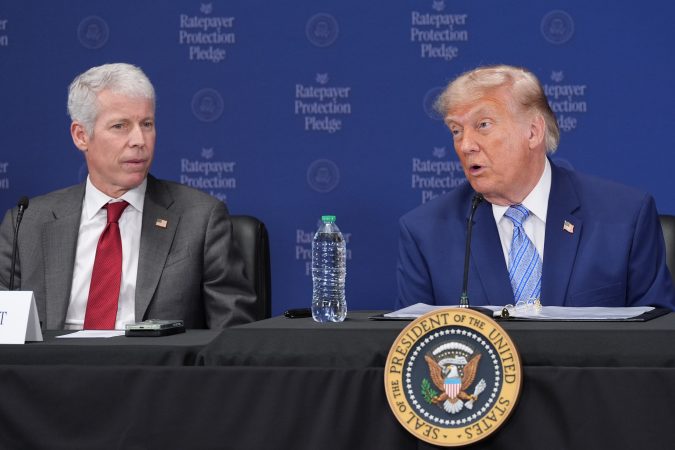
  • Trump expands a voluntary pledge to protect consumers from high utility bills from AI data centers

    Trump expands a voluntary pledge to protect consumers from high utility bills from AI data centers

    WASHINGTON — President Donald Trump on Thursday had governors and electricity companies join a voluntary pledge to shield U.S. consumers from higher utility bills from data centers — a sign of how the artificial intelligence build-out has become a lightning rod of controversy before the midterm elections.

    The president first announced the pledge with leading AI and tech companies in March, but that initial commitment has done little to comfort voters who are already grappling with affordability issues as they worry about competing for electricity, water, and land with tech companies controlled by billionaires. It’s unclear, with electricity demand already growing, whether consumers would see genuine savings.

    Trump is doubling down on the pledge at a time when the broader social contract is being rewritten by AI, a technology that is evolving so quickly in its capabilities that governments are struggling over how to provide oversight.

    The president, in remarks about the pledge at the Environmental Protection Agency, called on the gathered executives and governors to sell the public on data centers, stressing that the cities and towns that do have them will be “rich.”

    “You have to convince your community,” Trump said. “You can’t fight it. You have to go with it.”

    The president added: “If you don’t take all that money, somebody else is going to take it. You might as well do it yourselves.”

    Concerns about data centers cross party lines

    The president promised that electricity prices would drop because of the nonbinding pledge, saying there would be a surplus of power. It’s not clear that data centers generating their own electricity will be sufficient to overcome the rising demand for electricity, but that did not deter Trump from saying that utility bills — a major concern for voters — will be lower.

    “Electricity bills for American families will actually come down,” Trump said. “They’re going to have a lot of electricity left over, and they’ll put that into the grid.”

    The White House said Thursday the pledge has been signed by 23 governors and at least 187 companies, including 55 utilities and 27 data center developers. Signers include some of the nation’s biggest utilities such as NextEra Energy, Duke Energy, American Electric Power, Southern Co., and Pacific Gas & Electric.

    Data center developers that have signed the pledge include Equinix, Digital Realty, and Prologis.

    A slowdown in data center construction could derail what has been one of the dominant drivers of U.S. economic growth, in addition to possibly ceding the U.S. edge in cultivating the technology to China and create national security risks.

    But AI’s increasing ability to perform basic tasks — such as driving, analyzing spreadsheets, and writing software — also potentially threatens millions of jobs. That has created mounting public resistance as tech companies concentrate historic levels of wealth in the hands of a select group of tycoons.

    The increased electricity demand could cause monthly utility bills to rise by 15% to 40% by 2030, according to a recent analysis by ICF, a consulting and technology services company.

    Opposition to data centers has spiraled into a bipartisan issue. Voters are worried about the environmental impact, use of AI in schools, and the prospect of data centers making their communities more expensive and less livable. Data center companies say their facilities help to generate tax revenues for school districts and reduce property tax burdens for homeowners.

    The opposition has spread into the Republican stronghold of rural Texas and led to frustration with Gov. Greg Abbott, who is now among the 23 Republican governors who signed Trump’s nonbinding pledge.

    Gina Hinojosa, the Democratic nominee for Texas governor, has been using the issue to challenge Abbott before the November election.

    “They are owned by the richest men in the world,” she said of data centers. “We’re all footing the bill. There are no rules. It is the Wild West of data centers.”

    New York Gov. Kathy Hochul, a Democrat, signed an order to ban construction of large server warehouses in her state for a year. In May, Florida Gov. Ron DeSantis, a Republican, signed a law that he said would prevent utilities from passing along energy costs from data centers to residential and small-business customers.

    Already, dozens of state legislatures or utility commissions have moved to put in place requirements that data centers pay the cost of their electricity, including new power plants or transmission system upgrades. But it’s not

    Tech companies are pushing growth of data centers

    In California, however, the industry opposes legislation designed to protect consumers from electricity price increases attributable to data centers, said Matthew Freedman, a staff attorney for the Utility Reform Network.

    “It is disappointing, but perhaps not surprising, that the same tech companies signing the Ratepayer Protection Pledge are simultaneously opposing efforts at the state level to force them to deliver on their promises,” Freedman said.

    In an interview with The Associated Press last month, Nvidia CEO Jensen Huang, whose computer chips are enabling the AI revolution, said America’s weakness is a lack of power generation for further developing the technology.

    Google, Microsoft, Meta, Oracle, xAI, OpenAI, and Amazon are among the companies that have already committed to the Trump administration’s “Ratepayer Protection Pledge” that consumers will not shoulder the cost of the data center build-out.

    Despite the pledge, there are challenges on addressing issues with electricity prices.

    The White House has complained that PJM Interconnection, which oversees electric power in 13 states from Virginia to Illinois, can’t ensure adequate electricity supplies at reasonable prices in the AI-driven boom.

    White House spokeswoman Taylor Rogers said Thursday that PJM — the nation’s largest grid operator — has failed to implement a bipartisan statement of principles signed by the Trump administration and all 13 governors in the region.

    “The Trump administration strongly advises PJM and its member companies to proactively reform its stakeholder process, reform its board governance, and implement the Statement of Principles before it is too late,” Rogers said.

    There are efforts to formalize Trump’s pledge as law, with the House Energy and Commerce Committee approving a bipartisan bill. The bill would require data centers to bear the costs of grid upgrades.

  • U.S. intelligence agency quietly cut about 200 jobs since June 1

    U.S. intelligence agency quietly cut about 200 jobs since June 1

    The Office of the Director of National Intelligence has shrunk more than is publicly known in recent weeks, losing about 200 personnel to firings and reassignments since June 1, according to data the Trump administration shared with Congress this week.

    The cuts are the latest to hit ODNI, which was created to oversee and coordinate all U.S. spy agencies but has been targeted by President Donald Trump and many Republicans in Congress. They, and some former U.S. intelligence officials, say it has expanded far beyond what lawmakers intended when it was created two decades ago. The ODNI had about 2,000 employees at the start of Trump’s second term. It is now little more than half that size, according to congressional aides.

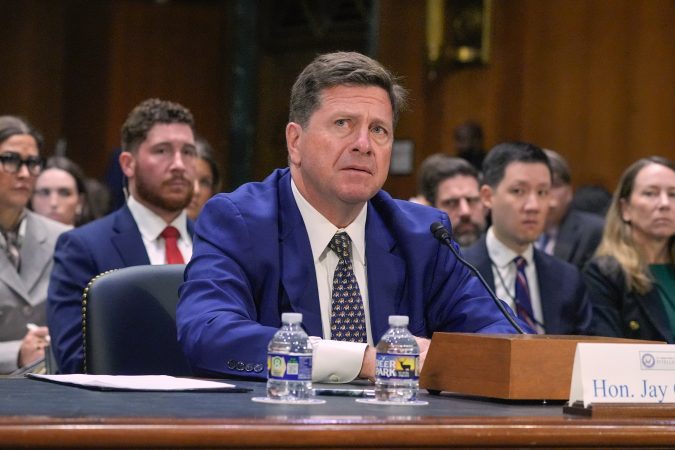
    The staffing reductions mean that Trump’s nominee for intelligence czar, Jay Clayton, if confirmed by the Senate as expected, while inherit a shrunken organization that has experienced steady upheaval over the last 18 months.

    The president in early June tapped federal mortgage regulator Bill Pulte, a political ally with no prior national security experience, to be acting director of national intelligence. Trump said at the time that he wanted Pulte to “start the process” of eliminating some workers.

    Trump has often maintained a hostile posture toward professional intelligence personnel and their agencies, claiming they tried to undermine him in his first term, particularly with the compiling of reports on Russia’s interference in the 2016 presidential election to aid his campaign. The president has dismissed intelligence analysis on a range of issues, from North Korea’s nuclear policy to Iran’s likely reaction to the attacks the U.S. and Israel launched in February.

    Neither Pulte nor the White House has publicly detailed what cuts they have made recently at ODNI, which houses the National Counterterrorism Center and was established to fix U.S. intelligence agencies’ failure to share threat information prior to the September 2001 terrorist attacks.

    The latest personnel cuts were confirmed by a congressional staff member and another person familiar with the matter. They spoke on the condition of anonymity to discuss nonpublic information.

    ODNI did not respond to requests for comment.

    The cuts include some firings, as well as a larger number of intelligence officers who were ordered back to their home agencies, the person familiar with the matter said. Much of ODNI’s workforce consists of personnel detailed from the CIA and other intelligence organizations.

    The counterterrorism center has not been affected significantly, officials have said. But there has been a whole-scale hollowing out of the National Intelligence Council, a prestigious analytic body that conducts intelligence community-wide assessments on key topics such as COVID-19’s origins and foreign interference in U.S. elections.

    The Washington Post previously reported that about 20 intelligence council personnel have been removed or have chosen to leave, including senior officers who oversaw the production of analysis on Russia, China, and Europe. The top official who oversaw the council was placed on administrative leave.

    Neither Clayton nor the Trump administration has articulated a vision of what ODNI should look like or focus on “other than it should be smaller,” said Julia Curlee, who served as a director for intelligence programs in Trump’s White House until last year and recently resigned from the CIA after 20 years as an analyst. “It seems like DNI was just a fat target to punish the ‘deep state.’”

    “Morale is pretty terrible, as you would imagine,” Curlee said.

    It is unclear how many of the 200 personnel were let go under Pulte, who became acting director of national intelligence on June 19, and how many were let go under his predecessor, Tulsi Gabbard, who left the administration after her husband became ill.

    The Trump administration and its allies in Congress have not publicly acknowledged the extent to which ODNI has been shrunk.

    “U.S. National Intelligence is operating more efficiently and effectively than ever before, and today, we started a third round of reducing redundant, or noncritical, personnel,” Pulte posted on X on July 10, without revealing details.

    Senate Intelligence Committee Chairman Tom Cotton (R., Ark.) said shortly after Pulte took over that the acting DNI had told him that “a small handful of front-office personnel” were leaving. “Around 45 or 50 career officers” were returning to their home agencies, Cotton said. Cotton’s office did not respond to requests for comment.

    The precise size of the workforce at ODNI and other U.S. intelligence agencies is classified. By the time Gabbard departed in mid-June, the workforce had shrunk from about 2,000 in January 2025 to about 1,300.

    Clayton was mauled in his Senate Intelligence Committee confirmation hearing by Democrats who decried what they said was his failure to unequivocally state that Joe Biden won the 2020 presidential election, which Trump denies. The Republican-led committee approved his nomination Tuesday on a 9-8 vote, and a full Senate vote is expected next week.

  • House votes to limit Trump on Iran; Senate fails to advance similar measure

    House votes to limit Trump on Iran; Senate fails to advance similar measure

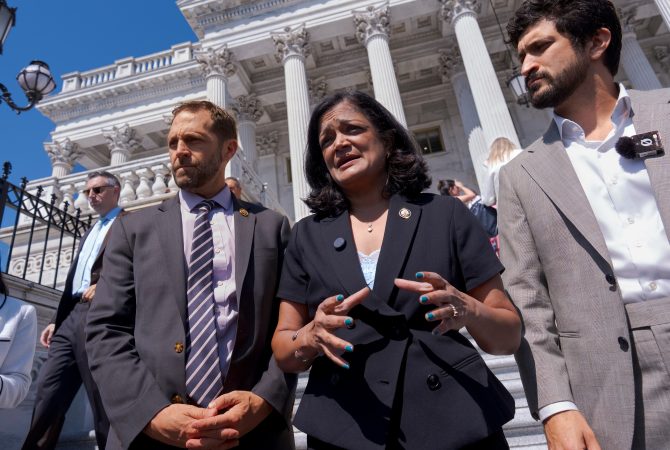
    The House passed a measure to halt the war in Iran on Thursday, as Democrats mounted a last-minute bid to constrain the escalating conflict before lawmakers left Washington for a monthlong recess.

    The effort led by Rep. Pramila Jayapal (D., Wash.) passed by a vote of 214-208. Four Republicans — Reps. Brian Fitzpatrick of Pennsylvania, Thomas Massie of Kentucky, Warren Davidson of Ohio, and Tom Barrett of Michigan — joined Democrats in supporting the measure.

    The Senate blocked consideration of a similar resolution hours later on a 49-47 procedural vote.

    Sen. Susan Collins of Maine was the lone Republican to join Democrats in supporting the measure. Sen. John Fetterman (D., Pa.) voted against it.

    The votes marked the first test of Republican support for the conflict since President Donald Trump resumed strikes against Iran this month. U.S. Central Command, which oversees military operations in the Middle East, announced it had conducted its 12th consecutive day of airstrikes as Trump pledges to retaliate for the deaths of several American service members killed by Iranian attacks in the last week.

    By returning to the war, Trump has forced some vulnerable Republicans into a tenuous political position ahead of the November midterm elections. Iran has closed the Strait of Hormuz — spiking global food and energy markets — and the Houthis, its proxy force in Yemen, have threatened to halt Saudi Arabian oil transiting the Red Sea.

    A Washington Post-Ipsos poll earlier this month found that nearly 70% of respondents thought that the war was not “worth fighting.” Eighteen U.S. service members have died during the conflict, with nearly 430 injured.

    Earlier this week, Defense Secretary Pete Hegseth told lawmakers the war will cost about $37.5 billion by the end of September. Congress is debating how to proceed with a $73 billion package to restock the Pentagon’s inventory of precision weapons and cover other costs incurred by the conflict.

    “When you’re digging yourself a hole, the first thing you should do is stop digging — and that’s what this resolution seeks to do,” Sen. Chris Van Hollen (D., Md.), who introduced the resolution, said on the Senate floor before the vote. “Let us stop pretending that Congress has no role to play while American service members remain in harm’s way.”

    Sen. Tim Sheehy (R., Mont.), a Navy SEAL veteran who served in Afghanistan and Iraq, countered that passing the resolution would send the wrong message to the U.S. troops fighting the war.

    “Think about the people who are deployed right now standing on that wall with a loaded weapon who have volunteered to defend our country and our way of life,” Sheehy said on the Senate floor. “Because they are there defending us in a just war.”

    The Trump administration’s return to military strikes in Iran has also divided some Democrats over how best to respond.

    The successful vote in the House and the failed one in the Senate came after both chambers approved a separate resolution last month meant to halt the war. Trump has argued the measure lacks the power of law, infuriating Democrats who say the war is being conducted unlawfully without lawmakers’ consent.

    The White House has pressured Republicans to oppose such resolutions. Trump complained when he met with Republicans senators last month that the passage of one of the resolutions was undermining his negotiations with the Iranian government.

    Sen. Bill Cassidy (R., La.) supported the resolution that passed last month but opposed a subsequent one after being briefed by the White House. He voted against Thursday’s resolution.

    Two other Republicans who have voted for similar resolutions in the past, Sens. Lisa Murkowski of Alaska) and Rand Paul of Kentucky), did not vote. Sens. Mitch McConnell (R., Ky.) and Katie Boyd Britt (R., Ala.) also missed the vote.

    Rep. Gregory Meeks (D., N.Y.), the top Democrat on the House Foreign Affairs Committee, said Thursday that he will introduce a resolution to sue the Trump administration over its refusal to abide by their efforts to rein in the war.

    Trump “should be coming directly to Congress” to explain why he has continued his war effort in Iran, Meeks said. “Since he’s not, then we should be suing the administration to say ‘You must come to Congress at this point.’”

    Sen. Tim Kaine (D., Va.), the architect of Democrats’ strategy to force war powers votes, said he did not think the failed procedural vote in the Senate undercut the successful passage of the war powers resolution last month.

    “The substantive vote has been taken,” Kaine said after Thursday’s vote. “Both houses have said, Mr. President, you either have to withdraw troops or” seek authorization from Congress to continue the war.

    Still, Kaine said he was turning his attention to pushing back against the war through the appropriations process, through which Congress could exert leverage over the war by refusing to fund it. The House passed a resolution Wednesday taking the first step toward sending $73 billion to the Pentagon and U.S. intelligence agencies, largely to cover the cost of the conflict, but the measure faces an uncertain future in the Senate.

    Senate Majority Leader John Thune (R., S.D.) said the Senate would not take it up immediately as bipartisan negotiations over government funding play out — an approach that some Senate Republicans say is a mistake. The Senate could use the measure to fund the government later if those negotiations collapse.

    After the House vote, Rep. Jason Crow (D., Colo.), a co-sponsor of Jayapal’s resolution, said Democrats would continue to force votes on similar resolutions and predicted that more House Republicans would support them after hearing from frustrated constituents while the chamber is on recess over the next four weeks.

    “They’re going to get crushed,” Crow told reporters after the vote. “When we come back in September, I bet we have more people joining with us saying, ‘All right, let’s wrap this up.’”

    Senate Minority Leader Chuck Schumer (D., N.Y.) signaled that Senate Democrats would also continue to force votes on similar resolutions.

    “We will keep forcing votes until Senate Republicans stop playing dumb and summon up the courage to do what is right,” Schumer said on the Senate floor.