Category: Wires

  • Teen pleads guilty to murder in 2024 shooting that left 4 dead at Georgia high school

    Teen pleads guilty to murder in 2024 shooting that left 4 dead at Georgia high school

    WINDER, Ga. — A teenager has pleaded guilty to all 55 counts, including murder, in a shooting nearly two years ago at Apalachee High School in Georgia that killed two students and two teachers.

    Colt Gray, 16, entered the plea Friday without having reached a deal with prosecutors. The Sept. 4, 2024, shooting also left several others wounded at the school of 1,900 students about 45 miles northeast of Atlanta.

    Gray, who was 14 at the time, was charged as an adult. His trial had been scheduled to start in mid-October.

    A jury in March convicted his father, Colin Gray, on charges including second-degree murder and involuntary manslaughter. He is scheduled to be sentenced next week. Prosecutors said he gave his son the assault-style rifle used to open fire at the school.

    Teachers Richard “Ricky” Aspinwall, 39, and Cristina Irimie, 53, and students Mason Schermerhorn and Christian Angulo, both 14, died in the shooting. Another teacher and eight more students were wounded, seven of them hit by gunfire.

    Teen faces life in prison

    Barrow County Superior Court Judge Nicholas Primm questioned Gray to ensure he understood the consequences of his plea and was entering it voluntarily. Gray responded, “Yes, your honor,” each time.

    Murder carries a minimum sentence of life in prison. The judge must decide whether Gray should be eligible for parole after hearing victim statements, evidence, and each side’s summary of the case.

    Victim: ‘Those decisions were his and his alone’

    Family members of those killed and students who were shot gave statements, expressing anger and grief, with most asking the judge to sentence Gray to life without parole.

    Breanna Schermerhorn, whose son Mason was killed, said she doesn’t forgive Gray. While adults around him missed warning signs, she said, he brought the gun and pulled the trigger.

    “Those decisions were his and his alone,” she said.

    Shayna Aspinwall, Richard Aspinwall’s wife, lamented that the lives of their daughters, who were 2 and 5 when their father died, will be “forever marked by his absence.”

    “It is a life sentence of grief and trauma for those left behind,” she said.

    A teenage student who was shot told the judge she remembered feeling “really scared and confused because I saw Colt standing in the door with a gun.” The Associated Press is not identifying the girl, who is a minor.

    She said she realized she had been shot and asked a friend to hold her hand. She asked other friends to call her brother to let him know she’d been shot and didn’t know if she’d make it. She had multiple surgeries and wasn’t able to walk for about a year.

    “After the shooting, I struggled with so much anxiety, and I felt like my life was over,” she said.

    Apalachee High School Principal Jessica Rehberg said Colt Gray’s “cruel actions” deserve “the harshest consequences.”

    The hearing is expected to extend into next week, and Gray’s defense attorney wrote in a court filing that he plans testimony from a psychologist, a juvenile detention center counselor, and Gray’s grandmother.

    Investigator says Colt Gray carefully plotted the shooting

    Barrow County Sheriff’s Office Investigator Jason Smith testified about the timeline. Gray told his second period teacher just before 10 a.m. that he needed to see a crisis counselor but instead went to a bathroom to prepare for the shooting, Smith said.

    He emerged from the bathroom at 10:21 a.m., and when he was unable to reenter his classroom, he went down the hall to another classroom, where he opened fire and then shot other people in the hallway. He ultimately surrendered to law enforcement officers.

    Smith said he interviewed Gray at the school and again at the sheriff’s office.

    Prosecutors played a recording of Smith interviewing Gray at the school. The teenager is heard sobbing hysterically as he’s questioned. He repeatedly apologized, said he wasn’t trying to justify his actions, and said what happened was “horrible” and “the worst nightmare for everyone involved.”

    He talked about having uncontrollable urges and hearing people tell him to do things and said he was supposed to see a doctor soon: “I was so close to getting the help I need and the medication I need.”

    Gray told Smith that right before the shooting he felt things were getting really bad and he feared he was going to be attacked.

    The teenager was much calmer several hours later during the second interview. He told Smith he didn’t target anyone specifically and didn’t know how many people he’d killed.

    “Colt indicated that it was spontaneous, that it was a last minute thing,” that he heard voices on the way to the crisis counselor and “decided to do the shooting,” Smith testified. But the investigation showed that the shooting had been planned in detail for some time, he said.

    The investigator described pages of a notebook Gray had that included a detailed step-by-step plan to get himself ready in the bathroom that included notations like, “Don’t shoot anyone in the bathroom. You will alert people.”

    On one page he wrote, “I’m not a killer,” and “I’m scared.” On multiple pages, the word “why” was written dozens of times. He also estimated the number of people he would kill and injure. On one page, he wrote, “Surprised if I make it.”

    Sheriff’s deputies had previously interviewed Colt and Colin Gray in May 2023 about an online threat linked to the son. Colt Gray denied making the threat.

    Investigators also found a shrine in Colt Gray’s bedroom to Nikolas Cruz, the shooter in the 2018 massacre at Florida’s Marjory Stoneman Douglas High School, prosecutors have said. Gray told Smith he “became obsessed with him on an emotional level,” referring to Cruz.

    An investigator testified during Colin Gray’s trial that he had sought help for his son from a counseling service weeks before the shooting but then failed to follow through.

    Colt Gray’s mother, Marcee Gray, who was separated from Colin Gray, told investigators she had urged him weeks before the shooting to secure his guns and restrict their son’s access to them. Instead, over time, Colin Gray bought the teenager ammunition, a gun sight, and other shooting accessories, records show.


  • Charles Gaines, author and screenwriter whose ‘Pumping Iron’ introduced the world of bodybuilding, dies at 84

    Charles Gaines, author and screenwriter whose ‘Pumping Iron’ introduced the world of bodybuilding, dies at 84

    NEW YORK — Charles Gaines, the author whose book and documentary Pumping Iron helped bring professional bodybuilding into the mainstream and introduce Arnold Schwarzenegger to the world, has died. He was 84.

    Mr. Gaines died Tuesday, according to Greta Gaines, the author’s daughter. She did not reveal a cause.

    “You always marched to your own drummer and inspired everyone around you to do the same,” she wrote in a tribute to her father. “Follow that bliss, catch that fish and kiss those lips while you can because my father was the live life to the fullest kinda guy.”

    Mr. Gaines collaborated with George Butler to write Pumping Iron: The Art and Sport of Bodybuilding, which led to the making of the documentary Pumping Iron, for which Butler and Mr. Gaines wrote the script.

    In the introduction to their 1974 book, Mr. Gaines wrote that he and Butler considered it “a sort of respectful report from the interior of an interesting, colorful and heretofore ignored region of American life.”

    In a 2022 edition, he admitted that neither author thought “many people outside of the bodybuilding world would be interested in” the book. Mr. Gaines wrote that Schwarzenegger almost single-handedly “brought bodybuilding out of the shadows it had languished in since its earliest days in America and into the limelight.”

    Schwarzenegger, who won seven Mr. Olympia and five Mr. Universe titles and who was pictured flexing on the cover of Pumping Iron, would harness the attention into a career, first in movies — including The Terminator, True Lies, Twins, and Predator — and then politics, becoming governor of California from 2003 to 2011.

    Mr. Gaines wrote that he’d been involved in bodybuilding in one way or another since he was 16, when he began lifting weights. Pumping Iron began as an article for Sports Illustrated in 1972 on a bodybuilding contest for Mr. East Coast.

    “If we felt at times a little like 19th century explorers, it was because we found bodybuilding to be as primeval and unmapped as parts of Labrador,” he wrote. ”Nobody, we discovered, had been back into it to send out a report on what it was like.”

    Mr. Gaines and Butler used the book as the basis for their 1977 documentary Pumping Iron, which centers on the rivalry between Schwarzenegger and fellow bodybuilder Lou Ferrigno in the competition for a Mr. Olympia title. Ferrigno would later star on TV in The Incredible Hulk.

    Mr. Gaines was raised in Alabama and earned a bachelor’s degree from Birmingham-Southern College and a Master of Fine Arts in writing from the University of Iowa.

    Mr. Gaines published numerous books throughout his career, including Waters Far and Near: Tales of Angling Adventure and Misadventure Around the World and the novels Stay Hungry, Dangler, and Survival Games. Stay Hungry was adapted into a movie starring Jeff Bridges, giving Schwarzenegger his first movie role.

    “He climbed mountains, trekked across ice, fished, and hunted on almost every continent, writing about every adventure in a way that captured people’s hearts and minds. He was interested in everything — and his interest was contagious,” Schwarzenegger wrote on Instagram. “I’m lucky that he was always looking for new frontiers, because that’s how he found me and our niche sport of bodybuilding.”

    In addition to his daughter Greta, Mr. Gaines is survived by his wife, the artist Patricia Ellisor Gaines, and two other children, Latham and Shelby Gaines.

  • Ford recalls more than half a million Broncos due to engine fire risk

    Ford recalls more than half a million Broncos due to engine fire risk

    WASHINGTON — Ford Motor Co. is recalling more than half a million Broncos because a wiring harness in the engine compartment can short circuit and increase the risk of fire.

    Ford said Thursday that 565,691 Ford Broncos and Bronco Raptors, model years 2021-2026, are included in the recall. The automaker estimates that around 1% of those vehicles have the wiring harness defect. Ford said it is not aware of any reports of accidents or injuries related to the issue.

    The problem is caused by insufficient protection on the wiring harness which can lead to exposed wires and short circuiting. In the event of a short, drivers may notice smoke in the air vents or a warning message on their dashboard followed by flames coming from the passenger’s side of the engine compartment.

    To fix the problem, dealerships will install new covers over the wiring free of charge.

    Ford’s number for this recall is 26S55. Vehicle identification numbers involved in this recall are now searchable on NHTSA.gov. NHTSA’s number for this recall campaign is 26V468.

    Owners may contact Ford customer service at 1-866-436-7332 or the National Highway Traffic Safety Administration Vehicle Safety hotline at 1-888-327-4236 (TTY 1-888-275-9171).

  • FDA panel narrowly backs unapproved peptide drugs favored by RFK Jr. and wellness influencers

    WASHINGTON — A panel of federal health advisers on Thursday narrowly recommended easing access to several peptides popular with wellness influencers and celebrities, despite warnings from government scientists that the chemicals haven’t been shown to be safe or effective.

    In a series of votes, outside experts to the Food and Drug Administration advised the agency to drop current restrictions barring pharmacies from producing injectable peptides with names including BPC-157, TB-500, and KPV.

    The panel’s vote is not binding but is likely to embolden Health Secretary Robert F. Kennedy Jr., who has described himself as a “big fan” of peptides and vowed to overturn FDA restrictions put in place under President Joe Biden.

    Across several votes, the panelists voted 8-6, with one abstention, in favor of putting the peptides on FDA’s list of substances considered safe for pharmacy compounding. If FDA follows that advice, telehealth companies are expected to ramp up marketing of the chemicals for wellness and cosmetic uses.

    Thursday’s vote tally reflected the unusual makeup of the panel. Prior to the meeting, more than a half-dozen people with connections to the peptide industry were added to the group, including doctors, pharmacists, or consultants who work in the field.

    “I voted yes because it’s time to put this decision back in the hands of the patient, the physician, and the pharmacist,” said David Pope, chief pharmacy officer of Xifin Pharmacy Solutions, after the vote on BPC-157.

    The panel was set to vote Friday on three more peptides. The FDA isn’t required to follow the group’s advice, though it usually does.

    FDA scientists remain unconvinced of peptide safety and benefits

    The positive votes came despite highly critical reviews from FDA staff scientists, who said there was little data that BPC-157, TB-500, and the other chemicals can be safely used for medical purposes.

    Panel members with backgrounds in academia, rather than peptides, mostly voted against the substances, which are widely advertised on social media.

    “I’m concerned we’re responding to a market-induced demand rather than a decision based in solid science,” said Elizabeth Rebello of the University of Texas MD Anderson Center.

    Peptide supporters include podcaster Joe Rogan and longevity influencers such as Gary Brecka, a supporter of Kennedy’s Make America Healthy Again agenda who sells peptides through his website.

    But medical experts describe the marketplace as a “Wild West” of unproven, unregulated drugs that could cause serious harm, including infection, allergic reactions, or other problems.

    “This is really alarming,” said Rita Jew, a pharmacist and president of the Institute for Safe Medication Practices, in an interview ahead of the meeting. “There aren’t that many other substances people are injecting into themselves where you see that the clinical evidence is so lacking.”

    In recent years, the FDA has warned Americans about the risks of injecting peptides like BPC-157 and TB-500. In 2023, both were placed on a list of substances considered to be too high-risk for pharmacy compounding. But Kennedy announced their removal from that list earlier this year.

    Gap wide between FDA-approved drugs and wellness peptides

    Peptides are the building blocks of more complex proteins, triggering hormones inside the body needed for growth, metabolism, and healing. Drug companies have brought several to market as medications, including mainstay treatments for diabetes and weight loss.

    But most peptides sold online are promoted for unproven uses, often combined in “stacks,” to purportedly heal injuries, build muscle, rejuvenate skin, or increase energy.

    FDA scientists said they could find little data on the effectiveness of peptides for proposed medical uses like ulcerative colitis, wound healing, and opioid addiction.

    Five studies of BPC-157 reviewed by the agency “were of short duration, had small sample sizes, and evaluated doses that were likely exploratory in nature,” the staffers said.

    For TB-500, regulators said they could not find any human studies using the compound.

    Even determining which form of the peptides should be used was unclear to regulators, since substances like TB-500 aren’t recognized as official pharmaceutical ingredients in the U.S.

    “There’s no way to know what the substance actually is, was, or will be tomorrow because that name has no legal meaning,” said Russell Wesdyk, an associate director in FDA’s drug center.

    Peptide supporters push for easier access

    The panel votes are only one part of more than 18 hours of discussions and presentations scheduled across two days.

    During several public comment periods, the panel heard from more than two dozen speakers — including doctors, lawyers, and peptide entrepreneurs — urging that the substances be made more widely available.

    Brigham Buhler, a wellness clinic owner whose clients include Rogan and other celebrities, said allowing U.S. pharmacies to compound peptides would steer Americans away from unvetted products imported from China and other foreign countries.

    “It’s crucial to allow patients to have safe and effective access to these treatment options,” Buhler said. “Individuals who have gotten these resources are going to continue to utilize these products.”

    After the meeting, the FDA will review the votes, discussion, and public comments before making a decision on each of the peptides.

    FDA watchers say the most likely outcome may be a temporary policy reassuring pharmacies that they won’t be targeted for compounding the peptides under review. Formally placing the substances on FDA’s list of drugs that are safe for compounding would require new regulations, which can take months or years to draft.

    “We’re still going through this process, but I think it’s more than likely that the process will end up at the result that Secretary Kennedy wants,” said Nathan Beaver, an attorney specializing in FDA issues.

  • ICE officer linked to Maine shooting was deemed not credible in court last year

    ICE officer linked to Maine shooting was deemed not credible in court last year

    The U.S. immigration officer allegedly involved in the fatal shooting of an immigrant in Maine told a judge in October that he was struggling to earn money because he had health issues and his driver’s license had been revoked.

    Maine District Court Judge Amy Dieterich declared a month later that David Brouillette’s claims were not credible, denying his request to terminate his child support payments to a former wife. Instead, she concluded, Brouillette was “voluntarily underemployed.”

    State records show that Brouillette’s license was not revoked at the time of his court testimony, an official who represents Maine’s Bureau of Motor Vehicles told the Washington Post. Brouillette separately indicated in a divorce settlement that he was employed by a local police department in 2019, but that agency said it has no record of him working there.

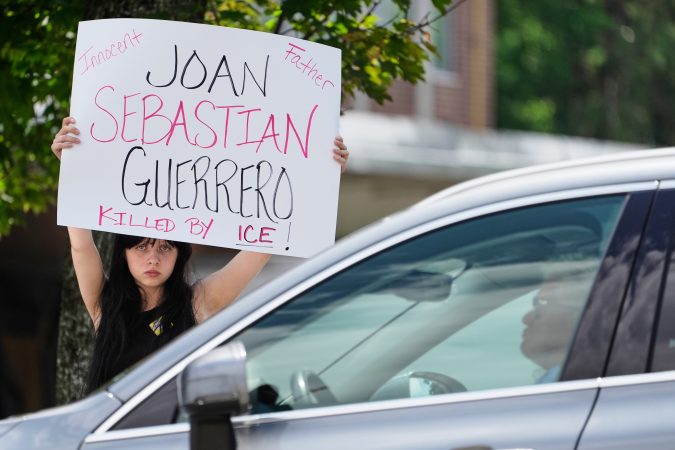
    Brouillette’s credibility could come under scrutiny as authorities investigate the July 13 shooting death of Johan Sebastián Durán Guerrero during an immigration enforcement action in Biddeford, Maine.

    The Department of Homeland Security has not identified Brouillette as the officer who shot Durán. But his former wife Ashley Brouillette and others have said Brouillette told them he was responsible for the shooting and fired his weapon in self-defense. Multiple people have identified Brouillette from footage capturing the immediate aftermath of the shooting.

    Ashley Brouillette has said her ex-husband told her that ICE hired him in November, around the time of the judge’s ruling and as the federal agency was rushing to put thousands of new officers on the streets. He said he would start in a couple of months, she said. Former Department of Homeland Security officials have publicly questioned whether those new hires were properly vetted.

    One former official told the Post that any record of a judge questioning David Brouillette’s credibility would add to questions about his fitness to serve and could cast a negative light on whatever he tells his superiors about the encounter with Durán.

    “Obviously if a judge had found that he had made false statements to the court, that would have a significant detrimental impact on his testimony as to what happened in the shooting,” said John Roth, who served as DHS inspector general from 2014 to 2017 and was a longtime federal prosecutor. “I think it’s a big deal.”

    Brouillette did not respond to calls or emails for this story. Blair Jones, his attorney at the child support court hearings in October, also did not respond to calls or messages.

    DHS did not respond to questions from the Post about Brouillette’s past statements, when he was hired by ICE, and how he was vetted. An agency spokesperson said ICE officers are targeting criminals and are under constant threat.

    “Publicizing their identities puts their lives and the lives of their families at serious risk,” the agency said in a statement.

    Durán, a 25-year-old asylum seeker from Colombia who had a work permit issued by the Trump administration, was shot shortly after leaving for work. An ICE spokesperson said officers were surveilling an address associated with an individual who has a final order of removal when they saw Durán leave and attempted to stop his vehicle.

    The agency said that the officer fired, “fearing for public safety,” after the driver tried to flee.

    A spokesperson for Sen. Angus King (I., Maine) has said that DHS initially told him that Durán was the target of an enforcement operation but later reversed and said he was not. Immigration court records show Durán did not have a final removal order and was scheduled for an initial hearing in May.

    Jonathan Ramirez, a friend of Duran’s who answered the door at his apartment the day after the shooting, said that he owns the white Kia that Durán was driving. Ramirez, who is also Colombian, said he does not have a final order of removal and did not think he was the person ICE was seeking. Ramirez said he has a Social Security number and a valid work permit and had paid his taxes.

    “The car is in my name,” he said. “I’m someone who follows the rules of this country.”

    State investigators have interviewed Durán’s partner, Karolina, who arrived at the scene with their 3-year-old daughter shortly after hearing gunfire, said Ben Gideon, who is representing the Durán family as they weigh legal action against the government.

    Gideon said he has not heard from the FBI or the DHS Office of Inspector General, which typically investigate officer-involved shootings. The FBI declined to comment; the OIG said in a statement that its policy is not to confirm or respond to questions on investigations.

    State court records show that Brouillette has been embroiled in contentious divorce and child support proceedings over the past two decades and that he and his two former wives have accused one another of abusive and neglectful behavior in civil court.

    The court hearing in October was part of an effort by Brouillette to modify his child support and custody arrangement for his daughter with his second wife, Lucinda Brouillette. After two days of testimony in October, the judge denied David Brouillette’s request.

    In a Nov. 17 written order, Dieterich said Brouillette had testified that he recently embarked on a new career as a real estate agent but his earning capacity was impacted because “his driver’s license had recently been revoked due to his failure to pay child support.” She said she found his claim to be not credible but did not say why.

    Maine’s Bureau of Motor Vehicles told the Post this week that the state has no record of any recent license revocation. Brouillette’s license was suspended in 2008 for a few weeks after he failed to provide proof of insurance following an accident, the agency said.

    “We have no record of any suspension or revocation for failure to pay child support,” said Jana Spaulding, spokesperson for the Secretary of State’s office, which oversees the bureau.

    In 2019, Brouillette signed a divorce settlement that said he had a job at the police department in Hallowell, a city of 2,500 on Maine’s Kennebec River. Hallowell Police Chief Zachary Kindelan said Brouillette has never worked at the police department.

    “I do know that he had applied a couple times, but as far as I know he was never hired,” Kindelan said. “He’s a name I had never even heard before. Maine is obviously a smaller state but … I’ve never even heard of this guy until the news recently.”

    Brouillette graduated from a Maine high school in 2007, served in the Maine National Guard until 2010, and then became an active-duty soldier in the Army, according to resumés and job applications he filed with the state for various law enforcement positions. The documents were obtained in response to a public records request.

    In an application he filed in 2015, he wrote that he had deployed to Afghanistan and served as a military interrogator. He said embedded with infantry patrols to recruit informants and interrogated Taliban insurgents in jail and “on the battlefield.” The Army sent him to Hawaii in 2014 to manage intelligence analysts, and he retired for unspecified medical reasons the following year.

    State records show Brouillette was employed as an officer in several different agencies, often for short periods of time. Those positions included roles at the Maine Department of Corrections, the state Department of Health and Human Services, and the U.S. Department of Veterans Affairs.

    The Durán family’s attorney said Brouillette’s candor and character will be paramount to the investigations into the recent shooting.

    No body-camera footage appears to have captured the moment that the shots were fired. And no bystander or surveillance video has emerged thus far showing when Durán was shot. That will make witness testimony — including Brouillette’s own account — key in determining what happened.

    “It’s critically important,” Gideon said. “If there’s no direct video evidence produced of the very moment of the shooting, there’s going to be questions about the credibility of the accounts given.”

  • Trump says U.S. will investigate EU trade practices, claiming the bloc unfairly fined tech giants

    Trump says U.S. will investigate EU trade practices, claiming the bloc unfairly fined tech giants

    WASHINGTON — The United States will open a formal investigation into the European Union’s trade practices, President Donald Trump said on Friday, claiming the bloc has unfairly levied billions of dollars of fines against Google, Apple, and other U.S. tech giants.

    The Republican president made the announcement a day after the EU hit Google with a fine of 890 million euros, or $1 billion, after it said the technology behemoth broke digital antitrust regulations by setting up Google Play and its ubiquitous search engine to corral consumers toward its own services and apps to the detriment of competitors.

    In a lengthy post on social media, Trump said he has warned the EU about its practice of fining U.S. tech companies. He named Google, Apple, Meta, Amazon, and others.

    “The United States of America is not a ‘PIGGYBANK’ for Europe, nor will we allow it to be!” Trump said, adding that his post should serve as notice of an immediate trade investigation “into the practice of ‘ROBBING’ American Companies and, in turn, the American Taxpayer.”

    Trump’s move comes a day after the White House announced double-digit tariffs on imports from more than 60 countries, accusing them of inadequately enforcing bans on goods produced by forced labor. The new tariffs replace temporary 10% worldwide import taxes that Trump imposed after the Supreme Court struck down his biggest tariffs.

    The new tariffs are being implemented using Section 301 of the Trade Act of 1974, which permits the president to impose import taxes and other sanctions against countries found to engage in “unjustifiable,” “unreasonable,” or “discriminatory” trade practices.

    The EU’s billion-dollar fine against Google was the latest major crackdown on Big Tech by Brussels, which has led the world in reining in some of the world’s largest companies from Silicon Valley to Beijing.

    It has done so despite the risk of incurring the wrath of Trump, who has lashed out at the 27-nation bloc’s digital regulations amid a broader campaign against Europe: imposing high tariffs, making threats to seize Greenland from Denmark by force, and rattling trust within the NATO military alliance.

    Trump had threatened retaliation if American tech companies are penalized.

    Google had recently lost its appeal of a $4.5 billion antitrust fine imposed by the EU for throttling competition and reducing consumer choice through the dominance of its mobile Android operating system.

    The European Commission, the bloc’s executive branch and highest antitrust enforcer, said it was acting in the interest of consumers after an investigation of Google.

    “The best products should succeed because they’re better, not because they’re owned by the company running the search engine. And European consumers have a right to be told by app developers where to sign up to the best offers, even when the app store owner does not get a cut,” said Teresa Ribera, the commission’s executive vice president for clean, just, and competitive transition.

    Google’s president of global affairs, Kent Walker, blasted the fine as “product degradation driven by a small group of self-serving complainants” that will have a negative impact on European businesses and consumers.

    He said the EU’s Digital Markets Act forces Google “to strip away real-time search features Europeans love — like instant pricing and direct availability for hotels, flights, and restaurants — and dismantle safety protections on Google Play.”

    The EU describes some of the world’s leading tech giants — Amazon, Apple, Google parent Alphabet, Meta, Microsoft, and TikTok owner ByteDance — as “gatekeepers” that control access for consumers.

    “In the EU, businesses have the right to compete fairly. Gatekeepers have the obligation to ensure a level playing field and consumers the right to choose for cheaper alternative offers,” European Commission spokesperson Thomas Regnier said. Alphabet reported $403 billion in revenue last year.

  • Northern West Bank in lockdown as clashes rock villages and Israel deploys troops in Nablus

    Northern West Bank in lockdown as clashes rock villages and Israel deploys troops in Nablus

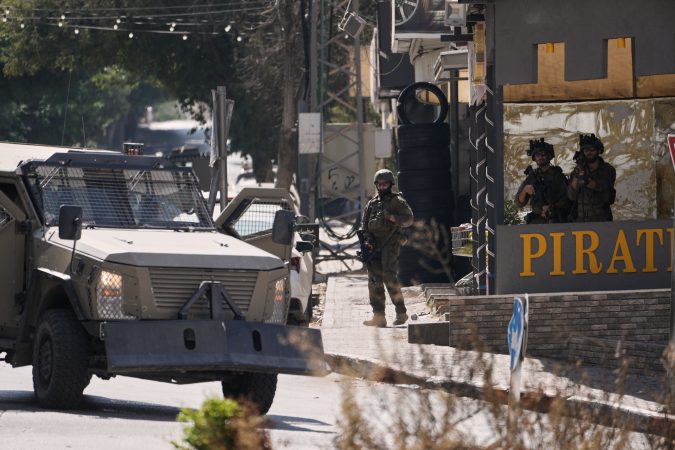
    NABLUS, West Bank — Israel widely deployed troops in the West Bank after clashes broke out Friday across the occupied territory following the killing of an Israeli settler triggered violence that left two Israeli soldiers and four Palestinian villagers dead.

    Palestinians in the West Bank have been facing a wave of violence as Israel’s hard-line government, dominated by settler leaders and supporters, has overseen a surge in settlement construction over the past four years. The international community overwhelmingly considers Israeli settlement construction in these areas to be illegal and an obstacle to peace.

    4 Palestinians, 2 Israelis killed as fear of violence escalates

    The Palestinian Health Ministry said Israeli soldiers shot and killed four Palestinians in the village of Tell in the northern West Bank while the military reported the deaths of two soldiers, one of whom was a settler in a local defense squad.

    Two other Israelis and four more Palestinians were wounded, health officials said, and the Israeli military announced it was preparing for an “extensive” counterterror operation in the West Bank. It said it conducting a search for Palestinians suspected of attacking Israelis and that it had apprehended two during a raid in Nablus.

    Israeli Prime Minister Benjamin Netanyahu, in a joint statement with Israeli Defense Minister Israel Katz, called Friday for more troops to the West Bank and the razing of the homes of the accused in Tell, as well as collecting weapons and revoking work permits in the village.

    “The security forces must be allowed to act freely and with full force against terrorism,” they said.

    Israeli Finance Minister Bezalel Smotrich went farther, saying that the villages of Tell, Iraq Burin, and Beit Furik “need to look exactly like the refugee camps in Nablus and Tulkarm,” referring to the mass demolition campaign that displaced tens of thousands in the West Bank towns last year.

    “It is necessary to evacuate the population there for their protection and to clear these villages of terrorist infrastructure,” Smotrich said. “A sharp, determined, and unequivocal military action is required here and now.”

    Human rights group B’Tselem warned the violence could spin out of control as Israeli settlers and soldiers amass near multiple Palestinian cities.

    “Israeli violence is spreading across the West Bank, fueled by Israeli politicians openly calling for revenge,” said Yuli Novak, the group’s executive director. “We know where this leads. Millions of Palestinians are now completely exposed to further attacks, with no one protecting them.”

    An unclear confrontation at the center of the tension

    The exact circumstances of Friday’s incident remained unclear, but Israeli media reports and interviews with local Palestinian officials suggested a group of settlers entered Tell and were confronted by residents who were fearful of an attack.

    The village is off-limits to Israelis as part of Area B under the 1993 Oslo Accords struck after the first Palestinian Intifada.

    According to the Israeli military, one of the villagers took one of the settlers’ weapons and fired on the group, killing Benayahu Mellet, 32, a security guard in a settlement nearby.

    In a video of the incident, confirmed by the Israeli military and circulated online by the military correspondent for Israel’s Army Radio, two armed men in civilian clothing, as well as at least one Israeli soldier, are shown pointing their weapons at a group of Palestinians who had gathered in a field.

    At one point, the two armed men rushed toward several Palestinian residents with their guns drawn. In the footage, the residents try to push them back and appear to disarm one of the men before opening fire.

    In a statement, the Israeli military said it killed the man who took the settler’s weapon and that he was armed when soldiers shot him. But a separate video, published by Israeli media outlets and confirmed by the military, showed Israeli forces firing on a group of Palestinians in the same field who were already on the ground.

    More than a dozen gunshots can be heard in the footage, which is less than a minute long. The military said the suspect was one of the people killed in the field. It did not respond to questions about why soldiers killed the other men — all of whom were related — or how long after the original altercation the killings took place.

    Later, army chief Eyal Zamir said he was sending more troops to the occupied West Bank.

    Yossi Dagan, head of the Samaria Regional Council, a settler group in the northern West Bank, posted a video online in the wake of the Tell confrontation demanding the government crack down hard on Palestinians.

    “We demand an iron fist and for the government to carry out a wide military operation against the Palestinian Authority and against Hamas,” he said.

    Settlers have long targeted villages in the northern West Bank

    Five Palestinian villages surrounding Nablus were attacked by Israeli settlers on Friday, according to the Palestinian news agency WAFA.

    The towns and villages surrounding Nablus sit in one of the most violent parts of the Israeli-occupied West Bank. In addition to newly approved settlements, at least nine farming outposts dot the area and attacks by Israeli settlers, army incursions, and confrontations have become frequent.

    Palestinians and human rights groups have increasingly documented armed settlers entering villages in the area. Livestock theft, arson, and the defacement of mosques are routinely reported.

    According to the Palestinian Health Ministry, since the beginning of this year, 87 Palestinians have been killed in the occupied West Bank governorates, including 21 by Israeli settlers.

    Israeli deaths have repeatedly been followed by revenge against nearby Palestinian communities called “price tag” attacks.

    That pattern followed the March 21 death of 18-year-old Yehuda Sherman, who was killed when a Palestinian vehicle struck his ATV near Beit Imrin. Senior politicians, including Smotrich, attended Sherman’s funeral and called for vengeance.

    At the time, the U.N. Office for the Coordination of Humanitarian Affairs documented 32 settler attacks affecting 30 Palestinian villages and communities across the West Bank, about a third near Nablus governorate over the following two days. Settlers torched homes and vehicles, vandalized property, and assaulted residents, injuring at least 32 Palestinians, according to OCHA.

    More than 700,000 Israelis live in the occupied West Bank and east Jerusalem, territories captured by Israel in 1967 and sought by the Palestinians for an independent state along with the Gaza Strip.

  • Democrats select South Carolina for their first presidential nominating contest in 2028 election

    Democrats select South Carolina for their first presidential nominating contest in 2028 election

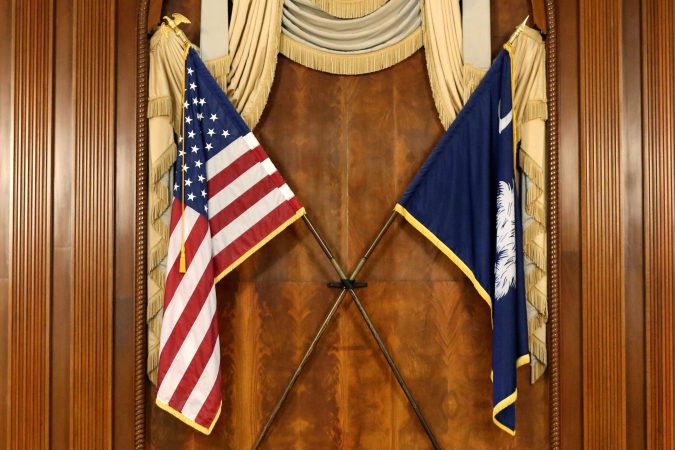
    WASHINGTON — South Carolina was selected Friday to once again lead off the Democratic Party’s 2028 presidential nominating schedule, most likely cementing a dramatic break from decades of tradition by keeping Iowa off the top of the calendar and elevating more racially diverse states.

    The decision by the Democratic National Committee’s Rules and Bylaws Committee will need to be approved by the full organization, which is scheduled to meet in August.

    South Carolina or Nevada had been expected to go first, with each state aggressively campaigning for the coveted spot.

    President Joe Biden successfully pushed to move South Carolina to the front of Democrats’ 2024 calendar after the state revived his struggling 2020 presidential campaign. South Carolina has long been the first Southern contest and has served as a key test of candidates’ support among Black voters.

    Jaime Harrison, a former DNC chairperson in attendance Friday, told the Associated Press after the vote that keeping his home state first on Democrats’ nominating calendar signaled to Black voters the value they bring to the party, especially after a Supreme Court decision aimed at weakening their voting power.

    “I think we needed a strong statement to say to the most loyal members of our party, which are Black voters, that we’re going to stand up with you,” said Harrison, who also chaired South Carolina’s Democratic Party. “It was just really important for us to stand up and say, ’We see you, we hear you, but most importantly, we’re going to fight like hell for you. And your voices are important.’”

    Democratic leaders in a handful of Southern states had lobbied for South Carolina to reprise its role as the party’s first-in-the-nation contest holder, arguing in a letter to the DNC that the state best represents the initial playing field for presidential candidates to build the coalitions needed to win and serves as “a moral and political compass for our party and our nation.”

    Democrats wanted more influence for diverse states

    The overhaul reflects Democrats’ effort to give greater influence to states that better mirror the party’s diverse coalition, particularly Black and Latino voters, after years of a calendar led by Iowa and New Hampshire, two states with overwhelmingly white electorates.

    Much of Friday’s debate stood as a contrast on several fronts. South Carolina proponents argued they had the experience to stand up a lead-off primary and serve as a showcase for the Black voters whose support has become vital for Democrats.

    “Black voters didn’t just show up for this party in 2020. They saved us,” Nebraska Democratic Party Chairperson Jane Kleeb said, in making her argument for South Carolina. “They saved our entire country from Donald Trump.”

    Nevada’s supporters, meanwhile, portrayed their state as the party’s future, in which they argued Latino voters play a larger and larger role.

    “We are the battleground state,” said Artie Blanco of Nevada, a DNC vice chair. ”We win elections because we leave no voter untouched.”

    The decision will also shape the opening stage of what is expected to be a crowded Democratic presidential primary. Without an incumbent or clear front-runner, the states that vote first could once again play an outsized role in determining which candidates gain momentum, attract donors, and emerge as viable contenders.

    Republicans still need to do their calendar. They’re expected to stick with their traditional early-state lineup led off by Iowa and New Hampshire.

    The calendar decision is one of the first milestones in what’s expected to be a tumultuous two-year sprint to the Democratic nomination.

    There has not been a truly open Democratic presidential primary — without an incumbent president or a dominant front-runner — in almost two decades.

  • More than 200,000 people flee raging wildfires in France and Spain, some escaping by boat

    More than 200,000 people flee raging wildfires in France and Spain, some escaping by boat

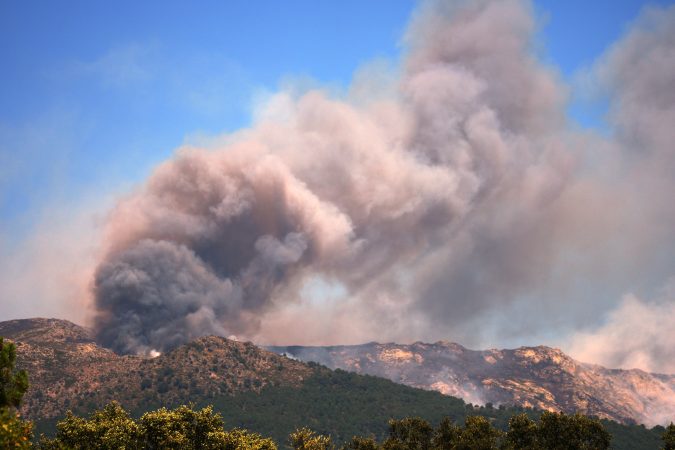
    ARCACHON, France — Massive forest fires burned out of control in southwestern France and central Spain on Friday, prompting authorities to evacuate an estimated 200,000 people from their homes. Some even fled by boat when flames swept through the tourist destination area on France’s Atlantic coast.

    Dozens of firefighters were injured, authorities said in France, but no deaths were reported in either country.

    Some 141,000 fled homes in the Gironde and Landes departments in France, the French interior ministry said. In central Spain, 60,000 were forced from their homes, the Spanish interior ministry said.

    France’s Interior minister Laurent Nunez said that the large wildfire that ravaged large swaths of land in southwestern France is now heading toward the city of Bordeaux.

    Speaking to French TV channel Tf1, Nunez said the wildfire that earlier in the day forced the evacuation of the Cap Ferret peninsula has swept across 54 square miles, with 110,000 people fleeing their homes in the Gironde region.

    “We learned in the middle of the afternoon that, following the wind shift, it had become a large, self-sustaining fire that is extremely difficult to bring under control,” Nunez said. “It is now moving east, toward the Bordeaux metropolitan area. We are going to reorganize our response so we can fight it from the ground and prevent it from advancing toward Bordeaux.”

    Meanwhile, French President Emmanuel Macron has asked the Prime Minister Sebastien Lecornu to activate the government’s crisis response unit, and has instructed the armed forces to mobilize in order to provide the maximum possible reinforcement to the civilian emergency services. Asked whether Bordeaux is under threat, Nunez said: “For the time being, no. We will, of course, do everything we can to protect it using ground resources, including requisitioned military assets and our firefighters.”

    The blaze started on Wednesday near Cap Ferret peninsula on France’s Atlantic coast.. Located just 37 miles from Bordeaux, the peninsula normally offers stunning landscapes and sandy beaches as well as oyster-farming villages and upmarket resorts. Some people fled the flames by boat.

    A separate wildfire broke out in Landes, causing 31,000 evacuations, while both France and Spain asked fellow European Union members for help.

    “It’s quite impressive and even frightening,” said Laurent Moretti, a resident in the town of Arès. “An evacuation on this scale has never happened before. All we really hope is that the firefighters can quickly get it under control.”

    More than 20,000 people had already been evacuated from towns and vacation resorts on Thursday, but that number exploded on Friday as the fires raged out of control.

    Local authorities in the Gironde department said 53 homes and a campsite have been ravaged by flames, adding that 42 firefighters were injured. Around 1,500 people who fled the peninsula arrived by sea in the city of Arcachon, some aboard small water taxis and others on larger boats.

    Hundreds of French firefighters have been deployed and additional ground and aerial reinforcements were sent Friday to tackle the blaze. Meanwhile, another major wildfire destroyed more than 9 square miles of land farther south down the coast. It remained uncontained and strong winds hampered the work of firefighters.

    Authorities believe the cause of both fires was accidental.

    Macron said France will receive EU reinforcements including two Croatian Canadair firefighting aircraft, two Portuguese Air Tractor aircraft, and two heavy-lift Black Hawk helicopters from the Czech Republic and Slovakia. Spanish Interior Minister Fernando Grande-Marlaska said that Italy and Greece are each sending two Canadair water-dumping airplanes.

    Spain struggles to tackle multiple fires amid a heatwave

    In Spain, the government declared a national emergency for wildfires for the first time as the blazes in Madrid and the nearby province of Ávila prompted the evacuation of some 60,000 people from towns west of the capital.

    The fires are being fanned by a heat wave with temperatures expected to top 102 Fahrenheit in parts of Spain.

    The two major fires near Madrid merged into one single blaze that had quickly charred 11.5 square miles by Friday afternoon. Regional President Isabel Díaz-Ayuso called it the worst in Madrid’s history.

    Francisco Martín, the central government representative for the region of Madrid, said that another 20,000 people had been ordered to shelter at home in towns west of the capital. Martín said more evacuations could be coming and that the priority now was to protect the town of San Lorenzo, the home of the Escorial, Philip II’s 16th-century royal palace and monastery.

    Meanwhile, a blaze in Ávila, less than two hours northwest of Madrid, had consumed 34 square miles. Spain’s Civil Guard arrested one man and is investigating another for allegedly having used heavy machinery in an area where it was prohibited for fire risk. Police believe a spark ignited the fire on Thursday.

    “In my 60 years I have never seen something like this in my village, I have never seen fire of these dimensions,” Francisco Martínez, the mayor of Burgohondo, whose residents were preventively evacuated in Ávila, told Spain’s national broadcaster TVE.

    Spanish television showed video taken by retreating residents of walls of flames topped by long plumes of smoke advancing through woods and scrublands. High winds and hilly terrain complicated efforts by firefighters, who combated the blazes with firetrucks and bulldozers.

    “All around the town was smoke and fire, I was scared. Everything was fire and smoke, people were nervous,” 33-year-old Joaquin Espinosa told the Associated Press before he and his neighbors were evacuated from the village of Chapinería, located less than an hour’s drive west of Madrid.

    Strong winds complicate efforts

    In one week, Spain has had the worst fires on record for both the regions of Castilla La Mancha and Madrid.

    Firefighters were still trying to extinguish Spain’s second-largest ever fire in the Guadalajara province of Castilla La Mancha after it had destroyed some 120 square miles over the last week. Thirteen people were also killed in a fire in southern Spain earlier this month, the deadliest fire in recent memory for Spain.

    Spanish Minister for the Ecological Transition Sara Aagesen said that Spain has seen 440 square miles already burned this year, more than five times the burned terrain it had through the first half of 2025. There were nine other serious fires in other parts of Spain active on Friday.

    Sánchez called on Wednesday for a pact between political parties to fight climate change that he said is key to adapting to a more fire-prone climate. Spain has experienced record temperatures in recent summers and forest fires of increasing violence.

    Wildfire analyst Raúl Quílez said that besides the impact of climate change, Spain’s rural areas have become more exposed to fires with the abandonment of farmlands that traditionally provided buffer zones around villages. Now, he said, trees and undergrowth often reach right to homes, putting them in harm’s way.

    “That makes a perfect cocktail for this type of fires,” Quílez told the AP by phone from Valencia, where he works as an analyst for regional firefighters.

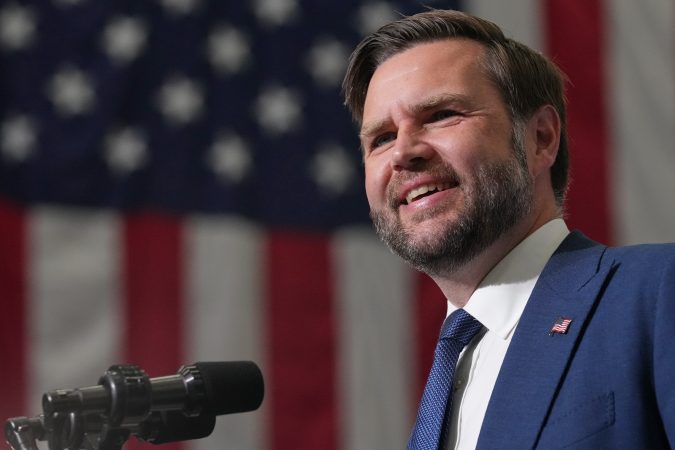
  • Knives are out for Vance in the GOP. His allies say it’s a coordinated ‘op.’

    Knives are out for Vance in the GOP. His allies say it’s a coordinated ‘op.’

    As JD Vance prepares to make a decision about his 2028 plans, the vice president is facing a barrage of online attacks from within his party, criticism his allies say appears to be part of a coordinated attempt to poison the well for him politically.

    His detractors have adopted the “Never Vance” slogan and flooded social media, especially over the past week, with attacks including claims that Vance is “unfit” to be vice president due to his efforts to negotiate a peace deal with Iran. They have asserted, without evidence, that Vance is making policy decisions not supported by President Donald Trump. They have likened him to former President Barack Obama and Sen. Bernie Sanders (I., Vt.).

    The sustained public hostility from Vance’s own side of the aisle is unlike that faced by other vice presidents in decades, both in intensity and in the early timing — two years before the party will choose its next presidential nominee. The unusual nature is a product of the central role that social media plays in today’s political discourse, as well as the high stakes as Republicans prepare to select a new standard-bearer after Trump, Vance allies and critics say.

    Vance’s political team remains dismissive of the social media onslaught and its impact on Republican voters, believing that many of the attacks are not organic, a close ally of the vice president told the Washington Post — a sentiment echoed by two other people with knowledge of Vance’s strategy. The ally and other advisers spoke on the condition of anonymity to discuss internal deliberations.

    Vance’s allies are keenly aware of and monitoring the online attacks, but his team says the criticism sends a signal to the conservative base that establishment Republicans and opponents they label as neoconservatives hate Vance. That, they say, could ultimately strengthen his standing in a GOP primary.

    “Loud Washington establishment voices form an online cacophony,” said Steve Cortes, a conservative commentator supportive of Vance, “but they do not remotely represent the consensus views of Republican voters.”

    Vance, whose brand of politics is populist and skeptical of foreign wars, has remained the front-runner in 2028 Republican primary polling. Secretary of State Marco Rubio, the favorite of many more traditional, business-minded Republicans, has gained ground in recent months, however, although Rubio has insisted he will support Vance if he runs.

    The knives have long been out for Vance within the GOP, since before Trump selected him as his running mate. At the time, hawkish donors and conservative media personalities lobbied for Trump to reject Vance in favor of Rubio or Doug Burgum, now secretary of the interior.

    Polling of Republican voters shows Vance’s favorability within the party as roughly on par with Trump’s.

    Intense criticism from some Republicans, largely over Vance’s foreign policy views, has ebbed and flowed since the start of the second Trump term. The criticism reached a first peak in the fall as neoconservatives and pro-Israel activists portrayed Vance as antisemitic for sympathizing with figures who expressed skepticism over the U.S. relationship with Israel. More recently, attacks ticked up again after Vance sat for a nearly three-hour interview July 15 on Joe Rogan’s widely watched podcast.

    During the show, Vance described himself as a “reasonable moderate” in the debate over the U.S.-Israel relationship. He also cited a recent Time report about an online pro-Israel influence operation run by a former Trump campaign official, through which Vance said he was being attacked “in dishonest ways” by paid influencers.

    “You know, my response to that is, ‘Well, go to hell,’” Vance told Rogan. “I’m going to do what I have to do for the American people. I represent Americans first, and that’s the way that I’ve tried to do this job.”

    Pro-Israel conservatives erupted. A Washington Post analysis of conservative influencers’ posts on X found that criticism of Vance spiked immediately after his appearance on Rogan’s podcast.

    Critical posts poured in from prominent commentators including Ben Shapiro, Marc Thiessen, and Batya Ungar-Sargon, as well as online right-wing influencers and little-known X users whose anti-Vance posts quickly gained traction. Some of the users who pledged to oppose Vance and support Rubio in 2028 had profiles that strongly suggested they aren’t American voters and are based in other countries.

    It was “obvious to anyone with an IQ above 70″ that the barrage of attacks has been “totally inauthentic and probably coordinated to a certain extent,” the close Vance ally said.

    The upsurge in online criticism “hasn’t been reflected in any data correlating with Vance’s image among GOP voters, which currently tracks President Trump’s image to a T,” the person said. “If it were organic, authentic, or effective,” Vance’s favorability rating with Republican voters would have cratered over the past nine months, since the intense online criticism first peaked, the person said. “And that just hasn’t happened.”

    A spokesperson for the vice president said Vance’s only focus is “fighting for the president’s agenda and delivering wins for the American people,” and that he is not concerned with social media.

    Vance allies have pushed back publicly against some of the attacks, at times calling attention to common language used among those posting insults.

    Jon Schweppe, a Vance supporter and senior adviser at the American Principles Project, who worked for Trump’s Federal Trade Commission until earlier this year, posted a chart on X last week that showed the vice president’s favorability among Republicans had remained steady despite an “anti-Vance op.” His post quickly received dozens of replies from accounts that didn’t follow him — all attacking Vance. Schweppe described the response as curious, since his post had not been shared by any high-follower accounts.

    “Primary season — I guess it’s beginning before the midterms this year,” Schweppe said, adding that Vance’s detractors are “trying to create a divide and separate him from the president.”

    “There’s going to be folks within the party structure, within the influencer structure, who are going to try to knock him down a few pegs in hope that a challenger can emerge to beat him, and that’s just what we’re seeing,” Schweppe said. “But it’s absolutely organized.”

    The intense focus on the vice president is unusual. Trump’s first vice president, Mike Pence, didn’t face intense backlash from Republicans until the final weeks of his term, as the president and his supporters blamed Pence for failing to act to overturn the 2020 election results. Before that, Pence had been widely liked by Republicans, with few prominent conservatives raising their heads to harshly criticize him.

    For a significant stretch of her vice presidency, Kamala Harris faced a version of the succession anxiety now surrounding Vance. Democratic donors, strategists, and commentators questioned whether her low favorability ratings, uneven political performance and widely reported management problems left her prepared to become president — an especially consequential concern given President Joe Biden’s age.

    But there are significant differences: Vance is confronting a public, ideological revolt from prominent figures within the conservative coalition. The criticism of Harris, by contrast, generally was framed around competence and electability with jabs at what critics considered misstatements and gaffes. Few major Democratic figures publicly demanded that Biden remove her.

    Marc Short, who served as chief of staff to Pence in the White House, acknowledged that the attacks against Vance are far more intense than what Pence endured for nearly four years in office — at least until Trump turned against him at the end of his term.

    Pence, however, was adamant throughout that term not to show any distance between himself and Trump, even to staff or other cabinet officials, Short said. Vance has at times signaled a different perspective regarding the war with Iran, he noted.

    Trump has confirmed that Vance is “philosophically a little bit different” than him on Iran, and “maybe less enthusiastic about going” to war, although Vance has publicly expressed support for Trump’s decisions.

    “I think that there’s been a difference in the way that the current team has made clear their policy differences,” Short said. “So I think that does create more scrutiny when you do that.”