Category: Wires

  • Netanyahu accuses Mamdani of ‘fomenting hate’ and calls ICC war-crimes charges ‘bogus’

    Netanyahu accuses Mamdani of ‘fomenting hate’ and calls ICC war-crimes charges ‘bogus’

    WASHINGTON — Israel’s Benjamin Netanyahu said Sunday that New York Mayor Zohran Mamdani is “fomenting hate” by calling the prime minister a war criminal who should be arrested over the war in Gaza if he visits the city for the United Nations General Assembly.

    Netanyahu said he intends to be in New York in September to address the annual U.N. gathering of world leaders, despite the mayor’s suggestion that he is not welcome. Mamdani said last week that while New York City does not have legal authority to execute an arrest warrant issued by the world’s top war-crimes court, he encouraged the federal government to do so.

    “He’s supposed to be the mayor of all New Yorkers — Jews, Christians, Muslims, everyone,” Netanyahu said on Fox News Channel’s Sunday Morning Futures with Maria Bartiromo. “But he’s trying to turn one group against the other.”

    The prime minister has become an increasingly polarizing figure over Israel’s war in Gaza, which was ignited by the Oct. 7, 2023, deadly attack on southern Israel by Hamas militants. Israel also joined the U.S. in starting the war against Iran on Feb. 28 before launching a ground invasion in southern Lebanon in response to fire from the Iranian-backed Hezbollah group.

    Netanyahu on Sunday dismissed the International Criminal Court’s war crimes charges against him as “bogus.” He pointed to sexual misconduct allegations against the ICC’s top prosecutor, who was removed from that post on Friday, and said the warrant was an attempt to divert attention.

    The mayor’s office did not immediately respond to a request for comment Sunday.

    Bipartisan U.S. support for Israel at risk, Netanyahu says

    Netanyahu said he was concerned that once-bipartisan political support for Israel in the U.S. is at risk, particularly as progressive and far-left Democrats aligned with the Mamdani wing of the party splinter.

    He also warned against rising antisemitism in the U.S. and other Western countries, saying that when he talks to people in New York City, home to the second-largest Jewish population in the world, “Jews feel very uncomfortable.”

    “And I think it’s wrong. The whole thing is wrong,” he said.

    Throughout his mayoral election campaign last year, Mamdani said he would seek to order the city’s police to execute the ICC’s arrest warrant over Netanyahu’s role in the war in Gaza.

    But Mamdani acknowledged last week that his city did not have the legal authority to arrest Netanyahu and called on federal authorities to step in.

    “I want to be equally clear, Benjamin Netanyahu is not welcome in New York City, nor is any other war criminal at large,” he said in a video message.

    He told New Yorkers that he understood their frustration and that expressions of protest are something the city would “always respect.”

    the Hague-based court has accused Netanyahu, his former defense minister, and the late leader of Hamas of crimes against humanity. The Palestinian territory’s Health Ministry says over 73,000 people have been killed in Israel’s offensive — roughly half of them women and children. Some 1,200 people, most of them civilians, were killed in the initial Hamas attack on Israel.

    Trump has assured Netanyahu he won’t be arrested

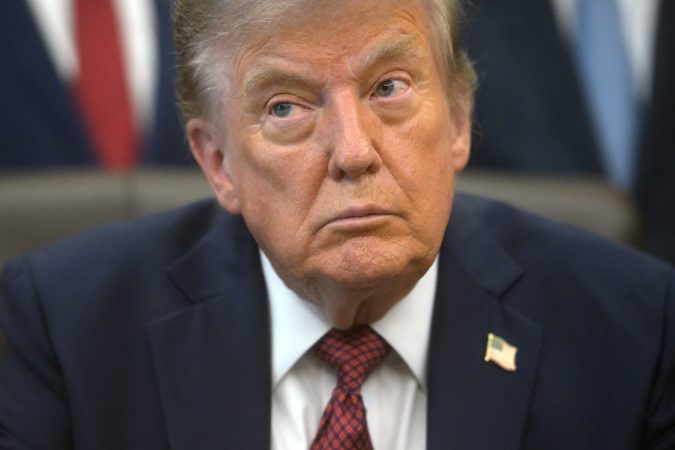
    President Donald Trump told Netanyahu in a social media post last week that he “will not be arrested, in any way, shape, or form, while in the United States of America.”

    Netanyahu is expected in Washington this week to meet with Trump and attend funeral services for the late Republican Sen. Lindsey Graham of South Carolina.

    Graham, a leading defense hawk and strong supporter of Israel, died suddenly two weeks ago of a likely torn aorta. The prime minster called him an “extraordinary American patriot.”

  • Republicans see ‘scary’ lack of enthusiasm among core voters ahead of midterms

    Republicans see ‘scary’ lack of enthusiasm among core voters ahead of midterms

    Republican pollsters and political groups are raising the alarm that their party faces a listless and demotivated base ahead of November’s midterm elections.

    A raft of discouraging data from polling, door knocking, and focus groups is unsettling Republicans as their party heads into a midterm election season that would be challenging no matter what, given President Donald Trump’s low standing in polls and the fact that the party in control in Washington almost always loses seats.

    The lack of enthusiasm is reaching deep into Republicans’ loyal base, spreading to the party’s most consistent voters — who have shown up to vote in all of the past four primaries and general elections, according to an analysis done by Americans for Prosperity Action, a conservative super PAC that was founded by billionaire Charles Koch. This new issue with the base adds to the party’s more enduring problem of turning out less-frequent voters who support Trump but often skip midterm elections.

    About 1 in 5 reliable Republican base voters are at risk this November, according to Nathan Nascimento, executive director at AFP Action. Those voters in Iowa, Ohio, North Carolina, Montana, New Hampshire, and Michigan are either saying they may stay home or are weighing voting for Democrats, according to their data, which is based on polling and extensive efforts to engage targeted Republican voters by knocking on their doors. The voters are primarily worried about inflation and the economy.

    “This is a big chunk,” Nascimento said. “This is a scary number.”

    The group has found that reaching these voters at the door usually moves them toward Republican candidates — or at least away from Democratic ones and toward undecided, he said.

    The 20% of Republican base voters the group sees this issue with does not take into account low-propensity conservative voters who tend to turn out in general election years to support Trump but skip other elections. Motivating those Trump voters is a separate issue Republicans face in November.

    “We have a high-propensity base problem,” Nascimento said.

    Washington Post and Ipsos polling shows that Democrats have a 10-percentage-point advantage over Republicans among voters who say they are absolutely certain to vote in November. If that number doesn’t narrow, it could lead to a decisive advantage for Democrats, even though overall they lead by just three percentage points over Republicans on a generic ballot.

    Mitchell Brown, a Republican pollster at the firm Cygnal, said Democrats are as enthusiastic about voting as they were at the same time ahead of the 2018 midterm elections, when they swept back into power in the House. But Republicans are far less excited to vote at this point than they were then, posing an issue for the party.

    “It’s not that the Democrats are outperforming a topline number that we’d expect, it’s that Republicans are underperforming,” Brown said.

    He pinpointed men under 40 as the group that is most at risk among Republican voters, saying they have concerns about the economy and prices. This group proved pivotal to Trump’s 2024 electoral victory, which included a sweep of some of the same battleground states holding critical elections this year.

    The decline in support among those voters may change closer to the elections, once more people tune in, Republican strategists stressed. And Trump’s unprecedented redistricting efforts have also sought to give the party a structural advantage that could mitigate GOP losses.

    “Republicans are united, on offense, and armed with our largest war chest in party history because voters are energized and understand what’s at stake in November’s election,” said Natalie Baldassarre, a spokesperson for the Republican National Committee, in a statement.

    This dynamic is playing out in the red state of Iowa, where Republicans face open races for governor and a Senate seat that polling shows are surprisingly competitive. A recent door-knocking session in the Des Moines suburb of Urbandale with AFP Action turned up voters critical of the war in Iran and high inflation, with a handful saying they planned to support Democrats in the fall.

    In western Iowa, three-time Trump voter Lance Sulentic, a resident of Iowa’s rural Harrison County, described the past three presidential elections as “the worst three mistakes I’ve ever made in my life,” saying that the president has failed to fulfill his campaign promises. Higher gas prices have been costing him an extra $300 to $500 every month to ride his motorcycle, he said.

    “We voted for Trump, and he did the opposite of what he said he was going to do,” said Sulentic, a 56-year-old retired insurance agent. “Gas prices were going to be two dollars, food was going to be cheaper, energy prices was going to be in half, we were going to get two rebate checks to the American people, and we weren’t going to have any new wars, and we were going to build a wall and deport 30 million illegal aliens, and he did none of it.”

    He said he would either sit out this year’s election or vote for Democrats.

    Republican lawmakers are worried about such comments as their party remains mired in internal disagreements in Washington that have hampered them from passing signature agenda items that could motivate core supporters.

    “We need to do something to re-energize our base,” said Sen. Ron Johnson (R., Wis.). Johnson, who does not face reelection until 2028, has triumphed in tough races in his closely divided state.

    Johnson said GOP base voters may think the lawmakers “haven’t been … trying hard enough.” The party has been unable to pass a law to require ID to vote and proof of citizenship to register to vote called the Save America Act, which Trump has lambasted them for. They also have done little to tackle cost-of-living issues since the bill extending tax cuts in 2025.

    A spokesperson for Trump, Abigail Jackson, called the voting legislation a top priority but added that the administration “continues to deliver on the President’s affordability agenda by lowering drug prices, reshoring American jobs, lowering gas prices, and more.”

    Other senators have pressed Trump to use his large platform and $400 million MAGA Inc. war chest to activate lower-propensity voters. Trump has had far more success motivating supporters when he is on the ballot.

    Sen. Kevin Cramer (R., N.D.) said he told the president in the Oval Office last week that Trump is the key to turning out his voters.

    “Well, they will [turn out] if you pass the Save America Act,” Trump retorted, according to Cramer.

    The White House is hopeful the Republican Party’s planned midterm convention in September in Texas will help juice enthusiasm among the base as well.

    Sen. Thom Tillis (R., N.C.), who declined to run for reelection in his purple state, said he believes the traditional Republican base will ultimately turn out in November. But he fears the party’s brand has been damaged among moderates by the economy and inflation, and that the Iran war is becoming an additional political drag. Low-propensity Trump voters need to turn out to close that gap, he said.

    “The question is whether the coalition he has that’s unique to the president, if he can mobilize them to come out and vote for others,” Tillis said.

  • The shrinking world of former President Joe Biden

    The shrinking world of former President Joe Biden

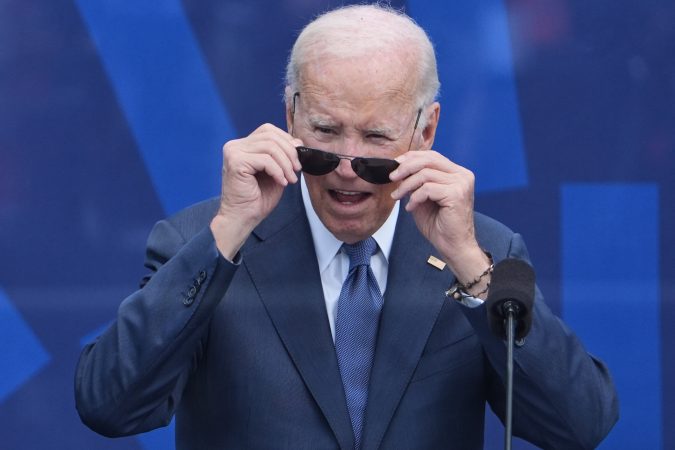
    Joe Biden’s world has grown smaller.

    Eighteen months after leaving the White House, the 83-year-old former president moves within a narrowed circle of relatives, old friends, and longtime aides as he undergoes treatment for metastatic cancer.

    The treatment appears to be working, according to five former aides and others close to Biden, many of whom spoke on the condition of anonymity to candidly discuss his health and private life. But the disease — and the toll of treating it — has left him visibly frail.

    Those around Biden describe a post-presidency constrained by illness with his days increasingly organized around treatment, family, and efforts to shape his legacy.

    Unlike some recent predecessors, Biden has maintained a limited public schedule, has yet to build a sprawling philanthropic or policy operation, and has struggled to raise money for a presidential library, leaving him with fewer avenues to influence how his presidency is remembered.

    That frailty is likely to become harder to keep private this fall, when Biden begins promoting a memoir scheduled for publication on Nov. 17, two weeks after the midterm elections. The timing has unsettled some friends and former advisers, who worry not only about Biden’s well-being, but also about how much his visible health struggle could revive the bitter arguments of 2024 just as Democrats are trying to make the election a referendum on President Donald Trump.

    Trump has repeatedly mocked Biden’s age and acuity and replaced his portrait along a White House colonnade with an image of an autopen, a visual taunt built on the unsupported allegation that aides used the device to exercise presidential authority for a debilitated commander in chief.

    Those close to Biden bristle at the way his illness and physical decline have become part of his critics’ case against him and his party.

    Hunter Biden gave voice to the family’s frustration last month after a critic attacked his father’s cancer diagnosis on social media.

    “Listen man — I understand if you don’t like my Dad’s politics and you hate me because you believe everything Fox News has told you,” he wrote. “I’m fine with that, but my Dad has cancer. How is that an issue you want to attack. What sickness is in you that makes that fair game?”

    The Biden health debate may soon be reignited. On Tuesday, a federal appeals court cleared the way for the Heritage Foundation, a conservative think tank, to obtain redacted transcripts and audio recordings that were among the evidence a special prosecutor used to portray Biden as an “elderly man with a poor memory.”

    Questions about Biden’s age, stamina, and mental acuity shadowed much of his presidency and eventually overwhelmed his campaign for a second term.

    The health concerns became an acute political crisis after Biden’s June 27, 2024, debate against Donald Trump. Speaking in a weak, hoarse voice, Biden repeatedly lost his train of thought, struggled to complete answers and at times appeared unable to press a forceful case against his opponent.

    Biden’s performance intensified doubts among Democratic lawmakers, donors, and voters about both his ability to campaign and his capacity to serve through January 2029. Biden initially rejected calls to withdraw, attributing the performance to a cold, exhaustion, and a bad night. But after more than three weeks of mounting pressure, he ended his reelection bid on July 21.

    Biden’s planned return to the spotlight presents an awkward political challenge for Democrats. Many remain personally fond of Biden, grateful for the accomplishments of his presidency, and sympathetic to a man battling a serious illness. But they are also trying to distance themselves from a 2024 campaign in which questions about his age, health, and decision to seek reelection damaged public trust and divided the party.

    “President Biden has every right to tell his story. But Democratic candidates are already working their tails off to overcome the political damage he left behind,” said Sawyer Hackett, a Democratic strategist who worked on presidential campaigns for Barack Obama and Hillary Clinton. “The best thing Biden could do to help that effort is to get as far away from the spotlight as possible.”

    In May 2025, four months after leaving the White House, Biden was diagnosed with an aggressive form of prostate cancer that had spread to his bones. He is undergoing treatment for the disease, which can be managed but is not considered curable.

    In media interviews, former first lady Jill Biden has described her husband’s diagnosis as deeply unexpected, saying the family was shocked to learn that the cancer had already reached Stage 4 and metastasized to his bones. Since then she has offered a cautiously optimistic assessment of her husband’s health, saying his treatment is working and that he is maintaining a regimented schedule.

    Since leaving office, Biden has addressed the issue intermittently, generally offering upbeat but limited public accounts of his condition. He has made a handful of appearances, at Democratic Party events in South Carolina and South Dakota, and at the dedication of Obama’s presidential library, where he beamed alongside several other former occupants of 1600 Pennsylvania Ave.

    “Given all the health diagnoses, he was energetic, in good spirits,” former Democratic National Committee chair Jaime Harrison said of Biden at the South Carolina Democratic Party convention in May. Like many Democrats, Harrison knew the seriousness of Biden’s prognosis and wondered whether he would seem like his old self. Instead, the former president — also the convention’s keynote speaker — moved through a full slate of events, many of them organized to honor him.

    “He was fired up,” Harrison said. “You sure as hell couldn’t tell he was an 83-year-old man battling cancer.”

    Biden’s post-presidential office declined to answer questions about his day-to-day activities, medical treatment, or ongoing prognosis. Through a spokesperson, the former president declined an interview. His office disclosed in fall 2025 that he was receiving radiation and hormone therapy and that he had undergone Mohs surgery to remove cancerous skin cells. When he announced his forthcoming memoir earlier this month, Biden offered another brief update, saying that he was undergoing treatment and that it was going “really well.”

    The fallout from Biden’s 2024 campaign also sharpened scrutiny of how his aides — and even his successor, Vice President Kamala Harris — had managed his public exposure. Subsequent reporting described a presidency increasingly structured around shorter meetings, tightly controlled appearances, and greater reliance on senior advisers to serve as intermediaries.

    The public, jarring image of his shaky debate presentation made some voters feel that they had been misled — not only by the White House, but by a broader Democratic establishment that had defended his reelection bid and discouraged a competitive primary.

    Republicans have seized on those lingering questions, portraying Biden’s decline as evidence not only of the former president’s failings but of a coordinated effort by Democratic leaders they accuse of concealing his condition.

    In speeches, posts, anecdotes, and asides, Trump has repeatedly mentioned Biden’s health — often using the nickname “Sleepy Joe,” according to a Washington Post analysis.

    Last month, he referenced it nearly every other day, compared with about 1 in 5 days during the previous June, according to the Post’s review of Trump’s speeches, interviews, social media posts, and other public remarks.

    Biden’s aides and other Democrats reject the idea that a book tour by a former president who has not shaped policy in more than a year — and is now undergoing cancer treatment from his Delaware home — will meaningfully influence the midterm elections.

    “No one is going to be thinking about Joe Biden in November,” said one former aide, who requested anonymity to speak candidly about a former boss. “They’re going to be thinking about filling up their tank and putting food on their table, and Joe Biden has nothing to do with that.”

    Harrison, the former DNC chair, argued that voters have more immediate questions about the health of the man now occupying the Oval Office, who turned 80 in June.

    “It was amplified, it was even caricaturized when Biden was president, but Trump falls asleep during meetings. He is literally sleeping,” Harrison said. “But yet it’s like a blip. The man has more blemishes and marks on his skin — that says something is going on.”

    The White House has consistently pushed back on such criticism, insisting Trump remains in strong health and dismissing questions about his physical condition.

    Trump has made three trips to Walter Reed National Military Medical Center since April 2025 as persistent bruising on his hands and swelling in his lower legs have drawn scrutiny. His most recent examination involved 22 medical specialists — an unusually large team — though his physician pronounced him in “excellent health,” attributing the swelling to chronic venous insufficiency and the bruising to frequent handshaking combined with aspirin use.

    Health inevitably shapes what presidents can do after leaving office.

    Before age and illness restricted his public life, Jimmy Carter devoted decades to election monitoring, diplomacy, public health, and Habitat for Humanity — work that transformed his reputation and earned him the Nobel Peace Prize.

    Bill Clinton, who will turn 80 next month, remained highly visible, building a global foundation, writing books, delivering paid speeches, and campaigning for Democrats, including his wife. George W. Bush largely stepped away from partisan politics, focusing on veterans, the Bush Institute, and painting. Obama has been more selective, emerging for major political moments while devoting much of his time to books, media projects, his foundation, and, most recently, the Obama Presidential Center.

    Biden’s allies are raising money for a presidential library in Delaware, imagined as a center for public service and civic life. But his library effort has so far attracted only a fraction of the money raised for the legacy projects of recent presidents: His foundation expected to collect about $11 million by the end of 2027, compared with the hundreds of millions raised by Bush and Obama in the first years after they left office.

  • Airstrikes have paused and talks are pressing forward. But can the US and Iran take the off-ramp?

    Airstrikes have paused and talks are pressing forward. But can the US and Iran take the off-ramp?

    WASHINGTON — The U.S. military has paused its airstrikes on Iran after nearly two weeks of intensifying bombing, while diplomatic efforts have pushed forward to try to avert a return to all-out war.

    But it remains to be seen whether the U.S. and Iran are at an inflection point in a mercurial conflict that will reach the five-month point Tuesday. President Donald Trump both has threatened more strikes and said talks are pressing on, all while brushing off concerns that rising gas prices tied to the fighting could hurt Republicans in November’s midterm elections.

    Adding to the uncertainty is the impact of Israeli Prime Minister Benjamin Netanyahu’s planned visit with Trump this week in Washington. Israel, which launched the war alongside the U.S. on Feb. 28, has been notably absent from the renewed American attacks over Iran’s effective closure of the Strait of Hormuz, a vital shipping corridor through which 20% of the world’s oil normally flows.

    “The Iranians understand that perhaps it could get worse because Israel could come into the conflict,” said Michael Singh, managing director at the Washington Institute for Near East Policy. On the other hand, Israel’s lack of involvement so far “may signal to the Iranians that we’re looking to limit the conflict.”

    Singh, who was senior Middle East director on the National Security Council during the George W. Bush administration, said he was hesitant to read too much into the lull in fighting.

    “If it turns into a multiday pause, that’ll be something significant,” he said. “But it’s hard to know. Is it an operational pause? Is it a pause to allow for some kind of behind-the-scenes diplomacy?”

    Mediators keep pressing their diplomatic efforts

    A regional official involved in the mediation efforts said that concerted diplomacy was underway and that a pause in U.S. strikes and Iranian counterstrikes on neighboring countries hosting American forces was a “positive signal that helps their efforts to de-escalate.”

    The official said that both the U.S. and Iran want to return to the interim ceasefire deal and that a compromise, which is being negotiated now, centers around having Iran run vessel transit through the Strait of Hormuz with fewer restrictions on ships. The official was not authorized to discuss the matter and spoke on condition of anonymity.

    On Sunday, Iran’s Foreign Ministry spokesperson, Esmail Baghaei, confirmed that Iran and Oman had held several rounds of technical talks about the strait in Iran over the weekend. He said that while the Omani delegation left Tehran on Saturday afternoon, talks had made progress and were continuing.

    Iran put a chokehold on the narrow Persian Gulf waterway when the war began by firing on tankers and freighters. In turn, oil prices have soared during the conflict, which has been unpopular with many Americans, and could leave some Republican lawmakers vulnerable in November.

    Following the signing of an interim ceasefire deal in June, a battle for control over the strait has erupted. Iran demanded that ships use a route near its coastline and said it can potentially charge fees. Ships were increasingly navigating a southern route along the coast of Oman under a U.S. overwatch operation when Iran attacked some vessels.

    The U.S. renewed attacks on Iran’s coastal defenses, aiming to blunt Tehran’s ability to strike ships in the strait. The Trump administration then expanded its targets, hitting bridges and infrastructure in the south and striking deeper into the center of Iran.

    Singh said the strikes appear to be an attempt to push Iran back to the negotiating table. Now, he said, “the question would be: What kind of messages, if any, is the Iranian regime sending through diplomatic channels? Have those messages changed? Do they seem more eager to return to talks?”

    Among the challenges the U.S. faces is the fractured leadership in Iran, with different factions vying for control, Singh said, something that Trump administration officials have also pointed to. The people in charge in Iran may worry that compromising with the U.S. will be seen as weakness and could loosen their grip on power.

    Whatever the case, both the U.S. and Iran need the strait to reopen for their own economic reasons.

    “But they have very different conceptions of under what conditions, under whose control,” Singh said. “So we have to get to some kind of stable equilibrium on those questions before you’re going to see a longer period of quiet. I think this effort to negotiate with words and also to negotiate with force is going to continue until we reach that equilibrium.”

    Trump issues threats but also talks up diplomacy

    Despite the lull in fighting, tensions are high in the region.

    Yemen’s Houthi rebels said Saturday that they fired missiles and drones at Saudi Arabia in response to Saudi airstrikes on the strategic Red Sea city of Hodeida. The Iran-backed rebels say they have closed the Bab el-Mandeb Strait, which has become even more vital for Saudi oil exports since the disruption of the Strait of Hormuz.

    The U.S. military also is enforcing its naval blockade of Iranian ports, saying it disabled a Mozambique-flagged ship in the Gulf of Oman on Friday after the vessel tried to violate the blockade and ignored warnings.

    Trump also has kept up the threats against Iran even as he spotlighted diplomacy. Asked about his exit strategy Friday, Trump said there are two ways.

    “You can just keep doing exactly what we’re doing and take them apart piece by piece. We could do it in a more rapid fashion, which we might do,” he told reporters in the Oval Office. “Or we can negotiate with them, which we’re also doing right now.”

    While Trump said he doesn’t think Iran is “ready yet” to make a deal, he also asserted that “I think they’re getting more and more serious as the days go by, for maybe the obvious reason.”

    Trump met Friday with top national security aides to discuss the situation with Iran and whether the administration should maintain the current course or escalate military attacks, according to a U.S. official who spoke on condition of anonymity to discuss internal deliberations. No U.S. strikes occurred overnight in Iran after 13 consecutive nights.

    Trump insisted Friday that he was “not in a hurry” to wrap things up because of the approaching elections, in which voters, angry about high food and gasoline prices, could vote his Republican Party out of control of Congress.

    “Despite what everyone says about the election, I’m not in a hurry,” he said. “We have to do it right. Elections take care of themselves.”

  • As U.S. pauses attacks on Iran for  a second day, Tehran pauses too

    As U.S. pauses attacks on Iran for a second day, Tehran pauses too

    CAIRO — The United States and Iran paused their attacks for a second straight day Sunday, as efforts continued to bring them back to negotiations on an interim ceasefire deal largely undermined by recent exchanges of fire.

    It was not clear why the U.S. has paused after targeting Iranian coastal areas and infrastructure in a nearly two-week escalation sparked by Iran’s firing at ships trying to transit the Strait of Hormuz. The Pentagon did not respond to questions.

    U.S. President Donald Trump is “giving talks some space. He’s giving it a little bit of room,” Mike Waltz, the U.S. ambassador to the United Nations, told Fox News. “We’ve had both Oman and Iran, and a number of our other negotiators, engaged at every level, from the most senior levels all the way down to the technical level over the past few weeks, and particularly in the past few days.”

    Waltz dismissed the idea that the U.S. stockpile of interceptors crucial in defending against Iranian attacks is running low, but experts have questioned how long both the U.S. and Iran can afford to keep up attacks.

    Since the U.S. has halted attacks for the past two nights, Iran has as well, its army spokesperson told Iran’s state TV on Sunday. Tehran in recent days has counterattacked against countries in the region hosting U.S. military forces, killing at least three service members at a base in Jordan and one in Iraq.

    Official calls the pause a ‘positive signal’

    The 60-day period that began when the interim deal was signed by both countries in mid-June is now well into its second half, and major issues that were meant to be negotiated — notably Iran’s nuclear program at the heart of tensions — remain set aside as mediators try to keep both sides talking.

    A regional official involved in mediation efforts said diplomacy was underway and that a pause in U.S. and Iranian strikes was a “positive signal that helps their efforts to de-escalate.”

    The official said both countries want to return to the interim ceasefire deal and that a compromise being negotiated centers on having Iran run vessel transit through the Strait of Hormuz with fewer restrictions on ships. The official was not authorized to discuss the matter and spoke on condition of anonymity.

    Shipping traffic on strait is at 3-week low

    Concerns continued about shipping on the strait and now on another crucial waterway in the region, the Bab al-Mandeb strait to the Red Sea. Iranian-backed Houthi rebels in Yemen last week threatened a blockade of Saudi shipping there.

    Global energy supplies and the economy remain in the balance as gasoline prices have risen again.

    Commercial shipping traffic on the Strait of Hormuz was at a three-week low, a maritime body overseen by the U.S. Navy said Sunday, adding that no new attacks had been confirmed in the past 72 hours. It said traffic remained steady through the Bab el-Mandeb.

    Iran on Sunday said it continued to speak with Oman about managing the safe passage of ships on the Strait of Hormuz, which passes between the countries. Iran’s Foreign Ministry spokesperson, Esmail Baghaei, said talks had made progress and continued.

    Baghaei also said the strait’s status remained unchanged. Tehran has asserted that the interim deal with the U.S. allows it to manage shipping on the waterway for now, and it has objected to U.S. efforts to support a route through the strait that passes close to Oman instead. The strait was considered an international waterway before the war.

    The U.S. military on Saturday said its recently reimposed naval blockade against Iran continued, with a dozen commercial ships redirected, two disabled, and two boarded. U.S. forces “remain highly vigilant, focused, lethal, and ready,” it added.

    Netanyahu says he ‘fully’ backs Trump’s efforts

    Meanwhile, Israeli Prime Minister Benjamin Netanyahu plans to travel to the United States and meet with Trump in Washington on Tuesday, his office has said. They last met in Washington in February, weeks before they launched the war on Iran that killed senior leaders including Supreme Leader Ayatollah Ali Khamenei.

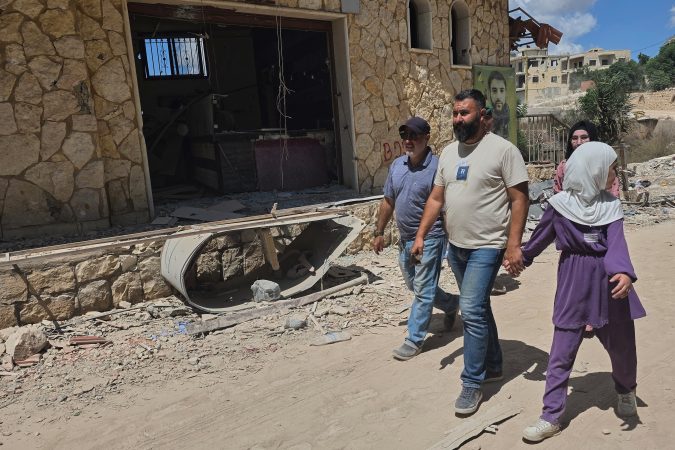
    The Iranian-backed Hezbollah fired at Israel two days after the war began, and Israel responded with airstrikes and ground forces in southern Lebanon. Since then, the U.S. has supported landmark direct talks between Lebanon and Israel to try to calm that front and find a way to disarm Hezbollah.

    Netanyahu on Sunday told Fox News he “fully” backs Trump’s efforts to weaken Iran and press it to end its nuclear program, adding: “If he can do so without returning to intense military fighting, that’s fine. Why not?”

    The prime minister indicated he would not present new information to “our good friend” Trump and instead would listen to “what he has in mind, because I think in many ways, it’s his decision.”

    But Netanyahu warned that if Iran again attacks Israel, directly or with armed proxies, “it will make a terrible mistake.”

  • Suspect in deadly Berlin Pride attack killed in confrontation with police

    Suspect in deadly Berlin Pride attack killed in confrontation with police

    BERLIN — The suspect in the deadly Berlin Pride attack that left one person dead and 29 injured was shot and killed by police during a confrontation on Sunday in a suburb of the city, authorities said.

    Abdul Ballout, a German citizen with Lebanese roots, was killed following a search that lasted nearly 24 hours after the attack in downtown Berlin. Prosecutors said he had previously sought to join the militant Islamic State group.

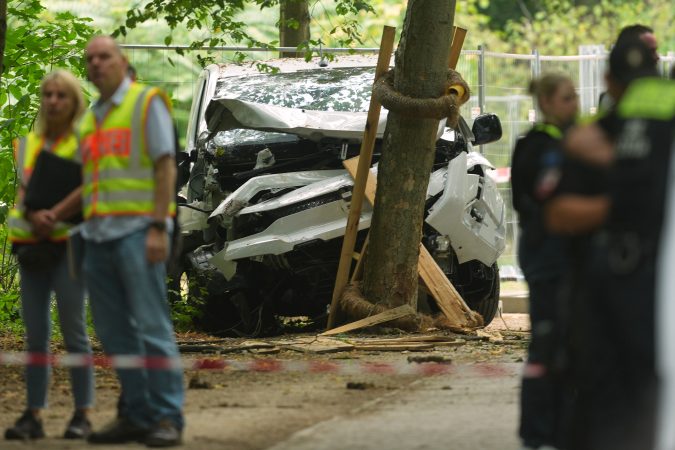
    Ballout was suspected of driving a van into a crowd near Berlin’s Pride festival Saturday night before apparently stabbing others with a machete in what authorities believe was an Islamic extremist terror attack.

    Interior Minister Alexander Dobrindt said the attack occurred a few hundred yards from a party near the Brandenburg Gate that was supposed to close out the city’s Pride festival.

    Ballout was tracked down around 6 p.m. Sunday at a garden in Spandau, a Berlin suburb, the city’s police department wrote on X. They said he apparently ran toward officers with a sharp instrument, and police fired at least one shot. He died at the scene.

    Ballout was born in Germany, the minister said. His mother was naturalized in 2002, three years before he was born.

    Ashley Jump, a 26-year-old U.K. resident, had traveled to Berlin for Saturday’s Pride parade but had left the celebrations before the attack. They returned Sunday to leave flowers at a memorial near the crime scene in support of the LGBTQ+ community.

    “They’ll never erase us, we’ll never be gone,” they said. “As long as humanity has existed, we’ve existed. And as long as humanity exists, we will exist. We will not be removed.”

    Suspect convicted of ties to Islamic extremism

    Ballout traveled to Lebanon in 2025 with the goal of going to Syria to join the Islamic State group, Berlin prosecutors said Sunday.

    There, he made contact with several people who were presumed members of the militant group — or at least he believed them to be, prosecutors said. He was arrested in Lebanon last year and sentenced by a military court to three months’ imprisonment for offenses including incitement to religious and sectarian conflict.

    He returned to Germany after completing his sentence, where he was arrested at the Berlin airport.

    In May, a juvenile court in Berlin convicted Ballout of preparing a serious act of violence endangering the state, as well as publishing Islamic State propaganda on his Instagram account and other charges, prosecutors said.

    The court handed down a suspended sentence of 1 year and 10 months in youth custody, which Berlin prosecutors had appealed.

    The court said it took Ballout’s months of pretrial detention in Germany and Lebanon into account. It also said it considered that Ballout had confessed to the crimes, appeared to distance himself from the militant group, and no actual threat had ever materialized.

    He was released from detention pending the appeal.

    Berlin’s Pride festival is one of Europe’s largest LGBTQ+ celebrations

    According to police, a white van drove into the Tiergarten park around 10 p.m. and hit several people before colliding with a tree. The closing party at the Pride festival, known as Christopher Street Day, was ongoing at the time next to the Brandenburg Gate, a short distance away. The party followed a parade with some 80 trucks that had made its way through downtown Berlin earlier in the day.

    The attack did not occur at the festival, along its route, or at the closing party. Rather, the violence took place a few hundred yards away on a track in the Tiergarten park. The van drove into a crowd that was likely a mix of festivalgoers and other locals or visitors.

    Police said a woman was killed.

    On Sunday afternoon, hundreds of mourners gathered at a memorial at the iconic gate. They hugged each other and laid down flowers, candles, rainbow flags, and homemade signs, including a cardboard one that said: “The only thing more powerful than hate is love.”

    Hundreds of thousands had come to Berlin to celebrate on Saturday, though it’s unclear how many were still at the festival by late evening. The event is one of Europe’s largest LGBTQ+ celebrations.

    “We are simply stunned by what happened,” said Andre Lehmann, a top official with the main national LGBTQ+ association, LSVD+. “This suspected attack hits the heart of the queer community.”

    Amsterdam says it will celebrate freedom in the wake of Berlin attack

    Chancellor Friedrich Merz urged the nation to remain united in the aftermath of the attack.

    “I would like to say this to Christopher Street Day participants here in Berlin but also across Germany: Don’t let yourselves, let us not let ourselves, be intimidated,” he said. ”These acts have only one purpose: They aim to divide our society. They want to take away from us the most important thing we have: Namely our openness and our freedom.”

    Dobrindt said he expected security measures at other major events in Germany, including Pride events elsewhere, to be reviewed and if necessary significantly boosted.

    Berlin has seen Islamic extremist attacks before. In December 2016, a rejected asylum seeker from Tunisia plowed a hijacked truck into a Christmas market, killing 13 people and injuring dozens. He was killed days later in a shootout in Italy.

    In February last year, a Spanish tourist was stabbed and seriously wounded at Berlin’s Holocaust Memorial, an attack that saw a Syrian man convicted in March and sentenced to 13 years.

    This week, Amsterdam will be hosting World Pride alongside its own annual Pride celebrations. Mayor Femke Halsema said authorities and organizers “are closely monitoring the security situation” after the Berlin attack but aim to prevent any extra measures getting in the way of celebrating freedom and love.

  • Trump officials vote to rewrite historic preservation rules, in boon for arch

    Trump officials vote to rewrite historic preservation rules, in boon for arch

    Trump officials on Friday voted to rewrite federal rules intended to protect historic sites, sending the plan to the White House for further review.

    The Advisory Council on Historic Preservation, a federal agency that oversees preservation reviews and advises the president and Congress, said it was moving forward with changes to a federally required process that governs changes to landmarks such as the National Mall, sites that are significant to Indigenous tribes, and other properties eligible for listing on the National Register of Historic Places. The process currently applies to any construction projects that are on federal land or receive federal funding, as well as private projects that require any type of federal approval.

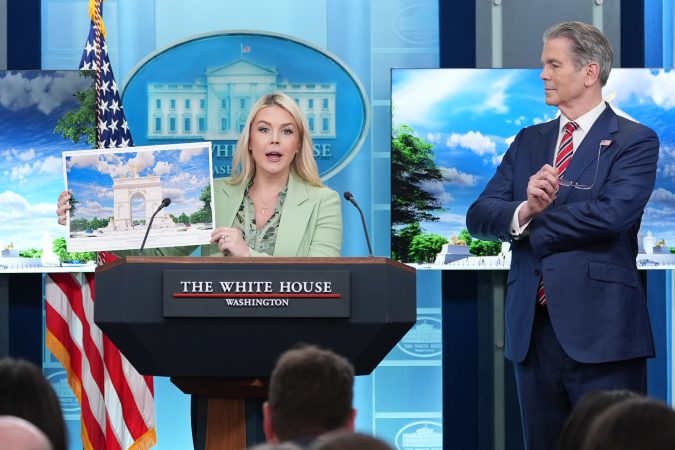
    If codified into law, the new rules would make it easier for President Donald Trump to pursue his controversial construction projects — such as building his planned triumphal arch — and could eliminate the need for public input on other major federal projects.

    The ACHP is dominated by Trump appointees, leaving little doubt the proposal would pass.

    The proposed rules “will now move to the interagency review process” overseen by the White House’s Office of Management and Budget, Ashley Fry, an ACHP official, wrote in an email. Once it clears that review, the proposal will be opened for public comment before being finalized.

    Under the current rules, federal agencies must undertake a multistep Section 106 review assessing the potential effects of construction projects and soliciting public input, among other requirements.

    The changes would allow federal agencies to approve construction projects that would impact historical sites without the previous requirement to seek the agreement of affected states, tribes, and other interested parties. The proposal also would allow an agency to unilaterally decide whether or not it’s in the public interest to allow public participation in the review process.

    The proposed rules could make it easier to change or destroy sites like Native American burial grounds or historic downtowns, or to build projects that change the view from historic sites such as power lines near Thomas Jefferson’s Monticello estate.

    The current process has created speed bumps for some of Trump’s projects, which he has sought to rush through federal reviews and complete before his term ends in January 2029.

    Under the existing Section 106 rules, outside groups are currently weighing in on Trump’s plan to build a 250-foot-tall arch on federal parkland near Arlington National Cemetery.

    Trump officials complained last month that the current process was overly burdensome.

    “Consulting parties also often request mitigation that is beyond the agency’s authority, unacceptable to a project proponent or the agency, or unduly burdensome, which can lead to disagreements that delay the completion of the process,” said Kevin Lilly, acting assistant secretary for fish, wildlife, and parks at the time, adding that the agencies could be forced into “endless consultation” under the current rules.

    Historic preservationists and advocacy groups have decried the administration’s plan to overhaul the existing rules and vowed to mobilize resistance.

    “The proposed changes threaten the history of our nation and the fabric of our society — this is an attack on our civic and cultural inheritance,” Brent Leggs, the CEO of the National Trust for Historic Preservation, said in a statement on Friday night.

    The National Association of Tribal Historic Preservation Officers, a nonprofit that focuses on protecting culturally important places for Native Americans, said in a statement that the proposed changes are “an affront to Tribal sovereignty.” Other groups warned about the potential lack of protections.

    Rep. Chellie Pingree (D., Maine), the top Democrat on a House subcommittee that oversees funding for the Interior Department, said that the administration’s plan would allow rushed construction projects that could “permanently damage” historical sites.

    “They have shown time and again that they’re not interested in respecting the full scope of America’s history — only in fast-tracking the president’s vanity projects and giving sweetheart deals to donors and supporters,” Pingree said in a statement.

    Sara Bronin, who led the ACHP under the Biden administration, told the Washington Post that she was not surprised the council voted to advance the proposed rule. Twenty of the 24 seats on the council are either directly appointed by the president or are reserved for the heads of federal agencies, such as the Interior Department, which are controlled by Trump.

    “I expect the ACHP to ignore public comment and finalize the rule in the next month or so,” Bronin said. “Once they do, the preservation community and its allies will be ready both to challenge their action in court and to ask Congress to intervene.”

  • How the lighthearted social media trend of teen takeovers took a serious turn

    How the lighthearted social media trend of teen takeovers took a serious turn

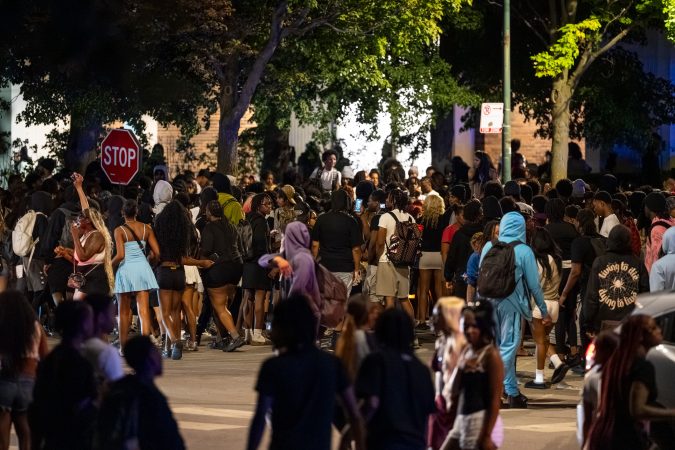
    When Damarion Spann, 18, saw an Instagram flier calling for a massive gathering on a beach near downtown Chicago, he immediately wanted to go. Thousands of others joined him that night on the sand, blasting music and dancing.

    The cultural trend of so-called teen takeovers has popped up across the U.S. in recent years, influencing local policing and national politics. The events, often hyped online and captured in videos on social media, have led to shootings, theft, and vandalism. City officials and police are concerned about an increase over the summer, and are under pressure to prevent similar gatherings or to punish those who participate.

    Over the July 4 holiday weekend, several thousand young people converged in two spots in Raleigh, N.C., police said. Nine people, including an adult who was not part of the gatherings, were shot and wounded.

    There were also takeovers in Pensacola, Fla., where a 19-year-old was shot and killed; and Newport Beach, Calif., where more than 400 were arrested after the police chief said teens launched “explosive mortars and other projectiles” at officers ordering them to disperse.

    But Spann and other teens say that the events are largely misunderstood. They point to formal curfews or limits on group size at malls and movie theaters that have made it harder for teens to gather, exacerbating a feeling of disconnection they trace back to remote learning during the coronavirus pandemic.

    How cities are tracking the social media trend

    Communities and police across the country are trying to identify organizers, fine parents of those involved, and impose curfews.

    In Detroit, officials say they “thwarted” 19 gatherings so far this year by monitoring time and location changes as young people coordinated across social media, said Teferi Brent, director of the Mayor’s Office of Neighborhood and Community Safety.

    “We have eyes on all the behaviors and activities of those who have expressed interest in trying to take over and we have done a good job of being way ahead of the curve and being able to prevent a lot of these things,” Brent said.

    Alderperson Jessie Fuentes, who chairs the Chicago City Council’s subcommittee on youth employment, said her office has tried to find solutions that don’t rely exclusively on police and instead coordinate with parents and community members to prevent conflict or crimes.

    Blue Island, a south Chicago suburb, has taken another tack: to fine parents or guardians and use the funds to cover cleanup after events. That might include debris left behind or other damages like cars dented from scores of teens clambering over them while fleeing police.

    Other places have taken harsher approaches, as in Florida, where state officials said prosecutors can apply racketeering laws, typically targeting criminal gangs or organized crime, if takeovers appear to be facilitated by “an organized network.”

    But some have pushed back on the idea that the threat of harsh legal punishment could prevent the gatherings in the first place.

    “What we know about adolescent brain development is that the stakes are not going to be what prevents a young person from engaging in risky behavior,” said Melissa Milchman, the executive director for the nonpartisan organization the Coalition for Juvenile Justice. Milchman added that mass arrests often ensnare those who are going for innocent fun without preventing others from breaking the law.

    Teens say there aren’t safe spaces for them to gather

    For Spann, the recent media attention on the events has largely failed to capture the appeal to young people.

    “You feel like a young person who has freedom, who’s not being held to something,” said Spann, who is Black. At the event he went to, he was able to catch up with people he hadn’t seen since 8th grade.

    He said that the events are a direct result of a cascade of school closures across Black neighborhoods over the past couple of decades in Chicago. To deter people from gathering even at basketball courts, where there were sometimes fights, officials have removed the nets. Spann said that his mom, who grew up in the same neighborhood, frequently talks about how much easier it used to be to hang out outside without a fear of gun violence.

    When Spann goes to malls in more affluent areas with his mostly Black group of friends, shoppers often stare and security guards question them. To avoid scrutiny, Spann and his friends sometimes sneak into outdoor shopping centers or areas downtown in smaller groups at staggered times.

    By contrast, in the same spaces, Spann said, “If I’m with my white friends, I feel like I belong.”

    Despite the physical dangers that come with takeovers and the threat of getting a ticket or even arrested, the allure is strong, according to Jeffrey Bernstein, a psychologist and author.

    “The kids still do it because they feel like it’s their second family,” which he said “really takes over as their primary sense of connection.”

    “They’re getting things from their peers that they can’t get from their parents.”

    Some cities have tried to meet that need head-on, instead of cracking down with law enforcement.

    In St. Louis, officers have started to bring some teens to community centers instead of jails so their parents can pick them up, and in Baltimore, officials have tried leaning on public schools to provide alternative programming. In Chicago, Spann received a $11,000 grant from the city and partnering nonprofits to host an event for his peers at the end of the summer, in an effort to give his community more places to gather.

    What cities are doing to address teen takeovers

    In April, Daveion Page, a 16-year-old in Detroit, was bored. He turned to his phone, creating a post on social media promoting a teen takeover. Hundreds of teens soon flocked to a site downtown and fights broke out by the end of the night. At another takeover in May, a 14-year-old was shot and wounded.

    After the Detroit event in April, Page told reporters that he didn’t intend for the takeover he organized to result in violence.

    “I just wanted to get out of the house, have fun, enjoy time with my family and my homeboys and my homegirls, too,” said Page, who was flanked by Detroit Mayor Mary Sheffield and other city officials at a news conference.

    He told city officials that young people might respond if there were more safe places to gather.

    Before the takeovers, there were already plans to use $1.5 million from the city’s budget for summer programming and to support violence prevention programs. In response to the takeovers, the city has launched an office of youth affairs, met and listened to students at schools, and created a youth advisory board comprised of teens and young adults.

    “We have brought them to the table and made them a part of our structure in regards to identifying what the needs and concerns are of the young people in the city,” Brent said.

    In Detroit, a late-night basketball league has formed as an alternative hangout spot for teens and young adults. Jerseys and sneakers are provided by the city.

    “This league just helps me find something to do,” Cameron Chandler, 21, said while playing basketball at the recreation center.

    He’s never participated in a takeover, but recently after practice, he stumbled on one near his home.

    “There were a lot of cops and some people got arrested,” Chandler said. “You just have to think, ‘that could easily be me.’”

  • More health workers strike as Ebola cases in Congo near 3,000, including over 1,300 deaths

    More health workers strike as Ebola cases in Congo near 3,000, including over 1,300 deaths

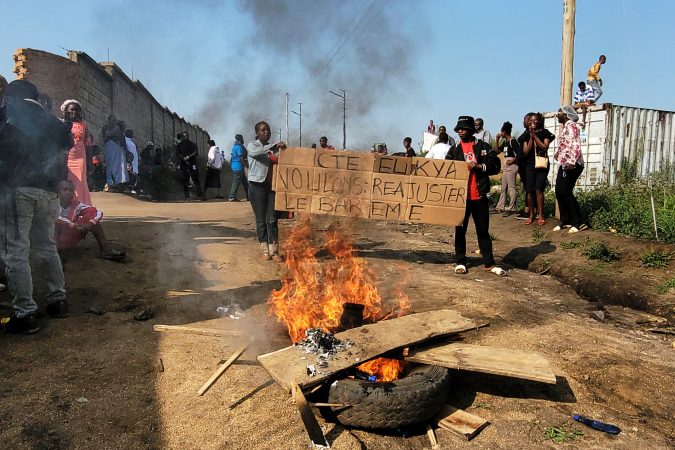
    BUNIA, Congo — Health workers at an Ebola treatment center in eastern Congo went on strike on Saturday, demanding their pay. The walkout disrupted care for patients in the epicenter of the country’s rapidly growing outbreak.

    The number of confirmed cases of Ebola in Congo has reached 2,973, including 1,309 deaths, according to government data released on Friday in what authorities say is the fastest-growing outbreak on record.

    The Elikya Ebola Treatment Center in Bunia, Ituri province, came to a standstill after doctors, nurses, and security staff stopped work.

    About a hundred health workers protested outside the treatment center on Saturday. They said the unpaid bonuses were undermining morale and disrupting patient care, and called on Congolese authorities to resolve the backpay so they could resume their work.

    “We need to be paid, because in the meantime the disease is spreading at the treatment center,” Martin Bolombi, one of the health workers on strike, said.

    “I’ve already had five people die who are still inside there. A solution must be found for us,” he added.

    In a statement issued Friday, staff said they had unanimously voted to strike until “concrete solutions” were found to resolve “two months of unpaid performance bonuses.”

    The strike comes a day after Congo’s Prime Minister Judith Suminwa came to Ituri, touring major treatment hubs in Rwampara and Mongbwalu, to assess the outbreak response. During her visit in Mongbwalu, she faced urgent demands from healthcare personnel protesting payment issues.

    Adelard Lufungula, operations manager for the Ebola response, said Saturday the payment issue is “being resolved,” with workers now paid via mobile money instead of cash, and that the backlog “should be cleared” in the coming days.

    Last week, health workers at Bunia General Hospital, the region’s largest medical center, had already gone on strike over unpaid salaries. Some told the Associated Press they had not received any payment since they started work at the onset of the outbreak.

    The World Health Organization says more than 100 healthcare workers have been infected since the beginning of the outbreak.

    The Central African nation has been battling the Ebola outbreak caused by the rare Bundibugyo virus since May 15. A total of 766 patients remain in isolation or in hospitals, while 540 have recovered so far, according to data from Congo’s Ministry of Health.

    The eastern province of Ituri accounts for nearly 90% of confirmed cases.

    The outbreak continues to spread faster than health officials can track despite an expanding response. A key challenge is that patient zero has yet to be identified in the outbreak, while displacement from armed conflict and illegal mining in the region have made it difficult to trace thousands who have come in contact with infected individuals.

    The response is also hampered by a funding gap, attacks on health centers, an ongoing conflict in eastern Congo, and mistrust among local communities.

    There is also a lack of approved vaccines or treatments for the Bundibugyo virus, unlike the more common Zaire virus, for which there is a vaccine and which was responsible for most of Congo’s past 16 outbreaks of the disease.

    Enrollment in a highly anticipated study of two possible Ebola treatments recently started in Ituri.

    WHO says the global risk of the outbreak spreading outside Central Africa is low, noting that Ebola spreads through direct contact with the bodily fluids of an infected person rather than through the air, making it much harder to spread than respiratory viruses.

  • McConnell faces growing questions about absence nearly six weeks after fall

    McConnell faces growing questions about absence nearly six weeks after fall

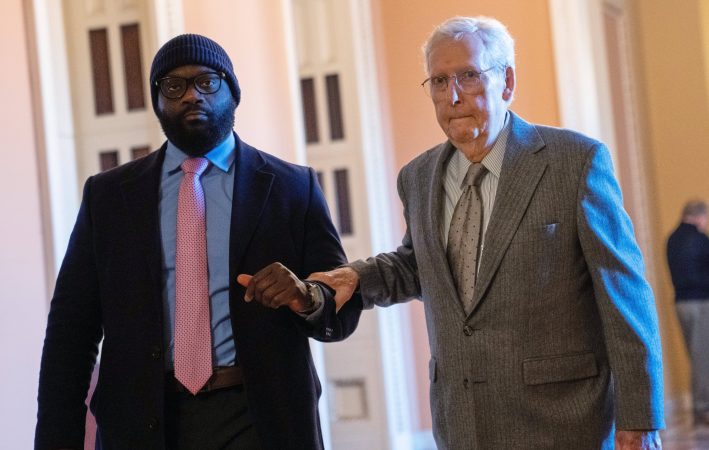
    Sen. Mitch McConnell (R., Ky.) is facing growing calls to be more transparent about his health nearly six weeks after he was hospitalized.

    McConnell, 84, has been absent from the Senate since he said he suffered a fall June 14. His office shared a photo of McConnell holding the Washington Post on July 12, and McConnell said in a statement that he had left the hospital and moved to a rehabilitation center — but he did not say when he planned to return, offering only that he would not “be able to return to the Senate floor to vote quite yet.”

    Those scant details have not quieted rampant rumors and online speculation about McConnell’s condition.

    Kentucky Gov. Andy Beshear (D) said last week that he had heard nothing from McConnell since he was hospitalized, despite sending a letter seeking an update on his condition. He urged McConnell to call into a news station for a few minutes or put out a short video to reassure his constituents.

    “When you’ve been in a hospital for a month and you’ve missed all the votes … you owe your boss, like anybody else out there who works, an explanation of what’s been going on and when you’ll get back,” Beshear said.

    Scott Jennings, a longtime McConnell ally who worked on some of his reelection campaigns, urged McConnell on Thursday to “routinely update his constituents on how he’s doing” and be transparent about the work he’s doing while recovering. He said he expected McConnell to share an update on how he’s doing in the coming days.

    “Truthfully, I think a little transparency on the front end here would have saved him a whole lot of grief,” Jennings told CNN’s The Arena with Kasie Hunt. “But that didn’t happen and they are where they are now.”

    David Popp, a McConnell spokesperson, said McConnell has continued to work during his absence.

    “The Senator continues to meet with staff regarding Senate and Kentucky business, including discussions on defense appropriations, foreign policy, the farm bill, constituent services, and constituent federal grant requests,” Popp said in a statement to the Washington Post. “As the Senator continues to improve in rehab, we will be sure to keep you updated.”

    McConnell said July 12 that he did not break any bones when he fell and did not suffer a heart attack, a stroke, a hemorrhage, or a concussion, but he has said little else about what happened to him.

    Popp referred to McConnell’s earlier statement when asked when McConnell might return to the Senate or whether he planned to attend Tuesday’s funeral for Sen. Lindsey Graham (R., S.C.), his longtime colleague, at Washington National Cathedral.

    McConnell said in his statement that “folks of my generation often hesitate to share the vulnerability that comes with growing older.”

    “Even in the public eye, I feel that same instinct — I can’t help it,” he said.

    McConnell spent 18 years as the Republican leader in the Senate before stepping down early last year. He remained in the chamber to serve the final two years of his term, which ends in January.

    Rep. Andy Barr (Ky.) won the Republican primary to succeed McConnell in May and is heavily favored to win his seat in November. The Senate is scheduled to be in session for only 10 more weeks during McConnell’s term as senators head home to campaign ahead of the midterm elections.

    McConnell’s absence has narrowed Republicans’ edge in the Senate, giving them an effective 52-47 majority as long as he is absent.

    Senate Majority Leader John Thune (R., S.D.) and Sen. John Barrasso (Wyo.), the No. 2 Senate Republican, said earlier this month that they had spoken with McConnell, but some other Republican senators have raised questions about McConnell’s absence.

    Earlier this month, Sen. Ron Johnson (R., Wis.) cast doubt on the legitimacy of the photo that McConnell shared of himself — only to dismiss his comments later, saying he was just repeating a rumor he had heard. (The Post reviewed the photo’s metadata and found it appeared it was taken July.)

    “It’s not fun watching anybody age,” Johnson told reporters. “We’re all hoping Mitch recovers fully and comes back. I haven’t talked to him, so I have no knowledge.”

    Last week, Sen. Josh Hawley (R., Mo.) wished McConnell a speedy recovery but also suggested he should disclose more about his condition.

    “At a certain point you do have an obligation to your constituents and the country to tell them what’s going on,” Hawley told Fox News, saying he felt “totally in the dark” about McConnell’s status.

    McConnell is hardly the first senator to be away for an extended stretch at a time while ailing or in recovery.

    Sen. John Fetterman (D., Pa.) was absent for two months in 2023 while seeking treatment for depression. Sen. Dianne Feinstein (D., Calif.) missed votes for nearly three months that year while battling shingles and faced calls to resign. She returned to the Senate but died months later.

    Sen. John McCain (R., Ariz.) did not vote during his final eight months in office before he died in 2018. And Sen. Mark Kirk (R., Ill.) did not vote for nearly a year after suffering a stroke in 2012. He released videos of himself relearning how to walk before returning to the Senate and served out the rest of his term.

    Lester Munson, Kirk’s chief of staff at the time, said Kirk was able to keep working even though he was not in the Capitol voting.

    Kirk worked with Sen. Bob Menendez (D., N.J.), for instance, on an amendment to a defense policy bill to tough sanctions on Iran. Senators in both parties — includes Sens. Dick Durbin (D., Ill.), Jon Tester (D., Mont.) and Joe Manchin III (D., W.Va.) and McConnell — stepped up to help Kirk’s office carry on, Munson said.

    “I think people kind of just assume — not really correctly — that if the senator’s in the hospital or something like that, that they can’t do their job,” Munson said. “That’s not entirely true. There’s obviously some things they can’t do … but a lot of other things continue to be carried on.”

    Kirk did not have to contend with social media speculation about his health and other online pressures in the same way that McConnell has, Munson said.

    The prediction market Polymarket, for instance, allows users to bet on whether McConnell will vote in the Senate by July 31. (The odds stood at 11% Friday evening.)

    McConnell is also much better-known than Kirk or other senators who have had extended absences from the chamber. His decades of service should earn him some grace while he recovers, Munson said.

    “As far as I’m concerned, this guy has given so much to the Senate over time and therefore so much to America, God bless him,” Munson said. “He’s got all the latitude in the world to deal with this problem.”