Category: Wires

  • Tate brothers will remain in jail at least 2 more weeks as they fight extradition to the U.K.

    Tate brothers will remain in jail at least 2 more weeks as they fight extradition to the U.K.

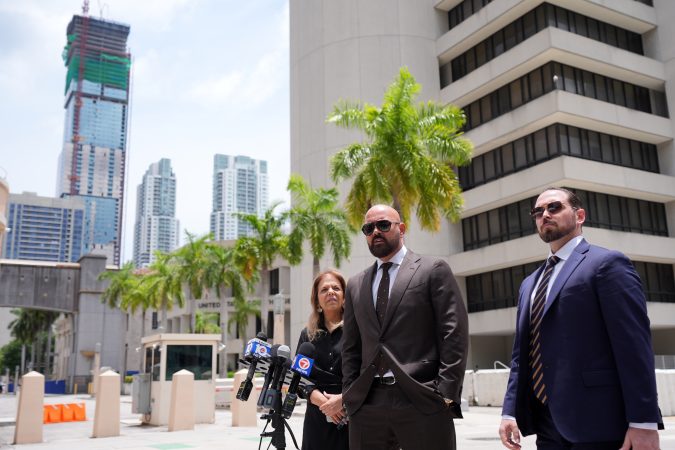
    MIAMI — Social media influencers Andrew and Tristan Tate will remain in jail at least two more weeks until their next hearing as they fight extradition to the United Kingdom, where the brothers are accused of rape and sex trafficking, a federal judge said Monday.

    U.S. Magistrate Lauren Louis set a detention hearing for Aug. 13 to determine whether the Tates should stay in jail or be released during what could be a monthslong extradition process.

    The brothers weren’t in court Monday or required to be there and have remained in jail since making a brief court appearance two days after their July 18 arrest.

    The Tates have become among the world’s most polarizing internet personalities with their promotion of wealth, male dominance, and misogyny through their social media empire. The new allegations are the latest in a long-running international legal saga involving the Tates that has spanned the U.S., Britain, and Romania. The brothers have repeatedly denied wrongdoing.

    Attorneys for the brothers said Monday that they want the U.S. government to turn over documents that U.K. officials submitted to secure their arrest.

    “They don’t have anything but the accusations,” attorney Joseph McBride said after the hearing. “It’s just their word against our word right now.”

    The U.K. has until mid-September to turn over all of its materials to the State Department, U.S. attorney Alejandra Lopez said in court.

    The brothers have long claimed that their violent and misogynistic statements have been taken out of context or were intended as jokes.

    Jackie Perczek, another one of their attorneys, said the Tates have shown they are not a flight risk by returning to Romania every month after they were accused there of luring women for sexual exploitation.

    “For three years they have not fled,” she said. “They’ve traveled the world and every month they return to Romania.”

    The former professional kickboxers, who have dual U.S. and U.K. citizenship, have millions of social media followers and are vocal supporters of President Donald Trump. The White House has said the brothers shouldn’t expect any help from the president.

    McBride said shortly after the Tates were arrested that “they’ve never done nothing wrong. They shouldn’t be extradited for crimes they did not commit,” he said.

    McBride said the extradition attempt was politically motivated, though he provided no details.

    Prosecutors in Britain said the new charges relate to four new accusers and were brought after authorities received evidence from police in Bedfordshire, in southeastern England. The allegations, which span from 2010 to 2017, include rape, assault, trafficking, and offenses relating to “indecent images of a child and extreme pornography.”

    The brothers are already charged with rape, bodily harm, human trafficking, and controlling prostitution for gain relating to three other accusers in the U.K. between 2012 and 2015.

    The brothers moved to Romania in 2016 and were arrested there in 2022, accused of participating in schemes to lure women for sexual exploitation. They denied those allegations, and the Romanian case hasn’t gone forward because of legal and procedural problems.

    Andrew Tate, 39, became known a decade ago when he was a contestant on the U.K. reality television show Big Brother. He was booted from the show when a video appeared to show him assaulting a woman.

    He has amassed over 10 million followers on X but has been banned from other platforms, including YouTube, TikTok, and Instagram, for violating hate speech guidelines. He has made widely condemned comments, such as saying women who are sexually assaulted should bear some responsibility for the attacks and sharing graphic descriptions of how he might attack women.

  • At least 3 shooters at Seattle food festival, documents say

    SEATTLE — Police now say there were at least three suspects involved in a shootout at a crowded food festival near Seattle’s Space Needle over the weekend. One of them was among those killed in the violence.

    In a document filed in juvenile court in Seattle, where a 15-year-old arrested in the case did not appear for a scheduled initial appearance Monday, police said they believe there were at least three shooters, rather than two: the 15-year-old; an acquaintance who died at the scene; and “at least one other unknown suspect.”

    “Based on the evidence at the scene, investigators believe” the 15-year-old “and one of the deceased engaged in a gunfight with at least one other unknown suspect,” the document said.

    The teen was being held in juvenile detention for investigation of firearms violations and first-degree assault ahead of the scheduled court appearance, Mayor Katie Wilson said at a news conference. It was not immediately clear why the teen did not appear in court.

    The gunfire erupted around 6 p.m. Sunday in the waning hours of the Bite of Seattle, leaving three people dead and at least four others injured. The annual three-day festival draws hundreds of food and retail vendors and performers to Seattle Center, a sprawling park and event space in the shadow of the Space Needle. Many attendees rushed into campus buildings or ran from the park at the sound of the shots.

    Officials provided confused statements about the shooting

    News that there were at least three suspects followed a series of confused statements from city officials concerning the shooting.

    On Sunday, the police department waited five hours to share with the public that one shooter was in custody and that they believed another to be on the loose. Earlier, the mayor had wrongly announced two people were in custody.

    At a news conference Monday, just two hours before the 15-year-old was due in court, Police Chief Shon Barnes said investigators weren’t sure if the second shooter was among the dead. Neither he nor the mayor made any reference to additional shooters. Barnes had been out of town Sunday, attending a conference of Black law enforcement executives in Dallas.

    The officials have defended their handling of the case, saying they were trying to ensure they provided accurate information about chaotic events.

    Two people died at the scene and a third died at a hospital. They were described as two men, ages 19 and 44, and a woman, 56.

    The four wounded included a 2-year-old boy, who was in satisfactory condition Monday. The others — two men, ages 23 and 27, and a woman, 39 — were discharged, a hospital spokesperson said.

    One of the victims was walking a bicycle when struck, the court document said. The toddler was with his mother.

    Vendors were allowed to clean up Monday

    Vendors were allowed to return to the sprawling campus Monday morning to collect their equipment and merchandise. Skewered squid on grills, roasted ducks in ovens and plates full of food were among the items left behind as people fled the gunfire.

    Near the spot of the shooting, a stain of what appeared to be blood was still visible in the morning. A candlelight vigil was planned Monday night at the center’s International Fountain.

    Dozens of officers were providing security at the event and some saw one of the suspects firing, authorities said. A large number of police and emergency crews responded and began evacuating the area. Police then searched an IMAX theater on the grounds where they initially believed a second shooter had fled.

    Adam Lombardo, who had a Burmese food stand at the festival with his spouse, described the panic of fleeing people as a “stampede.” As he gathered his equipment Monday, he described how police escorted them into the crime scene to turn off their ovens and stoves.

    “It’s really sad because you think that three innocent people aren’t getting up with their families,” he said. “They just came to enjoy a food festival with people, with friends, with new friends, and they lost their lives in just what sounds like meaningless bloodshed.”

    Attendees describe chaos at a joyful event

    Festival attendee Faith Adia Hunter said she and her friends had just gotten food from a crepe vendor when gunfire broke out nearby. In the scramble to find safety, she and others ran into the nearby Seattle Children’s Museum.

    “We were about to start eating, then heard someone yell something, then we saw people start to run,” Hunter said. “So we took off running, too.”

    Estan Wakonabo said he and his girlfriend were waiting in line for a photo booth when he was shoved from behind and turned to see a rush of people fleeing.

    “People were hiding, were pushing, people were falling on the ground, baby strollers were falling,” Wakonabo said.

    The festival started in 1982 and draws 350,000 attendees, according to its website.

  • Comey says seashells post was political speech – not a threat – as he presses to dismiss charges

    Comey says seashells post was political speech – not a threat – as he presses to dismiss charges

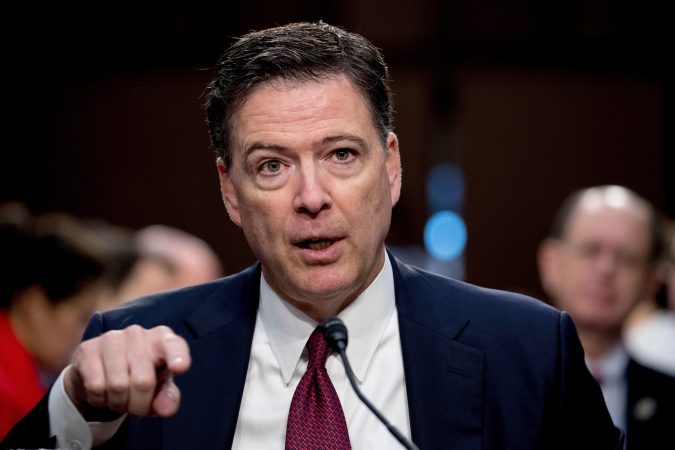
    WASHINGTON — Former FBI Director James Comey urged a judge on Monday to throw out federal charges against him, arguing that a photo of seashells arranged on a beach he posted on social media was not a call to violence against President Donald Trump but protected political speech.

    Comey’s lawyers argue the government cannot prove the Instagram photo of seashells in the numerical arrangement of “86 47″ constituted a “true threat” against the Republican president, who fired Comey in 2017 and has publicly called for his prosecution. The slogan — which has long meant to “get rid of” or “eject” — has been featured on thousands of items sold online and regularly displayed at protests, defense lawyers wrote in court papers.

    “But the government now singles out Mr. Comey to prosecute one of the President’s most prominent critics for publishing another person’s statement of political opposition,” his attorney’s wrote. “That attempt to suppress core political speech contravenes both the statutes at issue and the First Amendment.”

    The seashells case against Comey was the second in months targeting the ex-FBI director, a long-running Trump foe whom the president over the years has called a “corrupt piece of garbage” and other pejorative names.

    An earlier case in Virginia accusing Comey of lying to Congress was dismissed last November after a judge concluded that the prosecutor who charged him and another Trump adversary, New York Attorney General Letitia James, was illegally appointed to the job.

    More broadly, the case is part of a retribution campaign by the Trump administration Justice Department, which has initiated investigations across the country into individuals the president does not like. Comey has long drawn Trump’s ire for his role overseeing the early months of an investigation into whether Trump’s 2016 campaign had coordinated with Russia to sway the outcome of that year’s election.

    The two-count indictment charges Comey with “knowingly and willfully” making a threat to “take the life of, and to inflict bodily harm upon” Trump and with transmitting a threat in interstate commerce. It does not provide evidence that Comey knowingly threatened Trump, especially since Comey has said the opposite, but suggested a “reasonable recipient who is familiar with the circumstances would interpret” the message as a threat.

    Comey was interviewed by the Secret Service last year over the post after Trump administration officials asserted that he was advocating the assassination of Trump, the 47th president. Comey deleted the post shortly after it was made, writing: “I didn’t realize some folks associate those numbers with violence” and “I oppose violence of any kind so I took the post down.”

    “Even if ‘86 47’ could implausibly be read to suggest violence, a reasonable observer would still understand Mr. Comey’s post as mere political hyperbole, not a true threat,” Comey’s lawyers wrote. “The Supreme Court has rejected threats prosecutions based on speech far more directly threatening than Mr. Comey’s seashells post here.”

    The Justice Department has not elaborated on any evidence of intent the government has. But acting Attorney General Todd Blanche said earlier this year that prosecutors in every case prove intent with “witnesses, with documents, with the defendant himself to the extent it’s appropriate.”

    “And that’s how we’ll prove intent in this case,” Blanche said in April, shortly after he was elevated to lead the department after Pam Bondi’s firing.

    Trump, in a Fox News Channel interview last year, accused Comey of knowing “exactly what that meant.”

    “A child knows what that meant,” Trump said. “If you’re the FBI director and you don’t know what that meant, that meant assassination. And it says it loud and clear.”

  • Police vetted dubious allegation only after Buttigieg was separated from children

    Police vetted dubious allegation only after Buttigieg was separated from children

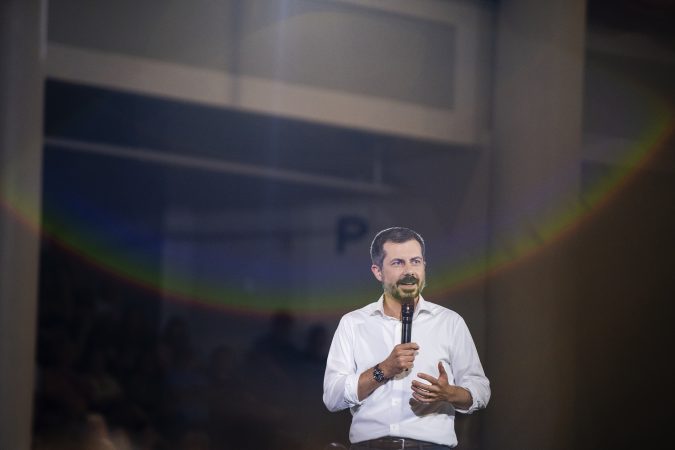
    Officials who separated former Transportation Secretary Pete Buttigieg from his young twins last month relied on a vague and unsubstantiated allegation from an accuser authorities later deemed possibly “mentally unstable,” according to previously unreported police records.

    The records, obtained by The Washington Post, and an interview with the apparent complainant offer the most detailed account yet of how a false tip led investigators to the home of one of the country’s most prominent Democrats, drawing bipartisan outrage.

    Child welfare experts who reviewed the documents at The Post’s request said they illuminate a flawed process that was made worse by poor judgment by agencies and a lack of communication among investigators from two states.

    Michigan State Police reports detail the chain of events from the allegation to its eventual determination it was unfounded and potentially politically motivated. Indiana child welfare authorities who received a tip on a hotline with “very limited information” about Buttigieg did not pass along the caller’s name or contact information when notifying officials in Michigan, where Buttigieg now lives, which the Indiana child welfare agency says is their policy.

    Michigan police waited six days after approaching Buttigieg to attempt to identify the caller.

    By then, Buttigieg, a former mayor of South Bend, Indiana, and 2020 presidential candidate, had gone public with the ordeal in a June Substack post, describing it as “the ugliest thing that has happened to me since my career in service began.”

    Michigan authorities had told Buttigieg he could not be alone with his 4-year-old children until they could be interviewed away from their parents the next day, Buttigieg recounted. The children stayed with their grandparents who lived nearby. Buttigieg, who is widely expected to run for president again, called that 24-hour separation “among the darkest hours of my life.”

    Buttigieg said the authorities initially would not tell him what he was accused of. Vivek Sankaran, a professor at the University of Michigan Law School and child advocacy law expert, said he was troubled that Michigan State Police went to Buttigieg’s door with such a vague allegation that didn’t present any indication that children were imminently at risk.

    “At the very least, it’s incredibly poor investigative work. I would even say reckless, in light of how harmful this is for the family,” Sankaran said.

    “It should scare all of us,” he added.

    Michigan State Police spokesperson Lauren Thompson-Phillips said the investigation was “conducted promptly, and the allegations were determined to be unfounded,” adding that the department’s “responsibility was to assess and ensure the safety of the children involved.”

    The first openly gay Cabinet member confirmed by the Senate, Buttigieg, 44, has faced attacks from some corners over his sexual orientation and his decision to adopt two children with his husband, Chasten. He told authorities of the “many threats” his family receives, including death threats, according to the report.

    “This has been a painful and infuriating situation for the family,” Buttigieg spokesman Sean Manning said in a statement to The Post. “They are in touch with Michigan authorities, seeking answers and accountability for what happened.”

    The Michigan attorney general’s office has opened an investigation of the allegation against Buttigieg and how it was handled, spokeswoman Kimberly Bush told The Post.

    “Common sense would have shown that this targeted report plainly lacked credibility on its face,” Bush said. “Before children are separated from their families, due diligence should be exercised to ensure some nexus exists between the source and the family, or that the complaint comes from a reputable, reliable, or verifiable source. We have requested the Michigan State Police turn over all evidence at the completion of their investigation and will zealously investigate all leads, policies and procedures that allowed for such a flagrant violation of the Buttigiegs’ privacy.”

    Officials at Michigan and Indiana state police departments and child welfare authorities declined to answer questions about what, if any, steps they took to verify the allegations before contacting Buttigieg.

    Thompson-Phillips did not respond to a specific question about why state police waited six days to request information from Indiana authorities about the complainant.

    Ron Green, a spokesperson for the Indiana Department of Child Services, said the agency followed “established procedures,” including not sharing information about callers. He and Michigan child welfare authorities declined to comment specifically about the Buttigieg case.

    After receiving a partially redacted copy of the Michigan State Police report that referenced a Facebook post by the caller, The Post was able to identify and contact the woman, who said she lived in Alabama. Public records show she has also lived in Indiana.

    In a phone call, she was unable to answer basic questions about her accusations. She acknowledged that she made reports about Buttigieg to authorities but declined to say to whom.

    The Post is not naming the woman because it was unclear whether she was fully aware that she was speaking to a media outlet on the record. When asked to corroborate her claims — with dates, documents and other specifics — she did not and accused the reporter of working with Buttigieg on a cover-up.

    The Michigan State Police report redacts the complainant’s name and details of the allegation, but the woman’s comments to The Post align with what Buttigieg has recounted being told by authorities and nonpublic details in the police report, including that she met him in the small city of Florence, Alabama.

    Michigan authorities had asked Buttigieg during their investigation if he had traveled to Florence at any time between 2021 and 2023, and his attorney confirmed to them that he had not after reviewing travel records.

    The woman said a sergeant from the Indiana State Police had since called her and was “harassing” her. Indiana State Police spokesperson Ron Galaviz confirmed an ongoing investigation of an allegation of false reporting but said he was unable to comment further.

    Thompson-Phillips, the Michigan State Police spokeswoman, said the agency is deferring to Indiana to identify the accuser and will then “evaluate whether any charges are appropriate.”

    How the Buttigieg investigation unfolded

    Authorities must balance taking child abuse allegations seriously with preventing misuse of the reporting system, the spokesperson for the Michigan attorney general’s office said. The office’s investigation into Buttigieg’s case also aims to reduce the risk of false allegations of child abuse “against other well-known residents and elected officials as the newest form of threat or intimidation,” the spokesperson said.

    Under Indiana law, anyone who suspects a child has been abused is required to make a report, and the Department of Child Services must initiate an assessment within 24 hours. In Michigan, a Children’s Protective Services investigation “must begin within 24 hours” of a report, and usually includes face-to-face interviews with the alleged victims and perpetrators, plus a viewing of the child’s home.

    Buttigieg’s case involved extra complications with multiple agencies across two states. Their interactions and information sharing are partially detailed in the Michigan State Police report.

    Indiana police officials learned about the woman’s call on June 22. They notified Michigan authorities on June 23, prompting a Michigan State Police trooper and child welfare official to visit Buttigieg later that day.

    In his Substack post, Buttigieg said that he was not told the details of the allegations against him, and that he was told to stay at a hotel or send his children to stay with relatives until they could be interviewed the next day. Buttigieg and his husband, who was not accused of wrongdoing, made the decision to send the 4-year-old twins to their grandparents. The children sat alone for separate, hourlong interviews with investigators on June 24 and told investigators they felt safe, according to police records.

    An Indiana child welfare worker contacted the caller again before referring the case to Michigan, reports show, but gained no new information. Those reports do not detail any further attempts by Indiana or Michigan police officials to vet the tip before the visit to Buttigieg.

    When Michigan investigators interviewed Buttigieg, they told him they did not have the name of the person who made allegations against him, according to Buttigieg and the police records.

    On June 26, Buttigieg went public, and Michigan State Police publicly said the allegation against him was false.

    On June 29, a week after the initial tip, a Michigan child welfare worker told a Michigan State Police official that Indiana police informed her that the possible person who reported the allegation was a “mentally unstable woman in Indiana.”

    That’s when the reports show that Michigan State Police contacted their Indiana counterparts to get the caller’s identity, and an Indiana investigator said they would try to interview her to verify the allegations and determine if she made a false report.

    Indiana State Police did not answer The Post’s questions about the claim the accuser was mentally unstable. The woman did not respond to a question about this description of her.

    “This case highlights everything that is wrong with a system of reporting and investigating where no one has accountability,” said Dale Margolin Cecka, professor of law and director of Albany Law’s Family Violence Litigation Clinic. “And a family is traumatized because of it.”

    Under an ideal system, Cecka said, Indiana authorities would have better vetted the caller and shared the identity of the tipster with Michigan, who should have done their own vetting and declined to act on an anonymous allegation.

    An Indiana state investigator looked into the caller and reported finding a Facebook post in which the caller urged people not to vote for Buttigieg and referenced her accusation weeks before she contacted authorities, according to the Michigan report, which does not say when the post was found. In other social media posts viewed by The Post, the woman praised other Democrats.

    The woman told The Post that she decided to contact authorities about Buttigieg because she was worried about his children and his presidential ambitions. She declined to say why she waited years to report her allegations. The police report said she told the Indiana child welfare worker she did not know why she waited.

    Meanwhile, Buttigieg said in his Substack post that he is grappling with what the ordeal means for his family and his country.

    “Even though the accusation was absurdly and obviously false, and was promptly rejected by law enforcement, I still worry about the harm it has done,” he wrote. “And at the most basic level, I worry about how anyone, even in today’s world, could fail to respect the absolutely fundamental principle that whatever you think about someone in politics, you leave people’s kids out of it.”
  • Zelensky and Britain’s new leader discuss drone projects and missile defense for Kyiv

    Zelensky and Britain’s new leader discuss drone projects and missile defense for Kyiv

    LONDON — Ukrainian President Volodymyr Zelensky and new U.K. Prime Minister Andy Burnham met Monday at a British naval base and discussed joint drone projects and Ukraine’s urgent need for ballistic missile interceptors to counter Russian attacks.

    Zelensky’s visit was the first by a foreign leader since Burnham took office a week ago, and the prime minister said it signaled the U.K.’s “unwavering” support for Kyiv to defend itself against Russia’s 4-year-old, full-scale invasion.

    His predecessor, Keir Starmer, was in the Ukrainian capital less than two weeks ago in his last overseas trip before leaving office, and Burnham said he planned to visit soon.

    Burnham is the fifth British prime minister Zelensky has dealt with since Russia launched the war in 2022.

    “You are the first leader I have welcomed in person since taking office, and that is no accident,” Burnham told Zelensky. “It is intended to send a very clear message: we are with Ukraine 100%, I am personally with you 100%, and I will honor every commitment this country has made to Ukraine in full.”

    Zelensky said the two countries’ relationship was “stronger than ever.”

    The meeting, aboard the aircraft carrier HMS Queen Elizabeth docked at Portsmouth on England’s south coast, came a day before Zelensky is expected to visit U.S. President Donald Trump in Washington.

    Burnham said they had “talked at length” about Kyiv’s need for more interceptors to shoot down Russian ballistic missiles, “particularly in terms of Ukraine protecting critical national infrastructure during the winters.”

    “We’ve taken away some things that we will now follow up with our partners,” Burnham said after the meeting.

    Russia has intensified strikes on gas stations, power facilities, and other infrastructure this year in a broad campaign to strain Ukraine’s logistics and energy networks.

    Zelensky said on X that the leaders also discussed “joint defense production.” Britain and Ukraine already have a deal to work together on new drones, and Zelensky told Sky News beforehand that he hoped to build a “big, big factory” in Britain.

    They also met more than 200 Ukrainian military personnel who have spent three weeks in Britain for an exercise aimed at strengthening their fighting capabilities and measures to counter mines in the Black Sea, the U.K. government said.

    Burnham announced that the U.K. will give Ukraine the intellectual property behind its new “Stone Cloak” electronic warfare system, which is capable of jamming Russian air defenses to stop drones from being detected.

    Ukraine has expanded its campaign of frequent drone attacks deep inside Russia that have targeted oil facilities, military factories, and, most recently, logistical centers, bringing the war home to millions of Russians and raising pressure on President Vladimir Putin.

    The raids have shattered Putin’s narrative of the conflict as something that doesn’t affect the lives of ordinary people in his country. But he has remained undeterred and Russia has ramped up its aerial campaign, regularly bombarding Ukraine with missiles and drones.

    Russia and Ukraine trade drone attacks

    Russia again attacked Ukraine overnight with 147 long-range drones, according to Ukraine’s air force, which said it intercepted or jammed 123 of them.

    In Zaporizhzhia, one person was killed and two injured in attacks on the city that damaged a residential high-rise and several private homes overnight, according to regional administration head Ivan Fedorov.

    A Russian strike on the town of Balakliia in the Kharkiv region killed one person and wounded eight, according to Vitalii Karabanov, head of the city military administration.

    In the Nikopol district of the Dnipropetrovsk region, Russian strikes damaged a kindergarten, residential buildings, and infrastructure, injuring a woman and a 6-year-old boy, according to administration head Oleksandr Hanzha.

    In the eastern Kharkiv region, regional council member Oleksandr Skoryk said Russian forces destroyed every gas station along the highway between Kharkiv and Poltava, a distance of about 93 miles. The highway is a key supply route linking Kharkiv, the country’s second-largest city and a regional hub close to the Russian border, with central Ukraine.

    Romania’s Ministry of National Defense said a drone briefly entered its airspace before crossing the river border into Ukraine, where explosions were subsequently reported. It said two F-16 fighter jets were deployed to monitor airspace.

    The drone’s incursion into Romanian airspace marked the fourth such incident in as many days. The three previous drones were all shot down by the NATO member.

    In Moscow, Russia’s Defense Ministry said air defenses downed 276 Ukrainian drones overnight.

    Rostov regional Gov. Yuri Slyusar said five people, including a child, were killed when a Ukrainian drone hit an apartment building in Rostov-on-Don. Ukraine’s military General Staff said Ukrainian forces struck an export terminal in Rostov-on-Don, setting it ablaze.

    The Ukrainian military said other strikes in the Moscow-held part of the Kherson region targeted a ground relay station used to control drones and a bridge over the Henichesk Strait that Russia uses for military logistics. Russian fuel and supply depots were also hit.

    In the city of Belgorod in southwestern Russia near the border with Ukraine, a Ukrainian drone attack injured 12, including two children, according to regional emergency officials.

    Iran vows retaliation after Ukrainian attack on a ship

    Iranian Foreign Minister Abbas Araghchi said Ukraine struck an Iranian vessel in the Caspian Sea, killing a sailor.

    In a statement on X on Sunday, Araghchi denounced the attack as a “blatant U.N. Charter violation done at Israel’s behest to drag Europe into its war.” He said he made it clear in calls with the European Union foreign policy chief Kaja Kallas and Russian Foreign Minister Sergey Lavrov that the attack “can’t go unanswered.”

    Zelensky said on X that Ukrainian long-range strikes in the Caspian Sea over the weekend achieved “very good results,” adding the targets included “vessels involved in transporting military cargo linked to Iran, as well as a warship.”

    Ukrainian Foreign Minister Andrii Sybiha rejected Iran’s threats of retaliation as unjustified and groundless, saying Tehran’s weapons supplies to Russia have made it a direct accomplice to Moscow’s aggression. “Iran has no standing to pretend to be a victim,” he posted on X, and called its references to the U.N. Charter “absurd.”

    Sybiha said Iran’s statements were an attempt to divert attention from Russia’s attacks on civilian shipping in the Black Sea, which was to be a focus of an emergency U.N. Security Council meeting Monday.

  • McConnell not medically cleared to leave rehab yet, Capitol physician says

    McConnell not medically cleared to leave rehab yet, Capitol physician says

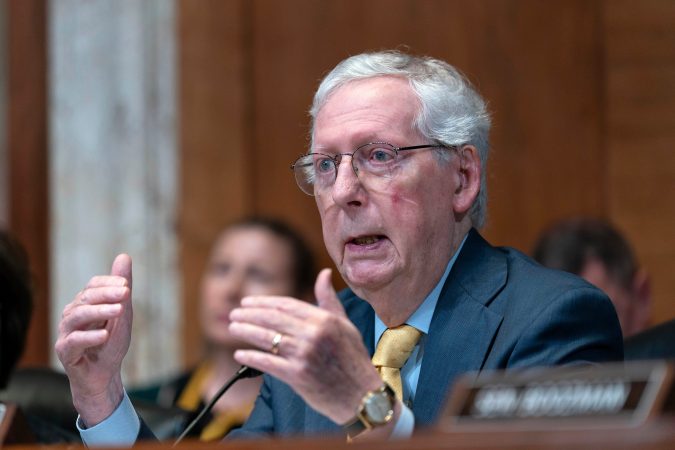
    Sen. Mitch McConnell (R., Ky.) has not been medically cleared to leave a rehabilitation facility, the Capitol physician’s office said Monday, and will miss Kentucky’s Fancy Farm Picnic on Saturday as he continues recovering from a June fall.

    McConnell, 84, was hospitalized June 14 after suffering a fall at home and has not returned to the Senate. He said earlier this month that he had moved to a rehabilitation facility but has not provided a timetable for his return.

    “I’m still working hard to get back to my full schedule of work in the Senate and in Kentucky, keeping up with intense physical therapy per my doctors’ orders,” McConnell said Monday in a statement. “Unfortunately, that means I won’t be able to make it to Fancy Farm, Kentucky this Saturday.”

    In an accompanying statement, Congress’ Office of the Attending Physician said McConnell was “not yet medically cleared to leave the rehab facility and return to the office.” Its physicians visit him daily, the office said, and he is undergoing multiple physical therapy sessions each day to rebuild his strength and reduce the risk of future falls. The office said childhood polio “continues to be a significant factor in his mobility.”

    McConnell has been a regular speaker in the past at Fancy Farm, a picnic in rural western Kentucky that draws politicians from across the state every August.

    McConnell shared a photo of him with his wife, Elaine Chao, which his office said was taken on Sunday.

    McConnell has faced growing questions about his health and when he will return to the office over the past six weeks, which occasional updates from his office have not silenced. Scott Jennings, a former McConnell campaign aide, urged McConnell last week to “routinely update his constituents on how he’s doing.”

    “When you’ve been in a hospital for a month and you’ve missed all the votes … you owe your boss, like anybody else out there who works, an explanation of what’s been going on and when you’ll get back,” Kentucky Gov. Andy Beshear, a Democrat, said earlier this month.

    McConnell’s office has said that he continues to work as he recovers. David Popp, a McConnell spokesperson, said Friday that McConnell “continues to meet with staff regarding Senate and Kentucky business, including discussions on defense appropriations, foreign policy, the farm bill, constituent services, and constituent federal grant requests.”

  • Trump’s Board of Peace lowers ambitions as peace plan lags

    Trump’s Board of Peace lowers ambitions as peace plan lags

    Israel’s right-wing government and the Board of Peace created by President Donald Trump to implement his Gaza peace plan appear on a collision course over the future of the enclave.

    “We are coming home. Gaza is ours,” National Security Minister Itamar Ben Gvir said as he led a demonstration of hundreds of supporters, along with other Israeli government ministers and lawmakers, to the northern Gaza border July 19.

    A number of Israeli officials, without contradiction by Prime Minister Benjamin Netanyahu, have said that Israel is not leaving Gaza and vowed to reestablish settlements that were dismantled when it agreed to “disengage” from the enclave more than a decade ago.

    A White House official confirmed that Trump will meet Tuesday with Netanyahu, who is traveling to Washington to attend a memorial service for Sen. Lindsey Graham. The meeting is likely to center on Iran and Trump’s peace efforts in Lebanon.

    Trump’s Board of Peace has struggled to make progress moving beyond the first phase of his plan, which included the release of all remaining Hamas-held hostages and a ceasefire that left what is now more than 60% of Gaza cleared of Palestinians and occupied by the Israel Defense Forces, and the rest controlled by Hamas.

    Phase Two outlines a sequenced disarmament of Hamas, Israeli withdrawal, and installation of an interim Palestinian government and police force with security provided by an International Stabilization force while internationally financed reconstruction of Gaza takes place.

    Earlier this month, Board of Peace officials briefed Congress on a new element of the plan that would precede those stalemated steps with construction of a pilot “humanitarian and governance zone” for about 50,000 Gazans who agree to live there.

    The briefing was intended to demonstrate progress and transparency to skeptical lawmakers and others who have questioned what the board has achieved thus far.

    While international humanitarian agencies last week noted improvement in food access, the World Food Program said that “the overall humanitarian situation remains brutal” for the up to 2 million Gazans who remain in the truncated, Hamas-controlled part of the enclave, surrounded by the IDF. “Families lack water, sanitation, and medicine,” the WFP said, citing continued problems of international funding and Israeli-restricted humanitarian access.

    The pilot community is to be located in an IDF-controlled area near the now-razed city of Rafah in southern Gaza, according to Board of Peace officials. The officials said it will be separated from the Israelis by a still-to-be formed international force composed of foreign troops and commanded by U.S. Army Maj. Gen. Jasper Jeffers.

    Gazans who have strayed, intentionally or not, across the current dividing line between Israeli and Hamas control — marked by the IDF with widely spaced, yellow concrete blocks that have gradually been moved inward to consume more of Gaza — have been shot at regularly by Israeli troops; some have been killed.

    The current position of the so-called “yellow line,” which Netanyahu said in May he had ordered extended to 70% of Gaza, is far beyond the 53% allotted under the peace deal. IDF Gen. Eyal Zamir has described the line as Israel’s “new border,” where the military exercises “operational control.” The IDF has said it gives warnings before using lethal force against anyone crossing the line.

    On the eve of Netanyahu’s visit to Washington, Israel’s security cabinet on Sunday said that, in principle, it would allow the international force to enter the Israeli-controlled area in support of the planned pilot community.

    According to Israeli news accounts of the cabinet meeting, any Palestinian moving to the pilot community would have to be individually screened for ties to Hamas, and the entry of any foreign troops would have to be directly approved by Netanyahu and his foreign and defense ministers.

    But “it’s unclear whether Palestinian civilians would find that to be a sufficiently secure arrangement and would feel comfortable doing it,” said former U.S. ambassador to Israel Dan Shapiro, now at the Atlantic Council think tank.

    “The model is a little bit bizarre in the idea that it says to Palestinians who are not currently under Israeli control, come live under Israeli control. It’s better for you,” Shapiro said.

    According to a senior Board of Peace official, who spoke in an interview on the condition they not be identified by name, Palestinians who agreed to move into the pilot area would be free to come and go into Hamas-controlled Gaza at any time.

    The official described the pilot project as “serious temporary housing.” They estimated that it will cost $150 million — including humanitarian and medical needs and — and completed before the end of this year.

    The planned humanitarian zone, called “New Rafah,” would be a far cry from the ambitious redevelopment of Gaza into a high-tech industrial center and waterfront resort, with high-rise residential communities, high-speed transportation and parks, outlined by Trump negotiator and son-in-law Jared Kushner.

    When he introduced what he called “New Gaza” in January at the World Economic Forum in Davos, where world leaders first signed up for the Board of Peace, Kushner said demolition and removal of unexploded ordnance, at least in the Israeli-occupied portion of Gaza, had already commenced. Construction of New Gaza, he said, would begin under the second phase of Trump’s peace plan.

    “We’re looking to cultivate a very deep relationship with both chambers and across the aisle” in Congress, the Board of Peace official said, adding that they planned to appoint a permanent congressional liaison. A second official said that in the briefings, the board was “signaling its readiness to receive $200 million” from a State Department peacekeeping account to add to what is now about $300 million that other countries have donated for overall Gaza renewal.

    The State Department did not respond to specific questions about peacekeeping funds but said that it “continues to evaluate how existing authorities, programs, and interagency coordination can best support” the peace and stability objectives laid out in Trump’s plan.

    So far, Bahrain and Morocco have publicly acknowledged contributing funds to the endeavor, plus what the senior official said were “other folks who I don’t think are out there yet.” This month, the European Commission and 15 European countries agreed to provide around $1 billion “to support the implementation of ongoing and planned early recovery projects” for Gaza.

    Asked whether that money would go into private Board of Peace accounts at J.P. Morgan or a World Bank account that is part of Trump’s peace plan, and thus available for the pilot project, a European Commission spokesperson said each donor nation would decide where and through what channels it wanted its specific contribution to go.

    Spokespeople for staff of the House Foreign Affairs Committee and Senate Foreign Relations and Appropriations Committees declined to comment on the briefings by Jeffers, Board of Peace adviser Joshua Gruenbaum and retired Lt. Gen. Mark Schwartz, who is organizing a civilian Palestinian police force.

    While refinements in the Trump plan made by Board of Peace High Representative Nickolay Mladenov spell out in detail partial Hamas disarmament and IDF withdrawals in reciprocal sequence, neither side trusts the other and each has adopted a “you first” stance.

    The pilot project “makes sense in that while disarmament [of Hamas] is not moving forward,” the Board of Peace is “looking for some way to show other elements of the plan can advance,” Shapiro said. “None of this is easy. The Israelis are very resistant to it because they want to prioritize disarmament. … And there may be political factors” in the run-up to Israel’s October elections.

    Last week, Hamas announced selection of a new leader, Khalil al-Hayya, to replace Yahya Sinwar, killed by the IDF in Gaza in 2024. One of his priorities, al-Hayya said in a televised address, was “to accelerate and carry out reconstruction … not a gift or favor from anyone” and not tied to any “trade-offs, concessions, or political positions.”

    He offered no explanation of how that would be accomplished.

    The senior Board of Peace official said that some progress was being made in negotiations with Hamas over turning over their weapons in sequence with Israeli withdrawal, and expressed little concern about any intransigence by Israel.

    “A lot of times what politicians in the Middle East tell you is not exactly what is happening in reality,” the official said. “We have really good relationships with Prime Minister Netanyahu and his team. I think when we are ready to go deploy that first pilot program, they’re going to be committed to making sure it’s a success.”

  • Trump demands Senate cancel August break until it passes voting bill

    Trump demands Senate cancel August break until it passes voting bill

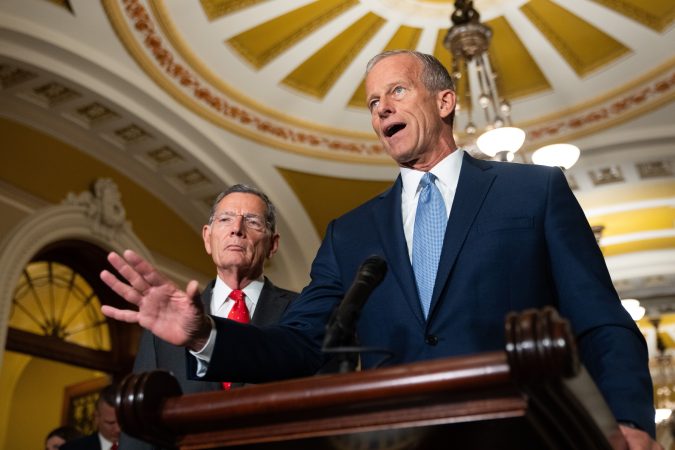
    WASHINGTON — President Donald Trump on Monday demanded that Senate Majority Leader John Thune cancel the chamber’s upcoming August break until senators pass a strict proof-of-citizenship voting bill, even as Republicans lack the votes to advance it.

    Trump has repeatedly urged Thune to scrap the legislative filibuster, which effectively sets a 60-vote threshold for most legislation in the 100-member Senate, or find another workaround to pass the voting bill, known as the SAVE America Act. But Republicans hold only a 53-47 majority, and Thune has consistently said they don’t have the votes to pass the bill or change the rules to get around the filibuster.

    “John Thune should not allow the United States Senate to ‘leave town’ until it passes The Save America Act or, far better still, TERMINATES THE FILIBUSTER,” Trump wrote on social media.

    He later insisted to reporters Monday that he has a good relationship with the Senate majority leader but said Thune has “got to get his job done.”

    It’s the latest escalation in a monthslong pressure campaign by Trump and others in the GOP base to pass the SAVE Act ahead of the midterms. A small but vocal group of Republican senators has also increasingly pressed Thune to find a way forward.

    House Republicans have also attempted to create another path for the legislation through the budget reconciliation process, which would allow grant money associated with voting rules to pass the Senate with a simple majority.

    The House last week approved a budget framework that included $10 billion for voting-related changes aligned with the SAVE America Act. But Thune has said Republicans don’t currently have the votes for that approach, either.

    Trump’s pressure comes during an important period

    The fight threatens to complicate the Senate’s final legislative sprint before the August break, when Thune had hoped to focus on a long list of priorities that includes government funding, cryptocurrency legislation and sanctions on Russia. The August break, scheduled to start on Aug. 7, is a pivotal stretch for senators to return home and campaign ahead of the midterm elections.

    Several Republican senators are facing competitive races, including Maine Sen. Susan Collins, Ohio Sen. Jon Husted and Alaska Sen. Dan Sullivan. Republicans currently hold a 53-47 Senate majority. Republicans are confronting broader political headwinds as well, including an unpopular war in Iran, surging gas prices and costs that remain high for voters.

    Thune has enjoyed broad support from his GOP conference all year as he’s pushed back on Trump’s demands. He previously kept the SAVE Act on the Senate floor for weeks in an effort to build additional support, but was unable to secure the votes needed to advance it.

    Utah Sen. Mike Lee, who has led the push for the bill in the Senate, escalated his pressure late last week, warning that how Republicans handle the SAVE America Act “could impact not only the November midterm elections, but also the Senate GOP leadership elections.”

    “Leaders must lead. And if they don’t, they’re not leaders,” Lee wrote on social media Friday.

    Frustrated by the pressure when he doesn’t have a route to pass the bill, Thune has urged Trump, Lee and others to help him find the votes. Trump on Friday said he’d “certainly be willing” to help call senators.

    Asked last week if Trump is frustrated with Thune, White House press secretary Karoline Leavitt said that “his patience is running out.” But Trump told reporters on Air Force Once Monday while traveling to an event in Michigan, that he hasn’t “even thought” about potential replacements for Thune.

    The late-summer dispute echoes a similar fight before last year’s August recess, when Trump pressed Thune to keep senators in Washington to clear a backlog of his nominees. The Senate ultimately left town without a deal after negotiations with Democrats collapsed.

    The SAVE America Act would create new national rules

    The SAVE America Act, which stands for Safeguard American Voter Eligibility, would require Americans to prove they are citizens when they register to vote, mostly through a valid U.S. passport or birth certificate. It would also require a valid photo identification before voters can cast ballots, which some states already demand.

    Voting experts have said the bill could disenfranchise some 20 million American voters who don’t have birth certificates or other documents readily available.

    Trump has made it his legislative priority in 2026, saying it would “guarantee the midterms” and falsely claimed that election cheating is “rampant.” He previously declined to sign any other legislation until it was passed.

  • 67 boat strikes. 221 dead. The cocaine hasn’t slowed, officials report.

    67 boat strikes. 221 dead. The cocaine hasn’t slowed, officials report.

    The Trump administration’s deadly military strikes on alleged drug trafficking boats have not reduced the amount of cocaine entering the United States, but they’re prompting criminal organizations to develop new strategies and tactics and undermining traditional investigative methods, according to a previously unreported assessment by the Drug Enforcement Administration, a closed-door congressional briefing, and interviews with current and former U.S. and foreign officials.

    In a recent assessment reviewed by the Washington Post, DEA analysts found the strikes had failed to affect the supply or price of cocaine in the United States and had led traffickers to diversify beyond go-fast boats and to avoid international waters, opting instead for larger boats and hemming close to coastlines, where U.S. forces are less likely to open fire. In a closed-door briefing last month, Pentagon officials told lawmakers the strikes in international waters off South and Central America had not reduced the drug’s purity.

    Traffickers are also relying more on aircraft, which take off from clandestine airstrips along the Colombian-Venezuelan border and head east to Guyana and Suriname to avoid U.S. forces, according to the DEA assessment.

    “When you squeeze the balloon on one side, it always expands on the other side,” one DEA official told the Post. “They always find the weak spots and exploit them.” The official spoke on the condition of anonymity because they were not authorized to discuss the matter publicly.

    Chief Pentagon spokesperson Sean Parnell said Operation Southern Spear was accomplishing “exactly what it was designed to do: detect, disrupt, and dismantle designated terrorist organizations and the networks they rely on to traffic narcotics, generate illicit revenue, and threaten the security of the United States and the Western Hemisphere.”

    “Transnational criminal organizations have continually adapted their tactics for decades,” Parnell told the Post. “That does not indicate the pressure is ineffective. It demonstrates that we are imposing systemic friction on their operations.”

    The DEA did not comment. A spokesperson for Senate Armed Services Committee Chairperson Sen. Roger Wicker (R., Miss.) did not respond to a request for comment.

    Preliminary findings two months after the strikes began last September showed that they had disrupted smuggling routes, the DEA analysts reported, causing increases in cocaine prices and drug-related violence. But prices have since reverted to previous levels. “Smugglers have adapted to the intensified pressure,” they wrote. “Price and availability have not been noticeably affected.”

    In one example, they allege, traffickers on Colombia’s La Guajira peninsula pay officials to disclose the locations of U.S. ships, then launch their vessels “once U.S. military assets have departed the area.”

    The Colombia Defense Ministry didn’t return a request for comment.

    Pentagon officials told members of the Senate Armed Services Committee last month that DEA analysis of confiscated cocaine showed high levels of purity, according to a congressional aide familiar with the briefing. High purity suggests supply remains consistent, the DEA official said; dealers do not need to dilute the drug to stretch inventory.

    The reports contradict public claims by President Donald Trump. Trump has said at least 15 times, including as recently as last month, that the strikes have reduced maritime drug trafficking into the country by 97% or 98%. “98.2% of Drugs coming into the U.S. by Ocean or Sea have STOPPED!” he wrote on Truth Social in April.

    Trump has transformed traditional U.S. drug enforcement into a military campaign that fuses the legal and strategic approaches of the war on drugs and the war on terror. In the past year, U.S. forces have attacked at least 67 boats, captured Venezuelan President Nicolás Maduro, killed Tren de Aragua leader Héctor “El Niño” Guerrero, and attacked an alleged camp of FARC dissidents in Ecuador.

    The boat strikes have killed at least 221 people since September. Legal analysts have denounced them as executions without trials. Administration officials say they’re aimed at reducing the flow of “deadly poison” into the country.

    The White House defended the approach.

    “These measures have not only eliminated narcoterrorists themselves, but also discouraged bad actors from trying to smuggle drugs into our country should they meet the same deadly fate,” spokesperson Anna Kelly said in a statement to the Washington Post. “President Trump is using every tool at his disposal to save lives from the scourge of illicit narcotics, and any suggestion that these efforts have not been effective are laughable.”

    The U.S. militarization of the decades-long war on drugs has begun to influence Europe, where a lead enforcement agency is urging nations to adopt more aggressive tactics.

    But a senior Colombian security official said the boat strikes have had a minimal impact.

    “There was a dissuasive effect in one type of transportation,” the official said. “So it has forced them to seek out other methods. Taking the drugs out through ports has increased, stockpiling it on large ships.” The official, like others interviewed for this article, spoke on the condition of anonymity because they were not authorized to discuss the subject publicly.

    Trump and other officials initially described the attacks as part of a broader war against fentanyl, the leading cause of illicit drug deaths in the United States, an issue on which Trump campaigned. But the majority of fentanyl enters the United States by land, not sea. On the shipping routes targeted by Operation Southern Spear, the principal illicit cargo is cocaine.

    When the military began blowing up boats, Monroe County, Florida, Sheriff Rick Ramsay was thrilled. His jurisdiction includes the Florida Keys, for centuries a smuggler’s playground.

    “This is war, and they are bringing death to the U.S. every time they get a boat here,” he said. “Every boat that doesn’t arrive will save U.S. lives.”

    The “kinetic strikes” haven’t stopped the flow of cocaine there, he said. “We see drugs floating up on a weekly basis,” he said. “Floating up on beaches, behind houses. … It’s continuing on strong.”

    Still, he said, they’re a “necessary evil.”

    “You don’t give up just because you’re losing the battle.”

    Marine Gen. Francis L. Donovan, the commander of U.S. Southern Command and senior officer overseeing Operation Southern Spear, told the Senate Armed Forces Committee in March that the strikes are “probably not the most effective tool” and “aren’t the answer.”

    “But putting total systemic friction from point of production to point of delivery,” he said, “I believe that actually kinetic strikes will be one of the many tools.”

    But the strikes have made investigating drug trafficking more challenging, according to the DEA official. Investigators typically rely on low-level informants to provide intelligence on routes and meeting points to build cases against higher-ranking managers and bosses. Now those sources are being pulled back from the field, the current official said, to protect them from being killed in U.S. attacks.

    Based on pricing, there might, in fact, now be more cocaine circulating in the United States. In Florida, cocaine is selling for $13,000 to $15,000 per kilogram, a senior DEA official said, a drop of roughly 50% over the last five years.

    Global cocaine production, centered in Peru, Bolivia, and particularly Colombia, has reached an all-time high, the U.N. Office on Drugs and Crime reported last month. From 2014 to 2024, the office reported in its 2026 World Drug Report, the area under coca cultivation tripled to more than 1,480 square miles and illicit cocaine manufacture quadrupled to 4,100 tons.

    “The business is so extraordinarily profitable that the cartels do not mind paying freight costs that are five or even 10 times higher,” an Ecuadorian naval intelligence official said. “They know that while the United States may destroy one speedboat, they will successfully get 10 semisubmersibles — or other speedboats that evade detection — through.”

    Xinming Du, an economist at the National University of Singapore, reported in March that Colombia’s cocaine boom was linked to 1,000 to 1,500 overdose deaths in the United States annually.

    The boat strikes, she said, are unlikely to diminish cocaine supply in the United States.

    “Coca cultivation at the source in Colombia is the supply factor most directly linked to U.S. [cocaine] overdose deaths,” she said. “With source production at record levels, total flow is driven mainly by what is grown rather than by what is intercepted in transit.”

    Derek Maltz, the DEA’s acting administrator during the first four months of Trump’s second term, has called for greater military involvement to fight trafficking. He said the strikes send a necessary message to the world.

    “America is now actually in a real drug war,” Maltz, who retired from the DEA in May 2025, told the Post. “Over the years we talked about a drug war, but we didn’t fight them as if they were enemies.”

    He acknowledged that the strikes hadn’t succeeded at “disrupting the flow of cocaine.”

    “We are seeing very significant cocaine seizures inside the U.S.,” he said. “We’re back to seeing hundreds of pounds of cocaine being seized.”

    The U.S. Coast Guard continues to stop and board vessels it suspects of carrying drugs.

    As commander of Coast Guard Station Miami Beach, Lt. Matthew Ross is responsible for operations over more than 4,000 square miles of ocean. On one boat in December, station personnel found 3,715 pounds of cocaine, the largest bust by a small-boat Coast Guard station in 30 years, Ross said. They found 1,535 pounds on another, in May, and 900 pounds on a third later that month.

    “Smugglers have been bringing contraband into South Florida for 400 years,” Ross said. “They aren’t going to stop.”

  • Clinton Foundation launches an institute to help state governments find nonpartisan solutions

    Clinton Foundation launches an institute to help state governments find nonpartisan solutions

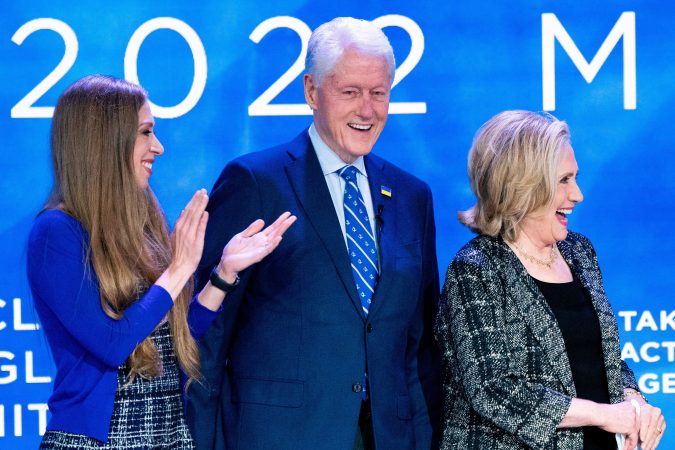
    The Clinton Foundation unveiled a new initiative Monday to help state and local governments develop and enact nonpartisan policy solutions to improve health outcomes, especially for women and children, economic security, and democracy.

    The foundation’s first new initiative in more than a decade, the Clinton Policy Institute has already begun convening political leaders from both parties, research experts, and Americans affected by the issues being studied to create new approaches to long-existing problems.

    “Rising costs, economic uncertainty, rapid technological change, and growing pressures on our public institutions are making it harder for families to get ahead,” former Secretary of State Hillary Rodham Clinton said in a statement to the Associated Press. “We created CPI because we believe there are still practical, evidence-based solutions that can improve people’s lives.”

    CPI is building on its work with New York state in banning cellphones from schools in the past academic year. Though the institute did not technically exist last year when it teamed with New York Gov. Kathy Hochul’s administration on creating distraction-free schools in the state, the Clinton Foundation saw promise in its approach and decided to expand it before publicly announcing CPI’s creation. It’s a strategy that the foundation, also led by former President Bill Clinton and public health expert Chelsea Clinton, used when it launched the Clinton Health Access Initiative in 2004.

    Zayn Siddique, former principal deputy director of the Domestic Policy Council, will serve as CPI’s chief executive officer. Jennifer Klein, who was director of the White House Gender Policy Council under former President Joe Biden, will be CPI’s chair.

    In New York, CPI helped create the Teen Tech Council so that students could help make the phone-ban program more effective. The result, according to Hochul’s office, was that educators found a marked improvement in classroom behavior and engagement.

    “CPI is bringing together policymakers, researchers, business leaders, and community organizations to identify what works, build stronger policy networks, and help turn those ideas into policy,” Hillary Clinton said. “We’re taking a particular focus on states and local communities, where so much innovation is happening.”

    Kansas Gov. Laura Kelly praises CPI’s nonpartisan approach

    Kansas Gov. Laura Kelly said a CPI conference on improving the lives of children earlier this month was “the best roundtable I’ve been involved with since becoming governor.”

    Kelly, who will leave office in January due to term limits after serving two consecutive terms, said she was inspired by CPI’s nonpartisan approach to solving problems affecting children.

    “I am a Democrat governor in what is considered a very red state,” Kelly told the Associated Press in an interview. “It became very clear to me that if I wanted to accomplish anything in my political life, I was going to need to do it in a bipartisan way.”

    Kelly believes that, despite political polarization, CPI can succeed in finding nonpartisan solutions — especially to issues involving children and healthcare — and giving state leaders the research and other support to implement them.

    “Every once in a while, you get people from both sides of the aisle who come together and crafted, maybe not sexy legislation, but something that really needed to be done,” Kelly said. “And they get it through.”

    Jerome Adams, former U.S. Surgeon General in President Donald Trump’s first administration, agrees that nonpartisan solutions are possible to find. But he says the nonpartisan nature of the solutions has to be intentional.

    “Health is inherently political,” said Adams. “When you talk about access to healthcare coverage, when you talk women’s health issues, particularly around the issue of abortion and contraception, when you talk about drug policy and whether you’re in favor of harm reduction, when you talk of firearm safety — all of these are inherently political issues.”

    Former Surgeon General Adams sees broad support for children’s issues

    That is complicated further, Adams said, because “we live in a country that is very binary, so every issue, no matter how nuanced, is, for purposes of elections, turned into black/white, yes/no, all or none.”

    However, Adams said CPI has already found a way to get bipartisan buy-in for some of its solutions to adverse childhood experiences (ACEs). In 2020, the state of California launched the ACEs Aware initiative to begin screening for ACEs — which include abuse, neglect, and household challenges — and treating them early to reduce the impact and the cost to the state later.

    Through CPI, Adams was asked to become the co-chair of the National Leadership Council for the ACE Resource Network in June in an effort to bring California’s work treating ACEs to other states.

    “I’m very interested in work that has proven and practical solutions,” he said. “We bring in states and say, ‘Hey, let’s look at the best evidence in terms of what works around adverse childhood experiences and state level policy and then try to implement it in your state’.”

    That strategy has led Republican-led states like Utah and Georgia to consider parts of Democrat-led California’s work on the issue, Adams said.

    He said it’s a sign that CPI’s approach works and can be expanded to other areas.

    The Clinton Foundation hopes that will be the case.

    “Too many people have lost faith that progress is possible,” Hillary Clinton said. “But across the country, leaders are developing innovative policies that are strengthening families and communities. Those ideas deserve to be shared and scaled.”