Category: Wires

  • A desert town may run out of water. Others could face the same fate.

    A desert town may run out of water. Others could face the same fate.

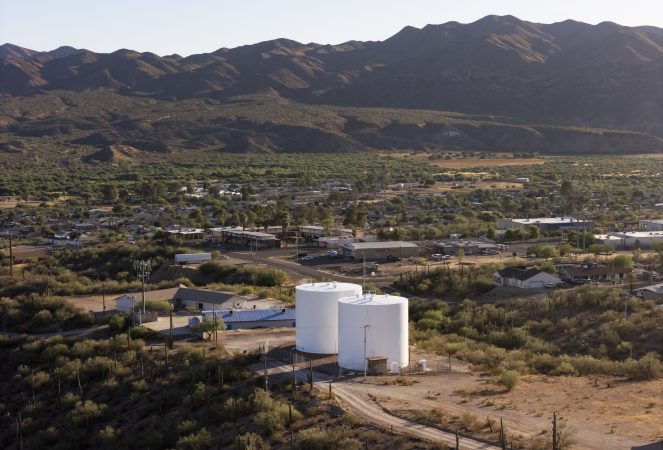
    KEARNY, Ariz. — Mayor Curtis Stacy starts every morning checking two websites that tell him how much he needs to worry about water.

    One site tells him about the reservoir that supplies his tiny desert town — it’s effectively empty. The other site tells him if the town gets additional water that other communities with more senior rights aren’t using; right now, the answer is yes.

    But Stacy tries to remind Kearny’s roughly 2,000 residents that they could easily tip back into crisis mode, just like this spring. In newsletters, he underscores that fragility with no fewer than 20 exclamation points. If other communities call for more water, they will have to cut back again.

    “!!!!!!!!!!THIS SITUATION IS ALMOST CERTAINLY TEMPORARY!!!!!!!!!!” he wrote in one bulletin posted on the Kearny Facebook page and taped up and down the glass doors of the town office.

    Kearny is an extreme example of the water crunch facing communities across the West as states and cities stare down a future of “megadrought” and fight over scarce resources. An unusually dry winter this year left the Southwest parched, with not enough water for everyone laying claim to it. In the complex web of water rights that govern how that short supply is distributed, the tiny town of Kearny comes last.

    Other cities around the West could face similar challenges and cutbacks. The federal government is set to release a plan for the shrinking supply of Colorado River water this summer that could force dramatic cuts.

    The plan, part of which the Bureau of Reclamation described in an Environmental Impact Statement early on Friday morning, comes at a time of escalating crisis for the Colorado River, a crucial water source for seven states, 30 Native tribes and a swath of northwestern Mexico.

    Arizona, California, and Nevada will be required to curb their use of the water from the Colorado River by a combined 20% over the next two years — and could ultimately face even larger cuts, according to three officials familiar with negotiations over a long-awaited federal plan to rescue the depleted waterway.

    Kearny is not directly affected by the Colorado River negotiations, officials say, but its dilemma shows how dwindling resources — and water-rights rules that can feel arbitrary to those most affected — can upend daily life.

    Kearny usually uses about 280 acre-feet of water a year; this year, it was allocated 77 acre-feet (one acre-foot supplies about three homes annually). Town officials realized they were on track to run out of water in July.

    The crisis forced steep reductions in water use and now hangs over the town’s future, testing residents’ ability to adapt to shortage. It has also consumed much of Stacy’s final year in charge, giving him new gray hairs and new worries about his hometown, a community where everyone knows everyone and where you can get ahold of the mayor by walking into his office.

    Stacy thought he had seen Kearny’s worst crisis in 2024, when a wildfire blazed toward the edge of town. He ran from house to house getting people out while embers blew above their heads. But the water shortage has been, in many ways, worse.

    “It’s like a slow death,” Stacy said, “instead of an actual emergency happening right in front of your eyes where you can actually help.”

    The town tried to prepare residents late last year for what was coming. In a Dec. 29 letter, officials warned that the reservoir fed by their primary water source, the Gila River, was running low.

    The first question in the FAQ section was, “What happens if our allotment is zero?”

    Answer: “Severe restrictions will be imposed.”

    Light snowfall had left the reservoir, San Carlos Lake, at about 1% of its capacity, and Kearny’s rights to that small supply were “junior” to other communities under the complicated water-rights system laid out by a court in 1935, before the town was founded.

    Soon, Kearny was on track to run out of water by midsummer.

    “For years, they’ve been telling us that cutbacks were coming,” said Eric Armenta, Kearny’s public works director. “But it never did come until now. And it came drastically.”

    In late March, Kearny imposed “Level 5″ restrictions on water — the most stringent possible. A declaration of emergency told residents they could use water only for the essentials; the mayor went door to door to convey the situation’s gravity. There would be no washing of cars, no kiddie pools, and no watering of grass. Even the Little League field would go dry.

    “Laundry — wear it a second or even third day,” the mayor advised in another bulletin days later. “Bathing/Showers — no better time to connect with your significant other.”

    “What is the Town doing about this?” he wrote in the next note. “This emergency is our entire focus.”

    By the end of April, the message was sinking in and the town was using 30% less water. But when relief came later in the spring, town leaders were torn.

    The authority that oversaw river rights had given Kearny extra water, but only because those with higher priority were not requesting water. The moment that changed, Kearny would need to cut back again.

    The town council voted to go back to “Level 1” restrictions, which meant cutbacks were optional. “Flush, shower, keep the trees alive, launder your clothes, live a normal life again,” the mayor wrote.

    Not everyone thought the reprieve was a good idea. “We knew exactly what was going to happen — people were just going to use it freely,” said Armenta, the public works director.

    Kearny was not yet in the clear.

    Bits of grass around town were starting to turn green again in early July, but mostly the yards were still parched. Public works supervisor Jake Acton looked away when he drove by the Little League field — still dead and brown.

    Kearny officials were no longer worried about running out of water in the short term, but their broader challenge lingered.

    Fourth of July fireworks were canceled due to “dry conditions and limited water”; fire damage aside, Kearny could not afford the thousands of gallons it might take to put out a wildfire. And some officials worried news of their water woes would scare away businesses, scare away homeowners, and make it even harder to recruit teachers.

    Armenta stopped by an old rehabilitated well set to start pumping in a matter of weeks. No one knew how much it would produce until it started functioning, and they were trying not to get their hopes up.

    “We want above 50 gallons per minute,” Armenta said over the roar of a machine clearing sand and debris. “Below that, it’s a waste of time.”

    Armenta was spending some 90 hours a week, he said, on the public works job — a position he took early this year because he knew the city was headed for trouble. He did it because his family is here, and he doesn’t want to leave.

    “My mom still lives here. My sister lives here. I want to live here,” he said. “My kids, I want them to be able to always come back to Kearny.”

    At the bar across the street from the Little League field, people wondered when the monsoon season would bring some real rain. But everyone thought the town would get through the water crisis. When Kathy Taft asked her friend Dave Olsen if the town was “really going to run out of water,” Olsen answered without hesitation.

    “No,” he said. “I just don’t see that happening.”

    The well, when it began operating in mid-July, was a letdown. At 40 gallons a minute, it would cover only a fraction of the town’s need.

    San Carlos Lake, meanwhile, remains close to empty. The lake closed to the public in June after it grew so dry that -— in the words of the local recreation department — “approximately 100% of the fish population” died.

    Now the mayor was worrying about 2027. If the lake didn’t recover, Kearny’s apportionment of river water next year could be zero.

    “We got 77 [acre-feet] this year and we were able to stretch that,” Stacy said. “You can’t stretch zero.”

    What then? There were still other avenues to try. Hydrologists were looking for well sites farther out; a local mining company could give Kearny some of its water. Wastewater could be put back into the ground and reused.

    And the monsoon rains were picking up. Away on a trip to Minnesota, Stacy watched with interest as a flood watch went into effect for much of the Gila River Basin, which includes Kearny.

    With some strong storms, the town’s fortunes could change again.

  • Musk’s SpaceX tumbles back to Earth, dragging Tesla stock down with it

    Musk’s SpaceX tumbles back to Earth, dragging Tesla stock down with it

    It seemed to be only good news for Elon Musk and investors in companies he oversees.

    SpaceX had marked a record-setting IPO, Musk was the first trillionaire in history, and the rocket company vaulted to an all-time high of more than $225 per share.

    That was last month. Since then, their fortunes have shifted.

    Musk has shed hundreds of billions in wealth, demoting him from trillionaire status, and SpaceX’s stock price has been cut practically in half. The stock closed at $116.41 a share Tuesday in trading on Nasdaq. On top of that, electric vehicle maker Tesla has lost about 18% of its value over the past week, in part after falling short of its quarterly earnings expectations, as investor patience for its artificial intelligence and robotics bets has worn thin.

    Musk cheekily nodded at the situation in a post on X on Friday.

    “(Former) Trillionaire,” he wrote.

    But while the world’s richest person could become a trillionaire again with a few big up days in the market, the challenges for SpaceX are deeper. It’s a new era for a company that was once on a glide path, that seemingly could do no wrong on its way to a historic $75 billion initial public offering.

    For SpaceX, “one of the benefits of being private is that there wasn’t a market to weigh in on and evaluate business decisions,” said David Meier, senior investment analyst at the Motley Fool. “Being publicly traded means everything will be evaluated and information transmitted through market prices. So every SpaceX launch, every Starlink decision and every xAI decision will be scrutinized by the market,” he added, referring to the company’s satellite internet service and artificial intelligence arm.

    Case in point: After SpaceX aborted a launch because of engine issues this month, the company faced another problem — a plummeting stock. SpaceX’s IPO documents had touted its plans to establish a colony on Mars and put data centers in space.

    Then SpaceX was dealt its latest setback in propelling Starship off the ground. The company is trying to power its data center and exploration bets by using a roughly 400-foot rocket to carry out missions including taking humans back to the moon.

    But the program has been marred by reliability concerns and repeated explosions. While SpaceX has proved its ability to put satellites and even people into orbit, much of its success has been built off of earlier and less capable launch vehicles. The company ultimately conducted a successful flight test on Friday, after what it said were issues with four of the rocket’s engines during the aborted launch the prior week, but the questions about Starship’s overall viability remain.

    “The future of the company is riding on the ability to make Starship work. … They essentially have a very successful pickup truck that can move things across town,” said Clayton Swope, deputy director of the Aerospace Security Project and senior fellow at the Center for Strategic and International Studies, a nonprofit focused on policy research in areas including defense and geopolitics. “What they’re trying to do is switch to a freight train and get the economies of scale [of] something of that magnitude.”

    Meier, the Motley Fool analyst, said the “sharp sell-off” has been surprising to him.

    “One possible explanation is that investors had the time to digest the financials and believe the valuation is too risky,” he said. In the lead-up to its stock debut, SpaceX disclosed it had a record of significant losses, including at least $13 billion since the beginning of 2023.

    Things have hardly been rosier on the other side of the Musk empire, at Tesla. Battling what he said was an illness on the company’s earnings call, Musk tempered expectations about Tesla’s performance, saying the electric vehicle company would be spending heavily to fuel its ambitions. Tesla reported a decline in profits compared with the same quarter a year earlier, despite 26% higher revenue than during the same period last year.

    As Tesla has shifted away from the auto business that propelled its meteoric growth — making it the world’s most valuable car company — investors have clamored to see results from its new direction: a pivot toward robotics and what the industry calls “physical AI,” driven by products such as its forthcoming Optimus humanoid robot. Musk delivered little news of significance on those bets, sending that company’s stock sinking as well.

    “We’re investing a lot in growing the core business and really preparing for the future,” Musk said. “This is a massive [capital expenditure] year, but I’m confident that all the things that we’re investing in will yield incredible returns.”

    “I’m a little under the weather here, a bit ill, so if I sound a little off … I’m a little bit ill today,” Musk said later on the call.

    Tesla’s declines and the larger consolidation of Musk’s empire have fueled speculation that it could be absorbed into SpaceX. Musk did little to quell that speculation on the call.

    “Obviously we can’t talk about combining companies and that kind of thing on an earnings call, it’s got to be done with the appropriate process,” Musk said after citing increasing overlap between the two companies, before turning a question about a theoretical merger to the company’s general counsel.

    For SpaceX, meanwhile, there is little relief on the horizon, analysts said. Gene Munster, managing partner at Deepwater Asset Management, said the company is feeling the strain of looming lockup expirations, where people who acquired shares at low prices are suddenly able to sell their stakes. Until that is resolved, he said, SpaceX is likely to continue facing challenges.

    “It’s like a crushing unknown,” he said. “Typically what happens is the stock keeps going down, down, down until the lockup [resolves].”

    Swope, the senior fellow at the Center for Strategic and International Studies, said the public scrutiny on SpaceX could, however, have benefits. He said a publicly traded SpaceX could be even more attentive to risks.

    “I think we all know there is a bit of showmanship to how SpaceX and Elon Musk do business,” he said. “If anything, I guess I could see maybe this will attenuate some of that showmanship a bit and it will be more cautious.”

  • Stocks drift on Wall Street and crude oil prices drop as Mideast tensions cool

    Stocks drift on Wall Street and crude oil prices drop as Mideast tensions cool

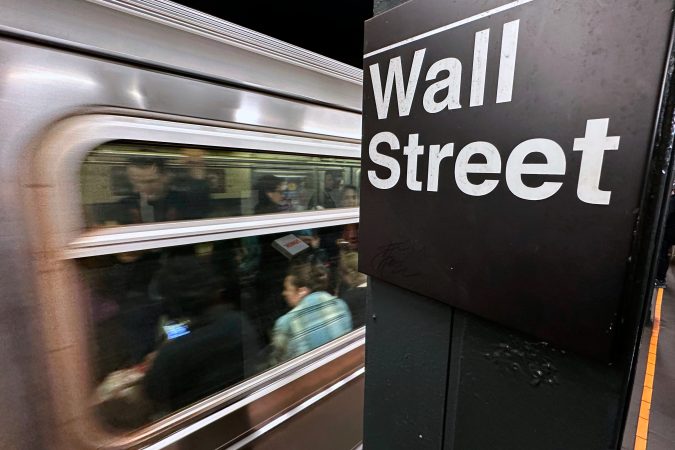
    Stocks on Wall Street drifted to a mixed close Monday as oil prices fell after the U.S. and Iran paused their attacks while work resumed on restarting negotiations to end the war.

    The S&P 500 rose less than 0.1% after spending much of the day bouncing between small gains and losses. The benchmark index was coming off two weekly losses in a row. The Dow Jones Industrial Average rose 0.5%, and the Nasdaq composite fell 0.2%, its fourth straight loss.

    The three major stock indexes are on pace to close out this month in the red. It would be the second straight monthly loss for the S&P 500 and Nasdaq.

    Oil prices reversed course from a week ago, when a sharp escalation in fighting between the U.S. and Iran worsened worries about global oil supplies. The price of Brent crude, the international standard, dropped 6.3% to settle at $85.87 a barrel for October delivery. Prices surged to over $100 a barrel last week before easing.

    U.S. crude oil for September delivery fell 7.5% to settle at $82.61 a barrel.

    The war between the U.S. and Iran has sharply curtailed, and at a times halted, traffic through the vital Strait of Hormuz. That has had a ripple effect throughout the world’s economy. Gasoline prices have surged and shipping costs for most goods are rising, with businesses typically passing those costs along to households.

    Markets closed higher in Europe and Asia.

    Bond yields fell. The yield on the 10-year Treasury fell to 4.65% from 4.69% late Friday.

    Technology companies were behind much of the shifts in the market, with gains and declines for a mix of big companies resulting in uncertain trading.

    Nvidia fell 5% and Micron Technology slumped 2.3%. At the same time, Microsoft rose 1.9% and Apple rose 1.2%. They are all among the most valuable companies in the world, and those huge valuations give them more influence over the direction of the broader market.

    The mix of gains and losses from a variety of those companies had more impact in pushing and pulling the market, even as the majority of companies in the S&P 500 gained ground.

    Communications company stocks were among the gainers Monday. Google parent Alphabet rose 2.1%, while Charter Communications jumped 6.7% and Comcast rose 2.3%.

    Credit card issuers and payment processors also notched gains. American Express climbed 2.8%, Capital One Financial added 2.1%, Visa rose 1.9%, and rival Mastercard gained 2.2%.

    In Asia, Chinese memory chipmaker CXMT soared in its debut in Shanghai. The company jumped to become China’s most valuable listed company with an estimated market capitalization of 3.3 trillion yuan (nearly $490 billion).

    All told, the S&P 500 added 1.20 points to 7,413.18. The Dow gained 262.83 points to 52,210.08, and the Nasdaq dropped 43.74 points to 24,932.08.

    Wall Street has a busy week ahead with several potentially mark-moving updates on the economy and company earnings. Reports are due out on consumer confidence Tuesday and inflation on Thursday.

    “This is a week with more than its fair share of potential surprises, good and bad,” said Chris Larkin, managing director, trading and investing, at E-Trade from Morgan Stanley.

    The big focus will be on the Federal Reserve, which will give an update Wednesday on its interest rate policy. The central bank has been grappling with the impact from rising inflation because of the ongoing U.S. war with Iran. It also has to contend with a fresh round of U.S.-imposed tariffs globally, which could further worsen inflation.

    Wall Street anticipates a nearly 36% chance that the Fed will raise interest rates at its meeting this week. Higher rates can help cool inflation by making borrowing more expensive and slowing economic growth.

    The central bank has been holding rates steady throughout the year as it monitors inflation’s direction and impact, but Wall Street expects at least one rate hike by the end of the year.

    Stubbornly high inflation has been squeezing households and fuel costs have hit budgets and spending particularly hard. Gasoline costs are taking a bigger chunk out of household budgets, and that could mean tighter spending on other things like clothing and travel.

    Investors are monitoring the latest round of corporate earnings for signs of consumer stress along with whether the yearlong jump in stock values throughout Wall Street is justified by profits and forecasts for profit growth.

    Investors also have a heavy round of corporate earnings to review this week. Many of those reports could provide more clues into the health of different areas of the economy. Paint and coatings maker Sherwin-Williams, aircraft maker Boeing, and payments processor Visa will report their latest results on Tuesday.

    Starbucks and Chipotle will report results on Wednesday.

    Technology companies are being watched especially closely because their sharp gains throughout the year have been behind the Wall Street’s record run. Microsoft will report results Wednesday. Amazon, with its growing cloud services business and AI focus, will report results on Thursday, along with Apple.

  • French president pledges support on visit to fire zone, vows: ‘We will win this battle together’

    LEGE-CAP FERRET, France — French President Emmanuel Macron urged fire crews to “stay strong” as they battled Monday to bring a monster wildfire under control, warning that the fight will take time but vowing, “We will win this battle together.”

    On a visit to a coordination center for the massive firefighting effort in southwest France, Macron heard how the blaze raging since last week has been wildly unpredictable, transforming at times into a self-feeding fire storm as it burned through an area four times the size of Paris and forced 220,000 people to flee their homes.

    “We’re facing a completely unprecedented fire,” Macron said, describing the situation as France’s worst fire-related crisis since World War II.

    He praised firefighting teams who stopped the inferno’s progression Monday after days of spreading flames that edged toward the wine region city of Bordeaux. But with woodlands still smoldering, he and other government officials cautioned that the battle isn’t yet won, with forests turned tinder-dry by successive heat waves this year and another forecast for this week.

    “The weeks ahead will be hard. We must hold firm,” Macron said.

    Fire crews racing against feared next heat wave

    With thousands of firefighters on the ground and rotations of water- and retardant-dropping aircraft, it became a race against time Monday to contain the blaze before temperatures soar, with national weather service forecasts of 95 F and above in southwest France from Tuesday.

    Authorities also are working to feed, shelter and care for evacuees who fled in staggering numbers: 250,000 in the southwest, driven away by two fires.

    Macron spoke of displaced people “traumatized” by the upheaval and “who sometimes have lost everything.”

    No new evacuations were announced Monday. But with France about to enter its peak August tourist season, authorities for the Gironde region around Bordeaux worked to keep vacationers away, banning holiday camps for children and for people with disabilities. Government ministers also urged people not to travel to the region that is popular for its Atlantic beaches, famous wines and some of France’s largest expanses of forests.

    Crews using earth movers tore up strips of forest and scrubland to create barren spaces, intended to block the flames that officials said had come within 10 miles of Bordeaux’s outskirts. Farmers kept fire crews supplied with water, transporting it to them in tanks.

    Briefing Macron, the Gironde region’s fire chief explained how crews had wrestled with the blaze unlike any they’d previously tackled, extraordinarily virulent and capricious, “a fire that’s going everywhere” and which generated electrical storms that sparked more flare-ups.

    “The last 24 hours went well, thanks to your work” Macron told firefighters. “Doubtless, tomorrow will be more complicated than today.”

    Spain is also battling fires

    Around a dozen countries have provided planes, helicopters, firefighters, and other assistance to both France and Spain, which is also fighting unprecedented blazes. All told, fires in the two countries have forced more than 330,000 people to flee.

    In Spain, wildfires have burned out of control around Madrid and in the Valencia region. Authorities evacuated 79,000 people and confined 30,000 others to their homes.

    In both Spain and France, the exceptional scale of the fires — fueled by heat waves that hit especially hard and early this year, making forests and scrubland tinder-dry — are driving calls for stronger action against climate change.

    “What we are experiencing is not a series of isolated incidents. It is the consequence of a climate emergency that is making wildfires even more violent, heat waves more frequent,” Spanish Prime Minister Pedro Sánchez said.

    A fire raging in hilly, rural terrain in Ávila, west of Madrid, has become Spain’s largest on record, scorching 193 square miles, the government said. That’s five times the size of Barcelona.

    “Look at how the valley is burned. Look at the houses, the people,” said David Gonzalez, a 48-year-old gardener who used his van to run supplies to firefighters in Ávila.

    “We are feeling lot of anger and helplessness. It’s something inhuman,” he said.

    Fires have burned 590 square miles this year in Spain — six times the area scorched by blazes in the first half of 2025, said Sara Aagesen, the ecology minister.

    The minister said that another heat wave forecast from Tuesday — which would be Spain’s fourth so far this year — could ratchet up the fire danger. Spain’s weather agency forecast temperatures above 104 F.

    Water-dropping planes combat fire in Italy

    A wildfire driven by strong winds broke out on Sunday afternoon near Peschici, in Italy’s southern Puglia region, burning pine forest and scrub and forcing the evacuation of about 300 tourists from beaches and campgrounds, authorities said.

    The Coast Guard evacuated tourists by sea to nearby Vieste, where authorities opened temporary shelters.

    Three Canadair water-bombing planes and fire crews on the ground continued Monday to battle the blaze, which revived memories of devastating wildfires that hit the same coastal area in 2007.

  • Trump defends his economic policies in Michigan, where new Canadian tariffs may sting

    Trump defends his economic policies in Michigan, where new Canadian tariffs may sting

    MILFORD, Mich. — In a visit to Michigan on Monday, President Donald Trump argued that his economic policies have revived the auto industry and American manufacturing even as many businesses contend that the sweeping tariffs he’s imposed against Canada and the rest of the world have hurt the state.

    Trump defended his policies while visiting a General Motors facility in the Detroit suburb of Milford that is a testing ground for its vehicles. He pumped a fist after watching Corvette, Cadillac, and Hummer vehicles compete in a series of drag races.

    In a speech, Trump cheered GM’s plans to expand production domestically in coming years and declared himself a president who was standing up for auto workers “at long last.”

    “I’ve done more for you than your parents, OK?” he said.

    After being led on a tour of vehicles from different eras of GM, some of which he sat in, Trump claimed the tariffs have helped the automaker.

    “They’ve come a long way,” he said to reporters about the Detroit-based automaker. “It’s amazing what tariffs are doing for GM.” Trump said he’s been good to the company but he declined to say more.

    “The rest of the world doesn’t love me, but that’s OK,” he said, alluding to tariffs. “It’s called ‘America first.’”

    Trump’s visit is close to Michigan primary on Aug. 4

    Trump called out several Republican candidates and invited them onstage during his remarks Monday.

    Republican Mike Rogers is unopposed in the Senate primary, but the GOP gubernatorial contest pits Trump-backed Rep. John James against Perry Johnson, a businessperson turned politician who has launched unsuccessful campaigns before, including for president in 2024.

    Johnson is now trying to style himself in the president’s mold — despite missing out on his endorsement.

    The Democratic Senate primary between Rep. Haley Stevens and progressive Abdul El-Sayed has drawn national attention for the right to face Rogers, who was narrowly defeated by Democrat Sen. Elissa Slotkin in 2024.

    Early voting is underway.

    Trump’s new Canada tariffs could hurt Michigan

    Michigan was one of the 2024 battlegrounds Trump flipped after it backed Democrat Joe Biden in 2020. But the state has seen parts of its economy affected by the president’s tariffs, including those on imported cars and auto parts.

    A new round of steep import levies is taking effect on dozens of U.S. trading partners. But Trump has singled out Canada with tariffs as high as 50% on a wide array of its products, including cars.

    The GM facility is in Oakland County, which encompasses much of Detroit’s northern suburbs. Once a Republican stronghold, it has increasingly leaned Democratic, backing Biden against Trump in 2020 and Vice President Kamala Harris against Trump four years later.

    GM says its facility is the oldest dedicated vehicle testing operation in the United States, where 4,200 employees work to refine nearly every vehicle the company makes before they reach consumers.

    Michigan’s economy relies heavily on Canada, however, meaning the new tariffs — coupled with inflation still running high and gas prices rising again as the already unpopular war in Iran continues — have created additional economic concerns statewide.

    Those come at a time when voters across the country were already increasingly dissatisfied with Trump’s handling of the economy.

    Jason Roe, a former executive director of the Michigan Republican Party who tried unsuccessfully to distance it from Trump’s Make America Great Again movement in 2021, said that more than coinciding with his new round of tariffs, Trump’s visit is a function of Michigan’s relatively late primary and is meant to ensure that James secures the nomination.

    But Roe also said it was a risk for the president to tie himself too closely to top Republicans before the general election, calling it “kryptonite to November voters.”

    Trump, who won the White House on a promise to lower the cost of living, also has seen his approval ratings sag, meaning kitchen table issues could be a liability for Republicans trying to hold control of Congress in the Nov. 3 elections.

    “We’re happy to have the president here, campaigning with Republicans. We think it highlights the fact that the only thing they care about is Donald Trump and refuse to stand up to him,” said Curtis Hertel, chairperson of the Michigan Democratic Party. ”It’s good for us every time the president is here because he’s incredibly unpopular.”

    U.S. and Canada have squabbled over a new border bridge

    The Supreme Court struck down many of Trump’s sweeping tariffs, but his administration has tried to find ways around that, including by arguing that he can impose them on Canada because that country is discriminating against American exports of products including automobiles.

    But Trump’s latest round of tariffs came after he voiced frustration with Canada for having retaliated and imposed its own levies on U.S. imports in response to Trump’s initial tariffs last year. Trump launched the first round after alleging Canada should do more to stop fentanyl smuggling.

    It is Trump’s third trip to Michigan in his second term.

    In January, he visited a Ford plant in Dearborn and addressed the Detroit Economic Club, offering a defense of tariffs even as auto industry leaders blamed them for increasing the cost of doing business.

    The president marked his second term’s first 100 days with a rally in Warren, where he mostly mentioned grievances left over from the 2024 campaign,

    His latest visit coincides with tensions between his administration and Canada that have marred the opening of a new bridge linking Detroit and Windsor, Ontario.

    Canada on Friday held its own event hailing the opening of the $4.7 billion Gordie Howe International Bridge instead of a planned celebration with officials in the U.S. after Trump announced the new Canadian tariffs.

    An earlier, joint ceremony had been set for June but was scrapped after Trump suggested the U.S. wanted a “better” deal on the bridge it co-owns with Canada.

    That eventually led to an agreement on splitting tolls that was supposed to allow for the rescheduled joint U.S.-Canada celebration — until the new tariffs derailed that, too.

  • Trump’s border czar says vetting of ICE officer is under internal review after Maine shooting

    Trump’s border czar says vetting of ICE officer is under internal review after Maine shooting

    WASHINGTON — President Donald Trump’s border czar said Sunday that the vetting of an immigration officer involved in the deadly shooting of a Colombian native in Maine is under internal review after relatives revealed to The Associated Press that he had a history of serious mental health struggles and violent behavior.

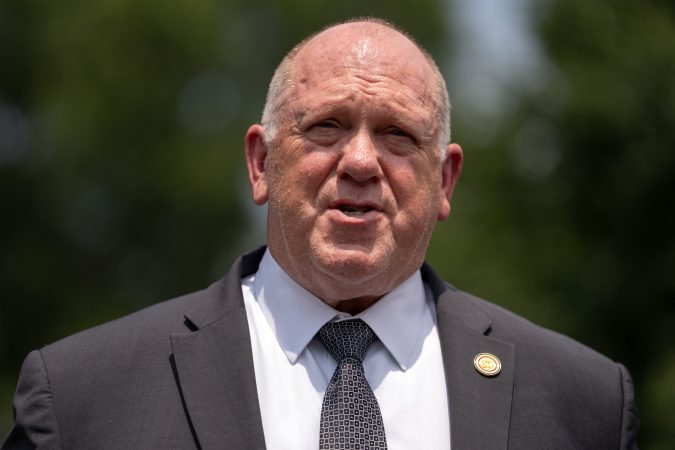
    Tom Homan said if the allegations against the Immigration and Customs Enforcement officer are true, “I don’t think he should ever have cleared vetting.”

    “There’s several things under review,” Homan said on CNN about the officer, Army veteran David Brouillette. “The training is under review. I know this specific case, as far as the vetting, is under review by the internal affairs section.”

    Questions about the Department of Homeland Security’s rush to hire, train and deploy thousands of new ICE officers to carry out Trump’s immigration crackdown have come into stark focus after back-to-back fatal shootings of immigrants in Maine and Houston.

    Homeland Security Secretary Markwayne Mullin ordered a pause in vehicle stops after the fatal Maine shooting, but Trump almost immediately reversed course and insisted the stops resume as a necessary tool in his campaign to round up and deport immigrants who are in the U.S. without current legal status.

    Homeland Security did not immediately respond Sunday to a request for comment about the internal review.

    ICE issues new requirement for body-worn cameras during vehicle stops

    Homan said that “changes have been made” and that acting ICE director David Venturella has issued a new directive that body-worn cameras must be in use if officers make a vehicle stop.

    “Right now, on all vehicle stops, there’s at least one body camera on site to record the entire event,” he said.

    He said Venturella “sent an instruction out that he wants at least one body camera on those vehicle stops, so we have everything on video.”

    It’s unclear whether the steps that the department is taking will be enough to quell the concerns coming from certain lawmakers in Congress over Homeland Security’s training and tactics as tries to reach Trump’s mass deportation goals.

    Lawmakers push for answers but have more questions

    Lawmakers from both parties have raised concerns.

    Democrats pressed ICE officials during a closed-door briefing for the House Homeland Security Committee last week, leaving some with more questions than answers.

    Lawmakers were told during the briefing that there have been 56 complaints of excessive force against ICE officers — 32 were cleared, and one was referred for disciplinary action.

    No discipline had yet been handed out, the lawmakers said they were told. The rest of the incidents are still under investigation.

    Republican Sen. Susan Collins of Maine, chair of the powerful Senate Appropriations Committee, has pushed for the use of body-worn cameras and ensured funding for the effort. She had said it was “extremely unfortunate” that the officer involved in the shooting in her home state was not using a camera.

    Homeland Security is under scrutiny but also faces pressure to increase deportations

    The Trump administration has failed to meet its goal of deporting 1 million people a year, despite an intense immigration enforcement crackdown that has resulted in violent scenes in cities nationwide.

    At least 10 people have died in encounters with immigration officers since the start of Trump’s mass deportation campaign.

    While the Trump administration insists it is targeting the “worst of the worst” criminals, that has not always been the result, and American citizens also have been among the deaths.

    The ICE officer shot 25-year-old Johan Sebastián Durán Guerrero, a Colombian national who was killed in his car near his home in the coastal city of Biddeford.

    In Houston, Lorenzo Salgado Araujo was killed July 7 when ICE officers chased his white work van through the streets, then shot him through the window in front of his work crew, including his brother.

    Earlier this year, two Americans protesting ICE actions in Minneapolis, Renee Good and Alex Pretti, a 37-year-old nurse, were killed, sparking a backlash nationwide.

    Democrats launched the longest agency shutdown in history earlier this year when they refused to fund Homeland Security in a largely failed attempt to force the administration to impose various restraints on the officers.

  • Secret Service agent charged with felonies in beatings police say were fraternity hazing

    Secret Service agent charged with felonies in beatings police say were fraternity hazing

    A U.S. Secret Service agent and two other men have been arrested and charged with violent felonies in the Miami area, where authorities say they committed brutal beatings as part of a fraternity hazing ritual in April that left two people hospitalized with severe injuries.

    One of the men charged, 29-year-old Marquez Christopher Pinder, works in the Secret Service’s Miami field office and is described in an arrest warrant as a “dean of pledges” for a Miami chapter of the Kappa Alpha Psi fraternity.

    The Secret Service said it’s cooperating with investigators and has placed Pinder on administrative leave. He was released from jail after posting a $75,000 bond Monday and faces arraignment before a judge Sept. 24.

    The three men were charged last week after police uncovered evidence of “alleged hazing incidents involving prolonged and repeated beatings with canes and paddles,” the Miami-Dade County state attorney’s office said in a news release.

    Police said in court documents that a University of Miami graduate student and another young man had injuries that could have been fatal had they not been treated. One required skin grafts to his backside and suffered kidney damage, the documents said, while the other had a tube placed in his windpipe to help him breathe.

    Accused agent has worked for Secret Service since 2023

    Charges against the three men include felony counts of hazing with a deadly weapon, aggravated battery with great bodily harm, and attempted manslaughter.

    “In Florida, hazing is abuse and it is a crime,” Katherine Fernandez Rundle, state attorney for Miami-Dade County, said in a statement Sunday. “Its victims too often lie in their graves and in hospital beds.”

    An attorney for Pinder, Justin Beckham, did not immediately return phone and email messages seeking comment Monday. Court and jail records did not list attorneys for the other two men.

    Pinder has worked as a Secret Service agent since 2023, agency spokesperson Matt Fagiana confirmed Monday.

    “Any misconduct will be addressed swiftly and appropriately upon completion of the investigative and judicial process,” Michael Townsend, the special agent in charge of the Secret Service’s Miami field office, said in a statement.

    A spokesperson for Kappa Alpha Psi did not immediately return a phone message left at the fraternity’s Philadelphia headquarters.

    Arrest warrant describes bloody paddling, emergency medical care

    According to Pinder’s arrest warrant, the graduate student told police that he and another young man had their backsides beaten by Pinder and the other defendants during four nights in early April at an apartment and a home off-campus. The paddling started when the victims failed to correctly answer questions about the fraternity and its history, a police investigator said in an arrest warrant filed in court.

    The warrant did not name either victim.

    The beatings stopped on the fourth night when one of the victims had blood seeping through the seat of his pants, according to the warrant. It said fraternity leaders ordered both victims to strip off their clothes and place them in garbage bags before going home.

    One of the victims suffered vomiting, fevers, and intense pain before being admitted to a hospital, where he required skin grafts on his buttocks and treatment for kidney damage, according to police.

    Without emergency medical treatment, the warrant said, “his injuries would have resulted in renal failure leading to death.”

    The second victim told police he knew the other victim from the fraternity. He denied being paddled, the warrant said, but acknowledged receiving emergency medical care in April.

    That person’s medical records showed he had been hospitalized with injuries to his backside and “was intubated during his stay in the hospital to prevent further physical deterioration and death,” the arrest warrant said.

    Florida lawmakers in 2005 made hazing a felony punishable by up to five years in prison if it results in serious injury or death. The law was spurred by the 2001 death of Chad Meredith, a University of Miami freshman who drowned after drinking alcohol and then attempting to swim across a lake at the urging of campus fraternity leaders.

  • Trump administration urges Supreme Court to allow order targeting mail-in voting before midterms

    Trump administration urges Supreme Court to allow order targeting mail-in voting before midterms

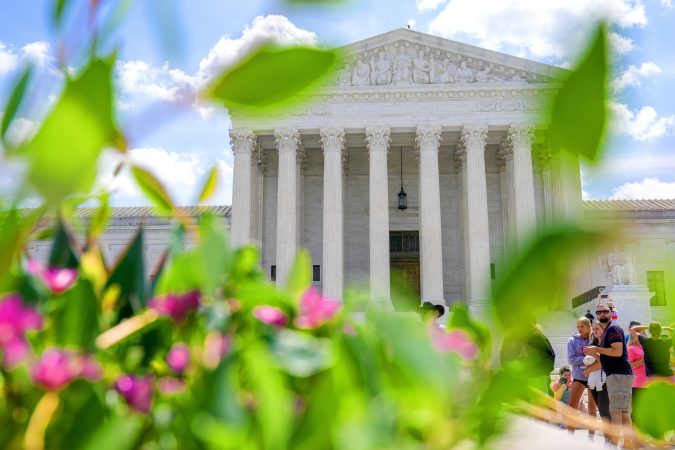
    WASHINGTON — The Trump administration asked the Supreme Court on Monday to clear the way for an executive order from President Donald Trump that could dramatically change mail-in voting ahead of November’s midterm elections.

    The Justice Department asked the justices to halt for now lower court decisions blocking work to implement the sweeping changes in nearly half the country.

    The request comes shortly after Trump delivered a primetime address elevating his yearslong push to raise doubts about the legitimacy of elections, and could be one of several voting-related challenges before the court ahead of the high-stakes midterm contest.

    Trump ordered the government in March to create a “state citizenship list” of eligible voters and deliver mail ballots only to people on that list.

    Democratic officials in 23 states and the District of Columbia sued, saying the Constitution gives states and Congress the authority to set election rules, not the president. Their attorneys have said Trump’s proposed changes are ripe for abuse and could cause chaos.

    A judge in Massachusetts blocked the order for the plaintiff states, and a divided 1st U.S. Circuit Court of Appeals panel left her ruling in place over the weekend.

    The executive order issued in March calls for U.S. Citizenship and Immigration Services and the commissioner of the Social Security Administration to create a federal list of eligible voters. It tells the U.S. Postal Service to deliver mail ballots only to people on that list.

    The order also calls for ballots to have secure envelopes with unique bar codes for tracking. Federal funding could be withheld from states and localities that don’t comply.

    The appeal argues that Trump’s order lays out “general policy guidance” and doesn’t directly dictate how states run their elections. Solicitor General D. John Sauer asked the high court to freeze the judge’s order as lawsuits play out, calling it indefensible.

    “And the injunction is especially indefensible because the agencies are still deliberating over how (if at all) to implement the Order, yet the district court preemptively decided that whatever the agencies may choose to do will necessarily be unlawful,” Sauer wrote.

    He urged the high court to move quickly, arguing that any new policies would have to be in place as soon as August to be effective for the November elections.

    A response to the appeal is due Aug. 3.

    Trump promoted the proposed changes as safeguards to keep non-U.S. citizens from voting. Noncitizen voting has been shown to be rare, and is a felony that can be punishable by deportation.

    U.S. District Court Judge Indira Talwani in Boston, who was nominated by Democratic President Barack Obama, agreed in June to halt implementation for the Nov. 3 elections.

    Her ruling differed from that of another federal judge based in Washington. U.S. District Judge Carl Nichols, who was appointed by Trump, found in May it was too early to block the order because it had not yet been implemented.

    The office of California Attorney General Rob Bonta, who is leading the lawsuit, did not immediately comment on the Trump administration’s appeal. New York Attorney General Letitia James’ office declined to comment.

    the Postal Service also would not discuss its plans regarding implementing Trump’s order or its rule, citing the ongoing litigation. In Kansas, Secretary of State Scott Schwab’s office said it has not yet heard from the Postal Service about plans going forward.

  • Mediators see progress in efforts to halt Iran war as drone attacks rattle region

    Mediators see progress in efforts to halt Iran war as drone attacks rattle region

    CAIRO — Mediators have achieved progress in getting the United States and Iran back to negotiations, regional officials said Monday, after both sides paused attacks following a period of rapidly escalating tensions. But scattered attacks by armed groups across the region underscored the lingering tensions.

    Saudi Arabia said it had shot down drones fired by Iran-backed militias in Iraq that had targeted its petroleum facilities. Iran-backed Houthi rebels in Yemen meanwhile claimed to have attacked Saudi oil facilities as part of a separate but related conflict. It was unclear if they referred to the same attack.

    Neither the U.S. nor Iran reported carrying out any attacks for three days — a respite after about two weeks of sustained bombardments that had led to increasing fears of a return to all-out war.

    U.S. President Donald Trump said Iran had asked for more discussions, reaching out directly “because we’ve been hitting them very hard.” Iran has said there are no direct talks underway.

    “We’re having good talks, so we’ll see what happens,” Trump told reporters Monday on Air Force One. “I think there’s a good chance that something could happen. And if it does, good. if it doesn’t, we go back to doing what we were doing two days ago.”

    The two regional officials, who spoke on condition of anonymity to discuss the closed-door talks, said mediators led by Qatar and Pakistan were working to bridge the gap between Washington and Tehran to return to an interim ceasefire deal that had collapsed after the exchanges of fire.

    No strikes over the weekend

    In addition to the attack on Saudi Arabia, two drone attacks were reported against a Kurdish Iranian dissident group in Iraq on Monday, and Jordan said it had shot down two drones, without saying where they originated. There were no reports of casualties or damage.

    Iran and Ukraine, meanwhile, have been publicly feuding since Ukraine fired on at least one Iranian vessel in the Caspian Sea over the weekend. Iran, which said a sailor had been killed in the attack, is an important ally of Russia in its war against Ukraine and helped Moscow build up its drone expertise.

    The U.S. paused attacks after targeting Iranian coastal areas and infrastructure in a nearly two-week escalation sparked by Iran’s firing at ships trying to transit the Strait of Hormuz, a crucial waterway for global oil shipments. Iran had responded to the strikes with missile and drone attacks on countries hosting U.S. troops, killing at least three service members at a base in Jordan and one in Iraq.

    Asked if the U.S. munitions stockpile was running low, Trump said both that it was “in very good shape,” and “I’d like to have more, to be honest.” Experts have questioned how long both the U.S. and Iran can afford to keep up attacks.

    Iran halted its attacks following the American pause, Tehran’s army spokesperson told Iranian state TV on Sunday.

    Regional officials cite progress in talks

    One of the regional officials who spoke to AP on Monday described the progress made in mediation efforts as “significant.” He said mediators were working with Iran and Oman on a mechanism for managing vessels’ transit through the Strait of Hormuz, the flashpoint for the latest strikes and counterstrikes.

    Iran’s Foreign Ministry spokesperson, Esmail Baghaei, said during a news conference in Tehran on Monday that “mediators may convey messages to us from the American side” but that there were no direct negotiations.

    He said Iran and Oman, which lies on the other side of the Strait of Hormuz, had already held talks on Friday and Saturday on how to manage ship traffic through the waterway.

    Their aim is to “develop mechanisms to ensure safe navigation through the Strait of Hormuz while respecting the sovereign rights and sovereignty of both coastal states, as well as Iran’s security and national interests” Baghaei said. He stressed that the waterway remains closed.

    Tehran has asserted that the interim deal with the U.S. allows it to manage shipping on the waterway and potentially charge fees, and it has objected to U.S. efforts to support an alternative route that passes close to Oman. The strait was open to all without fees before the war.

    The U.S. military on Monday said its recently reimposed naval blockade against Iran continued, with 17 commercial ships redirected, two disabled, and two boarded.

    The 60-day period established by the interim deal in mid-June is now well into its second half, and major issues that were meant to be negotiated — notably Iran’s nuclear program at the heart of tensions — have been set aside as mediators try to keep both sides talking.

    Shipping traffic on the strait is at a 3-week low

    Concerns have grown about shipping through another crucial waterway in the region, the Bab al-Mandeb strait to the Red Sea. The Houthis last week threatened a blockade of Saudi shipping there, and fired on at least one Saudi tanker, setting it alight.

    Global energy supplies and the economy remain in the balance as gasoline prices have risen again.

    Commercial shipping traffic in the Strait of Hormuz was at a three-week low, a maritime body overseen by the U.S. Navy said Sunday, adding that no new attacks had been confirmed in the past 72 hours. It said traffic remained steady through Bab el-Mandeb.

    Netanyahu says he ‘fully’ backs Trump’s efforts

    Meanwhile, Israeli Prime Minister Benjamin Netanyahu said he plans to meet with Trump in Washington on Tuesday. They last met in Washington in February, weeks before they launched the war on Iran that killed senior leaders, including Supreme Leader Ayatollah Ali Khamenei.

    The Iranian-backed Hezbollah militant group in Lebanon fired at Israel two days after the war began, and Israel responded with airstrikes and a ground invasion. Since then, the U.S. has supported landmark direct talks between Lebanon and Israel to try to calm that front and find a way to disarm Hezbollah.

  • Years of scandals haven’t stopped Ken Paxton. Can James Talarico change that?

    Eight years ago, during a campaign for Texas attorney general, Justin Nelson ran television advertisements with security camera footage of Ken Paxton pocketing an expensive pen that didn’t belong to him.

    Four years ago, George P. Bush went after Paxton by putting up billboards that said “he’s a crook” next to his mugshot from when he was charged with securities fraud.

    And earlier this year, U.S. Sen John Cornyn said “judgment day is coming” as he tried to fend off a Republican primary challenge from Paxton.

    All of them lost. Now the question is whether James Talarico, who topped Rep. Jasmine Crockett in an expensive and fiercely contested Democratic primary, will have any more luck as he faces off against Paxton in one of the country’s most closely watched U.S. Senate races.

    “The guy’s ability to take shots and just keep moving on and stay in elected office is unlike anything I’ve ever seen in my career, in 25 years of running campaigns,” said Ash Wright, who worked as a senior adviser to Bush.

    Paxton has never been convicted, and he’s survived by championing conservative legal battles over immigration, abortion, and transgender issues in a Republican-dominated state. Much like President Donald Trump, he’s long portrayed himself as the victim of political persecution.

    Former Paxton challengers and a half dozen campaign strategists who worked against him warned that Texans may tune out any attempt to revive scandals that they’ve heard about for years, especially when rigid partisanship has convinced voters to be extraordinarily forgiving of candidates’ trespasses.

    However, Talarico’s team has studied the previous races and is attempting its own version of the playbook by trying to paint Paxton as part of a broader culture of corruption that has failed to improve people’s lives.

    Paxton’s campaign suggested Talarico’s claims were aimed at distracting voters from a record of “out-of-touch views.”

    “Every time a fighter, like President Donald Trump and now Ken Paxton, stands up to the permanent political class, even after they are completely acquitted of wrongdoing, people like James Talarico continue pushing the same accusations and claiming corruption,” Paxton campaign spokesperson Madison Cercy said.

    Paxton won first reelection narrowly, despite indictment

    Paxton was first elected as Texas attorney general in 2014, and Nelson ran against him in 2018. A Democratic lawyer from Austin, Nelson made Paxton’s indictment on charges of securities fraud central to his campaign, and he poked fun at him for picking up another lawyer’s $1,000 pen after finding it at a courthouse security checkpoint.

    “Vote Justin Nelson for Texas attorney general,” the narrator said. “He will fight on behalf of all Texans. And he won’t steal your pen.”

    Nelson argued that his approach was effective, reflected in Paxton’s narrow margin of 3.6 percentage points in a year when Republican Greg Abbott was reelected as Texas governor by more than 13 percentage points. Nelson’s campaign spent roughly $6.5 million, about half of what Paxton’s campaign spent.

    “My message was working,” Nelson said. “I just needed to go louder and longer.”

    In 2022, Paxton faced a Republican primary challenge from George P. Bush, the Texas land commissioner and the grandson and nephew of two former presidents from the state.

    The securities fraud case was ongoing, and Paxton was also under federal investigation over accusations that he abused his position to benefit an Austin real estate developer, took bribes, and retaliated against whistleblower employees.

    Paxton responded by portraying himself as a Trump-era Republican and Bush as the heir to a privileged political legacy.

    Pro-Paxton organizations spent more than $20 million, about twice as much as Bush and his allies. The race went to a runoff, in which Paxton defeated Bush by 34 percentage points.

    Paxton ran against Rochelle Garza, a Democratic civil rights lawyer from Brownsville, in the general election. She said her campaign had a 300-page opposition research file on Paxton but it was difficult to figure out how to approach his past because voters had heard about it for years.

    “The amount of potential hits on Paxton can make message discipline challenging,” Garza said.

    Paxton ran as the leading legal opponent of President Joe Biden, promoting a string of lawsuits against Biden’s Democratic administration on immigration, abortion, and gender policy.

    Overwhelmingly outspent, Garza lost by roughly 10 percentage points.

    Some supporters see Paxton as a ‘flawed’ fighter

    There was more trouble ahead for Paxton.

    He split with his wife, who later filed for divorce “on biblical grounds.” He was also impeached by the Texas House, although the Senate acquitted him in 2023 and allowed him to remain in office. The securities fraud case ended in 2024, and Paxton was directed to pay nearly $300,000 in restitution.

    Throughout the years, he’s maintained strong support from Republican voters like David and Nancy Lapp, a retired couple from the small town of Wolfforth. They described him as a conservative warrior who has been a victim of persecution.

    “He’s had his share of scandals, and almost all of them have, so it’s not necessarily disqualifying anymore,” said David Lapp, 76. “He’s a flawed person, no doubt about it, but he fights for traditional American ideals.”

    He added that “nowadays, as long as you’re not in jail, they’ll elect you.”

    Biden’s Justice Department in 2024 decided not to prosecute Paxton after the yearslong federal investigation, and Paxton went on to challenge Cornyn for his Senate seat.

    Cornyn and his allies vastly outspent Paxton, blanketing the state with more than $90 million in advertising. After the race went to a runoff, Trump endorsed Paxton, and he won decisively.

    Talarico hopes Waco case sparks new scrutiny

    Talarico promised at a rally in Houston the day after the Republican runoff to “prosecute the case” against Paxton, whom he called “the most corrupt politician in America.”

    Since then, he has sought to introduce a newer question about Paxton, one that involves his office’s handling of a child sexual abuse case this year.

    The attorney general’s office was assigned the felony case involving Waco lawyer Adam Hoffman after the county district attorney recused himself over a potential conflict of interest. After a hung jury trial last year, Hoffman agreed to state lawyers’ offer in April to plead guilty to a misdemeanor charge. Prosecutors said the victim did not want to testify a second time. Hoffman served 60 days in jail and was not required to register as a sex offender.

    Talarico said the plea agreement shows Paxton is willing to allow preferential treatment at Texans’ expense.

    “He is everything that’s wrong with this broken, corrupt political system,” Talarico said of Paxton at a rally in Del Rio last week. “This is the rot at the core of this broken political system. It’s why we can’t get ahead, no matter how hard we work, no matter how much we save, because the system is rigged against us.”

    Talarico reported having $21.5 million available last week, while Paxton reported having $7.5 million.

    The Democrat’s fundraising advantage could help him broadcast his message further than Paxton’s previous opponents have been able to do, Nelson said.

    “Even a little bit more money would have helped me,” he said. “I think James has a legitimate shot.”