Category: Nation World News Wires

  • Trump says U.S. will investigate EU trade practices, claiming the bloc unfairly fined tech giants

    Trump says U.S. will investigate EU trade practices, claiming the bloc unfairly fined tech giants

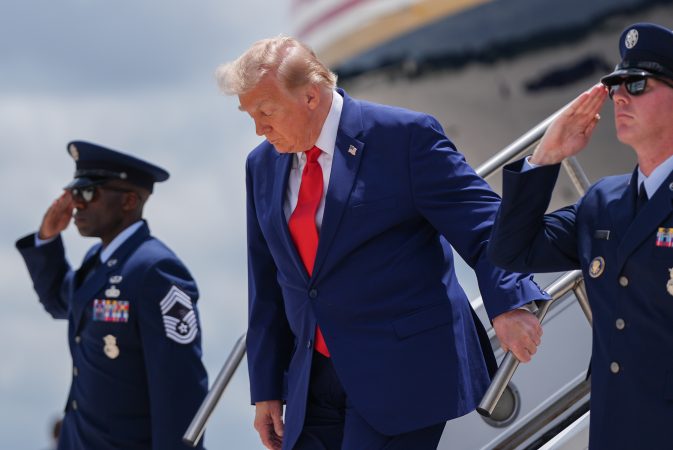
    WASHINGTON — The United States will open a formal investigation into the European Union’s trade practices, President Donald Trump said on Friday, claiming the bloc has unfairly levied billions of dollars of fines against Google, Apple, and other U.S. tech giants.

    The Republican president made the announcement a day after the EU hit Google with a fine of 890 million euros, or $1 billion, after it said the technology behemoth broke digital antitrust regulations by setting up Google Play and its ubiquitous search engine to corral consumers toward its own services and apps to the detriment of competitors.

    In a lengthy post on social media, Trump said he has warned the EU about its practice of fining U.S. tech companies. He named Google, Apple, Meta, Amazon, and others.

    “The United States of America is not a ‘PIGGYBANK’ for Europe, nor will we allow it to be!” Trump said, adding that his post should serve as notice of an immediate trade investigation “into the practice of ‘ROBBING’ American Companies and, in turn, the American Taxpayer.”

    Trump’s move comes a day after the White House announced double-digit tariffs on imports from more than 60 countries, accusing them of inadequately enforcing bans on goods produced by forced labor. The new tariffs replace temporary 10% worldwide import taxes that Trump imposed after the Supreme Court struck down his biggest tariffs.

    The new tariffs are being implemented using Section 301 of the Trade Act of 1974, which permits the president to impose import taxes and other sanctions against countries found to engage in “unjustifiable,” “unreasonable,” or “discriminatory” trade practices.

    The EU’s billion-dollar fine against Google was the latest major crackdown on Big Tech by Brussels, which has led the world in reining in some of the world’s largest companies from Silicon Valley to Beijing.

    It has done so despite the risk of incurring the wrath of Trump, who has lashed out at the 27-nation bloc’s digital regulations amid a broader campaign against Europe: imposing high tariffs, making threats to seize Greenland from Denmark by force, and rattling trust within the NATO military alliance.

    Trump had threatened retaliation if American tech companies are penalized.

    Google had recently lost its appeal of a $4.5 billion antitrust fine imposed by the EU for throttling competition and reducing consumer choice through the dominance of its mobile Android operating system.

    The European Commission, the bloc’s executive branch and highest antitrust enforcer, said it was acting in the interest of consumers after an investigation of Google.

    “The best products should succeed because they’re better, not because they’re owned by the company running the search engine. And European consumers have a right to be told by app developers where to sign up to the best offers, even when the app store owner does not get a cut,” said Teresa Ribera, the commission’s executive vice president for clean, just, and competitive transition.

    Google’s president of global affairs, Kent Walker, blasted the fine as “product degradation driven by a small group of self-serving complainants” that will have a negative impact on European businesses and consumers.

    He said the EU’s Digital Markets Act forces Google “to strip away real-time search features Europeans love — like instant pricing and direct availability for hotels, flights, and restaurants — and dismantle safety protections on Google Play.”

    The EU describes some of the world’s leading tech giants — Amazon, Apple, Google parent Alphabet, Meta, Microsoft, and TikTok owner ByteDance — as “gatekeepers” that control access for consumers.

    “In the EU, businesses have the right to compete fairly. Gatekeepers have the obligation to ensure a level playing field and consumers the right to choose for cheaper alternative offers,” European Commission spokesperson Thomas Regnier said. Alphabet reported $403 billion in revenue last year.

  • Northern West Bank in lockdown as clashes rock villages and Israel deploys troops in Nablus

    Northern West Bank in lockdown as clashes rock villages and Israel deploys troops in Nablus

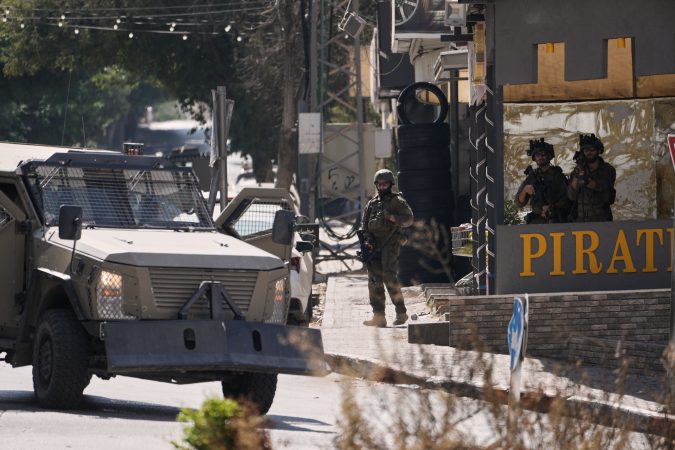
    NABLUS, West Bank — Israel widely deployed troops in the West Bank after clashes broke out Friday across the occupied territory following the killing of an Israeli settler triggered violence that left two Israeli soldiers and four Palestinian villagers dead.

    Palestinians in the West Bank have been facing a wave of violence as Israel’s hard-line government, dominated by settler leaders and supporters, has overseen a surge in settlement construction over the past four years. The international community overwhelmingly considers Israeli settlement construction in these areas to be illegal and an obstacle to peace.

    4 Palestinians, 2 Israelis killed as fear of violence escalates

    The Palestinian Health Ministry said Israeli soldiers shot and killed four Palestinians in the village of Tell in the northern West Bank while the military reported the deaths of two soldiers, one of whom was a settler in a local defense squad.

    Two other Israelis and four more Palestinians were wounded, health officials said, and the Israeli military announced it was preparing for an “extensive” counterterror operation in the West Bank. It said it conducting a search for Palestinians suspected of attacking Israelis and that it had apprehended two during a raid in Nablus.

    Israeli Prime Minister Benjamin Netanyahu, in a joint statement with Israeli Defense Minister Israel Katz, called Friday for more troops to the West Bank and the razing of the homes of the accused in Tell, as well as collecting weapons and revoking work permits in the village.

    “The security forces must be allowed to act freely and with full force against terrorism,” they said.

    Israeli Finance Minister Bezalel Smotrich went farther, saying that the villages of Tell, Iraq Burin, and Beit Furik “need to look exactly like the refugee camps in Nablus and Tulkarm,” referring to the mass demolition campaign that displaced tens of thousands in the West Bank towns last year.

    “It is necessary to evacuate the population there for their protection and to clear these villages of terrorist infrastructure,” Smotrich said. “A sharp, determined, and unequivocal military action is required here and now.”

    Human rights group B’Tselem warned the violence could spin out of control as Israeli settlers and soldiers amass near multiple Palestinian cities.

    “Israeli violence is spreading across the West Bank, fueled by Israeli politicians openly calling for revenge,” said Yuli Novak, the group’s executive director. “We know where this leads. Millions of Palestinians are now completely exposed to further attacks, with no one protecting them.”

    An unclear confrontation at the center of the tension

    The exact circumstances of Friday’s incident remained unclear, but Israeli media reports and interviews with local Palestinian officials suggested a group of settlers entered Tell and were confronted by residents who were fearful of an attack.

    The village is off-limits to Israelis as part of Area B under the 1993 Oslo Accords struck after the first Palestinian Intifada.

    According to the Israeli military, one of the villagers took one of the settlers’ weapons and fired on the group, killing Benayahu Mellet, 32, a security guard in a settlement nearby.

    In a video of the incident, confirmed by the Israeli military and circulated online by the military correspondent for Israel’s Army Radio, two armed men in civilian clothing, as well as at least one Israeli soldier, are shown pointing their weapons at a group of Palestinians who had gathered in a field.

    At one point, the two armed men rushed toward several Palestinian residents with their guns drawn. In the footage, the residents try to push them back and appear to disarm one of the men before opening fire.

    In a statement, the Israeli military said it killed the man who took the settler’s weapon and that he was armed when soldiers shot him. But a separate video, published by Israeli media outlets and confirmed by the military, showed Israeli forces firing on a group of Palestinians in the same field who were already on the ground.

    More than a dozen gunshots can be heard in the footage, which is less than a minute long. The military said the suspect was one of the people killed in the field. It did not respond to questions about why soldiers killed the other men — all of whom were related — or how long after the original altercation the killings took place.

    Later, army chief Eyal Zamir said he was sending more troops to the occupied West Bank.

    Yossi Dagan, head of the Samaria Regional Council, a settler group in the northern West Bank, posted a video online in the wake of the Tell confrontation demanding the government crack down hard on Palestinians.

    “We demand an iron fist and for the government to carry out a wide military operation against the Palestinian Authority and against Hamas,” he said.

    Settlers have long targeted villages in the northern West Bank

    Five Palestinian villages surrounding Nablus were attacked by Israeli settlers on Friday, according to the Palestinian news agency WAFA.

    The towns and villages surrounding Nablus sit in one of the most violent parts of the Israeli-occupied West Bank. In addition to newly approved settlements, at least nine farming outposts dot the area and attacks by Israeli settlers, army incursions, and confrontations have become frequent.

    Palestinians and human rights groups have increasingly documented armed settlers entering villages in the area. Livestock theft, arson, and the defacement of mosques are routinely reported.

    According to the Palestinian Health Ministry, since the beginning of this year, 87 Palestinians have been killed in the occupied West Bank governorates, including 21 by Israeli settlers.

    Israeli deaths have repeatedly been followed by revenge against nearby Palestinian communities called “price tag” attacks.

    That pattern followed the March 21 death of 18-year-old Yehuda Sherman, who was killed when a Palestinian vehicle struck his ATV near Beit Imrin. Senior politicians, including Smotrich, attended Sherman’s funeral and called for vengeance.

    At the time, the U.N. Office for the Coordination of Humanitarian Affairs documented 32 settler attacks affecting 30 Palestinian villages and communities across the West Bank, about a third near Nablus governorate over the following two days. Settlers torched homes and vehicles, vandalized property, and assaulted residents, injuring at least 32 Palestinians, according to OCHA.

    More than 700,000 Israelis live in the occupied West Bank and east Jerusalem, territories captured by Israel in 1967 and sought by the Palestinians for an independent state along with the Gaza Strip.

  • Democrats select South Carolina for their first presidential nominating contest in 2028 election

    Democrats select South Carolina for their first presidential nominating contest in 2028 election

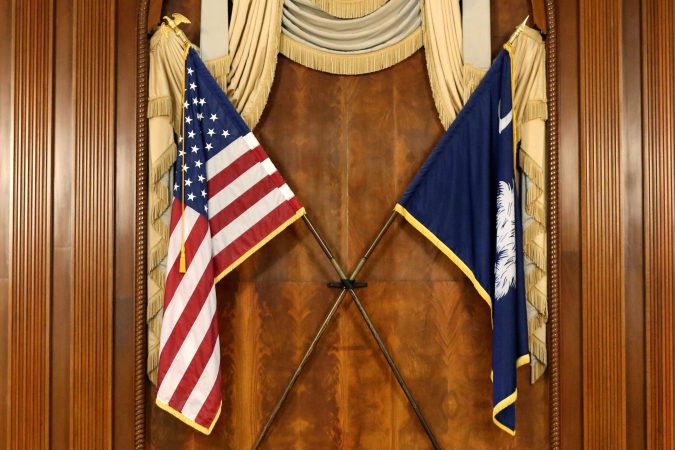
    WASHINGTON — South Carolina was selected Friday to once again lead off the Democratic Party’s 2028 presidential nominating schedule, most likely cementing a dramatic break from decades of tradition by keeping Iowa off the top of the calendar and elevating more racially diverse states.

    The decision by the Democratic National Committee’s Rules and Bylaws Committee will need to be approved by the full organization, which is scheduled to meet in August.

    South Carolina or Nevada had been expected to go first, with each state aggressively campaigning for the coveted spot.

    President Joe Biden successfully pushed to move South Carolina to the front of Democrats’ 2024 calendar after the state revived his struggling 2020 presidential campaign. South Carolina has long been the first Southern contest and has served as a key test of candidates’ support among Black voters.

    Jaime Harrison, a former DNC chairperson in attendance Friday, told the Associated Press after the vote that keeping his home state first on Democrats’ nominating calendar signaled to Black voters the value they bring to the party, especially after a Supreme Court decision aimed at weakening their voting power.

    “I think we needed a strong statement to say to the most loyal members of our party, which are Black voters, that we’re going to stand up with you,” said Harrison, who also chaired South Carolina’s Democratic Party. “It was just really important for us to stand up and say, ’We see you, we hear you, but most importantly, we’re going to fight like hell for you. And your voices are important.’”

    Democratic leaders in a handful of Southern states had lobbied for South Carolina to reprise its role as the party’s first-in-the-nation contest holder, arguing in a letter to the DNC that the state best represents the initial playing field for presidential candidates to build the coalitions needed to win and serves as “a moral and political compass for our party and our nation.”

    Democrats wanted more influence for diverse states

    The overhaul reflects Democrats’ effort to give greater influence to states that better mirror the party’s diverse coalition, particularly Black and Latino voters, after years of a calendar led by Iowa and New Hampshire, two states with overwhelmingly white electorates.

    Much of Friday’s debate stood as a contrast on several fronts. South Carolina proponents argued they had the experience to stand up a lead-off primary and serve as a showcase for the Black voters whose support has become vital for Democrats.

    “Black voters didn’t just show up for this party in 2020. They saved us,” Nebraska Democratic Party Chairperson Jane Kleeb said, in making her argument for South Carolina. “They saved our entire country from Donald Trump.”

    Nevada’s supporters, meanwhile, portrayed their state as the party’s future, in which they argued Latino voters play a larger and larger role.

    “We are the battleground state,” said Artie Blanco of Nevada, a DNC vice chair. ”We win elections because we leave no voter untouched.”

    The decision will also shape the opening stage of what is expected to be a crowded Democratic presidential primary. Without an incumbent or clear front-runner, the states that vote first could once again play an outsized role in determining which candidates gain momentum, attract donors, and emerge as viable contenders.

    Republicans still need to do their calendar. They’re expected to stick with their traditional early-state lineup led off by Iowa and New Hampshire.

    The calendar decision is one of the first milestones in what’s expected to be a tumultuous two-year sprint to the Democratic nomination.

    There has not been a truly open Democratic presidential primary — without an incumbent president or a dominant front-runner — in almost two decades.

  • More than 200,000 people flee raging wildfires in France and Spain, some escaping by boat

    More than 200,000 people flee raging wildfires in France and Spain, some escaping by boat

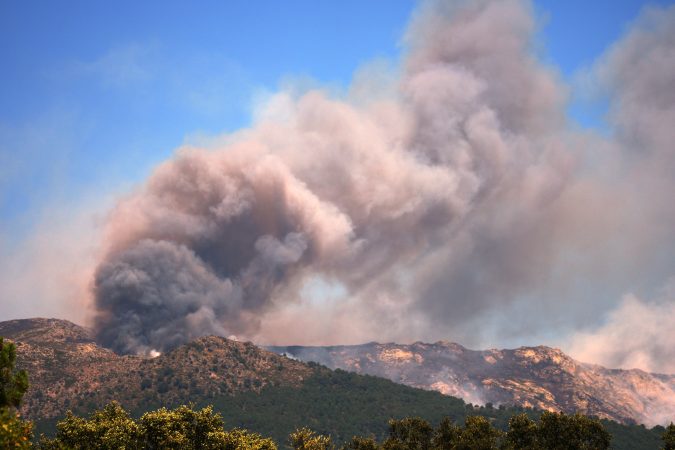
    ARCACHON, France — Massive forest fires burned out of control in southwestern France and central Spain on Friday, prompting authorities to evacuate an estimated 200,000 people from their homes. Some even fled by boat when flames swept through the tourist destination area on France’s Atlantic coast.

    Dozens of firefighters were injured, authorities said in France, but no deaths were reported in either country.

    Some 141,000 fled homes in the Gironde and Landes departments in France, the French interior ministry said. In central Spain, 60,000 were forced from their homes, the Spanish interior ministry said.

    France’s Interior minister Laurent Nunez said that the large wildfire that ravaged large swaths of land in southwestern France is now heading toward the city of Bordeaux.

    Speaking to French TV channel Tf1, Nunez said the wildfire that earlier in the day forced the evacuation of the Cap Ferret peninsula has swept across 54 square miles, with 110,000 people fleeing their homes in the Gironde region.

    “We learned in the middle of the afternoon that, following the wind shift, it had become a large, self-sustaining fire that is extremely difficult to bring under control,” Nunez said. “It is now moving east, toward the Bordeaux metropolitan area. We are going to reorganize our response so we can fight it from the ground and prevent it from advancing toward Bordeaux.”

    Meanwhile, French President Emmanuel Macron has asked the Prime Minister Sebastien Lecornu to activate the government’s crisis response unit, and has instructed the armed forces to mobilize in order to provide the maximum possible reinforcement to the civilian emergency services. Asked whether Bordeaux is under threat, Nunez said: “For the time being, no. We will, of course, do everything we can to protect it using ground resources, including requisitioned military assets and our firefighters.”

    The blaze started on Wednesday near Cap Ferret peninsula on France’s Atlantic coast.. Located just 37 miles from Bordeaux, the peninsula normally offers stunning landscapes and sandy beaches as well as oyster-farming villages and upmarket resorts. Some people fled the flames by boat.

    A separate wildfire broke out in Landes, causing 31,000 evacuations, while both France and Spain asked fellow European Union members for help.

    “It’s quite impressive and even frightening,” said Laurent Moretti, a resident in the town of Arès. “An evacuation on this scale has never happened before. All we really hope is that the firefighters can quickly get it under control.”

    More than 20,000 people had already been evacuated from towns and vacation resorts on Thursday, but that number exploded on Friday as the fires raged out of control.

    Local authorities in the Gironde department said 53 homes and a campsite have been ravaged by flames, adding that 42 firefighters were injured. Around 1,500 people who fled the peninsula arrived by sea in the city of Arcachon, some aboard small water taxis and others on larger boats.

    Hundreds of French firefighters have been deployed and additional ground and aerial reinforcements were sent Friday to tackle the blaze. Meanwhile, another major wildfire destroyed more than 9 square miles of land farther south down the coast. It remained uncontained and strong winds hampered the work of firefighters.

    Authorities believe the cause of both fires was accidental.

    Macron said France will receive EU reinforcements including two Croatian Canadair firefighting aircraft, two Portuguese Air Tractor aircraft, and two heavy-lift Black Hawk helicopters from the Czech Republic and Slovakia. Spanish Interior Minister Fernando Grande-Marlaska said that Italy and Greece are each sending two Canadair water-dumping airplanes.

    Spain struggles to tackle multiple fires amid a heatwave

    In Spain, the government declared a national emergency for wildfires for the first time as the blazes in Madrid and the nearby province of Ávila prompted the evacuation of some 60,000 people from towns west of the capital.

    The fires are being fanned by a heat wave with temperatures expected to top 102 Fahrenheit in parts of Spain.

    The two major fires near Madrid merged into one single blaze that had quickly charred 11.5 square miles by Friday afternoon. Regional President Isabel Díaz-Ayuso called it the worst in Madrid’s history.

    Francisco Martín, the central government representative for the region of Madrid, said that another 20,000 people had been ordered to shelter at home in towns west of the capital. Martín said more evacuations could be coming and that the priority now was to protect the town of San Lorenzo, the home of the Escorial, Philip II’s 16th-century royal palace and monastery.

    Meanwhile, a blaze in Ávila, less than two hours northwest of Madrid, had consumed 34 square miles. Spain’s Civil Guard arrested one man and is investigating another for allegedly having used heavy machinery in an area where it was prohibited for fire risk. Police believe a spark ignited the fire on Thursday.

    “In my 60 years I have never seen something like this in my village, I have never seen fire of these dimensions,” Francisco Martínez, the mayor of Burgohondo, whose residents were preventively evacuated in Ávila, told Spain’s national broadcaster TVE.

    Spanish television showed video taken by retreating residents of walls of flames topped by long plumes of smoke advancing through woods and scrublands. High winds and hilly terrain complicated efforts by firefighters, who combated the blazes with firetrucks and bulldozers.

    “All around the town was smoke and fire, I was scared. Everything was fire and smoke, people were nervous,” 33-year-old Joaquin Espinosa told the Associated Press before he and his neighbors were evacuated from the village of Chapinería, located less than an hour’s drive west of Madrid.

    Strong winds complicate efforts

    In one week, Spain has had the worst fires on record for both the regions of Castilla La Mancha and Madrid.

    Firefighters were still trying to extinguish Spain’s second-largest ever fire in the Guadalajara province of Castilla La Mancha after it had destroyed some 120 square miles over the last week. Thirteen people were also killed in a fire in southern Spain earlier this month, the deadliest fire in recent memory for Spain.

    Spanish Minister for the Ecological Transition Sara Aagesen said that Spain has seen 440 square miles already burned this year, more than five times the burned terrain it had through the first half of 2025. There were nine other serious fires in other parts of Spain active on Friday.

    Sánchez called on Wednesday for a pact between political parties to fight climate change that he said is key to adapting to a more fire-prone climate. Spain has experienced record temperatures in recent summers and forest fires of increasing violence.

    Wildfire analyst Raúl Quílez said that besides the impact of climate change, Spain’s rural areas have become more exposed to fires with the abandonment of farmlands that traditionally provided buffer zones around villages. Now, he said, trees and undergrowth often reach right to homes, putting them in harm’s way.

    “That makes a perfect cocktail for this type of fires,” Quílez told the AP by phone from Valencia, where he works as an analyst for regional firefighters.

  • U.S. military says it’s launching new strikes on Iran as clashes escalate over shipping routes

    U.S. military says it’s launching new strikes on Iran as clashes escalate over shipping routes

    CAIRO — The U.S. military announced Thursday that it is conducting the 13th night of strikes against Iran as clashes escalate over shipping routes. Earlier Yemen’s Iran-backed Houthi rebels said they attacked two Saudi oil tankers in the Red Sea, potentially widening the Iran war as international oil topped $100 a barrel.

    U.S. Central Command said the latest attacks are designed to “further degrade Iran’s ability to threaten civilian mariners and commercial vessels transiting regional waters” as the Americans push to regain control over the Strait of Hormuz and restore the flow of international shipping.

    A short time later, Iranian state media reported explosions along the strait in Bandar Abbas and Qeshm, as well as to the northwest near Andimeshk and Omidiyeh.

    Meanwhile, the Houthis threatened to shut down another key trade route, with the world economy already reeling from Iran’s closure of the Strait of Hormuz. The threat came as Iran and the U.S. have stepped up attacks as they vie for control of the strait, through which a fifth of the world’s oil and gas transited in peacetime, setting off a scramble for alternative routes.

    President Donald Trump threatened “major military punishment” against the Houthis if their attacks on ships continue.

    “If they do this again, the U.S. will hold Iran responsible, in that the Houthis are a Surrogate and/or Proxy of Iran, and major military punishment will be inflicted upon Iran and, of course, the Houthis, themselves,” Trump wrote on social media.

    As the rhetoric escalated, so did the economic fallout. The price of Brent crude oil, the international standard, spiked more than 6% Thursday, to about $100 a barrel. That is the highest level since May, before the two sides reached a preliminary peace agreement last month that has since collapsed.

    Prime Minister Ali al-Zaidi of Iraq, which has close ties to both the U.S. and Iran, was in Tehran on Thursday to call for peace and dialogue, and he promised not to allow Iraqi territory to be used for attacks on Iran, his office said. Al-Zaidi met with Trump earlier this month in Washington.

    U.N. Secretary-General António Guterres warned Thursday that the region is being pulled “into an ever-widening circle of confrontation” with one crisis feeding another and every escalation triggering the next.

    “Diplomacy is the only way forward,” Guterres told the U.N. Security Council. He called for Pakistan’s efforts to mediate an end to the war to be strengthened.

    Houthi attacks are a ‘double whammy’ on oil shipments

    The Houthis’ SABA news agency said the rebels had struck two tankers, the Encelia and the Layla, in the Red Sea, causing fires on both. There were no reports of casualties.

    It was the first reported Houthi attack on a vessel since they announced a blockade of Saudi-linked shipping through the Bab el-Mandeb Strait earlier this week in retaliation for the kingdom’s blockade on Yemen and a recent attack on the international airport in Yemen’s rebel-held capital, Sanaa.

    Bab el-Mandeb, at the southern tip of the Arabian Peninsula, is a vital shipping chokepoint connecting the Red Sea to the Gulf of Aden. Around 12% of the world’s trade, including a fourth of global container traffic, passes through there, moving between Europe and Asia via Egypt’s Suez Canal.

    The state-run Saudi Press Agency reported an attack set the Encelia ablaze overnight in the Red Sea. It did not mention the Layla.

    The United Kingdom Maritime Trade Operations Center said it received a report of a tanker being struck by “an unknown projectile” 80 miles southwest of Al Shuqaiq, Saudi Arabia, in the Red Sea.

    The Houthi attacks put at risk oil shipments from Saudi Arabia’s Yanbu port on the Red Sea and present a “double whammy” on top of the disruption in the Strait of Hormuz, said maritime data and analysis firm Lloyd’s List Intelligence.

    Saudi Arabia has diverted millions of barrels a day of oil exports to Yanbu via an overland pipeline as the war has bottled up the Persian Gulf.

    The Houthi threat “raises questions on the viability of this route,” Lloyd’s said in slides accompanying an online webinar Thursday.

    The rebels say they are blockading Saudi Arabia, but during their announced blockade of Israel at the height of the war in Gaza, they targeted many vessels with little or no connection to that conflict, disrupting global trade.

    Both sides dig in over Strait of Hormuz

    Iran says it has the right to manage traffic and potentially charge fees in the Strait of Hormuz, which was open to all toll-free before the war. It has attacked ships using a route through the strait that is overseen by U.S. forces and intended to be outside Tehran’s control.

    Trump said on social media Thursday that sanctioned Iranian funds in the possession of the U.S. will cover the expense of fixing boats damaged in the war.

    “Please let this statement serve to represent, until further notice, that from this point forth, any and all damages done to Ships, Cargo, or anything related thereto, will be paid for by Iranian Money that the United States has in its possession, and controls,” Trump said.

    It was unclear what legal mechanisms Trump would use to access and spend the funds, but he said that doing so would be “the fair and equitable thing to do.”

    In response to Iran’s attacks, the U.S. began the widening campaign of strikes across Iran and restored a naval blockade of Iran’s ports. U.S. Central Command said it has redirected about a dozen commercial vessels and disabled one since the blockade resumed.

    The war of words has also escalated. Iranian Foreign Minister Abbas Araghchi said Tehran would adopt an “eye for an eye” policy on U.S. strikes against its infrastructure. U.S. Secretary of State Marco Rubio retorted that Trump’s policy is “a head for an eye.”

    “The price will continue to get higher every single night until they come to their senses,” Rubio told reporters while traveling in the Philippines for a regional summit.

    Iran’s health ministry said Thursday that 55 people have been killed and 629 have been wounded since renewed U.S. airstrikes began on June 27.

    Iran has responded to U.S. attacks by targeting energy infrastructure and desalination plants providing drinking water in parched neighboring Gulf countries.

    Polls have shown the war is unpopular among Americans, a fact reflected in the narrow passage Thursday of a resolution in the U.S. House to halt the war. Though a handful of Republicans crossed party lines to support the measure, the vote remained largely symbolic.

  • Brent oil tops $100 per barrel, as tumbles for Tesla and Alphabet yank Wall Street lower

    NEW YORK — Brent oil shot to its highest price since May after increased fighting in the Middle East on Thursday threatened to slow the global flow of crude. At the same time, sharp drops for two of Wall Street’s most influential companies, Alphabet and Tesla, yanked the U.S. stock market to its worst loss in a month.

    The S&P 500 fell 1.2% and is on track for its first back-to-back weekly loss since March. The Dow Jones Industrial Average dropped 506 points, or 1%, and the Nasdaq composite sank 2.2%.

    Stocks fell under the pressure of rising oil prices, which raise costs for businesses and erode their customers’ ability to spend. The price for a barrel of Brent crude oil, the international standard, jumped 7% to settle at $100.69.

    It touched $102 during the day, the highest price since May for the most actively traded Brent contract in the market. The cause: attacks on two Saudi oil tankers in the Red Sea. That threatens another avenue that oil companies use to move their crude from the Middle East to customers worldwide, along with the Strait of Hormuz.

    Underscoring the importance of the sea route for the economy, President Donald Trump threatened “major military punishment” against the Houthi rebels in Yemen, who are backed by Iran, if they keep attacking ships.

    It was just a few weeks ago that Brent had dropped below $72 per barrel, roughly back to where it was before the United States and Israel attacked Iran to begin their war, on hopes that a wind-down in the war would fully reopen the Strait of Hormuz.

    The jumps in oil prices will worsen inflation, just when it had begun to decelerate by more than economists expected. That in turn could push the Federal Reserve and other central banks to raise interest rates, which would slow economies and undercut prices for stocks and other investments.

    The European Central Bank held its main interest rates steady at its meeting Thursday. But traders are betting on a 36% chance the Fed will hike the federal funds rate at its meeting next week. That’s up from the nearly 12% probability seen a week ago, according to data from CME Group.

    An increase by the Fed would be the first since 2023.

    Higher oil prices pushed the yield of the 10-year Treasury up to 4.69% from 4.67% late Wednesday and from just 3.97% before the war with Iran began. That’s a significant increase, and it’s already brought long-term U.S. mortgage rates to their highest levels in nearly a year.

    Gasoline prices tend to follow oil prices higher, and a gallon of regular costs an average of $4.09 across the United States, according to AAA. That’s still below highs of roughly $4.56 in May, but it was at just $3.93 a month ago.

    On Wall Street, stocks of companies with big fuel bills fell to sharp losses on worries about higher expenses.

    American Airlines fell 8.4% even though it reported a much bigger profit for the spring than analysts expected, something that usually sends a stock’s price higher. It raised airfares, which helped it offset its higher fuel prices, during the latest quarter.

    Southwest Airlines lost 6.2%, even though it also reported better profit and revenue than analysts expected.

    One of the heaviest weights on the U.S. stock market was Tesla, which tumbled 14.5% after Elon Musk’s electric-vehicle company reported a weaker profit for the latest quarter than analysts expected. Because it’s one of the largest stocks in the S&P 500 by market value, its stock has more influence on the index than nearly every other.

    One of the few that’s larger is Alphabet, and its stock fell 7.1% even though the parent company of Google delivered stronger profit and revenue than analysts expected.

    Investors focused instead on how much Alphabet is planning to spend on artificial-intelligence investments. Alphabet raised its forecast for capital spending over the full year after its investments last quarter doubled to nearly $45 billion from a year earlier.

    CEO Sundar Pichai said AI helped its cloud revenue growth accelerate to 82% last quarter, but unease nevertheless remains about whether all the money going into AI will pay off in terms of productivity and profits.

    Such worries have been shaking the AI industry broadly in recent weeks, leading to big swings for the overall stock market.

    All told, the S&P 500 fell 90.66 points to 7,408.30. The Dow Jones Industrial Average dropped 506.93 to 51,711.65, and the Nasdaq composite sank 553.21 to 25,137.69.

    In stock markets abroad, indexes fell sharply in Europe after oil prices jumped. France’s CAC 40 dropped 1.6% for one of the larger losses.

    Indexes in Asia were stronger earlier in the day, and South Korea’s Kospi jumped 4.4%.

    AP Business Writers Matt Ott and Elaine Kurtenbach contributed to this report.

  • Government withdraws subpoenas of 3 reporters for the New York Times after admitting legal errors

    Government withdraws subpoenas of 3 reporters for the New York Times after admitting legal errors

    NEW YORK — Criticized by a federal judge for sloppy legal work, the government on Thursday grudgingly withdrew subpoenas that would have compelled three New York Times reporters to testify about their sources for articles about President Donald Trump’s Qatari-gifted Air Force One jet.

    The withdrawals in U.S. District Court followed a remarkable back and forth between a visibly irritated Judge Arun Subramanian and government lawyers. They come at a time when the Trump administration is vigorously going after news organizations whose reporting and coverage it doesn’t like — and also trying to crack down on leaks inside the government.

    The government’s retreat in the face of vigorous legal opposition and a stern reprimand from a judge marked the latest instance of the Justice Department pulling back on its aggressive efforts to compel journalists to identify their sources before a grand jury. The administration recently withdrew similar subpoenas that sought to compel testimony in Virginia from journalists for the Washington Post and the Wall Street Journal related to separate national security coverage.

    Subramanian said he otherwise would have granted the newspaper’s request to reject the subpoenas because laws and regulations pertaining to subpoenas served on journalists maintain that they should be issued as a last resort in an investigation.

    “Subpoenas are the last step, not the first step, but the last step,” the judge said, citing rules set to protect against violations of the First Amendment. He said the government’s actions had turned the law and the regulations “on its head.”

    “When you see something like this, if this were a civil proceeding, what I would normally do is ask the parties to show causes why sanctions should not be issued,” the judge said, referencing punishment for lawyers for egregious actions.

    After the hearing, the Justice Department lashed out at the judge in a statement, saying he “threatened our attorneys with sanctions unless subpoenas were withdrawn, and blocked us from presenting the meticulous process of this investigation.”

    “The grand jury has a right to hear testimony from all material witnesses in a federal criminal investigation. This judge’s conduct overrides clear longstanding principles and common sense — blocking the grand jury from receiving core evidence in a national security investigation,” the statement said.

    “Make no mistake,” it added, “this investigation remains ongoing, and we will pursue justice against those threatening national security by leaking classified information, a serious federal crime.”

    Government attorneys upbraided by judge

    Subramanian noted that with protections for journalists at stake, the government was required to ensure it could not obtain what it needed from any other sources before issuing subpoenas to journalists.

    A Justice Department lawyer, Sean Buckley, cast the government’s missteps as inadvertent errors and said “no one was trying to pull a fast one.” Buckley apologized for other subpoenas that sought records for phone numbers belonging to one reporter’s mother and two of the journalists’ spouses.

    “That was an error, judge, which we own,” Buckley said. “It was a consequence of trying to move quickly.”

    “These things are starting to pile up,” Subramanian said, becoming increasingly testy.

    The hearing was held publicly despite efforts by the Trump administration to keep secret the litigation spawned by subpoenas it served on the Times’ journalists to try to get them to divulge their sources.

    The newspaper’s lawyers had challenged the validity of the grand jury subpoenas, along with subpoenas issued for phone records of several Times journalists and some of their relatives. Senior Times officials, including the paper’s managing editor and general counsel, sat in the gallery watching during Thursday’s proceedings.

    The request for phone records raised questions about the extent of the investigation being carried out by the Justice Department.

    David McCraw, the Times’ chief newsroom lawyer, said after the hearing in a statement that it “was an important affirmation of our country’s commitment to a free press.”

    “We are pleased that the government finally conceded that the subpoenas violated the law, but they should never have been issued in the first place,” he said. “We will not be deterred in the face of tactics like these.”

    Court action comes after reporting on new Air Force One jet

    The new jet in question, a present from Qatar that Trump’s administration spent $400 million to retrofit and upgrade, recently entered service. But Trump used an older model Air Force One jet to leave a NATO summit in Turkey earlier this month.

    The Times, citing anonymous sources, reported that the switch had come at the urging of the Secret Service and that the newer plane lacked some of the advanced security features of the older Air Force One aircraft, including antimissile capabilities. On social media, Trump rejected claims of security concerns.

    The Times wrote in a letter to the judge several days ago that two subpoenas seek records beginning on Jan. 1, long before the newspaper published articles on July 8 and July 9 that became the basis for the grand jury subpoenas.

    It said that lengthy stretch of records sought would indicate that the purpose of the subpoenas might have been “to forage for information about the Journalists’ source relationships more broadly.”

    The Times argued for the phone records subpoenas to be disallowed on the grounds that the government had acted in “bad faith” and ignored its own protocols by not giving the journalists advance notice that records were being sought and by demanding the information “without first conducting any serious investigation.”

    The Justice Department has justified the grand jury subpoenas by saying that “reporters are not the targets, those leaking classified information are.”

    The Justice Department also said it had complied with its own regulations in issuing the subpoenas and had taken investigative steps before seeking them. It said it was authorized to delay disclosing the subpoenas but decided to alert the journalists’ lawyers so they could challenge them.

    In fighting the subpoenas, the Times’ lawyers highlighted how the government’s carelessness could have exposed sensitive information that had nothing to do with the journalists. The mother whose phone records were mistakenly sought is a mental health professional with confidential client relationships and one of the two spouses is the general counsel of a law firm, the lawyers said.

    At Thursday’s hearing, a final rebuke from the judge to the government came when he asked its lawyers to assure him that it won’t repeat a scenario that left one journalist being served a subpoena by an FBI agent while he was home watching the family-friendly movie The Sheep Detectives, about sheep on a quest to solve the murder of their shepherd.

    Said the judge, to loud courtroom laughter: “I can’t think of anything more inconsistent with ‘Sheep Detective’ than an FBI agent showing up at your door.”

  • Fatal police shooting of man with knife roils Madison, Wisconsin

    Fatal police shooting of man with knife roils Madison, Wisconsin

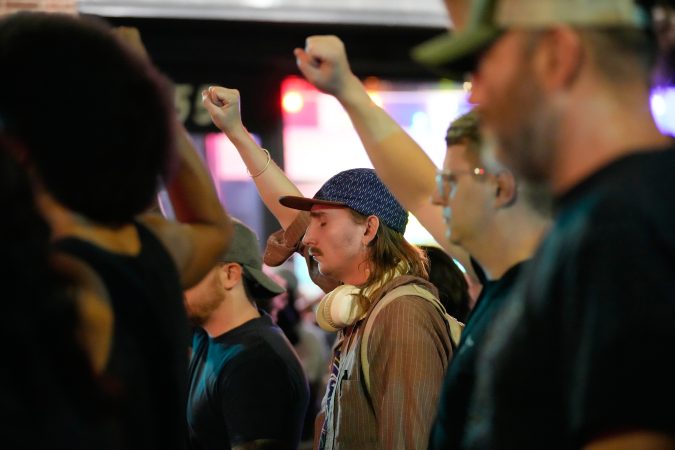
    MADISON, Wis. — Protesters burst into a Thursday news conference about the police shooting of a homeless man in Madison, taking the microphone from the police chief and arguing with some attendees who said they wanted to hear more about the investigation.

    The group of roughly 20 protesters burst into the room at the Madison police station, shortly after Mayor Satya Rhodes-Conway and Common Council President Sabrina Madison identified the man killed by police as Corey Durell Ruiz, a homeless resident.

    Ruiz, 38, was shot and killed Wednesday after police said he resisted arrest and injured an officer with a knife.

    Police Chief John Patterson stepped away from the microphone when the protesters were shouting, and one man in the group took his spot at the podium. The event quickly devolved into a shouting match.

    One protester held a sign saying “Corrupt cops deserve to die too!!!”

    Moments earlier, the mayor said the shooting will be “rigorously investigated.”

    “It does not matter who you are or what your past is, you should not lose your life as a result of an encounter with law enforcement,” Satya Rhodes-Conway said.

    Madison, for her part, said “Corey could have been my brother because my brother is homeless and he often rides a bike.”

    Court records show Ruiz had been in and out of jail over the past decade on charges including failing to pay child support, driving a vehicle without consent, jumping bail, threatening authorities, taking a vehicle without consent, possessing drug paraphernalia, resisting an officer and retail theft.

    “He’s a human being. He had a family. He has parents who loved him who brought him home, who cared for him,” Madison said, adding that she’s struggling to understand what she’s seen in videos of the shooting that have circulated on social media.

    “My first thought is, when the officer’s walking away, why isn’t he walking away in cuffs,” Madison said. “I’m angry, there’s no way around it.”

    Once the protesters quieted down, the chief resumed his presentation, promising his department’s full cooperation with the state investigation.

    Police have released few details

    The shooting has roiled Wisconsin’s capital city, with Gov. Tony Evers calling for “transparency and accountability” and Madison community members gathering Thursday at a growing memorial.

    None of the four officers who were detaining the man wore body cameras, but passersby recorded the confrontation on video, and accused the officers of overreacting.

    “I thought, ‘Holy cow — what could have warranted that?’ It looked to me like they had him under control,” David Ortiz-Whittingham, who saw officers swarming and heard the gunshots, said Thursday. “Even now, knowing about the knife, did he have to die for it? Could this have been de-escalated without him losing his life?”

    The police chief released few details Thursday, saying the Wisconsin Department of Criminal Investigation into the officer-involved shooting must run its course.

    Earlier Thursday, Madison’s independent police monitor, Aeiramique Glass, said police have not yet shared evidence or the officer’s identity with her office, which will review the case and can recommend to the district attorney that charges be filed if warranted. She said the department and city are “obstructing what the community and the public” want.

    “Let me do my job,” she said.

    Patterson said the police were committed to cooperating with Glass as the independent monitor’s investigation is carried out, at the same time as the state’s probe.

    The chief urged people not to draw conclusions

    Patterson has urged caution in reading too much from the cell-phone videos. He said none show the perspective of the officers, and additional video that hasn’t been released is being reviewed.

    The officer who fired his weapon is a veteran of the force, the chief said. He and the three other responding officers will be placed on administrative leave pending an independent investigation by the Wisconsin Department of Criminal Investigation, as required under state law.

    Patterson said police were responding to calls that someone was attempting to enter parked vehicles, and the suspect fled on a bike before the officers surrounded him. One deployed a taser, but Patterson said he didn’t know if the taser worked. Those efforts failed to control the man, Patterson said.

    In the videos circulating online, the man can be seen standing before he’s brought to his knees as the officers struggle to force him into a prone position. Then he falls quickly to the pavement after what sounds like three gunshots, and seems motionless as the officers handcuff him behind his back. Arriving officers then escort one of the officers a short distance away.

    Patterson said he did not know the extent of the injuries sustained by the officer who was injured by the knife.

    “This situation was clearly dangerous,” Patterson said. He later continued, “I am incredibly saddened by the loss of life.”

    A neighborhood now accustomed to police shootings

    The shooting happened in the middle of an intersection in the popular Marquette neighborhood, which is lined with restaurants, bars, shops, and homes less than 2 miles from the state Capitol. The bystander videos show numerous cars at the scene, with people watching and commenting as it unfolded.

    “I saw everything! I saw everything! You did not need to kill him! … We watched it all!” a woman yelled in the video recorded by Ortiz-Whittingham. Three loud shots could be heard among the sirens, followed by screams.

    Residents who dealt with two other police killings within the same few blocks expressed their frustration on Thursday.

    In 2015, a white police officer shot and killed Tony Robinson, who was biracial, on the same street. Large protests followed, but the district attorney filed no charges, determining the officer was justified. In 2012, Paul Heenan, a white musician, was fatally shot after he had been drinking and mistakenly entered his neighbor’s house. That officer was exonerated as well.

    The chief acknowledged that the neighborhood “has experienced a lot of trauma” and urged people to support one another.

    “I want transparency, I want accountability,” Patterson said.

    Questions about race and technology emerge

    The race of the officer who fired his gun on Wednesday and that of the man he killed were not released by police.

    But Black advocacy groups, protesters, and politicians spoke out against the crime and said they believe the man was Black.

    The shooting also focused attention on the Madison Police Department’s lack of body-worn cameras. The force of around 500 is among the largest in the Midwest that doesn’t use the devices.

    Common Council President Sabrina Madison said Thursday that she expects a police request for $400,000 to be approved, enabling the cameras to be phased in over the next three years. Others lamented that cameras aren’t already being used.

    “Nobody can agree on anything,” said Katey Nelson, a member of the police civilian oversight board and operations director at YWCA Madison, a racial justice group. “Now we’re here, looking at another police shooting where we don’t have what we need to make sure the officers are held accountable.”

    The mayor said her budget, which has not yet been released, will include funding for body-worn cameras. Rhodes-Conway said the city needs to put together a policy for the use of the cameras, and said that will be completed before the budget takes effect in January.

    And now it’s a talking point in the governor’s race

    Madison, home to the University of Wisconsin, has a long history of organized protest dating back to the 1960s. More than 100,000 people marched on the state Capitol in 2011 in favor of union rights. There were large demonstrations that turned violent after the George Floyd shooting in 2020.

    And so the shooting quickly infused itself into the race to succeed Evers as governor, with voting already underway in the Aug. 11 primary.

    “This state sanctioned violence was an execution,” posted Francesca Hong, a democratic socialist candidate who appeared with a bullhorn at the scene just a few blocks from her campaign office. She has called for defunding the police.

    Another Democrat in the race, Milwaukee County Executive David Crowley, said while the details must become public, “these reports are painfully reminiscent of the tragedies we have witnessed in Kenosha, Minneapolis, and far too many communities across our country.”

    Republican U.S. Rep. Tom Tiffany called on his rivals to let the state investigation “establish the facts without politicians rushing to judgment or stoking division” in a statement that also said he would “work to end revolving-door criminal justice policies.”
  • Trump imposes double-digit tariffs on dozens of countries as his 10% levies are set to expire Friday

    Trump imposes double-digit tariffs on dozens of countries as his 10% levies are set to expire Friday

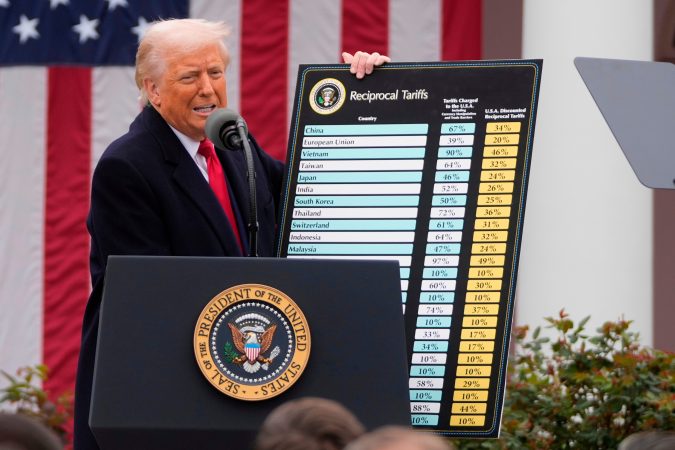
    WASHINGTON — President Donald Trump is going ahead with new double-digit tariffs on dozens of U.S. trading partners just as the clock runs out Friday on stopgap levies he imposed after a stinging defeat at the Supreme Court.

    The United States will slap taxes of 10% to 12.5% on imports from 60 countries accounting for 99% of U.S. imports, charging that they have inadequately enforced bans on goods produced by forced labor.

    “The United States has had a forced labor import ban for nearly a century, and rigorously enforces it; it’s well past time for our trading partners to do the same,” said U.S. Trade Representative Jamieson Greer. “Today’s action will begin to correct what is both a human rights abuse and distortive trade practice to improve the welfare of workers everywhere.

    The new tariffs will take effect just as temporary 10% worldwide tariffs expire at 12:01 a.m. Friday. Trump had turned to those temporary levies after the Supreme Court struck down his biggest and boldest tariffs in February.

    Now he’s tapping more durable tariffs under Section 301 of the Trade Act of 1974, which permits the president to impose import taxes and other sanctions against countries found to engage in “unjustifiable,” “unreasonable,” or “discriminatory” trade practices. Trump used Section 301 to impose big tariffs on China in his first term, and they survived court challenges.

    More Section 301 tariffs are likely coming: The U.S. Trade Representative’s office has launched a probe into whether 16 countries — accounting for 70% of U.S. imports — have overproduced goods, pushing down prices and putting U.S. companies at a disadvantage in global markets. The administration has yet to complete that investigation.

    Trump, who argues that high tariffs will revive American manufacturing, last year overturned decades of U.S. policy that favored lower tariffs and ever-freer trade. Invoking the 1977 International Emergency Economic Powers Act (IEEPA), he imposed double-digit tariffs on imports from almost every country on Earth, saying America’s longstanding trade deficit amounted to a national emergency.

    But the Supreme Court ruled that IEEPA did not authorize tariffs. The decision forced the administration to pay refunds to importers that had paid the tariffs.

    In response, Trump announced 10% worldwide tariffs under Section 122 of the Trade Act of 1974. But he can only use Section 122 levies for 150 days; time runs out on them Friday.

    The administration initially proposed the forced labor tariffs last month. Since then, some countries have tightened forced labor enforcement and qualified for lower tariffs, said a senior administration official who spoke under condition of anonymity. For example, the official said, the tariff on imports from India initially was set at 12.5% but now will be 10%.

    Some products — including oil and gas and fertilizer — are exempted from the new tariffs announced Thursday. Also being spared are products that qualify for duty-free status under the US-Mexico-Canada Agreement, the North American trade pact Trump negotiated in his first term.

    Tariffs are paid by companies in the United States that import foreign products. The importers usually try to pass along the cost by charging consumers higher prices. Americans are already frustrated by the high cost of living. So the administration is taking a risk in rolling out new tariffs ahead of the Nov. 3 midterm elections.

    Human rights watchers say that it’s reasonable to be skeptical of the motivation behind the tariffs. But they say the levies could make an impact on the problem of forced labor.

    Forced labor is defined by the International Labor Organization Forced Labor Convention of 1930 as “all work or service which is exacted from any person under the menace of any penalty and for which the said person has not offered himself (or herself) voluntarily.”

    According to the latest statistics from the ILO, which is a U.N. agency focused on human and labor rights, about 27.6 million people were in forced labor worldwide on any given day in 2021.

    “We’ve gone on record for years now advocating for import bans, not as a magic bullet, it’s not a silver bullet, but as a potentially effective tool in combating forced labor across the globe,” said Martina Vandenberg, founder and president of The Human Trafficking Legal Center.

    “It’s possible to be extremely critical of tariffs, as we are, and to be very concerned about blanket tariffs used as bludgeons against countries,” she said. “And yet I think it’s undeniable that there is a significant response in terms of the adoption of import bans.”

    However Vandenberg and her organization urged in testimony that the tariffs be implemented in a phased approach to give countries time to implement a ban or a plan for enforcement.

    “Our concern is that the import bans will be thin slips of paper with no enforcement,” she said. “Countries need time to build import ban mechanisms that are meaningful and enforceable.”

    Kenya Davis, partner at Boies Schiller Flexner, said the Uyghur Forced Labor Prevention Act, a U.S. federal law passed in 2021 that prohibits the importation of goods made wholly or in part in China’s Xinjiang region or by designated entities, is the most significant legislation related to forced labor that the U.S. has passed before the tariffs.

    “The level of effectiveness is certainly up for debate, but it certainly has drawn attention to the issue of labor trafficking and forced labor,” she said. “And so, if nothing else, these import bans will serve that function of bringing greater awareness to forced labor.”

    But without a “comprehensive approach,” that provides transparency about what the investigations consisted of, and programs that provide countries aid in enforcing bans, “I’m very cautious in my enthusiasm about the [tariffs],” she said.

    Isabelle Glimcher, senior research scientist for global labor at the NYU Stern Center for Human Rights, said one flaw in the tariffs is that they focus on levying the tax on countries based on goods they import — not goods they make domestically.

    But she said the impending tariffs threat has spurred several countries — such as India — to amend their foreign trade policies to include a forced labor import ban. European Union forced labor regulations due to go into effect later next year are also contributing, she said.

    “Not all of these things are necessarily or wholly attributable to the Section 301 investigations, but does seem like countries are responding and starting to take all of this seriously,” she said.

  • Gas, groceries, and back-to-school items are where shoppers might see higher oil prices surface

    Already feeling pinched since the start of the Iran war, consumers are likely to feel more pain ahead as oil prices pushed past $100 a barrel Thursday amid renewed fighting and military strikes that have left global oil supplies stranded in the Middle East.

    The elevated price marked a turn from lower oil prices enjoyed briefly when hostilities between the U.S. and Iran waned in June. Brent crude, the international standard, last reached $100 a barrel in May.

    Companies that produce and sell fresh food, school supplies, and anything that gets shipped using fuel reported cost impacts from an earlier spike in energy prices after the U.S. and Israel attacked Iran. They’re likely to continue passing some of their increased expenses to consumers.

    “In general, once you have an increase in costs, businesses are fast in increasing the price,” said Miguel Gomez, director of Cornell University’s Food Industry Management Program. But, he noted, “it takes more time to lower prices when the costs go down.”

    Here’s how higher oil prices could further impact consumers’ wallets.

    Drivers are paying more for gasoline at the pump

    Volatility along the Strait of Hormuz and broader regional instability pushed up the price of crude oil, the main ingredient in gasoline, and could continue to make driving costlier during the second half of summer, according to motor club AAA.

    The average U.S. price for regular gasoline reached $4.09 a gallon Thursday, up 15 cents from a week ago, with drivers in most states now paying $4 or more, according to AAA.

    “Given the typical lag along the oil industry’s supply chain, prices at the pump are poised to keep rising at least into next week,” said Pavel Molchanov, investment strategy analyst at Raymond James. But he noted that futures prices for oil delivered later this year and next year are lower, suggesting prices could fall once military action ends.

    For the most part, higher gasoline prices haven’t stopped Americans from driving. Gasoline demand rose 1% to 8.9 million barrels per day last week, according to the U.S. Energy Information Administration.

    Pressure on gasoline prices could persist because fewer refineries are available to process crude than before the conflict. Refineries in the Middle East have been damaged, and Ukrainian attacks have damaged refineries in Russia.

    Shoppers are paying more for a bag of groceries

    Grocery prices generally rise with oil because farmers use diesel fuel to power equipment, while many food products are transported by trucks that require fuel.

    “Oil at $100 doesn’t make food prices jump right away, but it does put upward pressure across the food supply chains, especially for categories that depend heavily on trucking, cold storage, and packaging,” Gomez said. Fresh produce and dairy could feel a larger impact because they require refrigeration during delivery.

    Imported goods are also vulnerable to higher shipping costs, Gomez said. “Things like olive oil that we produce very little here and are coming from mostly from Europe are going to be up.”

    Grocery chain Albertsons on Thursday lowered its 2026 fiscal outlook, citing pressure on its core grocery business and a pullback in consumer spending.

    Every product that moves will have higher costs baked into the price

    Higher fuel costs for ships, trucks, and air carriers can trickle down to consumers and businesses that depend on shipping. UPS, FedEx, and other shipping services introduced fuel surcharges and other fees as fuel prices increased.

    According to an AFS Logistics and TD Cowen Freight Index released July 14, truckload pricing is at a four-year high because of rising fuel costs and capacity constraints.

    Andy Dyer, CEO of AFS Logistics, said diesel prices in the second quarter were about 51% higher than in January and February, while jet fuel prices rose 90% from a year earlier.

    “Beyond the direct impact of higher freight bills paid by shippers, these price movements also have second-order effects that squeeze rates higher,” he said. “Smaller truckload carriers working on tight margins may park trucks and wait for fuel prices to revert to more palatable levels before returning to operation.”

    Retailers are noticing consumers pulling back

    Rural lifestyle retailer Tractor Supply Co. reduced its annual sales outlook on Thursday, citing in part higher fuel prices during its spring selling season that weighed on customer spending.

    ”Our customers often drive longer distances to shop frequently in pickup trucks, many of which are diesel-powered, making them especially sensitive to higher fuel costs,” CEO Hal Lawton told analysts.

    Lawton said customers are still investing in their pets, animals, farms, and properties, but shopping has become “more deliberate.” Customers are consolidating trips, prioritizing needs-based purchases, and taking a more measured approach to discretionary spending.

    Back-to-school shoppers may face higher prices

    The Footwear Distributors and Retailers of America trade group warned in a report Wednesday that increasing freight and material costs, along with rising tariffs costs, are creating big challenges for the footwear industry as companies prepare for the back-to-school shopping season and the remainder of the year.

    Matt Priest, CEO and president of the trade group, said some of its members have cited 25% price increases for petroleum-based materials used in footwear manufacturing due to the Middle East conflict. Those costs could eventually translate into roughly a 5% increase in the cost of finished footwear products sold to consumers, Priest said in the report.

    Footwear companies have been front-loading inventory and accelerating imports before President Donald Trump imposes new tariffs on foreign products, putting additional pressure on shipping rates, he said.

    “Container rates are spiking right now,” Priest said.

    Higher jet fuel costs lead to costlier flights

    Since the war began, airlines have responded to the jump in fuel costs by raising fares and add-on fees, and trimming flights or routes that are no longer profitable at higher fuel prices. Those moves can help protect the airlines’ margins, but also leave travelers facing higher prices and fewer options, particularly in smaller or less competitive markets.

    In the latest sign that the conflict is driving up costs for the travel industry, American Airlines on Thursday reported a sharp decline in second-quarter net income despite record revenue and strong spring travel demand.

    American said higher fares helped offset nearly half of its higher fuel bill but not enough to prevent it from lowering its full-year outlook.

    Despite higher prices, jet fuel demand in the last four weeks increased 9% compared to the same time last year, according to EIA.

    Associated Press writers Rio Yamat in Las Vegas, Wyatte Grantham-Philips, and Dee-Ann Durbin in Detroit contributed to this report.