Category: Nation World News Wires

  • A federal judge lets DHS proceed with a border wall through a small Texas town’s levee system

    A federal judge lets DHS proceed with a border wall through a small Texas town’s levee system

    WASHINGTON — A federal judge is allowing the Department of Homeland Security to go ahead for now with plans to build a border wall through a levee system protecting a small Texas town on the border with Mexico, rejecting arguments by the town that the wall could lead to flooding.

    The decision late Sunday marks a victory for the Trump administration as it races ahead with efforts to build a $46 billion wall along the U.S.-Mexico border from the Pacific Ocean to the Gulf of Mexico.

    The town of Presidio, with a population of about 3,200 people, argued the wall could cause flooding and that the administration isn’t following the law as it rushes forward with its plans. The town’s development district sued earlier this year to stop the department from going forward with construction.

    But the judge said in his ruling Sunday that they were unlikely to succeed on the merits of the case.

    “For the foregoing reasons, despite the understandable concerns expressed by the plaintiff regarding the harms it and the plaintiff’s residents might sustain by the potential construction of the Smart Wall, the Court is compelled to deny the plaintiff’s motion for a stay,” wrote Judge Reggie B. Walton.

    DHS has been charging forward with its wall-building plan, with senior administration officials saying a first layer of the structure will be done by next year. In its push, the Secretary of Homeland Security has waived numerous regulations designed to protect the environment, wildlife, and archaeological and Native American sites.

    But the department has been running into opposition by landowners, environmental groups, Native American tribes, and others who argue that the government’s rapid construction endangers environmental and religious sites and a way of life along the border. Opponents also question the urgency to finish the wall when migrant crossings from Mexico are already at extreme lows.

    Lawyers for Presidio’s development district argued in a court hearing that the government’s plans could compromise the levee system protecting the town from flash flooding and that the government flouted a key act that requires it to seek permission from the Army Corps of Engineers before building on or near the levees.

    “We are very disappointed that the court will allow this potentially disastrous construction to continue, but we remain committed to protecting the Big Bend area and those who rely on the threatened levees,” said the town’s development district in a statement Monday.

    Presidio is protected by a series of berms and levees built in the 1970s and 1980s along the Rio Grande and tributaries to combat flooding.

    In court documents, Presidio’s development district said Customs and Border Protection plans to “replace the earthen slope of the existing levee with a concrete wall, with 30-foot steel bollard panels installed on top.” The district said it asked the agency for more details but was told they can’t be shared due to “national security.”

    The government has argued that there is no final plan for where the border wall will go or how it will be built. And the administration has maintained that it has the authority given to it by Congress to waive a vast swath of regulations to build the wall as it seeks to get the number of people crossing the border every day to zero.

    In his ruling, the judge bolstered that argument, saying that it was clear “that Congress did not intend to limit the Secretary of DHS’ waiver authority.”

    The government is also facing another lawsuit in Texas where an environmental group and a church preservation group have teamed up to oppose DHS’s plans.

  • Russian Embassy in Rome blames Ukraine for deadly Italian restaurant bombing in Moscow

    Russian Embassy in Rome blames Ukraine for deadly Italian restaurant bombing in Moscow

    MOSCOW — The Russian Embassy in Rome on Monday blamed Ukraine for a deadly weekend bombing at a Moscow restaurant, describing it as an attempt to intimidate the Italian community in Russia.

    The embassy said “Kyiv terrorists” wanted to “scare the Italians working in Russia and to show them that they too are in the crosshairs and could become the scoundrels’ next victims.”

    It said the Saturday night attack on the Balzi Rossi restaurant killed five and injured 19, adding that its Italian chef and his staff were unhurt only thanks to a Russian security guard’s “vigilance and selfless dedication to his professional duty.”

    There was no immediate comment from Ukrainian authorities.

    The National Anti-Terrorism Committee, which coordinates various security agencies, initially reported a lower death toll in a statement issued shortly after the attack. It said the bomb killed three people, including a woman who carried the explosive device into the restaurant, a guard who stopped her, and a guest inside. It said 21 others were injured when the bomb detonated near the restaurant’s entrance.

    The committee didn’t say who was the target or name the mastermind.

    Moscow Mayor Sergei Sobyanin on Sunday described the bombing as a “brutal terrorist act,” but did not say who was responsible for the blast at the upscale restaurant, which is located on the ground floor of a high-rise apartment building that is one of seven skyscrapers in the city that date to the era of Soviet dictator Josef Stalin.

    The Russian Foreign Ministry reposted the embassy statement without comment. It did not respond to a request for comment or explain the higher death toll.

    Several Russian media outlets claimed the bombing targeted a Russian general who was celebrating his birthday at the restaurant. Some claimed that the general was Col.-Gen. Alexander Chaiko, who led the troops that made a botched attempt to storm the Ukrainian capital in 2022 and recently was appointed the chief of Russia’s aerospace forces. The claims could not be independently verified.

    The business daily Kommersant reported that the bomb, hidden in a gift box, was probably detonated remotely and the woman carrying it could have been unaware of the content. Kommersant said the bomb contained about 2.2 pounds of explosives and contained metal balls for lethality.

    Russia blamed Ukraine for past attacks on military officials

    Russian authorities have blamed Kyiv for a series of bombings and other attacks against senior military officials after Moscow sent troops into Ukraine in February 2022. Earlier this year, Russia’s Federal Security Service said authorities would tighten security around senior military and government officials following the attacks.

    In February, Lt. Gen. Vladimir Alexeyev, ​the deputy head of the GRU ‌military ⁠intelligence service, was shot three times at a Moscow apartment building, but survived. Ukraine denied its involvement.

    In December, a car bomb killed Lt. Gen. Fanil Sarvarov, head of the Operational Training Directorate of the Russian Armed Forces’ General Staff, in southern Moscow. Ukraine refrained from comment.

    In April 2025, another car bomb that Moscow blamed on Kyiv killed Lt. Gen. Yaroslav Moskalik, a deputy head of the main operational department in Russia’s General Staff. Ukraine didn’t claim the attack but hinted at its involvement.

    And in December 2024, a bomb hidden in a scooter killed Lt. Gen. Igor Kirillov, who headed the Russian military’s nuclear, biological,Z and chemical protection forces, one of the few attacks Ukraine openly acknowledged.

    Among other prominent victims of bombing attacks in Russia were Daria Dugina, the daughter of influential nationalist thinker Aleksandr Dugin, and Vladlen Tatarsky, a well-known pro-Kremlin military blogger. Kyiv denied involvement in the attack on Dugina, and remained coy about the attack on Tatarsky.

  • Trump bank accounts were closed due to concerns over possible money laundering, Capital One says

    Trump bank accounts were closed due to concerns over possible money laundering, Capital One says

    NEW YORK — Bank accounts held by President Donald Trump were closed by Capital One in 2021 after it flagged financial activity that had characteristics of money laundering, the bank disclosed in a court filing over the weekend.

    The court filing is tied to a lawsuit filed against Capital One by one of Trump’s financial holding companies shortly after he was sworn into office a second time. Trump alleges that Capital One illegally closed his accounts for political reasons, following the Jan. 6 attacks on the U.S. Capitol.

    Capital One wants the lawsuit dismissed.

    “The closures were the result of months of analysis and a careful review by Capital One’s AML team in accordance with bank policies and regulatory guidance,” the bank said in the court filing. The term “AML” is an abbreviation for anti-money laundering.

    Trump has sued Capital One, as well as JPMorgan Chase, for allegedly debanking him after he left office in 2021. Debanking occurs when banks shut down customer accounts because they believe they pose financial, legal, or reputational risks to the banks.

    Both banks have denied they severed their relationships with the president, his sons, and other related businesses for political reasons. The lawsuit against JPMorgan Chase is seeking damages of $5 billion. JPMorgan has said it does not close accounts for political reasons, but closes accounts “with or without cause” and also accounts that create “legal or regulatory risk.”

    In July, after the original lawsuit had lain dormant for months, lawyers for the president filed an amended lawsuit that alleged the bank debanked him for political reasons. The bank says the new allegations are without merit, saying the complaint’s “new theories are based on cherry-picked quotations.”

    President Trump’s legal team dismissed that claim Monday, but did not address the internal findings by the bank.

    “Capital One, along with other major banks, de-banked President Trump, his family, and his businesses for blatantly political reasons,” a spokesperson for Trump’s legal team said. ”President Trump’s powerful lawsuit holds Capital One accountable for its disgraceful conduct, and we look forward to seeing this matter through to a just and proper conclusion.”

    Conservatives have long alleged that banks debank them and their political allies. The allegations became louder after Operation Choke Point, an initiative during the Obama administration when regulators pressed banks to cut off financial services to the firearm industry, tobacco, and payday lenders, among others. The cryptocurrency industry alleged it was also a victim of debanking during the Biden administration.

    Trump signed an executive order in August 2025 titled “Guaranteeing Fair Banking for All Americans” directing federal bank regulators to terminate examinations of banks over who they were doing business with. The Trump administration has also subpoenaed records of the biggest banks as part of an investigation into alleged debanking.

    Trump had more than 300 bank accounts with Capital One before they were closed. The bank accounts were for a variety of Trump-branded businesses, ranging from a golf course to a winery. Trump had banked with Capital One for more than a decade before the accounts were closed.

    In the court filing, Capital One said it had no reason to make a political statement with the closure of Trump’s accounts in 2021 and the move had everything to do with activity in the accounts being flagged by anti-money laundering experts with the bank.

    “Capital One never publicized the termination decision nor its confidential internal process giving rise to the closure, and it permitted Plaintiffs several months (and granted several extensions) to find new banking services, which they did,” the bank said.

  • Myanmar’s detained former leader Aung San Suu Kyi has rare meeting with International Red Cross

    Myanmar’s detained former leader Aung San Suu Kyi has rare meeting with International Red Cross

    BANGKOK — Myanmar’s detained former leader Aung San Suu Kyi met with the International Committee of the Red Cross’ representative in the capital on Monday, the military-backed government said, a rare moment of contact with the outside world for the Nobel laureate who has been held out of public view since the military seized power in 2021.

    Two photographs published with the announcement showed Suu Kyi shaking hands with Arnaud de Baecque, the ICRC’s representative to Myanmar, and meeting with him in a wood-paneled room.

    The Presidential Press and Information Bureau, which released the photographs, said the meeting was held Monday morning but did not disclose the location of the meeting or provide details about what was discussed.

    The ICRC confirmed in a statement on Monday that one of its delegates visited Suu Kyi under its standards and procedures for visiting people deprived of liberty, and spoke with her in private, but it did not disclose details of the discussion.

    The organization said it continues to engage with all relevant actors to maintain and expand its access to places of detention in Myanmar.

    Two other photographs showed Suu Kyi cutting a pink birthday cake bearing the inscription, “Happy Birthday Aunty Suu,” suggesting they may have been taken during a celebration for her 81st birthday in June.

    In the photos, Suu Kyi appeared relaxed and was smiling. She did not show any obvious signs of ill health, although her physical condition could not be independently assessed from the images.

    The release came as calls are growing from other countries, including Myanmar’s fellow members of the Association of Southeast Asian Nations, for access to or engagement with Suu Kyi as part of efforts to resolve the country’s political crisis.

    Kim Aris, her younger son living in London, and Myanmar democracy activists have been waging an online campaign to demand evidence his mother is alive and well.

    In a statement sent to the AP, Aris welcomed the reported ICRC visit, saying it could mark the first positive development concerning his mother in more than five years.

    “This may be a first step, but it must not be the last,” Aris said.

    He thanked governments, the international community, and supporters for standing with his family and backing his campaign to seek proof of his mother’s well-being, while stressing that he had not yet received independent confirmation of her condition.

    He said he hoped the visit would lead to direct family contact and her eventual release together with all political prisoners.

    Suu Kyi was detained Feb. 1, 2021, when the army seized power from her elected government. She has not been seen publicly since then, and the last official photo of her released was in April, when she was moved from prison to house arrest and her sentence was reduced as part of a prisoner amnesty for a Buddhist holiday.

    The country’s military leaders, who have faced sanctions and widespread international isolation since seizing power in 2021, have sought to project a return to normalcy by holding a 2025 election and increasing engagement with regional neighbors.

    However, critics say the transition to a nominally elected government largely composed of former generals and holdovers from the previous military-led government has done little to change the military’s grip on power.

    Nay Phone Latt, a spokesperson for the opposition National Unity Government, said the ICRC’s meeting with Suu Kyi shouldn’t be taken as a real move to address human rights or democracy issues.

    “Since, from the outset, a country’s leader was wrongfully arrested and imprisoned by finding faults where there were none, she must be released without any conditions,” he said.

  • Trump says new talks are ‘last chance’ for Iran to forge deal and avoid escalation of U.S. strikes

    Trump says new talks are ‘last chance’ for Iran to forge deal and avoid escalation of U.S. strikes

    WASHINGTON — President Donald Trump said Monday that newly planned talks with Tehran are the “last chance” for Iran to forge a deal and avoid an escalation of U.S. strikes on the country.

    Trump, speaking at the Oval Office, said he expects negotiations that will reopen the Strait of Hormuz and create a pathway for Iran to address United States’ concerns about it’s nuclear program will begin in the next day or two.

    The Republican president said, “The first phase is the opening of the straits. The second phase will be the denuclearization.” Trump says that ”will take a little while.”

    While Trump has reveled in the U.S. military decimating layers of Tehran’s leadership and devastating its air force and navy, Iran is betting it can outlast Trump as he faces diminished stockpiles of munitions and the difficulty of executing a war that is unpopular with the American electorate ahead of November’s midterm election.

    Trump said he decided to hold off on ordering American forces to carry out new massive strikes against Iran at the urging of Gulf allies Qatar, Saudi Arabia, and the United Arab Emirates.

    He said that a plan was in place for U.S. forces to carry out “the biggest attack since World War II” on Sunday. But he decided to scrap the plan and give diplomacy more time to play out after hearing from key Gulf leaders — including Saudi Crown Prince Mohammed bin Salman — as well as at the request of unnamed Iranian officials.

    Earlier Monday, Trump had raised doubts about the prospects of negotiations after the Iranian Foreign Ministry said Tehran announced it is not currently holding negotiations with the United States.

    “Iranian Leadership is unbelievably duplicitous!” Trump fumed on his Truth Social platform.

    Critics see Trump reaching for a reset button in this pattern

    Trump may still come to the conclusion that a massive escalation in the conflict with Iran is necessary.

    But critics say his hesitation also might reflect an unspoken understanding inside the administration that U.S. military might alone may not be enough to compel Iran to back down and bring an end to a now monthslong war that Trump had earlier downplayed as a weekslong excursion.

    “I think what we’re seeing here is a president who has an approach that’s just rather erratic,” said Sen. Mark Kelly, an Arizona Democrat on the Senate Armed Services Committee, on CBS News’ Face the Nation. “At this point, he’s trying to get us back to February. And I think if he could — if he had a big reset button he could hit — he would certainly take that option.”

    There have been several moments over the course of the conflict when Trump has demonstrated his proclivity for the bellicose only to back off at the last minute, while declaring his threats spurred progress:

    In early April, the United States and Iran agreed to a two-week ceasefire in an announcement that came less than two hours before a deadline Trump had set for Tehran to capitulate or face attacks on bridges and power plants — strikes he said would mean “a whole civilization will die.”

    After days of dire threats against Iran, Trump announced on May 18 he was holding off on a major planned military strike because “serious negotiations” were underway, crediting Gulf allies for persuading him to show restraint.

    Then in June, Trump threatened to hit Iran “VERY HARD” and seize Iran’s energy base on Kharg Island to “assume total control of their Oil and Gas Markets,” he wrote on social media, only to call off the strikes in a later post after claiming that peace negotiations had progressed with high-level Iranian leaders.

    Left unsaid by the president was that such an endeavor would require U.S. troops on the ground in Iran — a risky proposition politically for a president who campaigned on avoiding foreign entanglements and criticized past administrations for getting bogged down in endless wars.

    Call with Saudi crown prince affected Trump’s decision

    With this latest episode, Trump suggested that Saudi Crown Prince Mohammed bin Salman played a particularly important role in him turning away from escalating the fight.

    The U.S. president spoke by phone with the de facto leader of the kingdom on Saturday before announcing he was halting strikes that he later boasted would have been one of the biggest U.S. operations since World War II.

    The crown prince conveyed that an escalation in fighting could have a severe impact on the global economy if Tehran responded to a new U.S. bombardment by targeting some of the United States’ Gulf allies, according to a person briefed on the call who was not authorized to comment publicly and requested anonymity.

    Saudi officials, the person added, have underscored in their engagements with the Trump administration that the kingdom is in a good position to defend itself against further potential Iranian strikes — as are fellow energy titans Qatar and the United Arab Emirates — but that Kuwait could be more vulnerable to attacks by Iranian-backed militias in Iraq.

    As Trump threatens escalation, Republicans face tough polling

    Trump has insisted that November’s midterm elections aren’t shaping his approach to the conflict that’s spurred unease across the global economy.

    But it’s certainly on the minds of his fellow Republicans.

    About two-thirds of U.S. adults say the war with Iran, which began Feb. 28, has not been worthwhile, according to polling from the Associated Press-NORC Center for Public Affairs Research published last week. That includes the vast majority of Democrats and independents, as well as about 37% of Republicans.

    One of Trump’s most outspoken allies on Capitol Hill suggested on Sunday the administration needs to modulate its approach on Iran.

    Louisiana Sen. John Kennedy said on NBC’s Meet the Press that the debate in Washington has lost perspective on the devastation the U.S. military has inflicted on Iran since the start of the war.

    Still, the Republican lawmaker acknowledged that further escalating the conflict could lead to a further surge in already elevated energy prices and “a lot of inflation for the American people.”

    Kennedy made the case that tightening sanctions and targeting Iran’s nuclear program — rather than escalating the conflict — might be the best bet for the moment.

    “They’re all hellish choices,” Kennedy said. “But for the moment I’d maintain the status quo.”

  • Washington state fires destroy hundreds of structures and force Spokane-area residents to evacuate

    Washington state fires destroy hundreds of structures and force Spokane-area residents to evacuate

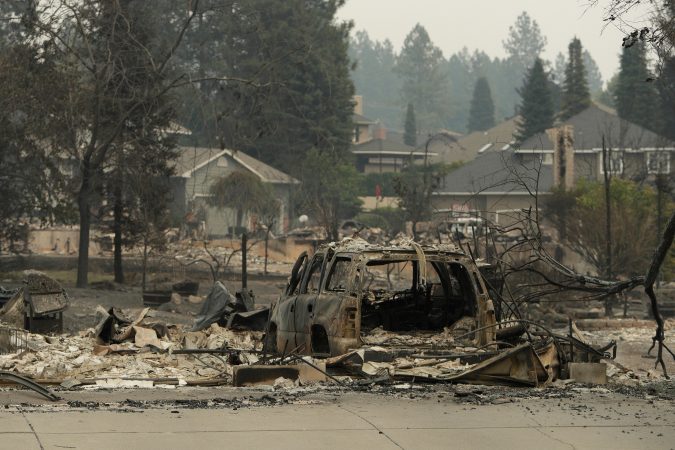
    SPOKANE, Wash. — Light winds and lower temperatures were in the forecast Monday to help firefighters battle wildfires in eastern Washington state that destroyed at least 600 structures and forced the evacuation of 60,000 people in the Spokane area.

    The fires in and around Spokane, the state’s second-largest city, burned about 12.5 square miles by Monday morning and filled the sky with smoke and haze. They were 0% contained, Courtney James, a spokesperson for the Washington State Department of Natural Resources, said.

    No major injuries or deaths were reported by Monday, though authorities were checking for missing people, said Cpl. Mark Gregory, a spokesperson for the Spokane County Sheriff’s Office.

    “Initially, we had approximately 290 missing person reports, and at this point we have cleared all except 14,” Gregory said. “These may not all be specifically associated with the Spokane Complex Fires.”

    The wildfires were among dozens across the Western U.S. that are stretching the ability of federal, state, and local agencies to fight them. At least 390 square miles have burned across Washington.

    Homes, cars, possessions lost in flames

    Entire Spokane neighborhoods lost homes. Chimneys that somehow withstood heat and flames were still standing like lone sentinels, symbols of what was there just a few days earlier.

    Online efforts to help people swiftly popped up as friends of fire victims posted numerous appeals for money, clothes, and basic necessities. Kory and MacKensie Aspaas were away with their children when the disaster hit.

    “They are coming back from being out of town to a life that’s been completely wiped out,” friend Kali Butler said.

    Officials said Sunday that the evacuees in Spokane included patients at its U.S. Veterans Affairs hospital. Investigators had yet to determine how the blazes started.

    The weather forecast for Monday called for cooler temperatures and light winds, but no rain.

    “We are not out of danger,” U.S. Sen. Maria Cantwell said Sunday. “The next couple of days will be challenging.”

    Grassland in flames in parts of Idaho, Oregon, Utah

    Spokane was not the only place struggling to contain fires.

    Crews using bulldozers and helicopters continued for a 10th day to fight a fire that has burned nearly 525 square miles of grassland in western Idaho and eastern Oregon. The area is home to cattle ranches, and authorities said the fire is threatening more than 600 homes and 800 other structures.

    The weather in the area was expected to remain sunny and dry well into the week, with temperatures rising to more than 90 degrees Fahrenheit on Wednesday. Officials say the fire was caused by lightning.

    In central Utah, a massive blaze more than doubled in size over the weekend and was nearly 57 square miles by Monday morning. More than 100 cattle have been killed, according to local law enforcement.

    Officials called the fire “catastrophic” as heavy winds helped flames jump containment lines.

    The fire is moving north toward Fillmore, a town of about 2,600 people and the seat of Millard County. Mandatory evacuations were ordered Sunday evening for the southern portion of Fillmore.

    The National Weather Service issued warnings about the air quality across the Northwest. It issued red flag fire warnings for parts of Utah and Montana and western Nebraska, and extreme heat warnings for the southern parts of Arizona, California, and Nevada and northern Montana.

    Spokane sets up shelter for impacted residents

    In Spokane, about 400 people were staying at the city’s main convention center, which was turned into a shelter, officials said.

    Spokane Public Schools opened a free emergency drop-in camp for children on Monday. Trials at the county court were pushed to Aug. 10.

    Meanwhile, several larger fires continued to burn in less populated areas northwest of Spokane, including one about 80 miles from the city that has burned about 210 square miles. Another fire in eastern Oregon, about 70 miles to the northwest in the Stinkingwater Mountains, has burned about 336 square miles.

    “The whole northwest is heavily impacted right now,” said Keila Vizcarra, the spokesperson for the federal team from California handling what’s been named the Big Grass Fire in western Idaho and eastern Oregon.

  • Hundreds of migrant children are stranded in Spain’s Ceuta after mass crossing

    Hundreds of migrant children are stranded in Spain’s Ceuta after mass crossing

    CEUTA, Spain — The teenage girl made it through the waves to Spanish territory. Her little brother did not, drowning in the Mediterranean, while their mother disappeared in the chaos when tens of thousands of people surged through the breakwater, trying to leave Morocco behind.

    The tragic story of a 17-year-old from Tangier is representative of the plight of many of the more than 800 minors who four days after the collective push by migrants into Ceuta face a scary present and an uncertain future.

    She told an Associated Press photojournalist how she and her family joined the massive crowd that tried to swim around a border fence to reach the Spanish territory on Thursday. Like many, she said, they did so seeking better opportunities. The AP is withholding her identity because she is a minor in a vulnerable situation.

    She described how she saw Spanish police pull the body of her 8-year-old brother from the water.

    She made it to the shore but became separated from her mother, and has spent the last four days on her own. She said some locals gave her food and some clothing, with one woman taking her into her home so she could bathe. She then went to a center for youths run by the government for some help, but found it was full.

    “I saw people stepping on the dead,” she said through a translator since she doesn’t speak Spanish. “Now we are children begging on the street.”

    She is one of some 860 minors who remained in Ceuta on Monday after crossing over, according to local officials. AP journalists saw other minors asking for food.

    Those minors now make up a large part of the 3,000-5,000 migrants who have avoided expulsion from Ceuta of the original 60,000 who came across. Spanish authorities confirmed 72 people died, mostly in the water, during the crossing. Morocco reported 11 deaths which are not included in the Spanish total, the Spanish interior ministry said.

    Minors must be cared for under Spanish law

    Spanish law says that adult migrants can apply for asylum. If rejected, they will face expulsion procedures. The bar is normally very high for Moroccans to be granted humanitarian protection.

    Migrant minors who are unaccompanied by adults, however, are supposed to be granted protection and taken care of by Spanish authorities.

    An AP journalist witnessed Spanish soldiers escorting an unaccompanied Moroccan boy who was crying and begging not to be sent back to Morocco. A few yards before reaching the border, and due to pressure from local residents who insisted he was a minor, as well as the presence of the media, a lieutenant colonel in the Spanish Army stopped the repatriation and transferred the boy to the Spanish Civil Guard.

    Most of the Moroccan adults have either voluntarily gone home or were pushed back by Spanish police. Among those who remain in Ceuta are significant numbers of people from other countries, including Sudanese fleeing their war-torn country, Palestinians from Gaza, and Afghans, as well as people from several African nations.

    The city’s migrant center with a capacity for 600 people is completely full. Food is scarce among the migrants, according to reporting by AP journalists.

    “The strategy is that hunger, thirst, and exhaustion forces these people to finally decide to voluntarily return to Morocco,” said local migration activist Ramsés Mohamed Azumik of Asociación Elín.

    Many migrants sleep or rest on the beach or hills surrounding the speck of Spain. In the hazy distance, mainland Europe, their ultimate goal, lies across the sea.

  • Trump overhaul could gut Head Start preschool standards, leaving states to set the rules

    Trump overhaul could gut Head Start preschool standards, leaving states to set the rules

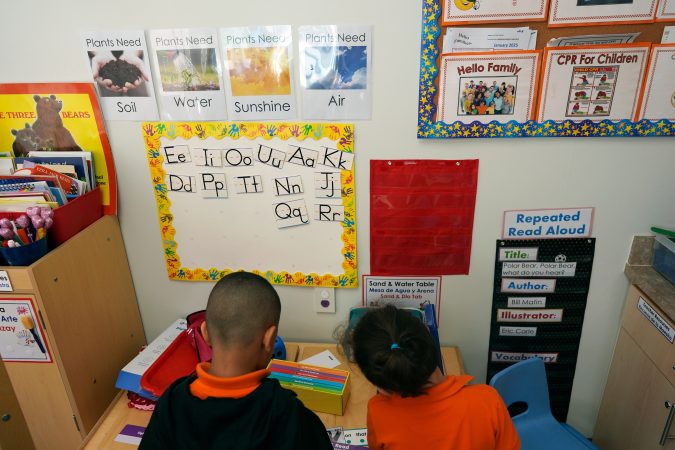
    WASHINGTON — President Donald Trump’s administration is planning a dramatic overhaul of Head Start that would gut its quality standards, upending the hallmarks of the early education program for impoverished children, two people familiar with the deliberations said.

    Head Start, established in the 1960s to help fight poverty, has long been considered by experts to be a gold standard early learning program. Its regulations, which stretch more than 100 pages, outline requirements on everything from child-to-teacher ratios and child health screenings to family engagement.

    Trump’s Republican administration would replace those regulations with around a dozen pages of rules, leaving most of the specifics up to state and local law, said the people familiar with the deliberations, who spoke on the condition of anonymity to discuss information that was not yet public and because they feared reprisal.

    In a post on X on Saturday night, the Department of Health and Human Services, which oversees Head Start, said to expect a rule to be published this week. The administration “remains committed to strengthening Head Start by preserving federal investment in the program while advancing reforms that expand access, increase local flexibility, reduce unnecessary administrative burden, and ensure services are delivered effectively to children and families in need,” department spokesperson Emily Hilliard said Monday in an email.

    The draft rules would require more documentation from parents who are homeless or unemployed, the people familiar with the deliberations told the Associated Press. An early version of the proposal also would have barred parents who are in the United States illegally from enrolling their children, even if the children are U.S. citizens. It’s unclear whether those provisions will make the final draft.

    Head Start, which operates in all 50 states, has long enjoyed robust bipartisan support. But some prominent conservatives in recent years have called for its elimination, saying the federal government should get out of the education business at every level. Deregulating the program would deliver a win for them and aligns with the Trump administration’s goals of scrapping rules it views as onerous or unnecessary.

    Head Start is designed to target poverty, experts say

    Head Start serves more than half a million low-income babies, toddlers, and preschoolers nationwide. For families that qualify, it offers free preschool and screenings to identify developmental delays. It also offers supports for families.

    If the changes take effect, they could make Head Start unrecognizable, said Khari Garvin, who ran the Office of Head Start under Democratic President Joe Biden.

    “We’d have the carcass of Head Start,” Garvin said. “You might have a program that’s called Head Start, but in substance it will not be.”

    The proposed rules were originally reported in the Bulwark.

    Tommy Sheridan, deputy director of the National Head Start Association, said the organization has yet to see the proposed rules. But he said the potential for a massive overhaul has left the organization on edge.

    “We’re very anxious,” Sheridan said. “When it does come out … we’ll be ready to fight back where we need to fight back.”

    Still, he emphasized that Head Start centers might not be impacted for months, if the rules get on the books at all. Once the proposal is made public, federal law requires the administration to give at least a month for the public to weigh in on it. Then, once finalized, it may take more time for the rules to take effect. There’s also the potential for a lawsuit to halt implementation.

    Current rules cover dental screenings, staff-to-student ratios

    Head Start was created as part of President Lyndon B. Johnson’s War on Poverty and targets the myriad challenges that low-income households face. It serves children and adults alike, coaching parents on reaching their goals, connecting them with services, and even employing them.

    Head Start operators, which include school districts and nonprofit organizations, are required to provide medical, dental, and vision screenings for children and to monitor them for developmental delays. There’s also a curriculum framework and prohibitions on physical and emotional abuse of children.

    Many of the features that make Head Start distinct from mainstream preschools are spelled out in 122 pages of performance standards. The Trump administration’s proposal would toss most of that rule book and replace it with a much shorter version that eliminates or loosens many requirements, the people familiar with the proposal said. But the proposal also calls for some new regulations, such as requiring all instruction in English.

    Requirements around staff-to-student ratios and safety standards would be erased. Operators instead would be instructed to follow local and state laws, which are often far more permissive. And the new proposal also says nothing about suspensions and expulsions, the people said, making it easier for programs to kick out kids with disabilities who are difficult to educate.

    Jody Smith, a lead teacher for a Head Start program south of Seattle, said she’s seen firsthand how critical many of the requirements are, especially the ones for engaging with families and screening kids for disabilities. Smith was a high school dropout and a young mother when she enrolled her first child in Head Start, where she was encouraged to go back to school and inspired to become a teacher. Later, Head Start helped diagnose her youngest child with autism.

    Without Head Start, “I would have probably stayed as a poverty line,” Smith said. “And I don’t know that we would have gotten as far in life as we have.”

    Head Start has faced several threats

    The numerous standards are key to preparing Head Start kids for kindergarten, said Ruth Friedman, who helped President Barack Obama’s administration draft the regulations now in jeopardy.

    “If the administration strikes down those standards, it would set back our nation’s educational goals and our efforts to reduce poverty, and it is explicitly prohibited by the Head Start law itself,” Friedman said.

    Head Start, which has enjoyed robust bipartisan support for decades, has faced several threats since Trump took office last year. Project 2025, a conservative policy blueprint authored by the official who is now Trump’s budget chief, called for the federal government to get rid of the program altogether. Last year, in a draft budget, the administration proposed exactly that, saying: “The federal government should not be in the business of mandating curriculum, locations, and performance standards for any form of education.” After public outcry, Health Secretary Robert F. Kennedy Jr., whose department oversees Head Start, told Congress the program’s funding was safe.

    Funding for the program was disrupted not long after Trump took office, leading some programs to have to shutter temporarily. It was once again halted after a government shutdown in October that led some centers briefly to close their doors.

    Earlier this year, Trump officials also erased a Biden-era rule that mandated raises and greater benefits for Head Start employees. When the rule went in to effect in 2024, Head Start teachers, the majority of whom have bachelor’s degrees, earned less than $40,000 a year on average.


  • Senate leaders reach funding deal to avoid shutdown during campaign season

    Senate leaders reach funding deal to avoid shutdown during campaign season

    WASHINGTON — Key senators unveiled a short-term spending bill on Sunday that would keep federal agencies funded past the midterm elections and into early December as they look to avoid a government shutdown during the middle of campaign season.

    The Senate is likely to vote on the measure before leaving Washington at week’s end for its traditional August recess, a period that many lawmakers want to spend shoring up their reelection prospects rather than working in the nation’s capital.

    The bill generally funds the federal government at current levels though Dec. 11. The House has passed a similar measure, but it did not include various exceptions sought by the White House. Senators have been spending recent days negotiating which of those exceptions to include.

    One exception that did not make it into the bill, Democrats noted, was the administration’s request to include $1 billion to build “Trump-class” battleships.

    In another major difference with the House bill, Democrats say they also were able to include language that will ensure the administration cannot transfer funds from other programs to the Border Patrol.

    The late-summer action on a funding fix is unusual. Normally, Congress waits until the final days or hours of a funding deadline to pass short-term funding extensions, but this time senators are acting two months before the end of the fiscal year on Sept. 30.

    Senate Majority Leader John Thune said passing the measure was his top priority going into the August recess. He noted that the American people have already experienced two record-breaking government shutdowns in the past 10 months.

    “We need to ensure that they do not face a third,” Thune said.

    Both parties want to avoid another shutdown

    A short-term funding extension is needed because Congress has struggled to get the dozen annual appropriations bills negotiated and approved before the Sept. 30 deadline. By extending government funding now, lawmakers can use the ensuing months to work out their differences on full-year funding.

    It won’t be an easy lift as Republicans seek a dramatic increase in defense spending while cutting non-defense spending. Trump proposed a 10% cut in non-defense programs overall. Meanwhile, he called for boosting defense spending by some 44%.

    A potential shutdown before voters go to the polls is a scenario that both parties are looking to avoid, as polling indicated that neither party evaded blame for last fall’s record 43-day shutdown. Democrats sought to extend an expiring health insurance tax credit and refused to go along with a short-term spending bill that did not include that priority. But Republicans said that was a separate policy fight to be held at another time.

    A second spending battle over funding for the Department of Homeland Security took 76 days to resolve when Democrats refused to fund U.S. Immigration and Customs Enforcement and the Border Patrol without changes to those operations.

    The bill delays a controversial policy on grants

    Sen. Susan Collins, the Republican chair of the Senate Appropriations Committee, along with Democratic senators, are seeking to block a proposed rule from President Donald Trump’s administration related to grants. The rule would require a senior political appointee at each agency to review grant proposals through criteria that include “ensuring that discretionary awards advance the President’s policy priorities.”

    Collins and Sen Patty Murray, the top Democrat on the Appropriations Committee, said the rule would not take effect during the course of the stopgap spending bill. Collins said she advocated for significant changes to the rule, “citing its potential to politicize grants and harm small, rural communities, families, and biomedical research.”

    Democrats want to kill the administration’s effort altogether. Senate Democratic leader Chuck Schumer said it was a “disgraceful” effort that would “further politicize all federal grants.”

    “While Republicans rejected killing the proposed rule outright, I’m going to keep fighting to put a stop to it once and for all, and I will keep pressing my Republican colleagues to do exactly that,” Murray said.

    Democrats fear Trump would turn federal grants into a cudgel to punish perceived political foes and reward allies, while also undermining Congress’s constitutional power of the purse. The White House Office of Management and Budget says its effort is about improving accountability to ensure taxpayer dollars aren’t wasted or misused.

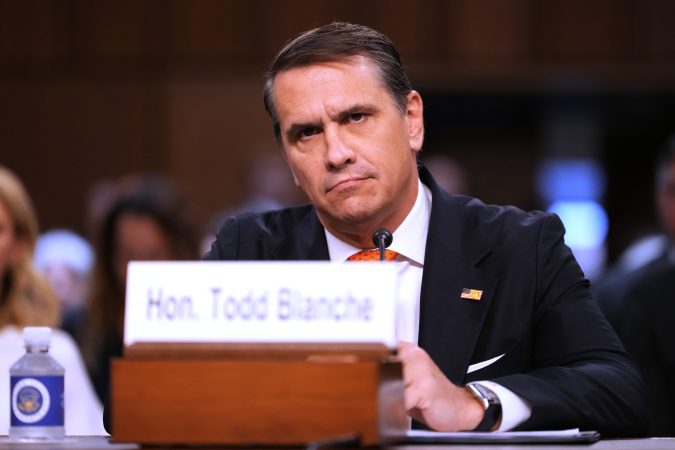
  • GOP holdouts agree to support Blanche’s nomination after he rescinds settlement fund

    GOP holdouts agree to support Blanche’s nomination after he rescinds settlement fund

    WASHINGTON — Two Republican senators who threatened to block acting Attorney General Todd Blanche’s confirmation to lead the Justice Department said Monday that they will support his nomination, ending an impasse over plans to create a fund to compensate allies of President Donald Trump.

    The endorsement from GOP Sens. John Cornyn and Thom Tillis paves the way for the Senate Judiciary Committee to advance Blanche’s nomination on Tuesday after the Justice Department and lawmakers reached a deal to formally rescind the $1.8 billion “Anti-Weaponization Fund” proposed to settle Trump’s lawsuit against the Internal Revenue Service.

    Cornyn and Tillis had refused to back Blanche’s bid for the permanent post without official confirmation killing the fund meant to compensate people who believe they were unfairly prosecuted by the Justice Department. Blanche’s written order, issued late Sunday, came after days of negotiations between the Justice Department and the Republican senators, who are leaving Capitol Hill when their terms end in January.

    “We want to express our gratitude to Mr. Blanche and his staff for working with us on this, and we look forward to voting to advance his nomination out of the Senate Judiciary Committee soon,” Cornyn, of Texas, and Tillis, of North Carolina, said in a statement.

    DOJ order says ‘beyond any doubt’ that fund is dead

    Blanche has repeatedly said that the Justice Department was scrapping plans for the fund, which sparked bipartisan outcry over the possibility that violent rioters who attacked police at the U.S. Capitol on Jan. 6, 2021, could be considered for payments. But skeptical lawmakers said they were concerned that could be revived without a commitment in writing, especially because Trump has continued to defend the idea.

    In his order posted on social media late Sunday, Blanche wrote that the department was confirming “beyond any doubt, that there is no Fund.”

    Since the settlement of the president’s lawsuit against the IRS was announced, “No Members were appointed; no funds were transferred; no process for receiving claims was established; no claims were paid,” the order said. “This order establishes, beyond any doubt, that there is no Fund.”

    Cornyn and Tillis had also pressed the Justice Department to limit the scope of a separate piece of the settlement that provided broad immunity for Trump and members of his family from tax audits.

    Under the deal, the Justice Department clarified in writing that the tax audit immunity agreement “applies by its terms only retroactively” to claims open at the time of the settlement and does not protect the president from examination of future tax filings. It also makes clear that only the parties that brought the lawsuit — Trump, two of his sons, and the Trump Organization — are covered by the tax agreement.

    Cornyn and Tillis said in their statement that they were “pleased” with the concessions made by Blanche.

    “From the outset, we were clear that we needed a written document addressing our concerns on the IRS audit agreement and the anti-weaponization fund that included constraining the scope of audit protection by limiting it to the parties of the Settlement Agreement and legally ending the anti-weaponization fund,” they wrote.

    Democrats, however, noted that the order rescinding the fund doesn’t stop the Trump administration from compensating Jan. 6 rioters through a previously established process that allows people to file claims for damages if they believed they were wronged by the government.

    “This supposed ‘deal’ doesn’t prevent payouts to violent insurrectionists in the future,” Democratic Sen. Adam Schiff said in a social media post. Schiff added that it also “leaves in place a tax-immunity deal that could help Trump skip taxes on the $2.3 billion he made last year, and still leaves it vague who and what is covered.”

    Cornyn, Tillis echo GOP colleagues’ concerns

    Blanche’s nomination was thrown into doubt last week after the Judiciary Committee postponed a vote that had been scheduled for Thursday morning as Tillis and Cornyn said they needed more from the administration before they could provide the necessary votes.

    After the Thursday vote was delayed, Trump said in a social media post that he might pull Blanche’s nomination and resubmit it after Cornyn and Tillis leave office next year. And on Saturday the president threatened to push forward with the fund if the two Republicans blocked Blanche’s nomination.

    On Sunday evening, Trump said that people who had faced charges from the Jan. 6, attack on the Capitol and could have benefited from the fund had “their lives destroyed.”

    “This would be a reimbursement for the pain that they suffered,” Trump said. “A lot of people like it.”

    Blanche, who served as Trump’s defense lawyer in his criminal cases, entered the Justice Department last year as deputy attorney general. He was elevated to the top post after Pam Bondi was fired in April by Trump, who was frustrated by her failure to successfully prosecute his political enemies.

    Though Blanche insisted he wasn’t auditioning for the permanent job, he has moved quickly since taking the reins of the department to promote the Trump administration’s agenda and accelerate investigations into the president’s perceived foes.