Category: Nation World News Wires

  • Runaway online rumors sparked frantic rush by migrants to the Spanish territory of Ceuta

    Runaway online rumors sparked frantic rush by migrants to the Spanish territory of Ceuta

    FNIDEQ, Morocco — It started with Instagram posts that suggested Spain’s border with Morocco was opening up. Then came Facebook users tracking coast guard patrols and TikTok videos showing where to swim.

    After many shares and comments, thousands of Moroccans became convinced that Europe was suddenly within reach.

    Within hours, young people began heading toward the border with the Spanish territory of Ceuta in North Africa. Packed buses rolled into the neighboring Moroccan city of Fnideq. Regional trains filled up. Taxis did too.

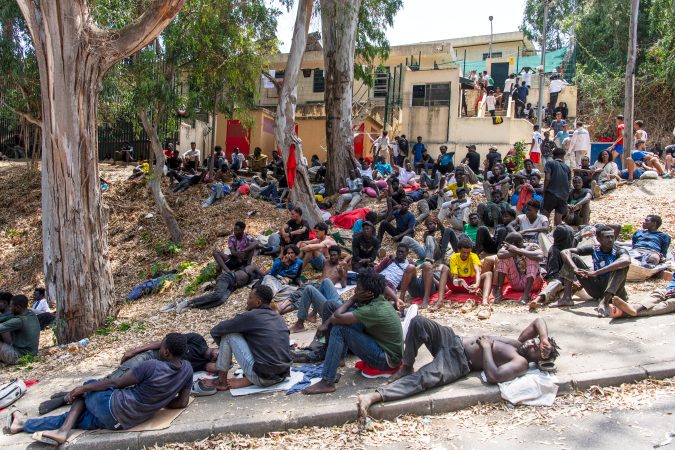
    By the time authorities reacted, some 72,000 people had reached Ceuta in just a few days, the largest migration surge between Morocco and Spain in years. More than 80 migrants died on both sides of the border, including some who drowned and others who were killed in a stampede, authorities said.

    Nearly all of the surviving migrants soon returned, but the fallout from last week’s events will linger.

    Rumors started online

    In the northern Moroccan city of Larache, about 93 miles from Ceuta, three friends watched a video posted by an Instagram account called Haraga Ceuta claiming the border would be open. Haraga refers in Moroccan dialect to young migrants who destroy their identification papers and try crossing illegally into Europe.

    The post convinced Anas Amrani, Yahya Harak, and Ismail Atik that it was worth risking the journey.

    For migrants hoping to reach Spanish territory, the most common route begins in Fnideq, where many attempt the roughly 3-mile swim around the border breakwater. Others leave from the nearby village of Belyounech.

    One TikTok video mapped the exact route swimmers should follow.

    On Facebook groups such as Fnideq Bab Sebta, users shared screenshots from vessel-tracking platforms to identify moments when coast guard patrols appeared lighter. Some sought advice on using inflatable boats. Others advertised wetsuits for sale.

    “I saw online that the border was open, and I decided to go,” said 17-year-old Omar Danbor from Fnideq, walking back exhausted along the coast.

    It’s unclear who was behind the claims that the border was open or who operated many of the social media accounts, several of which were deleted soon after the crossings. The Associated Press contacted several accounts but received no response.

    The surge to Ceuta touched a political nerve in Europe, and the European Union is investigating what happened. The EU’s migration commissioner expressed concern Tuesday about online disinformation but didn’t identify a specific culprit.

    Chaos unfolded at the breakwater

    As migrants reached the shores of Ceuta, mass chaos erupted at a narrow concrete breakwater where many tried to climb onto land.

    According to multiple migrants interviewed by AP, people rushed to scramble over the slick rocks at the same time, pushing and climbing over one another. Several said they saw people knocked back into the water and forced beneath others, leaving them unable to resurface as migrants sought to reach land.

    “I stepped on the face of a dead man while I was climbing out. I hope God forgives me and all those whose bodies were found,” said Lahcen Kalouch, a Moroccan migrant who reached Ceuta before returning home distraught.

    At least 72 people died on the Spanish side of the border. Another 11 died on the Moroccan side.

    Tens of thousands of migrants have since returned to Morocco, either after being expelled or leaving by choice because of a lack of shelter, food, and water in Ceuta.

    Some misinterpreted Spain’s new migration measures

    Some migrants misunderstood recent legal developments in Spain, including Prime Minister Pedro Sánchez’s immigration regularization measures and a court ruling limiting authorities’ ability to immediately return migrants who swim into Ceuta.

    Sánchez’s recent efforts to regularize migration were meant only for people already living in Spain prior to Jan. 1, the majority of whom hail from Latin America and entered Spain legally but overstayed their visas. But some in Morocco misinterpreted his policy, believing they would be allowed to stay. That belief spread online.

    “Pedro Sánchez is a liar. He told us if we came, we would get jobs and papers, but they sent us back,” said Adam Assil, a migrant from Casablanca, even though Sánchez never made such a promise.

    While attempts to reach Ceuta are common, migration activists said this episode was different because of the way rumors snowballed online, encouraging thousands of people to head toward the territory at the same time instead of in smaller, scattered groups.

    Failures happened on both sides of the border

    Moroccan authorities said the migration wave was not spontaneous. The Interior Ministry blamed the “exploitation of the digital sphere” and “the spread of misinformation.” Officials offered no evidence but said an investigation had been opened. Spain’s government made similar statements.

    Ceuta officials said they had warned the Spanish government of a surge in arrivals before the massive crush on Thursday. The Spanish Interior Ministry said Monday that it had not received “any report or warning regarding the mass arrival of people in Ceuta,” and it praised cooperation with the Moroccan authorities in sending most of the migrants back.

    “Nobody addressed how these individuals managed to breach the border,” said Mustapha Azaitraoui, a Moroccan geographer specializing in migration dynamics. “If a large group of people can cross the border under these circumstances, it suggests a broader security issue that has yet to be acknowledged publicly.”

    Migrants reject government claims of smuggling

    Both Morocco and Spain blamed the Ceuta crisis on human smugglers and trafficking networks, saying organized criminal groups encouraged the mass crossings.

    But returning Moroccan migrants interviewed by AP largely rejected that explanation.

    “No one smuggled me there. I wanted to go of my own free will, but that country is not worth all this sacrifice,” Kalouch said.

    “There are no mafias. The border was open, and I crossed. But now I regret it,” said Danbor, his clothes still wet after making the journey back.

    The Spanish Interior Ministry said investigations into smuggling networks are ongoing and noted that Spain and Morocco have carried out joint operations against trafficking groups. The Moroccan Interior Ministry did not respond to questions about smuggling networks.

    Several politicians and experts have suggested it would be impossible for so many to cross without Moroccan complicity. A high-ranking Moroccan diplomat appeared to push back against that.

    “It would be reductive to say that Morocco should have used force to stop the migrants,” said the diplomat, who spoke on condition of anonymity because the issue is highly sensitive in Morocco. “We are not Europe’s police.”

    The lack of jobs is a key factor

    Morocco’s economy is projected to grow by 4.5% this year, boasting major factories, advanced ports, and ambitions to become a regional hub for the car industry.

    Yet for many young Moroccans, that transformation has not translated into stable work. Youth unemployment remains high, with 37% of people ages 15 to 24 out of work. Among university graduates, unemployment stands at nearly 20%. The dream of migration is often reinforced by stories of relatives who left and returned with cars, new clothes, and foreign currency.

    One of those who breached the border was a 16-year-old who grew up a few dozen miles from Ceuta. Europe had always seemed a dream close enough to see, yet impossibly far.

    So when he saw a post on Facebook suggesting the border was open and thousands were making it across, he joined the rush.

    Days later, he was back in Morocco, crying as he asked strangers for money for a taxi home.

    “They fired tear gas at me and beat me with batons. There’s nothing for me there,” said the teen, who spoke on condition of anonymity out of fear of being stigmatized following his failed border crossing attempt.

    “I just wanted to provide for my mom,” he said, wiping his tears.
  • Todd Blanche’s nomination for attorney general clears critical hurdle after deal with GOP holdouts

    Todd Blanche’s nomination for attorney general clears critical hurdle after deal with GOP holdouts

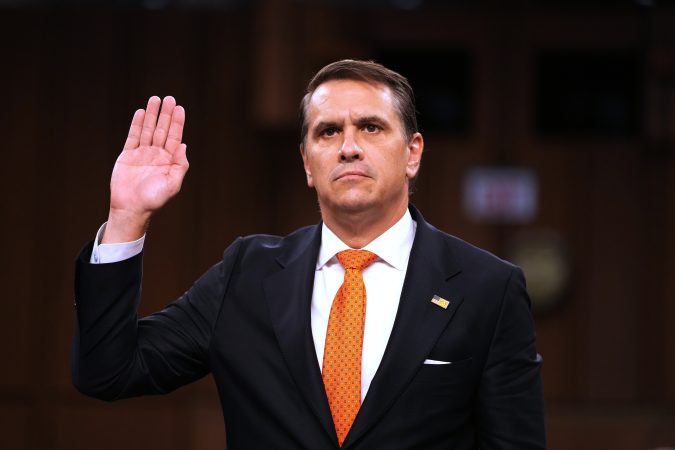
    WASHINGTON — Acting Attorney General Todd Blanche cleared a critical hurdle Tuesday in his bid to be confirmed to the post after swaying Republican holdouts on a Senate committee to advance his nomination for a floor vote.

    The Senate Judiciary Committee voted 12-10 along party lines in support of the nomination of President Donald Trump’s former personal attorney, who has aggressively pushed the Republican administration’s priorities since taking over from Pam Bondi in April.

    The vote followed a deal struck late Sunday between Blanche and two Republican senators — John Cornyn of Texas and Thom Tillis of North Carolina — who had been threatening to block his confirmation over the settlement of Trump’s lawsuit against the Internal Revenue Service regarding the president’s leaked tax returns.

    The full Senate could vote later this week on Blanche’s nomination. If all Democrats oppose him, Blanche can only afford to lose two Republican votes if Sen. Mitch McConnell of Kentucky, who was hospitalized after a fall, does not return before then.

    Cornyn and Tillis backed Blanche’s nomination after the Justice Department confirmed in writing that it wasn’t moving forward with a $1.8 billion fund to compensate Trump allies who believe they were prosecuted for political purposes, which the administration announced as part of the settlement.

    After days of negotiations, Blanche issued an order Sunday evening confirming “beyond any doubt, that there is no Fund.”

    Democrats complain about the fund

    Democrats say Blanche’s order doesn’t go far enough to prevent the Trump administration from reviving the fund after the acting attorney general’s confirmation and have called for legislation to permanently bar it.

    The order also doesn’t stop the administration from compensating Trump allies — including people who attacked the Capitol on Jan. 6, 2021 — through a previously established process that allows people to file claims for damages if they believed they were wronged by the government.

    The fund “can easily be revived with a new order from the Department of Justice 15 minutes after Mr. Blanche is confirmed as attorney general,” said Dick Durbin of Illinois, the top Democrat on the committee.

    Cornyn and Tillis had also pressed for clarification on a separate part of the settlement that would grant Trump and members of his family immunity from tax audits.

    Under the deal, the Justice Department clarified in writing that the tax audit immunity agreement applies only to claims open at the time of the settlement and does not protect Trump from examination of future tax filings. It also makes clear that only the parties that brought the lawsuit — Trump, two of his sons, and the Trump Organization — are covered by the tax agreement.

    Cornyn said his reasons for backing Blanche go beyond the deal struck Sunday, adding that he believes the Justice Department needs a “stabilizing force” at the helm.

    “The Department of Justice does not need a temporary, unconfirmed nominee as our nation’s top law enforcement official. Trump needs someone in this role, as well, with a strong legal mind,” Cornyn said.

    Blanche’s independence has been called into question

    Blanche has faced intense scrutiny regarding his ability to maintain independence from the White House, the Justice Department’s pursuit of the president’s political foes, and the agency’s handling of files related to disgraced financier Jeffrey Epstein’s sex trafficking investigation.

    But it was the settlement of Trump’s $10 billion lawsuit against the IRS that threatened to derail Blanche’s nomination, forcing a delay in the committee vote last week amid pressure from the two Republican senators, who are not returning to Capitol Hill after their terms end in January.

    Republican Sen. Chuck Grassley, who chairs the committee, said Tillis and Cornyn’s demands were “common sense.” Grassley said the senators’ concerns about the “Anti-Weaponization Fund” and the IRS settlement were shared by many other lawmakers, including himself.

    “I’m grateful that they as well as Mr. Blanche and the White House worked in good faith to solve them, formally rescinding the fund, clarifying the scope of the release of claims has put this issue to bed once and for all,” Grassley said.

    Trump’s lawsuit has been sharply criticized because of the highly unusual way it was handled, with the president challenging an agency overseen by the executive branch he leads. A judge last month slammed the case as an improper exercise in self-dealing and referred one of Trump’s attorneys who filed it for potential disciplinary action.

    Blanche was an important figure for Trump’s defense

    Blanche, a former federal prosecutor and key member of Trump’s defense team as the Republican battled four indictments, arrived at the Justice Department last year as deputy attorney general. He was elevated to acting attorney general following Bondi’s failure to meet Trump’s demands to successfully prosecute his perceived political opponents.

    While Blanche insisted he wasn’t auditioning for the permanent post, he moved swiftly to accelerate investigations into Trump foes and advance other White House priorities, drawing condemnation from critics who say he has not shed his title as Trump’s personal lawyer.

    Shortly after Blanche took the top post, the Justice Department moved to indict longtime Trump adversary James Comey, the former FBI director, on charges of threatening the 47th president by posting a social media photograph of seashells in the numerical arrangement of “86 47.”

    Comey’s lawyers have accused the Justice Department of misleading judges, submitting documents containing false statements, and withholding key facts to bring what the defense described as a politically motivated prosecution.

    Blanche separately appointed Joseph diGenova, a former Justice Department prosecutor from the Reagan administration, to oversee a Florida-based investigation into whether former law enforcement and intelligence officials conspired over the last decade to undermine Trump.

  • Netanyahu says no Israeli withdrawal from Gaza until Hamas has been completely disarmed

    Netanyahu says no Israeli withdrawal from Gaza until Hamas has been completely disarmed

    DEIR AL-BALAH, Gaza City — Israeli Prime Minister Benjamin Netanyahu said Tuesday that Israeli forces will not withdraw from their current lines in Gaza until Hamas has completely disarmed.

    In remarks on social media, Netanyahu suggested there were differences between Israel and the Trump administration over a recent deal announced to disarm the militant group.

    The agreement called for Hamas to begin disarming and for Israel to halt its strikes and begin withdrawing from Gaza. It was part of an October ceasefire agreement that ended major military operations but has stalled on other fronts. Netanyahu instead said disarmament should come first, and that Israeli forces would continue to “do whatever is necessary to protect themselves, our territory, and our citizens.”

    The Trump administration “sent us a draft. We did not agree. It is not our draft. We sent our comments,” Netanyahu said. “This is our position. We stand firm on our interests, I believe both wisely and resolutely.”

    Earlier on Tuesday, Palestinians gathered for a mass funeral of more than 100 bodies finally recovered from a deadly Israeli strike in Gaza in 2023. More than 300 people were killed on Nov. 22, 2023, weeks into the war with Hamas, when warplanes flattened a residential block in Gaza City’s Sabra neighborhood.

    Around 40 bodies were recovered soon afterward in a frantic scramble of rough tools and bare hands, but most were buried deep beneath the rubble. Reports of the high number of victims in one of the war’s deadliest attacks took days to reach the public in the chaos just before its first ceasefire.

    Over the weekend, first responders dug through the destroyed buildings and recovered remains of 112 victims, including 40 children, according to the Civil Defense, a rescue agency operating under the Hamas-run Interior Ministry.

    It said 157 bodies still have not been found.

    “The only crime of these martyrs was that they remained steadfast and resilient in their homes, believing that these homes would protect them,” one relative, Taysir al-Hassayna, told the Associated Press following the funeral prayers.

    For the missing, it’s “as if their bodies had evaporated without a trace.”

    The current ceasefire has allowed recovery of remains

    Only now are some bodies of people killed in the war’s ferocious early months slowly being recovered, as a fragile ceasefire that took effect in October allows such efforts to push ahead in parts of devastated Gaza.

    Those discoveries have contributed to the war’s rising toll. The Hamas-led militant attack on southern Israel on Oct. 7, 2023, killed around 1,200 people and saw 251 taken hostage. Israel’s retaliatory offensive has killed more than 73,377 Palestinians, including since the ceasefire, Gaza’s Health Ministry said.

    At least 7,400 people have been reported by relatives to still be under the rubble, Zaher al-Waheidi, head of the ministry’s records department, told the AP. The true number is likely thousands higher because in some cases entire families were killed in a single bombing, leaving no one to report the missing, al-Waheidi has said.

    The people mourned on Tuesday were from a residential block belonging to the Hassayna and Abu Sharia clan, and many were related. The Associated Press has identified at least 60 families across Gaza who lost 25 or more family members during the first three months of war.

    On Tuesday, the remains of the victims, wrapped in Palestinian flags, were laid in rows on the ground. Many were marked with photos, and flower petals were scattered around all. Hundreds of people surrounded the bodies for funeral prayers, some standing on the rubble.

    Following the prayers, people carried the bodies on stretchers along a narrow street lined by destroyed buildings and buried them in a nearby cemetery.

    Gaza is struggling to rebuild amid ceasefire violations

    The ceasefire halted much of the fighting, but at least 1,252 people have been killed in Gaza since it took effect, according to the territory’s Health Ministry. The ministry, part of the Hamas-led government, maintains detailed casualty records that are seen as generally reliable by U.N. agencies and independent experts. It does not give a breakdown of civilians and militants but says women and children make up most of the dead.

    Israel says its strikes are against militants who endanger its soldiers, took part in the Oct. 7 attack, or carry out other violations. Five Israeli soldiers have been killed since the ceasefire.

    Gaza remains largely shattered. Most of its 2 million Palestinians are displaced, many living in tent camps where poor conditions and overcrowding have led to rodent infestations and outbreaks of infectious diseases such as chickenpox.

    Each side has accused the other of violating the ceasefire, and negotiations on further steps have largely stalled. Hamas has held onto its weapons, despite agreements to disarm, and the Israeli military has refused to withdraw and controls over half the territory.

    The Board of Peace official overseeing Gaza’s postwar transition, Nikolay Mladenov, on Monday met with Netanyahu, in part to discuss a new disarmament deal the U.S.-created board has reached with Hamas.

    Last week, President Donald Trump announced an agreement that calls for Israel to cease its military operations in Gaza and for Hamas and its allies there to halt all militant activity. After the text of the agreement was released, Israel said it had “serious security concerns.”

  • Trump’s arch could harm the integrity of many of Washington’s historical sites, report says

    Trump’s arch could harm the integrity of many of Washington’s historical sites, report says

    WASHINGTON — President Donald Trump’s proposed 250-foot-tall memorial arch could disrupt the historical significance of dozens of sites near its planned location, according to an assessment by the National Park Service.

    Many of Washington’s monuments, buildings, and sites have been carefully planned over the decades to reflect significant moments in the nation’s history and evoke symbolism in being connected by sightline to other sites.

    The proposed towering gilded arch, which last month received initial approval from a key federal commission, would impact the “integrity” of dozens of those historical properties because it would change “character-defining visual and spatial relationships” between them.

    The NPS report, published Monday, said the immediate project area is located within the Memorial Avenue Corridor cultural landscape, “a nationally significant historic designed landscape extending between the Lincoln Memorial in Washington, D.C., and Arlington National Cemetery in Arlington, Virginia.”

    One of the most obvious elements the report cited is that the arch would break alignment between the Lincoln Memorial, Memorial Bridge, and Arlington House that was formerly Confederate Gen. Robert E. Lee’s home.

    “The bridge alignment and associated ceremonial landscape were intended to physically and symbolically unite North and South through a coordinated monumental composition extending across the Potomac River,” the report said.

    The report puts a snag in a project that has sailed through several steps of the approval process in front of planning bodies stocked with Trump appointees and allies.

    The proposed arch is one of several projects the Republican president is pursuing to leave his lasting imprint on Washington. With the potential to change the city’s sightlines, it has already sparked opposition, including through a lawsuit filed by a group of veterans and a historian.

    The arch design, proposed by Trump, has already received early approval from the U.S. Commission of Fine Arts. The commissioners were all appointed by Trump. The National Capital Area Planning Commission approved the site and preliminary plans at its July meeting. The commission is expected to take up the matter again at its September meeting.

    The arch is one of several projects Trump has proposed that are involved in litigation. The plaintiffs, three veterans and a historian, have challenged its construction, saying it requires Congressional approval.

    “Our claim is essentially that none of this has any authorization to be happening in the first place,” said Nicolas Sansone, an attorney with Public Citizen Litigation Group representing the plaintiffs. Authorization of the construction of a monument “in the core of Washington, D.C., on National Park Service land” requires an act of Congress, he said.

    The National Park Service assessment confirms what the plaintiffs have said the construction will do to the symbolic and solemn area, he added.

    “I think it’s very significant that the National Park Service itself understands that this is the effect that it’s going to have,” Sansone said.

    The White House did not immediately respond to a request for comment.

  • 25 states sue over Trump’s new tariffs, calling them ‘pretext’ to replace his old ones

    25 states sue over Trump’s new tariffs, calling them ‘pretext’ to replace his old ones

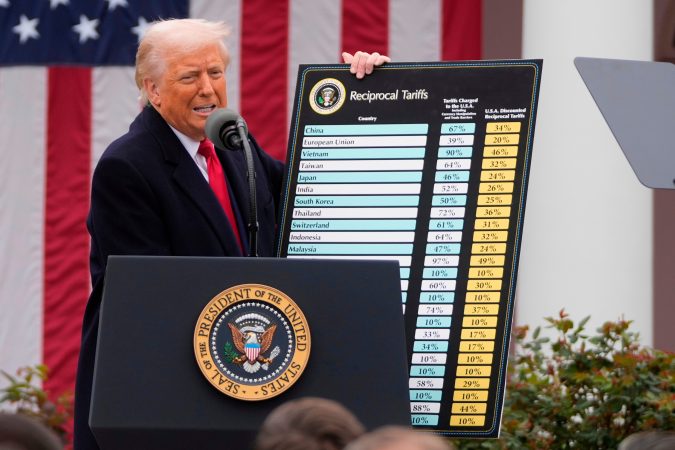
    WASHINGTON — Twenty-five states sued the Trump administration Monday over its latest tariffs, calling them a pretext for replacing import taxes the Supreme Court struck down in February.

    The United States last month imposed double-digit tariffs on 59 countries and the European Union, charging that they had not done enough to crack down on imports produced by forced labor. The new tariffs took effect just as the clock ran out on temporary tariffs President Donald Trump had turned to after the Supreme Court defeat.

    “After losing at the Supreme Court, the administration is once again trying to illegally raise taxes on families and businesses with a new round of tariffs,” said New York Attorney General Letitia James.

    Joining New York in the lawsuit announced Monday are Arizona, California, Colorado, Connecticut, Delaware, Hawaii, Illinois, Kentucky, Massachusetts, Maryland, Maine, Michigan, Minnesota, Nevada, New Jersey, New Mexico, North Carolina, Oregon, Pennsylvania, Rhode Island, Virginia, Vermont, Washington, and Wisconsin.

    Pennsylvania Gov. Josh Shapiro, who joined the suit in his official capacity, posted about in on X Monday afternoon.

    “Donald Trump is once again trying to impose his disastrous and illegal tariffs. So we’re taking him to court — again. The President’s tariffs have injected unnecessary chaos and confusion into Pennsylvanians’ lives — and have raised prices across the board for our farmers, small businesses, and families,” Shapiro said. “We’ve won in court before to protect Pennsylvanians from the costs of Trump’s disastrous trade war — and the Supreme Court has already ruled his tariffs unlawful — so now we’re going back to court to stop him yet again.”

    Trump, who argues that high tariffs will revive American manufacturing, last year overturned decades of U.S. policy that favored lower tariffs and ever-freer trade. Invoking the 1977 International Emergency Economic Powers Act, or IEEPA, he imposed double-digit tariffs on imports from almost every country, saying America’s longstanding trade deficit amounted to a national emergency.

    But the Supreme Court ruled that IEEPA did not authorize tariffs. The decision forced the administration to send refunds to importers who’d paid the tariffs. Eager to make up the lost revenue, Trump turned to temporary 10% worldwide tariffs. But they expired at midnight July 24.

    Now he’s tapping more durable tariffs under Section 301 of the Trade Act of 1974, which permits the president to impose import taxes and other sanctions against countries found to engage in unfair trade practices. Trump used Section 301 to impose big tariffs on China in his first term, and they survived court challenges.

    The administration this time invoked Section 301 to impose the forced-labor tariffs, which range from 10% to 12.5% and hit countries that provide 99% of American imports.

    “The United States is using its lawful authority to obtain the elimination of unreasonable acts, policies, and practices that burden U.S. commerce,” White House spokesperson Kush Desai said. “A foreign country’s failure to impose and effectively enforce a prohibition on the importation of goods produced with forced labor is unreasonable and burdens U.S. commerce, including American workers, and must be addressed. Section 301 tariffs have proven to be a legally durable tool since the President’s first term, and they remain so now.”

    The states’ lawsuit follows two other lawsuits filed in The Court of International Trade in July by small businesses that also challenged the 301 tariffs.

    Both of those lawsuits argue that the government didn’t adequately establish its case against each specific economy or spell how the tariffs will eliminate the specified practice they are being levied for, as required by Section 301.

  • Trump says Pirro ‘folded like an umbrella’ in bid to drop Reflecting Pool vandalism charges

    Trump says Pirro ‘folded like an umbrella’ in bid to drop Reflecting Pool vandalism charges

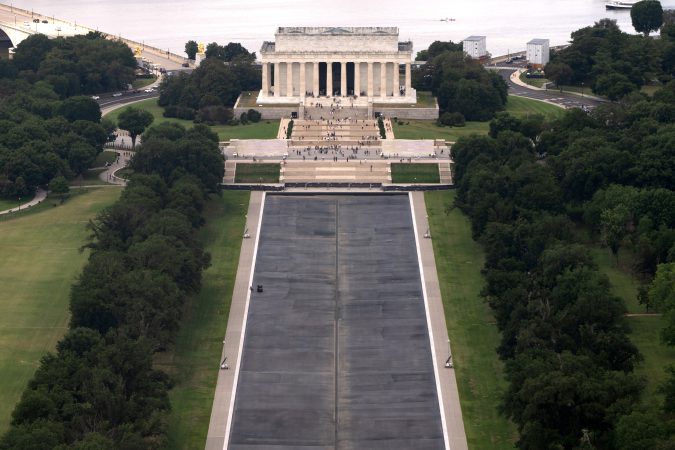
    WASHINGTON — President Donald Trump said Monday that U.S. Attorney Jeanine Pirro “choked” and “folded like an umbrella” in moving to drop charges against a former Olympian accused of vandalizing the Lincoln Memorial Reflecting Pool.

    Speaking at an unrelated Oval Office event, Trump ducked questions about whether he’d fire Pirro, a former Fox News host and longtime ally he handpicked as top federal prosecutor in the nation’s capital. But the president kept up his drumbeat of sharp criticism, saying he remained disappointed by her assessment that damage to the Reflecting Pool was the result of shoddy construction, not vandalism.

    “Frankly, I think she choked because the judge was really vicious. Instead of going after the people that did it, the judge went after her and went after her department, and I guess she choked,” Trump said in response to a reporter’s question after he signed an executive order for military spouses. “I don’t know what the hell happened.”

    The move to dismiss charges against David Hearn was an embarrassing setback for the Justice Department and marked a rare moment during Trump’s second term of an aide or political appointee openly defying him. After initially posting on social media over the weekend, “I disagree 100% with Jeanine Pirro,” Trump was still fuming two days later, insisting for several minutes that vandalism had marred the troubled project.

    “I was disappointed with Jeanine Pirro, really disappointed,” the president said Monday. “She folded like an umbrella.”

    Pirro has not commented publicly since Trump’s initial social media post criticizing her.

    Hearn has said he was on a bike ride June 19 when he reached in to examine the pool’s newly peeled coating and briefly touched a chunk attached to the side of the pool. But he said he obeyed a park worker who told him to let go of it.

    The president also used the opportunity Monday to distance himself from the troubled project, which he had touted as part of his overarching efforts to spruce up the nation’s capital.

    Trump said in April that he had consulted with a trio of firms that had worked on swimming pools at his properties and that the one he picked for the Reflecting Pool project had done work at his golf course in Northern Virginia. That firm was Virginia-based Atlantic Industrial Coatings, which was awarded a $14.7 million no-bid contract to repaint and waterproof its concrete floor.

    “I have a guy who’s unbelievable at doing swimming pools,” Trump said then. “He looked at it. He called me up. He said, ‘Sir, we can do something on it.’”

    But Trump insisted Monday that “I didn’t know the contractor” and for the first time hinted that he wasn’t pleased by the work that was done to get the Reflecting Pool ready in time for Independence Day celebrations.

    “I’m not saying I was 100% thrilled with the contractor, but the contractor was rushing. We wanted to get it open for July Fourth,” he said.

    Crews drained the Reflecting Pool weeks ago to launch a new round of repairs. The White House hasn’t said when those might be finished or how much more they will cost, but the Trump administration did not seek new bids from other companies on the new round of repair work.

    Trump also said Monday that the Reflecting Pool would be “fixed” and reopened in the next week and a half to two weeks — without providing further details.

  • FAA certifies Boeing’s new 737 Max 7 jetliner for flight after years of delays

    FAA certifies Boeing’s new 737 Max 7 jetliner for flight after years of delays

    The Federal Aviation Administration on Monday approved the smallest model of Boeing’s Max jetliners for commercial service nearly a decade after the aircraft manufacturer first unveiled the plane.

    Certification of the Boeing 737 Max 7 represents a milestone in the company’s work to overcome years of safety, quality, and production challenges. The long-delayed Max 7 is part of Boeing’s 737 family of commercial jets, which is the company’s bestseller and has been at the center of its troubles.

    The FAA said it cleared the new plane after years of additional testing, design changes, and an extensive review of its design and safety systems. The certification was delayed as Boeing addressed technical issues and heightened regulatory scrutiny following two crashes involving the larger Max 8 that killed 346 people in 2018 and 2019.

    Since the crashes off the coast of Indonesia and in Ethiopia, the FAA overhauled how it certifies Boeing aircraft. It said its oversight of the company would continue beyond the Max 7’s approval.

    Before signing off on the aircraft, the FAA said, it required Boeing to make several safety changes, including updating flight-control software, improving cockpit alerts for pilots and redesigning the engine anti-ice system to prevent overheating.

    “Our team of dedicated engineers and test experts worked through challenges, an extended pandemic, and the transition to new certification processes,” said Stephanie Pope, president and CEO of Boeing Commercial Airplanes.

    Safety inspectors will remain at Boeing production facilities to monitor manufacturing, including observing the company’s Safety Management System and overall safety culture, the agency said.

    The Max 7 is expected to be used primarily on short- and medium-haul routes. Several carriers, including Southwest Airlines, have outstanding orders for the plane.

  • U.S. stocks rally near a record as falling oil prices ease Wall Street’s worries about inflation

    U.S. stocks rally near a record as falling oil prices ease Wall Street’s worries about inflation

    NEW YORK — The U.S. stock market rallied to the edge of its all-time high on Monday after easing oil prices helped calm Wall Street’s worries that inflation could get even worse.

    The S&P 500 jumped 1.5% and is just 0.1% below its record set earlier this summer. It was coming off a frenetic July, where it swung up and down as oil prices shot higher because of the war with Iran, before ultimately ending the month just about where it started.

    The Dow Jones Industrial Average, which measures a narrower slice of the U.S. stock market, climbed 693 points, or 1.3%, to an all-time high, while the Nasdaq composite leaped 2.1%.

    Stocks got a lift as the price for a barrel of Brent crude sank 4.7% to $83.77. It dropped after President Donald Trump said over the weekend that he decided to hold off on new strikes against Iran at the urging of allies in the region.

    Brent’s price careened between $72 and $102 last month as worries rose and fell about when the war with Iran would allow oil tankers to freely exit the Persian Gulf again to deliver crude to customers worldwide. The latest acquiescence by Trump helped to ease worries about the global flow of crude, and Treasury yields correspondingly fell in the bond market.

    The yield on the 10-year Treasury sank to 4.68% from 4.75% late Friday. It, though, remains well above its 3.97% level from before the war with Iran.

    Higher yields threaten to undercut prices for stocks and other investments, while slowing the economy by making borrowing more expensive for U.S. households and businesses. The average long-term U.S. mortgage rate has already leaped to its highest level in a year.

    Monday’s ease in oil prices helped airlines and other companies with big fuel bills lead the market. United Airlines flew 5.8% higher, while American Airlines climbed 5%. Norwegian Cruise Line Holdings steamed 6.6% higher.

    Boeing jumped 8% after U.S. regulators certified its 737 MAX-7 planes, clearing them for commercial service.

    Tyson Foods rose 2.8% after the meat company reported a slightly stronger profit for the spring than analysts expected. CEO Donnie King said strength is continuing in the company’s chicken business and its prepared foods, which include brands like Jimmy Dean and Hillshire Farm.

    It joined a lengthening list of big U.S. companies to deliver a bigger profit for the spring than analysts expected. That’s imperative for Wall Street because stock prices tend to follow the path of corporate earnings over the long term, and worries were rising that U.S. stock prices may have broadly already shot too high.

    Companies in the S&P 500 are on track to deliver earnings per share for the spring that are 47% higher than a year before, according to FactSet, with more than half of the companies in the index having already reported. If that ends up being the case, it would be the strongest growth since the spring of 2021, when the economy was roaring out of the COVID pandemic.

    Also offering encouragement for profits was a report on Monday showing that growth for U.S. manufacturing accelerated to its strongest level since 2022.

    Keeping Wall Street unsettled, though, were swings for stocks of companies that make computer chips. They’ve been veering up and down for weeks on worries about whether their surging revenues because of the artificial-intelligence boom are sustainable.

    If AI ends up producing less profit and productivity than hoped, Big Tech companies could curtail their spending sprees on data centers that have helped chip stocks soar to tremendous heights.

    Micron Technology went from a drop of 6.4% to a gain of 1.7% through the day before ending with a gain of 0.8%, for example. It’s up roughly 190% for the year so far.

    All told, the S&P 500 rose 110.78 points to 7,600.50 and finished just shy of its all-time closing high of 7,609.78. The Dow Jones Industrial Average climbed 693.38 to 53,178.41, and the Nasdaq composite rallied 540.04 to 25,913.90.

    The manic swings for AI stocks have been most dramatic in South Korea, where the Kospi index is dominated by just two tech titans, Samsung Electronics and SK Hynix.

    Seoul’s Kospi fell 5.1% Monday, coming off Friday’s 17.9% surge that was its best day in history.

    In neighboring Japan, Tokyo’s Nikkei 225 fell 0.9% after the United States and Japan confirmed they had moved together to prop up the value of the Japanese yen against the dollar. A stronger yen would help to limit inflation in Japan, but it could also potentially hurt Japan’s exporters.

  • Kay Granger, first Republican woman from Texas to serve in the House, has died at age 83

    Kay Granger, first Republican woman from Texas to serve in the House, has died at age 83

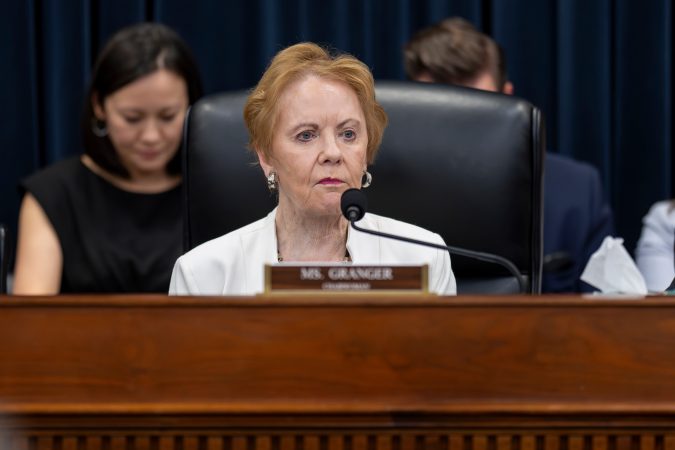
    DALLAS — Kay Granger, the first Republican woman from Texas to be elected to the U.S. House of Representatives and who served for nearly three decades, died Sunday at the age of 83, her son J.D. Granger said.

    House Speaker Mike Johnson said in a post on X that throughout her career, Rep. Granger “broke barriers for women in public service.” He added that she “was a dear friend who will be greatly missed.”

    Rep. Granger, who began her career as a high school teacher and a business owner, accomplished many firsts as a politician. She was the first woman elected mayor of Fort Worth, Texas, and the first Republican woman to chair one of the most powerful committees in Congress, the House Appropriations Committee.

    First elected to the House in 1996, she did not seek reelection in 2024 and experienced worsening “health challenges” in her final months in Congress, according to a statement her office released in December 2024. Rep. Granger, who didn’t cast a vote in Washington after July 2024, didn’t specify or elaborate on those health challenges but said in the statement that frequent travel to Washington had become “both difficult and unpredictable” since early September of that year.

    Rep. Granger graduated from Texas Wesleyan University in 1965 and considered a career in fashion design but followed her mother into teaching. She worked in the Birdville school district for nine years, teaching English literature and journalism, according to a profile compiled for the publication Women in Congress, 1917-2006.

    A divorce would lead to a career change. To earn more money, Rep. Granger worked from home selling insurance. Her mother, Alliene Mullendore, who moved in with Rep. Granger after a stroke, helped keep an eye on the kids. Rep. Granger eventually built a successful insurance business that she managed for more than two decades.

    “I was a high school teacher with three children, a 2-year and 6-month-old twins, and my husband left,” Granger told the Hill in a 2008 profile. “It’s the reason I talk so much to working mothers … you just fight your way through the day.”

    Rep. Granger got her political start serving on Fort Worth’s zoning commission and then won office to the city council. She went on to win election as the city’s first female mayor, serving from 1991 to 1995.

    Rep. Granger’s “Code: Blue” programs included citizen patrol initiatives that halved the rampant crime rate and partnerships with the private sector that drew major businesses to the city. Her resuscitation of Fort Worth’s flagging economic fortunes drew national attention.

    In 1996, she was recruited by both parties to run for the House under their banner, and she won as a Republican.

    Upon entering Congress, she was named to an advisory board that consulted with then-House Speaker Newt Gingrich. She also received seats on three committees: Budget, House Oversight, and Transportation and Infrastructure. She resigned those assignments as part of accepting a seat on the Appropriations Committee.

    On the committee, she focused on defense spending, including championing the production of the F-35 Joint Strike Fighter in Fort Worth.

    When Republicans took charge of the House in 2023, Rep. Granger became the committee’s chairperson, where she sought to enact steeper nondefense spending cuts than the top-line numbers House Speaker Kevin McCarthy and President Joe Biden agreed to as part of avoiding an economically disastrous government default.

  • More pregnant women are dying in Congo as they avoid hospitals over Ebola

    More pregnant women are dying in Congo as they avoid hospitals over Ebola

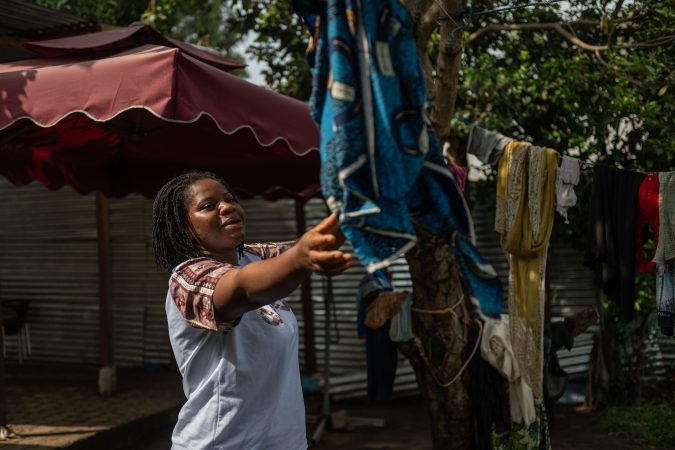
    BUNIA, Congo — Esther Lutula stopped going for prenatal checkups shortly after the current Ebola outbreak was declared in eastern Congo. Midway into her pregnancy, the 26-year-old feared being put into isolation simply for having a fever, a common misconception.

    “That’s why I’m waiting until the disease is no longer widespread,” she told the Associated Press from her home in Bunia, the capital of Ituri province and epicenter of the outbreak declared on May 15.

    But that could be a deadly mistake.

    Maternal mortality across Ituri soon doubled as news of the outbreak spread, with an average of about six women dying per week due to childbirth complication, according to Noemi Dalmonte, deputy country representative of the United Nations Population Fund in Congo.

    While there was an average of 3.1 maternal deaths weekly this year before the outbreak, that jumped to 5.8 deaths from May 25 to July 19. Among those, the deaths outside health centers have also jumped from 9.1% to 17.4% within the same period, UNFPA data shows.

    As Congo battles the fastest-growing Ebola outbreak on record, with more than 1,600 confirmed deaths, health and aid workers are warning of a shadow crisis as pregnant women avoid hospitals and the country’s already high maternal mortality rate climbs even more.

    While it’s common for Africans to avoid health centers during public health emergencies because of safety concerns, “with Ebola, it is stronger because Ebola has a lot of rumors,” Dalmonte said in an interview.

    With some wary residents questioning whether Ebola even exists, and health workers in one of Congo’s most remote and volatile regions struggling to respond to the outbreak with few supplies, pregnant women have less care than ever.

    Congo is one of the world’s most dangerous places to give birth

    Congo has among the world’s highest rates of both childbirths per woman and deaths around childbirth.

    Women in the vast central African nation have almost six children on average. At least 19,000 women died from pregnancy complications in Congo in 2023, according to the latest U.N. data, tied with India and second only to Nigeria globally.

    Now health workers in Ituri say they are seeing a decline in hospital visits as people worry about the risk of infection. This type of Ebola has no approved treatment or vaccine.

    Women in need of care also fear being caught up in violence. Ebola treatment centers have been attacked by residents fueled by misinformation or anger over strict outbreak measures.

    At the Bénédicte Clinic in Bunia, the number of women registered for prenatal care has dropped from 60 each month to around 10, said Sonny Mwembo, the medical director.

    Even now, weeks into efforts to battle misinformation, some residents hold mistaken views of the outbreak.

    “Right now, if you feel sick and go to the hospital, they say it’s Ebola and they put you in quarantine right away. That’s what scares people,” said Elodie Yabiri, a Bunia resident who is heavily pregnant.

    Yabiri said she’s avoiding hospitals as much as she can.

    As long as she still feels her unborn child moving, she believes everything is still OK.

    Limited healthcare pivots to Ebola instead

    The outbreak has strained Congo’s already overstretched healthcare system, complicating access for the pregnant women who still come for prenatal care or birth.

    Health facilities in the five affected provinces are redirecting staff and supplies to the response, reducing access to essential maternal care services, according to aid groups.

    At least 44 health infected workers have died. Many other health workers have walked off their jobs, protesting a lack of payment. At least 12 attacks have been recorded against health facilities and teams since the outbreak was declared in mid-May.

    “We are doing everything we can to make the public understand how dangerous this disease is. We are working day and night without being paid,” said Ghislain Maneba, an epidemiologist and community investigator in Ituri’s Rwampara health zone.

    All women are at higher risk in this outbreak

    Ebola is rare but highly contagious and severe, often fatal. It spreads in the human population through contact with bodily fluids such as vomit, blood, or semen, and with contaminated surfaces and materials such as bedding and clothing.

    Women are usually the primary caregivers when a loved one becomes ill. Many are among frontline health workers in this outbreak as well.

    Associated Press journalists covering the outbreak have seen pregnant health workers among the responders.

    “It is very important that they know how to protect themselves, that they have the right information,” Dalmonte said.

    Pregnant women with Ebola are at an increased risk of problems including miscarriage, the U.S. Centers for Disease Control and Prevention has said in its clinical guidance.

    Meanwhile, pregnant women who delay care and avoid health facilities “could die not from Ebola itself but because the care that would have saved them was no longer accessible, trusted, or safe,” Dalmonte said.