Category: Nation World News Wires

  • Connecticut Sen. Chris Murphy is in the hospital after having a stroke, his office says

    Connecticut Sen. Chris Murphy is in the hospital after having a stroke, his office says

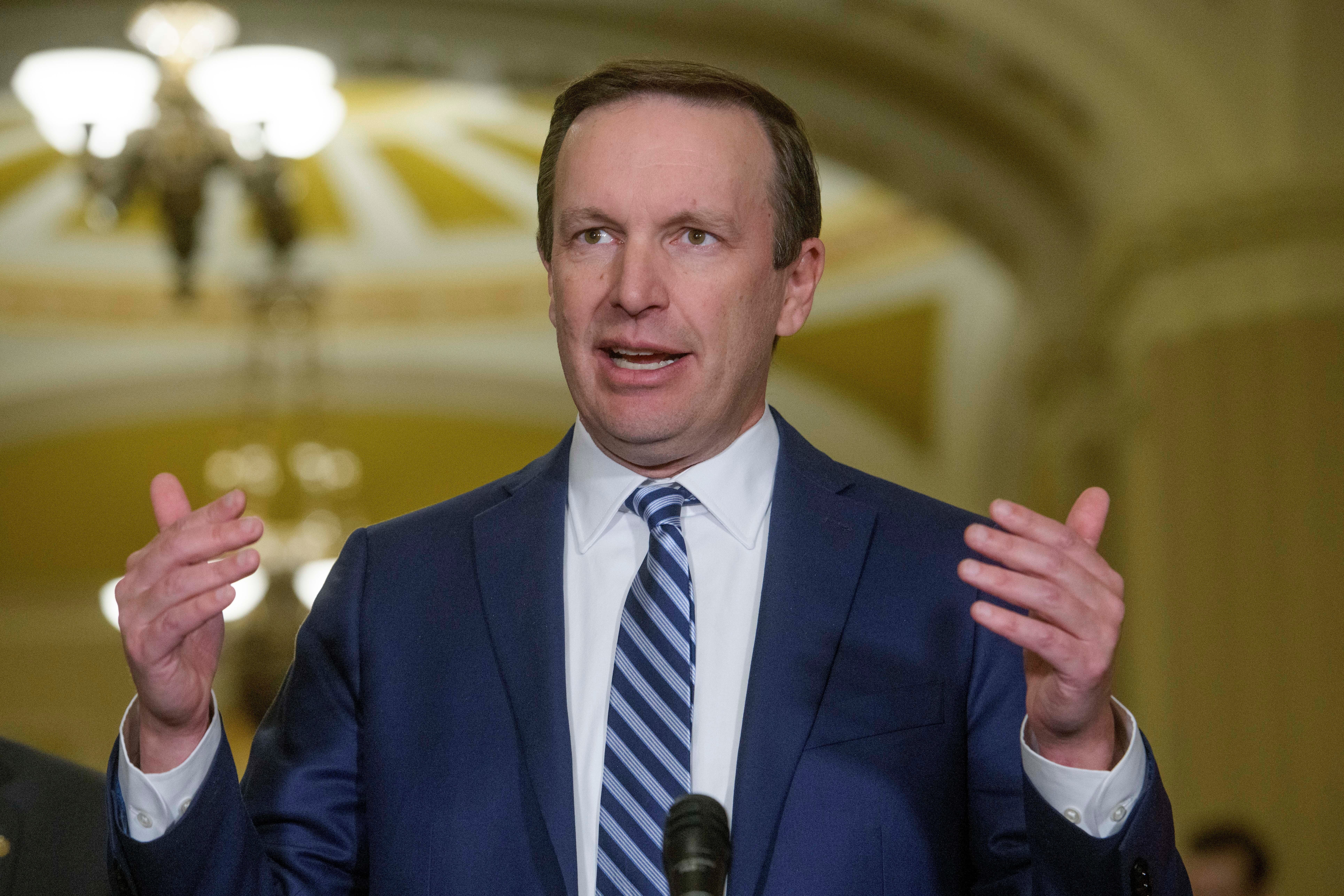
    WASHINGTON — Sen. Chris Murphy is in the hospital after having a stroke and is “awake and alert” as he receives treatment, the Connecticut Democrat’s office said Sunday.

    Murphy’s chief of staff, Allison Herwitt, in a statement said the 53-year-old senator “started experiencing numbness in his arm while at his son’s hockey game” on Saturday.

    “He was taken to a local hospital, where it was discovered he had experienced a stroke,” she said. “He was transferred to Johns Hopkins for further monitoring and is responding well to treatment. The doctors are encouraged by his progress, he is awake and alert, and we are optimistic he will make a full recovery.”

    Murphy was elected to the House in 2006 and to the Senate in 2012. He is not on the ballot Tuesday.

    In the Senate, he serves on the Appropriations Committee and is a leading voice on immigration and gun policy. He is considered a contender for more senior leadership positions in the Senate and among the many Democrats seen as potential 2028 candidates for the White House.

    Three other Senate Democrats have had strokes in recent years.

    Sens. Ben Ray Lujan of New Mexico and Chris Van Hollen of Maryland had strokes in 2022 and have since recovered. Pennsylvania Sen. John Fetterman had a stroke while campaigning for his seat that same year and now uses adaptive technology in the Senate, including live captioning on a phone or tablet that transcribes words as people speak to him and helps him process the conversation.

    Fetterman said on social media Sunday that his family “is rooting for Chris and his family for a full and speedy recovery.”

    Several Republican senators, including Chuck Grassley of Iowa and Pete Ricketts of Nebraska, also offered prayers for Murphy.

    Murphy has been traveling the country in support of House and Senate candidates as his party races for majority control. On Friday, he posted that he had been campaigning in his home state for Gov. Ned Lamont. Last week, Murphy posted from Minnesota campaigning with Lt. Gov. Peggy Flanagan, the Democratic nominee for Senate.

    The final sprint before Election Day capped Murphy’s whirlwind trip to the Middle East at the start of October for meetings with several leaders, including Saudi Crown Prince Mohammed bin Salman. In early September, Murphy completed his annual “walk across Connecticut,” covering about 70 miles over four days, talking with residents about their concerns along the way.

    “Thinking of my great friend & colleague, Chris Murphy,” wrote Sen. Richard Blumenthal (D., Conn.) in a statement Sunday. “I know how fiercely he fights & I’m certain I’ll be welcoming him back to the Senate soon.”

  • French protest violence eases  ahead of school return while scattered riots hit Germany

    French protest violence eases ahead of school return while scattered riots hit Germany

    PARIS — French authorities expressed relief Sunday after mass protests over rising living costs resulted in less violence than previous weekends. But police expect new demonstrations as high schools at the heart of the movement reopen Monday after their autumn break.

    Germany faced its own challenges after nationwide protests Saturday ended with rioters attacking police and looting stores in some cities. Around Europe, hundreds of thousands joined overwhelmingly peaceful marches Saturday inspired by young people, despite scattered unrest.

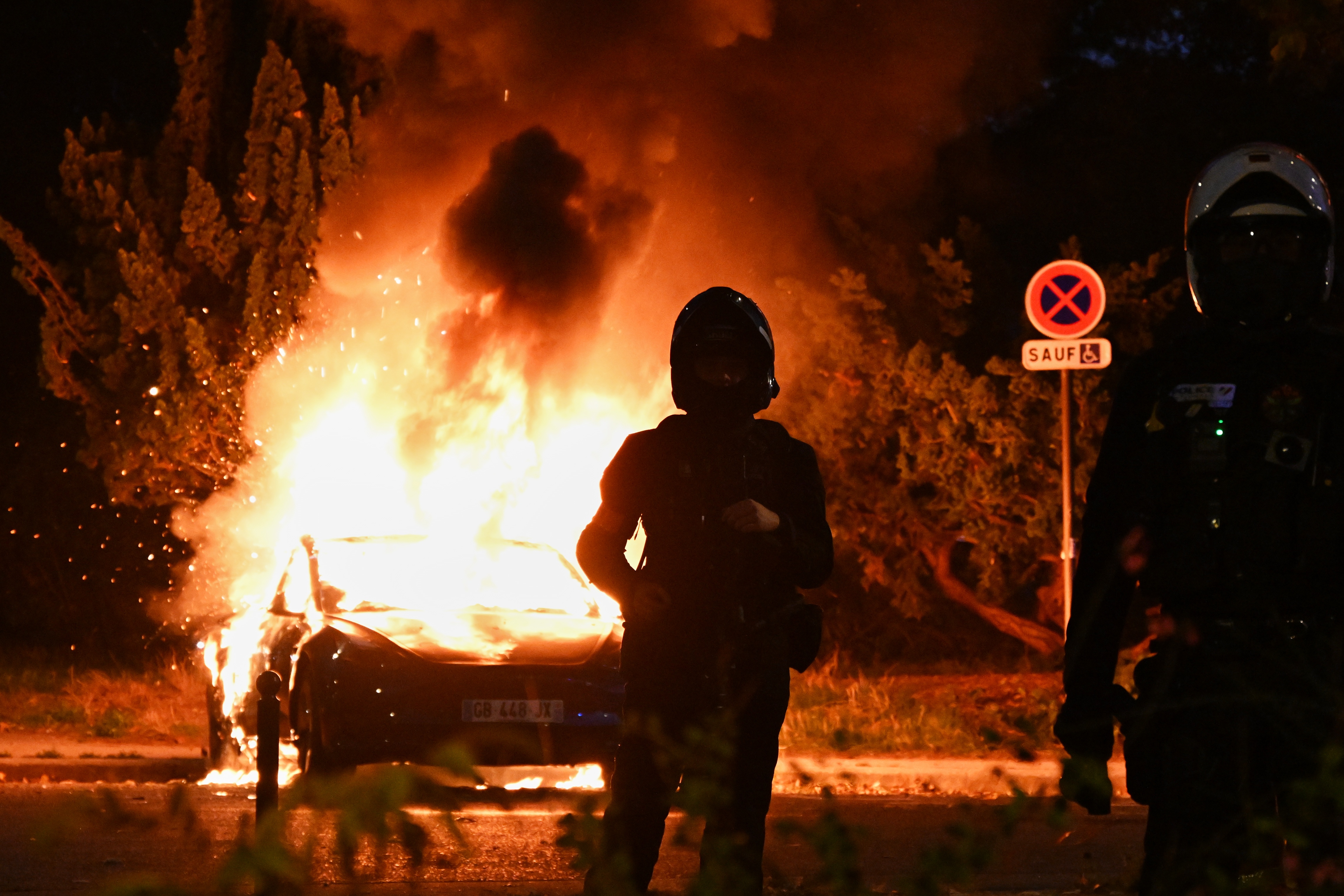
    In Paris, rioters targeted police with Molotov cocktails at the end of Saturday’s march on the city’s eastern edge, injuring three officers and setting a car ablaze, police said. Across town, masked groups hurled fireworks at officers at a viewpoint across from the Eiffel Tower, and police charged repeatedly, sending panicked tourists fleeing the area.

    Overall, however, the violence was less severe than on Oct. 17, when a city hall was torched and more than 2,000 stores were looted in hours of violence that authorities seemed unprepared to control, or during follow-up protests Oct. 24.

    Police had arrested 779 people as of Saturday night, compared with 2,628 on Oct. 17 and 1,314 last weekend. Paris and Marseille police said a handful of shops were targeted but no major damage was reported.

    A national police official said Sunday authorities had prepared for a larger turnout of both peaceful marchers and troublemakers. About 70,000 police were deployed around the country.

    Police are preparing for more tensions as schools reopen Monday and as student groups and labor unions call for new nationwide protests on Tuesday and Thursday, the official told the Associated Press. The official spoke on condition of anonymity because they weren’t authorized to be publicly named according to police policy.

    Germany regains calm after night of unrest

    More than 100,000 mostly young people protested peacefully across Germany on Saturday, demanding that the government invest more money in education, housing, climate protection, and make daily life more affordable. In some cities the protests turned violent at night.

    Following a demonstration in Frankfurt, rioters attacked police downtown and looted stores. More than 100 officers were injured and 54 people — aged 13 to 29 — were detained. It wasn’t clear how many of the protesters were injured. Police said 17 stores were damaged and five of those were looted. After police cordoned off an area in the city center, the situation calmed down by early Sunday morning.

    “I am shocked by the violent excesses in Frankfurt, which will not go unpunished,” said Boris Rhein, the governor of Hesse, where Frankfurt is located. “Anyone who behaves like the attackers in downtown Frankfurt places themselves outside our society.’’

    Violence also broke out Saturday night in Cologne, where police used water cannons to disperse the crowd. In Berlin, protesters attacked police with bottles and pyrotechnics.

    The organizers of Saturday’s protests, a youth initiative called “Gen Z regelt” — roughly “Gen Z’s got this” — posted a statement on Instagram distancing itself from “any form of violence, as well as violent acts by other groups or individuals” who were not part of the demonstrations.

    German Interior Minister Alexander Dobrindt accused “violent left-wing groups and troublemakers from the immigrant community’’ of hijacking peaceful demonstrations. “The rioters and looters will be identified and held accountable,’’ Dobrindt told daily paper Bild on Sunday.

    Housing costs inspired protesters in Portugal

    In Portugal, riot police overnight removed protesters by force from a square in Lisbon following protests for more affordable housing. Thousands of people marched through the city during the day and at the end a few hundred camped out in Rossio, an iconic square in downtown Lisbon. Police intervened early Sunday, removing tents and pushing people away, and a few were detained.

    Portuguese demonstrators have been protesting for weeks following inspiration from the Spanish movement to call out rising living costs, especially housing costs.

  • Civilians in Ukraine’s Kherson prepare for the return of war as localized ceasefire ends

    Civilians in Ukraine’s Kherson prepare for the return of war as localized ceasefire ends

    KHERSON, Ukraine — Civilians in Ukraine’s southeastern Kherson region prepared Sunday for the end of a localized ceasefire that has marked the most significant truce between Kyiv and Moscow since Russia’s full-scale invasion of Ukraine began nearly five years ago.

    The White House said that U.S. first lady Melania Trump helped to broker the limited truce, which began early Tuesday and is expected to end Sunday evening. The pause in hostilities allowed besieged residents in the front-line city of Oleshky to be evacuated in a rare joint operation that ended Saturday.

    “The ceasefire across Oleshky and the surrounding Kherson region has provided residents with the freedom to move, access to food, clean water, medicine, plus a renewed sense of dignity without the constant threat of attack,” Trump said on social media. ”Let Oleshky become the starting point for lasting peace.”

    An estimated 2,000 civilians were in Oleshky when the temporary truce took hold. They were offered the choice of evacuating to territory controlled by Ukraine or Russia, or remaining in the city with replenished food and medical supplies. For the safety of those who have stayed, exact numbers weren’t released after the evacuation.

    At the Ukrainian border Saturday, family members waited for a glimpse of their loved ones, while residents of nearby villages lined the highway waving flags and flashlights to greet the humanitarian convoy.

    But Moscow and Kyiv have continued aerial strikes elsewhere, with Ukrainian President Volodymyr Zelensky saying Sunday that Russia continues to target Ukraine’s energy systems before winter.

    Hundreds of thousands of families were left without power overnight as Moscow sought to exploit Ukraine’s shortage of air defenses, Zelensky said in a post on social media.

    “The intensity of the strikes is extremely high, and the Russians are trying to take maximum advantage of the shortage of ballistic missile interceptors,” he said in a post on X.

    Final day of ceasefire brings some respite

    Residents in the Ukrainian city of Kherson remained calm Sunday, despite knowing that the quiet of the localized ceasefire would soon end.

    “Don’t be afraid, keep holding on,” Oleksandr Knyha, head of the Mykola Kulish Kherson Regional Academic Music and Drama Theater, told the audience as he opened a concert.

    The theater performs every Saturday and Sunday. This weekend’s shows fell during the ceasefire, but the company plans to perform next weekend as usual, even as local officials warn that Russian forces have brought in more weapons and personnel and some residents expect shelling to intensify.

    “Of course, we want peace to finally come,” Knyha said. But “we’ve been working on the front line for four years,” he added, referring to Kherson itself, and the theater has never canceled a performance.

    “Whatever happens, the show is not canceled,” he said.

    The company now performs in a basement and is equipping an additional bomb shelter. About 100 of the theater’s 120 staff members work in Kherson, and none has evacuated.

    Costume maker Alla Vasylenko, 58, said that the silence of the brief truce still frightens her.

    “Nothing will change,” she said. “Everything will go back to how it was before the ceasefire, because believing the Russians means not believing yourself.”

    Vasylenko has no plans to leave.

    “I have 10 dogs, so I can’t leave,” she said. “They urge us to leave, but you need somewhere to go and the means to get there.”

    The trip alone would cost 30,000 to 50,000 hryvnias ($650 to $1,080), a significant sum for her, she said.

    “Until we liberate the left bank, we have no certainty this will end,” Vasylenko said, referring to the Russia-occupied part of the region.

    For many in Kherson, a city that itself lived through Russian occupation, that belief is the reason they stay.

    Knyha is from Oleshky, on the occupied left bank, and used to commute from there to work in Kherson. He hasn’t given up hope of returning home.

    “That’s also what keeps me here,” he said.

    On the last day of the ceasefire, the theater staged a concert built around a “musical map of Ukraine,” with songs from the Crimean Peninsula, which Russia annexed from Ukraine in 2014, to the Carpathian Mountains in Ukraine’s southwest.

    “This is also our job — to unite people and give them hope,” Knyha said.

    Russian drone attack kills 3

    Elsewhere, a Russian attack killed three people, including a 13-year-old girl, in the Ukrainian region of Vinnytsia when a drone hit the grounds of a vocational school, Ukraine’s State Emergency Service said. Four others were wounded, including two 5-year-old girls and a 16-year-old boy.

    Russian drone attacks also continued to target Ukraine’s Kyiv region for a second consecutive day, wounding a woman and damaging homes, energy infrastructure, and a retail establishment, regional authorities said.

    In its daily report Sunday, Ukraine’s air force said that Moscow’s forces attacked Ukraine with 433 drones overnight, of which 371 were destroyed or suppressed.

    Elsewhere, more than 100 Ukrainian drones were shot down over the skies of Russia’s Nizhny Novgorod region east of Moscow, local Gov. Gleb Nikitin said Sunday.

    Nikitin said an industrial building in the town of Kstovo had sustained “significant damage,” but didn’t give further details. Russian media outlets later reported that the attack sparked a blaze at the Kstovo oil refinery, sharing images of black plumes of smoke over the horizon.

    Local officials later placed limits on gasoline sales in the region after lines appeared at gas stations, Russian media outlets reported, citing Nizhny Novgorod’s regional government. Diesel sales weren’t affected, they said.

    Zelensky said Sunday that Kyiv had also struck a factory used to make missile components and air defense facilities inside Russia’s southern Rostov region.

    “We are justly defending ourselves against Russian aggression and doing everything to reduce Russia’s capability to continue it,” Zelensky wrote.
  • Judge dismisses lawsuit seeking to block certification of Alaska Senate race if GOP incumbent loses

    Judge dismisses lawsuit seeking to block certification of Alaska Senate race if GOP incumbent loses

    JUNEAU, Alaska — A federal judge on Sunday dismissed a Justice Department lawsuit seeking to block certification of Alaska’s U.S. Senate race if Republican incumbent Dan Sullivan loses, the latest development in a ballot controversy that has roiled the final days of one of the nation’s most closely watched races.

    Sullivan, an ally of President Donald Trump, faces Democrat Mary Peltola, a former congresswoman, in a race that is among a handful expected to determine which party controls the Senate for the final two years of Trump’s term.

    Tuesday’s ranked-choice election also includes two candidates who have done little campaigning, one of whom shares the incumbent’s name. It was that candidate’s presence on the ballot that prompted Trump to push for the lawsuit out of fear he would siphon votes from the incumbent.

    Shortly after the ruling, the Justice Department filed a notice that it would appeal: “Alaskan voters deserve a fair election, not to be misled in an attempt to rig outcomes,” a department spokesperson said in a statement.

    The lawsuit, filed less than two weeks before the election and as early voting was underway, called for an investigation into whether votes for retired teacher Dan J. Sullivan were intended for the senator. The state said the case lacked merit and argued there would be no way to determine that without violating voter privacy.

    U.S. District Court Judge Sharon Gleason said the relief the federal government sought was “infeasible” because many voters have already cast their ballots.

    “More fundamentally, the United States provides no workable plan as to how it proposes to segregate ballots cast for Daniel J. Sullivan on Election Day and then conduct a court-ordered unspecified ‘investigation’ of those ballots in a manner that would preserve voter secrecy,” she wrote.

    Peltola’s campaign and the Democratic Senatorial Campaign Committee argued that the case lacked any legal basis and amounted to election interference.

    “Today’s ruling is a victory for democracy and a clear message to Donald Trump and Senate Republicans: No one, no matter how powerful, can toss out free and fair elections just because they don’t like the result,” said the committee’s executive director, Devan Barber.

    Peltola’s campaign hailed the ruling. “No sham investigation or baseless lawsuit from a weaponized Department of Justice is going to stop Alaskans from electing Mary on Nov. 3 so she can lower costs for Alaska’s working families,” the campaign said in a statement, alluding to a federal probe disclosed after Trump said last week that he wanted Peltola prosecuted for the scheme.

    Attorneys for the state did not immediately return messages seeking comment.

    Senator says he expects ‘to lose a lot of votes’ to the other Dan Sullivan

    The senator and his allies, including Trump, for months have portrayed Dan J. Sullivan as a sham candidate intent on confusing voters and helping Peltola.

    Earlier Sunday, Sen. Sullivan told CNN that he thought the presence of the second Sullivan on the ballot would affect the election.

    “I’m sure I’m going to lose a lot of votes to that trickery,” he said.

    He also said he doubted claims by Peltola that she had no idea her top political aides were involved in recruiting Dan J. Sullivan to run as a way to confuse voters.

    “There is no way this went on for a year that they weren’t informing her,” Sullivan told CNN’s State of the Union. “She got caught lying, and she’s still lying to the Alaskan people, the media, to all of us.”

    In the week before Election Day, the New York Times reported that Peltola’s campaign was involved in efforts to recruit the second Sullivan. Shortly after entering the race in June, Dan J. Sullivan said he’d had no contact with her campaign about running. He has not responded to multiple messages over the past few days.

    His recent public absence prompted a social media post Sunday by the president: “The Fake Daniel J. Sullivan, Jr., has DISAPPEARED! Nobody can find him, including Law Enforcement.”

    Peltola’s campaign responded to the Times story by saying it had no involvement in the campaigns for either Sullivan: “I am not interested in tricking voters,” Peltola said during a recent campaign event.

    In its statement indicating its plans to appeal, the Justice Department said the federal judge dismissed the case on procedural grounds but did not dispute the government’s argument that Dan J. Sullivan entered the race “as a frivolous candidate to confuse voters.”

    Multiple investigations look into possible decoy candidate

    State courts, including the Alaska Supreme Court, rejected an earlier Republican-backed effort to block the retired teacher from the August open primary ballot on which he appeared as Daniel J. Sullivan Jr., with no party affiliation. The senator was listed as Dan S. Sullivan, Republican and incumbent.

    Both Sullivans appear the same way on the general election ballot. Peltola placed first in the primary, followed by the senator. Dan J. Sullivan received about 2.5% of the primary vote, but that was enough to finish within the top four and qualify for the Nov. 3 ranked-choice election.

    Attorneys for the Alaska Department of Law represented state elections officials in the case and asked Gleason, who was appointed by former Democratic President Barack Obama, to toss the lawsuit. They filed a scathing response to the federal government’s complaint, calling it “meritless.”

    Alaska also said the state had taken “significant steps” to distinguish the two Sullivans on the ballot. Voters who still might be confused could ask for help or look up candidate biographies and other information in state-distributed election pamphlets.

    Republicans, including ones working with Trump, also have a long history of backing decoy candidates in elections. The governor, a Republican, has ordered an investigation and suggested he may not certify a possible Peltola victory.

    In her ruling, Gleason wrote that the Trump administration’s attempt to block certification ran counter to the Constitution, which gives states the authority to run elections. She also cited the Supreme Court’s Purcell principle, which holds that federal courts should generally not change election rules too close to an election.

    Kristen Clarke, general counsel of the NAACP, which had filed a brief supporting the case’s dismissal, called the judge’s decision “a big win for the voters in Alaska.”

    “The law is clear, and the DOJ’s case was a baseless, eleventh-hour attempt to hijack this midterm election,” she said.

    On Thursday, the Justice Department escalated a criminal investigation over the presence of Dan J. Sullivan on the Alaska ballot, issuing a raft of new grand jury subpoenas, a person familiar with the matter told the Associated Press. The FBI also has begun contacting people who donated to him, some of whom told the AP that the agents were asking if they had been misled about which candidate they were supporting.

  • Democrat Haley Stevens endorses GOP’s Mike Rogers in Michigan Senate race 2 days before election

    Democrat Haley Stevens endorses GOP’s Mike Rogers in Michigan Senate race 2 days before election

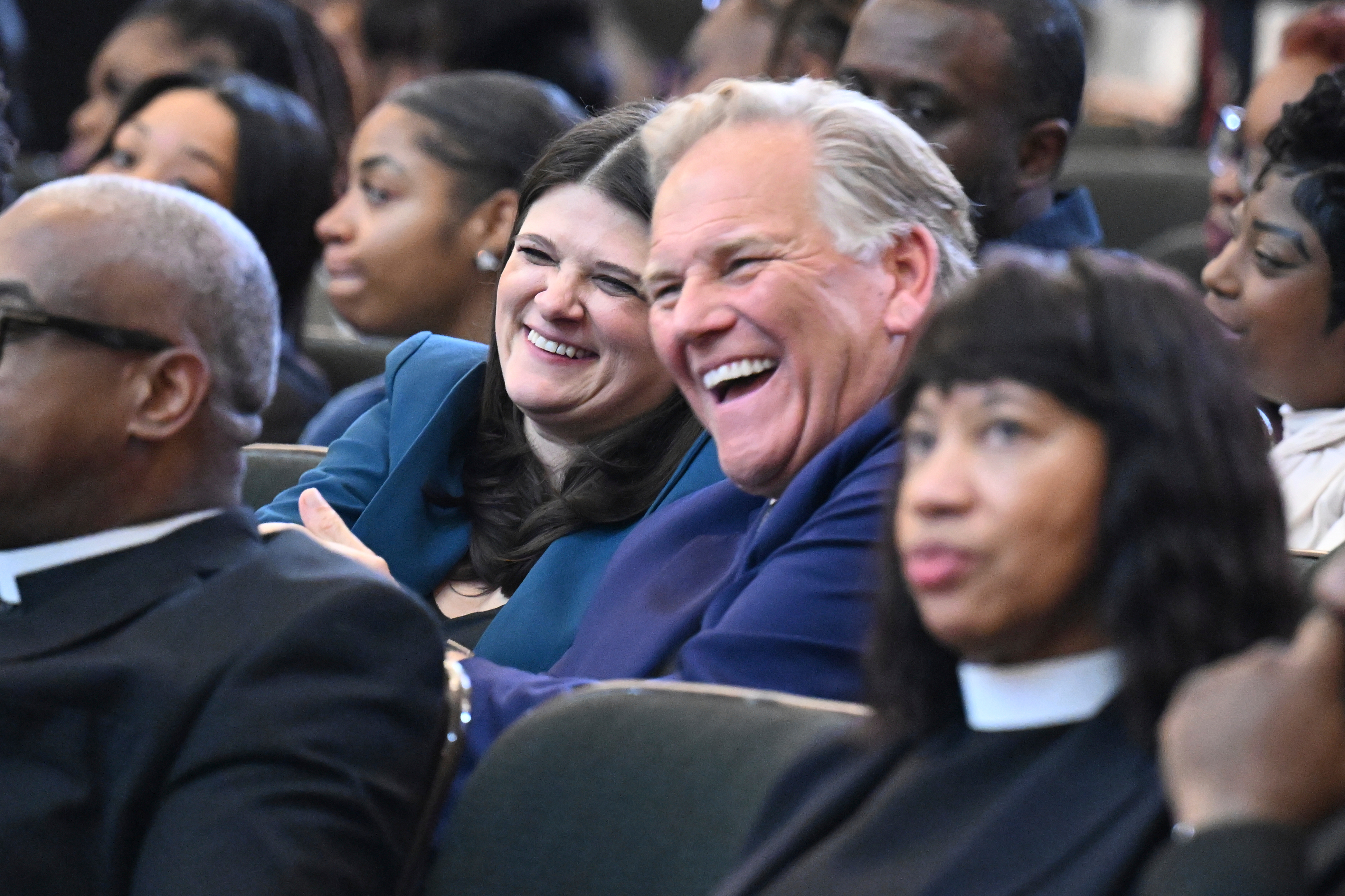
    DETROIT — Michigan Democrat Abdul El-Sayed’s former opponent in the U.S. Senate primary, Haley Stevens, stunned party officials Sunday by endorsing Republican Mike Rogers after Democratic tensions boiled over days before the election that could determine the balance of power on Capitol Hill.

    Stevens endorsed Rogers after attending a Detroit church service with him. The remarkable show of support for President Donald Trump’s backed candidate in the tightly contested race comes after she was uninvited to a joint event the same day with El-Sayed, who defeated the congresswoman by a slim margin in the August primary.

    “Our Democratic nominee for Senate said I was no longer welcome in his campaign and that I should stay away,” Stevens said video announcing the endorsement. “And he’s right. And that’s why I am endorsing Mike Rogers for the United States Senate today.”

    While Stevens has been critical of El-Sayed’s comments surrounding Israel, she had recently reaffirmed she would vote for the former public health official who would be the country’s first Muslim senator if elected Tuesday. The fallout from her visit to Perfecting Church was swift, with her longtime chief of staff resigning and a number of staff members expected to follow soon, according to a person familiar with the developments who spoke on condition of anonymity to discuss internal matters.

    As Stevens swayed alongside Rogers in the pews, El-Sayed was a few miles away at another church trying to present a united front with fellow Democrats. The Associated Press attended both services as the dramatic split-screen unfolded.

    The latest and late-stage infighting comes as Democrats look to drive turnout among Black and Jewish voters in key strongholds. El-Sayed, a former Michigan public health official, is in a tight race with Rogers, an ex-congressman, for the seat held by Democrat Gary Peters, who is retiring. Keeping Michigan in Democratic hands is vital to the party’s effort to win a majority for the final two years of Trump’s second term.

    “United we stand, divided we fall,” Rep. Debbie Dingell (D., Mich.) had said hours earlier.

    Stevens defects as Democrats preach unity

    Stevens was initially set to join the Democratic nominee and U.S. Rep. Jim Clyburn of South Carolina at a church event. Those plans unraveled after a dispute over Israel and an outside group’s campaign advertisement escalated into a public exchange of criticism between the rivals.

    At the church north of Detroit, Stevens and fiancé Jason Turkish worshipped with Rogers and his wife, Kristi. Turkish said last week that he was going to vote for Rogers, arguing that El-Sayed had not done enough to address the Jewish community’s concerns.

    The appearance stunned Democrats across the political spectrum, coming just days after Stevens publicly reaffirmed that she would vote for El-Sayed.

    Meanwhile, El-Sayed attended a separate church service alongside Dingell, Clyburn, Maryland Sen. Angela Alsobrooks, and state Sen. Mallory McMorrow, who dropped out of the Democratic Senate primary before voting began.

    El-Sayed spoke for nearly 10 minutes at the service, but did not address the latest controversy.

    “It’s in churches like this, in pews like the ones in which you sit, that the foundation of my life was built,” El-Sayed said.

    Dingell, a senior Democratic figure in the state who helped organize the planned joint appearance in hopes of bringing together Democrats in the final days before Tuesday’s vote, said she asked Stevens not to attend and that Stevens told her she would abide by that.

    “I’m the one who pulled it because it had become way too distracting,” Dingell said a telephone interview Sunday before Stevens’ appearance. “This is not how I was going to spend my weekend before the election, to be perfectly frank.”

    “The bishop was getting upset, because this is a real church service,” Dingell added.

    Dingell and other Democrats insist the party is united behind El-Sayed. Early voting has been underway since Oct. 24, before the latest tensions erupted. But the renewed bickering has complicated Democrats’ efforts to deliver a unified closing message in crucial areas such as Detroit, where turnout could prove decisive.

    “Whenever anyone tries to set us against each other, we have an obligation to stand up and fight back,” Stevens wrote in a statement late Friday that ended with: “Go vote!”

    The tensions carry particular significance in Wayne County, which includes Detroit, and neighboring Oakland County. Stevens defeated El-Sayed in both counties in the August primary, drawing support from Black and Jewish voters who are important parts of the Democratic coalition.

    How did we get here?

    The Democratic primary was among the most bitter this year. Each candidate accused the other of making personal attacks. Tens of millions of dollars in outside spending poured into the race, including from the American Israel Public Affairs Committee’s affiliated super PAC, which backed Stevens. El-Sayed took particular offense at an outside group’s ad accusing him of disrespecting women.

    Although Stevens pledged after the primary to help El-Sayed however she could, the two have not appeared together publicly since a unity breakfast two days after his summer win.

    Their lack of joint appearances was particularly notable as some Jewish voters and leaders continued to criticize El-Sayed over his comments about Israel, past rhetoric, and campaign appearances with controversial streamer Hasan Piker.

    The divisions spilled into public view again Wednesday when Stevens’ fiancé told the Detroit News that he would vote for Rogers. Hours later, Stevens appeared on CNN to reaffirm her support for El-Sayed but urged his campaign to “shut out the hate and call it out.”

    Dingell had been working to bring them together at church alongside Clyburn, one of the nation’s most prominent Black Democrats.

    But on Friday, after the Associated Press reported on the planned joint appearance, Stevens released a lengthy statement calling on El-Sayed to condemn an ad by an independent left-wing group that linked U.S. support for Israel to high grocery prices.

    “Abdul promises to get money out of politics,” Stevens wrote. “He can begin by getting Israel out of his explanation for everything Michigan cannot afford.”

    El-Sayed then responded: “So while Congresswoman Stevens seems intent on relitigating a primary that ended three months ago, let’s all focus on the task at hand.”

    He repeated Saturday evening that the ad was not made by his campaign and “I do not agree with the contents of that ad.”

    Michigan Democrats insist they are united

    Despite the latest tensions, El-Sayed planned to move ahead with a series of church visits Sunday alongside Clyburn and other prominent Black Democrats.

    The appearances will also include Detroit Mayor Mary Sheffield, Garlin Gilchrist II, the nominee for secretary of state, and several Michigan bishops, according to campaign advisories obtained by AP.

    Democrats are seeking to drive turnout in Detroit, where roughly three-quarters of residents are Black and strong support is essential to Democratic success statewide.

  • Gabby Williams leads Valkyries to WNBA title in second season with Game 7 win against Atlanta

    Gabby Williams leads Valkyries to WNBA title in second season with Game 7 win against Atlanta

    Gabby Williams scored her team’s final 11 points of the third quarter and dazzled through the fourth on the way to 30 points, and the Golden State Valkyries captured a championship in just their second season by beating the Atlanta Dream 68-63 in Game 7, a first for the WNBA, on Saturday night.

    Jordin Canada scored 18 points, Allisha Gray 16, and Angel Reese eight points and 12 rebounds for the Dream, denying another championship in the franchise’s fourth try.

    Gray made two free throws with 11 seconds left, then Atlanta forced a jump ball — Gray against Williams — and Veronica Burton corralled it and converted two free throws with 5.1 seconds to go.

    Rhyne Howard’s layup tied it at 57 with 2:41 left only for Williams to answer once more by making a clutch 3-pointer. She converted two free throws with 1:40 remaining, then Kiah Stokes scored a late basket. She pulled down 13 rebounds and blocked two more shots to cap her spectacular postseason.

  • Attorneys for Alaska say ‘meritless’ Trump demand to set aside Senate ballots ‘not even possible’

    Attorneys for Alaska say ‘meritless’ Trump demand to set aside Senate ballots ‘not even possible’

    ANCHORAGE, Alaska — Alaska’s Republican-run state government on Saturday urged a federal judge to dismiss a lawsuit filed at President Donald Trump’s direction to stop the certification of a possible Democratic win in that state’s pivotal U.S. Senate race, writing that there is “no reason for this Court to entertain this meritless lawsuit any longer.”

    The scathing filing from the state’s attorney general’s office comes as U.S. District Court Judge Sharon L. Gleason set a deadline of Saturday for arguments over whether she should dismiss the lawsuit without even a hearing. The complaint from the U.S. Department of Justice has been roundly criticized by election law experts and demands that the judge halt certification of a possible win by Democrat Mary Peltola until it is determined whether voters were confused by the presence of a second candidate on the ballot with the same name as her main rival, Republican Sen. Dan Sullivan.

    The Department of Justice on Friday added a request that the judge separate all ballots showing votes for the second Dan Sullivan until it can be determined whether voters were fooled into wasting their votes for a spoiler candidate. In its Saturday filing, Alaska said this was “both disturbing and impossible.” It added there would be no way to do that without violating voter privacy.

    Trump also demanded that Peltola be prosecuted after the New York Times this week reported that internal texts and posts appear to show the Democrat’s campaign was involved in recruiting the second Sullivan, a retired schoolteacher in the remote fishing village of Petersburg, onto the ballot. But the state filing notes that the two Sullivans are distinguished from each other on the ballot — the senator is listed as a Republican and the incumbent, the other simply as “Daniel J. Sullivan Jr.”

    “State officials carefully designed the ballot to minimize voter confusion,” Alaska officials wrote. “The Court should immediately dismiss this lawsuit with prejudice and allow state officials to conduct the general election — including ballot counting and certification — free from unwarranted federal interference.”

    The Trump administration argued that a preamble to the 1990s law governing voter registration gave it the responsibility for ensuring states maintained the “integrity” of federal elections. It has said it’s simply trying to combat fraud by preventing the Democrat from being declared the victor in a race that could determine which party controls the U.S. Senate.

    The Department of Justice issued a wave of subpoenas and announced it was conducting a criminal investigation in the case as the administration has stepped up its use of its legal powers to support Trump’s side in the midterm election.

    Peltola has denied involvement in the presence of the second Sullivan on the ballot. The Times report was based on interviews with her former campaign manager, texts, and contributions from a political group backing Peltola to an out-of-state Democratic consultant who recruited the second Sullivan.

    Alaska’s Republican governor, Mike Dunleavy, who announced a state probe into the situation after the Times story, has condemned the placement of the second Sullivan on the ballot. The Alaska Supreme Court ruled this summer that the second candidate fulfilled all legal requirements to stay on. The state government’s filing on Saturday says that the new revelations about the possible role of Peltola’s campaign don’t change the fact that he’s legally on the ballot.

    “Not every wrong can be righted in federal court,” the state wrote.

    Peltola’s campaign and voting rights groups also have urged Gleason to dismiss the case, putting them in unusual alignment with Alaska state officials.

    “Imagine if the federal executive could pluck a few words like ‘election integrity’ from some statutory preamble and, on that basis alone, bend the machinery of state elections to his will, preemptively blocking certification of a U.S. Senate election to protect his preferred candidate from defeat and then subjecting voters to a law-enforcement-led inquest about who they ‘really’ supported,” the American Civil Liberties Union wrote in a filing urging the lawsuit’s dismissal. “Imagine that world and ask whether it is what the Framers wanted or precisely what they most feared.”

  • Trump lawsuit against Wall Street Journal over Epstein birthday letter is dismissed with prejudice

    Trump lawsuit against Wall Street Journal over Epstein birthday letter is dismissed with prejudice

    A federal judge on Saturday threw out President Donald Trump’s multibillion-dollar lawsuit against the Wall Street Journal and media mogul Rupert Murdoch over a story reporting on his ties to wealthy financier Jeffrey Epstein.

    U.S. District Judge Darrin Gayles in Miami dismissed the suit with prejudice, ruling that the president did not prove the defendants made defamatory statements with actual malice.

    The ruling said the lawsuit was “grasping at straws” as it attempted to “manufacture” flaws in the Journal’s investigative reporting.

    When a case is thrown out “with prejudice,” it cannot be refiled again and the dismissal is permanent and incontrovertible.

    The lawsuit was over a story the Journal published last year describing a sexually suggestive letter that the paper said bore Trump’s name and was included in a 2003 album compiled for Epstein’s 50th birthday.

    The letter was reportedly collected by disgraced British socialite Ghislaine Maxwell as part of a birthday album for Epstein years before he was first arrested in 2006 and subsequently had a falling-out with Trump.

    The letter bearing Trump’s name includes text framed by the outline of what appears to be a hand-drawn naked woman and ends with, “Happy Birthday — and may every day be another wonderful secret,” according to the newspaper.

    Trump denied writing it and called the story “false, malicious, and defamatory.”

    The lawsuit, filed in federal court in Miami, accused the paper and its reporters of having “knowingly and recklessly” published “numerous false, defamatory, and disparaging statements,” which, it alleged, caused “overwhelming financial and reputational harm” to the president.

  • Kamala Harris urges a ‘too big to rig’ turnout for the midterms and tees off on Trump

    Kamala Harris urges a ‘too big to rig’ turnout for the midterms and tees off on Trump

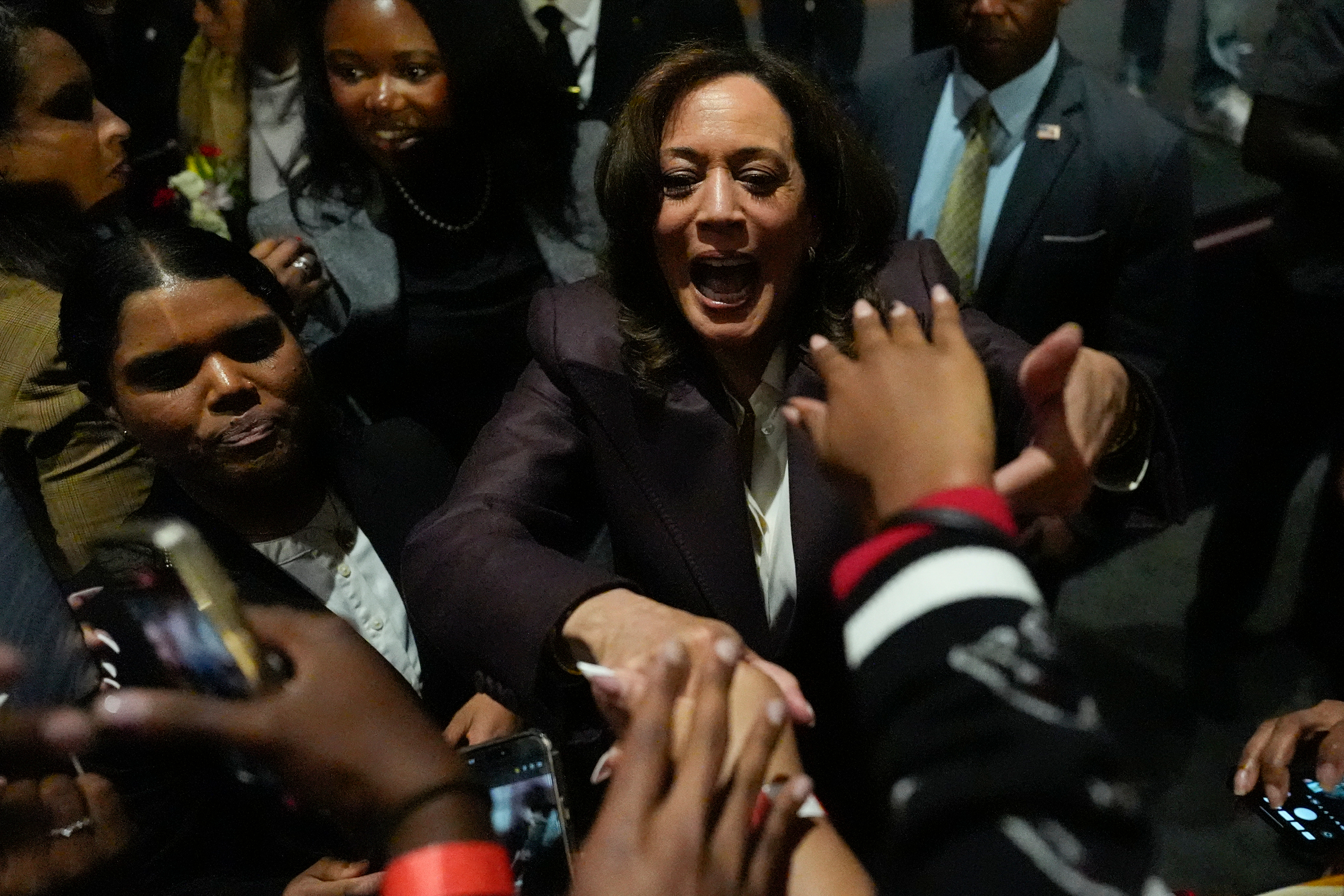
    ATLANTA — Two years after Kamala Harris lost the presidential election to Donald Trump, she still delights Democratic donors and activists with jabs against him, saying the Republican is “callous, corrupt, and incompetent” and calling him the “decorator in chief” for his White House renovations and gold adornments.

    But the former vice president also has plenty to say about what her party, the electorate, and the country should do next as she also considers whether to run again.

    “This is the moment where we turn that anger into action,” Harris said more than once during a busy schedule in the final stretch of the midterm campaign.

    Harris campaigned for candidates across seven states, ending with a recent two-day visit to Georgia. It was, in parts, the kind of nostalgic tour seen from Barack Obama and Bill Clinton — two-term presidents whose last campaigns are behind them — and the barnstorming from potential future contenders such as Govs. Gavin Newsom of California and Andy Beshear of Kentucky or U.S. Rep. Alexandria Ocasio-Cortez of New York.

    As the first Black woman elected to nationwide office, Harris urged fellow Black Americans to “honor the ancestors” with their votes but she also has become unapologetically “transactional” by demanding more from politicians.

    Harris, a California senator before joining Joe Biden on the 2020 ticket, also pushed fellow Democrats to govern aggressively and she called for “structural work” that she said was necessary to reinvigorate American democracy: U.S. Supreme Court expansion, statehood for the District of Columbia and Puerto Rico, and reconsideration of the Electoral College.

    “I think she’s hitting all the right notes,” said Melinda Johnson, a retired nurse who attended a Fulton County Democratic Party fundraising gala that Harris headlined in Atlanta.

    Harris made it to early presidential primary states, including Nevada, New Hampshire, and Michigan. She also went to Mississippi, not exactly a hotbed of presidential politics, on behalf of U.S. Senate candidate Scott Colom.

    “The South is in play,” she said. “When Democrats invest in the South, we can win in the South.”

    In Georgia, Harris delved into civil rights history as she accused the U.S. Supreme Court of “backdoor racism” with its decision to gut the Voting Rights Act and allow Republicans to redraw boundaries for congressional districts that now elect nonwhite lawmakers.

    “Ruthlessness” is key, she said at the Democratic dinner in Atlanta. “Not ruthlessness in the sense of cruelty … but in our willingness to use our power to deliver on our commitments.” Democrats, she said, “can no longer let process stand in the way of progress.”

    Throughout her stops, Harris nodded implicitly at her loss to Trump.

    “You know we’ve been spending the last year and a half, so many of us, going through a range of emotions,” she told students. “Anger, depression, sadness, frustration, a sense of helplessness and powerlessness.”

    Warning that Trump could try to meddle in Tuesday’s election, she echoed one of the president’s own mantras to encourage people to vote.

    “In this case,” she said at Atlanta’s Elizabeth Baptist Church, “we just need to turn out in really large numbers that would be too big to rig.”

  • Congo’s Ebola deaths top 5,000 as fear of continent-wide spread mounts

    Congo’s Ebola deaths top 5,000 as fear of continent-wide spread mounts

    BUNIA, Congo — Deaths in Congo’s Ebola outbreak have topped 5,000 as the country grapples with the relentless spread of the disease and cases are recorded in other African countries, the latest government data on Saturday shows.

    Data from the Congolese Ministry of Health showed that the disease has killed 5,026 people out of 10,351 infected, at a nearly 50% lethality rate. The surge is sparking concerns among experts regarding the authorities’ ability to contain the deadly virus.

    The latest outbreak, caused by the Bundibugyo virus, was declared in mid-May, catching authorities by surprise. They have since struggled to manage it.

    It is already the second deadliest Ebola outbreak in history, second only to a two-year-long West Africa outbreak between 2014 and 2016, which killed 11,000 people across multiple countries.

    “It is a very tragic milestone because it is just not a number,” said Patrick Otim, a program area manager with the World Health Organization. “It is families and communities that have been devastated by this outbreak. The number also shows the severity of this outbreak.”

    So far 2,788 people have recovered from the virus. The Bundibugyo virus has no known vaccine or treatment, but health workers treat patients based on symptoms.

    One-third of people who have died did not receive any care

    Since May, the disease has spread to 67 out of the country’s 178 health zones in eight of 26 provinces. Fifty of the affected 67 health zones have active cases.

    The virus has been concentrated in the eastern region of Congo, especially in Ituri and North Kivu, which have emerged as the epicenters with 9,782 total confirmed cases and 4,792 total deaths.

    Authorities are still struggling with tracing contacts and testing, key components in the race to curb the outbreak.

    According to the Africa Centers for Disease Control and Prevention, about 80% of new cases are coming from outside the chain of monitored contacts, meaning an overwhelming share of infections are coming from chains of transmission unknown to health authorities.

    Also, one-third of recorded deaths are victims who have died outside of treatment centers, before being tested for Ebola, WHO’s Otim said. These issues, health officials say, contribute to community transmission outside of the immediate purview of health workers who can effectively manage infection in accordance with medical protocols.

    “These are people we never had opportunity to try to save them and it is one of the biggest concerns for us in this outbreak. How do we try to reach people early to get them to come to health facilities to get a fighting chance to survive?” Otim said.

    ‘The outbreak is stretching everyone responding to it’

    The explosive number of infections in Congo comes on the heels of a long list of issues that have hamstrung efforts to contain the outbreak.

    The eastern region of Congo, where the outbreak is concentrated, plays host to a conflict between the government and an array of armed groups, most prominently the Rwanda-backed M23 rebel group, and there is also an Islamist insurgency in the border areas with Uganda, where the Allied Democratic Forces carry out attacks, limiting the reach of healthcare workers.

    Also, there is widespread disbelief among the population, which has led to a series of attacks on health workers and health facilities. A nurse was killed while responding to an Ebola alert last week, and a politician from the ruling party was killed in September after advocating for health measures on the radio.

    Health workers have gone on multiple strikes, shutting down facilities where they treat infected people, citing long delays in payments by the government.

    On Friday, workers at an Ebola treatment center in Tchomia, in Ituri, went on strike, demanding four months of unpaid wages. At the center, there are currently five confirmed Ebola patients and 10 suspected cases under care.

    “We are tired of requesting our salaries. If they want to pay us, they will. … Today, being able to feed our families has become a real problem,” Moise Mugenyi, one of the striking workers, told the AP.

    Justin Mukonkole, acting head of response operations in Ituri, said the workers should be patient while the government responds to their demands.

    Similar situations have played out in other health zones like Beni in North Kivu, where services in some treatment centers have ground to a halt. Alain Siwako, an elected public official in Beni, said cases are spiraling in Beni because of a lack of fuel and financial resources from the central government.

    “Across Ituri and North Kivu, this outbreak is stretching everyone responding to it, including the communities themselves,” Rose Tchwenko, country director for the DRC, Prosper Global (formerly Mercy Corps), said.

    In October, both Kenya and Nigeria confirmed cases of Ebola. Kenya has confirmed eight cases and 2 deaths, while Nigeria’s sole confirmed case had been evacuated to Switzerland.

    The confirmation of cases in both countries, and earlier in Uganda, made the latest outbreak the first recorded in three African regions and the continent’s most geographically widespread outbreak.