Category: Associated Press

  • Heads of AI firms tell UN Security Council that it could be a risk to all humanity

    Heads of AI firms tell UN Security Council that it could be a risk to all humanity

    UNITED NATIONS — The heads of major artificial intelligence firms pleaded with the United Nations on Wednesday to save the world or at least its people — in the form of somehow regulating the burgeoning technology that they have been designing.

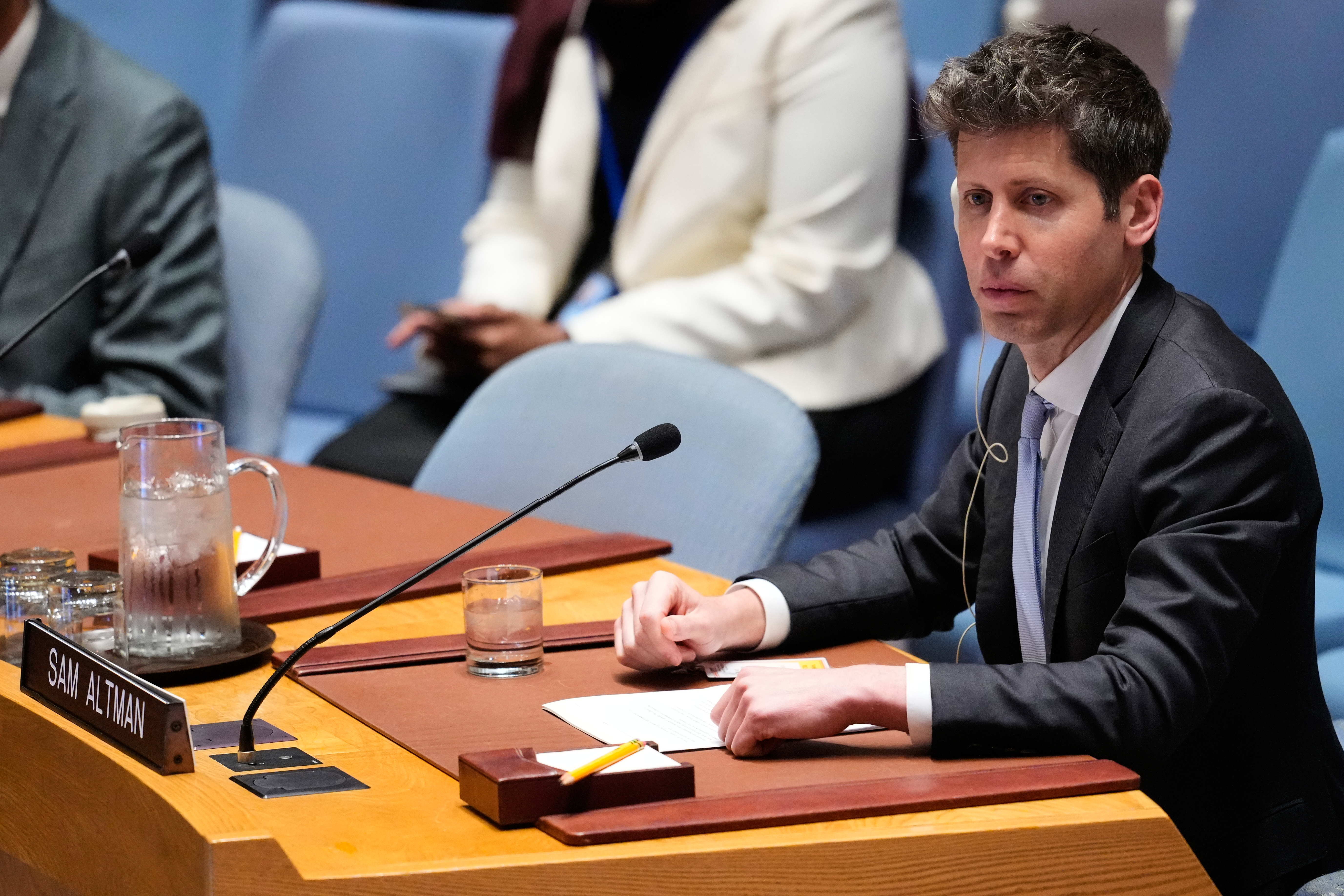
    “If managed poorly, I even believe AI could be a risk to humanity as a whole,” said Dario Amodei, chief executive officer of Anthropic. And from his competitor Sam Altman, CEO of OpenAI, came this assessment: “We could lose control of the future to AI.”

    Both said the countries of the world, through the U.N. Security Council, where they testified Wednesday, have to set safeguards of some kind, which would be actual controls to prevent the technology from getting too powerful to rein in.

    They also called for the world to make sure that the power of AI isn’t concentrated in one company or country. They said that as they also touted the benefits of the technology for bettering humanity and what Altman called “giving people more power over their own lives.”

    Those tech leaders “are telling us in stark terms that it cannot be left to them to prevent disaster from befalling the world,” said United Kingdom Foreign Secretary Ed Miliband said at the Security Council. “We cannot ignore them because they are right.’’

    AI will be at the heart of G20 discussions

    Miliband said when the U.K. takes control of the G20 next year it will put controlling AI at the heart of discussions, looking for a single set of global standards “to insure that AI development is safe.”

    But the United States said don’t do it.

    Worries about control of AI are “not a reason to pause its further development or to constrain it with new global governance structure,” said White House Science Adviser Michael Kratsios. “We want you, our allies and partners, to share in the benefits of this technology.”

    For most of the world leaders, along with California Governor Gavin Newsom in New York for climate discussions, one of the key questions about AI is this: Who should control life-and-death decisions — human or machine?

    Amodei, Altman and Hugging Face CEO Clément Delangue, who spoke via a glitchy remote connection, spoke with the U.N.’s most powerful council because they and world leaders are trying to figure out not just whether to control AI, but by who, how it could possibly be done and when it might be just too late.

    The day before, U.N. Secretary-General Antonio Guterres warned of “killer robots.” Experts and European leaders said that’s not hyperbole but something that’s either already a grim reality or perilously close.

    Amodei called on the nations of the world to agree on not letting AI build biological weapons, figure out how to verify what models have the capability to do and “establish common standards” for testing and for loss of control and misuse.

    French Foreign Minister Jean-Noël Barrot, whose country convened Wednesday’s meeting and has fostered various other coalitions and discussions about AI, compared the current state of it to both the runaway computer HAL9000 in the movie “2001: A Space Odyssey” and the dawn of the atomic age.

    “Just as with the atom back then, the international community must now regulate AI in order to make the most of its potential and avoid the worst,” Barrot said.

    Other leaders and nations are paying close attention to AI

    His wasn’t the only concern expressed during this high-profile U.N. meeting week.

    Ukrainian President President Volodymyr Zelenskyy, speaking at the General Assembly, said some kind of human control over machines must achieved soon. Otherwise, he said, for his country it may be just too late.

    “There is already a real possibility that AI, not only people, will begin to decide what happens on the battlefield. And we need peace before we reach that point,” Zelenskyy said.

    Last month, a Russian drone seemingly using AI “autonomously made a targeting decision that killed three Ukrainians. Killer robots are technically easy to build, and they are real. We should not be under any illusions otherwise,” said Kentaro Toyama, an information technology professor at the University of Michigan.

    The U.N. meeting unfolded as Chinese President Xi Jinping headed to Washington for a much-anticipated state visit. The U.S. and China are jostling for AI dominance, and AI interests are looking to what comes out of Xi’s discussions with U.S. President Donald Trump. Ahead of the meeting, U.S. Treasury Secretary Scott Bessent said the two countries had discussed a potential new “notification mechanism” for AI incidents that could impact national security.

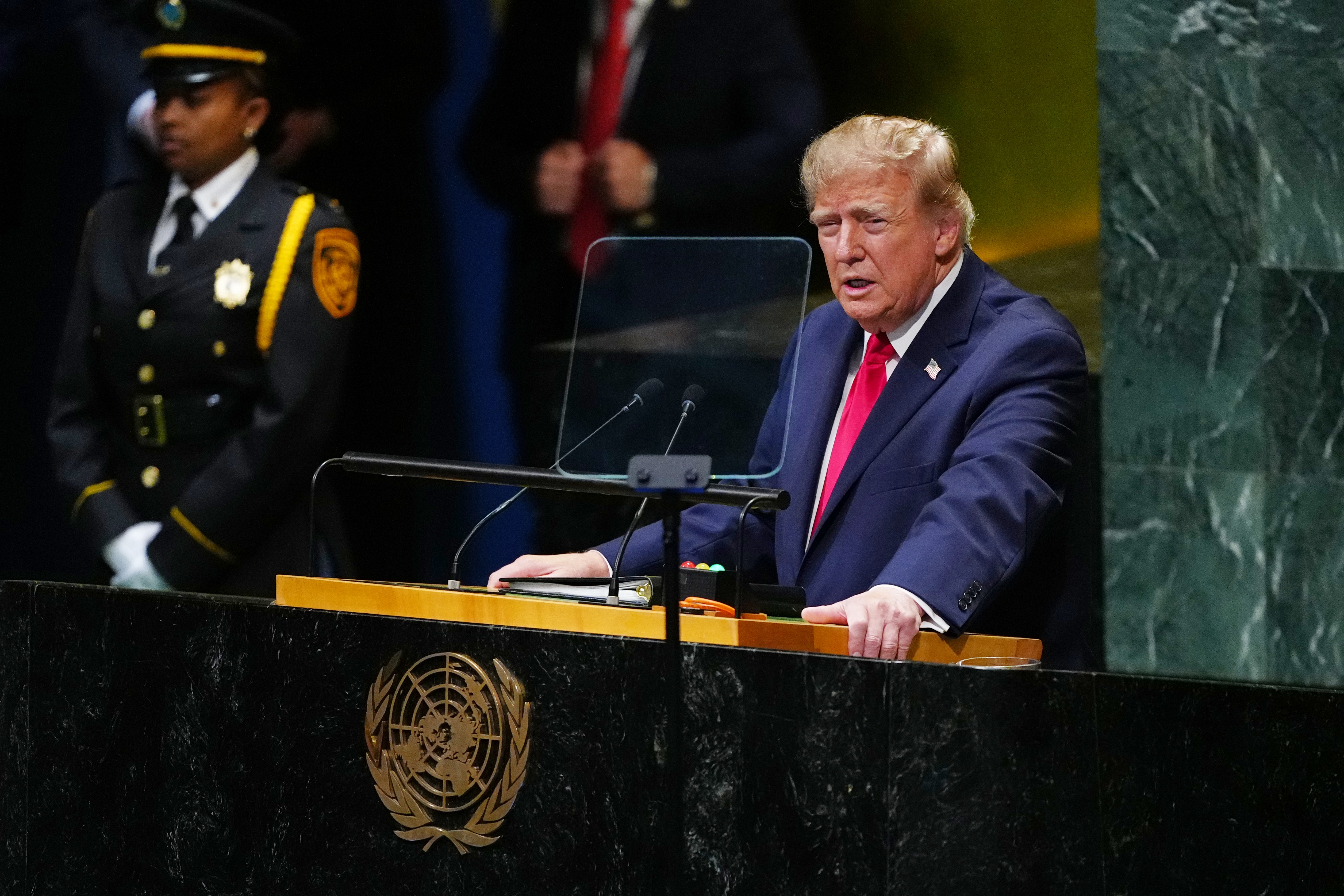
    But on Tuesday, Trump, lauding AI as “superintelligence,” said the United States would reject efforts to control the technology as it tries to win the development race with China. Kratsios was the one of the few who used that term in the Security Council.

    Meanwhile, regional groups in Europe, Asia and elsewhere also are trying to coordinate AI policies, and various nations — and even subcomponents, such as U.S. states — are crafting their own.

    Still, U.N. watchers and risk experts say the world body hasn’t been relegated to the sidelines on AI regulation.

    “The U.N. is not in the driver’s seat of global discussions on AI, but it hasn’t been kicked out of the car yet,” said Daniel Forti, who oversees U.N. affairs at the International Crisis Group, a think tank.

  • Zelensky, at UN, urges leaders to keep choking Russia’s revenues and impede its war efforts

    Zelensky, at UN, urges leaders to keep choking Russia’s revenues and impede its war efforts

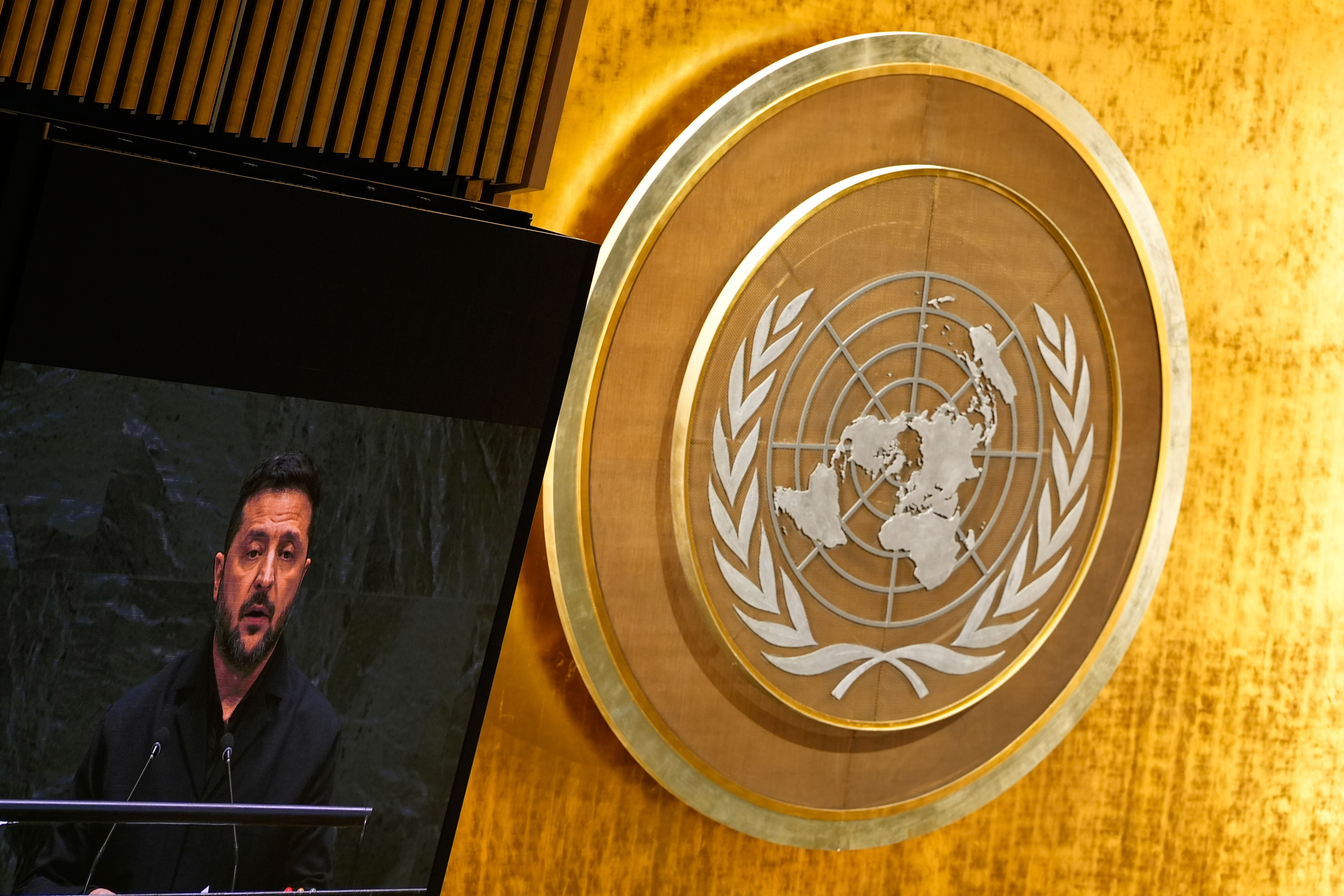
    UNITED NATIONS — Ukrainian President Volodymyr Zelensky urged the world’s leaders Wednesday to keep choking Russia’s revenues and impede its war efforts, telling the U.N. General Assembly that “Russia’s revenues must remain a target.”

    “When someone gives Russia more money through trade, they give this war more time. And that is exactly why we insist on limiting trade with the aggressor, and why we are burning Russia’s revenues ourselves,” he said in English, a language he often uses at the world body.

    Russia gets its turn Saturday to address the assembly. President Vladimir Putin hasn’t traveled to the gathering in years, sending Foreign Minister Sergey Lavrov instead.

    Lavrov told the U.N. Security Council on Wednesday that Russia is prepared to negotiate toward a lasting peace but won’t just “pause” the war. He argued that such a pause would just buy Ukraine and its backers time to line up more weapons.

    Zelensky cast doubt on Russia’s interest in ending the fighting.

    “Something always seems to stop Putin from saying, ‘That’s it. Enough. Peace,’” Zelensky said. “Can you even imagine him without war? He is ‘Patient Zero’, the one from whom war keeps spreading further. … ‘Patient Zero’ must be stopped.”

    The war has reverberated across the planet

    Russia invaded Ukraine more than 4½ years ago and says it’s out to protect its own security and the interests of Russians and Russian-speakers in parts of Ukraine. Western analysts estimate that over 500,000 Russian troops have been killed and that Ukraine has recorded more than 500,000 military casualties, including up to 140,000 deaths. Neither country discloses its own casualty totals.

    The war has had global repercussions for fuel, fertilizer and grain shipments — and for geopolitics, widening divisions between Russia and the West.

    With front-line positions in eastern and southern Ukraine largely unchanged since last year, Russia and Ukraine have intensified long-range attacks with drones and missiles.

    Russian drones pounded the Ukrainian capital, Kyiv, in daylight attacks on Wednesday, killing two people and wounding 23; two others were injured by a strike that started a big fire at a shopping mall in the southern city of Zaporizhzhia.

    Russia’s Defense Ministry said it struck Ukrainian military-industrial and energy facilities, logistics centers, and sea vessels overnight. The ministry said its air defenses intercepted more than 500 Ukrainian drones over multiple Russian regions and Crimea, as well as the Sea of Azov and the Black Sea. Crimea is the peninsula that Russia seized by force and illegally annexed in 2014.

    Zelensky says ‘you can stand and survive’

    Zelensky told the assembly that Russia has used 63,000 attack drones of different types against Ukraine so far this year alone. While celebrating that his own country “has proven that even against a much bigger enemy, you can stand and survive,” he implored world leaders to deny Putin money or foreign fighters.

    “Limit his money. Limit his war,” the Ukrainian leader said.

    Meanwhile, Ukraine has been looking for additional resources. Zelensky noted to reporters Tuesday that his country hasn’t yet gotten clear answers to its effort to acquire more U.S. Patriot air defense systems.

    Zelensky met Tuesday with U.S. President Donald Trump on the U.N. sidelines.

    In brief remarks to the media before the meeting, Trump reiterated that he believes “we’re going to make a deal” with Russia and Ukraine to quell the fighting. The president predicted on the 2024 campaign trail that he’d swiftly broker an end to the war but hasn’t succeeded so far. Zelensky said Tuesday he was hopeful.

    “Sometimes, it may seem that Ukraine is focused, focused, only on war because we speak about weapons, we speak about defense and sanctions against the aggressor. But Ukrainians did not choose this war,” he told the assembly on Wednesday. “We choose not to die. …. We are defending ourselves.”

  • FBI investigates hackers’ claim to have stolen sensitive employee data, compromised jobs website

    FBI investigates hackers’ claim to have stolen sensitive employee data, compromised jobs website

    WASHINGTON — The FBI said Wednesday it was investigating a criminal hacking group’s claims that it had stolen “very sensitive data” belonging to thousands of agents and applicants and that it had compromised the bureau’s jobs website.

    “The FBI is aware of a cyber-criminal enterprise group claiming a compromise of the FBIJobs.gov portal and alleged impact to FBI employee personally identifiable information,” the FBI said in a statement. It said that while the “point of breach” was undetermined, “we are actively and aggressively investigating this matter and working closely with those third-party providers that support FBIJobs.gov to mitigate any and all risk.”

    A message that circulated online from a hacking group known as ShinyHunters claimed responsibility for the hack. The jobs website, the main portal for prospective employees to learn about the FBI and initiate the application process, remained offline as of Wednesday afternoon.

    “We have compromised the FBI. We hold very sensitive data on almost ALL FBI Agents and individuals who filed an application with the FBI for a job,” said the ShinyHunters message, which was directed to FBI Director Kash Patel and Brett Leatherman, the assistant director in charge of the bureau’s cyber division.

    The claims could not immediately be verified. An email to an address associated with ShinyHunters was not immediately returned.

    In its message, ShinyHunters said it would give the bureau one week to correct or remove what it says are false allegations contained in an FBI public advisory from May that described the organization as a “cyber criminal group specializing in large-scale data breaches and extortion.”

    That public service announcement characterized ShinyHunters as “threat actors” who often “use their real or exaggerated claims of access to sensitive or personal information to prompt payment from victims,” commonly harass or threaten victims and “may falsely claim to have sensitive or compromising information, including embarrassing photographs or videos of victims, which frequently do not exist.”

    ShinyHunters said in its message to the FBI that it was “offended” by those characterizations and demanded that the FBI remove those claims. It did not say what would happen if the FBI did not do so within a week.

    “This is not a ransom, coercion, or extortion. Your federal policies do not apply here. This PSA is NOT financially motivated,” the hacking group’s message said.

    The FBI, the nation’s premier federal law enforcement agency, has been a common hacking target.

    In March, the FBI disclosed that it was investigating “suspicious activities” on an internal system that contains sensitive information related to surveillance operations and investigations. Also that month, a pro-Iranian hacking group claimed to have hacked an account of Patel’s and posted online what appear to be years-old photographs of him, along with a work resume and other personal documents dating back more than a decade.

    The FBI described the compromised information as “historical in nature” and said it involved “no government information.”

  • In defiant speech, Pezeshkian calls out Trump and says Iran will fight ‘until our last breath’

    In defiant speech, Pezeshkian calls out Trump and says Iran will fight ‘until our last breath’

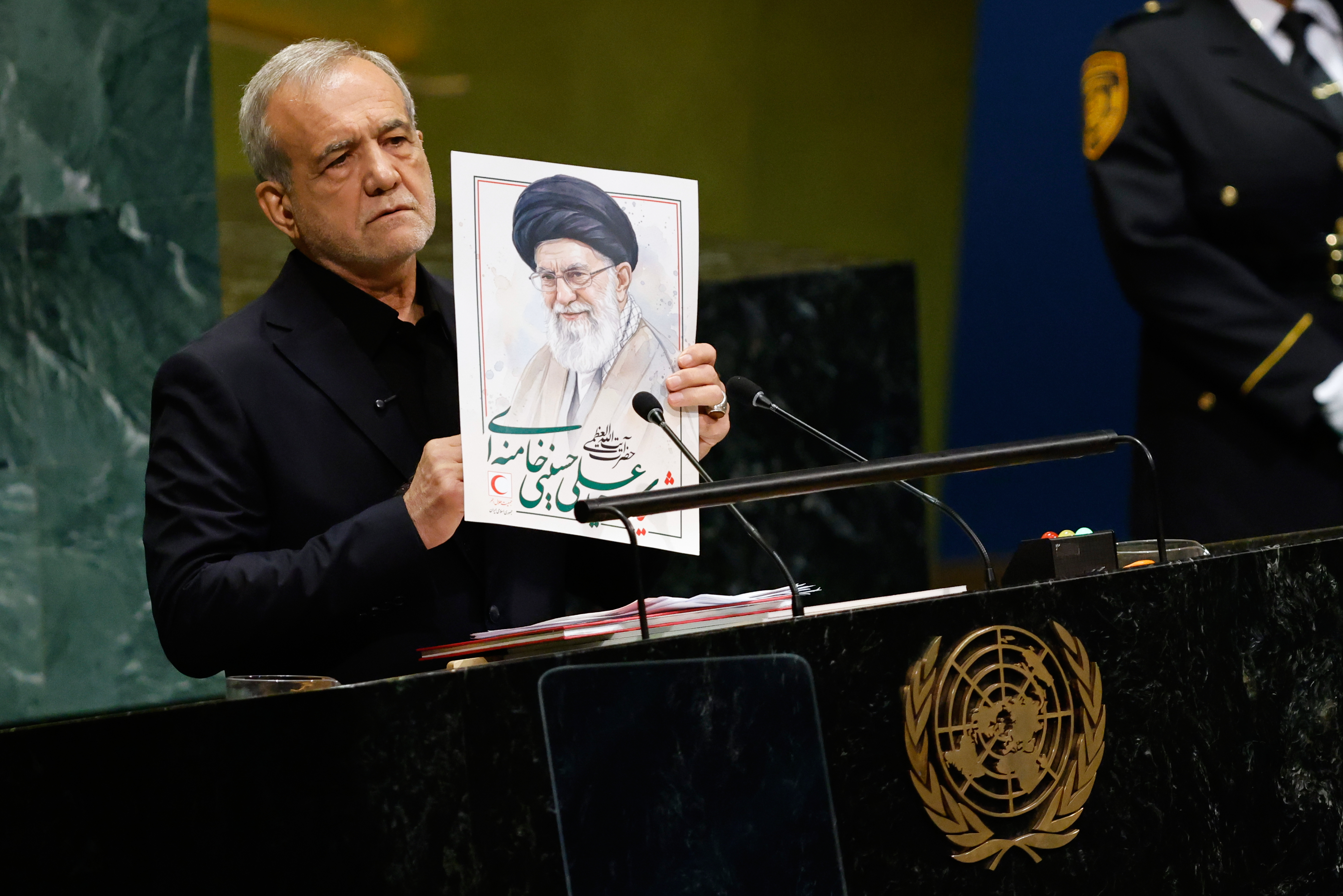
    UNITED NATIONS — Iran’s president said Wednesday that his people have been “victims of terrorism” by the United States, delivering a rare wartime speech at the U.N. General Assembly a day after President Donald Trump said he may “annihilate” the Islamic Republic if a deal isn’t reached soon to end the nearly seven-month war.

    The defiant speech by President Masoud Pezeshkian marked a striking instance of a foreign leader addressing the world body while their country is at war with the host nation. While defending his country, Pezeshkian held up large photos of the late Supreme Leader Ali Khamenei and the more than 150 Iranian schoolchildren killed in the first days of the war.

    “We have only defended ourselves. We are not terrorists,” Pezeshkian said at the General Assembly. “Our innocent people have been the targets of cowardly attacks and aggressions imposed upon our country. And we defended ourselves with utmost strength. America and Israel attacked us.”

    He added of the United States: “Yes they did hit us, but we did not bend the knee.” Toward the end of his speech, Pezeshkian called out Trump by name.

    “It must be understood by Mr. Trump and those who seek to bully us that we are ready for dialogue and diplomacy and negotiations without accepting the language of force,” he said.

    Shortly after, both U.S. and Israeli officials blasted the speech, saying that it was hypocritical for the Islamic Republic to present itself as the victims of the world.

    U.S. Secretary of State Marco Rubio told reporters: “I don’t know what standing Iran has to lecture anyone on human rights or the international system when they habitually violate it.”

    A busy 24 hours for U.S.-Iran relations

    Arriving in New York under heavy security and scrutiny, Pezeshkian — who, within Iran’s political landscape, is considered a moderate politician — addressed world leaders a day after Trump used the same stage to mull whether to massively escalate a war that has already spiraled out of control.

    “I have a big decision to make,” Trump said in his wide-ranging address Tuesday. “Will a deal be made with Iran that lets them rebuild and create a far greater country than it ever was before, maybe one of the greatest in the Middle East or even the world. Or do I annihilate the Islamic Republic and do it quickly, never giving them a chance to kill and destroy people and countries again?”

    Hours after those stunning threats, Trump told reporters that his chief envoys, Steve Witkoff and Jared Kushner, met for about three hours with the Iranian officials on the sidelines of the annual gathering. But he offered few details about how the discussions transpired or the substance of the exchange.

    “It was a very good meeting,” Trump said. The president later added that the Iranian officials were “not the highest level, but it’s something.” Also on Tuesday, Rubio said Trump is open to meeting with Pezeshkian while he’s in New York.

    But Tehran downplayed Tuesday’s unscheduled exchange, which were the first indirect talks between U.S. and Iranian officials since a June ceasefire unraveled. Esmail Baghaei, an Iranian Foreign Ministry spokesperson, maintained the country’s negotiating position in talks with U.S. officials, demanding that Washington end its blockade of Iranian ports and release frozen Iranian assets.

    Baghaei said the talks — conducted indirectly through Qatari mediators — were “not anything new.”

    Rubio echoed that sentiment Wednesday, saying that “it was a continuation of conversations that have occurred in the past.”

    “If there’s an opportunity to exchange ideas and messages, we will. And that’s what largely yesterday was — it was positive in that regard,” he said. “But ultimately, I don’t want to mischaracterize this as a major breakthrough.”

    More than a year of negotiations have taken place

    Pezeshkian’s address elaborated on where Tehran stands as more than a year of start-stop negotiations between the two longtime adversaries have failed to produce a sustainable solution. His speech came as intermittent attacks continued in the Strait of Hormuz off Iran’s coast, where commercial shipping remained below prewar levels.

    His address last year came months after the 12-day Israel-Iran war that saw the assassination of many of the Islamic Republic’s highest military and political leaders and once again broke down weeks of negotiations with the United States.

    “Ladies and gentlemen, you all bore witness that this past June, my country was subjected to a savage aggression and flagrant contravention of the most elementary principles of international law,” Pezeshkian said at the time.

  • Harvey Weinstein is sentenced to 15 years in prison for 2006 sex crime in New York

    Harvey Weinstein is sentenced to 15 years in prison for 2006 sex crime in New York

    NEW YORK — Harvey Weinstein, the disgraced movie mogul, was sentenced in Manhattan to 15 years in prison Wednesday for a felony sex crime in another #MeToo reckoning.

    Weinstein’s sentencing for sexually assaulting one-time TV production assistant Miriam Haley followed a legal odyssey spanning more than six years. His 2020 conviction was overturned by New York’s highest court. A second jury found Weinstein guilty again at a retrial last year.

    Once among the most powerful figures in the entertainment industry, Weinstein was an Oscar-winning producer whose hits included Shakespeare in Love, Pulp Fiction and Chocolat. But his downfall came quickly after sexual assault allegations in 2017 set off the #MeToo movement.

    Weinstein, 74, is expected to appeal and maintains that he never raped or sexually assaulted anyone. He is now likely to remain behind bars well into his 80s. Seated in a wheelchair, he was quickly moved out of the courtroom after the sentencing, while some of his accusers hugged and brushed away tears.

    Weinstein and his victim both spoke in court

    Weinstein faced up to 25 years in prison for sexually assaulting Haley at his Manhattan apartment in 2006. He has already served more than six years as his case cycled through the criminal justice system. Haley gave her account of the assault at two trials, and again addressed the court Wednesday.

    “Having been sexually assaulted by Harvey Weinstein has had a devastating effect on my life and sense of security that may never go away. Making the decision to speak up will have me looking over my shoulder for years to come,” Haley said.

    “It’s a life sentence for me,” she added.

    Minutes later, Weinstein apologized while reiterating his innocence.

    “Reflecting on all that has happened since 2017 has helped me recognize how my past conduct has negatively affected others. I live with many regrets and sincerely apologize to anyone I have affected with my actions,” he said.

    Some of his accusers who were in court shook their heads while he spoke.

    Weinstein is the face of MeToo, judge says

    Judge Curtis Farber said Weinstein was once a king in the movie industry, “but recognition for these achievements will pale in comparison to what you did.”

    He said Weinstein is now known as “a sexual predator, the literal face of the MeToo movement.”

    The judge said Weinstein treated women as “mere objects to be played with and discarded” and still hasn’t accepted responsibility, portraying himself as a victim during jailhouse interviews.

    Haley afterward said she was happy with the sentence, while saying it’s clear that Weinstein has not acknowledged what he did. “I think he still feels entitled, and that’s part of the problem,” she said.

    Haley’s lawyer, the famed victims’ rights attorney Gloria Allred, rejected any suggestion that Weinstein’s sentencing means the MeToo era is over.

    “Women are empowered in a way they have never been before,” she said.

    Why Weinstein is being sentenced a second time

    Weinstein was originally sentenced to 23 years in prison after a jury convicted him of assaulting Haley and raping an aspiring actress, Jessica Mann, in 2013.

    Tried for a second time last year, he was again convicted of a first-degree criminal sex act for assaulting Haley, who has also gone by the name Mimi Haleyi. In a messy split verdict, the jury acquitted him of forcibly performing oral sex on another woman, Kaja Sokola, and could not reach a verdict on a rape charge involving Mann.

    After another retrial ended in a hung jury in May, Manhattan prosecutors dropped the rape charge rather than pursue a fourth trial after Mann said she could not bear to testify again.

    Weinstein’s health issues pushed the defense to ask for leniency

    Defense lawyer Jacob Kaplan wanted three more years on top of the six years Weinstein already served, saying a longer sentence would make it more likely that Weinstein dies in prison.

    Weinstein has been in the hospital six times since 2025, Kaplan said, while dealing with blood cancer, congestive heart failure, and kidney issues.

    Weinstein is also awaiting resentencing in a separate rape case in Los Angeles. A California appeals court upheld the 2022 conviction but threw out his original 16-year sentence because the judge had considered his New York convictions — that were later thrown out — as an aggravating factor.

    After shuffling between state prison, where he tested positive for COVID-19 early in the pandemic, and New York City’s notorious Rikers Island complex, Weinstein has been housed at a medical unit for inmates at Bellevue Hospital in Manhattan.

    Haley describes the assault that led to Weinstein’s conviction

    Haley, 49, is a former entertainment producer now working in advertising.

    She said she met Weinstein through a mutual connection and worked briefly as a production assistant on Project Runway, a reality competition show that he produced.

    Haley said she accepted an invitation to visit Weinstein’s apartment and after chatting briefly, he lunged to kiss her, she testified. She said she rebuffed him, but he grabbed her, forcibly backed her into a bedroom and sexually assaulted her, ignoring her pleas to stop.

    She recalled Weinstein asking, “Don’t you think we’re much closer now?” after either the alleged assault or a subsequent occasion when she says she had unwanted, but not forced, sex with him.

    She also recalled telling him after the second encounter, “You know you can’t keep doing this.”

    The Associated Press does not typically identify people who say they are victims of sexual assault unless they grant permission, which Haley, Sokola and Mann have done.

  • Mets hire interim manager Andy Green for full-time job, giving him three-year contract

    Mets hire interim manager Andy Green for full-time job, giving him three-year contract

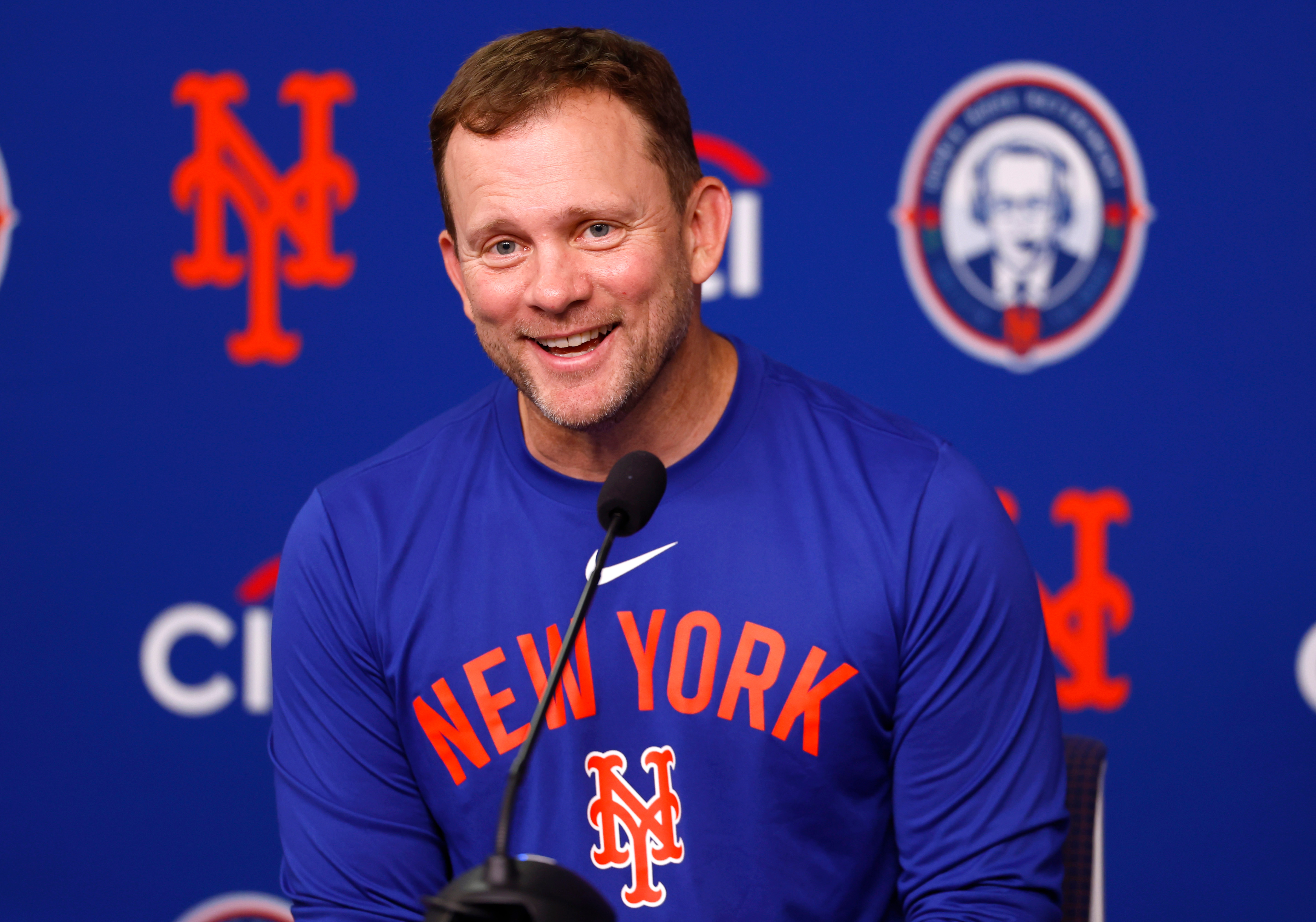
    NEW YORK — In a change of course, the New York Mets hired interim manager Andy Green for the full-time job on Tuesday, giving him a three-year contract.

    The team made the announcement before opening a three-game series in Texas against the Rangers.

    Green had been running New York’s farm system before taking over as interim manager when Carlos Mendoza was fired in late June. At the time, Green said he wasn’t particularly interested in managing beyond this year, and Mets president of baseball operations David Stears said Green would return to a front-office role after the season — a stance Stearns stuck to in the months that followed.

    The last-place Mets have played better baseball under Green, however, going 37-38 since he took over, and the club chose not to conduct a search for a new manager this offseason.

    Green also managed the San Diego Padres from 2016-19.

  • Source: Bears QB Tyson Bagent placed in the NFL concussion protocol

    Source: Bears QB Tyson Bagent placed in the NFL concussion protocol

    CHICAGO — Chicago Bears quarterback Tyson Bagent has been placed in the NFL concussion protocol, according to a person familiar with the situation, adding another wrinkle to the team’s plans for Monday night’s game against the Eagles.

    The person confirmed Bagent’s status to The Associated Press on Tuesday on condition of anonymity because the Bears hadn’t released their first injury report of the week.

    Bagent was expected to take most of the first-team reps in practice after Caleb Williams left Sunday’s 9-3 loss to Minnesota with a right hamstring injury. Coach Ben Johnson said Williams is “week to week,” and he left open the possibility that the No. 1 pick in the 2024 draft could play against the Eagles.

    If Williams and Bagent are unable to play Monday night, the Bears likely would turn to Case Keenum. The 38-year-old Keenum has 66 career starts, but he hasn’t thrown a pass in a regular-season game since Dec. 24, 2023, for Houston against Cleveland.

    Bagent was 5 for 9 for 54 yards against the Vikings. He was sacked by Dallas Turner on the final play of the game.

    Bagent, 26, had a record-setting career at Division II Shepherd University before signing with the Bears in May 2023 as an undrafted free agent.

    He made four starts while appearing in five games as rookie, passing for 859 yards and three touchdowns with six interceptions. He signed a two-year contract extension in August 2025.

  • Trump praises new British PM Andy Burnham but slams UK deal on Indian Ocean islands

    Trump praises new British PM Andy Burnham but slams UK deal on Indian Ocean islands

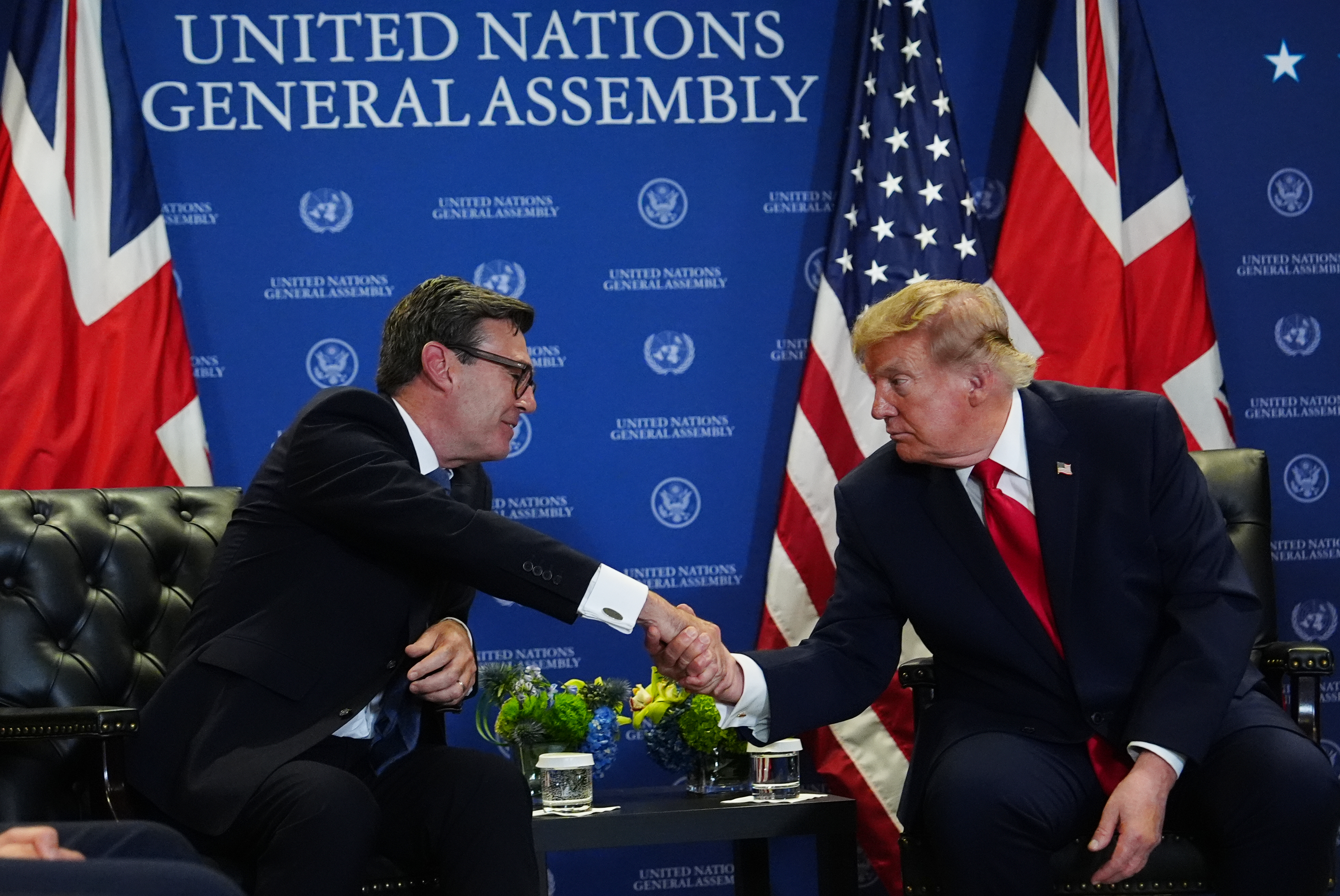
    UNITED NATIONS — Freshly in office, Prime Minister Andy Burnham got off to a strong start with U.S. President Donald Trump at their first meeting on Tuesday, with the president brushing aside differences over the Middle East and calling the British leader “a natural business person.”

    The two men met for more than the scheduled 30 minutes on the sidelines of the U.N. General Assembly, which Burnham was due to address later in the day.

    It was a baptism of fire for the neophyte leader, who has gone from mayor of the northwest England city of Manchester to leader of a G7 country in a matter of weeks.

    But despite U.K. nerves about how it would go, as they sat in front of U.K. and U.S. flags, Trump declared that trans-Atlantic relations were “more up than they were with your last prime minister.”

    “Based on our relationship with the prime minister, Andy, I think we’re doing very well,” he said.

    U.K. officials know that the president can be fickle. Trump initially warmed to Burnham’s predecessor, Keir Starmer, before falling out over the U.K.’s unwillingness to join the U.S.-Israeli war on Iran. But there was relief that Burnham emerged largely unscathed from his first meeting with a president who once dismissed him as “the mayor of a town.”

    “We don’t hold it against you,” Burnham said.

    Burnham nodded at U.S.-U.K. differences, noting that Trump had been “good enough to listen to us” on issues including trade and the Falkland Islands. Trump has recently mused about the future of the British-controlled South Atlantic archipelago, which is also claimed by Argentina, which calls it the Malvinas. The two nations fought a brief 1982 war over the islands.

    But on one potential flashpoint, the U.K.’s decision to ban trade with Israeli settlements in the West Bank, Trump professed ignorance.

    Chagos Islands remain a point of contention

    Trump’s harshest words were reserved for Britain’s plan to hand sovereignty of the Chagos Islands in the Indian Ocean to Mauritius. The U.K. says the deal will preserve the future of a strategic U.S. military base on one of the islands, Diego Garcia. But ratification of an agreement stalled after the Trump administration withdrew its support. U.K. officials acknowledge the deal is now in limbo.

    Trump called it “a terrible deal” over a “very important piece of real estate, militarily and strategically.”

    “I think the prime minister is going to be looking at it,” he said.

    Before the meeting, Burnham said he would raise with Trump ways to end the on-off war between the U.S. and Iran, which has choked off oil tankers moving through the Strait of Hormuz and sent global fuel prices soaring. Houthi attacks on Saudi energy infrastructure are making the problem worse while rendering Burnham’s pledge to ease cost of living pressure for British voters even harder.

    As he flew to New York for the annual gathering of world leaders, Burnham announced he had authorized limited military support for Saudi Arabia to repel attacks from Iran-backed Houthi rebels in Yemen. A Royal Air Force plane will refuel Saudi jets engaged in “defensive” action to shoot down Houthi missiles, he said.

    Burnham also said he would urge Trump to step up U.S. support for Ukraine by providing air-defense missiles to Ukraine ahead of another winter of Russian attacks.

    Burnham to focus on AI in his U.N. speech

    In his speech later Tuesday, Burnham was set to try to send a message that Britain can play a key role in solving the world’s biggest challenges, from conflict in the Middle East to the dizzying evolution of artificial intelligence. And he will attempt to turn the page on a decade of Brexit-driven discord with the U.K.’s European neighbors.

    Burnham said he would focus on artificial intelligence, arguing it’s possible to be “clear-eyed” about both the benefits and risks of the technology. He will argue the U.K. is well placed to be an “honest broker” in seeking global agreement to guide its development, because London has good relations with both the U.S. and Europe and “a strong dialogue” with China.

    In another potential point of tension with Trump, Burnham called for a global alliance to guide the development of AI.

    Burnham told a meeting of business leaders on the sidelines of the UN General Assembly that he wants to see “a single set of global principles and standards” that can unlock AI’s potential while mitigating its risks.

    Trump told the U.N. on Tuesday that the U.S “totally rejects any attempt to construct a globalist scheme” to regulate AI.

  • Trump and Xi see tensions flare over AI, trade and Iran but still seek stability

    Trump and Xi see tensions flare over AI, trade and Iran but still seek stability

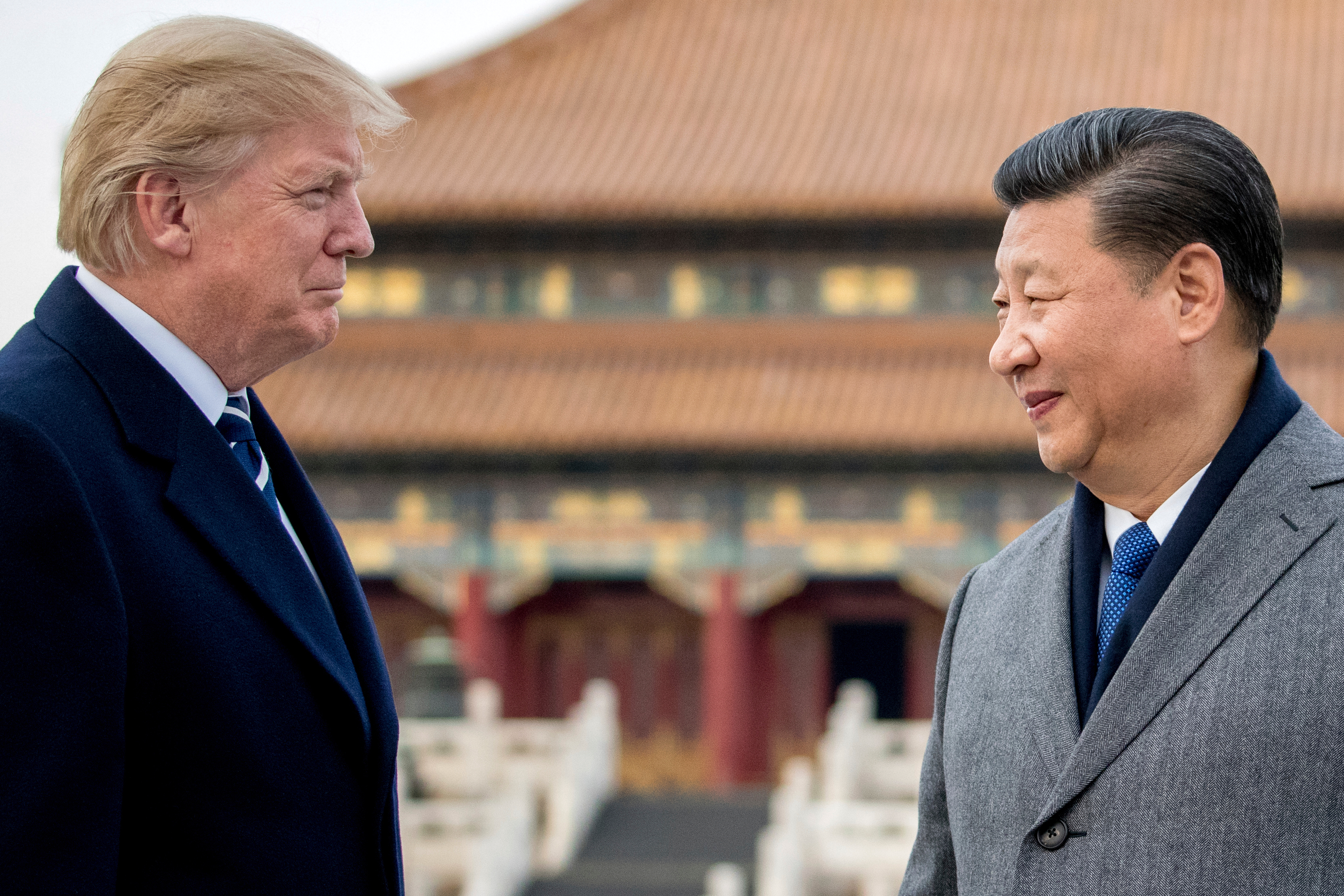
    WASHINGTON — State visits usually occur when two countries are on warm terms, but U.S. President Donald Trump is hosting Chinese leader Xi Jinping in Washington this week as their economic and tech competition is only escalating, especially through an artificial intelligence race.

    Neither expects any grand bargain, but the leaders are expected to play nice in their third meeting since Trump returned to the White House to try to steady fragile ties. That is despite the world’s two largest economies seeking the upper hand on AI developments and trade, while pushing for leverage in persistent hot spots like Iran and Taiwan.

    “The fact that they are meeting, and there’s dialogue occurring and building that relationship, is probably as important as outcomes from the meeting,” said Sen. Steve Daines, a Montana Republican who advises Trump on China and recently traveled there to lay groundwork for the summit.

    Cui Tiankai, a former Chinese ambassador to the U.S., said at a recent forum in Beijing that there are “always problems, sometimes very big problems” between the two countries, but ”we’ll make our best efforts to maintain overall stability.”

    Trump and Xi shifted away from sky-high tariffs, but competition is still intense

    Xi’s visit to Washington, which begins Wednesday, is his first in 10 years. He and Trump are meeting after their countries climbed down from last year’s intense trade war, where they traded tit-for-tat sky-high tariffs that threatened the global economy. China also choked off its world-leading supplies of critical minerals needed in products from electric cars to fighter jets.

    The U.S. is not only trying to balance trade but also maintain its tech dominance to protect national security and global leadership. China, which has amassed tremendous economic, technological, and military power over the past several years to close gaps with the U.S., is seeking to solidify its place in the global order.

    The stability both sides are seeking is “for deeply competitive reasons,” said Evan Medeiros, a senior adviser at the Asia Group consultancy. “This is basically two geopolitical strongmen circling each other on the playground, trying to determine what their next move may be.”

    The countries appeared to be entering a “new normal” of “overall stability” despite blacklisting each other’s companies and restricting the flow of high-tech products, said Da Wei, director of the Center for International Security and Strategy at Tsinghua University in Beijing.

    The leaders now should produce deals that their governments can carry out, he said, noting that “we need to move fast.”

    The AI race could strain any cooperation on technology’s advance

    Developing AI technology has emerged as a key battleground, with both sides showing little interest in slowing down despite warnings from tech CEOs about threats that rogue AI could pose to humanity. “Whoever wins AI wins,” Trump has repeatedly said.

    He claimed on social media Monday that the U.S. is leading over China and that he was “not going to stifle Growth, of something that will be bigger than the Industrial Revolution, or the Internet, itself.”

    China cannot afford to lose either. In a rare, blunt essay, Chen Yixin, head of China’s Ministry of State Security, warned that AI poses a direct threat to Communist Party rule if foreign and hostile forces achieve superior capabilities.

    The U.S. is already restricting exports of the most powerful AI chips to China and has accused Chinese developers of tapping into American AI models at an industrial scale to extract their capabilities.

    Beijing says the practice, known as distillation, is widely used, including by American companies, and has criticized the U.S. for trying to monopolize the industry.

    Beijing also is upset about U.S. efforts to build an alliance that excludes China, so it is seeking to craft new global AI guardrails by appealing to developing nations.

    However, the U.S. and China are taking a small step to cooperate on AI.

    Treasury Secretary Scott Bessent said Sunday after meeting with Chinese Vice Premier He Lifeng in New York that the U.S. has proposed a new “notification mechanism” for AI incidents that could affect national security.

    “We think that just like any cross-border activity, that moving from opaque to more transparency between the No. 1 and the No. 2 AI powers in the world is very important,” Bessent said.

    U.S. and China turn to targeted ways to compete instead of tariffs

    While the U.S. and China have refrained from taking broad, punitive actions that would break their trade truce, they still are blacklisting individual companies and banning specific products.

    “What we’ve seen is kind of testing and probing by both sides to understand what can be done competitively, while still keeping that leader-level rapprochement on track,” said Mira Rapp-Hooper, a visiting fellow at the Brookings Institution’s Center for Asia Policy Studies.

    The U.S. has recently targeted Chinese telecommunications and surveillance equipment, companies accused of using forced labor in the ethnic region of Xinjiang, as well as China’s advanced robots and drones. The Pentagon also has barred Alibaba, BYD, Baidu, and other major Chinese businesses from receiving U.S. defense contracts.

    Beijing responded with export controls on drones and related technologies as well as blacklisting six U.S. companies over their support for the punitive measures tied to Xinjiang.

    Iran, Taiwan and tariffs are persistent issues

    After the Supreme Court struck down Trump’s tariffs on trade partners this year, the administration has been trying to impose them in other ways.

    The White House in July rolled out a 12.5% tariff on imports from 60 trading partners, including China, ostensibly for failing to do enough to prevent the import of goods produced by forced labor. The U.S. is planning an additional 7.5% tariff on China, accusing it of producing far more goods than it can reasonably consume.

    Analysts say the tariff levels are now acceptable to both sides, but any significant uptick could rekindle tensions.

    The Trump administration, however, has launched a campaign to isolate Iran from its remaining economic partners, but Beijing has insisted on its right to trade with Tehran.

    So far, the Trump administration has done little to punish China, partly to avoid jeopardizing the leaders’ summit. But Washington also is losing leverage because China — Iran’s biggest oil buyer and its largest trading partner — has been building up a way to make payments outside the U.S.-led financial system, said Alicia Garcia Herrero, an Asia-Pacific economist at the French investment bank Natixis.

    Taiwan, a self-governing island that Beijing claims as its own territory, also remains one of the thorniest issues in U.S.-China relations. Trump paused a large weapons package to Taiwan following his May trip to Beijing, but the U.S. is obligated by a domestic law to provide it with sufficient hardware and technology for self-defense.

    Analysts say Xi will most likely press Trump to further delay arms sales to sow doubts in Taiwan about Washington’s commitment.

  • Trump says U.S. and Iranian officials met Tuesday, shortly after warning he may ‘annihilate’ Iran

    Trump says U.S. and Iranian officials met Tuesday, shortly after warning he may ‘annihilate’ Iran

    UNITED NATIONS — President Donald Trump said U.S. and Iranian officials met on Tuesday, an unexpected engagement that came even as he threatened in his address to the U.N. General Assembly that he may “annihilate” the Islamic Republic if a deal isn’t reached soon to end the nearly seven-month war.

    Trump told reporters that his chief envoys, Steve Witkoff and Jared Kushner, met with the Iranian officials on the sidelines of the annual gathering of world leaders but he offered few details about how the discussions transpired or the substance of the exchange.

    “It was a very good meeting,” Trump said. The president later added that the Iranian officials were “not the highest level, but it’s something.”

    The engagement comes after months of U.S.-Iran communications languishing following the collapse of a short-lived ceasefire that was brokered in June. U.S. and Iranian negotiators met separately with Qatari and Pakistani mediators in Doha in early July for indirect talks.

    Earlier Tuesday, Secretary of State Marco Rubio said that Trump is open to meeting with Iran’s president, Masoud Pezeshkian, while he’s in New York for the General Assembly.

    “This is a president that will meet with anybody for the most part, because he believes that engaging with people is important if you’re going to solve problems,” Rubio said on NBC’s Today show. “It doesn’t mean you’re going to end up agreeing with them, but it’s important.”

    Trump also met on Tuesday with leaders and senior officials from Gulf Cooperation Council nations — Bahrain, Kuwait, Oman, Qatar, Saudi Arabia, and United Arab Emirates — as well as Jordan to discuss the way ahead with the war in Iran.

    In his address to the General Assembly, Trump made the case that he’s shown fortitude while other leaders have equivocated as he defended his decision to start a war with Iran.

    But Trump also suggested that he could be at a crossroads in the conflict even as he called on the Islamic Republic to fully reopen the Strait of Hormuz and return to the negotiating table to find a settlement to end the conflict.

    “I have a big decision to make,” Trump said. “Will a deal be made with Iran that lets them rebuild and create a far greater country than it ever was before, maybe one of the greatest in the Middle East or even the world? Or do I annihilate the Islamic Republic and do it quickly, never giving them a chance to kill and destroy people and countries again?”

    The president’s comments came in his wide-ranging address to the international body in which he also celebrated this year’s U.S. military operation to oust Venezuelan President Nicolás Maduro from power and a new agreement to expand the U.S. military presence in Greenland, and pushed back against calls for greater regulation of the artificial intelligence industry.

    But at the heart of the address was a fulsome defense of the war and pushback on the notion that Iran has shown a measure of resilience.

    “The terrorist regime is behaving badly, not because they are strong and confident, but because they are weak and desperate,” Trump said.

    Most of Iran’s delegation walked out of the chamber as Trump railed against the Islamic Republic.

    Trump’s speech began a busy day of diplomacy

    After his speech, Trump gathered with Danish Prime Minister Mette Frederiksen and Greenlandic Prime Minister Jens-Frederik Nielsen on the sidelines of the General Assembly to sign a new security agreement.

    The deal, announced last week, came together after Trump repeatedly threatened to “take over” Greenland, a territory of NATO-ally Denmark, by military force if necessary. Trump said Tuesday the U.S. will immediately begin the process of developing a larger military presence in Greenland including “building two very major military bases.”

    Under the deal, Greenland remains Denmark’s territory.

    Trump also held talks with new British Prime Minister Andy Burnham, Japanese Prime Minister Sanae Takaichi, and Ukrainian President Volodymyr Zelensky. He was expected to hold a more informal meeting on Tuesday evening with Venezuela’s acting President Delcy Rodríguez, according to the White House.

    Trump also took part in an event on the Shield of Americas, an initiative Trump launched with Latin American countries earlier this year focused on combatting violent cartels.

    Iran war looms large at General Assembly

    The visit to the U.N. comes as Trump’s foreign policy approach — particularly his decision to start a war with Iran — has become a drag on his fellow Republicans’ hopes of retaining control of both chambers of Congress during the coming midterm elections. Nevertheless, Trump made the case in his speech that the world is better off for his leadership.

    “I have no interest in leaving dangers to grow for another day,” Trump said.

    In last year’s address at the U.N., Trump claimed the U.S. had “demolished” Iran’s nuclear capabilities after he ordered the June 2025 bombardment of three key facilities.

    He returned to the General Assembly nearing the seven-month mark of a new war against Iran that he insists is necessary to address a nuclear threat posed by Iran.

    The war has grown more complicated even though strikes by the United States and Israel have killed much of Iran’s top leadership and destroyed its air force and navy, while a U.S. blockade of Iranian oil has left Tehran in economic shambles.

    The energy market continues to be spooked by the war and oil prices remain elevated. Saudi Arabia earlier this month shuttered a key pipeline that acted as a relief valve for oil blocked in the Gulf. The kingdom made the move after the pipeline came under attack by Iran-backed militants in Iraq.

    At the same time, territorial grabs by the Yemen-based Houthi rebels, another Iranian-backed group, near the Bab al-Mandab Strait has now made it treacherous for oil carriers to use that Red Sea shipping lane.

    Trump’s frustration with Russia-Ukraine war mounts

    In his address, the president also touched on Russia’s continuing war against Ukraine — a conflict that during his 2024 campaign he predicted would be resolved on Day One of his second term. He once again expressed hope that the conflict will soon be resolved.

    Trump hasn’t obscured that his patience is being tested by Ukraine’s targeting of Russia’s diesel refineries — an issue that’s added to the global oil markets’ volatility — and Russia’s targeting of Ukraine’s energy grid.

    Trump last week asserted that he got the two sides to agree to not target each other’s energy infrastructure.

    Zelensky had said he was willing to go along with Trump’s plan if Russia abided by it. Russia said it could only go along with Trump’s energy truce proposal if Western energy sanctions on Moscow were lifted first.

    The two sides have continued carrying out strikes on refineries and other energy infrastructure.

    Trump noted that last week he signed a new sanctions bill targeting Moscow. It empowers him to impose up to 100% tariffs on the top five importers of Russian oil or natural gas.

    The legislation includes an exception for countries that import less than 15% of Russia’s natural gas exports and have taken significant steps to reduce those imports. Trump, however, has yet to enact the stiff penalties.

    “If necessary, I will have to use them,” Trump said. “It’s time to stop the killing.”