Category: Associated Press

  • FIFA plan for Kushner-backed $20 billion operation to run World Cup meets fury from Europe’s UEFA

    FIFA plan for Kushner-backed $20 billion operation to run World Cup meets fury from Europe’s UEFA

    GENEVA — FIFA President Gianni Infantino’s plan to create a $20 billion company running the World Cup with private investors including the Kushner family was announced Tuesday — and immediately attacked by European soccer body UEFA.

    “It is not FIFA’s to sell,” UEFA said in a statement. “None of us are the owners of football.”

    Infantino’s plans to form a commercial subsidiary, which would be called FIFA Forward Enterprise (FFE), running competitions like the World Cup and Club World Cup was first reported by The Times of London.

    FIFA said in a statement FFE would raise up to $4.2 billion later this year to help fund development programs “based on an initial equity valuation of $20 billion by carefully selecting long-term investors who will purchase minority, non-controlling interests.”

    FIFA is working with J.P. Morgan while intended investors include Thrive Eternal launched by Joshua Kushner, whose brother Jared Kushner is a son-in-law of U.S. President Donald Trump.

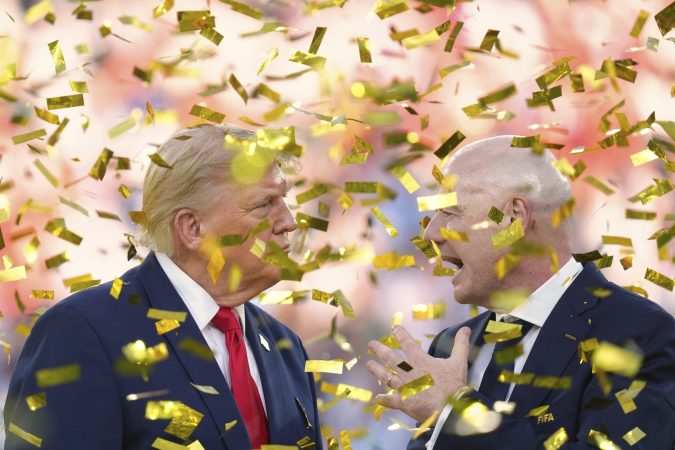
    The men’s World Cup that finished this month only deepened the political and personal ties between Trump and Infantino, and fueled concerns about those ties including from UEFA.

    “The soul and governance of football are not assets to trade — especially with zero transparency as to who gains financially,” UEFA said Tuesday, responding to the reports of selling stakes in FIFA competitions.

    FIFA is currently a Swiss-based not-for-profit association of its 211 national member federations worldwide.

    Those members must approve any plan and would get the chance “to access up to $20 million in one-off capital,” FIFA said.

    “This is about the democratization of football worldwide,” Infantino said in a FIFA statement, which added that “a consultation process has begun.”

    UEFA, however, said it took reports of the project “extremely seriously. So should every national Football Association.”

    “This crosses a line that football’s governing institutions should never cross,” said UEFA, which comprises 55 of the FIFA members.

    FIFA’s $20M offer to member federations

    The outline of Tuesday’s surprise announcement was, FIFA said, detailed by Infantino to members who met in Manhattan on July 18 ahead of the World Cup final. There, Infantino promised to “unleash the commercial potential and opportunity that FIFA has.”

    FIFA’s statement Tuesday about its proposed project led on how much money each of its 211 members could get through 2038 in the “FIFA Fast-Forward Program.”

    Instead of the currently promised $8 million each in development funds through the 2027-30 World Cup commercial cycle, it would be $20 million, then $22 million and $24 million in the following cycles.

    FIFA banked record World Cup income of about $12 billion from the 2026 tournament which had unprecedented high prices for tickets and hospitality across the U.S., Canada and Mexico. It already was unclear how that money could be matched from Spain, Portugal and Morocco co-hosting the 2030 men’s edition.

    Member federations could choose if they wanted to take part in the new financial opportunities, FIFA said.

    “FIFA would retain sole control of FFE and exclusive authority over football governance, competitions, match calendar, and all regulatory and sporting decisions,” the soccer body said.

    FIFA’s integrity standards were called into question during the World Cup, including by team coaches, Norway’s soccer federation and a top European public body, the Council of Europe.

    FIFA’s previous attempt to privatize assets

    The project announced Tuesday is the second time in Infantino’s increasingly controversial 11-year presidency he has tried to push through a multi-billion dollar deal with private backers.

    In 2018, Infantino proposed a secretive $25 billion offer over 12 years with SoftBank of Japan to create new global competitions, including an expanded men’s Club World Cup, seemingly backed by Saudi Arabian money.

    That ultimately failed after meeting fierce resistance from UEFA, which saw threats to its prize assets: the Champions League and the European Championship.

    Infantino still built closer ties to Saudi soccer and the kingdom’s Crown Prince Mohammed Bin Salman. Saudi Arabia will host the 2034 World Cup and largely funded the revamped men’s Club World Cup hosted in the U.S. last year.

    Infantino’s future?

    The financial success of the just-ended World Cup has looked likely to ensure Infantino is re-elected next year unopposed for a fourth and final term in office through 2031.

    At his re-election by acclaim in 2023 in Rwanda, Infantino suggested any CEO delivering similar financial results would be kept in the job forever.

    Speculation has swirled for years Infantino might want a different global role in soccer beyond his FIFA presidency, which is due to end when he is 61.

    The Times reported Tuesday that a CEO-like commissioner role of the new FFE operation could be created for Infantino.

    “This has never been discussed,” FIFA said in a statement Tuesday. “However, the FIFA president and the FIFA administration will and must have leading roles in this entity — if approved.”

    There was no timetable suggested Tuesday for debate and decisions by FIFA, its ruling Council chaired by Infantino, and the 211 members.

    FIFA is scheduled to hold an online congress on Nov. 23 to confirm hosts of the Women’s World Cup editions in 2031 and 2035.


  • Ex-Olympian charged with damaging Reflecting Pool sees ‘irregularities’ in grand jury proceedings

    Ex-Olympian charged with damaging Reflecting Pool sees ‘irregularities’ in grand jury proceedings

    WASHINGTON — A former Olympian charged with deliberately damaging the Lincoln Memorial Reflecting Pool is seeking access to all of the closed-door testimony that led to his indictment, pointing to “irregularities” in those grand jury proceedings.

    In a court filing Monday, David Hearn’s attorneys requested an order for the government to turn over a complete transcript of all grand jury proceedings. They also want prosecutors to disclose the legal instructions they gave to grand jurors about the elements of Hearn’s alleged crime.

    Hearn pleaded not guilty earlier this month to one felony count of property destruction and has a trial scheduled to start Sept. 28 in D.C. Superior Court. The charge, which carries a maximum prison sentence of 10 years upon conviction, accuses Hearn of causing at least $1,000 in damage to the pool.

    But his lawyers question whether prosecutors properly presented the grand jury with adequate evidence to support the amount of damage alleged in Hearn’s indictment. A National Park Service official testified that the pool already was damaged before Hearn allegedly touched it, couldn’t quantify any damage attributable to Hearn and said the same repairs would have been required regardless of his conduct, defense attorneys said.

    “The witness’s testimony established that the pool had substantial preexisting damage requiring repair before any alleged conduct by Mr. Hearn,” his lawyers wrote. “According to the witness, the pool was leaking more than one million gallons of water per week; its expansion joints had exceeded their service life; and the liner already contained a rip.”

    Hearn’s attorneys are basing those arguments on their limited review of grand jury testimony. They want court-ordered access to all the proceedings.

    A spokesperson for U.S. Attorney Jeanine Pirro’s office in Washington didn’t immediately respond to an email seeking comment on Hearn’s arguments.

    Hearn previously asked the court to dismiss the case, which stems from the troubled multimillion-dollar renovation project championed by President Donald Trump. His attorneys argued the government has failed to properly preserve important physical evidence from the Reflecting Pool.

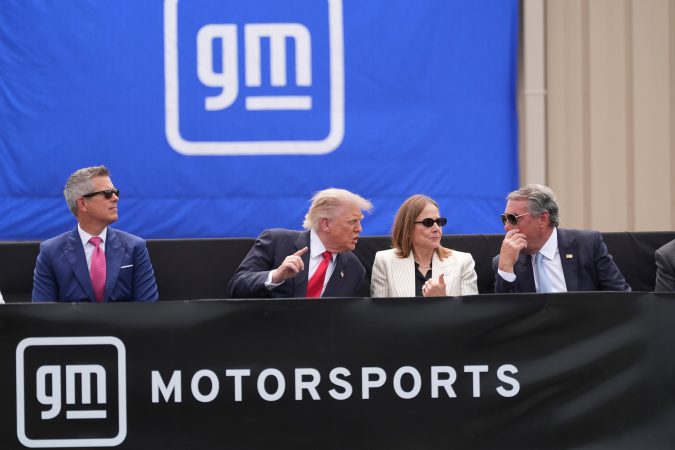
    Trump, a Republican, has claimed that vandals have damaged the pool, but administration critics attribute the problems to shoddy repair work. During a speech Monday at General Motors in Michigan, Trump claimed a “sick” person cut the liner in the pool but said the attraction is receiving treatment.

    “It’s in the hospital now, but it’s going to get better very soon,” Trump said. “It’s almost ready to open.”

    Hearn and his supporters claim his prosecution is a politically motivated attempt by the Trump administration to deflect blame and scapegoat others.

    Hearn told The Associated Press he was detained by National Guard troops and U.S. Park Police for five hours after stopping by the pool during a bike ride on June 19. He said he reached in to examine the pool’s newly peeled coating and briefly touched a chunk attached to the side of the pool, but said he obeyed a park worker who told him to let go of it.

    Hearn, 67, of Bethesda, Maryland, competed in three Summer Olympics, earning his best finish, ninth, at the 1996 Atlanta Olympic Games, the U.S. Olympic and Paralympic Committee says on its website.

    At least three other people have been charged in the same court with misdemeanors for allegedly removing pieces of paint from the pool.

  • 15-year-old arrested at Seattle food festival shooting was armed with a ghost gun, police say

    15-year-old arrested at Seattle food festival shooting was armed with a ghost gun, police say

    SEATTLE — The 15-year-old arrested after a shootout at a food festival near Seattle’s Space Needle over the weekend was armed with a ghost gun with an extended magazine, police said Tuesday.

    Police Chief Shon Barnes told a news conference that the weapon was a 9 mm gun from Polymer80 — a now-defunct company that was once a leading manufacturer of ghost gun parts.

    Investigators also recovered two other weapons and 14 shell casings that had been fired by weapons of two different calibers, he said.

    Shooting killed 3 people and injured 4, including a toddler

    The shooting in the waning hours of the three-day Bite of Seattle festival left three people dead, including a 19-year-old gunman, and at least four people injured, including a toddler. Authorities say they believe the violence was gang-related, and they are reviewing any available surveillance video and interviewing victims and witnesses in an effort to identify others who may have been involved.

    An eighth person with a possible gunshot wound checked themself into a Seattle hospital after the shooting, but checked out before investigators could conduct an interview, Barnes said. Legal obstacles have prevented detectives from obtaining the patient’s identity, he added. It’s unclear if the injury was related to the festival shooting or whether the person might have been involved in it, but Barnes asked for the person to come forward and speak with investigators.

    Ghost guns lack serial numbers law enforcement can use to trace them

    Ghost guns are privately made — often homemade — firearms that lack serial numbers used to trace them. They have often been purchased without a background check. Law enforcement officials say ghost guns, including those made with 3D printers, have been used in violent crimes across the U.S.

    Lawsuits and state-level bans eventually pushed Polymer80 out of business in 2024, and last year, the U.S. Supreme Court upheld a rule adopted under former President Joe Biden requiring companies to treat gun kits like other firearms by adding serial numbers, running background checks, and verifying that buyers are 21 or older.

    The weapon the 15-year-old had been shooting when he surrendered to police was equipped with an extended 33-round magazine, Barnes said. The magazine still had 19 rounds in it.

    At the scene Sunday night, police also recovered a 9 mm handgun that they do not believe was used in the shooting.

    And on Monday, as food vendors were allowed to return to the area to clean up and collect their equipment, a third weapon was discovered: a Glock 45 model 9 mm with a switch allowing it to fire fully automatically, Barnes said. Police believe that gun was fired during the shooting. It had an extended 40-round magazine, with 21 rounds remaining in it.

    Police believe there were at least 3 shooters

    In a document filed in juvenile court in Seattle on Monday, police said they believed there were at least three shooters: the 15-year-old, an acquaintance who died at the scene, and “at least one other unknown suspect.” Authorities had earlier said they believed there were two.

    A judge on Monday ordered the 15-year-old to be held in juvenile detention for investigation of assault and firearms charges pending further hearings. The King County prosecutor’s office said it expected to receive the case from police on Wednesday for a charging decision. Hong Tran, a public defender assigned to the teen’s case, declined to comment in an email to the Associated Press on Tuesday.

    The King County Medical Examiner’s Office on Monday identified the dead as Carlos Israel Sanchez Villalba, 44; Ashley Whitehead, 56; and Junior Cee Niko Semo, 19.

    Victims remembered as a kind man, and a ‘free spirit’

    Villalba was a husband and father of three known for his kindness and willingness to help others, according to a GoFundMe campaign launched Monday to help his family with funeral expenses. He died from a gunshot wound to his torso, while Whitehead died from a gunshot to her pelvis, and Semo died from multiple gunshot wounds, according to the medical examiner’s office.

    Whitehead had just moved to Washington from Alabama a year ago and was enjoying the festival with one of her adult daughters when she was shot, her cousin Michelle Whitehead told the Associated Press. She was taken to the hospital and died in surgery, she said.

    Ashley Whitehead adored her two adult daughters, and also loved nature and arts and crafts, her cousin said.

    “I would consider her just a free spirit. She had the best sense of humor, the best gorgeous smile,” she said.

    During a vigil Monday night at the center, Michelle Whitehead stood among dozens of others with a sign that said “Whitehead Strong” as the group held a moment of silence and raised up flashlights on their phones to honor those that had been killed. Candles and flowers were arranged around them.

    The four wounded included a 2-year-old boy, two men, ages 23 and 27, and a woman, 39, all of whom were discharged, a hospital spokesperson said.

    One of the victims was walking a bicycle when struck, the court document said. The toddler was with his mother.

  • Zelensky has a ‘good meeting’ with Trump at the White House as he seeks more cooperation with U.S.

    Zelensky has a ‘good meeting’ with Trump at the White House as he seeks more cooperation with U.S.

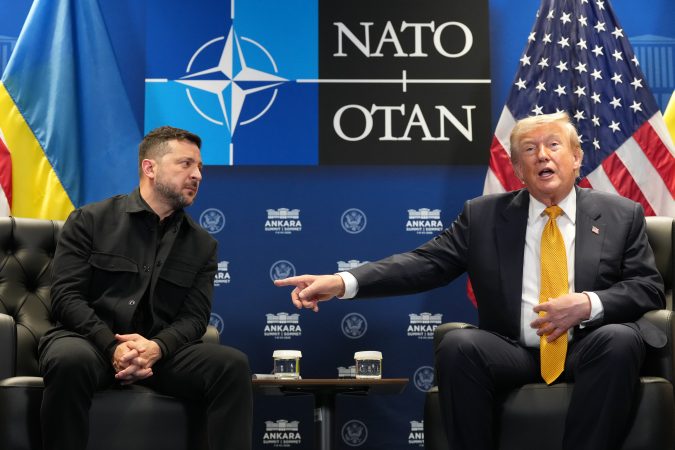
    WASHINGTON — President Donald Trump and Ukrainian President Volodymyr Zelensky met Tuesday ahead of Sen. Lindsey Graham’s funeral, with the two leaders discussing ways for Ukraine to produce its own powerful weapons and “other ideas that could help” in its ongoing war against Russia.

    The sit-down in the Oval Office, which was closed to the media, followed a consequential meeting at the NATO summit earlier this month in Ankara, Turkey, where Trump announced that the U.S. will give Ukraine a license to make Patriot defense systems — a long-running request from Kyiv to counter Russian missile attacks.

    In a post on social media after the meeting, Zelensky thanked Trump for the “good meeting” and the Republican administration’s efforts to aid Kyiv in the long-running war, which began more than four years ago when Russia invaded Ukraine.

    “The President and I discussed licenses for Patriot interceptor production and several other ideas that could help,” said Zelensky, who also noted that he offered condolences to Trump for the death of Graham, a close ally. “We also spoke about diplomacy – it’s important that the diplomatic process be reinvigorated.”

    White House press secretary Karoline Leavitt said both the Zelensky meeting and a separate, later sit-down with Israeli Prime Minister Benjamin Netanyahu were “positive and productive.”

    Trump welcomed Zelensky to the White House as the Ukrainian leader traveled to Washington to honor Graham, whose final act as a public official was visiting Kyiv and securing an agreement on a package of sanctions that seek to punish countries that purchase Russian oil, gas, and other exports.

    In a Fox News Channel interview on Tuesday, Trump recalled Graham’s hawkishness and said the Republican South Carolina senator’s support for Ukraine never wavered. Trump said Graham had suggested it was time to make a deal with Iran but had no similar suggestion for the Russia-Ukraine war.

    “Ukraine, he’s very militant about,” Trump said on Fox & Friends. “I mean, Lindsey liked war, to be honest with you.”

    The Trump administration’s embrace of Zelensky comes as a far-right activist with the U.S. president’s ear had a recent, widely publicized change of heart on Russia’s war against Ukraine.

    Laura Loomer, known primarily for her incendiary social media posts and her influence with Trump, has been traveling through Ukraine, witnessing Moscow’s barrage firsthand, and interviewing Zelensky while admitting she was “bamboozled by Russian propaganda.”

    Loomer said she spoke to Trump after she met with Zelensky in Ukraine last week and she expects to meet with the U.S. president once she returns from her trip.

    “It’s looking good for Ukraine, right?” Loomer said during an interview with the Associated Press. “Going into this meeting next week at the Oval Office is looking pretty good.”

    Ahead of the meeting, Zelensky also warned that Russia has been aiding Iran as the war persists by capturing satellite imagery of U.S. bases in the Gulf region that later appear in Iran. The Ukrainian president also asserted that there was a “clear correlation” between Russia’s images and subsequent Iranian strikes.

    “The purpose is clear,” Zelensky said earlier this month. “None of us in the world should turn a blind eye to one very simple fact: Evil always seeks ways to make things worse and spread further.”

    But on Monday, Trump downplayed any impact of potential Russian assistance for Iran.

    “I don’t think they’ve been doing it, certainly not at a high level,” Trump told reporters on Air Force One as he traveled to Michigan. “And if they have, it has been very un-impactful.”

    Still, he said he would raise the issue with Russian President Vladimir Putin.

    Zelensky has a busy itinerary during his latest visit to Washington. Besides his White House meeting, Zelensky was to head to the Capitol to meet with senators on Tuesday evening after Graham’s funeral at Washington National Cathedral, according to a person with knowledge of the meeting who was not authorized to discuss it publicly and spoke on the condition of anonymity.

    Republican leadership is hoping to advance Graham’s sanctions legislation this week, although the Senate is juggling several other priorities before lawmakers leave Washington for their August recess.

    The bill has dozens of backers from both major political parties and is seen as the main policy tribute to Graham, who died unexpectedly this month from a tear in his aorta. It imposes tariffs on goods from the world’s top five purchasers of Russia oil or natural gas, including China and India.

    The legislation also includes sanctions against Putin; senior Russian political and military leaders; and Russian financial institutions and energy projects.

  • Kentucky governor demands that McConnell prove he is fit to serve or resign

    Kentucky governor demands that McConnell prove he is fit to serve or resign

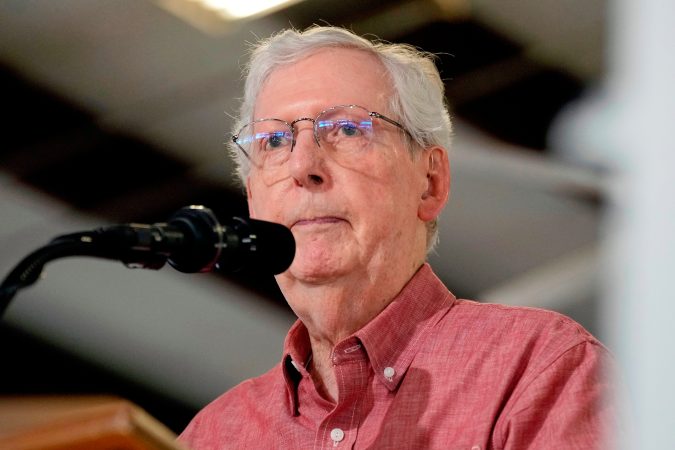
    WASHINGTON — Kentucky Gov. Andy Beshear, a rising national figure in the Democratic Party, is calling on the state’s Republican Sen. Mitch McConnell to either prove that he is fit to continue serving after his lengthy hospital stay or resign from office.

    Beshear made the demand in a letter after McConnell’s office said Monday that the 84-year-old senator had not yet been medically cleared to leave the rehabilitation facility where he has been undergoing physical therapy. The office said he would miss a major Kentucky political event and upcoming Senate votes. McConnell was hospitalized June 14 and disclosed weeks later that it was the result of a fall.

    Beshear, who is widely viewed as a potential presidential candidate in 2028, first urged McConnell in early July to release more information about his condition after weeks of public silence. His letter Tuesday marked a significant escalation.

    “I am calling on you to directly and verbally address the people of Kentucky and provide proof of your capacity to serve, or resign,” Beshear wrote to McConnell.

    Beshear also sent a letter to Senate Majority Leader John Thune, urging him to investigate McConnell’s condition if the senator does not demonstrate that he is capable of continuing to serve.

    McConnell and Thune’s offices did not provide comment on the letter.

    McConnell, who led Senate Republicans for nearly two decades, has long guarded his personal life. Since he was hospitalized last month, his office has issued major updates on July 12 and July 27, each accompanied by a single photograph.

    But public scrutiny of aging elected officials has intensified after several recent health episodes and deaths in office, including the deaths of California Sen. Dianne Feinstein in 2023 and South Carolina Sen. Lindsey Graham earlier this month, as well as President Joe Biden’s decision not to seek reelection after concerns about his age and health became a dominant political issue.

    In the absence of regular public updates from McConnell himself, speculation about his condition has grown online.

    “All of this speculation and even this letter could have been avoided with a minimal amount of transparency,” Beshear wrote to Thune.

  • Workplaces look for cheaper AI as ‘tokenmaxxing’ fades as a corporate fad

    Workplaces look for cheaper AI as ‘tokenmaxxing’ fades as a corporate fad

    A corporate fad of “tokenmaxxing” on artificial intelligence technology is hitting its limits as workplaces throwing AI at everything are seeing the costs rise without a similar spike in productivity.

    What started as tech industry-fueled springtime hype over squeezing as much AI-generated work as possible out of products like OpenAI’s ChatGPT and Anthropic’s Claude has shifted to a summertime backlash.

    “It’s very easy to create something you don’t need with AI,” said Vincent Gusdorf, head of AI analytics at Moody’s Ratings and author of a new report that recommends a more disciplined approach.

    “Tokenmaxxing” refers to maximizing usage of tokens — the building blocks of generative AI that correspond to small pieces of text that an AI system reads or writes. Each token is about three quarters of a word. And there’s typically a limit to how many you can use, with pricier versions of AI products offering higher caps.

    “As bills started to pile in, people realized that those new tools are quite expensive and you need to use them wisely,” Gusdorf said.

    Tech executives cast high AI usage as a badge of honor

    Just a few months ago, Silicon Valley executives were promoting high token consumption as a signal of high-performing employees. The stereotypical tokenmaxxer was staying up late — perhaps ignoring their significant other — while orchestrating an army of 24-hour AI agents performing work on their behalf.

    OpenAI CEO Sam Altman said in May he was “excited to see what will happen with tokenmaxxing startups, both for how they work internally and the products they can build.”

    Nvidia CEO Jensen Huang said “if your $500K engineer isn’t burning $250K in tokens, something is wrong.” Facebook parent Meta had an internal competition rewarding token usage.

    The trend boosted revenue for leading AI large language model developers like Anthropic and OpenAI, but it fizzled as it became apparent it wasn’t necessarily the best strategy for everyone else.

    Microsoft CEO Satya Nadella has admitted that tokenmaxxing can be addictive but warned in a recent blog post that customers of those models are paying twice for AI, first in spending on tokens and second by feeding all their proprietary data to them. While promoting Microsoft’s own approach, Nadella’s comments were unusual in the way he raised doubts about the data protection assurances of leading AI providers.

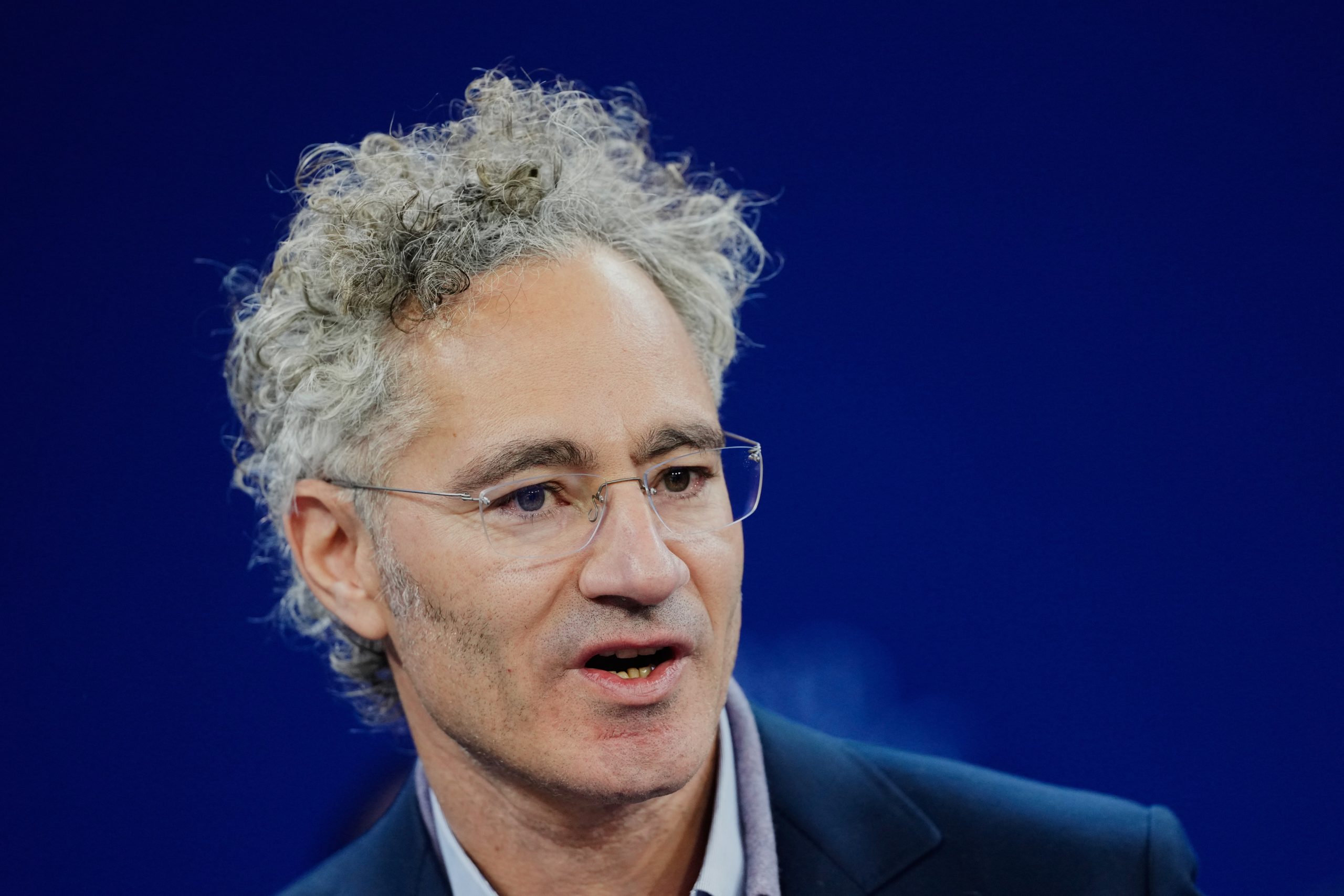
    Alex Karp, CEO of the software firm Palantir Technologies speaks during the Annual Meeting of the World Economic Forum in Davos, Switzerland, on Jan. 20.Markus Schreiber

    Palantir CEO Alex Karp went further, telling CNBC earlier this month that something had gone “completely wrong.” He said he was channeling the voice of American businesses privately “livid” about paying so much for tokens that create no value.

    “The basic view among enterprises in this country is, ‘I’m going to chillax and waste my time with tokens. I’m going to get no value and they’re going to get my IP,” said, a Haverford College graduate with ties to the Philadelphia area.

    Workplaces look more for better ‘routing’ of their AI work

    Bain & Company management consultant Jue Wang said many of the big businesses her firm advises have been taking a closer look at returns on their AI investments.

    “The token cost for them has been doubling, almost every other month,” she said. “Let’s say $200 per developer per month. Multiply that by 20,000 developers, which is often what we’re dealing with at these companies, and that quickly gets you to a number that is not a line item that any general manager has planned for.”

    Sometimes that just means not using the AI equivalent of a sledgehammer to crack a nut.

    “Not everything needs a Claude Opus 4.6,” she said of one of Anthropic’s more capable models suited to software engineering or deep research. “And yet you see so many companies, so many users, default to using Opus for everything, including generating emails.”

    That’s led to a search for tools that do AI “model routing” — in which easier queries get automatically sent to cheaper and more efficient AI systems and more complex tasks go to more powerful models.

    Open-source AI models built in China offer less costly alternatives

    Software developer Hassan El Mghari said companies’ sticker shock over the “ridiculous amount of money” spent on subscriptions to AI products from leading U.S. companies has led many away from rewarding high usage.

    “It’s better to kind of just empower employees on how to use this stuff and let them use AI when and however much they need to,” said El Mghari, who leads developer experience at the startup Together AI, which supplies developers with a variety of “open-source” AI models.

    At the same time, those who favor racking up as many tokens as possible are having a field day with new open-source models from Chinese startups like Moonshot’s Kimi or Zhipu’s GLM, which nearly match the capabilities of top U.S. models at a fraction of the price.

    “There is some validity to the theory that this could push tokenmaxxing a little bit further,” said Raffi Krikorian, the chief technology officer at Mozilla. “But if we look at the industry overall, I think it’s realizing that tokenmaxxing is a dumb thing.”

    It’s similar, Krikorian said, to how software companies once considered how many lines of code a programmer wrote to be a good metric of productivity. That later fell out of favor.

    “I think tokenmaxxing is moving through the exact same pattern,” he said. “I think this is going to be an interesting blip that we’re all going to look back to laugh at in a year.”

  • Joe Biden interviews with memoir ghostwriter reveal him discussing sensitive information

    Joe Biden interviews with memoir ghostwriter reveal him discussing sensitive information

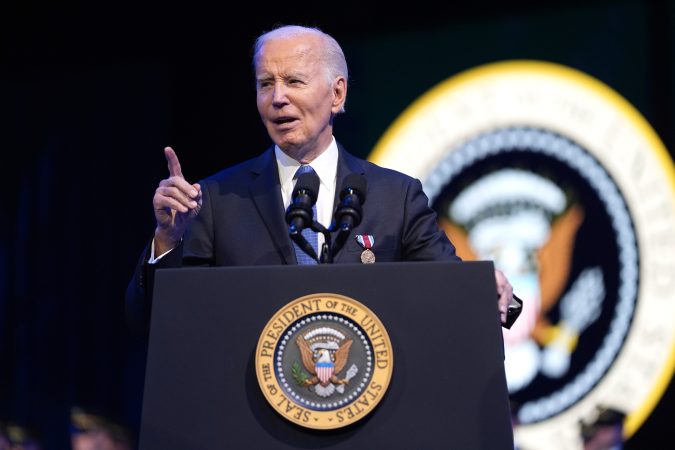
    Newly released audio tapes, disclosed by a conservative activist group, appear to show Joe Biden sharing classified information with a biographer and sometimes claiming memory lapses during interviews that occurred before his election to the presidency in 2020.

    About three hours of audio and 117 pages of transcripts — with many redactions — were released by the Oversight Project, an arm of the Heritage Foundation, after Biden lost a prolonged legal fight to keep his conversations with his memoir ghostwriter, Mark Lewis Zwonitzer, private.

    “They didn’t even know I had this,” Biden told Zwonitzer in October 2016, near the end of his second term as Barack Obama’s vice president, as he talked about sensitive foreign policy matters handled by the administration.

    In one 2017 session, after Biden had left the West Wing and before he’d launched his own presidential campaign, he appeared to admit retaining classified information from his time as vice president.

    “I just found all the classified stuff downstairs,” Biden said. “I wrote the President a handwritten 40-page memorandum arguing against deploying additional troops to Iraq — I mean, to Afghanistan on the grounds that it wouldn’t matter, that the day we left would be like the day before we arrived.”

    The potentially classified information itself is redacted in both the audio and transcripts that the Oversight Project released.

    The right-wing group first sued to obtain the tapes after Special Counsel Robert Hur decided in 2024 not to charge Biden for how he handled classified information. Biden cooperated with Hur’s inquiry and told the special prosecutor during his presidency that he did not intentionally mishandle any classified material.

    Hur, who obtained the tapes as part of his inquiry, said in announcing his decision that he believed a jury would find Biden a sympathetic figure because of his age and what Hur described as a “poor memory” — a statement that became a flashpoint in public debate about Biden’s age and fitness for the presidency.

    Biden was 74 when the interviews began. He was 81 and seeking reelection when Hur released his report in early 2024, though Biden later ended his campaign for a second term after a halting debate performance against Republican Donald Trump.

    The tapes contain instances of Biden being unable to recall some dates and details of topics he was discussing with Zwonitzer. Biden also showed a command of many details, recalling meetings and details of conversations referenced in the notes he shared.

    At the Oversight Project, vice president of litigation Jeff Clark insisted the tapes prove Biden’s decline.

    “The tapes have always belonged to the American People, the Oversight Project just delivered them to their rightful owner,” Clark said in a statement. “The knowledge of his deterioration was well-established.”

    A Biden spokesperson blasted the release as politically motivated.

    “President Biden’s conversations for a book a decade ago that discussed his late son are private, and were provided to the Department of Justice on the express condition they stay that way,” said TJ Ducklo. “Reversing course and making them public is just the latest example of this Administration weaponizing the DOJ for political retribution.”

    Biden initially sued to stop the Department of Justice from releasing the material, claiming the conversations were private. But he dropped his suit after a divided panel of appeals court judges rejected his bid. Biden could have petitioned the Supreme Court to intervene or asked for a rehearing by the full U.S. Court of Appeals for the District of Columbia Circuit.

    In a 2-1 ruling, a three-judge panel from the circuit court found a “substantial” public interest in disclosing the material.

  • Stocks drift on Wall Street and crude oil prices drop as Mideast tensions cool

    Stocks drift on Wall Street and crude oil prices drop as Mideast tensions cool

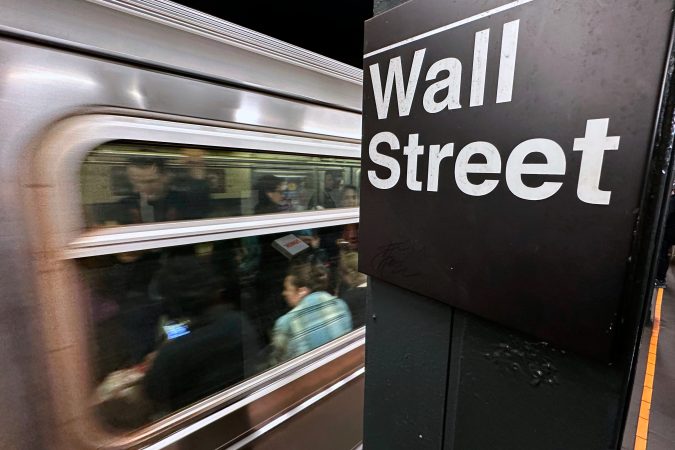
    Stocks on Wall Street drifted to a mixed close Monday as oil prices fell after the U.S. and Iran paused their attacks while work resumed on restarting negotiations to end the war.

    The S&P 500 rose less than 0.1% after spending much of the day bouncing between small gains and losses. The benchmark index was coming off two weekly losses in a row. The Dow Jones Industrial Average rose 0.5%, and the Nasdaq composite fell 0.2%, its fourth straight loss.

    The three major stock indexes are on pace to close out this month in the red. It would be the second straight monthly loss for the S&P 500 and Nasdaq.

    Oil prices reversed course from a week ago, when a sharp escalation in fighting between the U.S. and Iran worsened worries about global oil supplies. The price of Brent crude, the international standard, dropped 6.3% to settle at $85.87 a barrel for October delivery. Prices surged to over $100 a barrel last week before easing.

    U.S. crude oil for September delivery fell 7.5% to settle at $82.61 a barrel.

    The war between the U.S. and Iran has sharply curtailed, and at a times halted, traffic through the vital Strait of Hormuz. That has had a ripple effect throughout the world’s economy. Gasoline prices have surged and shipping costs for most goods are rising, with businesses typically passing those costs along to households.

    Markets closed higher in Europe and Asia.

    Bond yields fell. The yield on the 10-year Treasury fell to 4.65% from 4.69% late Friday.

    Technology companies were behind much of the shifts in the market, with gains and declines for a mix of big companies resulting in uncertain trading.

    Nvidia fell 5% and Micron Technology slumped 2.3%. At the same time, Microsoft rose 1.9% and Apple rose 1.2%. They are all among the most valuable companies in the world, and those huge valuations give them more influence over the direction of the broader market.

    The mix of gains and losses from a variety of those companies had more impact in pushing and pulling the market, even as the majority of companies in the S&P 500 gained ground.

    Communications company stocks were among the gainers Monday. Google parent Alphabet rose 2.1%, while Charter Communications jumped 6.7% and Comcast rose 2.3%.

    Credit card issuers and payment processors also notched gains. American Express climbed 2.8%, Capital One Financial added 2.1%, Visa rose 1.9%, and rival Mastercard gained 2.2%.

    In Asia, Chinese memory chipmaker CXMT soared in its debut in Shanghai. The company jumped to become China’s most valuable listed company with an estimated market capitalization of 3.3 trillion yuan (nearly $490 billion).

    All told, the S&P 500 added 1.20 points to 7,413.18. The Dow gained 262.83 points to 52,210.08, and the Nasdaq dropped 43.74 points to 24,932.08.

    Wall Street has a busy week ahead with several potentially mark-moving updates on the economy and company earnings. Reports are due out on consumer confidence Tuesday and inflation on Thursday.

    “This is a week with more than its fair share of potential surprises, good and bad,” said Chris Larkin, managing director, trading and investing, at E-Trade from Morgan Stanley.

    The big focus will be on the Federal Reserve, which will give an update Wednesday on its interest rate policy. The central bank has been grappling with the impact from rising inflation because of the ongoing U.S. war with Iran. It also has to contend with a fresh round of U.S.-imposed tariffs globally, which could further worsen inflation.

    Wall Street anticipates a nearly 36% chance that the Fed will raise interest rates at its meeting this week. Higher rates can help cool inflation by making borrowing more expensive and slowing economic growth.

    The central bank has been holding rates steady throughout the year as it monitors inflation’s direction and impact, but Wall Street expects at least one rate hike by the end of the year.

    Stubbornly high inflation has been squeezing households and fuel costs have hit budgets and spending particularly hard. Gasoline costs are taking a bigger chunk out of household budgets, and that could mean tighter spending on other things like clothing and travel.

    Investors are monitoring the latest round of corporate earnings for signs of consumer stress along with whether the yearlong jump in stock values throughout Wall Street is justified by profits and forecasts for profit growth.

    Investors also have a heavy round of corporate earnings to review this week. Many of those reports could provide more clues into the health of different areas of the economy. Paint and coatings maker Sherwin-Williams, aircraft maker Boeing, and payments processor Visa will report their latest results on Tuesday.

    Starbucks and Chipotle will report results on Wednesday.

    Technology companies are being watched especially closely because their sharp gains throughout the year have been behind the Wall Street’s record run. Microsoft will report results Wednesday. Amazon, with its growing cloud services business and AI focus, will report results on Thursday, along with Apple.

  • French president pledges support on visit to fire zone, vows: ‘We will win this battle together’

    LEGE-CAP FERRET, France — French President Emmanuel Macron urged fire crews to “stay strong” as they battled Monday to bring a monster wildfire under control, warning that the fight will take time but vowing, “We will win this battle together.”

    On a visit to a coordination center for the massive firefighting effort in southwest France, Macron heard how the blaze raging since last week has been wildly unpredictable, transforming at times into a self-feeding fire storm as it burned through an area four times the size of Paris and forced 220,000 people to flee their homes.

    “We’re facing a completely unprecedented fire,” Macron said, describing the situation as France’s worst fire-related crisis since World War II.

    He praised firefighting teams who stopped the inferno’s progression Monday after days of spreading flames that edged toward the wine region city of Bordeaux. But with woodlands still smoldering, he and other government officials cautioned that the battle isn’t yet won, with forests turned tinder-dry by successive heat waves this year and another forecast for this week.

    “The weeks ahead will be hard. We must hold firm,” Macron said.

    Fire crews racing against feared next heat wave

    With thousands of firefighters on the ground and rotations of water- and retardant-dropping aircraft, it became a race against time Monday to contain the blaze before temperatures soar, with national weather service forecasts of 95 F and above in southwest France from Tuesday.

    Authorities also are working to feed, shelter and care for evacuees who fled in staggering numbers: 250,000 in the southwest, driven away by two fires.

    Macron spoke of displaced people “traumatized” by the upheaval and “who sometimes have lost everything.”

    No new evacuations were announced Monday. But with France about to enter its peak August tourist season, authorities for the Gironde region around Bordeaux worked to keep vacationers away, banning holiday camps for children and for people with disabilities. Government ministers also urged people not to travel to the region that is popular for its Atlantic beaches, famous wines and some of France’s largest expanses of forests.

    Crews using earth movers tore up strips of forest and scrubland to create barren spaces, intended to block the flames that officials said had come within 10 miles of Bordeaux’s outskirts. Farmers kept fire crews supplied with water, transporting it to them in tanks.

    Briefing Macron, the Gironde region’s fire chief explained how crews had wrestled with the blaze unlike any they’d previously tackled, extraordinarily virulent and capricious, “a fire that’s going everywhere” and which generated electrical storms that sparked more flare-ups.

    “The last 24 hours went well, thanks to your work” Macron told firefighters. “Doubtless, tomorrow will be more complicated than today.”

    Spain is also battling fires

    Around a dozen countries have provided planes, helicopters, firefighters, and other assistance to both France and Spain, which is also fighting unprecedented blazes. All told, fires in the two countries have forced more than 330,000 people to flee.

    In Spain, wildfires have burned out of control around Madrid and in the Valencia region. Authorities evacuated 79,000 people and confined 30,000 others to their homes.

    In both Spain and France, the exceptional scale of the fires — fueled by heat waves that hit especially hard and early this year, making forests and scrubland tinder-dry — are driving calls for stronger action against climate change.

    “What we are experiencing is not a series of isolated incidents. It is the consequence of a climate emergency that is making wildfires even more violent, heat waves more frequent,” Spanish Prime Minister Pedro Sánchez said.

    A fire raging in hilly, rural terrain in Ávila, west of Madrid, has become Spain’s largest on record, scorching 193 square miles, the government said. That’s five times the size of Barcelona.

    “Look at how the valley is burned. Look at the houses, the people,” said David Gonzalez, a 48-year-old gardener who used his van to run supplies to firefighters in Ávila.

    “We are feeling lot of anger and helplessness. It’s something inhuman,” he said.

    Fires have burned 590 square miles this year in Spain — six times the area scorched by blazes in the first half of 2025, said Sara Aagesen, the ecology minister.

    The minister said that another heat wave forecast from Tuesday — which would be Spain’s fourth so far this year — could ratchet up the fire danger. Spain’s weather agency forecast temperatures above 104 F.

    Water-dropping planes combat fire in Italy

    A wildfire driven by strong winds broke out on Sunday afternoon near Peschici, in Italy’s southern Puglia region, burning pine forest and scrub and forcing the evacuation of about 300 tourists from beaches and campgrounds, authorities said.

    The Coast Guard evacuated tourists by sea to nearby Vieste, where authorities opened temporary shelters.

    Three Canadair water-bombing planes and fire crews on the ground continued Monday to battle the blaze, which revived memories of devastating wildfires that hit the same coastal area in 2007.

  • Trump defends his economic policies in Michigan, where new Canadian tariffs may sting

    Trump defends his economic policies in Michigan, where new Canadian tariffs may sting

    MILFORD, Mich. — In a visit to Michigan on Monday, President Donald Trump argued that his economic policies have revived the auto industry and American manufacturing even as many businesses contend that the sweeping tariffs he’s imposed against Canada and the rest of the world have hurt the state.

    Trump defended his policies while visiting a General Motors facility in the Detroit suburb of Milford that is a testing ground for its vehicles. He pumped a fist after watching Corvette, Cadillac, and Hummer vehicles compete in a series of drag races.

    In a speech, Trump cheered GM’s plans to expand production domestically in coming years and declared himself a president who was standing up for auto workers “at long last.”

    “I’ve done more for you than your parents, OK?” he said.

    After being led on a tour of vehicles from different eras of GM, some of which he sat in, Trump claimed the tariffs have helped the automaker.

    “They’ve come a long way,” he said to reporters about the Detroit-based automaker. “It’s amazing what tariffs are doing for GM.” Trump said he’s been good to the company but he declined to say more.

    “The rest of the world doesn’t love me, but that’s OK,” he said, alluding to tariffs. “It’s called ‘America first.’”

    Trump’s visit is close to Michigan primary on Aug. 4

    Trump called out several Republican candidates and invited them onstage during his remarks Monday.

    Republican Mike Rogers is unopposed in the Senate primary, but the GOP gubernatorial contest pits Trump-backed Rep. John James against Perry Johnson, a businessperson turned politician who has launched unsuccessful campaigns before, including for president in 2024.

    Johnson is now trying to style himself in the president’s mold — despite missing out on his endorsement.

    The Democratic Senate primary between Rep. Haley Stevens and progressive Abdul El-Sayed has drawn national attention for the right to face Rogers, who was narrowly defeated by Democrat Sen. Elissa Slotkin in 2024.

    Early voting is underway.

    Trump’s new Canada tariffs could hurt Michigan

    Michigan was one of the 2024 battlegrounds Trump flipped after it backed Democrat Joe Biden in 2020. But the state has seen parts of its economy affected by the president’s tariffs, including those on imported cars and auto parts.

    A new round of steep import levies is taking effect on dozens of U.S. trading partners. But Trump has singled out Canada with tariffs as high as 50% on a wide array of its products, including cars.

    The GM facility is in Oakland County, which encompasses much of Detroit’s northern suburbs. Once a Republican stronghold, it has increasingly leaned Democratic, backing Biden against Trump in 2020 and Vice President Kamala Harris against Trump four years later.

    GM says its facility is the oldest dedicated vehicle testing operation in the United States, where 4,200 employees work to refine nearly every vehicle the company makes before they reach consumers.

    Michigan’s economy relies heavily on Canada, however, meaning the new tariffs — coupled with inflation still running high and gas prices rising again as the already unpopular war in Iran continues — have created additional economic concerns statewide.

    Those come at a time when voters across the country were already increasingly dissatisfied with Trump’s handling of the economy.

    Jason Roe, a former executive director of the Michigan Republican Party who tried unsuccessfully to distance it from Trump’s Make America Great Again movement in 2021, said that more than coinciding with his new round of tariffs, Trump’s visit is a function of Michigan’s relatively late primary and is meant to ensure that James secures the nomination.

    But Roe also said it was a risk for the president to tie himself too closely to top Republicans before the general election, calling it “kryptonite to November voters.”

    Trump, who won the White House on a promise to lower the cost of living, also has seen his approval ratings sag, meaning kitchen table issues could be a liability for Republicans trying to hold control of Congress in the Nov. 3 elections.

    “We’re happy to have the president here, campaigning with Republicans. We think it highlights the fact that the only thing they care about is Donald Trump and refuse to stand up to him,” said Curtis Hertel, chairperson of the Michigan Democratic Party. ”It’s good for us every time the president is here because he’s incredibly unpopular.”

    U.S. and Canada have squabbled over a new border bridge

    The Supreme Court struck down many of Trump’s sweeping tariffs, but his administration has tried to find ways around that, including by arguing that he can impose them on Canada because that country is discriminating against American exports of products including automobiles.

    But Trump’s latest round of tariffs came after he voiced frustration with Canada for having retaliated and imposed its own levies on U.S. imports in response to Trump’s initial tariffs last year. Trump launched the first round after alleging Canada should do more to stop fentanyl smuggling.

    It is Trump’s third trip to Michigan in his second term.

    In January, he visited a Ford plant in Dearborn and addressed the Detroit Economic Club, offering a defense of tariffs even as auto industry leaders blamed them for increasing the cost of doing business.

    The president marked his second term’s first 100 days with a rally in Warren, where he mostly mentioned grievances left over from the 2024 campaign,

    His latest visit coincides with tensions between his administration and Canada that have marred the opening of a new bridge linking Detroit and Windsor, Ontario.

    Canada on Friday held its own event hailing the opening of the $4.7 billion Gordie Howe International Bridge instead of a planned celebration with officials in the U.S. after Trump announced the new Canadian tariffs.

    An earlier, joint ceremony had been set for June but was scrapped after Trump suggested the U.S. wanted a “better” deal on the bridge it co-owns with Canada.

    That eventually led to an agreement on splitting tolls that was supposed to allow for the rescheduled joint U.S.-Canada celebration — until the new tariffs derailed that, too.