Category: Associated Press

  • Trump’s attacks on mail balloting and concerns over delays turn midterms spotlight on Postal Service

    Trump’s attacks on mail balloting and concerns over delays turn midterms spotlight on Postal Service

    Roughly six weeks before the first midterm ballots are mailed out, the U.S. Postal Service is emerging as a pivotal player in an election season that will determine control of Congress.

    President Donald Trump is seeking greater control over mail balloting through an executive order while a change to how the agency processes mail is leading to criticism that it’s failing to deliver ballots on time.

    Democratic officials have raised concerns over the past week about how quickly the Postal Service will process ballots after tens of thousands of them in California and hundreds in Wisconsin arrived at local election offices too late to be counted in elections earlier this year. The top election offices in Kansas and Michigan are urging voters who want to cast their ballots early to avoid the mail and instead drop them off in person.

    The Postal Service replied to those concerns by saying it remains “committed to fulfilling our role in the electoral process.”

    “We provide a secure, efficient, and effective way for citizens to participate when policymakers decide to use mail as part of their elections,” it said in a statement Tuesday.

    Trump’s order puts more focus on mail ballots

    The Postal Service faced similar questions about mail delivery in 2024, but the scrutiny this year is heightened because of an executive order Trump issued in March that seeks to create a national voter list to guide the Postal Service in deciding who gets a mail ballot.

    The order has sparked multiple lawsuits and federal court orders, leading to a case now before the U.S. Supreme Court in which the administration is asking the justices to allow it to impose its restrictions on mail balloting.

    Trump has lied for years about voter fraud to try to explain away his loss to Democrat Joe Biden in 2020, and mail balloting is a favorite target, even though he has used the method himself. During a recent stop in Michigan, he falsely characterized mail balloting as “inherently corrupt” and added, “Hopefully there will be no mail-in ballots.”

    A 2025 report from the research group Brookings identified about four cases of fraud for every 10 million mail ballots cast.

    Despite Trump’s attacks, the method remains popular with voters of both major parties. In 2024, nearly 30% of U.S. voters cast their ballots by mail, according to federal data. In Michigan, where competitive U.S. House and Senate races could help determine the balance of power in Congress, the state said it has sent out more than 2 million absentee ballots for the state’s Aug. 4 primary.

    “We want to keep vote by mail. We want to protect it. We want to expand it,” said Jonathan Smith, president of the 200,000-member American Postal Workers Union, which launched a campaign in April promoting it and is opposed to turning the Postal Service into an election administrator. “Why? Because it works.”

    Legal battles intensify over Trump’s order

    The Postal Service proposed a rule in June in line with Trump’s executive order that would create a national list of eligible voters, based on databases kept by other federal agencies. Only those on the list would be eligible to receive mail ballots.

    Democratic officials in nearly two dozen states filed a federal lawsuit in Massachusetts. A federal judge there blocked Trump’s order last month, and an appeals court upheld that ruling, prompting Trump’s appeal to the Supreme Court. But the appeals court for the District of Columbia refused Tuesday to block the order in a separate case, calling a legal challenge premature.

    Democratic senators and governors have written to the Postal Service urging it to abandon efforts to implement Trump’s order.

    “Donald Trump has shown he’ll stop at nothing to meddle in our upcoming elections,” Wisconsin Sen. Tammy Baldwin said in a statement to The Associated Press. ”At best, this new push will exacerbate already severe delays for mail-in voters and at worst, it will stop eligible Americans from casting their ballots.”

    In a letter to Democratic senators earlier this month, the heads of the Postal Service said they were abiding by the court rulings that had halted the executive order. But Smith, of the postal workers union, told the AP on Tuesday that USPS information technology staffers who are union members are working on a planned portal for the list of eligible voters “behind the scenes.”

    The Postal Service declined to respond to Smith’s statements and said it could not comment about whether it’s moving forward with work related to Trump’s order because of the litigation.

    The postal workers’ union opposes the plan for a portal, a national list of eligible voters and using that list to determine who can receive a mail ballot. Smith said it shouldn’t be postal workers’ responsibility “to decide who can vote and who can’t vote.”

    A plan to consolidate mail processing centers upsets officials

    The Postal Service has been under financial stress for years and has been consolidating mail processing into fewer regional centers. Mail travels an average of 139 miles to reach one and sometimes 500 miles, according to a recent Brookings report.

    In January, a group of mostly Democratic senators said it was concerned about a decision to end twice-daily mail dispatches from local post offices to regional processing centers. The result is that mail arriving after the only daily dispatch would go out the next day.

    California officials said the change was a factor in the state rejecting more than 148,000 ballots from its June primary, with 63% of them arriving too late despite a seven-day grace period. Officials worried that some ballots were postmarked at processing facilities the day after they were dropped off at a post office, possibly invalidating them. Wisconsin officials also said hundreds of ballots from an election in April arrived late.

    The Postal Service said postmarks generally are being applied with automated equipment at processing centers, “in the same manner and to the same extent as before.” It said someone who wants to make sure their ballot envelope gets a timely postmark can get a free one applied by a postal worker.

    A report on the 2024 election by the USPS Office of Inspector General said the Postal Service handled more than 59 million pieces of ballot mail from Sept. 1 to Nov. 15 that year and that 97.3% arrived on time.

    Some state election officials advise voters to avoid the mail

    The Michigan secretary of state’s office is advising voters to hand-deliver ballots to their local clerk’s office or a drop box.

    “We’ve seen these issues over a number of election cycles now — they’re always concerning, and that’s why we’ve put out that guidance,” said Deputy Secretary of State Aghogho Edevbie.

    The Postal Service said its Michigan centers are not seeing processing delays.

    In Kansas, concerns about late ballot deliveries in the state’s 2024 primary election prompted a quip on the social platform X from Secretary of State Scott Schwab, a Republican: “The Pony Express is more efficient at this point.” Asked his view now, spokesperson Whitney Tempel said Schwab still believes “keeping your ballot out of the hands of the federal government is best.”

    Jamie Shew, a Democrat elected to oversee elections in Douglas County, home to the main University of Kansas campus, said his office is trying to change voters’ perceptions.

    “I think voters are used to, you can drop it off on Friday and we’re going to receive it by Election Day,” Shew said Tuesday. “That’s just not the reality.”

    California’s state budget includes $10 million for social media campaigns and other efforts to discourage last-minute ballot mailings.

    And the Postal Service said it hasn’t changed its own longstanding advice for voters: They should get their ballots in the mail at least a week before their state’s deadline for receiving them.

  • This Lebanese couple is among those returning to shattered homes under US-brokered deal with Israel

    This Lebanese couple is among those returning to shattered homes under US-brokered deal with Israel

    ZAWTAR AL-GHARBIEH, Lebanon — Mahasen Faqih and her husband returned this week to their village in southern Lebanon, digging through the debris of their home in search of their belongings, as part of the U.S.-brokered “pilot zones” agreement in which Israel agreed to withdraw in exchange for the disarmament of the Iran-backed Hezbollah militant group.

    The couple fled north shortly after the start of the latest Israel-Hezbollah war, in early March. Now, their home in Zawtar al-Gharbieh — one of three zones where Israel agreed to turn over control to the Lebanese army — is among homes so damaged that they’re unlivable. But Faqih said they’ve vowed to stay, settling inside the large grocery shop that they own in the village as they wait to have their home demolished and rebuilt.

    “Zawtar is our small homeland, and we are very happy,” Faqih, 58, said. “We will sleep here to tell the Israelis that we will stay in our land and will not leave it, no matter what happens.”

    A week after the Lebanese army took control, only about 15 families have returned, according to Mayor Abed Ezzeldine, who says nearly half the village’s 500 homes have been destroyed and many others damaged.

    Hezbollah is strongly opposed to the initial deal reached between Israel and Lebanon — which remain technically in a state of war since Israel’s establishment in 1948 — and to the direct talks between the nations, ongoing for nearly three months.

    The latest Israel-Hezbollah war began March 2, when the Lebanese militant group fired rockets into Israel two days after Israel and the U.S. launched their war on Iran. Israel has since invaded Lebanon and occupied dozens of villages in the south along its border.

    Under the deal, Israeli forces are supposed to withdraw from some occupied areas of southern Lebanon. But the location of the initial pilot zones generated some controversy in Lebanon. Israeli troops weren’t present in most of the areas, raising questions about how a withdrawal could happen. In Zawtar al-Gharbieh, it’s unclear whether troops were on the ground. But they were in adjacent areas, and the village was under heavy fire, preventing civilian residents and the Lebanese army from entering until last week.

    The Israeli military has destroyed 24 centuries-old villages and 15,000 to 20,000 houses in Lebanon, Israeli Defense Minister Israel Katz told a TV station Tuesday. He said Israeli troops control 270 square miles of southern Lebanon and “are preventing raids on the communities.”

    Residents return to damaged or destroyed homes in Zawtar al-Gharbieh

    On Tuesday, as Faqih sifted through debris, she was able to recover only nine plates from the kitchen. That room and the main sitting room were knocked out, with the ceiling partially collapsed. On the home’s other side, an Israeli strike left a hole in the main bedroom’s ceiling.

    “We are gathering what remains of what we have collected over 45 years,” Faqih said, noting that she’d already sold $20,000 in jewelry to repair the home from damage in the 2024 Israel-Hezbollah war — something she can no longer afford. She hopes the government will help them rebuild.

    Mayor Ezzeldine said Zawtar al-Gharbieh is “disaster-stricken.”

    “You can see some homes standing, but they are not suitable for living and cannot be renovated,” he said. The municipality is doing its best to bring water by tanker trucks to residents who return, he said, and he hopes about 100 families will be in the village by week’s end.

    Lebanese army bulldozers were clearing debris from the village’s streets. In the main square, trucks with mounted machine guns were parked near a partially destroyed blue-domed mosque. About 100 yards away, an armored personnel carrier blocked a road leading to the adjacent village of Zawtar al-Sharqiyah, which is fully occupied by Israeli troops.

    During The Associated Press team’s visit Tuesday to Zawtar al-Gharbieh, three strong explosions occurred in occupied areas, and brown smoke billowed.

    More Lebanon-Israel talks scheduled

    In his comments Tuesday to Channel 14, an ultranationalist station in Israel, Defense Minister Katz said that in the 24 villages destroyed in Lebanon, “there were Shiites who acted as enemies on behalf of Hezbollah and threatened our borders, our residents, and constantly carried out provocations.”

    “Not house by house, not incrimination — all these villages, their destruction has been completed,” he said.

    His comments and the return of some residents to the pilot zone come as technical teams from Lebanon and Israel are scheduled to hold another round of talks in Rome over three days starting Aug. 4.

    In Beirut, a Lebanese foreign ministry official said the talks will focus on finding other pilot zones to be handed over by Israel’s military to the Lebanese side. The official spoke on condition of anonymity in line with regulations.

    But in Zawtar al-Gharbieh, mayor Ezzeldine said he wouldn’t call the pilot zone successful so far. Israeli troops are still stationed nearby, with drones continuously flying over the village, he said, adding that only the Lebanese army’s presence is reassuring residents.

    Faqih said that her family does not feel secure and that if Israel expands the pilot zones by a village every couple of months, it will take years “for it to withdraw and for the south to be liberated.”

    “We don’t have safety, not even 1%,” she said. “I am not happy with the situation at all.”

  • Oil prices jump, while the Dow drops more than 1,100 as sinking AI stocks drag Wall Street lower

    Oil prices jump, while the Dow drops more than 1,100 as sinking AI stocks drag Wall Street lower

    NEW YORK — Oil prices got back to jumping on Wednesday, while sinking technology stocks dragged Wall Street lower amid uncertainty about what the Federal Reserve will do to get high inflation under control.

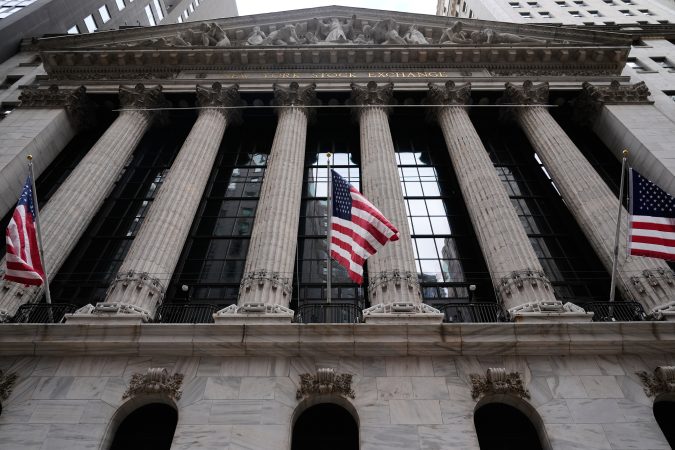
    The S&P 500 fell 1.5% after swinging sharply between gains and losses in the last hour of trading. The Dow Jones Industrial Average dropped 1,153 points, or 2.2%, and the Nasdaq composite slumped 1.7% to fall 9.8% below its record set last month.

    The action was more decisive in the oil market, where the price of Brent crude leaped 7.3% to settle at $88.09 per barrel after fighting resumed in the war with Iran and raised worries about the global flow of oil.

    Brent oil’s price had swung as low as $72 early this month and as high as $102 last week on uncertainty about whether the United States and Iran could reach a deal to allow oil tankers to move freely again from the Middle East to customers worldwide.

    The swings have raised worries that inflation will reaccelerate, and traders came into the day betting on a roughly 34% probability that the Fed would raise its main interest rate in the afternoon, according to data from CME Group.

    Higher rates can keep a lid on inflation, but they can also slow the economy and undercut prices for stocks and other investments.

    Fed officials instead voted to keep the federal funds rate steady, though three members of the policymaking committee did want to raise rates. The Fed’s chairman, Kevin Warsh, implied the bond market may already be doing some of the work to restrain inflation, and he pointed to how yields have climbed since the central bank’s last meeting six weeks ago.

    He reiterated his commitment to get inflation back to 2% following years of faster-than-hoped increases in prices, but he also stuck to his plan of giving financial markets fewer clues about what the Fed may do with interest rates in the near future.

    With less guidance from the Fed, financial markets may be set for more volatile trading amid the uncertainty.

    “Did the Fed take an explicit change in its policy rate today?” Warsh asked rhetorically in a news conference following the Fed’s decision. “No, but I think that’s the beginning of the story.”

    Treasury yields swiveled up and down following the Fed’s decision and Warsh’s insistence on not guiding the market.

    The yield on the two-year Treasury, which closely tracks expectations for Fed action, fell to 4.24% from 4.26% late Tuesday.

    But the 10-year Treasury yield, which moves more with expectations for inflation and economic growth in upcoming years, went in the opposite direction. It jumped to 4.68% from 4.61% late Tuesday.

    That’s up from 3.97% before the war with Iran sent oil prices much higher, and the increase has already sent long-term U.S. mortgage rates to their highest level in nearly a year.

    Higher rates particularly hurt stocks seen as the most expensive, and scrutiny has already been rising on makers of computer chips and other winners of the frenzy around artificial-intelligence technology.

    The recent surges for sellers of computer processors and memory are backed by real revenue and profits, but the exceptional growth won’t be sustainable if AI does not produce as much profit and productivity as hoped.

    The skepticism has hit South Korea’s stock market in particular because it’s dominated by two tech giants, Samsung Electronics and SK Hynix. Seoul’s Kospi index tumbled 6% Wednesday, a day after it plunged 10.8%, and trimmed its gain for the year so far to 34.4%.

    SK Hynix’s stock in Seoul dropped 9.6%. It reported record amounts of revenue and profit for a quarter thanks to strong demand because of AI. But its 257% growth in revenue still wasn’t enough to meet analysts’ expectations.

    On Wall Street, Nvidia was the heaviest weight on the S&P 500 after the chip company fell 3.6%.

    KLA Corp., whose products and services help make semiconductors, lost 10.8% even though it reported stronger-than-forecast profit and revenue for the latest quarter. Expectations were high after its stock surged nearly 150% in this year’s first six months.

    On Tuesday, gains for stocks outside of AI helped offset weakness for tech companies. Analysts have been saying such a rotation in the market from AI to less-loved areas could be healthy, but the majority of U.S. stocks fell with tech on Wednesday.

    Hims & Hers Health tumbled 14.7%, for example, after the Federal Trade Commission, Utah and California alleged it shared consumers’ sensitive health information about medical conditions with third-party advertising platforms despite claiming its services maintain consumers’ privacy. Hims & Hers said their lawsuit is contorting “the law to try to manufacture claims,” which it called baseless.

    All told, the S&P 500 fell 112.63 points to 7,316.15. The Dow Jones Industrial Average dropped 1,153.18 to 51,594.14, and the Nasdaq composite sank 433.97 to 24,442.94.

    In stock markets elsewhere around the world, indexes were mixed. Hong Kong’s Hang Seng rose 2%, and Japan’s Nikkei 225 fell 1.5% for two of the bigger moves.

  • Southern Europe burns as 3 firefighters die and France battles blaze 4 times the size of Paris

    Southern Europe burns as 3 firefighters die and France battles blaze 4 times the size of Paris

    LEGE-CAP FERRET, France — An uncontained wildfire four times the size of Paris threatened to surge again in southwest France on Wednesday — as three firefighters died in Greece and crews across southern Europe confronted a punishing mix of heat, drought, and strong winds.

    The deaths on Crete brought a fatal new dimension to a wildfire emergency stretching from the Atlantic coast to the eastern Mediterranean. At the peak of the evacuations, a third of a million people were driven from homes and vacation sites in France and Spain.

    In France’s Gironde region, the country’s biggest blaze had not spread during a calm night, authorities said. But as temperatures approached 104 F Wednesday afternoon and winds strengthened, the reprieve threatened to be short-lived.

    The landscape was so combustible that investigators believe routine brush-clearing work near a high-voltage line may have sparked the inferno, even though the work appeared to comply with regulations.

    At the command center in Lège, firefighters bent over maps spread across a car hood, tracking three danger zones: northern Cap-Ferret; the wooded corridor around Marcheprime, Cestas, and Saint-Jean-d’Illac; and a military site near Martignas, where a major outbreak forced a large deployment.

    Both firefighters and residents mobilize

    More than 2,200 firefighters and over 20 aircraft remained mobilized, backed by crews from across France and European partners.

    “We strike quickly and strike hard at any new smoke emissions,” Gironde fire commander Matthieu Jomain said.

    Beyond the command center, civilians were trying to hold the line themselves. At Souge, volunteers flooded the edges of dirt tracks while a local digger driver plowed through still-burning soil, trying to keep flames from crossing back when the expected west wind arrived. In Lacanau, residents pumped water from a lake into tanks headed for hot spots and firefighters’ cisterns.

    “If one day the fire starts in our neck of the woods, I know very well that all the people here would do the same for us,” said Flavien Dubuch, 33, who drove from Saint-Émilion with his father to help.

    Hottest day this week

    The advance of major fires in the Landes and Var regions has been halted. That left Gironde as France’s biggest remaining wildfire battle, Interior Minister Laurent Nuñez said.

    The Gironde fire forced 220,000 people to flee at the peak of the crisis. Tens of thousands have since been allowed home, but authorities warned that the danger had not passed.

    Extreme heat strips moisture from vegetation and drives down humidity, turning grasses, brush and forest litter into faster-burning fuel.

    Investigators believe contractors working near a high-voltage line for power-grid operator Enedis ignited the blaze while using a brush-cutting machine, Bordeaux prosecutor Renaud Gaudeul said.

    Météo-France said Wednesday would be the hottest and driest day of the week, with elevated wildfire danger across every region of France. Drought now covers mainland France and Corsica, with soils nearing the record dryness reached in August 2022.

    Smoke from the Gironde and Landes fires also pushed particulate pollution higher across both departments, regional air-quality monitors said.

    More evacuations ordered in France

    Gironde authorities ordered 4,000 more people out of tourist sites along the Atlantic coast on Tuesday, widening what may be France’s largest peacetime evacuation.

    “The situation remains complicated. That’s clear. We’re not out of the woods,” said Gironde prefect Sophie Brocas, who also authorized 60,000 evacuees to return to three Bordeaux suburbs untouched by fire.

    The opposing movements — thousands ordered out of coastal resorts as others returned with mobile phones on and emergency bags packed — captured how precarious the situation remains.

    The disruption was spreading beyond the burn zone into Bordeaux’s peak tourism season.

    Edouard le Grix de la Salle, who runs Château du Grand Verdus with his brother, said official appeals to avoid the region threatened its wine-tourism trade. “How did they not think about protecting that sector?” he told The Associated Press.

    At one point the Gironde blaze created a black thundercloud, electrified and lit from within, that generated lightning, violent winds and new fires beyond the original front. The pyrocumulonimbus was the first recorded in France.

    Fire in Greece turns deadly for firefighters

    Two firefighters died Wednesday while battling a wildfire in the Rethymno region of Crete, Greece’s fire department said. They were among about 125 firefighters confronting flames fanned by strong winds, with four helicopters and four water-dropping planes deployed.

    The circumstances of their deaths were not immediately clear. The department said they died “in the line of duty to protect the lives and property of citizens and the natural environment.”

    A third firefighter also died Wednesday outside the fire perimeter, after tackling a separate blaze in Greece’s southern Peloponnese region.

    Tens of thousands return home in Spain

    At the height of the crisis, roughly 330,000 people were driven from homes and vacation sites across France and Spain.

    Tens of thousands of people began returning home in central Spain after firefighters made progress around Madrid and Ávila. Evacuation orders were lifted for about 20,000 people in the Madrid region, while stay-at-home restrictions ended for another 14,000.

    But 10,000 people remain under evacuation orders in Castellón, where a fire was still out of control as Spain braced for its fourth heat wave of the summer.

    More than 1,160 square kilometers (448 square miles) have burned across France this year, according to the Interior Ministry.

    Europe is the world’s fastest-warming continent, warming at more than twice the global average, according to the European Union’s Copernicus climate service. Western Europe recorded its hottest June on record, with extreme heat and widespread dryness contributing to the spread and intensification of fires in France and Spain, Copernicus said.

  • ‘Once’ Oscar winner and Irish musician Glen Hansard dies in motorcycle crash

    ‘Once’ Oscar winner and Irish musician Glen Hansard dies in motorcycle crash

    LONDON — Irish singer-songwriter Glen Hansard, who won an Academy Award for the 2007 film Once, died in a motorcycle crash on the outskirts of Dublin early Wednesday, his management said. He was 56.

    ATC Management told broadcaster RTE that Mr. Hansard’s family was “deeply shocked and heartbroken.”

    News of his death brought tributes from fellow musicians including Bruce Springsteen, who said on Instagram he was “heartbroken” at the loss of “a great musician, a good friend and a generous and gracious man.”

    Irish police said a man in his 50s died in single-vehicle motorcycle crash in Lucan, on the western outskirts of the Irish capital, before 4:30 a.m. Wednesday. The man, who they did not name, was treated at the scene but pronounced dead a short time later.

    Mr. Hansard combined acting and a musical career. He played a member of a Dublin soul band in the hit 1991 movie The Commitments and won an Oscar in 2008 for the song “Falling Slowly,” which he co-wrote for the indie musical Once with co-star Markéta Irglová.

    Once, a love story about two struggling musicians, was later adapted for Broadway, again with songs by Mr. Hansard and Irglová. It won eight Tony Awards in 2012, including best musical.

    Mr. Hansard was long-serving front man for rock band The Frames, half of rock duo The Swell Season with Irglová, and released solo albums including Didn’t He Ramble, which was nominated for a Grammy for Best Folk Album in 2016.

    Ireland’s President Catherine Connolly said he was one of Ireland’s great singer-songwriters.

    “Glen was one of the vital driving influences of the Irish music world, bringing people together in the sharing of live music,” Connolly said. ”He will be sorely missed by all who knew him or experienced his work.”

    Actor-comedian Chris O’Dowd said Mr. Hansard’s “energizing melodies and soulful, searching voice made the tough times more manageable, the stagnant times more beautiful, and the joyful times even more memorable.”

    Mr. Hansard started out as a busker on the streets of Dublin. He became famous for leading the Christmas Eve busk outside Dublin’s Gaiety Theatre, where members of the public gathered to see famous Irish musicians perform in aid of a homelessness charity.

    Former Irish president Michael D. Higgins said Mr. Hansard was a “wonderful musician and performer” who also “placed great emphasis throughout his life to the importance of tackling the problems of society.”

    At the funeral of The Pogues frontman Shane MacGowan in 2023, Mr. Hansard performed a rousing version of The Pogues’ song “Fairytale Of New York” with Irish singer Lisa O’Neill that had the congregation dancing in the aisles of the church.

    Mr. Hansard is survived by his wife, Finnish poet Maire Saaritsa, and their 3-year-old son, Christy.

  • Trump and DOJ ask Supreme Court to toss $83 million defamation verdict in E. Jean Carroll case

    Trump and DOJ ask Supreme Court to toss $83 million defamation verdict in E. Jean Carroll case

    WASHINGTON — President Donald Trump and the Justice Department are asking the Supreme Court to toss an $83 million defamation verdict won by writer E. Jean Carroll after she accused him of sexual assault, saying he can’t be sued for comments he made while he was president.

    It’s the second time Trump has asked the justices to nix damages awarded by a jury to Carroll, a longtime advice columnist and former TV talk show host. The Supreme Court refused in June to hear his appeal of another verdict, for $5 million, that found him liable for sexual abuse and defamation.

    The latest case centers on comments Trump made during his first term as president. The Justice Department wants to invoke the Westfall Act, which shields government employees from being sued for doing their jobs.

    “Absent this Court’s intervention, the sitting President is facing nearly a hundred million dollars of personal liability for conduct that was well within the scope of his federal office,” federal attorneys wrote. “That alone deserves this Court’s attention.”

    The appeal was filed electronically and is expected to be formally docketed with the court Wednesday.

    Trump’s lawyers, meanwhile, argued that an appeals court “engaged in procedural contortions” to avoid addressing Trump’s claims that presidential immunity protects him from the $83 million award because he made the statements in question in 2019 while he was president.

    The lawyers argued that the 2nd U.S. Circuit Court of Appeals in Manhattan ruled in a manner that “cries out for this Court’s review in this unprecedented case” and called the damages “grossly excessive.”

    “This is the first case in our nation’s history in which a court has imposed damages liability on a president for his conduct in office,” the lawyers wrote.

    Carroll’s lawyers have declined to comment on the latest Trump filing.

    Trump has long argued he cannot be sued over comments he made about Carroll during his first term where he disavowed knowing her and attacked her motivations for going public with her story in a recent memoir. He’s also asking the Supreme Court justices to reconsider their rejection of his appeal in the $5 million verdict.

    The appeal comes about two years after the Supreme Court granted Trump broad immunity from criminal prosecution as a former president.

    Carroll testified twice before New York juries that Trump sexually assaulted her in spring 1996 in a dressing room at Bergdorf Goodman, a luxury retailer across the street from Trump Tower. She first went public with the claims in a 2019 memoir.

    She sued Trump for defamation after he accused her of making up the allegation to help book sales, adding that he’d never met her and “she’s not my type.” He has repeatedly denied any wrongdoing.

    A Manhattan jury awarded her $83 million in damages in January 2024. Lower courts have so far rejected Trump’s appeals to overturn the verdict, though the New York-based appeals court split over the decision and agreed to delay that payout until the Supreme Court weighs in.

    In 2023, another jury said Carroll was entitled to $5 million after concluding that Trump had subjected her to sexual abuse in the department store encounter and for defamation for remarks he had made after his first term ended. That judgment has been paid.

    The Associated Press does not identify people who say they have been sexually assaulted unless they come forward publicly, as Carroll has done.

  • Iran launches renewed missile attacks as U.S. and Saudis strike Tehran-backed militias in Iraq

    Iran launches renewed missile attacks as U.S. and Saudis strike Tehran-backed militias in Iraq

    CAIRO — Iran launched a barrage of missiles at American forces in the Middle East early Wednesday as the U.S. partnered with Saudi Arabia to strike Tehran-backed militias in neighboring Iraq, killing at least 20 fighters.

    Six Iranian advisers were also killed in the U.S.-Saudi strike, two Iraqi militia officials told the Associated Press. They spoke on condition of anonymity because they were not authorized to comment publicly.

    The flare-up on multiple fronts, after several days of relative calm, raised the risk of a return to all-out war. It also underscored the difficulty of winding down a five-month conflict that has jolted the world economy and is unpopular among Americans. The fighting was also likely to add to concerns that the U.S. is further drawing down already diminished stockpiles of sophisticated munitions needed to defend its bases and allies.

    Meanwhile, a Fox News reporter said in an on-air segment that he spoke with President Donald Trump who, using a series of vulgarities, told him the U.S. will hit back hard in response to the Iranian attacks.

    Saudi Arabia had accused the Iraqi militias of firing drones against its oil facilities over the past two days. An umbrella group of Iraqi militias initially denied the allegations, while another Iran-backed group — the Houthi rebels in Yemen — said they had attacked Saudi energy facilities as part of a separate but related conflict.

    Before the latest eruption, mediators had expressed optimism about bringing the U.S. and Iran back to the negotiating table. An interim agreement collapsed in recent weeks over renewed fighting in the Strait of Hormuz, a crucial waterway for global energy supplies that Iranian attacks have again effectively closed.

    A regional official said mediators are “still trying with both sides” to restore calm and get the ceasefire back on track. He gave no details on whether progress was being made and spoke on condition of anonymity to discuss the closed-door diplomacy.

    The renewed hostilities sent oil prices spiking. Brent crude, the international standard, jumped 3.1% to $84.58 a barrel.

    Jordan intercepts missiles and US strikes militias in Iraq

    Iran’s paramilitary Revolutionary Guard said it fired ballistic missiles at Jordan’s Muwaffaq Salti Air Base, a key U.S. military hub for the region, in a statement carried by the state-run IRNA news agency.

    Jordan’s military said five Iranian missiles had been intercepted and destroyed. There were no immediate reports of casualties or damage.

    The U.S. military later announced that American and Saudi fighter aircraft had struck multiple logistics and weapons sites in eastern Iraq in response to the alleged drone attacks on Saudi Arabia. The Saudi Defense Ministry warned that it “does not seek escalation but will respond to any aggression.”

    The Popular Mobilization Forces, a coalition of primarily Shiite, Iran-backed armed groups that is officially under the command of the Iraqi military, said at least 20 fighters were killed and 32 others wounded in the overnight strikes.

    Those groups joined the fight against the Islamic State group after it seized large sections of Iraq in 2014. The Iraqi government later designated it as an “independent military formation” within the armed forces, but the militias have significant autonomy, and some have attacked U.S. facilities.

    The office of Iraqi President Nizar Amidi condemned Wednesday’s U.S.-Saudi airstrikes, calling them “an unacceptable attack and a blatant violation of Iraq’s sovereignty, targeting its official security institutions.”

    Iraq’s National Security Council also condemned the strikes, saying in a statement that they had been carried out “while the Iraqi government was in contact with relevant parties to investigate and address all the concerns raised by the Saudi and American sides.” It said “a number of innocent people” had been killed and wounded.

    A visit to Saudi Arabia by Iraqi Prime Minister Ali al-Zaidi that had been scheduled for Thursday was postponed indefinitely, said two Iraqi government officials on condition of anonymity because they were not authorized to comment publicly.

    Attacks on Saudi oil facilities could worsen global energy crisis

    Saudi Arabia is also locked in a renewed conflict with the Houthis. The rebels have declared a blockade of Saudi shipping that could choke off another crucial Middle East trade route, the Bab el-Mandeb strait from the Red Sea into the Gulf of Aden.

    On Monday, the Houthis said they had launched drones targeting oil facilities used to transport oil across Saudi Arabia to the Red Sea port city of Yanbu, a key bypass for Saudi exports blocked by Iran’s chokehold on the Strait of Hormuz.

    The rebels said their attack was in response to a Saudi drone they said had breached Yemen’s airspace.

    Planet Labs satellite imagery from Monday analyzed by The Associated Press showed damage to Saudi Aramco’s Abqaiq oil-processing facility. The massive facility is capable of processing approximately 7 million barrels of crude oil per day.

    In 2019, attacks on Abqaiq claimed by the Houthis disrupted production of 5.7 million barrels per day, spiking global oil prices and demonstrating the vulnerability of Saudi oil facilities to missile and drone attacks.

    Separately, a regional official said an oil refinery in Jazan, on Saudi Arabia’s Red Sea coast, has temporarily shut down due to “relatively significant” damage from a Houthi attack on Saturday. The official, who was not authorized to brief journalists and spoke on condition of anonymity, said it would take several days to be repaired. The refinery produces 400,000 barrels per day.

    The Texas-based IIR Energy consultancy said the refinery was tentatively expected to restart on Aug. 15.

    Iran rejects Oman proposal for managing Strait of Hormuz

    The Strait of Hormuz has been a major flashpoint in the conflict. Iran’s deputy foreign minister said his country rejected a proposal by Oman, which lies on the other side of the strait, to jointly manage ship traffic.

    In an interview with Iran’s state-run television, Kazem Gharibabadi said Oman’s proposal included dividing the strait into two routes, each allowing the transit of half the shipping through the waterway.

    Iran offered a counterproposal with a temporary plan for transit of vessels through its territorial waters, he said, adding that Tehran’s policy is for the strait “never to return to its prewar situation,” when ships moved freely.

  • U.S. bans foreign-made humanoid robots, targeting China over national security

    U.S. bans foreign-made humanoid robots, targeting China over national security

    HONG KONG — The U.S. Federal Communications Commission is banning imports of new foreign-made humanoid robots and power inverters, citing national security risks, in a move that targets China. Beijing quickly accused the U.S. of protectionism.

    The measures are likely to test relations with Beijing ahead of a planned U.S. visit by Chinese leader Xi Jinping to meet with President Donald Trump in September. China dominates the global market for humanoid robots with an estimated market share of roughly 85%.

    The FCC’s ban also includes new imports of quadruped robots, often referred to as four-legged robot dogs. The agency said imports of advanced robots pose cybersecurity and other national security risks. Offshore production of such equipment also leaves U.S. supply chains vulnerable to disruptions.

    The ban on power inverters, which are used to convert direct current (DC) electricity into alternating current (AC) electricity and are used in renewable energy systems, data centers, and household appliances, could have sweeping ramifications.

    This is the latest in U.S. restrictions on Chinese imports

    FCC chairperson Brendan Carr said Tuesday that the move was to “secure America’s critical supply chains.” He said the bans apply to “new versions” of such imports.

    The FCC’s bans follow a slew of U.S. restrictions on imports of Chinese products, including drones, and on exports of U.S. advanced technology to China.

    The U.S. is also weighing controls on use of Chinese open-source artificial intelligence models at a time when Chinese AI is rapidly gaining ground.

    “It’s a steady drumbeat of potential flashpoints heading into [the] Trump-Xi summit planned for September,” said Samm Sacks, a senior fellow at the New America think tank focused on Chinese technology policies.

    China has been rapidly expanding the use of robots, with policies supporting its technology sector. Morgan Stanley analysts forecast its market for humanoids could reach $15 billion by 2030.

    “Chinese manufacturers have been scaling production and reducing costs faster than most overseas competitors,” said analyst Kangyuxiao Li at Morningstar.

    “Restricting their access to the U.S. removes an important future market and protects U.S. developers from potential price competition,” he said. “However, it will not materially slow China’s overall humanoid development, given the size of its domestic manufacturing base and opportunities in other export markets.”

    Of the around 15,000 humanoid robots shipped globally in 2025, Unitree and AGIBOT, two of China’s largest advanced robotics companies, each shipped more than 5,000. Their U.S. counterparts, like Tesla and Figure AI, each shipped a few hundred or less, according to the technology research and advisory group Omdia.

    On the restrictions on power inverters, Cheng Wang, another Morningstar analyst, said the pressure on U.S. markets should be limited. The ban appears to not impact the continued use of existing devices nor the selling by Chinese companies of models that were previously approved by the United States.

    China says protectionism will only hurt the U.S.

    China’s Foreign Ministry hit back at the U.S. move, accusing Washington of overstretching the concept of national security to suppress Chinese companies.

    China will take “all measures necessary” to defend the legitimate rights and interests of Chinese businesses, it said.

    “Protectionism does not make the U.S. more competitive, and it will only hurt the interests of U.S. companies and consumers,” Mao Ning, a ministry spokesperson, told reporters at a regular news conference Wednesday in Beijing.

    The new bans could also potentially interfere with collaborations between U.S. and Chinese technology companies, said Lian Jye Su, a chief analyst at Omdia.

    Nvidia, for example, in June revealed a humanoid robot reference design which uses the humanoid chassis of China’s Unitree.

    The Pentagon recently included Unitree and several other major Chinese technology companies on its list of firms that it said have ties to or aid the Chinese military. Beijing has rejected that claim.

  • Rescuers search for survivors after a 7.1 quake kills 18 in southwestern Japan

    Rescuers search for survivors after a 7.1 quake kills 18 in southwestern Japan

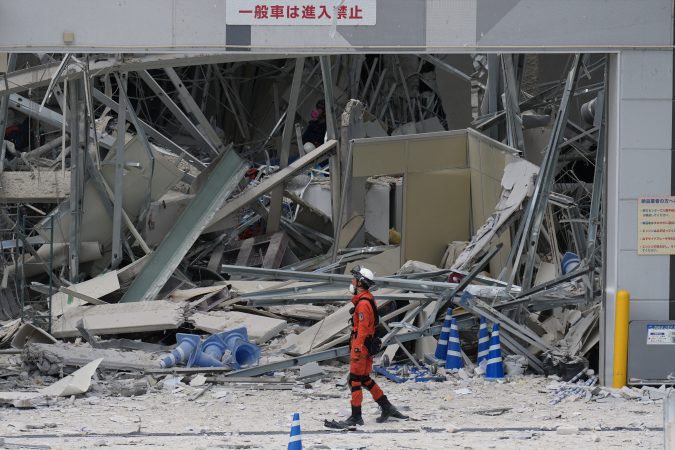
    KUMAMOTO, Japan — Soldiers and emergency workers combed through a badly damaged shopping mall and collapsed houses looking for trapped survivors Wednesday after a powerful earthquake that killed at least 18 people, including a foreigner, in southwestern Japan.

    The magnitude 7.1 earthquake that hit a day earlier in the Kumamoto area on the southern main island of Kyushu also left at least 62 people injured, six of them seriously, the prefectural government said. The tally has been steadily growing, fanning fears it may continue to rise.

    Some of the most serious damage was at the Aeon Mall shopping center in the town of Kashima, which was bustling with thousands of people when the quake happened. The company said some 3,000 customers were evacuated to a parking lot before a gas explosion happened in another part of the mall, where some people were still working.

    Fumika Ono was shopping at a mall with her older sister when the ground shook so fiercely she lost her balance and ducked. Children began screaming and goods scattered on the floor.

    The 19-year-old was among the crowd of shoppers who managed to escape safely.

    The sweltering weather heightened worries about the survivors as rescuers braved the heat. It remained unclear how many people might still be missing.

    The mall’s second floor collapsed, trapping people. Witnesses said the explosion shook the area as much as the quake.

    Three people remained missing, while four deaths were confirmed at the mall site, according to Aeon President Akio Yoshida.

    “We take it seriously that an explosion happened and precious lives were lost,” Yoshida told a news conference in Kumamoto, where he bowed deeply along with two other executives.

    Japanese media footage of the mall showed that part of the ceiling had caved in, and metal pieces and other debris were scattered about as helmeted and masked rescue workers searched the area.

    Kiyoshi Matsunaga, 74, who lives in the mall’s neighborhood and was at a supermarket just a few blocks away, said Tuesday’s quake reminded him of a deadly quake 10 years ago that hit Kumamoto and killed 50 people.

    He stopped in his tracks when the shaking began while he was pushing his cart toward a cash register. Things scattered from the shelves. He could not move, he recalled.

    “I was frightened,” he said.

    Japan is one of the most quake-prone nations in the world.

    In the Nuyamazu district, a pair of temple gates at a 16th-century Buddhist temple collapsed. They had just been repaired five years ago.

    Yuki Kiyozumi, deputy chief priest at the temple, recalled how she had to crawl on the floor because the shaking was so violent. She had just returned home from a meeting and was about to feed her cat.

    “I don’t even know if or how we can rebuild them again,” she said, while cleaning up damaged ornaments and furniture.

    In nearby Yatsushiro, a chimney collapse at a Nippon Paper Industries factory killed five people while seven others were rescued from the debris, according to the Kumamoto prefectural government disaster team.

    Four people were still believed to be trapped there, it said.

    In the first reported death of a foreign national, a Vietnamese technical intern was killed after a crane fell on him at a factory where he worked, according to the Vietnamese government. He had arrived in Japan in January. Seven other Vietnamese technical interns at the factory evacuated safely

    Separately, a Vietnamese woman married to one of the workers was injured when a wall collapsed and was being treated at a hospital.

    Nearly 34,900 homes were still without electricity and some 15,000 homes without running water, Kumamoto officials said. More than 8,800 people left their homes to stay in over 400 shelters, where power sources were being added to provide air conditioning.

    Aerial police footage showed some homes in residential areas were completely flattened, including a few that crumbled into a nearby river.

    Japan’s Self Defense Forces joined rescue workers in the search and rescue operations. Hundreds of professionals were helping with the effort, including firefighters from Taiwan.

    “There are people who are still waiting to be rescued, and it’s a race against time,” Prime Minister Sanae Takaichi said. “We will go all out to find and rescue as many people as we can.”

    Takaichi said the government was preparing to deliver food and other necessities to hard-hit areas. She also offered her condolences to the victims and sympathy to their relatives, while urging those affected by the quake to take care of themselves under the hot weather.

    Bullet train services remained suspended. Although operations at Aso Kumamoto Airport resumed Wednesday, some airlines canceled flights as a precautionary measure.

  • Investigators in Comey seashells case omitted key facts and distorted others, defense lawyers allege

    Investigators in Comey seashells case omitted key facts and distorted others, defense lawyers allege

    WASHINGTON — Federal officials involved in the prosecution of James Comey misled judges, submitted false statements and withheld key facts during the course of the investigation, according to new defense filings that seek the dismissal of a case charging the former FBI director with threatening President Donald Trump on social media.

    Lawyers for Comey made the allegations of misconduct in motions filed late Tuesday that also call the case a vindictive and selective prosecution, request access to transcripts of grand jury proceedings to expose what they say are “irregularities” in how the indictment was secured, and describe “unlawful” surveillance of Comey by the Secret Service.

    Taken together, the new motions, along with an earlier one this week that called Comey’s social media post protected speech and not a threat, represent a multiprong defense effort to dismantle a case that defense lawyers say exemplifies a Trump administration retribution campaign targeting one of the president’s most vocal critics.

    “Ample objective evidence — much of which comes directly from government officials’ own public statements and admissions — establishes that the President’s animus toward Mr. Comey led to this vindictive and selective prosecution,” Comey’s lawyers wrote in one of the filings.

    A picture of seashells on the beach

    Comey was charged in April with threatening Trump through a photo he posted on Instagram a year earlier depicting seashells he said he found on the beach in North Carolina in the numerical arrangement of “86 47.”

    The Justice Department has said the photo constituted a threat against Trump, the 47th president. Comey deleted the post shortly after he put it up, saying he did not know that anyone interpreted the numbers as a call to violence. His lawyers have said that the slogan has long meant to “get rid of” or “eject” and has been featured on thousands of items sold online and regularly displayed at protests.

    Defense lawyers say investigators who tried to prove that Comey intended a physical threat, or knew that the number “86” suggested violence, repeatedly came up empty but withheld that from federal magistrates as they applied for warrants to search the digital accounts of Comey and his wife.

    For instance, the FBI searched an internal database of information about open and closed investigations for any indication of an association between Comey and the term “86” but found inconclusive results. An FBI agent also requested a review of the FBI file for the case against reputed mobster John Gambino, which Comey worked on as a young prosecutor, but found no references to the term “86.”

    Investigators also interviewed a key government cooperator in the case, Salvatore Gravano, who said he did not recall ever discussing the term “86” with Comey or hearing it in connection with the trial.

    “Evidence obtained during discovery supports at least a substantial preliminary showing that the affidavits submitted in support of two of the search warrants contained intentionally false statements and material omissions, and that those defects vitiate any conceivable showing of probable cause,” Comey’s lawyers wrote.

    Defense lawyers say case is rooted in Trump’s personal animus

    In addition, defense lawyers say the warrant applications distort statements made to investigators by a person who knew Comey but has been now estranged from him for years.

    The person, whose name is not revealed in the court filings, is described in the affidavit as saying that they immediately perceived Comey’s post to have a violent meaning. But investigators omitted from the affidavit that the person had said their initial impression was that “86” referred to being “out of something on the menu” and only later concluded that it could be understood as a call to violence.

    The person said that view was influenced by having listened to an episode of Rudy Giuliani’s online show in which the Trump loyalist claimed that Comey had worked on mob cases as a prosecutor in which mafia members used “86” to mean “kill.” But the FBI’s own investigation determined Giuliani’s claims to be untrue, defense lawyers said.

    The seashells case against Comey was the second in months targeting the ex-FBI director, a long-running Trump foe whom the president over the years has called a “corrupt piece of garbage” and other epithets.

    An earlier case in Virginia accusing Comey of lying to Congress was dismissed in November after a judge concluded that the prosecutor who charged him and another Trump adversary, New York Attorney General Letitia James, was illegally appointed to the job.

    Comey’s lawyers describe the prosecutions as rooted in Trump’s own personal animus, with the Secret Service closely coordinating with the Justice Department and with Trump, who received frequent updates on Air Force One.

    As Comey returned to Washington with his wife to be interviewed by law enforcement about his post, Secret Service agents were directed to conduct “unlawful” electronic surveillance, “including as they stopped to visit the grave of their deceased son,” his lawyers said. The surveillance had been requested by a senior Justice Department official.

    Comey was the FBI director when Trump took office in 2017, having been appointed by then-President Barack Obama and serving before that as a senior Justice Department official in President George W. Bush’s administration. Trump fired Comey in May 2017 during an FBI investigation into potential ties between Russia and Trump’s presidential campaign. The men have been openly at odds ever since.

    The Justice Department will have an opportunity to respond to the defense filings. The department has not elaborated on any evidence of intent the government has. But acting Attorney General Todd Blanche said earlier this year that prosecutors in every case prove intent with “witnesses, with documents, with the defendant himself to the extent it’s appropriate.”

    “And that’s how we’ll prove intent in this case,” Blanche said in April, shortly after he was elevated to lead the department after Pam Bondi’s ouster.