Category: Associated Press

  • Brewers beat the Rays 4-1 in Game 5 to win the first World Series title in franchise history

    Brewers beat the Rays 4-1 in Game 5 to win the first World Series title in franchise history

    ST. PETERSBURG, Fla. — The small-ball Milwaukee Brewers playing in the smallest market in the majors are World Series champions for the first time.

    Hey, Milwaukee: grab a brat, raise a beer and prepare for that parade.

    To borrow a line from Bob Uecker, your title drought is up, outta here, gone.

    Young ace Jacob Misiorowski threw 5⅔ scoreless innings, rookie Cooper Pratt had two more hits and two RBIs, and Milwaukee beat the Tampa Bay Rays 4-1 in Game 5 on Wednesday night to set off a long-awaited celebration among thousands of Brewers fans in attendance at Tropicana Field.

    “It’s the best feeling ever. All of our fans are here. I know the city’s waited a long, long time for this,” said captain Christian Yelich, who got hugs from franchise icon Robin Yount on the field when it was over. “We’re so happy to bring it home to them.”

    World Series MVP William Contreras hit an RBI double and Misiorowski allowed just two hits before leaving the game because of a right calf cramp. He got a standing ovation from the Brew-Crew fans, who took over the section behind Milwaukee’s dugout for the last three games.

    They filled the entire infield section of the ballpark for the trophy presentation and were still chanting “Let’s go Brewers!” almost two hours after the final pitch.

    The 22-year-old Pratt set a Series rookie record with six straight hits before his sacrifice fly in the sixth. Jackson Chourio set a five-game Series record with 11 hits.

    The Brewers celebrate after winning the World Series on Wednesday.Ashley Landis

    “This is one of the greatest moments of my life. Oh my gosh. It doesn’t even feel real,” said Pratt, who made his major league debut in June. “This is surreal. It only took four months!”

    The championship comes in the 58th season for a franchise that began as the Seattle Pilots in 1969 and moved to Milwaukee the following year. The Brewers’ only previous trip to the World Series in 1982 ended in heartbreak when they blew a 3-1 lead in the sixth inning of Game 7 and lost 6-3 to the St. Louis Cardinals.

    But this team displayed the toughness and resilience of 67-year-old manager Pat Murphy, who survived a heart attack in 2020 and was the NL Manager of the Year in his first two full seasons at the helm in 2024 and 2025.

    “This group of guys right here, the 2026 team, will be remembered forever — and they deserve that because they were a team,” Murphy said. “They’re not worried about their own stats. No one cares about that. They care about coming together and winning tonight.”

    With their flame-throwing, 24-year-old two-time All-Star on the mound, the Brewers rebounded from a heartbreaking, 4-3 extra-inning loss in Game 4 when they were three outs from a sweep in the 12th before a stellar bullpen finally faltered.

    Pitching on four days’ rest for only the fifth time in 34 starts this year, The Miz had his longest outing since throwing 6⅓ innings against the Cubs on Sept. 8. Leg cramps also forced him out of two outings earlier in the season.

    “I don’t even have words,” Misiorowski said. “It’s amazing, just watching my guys celebrate. And the city — I know they’re going crazy in Milwaukee. It’s awesome.”

    Misiorowski, who broke the World Series velocity record with a 103.5 mph fastball on the first pitch last Friday, opened with 12 straight four-seamers between 100.9-103 mph. He topped out at 103 twice among his 86 pitches, 58 strikes.

    The 6-foot-7 right-hander didn’t record a strikeout in the first three innings for the first time in his two-year career and finished with two, matching his career low. But he was fired up after Yandy Díaz missed a cutter to end the fifth: The Miz pumped his fist twice and punched the air walking off the mound.

    The NL Cy Young Award favorite allowed one run over five innings to get his first postseason win as a starter in a 3-2 victory in the opener. He was 2-0 with a 0.84 ERA in the best-of-seven Series.

    JoJo Romero got two outs, Abner Uribe recorded two more and closer Trevor Megill pitched the last two innings, allowing an RBI double to Chandler Simpson with two outs in the ninth.

    Megill retired Richie Palacios on a grounder to end it, threw his arms in the air and was mobbed by teammates near the mound while Brewers fans celebrated in the stands.

    First baseman Jake Bauers tucked the ball in his back pocket before piling on and later gave the souvenir to Murphy, saying the skipper “deserved it.”

    “Milwaukee has waited 44 years, and Milwaukee, you have your world championship!” Brewers owner Mark Attanasio said from the postgame stage on the field.

    Pratt, who was 4 for 5 with a tiebreaking solo homer in the 12th inning of Game 4, gave the Brewers a 1-0 lead with an RBI single against Rays ace Drew Rasmussen in the second. Pratt singled for his sixth straight hit in the fifth and scored on David Hamilton’s single off Kevin Kelly.

    Contreras hit an RBI double off Garrett Cleavinger in the sixth and Pratt added a sac fly to make it 4-0.

    The teams combined for just four home runs in the Series, three by Milwaukee. The Brewers scored a major league-low 32.1% of their runs on homers this season and Tampa Bay was second-lowest at 34.4%, according to the Elias Sports Bureau.

    The Brewers led the majors with 103 wins in the regular season and went 11-2 in the postseason, including seven comeback wins and a sweep of the mighty Dodgers in the National League Championship Series.

    “That’s the best team I’ve ever played against,” Rasmussen said.

  • Netanyahu and top rival face postelection choices that could redefine Israeli politics

    Netanyahu and top rival face postelection choices that could redefine Israeli politics

    JERUSALEM — Israelis braced for perhaps weeks of political uncertainty Wednesday after an election that has challenged Prime Minister Benjamin Netanyahu ‘s grip on power and raised the almost unthinkable possibility of some Jewish and Arab parties teaming up in an effort to unseat him.

    Final election results could come as early as Thursday evening, though no clear winner is expected to emerge.

    Arab-led parties made a historic showing, but it’s not clear if the other opponents of Netanyahu’s far-right government would form a coalition with them to reach a majority of seats in parliament. Issues around the Palestinians and their descendants remain incredibly sensitive, and Israelis are already renewing a debate about the identity of the nation founded as a state for the Jewish people.

    On Wednesday, Netanyahu warned against a “dangerous government” that might include Arab parties, whose constituents make up 20% of Israel’s population.

    And even as it leads in the vote count, Netanyahu’s Likud party claimed that Tuesday’s election was “stolen” by Arab parties and asked Israeli authorities to investigate. It did not provide specific evidence to support its claims. The elections committee has said that reports about irregularities were much lower than in previous elections.

    Netanyahu seeks to remain the country’s longest-serving prime minister. His top challenger, centrist former military chief Gadi Eisenkot, has left the door open to partnering with Arab parties under certain conditions, including their recognition of Israel as a Jewish state and of Hamas as an extremist group.

    Some of Eisenkot’s likely partners have ruled out such an alliance but could change their minds to force Netanyahu from office. Another much-debated option among Israelis is a unity government with Netanyahu and Eisenkot.

    Israeli voters choose parties, not individuals. With 88% of votes counted, Netanyahu’s Likud party has 20.7% and Eisenkot’s Yashar party has 16.2%. Arab-led parties had 15%.

    Results indicate that neither Netanyahu’s nor Eisenkot’s coalition blocs would reach the 61 seats needed for a majority in parliament, the 120-seat Knesset. Local media projected 53 seats for Likud and allied parties, 48 for Yashar and allied parties and 19 for Arab-led parties.

    Netanyahu faces a setback but not outright defeat

    Counting absentee ballots will last until Thursday evening, said Elad Naveh, control manager at the Central Elections Committee. There are an estimated half-million of them from military personnel and diplomats. They are not expected to significantly change the results.

    Nearly 78% of eligible voters turned out, the highest since 1999.

    Voting reflected unease over Netanyahu’s alliance with the far-right and anger in a war-weary nation over military draft exemptions for the significant ultra-Orthodox Jewish population. The Likud party’s share of the vote declined from 23.4% in 2022. But results suggest opponents were unable to capitalize on the grief caused by the Hamas-led Oct. 7, 2023, attack to decisively push him from office.

    One far-right partner losing support was national security minister Itamar Ben-Gvir. For many Israelis, he represented the worst strain of Netanyahu’s government, openly taunting Palestinian detainees and asserting that many in Gaza are “not even people.”

    Vote-counting suggested Likud would remain the largest party and most likely to be tapped to form a government by Israel’s president, Isaac Herzog. The president, however, isn’t required to task the leader of the party holding the most seats.

    “We must do everything we can, certainly after yesterday, to avoid another round of elections,” Herzog said Wednesday.

    The most obvious path to a parliamentary majority could involve Eisenkot partnering with Arab-led parties — which have 14.9% of the votes counted — but that’s politically challenging.

    If no one can put together a majority coalition, new elections could be held early next year. Israel held five elections between April 2019 and November 2022 because of a similar stalemate. It is unclear whether thousands of Israelis living abroad would again fly back home to vote, and whether Arab voters would again surge to the polls.

    “After an election with such high voter turnout, it would be a mistake to hold another election,” Eisenkot told supporters early Wednesday. “It is our duty, and my personal duty, to do everything possible to respect the will of the people.”

    Minority governments also are possible, but they must rely on cooperation from parties outside the government to pass legislation.

    Arab-led parties could hold the key

    Arab parties’ strong election showing forced Israelis to consider the implications.

    “We have no future here if we do not stop being afraid,” said Yair Golan, whose Democrats party supports bringing Arab-led parties into a coalition. ”We must no longer accept Netanyahu’s racist division between Jewish votes and Arab votes.”

    Israel’s Arab citizens are descendants of Palestinians who remained in the state after its creation in 1948. They often face discrimination and are viewed with wariness because of their solidarity with the Palestinian cause. That suspicion intensified after Oct. 7, even though Arab citizens were also among those killed and abducted.

    The mood was joyful overnight at the headquarters of the United Arab List, the lone Arab party to ever join a governing coalition, briefly, in 2021.

    “We are here, we are not on the sidelines,” party leader Mansour Abbas declared.

    Some Israelis found that an unusual, if not uncomfortable, prospect.

    “We are little by little coming to a situation where we have to face reality,” said Hanna Doukhan, a voter in Tel Aviv. ”I don’t see a possibility to form a government without the Arabs.”

    Others were hopeful. “This would open the door to repairing our society” while preserving Israel as the national home of the Jewish people, said Eti Wissotzky-Cohen in Tel Aviv.

    And in Nazareth, one of Israel’s largest Arab cities, Awni Zoabi thanked God for a possible return to rationality in a country where extreme rhetoric has increased. “The Arabic language has become as if it were a crime,” Zoabi said.

  • Defeated presidential candidate Flávio Bolsonaro and his family land in Miami after fleeing Brazil

    Defeated presidential candidate Flávio Bolsonaro and his family land in Miami after fleeing Brazil

    MIAMI — Defeated Brazilian presidential candidate Flávio Bolsonaro and his family arrived in Miami on Wednesday after he refused to concede the election to President Luiz Inácio Lula da Silva and fled the country.

    In a circuitous journey, Bolsonaro left for Argentina on Tuesday with his wife and two daughters, then traveled to Ecuador, according to Argentine officials and flight data. The 45-year-old senator, a close ally of U.S. President Donald Trump, visited the White House in May, and the Trump administration approved U.S. visas for him and his family this week.

    Bolsonaro’s father, Jair Bolsonaro, also fled to Florida after losing the 2022 presidential election to Lula before returning to Brazil three months later.

    Flávio Bolsonaro is under investigation by Brazil’s Supreme Court, accused of corruption, money laundering and tax evasion. The court ordered him to hand over his regular and diplomatic passports by noon Tuesday. It remained unclear whether he complied, but allies said late Tuesday he also has an Italian passport.

    On Wednesday, Bolsonaro issued his first comments on his flight in a statement on X, in which he called himself the victim of electoral fraud and political persecution, and again asked for the annulment of the Lula–Alckmin ticket.

    “I want to tell not only my 60 million voters but also the Brazilian people as a whole that I am the president-elect, and that the criminals who stole Brazil’s election are part of a criminal organization that has established a tyranny,” he said.

    Bolsonaro lands in Miami

    Dressed casually in a dark polo shirt and flanked by his wife and two daughters, Bolsonaro stepped out of the plane shortly after it landed in Miami at about 9:30 a.m. EDT. Florida is home to the largest population of Brazilians in the U.S.

    The family fled Brazil late Tuesday, entered Argentina via a border checkpoint and quickly boarded a private charter plane, Argentine immigration officials said.

    Flightradar24 showed the plane believed to be carrying Bolsonaro landed in Guayaquil, Ecuador, about 4 a.m. local time, then took off minutes later for Miami-Opa Locka Executive Airport.

    Before the family landed in Florida, Lula, who turned 81 on Tuesday, spoke to dozens of supporters outside the presidential residence in Brasilia.

    “I regret that he left Brazil, because he could have stayed here and proven that the accusations are not true,” Lula said. “This act of leaving Brazil is shameful.”

    Bolsonaro’s route through Argentina could deepen diplomatic tensions between Lula’s government and Argentine President Javier Milei, another Trump ally who traveled to Brazil to assist in Bolsonaro’s campaign.

    Milei has not commented directly about Bolsonaro’s defeat but Juan Pablo Carreira, a presidential spokesperson, said on social media that Milei’s administration rescued Bolsonaro “from the claws of communism, which seeks to imprison all opposition figures.”

    Representatives of Brazil’s government have not responded to requests for comment.

    Trump questions Brazilian election results

    Trump has said Bolsonaro is welcome in the U.S., calling him and his family “fine people.”

    “The election was really strange, and I thought it was terrible,” Trump told reporters at Joint Base Andrews, Maryland, on Tuesday. Earlier, Trump also said, without evidence, that the election was “rigged.”

    Leaders around the world and the Organization of American States have endorsed the result and congratulated Lula, who was reelected by a margin of about 4.4 million votes in the second and final round.

    The U.S. has imposed double-digit sanctions on Brazil, which boasts Latin America’s largest economy. Lula has championed Brazil’s long tradition of nonalignment, cultivating ties with competing powers. His government has deepened trade ties with China and sought greater global influence through BRICS, a group of emerging economies.

    Bolsonaro visited his father, who is under house arrest, before leaving Brazil

    Brazil’s Supreme Court ordered the defeated candidate to surrender his Brazilian passports Monday. In a video, he said he received the order outside the home where his father is serving a 27-year sentence under house arrest for his attempted coup following his 2022 election loss to Lula.

    A Brazilian diplomat, who was not authorized to speak about the matter publicly, told The Associated Press that Bolsonaro used an Italian passport to enter Argentina and that Brazilians leaving the country via a land border are not scrutinized by Brazilian authorities.

    The diplomat said Brazil’s federal police were not monitoring Bolsonaro when he left his home in Brasilia because the Supreme Court had not issued a warrant for his arrest.

    Flávio Bolsonaro said in a video Monday that he was attempting to organize opposition to the election results among his congressional colleagues. His eight-year term as a senator expires Jan. 31, 2027. His Liberal Party released a statement saying it accepted the election results.

    Brazil’s Supreme Court is investigating Bolsonaro for allegedly using a sports betting company to launder fraudulent deductions from government pensions paid to senior citizens. In a separate case, he is accused of accepting millions of dollars from a disgraced banker. Bolsonaro has denied wrongdoing.

  • Wendy’s, struggling with beef prices and growing competition, gets a buyout offer

    Wendy’s, struggling with beef prices and growing competition, gets a buyout offer

    Wendy’s shares closed up 15% Wednesday after noted investor Nelson Peltz made an offer to buy the chain, which has been struggling with high beef prices and aging stores.

    Peltz’s Trian Fund Management and several partners are offering Wendy’s $7.35 per share in cash, or a premium of nearly 19% over the stock’s closing price on Tuesday, in a deal that would take the company private.

    Wendy’s, which is based in Dublin, Ohio, declined to comment Wednesday. At the end of last year, Wendy’s had 5,969 restaurants in the U.S. and 1,428 outlets in 38 countries.

    Wendy’s, founded in 1969 by Dave Thomas and named after his daughter, is known for its square burgers and Frosty desserts. The fast-growing chain introduced the drive-thru window in 1970 and went public in 1976. In the 1980s, as it jockeyed for sales with McDonald’s and Burger King, Wendy’s launched salad bars and ran its iconic “Where’s the beef?” ad campaign.

    But as the fast-food market grew even more competitive and rival burger-focused chains like In-N-Out and Five Guys expanded, Wendy’s fell behind. Wendy’s share of U.S. burger chain sales fell from 11.5% in 2019 to 10.4% last year, according to Technomic, a market research company.

    In recent years, inflation has also hurt Wendy’s and other U.S. fast-food chains, which have seen traffic from lower-income consumers fall as they raised prices to combat rising labor, food, and packaging costs.

    Wendy’s has been closing outdated U.S. restaurants so it can focus on its more profitable locations. The company closed 240 restaurants in 2024 and said earlier this year that it planned to shutter up to 358 locations this year.

    Then, last month, one of the largest U.S. franchisees for Wendy’s filed for bankruptcy protection after the chain tried to terminate its franchise agreement. Michigan-based Meritage Hospitality Group operates 314 Wendy’s restaurants in 15 states.

    In a letter to the company’s board of directors, Peltz said going private “will deliver the best outcome for the broader stakeholder base.”

    “Wendy’s sits at a critical juncture,” Peltz wrote. “The external environment has become increasingly challenging given the significant pressures on the U.S. consumer, economic uncertainty, persistent commodity inflation and intensifying competition, particularly within the QSR (quick service restaurant) burger category.”

    Peltz has invested in companies from Procter & Gamble and Disney to DuPont. According to a regulatory document filed Wednesday, Trian’s stake in Wendy’s totals 16.3%.

    Peltz considered a take-private bid for Wendy’s in 2022 but told the company in January 2023 that he had decided against it, citing its improved business momentum, according to TD Cowen analyst Andrew Charles.

    Charles said an independent special committee is expected to evaluate the proposal and both parties have entered into a confidentiality arrangement.

    “In our view, a take-private makes sense as Wendy’s turnaround is likely to be prolonged given the challenged state of the lower-income consumer and soft state of the quick service burger category,” Charles wrote Wednesday in a note to investors.

    Wendy’s is scheduled to report its quarterly financial results next week. Analysts expect the company to post earnings of 9 cents per share on sales of $531 million, according to FactSet.

    Editor’s Note: This article has been updated to include the closing results of Wendy’s shares.

  • Serial killer Ted Bundy is linked to another Utah teenager’s 1974 killing through DNA testing

    Serial killer Ted Bundy is linked to another Utah teenager’s 1974 killing through DNA testing

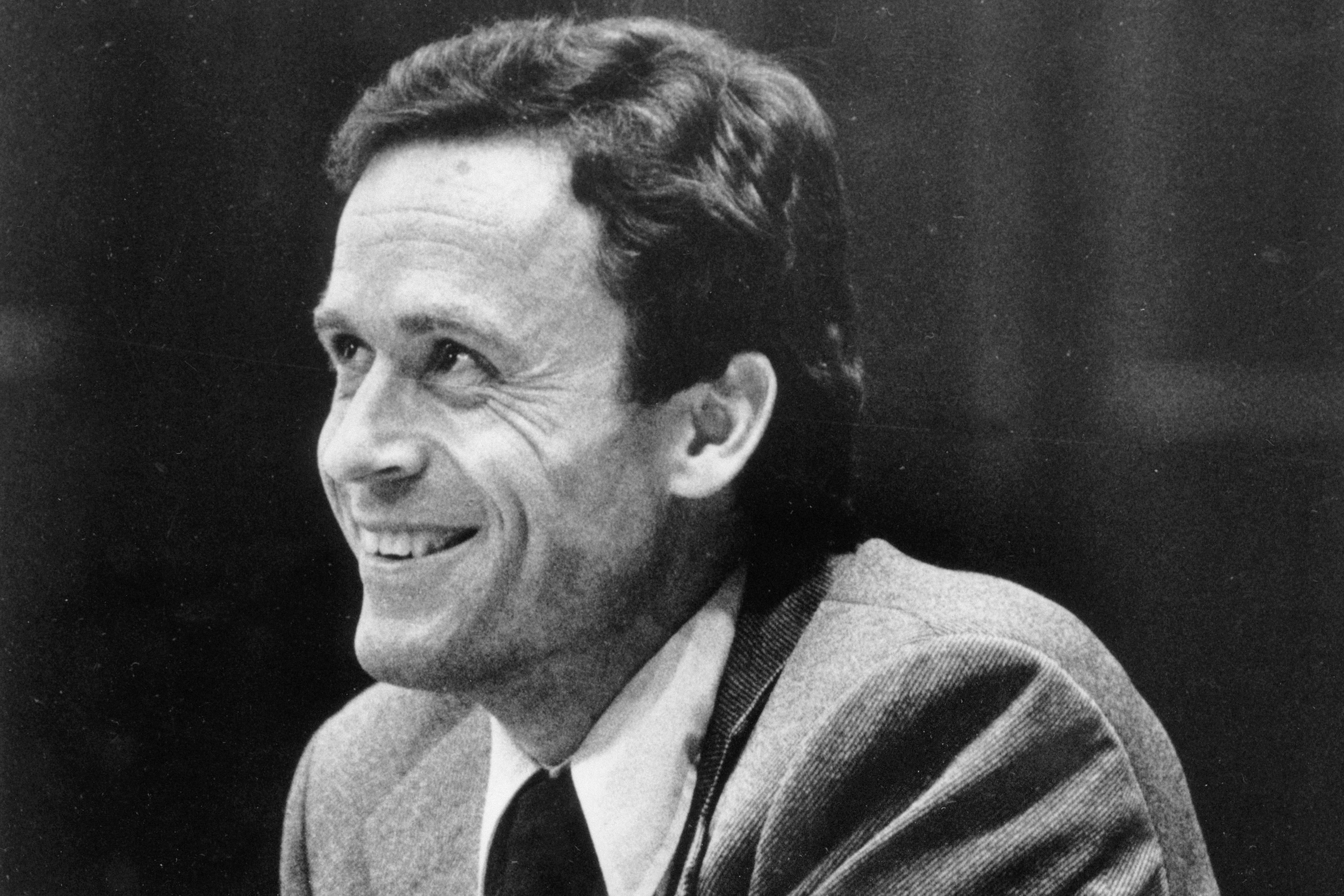
    DNA connects serial killer Ted Bundy to the death of another Utah teenager, authorities announced Tuesday, exactly 52 years after her body was discovered in the woods by a hunter.

    Bundy has been dead since 1989, but the tally of his confirmed victims continues to grow due to advances in DNA testing. He killed at least 30 women and girls in multiple states in the 1970s, and many more escaped or survived with injuries.

    Investigators are satisfied that Bundy was responsible for killing 17-year-old Melissa Ann Smith in 1974, a death that had long been listed as a cold case, Summit County Attorney Margaret Olson said at a news conference.

    They were able to close the case by making crucial connections with DNA found on Smith and Laura Aime, another Bundy victim whose case was resolved last April in Utah County. Bundy’s DNA was on file in Florida, where he was convicted and ultimately executed.

    Besides that evidence, Smith’s death showed hallmarks of Bundy’s “pattern, motive, means, and opportunity,” Olson said.

    Decades-old evidence was key to the case

    Utah’s state crime lab got new technology in 2023 that extracts DNA from samples even if they are small, degraded from age, or contain DNA from multiple people.

    “This case demonstrates the importance of preserving evidence,” said Salt Lake County Sheriff Rosie Rivera, whose department has also investigated homicides linked to Bundy.

    “We have to solve these cases to the best of our ability,” she said, explaining the importance of tapping science, even so many years later. “Nobody is just going to walk away and just blame everything on Ted Bundy, even though many cases have been that way. Here in the state of Utah, we take it very seriously.”

    Smith’s relatives were contacted about the findings but declined to attend the news conference and declined to speak to reporters, the Summit County Sheriff’s Office said. Her parents are deceased.

    Smith’s father was police chief in Midvale, south of Salt Lake City. She was at a pizza parlor and a restaurant before she disappeared on Oct. 18, 1974, The Salt Lake Tribune reported at the time. Nine days later, her body was found in Summit County.

    “With every case closure, may we stomp the memory of Ted Bundy out,” Utah County Sgt. Mike Reynolds said.

    Bundy investigations are not finished

    Bundy was executed by electric chair in Florida in 1989 after being convicted of three murders, including the killing of two women at the Chi Omega sorority house at Florida State University.

    He gave a series of confessions in his final days, including to some crimes that were previously unknown to police. Not all of those cases have been confirmed.

    Besides Florida and Utah, authorities said Bundy had victims in Colorado, Idaho, and Washington state. They said they’re especially working to solve the 1974 death of 16-year-old Nancy Wilcox of Utah.

    Solving the Smith homicide “does not close the book on Ted Bundy,” said Det. Ben Pender of the Salt Lake County Sheriff’s Office, which has the Wilcox investigation. “Information kind of leads to Ted Bundy, but again we’re not for certain on Nancy Wilcox. We’re going to continue to work that case.”

  • Disinformation videos, likely from Russia, are exploiting real people to malign Senate candidates

    Disinformation videos, likely from Russia, are exploiting real people to malign Senate candidates

    NEW YORK — Social media videos believed to be produced with artificial intelligence and linked to Russia are misusing real people’s names and photographs to spread disinformation about two Democratic Senate candidates in the final stretch of midterm voting.

    One of the targets is Sherrod Brown, who is running against Republican Sen. Jon Husted in Ohio. The video, which appears to include some AI manipulation, depicts a newscast and includes pictures of Haya Akbik, who interned for Brown several years ago, and other former staff members.

    It was appalling to Akbik, who told The Associated Press that any claims attributed to her in the clip are “completely made up.”

    “It’s my name, it’s my reputation, making this allegation, and it’s just completely false,” she said. “And it harms the senator, someone else, in the process. So, it’s just messed up.”

    The videos demonstrate how foreign adversaries continue to use a familiar playbook to try to influence American voters who are deciding which party controls Congress next year. The threat could be magnified with AI, a powerful tool for fabricating damaging information that can sometimes appear very real.

    Another target is James Talarico, who is running against Republican Ken Paxton for a Senate seat in Texas. The video, also believed to include some AI manipulation, is framed as a direct-to-camera confessional from a former student of Talarico.

    “The most powerful people in the world know they can’t beat James Talarico with the truth, so they’re slandering him with AI deepfakes, foreign bots, and conspiracy theories to protect their broken, corrupt political system,” Talarico spokesperson JT Ennis said in a statement.

    The social media company X has taken down the initial posts that shared the videos and suspended the users for violating the platform’s rules. However, copies could still be found online Tuesday — some with hundreds of shares — demonstrating how difficult it can be to contain disinformation that can proliferate in the final days of an election.

    Experts see a resemblance to Russian clips from 2024

    The videos resemble clips from a Russian network known as Storm-1516 that targeted former Democratic presidential candidate Kamala Harris and her running mate, Minnesota Gov. Tim Walz, two years ago.

    The new ones bear similar hallmarks and are likely products of the same network, according to Clemson University professor and media forensics expert Darren Linvill. He found that the accounts that shared recent material had also shared former content from Storm-1516.

    The Russian Embassy in Washington did not immediately respond to a request for comment. In the past, it has denied interfering in U.S. elections.

    The U.S. Cybersecurity and Infrastructure Security Agency, which has publicly identified some videos as Russian disinformation in past election cycles, also didn’t respond to a request for comment.

    Hany Farid, a Dartmouth College professor who studies artificial intelligence deepfakes, said his analyses showed that videos targeting Brown and Talarico were likely either generated or manipulated using the technology.

    He noted the video targeting Brown is a “fairly low-tech fake.” The other one, targeting Talarico, is likely generated by AI and “it is consistent with previous disinformation campaigns released close to Election Day,” Farid said.

    Akbik said the video featuring her shows the importance of Congress regulating “AI slop on the internet.”

    “This is so damaging,” she said.

  • High-speed train collision kills at least 68 in Spain’s 2nd deadly rail crash this year

    High-speed train collision kills at least 68 in Spain’s 2nd deadly rail crash this year

    URDA, Spain — A high-speed train slammed into another that had stopped on the tracks in Spain Wednesday, killing at least 68 people and injuring dozens in the second deadly rail collision this year.

    The regional government of Castilla La Mancha confirmed the death toll and said another 58 people were receiving medical treatment at hospitals. Rescue workers searched the wreckage through the day for survivors and bodies.

    The collision came just nine months after another deadly crash involving high-speed trains operated by the same two companies in southern Spain in January.

    “Today all of Spain is grieving,” Spanish Prime Minister Pedro Sánchez said from the crash site, where he announced that his government would declare three days of national mourning.

    Sánchez called for increased safety measures to restore confidence in a high-speed rail system that was once a source of national pride.

    “It is unacceptable for a country like Spain to suffer two high-speed rail accidents in the same year,” said Sánchez, who faces a national election on Nov. 29.

    Spain’s rail system operator ADIF said the crash occurred Wednesday morning in the central province of Toledo, involving two high-speed trains carrying hundreds of passengers and heading south in the same direction from Madrid to Seville.

    A train operated by the state-owned RENFE company struck the rear of another train operated by private company IRYO that was stopped. The collision derailed two carriages on the tail of the IRYO train and the front of the RENFE train.

    Samy Paul, a British tourist, described the shock of the impact to The Associated Press after being rescued from the RENFE train.

    “Suddenly, everything started falling apart. Bang! We fell down,” he said. “We realized carriage two, carriage one, all gone, all smashed. There was blood all over.”

    David Gómez, a construction worker, was working nearby when he heard the crash and ran to help, he told the newspaper El País.

    “People were trying to get out through the windows. … We cut through some fences to access the area and treated people with the first-aid kits we had brought until emergency services arrived,” he said. “As I was trying to pull a young woman out, there was a piece of a leg.”

    Rail service was suspended between Madrid, Ciudad Real, and Andalusia.

    Transport minister says crash was due to ‘inexplicable’ decision

    Spain’s Transport Minister Óscar Puente said that the crash was caused by what he called the “inexplicable” order from a central command center for Spain’s trains after a security system had failed. He said the train engineers were not to blame.

    Puente said that at 8:30 a.m. the security system on a stretch of 39 miles stopped working due to a computer malfunction, causing all trains on that stretch to stop. But the central command told the RENFE train to start running again without any speed restrictions, and it ended up colliding with the stopped IRYO train at 8:53 a.m.

    Puente said that the train should never have been told to start moving again since there was still a “stop signal” active on that line. And if it had, at least it should have been told to go at reduced speed.

    Authorities were still studying information to see how fast the train was going, but it could have been at 124 mph for that stretch of the track, Puente said.

    “I am not attributing responsibility to anyone, I am just stating the facts,” Puente said.

    Everything went flying when the trains collided, a passenger said

    The crash, which occurred in a flat stretch surrounded by olive fields in between the towns of Urda and Los Yébenes, left carriages shredded into bits of metal and other material, scattering debris down a gravel slope.

    Passenger Ignacio Relaño was traveling on the RENFE train. He told state broadcaster TVE that the train had stopped momentarily on the line before it started again and then crashed into the IRYO.

    “We all felt the train abruptly slowing down and then the impact,” he said. “The car leaned to one side like it was about to tip over. I hit my nose, everything went flying, luggage, cellphones. Everything shook.”

    Authorities said 397 passengers were in the RENFE train and 147 passengers in the IRYO train.

    Ambulances and medical helicopters made trips to and from the site, while unscathed survivors were put on buses. A military emergency brigade was deployed to help.

    Spain’s King Felipe VI also visited the crash site.

    “We share in the grief of the families and loved ones of those who lost their lives, and we send our heartfelt support to the injured and all those affected,” Spain’s royals said in a statement.

    European Commission President Ursula von der Leyen said “My heart goes out to the victims’ families and loved ones. Today, Europe mourns with you.”

    Spain’s soccer federation postponed all 24 Copa del Rey games scheduled on Wednesday.

    Spain already suffered a devastating train crash this year

    The wreckage of Wednesday’s crash reminded many of the aftermath of another train collision in January, when 46 people died in southern Spain when an IRYO train jumped the track and hit an oncoming RENFE train. That sent the first two cars of the impacted train plummeting down a 13-foot slope.

    That crash was the deadliest in Spain since a 2013 crash that killed 80 people.

    Before this year, there had been no fatal crash on Spain’s dedicated high-speed lines since the network opened in 1992.

    Spain is a leader in high-speed rail

    Over recent decades, Spain has invested heavily in high-speed rail — which the country’s railway union defines as rails for trains going 155 mph and over — turning it into a world leader.

    Spain has laid some 2,400 miles of such tracks over more than three decades for its 49 million residents. Only China, with 28,000 miles for its 1.4 billion people, has more high-speed track, according to the International Union of Railways.

    Only recently did Spain open its rail network to private companies to compete against RENFE. The Italian-owned IRYO started operating in Spain in 2022.

    A spokesperson for Spain’s train workers’ union, Joan Rodríguez, said increased traffic brought by privatization has put extra strain on rail infrastructure.

    “We are not convinced that the liberalization of the high-speed passenger rail service was matched by the necessary upkeep of the lines,” Rodríguez told TVE on Wednesday. “I am not saying it was a determining factor (in the crashes), but yes, the increase in use of the network is a factor to keep in mind.”

  • FDA scientists opposed the Trump administration’s effort to ease peptides access

    FDA scientists opposed the Trump administration’s effort to ease peptides access

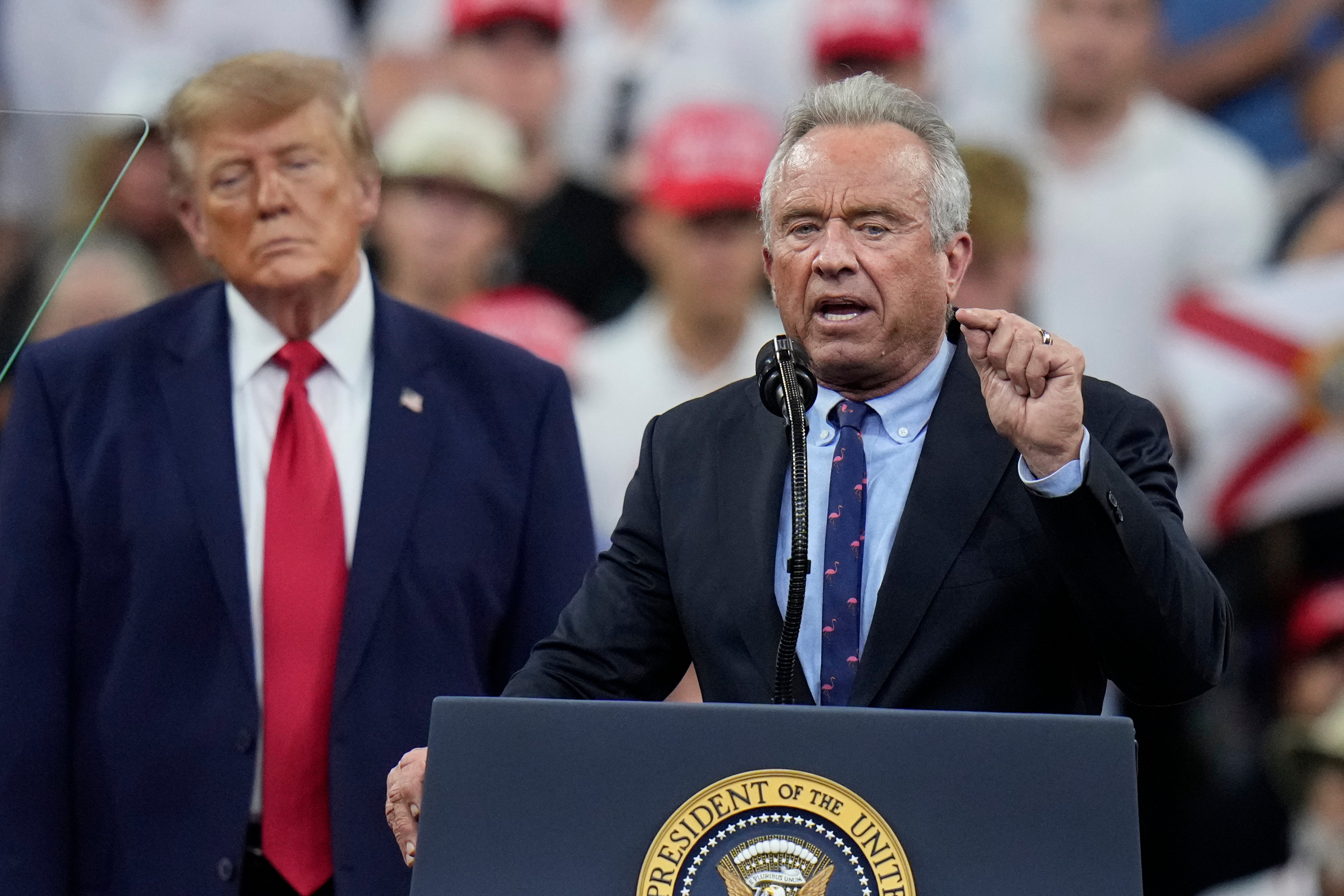
    WASHINGTON — A plan to give Americans easier access to unproven peptide drugs favored by Health Secretary Robert F. Kennedy Jr. was opposed by most Food and Drug Administration scientific staff members, who had limited input in drafting the policy, according to six people familiar with the policy’s development.

    The document, which covers certain injectable peptides popular within the wellness industry, recently underwent regulatory review at the White House, typically the final step before publication.

    The effort on peptides, driven by Kennedy’s Department of Health and Human Services, faced overwhelming pushback among FDA drug staffers who warned it could undermine the agency’s longstanding mission of keeping unproven health products off the U.S. market, according to the people familiar with its development.

    The policy would direct the FDA not to take action against specialty pharmacies that sell certain widely used peptides — substances that would otherwise be considered illegal drugs because they haven’t gone through the agency’s rigorous review process for safety and effectiveness, according to three of the people.

    The people spoke to The Associated Press on the condition of anonymity to discuss confidential government deliberations. An HHS spokesperson did not immediately respond to requests for comment.

    Some peptides occur naturally in the human body, where they trigger hormones needed for growth, metabolism and healing. Drug companies have brought several to market as medications, including mainstay treatments for diabetes and weight loss.

    The chemicals subject to the new policy haven’t gone through that rigorous vetting process. They include BPC-157 and TB-500, which are promoted to help heal injuries and build muscle. Both are considered doping substances by international sports authorities.

    Kennedy has called himself a “big fan” of peptides and recently described using BPC-157 to treat a muscle injury.

    The guidance document reviewed by the White House represents a step back from HHS’ original plans, according to two of the people who discussed its development.

    Initially, HHS officials wanted the FDA to draft an official regulation that would add BPC-157 and other peptides to a list of drug substances deemed safe for use by compounding pharmacies, specialty businesses that make customized medications.

    But FDA officials warned that the agency’s scientific staffers had major safety concerns and wouldn’t support a regulation deeming them safe. So HHS officials moved to a different approach that would direct the FDA not to enforce its rules against pharmacies that compound the substances.

    Ultimately, FDA staffers provided technical assistance in drafting the HHS plan, including guardrails intended to improve safety, such as requiring pharmacies to use peptide ingredients from FDA-regulated factories.

    Decisions over compounding have long rested with the FDA, not HHS

    Kennedy has said repeatedly that U.S. compounding pharmacies must be allowed to sell peptides because Americans are turning to “gray market” products imported from China and other countries.

    Decisions about regulating peptides and compounding pharmacies have almost always come from the FDA, which has an office dedicated to protecting Americans from unsafe or poor-quality compounded drugs.

    The issue of compounding safety became a greater focus for the FDA after a deadly outbreak of fungal meningitis in 2012 was linked to contaminated injections from a Massachusetts compounding pharmacy. Once a niche business, compounding has grown into a multibillion-dollar industry, providing customized medications to doctors, clinics, and hospitals.

    It’s extremely rare that HHS would take the lead in drafting policies over the compounding industry, former FDA officials have said. However, federal law technically gives HHS authority over essentially all drug regulations, which are then delegated to the FDA.

    FDA has warned Americans about safety risks of unproven peptides

    Many Americans using peptides today don’t deal with a doctor or a pharmacy to get the injections. Instead, they often order vials online sold by chemical manufacturers based in China. Peptide sellers often try to skirt U.S. regulations by labeling their products as “for research use only,” since the FDA doesn’t regulate research chemicals.

    In 2023, the FDA added more than a dozen peptides, including BPC-157 and TB-500, to its list of substances that should not be compounded due to risks of allergic reactions, kidney damage, and tumor growth.

    At a meeting in July, FDA staffers reiterated that more than half a dozen peptides brought forward for reconsideration remained unproven in terms of safety and effectiveness.

    The policy pending at the White House avoids a direct confrontation with FDA staffers because it only directs the FDA not to enforce certain rules.

    HHS ultimately included several safety measures suggested by FDA staffers, according to two of the people. Besides sourcing ingredients from FDA-registered facilities, compounders will be directed to collect information on side effects for safety analysis and verify the chemical identity of peptides.

    Those measures are supported by some industry groups, including the Alliance for Pharmacy Compounding, which recently met with White House officials about the proposal.

  • U.N. condemns U.S. economic embargo of Cuba, though more nations sit out after Trump administration push

    U.N. condemns U.S. economic embargo of Cuba, though more nations sit out after Trump administration push

    UNITED NATIONS — The U.N. General Assembly condemned the U.S. economic embargo of Cuba for the 34th year on Wednesday, even as Washington’s campaign to influence the outcome led to a number of countries voting against the resolution or sitting out the decision for the first time.

    The vote was 130-17, with 25 abstentions — a notable decrease in support from last year, when more than 160 nations supported the measure and only 12 abstained. While such resolutions at the U.N. General Assembly are not legally binding, they do reflect world opinion.

    For the first time in 34 years, Western countries like Germany, Italy, and Latvia were among those that refrained from voting. Bosnia, Colombia, Costa Rica, Ecuador, Lithuania, Morocco, North Macedonia, Paraguay, and Slovenia are among those member states that voted no — most for the first time.

    It marks a stunning shift in international support at a time when the small island country weathers outages, shortages, and other deepening financial troubles as the Trump administration looks to force changes to Cuba’s political system by increasing an already punishing economic campaign. President Donald Trump last week once again raised the specter of U.S. military intervention, saying American warships could stop over in Cuba on their way back from the Iran war.

    “A great power is attacking through economic war a member state of this organization,” Cuban Foreign Minister Bruno Rodríguez said ahead of the vote. “Cuba is not a threat. The blockade is a threat.”

    U.S. Ambassador to the U.N. Mike Waltz told member nations that, “your vote today is the only thing standing between the corrupt, kleptocratic communist regime and using this body and your vote for another propaganda victory at the expense of the Cuban people.”

    Tensions between Washington and Havana have spilled over into fiery public spats at the United Nations. On Tuesday, Waltz and Rodríguez got into a shouting match on the floor of the General Assembly while debating the embargo resolution.

    Shortly after Waltz had begun his criticism of the socialist government, Rodríguez walked down to the podium where the U.S. envoy was addressing the hall and called him a liar while trying to get a point of order from the official presiding over the session.

    “This individual needs to back away from this podium. He’s not going to intimidate me in the United States of America,” Waltz said as U.N. security and personnel tried to intervene. “You understand who you’re dealing with? This is America. Back up.”

    In a post on X, Rodríguez reminded Waltz where he was making his remarks, saying he’s at the U.N., not at a national security meeting at the White House.

    “With his crude lies at the UN General Assembly, the U.S. government has launched another desperate attempt to justify its economic aggression against Cuba and its criminal energy blockade,” he continued.

    A week earlier, a similar interaction between Waltz and his Cuban counterpart, Ernesto Soberón Guzmán, took place outside a U.S.-hosted panel with Cuban dissidents and former prisoners that sought to highlight allegations of the oppressive behavior of the island’s government.

    It all reflects a clear break from the traditional diplomatic decorum expected at the U.N. and the new phase of contentiousness between the U.S. and Cuba.

    The U.S. embargo against Cuba was first imposed in 1960 after Fidel Castro led a revolution that toppled dictator Fulgencio Batista and nationalized properties belonging to U.S. citizens and corporations.

    As a result, the Caribbean country has spent decades facing the dire impact of longtime economic and financial troubles and is now being pushed to a breaking point after Trump announced in late January that he would impose tariffs on any country that sells or provides oil to Cuba.

    The warning has effectively cut off fuel to the island, leading to widespread power outages that impact basic services such as water supply and internet and telephone services.

  • Congo’s Ebola outbreak tops 10,000 cases as authorities race to slow the spread in African countries

    Congo’s Ebola outbreak tops 10,000 cases as authorities race to slow the spread in African countries

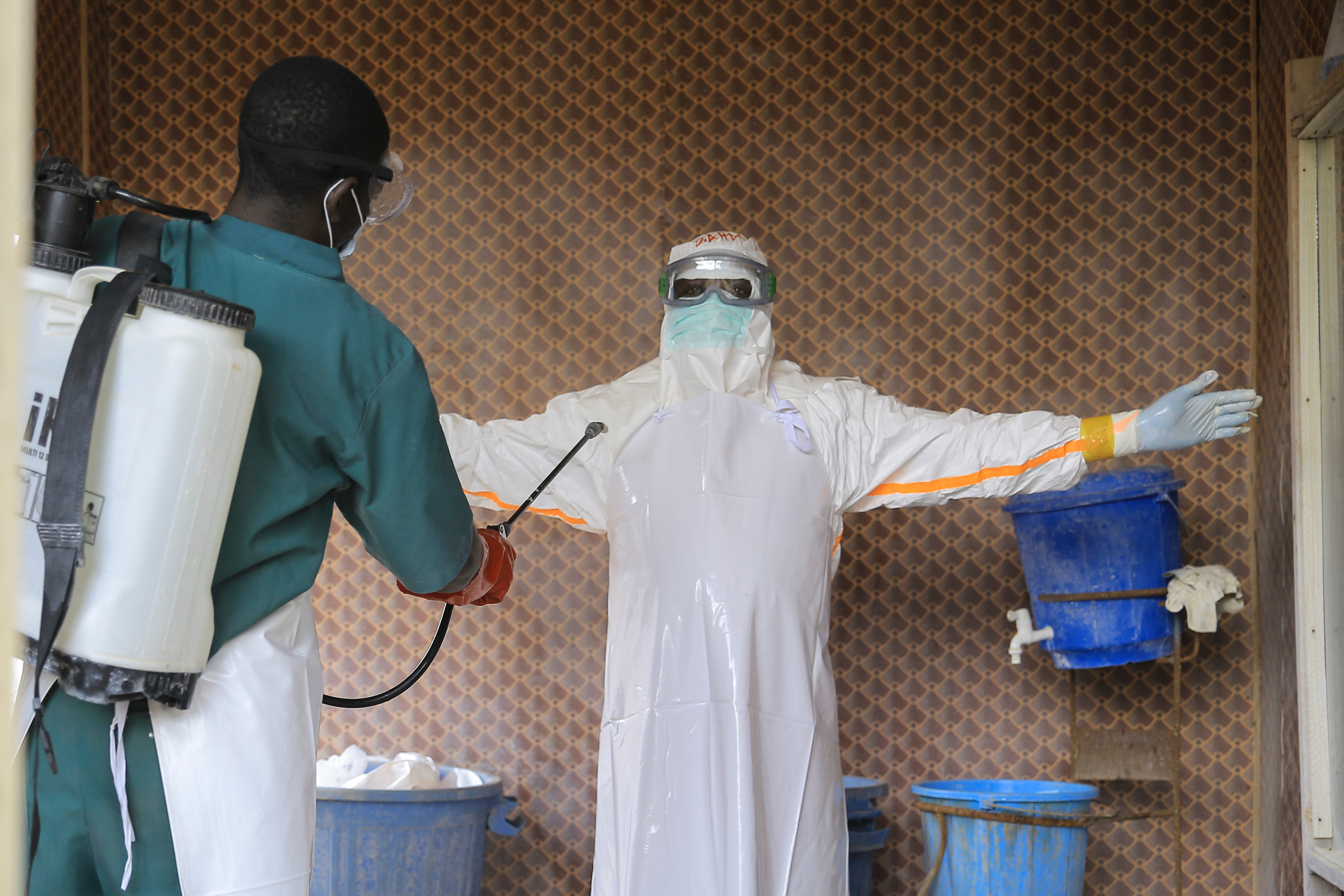
    BUNIA, Congo — The fast-moving Ebola outbreak in Congo has reached 10,000 confirmed cases, government data showed Tuesday, as health authorities race to slow the spread of the disease in multiple African countries.

    It is the fastest-growing Ebola outbreak in history and nearly half of the 10,060 confirmed to have the virus have died, according to data from Congo’s Ministry of Health. That also makes it the deadliest outbreak of the disease in the country’s history.

    The outbreak declared in May is caused by the rare Bundibugyo virus, for which there is no approved vaccine or treatment. Response teams are battling armed conflict, poor roads, and violence from residents fueled by mistrust and misinformation. Those obstacles compound the challenge of persuading people to report symptoms and accept care in communities that have endured years of violence and repeated epidemics.

    Compared to the West Africa Ebola outbreak of 2014-2016 — history’s largest and deadliest with more than 28,000 cases, including over 11,000 deaths — this has had at least three times the number of cases and number of deaths in the time since it was declared.

    It has spread farther across Africa than any previous Ebola outbreak, reaching three regions with cases recorded in Kenya and Nigeria as well. It’s so far been recorded in five countries including Uganda and France, both of which have no active cases at the moment.

    A recurring problem in the spread in Africa is what appears to be lax surveillance efforts, as most of the first cases were confirmed long after people started showing symptoms or after traveling.

    African health ministers are to hold a virtual summit on Wednesday to strengthen the continent’s collective response. “Ebola is crossing borders. Our response must move faster, with stronger coordination, greater solidarity and decisive political leadership,” Jean Kaseya, head of Africa CDC, has said.

    At least 2,600 patients have recovered from the disease in Congo, bringing rare moments of joy to affected communities. A viral video this week showed health workers in full protective gear dancing as the last two patients were discharged from a treatment center in Mongbwalu, Ituri province.

    “The outbreak is far from over, but every life saved is worth celebrating,” World Health Organization Director-General Tedros Adhanom Ghebreyesus said of the video.

    80% of new cases in Congo are outside of monitored contacts

    In Congo, the disease has spread to 66 health zones across eight provinces, from three zones when it was first declared in May. Responders have told the Associated Press that they’re seeing treatment centers in some of those health zones getting overwhelmed, people still skeptical and violent toward them, and health workers are regularly going on strike to protest delayed or unpaid wages.

    “Some people still don’t seem to understand the seriousness of the situation even though they are directly exposed to the risk,” said Sephora Bgosi with the Ebola burial team in Ituri province, the epicenter. “Ebola disease is extremely dangerous and can be deadly,” said Bgosi.

    About 80% of recorded cases are still coming from outside of monitored contacts, showing there are ongoing chains of transmission that health authorities are not aware of. At least 95% of recorded cases are supposed to be coming from known contacts for officials to say the outbreak has largely been brought under control, the Africa CDC has said.

    At least half of deaths recorded are among people who have not been admitted to treatment centers, a sign that people are still not reporting symptoms at all in many areas.

    In many zones, health workers are battling challenges ranging from basic needs such as adequate vehicles to complex ones like persuading families to release their relatives who are sick with the disease or who have died from it and need to be buried safely.

    Last week at the Nia Nia health zone in Ituri province, some Ebola responders, including surveillance and community engagement officers, went on strike over unpaid bonuses owed since late August, a common trend across many affected localities.

    More than five months since the outbreak was declared, health workers are still being attacked by angry villagers, including an attack on Saturday when a nurse was killed and another health worker severely injured while responding to an Ebola alert in Bafwasende, Tshopo province.

    The outbreak is impacting Congo’s healthcare services

    The outbreak has disrupted essential health services that are already underfunded and overstretched and has shifted attention away from other disease outbreaks the country is battling, such as cholera.

    More pregnant women are dying as they avoid hospitals over fear of infection and isolation, causing maternal mortality to double in some provinces soon after the outbreak was declared.

    It has also disrupted routine healthcare services such as childhood vaccinations, interrupted schooling for children where millions are already out of school, caused trauma and stigma for affected families, and further stretched the livelihoods of many already struggling with hardship.