Category: Associated Press

  • A mistrial is declared in the murder case against Lindsay Clancy. Here’s what could happen next

    A mistrial is declared in the murder case against Lindsay Clancy. Here’s what could happen next

    The trial to decide if Lindsay Clancy was criminally responsible when she strangled her three children in 2023 ended in a mistrial Friday after jurors were unable to reach a consensus after weeks of conflicting testimony about her postpregnancy mental health and seven days of deliberations.

    What happens now?

    Clancy, a 36-year-old former labor and delivery nurse, remains charged with murder and will continue to be held in a psychiatric hospital until the case is resolved. Attorneys on both sides have a few options when it comes to the next steps.

    A hearing later this month could determine the path forward

    Judge William Sullivan set a hearing for Sept. 29. During that proceeding, defense attorney Kevin Reddington will likely ask the judge to declare Clancy not guilty. It’s a long shot move and very unlikely to succeed.

    That hearing could also reveal whether prosecutors will move to put Clancy on trial for a second time. They could also choose to seek a plea deal or even drop the case entirely, though that option is unlikely.

    Sullivan suggested that everyone involved in the case, from attorneys to witnesses to court administrators, would need to look at their calendars to find a suitable time for a new trial, if one is held.

    Clancy doesn’t deny strangling her children at their home south of Boston, but says postpartum psychosis led to her actions. After the killings, her husband found her badly injured in the yard, where she landed after jumping from a second-story window. She was left paralyzed from the waist down.

    Prosecutors argue she knew what she was doing.

    Prosecutors will weigh many factors as they decide on a new trial

    Plymouth County District Attorney Timothy Cruz said there would not be an immediate decision about a second trial, but he emphasized that his goal was always “getting justice for those three little babies.”

    “This case was about Lindsay Clancy and what she did … the cruel and calculated killing of three innocents,” Cruz said shortly after court ended on Friday. He later continued, “Children were murdered and it’s our job to seek justice.”

    Still, prosecutors typically consider a lot of things when determining whether to retry a case, said New York Law School professor Heather Ellis Cucolo, including the potential expense and the likely outcome.

    “I know the prosecutor stated openly that he would not allow public opinion to sway his decision, which is accurate, but the prosecution serves the public,” Cucolo said. “If it is believed that justice must be served by another trial, that is something the prosecutor’s office will take into account and weigh very heavily.”

    A conviction could mean life in prison for Clancy, while an acquittal might lead to confinement in a mental health facility.

    Clancy’s defense will likely push to drop the charges

    Cucolo said the defense attorney will likely push for the charges to be dropped entirely, and might also be open to a plea deal.

    “But if the prosecution chooses to move forward with a trial, there’s no way to prevent that from happening,” Cucolo said.

    Reddington said in court that he believed Clancy’s constitutional rights were violated when the judge declined to remove one juror after the other jurors suggested that he was not following the judge’s instructions on reasonable doubt. But a mistrial isn’t subject to an appeal, Cucolo said, because it’s not a final judgment.

    The impact on family members is another consideration, said Randy Gioia, a Boston-based defense lawyer who formerly supervised public defenders across the state.

    Gioia said prosecutors should not put Clancy through another trial. He said he accepts Reddington’s disclosure that Clancy was extremely close to an acquittal, based on a note presented to the judge by the jury foreperson.

    “Why put everyone through the trauma again: 16 to 18 jurors, all the witnesses, Patrick Clancy,” Gioia said, referring to Lindsay Clancy’s former husband. “What’s to be served here when we’ve had a long trial and long deliberations? You don’t have a strong case. You almost lost the case.”

    Attorneys on both sides could tweak their approach in a retrial

    It’s not clear exactly how the jury reached an impasse, but Reddington suggested that just one juror stood in the way of an acquittal, and said the other jurors were “robbed.”

    “They know they were robbed by one man, for whatever his agenda was, who stole seven weeks of the life of these other jurors that were so attentive, so beautiful, so wonderful,” he said outside the courthouse. “You could see how defeated they were sitting there. I got a funny feeling they would have gone on for another week if they had to. So I hope that guy can sleep well at night.”

    Jurors are under no obligation to speak to attorneys on either side of the case, but it’s common for the attorneys to see if any are open to talking about their experience, Cucolo said. Prosecutors can then use any information they get to reassess and fine-tune their approach, she said, perhaps focusing more on specific evidence or witnesses.

    A retrial would have rippling impacts

    David Meier, a lawyer who represents Patrick Clancy in a lawsuit over his former wife’s mental health treatment, released a statement about the emotional burden of the case, saying “there will never be closure” from the loss of the children.

    “The prospect of reliving this tragedy through another trial is extraordinarily painful — for Patrick, for his family, and for all of us,” Meier said.

    The statement didn’t indicate whether Patrick Clancy would support a second trial.

    Lindsay Clancy has also filed a lawsuit over her mental health treatment. A retrial would likely force those civil cases to be put on hold, Cucolo said.

    “They would not be able to move forward for now because of concerns of possible Fifth Amendment violations,” Cucolo said, because anything Clancy says in a civil case could potentially be used against her in the criminal case. That means the lawsuits could remain in legal limbo for a year or more, she said.

  • Kennedy Center board renews call for Trump-backed shutdown after part of a ceiling collapses

    Kennedy Center board renews call for Trump-backed shutdown after part of a ceiling collapses

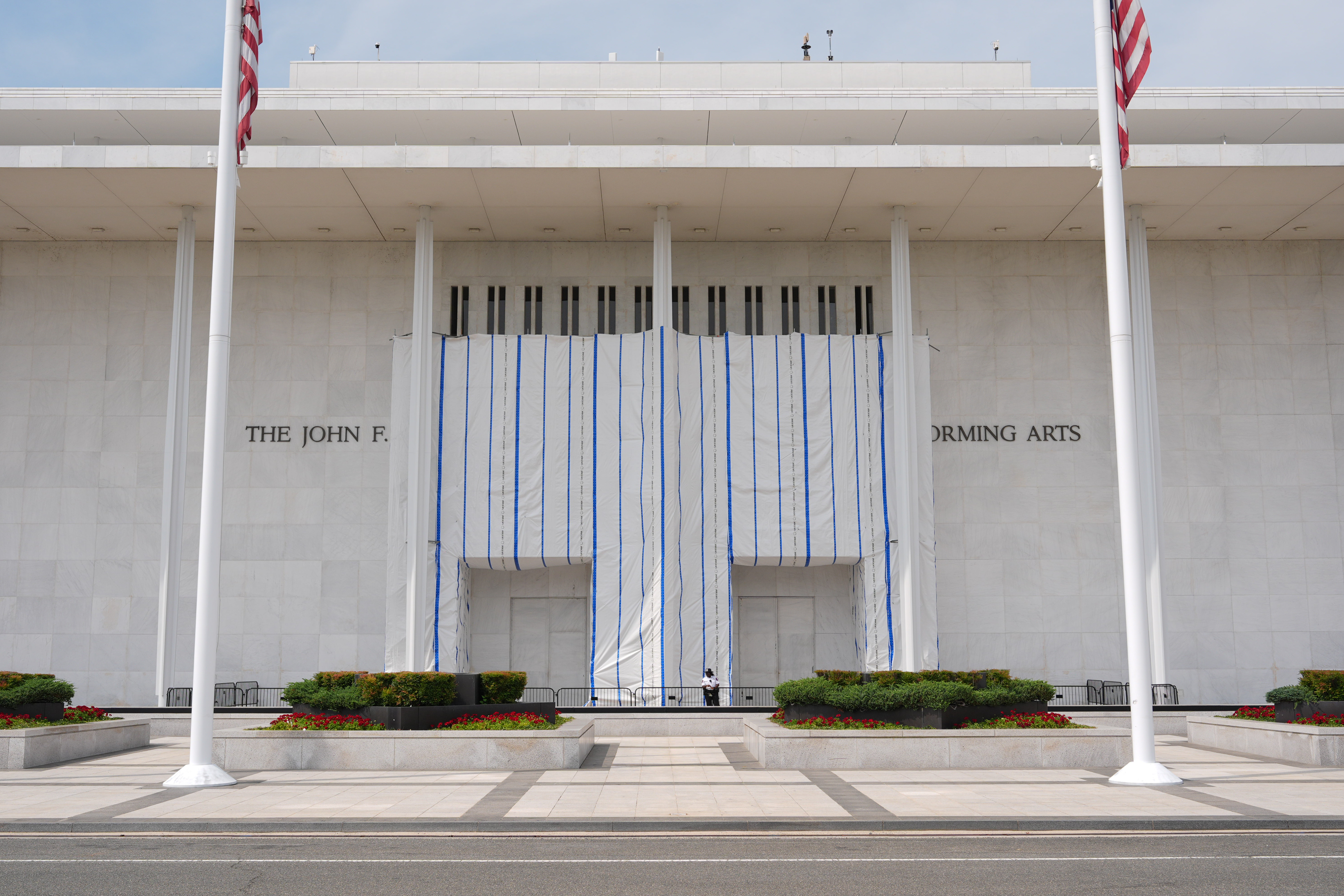
    WASHINGTON — A chunk of ceiling fell inside a main hallway of the Kennedy Center, according to a spokesperson who said the damage underscores the need to shut down the historic arts venue for renovations sought by President Donald Trump.

    No one was injured when a piece of the ceiling inside the Kennedy Center’s grand foyer collapsed Friday evening, said Roma Daravi, the center’s vice president for public relations.

    Photos provided by the center showed a large hole in the high ceiling and debris littering the red carpet in part of the hallway that connects the Kennedy Center’s three main performance auditoriums. The damage occurred during stormy weather in Washington.

    The Kennedy Center’s Trump-aligned board is fighting in court to move forward with plans to add Trump’s name to the building’s facade and to close the center for two years as it undergoes $250 million in renovations.

    Daravi called the partial ceiling collapse Friday “another example of the urgent need to close for renovation and revitalization, as our Chairman President Trump has championed.”

    “This structural failure stems from decades of neglect and deferred maintenance by the previous leadership, and there’s no justification for further delays in restoring America’s cultural center,” Daravi said in a statement.

    Trump’s efforts to add his name and make other big changes to the center established to honor President John F. Kennedy following his assassination are just part of Trump’s broader second-term agenda to reshape Washington.

    Trump already has demolished the East Wing of the White House to make way for a ballroom. He also plans a triumphal arch near Arlington National Cemetery and a renovated golf course along the Potomac River.

    U.S. District Judge Christopher Cooper ruled in May that Trump’s name had been added to the Kennedy Center illegally and ordered that it be taken down. He also blocked the administration from closing the venue for renovations.

    Now before the judge is an August vote by the Kennedy Center’s board to return Trump’s name to the facade so it reads: “The John F. Kennedy Center for the Performing Arts Restored and Renovated By President Donald J. Trump.” Justice Department lawyers have argued donations for renovations will dry up without Trump’s name on the building.

    Other changes have moved forward. Last week, the Kennedy Center took down a large stick figure sculpture known as Blue that had stood outside the center since 2019. The Kennedy Center gave no reason for its removal, but said in a statement “we are honored to have been stewards” of the late sculptor Joel Shapiro’s work.

    Grace Terpstra of Keep the KC, a community group fighting the Kennedy Center’s closure, said she suspects the board will seize on what appears to be limited ceiling damage “to make the point that the whole thing needs to be shut down, that it’s going to fall on everybody.”

    “I think they’ll try to make it into a bigger thing and show that they’ve found a lot of other things,” said Terpstra, the group’s founder.

  • U.S. military hits 3 Iranian oil tankers after saying Navy ships were targeted with missiles

    U.S. military hits 3 Iranian oil tankers after saying Navy ships were targeted with missiles

    CAIRO — U.S. forces struck three Iranian oil tankers after Navy warships were targeted with missiles, the American military said Saturday, warning that it would “if necessary, destroy Iran’s limited and exposed oil fleet.”

    The strikes — a day after U.S. President Donald Trump sought to minimize the conflict as “small potatoes” — keep up a new tilt back toward fighting after six months of on-again, off-again war that began with U.S. and Israeli attacks on the country on Feb. 28. Both sides have sought to inflict both military and economic pain, and negotiations have collapsed.

    The military’s statement said that an American aircraft carrier and a destroyer evaded “multiple unprovoked Iranian attacks” while patrolling in the region and no U.S. personnel were hurt. It said that two Iranian oil carriers were “permanently disabled” and the third, unladen one, was destroyed.

    The U.S. statement said that the tankers were part of a shadow network helping to fund Iran’s powerful Revolutionary Guard and its armed proxies in the region.

    There was no immediate Iranian response.

    Iran had reported a strike near Kharg Island

    Earlier, Iranian state television had said that four U.S. missiles struck a tanker about 6 miles from Kharg Island, home to a terminal through which the country exports most of its oil. Kharg Island has been repeatedly targeted during the war, including U.S. strikes on military sites there in March.

    The U.S. said that one tanker was struck off Kharg Island and another was struck near Jask, east of the Strait of Hormuz. The unladen tanker was hit in the Gulf of Oman, and the U.S. said its crew had been “directed to abandon ship.” The statement shared what it called video footage of the strikes.

    After the U.S. statement, Iran’s state broadcaster reported the two other tankers attacked, saying their crews had evacuated.

    “We will not hesitate to defend American forces, and if necessary, destroy Iran’s limited and exposed oil fleet,” said Adm. Brad Cooper, the head of U.S. Central Command.

    The strikes came nearly a week after the U.S. and Iran resumed attacks following a month of relative calm, with the Strait of Hormuz and Iranian communities along it again being targeted. At least five people were killed earlier in the week during a U.S. bombardment of southern Iran. One strike hit a wedding.

    Masoumeh Zarei, 13, was wounded in the attack. She spoke to the Associated Press at a hospital while being treated for injuries to her abdomen.

    She said that the wedding celebration had already begun when she set out to join it. She never made it there. She was knocked unconscious when a telecommunications tower was struck. Her next memory was of waking up in a hospital.

    “The party had just started, and we wanted to go there,” Zarei said, her voice hoarse. “I had made my nails really pretty for the party, but everything changed.”

    Her friend, 14-year-old Kiana Karimi, also was wounded and in intensive care. She told the AP that she heard five explosions.

    “The first three explosions at the telecommunications tower threw us to the ground,” Karimi said. “I quickly got up to pick my brothers up off the ground. Then there were two more explosions, and after that I don’t remember anything.”

    U.S. had tried to turn to economic pressure

    The resumption of fighting in the past week came after new U.S. efforts to apply economic pressures on Tehran, whose hard-line new senior leaders have signaled the willingness to dig in after weathering decades of sanctions. The elected government of Iranian President Masoud Pezeshkian, however, has said that it favors a negotiated end to the war.

    Iran has found ways over the years to circumvent sanctions — and now a U.S. blockade of its ports — and get its oil to buyers to help ease growing economic pressures. That relies in part on a shadow fleet transporting its oil.

    Meanwhile, the issue that helped lead to the war — Iran’s nuclear program — was meant to be addressed in negotiations that fell apart soon after the U.S. and Iran signed a memorandum of understanding in mid-June. Now diplomats say the U.S., Britain, France, and Germany seek to refer Iran to the U.N. Security Council for failure to comply with its nuclear nonproliferation obligations.

    Instead, Tehran’s new leverage focuses on the strait that is crucial to global oil and natural gas shipments and was seen as an international waterway before the war began.

    The U.S. military has been helping to guide ships through the strait as Tehran asserts control and targets some vessels, but overall traffic remains low.

  • Federal judge extends block on Trump executive order seeking to limit mail voting in the midterms

    Federal judge extends block on Trump executive order seeking to limit mail voting in the midterms

    A federal judge on Friday extended her prohibition against the U.S. Postal Service implementing President Donald Trump’s executive order seeking to limit mail voting during the midterms, putting another major obstacle in the way of the administration as the first states begin sending out mail ballots.

    U.S. District Court Judge Indira Talwani granted a preliminary injunction, replacing a temporary order she had granted blocking the Postal Service’s plan.

    The Trump administration has already asked the Supreme Court to lift Talwani’s temporary order, and will likely appeal her latest order as well.

    The administration is running out of time to make big changes in voting procedures. North Carolina began sending out its first mail ballots Friday and more states will swiftly follow.

    The legal battle could have major ramifications for this year’s elections, when control of Congress is at stake. Nearly one-third of voters in the U.S. cast mail ballots and election officials contend there isn’t enough time to revise their systems to comply with the new Postal Service directives.

    Trump has long sought to limit mail voting, even though he himself often uses that method to cast his own ballot. He has falsely blamed mail balloting for his 2020 election loss, spreading baseless claims of fraud, but has so far been unable to change the longstanding voting procedure.

    An initial executive order Trump issued last year to change election rules, including a requirement for people to show documentary proof of citizenship to register to vote, was halted by federal judges. They ruled that the Constitution gives states and, in some cases, Congress the power to set voting procedures, not the president.

    After Trump issued his mail voting executive order in March, Democrats and voting rights groups filed several lawsuits. Two ended up before Talwani, who placed an initial hold on the order in June, prohibiting its implementation until after November.

    But the Supreme Court late last month overturned that order. Its conservative majority pointedly did not say Trump’s move was legal but found the lawsuits were filed prematurely before the Postal Service issued its rule on how it would implement the order. The rule came out just before the Supreme Court released its ruling, and the plaintiffs refiled their suits.

  • Widow of airman killed in Mideast is upset she was told Iran wasn’t a war while sorting out benefits

    Widow of airman killed in Mideast is upset she was told Iran wasn’t a war while sorting out benefits

    WASHINGTON — The widow of an airman killed on a combat mission in the Middle East said it took a viral social media post to get resolution from the Pentagon on issues related to her husband’s benefits and basic pay months after his death.

    Maj. Alex Klinner, 33, was one of six crew members of a KC-135 refueling aircraft that crashed in western Iraq in March while supporting operations against Iran. He’s one of 18 U.S. service members killed, along with 790 wounded, since the war began more than six months ago.

    The Air Force reached out to his widow, Libby Klinner, this week to clarify that his final paycheck would include hazard pay and combat-related tax breaks. This occurred after she voiced frustration on social media at being told by a military officer assigned to support her after her husband’s death that he was ineligible for those benefits because “we were not at war.”

    “My husband lost his life because we’re in a war, and then I was told that because it’s not technically a war, we lose out on something,” Klinner told the Associated Press. “It all comes down to principle.”

    Trump administration rejecting ‘war’ label for current Iran operations

    Her post, made over the weekend, gained national attention. Vice President JD Vance promised to look into her case after being asked about it during a White House briefing on Thursday.

    “We want to be as helpful as we can and ensure she gets everything that she is entitled to,” Vance said. “My message to her would be, ‘We love ya, we’re grateful for the sacrifice, and we very much take very seriously our commitment to get you what you need to get.’”

    In response to a separate question, Vance rejected the use of the word “war” to characterize U.S. fighting in Iran, saying that “there is no active shooting.” The military has launched strikes against targets in Iran twice this week, and Iran has retaliated by firing on U.S. allies in the Gulf.

    On Friday, President Donald Trump called U.S. strikes “intermittent” and defended Vance’s comments.

    “I call it a military conflict because it’s small potatoes for us,” Trump told reporters in the Oval Office.

    In late July, the Trump administration created a new, separate category in the Pentagon’s casualty count system for those killed and wounded in renewed U.S.-Iran fighting. Pentagon officials said the change was necessary because Operation Epic Fury, the original name for combat operations against Tehran, had ended. Since July 7, all U.S. casualties in the Middle East have been tallied under “Overseas Operations.”

    Widow says Air Force has clarified the issues about her husband’s pay

    Libby Klinner said Air Force officials contacted her this week to say they were initiating a review of her husband’s pay. The Air Force acknowledged to her Thursday that it had initially provided inaccurate information and clarified that she was receiving the full pay and benefits her husband was owed, she said.

    She said she was told that her husband’s paycheck had already included but incorrectly itemized the combat-related hazard pay and tax breaks.

    The pay incentives commonly known as “combat pay” are $225 per month and are not conditioned on a formal war declaration but just that the service member be in an area where there is “grave danger of physical injury” or be “killed, injured, or wounded by a hostile fire event,” according to a military website.

    Alex Klinner’s final paycheck would have included half that amount since troops are paid twice per month. It is difficult to calculate how much in federal tax breaks Klinner would have been receiving without more information.

    Klinner declined to specify the amount of money she was initially told her husband, an eight-year Air Force veteran from Birmingham, Ala., would be ineligible to receive.

    Air Force says it’s committed to offering information, support

    The Air Force said officials spoke with Klinner this week to “ensure all her questions are fully addressed” and confirmed that “all eligible combat theater benefits were included” in her husband’s pay.

    “We remain committed to providing clear information and continued support to Mrs. Klinner, as well as all the families of the Airmen who died in the KC-135 crash,” the Air Force added.

    Broadly, errors in pay in the military are very common because service members can often gain or lose eligibility for a variety of payments depending on their deployment status, duty location, or even family factors. As a result, unlike their civilian counterparts, some troops can see their paychecks change many times a year depending on many factors — something that also increases the likelihood of errors.

    A GoFundMe for Libby Klinner and her three young children, launched in the days after her husband’s death, has raised more than $1.5 million.

    Klinner said she hoped that by speaking out, other grieving families receive clear information from the outset.

    “I am very fortunate to have a significant support system around us and a platform to advocate for myself and for my kids. Other families may not have those resources,” she said. “If I can do anything to make this awful situation a little bit easier for someone else to navigate, then I am more than willing to do so.”

  • Trump administration scrubs data on gender-based bullying from school civil rights survey

    Trump administration scrubs data on gender-based bullying from school civil rights survey

    The Trump administration this week quietly released an update to a major survey on civil rights in schools that was scrubbed of all data related to nonbinary students or bullying based on gender identity.

    The numbers come from the Education Department’s Civil Rights Data Collection, a federal survey of nearly every public school in the nation. The release this week covers the 2023-2024 school year, when the survey included “nonbinary” as a gender category alongside male and female.

    However, an Associated Press analysis shows that in every column for information related to gender identity, the numbers were replaced with a code indicating “Suppressed in Compliance with Executive Order.” That refers to an executive order that President Donald Trump signed on his inauguration day calling for the federal government to define sex as only male or female.

    The government also suppressed the number of allegations of harassment or bullying on the basis of gender identity in schools, information about whether the districts had written policies prohibiting such harassment, and any links to those policies.

    Those questions in the data collection are designed to capture the experiences of transgender and nonbinary students — whether they experience harassment, participate in sports, or face overly harsh discipline, said Seth Galanter, a senior fellow at the Edley Center on Law and Democracy and a former attorney with the Education Department’s Office for Civil Rights under the Biden and Obama administrations.

    Only school districts that already collected data on trans and nonbinary students were required to report it to the federal government, Galanter said, and roughly 1,800 out of the more than 13,000 U.S. school districts reported data in the last collection.

    “We’re losing the granular experience of those kids,” Galanter said. “They exist in the world, their schools acknowledge their existence, but we now no longer have any way to have any kind of local, state, or national picture about these kids and what their school experience is like.”

    In a written statement, the Education Department said the Office for Civil Rights would be releasing more data in coming weeks. It also said the Trump administration is “realigning the functions of OCR to align with its statutory mandate.”

    White House has targeted efforts to accommodate trans students

    The data suppression reflects the Trump administration’s wider efforts to target protections for transgender and nonbinary students in schools. The White House has repeatedly clashed with schools and colleges over accommodations for transgender students, with the Justice Department this week announcing a federal lawsuit against the school system in Kansas City, Kan., over its policies on transgender students.

    It’s also one of many instances in which the administration has removed data related to gender from government resources.

    The Williams Institute, an LGBTQ+ law and policy research center based at the UCLA School of Law, has identified around 360 cases where the Trump administration removed information related to sexual orientation or gender identity from federal data collections, ranging from Medicare surveys that asked about discrimination in doctors’ offices to data on homeless youth.

    The author of the Williams Institute’s report, Lauren Bouton, said the Office for Civil Rights could have used the data to identify schools that have a problem with bullying of nonbinary students and then require them to follow an action plan to improve. “No one’s being held accountable to these kids,” Bouton said.

    The Civil Rights Data Collection is one of the country’s most important and comprehensive sources of data related to educational opportunity in public schools. As required by federal law, the Office for Civil Rights collects information from every school in the country on topics like discipline, corporal punishment, bullying and harassment, and access to advanced coursework.

    The lack of transparency around the most recent update could erode public trust the government has worked to build for its civil rights data, said Ivy Morgan, director of research and data at EdTrust, a Washington, D.C.-based think tank that advocates for educational equity.

    “The way this data was released is part of a long-standing pattern that we have observed for the last two years,” Morgan said. “This administration just does not care about data, doesn’t care about research, doesn’t care about evidence. And it particularly doesn’t care about that information when it is helping us understand the experiences of students and people who are marginalized in our society.”

    The survey went to schools shortly before Trump took office

    Preparations for the latest data collection began under President Joe Biden’s administration, and Morgan said the attempt to gather data on nonbinary and trans students was one of the most comprehensive efforts to date from the federal government. The survey went out to schools a month before Trump was inaugurated.

    While Trump had previously announced his administration would remove questions related to gender identity, it was unclear whether that would affect the 2024 data or only future surveys.

    The last time that the data collection was updated, under the Biden administration, it came with a detailed report on trends in educational equity and opportunity, including findings that Black and Latino students were far more likely than white students to attend schools where the majority of teachers were not certified and were far less likely to have access to advanced math courses in high school.

    This year, the new data came out with no accompanying report. There was no official announcement from the Education Department that new data had arrived. The only indication of the change was a single row added to the department’s list of data tables. As of Friday, the homepage of the data collection website listed 2021-2022 data under the heading “What’s New?”

  • Russian drone strikes Ukraine security service headquarters as U.S. talks on the war are expected

    Russian drone strikes Ukraine security service headquarters as U.S. talks on the war are expected

    KYIV, Ukraine — A Russian drone struck the headquarters of Ukraine’s security service in central Kyiv, President Volodymyr Zelensky said Friday, ahead of diplomatic talks with U.S. officials on ending the war.

    The air war between Russia and Ukraine has intensified as the conflict stretches toward five years since Moscow’s invasion of its neighbor. Russia recently has been using fast-flying, jet-powered drones, and the recurring wail of air-raid sirens has become part of daily life in Kyiv.

    Ukraine’s security service headquarters, near the historic St. Sophia Cathedral and international hotels, is among the agencies carrying out deep strike operations inside Russian territory. Twelve people were wounded in Friday’s attack, local authorities said.

    “The drone was deliberately targeted at the head of the SBU’s office in that building,” Zelensky said Friday.

    Zelensky wrote on Telegram that acting security chief Oleksandr Poklad had briefed him on a response, including possible targets.

    Ukrainian Foreign Minister Andrii Sybiha called Friday’s drone strike a “major escalation” that came as potential peace talks were building momentum.

    “Moscow launched this strike during a renewed push for peace — laying bare its true rejection of diplomacy,” he said in a post on X.

    U.S. envoys expected in Moscow and Kyiv

    U.S. President Donald Trump confirmed Friday that envoys Steve Witkoff and Jared Kushner will travel to Moscow and then Kyiv over the weekend and into early next week. The U.S. has not provided more specific timing for the stops.

    “They are bringing with them a proposal to end the war,” Trump said.

    This would be their first visit to Kyiv. U.S. efforts to negotiate a settlement have yet to produce a path to peace.

    Zelensky said Friday that he was expecting Witkoff and Kushner to visit Kyiv on Sunday, after visiting Moscow. He said in a Telegram post that Ukraine will refrain from airstrikes during the negotiations and called on Russia to reciprocate to allow the talks to proceed safely.

    “As with previous diplomatic visits by the American side, we will ensure the normal functioning of Russian airspace so that the negotiators can arrive safely. We are concerned about their safety, not about Russia,” Zelensky said.

    Speaking with journalists Friday, presidential spokesperson Dmitry Peskov refused to confirm reports that Kushner and Witkoff would visit Moscow, saying only that the media would be informed if such a meeting took place.

    Kushner and Witkoff last visited Moscow in January, where they met with Russian President Vladimir Putin. After that meeting, Russian presidential aide Yury Ushakov described talks as constructive but said that “reaching a long-term settlement can’t be expected without solving the territorial issue.”

    Further talks have lost momentum, with the White House’s attention focused on its conflict with Iran.

    Deadly strikes in Ukraine

    The latest diplomatic developments coincided with a “massive” overnight Russian attack on the Odesa region that killed one person and injured at least five others, including a child, regional head Oleh Kiper said in a post on Telegram. The attacks damaged multiple residential buildings, including two multistory blocks.

    Overnight strikes elsewhere in Ukraine killed two police officers in Dnipro, officials said, while a drone attack in Kyiv wounded three people after hitting a residential building.

    Russian forces have relentlessly struck civilian areas. Previously, these attacks occurred mostly at night, but now they are happening during the day as well. The front line in eastern and southern Ukraine remains largely deadlocked.

    Russian oil depots set ablaze

    In Russia, a large-scale Ukrainian drone strike hit the Black Sea resort city of Sochi and the nearby district of Sirius, regional officials said Friday. They said the attack sparked a blaze at an oil depot but gave no further details. Russian media outlets reported two depots were hit, with one fire in Sochi and another in Sirius.

    Ukraine has repeatedly targeted oil facilities that form the backbone of Russia’s economy, one of the world’s largest energy producers. Growing economic pressure and public frustration have mounted in Russia after months of escalating Ukrainian strikes on refineries and e-commerce hubs that have caused nationwide disruptions.

    The barrages prompted Putin last month to decree that the state can temporarily seize control of critical infrastructure facilities if private owners fail to protect them from Ukrainian drone attacks or don’t rebuild them after strikes. Analysts said the move was aimed at forcing companies to pay for their own security and bring damaged assets back into service, despite the cost.

    Drone washes up in Finland

    Finnish authorities said they were investigating how a Russian-made drone ended up on a rocky shoreline in the Pellinge archipelago east of Helsinki.

    Finland’s Border Guard said what appears to be a Geoscan 701 drone, manufactured by a Russian company, was found on the shore. “The device model in question is used by both state and civilian operators, and it is not possible at this stage to determine its intended use or identify the country or entity operating it,” the Border Guard said in a statement.

    State broadcaster Yle reported the drone was discovered Tuesday by an angler.

    Geoscan describes itself as one of Russia’s leading drone manufacturers, and says the 701 model is designed for large-scale aerial surveying.

  • Argentina’s Milei escalates Falklands dispute, seizing on Trump comments and oil tensions

    Argentina’s Milei escalates Falklands dispute, seizing on Trump comments and oil tensions

    BUENOS AIRES, Argentina — Argentine President Javier Milei escalated his country’s dispute with Britain over the Falkland Islands on Thursday, vowing new measures to halt an oil project near the British-controlled archipelago and praising U.S. President Donald Trump for saying Washington could reconsider its neutral stance on the islands’ sovereignty.

    Milei cast Trump’s comments as proof that his close relationship with the U.S. president — criticized by political opponents as overly deferential — was paying dividends.

    “The United States is considering this change in position because it knows that Argentina has a reliable partner, aligned with Western values, in a strategically important position that can be a valuable ally in the decades to come,” Milei said in a nationally televised speech.

    The Argentine leader then announced sweeping actions aimed at stopping the development of the deep-sea Sea Lion oil project, about 140 miles north of the islands, where British company Rockhopper Exploration and Israel’s Navitas Petroleum plan to begin drilling in the coming months and start pumping oil in 2028. Argentina considers the project an illegal exploitation of resources in waters it claims as its own.

    He threatened tougher sanctions against companies involved in the offshore drilling and announced new funding for a naval base in Argentina’s southernmost province of Tierra del Fuego to bolster the country’s military presence near the islands, known in Argentina as the Malvinas.

    “Argentina will not stand idly by,” Milei said. “Any further advance on the Malvinas Islands will be considered a violation of our national security.”

    U.K. Defense Secretary Wes Streeting said Britain’s commitment to the Falkland Islands was “unshakeable.”

    “Milei’s statement overnight tells us more about domestic politics in Argentina than it does about the Falkland Islands,” Streeting wrote on X.

    Milei’s efforts to refocus attention on the Falklands are a striking turn for a leader who has faced criticism at home for warming ties with Britain and professing admiration for Margaret Thatcher, the British prime minister detested in Argentina for leading the campaign to retake the archipelago during the 1982 Falklands War.

    The two-month conflict, which killed 649 Argentine troops, 255 British service members, and three islanders, remains a sore point in Argentina over four decades later.

    The sovereignty claim is enshrined in Argentina’s constitution and frequently invoked as an expression of national identity, from banknotes to World Cup soccer chants. It is also one of the few causes that cuts across the country’s stark political divides, giving Milei, who is up for reelection next year, a welcome political opening as his approval ratings slip and the economy sputters.

    “We can argue about my style. We can disagree over fiscal or exchange-rate policy,” Milei said. “But there are causes that rise above any political difference. The Malvinas is one of them.”

    Some were skeptical.

    “He wants to use the legitimate sovereignty claim over the Malvinas Islands to regain ground ahead of the election year and serve U.S. interests in its dispute with Britain,” said Nicolás del Caño, a leftist opposition lawmaker.

    Trump questions U.S. support for British sovereignty

    Argentina maintains that it inherited sovereignty over the islands from its former colonizer, Spain, and that Britain has illegally occupied them since 1833. Britain rejects that claim, citing the islanders’ desire to remain a British overseas territory.

    For decades, successive U.S. administrations have remained neutral on the competing claims while recognizing Britain’s de facto administration of the islands. Any departure from that position would be a major diplomatic affront and inflame already high trans-Atlantic tensions.

    On Monday, Trump stirred concern in Britain when asked whether his administration was reviewing its stance on the decades-old dispute. “I always review every position,” he replied. “That’s just one of many.”

    Then, in an interview aired Thursday with British broadcaster GB News, Trump dodged directly answering a question about whether the U.S. would “come to the aid” of Britain in another conflict over the Falklands. Instead, he repeated past complaints that Britain had not provided sufficient support for the U.S.-led bombing campaign against Iran.

    “Your country was not there to help me,” Trump said, recalling Britain’s former prime minister, Keir Starmer, telling him the country did not have ships to contribute to the campaign. “It was pretty sad, the whole thing.”

    The Trump administration has floated the Falklands as leverage before: An internal Pentagon email leaked in April first raised the prospect of Washington reconsidering its position on the islands as one possible way to punish NATO allies that declined to join the U.S. war on Iran.

    His comments forced Downing Street to insist that Britain would not yield sovereignty over the Falklands.

    “Sovereignty rests with the U.K., and the islanders’ right to self-determination is paramount,” British Prime Minister Andy Burnham’s spokesperson, Tom Wells, said earlier this week, pointing to a 2013 referendum in which the roughly 4,000 people living in the Falkland Islands voted overwhelmingly in favor of remaining a British overseas territory.

    Milei rallies Argentines around the flag

    Under pressure from Argentina’s populist opposition, which accuses him of neglecting Argentina’s sovereignty claim, Milei has grown more vocal on the Falklands as plans for large-scale oil production around the islands raise the economic stakes of the dispute.

    In his speech, Milei warned that the Sea Lion project could usher in a broader Falklands oil boom, enriching the islands with resources Argentina claims as its own and further entrenching Britain’s presence.

    “If we allow it, we will be creating an incentive for the British government to deepen the occupation of the islands and the exploitation of our resources,” Milei said.

    He vowed to fast-track sanctions against companies involved in oil projects around the islands and extend penalties to suppliers, shareholders, and directors. His proposed legislation could also bar companies tied to such projects from operating or signing contracts in Argentina.

    Despite slashing public spending elsewhere as part of his austerity drive, Milei also pledged more money to build a naval base in Tierra del Fuego and upgrade Argentina’s telecommunications capabilities there to strengthen the country’s presence in the South Atlantic.

    “A poor country without armed forces can hardly make effective progress on its sovereignty claims,” he said.

  • 5 EU nations agree on model to send rejected migrants to ‘return hubs’ as early as 2027

    5 EU nations agree on model to send rejected migrants to ‘return hubs’ as early as 2027

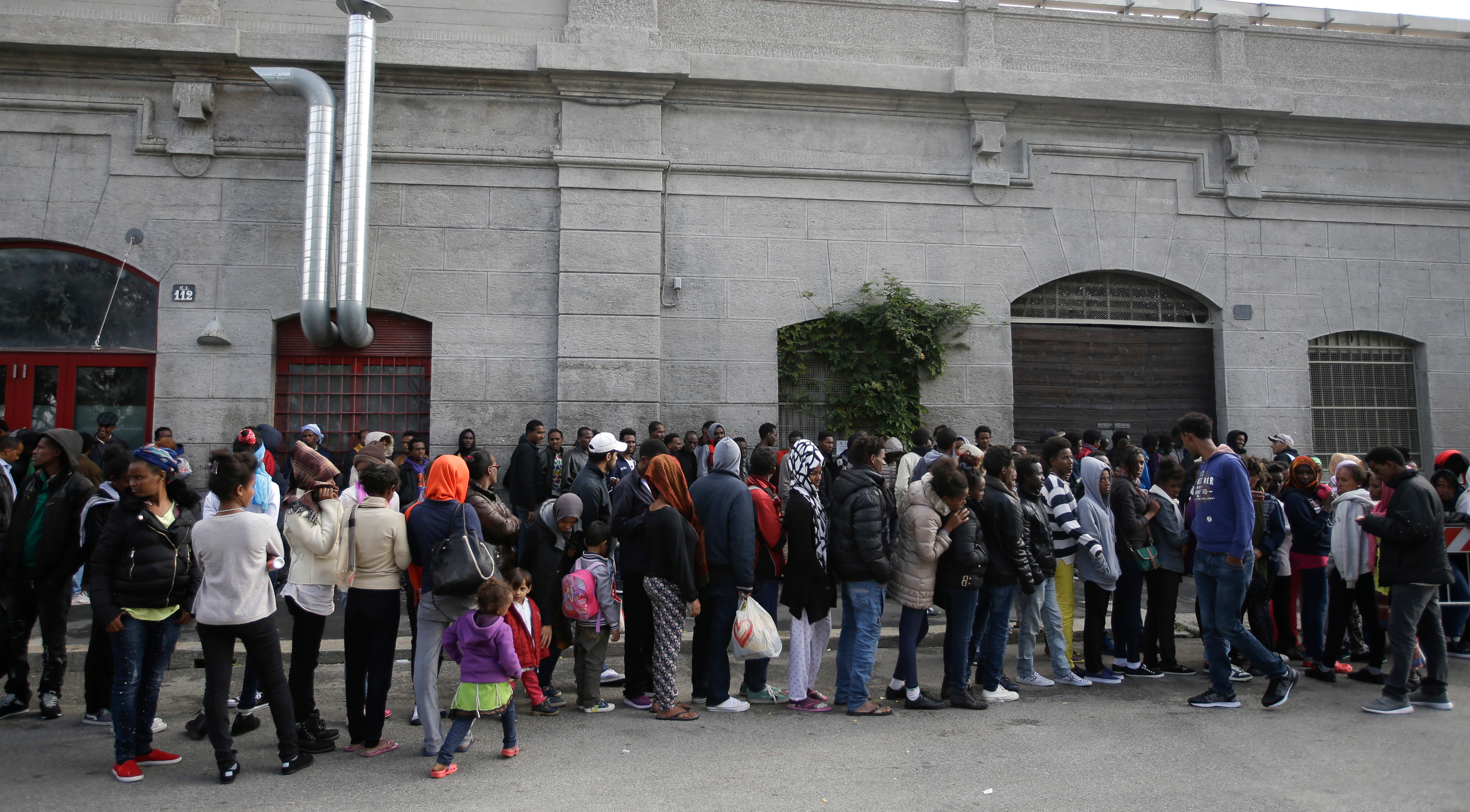
    Denmark and four other European Union countries agreed Friday on a model for “return hubs” in non-EU nations and hope to begin sending migrants to the facilities as early as 2027, an official said Friday.

    The announcement, made after a one-day meeting in Copenhagen, is the latest development in an effort by EU states to send people whose asylum requests have been rejected to third countries outside the bloc.

    “We are moving forward toward what is actually a fundamental transformation of the common European migration and asylum system,” said Morten Bødskov, Denmark’s minister of immigration and integration.

    He briefed reporters alongside counterparts from Germany, the Netherlands, Austria, and Greece. The five countries have been negotiating with governments mainly in Africa over potential sites, pioneering the initiative for the whole of the EU.

    Human rights groups have criticized plans to deport migrants to centers or prisons in third countries, arguing that European nations cannot guarantee their rights will be respected there.

    Bødskov rejected the idea that “return hubs” were a euphemism for detention and deportation centers and said the International Organization for Migration and the U.N. Refugee Agency would monitor the centers.

    “We are not talking about camps, we are talking about opportunities, for a new chance for irregular migrants who cannot return to their own country today and who have no legal grounds to be in our countries,” Bødskov said.

    The UNHCR told the Associated Press that it “has not been approached with details of such a proposal,” and therefore “cannot comment on the specific arrangements being discussed or on what any potential role for UNHCR might entail.”

    IOM told AP that no decision had been made on IOM’s potential role in return hubs. “Discussions remain exploratory,” and IOM had provided only “technical advice to some EU Member States on safeguards and operational considerations.”

    “We have consistently underscored that any such initiative must comply with EU regulatory and legal frameworks, protect migrants’ rights, respect partner countries’ interests, and ensure individuals’ access to meaningful, sustainable solutions,” an IOM spokesperson said in an emailed statement.

    Return hubs abroad would be first for EU migration policy

    Although the ministers did not specify which third countries were being considered, Bødskov said they expect to reach their first deal by early 2027.

    He acknowledged that the concept of return hubs was mocked only a few years ago and deemed incompatible with EU and international law.

    EU laws, however, have changed due to public and political pressure for tougher measures against irregular migration.

    European lawmakers voted in June to allow member states to set up centers outside the EU on their own or in small coalitions, and to send rejected asylum seekers there instead of to their home countries.

    “This is something new and it’s groundbreaking,” said Bart van den Brink, the Netherlands’ minister of asylum and migration.

    Rwanda in negotiations with European nations

    In early August, a spokesperson for the Rwandan government said it “was natural” for her government to negotiate with European countries and others to potentially host asylum seekers who are not allowed to live elsewhere.

    Speaking to Royal FM Kigali, Rwandan government spokesperson Yolande Makolo cited an emergency transit mechanism established in Gashora in 2018 for people evacuated from Libya, who could stay there until they were resettled in third countries.

    Makolo said one of the ideas discussed was to offer a “safe place” where people who have nowhere else to go could get medical care, training, and rest while their asylum applications were processed, until they could go back home if safe or get resettled to yet another country.

    “We want to be part of a solution to a big global problem,” Makolo said.

    It remained unclear what countries in negotiations with EU nations would gain in return for taking Europe’s rejected migrants.

    Rights groups concerned about enforcement of law outside EU

    Migrant rights groups have criticized European efforts to set up migrant centers abroad where it may be difficult to monitor and enforce human rights.

    In an emailed statement, the Council of Europe Commissioner for Human Rights, Michael O’Flaherty, said “vague assurances of compliance with human rights law are not enough.”

    “States need to commit to the guardrails necessary to prevent setting up human rights black holes,” he said.

    The European ministers in Copenhagen emphasized the new hubs would abide by European and international law.

    Van den Brink, the Dutch immigration minister, said technical talks and missions to potential partner countries would be used “to gain more insight into the human rights situation and the living conditions of the refugees.”

    “Because we want to do this in a European way, in line with our values and international law and human rights at its core,” he said.

    Brussels-based rights group PICUM condemned the meeting in Copenhagen.

    “EU leaders may call these centers an ‘innovative solution,’ but outsourcing migration control is an old tactic to simply move people out of sight and evade human rights obligations,” director Michele LeVoy said.

  • Women gathered in a small Iranian town for a wedding. Then deadly strikes hit

    Women gathered in a small Iranian town for a wedding. Then deadly strikes hit

    KUHESTAK, Iran — Women with their children were gathered in the house and yard, waiting for the bride and groom to arrive to kick off a wedding celebration in this small town in southern Iran. Then an explosion turned the scene to carnage.

    The town of Kuhestak is still reeling from a barrage of strikes that killed five people during an American bombardment of southern Iran on Tuesday evening. Lampposts at the entrance to the town displayed large posters of four of the dead — a 4-year-old boy, a 16-year-old, and two women. Another woman, one of more than 60 people wounded in the blasts, died Thursday at a hospital.

    On Friday, an Associated Press team made a rare visit to the town on the coast overlooking the Strait of Hormuz. Within a densely built neighborhood of houses and unpaved alleys stood the compound of the Mallahi family, which was struck as relatives celebrated their daughter’s wedding.

    A U.S. weapons expert who reviewed images from the scene said the evidence suggests the strikes were carried out with American guided bombs.

    Blast left a gaping hole in the roof

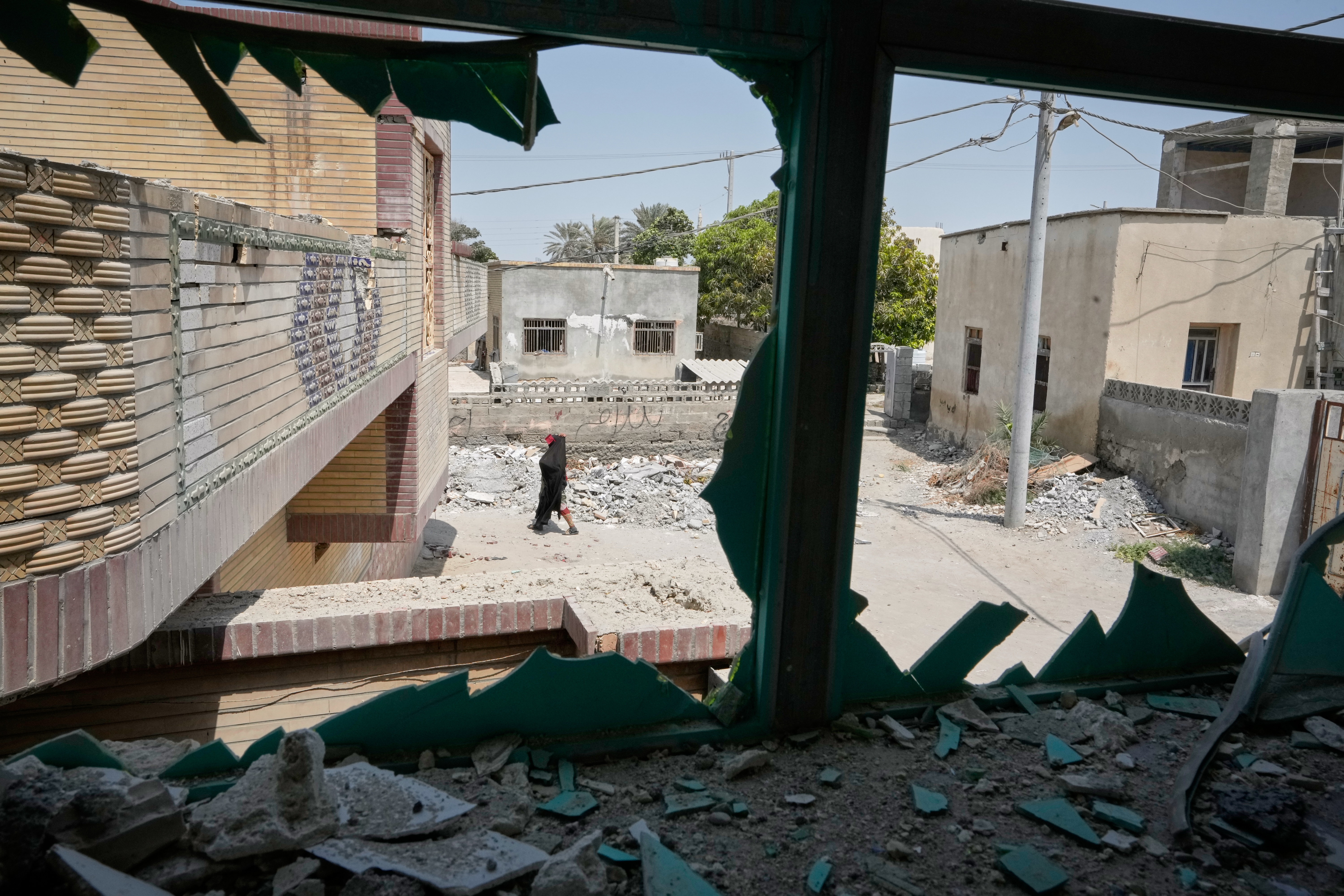
    Ali Mallahi, a cousin of the bride, pointed to a gaping hole in the roof of a room that took a direct hit in one of the compound’s four houses. Big cracks ran through walls decorated with floral designs. Windows were shattered, and twisted sections of roofing and metal framework lay across the courtyard, among carpets and household appliances that the family had pulled out of other damaged rooms.

    Video of the immediate aftermath aired in Iranian media showed colorful decorations and palm fronds strewn across the ground.

    Weddings in the area are traditionally segregated by gender, and on Tuesday evening, roughly 150 women were gathered in the house, while the men held a separate celebration in another building about 50 yards away, Mallahi said.

    A strike hit the room where the women were due to be served dinner, but at the time, celebrations were only just getting started, Mallahi said. The bride and groom had not yet arrived.

    “Thank God, the casualties were not higher,” he said. The father of the bride, his uncle, is also named Ali Mallahi.

    Sasan Zarei, a neighbor, said she rushed to the Mallahis’ home and helped people out of the rubble. “Most of the injured were kids. The scenes were very heartbreaking.”

    Vance says US is investigating

    U.S. Vice President JD Vance said Thursday that he was briefed on the wedding attack. “We’re investigating it very fully,” he said. He said the U.S. never targets civilians in combat but added, “Sometimes things happen.”

    Residents described to the AP how a series of heavy explosions shook Kuhestak, lighting up the night sky. The blasts came amid the latest round of American bombardment in southern Iran that the U.S. military said targeted air defenses, radar systems, and maritime assets.

    Also hit was a communications tower by Kuhestak’s port, just over 100 yards from the Mallahis’ home. AP footage showed the tower toppled and heavy damage to the neighboring building that houses the town’s telecommunications department.

    Hassan Sayadi, a technician with the department, said the tower had provided telephone and internet connections across the area. The Hormozgan provincial telecommunications department said Wednesday that U.S. attacks had disrupted landlines and mobile phone service in multiple locations, including Kuhestak, and that it was working to restore services. On Friday, mobile phones and data services were operating.

    Town is not far from site where U.S. hit a primary school.

    Kuhestak is about 18 miles from the town of Minab, where more than 100 children were killed in an American missile strike that hit a primary school on Feb. 28, the opening day of the war launched by the U.S. and Israel.

    Following Tuesday’s strikes, residents and Iranian media showed fragments of munitions found at the scene, including a thermal battery unit, a segment of a control fin, and part of the exterior body of the munition.

    Weapons experts told the AP that they believe imagery of fragments found at the site points to an American guided munition. Trevor Ball, a former U.S. Army explosive ordnance disposal technician and an analyst at Armament Research Services, said the imagery shows remnants of both a JSOW and GBU-39, which are types of guided, air-delivered glide bombs.

    The images were “being evaluated to determine if one of these munitions, or another model, was responsible,” he said.

    Videos released by U.S. Central Command of its operations that night in Iran show aircraft heading on missions, including an F/A-18E loaded with a JSOW.

    The AP could not immediately determine where the remnants were collected or whether they all came from the wedding venue or also from the communication tower.