Category: Associated Press

  • Hockey player and coach-turned-broadcaster Barry Melrose dies at age 70

    Hockey player and coach-turned-broadcaster Barry Melrose dies at age 70

    Barry Melrose, a hockey player-turned-coach who led the Los Angeles Kings to the 1993 Stanley Cup Final before going on to a long career in broadcasting the sport, has died. He was 70.

    ESPN announced Melrose’s death Wednesday after his wife informed the network.

    “From the flowing locks of his distinctive mullet to the flared lapels of his trademark long suit coats, Barry Melrose cut an unmistakable figure whenever you were fortunate enough to run into him at a rink or catch him on your television screen,” NHL Commissioner Gary Bettman said. “You were even more fortunate if you engaged him in conversation or listened to his analysis because he never failed to boost your love of the game of hockey.”

    Melrose stepped away from his analyst role in 2023 after being diagnosed with Parkinson’s disease. Wayne Gretzky at the time said Melrose was “bigger than any team.”

    Melrose had a relatable everyman’s broadcasting style, bringing a sense of humor to his insights, and was easily recognized by his goatee and slicked-backed hair.

    “For decades, Barry Melrose was one of the most distinctive and trusted voices in hockey,” ESPN said in a statement. “His knowledge of the game was deep, his candor was refreshing and his passion was unmistakable.”

    From rural Kelvington, Saskatchewan, Melrose broke into pro hockey with the Cincinnati Stingers of the now-defunct World Hockey Association in 1976. He played three seasons in Cincinnati — the last teaming with a young Mark Messier — and, following the WHA’s demise, made the transition to the NHL with Winnipeg in 1979.

    Melrose went on to play for Toronto and Detroit, where he closed his career following the 1985-86 season.

    He finished with 10 goals and 33 points and 728 penalty minutes in 300 career NHL regular-season games, and he skated in seven more in the playoffs. His WHA totals were five goals and 32 points and 343 penalty minutes in 178 games with Cincinnati.

    Melrose turned to coaching and led the Adirondack Red Wings to win the American Hockey League Calder Cup championship in 1992.

    The following year, Melrose was hired by the Kings, where he brought a sense of colorful flare and instant success to Los Angeles. In his rookie season, he coached a Kings team that featured Gretzky to make a memorable playoff run. They reached the final before losing to Montreal in five games.

    Melrose finished with a record of 79-101 and 29 ties over two-plus seasons in L.A. before being fired midway through the 1994-95 season.

    He was hired by ESPN in 1996 and left broadcasting for what became a brief stint coaching the Tampa Bay Lightning in Steven Stamkos’ rookie season in 2008-09. Melrose was fired 16 games into the season following a 5-7-4 start and returned to broadcasting.

    Melrose also was known for his long-ball hitting prowess in fast-pitch softball, joining fellow Kelvington-area NHL players Wendel Clark, Joey Kocur, Kelly Chase and Kevin Kaminski and others in the offseason in Saskatchewan to form what some call the “the toughest team there ever was.”

  • Jerry Sandusky appears remotely in court as lawyers prepare a federal court bid to seek a new trial

    Jerry Sandusky appears remotely in court as lawyers prepare a federal court bid to seek a new trial

    BELLEFONTE, Pa. — Former Penn State assistant football coach Jerry Sandusky appeared in court remotely Tuesday, where he said he agreed with his lawyers not to go forward with testimony from an accuser who wants to recant allegations that Sandusky sexually abused him years ago.

    The hearing was part of the latest bid by Sandusky’s lawyers to secure a new trial for him as his lawyers prepare to seek one in federal court after failing repeatedly in state courts.

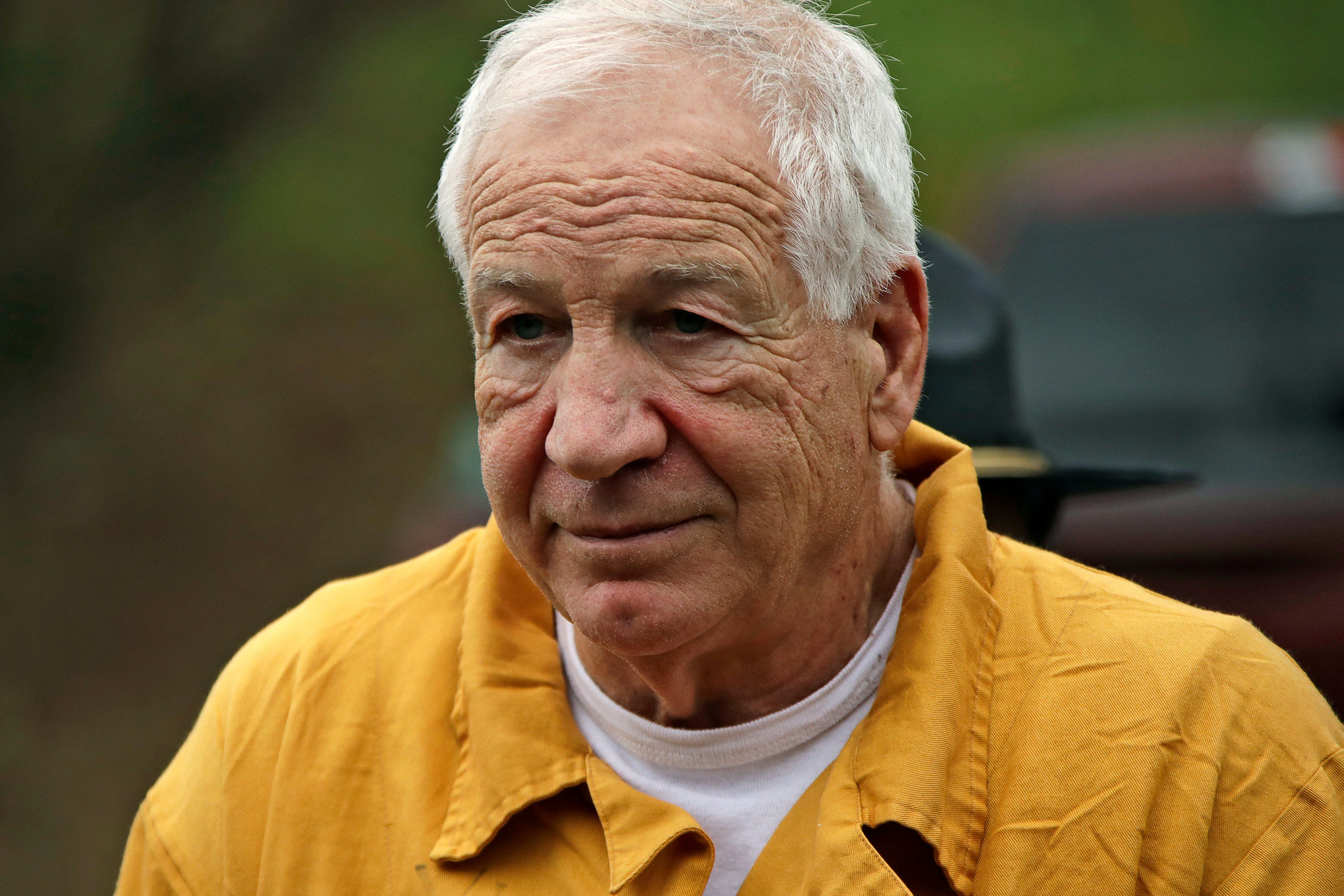
    In court, Sandusky, 82, appeared on a video screen in a spare room in Laurel Highlands state prison, seated at a small table in a maroon-colored shirt looking up at the camera through glasses.

    Under questioning, he told Centre County Court Judge Maureen Skerda he had consulted with his lawyers about the decision not to present the accuser’s testimony recanting the allegations from Sandusky’s 2012 trial.

    “I’m making this decision on advice of counsel,” Sandusky said, his arms on the table in front of him, a notepad between them. “Is there anything wrong with that?”

    Sandusky has been serving a decades-long prison sentence since he was convicted of 45 counts of sexual abuse in 2012, after eight young men testified about what happened to them as boys.

    Sandusky’s lawyer, Jerry Russo, told reporters later that state courts frown on granting new trials based on a witness recantation, seeing it as “inherently unreliable.”

    Instead, Russo said, he plans to take Sandusky’s broader claims for a new trial to federal court — Sandusky has made at least three attempts in state courts — after one more procedural appeal in state court.

    Last year, Sandusky’s lawyers had asked for a new trial, claiming that there were inconsistencies in the accusers’ testimony and that their testimony was driven by the possibility of financial gain, coaching by prosecutors, and “therapy intended to [help] them reconstruct memories of alleged abuse.”

    Skerda months ago had refused to hear the claims, except for the recantation of the victim identified in court documents as R.R.

    On Tuesday, Russo suggested that it was not worth taking the time for the judge to hear and consider the recantation testimony if it has no chance to win a new trial in a state court.

    “If that’s the only issue that remains for us to litigate, there’s no purpose being served litigating it here in state court,” Russo said.

    Skerda told Russo and Sandusky that withdrawing the request to present the recantation from the accuser, identified in court documents as R.R., meant that it could not be litigated again in state or federal court.

    Russo agreed with that assessment, saying “technically” it is true, but also suggested that the recantation could find its way into federal court, saying that “there are other witnesses that can testify” about R.R.’s recantation.

    The Pennsylvania Office of Attorney General had said that the supposed recantation was “highly suspect” and that it had prepared to rebut the recantation claim with testimony from six witnesses and other evidence.

    In a statement, Attorney General David Sunday called Sandusky a “convicted child predator” and said he is making another attempt to “avoid accountability and escape punishment for years of abuse he perpetrated.”

    Sandusky was the defensive coordinator at one of the country’s top football programs under Hall of Fame head coach Joe Paterno. The scandal led to Paterno’s firing, and the university paid more than $100 million to people who said they were abused by Sandusky.

    Authorities said he found and groomed boys at the Second Mile, a charity he founded for at-risk youth. Sandusky has repeatedly declared his innocence.

    R.R., who was 25 years old at trial, testified that when he was 11, Sandusky sexually abused him in the coach’s basement in 1998, a transcript shows.

  • New Apple CEO unveils latest iPhone lineup, including a foldable model called Duo

    New Apple CEO unveils latest iPhone lineup, including a foldable model called Duo

    CUPERTINO, Calif. — Apple on Wednesday unveiled its latest generation of iPhones, including a widely anticipated foldable version called Duo.

    The company’s new CEO, John Ternus, who took over from Tim Cook on Sept. 1, introduced the latest lineup at the company’s Cupertino, Calif., headquarters.

    After cycling through other updates to the iPhone, the Apple Watch and AirPods, Ternus told the audience inside the Steve Jobs Theater that “actually there is one more thing,” in a nod to the trademark phrase from Jobs that the company’s legendary late founder himself borrowed from the 1970s detective show Columbo.

    The foldable phone has the “largest display ever on an iPhone, yet fits into your pocket,” Ternus said.

    The phone opens to a 7.6-inch display that is 80% larger than the newest iPhone 18 Pro. It will let people use an Apple Pencil on the phone, a capability previously reserved for iPad users. Duo, Ternus said, “will redefine the experience of using a foldable phone.”

    The Duo lets users split the screen to use two different apps on the device, or two windows of the same website for things like comparison shopping. With a starting price of $1,999, it is the most expensive iPhone yet.

    The Duo “was always going to eclipse Apple’s other announcements at the event,” said Ben Wood, chief analyst at CCS Insight. “The device adds a distinctive new design to the iPhone lineup and marks the company’s entry into the niche foldable smartphone category.”

    Wood said that while there is certain to be demand for the Duo, which costs less than some analysts had anticipated, foldables still account for less than 5% of the overall smartphone market.

    New iPhone 18 models

    The iPhone 18 Pro and 18 Pro Max, Ternus said, bring improvements to the battery, camera, and performance. They will start at $1,199 and $1,299, respectively. Customers can preorder the phones starting on Sept. 12 and they will be available on Sept. 18, although the Duo will be available on Oct. 23.

    The new models feature a long battery life — 45 hours of video playback for the Pro Max — and faster charging. The camera offers what Apple called “cinematic effects” from regular video captured on the phone, as well as new options for manual controls and “smart focus tracking,” which lets users focus on a single moving subject, such as a kid during a soccer game.

    Apple is also focusing on Siri’s new AI capabilities with the new phones, emphasizing privacy and security to stand apart from rivals who are further along in incorporating AI.

    Many of Apple’s biggest rivals, such as Samsung, Motorola, and Google, have already come out with foldable smartphones. But Apple is not one to rush on new technologies.

    “The foldable launch is straight out of Apple’s playbook: Wait for the product to work out its kinks and for the market to offer glimpses of viability, then enter and shape the category,” said Forrester analyst Dipanjan Chatterjee. But, he added, the question will be whether it can expand demand for what’s still a niche product category.

    Compared with earlier generations, the iPhone 18 costs about $100 more due partly to a global memory chip shortage. The iPhone 17’s price ranges from $799 to $1,999 depending on the model.

    Earlier this year, Apple unveiled artificial intelligence advances, including upgrades to its Siri assistant, emphasizing a focus on privacy and day-to-day use as the company tries to catch up with rivals on AI.

    Ternus takes center stage

    The keynote address for Ternus was his opportunity to set the tone for his vision of Apple’s future, Chatterjee said.

    “John Ternus inherits perhaps the most successful consumer technology juggernaut in modern times. That is both a boon and a burden for him. Tim Cook’s perfected execution, scale, and monetization set a high bar, and Ternus must extend that run,” Chatterjee said. “But he must sustain that momentum while positioning Apple to disrupt itself in the near future, when the iPhone, or any smartphone for that matter, will cease to be the consumer’s primary conduit to the world.”

    Wood noted that, with all the excitement around the Duo, the official arrival of Ternus as CEO “felt like less of a story” than he’d expected.

    “This event marks a seamless transition from Tim Cook, and its timing to coincide with the iPhone Duo was undoubtedly planned,” Wood said. “However, despite the media frenzy about this new device, it is the broader strength of Apple’s hardware, software and services that will drive the company forward.”

  • U.N. nuclear watchdog board reports Iran to the U.N. Security Council for the first time in 20 years

    U.N. nuclear watchdog board reports Iran to the U.N. Security Council for the first time in 20 years

    VIENNA — The U.N. atomic watchdog’s board on Wednesday reported Iran to the U.N. Security Council for the first time in 20 years, citing it for failure to cooperate in a long-running investigation into uranium traces detected by inspectors at undeclared sites.

    Western officials suspect that the traces could provide evidence that Iran had a secret nuclear weapons program until 2003. Iran says that it’s not pursuing nuclear weapons, and that its program is entirely peaceful.

    Reporting Iran to the Security Council opens the country to possible sanctions and asset freezes, though such punitive measures are unlikely because Iran’s allies Russia and China hold veto power on the panel.

    Twenty-three countries on the International Atomic Energy Agency’s 35-member board of governors voted for Wednesday’s resolution at IAEA headquarters in Vienna.

    China, Russia, and Niger opposed it, while eight countries abstained and one didn’t vote as it was in arrears, according to diplomats who spoke on condition of anonymity to describe the outcome of the closed-door vote.

    The resolution was put forward by the United States, Britain, France, and Germany.

    The diplomatic move has been under consideration since June 2025, when the IAEA board found Iran officially in noncompliance with its nonproliferation obligations because of Tehran’s lack of cooperation in the investigation.

    Iran’s ambassador to the U.N. in Vienna, Reza Najafi, rejected the resolution, describing it as a “political tool” and saying that it ruined confidence in the IAEA’s “independence, impartiality, and credibility.”

    He suggested that compliance with any obligation to allow U.N. inspections of nuclear sites inside Iran was, in any case, impossible at the moment because of the country’s continuing war with the U.S. and Israel.

    The U.S. this week destroyed five Iranian oil tankers and Tehran hit back at American targets in Jordan, the latest burst of back-and-forth strikes that have lurched the sides back toward open hostilities in a more than 6-month-old war.

    The draft resolution, which was seen by The Associated Press, requested IAEA Director General Rafael Grossi to report the agency’s concerns “to the Security Council and the General Assembly of the United Nations, in accordance with the relevant provisions of the IAEA Statute.”

    The resolution also reiterated its call upon Iran “to urgently remedy its non-compliance” with previous agreements and to take steps deemed necessary by the IAEA to assure “the non-diversion of nuclear material.”

    Since Israel and the U.S. struck Iran’s nuclear sites during the 12-day war in June 2025, Iran hasn’t given IAEA inspectors access to nuclear sites that were affected by the strikes. The IAEA also has been unable to verify the status of Iran’s stockpile of near weapons-grade uranium since the June bombing.

    Najafi said that airstrikes by the U.S. and Israel made safe access for inspectors to Iran’s nuclear sites “materially impossible.” He said that Iran has “neither stopped nor suspended its safeguards obligations,” adding that “performance is currently impossible under continuing military operations and persistent threats.”

    Iran’s Deputy Foreign Minister Kazem Gharibabadi echoed that sentiment in an post on X.

    “They attack Iran’s safeguarded nuclear facilities, disrupt the normal verification process, and then use that very disruption as a pretext to pass a resolution at the IAEA Board of Governors,” he said.

    According to the IAEA, Iran maintains a stockpile of 972 pounds of uranium enriched up to 60% purity — a short, technical step away from weapons-grade levels of 90%.

    That stockpile could allow Iran to build as many as 10 nuclear bombs, should it decide to weaponize its program, IAEA chief Grossi warned in an interview last year with the AP. He said that it doesn’t mean that Iran has such a weapon.

  • The psychological toll of Cuba’s multiple crises is pushing many islanders to the breaking point

    The psychological toll of Cuba’s multiple crises is pushing many islanders to the breaking point

    HAVANA — Sweltering nights. Water and power shortages. Dwindling fuel and crumbling homes. Limited public transportation and weak cell phone signals.

    The psychological toll of daily life in Cuba is pushing many to their breaking point on this island of nearly 10 million people, with no relief in sight as a U.S. energy embargo persists and longtime economic and financial troubles deepen.

    “Before there was hope,” Yomeidis Felicó Riverón said. “Right now, what people have lost is exactly that.”

    Felicó Riverón is a primary care physician, but she has embraced an additional role as Cubans grind through their days.

    “They come and cry about their troubles, because they have no one else to vent to,” she said of her patients. “We end up having to play psychologist.”

    Children attend a workshop to make gift bags and perfume in Havana last month.Ramon Espinosa

    Parents shield children from Cuba’s realities

    On a recent sunny afternoon, six girls and one boy crowded around a table as their parents sat in the background, trying to fan away the stifling heat.

    The children were learning how to make gift bags and perfume, a free workshop that offered them a brief respite from Cuba’s realities.

    “My son doesn’t know if there’s food or if there’s no food,” Felicó Riverón said, confiding that she never tells him when she doesn’t have money to buy something he wants.

    Instead, she distracts him: “Let’s go play, let’s go to the park. We’ll come back another day.”

    Dianne Tamayo was among the mothers present that day. The workshop served as an oasis for her and her daughter. Tamayo socialized and temporarily forgot what awaited at home.

    “My husband is my rock,” she said. “When I’m going crazy, my husband tells me, ‘Sit down, breathe … let’s put on some music.’”

    He sometimes has to remind Tamayo that their daughter is coming home from school soon, and that they need to keep their troubles, anxieties, and frustrations to themselves.

    “I do the best I can with the tools I have, but there’s still a moment where I get overwhelmed,” she said.

    Tears fell as she confided that she doesn’t have anything in her life that relaxes her, and that she has never questioned how to release her feelings about life in Cuba.

    “They are exterminating us,” she said, “and we remain complacent.”

    U.S. Embassy issues health alerts

    Cuba’s crises worsened after President Donald Trump announced in late January that he would impose tariffs on any country that sells or provides oil to the Caribbean country. Longtime U.S. sanctions also have taken their toll, Cuba’s government said.

    From March 2025 to the end of February, “the U.S. policy of economic strangulation” amounted to more than $8 billion, “a record figure,” according to Cuban Foreign Affairs Minister Bruno Rodríguez.

    Island-wide blackouts have increased this year, and daily outages now surpass 24 hours. As a result, water is often scarce, and small protests have erupted, despite the fear of being detained, as anger and frustration boil over.

    The situation has worsened to a point that the U.S. Embassy recently issued two public health alerts.

    On Aug. 28, the embassy noted that “Cuba’s water supply infrastructure is increasingly unstable ” and that there are “residential neighborhoods experiencing long periods without water from municipal or public sources.”

    On Friday, the embassy warned of an increase in gastrointestinal illnesses linked to the “degradation of the water and energy infrastructure. …. Recent cases have included E. coli, norovirus, Shigella, and other gastrointestinal pathogens.”

    Water and power shortages persist, but 81-year-old Havana resident Oscar Joaquín López said that he doesn’t dwell on what he lacks.

    “Why?” López said. “Because it drives you crazy, and nobody is going to drive me crazy.”

    On a recent afternoon, he leaned against the doorframe of his home as he watched his 58-year-old roommate fill up nearly a dozen plastic containers with water that flowed from a pipe on the street. They had been without water for several days, so they acted quickly.

    With temperatures hovering above 90 degrees, López said that he sits in his doorframe until midnight to catch a breeze from the nearby ocean, a steel pipe nearby to ward off any intruders. After midnight, he goes to bed, hoping the wooden slat he wedged into his window will catch any wind, however slight.

    Nearby, 62-year-old mason José Laó Faviel dug through overflowing garbage on the street, looking for food to feed his pig and her 10 piglets, because he had none to give them.

    “What are you going to do?” he said. “We’re living through difficult times.”

    Minutes later, another man rifled through the same pile of garbage. After opening several bags, he found something to eat.

    Cubans find solace in family

    Sweat gathered around Armando Lafita’s brow as the 60-year-old pushed a cart through the crumbling buildings in Old Havana. Authorities have evacuated some residents in the area for safety reasons, but those with nowhere else to live now sleep on the street, ducking inside their building when they need something.

    Lafita’s cart was filled with red roses and white ginger lilies, Cuba’s national flower. He sells them for 10 to 40 cents a bunch, but sometimes he goes home without a single sale.

    “Everybody is fighting to survive here,” he said. “It’s getting harder every day.”

    Like many Cubans, Lafita said the only thing that keeps him going is family: his 19-year-old son.

    José Manuel Borroto Díaz, 70, and his 93-year-old mother, Teresita del Rosario González Ricardo, lean on each other to keep going.Ramon Espinosa

    It’s the same reason that 70-year-old José Manuel Borroto Díaz and his 93-year-old mother, Teresita del Rosario González Ricardo, keep going: They have each other.

    “Our situation is like something out of a movie, but we’re going to press on,” said Borroto, a retired aviation official who was in Angola during Cuba’s military intervention in the 1970s.

    Across the island, Cubans are pressing on even as the crises deepen, including 90-year-old Lázaro Alfonso Oviedo. He recently attended a weekly gathering to help raise the spirits of elderly people.

    Oviedo danced and sang in a deep, robust voice “to forget for a little while the suffering the empire puts us through,” he said, referring to the United States.

    “We are not going to give up,” he said as he praised Cubans’ unwavering resilience. “We get it precisely from the spirit forged by the revolution itself — a revolution spanning more than 60 years.”

  • Hours after a Russian attack destroys their home, a Ukrainian couple gets married

    Hours after a Russian attack destroys their home, a Ukrainian couple gets married

    KYIV, Ukraine — On the eve of her wedding, Liudmyla Ryzhak pressed her delicately embroidered dress, laid out a full white tulle skirt and her soon-to-be husband’s traditionally patterned shirt, then hung them on the bedroom door.

    After repeated delays caused by the war with Russia, she was only hours away from marrying her partner, a 43-year-old Ukrainian soldier, in a ceremony in the capital.

    But as the couple slept, a Russian strike hit a warehouse across the street from their building, sending a blast wave through the apartment and threatening to stop the wedding scheduled for Tuesday morning.

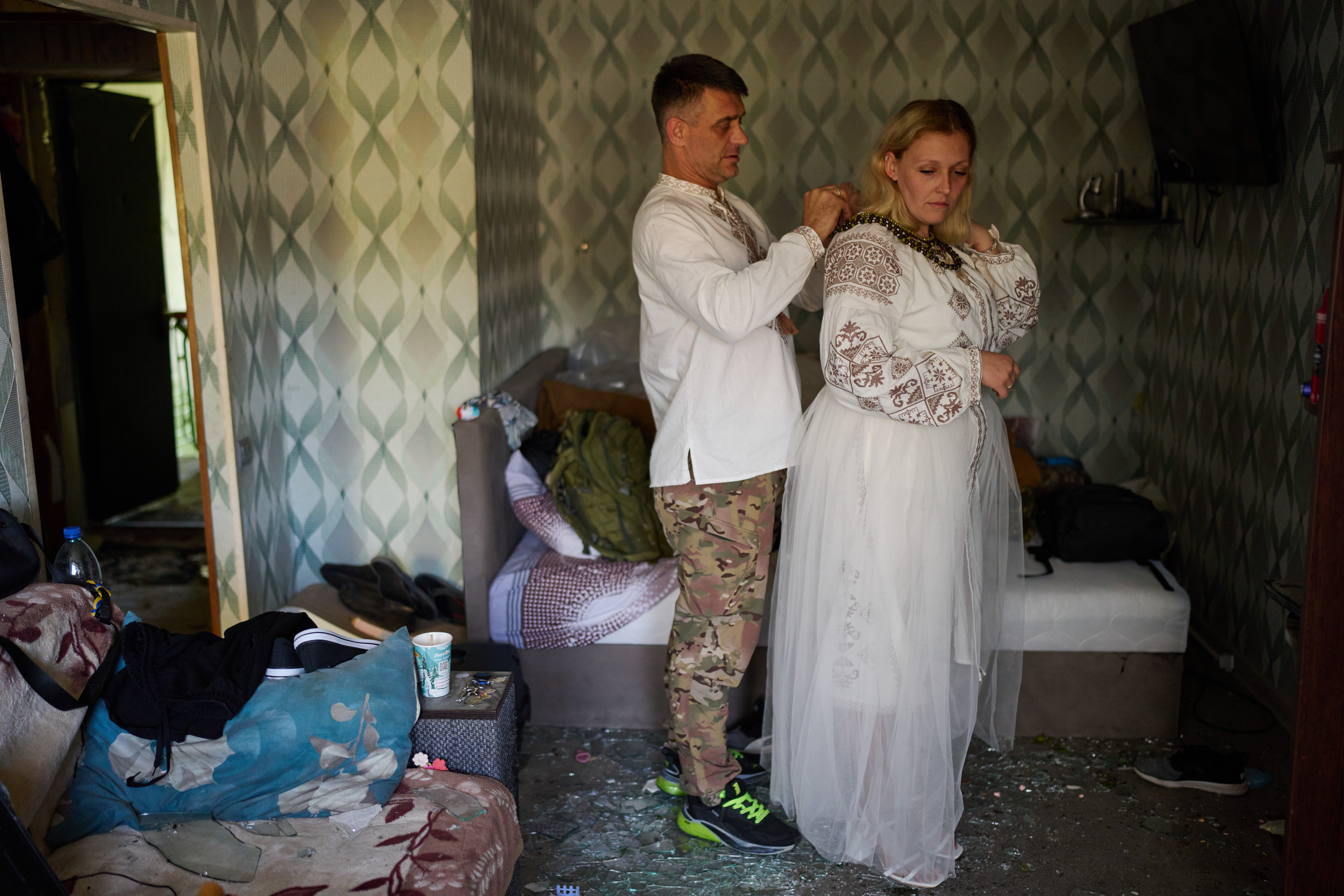
    The pair were soon digging their wedding clothes out of the rubble. Ryzhak, 33, had to pull her skirt from beneath the debris, shaking off pieces of broken glass.

    Strike followed visit by U.S. envoys

    The strike came soon after U.S. envoys visited Ukraine on Sunday, a trip that brought a lull in Russian attacks. The assaults then resumed with drones and missiles. Explosions were heard in Kyiv for almost five hours overnight. Strikes continued during the day Tuesday.

    Like many others in Kyiv, the couple decided the attacks would not derail their lives and forged ahead with the ceremony. It had taken a long time for her fiancé, Leonid Ryzhak, to make it back from the front lines in eastern Ukraine.

    “If God gave me a continuation of life, then why should I put it off?” the bride said. “For someone, it ended. And who can guarantee this won’t happen again tomorrow? That tomorrow won’t come for us? At least for now, I have the right to be happy. Both him and me.”

    Liudmyla and Leonid awoke from the blast, which blew out the apartment’s windows and scattered its furniture. A burned curtain hung in shreds.

    Their ears deafened by the explosion, the couple’s only immediate thought was the risk of a second strike. They fled to a shelter with Liudmyla’s 6-year-old daughter and two guinea pigs but without the cat, which had hidden in fright and could not be found.

    They were lucky: By the time the second strike hit, they were already safe. The apartment was rendered uninhabitable until repairs are made.

    A friendship deepened into love

    The two met three years ago through mutual friends, coming together as adults who weren’t looking for anything serious. Both had children from previous marriages.

    But the friendship deepened. She supported him through his deployments to the front, and slowly the relationship grew into love. Leonid Ryzhak, who serves as part of a team that deploys bomber drones in the Pokrovsk area, arrived in Kyiv for a long-awaited vacation a week and a half earlier, just as near-constant air-raid alerts and daytime attacks began disrupting life in the capital.

    For six days straight, the couple went to the registry office but could not submit their documents because of constant air-raid sirens.

    When they finally succeeded, they were assigned Sept. 8. Nobody could have predicted that their apartment would be badly damaged on the same day.

    It wasn’t the first time for Liudmyla, who owns a Kyiv pet store. She had already lived through one attack, on Aug. 20, when a strike cut the gas lines and shattered windows in her home. She was badly frightened and for a time was afraid to go back.

    Eventually, ordinary life pulled her back in: The wedding was coming, and the children had to go to school.

    More attacks hit as they wait at registry office

    Eventually, the two put on their wedding clothes and headed to the registry office.

    Leonid tried to keep their spirits up. What mattered most to him, he said, was for his bride to be smiling.

    “It’s fine. We’ll get through it,” he said.

    When they stepped outside their apartment, the courtyard looked almost apocalyptic, with a column of black smoke rising behind a brightly colored children’s playground. Neighbors clearing debris stopped to congratulate the couple.

    “We should all be celebrated, that we survived,” Liudmyla replied.

    The couple arrived at the registry office on time, at 10:40 a.m.

    Leonid wore an embroidered vyshyvanka, a traditional Ukrainian shirt, with a pattern that matched the one on Liudmyla’s dress.

    In place of black dress pants, he wore army trousers — he couldn’t dig his own out of the rubble — and black sneakers with fluorescent yellow soles and laces, for the same reason. Liudmyla’s white tulle overlay had tiny, barely visible holes that were torn as she pulled it out from the rubble and broken glass.

    Shortly after they arrived, a siren sounded: Another attack had begun, and the registry office closed for safety. The couple waited in the courtyard, unsure how long it would last.

    Explosions echoed nearby as strikes hit surrounding districts and fires broke out. Almost three hours passed before the alert finally ended, and the couple hurried back inside.

    Against all odds, they became husband and wife

    Just before entering the hall for the ceremony, they paused, trading nervous jokes.

    “I didn’t even get to finish the repairs at home,” Leonid joked about their now-wrecked apartment.

    “I’ve never had such a spectacular day,” his bride replied.

    The ceremony went ahead as the officiant told them, “Love is when two people become a team.”

    Moments later, the two were officially married.

    “We’re gaining a new life, because we survived,” Liudmyla said. “You could probably call [it] a new life because it could have ended today, and none of this would happen.”

    In a different scenario, “I wouldn’t be wearing this dress. Someone would be picking out something else for me instead, something darker.”

  • Families grieve in the ruins of an Iranian school where a U.S. strike killed dozens of children

    Families grieve in the ruins of an Iranian school where a U.S. strike killed dozens of children

    MINAB, Iran — The sun set over this southern Iranian city, and Heydar Sadeghi was where he can be found almost every evening: on a bench next to the shattered remains of his grandson’s school. His face was soaked with tears.

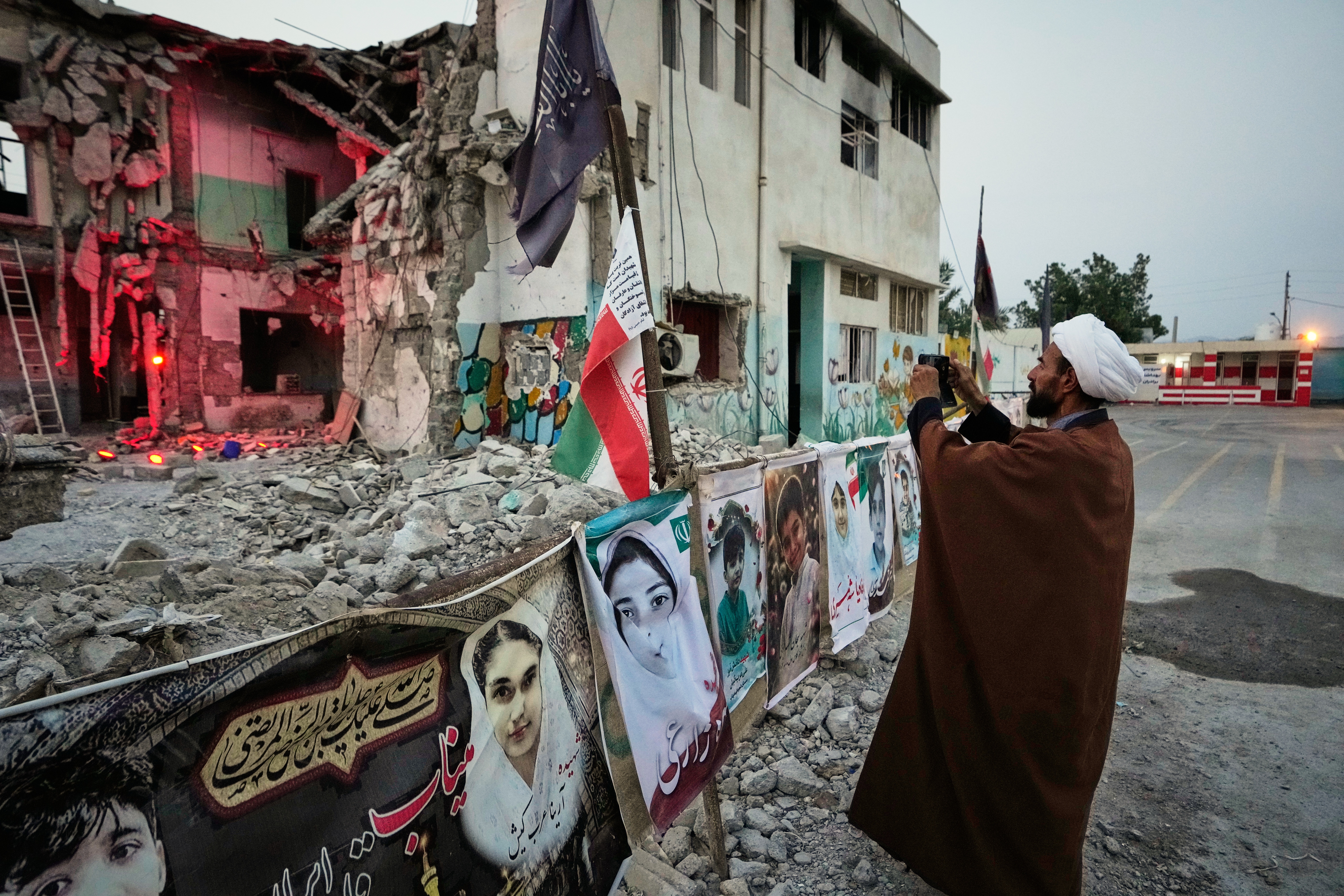
    A banner strung around the rubble showed the faces of children and teachers killed here by an American airstrike on Feb. 28, the first day of the war on Iran. Among them are Sadeghi’s 11-year-old grandson Hami and the boy’s mother, Neda Salehizadeh.

    “I searched the bodies for my kids, thinking maybe one would be among them,” Sadeghi said Monday evening as he recounted how he rushed to the school in the moments after the explosions. He called out their names, saying, “’Come with me! I’ve come to get you.’ They weren’t there,” he said, weeping.

    The Shajareh Tayyebeh school has become a place to wrestle with grief and preserve the memories of the dead. Here, relatives try to comprehend the incomprehensible — how around 120 of their children could be snuffed out, just after they’d been dropped off for a day of classes.

    At least one U.S. missile hit the school that morning in Minab, according to an Associated Press investigation, but there has been no final accounting of what happened. Iranian state media have said 168 people were killed in the strike, most of them children.

    The Trump administration has yet to directly accept the blame or release findings of a Pentagon investigation into the bombing.

    A grandfather grieves every day

    For Sadeghi, the day of the strike began as every school day did.

    He drove Hami and the boy’s 9-year-old sister Nila to school along with their mother, his daughter-in-law Salehizadeh, who was a teacher. As usual, he planned to pick them up at 1 p.m.

    “But the bell was rung early — by Trump,” he said.

    Hami was a fifth grader who loved soccer and riding his bicycle, Sadeghi said. His body was so mangled in the blast, they could only identify him from the clothes he was wearing, he said.

    Nila was pulled alive from the rubble.

    “Thank God, she is physically fine,” Sadeghi said. “But mentally, no.”

    The girl and her father have moved in with Sadeghi and his wife. The slightest, unexpected noise frightens her. She often goes to bed in her grandmother’s arms but lies awake for much of the night.

    Sadeghi said he often invites Nila’s friends to come spend the night, hoping their presence will distract her.

    He wants to see Nila smile. So he grieves here at the school away from her.

    “I come here and cry,” he said. “Then I go home and dance in front of the girl.”

    The site is becoming a memorial to the dead

    The school had a girls’ school upstairs and a boys’ school and preschool on the ground floor. Some of the students were children of officers at a Revolutionary Guard base located next to the school; many were local children from Minab, which is populated predominantly by members of Iran’s Baluch ethnic minority.

    The banner at the site listed 120 students killed — 47 girls and 73 boys — and 26 teachers and staff. Three more children are presumed dead but their bodies were never found.

    The governor of Hormozgan province, where Minab is located, has said the damaged building would be preserved to be turned into a memorial and war museum.

    Several dozen visitors there Monday evening included relatives of the dead but also out-of-towners who had come to see.

    In a government-sponsored mourning ceremony held every evening, men and women — including one in the Guards uniform — took turns at a microphone, telling wrenching stories about those who died and describing in graphic detail the day of the attack. Some visitors broke down weeping from their accounts.

    A separate section of Minab’s cemetery has also been set aside for those killed at the school. Every grave has a photo of the dead, with a shade overhead and artificial grass around so families can sit with their loved ones. Some lay flowers and prayer beads on the graves. Others bring dishes of “shuleh-zard,” a saffron rice pudding eaten at funerals.

    One teacher tried to protect her students

    At the cemetery, Fatemeh Barani sat by the grave of her daughter, Nasim Neyestani, a second-grade teacher at the school. Barani comes several times a week to be with her daughter.

    She thinks about her daughter’s last hours, which school staffers later described to her, and how everything could have turned out differently.

    At around 9 a.m. news came of the airstrikes in the capital Tehran that had hit the compound of Iran’s supreme leader. They didn’t know it at the time, but those initial Israeli strikes killed Ayatollah Ali Khamenei and much of the top military leadership.

    Neyestani was alarmed, fearing wider strikes, and urged the principal to cancel classes and call parents to come collect their children, Barani said, according to what she was told by other staffers. The principal didn’t think that was necessary. But Neyestani began calling the parents of her 22 students herself, urging them to come get their children, Barani said.

    Fourteen of Neyestani’s children were picked up before the strike, Barani said. The parents of eight others did not get there in time.

    Neyestani took the eight children into the schoolyard, her mother said. But the principal told her to take them into the school’s prayer room, thinking it would be safe.

    The prayer room was hit. Barani said her daughter and all eight children with her were killed.

    “My daughter’s classroom was mostly left intact,” she said. “Probably if she had been in that classroom, she would not have been killed.”

    Details of Barani’s account could not be independently verified, but it meshes with other accounts. The AP’s investigation of the strike found that several teachers called parents to pick up their children before Iran’s government ordered schools closed nationwide at 10:15 a.m. The first missile hit the school about an hour later. Accounts of the strikes posted on banners at the school say three missiles struck. The principals of both the boys and girls schools were among those killed.

    A teacher’s mother is overwhelmed with grief

    After the strikes, Barani’s husband and sons went to the school; later, they told her her daughter had been killed.

    They found Neyestani’s bag. But Barani said her sons have hidden it from her because they fear seeing it would only hurt her more.

    Parents of students who escaped the school because Neyestani had called them visited the family to pay their condolences, but Barani said she was so overwhelmed with grief that she doesn’t remember any of their visits.

    She said she still hasn’t been able to enter her daughter’s bedroom.

    She talked about how her daughter, who had not married, was rarely idle. She taught in the mornings and worked as a salesperson at a cosmetics store in the evenings. At home, she stayed busy with her hobby making handicrafts, particularly “minakari,” a traditional art of decorating objects with enamel. The enamel work relaxed her, Barani said.

    The enamels are still there around the house, a reminder of her daughter.

    “Every day, this grief feels fresh again,” Barani said.

  • Oil surges above $100 a barrel as U.S. and Iran launch new attacks, while gasoline prices also jump

    Oil surges above $100 a barrel as U.S. and Iran launch new attacks, while gasoline prices also jump

    NEW YORK — Oil prices shot past $100 a barrel Wednesday as fighting between the U.S. and Iran escalated, threatening to increase costs for consumers and businesses worldwide.

    Brent crude, the international standard, climbed into triple digits after attacks on oil facilities and ships in the Middle East that could further debilitate an already weakened supply chain. It rose 3.4% to settle at $101.21 a barrel Wednesday. That last time prices were that high was in July.

    The latest developments in the war, both prospects of peace and renewed hostilities, have caused market whiplash before. Oil returning to the $100 mark raises concern because experts have warned that a prolonged period of steep prices would worsen the now over six-month-long conflict’s economic fallout. Crude is the main ingredient for everyday fuel like gasoline and diesel — which are also seeing a renewed spike in prices — and higher energy costs overall trickle down to just about every part of the supply chain, from groceries to clothing, cosmetics, and more.

    “Brent breaking above $100 is a major psychological milestone for markets, but the bigger concern is what this means for inflation,” Lukman Otunuga, market research head at global broker FXTM, said in Wednesday comments.

    Here’s what we know.

    What’s driving the latest surge in oil prices

    Crude oil prices shot up shortly after Israel and the U.S. launched their war with Iran in late February. Much of that is because the fighting halted most shipping through the Strait of Hormuz, a narrow waterway where roughly a fifth of the world’s oil supply passed before the conflict.

    Prices have fluctuated considerably over the last six months. Brent surged in the early days of the war — and at one point briefly reached nearly $120 a barrel. Volatility at times resulted in stark day-by-day price swings, but the benchmark settled above the $100 mark for a full month between late April and early May.

    Oil costs cooled in the early summer, plunging closer to prewar levels (roughly $70 a barrel) during hopes for peace and a plan to move oil safely out of the Persian Gulf. But new attacks soon piled up and talks crumbled, leading oil to renew its climb, albeit still with some volatility. The last time Brent settled above $100 was for a single day in late July. Prices have stayed above $90 since the end of August.

    This week’s jump follows the latest escalation: The U.S. military reported striking five Iranian tankers on Tuesday, in response to attempted missile attacks on a Navy warship and after attacks by an Iranian-backed Houthi rebel group ignited fires at oil facilities in Saudi Arabia.

    Recent stepped-up attacks by Yemen’s Houthis could constrain global oil supplies even more because they targeted an alternative shipping route that Saudi Arabia has relied on to transport oil during the war.

    Renewed pain at the pump and other costs for consumers

    Higher energy costs have already weighed on consumers, businesses, and national economies this year.

    Among some of the most immediate consequences of steeper oil prices is more expensive trips to the pump. Drivers are feeling the pain each time they fill up their tanks with gasoline. And rising diesel prices hike transportation costs for everyday goods hauled on trucks, trains, and boats.

    Countries in Asia and Africa — which rely more heavily on imports from the Middle East — have seen some of the starkest shocks over the course of the war.

    In Nigeria, diesel prices are up more than 90% and gasoline prices have jumped nearly 58% since late February, according to the latest data from energy tracker Global Petrol Prices. Countries including Indonesia (diesel up 87% and gas up 38%) and Lebanon (diesel up 80% and gas up 46%) have also seen steep spikes.

    In the U.S., the average price for a gallon of regular gasoline jumped to $4.22 Wednesday— up nearly 42% from the $2.98 seen before the war began, according to motor club AAA. Meanwhile, the price tag on American diesel keeps climbing to new records, setting yet another all-time high (without accounting for inflation) of $5.94 on average Wednesday per AAA, up nearly 58% from the start of the war.

    More expensive diesel can have an outsized impact on consumers because it is used in shipping and production. Some businesses have already passed on costs to consumers in the form of added fees on online orders and packages in the mail. And shoppers may see more and more sticker shock trickle down to store shelves — particularly for perishable groceries and produce, which need to be restocked frequently, or even harvested using diesel-powered farm equipment.

    Oil shocks don’t stop there. Jet fuel has become so expensive that many airlines have cut flights while raising fares and fees. And more expensive oil could drive up costs for a long list of petroleum-derived products, from clothes to crayons — as well as natural gas needed for making chemical fertilizer, which is facing an additional supply squeeze from the war.

    What $100 a barrel could mean for the road ahead

    It can take time for all energy shocks to trickle through the supply chain — meaning that squeezes even from earlier in the war could carry impacts that still haven’t been fully realized yet. And the return of $100 Brent may only add to those costs.

    Otunuga, of FXTM, noted Wednesday that a big question boils down to how long the spike lasts — pointing to July’s single day for Brent above the $100 mark, for example.

    “This time feels different,” Otunuga wrote, pointing to rising tensions. He added that a solid close above $100 “confirms this isn’t just a headline spike” and potentially opens the door toward $110 — although there’s still the possibility for momentum to fade.

    Analysts at Bank of America also said this week that additional refinery outages in Russia, reduced refining activity elsewhere, and sharply declining inventories have pushed diesel and gasoline prices sharply higher globally.

    They increased their oil price forecast for the second half of the year to $83 a barrel “in light of more persistent disruptions to Hormuz,” but said they still expected shipping through the strait to gradually pick up. If attacks keep a chokehold on traffic, prices could reach $95 to $120 a barrel, while damage to major energy infrastructure could produce spikes of up to $150 a barrel, the analysts wrote.

    The prospect of reaching a durable deal before the U.S. midterms looks “increasingly unlikely” and “could remain elusive even beyond that,” the analysts added. The upcoming elections are now just eight weeks away.

    Steep energy costs heading into November could prove particularly challenging for Trump’s Republican party, with many voters already sour on his management of the economy. Trump himself said Wednesday that he didn’t think oil prices would cool before the midterms — but would come down “right after.”

    Rio Yamat contributed to this article from Las Vegas. Grantham-Philips reported from Philadelphia.

  • LIV Golf files for bankruptcy protection in New Jersey as it tries to survive in a smaller version

    LIV Golf files for bankruptcy protection in New Jersey as it tries to survive in a smaller version

    LIV Golf filed for Chapter 11 bankruptcy protection Tuesday in New Jersey with more than $500 million in debt, part of its goal to revive the league without Saudi funding.

    The move was widely expected after the Public Investment Fund of Saudi Arabia abruptly ended its financial support after the final event of the 2026 season. LIV said it has agreed to a restructuring plan with BC Partners as the primary source of its capital.

    “This process gives us the structure and time to pursue a landmark transaction and begin the next chapter of LIV Golf,” CEO Scott O’Neil said in a news release.

    O’Neil has said “LIV Golf 2.0” would feature players as majority owners in a reduced schedule. In a letter to LIV Golf fans, O’Neil said the new look would expand the size of the field from 57 to 75 players and introduce a 54-hole cut for the first time.

    In a letter to LIV Golf fans, CEO Scott O’Neil said the new look would expand the size of the field from 57 to 75 players and introduce a 54-hole cut for the first time.Matthew Harris

    He said the team concept would be built around nationalities and that LIV would continue to tap some of its more successful markets in Australia, South Africa and Asia.

    Still, the new version would be a shell of what LIV had been when it launched in June 2022 — enormous signing bonuses to lure away top names from the PGA Tour, and excessive spending that topped more than $5 billion before PIF said in April it was pulling the plug.

    Still to be determined is the future of the biggest stars still with LIV, most notably Jon Rahm and Bryson DeChambeau. Rahm is playing the Irish Open this week and told BBC Northern Ireland: “I still have a contract with LIV 1.0 that I’m more than willing to fulfill. Like I said, time will tell.”

    Rahm, DeChambeau, Dustin Johnson and Cameron Smith were the leading four creditors listed in the filing.

    LIV listed between $100 million and $500 million in estimated assets, and $500 million and $1 billion in liabilities.

  • U.S. says it has destroyed 5 Iranian oil tankers after missile attacks on Navy warship

    U.S. says it has destroyed 5 Iranian oil tankers after missile attacks on Navy warship

    WASHINGTON — Iran has launched missiles toward U.S. targets in Jordan, Iranian state-run media said, following the latest American strikes.

    It’s the latest tit-for-tat retaliation after the U.S. military said it destroyed five Iranian crude oil tankers following two attacks on a U.S. warship by Iran’s Revolutionary Guard over the past two days.

    U.S. Central Command, when asked about the strikes on the Jordanian airbase, said it had no information to offer.

    The Iranian tankers destroyed in the attack were the Kivik, Charminar, Horizon 1, and the Riesco in the Gulf of Oman, Central Command said. The U.S. military also destroyed the vessel Derya, which was located near Kharg Island in the Strait of Hormuz.

    Central Command said the crews of the five vessels were told to abandoned ship before the attacks.

    The strikes come just three days after U.S. forces destroyed three Iranian oil tankers after Iran’s Revolutionary Guards tried to attack a U.S. aircraft carrier and destroyer.

    Iranian state television also reported the U.S. strikes, saying U.S. forces attacked at least three Iranian oil tankers near the southern port of Jask and near Kharg Island in the Persian Gulf. It said the crews were evacuated.

    Secretary of State Marco Rubio said the U.S. will not allow Iran’s attacks to go unanswered.

    “Iran continues to try to hit U.S. naval ships. And for every time they do that or try to do that, they’re going to lose tankers. And I think you’ll see that again today,” Rubio told reporters Tuesday when asked about the latest attacks in Iran while on a trip to Colombia.

    Danny Citrinowicz, an Iran expert at Israel’s Institute for National Security Studies, warned that such back-and-forth strikes can only risk more retaliation and further impact to the global economy.

    “There is no kinetic solution to the Strait of Hormuz problem,” he said on social media. “Every attempt to impose one only brings Washington and Tehran closer to an escalation that may become increasingly difficult to control.”

    An Iranian state TV reporter in Jask said an Iranian tanker was struck near the coast of Yekbeni, while another explosion was heard in the area whose source and location were not immediately clear.

    State TV later reported that the U.S. military attacked a second tanker near waters off Jask. It said the crews of both vessels were being evacuated by lifeboat toward the Jask coast.

    Separately, state television reported that another Iranian tanker was attacked in Kharg Island anchorage area. It said the crew was safely evacuated shortly after the strike.

    Iran’s Revolutionary Guard Navy on Tuesday warned crews of oil tankers near ports in Kuwait and Bahrain to immediately leave their vessels, saying the ships could be targeted in retaliation for U.S. attacks on Iranian tankers. It accused Kuwait and Bahrain of hosting U.S. forces and assisting in the attacks.

    On Saturday, the U.S. military said it had struck three Iranian oil tankers after Navy warships were targeted with ballistic missiles, warning that it would, “if necessary, destroy Iran’s limited and exposed oil fleet.” Iran later said it planned to announce a new “exclusion zone” near the Strait of Hormuz aimed at vessels intending to transit.

    The latest strikes are part of a dual economic and military approach by President Donald Trump as he struggles to bring an end to a more than six-month-old war with Tehran.

    The Trump administration on Tuesday also imposed sanctions on additional elements of Iran’s aviation industry, targeting more than two dozen commercial and private airlines as well as foreign cargo service providers in its new push to isolate Tehran from its remaining trading partners.

    Both the U.S. and Iran are seeking to exert control over the Strait of Hormuz, where about one-fifth of the world’s oil passed before the war began. Rising energy prices are posing political problems for Trump and his Republican Party ahead of the November midterm elections. A barrel of international standard Brent crude briefly climbed as high as $99.46 on Tuesday.

    A U.S. blockade of Iranian ports has squeezed the country’s economy by limiting its oil exports, while the American military has been helping a limited number of ships transit on a route through the Strait of Hormuz off Oman. Tehran wants ships to follow a route that it chooses through the strait, which was considered an international waterway before the war.