Category: Associated Press

  • For the 25th time, New York marks a shattering loss

    For the 25th time, New York marks a shattering loss

    Gordon M. Aamoth Jr.

    Edelmiro Abad.

    Marie Rose Abad.

    A quarter-century after the terrorist attacks that shook New York City and the world — an ashen morning followed by years of grief and repair, rebuilding and war — dignitaries and mourners gathered once again in Lower Manhattan to read aloud the names of those killed when hijackers crashed airplanes into the World Trade Center and sent the twin towers crumbling to the ground.

    Milton G. Bustillo. Thomas M. Butler. Patrick Dennis Byrne.

    The ceremony on Friday took place beneath a canopy of swamp white oak trees between the two memorial pools where the towers once stood. The pools were designed to appear bottomless, and their cascading waters lent a whispering backdrop to the morning. Relatives held aloft photos of the dead, forever young, as children on the podium spoke directly to grandparents, aunts, and uncles they had never met.

    “My dad always talks about how wonderful you were,” one girl said after naming a lost relative. She is among the 100 million Americans born since that day.

    Some people used their turns at the microphone to criticize the federal government for continuing to work with Saudi Arabia in the years since the Sept. 11 attacks. Family members of those who died have sought to hold the kingdom responsible in federal court, claiming that its government provided support for the hijackers.

    Among them was Terry Strada, an official with 9/11 Families United, whose husband was killed in the attack. Her organization has tried for years to pursue legal action against the Saudi government. The kingdom has denied involvement.

    “It has been one betrayal after another,” Strada said from the podium. She urged the assembled elected officials to “stand with survivors, stand with Americans.”

    Later, a nephew of Lisa Marie Terry, who died in the attack, accused “the deep state” of hiding the truth. He called on President Donald Trump to “release the unredacted files that implicate Saudi Arabia, while what’s left of the victims’ families are still alive to see it.”

    Four living former presidents, from Bill Clinton to Joseph R. Biden Jr., stood silently nearby. Zohran Mamdani, the city’s first Muslim mayor, was also in attendance, despite a petition signed by thousands of people, including victims’ family members, urging him to stay away. He was joined by former Mayors Bill de Blasio, Michael Bloomberg, and — awkwardly — Rudolph Giuliani, who was in office on Sept. 11 and earlier this week said that Mamdani’s presence at the ceremony “offends me.”

    Mamdani nonetheless approached Giuliani at the ceremony. The two men shook hands, and Giuliani’s position seemed to have softened. Cameras captured him apparently telling Mamdani: “I’ll pray for you. It’s a really hard job.”

    Gov. Kathy Hochul was there, as was Gov. Mikie Sherrill of New Jersey and former Gov. George E. Pataki of New York, who had also called on Mamdani to skip the event.

    Vice President JD Vance stood in for Trump, who instead attended a ceremony at the Pentagon. In his remarks, the president talked about how Sept. 11 had changed America.

    “Twenty-five years after the attacks, we know the world will never return to the way it was at that dawn on that beautiful, peaceful Tuesday morning, 2001,” Trump said, “before the towers fell, before the Pentagon was hit, before the specter of evil, and this horrible, horrible evil came crashing into our lives.”

    In New York, as is custom, there were no speeches from elected officials, putting all the focus on the families. The names of the victims read on Friday included the six killed in the 1993 World Trade Center bombing.

    Uniformed firefighters present and past — many older now, grayer — gathered at the ceremony, at churches and, later, in the city’s barrooms, to raise glasses to their 343 fallen brothers.

    The effects of Sept. 11 played out for months, years. The Fire Department would go on to be further gutted by mass retirements of high-ranking officers. The Police Department lost 23 officers that day, and was reshaped by the introduction of new tactics, units, and equipment to fight terrorism.

    The day is a reminder of how the attacks’ long shadow has reached into many corners of life in the U.S. and beyond.

    The U.S.-led global war on terrorism included invasions of Iraq and Afghanistan — the latter Washington’s longest war — and detentions and harsh interrogation of terror suspects in an international network of secret CIA prisons. The U.S. found and killed al-Qaeda leader Osama bin Laden in Pakistan in 2011, but the accused 9/11 mastermind Khalid Sheikh Mohammed still awaits a trial 23 years after his capture.

    The attacks changed U.S. air travel, led to the creation of the Department of Homeland Security, prompted new federal surveillance and intelligence-gathering powers and banking regulations and generated ongoing debate over the balance between security and freedom.

    Sept. 11 engendered a culture of individual vigilance summed up by the slogan, ” If you see something, say something,” while a wave of patriotism propelled some Americans to join the military, fire departments and police forces.

    On Friday, there were the traditional six moments of silence, marked with the tolling of a bell: one for each of the towers struck, one for each building’s collapse, and two for the plane crashes at the Pentagon and in Shanksville, Pa.

    A seventh moment of silence was added this year to commemorate those who had died of Sept. 11-related illnesses. Mamdani’s administration this week released more than 170,000 pages of previously withheld city records about the air quality around ground zero after the attacks. The documents seem to suggest that New Yorkers were encouraged to return to the area before it was safe to do so.

    The mournful wail of bagpipes — a fixture at hundreds of Sept. 11 funerals — rang out at the start of the memorial. Elsewhere in the plaza, Yo-Yo Ma played his cello softly behind the reading of the names.

    Information from the Associated Press was used in this article.
  • More than 500,000 Russian troops killed in Ukraine, UK defense chief says

    More than 500,000 Russian troops killed in Ukraine, UK defense chief says

    KYIV, Ukraine — More than half a million Russian troops have been killed in Ukraine since the start of Moscow’s full-scale invasion in February 2022, a senior British defense official said Friday.

    The dead are part of 1.5 million Russian casualties in Ukraine, Air Chief Marshall Sir Richard Knighton, chief of the U.K’s Defense Staff, said.

    The U.K. figures roughly coincide with those published by the Ukrainian military. There was no immediate comment from Russian officials.

    Moscow’s bigger army is struggling to make headway on the battlefield. Western officials and analysts say the Russian rate of advance has slowed significantly this year.

    Russia’s armed forces have also lost an “enormous” amount of military materiel, Knighton told reporters. That includes more than 10,000 armored and protected vehicles, close to 3,000 air defense and artillery systems, and over 370 aircraft and helicopters, Knighton said.

    He didn’t say what Ukraine’s losses were.

    Neither Moscow nor Kyiv give regular updates on their battlefield losses.

    Russian drones target Kyiv gas stations

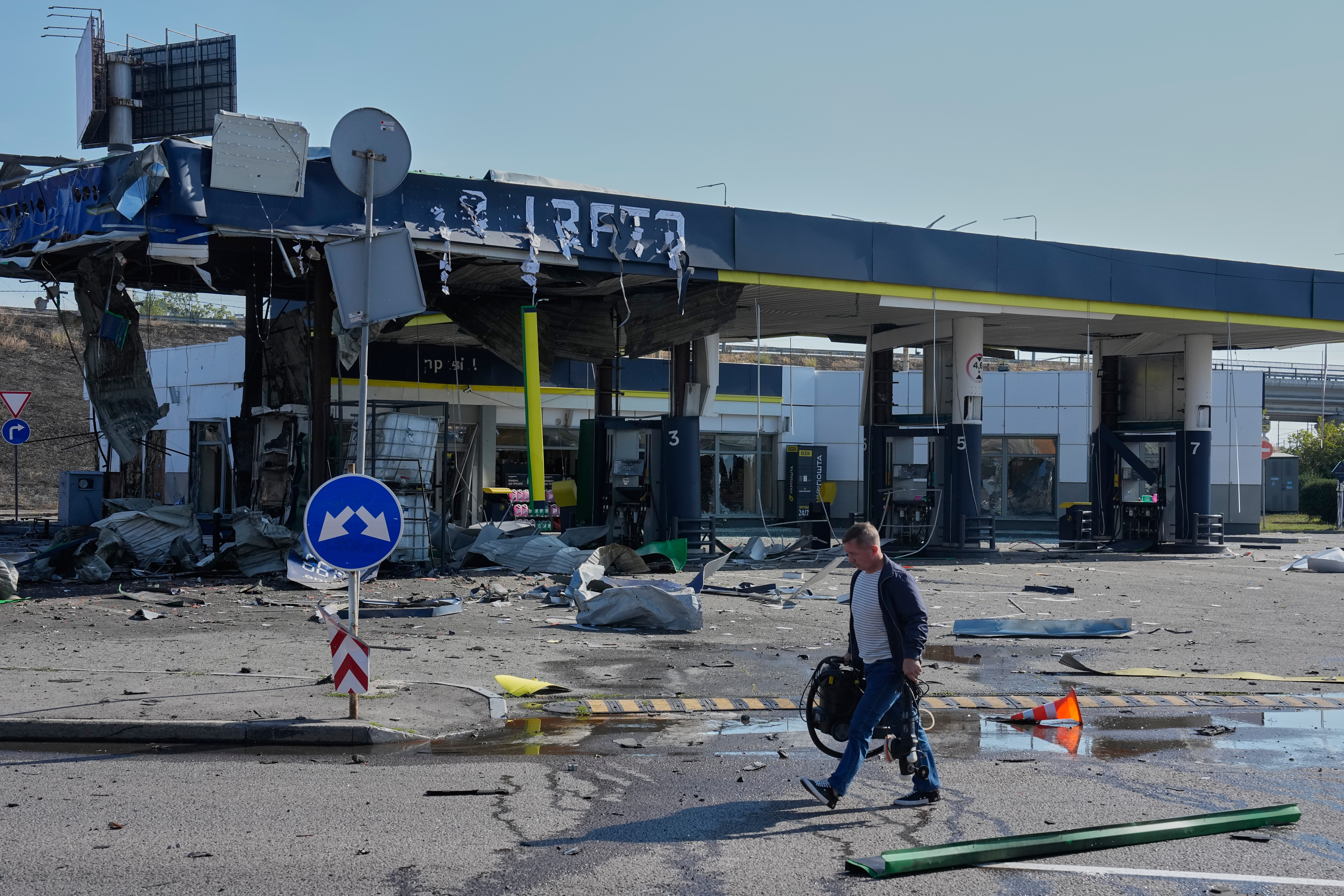
    Russian drones targeted roadside gas stations in Kyiv for a second straight day Friday, as Moscow broadened its air war in what Ukrainian officials say is an effort to rattle civilians.

    The attacks struck two Ukrnafta gas stations, killing two people and wounding six at one of them, the prosecutor’s office said.

    Russian strikes on urban gas stations have intensified in recent months, mostly in regions near the front line in eastern and southern Ukraine. It is part of a campaign to disrupt civilian life and weaken morale that has also included attacks on food distribution hubs, sporadically leaving some supermarket shelves bare in the Ukrainian capital.

    “Russia is systematically attacking places where it knows people will be spending their time going about their daily lives, seeking to maximize casualties, spread fear, and put pressure on Ukrainian society,” Foreign Minister Andrii Sybiha said on X late Thursday.

    Authorities have urged residents not to linger near gas stations and other exposed infrastructure during air raid alerts.

    Ukraine is urgently trying to improve its air defenses as Russia’s invasion stretches into its fifth year, and on Thursday won pledges of more support from Canada.

    Russian shopping mall strikes kill 5 in central Ukraine

    Pavlohrad, a city in central Ukraine, observed an official day of mourning Friday for five residents killed near shopping malls in broad daylight by Russian drones the previous day.

    The attack also wounded 67 people, Sybiha said on X.

    In the southern city of Zaporizhzhia, a 32-year-old woman and her 10-year-old son were wounded in an overnight Russian drone attack, Ukraine’s State Emergency Service said. The drones struck a nine-story apartment block and a shopping mall, it said.

    Efforts to put out the blazes were slowed by the constant threat of repeat strikes, forcing firefighters to stop working and take shelter, it added.

    In Dnipro, a city in central Ukraine, a Russian daylight attack Friday wounded 12 people, according to local officials.

    Russia says it stopped 777 Ukrainian drones

    Ukraine, meanwhile, has extended its own long-range drone campaign deep into Russia, straining air defenses across its bigger neighbor’s vast territory. On Thursday, its military reported hitting a refinery more than 1,800 miles away in Siberia as Kyiv tries to hurt Russia’s vital oil sector. Its strikes have caused fuel shortages in Russia, one of the world’s biggest energy producers.

    Russia’s oil product exports hit record lows in August, and Moscow is importing fuel from South Korea and India, the Center for Research on Energy and Clean Air said in a report.

    “Ukrainian strikes on Russia’s refining capacity have turned tables on the world’s once largest oil product exporter to see them start importing fuels, with imports surging to a record 172,000 metric tons (189,600 tons) in August — more than seven times the previous monthly high,” the Finland-registered nonprofit said Thursday.

    Ukraine launched a major barrage overnight from Thursday to Friday, with the Russian Defense Ministry saying air defenses intercepted 777 Ukrainian drones over 16 Russian regions, as well as occupied Crimea and the waters of the Azov and the Caspian seas.

    Two people were killed and three others wounded overnight in a Ukrainian drone attack on the Tula region south of Moscow, local officials said Friday.

    A Ukrainian drone strike during the night started a fire at the Saratov oil refinery in southwestern Russia, Russian independent online outlet Astra said Friday. Kyiv has repeatedly targeted that refinery, which was last hit in early August.

    Major online retailer Ozon said its logistics facility in the same city was struck and set ablaze by a Ukrainian drone, though no casualties were reported. Ozon is a competitor to Wildberries, whose facilities Ukraine has also targeted.

    Ukrainian President Volodymyr Zelensky said long-range strikes overnight hit eight Russian regions, including a business and an oil industry facility in the Saratov region.

    The attacks were “aimed at reducing Russia’s capacity to wage war,” he said on X Friday.

  • Trial remains elusive for purported mastermind accused of plotting 9/11 attacks

    Trial remains elusive for purported mastermind accused of plotting 9/11 attacks

    NEW YORK — Two decades after U.S. authorities locked Khalid Sheikh Mohammed away at a military detention center in Cuba, the purported mastermind of the Sept. 11 attacks sometimes seems barely any closer to being put on trial than the day he arrived.

    A judge recently set a 2028 date for Mohammed to finally be tried before a military tribunal, but some lawyers predict it will never happen — not that year or any other year. They say the maze of legal issues that arose because Mohammed was tortured following his 2003 capture in Pakistan is too twisted to ever be straightened out.

    A fleeting bid to put him on trial in a civilian court in New York City was shouted down years ago over security concerns.

    A plea agreement that would have kept Mohammed imprisoned for life, but spared him from a possible execution, began to collapse shortly after it was announced in 2024, and finally died for good last year.

    “It’s all contaminated by politics and the lack of accountability on torture,” said Joshua Dratel, an attorney who played a part in assuring that Mohammed has proper legal representation.

    In late August, the U.S. military judge who set a June 5, 2028, trial date for Mohammed and three others charged in the Sept. 11 attacks ruled that prosecutors could not use an alleged confession he made to the FBI in 2007. Those statements were deemed tainted because Mohammed was subjected to “enhanced interrogation techniques” overseas, including the simulated drowning technique called waterboarding.

    While the ruling was a blow to the prosecution, the U.S. government decided not to appeal, in part because doing so could have further delayed a possible trial.

    Meanwhile, Mohammed remains jailed in Guantanamo Bay, where he was brought on Sept. 5, 2006, following more than three years in secret prisons in other countries.

    Victims’ families still hope a trial will happen

    Terry Strada, whose husband, Tom, died at the World Trade Center on Sept. 11, said that she and other people who lost family members still hope a trial will someday happen.

    “We very much want to see this come to an end at some point. We do want to see justice served. It’s just as important as 25 years ago,” she said.

    But Strada, the national chair of the group 9/11 Families United, also said she would rather have Mohammed rot at Guantanamo Bay indefinitely than get behind a resolution that would involve dropping the death penalty as a possibility. Strada said she worries that if Mohammed is not executed, future U.S. leaders might someday be tempted to swap him for Americans held prisoner elsewhere in the world.

    The death penalty, she said, “fits the crime and it would prevent that from ever happening. And that’s important to me.”

    Mohammed was captured in Pakistan in 2003, accused of developing and directing the 9/11 attacks, as a leader of the Islamic militant group al-Qaeda. Some of the delays in his legal proceedings have stemmed from his treatment after he fell into U.S. control. A U.S. Senate report pointed to his extended torture in CIA custody, including 183 sessions of waterboarding.

    Plans for a civilian trial were dropped

    For a time in 2009, it seemed Mohammed was headed to New York after then-Attorney General Eric Holder announced plans to try him and four other men charged in the Sept. 11 attacks in a Manhattan courthouse just blocks from the World Trade Center site.

    Then-President Barack Obama, who had pledged to close the Guantanamo detention center, said Mohammed would face “the most exacting demands of justice.”

    Almost immediately, opposition arose. Some critics predicted Mohammed would use a trial as a platform to spread hateful views of America and its allies. Others cited security concerns, saying it could again make New York a terrorist target. Former New York City Mayor Rudy Giuliani, a Republican, called the plan unwise and said it showed “a lack of concern for the rights of the public.”

    Plans for a civilian trial were dropped.

    “It was a charade in many respects,” Dratel said.

    The military tribunal system, he said, has proven itself to be a worse solution, unable to function efficiently, without a proper structure, and without fidelity to federal courts.

    “Each time you reach an impasse, no one knows what to do,” he said.

    David Raskin, a Washington lawyer now in private practice who would have led the government’s prosecution of Mohammed in New York if it hadn’t been abandoned, said in an essay published in the Washington Post on Wednesday that he is confident a civilian trial would have ended with a conviction. The military commissions, on the other hand, “became a defense lawyer’s dream,” beset by “endless litigation over their legality and procedures.”

    “I predict there will never be a completed military commission trial for Mohammed and the other Sept. 11 defendants,” he said.

  • The Houthi advance in Yemen raises concerns about a key shipping choke point

    The Houthi advance in Yemen raises concerns about a key shipping choke point

    FRANKFURT, Germany — The capture of the Red Sea port of Mokha and a strategic island by Iran-backed Houthi rebels in Yemen brings their forces to the heart of a key choke point for the global economy: the Bab el-Mandeb Strait leading out of the Red Sea.

    The Houthis took Mokha on Thursday and on Friday captured Mayun, also known as Perim, off Yemen’s coast, two officials said, in a swift advance that extends their reach near one of the world’s key commercial lanes.

    The strait had been a vital route for crude oil supplies from Saudi Arabia to Asia after shipping through the Strait of Hormuz was restricted due to threat of Iranian attack — until Houthi targeting of Saudi tankers largely ended that safety valve.

    The Houthi advance is focusing renewed attention on the Bab el-Mandeb Strait and further risks to shipping there, despite efforts by the Houthis to reassure shipowners that vessels other than those covered by their embargo on Saudi-linked shipping remain safe.

    Bab el-Mandeb was key workaround for Saudi oil exports

    The Strait of Hormuz was long the main highway for Saudi oil. But when Iran choked off most ship traffic at the Strait of Hormuz, the Saudis ramped up shipments through a pipeline running across the desert to Yanbu on the Red Sea.

    Oil loaded on tankers in Yanbu could head out of the Red Sea through the Bab el-Mandeb Strait and then east to Asia. That helped the Saudis maintain a share of their exports to customers there.

    The Red Sea route helped keep global oil prices in check, along with other improvised alternatives. In recent weeks the U.S. military has guided tankers through the Strait of Hormuz in defiance of Iranian demands that ships pass through a vetting lane near the Iranian coastline. And the United Arab Emirates has used a pipeline to Fujairah on the Gulf of Oman to skirt the Strait of Hormuz.

    Houthi attacks on shipping through the Bab el-Mandeb Strait started in late 2023 over Israel’s war in Gaza, leading many companies to abandon the route because of safety concerns. Traffic overall remains down some 60% from levels before then, although it remains a key freight route for goods moving between Asia and Europe.

    Alternate routes helped restore much of Middle East oil flows

    In August, alternative routes helped restore some two-thirds of the roughly 15 million barrels that transited Hormuz before the war. That took some of the economic pressure off the U.S. amid politically sensitive higher gas prices ahead of the midterm elections.

    However, Houthi threats have weighed heavily on Saudi oil exports in the Red Sea. In August, Red Sea oil loadings fell from 3.8 million barrels per day to 2.2 million barrels per day, according to the International Energy Agency. Overall, Saudi supply fell 2.3 million barrels per day to 6 million barrels, the lowest in three decades, according to the IEA.

    By now, “Saudi shipping has largely routed away from this risk anyway,” said Richard Meade, editor-in-chief of Lloyd’s List.

    While the Houthi advance “doesn’t change the immediate risk profile” because Saudi and Israeli shipping is already high risk, it does raise the question of whether the Houthis, who have insisted that other shipping is safe, will expand their threats if they face further attack, Meade said.

    “It puts the Houthis in a strong position to take further control if they want to,” he said.

    Meanwhile, increased attacks on shipping in the Strait of Hormuz this week have put use of the U.S. route on hold. Iran said it attacked 10 ships there Wednesday after the U.S hit five Iranian tankers.

    Suez Canal is a workaround for the workaround

    With the Houthis threatening Bab el-Mandeb, Saudi tankers have turned northwest instead of southeast from Yanbu and headed for the Suez Canal.

    Tankers that are too big to pass through the canal have offloaded oil at Ain Sokhna in Egypt to a pipeline to Sidi Kerir on the Mediterranean coast, where the oil is picked up by tanker. Some 70% of Yanbu crude exports are now heading that way, either by pipeline or by tanker, according to Lloyd’s.

    That, however, is a time-consuming and expensive workaround for customers in Asia, since ships must then transit the Mediterranean, pass the Strait of Gibraltar and sail around the Cape of Good Hope at the southern tip of Africa. The Suez route enables the Saudis to redirect as much as 3 million barrels per day.

    But that more than doubles transit time to an Asian destination like South Korea, from 24 days to 54 days, according to senior research analyst Victoria Grabenwöger at energy data firm Kpler.

    That adds to the cost, given that tankers cost tens of thousands of dollars per day to charter even in normal times, while prices have risen in some cases above $100,000 per day during the current global energy turmoil.

  • New iPhones arrive, but you can keep your old phone longer by caring for it

    New iPhones arrive, but you can keep your old phone longer by caring for it

    Apple’s latest iPhones, unveiled this week, come with new features, better cameras, and hefty price tags — including a folding model with a starting price of $1,999. If you’re planning to splurge on a new iPhone 18, you will want to take care of it to make it last as long as possible.

    Or save money by holding on to your current device, whether it is Apple or Android, to get the most life out of it.

    As smartphone technology has matured and innovations have become more incremental, people have stopped buying into the idea that they need to upgrade to the newest phone. There is also an environmental push to keep old phones out of landfills as electronic waste becomes a larger sustainability issue. Modern smartphones are also just sturdier and better able to survive dunks and drops.

    The typical smartphone replacement cycle is now four years, according to Counterpoint Research. Some device owners boast in online forums that they have had phones last more than seven years.

    Here are some pointers on extending your phone’s life:

    Take care of your phone’s battery

    The biggest factor in a phone’s longevity is the battery. A rechargeable battery’s life span is related to its “chemical age,” which is based not only on the manufacturing date but also on factors including “temperature history and charging pattern,” according to Apple. The company says that as lithium-ion batteries chemically age, they hold less charge, which results in “reduced peak performance.”

    Samsung warns against running a lithium-ion battery down completely, because that could shorten its life.

    “The battery is absolutely often the first thing to go in most people’s phones,” said Elizabeth Chamberlain, director of sustainability at the device-repair website iFixit.

    Lithium-ion batteries typically last about 300 to 500 charging cycles before degrading noticeably to the point that they can’t last a day without needing a charge, she said. “Many people will hit 500 cycles in two years. Heavy users will get there faster.”

    Batteries get stressed if they are completely drained or fully charged, Chamberlain said.

    So avoid letting your battery die, and also avoid charging it all the way to 100%, “unless you really need a full charge,” she said. “Aim to keep the battery between 20% and 80% charged.”

    If you are in the habit of plugging in your phone when you go to bed, Apple and Samsung both have charging optimization technology that improves battery life by delaying a full charge based on your daily routine.

    This feature, which is on by default in iOS, pauses charging at 80% and then charges to 100% just before you wake up.

    Phone batteries shouldn’t get too hot or cold

    Device makers warn against exposing phones to extreme heat or cold, both of which can damage batteries.

    Apple says batteries warm up as they charge, which can shorten their life span. It warns against using your phone or charging it in very hot temperatures, above 95 degrees.

    Samsung says you shouldn’t leave your phone in, for example, a car’s glove box when it is very hot or cold. And don’t put it in a freezer either — it’s a myth that it can prolong battery life.

    Google, which makes the Android operating system and Pixel phones, says hot batteries drain faster, even when they are not in use, and that can damage the battery.

    Adjust your phone’s power options to boost battery life

    Tweak your device settings so apps or features use less power, which extends your battery’s daily life and the time between charging cycles.

    You can turn down your phone’s screen brightness, turn on the dark theme and reduce the time for the screen to power off. Enable the auto-brightness feature, which adjusts screen brightness according to the level of ambient light. Also check battery usage in your settings to see if there are any power-hungry apps you can switch off or uninstall.

    If the power level dips below 10%, iPhone users can turn on low power mode to stretch their battery’s life before it needs recharging. Samsung’s Android phones have a similar “power saving mode.” You can also leave it on all the time, but it might affect your phone’s performance.

    Phone cases and screens are essential protection

    Phones are sleek capsules with glossy surfaces, meaning they can easily slip from your hand. A sturdy protective case is essential to help cushion the blow from accidental drops.

    However, beware that some phone cases can retain heat, so your phone might stay hot even if it seems cool, Chamberlain warns.

    Don’t forget a screen protector. Plastic versions are cheap but can scuff easily, according to iFixit, which recommends TPU film or tempered glass because they offer better protection against scratches and drops.

    Keep your device clean

    Keeping your phone in your pocket or purse means ports and sockets collect debris that needs to be cleaned out.

    Chamberlain said that when a phone stops charging, often the problem is simply that the charging port is jammed with lint, preventing the cable from connecting.

    You can buy kits with brushes, picks, swabs and dust blowers to give your phone’s ports, speaker and microphone grilles a thorough cleaning. But in a pinch, use a toothpick and a clean toothbrush.

    Update the software regularly

    Software is another important factor in a phone’s life span. Experts advise keeping your operating system and apps up to date so they have the latest privacy, security and battery management features.

    That will be easier to do as your phone ages because some device makers have been extending the time limit for providing updates.

    Google has pledged to provide Pixel 8 and newer phones with seven years of Android and security updates, compared with four to five years for older models. Samsung pledged in 2024 to extend its operating system updates to seven years.

    Apple said Wednesday that iOS 27 will be available on Sept. 14 and the oldest phone with which it will be compatible is iPhone 11, released in 2019.

    Some phones are designed to be easily repaired

    Sometimes your phone will have a problem that can only be solved by repairing it, usually involving paying someone else to fix it.

    But there are device makers that are making it easier to repair phones yourself. Netherlands-based Fairphone makes phones it says are designed for longevity, which come with a stripped-down version of Android and can be easily disassembled using a mini screwdriver. Replacement batteries, screens and other spare parts can be ordered online.

    Fairphone’s Chief Technical Officer Chandler Hatton said the company aims to have its devices last at least five years.

    “What we’re trying to do is to support people to be able to use their device for longer,” Hatton said.

  • The push to remove lead pipes is on. Thousands of water systems still don’t know where theirs are

    The push to remove lead pipes is on. Thousands of water systems still don’t know where theirs are

    Kathryn Pilgrim knew the century-old Victorian she bought in Dunkirk, New York, came with old plumbing. She replaced pipes she suspected of containing lead and later installed a kitchen filter designed to remove heavy metals.

    But six years after buying the house, she still can’t be sure that her tap water is lead-free because she doesn’t know what material was used for the pipe that runs under her front yard and connects to the city water supply. Dunkirk is nearly two years behind schedule on an inventory that would give Pilgrim and other residents that information.

    Dunkirk, which supplies water to about 5,000 homes and businesses, is one of more than 1,300 public water systems cited by the U.S. Environmental Protection Agency for failing to meet an October 2024 deadline to hand in an inventory of the water lines that could be leaching the heavy metal into Americans’ drinking water, an Associated Press analysis of the agency’s enforcement data shows.

    Roughly 6,300 water systems serving 3.8 million Americans have still not submitted a required list of how many lead service lines remain in use.

    Those inventories are critical for cities to replace all lead pipes by an upcoming 10-year deadline. Failing to document the lines also means residents won’t know if their homes have a potential source of lead exposure.

    Pilgrim, a special education teacher who has fostered teenagers, had been educated on the dangers of lead, especially in paint. The colon cancer survivor’s concerns extended to her drinking water.

    “I just thought there was some stuff in the water that might not be great,” she said.

    Officials with the city of Dunkirk did not respond to requests for comment.

    Lead pipes are abundant across New York and many communities around the country with older infrastructure. The city of Buffalo’s data shows 45% of its service lines — which connect homes and businesses to the water supply — are made of lead, the third-highest rate of any major city. The city of Fredonia, which neighbors Dunkirk, reported 28%.

    Lead is a priority under Trump administration

    Lead is a neurotoxin that can stunt children’s development, lower IQ scores, and increase blood pressure in adults. Roughly 4 million homes and businesses are still connected to water utilities via lead pipes, according to the EPA’s latest estimate.

    How much lead is entering the building depends on factors like the water chemistry and the pipe’s condition, but lead service lines remain the most significant source of the heavy metal, according to the EPA.

    The EPA has touted its work on lead lines as a key environmental win. About three-quarters of the drinking water enforcement orders issued by the EPA since President Donald Trump’s return to office were related to missing inventories.

    Most water systems with missing inventories are small — 84% provide drinking water to fewer than 500 people, the AP analysis shows. Many are small housing developments, mobile home parks, or schools.

    The EPA said it turned to enforcement only after efforts to help water systems comply were unsuccessful. Utilities need the inventories to prepare for a 2027 deadline requiring most drinking water providers to replace their lead lines within 10 years, the agency said. The Trump administration has also defended that aggressive deadline, enacted under Biden, in court.

    Rob Hayes, a senior director with Environmental Advocates of New York, said it is a rare environmental regulation the Trump administration has not sought to scrap.

    “It speaks to the universal popularity of getting lead out of drinking water,” he said.

    Inventories are not easy

    About 3,500 water systems reported they don’t know what their service lines are made of. One in five service lines nationwide were reported as having unknown materials.

    Many utilities are racing to identify unknown pipes by next year, when they must begin replacing them.

    In Chicago, home to the most lead lines of any city in the country, crews are working block-by-block, digging up the pipes that branch off from the utility’s main line. The city still doesn’t know the material of close to one in 10 service lines. So in those cases, crews may have to excavate them to check the material, said Patrick Schwer, the city’s water quality director.

    “We are digging through every single piece of information that we have associated with every single service line trying to find any indications of the material,” he said. “We’re scouring millions of work orders, trying to pull at little threads of information.”

    Lead pipes for public water date as far back as the late 1800s and were prevalent all the way to the 1950s. Lead was a preferred material at the time because it was resistant to corrosion, and as a result, the original lines remain in use decades later.

    Chicago advises residents with unknown lines to assume they are made of lead if their building predates 1986, when it was banned under the U.S. Safe Drinking Water Act.

    Records of the installations were often lost, incomplete, or illegible. Lapses in recordkeeping have made it difficult for some utilities to complete their inventories, said Joshua Klainberg, senior vice president with the New York League of Conservation Voters.

    Still, Klainberg said, leaving residents in the dark about whether they should take precautions by not submitting an inventory at all is “unforgivable.” Even an incomplete inventory can alert people they may have a lead service line, allowing them to take precautions such as running the tap, using filters — the highest-quality of which can remove most lead — and cooking only with cold water, he said.

    Limited funds for replacements

    For utilities, not knowing what is in the ground will carry an even stiffer consequence beginning in 2027. Starting then, they are required to replace 10% of lead water pipes each year, usually with copper or plastic pipes. But lines made of unidentified materials will be included in that target, said Erica Galante-Johnson, a lead policy analyst with the Environmental Policy Innovation Center.

    “The more unknowns, the more lines a system needs to replace every year,” Galante-Johnson said.

    And each replacement is expensive, usually costing between $8,000 and $15,000, according to EPIC.

    In Chicago’s case, “the city is actively going after every single dollar that we can,” from the federal and state governments, Schwer said. The city still needs to replace about 393,000 lead service lines.

    Most funding for identifying and replacing lead pipes comes from the 2021 bipartisan infrastructure law, with states distributing it. This is the final year of dedicated federal funding for lead projects, though previously allocated money will continue flowing to communities.

    Water systems without an inventory will fall even further behind as national efforts shift toward replacements, Hayes said.

    “If they can’t even get an inventory together, how the heck are they going to get the resources and the manpower and the kind of coordination between governments together to actually get workers out on the street and dig these pipes out of the ground?” he said.

  • Oil prices leap to their highest since May and drag Wall Street lower

    Oil prices leap to their highest since May and drag Wall Street lower

    NEW YORK — Oil prices keep climbing as the war with Iran keeps clogging the global flow of crude, and they leaped Thursday to their highest levels since before the summer. That worsened worries about inflation and cranked up pressure within the bond market, helping to send stocks lower again on Wall Street.

    The S&P 500 fell 0.6% for a fourth straight loss, its longest such streak since June, though it’s not far from its all-time high set last month. The Dow Jones Industrial Average dropped 316 points, or 0.6%, and the Nasdaq composite sank 0.7%.

    Stocks sank under the weight of rising oil prices. Brent crude, the international standard, climbed another 6.3% and briefly topped $108 per barrel for the first time since May before settling at $107.63.

    It’s jumped from less than $72 in early July as hopes fade that the war with Iran will allow oil to flow freely again from the Middle East anytime soon. President Donald Trump said on Wednesday that oil prices likely won’t come down until after the U.S. midterm elections in November.

    The jump has vaulted the price for a gallon of regular gasoline to an average of nearly $4.28 across the United States, according to AAA. That’s up nearly 34% from a year earlier and is not only costing people more at the pump but also through higher prices for all kinds of products that move by truck to store shelves.

    A report on Thursday said inflation at the U.S. wholesale level accelerated to 5.4% last month from 4.8% in July, and retailers could eventually pass such increases in prices onto shoppers. A report is coming on Friday that will show how much inflation U.S. consumers are feeling.

    The typical move to rein in high inflation is for the Federal Reserve to raise its main interest rate, the federal funds rate. Such a move then filters out through the rest of the bond market, makes it more expensive for U.S. households and businesses to borrow money, slows the overall economy, and undercuts prices for investments. That hopefully would remove some of inflation’s fuel.

    A report on Thursday suggested the U.S. job market may remain solid, with fewer workers applying for unemployment benefits last week. That could give the Fed more confidence that the economy could withstand higher interest rates.

    Following Thursday’s reports, traders see a roughly 73% chance the Fed will raise the federal funds rate at its meeting next week. That’s up from the 61% probability seen the day before, according to data from CME Group. That’s also despite Trump’s consistent lobbying for interest rates to go lower rather than higher.

    The Fed’s counterpart in Europe, the European Central Bank, raised its own interest rates on Thursday in hopes of getting inflation in check. It cited “the conflict in the Middle East” and how it “continues to generate inflation pressures.”

    It all pushed the yield on the 10-year Treasury up to 4.95% from 4.83% late Wednesday, which is a significant move for the bond market.

    It’s up from just 3.97% before the war with Iran began and is back to where it was in the autumn of 2023. That was after the Fed cranked the federal funds rate higher to get super-high inflation coming out of the COVID pandemic under better control.

    Higher yields mean investors can make more money putting their money into bonds, which can in turn make investors less willing to pay high prices for stocks and other investments that are riskier than bonds.

    Some investors see a 5% yield on the 10-year Treasury as the next potential flashpoint. But strategists at Bank of America’s Research Investment Committee suggest 7% may be the more important threshold, pointing to peaks for expensive stocks around that point in the past.

    In the meantime, the rising 10-year Treasury yield is making mortgages more expensive and hurting the housing industry. One report on Thursday said the average long-term U.S. mortgage rate hit its highest level in over 14 months, while a second one said sales of previously occupied U.S. homes fell in August to their slowest pace in more than a year.

    The benchmark 30-year fixed rate mortgage rose to 6.76% from 6.71% last week, mortgage buyer Freddie Mac said Thursday. One year ago, the average rate was 6.35%.

    That helped sent stocks of homebuilders lower, including drops of 3.5% for Lennar and 2.4% for D.R. Horton.

    Elsewhere on Wall Street, Macy’s fell 4.7% even though the retailer reported stronger profit and revenue for the latest quarter than analysts expected. While raising its forecast for earnings this fiscal year, it warned that “there are macroeconomic and geopolitical factors that could influence” how much its customers feel comfortable spending.

    Macy’s said it received $116 million in tariff refunds from the government — $98 million during the quarter and another $18 million after the quarter ended. Macy’s CEO Tony Spring told the Associated Press Thursday that it’s using some of the proceeds to lower prices on certain items like furniture and other big-ticket purchases.

    All told, the S&P 500 fell 44.66 points to 7,591.70. The Dow Jones Industrial Average dropped 316.56 to 52,064.10, and the Nasdaq composite sank 171.62 to 26,081.72.

    In stock markets abroad, indexes slipped across much of Europe and Asia. Hong Kong’s Hang Seng dropped 1.3% for one of the world’s biggest moves.

  • Healthy Moms, Healthy Babies America pledges $100M to cut U.S. maternal mortality rate in half

    Healthy Moms, Healthy Babies America pledges $100M to cut U.S. maternal mortality rate in half

    Healthy Moms, Healthy Babies America, a bipartisan campaign founded by philanthropists Olivia and Tom Walton, announced a $100 million pledge Thursday to make giving birth in the United States safer.

    The five-year commitment aims to cut the maternal mortality rate in the United States in half by 2031.

    “For millions of moms in America, maternal health is bad and getting worse,” Olivia Walton told The Associated Press in an interview. “There’s just so much bipartisan consensus around wanting to fix this. I really think the political will is there, and part of our job is to help surface that with an information campaign.”

    According to the most recent data available, the United States has one of the highest maternal mortality rates among wealthy nations. The Centers for Disease Control and Prevention said 688 people died in 2024 during pregnancy or shortly after giving birth. The maternal mortality rate rose to 19 deaths per 100,000 live births in 2024, up from 18.6 the year before.

    Improving data collection and accelerating hospitals’ reporting of deaths is an important pillar of the new Healthy Moms, Healthy Babies America initiative, Walton said. The most recent state-level data on maternal mortality is still from 2022, with annual totals based on provisional data available through 2024.

    “You can’t fix what you can’t measure,” she said, adding that the Waltons’ nonprofit Heartland Forward partnered with the U.S. Department of Health and Human Services in May to collect more data on maternal and infant health outcomes from 220 hospitals around the country called the Perinatal Improvement Collaborative.

    The U.S. maternal mortality issue is ‘eminently solvable’

    Healthy Moms, Healthy Babies America President Neel Shah said that, unlike many medical issues, maternal mortality is “eminently solvable.”

    “The biggest cause of suffering isn’t a lack of knowledge,” he said. “It’s a lack of execution on the knowledge. … This is a matter of will.”

    The initiative will focus on expanding access to maternal health in rural areas, training midwives and expanding postpartum care, and helping states use strategies that have proved successful, Shah said. He points out that California has managed to reduce its maternal mortality rate by half by combining strategies with investments. He said New Jersey, which previously ranked 47th among states in maternal mortality, has improved its outcomes by focusing on the cities where the needs are greatest.

    Walton said states are “in the driver’s seat” for making changes to maternal and infant healthcare, in part because about 40% of births are paid for by Medicaid.

    “I’ve got blue-state solutions of what works, red-state solutions of what works, and purple-state solutions of what works,” she said. “It’s really possible.”

    Using the $100 million initiative to generate more funding

    For that reason, Healthy Moms, Healthy Babies America plans to fund these care improvements by focusing on states. Walton plans to use the $100 million commitment as a way to encourage state governments to match the nonprofit’s investment. She hopes that corporations and other funders also contribute to the cause.

    “Taking on risk and going first is a great use of philanthropic capital,” she said. “The goal is to prove that this works and then have state funding take it over.”

    The focus on states, however, doesn’t mean the initiative won’t seek federal solutions as well.

    Healthy Moms, Healthy Babies America is supporting bipartisan Congressional legislation, including the Rural Obstetrics Readiness Act and the NIH IMPROVE Act, which would expand access to maternal care.

    “It’s unacceptable that in 2026 in the U.S., maternal mortality rates are moving in the wrong direction,” Republican Sen. Katie Britt, of Alabama, said in a statement. “It’s imperative we work together across both the public and private sectors to reverse this alarming trend.”

    Democratic Sen. Cory Booker, of New Jersey, said poor maternal health outcomes don’t just hurt families.

    “The economic consequences are equally alarming,” Booker said in a statement, estimating a cost of $165 billion each year.

    Walton said the issue is a personal one for her and her husband, Tom, grandson of Walmart founder Sam Walton, who live in Arkansas.

    “I’m a mom myself and I just had three kids in the last eight years,” she said. “I live in a state with the worst maternal mortality in the country.”

    However, she also believes the issue has broad, national implications.

    “I have an overarching belief that if you take care of mom, she’ll take care of everything else,” Walton said. “Healthy moms lead to healthy families. Healthy families lead to healthy communities. Healthy communities lead to a healthy economy.”

  • Appeals court hands Trump a loss on mail voting as Supreme Court considers his executive order

    Appeals court hands Trump a loss on mail voting as Supreme Court considers his executive order

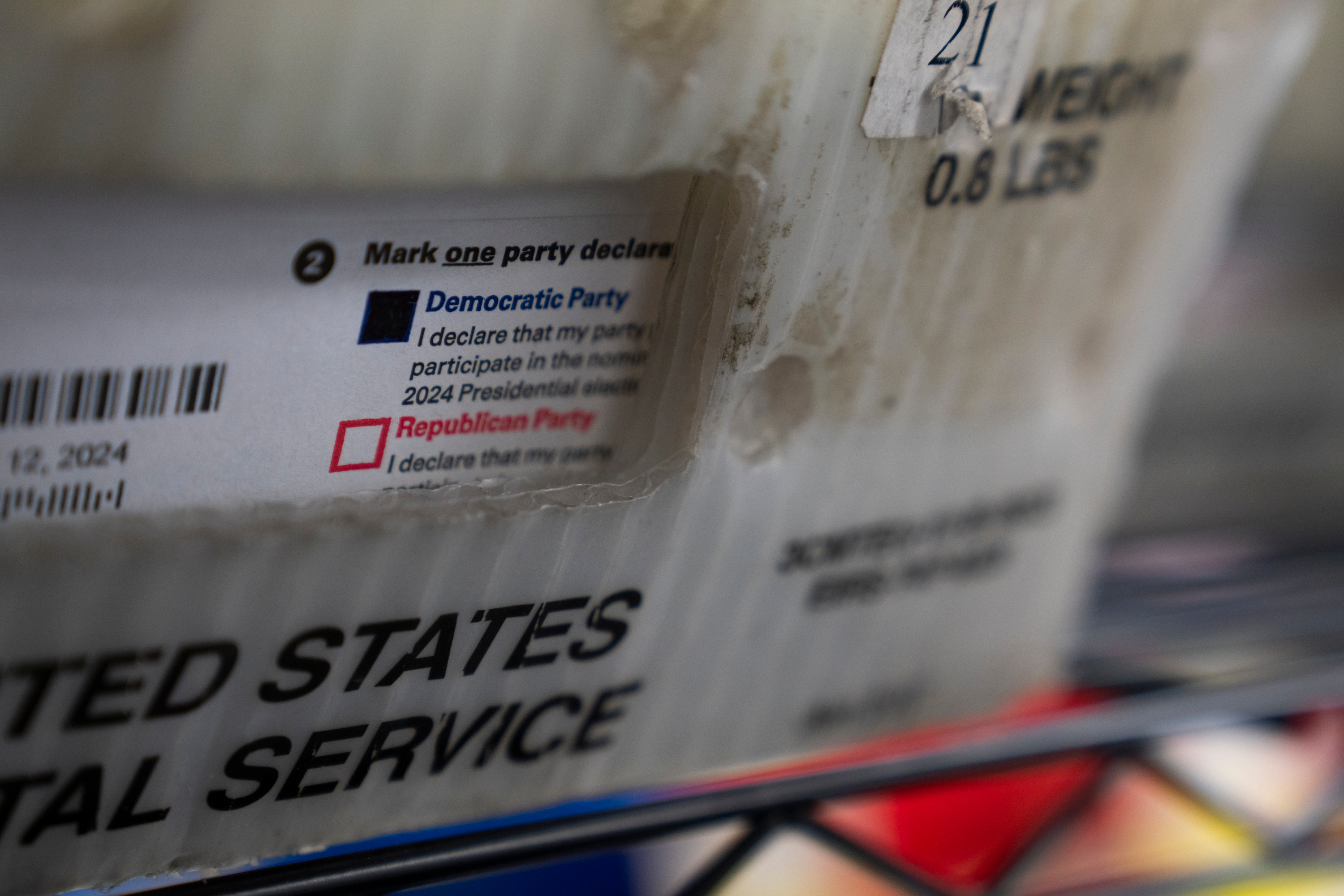
    WASHINGTON — An appeals court on Thursday upheld a block on President Donald Trump’s executive order limiting mail voting, a decision that comes as the Supreme Court considers the same case and states have already started sending out ballots for the high-stakes midterm elections.

    The three-judge panel refused to lift a preliminary injunction against the order issued last week by U.S. District Court Judge Indira Talwani. It prohibits the U.S. Postal Service from implementing Trump’s directive. The Postal Service has said it would not deliver ballots from states that did not pre-clear their envelope design with the federal government and submit a list of voters to an online portal, which has yet to be activated.

    Election officials warn that it’s impossible to comply with those terms, especially with the first mail ballots already being sent out in Alabama, North Carolina, and Wisconsin.

    The panel of three judges nominated by former President Joe Biden agreed with the plaintiffs that the president does not have the power to regulate states’ election policy.

    “Appellants have not made a strong showing that the district court erred in determining that the Final Rule is likely unlawful,” they wrote, a reference to a rule published by the Postal Service to implement Trump’s order.

    The panel wrote that the Trump administration had done little to dispel arguments by many election officials that the changes would bring “chaos and widespread disenfranchisement.”

    “Indeed, appellants have not even seriously challenged this aspect of the district court’s ruling, much less demonstrated why it is clearly erroneous,” the order states.

    The government also hasn’t shown evidence of past fraud to justify the restrictions, the judges said.

    A request for comment from the White House was not immediately returned.

    The panel’s decision comes even as the Supreme Court is already considering the same case, which is part of a frenzied legal rush as states are beginning to send out mail ballots for this fall’s midterm elections. Democrats and civil rights groups in a separate lawsuit in Washington, D.C., also are trying to halt the executive order.

    The 1st Circuit also had upheld a previous hold Talwani placed on the executive order. But that ruling was lifted by the Supreme Court in a procedural decision that did not determine whether the plan was constitutional.

    The plaintiffs swiftly filed new lawsuits after the Postal Service finalized its rule governing mail ballots.

  • U.S. Supreme Court again rejects push to use Trump-backed congressional map in Missouri

    U.S. Supreme Court again rejects push to use Trump-backed congressional map in Missouri

    Missouri is poised to hold its November election with congressional districts passed after the last census, after the U.S. Supreme Court on Thursday again rejected a new map backed by President Donald Trump that Republicans hoped could help them win an additional seat in the pivotal midterms.

    The Supreme Court’s decision marked a defining moment in a pitched legal battle that has lasted nearly a year and caused confusion for voters. Citing the court’s latest action, Missouri’s chief election official directed local authorities to use U.S. House districts passed in 2022, as the state’s highest court had ordered.

    The Trump administration had urged courts to allow use of the president’s preferred map, drawn at his request last year.

    The decision means Missouri could run the November general election with different U.S. House districts than were used in the August primary — an extremely rare situation that could switch the candidate choices for more than a million potential voters, or nearly 1 in 4 voters statewide, according to an Associated Press estimate.

    No Supreme Court justices publicly dissented from the brief order. It did not detail the court’s legal reasoning, as is typical in emergency appeals.

    The White House did not immediately respond to a request for comment on the U.S. Supreme Court decision.

    Missouri’s highest court scrutinizes secretary of state’s actions

    Earlier Thursday, Missouri’s top court convened a hearing on whether to hold Republican Secretary of State Denny Hoskins in contempt for not following its orders to use the districts passed after the last census. Hoskins had instead told local election authorities to use the new Trump-backed map, pointing to a competing order from a federal judge on Tuesday that forbade him from using anything other than the new districts.

    Missouri Supreme Court judges, while questioning a state attorney representing Hoskins, repeatedly pressed for Hoskins to send out guidance Thursday to use the 2022 version of the congressional districts.

    “We’re in a precarious situation,” Chief Justice W. Brent Powell said.

    Hoskins later released a statement acknowledging the U.S. Supreme Court decision, saying “my Office is directing local election authorities to use the 2022 congressional map.”

    The court then reconvened, finding Hoskins in contempt for violating its order not to use the Trump-backed map but then quickly declaring that he had corrected the problem with his latest order to use the 2022 map. The court imposed no consequences on Hoskins.

    Voters could face significantly different districts

    Outside the court, progressive activist Keith Rose stood in the rain protesting Hoskins’ legal maneuverings to try to use the Trump-backed map. Rose, who helped gather petition signatures to put the new map to a statewide vote, said he hopes the U.S. Supreme Court’s decision Thursday ends the uncertainty.

    “We need some finality. We need to focus on the real issues that Missourians care about,” Rose said.

    Candidates who won Missouri’s August primary already have been certified for the November ballot according to the number of the district they won. But those districts could substantially change shape.

    The 5th Congressional District encompasses only the Kansas City area under the 2022 map that Republican lawmakers passed after the last census. Under the revised map backed by Trump, portions are shed to neighboring districts and the remainder is stretched into rural Republican areas. About 59% of the potential voters are new to the district under that version, according to an AP estimate.

    Some other states that have switched congressional districts after their primaries have redone their primary votes. Alabama held a new primary in August under revised districts when the U.S. Supreme Court allowed a change to occur after voting in the original May primary.

    In Missouri’s case, however, no court has suggested redoing the primary.

    Redistricting battle began over a year ago

    Missouri’s battle over its congressional districts has spanned more than a year and spawned confusion over which districts will be in place for voters.

    It was the second Republican-led state, after Texas, to enact new districts after Trump urged Republicans last year to redraw House districts to their advantage ahead of the midterm elections.

    The revised districts target a Kansas City-based seat held by Democratic Rep. Emanuel Cleaver of Kansas City, aiming to help Republicans win seven of the state’s eight House seats in the midterm elections.

    Redistricting opponents collected hundreds of thousands of petition signatures seeking to force a statewide vote on the new districts. They submitted the signatures in December. But Hoskins waited until August — on the same day as Missouri’s primary — to reject the petition. Hoskins asserted that a referendum petition could not be used for congressional redistricting.

    The delay allowed Missouri to use the new districts in its August primary. Cleaver was unopposed for the Democratic nomination. State Sen. Rick Brattin won the Republican primary for the right to challenge Cleaver. Brattin was among those suing in federal court to try to prevent the state from reverting to the prior districts.

    Republican U.S. Rep. Bob Onder, who was also among those suing, said Thursday, “This isn’t over.” He noted that the 8th U.S. Circuit Court of Appeals will hear arguments on the merits of his case.

    Republican state officials have argued it would violate voters’ federal rights to switch districts before the general election.

    But the Missouri Supreme Court last week ordered Hoskins to put the redistricting referendum on the November ballot, which he did. It also ruled that the new districts never became law and instead were suspended retroactively to the December petition submission. The court barred Hoskins from using the new map and said the old map — passed by Republican lawmakers in 2022 after the last census — must be used in the November election.

    The state then appealed to the U.S. Supreme Court to block the state court decision. Justice Brett Kavanaugh rejected the request.

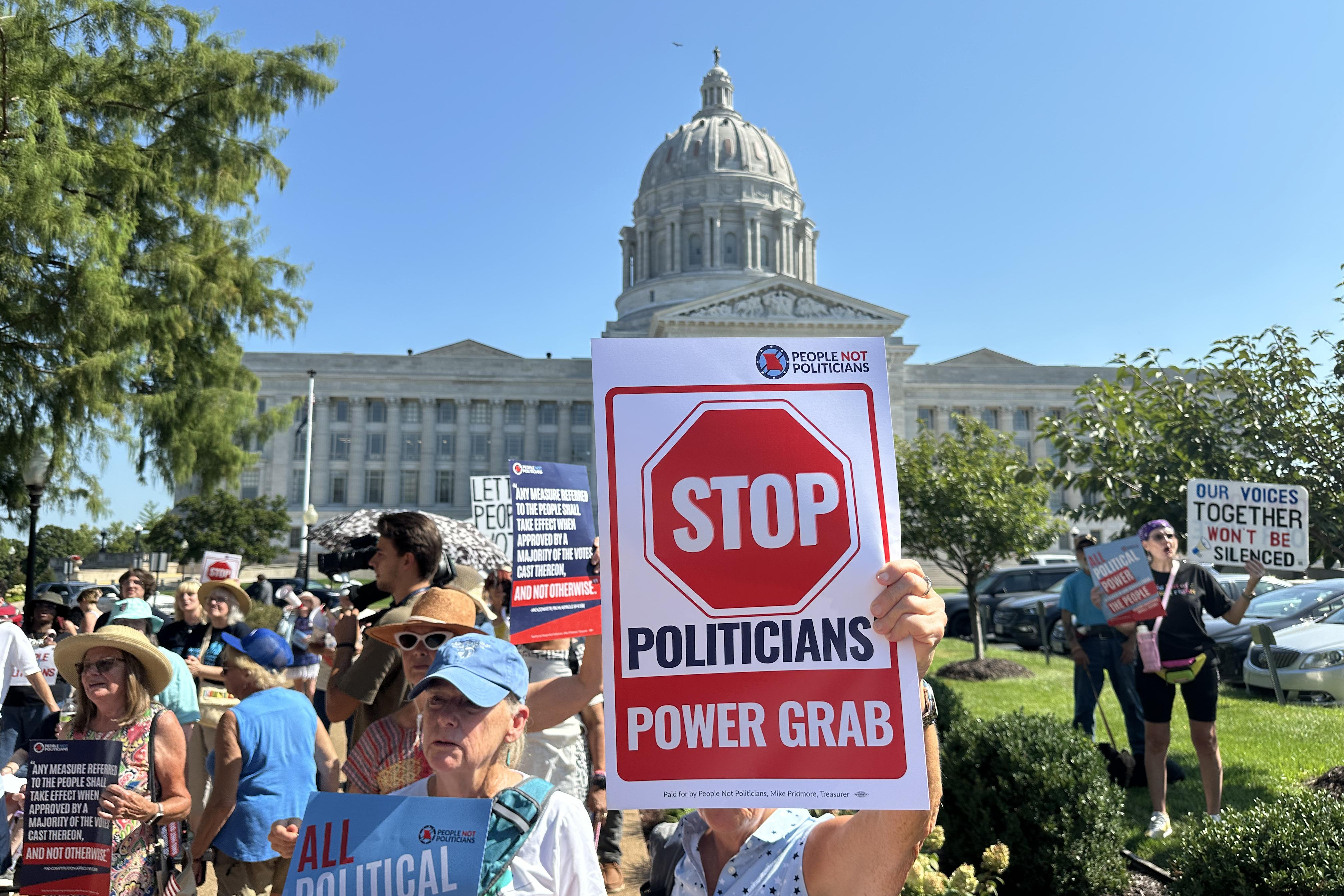
    The group People Not Politicians Missouri, which sponsored the redistricting referendum, applauded the Supreme Court decisions that left the state court ruling in place.

    “The law is the law, the Missouri constitution is clear as was the Missouri Supreme Court,” said Executive Director Richard von Glahn. “The courts have settled this, now it’s up to Missouri voters to finish the job and vote NO on Proposition A.”