Category: Associated Press

  • Ex-CIA Director John Brennan issued subpoena in Trump “grand conspiracy” investigation, lawyer says

    Ex-CIA Director John Brennan issued subpoena in Trump “grand conspiracy” investigation, lawyer says

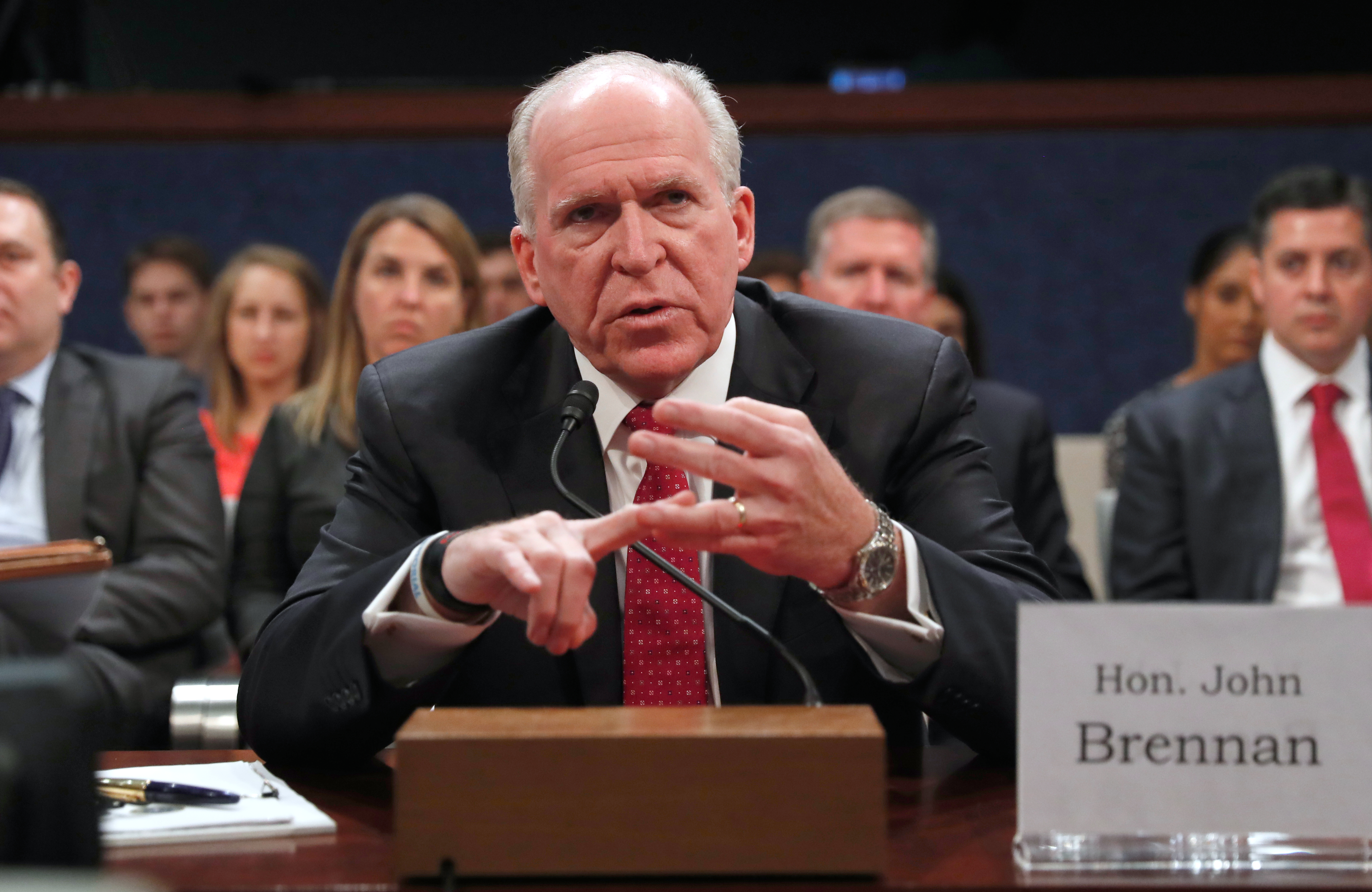
    WASHINGTON — Former CIA Director John Brennan has been subpoenaed to testify next month before a Florida grand jury as part of a Justice Department investigation into whether former law enforcement and intelligence officials conspired against President Donald Trump, one of his lawyers said Monday.

    Ken Wainstein, an attorney for Brennan, disclosed in a court filing that prosecutors last Thursday presented him with a subpoena for Brennan to appear Oct. 15 before a grand jury in Fort Pierce, Fla.

    He said he was told that the subpoena relates to a “far-reaching” criminal probe examining a loosely defined theory that the government officials who have investigated Trump over the last decade, including over Russia election interference in 2016 and his more recent retention of classified documents at his Mar-a-Lago estate, conspired to deprive Trump of his civil rights. The subpoena to Brennan is among a flurry that have been issued in recent weeks.

    Wainstein said he was informed by a prosecutor that Brennan remains a target in a Washington-based investigation into whether he lied to Congress in 2023, a claim the former CIA director and his attorneys have consistently denied. Subpoenas demanding testimony before a grand jury in that false statements probe were issued in spring, then abruptly withdrawn in favor of voluntary interviews.

    The subpoena was delivered on the same day that Joe diGenova, the prosecutor who had been leading what is casually known as the “grand conspiracy” investigation, abruptly resigned amid what a person familiar with the matter has described as displeasure from the Justice Department and White House over the pace and management of the probe.

    The Justice Department has not publicly announced a replacement for diGenova. The member of the investigative team with whom Wainstein spoke was Kurt Olsen, a lawyer who unsuccessfully pushed the Justice Department in 2020 to back Trump’s false claims that the 2020 election had been stolen from him.

    The subpoena was disclosed hours ahead of a court hearing in Washington in a lawsuit brought by Brennan. The former CIA director is seeking a court order that would require the preservation of all records from the investigations targeting him, saying such documents would be essential for him to challenge any potential indictment on vindictive prosecution grounds.

  • United Kingdom’s unity threatened by pact between Wales, Scotland and Northern Ireland

    United Kingdom’s unity threatened by pact between Wales, Scotland and Northern Ireland

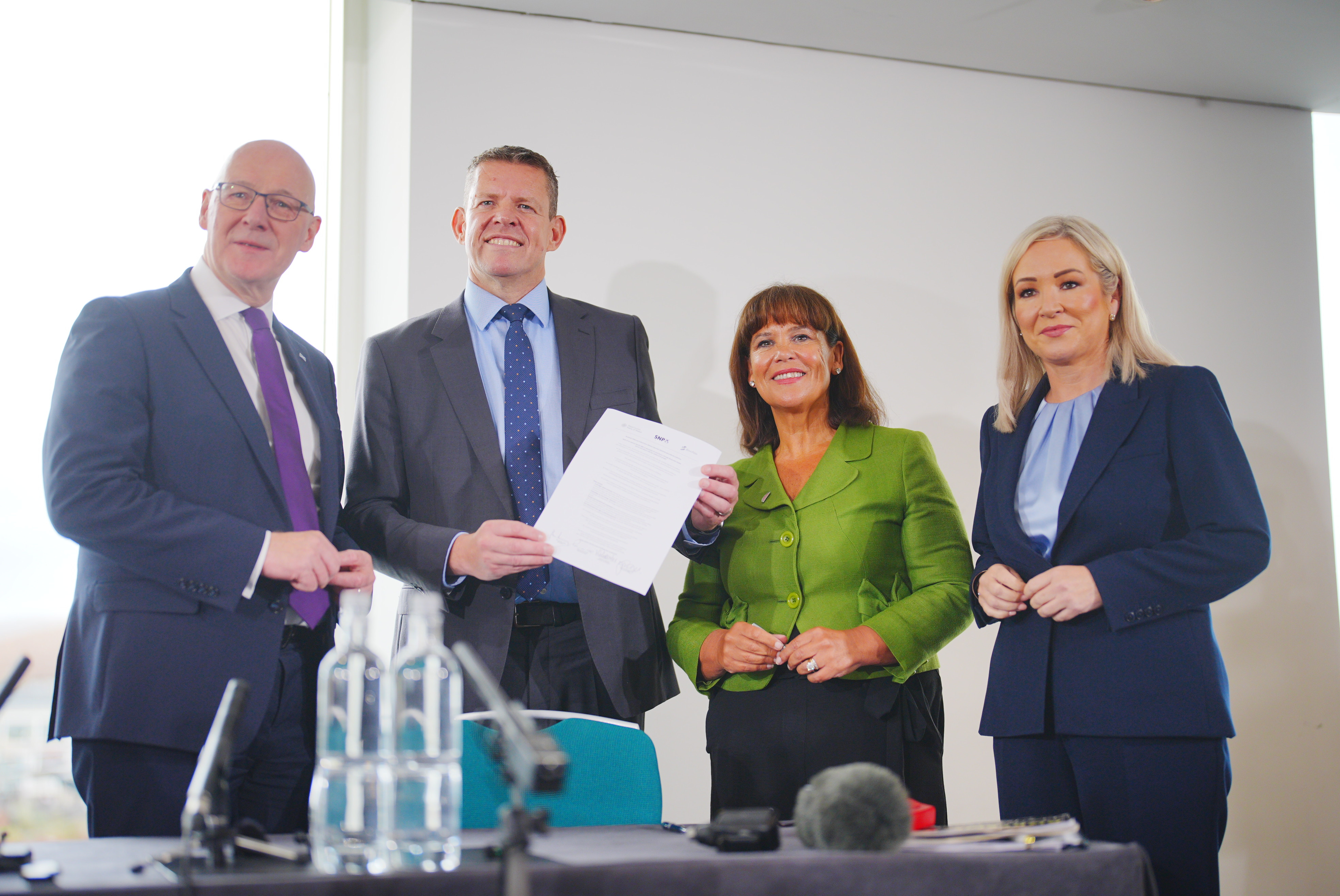
    LONDON — The leaders of Wales, Scotland, and Northern Ireland signed a pact Monday that threatens to lead to the breakup of the United Kingdom.

    The first ministers of the three semiautonomous regions of the U.K. told Prime Minister Andy Burnham and his government to prepare for constitutional change and that their future lies with the European Union.

    “For people watching across these islands — for people watching around the world — there could be no clearer sign that Westminster’s time is coming to an end,” they said in a memorandum of understanding, referring to Parliament.

    The announcement came about 48 hours after U.S. President Donald Trump waded into the waters of the politically contentious issue when he said he would ” love to see ” a reunified Ireland during a trip to visit his golf course hosting the Irish Open.

    It’s the first time the leaders of all three countries are either from pro-independence parties, or pro-unification in the case of Northern Ireland, which was partitioned and remained part of the U.K. when Ireland won independence from Britain over a century ago.

    Tensions remain despite devolution of power

    Burnham’s spokesperson brushed aside the threat and said the prime minister strongly believes in the union and was more focused on lowering the cost of living than dealing with constitutional debates.

    “The United Kingdom is at its best when people come together around our shared values and problem-solving, rather than division,” Tom Wells said.

    Nicola McEwen, director of the University of Glasgow Center for Public Policy, said the summit was symbolically important but has no legal significance.

    “I don’t see the threat to the union being bigger today than it was yesterday,” McEwen said.

    In the late 1990s, the U.K. passed legislative acts that decentralized government through the process of devolution, giving each country except England some level of policy independence and self-governance through their own parliaments. But tensions have remained with the U.K.-wide government in London, which retained control over national issues and those concerning England.

    Scotland’s John Swinney and Northern Ireland’s Michelle O’Neill called for independence referendums in their countries, while Rhun ap Iorwerth did not provide a timetable for one in Wales.

    The three leaders appeared in their political capacity, rather than their official one, possibly because O’Neill is in a power-sharing government with the Democratic Unionist Party.

    Northern Ireland’s Deputy First Minister Emma Little-Pengelly, of the DUP, accused O’Neill, of the Sinn Fein party, of “weaponizing” the role of first minister by signing the agreement.

    “I am first minister in the north of Ireland,” O’Neill replied. “This is about historic change happening all around us.”

    Scottish nationalists believe support for independence is rising

    Scotland tried unsuccessfully to break away in 2014, with voters rejecting a referendum 55% to 45%. But McEwen said support for Scottish independence has grown since Brexit, in which the U.K. formally left the European Union in January 2020, following a referendum in June 2016.

    Swinney, leader of the Scottish National Party, said he believed voters would now vote for independence if the U.K. government approved a referendum.

    Burnham told Parliament last week he would allow such a vote to be held if there was a “clear consensus” in Scotland, but later sent Swinney a letter saying a vote was “off limits.”

    The 1998 Good Friday peace accord that ended three decades of sectarian violence in Northern Ireland known as “The Troubles” requires a vote on unification if polls there indicate it would likely pass, a threshold the U.K. government says has not been met. Ireland would also have to approve the change in a referendum.

    Burnham has made devolution a major theme since taking office less than two months ago, but his focus has been on regional governments across England, a reflection of his years as mayor of Greater Manchester.

    Swinney tried to turn Burnham’s ideology to his advantage, saying his frequent talk of devolution “leads you to the logic of recognizing the right of the people of Scotland, in my case, to decide their own future.”

    Beyond any threat of departing the union, McEwen said the greatest impact of the three joining forces could be that they agreed to cooperate with each other routinely and that could help to exert more influence on the U.K. government.

    “It does keep on the agenda that question about, well, if the United Kingdom is a union based on consent, what is the pathway where it looks like that consent may no longer be there?” McEwen said. “Any U.K. government has been very reluctant to engage in that discussion.”

  • Trump says a smart president is all that’s needed to rein in AI

    Trump says a smart president is all that’s needed to rein in AI

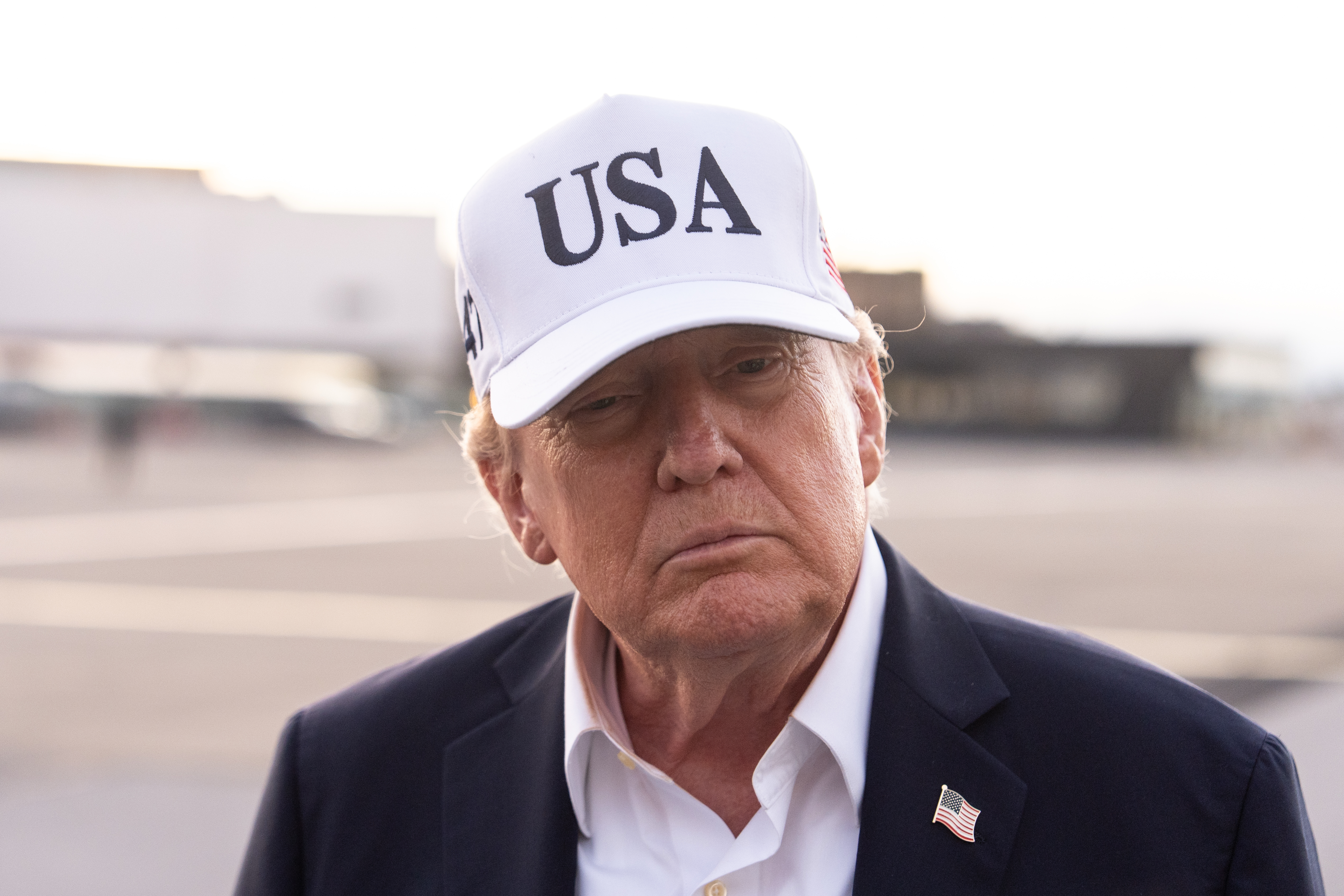
    WASHINGTON — President Donald Trump on Monday rejected calls from leading artificial intelligence executives for new limits on the technology, writing on social media that the only guardrail the industry needed it already had: “a STRONG AND SMART (High IQ!) PRESIDENT.”

    Trump inserted himself into the intensifying national debate over how to handle a rapidly evolving technology that researchers and industry leaders say poses major risks like mass unemployment, a new wave of biological weapons, and autonomous warfare. The president did not address those risks directly. Instead, he questioned the sincerity of the executives who have been calling to slow the technology’s development.

    “The only control or ‘guardrails’ that AI needs is a STRONG AND SMART (High IQ!) PRESIDENT, and the U.S.A. has that, in spades!” Trump posted. “The Trump Administration has stopped AI ‘people’ from doing bad, or potentially bad, ‘things,’ like Dario (Anthropic!), who is now pretending to be a ‘perfect little angel’ — and we will continue to do so!

    “We already have tremendous CRIMINAL and REGULATORY power over these companies!” he added.

    It was not clear what authority Trump was referring to, or what actions he believes his administration has already blocked. The White House did not immediately respond to a request for comment.

    Over the weekend, Dario Amodei, the CEO of Anthropic, a leading AI company whose founders have long warned about the technology’s dangers, published an essay that called for a global slowdown of AI development. Days earlier, one of Anthropic’s researchers quit and went public over his fears about the safety of the technology.

    The Trump administration feuded with Anthropic earlier this year when the company refused to allow the Pentagon unfettered access to its AI system without the safeguards the company wanted. Trump then ordered the federal government to stop using Anthropic’s AI technology and labeled it a security risk, a designation that a federal judge later ruled was unlawful.

    Other AI chiefs have voiced their own concerns in recent days. Demis Hassabis, the chairperson of Google DeepMind; Elon Musk of SpaceX; and Sam Altman of OpenAI have all endorsed calls for a slower pace.

    Trump has spent much of his second term aligning himself with AI accelerationists who have been pushing the U.S. government to clear away obstacles to growth. He has been influenced in particular by Jensen Huang, the CEO of chipmaker Nvidia, and David Sacks, a Silicon Valley investor who played a major role in shaping the administration’s policies on AI.

    The president has embraced their arguments that imposing additional guardrails on American companies would allow China to “win” the AI race.

    Beijing, however, has its own anxieties about the technology — and they may lead to more regulation, not less. Chen Yixin, China’s security minister, recently warned that the leading AI models pose risks to the Chinese system and called for stricter government oversight.

    The Associated Press reported that in an editorial published Sunday, China’s state-run Global Times newspaper dismissed Amodei’s essay as a veiled call to “contain” China. It said that Amodei’s essay may appear on the surface to be focused on global AI security, but that it is “packed with containment provisions targeting China and is, in essence, a ‘Cold War playbook’ for the AI sector.”

    Amodei’s essay was published a few days after the FBI, National Security Agency, and Cybersecurity and Infrastructure Security Agency issued a joint cybersecurity advisory last week. That advisory said Chinese AI developers had engaged in “aggressive, malicious” efforts in extracting, or “distilling,” capabilities from some of the most advanced AI models in the U.S. like Anthropic’s Claude and OpenAI’s GPT.

    Trump and Chinese leader Xi Jinping are expected to discuss AI governance, among other topics, at a Sept. 24 meeting.

    Trump has also dismissed the domestic backlash to the industry’s growth. He claimed in his social media post Monday that widespread opposition to the building of data centers — a major political issue emerging across the United States before the midterm elections — is part of a “conspiracy” rather than the outgrowth of genuine public anxiety.

    “There is a SICK conspiracy going on against AI and Data Centers, and the only one that is happy about it is China,” the president posted. “WHOEVER WINS AI, WINS! We are leading China, and all others, and will continue to do so. Conspiracy Theorists, Treasonists, Traitors, and Leakers, BEWARE!”

    Elsewhere, governments are moving toward stricter oversight. Prime Minister Mark Carney of Canada told Bloomberg News on Monday that he favored the creation of a global “technology stability” body to oversee AI.

    “There’s a need for coordination,” Carney said in the interview. “Ultimately, a technology stability board, in our view, along the lines of the Financial Stability Board would make sense.”

  • Cavan Sullivan scores two goals as the Union cruise past San Diego in 5-0 win

    Cavan Sullivan scores two goals as the Union cruise past San Diego in 5-0 win

    SAN DIEGO — Cavan Sullivan recorded his first two-goal game in Major League Soccer, and assisted on another goal to help the Union cruise to a 5-0 victory over San Diego on Sunday night.

    Philadelphia (9-10-6) is unbeaten in its last 10 matches, with eight victories, since the World Cup break.

    San Diego (8-11-6) had a four-game home winning streak snapped.

    Sullivan has five goals and six assists in his last seven MLS games.

    Sullivan opened the scoring in first-half stoppage time on a creative back-heel flick that deflected in off the post. Then Sullivan powered a shot through the legs of San Diego goalkeeper Duran Ferree from a difficult angle in the 62nd minute for a 2-0 lead.

    Sullivan set up the third goal. He chipped it over the defense and Frankie Westfield ran it down and passed it back to the penalty spot for a wide-open Bruno Damiani to score his fourth goal in two games.

    Some traveling Union fans celebrate after one of their team’s goals against San Diego FC.Philadelphia Union

    The Union used an own goal by Anibal Godoy to go ahead 4-0 in the 87th and Malik Jakupovic scored his first MLS goal in stoppage time.

    Andre Blake, who made his 290th appearance for the Union, made five saves to record his seventh clean sheet of the season.

  • Iranian cargo ship is struck, and talks between Tehran and its neighbors are postponed

    Iranian cargo ship is struck, and talks between Tehran and its neighbors are postponed

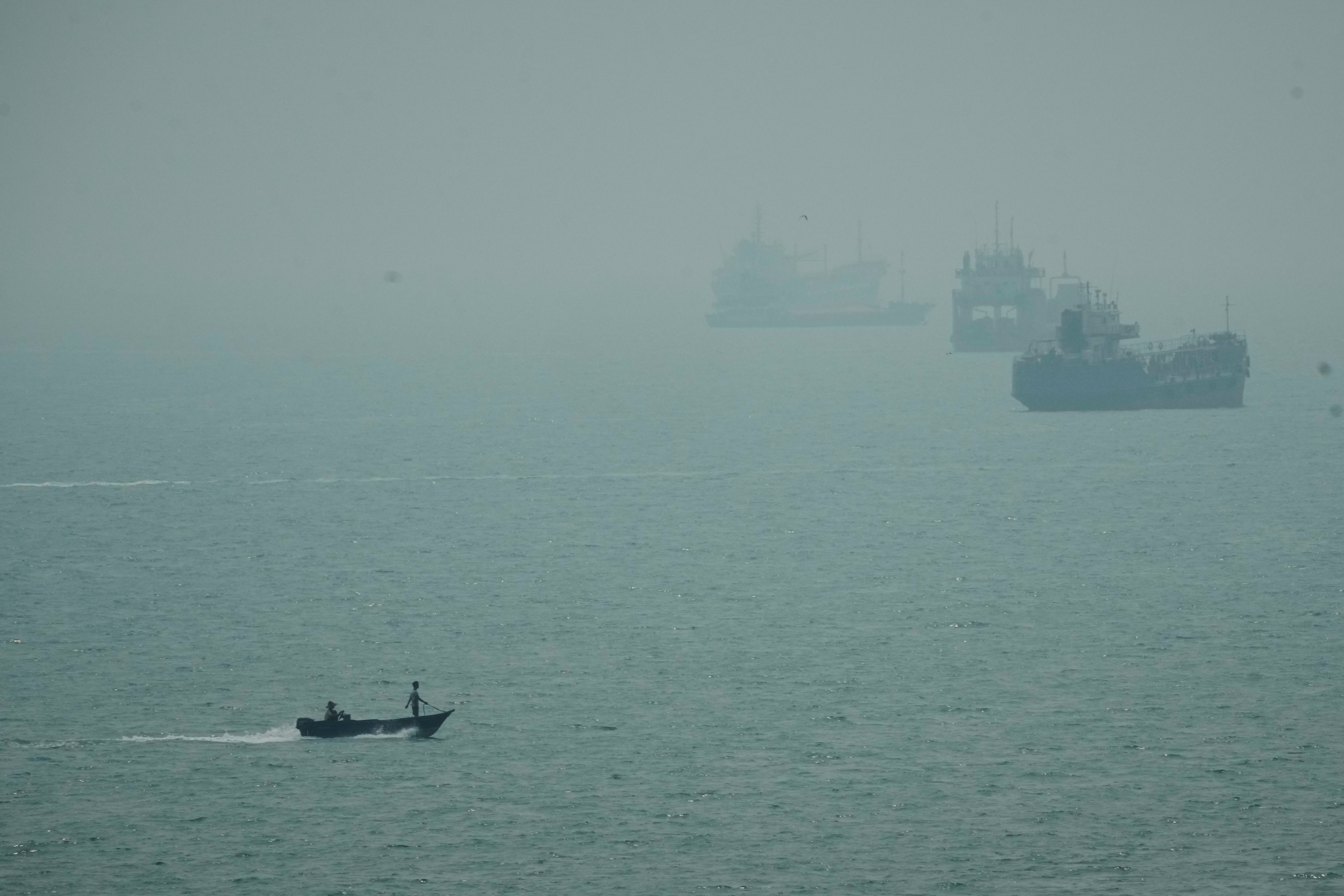
    CAIRO — An Iranian cargo vessel was struck early Sunday off Qeshm Island in the Strait of Hormuz, Iranian state media said, and a plan by Tehran to brief neighboring countries on its contested efforts to manage shipping in the strait was postponed.

    The attack, which the reports said killed one and wounded four, drew attention back to the strait after threats to shipping in the region intensified last week when Iran-backed Houthi rebels captured an island on the Bab el-Mandeb Strait in the Red Sea.

    Iran’s state-run IRNA news agency quoted the Qeshm governor as blaming a “terrorist enemy” for Sunday’s attack. There was no immediate comment by the U.S. military, which has struck Iranian-flagged vessels during its blockade of Iranian ports and faces a new threat from Iranian ballistic missiles launched at its warships.

    Qeshm Island, about 14 miles from the port city of Bandar Abbas, is key to Iran asserting control over the Strait of Hormuz.

    Hours before the attack, Iran’s government remained defiant. “Our people can’t be bullied into submission. Iran won’t surrender,” President Masoud Pezeshkian said in a social media post.

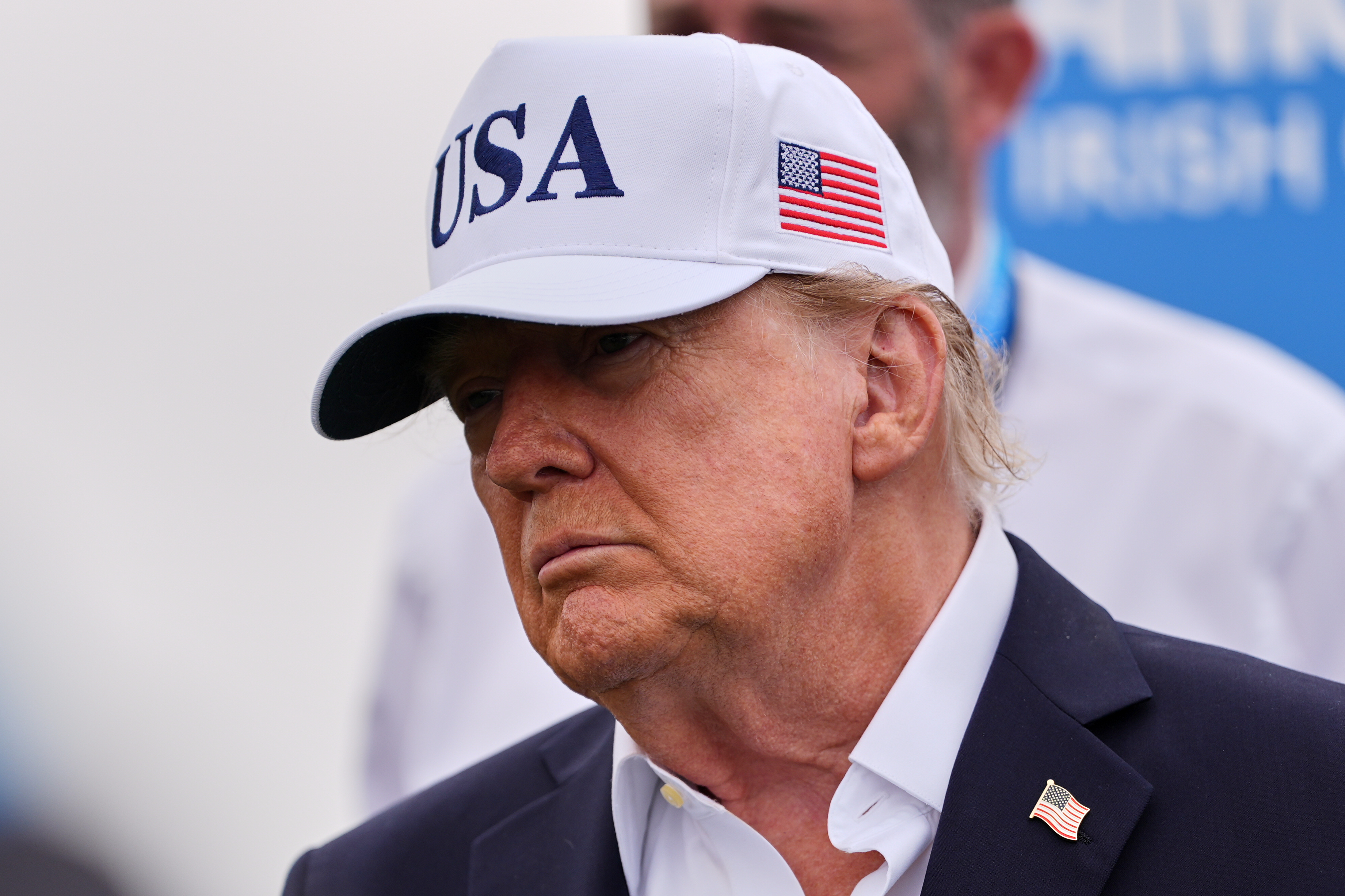
    President Donald Trump disagreed, saying on Sunday that Iran “wants to make a deal so bad” that “they’re calling constantly.” Trump spoke at his golf course in Doonbeg, Ireland, where he was attending a tournament.

    Later, when asked by a reporter whether the U.S. struck the Iranian cargo vessel early Sunday in the Strait of Hormuz, Trump said: “I don’t want to say.” He then boarded Air Force One to head back to Washington.

    Iran aims to brief regional countries on the strait

    Iran had said foreign ministers from regional countries would meet Monday in Oman to discuss efforts by Iran and Oman, located on the other side of the strait, to manage shipping on it. But the foreign minister of Oman, Badr Albusaidi, said on X late Sunday that the meeting had been postponed “in the interests of consensus.”

    Iran and Oman agreed to postpone the talks “at the request of some regional countries,” said Mohammad Ali Bak, an official in Iran’s foreign ministry who was quoted by IRNA on X.

    Commercial ship traffic remains low in the Strait of Hormuz as attacks continue on what was seen as an international waterway before the U.S. and Israel launched the war on Feb. 28.

    The United Kingdom Maritime Trade Operations monitor said Sunday that a vessel was hit by a projectile while transiting the strait, though it wasn’t clear if this was referring to the attack Iran had reported off Qeshm. The monitor said a severe fire had broken out and that local authorities were evacuating those on board.

    The U.S. has asserted that plenty of oil is getting out as its military helps to guide ships along Oman’s coast, at the risk of being struck.

    Before the meeting in Oman was postponed, only Iraq had publicly confirmed plans to attend. Bahrain had said it would not attend, citing a lack of diplomatic relations with Tehran.

    Since early in the war, Iran has expressed interest in having ships pay fees for transit. It has said traffic into the Persian Gulf would pass through Iranian waters, while the outbound route would pass partly through Iranian waters and partly through Oman’s.

    There had been some optimism in the region about the planned meeting, with hope that Gulf nations might use it to assert a collective response to a war they had no part in starting. For months, they have faced Iranian attacks that Tehran has claimed target U.S. military assets on their lands.

    On Sunday, Iran’s president said he had a “good talk” over the weekend with a top official from the United Arab Emirates on the sidelines of a global summit of leading developing nations.

    Iran has fired thousands of missiles and drones at the Gulf country, a close U.S. ally.

    Pezeshkian said he met with Abu Dhabi’s crown prince, Sheikh Khaled bin Mohamed bin Zayed, while attending the BRICs summit in New Delhi.

    “We talked about the issues of concern so that it’s possible to put the past behind us, to look toward the future and how we can build the future together,” Pezeshkian said. His comments were aired live on Iranian state television.

  • House Speaker Mike Johnson says Trump’s $5,000 ‘dividend’ needs congressional approval

    House Speaker Mike Johnson says Trump’s $5,000 ‘dividend’ needs congressional approval

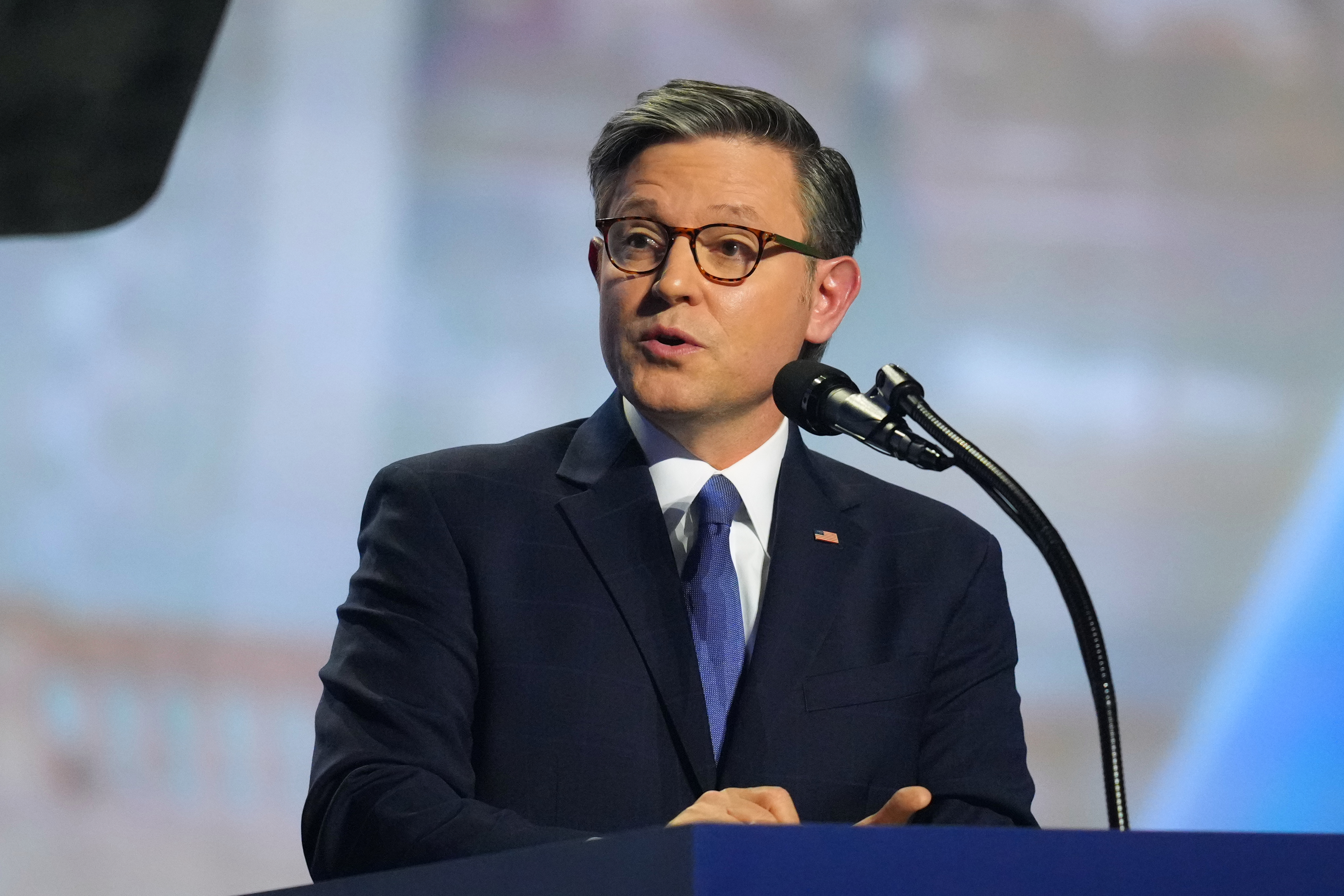
    WASHINGTON — President Donald Trump’s proposal to send $5,000 to every American adult if his Republican Party maintains control of the House and Senate in the November election needs congressional approval, House Speaker Mike Johnson said Sunday, while pledging to try to make it happen.

    Trump made the unusual pitch at the party’s midterm convention in Dallas last week, promising a “Trump Dividend” if voters keep the GOP in power on Capitol Hill. The president later told CBS News Texas that he did not think Congress would need to authorize the payments, though he did not explain how he could spend more than $1 trillion without lawmakers’ authorization.

    But Johnson (R., La.) said congressional approval is needed. “I would assume, yes, he’d need Congress to act, and that’s a creative idea,” he said.

    He also said he would work to get Trump’s proposal through Congress despite a small Republican margin.

    “He’s the big ideas president. We’re going to try to implement everything we can,” he said. “I commit that Congress will work through it and find consensus on that like they have to do everything else.”

    Johnson appeared on CNN’s State of the Union and NBC’s Meet the Press.

    The dubious election-year gambit could cost more than $1 trillion, putting further strains on the country’s nearly $1.8 trillion annual budget deficit and exacerbating concerns of inflation. The economy is confronted by persistent inflation and increasing interest rates, a tough combination for governing Republicans as they seek to hold on to control of Congress.

    The president argues that payments would be possible because of the strong economy, but consumer sentiment is weak as gasoline prices rise because of the war with Iran and wages struggle to keep pace with inflation.

    In Ireland, where the president was attending a golf tournament at a course he owns, Trump said the payments would be “easy enough” because the United States has a strong economy.

    “We can easily handle that because we’re taking in so much money,” he said. “We’ve never done better.”

    “I made the pledge. I always keep my pledge,” Trump said.

    Just one-third of U.S. adults approve of how Trump is handling the presidency, according to a July poll from the Associated Press-NORC Center for Public Affairs Research. That compares with 37% in June and 42% who approved of his work when he took office. Majorities also disapprove of his handling of the economy and immigration, issues that were central to Trump’s election in 2024.

    On Sunday, Trump said the gas price will “drop like a rock” but indicated no deal any time soon with Iran to end the conflicts and reopen the Strait of Hormuz.

  • Trump calls on Ukraine to halt strikes on Russian diesel fuel, saying attacks causing a shortage

    Trump calls on Ukraine to halt strikes on Russian diesel fuel, saying attacks causing a shortage

    KYIV, Ukraine — U.S. President Donald Trump on Sunday called on Ukrainian President Volodymyr Zelensky to halt strikes on Russian oil refineries and other infrastructure used to produce and distribute diesel, saying the attacks are causing a global shortage. He spoke after diesel prices in the U.S. hit a record on Friday, soaring past $6 a gallon on average.

    Ukraine has for months been targeting Russia’s oil and gas industry with long-range strikes, prompting fuel rationing across the country and causing Moscow to ban diesel exports in July, removing supplies from the already tight global market.

    But the global crunch also came after the war on Iran curtailed oil shipments through the Strait of Hormuz.

    Fuel prices are weighing on Americans as they prepare to vote in midterm elections in November.

    Trump was asked by a reporter if he had spoken with Zelensky following his recent conversation with Russia’s Vladimir Putin. He responded by calling on Zelensky to halt strikes against Russia.

    “Mr. Zelensky has to do one thing. He has to stop knocking out diesel fuel in Russia,” Trump told reporters on the sidelines of the Irish Open, which was being played at his Doonbeg golf club.

    “We spoke to Mr. Zelensky about it. There are plenty of other targets. Don’t hit diesel fuel, because that’s hurting, that’s hurting the world,” he said.

    Diesel exports from Gulf countries way down since Iran war began

    According to a report published Friday by the International Energy Agency, net exports of diesel and gas oil from the Gulf countries in August stood at “just over a quarter” of what they were before the war on Iran began in February.

    “Disruptions to Russia’s refining system and a near-halt to product exports following intensified Ukrainian attacks have compounded these losses,” the IEA wrote. It added that in February, combined next exports of diesel and gas oil from the Gulf and Russia “accounted for almost 45% of global seaborne trade.”

    Kyiv says Russia’s oil industry both funds and directly fuels Moscow’s more than four-year-old invasion of Ukraine.

    Russia has ramped up its air campaign against Ukraine in recent weeks, using ballistic missiles and jet-powered drones to pierce Ukraine’s defenses. Moscow’s attacks have targeted Ukraine’s power grid ahead of winter in what officials say is damage meant to demoralize civilians.

    Civilians were killed and injured overnight into Sunday as Russia and Ukraine exchanged large-scale drone strikes.

    Two people were killed and 14 more wounded near an oil and industrial hub in Russia’s Tatarstan, according to local officials, while Ukrainian authorities reported on Russian drones pummeling the Black Sea port of Odesa and starting a fire near a border crossing with Poland.

    Ukraine targets more Russian oil facilities

    The two Russian civilians died after a drone slammed into a tree near their parked car in the city of Nizhnekamsk, according to the office of regional head Rustam Minnikhanov. Nizhnekamsk houses a key cluster of oil refineries and other industrial plants. Mayor Radmir Belyaev said that a fire had broken out at an unspecified “enterprise.”

    Ukraine also claimed to have hit a major oil refinery in Slavyansk-on-Kuban, in Russia’s Krasnodar region near Crimea. The Defense Intelligence of Ukraine (DIU) agency said its drones struck a key oil processing unit and the refinery’s tank farm overnight into Sunday.

    Krasnodar authorities said the strike on “an enterprise” in Slavyansk-on-Kuban injured three people and damaged an oil pipeline.

    Russian forces shot down 389 Ukrainian drones during the night, Russia’s defense ministry said Sunday.

    Russia targets Odesa and western Ukraine

    In Ukraine, at least nine people were injured in a “massive” Russian nighttime attack on Odesa, according to Serhii Lysak from the city’s military administration. Odesa is home to Ukraine’s main port hub on the Black Sea and has faced sustained drone and missile strikes, with Kyiv accusing Moscow of trying to choke off its exports.

    A Russian drone attack on Saturday struck a residential high-rise in Odesa, killing two people and injuring 26 others, Ukrainian officials said.

    Russian overnight strikes also pounded western Ukraine, though there were no immediate reports of casualties. One drone set fire to a gas station near the Yahodyn-Dorohusk border crossing with Poland, according to Ukraine’s top diplomat and a spokesperson for the local customs force.

    “This is Putin’s terror ‘knocking’ directly on the doors of the EU and NATO. Russian barbarians are at your gate, dear partners,” Ukrainian Foreign Minister Andrii Sybiha wrote on X.

    Ukraine’s border crossings with Poland are a conduit for much of the military and humanitarian aid sent by Western allies.

    Valentyna Chernysh, a spokesperson for the Volyn Customs Office, told the Associated Press that the Yahodyn crossing was intact and no one was harmed.

    Earlier this week, two people died when Russian drones hit the Starokozache border crossing between Ukraine and Moldova on Tuesday. The following day a “direct threat” to a Polish-Ukrainian crossing point was avoided due to the cooperation between Warsaw and Kyiv, according to Polish Prime Minister Donald Tusk.

    Ukraine’s air force said its air defenses shot down or suppressed 409 Russian drones of various types overnight, including a newer jet-powered version that is faster and more difficult to intercept. It said Russia had attacked Ukraine with 453 drones in total.

  • Turkish authorities launch crackdown on LGBTQ+ and HIV support groups

    Turkish authorities launch crackdown on LGBTQ+ and HIV support groups

    ISTANBUL — Turkish authorities cracked down on multiple LGBTQ+ groups and individuals early Sunday morning, detaining dozens of members, breaking into association offices, and raiding popular hangouts.

    In an escalation of decade-long hostility toward LGBTQ+ groups, particularly in the lead-up to elections, simultaneous police raids beginning at 1 a.m. took place in the major cities of Istanbul, Ankara, Izmir, Aydin, and Mersin.

    Justice Minister Akin Gurlek announced on social media that the investigation into 162 suspects, nine associations, and 13 businesses was to “protect children, the institution of the family, and public order” in line with President Recep Tayyip Erdogan’s 10-year executive order relating to families and children.

    “As per the duty to protect families and children given to the state by the constitution, no criminal organization, abuse network, or illegal activity which targets children, youths, or families will be tolerated!” Gurlek said.

    The raids targeted both current and former members of multiple prominent LGBTQ+ rights and HIV awareness groups. The organizations’ websites were also blocked.

    Gurlek also noted that such associations were found to receive significant funding from international sources and agencies.

    The Human Rights Association condemned the raids. “This is not a judicial investigation; it is a political operation aimed at forcing society into a monolithic family model and purging LGBTI+ and independent civil society under the guise of protecting the family and children,” it said.

    “To include unrelated charges such as ‘forming a criminal organization,’ ‘drugs,’ ‘prostitution’ and ‘obscenity’ serves not to reveal the truth but to incriminate the entire community.”

    The religious conservative Justice and Development Party has been increasingly vocal against LGBTQ+ groups to play up to the more conservative elements of its base. In 2015, it banned Istanbul Pride, which had tens of thousands of attendees in previous years. Since then, authorities have violently dispersed any attempted gatherings for Pride.

    This summer, an LGBTQ+ cruise ship that tours the Mediterranean and has docked in Turkey multiple times in the past was refused permission to dock there.

    The Ottoman Empire, predecessor to the modern republic of Turkey, decriminalized homosexuality in 1858; however, there is still significant social discrimination.

  • At BRICS, India’s Modi warns geopolitical tensions and supply chain shocks threaten global stability

    At BRICS, India’s Modi warns geopolitical tensions and supply chain shocks threaten global stability

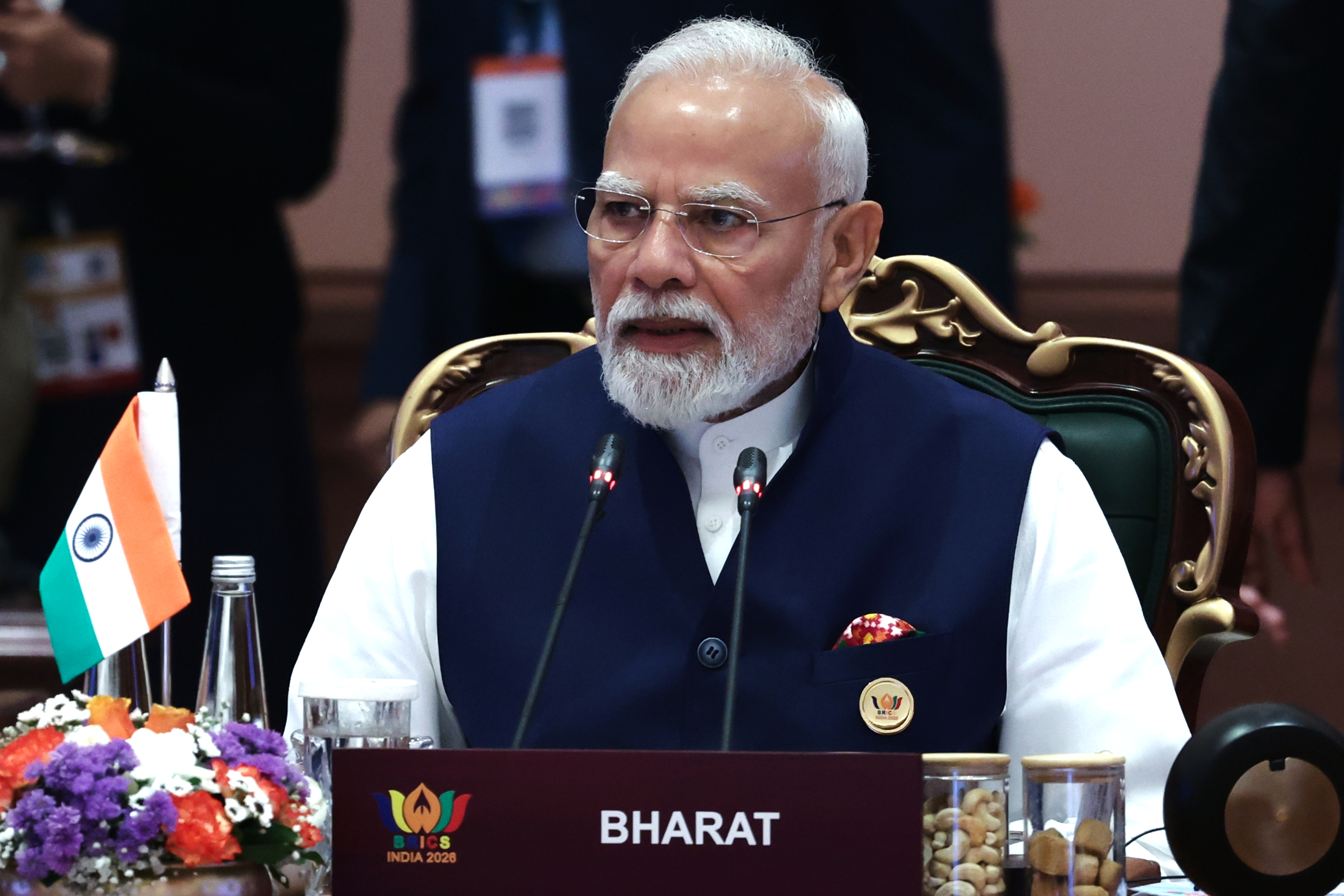
    NEW DELHI — Indian Prime Minister Narendra Modi on Sunday warned that rising geopolitical tensions, supply chain disruptions, and climate crises are increasingly affecting people worldwide and called for strengthened cooperation and support across the Global South.

    Addressing the BRICS summit of leading developing nations on its second day in New Delhi, Modi also warned that the “weaponization of technology and critical minerals” could hinder global development and shared prosperity.

    Founded in 2006 by Brazil, Russia, India, and China, BRICS has expanded to 11 members representing about half the world’s population and a significant share of global economic output. It has sought greater representation for developing countries in global institutions and promoted alternatives to Western-dominated financial systems.

    “The number of conflicts and tensions in the world is continuously increasing, and this is having an increasingly negative and far-reaching impact on the lives of ordinary people,” Modi said, alongside bloc leaders, including Chinese President Xi Jinping, Russian President Vladimir Putin, and Iranian President Masoud Pezeshkian.

    “Pandemics, climate disasters, and supply-chain disruptions have shown that in today’s interconnected world, no crisis remains confined to a single region,” Modi said, while announcing that the bloc agreed to establish an integrated early warning system for infectious diseases, aimed at boosting preparedness and response to future outbreaks.

    In his closing remarks at the summit, Modi urged the bloc nations to convert the summit’s agreements into tangible and time-bound action and move them from “files to real-life impact.”

    The discussions over the past two days, he said, reinforced the belief that “BRICS is not merely a group of countries, but an ecosystem of solutions.” He wished China success as it takes over the BRICS chair for the next term.

    The group in a joint declaration Saturday had expressed concern over escalating tensions in the Middle East and Sudan, and called for disputes to be resolved through dialogue and diplomacy.

    The bloc reiterated support for a multipolar world order and reforms to the United Nations, including its Security Council, as well as global financial institutions such as the World Bank and the International Monetary Fund.

    The leaders opposed unilateral sanctions and coercive economic measures and criticized sanctions not authorized by the U.N. They also criticized rising tariffs and nontariff barriers, saying they undermine global trade and supply chains.

    The bloc backed greater use of local currencies in trade and stronger cross-border payment systems, while calling for cooperation on food security, energy, digital infrastructure, artificial intelligence, and climate action.

    The declaration was a significant breakthrough, as forging consensus among Iran, Saudi Arabia, and the United Arab Emirates — which hold competing positions on key regional and geopolitical issues — posed a complex diplomatic challenge amid ongoing conflicts and heightened tensions.

  • Fighting in Yemen intensifies, and Houthis launch more attacks on Saudi Arabia

    Fighting in Yemen intensifies, and Houthis launch more attacks on Saudi Arabia

    ADEN, Yemen — The conflict in Yemen intensified on Sunday, as government forces launched attacks against Iran-backed Houthi rebels along the Red Sea and Houthis fired into neighboring Saudi Arabia, which supports Yemen’s government.

    The Yemeni government vowed to send more forces to the Red Sea coast after conceding a “painful” defeat last week when Houthis captured the port city of Mokha and an island on the Bab el-Mandeb Strait, a crucial shipping alternative to the Strait of Hormuz.

    The escalation — especially Houthi attacks on Saudi oil infrastructure and its shipping in the Red Sea — adds pressure on global oil supplies and prices, and that could give Iran leverage in its war with the United States.

    As Yemen risks descending into another civil war, the United Nations estimated that more than 80,000 people in the impoverished country have been displaced by the fighting since the start of September.

    One woman said a mortar shell fell nearby as she fled in the middle of the night from the town of Khawkha in Hodeida province along the Red Sea, shortly before it was captured by Houthis.

    “I saw with my own eyes cars and buses burning, and bodies of children and women were lying on the road in a horrific scene,” said the woman, who spoke on condition of anonymity out of concern for her and her family’s safety.

    Houthis claim attacks against Saudi Arabia

    Saudi authorities sounded sirens Sunday afternoon in the southern city of Abha and Khamis Mushait province, warning residents to take shelter from potential incoming fire. Both areas were repeatedly attacked by the Houthis in recent weeks.

    The Houthis claimed to have used drones and missiles to target Saudi Arabia, including a military base just over the border with Yemen. Houthi military spokesperson Brig. Gen. Yahya Saree didn’t provide evidence or say when the attack occurred.

    The Saudi civil defense overnight said a projectile fell in a different area near the border with Yemen along the Red Sea, injuring two people and damaging a mosque and several other buildings. The statement blamed the Houthis.

    Saudi Arabia did not announce any new attacks targeting the Houthis.

    The Houthis are targeting Saudi oil infrastructure and shipping as part of a recently declared blockade. While the Houthis have said they do not intend to threaten other countries’ commercial shipping, markets remain wary and oil prices have risen again.

    Yemen says 500 soldiers killed, vows to fight back

    The National Resistance, a government-allied force that had controlled coastal areas, said more than 500 government fighters were killed on the west coast over the past four weeks — its first comprehensive toll. It said about 1,500 others had been wounded in the fighting since Aug. 9.

    Its statement said more than 1,000 Houthis had been killed in Hodeida and Taiz provinces. A spokesperson for the Houthis didn’t respond to a request for comment.

    Yemen is home to over 40 million people who fear a return to the civil war that killed 150,000 and brought many others to the brink of famine in one of the world’s most sprawling humanitarian crises. Yemen’s internationally recognized government and Saudi Arabia have been battling the Houthis for 12 years. A ceasefire that began in 2022 had mostly halted the fighting.

    A senior government official in Yemen said its forces will return to the Red Sea coast and fight back. People fleeing the Houthi advance told the Associated Press they saw forces withdrawing and urging people to run.

    Sultan al-Arada, a member of the ruling presidential council, described the collapse of government forces in the port city of Mokha and elsewhere on Yemen’s west coast as “painful and regrettable.”

    Al-Arada said in the televised interview aired late Saturday that forces “are currently regrouping and will return to the battle in one form or another.”

    On Sunday, the Yemeni military said it launched airstrikes on Houthi positions in Mokha and the coastal town of Dhubab, and elsewhere in Taiz province. The rebels also reported strikes by the Saudi-backed forces in the province as well as artillery shelling in the province of Saada, the Houthi stronghold on Yemen’s northern borders with Saudi Arabia.

    Advance puts Houthis closer to a major U.S. base in Djibouti

    The Houthis’ advance puts them just 20 miles from the U.S. military base in Djibouti, on the other side of the Bab el-Mandeb Strait. It’s the main U.S. base in Africa and one of several foreign military bases in Djibouti, including those of China, France, and Japan.

    The small Horn of Africa nation is already seeing the arrival of displaced Yemenis making the perilous water crossing. More than 2,000 Yemenis have reached Djibouti, the International Organization for Migration said Sunday.

    Djibouti’s Economy and Finance Minister Ilyas M. Dawaleh said on X that the country’s navy, coast guard, and other specialized agencies were conducting rescue operations and providing emergency assistance.

    Yemenis displaced by fighting worry about survival

    The U.N. migration agency said Sunday that more than 82,000 people in Yemen have been displaced since the beginning of September.

    “The displaced people are in a very bad condition,” said Ahmad al-Masawi, the director of the Al Salam camp in the southern port city of Aden, who appealed to international organizations for assistance. “They left their homes quickly without any clothing or anything. They are crammed in camps, houses, and even on roads.”

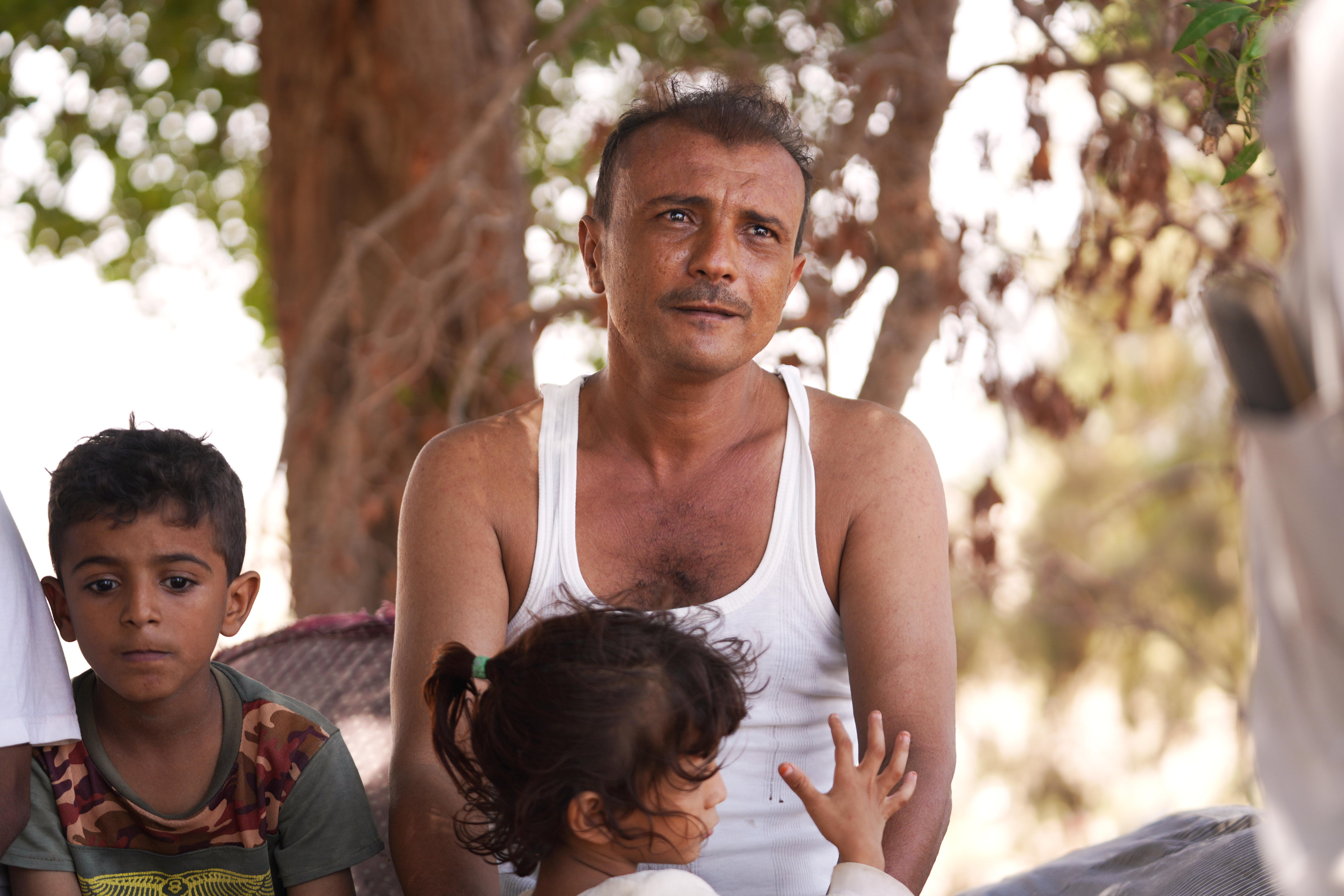
    Hussein Haydara sat outside a shelter at the camp in a white undershirt, as his children waited to be assigned to a tent. He worried about how far the shelter is from schools, hospitals, and markets, and wondered how they will survive the next weeks or months.

    Haydara had fled his home in Hodeida once before, when the Houthis took it over in 2015. But this time feels more precarious.

    “With the first displacement, we had time to plan things but this time we were forced to escape all of a sudden. One could hardly take their children and the lightest stuff possible,” he said.