A couple of numbers that have jumped out at me during the number-crunching portion of my annual Eagles/NFL cram sessions …
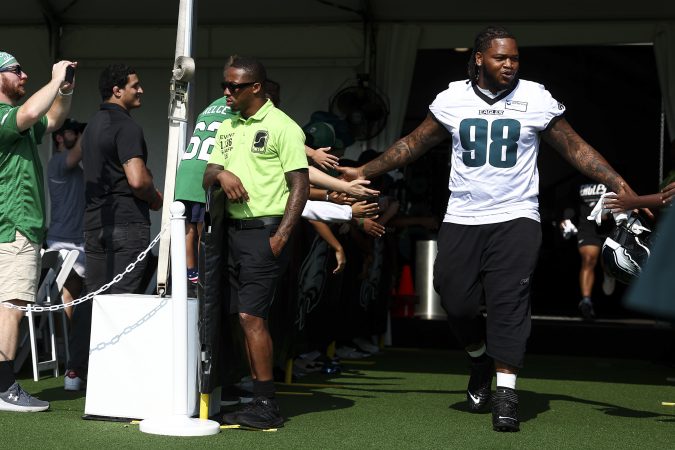
When Jalen Carter was on the field, the Eagles were a top–five run defense. When he was off the field, they were a bottom–five run defense.
What makes a defensive tackle worth $40 million per year? Well, have a look at the Eagles’ first-and-10 rushing splits with and without Carter.
In 107 snaps without him, opponents averaged 5.1 rushing yards per attempt. Only the Dolphins and Bengals allowed more yards per carry on first-and-10 plays.
On 130 snaps with Carter on the field, opponents averaged just 4.08 yards per carry. Only six teams in the NFL allowed a lower average on first-and-10 plays.
Carter’s impact goes deeper than the yards an offense fails to gain. There are also the yards an offense doesn’t even try to gain. Last season, opponents ran the ball on nearly 60% of the snaps for which Carter was on the sideline. When he was on the field, they ran the ball on 52% of their snaps (on first-and-10).
Keep in mind, 2025 was a season when Carter was less than 100% for a stretch.
One of the underrated storylines of last season was the overall struggle of the Eagles’ run defense. I use that term relatively. In 2024, Fangio’s unit was top-10 in both total yards and yards per carry. In 2025, they ranked 22nd and 20th, respectively.
Quantifying run defense is an imperfect science, of course. Both total yardage and yards per carry are heavily influenced by game situation. Which is why I chose first-and-10 as a sample rather than overall numbers for the Carter on/off splits. That being said, there was nothing situational about the Bears’ 281 rushing yards on Black Friday, after which Carter decided to undergo surgical treatment on his shoulders. The Chargers ran for 169 yards the following week.
Jalen Carter (center) will be key in the Eagles’ run defense in 2026.Yong Kim / Staff Photographer
Carter aside, the Eagles clearly suffered from the loss of Milton Williams last season. Their on/off splits with and without Carter were far less drastic the two seasons prior. There are two big reasons to hope that the Eagles have a better run D this season. One, Carter will be healthier and more available. Two, Jonathan Greenard will be here for the whole season. Jaelan Phillips was excellent against the run, but he was only here post-trade deadline. The flip side is this: The Eagles were at their best with Phillips, and they will also be attempting to replace a starting safety in Reed Blankenship and a starting linebacker in Nakobe Dean. One way or another, it will be a big subplot to this season. Carter, as always, will play the biggest and most important role.
DeVonta Smith led the Eagles with 19 first–down catches on third down. He led the NFL in yards per catch on those conversions.
Here’s a list of the wide receivers who have finished a season averaging 20 yards per reception on at least 40 third-down targets over the last three seasons.
Those first three players had stretches where they have been on the short list for best receivers in the game. Smith has a fine reputation. The NFL is well aware of how good he is. But you’ll rarely hear him mentioned among that small group of WR1s who create their own receptions and dictate opponents’ game plans.
The deeper you look under the hood, though, the more favorably Smith’s numbers compare to the best of the best.
Eagles wide receiver DeVonta Smith led the team in third down catches with 19 last season.Yong Kim / Staff Photographer
Last year, he ranked 11th in the NFL in Tough Catch Percentage, a metric that I totally ham-and-egged using the nflfastR data package. It measures a receiver’s share of contested catches and receptions created (as determined by For the Numbers Fantasy) and catches in traffic (as determined by me, using YAC and tackling data, among other variables). Here are the other players who rank ahead and just behind Smith: Courtland Sutton, Jaxon Smith-Njigba, A.J. Brown, Nacua, Amon-Ra St. Brown, Trey McBride, Collins, Justin Jefferson, George Pickens, Chris Olave, and Ja’Marr Chase. Whatever the metric signifies in abstract, those players are pretty good company to keep.
The presence of Brown on that list is significant, of course. Few players in the NFL have performed better in true 50-50 (or worse) situations than Brown has since joining the Eagles. Therein lies the real question about the Eagles’ receiving corps. It isn’t whether Smith can replace Brown as Jalen Hurts’ WR1. The question is whether the guys behind Smith can be anything close to the player he was as WR2. It’s not coincidence that the Eagles traded up for a receiver in Makai Lemon whose most impressive tape is his physicality and consistency in traffic. Hurts needs him on the field, sooner rather than later.
The Las Vegas Aces are owned by Mark Davis and Tom Brady, who also own the Las Vegas Raiders, where pass rusher Maxx Crosby twice hit quarterback Kirk Cousins during plays at a training camp practice Saturday, which led to a fight between them, which led to them being suspended from Sunday’s practice … which was the second-dumbest thing that happened involving a Davis-Brady team this weekend.
On Thursday night, “Point Gawd” Chelsea Gray hit buzzer-beater 3-pointers at the end of regulation and at the end of overtime to upset Caitlin Clark in Indiana.
On Saturday afternoon, the Aces went cold after the first quarter and lost to the Lynx in Minnesota. Three-time league MVP A’ja Wilson looked flat.
This all happened while I was on vacation, but I know this because my family watches the WNBA like Donald Trump watches the stock market.
So imagine, then, our dismay when, on Sunday, we tuned in to the afternoon game between the Aces and the New York Liberty — a game we considered attending — and discovered that Wilson, Gray, and five-time All-Star Jackie Young would not play. At. All.
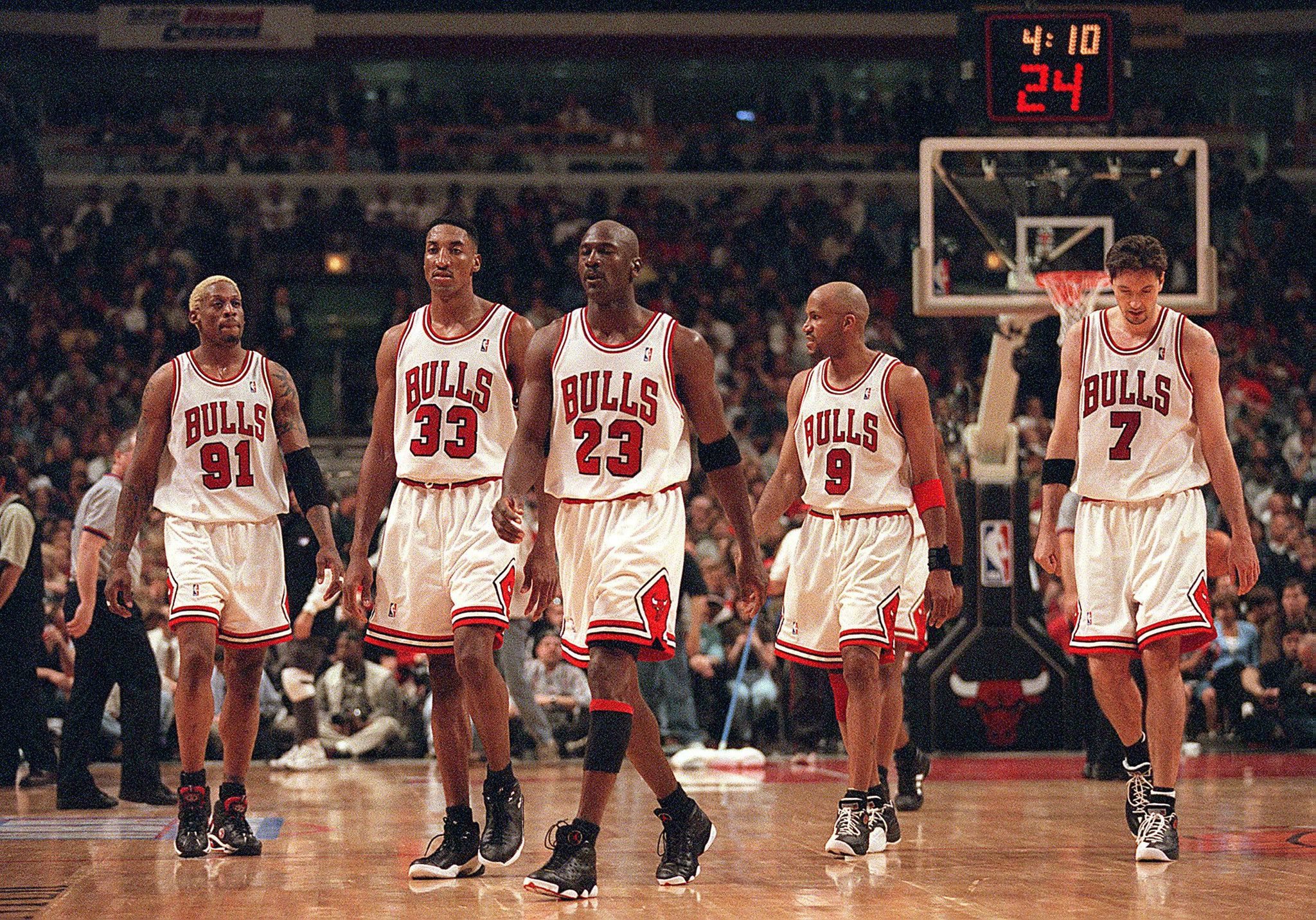
This would be like the Bulls showing up to face the Knicks in 1995 and sitting Michael Jordan, Scottie Pippen, and Dennis Rodman because they’d played in Dallas three days prior and in Houston the night before.
You might recall the Bulls’ stars suiting up for marquee games. NUCCIO DINUZZO / MCT
This was fraud. This was theft. This was a Becky Hammon tantrum, and fans in the arena and around the country suffered for it.
The outrageous nature of this clear act of rebellion cannot be overstated.
But I will try.
This was a nationally televised Sunday afternoon game that led off the eighth of ABC/ESPN’s nine “Women’s Sports Sundays.” It also was the “Legends Weekend” game for the Liberty, where they recognized former stars. This was a must-see game as the season enters its homestretch, with both rivals squarely in the playoff hunt.
Imagine, then, the dismay of the 17,082 fans who paid about $150 to watch Dana Evans, bless her heart, start her second game in two years with the Aces, and score two points, and turn the ball over three times.
The Aces never led, trailed by 23 after the third quarter, and lost by 40.
It should not be surprising that Hammon employed this disingenuous line of reasoning. After all, these shenanigans were pioneered by her NBA mentor, Gregg Popovich, on whose Spurs staff she learned a lot more about pro basketball than just the high screen-and-roll.
From pitch counts to minute restrictions to scheduled losses, load management has become a distasteful aspect of professional sports. This was far more than load management.
This more likely was Hammon — a spunky sort who in 2023 dissed Jalen Brunson and whose handling of a player’s pregnancy got her suspended for two games in the same year— making a statement of defiance at the league’s challenging scheduling of Aces games during this stretch.
Why was it more than load management? Simple.
Because Hammon didn’t have to sit all three players for the same game. She could have sat Wilson on Saturday, then sat the other two Sunday. Or vice versa. Or, more logically, she could have sat all three Saturday, against the Lynx, the league’s top team in a lower-profile game, then played all three Sunday with more of the world watching.
Instead, she sat three of the league’s better players against a rival that plays in the league’s biggest media market.
Unlike the NBA, the WNBA does not have a player participation policy with guidelines and mandates regarding not playing star players. Clearly, it needs one.
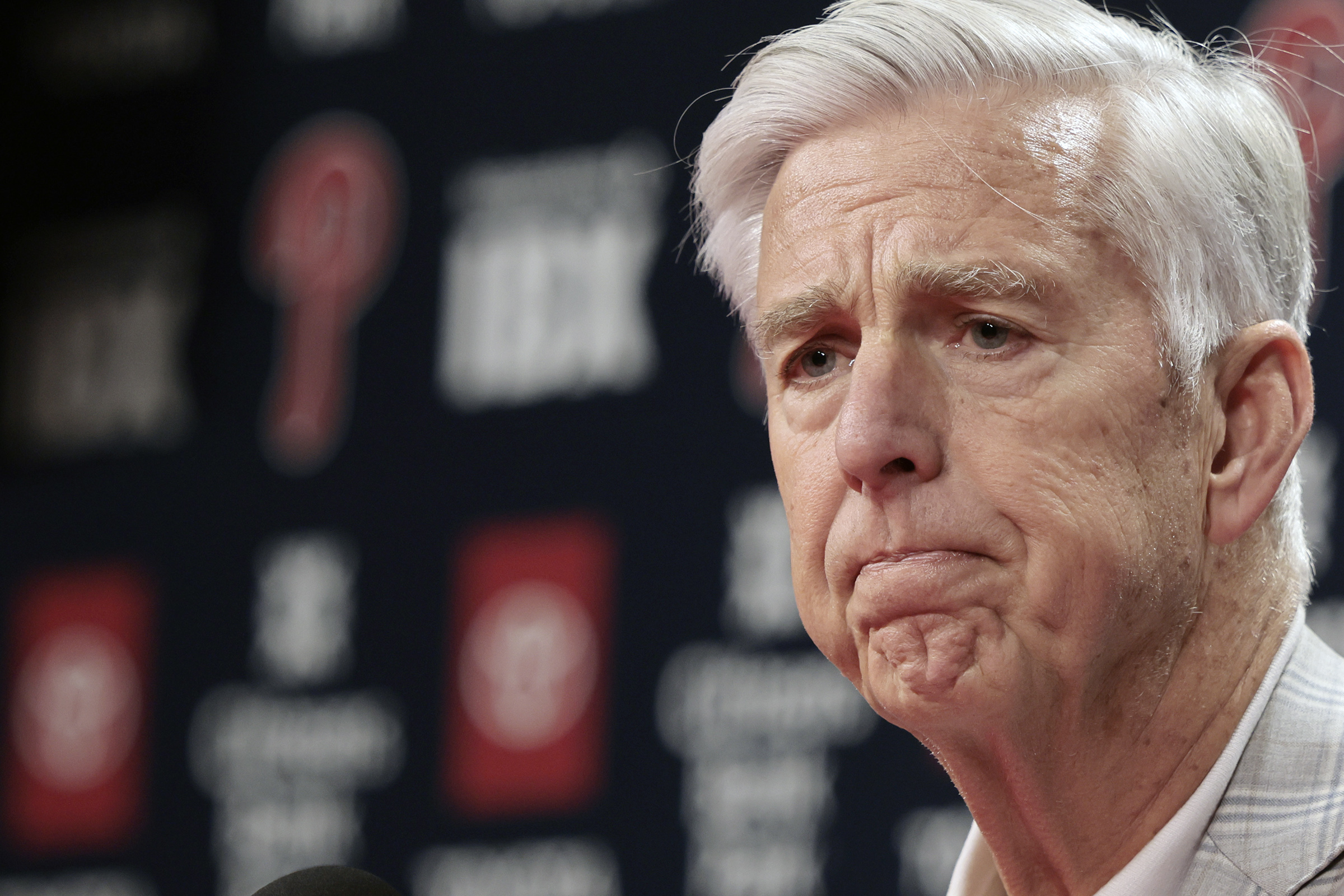
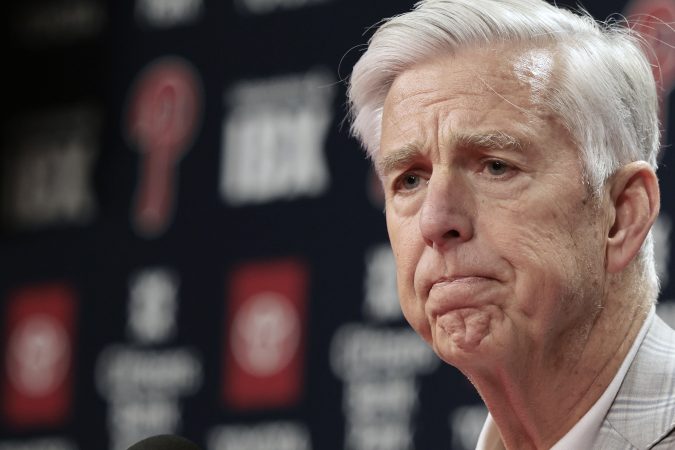
We already knew what Phillies president Dave Dombrowski was about, and what he wasn’t. Elizabeth Robertson / Staff Photographer
Phillies complaints are silly
Maybe it’s the malaise of the dog days of summer, but it’s become tiresome hearing complaints that a team knowingly built to be deficient defensively, with scant resources given to the bullpen, keeps losing games because it can’t catch the ball and it can’t pitch past the sixth inning.
In 2022 and 2023, Phillies president Dave Dombrowski told anyone who would listen that, when he added Trea Turner to a team that already had Kyle Schwarber, Nick Castellanos, and Alec Bohm, said team would not steal games with leather; rather, they would win them with wood. The Phillies are, by most metrics, a mediocre defensive team. By observation, after their defensive realignment as a result of the trade for Luis Arraez, they are easily bottom-five.
Further, Dombrowski’s consistent legacy in Florida, Detroit, Boston, and Philadelphia, where he combined to win five pennants and two World Series, included his haphazard construction and maintenance of bullpen talent. The Phillies’ bullpen, plagued by both injury and ineptness, is second-worst in baseball.
They are as advertised.
Deal with it.
LIV stud consigned to obscurity?
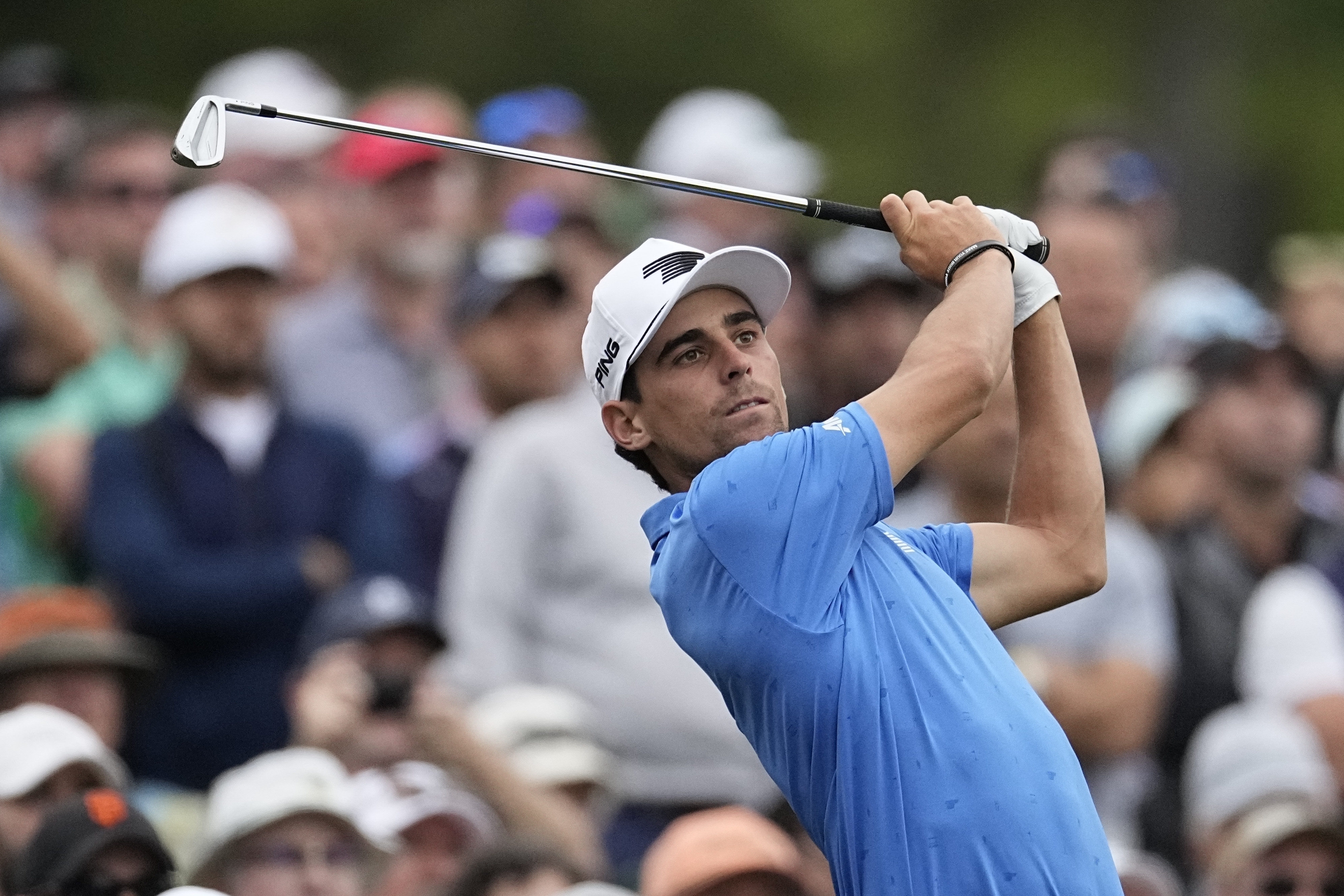
The peculiar path of Joaquin Niemann, the best golfer in the history of Chile, proves both the overall weakness and the hidden strength of LIV Golf’s existence.
Niemann joined LIV in August 2022 for a reported $100 million. He’s won nearly $80 million more, including a total of $4.3 million when he won his ninth LIV event Sunday at Trump Bedminster. That’s not only the most wins in the league’s brief history, it’s as many as Bryson DeChambeau’s five wins and Jon Rahm’s four wins combined. DeChambeau is tied for second with Brooks Koepka, but Koepka won’t win on LIV again since, like a rat aboard a sinking ship, he abandoned LIV in December to return to the PGA Tour.
Earlier this year Koepka, DeChambeau, Rahm, and Cameron Smith were courted by PGA Tour czar Brian Rolapp to return.
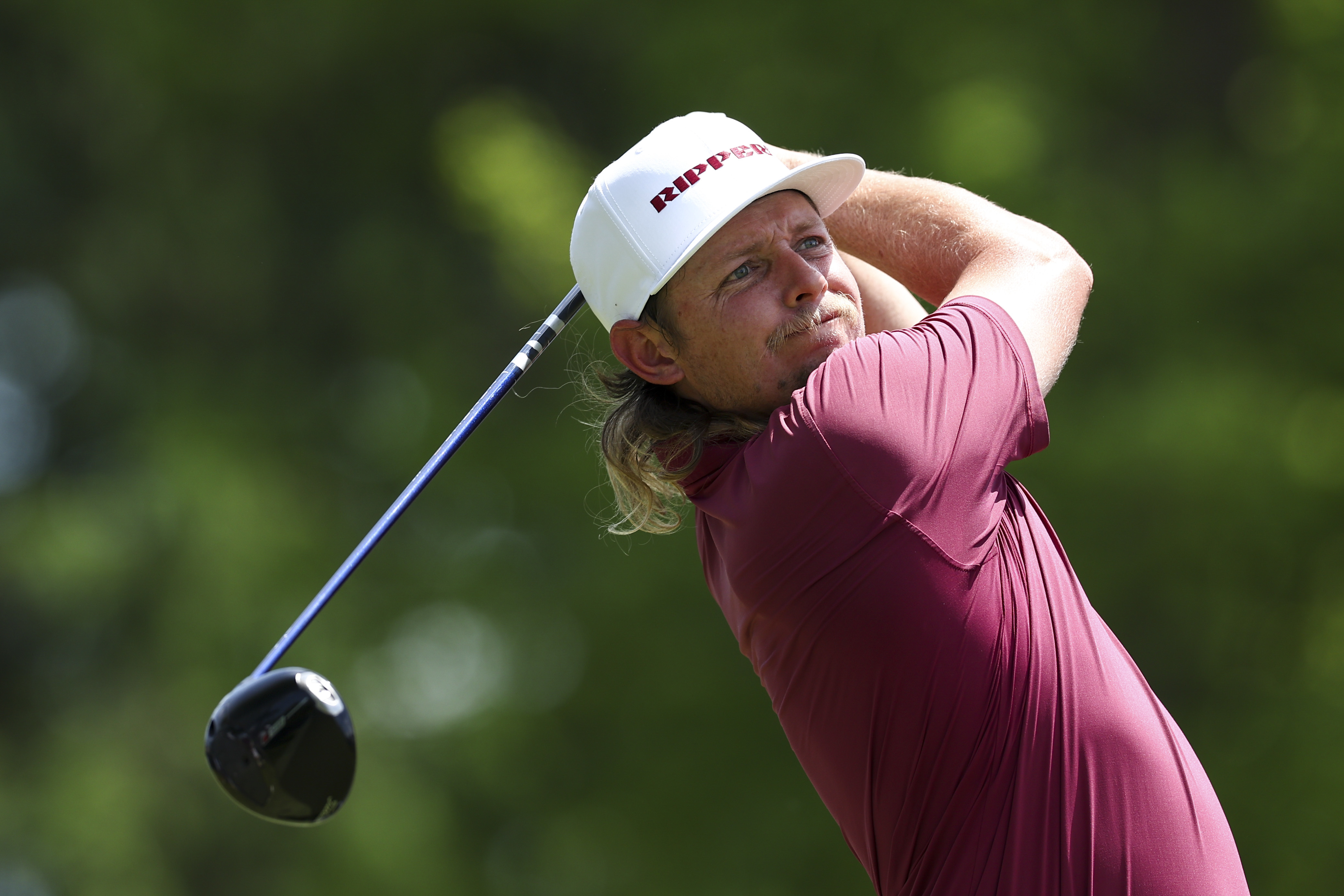
Each had won a major title, and, from DeChambeau’s social media superstardom to Smith’s magnificent mullet, each has created an international brand that would enhance a PGA Tour that utterly lacks charisma.
Cameron Smith, who wears a magnificent mullet, tees off at hole 2 during the final round of the 2026 PGA Championship at Aronimink.Monica Herndon / Staff Photographer
Only Koepka accepted the offer, but, with LIV foundering, there will be other offers. Rolapp should court Niemann, too.
He is, without question, not only the most successful golfer in the history of Chile, but also the most successful golfer in the history of LIV. Considering he has competed against fields that included Pat Perez, Yubin Jang, and Frederik Kjettrup, this is a dead, cold fish of a compliment, but Niemann has made that bed for himself.
As accomplished as he has been on LIV, no one can sanely argue that Niemann has been as good a player as DeChambeau, Rahm, or Koepka. In the 16 majors since the beginning of the 2023 season, Niemann has just three top-20s and two top-10s. Koepka, meanwhile, has five top-20s, two top-10s, and a win; Rahm has eight top-20s, seven top-10s, and a win; and DeChambeau has nine top-20s, seven top-10s, and a win.
However, one can reasonably argue that no golfer sabotaged his legacy more than Niemann by going to LIV. I believed this would be the case when he left, and I believe that’s how it has played out.
When he defected, Niemann had just won nearly $1 million by tying for ninth at the Tour Championship, the capstone event on the PGA Tour. He had won the Genesis Invitational and had spent most of the year ranked inside the top 20 in the world, peaking at No. 15.
Niemann left the Tour at the top of his game. He was tracking to become the next … Collin Morikawa? Matt Fitzpatrick? Justin Thomas?
We may never know.
Or maybe we will.
Joaquin Niemann stunted his growth by defecting to LIV. George Walker IV
Niemann won on the DP World Tour in 2023 but had fallen to 182nd this past March. Now, LIV’s product and personnel generally stinks, but Niemann hasn’t really been the 182nd best golfer on the planet since he was a teenager. He quickly proved that when LIV this year began awarding ranking points for top-10 finishes.
Niemann has won twice on LIV and he’s earned seven total top-10 finishes worldwide, one of them a tie for seventh at the U.S. Open at Bethpage Black. He also tied for 18th at the PGA Championship at Aronimink.
Rolapp can invite anyone back any way he likes. Niemann has said he would return to the PGA Tour if LIV collapses, but, unlike Koepka and Patrick Reed, who returns later this month, Niemann doesn’t seem particularly eager.
Maybe he likes beating up on the Harold Varners of the world. Maybe he’d rather compete on mediocre courses in member-guest condition. Maybe he just prefers playing in shorts.
At any rate, it is unfortunate. Niemann’s absence is the golf world’s loss.
There is time.
Niemann turns 28 in November. That’s how old Arnold Palmer was when he won the first of his seven majors and is just one year older than Koepka was when he won the first of his five.
But just imagine what Niemann might have accomplished in the last four seasons during partial absences of Koepka, Rahm, and DeChambeau.
Just consider what Scottie Scheffler has done in the absence of the big LIV quartet. Does that sound far-fetched? Well then, consider also that, like Niemann, at one point in 2022, Scottie was ranked No. 15 in the world.
It is officially audition season in the Phillies’ bullpen.
Are there any candidates?
It is a daunting question. It is also the question that will end up defining Don Mattingly’s stint as interim manager.
The Phillies somehow managed to sneak out a 7-6 win over the Blue Jays on Sunday, but it took them 12 innings, and they made a whole lot of not-so-good memories along the way.
At the top of that list was Orion Kerkering’s latest implosion. This one occurred in the eighth inning, almost immediately after Jesús Luzardo put a bow on one of the finer starting pitching performances you’ll see. The Phillies lefty looked like he did last postseason: seven innings, five baserunners, 12 strikeouts, two runs. Most importantly, he held a 5-2 lead. It would have taken a drastic turn of events to dampen the buzz at Citizens Bank Park. The Phillies bullpen rose to the challenge.
Sunday was Orion Kerkering’s fourth outing allowing two-plus runs in his last 20 appearancesMonica Herndon / Staff Photographer
Two batters into the eighth, Kerkering was one out away from delivering a three-run lead to Jhoan Duran in the ninth. Four batters later, the game was tied. There was some bad luck involved, with Ernie Clement’s RBI double the only extra-base hit. Still.
This was Kerkering’s fourth outing allowing two-plus runs in his last 20 appearances. Opposing batters are now reaching base at a .360 clip against him in high-leverage situations. Only five relievers have averaged as many pitches per plate appearance (4.17) in as many or more innings (45⅓) as Kerkering. The same is true of José Alvarado, who is averaging 4.18 pitches per PA in 43⅔ innings.
In fact, everything you can say of Kerkering is true of Alvarado. On Saturday, the lefty blew a save situation that sunk the Phillies against Toronto. He has allowed multiple runs in seven of his last 28 outings. The peripheral numbers have begun to catch up to his 5.77 ERA. In his last 13 games, he has 13 strikeouts against 10 walks/HBPs.
Mattingly needs to figure this thing out. If you believe the odds, the Phillies remain in the driver’s seat for one of the six NL playoff spots up for grabs. If you believe your eyes, it won’t matter if they get to October.
Even if righthander Jonathan Bowlan continues to perform in his new high-leverage role, that still leaves Mattingly one dependable arm short of avoiding offseason ulcer surgery.
Tim Mayza isn’t an option. Before Sunday’s scoreless inning, the journeyman lefty had faced just 48 batters in high-leverage situations over the last three seasons. Nearly half had reached base, including 11 of 27 in 2026.
Caleb Kilian might not be an option after suffering an oblique injury at some point in the top of the 11th.
“It didn’t look good,” Mattingly said afterward.
The Phillies’ one hope might be newly acquired lefty Brooks Raley, who pitched a scoreless 11th on Sunday. Raley last pitched in the postseason in 2022 while with the Rays. He retired three of the five batters he faced and did not allow a run in extra innings of a tie game.
Good luck finding any relevance there. Same goes for his earlier postseason action with Houston. Four of the seven earned runs he allowed came in a couple of outings where the Astros were down six. Otherwise, he has allowed one earned run in 8⅔ innings since the start of the 2020 ALCS. That’s not much of a sample upon which to render judgment.
But that’s more than we can say for Kerkering. His sample size is robust enough to leave little doubt that Mattingly can’t continue to factor him into his high-leverage decision-making.
The Phillies have plenty of other headaches. Bryce Harper and Kyle Schwarber combined to reach base seven times on Sunday. They combined to score two runs, both of them driven in by Schwarber himself. It’s a good thing that Schwarber snapped the second-longest homerless streak of his career, and that he did it exactly how you’d expect.
But Sunday was another answer to the question that so many had asked over the previous 17 games. What’s wrong with Schwarber? Well, what’s wrong is that the Phillies can rarely afford for him to not hit home runs. The problem wasn’t that he hadn’t hit a home run in over two weeks. The problem was that it was so conspicuous.
Kyle Schwarber hit two homers against the Blue Jays on Sunday.Monica Herndon / Staff Photographer
Same goes for Harper. After striking out in the first inning, the Phillies’ new right fielder drew a walk in four of his last five plate appearances. Three of them came with less than two out. He reached second base once, on a double steal on a Luis Arraez strikeout. J.T. Realmuto struck out to end the inning. In the 11th, Harper drew a one-out walk to load the bases, then watched right fielder Nathan Lukes gun down pinch-runner Garrett Stubbs at the plate on an Arraez fly-out to end the inning. The lack of punch in the middle of the order is nothing new.
Compounding matters are the defensive concerns in the wake of the Phillies’ attempt to accommodate their deficiencies in the middle of the order. Bryson Stott has been excellent at third base, and maybe that will ultimately make up for Harper in right field and Alec Bohm at first base. But Bohm was charged with another error on Sunday.
Plenty of teams have won playoff series, even championships, with bullpens that looked as leaky as Mattingly’s does right now. One needn’t look any further than the 2023 Diamondbacks, who slopped it together well enough to overtake the Phillies in seven games in the NLCS. Baseball is a sport where the odds are overwhelmingly in the favor of even an average-to-below pitcher. It isn’t unreasonable to hope that those odds string themselves together in the right order in the postseason. But it is a much tougher ask when a pitcher is backed by a defense that gives away outs and a lineup that has all of the balance of a fat man on a seesaw.
Mattingly’s challenge right now is to find out who his pros are, assuming he has any. Raley and Bowlan in the seventh and eighth isn’t how the Phillies would have hoped to be drawing it up at this stage of the game. The odds are hardly healthy that it will end up looking much better than what they’ve seen thus far. But they at least must look.
Nobody throws a premature party like the 76ers. From the 2012 blowout to welcome Andrew Bynum to a 2016 rally at the Art Museum after going 10-72 and getting the No. 1 pick in the NBA Draft — a pick that turned out to be Ben Simmons — to the parade of big-name free agents and trade pieces who have come and gone since, this franchise has forever reveled in the shock and awe of a stunning acquisition.
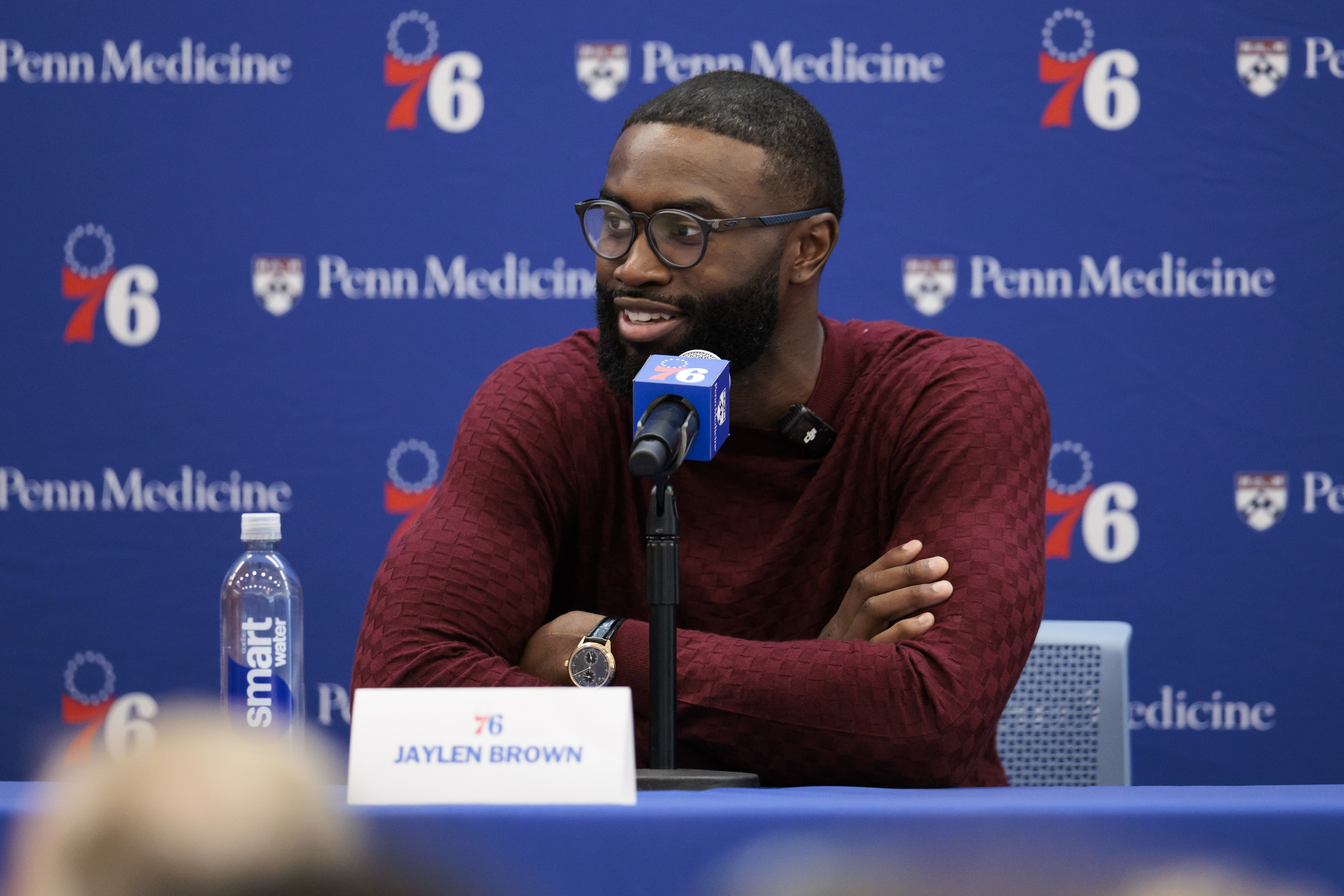
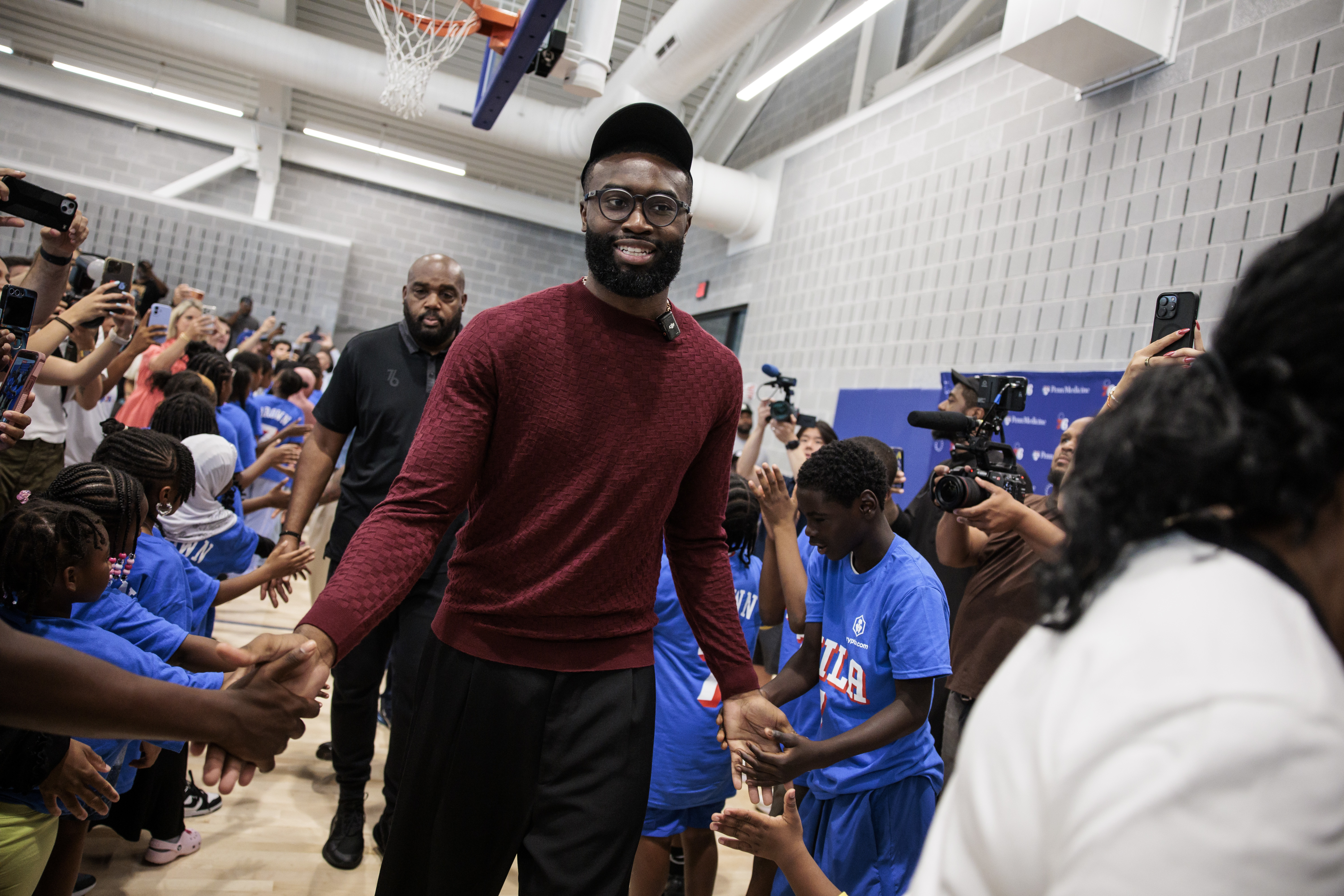
Its introduction of Jaylen Brown on Thursday — at a recreation center in Southwest Philadelphia, per Brown’s request — featured cheerleaders, neighborhood children, dozens of boosters, members of the organization, and music with a dance-party feel.
The affair had the Sixers’ customary pomp. Maybe this time, the circumstances are different. There’s actually reason to think they might be.
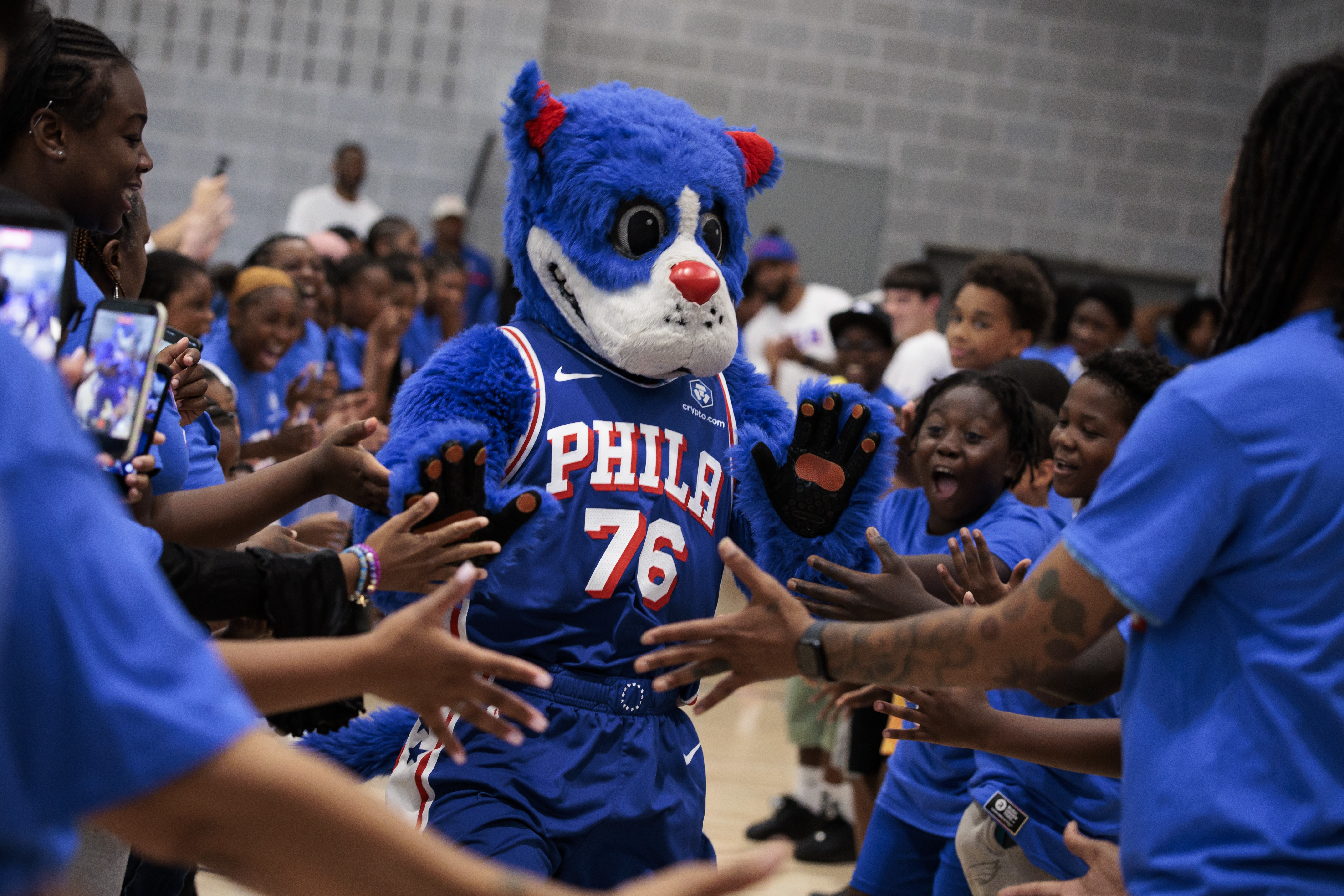
The Sixers pulled out all the stops, including their mascot, Franklin, for the introductory press conference of Jaylen Brown on Thursday. Monica Herndon / Staff Photographer
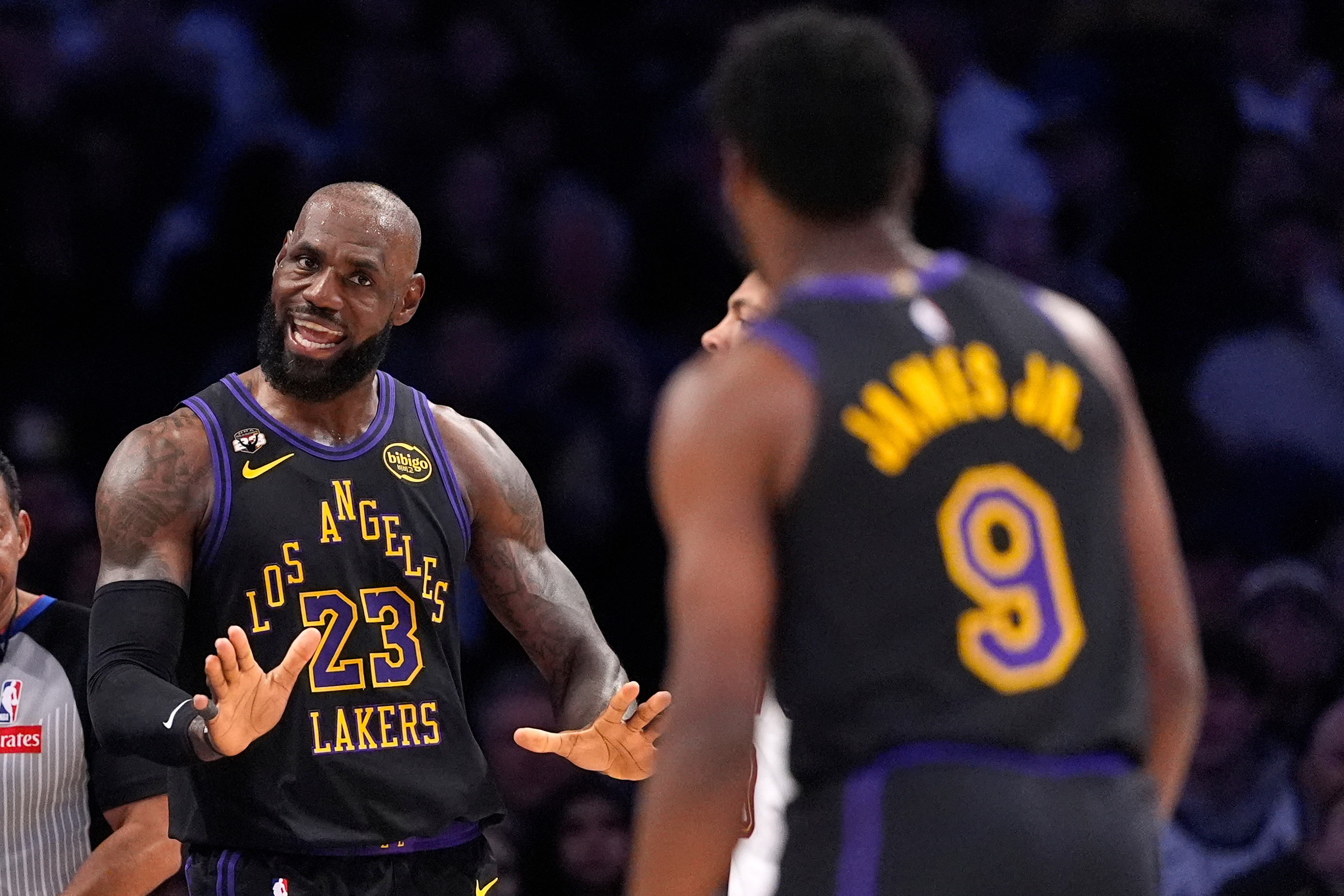
The trade for Brown and LeBron James’s decision to sign here give the Sixers more than just two outstanding players — one still in his prime, one still capable of being great, even at age 41. They now have two players who have shown they can handle, and even thrive amid, the highest of expectations and the heaviest of pressure. The most promising Sixers teams of the last 10 years tended to shrivel up in those situations. The 2019 team had a two-games-to-one lead on the Toronto Raptors, with Game 4 at home … and lost the game and, eventually, the series.
The 2021 club also was up, 2-1, this time against an inferior team in the Atlanta Hawks, this time squandering an 18-point lead in Game 4 and a 26-point lead in Game 5 and losing Game 7 … at home. The 2023 club was up, 3-2, on Brown’s Boston Celtics and … well … you remember.
Have Brown and James been in similar scenarios? Have they had opportunities to close out playoff series and failed? Of course. They also have five championships and 12 Finals appearances between them, and they’ve met the measure of those moments, too, more often than anyone else on the Sixers’ roster.
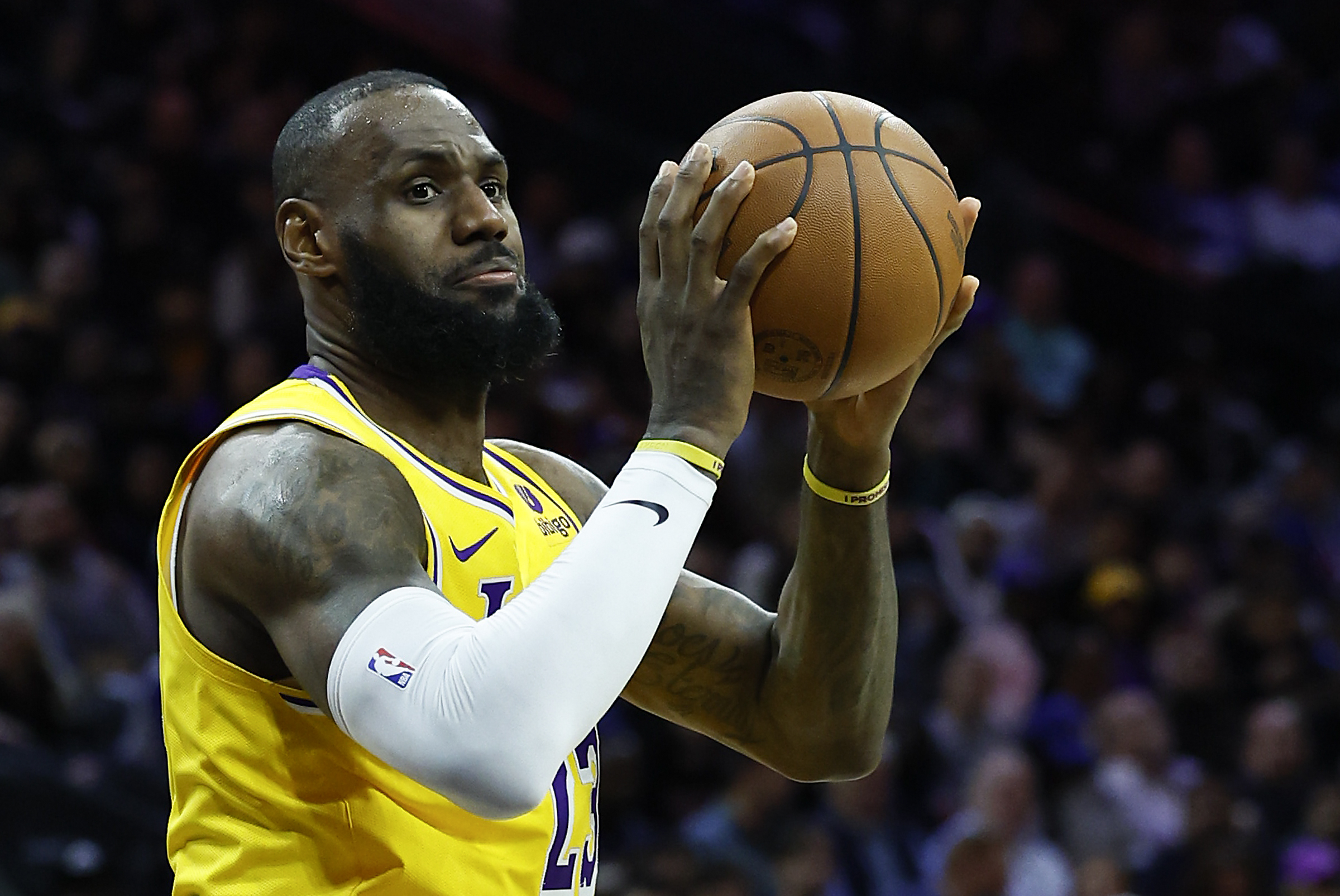
A bonus of LeBron James joining the Sixers roster is the level of reserve both he and Jaylen Brown bring when it comes to aspirations of an NBA title.Mark J. Terrill
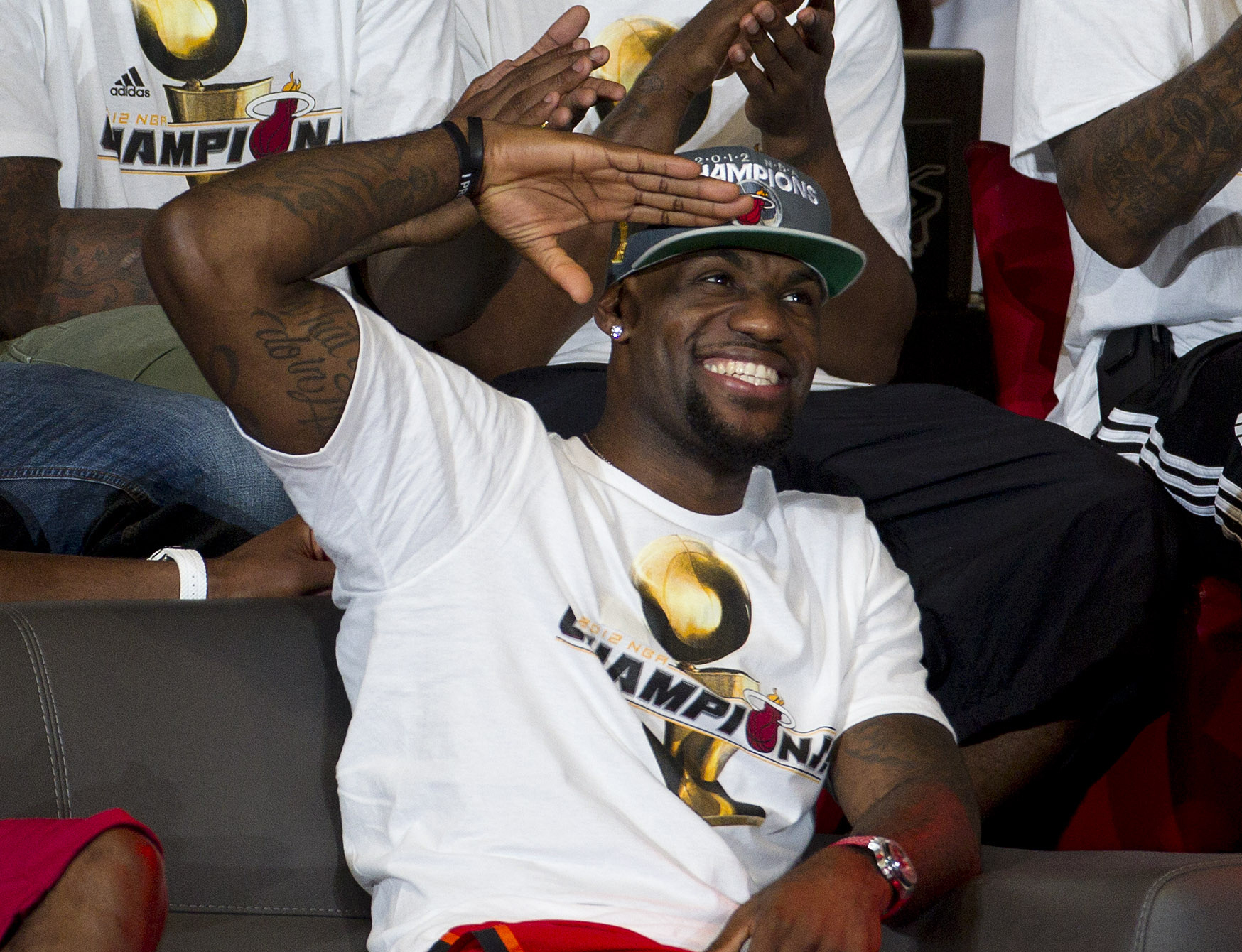
Few players in NBA history had as much on the line as James did in the 2012 Eastern Conference finals, when his Miami Heat — one season after losing in the 2011 Finals to the Dallas Mavericks, James still without a championship ring at the time — were down, 3-2, to the Celtics and facing a Game 6 in Boston.
He delivered perhaps the best performance of his career that night: 45 points, 15 rebounds, and five assists in a 98-79 Heat victory, then another 31 points and 12 boards in Miami’s Game 7 win.
A comparable comeback against the San Antonio Spurs in the 2013 Finals, the Cavaliers’ charge back to beat the Golden State Warriors in 2016. These transcendent performances have to remain in James’ past and would be too much to ask of him now, but they at least dispel any ridiculous notions that any important game would be too much for him, even at his advanced age.
LeBron James performance in 2012 and 2013 with the Miami Heat proves that, mentally, he can guide a young, talented Sixers team to handle the big moments.J Pat Carter
He’ll be calm. He’ll be cool. It doesn’t mean the Sixers are assured of winning such games, only that no one is likely to see the same sad scenes that played out here with Simmons and James Harden. No one is likely to see a Sixers star choke.
“James doesn’t need to work himself into a frenzy, into an angry, unnatural lather,” Adrian Wojnarowski, who covered that Heat-Celtics series for Yahoo! Sports, wrote after Game 6.
“He’s too good, and his talent will carry him if he comes to these pressure games with something far more lasting, with far more staying power than responding to the hellacious firestorm that surrounds his successes and failures.
“His personality is different than a Kobe Bryant, a Michael Jordan, and allowing for that has been a wise plan of action. There was a rage within James for this Game 6, a resolve, but it was contained within the context of the surgical way in which he took apart the Celtics.”
As for Brown, he’s spent a decade in a market as demanding as Philadelphia’s. He was the NBA Finals MVP in 2024. He has played 142 postseason games in his career and has won 58% of them. His playoff statistics are comparable to, if not better than, his regular-season stats.
New Sixers forward Jaylen Brown arrives for his introductory press conference at the Francis Myers Recreation Center on Thursday.Monica Herndon / Staff Photographer
“At this point in my career, how I would handle pressure would probably look different,” Brown said. “At this point now, I would probably ignore a lot of it or let it just be water under the bridge. …
“I played in Boston for the last 10 years. The pressure is high there. It’s Titletown. They expect to win every single year, and they’re always looking for someone to blame. Some of those years, it was me, so I’ve been through that. All I come with is my work ethic, my mentality, my impact on winning. That’s just my approach. Nothing else matters — just, how do we win games?”
It’s why he and James are here. It’s the only thing anyone cares about anymore with this team. Too many premature celebrations in the past. So much cynicism for so many years. It’s long past time for the Sixers to prove to everyone that they’re made of stronger stuff.
There are two sets of questions for these 76ers. Maybe it feels like that’s always been the case. Except that it hasn’t.
The questions used to be: Will Joel Embiid be healthy? How often? To what extent? At what level of effectiveness? Nothing beyond these things mattered. Without Embiid, the Sixers weren’t a team you could even pretend to take seriously.
Things aren’t what they used to be. With or without Embiid, the Sixers feel like they have a team that will have an identity. More than that, they feel like they have a team that will have a chance. If they didn’t make that clear when it traded for Jaylen Brown, they certainly did when they formally introduced him.
The only things missing from Thursday’s press conference at Francis J. Myers Recreation Center in Southwest Philly were a marching band and a vice-presidential nominee. Upward of 100 people packed into the rows of plastic folding chairs that covered most of the width of the rec center’s indoor court and three-quarters of its length.
In addition to the ownership group and most of the front office and Brown’s family and reporters from both Philly and Boston, there were cheerleaders and game day event staffers and security guards and a DJ and a gaggle of youth from the local community.
New Sixer Jaylen Brown arrives for his introductory press conference at the Francis Myers Recreation Center on Thursday, Aug. 6, 2026 in Philadelphia.Monica Herndon / Staff Photographer
While it was Brown who keenly requested that the event be held at a local rec center, the proceedings were just as much a show of force from the Sixers that left little room for doubt about the gravity they expect their newly acquired superstar to impart on the organization.
“What an event,” Sixers first-year president of basketball operations Mike Gansey said. “It’s a special, special day to be a 76er.”
While it would be easy to sit here and wonder about Embiid’s thoughts on all of the hoopla surrounding Brown, the much more relevant question concerns their coexistence on the court. Feelings? Sure. Everyone has them. But they require political capital to matter. For much of his tenure, the Sixers adhered to a doctrine of appeasement. Several different front offices and coaching staffs operated as if they lived in fear of a trade demand. Now, the Sixers couldn’t trade Embiid if they wanted. Both sides are surely aware of that.
Besides, we’ve seen and heard plenty to suggest that Embiid is at the very least receptive to having another superstar on board. On Thursday, Brown said that the Sixers center reached out to him shortly after the trade went down. The team has an active group chat. Yes, LeBron James is a part of it.
“Me and Joel have been friends throughout the years,” Brown said. “I love soccer, so we talk about that a lot. He reached out, too, when I got traded. He reached out the same day. I talked to him on the phone. I’m looking forward to earning everybody’s trust and respect and grinding and impacting winning. That’s what I’ve done my whole career, and that’s what I plan on doing here.”
That’s all that counts in the chemistry department, for the time being. Even if Brown and Embiid have some aspects of their personalities that make you wonder about the occasional friction, the decade of close quarters competition between the two has generally revealed a healthy mutual respect. The two players shared a long one-on-one moment near midcourt in the aftermath of the Sixers’ win over the Celtics in Game 7 of April’s first-round playoff series. The two most important personality traits in any professional relationship are to mean well and to want to win the task at hand. Both Brown and Embiid have those fundamentals. That’s enough for now.
The success and failure of the Brown-Embiid partnership will be determined by how well it works on the court. That, in turn, will determine whether the Sixers have the potential to become a truly great team. Brown and Embiid are both the ceiling and the floor. Tyrese Maxey and VJ Edgecombe both have the skill profile and willingness to adapt their roles to those around him. James did it even in his prime. Now, he is at an age where one generally accepts who he needs to be. The big question marks are Brown and Embiid.
This isn’t a question of personality as much as it is a question of technical fit. There are a lot of parallels between Brown and Embiid, at least from a critical perspective. Shot selection, tunnel vision, decision-making, possession time, efficiency, pace in the half court, all have offered ample fodder for skeptics. Of the 20 players with a usage rate of at least 29% over the last eight seasons, only two have averaged fewer than four assists per game. You guessed it. Embiid and Brown.
Whether or not these criticisms are prescient or fair, Brown and Embiid are clearly the two players who have the potential to clunk the operation up to a point of dysfunction. Don’t interpret that as a disservice to either. It’s just the style of their games. Whether the Sixers reach their ceiling will depend overwhelmingly on how well Brown and Embiid adapt their games to what optimizes the collective. Each has the ability to be the player they need to be. It is not a complicated thing. Drive when you have a lane. Shoot when you have a shot. Otherwise, keep the ball moving.
“To win, you’ve got to be able to have sacrifice,” Brown said. “You’ve got to be able to have communication.”
The presence of James as a connector and secondary playmaker should help. So, too, should the presence of Maxey and Edgecombe, two of the more likable, earnest and adaptable young players in the game. But if we are going to assume that Embiid’s outlook is as promising as the reports suggest, the Sixers’ fate will ultimately be determined by his synergy with Brown.
The questions that cut to the heart of the horrible hazing incidents within Cheltenham High School’s football program are the same questions that everyone always asks in these situations: Where were the adults? Who allowed this behavior to happen? How did the chop-busting and rites of passage that have long been intrinsic to sports escalate to the point that four coaches, including former head coach Terence Tolbert, and six players have been indicted for two alleged assaults that took place in the team’s locker room?
Even a glance at the details is enough to turn your stomach. Players — as many as 19 of them — allegedly held down a 15-year-old sophomore member of the team, stepped on his chest and groin with their cleats-clad feet, and tried to poke a broomstick into his butt. The coaches traded inculpating texts about it, according to Montgomery County District Attorney Kevin Steele. The Cheltenham School District canceled the football team’s season last year and again this year. Parents, many of whom reportedly had warned the district against hiring Tolbert in the first place, are angry. And everyone, inside the program and out, is left wondering how in the hell we got here.
A less egregious incident, in the Central Bucks High School West football program in 2014, is instructive here. In that situation, a preseason initiation ritual progressed each year from giving players haircuts — sometimes in the shape of male or female genitalia — to licking mayonnaise off teammates’ nipples and groins to simulating sex with a stuffed toy pig to playing “Slap/Lick/Fondle,” a game that ended with underclassmen touching other players’ private parts.
The Central Bucks School District canceled West’s football season and removed its head coach, but what matters most is that the district acted before the hazing reached the same severity as what allegedly happened at Cheltenham. You’d think such an episode would have been a warning siren for coaches and athletic administrators throughout the region. But after a while, the siren goes silent or the people who need to hear it most go deaf, and vigilance wanes, and the pattern repeats itself.
It is easy and of course correct to lament that youth and high school sports too often have taken on an outsized and inappropriate importance for too many coaches and parents and athletes. But one of sports’ greatest benefits to young people is that it gives them a stake in something bigger than themselves, a stake in something that matters to them, and they learn to develop and modify actions and habits to preserve sports’ place in their lives.
Amid the C.B. West hazing story, for instance, Phil DiGiacomo, who was a star running back on two of the school’s state-championship teams in the late 1990s, told me that, when he played, the Bucks’ success served as an effective deterrent against bad behavior. Yes, Mike Pettine, the program’s legendary head coach, and his staff ruled with a measure of iron-fist discipline that likely wouldn’t fly today, and even those old-school coaching techniques and West’s on-field dominance didn’t prevent every instance of player misconduct. Still, DiGiacomo said, the athletes themselves knew that, just by suiting up for West, they were continuing a special tradition, and they stood to lose a chance to call themselves champions if they did something stupid or malicious. So most of them didn’t.
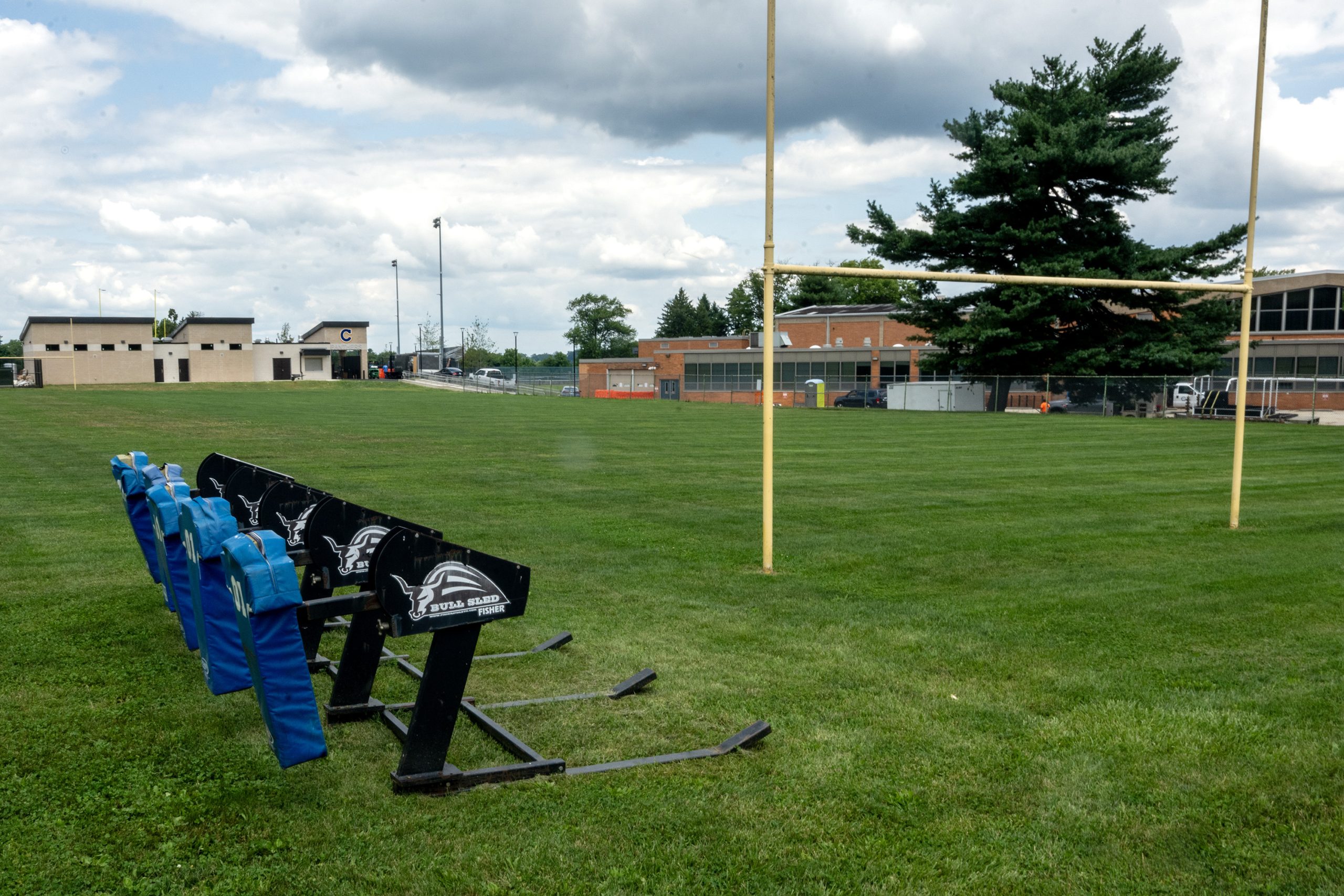
Cheltenham’s practice field photographed on July 29. The program hasn’t had a winning season since 2022.Tom Gralish / Staff Photographer
“When we were there, there was no hazing,” DiGiacomo said. “It’s kind of funny because if anyone ever got picked on, it got straightened out by an older guy real quick, mostly because we feared Pettine — that, and we were too damn tired to do anything else.”
A high school team doesn’t have to win 59 straight games and three consecutive state titles, as those West teams did, to be a point of pride for its players. It just has to provide them a rewarding experience, and they — and their coaches — have to feel that they have something to lose if it doesn’t. That element appears to have been missing entirely from the Cheltenham football program in recent years. In fact, it seems not to have been even a consideration for the school’s administration.
In his previous stint as a head coach, for Abington in 2023, Tolbert had won just one game. The school district decided not to renew him as coach, and sources have told The Inquirer that Tolbert’s toleration of a toxic atmosphere within and around the Abington program, including bullying by players and the use of slurs by coaches, were the driving forces behind his departure.
Cheltenham’s leadership either was unaware of these red flags or was willing to look past them, and for what? The program hasn’t had a winning season since 2022, but come on. Was Tolbert thought to be such a great coach that only he could restore the program to respectability? What qualities did he have that the people who hired him considered so essential? It’s obvious now that he and his assistants weren’t capable of doing the one thing any adult working in a school should put first: Keeping students safe.
The courage to take the right steps
The most infuriating aspect of stories such as this is the excuse that coaches can’t be held responsible for all their players’ mistakes. That’s true as far as it goes, but there are steps coaches can take to establish the right kind of culture, to model good behavior, to let the athletes in their care know what will be tolerated and what won’t.
One longtime area football coach told me Wednesday morning that he was fortunate to have two assistant coaches who were special-education teachers, who spent a lot of time around kids who had been the objects of ridicule. These coaches brought students from the school’s autism-support classes to be managers and statisticians and scorekeepers, and they let everyone know: These kids are part of this program. These kids are accepted members of this team. Treat them with respect.
Those are the kinds of gestures that seem small but can make a major difference, that mitigate the risks that coaches have accepted for decades. Coaching high school sports is a damn hard job, and it’s difficult because, at its best, it requires a measure of moral courage: To say no, to explain why, to stand by that decision. In this Cheltenham ugliness, we see once again what happens when that strength is lacking. The necessary guardrails fall away, if they were ever installed at all, and only after the damage comes to light does it become clear that a school and its students have been saddled with coaches and educators who aren’t willing to do the right thing or, worse, don’t even know what the right thing is.
There is no perfect historical analogy for what LeBron James is attempting with the 76ers or for what the Sixers are attempting with him. He will turn 42 in late December. He has appeared in more NBA games than anyone. He will soon begin his 24th season in the league without a pause — no temporary retirements, no full seasons missed because of injury. And he has joined a team that has not won a championship since 1983, was already capable of competing for one next season, and because of his arrival will be expected to win one.
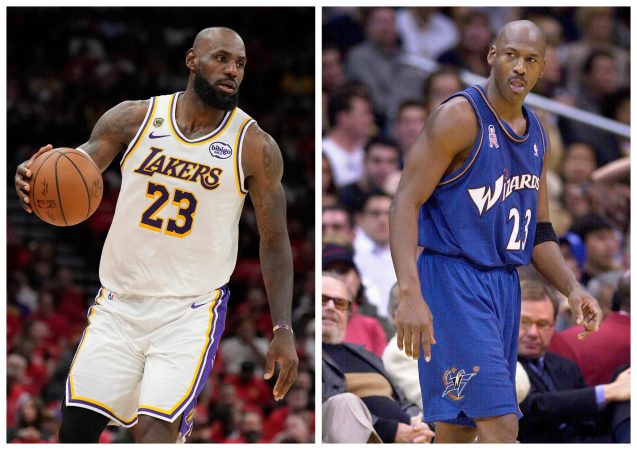
The figure to whom James is most often compared, of course, is Michael Jordan: for records and achievements accumulated, for championships won, for the aesthetics of their styles of play. Now they have another point of relative similarity. Jordan was 38 when he ended his second break from the game and played two seasons with the Washington Wizards. If the collective stakes of his return weren’t nearly so high as James’ decision to sign with the Sixers — the 2001-03 Wizards went 74-90, missed the playoffs both years, and even with an in-his-prime Jordan wouldn’t have had a prayer of winning a title — Jordan still provided a useful precedent for how the daily drama of James’ time with the Sixers might unfold.
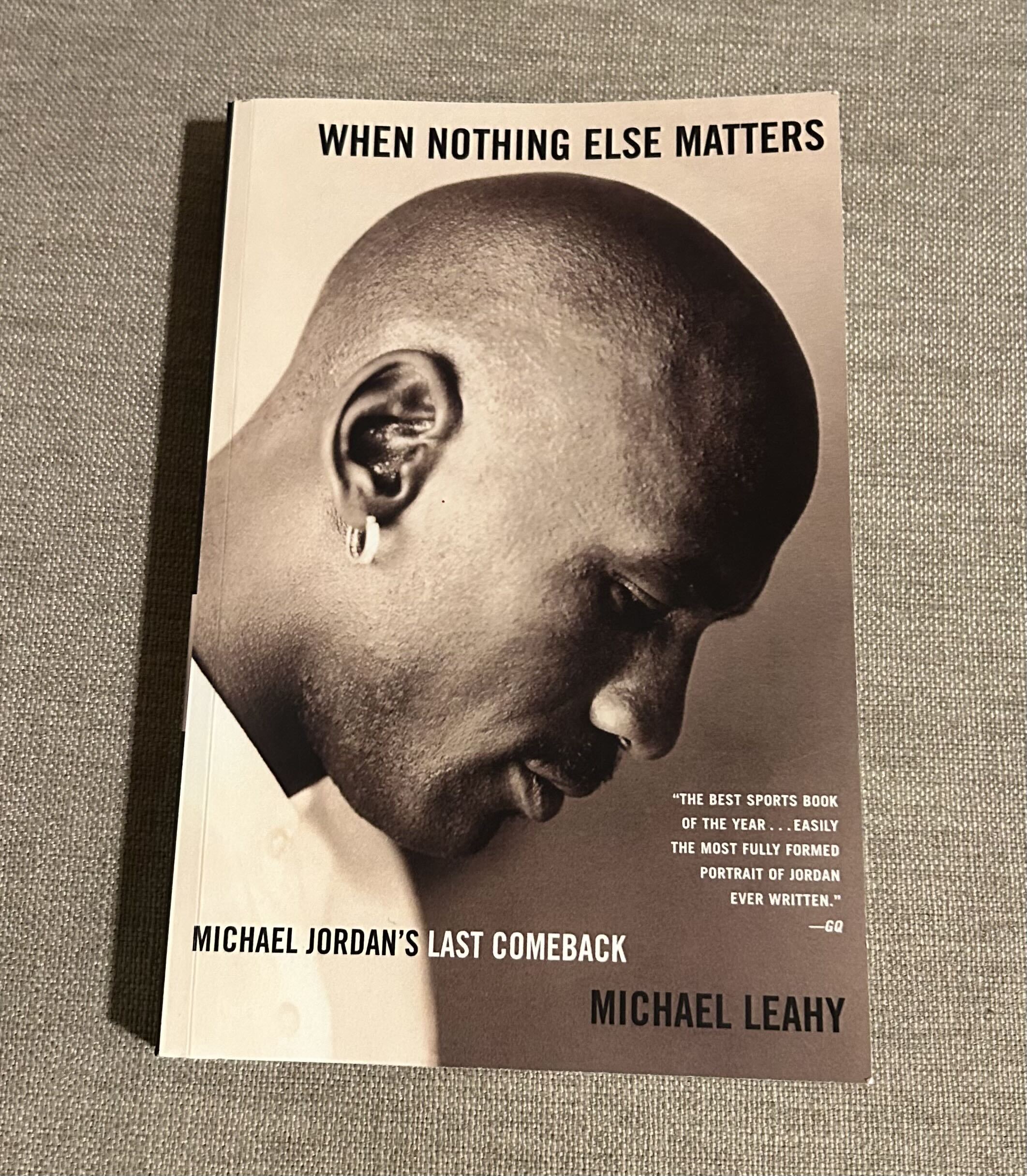
The details of that story were preserved in a book, WhenNothing Else Matters: Michael Jordan’s Last Comeback by Michael Leahy, that is as good as anything ever written about any topic related to basketball. Leahy was a staff writer for the Washington Post at the time he immersed himself in Jordan’s world, but he was not a sportswriter; he had nothing to lose, no sources to burn or fans to alienate, by documenting Jordan’s tenure in Washington with remarkable depth and unsparing honesty.
Michael Leahy’s 2004 book “When Nothing Else Matters: Michael Jordan’s Last Comeback” which chronicled Jordan’s return to the NBA with the Wizards in 2001.Mike Sielski
Published in 2004, When Nothing Else Matters has been memory-holed for more than two decades. It didn’t refresh and amplify the mythology around Jordan in the way The Jordan Rules or The Last Dance did, so it doesn’t resonate in the public consciousness much anymore. But it does serve as a cautionary tale about the nature of superstardom — the kind that only the chosen few, Jordan and James among them, enjoy — and its lessons apply just as well to the Sixers and Philadelphia as they did to the Wizards and Washington. Here are five important ones:
Lesson 1: The Wizards’ leadership kowtowed to Jordan. The Sixers’ leadership can acquiesce to James only so much.
One of the recurring themes of When Nothing Else Matters is the control Jordan exerted over the Wizards’ entire organization, starting with his friend and handpicked head coach, Doug Collins.
“Whenever an issue critical to the team’s well-being arose,” Leahy wrote, “Jordan bent Collins to his will — whether it was over Jordan’s playing time, or who among his teammates deserved to start or not start, or what kind of offense or defense to deploy. Collins’s lack of power illustrated the dangers in allowing any team’s Zeus to rule over a coach and franchise.”
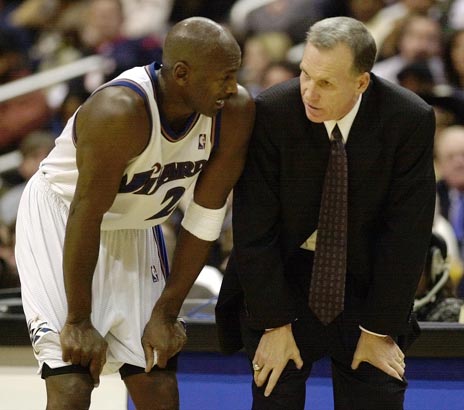
Michael Jordan (left) picked Doug Collins (right), his former coach with the Bulls, to be his coach in Washington.
Bob Myers has gravitas and four championship rings from his years with the Golden State Warriors. Mike Gansey has a good relationship with James from their time together with the Cleveland Cavaliers. Nick Nurse won a championship in 2019 with the Toronto Raptors — and with a superstar, Kawhi Leonard, who can be a challenge to manage. They have to assert and maintain their authority, or at least some semblance of it, in the face of James’s esteem and power. James won’t necessarily be as controlling and demanding as Jordan, but he can be controlling and demanding enough. He’s accustomed to getting his way all the time, and it would be a lot to expect him to be just along for the ride now.
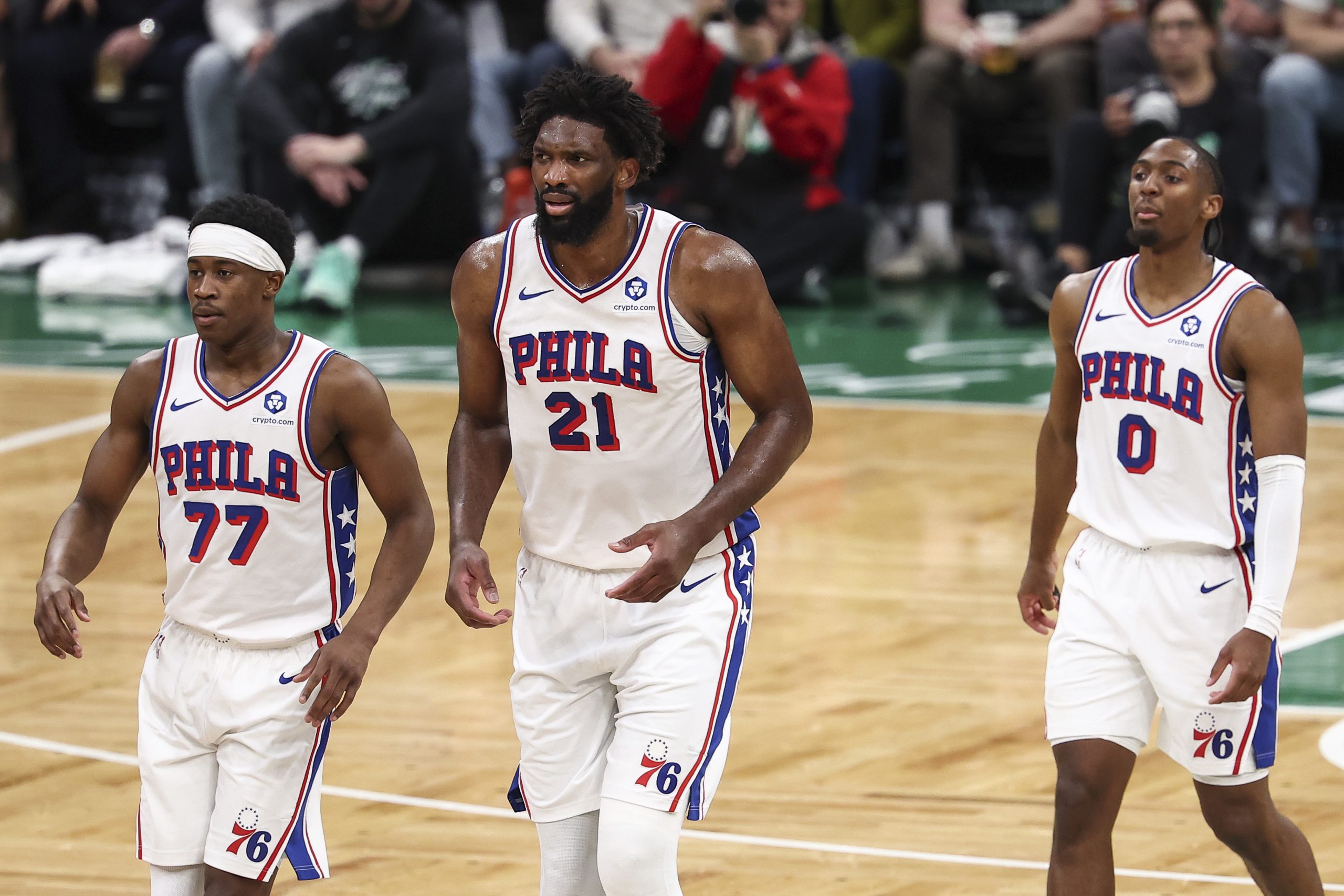
Among LeBron James’ challenges: Meshing with the Sixers’ existing star players, Vj Edgecombe (left), Joel Embiid (center), and Tyrese Maxey (right).Monica Herndon / Staff Photographer
Lesson 2: Expect tension among the players, especially the best ones.
Jordan’s verbal abuse of rookie Kwame Brown, including calling him a “f—g flaming f—t” during practice, was among the salacious revelations in Leahy’s book. But Jordan’s relationship with Coatesville native Richard “Rip” Hamilton throughout the 2001-02 season is the more relevant one for the 2026-27 Sixers. “There was a lingering tension” between Jordan and Hamilton all season, according to Leahy, in part because Hamilton, in his third season and just emerging as one of the league’s better perimeter scorers, believed it was time for him to assert himself as the team’s centerpiece and that Jordan was holding him back.
Just because Jordan and Hamilton clashed doesn’t mean James, Joel Embiid, Jaylen Brown, Tyrese Maxey, and VJ Edgecombe won’t get along. But the Sixers have to prepare for the possibility, even the likelihood, that this team won’t be a smooth-running, ego-free machine. Brown is 29, was the MVP of the 2024 NBA Finals, and — despite the debate around whether he is an analytically efficient player — is regarded as a star. Embiid is a former league MVP. Maxey is approaching his peak years, as is Edgecombe. And James, like Jordan, hasn’t deferred often to anyone in his career.
Lesson 3: Time will take its toll on an older player, even one as great as Jordan or James.
Jordan, remarkably, played all 82 games in his final NBA season, but he struggled with tendinitis throughout 2001-02, missing 22 games. James hasn’t appeared in more than 71 games in any of his last eight seasons; in five of those seasons, he played 60 games or fewer. Never forget: Father Time is Rocky Marciano.
LeBron James, who will be 42 in December, hasn’t appeared in more than 71 games in any of his last eight seasons.Yong Kim / Staff Photographer
Lesson 4: The honeymoon will end, and victories had better follow.
Jordan’s two years in Washington are not remembered as a great and glorious portion of his career, for the simple reason that the Wizards still stunk with him. The Sixers aren’t likely to fall on their faces with James. But the pressure on them will be immense, and patience with a losing streak or a stretch of subpar play will be thin, if any patience exists at all.
“Sports fans can be a cruel, monomaniacal breed,” Leahy wrote. “Only games and standings matter to the most rabid, which, depending upon how you want to look at it, evinces either an endearing, childlike intensity or a severe case of arrested development.”
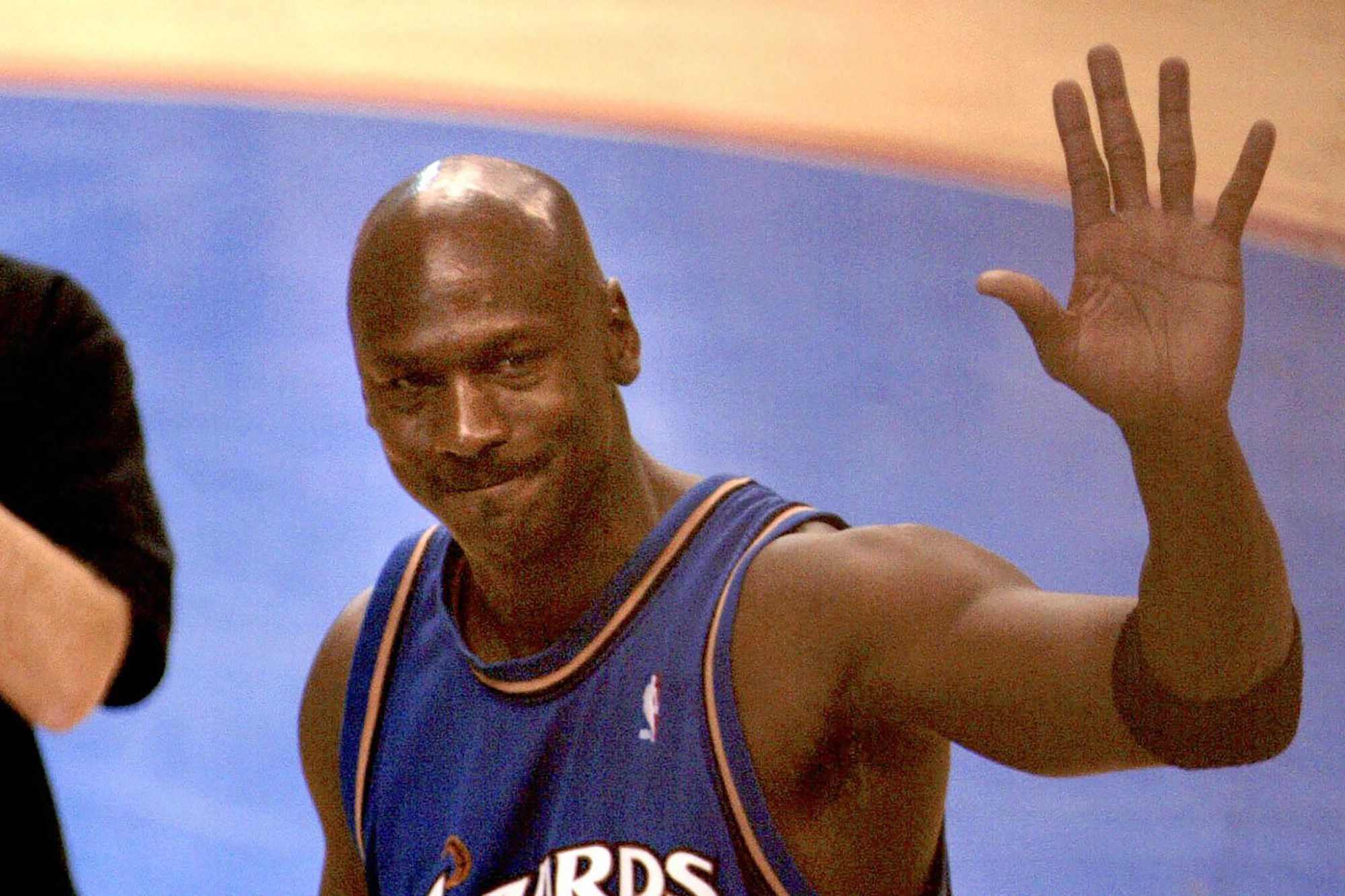
Michael Jordan averaged 21.2 points on .431 shooting in his two seasons with the Wizards. Their record? 74-90. MILES KENNEDY / AP
Lesson 5: There was more to Jordan’s comeback — and more to James’ joining the Sixers — than winning.
“The truth was this: A sporting god enjoys supreme power only as long as he plays, earns and fills seats,” Leahy wrote. “The moment he ceases to be a team’s principal revenue stream is the moment his dominion ends.”
James said that he considered retiring, that he changed his mind because he still wants “to work … to grind … to compete,” that his desire to win another championship was the reason he came here. Here’s a safe bet: It wasn’t the only one. He will fill more seats in Philadelphia than he might have anywhere else, and you’re naive to think that intoxicating sensation wasn’t on his mind when he made this decision. LeBron James is as much a sporting god as Michael Jordan was, and to be treated as such is the most powerful drug on earth. He doesn’t want to exit the stage as anything less.
What does disaster look like? Well, let’s start with what it sounds like, because it sounds a lot like Dombrowski’s voice.
“Our first goal is to make the playoffs,” the Phillies president said Monday, prefacing an answer about the potential postseason impact of a day headlined by the acquisition of free-agent-to-be Luis Arraez for fast-rising pitching prospect Ramon Marquez, “so, I hope we’re dealing with clubs in the postseason.”
Luis Arraez has won three batting titles and is leading the National League with a .324 average going into Monday’s games.Jeff Chiu
The words that followed don’t really matter. What matters is the qualification. I have written this plenty of times before. Hope is not strategy. It is a lack of options, one that is usually a function of decisions made prior.
Dombrowski has been the man in charge of making the Phillies’ baseball decisions for five-and-a-half years. Five-and-a-half years into Andrew Friedman’s tenure with the Dodgers, he was en route to his first World Series win, after having already lost two, one in seven games. He’d salvaged Max Muncy from the scrap heap, signed Justin Turner and Chris Taylor, traded for Kiké Hernandez, and then Mookie Betts, drafted Will Smith, Andy Pages, and Walker Buehler. Just as important, he’d swung a series of minor league trades that helped lay the groundwork for the Dodgers’ recent acquisition of two-time defending AL Cy Young Award winner Tarik Skubal.
Long story short, Dombrowski has reached a point where the problems he must solve are all of his own making. He did not draft Alec Bohm or Bryson Stott, but he did not pivot off them, either. He signed Trea Turner to a $300 million contract. He oversaw the move of Harper from right field to first base. Four years ago, he could have leveraged top prospect Logan O’Hoppe in a trade for a young, cost-controlled right-handed hitter, or a young, cost-controlled pitcher instead of Brandon Marsh. He did not lose the trade. But, in the grand scheme of things, given the circumstances, did he win it?
The circumstances are this:
It isn’t necessarily a disaster to ask three-fourths of your infield to change positions midseason so that two players can continue to play a position where they aren’t the best defensive option.
As a result of the trade for Luis Arraez, Phillies first baseman Bryce Harper will move back to right field.Yong Kim / Staff Photographer
It isn’t necessarily a disaster to move one of those players from the infield to the outfield, where he hasn’t played more than eight games since 2021. Nor is it to move another of those players (Stott) from second base to third base, a position where he has started just 12 games since high school.
It isn’t even necessarily a disaster to do all of these things in order to add another lefty bat to a lineup that already suffered from a glut of them. Nor it is necessarily a disaster that the new left-handed bat is a top-of-the-order bat, and thus does little to remediate the lack of middle-of-the-order thump behind Harper and Kyle Schwarber.
Don’t get me wrong. Any one of these things could be a disaster. One might argue that, in sum, the odds are strong that they will be a disaster. But these are perfectly defensible moves in isolation, and maybe even in sum. The Phillies can, did, and will continue to argue that Arraez is exactly the kind of bat their lineup needed. They can, did, and will continue to argue that he can play good enough second base to warrant the downgrade there along with the question marks at third base and in the outfield.
The real disaster is that the Phillies found themselves in a predicament where they needed to make these moves. The real disaster is that these moves so preoccupied their energy and resources that they failed to address what were arguably their two greatest needs. The real disaster, above all else, is the desperation premium that the Phillies and Dombrowski were forced to pay just for the hope that it might somehow work.
Marquez may never amount to anything as a major leaguer. As devastating as his changeup is — the minor league strikeout rate is absurd — the fastball and the health are what matter first and foremost. He is 20 years old. He is befuddling class-A hitters. But the success or failure of the Arraez trade isn’t just a matter of who Marquez will be as a major leaguer. It is also matter of who else the Phillies might have traded him for.
This past offseason, Arraez signed a one-year contract with the Giants worth $12 million. That’s roughly $2 million more than the Phillies paid to Garcia, for whom nobody would be trading, even if healthy. They did the same thing last season, albeit at a far lower price, acquiring Harrison Bader to help replace free agent mediocrity Max Kepler. In fact, the Phillies have done the same thing every season of Dombrowski’s tenure, to one degree or another. They are the little boy at the leaking dam, their fingers outnumbered by the holes they must plug. It is losing math, even before you factor in the market.
Second baseman Bryson Stott will move over to third to make room for Luis Arraez in the Phillies’ infield.Yong Kim / Staff Photographer
Dombrowski and his minions will argue that they could not have simply signed Arraez for $12 million. They had Stott at second base, after all. And they had Bohm at third. They couldn’t move either because they had Turner at shortstop and Harper at first. And yet, here they are.
For nearly six years they’ve been here. Each of the last three have been as obvious as the last. Bohm, Stott, J.T. Realmuto, Justin Crawford, Marsh, Garcia — none of them has underperformed any realistic expectations. And yet, here they are.
“We added the top hitter in the league to the offense, a different type of hitter than we have,” Dombrowski said of Arraez. “Somebody that gets on base, sets the stage for some of our big guys, doesn’t strike out as often, who can do things with the bat.”
These are helpful things, no doubt.
More helpful is to build an organization that avails you with those things before the panic sets in.
Nobody wants to admit it, but the Dodgers deserve Tarik Skubal. They landed him the old fashioned way. They drafted, developed, traded, and signed their way to a circumstance where they could trade a highly valued outfield prospect for three months of service that will only pad their odds of completing a three-peat that they were favored to accomplish anyway.
That’s what you should focus on. The dignity of the deal. Not the Dodgers’ myriad other competitive advantages. The endless payroll. The creative accounting. The market size, location, and glitz. None of them matter as much as the fundamentals. The Dodgers are simply better at identifying and nurturing talent than any other organization. To focus on anything else is to give your own organization a pass.
They had four outfielders ranked among the 40 best prospects in the game, for crying out loud. Three of them were at double A already. Their big league outfield already includes young breakout star Andy Pages in center field and Kyle Tucker in right. Not only do they have high-end prospects that other teams want, they can afford to trade some of them. In fact, they almost have to trade some of them.
From 2021 through 2026, the Dodgers had 22 players appear on at least one of the major national Top 100 lists. The Phillies had eight during the same time span. Only two teams in the majors had fewer than the Phillies. Only three teams in the majors had more than the Dodgers.
General managers and scouting directors tend to roll their eyes any time they end up on the wrong side of the Top 100 math. These lists don’t come close to providing an expert-level understanding of a team’s farm system. They are prone to politics and groupthink and statistics without context. All of which is true. But you can’t argue with the market.
The centerpiece of the Skubal trade is a good example of the Dodgers’ skill in this prospect thing. It’s also a good example of why it isn’t too early to expect more out of Dave Dombrowski’s farm system.
Let’s start at the beginning …
February 2020 — Dodgers acquire Mookie Betts for two top-50 prospects, neither of whom is Gavin Lux, who enters the season as a consensus top-five prospect.
January 2022 — Dodgers sign Dominican outfielder Josue De Paula for $400,000 in international bonus money.
March 2022 — Dodgers enter season with six Top 100 prospects, including Michael Busch. Dodgers initially drafted Busch at No. 31 in 2019, four picks after the Cubs took college pitcher Ryan Jensen.
January 2023 — Dodgers sign Venezuelan outfielder Eduardo Quintero for $297,500 in international bonus money.
January 2024 — Dodgers trade Busch to Cubs for Zyhir Hope in what was basically a prospect-for-prospect deal.
January 2025 — Dodgers trade Lux to Reds for outfielder Mike Sirota and a competitive balance pick, which they use on outfielder Charles Davalan.
January 2026 — Hope, Sirota, Quintero and De Paula all enter season as Top 100 prospects. Davalan is ranked as the No. 7 prospect in the Dodgers organization and a potential 2027 Top 100 prospect.
That’s a tidy snapshot of what makes the Dodgers the Dodgers. It isn’t just drafting and development. It’s knowing when to trade your own guys. It’s knowing who to trade for. It’s knowing how to spend international money. Look, a lot of those 22 Top 100 prospects have yet to turn into stars. Josiah Gray, Bobby Miller, Gavin Stone, and Keibert Ruiz are some of the names. But all it takes is one Pages or (potentially) Dalton Rushing to turn into a homegrown star.
The Dodgers landed Tarik Skubal the old fashioned way.Paul Sancya
With one day to go before the MLB trade deadline, Phillies fans again are looking to a highly variable and often prohibitively expensive market to remedy roster holes that will never truly be solved without an adequate farm system. Imagine plugging someone like Pages into the lineup. Imagine if Andrew Painter had Justin Wrobleski’s pitching line. More often than not, trade deadlines are won and lost long before they arrive. The losers are the desperate teams. The winners are the ones who can outbid anybody but do not need to unless a game-changing deal comes around.
The Dodgers just struck such a deal. In adding Skubal, the two-time defending AL Cy Young winner, they have blunted the one competitive advantage the Phillies might have in a series. Even if Shohei Ohtani is unable to return to the mound this season, L.A. will still be able to go toe-to-toe in the first two games of a series.
Skubal vs. Cristopher Sánchez in Game 1.
Yoshinobu Yamamoto vs. Zack Wheeler in Game 2.
Beyond that, the Dodgers could have some combination of Wrobleski, former AL Cy Young winner Blake Snell, and 2025 postseason standout Tyler Glasnow, the latter two of whom are expected to rejoin the rotation off the IL in the near future. Plus, whatever they can get out of Ohtani, another former Cy Young winner.
The Dodgers’ big league depth is overwhelming. Their payroll has a lot to do with that. But a big payroll is no match for elite-level decision-making. Right now, that’s the Dodgers’ greatest competitive advantage.
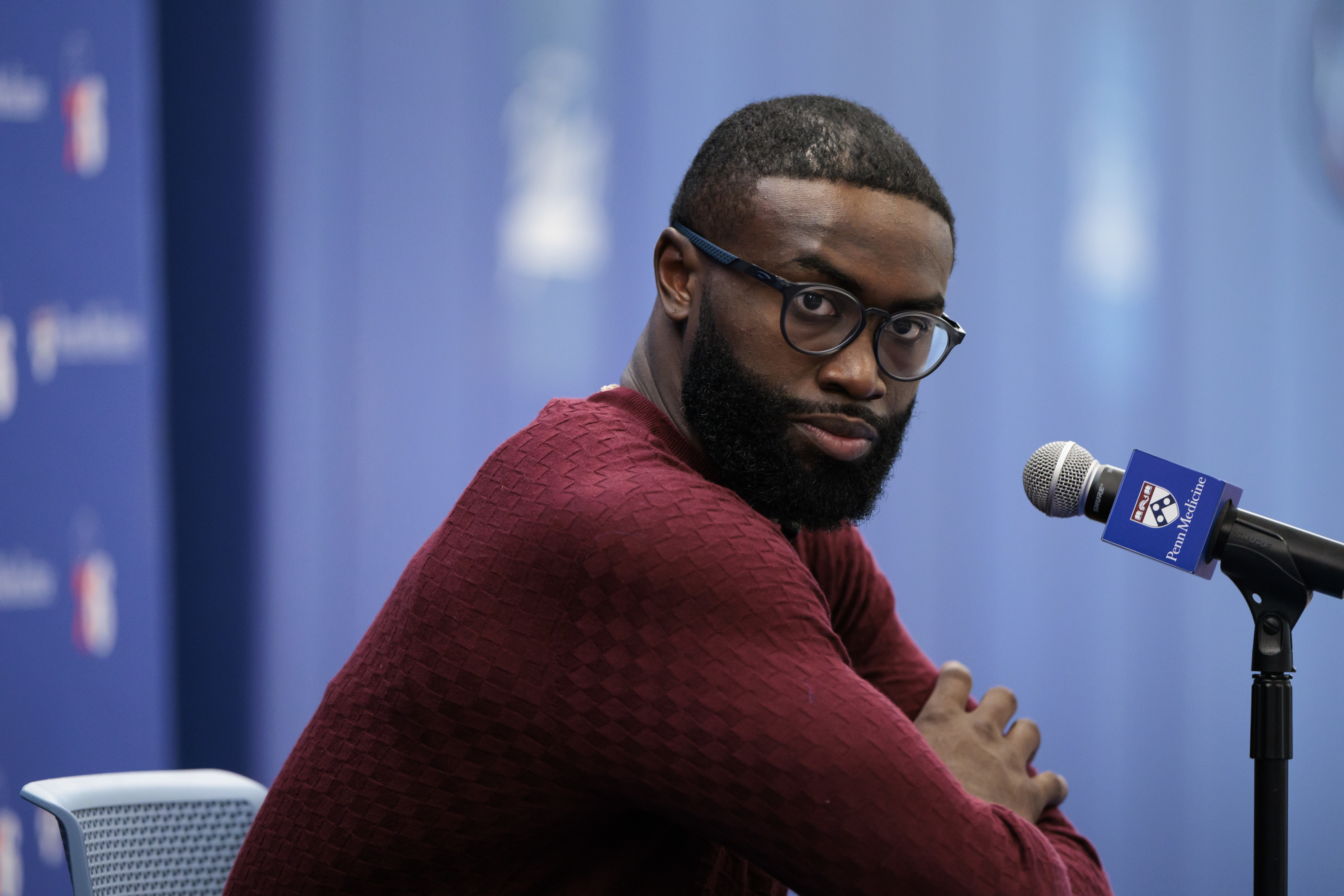
Jalen Carter said something very sweet and very incorrect during a news conference Wednesday. In answering questions about his new contract extension with the Eagles — an extension that reportedly guarantees him $106 million — Carter paused while answering a question and mentioned all the people to whom he was grateful.
“Wanna slow it down,” he said. “First, I want to say I’m thankful to God for putting me on this earth. Thankful for the coaches, the players, Mr. Lurie.”
Then he nodded toward the media members gathered in front of him.
“Thankful for you guys, too,” he said. “You guys put out some good information, some good facts about me, stuff like that. We’re all one family.”
Now, some of the people in the media tent at that time definitely were. Members of Carter’s actual family were on hand, as were several Eagles staff members and his friend and teammate Jordan Davis. And some other people there either don’t mind thinking of themselves as members of the Eagles’ family or have bosses who would like them to be thought of that way.
But a fair number of us weren’t there to congratulate Carter for his newly attained wealth or share in the optimism that he will fulfill his potential and become a Hall of Fame-caliber defensive tackle. We were there to listen to what he said, to listen to what Howie Roseman and Nick Sirianni and Carter’s teammates said, to listen to other people in and around the Eagles’ organization said about the signing, and to explain what happened and what it might all mean. We might even point out that Carter has made some pretty big mistakes in his life and football career, and those mistakes raise the possibility that he won’t live up to such a lucrative contract, and he and the Eagles ought to be held to account for such decisions and mistakes.
We were there to tell people what’s really happening or what we really think. We’re not going to sit on information or a story because it might embarrass or anger a coach or player or make things more difficult for the franchise. We were there to report, not to support. There’s a difference, and when you note that difference nowadays, you risk coming off like a scold, a jerk, an egomaniac, or all of those things at once. You face the inevitable barrage of complaints from those who want to be told only what they want to hear; who presume that you root for the athletes and teams that you cover and, when they find out that you don’t, insist that you should; and who can’t comprehend how someone could report or write something in good faith that was critical of those hometown heroes. Which is OK. That complaining, even the nastiest of it, comes with the job, and you have to be able to take it.
Put simply, we’re there to be as fair and accurate and honest as we can be, but we’re not part of the team. We’re not part of the family. We’re not supposed to be.
Quick hitters
Wilt Chamberlain lived in Manhattan while he played for the Philadelphia Warriors. JJ Redick lived in Brooklyn while he played for the 76ers. If you are genuinely dismayed that LeBron James might not live in Philadelphia or any of its surrounding towns and suburbs during his (brief) career with the Sixers, please get in your car, drive it north on I-95, and, for perhaps the first time in your life, continue past the Street Road exit. There’s a whole world up there. …
Kudos to Tom McCarthy: Phillies TV play-by-play man, former radio voice of the St. Joseph’s Hawks, all-around gem of a human being. During Tuesday’s Phillies-Marlins telecast on NBC Sports Philadelphia, he delivered a brief and beautiful eulogy for Chris DiJulia, the son of longtime St. Joe’s athletic director Don DiJulia and as familiar a presence as anyone connected to the school’s athletic program. Chris, who had cerebral palsy, died Monday night. Tom even mentioned the moving tribute that former Inquirer staffer Mike Jensen wrote to Chris on Mike’s Facebook page. …