Category: Sports Columnists

  • Two players who could help the Phillies address their biggest trade deadline need

    Two players who could help the Phillies address their biggest trade deadline need

    An underrated stat as we look ahead toward the trade deadline: The Phillies are 42-15 in games started by Cristopher Sánchez, Zack Wheeler, or Jesús Luzardo.

    Impressive? Sure. But also jarring, due to the simple math that follows.

    The Phillies have a 56-46 overall record. Which means they were 14-31 in games started by anybody other than Sánchez, Wheeler, or Luzardo.

    Let that number marinate. The more you do, the more you might begin to rethink the Phillies’ trade deadline calculus. This time of year, there are wants and there are needs and there are would-be-helpful-to-haves. A lot of folks seem to have relegated starting pitching to that third bin. In reality, it might be Dave Dombrowski’s most pressing order of business.

    The Phillies don’t necessarily need a fourth Cy Young-caliber arm. They shouldn’t be looking for 2009 Cliff Lee or 2010 Roy Oswalt. They can set their sights much lower than the Tigers’ Tarik Skubal or even the Twins’ Joe Ryan. Maybe even lower than Boston’s Sonny Gray. At the same time, Dombrowski needs to be thinking bigger than this year’s version of Walker Buehler or Noah Syndergaard. The Phillies don’t just need someone who would give them a fighting chance in a late-season, must-win game against the Braves. They need someone who could potentially start Game 1 of the National League Division Series. Let’s begin our argument there.

    1) Who is the Phillies’ fourth starter in the postseason?

    They won’t make it through October without needing one. Unless their October is tragically brief. The Phillies could need someone outside of the Big Three as soon as Game 1 of the NLDS. All it would take is losing a game in the wild-card series, which would force Luzardo to the mound for a decisive Game 3. Assuming the usual one off day before the start of the NLDS, none of the Big Three would be on normal rest for Game 1.

    Even if the Phillies do have the top of their rotation lined up for the first three games of an NLDS, that still leaves Game 4. They were blessed with an extra off day last year against the Dodgers. That won’t be the case this year if Major League Baseball sticks to its previous pattern of alternating the extra off day between leagues.
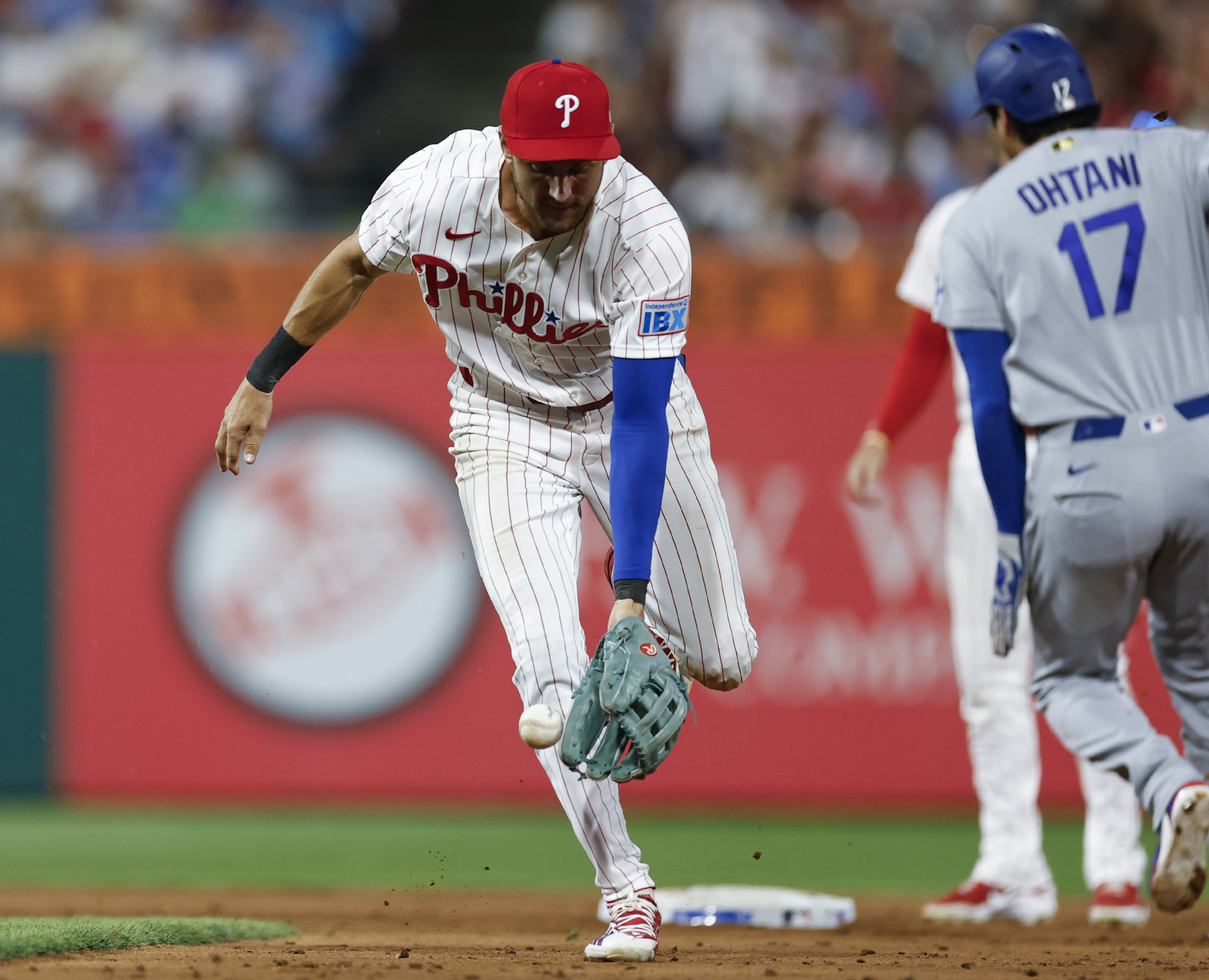
    After their series concludes with the Dodgers on Wednesday, the Phillies face top teams like the Yankees, Rays, and Braves.Yong Kim / Staff Photographer

    2) Will the Phillies even make it to the postseason with the status quo, given the gauntlet that awaits?

    This week’s series against the Dodgers is the first of 11 that they will play against either the five winningest teams in the majors or three of the teams nipping at their heels in the NL playoff chase.

    It breaks down like this:

    • Six games against the two winningest teams in the American League (Yankees, Rays)
    • Six games against the two winningest teams in the NL, with two vs. the Dodgers already in the books
    • Seven games against the Braves, who entered Tuesday with a three-game lead in the division
    • Twelve games against the Cardinals and Marlins, both of whom were within four games of the Phillies in the loss column as of Tuesday
    • Factor in series against the Diamondbacks, Nationals, and Mariners and 43 of the Phillies’ 62 games post-All-Star break will feature opponents who entered Tuesday with a winning record.

    The Braves series looms especially large.

    The Phillies have a stretch in early September when they will play the Braves seven times in 10 days with no off days. Given the schedule, they’ll need someone other than the Big Three to face the Braves in at least two of those seven games.

    And what about the last week of the season? The Phillies are currently lined up to finish the year with six games against the Brewers and Rays. In order to line up the Big Three for a wild-card series, the Phillies would need a fourth and fifth starter to pitch two of the three games against the Rays. Even if they aren’t fighting for a playoff spot, they could be fighting for the right not to travel to Atlanta, Milwaukee, or Los Angeles for the wild-card round.

    3) Trading for a fourth starter could help the bullpen more than trading for another bullpen arm.

    To be clear, this isn’t an either-or. The Phillies clearly need to add some form of reinforcements for a bullpen that lost setup man Brad Keller for the season. José Alvarado offered some reason for hope in his appearance against the Dodgers on Monday. Orion Kerkering, less so.

    But innings are innings. The fewer of them that are pitched by starters, the more relievers must pitch. You’d rather have a starter coming out of the ’pen in a must-win postseason game than a reliever starting. Look at Luzardo in Game 4 of last year’s NLDS loss to the Dodgers.

    A couple of names that should at least intrigue the Phillies.
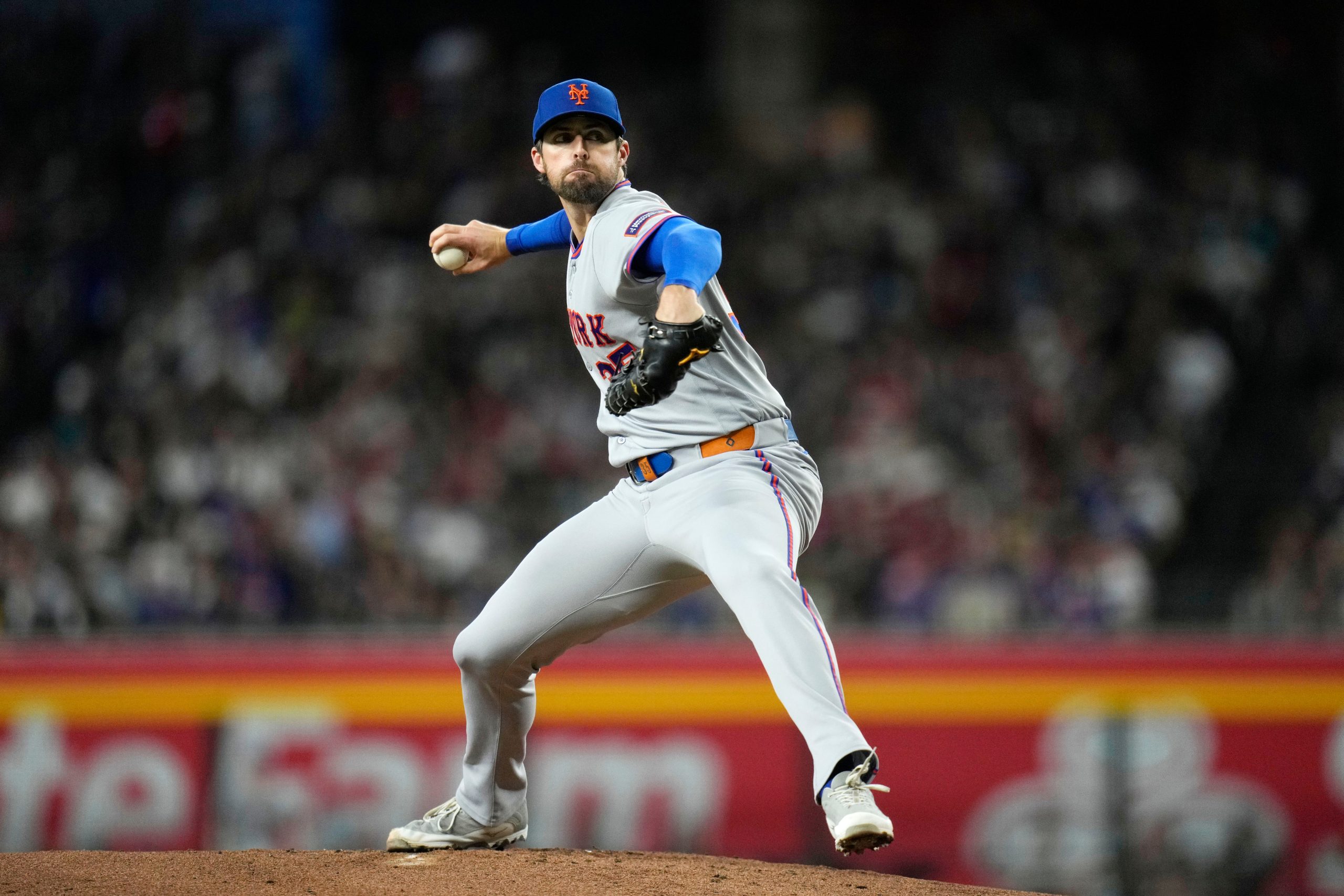
    Clay Holmes has a 2.39 ERA in nine starts this season for the Mets.Ross D. Franklin

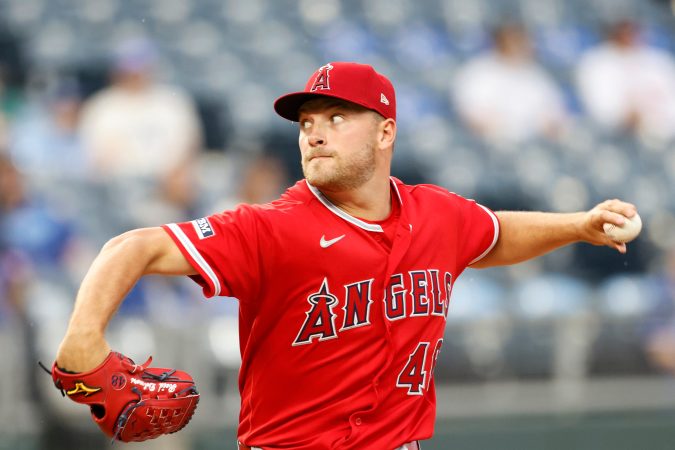
    Reid Detmers of the Angels and Clay Holmes of the Mets are both potentially available. Holmes, a right-hander, is presumably the most available, given that he is currently working his way back from a broken leg and has a player option for next season. Detmers, a lefty, still has two more full years left until free agency and is under contract for a meager $2.63 million this season. Only 27 years old, with borderline elite strikeout, walk, and home run numbers, he could end up costing more than the Phillies are willing to pay.

    Cost aside, both Detmers and Holmes have the kind of profile that should have the Phillies working the phones. Holmes was a longtime setup man with the Yankees who moved into the Mets rotation last season. Detmers moved to the bullpen last season after a disappointing year as a starter but has since rejoined the rotation. Either would dramatically improve the Phillies’ flexibility, both down the stretch and through the postseason.
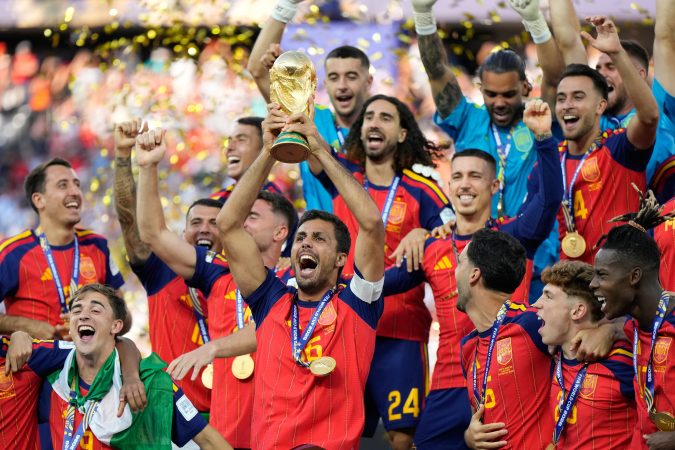
  • Soccer’s lingering post-World Cup problem, the new and ugly era of Brady-Belichick, and other thoughts

    Soccer’s lingering post-World Cup problem, the new and ugly era of Brady-Belichick, and other thoughts

    First and final thoughts …

    By the standards of hospitality, enthusiasm, atmosphere, and drama, the 2026 World Cup was a smashing success throughout the United States. Anyone who was at or in the vicinity of Lincoln Financial Field for any of the six matches there picked up on the magnitude of the event for the 48 participating teams, their fans, and the tournament’s other host cities. As meaningful as it is to cheer on a team from your hometown or home state, that power can’t compare to being invested in a club that represents your home country.

    Now, in the aftermath of Spain’s 1-0 extra-time victory Sunday over Argentina in the championship match, come the inevitable questions: Will this World Cup help soccer gain a greater foothold (no pun intended) in the U.S.? Will it inspire the sport’s leaders here to improve the grass-roots training and development of coaches and players? Will it allow soccer to penetrate the bubble of conversation among casual sports fans in the way that the NFL and, to a lesser extent, Major League Baseball, the NBA, and (once every two years) the Olympics have? Will talk-show hosts start ranting about it? Will certain markets become true hotbeds for Major League Soccer? Late June through mid-July is a relative dead zone in the major-sports calendar here; will people tune in when they have other, more traditional options?

    It’s certainly possible that soccer is finally having its moment in the United States and that its popularity, as women’s basketball’s has in the last several years, will soon surge. But there’s a reason to doubt that it will, or at least a reason to think it will struggle to attract and keep fans, and the reason is about as basic as it gets.

    Flopping.

    Yes, criticizing soccer players for embellishing injuries lapsed into cliché long ago. The thing about clichés, though, is that they tend to be true, and the cold reality is that flopping’s place in soccer makes the sport less attractive to those who don’t already love it. For all the cracking down that FIFA has done on flopping, a player who bounces up immediately after being taken down on a slide tackle is less likely to draw a foul than one who writhes on the ground as if his opponent had just gone full Kathy Bates-in-Misery on him. Fouls lead to free kicks and set plays, and free kicks and set plays sometimes lead to goals, so any semblance of contact often leads to the kind of overacting that only Nicolas Cage could appreciate. The potential payoff of flopping incentivizes players to do it.

    “When it is beneficial,” a 2016 study published in Frontiers of Psychology concluded, “soccer players can and do successfully feign injury to stop the game. Consequently it is possible that others might also successfully feign injury, pain or disease when motivated to do so.”

    This aspect of soccer’s culture cuts against one of the strongest attractions people have toward sports: They are witnessing, and want to witness, athletes display physical courage. (It’s worth noting, lest anyone lapse into any insulting gender stereotypes, that female soccer players flop far less often than their male counterparts.) Pelé called soccer “the beautiful game,” and the sport’s experts and aficionados fall back on that phrase often, and it can apply. As evidence, go watch a replay of the gorgeous header pass from Nico Williams that set up Ferran Torres’ World Cup-winning goal. But it’s rare that a soccer team earns praise for its toughness or grit, for the factor that so many fans of football, hockey, and other sports prize in their players.

    The quarterback who hangs in the pocket to deliver a deep downfield strike … the wide receiver who goes over the middle to catch that pass … the Conn Smythe Trophy winner who can’t lift the Stanley Cup because he separated his shoulder three weeks earlier … the guard who slashes into the paint and takes an elbow to his or her face from a center 6 inches taller and 40 pounds heavier … the tired starting pitcher who still wants the ball in the eighth inning … the figure skater who risks tumbling to the ice for the sake of a triple Salchow — competition is more compelling and the athletes more admired for these qualities and circumstances. Look at the backlash around the NBA against the Oklahoma City Thunder’s foul-hunting style of play, consider Carli Lloyd’s criticism of Christian Pulisic, and you understand the collective-action problem that soccer has to overcome before it will be fully embraced here.

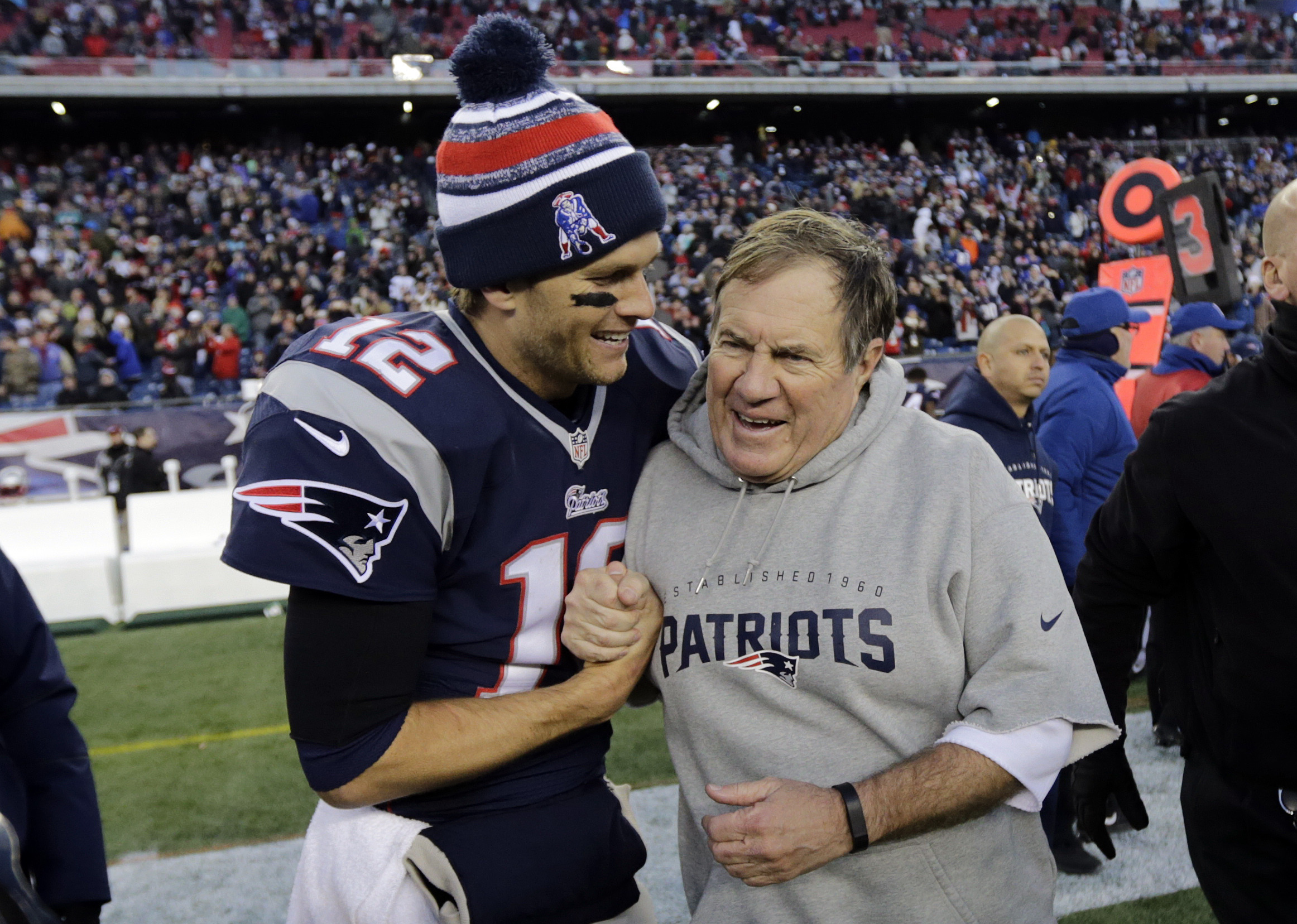
    Tom Brady and Bill Belichick have become embarrassing. Charles Krupa

    Grow up, GOATs

    One is fiddling around with pro wrestling publicity stunts. The other has been fiddling around with a romantic partner 49 years his junior. All this time, everyone thought that Tom Brady and Bill Belichick’s greatest achievement was the six Super Bowls they won together. Turns out, their greatest achievement was that each apparently kept the other from falling into a humiliating midlife crisis.

    Domo delivers

    Shoutout to longtime Daily News/Inquirer scribe Paul Domowitch, whose new book, Just Give Me a Chance to Fail: The Life of NFL Hall of Fame Linebacker Sam Mills, hits stores next week. If it’s anything like the rest of Domo’s football journalism, the book will be smart, thorough, and impossible to put down.

  • Phillies’ bullpen desperation sets up a perilous trade deadline

    Phillies’ bullpen desperation sets up a perilous trade deadline

    Few things are more toxic than a bullpen that has no good answers.

    The Phillies are treading perilously close to that boundary line.

    Can they actually fix it?

    They can try, sure. They have no choice. With two weeks remaining before Major League Baseball’s trade deadline, the Phillies have exactly one reliever whom Don Mattingly would feel comfortable calling upon in a critical postseason moment. They have one who seems to be earning more of his trust but who would profile more as a dependable middle reliever in a legitimate championship bullpen. After Jonathan Bowlan, they have a couple of arms who are basically a coin flip. After Orion Kerkering and Jose Alvarado, Mattingly can do little more but pray for the best while expecting the worst.

    Dave Dombrowski was up against it even before he learned that high-priced free agent set-up man Brad Keller would miss the rest of this season and likely the next one with a UCL tear. Keller’s signing is ironic in the sense that the Phillies will be paying him the same money they would have been paying to Jeff Hoffman had they not allowed the righty to leave for Toronto, in part out of fear of the health of his arm. Further irony: Hoffman is one of the names that has been tossed around for teams in need of bullpen health, with the Blue Jays currently out of contention.

    Brad Keller is no longer a bullpen option for the Phillies. Yong Kim / Staff Photographer

    The most important thing to know about the trade deadline is that it isn’t as important as everyone would like to believe. Rare is the team that manages to fundamentally alter its outlook or identity midseason. In the best of cases, it is like the magic mushroom in a game of Mario Kart: a decisive boost deployed at exactly the right time while also eminently finite. The Phillies saw the best of cases back in 2009 with the acquisition of Cliff Lee. The next year brought Roy Oswalt, the year after that, Hunter Pence. They have yet to recapture the glory of 2008.

    The question is not binary, in other words. It is not, “Go for broke or stand pat?” The midseason trade market is, first and foremost, a market. All you can do is take what it gives you.

    From a decision-making perspective, the second-most important thing at the trade deadline is to stick to your principles. The first-most important thing is to figure out what those principles are.

    The biggest question right now:

    How confident are the Phillies that they will make the playoffs with the current roster?

    A better way to put it: How sure are the Phillies that the Marlins, Nationals, Cardinals, Pirates, and/or Diamondbacks will ultimately fade?

    Sounds crazy to ask, given that the Phillies have been one of the best teams in baseball since the beginning of May. But these are strange times in the National League. Nine teams are at 50+ wins. Two more are within two games of .500. The Phillies may only be two games behind Atlanta, but the Braves are playing on a different tier. Consider them booked for the postseason, along with the Dodgers and Brewers. The Cubs and the Phillies are alone in the next tier at 10+ games above .500. Problem is, that next tier is closer and more populous than usual. The Marlins, Cardinals, Pirates, and Diamondbacks all entered Sunday within four games in the loss column. That’s nine teams for seven postseason spots. A sudden losing streak could dramatically change the Phillies’ outlook.

    The bullpen would be an issue even if the circumstances were different. But the Phillies could at least be planning for the postseason. As things stand right now, Dombrowski first must decide if he has enough pitching to get him to October.
    Something else to ponder: If Gage Wood and Andrew Painter aren’t immediate solutions, are they potential trade chips?

    Andrew Painter posted a 7.06 ERA while with the Phillies.Yong Kim / Staff Photographer

    It is a double-edged question. The first edge: Are the Phillies willing to trade their two high-level pitching prospects for short-term help? The second edge: How do other teams value them?

    Painter is pretty clearly a lost cause for 2026. His most recent start at triple-A Lehigh Valley: seven runs, one strikeout, four walks, 2 ⅔ innings. In the two starts prior, he allowed just two runs in 10 innings while striking out 10 on three walks. All three outings came on five-plus days rest.

    Wood? We’ll see. The numbers look about as good as the Phillies could have hoped when they selected him at No. 26 overall last June. He has 39 strikeouts and nine walks in 28 ⅔ innings since being promoted to double-A Reading. He has also allowed six home runs. The fastball is crispy, but not to the extent that he can get away without locating it in the strike zone. Hard to believe that Dombrowski or anybody else is thinking of him as a potential answer in high-leverage situations.

    Gage Wood has posted a 3.51 ERA so far in 2026.David Maialetti / Staff Photographer

    Speaking of leverage …

    It isn’t in Dombrowski’s favor right now. The idea of buyers and sellers is a false choice. There is a price for everything. The more plausible a team’s denial of having to sell, the higher the price they can sell for. The more teams that could potentially buy at the right price, the higher the price for everyone.

    The Phillies enter the trade deadline with a farm system that Baseball America ranked as the 29th best in baseball. Their one no-doubt-about-it, blue-chip prospect has yet to take the field this season. Painter has gone from untouchable to would-anybody-touch-him. Once upon a time, the Phillies traded Spencer Howard for Kyle Gibson and Ian Kennedy.

    Are we there yet?

    Rather than buyers and sellers, the trade deadline’s real hierarchy is an order of desperation.

    How desperate are the Phillies? How desperate should they be?

    These are usually losing questions.

  • Want to win a World Cup, America? Start doing better by the kids. And their parents, too.

    Want to win a World Cup, America? Start doing better by the kids. And their parents, too.

    EAST RUTHERFORD, N.J. — The completion of the FIFA World Cup on Sunday wrapped up truly one of the most captivating sports experiences North America has seen in quite some time.

    As we speak, the last of FIFA’s traveling caravan has packed up, ready to move onto its next stop, while leaving American fans looking at the soccer landscape in this country, wondering why, with the wealth of raw athleticism we have here, couldn’t one of those two teams in Sunday’s final have been us?

    Good news. Historically speaking, every World Cup spawns change. Bad news? When it comes to soccer, the United States has been historically bad at making the changes needed to make a stir. In 2026, emerging from the group stage shouldn’t be a hope — it should be the norm.

    The change needed to push American soccer forward is not an easy fix. OK, well, it is, but it requires a dedicated strategy and a collective belief that development, not greed, needs to be at the forefront.

    That investment begins at the grassroots level and comes in two main tiers: Investing heavily in identification and developing raw, untapped talent.

    The other? Educating parents that there’s more to the game than striving to make the top club team in your area.

    You could add a third — offering greater exposure to the game — but that topic sits on its own almost entirely when you consider the level of gatekeeping that exists, from broadcasting contracts going to cable and streaming services to the outrageous price points of tickets.

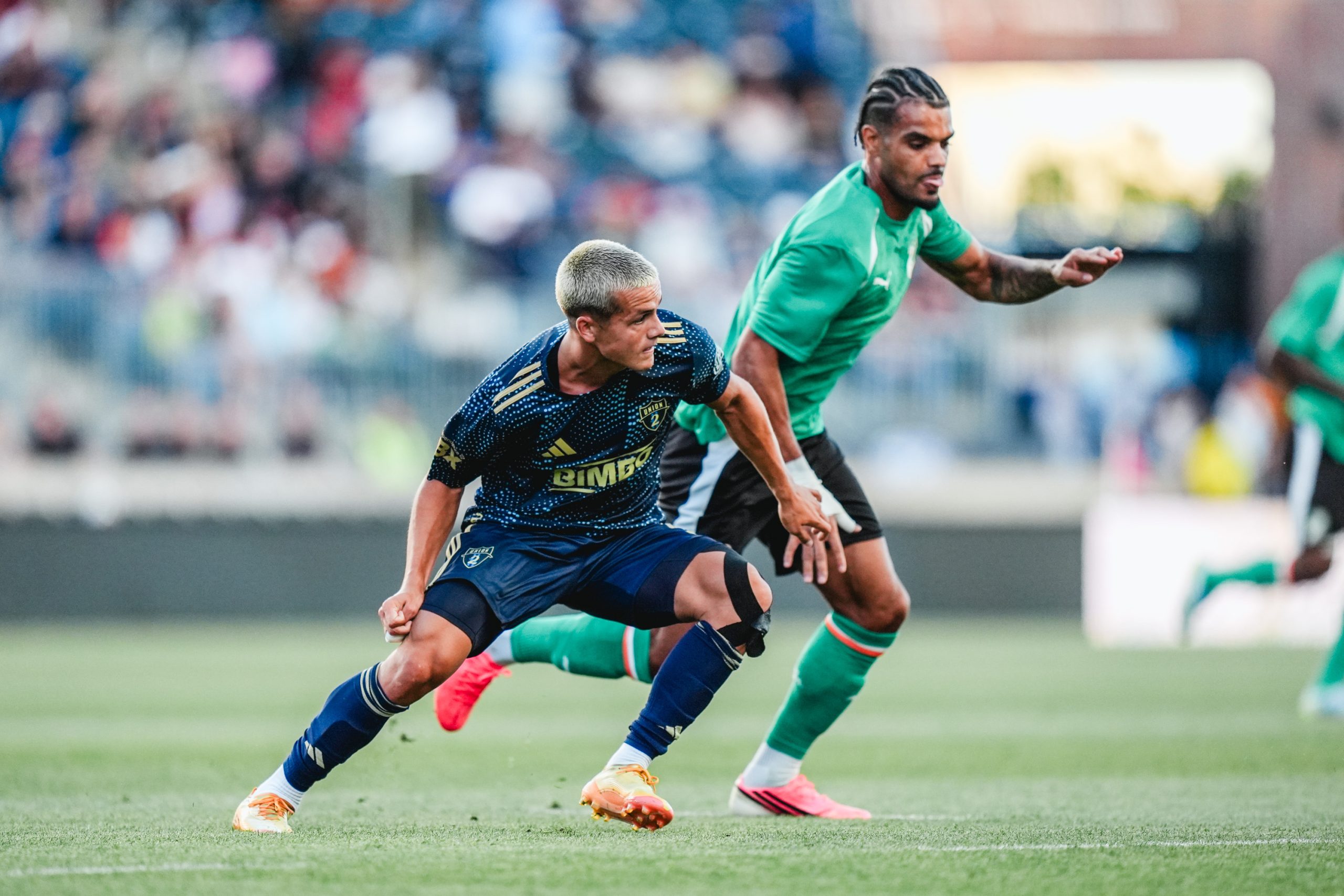
    Cavan Sullivan (left) is an example of the type of player the U.S. could produce behind a deeper focus on development. Philadelphia Union

    It already is in some states, like here, in what the Union is doing with youth development that spawns real American hopefuls (see: Cavan Sullivan). Undoubtedly, that last sentence ruffled a few feathers among the club soccer community.

    If that’s the case from where you’re standing, well, therein lies the problem.

    Finding the future

    Recent history has shown that’s not always going to arrive via a traditional club model where parents are overspending, because at the starting-out level, they honestly don’t know any better. It’s not saying the model is all that ails when it comes to development, just that it can no longer be widely considered as a preeminent pathway for children as young as 5.

    U.S. Soccer recognizes this. Just last week, it noted that in the aftermath of the national team’s round of 16 exit, it’s “trying to create a new system that then we’d make highly affordable. It’s a bold strategy that comes with a ton of roadblocks. The current model is not just fully ingrained into how we develop talent, but it makes a lot of people really rich off kids with a dream and parents with deep pockets.

    But what would an argument be without a solution? Here are two.

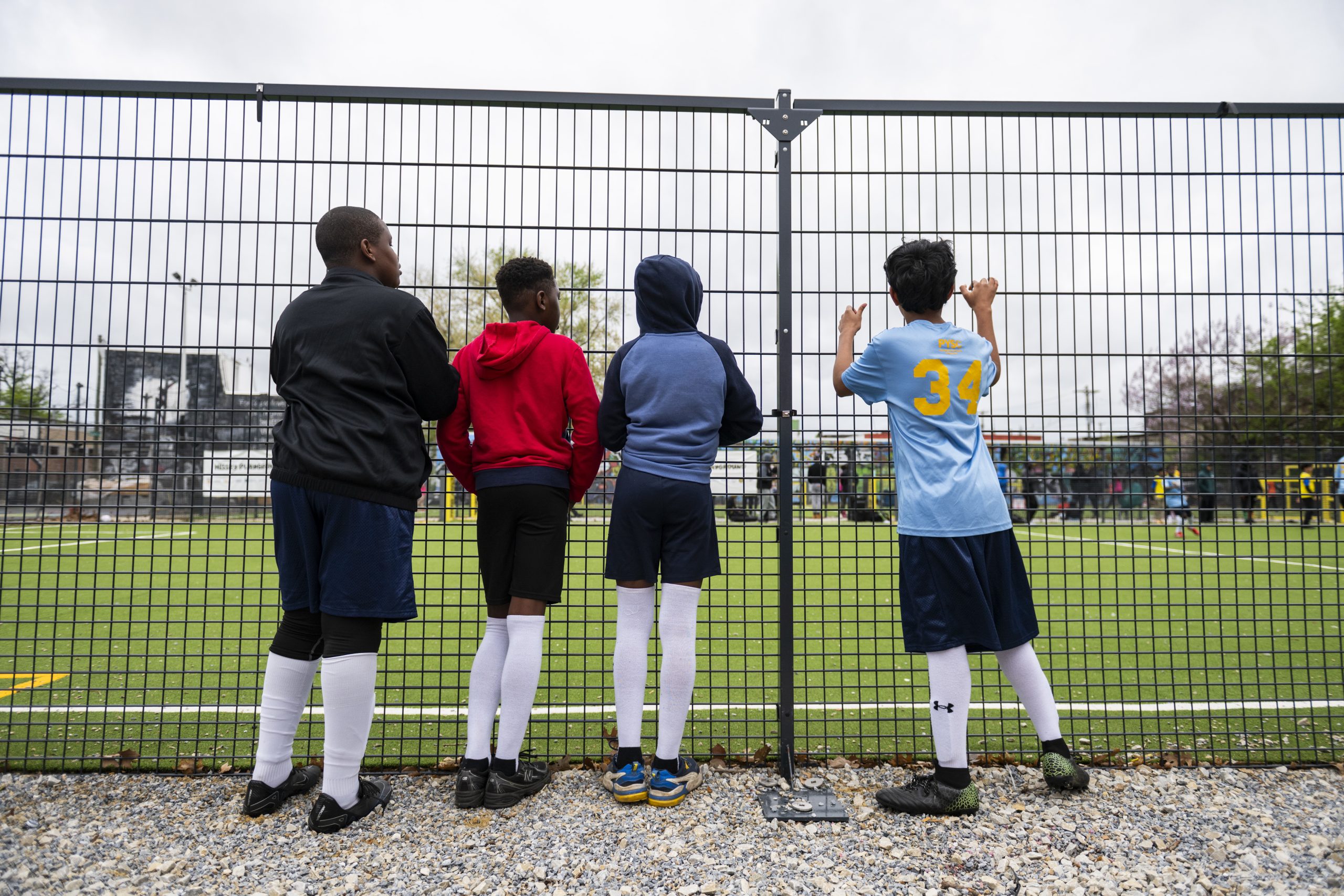
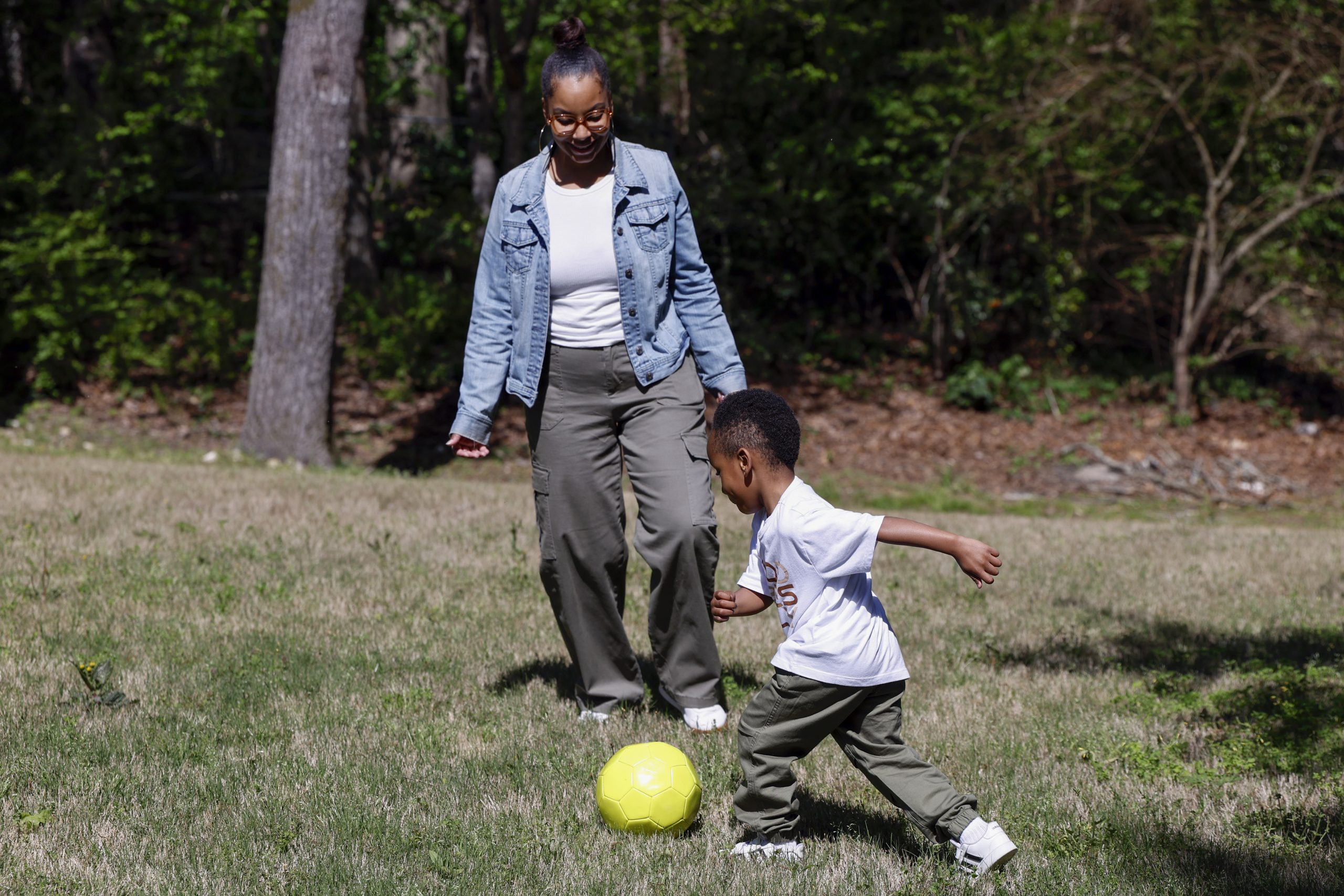
    Giving kids an opportunity to ignite a passion for soccer starts with making sure there are ample, unlocked places to play.Allie Ippolito / For The Inquirer

    First, foster excitement by putting the game everywhere. Start with a focus on inner cities and rural communities. Loosen the restrictions on accessibility, price, and most importantly, the gates of locked-up ballfields that kids could be playing on.

    Second? Put some skin in the game.

    Imagine pouring financial resources into underserved neighborhoods. You’ve built the fields, now get kids playing on them. How about a series of cash prize tournaments at multiple age ranges and skill abilities?

    Organizers receive winnings under the demand that a substantial amount of the proceeds is used to create more opportunities to foster interest. In turn, U.S. Soccer and the academies of Major League Soccer teams plant scouts at these events to find the raw talent and develop them.

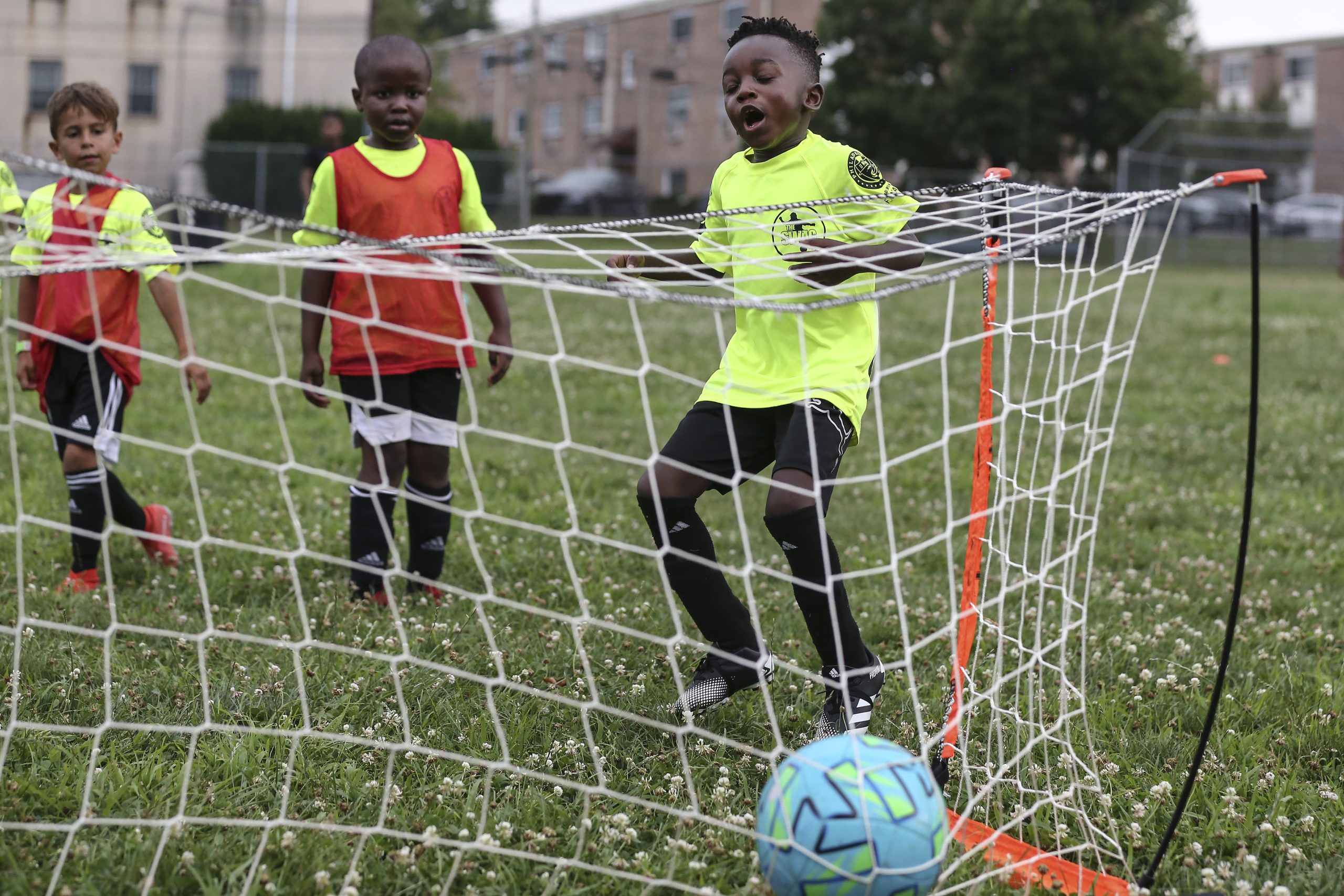
    Started in 2018, the Philadelphia Union’s SWAG program offers underserved kids the opportunity to learn the game, and for the ones that show promise, get placed on a developmental path to pro track. STEVEN M. FALK / Staff Photographer

    Some of that is already happening. In 2018, the Union created the SWAG program, going into schools, finding kids, developing them from the age of five, and grooming them to be on a professional pathway. It’s the kind of pipeline that city-based organizations like Kensington Soccer Club and Capitolo Soccer AC Fairhill, Street Soccer USA and many more are at the ready to be, and are already finding diamonds in the rough all along the way.

    The problem is, as it stands, not enough people in power when it comes to the game care to look.

    The parent trap

    Listen, at the end of the day, you don’t know what you don’t know.

    According to figures from Project Play, a study created by the Aspen Institute, youth sports is a $40 billion a year business, with youth soccer a sizable chunk of that equation.

    The reason why there’s so much money to be made? Here’s a big one: uninformed parents.

    At a certain level, there is this real fear of missing out from parents when it comes to their kids’ trajectory. The FOMO isn’t in every case, but here’s how it typically works when it comes to soccer in America. It starts innocently, a parent signing a child up for in-house soccer, where you discover, and it’s affirmed by a coach and others, that your kid has real talent.

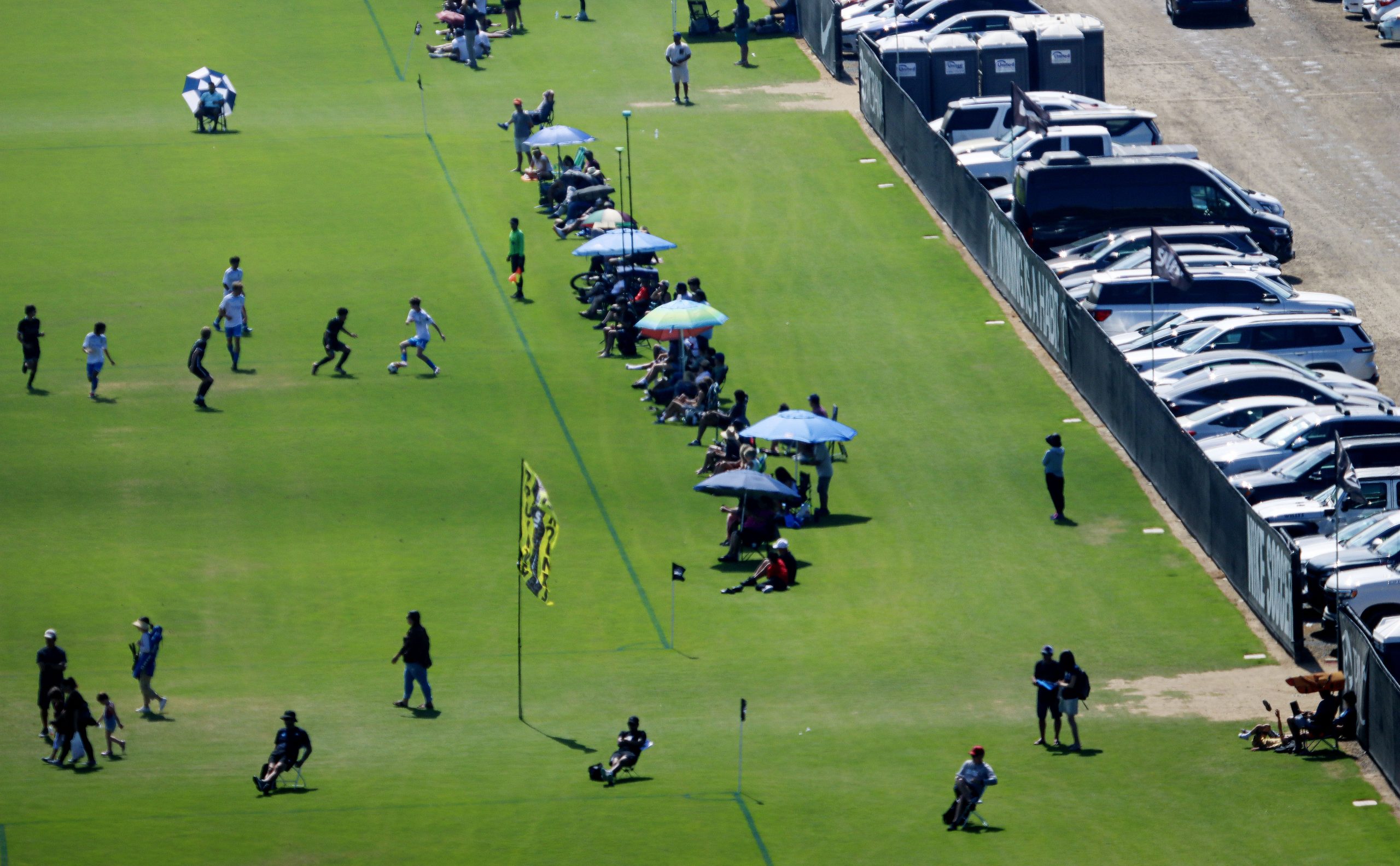
    Parents typically spend hundreds on top of committing multiple days of their family’s time to youth soccer tournaments all over the country. Sandy Huffaker

    But instead of offering programs to develop that talent and get that child acclimated to the sport at a young age through actual development at a continued low cost, parents are coerced into believing that their child would fit seamlessly on a travel club team. One that competes year-round, practices 2-3 times a week, and plays games and tournaments on the weekend.

    According to Project Play, about one-third of families report taking on significant debt so their kids can participate in sports. The average family spends $1,000 on registration fees, equipment, and travel.

    And then there’s the time cost. Traveling back and forth between states, sometimes to play the same team from the next town over from your club in a tournament.

    If you’re a soccer parent, undoubtedly, you’re nodding your head as it probably sounds like your trajectory in youth soccer to date.

    Suppose the solace comes in that you’re not alone?

    For many parents, looking for the best place for their child to play the sport at a top level comes at a high cost. Butch Dill

    And then there are the buzzwords. “Select.” “Premier.” “A-Squad.” All of these focus not on developing kids into the talent needed to put the U.S. in the best position to win a World Cup, but instead compile the best kids to help that club win across multiple age groups. They’re also words that make parents salivate, spending money they believe will deliver their child to greatness.

    Or at least, that team that everyone is talking about.

    At the end of the day, parents want to provide what they believe is the best opportunity for their child. Some don’t know what that looks like in soccer.

    Can’t fault that. The real fault is in the subsequent exploitation of this ideology by organizations charging thousands for a child to have said opportunity.

    Parents in these same circles have revealed that for kids as young as nine and 10 years old, their club won’t even look at kids who don’t already come in with a certain level of skill. Ask yourself: If the mindset has to be about development, how is that mentality not a perceived problem?

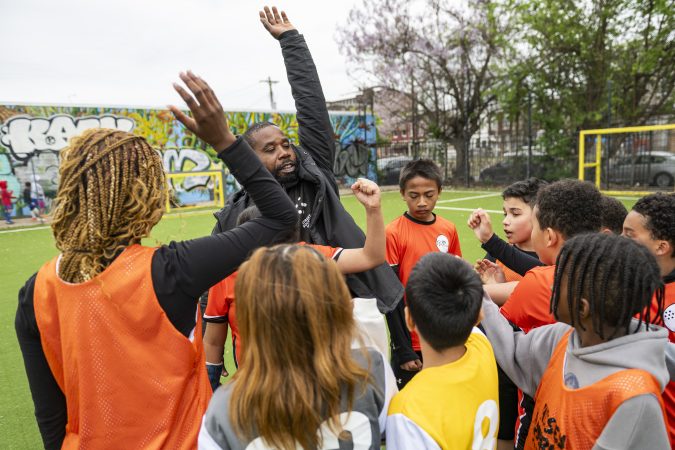
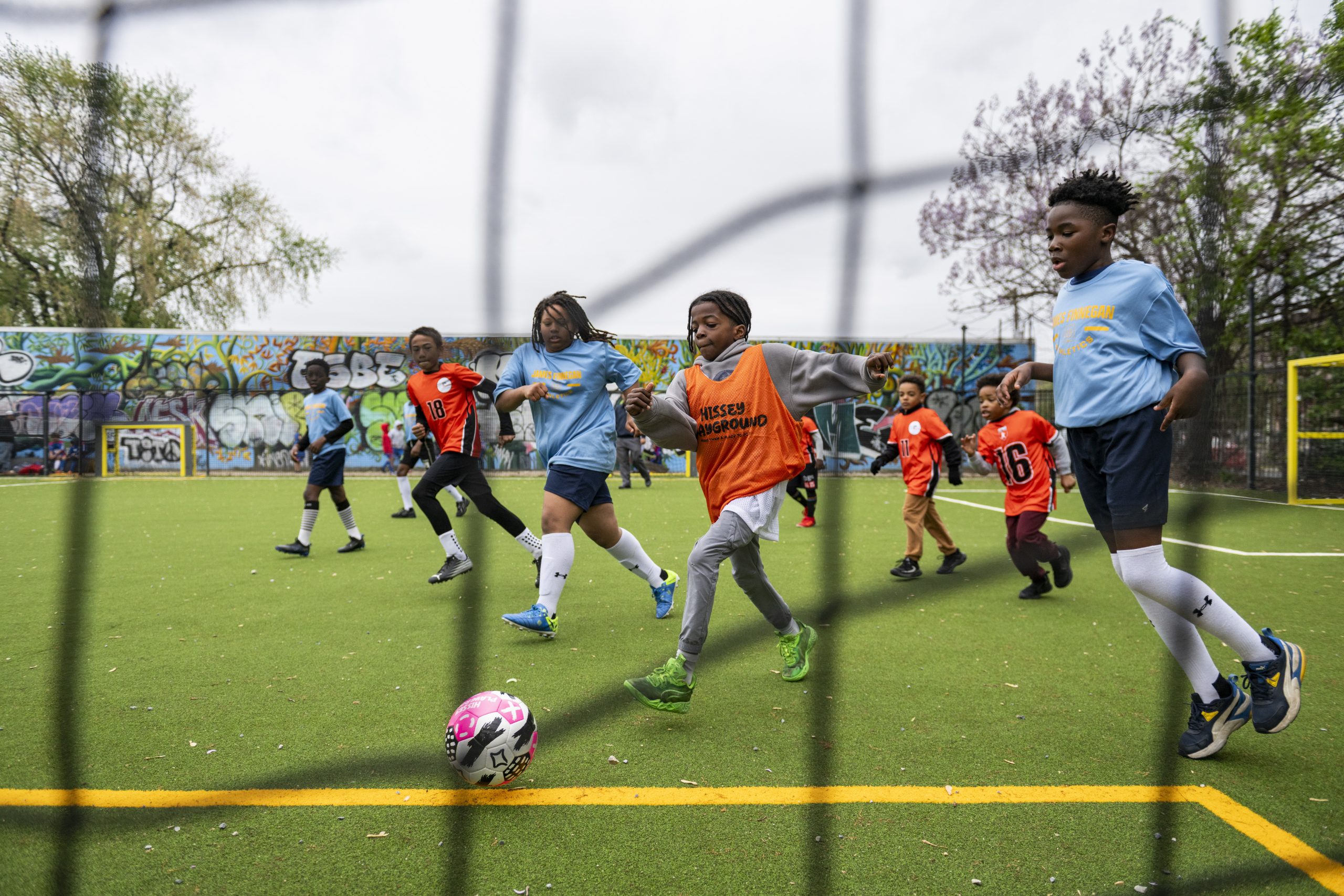
    Kids play in Kensington Soccer Club’s Love Street League program at Hissey Playground in Kensington.Allie Ippolito / For The Inquirer

    So, of course, that begs the question: “Who pays, then?” Well, there are plenty of youth systems around the world with strategies that give youth soccer in America a fantastic roadmap. Anyone tuning in to Sunday’s final was treated to a great page to start reading if you look at what Spain has been able to do on almost every level over the last 10 years, right up through yesterday.

    Two World Cup titles in less than 20 years. A European title. The only nation where both the men’s and women’s teams are defending world champions. If the goal is to crack the code on how to produce players who can go far in a quest to chase a World Cup trophy, maybe start there.

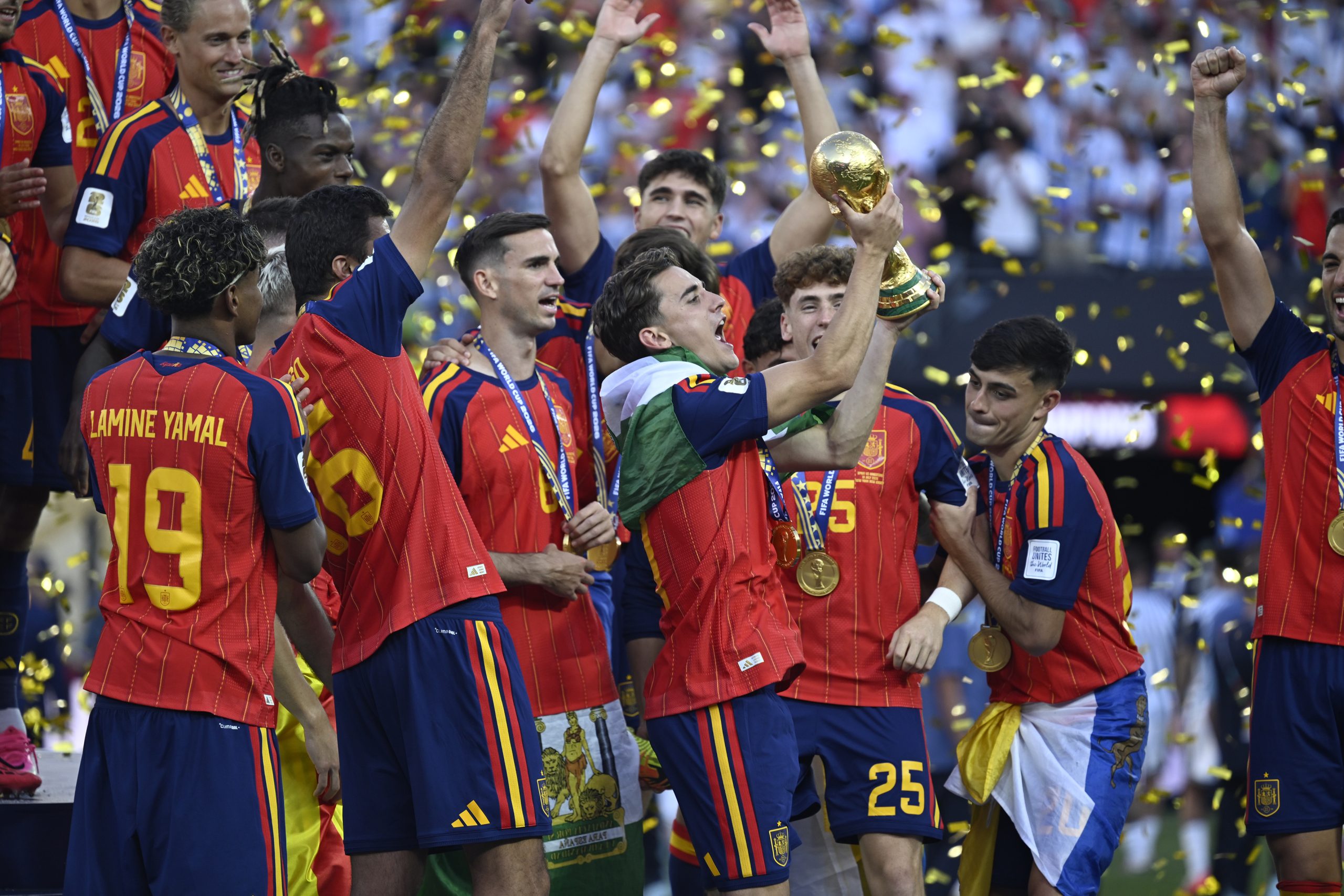
    Spain’s Gavi (9) holds up the FIFA World Cup trophy as Spanish players celebrate after winning the World Cup final against Argentina in East Rutherford, N.J., on Sunday.VINCENT ALBAN

    As it stands today, club soccer in America serves a purpose. It’s a great conduit for exposure. It offers youth players a firsthand look at the rigors of competition at a very young age. It teaches teamwork and being dedicated to a collective mission.

    But it’s not about development. If it were, parents wouldn’t need to consider paying even more for privatized training or skill development camps and clinics. And now, the notion is growing that private equity sees ways in which it can get involved in the gambit. If there isn’t more of a fight to make sure that the status quo doesn’t become the legacy of this World Cup, history looks pretty bound to repeat itself in four years.

  • Philly’s Summer of Sports: No ICE arrests, unruly fans, or scary scenes at World Cup, PGA, All-Star Game

    Philly’s Summer of Sports: No ICE arrests, unruly fans, or scary scenes at World Cup, PGA, All-Star Game

    Well done, Philadelphia.

    The World Cup, the PGA Championship, and the Major League Baseball All-Star Game, the most daunting events in this Summer of Sports Celebration, are finished here.

    Philly is undefeated.

    “This summer proved what we have always known: Philadelphia is built to host world-class events,” said Mayor Cherelle L. Parker. “Our city shined on the national and international stage.”

    It was hot, and it was rainy, but hey, that’s Philly in July. At least the big three events didn’t have to deal with the current wildfire smog.

    Think about it. So many things could have gone wrong.

    There could have been embarrassing incidents involving the Department of Homeland Security, ICE, and other complications involving our suddenly inhospitable visitation policies in the United States.

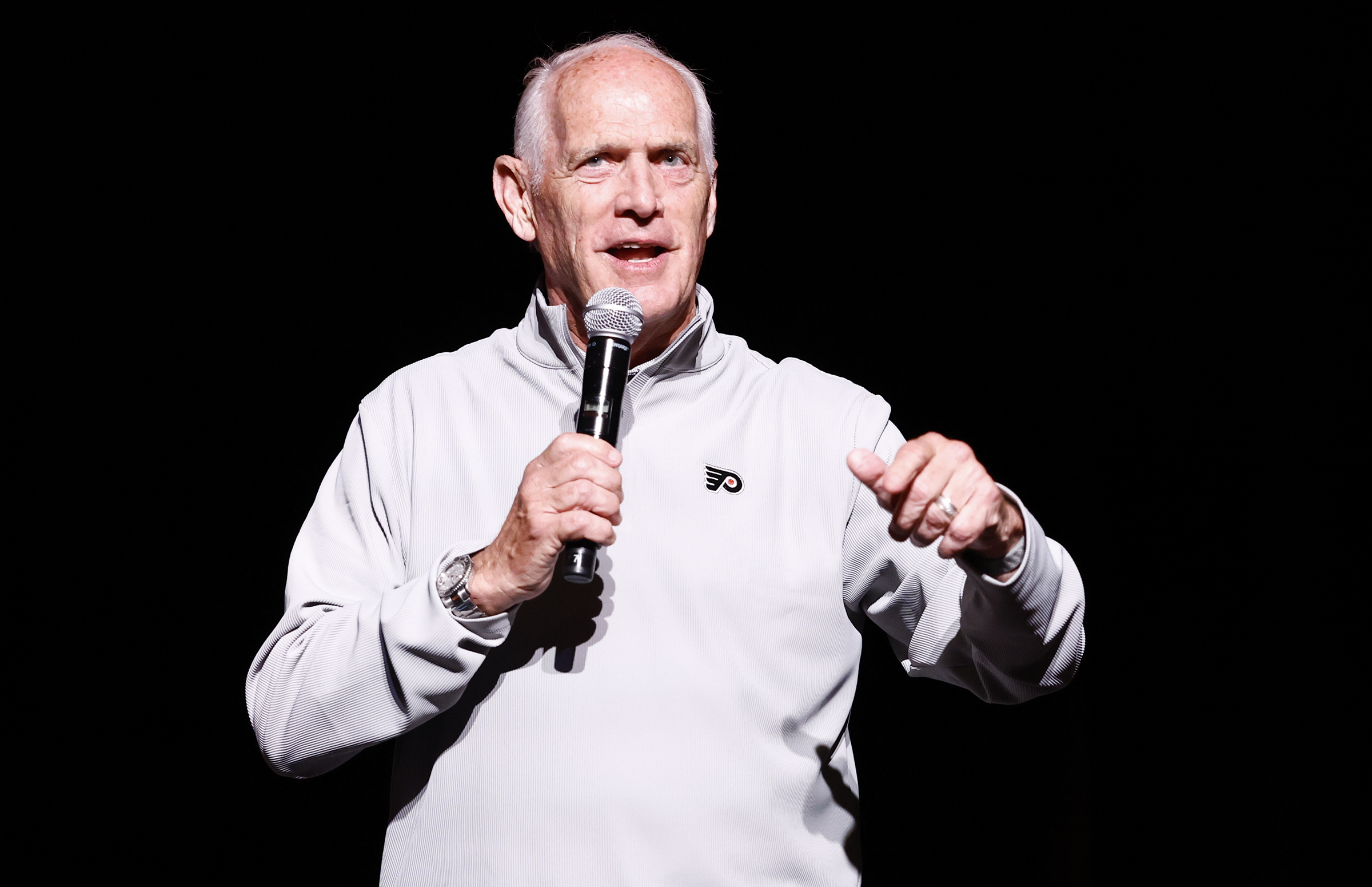
    “Worry number one was, with the influx of all of these people from all over the world into the city, making sure it was a peaceful experience for them,” said Dan Hilferty, the Flyers’ governor and CEO of Comcast Spectacor, who also served as co-chair of Philadelphia Soccer 2026 and is a Philly-area native.

    Chairman & CEO of Comcast Spectacor and Governor of the Flyers Dan Hilferty said this summer’s local events gave him “real hope” in troubled times. Yong Kim / Staff Photographer

    It was peaceful, Hilferty said, relieved.

    “We live in troubled times, not only in America but around the world. Sports can be a soft diplomacy effort,” he said. “To see people come to our city and us, as Philadelphians, welcome them with open arms — people of different faiths, different races, different nationalities — commingling in a peaceful and exciting environment … I witnessed that. It gave me a real hope for a more friendly future.”

    There could have been incidents on the streets of Philadelphia — crime or intimidation or boorishness — that would further entrench stereotypes about American cities, especially East Coast cities, and especially Philly. Nope.

    There could have been incidents in the golf crowds, the soccer crowds, and the baseball crowds. Nope. Local cops, state police, and private security kept cool and kept everyone in line.

    There could have been massive traffic problems, vociferous price gouging, public transportation disasters. On the whole, however, there was none of it. Hotels and short-term rental agencies offered reasonable options, some of them including public transportation vouchers in the rental price. Smart routing and parking rules kept cars at the sites flowing. And Philly subway rides stayed at $2.90 a pop while New York and New Jersey charged almost 10 times their normal fares. It might have taken a while to get onto the Broad Street Line after matches, but fans were patient, and the trains ran on time.

    “SEPTA really stepped up big,” Hilferty said.

    Philadelphia and its surrounding area, on the 250th anniversary of the signing of the Declaration of Independence, was glorious.

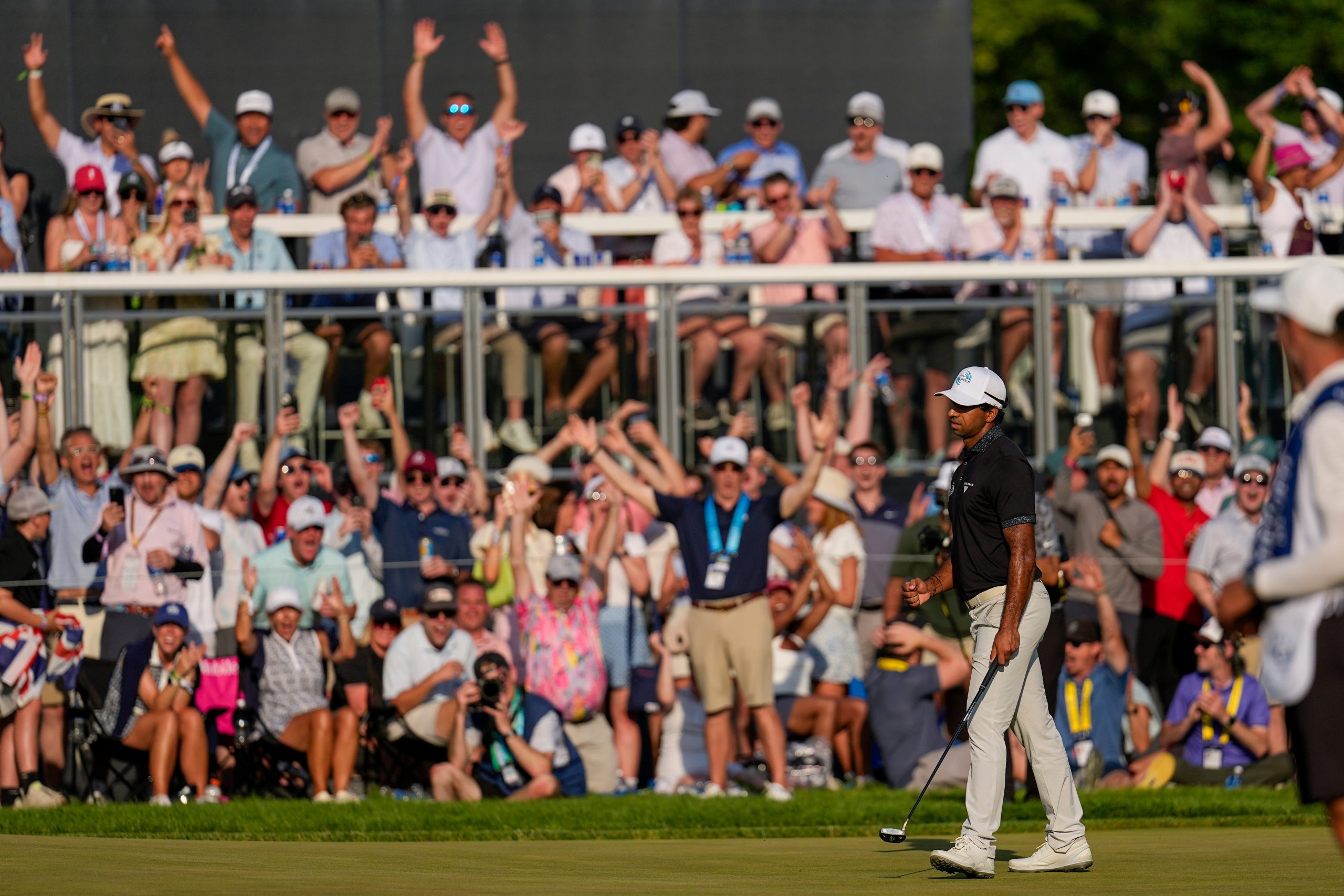
    Aaron Rai’s PGA Championship triumph at Aronimink was worthy of celebration, as was the success of the event itself. Carolyn Kaster

    Aronimink Golf Club stood strong as a major-championship venue, and, just as critically, Philly golf fans made the obnoxious New Yorkers at Shinnecock and Bethpage Black look bestial by comparison. Actually, there was no comparison: Philly golf fans once again proved to be the best in the country.

    “The crowd had great energy.” That was from Scottie Scheffler, Texas native and Cowboys fan, who had been heckled mercilessly in his opening round. “It was all in good fun.”

    The World Cup, the biggest event in Philly since the Sesquicentennial Exposition held 100 years ago, in which 10 teams played six games in a span of 21 days — including Iraq, a country with which the U.S. has a recent war history — held the largest possibility of calamity. There was none.

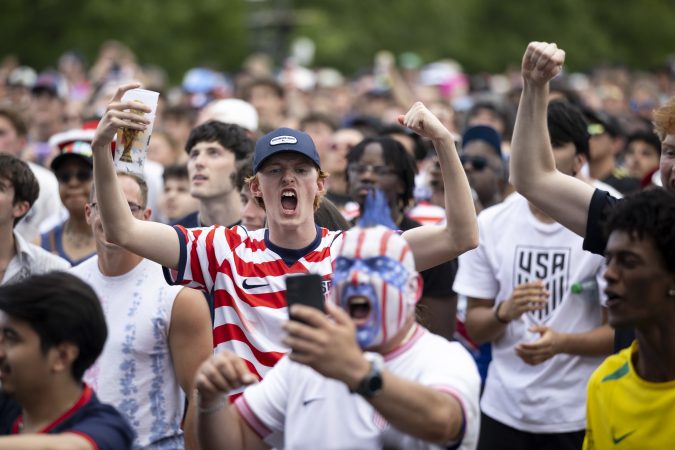
    Philadelphia, its law enforcement, its public transport, its politicians, and, more than anything else, its businesses and residents, literally could not have acquitted themselves better. From the specially installed pitch at Lincoln Financial Field (renamed Philadelphia Stadium for the World Cup), to the neighborhood restaurants and bars, to the sites at the South Philly sports complex that accommodated visitors, to the Lemon Hill Fan Festival that sometimes had crowds of 50,000, all you heard were stories of camaraderie and welcome.

    And, finally, this past week, MLB and the Phillies collaborated on five days of celebration capped by two nights of baseball magic that not only went off without a hitch but, really, incorporating the pomp and pageantry, were without compare. The key moment: The Sandlot interlude.

    For five minutes after the fourth inning Tuesday, 10 kids joined 10 players on the field as fireworks exploded and Ray Charles sang “America the Beautiful” from the scoreboard screen, a tribute to a scene from the 1993 kids’ baseball movie The Sandlot. It even got to me, and I don’t like the movie or fireworks.

    The game itself wasn’t great, but the Home Run Derby on Monday was superb. It was almost everything the Phillies could have wished for.

    “Together, these were not simply successful events,” said Phillies CEO John Middleton, also a Philly-area native. “They were defining moments that elevated both Major League Baseball and the City of Philadelphia, leaving a legacy that will endure for years to come.”

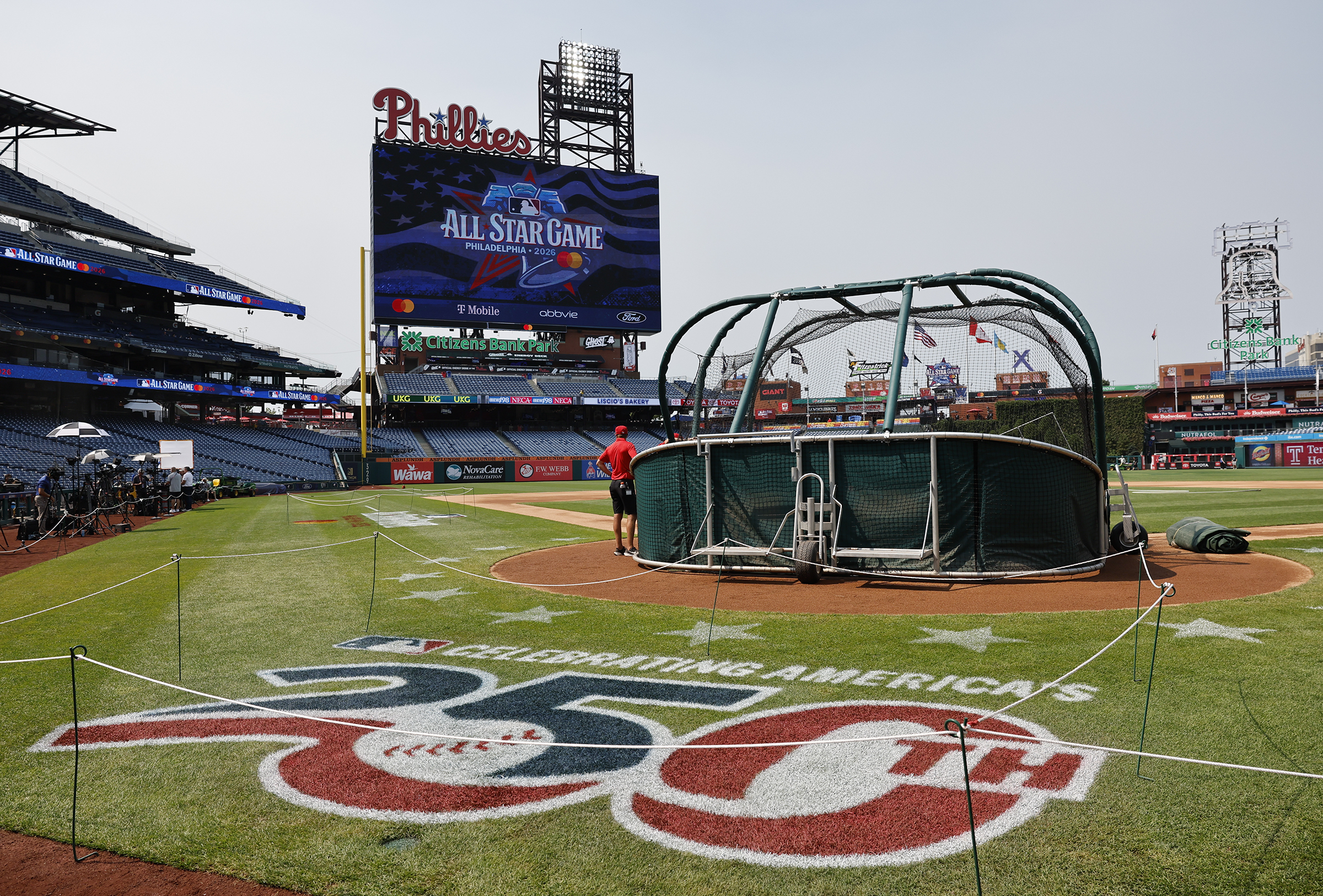
    The MLB All-Star Game was a culmination of the city’s summer of big events. Yong Kim / Staff Photographer

    David Montgomery, the late Phillies CEO who dreamed of having Citizens Bank Park host the midsummer classic in the middle of this special summer, surely is smiling down from above.

    It’s hard to overstate how unlikely it was that all of these events went off without an appreciable glitch. I’ve worked with the PGA of America, with FIFA, and with MLB. They are not particularly streamlined, seamless organizations. Combine the balkiness of those organizations and the history of glitches and missteps in Philadelphia’s past, there always was a chance that things might go haywire here this summer.

    But between Pennsylvania’s state government, local municipalities and city governments — more than 40 entities in all — and the golf course, the baseball team, and the guy who runs the Flyers, anyone who watched or attended the big three events should know that the efforts on a local level cannot be credited too much.

    “People came from across Philadelphia, our region, the nation, and the world, and, by every measure, they experienced the very best our city has to offer,” Mayor Parker said.

    Now, as the World Cup final in North Jersey closes down these 10 weeks of spotlight — there will be one more watch party at Lemon Hill in Fairmount Park, 2 p.m. to 8 p.m. Sunday for the Spain-Argentina final — the folks in charge and the folks they represent can breathe sighs of relief and stick their chests out, proud of the concept, the planning, and the execution of a summertime run such as the region has never seen.

    To be fair, incidents and accidents at other World Cup sites in the U.S., Canada, and Mexico were virtually nonexistent. But few venues faced the unique logistical and cultural challenges you get in Philadelphia.

    The bigwigs made sure to monitor the situation.

    Pennsylvania Governor Josh Shapiro and Philadelphia Mayor Cherelle L. Parker celebrated the city’s big events along with their constituents and visitors from all over the world. Yong Kim / Staff Photographer

    Mayor Parker went to Lemon Hill and commingled with Mexico soccer fans. She, Gov. Josh Shapiro (a Montco native), and the owners kept running into each other at the various events, their attendance less choreographed appearances than invested fandom and stewardship. They wanted to make sure everything was OK.

    Before the first World Cup match in Philadelphia, Hilferty and his wife, Joan, walked across the parking lot from his office at the Xfinity Mobile Arena to the Stateside Live! open-air bar. There, they saw Ecuador fans in yellow jerseys exchanging partisan chants with orange-clad Ivory Coast supporters — then exchanging cellphones so they could take pictures for each other.

    Ivory Coast won the match. The fans shared drinks in the parking lot and subway rides home.

    “After the first match,” Hilferty said, “I felt really good.”

    That feeling remains.

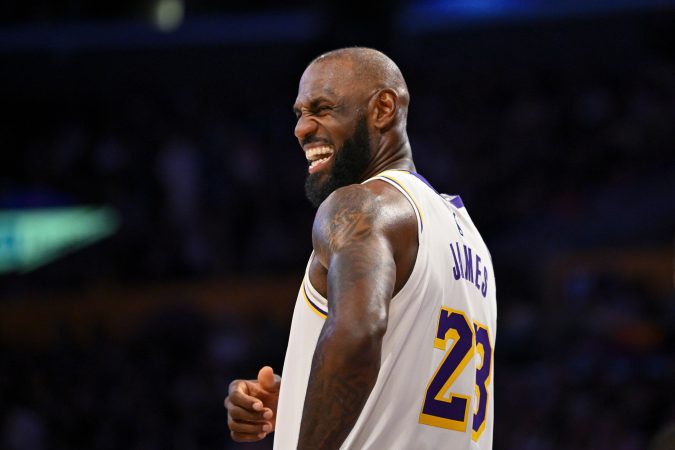
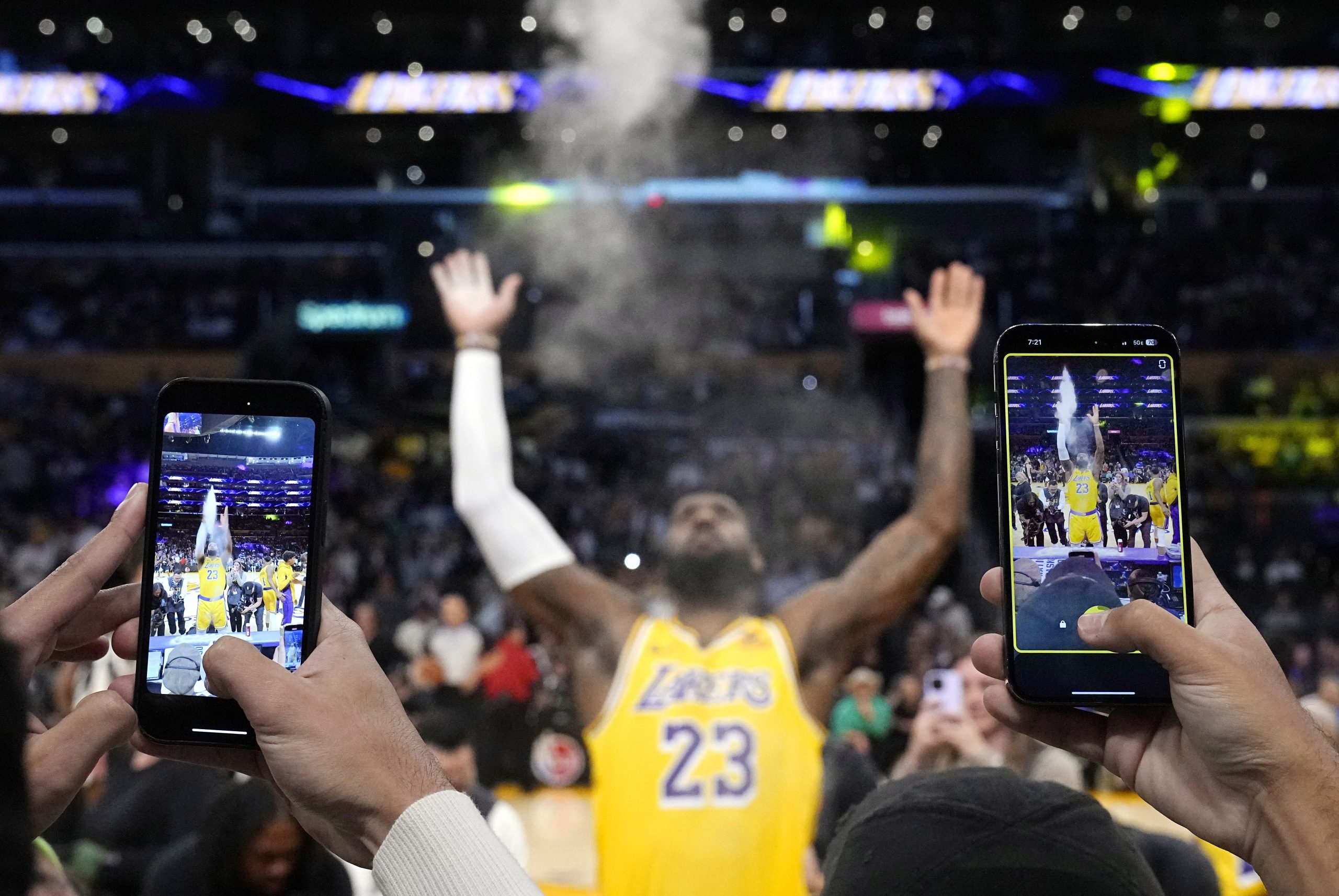
  • LeBron to the Sixers would be bigger than we seem to understand

    LeBron to the Sixers would be bigger than we seem to understand

    On Oct. 28, 2003, the 76ers opened their regular season at home — the arena was called the Wachovia Center then — with an 89-74 victory over the Miami Heat. It was the first game of Randy Ayers’ head coaching career, a career that would last just 52 games before he was fired. The Sixers’ starting lineup that night would make for a trivia question that would stump even the most obsessive hoops historian. Can you name the five? Don’t bother trying. They were Allen Iverson, Eric Snow, Derrick Coleman, Kenny Thomas, and John Salmons. It was, to put it mildly, a long time ago.

    The next night, LeBron James played his first game in the NBA.

    It is not enough to say that James has been with us ever since, for more than 22 years. It is not enough, now that the 76ers are reportedly one of the few franchises for whom James might choose to play this season, to say that he would be a nice, snug fit with Tyrese Maxey, Jaylen Brown, VJ Edgecombe, and Joel Embiid (when Embiid is healthy enough to suit up). For much of those two decades-plus, he has been the dominant figure in professional basketball and, at times, in all of sports. If your primary thought about a James-Sixers union is, He’d be the perfect power forward for this team, you’re shrinking him to a ridiculous size.

    Immediately upon his arrival, he would be the biggest sports star in this city, beyond any of his teammates, beyond anyone on the Eagles or Phillies. A talk-radio debate about Jalen Hurts would be a literary salon next to the daily LeBron discourse.

    LeBron James’ arrival would dwarf that of Bryce Harper and other superstars.Mark J. Terrill

    Steph Curry changed the way basketball was played and the way boys and girls around the world wanted to play it, and among the fraternity of NBA players themselves, Kobe Bryant was more respected and feared, for his preparation and cutthroat competitiveness, than James. But James has been greater longer than any other player in the sport (with the possible exception of Kareem Abdul-Jabbar, if you count his Lew Alcindor/UCLA years).

    Set aside, if possible, the four NBA championships and the 10 Finals appearances and the league’s career scoring record and the three Olympic gold medals and the other records he has set. His choreographed announcement in 2010 that he was leaving the Cleveland Cavaliers for the Miami Heat was the 21st century’s answer to the revelation that Kristin Shepard had pumped two bullets into J.R. Ewing’s belly. It changed everything about the power that elite players held over their respective teams because it showed elite players that they held power over their respective teams. Pro sports hasn’t been the same.

    Finding an athlete comparable to James in popularity and influence is difficult enough, let alone one who arrived in Philadelphia during the middle stage or latter half of his career, after he had established his galactic superstardom. Wilt Chamberlain already had been a high school phenom here when the Warriors made him a territorial pick in the 1959 NBA draft. Julius Erving was the “Babe Ruth of basketball” — at least, that’s how Sixers general manager Pat Williams described him in trying to persuade owner Fitz Dixon to cough up the money to acquire Dr. J. But Erving had spent six years in the relative obscurity of the ABA; telling someone you had seen him play for the Virginia Squires or New York Nets, whether in person or on TV, was akin to claiming you had spotted a Sasquatch.

    Allen Iverson was a pop-culture revolutionary with the Sixers for introducing hip-hop style and fashion into the mainstream; his on-court accomplishments, though, don’t stack up to James’. Bryce Harper was as well known as any player in Major League Baseball when he signed with the Phillies in 2019, but he didn’t and still doesn’t have anywhere near the global recognition and cachet that James does. We’re talking an all-timer among all-timers here.

    None of this context and history means that James will sign with the Sixers, and none of it means that they’ll win a championship for the first time since 1983 if he does. But it does provide a good counterbalance to the muted public reaction to the prospect that James could become a Sixer any day now. Yeah, he’s 41. Yeah, he has his coterie of agents and handlers and podcasters and supplicants. Yeah, he could turn out to be a handful or worse, especially if he wants to be the alpha on a team of younger, talented players who believe their time is now and aren’t interested in taking a backseat to anyone, even to one of the five best players ever.

    Cool. I’ll believe LeBron will sign with the Sixers when I see it; if I had to guess, I’d say he opts for a charming third go-round with the Cavaliers. But if he does come here … bring it on. Bring on the hope and expectations and the potential chaos. LeBron James in Philadelphia could be a coup, and it could be a disaster, and that volatility would be the fun and fascinating part of it. When Michael Jordan came out of retirement and joined the Wizards in 2001, just two years before James’ debut, The Washington Post assigned a writer, Michael Leahy, to cover Jordan and Jordan alone — a reporter whose beat wasn’t the cops or the courthouse or the ‘burbs or the basketball team, but one man. To my editors: Sign me up.

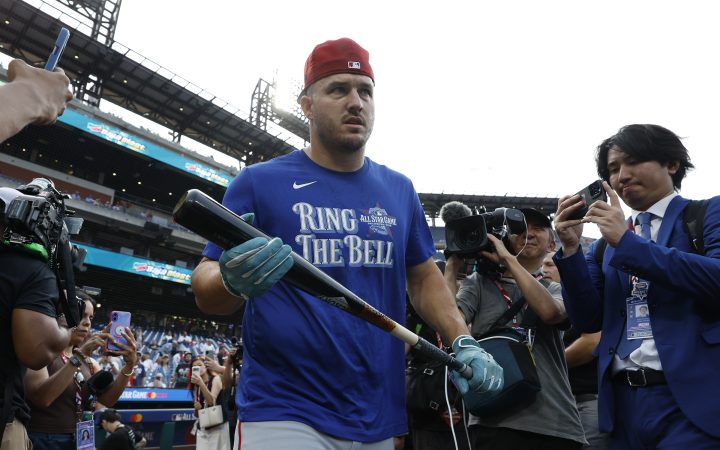
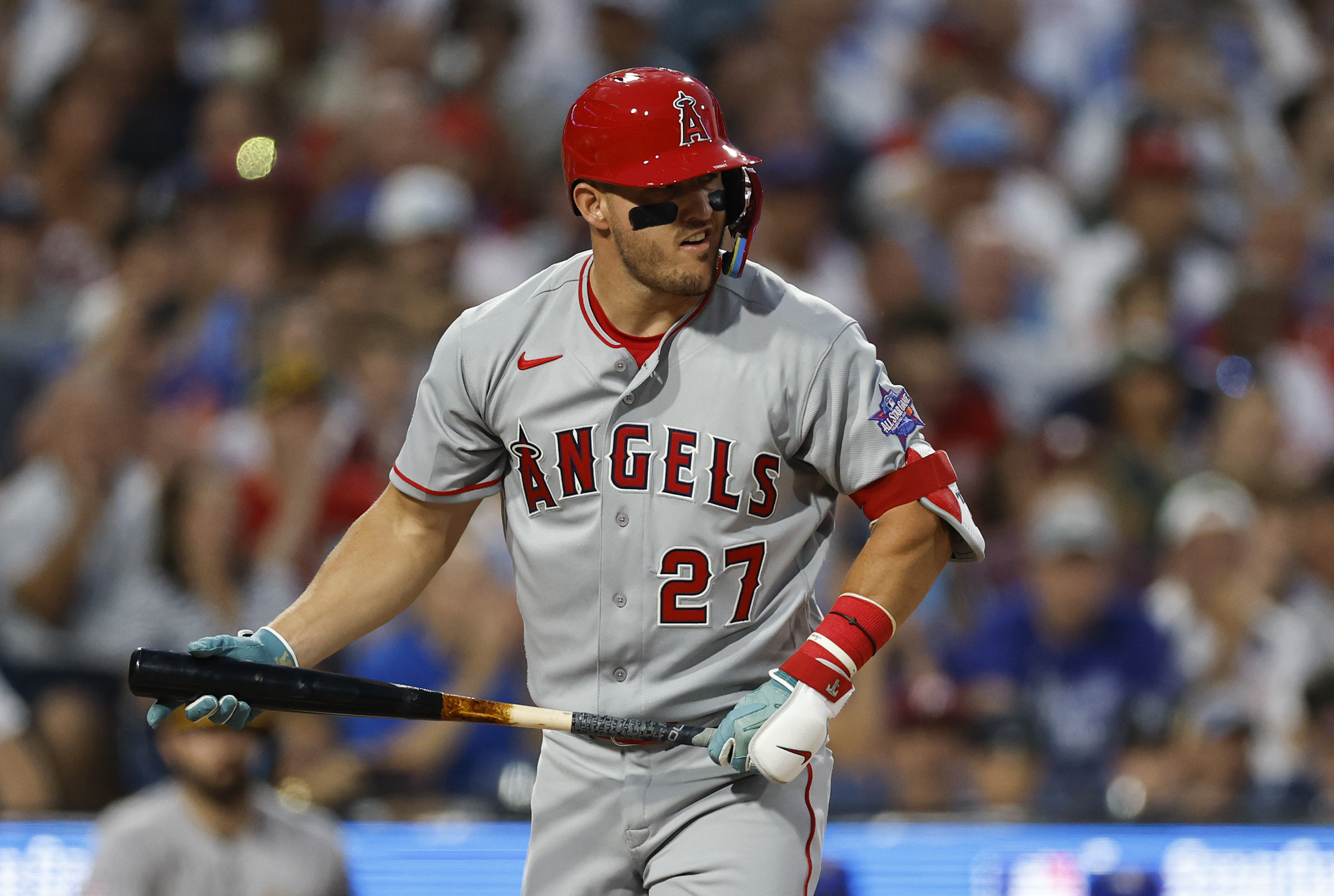
  • Does Mike Trout actually want to play in Philly? Better question: Do we actually want to see it?

    Does Mike Trout actually want to play in Philly? Better question: Do we actually want to see it?

    One of the keenest pieces of life advice is to never meet your heroes.

    Also, never trade for them when they are 34 years old and have $150 million remaining on their contract.

    It’s as simple as that, a big part of me thinks.

    I wouldn’t be surprised if a part of Mike Trout thinks it, too.

    It would certainly explain the vague but consistent discomfort that the Angels superstar projected throughout his All-Star weekend at Citizens Bank Park. From the obligatory arrival-day media free-for-all to a small postgame scrum that included some folks who’d covered him since high school, Trout politely but steadfastly declined to don the homecoming crown.

    “It’s been great,” the Millville native said after Tuesday night’s All-Star Game. “Being out there with the guys, seeing my family, friends, it was a special night, special couple days.”

    A questioner wanted to know where it ranked. He’d played at Citizens Bank Park in high school, after all. He routinely attends Eagles games across the street. He was applauded wildly during pregame introductions.

    “It’s up there,” was all Trout would allow.

    Philly loves nothing more than when someone loves it back. Trout surely knows this. Yet his responses were the ones you’d expect if somebody had asked if he enjoyed the meal.

    Virtually every year since Trout’s MVP runner-up rookie season, the idea of him in a Phillies uniform has surfaced like a white whale. From the trade-deadline fan fiction to the free-agent fantasy, nobody ever bothered to consider a fundamental question.

    Would Trout actually want to play here?

    In a lot of ways, Millville is as far away from the insanity of Philadelphia as Anaheim itself is. Trout has seen that insanity close enough at Lincoln Financial Field. Surely, he can imagine all that would await him and his family were he suddenly to become the potential savior of the Phillies.

    Mike Trout, a Millville native, went 0-for-3 in Tuesday’s All-Star Game at Citizens Bank Park.Yong Kim / Staff Photographer

    “I hear this a lot,” Trout told reporters on Monday before the Home Run Derby. “I enjoy coming to Philly. I’m an Angel, obviously. I got a no-trade clause, so it’s ultimately my decision. But, like I said, I love Philly.”

    Even if Trout wants to be here, which he has given no indication he does …

    Even if the Angels are willing to accommodate it on the Phillies’ terms, which they have given no indication they do …

    Even if the Phillies would dramatically increase their World Series odds by adding Trout’s stout right-handed bat to a lineup that leans further left than the DSA. Which is debatable at best …

    Even if all that is true — which, again, it very likely isn’t — the Phillies would need to think long and hard about whether such a move makes sense for them.

    The rest of us would need to ask ourselves if we really want to see it.

    Instead of focusing on the fairy-tale beginning, let’s start with how the thing is most likely to end. That is, poorly. Very, very poorly.

    Frankly, the strongest argument for Trout in a Phillies uniform is that the world as we know it may have ceased to exist by the time his contract is off the books in 2030. You only die once, right? Might as well have lived.

    Other than that, let’s make sure we think about the likely reality of 2030.

    Think about how Trout’s last days, maybe years, in a Phillies uniform would likely look. Think about how the Phillies would likely look as a whole.

    Trout is one of the greatest athletes to ever play baseball. He is unquestionably the greatest to do it while holding Eagles season tickets (sorry, Kevin Mench). But Trout’s civic legacy has greatly benefited from the insulation of 2,700 miles. The injuries, the missed postseasons, the diminished production. Thus far, they’ve been the burden of Angels fans, whoever they are.

    Mike Trout had a .739 OPS with a .326 OBP in his last 20 games before the All-Star break.Yong Kim / Staff Photographer

    There will be no insulation when he is 38 years old and being paid $37 million to limp into the last year of his contract alongside a 37-year-old Bryce Harper and a 37-year-old Kyle Schwarber and a 37-year-old Aaron Nola and a 37-year-old Trea Turner and a Phillies team that needs to get its development house in order to be anything other than a soul-sucking disappointment when the year of our lord 2030 arrives.

    Sure, maybe this time will be different. But there are very few scenarios where Trout in a Phillies uniform is sensible for the organization and something other than cringeworthy to watch at the end.

    From the Phillies’ perspective, the depreciation calculus would be complex enough to jeopardize a deal even if both sides were open to one. Health is a significant variable. That’s true for most 34-year-old players. It is especially true for Trout, who has played 85+ games just twice in his previous six seasons and hasn’t played more than 140 since 2016, when he was 24. He is barely a week removed from returning from a hamstring strain that sidelined him for three weeks. He missed a month last season after reinjuring a knee that had previously cost him most of 2024. The 2021-23 seasons saw him deal with a calf strain, a back injury, and a fractured hamate bone. The actuarial work will require more than a cocktail napkin just to calculate Trout’s likely availability from now through October. Even more complicated is figuring out how to price the risk/reward of the rest of Trout’s contract, which will pay him about $150 million through 2030, when he will be 38 years old.

    That would be true even if the short-term payoff were as decisive as many envision. It isn’t. Trout’s production has cooled off considerably since a sizzling start. He had a .739 OPS with a .326 OBP in his last 20 games before the All-Star break and a .750 OPS with a .349 OBP in his last 42. Those numbers are better than they may sound, particularly compared with what the Phillies’ overall numbers have been in the outfield alongside Brandon Marsh. But they are far from vintage Trout, which is what he was in his first 36 games, reaching base at a .436 clip with a 1.000 OPS and 11 home runs in 126 at-bats.

    In the meantime, the Phillies are dealing with the reality that they have exactly one proven late-innings bullpen arm. Their trade deadline focus crystallized on Thursday with the news that setup man Brad Keller will miss the rest of the season — and presumably 2027 — with a torn UCL.

    It’s pretty easy to envision how October will end if the Phillies sink resources into Trout instead of allocating them for the bullpen.

    Nobody should want to see it.

  • Rocky Balboa always represented the best of Philly. The city is finally loving him back.

    Rocky Balboa always represented the best of Philly. The city is finally loving him back.

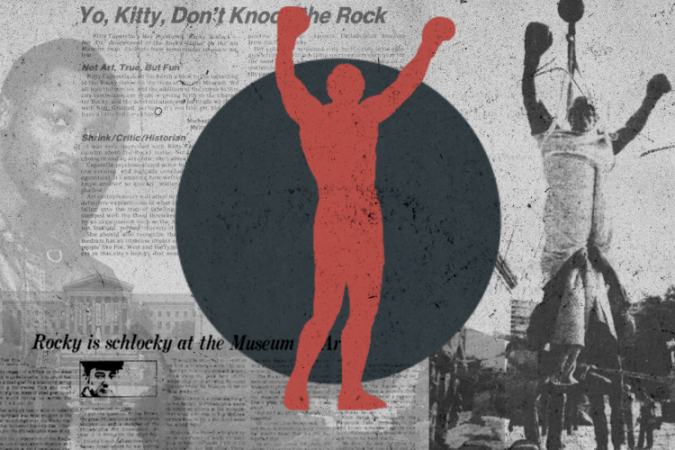
    Controversy has long dogged Philly’s Rocky statues — controversy that on the surface is about what the statues represent and where they belong, but is really about class, commercialism, and community. But now, argues columnist Mike Sielski, the Rocky Exhibit at the Philadelphia Art Museum is a sign that the city has finally fully embraced the statue’s popular power and meaning. The big question is: Do you agree?

  • Zack Wheeler and Bryce Harper are acting weird. Is it the pressure for the Phillies to win, or is it just us?

    Zack Wheeler and Bryce Harper are acting weird. Is it the pressure for the Phillies to win, or is it just us?

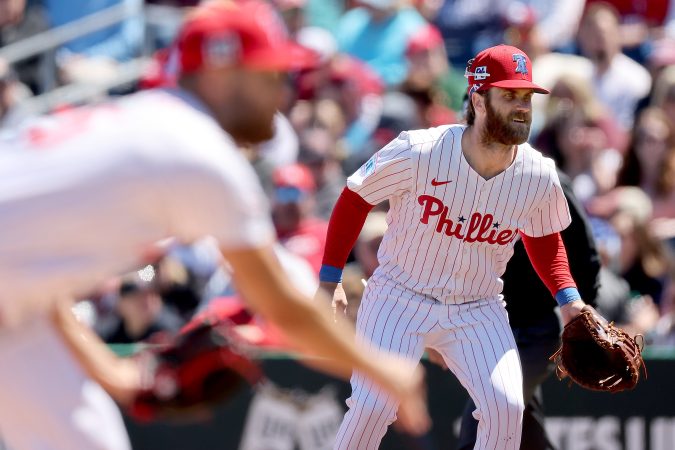
    For the record, I like Zack Wheeler and Bryce Harper. They’re principled, they’re authentic, they’re candid, they’re generous to their teammates, and I respect them for both their professionalism and their competitiveness.

    That doesn’t mean they’re not weird.

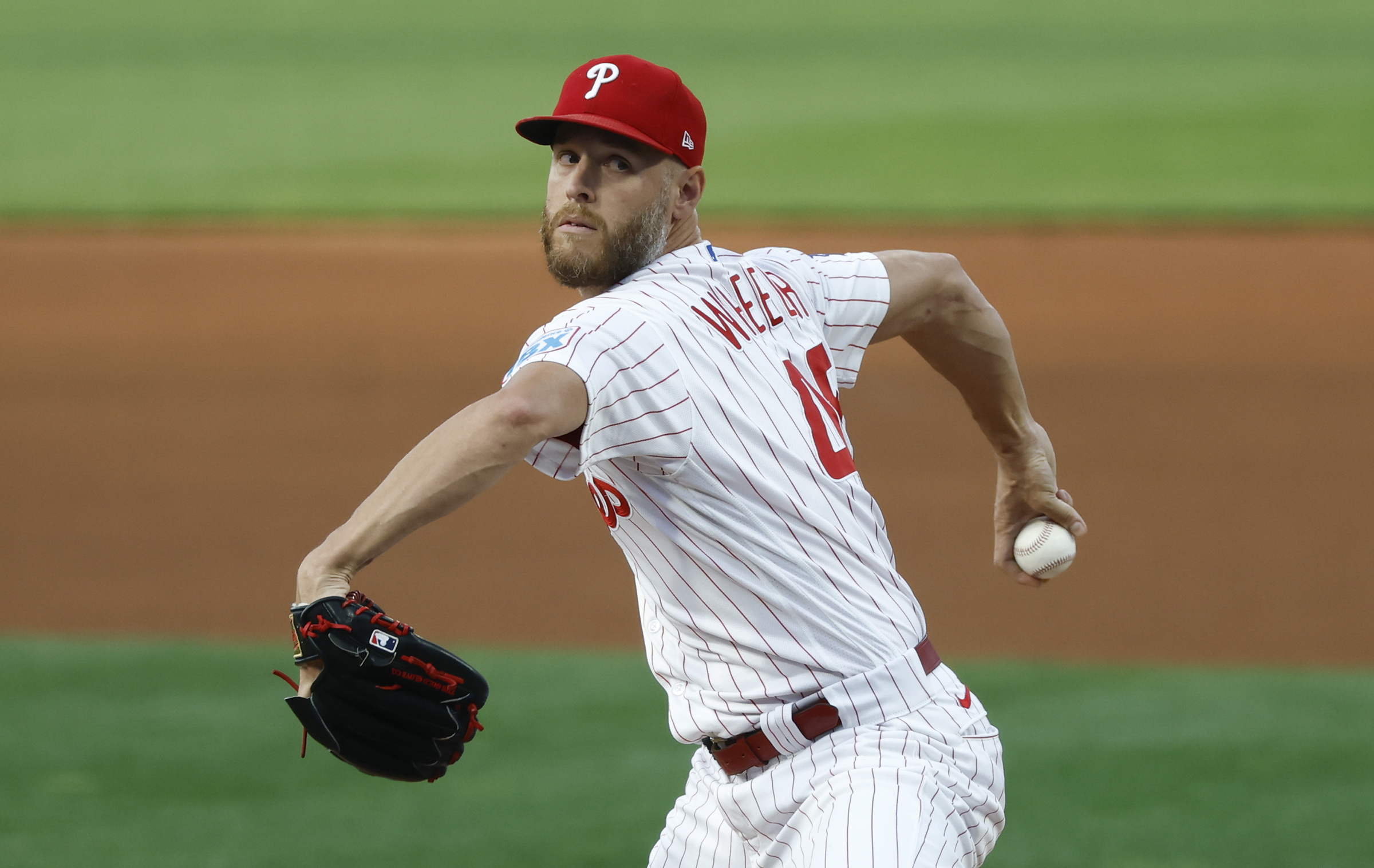
    Wheeler kept the rib that he had removed last year to address his thoracic outlet syndrome. Who saves the relic from a surgery that robbed you of 5% of your career? Apparently, a lot of athletes do that. That doesn’t make it not weird.

    Harper tries not to put anything in or on his body that isn’t all-natural and/or organic, from shampoo to lotion to coffee. He flushes and cleans his blood like his circulatory system is a car radiator.

    Again, a lot of athletes participate in these behaviors.

    That doesn’t make it not weird.

    Recently, though, both Wheeler and Harper tipped the weirdness scale beyond its normal scope.

    Hey there, you’re an All-Star

    First, Wheeler and his All-Star snubbery.

    Wheeler missed the first month due to the surgery but then went 8-1 with a 2.36 ERA in his first 13 starts. He was disappointed when he was not selected to the NL All-Star team via either the player ballot or as one of Major League Baseball’s six supplemental selections, announced July 4. Wheeler has said All-Star appointments are significant for him and his Hall of Fame legacy, but then, he declined to attend the game the last two times he was selected.

    Nevertheless, Wheeler was doubly chapped when, three days after the initial All-Star rosters were announced, he was not selected by MLB to replace one of the three pitchers who, like Wheeler, were scheduled to pitch Sunday, two days before the All-Star Game in Philadelphia; Sunday starters were not eligible to pitch. Wheeler pitched on the day of the announcement, and pitched dominantly. He improved to 9-1 with a 2.28 ERA, after which he said, “It [ticks] me off, and it’s kind of B.S.”

    Zack Wheeler didn’t want to be a fifth option and opted to sit out the All-Star Game. Yong Kim / Staff Photographer

    His point: He, like the other three Sunday starters, could have been named, could have declined, and would have had the All-Star honor on his resumé. Last Tuesday he said that, before the three replacements were named, he told MLB that he’d even be willing to throw an inning in the All-Star Game, since his bullpen day usually comes two days after a start.

    Cool.

    What made this a little weird is that one of Wheeler’s teammates, Jesús Luzardo, was one of the pitchers chosen as a replacement. It kind of sounded like Wheeler was promoting himself not just over the other two pitchers but also over his own teammate.

    But wait.

    Lo and behold, MLB relented. MLB offered Wheels the next spot in the game … but they did so too late for Wheeler’s taste. It wasn’t until Friday that they asked him to replace Reds pitcher Chase Burns, who backed out with a tight groin. That would have made Wheeler the fifth replacement.

    Wheeler said, “I’m not gonna be the fifth option.”

    What? So, being the fourth option was OK?

    Wheeler has a right to feel however he wants.

    That doesn’t make it not weird.

    FanDuel? What FanDuel?

    For the record, I don’t think Harper should face disciplinary action for recording a message on Cameo that FanDuel in 2024 used as a vehicle to pander to a client who either was, or who became, a gambling addict, and who now is suing FanDuel (and also DraftKings). The Inquirer reported this story last week.

    The policy of Major League Baseball in relation to players promoting gambling sites is, like most policies in Major League Baseball, vague and open to interpretation. Harper clearly had no idea the gambler had a problem, if only because Harper wouldn’t risk his reputation over an $899 Cameo fee. Hence, I believe nothing should come of this. MLB commissioner Rob Manfred said Harper didn’t violate the collective bargaining agreement. The players association remains mum. The Pennsylvania Gaming Control Board says it is investigating, but with what authority it is investigating and to what end this might affect Harper remains unknown.

    Still, it’s kind of weird that Harper, a straight-and-narrow kind of guy, would get in bed with FanDuel at all.

    It’s super weird that Harper would deny knowledge that he was doing so.

    In a statement posted Monday on Instagram, Harper said, “Contrary to the Inquirer’s suggestion, I did not know that the Cameo video would be used for a FanDuel VIP promotion.”

    However, in the video to the gambler, Harper refers to “your host Bryttanni from FanDuel.”

    So, yeah. Deny saying something you actually said? Super weird.

    Then again, Harper advocated for using aluminum bats in the Home Run Derby (his suggestion was dismissed). They might as well have cruise missiles in the Home Run Derby. Kyle Schwarber with an aluminum bat? He’d have killed someone.

    This is just the latest. As the kids say, Harper’s been on one.

    The day after Christmas, in response to Phillies president Dave Dombrowski saying in October that Harper might no longer be elite (which was unwise), Harper, on Dec. 26., posted a TikTok video with him hitting in a batting cage wearing a shirt that said “NOT ELITE.”

    When Harper arrived at spring training, in response to the Phillies having added only Adolis García as a candidate to bolster the No. 4 spot behind him, he said, “I think the numbers in the four spot weren’t very good last year for our whole team. Whoever is in that four spot is going to have a big job to do.”

    After the Phillies fired manager Rob Thomson in April, Harper’s comment indicated that the Phillies were stuck in the mud because of the manager’s likely dismissal: “I think we were all just waiting for that ball to drop, waiting for something to happen. If Topper was going to get fired or he wasn’t, it was just kind of, ‘We need to get over this hump and get through this,’ whatever that looked like.”

    Since Thomson’s firing, Harper also has supported less platoon play for second baseman Bryson Stott and outfielder Brandon Marsh. Harper cited Marsh’s everyday inclusion as the major reason Marsh was an All-Star — again, an admission of disagreement if not an outright criticism of his bosses. Thomson, with input from Dombrowski and the front office, was more likely to platoon those left-handed hitters, while interim replacement Don Mattingly has played them more to Harper’s liking.

    I agree with Harper’s assertion that everyday play is usually smarter, and, as always, I applaud his candor.

    That doesn’t make it not weird.

    Maybe it’s Philly

    Maybe it’s the heat.

    With all due respect to Joel Embiid, who might be the weirdest of them all, and new Sixers teammate Jaylen Brown, who just called most athletes dummies, no one has faced or now faces more pressure to win in Philadelphia than Wheeler and Harper.

    Wheeler, at $42 million a year, is the highest-paid non-hitting pitcher in baseball. Harper signed a 13-year, $330 million contract in 2019, which was then a record. They’ve been worth every penny, and more. Wheeler has been the best pitcher in baseball since he initially signed with Philadelphia in 2020. Harper has sold more tickets than Taylor Swift.

    However, Wheeler has not won a Cy Young Award. Harper won a second career MVP in 2021, but he’s battled injuries. They’re the best Phillies duo since Mike Schmidt and Steve Carlton, and both of them have been magnificent in the postseason, but Harper’s on his fourth manager. Wheeler’s on his third. The Phillies have been to one World Series since they became teammates, and their last three trips to the playoffs have ended in bitter disappointment and, arguably, underachievement.

    It’s not just them.

    Maybe it’s us.

    Philadelphia is a place that can love its own and can eat its own, sometimes in the same game.

    Don’t get me wrong. I love a weird athlete or coach or executive.

    Jalen Hurts and his aphorisms and his crazy work ethic, riding a VersaClimber at midnight. Jason Kelce and his berserker persona. A.J. Brown reading a book on the sideline during a game.

    Ben Simmons with his training camp holdout scrimmaging with his iPhone in his pocket. James Harden, with his training camp holdout and his crazy fashions and that tiny mouth inside that massive beard.

    Former Phillies manager Gabe Kapler and the Seasons of Coconut Oil; stiff-collared Sixers president Bryan Colangelo and his burner accounts; former Sixers GM Sam Hinkie and the 13-page Resignation Manifesto; former Flyers goalie Ilya Bryzgalov and his fear of bears and his awe at the humongous-ness of the universe; and, of course, Terrell Owens doing biceps curls and situps in his driveway.

    I love that Wheeler’s warmup song, “Rooster,” came out when he was 2 years old, commemorating a war that began more than 60 years ago. I love that Harper, from cleats to headbands to suit-coat liners, has more Phillie Phanatic gear than any 8-year-old Phillies fan.

    I’m there for all of it.

    But that doesn’t make it not weird.

  • ‘My favorite place to play’: Philly and Citizens Bank Park were All-Stars on a magical night. Just ask the actual All-Stars.

    ‘My favorite place to play’: Philly and Citizens Bank Park were All-Stars on a magical night. Just ask the actual All-Stars.

    Whenever somebody asks me to name my favorite ballparks, I spend most of my time trying to talk myself out of the most boring possible answer.

    Sure, Dodger Stadium is a personal favorite. There’s something about the way a SoCal dusk blends with Dodger Blue and the peaceful rise of the San Gabriel Mountains in the distance beyond center field.

    And, yeah, you won’t find a more distinctive setting than Oracle Park in San Francisco, where Mission Bay laps against the outfield walls and the lack of a second deck gives you the sense that you are watching a baseball game on a barge. The counterintuitive microclimate only adds to the surreal vibe. Half the winter coats I own were purchased in July in San Francisco.

    I can name a half dozen other stadiums that are worth a special trip. Each is unique in its own way. Yet they all have one thing in common. They aren’t Citizens Bank Park.

    I don’t know if the whole world saw it on Tuesday night. But anybody who attended sure did. The 68 players. The two coaching staffs. The nearly 50,000 fans who packed the rows and the aisles and seemingly every square inch of concourse.

    “Philly was awesome,” said Blue Jays infielder Ernie Clement. “What a great sports city.”

    On a competitive level, South Philly’s first All-Star Game in 30 years was a ho-hum affair. The American League scored three first-inning runs off Phillies lefty Cristopher Sánchez and then engaged in an eight-inning sprint for the exit. The two sides finished with 10 hits, only one for extra bases. Kyle Schwarber, Brandon Marsh and Bryce Harper combined to go 0-for-6.

    On every other level, it was a triumph.

    It was a triumph for the city, whose splendid skyline first gleamed and then glowed in the summer haze. It was a triumph for the Phillies organization, in particular a grounds crew and game day operations staff that has long powered one of the sport’s best extracurricular environments. Most of all, it was a triumph for the setting and its people: for a ballpark that doesn’t get the respect it deserves as one of the sport’s Crown Jewels, and for a fan base that consistently shows that a household is only as strong as its inhabitants.

    For years, it seemed like a glaring oversight that 22 ballparks would host an All-Star Game before Citizens Bank Park got its turn. As it turned out, the wait was more of a feature than a bug. The bright lights and national television cameras only served to accentuate the glow of a ballpark that somehow looks even better than it did when it opened in 2004. Similar to the red brick rowhouses in the city proper, the outfield’s masonry facades have an age-defying property, especially when contrasted with the industrial steel and wide-open concrete of the concourses and seating decks. You won’t find a stadium or arena in any sport that has aged as gracefully as the house that David Montgomery (and others) built.

    Earlier this spring, with the Eagles beginning their due diligence on a potential replacement for Lincoln Financial Field, Phillies owner John Middleton said he sees no reason why Citizens Bank Park shouldn’t last another 100 years.

    Tuesday night was a triumph for him, then, too.

    Of course, Middleton would be the first one to tell you that the people make the place. So it was on All-Star Weekend. The real star of the show on Monday and Tuesday night was the home crowd, whose caustic electricity provided a much-needed edge for an over-corporatized event that most years feels emptier than a bowl of sugar cereal.

    You saw it in the smiles that appeared on the faces of players as the crowd booed its lengthy list of civic enemies. From Yankees starting pitcher Cam Schlittler to Mets outfielder Juan Soto to anybody in a Braves or Red Sox jersey, those targeted grinned and waved in appreciation. By the end of the proceedings, it felt like an insult to be ignored.

    “Like they always say,” said Soto, “if they boo you, then you’re doing things right.”

    The heckling was mostly good-natured, save for an appearance by Mr. and Mrs. Met.

    This was a celebration first and foremost. The event’s organizers and executors were aided by a number of ready-made story lines. They included the All-Star debut of Catholic League standout Kevin McGonigle and the homecoming of Mike Trout in his career’s twilight, in addition to Sánchez on the mound and Schwarber and Marsh in the starting lineup. But MLB also did its part. With a devastating labor stoppage potentially looming in a sport that increasingly feels anachronistic in the swirl of a country’s division and distraction, baseball managed to summon a lot of its friendlier ghosts on Tuesday night.

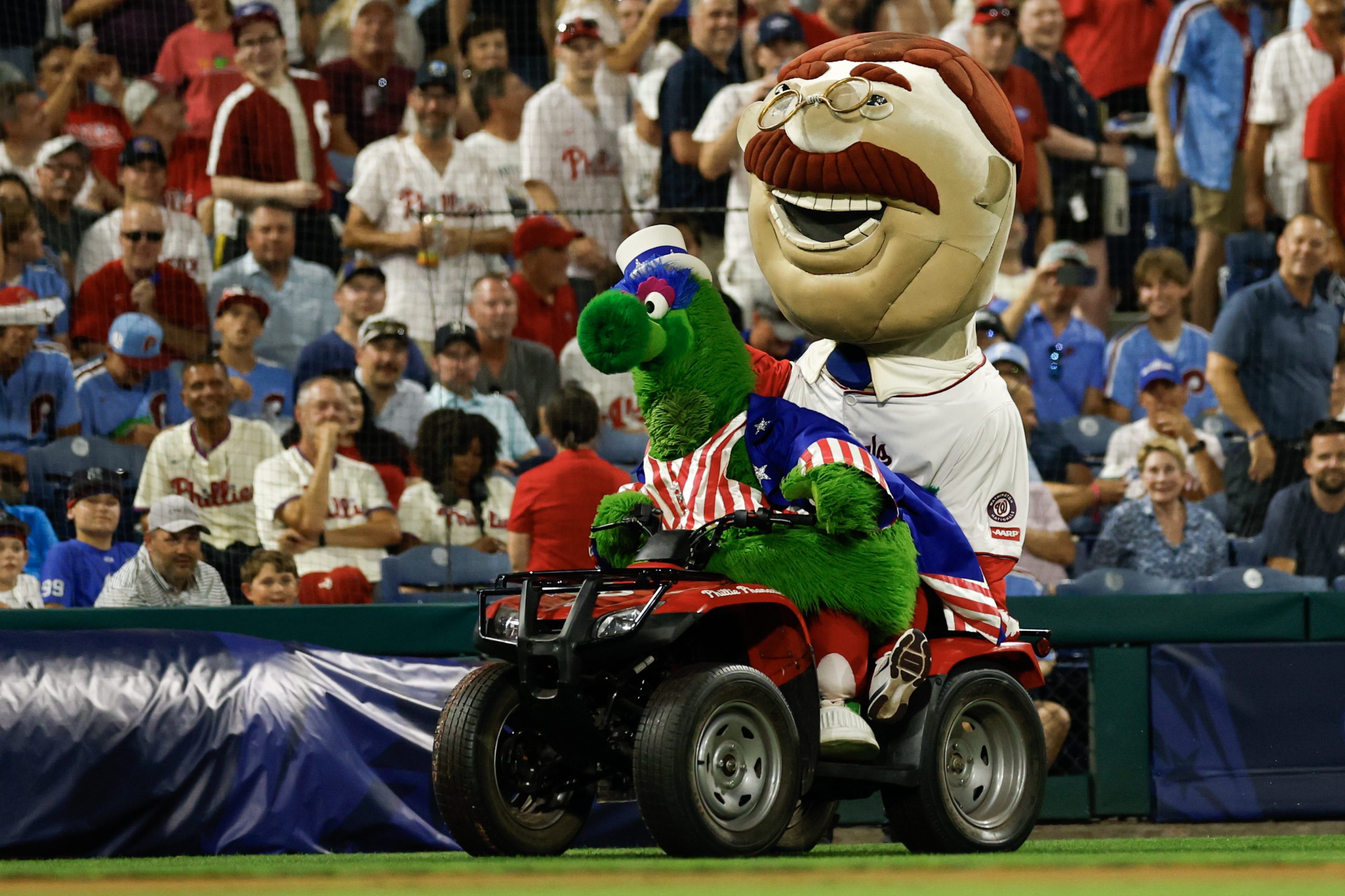
    The Phanatic gives Washington Nationals mascot Teddy Roosevelt a ride during the presidents race before the bottom of the fourth inning on Tuesday.Yong Kim / Staff Photographer

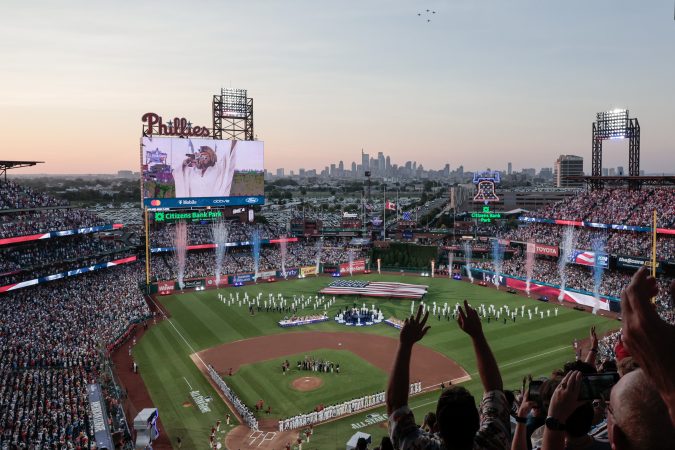
    The climactic moment was curiously timed and even more curiously powerful. In the fifth inning, with the stadium lights dimming and Ray Charles’ famous playing on the oversized videoboard in left field, Citizens Bank Park erupted with a fireworks display complete with players holding sparklers and Dodgers first baseman Freddie Freeman playing catch with one of the local kids who rode their bikes onto the field as part of the program.

    “Like I’ve been saying the last two days, since I came up with the Braves, this is my favorite place to play,” Freeman said after the game. “I love the Bank. It wasn’t fun to play because it was Halladay, Hamels, Lee every time, but it was packed every night. It’s a great place to play. Great city.”

    Sounds like a win in our book.