Category: Sports

  • U.S. Open: PGA Tour players have scuttled the rollback of the golf ball, for now and forever

    U.S. Open: PGA Tour players have scuttled the rollback of the golf ball, for now and forever

    Golf’s governing bodies, after consulting two weeks ago with the PGA Tour, declared Wednesday at the U.S. Open that the rollback of hyper-engineered golf balls would be rolled back itself. Any adjustment now will go into effect in 2030 instead of 2028.

    That was the official announcement, anyway.

    Unofficially?

    The rollback is dead. Pity golf superintendents the world over, who, within a generation, will be tasked with nurturing 8,000-yard courses, 25% longer than God and Old Tom Morris intended.

    Two weeks ago USGA CEO Mike Whan, who represents an organization entrusted with protecting the game, met with the PGA Tour’s Player Advisory Committee, which represents a group of independent millionaire contractors whose only concern is winning as much money as possible while shilling for equipment manufacturers. To do so, the aforementioned millionaires must retain their eligibility on tour, which means most of them can’t afford a slump.

    And slump they would. It would take players months to adjust to a new ball, which is the most important piece of the myriad pieces of equipment they use. No matter how much they practiced, they could not replicate tournament conditions, and so they would have to recalibrate their game in real time during tournaments that could make or break their careers.

    They will never agree to that.

    They never should have been asked.

    However, they’ve entered the chat, and they’ll never shut up. Now that the pros have a say, the rollback has gone the way of the feathery and the gutty.

    The players and the executives said Wednesday they still will consider mitigating distance, perhaps by deflating the balls, manipulating clubs, and re-engineering shafts. Whatever. Don’t expect anything that tangibly affects the game. Ever. The players will stymie whatever initiatives the suits suggest. It’s called self-preservation.
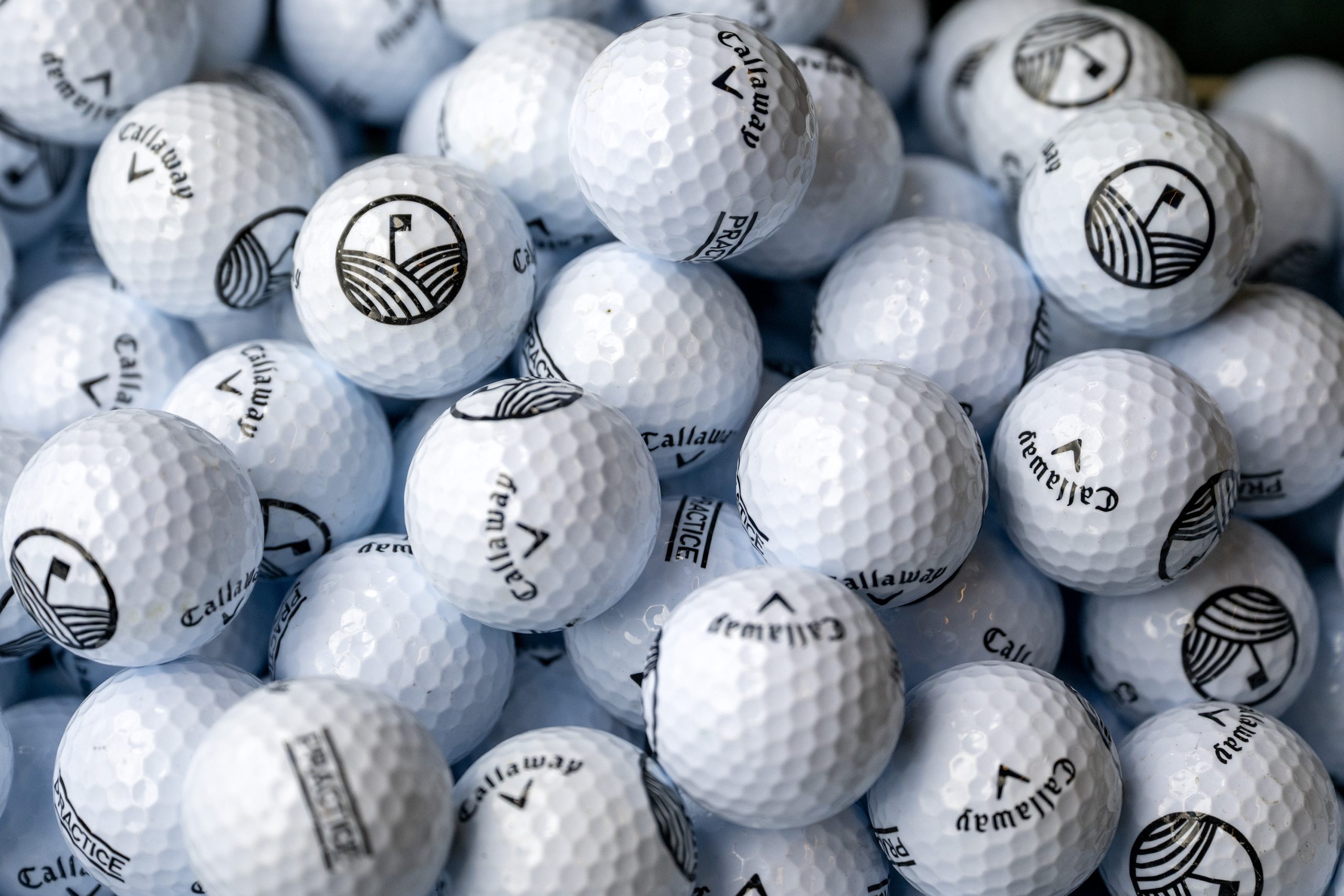
    Golf balls at the driving range are shown following a ribbon-cutting in April for the Lincoln Financial Center at Cobbs Creek Golf Course.Tom Gralish / Staff Photographer

    Death of the rollback was always a possibility, and a delay seemed inevitable.

    Word spread during the Florida swing in March that there would be a two-year delay of the rollback project begun in 2018 that was supposed to be completed after a 10-year process.

    Why does it matter? Golf courses the world over — even places like Shinnecock Hills, the site of the U.S. Open; Merion Golf Club, the site of the 2030 U.S. Open; and Augusta National, the only static site of a major tournament — are running out of real estate and spending exorbitantly to feed, water, and mow so much grass. Shinny played 6,996 yards in 2004. It will play to 7,434 yards this week.

    Acushnet ruined everything.

    That’s the name of the parent company of Titleist, which introduced the Pro V1 in 2000, a golf ball that combined superior distance and durability with soft feel. Balls across brands have only gotten better since.

    Granted, the ball isn’t everything. Clubs have gotten bigger and easier to hit. Golfers have gotten fitter, more dedicated, and more numerous. But nothing affected the game like the souped-up ball that went higher and farther and straighter than Bobby Jones and Ben Hogan ever could have imagined.

    That’s why the folks at the USGA, the R&A in Scotland, and the mysterious, powerful cabal that operates out of Augusta, Ga., under advisement of such experts as Jack Nicklaus, Arnold Palmer, and Gary Player, have spent the last decade trying to figure out how to put this genie back in its bottle.

    The explanations and arguments following the announcement before the 126th edition of the competition were as wild and as entertaining as the golf to be played on the wind-swept Southampton, N.Y., grasslands over the following four days.

    Pros said that if the golf ball changed, they would find a way to still hit it just as far … physics be damned, I guess.

    As proof, some pointed at the 375-yard drive hit by Cam Young on the 72nd hole of The Players Championship, the longest drive ever recorded on that hole. Last year, Young began playing a Titleist Pro V1x Double Dot, which would conform to the proposed parameters of a rolled-back ball. Wait: All of a sudden, the data-driven analytics crowd is all about the anecdotal?

    One argument seemed particularly fatuous.

    Golf Channel fixture Brandel Chamblee, the smartest and hardest-working analyst in sports history, is a staunch opponent of a rollback. He is a wonderful writer and a gifted orator with a head of hair that makes shampoo manufacturers drool, but his truest genius lies in his ability to unearth, synthesize, and manipulate numbers. On Wednesday, in asserting that the world’s best players rely on more than distance to succeed — which is true — he also said this:

    “If you look at the top 15 players on the PGA Tour right now in driving distance, there is not a single one of them in the top 10 in the world rankings. They average 83rd in the world rankings.”

    Which also is true … and wildly misleading, considering it excludes three of the top four golfers on the planet, at least.

    World No. 2 Rory McIlroy, the two-time reigning Masters champion, has not yet hit enough drives on the PGA Tour to qualify in the driving distance category. He’s averaging 326.8 yards.

    Jon Rahm is ranked No. 8, but he plays on the LIV Tour, so he doesn’t qualify, either. Neither does LIV golfer Bryson DeChambeau, ranked No. 32.

    If this trio qualified, Rahm and DeChambeau would be tied for No. 1, at 330.4 yards. McIlroy would be fourth.

    Chamblee’s “top 10″ qualification also excludes Chris Gotterup, who is ranked 11th in the world and fourth in driving distance.

    Finally, only five of the world’s top 17 golfers would rank below the Tour average of 304.1 yards per drive. Clearly, power matters.

    Another thing about driving distance: Some of the biggest hitters rank lower in distance off the tee because they don’t have to hit their driver to eat as much ground as less powerful hitters. Also, they hit their irons farther.

    So, for instance, World No. 1 Scottie Scheffler (tied for 30th in driving distance) could choose to opt for accuracy and hit a 3-wood maybe five yards short of another player’s best driver and still might have to 9-iron into the green, while the player who hit driver has to hit an 8-iron.

    Other arguments against a rollback are just as disingenuous. Would it disproportionately penalize shorter hitters? Not really. They’d have the same issues they have now.

    At any rate, in this discussion, the golfers themselves are irrelevant.

    This is about saving money and saving golf courses.

    It’s not about keeping Matt Kuchar on tour for a 29th season.
  • What can the Sixers expect with the No. 22 draft pick? Past drafts illustrate the unpredictability.

    What can the Sixers expect with the No. 22 draft pick? Past drafts illustrate the unpredictability.

    Tyrese Maxey is a prime example of the caliber of player a team could snag in the early 20s of the NBA draft.

    But Jameer Nelson, the 76ers’ newly promoted executive vice president of basketball operations, also was quick to note that Maxey is the exception, not the rule.

    “We got lucky with the person,” Nelson recently said of Maxey, the All-NBA point guard whom the Sixers drafted 21st in 2020. “We got lucky with the player.”

    The Sixers are in a similar spot this year, holding the No. 22 overall pick entering Tuesday’s first round. It has been a sped-up process for new president of basketball operations Mike Gansey, who was formally introduced last week after spearheading the draft in his previous job as the Cleveland Cavaliers’ general manager.

    To further illustrate the uncertainty that comes with selecting at this point in the draft, here’s a look back at pick Nos. 21 through 23 the last five years. It offers a collection of success stories, and players who have since fallen out of the league.

    2025

    21st pick: Will Riley, forward, Illinois

    22nd pick: Drake Powell, wing, North Carolina

    23rd pick: Asa Newell, forward, Georgia

    Riley (10.3 points in 74 games) earned NBA All-Rookie votes this past season, as a surprise on a Washington Wizards team with a barrage of recent high draft picks. Powell (6.5 points in 63 games) was in the Nets’ rotation, which comes with the caveat that Brooklyn was not exactly interested in winning last season. Newell averaged 5.2 points in 44 games for the Hawks but also spent time in the G League during Atlanta’s surge in the second half of the regular season.
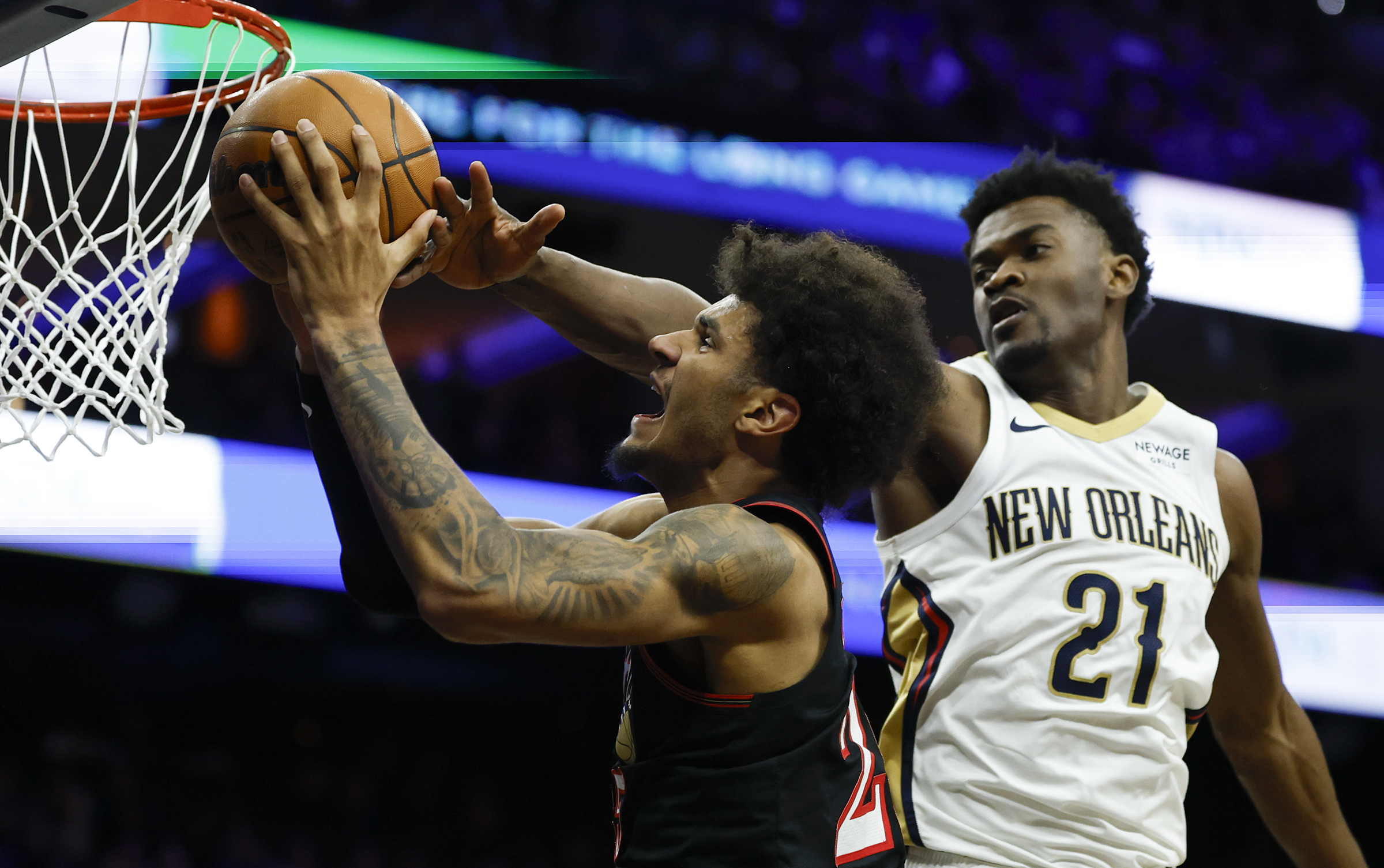
    Yves Missi (right) has started 81 of 139 games in two seasons with the New Orleans Pelicans, averaging 7.5 points and 7.1 rebounds.Yong Kim / Staff Photographer

    2024

    21st pick: Yves Missi, center, Baylor

    22nd pick: DaRon Holmes, forward, Dayton

    23rd pick: AJ Johnson, guard, Australia

    Missi has started 81 of 139 games in two seasons with the New Orleans Pelicans, averaging 7.5 points and 7.1 rebounds. Holmes tore his Achilles tendon in his first summer league game as a Denver Nuggets rookie, then played in 25 games this past season following his recovery. Johnson has already become an NBA journeyman, playing for three teams (Milwaukee Bucks, Wizards, Dallas Mavericks) in two seasons.

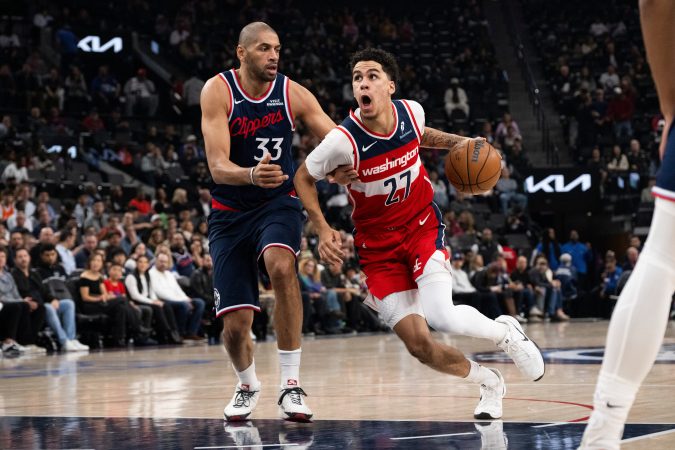
    The notable picks in this range from this year: Jaylon Tyson at 20th overall by the Cavaliers during Gansey’s tenure. And Kyshawn George, who is an intriguing, yet inconsistent wing for the Wizards.

    2023

    21st pick: Noah Clowney, forward, Alabama

    22nd pick: Dariq Whitehead, wing, Duke

    23rd pick: Kris Murray, forward, Iowa

    Clowney started 60 games for the Nets this past season, averaging 12.3 points on poor shooting efficiency. Whitehead, a former national high school player of the year, was waived by the Nets before the 2025-26 season and spent time in the G League before joining the Memphis Grizzlies on a 10-day contract. Murray (5.8 points, 3.6 rebounds) was in the rotation for the upstart Trail Blazers, who made the playoffs in the Western Conference.

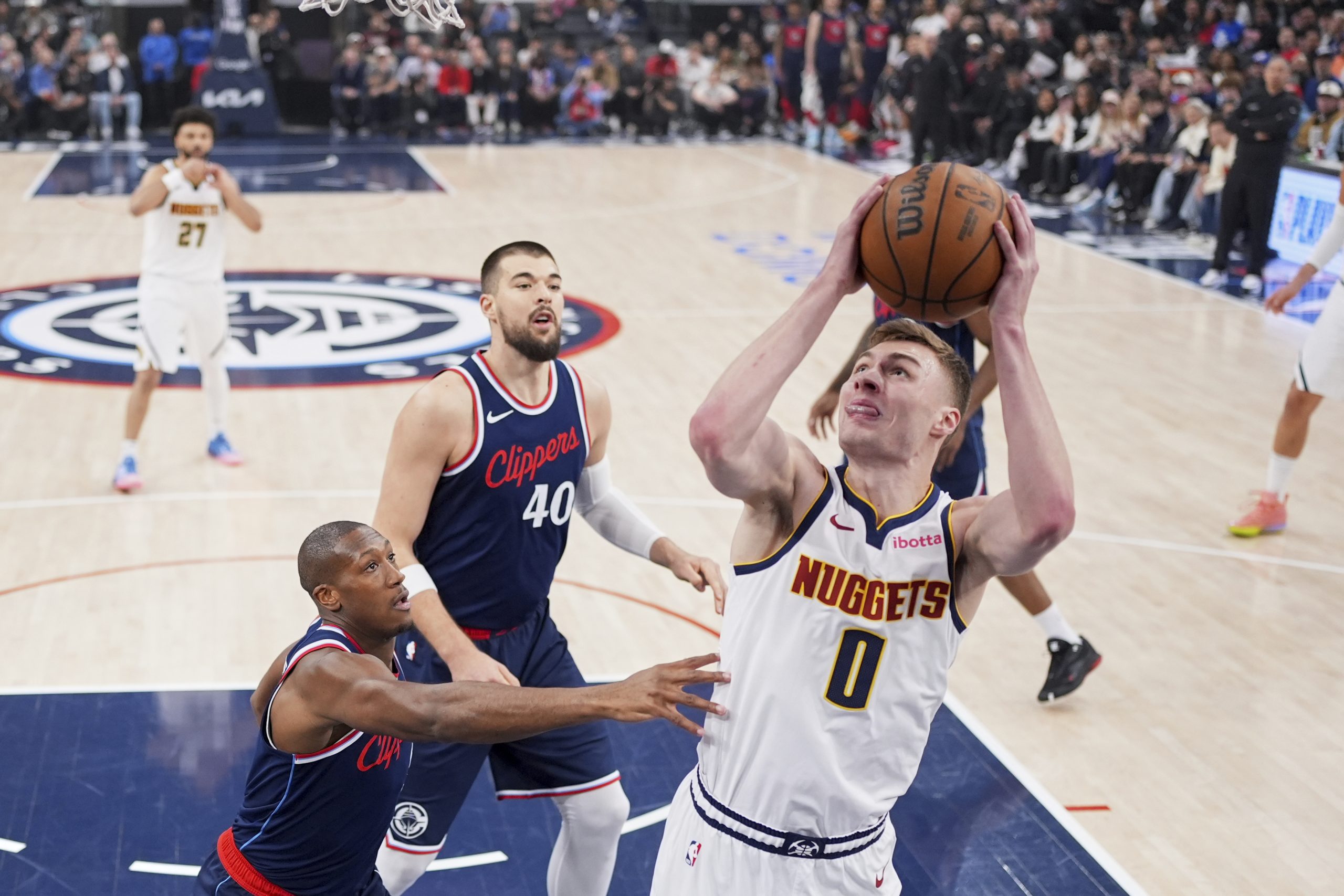
    Christian Braun (right) won an NBA title with the Nuggets as a rookie.Mark J. Terrill

    2022

    21st pick: Christian Braun, guard, Kansas

    22nd pick: Walker Kessler, center, Auburn

    23rd pick: David Roddy, forward, Colorado State

    That 23rd pick belonged to the Sixers and was used in the trade to acquire key two-way guard De’Anthony Melton. Braun (12 points, 4.8 rebounds, 2.7 assists in 44 games in 2025-26) is a rotation player with the Nuggets, including as a rookie on their 2023 title team. Kessler, who joined the Utah Jazz in the Rudy Gobert blockbuster trade, had season-ending shoulder surgery in 2025-26 but is still regarded as a promising young big man (9.5 points, 9.3 rebounds in 201 career games).

    2021

    21st pick: Keon Johnson, guard, Tennessee

    22nd pick: Isaiah Jackson, big man, Kentucky

    23rd pick: Usman Garuba, big man, Spain

    Johnson was in the G League this past season following three stints with NBA teams, most recently when he averaged 10.6 points for the Nets in 2024-25. Jackson (6.7 points, 5.3 rebounds in 2025-26) was an Indiana Pacers reserve big man for parts of five seasons, before being sent to the Los Angeles Clippers in the Ivica Zubac trade. Garuba was last in the NBA in 2023-24, and is back in his hometown playing for EuroLeague power Real Madrid. He tore his Achilles tendon last month.

    Two notable picks in this range in this draft: Jalen Johnson at No. 20, who is now a versatile All-Star and franchise cornerstone for the Hawks. And Quentin Grimes at No. 25, the Sixers’ guard who now enters unrestricted free agency following last summer’s messy restricted free agency.

  • Tessa Janecke is selected third overall by Las Vegas; Penn State well-represented in the PWHL draft

    Tessa Janecke is selected third overall by Las Vegas; Penn State well-represented in the PWHL draft

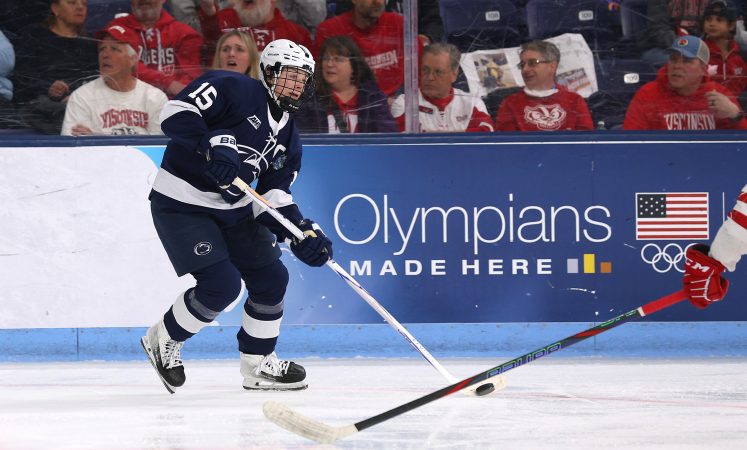
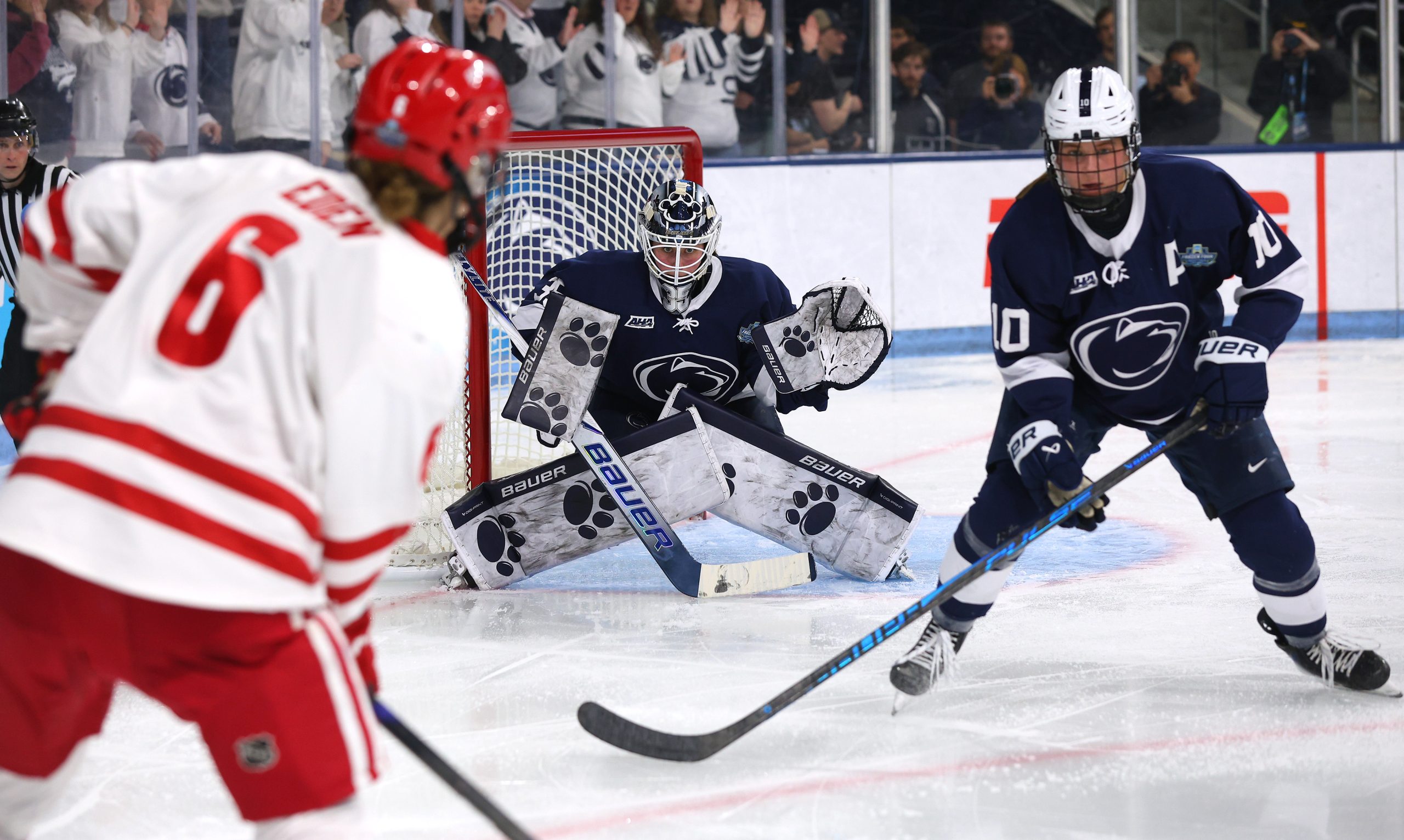
    Tessa Janecke has had no shortage of big moments this year, from winning gold with the United States women’s hockey team at the Winter Olympics in Milan to playing in the Frozen Four on home ice in State College.

    On Tuesday night she added another, as Las Vegas of the Professional Women’s Hockey League selected Janecke with the third overall pick of the PWHL draft.

    The new team in Las Vegas was the fourth team to be announced as part of the league’s second round of expansion for the 2026-27 season, its fourth. which takes the league from eight teams to 12. Detroit; Hamilton, Ontario; and San Jose, Calif., are the other three.

    The Vancouver Goldeneyes picked Wisconsin star Caroline Harvey first overall. Minnesota’s Abbey Murphy went second to the Seattle Torrent, and Wisconsin’s Laila Edwards (San Jose) and Lacey Eden (Las Vegas) rounded out the top five.

    After helping lead Penn State to its first women’s Frozen Four appearance, Janecke says she knows what it’s like to help build a program and is prepared to do the same in Vegas.

    “Me and my class have kind of built that place into what it is today, and hopefully into what it continues to be, and I’m really excited to be able to do that with Las Vegas as well,” Janecke said.

    Janecke added: “It takes so much hard work and adversity, even if you’re not winning games, to still make those around you feel like they belong and feel that sense of community in the team.”

    As Penn State’s leading goal scorer last season with 26 goals, the 5-foot-8 forward also led the team in points (48) and finished with 201 career points, the most ever for a Penn State hockey player.

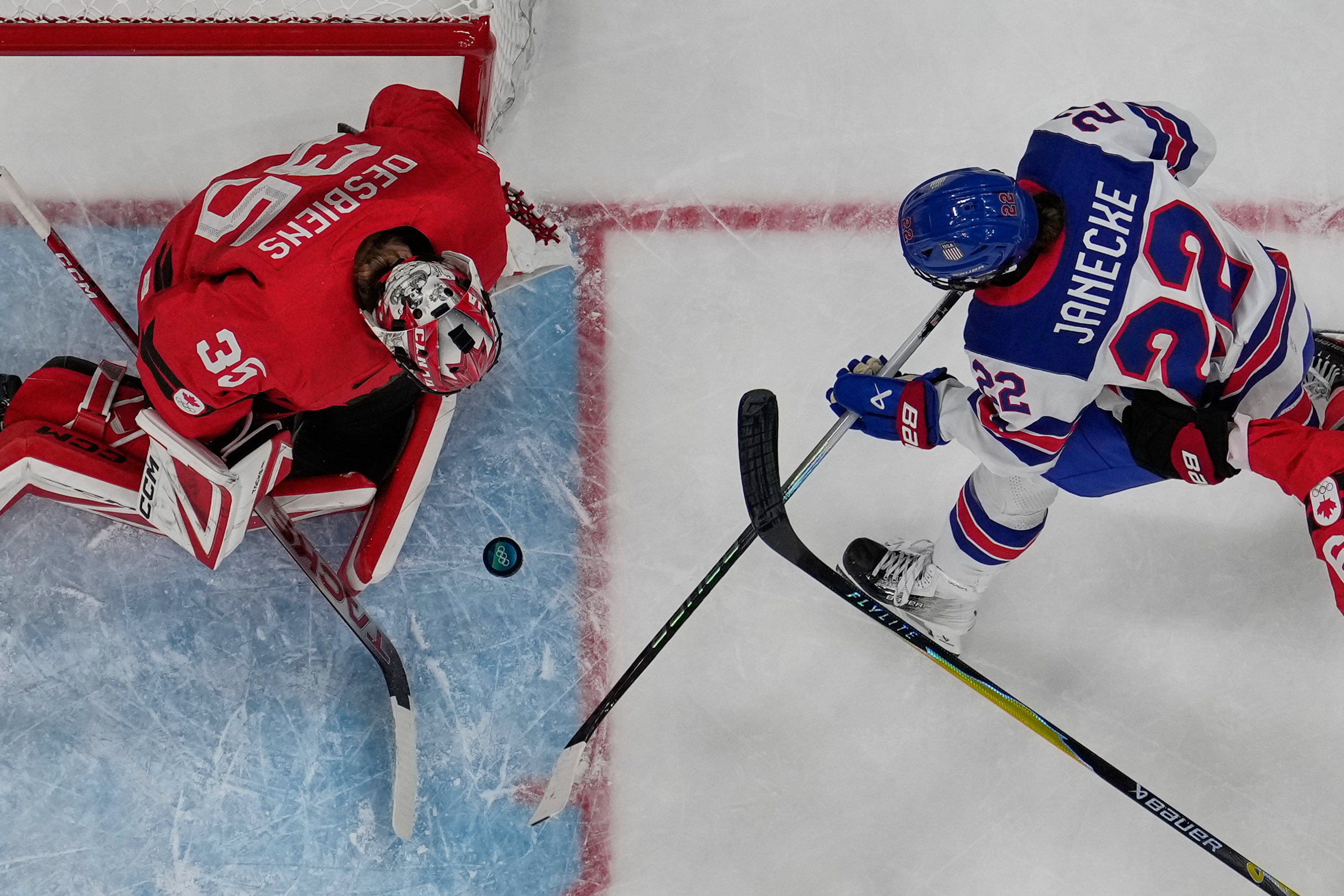
    Tessa Janecke (right) finished with five assists in seven games for the U.S. women’s hockey team in the Winter Olympics earlier this year.Hassan Ammar

    She also became the first Penn State athlete to win a gold medal in the Winter Olympics and had five assists in the United States’ seven games in Milan.

    Janecke also played for Team USA in the 2025 IIHF World Championships, where she scored the golden goal.

    The Orangeville, Ill., native was named to the Atlantic Hockey America conference first team four times and won three straight AHA player and forward of the year awards, making her the second woman in the conference to achieve that feat. She also became the first Penn State women’s player to be a top-three finalist for the Patty Kazmaier Memorial Award, given to the top women’s college player. She was a top-10 finalist the previous two seasons.

    Janecke said she plans to carry her experience from Penn State to the next level.

    “I think there’s an edge to Penn State that people don’t always realize,” Janecke said. “They kind of fly under the radar. Maybe that’s a good thing and a bad thing, but I think I’m going to take that 200-foot play that I’ve developed at Penn State and bring that to Las Vegas.”

    Penn State representation and a local connection

    Wynnewood’s Grace Dwyer, a Harriton High School graduate, also was drafted in the first round, 10th overall to the Boston Fleet.

    The blueliner had 76 points (18 goals, 58 assists) during her four-year career at Cornell and was first-team All-Ivy last season. She also previously played for the Philadelphia Junior Flyers, along with Penn State’s Leah Stecker, who went 27th overall to Boston in the third round.

    Stecker, one of seven Nittany Lions to be drafted — the most from any one college — was a four-year contributor and played in all of Penn State’s games over the last three seasons.

    Penn State’s Katie DeSa (35) and Leah Stecker were selected Wednesday in the PWHL draft.Craig Houtz / For The Inquirer

    The Randolph, N.J., native finished her career with 57 points (12 goals, 45 assists), but was most productive in the defensive zone, with 83 career blocks.

    Maddy Christian, an Elk River, Minn., native, also was drafted in the third round to her hometown team, the Minnesota Frost. She had 84 points (46 goals, 38 assists) and 86 blocks in four seasons at Penn State.

    Goalie Katie DeSa was drafted with the first pick of the fourth round by the Goldeneyes after finishing her career with the most shutouts in program history (25). She also was AHA Goaltender of the Year in back-to-back seasons and had a career .932 save percentage.

    Forward Katelyn Roberts was taken 43rd overall in the fourth round by the New York Sirens. She scored a career-best 16 goals as a senior and set a program record for most single-season game-winning goals (seven), which was tied for the second-most nationally. She is one of six players in program history to record at least 100 career points.

    In the fifth round, Kendall Butze joined Janecke with Las Vegas. Butze was named the AHA’s best defensemen in back-to-back seasons and is Penn State’s all-time leader in points by a defenseman (94).

    Hamilton, one of the other expansion teams, nabbed Mya Vaslet in the sixth round (66th overall). Vaslet, who’s from Sittsville, Ontario, finished with 60 points (30 goals, 30 assists) in 149 games with the Nittany Lions.

  • Australia is up next in the USMNT’s World Cup run. Here’s how we think this one will shake out.

    With the United States exhibiting one of its best opening performances in the history of the men’s World Cup, expectations are high for the team’s second Group D match against Australia on Friday (3 p.m., Fox29).

    Reports indicate that the U.S. men’s soccer team, which thumped Paraguay, 4-1, in its opener last Saturday, expects a physical affair against the Australians, who surprised many in their 2-0 upset of Group D favorites Turkey in its opener in Vancouver.

    This game is a rematch of an uber-physical game last October that broke out into a few skirmishes and in which the Aussies attempted to bully the U.S.

    The final score: United States 2, Australia 1.

    Now, the pair are running it back. A win is another step closer to the U.S. winning the group or at least assuring a place in the knockout rounds. However, the Australians know that they could leapfrog the U.S. with a win and put themselves in the driver’s seat to win the group with a game remaining against Paraguay.

    U.S. midfielder Sebastian Berhalter said earlier this week that head coach Mauricio Pochettino has the group in a “We’re American, we don’t take s—” mentality, which served the team pretty well against Paraguay.

    How will it look against the Aussies?

    Our group covering the World Cup and embedded with the U.S. camp in Irvine, Calif., weighed in and offered predictions.

    Jonathan Tannenwald

    I said this in my report from the U.S. camp on Tuesday, and I meant it: As great as the opening win over Paraguay was, it was just one game. I expect Australia to be a very different opponent, tighter defensively and more physical. Though the Socceroos’ win over Turkey was an upset, it was no fluke. It took just one game for Nestory Irankunda to justify the hype as a breakout star this summer.

    It also was a physical contest when these teams met last October in a friendly in suburban Denver, one the U.S. came from behind to win 2-1.

    No doubt both teams will be even more up for it this time, with first place in Group D at stake. So what will make the difference?

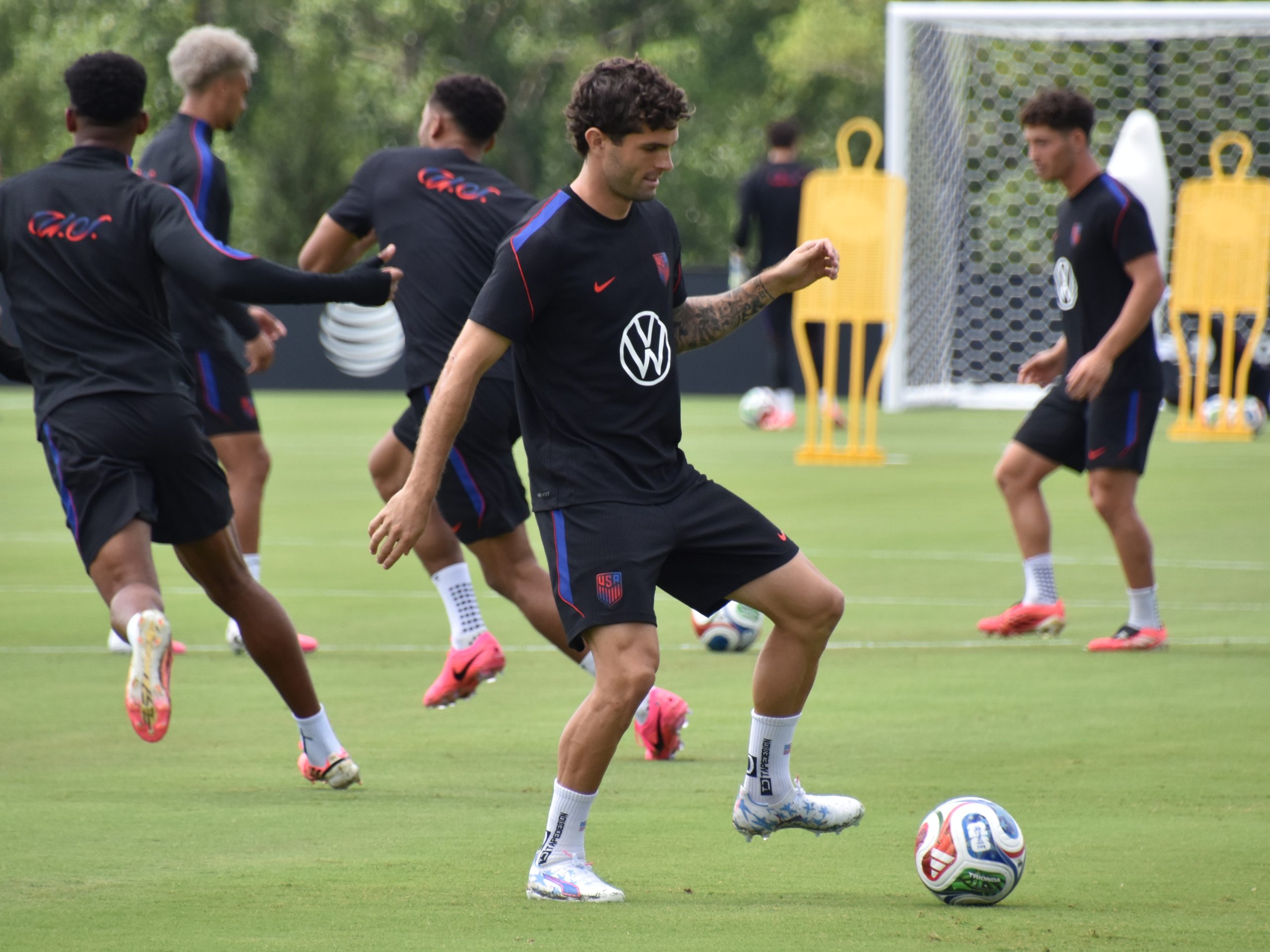
    Christian Pulisic has been dealing with an injury but is expected to be available for the game against Australia. Jonathan Tannenwald

    I’ll be romantic for a moment and say the atmosphere in Seattle is worth at least one goal for the U.S. If you’re new to soccer or only watch European games, you’re in for something you might not have seen from the sport in this country.

    For over half a century, Seattle has been one of the best soccer cities in this country. It will be electric for this game, which has been a bucket-list item for fans ever since it was first announced in February 2024 that the U.S. would play its second group game there.

    World Cups are about players and tactics, but they’re also about emotions. This will be a moment for that.

    Prediction: United States 2, Australia 1.

    Kerith Gabriel

    The beauty of this one is that, like Paraguay, the core group of this U.S. men’s national team was on the field when they beat the Australians in that October friendly. Haji Wright scored twice. Chris Richards was there. So was Weston McKennie. Even Christian Pulisic, before he suffered a minor hamstring injury and left midway through the first half.

    The point is, having that match so close to the World Cup feels serendipitous. Australia is big, strong, and has goal scorers, but I’d give the edge to the U.S. for more creativity and skill, specifically up top.

    They’ll need to keep an eye on Connor Metcalfe, the Socceroos’ crafty center midfielder who plays for St. Pauli FC in Germany’s Bundesliga. Metcalfe’s vision was a catalyst behind many of Australia’s chances and he scored his nation’s crucial second goal against Turkey.

    Come out flat, and the Aussies will make it a game. Come out as the U.S. did in the opener, creating one opportunity after another in the final third, and I don’t see a world in which the U.S. isn’t celebrating a win in front of a sold-out Seattle crowd.

    Prediction: United States 3, Australia 1.

    Matt Breen

    I was talking to someone last Thursday when I told them I thought the U.S. was still a World Cup away from making noise. And then I watched them play like that on Friday night. I was in awe as the U.S. dominated Paraguay, playing like no American team I’d ever seen. It was beautiful. To me, it was the best performance in the history of American soccer. It felt like a hot take, but then people who have seen more than me all seemed to agree.

    What we watched in the opener wasn’t a mirage. It was a byproduct of a U.S. system that is investing in youth development, a legitimate domestic league, and a team full of players who play for top-flight clubs led by a wizard-like manager. You’ll hear a lot about 2002 before Friday but remember that the 2002 team started just five players in the upset of Portugal who didn’t play in MLS. On Friday, the U.S. lineup included just two MLS players. The talent is just so much deeper, and it showed against Paraguay. This was different.

    Friday felt like the start of a magical summer. The ride will continue against Australia, who won’t be able to beat the U.S. playing the way it did against Turkey. The Socceroos upset Turkey despite being outshot, 30-9. They parked the bus, and it worked. It won’t against the U.S., which are far more creative up front than Turkey. The U.S. will not be shut out if it takes 30 shots on Friday afternoon.

    Christian Pulisic looked like a man on a mission in his 45 minutes, and he seems on track to play Friday, Tyler Adams was excellent in the midfield, Malik Tillman made some fantastic passes, and the flight attendant who refused to let Folarin Balogun’s pregnant mother leave New York years ago might be responsible for a summer to remember. The U.S. no longer feels like they’re a “World Cup away.” Enjoy the ride.

    Prediction: United States 3, Australia 1

    Owen Hewitt

    The U.S. outperformed my optimistic prediction for its opener with a 4-1 thrashing of Paraguay on Friday. It was a dream start for the American side, but as Jonathan Tannenwald wrote on Tuesday, the win only matters if the U.S. can follow it up with two more quality performances in group play.

    Can the U.S. contend with a fierce Australian side that surprised the rest of Group D with a 2-0 win over Turkey? It should be able to, though that task will get more complicated if Pulisic, nursing his hamstring, isn’t fully healthy.

    The USMNT will need to be vigilant when defending counter attacks, as Australia was brilliant on breaks in its opening match.

    Pulisic or not, one of the States’ plethora of talented attackers will break through the fierce Australian low block that stymied Turkey, and the defense will hold up in transition to put the Americans atop Group D.

    Prediction: United States 1, Australia 0

    Rob Tornoe

    OK, I’ll be the party pooper.

    The U.S. is bound for a bit of a letdown after their high-flying victory against Paraguay. One question I have is the health of Pulisic, who was pulled at halftime after being kicked in the calf. As Tannenwald reported, Pulisic is expected to be healthy for their matchup with Australia but trained mostly on his own Wednesday.

    There’s also history to contend with. In 2002, the U.S. pulled off a major upset by defeating Portugal, but followed it up with a tie against South Korea in a hard-fought game they were lucky not to lose.

    Australia is coming off a 2-0 upset victory of Turkey, and Irankunda could present some real challenges for America’s defense. The Socceroos also played the U.S. tough in a physical friendly back in October, which the Americans ultimately won, 2-1.

    Thankfully, the atmosphere in Seattle will be terrific, and that will count for something. The U.S. will remain in first place in Group D following the game, but it won’t be because of a victory.

    Prediction: United States 1, Australia 1.

  • Winslow’s Jasmine Jackson emerges as one of the nation’s fastest hurdlers: ‘She is running with a purpose’

    Winslow’s Jasmine Jackson emerges as one of the nation’s fastest hurdlers: ‘She is running with a purpose’

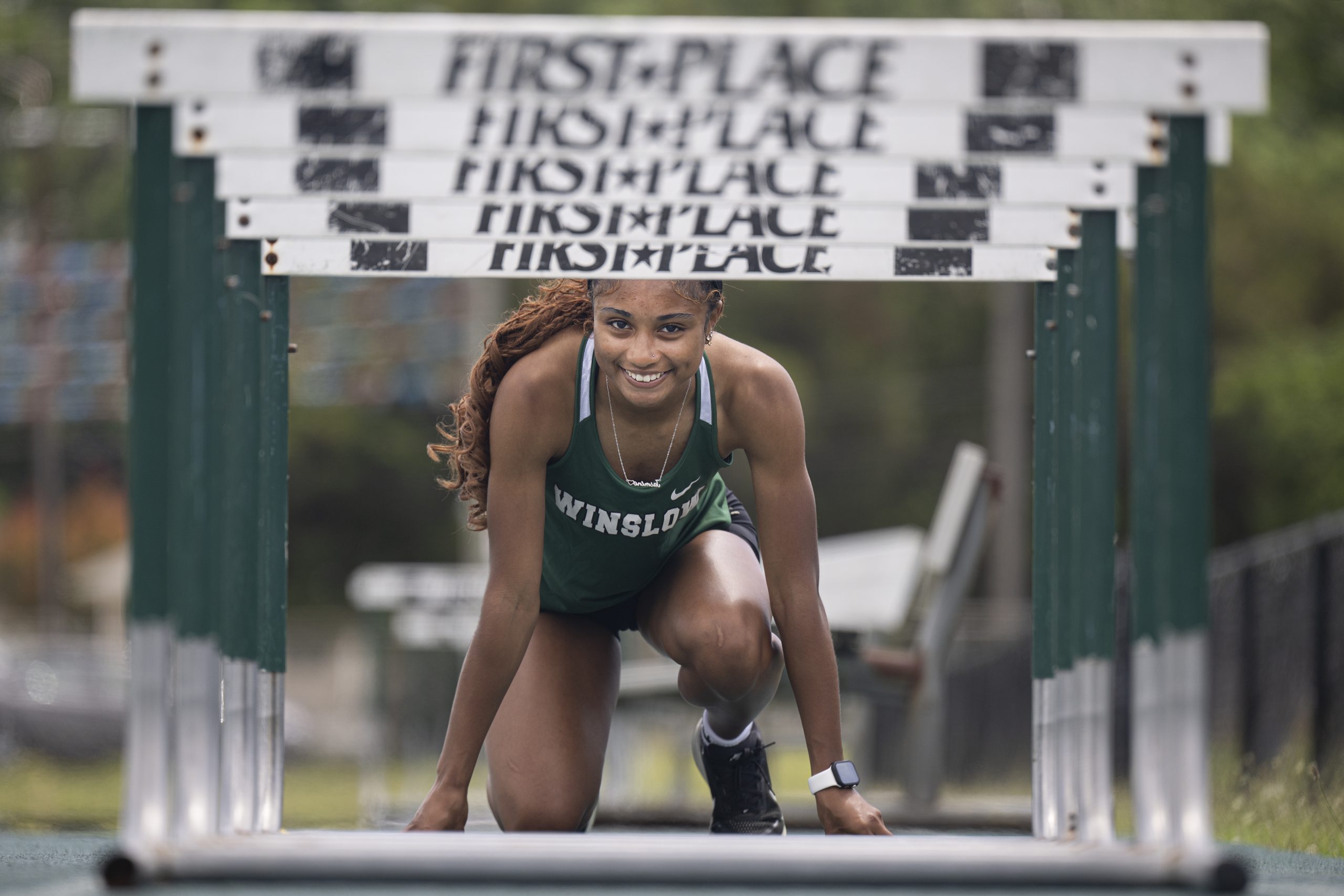
    Jasmine Jackson sat on her couch at her home in Winslow Township, watching a broadcast of the nation’s fastest high school hurdlers competing at the 2025 Brooks PR Invitational. As she watched, she made it her goal to be on that track, competing in the race.

    After a year of training and dropping time, her invitation arrived in the mail, making her the first athlete in Winslow Township history to earn a spot in the prestigious event.

    “It was a big accomplishment when I got the invitation,” she said. “I was ecstatic. To know I was the first to do this showed it was a stepping stone to something even greater.”

    And something greater came at this year’s Brooks PR Invitational on June 7 in Renton, Wash.

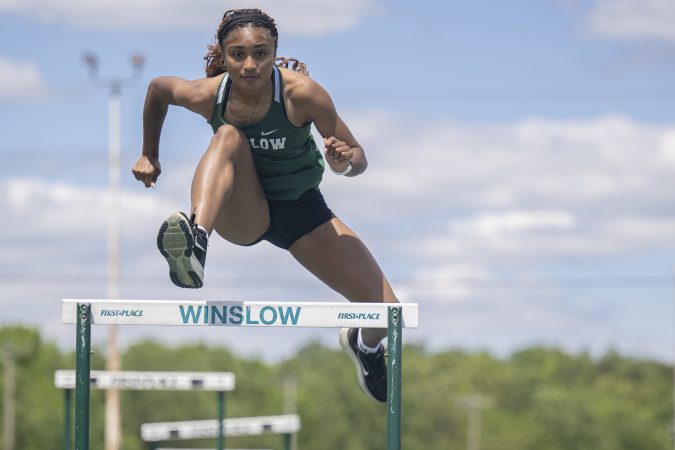
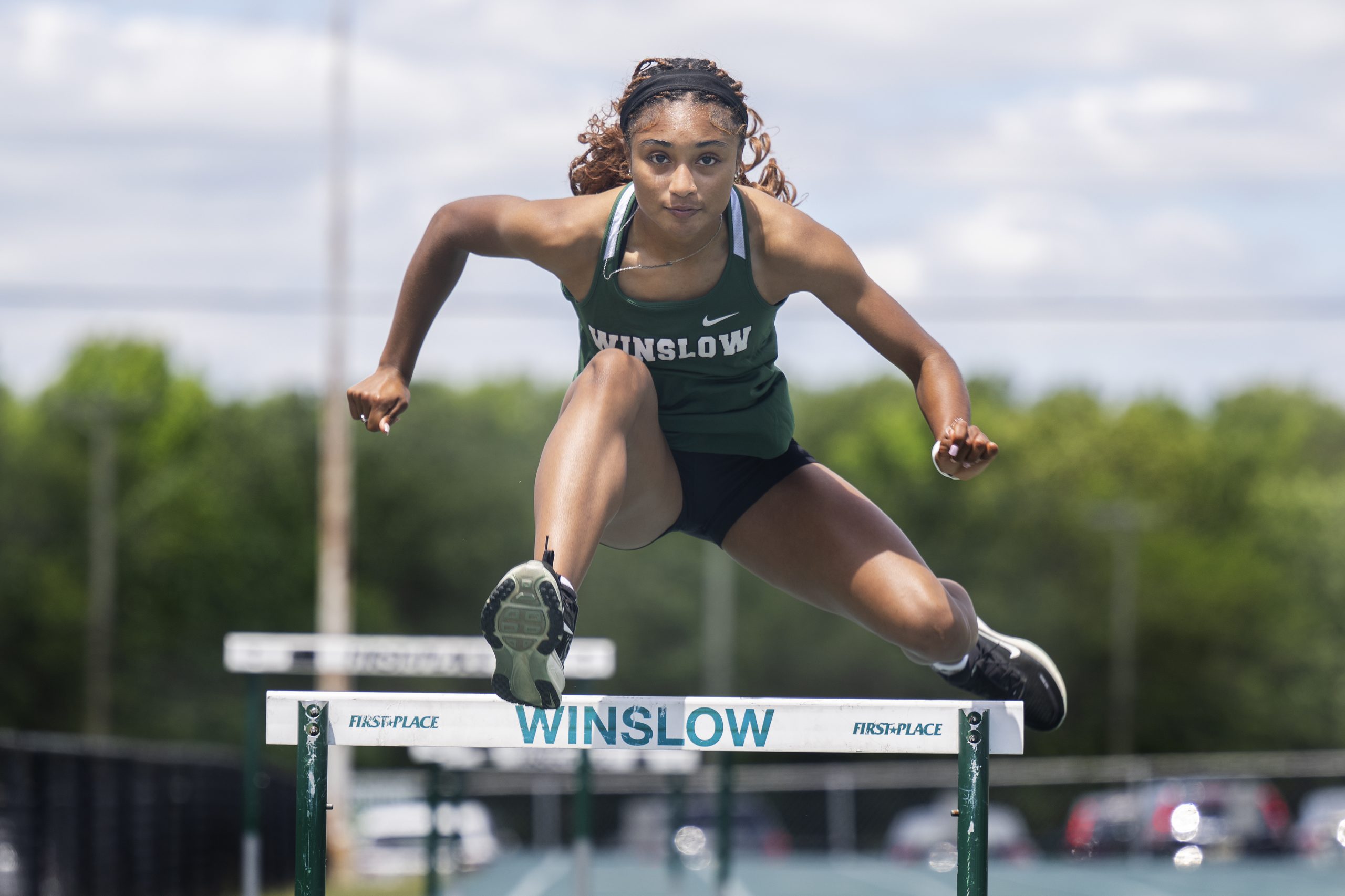
    The Winslow Township High School sophomore claimed the 100-meter hurdles title with a time of 13.33 seconds. It came days after winning the New Jersey Meet of Champions and running a personal-best 13.28 seconds.

    Jasmine Jackson set a personal record in the 100-meter hurdles at the New Jersey Meet of Champions.Jose F. Moreno / Staff Photographer

    Her personal record currently ranks No. 3 in state history, No. 3 all-time on the wind-legal list for sophomores, and No. 3 in the nation this season. Jackson continues to climb the ranks as one of the nation’s fastest hurdlers and wants to accomplish more.

    Her love for hurdling began at a young age. Jackson grew up going to the track with her dad, Tyree Jackson, who was a sprinter and relay runner at Camden High School and Rowan. He is now a track-and-field coach at Pennsauken.

    When she was 5, she saw a hurdle on the track and asked her dad if she could try to jump over it. Tyree initially said no, worried she might hurt herself, but she persistently asked, so he finally gave in.

    She cleared the hurdle with her right leg leading and left leg trailing, the form she still uses today.

    “It was perfect,” Tyree said.

    Starting out, however, he wasn’t convinced that hurdles would become her event.

    “There were a lot of times where I thought that maybe hurdles weren’t for her because she was too timid and scared to actually run through the hurdles,” he said.

    Tyree scoured the internet for drills and training ideas to help his daughter develop as a hurdler. His former teammates offered advice on technique and form, and they soon progressed from wickets to smaller hurdles. She joined Winslow Elite Track and Field at age 8 to keep improving.

    By 14 years old, Jasmine broke the national record for the 100-meter hurdles with a time of 13.72 seconds at the 58th AAU Junior Olympic Games in Greensboro, N.C. That race gave her a newfound confidence.

    “That race pushed her over the edge as far as her demeanor and her confidence level because in order for her to win and break the record, she had to beat some really talented athletes she had never beaten before,” Tyree said.

    And as her confidence has grown, her times have dropped.

    Part of that growth has come from racing against the nation’s best, including one of her biggest competitors, Nia Armstrong from Tampa, Fla. The hurdlers have developed a friendly rivalry over the years since they typically compete in the same races and push each other to faster times.

    “Whenever those two compete against each other, it’s like I don’t care who else is on the track, the race is going to be between them,” Tyree said.

    Before the Meet of Champions earlier this month, Jasmine was nervous. The meet featured the toughest competition she faced all season. But as she set up on the line, she reminded herself that she belongs here and is built for the moment.

    “I just tell myself I’ve been here before. It’s just a track. I know how to run. I know how to hurdle. I know what I’m capable of,” she said. “I believe in myself, I’m ready for this moment, and not to let an opportunity pass by because you might not get it again.”

    Developing self-belief in a mentally challenging sport, Jasmine says, has been one of her biggest areas of growth.

    “She’s always been good. She just didn’t have the confidence to know that she’s good,” said Shawnnika Brown, Jasmine’s high school coach. “Now, she is running with a purpose.”

    That purpose is reflected in her daily routine. Jasmine trains with her team after school, goes to the gym to lift weights, and does additional hurdle sessions with her dad on the weekends.

    Having Tyree as her coach has also been an important part of her success.

    “I try not to let the coach interfere with the father,” Tyree said. “I’ve learned how to talk to her and get her motivated to the best of my ability without her being upset with the father.”

    After Jasmine won at Brooks, Tyree let his daughter enjoy the moment before turning their attention to the next race.

    “She knows I’m going to focus on the flaws first before I celebrate her and give her roses because I sometimes have to be the coach first and then dad second,” he said.

    That approach is shaping one of the nation’s fastest high school hurdlers, but Jasmine’s goals go beyond state titles and national championships.

    Jasmine Jackson will compete at the New Balance Nationals at Franklin Field this weekend.Jose F. Moreno / Staff Photographer

    “The ultimate goal is to go to the Olympics,” Jasmine said. “Knowing I have that goal in mind, no matter how I feel, I know I have to work for it. It’s not going to be given to me. I have to earn it.”

    For now, the 15-year-old can check the Brooks PR Invitational off her list. Up next is the New Balance Nationals running until Sunday at Franklin Field. Jasmine will run the 100-meter hurdles and 4×400-meter relay championship. She is looking to earn her first national title at the event.

    “I’m tired of being second at this event,” she said, laughing. “I’m going up against pretty tough girls, so it’s going to take a lot to win. I believe I can do it if I put my mind to it.”

  • Who’s QB2? How should we feel about the rookies? Any more new faces? Biggest Eagles questions after offseason workouts

    Who’s QB2? How should we feel about the rookies? Any more new faces? Biggest Eagles questions after offseason workouts

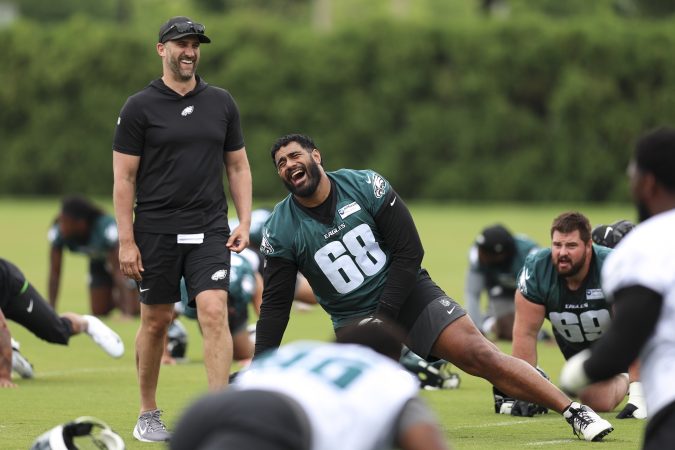
    The offseason program is over, and the next time the Eagles get together at the Jefferson Health Training Complex, it will be for training camp — the official start to the 2026 NFL season.

    The longest stretch of downtime around the league is right now, so it’s a good time to take stock of what we just saw during organized team activities and mandatory minicamp.

    The workouts allowed for a first look at new offensive coordinator Sean Mannion’s offense and a few new key players for the Eagles, but they also left some lingering questions about the team during the break.

    Here are some of the things we’re still thinking about:

    How long should the probationary period be for the new-look offense?

    The short answer: Longer than will probably be allowed.

    Eagles fans read and watched analysis here and probably elsewhere that told them Mannion’s offense was little match for Vic Fangio’s defense during the recent practice sessions open to reporters.

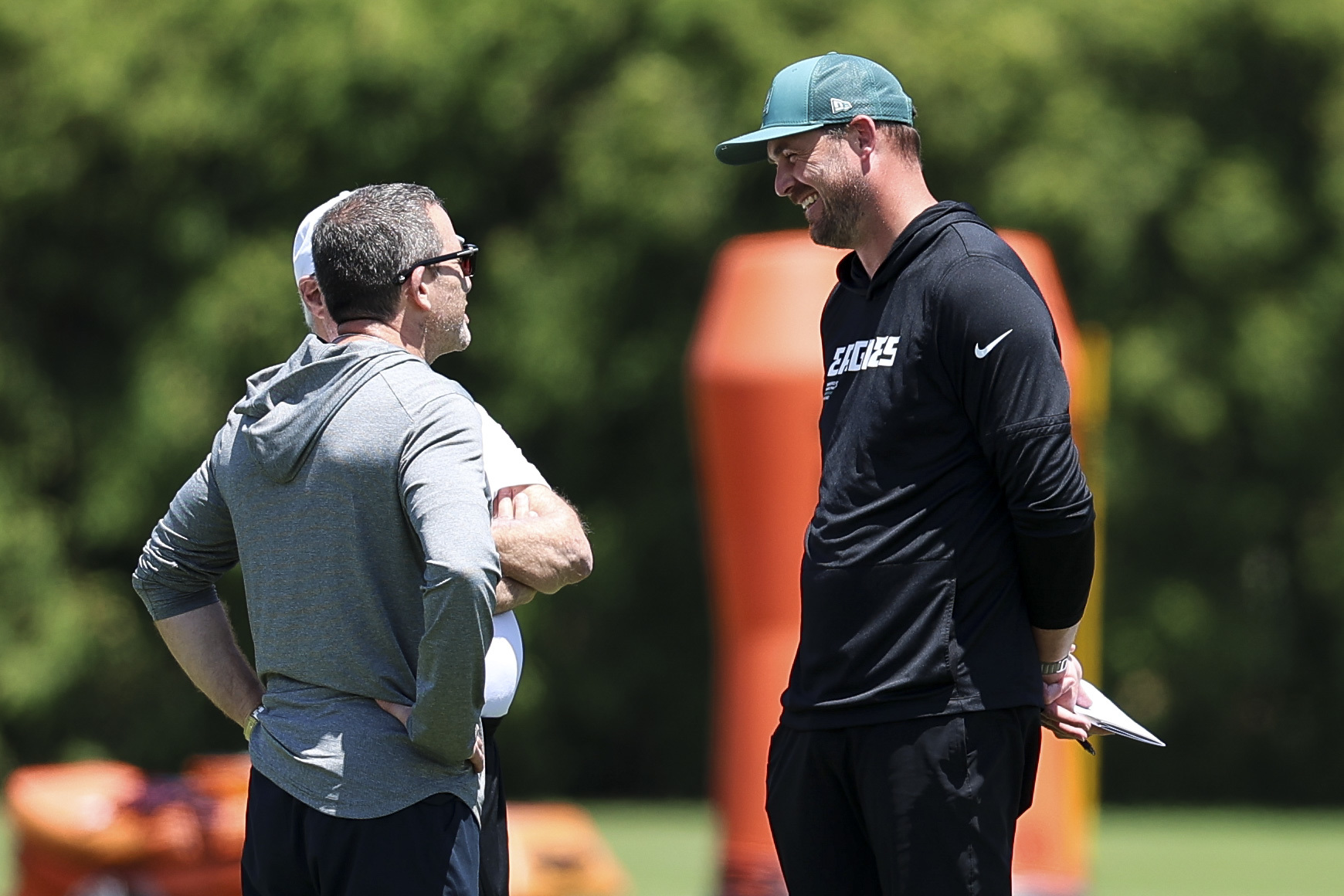
    Jeffrey Lurie and Howie Roseman speak with Sean Mannion (right) during mandatory minicamp.Monica Herndon / Staff Photographer

    What’s the reaction going to be if the offense looks sloppy a few practices into camp? It’ll be an outsized one, for certain. But it shouldn’t be.

    There are a few reasons why:

    • Fangio’s defense might be among the best in the NFL this season.
    • The Eagles are installing a new offense with new blocking schemes.
    • Jalen Hurts is taking more snaps from under center.
    • The Eagles are using more play action and more motion.

    Football is football, and some players will say as much, but there are going to be some growing pains before the offense is firing on all cylinders.

    Plus, while the focus of many will be on the play-calling and what the playbook looks like, it may all just come down to the health and force of the offensive line anyway.

    That’s not what the question asked, though. How long should the probationary period be? The view here is that drawing major conclusions about Mannion’s offense won’t have enough context until at least three games into the regular season. Patience levels are personal, right?

    What’s going on at QB2?

    Is it possible that the A.J. Brown trade was such a foregone conclusion that the biggest roster storyline in an otherwise pretty standard offseason program was the backup quarterback position?

    Andy Dalton and Tanner McKee are splitting reps behind Hurts, Nick Sirianni says, but the coach wouldn’t commit to saying McKee is the backup quarterback, the spot on the depth chart he held last season. He doesn’t have to commit to anything in June or even July or August.

    But the fact that Dalton took so many reps with the second-team offense was interesting.

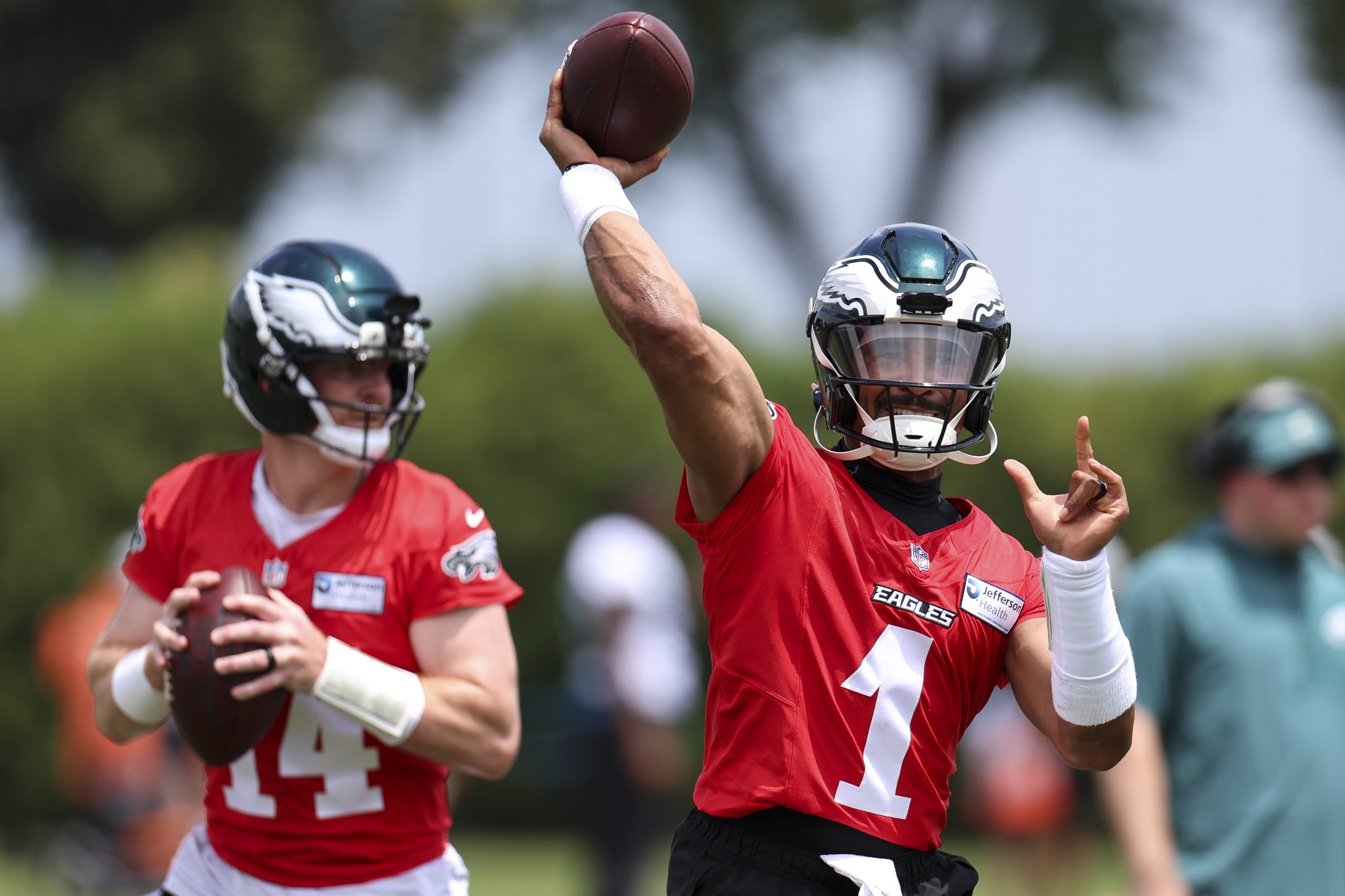
    Quarterbacks Andy Dalton (left) and Jalen Hurts work out during mandatory minicamp.Monica Herndon / Staff Photographer

    It’s fair to wonder if McKee will be on the roster by the time camp breaks, and the Eagles are crunching numbers to get to their initial 53-man roster. The Eagles used a fifth-round pick on quarterback Cole Payton after sending a seventh-round pick to Carolina for Dalton.

    It’s hard to imagine they will keep four quarterbacks on the roster, and it’s hard to imagine them wanting to expose a fifth-round pick to waivers unless Payton has the type of uninspiring training camp sixth-round pick Kyle McCord had last year.

    The guess here is that Howie Roseman is hopeful McKee puts some good play on tape in the preseason, and the Eagles get some draft value back in a trade for their 2023 sixth-round pick, who is entering the last year of his contract.

    Is a quiet spring from top Eagles rookies concerning?

    It shouldn’t be.

    But their first three picks were hampered by injuries.

    First-round pick Makai Lemon, who will be asked to contribute in a big way right away with Brown out of town, missed some time with a hamstring injury but is expected to be ready for camp. Sure, he didn’t get a ton of on-field reps, but it wasn’t like he was on an island somewhere while the Eagles were installing stuff in the meeting rooms.

    Makai Lemon was bothered by a hamstring injury during minicamp. Tyger Williams / Staff Photographer

    Eli Stowers, the second-round pick out of Vanderbilt, did not stand out in early workouts despite the Eagles raving about his athletic traits after selecting the tight end at No. 54. He then wore a sleeve on his right leg during the final workout of minicamp and sat out some drills.

    Markel Bell, the big tackle the Eagles took in the third round, also missed the last practice of minicamp.

    As for Stowers, Sirianni continued to have a lot of good things to say about him on the last day of the spring session. The former college quarterback is still only a few seasons into playing tight end, and while the Eagles are high on him — “He has an unusual skill set at the tight end position with the matchups that he is going to be getting,” Sirianni said — they also know he has a lot of work to do.

    It’s way too early to be alarmed about the rookie class.

    Will there be any roster additions before training camp?

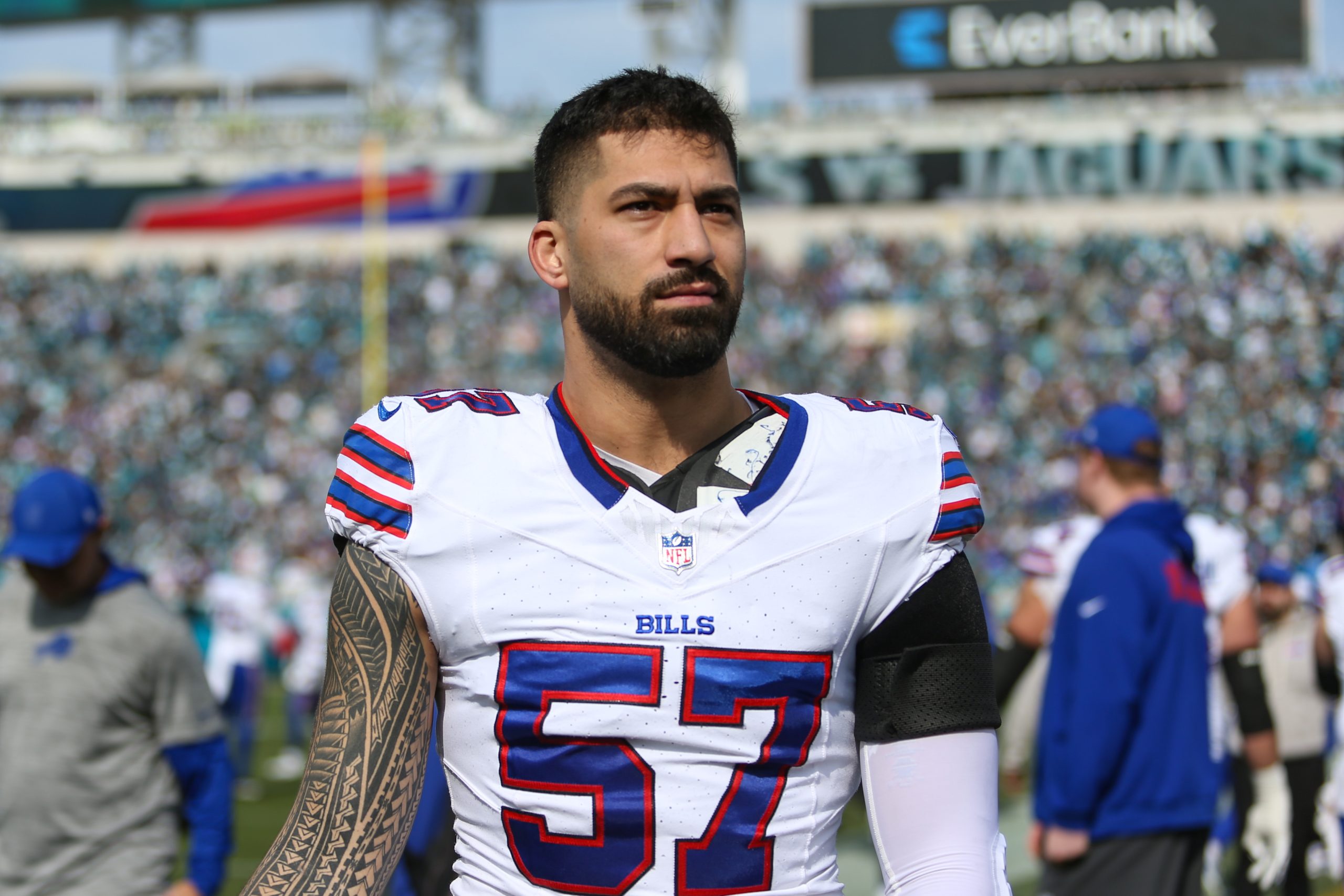
    Roseman kind of answered that question just hours after the final on-field workout finished when he signed former Bills edge rusher A.J. Epenesa. That move made some more sense on Tuesday, when the Eagles placed free-agent signing Joe Tryon-Shoyinka on the reserve/retired list.

    Epenesa, who was drafted one spot after Hurts in 2020, originally signed with the Browns, but that deal did not finalize after Epenesa’s physical. Edge rusher was one spot, however, where the Eagles needed some more talent for some bottom-of-the-depth-chart competition. There’s a clear trio at the top in Jonathan Greenard, Jalyx Hunt, and Nolan Smith, and then there’s Arnold Ebiketie. Epenesa, who had six-plus sacks in three consecutive seasons from 2022 to 2024, figures to be in the mix for a roster spot.

    A.J. Epenesa, seen here as a member of the Bills, is a recent addition to the pass rushing depth chart. Gary McCullough

    Where else could the Eagles upgrade?

    Safety might be the only position on the team that still has some question marks. The Eagles plan to use Cooper DeJean at safety in their base defense with Quinyon Mitchell and Riq Woolen manning the outside corner spots. But that leaves around 75% of the reps next to Drew Mukuba for someone not named DeJean. Right now, it’s Marcus Epps’ spot to lose. But Epps is 30 and was available as a practice-squad addition last August.

    Behind Epps is Michael Carter II, who has played mostly nickel, and J.T. Gray, another 30-year-old with mostly special teams experience. Then there’s a mix of young and unproven players.

    Fangio has expressed confidence in Epps, and thinks Carter has the chops to play safety, but don’t be surprised if Roseman adds some more talent to the group before camp.

  • Before Leon Rose built the Knicks, he was a gym rat at Cherry Hill East, and coached hoops at his local JCC

    Before Leon Rose built the Knicks, he was a gym rat at Cherry Hill East, and coached hoops at his local JCC

    Seth Friedman was watching the NBA Finals on Saturday night in Graduate Hospital when he heard a familiar refrain.

    It came from Leon Rose, the mild-mannered architect of the New York Knicks. His team had just won its first title since 1973.

    Rose, 65, was asked how he felt knowing he’d built a roster that had ended a 53-year-drought. The Knicks president shook his head, shrugged his shoulders, and pivoted to his players.

    He praised their brotherhood, their grit, their empathy. He talked about their care for one another, and their selflessness, and how it allowed them to reach new heights.

    Friedman, sitting on his couch next to his wife, began to tear up.

    “It sounded like he was talking to us,” he said, “back when we were 13 or 14 years old.”

    The setting was vastly different. Instead of holding two-a-days for high schoolers, Rose was standing on a platform in San Antonio, Texas, with a sparkling trophy beside him.

    But the message was nearly identical. Friedman listened to it himself when he played for Rose in the mid-2000s at his local Jewish community center.

    “He literally preached that same mentality,” Friedman said. “That family mentality.”

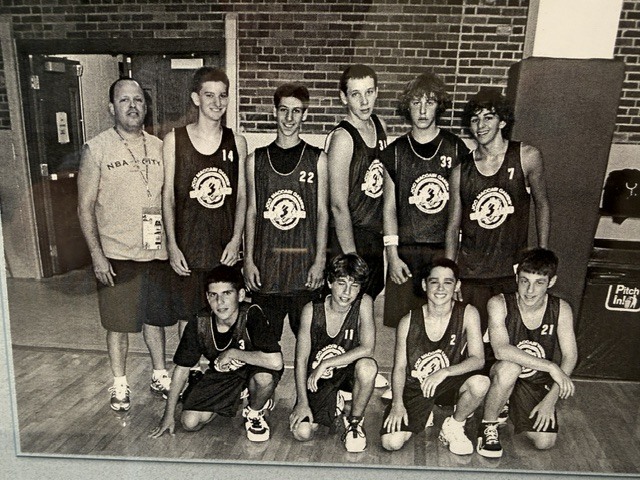
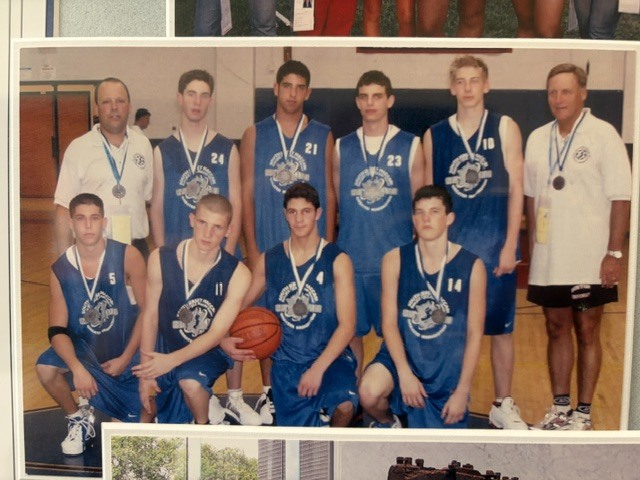
    Leon Rose coaching at the Katz JCC in 2005. Seth Friedman is pictured in the bottom row, second from the right.Photo courtesy of Katz JCC

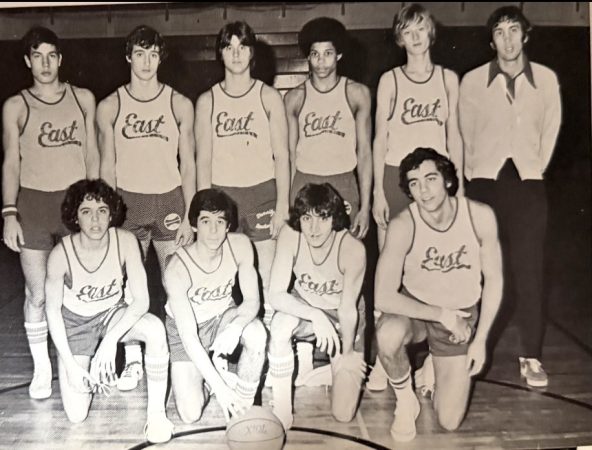
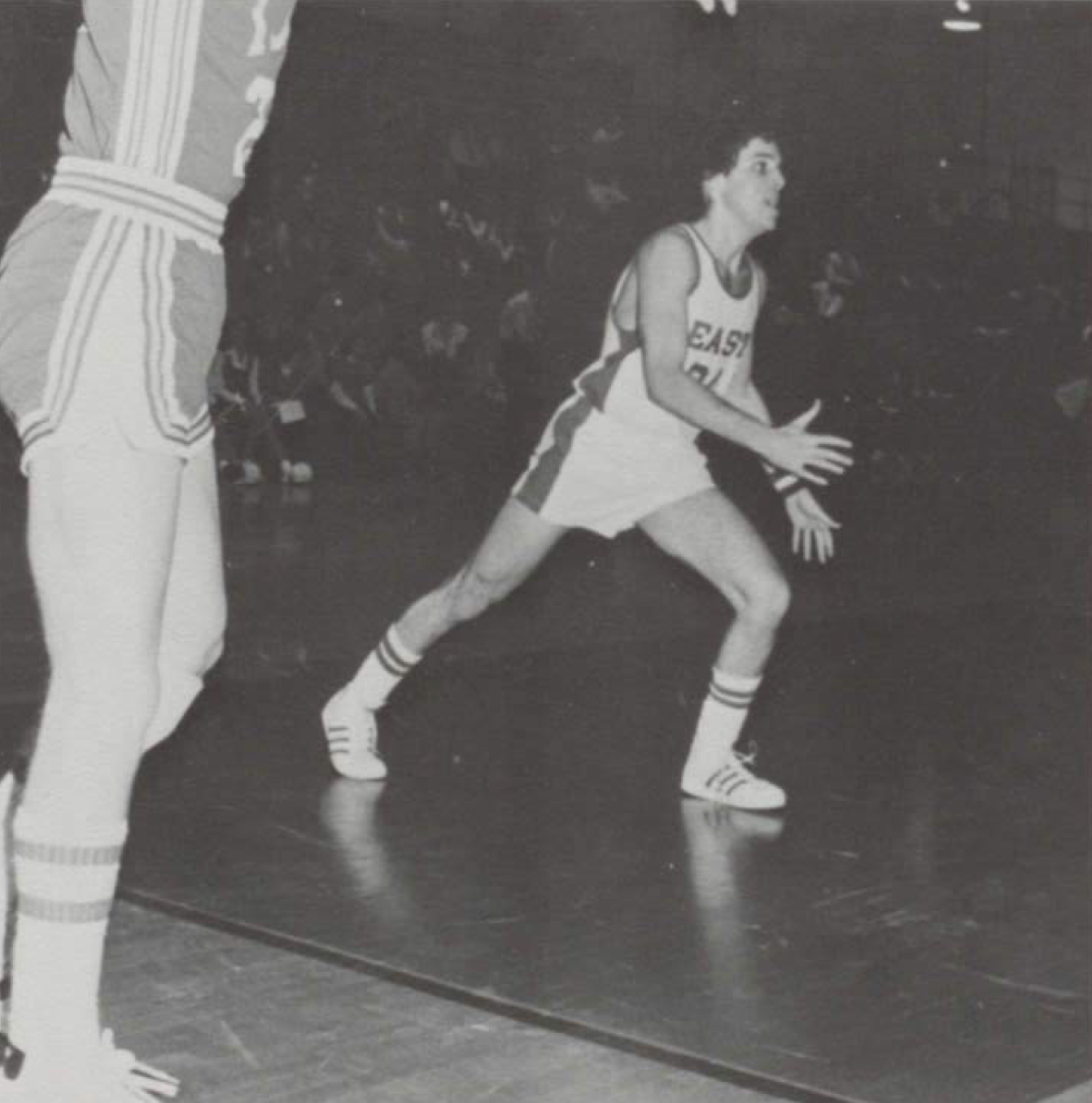
    For decades, the future Knicks president was a mainstay in his Cherry Hill basketball community. He played under head coach John Valore at Cherry Hill East from 1975 to 1979 and joined Valore’s staff in the early 1980s while studying at Temple’s law school.

    He moved on to work as an assistant coach through the late 1980s at Rutgers-Camden, a short commute from his day job at the Camden County prosecutor’s office.

    He’d leave collegiate coaching in 1988, but Rose would always find time for the sport, even as he ascended the ranks of the NBA. In the 1990s, while he transitioned to sports management, Rose often could be found playing pickup hoops at the Katz JCC in Cherry Hill.

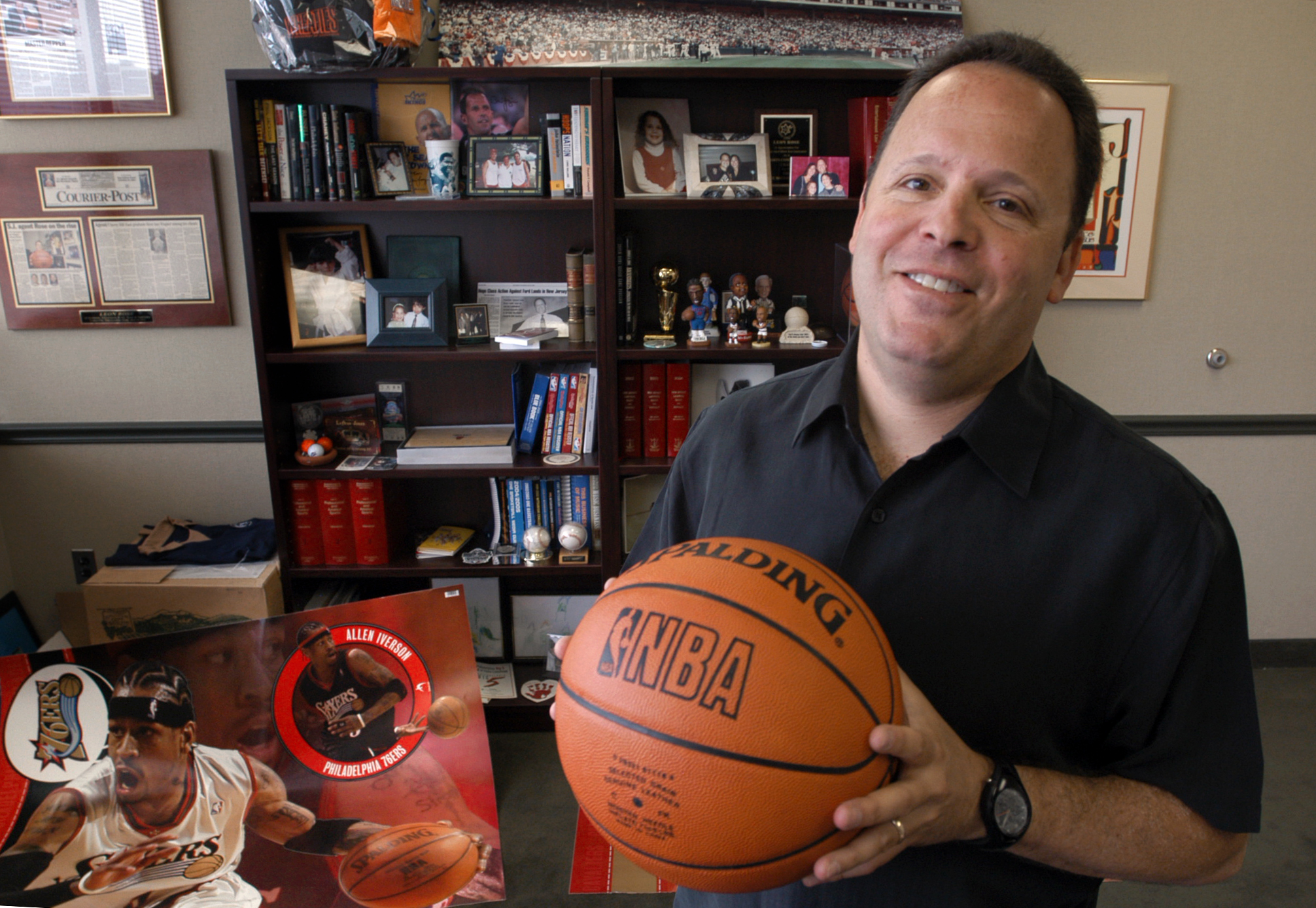
    By the mid 2000s, he’d assembled a Rolodex of star-studded clients, including Allen Iverson and LeBron James. But that didn’t keep him away from the gym. For the better part of a decade, Rose served as a volunteer coach at the Katz JCC, preparing teams to compete in the Maccabi Games.

    The Knicks executive has achieved a lot since then. But those who know him best say he is the same understated guy who’d wear baggy sweatshirts and run his team through tap drills and sprints.

    “He was Coach Leon,” Friedman said. “He was one of us. Even now, you see him down the Shore, and you’d never know that he’s the person that he is.”

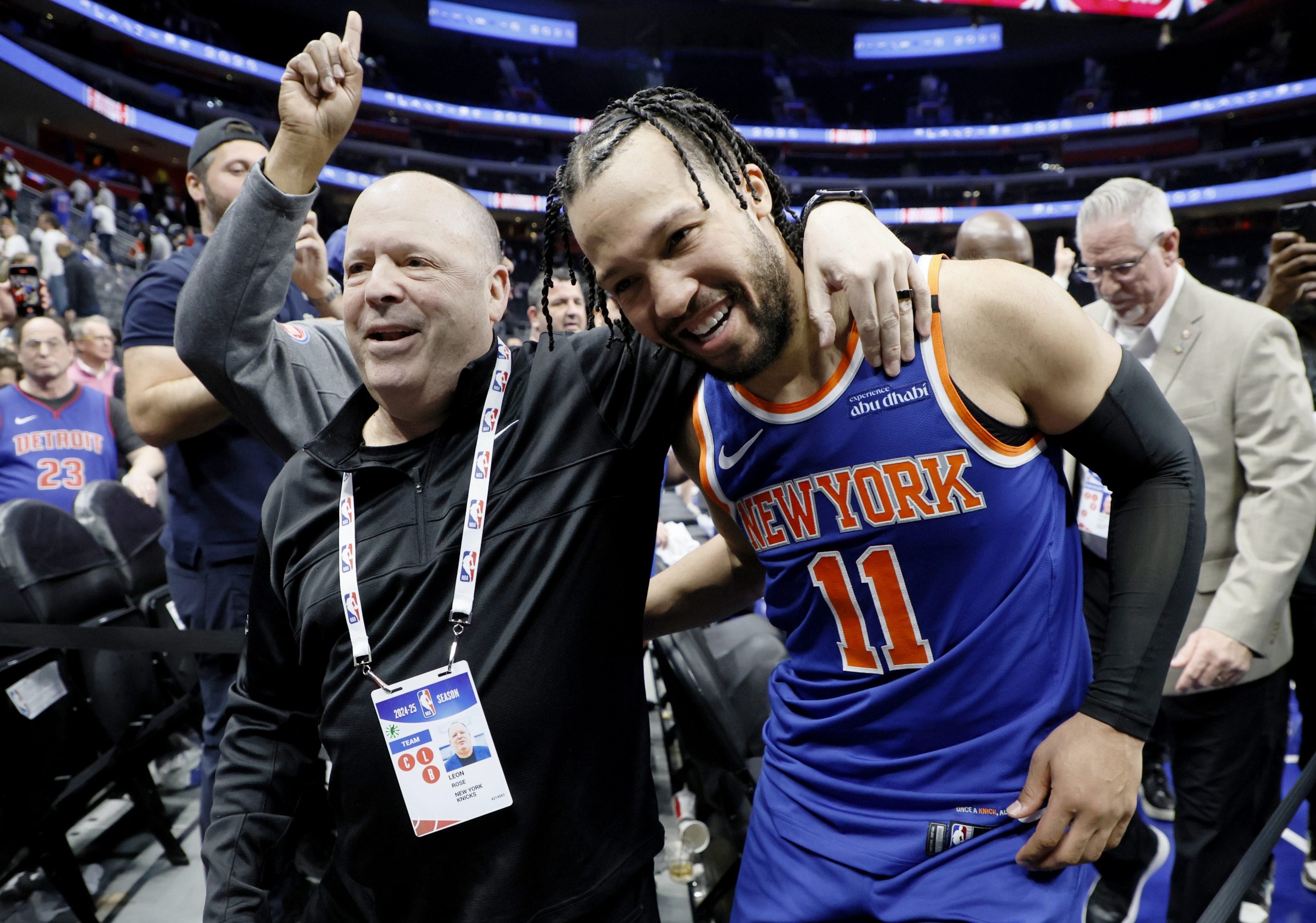
    New York Knicks Leon Rose (left) hugs guard Jalen Brunson (11) as they leave the court following a Game 6 win against the Pistons in the 2025 playoffs. Duane Burleson

    ‘A gym rat’

    Valore met Rose in 1975 when he was coaching junior varsity at Cherry Hill East. The freshman was undersized compared to his teammates, but he played above his stature.

    If there was a loose ball, the point guard would dive for it. If there was a charge, he would take it. Valore admired his toughness. So when he got the varsity job in 1976-77, he decided to bring Rose with him.

    The sophomore made the most of his opportunity. Cherry Hill East was a relatively new program at the time and largely was viewed as a “doormat,” in Valore’s words. Rose helped change that, building an unselfish culture from the ground up.

    He wasn’t a vocal leader, but he showed interpersonal skills that would serve him later on. The future NBA executive was direct and honest. He could have difficult conversations with teammates if he needed to about roles and behavior on and off the court.

    Rose also set a standard through his style of play. Cherry Hill East was up against stiff competition in South Jersey from teams like Camden and Haddon Heights, which boasted players who were 6-foot-2, 6-3.

    The point guard was unafraid to battle them.

    “He was a player that had to compete harder and tougher than the person he competed against,” Valore said, “because he was 5-7, 5-8, 5-9. That shows you the toughness he had within him.”

    Leon Rose at Cherry Hill East.Courtesy of John Valore

    Cherry Hill East’s culture quickly translated into wins. When Rose arrived, the varsity team finished just above .500. By the time he graduated, it was one of the best teams in its conference.

    But above all, Valore was most impressed by his pupil’s character. During a practice in 1979, the coach called his co-captain over. Valore’s wife, Joyce, had just given birth to their first child, J.C.

    The coach wanted Rose to be the boy’s godfather.

    “[Leon] was 17 years old,” he said, “and I saw everything I wanted to see. He was an exceptional person with relating to other people. He was something special.

    “He went back to his dad and explained the situation, and his dad gave the thumbs-up. And the rest is history.”

    After a few years studying and playing basketball at Dickinson College, Rose rejoined his high school team as an assistant coach in 1983. The 22-year-old was just as impactful on the bench as he’d been as a point guard.

    Over Rose’s three seasons with Cherry Hill East, the program produced four Division I players. One of those four, Nick Katsikis, ended up contributing to Seton Hall’s run to the 1989 NCAA championship game.

    Valore can see similarities in what Rose accomplished with the Knicks. When the agent was hired by James Dolan in 2020, the team was en route to its seventh straight losing season; “a doormat,” just like Cherry Hill East.

    Then Rose came along, and everything changed.

    “He was a gym rat,” Valore said. “He just loved the game.”

    Leon Rose coaching for the Katz JCC in 2004. Ed Vernick is pictured on the far right.Photo courtesy of Katz JCC

    From Maccabi gold to an NBA title

    Ed Vernick moved from Philadelphia to South Jersey in the early 1980s, the same time Rose was coaching with Valore.

    Unsurprisingly, the men became friends at the gym. Vernick was about to go on a trip to Ocean City and wanted a good place to work out. Rose overheard him talking, ripped off a piece of paper, and scribbled down an address.

    Vernick had no idea who the young lawyer was, but he took him up on his suggestion. A few days later, while he was running on a treadmill in that Ocean City gym, he saw Rose walking by.

    “He goes, ‘I just wanted to make sure you got here,’” Vernick said. “What a nice guy. I’m thinking, ‘Who does that?’ It was just one of those things that caught me.”

    About two decades later, when Rose was starting to coach basketball at the Katz JCC, he asked Vernick to be his assistant. Together, they spent the summer of 2004 preparing Cherry Hill-area kids for the Maccabi Games, a youth athletic competition for Jewish athletes from all over the world.

    Parents and players said Rose took this as seriously as the NBA Finals. He’d carefully craft his rosters, thinking hard about how each piece would fit.

    Once the team was constructed, he’d spend July running them into the ground with many of the methods Valore used at Cherry Hill East: switch drills, sprints, tap drills.

    Leon Rose coaching at the Katz JCC in 2005.Photo courtesy of Katz JCC

    The week before the Games was by far the toughest. Players would be required to train twice a day and would arrive at the gym at 6:30 a.m. and return at 2 p.m.

    “He got into us,” Friedman said. “But it got us ready. It got us prepared. It got us in shape. I hated it during it, but, looking back, those were memories I’ll never forget.”

    This was a major time investment for one of the most high-powered agents in the NBA, but Rose was deeply involved. He continued to coach before and after his son, Sam, and daughter, Brooke, were eligible to play.

    And he went far beyond what was expected of a volunteer. One year, Friedman said Rose took the team up to the Poconos for an exhibition game at Pine Forest Camp, which was known for its basketball program.

    “He’s driving us up to play an exhibition game like it’s an NBA team,” Friedman said. “He didn’t have to do that as a coach. But he did whatever he could to get us prepped and ready to win a gold medal.”

    About “80% of the team” came from Cherry Hill East, in Vernick’s estimation, and Rose often would be on the phone with Valore, asking about certain players.

    Like his former coach, Rose gravitated toward toughness, and that style emanated from the teams he built. In 2004, South Jersey’s 16-and-under Maccabi team faced Washington, D.C., for the gold medal.

    Leon Rose (in 2006) made his name as a superagent to the likes of Allen Iverson and LeBron James, but he did not flaunt that status to his young players. APRIL SAUL

    It was a low-scoring game, one that came down to the buzzer. Washington was bigger and more talented, but Rose’s group challenged every bucket.

    “I remember I could hear sneakers squeaking the whole game,” Vernick said, “and I just smiled. And I thought, ‘This is the way you play defense.’”

    South Jersey fell, 42-40, but it won gold the following year in Minneapolis.

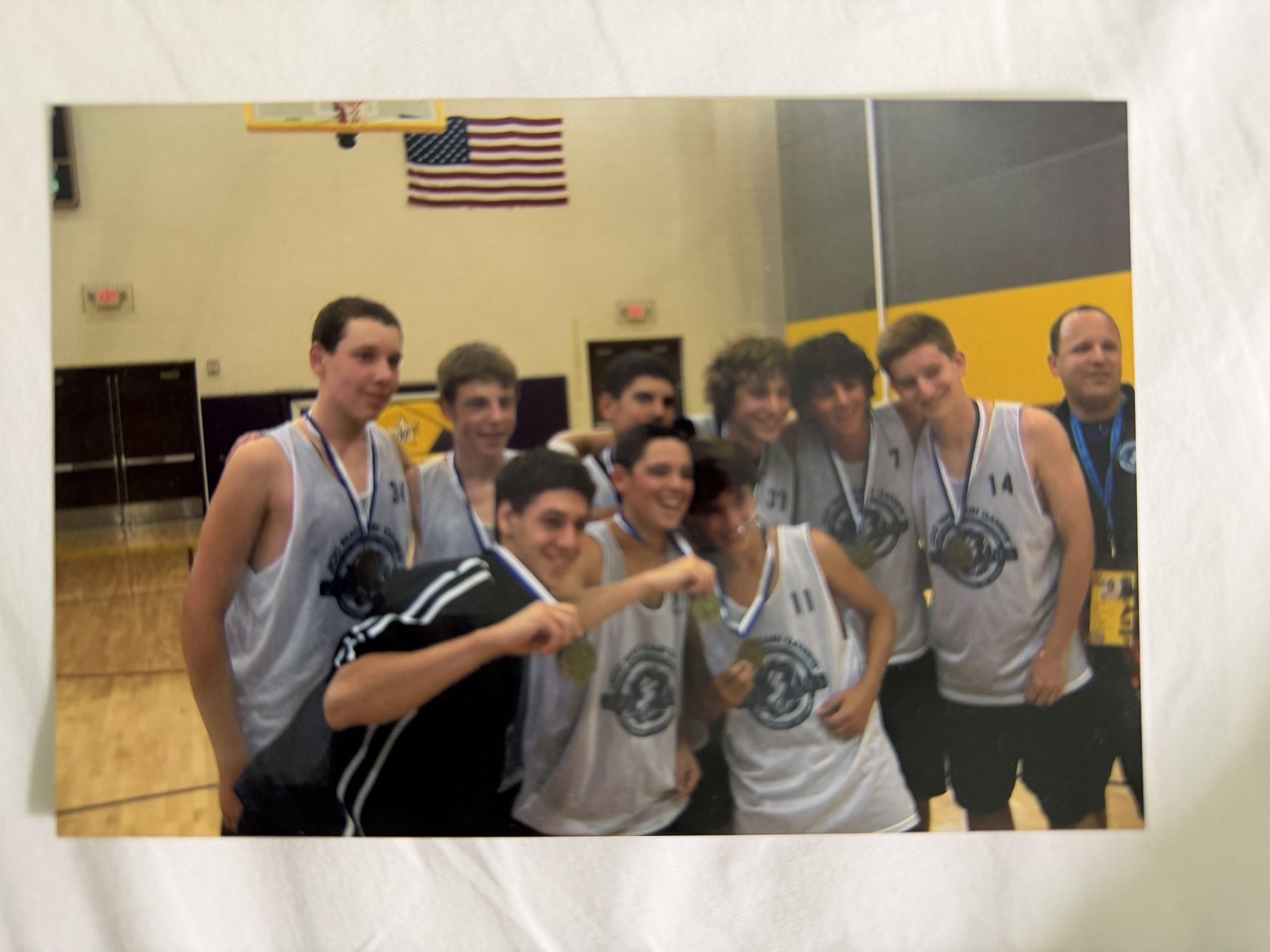
    Rose spent six summers coaching at the JCC throughout the 2000s, winning two gold and two silver medals. He looked and acted like any other coach, donning Cherry Hill East basketball gear and sweatpants.

    He rarely — if ever — talked about who he represented, or what he did for work, but the players occasionally got a glimpse.

    When Friedman was a senior at Cherry Hill East, Rose arranged a surprise for his alma mater.

    It was March 2010. The Cleveland Cavaliers were in town. After practice, their coach swung by to talk to the high school basketball team and answer any questions they might have.

    It ended up being the coach who would lead the Knicks to a championship 16 years later.

    “He had Mike Brown come over,” Valore said. “He was fantastic. Off the cuff, not scripted. He gave a wonderful speech to the kids.”

    John Valore (left) and Zev Rose before a Knicks game in the early part of their 2026 playoff run.Photo courtesy of John Valore

    Cherry Hill at the Garden

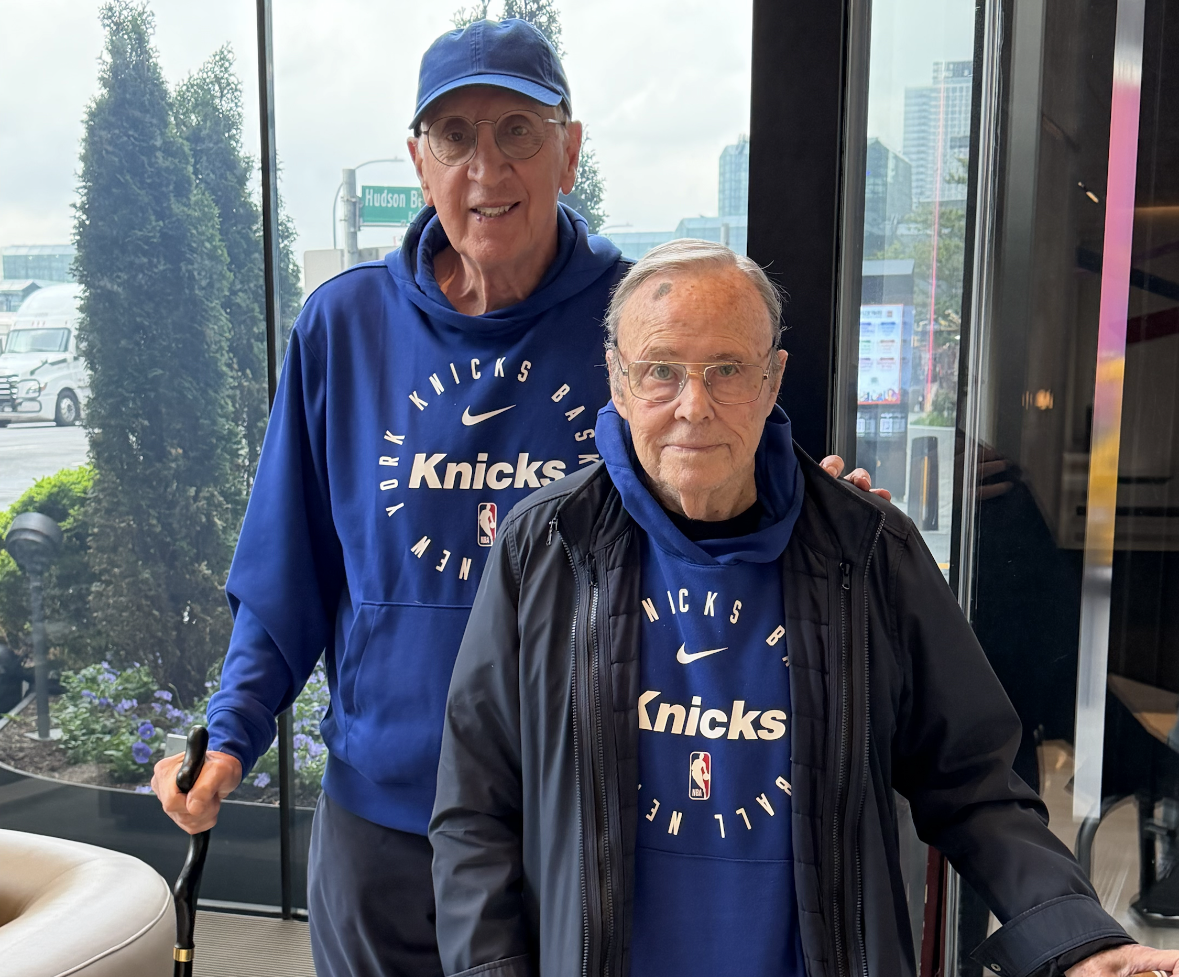
    Rose and his family now live in New York, but they’re never too far from Cherry Hill. His 88-year-old father, Zev, still resides in the area, and is a regular at the Katz JCC.

    Every once in a while, his son will send a limo to drive him and the 81-year-old Valore to Madison Square Garden. They were in the building for Game 4, sitting near the team president.

    At first, it looked bleak for New York. The Knicks fell behind early and trailed by 29 points in the third quarter. But they came storming back in the fourth and completed the comeback on an OG Anunoby tip-in.

    It was the largest comeback in NBA Finals history; a gritty win two coaches from Cherry Hill East would be proud of.

    Valore watched Game 5 at home in South Jersey. When it was over, just past midnight, the former coach texted his former player.

    The octogenarian kept his message brief. He thought about the undersized point guard who changed a culture when he was in high school.

    He thought about how he did it again, decades later, in New York; how hard he’d worked and the happiness he’d brought to his pocket of South Jersey.

    “Thank you,” Valore wrote to Rose, “and God bless.”

  • Gameday Central: Sixers draft and offseason chat with ESPN’s Jeremy Woo

    Gameday Central: Sixers draft and offseason chat with ESPN’s Jeremy Woo

    Join Gina Mizell and ESPN NBA draft expert Jeremy Woo for a special edition of Gameday Central as they break down the latest Sixers draft rumors, top prospects, and the key decisions facing Philadelphia this offseason. Watch here.

  • Andrew Painter has reached his Roy Halladay moment. It is on him to seize it.

    Andrew Painter has reached his Roy Halladay moment. It is on him to seize it.

    Somebody needs to tell Andrew Painter to remember one number.

    10.64

    He needs to say it out loud until it is ingrained in his memory, then he needs to take that memory with him.

    Ten-point-six-four.

    He needs to carry it, to own it, to believe in it. All the way down to Allentown and then to wherever his career takes him next. Buy a notebook, maybe. That’s what Roy Halladay did. Halladay knew that number better than anybody. He felt it. He owned it, rather than letting it own him.

    That number — 10.64 — was Halladay’s ERA in 67⅔ innings as a 23-year-old big leaguer. It is nearly three runs higher than the ERA that just earned Painter a demotion to triple-A Lehigh Valley after allowing six runs in two innings of the Phillies’ 12-4 loss to the Marlins on Wednesday. Halladay ended up spending his 24th birthday facing class-A minor league hitters in Dunedin, Fla. As the old saying goes: It’s not how far you fall, it’s how high you bounce.

    Painter is 25 days older than Halladay was when he lost his spot in the Blue Jays’ rotation in 2000. He is nearly a full year younger than Halladay was when he began the process of reinventing himself, both mechanically and mentally. It is a shame that Halladay is no longer around. He almost certainly would have shared all of this with Painter personally.

    Failing is easy. The hard work is what comes next. It’s an endeavor upon which Painter must embark. The 65 innings he has logged as a major leaguer offer plenty from which to learn. They have told him that his fastball will not play in its current form, whether he grips it with four seams or two. Against the Marlins on Wednesday, Painter threw just 19 of them on 56 pitches. Ten of those fastballs prompted swings. None of them were whiffs.

    Unlike a lot of young pitchers, Painter’s issues are not related to control. Heading into Wednesday, he was walking an average of 3.1 batters per nine innings, against 7.1 strikeouts. The big issue is the contact, a lot of it loud. The two-run home run he allowed to Kyle Stowers in the first inning was his 13th in the last 49⅔ innings. It is an unsustainable pace, grotesquely so. The Phillies had no other choice even without better options.

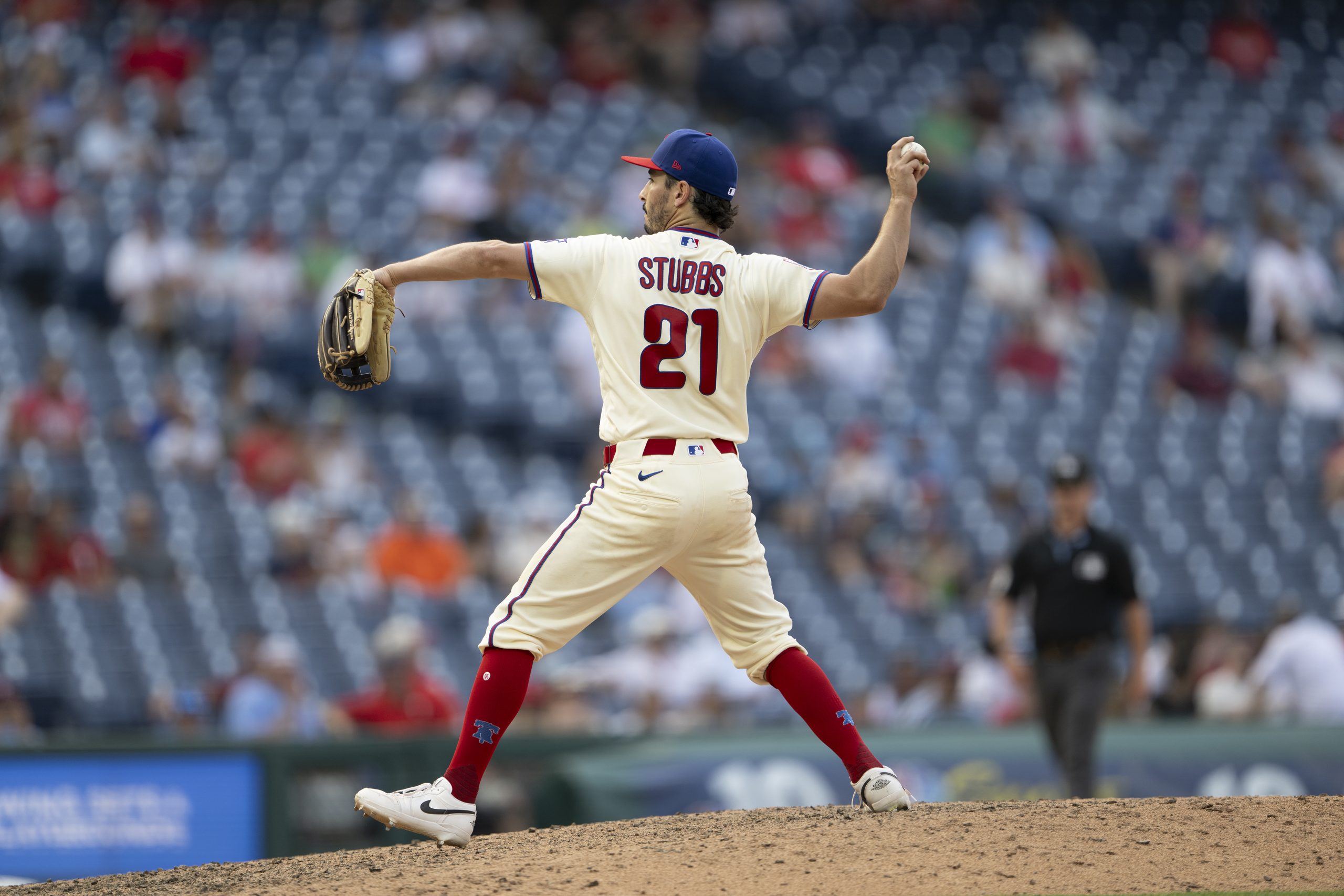
    You aren’t going to win many games when your starter lasts only two innings, allowed eight of 14 batters to reach base, and allows six of those eight batters to score. By the end, the Phillies had used six relievers, two of whom threw 26-plus pitches. That didn’t include backup catcher Garrett Stubbs, the human white flag. He was one of two pitchers who didn’t allow a run.

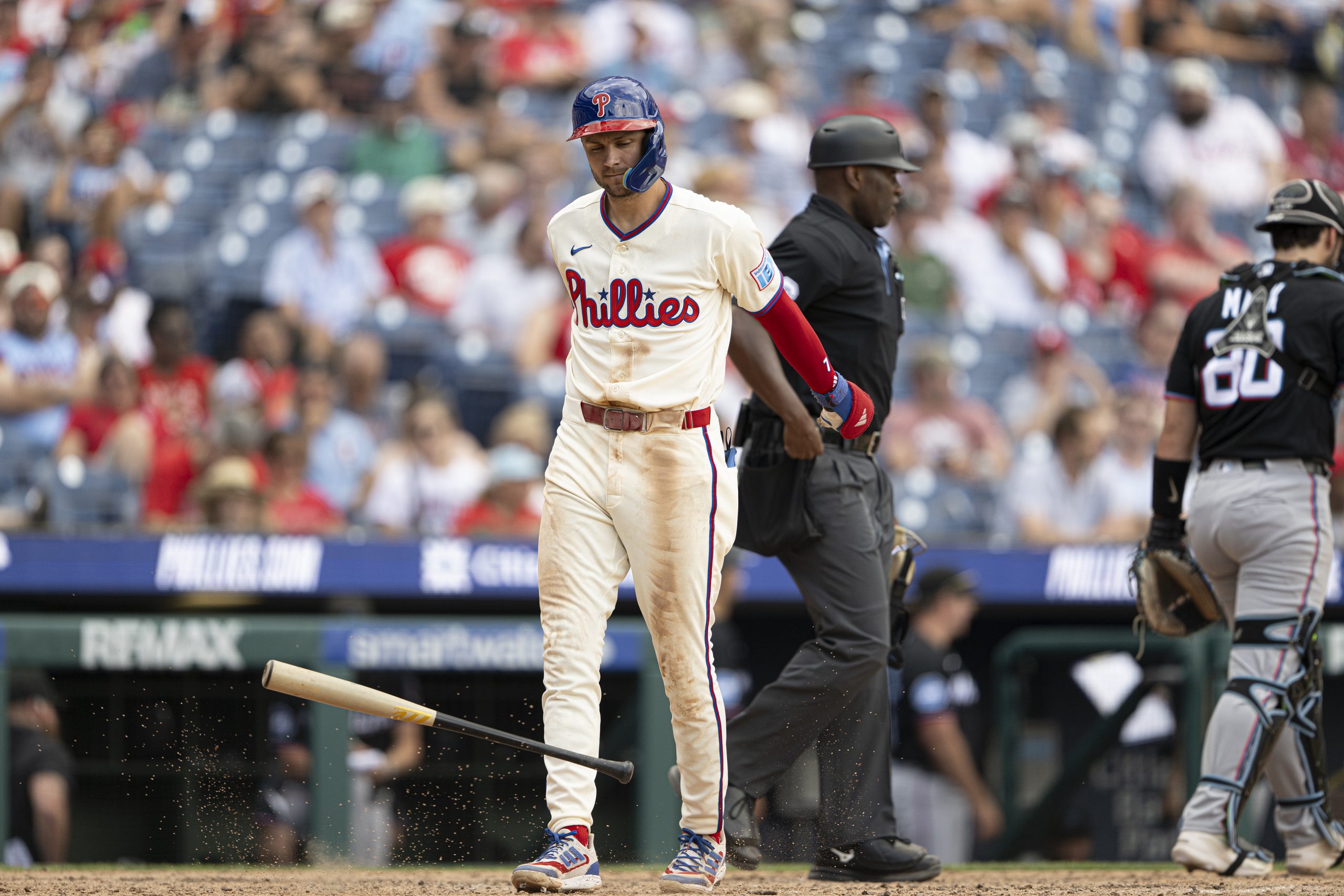
    Trea Turner slams his bat down after striking out in the sixth inning.
    Jose F. Moreno / Staff Photographer

    It was not a fun afternoon, especially for Don Mattingly. The Phillies interim manager got a good look at two of the biggest reasons his team may be destined to spend the rest of the season attempting to yo-yo away from .500 and toward 90 wins. It is very hard to break off a long winning streak when you have holes at the top of your lineup and the back of your rotation. In Painter and Trea Turner, the Phillies had both. Now, they have one.

    On Wednesday, Mattingly went back to the old drawing board with Turner, his struggling leadoff hitter. Turner went 3-for-5 with a double, his first three-hit game since May 9. The Phillies desperately need it to be the start of something.

    With Painter in the minors and no obvious replacement, the onus will fall even more squarely on Turner. He entered the day with a brutal .595 OPS. He has a lot more work to do to reestablish a rightful claim as a set-it-and-forget-it leadoff man. Mattingly can’t afford to be too patient, especially given the aftertaste of success from Tuesday’s experiment with Brandon Marsh in the one-hole.

    If the manager’s latest exhibition of patience doesn’t result in a serious heater from Turner, he shouldn’t hesitate to climb back outside of the box and see what happens with Marsh setting the table. Three consecutive lefty-on-lefty matchups for an opposing bullpen isn’t ideal, but it can be better than anybody-on-Turner. I don’t know if that counts as a real solution. After all, Turner still has to hit somewhere.

    It has been an unfortunate season for 24-year-old 40-man roster member Jean Cabrera, who has a 9.39 ERA in 13 starts between triple A and double A. Gage Wood, last year’s first-rounder, has pitched well in Reading. But a big-league promotion is a bit ambitious. The more realistic answer is to patch it together the way the Phillies did for much of 2024 and 2025.

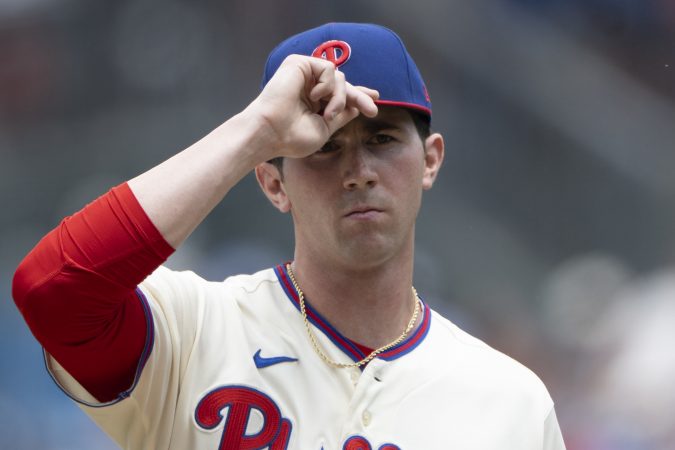
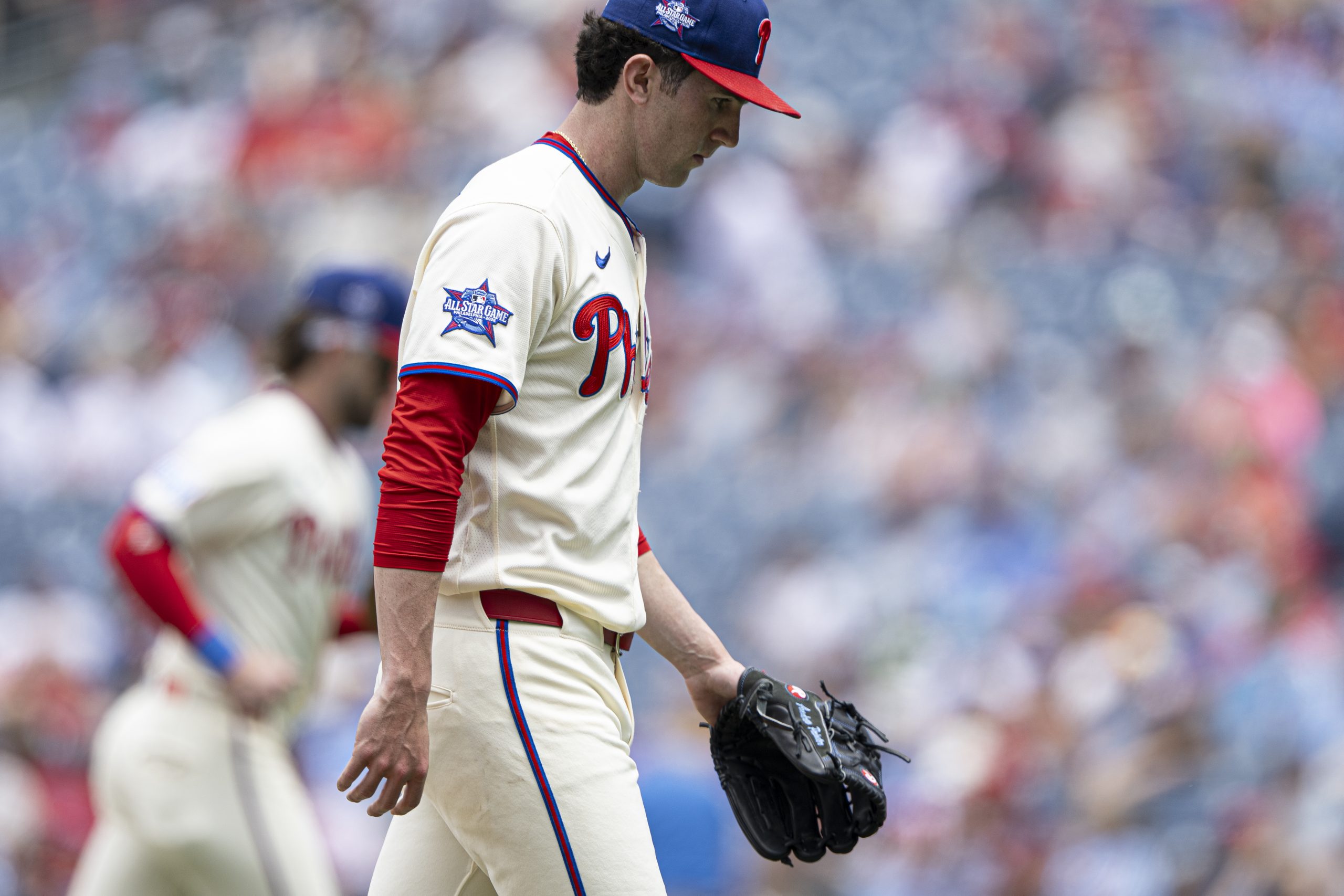
    Andrew Painter gave up six earned runs on six hits, including two home runs, in two innings against the Marlins on Wednesday.
    Jose F. Moreno / Staff Photographer

    The bigger concern is Painter’s future. The Phillies have clung to the hope of him for four years now. He has shown plenty to justify the belief. He was brilliant in his debut, more than adequate in his next two. He logged back-to-back quality starts as recently as late May. He has not recorded more than four strikeouts in any of his last eight starts. But the fastball is a problem, and he must figure it out. The velocity isn’t there like it was in his peak prospect days. But 94-96 mph is not a bad baseline.

    Can it be fixed? If it can, it wasn’t going to happen at the major league level. With the All-Star break drawing near and Painter probably needing some form of workload management in his first big league season, it was hard to make an argument for keeping him in the majors. A lot of what comes next comes down to Painter. Responding to failure isn’t easy. But it is a personal choice.

  • Looking for answers | Sports Daily Newsletter

    Looking for answers | Sports Daily Newsletter

    Every fifth day begged the question.

    Can Andrew Painter keep pitching for the Phillies?

    We got our answer a couple hours after his latest rough start, when he was demoted to triple-A Lehigh Valley after allowing six runs on six hits in two innings of the Phillies’ 12-4 loss to the Miami Marlins.

    “The fastball’s just getting hit right now,” Painter said postgame, before the demotion. “So, you know, I think we’ve just got to evaluate. Just trying to find out who I am as a pitcher right now.”

    As for who might replace him? Alan Rangel led the IronPigs’ starting rotation with an ERA of 3.74 before his start Wednesday night.

    Meanwhile, Trea Turner returned to the lineup and was one of the Phillies’ few bright spots on Wednesday.

    — Maria McIlwain, @phillysport, sports.daily@inquirer.com.

    If someone forwarded you this email, sign up for free here.

    ❓The MLB trade deadline is a little over six weeks away. If you were Dave Dombrowski, what moves, if any, would you make and why? Email us back for a chance to be featured in the newsletter.

    Summer scaries

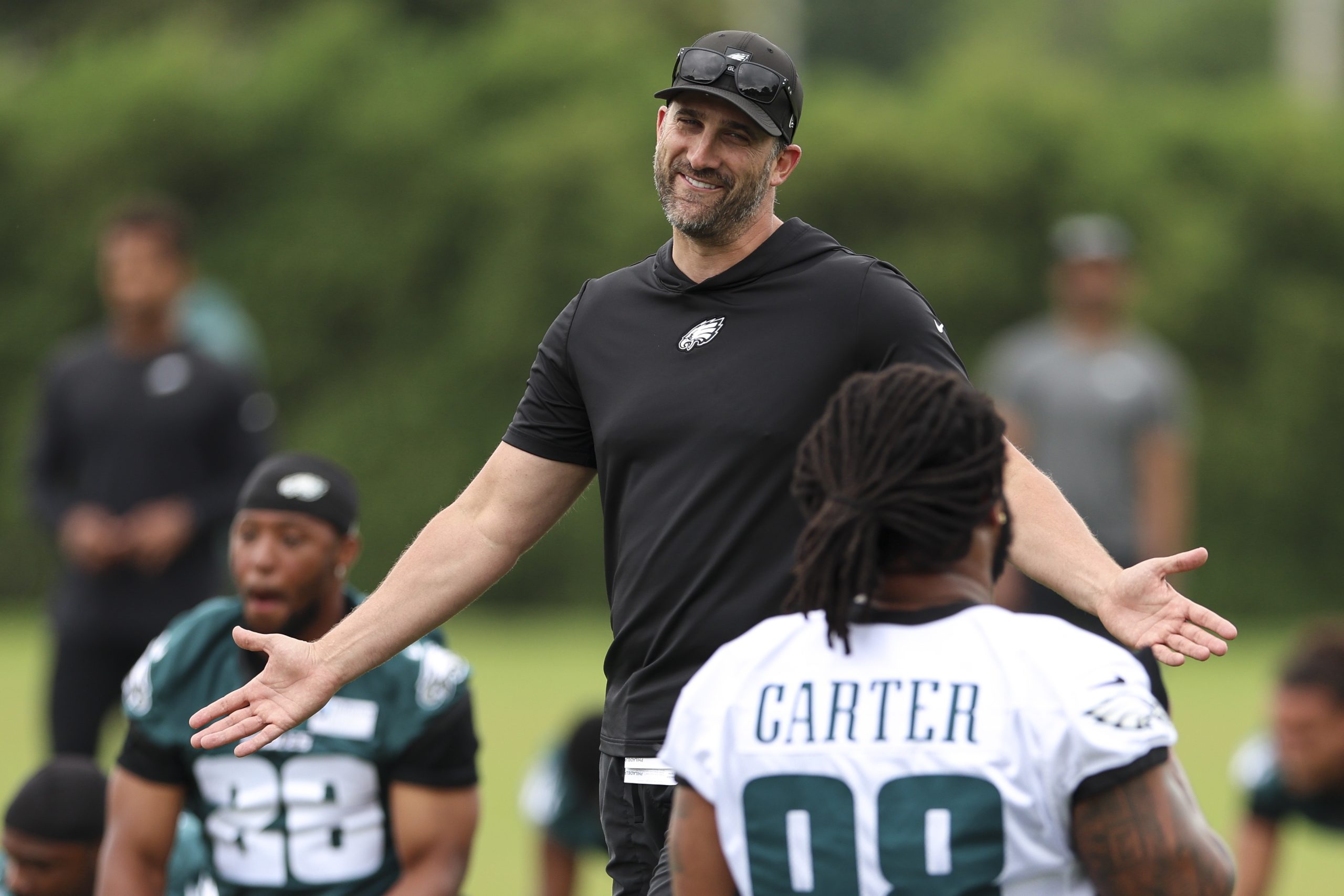
    Sorry, folks. Nick Sirianni and the Eagles have gone dark — at least in an official capacity — until late July.Monica Herndon / Staff Photographer

    Next time we see the Eagles, at least in an official capacity, it’ll be for the start of training camp.

    Feels like forever from now, doesn’t it?

    In the meantime, Jeff Neiburg tackles the biggest questions surrounding the Birds at this point in the offseason. Read along as he unpacks storylines like who’s backing up Jalen Hurts? Or will there be any newcomers ahead of camp?

    What we’re …

    🏈 Reading: Jeff McLane’s deep dive into the role Jeffrey Lurie’s son plays within Eagles management.

    🥊 Following: The professional fighting career of Gianna Vadino, a former Inquirer intern and Philly resident.

    🧠 Learning: About the legacy of trailblazing golfer Charlie Sifford and how it’s helping HBCU students with Philly ties.

    Will Pulisic play?

    It’s a question many are asking: What’s going on with Christian Pulisic’s calf? But unlike other sports, U.S. Soccer isn’t obligated to answer, as FIFA doesn’t require public injury reports in international tournaments.

    So besides the team’s training staff and a select few on the technical staff, it’ll be a wait-and-see until the starting 11 for Friday’s second Group D match for the Americans is released. Jonathan Tannenwald has an update from the team’s camp in Irvine, Calif., and insight on FIFA’s rule.

    Here at home, the Union on Wednesday parted ways with longtime defender Olivier Mbaizo. The Cameroon native played nine seasons in Chester but appeared just once in MLS play this season.

    Watch this!

    Reporter Jonathan Tannenwald joins host Lisa Carlin for The Inquirer’s Soccer Extra pop-up show with news, analysis and more dedicated to the beautiful game.Patrick Binkley /Staff

    Be sure to tune in today at 11 a.m., when Inquirer writer Jonathan Tannenwald and host Lisa Carlin recap the first week of the World Cup and get you set for another weekend full of matches, including the second match for the Americans against Australia and Philly’s monster match Friday between Brazil and Haiti. Watch here.

    Straight outta Cherry Hill

    Leon Rose coaching at the Katz JCC in 2005. Photo courtesy of Katz JCC

    Fun fact: The architect of the NBA champion New York Knicks got his start in South Jersey. As a teenager, he helped put Cherry Hill East on the map, then brought the intensity he learned there to his role as a coach for scores of kids at the Katz Jewish Community Center.

    So for his former pupils taking in Game 5 of the NBA Finals last weekend, Rose’s words after the Knicks’ closeout win really resonated.

    “It sounded like he was talking to us,” said one of those former players, Sam Friedman, “back when we were 13 or 14 years old.”

    We know, we know, the season just ended. But media outlets across the country are already putting out power rankings. Here’s how the Sixers stack up.

    Next: The NBA draft is Tuesday and Wednesday (8 p.m., 6abc, ESPN). Tune in tomorrow when our Gina Mizell talks all things draft on Gameday Central.

    Island time

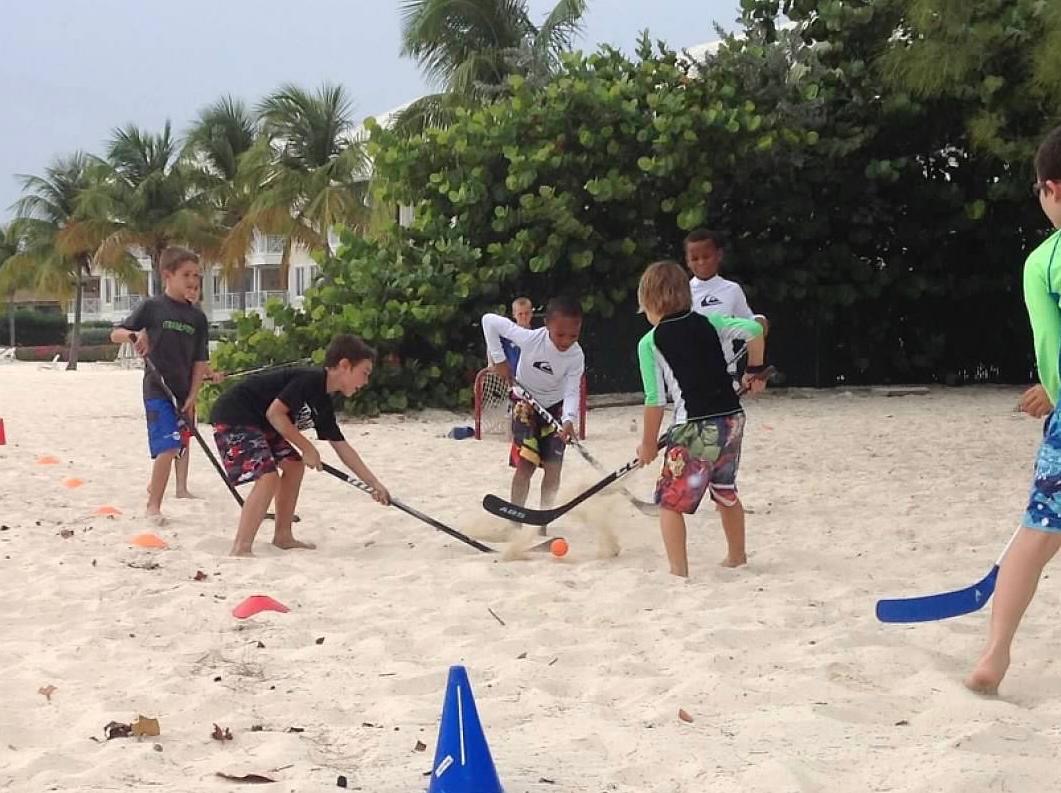
    Jaxon Cover (center) and Ryder Cali (to his right with his back to camera) grew up playing roller hockey in the Cayman Islands.Courtesy of

    It’s a tale as old as time: two kids meet and bond over a shared love of a specific sport, hockey in this case.

    No, this story doesn’t unfold in Minnesota or Canada. It unfolded in the Cayman Islands. Now those kids are NHL draft prospects after taking their talents north.

    The Inquirer caught up with Jaxon Cover and Ryder Cali to talk about their journeys from the Caribbean and what’s next.

    Next: The Toronto Maple Leafs have the first pick in the NHL draft, which begins June 26 (7 p.m., ESPN) and runs through June 27.

    On this date

    Phillies ace right-hander Robin Roberts celebrates winning his 200th game on Aug. 1, 1958. He gave up three hits, struck out six, and walked none to lead the Phillies to a 3-1 win over the Chicago Cubs.

    Seventy-eight years ago today, Robin Roberts embarked on a Hall of Fame career. The righty, who played 19 big league seasons (14 of which were with the Phillies) made his MLB debut on June 18, 1948, and allowed two runs on five hits with two walks and two strikeouts in eight innings. The 21-year-old took the loss that day against the Pittsburgh Pirates, but he went on to earn seven straight All-Star nods, famously pitch 28 straight complete games (the 28th coincidentally was vs. the Pirates), and get elected to the Hall of Fame in 1976. He compiled a career 286-245 record, 3.41 ERA, and struck out 2,357 batters. Roberts died at age 83 in 2010.

    Standings, stats, and more

    Position player pitching alert: Garrett Stubbs records the final on Wednesday against the Marlins at Citizens Bank Park. The Phillies lost, 12-4.Jose F. Moreno / Staff Photographer

    It’s never too early to peek in on magic numbers (or maybe the wild card race), and as we inch ever closer to the halfway point of the MLB season, The Inquirer’s got you covered — and not just for the Phillies.

    Here’s a place to access your favorite Philadelphia teams’ statistics, schedules, and standings in real time.

    Marcus Hayes’ take

    Jalen Brunson and Jalen Hurts have quite a bit in common. Collegiate success, check. First name, check. And notably, they weren’t expected to make a huge impact in the pros.

    Well, now they’ve reached the pinnacle of their respective leagues. And as Brunson rides through Manhattan’s “Canyon of Heroes” today, maybe he should do so wearing Hurts’ jersey.

    After all, he’s done so before.

    What you’re saying about consequential trades

    We asked: Good or bad, what do you think is the most consequential trade in Philly sports history and why?

    Rick Wise for Steve Carlton. It set us up for a good run from 1976 to 1983. — Jack M.

    In my book-and I’m 70 years old-the Steve Carlton for Rick Wise trade changed the future of the Phillies. Carlton being the lead horse on a pitching staff that needed shutdown or shutout capabilities. Winning 27 games on a below .500 team, Carlton’s strikeout capabilities almost always guaranteed the Phillies would be in every game he pitched. Nonetheless, Steve Carlton led the Phillies to its 1980 WS Championship — it’s first-then came back for a 1983 World Series as well. — Gene M.

    Steve Carlton from the St Louis Cardinals for Rick Wise in 1972. “Lefty” became a Hall of Famer, won 4 Cy Young awards and led the Phillies a winning team in the late ’70s, culminating in a World Series championship in 1980. — Bob C.

    On February 7, 1971, at the old Philadelphia Arena on 45th and Market Streets, Roller Derby’s Jim Trotter, a notorious “most hated” skater for the Texas Outlaws was traded at halftime and returned as a Philadelphia Warrior in the second half and became an absolute legend, rolling to sellout crowds and world championships in Philadelphia. It was greatest trade in Philadelphia sports history and was even referenced on Page 63 of my book, Yavapai Means Winning Soccer. Okay, I’ll go with Steve Carlton for Rick Wise. Acquiring the return of Wilt Chamberlain from the San Francisco Warriors and Norm Van Brocklin from the Los Angeles Rams brought titles to Philly as well. — Mike P.

    The Phillies trade of pitcher Rick Wise to the Cardinals for Steve Carlton has to be the most famous and best trade in Philly sports history. With Steve leading the way the Phillies won their first World Series in the team’s history. — Everett S.

    I gave this same answer a couple weeks ago since for me, this is one of the biggest trades in all sports. Rick Wise for Steve Carlton. Carlton was a major part of the Phillies winning their 1st world series, is in the HOF and still roots for the Phils! — Dave S.

    Many will think the trade of Rick Wise for Steve Carlton was the most consequential trade but I would argue differently. In April of 1966 the Phillies traded Ferguson Jenkins and Adolfo Phillips to the Cubs for Larry Jackson and Bob Buhl. Jenkins went on to win more than 15 games in 18 seasons having won 20 in seven consecutive seasons. He was an All-Star three times. A Cy Young winner and a strike out and complete games leader, he was inducted in the Hall of Fame in 1991. Adolfo Phillips’ career, while rather pedestrian by most standards had two really good years for Chicago following the trade and had a lifetime BA of .250. Jackson, a very veteran pitcher went 41- 45 for the Phillies over the next three seasons. Buhl, another very veteran pitcher, went 6 – 8 in that 1966 season and was out of baseball after 3 starts in the ’67 season. I was 15 at the time and still trying to shake off the trauma of the ’64 season and the mediocrity of the ’65 season when I tuned in to an opening game Phillies broadcast where I learned of the trade. I was young but even then I saw the trade for what it was; a sell-off of future competitiveness in a desperate attempt to remain relative for one more year. Sadly the Phillies didn’t learn anything from this disaster as they went on to trade Ryne Sandberg (and Larry Bowa) to these same Cubs a decade later. Sandberg became Rookie of the Year, MVP, 10 time All-Star and Hall of Famer. The Philles got DeJesus for three seasons. — Kenneth M.

    My opinion: the Bernie Parent trade. We Traded him to Toronto in a three-way deal with the Bruins, who sent the Flyers Rick MacLeish. Bernie goes to Toronto to learn under Jacques Plante, then gets traded back to the Flyers and the rest is history. A HOFer, 2 cups and became a Philly legend. — Bryan B.

    We compiled today’s newsletter using reporting from Scott Lauber, Jeff Neiburg, Jeff McLane, Ariel Simpson, Jonathan Tannenwald, Owen Hewitt, Alex Coffey, Jackie Spiegel, and Marcus Hayes.

    By submitting your written, visual, and/or audio contributions, you agree to The Inquirer’s Terms of Use, including the grant of rights in Section 10.

    Thanks for reading! Kerith will be back tomorrow to close out your week. — Maria