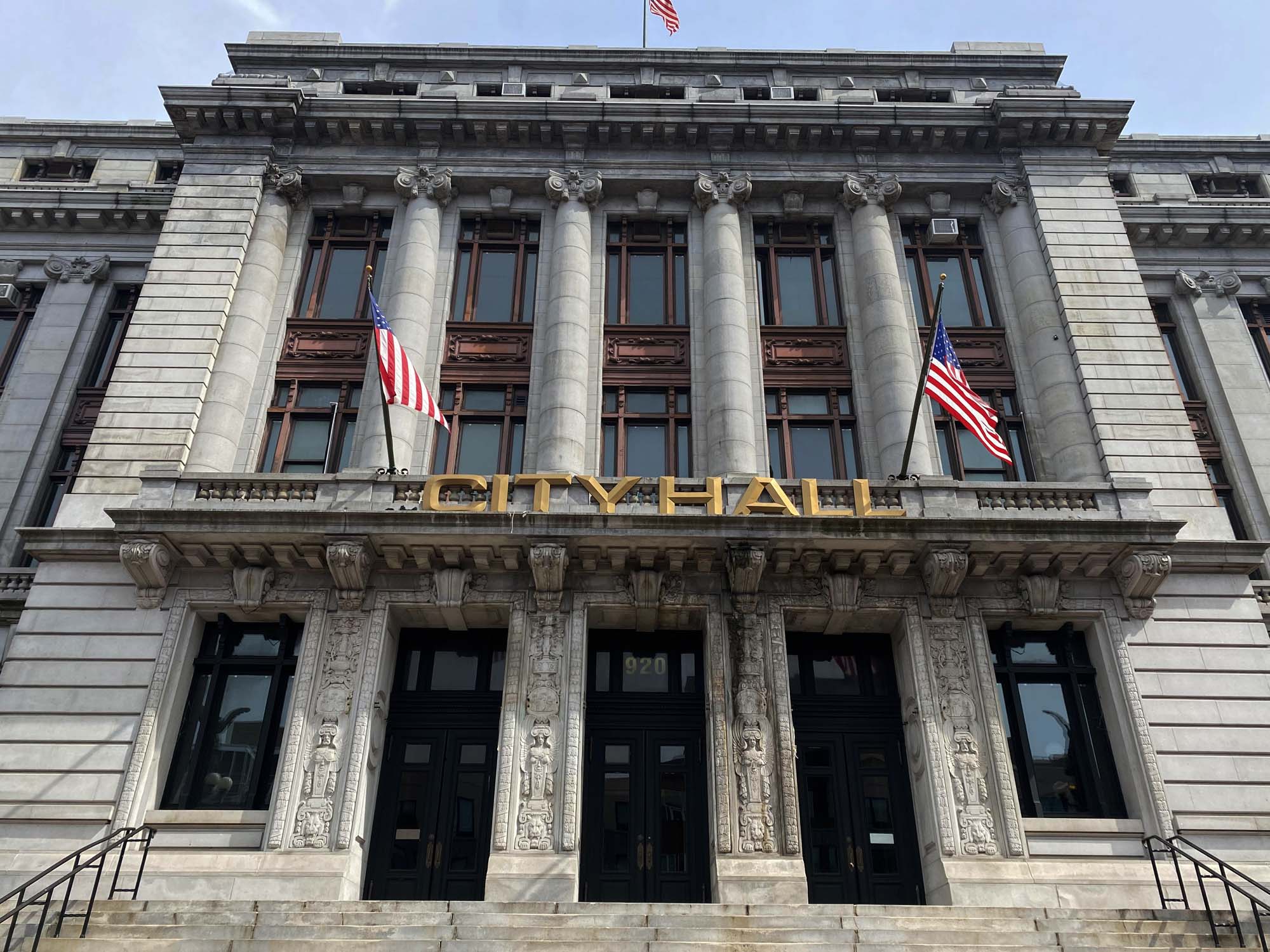
Minors are no longer allowed on Cape May’s beaches after 8 p.m. or in other public areas after 10:30 p.m. under a new curfew passed by the Jersey Shore city.
The Cape May City Council on Thursday adopted stricter curfew measures for people under 18 after the city’s police department reported an influx of “disruptive, dangerous, and unlawful” behavior from large groups of minors, according to the city ordinance.
The ordinance went into effect Thursday.
“We have a very tranquil, peaceful community here. We are not against juveniles. We are not saying we don’t want them here. While they’re here, we just want them to be responsible,” Cape May Police Chief Dekon Fashaw said at the meeting.
“Respectfully, we do not want to be their babysitters,” Fashaw said.
Minors will be barred from the city’s beaches, boardwalk, promenade, and other public areas at the set times unless they are accompanied by a parent or guardian, working, or commuting to or from work.
The city also banned backpacks and other large bags on the promenade, beaches, and boardwalk and in other public areas from 8 p.m. to 6 a.m. with some exceptions, including medical devices.
Cape May expedited the vote under a state provision that allows local governments to adopt emergency ordinances quickly when they are considered necessary for preserving the public order.
“It’s come to the attention of city administration and the council that the police department really needs these tools now, not in September, not in October,” Christopher Gillin-Schwartz, the city’s solicitor, said.
Fashaw said his department has responded to minors drinking and fighting in public places.
Curfews in other Shore towns have pushed minors down to Cape May, he said, where they were previously allowed to be out until midnight.
Say you’re delivering packages, pizzas, or people. Or you’re a newspaper photographer out looking for pictures. If you’ve been driving around a city for a few years, the streets might seem ordinary, but then something about an intersection, a store front or a sign gives you that feeling of Déjà vu.
Of all our senses, sound, taste and smell are usually considered the most powerful memory triggers. Like when Sam “Plays it again” in Casablanca or Anton Ego tastes Remy’s ratatouille. Or when any of us open a brand new box of Crayola crayons.
But as a photographer it is the visual reminders that are powerful. Driving in the city I am always taken back to a graduation party I photographed down a particular street, or the sunset I framed. Or how I negotiated a hill in a snowstorm, or covered a shooting on that block.
Sometimes I feel like I have been leaving bread crumbs behind me as I drive everywhere, waiting to be remembered.
A 1950s Dodge Meadowbrook parked near Front and Main Streets in Camden.Tom Gralish / Staff Photographer
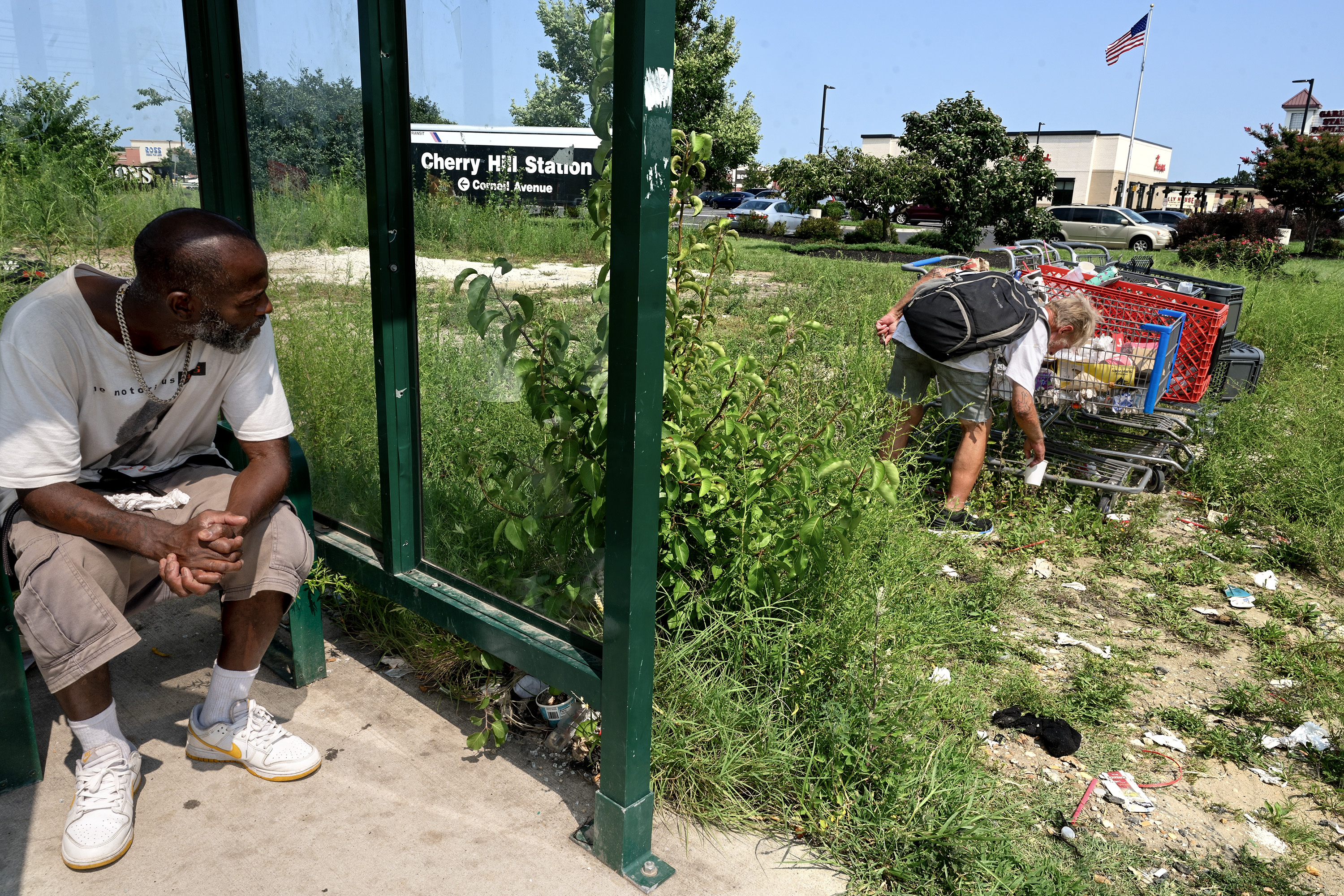
Stalled in backed-up traffic for the ongoing construction on Rt. 70 in Cherry Hill last week, I glanced over at a bus shelter. I recalled years ago seeing riders standing in the slim shadow of a utility pole to get just a tiny bit of some shade from the sun while waiting for their bus.
They waited next to a multimillion dollar retail development on the site of the former Garden State Racetrack. The mostly minimum wage workers who rode the bus to their jobs there didn’t even have a bench to sit on — let alone relief from the elements while waiting to go home. Back then I photographed commuters sitting on overturned shopping carts and tried to interest an editorial writer to take up their cause.
Eventually, a bench was put there, and a few years later a shelter was installed. But as I sat in my car the other day, it still didn’t look right. I turned into the shopping center and walked over.
Wayne Peters picks up trash while waiting for a bus with Bobby White.Tom Gralish / Staff Photographer
Wayne Peters tells me he’s been taking NJ Transit’s 406 bus to and from Camden for about two years, and says this stop has “gotta be the worst in the state.” He says he always picks up trash when he’s there, and adds more to the piles already in the shopping carts that serve as receptacles.
Fellow rider Bobby White added, “You’d think something in Cherry Hill would be better. How hard would it be to put a trash can here?” Before their bus arrives, Peters, trying to be positive about the shelter, reminds him “They fixed a broken window once.”
Another thing about revisiting so many corners of our region is it becomes easy to think I’ve seen it all. And then I hear about a place I didn’t know anything about.
A semi-retired friend from Bucks County and her friend try to take weekly drives every Thursday they call “Highways of History.” Last week she texted me some photos saying “guess where we are.”
My photo of an old wharf and pavilion on the Delaware River Wednesday, Aug. 12, 2026. The Nary Yard in Philadelphia is across the river.Tom Gralish / Staff Photographer
Now in all my years of being like a UPS, DoorDash, or Lyft driver I had never been to the place in her pictures. I could tell from her other stops that she was nearby, which made it even more mysterious. There was a carousel and other things for kids, like a smaller version of the giant covered wooden slide I’d been to at Smith Memorial Playground & Playhouse in Philadelphia’s Fairmount Park.
Just like the well-known Philly playground that is considered a childhood rite of passage, a New Jersey version has been around for well over a century and when she told me it was only twenty minutes from my house I was completely gobsmacked.
Not only had I never even heard of the place as a journalist, but it never even entered my consciousness during those years when my wife and I were constantly googling “things to do with a toddler” finding ways to keep our kids — and ourselves — entertained and out of the house.
She told the me her father took the ferry there from Penn Treaty Park in Fishtown and “spent many a happy day along with hundreds of other poor kids in the 1930s for free soup and crackers and a carefree day.”
It’s called Soupy Island. It was founded in 1877 on an island in the Delaware River by the Sanitarium Association of Philadelphia, a group of doctors who wanted to help sick city kids with tuberculosis recover with fresh air, playtime, and that free soup. When the Delaware was dredged a few years later and the island was wiped out, the camp moved to the mainland, on the Jersey banks of the river.
My love of history was sparked and I could not believe the connections. My own father, growing up in St. Paul, Minnesota, was sent away every summer to the “Prev.” He shared many great memories with me of learning how to swim and fish at a preventorium on a lake.
Boys fishing at the Children’s Preventorium on Lake Owasso near Shoreview, Minnesota in the 1930s.Minnesota Historical Society
As its name implies, it was designed to halt tuberculosis among children by getting them away from their crowded, mostly immigrant inner-city neighborhoods and out to the country.
I spent the weekend digging around and reading everything I could to learn all about Soupy Island, amazed to see The Inquirer had done a number of stories about it, even in the years I’d lived here (kids were still coming over by ferry from Penn Treaty well into the 1980s.)
An original 1930s German-made Ferrari-Heyn carousel at Soupy Island.Tom Gralish / Staff Photographer
Seeing that it was closing up for the summer, I planned to reach out the caretaker on Monday to go make pictures. That’s when I learned my colleague, reporter Sarah Nicell, was visiting on their penultimate day of the season. She grew up in South Jersey, and she had never heard of it before either.
Since 1998 a black-and-white photo has appeared every Monday in staff photographer Tom Gralish’s “Scene Through the Lens” photo column in the print editions of The Inquirer’s local news section. Here are the most recent, in color:
Iemad Saifo, the 65-year-old owner of Zena’s American Mediterranean Cuisine in Collingswood, has been released after spending two weeks in ICE detention at Delaney Hall in Newark, N.J.
Saifo emigrated to the United States from Syria in 2002 on a business visa and later sought asylum after the outbreak of the Syrian civil war. He was detained during a routine ICE check-in July 31.
Saifo is the primary caregiver for his 12-year-old son, who has autism. The elder Saifo also has spasmodic dysphonia, a rare condition that makes it difficult for him to speak, as well as chronic kidney disease.
Dozens of Collingswood-area community members wrote letters and signed a petition urging the court to keep him in South Jersey with his family.
As President Donald Trump pushes his mass deportation agenda, routine check-ins have become increasingly risky for immigrants. Immigration advocates say many of those who have been arrested at ICE check-ins were simply following government protocols.
Last week, New Jersey Attorney General Jennifer Davenport announced her office was investigating Delaney Hall after multiple detainees died there during the last year, raising concerns about the facility’s conditions and medical negligence. The privately operated detention center under contract with ICE has been the scene of fierce protests and political fights between the Trump administration and Democrats since its May 2025 reopening.
U.S. Immigration and Customs Enforcement said in a statement that Iemad Saifo was arrested both because he does not havepermanent status and because of a 2018 case in which he was indicted and found guilty of witness tampering and sentenced to five years’ probation.
“Under President Trump and Secretary Mullin, ICE is targeting the worst of the worst,” a Department of Homeland Security spokesperson wrote. “Nearly 70% of ICE arrests are of illegal aliens charged or convicted of a crime in the U.S.”
One of Saifo’s attorneys, Fiona Powell, credited the 150 notarized letters from community members testifying to his character with helping secure his release.
“This was an outpouring of community support like I’ve never seen before,” she said.
Those letters were authored last weekend during an event that friends, family, and community organizers hosted at his restaurant.
Many in South Jersey know Iemad Saifo from his restaurant, which opened in 2011, and from the nearly 10 years he previously spent working at a local 7-Eleven, said his 27-year-old daughter, Zena Saifo, for whom the restaurant is named.
Zena Saifo said she, her mother, and one of her brothers were granted asylum after the war began. Her father never heard back from the Department of Homeland Security on his asylumapplication, she said,so he later applied for permanent residency through his younger son, who was born in the United States.
“He’s always willing to help people, to give,” Zena Saifo said of her father.“People are really enraged and disgusted by what’s happening and doing everything they can to support him.”
Zena Saifo is still reeling from the day of his detention, she said, when she, her brother, and lawyers arrived at the Mount Laurel ICE office for the check-in around 7:30 a.m. and were made to wait until past noon. The Saifos’lawyer notified Zena her father would be detained. She tearfully pleaded with the ICE officer to let her say goodbye to him but was denied, she said.
“‘Was this the last time I saw my father?’” Zena Saifo recalled wondering in the moment. “It was just really, really devastating.”
In the period since Iemad Saifo’s detention, two of his sons,ages 24 and 26, have taken over the restaurant. His wife has stayed at home and taken care of the youngest. He turned 12 last weekend without his father present.
Zena Saifo said her father’s two requests of her in his absence were to water the family fig tree and to host a big celebration for her brother’s birthday.
On Friday morning, the family was en route to pay the $7,500 bond and pick Iemad Saifo up from Delaney Hall, Powell said.
The 2018 charge was brought up during the bond review, she said, but “in the end the judge was able to see that he’s an older man with a family who needs him and strong community ties and that he deserves to be home with his family.”
Going forward, Iemad Saifo’s legal team will do all it can to secure permanent residency for him. In the interim, Powell said, immigrants are always at risk of detention regardless of their circumstances. The Trump administration has issued 46,000 orders of removal or voluntary deportation since the start of last year in Pennsylvania, New Jersey, and Delaware, more than in the entirety of former President Joe Biden’s term. In New Jersey’s courts, orders of removal or voluntary departure rose 47% just between May and June, from 2,348 to 3,446.
However, to legally detain Iemad Saifo again, the government would need to show something about his situation has changed.
“It could take potentially months or years more in order to get him permanent status here, but we will continue doing everything we can to keep him here,” Powell said.
Good morning, South Jersey. It’s Friday! It looks like a mixed bag in the weather department this weekend. Saturday seems promising, but storms (potentially severe) are forecast for Sunday.
Have you heard of Soupy Island? It’s a fun, quirky play spot for kids in West Deptford that is open only about one month a year. One man has been running it for nearly 30 years.
P.S. Thank you for your continuing support. We want your thoughts! Tell us your opinion of the newsletter by taking our survey or replying to this email.
Armando Roberto Perez, 70, is the caretaker for Soupy Island, a public pool and park in West Deptford. It is known for its century-old carousel, free soup, and the tall, enclosed slide guests glide down on wax paper, crashing into sand.
Perez, fondly called Mr. Soupy, has been running Soupy Island for 28 years. It’s a family calling. His father-in-law was the previous caretaker and his grandfather-in-law before that.
Part of Soupy Island’s appeal is that it’s open only about one month a year, three days a week from July to mid-August. Admission is free. Not surprisingly, soup is on the menu.
Hackers targeting water systems in Cape May and Woodbine and across the U.S. “know what they are doing,” U.S. Rep. Josh Gottheimer says. CBS3 has further details.
A reader asked what effect all the teardowns of smaller cottages were having on the Shore. We asked our Shore Line texters. Here’s a sampling of the replies, lightly edited.
The classic old shore homes are disappearing. It is sad. Most of the new homes look alike. We should try to protect the old charm. It can’t be replicated.
The shore is already overbuilt and has been for years. Adding ginormous sized houses only depletes the natural resources that make the shore unique. When my family drove to the shore when I was a kid in the ’60s you could smell the sea air before you could see anything that looked like the shore on the Expressway. I remember that smell fondly (mostly) and miss it greatly. I can’t pinpoint when it stopped. It gradually decreased in the ’90s and now it no longer exists.
It is unrealistic to expect people not to tear down older homes. Yes there will be more traffic but maybe that will be self limiting.
What do you think? Do you like the look of the old homes? Do you prefer the newer houses? Is it realistic to ask homeowners to update older homes? Be part of conversation and email Rosenberg at downtheshore@inquirer.com.
📸 Photo of the week
Teacher Grey Hamilton (on his back) instructs students in the Cooper River Yacht Club’s summer Learn-to-Sail program on the Cooper River in Collingswood. Tom Gralish / Staff Photographer
Enjoy your weekend!
By submitting your written, visual, and/or audio contributions, you agree to The Inquirer’s Terms of Use, including the grant of rights in Section 10.
Municipalities and school districts owed New Jersey’s public worker health programs nearly $50.5 million in arrearages earlier this year, months before experts recommended steep rate increases for health plans that insure hundreds of thousands of school and government workers.
The debts owed by nearly 50 local units are part of the mix behind another year of steep premium increases for state-run health plans that have become increasingly unstable in recent years amid what actuaries have called a “death spiral.” Mounting costs drive some towns and school districts to leave the state-run plans for private plans, driving costs yet higher and leaving the state-run plans in distress.
“The delinquent payments just put salt in the wound, and I recognize they are not alone driving the death spiral. Don’t get me wrong — I’m not suggesting they are. But if there’s death by a thousand papercuts, these are quite a few papercuts,” said Assemblyman Mike Inganamort (R-Morris).
Thirty-five local governments owed the State Health Benefits Program $28.1 million in April, while 13 school districts owed $22.3 million to their state-run plan, according to a tally of April arrearages drafted by the Treasury and released by Inganamort.
Though the arrearages are not the main drivers behind trends that could push premiums for current school workers up by as much as 34%, or 17.3% for local government workers, they contribute to rate growth by reducing the amount the state collects in premiums.
“It all adds up,” said Dudley Burge, the AFL-CIO representative for local government workers on the State Health Benefits Commission, which sets rates and approves contracts for the government worker health plans. “A one or one-and-a-half percent decrease in premium helps, right?”
It’s unclear how or whether individual local units’ debts have changed since April in most cases, but the overall level of outstanding balances has ticked up a bit since then. More recently, the plans were owed about $58 million, $43 million to the plan for local government workers and $13 million to the plan for school workers, according to the Treasury. Unlike the data provided to Inganamort, it’s unclear how the $58 million cited by the Treasury breaks out across individual towns and school districts.
Debts are marked delinquent if a town or school district is at least 31 days late on its payments.
The debts varied wildly by size and age. Paterson, which held the largest outstanding debt, owed the State Health Benefits Program $11.8 million in April, while Hope, a Warren County Township with fewer than 2,000 residents, owed just $4.04.
Some of the debts are held by local units that left state-run plans years ago or that have dissolved entirely. While state officials said they continued to work with locals to secure payment, it is unclear when those funds would arrive or, in some cases, if they ever would.
Darryl Isherwood, a spokesperson for the Treasury, said most disenrolled districts eventually pay off their balances. The department had not moved to forgive any debts owed to public worker health plans, Isherwood said.
“Treasury continues to work with local employers to try to collect all outstanding amounts owed,” he said.
The department had boosted outreach to governments in arrears, both to collect what’s owed and to help towns and school districts avoid expulsion, Isherwood said.
In April, disenrolled districts’ debts were significant, accounting for about $26.9 million across school and local government plans.
In general, those debts were concentrated in a handful of units: Newark (which owed $11.4 million), the Hudson County Schools of Technology ($11.6 million), and the Orange Board of Education ($2.4 million).
Both Newark and the Orange school board left state plans in 2023. They last made payments on their debt that February and March, respectively. A spokesperson for Newark did not provide comment.
The Hudson County Schools of Technology last made a payment on its debt last October. They separated from the public plan this February.
Burdge said Paterson’s debt did not appear on a separate report drafted for health benefit commissioners in March, suggesting its arrearages are new. Diana Nunez, a spokesperson for the city, said its debt was related to the timing of state transitional aid and would soon be resolved for the rest of the year.
“Because many of the city’s largest costs come before a significant portion of its revenue is received, the city must prioritize certain payments until those funds become available. If transitional aid were distributed evenly over the course of the year, the city would be current on all of its financial obligations at all times,” Nunez said.
Inganamort said the state should get more aggressive in collecting health benefit debts, including by cutting or withholding state aid to districts that owe money to the state plans.
“What I think we should consider is any public entity that has a delinquent payment to the state, that should be reflected in any aid that they do get from the state of New Jersey, whether it’s to the municipality or the school district,” he said. “I don’t believe we should continue to give aid to entities that owe the state money.”
In some cases, debts may be unrecoverable because the unit that owes them has closed.
That appears to be the case for the Wildwoods Joint Construction Office, which owes government workers’ plan $7,714.45 and, according to Civil Service records, ceased to exist in 2007.
The School Employees’ Health Benefit Commission is due to vote on rate increases for next year on Aug. 19. The State Health Benefits Commission has tentatively set its rate renewal vote for Aug. 26.
Good morning, South Jersey. I’m with you for a few days from my little corner of our region. I’ve been a New Jersey resident almost all my life, and I can’t help but notice that even critics of our state like to visit our Shore towns. 🤷♀️
In Camden, Battleship New Jersey will be getting a two-year, $24.25 million upgrade. Some will be on the vessel itself, while other work will improve the visitor’s experience.
And New Jersey — along with Pennsylvania and Delaware — had more deportation orders issued in June than in any other month since 1997.
Battleship New Jersey is about to get another facelift, this one costing $24.25 million and involving work on and off the ship.
The project could take about two years to complete and will make it more visitor friendly, with an expanded visitor center, double the parking, and a new event space.
Big J, as it is known, is nearly 2½ football fields long. The World War II-era ship returned to the Camden waterfront in June 2024 after being dry-docked in Philadelphia for 78 days. At that time, it got a paint job for the first time in three decades, as well as multimillion-dollar routine maintenance and repairs.
Immigration courts in New Jersey, Pennsylvania, and Delaware are ordering people removed from the country in numbers not seen since at least 1997.
In New Jersey’s courts, orders of removal or voluntary departure rose 47%, from 2,348 in May to 3,446 in June. (At the Philadelphia immigration court — which hears cases for most Pennsylvania and Delaware residents — orders rose 71%, from 1,230 in May to 2,105 in June.)
The figures are the highest since at least late 1997.
More than 46,000 removal and voluntary deportation orders have been issued in New Jersey, Pennsylvania, and Delaware since President Donald Trump’s return to office, slightly more than the total issued over former President Joe Biden’s entire term.
A New Jersey resident won $500,000 in a Powerball Double Play drawing, the Courier Post reports. The person’s name and location have not yet been released.
This North Wildwood cottage was too small for a big family. The owner rebuilt it from scratch with the home’s history in mind.
The owner of Chicken or the Egg in Marlton and Beach Haven and LaScala’s Fire in Marlton and other locations has bought a Bucks County restaurant to add to his LaScala’s Fire collection. He also plans to expand the concept in Jersey.
A Voorhees seafood restaurant is closing after 35 years, NJ.com reports.
🗓️ The best things to do this week
🌭 The Glizzy Gauntlet: The hot dog eating competition is back for its third year at the board game café pdk. NINE. The contest will test both speed and endurance as contestants compete in multiple rounds to claim the title of the Glizzy Gladiator. ⏰ Saturday, Aug. 15, 11 a.m.-1 p.m.💵 Free for spectators, $20 for participants 📍 pdk. NINE, Mount Laurel.
🎨 Collingswood Crafts & Fine Art Festival: The annual festival is back for its 20th year. The two-day event highlights the work of more than 190 artists mostly from across the tristate area. There will also be live music, various dining options, and family craft activities. ⏰ Saturday, Aug. 15, and Sunday, Aug. 16, 10 a.m.-5 p.m. 💵 Pay as you go 📍Haddon Avenue, Downtown Collingswood.
🎉 Dominican Restoration Day Parade and Concert: Celebrate Dominican culture with a parade that kicks off at noon at Market and Fifth Streets with floats, music, and community pride. At 3 p.m., the party shifts to Wiggins Waterfront Park for live music, cultural performances, and various vendors. ⏰ Saturday, Aug. 15, and Sunday, Aug. 16, 10 a.m.-5 p.m. 💵 Pay as you go 📍Wiggins Park, Camden.
Battleship New Jersey will soon undergo another facelift through a $24.25 million redevelopment project tackling work on and off the ship.
The project, which could take about two years to complete, includes an expanded visitor center, double the parking, and a new event space.
Marshall Spevak, Battleship New Jersey’s CEO, said it is the biggest capital investment in the ship since it opened its doors 25 years ago.
Big J, nearly 2½ football fields long, returned to the Camden waterfront in June 2024 after the World War II-era vessel was dry-docked in Philadelphia for 78 days while it received multimillion-dollar routine maintenance, repairs, and a paint job for the first time in three decades.
Back on the water, the Battleship New Jersey Museum and Memorial announced plans Wednesday for infrastructure improvements to the ship, along with landside renovations, that are scheduled to start during the second or third quarter of 2027.
The visitor center at 62 Battleship Place has not changed much since the USS New Jersey went public in 2001, Spevak said.
Camden Mayor Victor Carstarphen finishes his talk on the Battleship New Jersey during a news conference Wednesday, Aug. 12, 2026 to announce the museum’s multimillion-dollar renovation. Tom Gralish / Staff Photographer
At the time, the center was deemed temporary. At less than 4,000 square feet, Spevak said, the structure was comparable to a Butler building — a cost-effective, ready-made storage warehouse — and to a shipping container.
But after 25 years, the nonprofit is looking to build something permanent.
“Right now, we do what we can,” Spevak said. “But this entire project is building a campus that’s worthy of the ship.”
The new $9.5 million visitor center, at the same address, will be about 8,700 square feet, more than double its current size. The facility, three stories with a roof deck, will include a new store, a small cafe with a commercial kitchen, exhibit and collection spaces, and offices for staff.
The plan will also add a level to the current parking lot at Wiggins Marina, which will double visitors’ parking options to 240 spaces.
Battleship New Jersey’s new visitor center, set to start construction in 2027, will sit along the Camden waterfront in South Jersey. This rendering by PS&S shows the northeast aerial view of the upcoming center.PS&S
That $5 million parking project will allow all visitors to park in one place, Spevak said, and hopefully resolve confusion drivers currently face when their GPS devices lead them to various spots along the waterfront.
Battleship New Jersey will also undergo $6 million in upgrades on board, including a new private event space on the main deck, painting and repairs to the ship’s superstructure, new exterior lighting, accessibility improvements, a better generator system, more than $1 million in bathroom renovations, pier repairs, elevator shaft fixes, and more.
The U.S. Army Corps of Engineers is also set to dredge Big J’s berth, or remove sediment and silt from where the ship currently sits. Spevak said that likely will not take place until the second half of 2027, when the ship will close for a couple of weeks while it temporarily relocates during the dredging process.
PS&S, an architectural and engineering firm based in Cherry Hill, is leading the project, Spevak said, with help from engineering firm Pennoni. A general contractor has not been assigned to the project yet, though Spevak said that decision could come later this year.
Battleship New Jersey’s new visitor center, set to start construction in 2027, will sit along the Camden waterfront in South Jersey. This rendering by PS&S shows the west elevation of the upcoming center.PS&S
The New Jersey Economic Development Authority will support the project with $19.9 million in tax credits awarded through its Cultural Arts Facilities Expansion program, according to Camden County officials. The program incentivizes capital projects at arts and culture spots statewide.
Because Battleship New Jersey is a public charity and does not pay taxes, the nonprofit has a buyer lined up to purchase the tax credits, Spevak said, which will allow the organization to pay down its debt service on the project.
Spevak said the nonprofit could not have pursued the renovations, which he hopes will help revitalize the Camden waterfront, without the state program.
“This project is what will keep us growing on the waterfront,” Spevak said.
After the tax credits, the outstanding project costs come from “a mix of Battleship funds, revenue, and investments along with a grant from the Camden County Open Space & Historic Preservation Fund,” Spevak said in an email.
Camden County will help out, too.
Spevak said the county will support the structure by giving the nonprofit a long-term lease for the parking garage, provide some cash equity, and guarantee the bond required for the project, which allows Battleship New Jersey to borrow using the county’s bond rating and get better interest rates.
Food insecurity nearly doubled in New Jersey since 2020, with some 1.2 million people struggling to regularly afford food here, according to a nonprofit analysis of federal data.
Statewide, 13% of Garden State residents could not always count on three meals a day in 2024, the latest federal figures available, up from 7.4% in 2020, according to a new analysis of U.S. Department of Agriculture figures released by the nonprofit advocacy group Feeding America. That included nearly 330,000 children, the analysis found.
Hunterdon County had the least food insecurity in 2024, with just 7.2% of its residents struggling to put food on the table, while Hudson had the highest rate, with 19.1%, Feeding America found.
Feeding America has surveyed food insecurity since 2011 and produces the annual “Map the Meal Gap” study to help illustrate the scope of the problem. Nationwide, nearly 48 million people — 14.4% of Americans — meet the federal definition of food insecure, meaning the household did not earn enough to always afford food.
The latest report notes that the U.S. Department of Agriculture has since canceled its collection of food-security data.
“Feeding America is collaborating with the nationwide network and partners to explore alternative data sources to ensure local updates can continue in 2027 and beyond,” the organization said.
In New Jersey, close to 900,000 people benefit from federally funded food stamps, which provide cash payments based on their income level to help them afford groceries. These payments, which average $194 a month, have been shown to reduce stress and boost the local economy, prompting some $33 million in direct spending between 2023 and 2025, according to a report commissioned by the state Department of Human Services, which oversees the food stamp program, formally known as the Supplemental Nutrition Assistance Program, or SNAP.
“SNAP remains a critical lifeline that helps ensure families can meet their basic needs and maintain food security,” Human Services Commissioner Stephen Cha said when the office released that data in June.
New Jersey’s food stamp program costs $1.9 billion annually, most of it traditionally covered by federal funding. Feeding America said it would have cost another $920 million to eliminate food security in New Jersey in 2024.
Changes enacted by the Trump administration recently shifted some of the cost of the food stamp program to state governments. Other changes, including new rules requiring certain recipients to prove they are working, in school, or caring for a loved one at least 20 hours a week, could reduce benefits for some people and force at least 47,000 people from the food stamp program entirely, experts warn.
In 2022, the state launched the New Jersey Office of Food Insecurity, as part of the Department of Agriculture, to help more families access nutrition. New Jersey had the fifth-lowest prevalence of food insecurity nationwide in 2024, according to the office.
Gina LaPlaca, the former mayor of Lumberton Township who pleaded guilty earlier this year to driving drunk with her toddler in the car, has been charged with faking signatures on a nominating petition to run for township committee, the Burlington County Prosecutor’s Office said.
LaPlaca, 47, and her husband, Jason Carty, 49, were both charged by summons with third-degree knowingly filing a false petition, two counts of third-degree tampering with public records or information, and fourth-degree falsifying or tampering with records.
LaPlaca also was charged with fourth-degree making a false statement under oath.
According to the prosecutor’s office, multiple people whose names and purported signatures appeared on LaPlaca’s nominating petition indicated that they had neither signed the petition nor authorized anyone to do so on their behalf.
The petition was submitted by Carty to the Lumberton Township municipal clerk and contained an affidavit signed by LaPlaca that she “personally circulated the petition [and] that such petition was signed by each of the signers thereof in his/her own handwriting,” the prosecutor’s office said.
Carty also allegedly collected signatures for the petition.
Without the allegedly fake signatures, the prosecutor’s office said, LaPlaca’s petition would have lacked the needed number of signatures required to qualify for the primary.
Both LaPlaca and Carty are scheduled to appear in Superior Court in Mount Holly on Sept. 21.
In March, LaPlaca, who served as mayor until December and is still a member of the township committee, pleaded guilty before Burlington County Superior Court Judge Craig Ambrose to driving under the influence and child endangerment.
Under a deal with prosecutors, LaPlaca entered a three-year diversionary program for first-time offenders. She also agreed to attend regular Alcoholics Anonymous meetings and install an ignition interlock device in her vehicle. LaPlaca told the judge she had installed an interlock device last October. And she had already completed inpatient and outpatient treatment, prosecutors said.
Prosecutors said cell-phone video showed LaPlaca driving a blue 2019 BMW erratically on Route 38, swerving across the center line and nearly striking a utility pole. After the motorist who recorded the video alerted police, officers located LaPlaca and found an open container of alcohol in her vehicle, authorities said.
LaPlaca told police she had been drinking before picking up her 2-year-old son from daycare, prosecutors said. At the time, her blood-alcohol concentration measured 0.30% — more than three times New Jersey’s legal threshold for intoxication.
Despite calls from state lawmakers to step down, she declined to resign as mayor and remained in office until her term ended in December.
In a text message Tuesday, LaPlaca said: “I’m still in process of retaining counsel so there’s not much I can say other than these charges are absolutely baseless.”
Carty could not be reached for comment Tuesday. A lawyer for Carty also could not be reached.
In a separate case, Carty was arrested in late May and charged with aggravated assault and harassment, court records show.
The New Jersey Globe news outlet reported last month that LaPlaca had alleged that Carty tried to strangle her. But then she allegedly wrote a letter to the Burlington County Prosecutor’s Office saying that her husband did not assault her and that she wished for the charges to be dropped, the New Jersey Globe reported.
A spokesperson for the Burlington County Prosecutor’s Office declined to comment on the alleged letter, but did say that the case had been transferred to the Mercer County Prosecutor’s Office.
A spokesperson for the Mercer County’s Prosecutor’s Office could not be reached for comment.
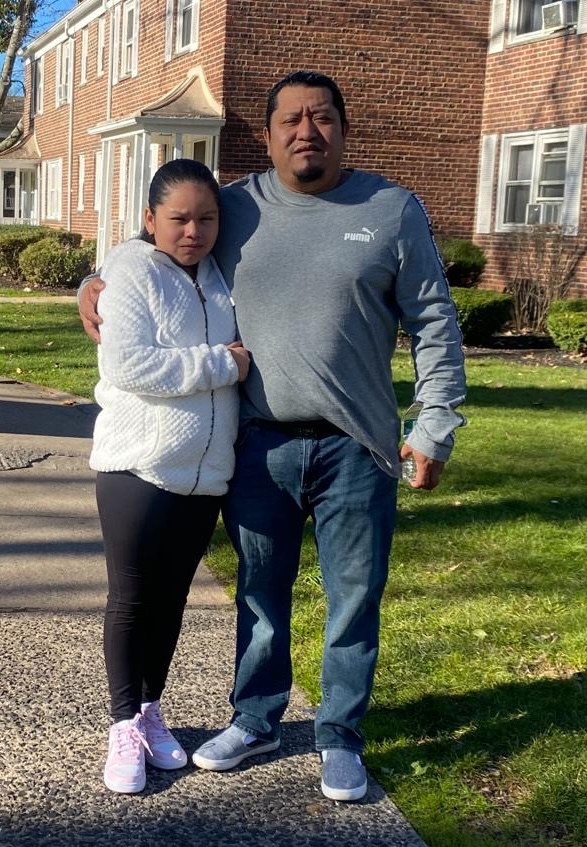
Half a year into fatherhood, Edwin Jeovanny López Cornejo found the sight of his daughter, Ashley, revitalizing after a long day at work.
It was 2014. López Cornejo, an immigrant from El Salvador, had been working at a packaging company in South Plainfield, N.J., for about seven years. He came to the United States in 2007, filed an asylum claim, and received employee authorization from the federal government after being deported the year prior, according to court documents.
As he would often do in the years that followed, he took to Facebook to express his gratitude to God and his love for his daughter.
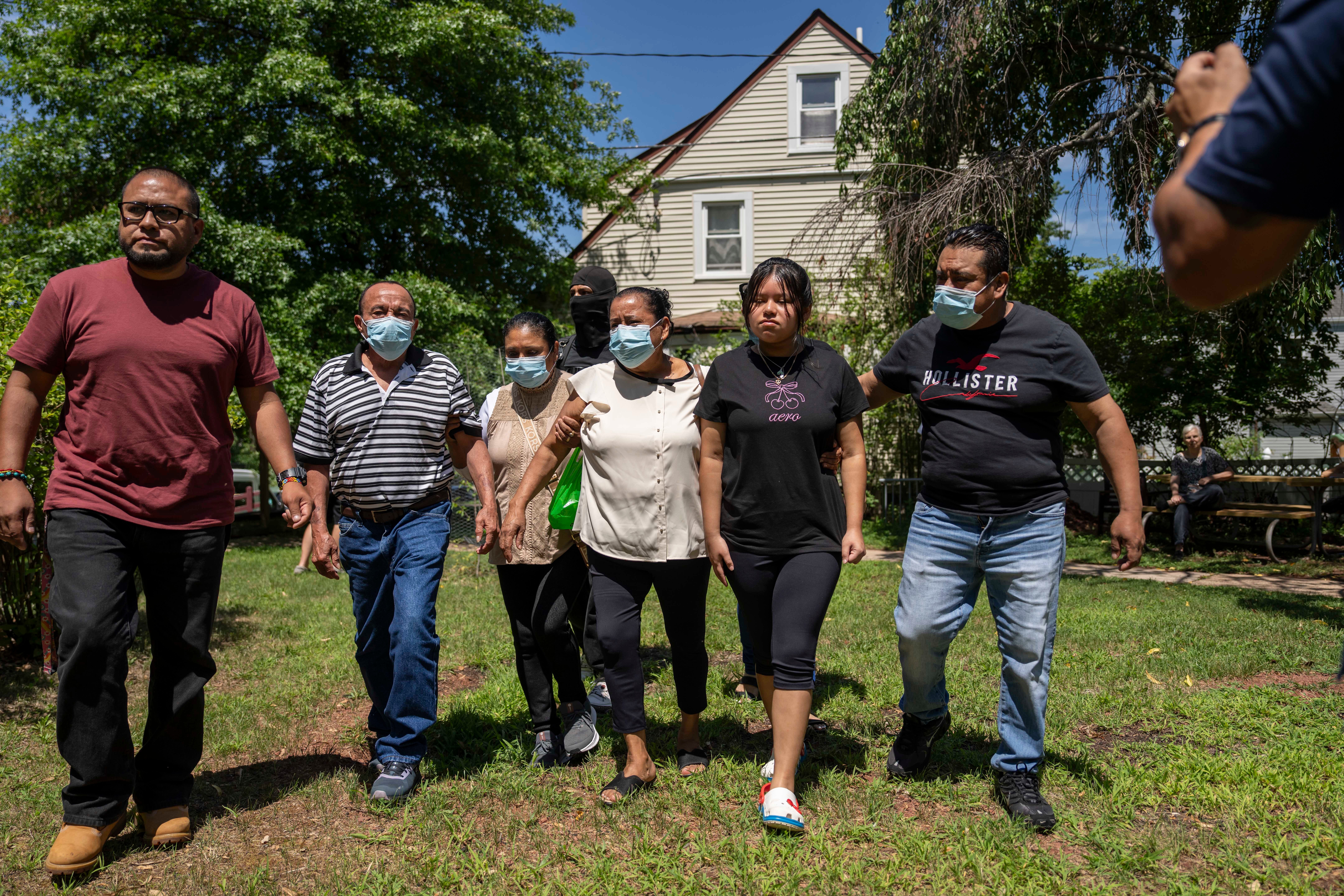
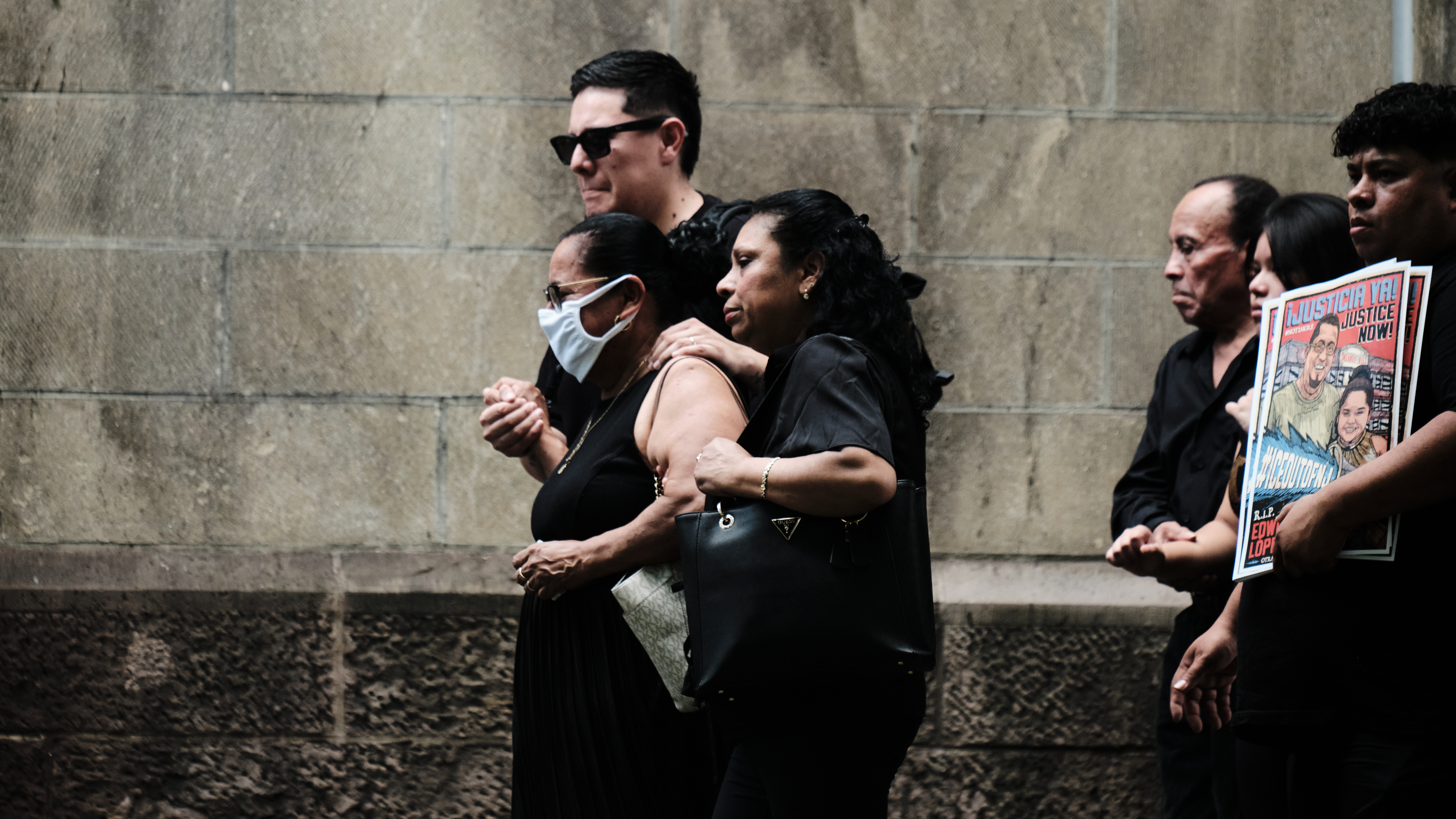
This past Friday, Ashley Lopéz, now 12, wore all black. She stood between her paternalgrandparents as they held each other and wept at her father’s wake at Crescent Avenue Presbyterian Church in Plainfield.
López Cornejo had died in ICE custody just under a week earlier at the age of 39 after experiencing what the federal agency called a medical emergency at Delaney Hall, an ICE detention center in Newark run by the private company GEO Group.
Ashley has barely been speaking. Or eating. And she does not want to be around people, María Cornejo, her paternal grandmother, told The Inquirer in an interview on Monday, speaking in Spanish.
Letters of support submitted to the court after his June arrest, remarks from his family, and more than a decade of public Facebook posts written in Spanish paint the picture of a father who deeply loved his daughter.
Twelve years ago, Lopéz Cornejo and his then-girlfriend were expecting twins, but the boy died in the fifth month of pregnancy, Cornejo said.
“She is the only child he had. You should have seen him when she was born. That man was the most joyful man with his daughter in his arms,” Cornejo said. “It was his first time being a father, and he wouldn’t even sleep so he could watch her sleep and make sure she was OK.”
López Cornejo was unable to see his daughter at Delaney Hall. He had been there for about six weeks.
Delaney Hall has been the site of high-profile political clashes representing the national conflict between Trump’s supporters and immigrant rights advocates. The detention center serves a critical role for the president’s mass deportation agenda, and complaints of poor and unsanitary conditions have sparked continuous protests, uproar from Democratic lawmakers, and a reported hunger strike inside, which the Trump administration denied happened.
In December, a 41-year-old Haitian national named Jean Wilson Brutus died one day after entering Delaney Hall, and U.S. Rep. Rob Menendez (D., N.J.) recently said another person died at the hospital after a potential seizure at the facility earlier this summer. Nationally,at least 23 fatalities in ICE custody have been reported this year as the rate has increased during Trump’s second term.
López Cornejo’s asylum claim was still pending — 19 years after he filed it — when ICE agents arrested him, according to a habeas corpus petition challenging his detention.
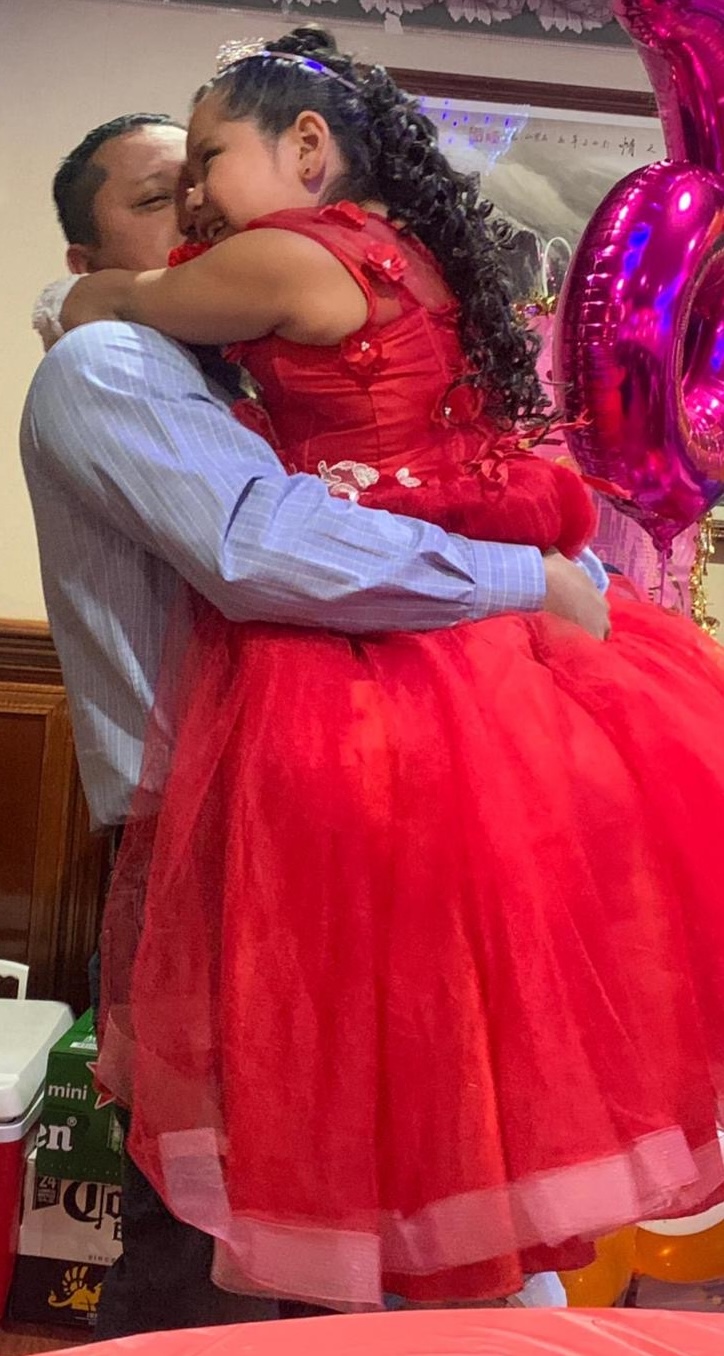
An undated photo of Edwin López Cornejo and his daughter, Ashley, in a pool.Courtesy family of Edwin López Cornejo
Around 9 a.m. June 18, López Cornejo headed out to pick up his car from a towing company, where it had been taken for being parked for too long, his mother recounted Monday. She urged him to take a taxi and avoid walking, given a heightened fear of running into ICE in the community.
She said goodbye, unaware it would be the last time she would hug her son.
Lopéz Cornejo ended up walking because roads were closed.
Masked agentsstopped him and asked for his ID. When he produced his Salvadorian identification, they put him in an unmarked vehicle with two other people who had already been detained, his lawyer Ingrid Echeverria recounted in the habeas corpus petition.
Cornejo said her son called her from inside Delaney Hall that evening. The first question he asked was about Ashley.
According to his family and court documents, he took medicine for diabetes, epilepsy, and high blood pressure. Interruption of his strict medication schedule carries the risk of breakthrough seizures and associated harm, according to the petition. That July 24 court document did not accuse ICE of denying him his medication but expressed concern over potential medical risks if he was transferred to another facility, as the agency at one point planned.
On. Aug. 1, Cornejo got a call from University Hospital in Newark. The person on the phone told her that her son’s heart was not beating by the timehe arrived, after he collapsed at Delaney Hall. ICE has not released an official cause of death, but U.S. Sen. Andy Kim (D., N.J.) said it was a heart attack and cardiac arrest. Days after his death, Kim and fellow New Jersey Democratic U.S. Sen. Cory Booker put forward legislation that would require the shuttering of Delaney Hall.
New Jersey Attorney General Jennifer Davenport said last week that her office was launching a civil rights investigation into Delaney Hall, citing reports of “alarming conditions” and recent deaths.
Sen. Andy Kim (D., N.J.) stands between federal agents and demonstrators in an attempt to prevent a clash outside the Delaney Hall migrant detention center in Newark, N.J., on May 25.DAKOTA SANTIAGO
In response to López Cornejo’s death, ICE put out a statement saying that everyone in ICE detention gets proper, around-the-clock medical care, and that López Cornejo “was seen by medical professionals.”
His family doesn’t buy it. They blame ICE for detaining him and accuse the agency of failing to provide him proper medical care. Danilo López, his brother, said at a news conference that his brother told him over the phone that he had to fill out a form to just get Tylenol at Delaney Hall and it could be days before he received it, a claim ICE did not directly address when asked.
“He lived a normal life and worked normally while taking his medicine and with a proper diet, working more than eight hours a day, and had no problem,” Cornejo said in the interview.
Just days after her father died, Ashley López said at a news conference: “On the same day, we were both dead. The only difference was his heart stopped beating. I am going to grow up without a father.”
Family members of Edwin López Cornejo including (from left) his mother Maria Cornejo, daughter, Ashley, and his former wife, attend a news conference on Tuesday, Aug. 4, 2026, in Highland Park, N.J. Yuki Iwamura
‘The true love of my life’
On his daughter’s first birthday, López Cornejo wrote on Facebook that Ashley gave him “one more reason to live.”
“I want to tell you that when I learned you were going to be born it felt like it would be forever before I had you in my arms,” he wrote. “I will never forget the first day that I changed you and gave you a feeding bottle. Wow my girl, those moments I will never forget and now you are turning one. Wow how the time passes.”
An undated photo of Edwin López Cornejo with his daughter, Ashley.Courtesy family of Edwin López Cornejo
On her third birthday, he called her “the true love of my life,” and said she motivated him to be strong and keep moving forward.
“I would be willing to give my life for yours,” he wrote.
On his own birthday, he often thanked God for another year of life. And as a birthday wish, he asked for another year to see his daughter grow.
Ashley, a U.S. citizen, was born in New Jersey, according to the petition, which includes her birth certificate and public school records to support his lawyer’s argument that López Cornejo has community ties. The documents show she receiveda certificate of achievement for math at 9 years old “for demonstrating fluency of division” in less than six seconds. And shortly after she turned 10, she was crowned “Art Leader of the Week.”
Ashley lived with her dad half the week, but he picked her up from school every day, and she would run into his arms to greet him, Cornejo said. He took pride in her success in school.
“He would tell her, ‘I want you to be a doctor so you can cure me one day,’” she said.
Family members of Edwin López Cornejo arrive at an Aug. 4 news conference in Highland Park, N.J.AP Photo/Yuki Iwamura
A hard worker
López Cornejostarted working in construction just three weeks before his detention after the warehouse he worked at changed locations, his mother said.
Court documents show he worked at UpperClass Warehouse in South Plainfield from March 2021 until this May, and he previously worked multiple restaurant jobs in New Jersey. He paid taxes to the state of New Jersey and the federal government.
Jesse Fischbein, vice president of finance at Just Packaging, where López Cornejo worked from 2007 to 2015, said in a letter of support attached to the petition filed with the court last month that he “truly was a company-first employee, who didn’t believe that the workday was simply 7 AM to 3:30 PM.”
“He was punctual, always pitching in to help other employees when his tasks were completed, and always asked management if there was more to be done,” Fischbein wrote.
People detained inside Delaney Hall stand at windows in Newark, N.J., as demonstrators gather outside on May 28, 2026. The protests were fueled by reports of detainees staging a hunger strike over the conditions of their confinement.TODD HEISLER
ButFischbein said there was one thing López Cornejo would always be better at than his job: being a father.
“From what I know about him outside of work — he is a father, and that is the job he excels at more than any function he performs for my company,” Fischbein said.
A coworker-turned-friend, Juan Zavala, said in another letter of support that López Cornejo had “earned the respect of everyone around him” through kindness, compassion, respect, and honesty.
“He is a loving, responsible, and caring parent who is deeply involved with his daughter’s life and always puts her well-being first. It is very clear that his family means everything to him,” Zavala wrote.
One of the ways López Cornejo expressed himself to his loved ones was by sharing links to music on Facebook. He dedicated love songs to his daughter and others, he shared reflections during the pandemic with a Christian worship song, and he said the music video for “Pose”by Daddy Yankee — the singer known for the hit song “Gasolina” — inspired him to learn to dance reggaeton.
López Cornejo and Ashley dreamed about dancing together at her quinceañera, a celebration for her 15th birthday.
“He just wanted to dance the waltz with his little girl, and they so looked forward to that party,” Cornejo said, crying. “Now my little girl won’t have her dad.”
Family members walk to the church side entrance during the wake of Edwin López Cornejo, after his death in ICE custody in New Jersey on Aug. 7 in Plainfield N.J.Max Blease / For The Inquirer
‘Profoundly difficult consequences’
In the July 24 petition, his lawyer called on ICE to explain why he was detained, and consider either his immediate release or a hearing in front of an immigration judge.
His lawyer said that he was served with documents in English he could not read, and that hedid nothave a criminal record and always showed up for his court dates.
His friends and family described him in similar terms in letters of support submitted to the court last month.
Kelvin E. Urquilla Flores, who met López Corneja at Just Packaging nearly 20 years ago, described him as “a peace-loving, law-abiding individual” who is “an asset to this country and to his community.”
Edgar Fabián Guaman, who said he had known López Cornejo for almost two decades, said that his family friend did not present a risk to the community — but instead improves the well-being of those around him.
“I respectfully express that a possible separation of Mr. López Cornejo from his family unit would have profoundly difficult consequences for his daughter and his mother, who depend on his presence, support, and emotional stability,” Guaman wrote.
An undated photo of Edwin López Cornejo and his daughter, Ashley.Courtesy family of Edwin López Cornejo
Through his Facebook posts, López Cornejo shared a deep appreciation for his parents. In May 2016, he thanked God for giving him “an exemplary mother,”whom he also described as a “second mother” to his own daughter.
“Maybe I’m not the perfect son, but I try to behave at your level, mother,”he wrote. “I know you gave me the greatest gift, life, and I will never be able to repay you, mother.”
The last post that shows up on López Cornejo’s Facebook page was a message directed to God and his daughter on her 12th birthday last November.
Staff writer Abraham Gutman contributed to this article.