Category: South Jersey

  • George Norcross has bought the old Trump Plaza site on Atlantic City Boardwalk

    George Norcross has bought the old Trump Plaza site on Atlantic City Boardwalk

    The most central piece of property on Atlantic City’s Boardwalk is now in the hands of South Jersey power broker George E. Norcross III.

    Atlantic City Mayor Marty Small Sr. confirmed that the site of the former Trump Plaza Hotel and Casino, whose main 39-story tower was imploded in 2021, has been sold by billionaire Carl Icahn to Norcross, his family, and undisclosed partners. (Norcross recently filed a defamation lawsuit against The Inquirer.)

    The Plaza was one of three Atlantic City casinos once owned and operated by Trump before he became president. Opened in 1984, Trump Plaza shut down in 2014.

    Atlantic County property records show three sales recorded on Sept. 3 associated with the site at 2201 Boardwalk: one for $5.04 million, another for $1.26 million, and the third for $349,541.

    Remaining on the site are the former casino’s East Tower and a parking garage. A Rainforest Cafe is still operational.

    “I’m excited to welcome George Norcross, his family and his business partners to the great city of Atlantic City,” Small said in a phone call with The Inquirer. “This is the definition of investor confidence.”

    Icahn’s subsidiary, IEP AC Plaza LLC, bought the casino in December 2018 for $3 million.

    Vera Coking’s Atlantic City boardinghouse sits in the shadow of the Trump Plaza, as it appeared in 2018.

    Norcross previously purchased the iconic Formica bakery in Atlantic City, and has long shown an interest in the resort city.

    The mayor hinted at the blockbuster sale earlier this week on the national radio show The Breakfast Club, saying “one of the most powerful people in the state of New Jersey” was the buyer.

    The former Trump Plaza Hotel and Casino is imploded in Atlantic City on Feb. 17, 2021.TIM TAI / Staff Photographer

    Small had long sought an investor for the site, which is next door to the iconic Boardwalk Hall, former home of the Miss America pageant.

    At the time of the tower’s implosion, he said clearing the land would be a game changer for the city. Chunks had been falling off the decrepit empty tower. But the property sat idle for 12 years.

    Small did not disclose what plans Norcross might have for the property.

    Daniel Fee, a spokesperson for Norcross, did not immediately reply to requests for comment.

    He told the Press of Atlantic City that details about plans for the site would be announced at a future date.

    Trump Plaza had a storied three-decade run that included marquee boxing matches and concerts, and a famous feud with Atlantic City resident Vera Coking, who refused to sell her house to make way for a porte cochere.

    It ended its run in a state of disrepair and as the city’s poorest performing casino.

    The two other casinos once owned by Trump now operate under new names and owners: The Trump Marina is now the Golden Nugget Hotel, Casino and Marina, and the Trump Taj Mahal is now the Hard Rock.

    Small said the oceanfront site, which he called “one of Atlantic City’s premier development sites,” would not operate as a casino.

    “When I announced the demolition of Trump Plaza, I spoke about the tremendous potential of this property,” he said in a statement. “While no additional casinos will be permitted in Atlantic City, we welcome the Norcross team’s vision for the property and look forward to learning more about their plans when they are ready to share them.”

    Staff writer Ryan W. Briggs contributed to this article.

  • Jeff Van Drew, House GOP leaders subpoena Mikie Sherrill’s administration over N.J. noncitizen voter records

    Jeff Van Drew, House GOP leaders subpoena Mikie Sherrill’s administration over N.J. noncitizen voter records

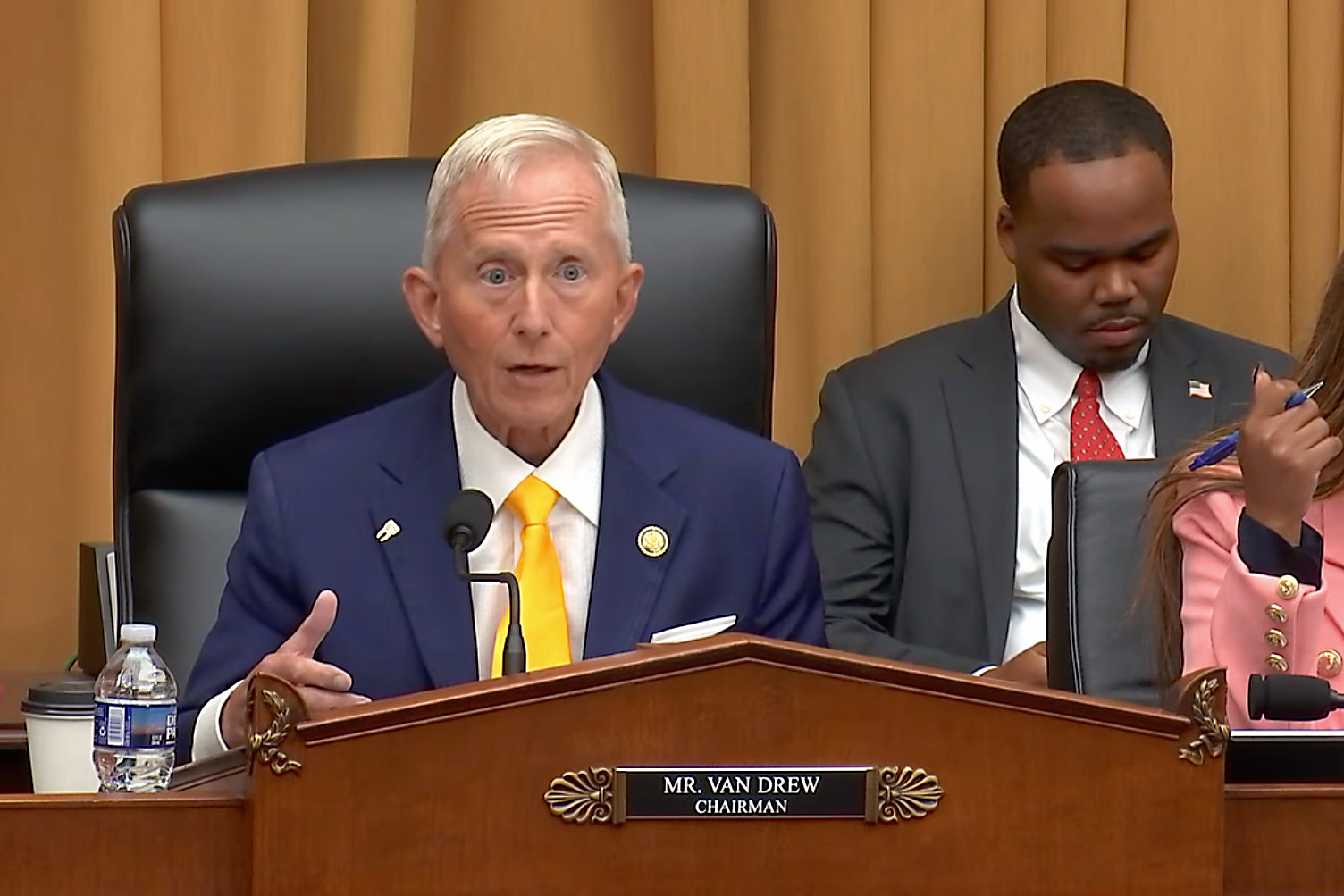
    South Jersey Republican Rep. Jeff Van Drew Wednesday announced a congressional subpoena of New Jersey Gov. Mikie Sherrill’s administration, demanding it produce records he requested three months ago that may explain how 6,600 noncitizens were added to the voter rolls in violation of federal law.

    Sherrill, a first-term Democrat, revealed in July that approximately 6,600 people who identified themselves as noncitizens were registered to vote in New Jersey between June 2023 and June 2024 through the Motor Vehicle Commission, though fewer than 400 actually cast ballots.

    Van Drew, the Cape May Republican who chairs House Judiciary Committee’s subcommittee on Oversight, first requested the documents Aug. 7 as part of the subcommittee’s investigation. To date, the state has produced just 12 documents that shed no light on how this happened, Van Drew and other Republican congressional leaders wrote in a letter accompanying the subpoena from the Judiciary Committee and the House Administration Committee.

    Her administration’s response has been “inadequate,” and “an impediment” to their investigation, the letter said.

    “None of the documents offered any substantive insight into how the noncitizen voter registration issue was discovered or why New Jersey did not conduct any remediation efforts until 2026,” said the letter Van Drew co-authored.

    “These ineligible voter registrations raise concerns about the application of federal law in New Jersey as it pertains to accurate voter registration, as well as the effect that New Jersey’s failure to identify and remove noncitizens from its voter rolls has on the civil liberties of American voters and their ability to elect representatives,” according to the letter.

    Sherrill has blamed former Gov. Phil Murphy’s team, as well as software vendor IDEMIA, for the registration of people who had answered they weren’t citizens and therefore ineligible to vote. Both have denied responsibility.

    Murphy spokesperson Mahen Gunaratna on Wednesday pointed to his one statement on the matter from July in which he said Murphy “had no knowledge” of the issue and “applauds” Sherrill for looking into it.

    In addition to removing thousands of people from the rolls, Sherrill sent about 2,000 registrants to county election officials for verification to make sure they didn’t accidentally disenfranchise citizens.

    Sherrill also referred the matter the law firm of former Republican Attorney General Jeffrey S. Chiesa for an independent investigation, which is ongoing, Sherrill noted Wednesday.

    “I promised that when we discover a problem, we communicate the facts and fix it — and I meant it,” Sherrill’s statement said. “From the moment we discovered the Motor Vehicle Commission registration issue from 2023, we took action immediately, went above and beyond in making agencywide reforms, and have been transparent every step of the way. We did this so that New Jerseyans can feel confident that we are running the strongest and fairest election in our country.”

    Sherrill dismissed the subpoena as “political theater,” and derided Van Drew and House Judiciary Chair Jim Jordan (R., Ohio) as “enablers” of President Donald Trump, whose administration has pushed for more power over state-run elections.

    Van Drew defended IDEMIA, the vendor Sherrill has blamed, at the hearing on the matter last month but no one from New Jersey’s government or the voter registration system participated. Van Drew repeatedly accused the state of knowing about the noncitizen registration issue since 2024 and called it a “cover-up.”

    Van Drew spokesperson Paxton Antonucci told The Inquirer after the hearing that documents showed the state contacted IDEMIA in June 2024 after noticing registered voters whose files were missing their age and party affiliation. Those questions were only asked of people who identified themselves as citizens wanting to vote, but the system still allowed people who said they aren’t citizens to register.

    “This information was missing due to the fact that the software, for some reason, was failing to flag that this group of individuals had selected the ‘No’ option when asked if they were a U.S. citizen but were still allowed to be registered to vote,” Antonucci said last month.

  • N.J. schools are wrestling with how teachers and students should use AI in the classroom

    N.J. schools are wrestling with how teachers and students should use AI in the classroom

    New Jersey public schools are weighing policies on how generative AI is making its way into classrooms and whether students and teachers should be allowed to use the technology.

    Some require schools to get parental consent at the beginning of the school year for students to use AI for assignments, while others like Cherry Hill considered but backed away from a proposal that would have let parents opt out for their children.

    It comes amid a growing debate about the use of digital devices in the classroom and concerns that evolving artificial intelligence compromises learning.

    Schools across the country are tackling policies to address the rapidly changing technology. Rather than an outright ban, many districts are deciding how and when AI may be used, at what age, and what tools should be permitted.

    “Everybody is wrestling with this challenge,” said Sarah Schneider Kavanagh, an associate professor in the Graduate School of Education at the University of Pennsylvania. “This is an enormous paradigm shift for education.”

    Haddonfield teaches AI to all students — but bans use for elementary schoolers

    In Camden County, Haddonfield adopted a sweeping AI policy in August that established three tiers of AI use based on grade level. It bans AI in elementary schools, while allowing supervised access for middle school and high school students.

    This is the first AI policy for Haddonfield, which enrolls about 2,700 students, said Gino Priolo, an assistant superintendent. Initially, the district only had a provision in its academic integrity guidelines that required students to cite AI as a source when using it.

    Priolo said surveys found that students and teachers were already using AI on at least nine platforms. Policymakers spent months developing guidelines that focused on education, safeguards, and limiting students to using approved platforms, he said.

    “We needed a policy that protected privacy and provided guidance about safe and appropriate use,” Priolo said in an interview. “We’d be putting our heads in the sand if we simply tried to avoid AI.”

    The policy bans younger students from using AI to ensure that they learn foundational and critical learning skills, he said. All students will get AI literacy education, beginning in first grade, he said.

    “We want students to understand what AI is even before they are permitted to use it,” Priolo said.

    Beginning in sixth grade, students can use a Google AI platform, where teachers are able to closely monitor their interactions in real time with Gemini Notebook, the district’s only approved generative AI platform.

    Considered a closed system, the platform generates responses based on documents loaded by the user, Priolo said. Students cannot access the internet, and chatbots like ChatGPT are blocked by district software, he said.

    For example, a student could upload handwritten chemistry class notes into AI to develop flash cards as a test study aide, Priolo said.

    Haddonfield has also adopted generative AI policies for teachers. High school teachers must get teacher permission prior to using AI for an assignment.

    Meanwhile, some of the country’s largest districts are also enacting AI bans.

    Last month, New York City, the nation’s largest public school system, placed strict limits on digital devices and AI tools for younger students. The policy bars individual screens until third grade and prohibits teachers from using AI to grade assignments.

    The Los Angeles public school system imposed a moratorium restricting most AI use at all grade levels for this school year. The district said it would determine how the technology would be incorporated in the future.

    “I see it as a positive step, though not necessarily the best solution,” said Subodha Kumar, a professor of statistics, operations, and data science at Temple University’s Fox School of Business. “Bans may not stop students from using it and we do not have conclusive evidence that they produce better outcomes. It may take years to determine the best approach.”

    Across South Jersey, some other districts are also taking unique approaches to teaching kids about AI. Deptford, for example, has added an AI course for high school students.

    Cherry Hill considered allowing families to opt out of AI use

    Cherry Hill considered a provision that would have allowed parents to opt their children out of using AI in school. There was some backlash that it would create inequity for so-called “analog” students prohibited from the technology.

    District officials believe the opt-out option was not needed because Cherry Hill selected School AI as its generative AI program, a closed system that allows teachers to monitor students’ interactions, said Superintendent Kwame Morton. The board approved the revised policy on Oct. 13.

    “It has been a deliberate process. We’ve tried to roll it out slowly and responsibly,” Morton said. “What we want more than anything is for our students to be safe and understand how to responsibly use the tools.”

    The policy has guidelines for when AI is appropriate by grade level, said Allison Staffin, director of curriculum and instruction. Using a scale of 0 to 4, teachers must inform students in writing when generative AI is acceptable for an assignment. It ranges from 0 where no AI use is allowed, to 4, where AI can be used to draft content.

    Staffin said there is no AI allowed for pre-K and kindergarten. By second grade, it may be used for an entire class, but closely monitored, she said.

    Fourth and fifth grade is when most students will begin more fully using AI with specific instructions from a teacher, but not to generate original work, Staffin said.

    “The teacher determines which tool they use and what prompts or answers they can generate,” Staffin said.

    Cherry Hill parent Carolina Bevad said she was disappointed in the policy and called it “half-baked.” The mother of two district students believes elementary schoolers should be excluded from using AI.

    “It’s a slap in the face to all students and parents,” Bevad said. She wants more guardrails to address privacy concerns.

    Kavanaugh, from Penn, said parents have legitimate concerns, and researchers have unanswered questions about the impact of generative AI on learning. Opting out, however, can become complicated for students and teachers.

    “The technology is changing so quickly that none of us really knows what we’re opting into or opting out of,” Kavanaugh said. “Education has to decide what are we unwilling to give up about what human beings can do on their own.”

    Glassboro doesn’t restrict use by age

    Glassboro Superintendent Alfred Lewis is a big proponent of students and teachers using AI — ethically. The districted adopted MagicSchool as its generative AI platform, he said.

    Lewis said the district’s policy doesn’t restrict AI use by grade level, but it has mostly been used in middle and high school.

    “We’re not even seeking to use it at the elementary level,” Lewis said. “Quite frankly, there’s just so much that needs to be taught and taught directly by teachers that it’s not even a natural fit for us.”

    In some classes, students are using AI to score their assignments before submitting to the teacher, Lewis said. Teachers are also using AI to develop instructional materials and look for patterns to improve learning, he said.

    Lewis believes AI can be used to enhance learning, but cannot replace a quality teacher in the classroom.

    Assemblywoman Heather Simmons (D., Gloucester) recently introduced “The Educators Before AI Act,” which would prohibit the state’s nearly 600 public schools from replacing teachers with AI. Lewis supports the bill.

    The bill, if adopted, would require a human presence in the classroom, Simmons said. There has been no indication thus far that any teacher has lost a job due to the technology, but she said safeguards are needed.

    “There’s an art to teaching and a science to teaching,” Lewis said. “AI might be able to replace some of the science, but it will never replace the art.”


  • Zack Mullock says Van Drew made harmful cuts to Medicaid and Medicare. The South Jersey Republican begs to differ.

    Zack Mullock says Van Drew made harmful cuts to Medicaid and Medicare. The South Jersey Republican begs to differ.

    Susan Coll-Guedes was baffled when she saw a photo of U.S. Rep. Jeff Van Drew, a Cape May County Republican, smiling with scissors at a ribbon-cutting ceremony for a group home provider agency.

    “He cut Medicaid, which is the funding for group homes for people with disabilities,” said Coll-Guedes, whose adult son has Down syndrome and is on Medicaid.

    The Galloway resident is a self-proclaimed “Mom for Mullock,” who supports Democrat Zack Mullock, the Cape May mayor who is challenging Van Drew in the Nov. 3 midterm election. She wasn’t interested in politics until President Donald Trump’s One Big Beautiful Bill Act made major changes to Medicaid eligibility and decreased federal funding for the program.

    While the cuts don’t directly target her son, she’s concerned the changes will have a domino effect on the program as a whole, she said in interviews this month.

    Back in August, behind the red barn of Independent Spirits Distillery, a small business along farmland in Gloucester County’s Woolwich, Mullock told an audience of about 75 people that he gets “daily reminders” from South Jersey residents who are scared about the law’s cuts to social programs like Medicaid, which provides health coverage for low-income people and people with disabilities, including tens of thousands of people in the district.

    Cape May Mayor Zack Mullock speaks to an audience at Independent Spirits Distillery in Woolwich on Aug. 11.Aliya Schneider / Staff

    Mullock is among the many Democrats across the country attacking Republican incumbents for slashing social safety net funding to help pay for Trump’s policy priorities — including tax breaks for the wealthy — while still adding $3.4 trillion to the national deficit.

    “I cannot fathom cutting for the very poorest to give to the very wealthiest,” Mullock said to the receptive audience brought together by the Woolwich Democrats. “It’s absolutely insane, and that’s exactly what Jeff Van Drew did when he voted for the Big Beautiful Bill. It was passed by one vote. One vote. And that tells you just how important these elections are.”

    “If I was in his shoes, that bill would not have passed,” he added.

    Local Democrats see Mullock as their best shot yet at ousting Van Drew, but the race flew under the national radar until earlier this month when the Democratic Congressional Campaign Committee added it to its list of “districts in play,” which Van Drew mocks as a “wish list.”

    Van Drew was first elected as a Democrat in 2018 before changing parties and vowing his loyalty to Trump one year later. He’s been reelected three times since then with his closest challenger still falling nearly 6 points behind him in 2020.

    On Tuesday, the University of Virginia’s Center for Politics’ Sabato’s Crystal Ball shifted the district’s rating from “safe Republican” to “likely Republican,” meaning Van Drew remains favored to win but less comfortably than before.

    U.S. Rep. Jeff Van Drew with President Donald Trump at a campaign rally in Wildwood in 2021.Heather Khalifa / MCT

    Mullock is hoping dissatisfaction with the impacts of Trump’s policies will help him pull off an upset in the district, which stretches from Gloucester County to the Jersey Shore.

    How Trump’s law will impact Medicaid

    Prior to his vote for Trump’s law last year, Van Drew was adamant that he would not vote for legislation that impacts Medicaid or Medicare unless the cuts are “specifically aimed at reducing waste, fraud, or abuse.”

    That’s exactly how the Trump administration has framed the new changes, along with saying that the cuts will help preserve the programs in the long term.

    “I was on the forefront of saying that we shouldn’t hurt seniors, we shouldn’t hurt children, we shouldn’t hurt the disabled, that we shouldn’t be harming those folks,” Van Drew said at a recent candidate forum held by the Gloucester County Chamber of Commerce after Mullock criticized his vote at the same event.

    Cuts to SNAP have already taken effect but Medicaid cuts won’t be fully implemented until after the midterms in January 2027. Democrats are pledging to reverse them if they take control of Congress.

    Van Drew defended the changes, particularly a new requirement for Medicaid recipients ages 19 to 64 to file paperwork every six months to show they work, volunteer, or take academic classes 20 hours a week to qualify for the program, unless they meet exemptions carved out for people with disabilities.

    U.S. Rep. Jeff Van Drew (right) poses for a photo at a Gloucester County Chamber of Commerce candidate forum with Barbara McCormick and Martino Cartier, Republican candidates for Gloucester County Commission, on Oct. 7.Aliya Schneider / Staff

    “If you are able-bodied and you don’t have children, and aren’t planning on it, and aren’t a senior citizen, and don’t want to work … you could pet dogs at the Humane Society, help senior citizens, or you could go and learn a trade, or you could even go back to college. You still would get your Medicaid,” Van Drew said at the forum.

    “But if you’re healthy and you are young and you don’t want to work at all and you’re not willing to do any of those things … you’re not going to get it,” he said to claps from his supporters.

    The law is slated to cut Medicaid spending over 10 years by approximately $911 billion, including approximately $29 billion in New Jersey, according to a KFF analysis using data from the nonpartisan Congressional Budget Office.

    The changes to Medicaid are expected to lead to 7.5 million people becoming uninsured by 2034, including approximately 240,000 people in New Jersey.

    Opponents of the requirement argue that since most adults receiving Medicaid already work, the extra paperwork will cause people who qualify to lose coverage anyway.

    The 2nd Congressional District includes all of Atlantic, Cape May, Cumberland, and Salem Counties, and parts of Ocean and Gloucester Counties. These counties all together have 365,666 people enrolled in Medicaid as of August.

    Mullock made the case at the forum that the cuts will have a disproportionate impact on the district because Cumberland, Atlantic, and Salem Counties are among those with the lowest incomes and highest poverty rates in the state.

    “When you are driving all around and meeting with people and seeing the real poverty that exists here in CD-2, if your heart doesn’t break, you’re not a human,” Mullock said in an interview.

    Another provision will also boot immigrants off the program who have legal status but aren’t permanent residents, such as refugees of war, asylum seekers fleeing persecution, and victims of sex trafficking and domestic violence. New Jersey’s Department of Human Services estimated that between 15,000 and 25,000 immigrants with legal status will lose coverage.

    Van Drew introduced a “No Medicaid for Illegals Act” last year and said the program should only benefit American citizens.

    Does the One Big Beautiful Bill touch Medicare?

    While the law takes primary aim at Medicaid, Mullock has spoken about the cuts in tandem with Medicare, the federal healthcare program for people ages 65 and older. His campaign website says he supports Medicare for All funded by “fairer corporate taxes and a fair tax on the top 5%.”

    And at the Gloucester County forum, Mullock claimed that the law cut $1.5 trillion in Medicare and Medicaid.

    To get to that figure, Mullock said he was combining the nearly $1 trillion in Medicaid with a $491 billion figure that the Congressional Budget Office said could hit Medicare from 2027—2034 if Congress doesn’t act. That figure comes from the Pay‑As‑You‑Go Act of 2010, which forces cuts to prevent federal deficit increases. But legislators can override that obligation, and that’s exactly what they did as part of the November 2025 law that reopened the government after a record-breaking 43-day shutdown.

    Meanwhile, Van Drew retorted during his own remarks that Medicare “never came up for a vote.”

    “There wasn’t even a vote on Medicare,” he added. “Not one dollar has been cut from Medicare.”

    While most of the law’s healthcare provisions affect Medicaid, the law does make some changes to Medicare.

    Changes to eligibility for groups of legally present immigrants will leave 100,000 more people without health insurance and decrease federal Medicare spending by $5.1 billion by 2034, according to Congressional Budget Office data.

    Another provision of the law blocks a policy enacted under former President Joe Biden that tried to make it easier for low-income Medicare recipients to access Medicaid financial assistance. The Congressional Budget Office projected this change will decrease dual enrollees by 800,000 people and decrease spending by $66 billion by 2034. While these people aren’t expected to stop getting Medicare, higher out of pocket costs would likely cause them to seek less care, the budget office predicted.

    The six counties the district touches had a total of 378,833 people enrolled in Medicare in 2025.

  • Bold but balanced Central Indian cuisine is the draw at this Voorhees strip mall star

    Bold but balanced Central Indian cuisine is the draw at this Voorhees strip mall star

    For seekers of hauntingly complex sauces, there is one dish — the famously fiery Saoji curry simmered with goat — that is worth the drive to the Voorhees strip mall where Nagpuri Saoji serves up a rare taste of Central Indian cuisine.

    But the sensation that lingered most in my imagination after my first visit to the restaurant was actually a memory of touch: the tactile pleasure of holding the pebbled surface of a warm sabudana fritter encrusted with tapioca pearls, then cracking the fryer-crisped baubles open to reveal steamy white centers of mashed potatoes laced with ginger, cilantro, and chilies. With a creamy pink chutney enriched with peanuts on the side, it was one of the most comforting starters I’ve nibbled this year.

    The Sabudana Wada at Nagpuri Saoji on Sept. 30 in Voorhees Township, N.J.Monica Herndon / Staff Photographer

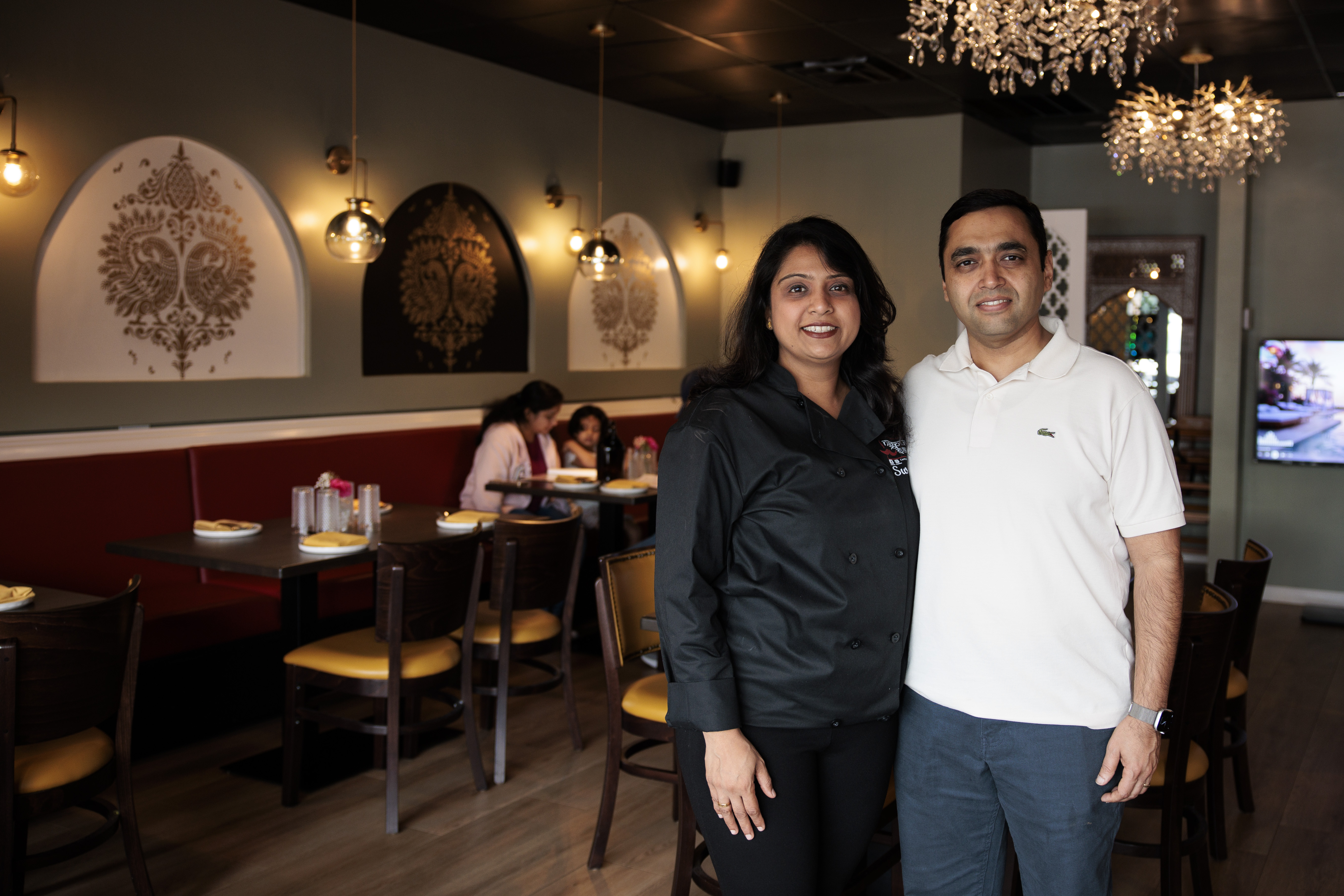
    For Swapna Sagdeo, the chef who co-owns this restaurant with husband Neeraj Sagdeo, the sabudanas offer a vivid portal to her childhood in Nagpur, India, where the fritters are a much-anticipated treat for children to snack on while adults fasted for religious holidays.

    “Everybody [where I come from] has a childhood memory associated with it,” she said. “That is what we want to do here, to bring out that nostalgia.”

    What distinguishes Sagdeo’s mission from so many other Indian restaurants in our area is her focus on the flavors of Central India. It’s a region that’s virtually unknown to many Americans who’ve long enjoyed the creamy curries and tandoor-roasted meats of Northern India and, especially over the last two decades, come to embrace the crispy dosas, coconut-kissed stews, and tamarind-tanged dishes of Southern India.

    “Indian food in the U.S. is often represented through cuisines associated with cities and regions that have already established strong identities internationally, like Mumbai, Delhi, Kolkata, and Hyderabad,” she said. “There’s so much culinary diversity beyond these places, and I think people from other regions want their food, culture, and identity to be recognized in their own right.”

    Owners Swapna and Neeraj Sagdeo at Nagpuri Saoji on Sept. 30 in Voorhees Township, N.J.Monica Herndon / Staff Photographer

    Nagpur, the 13th largest city in India, is part of the state of Maharashtra and sits smack in the middle of the country — “like Kansas City,” Sagdeo said. Its culinary traditions are distinct, characterized by gravies spiced with earthy dried chilies; rustic flatbreads such as bakhri, made from grains like millet; and gram flour from dried chickpeas, which gets mashed with onions and spices into the traditional farmer’s lunch of zunka, which Nagpuri Saoji also serves.

    Gram flour also factors into crispy pastry tubes called Nagpuri kothimbir vadi, which get stuffed with well-spiced fistfuls of chopped cilantro. It’s an appetizer so rarely seen locally that one of Nagpuri’s customers made a point of stopping by our table on her way out to enthusiastically insist I try it. I bit into a freshly crisped order — it was like a hearty spring roll packed entirely with herbs — and was thrilled I followed her advice.

    Nagpuri kothimbir vadi are crispy gram flour pastries stuffed with well-spiced fistfuls of tamarind-tanged cilantro at Nagpuri Saoji.Craig LaBan / Staff

    The namesake Saoji curry here is undoubtedly this restaurant’s primary draw. The Saoji style of cooking originated from the Halba Koshti community of weavers who migrated in the late 19th century from neighboring state Madhya Pradesh to work in the textile mills of Nagpur, where their fiery cooking, a local staple for millworkers, became widely popular.

    The Sagdeo family’s rendition is an exercise in intricacy and balance, a blend of 27 different toasted spices, including multiple kinds of cumin and cardamom, poppy seeds, mace, star anise, cinnamon, fennel, bay leaves, a lichen known as blackstone flower, and two varieties of incendiary Bhiwapuri dried chilies. They’re all simmered into a fragrantly earthy chocolate-brown brew that is so famous for its tongue-scorching spice that I’ll admit to a little disappointment when Nagpuri’s standard rendition did not instantly set my lips ablaze.

    The Saoji goat curry at Nagpuri Saoji.Monica Herndon / Staff Photographer
    Spices used in Saoji goat curry.Monica Herndon / Staff Photographer

    “The one that we do is the mildest level we can go to,” concedes Sagdeo. “I prefer a ‘level zero’ myself, but we can go five levels up to ‘Nagpuri taste’ and that is what people eat back home.”

    I’ll cautiously request one or two notches higher on my next visit. But what most impressed me was not so much its burn potential as how this curry made an effective canvas to amplify the natural flavors of whatever protein simmers inside it, like a prism. The chicken version of Saoji was noticeably lighter in body and flavor while the goat’s handle-like bones and tender meat infuse the sauce with a rustic, deeply magnetic savor.

    Chef Swapna Sagdeo cooks Saoji goat curry at Nagpuri Saoji.Monica Herndon / Staff Photographer

    The Sagdeos, who moved to South Jersey in 2011 to work in IT, initially launched their venture with weekend specials for subscribers out of a commissary kitchen in Atco in 2016 before landing in their current Voorhees restaurant space in late 2020. They opened a larger sibling restaurant by the same name with a bar in bustling Iselin, in North Jersey, in 2023. After closing their Voorhees location for yearlong renovations and an expansion, they reopened this BYOB earlier this year with 80 seats.

    The restaurant was fairly quiet during most of my visits, except during a special-event weekend buffet when both sides of the dining room were bursting with families. Regular Friday night karaoke sessions, when the crowd favors boisterous Bollywood tunes on the open mic, are also lively.

    For maximum audience appeal, their menu also includes solid renditions of familiar dishes from other parts of India, including samosas (albeit spiced to their regional style with whole coriander seeds), chili-garlic chicken momo dumplings, creamy dal makhani, and tender lamb chops spiced with vivid red kashmiri chilies that arrive at the table in full sizzle on a cast-iron skillet.

    The lamb chops (center) and other assorted dishes at Nagpuri Saoji.Monica Herndon / Staff Photographer
    Krishna (center) and Vijal (right) Tailor, from West Berlin, work on a reel for their @Vicky_And_Krishna account at Nagpuri Saoji on Wednesday, Sept. 30, 2026 in Voorhees Township, NJ.Monica Herndon / Staff Photographer

    You can skip the chicken tandoori quesadillas, a fusion dish created for the restaurant’s younger customers that isn’t worth it (unless you order it pressed between Indian chapati rather than the default flour tortillas). There are so many other more interesting dishes to consider instead, including a creamy methi curry flavored with fenugreek and filled with meaty, tender cashews.

    Sagdeo’s family also has roots in the Southern coastal state of Goa, and I enjoyed several dishes typical of that region, including a pair of silver pomfret fish imported from India that were pan-fried whole in a zesty semolina crust. A vibrant green sauce called cafreal made from cilantro, mint, and chilies was fantastic with cubes of paneer cheese.

    Misal pav is a brothy Maharashtrian curry at Nagpuri Saoji steeped with three kinds of bean sprouts that comes with side dishes of crunchy farsan snacks, chopped red onions, filament thin strands of a snappy chickpea pastry called shev, and pillowy soft pav dinner rolls on the side for dipping.Craig LaBan / Staff
    A creamy methi curry flavored fenugreeks is brimming with tender whole cashews at Saoji Nagpuri in Voorhees.Craig LaBan / Staff

    There were also several other Central Indian curries we enjoyed, including a deep red chili-based kolhapuri that we savored with vegetables. A creamy Malwani coconut curry from the Konkan coast of Maharashtra is tanged with the sour kokum fruit and is perfect with either chicken or fish. Patodi rassa, a Maharashtrian fritter made with chickpea flour, offered a satisfying vegetarian alternative to bask in that rich Saoji curry.

    Misal pav was another Maharashtrian specialty I couldn’t get enough of, a brothy, well-spiced bowl of tomatoey curry steeped with bay leaves, coriander, and three kinds of sprouted beans. Once you mix in the side dishes — crunchy farsan snacks, chopped red onions, and filament-thin strands of snappy chickpea pastry called sev — the broth thickened enough that it worked like a dip for the pillowy soft pav dinner rolls on the side.

    With such boldly flavored dishes, sweets are an essential finale to the meal, and Nagpuri Saoji delivers them with the dramatic fanfare of dry-ice smoke, whether it’s a classic gulab jamun dusted with crushed pistachios, housemade mango kulfi ice cream, or, my favorite, cardamom-flavored shrikhand (hung yogurt) turned golden with saffron, which can also be served with puffed poori bhaji flatbreads on the side.

    “It’s a dessert typically made for holidays, but nostalgic for people living here,” said Sagdeo. “Because it reminds you of family.”

    The Shrikhand at Nagpuri Saoji on Wednesday, Sept. 30, 2026 in Voorhees Township, NJ.Monica Herndon / Staff Photographer

    Nagpuri Saoji

    1227 Haddonfield-Berlin Rd. Unit 3, Voorhees Township, N.J. 08043; 856-805-0339; nagpurisaojiusa.com

    Lunch 11 a.m. to 3 p.m. Wednesday through Monday; dinner 5 to 10 p.m. Wednesday through Monday. Closed Tuesdays.

    Entrees, $14-$27.

    BYOB.

    Wheelchair accessible.

    About 60% of menu can be made gluten-free, including all curries. All meats are halal.

    Menu Highlights: sabudana wada, kothimbir vadi; paneer cafreal; misal pav; chili-garlic chicken momos; lamb chops; Saoji goat (or chicken); vegetable kolhapuri; chicken Nihari; chicken Malwani; cashew curry methi; patodi rassa; semolina-fried pomfret; zunka; shev baji kulfi; shrikhand.

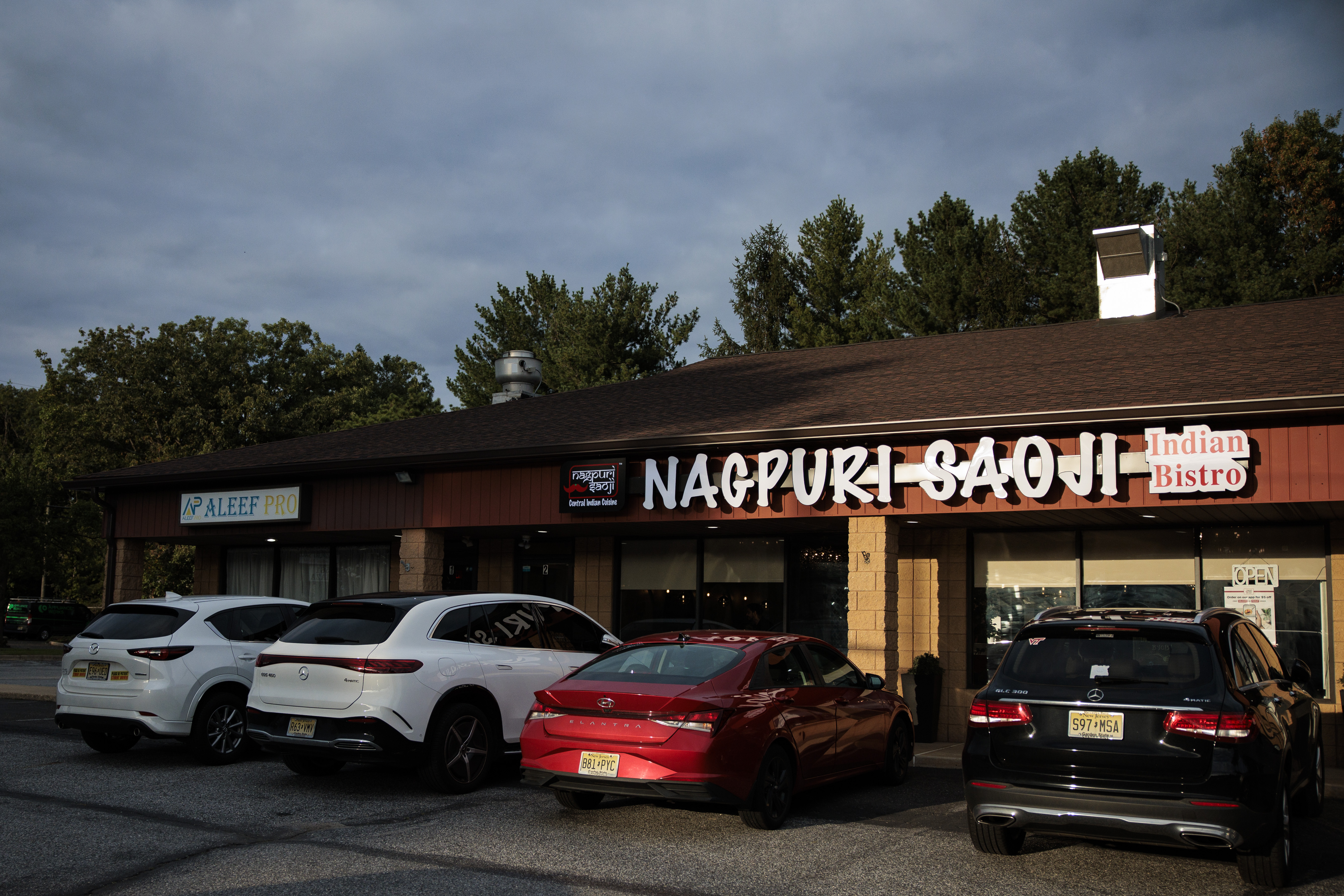
    The exterior of Nagpuri Saoji on Wednesday, Sept. 30, 2026 in Voorhees Township, NJ.Monica Herndon / Staff Photographer
  • Man charged in fatal Camden County drive-by shooting

    A Camden man was charged with first-degree murder in connection with an August drive-by shooting that killed a 25-year-old man, Camden County authorities said Tuesday.

    Nicholas Stiegler, 21, allegedly shot George Rivera around 5:50 p.m. on Aug. 21 on the first block of West Hodges Avenue in Lawnside from inside a red Jeep Compass that was traveling on West Hodges, authorities said.

    Rivera, who lived in Lawnside, was taken by private vehicle to Cooper University Hospital, where he was pronounced dead at 11:27 p.m. that day, authorities said.

    Surveillance video obtained by detectives showed the Jeep traveling from Camden to the area of the shooting and then back to Camden, authorities said.

    Stiegler also was charged Oct. 15 with second-degree unlawful possession of a weapon and second-degree possession of a weapon for an unlawful purpose, Camden County Prosecutor Grace C. MacAulay said.

    The next day, he was arrested by members of the U.S. Marshals Service New York/New Jersey Regional Fugitive Task Force-Camden Division, MacAulay said.

    Stiegler was being held at the Camden County Correctional Facility awaiting a detention hearing scheduled for Friday, MacAulay said.

  • The Gaudreau brothers crash case trial | Inquirer South Jersey

    The Gaudreau brothers crash case trial | Inquirer South Jersey

    Good morning, South Jersey.

    A January trial date has been set for Sean Higgins, the driver accused of fatally striking hockey players Johnny and Matthew Gaudreau.

    And New Jersey legislators are calling for more state oversight of homeschooling after the death of a 9-year-old girl in Paulsboro.

    Plus, two Deptford neighbors have appeared on Wheel of Fortune less than a year apart, and more news of the day.

    — Taylor Allen (southjersey@inquirer.com)

    If someone forwarded you this email, sign up for free here.

    A set trial date

    The trial date for Sean Higgins, the driver charged with vehicular homicide in the 2024 deaths of Johnny and Matthew Gaudreau, is set for Jan. 4, New Jersey Superior Court Judge Michael Silvanio ruled Monday.

    Higgins is charged with two counts of second-degree reckless vehicular manslaughter, two counts of first-degree aggravated manslaughter, tampering with evidence, and fleeing the scene. The Gaudreaus died while biking on Aug. 29, 2024, in Oldmans Township, Salem County.

    Also, multiple documents are now available, including photographs of a damaged bicycle and the Jeep Cherokee from the crash site, after the defense filed a motion for their release in an effort to find evidence to help their arguments.

    Jury selection is set to begin in December, and the trial is expected to last three weeks.

    If found guilty, Higgins faces up to 91 years behind bars.

    Reporter Jesse Bunch has the story.

    ‘We don’t know how many other Mayas are out there’

    State Sens. John Burzichelli and Paul Moriarty are calling for more protections for homeschooled students.

    It comes after 9-year-old Maya Thomas died last week in a Paulsboro home, where she allegedly faced “prolonged abuse.” Her mother and stepfather are charged with her murder.

    New Jersey parents don’t have to tell the state that they’re opting to homeschool their children. The state also doesn’t require reviews of curriculums, nor does it necessitate parents to have teaching qualifications.

    “We don’t know how many other Mayas there are out there that are suffering behind a barrier that has caused them to drop off the radar screen and become invisible,” Burzichelli said.

    Meanwhile, homeschool advocates worry that the association of Maya’s death with homeschooling could stigmatize parents who opt to teach at home.

    The Inquirer’s Sarah Nicell has more insight into the latest push to alter the state’s rules.

    What to know today

    🗣️ Quote of the week

    Perelman, originally from Randolph, is a 22-year-old student at the University of Pennsylvania and is among a new generation of bird-watching enthusiasts.

    🧠 Trivia time

    How tall is Big Rusty, Hainesport’s troll made of recycled trash?

    A) 35 feet

    B) 20 feet

    C) 15 feet

    D) 400 feet

    Think you know? Check your answer.

    What we’re …

    🦅 Providing: A timeline of everything we know about the lead-up to Jalen Hurts’ diagnosis.

    🏀 Meeting: The Sixers, by going through each player’s outlook ahead of tonight’s opener.

    🏠 Weighing: The cost comparison of renting vs. buying.

    And that’s been your roundup for this morning. I’ll have more news to share tomorrow. 📧

    By submitting your written, visual, and/or audio contributions, you agree to The Inquirer’s Terms of Use, including the grant of rights in Section 10.

  • Legislators want homeschooling oversight after death of 9-year-old girl allegedly abused in a South Jersey home

    Legislators want homeschooling oversight after death of 9-year-old girl allegedly abused in a South Jersey home

    New Jersey legislators are calling for changes to the state’s homeschooling rules after a 9-year-old girl died in a Paulsboro home.

    Maya Thomas died Oct. 13 after India Miller and Sean Scott, her mother and stepfather, called police to report that they suspected their daughter had been struck by a vehicle. Instead, an autopsy revealed “injuries not consistent with a vehicle crash” that suggested she had faced “prolonged abuse,” prosecutors said last week. Her parents were charged with murder, among other crimes.

    Lynn Miller, Maya’s maternal grandmother, who lives in Spokane, Wash., told NJ.com last week that Miller and Scott homeschooled Maya to hide her bruises.

    Maya lived across the street from Second Baptist Church and next to the playground at Loudenslager Elementary School, which she would have attended if she had not been homeschooled, local officials said.

    “It’s just heartbreaking when you think this 9-year-old child could see a beautifully manicured playground at the school,” said State Sen. John Burzichelli, a Democrat who represents Gloucester County.

    Burzichelli, a former mayor of Paulsboro, lives two blocks from the home where Miller and Scott allegedly abused Maya. He said he drives by the house every day, and he never saw anything suspicious. None of his neighbors have either, Burzichelli said, but there are now rumors.

    “Nothing, nothing, nothing, nothing, nothing,” Burzichelli said. “There are now some stories. Somebody saw her mother at the post office, saw [Maya] with her mother on another occasion. The child looked like maybe she had a bruise. But there weren’t enough interactions where that stuff could be registered.”

    Burzichelli and his colleague, State Sen. Paul Moriarty, are calling for more protections for children who do not go to school.

    New Jersey is one of 13 states that the Home School Legal Defense Association recognizes as having “low regulations” for homeschooling. Parents in New Jersey do not have to notify the state that they are homeschooling their children. It is unclear exactly how many children across the state are homeschooled.

    Parents who homeschool also do not need any teaching qualifications. No review or approval is required for curriculums set by parents, and local boards of education are not required to establish records for children who learn outside of school.

    Parents and guardians need only to give their children “equivalent instruction” to typical schooling, and previous state court cases have affirmed that the term applies only to academic lessons, not social development, according to the New Jersey Department of Education.

    “We don’t know how many others Mayas there are out there that are suffering behind a barrier that has caused them to drop off the radar screen and become invisible,” Burzichelli said. “That’s a 9-year-old child that had no one else to speak for her.”

    Homeschooling can be successful, Burzichelli said, so he does not want to upend New Jersey’s education rules. But it is currently too easy for children with no record to slip through the cracks, he said. If Maya had gone to school, Burzichelli said, a watchful teacher likely would have noticed her injuries.

    Burzichelli said his office is researching homeschooling rules implemented by other states and coordinating with leadership in the legislature to soon propose legislation to refresh the state’s alternative education statute.

    He is not certain yet which child protections New Jersey should take from other states, he said, but he wants to find a system that protects kids from flying under the radar, including a potential requirement for homeschooled children to meet with the school district annually and to ban guardians with criminal records from teaching children at home.

    This would not be the first time state legislators have tried to amend New Jersey’s homeschooling rules.

    Last year, after a Gloucester Township couple was charged with abusing their homeschooled teenager by locking her in a dog crate, both the New Jersey Assembly and Senate introduced bills that would have required children in home education programs and their parents to meet annually with a school district representative. Burzichelli was a sponsor, but the bill did not progress to a vote in either chamber.

    An identical bill was proposed in January but has not progressed. Another bill that followed the Gloucester Township case, proposed by Assemblyman Sterley Stanley, would have required registration and oversight of home education programs, but that didn’t get anywhere, either.

    Burzichelli said he wants to meet with homeschool advocates to make sure new legislation can move forward.

    “We don’t have the luxury of making this a war with people who may not be favorable to this,” Burzichelli said.

    The state’s homeschooling advocates say they worry conflating homeschooling and Maya’s killing could hurt parents who elect to teach from home.

    “Keeping a child home is not the same as homeschooling. Genuine homeschooling involves educating a child; a child being kept out of school does not, by itself, establish that homeschooling is taking place,” the New Jersey Homeschool Freedom Association wrote in a statement.

    The NJHFA instructed parents to call Burzichelli and Moriarty on Monday to “express [their concerns] that public statements connecting this tragedy to homeschooling risk stigmatizing thousands of responsible New Jersey homeschooling families.”

    Pamela Kerr, a New Jersey Homeschool Association board member, expressed similar sentiments in a social media message to The Inquirer.

    “Please be clear that Maya Thomas’ murder is a tragedy that has nothing to do with homeschooling,” Kerr wrote. “Abuse happens all too often. It happens to children who attend school. It happens to adults who go to work. Less frequently, it happens to children or adults who have been secluded from society and unlawfully restrained.”

    Kerr added that children who are homeschooled do not have to fear ongoing safety issues, like school lockdowns, and benefit from individualized attention. Kerr said the NJHA believes New Jersey’s current law “appropriately gives parents the opportunity and right to educate their children without undue interference.”

    Paulsboro Mayor John Giovannitti, who has worked in the borough’s school district for 39 years and now serves as an assistant principal, said the state should track children who learn at home.

    He also said those children should have access to Paulsboro’s counseling services and extracurricular programming to keep them as engaged in the community as possible.

    “A twice-a-year check to see how they’re doing, I don’t think it could hurt,” Giovannitti said. “It’s just, ‘Where is this kid? How are they doing?’”

  • Fondue restaurant The Melting Pot in Maple Shade is closing this weekend

    Fondue restaurant The Melting Pot in Maple Shade is closing this weekend

    After more than two decades of melted cheeses and chocolates, diners in South Jersey hoping to dip into an entirely fondue-based meal will have to look elsewhere after The Melting Pot closes its doors this weekend.

    The restaurant’s final day will be Oct. 25, franchisee Charlie LaRosa said through a spokesperson for the company.

    Eleven years after the popular eatery relocated from Center City to Maple Shade, LaRosa will not be renewing the lease at 584 Route 38 East and plans to retire.

    “This milestone marks the close of a meaningful chapter filled with memorable experiences, special celebrations, and lasting connections with guests and the community,” LaRosa said in the statement.

    Known for providing a one-of-a-kind dining experience, the restaurant chain founded in 1975 offers a wide range of options including a multi-course, interactive meal centered around fondue pots at each table.

    Today, the company has more than 90 locations worldwide where diners can enjoy their choice of a variety of melted cheeses with bread, vegetables, and fruit for dipping before they cook their own entrees — a mix of meat, seafood, and vegetables — in flavorful, simmering broth.

    The meals then typically conclude with a chocolate fondue desert accompanied by fruit, brownies, pound cake, and more.

    Following the restaurant’s closure in Maple Shade, only two Philadelphia-area Melting Pot locations will remain: King of Prussia and Wilmington, Del. The Melting Pot has one other New Jersey location in Red Bank, according to the company’s website.

    Melting Pot gift cards do not expire and are redeemable at all restaurant locations.

    While the fondue pots might be leaving the building, it appears that the restaurant won’t be empty for long.

    Istanbul Bay Premium Mediterranean Restaurant recently signed a lease for the 6,500-square-foot restaurant and plans to move in as soon as permits allow, said Emre Yucel, the restaurant’s leasing agent.

    Serving authentic Turkish cuisine, Istanbul Bay operates locations across New York and New Jersey, including a restaurant in Englishtown that opened this summer.

  • Two seniors play poker together in their Deptford 55+ community. Now, both are Wheel of Fortune alumni.

    Two seniors play poker together in their Deptford 55+ community. Now, both are Wheel of Fortune alumni.

    Curt Ostrow and Pete Lukach have a few things in common. They both live at Northgate at Heritage, a 55+ community in Deptford Township with about 400 homes. They play poker together at the clubhouse there.

    And on Monday night at 7:30 p.m. on 6abc, Lukach will become, like Ostrow, a Wheel of Fortune alumnus.

    Last November, Ostrow, 67, hosted a watch party at their shared Deptford community in Gloucester County to celebrate his appearance on the hit game show.

    Ostrow, who differentiated himself on the program as a playing card magician, made it to the final round but lost out on a Toyota Highlander. He left with $6,500, a free trip to Antigua, and a watch gifted to him by host Ryan Seacrest.

    “There were 100 people at the clubhouse like a football game,” said Ostrow, who just returned from his Antigua trip with his wife. “Every time I solved the puzzle, the place was going crazy.”

    Ostrow’s performance inspired Lukach, a longtime game show watcher and retired educator from North Jersey, to apply as a contestant himself. He once appeared on the syndicated version of Who Wants to be a Millionaire? and won $12,500.

    Lukach, 77, filmed his episode nine months after Ostrow appeared on the show.

    Pete Lukach, a Deptford resident, appeared on “Wheel of Fortune” on Oct. 19, 2026.Sony Pictures Television

    Lukach said he had two weeks in August to prepare before he had to be in front of the camera. He played handheld versions of Wheel of Fortune, read online tips, and watched a lot of past episodes.

    “I didn’t do as well as Curt, but I did OK,” Lukach said. “They consistently tell you, ‘Listen, this isn’t heart surgery. This is fun. You’ve gotten to the place where millions of people have applied to.’”

    Unlike Ostrow, Lukach doesn’t want to host a watch party at the clubhouse. Instead, he’ll gather with his grandchildren, sons, and daughters-in-law to see the show Monday night.

    Ostrow, who is currently being treated for two cancers, will be in the hospital preparing for a T-cell transplant when his neighbor’s episode debuts. But he said he plans to put the show on there.

    “Pete said I was a motivator for him to do it. Next thing I know, he called me. He’s going to be on,” Ostrow said. “There will be chemo in me around 6:30 or 7. But I’m going to put the TV on, and I’ll do my best to watch it.”