Swedesboro Brewing Co.’s new spokesperson is getting a lot of hate online. Her name is Sarah. She is blond, dressed for fall, and ready to sell beer. She is not a real employee.
“Yup, I’m AI, not real,” the AI “brand ambassador” said in her first social media appearance on Oct. 14. “But hey, if a computer-generated emu can outperform a talking gecko and sell insurance, why can’t I talk beer?”
Sarah, Swedesboro Brewing Company’s new AI brand ambassador, isn’t a real person, but she has both spiked the brewery’s engagement and following this month and brought on a slew of hate comments for the Gloucester County company.Marvin Bowe III
Many online commenters do not agree. A majority of the nearly 300 comments across Instagram and Facebook criticized the creation of an artificial intelligence spokesperson.
In response, the brewery posted a second video featuring AI Sarah scrolling on her phone reading “mean comments.” Then, hundreds more people denounced the creation of Sarah on a South Jersey Reddit thread.
Swedesboro Brewing Co. opened in Gloucester County in 2021, and has produced about 5,000 barrels of beer per year, selling about 70 alcoholic beverage brands. It has opened two more locations, one in Collingswood and another in Burlington, and has 26 human employees.
Marvin Bowe III, the company’s founder, said its AI videos got about 175,000 views, increased engagement by 2,420%, and boosted its follower count.
“In comparison, the highest we’ve ever had for engagement or views was just under 8,000 on any post,” Bowe said, including when the posts featured real employees.
A 2025 Pew Research survey found that half of Americans were more concerned than excited about AI use in daily life, and half also said AI “will worsen people’s ability to think creatively.”
Bowe also runs the healthcare advertising firm Biophilia Partners (whose staff, he said, has been impacted by AI growth) and formerly taught art at Philadelphia’s North Catholic High School. He said creating Sarah was an effort to catch up to the times on social media.
“I’ll be transparent about this,” Bowe said. “I thought using this type of tech in the brewery setting was going to be 100% harmless.”
Bowe said he worked with a creative director, a project manager, a copywriter, and others to develop Sarah’s scripts, tone, look, sass, and personality using AI. He said he chose her name because it felt “very Americana” and approachable.
“You still need talented people with creative ideas, technical skills, and a sense of humor to bring something worthwhile to life. Sarah didn’t write her own jokes or conceive her own skits. We still need to photograph her environment and video record some aspects,” Bowe said. “It’s still a lot of work.”
Bowe said most small businesses cannot afford to hire advertising agencies or actors for promotional videos. And while real employees would struggle with personalized hate comments from the internet, AI’s (nonexistent) skin is thicker, he said.
The next time Sarah appears, Bowe said, he will make sure to be in the video alongside the AI spokesperson to provide context and explain her origins. But Bowe does not plan to get rid of AI anytime soon.
“Are we worried about the backlash?” Bowe said. “Not particularly.”
A man was injured and airlifted to a local hospital after he crashed his plane only moments after takeoff in Burlington County Friday morning.
After the plane,a Piper PA-28, took off from the runway at Flying W Airport in Lumberton at 9:24 a.m., an airport employee said he noticed the plane failed to climb in the air before the pilot turned left into a nearby field to land. The pilot was the only person onboard, according to the Federal Aviation Administration.
Map of the Flying W Airport in Lumberton, Burlington County, where a small plane crashed on Oct. 23.John Duchneskie
“He took off, and the engine wasn’t making power,” said the airport employee, who was not authorized to discuss the incident. “He didn’t even clear a hundred feet.”
Lumberton Township police responded to the crash site and found one man injured, saidLumberton Police Lt. Christopher Cheesman. The plane, which was registered to Freeflight Aviation, an aviation school that operates out of the Flying W, was found smoldering when first responders arrived. Freeflight Aviation could not be reached for comment.
The pilot was taken by helicopter to a local hospital. “They were conscious and alert following the crash,” Cheesman said.
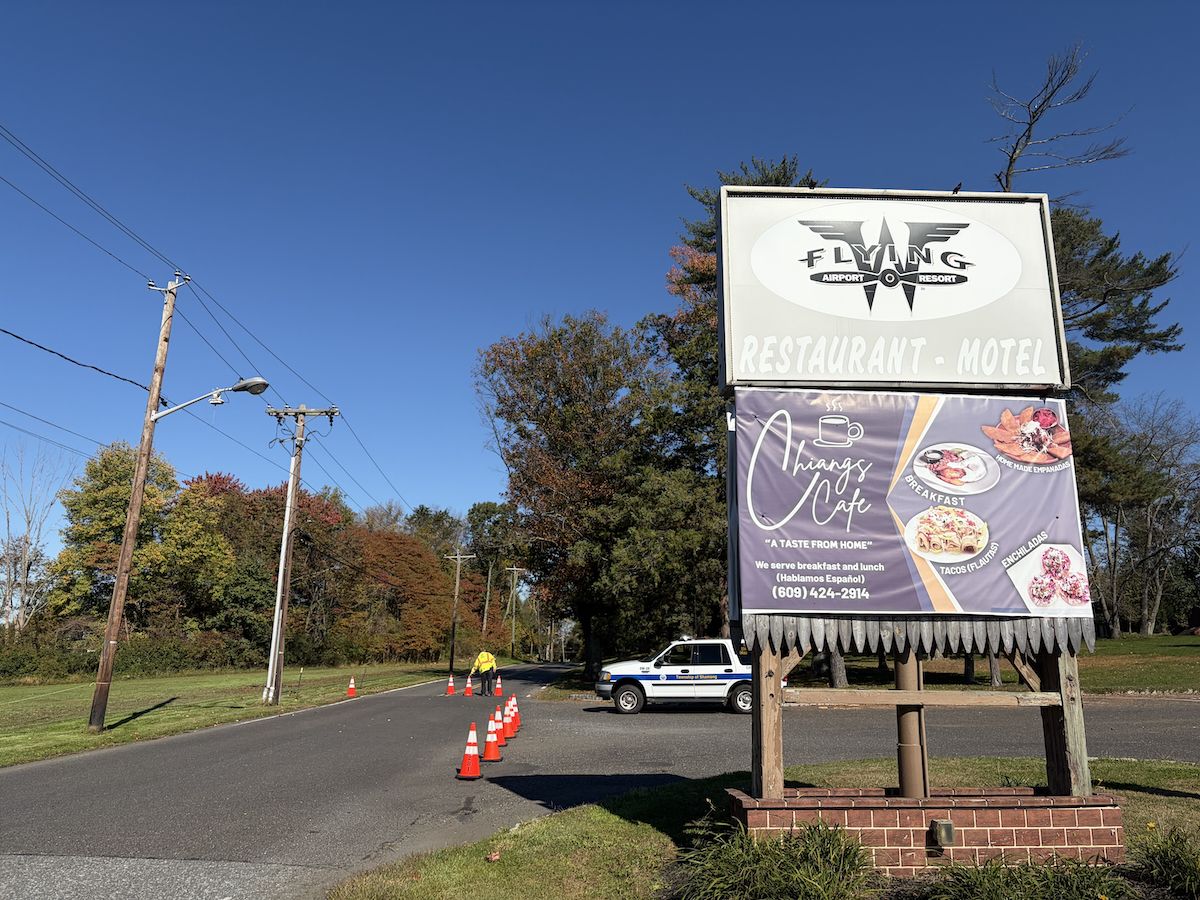
A sign for Freeflight Aviation, the pilot school that operates out of the Flying W Airport in Lumberton, on Friday, Oct. 23, 2026. Earlier Friday morning, a plane registered to Freeflight Aviation crashed moments after takeoff at the airport.Lacey Latch / Staff
No visible smoke could be seen in the direction of the airport at 60 Fostertown Road.Two hours after the crash, the morning air at the airport was crisp, with clear skies, and changing fall leaves frosting the treetops.
Flying W closed the runway to air traffic for a few hours after the crash but has since reopened, according to the airport.
Lumberton Township Police are closing off and holding down the scene until federal investigators arrive. Fostertown Road will remain closed at Main Street for an undisclosed amount of time.
The FAA and the National Transportation Safety Board are taking over the investigation into the plane crash.
The tarmac and adjacent fields at the Flying W Airport in Burlington County, pictured on Friday, Oct. 23, 2026. Earlier Friday morning, a man crashed his small plane moments after takeoff at the airport. He crash-landed in an adjacent field to the runway and was alive at the time of being airlifted to a local hospital.Lacey Latch / Staff
The aircraft that crashed on Friday morning was registered with the FAA as a Piper PA-28-181, a 24-foot-long single-engine aircraft that can carry up to four passengers. These low-wing design, fixed-landing-gear planes are powered by a 180-horsepower Lycoming four-cylinder piston engine.
In 2017, a deadly helicopter crash led to the death of country singer Troy Gentry, half of the country music duo Montgomery Gentry, and the pilot at the Flying W Airport hours before the artist was due to perform there. The NTSB ruled that pilot error following engine maintenance problems caused the 2017 crash.
U.S. Rep. Jeff Van Drew and Democratic challenger Zack Mullock fought over a slew of local and national issues impacting South Jerseyans in a tense debate Thursday night as their once sleepy race sees increasing national attention and spending in the final days before the midterm.
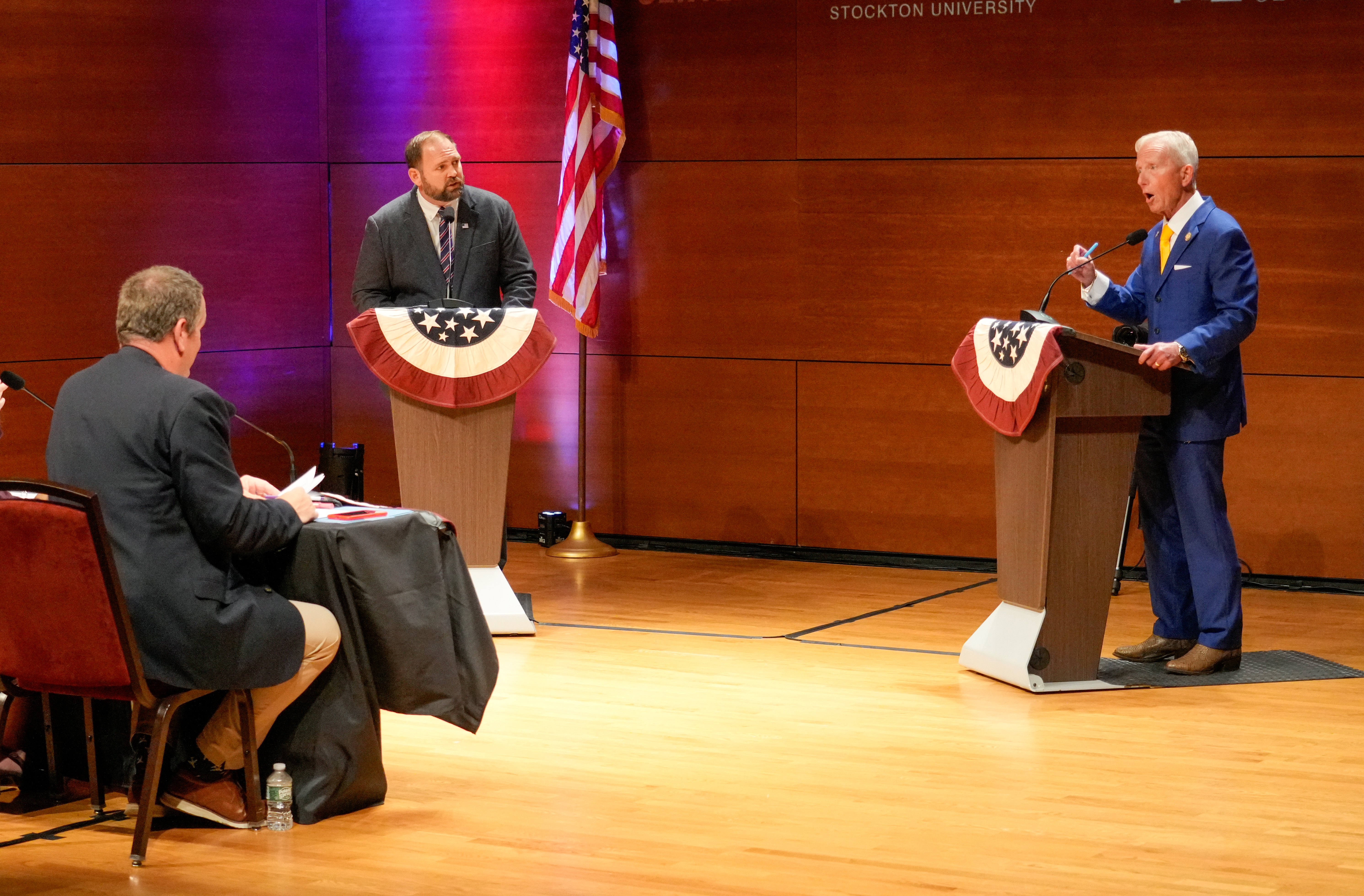
Despite a ramped-up focus on the race, the two candidates squared off in a mostly empty theater at Stockton University with the debate only open to journalists andthe sound of cameras shuttering the only noise heard in the absence of an audience.Mullock,the mayor of Cape May, said he wanted a live audience, but Van Drew wouldn’t agree.
In an interview with The Inquirer after the debate, the incumbent Republican said it was a safety concern — the same reason he doesn’t hold open in-person town halls, which Mullock criticized.
Throughout the debate, Mullock interrupted Van Drew and accused him of tellingfalsehoods. Van Drew, meanwhile, derided his challenger as “Mr. Pinocchio.”
The sprawling 2nd Congressional District stretches from Gloucester County to the Jersey Shore. National Democrats added the district to a growing list of target races earlier this month, but it’s less likely to flip than some other seats in New Jersey and Pennsylvania.
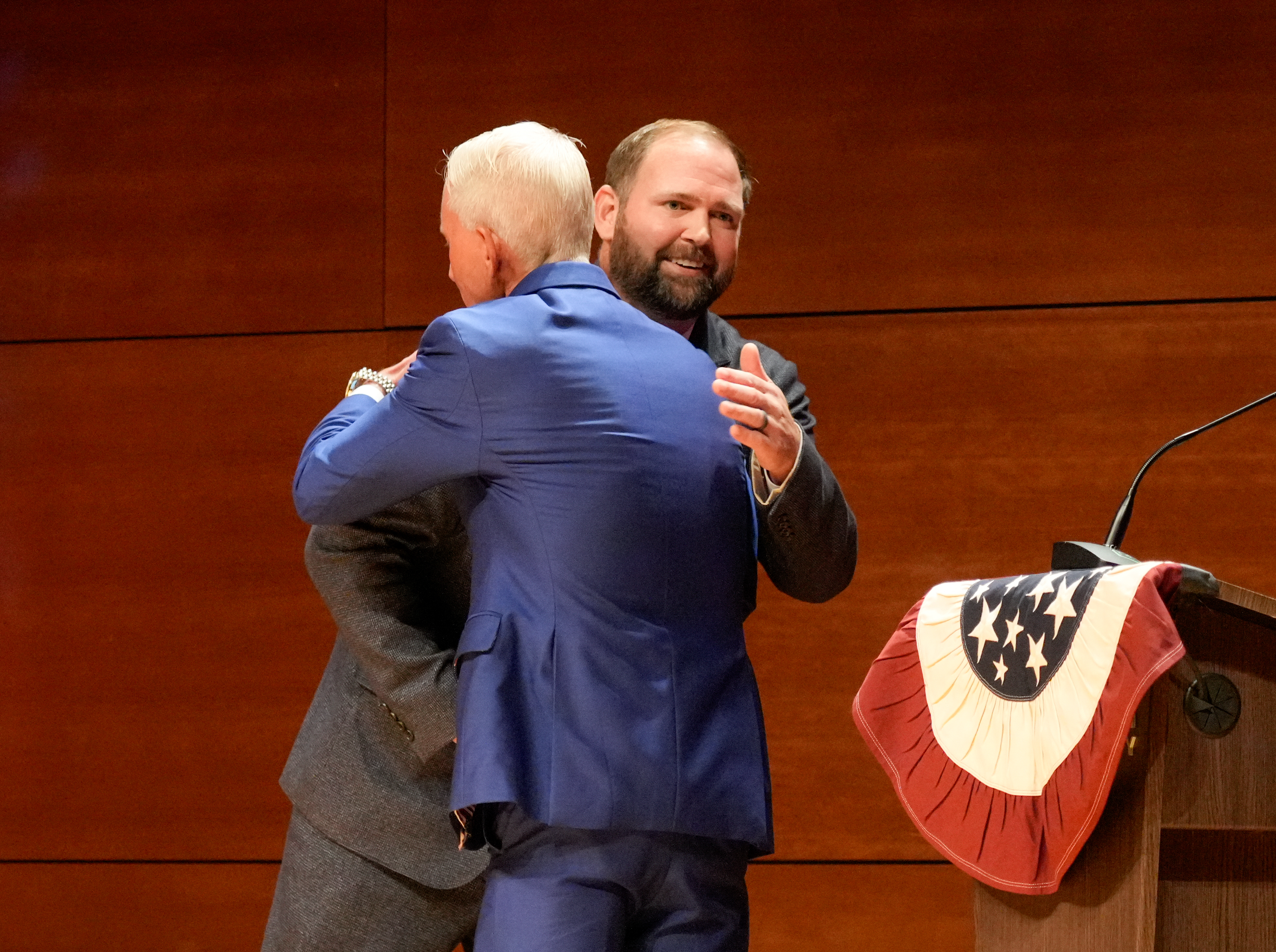
U.S. Rep. Jeff Van Drew, right, and Democrat Zack Mullock exchanger a quick hug after a tense debate in the Campus Center Theatre at Stockton University, Thursday, Oct. 22, 2026.Tim Hawk / For The Inquirer
Here are the highlights from the debate:
Where Van Drew disagrees with Trump, and Mullock disagrees with Democrats
Van Drew, 73, won the seat in 2018 as a Democrat before switching parties to become a Republican a year later and vowing his “undying support” to Trump.
Mullock, 41, said Thursday that Van Drew “looks up to the president like a child” and follows his “daddy Trump.”
When asked what issues he disagrees with his party on, Van Drew said he believed Republicans should have extended Obamacare subsidies — though he opposed a Democratic-led effort to extend the subsidies for three years.
As for Trump, Van Drew said he opposed the president’s past desire for offshore oil leases in New Jersey and his resistance to releasing the Epstein files.
Mullock pointed out that Van Drew was not among the Republicans who tried to force a floor vote on the files.
“He knew that some girls as young as 14 had been sexually assaulted, and he refused to sign the discharge petition. … When the victims needed him, he didn’t vote for it,” Mullock said.
Van Drew said he didn’t want to send the bill to the floor without going through the committee process and that he was a sponsor of a bill calling for the files’ release before Trump expressed his approval upon realizing he lacked support within his own party to keep the files under wraps.
U.S. Rep. Jeff Van Drew answers a question during a debate with Cape May Mayor Zack Mullock, in the Campus Center Theatre at Stockton University, Thursday, Oct. 22, 2026.Tim Hawk / For The Inquirer
Mullock said he has plenty of experience working across the aisle in his nonpartisan local government and said he’s hired Republican city managers. He also said he thought Democrats “did a bad job on the border.”
At another point in the debate, Mullock said farms and restaurants in the district rely on immigrants who haven’t broken the law and deserve a path to citizenship. He said he supports having “a strong border” and getting “rid of violent criminals” but that ICE sweeps under Trump are “terrorizing communities and scaring school children.”
Van Drew criticized Democratic policies in the state that limit local law enforcement’s cooperation with ICE as well as a legal-defense fund for undocumented immigrants.
He also called Mullock a “democratic socialist.” When asked about the label after the debate, Van Drew said Mullock supported the 2016 presidential campaign of Sen. Bernie Sanders of Vermont, who has long used the label.
The Cape May mayor, who donated $3 to Sanders’ 2016 presidential run, said he supported some of Sanders’ economic policies but does not identify with that term.
War in Iran
Mullock accused Van Drew of voting for the war in Iran six times, in reference to House resolutions seeking to restrict Trump’s power to continue the war without congressional approval. Trump launched the war in coordination with Israel in February and went past the deadline for approval in May.
Van Drew disputed Mullock’s characterization. “There was never a vote for the war in Iran,” Van Drew said.
“I did vote not to end hostilities absolutely immediately because it would have endangered our troops,” he added.
Democrat Zack Mullock points to U.S. Rep. Jeff Van Drew during a debate in the Campus Center Theatre at Stockton University, Thursday, Oct. 22, 2026.Tim Hawk / For The Inquirer
Mullock called it a “war of stupidity” and questioned what the war has done to help South Jerseyans, pointing to the high price of gas at the pump and diesel for farmerssince the war stressed the global oil supply chain.
“Ronald Reagan is rolling in his grave right now,” Mullock said, contending the Republican who oversaw the late stages of the Cold War would disapprove of Trump’s deal to purchase fuel from Russia to control costs.
“You had a chance to stop it, and you didn’t,” Mullock said to Van Drew.
After the debate, Van Drew said in an interview that he believes there will be an opportunity to leave Iran “soon.”
“I think this next Congress, regardless of whoever has control, is going to say, ‘OK, what’s the end game here?’” He said he supported Trump’s decision to start the war to go after nuclear enrichment and long-range ballistic missiles, but that it “does need to end” with a safe exit strategy.
Construction at the Data One data center in Vineland, N.J. in June. Tom Gralish / Staff Photographer
Data centers
Mullock said Van Drew’s campaign is “sponsored by data centers,” in reference to campaign donations from John Ruga, who leads a concrete company that helped develop the controversial Vinelanddata center. Ruga has said that Van Drew’s support for the project was “critical.”
Mullock also pointed to Van Drew’s vote for the One Big Beautiful Bill Act, which he said gave money to data centers while cutting Medicaid. According to Politifact, the law let companies with data centers write off equipment costs quicker than before.
“It is no coincidence that the poorest county in the state is being taken advantage of right now, and you’re letting it happen,” Mullock said in reference to the massive Cumberland County data center, which was recently hit with a $1 million fine from the state.
Van Drew said he’s known the concrete contractor, who has worked on various projects in the area, for years. He pointed to a bipartisan bill he supported last month that seeks to put guardrails on energy costs caused by data centers.
“I never met the data center people,” Van Drew said. “I don’t know who they are.”
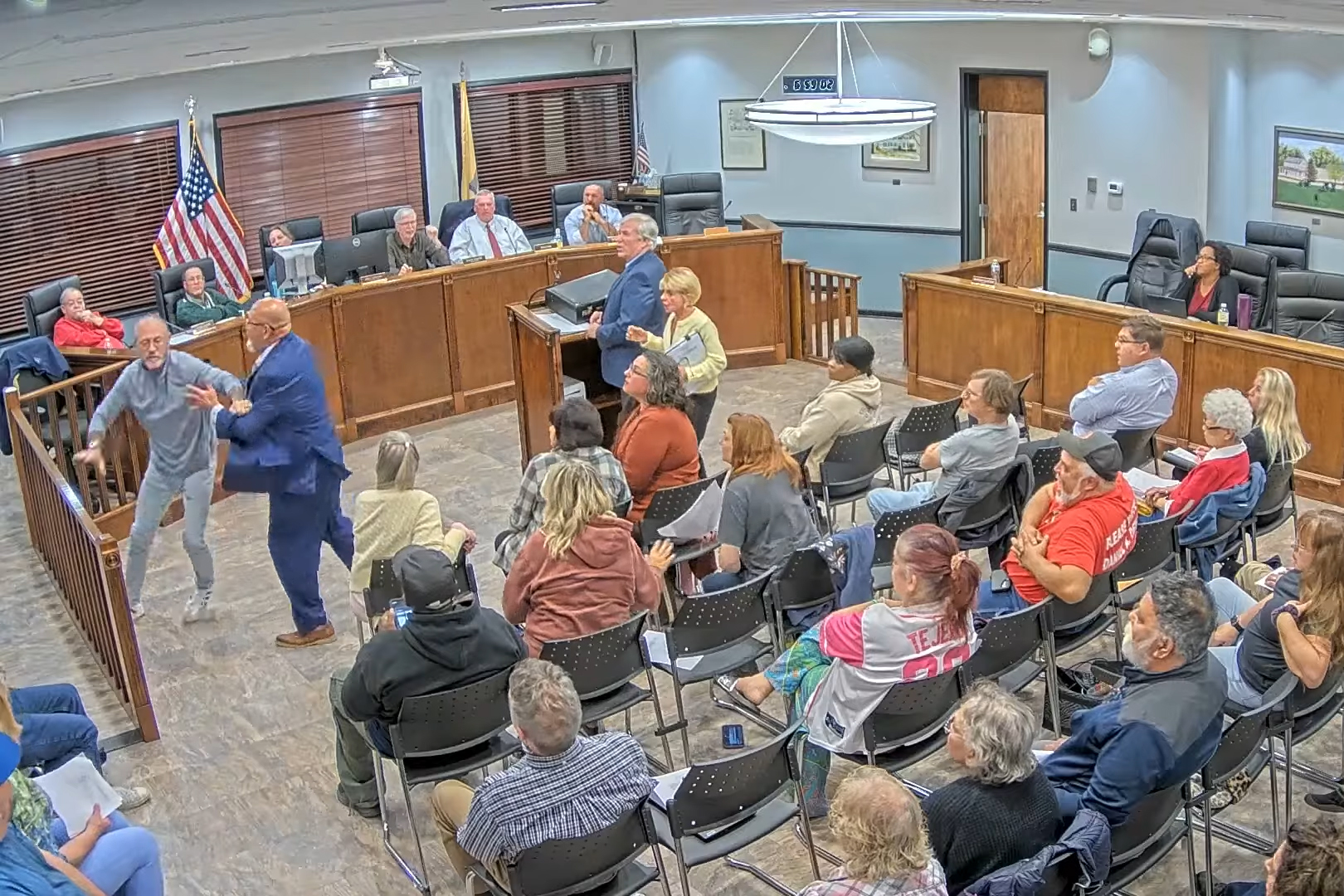
About an hour into Pemberton Township’s Wednesday township meeting, Mayor Matthew Bianchini rose from his chair and beelined toward someone in the audience as others swooped in to hold him back.
All of this was captured on the township’s meeting livestream.
Right before the near-physical altercation, the mayor and the audience exchanged words that weren’t clear on video before one attendee raised his middle finger at him.
The mayor was removed from the room while yelling “I’m going to get you,” at the attendee who then called for Bianchini to be arrested.
According to online court records, no charges have been filed as of Thursday.
If you map it out — which we did for you — it’s doable to dedicate an entire day to thrifting.
If you start in Collingswood, you could hit Clutter Vintage for art and frames, Dig This for stylish mid-century furniture, and then check out The Garb Collection to see their latest inventory rotation for clothes.
Venture to nearby Haddonfield for Pure Couture Consignment, and be enamored with timeless designer furs, gowns, and purses that the most glamorous person in your life will appreciate with fashion pieces from the 1950s, ’60s, and now. Before you leave town, get a little something for the kids in your life and pop into Dandelion District for babies’ and children’s fashion.
Over in Pemberton, Grist Mill Antiques Center likely has most things you can imagine within its two-story collection of antique glass, china, books, jewelry, clothing, and housewares.
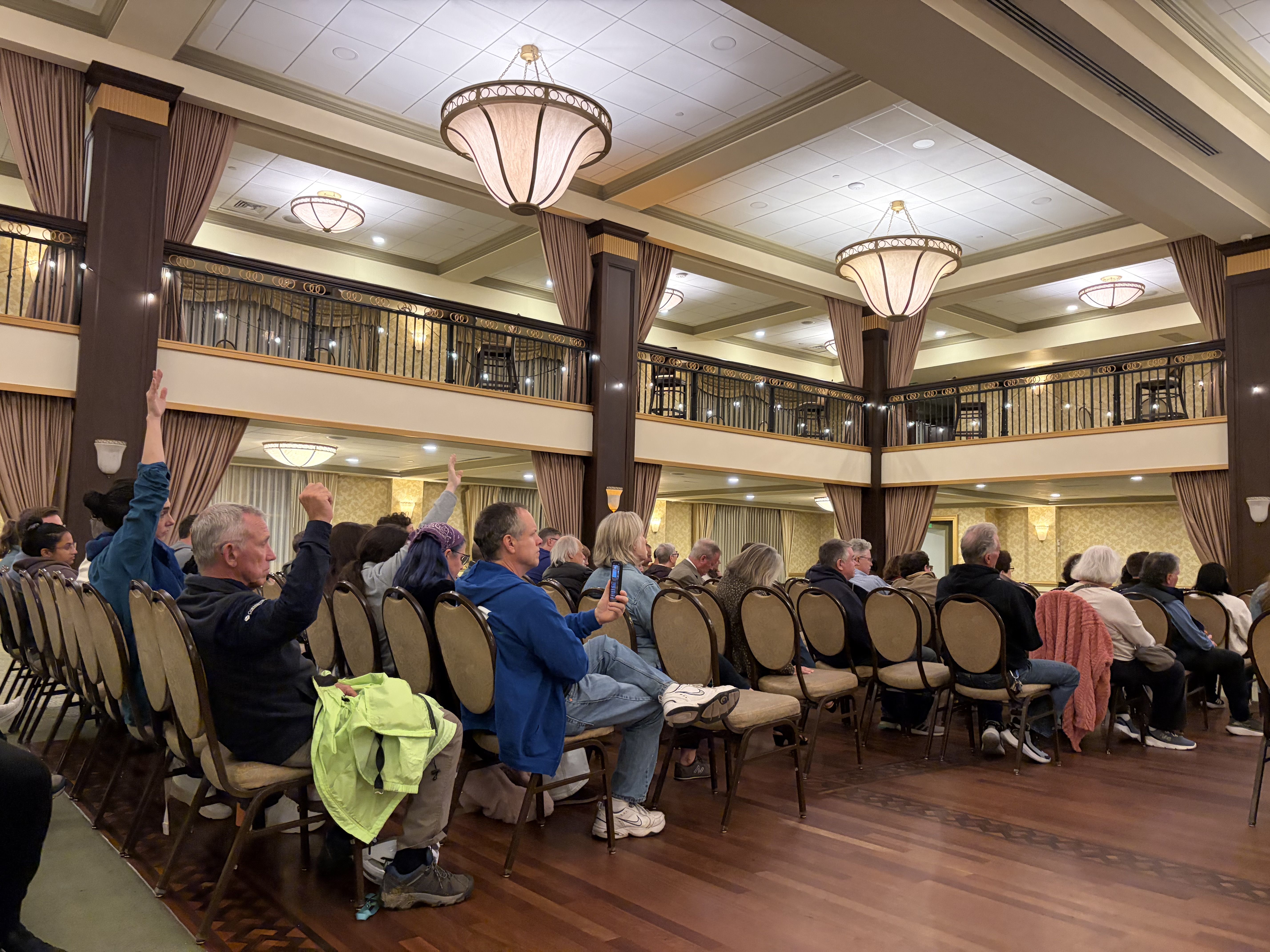
Collingswood residents asked commissioners about the borough’s historic theater, Scottish Rite, at a town hall Wednesday but leaders say more information is coming.
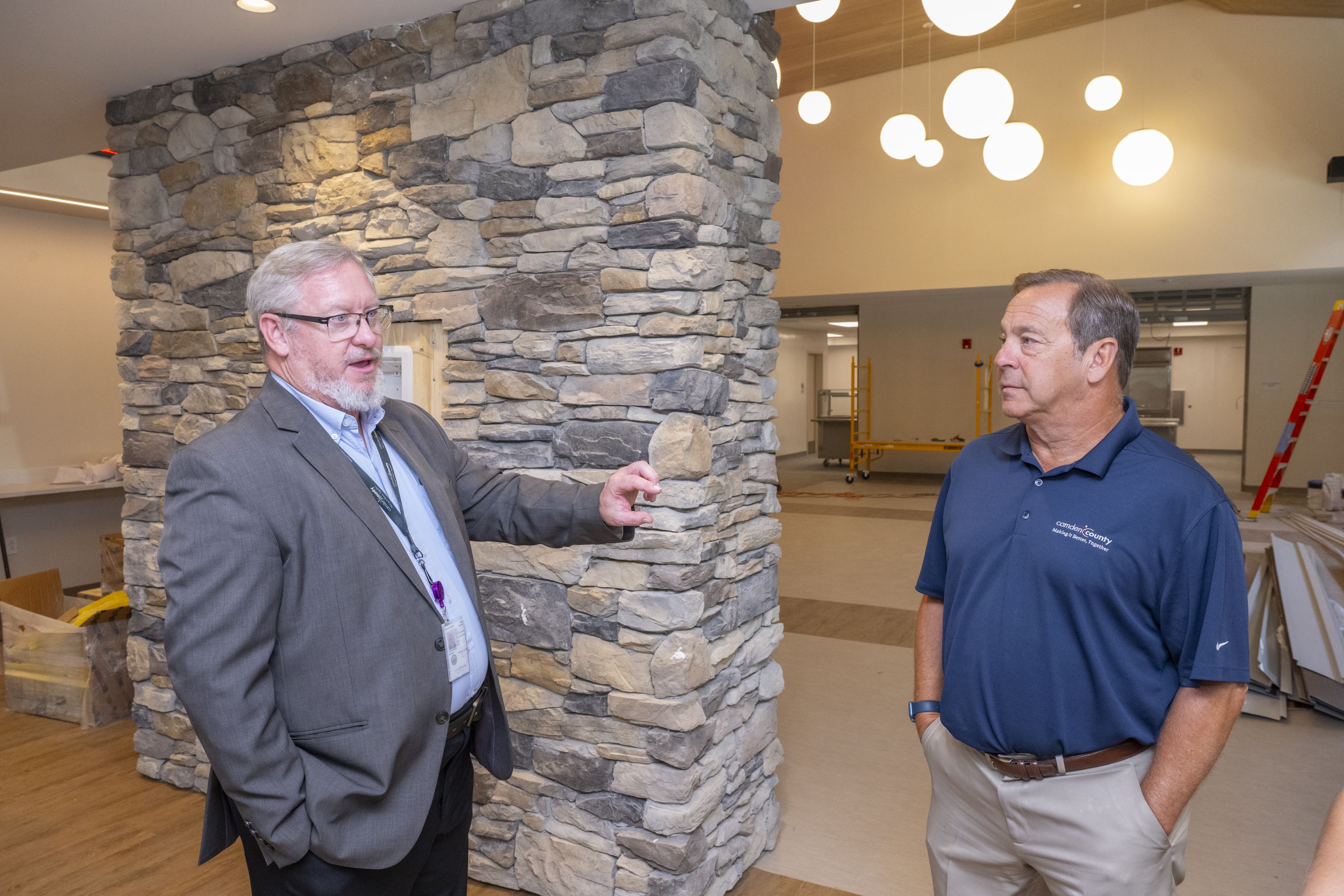
See a first look at Camden County’s $25 million project in Blackwood, part of its ongoing efforts to end homelessness by 2030. The 45,000-square-foot housing center has 60 units.
A New Jersey school segregation lawsuit reached a state appeals court Thursday, but the judges did not rule after a long hearing. A coalition of civil rights groups, parents, and students argue that the state has allowed racial segregation and educational disparities to persist.
A developer is seeking a zoning variance to tear down a gas station and a home at a busy Voorhees-Cherry Hill intersection and build a three-lane car wash, 70and73 reports.
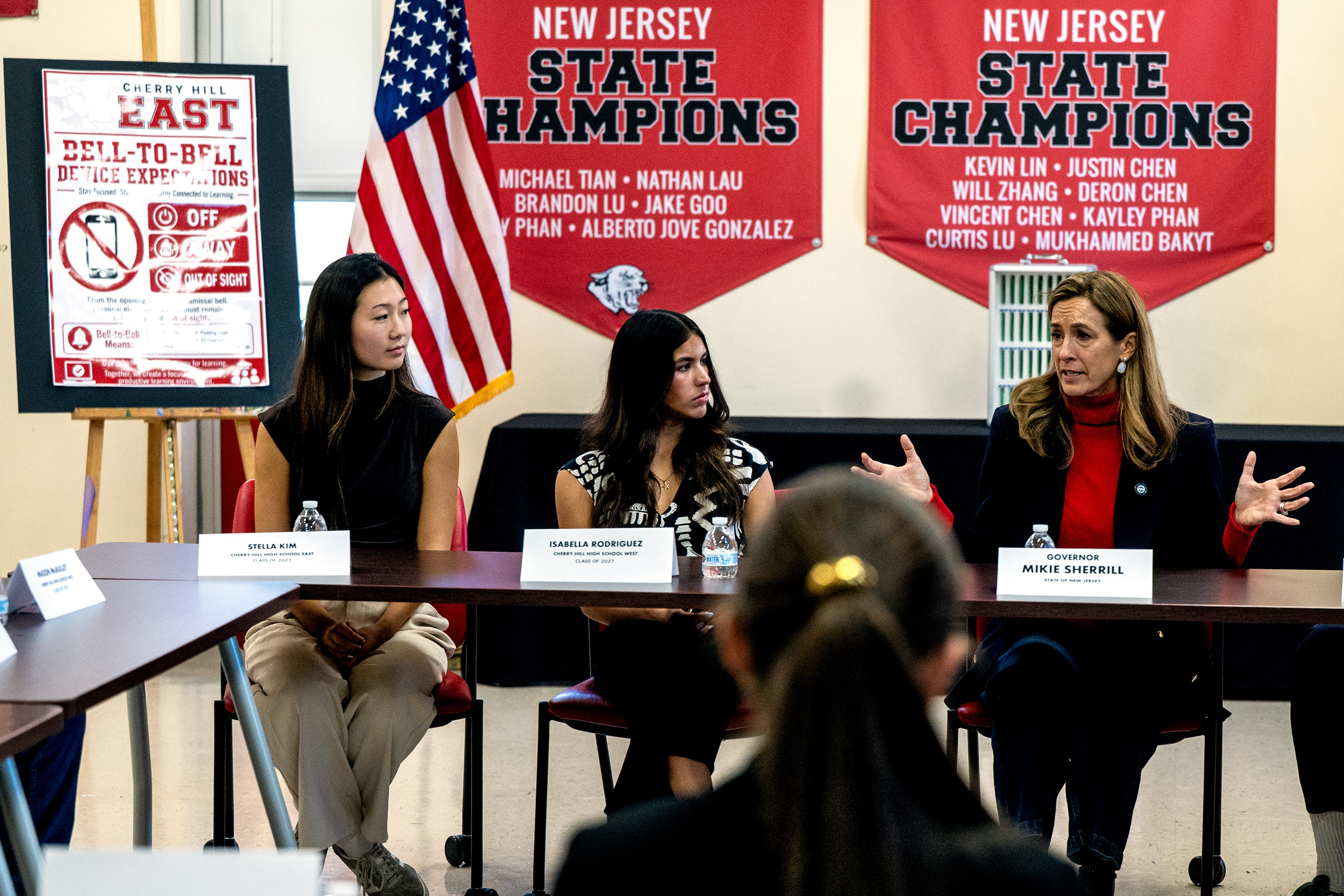
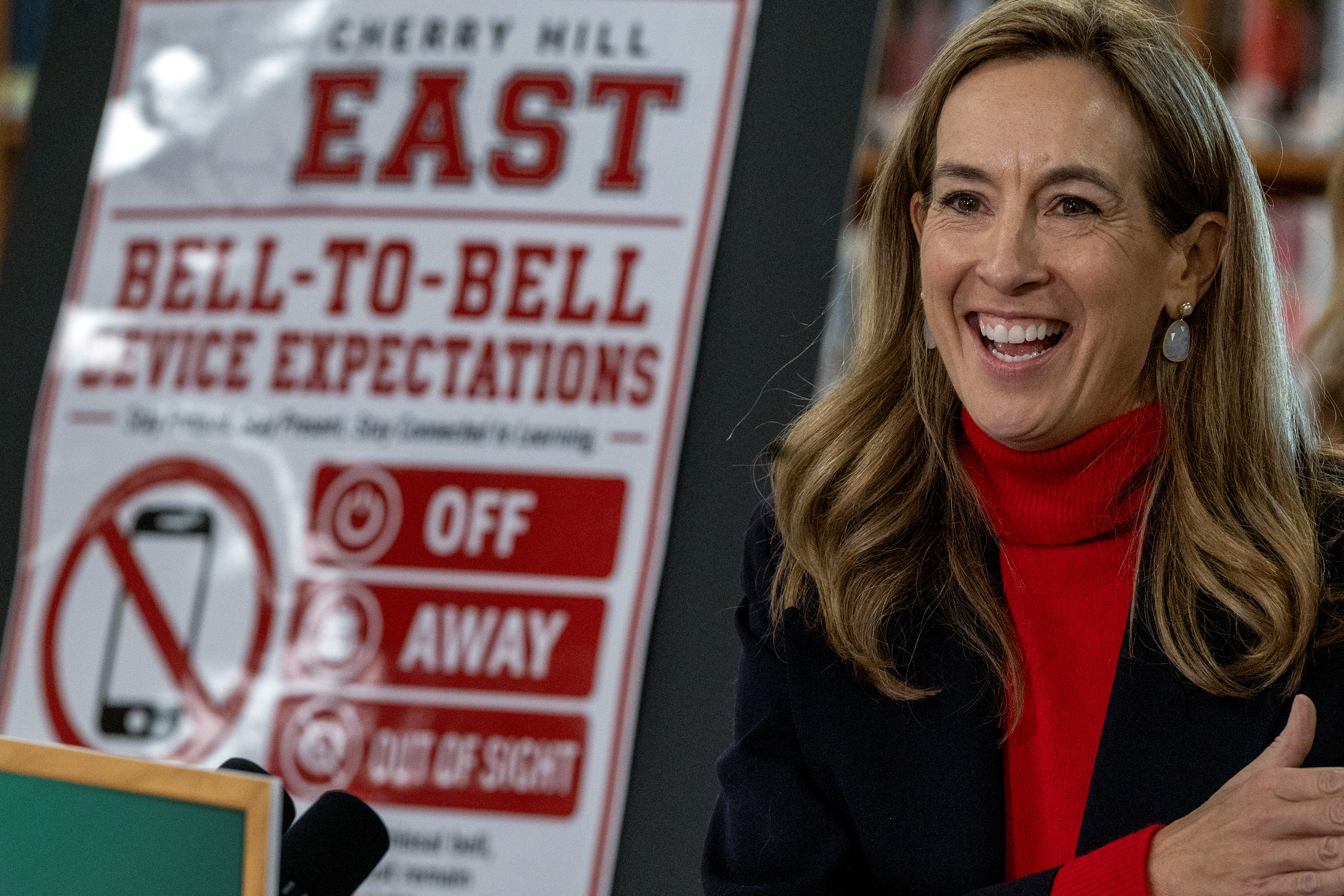
Gov. Mikie Sherrill speaks on a roundtable with Cherry Hill High School East students on Thursday about the state’s new phone ban. Tom Gralish / Staff Photographer
Have a wonderful Friday and enjoy your weekend. See you on Monday. ☀️
By submitting your written, visual, and/or audio contributions, you agree to The Inquirer’s Terms of Use, including the grant of rights in Section 10.
They play board games at lunch. They greet each other in the hallways between periods. They pay more attention in class.
Gov. Mikie Sherrill got an earful Thursday when she visited Cherry Hill High School East to learn more about how a state law that bans the use of cell phones and devices in schools has affected learning.
Junior Giovannina Viglietta, 16, said her stress level and anxiety have been reduced because she no longer checks her phone constantly and can focus on classwork.
“Without the pressure to constantly check messages or keep up with social media, it feels like a weight has been lifted off my shoulders and I can be more focused in classes,” Viglietta said.
Seniors Stella Kim (left, from East) and Isabella Rodriguez from West, join other students in a roundtable discussion with Gov. Mikie Sherrill at Cherry High High School East.Tom Gralish / Staff Photographer
Effective since the academic year began in September, the law has changed the school environment with fewer distractions, after some initial pushback, students and school officials say.
“Our teachers no longer have to compete with a device for their students’ attention, and they can create more engaging classrooms,” Cherry Hill School Superintendent Kwame Morton said.
Sherrill implemented the law, which was signed in January 2026 by former Gov. Phil Murphy. It required New Jersey’s nearly 600 public school districts to adopt bell-to-bell restrictions on cell phones and internet-enabled devices.
The governor said she was impressed with the insight shared with her by a handful of students during a closed-session roundtable prior to her media briefing.
“Giving students a school day free from constant digital distractions creates more room to learn, build friendships, and connect with their teachers,” Sherrill said. “We know that when kids put down the screens, their mental health and academic performance improve.”
The bell-to-bell restrictions cover the entire school day, from the moment students arrive, and include lunch, study hall, and between classes.
Cherry Hill East Student Government president Stella Kim, a senior, said the school culture was different when students were allowed to use their cell phones. She had been skeptical the ban would work but says it has become “the new norm.”
“Everyone was really in their own world. They didn’t talk to each other,” said Kim, 17.
Kara Rogalcheck, 17, a senior at Cherry Hill High School West, admitted she “wasn’t the happiest” when the cell phone ban was implemented. She said she is enjoying her final year, living in the moment.
Said Vasisth Medavarapu, 16, a junior at East: “We’re definitely talking more.”
The law allowed districts to decide how the devices are stored. Some districts have locked pouches, let students keep their devices turned off in their belongings, or store them in lockers or classrooms.
Cherry Hill East students said they were pleased that the district allows them to keep their phones with them, and that makes them feel trusted. The schools have locked phone boxes used to store phones for repeat violations. The phones are returned at the end of the day in most cases.
The phone lock box safe used in the Cherry Hill School District was on display on Thursday.Tom Gralish / Staff Photographer
State Education Commissioner Lily Laux said districts across the state are reporting positive results. It may take years to see the full impact of the ban, she said.
Educators say the problems with cell phones had become untenable. Teachers were frustrated trying to enforce the rules in class, while students watched movies or constantly scrolled social media.
Morton said there have been few violations since the ban became mandatory. Cherry Hill has a tiered progressive discipline approach for violations.
Gov. Mikie Sherrill visits Cherry Hill High School East on Thursday. The district began enforcing cell phone restrictions before the new law was passed.Tom Gralish / Staff Photographer
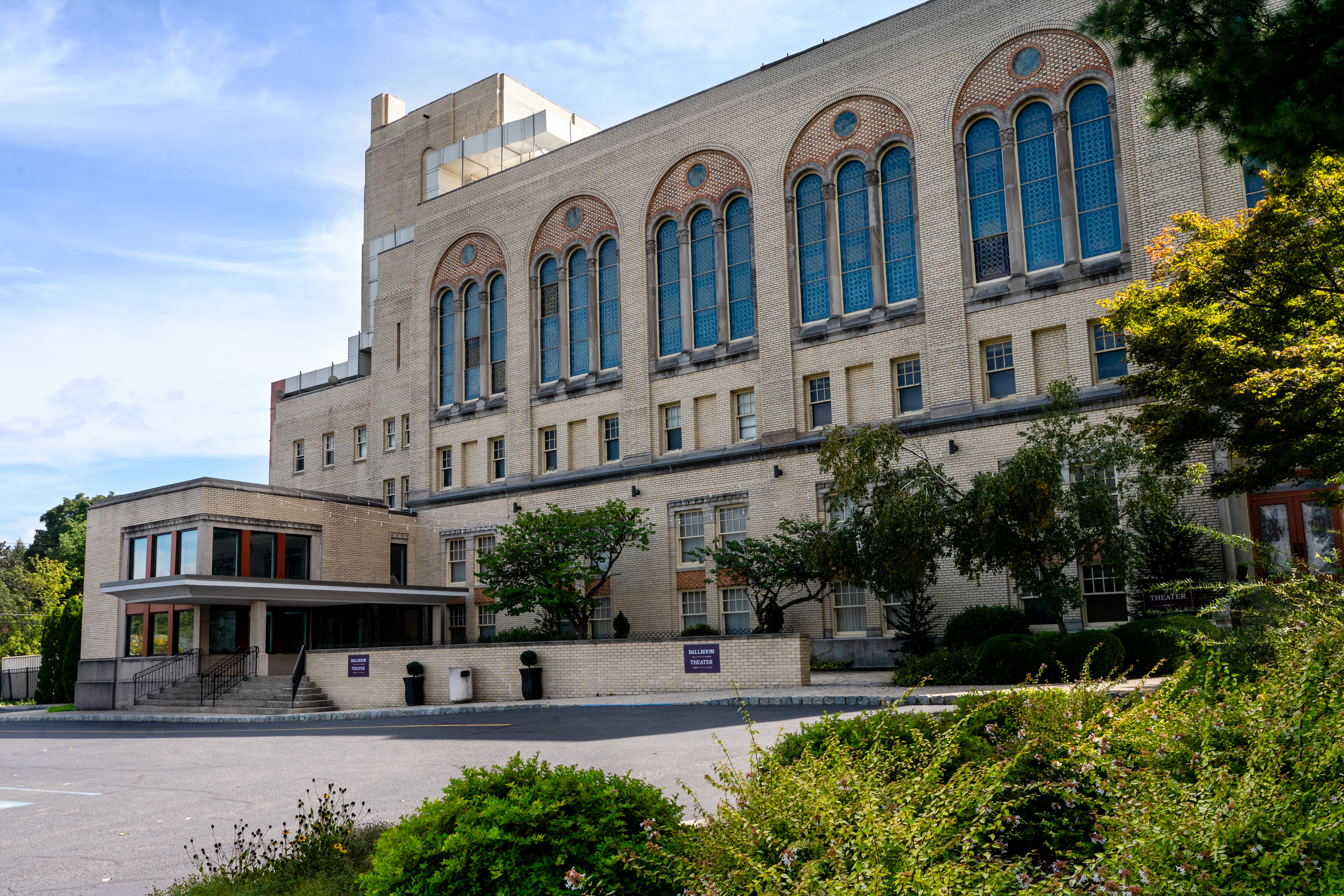
Collingswood’s three commissioners answered questions for two hours inside the Collingswood Grand Ballroom, a wedding and event venue inside the Scottish Rite property on White Horse Pike.
The Scottish Rite Theater, which hosts everything from rock bands to school district events, has been the subject of public scrutiny for months as residents question why the borough has spent millions of dollars since 2003 on theater renovations, operations, and utilities, even though the property is run by the Collingswood Foundation for the Arts, a private corporation that had its nonprofit status revoked by the IRS two years ago.
Collingswood officials are currently working on an agreement to transfer responsibility of the theater to Camden County to ease its financial burden. If approved, the Collingswood Foundation for the Arts would likely cease to exist after more than two decades at the Scottish Rite.
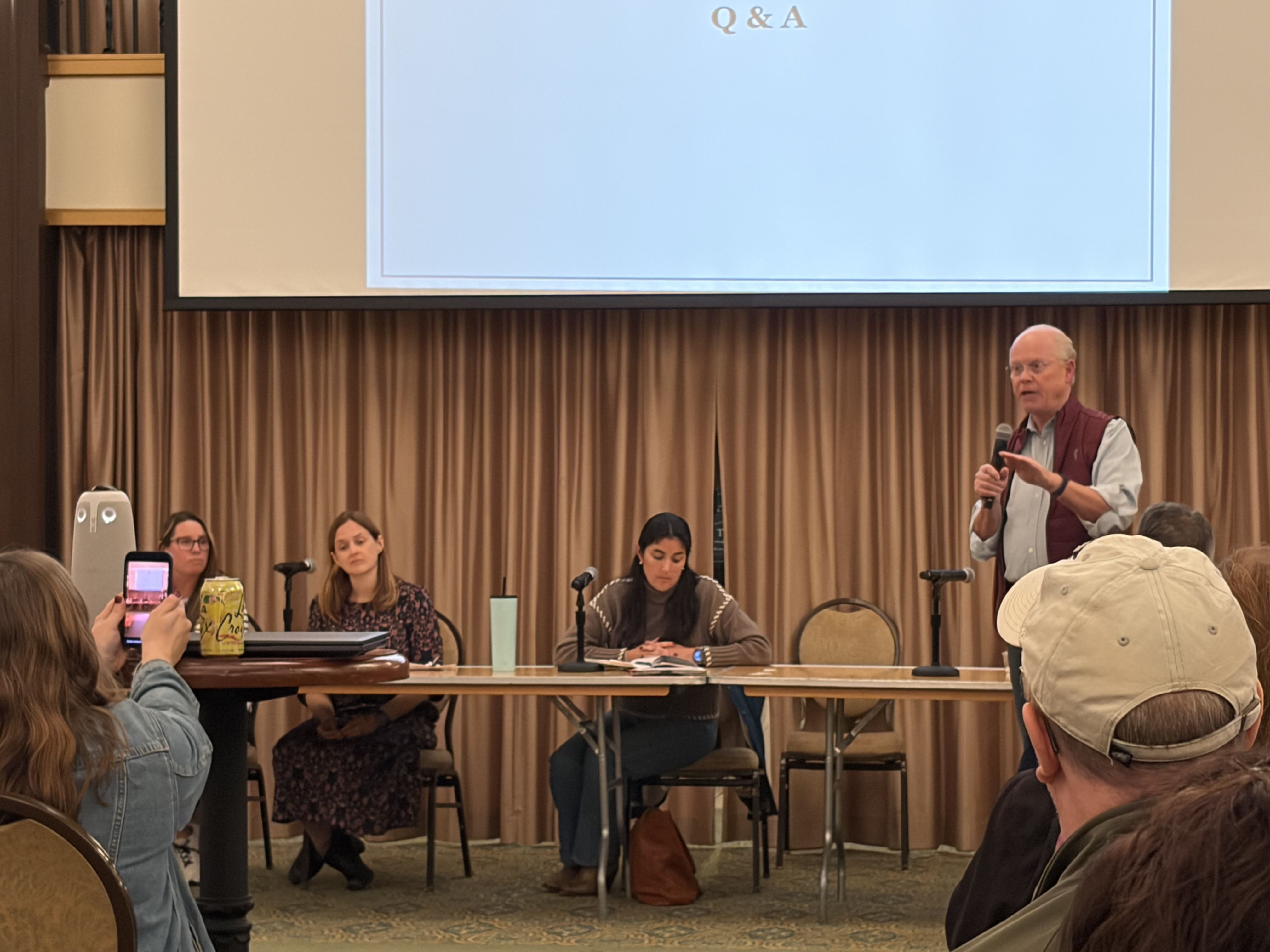
Commissioner Jim Maley (right) answers questions at Collingswood’s Fall Town Hall on Wednesday, Oct. 21, 2026. From left to right, more Collingswood officials sit, including Board of Education President Kelly Maia, Deputy Mayor Amy Henderson Riley, and Mayor Daniela Solano-Ward.Sarah Nicell
Paula Lara, executive director of the foundation, has previously declined to comment on the Scottish Rite.
Lara, who said she’s worked at the Scottish Rite for 17 years, had prepared a speech Wednesday to address the controversy.
But the piece of paper stayed folded up in her pocket.
“It felt like it wasn’t the right time,” said Lara, who said she isn’t sure what the future holds for the Scottish Rite, or her job. “I mean, I hope I’m still here to see it.”
‘County taxpayers are taking on the risk’
Mayor Daniela Solano-Ward, who is also a commissioner, said Wednesday that the borough’s special counsel will have more answers on the Scottish Rite by Nov. 2, Collingswood’s next commissioners meeting.
Commissioner Amy Henderson Riley had previously asked counsel to determine the legality of the Scottish Rite’s management structure. At the moment, Collingswood holds a lease agreement for the Scottish Rite property through 2092, and has an additional agreement with the Collingswood Foundation for the Arts, a private corporation, to manage the theater.
That corporation was created decades ago by lawyers and borough officials, including Jim Maley, a current commissioner and former mayor of Collingswood. He still sits on the board of the foundation.
Solano-Ward said she’s still working to put together a list of asks for a shared services agreement with the county. The agreement would mean the county, not the borough, would pay for future repairs and expensive renovations at the Scottish Rite. Some attendees said that just means Collingswood residents would fund the theater with their county taxes rather than their borough ones.
“As I’ve expressed before, that really just means county taxpayers are taking on the risk,” said Kate Delany, president of South Jersey Progressive Democrats and a Collingswood resident since 2007 who has spoken out for months on the Scottish Rite.
In response, Maley said Camden County could soon benefit from a Cultural Arts Facilities Expansion grant from the state, the same multimillion grant that is funding improvements to Battleship New Jersey. The state is reviewing the borough and county’s application for funding in the CAFE program’s second round, Maley said. It’s unclear when and if that money will come.
“I’m sure the county will be working to get other state funding, other federal funding, other funding, to help reduce what kind of impact it has on taxpayers,” Maley said.
Collingswood residents and visitors raise their hands to ask questions at the Fall Town Hall at the Collingswood Grand Ballroom on Wednesday, Oct. 22, 2026. The ballroom is part of the Scottish Rite Theater property, which has been the subject of debate in Collingswood for months.Sarah Nicell
Collingswood officials recently posted drafts of the Collingswood Foundation for the Art’s four missing 990 filings since 2021 on its website. The foundation’s nonprofit status has yet to be reinstated by the IRS.
The most recent draft report lists Maley as the foundation’s president and Camden County Commissioner Louis Cappelli Jr. as vice president. Cappelli told The Inquirer last month that he hasn’t had anything to do with the foundation in decades.
Attendees also demanded answers about the late reports. Lara said the foundation’s accountants were the problem. The CPAs employed by the foundation didn’t complete the reports, and when she replaced them, Lara said they took more than two years to finish them.
Lucille Diyoung, 70, spoke in support of Collingswood’s management of the theater as someone who has lived in the borough for decades. She said she saw the state of the95-year-old theater before the major repairs funded by Collingswood 20 years ago.
“It was a hellhole. It was just unbelievable,” Diyoung said. “Just look at the lights. This really did need a lot of work, and they did [it]. It’s been gorgeous, and I’ve enjoyed it many, many, many times. … I don’t understand the issues. I really don’t. It’s here. We love it.”
‘A breaking point’
The town hall didn’t just focus on the Scottish Rite.
Cassandra Duffey, the borough administrator, discussed plans to make walking routes to Collingswood schools safer, since the district, only two miles, doesn’t use buses.
Duffey said the borough, in conjunction with the New Jersey Department of Transportation and the school district, is working to apply for a Safe Routes to School grant, a federally funded program by NJDOT, along with planning improvements to borough intersections, sidewalks, bump-outs, road signage, and adding more crossing guards.
The commissioners also explained three referendums that will appear on voters’ ballots in Collingswood in November.
While the borough could handpick who gets the licenses, Solano-Ward said the borough is staying away from that option to avoid lawsuits from parties who don’t win out. Instead, the borough would distribute the licenses through closed bids.
The third ballot measure would support a $4.56 million annual boost to the school district’s operating budget, fueled by taxpayers, after funding struggles forced Collingswood Public Schools to close Garfield Elementary School this year.
“We’ve done state incentive programs, the one-time tax levy, we’ve closed a school down. We’ve been doing our best to save as much as we can and to cut costs,” said Kelly Maia, Collingswood’s Board of Education president. “But we’re at a breaking point, to be honest with you.”
A seemingly routine Pemberton Township Council meeting Wednesday night came to a dramatic close after Mayor Matthew Bianchini charged at someone in the audience.
The incident, captured on video by the township’s meeting livestream, came almost exactly an hour into the monthly gathering that was attended by dozens of people.
As Kenneth Gerber, a recently fired township official,and his attorney were at the podium during public comment, the video captures Bianchini, sitting behind the dais, turn his focus from the lectern to the audience.
There is some back-and-forth between Bianchini and the audience that was not clearly picked up on the video, before one attendee can be seen raising his middle finger toward the mayor.
Bianchini then leapt from his chair and approached the attendee as Gerber and a few otherpeople held him back and council members called for him to stop. He was physically removed from the room as he yelled, “I’m going to get you,” at the attendee, who in turn called for the mayor to be arrested.
“He just threatened me,” the attendee yelled. “I want the police here to arrest him for that threat.”
“I’m charging him with assault,” he said.
Pemberton Township police confirmed that they are aware of the incident but could not comment further.
No official charges had been filed against Bianchini as of Thursday afternoon, according to online court records.
Bianchini did not respond Thursday to requests for comment. In a Facebook comment on a post by the Pine Barrens Tribune, Bianchini’s wife, Nicole, who was sitting in the audience, explained her husband’s actions during the meeting.
“Let’s rewind and start at the beginning. An employee who was terminated was up at the podium with his attorney disputing why he was fired. It was a lengthy presentation and some of us in the back were getting confused as to why it was taking so long and what was going on. Another resident … began making comments to the Mayor while the employee and his attorney were talking. (Which is not allowed during any meeting while someone is speaking, regardless of who they are),” Nicole Bianchini wrote.
She continued:“My daughter asked him to please stop talking so that this could continue. A female stood up and began telling my daughter to ‘shut up’. My daughter told her this doesn’t involve you to which she responded ‘want to take this outside’.[The attendee who held up his finger], who had been making comments all night that were mumbled, while he was looking at myself and daughter then proceeded to ‘flail his hand’ while flipping my husband off. This was observed by my husband and you can see what happened from there.”
“I am not condoning my husbands actions but I will say as a parent and a spouse, I get his protection mode,” she wrote.
Educational nonprofit Mighty Writers has restored programming at its Camden locations amid an ongoing organizational furlough, but the future of its operations in Philadelphia still faces challenges.
The furlough that began in September prompted a pause on services, including food-distribution efforts, summer camp, and after-school and literacy programming at all Mighty Writers locations. Now, the organization has made “meaningful progress toward reopening,“ CEO and executive director Corinne Green said in a statement.
That progress includes the full resumption of services at both Mighty Writers locations in Camden, which follows a $563,000 grant that is to be paid out over eight months. The award comes through the EMR Camden Community Benefits Fund, and is the largest corporate grant received in Mighty Writers’ history, Green said.
Grant money, Mighty Writers said in a joint statement with EMR Advanced Recycling, a U.K.-based scrap metal recycler that has courted some controversy locally, will be used only for Camden-based programming. With it, Mighty Writers said, it has restored two after-school literacy academies, summer camp programming, and food-distribution services, and brought back six full-time staffers.
“We have heard loud and clear the need for stable funding for organizations like Mighty Writers that provide such vital services to our neighbors, and we are proud to support their important grassroots work,” said Joe Balzano, CEO of EMR Metal Recycling USA.
The fund, administered by the Community Foundation of South Jersey, was created last year following a large fire at the company’s Camden shredding facility, and is intended for community improvement initiatives. Camden last month sued EMR in connection with the fund, claiming it had not made good on more than $1 million in promised donations. Balzano previously told The Inquirer the company had met its obligations, and the case remains ongoing.
Challenges in Philadelphia
Across the river, most of Mighty Writers’ five Philadelphia locations will need new homes before they can resume services, following the end of a partnership with the Philadelphia Housing Authority. The PHA owns three buildings where the nonprofit operates in West Philadelphia and North Philadelphia — outposts known as MW West, MW North, and MW Hartranft.
The authority, Green said, recently told Mighty Writers it wanted to “explore opportunities with other service providers.” The change resulted in layoffs for four Philadelphia staff members. The Mighty Market food-distribution effort, housed in MW West, is slated to operate through the end of 2026 before being relocated.
“We are grateful for the opportunity to have served children and families within these communities over the past seven years,” Green said. “Although this chapter of our partnership is concluding, our commitment to these communities remains unchanged.”
Green previously estimated Mighty Writers’ furlough could last about 12 weeks. Now, with the PHA partnership coming to an end, that timeline could be extended, she said.
The authority said in a statement that it “decided to pause the partnership” while Mighty Writers “rebuilds and strengthens its financial stability.”
“We congratulate Mighty Writers on securing new funding, wish them continued success, and look forward to the possibility of working together again in the future,” PHA spokesperson Nichole Tillman said. She added that new programming efforts have begun at most locations with other partners.
Mighty Writers also plans to relocate its El Futuro location in South Philadelphia, and programming will not be restored there before any move, Green said. Conversations with new community partners and searches for new locations continue for all affected facilities.
Its site in Northeast Philadelphia, however, has restarted enrollment and was slated to begin offering after-school programming this week, becoming the first location in the city to fully restore services since the furlough. Additionally, Mighty Writers’ food-distribution efforts in Kennett Square and Atlantic City are now running twice weekly.
Alongside announcing the temporary pause on services last month, Mighty Writers also said it had furloughed 26 employees. Since then, 11 employees have been restored, including three full-timers in Philadelphia and two part-time workers in Kennett Square. Six other workers await recall, three resigned voluntarily, and six were laid off.
Though the organization faces challenges, Green said she remains optimistic about its future.
“We have restored programs. We have secured new funding. We have welcomed employees back. We have developed new partnerships,” she said. “And we are actively building the infrastructure necessary to sustain our mission for years to come.”
On a quiet, wooded road in Blackwood, a long-awaited respite for homeless people opened its doors Friday, a $25 million investment in the county’s efforts to eradicate homelessness by the end of the decade.
Built on a former off-road racing track at 15 County House Rd. in Camden County, the new Martin McKernan Supportive Housing Center has 60 transitional housing units anda bright and airy community room with tall ceilings and natural light pouring in.
The project is a core feature of the county’s plan to reach “functional zero” homelessness by 2030 — achieved when the number ofhomelesspeople is not greater than the monthly housing placement rate.
The Martin McKernan Supportive Housing Center in Blackwood is a $25 million investment in Camden County’s efforts to end homelessness by 2030.Courtesy of Camden County
The deadline is not a state mandate but a goal the county set for itself, driven by the desire to help amid the pullback of federal funding for social safety net programs, according to Camden County Commissioner Director Louis Cappelli Jr.
“It’s all about compassion,” Cappelli said. “Our mission has always been to help those most in need, and I think this is a huge leap forward towards meeting that objective.”
The 45,000-square-foot building includes ADA-accessible units alongside a communal laundry, computer and mail rooms, a gym, and lounges for residents. Each room comes equipped with a small kitchen and bathroom and was constructed with trauma-informed design in mind, county officials said, with large windows and ligature-resistant furniture.
Staffed 24-7 by the Volunteers of America Delaware Valley, the shelter will also include temporary offices for traveling service providers, county officials said, connecting residents with workforce development, physical and mental healthcare, substance use recovery resources, and more, in partnership with Cooper Norcross University Hospital and Thomas Jefferson University Hospital.
“There’s not a service, really, that we’re not providing that these folks need,” Cappelli said.
Rob Jakubowski, director of the Camden County division of community development, and Camden County Commissioner Director Louis Cappelli Jr walk through the new Martin McKernan Supportive Housing Center on Sept. 8.Courtesy of Camden County
The shelter, its programs, and its services were designed utilizing insights the county gleaned from what has worked well at the Regan Center, a 23-bed emergency shelter also in Gloucester Township, Cappelli said.
Since it opened in 2021, 80% of the nearly 300 people who have turned to the Regan Center for assistance have gone on to secure permanent housing, he said.
“That’s a pretty extraordinary success rate, and we’re very confident we could duplicate that here,” Cappelli said.
Unlike many state-funded shelters, the McKernan Center will not have a hard-and-fast deadline for when residents need to leave their transitional unit, said Rob Jakubowski, director of the Camden County Division of Community Development.
Instead, the length of stay will be determined by social workers and healthcare professionals on a case-by-case basis, he said, prioritizing the needs of the individual as opposed to an “arbitrary deadline.”
Jakubowski said residents will need to fulfill some requirements during their stay — mainly just taking an active role in their own wellness.
“You always have to be working towards your next step. You’re not just coming for a free sandwich, you have to be meeting with your case manager,” he said. “And for everyone it’s different, but the ultimate goal is housing. Today it’s your ID, tomorrow it’s your Social Security card, but you always have to be meeting and participating in your own help.”
The McKernan Center also does not require a traditional referral.
Contractors were putting the finishing touches on the new transitional housing shelter on Sept. 8.Courtesy of Camden County
“If you walked into a shelter right now, they’d say, ‘Who’s your referral?’ — meaning who’s paying for it,” Jakubowski said. “That’s not an obstacle anymore when it comes to the Camden County commissioners.”
The majority of the $25 million construction was paid for by the county’s remaining federal COVID-19 relief funding that was set to expire at the end of the year, Cappelli said, with county bonds used to cover the rest of the construction budget.
Cappelli said the county is prepared to shoulder most, if not all, of the financial burden for operation — estimated to cost over $2 million per year.
The county will apply for grants to help offset costs, Cappelli said, “but we’re not real optimistic.”
“We’re presuming we’re going to pay for all of these operations and that’s the way it’s going to be,” he said. “But it’s an investment in people who need the investment.”
In Camden County, like elsewhere in the state and country, homelessness rates have been increasing since the pandemic, Cappelli said.
During the point-in-time count in January 2025, 759 people in Camden County were experiencing homelessness — 140 of whom were determined to be chronically homeless. In comparison, Burlington County counted 1,550 homeless residents on the same night, while Gloucester County recorded just 162.
The yearly count is a federally mandated effort used to provide a snapshot of sheltered and unsheltered people experiencing homelessness across the nation on a single night.
A short walking path winds through the property and into the edge of the nearby woods, encouraging residents to commune with nature, county officials said.Courtesy of Camden County
“There’s been significant cuts in federal aid, plus the economy is really difficult for a lot of folks right now,” Cappelli said. “And we need to stem the tide here and reverse what has been a trend in homelessness over the past few years.”
The McKernan Center is just the latest addition to the range of programs and services the county has in place to address homelessness, including the Regan Center and a planned Multi-Agency Center in Camden that will help connect people with the services they need.
In partnership with the Volunteers of America, the county also operates the Work Now program, which offers homeless people a day of paid work for the county while giving them the opportunity to engage in other services while they are at it, the goal being to ultimately secure permanent housing.
“The philosophy of this board is that we need to help those most in need,” Cappelli said, whether the issue be homelessness, mental health, substance use, or something else. “We’re going through the communities, finding those who really need help, and we’re trying to help them.”