Category: Science

  • An early nor’easter threatens the Philly area, with Shore flooding and strong winds possible

    An early nor’easter threatens the Philly area, with Shore flooding and strong winds possible

    With the astronomical summer about to call it a season, the atmosphere is executing an equinoctial flip to mark the arrival of fall with impacts that could last several days.

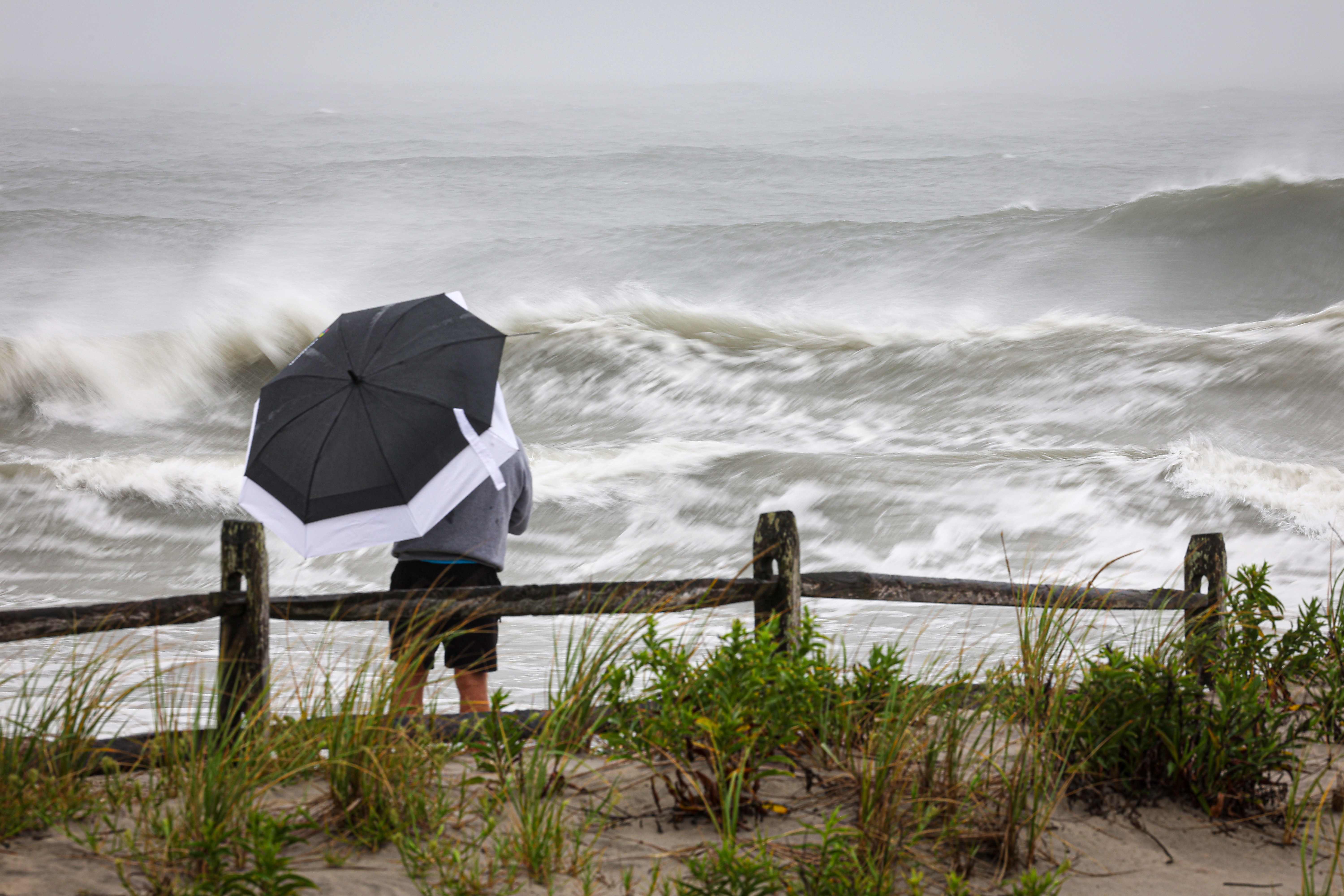
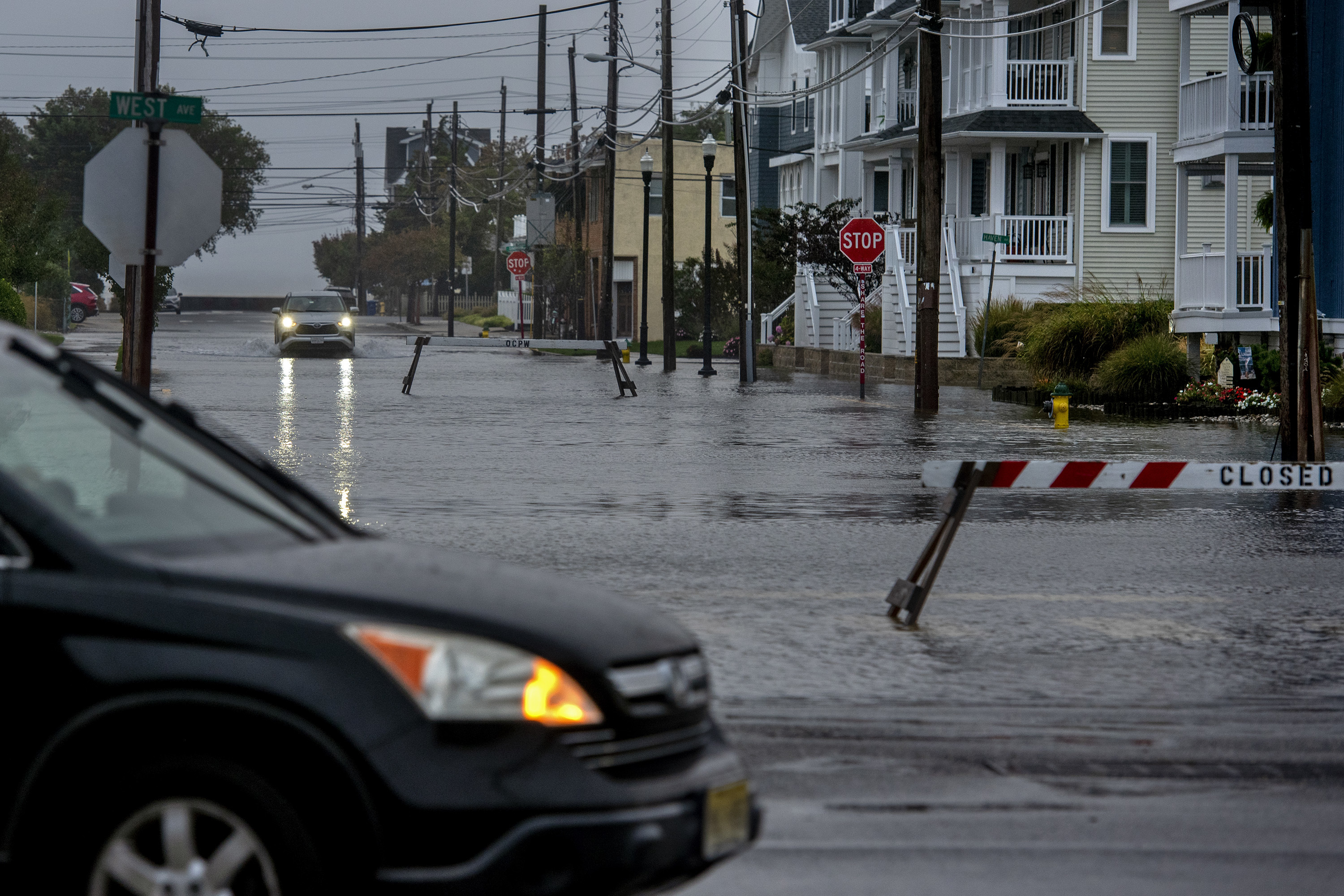
    With an unusually early nor’easter due to form off the Atlantic coast this week, strong onshore winds in combination with the approaching full moon could result in coastal flooding and significant beach erosion at the Shore in what is likely to be the coolest week since early May.

    The National Weather Service office in Mount Holly has issued a flood advisory for the Shore areas for minor flooding late Tuesday afternoon, and a watch for the potential of moderate flooding late Wednesday afternoon into the evening.

    In addition, it said, “Moderate tidal flooding could continue through at least Friday evening’s high tide or perhaps longer.”

    An advisory for minor flooding along the Delaware River in Philly likely will be added Wednesday into Thursday, said weather service meteorologist Eric Hoeflich.

    Potent winds from the northeast could persist through the weekend from the Outer Banks of North Carolina to the Jersey Shore, said Brian Hurley, senior branch forecaster with the federal Weather Prediction Center, in College Park, Md.

    When winds and rains may arrive in the Philly region

    The nor’easter likely won’t develop until Wednesday, said Hurley, but rain and strong onshore winds aren’t going to wait for the party to start.

    Showers are likely Tuesday throughout the region, with winds from the northeast gusting to 45 mph at the Shore, starting Tuesday and continuing into late Sunday night. They are likely to generate beach-eating storm waves. Inland, gusts in the range of 35 mph are forecast for the immediate Philly region, lasting about as long.

    It should be dry in South Philly Tuesday night when the Phillies host the Milwaukee Brewers, but it literally will feel like October, with temperatures around 60 degrees at game time. Readings the rest of the week aren’t expected to get out of the 60s, several degrees below normal.

    Rain is possible Friday, but how much falls later in the week and during the weekend will depend on how intense the coastal storm becomes and precisely how it tracks.

    If you’ve lived around here for a while, that may sound familiar.

    “It’s not different from what we talk about in the winter when we try to determine where the snow” is going to fall, said Dan Pydynowski, forecasting supervisor at AccuWeather Inc.

    What is all but certain is that those beach-eroding and flood-inciting onshore winds are going to have staying power.

    What’s going on up there?

    An area of strong fair-weather high pressure, over heavier air, over southeastern Canada is forecast to hold its ground for the next several days. Said Pydynowski, this is “a very strong high for this time of year.”

    As the storm intensifies to the south, it also will be stirring up onshore gusts across the region. Winds blow counterclockwise around storm centers, and areas to the northwest of the center experience northeast winds. That’s why they are called “nor’easters.”

    Between the two systems, the region is in for a major wind-fest.

    Regardless of whether the system becomes a significant rainmaker, said Hurley, “I think we’re going to have coastal flooding erosion issues from the Outer Banks all the way up through the Delmarva and the Jersey Shore for several days in a row.”

    In addition to the winds, the areas along I-95 will experience so-called cold-air damming, the result of chilly northeast winds being dammed in by the Appalachian Mountains to the west.

    “It’s a very weird time of year to get it,” Pydynowski said.
  • The equinox arrives Tuesday in Philly, and it finally feels like fall

    The equinox arrives Tuesday in Philly, and it finally feels like fall

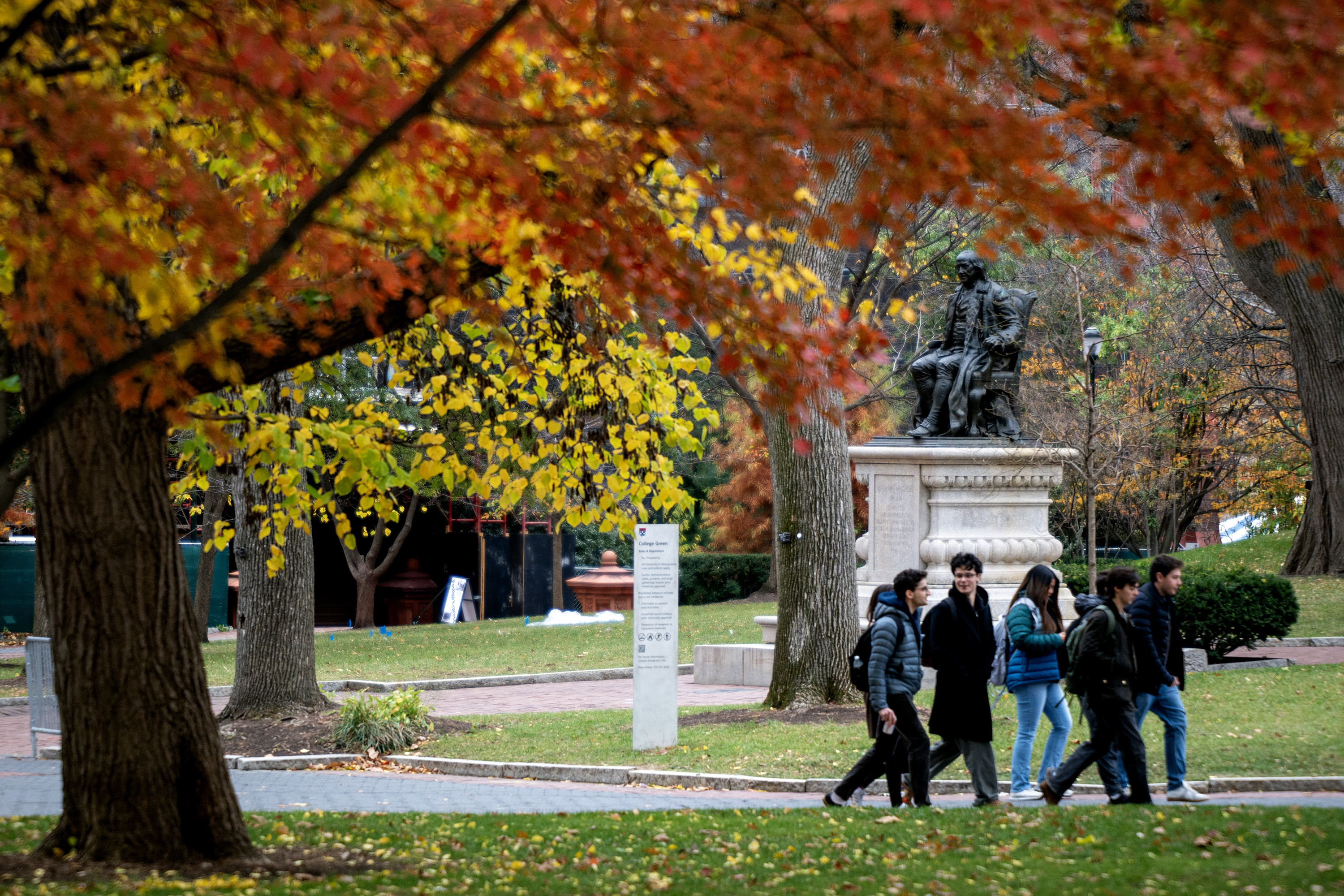
    Nature already is splashing its flecks of yellow on the trees, and soon the Technicolor waves of foliage will ripple toward Philadelphia in what the experts predict will be quite a spectacular season.

    Right on schedule, at 8:04 p.m. Philadelphia time Tuesday, the astronomical fall begins with the instant of the autumnal equinox, when the sun beams its direct light on the equator and nature continues to turn down the dimmer switch in the Northern Hemisphere. It is as though the trees brighten to compensate for our daily loss of 2½ minutes of daylight.

    It’s the season when the night skies are stunningly crowded with winged traffic, when a remarkable 2-inch-long, Halloween-hued creature has its days in the sun.

    And on the nation’s 251st autumnal equinox, we take a look at what nature might offer in the only season with two widely accepted names, “autumn” and “fall.” And we peek at the coming winter — for which a lot of people around here have other names.

    Another Red October?

    A beautiful view along Kelly Drive during a sunny day in the quite warm October of 2024.Jessica Griffin / Staff Photographer

    For the third time in the last four years, an equinoctial cooldown is due this week, with daytime highs in the 60s, as much as 10 degrees below normal.

    But the federal Climate Prediction Center on Thursday had the odds tilted toward above-normal temperatures in October in Philly.

    Monthly readings have been above normal in 15 of the last 16 Octobers. In 2024, it hit 84 degrees on Halloween. In that period, annual average temperatures at Philadelphia International Airport have been about 1.3 degrees above normal, but the Octobers have been a full 2 degrees above.

    A very early line on winter

    The intensifying El Niño in the equatorial Pacific is a major player in the center’s winter outlook, posted Thursday. It favors above-normal temperatures here and in most of the nation. The center eschews snow forecasts, but it does foresee a potentially active storm track along the East Coast.

    A cautionary note: This whole seasonal-forecast exercise remains quite the work in progress, and last winter was yet another victory for atmospheric chaos over science. No one foresaw the 30 inches of snow for Philly or a historic snow-and-ice cover.

    The ‘woolly bears’ vs. science?

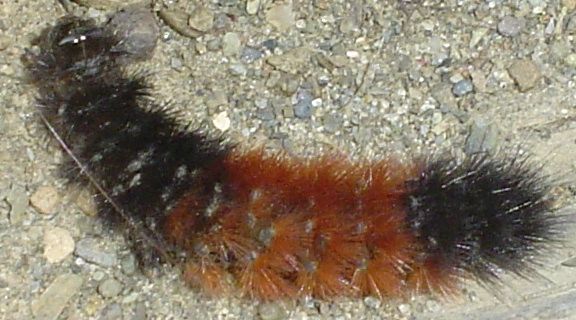
    A “woolly bear” caterpillar. Do those rings say anything about the coming winter?Wiki Commons

    The so-called woolly bear caterpillar had long held a legendary place nationally in weather folklore, but in 1948 the forecasting reputation of the incipient Isabella tiger moths took wings.

    That year a respected entomologist with the Natural History Museum in New York City ventured to a state park and announced that, based on his analysis of the caterpillars’ black-and-orange-ish rings, the subsequent winter would be mild in the New York region. His forecast was dutifully reported in a New York newspaper, and, indeed, the winter was quite mild.

    He continued reporting his annual analyses (however waggishly) that correctly foretold of several mild winters.

    As it happened, some of the winters in that period were so snow-deprived in the Northeast they became the impetus for the snow-making industry that has forever changed skiing.

    Don’t credit or blame the woolly bears, said Douglas S. Richmond, entomology professor at Purdue University. Their ubiquitous presence this time of year all over North America indicates little more than a 100% probability that it is autumn.

    A single crimson tree in Cherry Hill’s Wallworth Park greets Michel and Brigitte Mistler, from Normandy, France, as they take a morning walk while visiting their daughter in the township Oct. 22, 2025. Tom Gralish / Staff Photographer

    They are quite fascinating creatures, he notes, that survive winters by producing “body fluids that function as cryoprotectants — essentially biological antifreeze.”

    Their bodies actually may contain clues about the behavior of a previous season, according to Richmond.

    “It’s probably better to think about woolly bears as being much better equipped with a rearview mirror than a crystal ball,” he said.

    A natural place to look for clues

    Bill Cullina, executive director of the Morris Arboretum and Gardens of the University of Pennsylvania, holds a collection of acorns in November 2019. Regardless of what the acorns said, that winter was virtually snowless.Jessica Griffin / Staff Photographer

    Humans have had a long history of forgoing global forecast models and oscillation indexes in favor of consulting nature for winter clues.

    One popular myth cited by The Old Farmer’s Almanac holds that if the acorns keep raining down from the trees like hailstones, get ready for a big chill.

    Leaves would be another indicator: If they drop early, winter will be a breeze. If they linger late, those breezes might be cold.

    Among Native Americans, beavers were bellwethers. The thicker their autumnal coats and stronger their lodges, the harsher the winter.

    The natural world is where to look for clues about the season to come. The waning sun may dim human energy, but it is an ultra-busy time for a lot of other species. It is prime mating season for animals such as birds, bears, deer, moose — and porcupines. We won’t ask how they hug.

    And birds — billions of them — are on the move.

    An avian air force in the night sky

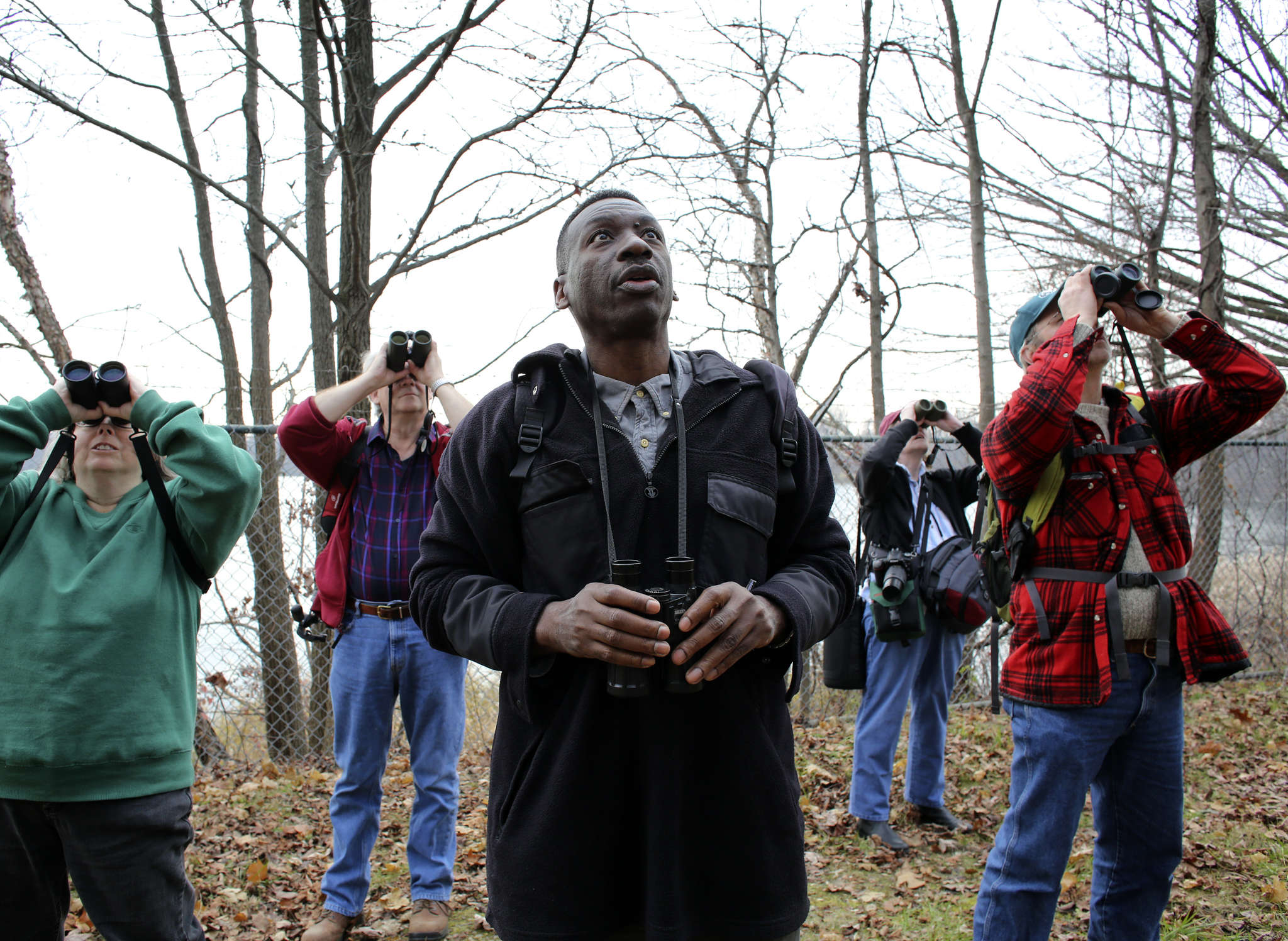
    Audubon’s Keith Russell looking to the skies over Strawberry Mansion while leading a tour.JOSEPH KACZMAREK

    The bird feeders and baths are getting ever emptier these days, but something quite amazing is happening after nightfall about 3,000 feet over our heads.

    An estimated 1.3 million birds flew across Philadelphia on Friday night and early Saturday. And Chester County was the regional hot spot, with 3.8 million heading south-southwest, according to the Cornell University Ornithology Lab’s radar-powered BirdCast dashboard, With a tail wind from the north, they were zipping along at 25 to 30 mph about 1,600 to 1,800 feet above our heads. On the site, you can track bird traffic live, county by county.

    This is the peak migration season, continuing into the first week of October, says Keith Russell, urban-conservation program manager for Audubon Mid-Atlantic, with about 300 species racing through the region, including ruby-crowned kinglets and black-throated green warblers.

    To travel thousands of miles, the birds evidently use a remarkable assortment of clues from the sun, the stars, the Earth’s magnetic field, and even landmarks, according to the Cornell lab.

    If anyone calls you a “bird brain,” be flattered.

    Be grateful for the Earth’s equinoxes

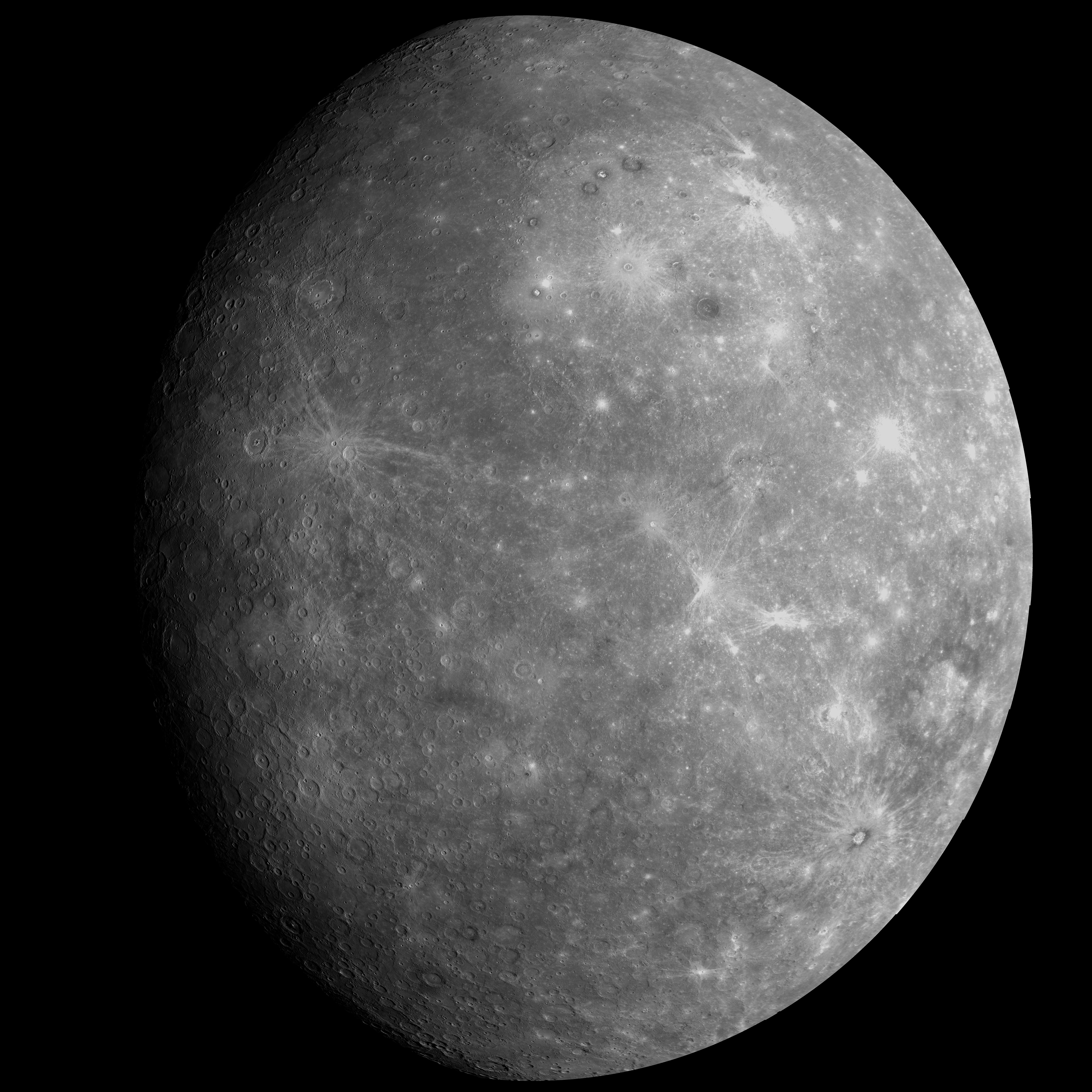
    A NASA/Johns Hopkins University Applied Physics Laboratory/Carnegie Institution of Washington image of Mercury in 2013. You probably don’t want to visit. It has lots of equinoxes but it’s mighty hot, mighty cold, and it has no atmosphere. AP

    Our planet is arguably in the solar system’s sweet spot for equinoxes, which occur twice a year.

    By contrast, Saturn gets one only every 15 Earth years, and Neptune every 82 years, says Harry J. Augensen, director of the Widener University Observatory and a physics and astronomy professor emeritus.

    Mercury has four a year, but temperatures range from 800 degrees Fahrenheit to 290 degrees below zero.

    Earth never looked so good.

  • Satellites show Earth lost more than 12 trillion tons of ice from Greenland, Antarctica in 47 years

    Satellites show Earth lost more than 12 trillion tons of ice from Greenland, Antarctica in 47 years

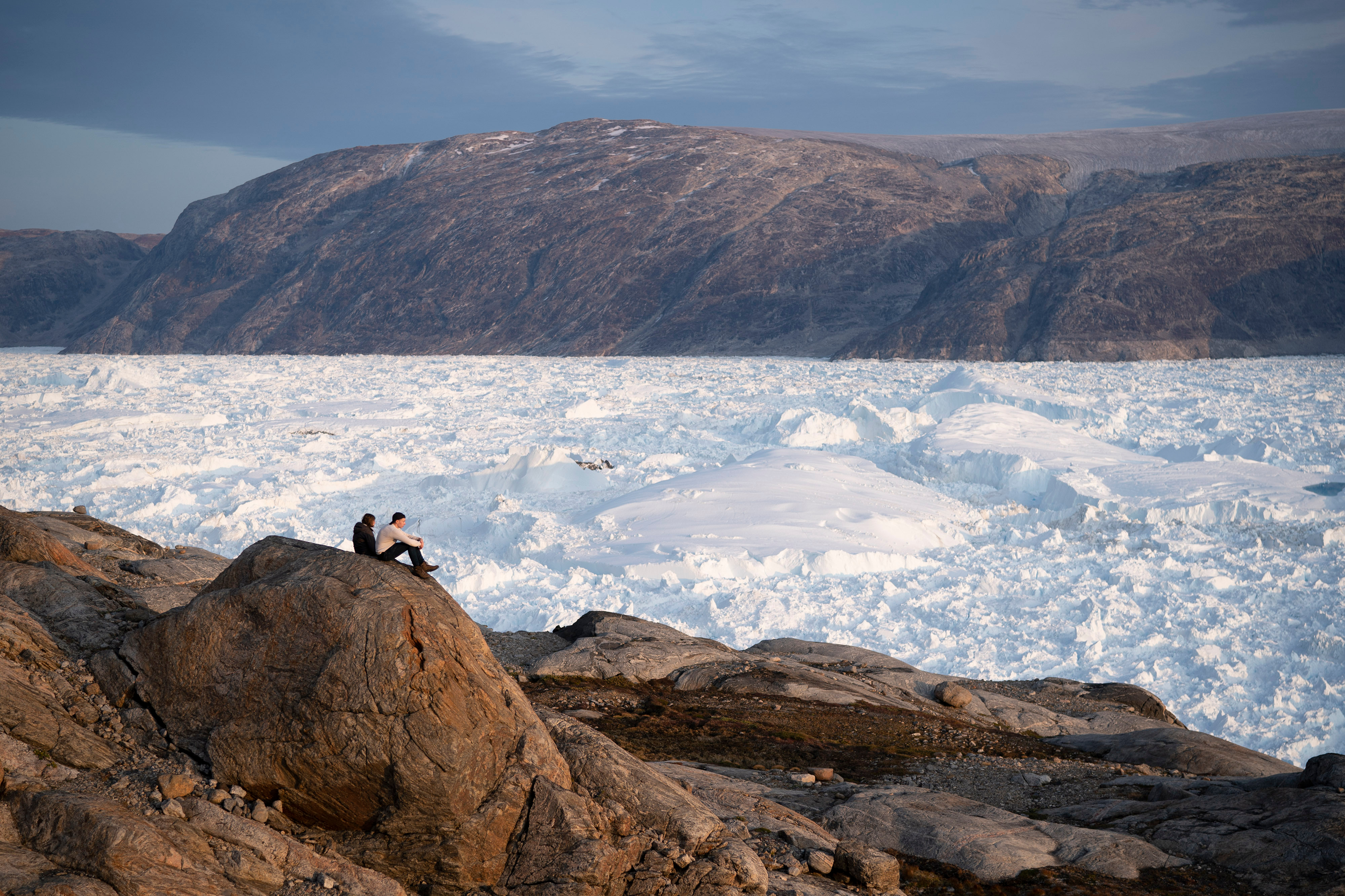
    About 12.5 trillion tons of ice from glaciers in Greenland and Antarctica have melted since 1979, which is enough frozen water to stack ice 5 feet deep across the continental United States, according to a major scientific report.

    A warming Earth is accelerating the melting of the planet’s two major ice sheets, with five-sixths of the melt not coming from hotter air, but from warmer waters eating away at the ice sheets from below and the sides, with glaciers flowing into the oceans, according to a study in Wednesday’s journal Scientific Data. That’s bad news for future sea level rise, the study’s authors said.

    “The ice sheets are melting away fast,” said study co-author Eric Rignot, an ice scientist at University of California, Irvine. “We are melting the polar regions, sea level is rising worldwide and will exacerbate the vulnerability of coastal regions.”

    Huge numbers for ice melt, people flooded

    The numbers behind the melt are both mind-bogglingly huge and deceptively small.

    All that melted ice turned into nearly 3 quadrillion gallons of water, which pushed global sea levels up about an inch since 1979, on top of other climate factors raising ocean heights, the report said.

    An inch may not sound like much, but for every third of an inch (or centimeter) of sea level rise, another 2 to 3 million people get flooded at least once a year, said lead study author Ines Otosaka, an ice scientist at Northumbria University in England.

    The Jakobshavn glacier in Greenland is now retreating up to 164 feet a day, Otosaka said.

    The international collaboration of polar scientists, headed by the European Space Agency, had in the past only looked at ice sheet melt since the 1990s based on European satellite data. But by incorporating NASA satellites, the scientists were able to chart ice sheet volumes in Antarctica back to 1979 and in Greenland back to 1972.

    The melting is accelerating

    “There is a clear trend that the ice sheets are losing more mass and it has been increasing from decade to decade, especially if you look at the ice being discharged to the ocean,” Otosaka said. “And that’s quite clear that there’s a link to climate change.”

    It showed that in the 1970s, 1980s and into the 1990s, the ice sheets were relatively stable, but then melt started happening and it really kicked in during the 2010s, Otosaka said.

    “That’s something to be concerned about as it shows that the changes are tracking decades behind global warming, which means we can expect them to continue for decades more — even if we are able to stop heating the planet,” said study co-author Andrew Shepherd, also of Northumbria.

    The accelerating numbers seemed to pause from 2020 to 2023, but the study’s authors said it more reflected short-term weather variations not long-term trends. Otosaka said the study stopped with 2023 data, but she’s looked at measurements since and found the accelerating trend has picked back up.

    A lot of the stability in Antarctica was because East Antarctica had record snowfall, which compensated for the rapid melting in the less stable West Antarctic Ice Sheet, the authors said.

    The three-year hiatus was “just a bump in the record,” Rignot said. “The long rise is climate and the threat is crystal clear.”

    Worrying about a collapse scenario

    The biggest changes scientists saw are in what they call dynamic processes, which are more abrupt and active than the slow steady melting from the air, and that’s something prone to trigger runaway “tipping points,” Otosaka said.

    New York University ice scientist David Holland said that’s what concerns him “because most of the ice loss is dynamical and that is exactly what you would expect in an ice sheet instability collapse scenario.”

    The international team used 45 independent surveys and 27 different satellites. “The use of relatively independent methods gives me greater confidence in the result,” said Holland, who wasn’t part of the study. “The upward trend is real.”

    “The ‘wild cards’ of Antarctic mass loss continue to pose a challenge for human management of the planet — a clear and present danger, but many decades in the future,” said University of Colorado ice scientist Ted Scambos, who wasn’t part of the study. “We are now as a society smart enough to know the future, but not prudent enough to act upon the knowledge.”

  • Peter D. Yeomans, innovative clinical psychologist at the VA Medical Center and backcountry adventurer, has died at 58

    Peter D. Yeomans, innovative clinical psychologist at the VA Medical Center and backcountry adventurer, has died at 58

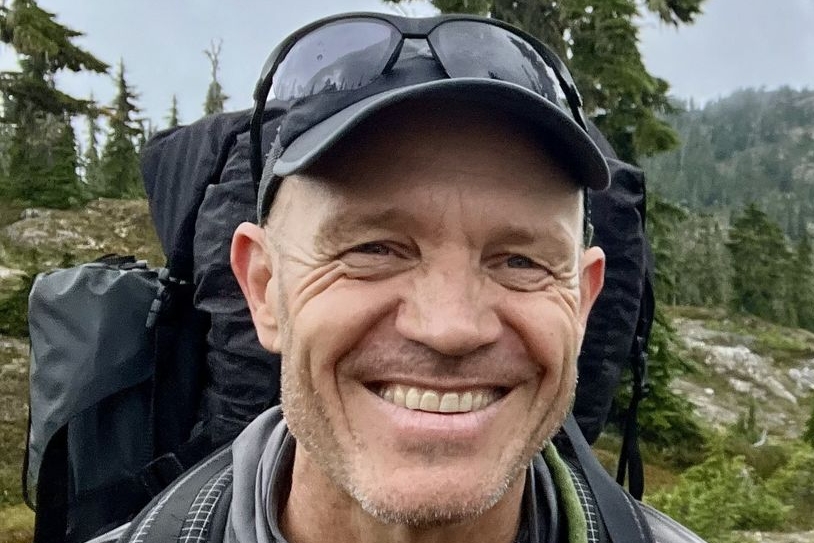
    Peter D. Yeomans, 58, of Philadelphia, innovative clinical psychologist at the Corporal Michael J. Crescenz Department of Veterans Affairs Medical Center, founder of Cold Mountain Counseling LLC, worldwide mountaineer and backcountry adventurer, teacher, author, mentor, Quaker, and volunteer, died Friday, Aug. 28, of cardiac arrhythmia at the VA Medical Center in University City.

    Dr. Yeomans was an expert in trauma, substance use disorder, moral injury, and spiritually integrated healthcare. He joined the Philadelphia VA Medical Center as a staff psychologist in 2009 and became director of its innovative PTSD outpatient team program in 2019.

    He opened his own psychology practice, Cold Mountain Counseling, in 2021 and advised thousands of veterans, fellow backcountry adventurers, and other clients in need across the country. “He was instrumental in the healing process for so many veterans that it is hard to fathom the reach of his influence,” a VA colleague said in a tribute.

    R. Tyson Smith, a friend and colleague, said several veterans told him: “Peter Yeomans saved my life.”

    At the VA center, in addition to physical and mental ailments, Dr. Yeomans and others innovated a treatment for what are called “moral injuries” from military service. They connected therapists with VA chaplains to link emotional healing with faith rituals, and veterans in the program spoke appreciatively about shifting the guilt and shame of moral failures during war from soldiers in general to society at large.

    “These are stories to hear and also for the public to wrestle with,” Dr. Yeomans told The Inquirer in 2019. His wife, Kate O’Shea, said: “He was the most responsible person you could imagine, and he felt he had a responsibility to humanity.”

    Outside the medical center, Dr. Yeomans spent weeks at a time hiking, backpacking, packrafting, skiing, rock climbing, and mountain biking around the world. He reached summits in Alaska and Argentina, had to be rescued from a deep crevasse, and worked as a program supervisor and senior field instructor in the 1990s for the National Outdoor Leadership School in Alaska, Wyoming, Arizona, and Utah.

    Later, he cofounded the local Wilderness Outdoor Leadership Force for teens in Kensington. Talia Young, a longtime WOLF member, called him “genuine and earnest … and joyful with kids.”

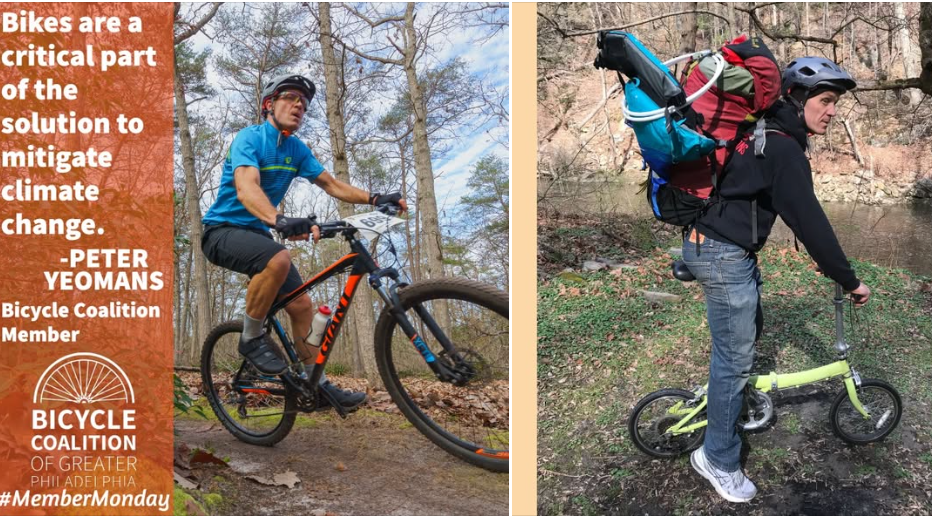
    Dr. Yeomans was an avid cyclist.Bicycle Coalition of Greater Philadelphia

    Longtime colleague Rob Riman said he was a “consummate adventure partner and wildly inspired guide.” On his website, coldmountaincounseling.com, Dr. Yeomans said: “Many of the fondest memories of my life are from adventures in the mountains.”

    He earned a bachelor’s degree in psychology from Harvard University in 1991 and came to Philadelphia from Wyoming in 1997 to be with O’Shea. He earned a master’s degree in psychology from Lesley University in Massachusetts in 2001 and a doctorate in clinical psychology from Drexel University in 2008.

    Dr. Yeomans traveled to New Zealand, Rwanda, Burundi, and elsewhere to train other counselors. He worked in state correctional institutions in Philadelphia and Chester, and earlier for the American Red Cross in Germany.

    He wrote papers and articles about his research, and his book, Reclaiming Integrity After Moral Injury From War, is to be published in 2027. He organized workshops and panels, and was active with the Nationalities Services Center, the Association for Behavioral and Cognitive Therapies, and other groups.

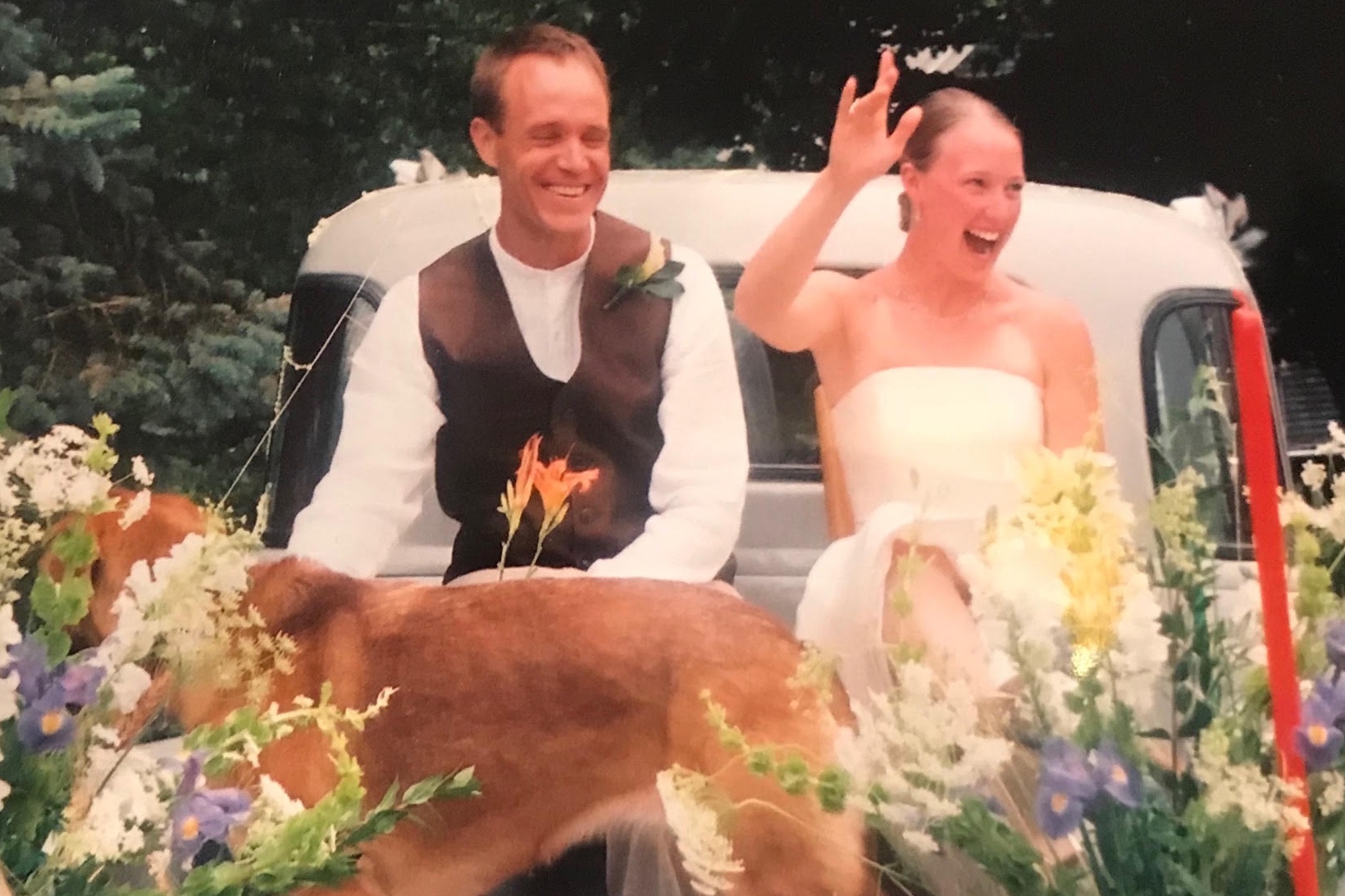
    Dr. Yeomans and his wife, Kate, married in 2002 and had many adventures together. Courtesy of the family

    He taught classes on moral injuries at Germantown Friends School, the University of Pennsylvania, and elsewhere. Longtime friend William Anninger said: “He was particularly good at creating emotional sharing among men.”

    Friend Lila Berman said: “He exuded warmth and care for the people around him, and for the natural environment.”

    Peter Douglass Yeomans was born Aug. 27, 1968, in Berkeley, Calif. The family moved to Massachusetts when he started high school, and he graduated from Concord Academy in 1986.

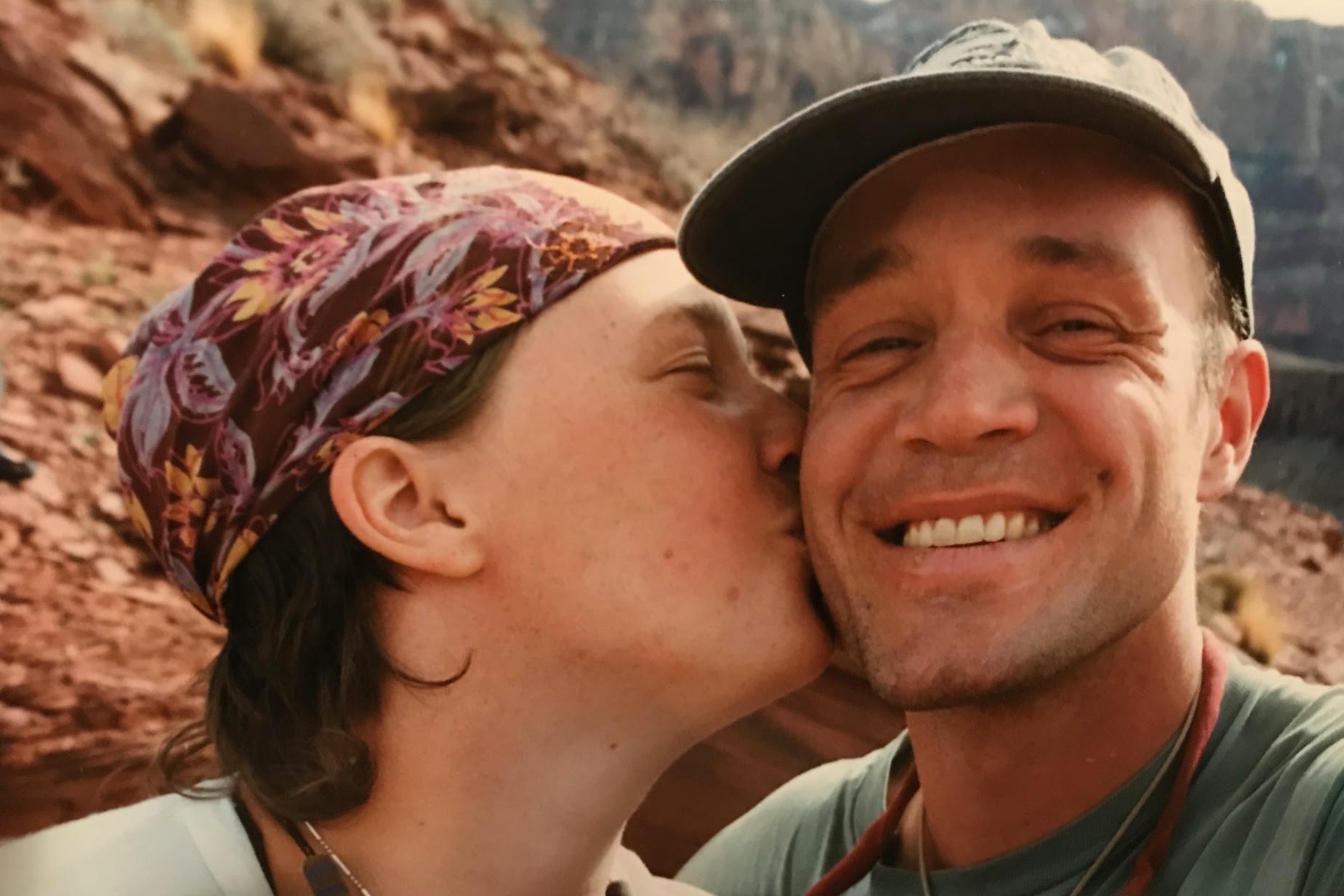
    He met Kate O’Shea at an environmental ethics course in Utah in 1996, and they married in 2002 and lived in Germantown. He made her tea in the mornings and left love notes behind when he left the house first. They reared a daughter, Ada, and sons Josiah and Levi, and they all went on memorable adventures in Wissahickon Valley Park, across the country, and around the world.

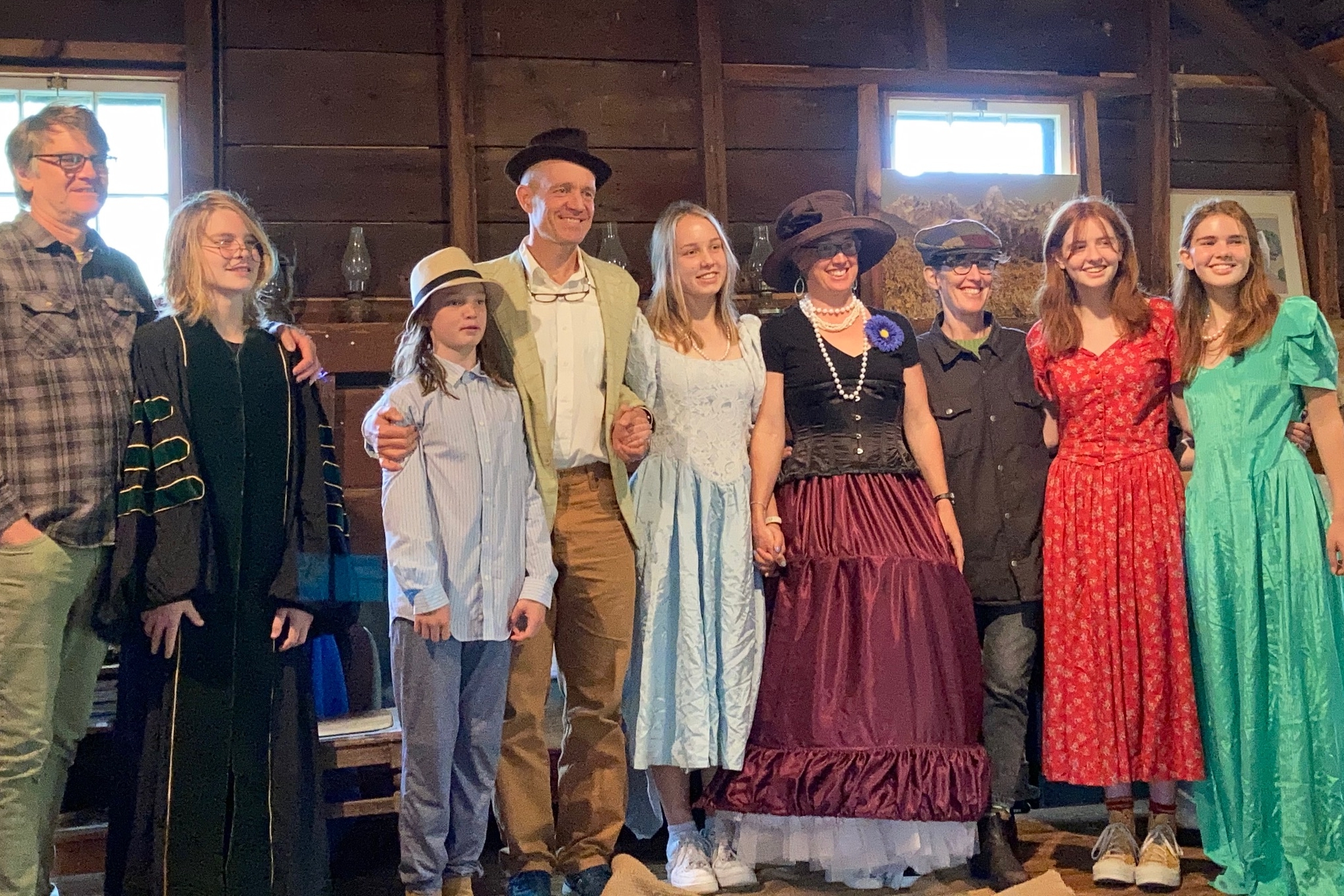
    Dr. Yeomans, rear left on top and fourth from the left on bottom, enjoyed time with his family in the mountains and on stage. Courtesy of the family

    “They complemented each other perfectly,” their daughter said. “He taught us how to read a map, find a campsite, and most importantly bake cinnamon rolls in the backcountry.”

    Dr. Yeomans was a member of the Bicycle Coalition of Greater Philadelphia, and he rode his bike often from home in Germantown to work in University City. He went to Germantown Friends Meeting, played guitar, sang, and acted in theatrical shows in high school and later with community groups and his family.

    He was inclusive and encouraging, his brother, Ben, said, “drawing out capacities in me I wasn’t yet trusting.” His parents, Anne and Tom, said: “It has been a great privilege to have been Peter’s parents.”

    His mother-in-law, Margaret O’Shea, praised his “compassion, selflessness, nobility, and grace,” and his father-in-law, Dan O’Shea, said: “When our daughter met Peter she described him as ‘Mr. Perfect.’ Little did we know how perfect.”

    “It has been a great privilege to have been Peter’s parents,” his parents said.Courtesy of the family

    Kate O’Shea said: “Because of Peter, our world is a kinder, more generous, and more loving place.”

    In addition to his wife, children, parents, brother, and in-laws, Dr. Yeomans is survived by other relatives.

    A memorial service is to be held at 2 p.m. Saturday, Oct. 3, at Germantown Friends Meeting, 47 W. Coulter St., Philadelphia, Pa. 19144.

    Donations in his name may be made to Western Resource Advocates, c/o Elizabeth O’Connell, 1401 Walnut St., Suite 200, Boulder, Colo. 80302; Friends of the Wissahickon, 40 W. Evergreen Ave., No. 108, Philadelphia, Pa. 19118; and veterans programs at the Philadelphia Outward Bound School, 3401 Reservoir Dr., Philadelphia Pa. 19121.

  • Philly Parks and Rec leader approved the unpermitted work at an FDR Park field

    Philly Parks and Rec leader approved the unpermitted work at an FDR Park field

    Parks and Recreation Commissioner Susan Slawson said she approved renovations to FDR Park’s Ashburn Field without required state permitting because she wanted renovations to be complete by the MLB All-Star Game.

    The missing permit was designed to address erosion control and stormwater release at the site.

    “We were mindful of the waterways and natural areas within FDR Park,” Slawson said of the decision. “All erosion and sediment controls were in place during construction, and safety was never an issue.”

    Slawson told WHYY last week that approving projects without proper permits is not how the department “typically” handles projects, but she allowed the work to proceed “to accommodate the MLB All-Star Game.”

    Typically, state law supersedes city approvals.

    The city’s parks department actively manages “the natural areas within FDR [Park] to protect water quality and support healthy natural systems while balancing the park’s important role in active recreation,” Slawson said.

    Missing permits

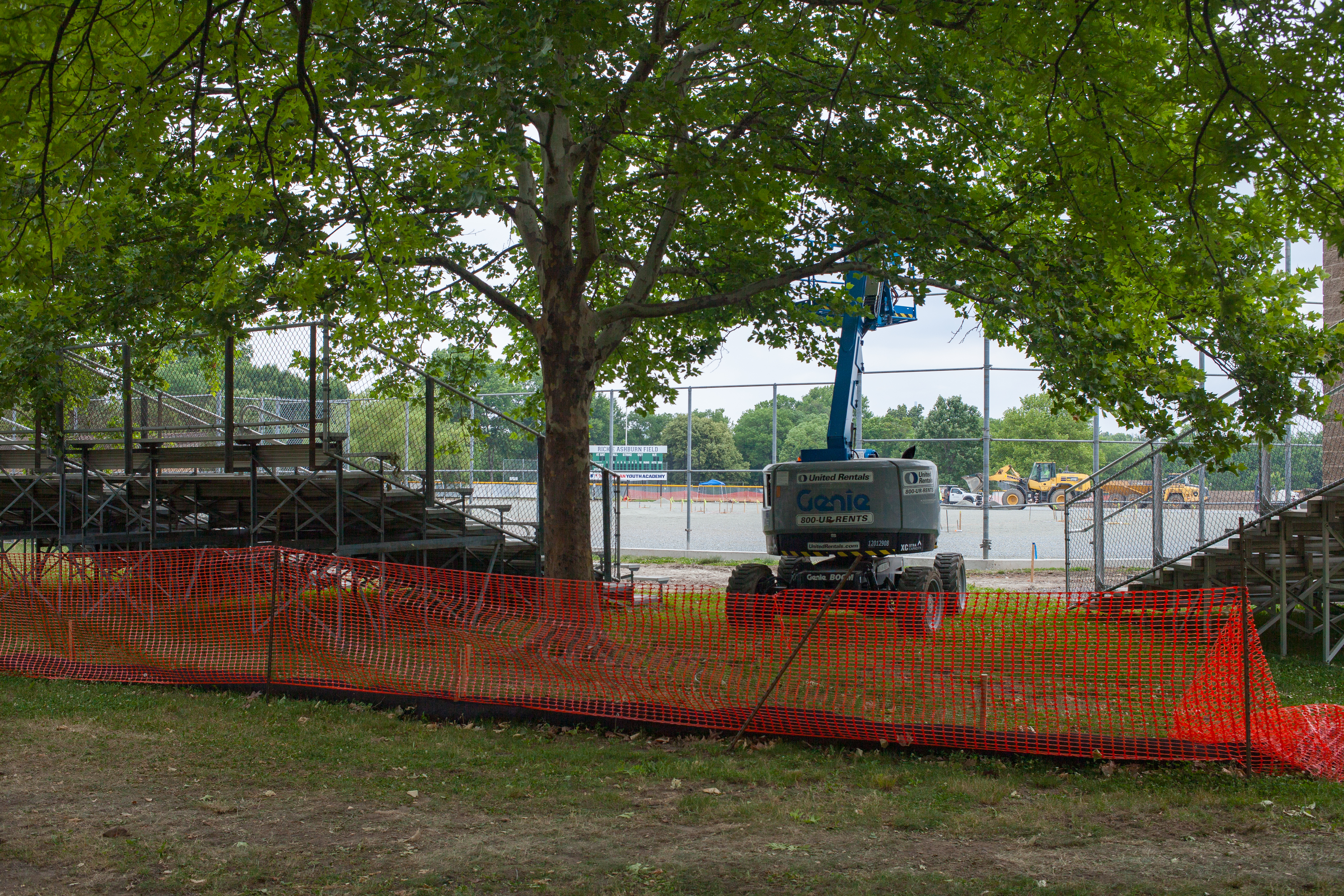
    In the lead up to the MLB All-Star Game, which took place in July at Citizens Bank Park, the MLB and the city partnered to renovate the 28-year-old Ashburn Field.

    A ribbon-cutting ceremony was held July 10, just days ahead of the All-Star Game, to show off Ashburn’s new synthetic turf field and an updated drainage system to reduce flooding.

    However, as first reported by The Inquirer last month, the Phillies and the city did not receive a required permit from the state’s Department of Environmental Protection. The permit was designed to address erosion control and stormwater release at the site.

    The Phillies applied for the permit May 13, according to the Department of Environmental Protection’s website. Nearly two weeks later, the department sent the Phillies a letter denying the permit, citing 32 issues the team would need to address before receiving the permit to continue renovations. That letter noted that final plan drawings had not been submitted, other drawings failed to include the project’s boundary, and not all water discharge areas were noted.

    A local engineering firm hired by the Phillies responded in June to the May letter.

    On July 7, the Department of Environmental Protection sent another letter to the Phillies noting technical deficiencies. It sent another letter July 24, about two weeks after the ribbon cutting, noting an outstanding deficiency and advising the Phillies to resubmit information in coordination with the Philadelphia Water Department.

    What’s next

    Bonnie Clark, a spokesperson for the Phillies, said the team met with the Water Department last week and was continuing to remedy issues to obtain the permit.

    The permit is still pending on the Department of Environmental Protection website. DEP spokesperson Robyn Briggs declined to comment on possible enforcement actions or penalties as internal deliberations continue.

  • Downpours expected to return to the Philly region this weekend, with a flood watch in effect

    Downpours expected to return to the Philly region this weekend, with a flood watch in effect

    The atmosphere may be ready to engage in some regressive behavior, with August-like downpours in the weekend outlooks.

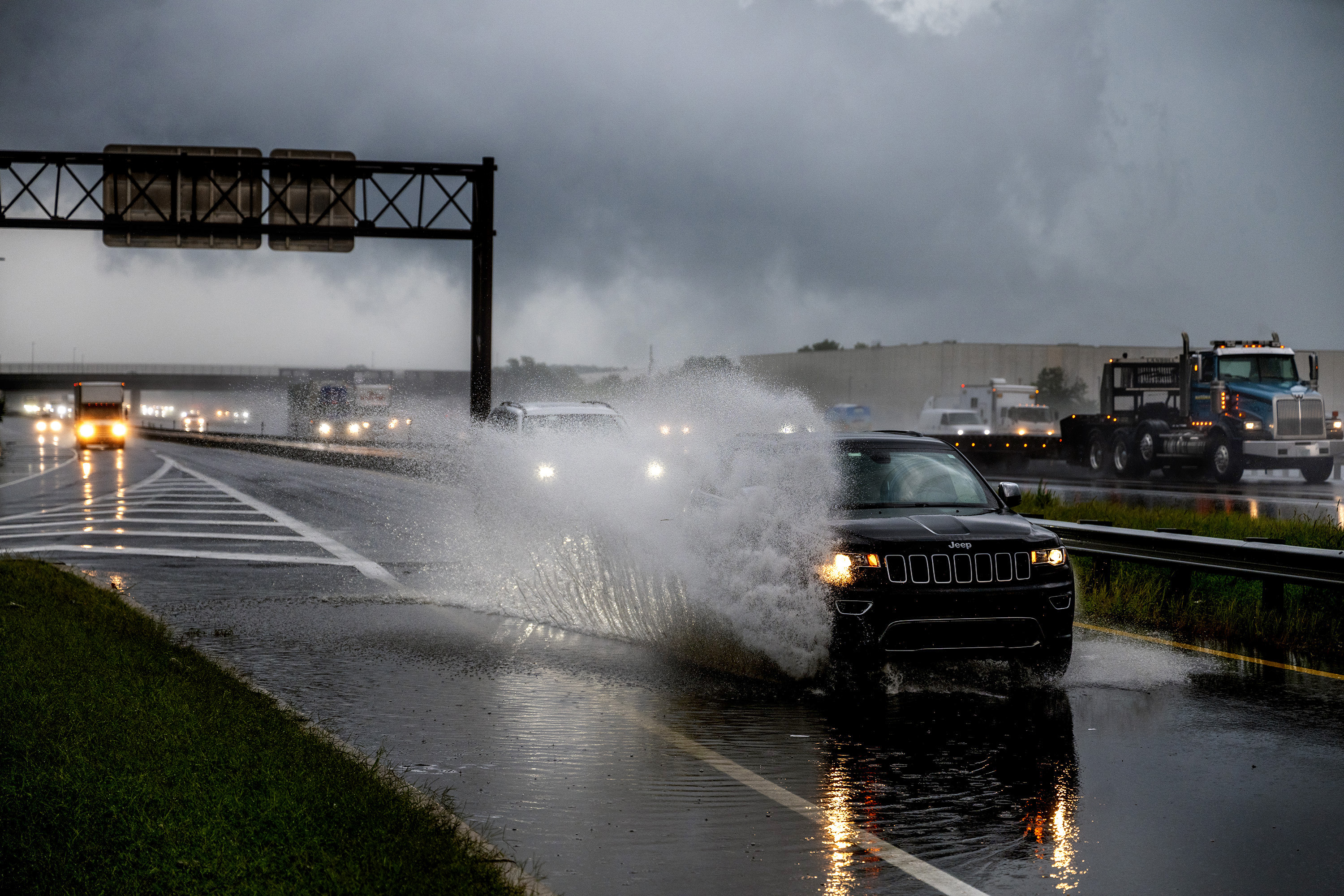
    The National Weather Service has posted a flash-flood watch in effect from 11:59 p.m. Saturday through noon Sunday for the entire region, except for Chester County, with heavy showers possible.

    “We have plenty of moisture coming up from the south,” said Frank Pereira, meteorologist with the federal Weather Prediction Center, in College Park, Md.

    The center has the I-95 urban corridor from central Virginia through Philadelphia with an enhanced probability of “excessive rainfall.”

    Widespread heavy rain amounts aren’t likely, said Pereira, but hefty totals could occur in a short period of time.

    The weather service office in Mount Holly said rainfall rates of two inches an hour would be possible.

    Fortunately, after a week’s respite from the episodic rains that so characterized July and August, setting off record numbers of flood warnings, the weather service notes that levels are low in the region’s major waterways.

    “The bigger concern with this event will be flash flooding,” the weather service said, the familiar likes of flooding along roads and near the smaller streams.

    While the downpours may evoke August, these would be a shade different in that they wouldn’t be driven by daytime heating, said Paul Fitzsimmons, meteorologist in the Mount Holly office. The sun is getting weaker, the days shorter.

    Setting off the rains would be an approaching cold front from the west and a warm front migrating northward.

    The rains could get an extra kick from very warm decks of clouds about two miles above the surface, said Pereira.

    “You have this very deep saturated warm layer,” he said. “This increases the efficiency of the rainfall,” along with producing larger raindrops.

    In any event, Saturday should be dry during the day, as should most of Sunday afternoon. On the plus side, drought conditions continue to recede.

    Is the drought officially, absolutely over in the Philly region?

    All of New Jersey remains under a state-declared drought warning; however, conditions throughout the Philadelphia region have improved immensely.

    After 16 consecutive months of below-normal precipitation in Philadelphia heading into July, the totals at Philadelphia International Airport are above normal for the year.

    In the latest interagency U.S. Drought Monitor update posted Thursday, most of the region was categorized as absolutely drought-free, a big change from just last week.

    All of Philly was drought-free. Last week, the entire city was designated as “abnormally dry” — the least-serious tier on the monitor’s scale.

    In Chester County, which had been under a state drought “warning” last month, 90% of the county was considered to be in the clear, an increase of 37% from the previous week.

    It might be time for a drought farewell party.

  • Kelly N. Moore, award-winning clinical psychologist, Rutgers professor, and mental health activist, has died at 46

    Kelly N. Moore, award-winning clinical psychologist, Rutgers professor, and mental health activist, has died at 46

    Kelly N. Moore, 46, of Burlington Township, award-winning clinical psychologist, founder of Moore Wellness LLC, director of the Center for Psychological Services at Rutgers University, graduate school clinical associate professor, former fellow at the University of Pennsylvania’s Center for the Treatment and Study of Anxiety, mentor, author, mental health activist, volunteer, and 2026 Willingboro High School Hall of Fame inductee, died Thursday, Aug. 20, of kidney cancer at Virtua Voorhees Hospital.

    Adept at treating anxiety, depression, trauma, and perinatal disorders, Dr. Moore became director of the Rutgers Center for Psychological Services and a clinical associate professor in the Graduate School of Applied and Professional Psychology in 2020. As CPS director, she mentored hundreds of doctoral students regarding academic requirements and clinical procedures, and supervised the center’s community mental health clinic.

    She significantly expanded the center’s services and outreach, Rutgers colleagues said in a Facebook tribute, and forged important partnerships on campus and in the community. Colleagues said: “Her warm demeanor, melodic voice, vibrant spirit, and calming presence made all who met, and were fortunate enough to know her, feel seen, welcomed, and heard.”

    Earlier, Dr. Moore was program manager for the Rutgers Children’s Center for Resilience and Trauma Recovery. She also taught in the school’s juvenile justice and youth development programs.

    She spent two years as a fellow at Penn’s Center for the Treatment and Study of Anxiety after earning her doctorate in clinical psychology at Rutgers in 2011. During the COVID-19 pandemic, she founded Moore Wellness LLC and focused on helping women, children, and clients of color.

    “Wellness does not mean you will never experience challenges,” Dr. Moore said in an online profile for Psychology Today magazine. “Rather, it means having the tools to manage the challenges when faced with them.”

    Dr. Moore was an outspoken activist for mental health education and services. She spoke with groups often, organized workshops, and was featured in newspapers and magazines and on TV and podcasts. “Just trying to get people to understand as much as they can about the impact their mental health and well being have on their day-to-day lives,” she said in a 2026 podcast interview with the Multicultural Counseling Institute.

    She blogged about mental health on her website, moorewellnessllc.com, and contributed pages to academic texts. In 2025, she cowrote Racial Trauma in Black Clients: Effective Practice for Clinicians.

    She belonged to the American Psychological Association and the New Jersey chapter of the Association of Black Psychologists. She was active with the Therapy for Black Girls podcast and the Leadership Institute for Women in Psychology.

    Dr. Moore was a cheerleader and lacrosse player, and graduated from Cornell University in 2002.Courtesy of the family

    She earned leadership and achievement awards from the New Jersey Psychological Association, the National Council of Schools and Programs of Professional Psychology, and other groups. She was president and a board member of the Burlington County chapter of Jack and Jill of America Inc. Colleagues there called her “a beautiful example of leadership, service, grace, and love.”

    Kelly Nicole Walker was born Aug. 20, 1980, in Philadelphia. Her family moved to Willingboro when she was 2, and she graduated from Willingboro High School in 1998.

    She was a cheerleader and played lacrosse and viola as a teenager. Her mother, Diana, was a social worker, and she showed Dr. Moore up close how one person could impact their community.

    “I was just fascinated by this concept,” Dr. Moore told the Multicultural Counseling Institute in the podcast interview. “It was already set at a young age that this was the kind of work I should be doing.”

    She earned a bachelor’s degree in human development at Cornell University in 2002 and a master’s degree in education at Penn in 2003.

    She met Melvin Moore through friends, and they married in 2004 and had sons Miles, Mason, and Matthew. They lived in Marlton and Delanco, and, since 2015, in Burlington Township.

    Dr. Moore was a longtime member and dance choreographer at the Gospel Tabernacle Church. She joined Alpha Kappa Alpha Sorority Inc. at Cornell in 2000 and was on the executive board of its Pi Mu Omega chapter in Willingboro.

    Friends noted her “warmth, generosity, and kindness,” and called her “genuine” and “quietly brilliant” in online tributes. One friend said: “She sure made me proud to be from Willingboro.”

    Dr. Moore and her husband, Melvin, married in 2004 and had three sons. Courtesy of the family

    Dr. Moore doted on her sons and called them her “M & M’s.” She was an avid reader and led several book clubs.

    She liked to garden, play piano, take photos, cook, and crochet. She was diagnosed with renal medullary carcinoma about a year ago and was determined, her husband said, to reach her 46th birthday. She did it.

    “She always led with purpose and intention,” her sister, Kim Hayes, said. “She was such an amazing person.”

    Dr. Moore’s husband said: “Kelly exemplified unmatched strength in how she lived, how she loved, and how she led. She loved helping other people.”

    In addition to her husband, sons, and sister, Dr. Moore is survived by her father, Michael, her brother, Ahmeen, and other relatives.

    A celebration of her life was held earlier.

    Donations in her name may be made to the Chris “CJ” Johnson Foundation, Box 292, Sugar Land, Texas 77487.

    Dr. Moore (left above) was close with her sister, Kim. Below, she celebrated when her book was published in 2025.Courtesy of the family
  • The ultra-quiet Atlantic hurricane season is setting records, thanks to El Niño

    The ultra-quiet Atlantic hurricane season is setting records, thanks to El Niño

    Those hurricane outlooks posted by the major forecasting services agreed this was going to be a quieter-than-normal hurricane season.

    But they didn’t call for it to be this quiet.

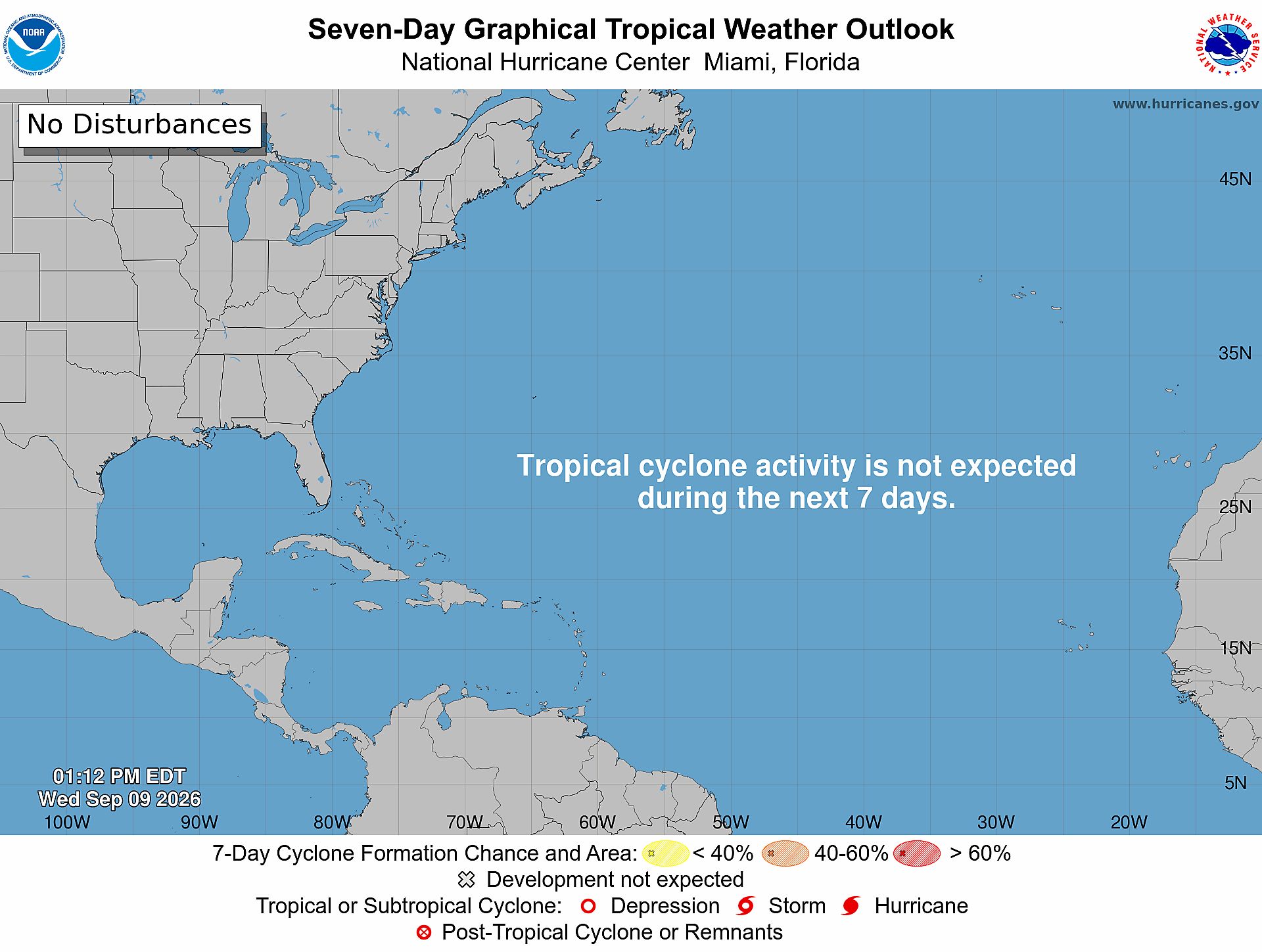
    With the season at its climatological peak, it is about to set a record for the longest wait for the development of a first hurricane in the satellite era, dating to the 1960s, according to the National Oceanic and Atmospheric Administration.

    The standing record, Sept. 11, was set in 2002 and 2013, and this year the National Hurricane Center is seeing zero chances that a hurricane forms in the basin, which includes the Gulf and Caribbean, during the next seven days.

    As the hurricane season approaches a peak, the National Hurricane Center map sums up the quiet of the Altantic Basin. National Hurricane Center

    In 2013, only two hurricanes — storms with winds of at least 74 mph — formed during the season, which spans from June 1 to Nov. 30. That tied 1982 for the fewest number of hurricanes, said Matt Rosencrans, a scientist at NOAA’s Climate Prediction Center.

    The 2026 season might make a run at that record, and the state of the atmosphere and history suggest it has a shot.

    Who hit the mute button?

    The explanation “is almost 100% El Niño,” said Philip Klotzbach, a hurricane specialist at the Colorado State University’s Tropical Meteorology Project, which has been issuing outlooks for over 40 years.

    Would-be hurricanes in the Atlantic haven’t had a snowball’s chance to reach maturity.

    El Niño already is shearing records

    NOAA has said the periodic El Niño warming in the equatorial Pacific has a chance to be the most potent on record.

    Sea-surface temperatures in the vast, key El Niño monitoring zone have been running more than 3 degrees Fahrenheit above normal. That anomalous warmth is affecting the overlying atmosphere in such a way as to generate powerful upper-air winds from the west that are inhibiting the development of tropical storms in the Atlantic Basin.

    For the strength of vertical shear across the western Atlantic, “we continue to crush” records, Klotzbach said, in observations dating to 1979.

    How important is El Niño to the Atlantic hurricane season?

    The El Niño effect on Atlantic hurricanes is evident in the available records. In the six years with El Niños of comparable intensity since 1950, hurricane activity has been well below normal.

    Rosencrans cautions, however, that the data have limits. The era of satellite observation did not begin until 1966, and the credible El Niño records start with 1950.

    Satellites have lifted the qualities of observation to dramatically different heights.

    Klotzbach noted that in 1941 a first hurricane was not observed until Sept. 21, but neither satellite data nor aircraft reconnaissance was available. Plus transatlantic shipping, an important observation source, likely was limited because of the war. Thus, it is entirely possible that a hurricane had occurred earlier.

    One of the strongest El Niño years, 1982, coincided with the record-low number of hurricanes.

    But during the other record holder, 2013, the Pacific waters actually were slightly cooler than normal.

    Even the strongest El Niño would not act in isolation in the chaotic environment of the atmosphere.

    Early in this season, layers of Saharan dust in the atmosphere may have inhibited tropical storm development, said Benjamin Kirtman, dean of the University of Miami Rosenstiel School of Marine, Atmospheric, and Earth Science.

    But the evidence of El Niño’s power over the Atlantic season is “pretty clear-cut.” And this one, he said, was especially precocious.

    “Whereas El Niño episodes typically ramp up toward the peak of hurricane season, this event was already in place and strengthening well before the season’s most active months,” Kirtman said, creating “hostile shear conditions.”

    Take the career of Dolly, which was knighted one of the season’s five tropical storms at 11 a.m. Aug. 27 and demoted to a remnant at 11 a.m. Aug. 28. The hurricane center said it had entered “a hostile environment with significant … shear.”

    What does (or doesn’t) happen next?

    The likelihood of El Niño’s retaining strength into the winter and the limited historical record argue against a late hurricane rally.

    On average, six tropical storms, those with winds of at least 39 mph, have formed after Sept. 11, and four hurricanes. A total of only five hurricanes formed during all six of the comparable El Niño years.

    “I fully expect there to be additional storm threats as the season progresses,” Kirtman said, “but the effects of El Niño remain, so it is unlikely that the season will suddenly become very active.

    “That being said, it only takes one storm to affect where you live.”

  • Philly’s fall foliage season is looking special, September weather permitting

    Philly’s fall foliage season is looking special, September weather permitting

    The sequences of steamy days and downpours in the Philly region and elsewhere won’t rank among the cherished memories of summer, but they may well end up having been a boon to the imminent fall foliage season.

    The consensus among the veteran experts who pay close attention to the behavior of the trees is that this is shaping up to be an excellent season for spectacular waves of fall colors that ripple from northern New England to North Carolina, cresting from early October into early November, with Pennsylvania and New Jersey in the middle of it all.

    As much as some folks may have been fed up with the humidity banquet, the trees — at least those that survived the storms — have been partying. Unlike last year, characterized by an early leaf fall, the players are remaining on the stage.

    “Despite a droughty start to the growing season and some frost damage, our trees are looking green and healthy now, overall,” said Ryan Reed, a forestry specialist with the Pennsylvania Department of Conservation and Natural Resources, who is “looking forward to a beautiful season.”

    What’s more, the snows and Arctic freezes of winter also may have made a significant contribution: The long-lasting snowpack patiently watered the foliage as it melted, neutralizing drought conditions. That was especially true in New England, meteorologist Jim Salge said in his Yankee Magazine foliage forecast.

    But the key to the foliage season would be what happens this month, said Howard Neufeld, a biologist with Appalachian State University, who analyzed weather-foliage patterns for the last several years around the campus area in the heart of the Blue Ridge Mountains and all but interrogated the trees to get at their myriad secrets, most of which they kept to themselves.

    He holds that the main driver in the drama of the season is the production of anthocyanins, the reddish tints that are the show-stealer, and provide the tasteful contrasts to the yellows and russets.

    Sunny days and cool nights are best, say the experts, but like everything else involving the atmosphere, this all gets very complicated.

    As for whether the weather will cooperate, the burgeoning El Niño aside, the scientists who assembled the federal Climate Prediction Center’s fall outlook saw odds slightly tilted toward above-normal temperatures in the fall.

    When to expect the onset and peak foliage

    The day-to-day weather is going to influence when the leaves begin to turn and when they will peak. Just what effect long-term warming is having on the seasons, which are primarily light-driven, is unclear, and “each year brings subtle differences,” says William Keeton, forestry professor at the University of Vermont. Typically, the leaves up his way take on serious color by the end of September and peak the first or second week in October. Where Neufeld, an emeritus professor of ecophysiology, works in the Blue Ridges, whose ultra-popular foliage season was wiped out two years ago by Hurricane Helene, the peak can extend into early November.

    On average, in the immediate Philly region, expect onset in mid-October, with peak around Halloween.

    The higher the September temperature, averaged for the month, the later the onset of color, Neufeld said. A single degree could mean a difference of two days, he added.

    Conversely, he found that higher daily maximum temperatures in September actually sped up the onset. (He didn’t know why, either.)

    The key period for the weather conditions begins right about now, he said. A run of sunny days into October would be ideal for color, but a warm and rainy period would take the blush out of the reds and make for a duller show.

    But that’s very much subject to variability: The trees have complex inner lives.

    What’s behind the fall foliage show

    Without getting too deeply into the weeds (or the leaf piles), here are the basics of the process.

    Along with the shorter days — Philly loses an hour and 15 minutes of sunrise-to-sunset time this month — the sun is losing some mojo. With the dimming of the light, green chlorophyll recedes from leaves, yielding to those carrot-colored carotenoids and flamboyantly reddish anthocyanins. And Neufeld holds the reds are the stars.

    “The oranges and yellows tend to be the same from year to year,” he said, “but the reds vary.” When it’s sunny and cool, sugars accumulate on the leaves and the reds can go to town. But if it’s cloudy and warm, the sugar factories shut down.

    Just why some leaves turn red, such as the maples, “is not completely understood,” Keeton said.

    Neufeld, a biologist, noted that it doesn’t happen in Europe, and holds the redness is related to a form of malnourishment — a function of a lack of nutrients in Eastern North American soils.

    Whatever the cause, the process has contributed to the health and well-being of spectacular falls in one of the world’s prime foliage viewing corridors.

    This year is shaping up to be another one, said Marc Abrams, a Penn State forestry professor emeritus, who has been tracking the woods for over 30 years. “At this point,” he said, “all systems go.”

    Where and when to go leaf-peeping

    For an overview of the likely onset and peak times across the country check out explorefall.com/fall-foliage-map. Its custodians say it’s the product of climatology and computer modeling.

    The show opens in northern New England, and the NewEngland.com site posts graphics that show average conditions for each day.

    Starting Oct. 1, the weekly Pennsylvania Department of Conservation and Natural Resources updates and forecasts, assembled by Reed from on-site reports from forestry officials, will be up and running.

    And check out The Inquirer’s guide on where to peep in the Philly region.

  • EPA proposal could leave the public in the dark on data center plans

    EPA proposal could leave the public in the dark on data center plans

    WASHINGTON — A plan by the Environmental Protection Agency could make it harder for the public to learn about and comment on proposed AI data centers that have sparked backlash in communities across the United States and transformed the midterm election landscape.

    The EPA proposal would eliminate a federal requirement that states notify the public and seek comment before issuing air pollution permits for data centers and other industrial facilities. States could still offer opportunities for public comment, but the EPA would no longer mandate them as a condition for states to grant permits.

    Critics say the move could thwart local residents from learning about proposed data centers or making their voices heard before projects are approved and construction begins. The move comes during a widespread backlash as tech giants build hundreds of massive server warehouses to fuel artificial intelligence and cloud computing.

    “By eliminating the long-standing federal requirement for public notice, this proposal continues efforts by the Trump administration to turn its back on the fundamental EPA principle of transparency,” said Mike Koerber, a former deputy director of EPA’s air quality office.

    If made final, the plan could create “an unlevel playing field where citizens in one state are kept completely in the dark about new data centers and heavy industrial emissions in their backyards, while neighboring states maintain oversight,” he said.

    Under the EPA plan, states with weak or no requirements for public comment could speed permits for data centers, power plants and other pollution sources without consulting the public or even informing communities where the facilities are located, Koerber and other critics said.

    Communities deserve a chance to weigh in, advocates say

    “Data centers and other industrial sources should not be able to get their air pollution permits in secret,” said Keri Powell, senior attorney for the Southern Environmental Law Center, an advocacy organization that leads a coalition of nearly 200 environmental, health and community groups that filed comments with the EPA opposing the plan. “Communities deserve a chance to weigh in” before potentially harmful projects are approved.

    An EPA spokesperson called that a false narrative.

    “In our proposal we are saying that states get to pick how they want their permitting process to go for minor sources” of air pollution, spokesperson Carolyn Holran said.

    The EPA proposal does not specifically identify data centers, she said, noting that the plan also would apply to laundromats, car repair shops and even landfills and steel mills that are considered “minor” pollution sources under the federal Clean Air Act.

    The proposal does not demand that states make particular changes to their programs, nor does it alter federal emission standards or weaken environmental protections, Holran said. “Rather, the proposal simply aligns the national program with the Clean Air Act language to ensure that states are in the lead regarding their programs.”

    EPA Administrator Lee Zeldin, who has made U.S. leadership in AI a top agency priority, said in a statement that the plan is aimed at “cutting unnecessary and burdensome red tape, unleashing American energy and advancing cooperative federalism” with states. The EPA is expected to make the rule final next year.

    President Donald Trump continues to stick up for data centers, even as politicians from both parties criticize them and many communities try to block them. Trump said on social media this week that U.S. communities that don’t have data centers will “end up being backwards and poor.”

    Trump says data centers are crucial in the AI race against China

    Trump has acknowledged that data centers need “a little public relations help” and has pushed tech companies to generate their own electricity to shield consumers from higher utility bills. The Republican president calls data centers critical to winning the AI race against China.

    Environmental groups and other critics say the EPA proposal ignores the reality that many states, particularly in the South and Midwest, don’t require public notice or hearings beyond those set by federal agencies. The federal plan would leave many communities in the dark before data centers show up in their backyards, they said.

    “It’s beyond cruel for Trump’s EPA to silence front-line communities who bear the brunt of unhealthy air,” said Brandon Jones-Cobb, a senior attorney at the Center for Biological Diversity, another environmental group.

    The EPA “has already turned its back on science, cut enforcement against industrial polluters and eliminated life-saving air pollution measures,” he said. “Now it wants to shut the public out of decisions to build or expand facilities that expose communities to dangerous air pollution, including data centers.”

    Powell, whose organization focuses on six Southern states from Virginia to Alabama, said many states “only do what is required by federal law” when it comes to public notice of land-use projects and other environmental concerns.

    “We rely on a minimum federal requirement to ensure we have environmental protections and a voice,’’ she said in an interview, calling regulation of data centers a crucial issue in a region where the energy-hungry behemoths are proliferating. Virginia and Georgia are both among states with the highest concentration of current and proposed data centers.

    Americans worry data centers could cause pollution, job losses

    Besides powering AI and cloud computing, data centers are often sources of nitrogen oxide, which helps form ozone, as well as carbon monoxide and other air pollutants. Local communities also have expressed concerns about excessive water use and noise from data centers. Many Americans worry that AI could increase economic disparities and cause widespread job losses.

    Data center advocates stress that local taxes paid by the centers can help fund public schools, reducing the financial burden on homeowners.

    Jane Williams, executive director of California Communities Against Toxics, said even if data centers ultimately are approved, “every community should be able to participate robustly in governmental decisions that can pollute our air.’’

    Rolling back the EPA rule “pulls a dark cloud, filled with soot and toxic chemicals, over communities’ right to know what polluting facilities are planned in their community,” she said.