Category: National Politics

  • Federal judge dismisses Trump administration’s lawsuit seeking New Jersey voter records

    A federal judge on Wednesday dismissed a lawsuit from President Donald Trump’s administration that sought New Jersey’s unredacted voter files.

    The case — one of more than two dozen lawsuits filed by the Trump administration against states ahead of the midterm election — predates New Jersey’s recent disclosure that thousands of noncitizens had been registered to vote in 2023 and 2024 due to a glitch in the motor vehicle system.

    The Justice Department attempted to use that news as leverage in the case, but it was unsuccessful.

    U.S. District Judge Zahid N. Quraishi ruled the department did not have the authority to compel New Jersey to hand over its unredacted records.

    “The Constitution’s architects chose to delegate election administration to the states, recognizing local governments have the deepest understanding of their constituents’ circumstances,” Quraishi wrote in the ruling, which granted New Jersey’s motion to dismiss the lawsuit.

    Quraishi has become the 18th U.S. District Court judge to rule against the Trump administration on the issue, according to data from the Brennan Center for Justice.

    The Trump administration will likely appeal the case, as the president and his allies have made election security a focal point ahead of the November midterms. It is mounting an appeal in a similar case in Pennsylvania.

    The ruling in the state’s favor came a day after New Jersey Gov. Mikie Sherrill formally told the Justice Department she would not release personal information about noncitizen voters who had been mistakenly added to the state’s voter rolls ahead of the 2024 election.

    Sherrill announced last week that about 6,600 noncitizens had been registered to vote due to a glitch in the automatic voter registration system at the New Jersey Motor Vehicle Commission. She said fewer than 400 had cast ballots and there was no evidence they had affected election results.

    On Tuesday, she said the New Jersey Department of State had begun removing 4,500 voters from the rolls. But there is a chance the rest could actually be citizens, so counties will review those about 2,000 individuals to ensure no eligible voters are disenfranchised, she said.

    Following Sherrill’s disclosure last week, Assistant U.S. Attorney General Harmeet Dhillon requested the full names, dates of birth, nationalities, and home addresses of the individuals who were erroneously registered, as well as additional information about the noncitizens who voted, within a week.

    Sherrill had publicly indicated she would not hand over the data, but her letter Tuesday put it on the books.

    The Justice Department’s request has no legal basis, Sherrill said in a Tuesday letter to Dhillon, and sharing “extensive personal information about thousands of New Jersey residents” is limited by state and federal privacy laws.

    “Here and always, I remain committed to protecting New Jerseyans’ personally identifying information,” Sherrill wrote, reiterating her stance from the previous week, when she cited concerns about federal data breaches under Trump.

    In response to Sherrill’s rebuffing, Dhillon said the Justice Department’s request was rooted in the legal authority to “keep ineligible voters off its rolls” and vowed to obtain the information “through all legal means!”

    Sherrill’s “refusal to cooperate with federal law enforcement does nothing to protect law-abiding NJ voters,” Dhillon said on X.

    Sherrill on Tuesday criticized the Trump administration for “weaponizing the government against individuals that disagree with them.”

    She pointed to an issue during her campaign last year in which the federal government provided personal information about her that should have been redacted, like her Social Security number, to an ally of her Republican opponent. The National Personnel Records Center director apologized at the time and called it a rare error, but Sherrill claims her data were “weaponized” against her.

    Sherrill has not shied away from the issue of voter access in New Jersey as it becomes a national talking point in the debate over election security after last week’s revelation that thousands of people had been improperly added to the voter rolls when applying for driver’s licenses and identification cards.

    On Tuesday, she championed a new law, the John R. Lewis Voter Empowerment Act, that offers a slew of policies meant to increase voter participation.

    The erroneous registrations took place between June 2023 and June 2024 under former Gov. Phil Murphy’s administration due to a software glitch in New Jersey’s motor vehicle system, which processes the automatic registration when citizens obtain an ID or a license unless they decline.

    Even though they checked “no” when asked if they were a U.S. citizen, the noncitizens were registered anyway.

    Sherrill pointed a finger at her predecessor but a spokesperson for Murphy said the former governor had “no knowledge” of the glitch.

    U.S. Rep. Jeff Van Drew, a South Jersey Republican, said he planned to hold hearings over the issue and called on Sherrill to answer a slate of questions.

    Sherrill said Tuesday that her administration had hired a law firm to conduct an independent bipartisan investigation. One of the firm’s main partners worked under former Republican Gov. Chris Christie as attorney general and was later appointed by Christie to the Senate, she noted, saying “we have nothing to hide.”

    Christie said in a post on X that Sherrill “made the right choice tapping my former AG Jeff Chiesa to lead the independent investigation into New Jersey’s voter rolls.”

    “Jeff won’t hide anything from the public,” he said. “You can count on it.”

    But the New Jersey GOP questioned Wednesday why Sherrill would not comply with the Justice Department if she “has nothing to hide.”

    “She ran on transparency and accountability,” the party said in a post online. “Apparently, those were campaign promises that expired the moment she was sworn in.”

    Republicans have seized on the noncitizen voter registrations to make the case for the SAVE America Act, which would require proof of citizenship like a passport or birth certificate to register to vote.

  • Senate confirms Jay Clayton as new intelligence czar

    The Senate confirmed Jay Clayton as the director of national intelligence Tuesday, ending the tenure of Bill Pulte, a housing official and Trump loyalist, who held the role for more than a month.

    The 51-to-47 vote was more partisan than expected after Trump nominated Clayton in June. Many Democrats initially welcomed the pick and signaled they would support him.

    But their attitude changed after Clayton’s July confirmation hearing, where multiple Democrats pressed him to acknowledge that Joe Biden won the 2020 presidential election. Clayton repeatedly said that Biden had been “certified” as the victor but declined to answer the question directly.

    The question became a flash point for Democrats concerned about President Donald Trump’s use of the intelligence community to further his baseless claims that the 2020 election was rigged.

    Clayton previously served as the U.S. attorney for the Southern District of New York and chaired the Securities and Exchange Commission during the first Trump administration.

    His background has been less controversial than that of Pulte, who used his time leading the Federal Housing Finance Agency to further allegations of mortgage fraud against Trump’s perceived political enemies. But some Democrats have still argued that Clayton, like Pulte, lacks the national security experience required by law for the position.

    The director of national intelligence oversees the 18 agencies that span the U.S. intelligence community. Lawmakers established the role after the 9/11 terrorist attacks to try to prevent future lapses in intelligence sharing and interagency coordination.

    Pulte used his five weeks as acting intelligence chief to cut positions in the Office of the Director of National Intelligence, fulfilling Trump’s desire to vastly reduce its size. Since June 1, The Washington Post has reported, he has eliminated about 200 jobs within the ODNI.

    Pulte said in a posting on X on Tuesday that he had conducted “a 5th and Near Final Round of TERMINATIONS, an approximately 30% Staff Reduction from Weeks Ago.” ODNI has shrunk from around 2,000 people at the start of Trump’s second term to less than 1,300. The workforce’s precise size is classified.

    Clayton will take over an organization that has endured near nonstop upheaval in recent weeks, since the departure of former DNI Tulsi Gabbard in mid-June. Morale is low, former senior intelligence officials have said, noting they fear that ODNI’s recent politicized leadership and the firing of veteran analysts have discouraged independent analysis that clashes with White House narratives.

    Clayton’s confirmation could unlock a deal to renew Section 702 of the Foreign Intelligence Surveillance Act, a warrantless spy program that lapsed for the first time in June after Democrats protested Pulte’s temporary appointment and voted down the legislation. Civil libertarians and privacy advocates have long opposed the tool, arguing it needs firmer guardrails to protect American citizens from government surveillance.

    Lawmakers from both parties had sought to accelerate Clayton’s confirmation hearing in June to avoid having Pulte ever step into the acting director role. Trump abruptly canceled the previously scheduled session only hours before it was set to begin, instructing Clayton not to appear.

    The president instead called on the Senate to pass a voting restrictions bill and threatened to blockade future legislation without it. The Senate has not yet done so.

  • Fauci repeatedly invokes the Fifth Amendment in a contentious Senate committee hearing

    Fauci repeatedly invokes the Fifth Amendment in a contentious Senate committee hearing

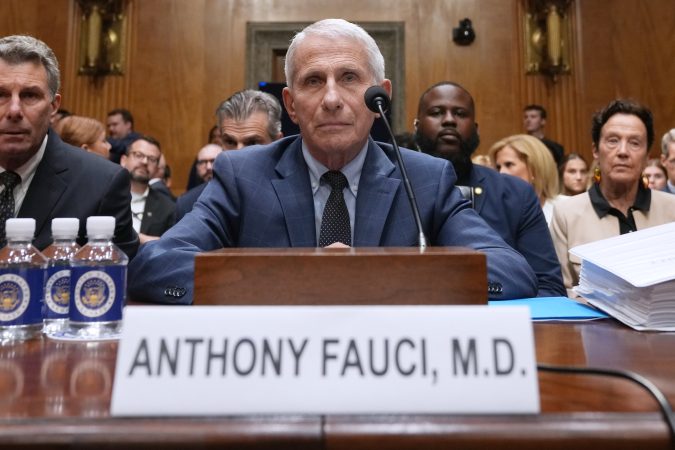
    WASHINGTON — Dr. Anthony Fauci on Wednesday repeatedly invoked the Fifth Amendment and declined to answer dozens of questions from senators in a Republican-led committee hearing about his handling of the COVID-19 pandemic.

    The decision, at least for now, shielded Fauci from answering questions that could expose him to accusations of lying under oath. Though he received a pardon in early 2025 from Democratic President Joe Biden, some Republicans pursuing a yearslong campaign for his arrest had suggested he could still face charges for any perjury committed during Wednesday’s hearing.

    The scientist, who helped lead the nation’s COVID-19 response, was subpoenaed to testify under oath by Republican Sen. Rand Paul of Kentucky, who has long had an antagonistic relationship with Fauci.

    In response to angry, sometimes mocking, questions from Republican senators, Fauci declined to answer more than 100 times, injecting new drama into partisan divides that have festered for years about the origins and handling of the pandemic. Fauci himself has become a polarizing figure, even receiving death threats that prompted him to seek security.

    In his opening statement, Fauci said Paul has an “obvious obsession with calling for my prosecution.”

    “The only conclusion I can reach is that the sole reason he is calling me before this committee is to get me to say something, anything, that could vindicate his repeated public pledges that I end up, in his words, quote, behind bars, unquote,” Fauci said, adding that while it pained him to do so, he was following his attorney’s advice by taking the Fifth.

    Republicans accuse Fauci of lying

    In the combative hearing, Paul and other Republicans accused Fauci of lying in earlier testimony about the origins of the coronavirus, something the longtime National Institutes of Health scientist has forcefully denied. Democrats called the hearing a politically motivated attempt at entrapping Fauci and praised the scientist for his work during the pandemic.

    With Fauci declining to answer questions throughout, Paul dominated the approximately three-hour hearing, listing a litany of accusations and detailed questions.

    “Today will be the capstone to Anthony Fauci’s 40 years of abuse of power at NIH,” Paul said. “History will judge, but the facts as we now know them paint a sordid tale of dishonesty, misjudgment and ultimately the hubris, the likes of which the world has never seen.”

    In one heated moment of the hearing, Paul ejected Fauci attorney David Schertler from the room after he tried to speak without being recognized. In a statement, Schertler said the removal was “outrageous and demonstrates the completely biased and baseless nature of this proceeding.” In another statement, he called Paul’s accusations about Fauci “false and disgraceful.”

    Democratic senators praised Fauci and said he didn’t deserve the treatment he was getting.

    “This hearing is designed to entrap you,” said Sen. Maggie Hassan of New Hampshire.

    Paul has long argued Fauci should be criminally investigated based on his belief that the scientist was dishonest in previous testimony to Congress.

    The senator announced late in the hearing that the committee would vote next week on whether to hold Fauci in contempt for declining to answer questions. He did not say whether he would push for a criminal contempt referral to federal prosecutors or another charge. He also raised questions about whether Fauci’s pardon affects his eligibility for Fifth Amendment protections.

    Paul released some of Fauci’s diary

    Leading up to the hearing, Paul released more than 1,000 pages of Fauci’s personal diary covering the pandemic years. Pointing to some notes about early efforts at understanding how the virus emerged, Paul said on social media that what Fauci “wrote privately and what he told the country are two different stories.”

    Some of the diary entries — including Fauci’s uncertainty in the pandemic’s earliest days as scientists around the world raced to understand the new virus and how best to curb it before vaccines could be created — already were reflected in a 2024 memoir and in interviews at the time.

    But they have nonetheless drawn attention from people who blame Fauci for mask mandates, school closures, and other policies they believe infringed on their rights as hundreds of thousands of people were dying.

    Earlier Wednesday, President Donald Trump wrote on social media that he stopped relying on Fauci over the course of the pandemic because he felt the scientist made bad decisions on masks, shutdowns, and other issues.

    Health Secretary Robert F. Kennedy Jr., a longtime anti-vaccine activist before entering public office, said on social media that his department found the diary entries in government property and gave them to the committee.

    Dozens of disease experts defend Fauci

    Scientists also scrambled to Fauci’s defense ahead of the unusual hearing — the second time he has been back before Congress to discuss pandemic origins since leaving the government in 2022. While the COVID-19 pandemic introduced him to millions of Americans, he talked the nation through numerous outbreaks over decades, including HIV, Ebola, and the 2001 anthrax attacks, while advising seven presidents.

    In a public letter, more than 150 infectious-disease experts and other scientists wrote that “no credible evidence has been produced to support these absurd charges” and that they are “urging our elected representatives in Congress stop these witch-hunts.”

    Among topics discussed at Wednesday’s hearing was whether NIH-funded research in China may have played a role in how the pandemic started.

    Many scientists believe the virus most likely emerged in nature and jumped from animals to people, coming to light when it spread at a wildlife market in the Chinese city of Wuhan. There’s no new scientific information supporting that the virus might instead have leaked from a laboratory, a theory Paul champions. A GOP-led subcommittee that studied the question in 2024 did not find any evidence linking Fauci to wrongdoing.

    Fauci has long said publicly that he was open to both theories but that there’s more evidence supporting COVID-19’s natural origins.

    Republicans also have accused Fauci of lying about whether his agency funded what’s known as gain of function research — the practice of enhancing a virus in a lab to study its potential real-world impact — at a lab in Wuhan.

    The NIH for years gave grants to a New York nonprofit called EcoHealth Alliance, which used some of the funds to work with a Chinese lab studying coronaviruses commonly carried by bats. But the definition of gain of function covers both general research and especially risky experiments to enhance the ability of potential pandemic viruses to spread or cause severe disease in humans. Fauci has previously stressed he was using the risky experiment definition and that “it would be molecularly impossible” for those bat virus experiments to have turned into the pandemic virus.

    Trump, a Republican, last year paused some federally funded gain of function research, and on Tuesday his administration announced new rules to tighten oversight.

  • Trump asks Supreme Court to overturn $83 million verdict in E. Jean Carroll case

    Trump asks Supreme Court to overturn $83 million verdict in E. Jean Carroll case

    President Donald Trump asked the Supreme Court on Tuesday to overturn an $83 million judgment against him for defaming advice columnist E. Jean Carroll, who accused him of sexually assaulting her decades ago.

    Trump’s attorneys asserted in court filings that the Supreme Court’s 2024 decision granting presidents sweeping immunity for actions taken in office shields him from liability in the high-profile case.

    “This is the first case in our Nation’s history in which a court has imposed damages liability on a President for his conduct in office,” the attorneys wrote.

    Separately, the Justice Department petitioned the high court Tuesday to allow the federal government to replace Trump as the defendant in the case.

    Should the justices permit the swap, it would potentially clear the way for the Trump administration to ask for the massive judgment to be voided because the federal government cannot be sued for defamation. Lower courts have denied similar requests by the agency.

    Justice officials argue that the United States should be substituted as the defendant under a law that grants federal employees some immunity from civil damages for actions taken within the scope of their employment.

    They said that some of the comments at issue in Carroll’s defamation claim occurred during Trump’s first presidency.

    “Absent this Court’s intervention, the sitting President is facing nearly a hundred million dollars of personal liability for conduct that was well within the scope of his federal office,” the Justice Department wrote. “That alone deserves this Court’s attention.”

    Trump’s and Carroll’s attorneys declined to comment on the appeal Tuesday night.

    A Manhattan jury awarded Carroll the money in 2024, following a civil trial in which she testified that Trump attacked her in a dressing room at the Bergdorf Goodman department store in Manhattan in the mid-1990s. Trump denies the allegations.

    Carroll first went public with the claims in 2019, prompting angry rebukes by Trump. Trump said the allegation that he had sexually assaulted Carroll was a “complete con job,” a “Hoax” and a “Scam” concocted to sell her memoir.

    At other points, he said she was too unattractive for him to take an interest in her and accused her of lying. The comments prompted years of threats and attacks against Carroll by Trump’s supporters.

    An appeals court panel upheld the $83.3 million verdict in September and denied Trump’s request in April for the full court to rehear the case. The moves paved the way for Trump’s appeal to the Supreme Court.

    In November, Trump appealed to the Supreme Court a $5 million verdict in a separate defamation case Carroll brought against the president.

    The jury found Trump liable for sexually abusing and defaming Carroll. In June, the Supreme Court let stand that verdict against Trump.

  • Pete Hegseth is resurrecting a brand of military masculinity that dominated debates a century ago

    Pete Hegseth is resurrecting a brand of military masculinity that dominated debates a century ago

    On July 15, Defense Secretary Pete Hegseth announced that his department will test all military personnel over the age of 30 for low testosterone. In his video posted on X, he explained the move in terms of military dominance. It would give U.S. soldiers an “edge of lethality” and ensure they “have the biological foundation” to maximize their performance.

    This decision ties into larger concerns on the political right about the need to foster manhood, emphasizing aggression and physical strength. Testosterone has long served as a cultural marker of traditional masculinity, so it’s not surprising that Hegseth would focus on the hormone. After all, he’s performed pull ups on camera and issued a DOD-HHS fitness challenge with Secretary Robert F. Kennedy Jr.

    Yet, Hegseth’s move isn’t just a reflection of his personal priorities for the military. It’s also part of a long history of rhetoric about American manhood in military medicine that has elevated traditional ideas about masculinity and aimed to exclude gay men and women from military service. Indeed, dating back to the late 19th century, decisions about U.S. soldiers’ health have exposed fierce debates over definitions of American manhood.

    At the dawn of the 20th century, disagreements over imperialism dominated American politics. Proponents of American expansionism, like Sen. Albert J. Beveridge (R-Ind.), wanted to see the U.S. acquire territories in the Caribbean and the Pacific.

    Worries about manhood and the health of military personnel were at the core of these debates. Many Americans linked military power to the male body and, in turn, the inability or unwillingness to fight or govern “dependents” to boyhood. Champions of imperialism like Beveridge associated the physical strength of enlisted men as synonymous with the strength of the nation, and they framed territorial acquisitions as a way for the U.S. to demonstrate its manliness to other nations.

    Even anti-imperialists, who opposed territorial expansion, worried about American manhood. One of their main arguments against acquiring the Philippines was that it would degrade both individual and national manhood. They feared an imperial project in the Pacific would mean American soldiers would succumb to drunkenness and venereal infections in the tropics.

    Army officers, for their part, argued that the military could improve the nation’s men. During the 19th century, many people had seen military service as debasing partly because low pay and harsh punishments meant those who joined the Army were men on the margins of society with few alternatives. But now, medical officers explained, through efficient military hygiene, soldiers would become better citizens as they learned discipline, cleanliness and order.

    The imperialists won the foreign policy debate. After the Spanish-American War of 1898, Spain relinquished all claims on Cuba and the U.S. gained sovereignty over Puerto Rico, Guam and the Philippine Islands. Yet, that didn’t end the contest over manhood.

    In fact, once the U.S. took over these lands and sent military personnel abroad, concerns over soldiers’ behavior and masculinity only intensified.

    Gendered rhetoric saturated debates about whether enlisted men’s consumption of alcohol would improve or harm their health. Purity Reformers cheered the passage of legislation that ended the sale of alcohol at the army canteen. They saw drunkenness as unmanly. Additionally, inebriated men contracted sexually transmitted infections (STIs) at higher rates, which, the reformers believed, emasculated soldiers by rendering their bodies weak and infertile.

    Military medical officers who opposed the anti-canteen law feminized their male political opponents, complaining that these “abstinence ladies” were trying to tell officers how to run the army.

    These debates became especially intense over the Philippines, which U.S. troops oversaw in the years after the war. The problem was, by 1907, roughly one in three enlisted men serving in the Philippines had an STI. For those who saw the experience of military service not only as a place to prove one’s manhood but also to improve it, these rates of infection posed a problem that was at once medical and gendered.

    In response, the U.S. military followed in the footsteps of European colonizers and launched a system of regulated prostitution whereby medical officers inspected women who sold sex to soldiers, sent them to a designated hospital if they found signs of infection and, otherwise wrote “free from disease” on their inspection booklets. The Army thus sanctioned a manhood marked by heterosexual sex with Asian women in a colonized territory.

    When reports of this approach hit the anti-imperialist and temperance press in America, however, the public outcry pressured political and military leaders to stop the most visible aspects of this program. Progressive Era reformers fiercely opposed what they saw as government-run prostitution. They decried the sexual double standard that punished women suspected of selling sex but did nothing to stop either the men profiting from women’s sexual labor nor the male consumers. They also challenged claims that men had to have sex with women in order to be healthy.

    Made By History sponsors. FOR USE ON MADE BY HISTORY STORIES ONLY.Inquirer Staff

    While the efforts to regulate prostitution didn’t completely abate, the military also launched a push to divert enlisted men in the Philippines away from sex and the risk of STIs, especially by creating alternative avenues for recreation. Military authorities built boxing rings and established baseball diamonds to fill men’s leisure time with traditionally masculine physical activities marked by aggression, strength and speed.

    By the time the U.S. joined the First World War in 1917, social reformers had formed the American Social Hygiene Association to fight prostitution and stop the spread of STIs. Many occupied positions of leadership in the Army, and a definition of military masculinity based on restraint held political sway.

    General John J. Pershing, for example, who led the American Expeditionary Force, declared the French maisons tolérées off-limits to his soldiers. The military also enacted strict protocols requiring men who admitted to sexual activity with women in France to report to prophylaxis stations immediately following “exposure” to prevent the spread of disease.

    At the same time, Raymond B. Fosdick, a Progressive reformer, served as chairman of the Commission on Training Camp Activities (CTCA) overseeing educational and recreational programming for enlisted men. He promoted competitive sports as crucial to ensuring soldiers’ health. Fosdick claimed, “it does not do any good in dealing with red-blooded young men merely to erect a series of verboten signs along the roadside; you must have something positive for them to do.”

    As in the Philippines, U.S. troops constructed arenas for boxing and wrestling, along with football and baseball fields at camps in France. In 1917, the Army released Fit to Fight, an educational film for soldiers. The film’s hero Billy Hale was a former college quarterback who refused contact with prostitutes, embodying the ideal of strength in chastity.

    It was a vivid example of how military leaders tried to frame the combination of athletic pursuits and sexual restraint as the key to healthy manhood and military success. They also argued that living up to this ideal was a necessity so that soldiers could become husbands and fathers after the war.

    As reformers and officers openly discussed manhood and soldiers’ health they simultaneously painted a bleak portrait of womanhood. They saw women near training camps as sexual predators with dangerous intentions and as the locus of disease. Meanwhile, women at “home” had a purity that needed protection from soldiers who had worked elsewhere. In neither case were women “fit to fight.”

    A full century later, testosterone testing is resurrecting many of the stereotypes that saturated these debates. It paints a picture of soldiers as masculine and virile in a way that excludes openly gay men and women. And this is coming only a decade after all combat jobs opened to women and 15 years after the end of Don’t Ask Don’t Tell, which had required gay and lesbian soldiers to hide their sexual orientation. Additionally, it links the health of male soldiers — through their sex drives and sexual activities — to the bodies of women.

    Hegseth’s emphasis on testosterone follows on the heels of striking women from promotions lists in both the Army and Navy. Testosterone testing, in tandem with this move, as well as Hegseth’s criticisms of women in combat roles and his aversion to openly gay men in the military, bolsters a manhood that reserves power for cisgender, heterosexual men and relegates women to roles with less authority.

    Experts have pointed out the decision’s departure from evidence-based medicine. Testosterone levels are actually poor indicators of actual strength. But the decision nevertheless has political purchase thanks to longstanding images about what constitutes the ideal soldier.

    Pamela Maddock is an affiliate of the History Department at the University of Sydney and is working on a book, “Access to Women: Sex, Race, and Disease in the U.S. Army, 1853-1919,” that examines the U.S. Army’s management of sexually transmitted infections in different geographic contexts outside the US. She teaches at the Williston-Northampton School.

    Made by History takes readers beyond the headlines with articles written and edited by professional historians. Opinions expressed do not necessarily reflect the views of The Inquirer.

  • More than 2,000 of N.J.’s ‘noncitizen voters’ could actually be citizens, Gov. Sherrill says

    More than 2,000 of N.J.’s ‘noncitizen voters’ could actually be citizens, Gov. Sherrill says

    About 2,000 New Jersey voters identified last week as noncitizens could actually be citizens after all, Gov. Mikie Sherrill said Tuesday, a week after her disclosure of a voter registration glitch put the state at the center of a heated national debate over election security.

    Sherrill announced last week that approximately 6,600 noncitizens had been registered to vote ahead of the 2024 election due to a software glitch with the New Jersey Motor Vehicle Commission’s automatic voter registration program. She said fewer than 400 of those people had voted and there is no evidence that they affected the results of any election. The finding came in the midst of a political fight over President Donald Trump’s claims of widespread voter fraud, including by noncitizens, and his aggressive push for an overhaul of the country’s election system.

    The first-term governor said Tuesday that the New Jersey Department of State’s Division of Elections has begun a process to remove more than 4,500 individuals who were registered because of the software error, but that the rest of the registrations will be referred to county election officials for further review “to ensure that any lawfully registered voters are not being disenfranchised.”

    “We are taking this extra step because our initial review indicates that a number of these individuals may be citizens,” she said in a statement. “That has been the case in other states where clerical and administrative voter registration errors have occurred, and we’re determined to get this right.”

    Her office announced the discovery a little more than one hour after celebrating New Jersey’s new John R. Lewis Voter Empowerment Act, which Sherrill signed July 2. Lewis was a civil rights leader who represented Georgia in Congress from 1987 until his death in 2020.

    The law, which is based on a federal proposal that former President Joe Biden unsuccessfully tried to pass, promotes equal opportunity to voting and voter outreach to communities that do not speak English proficiently, and prohibits intimidation, deception, violence, or restraint of voters or election workers.

    The law lays out a process for individuals who want to file a complaint over voting rights and requires public hearings for redistricting.

    If jurisdictions have a history of discrimination, the law requires approval from the attorney general before they can make changes to their election administration. It also gives the attorney general authority to enforce the law through litigation, investigations, and studies, and by representing the public in federal court.

    “Here in New Jersey, if your rights are violated, you have a right of action,” Sherrill said at Union Baptist Church in Trenton.

    Sherrill said New Jersey is the 10th state to enact the model, but the first to do so since an April Supreme Court ruling that weakened part of the Voting Rights Act as the court’s conservative majority ruled against a majority-Black district in Louisiana.

    Supporters of the bill said they had been advocating for it for four years in New Jersey.

    Sherrill’s Tuesday celebration at the church shows the governor is not shying away from the issue of voting rights even as the state becomes a talking point for Republicans who want enact new national restrictions — including requiring voters to provide proof of citizenship to register with documents like a birth certificate or passport.

    Sherrill opposes the national legislation, known as the SAVE America Act, which has been championed by Trump as a way to make elections more secure but which opponents warn could make it tougher to vote for millions of Americans.

    “Trump has only one concern: winning at any cost, and he’s willing to put the right to vote at risk,” Sherrill said Tuesday. “There’s no line he won’t cross, no rule he won’t break, no norm he won’t violate. But we will not stand idly by.”

    The former member of Congress will likely continue to have a role in the debate as Republicans ramp up their advocacy ahead of November’s midterm elections.

    U.S. Rep. Jeff Van Drew, a South Jersey Republican who was elected as a Democrat in 2018 before vowing his loyalty to Trump a year later, led a public letter with other House Republicans calling on Sherrill to answer a series of questions about the noncitizen voting issue. He questioned how she knows it was “just a software glitch and not a nefarious act.”

    Van Drew, who chairs the House Judiciary Subcommittee on Oversight, said he plans to hold hearings over the issue and is “absolutely exploring” the possibility of subpoenas, Politico reported.

    On Tuesday, Sherrill said Van Drew “has a very sordid history as far as elections go.” She said Van Drew’s campaign had hired a political operative who was a “known ballot harvester” — referring to Craig Callaway, who worked on Van Drew’s 2022 bid.

    Callaway, a former Atlantic City Council president, had previously served prison time for blackmail and bribes when Van Drew’s campaign hired him. In 2025 under former U.S. Attorney Alina Habba, Callaway pleaded guilty in connection with fraudulent mail-in ballots during the 2022 election, but Van Drew said he was not aware of any illegal activity and was not accused of wrongdoing.

    Sherrill said her administration hired the CSG law firm to conduct an independent investigation into the voting registration glitch. One of the firm’s main partners, Jeffrey Chiesa, served as attorney general under former Republican Gov. Chris Christie, who later appointed him to the Senate.

    “We have a bipartisan, independent investigation going on right now because we have nothing to hide,” Sherrill said.

  • Ex-Olympian charged with damaging Reflecting Pool sees ‘irregularities’ in grand jury proceedings

    Ex-Olympian charged with damaging Reflecting Pool sees ‘irregularities’ in grand jury proceedings

    WASHINGTON — A former Olympian charged with deliberately damaging the Lincoln Memorial Reflecting Pool is seeking access to all of the closed-door testimony that led to his indictment, pointing to “irregularities” in those grand jury proceedings.

    In a court filing Monday, David Hearn’s attorneys requested an order for the government to turn over a complete transcript of all grand jury proceedings. They also want prosecutors to disclose the legal instructions they gave to grand jurors about the elements of Hearn’s alleged crime.

    Hearn pleaded not guilty earlier this month to one felony count of property destruction and has a trial scheduled to start Sept. 28 in D.C. Superior Court. The charge, which carries a maximum prison sentence of 10 years upon conviction, accuses Hearn of causing at least $1,000 in damage to the pool.

    But his lawyers question whether prosecutors properly presented the grand jury with adequate evidence to support the amount of damage alleged in Hearn’s indictment. A National Park Service official testified that the pool already was damaged before Hearn allegedly touched it, couldn’t quantify any damage attributable to Hearn and said the same repairs would have been required regardless of his conduct, defense attorneys said.

    “The witness’s testimony established that the pool had substantial preexisting damage requiring repair before any alleged conduct by Mr. Hearn,” his lawyers wrote. “According to the witness, the pool was leaking more than one million gallons of water per week; its expansion joints had exceeded their service life; and the liner already contained a rip.”

    Hearn’s attorneys are basing those arguments on their limited review of grand jury testimony. They want court-ordered access to all the proceedings.

    A spokesperson for U.S. Attorney Jeanine Pirro’s office in Washington didn’t immediately respond to an email seeking comment on Hearn’s arguments.

    Hearn previously asked the court to dismiss the case, which stems from the troubled multimillion-dollar renovation project championed by President Donald Trump. His attorneys argued the government has failed to properly preserve important physical evidence from the Reflecting Pool.

    Trump, a Republican, has claimed that vandals have damaged the pool, but administration critics attribute the problems to shoddy repair work. During a speech Monday at General Motors in Michigan, Trump claimed a “sick” person cut the liner in the pool but said the attraction is receiving treatment.

    “It’s in the hospital now, but it’s going to get better very soon,” Trump said. “It’s almost ready to open.”

    Hearn and his supporters claim his prosecution is a politically motivated attempt by the Trump administration to deflect blame and scapegoat others.

    Hearn told The Associated Press he was detained by National Guard troops and U.S. Park Police for five hours after stopping by the pool during a bike ride on June 19. He said he reached in to examine the pool’s newly peeled coating and briefly touched a chunk attached to the side of the pool, but said he obeyed a park worker who told him to let go of it.

    Hearn, 67, of Bethesda, Maryland, competed in three Summer Olympics, earning his best finish, ninth, at the 1996 Atlanta Olympic Games, the U.S. Olympic and Paralympic Committee says on its website.

    At least three other people have been charged in the same court with misdemeanors for allegedly removing pieces of paint from the pool.

  • Lawmakers seek ban on using campaign funds to fight sexual harassment claims

    Lawmakers seek ban on using campaign funds to fight sexual harassment claims

    Federal politicians would be barred from using campaign contributions to fight or settle sexual misconduct allegations under a bill announced Tuesday by two House members from opposite sides of the political spectrum.

    The proposal, from Reps. Ro Khanna (D-California) and Anna Paulina Luna (R-Florida), aims to further shape the debate over how Congress should move forward from a spate of sexual misconduct scandals this spring, which prompted the creation of a bipartisan working group to revise the policies protecting Capitol Hill staffers. Both Khanna and Luna have been active on the issue.

    Khanna said politicians would behave better if they had to rely on their own financial resources when they get into trouble rather than being able to dip into campaign accounts or legal-defense funds.

    “That creates this culture of impunity where people think they’re untouchable,” Khanna said in an interview.

    “There’s such a power asymmetry,” he said, because of “the extraordinary legal advantage that elected officials have.”

    The progressive Khanna came into national prominence last fall as he helped force the release of federal investigative files related to financier and sex offender Jeffrey Epstein, over the objections of President Donald Trump.

    Khanna is collaborating on the bill with the conservative Luna, one of several Republican women lawmakers who have begun demanding more consequences for alleged sexual misconduct by their colleagues. She led the charge in April against Sen. Ruben Gallego (D-Arizona), filing a complaint with the Senate that was dismissed last month with no findings that he violated federal law or broke Senate rules.

    The bill would prohibit elected officials and candidates for federal office from using campaign donations or a legal-defense fund to cover legal fees related to claims of sexual assault, sexual abuse or sexual harassment. If they are not held liable, they could be reimbursed for expenses.

    Luna said the proposed change is overdue and would serve as a “massive deterrent” amid a culture of sexual misconduct on Capitol Hill that has gotten out of hand.

    “It is not what the Founding Fathers intended for members of Congress,” she said. “It’s a perversion of the system.”

    The proposal would also make campaign contributions off-limits for paying settlements or court-ordered judgments for sexual misconduct claims, as well as for private investigators and other research into the accusers.

    Khanna said that politicians would still be able to tap into their savings to defend themselves like most other Americans but that they should not be allowed to fundraise for what frequently amounts to public relations activities more than actual legal work.

    “In most of the cases, they’re being used to smear survivors,” he said.

    The bill emerged from conversations with activists supporting women who have come forward in recent months with accusations of sexual misconduct by politicians, including former congressman Eric Swalwell (D-California).

    In April, the San Francisco Chronicle spoke to a former Swalwell staffer who said he sexually assaulted her. CNN reported more allegations of inappropriate behavior, and a second woman accused Swalwell of raping her. He has categorically denied the allegations of sexual misconduct, calling them a political hit job, though he acknowledged some “mistakes in judgment.”

    Swalwell dropped out of the race for California governor and then resigned from office within days. But he has since spent $50,000 from an old congressional campaign account, as well as hundreds of thousands from contributions to his gubernatorial bid, on prominent defense attorney Sara Azari. Her firm hired a private investigator to look into the allegations, according to NOTUS.

    “Many of those women were forced back into hiding, and this ordeal is still not over for them,” said Cheyenne Hunt, an influencer who worked with some of the accusers and subsequently launched the advocacy group Reckoning Action.

    That’s retaliation, Hunt said, and a “bad-faith use” of campaign funds.

    “No donor gives to a campaign thinking, ‘Yes, I want my money to go toward harassing a survivor,’” she said. “This truly feels like such a no-brainer.”

    Despite bipartisan support for the bill, its prospects are uncertain. Congress has struggled to pass major legislative priorities this year, and only two months of floor time remain for the rest of the session.

    Other ideas for improving how Capitol Hill handles sexual misconduct complaints are also circulating. A group that says it represents more than 1,500 congressional staffers released a letter this month calling to expand legal representation for employees, make independent investigations easier to trigger, and provide more time to file workplace claims.

    With the blessing of congressional leadership, the Republican and Democratic women’s caucuses united in the spring to develop recommendations for making Congress a safer work environment. Their proposed solutions are forthcoming.

    House Speaker Mike Johnson (R-Louisiana) recently said he would support banning lawmakers from having sexual relationships with any congressional staffers, not just their own subordinates.

  • John Fetterman campaigned on ending the filibuster. Here’s why he changed his mind.

    WASHINGTON — U.S. Sen. John Fetterman, doubling down on a position that has already added to Democrats’ frustrations with him in recent months, offered a more detailed explanation this week for his change of heart about eliminating the Senate filibuster.

    The Pennsylvania Democrat wrote in an op-ed for the Washington Post that he had been “horribly wrong” to support ending the practice that requires bills to win 60 votes rather than a 51-vote majority.

    The rule frequently allows members of the minority party to block policies that fail to win bipartisan support, including some of each party’s top priorities — like abortion protections when Democrats have been in control, or the voting restrictions that Republicans are now attempting to pass at President Donald Trump’s urging.

    Fetterman was among many Democrats in recent years to campaign on eliminating the filibuster in order to secure those bigger wins. During his 2022 campaign, he specifically referred to passing abortion protections established under Roe v. Wade as a reason for that position after the Supreme Court overturned its landmark 1973 decision that year.

    “I became one of the first candidates in the country to call for abolishing the filibuster for a reason: it stands in the way of getting things done for [Pennsylvanians],” his active campaign website still read on Tuesday, nearly four years after he won.

    But as he has more frequently sided with Republicans and criticized his fellow Democrats, Fetterman has said repeatedly this year that he had been “wrong.”

    “We were very wrong about that to nuke the filibuster, and we should really humble ourselves,” he said on Fox News in February. In that interview and others, he needled Democrats who opposed the filibuster but now, he said, express a “love” for it as they find themselves in the minority and try to reject Republican policies.

    In the Washington Post this week, Fetterman wrote that Americans who are “horrified” at the policies coming out of the Republican-led Congress and Trump’s administration would be alarmed if the filibuster had been eliminated and every proposal could become law with a simple majority.

    “We’d have the Save America Act by now, which I do not support,” Fetterman wrote. “We could have extreme policies such as nationwide abortion restrictions, backpedaling on LGBT rights, repeal of birthright citizenship and limited voting rights across the country. With a government trifecta firmly in place, many provisions of Project 2025 would have easily been enacted. Republicans could fundamentally change the entire government and country with a simple majority vote.”

    Fetterman’s reference to the SAVE America Act comes as Trump has pressured Senate Republican leaders to eliminate the filibuster in order to pass the bill, which would enact sweeping election changes. It would require individuals to provide proof of citizenship when registering to vote and to show photo ID at the polls, and it would scale back mail voting.

    Opponents of the bill say it would make registering and voting more difficult for millions of people. And Fetterman has opposed the bill because of the changes to mail voting, though he has changed his position to support requiring a photo ID at the polls.

    The bill has failed to receive support from 60 senators, and Trump has demanded that Republicans bypass the filibuster to force it through with only GOP support. U.S. Sen. Dave McCormick (R., Pa.), a Trump ally, has said such a scenario is “very tempting” even though he campaigned against ending the filibuster in 2024.

    “It’s a path to get more things done,” McCormick said during a telephone town hall with constituents last week.

    Fetterman, in his op-ed, called the filibuster “a critical line of defense that prevents President Donald Trump from having a fill-in-the-blank government with new laws, deregulation or procedures of its choosing.”

    He wrote that “history has vindicated” former U.S. Sens. Kyrsten Sinema (D., Arizona) and Joe Manchin (D., W.Va.) for voting with Republicans to block reforming the filibuster when Democrats were in control in 2022.

    Fetterman could potentially play a similar role after the midterm elections this fall if Democrats win control of the Senate with a slim, potentially one-vote majority. Some observers have said Fetterman could also leave his party, becoming a Republican or — as Sinema and Manchin did after serving as Democrats — become an independent.

    “Some of my colleagues, including myself, have been frustrated when engaging with the minority,” Fetterman wrote. “But that process isn’t a bug — it’s one of the best features of the Senate. We have a great democracy that is imperfect, but it requires working together.”

    As Fetterman works more often with Republicans, though, Democrats have become more frustrated with him and vowed to mount a challenge if he seeks a second term in 2028.

    Former U.S. Rep. Conor Lamb — one of the Democrats who has not ruled out another campaign after losing to Fetterman in the 2022 primary — has said the senator’s switch on the filibuster “is probably the worst Fetterman story yet” that most people don’t realize.

    In a social media video in early June, Lamb said eliminating the filibuster was essential for Democrats to “put Roe v. Wade back into law” and to pass legislation on voting rights, gun control, and raising the minimum wage if they regain control of the Senate.

    “When we ran against each other, he promised he would fight for women on this issue and get rid of the filibuster,” Lamb said. “And of course, like so many things, he’s changed his mind.”

  • Lawmakers mourn Lindsey Graham ahead of his funeral at Washington National Cathedral

    Lawmakers mourn Lindsey Graham ahead of his funeral at Washington National Cathedral

    The body of Sen. Lindsey Graham (R-South Carolina) arrived at the Capitol in Washington on Tuesday morning following his sudden death on July 11, as lawmakers from both parties gathered to commemorate his life.

    The ceremony in the Capitol Rotunda kicks off two days of mourning for Graham, who died at 71 after three decades in Congress, including more than 23 years in the Senate. A team of military body bearers brought his body into the Capitol in recognition of Graham’s service in the Air Force.

    A funeral service at which President Donald Trump is set to speak is scheduled Tuesday afternoon at Washington National Cathedral.

    Fox News host Sean Hannity and Emillie Roberts, one of Graham’s nieces, are also expected to speak at the funeral. Tony Perkins, a politically involved pastor who leads the Family Research Council; Marjorie Dannenfelser, a prominent antiabortion activist; and the Rev. Franklin Graham are scheduled to give readings.

    A second funeral service will be held Wednesday in Columbia, South Carolina, with a procession from the State House to First Baptist Church. Graham will be buried in a private ceremony in Pickens County.

    The Senate is preparing to take up legislation that Graham had championed to impose new sanctions on Russia and its allies to help Ukraine in its war effort. Graham worked for more than a year to pass the bill and announced the day before he died that the White House had agreed to support it.

    Sen. Darline Graham (R-South Carolina), Graham’s sister, whom South Carolina Gov. Henry McMaster (R) appointed to replace Graham in the Senate, introduced a revised version of the bill with Sen. Richard Blumenthal (D-Connecticut) days after taking office. The Senate is set Tuesday evening to take the first procedural vote on the legislation, renamed the Lindsey O. Graham Sanctioning Russia Act of 2026.

    Graham’s funeral also coincides with Tuesday’s filing deadline in the Republican primary for his Senate seat.

    Darline Graham, whom Trump has endorsed, is running for the seat, along with Reps. Ralph Norman and Russell Fry; former South Carolina governor Mark Sanford; and Mark Lynch, a businessman whom Graham defeated in the Republican primary in June, among others.

    Graham was the first sitting senator to die to since Dianne Feinstein, the California Democrat who died in 2023. Feinstein was 90 and had been ailing.

    Graham was a singular figure in the Senate. He was willing to work with Democrats even as he forged a close relationship with Trump. He was the Senate’s most aggressive foreign policy hawk, pushing Trump to take a harder line on Iran and Russia – but he won the respect of Democrats who vehemently disagreed with him.

    “I had a million disagreements with Lindsey on these very issues, but I kind of valued the fact that he always placed a real importance on the role of America in the world,” Sen. Tim Kaine (D-Virginia), a leading critic of the war in Iran that Graham strongly supported, told reporters Monday. “Fewer and fewer senators take that on as part of their job description.”