Category: Commentary

  • The postpartum hospital discharge instructions that failed me — and could fail the next mother

    The postpartum hospital discharge instructions that failed me — and could fail the next mother

    I left the hospital holding my newborn son with a folder of paperwork and almost no real understanding of what had just happened to my body.

    I’d gone through a birth that didn’t go as planned, including a panic attack on the operating table, and in the days and weeks that followed, I developed postpartum preeclampsia, birth trauma, and postpartum depression and anxiety.

    No one had walked me through what warning signs mattered, or what was simply the ordinary exhaustion of new motherhood. I had to figure that out myself, slowly, while sleep-deprived and caring for an infant. I live in Doylestown, and the more I’ve researched this since, the more I’ve come to see my discharge experience as the norm rather than the exception.

    The structural problem is that much of what a new mother is told on her way out of the hospital varies enormously depending on which nurse is on shift, which hospital she delivered at, and how rushed that particular day happened to be.

    Although nurses provide some form of postpartum discharge education to all women who give birth, the information women receive on common potential complications is not always consistent or evidence-based. The consequences of that inconsistency are measurable, not theoretical.

    The Association of Women’s Health, Obstetric and Neonatal Nurses has already tested a fix. Its POST-BIRTH Warning Signs program walks patients through nine specific warning signs of severe maternal morbidity, paired with a take-home checklist of exactly whom to call and when.

    In a pre- and post-evaluation, patients who received this standardized discharge education demonstrated meaningfully better knowledge of warning signs compared with patients who received typical, inconsistent discharge conversations. The program was built due to a troubling pattern: highly educated patients experiencing clear warning signs didn’t seek care because they assumed what they were feeling was normal after having a baby.

    The author writes that after delivering her newborn she struggled to distinguish between signs of potential health complications and the ordinary exhaustion of new motherhood.Courtesy of Casey Keen

    This is where Philadelphia-area hospitals have a real opportunity. I’ve spent recent months in conversation with Doylestown Hospital and other regional providers about exactly this gap, because the system they’re working within doesn’t require a consistent standard.

    Bucks County and the broader Philadelphia suburbs don’t need to wait for a national mandate to adopt something like the POST-BIRTH Warning Signs model regionally. A hospital system here could decide, on its own, that every postpartum patient leaves with the same standardized, risk-specific information regardless of which floor she delivered on or which nurse was on shift that day.

    What would that actually require? First and foremost, it means adopting a standardized discharge script and checklist, already developed and tested, rather than leaving the conversation to individual discretion.

    It also entails making that information risk-specific, telling a patient with a hypertensive disorder of pregnancy exactly what kind of headache warrants an urgent call, rather than a generic instruction to reach out “if something feels wrong,” and treating consistent discharge education as a real quality and safety metric for regional hospital systems to track.

    If you’re expecting or have recently given birth in this region, ask your hospital directly what its discharge education actually covers, and whether it’s standardized across providers.

    If you sit on a regional hospital board or quality committee, this is a low-cost, already tested fix that doesn’t require waiting on federal guidance.

    The five minutes before a patient walks out the hospital door deserve the same seriousness as everything that happens before — and that’s a standard Philadelphia-area hospitals could set on their own.

    Casey Keen is a Doylestown resident and author of “The Alchemy of Motherhood: Unspoken Truths of Birth Trauma and the Postpartum Journey.” Her work appears in Undark magazine and Postpartum Alchemy, her Substack.

  • Ten years after Philly killed hitchBOT, the robots are back. Let’s be nice this time.

    Ten years after Philly killed hitchBOT, the robots are back. Let’s be nice this time.

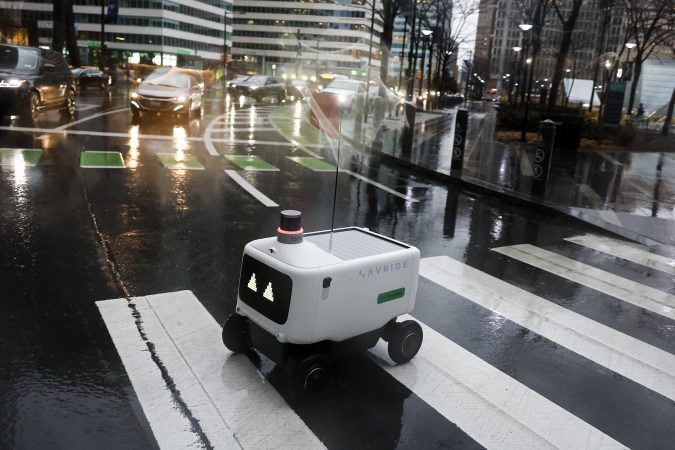
    Philadelphia is known for some great things: the Declaration of Independence (happy 250th!), Rocky, and the cheesesteak. It is also known for “killing” hitchBOT, the famous hitchhiking robot that was dismembered in August 2015. A decade later, there’s a new bot in town: the Uber Eats delivery robot, operated by Avride.

    When these robots first arrived, I had my own spontaneous encounter with one. I was surprised by how unsettled I felt, especially as someone who has spent years researching them. I am an expert in human–robot interaction, and my research focuses on why people abuse robots. I immediately wondered how long it would be before another robot made headlines in this post‑hitchBOT world.

    It only took 18 days.

    Uber Eats robot attacked by Philly pedestriansFuncab Karaoke Taxi

    Since these delivery robots rolled into town, they have been making headlines for all the wrong reasons: getting beat up, hit by cars, and colliding with pedestrians. These coolers on wheels are having an effect on Philadelphians, and I do not blame my fellow city dwellers.

    We are living in a cultural climate where artificial intelligence and automation are often framed as threats to jobs amid inflation and economic anxiety. Layer on top of that Philadelphia’s unique reputation as a destroyer of robots, and the reaction is hardly surprising.

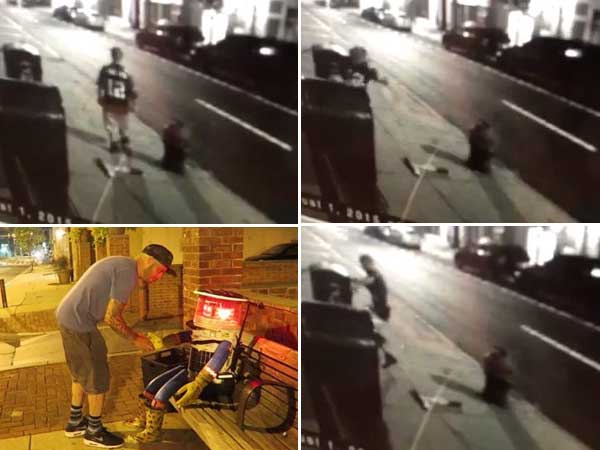
    Clockwise from lower left. 1) Last known image of an intact hitchBOT in Philadelphia in 2018. 2) Frame grab from surveillance video of man in No. 12 jersey after tossing what appear to be hitchBOT’s arms to sidewalk. 3 & 4) Man appears to stomp item believed to be hitchBOT.

    With innovative technology, there is always disruption. When UberX and Lyft arrived, Philadelphians were up in arms about the traffic congestion caused by rideshare vehicles, a problem the city later officially acknowledged.

    Yet in less than a decade, the norm quietly shifted. Today, many of us hail a rideshare instead of a taxi despite the unresolved congestion issue. The question now is whether we will react to delivery robots as another passing disruption, or whether we will choose to use them to actually improve city life.

    Garci Peterkin, owner and CEO of Carter’s Cheesesteaks by Garci in the 1000 block of Race Street, demonstrates how food delivery robots work, in March.Jessica Griffin / Staff Photographer

    Recently, Councilmember Jeffery Young proposed a $1,000 surcharge on deliveries made by autonomous delivery devices using city sidewalks. That may sound like mere regulation, but in practice it would push the robots out entirely. Before Philadelphia taxes these devices into irrelevance, we should look at how other cities are putting them to work for the public good.

    West Hollywood, for example, has had delivery robots on its sidewalks since 2020. On Jan. 1, 2026, the city implemented a new program, the first of its kind, to use data and fees from these devices to improve and pay for sidewalk repairs. In this program, companies that operate delivery robots partner with an accessibility app used by blind and low-vision residents. As they travel city streets, the robots can report real-time obstacles such as blocked sidewalks, helping make navigation safer. The city then uses information gathered by the robots to map accessibility problems and prioritize sidewalk improvements.

    The companies also pay a daily fee for each robot in their fleet, plus an advertising fee (about four dollars per day per device) with that advertising revenue directed into a sidewalk repair fund that is expected to bring in roughly $40,000 to $80,000 per year.

    In other words, the robots are not just delivering takeout; they are quietly scanning the city, funding basic infrastructure, and making the streets more accessible.

    There are a lot of potential benefits: using robot data to measure and assess street conditions, cutting down on short car trips by shifting them to small electric devices, and easing traffic congestion on already strained streets.

    These are practical, achievable ways to use technology to help address the climate crisis and long‑neglected infrastructure. This moment should also demonstrate that it’s past time for us to stop pretending we can opt out of technological change altogether.

    Philadelphia City Council should resist a blanket $1,000 surcharge that effectively bans delivery robots and instead work with residents, robotic operators, advocates, and experts in human–robot interaction to build a Philadelphia version of West Hollywood’s data‑and‑sidewalk‑repair model.

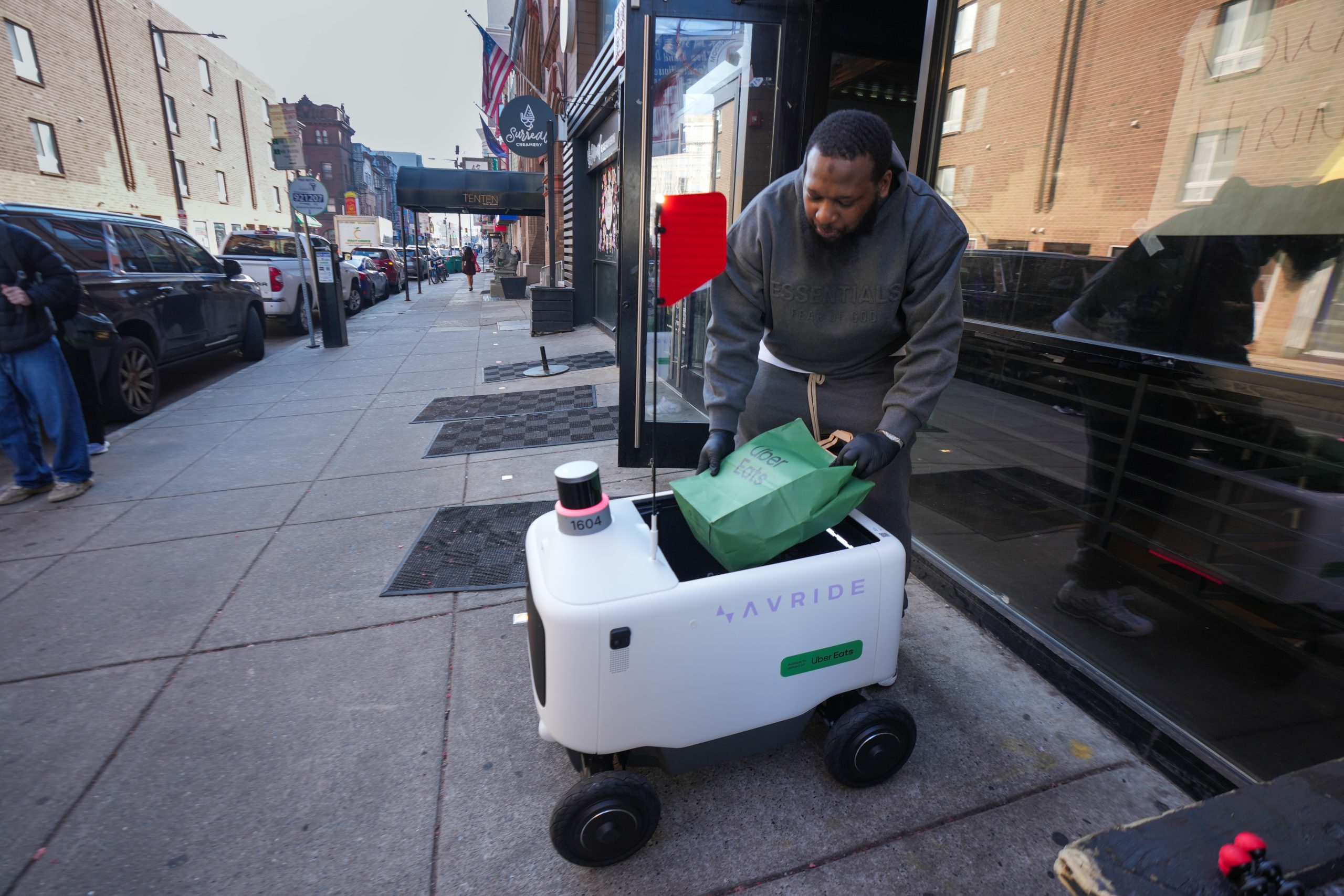
    Uber Eats’ delivery robot in Chinatown on March 10, 2026.Michael Klein / Staff

    If we are going to share our streets with robots, we should make sure the companies profiting from them are paying their way and helping fix the sidewalks they roll on.

    Will Philadelphia embrace that possibility, or will we become a city of Robo-NIMBYs, elected officials and residents alike?

    Lindsay Ouellette is a Philadelphia-based social psychologist and human-robot interaction researcher who studies public responses to robots and emerging technologies. She recently earned her doctorate from Temple University, where her research examined aggression toward robots.

  • Pharmacy benefit manager legislation proposed by Pa. GOP legislators would harm Black and brown communities

    Pharmacy benefit manager legislation proposed by Pa. GOP legislators would harm Black and brown communities

    Pennsylvania’s Republican lawmakers are on the verge of deepening the state’s pharmacy access crisis — and Black and brown communities will pay the highest price.

    Earlier this year, three Republican state senators announced intended legislation that purports to “protect” Pennsylvanians’ access to care. While not yet introduced, this proposed legislation would do the opposite, forcing the closure of chain pharmacies that are owned by companies that also own pharmacy benefit managers.

    Verbatim, the announcement says the bill would, “prohibit PBMs from holding a pharmacy license in Pennsylvania.” If enacted, hundreds of brick-and-mortar and mail-order pharmacies could lose their licenses and be forced to shut down.

    Closing pharmacies is not protection. It is a deliberate harm to vulnerable seniors, working families, and the communities that already struggle most to access care. Academic studies document that socioeconomic barriers can influence access to pharmacies.

    Pennsylvania is already deep in a pharmacy desert crisis. Since 2020, more than 1,100 independent and chain pharmacies have closed across the commonwealth — including Rite Aid, which filed for bankruptcy and permanently shuttered in 2025.

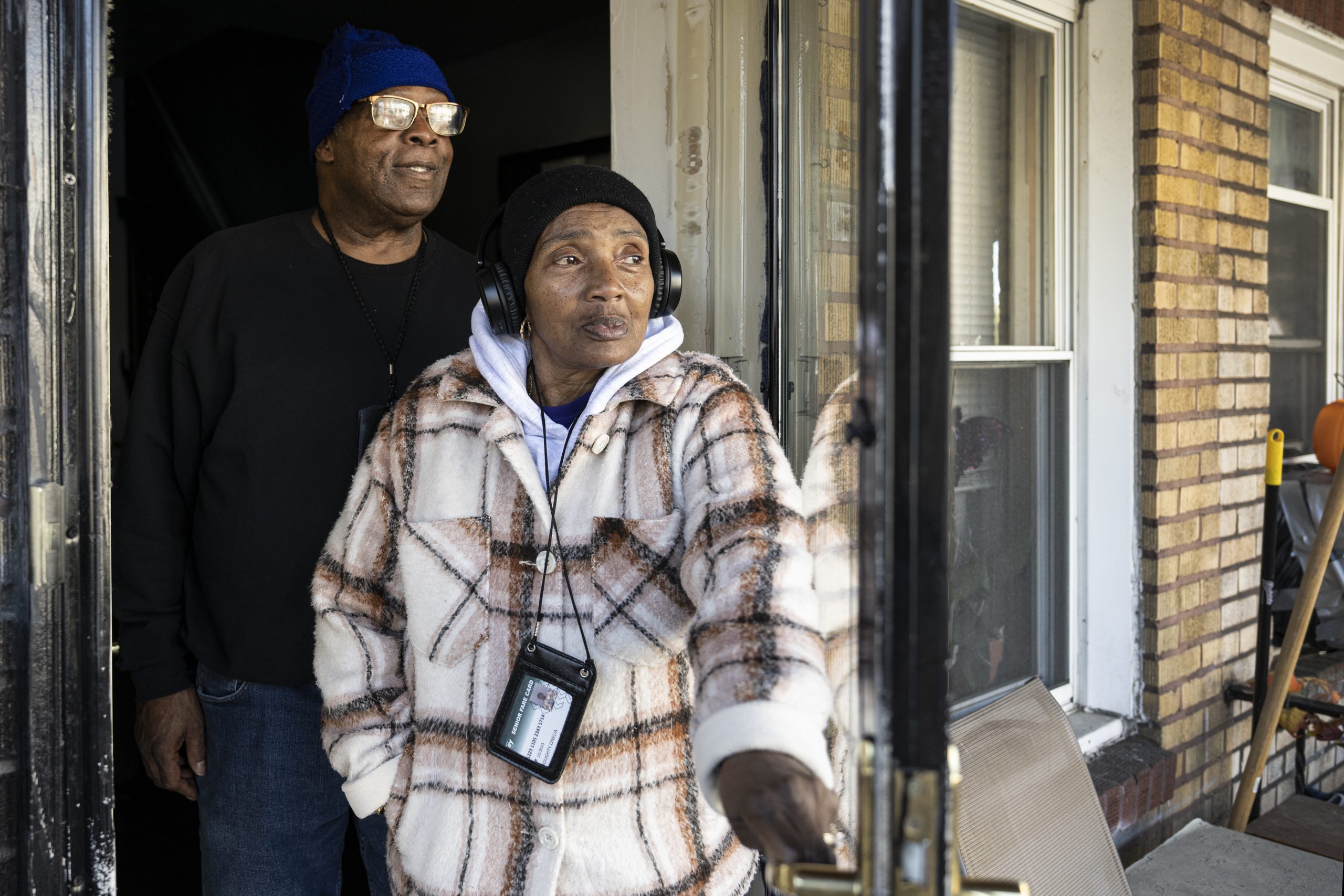
    Ronald and Onelia Doughty, photographed at their Grays Ferry home in November 2023, take dozens of medications between them for various health conditions. But to get those medications, Ronald, who walks with a cane, now has to get a bus to South Broad Street or borrow a car from his son who lives in West Philadelphia. Their neighborhood Rite Aid was among those that closed earlier in 2023.Jose F. Moreno / Staff Photographer

    Residents in predominantly Black and brown neighborhoods in Philadelphia, Pittsburgh, and Allentown, as well as those in rural townships, already face long distances and real hardships just to fill a prescription.

    The health stakes are high. Hispanic Pennsylvanians, in particular, experience higher risk factors for chronic disease, asthma, and multiple cancers than white residents. Managing chronic conditions requires consistent, affordable access to medication — and when that access is severed, patients split pills, skip doses, or abandon prescriptions entirely.

    Managing chronic conditions requires consistent, affordable access to medication — and when that access is severed, vulnerable communities are the most impacted.Rebecca Blackwell

    Medication adherence is already lower in minority communities. This legislation would make a serious problem catastrophic.

    Proponents argue that independent pharmacies can fill the void. We’ve seen how that plays out. When Rite Aid collapsed, independent pharmacists reported being overwhelmed, creating waitlists and turning away patients on less profitable insurance plans. The chaos that followed will repeat — and intensify — if hundreds more pharmacies are shuttered at once.

    This legislation also ignores legal reality. Arkansas passed a similar law that was immediately halted in federal court for violating the Commerce Clause and interfering with TRICARE, the healthcare program for veterans and military families. Tennessee faced fierce opposition from patient advocates and state Medicare officials.

    Pennsylvania should avoid repeating these costly mistakes.

    Pennsylvania’s Act 77, passed in 2024, already established meaningful oversight, transparency, and fairness in pharmacy benefit management — with the explicit goal of preventing pharmacy closures. These new proposals directly contradict that intent.

    Communities of color cannot absorb more neglect. The National Hispanic Health Foundation strongly opposes this legislation and urges its immediate rejection.

    Pennsylvania’s must instead pursue reforms that strengthen — not destroy — the healthcare lifelines our communities rely on.

    Elena Rios is president of the National Hispanic Health Foundation, a leading national organization dedicated to transforming the healthcare system through leadership, research, and education to improve the health of Hispanics.

  • Time to reengineer democracy

    Time to reengineer democracy

    Last month’s summit in Beijing between Donald Trump and Xi Jinping, the presidents of the world’s largest economies, drove home the magnitude of the crisis facing democracy. At the scale of decisions affecting billions of people, nobody was properly represented.

    Trump and Xi were negotiating for all of us, but representative of hardly any of us, whether American, Chinese, or, like most of the world, completely voiceless in the selection of either leader.

    Americans have a bigger say than most nations in the selection of their leaders, but when the leader of the world’s preeminent representative democracy is openly envying the power of the leader of the world’s biggest autocracy, we know that democracy is in trouble.

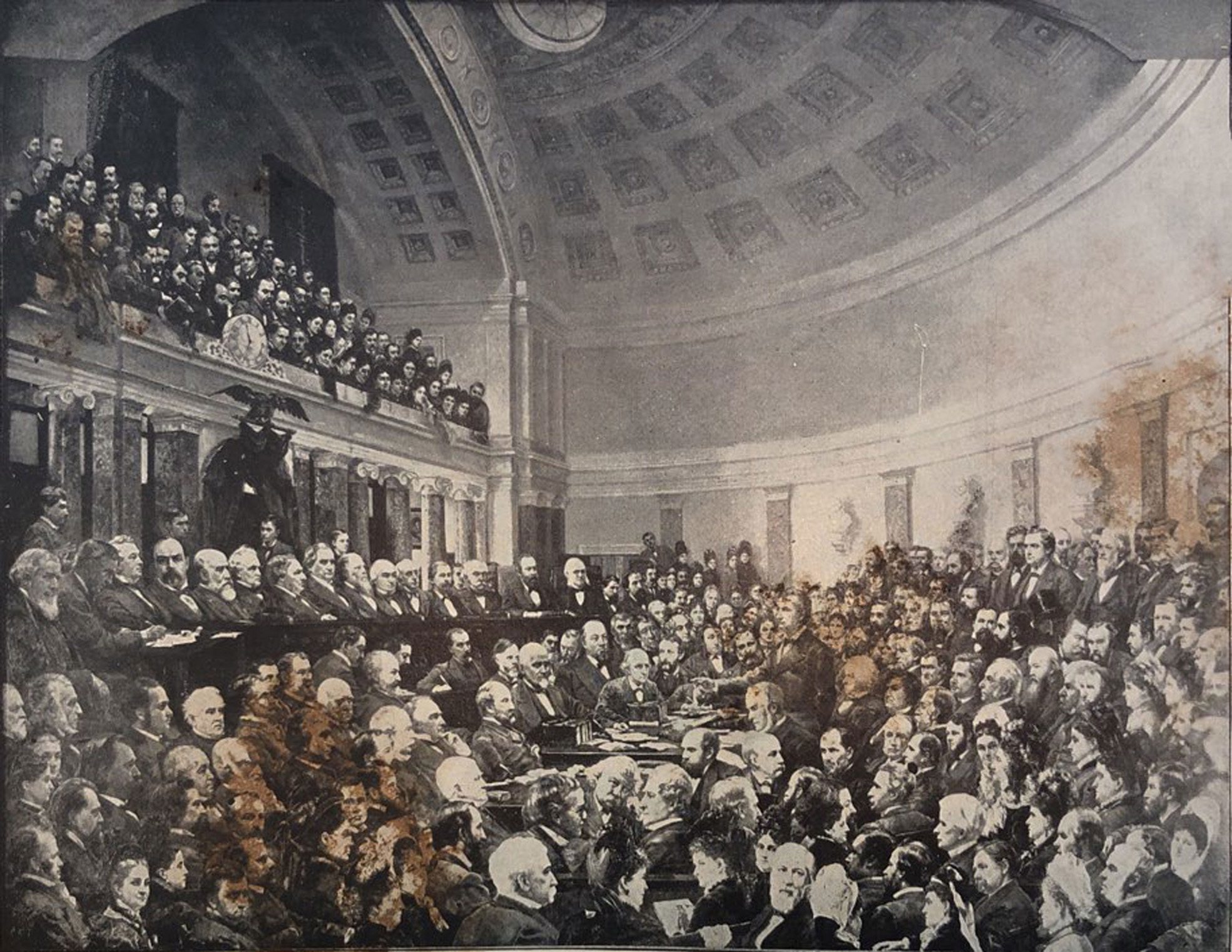
    In 1787, the Constitutional Convention in Philadelphia hammered out a blueprint for representative democracy. Today, we are in a crisis because democracy has failed to scale up to fit the nearly 100-fold growth in population since then. We need to think of alternative ways of ensuring that diverse interests and diverse expertise are represented for the good of the people. We need a new constitutional convention.

    In 1787, the Constitutional Convention in Philadelphia hammered out a blueprint for representative democracy, writes Colin Allen.Campwillowlake/iStockphoto / MCT

    This is not the first time that democracy has failed to scale.

    Athenian direct representation was only barely functional at the scale of the Greek city-state. Even though only male landowners were enfranchised, it was still impossible to accommodate them all at once in the Pnyx, so each voter was required to show up only for a subset of the votes.

    It took another two millennia to invent representative democracy: a manageable number of legislators, each of them elected to represent the interests of thousands of people. The first U.S. census in 1790 recorded just shy of 4 million inhabitants. The newly formed House of Representatives had 65 members: roughly one per 60,000 people.

    Today, over 331 million Americans are represented by 435 members: a ratio of roughly 1 to every 760,000. Not only is each member tasked with representing so many more people, but the diversity of interests in each constituency and the sheer range of issues that must be addressed at this scale mean that practically nobody is properly represented on all issues.

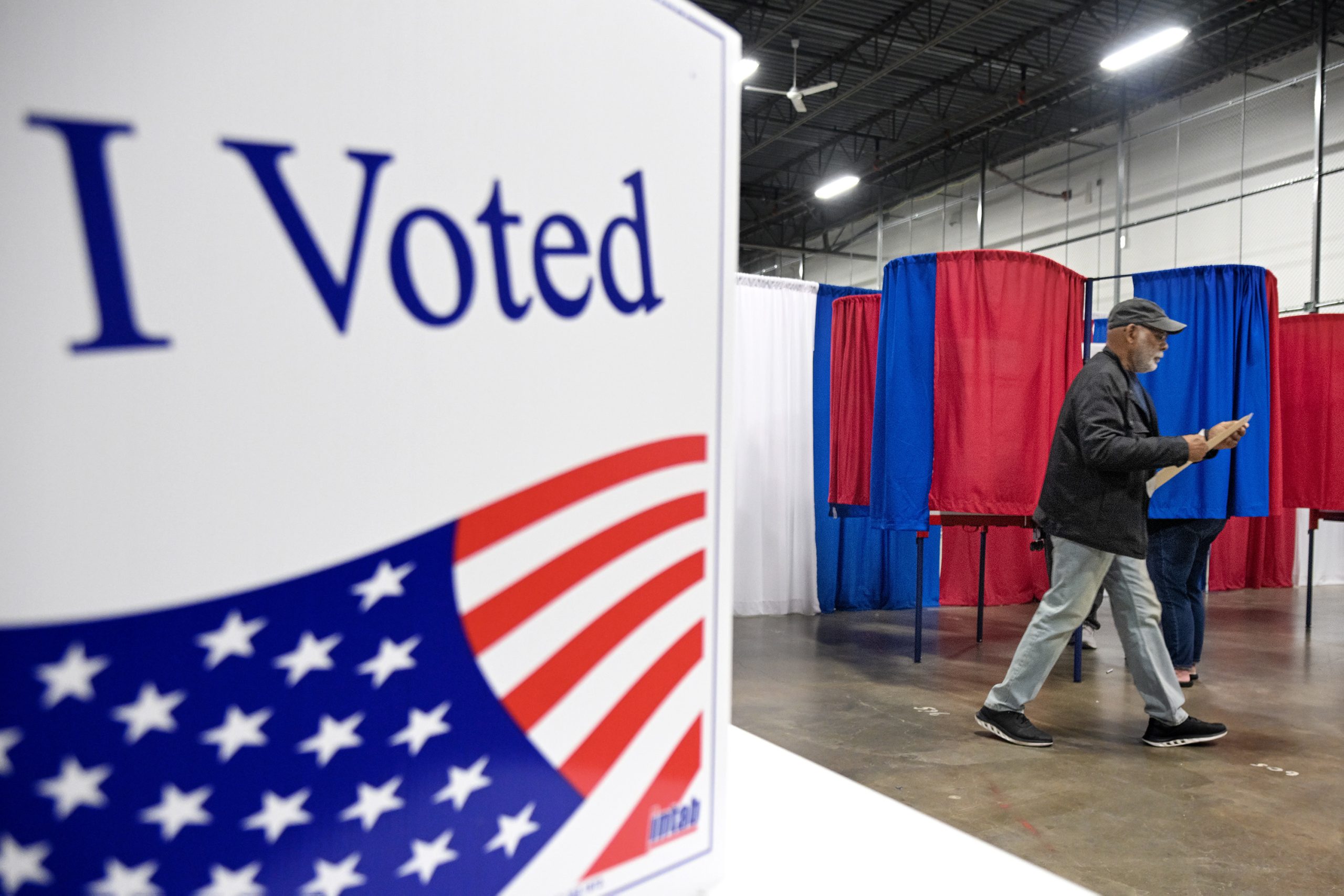
    Voting often feels like selecting the lesser of several evils, and is at best a compromise forced by the need to decide which issue is most important to you, writes Colin Allen.Tom Gralish / Staff Photographer

    Electors face impossible choices. The chance that any one candidate represents all of a voter’s views is vanishingly small. Casting a ballot often feels like selecting the lesser of several evils, and is at best a compromise forced by the need to decide which issue is most important. At worst, voters disengage entirely or resort to preferring qualities that would be more suitable for dominance contests among apes. These problems are aggravated because social media has fractured communal purpose, and gerrymandering is splitting natural constituencies.

    The possibility of electing leaders with autocratic tendencies has always been a weakness of democracy. This weakness is magnified at scale: Larger, more diverse constituencies can come to seem ungovernable, favoring politicians who project strength. We need to grapple collectively with these problems and find better ways of allocating our votes among representatives whose values and expertise match the scope of their powers.

    How might this be done?

    The whole approach to democratic governance needs to be reengineered from the ground up. For example, the existing separation among legislative, executive, and judicial powers should be supplemented by erecting firewalls among different spheres of political decision-making.

    Existing government departments (health, education, agriculture, defense, etc.) provide an initial sketch of where separate legislative bodies might be desirable. Separating legislative functions along these lines would serve to concentrate expertise where it is needed.

    Legislation in one domain would no longer be encumbered by riders that belong in other domains. Funding of health or science initiatives would not be held hostage to disputes about unrelated matters. Reducing the scope of individual legislators would also make them less prone to targeting by the full spectrum of lobbyists.

    The Nobel Prize-winning work of Elinor Ostrom, pictured here, showed how management of scarce common resources is often best handled through local self-governance.

    We also need to rethink the relationship between geography and representation. Some areas of governance are inherently more tied to location than others. The Nobel Prize-winning work of Elinor Ostrom showed how management of scarce common resources is often best handled through local self-governance. People whose livelihoods depend on shared resources they jointly control make better decisions than those acting under rules imposed remotely.

    Current political systems (whether democratic or not) aggregate legislative and economic power hierarchically over increasingly large geographic areas. This favors decisions by people who have little or no skin in the game when it comes to good stewardship of local resources. Hence, in the domains of agriculture or the environment for example, it makes sense that one’s choice of representative should be tied to your location.

    But for other issues, such as justice and civil rights, national defense, or international trade, a voter’s interests and values may be better represented by someone living far away than by local politicians. At-large representation could provide a mechanism for voters to select representatives for domains where geographic location is less important. For some domains, a mixture of local and at-large representation may produce the best deliberative bodies and the greatest sense by voters that their views are adequately represented.

    These ideas merely provide one set of suggestions. They admittedly bring new problems with them. An obvious challenge for multiple specialized legislative bodies is that of coordination among them. Possible solutions to be explored include constitutionally mandated joint sessions. Elected delegations from one legislature could also have voting rights in another. Other solutions come from the power of the purse.

    I suggest giving some of that power back to the people by allowing voters to allocate a certain number of shares of the government’s total revenue to various legislative bodies. A pacifist might opt to allocate zero shares to defense while splitting the remainder 50-50 between health and education, for instance. Other voters with different priorities could steer the money differently. Such a scheme would help to address “not with my tax dollars” complaints that are often heard when people don’t like some government programs that others believe essential.

    In a pluralistic society we can be fairly confident that the allocations emerging from these individual choices would keep the essential parts of the government going via the wisdom of crowds. But there are many reasons for retaining some degree of top-down control. An elected body specializing in finance and taxation would be particularly important. This body could be constitutionally mandated to control some percentage of the total budget, say 30% with the other 70% being allocated through voter preferences.

    The finance body might itself consist of a mixture of at-large representatives and district-based representatives. It could be constitutionally mandated to allocate a substantial portion of revenues to domain-crossing projects, such as education that serves agriculture, or medical research that serves defense department needs, and it could also provide funding in cases where an urgent or unanticipated need has arisen.

    I present these ideas in the spirit of trying to think creatively about how we can harness democracy for the large-scale challenges of the 21st century. I am sure that all of these proposals can be improved upon collectively through the mechanism of a constitutional convention.

    Pie in the sky? Clearly this is not an overnight project. The Philadelphia Convention took place 11 years after the signing of the Declaration of Independence. The deliberations that occurred there were a matter of intense public scrutiny.

    The Constitution took another two years to be ratified. Compromises were necessary and were made. We are still living with the effects of some of those compromises today. But something workable emerged, although it notoriously failed to treat all people as equal.

    The system we have is no longer suited to a modern society in which hard-won gains of underrepresented groups are being rolled back by a Supreme Court that regards the application of the Constitution more as an academic exercise than a serious attempt to deal with all that has changed in the past 239 years.

    Calls for a new constitutional convention, allowed under the Fifth Amendment, have already made progress with resolutions in multiple state legislatures. Such calls have so far mostly been associated with individuals and organizations on the American right wing. But some on the left are beginning to argue that a new convention should not be taken off the table.

    Those on both wings can be suspicious of the motives of those on the other side, but all should be able to take seriously the idea that the United States has outgrown the clothes originally tailored for it almost 250 years ago.

    Colin Allen is a distinguished professor of philosophy at University of California, Santa Barbara and a Public Voices fellow of the OpEd Project.

  • After two nights of riots, Belfast was on the brink. Then it remembered its hard history.

    BELFAST, Northern Ireland — The morning of our walking tour of Belfast, my first task was to check Twitter for updates on local rioting the night before.

    This tour covered “The Troubles” — the period in the 1970s when Catholics in Northern Ireland first marched for their civil rights, then escalated to vicious bombings to pressure the British Army to leave.

    Now The Troubles 2.0 seemed to be erupting, threatening to plunge this weary city back into those dark times.

    The spark was a shocking knife attack the evening of June 8; a Sudanese immigrant, who was in the country legally as a refugee, was charged in connection with it. The attempted beheading had been caught in a viral video so brutal it came with warnings.

    For the next two nights, violence flared in several neighborhoods. Masked rioters quickly set up barricades, burned cars, torched the homes of ethnic minorities, and pelted police with paving stones they’d pulled from the streets and smashed with sledgehammers.

    A generation after the Good Friday Peace Accords ended sectarian violence in 1998, rioting techniques live on in the muscle memory of Belfast. Need something to chuck at police? Ask your Da — he’ll show you how to break up the paving stones.

    News of the riots spread internationally, and soon I had to reassure worried relatives back in the States that our vacation itinerary kept us in the city center, miles away from any commotion. Fanning the flames in the U.S. were the likes of Steve Bannon and Elon Musk, who both cheered on the pushback against immigration.

    Yet over the next several days, a small miracle unfolded: There were two nights of rioting, followed by appeals for calm from the five main political parties, then a large peace march.

    The march was even attended by 77-year old Gerry Adams, the reputed head of the Provisional Irish Republican Army who reinvented himself and went into politics. Earlier this week he wrote on Twitter, “Elon Musk and others who support these despicable actions from afar should shut up. Belfast says NO to racism.”

    That a man whom many suspected was associated with flat-out terrorism was condemning the riots embodied the change that has taken root here.

    Then lo and behold, the rioting stopped.

    The incident actually dropped off the front page, temporarily replaced by this universal headline: “Belfast residents upset over pickleball noise.”

    Belfast let the world know it has come too far — and its collective PTSD is still too raw — to be dragged back to that traumatizing era.

    To be clear, riots or not, immigration remains a smoldering political issue in Northern Ireland. Immigrants from anywhere can apply for political asylum in any European Union country. Once that is granted, they are free to hop over to the Republic of Ireland, which is also in the EU.

    From there, they can saunter into Northern Ireland without having to cross any physical border because all residents of the island are able to live, work, and travel freely between the two countries.

    (As foreigners, we had to get a visa to enter the United Kingdom, but never had to show it to anyone. The only sign we’d driven across the border was a text message from Verizon, welcoming us to Northern Ireland.)

    That makes Northern Ireland’s immigration concerns world’s apart from those of the United States, no matter how hard Musk wants to link them. Both the details and the scale are vastly different.

    Our tour guide, who wrote her doctoral dissertation about the generation born after the 1998 Peace Accords, said what bothered her most about these newest riots was the sight of “40-year-olds egging on teenagers.”

    That view was echoed by the elderly proprietor of our bed-and-breakfast just south of the border the next day. She shook her head sadly, pursing her lips as she dismissed the rioters. “They’re just young tugs” — thugs, in her Irish brogue.

    That generation has grown up in peace, spared the trauma of their elders. In the key years of The Troubles, 3,700 people were killed in bombings and executions, more than half of them civilians who were in the wrong place at the wrong time. Imagine if Pittsburgh, nearly the same size as Belfast, had seen that many deaths.

    We heard sickening stories of “No warning” bombs, execution-style slayings of young off-duty British soldiers out for a night at a pub, and an unrelenting stream of tit-for-tat retaliatory killings.

    It was a descent into pure madness, as chronicled in Belfast, actor Kenneth Branagh’s movie about his childhood, and Say Nothing, the true-crime novel about the 1972 disappearance of a widowed mother of 10 thought to be a police informant.

    The long shadow of those tragic years denied Belfast the economic development that makes Dublin a robust city of building cranes. Tourists still visit Belfast to see the Titanic Museum, but the designer shops catering to them disappear just a few blocks from City Hall.

    The city’s nightlife remains muted — a legacy of the “Ring of Steel,” the fortified perimeter of barriers, turnstiles, and military checkpoints installed by the British in 1972 to protect the city’s commercial center.

    Strikingly absent from this tragic landscape is any public expression of grief. Memorials to the innocent victims of the bombing campaign are absent in the “shared space” of the city center, our guide said, because they are too polarizing.

    Instead, a discreet panel of ceramic tiles is embedded in a wall in Jubilee Square. Called the “Numbers Wall,” it assigns a digit to each of the first 1,500 victims of sectarian violence. However, it comes with no key, no way of telling which number represents which person. That’s intentional — a statement that each loss is equal.

    The “Numbers Wall” in Jubilee Square in Belfast, Northern Ireland honors each of the first 1,500 victims of sectarian violence in Northern Ireland.Kathleen O’Brien

    Our vacation itinerary also took us 125 miles to the west, where a picturesque County Sligo harbor village has its own link to The Troubles. It’s where an IRA bomb killed Lord Mountbatten on his fishing boat in 1979, an attack designed to devastate Britain’s royal family. (See Season 4, Episode 1 of The Crown.)

    Here, too, there is little in the way of a public memorial. There was a photograph displayed of the 2015 reconciliation visit by Prince (now King) Charles and his wife Camilla, but since the harbor is in the Republic of Ireland, it was soon vandalized, Charles’ face scratched out.

    Instead, our travels through Northern Ireland revealed many examples of artwork dedicated to peace. There is a Peace Bridge in Derry/Londonderry, peace statues and murals in Belfast, and “Peace Walls” in both. Such walls are there not to celebrate a solid peace, but rather to help protect a fragile one by separating neighborhoods.

    Our Derry tour guide, who as a teenager hid under his bed whenever he heard bombs explode nearby, summed up the irony of the term: “They’re evidence we’re not in a perfect peace.”

    Perhaps this last week has shown Northern Ireland’s peace may be sturdier than people thought. It teetered for a few days, but Belfast displayed the resolve it showed three decades ago, when 71% of Northern Ireland residents voted in favor of the Peace Accords, turning a page on violence.

    For a city in which everyone over the age of 30 is likely to have known a victim of The Troubles, peace is more than the absence of violence. It is a tangible state of being — and precious enough to be nurtured and protected.

    Kathleen OʼBrien is a retired newspaper columnist who lives in North Jersey. While her recent DNA analysis shows her to be 78% Irish, she returned from her trip feeling 100% American.

  • For Haitians in Pa. facing deportation, the World Cup is a rare source of hope

    For Haitians in Pa. facing deportation, the World Cup is a rare source of hope

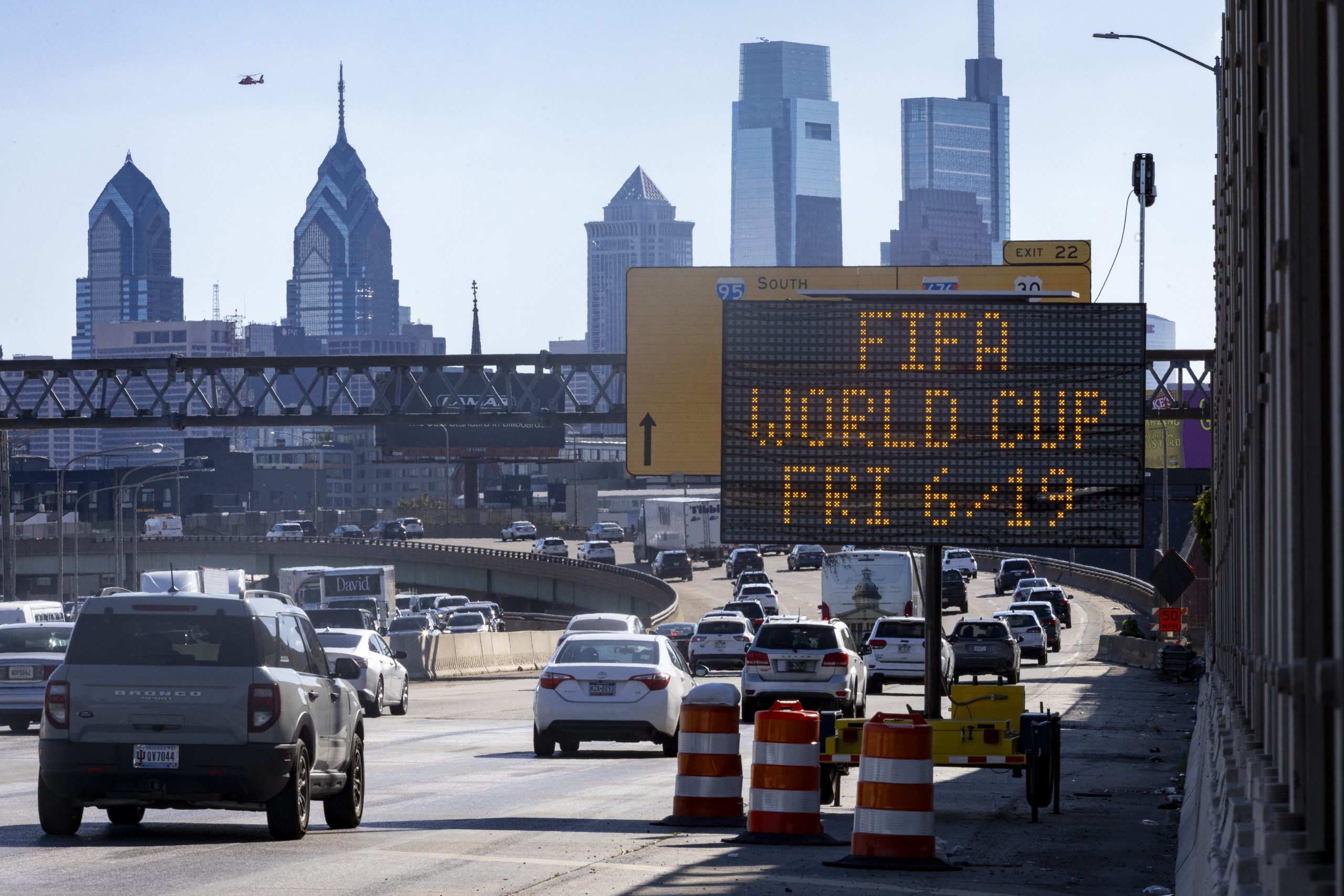
    Haiti’s June 19 World Cup match against soccer’s most decorated nation, Brazil, held at Philadelphia’s Lincoln Financial Field, encapsulates the contradictions at the heart of FIFA’s flagship event this summer.

    A traffic sign on I-95 informs drivers of expected traffic delays to occur because of the World Cup match — Brazil is set to face Haiti — on Friday at Lincoln Financial Field in Philadelphia.Aidan T. Gallo / Staff Photographer

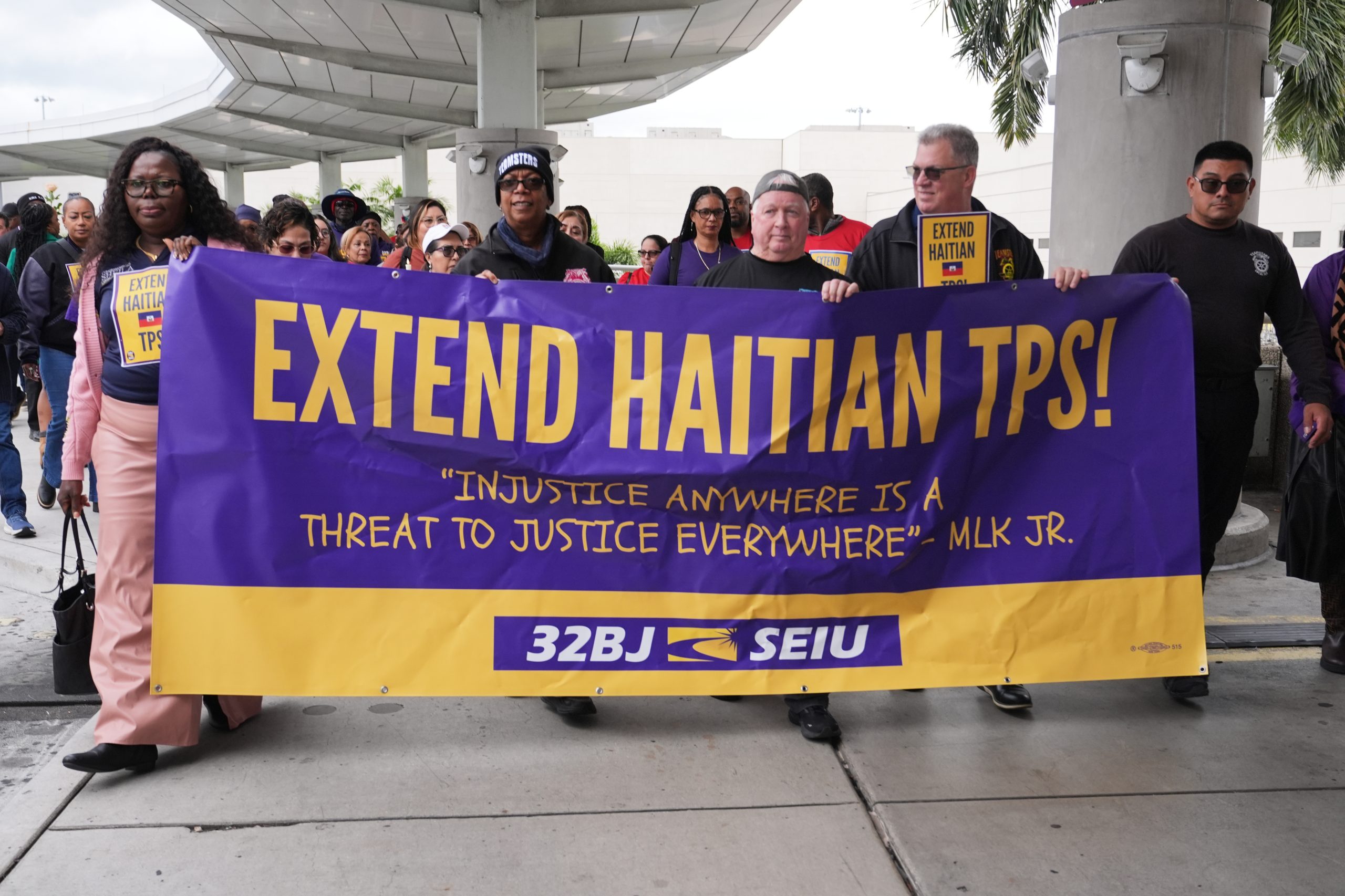
    The World Cup — and Haiti’s first appearance in it since 1974 — is a welcome distraction from the humanitarian and security crisis at home. For many Haitians, however, the Trump administration’s cruel immigration policies, including its effort to terminate this Caribbean country’s temporary protected status (TPS) — a form of protection against deportation to dangerous situations — casts a shadow over the tournament.

    Since a catastrophic 2010 earthquake, Haitians have dealt with one disaster after another, including a cholera epidemic, devastating hurricanes, increasing violence, and chronic political instability.

    The current crisis, during which criminal groups have consolidated control over most of the capital, Port-au-Prince, and expanded to at least four more of Haiti’s 10 regions, has killed thousands, displaced more than 1.5 million people, and led to widespread sexual violence.

    Even before the World Cup began, the odds were stacked against Haiti’s “Grenadiers” — a nickname that pays homage to the revolutionary soldiers who fought for Haiti’s independence in 1804. The squad managed to top their regional qualifying group for the tournament despite not being able to play a single game on home soil; their national stadium is in an area controlled by criminal groups. It was a remarkable feat — one that ended Haiti’s 52-year wait to participate in another World Cup, and became a source of immense pride for Haitian soccer fans around the world.

    Haiti fans cheer during the World Cup Group C soccer match between Haiti and Scotland in Foxborough, Mass., near Boston, on June 13.Charlie Krupa

    For the coming weeks, Haitians will be celebrated on the world stage and their players welcomed with open arms, but their fans may find their paths to the stadiums — or to the United States itself — inaccessible.

    In Philadelphia, many by now will have already seen proud Haitian fans sporting their team’s blue and red jerseys. But while the World Cup inspires hope and pride for Haitians living in the U.S., the Trump administration’s immigration policies, including the possibility of U.S. Immigration and Customs Enforcement presence at or near World Cup venues, may elicit anxiety, fear, and exclusion.

    Haiti is one of 39 countries affected by U.S. government travel restrictions that prevent fans from supporting their countries in person this summer. Although the ban includes an exception for athletes, Woodensky Pierre, the only Haitian player based in the country, missed a vital pre-tournament match after his U.S. visa wasn’t approved in time. He landed at Miami airport shortly after the game began and was later embraced by his teammates on the pitch at the final whistle.

    It is the attempts to terminate Haitians’ temporary protected status, however, that pose the most serious human rights concerns for Haitians who are already in Philadelphia and other cities.

    Under U.S. law, the Department of Homeland Security can designate a country for this status when conflict, environmental disasters, or other circumstances temporarily prevent its nationals from returning safely, or when the country cannot adequately handle their return.

    TPS protects beneficiaries from removal, allows them to apply for work and travel authorization, and prevents Homeland Security officials from detaining them solely based on their immigration status.

    Haiti first received this designation after the 2010 earthquake. Since then, and because conditions in Haiti itself have not improved, hundreds of thousands of Haitians in the U.S. have built lives, raised families, and become essential contributors to local communities, including in Philadelphia. Approximately 330,000 Haitians now have TPS in the United States.

    Haitian TPS holders in the U.S. need stability, protection, and a durable path forward, writes Robbie Newton.Lynne Sladky

    The Trump administration is now trying to strip Haitians of this protection.

    Despite clear evidence that the human rights crisis in Haiti is worsening, the Department of Homeland Security insists that “country conditions have improved to the point where Haitians can return home safely.” A Supreme Court decision on the legality of ending this protection is expected this summer.

    Residents flee their homes to escape clashes between armed gangs in Port-au-Prince, Haiti, in May.Odelyn Joseph

    Terminating the protection would have devastating consequences, exposing hundreds of thousands of Haitians to detention and possible return to the “cataclysmic” situation unfolding at home, where they would face serious risks of kidnapping, extortion, and other abuses by criminal groups.

    For the 15,000 Haitians protected by TPS in the state of Pennsylvania, making it to the World Cup and cheering on their team represents a powerful symbol of hope and unity at a precarious time for the community.

    Other soccer fans who root for the underdog will very likely cheer on Haiti as it makes its way through all of its Group C matches (and, hopefully, into the knockout stage). But support for Haiti should extend beyond the World Cup. The U.S. government should renew temporary protected status for Haitians.

    Haiti’s Grenadiers deserve their place at the World Cup. For Haitian TPS holders in the U.S., the stakes go far beyond the tournament.

    Robbie Newton is a senior coordinator and in the sport and human rights team at Human Rights Watch.

  • Juneteenth wasn’t the end of slavery in America. Here’s what history left out.

    Juneteenth wasn’t the end of slavery in America. Here’s what history left out.

    Juneteenth has been called America’s second Independence Day, and surely it is a glorious occasion worth commemorating, but it is important to remember that Juneteenth was not the end of slavery.

    The Emancipation Proclamation did not apply to the border states, nor to Northern states where slavery was technically still legal (like Pennsylvania). The 13th Amendment ended slavery in those states and all states in December of 1865.

    The signature of president Abraham Lincoln on a rare, restored copy of the 13th Amendment that officially ended slavery.Charles Rex Arbogast

    But the 13th Amendment did not end slavery in all of America either. Thousands of Black people remained enslaved after its ratification, held in chains by the so-called Five Civilized Tribes.

    The Cherokee, Choctaw, Chickasaw, Creek (or Muscogee), and Seminole nations were considered “civilized” because they adopted, in order to better assimilate with white people, an American way of life in governance, economy, religion, and attire. Part of being “civilized” included being an enslaver, so the Five Civilized Tribes began enslaving Black people.

    By 1861, more than 8,000 Black people were enslaved throughout the Indian Territory.

    The Cherokee Nation was the largest enslaver, holding 4,600 Black people in bondage in 1860. Enslaved Black people made the grueling march with their captors on the Trail of Tears, and then helped them rebuild their new life in Indian Territory. The Cherokee forced their enslaved laborers to work as translators, interpreters, maids, butlers, and farmhands.

    The Choctaw Nation counted 2,298 enslaved Black people in 1860. Choctaw leaders saw enslaved workers as economic commodities that could be used for international trade, and also as a tool to increase their social status among white people.

    Choctaw military and political leader Peter P. Pitchlynn, principal chief from 1864-1866, enslaved 81 Black people. Choctaw business mogul Robert M. Jones enslaved more than 500.

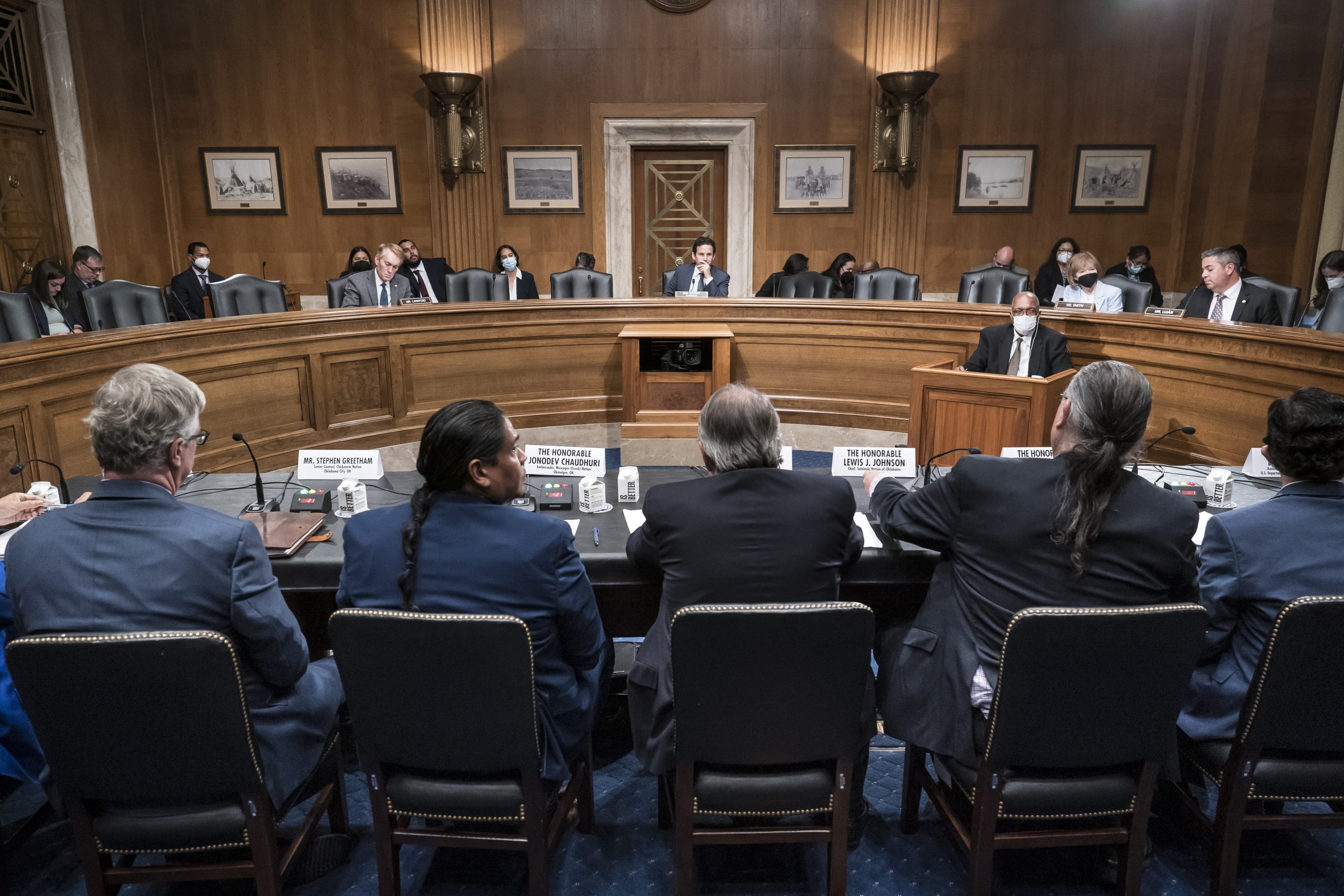
    The Senate Committee on Indian Affairs holds a hearing on “Freedmen” provisions in tribal treaties, at the Capitol in Washington, in July 2022. Freedmen were the freed Black people enslaved by the Five Tribes — Cherokee, Seminole, Choctaw, Muscogee (Creek) and Chickasaw nations — who were guaranteed the rights of citizens of the tribes under separate 1866 treaties with the United States. J. Scott Applewhite

    The Chickasaw Nation held 917 Black people in slavery in 1860. They were forced to work as interpreters, servants, wagoners, blacksmiths, and carpenters. Black people cut and shaped stone masonry on Chickasaw buildings and built public and private Chickasaw dwellings with their bare hands.

    As an expression of love, Chickasaw parents would often present an enslaved Black person as a gift to their daughters on their wedding day.

    The Muscogee (Creek) forced Black people to work in the deerskin trade, and as farmers, blacksmiths, cowboys, horse trainers, interpreters, and boatmen. They traded enslaved Black people for English-made guns, which made them the best-armed and most feared Native Americans in the Southeast.

    The Seminole Nation is well-known for providing a safe haven for Black people who fled bondage, but they enslaved Black people, too. British officials would present Seminole chiefs with gifts of enslaved Black people to strengthen alliances, and the Seminoles themselves enslaved Black people that they captured from other tribes.

    Because Native nations are not states, the Emancipation Proclamation and the 13th Amendment did not apply to the Five Civilized Tribes, which supported the Confederacy during the Civil War.

    After the South’s defeat, the tribes had to sign new treaties with the U.S. government. The tribes had to agree, as punishment for siding with the Confederacy, to give up a large portion of their territory, and among other tenets, outlaw slavery in their lands.

    The new treaty terms came into effect in the spring and summer of 1866, and then and only then did slavery come to an end in America (unless you have been convicted of a crime).

    The end of slavery in the Five Civilized Tribes doesn’t necessarily call for a holiday, but we could do our ancestors justice by putting a spotlight on Black people enslaved by Native Americans — an often-overlooked group — and including them in discussions and celebrations about the end of slavery.

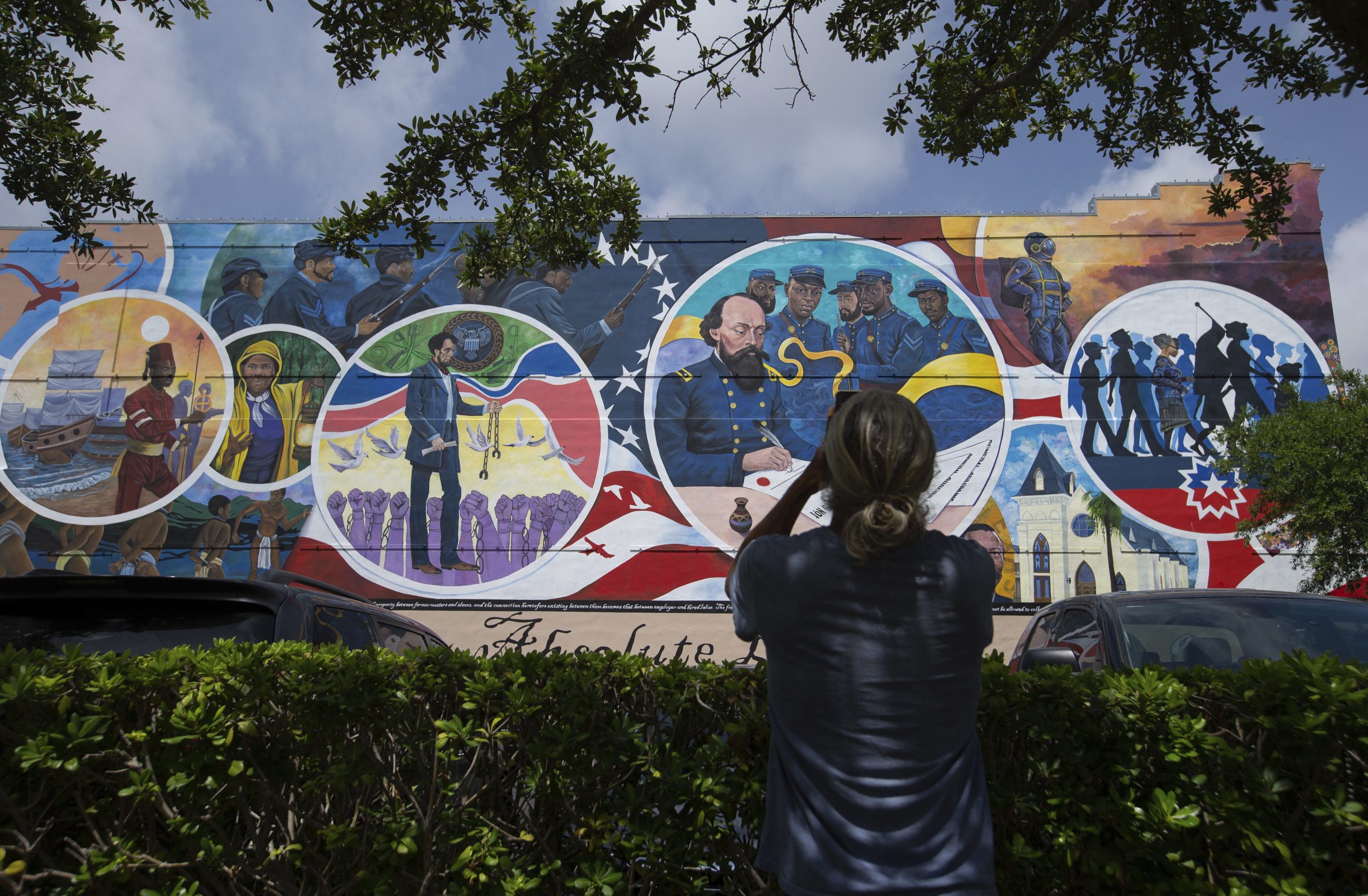
    A visitor takes a photograph of the Absolute Equality Mural, which was unveiled on Juneteenth 2021 in Galveston, Texas. Galveston is the birthplace of the Juneteenth celebration.Yi-Chin Lee / AP

    So this Juneteenth, rejoice, to the high heavens, for Black people in Texas who escaped from hell on Earth and found freedom, but save a few moments of silence for their brothers and sisters in Indian Territory and elsewhere who were still in chains, still yearning to be free.

    Greg Johnson is a writer and editor in Philadelphia, and the creator of “The History of Black Philadelphia” Facebook page. He is working on a book about the history of Black people in Philadelphia. gregjohnson1804@gmail.com

  • Physician attrition isn’t a result of lack of commitment

    Physician attrition isn’t a result of lack of commitment

    When you live in the city of eds and meds, the ins and outs, ups and downs, successes and stumbles of the educational journey make a seasonal backdrop. Just as the sights and sounds of caps and gowns, family photos, and generational pride, joy, and accomplishment are in the air around us this time of year, the cycle of applications restarts.

    And so, too, do requests for letters of recommendation. Being asked to write a letter of support for any of my students is an honor. It’s also a responsibility I don’t take lightly.

    For those I’ve written to medical schools, the task feels even weightier. I only want the best future doctors, clinicians, and colleagues caring for patients. But I also want what is best for the students I have come to know and value.

    For the first time this year, I caught myself almost trying to dissuade a student from applying to medical school. Not because they lacked ability or mission. But because they had the very qualities that make someone an extraordinary physician — intelligence, empathy, curiosity, selflessness, ethical centeredness, creativity, and a desire to serve.

    The U.S. healthcare system can be punishing to people with those qualities. My inclination is to protect the students who may be at risk of experiencing the moral injury I have come to know.

    The question in my mind is not whether they are good enough to be accepted into medical school. I now question whether the world of healthcare is worthy of them.

    The understood pact

    I am hard-pressed to think of another degree that immediately conveys demonstrated intelligence and accomplishment in the way a medical degree does. It transcends culture, ethnicity, and geography.

    Beyond the respect and prestige, medicine used to offer a near-sacred promise, especially noted by first-generation and immigrant families: work hard, distinguish yourself among the best students nationally, endure the training, become a doctor, and you will have security, standing, and a life of meaningful contribution and fulfillment.

    That bargain seems to have changed.

    Misdiagnosis and politics

    On May 19, U.S. Rep. Greg Murphy, a physician and congressman from North Carolina, responded to a study in the Permanente Journal looking at clinically inactive physicians for factors associated with their attrition. On X, Murphy issued an indictment of medical schools. He wrote that anyone unwilling to commit to clinical practice for 20-25 years should not be in medicine.

    A year ago, almost to the day, on May 20, 2025, Murphy introduced legislation to ban DEI in medical schools — the Embracing anti-Discrimination, Unbiased Curricula, and Advancing Truth in Education (EDUCATE) Act. He and those who supported the legislation saw diversity, equity, and inclusion in medical school and the medical profession as “discrimination,” “politicization,” and “woke ideology.”

    Murphy’s EDUCATE legislation frames increased diversity as a threat to merit and excellence, and his recent X post suggests physician attrition is a failure of admissions screening. Together, his position seems to be that the wrong people are being let into medicine and that this is the key cause of healthcare’s attrition crisis.

    It shows Murphy’s lack of awareness of the current realities of healthcare. To tell anyone that they must commit to decades of full-time practice without scrutinizing the systems dictating that practice is not workforce planning — it is a coerced loyalty oath. There are harsh truths we in Philadelphia know well.

    From Hahnemann/Drexel, to Jennersville and Brandywine Hospitals of Tower Health, to Crozier Health System, we have been witnesses to the closures and collapse of hospitals and entire systems because of poor leadership, incompetent management, and systems-dismantling by private equity. We may be watching this process unfold in real time at Our Lady of Lourdes in Camden.

    At no point was this failure one of commitment or dedication from the impacted trainees, physicians, clinicians, or caregivers.

    Nurses, physicians, and support staff can do everything “right” and still be discarded by the institutions that once seemed permanent. Murphy chastises students for not committing to medicine for 25 years, but no academic institution, hospital system, corporate employer, or political leader is asked to commit 25 years to that student in return.

    A curious distinction

    I was serving on the board of trustees of the College of Physicians of Philadelphia when I left my position as associate professor in academic medicine. At one board meeting, a trustee turned to me: “What’s new? I heard you left.” Before I could answer, she turned to another trustee at the table, saying, “Women these days just aren’t as committed to medicine.”

    In that moment, it became clear that “leaving” was called “leadership” for some and “a lack of commitment” for others.

    Associate deans who no longer care for patients do not see themselves as having left clinical medicine.

    Graduates of prestigious medical schools who use their MD as a credential to move into consulting, venture capital, insurance, or government aren’t usually judged on whether they were worthy of medical school admissions and a coveted seat — even if they didn’t finish residency training or get board certified.

    “Leaving” and the attendant opprobrium are reserved for those who do the lion’s share of patient care and clinical work before they go.

    Is this the new reality?

    Doctors increasingly work inside systems designed by people far from the bedside.

    Doctors are accountable for patient outcomes, patient satisfaction, documentation, throughput, billing, safety, and liability — yet, they have little control over staffing, scheduling, payer rules, hospital finances, closures, corporate strategy, or leadership decisions.

    I’ve had a front-row view of all of these in the last 25 years.

    Medicine wants the A+ student: the one who excels academically, volunteers, leads, researches, listens, and cares. The one who is a driven self-starter, adaptable, and gets tasks accomplished with minimal oversight or direction. But once on the other side of the years of education and training, agency and autonomy are stripped away. More and more, doctors are forced to be the face of, and the shock absorbers for, decisions they have no say in making.

    In the setting of AI in healthcare, the corporate practice of medicine, insurance-driven permissions and protocols, do we really need the best and brightest to spend nearly a decade in education and training, only to then treat them like cogs or widgets?

    The selflessness, ethics, and humanity that make the best doctors are also the traits most likely to be wounded by a system that rewards productivity over presence, margins over missions, silence over candor, and institutional protection over accountability.

    To be clear, the physician shortage is real. Emergency departments are full of people who turn to us when the next available appointment is months away. Entire swaths of rural areas have seen their hospital close or their doctors leave. Communities need doctors to care for them throughout their lives and particularly as they age.

    The solution won’t come from a myopic focus on who we let into medical school. Instead, we should focus on building a career trajectory that physicians can sustain, survive — and ideally thrive.

    Retention is not built by threatening the pipeline, but by addressing the leaks and reconfiguring the parts that are broken.

    The people drawn to medicine for the right reasons will always exist. They are the ones who show up and step up. They teach, heal, listen, advocate, sit with families, mentor others, and build new paths when the old ones fail. And they are not easily dissuaded — from their goals, missions, values, or calling. When they are free to be the doctors their patients need, the rest of the hassles of the job feel bearable. If not, the hassles can feel insurmountable.

    The silver lining is not that doctors will keep enduring anything simply because of their drive or values — nor should they. That is not hope; that is exploitation.

    The silver lining is that medicine still attracts people who want to use their gifts in service of others. Our obligation is not to test how much harm they can withstand. It is to build a profession aligned with the values we claim to admire.

    Priya E. Mammen is an emergency physician, healthcare executive, and public health specialist who helps the nation’s most impactful companies integrate clinical integrity at scale.


  • AI is preserving Holocaust survivor stories. But should it be trusted?

    AI is preserving Holocaust survivor stories. But should it be trusted?

    My phone rings, and a Holocaust survivor is on the line. She is 91. She wants to know if her story will still matter when she is gone.

    I do not know how to answer that honestly, so I tell her what I know for certain: We are working on it.

    That work has brought me into conversations I never expected to have, including ones about artificial intelligence. Because the uncomfortable truth is that AI is already entering Holocaust education, whether the field is ready for it or not. The question is not whether to use these tools. It is whether we will use them with the seriousness the subject demands.

    Philadelphia has a deeper stake in this than most cities realize. The Philadelphia metro area is home to about 1,500 Holocaust survivors, just under 1,000 of whom live in the city itself. Most are in their late 80s and 90s.

    Artifacts collected and displayed in the Jenkintown home of Holocaust survivor, Anneliese Nossbaum. She was sent to Auschwitz in October of 1944 and liberated by the U.S. Army in 1945.LAUREN SCHNEIDERMAN

    At the same time, Holocaust knowledge is eroding in alarming ways, with nearly half of Americans unable to name a single concentration camp and many students reporting little to no classroom exposure. Pennsylvania is not exempt from this. The commonwealth does not have a strict statewide mandate requiring Holocaust education, as the bill that was introduced is dead and has not been passed. It is time for a bill to be passed mandating Holocaust education in Pennsylvania.

    Into that gap, technology is rushing. Some of what is arriving is extraordinary. Some of it should concern us deeply.

    I lead a nonprofit, The Blue Card, which serves Holocaust survivors in need. Our organization has helped develop a hologram program featuring Sonia Warshawski, a Holocaust survivor whose testimony has been preserved and made interactive for students. When a student asks her a question and she responds in her own words, the room goes quiet in a particular way. Something real is happening.

    But what makes it real is precisely what makes it different from so much of what is being built right now: The system does not generate. It retrieves.

    If Sonia never said something, the system does not say it for her. It pauses. It stops. That silence is not a limitation. That is the whole point.

    Generative AI works on a different principle. It predicts what should come next. It fills gaps. It is extraordinarily good at producing language that feels authentic, even when nothing authentic underlies it. In most domains, that fluency is a feature. In Holocaust testimony, it is a serious risk.

    We are not talking about getting a few facts wrong. We are talking about the possibility of fabricating witnesses. Of building systems that speak in the voices of people who survived genocide and putting invented words in those voices because the technology can, because it sounds right, because students find it engaging.

    The road to that outcome is paved with good intentions and not enough caution.

    This is not theoretical, and Philadelphia makes that painfully clear. In 2025, a U.S. House committee launched an investigation into allegations of antisemitism in the Philadelphia School District, citing reports that incidents were “rife” and going unaddressed in classrooms. The Anti-Defamation League (ADL) tracked 465 antisemitic incidents in Pennsylvania in 2024, the fourth highest in the nation, showing a 140% rise in physical assaults.

    For the survivors that The Blue Card serves in this region, this is not a distant political story. It is a reopening of wounds that never fully closed.

    And there is a particular indignity worth naming: Until late 2025, Pennsylvania remained one of only four states that still taxed Holocaust reparation payments as personal income. An exemption was finally signed into law in November 2025, decades after the federal government stopped taxing such payments in 2001. That basic discrepancy endured so long, and it says something about the context in which survivors in this city have led their compensation for persecution.

    That context matters when we discuss what we owe them in the realm of memory.

    Survivors choose their words deliberately. They decide what to tell, what to withhold, how to describe things that resist description. That choosing is part of the testimony. A system that completes their sentences, that invents the parts they left out, that generates responses to questions they were never asked, is not preserving memory. It is replacing it with something more convenient and less true.

    There is a version of AI in Holocaust education that is genuinely valuable. It can extend reach, bring testimony into classrooms that would never host a survivor, make voices accessible across languages and geographies.

    None of that requires fabrication. All of it requires restraint. The technology that earns a place in this work is technology that knows what it does not know. That admits the limits of the record. That treats the gaps in testimony not as problems to solve but as facts to honor.

    The survivor on the phone is asking whether her story will matter when she is gone. The answer depends entirely on what we build, and what we refuse to build, while she is still here to tell us what she actually said.

    Masha Pearl is the executive director of The Blue Card, a nonprofit that provides financial assistance to Holocaust survivors in the United States.

  • Joanna McClinton and Dave Sunday: Accountability is key to keeping our children safe

    Joanna McClinton and Dave Sunday: Accountability is key to keeping our children safe

    Protecting the public is government’s most fundamental duty. But when new threats to safety emerge and evolve, that duty demands more than awareness — it demands action that keeps pace with reality.

    Today’s children are growing up exposed to constant streams of content that can be disturbing, harmful, and frightening. It shapes how they see themselves and their peers in ways no previous generation has had to navigate. That is the reality we face — and it demands urgency and action.

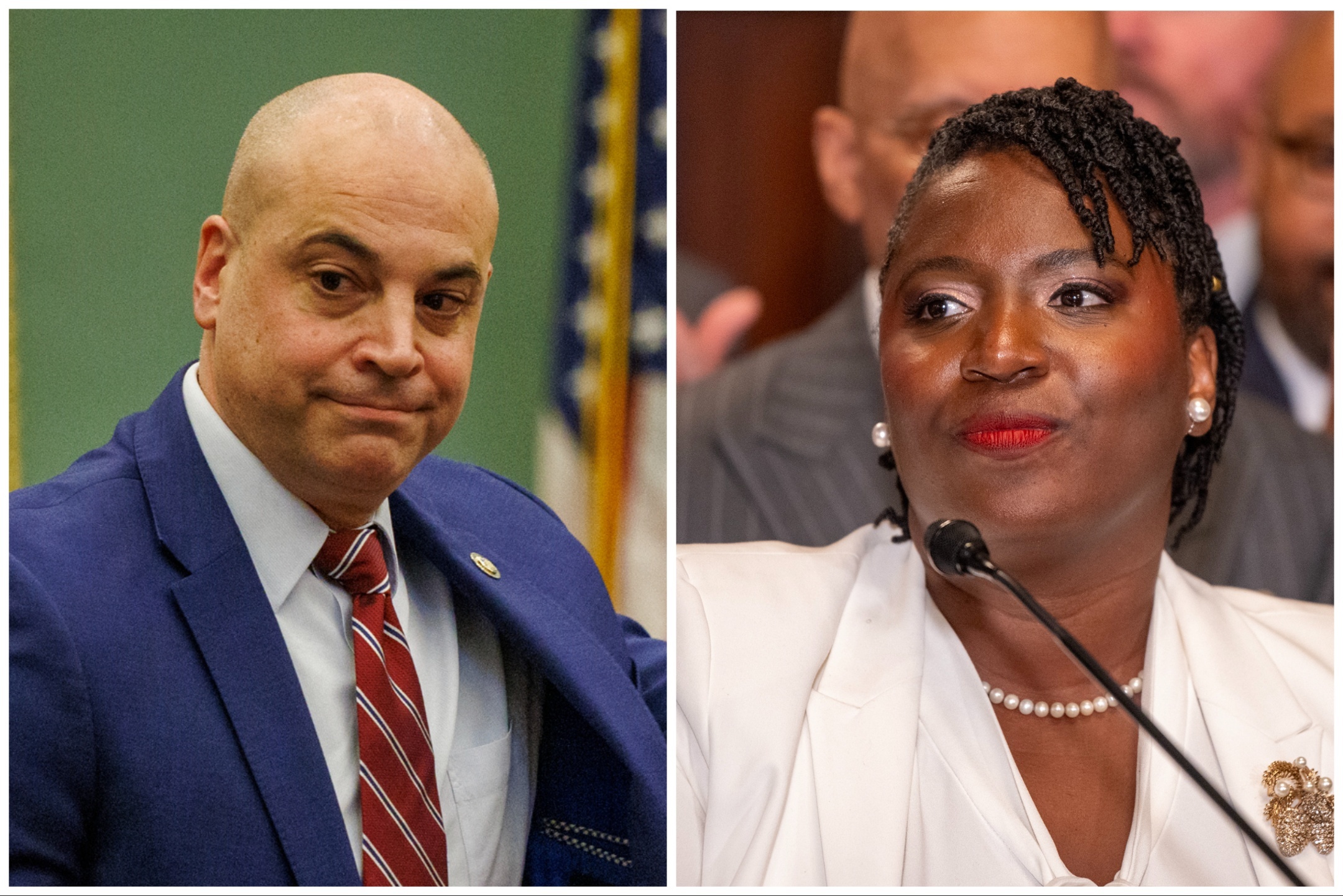
    Today’s children are growing up exposed to constant streams of content that can be disturbing, harmful and frightening, write Joanna McClinton and Dave Sunday.Seth Wenig

    Last month, we served as panelists at an event in Montgomery County concerning the growing issue of AI-generated sexually explicit deepfakes in our schools. This discussion stressed the harmful, long-lasting impact that sexualized content can have on victims, but also what we should be doing to better protect our children and to prevent this new form of exploitation.

    First, let’s level set. Explicit deepfakes are not a joke, or “kids being kids.” They are serious and illegal invasions of privacy that can leave a victim feeling traumatized, angry, alienated, depressed, embarrassed, shameful, and violated. They need to be taken seriously, and they need to stop.

    To set the tone for the event, two courageous students shared their victim impact statements with the audience of parents, advocates, law enforcement officials, and others. Their testimony was simultaneously heart-wrenching and infuriating.

    Heart-wrenching because of the cycle of trauma a teenager must endure after having their privacy violated by a classmate. Trauma that does not stop when the school bell rings at the end of the day, but follows our children home. Infuriating because of the ease with which a child can create hypersexualized content of another child.

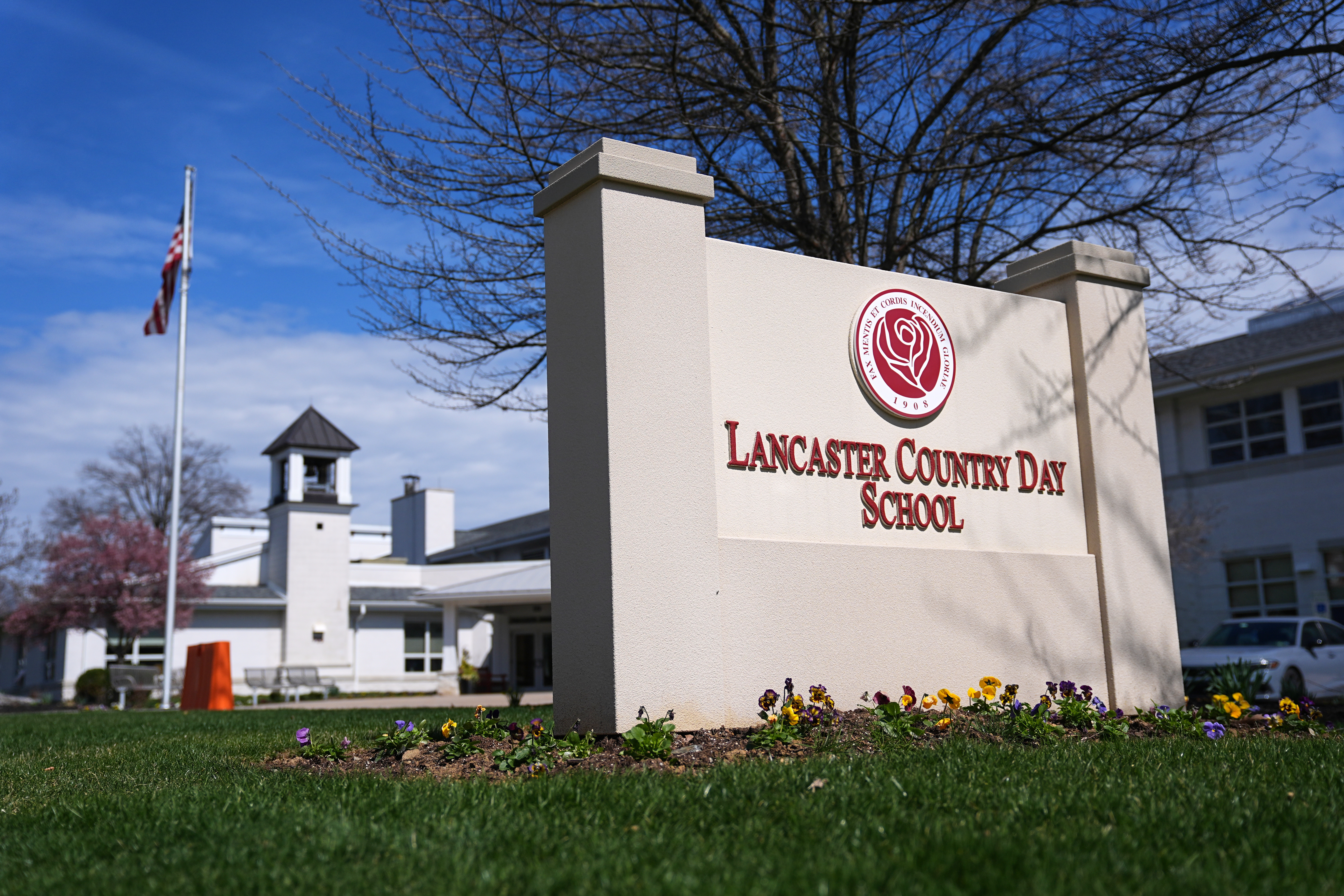
    Earlier this year, two 16-year-old boys in Lancaster County used artificial intelligence to create hundreds of nude images of female classmates at Lancaster Country Day School.Matt Rourke

    Deepfake sexualized images in schools is not an issue unique to Pennsylvania, with prominent cases emerging in states from California to Louisiana to Massachusetts, but it is one that the two of us — Joanna McClinton, as a lawmaker, and Dave Sunday, as the state’s chief law enforcement officer — are heavily invested in and are committed to defeating.

    In Pennsylvania, we’ve implemented new laws to respond to the growing danger some apps are enabling in our schools and elsewhere.

    In 2019, Pennsylvania was a leader in making sextortion — a crime where a perpetrator coerces a victim to comply with demands for sexual acts, images, or videos — a third-degree felony, punishable by up to seven years in prison, if the victim is under 18, or the perpetrator has shown a pattern of engaging in sexual extortion.

    In 2024 and 2025, Pennsylvania enacted new laws making it a crime to harass someone by distributing a deepfake nude or sex act image of them without their consent (the offense is more serious if the victim is a minor), or to create a forged digital likeness, a computer-generated image, video, or audio recording of a person, with the intent to defraud or injure someone.

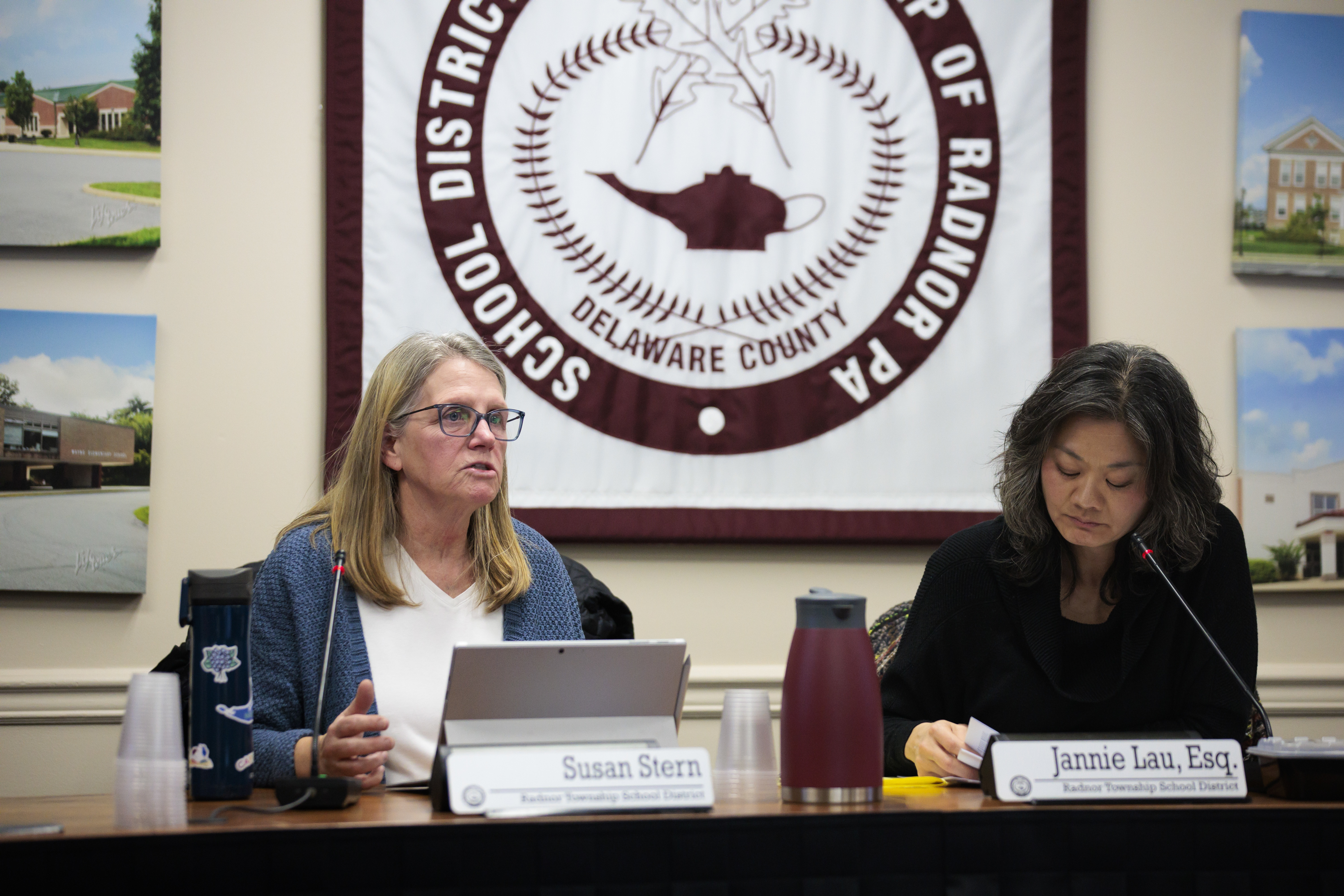
    In April, the Radnor school board explicitly banned the use of artificial intelligence to create sexualized images of another person, after a student made deepfakes of female classmates.Monica Herndon / Staff Photographer

    Finally, we learned from recent incidents in Lancaster and Delaware Counties that acting fast is critical to limiting the number of victims, stopping the circulation of deepfake child pornography, and maximizing law enforcement’s ability to investigate.

    To speed up the process, an additional measure is pending in the state Senate to require mandated reporters, like teachers, school officials, and healthcare professionals, to report suspected child sexual abuse materials or AI child sexual abuse materials to ChildLine, which will immediately alert law enforcement.

    A measure is pending in the state Senate to require mandated reporters, like teachers, school officials, and health care professionals to report suspected child sexual abuse materials or AI child sexual abuse materials to ChildLine, write Joanna McClinton and Dave Sunday.Andrey Rudakov

    We are also having ongoing conversations directly with students about social media and artificial intelligence, and how these tools make them feel in their day-to-day lives. Those perspectives matter, and they should inform how we approach this issue moving forward.

    We can be part of the solution through our offices and in Harrisburg, but it is just as important to hear directly from students in our hometowns and across the commonwealth.

    We also recognize that social media is not going away. This is not about banning platforms or telling kids to shut down their accounts, but about ensuring they understand and are aware of the very real dangers that can exist within them, and equipping families and schools to navigate them safely.

    While updating the law is an important step in keeping our kids safe, the real solution requires parents, educators, law enforcement, and even tech companies to act and to know what to do.

    Students need to know and feel comfortable telling an adult that a sexualized image has been sent to them.

    Parents and caregivers need to talk with their children to both understand what they are doing online and what apps they are using, and to reassure them that if they see something inappropriate, they should tell you or another trusted adult.

    Schools need to take incidents seriously, alert law enforcement immediately, and, most importantly, support the victims.

    Law enforcement needs to treat these cases seriously. They are crimes being perpetrated against children, and they are occurring in communities around the state. If your community hasn’t been impacted yet, it will soon.

    Technology today is transformative, and it is evolving at a faster and faster pace. When we were growing up, we didn’t have these powerful tools to contend with. But now that they are here, they need to be used responsibly.

    The stories from our brave students should be a call to action for each of us — from elected officials to law enforcement to parents and school leaders — to do everything we can to prevent the use of apps that allow children to create hypersexualized content of their classmates.

    We can’t allow hypersexualized content to become mainstream; we need to hold people accountable, from the students generating the deepfakes to the app developers who make the sexualized content possible.

    Joanna McClinton is the speaker of the Pennsylvania House of Representatives. Dave Sunday is Pennsylvania’s attorney general.