Category: Philadelphia News

  • The Frank Rizzo statue is repaired, and the search for a new location is underway

    The Frank Rizzo statue is repaired, and the search for a new location is underway

    In the case of Frank Rizzo, out of sight does not always mean out of mind.

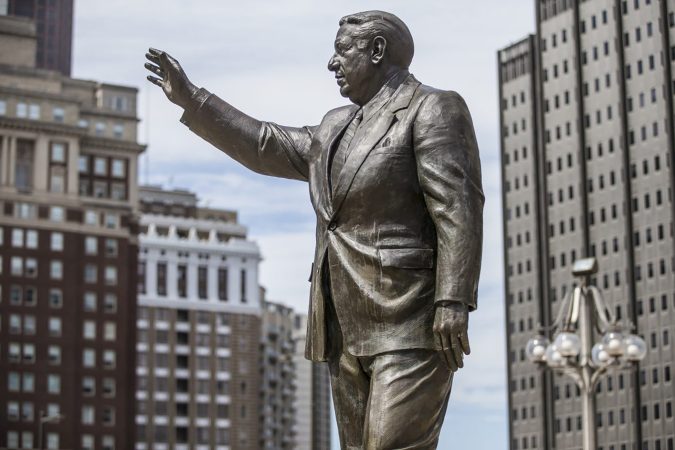
    The former mayor and police commissioner died 35 years ago. A 10-foot bronze statue reminded Philadelphians of his presence for decades, until civil rights protests in 2020 culminated in the monument’s removal from public display.

    It might have lost its prime spot outside the Municipal Services Building, across from City Hall. But, six years later, the statue remains a subject of interest, leaving reader JJ Cutuli to ask Curious Philly, The Inquirer’s forum for questions about the city: “Where is the Frank Rizzo statue, right now?”

    The short answer? Now that repairs have been made, the search for a new home is on. Here’s how we got here.

    » ASK US: Have something you’re wondering about the Philly region? Submit your Curious Philly question here.

    The last thing Cutuli heard on the Rizzo statue saga was that it was set to be returned to the Frank L. Rizzo Monument Committee, after a settlement was reached with the Philadelphia Art Commission last summer.

    “I am very much against the statue, against the man, against what it all represents,” Cutuli said. “But sweeping it under the rug or sending it to a scrap yard might take away the opportunity to deal with the issues that it represents.”

    Rizzo has long been a controversial figure. During the 1960s and 1970s, he was accused from different fronts in the city of having allowed police to function with little oversight, putting people of color in a vulnerable spot.

    Between 1970 and 1978, police shot civilians at a rate of one per week, according to an Inquirer investigation. That led critics to condemn Rizzo as a racist, and protesters even put a Ku Klux Klan hood on the statue’s head in 2016.

    “The statue is a deplorable monument to racism, bigotry, and police brutality for members of the Black community, the LGBTQ community, and many others. The treatment of these communities under Mr. Rizzo’s leadership was among the worst periods in Philadelphia’s history,” then-Mayor Jim Kenney said in a statement in 2020, when the city removed the statue overnight.

    For supporters, however, the South Philly native was a beacon of Italian American pride whose tough approach on crime could have been misunderstood.

    “He was a brute in some respects. But it wasn’t racist,” George Bochetto, an attorney for the Frank L. Rizzo Monument Committee, told The Inquirer in 2016. “It was law and order, it was crime, and I think he got a bad rap, frankly.”

    The agreement left the committee with an $80,000 payment from the city for damages caused to the statue during its removal.

    “They put it on the back of a flatbed truck and a piece of the base broke off so they had to replace that base,” Bochetto said. “There were also a lot of scratches and gouges on the body of the statue, which had to be repaired too.”

    The bronze Rizzo has been at a foundry undergoing “expensive five-figure repairs,” Bochetto said.

    Restorations are now done, according to the lawyer. The next frontier is finding a new home for the Rizzo statue.

    As part of the 2025 agreement, the statue should be displayed on private property, and in a way that makes it “not visible from the public right of way,” the agreement states.

    An exception can happen if the committee gets approval from Mayor Cherelle L. Parker or the managing director. Bochetto said that’s something the committee is working on. Bochetto did not describe locations being considered for the statue.

    The city did not reply to a request for information. So, the status of the monument’s home remains uncertain.

    Controversy aside, Bochetto said, it’s important to recognize that the statue is part of Philadelphia’s history.

    “People say that symbols like this from the past are a part of our history and that is true,” Cutuli said. “But as part of history perhaps these things do have a place in museums or perhaps they don’t, perhaps the story and the facts can exist without the statue.”

  • Flood warnings are up for parts of the Philly area, with the potential for 5 inches of rain

    Flood warnings are up for parts of the Philly area, with the potential for 5 inches of rain

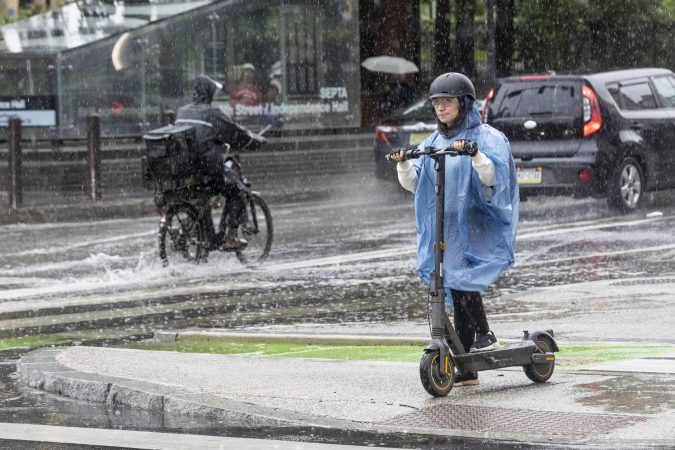
    For the first time since, well, Tuesday, flood warnings have been posted in the Philly region and a flash flood watch remains until 11 p.m. Monday, with a potential for up to 5 inches of rain in and around the city.

    The National Weather Service flood warnings were in effect until midafternoon for a broad area along the I-95 corridor where “slow-moving thunderstorms” had generated up to 4 inches of rain

    The Pennypack Creek in Northeast Philly jumped 1.5 feet in just 15 minutes to go above flood stage, the weather service said. At least one water rescue occurred in Montgomery County, and flooding resulted in lane closures along Route 130 in Gloucester County, the weather service reported.

    Strong storms remain possible during the day Monday, but Sarah Johnson, warning coordination meteorologist for the National Weather Service office in Mount Holly, said “the bigger threat we are concerned about is heavy rain and flash flooding.“

    While the weather service’s flood watch was in effect from 8 p.m. Sunday until 11 p.m. Monday, she cautioned that with computer models having their differences, the forecast had elements of “uncertainty.” (And when was the last time that happened?)

    Once again the atmosphere likely will be playing a version of rain roulette across the region, as it did on Tuesday, said Marc Chenard, senior branch forecaster at the federal Weather Prediction Center, in College Park, Md. Waterfall-like downpours turned the Delaware River into a shade of flowing mocha north of Philadelphia, while less than an inch fell upon the city.

    Areas of heavy rain moved through the region Sunday nigh an Monday morning. And regardless of how it all plays out this time around, “it’s definitely going to affect the morning commute” said Bill Deger, senior meteorologist with AccuWeather Inc., with rainfall rates of 1 to 2 inches an hour possible. Even if it’s not raining, he said, significant road flooding is possible.

    He said it’s likely that Philly and the surrounding area might be in the 2-to-4-inch bull’s-eye zone.

    When is likely timing for rain in the Philly region?

    “This is another setup where we have very moist air from the South,” said Deger.

    More rains were likely Monday morning, and again later in the afternoon with the approach of a cold front.

    That front could fire up strong thunderstorms, said Chenard, and it might take its good old time moving through the area.

    He added that as so often happens, the downpours “won’t be all that widespread, but where they do happen you usually get a flash flood.”

    The rains likely will shut off Monday night; however, the workweek is looking quite unsettled with shower chances every day.

    Will this end the drought in the Philadelphia area?

    While the drought warnings continue in New Jersey and Chester County, conditions have improved measurably in areas around the city, which was no longer in “severe” or “moderate” drought, in the latest interagency U.S. Drought Monitor update.

    Still, even in Philly conditions were listed as “abnormally dry” in the advisory issued Thursday, despite a July that was officially the wettest month in Philadelphia since March 2024.

    Philadelphia’s total, 7.03 inches, was 2.65 inches above normal. Over 8 inches was measured in Wilmington. However, as a testament to the randomness of summer rains, precipitation totals were significantly below normal in Atlantic City and Allentown, the weather service reported.

    And while downpours can trigger rapid rises on the local streams such as the Neshaminy Creek, in Bucks County, and the Frankford and Pennypack Creeks in Philly, they are less of a threat to the Delaware and Schuylkill Rivers, where water levels have remained relatively low.

    Those levels are the result of the longer-term dryness: July broke a 16-month streak of below-normal rainfall in Philadelphia.

    But Johnson said the region’s wetness trend has been showing some signs of staying power.

    Said Deger, “It’s been a long time coming.”

  • Covering 20 locales over 20 weekends, ‘Neighborhood Jawnts’ tour series highlights Philly’s diverse communities

    Covering 20 locales over 20 weekends, ‘Neighborhood Jawnts’ tour series highlights Philly’s diverse communities

    The tour bus heaved and weaved through the residential streets of Mount Airy, rolling over speed bumps, slowing for passing cars, and pulling over for the occasional gawking.

    “I invite you to look around,” tour guide Marianne Ruane said, gesturing out the window as her voice echoed from a transmitter microphone into the audiences’ earpieces. The attendees murmured as they admired the homes of the streetcar suburb.

    This was “Neighborhood Jawnts,” a free, hyper-localized tour running throughout a diverse swath of Philadelphia’s neighborhoods this summer and into the fall. The “jawnts” — get it? like “jaunts” but Philly-style — are an effort by the city’s tourism arm to engage every locale, from Africatown to the Far Northeast, during the Semiquincentennial.

    “Philadelphia’s a city of neighborhoods,” said Kathryn Ott Lovell, president and CEO of Philadelphia Visitor Center Corp. and Philadelphia250, the nonprofit in charge of planning the 250th celebrations. The series is a collaboration between Ott Lovell’s organizations, with sponsorships from the city and Fulton Bank, which allow the tours to be offered at no cost.

    “We wanted to make sure that people have the opportunity to get to know the whole city and to get to know the city through the neighborhoods and the diversity of our city — the cultures, the communities, the histories,” Ott Lovell said.

    The tours, which began in late May and will run until October, feature a different area weekly, totaling 20 neighborhoods in the series. The tours are offered once on Fridays and twice daily on Saturdays and Sundays, and launch from the Independence Visitor Center.

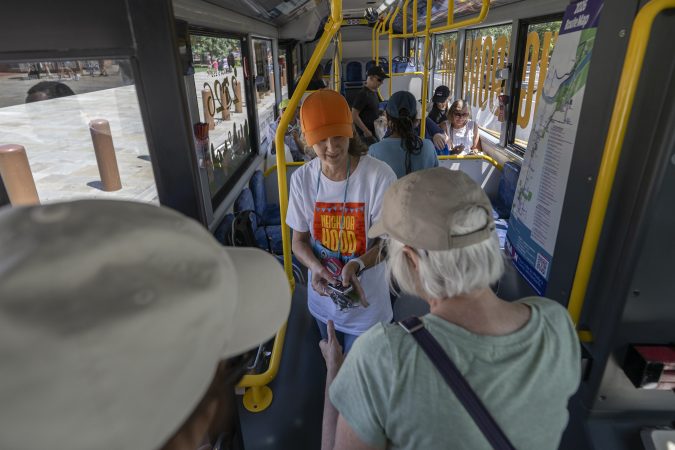
    Passengers board the PHLASH bus at the start of the “Neighborhood Jawnts” tour in Philadelphia on July 24.Jose F. Moreno / Staff Photographer

    On a recent Friday in July, a commandeered PHLASH bus carted about 30 people around Chestnut Hill and Mount Airy. Each tour is led by a professional tour guide — someone who gives the “play by play” — and a community host — a resident who can add “color commentary” — Ott Lovell said.

    Attendees visited the French and English Villages; the country’s oldest country club, Philadelphia Cricket Club; and the Wissahickon Inn, and they tasted “midnight chocolate” ice cream from Mount Airy institution Zsa’s Ice Cream, all while learning about the area’s history and how architecture has shaped the community and its landscape.

    “I really love how Philadelphia 2026 has been about celebrating the city as a whole, not just Old City and downtown, but all of the neighborhoods that give Philadelphia its identity,” said Philip Dawson, community host and executive director of Mount Airy Community Development Corp.

    Dawson added: “This tour really helped to highlight Mount Airy’s history, its housing and architecture, its businesses, its people, its diversity. It was really meaningful.”

    Surprisingly, Ott Lovell said, Philadelphians — not out-of-towners — have capitalized on the tours. The majority of July 24 attendees were from the Philly area and most had already gone on a “jawnt.”

    It was Janice Rudd’s fourth such tour. The 60-year-old recently moved from Houston to South Philadelphia and has been using the series as a way to familiarize herself with her new home city.

    “I’m learning so much,” Rudd said. “It’s such a big city, there’s much to do downtown, in South Philly, out to the [Philadelphia Museum of Art] … but people just never go beyond there. … It’s nice to see real neighborhoods.”

    While ambitious, “Neighborhood Jawnts” is paying off: Forthcoming tours are nearly full or completely sold out with a waiting list to join, according to organizers. Ott Lovell said they are brainstorming ways to keep low-cost and affordable tours going past the summer of the Semiquincentennial.

    “We are a city of neighborhoods and it’s something we should celebrate as much as we celebrate our history,” she said.

    The “Neighborhood Jawnts” series runs until Oct. 25. Tours start at 2 p.m. on Fridays and at 10 a.m. and 2 p.m. on Saturdays and Sundays. Tours are free, but online registration is required.

  • South Philly will soon have a new path to the Delaware with the Washington Avenue Connector

    South Philly will soon have a new path to the Delaware with the Washington Avenue Connector

    A new pedestrian and bicycle route connecting Jefferson Square Park to the Delaware River is expected to be completed this month, with the asphalt median largely in place and other construction continuing.

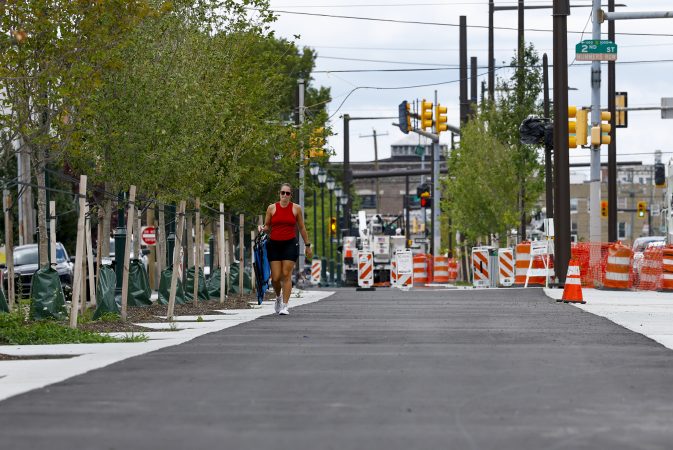
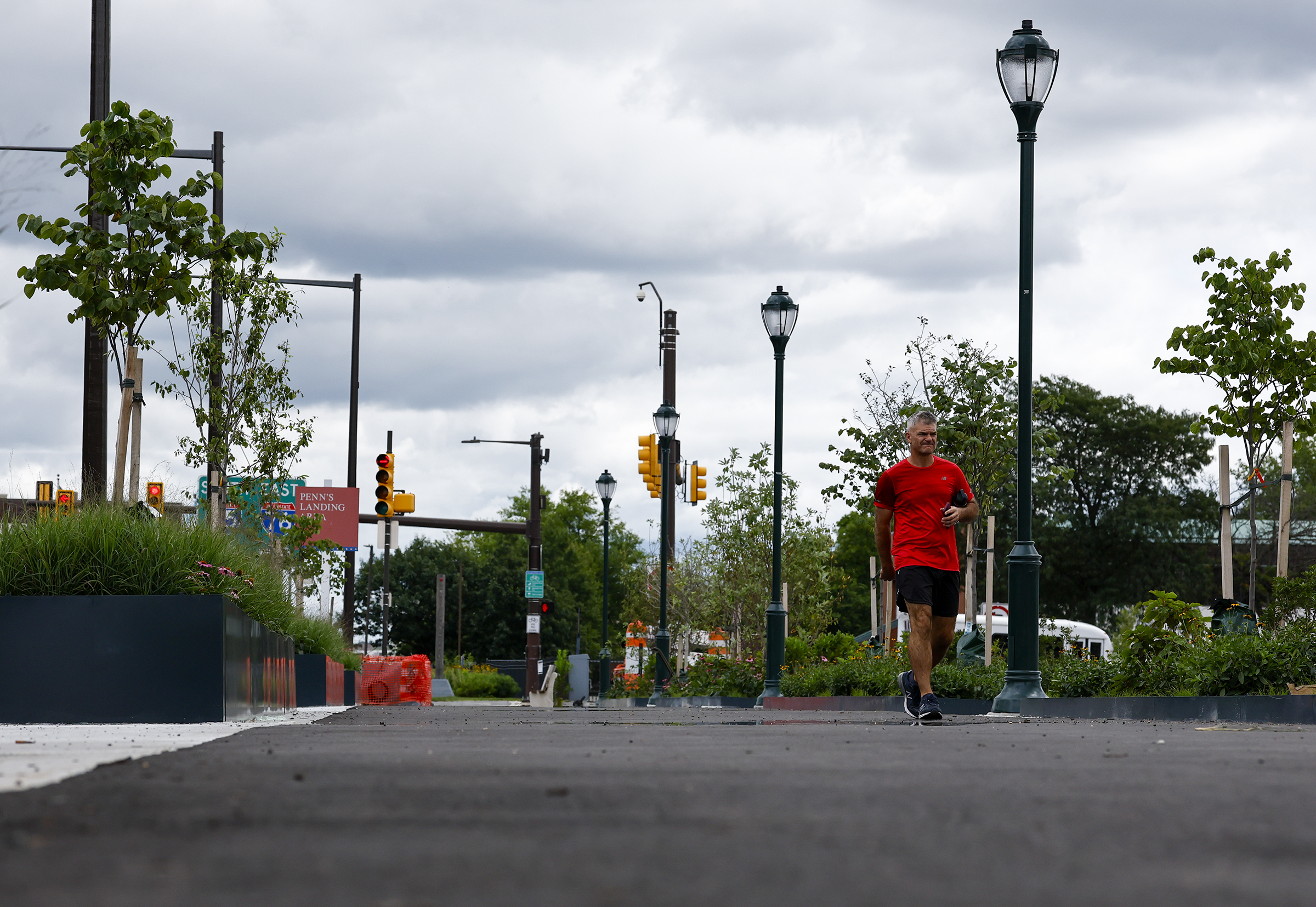
    Along portions of the unfinished route, new plantings soften the expanse of pavement, offering an early glimpse of the connection planners hope to create: a path that makes the river feel less like the far side of a highway and more like part of the neighborhood.

    For now, the stretch of Washington Avenue between the South Philadelphia neighborhood park and Columbus Boulevard remains an overwhelming landscape of asphalt and concrete, with a multilane roadway separating pedestrians from the riverfront trail to the east.

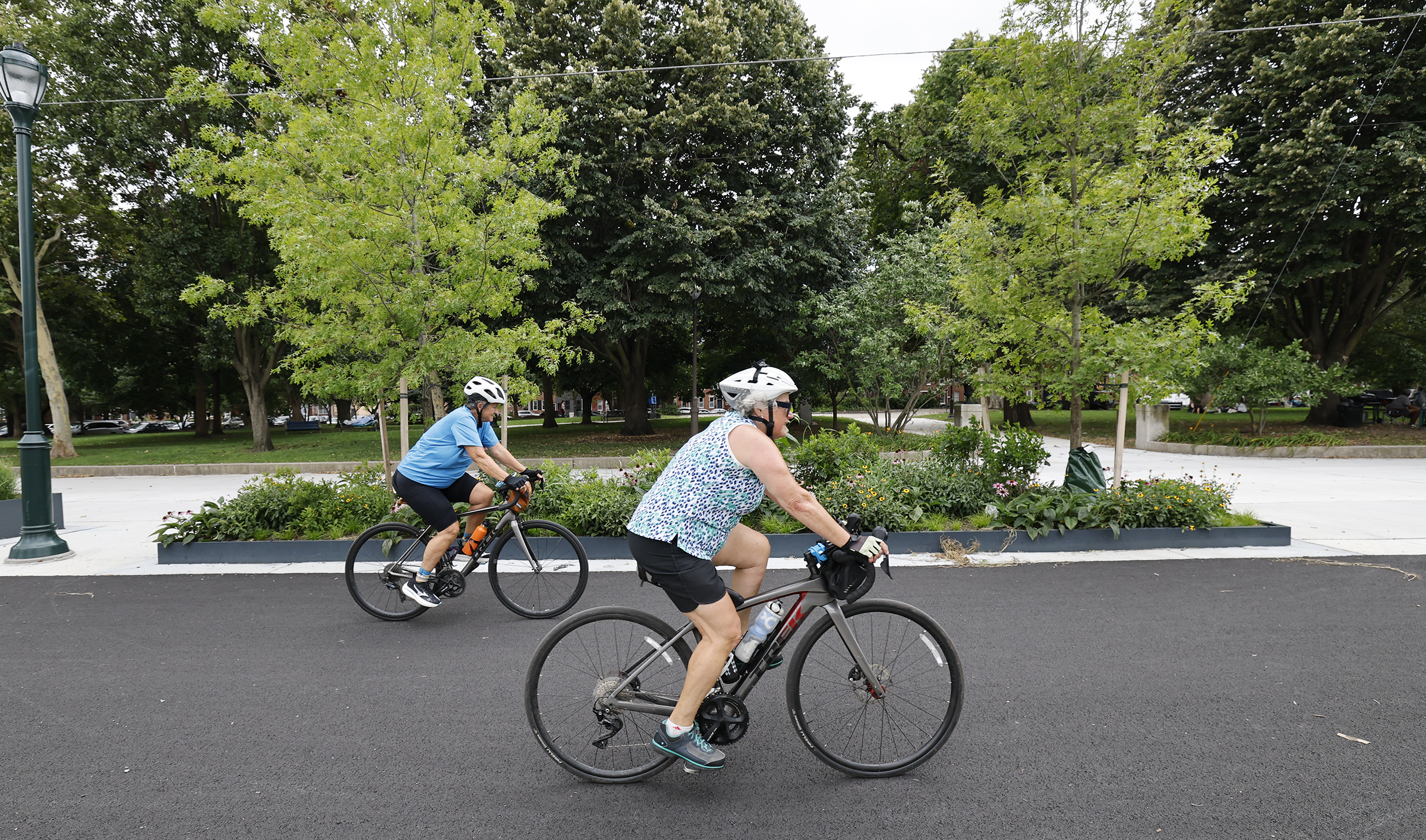
    The Washington Avenue Connector is intended to change that. Plans from the Delaware River Waterfront Corp. and the City of Philadelphia call for a tree-lined route planted with seasonal flowers, a curb-separated shared-use path, and safer crossings to guide pedestrians and cyclists from Fourth Street to the Delaware River Trail. The $9.5 million project — funded by the city, the state, and grants provided to the waterfront corporation — is one piece of an ambitious plan to revitalize Philadelphia’s riverfront by making it more accessible to pedestrians and cyclists and encouraging investment by nearby businesses.

    Bicyclists ride along the Washington Avenue Connector heading westbound near Jefferson Square Park in South Philadelphia on Thursday, July 30, 2026.Yong Kim / Staff Photographer

    The connector is “meant to bridge this gap of the physical and psychological connection that I-95 created when it was built and sort of cut off certain neighborhoods from the waterfront,” said Joe Forkin, president and CEO of the Delaware River Waterfront Corp.

    Although waterfront connector projects often extend only about a block, the Washington Avenue Connector will reach four blocks inland, extending to Jefferson Square Park and connecting the waterfront with nearby South Philadelphia homes and businesses.

    The project is designed to transform the area not only aesthetically, but also by making it safer and easier to navigate on foot or by bicycle, said Lizzie Woods, senior vice president for strategic planning and real estate development at the Delaware River Waterfront Corp.

    Designers had to contend with what Forkin described as “a crazy tangle of transportation infrastructure.”

    From Race Street to Walnut Street, the highway creates a physical divide between the waterfront and Old City. Farther south, the barrier is less absolute but still discourages people from approaching the river.

    “That’s where there’s more of a psychological barrier,” Forkin said. “You can get through it, you can approach the neighborhood and you can approach the waterfront, but it’s not always very welcoming to do so.”

    Forkin pointed to the Race Street Connector, completed in 2016, as an example of how a redesigned route can change the way people move between a neighborhood and the river. He said he once rarely saw people turn to walk to the river. Today, he said, there is a steady flow of pedestrians between Old City and the waterfront.

    A walker strolls westbound using the Washington Avenue Connector in South Philadelphia on Thursday, July 30, 2026.Yong Kim / Staff Photographer

    The Washington Avenue project will create a curb-separated path along the south side of the road, running from Fourth Street to Columbus Boulevard and connecting directly with the Delaware River Trail. On the north side, a parking-protected bicycle lane will carry cyclists westbound and connect with improvements the city previously installed west of Fourth Street.

    At Jefferson Square Park, the slip lane between Third and Fourth Streets will be closed and converted into a plaza intended to function as a “front porch” for the park. The project also includes curb extensions and pedestrian islands designed to shorten street crossings and give people a protected place to pause. By forcing turning vehicles to travel more slowly and make wider turns, planners say, the changes should improve pedestrian safety.

    New traffic signals have been installed but are not yet operational between Fourth Street and Columbus Boulevard on Washington Avenue. The improvements are intended to make crossings clearer and safer while keeping vehicle traffic moving at a more consistent speed. A dedicated left-turn lane at Front Street and Washington Avenue will also address a longstanding request from the Pennsport community.

    At Washington Avenue and Columbus Boulevard, another under-construction plaza will mark the entrance to the waterfront. Trees, flowers, and other plantings are meant to signal the transition from the city street to the river’s network of parks and trails.

  • Do recent Philadelphia restaurant closings signal trouble for the industry?

    Do recent Philadelphia restaurant closings signal trouble for the industry?

    Philadelphia restaurants Hiroki, La Calaca Feliz, and the Lodge by Two Robbers have announced their departures in the last week.

    The latest announcement was Hiroki, sushi chef Hiroki Fujiyama’s serene omakase room behind Wm. Mulherin’s Sons in Fishtown, which posted Friday that Aug. 8 would be its last service.

    In an interview with The Inquirer, David Grasso, a principal in owner Method Co., called the closing “a strategic repositioning rather than a retreat from fine dining” and added that the decision was driven by a desire to stay ahead of customer preferences and culinary trends, not by problems with the restaurant or a broader pullback from fine dining. Method is planning to open a new concept — so far undetermined — in the space on Lee Street next year.

    Method also has several new fine-dining concepts planned for other markets. Fujiyama, former head sushi chef at Morimoto, remains involved with Method, including a Detroit project called Hiroki-San, Grasso said.

    La Calaca Feliz’s last day at 2321 Fairmount Ave. in Fairmount was Saturday. Owner Brian Sirhal, who opened the Mexican cantina 15 years ago with fellow Garces alumnus Tim Spinner, said its lease expired. Sirhal owns Cantina Feliz in Ambler, while Spinner’s holdings are Taqueria Amor and Riptide Tavern, side by side in Manayunk.

    The Lodge by Two Robbers Spirits Co. is the second tasting room/restaurant concept from the Philadelphia-based hard seltzer-turned-vodka soda maker.Jenn Ladd / Staff

    The Lodge, the Bella Vista offshoot of Fishtown’s Two Robbers at 11th and Fitzwater Streets, announced on social media Thursday that its last call would be Aug. 9 after barely a year. The post said it would operate as a pop-up and private-event space “for a period of time.” Vivek Nayar, who founded Two Robbers as a hard-seltzer business with his twin brother, Vikram, said they decided to focus on scaling their wholesale beverage line and running their Fishtown location.

    These closings do not necessarily point to an industry in retreat. More often, such changes reflect the constant reshuffling of a business in which closures and openings tend to move in tandem. Many of these addresses already have suitors or redevelopment plans, and there is never a shortage of projects in the pipeline.

    Latin mainstay Mixto in Washington Square West closed July 12 after 24 years. Lori Penrose, owner of the former South Philadelphia sports bar Toll Man Joe’s, purchased the property at 1141 Pine St. She hopes it will open in late August.

    Besides falafel, Goldie is known for tehina shakes.TIM TAI / Staff Photographer

    Four Center City Federal Donuts & Chicken locations and three Goldie falafel eateries are bowing out, as founders Michael Solomonov and Steve Cook announced July 14. In the city, only the FedNuts shop at Seventh Street and Fairmount Avenue remains, as well as the Goldie at 1911 Sansom St.

    Pita Pocket Eatery in Cheltenham Village wrapped a 15-year run on July 23.

    The Langhorne Hotel, a landmark bar and restaurant in Langhorne Borough, closed July 18 after 54 years under the Asta family. New owners Joe and Megan Kontz told the Bucks County Courier Times that they plan to spruce it up, change the name to honor the town’s original name (Four Lanes End), and open late this year.

    A series of chain restaurants have shut down recently, including the Perkins in Drexel Hill, the Cracker Barrel in Downingtown, the Miller’s Ale House in Springfield, Delaware County, and the Brio Italian Grille locations in Marlton and Cherry Hill.

  • New Barber’s Hall, a cornerstone of Philadelphia’s Black heritage, celebrates its historic run before saying goodbye

    New Barber’s Hall, a cornerstone of Philadelphia’s Black heritage, celebrates its historic run before saying goodbye

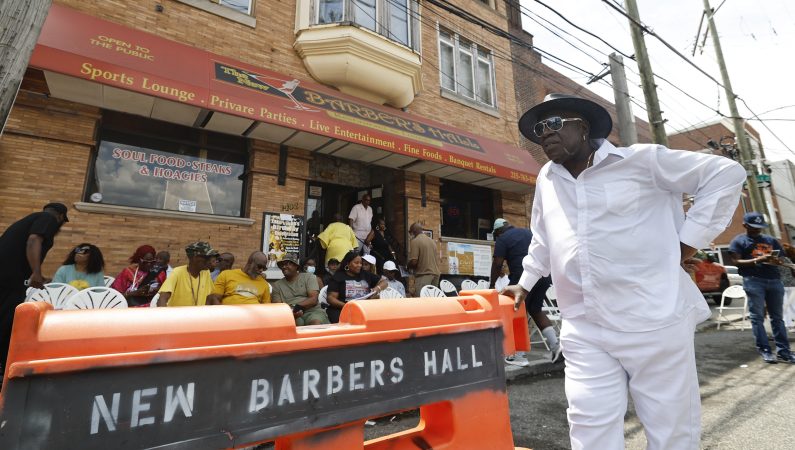
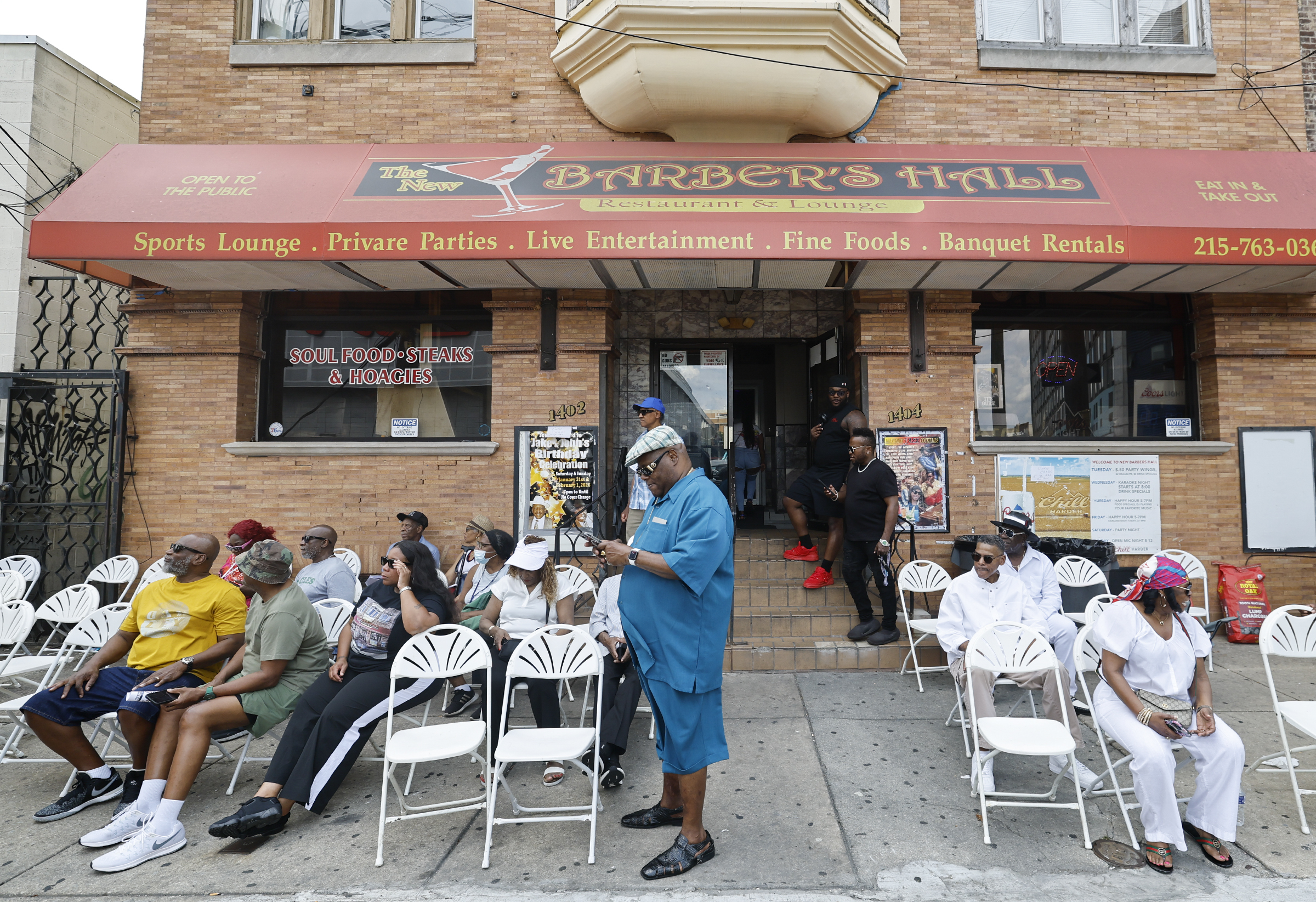
    It will soon be closing time for New Barber’s Hall, an iconic Black cultural space that has brought jazz, revelry, and community to North Philadelphia for nearly 50 years.

    On Saturday, the combination music venue, restaurant, and ballroom on the 1400 block of West Oxford Street celebrated what will be one of its last hurrahs — the longtime owner, Jake Adams, has sold the building.

    Adams and his wife, Sarah, said they plan to keep the joint open for as long as they see fit, though at some point the buyer — neighboring Temple University — will take over the property to enact plans not yet revealed.

    Before curtains are called, local leaders and hundreds of loyal patrons gathered to celebrate decades of good times and cultural milestones that took place at New Barber’s Hall, a three-story brick building that dates to the 1800s and was once a social hub for the city’s Black barbers.

    While there was plenty of talk about icons who had once played gigs or simply passed through — from Miles Davis and John Coltrane to Patti LaBelle and Boyz II Men — the afternoon’s focus was largely on Adams, who has diligently played host since purchasing the building in the late 1970s.

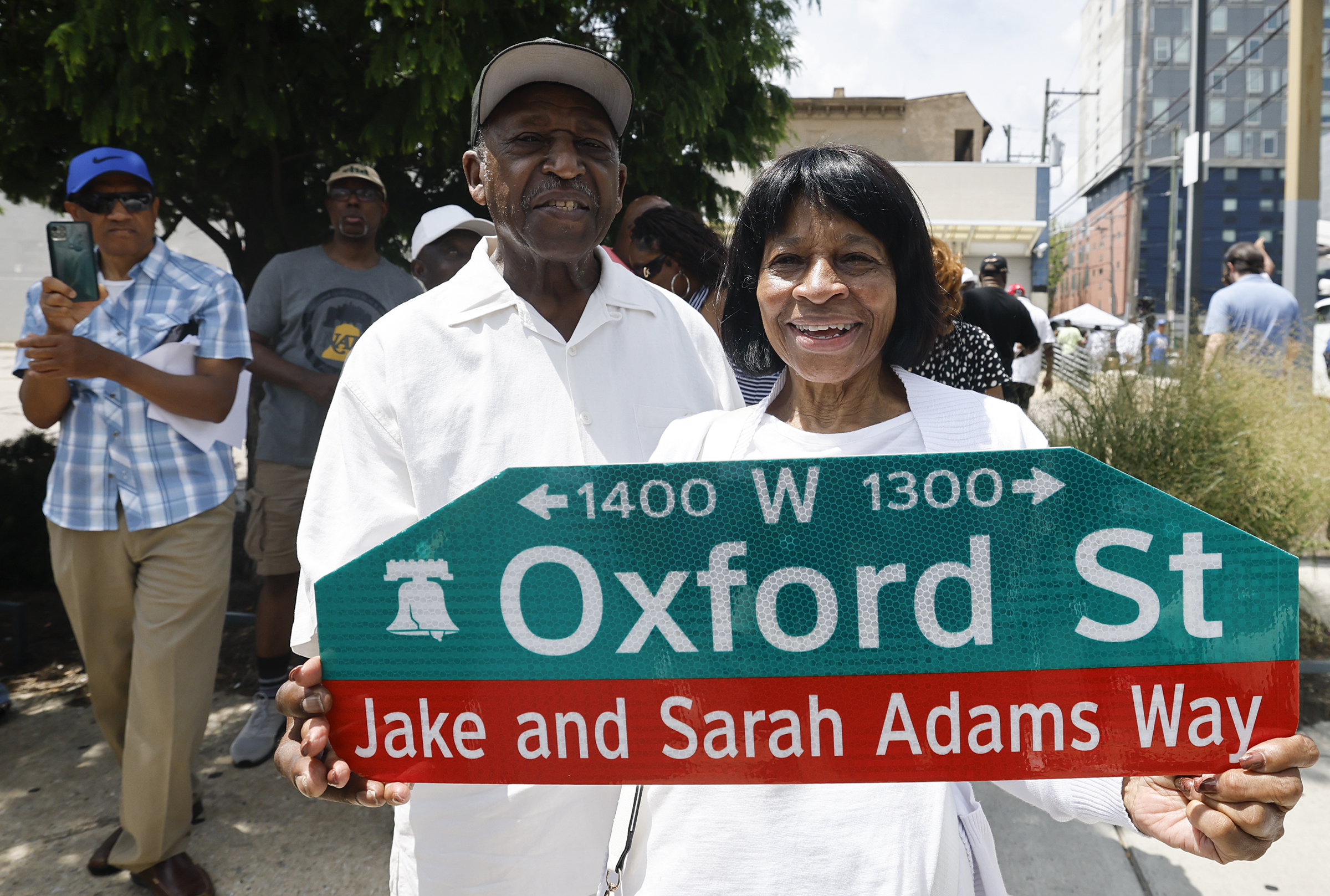
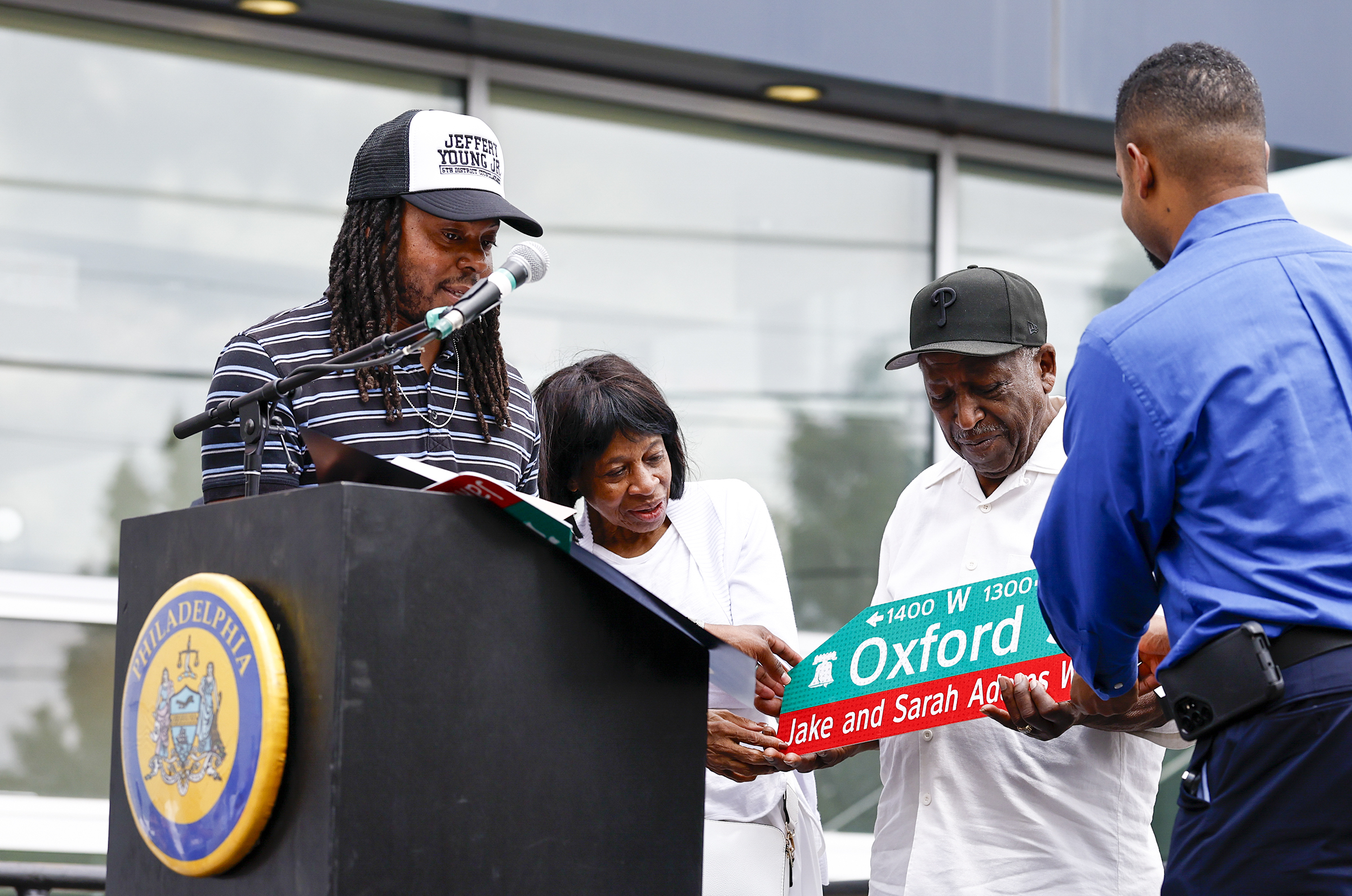
    New Barber’s Hall owners Jake and Sarah Adams hold a street sign in their honor during a Barber’s Hall community legacy celebration, a daylong celebration of music, history, and community in North Philadelphia on Saturday, Aug. 1, 2026.Yong Kim / Staff Photographer

    To honor the duo, the celebration included the unveiling of Philadelphia’s newest street sign, designating that portion of West Oxford Street as “Jake and Sarah Adams Way.”

    “For almost 50 years being a business leader here in the city, Jake has given back numerous times,” said City Councilmember Jeffery Young, whose district covers much of North Philadelphia, as he announced the new placard.

    “When we announced we were doing this, people said, ‘Oh, my God, I had my baby shower there, my wedding reception there, I met my spouse there.’” Young said. “That’s what this place is.”

    Adams, who in addition to owning New Barber’s Hall was a Democratic leader of the city’s 14th Ward, gave bittersweet remarks as he thanked the crowd for years of support.

    “I tried to fix the building. I tried to make sure that everybody had a great time,” he said.

    New Barber’s Hall owners Jake (second right) and Sarah Adams receive a street sign in their honor presented by 5th District Councilmember Jeffery Young Jr., (left) during a Barber’s Hall community legacy celebration, a daylong celebration of music, history, and community in North Philadelphia on Saturday, Aug. 1, 2026.Yong Kim / Staff Photographer

    The sale is the latest development in the building’s lengthy history.

    Constructed in the 1860s, it evolved over the decades to house various civic and fraternal organizations such as the National Council for Jewish Women and the Quaker City Wheelmen, and in the early 20th century it spent time as a bicycle factory.

    The Barber’s Hall name came about when Black barbers pooled their money to purchase the building in 1949. It soon became a hub for the city’s growing Black community, and musicians staying at the nearby Chesterfield Hotel — listed in the Jim Crow-era “Green Book” — often stopped by to play.

    Adams and his older brother purchased the building in 1978, running it as a jazz venue and soul food restaurant.

    In addition to LaBelle, greats like Isaac Hayes, Grover Washington Jr., and Robert “Bootsie” Barnes graced the room (in an oft-repeated tale, a teenage Jill Scott was turned away because she was underage).

    Guests attend the New Barber’s Hall community legacy celebration, a daylong celebration of music, history, and community in North Philadelphia on Saturday, Aug. 1, 2026.Yong Kim / Staff Photographer

    The building was set to receive a historic designation from the Philadelphia Historical Commission in 2024 that would have safeguarded it from demolition. But at the last minute, Adams had a change of heart about the nomination, saying he did not want his children to inherit a building with strict restrictions for potential buyers.

    Temple, seeking to expand its footprint under president John Fry, quietly snatched up the building earlier this year for $2.3 million. The school will “explore further uses for the property, specifically related to how it might support the soon-to-be-completed campus development plan,” Temple said in a statement, according to the Philadelphia Business Journal.

    In the meantime, Adams told revelers Saturday that the true coda for New Barber’s Hall won’t come until he says so, adding that Temple had agreed to the arrangement.

    For those like Lisa Sanders, who grew up around the corner from the venue, that day will mark the end of an era.

    “It’s been a part of our family history,” said Sanders, 58, recounting countless birthday parties and platters of shrimp and chicken at the hall.

    “It’s definitely been a pleasure, and [Jake and Sarah] deserve it,” she said. “I’ll really miss Barber’s Hall — but as long as I can still go, I’ll be happy about that.”

  • 6abc’s Cecily Tynan discusses her surprise retirement, sealed after a brief bout with vertigo

    6abc’s Cecily Tynan discusses her surprise retirement, sealed after a brief bout with vertigo

    Viewers across the Philadelphia area were shocked when longtime 6abc meteorologist Cecily Tynan announced her retirement.

    But her Action News colleagues weren’t.

    Tynan knew she wanted to retire back in 2020, when she signed her last contract with the station, which will end next month just as her youngest daughter heads off to college.

    Since then, it had been something of an open secret inside the 6abc newsroom that Tynan’s time at the station was coming to an end. Any chance of her extending her contract ended a few years ago, when she experienced a short but intense bout of vertigo.

    “For most of the day I couldn’t do anything, and I thought this must be what it’s like to be really old and infirm,” Tynan said. “I didn’t want to work all the way up to get to that stage, so it kind of sealed the deal.

    “I’m 57, which is relatively young, I guess, for retiring,” Tynan added. “But I wanted to retire while I’m healthy and active.”

    So rather than stick around 6abc or move up the national ladder, Tynan and her husband, Greg, plan to split time between their homes in Delaware County and Florida after her last day, Aug. 31. She even turned down a chance to come back to host Philadelphia’s Thanksgiving Day parade, something she has done for close to 25 years. But the idea of being able to cook Thanksgiving dinner for her family for the first time won out.

    “My children have never spent the night before Thanksgiving in their own home. We’ve always been in a hotel by the parade route, and I’ve never actually cooked,” Tynan said. “I’ve always picked it up from Whole Foods and reheated it.”

    Tynan discussed her decision to retire, what’s next, and the best and worst weather events she has covered in her three decades at 6abc. This conversation has been edited for length and clarity.

    How do you plan on filling your retirement? Is it just going to be water-skiing and enjoying life?

    That sounds pretty great!

    That’s definitely a big part of it. That and visiting and watching all my daughters’ cross-country and track meets. I do want to stay active in animal rescue. … I’ve been really active with Providence Animal Center. I’m not sure exactly how I’ll do it, but I would definitely still want to be involved in that.

    And I’d like to be able to go to bed at a decent hour.

    What do you make of the reaction to your decision to retire?

    I’ve been talking about it for months with my personal friends and they’d be like, “Philadelphia’s gonna freak,” and I’m like, “No, everyone’s gonna be fine.” I get it because I’ve been here for almost 31 years, so for a lot of people it seems like they’ve been watching me their whole lifetime. I think that Philadelphians have a special relationship with Action News that you don’t see in a lot of other cities or stations.

    Are there any on-air memories that stand out?

    One fun moment was when my earring fell off, and Jim Gardner got up. I saw him stand up and take off his microphone, and there was a frenzy behind the scenes, like, “Jim’s on the move. Traveler’s on the move.”

    I tried to ignore it, and then I saw this white thing go behind my head, which I thought was a cloud animation. Then I realized it was his hair. It was hilarious and then it went viral — it was on Live With Regis and Kelly the next day and stuff, and that was fun.

    Another one was when I was on the morning show with Monica [Malpass] and Rick [Williams], I would always try to crack them up by dancing off camera.

    One time Rick told the director, “Record Cecily when she’s dancing.” I dance like Elaine from Seinfeld, but worse. And so they aired that.

    Is there a reason you stayed in Philadelphia vs. moving to national television?

    I was born and raised in Newtown, Conn., so I always watched the New York stations.

    I thought I would work here a few years and then go to New York. Then I had I had some opportunities early in my career to go up. I filled in on Good Morning America for a full week with Charlie Gibson and Diane Sawyer, which was a great experience. Gibson gave me a bottle of champagne when the week was over.

    I talked about going to New York with Tom Kane, who was the general manager of WABC and was the GM when I came to Channel 6. … But then I spent the rest of my week there and was like, “Man, I want to get back to Philadelphia.”

    Philadelphia felt like home. … Even when I walked in for my interview, I felt really at home with everyone and they were all nice and welcoming. No backstabbing at all.

    Also, once you have children, that really grounds you. Your children are growing up in a community, and you don’t want to uproot them and leave.

    What are the best weather events to cover, and what are the worst?

    Snowstorms are the best, because everybody gets excited. I was here only a few months and we had the blizzard of 1996, the biggest snowstorm in Philadelphia’s history.

    The worst are tornado warnings because we get a lot of those nowadays, because we have more advanced radar … and we do have a warmer climate. But tornado warnings freak people out, because I’m telling them to get in their basement.

    I was at the airport back in the spring … and the people in front of me recognized me and thanked me. They live in Mullica Hill, and they were there when they had the tornado warning and I told them to get in their basement. They said they got their kids and their pets down there … and when they got out of the basement, their house was destroyed. But they were OK. … That really hit home about the importance of our job. I kind of teared up.

    I’m sure you hear the other side, too, when the weather shifts and your forecast might be off.

    Oh, yeah. The whole saying, “Oh, I wish I had a job where I could be wrong 90% of the time and still keep my job.” I get that all the time. Anybody who says that doesn’t really understand the complexities of the atmosphere. … But I feel like when you’re in the public eye, you do have to grow a thick skin. Especially in Philly. They’re going to tell you what they really think, so they’re not going to sugarcoat it.

    Is there a weather thing people still get confused by?

    One thing I think people really don’t understand is tornado watch vs. warning.

    When a tornado watch is issued, it usually means there’s like a 2% chance of a tornado happening in your neighborhood. It’s pretty low.

    I think a lot of people think when there’s a tornado watch it means warning, which it doesn’t. It just means heads up. The warning is when you have to go to your basement.

  • LeBron James could live in NYC as a Sixer. Philly’s wage tax has no exemption for a King.

    LeBron James is going to take his talent to South Philly, and a portion of his salary to City Hall.

    The newly signed Sixer — that feels so good to write — is being rumored to live in New York City and commute to games and practices by helicopter, according to ESPN.

    Commuters who live elsewhere but work in Philly are required to pay the city’s wage tax on a portion of their salary. And there is no exemption in the tax code for a King.

    Main Liners, rejoice. Next time you look at the withholdings on your pay stub, you are allowed to proclaim: LeBron, he’s just like us, amirite?

    In fact, James has likely paid the Philadelphia wage tax throughout his career for games he played here against the Sixers.

    But how much of James’ $8 million salary over two years counts toward the wage tax will depend on how, and where, No. 23 spends his time from training camp to the final day of the season.

    Let’s break it down.

    What is Philly’s wage tax, and does it apply to athletes?

    Philadelphia levies a 3.735% tax on the entire income of its residents, and 3.425% on the income nonresidents earned working in the city.

    The wage tax is one of the city’s three major revenue sources, alongside property and business taxes, and has brought in more than $2 billion annually in recent years. A third of the taxes collected comes from commuters.

    Philly’s tax on earnings is among the highest in the country, and the city led the charge in the 1990s to ensure professional athletes paid their share. It is now common practice for cities to impose a so-called jock tax on players — home and visiting — but athletes are taxed in the City of Brotherly Love under the same wage tax as everyone else.

    What counts as a Philly workday for LeBron James?

    Calculating the wage tax for commuters can get tricky, especially since remote work has become common.

    Every day of work that requires a nonresident to be in Philadelphia counts toward the tax.

    The question for James, and other athletes, is what counts as a working day — and how many of those days he spends in Philly vs. the Sixers’ training facility in Camden.

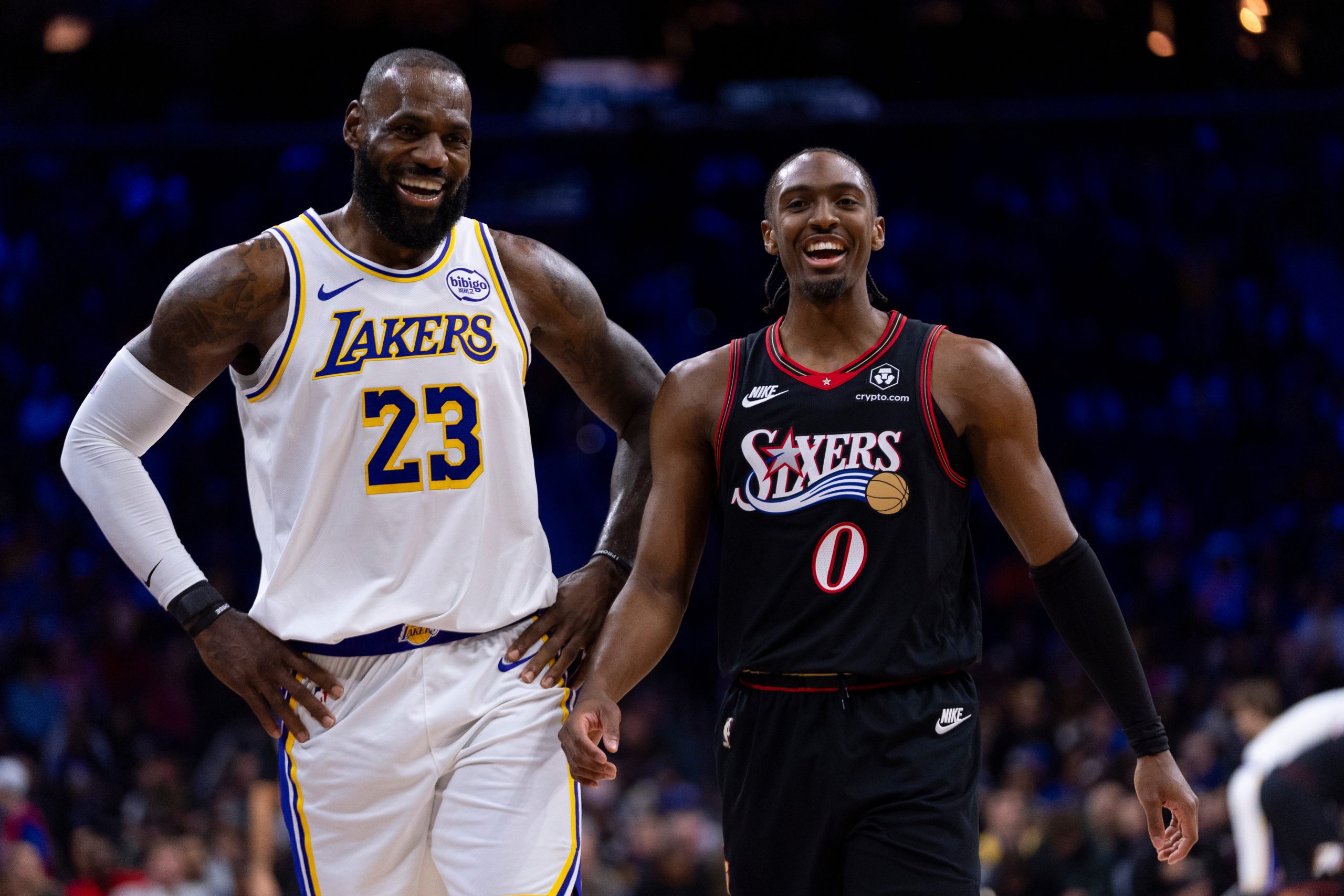
    Los Angeles Lakers’ LeBron James, left, shares a laugh with Philadelphia 76ers’ Tyrese Maxey, right, during an NBA basketball game, Sunday, Dec. 7, 2025, in Philadelphia.Chris Szagola / AP

    Practice, film review, rehab, and games could all count as workdays, said Stephen Kidder, a tax attorney who specializes in professional sports.

    “Every single one of those days is a duty day for a professional athlete,” Kidder said.

    A spokesperson for the city said, “Philadelphia welcomes LeBron James with open arms,” but did not respond to a request for comment about any special guidance for athletes.

    How much will LeBron James pay in wage taxes?

    If James ends up living in Philly, the calculation is simple. He would have to pay 3.735% of his annual salary of $4 million — roughly $150,000 — regardless of where he spends his time.

    But if he lives outside the city, it comes down to counting days.

    Without knowing James’ overall number of workdays in the year, and how much of that time is spent in Philadelphia, it is impossible to estimate his tax bill.

    The number of duty days for an NBA player can vary widely, depending on practice schedule, depth of playoff run, and other activities, such as promotions.

    An often-cited number to get a sense of the size of the tax bill for NBA players is 200 workdays.

    If his only Philadelphia workdays were the Sixers’ 41 home games, and if, as seemingly the youngest 41-year-old in history, he played in all of them, roughly 20% of King James’ income would be earned in Philly.

    In this scenario, the city would tax 20% of James’ annual income at the 3.425% rate for nonresidents, for a hypothetical tax bill of around $28,000. That number would decrease if he missed some home games, or increase if he attended other team activities in Philadelphia.

    (This writer refuses to make any calculation related to the playoffs that could constitute a jinx but suffice to say: See you on Broad Street next summer.)

    Do taxes affect players’ decisions?

    Professional athletes and the associations representing them care a lot about state and local taxes, and are fighting against them.

    The MLB, NHL, and NFL players associations, alongside three former professional athletes, sued Pittsburgh over its 3% jock tax for visiting players. And last year the Pennsylvania Supreme Court struck the tax down because it was higher for nonresidents than for residents.

    City and state taxes are part of the package when athletes choose where to play, according to Kidder, who represented the associations in the state Supreme Court case. A professional athlete in Florida owes the state no tax, for example, while California has a jock tax of up to 13.3%.

    “Some athletes may be in a point in their career where it doesn’t matter that much,” Kidder said. “But for other athletes it may be a big difference playing for a team based in Florida compared to a team based in New York.”

    Ed Wasielewski, a Philadelphia-based NFL agent and founder of EMG Sports, says tax considerations come up often in free agency deals. The difference between no tax, Philly’s 3.735% tax on residents, and California’s 13.3% jock tax amounts to millions of dollars in take-home pay.

    “A player is well advised to have a good accountant, a good attorney, and a good agent team to correctly analyze the tax consequences,” Wasielewski said. “It definitely comes into play in contract negotiations, especially in free agency.”

    If James chooses to live in NYC and commute to practices in Camden and games in Philly by helicopter, taxes might not be high on his list of concerns.

    New Jersey and New York have state jock taxes, and New York City has a new pied-à-terre tax on luxury second homes.

    At least one person in the Sixers organization, it seems, is not working overtime to duck a tax.

  • The Legionnaires’ outbreak in Philly 50 years ago led to months of mystery — and gave the disease its name

    The Legionnaires’ outbreak in Philly 50 years ago led to months of mystery — and gave the disease its name

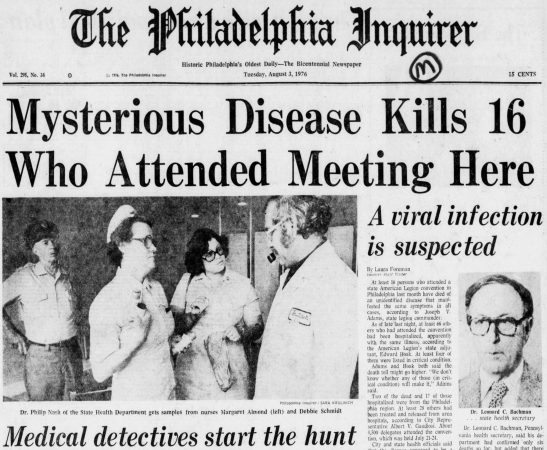
    As Philadelphia wallowed in self-pity over its seemingly botched Bicentennial celebrations 50 years ago, thousands of American Legion members arrived for a late July convention at the Bellevue-Stratford Hotel.

    Weeks later, dozens of them were dead from a mystery ailment, and scores of others were sickened. The victims, authorities said, returned home to develop respiratory infections that in some instances progressed to fatal cases of pneumonia.

    For more than half a year, local and federal health authorities were unable to determine what killed them, resulting in a web of fear, paranoia, and frustration that gripped not only Philadelphia, but also the nation at large.

    This was the infamous Legionnaires’ disease outbreak of 1976, perhaps the blackest of marks on Philadelphia’s record for the year. Today, the disease — known as legionellosis, caused by Legionella pneumophila bacteria — still crops up, most recently in a 50-building outbreak in Manhattan that has so far caused at least seven deaths.

    Philadelphia was not the last, or even the first, city to experience the disease. But that outbreak half a century ago is how it got its name. Here is how The Inquirer and Daily News covered it:

    https://www.newspapers.com/article/philadelphia-daily-news/202696263/

    Article from Aug 3, 1976 Philadelphia Daily News (Philadelphia, Pennsylvania) <!— –>

    The initial outbreak

    About 2,000 American Legion delegates came to town for a convention that ran from July 21 to 24, 1976, at the iconic Bellevue-Stratford Hotel. There were no signs of trouble during the convention, or for several days afterward.

    But by early August, about a week after the convention’s end, 14 Pennsylvania American Legion members were dead of an unclear illness, with their deaths involving “some type of respiratory problem,” reports from the time indicate. Roughly 50 others were reportedly hospitalized.

    Many of the initial victims were from Western Pennsylvania and had traveled to the city, though some Philadelphians were among the sick and dead. All had attended the American Legion convention the month before, officials said.

    https://www.newspapers.com/article/the-philadelphia-inquirer/202696881/

    Article from Jul 17, 1977 The Philadelphia Inquirer (Philadelphia, Pennsylvania) <!— –>

    As officials mounted an investigation that cost the state $25,000 a day, the death toll continued to increase. By mid-August, 29 people were dead and about 200 were sickened, reports indicate.

    The Centers for Disease Control said at the time that the outbreak was “without precedent” in the agency’s 30-year existence, and began conducting laboratory work to determine the cause.

    “We have not seen anything like this take place in such a short period of time,” said Jay Satz, chief virologist with the Pennsylvania Department of Health. “This is something to be quite concerned about.”

    https://www.newspapers.com/article/philadelphia-daily-news/202696483/

    Article from Aug 9, 1976 Philadelphia Daily News (Philadelphia, Pennsylvania) <!— –>

    Conspiracies reign

    Health officials largely expected the cause to be a then-long-awaited epidemic of swine flu, which had killed a soldier at Fort Dix in New Jersey earlier in the year, and focused much of the investigation on identifying that disease, reports indicate. Other possible causes, including toxins such as nickel carbonyl, were also considered.

    But public speculation about the cause, as well as how the disease arrived in the city, ran rampant. Or, as The Inquirer put it at one point, there were more people who had “their own ideas on what is causing the mysterious disease than there are Kennedy assassination conspiracy theories.”

    Inquirer readers wrongly blamed everything from pigeon droppings to contaminated ice. One person claimed the trash piling up on city streets, thanks to a municipal worker slowdown at the time, was the reason. Another contended shellfish was the cause, noting that “mostly men had been stricken because women don’t like shellfish.”

    Others believed the cause was more nefarious. Surely the disease had come from communists from Ecuador or Poland, who intentionally spread it to American Legion members. No, it was a sneak attack staged by the potentially disruptive activist groups Mayor Frank Rizzo had warned about.

    The American Legion, meanwhile, did not believe foul play was involved — nor did investigators, who said no evidence supported any of these theories. The truth, it seemed, was far less salacious.

    The Bellevue closes

    As worry over the illness wore on, the Bellevue-Stratford hotel itself also fell victim to the disease’s impacts, closing in November 1976.

    Though investigators avoided directly implicating the hotel early on, it suffered severe financial damage. Reservations collapsed into single-digit occupancy percentages, resulting in losses of up to $10,000 per day, reports from the time indicate. William G. Chadwick, the hotel’s vice president and general manager, said business had been devastated.

    https://www.newspapers.com/article/philadelphia-daily-news/202696555/

    Article from Nov 10, 1976 Philadelphia Daily News (Philadelphia, Pennsylvania) <!— –>

    “We have found it impossible any longer to withstand the economic impact of the worldwide adverse publicity which has been associated with the Legionnaires’ disease,” he said.

    By then, the Bellevue had operated for more than 70 years and was considered a jewel in the city’s hospitality crown. Its closure, Rizzo said, was a “great loss,” and he vowed the property would host a new, modern hotel to fill the gap. Today, it is a mixed-used development at 200 S. Broad St. that includes a hotel portion.

    Philadelphia’s Bicentennial tourist business also suffered, with several conventions canceling their bookings over fear of the illness, significantly affecting what was expected to be a banner year for visitors. Public perception erred on the side of avoiding the city, which some local officials tried to rebut.

    https://www.newspapers.com/article/philadelphia-daily-news/202696766/

    Article from Aug 19, 1976 Philadelphia Daily News (Philadelphia, Pennsylvania) <!— –>

    “We are still a safe city,” said Eugene Hosmer, director of the Philadelphia Convention and Visitors Bureau, noting the disease struck just as low civic self-esteem seemed to be fading. And then, “we’re hit with this.”

    Robert Jacob, manager of the Penn Center Inn and head of the Greater Philadelphia Hotel Association, put the illness’ impact more dramatically.

    “We’re being crucified,” he said.

    A break in the case

    Investigators searched for months for the disease’s cause to no avail, facing substantial criticism — including a congressional subcommittee hearing during which their efforts were labeled an “embarrassment,” according to reports from the time.

    But in January 1977, after tens of thousands of tests, investigators identified the culprit. The deadly Legionnaires’ disease, the CDC found, was caused not by a toxin or virus, but a bacterium. One so strange and unknown, lab workers and scientists had missed it for months.

    https://www.newspapers.com/article/the-philadelphia-inquirer/202696612/

    Article from Jul 17, 1977 The Philadelphia Inquirer (Philadelphia, Pennsylvania) <!— –>

    Credited with its discovery was Joseph McDade, then a CDC microbiologist in the agency’s leprosy and rickettsia laboratory. On a hunch after receiving a routine report, McDade reexamined slide samples and decided to look for unfamiliar microbe shapes. And he found them — and they appeared not only in samples from Philadelphia, but also in past unsolved outbreaks.

    The disease was found to be present in samples from a 1965 pneumonia outbreak at St. Elizabeth’s Hospital in Washington, in which 18 people died, and a 1968 one that sickened 144 people at a Pontiac, Mich., health department building. Additionally, the illness had struck a 1974 Independent Order of Odd Fellows convention in an outbreak that killed two people — also held at the Bellevue-Stratford.

    https://www.newspapers.com/article/the-philadelphia-inquirer/202696954/

    Article from Jul 17, 1977 The Philadelphia Inquirer (Philadelphia, Pennsylvania) <!— –>

    Investigators later determined the 1976 outbreak had been spread via airborne water mist from the hotel’s air-conditioning cooling towers. The towers allowed the bacteria to grow and be spread to convention attendees, as well as some individuals who had traveled near the hotel, investigators found.

    “We are dealing with a very real phenomenon which has been present in the past but has never been recognized,” said CDC director David Sencer in 1977. “We now know what to look for.”
  • LeBron mania, Kruk’s clip-on ties, and saying goodbye to Cecily | Weekly Report Card

    LeBron mania, Kruk’s clip-on ties, and saying goodbye to Cecily | Weekly Report Card

    Philadelphia fandom: A+

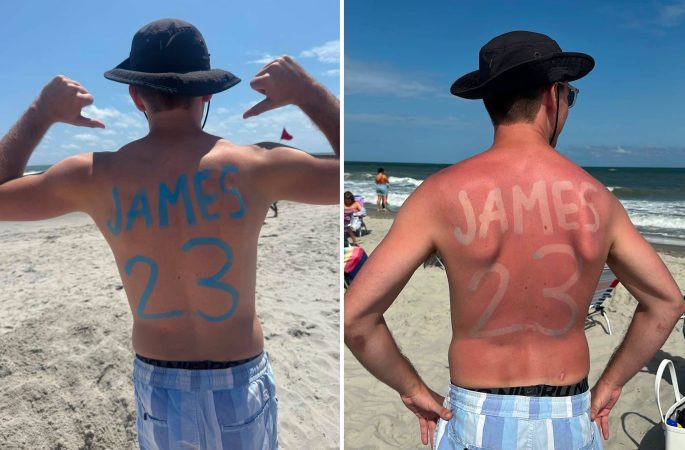
    LeBron James announced he was coming to Philadelphia. Within days, someone had intentionally sunburned a No. 23 jersey onto his back. That’s commitment.

    A Delco man spent a day at the beach in Sea Isle using zinc sunscreen to leave behind a perfectly outlined “James 23” sunburn. His family thought he’d lost his mind, and beachgoers assumed he’d lost a bet. But later that night he got to proudly show it off at Ocean Drive like he’d just gotten fresh ink.

    The man called it “Philly toughness” … sure. This is exactly why Philadelphia sports fans have the reputation we do. We climb poles, tattoo the Phanatic on our bellies, and name our dogs after backup quarterbacks. And now someone has a LeBron jersey they can’t take off for a week.

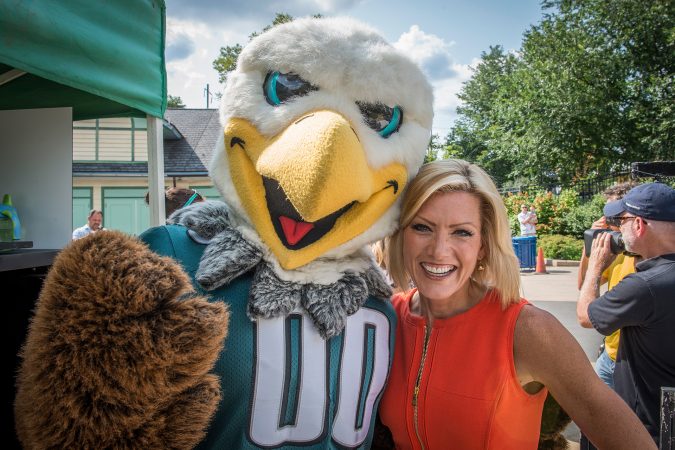
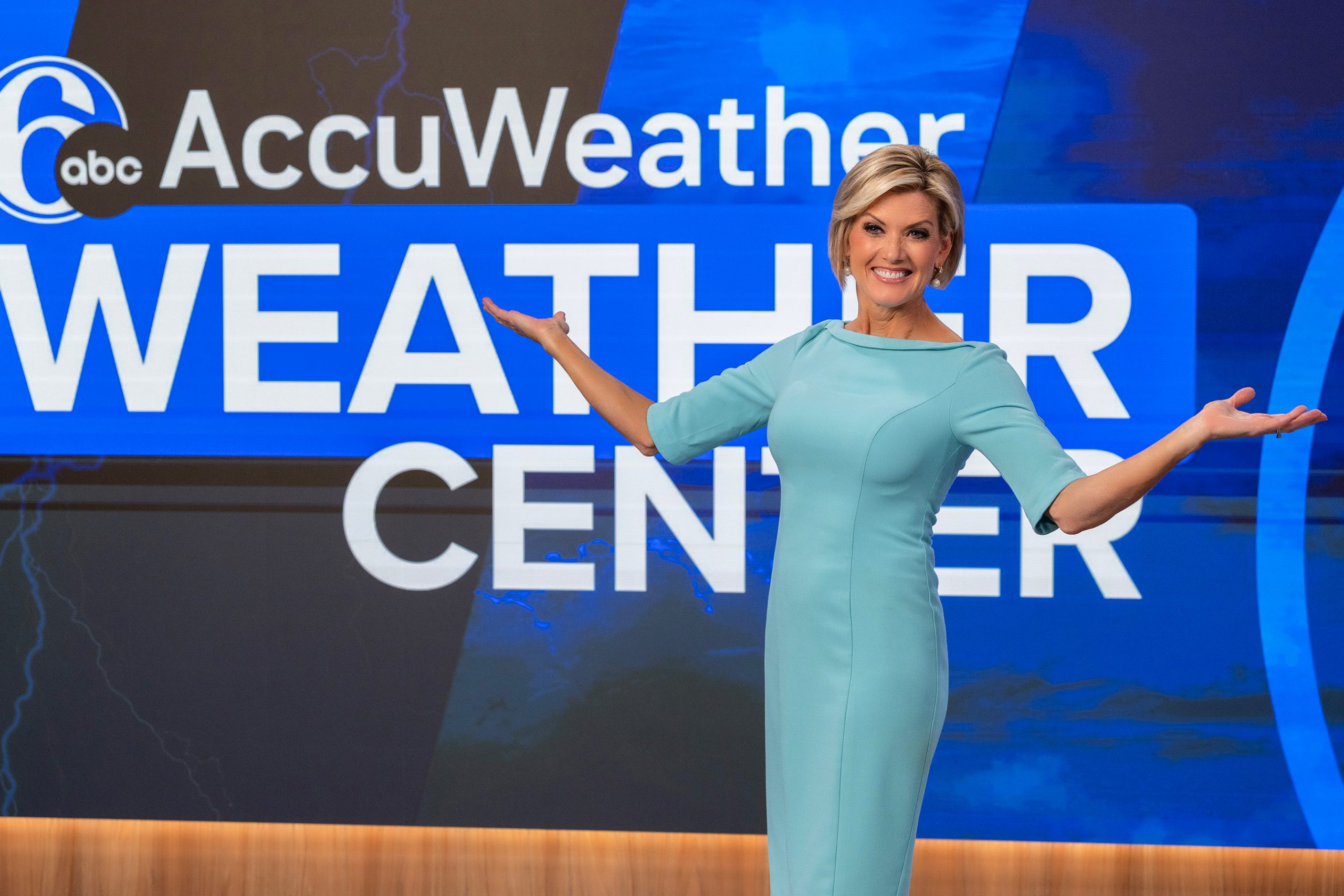
    Longtime 6abc meteorologist Cecily Tynan has spent more than 30 years as a member of the Action News team.6abc

    The end of another Action News era: F

    Thirty years is long enough for someone to become part of your routine without you even realizing it.

    For decades, Cecily Tynan has been the person telling Philadelphia whether to grab a jacket, brace for a blizzard, or enjoy a sunny weekend. You hear the forecast while making dinner or before heading out the door and rarely stop to think about who’s delivering it.

    Then one day, she announces she’s retiring.

    Cecily Tynan leaving feels a little bigger than another broadcaster calling it a career because Action News is part of the city’s daily rhythm. Generations have eaten dinner while those familiar voices played in the background.

    But it’s hard to argue with her reason. She’s retiring while she’s healthy enough to spend more time with her family, cheer at her daughter’s track meets, water ski in Florida, rescue animals, and, perhaps most shocking of all, cook Thanksgiving dinner for the first time instead of picking it up from Whole Foods.

    First Jim Gardner. Now Cecily Tynan.

    Good luck to whoever has to tell Philadelphia there’s snow coming next. Those are big rain boots to fill.

    Reacher comes to Philly: B+

    The new Reacher trailer opens with Jack Reacher fighting his way through a SEPTA station.

    So, pretty realistic.

    One of the best parts of watching a movie or TV show filmed in Philadelphia isn’t the plot. It’s playing, “I know where that is.”

    The trailer delivers plenty of that. You get SEPTA stations, Market East, the Benjamin Franklin Bridge, Center City rooftops — Reacher himself even slams a guy’s head against an Inquirer vending box. We knew Reacher was filming here last summer but seeing the finished product is still oddly satisfying.

    Maybe the action scenes will be great. Maybe the mystery will keep us hooked. But let’s be honest: Half of Philadelphia is going to spend every episode pointing at the TV and announcing exactly where they filmed it. (Bonus points if you can call out shots of Toronto masquerading as Philly.)

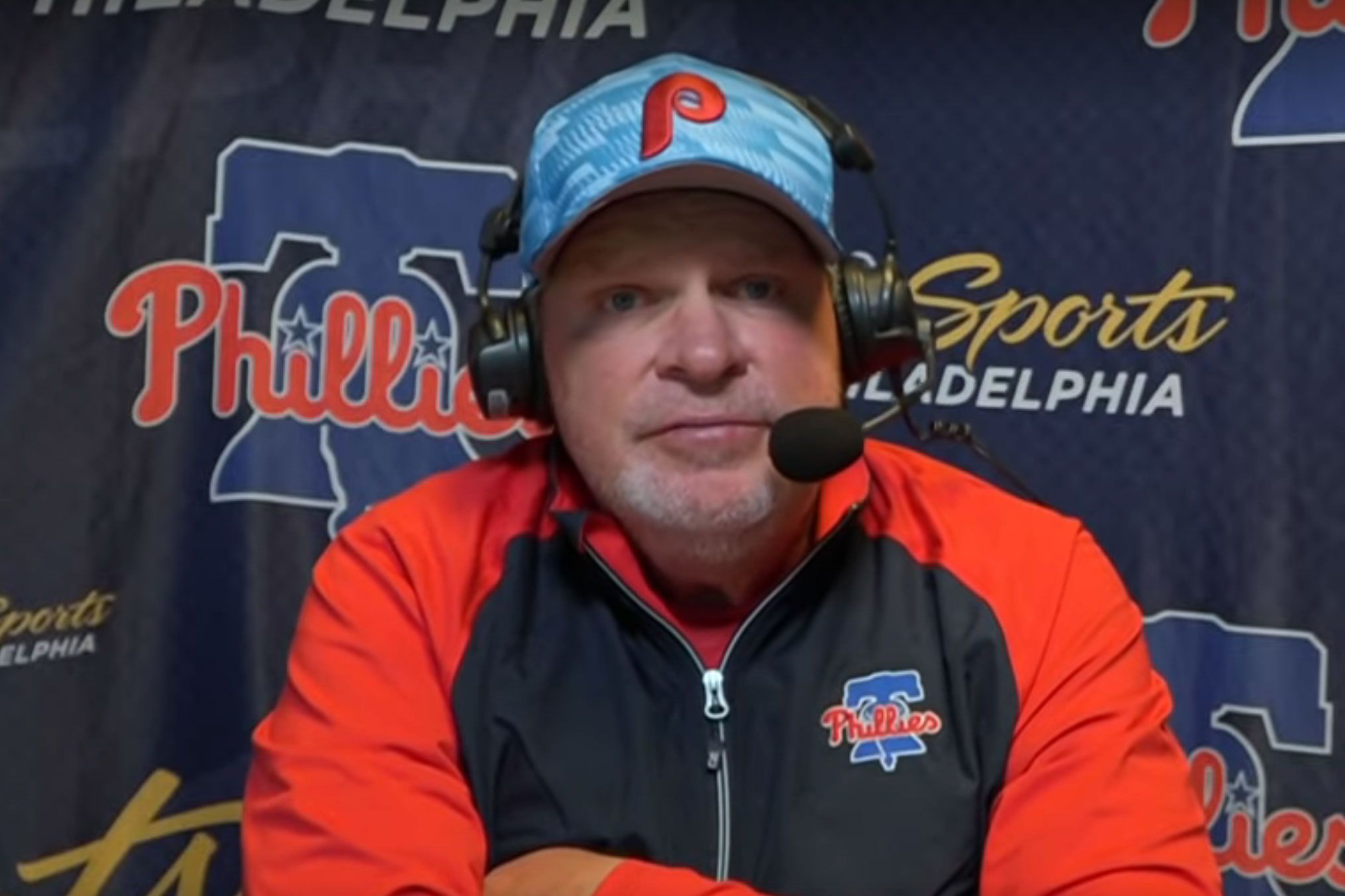
    NBC Sports Philadelphia analyst John Kruk following the Phillies’ loss to the New York Mets on Tuesday.NBC Sports Philadelphia

    John Kruk on national TV: A

    Every time John Kruk joins the Sunday Night Baseball broadcast, it feels like someone accidentally invited your funniest uncle to a black-tie wedding.

    This week, the conversation somehow turned into Kruk admitting he doesn’t really own ties, that most of the ones he brought were clip-ons, and then struggled to button his collar while Joe Girardi and Jason Benetti narrated the ordeal like it was Game 7 of the World Series. At one point, Kruk declared facing Randy Johnson was easier than putting on the tie.

    That’s why Philadelphia loves him.

    Kruk makes millions of viewers feel like they’re sitting in the living room watching baseball with a friend who wandered in wearing whatever he found in the closet. He’s knowledgeable without acting like the smartest guy in the room, and he’s never afraid to laugh at himself.

    Sure, NBC can put him in a jacket and hand him a tie, but they can’t make John Kruk stop being John Kruk.

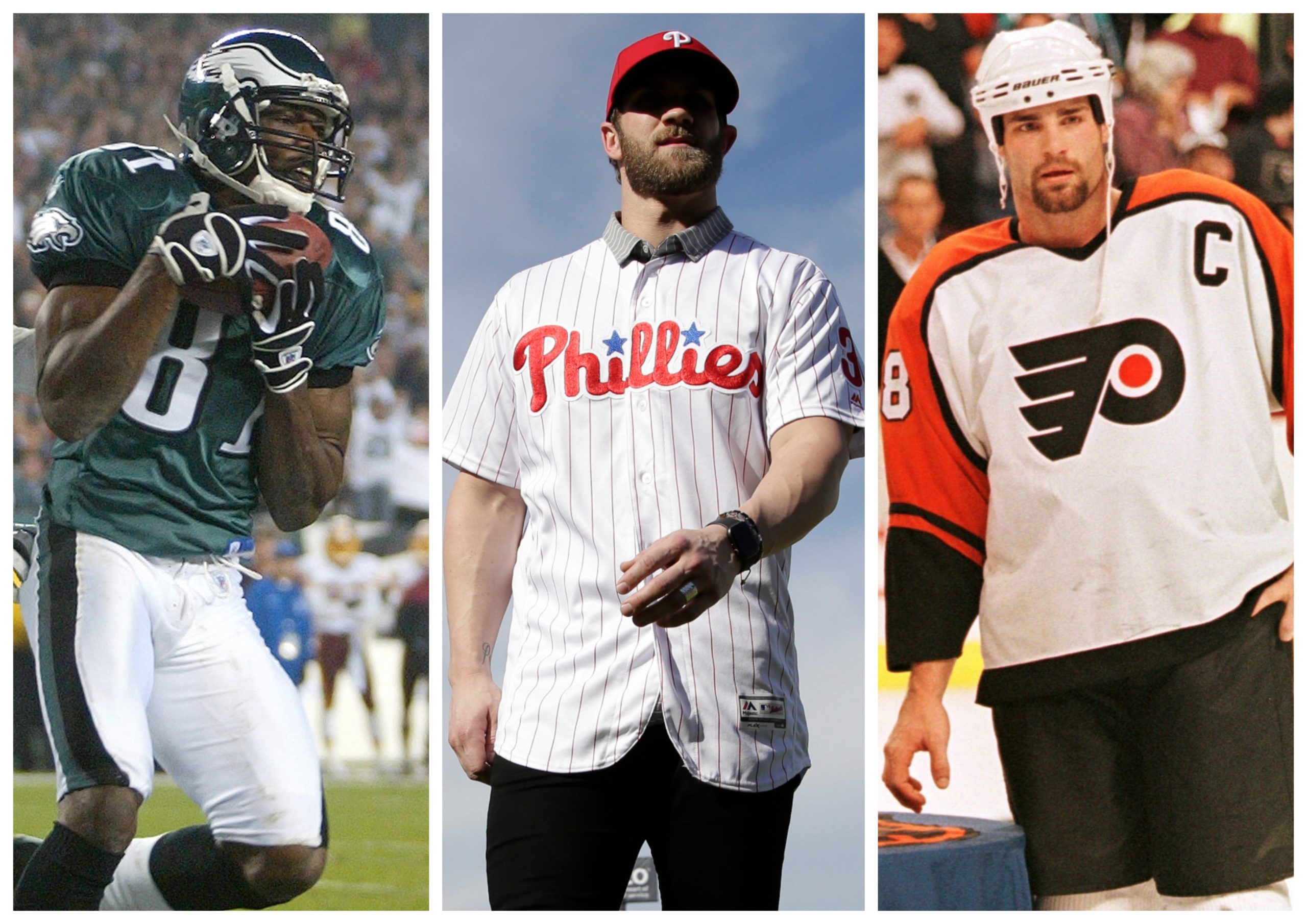
    From left: Former Eagles receiver Terrell Owens, the Phillies’ Bryce Harper, and former Flyer Eric Lindros.Associated Press

    Everybody wants to be here: A

    Remember when Philadelphia was the city athletes were supposed to leave? Now, they’re choosing it.

    LeBron James is the latest reminder that the biggest names in sports don’t just tolerate Philadelphia anymore — they want to play here. And once you start thinking about it, the list is pretty impressive: Bryce Harper, Saquon Barkley, Terrell Owens, Jim Thome, Cliff Lee, Dr. J, Eric Lindros, Moses Malone. Each arrival felt like a holiday. Not every move worked out perfectly. (Sorry, T.O.) But that’s beside the point.

    For decades, Philadelphia fans carried around the idea that stars preferred bigger markets, warmer weather, or flashier franchises. We were the “underdogs.” Now, one of the greatest basketball players of all time looked around the NBA and decided he wanted to spend the final chapter of his career was South Philly. (We just have to convince him to move here now.)

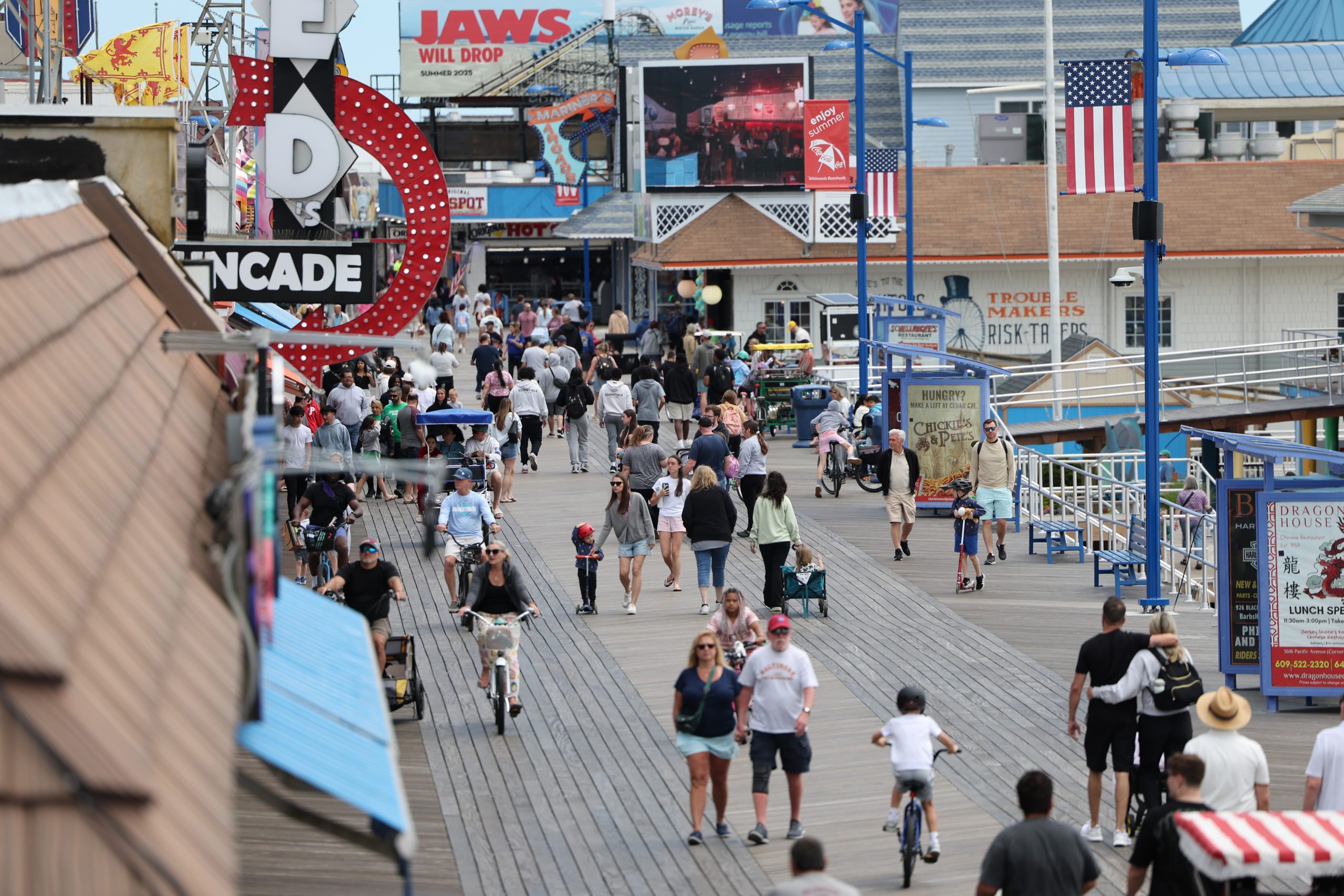
    A crowd strolls along the boardwalk in Wildwood on Monday, May 26, 2025.David Maialetti / Staff Photographer

    Wildwood on TV: B

    A new comedy from the creator of Derry Girls is headed to FX, and it’s set in (and called) Wildwood.

    Now comes the important part: Please film it there.

    Hollywood has a habit of setting shows in one place and shooting them somewhere completely different. But Wildwood has too much personality to fake. The boardwalk, the neon motels, the tram car. If you’re going to call the show Wildwood, you have to earn it.

    Besides, if The Four Seasons can film down the Shore and Reacher can turn Philadelphia into an action movie backdrop, there’s no reason this one can’t let Wildwood play itself.

    If nothing else, we deserve a season of spotting familiar landmarks instead of arguing online, “That’s clearly not Jersey.”