A Northwest Philadelphia woman who fatally shot her estranged husband and staged his death as a suicide pleaded guilty Wednesday to murder and related crimes.
Investigators said Baxter shot and killed her husband, a longtime SEPTA employee, in the bedroom of her home before dragging his body down the stairs and staging his body between two cars in a nearby driveway.
Police found Jordan Baxter there around 7 a.m., covered in blood. He had been shot through the back of the head, they said.
While investigators initially believed Baxter’s death was a suicide because he was found with a 9mm pistol in his hand, they soon questioned the nature of the crime after finding irregularities in statements made by Danielle Baxter.
Assistant District Attorney Ashley Toczylowski of the homicide unit outlined those details during Baxter’s plea hearing before Common Pleas Court Judge J. Scott O’Keefe.
It was Danielle Baxter who called police to report her husband’s death, Toczylowski said. She told investigators she came across her husband’s body while she was taking out the trash that morning at her West Bells Mill Road home.
But investigators noted that Baxter was breathing heavily on the call and was unable to answer basic questions about her husband’s condition, she said.
Inside the home, police found blood pooling on Baxter’s bed where a pillow would be. Baxter, Toczylowski said, lied when she told police the blood was there because she had recently had her period.
Investigators later downloaded data from Baxter’s Apple Watch and learned she had recorded a “very steep level of activity” between 1 and 4 a.m. the morning Jordan Baxter was killed, activity they attributed to climbing multiple flights of stairs.
And investigators eventually determined that the bullet that killed Jordan Baxter was not of the same caliber as the weapon found on his body.
Rather, the bullet matched a gun that investigators recovered from Danielle Baxter’s closet, Toczylowski said.
Taken together, those factors led investigators to believe the killing “was not a suicide, but rather a staged homicide,” she said.
Baxter said little in O’Keefe’s courtroom beyond acknowledging that she was pleading guilty to third-degree murder and possessing an instrument of a crime.
She is expected to be sentenced Nov. 18.
Jonathan Strange, Baxter’s attorney with the Defender Association of Philadelphia, declined to comment.
For nearly a dozen years, Vito Maglio’s family has agonized over who could have shot him in the head and neck, torched his SUV, then dumped his body into the Schuylkill.
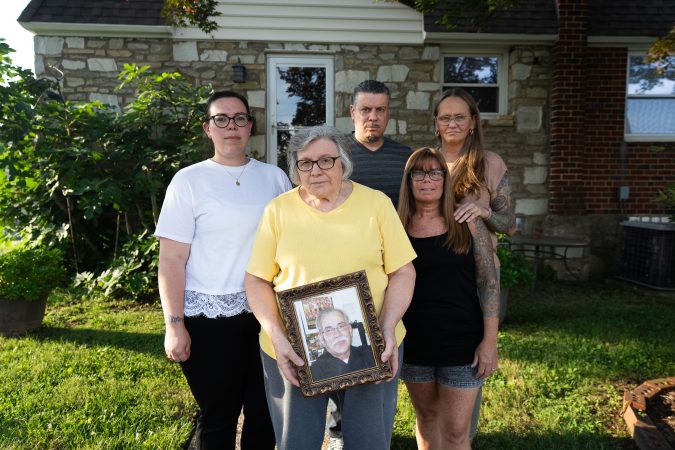
“I said to myself, maybe I’ll die before I know,” his wife of 40 years, Maria, 75, said from her Bustleton home.
Then, this week, Philadelphia police arrested a 30-year-old woman in connection with Maglio’s death, saying she and others robbed him of his gold ring, phone, and a small amount of cash, then killed him and tossed his body into the river in December 2014.
Melanie Morat was taken into custody at her East Frankford home Tuesday afternoon and is expected to be charged with murder, robbery, arson, and related crimes, police said. Detectives are investigating whether at least two other people were involved in the crime, law enforcement sources said.
The arrest comes as Philadelphia homicide detectives, with more time and resources amid a striking decline in violence, continue to work through a backlog of unsolved cases — a combination of the hundreds of killings from the pandemic-era spike in shootings and higher-profile cases from years past that ran cold.
The killing of Maglio, 69, was among the latter, a disappearance and death that shocked his family and community, and left police struggling to amass enough evidence to make an arrest.
Maglio, a father of six, was a mechanic who owned several gas stations and ran a social club, the Napoli Association in Rhawnhurst, for many years before selling the businesses and retiring in November 2014.
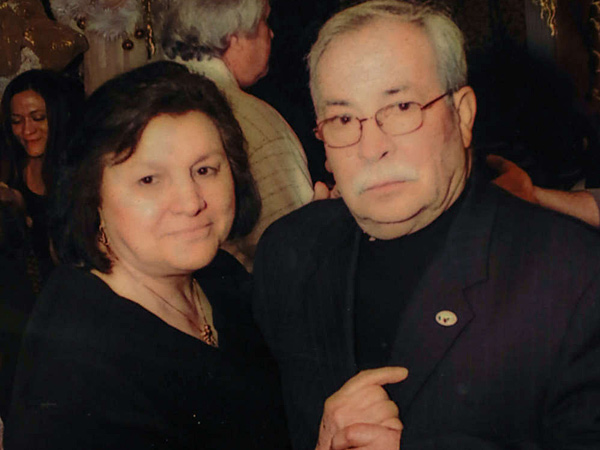
Maria and Vito Maglio had been married for 40 years.
But on Dec. 14, 2014, he did not return to his Bustleton home, and his family reported him missing. Several days later, police found his GMC Yukon in East Germantown, charred and windowless, with a bullet casing inside and a pool of blood beneath the driver’s seat, police said.
His remains were not recovered from the Schuylkill until late March. He was identified by his pacemaker.
The investigation was challenging from the start, officials said, in part because homicide detectives did not take over the case until his body was recovered months after his disappearance. The assigned detective, Gregory Santamala, said in a 2016 interview that police did not know where Maglio was killed because his phone records showed that he was in various neighborhoods on the night he disappeared, and there were no surveillance cameras in the area where his car was burned.
Detectives suspected he had been set up in a robbery that went awry, he said. An early tip led investigators to interview two women in the Northeast, and both failed polygraph tests. But the women immediately hired lawyers and stopped talking, officials said.
Santamala retired in 2022, and the case went cold.
Then, this summer, the case was reassigned to Detectives Joseph Cremen and Robert Daly, who began reviewing phone records and the more than a dozen interviews their colleagues held with suspects and witnesses over the years.
Investigators told Maglio’s family it was not necessarily new evidence that allowed them to make an arrest this week — but a new style of building cases. Years ago, they said, prosecutors had less experience making cases from cell phone location data and circumstantial evidence. Now, they said, law enforcement has greater expertise in understanding those records, which, alongside the witness statements, allowed prosecutors to conclude there was sufficient evidence to charge Morat with murder.
Deputy Police Commissioner Frank Vanore said using today’s technology to solve older cases is the crux of cold case review.
The Philadelphia District Attorney’s Office declined to comment.
Maglio’s family said the developments came as a welcome surprise after a decade of fleeting hope. Sitting in the green-walled living room of their parents’ home Tuesday night, Maglio’s children said they were grateful for an arrest and eager for the court process to begin.
“I’m just glad it didn’t fall through the cracks,” said daughter-in-law Sandra Maglio, 50. “It was our biggest fear. We live in a city where people die every day, sadly. … So I’m just glad that, you know, someone took the initiative to say, ‘Hey, let’s look at this again.’”
They were also struck by the timing. Maglio’s brother-in-law died Monday. And his son, Donato, died three years ago this month at the age of 47.
They imagine them all together now.
“It gives us some kind of closure,” said daughter Lucia Thrasher, 37. “But we already got the outcome we didn’t want to 12 years ago.”
Thrasher’s eyes welled with tears as she looked at her 6-year-old twins, Charles and Thomas, who never got to meet their grandfather. Charles, bouncing in the doorway, asked why everyone was in the living room.
“Nonno,” she told him.
“You know, Nonno,” she said, as he looked away bashfully. “Where’s Nonno?”
He pointed toward a gold-flecked picture frame in the corner of the room.
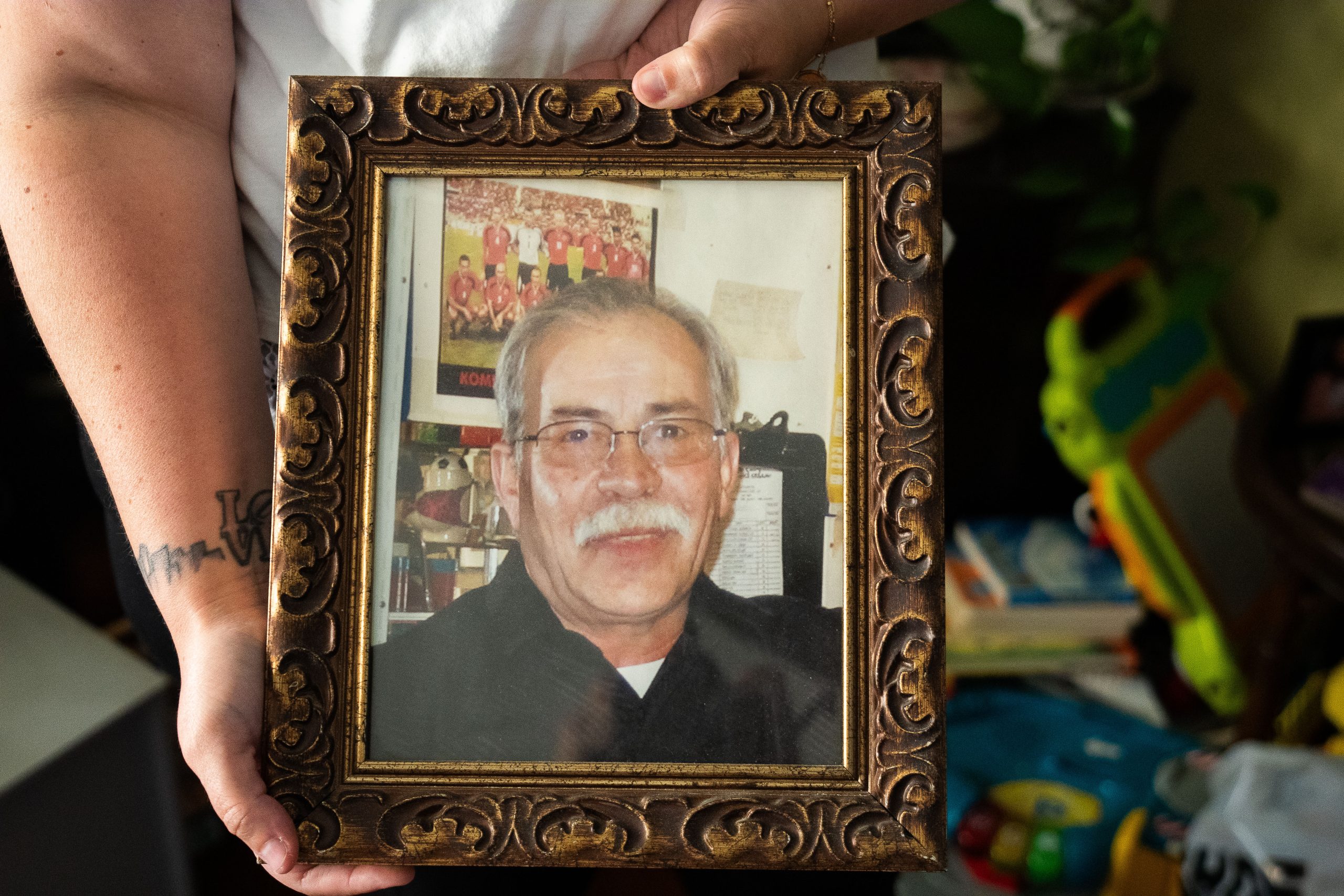
Vito Maglio, 69, was a father of six.Jessica Griffin / Staff Photographer
Booker Rowe, 85, of Philadelphia, award-winning violinist, the first Black musician to play with the Philadelphia Orchestra and the Nashville Symphony String Quartet, the second permanent full-time Black player in the Philadelphia Orchestra, teacher, mentor, and role model, died Friday, July 31, of complications from pneumonia and sepsis at Jefferson Abington Hospital.
A lifelong musician — he played piano at age 5 and violin at 11 — Mr. Rowe was invited by famed music director Eugene Ormandy in 1968 to become the first Black musician to perform with the Philadelphia Orchestra. He was a substitute violin during most of the 1968-69 season and returned for good in 1971 as the orchestra’s second Black permanent full-time member.
Mr. Rowe stayed for 49 years.
“My first day, I came in late from New York, and the orchestra was already rehearsing, and I sat myself down on the last stand to play,” Mr. Rowe told The Inquirer’s Peter Dobrin in 2020. “The sound was amazing. It was like stereo all around me. The stage was slanted down, and when the brass and winds would play I had to brace myself with my right leg from being blown off stage. It was just so beautiful.”
For five decades, until his retirement in 2020, Mr. Rowe played with half a dozen elite conductors and traveled the world in the orchestra’s second violin section. He and his colleagues gave thousands of memorable performances at the Academy of Music, the Kimmel Center, and the Mann Center in Philadelphia, Carnegie Hall and the Lincoln Center in New York, and the Saratoga Performing Arts Center in Saratoga Springs, N.Y.
They played at the 1993 World Series at Veterans Stadium, for Pope Francis in 2015, and at the Vail Music Festival in Colorado. They played in Europe, South America, Asia, and elsewhere around the world.
This photo of Mr. Rowe (left) appeared in the Daily News in 1993Newspapers.com
In 1973, the orchestra made a historic 10-day, five-concert cultural exchange tour in China, and Mr. Rowe told the Daily News afterward that he visited a commune and returned with Chinese instruments. In 2008, he mingled with former Secretary of State Alexander Haig and other international notables after a concert in Beijing.
In 2013, he posed for pictures with the Chinese welcoming contingent at Shanghai Airport. “Booker was such a kind soul, and his passion, his artistry, and his humanity are woven into who we are,” Yannick Nézet-Séguin, the orchestra’s music and artistic director, said in a tribute.
Ryan Fleur, the orchestra’s president and chief executive officer, said: “He was a warm and steadying presence in our orchestra.”
Born in Kentucky, Mr. Rowe and his family moved to North Philadelphia when he was 2. His father was a singer, and his mother played piano, and they “pushed me in the direction of classical music,” he told the Daily News in 1981.
He became concertmaster for the West Philadelphia High School orchestra, the All-City high school orchestra, and the old all-Eastern Conference college orchestra. He earned a bachelor’s degree in music at Temple University in 1963 and a master’s degree in music at Yale University in 1968.
Before Philadelphia, he played solo in New York and with symphony orchestras in Nashville, New Haven, Conn., and Washington. Later, he played with the old Symphony Club of Philadelphia, the Lansdowne Symphony Orchestra, and other local groups.
Mr. Rowe (left) stands with fellow musicians Andre Watts (center) and Renard Edwards.Courtesy of the family
He also got freelance gigs with Sammy Davis Jr., Isaac Hayes, Smokey Robinson, the Supremes, Barbra Streisand, Aretha Franklin, and other stars. He played with chamber music ensembles around the country and gave dozens of free concerts for children, churches, and community and scholarship fundraisers.
He championed racial and ethnic diversity, and was active with the Philadelphia Orchestra’s cultural diversity initiative. He sought and performed work by Black and other minority composers, and mentored dozens of colleagues and students.
He encountered at least one racist incident that first year in Philadelphia and told the Daily News in 1981: “The time was right for an Afro-American in the Philadelphia Orchestra. It was just a matter of finding somebody who was ready.”
Mr. Rowe and his family lived in Center City, East Mount Airy, and Germantown. Courtesy of the family
A friend said on Facebook: “His legacy and historical contributions are unparalleled.”
Mr. Rowe taught at Settlement Music School and gave private lessons. He earned music and service awards from City Council, the American Foundation for Negro Affairs, and other groups.
In 2019, he was asked to advise young musicians in a video interview for the Philadelphia Orchestra website, philorch.ensembleartsphilly.org. “Practice, practice, practice,” he said. “But also enjoy, enjoy, enjoy. Do it with love in your heart.”
Booker Taliaferro Washington Vance Rowe Jr. was born Dec. 10, 1940, in Lexington, Ky. In Philadelphia, he studied at the old Philadelphia Musical Academy and Settlement Music School, and his father worked at RCA Victor records in Camden. So their home was always filled with music.
Mr. Rowe (rear center) stands with Philadelphia Orchestra colleagues and members of the Chinese welcoming contingent in 2013.
Jan Regan / Philadelphia Orchestra
He met soprano Patsy Baxter at a Philadelphia Orchestra concert, and they married in 1970 and had a son, Landis, and a daughter, Vivian. They lived in Center City, East Mount Airy, and Germantown, and visited his family often back in Kentucky and Tennessee.
Mr. Rowe enjoyed puzzles, hiking and kayaking with his family, and tai chi. Friends noted his “kindness,” “million-dollar smile,” and “cheerful presence” in Facebook tributes.
District Attorney Larry Krasner on Tuesday said he strongly disagreed witha judge’s decision to overturn the murder conviction of a man who killed Philadelphia Police Officer Moses Walker Jr. in 2012 and vowed to appeal.
Krasner said Common Pleas Court Judge Jennifer Schultz, who handed down the ruling Monday, was “legally incorrect” in vacating the conviction of Rafael Jones, who is serving life in prison for killing the officer during a street robbery at the end of his shift.
But Krasner, speaking at a news conference alongside Walker’s mother and Roosevelt Poplar, president of Lodge 5 of the Fraternal Order of Police, said Jones’ conviction was different from others involving Nordo that have since been reevaluated.
“We believe now that Rafael Jones is guilty — that he murdered Moses Walker Jr.,” Krasner said.
If the appellate court denies the district attorney’s appeal, he added, “we will be retrying this case. We have a lot of evidence to do so. And we will be retrying it vigorously.”
Jones’ attorney, Jason Edward Parris, said Tuesday afternoon that the vacated conviction represented justice.
If jurors heard Jones’ case today, Parris said, they would have information about Nordo’s sex abuse crimes involving informants in homicide investigations that was not available at the time of Jones’ trial.
“I don’t think anybody should be comfortable with someone serving life in prison based in part on an investigation done by an officer who is now doing 49 years [in prison] for crimes committed during the investigation of this case,” Parris said.
Walker, 40, was shot and killed shortly before dawn on Aug. 18, 2012.
The officer had just left the 22nd District station in North Philadelphia dressed in civilian clothes when Jones and another man, Chancier McFarland, targeted him in a robbery, prosecutors said.
Jones fired at Walker after the officer reached for his gun, according to prosecutors. Both men were arrested, and McFarland pleaded guilty and testified against Jones as part of a deal to avoid life in prison.
Years later, during Nordo’s sexual abuse trial in 2022, one of his accusers testified that the detective had steered him toward a $20,000 reward and later raped him.
Though Krasner acknowledged the “messy history” that came with Nordo’s involvement in Jones’ case, he said the district attorney’s office was confident in the conviction.
There were multiple pieces of evidence that pointed to Jones’ guilt, he said, including a murder confession that was not introduced at trial because Jones did not testify, and McFarlane’s eyewitness account of the crime.
“We concluded years ago that this conviction was in the category that should not be disturbed,” Krasner said.
The district attorney’s office will appeal Schultz’s ruling to Superior Court, a process Krasner said could take up to two years.
Poplar, the FOP president, said he had faith that Krasner’s office would prevail.
“Yesterday was a tough day,” he said, echoing comments made by Police Commissioner Kevin Bethel, who said he was disappointed by the ruling.
Walker’s mother, Wayniya, said she and her family “would not allow these latest developments to weaken us.”
“We remain confident justice will prevail,” she said, adding that she hoped that the death of her son, not the vacated conviction of his killer, would “remain at the center of this case.”
“No decision rendered can alter what happened on Aug. 18, 2012,” she said.
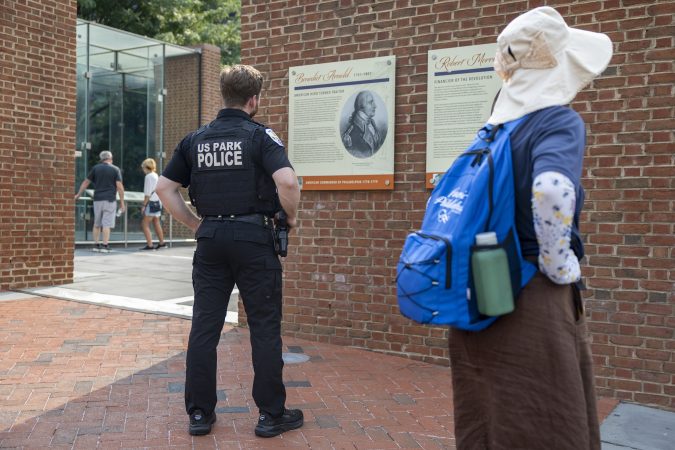
Philadelphia is asking a federal appeals court for a redo on the President’s House, saying the court’s June ruling that allowed President Donald Trump’s administration to swap the exhibit at the historic site limited the ability of judges to restrain the executive branch.
The city is seeking a new hearing in front of the entire U.S. Court of Appeals for the Third Circuit, or the same three judges who issued a unanimous ruling in June that held the city has no rights over the displays at George Washington‘s Philadelphia home.
The ruling created a catch-22, the city’s attorneys said in Monday’s court filing, not only for the President’s House Site but also for the ability of federal courts in the Philadelphia area to review government actions broadly.
The Third Circuit found that the abrupt removal of the slavery exhibit from the President’s House could not be challenged under the statute that governs final actions by federal government agencies. The removal, the appeals court said, was not an “agency action” or “final.”
“Both holdings are wrong, and both are of exceptional importance,” the city’s filing said.
The city contends that the court supplied a road map for federal agencies to evade challenges in court. Under this precedent, the federal government can evade courts’ review by “announcing — even mid-litigation — that it might do something else later,” the city said.
The judges opened the door for a federal agency to defeat a lawsuit over its conduct simply “by pointing to what it might do next,” according to Philadelphia’s filing.
It is rare for circuit courts to hold rehearings in front of the original or the full courts, which is known as en banc, said Adam Crews, a professor at Rutgers School of Law.
“The court will not grant rehearing en banc when the panel correctly states the law and the contested issue is simply the application of the law to specific fact,” Crews said.
Even if the entire court agrees to hear the case, the city might not find a sympathetic audience.
A majority of the court’s 14 members have been appointed by Republicans, and six were named by Trump.
The panel that issued the June ruling consisted of Hardiman, a George W. Bush appointee; Luis F. Restrepo, a Barack Obama appointee; and Peter J. Phipps, who was appointed by Trump.
The city filed the request for reconsideration hours before the deadline to appeal the June order, and at a time when Mayor Cherelle L. Parker’s law department is in transition.
City Solicitor Renee Garcia, who resigned last week, argued the case on behalf of the city at a January district court hearing. U.S. District Judge Cynthia M. Rufe issued a blistering opinion and an injunction ordering the restoration of the exhibits, which was later overturned by the Third Circuit.
Parker appointed Monique Galloway, who worked for the U.S. Attorney Office in Philadelphia, as the city’s next solicitor.
Monday’s filing still carried Garcia’s name,who remains in the role until early September.
The National Park Service and Department of the Interior did not immediately respond to a request for comment.
Advocates for the original exhibit, including Avenging the Ancestors Coalition and city leaders, vowed to keep fighting to restore the removed panels to the site. Michael Coard, leader of Avenging the Ancestors Coalition, said last month the group was exploring new legal strategies.
“This site, Sixth and Market Streets, is the only site where George Washington lived on federal property — that federal property was known as America’s first White House — and Black people were enslaved,” Coard said from the President’s House on the day the exhibit was swapped. “There’s only one place where that happened. Right here.”
A Philadelphia Common Pleas Court judge on Monday ordered a new trial for a man serving a life sentence for the death of a police officer in 2012, reportedly citing the connection of disgraced ex-homicide detective Philip Nordo to the case.
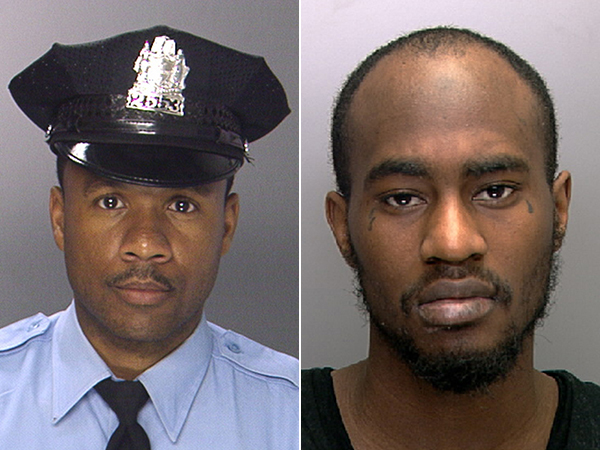
Court records show that Judge Jennifer Schultz vacated the 2014 murder conviction of Rafael Jones, who was sentenced the following year to life in prison without the possibility of parole for the fatal shooting of Officer Moses Walker during a street robbery after the end of his shift on Aug. 18, 2012.
KYW Newsradio reported the judge cited the case’s connection to Nordo, who was convicted in 2022 of sexually abusing witnesses and suspects.
During Nordo’s trial, one of his accusers was an informant in the Walker homicide investigation who said Nordo helped steer a $20,000 reward to the man and then, years later, raped him.
District Attorney Larry Krasner said he would address the order for a new trial at a news conference Tuesday.
Police Commissioner Kevin Bethel said in a statement: “I am disappointed by today’s decision, particularly for the family of Officer Moses Walker and every member of this Department who continues to carry his loss.”
Bethel added: “At the same time, we respect the court and the legal process. We remain confident in the evidence surrounding this case and believe that, when the process is complete, the individual responsible for Officer Walker’s murder will continue to be held accountable and will never again walk free.”
A lawyer for Jones could not be reached for comment. According to court records Monday, Jones was being held at the State Correctional Institution in Chester City.
Shortly before dawn on Aug. 18, 2012, the 40-year-old Walker left the 22nd District station at 17th Street and Montgomery Avenue in North Philadelphia dressed in civilian clothes — shorts, athletic jacket, and baseball cap — and carrying a backpack and wearing earphones.
Walker was targeted, McFarland testified, because he looked like a student from nearby Temple University — “an easy mark.”
McFarland testified that Jones shot Walker when the officer reached for a weapon.
After Walker collapsed at Woodstock Street and Cecil B. Moore Avenue, McFarland said, he grabbed the officer’s iPod and earphones before taking off.
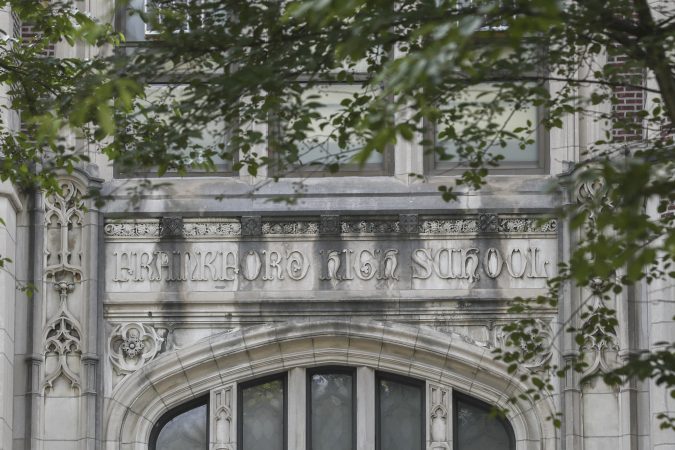
For the first time in more than a decade, Frankford High is getting a new principal.
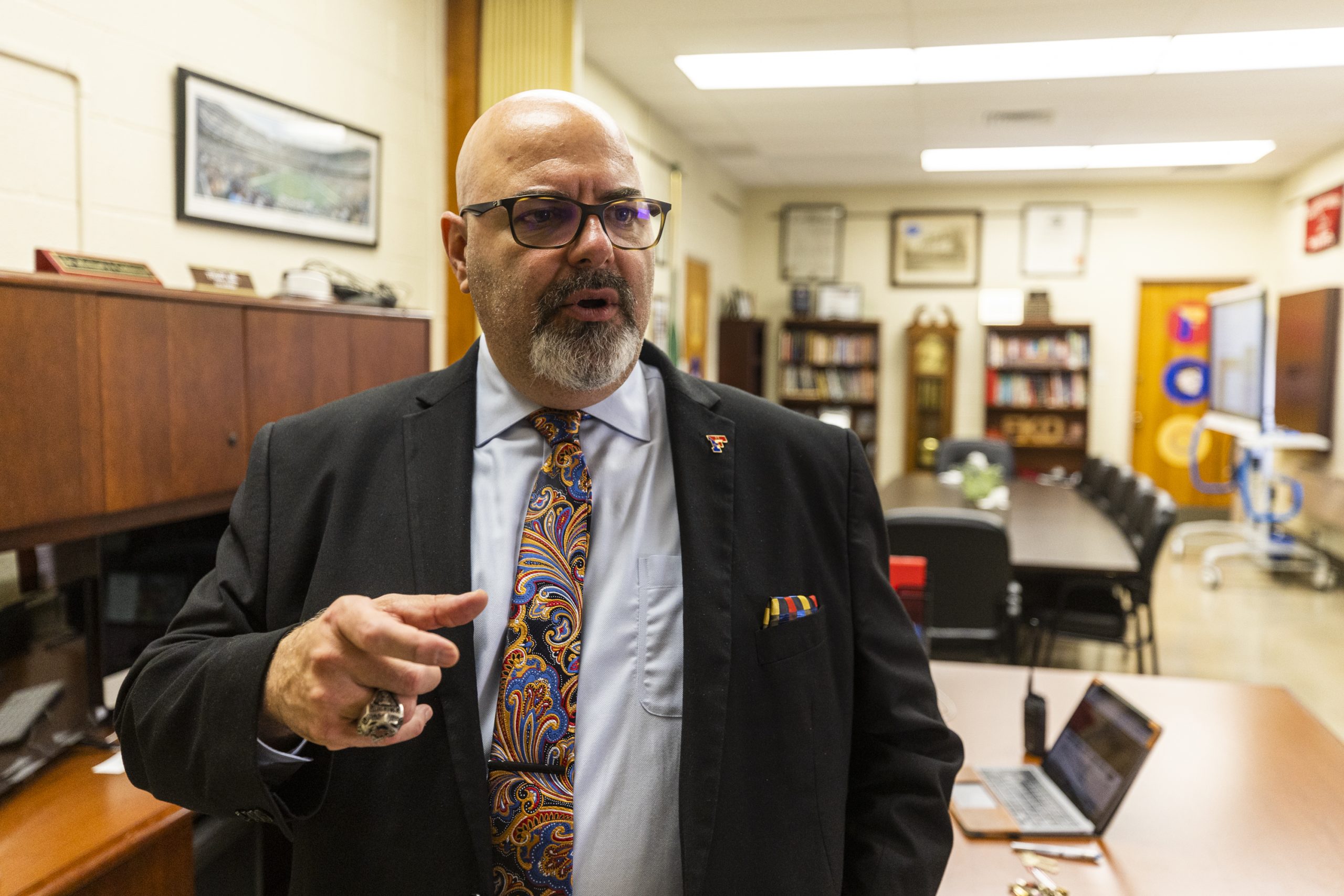
Michael Calderone, who has served as Frankford’s principal since 2015, told the staff on Friday that he’s leaving to become the interim principal of Dobson Elementary in Manayunk.
Calderone’s move comes after the district conducted an audit of what some staff said was a “toxic” climate at the school and serious allegations about Calderone, including that he struck a student and retaliated against teachers who spoke out against him.
District officials did not comment on the results of the climate audit, but typically do not discuss personnel matters.
Calderone said, in a letter sent to Frankford staff and obtained by The Inquirer, that the move to Dobson “holds tremendous personal and professional significance for me” because he began his career there, as teacher and dean.
“Returning to lead the school where I first developed my passion for educational leadership feels very much like a homecoming and has always been a dream of mine,” Calderone wrote.
Noah Tennant, the interim associate superintendent for secondary schools, said in an email to Frankford staff that Calderone “is a school leader with a proven track record of improving student outcomes, leading school transformation, and building collaborative systems. His leadership and contributions to the Frankford High community will leave an indelible impact on all he served.”
Mary Jackson, a retired Philadelphia principal who’s served as Frankford’s interim leader in the past, will be “guest principal” while the district searches for a replacement for Calderone, Tennant said in the letter.
“In the coming months, the district will initiate a process to identify the next permanent principal who will continue the important work underway and ensure every student and staff member is supported,” Tennant wrote.
A Frankford climate audit
The first public hint of controversy happened in early 2026, when Frankford’s budget, like spending plans across the school system, was shrunk because of district-wide cuts. Calderone ordered a number of teachers’ jobs cut out of seniority order, a move that was protested by the Philadelphia Federation of Teachers, and ultimately overturned.
The PFT and teachers say the targeted educators — whom Calderone said he moved to advance academic goals — were ones who had spoken out against him, they told The Inquirer.
At the same time, a number of current and former Frankford staff raised allegations about significantculture issues at the school, and the district conducted the audit.
Michael Calderone is shown in his office at Frankford High in this 2023 file photo.Tyger Williams / Staff Photographer
According statements from multiple staffers made to the district and PFT and obtained by The Inquirer, Calderone, who earned citywide recognition for his work at the comprehensive high school, was a volatile leader who forced out many capable staffers.
Some staff said the principal screamed at adults and students on multiple occasions. They also said he made improper requests, including asking teachers to provide grades for students in classes they did not teach.
Others said he spoke openly about intentions to get rid of staff members who were not allies, to force out staff who he believed were opposed to him.
Two staffers also told the district that Calderone punched a student who had assaulted multiple Frankford staffers.The staff did not report the assault when it happened because they were afraid for their jobs, they said.
Other Frankford staffers agreedthat there was widespread discord at the school, but say those who opposed Calderone contributed to the toxicity.
Arthur Steinberg, PFT president, who had previously said that he did not believe Calderone was fit to run Frankford “or any school at all,” in a statement Monday commended the Frankford staff who brought concerns to the administration.
“Thanks to their bravery and persistence, Frankford will be a healthier, more positive place to learn and work for all,” Steinberg said. “It is our hope that whoever is assigned to replace Dr. Calderone is able to reset the working environment for staff, so that Frankford is once again the warm, welcoming school community it was before he arrived.”
‘Thank you for your trust’
Calderone, in his letter to Frankford staff, said he was particularly grateful for the community’s resilience during a tough time — the hulking main Frankford building was shut for multiple years because of asbestos issues, with students scattered between multiple buildings. He said he was also proud of Frankford’s aviation and hospitality programs, launched during his tenure at the school.
“Thank you for your trust, your partnership, and the memories we have shared,” Calderone wrote. “I have every confidence that Frankford High School will continue to thrive and achieve great things. I wish you all the absolute best. Frankford will always be the ‘Home of Champions’. But never forget: every champion was once just a contender who refused to give up. I ask you to carry that relentless, unbroken spirit with you into every new day. Thank you for letting me walk this path alongside you.”
Calderone will be moving to a very different school than the one he’s led for 11 years.
Frankford educates about 900 students in its massive Oxford Avenue building. Dobson, a K-8 on Umbria Street, educates about 250, though both have large populations of students with disabilities.
Dobson’s former principal, Khloe Williams-Lawani, accepted another job in the school system.
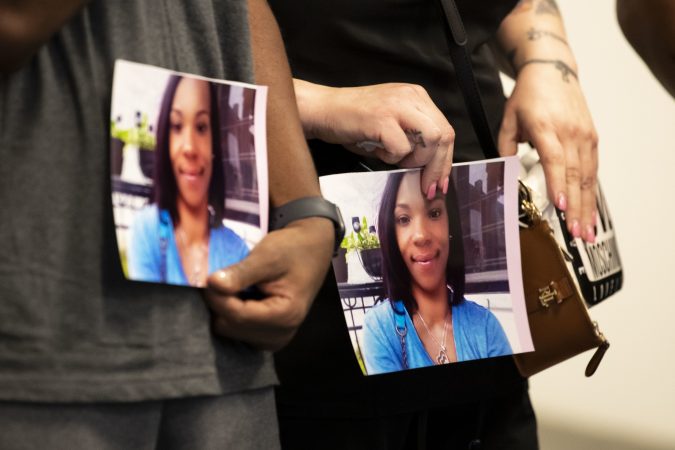
A third defendant has been sentenced in the death of Tiffany Fletcher, a Philadelphia Parks and Recreation employee who was struck by a stray bullet during a 2022 shooting in West Philly.
Tevin Kee, 20, pleaded guilty to third-degree murder, conspiracy, and gun charges in April. On Monday, he was sentenced to 12½ to 25 years in prison, according to Assistant District Attorney Jeff Hojnowski.
Fletcher was sweeping outside the Mill Creek Recreation Center where she worked on a September afternoon, when two groups of youths began shooting at each other. Fletcher, caught in the crossfire at 47th and Brown Streets, was struck by a stray bullet in her torso and died. She was 41 years old, and a mother of three.
The case sparked outrage, as Fletcher’s death came to represent how dangerous Philadelphia had become in the years immediately following the pandemic.
Tiffany Fletcher (center, yellow tank top) was photographed with lifeguard Robin Borlandoe, 70, (immediate left), assistant recreation leader Charles McKnight (just above Tiffany) and other staff and volunteers at the Mill Creek Recreation Center pool in August 2022.ELIZABETH ROBERTSON / Staff Photographer
Kee was the final defendant to be sentenced. Two others pleaded guilty to similar charges in the case. In 2024, Makie Jones was sentenced 10 to 20 years, and Malik Flegler was sentenced to 12½ to 25 years. Jones was arrested on the day of the shooting, and Flegler was arrested weeks later.
But Kee, who was 17 at the time of the shooting, was not arrested until last year, at a traffic stop in Lower Pottsgrove Township. All three suspects were teenagers at the time of Fletcher’s death and charged as adults.
Following Kee’s sentencing, Philadelphia District Attorney Larry Krasner made a point to say the legal process in each case was not over. He said each defendant would have parole board hearings once they had served their minimum sentences, and referenced statistics indicating most defendants typically serve greater time than their minimums.
“Justice wasn’t done,” said Geraldine Fletcher, Tiffany’s mother. She said she wasn’t satisfied with any of the sentences, and said shehoped the three individuals suffered for eternity. GeraldineFletcher said the family would participate in those parole hearings to share the pain of their loss.
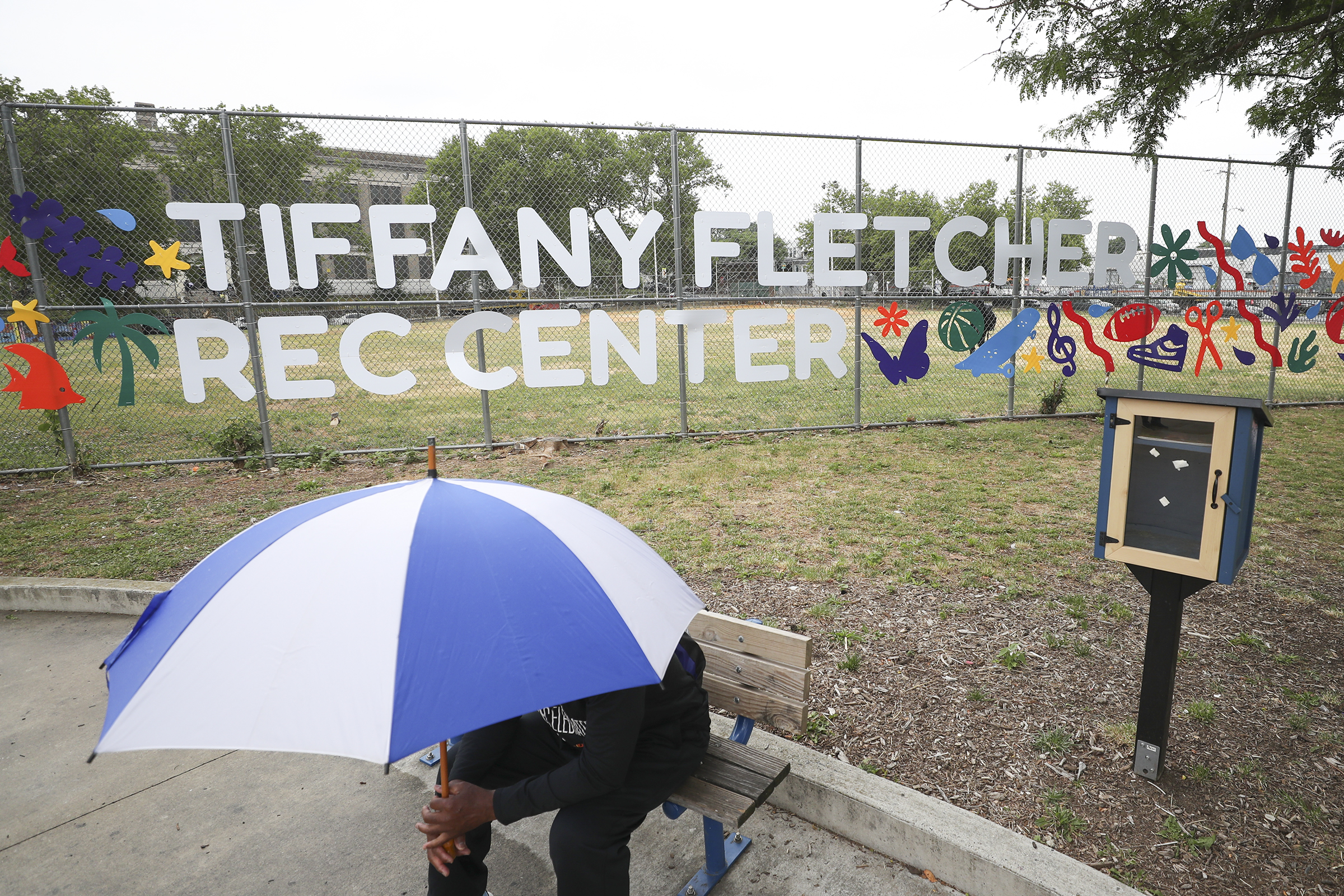
Until then, Fletcher’s family and community will continue to honor her memory. The Mill Creak Recreation Center and its pool was renamed for Fletcher in 2023, and in April, City Council adopted a resolution to rename the 4700 block of Brown Street, “Tiffany Fletcher Way — Gone But Never Forgotten.”
A sign at the renamed Tiffany Fletcher Recreation Center (formerly Mill Creek) in West Philadelphia in June 2023.Heather Khalifa / Staff Photographer