Category: Pennsylvania News

  • Pennsylvania health officials address measles outbreak: ‘We will not slow down until this … is over.’

    Pennsylvania health officials address measles outbreak: ‘We will not slow down until this … is over.’

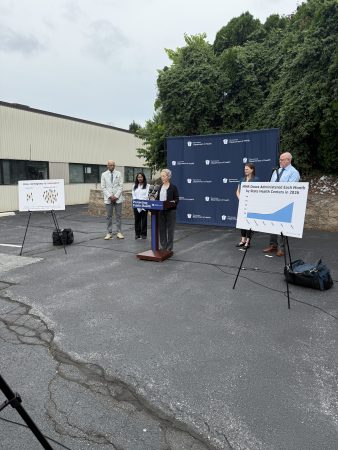
    Pennsylvania health officials and doctors on Friday said several people have been hospitalized amid a growing measles outbreak that has spread to six counties in the southeastern and central parts of the state.

    At a news conference in Lancaster on the outbreak, which has sickened 72 people in the area since April, health officials stressed that vaccination was the best defense against the highly contagious disease.

    Secretary of Health Debra Bogen said she could not comment on the exact number of people hospitalized to protect their privacy, as the number was still relatively small.

    About one in 10 people who contract measles will require hospitalization, and three people were treated at hospitals in Lebanon County at the onset of the outbreak in late April.

    Fahmida McGann, an infectious disease doctor at Penn State Health, said the health system’s Lancaster Medical Center has treated patients who needed to be hospitalized for several days with symptoms including serious electrolyte abnormalities and liver and kidney dysfunction.

    Measles can infect up to 90% of unvaccinated people who come into contact with the disease, which can linger in the air for up to two hours.

    Newborns and young children are at higher risk for serious complications, but adults can also experience them, especially if their immune systems are weakened. Doctors at Friday’s news conference said they had treated both adults and children in hospitals.

    The state response

    In the current outbreak, state officials have recorded 41 cases in Lancaster County, 20 in Lebanon County, six in Northumberland County, two each in Berks and Dauphin Counties, and one in York County.

    Overall, the state has seen 84 measles cases this year, more than five times the cases recorded in all of 2025.

    The outbreak is spreading largely among people who are unvaccinated, Bogen said.

    “These are not numbers,” Bogen said. “They are children, parents, neighbors and friends.”

    The health department is conducting contact tracing to detect cases, and working with local healthcare providers and community organizations to ensure residents have access to vaccines and accurate information on their efficacy and side effects.

    (function() {
    var l2 = function() {
    new pym.Parent(‘HE_MEASLES2.html’,
    ‘https://media.inquirer.com/storage/inquirer/projects/innovation/arcgis_iframe/HE_MEASLES2.html’);
    };
    if (typeof(pym) === ‘undefined’) {
    var h = document.getElementsByTagName(‘head’)[0],
    s = document.createElement(‘script’);
    s.type = ‘text/javascript’;
    s.src = ‘https://pym.nprapps.org/pym.v1.min.js’;
    s.onload = l2;
    h.appendChild(s);
    } else {
    l2();
    }
    })();

    Health providers in Lancaster have said they believe there were more cases in the area than officials were aware of. Bogen said the department was working with community members to build trust and ensure that cases get reported.

    “People who are part of the community are really the key to the response, because we want people to know that if they call the department, we are here to help them,” she said.

    The department has vaccinated more than 430 people at pop-up clinics in the region in the last two months, she said, and state-run health centers around Pennsylvania have administered more than 1,300 measles, mumps, and rubella vaccine doses this year.

    “We’re not sitting back and just watching the virus spread,” Bogen said. “We will not slow down until this outbreak is over.”

    It’s crucial that residents get vaccinated, she said, to protect people who cannot safely get the vaccine, like newborns and pregnant women, and people whose immune systems are weakened, like organ transplant recipients and cancer patients.

    On Wednesday, the department recommended that physicians vaccinate infants and young children against measles early, beginning at 6 months, in affected areas. The same precautions should be taken by families with infants traveling to these areas.

    The department has also hosted webinars for hundreds of healthcare providers across the state. Measles was considered eradicated decades ago, and many doctors practicing today have never seen a case, Bogen said.

    Jeffrey Martin, a physician at Penn Medicine’s Lancaster General Hospital, said he last encountered a measles case 30 years ago, as a medical student in Colorado.

    “I still remember that patient, a child with a high fever, red eyes, and the classic rash we learned about in textbooks. At the time it was an illness we were trained to recognize,” he said. “None of us imagined that one day measles would become so rare that most physicians would go their entire careers without ever seeing a case.”

    Now, he said, physicians in Lancaster must keep measles in mind when they’re treating patients with respiratory symptoms. The virus’s early symptoms include a fever, a cough, and a runny nose — similar to other respiratory diseases — before patients develop a telltale rash.

    “It underscores the importance of being especially thoughtful about how we identify and respond to possible cases,” he said.

    It’s also key for families to call ahead to doctors’ offices if they’re experiencing measles symptoms, so physicians can prepare to treat them without exposing other patients, Martin said.

    Lower vaccination rates

    Vaccination rates among kindergarteners have decreased across Pennsylvania in recent years, and some counties affected in the current outbreak have particularly low rates, including Lancaster, where about 88.5% of kindergarten students are vaccinated.

    Health experts say 95% of a community must be vaccinated to prevent the spread of the disease.
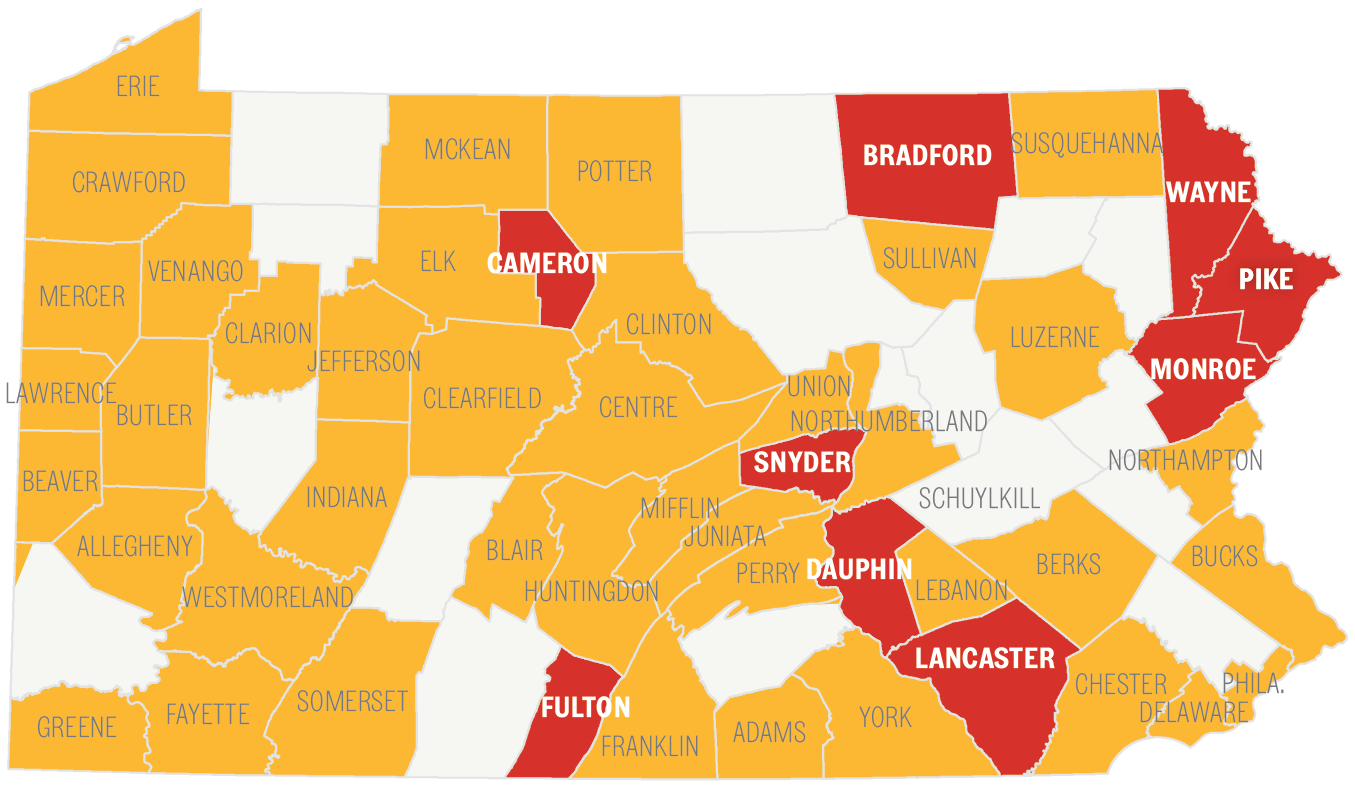
    A map showing vaccination rates in kindergarteners for the 2024-2025 school year. Counties in yellow have vaccination rates between 95% and 90%. Counties in red have vaccination rates below 90%. To halt the spread of measles, at least 95% of a community must be vaccinated against the disease.John Duchneskie

    The state is working with schools to increase vaccination rates, Bogen said Friday.

    After The Inquirer and the Pittsburgh Post-Gazette published analyses on low vaccination rates at individual schools across the state, health officials announced that they would soon publish a public database of school-level vaccination data. (Previously, the state published county-level vaccination data on its website.)

    Bogen said she hoped the new database would encourage schools with lower vaccination rates to reach out to healthcare providers to ensure students have access to vaccines.

    “We want to make sure as a public health department that we’re ensuring that anybody who wants access to a vaccine has that,” she said.

    Encouraging vaccination

    Martin, the Lancaster General physician, said the area was welcoming and helpful to people in need.

    “It is a defining characteristic of our community to help others, especially the most vulnerable, during times of crisis,” he said.

    Residents now have an opportunity to help protect vulnerable people from measles by getting vaccinated, raising awareness about the disease, and helping doctors decrease exposures in care settings, he said.

    “When vaccination rates are high, the virus has very little opportunity to spread. When gaps emerge, even small ones, measles can find a way back in because it is so contagious,” Martin said. “Ultimately what keeps measles rare is not luck. It’s the choices we make together to protect those who cannot protect themselves.”

  • Philly’s weather forecast has drought-easing rains this weekend, then a heat wave through July 4

    Philly’s weather forecast has drought-easing rains this weekend, then a heat wave through July 4

    The region may be getting some significant drought relief during the weekend, and then it may be some time before it gets relief from heat that could persist through July Fourth.

    Rounds of showers — possible Friday night into Saturday evening when Croatia and Ghana meet in a World Cup match in South Philly — should be more widespread across the region than Monday’s scattershot downpours, said Brian Hurley, senior branch forecaster with the Weather Prediction Center, in College Park, Md.

    The severe storms likely would stay well to the south of Washington, D.C. However, “you always have potential” for a few thunderstorms, he said.

    Then, after two decent days Sunday and Monday, what is looking like the longest-lasting hot spell of the season to date is due to get underway Tuesday as temperatures head to the mid-90s.

    “That’s going to be main story,” said Hurley.

    The wild card for the duration would be the possibility of “ring of fire” thunderstorms, forecasters said, which might have temporary cooling effects. Those are storms that form along the boundaries of high-pressure heat domes, and Philly may be near the eastern edge.

    How hot might it get next week in Philly?

    Expect some tweaking during the next few days, but with “increasing confidence” the National Weather Service in Mount Holly was seeing heat indexes in the triple figures next week.

    Come Tuesday, daytime temperatures should be “off to the races,” said Bill Deger, senior meteorologist with AccuWeather Inc., which has forecast highs up to 98 degrees late in the workweek.

    It also will be steamy, and that will inhibit nighttime cooling as water vapor slows the escape of daytime warning. Readings are unlikely to get lower than the 70s Wednesday through at least next Saturday.

    The heat could lap into the following week, said Deger. “It shows some staying power,” he said.

    The region already has had 14 days with official temperatures of 90 or higher in 2026, about half the average total for an entire year.

    The potential for those ring-of-fire storms would be a wild card, said Hurley and Deger.

    Cooling thunderstorms can break heat waves, although they may come with a price. Ring-of-fire storms in July 2020 wrung out as much as 6 inches of rain that set off widespread flooding.

    As drought continues, the Philly region could use more rain

    Six inches might be a bit over the top, but the region could use more rain to ease the ongoing drought conditions.

    Some areas received close to 2 inches on Monday and Tuesday; however, the jackpot zones eluded areas where the dry conditions have been most intense — parts of South Jersey and Chester County.

    The entire region remained in some state of drought according to the interagency U.S. Drought Monitor, but Chester County was in “severe drought,” along with small pieces of Bucks and Delaware Counties. In “extreme drought” were all of Cape May County, other Jersey Shore towns, and areas bordering Delaware Bay.

    In an analysis based on a network of measuring stations throughout the counties, the weather service’s Middle Atlantic River Forecast Center calculated that Cape May County received less than a half inch of rain, and Cumberland and Salem Counties about 0.6 inches.

    In contrast, Burlington, Camden, and Gloucester Counties weighed in with well over an inch.

    On the other side of the river, Philly’s total was 1.28 inches, compared with 0.71 for Chesco, which, like New Jersey, is under a state-declared drought emergency.

    All this could change next week.

    .

  • ‘Continuing that legacy’: Caterer John Serock purchases historic Loch Aerie Mansion wedding venue in Malvern for $4M

    ‘Continuing that legacy’: Caterer John Serock purchases historic Loch Aerie Mansion wedding venue in Malvern for $4M

    John Serock closed on the historic wedding venue Loch Aerie Mansion on a Tuesday. The first wedding was that Saturday.

    It was a natural transition for Serock, whose catering company has exclusively worked with the venue since its former owners, Steven and Dana Poirier, purchased the Malvern mansion in 2016 with the intention of giving the property a new life. Serock had come in early in the process, working with the Poiriers as they restored the historic estate and turned it into its latest iteration: a wedding venue.

    But Serock had first laid eyes on the property, which is more than a century old, in 2006. He had a storefront up the street and, one day, with the leaves off the trees, the mansion just appeared before him. He thought it would make a “cool” wedding venue.

    Now, 20 years after that first sighting, the mansion has become Serock’s first venue of the sort.

    “I was starting to get the itch to maybe look into my own venue, and then COVID hit, and I swore I said it’ll be a long time before I ever sign another piece of paper,” he said. “Then as the few years went on, and we started talking with Loch Aerie, I went back and forth … did we need this next step? But when I really broke it down, this is something I felt I needed.”

    Serock closed in mid-May, purchasing the property for $3 million and the business for $1 million. His company took over the existing book of business, honoring all future weddings. It is working on filling up the rest of the calendar, aiming for not a single Saturday off, he said.

    Under the new ownership, Serock plans few cosmetic changes — except making more photo-worthy backdrops — but will focus on operational tweaks and increasing business from corporate and nonprofit clients midweek.

    The venue is rolling out “Nonprofit Thursdays,“ offering “severely discounted” rates for nonprofits to throw fundraisers during the week.

    To appeal more to business leaders, it is looking into putting a central sound system, so clients do not have to bring in a separate company.

    More generally, Serock is looking to add a liquor license — Loch Aerie is currently BYOB — with the goal of making things as “easy and turnkey as possible” for clients, he said.

    For weddings, which make up 95% of Loch Aerie’s business, the venue lowered its offseason pricing immediately, Serock said. Saturdays in the offseason will run $7,000, compared with about $10,000 during the peak in May, June, September, and October. Fridays and Sundays go from $4,500 in the offseason to $8,000 and $7,000, respectively.

    The four-story stone mansion has a newly constructed 5,000-square-foot ballroom addition that accommodates around 200 guests. The venue features billiards and dining rooms, a parlor, an entry hall and dramatic stairway, suites to get ready, and outdoor spaces.

    Serock sees this as a first of several venues to come, hoping to build a portfolio out of multiple properties. He is not in a rush, he said, and Loch Aerie has served as a learning experience.

    “You couldn’t ask for a better opportunity, because really, like I said, nothing changed,” he said. “It’s an easier transition, because I already understood ‘where’s the circuit breaker,’ or ’how’s this work’ … so that’s a good first step. And even since then, I learned a lot.”

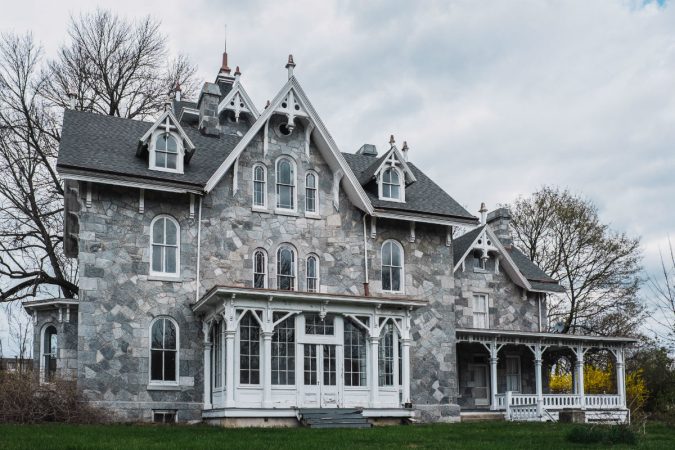
    Built in 1865, the estate had sat vacant for roughly 12 years. It went to auction in 2016, purchased for $700,000 by a businessman who looked to restore the home and build a hotel next door. But when the deal fell through, according to VISTA.Today, the Poiriers — who had been outbid earlier — came out triumphant.

    In the years before that, it served as a home or a business space for those “whose occupancies were short lived and rather destructive,” according to the website.

    Since first seeing the property in 2006, Serock has heard dozens of stories about it — almost folkloric in its history between historic design and a biker gang — and how it has served as a reference point, a piece of Chester County legacy.

    “For me, we’re building these new memories with our couples and families, but I think it’s really important that we’ve been able to also save and maintain this property, especially in the age where everybody wants to just knock down and have the brand, the shiny new toy, and whether it’s a house or car,” Serock said. “I think it’s really cool that we’ve had this opportunity to save this house. The Poiriers saved it, but we’re continuing that legacy.”

    This suburban content is produced with support from the Leslie Miller and Richard Worley Foundation and The Lenfest Institute for Journalism. Editorial content is created independently of the project donors. Gifts to support The Inquirer’s high-impact journalism can be made at inquirer.com/donate. A list of Lenfest Institute donors can be found at lenfestinstitute.org/supporters.

  • A gift to Temple will create the first endowed editor position at its student newspaper

    A gift to Temple will create the first endowed editor position at its student newspaper

    Jack Pinkowski relished his time as a photojournalist for Temple University’s student newspaper when he was enrolled there in the 1960s.

    And he always admired the work of his father, the late Edward Pinkowksi, an historian and author who founded a small newspaper in the Montgomery County borough of Bridgeport.

    This month, Pinkowski, a 1968 Temple grad, and his wife, Monica, gave Temple a $1.25 million gift, a portion of which will for the first time endow the editor-in-chief position for the Temple News, as well as increase other staff salaries and pay for some story-related travel and new equipment.

    Pinkowski said the need for journalists has never been more important, and he lamented the struggles print journalism has faced.

    “We hope to show it a lifeline, give it some support to encourage people to go into that as a field of endeavor,” said Pinkowski, 78, of Plantation, Fla. “This named editorship is a tribute to my father for starting a newspaper and having a lifetime as a critical mind that searched for facts and put them together and brought stories to the enjoyment of people.”

    Of the gift, $250,000 will be used to create an endowment for the student newspaper, and the remaining $1 million will fund scholarships of up to $10,000 per academic year for students to study at Temple’s Rome campus. Applicants must have knowledge of, coursework in, or a commitment to promoting Polish or Italian studies, history, or culture.

    The Pinkowskis made their money by investing in and managing real estate as well as through other careers.

    The couple both worked in businesses with global ties — Jack as an importer of furniture and Monica as an importer of gourmet foods to restaurants — and saw the merit in global study. They also both attended a study abroad program for adults at Temple Rome in 2024.

    Given the federal government’s policies affecting foreign students, Pinkowski said, he thought it was important to support the Rome campus so that students have an alternative way to attend an American university.

    Temple president John Fry said he especially likes that the gift is so personal and that it is widening access to students to participate in both studying on the Rome campus and working for the student newspaper.

    “These are two really important experiences that many students have to forgo, and I think the Pinkowskis are making both of those possible,” Fry said. “Its meaning and impact are significant.”

    The gift comes as the college prepares to close a record fundraising year, led by a record $55 million gift from alumnus Christopher Barnett in October and a large gift in April from alumna Jane Creamer Sullivan and her late husband, Thomas J. Sullivan, to start its new honors college.

    A boost for the Temple News

    John DiCarlo, managing director of student media and adviser to the Temple News, said its portion of the Pinkowski gift will be incredibly important in supporting the newspaper with a staff of 37, which last academic year ran on a $115,596 budget that largely covers salaries and print costs.

    Most of the costs were covered by the university, with the newspaper responsible for raising $23,500 through ad revenue and other means. If the publication exceeds that goal — which it did last year, raising over $29,000 — it can funnel the additional money back into operations, DiCarlo said.

    The new endowment, DiCarlo said, will bring in an additional $10,000 to $12,000 annually, depending on its earnings.

    Incoming senior Sienna Conaghan, 20, who will be the inaugural Edward Pinkowski Editor-in-Chief, said she is grateful for the funding, which will cover her approximate $5,400 salary. And she is glad that salaries for other staffers can get boosted, too.

    “We’re asking them to do full-time jobs on a college student’s budget and a college student’s schedule,” DiCarlo said. “It takes a lot out of them because they really care.”

    Conaghan, a journalism major from West Yellowstone, Mont., estimates that she spends about 30 hours a week on Temple News work. She freelanced freshman year, was assistant sports editor sophomore year, and worked as sports co-editor last year.

    The experience is more important than the paycheck, said Conaghan, who plans to pursue a career in sports journalism, but the money helps.

    “It has really been everything,” Conaghan said of her Temple News work. “I think I’ve learned so much from working at the Temple News, from how to be a journalist and also just how to be an adult and a person.”

    The Pinkowskis initially gave a gift to the Temple News in 2023 to help it reach a fundraising goal. The college wanted to be able to pay student journalists a little more because some were having to take on second jobs to generate more income, DiCarlo said. At that time, he said, he had no idea the couple would return with such a large gift three years later; it is the largest gift the Temple News has ever received.

    “Monica and I are avid readers and avid followers of print journalism,” said Jack Pinkowski, a graduate of Philadelphia’s Central High School.

    Pinkowski said his father decided to start the now-defunct Bridgeport South Side Press in 1950 because the community did not have a local paper. He also wrote history books about the local area, using skills he developed as a journalist, Pinkowski said.

    The Pinkowskis have had other career experience in addition to real estate and import businesses.

    He was a general contractor and wedding photographer early on and later spent 18 years as an associate professor of public administration at Nova Southeastern University’s school of business and entrepreneurship in Florida.

    And she was a flight attendant at one time and as a child grew up working in a family traveling carnival business in Missouri — which helped pay for her education at the University of Missouri-Kansas City.

    Jack Pinkowski said the common thread in their endeavors has been “inquisitiveness and intellectual curiosity and the ability to take something where there’s nothing and make something of it.”

    Both Temple officials and the Pinkowskis hope their gift will motivate others.

    “I do believe that other people pay attention to that, and it makes them say, well, maybe they can do something as well,” Jack Pinkowski said.

  • Corner stores say ‘skill games’ are an essential part of their business. A court ruling threatens that.

    Corner stores say ‘skill games’ are an essential part of their business. A court ruling threatens that.

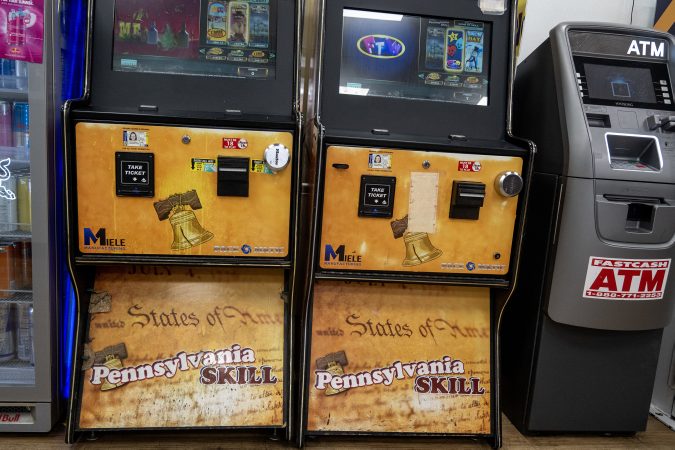
    Amid rising inflation and business costs, many Philadelphia corner stores, bars, laundromats, and smoke shops have turned to skill games, the slot machine look-alikes, to help keep their slim margins afloat.

    The machines, which shop owners say also encourage their customers to linger in stores and make additional purchases, are particularly profitable because they are not taxed or regulated like slot machines — and they have been operating without state oversight in a legal gray area for more than a decade. But a recent state Supreme Court ruling may force that to change.

    Last week, Pennsylvania’s highest court handed down a decision deeming skill games the same as slot machines. That means the skill game terminals proliferating around the state will soon be illegal if not operated and taxed at 52%, and housed in a highly regulated casino or truck stop with a license to carry slot machines. Those terms will take effect in less than four months unless the state legislature intervenes.

    Owners and clerks at several corner stores throughout Philadelphia that offer the games say they do not contribute a lot of revenue to their establishments directly, but they foster more of a lounge atmosphere in the shops that leads patrons to stay longer and purchase more snacks, drinks, lottery tickets, and other goods. Many of the business owners said they are willing to stomach a tax on skill games, but additional regulations would make them rethink keeping the machines.

    José Pérez, who runs a corner store on Opal Street in South Philadelphia, said his store runs on incremental profits. And, he said, when people play the skill game machines and start feeling lucky, they often are inclined to make other purchases there.

    “This business is about getting a little bit of money from every product, and the machines are a tiny source of income that adds up to that,” he said in Spanish between transactions at the store’s register. “While people play, they buy other stuff in the store. And if they win, they buy lottery tickets. Because when someone has one vice, they probably have two.”

    Tax proposals from Harrisburg

    Lawmakers in Harrisburg have for years failed to reach an agreement on how to tax and regulate the so-called skill games

    The issue has proved to be tricky in Pennsylvania’s split legislature, where Democrats narrowly control the House and Republicans control the Senate. The skill games industry leader, Georgia-based Pace-O-Matic, long maintained a friendly relationship with the Senate GOP, and the Republican lawmakers appeared willing to support policies that benefited them. But last year, the goodwill began to sour after the company backed political campaigns against incumbent Republican state lawmakers who did not support its requested low tax rate on the machines.

    State Rep. Danilo Burgos (D., Philadelphia) and State Sen. Anthony H. Williams (D., Philadelphia) have introduced a bipartisan bill in their chambers to impose a $500-per-month fee on each skill game machine operated in Pennsylvania, with a 50,000-machine cap across the state. There are currently an estimated 70,000 skill game machines in Pennsylvania, according to the state attorney general’s office.

    Skill games can be seen through the door of a mini mart on Kensington Avenue in the Kensington section of Philadelphia on Wednesday, July 30, 2025.Elizabeth Robertson / Staff Photographer

    The proposed legislation would split revenues among transit and infrastructure, local governments, and state police for enforcing the cap and fee. The bills also prohibit small businesses whose “primary source of net revenue” is from skill games, in an effort to prevent mini casinos in stop-and-go corner stores around the city. Burgos estimates the regulations would bring in $300 million in new revenue to the state in their first year.

    The bill includes additional protections for Philadelphia, where City Council voted in 2024 to ban the machines. The ban never went into effect, after a lawsuit was filed seeking to block it. In the legislation before the General Assembly, Philadelphia has specific carve-outs that would allow city officials to block stop-and-go businesses or “chronic nuisance” businesses from getting a license to carry the games.

    Surrounded by hundreds of skill games supporters at a news conference Wednesday on the Capitol steps in Harrisburg, Williams said rank-and-file lawmakers would hold up passing the state budget, due June 30, if there is not a deal to protect small businesses from losing their skill games altogether.

    “In this time when everybody talks about affordability, I can’t afford a 52% tax,” Williams said.

    The fee-per-machine option offered in the Democratic-sponsored bills is backed by Pace-O-Matic, which has spent millions of dollars on political campaigns and lobbying in the state, in addition to millions more spent by other parts of Pennsylvania’s booming gambling industry.

    Meanwhile, a separate proposal backed by the Senate GOP and penned last year would set the tax at 35% on gross terminal revenue, in addition to annual license fees. A small portion of those fees would go toward the state’s resources for problem gambling.

    Gov. Josh Shapiro, a first-term Democrat, has proposed taxing the machines at the same rate as slot machines — a hefty 52% levy on each machine’s net revenue — in his last two budget proposals. As the machines have continued to proliferate around the state, Shapiro’s office estimated the newly regulated industry could bring in nearly $800 million in revenue in its first year.

    Uncertain future with uncertain revenue

    Philly store owners were divided on whether it would be worth keeping the machines if they needed to pay a lofty tax on either housing the devices or the profits they made on them.

    Andrew Karki, who operates a laundromat near Pérez‘s store in South Philadelphia, said the machines occupy the customers while they wait for their laundry to finish and, as at Pérez‘s store, lead to purchases of candy and soda from the small bodega he runs inside the laundromat.

    He estimated the machines make up 15% to 20% of his monthly revenue, and he said he would likely be willing to take on a tax on the games, even a rather large one, to keep them around.

    “It’s hard, but we got to pay it. We got to pay it,” Karki said.

    For others, like Diego Reyes, who runs a secondhand shop on Kensington Avenue with about a dozen skill machines inside, taxing the small businesses for the machines does not seem fair. The terminals are often owned by small amusement companies, and are largely operated by Pace-O-Matic. The business owners get a cut from the machine’s revenue for allowing the terminal in their building.

    “They should tax the owner,” Reyes said in Spanish, wearing a Phillies cap and T-shirt with a size-medium sticker still stuck on the back, as three people played the machines.

    Pérez agreed that any tax should be on skill games companies and not on the businesses that carry them.

    It is frustrating to think another tax may be coming down the line, he said, when small-business owners already pay so many of them and see little return on the investment in the community.

    “Look outside, that pothole has been there for six months. We have no safety,” Pérez said. “What do you want me to pay more taxes for if you are not doing anything to better the conditions with it?”

    Staff writer Isabel Maney contributed to this article.

  • The Delco jail chief resigned after just months on the job

    The Delco jail chief resigned after just months on the job

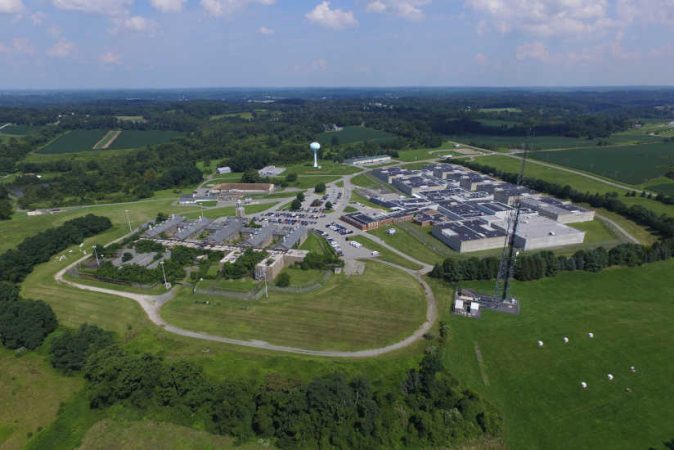
    The chief warden of the George W. Hill Correctional Facility in Delaware County has resigned after less than six months on the job, according to a statement released by the county government.

    Willie Bonds’ decision was motivated by family considerations and the opportunity to pursue other interests, according to the Delco officials. Bonds will continue to serve as the chief of the facility until an interim warden is appointed.

    The George W. Hill facility has been mired by scandal in recent years. The last chief to run the facility was ousted following a no-confidence vote by the labor union representing the prison’s guards. In the last two years, guards have been charged with smuggling fentanyl and K2 into the facility; inmates were accidentally released; and an inmate was killed by his cellmate, who was considered high-risk and supposed to be placed alone.

    Bonds was appointed to his position as chief of the facility in February. Last year, he served as the interim warden of the facility and he has worked in the facility since 2024, starting as deputy warden of security and training. He began his career in the New Jersey Department of Corrections in 1998.

    During his time as deputy warden, a federal lawsuit alleged that county officials fired guards without due process.

    After the Pennsylvania Prison Society conducted a walk-through of the facility and interviewed inmates in 2025, Bonds responded to the facility’s detailed shortcomings in a letter. The nonprofit advocacy group characterized his response, which added details about the prison’s conditions, as candid.

    The group said in a report that the facility had made significant improvements with a $50 million commitment from the county in 2025, but noted that the prison did not have enough staff for the number of inmates in the facility. At the time that the report was researched, there were 1,125 inmates, according to a response sent by Bonds. The total staff number was not reported.

    The Prison Society‘s report noted “the fundamentally unsafe conditions that Bonds now has the responsibility for fixing — conditions will not be fixed with building repairs alone but will require major shifts in organizational culture.”

    Delaware County hopes to continue efforts to improve the facility, the county’s statement said.

  • SEPTA approved contracts with the transit police union and other workers

    SEPTA approved contracts with the transit police union and other workers

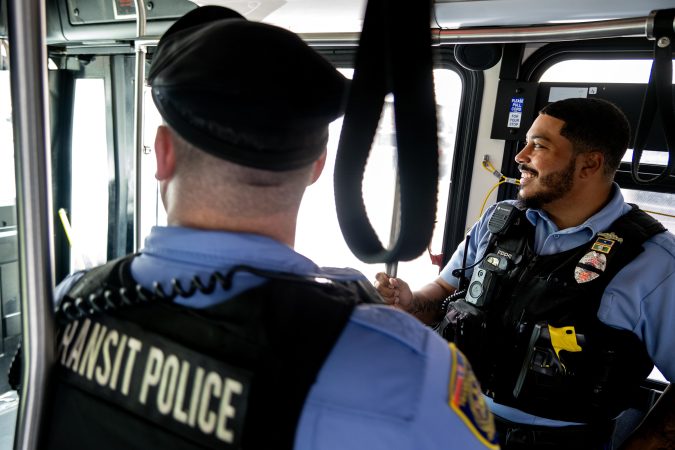
    The SEPTA board on Thursday approved new labor contracts with the Fraternal Order of Transit Police Lodge 109 and three unions representing workers in the Regional Rail Division.

    Transit police officers had threatened earlier this month to walk off the job while Philadelphia was hosting World Cup soccer matches, Major League Baseball’s All-Star week and events celebrating the 250th birthday of the U.S.

    Lodge 109 and SEPTA agreed on a three-year deal that gives the officers a 12% raise over the life of the contract, as well as a $2,500 signing bonus, longevity bonuses, and an increase in differential pay for evening and overnight shifts.

    Union members ratified the contract last week.

    Omari Bervine, president of Lodge 109, said the agreement was “fair to the hardworking men and women of the transit police” and thanked SEPTA General Manager Scott A. Sauer for helping restart negotiations.

    The transit police union represents 203 patrol officers who protect the regional agency’s transit and commuter rail networks, trolleys, buses and property, including stations and transportation hubs.

    “Historic reductions in crime over the last two years have come amid an unprecedented effort to bolster our transit police,” Sauer said at the board meeting. “Staffing is at its highest level in more than a decade.”

    Fifteen new officers joined the force this month after graduating from the police academy, and 18 cadets are scheduled to start their studies next month, SEPTA says.

    Officers had been working without a contract since March 31.

    The new agreement is retroactive to April 1 and runs through March 31, 2029.

    Lodge 109 members will receive a 5% increase in their hourly rates Sunday, with 3½% raises in June of each of the following two years. Longevity bonuses will range from $2,901 for officers with three years of experience, up to $9,552 for those who have 25 years or more of service.

    SEPTA’s board also approved new two-year contracts with the Brotherhood of Railway Carmen, International Association of Machinists and Aerospace Workers that together represent about 145 rail vehicle mechanics, welders, millwrights and maintenance custodians working on Regional Rail.

    The board also ratified a new contract with the Transportation Communications Union, which represents 76 Regional Rail clerical staff.

    Each deal with the three Regional Rail unions is for two years and gives workers raises totaling 7%, the same as the contract reached last year with the Transport Workers Union Local 234, SEPTA’s largest.

  • Measles detected in two more counties in Pennsylvania as health department recommends early vaccination

    Pennsylvania health officials have now detected measles cases in York and Northumberland Counties as cases in Lancaster County, the center of an ongoing outbreak, continued to rise.

    And the state health department is now recommending early measles vaccinations for infants beginning at 6 months in affected areas in an effort to protect them against the spread of the highly contagious disease, which is particularly risky for young children. The same precautions should be taken by families with infants traveling to these areas.

    Six Pennsylvania counties have now seen measles cases since an outbreak was first confirmed in Lebanon County in April. In all, the state has reported 81 measles cases across eight counties in 2026, more than five times the cases reported in 2025.

    (function() {
    var l2 = function() {
    new pym.Parent(‘HE_MEASLES.html’,
    ‘https://media.inquirer.com/storage/inquirer/projects/innovation/arcgis_iframe/HE_MEASLES.html’);
    };
    if (typeof(pym) === ‘undefined’) {
    var h = document.getElementsByTagName(‘head’)[0],
    s = document.createElement(‘script’);
    s.type = ‘text/javascript’;
    s.src = ‘https://pym.nprapps.org/pym.v1.min.js’;
    s.onload = l2;
    h.appendChild(s);
    } else {
    l2();
    }
    })();

    State health officials said it was too early to tell how the latest cases in York and Northumberland Counties are connected to others in the region, but that contact tracing investigations are continuing. All cases were among people who had not received at least two doses of the measles, mumps, and rubella (MMR) or whose vaccination status was unclear.

    As of Wednesday, six cases had been confirmed in Northumberland County, to the north of Dauphin County, and one case had been detected in York County, along Lancaster’s western border.

    Lebanon County has reported 20 cases and Dauphin and Berks Counties have reported two cases each.

    Lancaster County has seen 38 cases of measles since late April, with health officials confirming seven cases in the last two weeks. The area was at the center of a prior measles outbreak in January, when state health officials confirmed eight cases in Lancaster County and an additional four between Chester and Montgomery Counties.

    Vaccination rates among kindergarteners have decreased across Pennsylvania in recent years, and some counties affected in the current outbreak have particularly low rates, including Lancaster, where about 88.5% of kindergarten students are vaccinated. Health experts say that 95% of a community must be vaccinated to prevent the spread of the disease.

    A map showing vaccination rates in kindergarteners for the 2024-2025 school year. Counties in yellow have vaccination rates between 95% and 90%. Counties in red have vaccination rates below 90%. To halt the spread of measles, at least 95% of a community must be vaccinated against the disease.John Duchneskie

    Health officials have been conducting contact tracing to detect as many cases as possible. In the current outbreak, they have twice warned Lancaster residents that they could have been exposed to measles.

    Shoppers and employees at a local Kohl’s were potentially exposed to the virus over four days after a staffer tested positive in late May, LancasterOnline reported. And a person with measles visited the Lancaster County Courthouse on June 3.

    But doctors in Lancaster County say they fear some measles cases are going unreported, either because patients don’t understand the importance of tracking measles cases or because they fear repercussions.

    No cases have been confirmed in the Philadelphia region during this outbreak. But Delaware County health officials said last week that they had detected measles in two wastewater samples, indicating that someone with measles had used a bathroom connected to the county’s public water supply. It was unclear if that person lived in the county or was passing through.

    Early vaccination recommended

    On Wednesday, a statewide health alert urged physicians to accelerate vaccination schedules to protect children against measles. Officials had said they were considering the measure earlier this month as cases continued to rise.

    Measles can infect nine in 10 unvaccinated people who are exposed to it, and can linger in the air for up to two hours and incubate in patients for three weeks. The disease typically presents with a fever and a rash but can cause brain inflammation and pneumonia in serious cases.

    Typically, children receive the first of two MMR vaccines at 1 year old, then a second between 4 and 6 years old.

    But children as young as 6 months can receive an additional “dose zero” to protect them from the disease amid an outbreak. In its alert, the state health department said parents should vaccinate infants between 6 and 11 months with the “dose zero” if they live in affected areas or if they’re planning to travel there.

    Those children should then receive additional MMR doses at 12 to 15 months and 4 to 6 years.

    This “dose zero” is less effective than doses given at 1 year old, officials cautioned. But it’s 58% effective against measles when given at 6 to 8 months, and 83% effective when administered at 9 to 11 months.

    “Early MMR vaccination is safe and provides modest protection when measles is spreading,” officials wrote in the alert.

    Children older than 12 months who haven’t been vaccinated should get an MMR dose immediately, and a second 28 days later, health officials said. Unvaccinated adults, or those without evidence of immunity, should also get two MMR doses.

    And anyone who has received one dose of the MMR vaccine in the past should get a second at least 28 days after their first, officials said.

    Usually, children who received a first dose at around 12 months wait to get their second dose until they’re 4 to 6 years old. But in an outbreak situation, those children should get their second doses early — at least 28 days after their first shot.

    Adults born before 1957 are typically considered immune, but healthcare workers in that age group who don’t have lab evidence of immunity or prior infection should consider getting vaccinated, state officials said.

    Adults who received an inactivated measles vaccine between 1963 and 1967 are considered unvaccinated during an outbreak, and should also get two doses of the current MMR vaccine.

    Pregnant people, people with severely weakened immune systems, and people who have a history of experiencing severe allergic reactions, like anaphylaxis, to a vaccine ingredient or to a previous dose of MMR cannot receive the vaccine.

  • Three injured in a fire at Delta’s Monroe Energy refinery in Delco

    Three injured in a fire at Delta’s Monroe Energy refinery in Delco

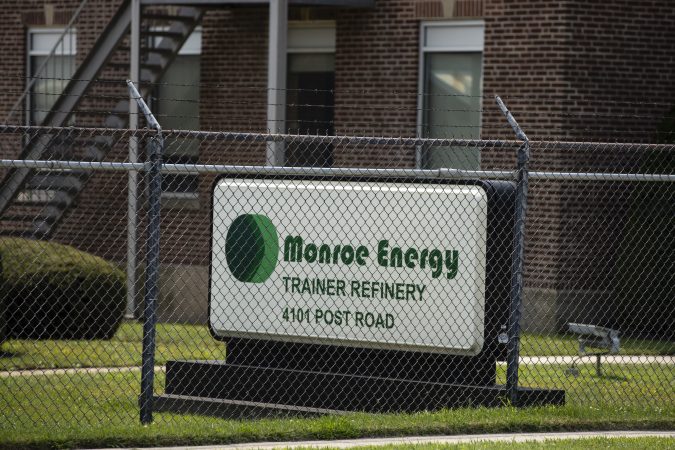
    A fire involving a process unit pump, a device that moves fluids, broke out Thursday morning inside the Monroe Energy refinery in Trainer, Delaware County, according to the company.

    At least one person suffered burn injuries in the fire, which began about 11:30 a.m., county spokesperson Michael Connolly said. The individual had to be airlifted to Thomas Jefferson University Hospital; their condition remained unclear. Monroe later confirmed it was an employee who suffered non-life-threatening injuries that were treated off-site. The county later said two other people experienced heat-stress-related injuries, which were not expected to be critical.

    “Our understanding is that it’s contained to a small location and is under control,” Connolly said.

    Local police and fire could not immediately be reached for details regarding the blaze and how many people were in the facility when the fire broke out, but the large black plumes rising from the refinery raised alarm among area residents.

    “As of now all we know is that there is a fire at the refinery all personnel are working on locating the fire and extinguishing it!!” read a Facebook post by the Trainer Borough Police Department from around noon.

    Amid the chaos, at least one individual sought guidance on how to reach out to someone working inside in the comments of the post.

    Just last week, the refinery stopped its two 100,000-barrels-per-day crude-oil distilleries because of a leak, though a Delta Air Lines spokesperson — the airline owns the refinery and uses much of it to produce jet fuel — said there was no danger to the public.

    Connolly said it was unclear if the leak was connected to the fire, directing questions to Monroe.

    The company, which employs about 500 workers, did not say whether the leak played a role.

    “Our on-site Fire Response Team was immediately activated, deploying multiple emergency response resources, including fire and foam tanker vehicles, mobile deluge guns, and stationary high flow firewater suppression systems,” a company statement said.

    The company said air monitoring showed there was no current risk to the community.

    Police said air quality was at a “nuisance level” and it was recommended for people up to half a mile from the refinery to shelter in place. The county lifted the order at 3:15 p.m.

    “The specific cause of the incident will be investigated,” the company said.

  • Philly area set to receive record-breaking $322M in state and federal money for trails

    Philly area set to receive record-breaking $322M in state and federal money for trails

    Philadelphia and its surrounding counties are set for what could be a record-breaking $322 million in federal and state funding to go toward building new trails segments, say trail advocates.

    Projects in line for funding include the much-anticipated Spring Garden Connector in Philly. And it would include the Newtown Rail, Chester Creek, and Parkside-Wynnefield-Cynwyd trails in the suburban counties.

    The money is part of a larger $8.2 billion pool of transportation funding updated through the federal Transportation Improvement Program (TIP) for 2027 and spread over four years.

    “We consider this to be potentially record breaking,” said Patrick Monahan, vice chair of the Circuit Trails Coalition in Pennsylvania. “It’s proof that the trails are being treated as essential infrastructure, making it safer and easier to walk and bike in the region.”

    In 2024, Pennsylvania received $200 million for trails under TIP.

    Pennsylvania gets its TIP plan updated every two years and the majority of money goes to highways, bus and rail systems, trolleys, and ferries. It is part of an agreed-upon list of priority transportation projects. That list includes 344 projects.

    In all, this year’s proposed $322 million in funding for trails would advance 27 bike and pedestrian projects across Philadelphia, Bucks, Chester, Delaware, and Montgomery Counties.

    The Delaware Valley Regional Planning Commission (DVRPC) is set to vote on approving the allocations in July.

    The trails, either begun or being planned, are part of the Circuit Trails, a network of hundreds of miles of multiuse trails throughout the Philadelphia region including southern New Jersey, which updates its TIP funding in alternate years.

    A sample of the trail projects in line for funding include:

    • $11 million for the second phase to extend the Schuylkill Banks trail in Philadelphia south from near 61st Street to Passyunk Avenue that would include a new park at the base of the Passyunk Avenue Bridge.
    • $58.5 million for Philadelphia’s Spring Garden Connector project that would link trail systems along the Delaware and Schuylkill rivers and make Spring Garden Street safer for cyclists and pedestrians.
    • $50 million to improve safety for roadway users, including pedestrians and cyclists, on PA 291 from Irving Street to Ridley Creek. The project includes building a multiuse side path that will be designated as part of the East Coast Greenway, a trail system linking Maine to Florida.
    • $8.5 million for the Chester Valley Trail, a multiuse trail along the alignment of the former Philadelphia and Thorndale Branch, a former freight train route, including renovation of the Whitford Bridge and Downingtown Trestle Bridge for bicycle and pedestrian use.
    • $10 million to develop a segment in Whitemarsh Township, Montgomery County, that would run from the existing Wissahickon Trail in Fort Washington State Park to the existing Cross County Trail near SEPTA’s Fort Washington Station.