Category: News

  • Trump keeps losing in court. Here’s how he gets what he wants anyway.

    Trump keeps losing in court. Here’s how he gets what he wants anyway.

    Judges have ruled against President Donald Trump at an unprecedented clip during his second term, but time and again the administration has found ways to do what he wants regardless.

    The Supreme Court killed a suit against Trump’s White House ballroom on a technicality, though Chief Justice John G. Roberts Jr. wrote that the project was “likely unlawful.” Breakneck construction has ensured that the project should be done before any court can stop it.

    The high court struck down Trump’s sweeping tariffs, but he sidestepped that narrow ruling by using other legal authorities to reconstitute his import levies on about 60 countries.

    Government lawyers said they would notify a federal judge before starting work on Trump’s project to turn D.C.’s East Potomac Golf Links into a championship course, then abruptly gave notice and bulldozed 400 trees on a holiday weekend. The judge said she had “trusted you all not to do precisely what you have done.”

    In these cases and many others, the administration has employed a kind of legal jujitsu: using the courts’ cautious pace, preference for narrow rulings, and traditional presumption that the executive branch is being forthright to gain advantage.

    The playbook could be a preview of how the Trump administration may try to stymie oversight and investigations promised by the new Democratic majority in Congress that takes over in January.

    Legal experts said the administration’s aggressive legal tactics have blunted the impact of the courts’ traditional role as a check on the executive branch and done damage to the relationship between judges and the Justice Department that could outlive Trump’s tenure.

    The sheer scope of the administration’s efforts to outmaneuver the courts has gone beyond any previous administration’s efforts — and it has knocked judges off-balance, said David Super, a Georgetown University law professor who has focused on Trump’s interaction with the courts.

    “This administration doesn’t respect some orders that are not legally binding and some orders that are,” Super said. “They just rush ahead. Judges who are accustomed to the Justice Department bending over backwards to be compliant are surprised and shocked.”

    The Justice Department did not respond to a request for comment, but the administration has repeatedly accused the lower courts of bias and has tried to remove judges from cases. It points to its winning record before the Supreme Court as proof of its contention.

    The White House said in a statement that the administration is abiding by court orders and going through proper legal reviews for its projects. It said Trump is acting quickly to fulfill promises to voters.

    “President Trump is moving at lightning speed because we don’t have time to waste in our mission to make America greater than ever before,” said Davis Ingle, a White House spokesperson.

    ‘Trump speed’

    Trump issued more executive orders in the first 100 days back in office than any other president. The White House has a term for it: “Trump speed.”

    The administration has adopted an analogous strategy in the courts, asserting a sweeping vision of executive power and speeding forward with construction projects, deportations, and agency cuts as legal challenges have played out at what can often be a plodding pace.

    In the case of the ballroom project, the administration demolished the East Wing of the White House over three days in October 2025 without any public notice. Court challenges soon followed.

    While the cases wound through the courts, a crew of 250 worked 20 hours a day, seven days a week on the project. By the time a lawsuit reached the Supreme Court in August, Solicitor General D. John Sauer told the justices the project was 65% complete — and too far along to stop.

    “That line has long since been crossed,” Sauer wrote in a filing.

    The administration has used the same tactic elsewhere. Trump officials plunged forward with a controversial paint job on the Reflecting Pool this summer, allowing work to be completed before a judge could rule on the legality of the project.

    The administration had planned a similarly aggressive timeline for Trump’s proposed 250-foot triumphal arch: launching as soon as the project got approval from a federal commission and continuing with near-round-the-clock work.

    But a judge halted that project soon after amid lawsuits brought by veterans and local government officials.

    The case that most crystalized the administration’s approach came in the opening weeks of Trump’s second term, when Justice Department officials allowed planes carrying Venezuelan deportees to continue to a prison in El Salvador despite a judge’s order to halt them, said Leah Litman, a University of Michigan law professor who has studied the administration’s compliance with court orders.

    A whistleblower later claimed that a top Justice Department official, Emil Bove, told government lawyers that they “would need to consider telling the courts ‘f— you’” and ignore the order as the episode unfolded. Bove denies the account. He was confirmed months later as an appeals court judge.

    Supreme Court Justice Ketanji Brown Jackson, one of the court’s three liberals, has described the administration’s legal strategy as a “catch-me-if-you-can approach.”

    Litman said the administration appears to be using a fait-accompli strategy to hamstring courts — rushing executive actions until they are so far along that it becomes difficult or impossible for judges to stop them.

    “There are projects that are just way more difficult to unwind once the bell has been rung,” Litman said. “The East Wing is gone. Is a court really going to say, like, ‘Rebuild it’?”

    Evolving legal rationale

    When the Supreme Court in February struck down Trump’s unprecedented 10% tariffs on nearly every trading partner, along with higher levies on Mexico, Canada, and China, opponents hailed the ruling as a significant check on a president overstepping his authority.

    But just months later, Trump has rebuilt most of his trade wall. In July, he announced tariffs of 10% to 12% on more than 60 countries that account for 99% of imported goods. He used a different legal authority than the one the high court blocked.

    Many other presidents have tried to reformulate policies curtailed by courts, but legal experts said the way Trump has tried to leverage the law is bolder and more sweeping.

    Trump had initially enacted tariffs under a law known as the International Emergency Economic Powers Act that is commonly used to impose sanctions.

    After that was struck down, he reimposed the levies under a 1974 statute that allows the president to enact tariffs on countries using forced labor to produce goods exported to the United States.

    “The failure of our most important trading partners to address the importation of goods made with forced labor is unacceptable,” Jamieson Greer, the president’s trade chief, said in imposing the tariffs.

    Critics and groups that have sued over the levies called the newer legal rationale a pretext for reimposing the tariffs struck down by the Supreme Court, noting that the administration had previously cut $500 million for programs that combat international forced labor and trafficking.

    Many of the countries targeted for tariffs have good labor records, critics said, while nations with poor performances were not targeted.

    “If he was serious, he would not be applying the same tariff rate to China, one of the worst forced labor abusers in the world, as he does to countries like Australia,” Rep. Linda Sánchez (D., Calif.) wrote on social media.

    Super said that even if legal challenges against Trump’s new tariffs are ultimately successful, any rulings won’t come for months — or even longer — and the president could try to remake them under yet another authority.

    “He’s strung many of the courts out so that he gets his way even without a court ruling in his favor,” Super said.

    In a similar vein, Trump has reworked his attempted ban on birthright citizenship.

    The administration has often performed an end run around individual rulings, as well.

    A federal judge barred the administration from issuing a blanket freeze on billions in foreign aid in a pair of cases early in Trump’s second term. The judge also said officials could still end contracts for overseas work on an individual basis.

    Within weeks, administration officials told the judge Secretary of State Marco Rubio personally had reviewed more than 13,000 contracts in about 40 days and decided to cancel the vast majority of them — a rate of about 340 a day. The cancellations mirrored the blanket freeze.

    The plaintiffs questioned how the agency could carry out such a massive review so quickly given that most of its employees had been laid off or furloughed by the Department of Government Efficiency, a Trump administration initiative that restructured wide swaths of the federal government last year. They said Rubio’s review happened too fast “to be plausible.”

    The court raised questions about the contract terminations but ultimately allowed them to go forward.

    In some other cases, the administration has invoked national security concerns to justify projects it initially said were necessary on other grounds.

    Trump originally touted the White House ballroom as an event space, but as a court challenge dragged on, lawyers increasingly linked the construction to a military complex that was being built beneath it.

    After Trump said initially that the triumphal arch would be a tourist attraction, he more recently claimed it would house drones, snipers, and ammunition at the military’s request. A judge called that rationale “belated and unsupported.”

    The administration has also cited concerns about national security in cases that seem only loosely tied to it, including a bid to block media outlets from the White House and an effort to halt offshore wind power projects.

    Rachel Heron, who worked for a decade as an attorney in the Justice Department, said there is a legal reason the administration keeps returning to national security in court cases.

    “The courts have historically given great latitude to the executive branch telling them that something needs to happen for national security,” Heron said. “They’re in danger of becoming the administration that cried national security.”

    A fraying trust

    U.S. District Judge Ana Reyes reached her breaking point with Trump officials in October over a straightforward question: Did the federal government have plans to turn a public golf course in D.C. into a championship course?

    Trump had posted on social media that the administration had “developed a plan” with a well-known course architect, but government lawyers insisted in hearings there was no final plan. Golfers and preservationists had challenged the project in courts.

    Reyes was incredulous.

    “Rarely, if ever, has the United States Department of Justice urged a federal court not to believe the sitting President,” Reyes wrote in an opinion blocking any work on the project. “And yet, here we are.”

    The case has become one of the clearest windows yet into the fraying trust between judges and the executive branch.

    Federal courts have long worked on the assumption that the president and other officials are being honest and carrying out their duties in good faith unless there is reason to think otherwise, a concept called the “presumption of regularity.”

    Reyes seemed to apply that principle when the golf course case began.

    The plaintiffs asked for an injunction against the project, but Reyes said in court that she declined based on government representations that the renovation was still at a conceptual phase and that the administration would give notice of any work.

    Then, at 4:55 p.m. on the Friday before the long Columbus Day weekend in October, the Trump administration filed notice that it planned to begin removing trees at the course as part of long-deferred routine maintenance.

    At hearings that followed, Reyes said she was furious and suggested it was implausible that the tree-clearing wasn’t related to the course renovation.

    Trump responded on social media, calling Reyes a “crazed lunatic.” Government lawyers pushed for her recusal over her comments critical of their actions. Reyes has opened a still-ongoing inquiry into whether the administration misled the court.

    Skye Perryman, CEO and president of Democracy Forward, a liberal group that has taken legal action against many Trump policies, said the government’s misdirection and obfuscation in the case are part of a pattern she has seen in the more than 200 lawsuits filed by her organization.

    “It is a highly troubling and unprecedented threat to the rule of law, far more than in the first Trump administration,” said Perryman, whose group is representing plaintiffs in the golf course case. “We have seen it play out across a number of our cases where we secure court orders and the administration skirts the orders or tries to weaken or undermine them in some way.”

    Legalistic noncompliance

    Litman and fellow University of Michigan law professor Daniel T. Deacon have coined a term for the Trump administration’s approach to the courts: legalistic noncompliance.

    The idea is that government attorneys are using the language of the law and compliance to obscure what is actually resistance to judges.

    “They are making specious arguments about why they are complying with lower-court orders when, in fact, they are not,” Litman said. “It doesn’t allow courts or public to say, ‘Aha, they are defying court orders.’”

    Heron, the former Justice Department attorney, said the department’s stance toward the courts is “night and day” from previous practice.

    Stacey Young, a senior attorney who spent 18 years at the Justice Department before leaving in January 2025, echoed that theme.

    She said the guiding ethos of the department for decades was transparency and compliance with the courts, recognizing that the government wields massive powers and represents the people. That principle has badly eroded, said Young, who founded a group called Justice Connection to provide legal support and other services to current and former Justice Department employees, and to document breakdowns in the rule of law.

    “It’s a new attitude … that is unrecognizable to anyone who worked there before this administration,” Young said. “I think it reflects a general attitude toward the courts — they are often seen just as an impediment to what the government wants to do.”

  • Judge blocks Trump administration’s effort to transform homelessness policy

    Judge blocks Trump administration’s effort to transform homelessness policy

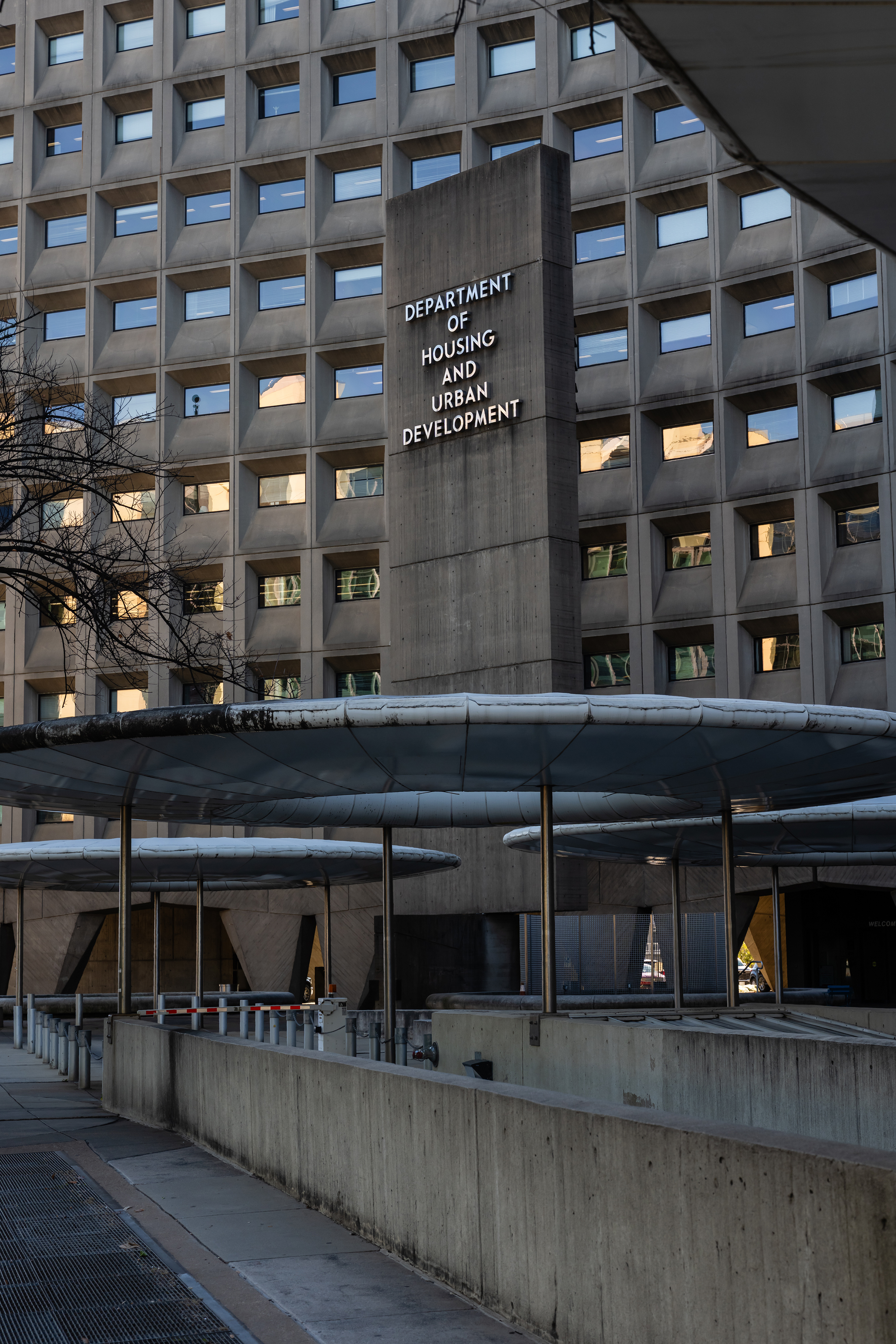
    WASHINGTON — The Trump administration’s battle to transform homelessness policy suffered a new setback Friday when a federal judge blocked its latest effort to shift funding from housing aid to programs that require treatment for mental health or addiction.

    The ruling came shortly before the administration was set to announce thousands of grants to nonprofit groups, and barred it from steering much of the annual funding to the treatment-centered efforts it favors. Since the treatment money would have come from existing housing programs, critics said large numbers of formerly homeless people risked being evicted.

    The ruling is the third time that Mary S. McElroy, a federal judge in Rhode Island, has blocked the government’s efforts to rewrite grantmaking rules that control billions of dollars in annual aid. In reserving about a third of the funding, $1.3 billion, for treatment programs, the administration “exceeded its statutory authority,” she wrote.

    With current funding about to expire and service providers awaiting decisions, McElroy gave the Department of Housing and Urban Development just five days to submit a new plan for disbursing the aid.

    Ann Oliva, the CEO of the National Alliance to End Homelessness, one of the groups that sued the administration, estimated that 97,000 formerly homeless people could have returned to the streets if the housing money had been redirected to treatment programs.

    “On behalf of communities across the nation working to address homelessness, we applaud this decision,” she said. “The core of this fight is about the effectiveness of permanent supportive housing. Safe and affordable housing ends people’s homelessness.”

    HUD Secretary Scott Turner warned in a statement that the ruling “disrupts $4 billion for our most vulnerable, just days before funding awards were set to be made.” While he added that “our ‘Treatment First’ mission will not be deterred,” he did not say if the department would appeal.

    The ruling is part of a battle over a policy known as Housing First, which provides homeless people long-term rental subsidies. It also offers them treatment for addiction or mental illness, without requiring them to accept it. The approach, which emerged several decades ago, once enjoyed bipartisan support. Studies show it generally succeeds in getting people off the street, though there is little consistent evidence that it improves mental or physical health. Critics say the housing is expensive and fails to address what they call the “root causes” of homelessness, like addiction or psychiatric disorders. They hold it responsible for the long-term growth in homelessness.

    While the Trump administration has tried to create treatment mandates, McElroy has repeatedly ruled that its efforts violate statutory intent or procedural requirements. Since Congress created the program to provide housing, plaintiffs have argued, HUD lacks the authority to remake it around treatment efforts.

    In addition to blocking the effort to move $1.3 billion into treatment, McElroy curtailed other changes that HUD had sought for the grantmaking process.

    Her order barred the department from punishing groups that participate in so-called harm reduction efforts, like safe injection sites. It also barred the agency from promoting “self-sufficiency” by penalizing programs that help people get Medicaid, food stamps, and Supplemental Security Income.

    Devon Kurtz of the conservative Cicero Institute, which opposes Housing First, denounced the ruling as “a brazenly political decision” that curtailed legitimate efforts to promote goals like cooperating with law enforcement and promoting self-reliance.

    If the ruling stood, he said, it would constitute a “major setback” to the administration’s efforts to revamp homelessness policy. “I pray they appeal,” he said.

    For front-line groups working with homeless people, the uncertainty over the funding rules has made a hard task harder.

    “It’s incredibly disruptive,” said Vivian Wan, the CEO of Abode Services, a California housing provider in eight Bay Area counties.

    If HUD succeeded in shifting the money into treatment programs, about 240 apartments the group operates for homeless people would have lost their funding, she said, potentially displacing many of the residents.

    “It’s painful to wait for the courts — but not waiting for the courts would be far more harmful to the people we serve,” she said.

    This article originally appeared in the New York Times.

  • COP31 negotiations break down as countries fail to agree on climate deal

    COP31 negotiations break down as countries fail to agree on climate deal

    The United Nations climate summit in Turkey broke down Sunday, after countries failed to reach consensus for a proposed agreement on tackling global warming.

    The negotiations’ total collapse — the first in decades — underscored the deep rift between oil producers and other nations, who had pressed for a more meaningful deal as evidence of climate-fueled damages continue to mount.

    “I am deeply disappointed that COP31 has ended without consensus on an overarching outcome,” U.N. Secretary General António Guterres said at the 31st UN Climate Change Conference, known as COP31. “I share the very profound frustration of all those who expected governments to rise to the moment the climate crisis demands.”

    The draft text of the agreement excluded any explicit reference to fossil fuels, the primary driver of human-caused climate change. The proposal instead referred indirectly to an agreement reached at COP28 in Dubai, which committed countries to a transition away from fossil fuels, without repeating that pledge.

    Saudi Arabia and other major oil and gas producers pushed back hardest against having any fossil fuel language, and the United States, which typically works to broker the consensus required for any agreement, declined to send a delegation to the talks this year.

    The European Union formally objected to the draft, arguing that it “falls well short” of what is needed to address climate change. Speaking on behalf of the E.U., Irish Climate Minister Darragh O’Brien said the bloc was “profoundly disappointed” with the draft text circulated early Sunday and would not endorse an agreement that “does not even mention fossil fuels.”

    “We will not accept negotiating backward in time, and we will not accept a COP that greenwashes fossil fuel,” O’Brien told the conference.

    The conference caps off a year that could be the warmest on record, nearing the previous hottest in 2024, with heat waves across the northern hemisphere killing thousands and fueling wildfires.

    Several other countries also rejected the text, including Panama and the Marshall Islands, a central Pacific nation at high risk from the effects of climate change.

    “We came here expecting the world to deliver a comprehensive and urgent response on reducing emissions, on protecting our people, and on providing the finance to do this. We have been let down on all sides,” the delegate for the Marshall Islands said, adding: “We will not compromise our future to benefit fossil fuel interests. We will not accept an outcome that undermines our security and threatens our future.”

    Negotiations among the nearly 200 participating countries ran into their second day of overtime, making the climate summit the longest in history. It surpassed COP25, held in Madrid in 2019, which ran more than 40 hours beyond its scheduled conclusion.

    Petro-states argued that individual countries should decide for themselves how to meet their energy needs, and they pushed heavily for carbon-capture technologies instead of a collective commitment to phase out.

    Russian climate envoy Ruslan Edelgeriyev told reporters earlier this month that with the energy market already under “excessive pressure” from “the well-known strait [issue] and other factors,” a reference to the U.S. blockade of the Strait of Hormuz during its war with Iran, talk of such a phaseout is “absolutely inappropriate, because it will additionally affect the price.”

    Russia and Saudi Arabia have repeatedly pushed to weaken climate commitments at the U.N. talks, often with success. At COP28 in Dubai, countries led by Russia, the world’s second-biggest gas producer, won a paragraph recognizing that “transitional fuels” can play a role in the energy transition. At COP30 in Brazil, Russia and Saudi Arabia opposed creating a process or timetable to move away from fossil fuels, and the final agreement did not mention fossil fuels at all.

    The summit’s collapse came as negotiators acknowledged that the world will miss a central goal from the 2015 Paris agreement on climate change: Holding global temperature rise to 1.5 degrees Celsius (2.7 degrees Fahrenheit) above preindustrial levels. The world has already warmed 1.3 degrees C, leading to more intense heat and storms and a more urgent emphasis on adapting to the extremes that can no longer be avoided.

    But little progress was made in negotiations to increase funding for climate adaptation this year, as debate broke down over familiar lines. Developing countries demanded more funding from rich nations to confront climate change, in exchange for agreeing to more ambitious goals.

    Environmental groups tracking the two-week conference wrote to the COP31 presidents lamenting that the meeting was on track to be “one of the most disappointing COPs” ever because it lacked determination to address the worsening climate crisis.

    “The Global South is being abandoned,” said the letter, cosigned by 100 environmental organizations. “Developed countries have blocked progress across the negotiations and arrived with no new finance commitments.”

    The draft “is a gift to the fossil fuel industry,” it added. “The major cause of the climate crisis — coal, oil, and gas — fails to rate a mention.”

    Li Shuo, a Washington-based climate analyst at the Asia Society Policy Institute, said several geopolitical and economic factors hampered the talks, including President Donald Trump’s tariffs, the Ukraine war’s impact on Europe, and the United States’ lack of participation in the talks after Trump withdrew from the U.N. climate treaty this year.

    “The big picture storyline here is the tremendous amount of challenges that the international climate agenda is facing.” he said.

    With the United States, the world’s richest nation, and its financial muscle absent from the talks, Shuo added, countries could not reach a deal to increase funding commitments. With the E.U. also tightening its belt and weakening its climate policies, developing nations failed to secure an agreement to triple adaptation financing to $120 billion by 2035. China, which sees itself as a developing nation despite being the world’s second-largest economy, has not filled the financial void left by the U.S.

    As talks ran into overtime, a coalition led by France and Panama was fighting to restore the language on fossil fuels.

    The most recent draft proposed increasing electrification of the global economy to 35% by 2035. But Sunday’s text removed explicit references to tripling global renewable-energy capacity and doubling the rate of energy-efficiency improvements by 2030. Instead, it called more broadly for efforts to “increase clean energy,” improve energy efficiency, and deploy other low-emission technologies.

    That shift left the commitment less specific about how countries should achieve the target. The draft did not require the additional electricity to come from renewable sources such as wind and solar, leaving the door open to electrification powered by coal and natural gas.

    Sue Biniaz, former deputy climate envoy under President Joe Biden, said that it no longer makes sense to judge the summit’s success based solely on the outcome of talks. The focus has shifted to the governments and companies that come to the conference to announce actions on climate change.

    “Now, particularly with the U.S. out, the action side is compensating for what is lacking on the consensus side,” Biniaz said.

    For example, the Asian Infrastructure Investment Bank agreed to provide a record $1.6 billion to host country Turkey to pursue climate policies.

    More than 150 countries, 37 cities, and 250 businesses worldwide announced a package of actions they are taking voluntarily to boost electrification rates, amounting to billions of dollars in investments.

    “What we are seeing is a pivot to implementation,” said Nat Keohane, president of the Center for Climate and Energy Solutions, an environmental nonprofit. “The COP has an important role, but it’s far less about the details of the text than about how the multilateral framework can drive change on the ground.”

    The lack of an adopted agreement at COP31 leaves the focus on whether countries and businesses can translate these voluntary announcements into concrete action, particularly as the world falls further behind on its climate targets.

    Next year’s summit is set to be held in Addis Ababa, Ethiopia, with expectations of another low-key year, probably without the United States present.

    Chinese delegates told negotiators at the summit that their country would not seek to host the 2028 climate summit, a critical moment for setting the next set of climate goals. That conference will be held somewhere in Asia, with no countries expressing formal interest so far, and will take place just after the next U.S. presidential election.

  • Trump moves to restrict congressional oversight of contractors

    Trump moves to restrict congressional oversight of contractors

    WASHINGTON — President Donald Trump has directed federal contractors to seek permission from the White House before complying with congressional requests for information, the latest effort by the administration to blunt Democratic investigative plans next year.

    In an executive order issued Friday, Trump ordered contractors and subcontractors to coordinate responses to congressional queries with the White House, and to withhold information that the administration deems confidential or protected under “executive privilege.” Firms that fail to comply could have their contracts suspended or terminated, according to the order.

    “The ability of the Congress to seek executive branch information is limited,” the order states. “It cannot seek information from executive branch departments and agencies, employees, or federal contractors without a valid legislative purpose that does not intrude on core executive functions.”

    The move comes as Democrats, who will take control of the House and Senate next year, plan to cast a wide net in investigating everything from the administration’s policies to any conflicts of interest it has had. This past week, Rep. Robert Garcia of California, the top Democrat on the Oversight and Government Reform Committee, sent a dozen notices to members of Trump’s family, Vice President JD Vance, and other current and former administration officials asking them to preserve documents on a host of issues.

    Democrats have made clear that they intend to investigate no-bid contracts, and how alleged pay-to-play schemes might have influenced contracting decisions.

    Rep. Jamie Raskin (D., Md.), who is expected to lead the Judiciary Committee, called the order “blatantly unlawful.”

    And Sen. Maggie Hassan (D., N.H.), who is poised to be the chair of the Homeland Security Committee, said in her own statement that “every federal contractor should know that this executive order does not override their obligation to comply with congressional requests for information or subpoenas.”

    She added: “Congress will get the information that it needs, and, if necessary, we will use every authority available to us to get it.”

    The White House is mounting a combative response, seeking on several fronts to shield top officials, donors, and members of Trump’s family.

    Will Scharf, the White House counsel, sent a letter to Democrats on congressional committees saying that the White House would not respond to oversight requests until they took control of Congress in January. The White House has also maintained that congressional investigations “may cross the line into blatant criminality,” though it declined to say how. Legal experts have called the assessment dubious.

    Trump, who has made retribution against his political enemies a priority of his second term, wrote in a social media post earlier this month that Democrats were engaging in “weaponization and lawfare at another level.” He added that “threatening letters have been sent to many people, all innocent, from Democrat political leaders,” and that he was directing the Justice Department to investigate the letters as “a criminal act.”

    A fact sheet released by the White House outlined the new executive order’s goal as “protecting executive privileges from congressional overreach.” It accused some congressional leaders of “harassing private companies that contract with the federal government,” in their efforts to intrude on “executive prerogatives.”

    “The executive branch must be able to work closely with its employees and contractors on sensitive matters without concern that confidential information may be released to unauthorized third parties, even by federal contractors from a congressional request,” the fact sheet read.

    Government watchdog groups said that the president’s order was an effort to cover up the widespread abuse of the contracting process over the last two years, including lucrative contracts that had been doled out to political allies and unqualified bidders.

    “Contractors are paid with Americans’ tax money and must be the best for the job — full stop,” Lisa Gilbert, co-president of the consumer advocacy group Public Citizen, said in a statement.

    The order, she added, was “dressed up in fancy talk about executive privilege and enhancing efficiencies,” and was “nothing but a naked ploy to try and protect the perpetrators of this corruption.”

    “It will not succeed,” Gilbert said.

    This article originally appeared in the New York Times.

  • A new bus tour is digging into Germantown’s vegan and vegetarian history

    A new bus tour is digging into Germantown’s vegan and vegetarian history

    For years, Bonita Harmon led tours uncovering and connecting the historical threads that exist within Philadelphia’s famed sites and iconic attractions. Now, she wants to unveil a different side of the city’s history: veganism and vegetarianism throughout Northwest Philly.

    “Telling this history is so important,” Harmon said. “It’s part of our history. American history. That’s what really got me going.”

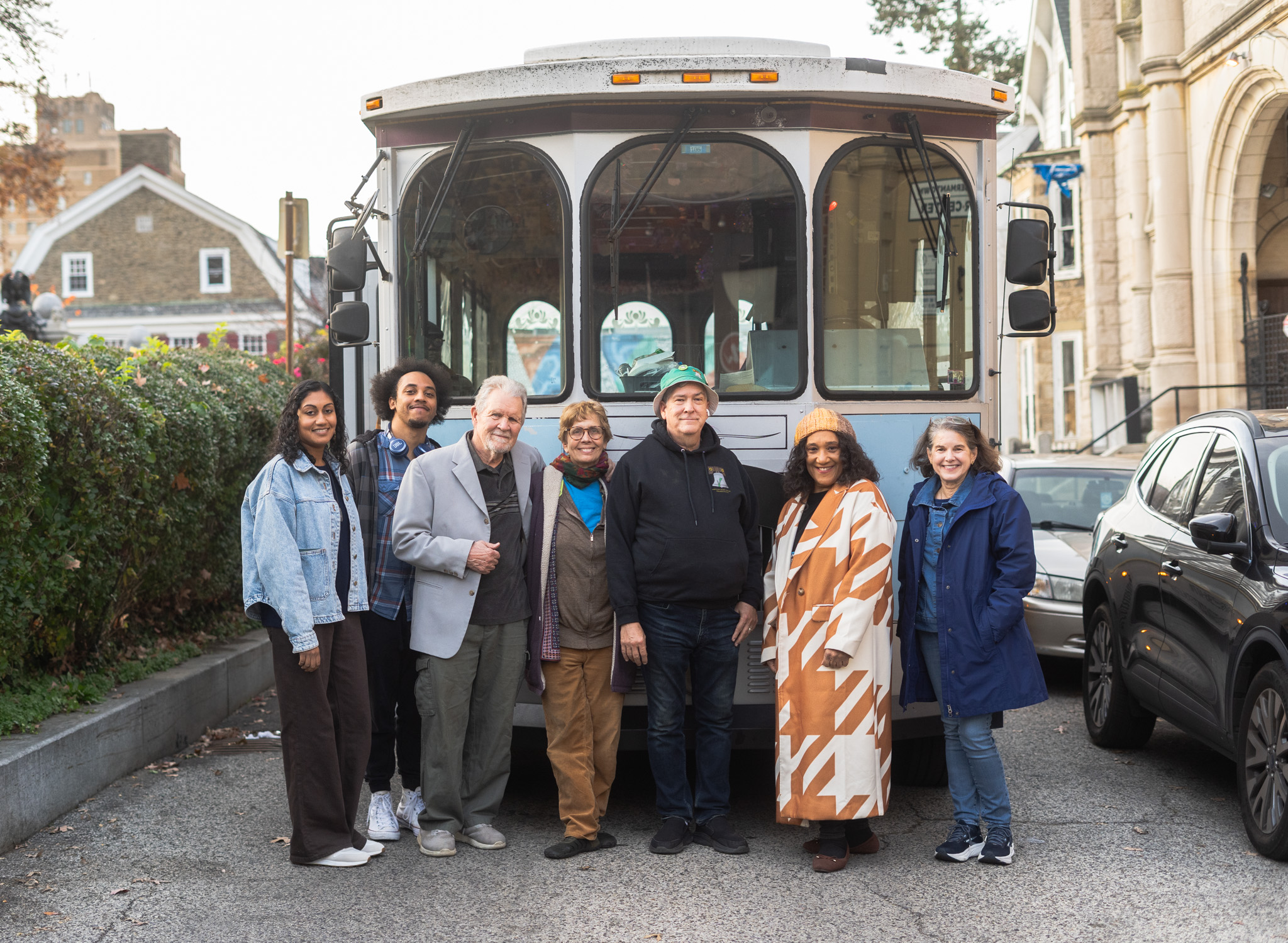
    On Saturday, Harmon unveiled the “Veg History Hop-Off Hop-On Food Tour.” The trolley ride takes passengers on a three-hour voyage through Germantown, Mount Airy, and Chestnut Hill to explore a medley of plant-based menu items.

    Tour organizer Bonita Harmon speaks to participant Anisha Kolupoti at Chestnut Hill Brewing Company on Saturday, Nov. 21, 2026.Courtesy of Earl Hopkins

    The Mount Airy-based guide was joined by eight passengers on a Founding Footsteps trolley, adorned with Christmas lights, holiday-themed ornaments, and vinyl records. They made stops at the Nile Café, the Blue Warbler Corner & Garden, and Chestnut Hill Brewing Co.

    By the tour’s end, the band of strangers Harmon brought on board left as friends, who exchanged savory bites of slow-roasted BBQ chic’n, wood-fired vegan pizza, buffalo cauliflower wings, and other plant-forward options.

    They were treated to conversations with restaurant owners such as Fred Mogul of the Blue Warbler, who described the origins of the dishes and the historical links tied to the area their establishments are based.

    Germantown couple Zipora Schulz (left) and Jim Harris (right), who participated in Saturday’s inaugural “Veg History Hop-Off Hop-On Food Tour,” engaged with fellow community members inside The Nile Cafe.Courtesy of Earl Hopkins

    For Germantown couple Jim Harris and Zipora Schulz, many of the sites were already familiar digs. But they were encouraged by the people they met throughout the experience.

    “I think it’s a great idea to hop on a bus with total strangers, and we all have the same kind of lifestyle. But even for people who haven’t yet learned about the lifestyle, it’s still wonderful to explore the different businesses while eating delicious food,” Schulz, 69, said.

    They were also intrigued by the knowledge that guest speaker Vance Lehmkuhl, a long-time historian at the American Vegan Society and author of Eating Vegan in Philly, shared throughout the tour.

    “I’m enjoying the history. I never knew who some of these streets were named after,” Harris, 79, said. “I’m just having a great time.”

    Vegan historian Vance Lehmkuhl joined the “Veg History Hop-Off Hop-On Food Tour” as a guest speaker. He discussed the early plant-based pioneers who helped shape modern day vegetarian and vegan movements.Courtesy of Earl Hopkins

    Lehmkuhl, wearing a headset microphone, shared the stories of figures such as Anthony Benezet, William Metcalfe, Bronson Alcott, and other early plant-based-diet enthusiasts who helped forge today’s vegan and vegetarian movement.

    Lehmkuhl, who predominantly leads vegan walking tours in Old City, said he’s been longing to be a part of one in Germantown. “There’s a lot of history of this movement,” he said. And when Harmon invited him to participate in the new attraction, he said, “I readily accepted.”

    Harmon also connected with local organizations and community members for the grassroots endeavor.

    She collaborated with the Historic Germantown Visitors Center for the tour, and asked locals about the viable vegan restaurants or destinations they frequented in the area.

    “I just want people to really have a great time, try different flavors and foods, and have better options when they go out for a bite to eat,” Harmon said.

    Pictured is Germantown resident Zipora Schulz, 69, who rode the first “Veg History Hop-Off Hop-On Food Tour” through Germantown, Mount Airy, and Chestnut Hill on Saturday, Nov. 21, 2026.Courtesy of

    A portion of the proceeds from the tour will be donated to the American Vegan Society to bolster further awareness.

    Harmon’s goal is to generate similar tours across Philly to help introduce more passengers to the people, small business owners, historians, and advocates that are central to the city’s vegetarian and vegancommunity – past, present, and future.

    “There’s a large market out there, and a lot of vegetarians and vegans need to learn their history,” she said.

    Anisha Kolupoti, 33, a member of the Philly Vegan Social Club who took part in Saturday’s event, said she envisions the tour becoming a citywide attraction.

    “I would love it. The more food and the more people to meet, the better,” she said.

  • For grieving people, walking with goats can provide a quiet respite in Germantown

    For grieving people, walking with goats can provide a quiet respite in Germantown

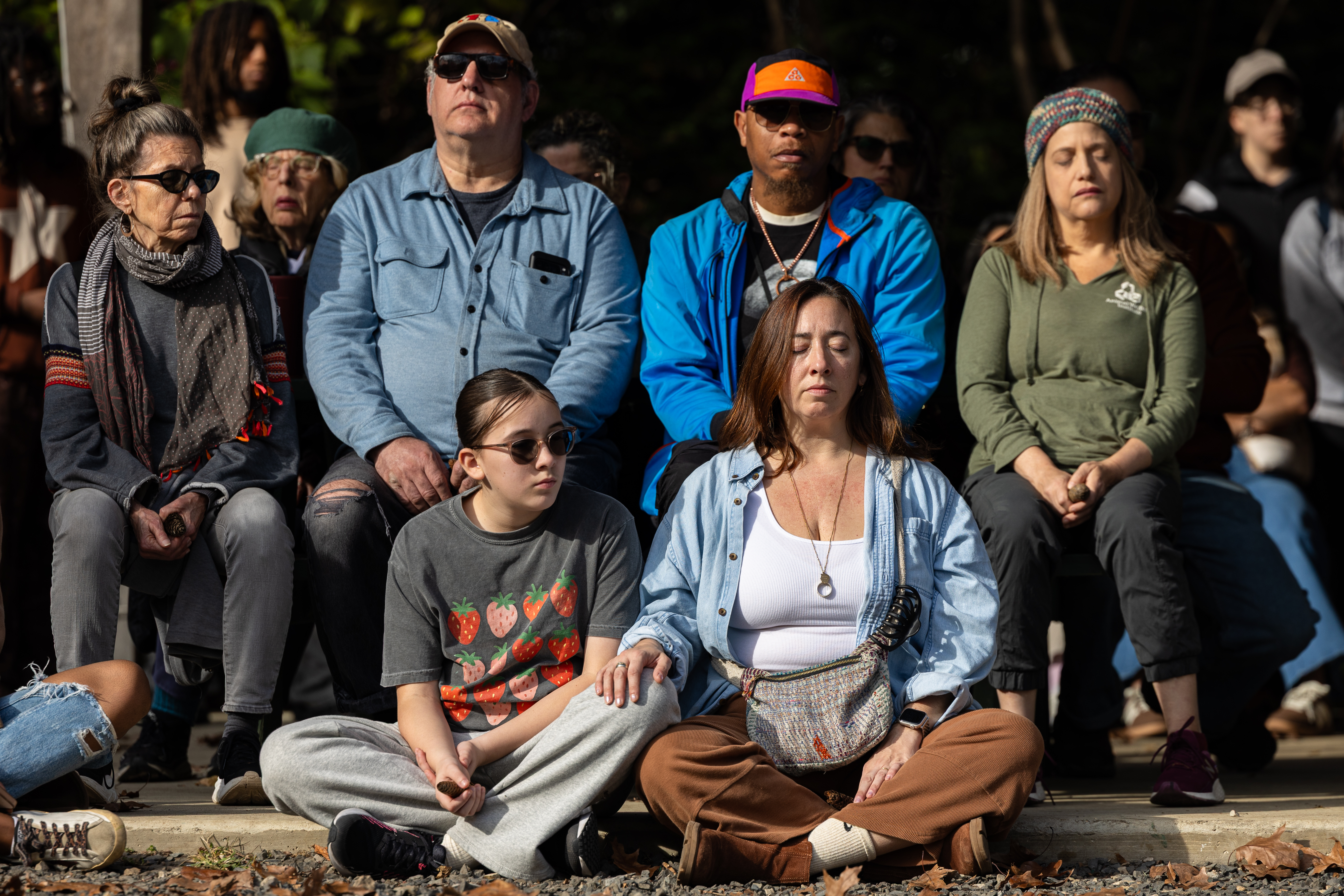
    A little before noon, more than 150 people milled about near a large wooden pavilion by the entrance to Awbury Arboretum in East Germantown. They were joined by several goats.

    So began the Philly Goat Project’s winter grief walk — an event meant to provide an opportunity for those who have experienced loss to process their emotions, connect with others, and, perhaps, make some new four-legged friends.

    As he petted Ray (a three-legged Nubian goat whose recovery became a story in its own right), Ven Schmidt said he had come to his first grief walk Saturday after the death of his husband three weeks earlier from pancreatic cancer.

    Emily Marziani, 36, pets Theo, 7, a Nubian goat, before the annual grief walk begins at the Philly Goat Project in East Germantown on Saturday, Nov. 21, 2026. Marziani first heard about the walk online and decided to try it out today. After losing people close in her life this year, she finds this event to be a great way to “get some pet therapy” and be surrounded by community.Aidan T. Gallo / Staff Photographer

    His husband, Mark “Chumley” Singer, was an events producer, an activist, and a well-known figure in Philadelphia’s gay community.

    His therapist suggested several options for grief counseling. Schmidt, who loves animals, picked the grief walk.

    He marveled at the turnout.

    “When somebody dies that’s that close to you, you feel so alone,” Schmidt said. “And then when you see how many people are also going through it, you feel less alone.”

    Volunteers and attendees walk during the grief walk at the Philly Goat Project in East Germantown.Aidan T. Gallo / Staff Photographer

    Grieving in community

    Karen Krivit, a former social worker, founded the nonprofit project in 2018 with three goats she kept in her backyard in Narberth.

    “As a social worker, I saw thousands of people over my 30 years, and the pervasive issue that people were struggling with was isolation,” Krivit said. “Community is foremost the thing that guides us in everything that we do.”

    The organization now has 13 goats and runs several programs aimed at providing community wellness through animal therapy.

    Naila Francis, a local grief coach, reached out to Krivit in early 2023 about starting the walks. The timing was right.

    “There was a lot of sadness — a lot of grief — after COVID,” Krivit said. “People were really isolated.”

    Francis led the first walk that November. They are held quarterly now.

    “Grief is such a natural human experience, and it needs to have that connection and that sense of being witnessed and that sense of affirmation,” Francis said. “Being in community, just at its core, helps us feel less alone and less isolated in our grief.”

    Grief coach Naila Francis speaks to attendees to get them spiritually centered before the start of the grief walk at the Philly Goat Project on Saturday, Nov. 21, 2026. Francis originally introduced this unique walking experience to the project in the spring of 2023 and hosted their first grief walk that autumn.Aidan T. Gallo / Staff Photographer

    Goats, Krivit explained, may have a bad rap, but they are actually ideal for therapy work.

    “You can walk with them and put your hand on them, and they’re very touchable,” Krivit said, repeatedly referring to the animals as versatile, “people-sized” companions for humans whose presence can bring a sense of levity to what is otherwise a heavy occasion.

    Fatima Thomas, 49, of Northern Liberties, pets Clementine, an Arapaho goat, after the grief walk. Thomas learned of the event through a friend and found the experience to be relaxing. Thomas lost her son Shaaur Demby, 26, to gun violence in 2021.Aidan T. Gallo / Staff Photographer

    The walks fill a need for grief-focused community programs, said Julie Drendall, a volunteer and board member.

    “As strange as it might sound, these are my favorite of the Goat Project’s programs, because it’s just so beautiful to see people come together and to recognize how many different things people are grieving,” Drendall said.

    “I think the goats can be super comforting to people,” Drendall said.

    She remembered one of her first goat walks as a volunteer. A woman had taken a particular interest in Drendall’s goat. She had recently lost her father, who had grown up near the arboretum.

    “She said, ‘I feel like my dad is here with me,’ and that’s beautiful,” Drendall said.

    Jaidaa, 21, pets a Nubian goat during a dedicated moment of silence for attendees to reflect on memories shared by their loved ones at a pond during the grief walk.Aidan T. Gallo / Staff Photographer

    ‘These people all get it’

    Francis opened the event with a guided meditation, encouraging attendees to “show up authentically and honestly in a culture where we don’t get enough of these spaces.”

    After the meditation, Krivit led the walk alongside 7-year-old Holiday the goat, named after Billie Holiday (who was “really born in Philly even though people say Baltimore”).

    The mostly unpaved path runs about a quarter of a mile, and the roughly 200 attendees and volunteers ambled at a leisurely pace.

    Samia N., 6, of Northeast Philadelphia, pets Oonagh alongside her mother Courtney K. before the start of the grief walk.Aidan T. Gallo / Staff Photographer

    While the project does offer some accommodations for individuals with limited mobility, Krivit hopes to eventually secure funding to pave the entirety of the path.

    After a short while, the group made its way to East Washington Lane. A motorist in a passing car offered the group a friendly honk and a wave.

    “People will stop their cars and come out” to pet the goats, Krivit said.

    After a couple more stops and guided meditations led by Francis, the group eventually made its way to the final part of the event: the grief circle — a collection of chairs and benches around a fire — and Francis invited attendees to share.

    Many did.

    Catherine Piotrowski, 47, of Fairmount, participates in a guided mediation hosted by grief coach Naila Francis alongside her daughter Scarlett, 11, before the grief walk begins. Piotrowski still mourns the passing of her husband, who passed away six years ago, and is now grieving the loss of her father in June. She appreciated the feeling of community alongside attendees who share and recognize her grief.Aidan T. Gallo / Staff Photographer

    One woman spoke about the loss of her father. Another woman told attendees how she lost her son to gun violence and then, just four months later, lost her brother.

    Schmidt, too, chose to share in the circle. He found the experience cathartic and planned to bring his friend to the next one.

    “It’s such a visceral thing, and it’s so hard to explain to people who don’t get it,” Schmidt said of the acute pain of losing his husband. “But these people all get it.”

    Meaghan Schickling, 31, of Kensington, writing a note for her uncle, who had recently passed away, to be placed in the Stone Memorial Wall after the grief walk concluded.Aidan T. Gallo / Staff Photographer

    Tacony resident Nyeemah Wright’s father died in February, a day after her 29th birthday. She traded numbers with a few other attendees and wanted to create “my own sort of family of people who know what it feels like, so I don’t feel so alone.”

    “Being 29, I’m glad not many of my friends know what it feels like to lose a parent,” Wright said. “[But] it almost feels isolating sometimes, so I wanted to feel a sense of community, and I really got that today.”

    At one point on the walk, she recalled coming across a huge, orange tree that reminded Wright of her dad.

    “I just stood there for a second and I looked up at that big tree and it was beautiful, and it made me think, ‘I’m standing under him again.’”

    Attendees of the grief walk hold each other during a dedicated moment of silence to honor loved ones.Aidan T. Gallo / Staff Photographer
  • Atlantic City wanted to be the East Coast’s cannabis hub. Instead it got vacancies and an FBI probe.

    Atlantic City wanted to be the East Coast’s cannabis hub. Instead it got vacancies and an FBI probe.

    ATLANTIC CITY — In the 1700 block of Atlantic Avenue, the only cannabis for sale, once again, is from street dealers.

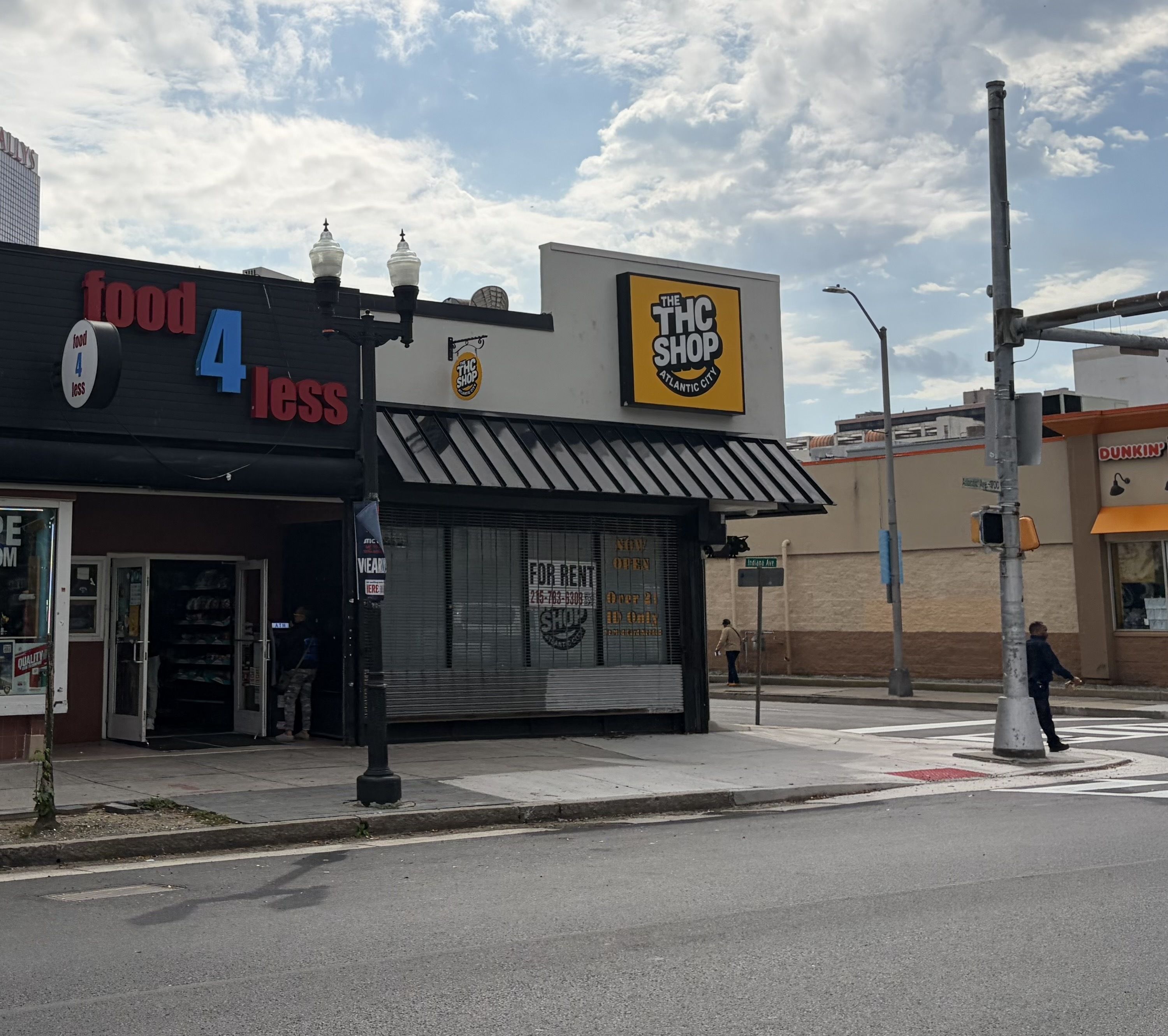
    Two legal dispensaries that opened on the block in 2024 have now closed: Honey Buzz Farms, which aspired to bring art and community events to the block, and, on the corner, the THC Shop.

    Both now have for-rent signs.

    In all, 18 dispensaries have opened their doors in A.C., out of 42 total that have received approvals from the New Jersey Casino Reinvestment Development Authority since 2021, when the state legalized, and regulated, the sale of cannabis.

    Honey Buzz Farms, which opened in 2024 the 1700 Block of Atlantic Avenue with hopes of combining art and cultural events on a block where illegal drug sales have proliferated over the years, is now closed.Amy S. Rosenberg / staff
    The THC Shop at 1740 Atlantic Avenue, a block where illegal drug sales have proliferated over the years is now closed.Amy S. Rosenberg / staff

    At least five are no longer in business, leaving vacant storefronts on blocks they were supposed to invigorate. Andrew Kramer, a spokesperson for the city, said 13 had paid for their mercantile licenses for 2026.

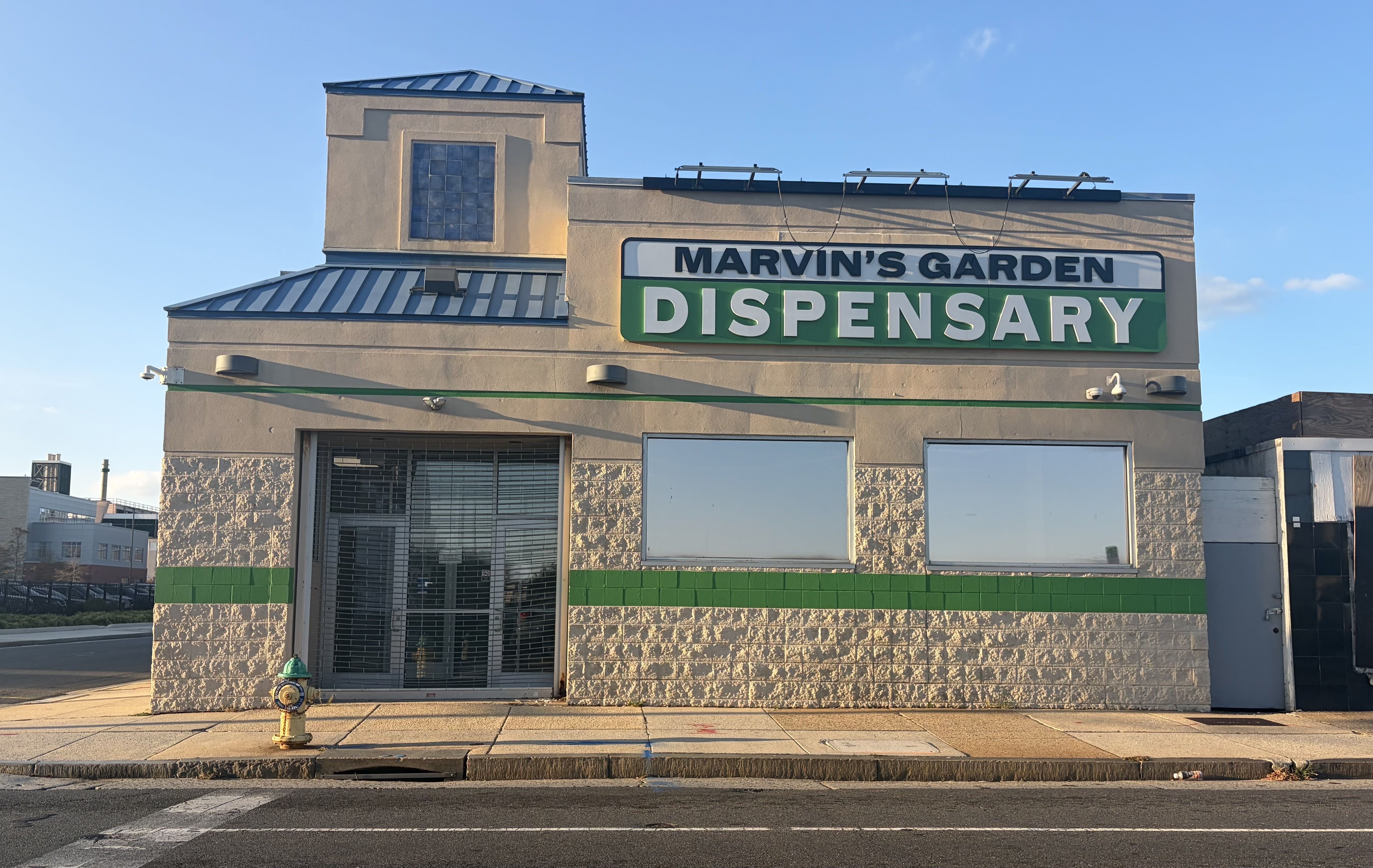
    Some with ambitious plans, including one company that tore down the historic First Presbyterian Church on Pacific Avenue, donating its sandstones to the Smithsonian, have stagnated. Marvin’s Garden, a dispensary in a standalone building on Pacific Avenue, continues to post on social media but has never opened.

    Sweet Leaf on Tennessee Avenue, PPP Dispensary at 3001 Atlantic, and the Healing Side on Pacific Avenue, behind Boardwalk Hall, are no longer open. Salt Air Botanicals on Arctic Avenue appears, at best, temporarily closed.

    Salt Air Botanicals on Arctic Avenue is one of 18 dispensaries that have opened in Atlantic City. Salt Air is believed to have closed, though its status is not entirely clear. Five others have closed.Amy S. Rosenberg / staff
    The PPP Dispensary on Atlantic Avenue was among the first to open in Atlantic City and among the first batch to close. In all, since 2021, 42 have been approved, 18 have opened, and at least five have closed.Amy S. Rosenberg / staff

    In September, Kashawn “Kash” McKinley, the city’s cannabis czar and director of constituent services, who said he aspired to make Atlantic City the premier East Coast cannabis hub, was charged by the U.S. Attorney’s Office with soliciting bribes. He has been suspended without pay by the city.

    The FBI, meanwhile, is continuing its investigation, issuing subpoenas of financial records of some dispensaries as recently as Nov. 10, according to owners.

    With McKinley sidelined, and prominent locations now vacant, some dispensaries are struggling to thrive in a mostly disappointing market, even as others work to get their businesses open.

    ‘Nobody’s crushing it’

    Even before the feds made their presence known, Atlantic City’s high hopes for its cannabis future had yet to materialize.

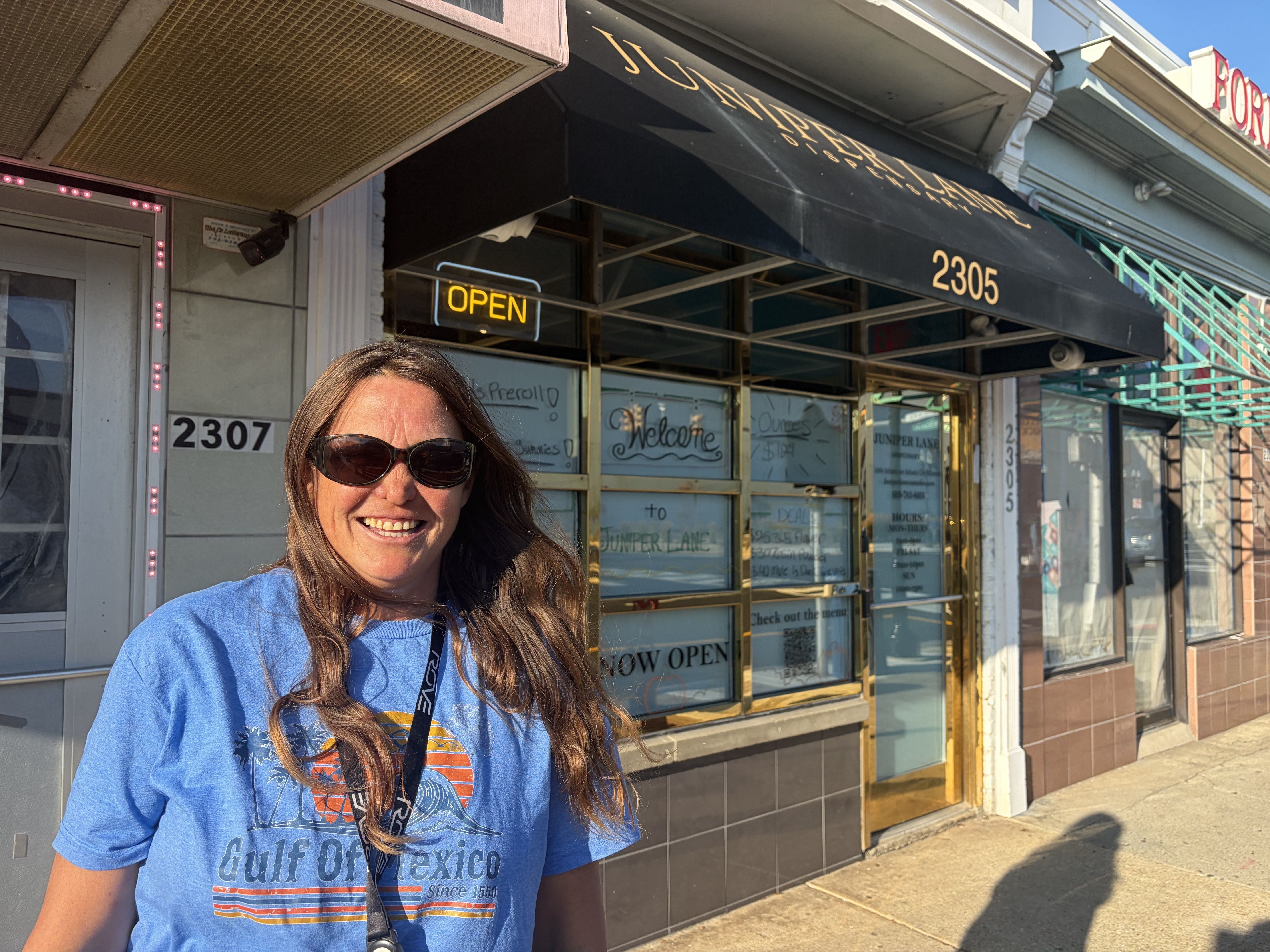
    “Nobody’s crushing it,” said Colleen Begley, owner of Juniper Lane Dispensary, which opened in December 2025, boosted by a $150,000 grant from the New Jersey Economic Development Authority.

    Amid complaints by businesses that the market was oversaturated, the city passed a cap at 16 in October 2025, which prompted complaints by approved businesses that had yet to open.

    Colleen Begley, owner of Juniper Lane Dispensary on Atlantic Avenue in Atlantic City, said entering the cannabis business in Atlantic City has been at times like “Boardwalk Empire.” The city’s cannabis czar, Kashawn McKinley, is currently under federal indictment for soliciting bribes, and the FBI is continuing its investigation, owners say.Amy S. Rosenberg / staff

    But the number of dispensaries currently open still remains under the cap. And the dozen open dispensaries mostly continue to struggle.

    The current mix of dispensaries stretches from Legal Distribution on the Ventnor end of Atlantic Avenue to Everest, the Tibetan-themed dispensary at 1226 Atlantic, toward the inlet.

    (function(){function e(){window.addEventListener(`message`,function(e){if(e.data[`datawrapper-height`]!==void 0){var t=document.querySelectorAll(`iframe`);for(var n in e.data[`datawrapper-height`])for(var r=0,i;i=t[r];r++)if(i.contentWindow===e.source){var a=e.data[`datawrapper-height`][n]+`px`;i.style.height=a}}})}e()})();

    Having spent nine months in the Atlantic County jail on cannabis distribution charges, Begley argued for a pathway for people such as herself to enter the market legally. And so she did.

    Juniper Lane landed on a pleasant block of Atlantic Avenue, paying $3,500 a month for rent, next to Rosita’s Bakery, down the street from the local favorite Pho Sydney. In the next block is the venerable Dock’s Oyster House. But the city won’t let her put a sandwich board out to advertise her wares, saying it would violate regulations.

    Standing outside Juniper Lane the other day, Begley said the experience has been surreal, and not that lucrative.

    Between 2021 and 2025, the city has collected $531,791.85 through a 2% tax on all dispensary revenue, which translates to about $26 million in total revenue. Nearly half is attributable to the first dispensary to open, MPX, on New York Avenue in the city’s Orange Loop district.

    “We’re just kind of barely getting by,” she said.

    Peaches Garden on New York Avenue is one of 18 dispensaries to have opened in Atlantic City and continues to operate in the city’s Orange Loop neighborhood.Amy S. Rosenberg / staff

    ‘You don’t have to worry about nothing’

    McKinley was charged on Sept. 24 by the U.S. Attorney’s Office in New Jersey with soliciting bribes from a dispensary owner, later identified as Victor Diaz of Sweet Leaf.

    “You want to think Atlantic City is doing it right, but I also feel like I stepped into Boardwalk Empire immediately within my first year of opening,” said Begley of Juniper Lane. “The guy’s indicted, like it was so predictable.”

    Diaz has filed a claim indicating his intent to sue the city for $5 million, saying McKinley’s behavior sank his business on Tennessee Avenue.

    Sweet Leaf Dispensary on Tennessee Avenue in Atlantic City has closed its doors, and says it intends to sue the city over conduct by its cannabis czar, Kashawn McKinley, who is under federal indictment for soliciting bribes. Sweet Leaf is one of at least five dispensaries that have already closed in Atlantic City.Amy S. Rosenberg / staff

    The charges paint a sordid series of events, in which McKinley offered to help classify the dispensary as a micro business, which would reduce the city’s annual mercantile fee from $25,000 to $2,500, in exchange for about $20,000 in cash and some cannabis.

    McKinley also oversaw the “community host agreements” the city asked dispensaries to sign. MPX, for instance, agreed to make good-faith efforts to hire A.C. residents and make payments to the city above the 2% tax, totaling $750,000 over a 10-year period.

    In the Sweet Leaf case, the charges say as part of the bribe, McKinley allegedly asked the owner to arrange for a critic of the city to be assaulted, and to be shown a photo as proof, so that he could show an unidentified “Public Official 1.”

    After being shown “what appeared to be a photograph of the injured victim,” the U.S. Attorney’s Office said in a news release announcing the charges, McKinley expressed pleasure and assured the cannabis business owner that when it came to the fee disputes with Atlantic City, “You don’t have to worry about nothing.”

    Cannabis for sale, but no cannabis culture

    Slamn Sammy’s took over a tattoo shop on Pacific Avenue but, despite an “opening soon” sign in the window, has yet to open.

    Stephen Weiss, a consultant who hopes to help Sammy’s with events and marketing, says the business is working its way through the cumbersome approval process.

    He says the lackluster cannabis business experienced by most in A.C. so far reflects the limited way New Jersey has allowed the legal businesses to set up.

    He wants the state to allow places like A.C. to nurture a true cannabis culture, with pre-rolls and other products for sale at concerts, food venues, and other entertainment events.

    Slamn Sammy’s, a dispensary that took over a tattoo shop on Pacific Avenue in Atlantic City, had not opened as of November 2026.Amy S. Rosenberg / staff

    “Nobody needed a place to buy marijuana,” Weiss said. “We need a place to go enjoy marijuana. We need concert venues, movie halls, restaurants. We don’t have things to do with the cannabis. There’s no cannabis culture.”

    Currently, even the cannabis consumption lounges at High Rollers and SunnyTien are not allowed to sell any food or drinks.

    Spencer Belz, general manager of SunnyTien, says the half-dozen closures reflect a market correcting itself, though that has not stopped the new businesses from coming in.

    “If they wanted to make Atlantic City the East Coast cannabis hub like they’ve flaunted so many times, they could have done more than just get our doors open,” Belz said.

    A study by Stockton University conducted in June 2025, when there were 15 open dispensaries, described the market as “among the most densely licensed municipalities in the state,” despite its population of 38,500, and warned of oversaturation. Jersey City and Newark, with a balance of caps and “equity carve-outs,” were better positioned for long-term market health, the study said.

    It estimated A.C.’s top-performing dispensaries generated between $4 million and $6 million, while the lower-performing ones generated less than $1 million. Rents were between $5,000 and $15,000 and mercantile fees were typically $25,000 a year. Winter months saw declines of about 35%, putting seasonal pressure on the businesses and “threatening the viability of small and independent operators,” the report said.

    The study noted that if all licensed businesses became operational, Atlantic City’s cannabis density would exceed all other legally regulated locations in the country. The study recommended the current cap of 16 and noted other jurisdictions, like Oregon and Oklahoma, where a lack of a cap had led to “severe market saturation and price collapse.”

    Operators like Belz say A.C.’s market should be able to flourish.

    “At the end of the day, there’s still 25 million people who come to Atlantic City every year,” Belz said. “There’s plenty of opportunity for dispensaries to thrive.”

    Patrons of SunnyTien cannabis lounge sit around leather couches and enjoy the lounge in Atlantic City, on Sept. 25, 2025. SunnyTien, High Rollers, and Gynsyng cannabis dispensaries and lounges are the first legal weed lounges on the East Coast.Hira Qureshi / Staff

    Belz, Weiss, and other owners are working with the state commission to ease certain restrictions on food and beverage in the cannabis lounges, on advertising, on the need to obscure windows. Las Vegas has seen some success with its cannabis lounges and nightclub-like cannabis “experiences.”

    The ban on billboard advertising is why drivers see dispensaries advertised only on the Pennsylvania side of Delaware River bridges, where cannabis sales are not legal.

    The effort recalls the cycle of casino legislation that led to a first generation of casinos whose exteriors offered little visual appeal to passersby, with designs that were more giant box than tourist attraction. This was tough to correct, even when design restrictions were eased.

    Marvin’s Garden Dispensary on Pacific Avenue in Atlantic City boasted a veteran’s museum and a human touch, but has never opened, though it continues to post on Instagram.Amy S. Rosenberg / staff

    The highs and the lows

    Belz says some of the businesses were unprepared for the “roller coaster of this business.”

    “They weren’t prepared for the highs or the lows,” he said. “Coming into Atlantic City, they were supposed to utilize old storefronts in a beautification effort. We’ve done a full 360 back to the beginning of empty storefronts.”

    And FBI investigations.

    Reached on Nov. 10, Lou Freedman, owner of Legal Distribution on Atlantic Avenue, said the business had just received an FBI subpoena for its records that morning.

    “They want all my records from the beginning of time,” he said.

    He defended McKinley and said, “He actually was a pretty good guy, never asked me for a penny.”

    But as for business, he said, “we’re just as bad as everybody else.”

  • They got dream jobs when they were hired at the Academy of Natural Sciences museum. Then they were laid off.

    They got dream jobs when they were hired at the Academy of Natural Sciences museum. Then they were laid off.

    As a toddler gazing up at the meticulously assembled cast dinosaur bones evoking a Tyrannosaurus rex, Amber Redfield knew she wanted to spend as much of her life as possible at the Academy of Natural Sciences.

    By then, The Land Before Time and Jurassic Park had already hooked her on all things dino, but beholding their actual body parts and scale at the museum molded her passion into a dream.

    For nearly 15 years, she lived that dream as an Academy museum employee, most recently as an educator, until it all came tumbling down on Sept. 1, when she and her department learned the museum would close at the end of the month and their jobs would be eliminated.

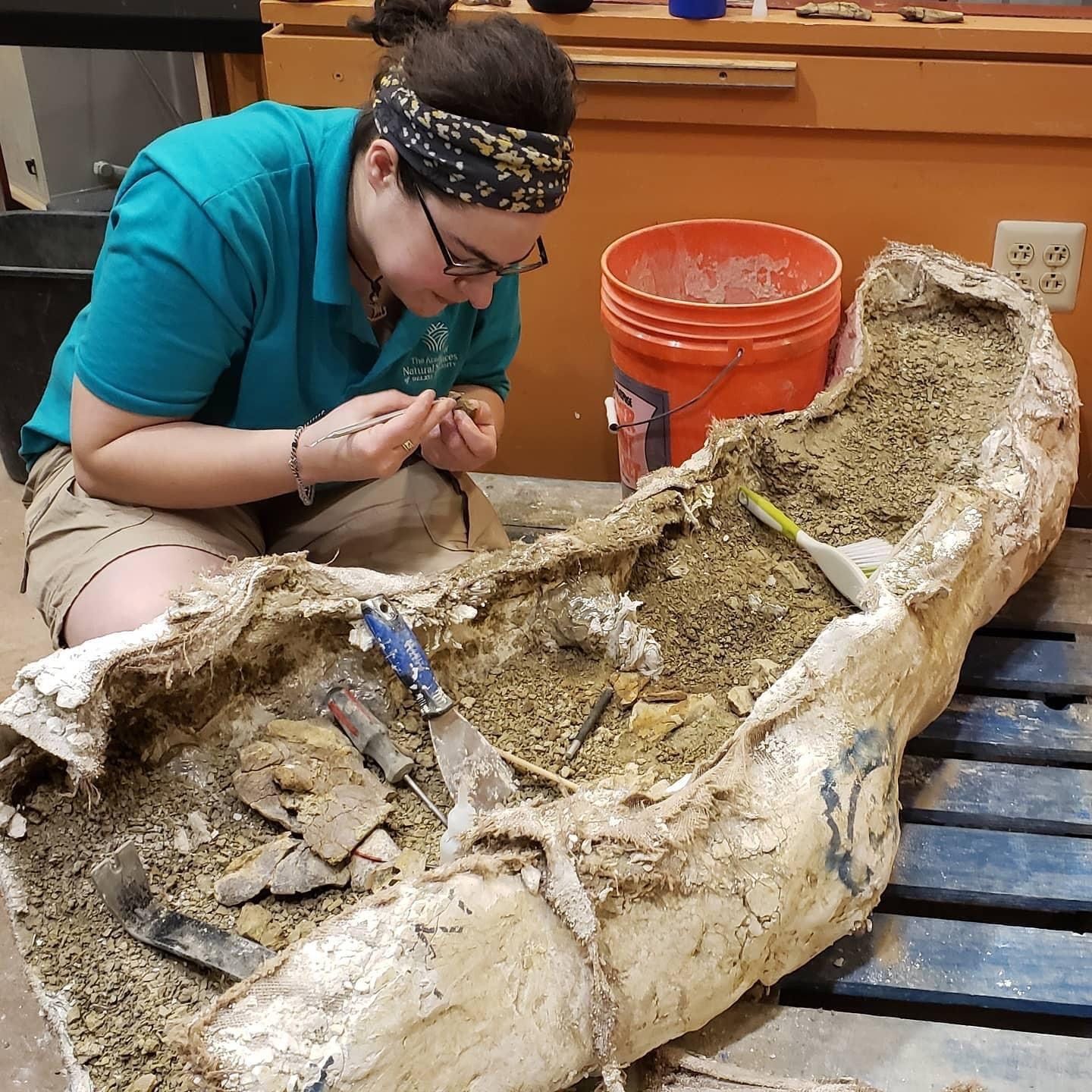
    Amber Redfield, a former educator at the Academy of Natural Sciences, examines fossils.Amber Redfield

    The news broke the hearts of employees, many of whom aspired to work at the Academy museum not long after they learned to walk and talk. For some, that goal served as a guiding light through academic hardships. For others, working and volunteering there fostered confidence and creativity. For all, it offered a rare opportunity to ignite a passion in local kids that the museum had ignited in them.

    “My whole life is that place,” said Redfield, 37, whose last day was Nov. 1. “I feel like a part of my soul has been ripped out.”

    This career was all she ever wanted. She managed Dinosaur Hall, the exact room in the museum she marveled at as a child, geeked out with visitors about new developments in the field, and whipped out fossils so mind-bogglingly ancient they brought museum patrons to tears.

    “‘I can’t believe I’m holding this right now,’” they would tell her, grasping an approximately 66 million-year-old hadrosaur leg or back bone.

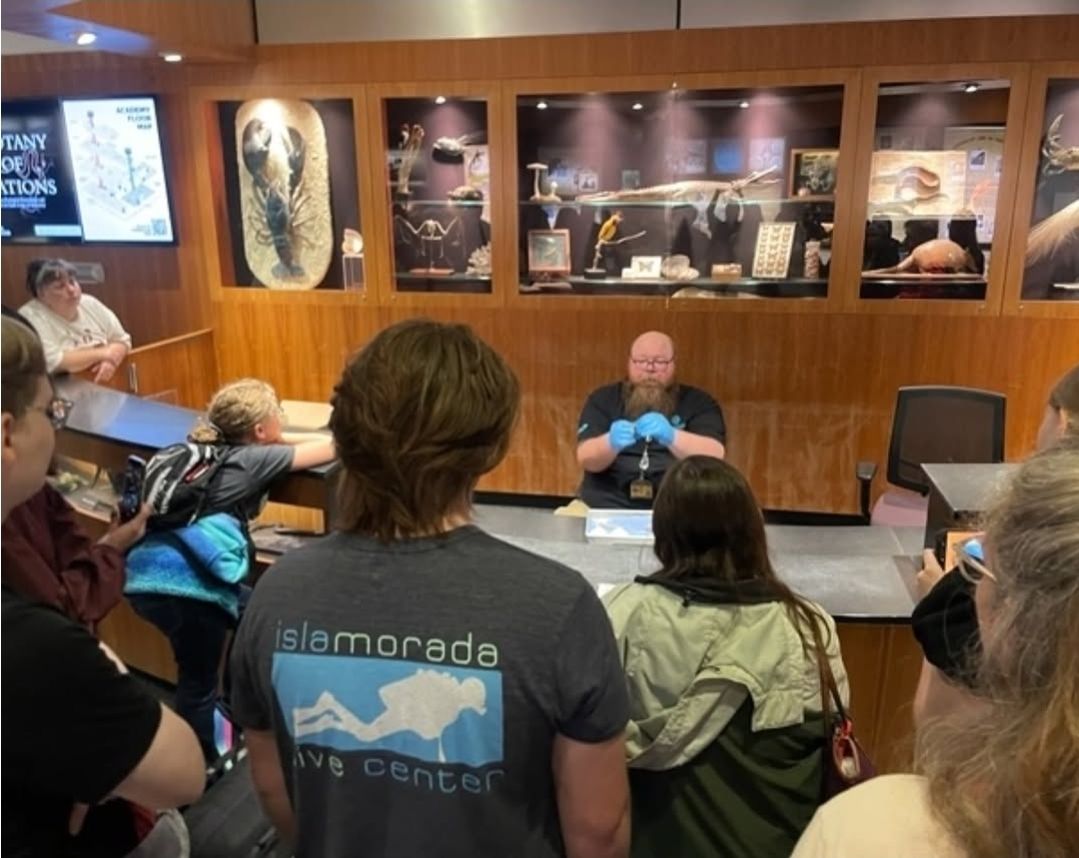
    Perusing some of the older specimens in the academy’s collections — “it’s the closest we get to time travel,” said Liam O’Donnell, 27, who worked with Redfield. His last day as an experience and engagement educator was Oct. 1.

    Working at the Academy museum over the last four years was a dream come true for O’Donnell — presenting a wide-eyed child with a hissing cockroach or answering questions about whether velociraptors would have liked tacos.

    Liam O’Donnell, wearing a dinosaur costume, greets children at Chase Books’ annual Read-a-Thon at the Academy of Natural Sciences museum.Chase Books

    O’Donnell dreamed of working at the Academy museum since his first visit there at around 6 years old. He was wowed by how much humanity had managed to learn about such old species.

    But, throughout his academic career, his ADHD presented hardships, particularly as he pursued his biology degree at Widener University.

    “I came very close to flunking out,” he said. “I failed chem three times.”

    Weekend visits to the Academy, he said, kept him motivated to graduate.

    Liam O’Donnell, a former educator at the Academy of Natural Sciences museum, proposes to his wife in Dinosaur Hall.Liam O'Donnell

    The museum served a similar purpose for former education and experiences manager David Schloss, 39, who worked at the Academy for 15 years before his last day Nov. 1.

    Schloss’ love for dinosaurs dates back to kindergarten, when he was asked to name a word that starts with P and offered pterodactyl.

    As a biology student at Wheaton College in Massachusetts, Schloss was having difficulty in school. So he took several months off to be with his sister in Philadelphia and volunteered at the Academy cleaning and preparing fossils.

    After that, “I kind of had a direction and drive,” Schloss said. “I was dean’s list for the rest of my time until I graduated.”

    David Schloss with his wife, Ashley, and 1-year-old Eloise at the Academy of Natural Sciences in October, on a day after the museum closed when staff were allowed to bring their young kids into the museum.David Schloss

    Inspiration and fulfillment always lived around the corner during Schloss’ time working at the museum. Before it closed during the pandemic, he ran the butterfly house and discovered a half-male, half-female butterfly that he got to put his name on when it was entered into the entomology collections.

    The live animals at the Academy museum similarly spoke to Anwar Abdul-Qawi.

    Now 32, he still remembers seeing his first live animal show at there as a child. A self-proclaimed “super animal nerd,” he was awestruck at seeing the creatures onstage handled with such expertise.

    “I can’t wait to do this one day,” he thought to himself.

    But he was a shy child with a pretty severe stutter, so speaking in front of a crowd seemed impossible.

    In high school he began volunteering at the Academy, then got his degree in zoology at Delaware Valley University. Soon after, the academy hired him. One live animal show after another his stutter subsided, his confidence grew, and, 11 years later, public speaking became one of his greatest skills.

    His final role at the Academy museum was manager of animal programs, running the live animal department that hosted the shows that awed him as a child.

    Anwar Abdul-Qawi, former manager of animal programs at the Academy of Natural Sciences museum, shows animals to kids.John Hutelmyer

    The Academy never wavered in supporting his dreams. When he got interested in wildlife photography, the museum displayed his photos. When he yearned to go abroad, Academy leaders sent him to Equatorial Guinea to document a research trip. It was his first time leaving the country. He was so excited, he cried in bed the whole night leading up to the flight, wondering: “Is this real?”

    “I didn’t think this was something that was ever going to happen to me,” he recalled.

    Anwar Abdul-Qawi, former manager of animal programs at the Academy of Natural Sciences, in Equatorial Guinea on a research trip the academy sent him on.Anwar Abdul-Qawi

    Working at the Academy museum also opened doors for Redfield and Buddy Muhler, an educator who ran the school programs at the museum. Neither Redfield nor Muhler ever graduated college. For Redfield, that was due to learning challenges, including dyslexia. For Muhler, school just was not his strong suit.

    Buddy Muhler, a former staff member at the Academy of Natural Sciences museum, showcases dinosaur items.Buddy Muhler

    Nevertheless, the Academy museum gave them a chance. For Redfield, it came after she did a stint volunteering there and her enthusiasm and level of paleontologic knowledge quickly became evident. For Muhler, 42, that opportunity came after several years working at another museum.

    It “took a lot of hard work and timing and luck,” Muhler said.

    For Schloss, learning that the museum would close felt like witnessing “a seismic event,” he said — one not unlike the alleged asteroid strike that wiped out the dinosaurs. This time, it was the extinction of “a community of people who tried to do their absolute best to engage the public with what felt like a piece of string, a pencil, and a wad of gum,” Schloss said.

    David Schloss’s 1-year-old, Eloise, at the Academy of Natural Sciences in October, on a day after the museum closed when staff were allowed to bring their young kids into the museum.David Schloss

    Perhaps the hardest part is knowing that, if the museum never reopens, he won’t be able to share the place he has spent the last decade and a half with his 19-month-old daughter as she grows up.

    “It crushes me,” Schloss said.

    David Schloss’ 1-year-old, Eloise, at the Academy of Natural Sciences in October, on a day after the museum closed when staff were allowed to bring their young kids into the museum.David Schloss

    Developments earlier this month offered a glimmer of hope when Drexel University, which is affiliated with the Academy, accepted an offer from the William Penn Foundation to fund feasibility studies on the future of the Academy. But whether that could yield a reopening of the museum will likely remain unknown for months.

    Liam O’Donnell is a former staff member at the Academy of Natural Sciences museum.Liam O'Donnell

    In the meantime, O’Donnell, Muhler, and Schloss are job hunting.

    “I can’t imagine myself working anywhere else,” Muhler said, but “I can only live on severance for so long.”

    Buddy Muhler, a former employee at the Academy of Natural Sciences Museum, is surrounded by visitors as he works.Buddy Muhler

    Abdul-Qawi moved to Costa Rica to do full-time sea turtle conservation work.

    As for Redfield, she has turned down job offers at other institutions in the hopes the Academy museum will reopen.

    “But I can’t wait forever,” she said. “That’s the scary part.”

  • Why it’s been hard to find forensic evidence at the Horsch house

    Why it’s been hard to find forensic evidence at the Horsch house

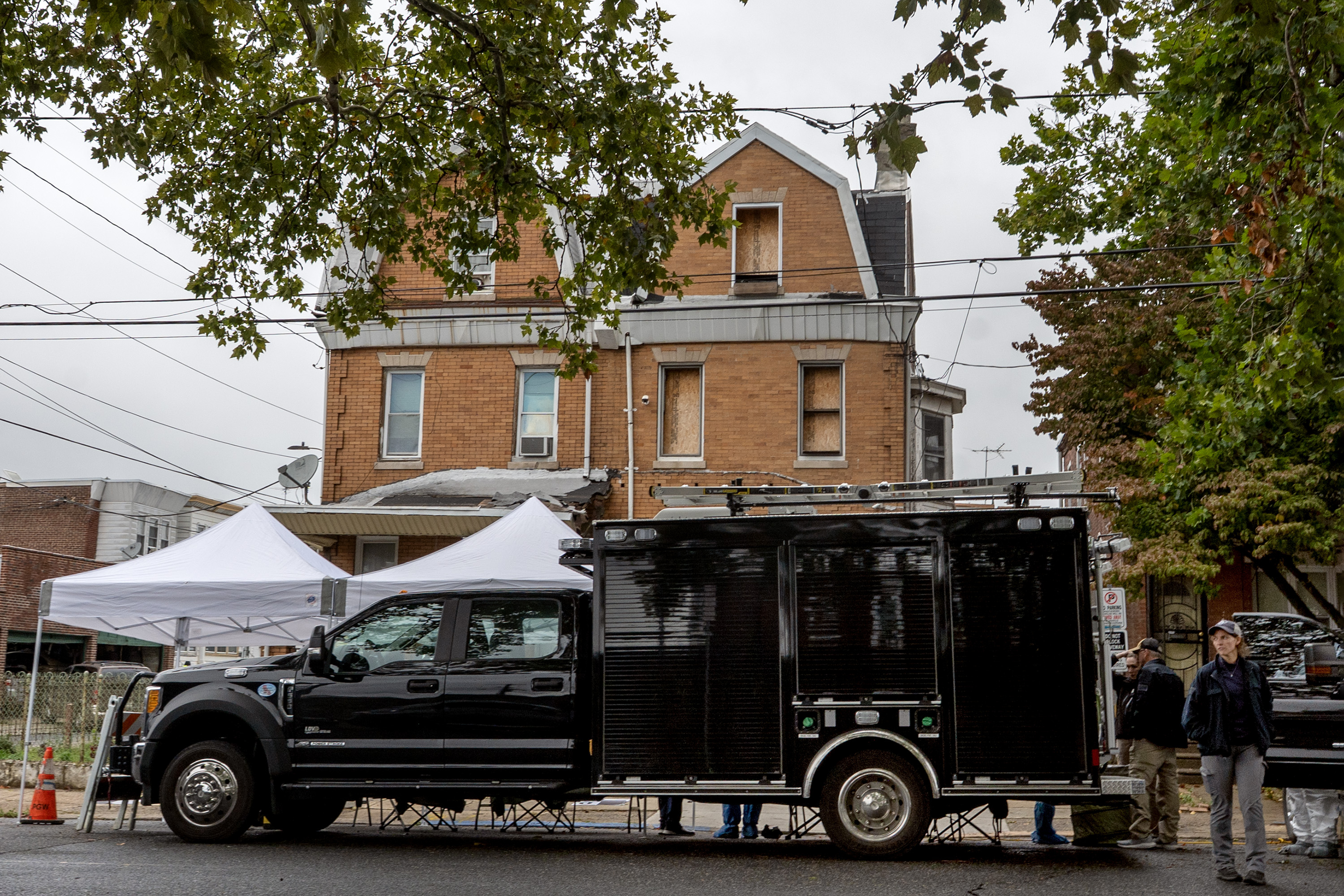
    The 400 block of West Chew Avenue has seen an array of investigators since June, when the extensive search of the Olney home at the center of a shocking missing persons investigation began. But more questions than answers remain as authorities carry on the complicated task of parsing through forensic evidence collected from the residence.

    Investigators suspect the late Raymond “R.C.” Horsch was connected to at least seven missing women associated with the house. Those allegations come from scads of digital evidence discovered this year that show what police believe to be a murder on camera, as well as women who appeared to be dead in the home.

    Despite the lengthy investigation, scores of search warrants, and extensive searches that included excavations of its front and back yards, police have not yet publicly identified physical forensic evidence confirming violent crimes occurred in the Olney home. Gathering forensic evidence is a difficult process, however, especially as authorities contend with factors like an aging investigation scene, degradation of materials, and a lack of human remains.

    That process, the Philadelphia Police Department said in a statement, involves specialized testing, extensive coordination among investigative units, and verification of discoveries — all of which takes time. And this investigation has long been expected to be a protracted one.

    “Forensic investigations can be complex and time-consuming, requiring the careful collection, examination, and analysis of evidence,” a police spokesperson said. “Above all, we owe it to the victims, and most importantly their families, to get it right.”

    Made more difficult by time

    Time presents a significant challenge for forensic evidence collection, and as it goes on, a “whole orchestra of things” works against investigators, said Kimberlee Moran, a forensic consultant and educator at Rutgers University-Camden.

    (Moran consulted with investigators on the Olney house but declined to comment on the case directly given the ongoing investigation.)

    Cellular materials like blood, saliva, and fingerprints degrade over time, making it more challenging to recover useful evidence. The events of the Horsch case date back years, and the degradation of possible evidence speeds up the more materials are exposed to chemicals and ultraviolet light, or come into contact with people or objects. Even something as simple as a fan on a hot day could blow away relevant residues, she said.

    In that sense, it would not necessarily take a sophisticated cleanup job to obscure evidence from investigators years later. Everyday actions could significantly diminish the amount of recoverable forensic evidence.

    “It’s literally just living your life in that space over many, many years. Additional material is going to be shed, things are going to be moved around,“ she said. “This is not some place that has been frozen in time.”

    The search for DNA

    Law enforcement sources in October said investigators had employed luminol, a chemical that illuminates upon exposure to iron, revealing areas throughout the home that appeared to resemble blood spatter. Luminol, however, can also visibly glow when in contact with other substances, such as bathroom cleaners.

    “There can be false positives,” said Thomas McAfee, a retired FBI special agent and former senior team leader of the Atlanta Evidence Response Team. ”But if you were to see spatter, even after someone cleaned, you would take a sample.”

    Investigators, he added, typically would look for hair or fiber samples in rooms and on cloth materials, and forensics teams can cut away entire sections of walls, flooring, or doors to send off for DNA testing.

    But in terms of practicality, Moran said, it is not realistic to examine every item or surface in a home because forensic labs have backlogs and limited resources.

    “You can’t test every swab for DNA,” Moran said. “You have to figure out what swabs are going to be probative and what swabs aren’t.”

    Moran added that in the United States, investigators tend not to strategize extensively with forensic experts and labs on their searches, and more collaboration could lead to better investigations. Experts could advise investigators ahead of time on what kinds of DNA they are more likely to recover, or advise against requests for forensic analysis like blood spatter and bite marks that have shown to be inaccurate, she said.

    “Particularly for a case like this, where testing is going to be so important, really, the more we can incorporate the scientific expert … the more helpful that would be for the investigation,” she said.

    Blood and bone

    As the investigation progressed, some early reports of discoveries later proved unfounded. In June, for example, police sources said a “significant amount” of blood had been found in the Olney property.

    Investigators later said the substance was not real blood. Before his death last year, Horsch was a well-known erotic photographer and filmmaker whose career in pornography dated to the 1970s. His work often depicted graphic sexual violence and simulated death scenes of women in addiction, and some scenes appeared to use prop blood.

    In October, reports emerged that probable bone fragments from a hand had been detected. The Philadelphia Office of the Medical Examiner later said no human remains had been identified. Bone fragments, McAfee said, can be difficult for investigators to identify.

    “It’s not always clear if it’s human or not, and there are different animal bones out there,” he said.

    Reports have also indicated investigators sought evidence of alkaline hydrolysis, or “water cremation.” Experts said that process, or other chemical disposal methods, would likely leave behind forensic evidence, though none has been publicly confirmed.

    “It’s really difficult to get rid of a body,” McAfee said.

    Lack of remains complicates the case

    Early on in the search, investigators discovered an extensive digital archive of videos and images stored on hard drives. After reviewing a portion of those files, police believe at least seven missing women are connected to the property, and at least five of them may be dead. Officials said the files show women alive and then apparently dead inside the home, and one video appeared to show Horsch strangling a woman.

    Some of the files, Deputy Police Commissioner Frank Vanore said in September, likely show “playacting,” but others could show real events. Lacking confirmed human remains, police said earlier this year, the medical examiner’s office cannot officially declare the women dead, and police face the prospect of going through Orphans’ Court to get such declarations.

    Amid a lack of progress reports on the case, police say the priority is on the investigation’s integrity.

    “We understand the public’s desire for answers; however, it is essential that investigations are conducted thoroughly and accurately,” a police spokesperson said. “At this time, there is no confirmed timeline for the next update.”

    Staff writer Ryan W. Briggs contributed to this article.

  • Tony & Nick’s Steaks, formerly Tony Luke’s, shutters after decades in business

    Tony & Nick’s Steaks, formerly Tony Luke’s, shutters after decades in business

    Oregon Avenue institution Tony & Nick’s Steaks closed Friday after its owners said financial difficulties and tax problems had “brought us to a point where we can no longer keep our doors open.”

    The steak stand had been named Tony Luke’s for 30 years, until a 2022 settlement led to the renaming and left the separately operated Tony Luke’s 11-location franchise chain and mail-order business with the original name.

    The catering business operated alongside the steak shop, Tony & Nick’s Catering, will continue, according to its owners.

    In a message addressed to “employees, loyal customers, family, and friends,” the shop’s owners said they were devastated.

    “This place has always been more than a business to us. It has been our life, our family’s work, and a place where so many customers became friends,” the message said.

    The owners said the effect on the workers and their families “weighs heavily on our hearts.”

    Co-owner Nicky Lucidonio could not immediately be reached for comment.

    Tony Luke’s was opened in 1992 by Tony Lucidonio Sr. His sons Nicky Lucidonio and Tony Lucidonio Jr. became involved in the business, but a family feud became public after Tony Lucidonio Jr. was fired in 2015.

    The business was the subject of an IRS tax fraud case that led to jail time for Tony Lucidonio Sr. and Nicky Lucidonio. They admitted that they had evaded taxes over a decade by keeping two sets of books to hide cash and had paid employees partly in cash to evade taxes.

    In January 2024, both were sentenced to 20 months in federal prison. President Donald Trump visited the shop when he was campaigning later that year.

    The Lucidonios changed the business name after a cease-and-desist letter from the attorneys for Tony Lucidonio Jr. and his business partner, Ray Rastelli, who own the Tony Luke’s franchise business.

    The exterior of the restaurant is seen at 39 E. Oregon Ave., in Philadelphia, Monday, July 11, 2022. It was undergoing a name change at the time. JESSICA GRIFFIN / Staff Photographer