Category: News

  • Ex-Philly fire department supervisor took bribes to approve $139,000 in bogus overtime, feds say

    Ex-Philly fire department supervisor took bribes to approve $139,000 in bogus overtime, feds say

    Federal prosecutors this week charged a former Philadelphia Fire Department supervisor with bribery in connection with what investigators described as a brazen overtime abuse scheme that involved her accepting cash from a colleague in exchange for approving fraudulent time sheets.

    Marian Farris, 55, a former supervisor in the department’s payroll unit, faces one felony count of bribery and related theft charges. She was charged Tuesday by information, a process that is typically used when a defendant intends to plead guilty.

    Attorneys for Farris, who resigned from the department in March 2025, did not immediately respond to a request for comment on the charges.

    According to charging papers filed in the U.S. District Court of the Eastern District of Pennsylvania, Farris accepted multiple payments from a fire department employee that totaled more than $9,000 between 2023 and 2024. In exchange for those payments, prosecutors allege Farris made more than 300 fraudulent entries in the city’s payroll system amounting to more than $139,000 in payments to the employee.

    Some of the overtime claims, according to prosecutors, were logistically impossible. Prosecutors wrote that Farris on 16 occasions credited the employee — identified only as “J.M.” in charging papers — with working 22 to 24 hours of overtime in a single 24-hour period. On other occasions, prosecutors wrote, the employee was credited with working overtime while she was vacationing in Bermuda, Cancun, and Las Vegas.

    The Inquirer previously reported that Farris was under federal criminal investigation and that she was at the center of two tangled investigations into alleged misconduct at the fire department.

    The city’s Office of the Inspector General led one investigation into the overtime abuse and found that Farris conspired with former paramedic Jacqulyn Murphy to defraud the city by abusing the system.

    In a separate probe, the city retained a law firm to examine multiple sexual harassment allegations lodged by Murphy and other women against Anthony Hudgins, a former deputy commissioner and the department’s No. 2 in charge. According to court records, several women, including Murphy, told city investigators that Hudgins made sexual advances, including unwanted hugging and inappropriate comments.

    Hudgins claimed that the harassment reports were orchestrated by Murphy only after he discovered the overtime fraud. In January, Hudgins sued the city and the women saying that he was defamed and subjected to a “bad faith” investigation that resulted in a demotion and a $75,000 pay cut.

    Inspector General Alexander DeSantis had previously declined to publicly release the results of his investigation, citing an ongoing criminal investigation.

    But Hudgins’ attorneys included the report in court filings related to his lawsuit, and the OIG investigation appears to confirm Hudgins’ timeline. The report stated that Hudgins had already conducted an overtime review before a November 2024 discrimination complaint was filed against him.

    Those findings also align with a June 2025 report authored by attorneys at Campbell Durrant, the outside law firm that the city retained to investigate the sexual harassment claims. Hudgins’ attorneys included portions of that report in a recent court filing.

    In the report, investigators reviewed some of the allegations brought by Murphy and her wife, who was also a paramedic in the Philadelphia Fire Department. The women told investigators that Hudgins had openly discussed his desire to engage in sexual activities with other women.

    However, the conclusion of the report described the allegations brought by Murphy and her wife as “unsubstantiated” and lacking corroboration. It said that the “connection between the harassment complaints and the overtime investigation raises serious concerns about motive and credibility.”

    The report said that the primary concerns regarding Hudgins were that he “has a habit of hugging employees and enforcing policies that are sometimes unpopular.” The investigators recommended that Hudgins receive a formal warning and be required to undergo harassment training.

    A spokesperson for the city declined to release the full report on Friday, saying the city generally does not release reports of investigations into allegations of sexual harassment, and that the reports are only disseminated to the subjects of an investigation.

    In the fall of 2025, shortly after Campbell Durrant completed its report, Hudgins was demoted from his role as a deputy commissioner to deputy fire chief, and he was reassigned to the Incident Safety Office.

    Farris has not yet been scheduled to appear in court.

    Staff writer Abraham Gutman contributed to this article.

  • The auction for St. Peter’s Village was postponed as a full house waited to see the new owners

    The auction for St. Peter’s Village was postponed as a full house waited to see the new owners

    The auction for Chester County’s historic St. Peter’s Village — which put on offer roughly 80 acres, more than a hundred home sites, and the handful of businesses contained within the boundaries — ended before it began Wednesday.

    Speaking to a full house containing a large number of residents and business owners, auctioneer Doug Clemens informed attendees that it had been postponed — an announcement he acknowledged “could make you happy, maybe will make you sad.”

    No date was immediately set.

    A spokesperson for Piazza Management said on Friday, days after the auction, that “the auction was postponed due to technical electronic on line [sic] bidding issues and on site phone communication complications.”

    Auctioneer Doug Clemens, center, walked off after announcing that there would be no auction on Wednesday of St. Peter’s Village. The auction was held off-site at the Desmond Hotel Malvern only to find out at the last second, the auction was canceled.Steven M. Falk / For The Inquirer

    It was not immediately clear how many people had shown up to bid on the property. Those interested in bidding on the land were told to bring, by a bank cashier’s check, $150,000.

    The sale of 80 acres, give or take, of a beloved village piqued sizable interest when the auction was announced over the summer. But it also prompted concerns from those in and out of the village, who worried if the new owners would retain what makes it so special.

    Clemens said previously that the auctioneers received thousands of inquiries, including from people who lived in the village, curious about what would become of it.

    The public auction, held in Malvern, drew spectators and was a crowd of familiar faces for residents and business owners in the village. As they left the meeting room, they speculated over possible deals that could have arisen.

    St. Peter’s Village, which grew around the French Creek and flourished in the Gilded Age due to its natural resources, became a place of recreation and leisure in the 1880s. Since then, it has continued to draw tourists to its quaint shops, rocky shores, and hiking trails. The village is nestled in Warwick Township, which has a population of roughly 2,600.

    People walk out after the auction of St. Peter’s Village was canceled. The auction was held off-site at the Desmond Hotel Malvern only to find out at the last second, that auction was canceled.Steven M. Falk / For The Inquirer

    The owners had planned two neighborhoods, totaling about 121 home sites, with a mix of densely populated housing and larger single-family homes. With the economic downturn in the early 2000s, that vision never fully materialized; several homes are unfinished. To see it through, a new buyer would have to improve the wastewater treatment plant included in the purchase.

    Tom Tulley, a resident since 2009 who lives adjacent to the proposed development, has concerns about building out the land to the envisioned extent.

    He has known development was inevitable, but if “they put another 150 homes with however many toilets and bathtubs and washing machines, I’m just concerned that the aquifer might not be able to support it,” he said.

    Longtime business owners Christopher and Ashley Dilworth, who own Fox & Frog Apothecary, were excited that the Piazzas were set to turn it over so someone else could take the mantle and continue revitalizing the village. Christopher Dilworth acknowledged there “will be opinions on which way would be better, which way would be worse.”

    But, Ashley Dilworth said, “I think all of the people in the village and everyone that came out would just be excited for anyone who had a big enough vision to move it to the next level.”

    St. Peter’s Village was to be sold off to the highest bidder. The auction was held off-site at the Desmond Hotel Malvern only to find out at the last second, the auction was canceled,, September 30, 2026Steven M. Falk / For The Inquirer

    It has had, over the last several years, a new life breathed into it, she said. With the help of social media, people from across the region — from New York to Delaware — have been discovering the town, which boasts everything from antique stores to modern jewelry to an antique arcade.

    “People are staying in this little one-block town for a whole day,” Christopher Dilworth said. “There’s that much to do there and experience.”

    Peter Melle and his wife, Melanie, who owned the bakery in town for about 15 years, were hoping to see someone pick up the project where it was left off.

    “Everybody’s curious,” he said. “I think it’s a great project. … I think it’ll be a phenomenal location to build. But it’s about the money.”

    Megan Reese, who lives in Malvern, has gone to St. Peter’s for a long time. She wanted to see someone purchase it who would take care of it and also “honor all the fun that’s occurring.”

    “A lot of people love St. Peter’s, and it’s iconic. It’s been around for a very long time,” she said. “I really want it to be a heart project for somebody.”

    This story has been updated to include a statement regarding the reason for the auction’s postponement.

    This suburban content is produced with support from the Leslie Miller and Richard Worley Foundation and The Lenfest Institute for Journalism. Editorial content is created independently of the project donors. Gifts to support The Inquirer’s high-impact journalism can be made at inquirer.com/donate. A list of Lenfest Institute donors can be found at lenfestinstitute.org/supporters.

  • Trump expected to name intelligence chief Jay Clayton as new AI czar

    Trump expected to name intelligence chief Jay Clayton as new AI czar

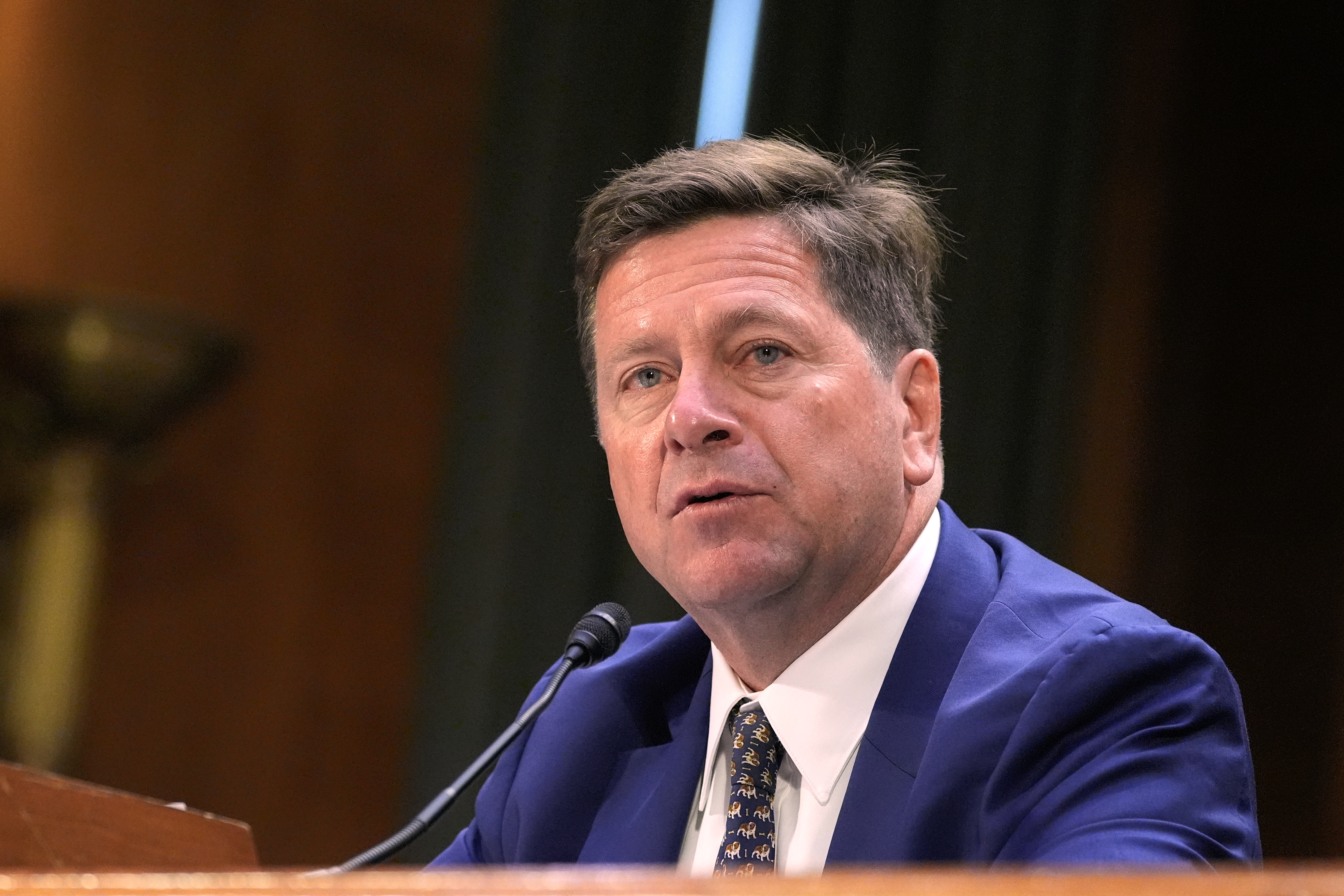
    President Donald Trump is expected to name spy chief Jay Clayton as his new top adviser on artificial intelligence, according to three people familiar with the decision, a move that cements the administration’s handling of the new technology as a matter of national security.

    Clayton, a former U.S. attorney and Securities and Exchange Commission chairman, was confirmed as the leader the Office of the Director of National Intelligence in July. He is expected to continue to hold that role, one of the people said. All three individuals spoke on the condition of anonymity to describe a personnel move that has yet to be publicly announced.

    CBS News first reported that Trump was expected to choose Clayton for the position.

    The appointment comes as the Trump administration recalibrates its approach to AI. The previous czar, the investor David Sacks, promoted a policy aimed at allowing the technology to develop as fast as possible. But in the months since Sacks left his post in March, officials have increasingly been grappling with cybersecurity threats posed by the latest generation of models and the danger posed by AI agents going rogue online. Sacks has continued to influence thinking within the administration as an informal adviser outside of the government and as co-chair of the President’s Council of Advisors on Science and Technology. Sacks and Clayton have a close relationship, according to one of the people briefed on the upcoming announcement.

    A White House official said any personnel moves would be announced by the president. “Any reporting until then is baseless speculation,” the official said.

    The administration has resisted calls in recent weeks by some in the industry and on Capitol Hill to slow down the pace of development and adopt new regulations. But on Tuesday it convened tech executives for a White House lunch that culminated in the leading AI companies signing a promise to develop new systems safely and bring in outside oversight firms. The following day, a Federal Trade Commission official said the panel had opened an investigation into AI companies Anthropic and OpenAI. (The Washington Post has a content partnership with OpenAI.)

    Joel Thayer, a senior adviser for technology at the America First Policy Institute, a Trump-aligned think tank, said the developments showed how the administration’s handling of AI companies was “maturing.”

    “These guys are under watch,” Thayer said. “The government has a spotlight on them.”

    The industry executives’ pledge is voluntary and amounts to what Trump called “self-policing.” But it won the backing of figures who have bitterly clashed over how serious of a risk AI poses. Sacks, who attended the lunch, endorsed it. So did Jacob Coxon, a former Anthropic researcher who resigned last month, saying the technology could wipe out humanity and triggering a wave of panic in Washington.

    The agreement means Clayton will step into his new role at a time of relative calm.

    “Super intelligence is a national security issue,” Clayton said in a CNBC interview the day after the lunch, using Trump’s preferred name for AI. “That was something that was recognized yesterday by not just the industry leaders, but everybody in the room. The commitment there to the American people, and the safety and security of the American people was palpable throughout the meeting.”

    Trump nominated Clayton, a loyal ally and regular golf partner of the president’s, to lead the intelligence office in June. Many Senate Democrats initially said they supported the choice. But he refused in his confirmation hearing to say definitively that Joe Biden had won the 2020 election, and the final vote fell along party lines.

    The AI role will not require Senate confirmation.

    The shifting thinking that led to Clayton’s appointment began months ago, when Anthropic said it had developed a new model called Mythos that it deemed too dangerous to publicly release. The company said it had new abilities to find vulnerabilities in computer code and help hackers exploit them.

    Officials scrambled to understand the risks to government systems and critical sectors of the economy. Driven by alarm among banking industry leaders, Treasury Secretary Scott Bessent played a key role in shaping the administration’s response. Last week, Trump batted down reports that Bessent was in line to be the new AI czar.

    In May, the White House settled on issuing an executive order calling on leading AI companies to voluntarily share their latest systems with the government ahead of their release, giving federal experts a chance to weigh security risks. Despite no longer holding an official government position, Sacks continued to wield influence and made a last-minute call to Trump that caused the order to be delayed and revised.

    But even after the order was signed in June, new dangers continued to emerge. The following month, ChatGPT maker OpenAI disclosed that a swarm of agents created by its systems had broken free and breached another AI company. Other firms said they had suffered similar breakouts.

    Then came Coxon’s resignation in September, which reignited a long-simmering debate in AI circles about whether a sufficiently powerful version of the technology would bring about humanity’s downfall.

    Trump dismissed the fears a “hoax” in fiery social media posts. But he later said he would name a new czar and create an “AI Force.” The White House has not detailed what the force will do, but in an interview with Time magazine published this week, Trump described it as “a group of very smart people that understand it, who will be advising me.”

  • Cheltenham will consider canceling its pool agreement on Tuesday

    Cheltenham will consider canceling its pool agreement on Tuesday

    Cheltenham’s commissioners will consider terminating a controversial public pool contract at a special meeting Tuesday, the township announced Friday morning.

    The commissioner board had approved the $4.5 million contract earlier this year as a ground lease to Melrose Pool LLC, a new business entity affiliated with a developer who’s building houses, shops, and a medical center at the former Melrose Country Club.

    The ground lease was signed in July by the cofounder of BG Capital, which is developing the country club property, on behalf of Melrose Pool LLC. But no LLC under that name appears to have been registered with Pennsylvania until September, according to state records.

    Resident Sam Thacker sued in July, arguing the ground lease is really a construction contract that should’ve been subject to bidding rules.

    The special meeting announcement came as the township faces a Commonwealth Court appeal process that Thacker’s lawyer, Christopher McCabe, has estimated could take a year.

    “The Special Meeting of the Board was called due to concerns that the delays already being caused by the litigation could ultimately prevent successful completion of the pool project under the agreed upon terms,” Cheltenham’s spokesperson Lauren Walter wrote in an email Friday.

    It was not immediately clear whether the township would be on the hook for any money the developer has already spent toward constructing the Melrose pools.

    The Melrose project would put three public pools next to the new development to replace Conklin Pool, which would close. The township says it would cost more than $4.5 million to sustainably replace Conklin.

    “I’m encouraged that they are listening to their constituents in bringing the issue before the public,” Thacker texted Friday. “Terminating the lease and moving forward with a transparent bidding process would bring a welcome end to the costly legal proceedings.”

    The meeting is scheduled for Oct. 6 at 5:30 p.m., online and at the township administration building.

    This suburban content is produced with support from the Leslie Miller and Richard Worley Foundation and The Lenfest Institute for Journalism. Editorial content is created independently of the project donors. Gifts to support The Inquirer’s high-impact journalism can be made at inquirer.com/donate. A list of Lenfest Institute donors can be found at lenfestinstitute.org/supporters.

  • U.S. hiring slows and unemployment ticks higher with a month remaining before Americans head to polls

    U.S. hiring slows and unemployment ticks higher with a month remaining before Americans head to polls

    WASHINGTON — U.S. employers added a disappointing 29,000 jobs and the unemployment rate ticked up last month, the government reported Friday, a month before voters go to the polls in pivotal midterm elections at a time of discontent over the high cost of living and the state of the economy.

    Hiring dropped from a revised 133,000 in August, the Labor Department said. The unemployment rate rose to a still-low 4.2% from 4.1% in August.

    Economists had expected September payrolls to come in around 90,000.

    Labor Department revisions also shaved 60,000 jobs off combined July and August payrolls.

    The new hiring data could draw the Federal Reserve’s attention back to hiring and jobs, given that one of the central bank’s two mandates is to seek maximum employment. Many Fed officials have said in recent weeks that they are primarily focused on their other mission, which is combating inflation. With the job market looking a bit weaker, the Fed may be more inclined to keep its key rate unchanged when it meets next month, rather than raise it.

    Average hourly wages were up just 3% last month from a year earlier, the smallest year-over-year gain since May 2021. “In this data, there is no sign that the labor market is stoking inflation,” said Luke Tilley, chief economist at Wilmington Trust.

    Still, the unemployment rate remains low and inflation has been above the central bank’s 2% target for more than five years, so the Fed’s concern about elevated prices is still front and center.

    Federal, state, and local governments cut 17,000 jobs last month. Professional and business services companies, which provide administrative and technical expertise, trimmed 9,000 jobs.

    Healthcare companies created 17,000 jobs in September, but that was barely half the 33,000 they’ve added, on average, each month for the past year. Bradley Saunders, an economist at Capital Economics, wrote that the slowdown in healthcare hiring might reflect the Trump administration’s revocation of work authorizations for 350,000 Haitians.

    Construction companies added 11,000 jobs and manufacturers 9,000.

    Unemployment rose partly because 485,000 people entered the workforce and not all of them found jobs right away.

    The U.S. job market has proven resilient in the face of a series of shocks — trade wars, persistent inflation, high interest rates, and a conflict with Iran that has driven energy prices higher. Friday’s jobs report is the last one that will come out before the Nov. 3 elections that will determine whether President Donald Trump’s Republicans maintain full control of Congress.

    Futures for the S&P 500 and Nasdaq composite added to their gains after the data was released on growing hopes that the Fed will hold off on a rate hike. Treasury yields moved lower.

    Yet what makes Wall Street happy differs starkly with what brings joy on Main Street.

    The U.S. job market has recovered from a dismal 2025, but most Americans are still unsettled about the state of the economy and the high cost of living.

    A Thursday poll from the Associated Press-NORC Center for Public Affairs Research finds that only 17% of U.S. adults approve of Trump’s handling of the cost of living. Just 26% approve of his handling of the economy overall, marking a new low.

    U.S. consumer confidence dropped this month to the lowest level in more than a decade, according to an index published by the Conference Board. One reason: More than 28% of respondents told the business think tank that they expect fewer jobs to be available in six months, double the 14% who expect more.

    The online jobs site Glassdoor reports that its employee confidence index, based on how workers view prospects for their own companies, dropped last month to the lowest level in records going back to the beginning of 2016, a period that includes a pandemic. It was the index’s third record low this year.

    “Employee confidence has been continuously grinding downward over the last year as workers grow increasingly anxious about everything from layoffs to AI,’’ said Glassdoor chief economist Daniel Zhao.

    The public’s misgivings about jobs partly reflect an odd feature of the current labor market: Employers aren’t laying off many workers, but they aren’t hiring many either. A Labor Department measure of gross hiring — before subtracting those who quit or lose their jobs — has been stuck in a rut for more than two years.

    So economists describe a “low-hire, low-fire” job market in which those who have jobs are mostly secure, but jobseekers struggle to find work.

    “People know that being laid off is unusually costly right now,” said Glassdoor’s Zhao. “They hear from their friends how long they’ve been out of work and had such a difficult time finding a job. That does make layoffs even more scary than usual.”

    In that chilly environment, fewer workers are willing to quit their jobs. “They often feel stuck,” Zhao said. “Workers aren’t finding there’s opportunity on the open market to find a better job — one that pays more or offers better work-life balance.’’

    Employers — businesses, government agencies, and nonprofits — have added an average 68,000 jobs a month so far this year. That’s a big improvement on the 9,700 average new jobs created every month in 2025, the weakest hiring outside a recession since 2002.

    At one time, 68,000 jobs a month would have been mediocre at best. But the United States doesn’t need as many jobs as it once did to keep unemployment from rising. Because of baby boomer retirements and Trump’s immigration crackdown, there are fewer people competing for work, and the break-even point could now be as low as zero jobs a month, down from 150,000 a year or two ago.

    “I think this is roughly where we’re going to stay,” said Tilley at Wilmington Trust. ”I expect job growth to remain in this 25,000 to 75,000 band as we go along.”

    Anne D’Innocenzio and Christopher Rugaber contributed to this article.

  • Kennedy Center Honors will move to Capital One Arena as closure drags on

    Kennedy Center Honors will move to Capital One Arena as closure drags on

    The Kennedy Center Honors will take place Dec. 7 at the Capital One Arena, the center announced Friday, breaking tradition by holding the tribute ceremony off-campus as a battle rages over its closure.

    Most other details about the honors — namely, who will receive the awards and who will broadcast the show — remain a mystery, months after they would ordinarily be public.

    A Kennedy Center spokesperson said these will be announced at a later date.

    The annual black-tie gala and television broadcast is the center’s flagship program and usually its largest fundraising event. It generally takes place on a weekend in December, during which five honorees are recognized by the American government for their contributions to the arts. They traditionally received medallions, met the president at the White House and gave speeches during a dinner at the State Department before attending a star-studded Sunday ceremony in the Kennedy Center’s Opera House.

    The honorees — which have included Leonard Bernstein, Queen Latifah, George Clooney, Led Zeppelin, Gladys Knight, Billy Crystal, and the Grateful Dead, to name a few of the almost 270 honorees since its inception in 1978 — are usually announced in midsummer.

    Last year, amid turmoil from President Donald Trump’s takeover of the center and remake of its board, the announcement came late, in mid-August. The year before, it arrived in July along with both the broadcast and ceremony date.

    It is October, and there’s no other word on the details.

    We don’t know who is in the 49th class of honorees or what kind of crowd will greet them: The program’s venue, Capital One Arena, which can hold roughly 20,000 people at max capacity, dwarfs the 2,347 seats of the center’s Opera House.

    We don’t know who will broadcast it. During a board meeting last year, Trump floated the idea of having networks bid to air the show, which has been broadcast on CBS since its debut. (Last year’s remained on CBS.)

    Finally, we don’t know who would host it. Trump, who avoided the honors in his first term, famously played the role himself at last year’s ceremony, something a president had never before done. He also said he was “about 98 percent involved” in picking the honorees — Michael Crawford, Gloria Gaynor, Kiss, Sylvester Stallone, and George Strait — which are generally chosen by committee.

    Asked for details this week, the White House referred us to the Kennedy Center, which provided the announcement.

    The center had maintained that the honors, along with the Mark Twain Prize, would continue somewhere off-site during the building’s two-year closure for repairs.

    “It will definitely go forward,” Richard Grenell told WTOP in February, before he departed as president of the Kennedy Center. At the time, he predicted “it will probably just be in a smaller venue, which just means ticket demand will be even higher.”

    That full closure hasn’t started yet, according to the center. Instead, the main building is closed temporarily, leaders say, while they check on the building’s safety. Those checks could take another week or two, according to a Wednesday staff email reviewed by the Washington Post.

    But “this is an assessment timeline,” the email read, “not a reopening date.”

  • Russian aerial strikes snarl traffic on 3 Kyiv bridges in a new disruption tactic

    Russian aerial strikes snarl traffic on 3 Kyiv bridges in a new disruption tactic

    KYIV, Ukraine — Russian aerial attacks forced the partial closure Friday of three bridges over the Dnipro River in Kyiv, the Ukrainian capital’s mayor said, in Moscow’s latest effort to disrupt life in the city.

    Meanwhile, Ukraine’s top diplomat said officials have received separate proposals for a partial truce with Russia from the United States, India, Turkey, and Egypt. The proposals envision halting attacks on energy infrastructure, which have caused fuel shortages in Russia and power outages in Ukraine, and on Black Sea shipping needed to get vital grain exports to world markets.

    The Russian strikes forcing the full or partial closure of three of Kyiv’s six road bridges caused traffic logjams and appeared to be a new tactic in its campaign to torment the city’s residents. Previously, Russia has hit apartment blocks, supermarket warehouses, gas stations, and data centers, among other targets, in an escalation of attacks.

    Oleksandr Pihalo, a Kyiv resident, said traffic was “jammed solid” and it took him 45 minutes to cover 2 ½ miles. “It’s a total mess on the road today,” he told the Associated Press.

    One of the three bridges was hit again on Friday afternoon, Mayor Vitalii Klitschko said.

    Civilians “are bearing the brunt of this war,” the U.N. High Commissioner for Human Rights, Volker Türk, said in Geneva on Friday.

    “The war in Ukraine is a human rights catastrophe that is growing and intensifying by the week, causing unfathomable pain to civilians,” he said. “Across Ukraine, people are living in constant dread.”

    While the aerial war has intensified in recent months, fighting along the roughly 770-mile front line snaking through northern, eastern, and southern Ukraine has been virtually deadlocked. Russia invaded its neighbor more than 4 ½ years ago, and there are no concrete signs that a peace settlement might be possible.

    However, Ukraine has this year made some progress against Russia’s bigger army, according to the Institute for the Study of War.

    Russian forces lost control over almost 116 square miles of Ukraine between March and September, the Washington-based think tank said in a report late Thursday. Also, it said that the Russian military suffered over 46,000 casualties in September, the highest monthly number this year. It did not say how many Ukrainian troops were killed or wounded.

    Zelensky says sanctions can stop Russian drones and missiles

    Russia fired more than 100 drones at Ukraine overnight, striking Kyiv and eight other regions, Ukrainian President Volodymyr Zelensky said. Almost half of the drones were the jet-powered type that are especially hard to stop, he said.

    A drone hit a high-rise apartment block in Kyiv, killing one person, he said. At least four people were reported wounded elsewhere.

    Zelensky repeated his appeal for foreign countries to close loopholes in international sanctions on Russia and to add more restrictions on its trade. He said Russia’s drones and missiles are “critically dependent” on foreign components.

    “Every Russian drone can actually be stopped right at the production line,” Zelensky said in a post on X.

    Ukraine has also bombarded Russia with the long-range drones and missiles it now produces, aiming at military manufacturing plants and oil refineries.

    The Russian Defense Ministry said Friday that its air defenses overnight downed 646 Ukrainian drones over Russian regions, occupied Crimea, the Sea of Azov and the Black Sea.

    One person was wounded in Russia’s southwestern Volgograd region, Gov. Andrei Bocharov said. The attack targeted “industrial infrastructure,” he said, without providing details.

    Ukraine is ready for a truce on energy strikes and the Black Sea

    Ukraine’s Foreign Minister Andrii Sybiha said the partial truce proposals presented to Kyiv by four countries were the first time India has offered to play a role.

    India is trying to balance its ties with Russia against its growing partnerships with the United States and other Western powers. A new U.S. sanctions package on Russia could impose up to 100% tariffs on New Delhi as a major importer of Russian oil.

    Sybiha said Kyiv is ready to accept a ceasefire if it stops Russian attacks on Ukraine’s power grid — as well as Ukrainian strikes on Russian oil refineries — and on cargo vessels exporting grain and other farm products through the Black Sea.

    “We are ready for an energy and Black Sea ceasefire, but only in that combination. Energy and a ceasefire in the Black Sea,” Sybiha told reporters Thursday, in comments embargoed until Friday.

    He repeated Ukraine’s offer of an unconditional ceasefire on the front line. But Moscow has rejected a ceasefire, saying a comprehensive peace deal must be agreed rather than a temporary truce.

    Russia’s Deputy Prime Minister Alexander Novak said Friday that Ukraine attacked four Russian oil refineries overnight, but air defenses fended off the attacks and key equipment wasn’t damaged.

    The government and companies have worked hard to improve protection of refineries, he said. Russian President Vladimir Putin decreed in August that the state can temporarily seize control of critical infrastructure facilities if private owners fail to protect them or rebuild them after Ukrainian strikes.

    It wasn’t possible to verify either side’s claims.

    Russia is stockpiling ballistic missiles, Ukraine says

    Sybiha said Ukraine is requesting some 300 Patriot missiles from partner countries because intelligence services estimate that Russia is holding 600 ballistic missiles in reserve and can produce up to 140 ballistic missiles per month.

    The U.S.-made Patriot air defense systems can effectively defend against ballistic missiles, which fly fast and drop steeply, but they are in short supply due to the Iran war.

    Ukraine needs more funding and quickly, foreign minister says

    Ukraine urgently needs funding in order to contract future drone production, so there are no gaps in supply at the beginning of next year, Sybiha said.

    Kyiv faces a projected budget deficit of roughly $27 billion this year, although the European Union has promised to help meet its financial requirements.

    The European Commission announced Friday it had disbursed €2.9 billion ($3.3 billion) to Ukraine in its latest batch of financing. Zelensky said the amount would help Ukraine’s financial stability and strengthen its defense.

    Russia is also facing economic and financial challenges because of high military spending and debt.

  • Three animals in Gloucester County have tested positive for rabies this week

    Three animals in Gloucester County have tested positive for rabies this week

    One person and a dog were exposed to rabies in Glassboro after coming into contact with an infected bat on Tuesday — one of three animals in Gloucester County to test positive for the disease this week, according to public health officials.

    The Gloucester County Health Department announced that in addition to the bat near Joseph L. Bowe Boulevard, raccoons found near Florence Avenue in Pitman and Quest Court in Mantua both tested positive for rabies on Thursday.

    This week’s cases come not long after a rabid raccoon bit a Glassboro man in July.

    The agency is advising residents to make sure their pets are up-to-date on their rabies vaccinations and to avoid contact with wildlife and stray animals.

    Anyone bitten or scratched by a wild animal should wash the area with soap and water, seek medical attention, and contact local animal control or health officials.

  • G7 nations will release 100 million barrels of oil and diesel fuel after prices soar

    G7 nations will release 100 million barrels of oil and diesel fuel after prices soar

    WASHINGTON — The Group of Seven wealthy democracies said Friday that they plan to release 100 million barrels of oil and fuel products in the coming weeks, starting with “substantial” amounts of diesel after the fuel recently hit record high prices in the United States.

    President Donald Trump said the diesel release would happen “immediately,” echoing a G7 promise to start “immediately” with a “frontloaded substantial release” of diesel within the next 20 days and the rest over four months.

    Trump and his Republican Party face pressure to address surging prices ahead of the Nov. 3 midterm elections, and Trump announced the action Friday on social media. The president’s approval ratings on the economy hit a new low, according to an AP-NORC poll, as the Iran war and his trade battles have increased U.S. prices for oil and other goods.

    Gas prices in the U.S. and abroad have soared during the eight-month-long war, a cost Trump has repeatedly said is worth it for making sure Iran does not obtain nuclear weapons. The national average for a gallon of diesel in the U.S. was $6.37 on Friday, according to AAA, after hitting a record $6.52 on Sept. 22. Diesel prices have hit records in Europe, too.

    The release of diesel in Europe might mean less exports of diesel from the U.S., which could lower prices by 25-50 cents per gallon after a few weeks, said Michael Lynch, distinguished fellow at Energy Policy Research Foundation, a non-partisan research institution focused on energy and economics.

    Macron says the decision should bring down prices

    France holds the rotating presidency of the G7 group and made the announcement in a statement released after videoconference talks that Macron presided over. The G7 countries are Canada, France, Germany, Italy, Japan, the U.K., and the U.S., plus EU representation.

    The release follows on from a March announcement that International Energy Agency member countries would release 426 million barrels of oil and products to stabilize the oil market. European Union countries committed about 92 million barrels, a promise weighted toward refined products made from crude such as diesel.

    “This common decision and this unity should bring down prices,” Macron said. “The volumes we’re releasing should also add liquidity to the market and bring down prices.”

    In addition to the rise in the price of the crude oil from which diesel is made, other factors include the decision by Russia to ban exports due to Ukrainian drone strikes on its refineries. Europe does not import Russian diesel, but other buyers of Russian diesel such as Turkey and Latin American countries must now compete with Europe for available barrels.

    Meanwhile, refined product shipments from the Persian Gulf producers have fallen due to war damage and blocked export routes.

    The statement pushed U.S. oil prices down 2% but “the impact was lessened by lack of clarity on an important question,” said Pavel Molchanov, investment strategy analyst at Raymond James. Is the 100 million barrels in addition to the amount already agreed in March, or “is this the final portion of the existing pledge?” he said.

    The G7 says export bans are off the table

    Some Republicans in the U.S. had called for Trump to ban U.S. exports of diesel to try to bring domestic prices down. But the G7 statement said the group agreed not to limit energy exports to each other. Oil market analysts warn a U.S. export ban could lower prices in the short term but eventually backfire by reducing supplies of gasoline since diesel output can’t be lowered without also cutting overall refinery production.

    Asked about a potential U.S. export ban on Friday, Trump said “we were never going to do it.”

    “We’re not going to be doing the export ban,” Trump told reporters at the White House. “We’re going to be doing what we’re supposed to do.” He added that Europe is making “a major world contribution, and so are we.”

    Experts say there are risks in the strategy

    The emergency release could also be a short-term fix with the potential to do long-term harm, said Jim Krane, energy research fellow at Rice University’s Baker Institute.

    “Draining stocks will reduce retail fuel prices for a while, at the cost of leaving Europe with less emergency cover,” Krane said. “At some point in the future Europe and the rest of the G7 will have to refill their strategic reserves. Normally they try to do this when prices are low. Nobody knows when that will happen. It’s a risk.”

    With two wars raging that involve attacks on refineries and exports, “it’s not the best time to be frittering away your emergency stocks — especially when there is no visibility on future prices or peace agreements,” Krane said.

    Trump had a conversation overnight with Macron about the need to address rising fuel prices and the availability of petroleum products, according to the French Embassy in the U.S. Macron on Friday then chaired the videoconference of G7 leaders to discuss the issue.

    Besides his call with Macron, Trump on Friday called in to the meeting with the G7 leaders to negotiate the release of the European diesel stockpiles, according to a White House official who was not authorized to speak publicly and spoke on the condition of anonymity.

    Trump on Thursday embarked on what he said would be a 32-day marathon of rallies to try to bolster his party’s chances for keeping control of the U.S. House and Senate in the November elections. The president has grown increasingly frustrated with what he sees as a disconnect between his achievements and the public’s view of his work. This week he gave himself an A-plus for his work on the economy but said “we’re doing an extremely poor job of promotion.”

  • ‘I couldn’t let all of them die’: Pilot on FlyDubai flight recalls sudden attack

    ‘I couldn’t let all of them die’: Pilot on FlyDubai flight recalls sudden attack

    NEW DELHI — The Indian pilot who was attacked during a FlyDubai flight this week said Friday that he opened the cockpit door despite grievous injuries, allowing passengers and crew members to overpower the copilot who had assailed him.

    “I was fighting for my life,” Capt. Smit Machchhar said on a video call from his hospital bed with Prime Minister Narendra Modi of India, in his first public remarks since the attack. Video of their conversation was released by the Indian government.

    “I was so badly hurt that I had fallen to the ground,” Machchhar said. “But I knew I had to act,” he added. “I could feel the aircraft was going down.”

    The attack, on a flight from Dubai, United Arab Emirates, to Tel Aviv, Israel, carrying about 170 passengers, sent the aircraft into a terrifying plunge. Israeli officials have said the copilot appeared to have tried to crash the plane after stabbing Machchhar, although investigators are still trying to understand the assailant’s motives and how the attack unfolded. Prime Minister Benjamin Netanyahu of Israel said the copilot had undergone “Islamist radical indoctrination” but did not elaborate.

    Passengers were able to overpower the attacker, while two people aboard with flying experience helped land the plane in Saudi Arabia.

    Machchhar, who said he had 17 years of flying experience, including 11 as a captain, said he knew instinctively what was happening to the aircraft, even as he lay injured on the cockpit floor. The Boeing 737 Max 8 he was flying plummeted more than 16,000 feet in 30 seconds during the attack.

    Machchhar told Modi that he recalled telling himself: “Smit, this is the last push, just do it. The door is right there.”

    “I was doing it to save myself,” he said, “but I also knew I couldn’t let all of them die.”

    Machchhar, who was hospitalized in Saudi Arabia then transferred to the UAE, told Modi that he was receiving good medical care.

    The episode has made him a hero in India.

    “Your courage and presence of mind — you made a decision within a fraction of a second, and saved so many lives,” Modi told the captain during their conversation. “You have made the entire country proud.”

    Modi’s office put out the video of the split-screen conversation on a day of nationwide protests in India, including in the capital, New Delhi. Protesters are demanding the resignation of the country’s chief election officer for trying to rig voter rolls in the favor of Modi’s party.

    Machchhar grew up in Mumbai and entered aviation almost by accident after attending a seminar on flying. He later became a captain and a trainer of aspiring pilots. In a podcast interview last year, he described flying as something he felt “blessed” to do and emphasized the importance of pilots being rested and prepared to perform under pressure.

    This article originally appeared in The New York Times.