Category: News

  • A 50-year-old partnership allows Haverford and Bryn Mawr students to take classes or even pick a major on the other campus

    A 50-year-old partnership allows Haverford and Bryn Mawr students to take classes or even pick a major on the other campus

    Caitlin Cowan chose Haverford College because she liked its Quaker roots and honor code and that it was a small campus near a big city.

    But when it came time to choose a major, she selected anthropology at nearby Bryn Mawr College.

    And that was no problem at all.

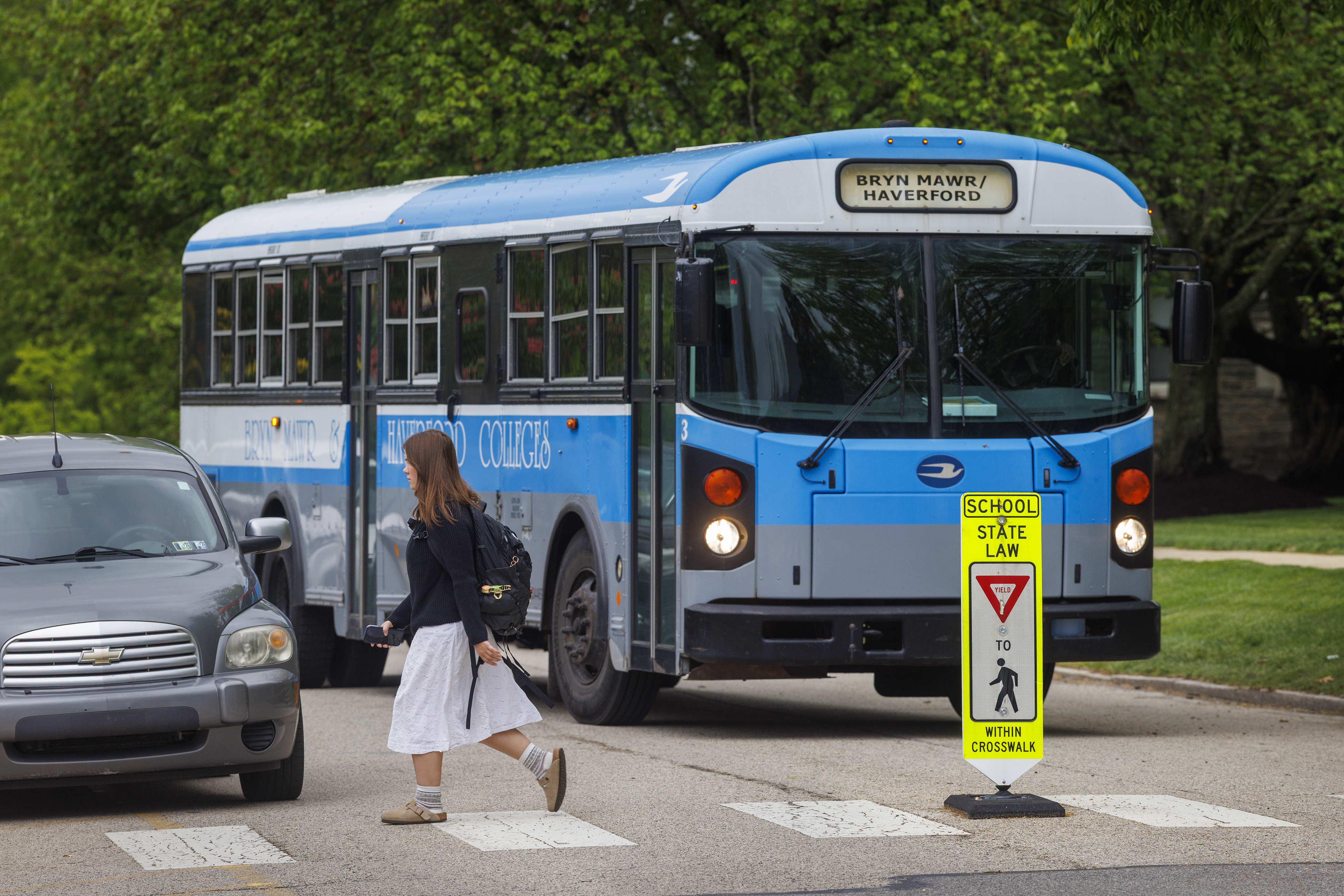
    For decades, the two colleges, just a five-minute shuttle ride apart, have allowed students to take classes, participate in clubs and programs, and eat in dining halls on each other’s campus for no additional charge. Students have even been able to live on the other campus, though college officials say few do.
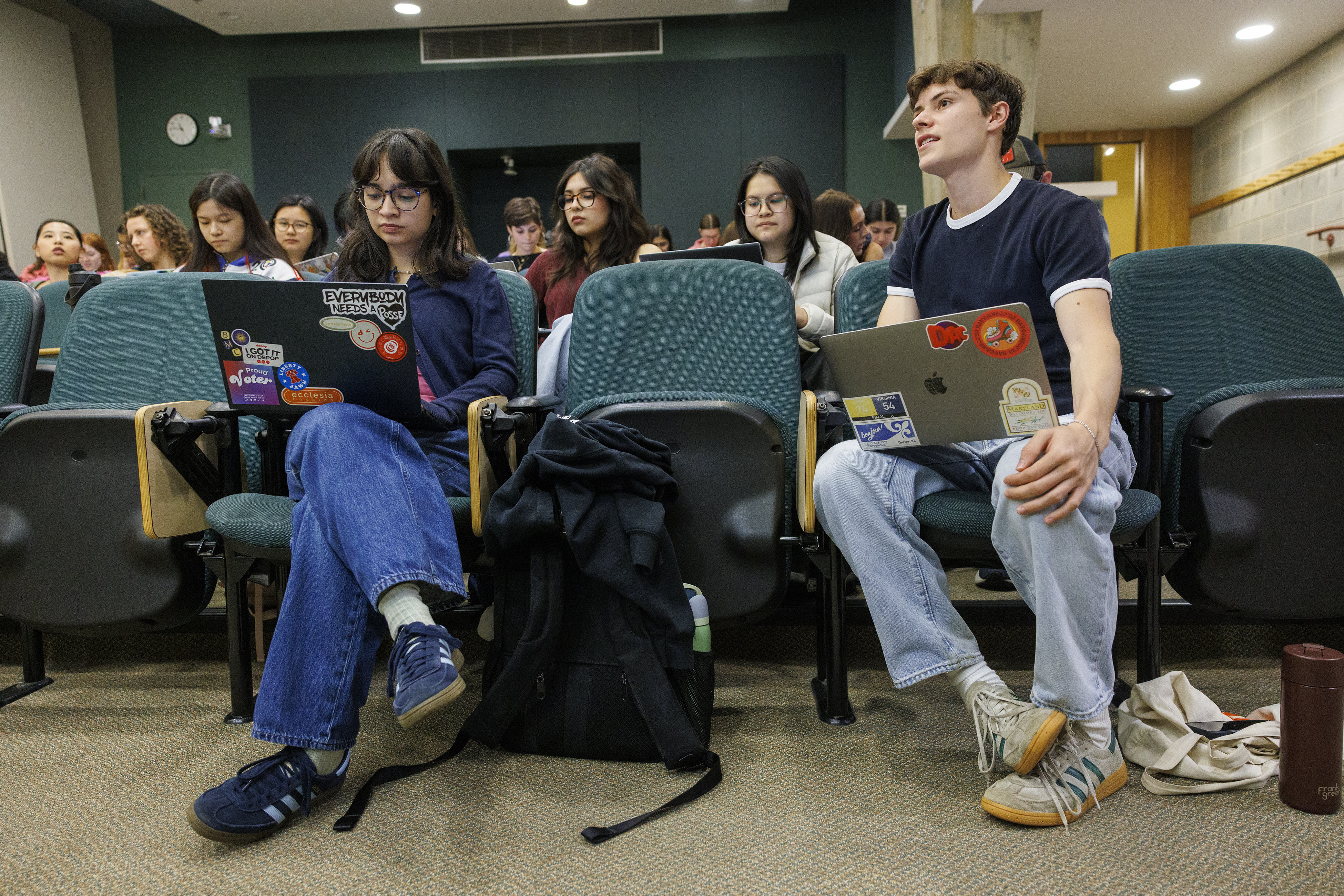
    At left is Anastacia Dulany a student at Bryn Mawr taking a Growth and Structure of Cities class along side Marco Calia a student from Haverford. The class was held at Bryn Mawr College where the Growth and Structure of Cities program is based. Alejandro A. Alvarez / Staff Photographer

    Many take advantage: During the fall 2025 semester, 40% of Bryn Mawr students took courses at Haverford and 42% of Haverford students did the same at Bryn Mawr. In total, there were more than 1,700 course registrations on the non-home campuses in fall 2025. (Haverford and Bryn Mawr students also can take classes at Swarthmore College and the University of Pennsylvania and select a major at Swarthmore.)

    The relationship between Haverford and Bryn Mawr — which together enroll about 2,800 students — opens many more options to students, allows faculty to collaborate, and saves money, college officials said. Both are highly selective liberal arts colleges; Bryn Mawr is a women’s college.

    “The academic offerings that we provide are exponentially larger than they would be without the partnership,” said Bryn Mawr president Wendy Cadge.
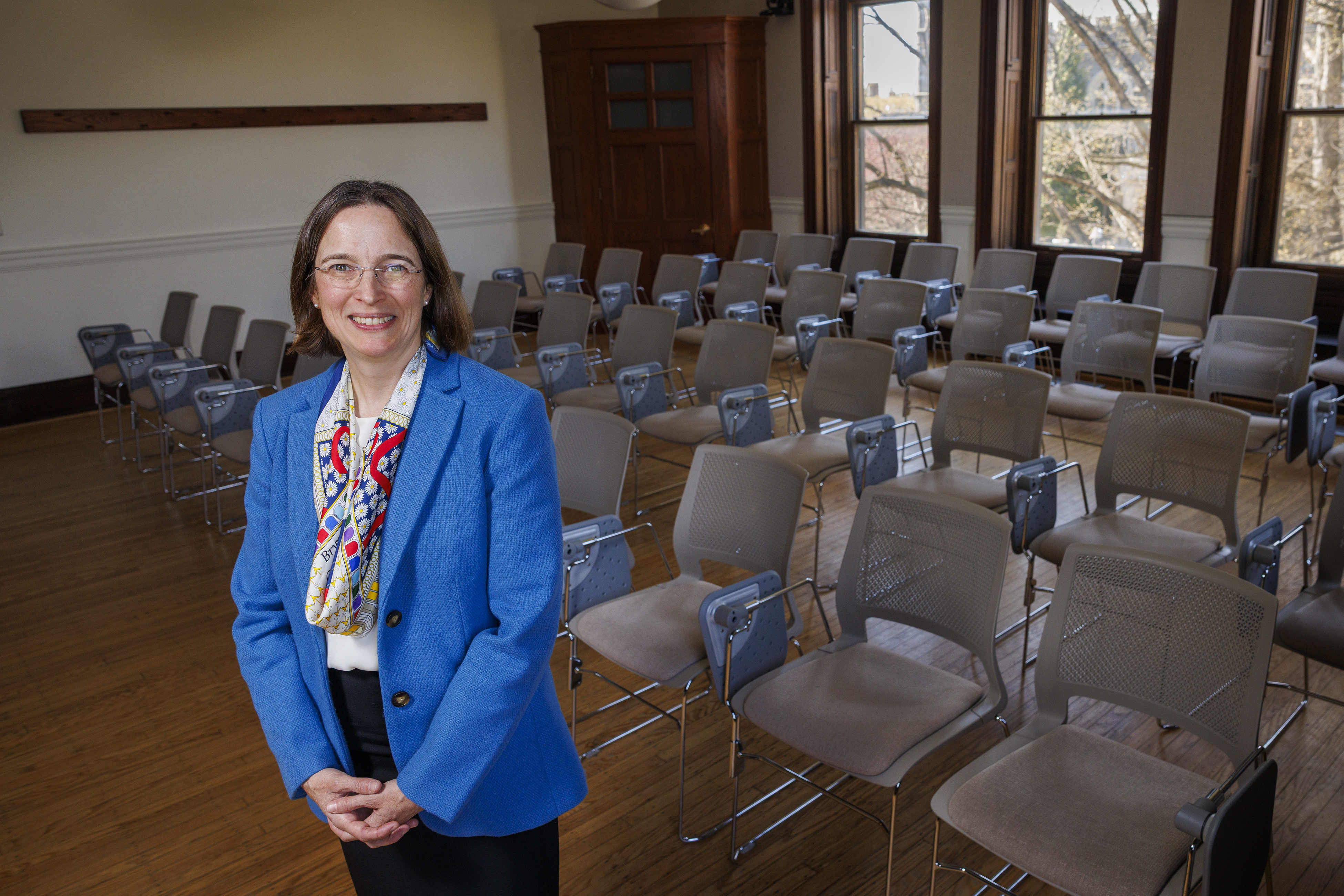
    Wendy Cadge, president of Bryn Mawr CollegeAlejandro A. Alvarez / Staff Photographer

    It was 1997 when Cowan, now an elementary school reading teacher in Minneapolis, got her degree from Haverford while majoring at Bryn Mawr. Now her daughter, Tabitha, 21, is enrolled at Bryn Mawr and is enjoying the benefits of both campuses, too.

    “It just broadens your world,” Tabitha Cowan said.

    Majoring in architecture studies and Spanish, she participates in the Bi-College flute choir, made up of two Haverford students and 11 Bryn Mawr students.
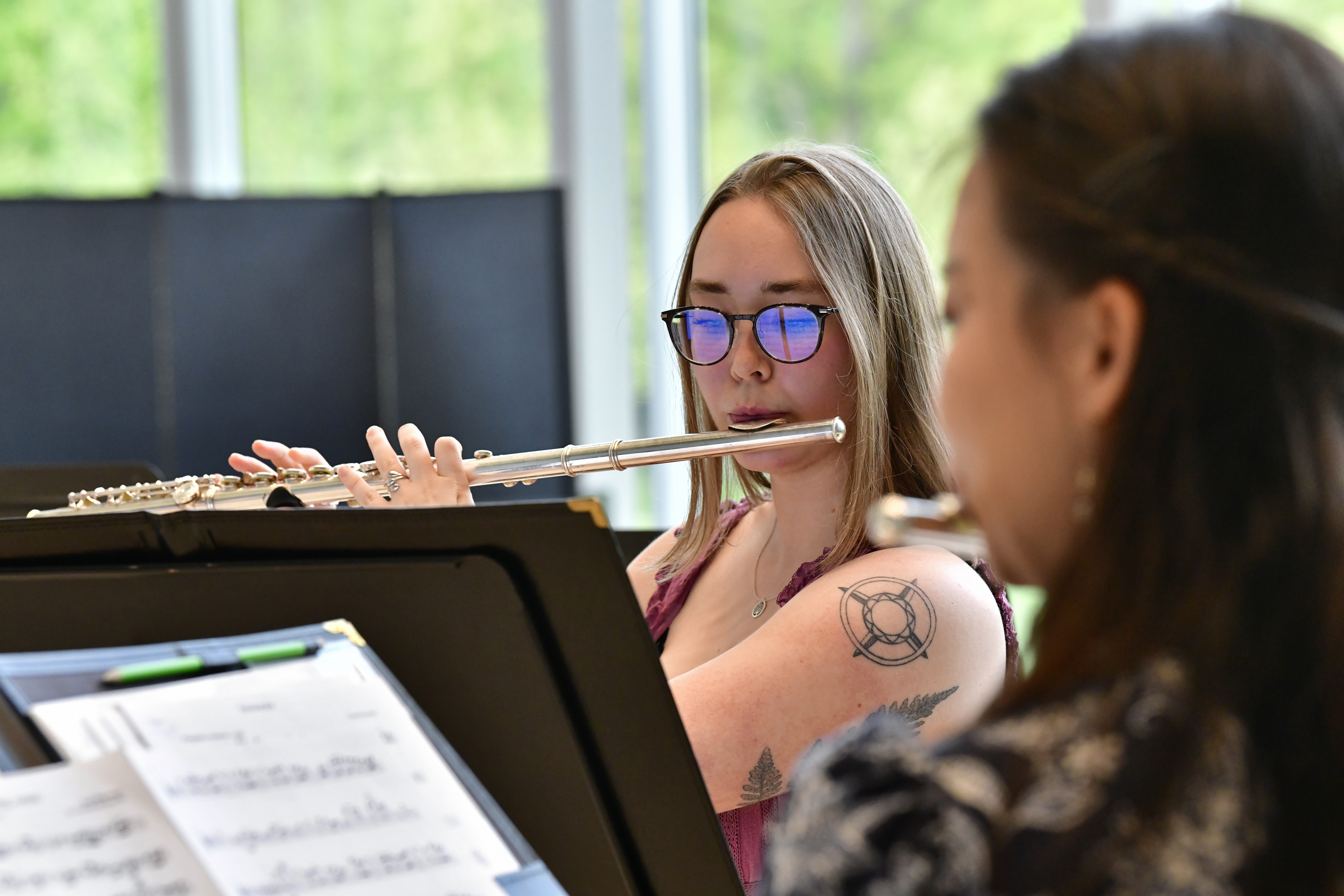
    Tabitha Cowan, a Bryn Mawr College student, plays the flute for the Bi-College Flute Choir.Courtesy of Bryn Mawr College

    “We have access to Haverford’s performance spaces because we do not have a music program here at Bryn Mawr,” she said.

    They practice twice a week, once at Haverford and once at Bryn Mawr.

    Joint majors and projects

    The colleges have been able to launch joint majors in technology-intensive, interdisciplinary fields like neuroscience — which has become the most popular major on Haverford’s campus — that would have been harder to support individually. It also means the schools share expanded instructional technology and library services.
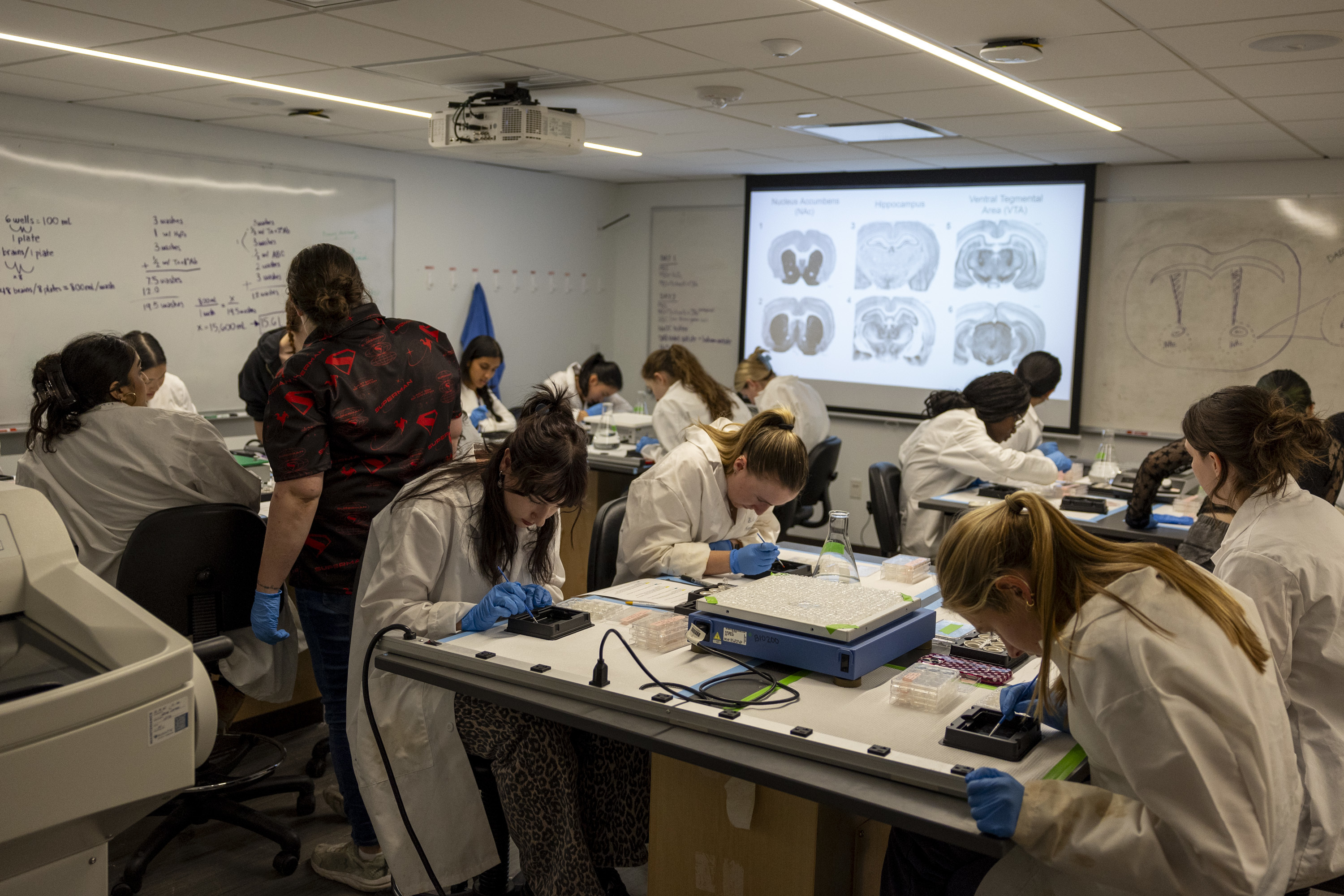
    Students from both Bryn Mawr and Haverford take a neuroscience class at Haverford College. Tyger Williams / Staff Photographer

    Faculty from both schools are working on joint projects that received institutional pilot grants, encouraging closer collaboration. One project that launched last semester is focused on developing a Jewish studies program, while another aims to reinvigorate Black studies. Others involve interdisciplinary training, chemistry, and narrative across languages and cultures.

    “We really do try to make it as seamless as possible,” said Bryn Mawr provost Dee Matthews.

    Students get one transcript, and colleges share non-salary operating costs, such as administrative overhead, for some of the offerings shared by the campuses, she said.

    “It’s a way in which we can have a large academic community while still preserving the scale of our individual institutions,” said Haverford provost Helen White.

    The two schools earlier this year re-upped a memorandum of understanding on the partnership, which started 50 years ago. The schools will explore new ways to make the most of the partnership and elevate its visibility for students.

    “We affirm that ‘each college is a better version of itself because of the richness of ideas, community, and organization made possible by the Bi-College connection,’” the memo states.

    There are about 75 such consortia nationally, with differences in how they collaborate, said Sarah Pfatteicher, executive director of the Five College Consortium in western Massachusetts. The two oldest were formed about a century ago, one in California and one in Georgia. More may start, given the political and financial pressures on higher education and the influence of artificial intelligence, said Pfatteicher, who has written a book about college consortia.

    “Any time there is pressure on higher education, particularly financial pressures, there is incentive to say, ‘What could we gain by working with our colleagues instead of trying to go this alone?’” she said.

    Complementary offerings

    The partnership between Haverford and Bryn Mawr — both of which have substantial endowments — has not been driven by finances.

    Each school brings unique features to the table. Bryn Mawr has a pool, Haverford a track. Bryn Mawr has art history and Haverford the fine arts. Haverford has music; Bryn Mawr has theater.

    The food is better at Bryn Mawr and the parties at Haverford, students say.

    “Certain sports teams at Haverford watch our menus and then come here because they think our food is better,” Cadge said. “It’s all the same food, but don’t tell.”

    Haverford student Gabriel Bernstein may differ. He said he and his track teammates often board the bus to eat at Bryn Mawr.

    “Bryn din,” he called it.

    In Bryn Mawr’s Class of 2025, 2% were enrolled in a major exclusive to Haverford, while 2.8% took a Haverford major with a Bryn Mawr component and 12.8% had a major shared by the colleges. For Haverford, 4.1% were enrolled in a major exclusive to Bryn Mawr, while 7.2% took a Bryn Mawr major with a Haverford counterpart and 11.1% had a shared major.

    Jet Li, a Haverford College student, arrives at Bryn Mawr College to take a class. Alejandro A. Alvarez / Staff Photographer

    ‘Deeply invested in the liberal arts’

    One day during the spring semester, a group of Haverford students got off the Blue Bus, which shuttles students back and forth between the campuses about every 20 minutes, They had arrived at Bryn Mawr to take a Chinese class not offered at Haverford.

    Meanwhile, Corry Varney-Irlam, 21, a Bryn Mawr student, boarded the bus to head to Haverford for a political science class.

    “It worked better with my schedule,” Varney-Irlam said.
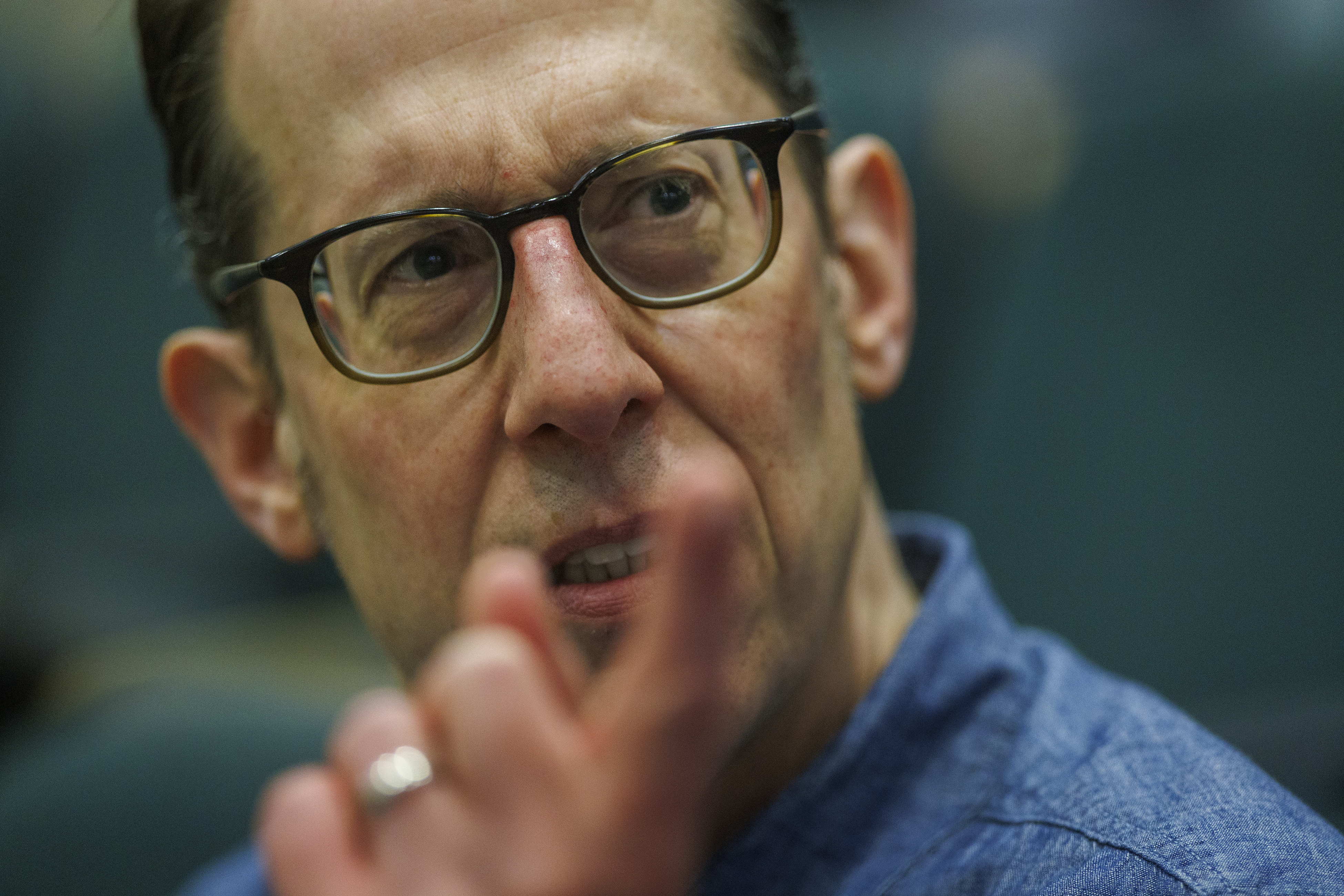
    Matt Ruben teaches in the Growth and Structure of Cities program at Bryn Mawr College. In his class of about 50 students, 12 are Haverford students. Alejandro A. Alvarez / Staff Photographer

    Bryn Mawr professor Matt Ruben teaches classes in the growth and structure of cities program, a major based at Bryn Mawr. In a recent class of 50 students, 12 were from Haverford. Typically, 40% to 50% of the program’s majors are Haverford students, he said.

    Students from the two schools have a lot in common, he said.

    “They’re all really highly skilled,” he said. “They’re highly engaged. They’re all highly motivated. And they’re all deeply invested in the liberal arts experience.”

    Some Haverford students were men — the partnership means males take classes at Bryn Mawr, a women’s college.

    Students said the gender mix in classes really didn’t matter.

    “I don’t mind it,” Varney-Irlam said. “There’s definitely a benefit to having predominantly women in Bryn Mawr classes. But I think that it’s nice to have a change of environment and more people around to socialize with.”

    Cowan said she enjoyed taking classes at Bryn Mawr in the 1990s because it seemed women had more space to talk and there was more support.

    “Sometimes men can take up a lot of space in the room,” she said.

    That is not as much of a factor now, said Ruben, the professor, because there is more gender fluidity, and different levels of consciousness about gender-related issues.

    “It makes a difference and it’s always going to make a difference, but it makes less of a difference than it did like 10 years ago,” he said.

    Madeline Dosen, left, a student at Haverford College, stands with her twin sister Daniela Dosen, (right) a student at Bryn Mawr College. They both played soccer for their respective schools.Courtesy of Daniela Dosen

    The Dosen family has seen the partnership from both sides. Daniela Dosen, 22, was a physics major at Bryn Mawr, while her twin sister, Madeline, majored in biology at Haverford. Both women played varsity soccer for their schools and graduated May 16. The colleges even coordinate commencements — one was in the morning, the other in the afternoon.

    First semester freshman year they had an 8 a.m. Spanish class together at Bryn Mawr. Daniela had a short walk, while her sister had to board the bus.

    “Sometimes we showed up in the same beach sweatshirt,” she said.
  • A Man found shot to death near the Quaker City Yacht Club

    Responding to a radio report of gunfire Sunday afternoon, Philadelphia Police found a man shot to death near the boat ramps of the Quaker City Yacht Club.

    It was just before 5 p.m., when patrol officers raced to 5198 Princeton Ave., where the yacht club is located tucked away near the Delaware River waterfront.

    Within minutes, paramedics pronounced the victim, whose name and age have yet to be released, dead on the scene.

    Investigators are currently working to determine the circumstances surrounding the shooting. No motive has been established, police said.

    The victim became the 59th homicide in Philadelphia in 2026, a nearly 40 percent decrease in killings from the same time last year.

    Anyone with information involving the shooting is encouraged to contact the Philadelphia Police Department’s Homicide Unit at 215-686-3334 or submit an anonymous tip by calling or texting 215-686-Tips.

  • Kennedy shows minimal engagement with vast health portfolio

    Kennedy shows minimal engagement with vast health portfolio

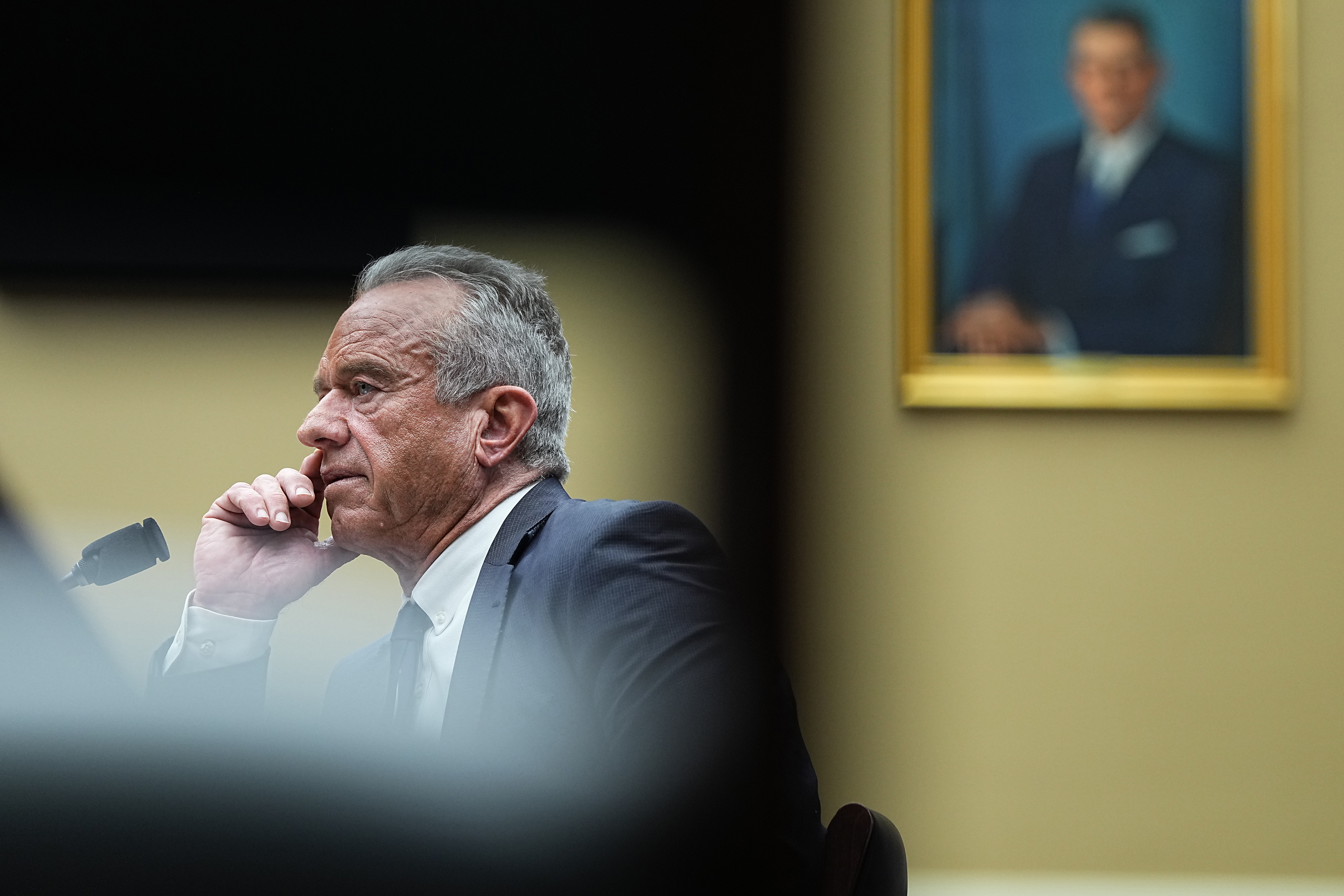
    WASHINGTON — Shortly after the World Health Organization declared the Ebola outbreak in Africa a public health emergency, a reporter asked Health Secretary Robert F. Kennedy Jr. if he was worried about the virus. Six Americans had already been exposed. His response was brief: “Yeah, we’re working on it.”

    In the nearly three weeks since, as the Centers for Disease Control and Prevention imposed travel restrictions to keep the virus from coming to the United States, Kennedy has made no public comments about the spreading outbreak. He has received few briefings about the virus from CDC scientists, although he speaks daily to the acting director, according to people familiar with his response.

    Kennedy’s approach to the crisis reflects his broader management of the Department of Health and Human Services, which affects the health of 340 million Americans and provides healthcare to 40% of the population through Medicare and Medicaid.

    Kennedy has shown little interest in managing the details of work in his department, according to multiple colleagues. Instead, they say, he is single-mindedly focused on his top priorities, including food recommendations and pesticide exposures, and hunting for evidence to support his long-held beliefs that vaccines are harmful.

    Deeply mistrustful of career civil officials, the secretary has surrounded himself with a close circle of handpicked advisers and stacked agencies with political appointees aligned with his views. While major posts have sat vacant and a wave of veteran health experts and scientists have departed, Kennedy has remained isolated from much of the department’s top staff.

    He rarely engages with members of Congress, colleagues said, unless he is asked to testify. He has made just one known visit to the CDC, after a gunman opened fire on its headquarters and killed a police officer last August.

    This examination of Kennedy’s leadership style is based on the accounts of a dozen people who have had direct contact with him as secretary, as well as other health department employees, all of whom spoke on the condition of anonymity to avoid retribution.

    Kennedy and the department did not directly address questions about his leadership style.

    The secretary’s detachment from much of the work of the agency, along with the administration’s deep staff cuts and his attacks on career staff, have driven down morale, they say. It’s a dynamic that could threaten the department’s ability to protect Americans in a crisis, according to public health experts and former secretaries.

    Critics say one of the most urgent problems is Kennedy’s failure to act more swiftly to address a leadership vacuum. There is no surgeon general. About half of the 27 institutes and centers at the National Institutes of Health are run by acting directors. The acting chief of the National Institute for Allergy and Infectious Diseases was recently fired, as was the nation’s top drug regulator.

    The leader of the Food and Drug Administration quit last month under pressure over tobacco policy. Kennedy fired the CDC director last August; it is now run on an acting basis by Jay Bhattacharya, who has another huge job as director of the NIH.

    “You would never accept a major corporation operating this way,” said Michael T. Osterholm, director of the University of Minnesota Center for Infectious Disease Research and Policy, who has advised health secretaries of both parties.

    “If the CEO lacked deep expertise in the company’s business and the leaders of its most important divisions were missing, investors would revolt,” Osterholm said. “Here, the stakes are much higher. The mission is protecting the health and safety of the American people, and we’re confronting serious disease threats without permanent leadership in some of our most important public health agencies.”

    To address the management gaps, the White House and Kennedy initiated a shake-up in February, elevating Christopher Klomp, a department official and former healthcare executive, to serve as the secretary’s chief counselor and smooth out operations. In a statement, Courtney Spencer, who left the Labor Department two weeks ago to become Kennedy’s top spokesperson, said the health department was “aggressively recruiting top talent to fill every remaining vacancy,” adding, “Nothing has slowed our ability to execute.”

    Kennedy’s allies say that while his management style may be different from that of his predecessors, he is leading in other ways by taking stands on matters of importance to Americans, including healthy eating and tackling chronic disease.

    “You do not come to Washington to challenge powerful interests, disrupt decades of business as usual, and demand accountability to make friends,” Mehmet Oz, director of the Centers for Medicare and Medicaid Services and a close ally of Kennedy’s, said in a statement provided by the health department. “You do it to deliver results.”

    Other advisers say Kennedy is also running into the realities of Washington, including a Congress that has refused to confirm some of President Donald Trump’s nominees.

    “Very predictably, you get into governing, you get into a toxic political environment, and a situation where there’s trillions of dollars of interest and you have the burden of having to do policy,” Calley Means, a close adviser to Kennedy, said at a recent forum hosted by Harvard University. “Nobody executes perfectly.”

    A remote presence

    Kennedy keeps a low profile at the health department’s headquarters, a hulking building that faces the National Mall near the U.S. Capitol.

    When he is in town, he exercises at his gym before work, then usually arrives at about 10 a.m. and leaves by 4 p.m., his colleagues say. He spends much of his day in closed-door meetings, according to those who work with him, and has little direct engagement with his staff.

    Every Tuesday at 10:30 a.m., the chiefs of the department’s 13 operating divisions gather in the secretary’s suite to update leadership on their activities. At the outset of his tenure, Kennedy was rarely there, either virtually or in person, according to three people familiar with his schedule. Since Klomp’s elevation, he now shows up once a month. But when he does attend, he often appears disengaged and spends the time scrolling on his phone, according to people in attendance. Several described him as “checked out.”

    Once, when he arrived to the meeting 15 minutes late, Kennedy offered a self-deprecating apology, according to one person in the room: “Thank you for putting up with my dysfunctional self.”

    Health department officials did not respond to a request for comment about the meeting or Kennedy’s remark.

    His lack of interest in matters that are not high on his priority list has meant that he has not engaged at critical moments, colleagues said.

    When measles killed two children in Texas early last year, Demetre Daskalakis, who led the response but has since left the agency, asked repeatedly to brief Kennedy but was rebuffed, he said.

    Susan Monarez, who briefly served as Kennedy’s CDC director before she was fired, had little direct interaction with the health secretary until she ran afoul of him on vaccine policy. She later told senators that during a series of tense meetings with the secretary, she was “directed to only work with the political appointees that he had put in place at CDC, and not to speak or work with the career scientists.”

    In the current Ebola crisis, Kennedy has left the department’s response to Bhattacharya, a health economist with no prior experience in public health even though he is leading the CDC. Bhattacharya, who also led the response to a recent outbreak of hantavirus, wrote an opinion essay published in the Wall Street Journal on Wednesday saying that while the “risk to the American public remains low, Ebola is dangerous.”

    A White House spokesperson, Kush Desai, said the agency’s “rapid and comprehensive response” to the Ebola outbreak proved that “under Secretary Kennedy’s leadership, HHS continues to safeguard the health and wellness of the American people.”

    Spencer, the HHS spokesperson, said the health department had “executed an immediate and coordinated response” under Kennedy’s leadership.

    But key vacancies inside the health department have made the response more challenging, people familiar with the situation said.

    The Administration for Strategic Preparedness and Response, responsible for pandemic preparedness and for standing up field hospitals and quarantine facilities in Kenya, is currently run on an acting basis by John Knox, a former Los Angeles firefighter who founded the group Firefighters4Freedom during the pandemic to fight vaccine mandates.

    As the Ebola outbreak has spread, Secretary of State Marco Rubio offered a tacit rebuke of Kennedy’s move last year to withhold funding from an international vaccine alliance, suggesting the State Department was taking back management of the U.S. relationship with the alliance.

    “We are going to reengage,” Rubio told lawmakers last week. “We need to drive this to an outcome.”

    A daunting portfolio

    Under any circumstances, the Department of Health and Human Services is difficult to run. It has 13 operating divisions covering a vast array of issues, such as child welfare and pandemic preparedness. Past secretaries from both political parties say there are three main ingredients for success: understanding the work of the divisions, strong crisis communication, and muscular coordination with state, local, and international health leaders.

    Tommy G. Thompson, who as health secretary to President George W. Bush faced complaints about his management of the 2001 anthrax crisis, spent a week at each one of the operating divisions at the outset of his tenure, and made frequent trips to Capitol Hill to advocate for the department. In an interview last year, he said he “would strongly suggest” Kennedy do the same.

    “The department is so vast and so complex,” Thompson said, “and you have to be prepared.”

    Kathleen Sebelius, a former Kansas governor who resigned as President Barack Obama’s health secretary after the flawed rollout of the healthcare.gov website, said she met with the division chiefs regularly, likening them to her cabinet.

    “My goal was to really be informed by the scientists, to make sure that NIH was at the table, that FDA was at the table, that our global health people were at the table,” Sebelius said in an interview. “I was really schooled by the people who had been there before and who knew what the hell they were doing.”

    Kennedy, by contrast, has delegated broad authority to Stefanie Spear, a longtime adviser who has been with him since his days as an environmental lawyer and functions as his protector and defender, according to people who know them.

    Spear runs meetings for the secretary, accompanies him on official trips, and keeps a list of his policy projects on a private spreadsheet to which his policy team has no access. There are more than 50 items on the list, one person who has seen it said.

    All requests for the secretary’s decisions and meetings go through Spear. When Kennedy is asked a question, his frequent response is “just run that by Stefanie.”

    Colleagues say that her tight control has slowed department operations.

    After Kennedy promised Congress that the FDA would investigate the safety of the abortion pill mifepristone, the agency proposed updating a set of sophisticated databases of electronic records it needed for the research. But the project was delayed for months by Kennedy’s office, according to two people with detailed knowledge.

    When a gunman opened fire on the CDC last August, Kennedy was fishing with Native American leaders in Alaska. Health department officials wanted to get a statement out to the news media. But it was held up for hours, several said, while Spear sought approval from the White House.

    Frustration with Spear, who served as Kennedy’s communications director during his campaign and oversees his public comments, has fueled some key departures.

    Kennedy is on his third top spokesperson; the first two quit in frustration, according to people familiar with their decisions. The secretary has also run through two chiefs of staff; he fired the first one, and the second was pushed aside in favor of Klomp.

    In a statement, Kennedy praised Klomp and Spear as “two of the most effective leaders in government.” He said Klomp had ”been instrumental in driving operational excellence, strengthening accountability, and ensuring HHS delivers results for the American people,” and that Spear “keeps our team focused on results and ensures the president’s and my priorities get across the finish line.”

    Klomp has moved quickly in the search for a new CDC director, with a nominee now awaiting Senate confirmation, as well as for other top leaders for the agency. He also brought in a new team of policy advisers to the secretary and instituted daily meetings between Kennedy and the leaders of the “Big Four” agencies: FDA, CDC, NIH, and the Centers for Medicare and Medicaid Services, according to three people familiar with the department’s operations.

    He has also sought to address low morale by starting a regular newsletter in which Kennedy addresses employees as “the dedicated professionals of HHS.”

    The secretary, however, has been out of the loop on some key decisions. When Tracy Beth Hoeg, the FDA’s top drug regulator, was fired by FDA leaders in May, the secretary did not learn of it until after it happened, according to three people familiar with the events.

    There is no question that Kennedy is changing the national conversation around health in America, especially healthy eating. While his vaccine agenda has so far been stymied by court decisions, he has scored “wins,” as he likes to call them, notably by flipping the food pyramid, persuading medical schools to revamp nutrition education, and convincing some food makers to abandon artificial dyes.

    He travels often and makes aggressive use of his platform to promote his priorities, including on social media and The Secretary Kennedy Podcast, which began in April. Last week, he made stops in Wisconsin to spotlight the work of dairy farmers and faith-based groups working in addiction recovery, and New Hampshire to announce an effort to combat Lyme disease.

    Colleagues say he also makes visits to Scottsdale, Ariz., where his son and daughter-in-law live, and Florida, where he stays at the Palm Beach mansion owned by Oz.

    After Memorial Day, the public got a glimpse of him there. Kennedy posted video of himself, in a suit and tie, capturing two black racer snakes on Oz’s patio. One of them bit him.

    This article originally appeared in the New York Times.

  • Philly’s 2026 Pride takes over Benjamin Franklin Parkway

    Philly’s 2026 Pride takes over Benjamin Franklin Parkway

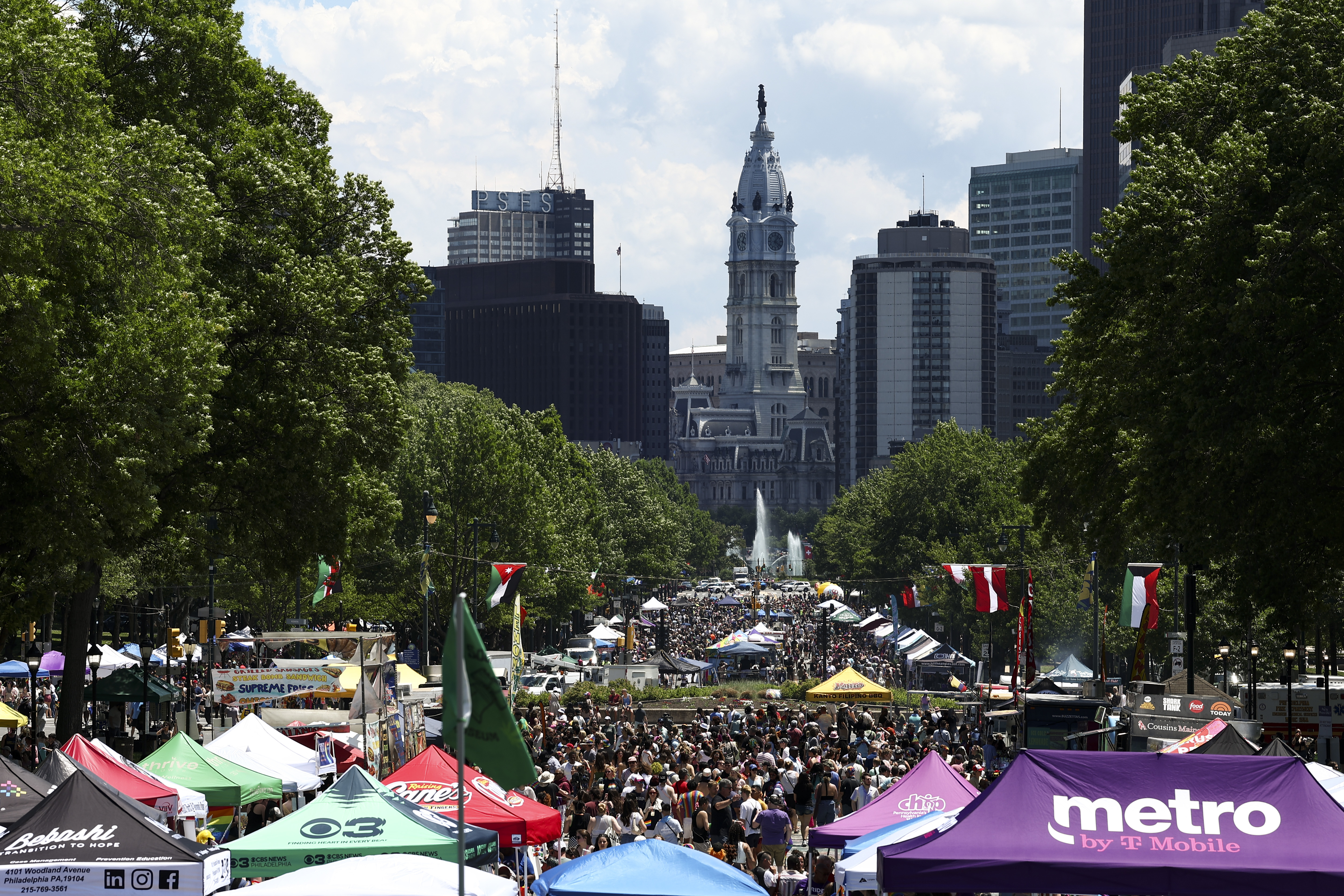
    With the sun shining and the grand vista of the Philadelphia Art Museum steps framing a new venue, crowds poured into Philadelphia’s 2026 Pride festivities on Sunday — the first time the LGBTQ+ event was ever hosted on Benjamin Franklin Parkway.

    “This is beautiful,” said Drew Galella, 27, of King of Prussia, toasting his boyfriend, Rich Jann, 42, also from King of Prussia, and their friend, Kaitlin Kirwan, 41, of South Jersey, with their first vodka lemonades. Regular attendees of Philly Pride events — hosted in the Gayborhood since 2022, and Penn’s Landing before then — they cheered the spacious festival grounds, which ran along the Parkway, from Eakins Oval to 21st Street. The celebration had stepped off at 11 a.m., with a parade starting at 13th and Locust Streets.

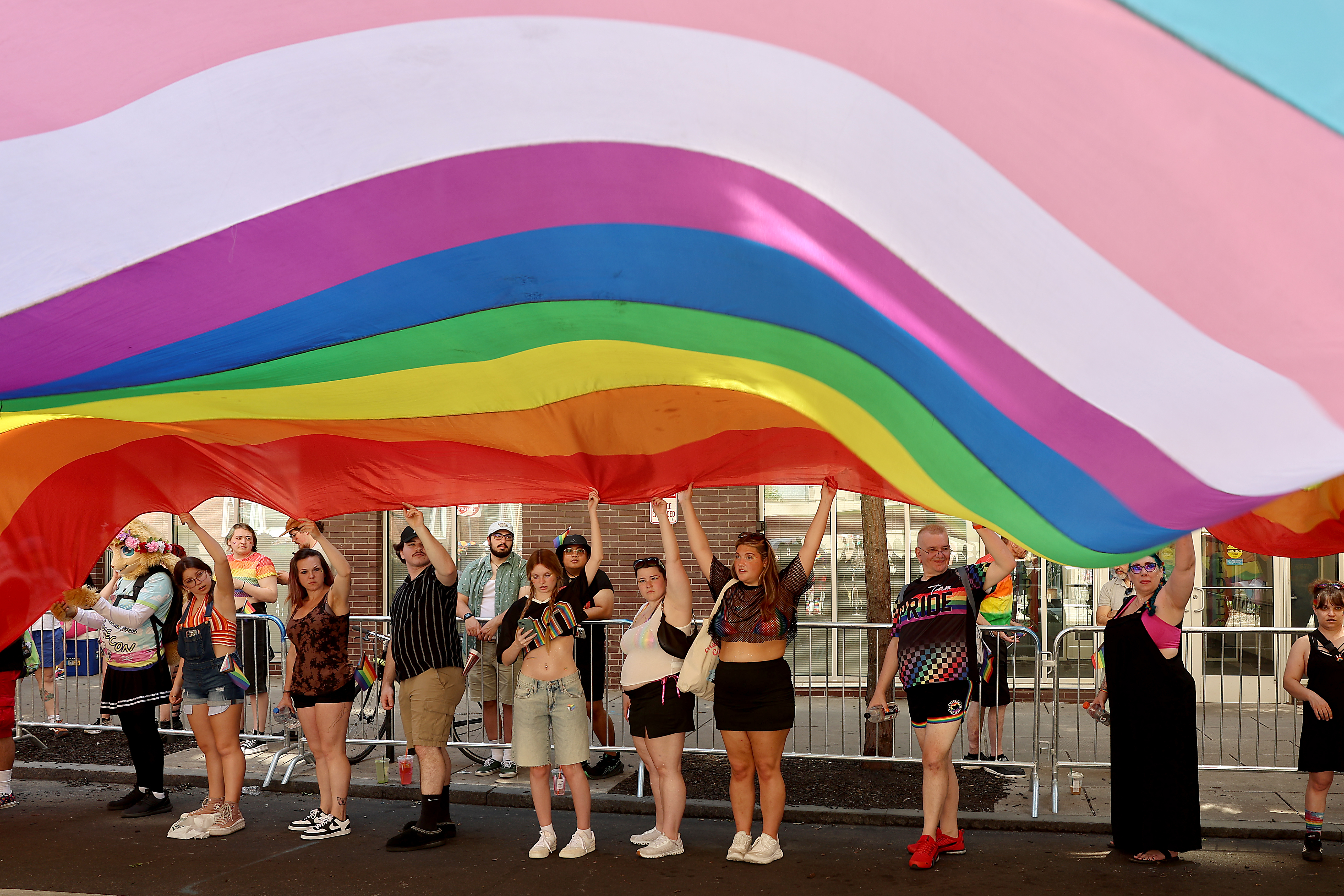
    Participants hold a large Pride flag during the annual Pride Parade in Philadelphia on Sunday, June 7, 2026.David Maialetti / Staff Photographer

    By 12:30 p.m., the group had easily wound through fast-moving ticket lines — this year also marked the return of a festival admission fee — and strolled the celebration’s vastly expanded vendors’ row and wide-open performance areas, and grabbed their cocktails without a wait.

    “The change of venue is perfect,” said Jann.

    The new location is a means to accommodate larger crowds — an estimated 147,000 last year — and improve safety, the organizers have said. But the changes, including the $10 cost of an entrance band, were not well-received, and many took to social media with their frustrations and concerns over whether this move would hurt the Gayborhood.

    Philadelphia is no stranger to the pay-for-Pride model; before 2022, the festival charged an entrance fee. But still, the ticketing policy sparked discourse about inclusivity and the corporatization of Pride parades, which were first held to commemorate the Stonewall riots in New York City.

    In an email to The Inquirer ahead of Sunday’s festivities, Philly Pride 365 spokesperson Brandon Szeker said that “given the various factors that could potentially impact ANY event,” the organizers were “not concerned about ticket pricing.”

    “There are many community organizations offering free tickets, so it’s really up to the consumer to make the best decision for themself,” Szeker said. “Pride is where you stand.”

    Other cities, like St. Louis, have adopted an admission fee in response to major sponsors pulling or scaling back their support as President Donald Trump targets diversity, equity, and inclusion initiatives. In Pittsburgh, Pride organizers told NPR they anticipated securing 30-40% of the sponsorship money this year that they were able to fundraise a few years ago.

    Szeker said Philly Pride 365 has not experienced this drop in support and has previously dumped “problematic businesses,” like Target, Wawa, AARP, and Burlington, from its list of backers.

    When asked about a possible missed economic boom for the Gayborhood, Szeker pointed to Philly Pride 365’s “Out For Good,” a Saturday street festival “centered on the [Gayborhood], uplifting the businesses, venues, and spaces that help sustain LGBTQ nightlife in Philadelphia year-round.”

    This year’s sprawling event did seem to attract many first-timers, including neighborhood residents and out-of-towners.

    Sweet Suki, from Upstate New York, posed for a portrait at the Philly Pride Festival on the Ben Franklin Parkway on Sunday, June 7, 2026 in Philadelphia.Monica Herndon / Staff Photographer

    “It’s so great to see everyone come together for such a beautiful cause,” said Erin Bell, 24, of Delaware, who made the trip with friends.

    Others said they were extra proud to see the event hosted at Philadelphia’s most prominent celebration grounds, especially now, when their community is under attack from lawmakers and others.

    “It’s the City of Brotherly and Sisterly Love — it’s just so wonderful to see all this love here,” said Abby Craig, 23, of Bucks County.

    Her friend, Phillip Rodriguez, 27, of North Philly, said that while he loves the Gayborhood, he felt the move to where Philly holds its biggest festivals makes a statement that Pride isn’t just for LGBTQ+ people.

    “It says that something that everyone should enjoy,” he said.

    Manning the Mazzoni Center booth, where volunteers connected crowds with LGBTQ+ health and wellness info, the center’s chief executive officer, Simon Trowell, said he understood upset feelings over the move but praised the added visibility.

    “What a wonderful opportunity to celebrate the community and the city on America’s 250th anniversary,” he said. “We are delighted to be here.”

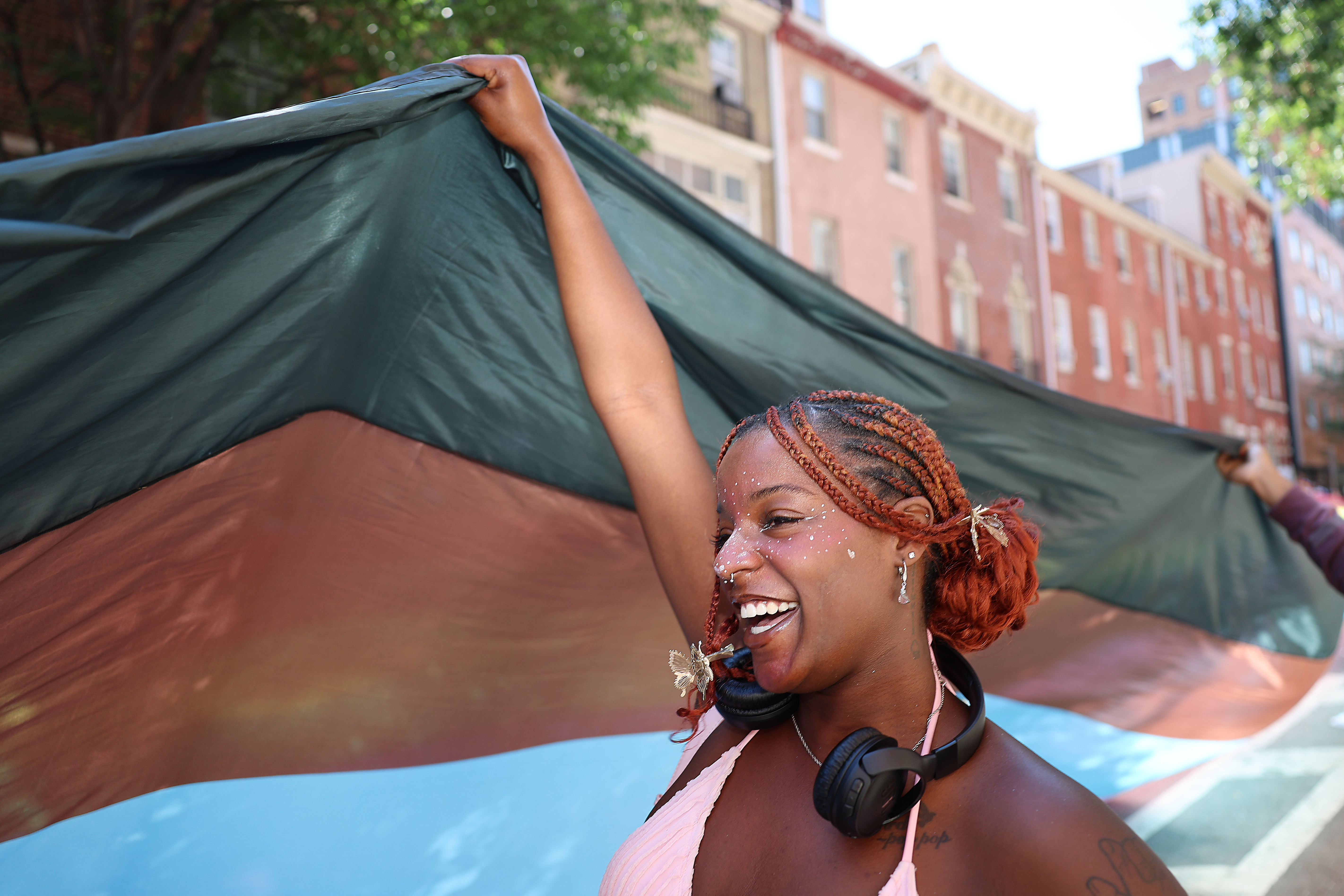
    Jaedan Goodman, of Burlington, N.J., holds a large Pride flag during the annual Pride Parade in Philadelphia on Sunday, June 7, 2026.David Maialetti / Staff Photographer

    Meanwhile, the Gayborhood’s sidewalks and iconic shops and bars buzzed with crowds, who said they preferred to keep the party where they believed it belongs.

    “Pride should remain a protest and support local businesses, not corporations,” said Nikki Schwartz, 28, of Spring Garden, who along with her wife toured the recently opened Philly Pride Visitor Center at 12th and Locust Streets, one of the few LGBTQ+-focused visitor centers in the nation. A lot of her friends felt the same, she added.

    Nearby, Tonka Meares, 58, and her friend, Lorre Chavez, 60, both of Philly, said they had not yet made up their minds whether to visit the festival or stay in the neighborhood, where they have celebrated for 20 years.

    “This is the Gayborhood,” said Meares. “It should be here.”

  • A Penn State student was shot to death in South Philadelphia, police said

    A Penn State student was shot to death in South Philadelphia, police said

    A 22-year-old Penn State student died after being shot a half block from his home in South Philadelphia early Saturday, police said.

    Police said officers from the 1st District responded at 1:32 a.m. to a radio call for a person with a gun on the 1900 block of Durfor Street. They found William J. Schmidt lying in the street with a gunshot wound to the chest, police said.

    Schmidt was returning home from a local bar where he had been watching the NBA Finals with friends, according to his father, 6abc reported.

    Surveillance cameras captured video that appeared to show the moments before the shooting, 6abc reported. A man can be seen throwing a cell phone in one video, and seconds later, another man ran around a corner with Schmidt chasing him, before the gunman turned around and shot him, according to another video.

    Police took Schmidt to Penn Presbyterian Medical Center, where he was pronounced dead at 1:47 a.m.

    Schmidt lived on the 2300 block of South 20th Street.

    Neighbors expressed sadness over Schmidt’s death.

    Sitting on her porch, Tara Valdez, 32, said she felt a sense of loss.

    Her siblings, she said, grew up playing with him along Durfor Street.

    “He was a good person, a really good kid who was never in trouble,” Valdez said. “He always brought joy with him and made it a point to include everyone, even as a kid.”

    When Valdez learned of the tragedy Saturday morning, she was in a state of disbelief.

    She had seen Schmidt walking by Friday morning, she said, and they waved at each other.

    “I’m sad I didn’t talk to him,” she said. “His whole family are very nice people, and they are hurting now.”
    Jasmine Alleger, 39, said the sense of living in a safe neighborhood was shattered.

    Alleger, who has lived a couple houses down from Schmidt’s house for the last six years, didn’t know him personally. But, people at her gym, she said, spoke kindly about his family on Sunday morning.

    “Now all I can think about is his mom waking up without her son, for literally no reason,” Alleger said. “I’m so sorry that people are so evil; it’s so senseless.”

    Schmidt was a fourth-semester student studying digital journalism and media at the Penn State World Campus, the university’s online campus.

    “We are heartbroken over the tragic death of William Schmidt, and we share our deepest condolences with his family and friends,” the statement said.

    The university said its staff is reaching out to Schmidt’s family to provide support and offering counseling to students in need.

    Police urged anyone with information regarding the incident to contact the homicide unit at 215-686-3334 or submit an anonymous tip by calling or texting 215-686-TIPS (8477).

  • Israel says Iran launched missiles at it in first such bombardment since fragile ceasefire

    JERUSALEM — Iran launched missiles at Israel in the first such bombardment since a fragile ceasefire took effect in early April, raising the possibility of a return to heavy fighting and complicating mediation efforts to end the war.

    Iran’s state broadcaster confirmed the launches, and Iran closed its western airspace to brace for a possible response. Tehran had warned of retaliation after Israel struck Beirut’s southern suburbs without warning earlier Sunday in defiance of Washington’s request days ago to stand down. Israel said the Iranian-backed Hezbollah fired at northern Israel earlier in the day.

    “Should these acts of aggression be repeated, the responses will be broader in scope and will encompass all American and Zionist targets throughout the region,” Iran’s Revolutionary Guard said in a statement that referenced attacks in Lebanon and on Iran’s coast and vessels around the Strait of Hormuz.

    Sirens sounded in several areas of Israel, sending millions running for shelter. Israel’s military said it intercepted the missiles, and multiple explosions were heard in the north. Less than an hour later, the military said people could leave areas reinforced against missile attacks.

    “Iran has made a grave mistake,” Israel military spokesperson Brig. Gen. Effie Defrin said. The military’s chief of staff, Lt. Gen. Eyal Zamir, said it will “strike the enemy with determination as soon as the order is given.”

    But Israel’s public broadcaster, Kan, said U.S. President Donald Trump told it that he doesn’t think Israel needs to respond further. And Trump told the Financial Times: “I call all the shots. He (Netanyahu) doesn’t call the shots.”

    U.S. official: Netanyahu to hold off attack ‘for the time being’

    A senior U.S. official said Trump had called Netanyahu to urge him not to retaliate immediately for the Iranian missile attack. The official, who spoke on condition of anonymity to describe a private phone call, said that Trump believed he had convinced Netanyahu to wait.

    Trump “got Bibi to hold off for the time being,” the official said. The official would not offer any other details of the call, and there was no immediate comment from Netanyahu’s office.

    Iran had warned that an attack on Beirut would renew full-scale war across the Mideast, even as Pakistan and other mediators try to restart talks between Tehran and Washington.

    “U.S. forces across the Middle East remain vigilant and ready,” the U.S. Central Command posted on X shortly before the missile launches. The U.S. Embassy in Israel later directed employees and family members to shelter in place.

    Israel’s attack on Beirut came a few days after the Lebanese and Israeli governments agreed to a ceasefire in U.S.-hosted talks, though Hezbollah rejected the deal. The strike on a residential building killed two people and wounded 20, Lebanon’s health ministry said.

    “The army will continue to act in all of Lebanon,” the Israel military spokesperson said.

    Israel’s strikes and ground invasion in Lebanon in pursuit of Hezbollah, and the militant group’s resistance to disarming, have complicated an overall deal to end the war in the Middle East.

    Iran says any deal must include an end to fighting in Lebanon.

    Trump told a Fox News Channel reporter that he wanted the Iranians to stop firing missiles and return to the negotiating table. He also said that Israel’s strikes earlier Sunday were not coordinated with the U.S. and “I’m not happy about it.”

    Israel last week had announced it would strike the southern suburbs of Lebanon’s capital, but urgent talks via Washington halted that on the condition that Hezbollah stop targeting Israeli border towns.

    Hezbollah, which claimed responsibility for firing at Israel earlier Sunday, wants the direct talks between Lebanon and Israel to end. Instead, it supports Iran’s stance that an overall ceasefire deal between Tehran and Washington include the situation in Lebanon.

    Netanyahu, who seeks reelection later this year, is under heavy domestic pressure to respond to both Iran and the Hezbollah threat, which has paralyzed life for thousands of residents along Israel’s northern border.

    But Trump has made clear he does not want to see the war resume.

    Trump said earlier Sunday in an interview with NBC’s “Meet the Press” that he would like to see a “more surgical attack on Hezbollah.” He also said he was “not demanding” that Lebanon be part of an overall ceasefire deal in the Iran war.

    Iran continues to assert its grip on the Strait of Hormuz and the U.S. continues its blockade of Iranian ports, with shipments of oil, natural gas and fertilizer affected and the global economy in pain.

    Iran since the ceasefire took effect has launched missiles and drones at Gulf nations and said it was targeting the U.S. military presence. After its launches against Israel, Iraq’s Civil Aviation Authority announced that the country’s airspace would close for 72 hours and Syria’s aviation authority announced a 12-hour airspace closure.

    All flights from Tehran’s main international airport were suspended, the civil aviation authority said, according to the official Mizan news agency.

    Diplomacy continues before and after missile launches

    Pakistan’s interior minister, Mohsin Naqvi, was in Tehran on Sunday delivering a message to Iranian Supreme Leader Ayatollah Mojtaba Khamenei from Pakistan’s army chief Field Marshal Asim Munir, according to Iran’s state-run IRNA news agency. There were no details on the message’s contents.

    Khamenei has not been seen in public since he was named the Islamic Republic’s ruler after his father was killed on Feb. 28 as Israeli and U.S. strikes sparked the war.

    Pakistani authorities have said Islamabad, with support from regional countries including Qatar, Turkey and Egypt, is working to help bridge differences.

    In Cairo, the Egyptian and Qatari foreign ministers discussed “proposed elements” of a potential agreement between the U.S. and Iran, the Egyptian foreign ministry said, without details.

    And after Iran’s missile launches at Israel, Iranian Foreign Minister Abbas Araghchi spoke with counterparts in France, Qatar, Saudi Arabia, Britain, Egypt and Turkey as well as Pakistan’s army chief, Iran’s state TV said.

  • Catholicism is growing in Philly and New Jersey. Who’s filling the pews?

    Catholicism is growing in Philly and New Jersey. Who’s filling the pews?

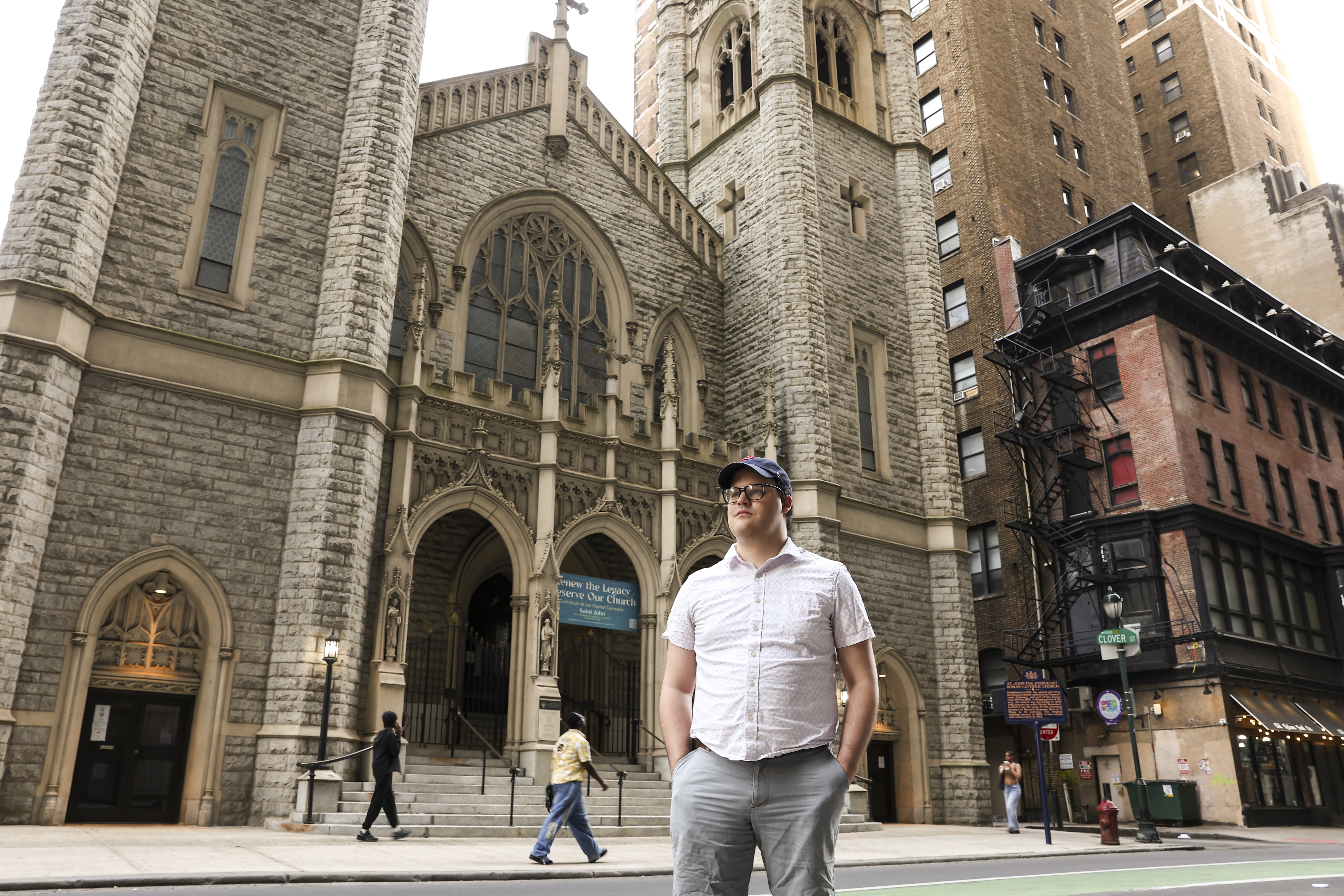
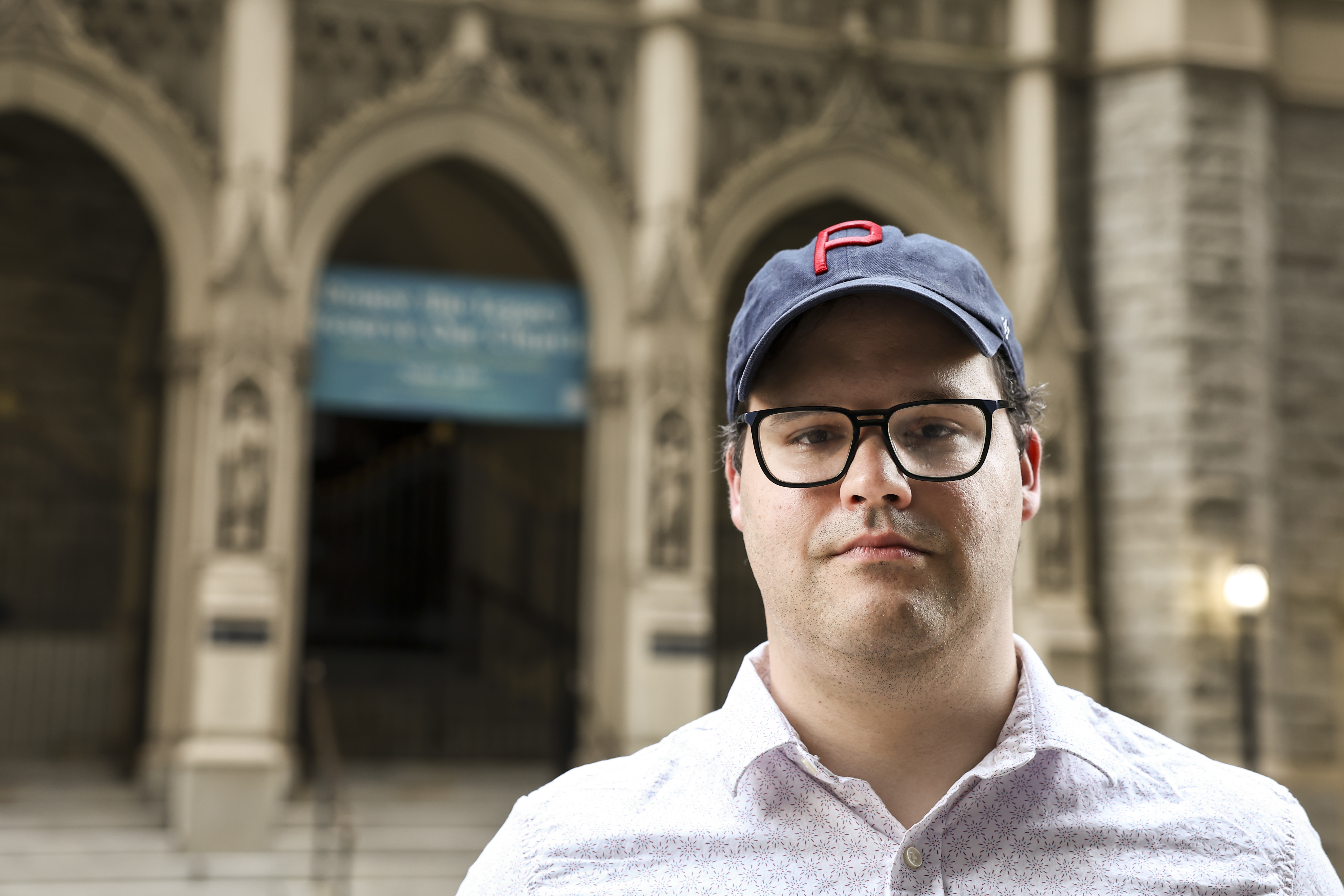
    Church bells rang out from one of Philadelphia’s oldest cathedrals, echoing off downtown parking garages and office buildings, while one of the city’s newer Catholics tried to explain his conversion.

    Daniel Yesilonis, 32, grew up evangelical in the Harrisburg area and converted to Mormonism while studying at Temple University. He said his Mormon mission to Colorado Springs, Colo., was deflating, though, and after he came out as gay during the COVID-19 pandemic, he officially left that church.

    Like millions of Americans, Yesilonis figured he would try his best to be decent, to be spiritual without a label or building attached to it. But he soon felt a sense of loss.

    “It was like something was missing, maybe a sense of community or something,” Yesilonis said outside the church in April.

    Daniel Yesilonis posed for a portrait outside of St. John The Evangelist Church on Wednesday, April 15, 2026 in Philadelphia.Monica Herndon / Staff Photographer

    So, at an Easter vigil Mass in 2024, Yesilonis was among a group of candidates (people who were already baptized) and catechumens (those who were never baptized) who became Catholic and joined St. John the Evangelist on 13th Street.

    Converts like Yesilonis are on the rise at churches all over Philadelphia and New Jersey, diocese officials said, a conversion boom that is being reported globally, including large spikes in Canada and France. In Philly, there have been 1,162 candidates and catechumens this year, which is a 60% increase since 2025 and a 100% increase since 2017.

    Researchers and religious scholars said it was too soon to say much about the recent spike, but noted that a rise would be bucking long-term trends. Earlier this year, the Pew Research Center found that Catholicism has lost more people than it has gained in 24 countries it surveyed, including the United States. A 2025 Pew study found that Christianity’s long-term losses were starting to “level off,” but according to the Archdiocese of Philadelphia, two high schools closed in 2021, and the last time a new Catholic school and parish opened was back in 2010.

    Since 2012, 34 Catholic churches have closed in the archdiocese. So the trend, while noticeable, is still a small change.

    “There would have to be a huge swing, something dramatic would have to happen, for the church to start gaining huge numbers,” said Patricia Tevington, a Pew Research assistant who lives in Philadelphia.

    There is no one reason for the recent increase, diocese officials said.

    In the Philadelphia Archdiocese, the Rev. Gerald Dennis Gill said, many new devotees were baptized as children but did not grow up with Catholicism because their parents or other elders had stopped practicing. He believes they are experiencing a vacuum in their life and are seeking to fill that.

    “Our culture is not offering something objectively good and true and beautiful, but it’s within all of us to seek that out,” he said. “People of all ages are finding the need to have a relationship with the Lord, for meaning and the promise of heaven.”

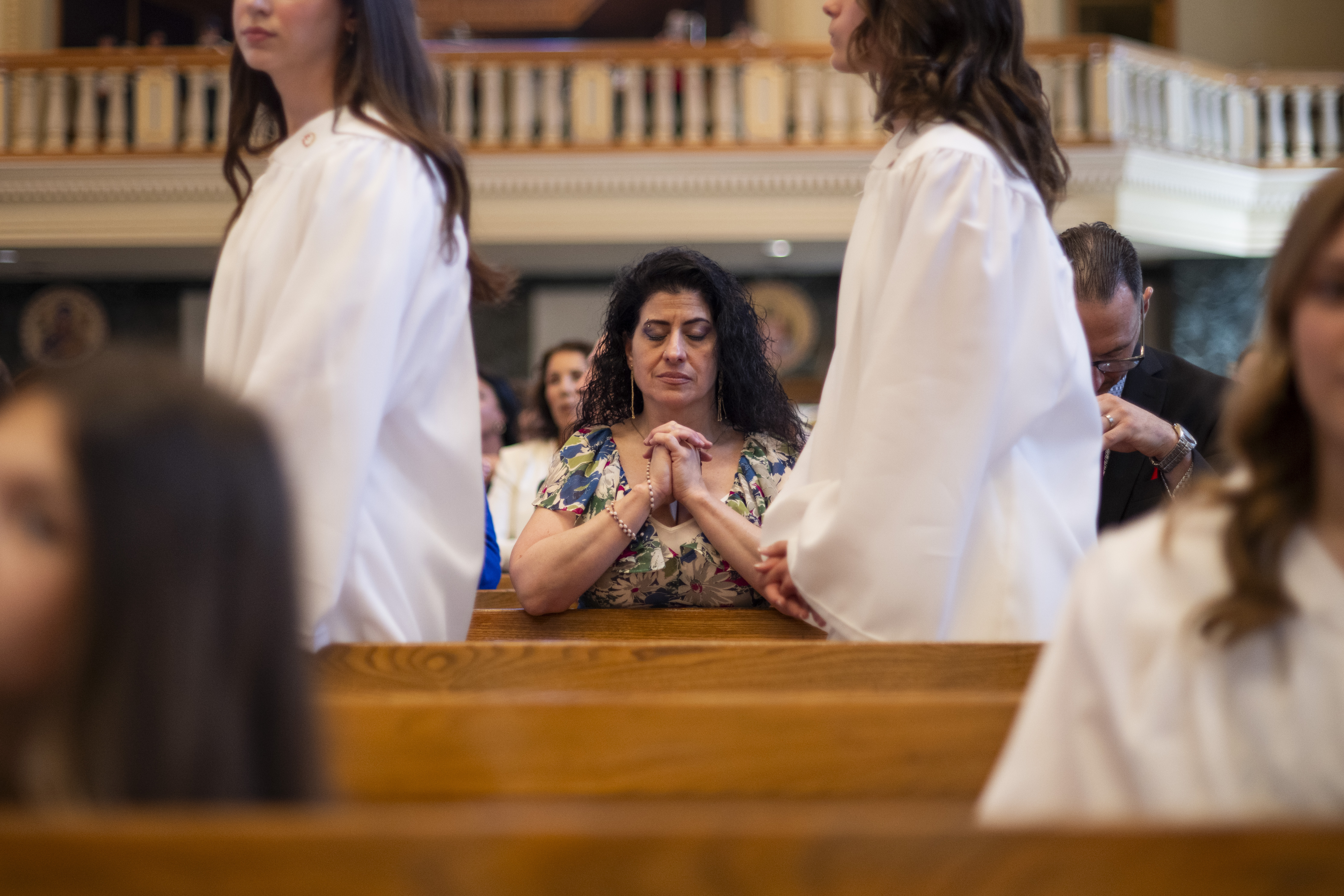
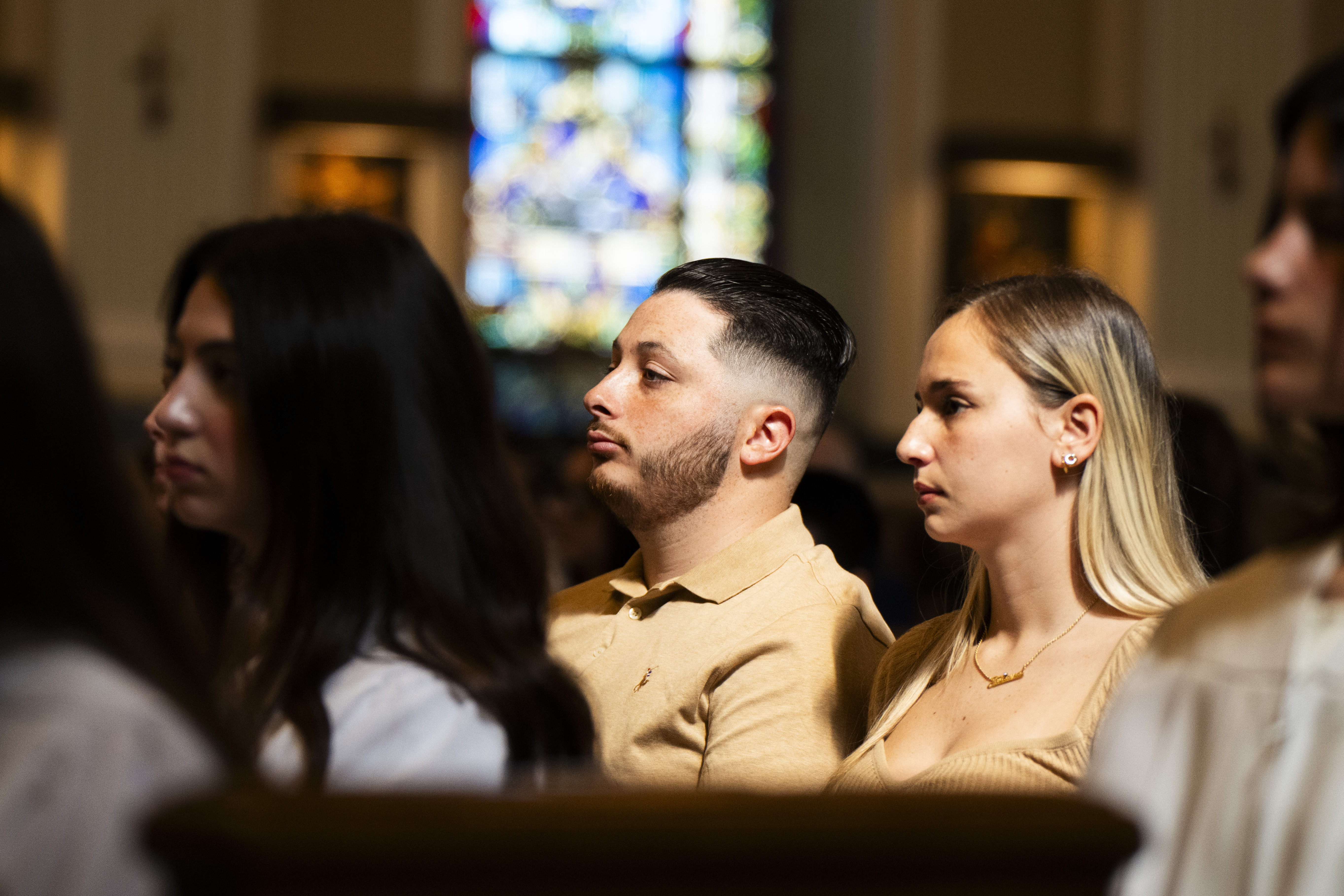
    A confirmation mass is held at St. Monica Roman Catholic Church in Philadelphia on Saturday, April 18, 2026.Joe Lamberti / For The Inquirer

    Across the river in the Camden Diocese, spokesperson Michael Walsh said, the number of catechumens grew from 194 last year to 238 in 2026, a nearly 23% increase.

    Catholics are not knocking on doors the way Yesilonis had to in Colorado, but members of St. Agatha-St. James Parish had an “Ask a Catholic” tent at West Philly’s 68th annual Spruce Hill May Fair in Clark Park on May 9.

    Newer Catholics whom The Inquirer spoke to in recent months (including this reporter’s adult son) cited a slew of different personal reasons for their decision.

    “We’re all looking to God to help us, to save us. For me, it was time,” said Jana Muhammad, a “middle-aged” candidate who received the sacrament of confirmation at St. Monica’s in South Philly earlier this spring. “It’s really a rough, rough time out there right now. There’s no peace right now, and people are really looking for peace, and it’s not there right now. For me, personally, when it gets really rough, I absolutely pray to God.”

    There is, however, a litany of theories being tossed around online and in the media about the increase in Catholicism that are sometimes at odds with one another.

    The trend has been attributed to increasing conservatism in young men. Catholicism has also been offered up as an antidote to the so-called red pill, a “manosphere” belief that society now caters to women. Some say the increase is a Gen Z response to the isolation of the pandemic. Others say that technology burnout is fueling it. There have been stories about the rise of Catholic social media influencers and the popularity of the prayer app Hallow, which has been downloaded 32 million times since it debuted in 2018.

    “People ask why priests always wear black. ’Cause everyday is a funeral for the haters,” the Rev. David Michael Moses, a Catholic “priestfluencer” with 1.1 million followers on Instagram, said in a post.

    Actor Mark Wahlberg, a partner in Hallow, is a proud Catholic, but so is Shia LaBeouf, a recent convert who reportedly yelled, “I’m a Catholic,” while allegedly shouting homophobic slurs in New Orleans earlier this year.

    The middle-ground, welcoming approach taken by the late Pope Francis and his successor, Pope Leo XIV, who has been vocal against President Donald Trump’s war on Iran, has also pulled people closer to Catholicism.

    “Pope Francis inspired my decision,” Yesilonis said.

    Daniel Yesilonis posed for a portrait outside of St. John The Evangelist Church on Wednesday, April 15, 2026 in Philadelphia.Monica Herndon / Staff Photographer

    Yesilonis said he knows he could never marry a man in the Catholic Church, but he has found solace among the LGBTQ+ parishioners at St. John the Evangelist.

    “I found a community as much as I found a church,” he said.

    The Rev. Thomas Betz, of St. John’s, said the church “teaches and believes” the same tenet as the wider church, but has been open.

    “St. John, by its very nature, is in the heart of the city and open to different races, and people who think differently, politically,” he said. “Everyone is welcome.”

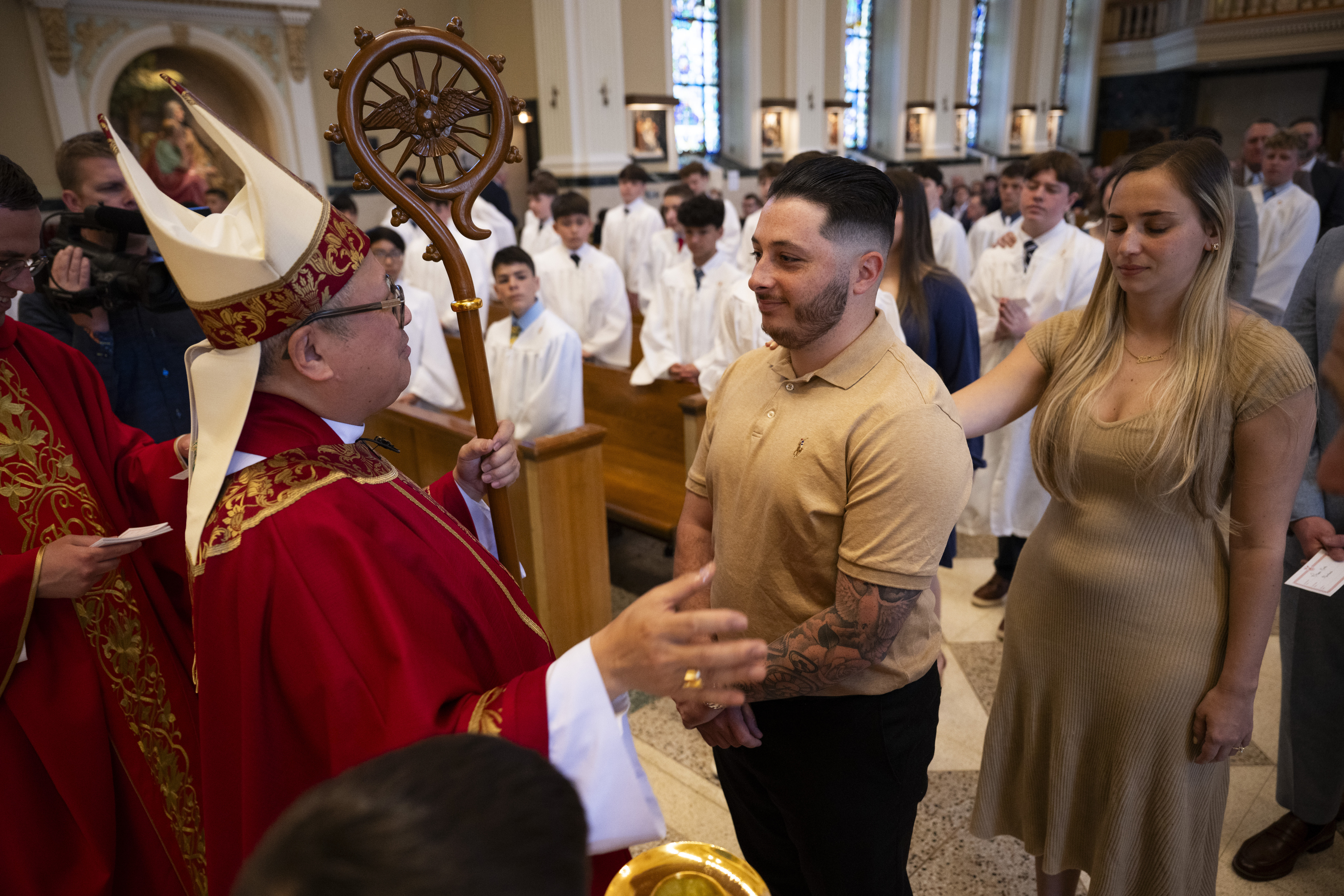
    Mark Schiavo, 26, waits to be confirmed at St. Monica Roman Catholic Church in Philadelphia on Saturday, April 18, 2026.Joe Lamberti / For The Inquirer

    Down in Cape May, Sara Kelly said she grew up in a family that gave up on formal religion, but still held on to a strong spiritual sense of right and wrong. Her father, Kurt, suffered from head and neck cancer for years, and after he died in 2019, she constantly wondered about the afterlife.

    Kelly and her husband went to some nondenominational churches in Philadelphia, where she lived at the time, but did not find the answers she was looking for. The couple moved to the Shore and struggled with finances.

    One day, while walking on the Delaware Bay beach, she fell to her knees and asked God for help.

    “I’ve never done anything like that before,” she said.
    At the advice of a relative, Kelly began sitting in a Catholic church in 2025, and later downloaded the Hallow app. She bought a rosary, too, and began going back to church multiple times a week, and eventually signed up for Order of Christian Initiation of Adults (OCIA) classes.

    “I know for me, it was really enjoyable to go to a place where the focus is only on love and trying to help others,” she said. “At every Mass, we’re praying for people caught up in war, people in Gaza and Ukraine.”
    On a breezy April morning in South Philly, hundreds of people filed into St. Monica’s for the Rite of Confirmation Mass. A few dozen teens in white filled the front pews, but just behind them were a handful of adults, like Jana Muhammad, there to receive their final sacrament and take the name of a saint.

    Muhammad chose Angelica. She was baptized as a child and grew up going to church. She said her stepmother did not want to “force” religion on her and gave her the choice to make up her own mind as an adult.

    “And it was just time,” she said.
    The Rev. Edward Town led the Christian initiation processes there and said the reasons adults come back vary from simple to profound.

    “People want stability in their lives,” he said. “To young people, the world seems very unstable, and there’s a lot of uncertainty. I think our faith gives us a little hope, right?”
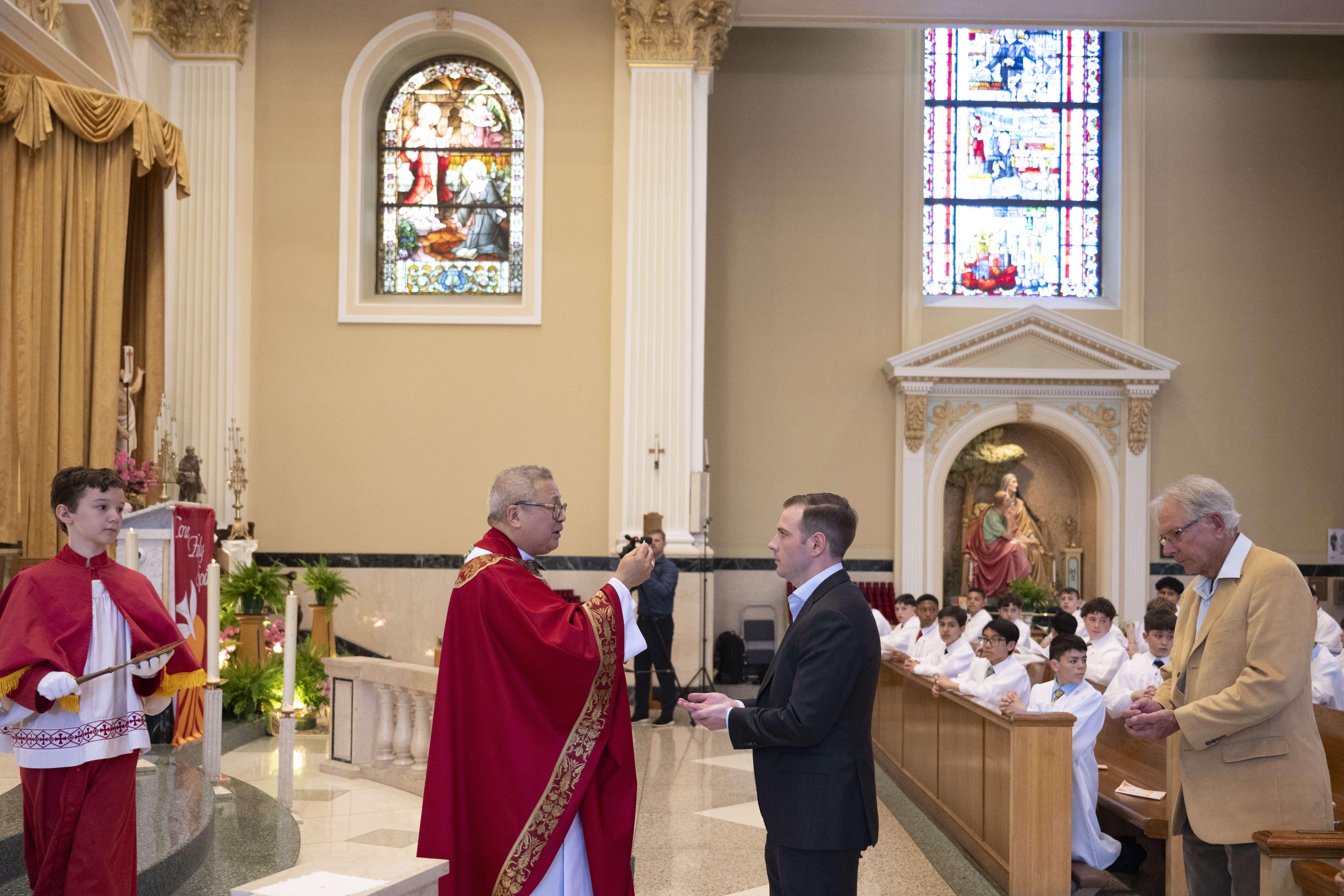
    When the Mass was finished, the Rev. Efren V. Esmilla, auxiliary bishop of Philadelphia, extended an invitation to any other seekers sitting in the church.

    “Come find us,” he said. “Our door is always open.”

    Mark Schiavo, 26, is confirmed at St. Monica Roman Catholic Church in Philadelphia on Saturday, April 18, 2026.Joe Lamberti / For The Inquirer
  • At a new Goodwill in South Jersey, customers are flocking for the deals and the resale potential

    At a new Goodwill in South Jersey, customers are flocking for the deals and the resale potential

    Mia Garcia showed off her clothing haul: a multicolored tank top, a backless white tee, a lacy maroon cardigan, and white tights for an upcoming trip to the New Jersey Renaissance Faire.

    The 19-year-old was as excited about the bill as she was about the fashion.

    Her grand total: $15.

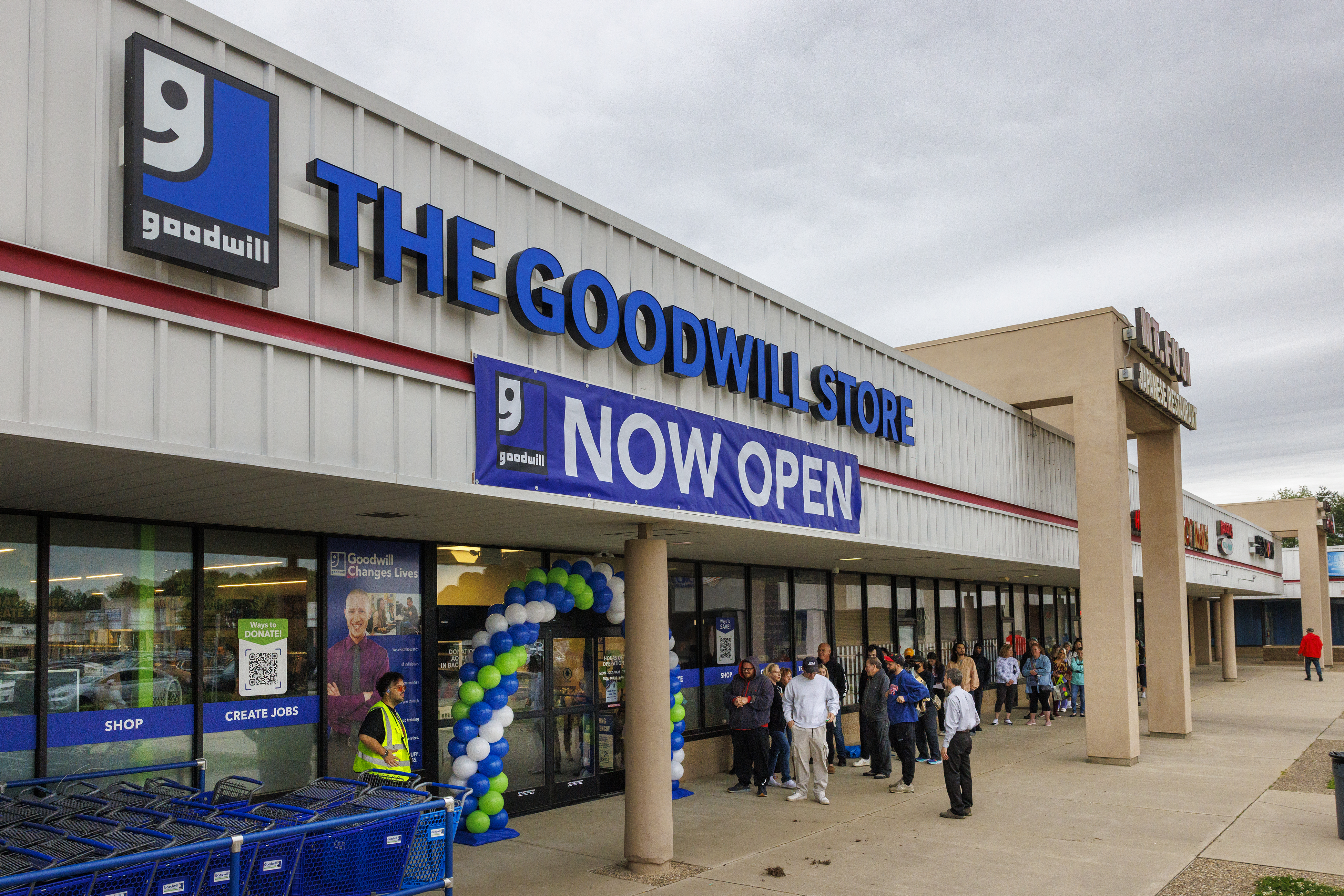
    She and her friend, Salsbee Jahan, scored the deals at a massive new Goodwill store in Deptford, where local executives say a growing number of Gen Z shoppers are flocking for clothes, shoes, decor, and more. Young customers are increasingly fueling the world’s largest thrift store chain, which posted record revenue last year.

    At Goodwill, “it’s definitely cheaper and easier to find older-style clothes,” like popular Y2K-inspired fits that are sold at a premium elsewhere, Garcia said. At some name-brand stores, “$20 won’t even get you get a shirt.”

    The women, both Deptford natives attending Rowan College of South Jersey, say they frequent malls, too. But Jahan, 18, said they’re trying to thrift more because “everything is going up” in price.

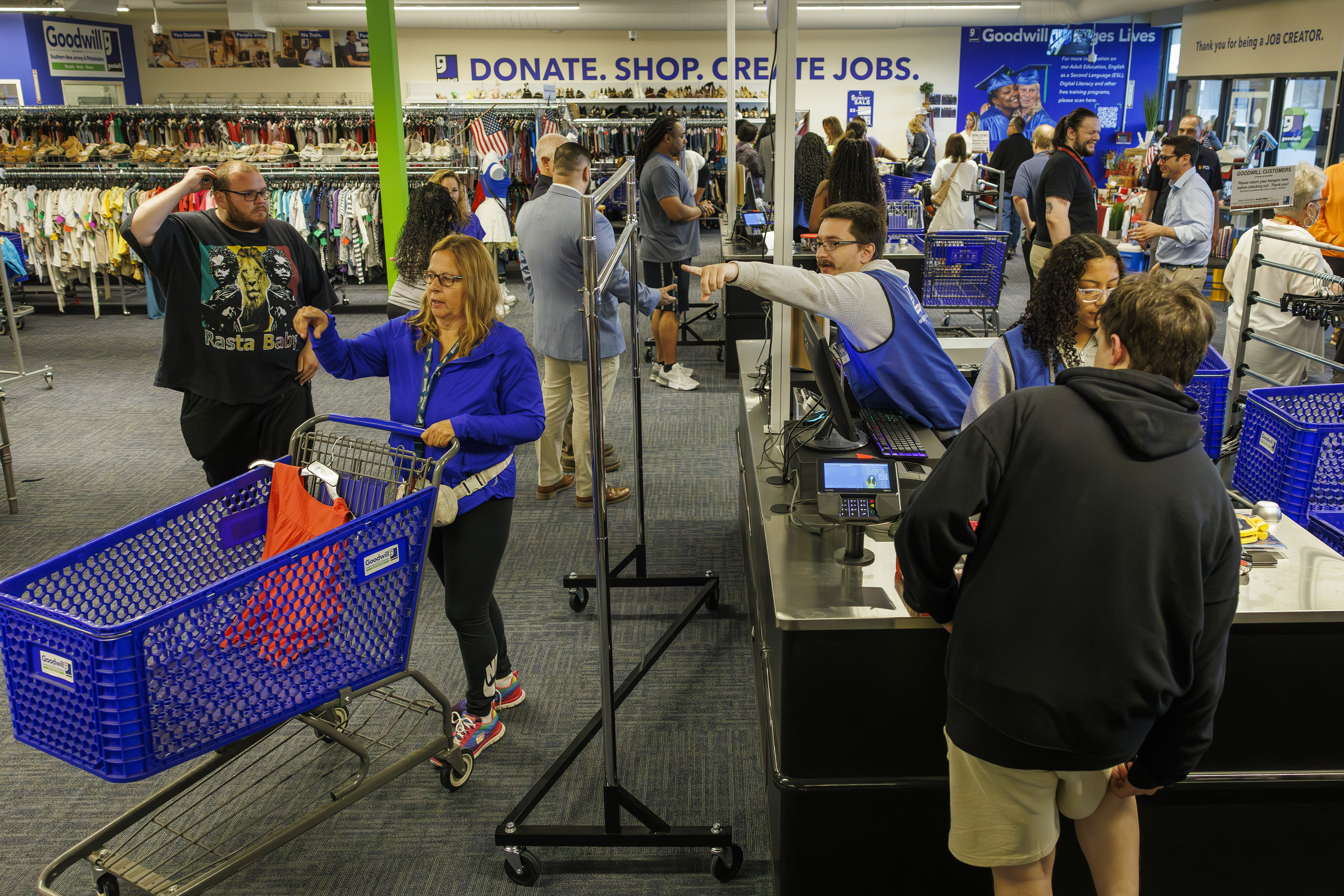
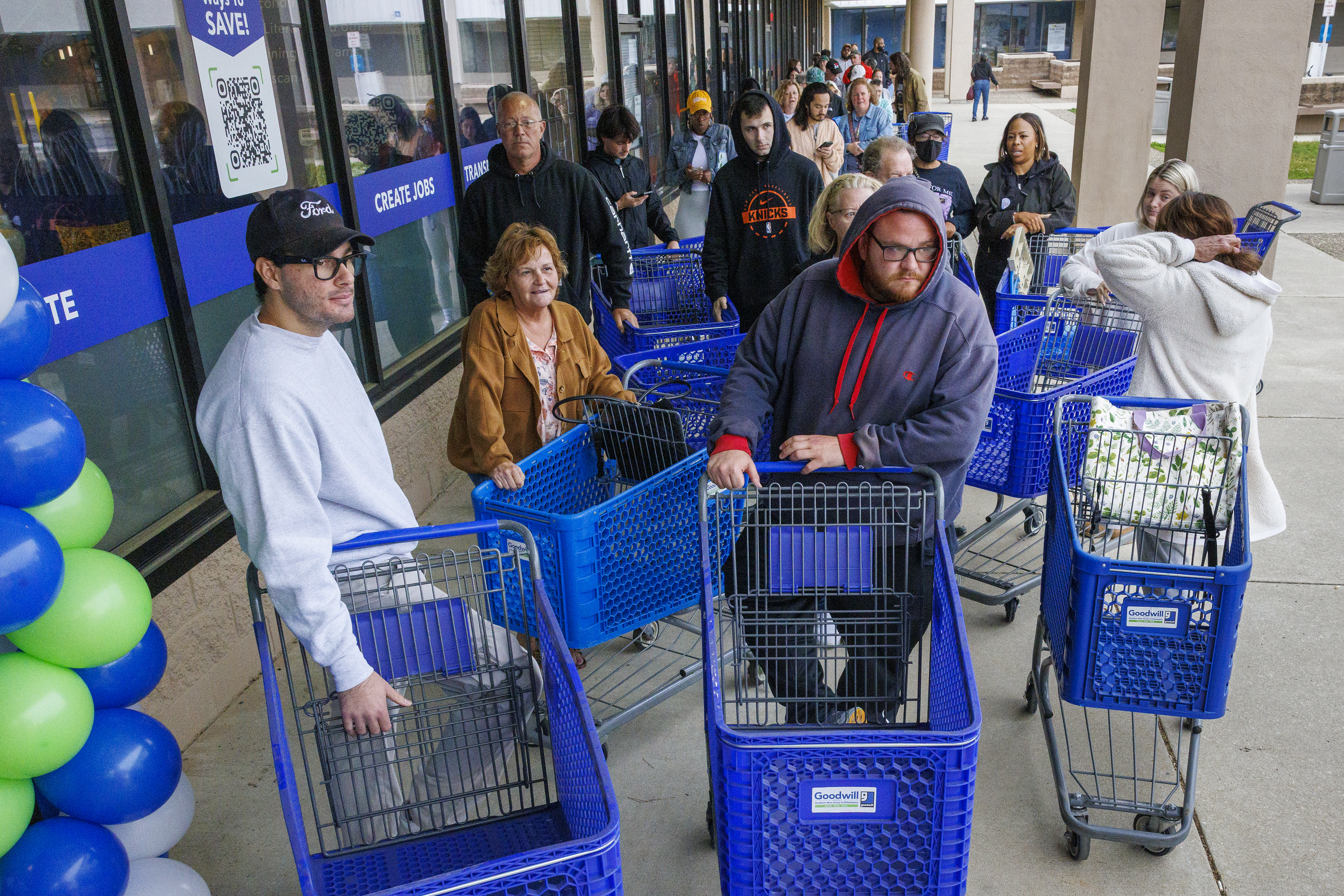
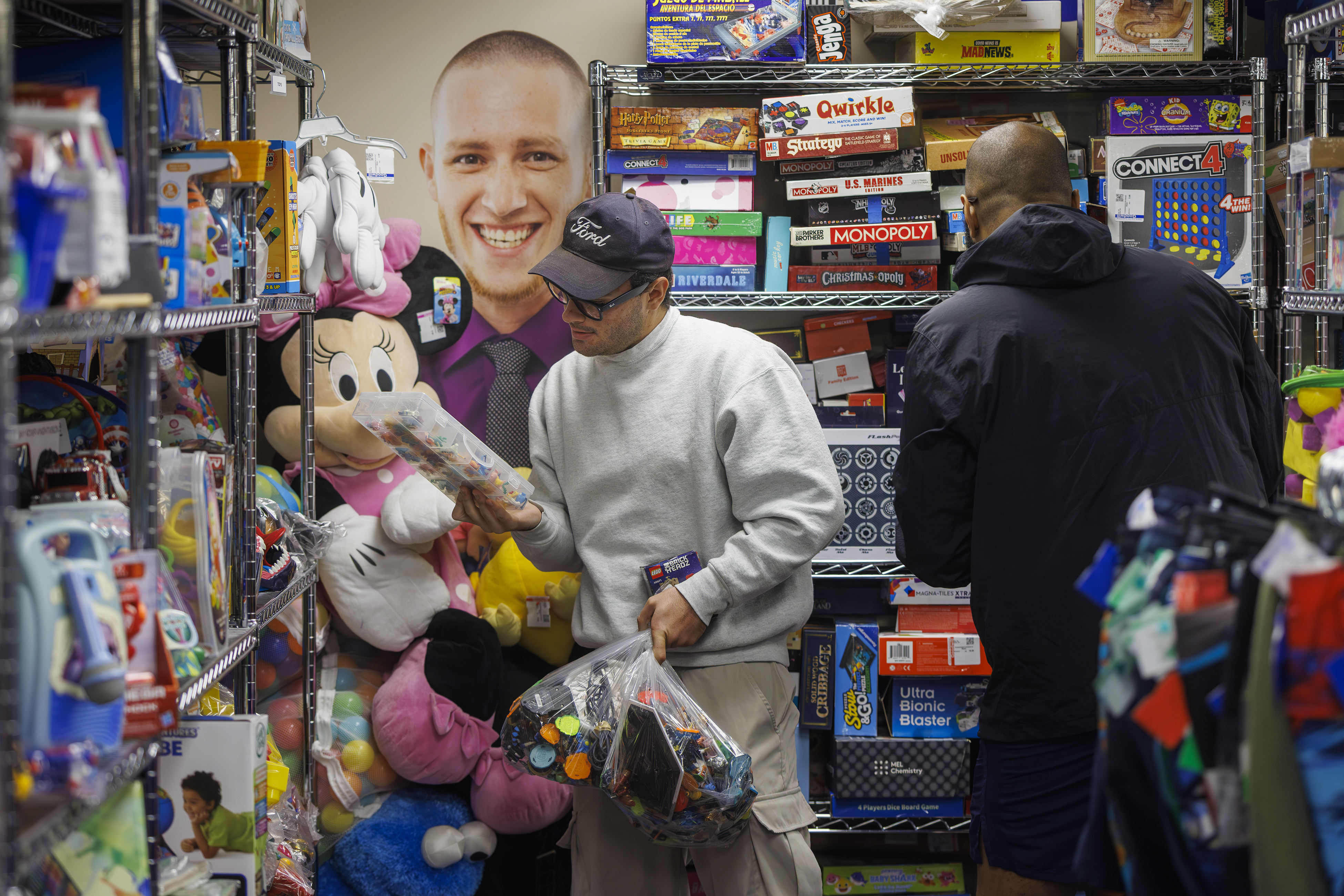
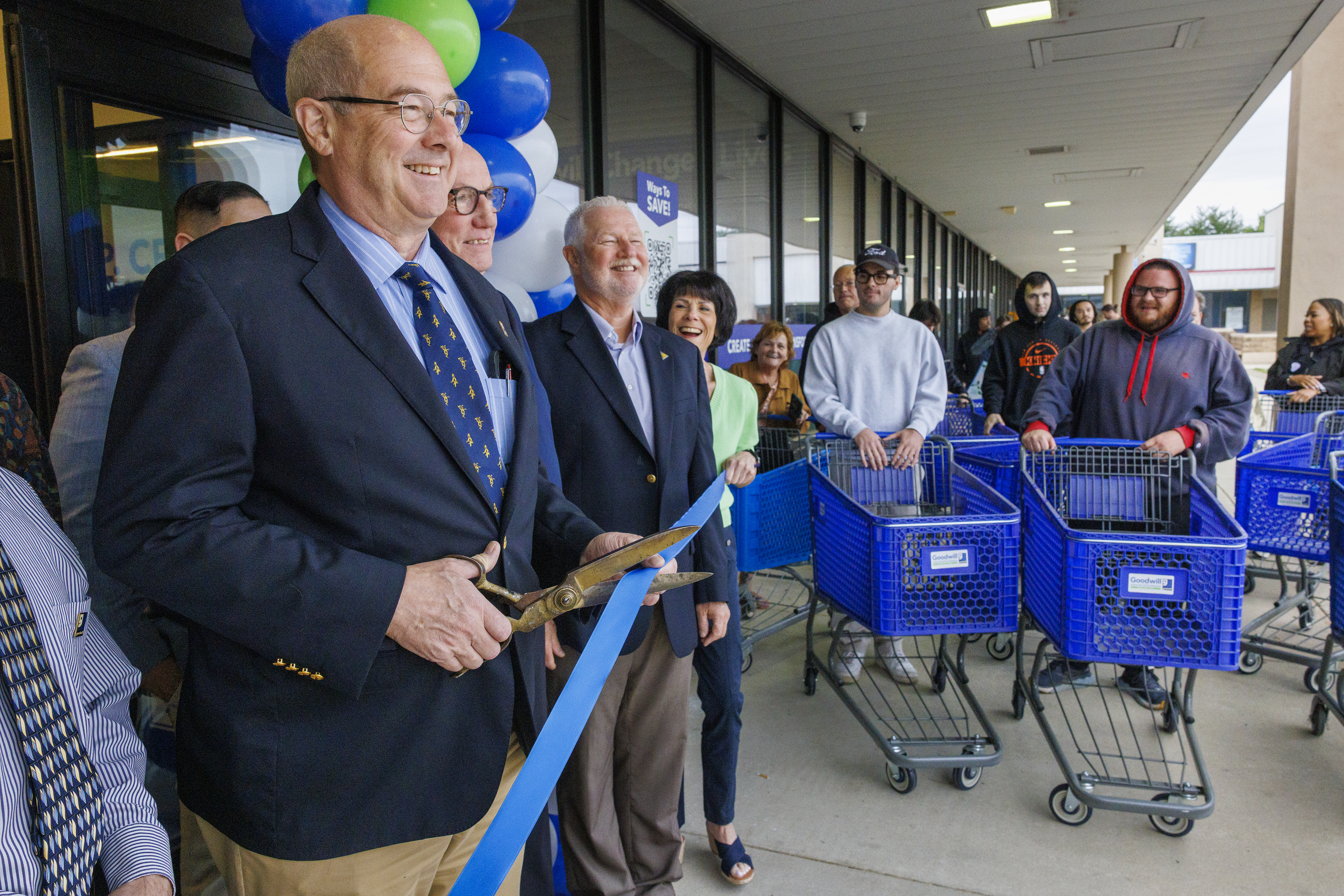
    Shoppers lined up to get inside the new Goodwill store in Deptford on opening day.Alejandro A. Alvarez / Staff Photographer

    The sentiment was echoed by several other customers at the 19,000-square-foot store, which was buzzing with dozens of shoppers around lunchtime Tuesday.

    “Gas prices have gone up. Groceries have gone up,” said Kaitlin Deegan, a 38-year-old nurse from Salem County. She was wearing a graphic tee and denim shorts that she had bought for under $10 at another Goodwill. “Now it’s all about thrifting.”

    Nearby, one woman put a $6.49 denim skirt in her cart, next to a pair of $7.99 sparkly shoes she’d grabbed earlier. Across the room, children perused shelves of toys, games, and stuffed animals — most under $10 — and teens eyed rows of $1.99 DVDs and 99-cent CDs.

    In its first 12 days, the new location on Clements Bridge Road averaged about 600 customers a day, more than double the foot traffic recorded at a smaller Goodwill retail store that recently closed in nearby Woodbury Heights, said regional manager Josef Fortun.

    Each Deptford customer has spent about $31 on average, he said, exceeding managers’ goals.

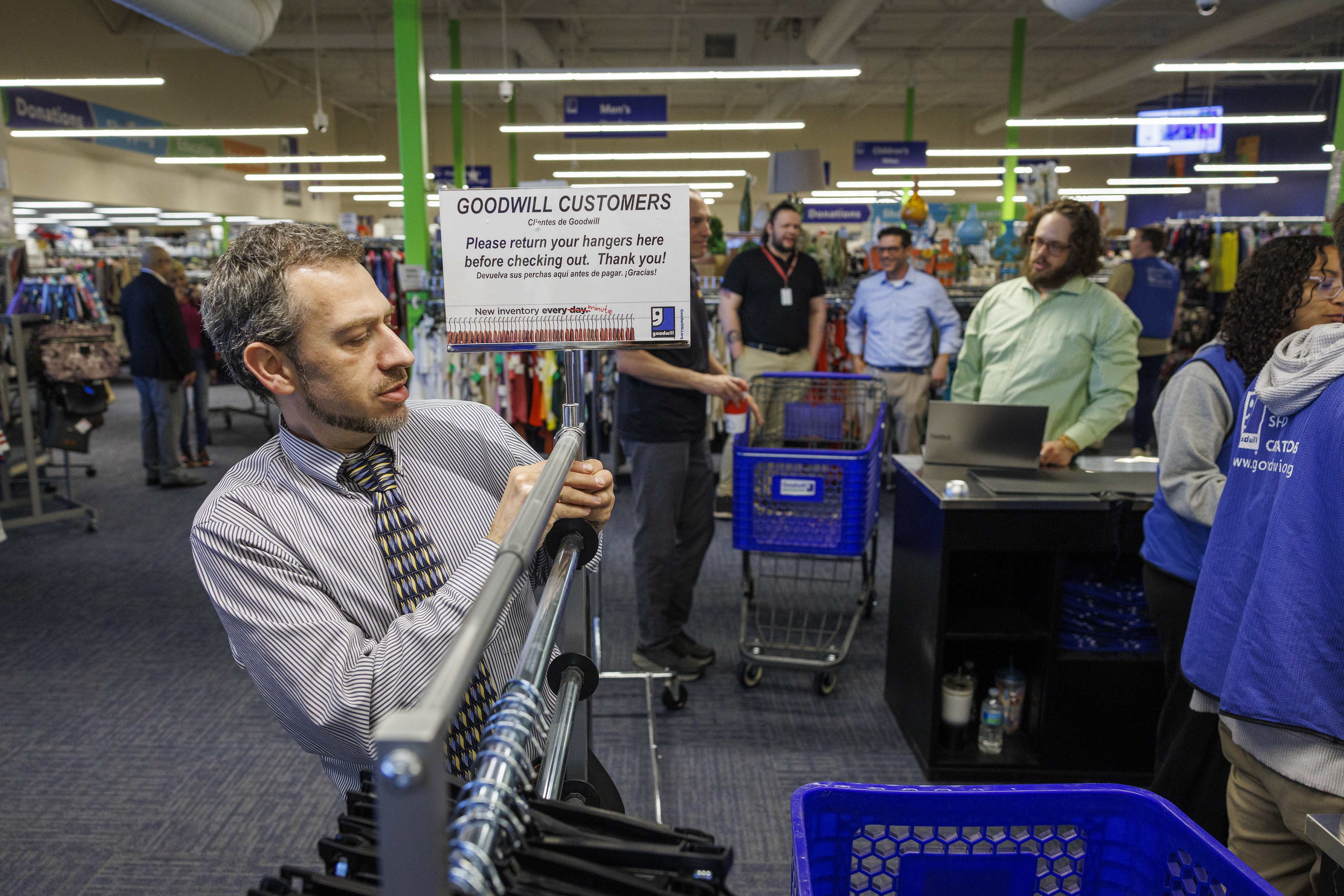
    Josef Fortun, regional manager with Goodwill Industries of Southern New Jersey, prepares the new Deptford store to open on May 21.Alejandro A. Alvarez / Staff Photographer

    This early success in South Jersey comes amid a larger thrifting resurgence. Last year, the U.S. resale market grew nearly four times faster than the broader apparel market, according to an annual report from the online consignment platform ThredUp.

    Goodwill recorded more than $7 billion in revenue last year, the New York Times reported, and annual sales across its 3,400 stores have risen 50% since 2019. Smaller secondhand shops, such as Savers Value Village and ThredUp, have also reported revenue increases, according to the Times.

    In the same Deptford shopping center as the new Goodwill, there are three other thrift stores: Once Upon A Child, Plato’s Closet, and Play It Again Sports. All are owned by Winmark Corporation, which has been adding more thrift stores and reporting year-over-year revenue increases.

    In nearby Cherry Hill, a Red White & Blue Thrift opened this spring, a half-mile from a 2nd Ave thrift outpost — owned by Savers Value Village — that opened in 2024.

    Goodwill also opened a store a year ago in a former Rite Aid in Voorhees. And its Woodbury Heights location, which is still accepting donations, is set to reopen June 15 as a Goodwill Home Medical Equipment Store.

    Boyd said the nonprofit chain is looking to expand into Cape May County in the near future.

    Why are more people thrifting?

    More people are buying secondhand right now for many reasons, said Mark Boyd, president and CEO of Goodwill Industries of Southern New Jersey and Philadelphia.

    “Challenging economic times definitely bring people into the Goodwill store, maybe for the first time,” Boyd said. At the same time, “there’s a lot of people out there who care a lot about reuse, and that’s driving particularly younger shoppers into Goodwill.”

    Friends Reed Habiak (foreground left) and Anthony Nunez (foreground right), both influencers and resellers, were first in line at the new Goodwill store in Deptford on May 21.Alejandro A. Alvarez / Staff Photographer

    And while thrifting is one of the most “tactile” experiences, Boyd said social media is playing a role in its rebirth. Many Goodwill customers are resellers, he said. They find steals in store aisles and then mark up the products to sell online or at flea markets.

    On Deptford Goodwill’s opening day last month, professional reseller Anthony Nunez was first in line. He had arrived with a friend around 4:30 a.m., ready to hunt for sports jerseys, Pokemon memorabilia, video games, and vintage clothing to resell on eBay.

    Since losing a job in compliance during the pandemic, the 34-year-old Sayreville resident has been reselling full-time, making more than $100,000 a year, he said.

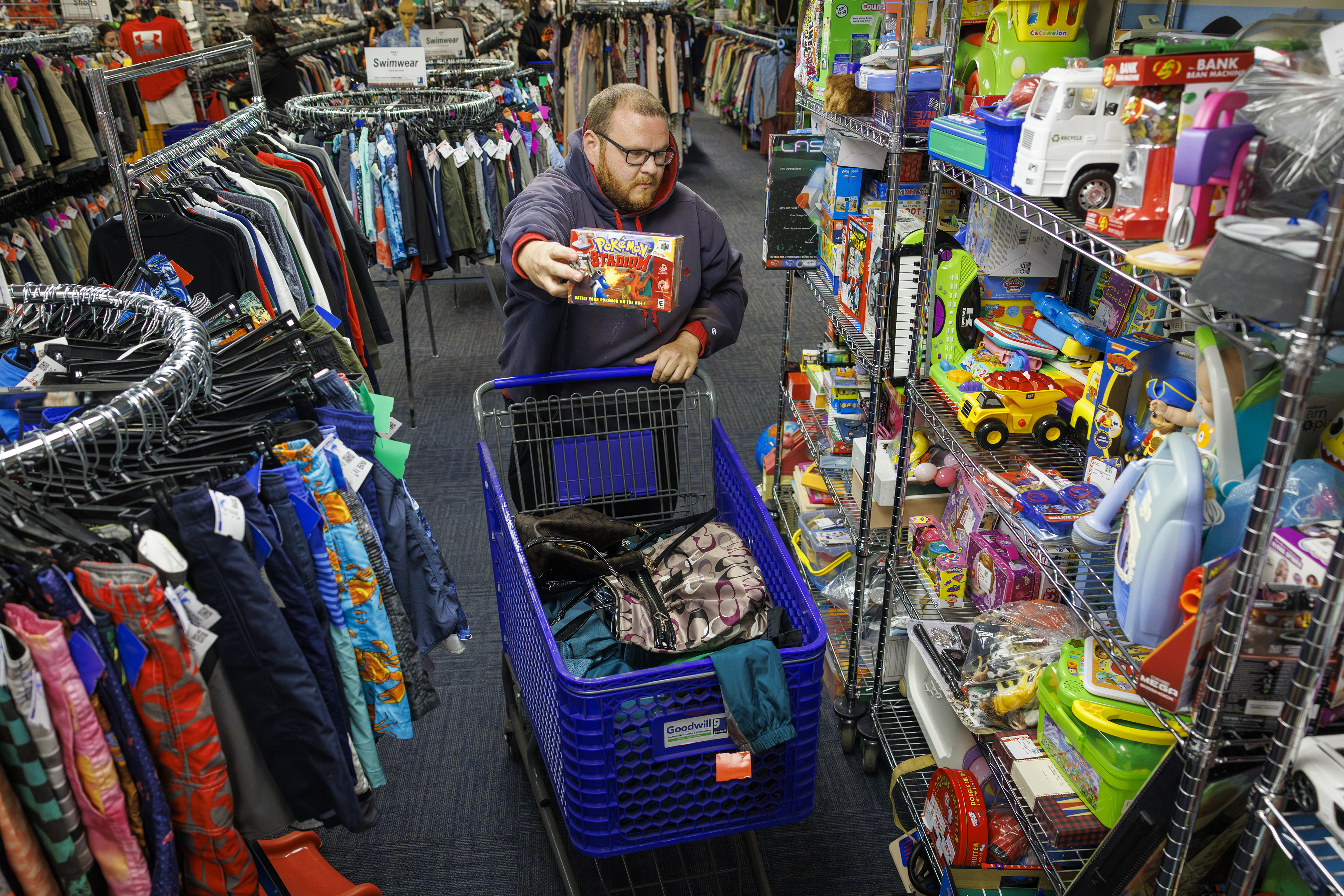
    Anthony Nunez flashes a Pokemon Stadium game he picked up in the toy section at the opening of the new Goodwill in Deptford.Alejandro A. Alvarez / Staff Photographer

    At the Deptford Goodwill, Nunez made a beeline for items with a high resale value, including a still-in-the-box Pokemon Stadium video game for Nintendo 64. He bought it for $18, Nunez said, and later resold it for $150, recouping the cost of his entire Goodwill trip.

    It helped that Goodwill executives had invited several resellers to a store preview, he noted.

    “They understand we help them too,” Nunez said. “I don’t know if they would be able to exist without us.”

    How social media has promoted thrifting

    Some longtime thrifters have started using social media to make extra cash.

    Melody Appel got into thrifting decades ago, when she was a student at Drexel University.

    Now 47 and living in Monmouth County, N.J., Appel recently got a TikTok account at the urging of her teenage daughters. At first, she just used the account to show off her thrifting hauls. But over the past month, she said she has started reselling items, too, making around $1,500.

    Many of her TikTok followers seem to be between the ages of 30 and 60, she said, but she has noticed many younger customers in stores.

    “People are seeing what they can find,” said Appel, who works as an educator and interior decorator. “And maybe their perception of what thrifting was is different from what thrifting is.”

    Reed Habiak, a social media influencer and reseller, looks for items in the Deptford Goodwill’s toy section on opening day last month. Alejandro A. Alvarez / Staff Photographer

    While some found their way to thrifting through social media, others get hooked when they stumble into a store, said Fortun, the Goodwill regional manager. He has noticed more young people at the Deptford store than at the old location in Woodbury Heights, he said, and he attributes some of that to the Edge Fitness Club right next door.

    Customers often come in on a whim, he said, and are in awe of the wide selection and the price tags.

    “People always look for deals,” Fortun said. “You go to discount stores like Ross and Burlington, you still don’t find items as cheap.”

    Goodwill is trying to keep these customers hooked with a new online loyalty program, which will offer special deals and send push alerts to shoppers when their favorite brands are stocked at a local store, said Boyd, CEO of the South Jersey and Philadelphia locations.

    Mark Boyd, CEO at Goodwill Industries of Southern New Jersey and Philadelphia, cuts the ribbon to open the new store in Deptford last month.Alejandro A. Alvarez / Staff Photographer

    Executives are also looking into using artificial intelligence to optimize parts of their operations, such as pricing, he said. But he doesn’t think technology could enhance the customer experience much, he added, and over-digitization could detract from it.

    “I really think thrifting is like one of the most human experiences you’re going to have, and it’s a great shopping experience,” Boyd said, “and that’s why it’s so popular.”

  • A Conshohocken bridal shop has closed after 45 years

    A Conshohocken bridal shop has closed after 45 years

    For more than four decades, hundreds of Philadelphia-area women first laid eyes on their wedding gowns at La Bella Moda.

    Even in recent years, as their bridesmaids and mothers increasingly bought dresses online, brides kept the Conshohocken boutique in business.

    But last month, the Fayette Street mainstay shut its doors for good.

    “It eventually wears on you,” said owner Gabriella Pagano Rush, who decided to close the shop in response to industry pressures and personal timing. The 30-year-old, who took over the store from her grandmother Lena Pagano in 2020, is due to have her first child this summer.

    “The business was fine,” Pagano Rush said. “Sometimes you just have to do something that is better for you in the long run.”

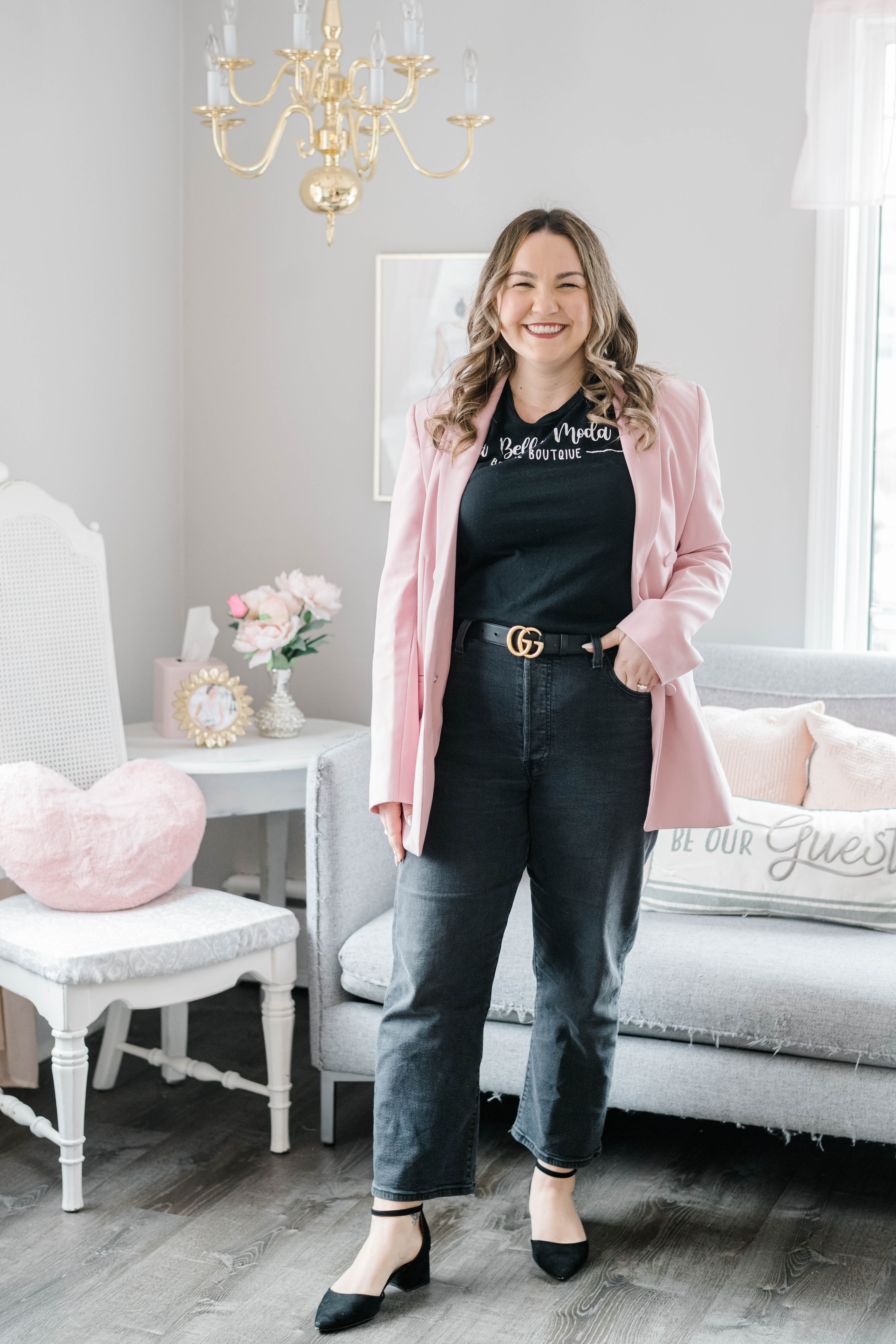
    La Bella Moda, shown here in 2023, sold wedding gowns and other formal wear for 45 years before closing its doors in Conshohocken last month.Courtesy Morgan Taylor Artistry

    She calls the transition “a happy ending,” one she said marks a new chapter in her life but also comes after years spent struggling to keep up with an evolving wedding industry.

    Weddings have become increasingly extravagant, with some Philly-area celebrations costing $40,000 or more.

    Social media has upped the ante — and the pressure on couples to plan the perfect day, noted Pagano Rush.

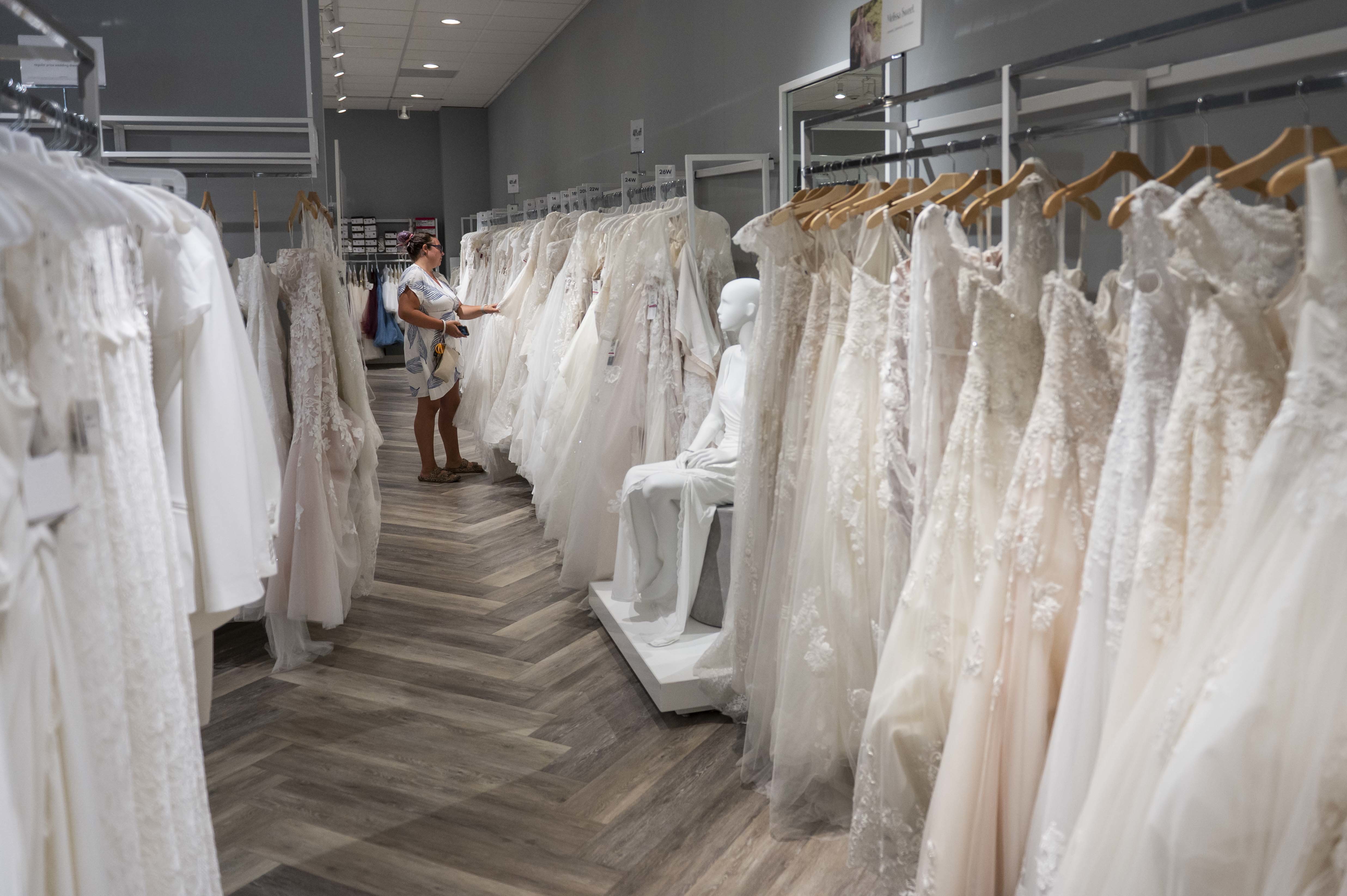
    They have more vendor choices than ever, and small businesses like La Bella Moda, where gowns cost $2,500 on average, must compete with wedding emporiums, which can offer a wider selection for less.

    The other options include larger brands, such as King of Prussia-based David’s Bridal, which is expanding its offerings while still selling dresses for under $500.

    There are also online retailers, such as Revelry and Azazie, which offer home try-ons and mail custom dresses directly to customers. Even broader ecommerce sites and fast-fashion brands sell wedding accessories.

    In recent years, as brides browsed veils and shoes at La Bella Moda, “I would start hearing, ‘Oh, I can get this on Amazon’ or ‘Oh, I can get this on Shein,’” which started out selling wedding dresses online before becoming a retail behemoth, Pagano Rush said.

    Someone shops for a wedding dress at David’s Bridal in Feasterville-Trevose in 2023. Allie Ippolito / Staff Photographer

    In 2023, Pagano Rush stopped selling bridesmaid dresses and other formal wear, which had accounted for about 30% of the shop’s business, she said. Instead, she doubled down on wedding gowns.

    She began offering $200 private appointments, during which a bride and up to eight guests got the store to themselves, with champagne, cookies, and a personalized shopping playlist, Pagano Rush said.

    “I really wanted brides to feel relaxed when they came into our store,” Pagano Rush said. “Not intimidated, not feeling pressured to find their dress.”

    How an Italian immigrant cultivated bridal joy in Conshy

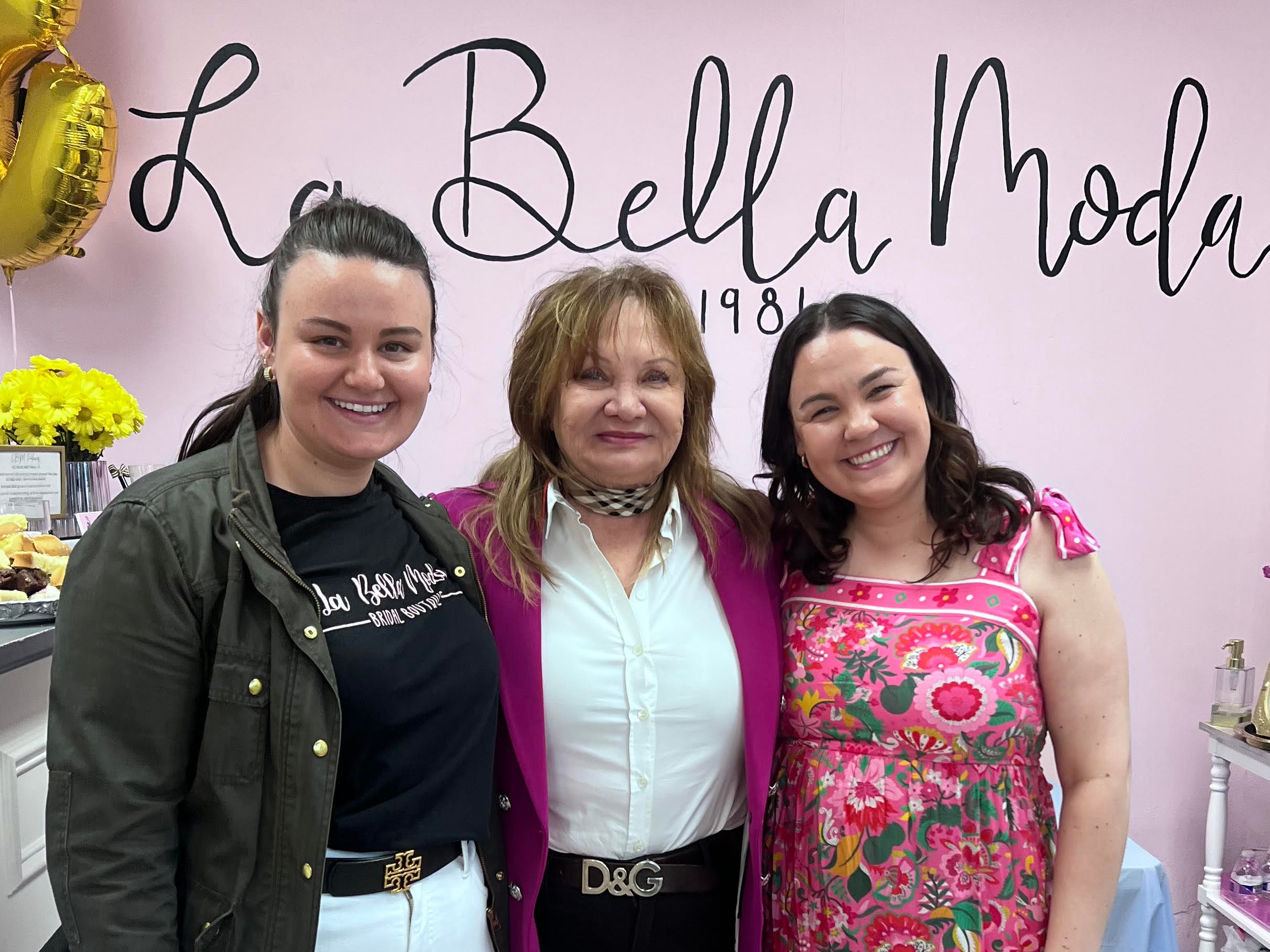
    La Bella Moda founder Lena Pagano (center) poses with her granddaughters in the Conshohocken shop. Gabriella Pagano Rush (right) took over as owner in 2020. Pagano Rush’s sister Michaela Bosico (left) encouraged the new owner to renovate the store during the pandemic.Courtesy Gabriella Pagano Rush

    Ever since she was a kid watching her “mom mom” Lena run La Bella Moda, Pagano Rush was enthralled by the wedding dress shopping experience.

    “I just remember growing up, going and visiting her at the store, helping her for fun, and just in the back of my head being like, ‘Oh, this would be really fun to do,’” said Pagano Rush, who grew up near Lansdale.

    At the time, the shop’s second floor was devoted to bridal try-ons, she said. “It was always so exciting when you would walk upstairs and you’d see all the brides up there trying on dresses.”

    The joy in the shop was cultivated by Lena Pagano, who emigrated from Italy, married, had three children, taught herself English, and then fulfilled a longtime dream of opening a boutique in 1981, Pagano Rush said.

    Lena Pagano, now in her 70s, stepped aside just before the pandemic in 2020, Pagano Rush said, and has been enjoying retirement in Plymouth Meeting.

    Meanwhile at La Bella Moda, Pagano Rush’s first few months as a business owner coincided with the early months of the pandemic, when businesses were forced to close. But she took it in stride and used the time to renovate the shop, making for a better customer experience when it reopened that June.

    Owner Gabriella Pagano Rush inside a renovated La Bella Moda in Conshohocken in 2023.Courtesy Morgan Taylor Artistry

    Montgomery County Commissioners Chair Jamila Winder said the Pagano family’s story exemplifies the immigrant experience.

    “In these times where it’s really hard for small business owners and entrepreneurs to start a business and sustain a business, Lena and Gabriella are really the epitome of that grit and that discipline and that vibrancy,” Winder said.

    “They’ve brought so much joy to women across Montgomery County, women who were planning for some of the best days of their lives.”

    Winder is one of them. A few years ago, she said, she bought her bridesmaids’ dresses at La Bella Moda.

    Customers remember their wedding dress fittings

    For women across the region, word of La Bella Moda’s May 31 closure brought back similar memories.

    Dozens commented on Facebook posts about the news.

    “I’ll never forget how gorgeous I felt in my lace gown on my wedding day,” wrote one woman. “Thank you for helping to make it so special, almost 20 years ago.”

    “Such amazing memories of the fitting and how beautiful you made me feel!” added another.

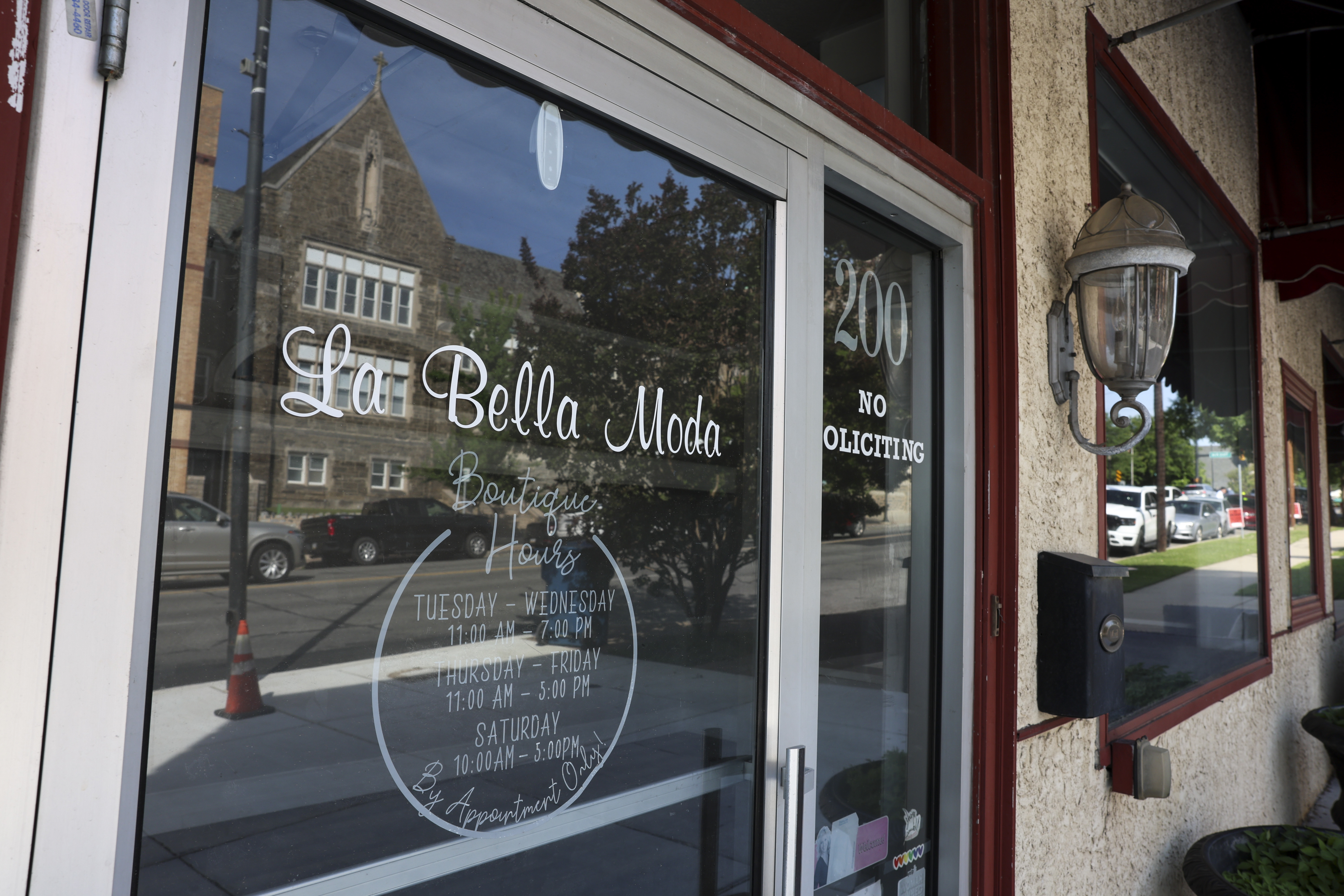
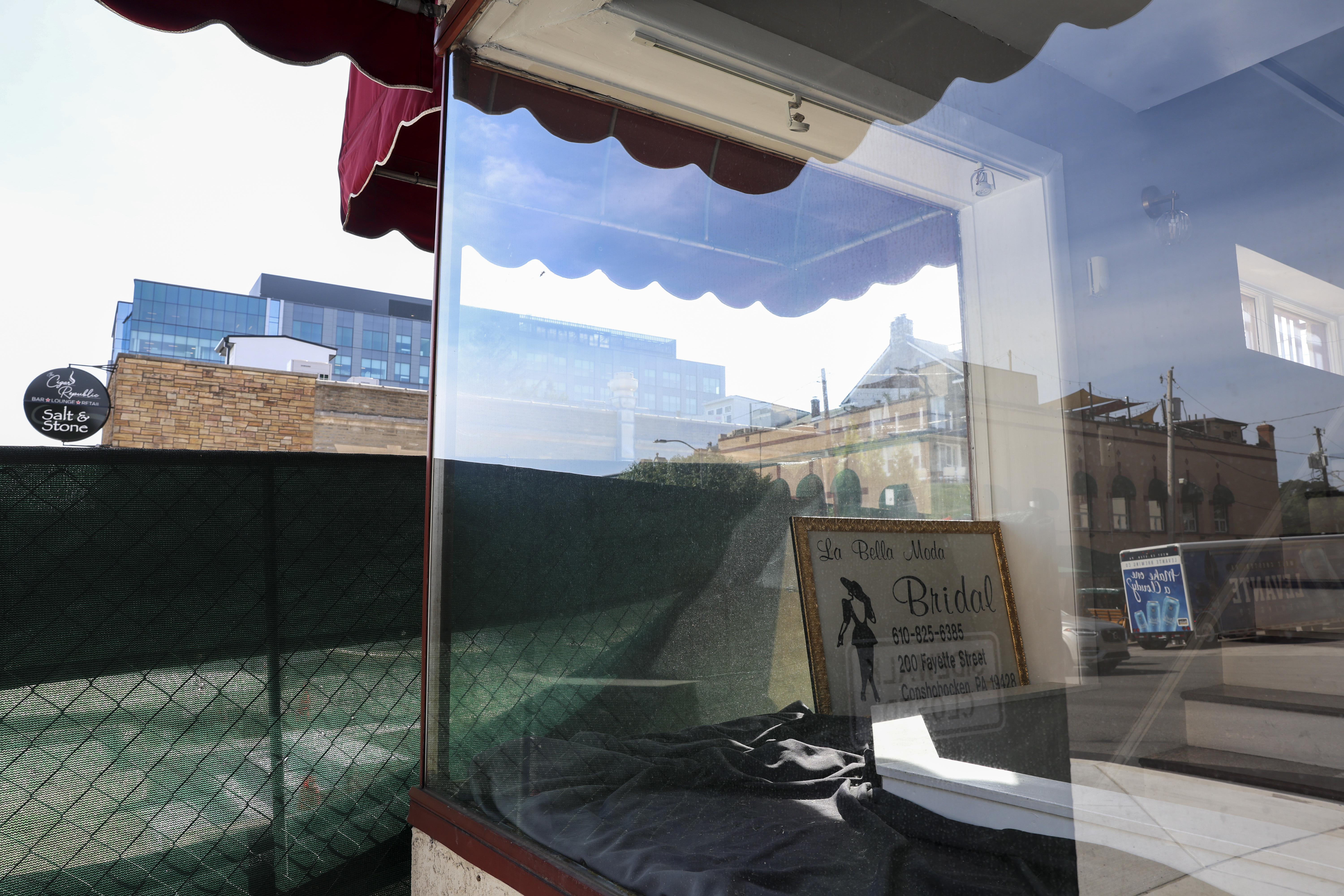
    The mostly empty window of La Bella Moda is pictured on June 4 in Conshohocken.Monica Herndon / Staff Photographer

    Tina Brennan West said she, too, recalls her wedding-gown fitting there 34 years ago.

    “I remember the experience walking through the doors, the smiles, the feeling that they already knew you,” said Brennan West, 55, of Plymouth Meeting, who works at an auto repair shop.

    She showed the stylists an inspiration picture from a magazine, she said, and an employee pulled a similar white-satin dress, with a long train, pink rose buds in the appliqué, and puffy sleeves that were popular at the time.

    She can still picture trying on the gown, she said, and see her mother and grandmother crying at the sight of her.

    Erin McElroy Kraft, now 60, wore her mother’s wedding gown for her 1992 nuptials. But the Plymouth Meeting native bought her bridesmaids outfits — deep-purple velvet skirt sets — at La Bella Moda.

    “It was absolutely beautiful,” McElroy Kraft said. “They were just so great at what they did.”

    McElroy Kraft, a retired foreign-service worker who now lives in Arlington, Va., said Fayette Street won’t feel the same on her next visit home.

    “It’s going to be hard not to see La Bella Moda in Conshohocken,” she said.

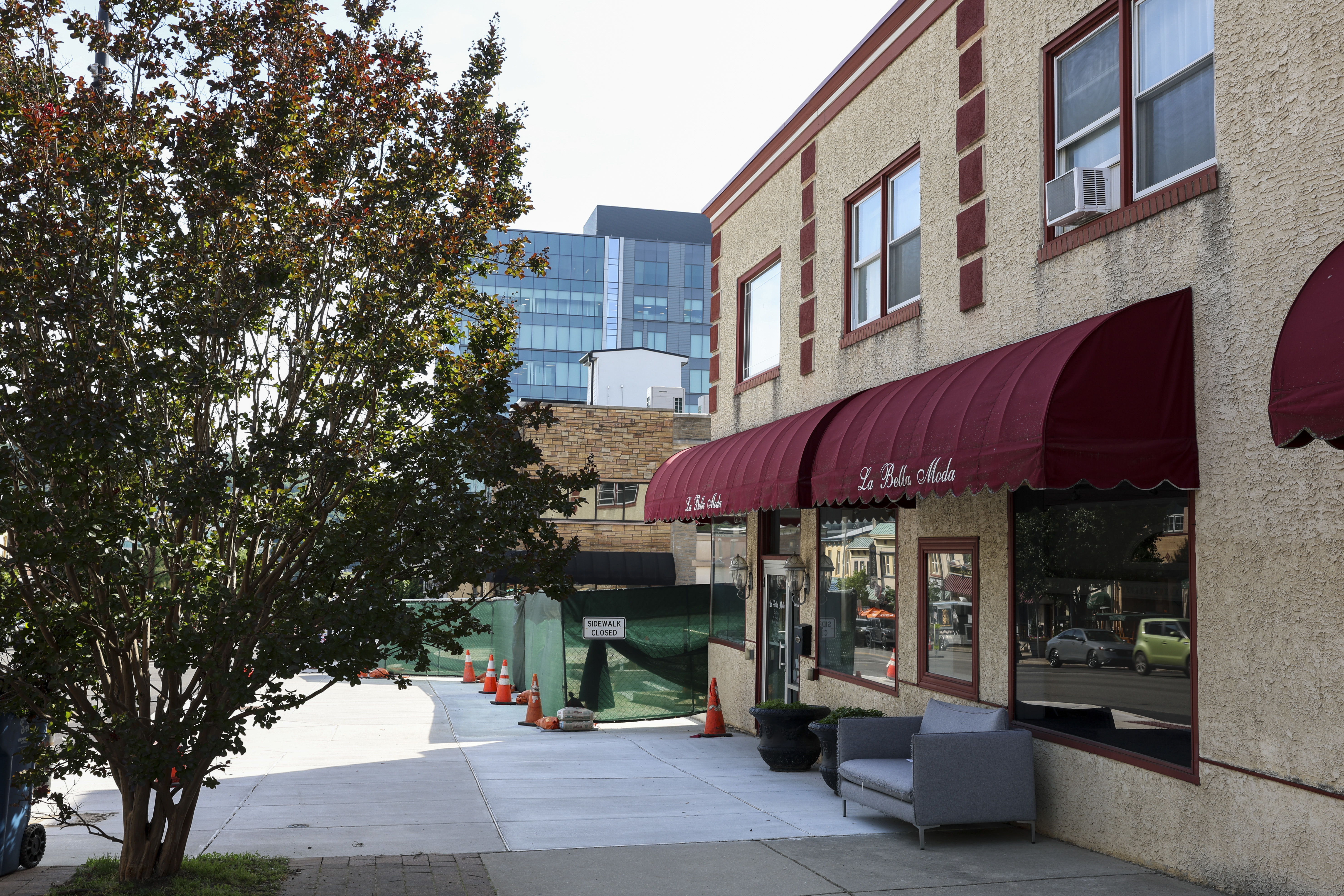
    The closed La Bella Moda on Fayette Street in Conshohocken is pictured on June 4.Monica Herndon / Staff Photographer

    La Bella Moda sits empty now. Its last dresses were either sold to customers during a recent farewell event, Pagano Rush said, or donated to bridal consignment shops owned by her friends.

    As for brides who had recently bought gowns at La Bella Moda, “no one was left without their dress and without a plan,” said Pagano Rush, who referred some customers to a local seamstress for alterations.

    The building, owned by Lena Pagano, will be leased to another tenant, Pagano Rush said.

    “The borough of Conshohocken has really done an amazing job of attracting businesses to that main corridor,” said Winder, the county commissioners’ chair. “I don’t anticipate that storefront will be vacant for long.”

    Pagano Rush said she believes there is still a place for independent shops in the modern wedding industry.

    “I can’t tell you how much attention we have gotten since April when we posted that we were even closing,” she said. “I wish small businesses just got this kind of attention and support” all time.

  • We met some Philadelphians at Fashion District and asked them the same question: What made you fall in love with the city?

    We met some Philadelphians at Fashion District and asked them the same question: What made you fall in love with the city?

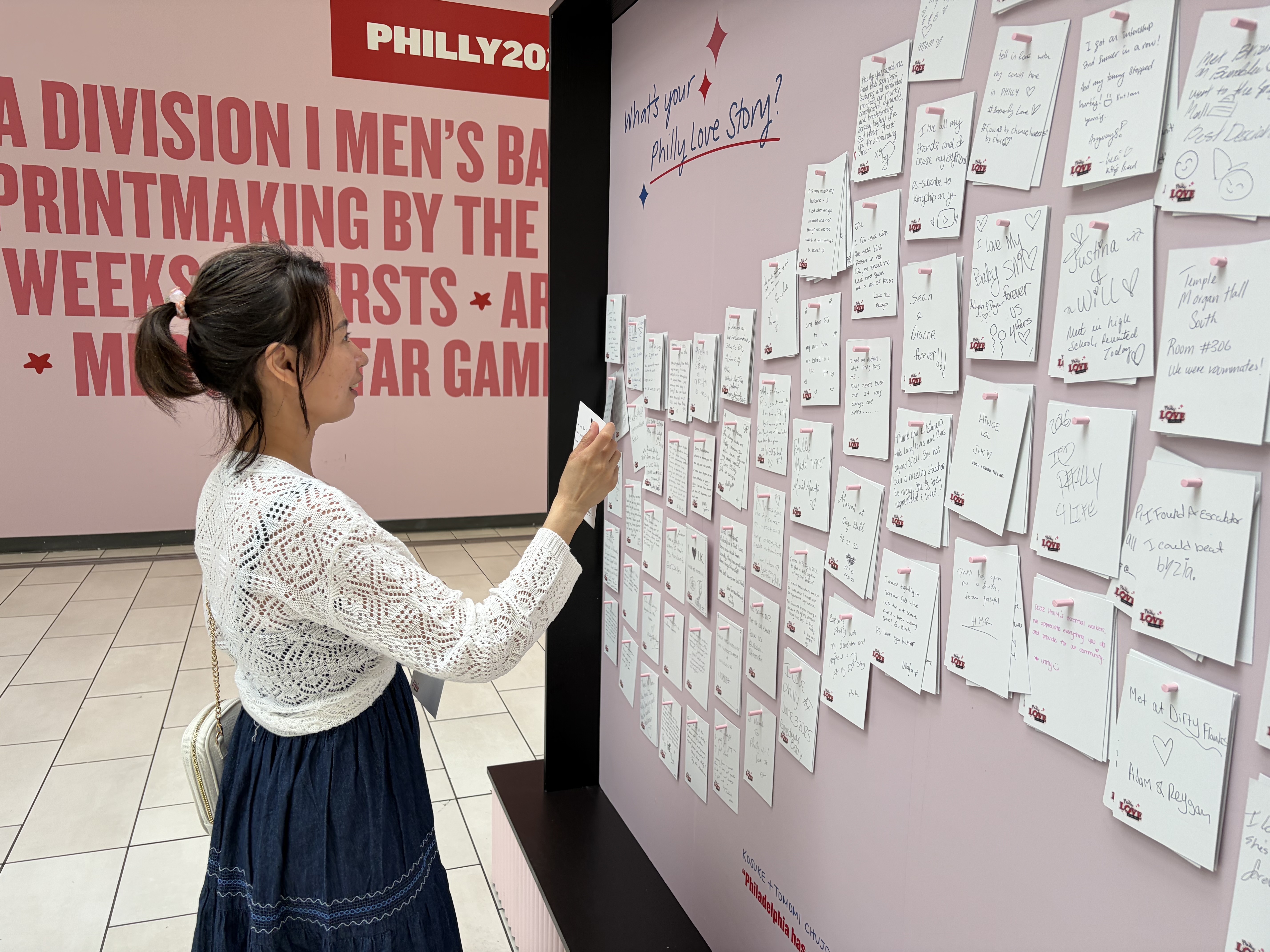
    With the World Cup and its influx of fans just around the corner, the Fashion District has a new interactive installation: “Philly Love Stories.” Despite the name, this is not about romance; it’s about Philly love and pride.

    Two three-dimensional hearts shaped to look like a pink cloud welcome folks in through the Fashion District’s entrance at Ninth and Market Streets and visitors share their musings on love in Philly. The initiative comes from a Visit Philadelphia video series with the same name.

    On Saturday afternoon, as people stopped to write their notes and see the exhibition, The Inquirer asked people for their Philadelphia love stories. For some, the city has brought their family together, and for others, the love affair with the city has remained a long-distance relationship. Here, some found the strength to cope with the grief of a child’s death, while others made loving feline bonds.

    Here are some of our favorites:

    A place to rekindle romance

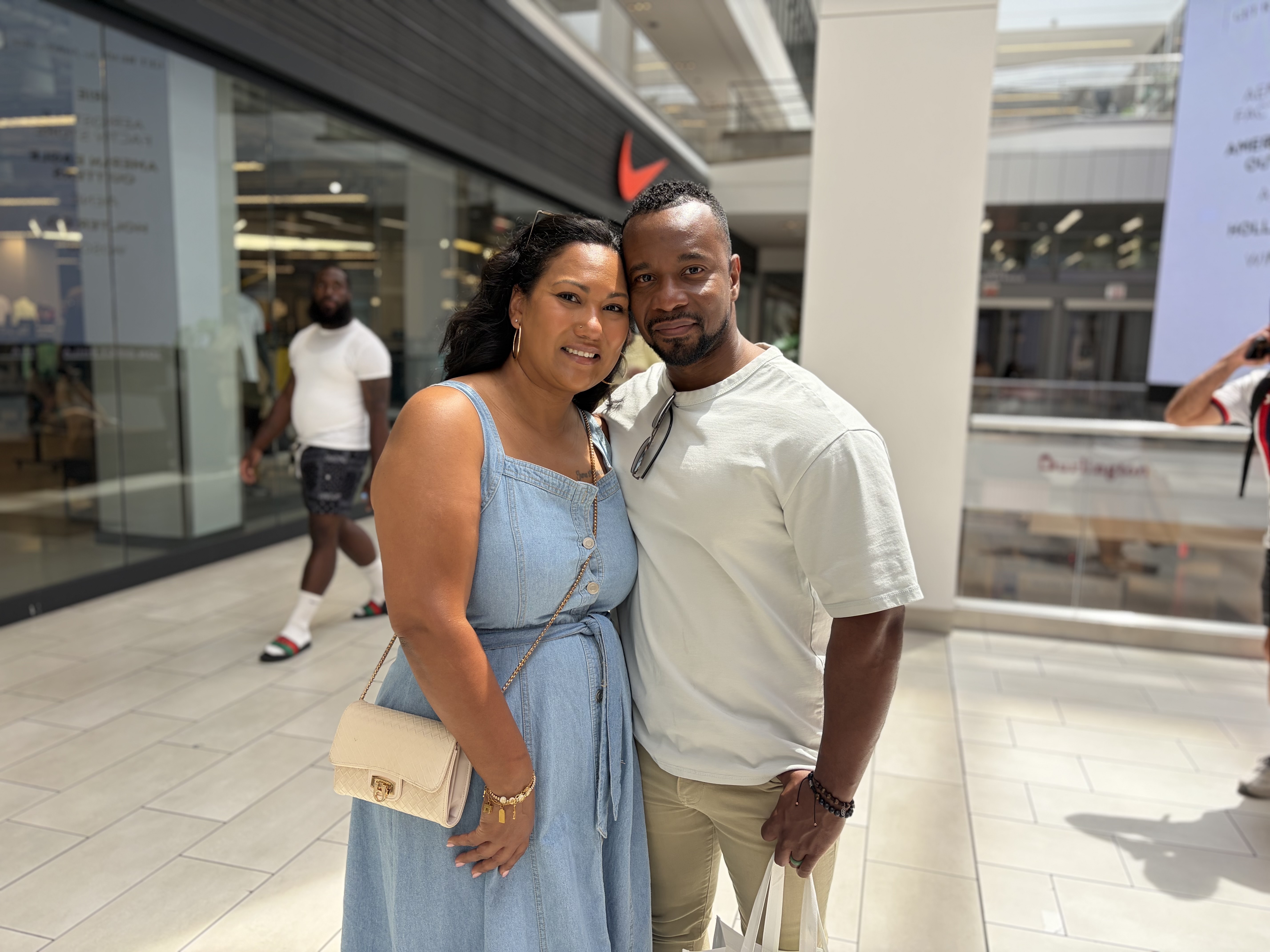
    In their 16 years of marriage, Tito and Janitza Nyemah have found in Philly a place for their love to bloom.

    The Bensalem residents come to the city for romantic getaways or, as they did Saturday, to celebrate their anniversary.

    Tito (right) and Janitza Nyemah come to Philly from Bensalem every time they want to take a break.Michelle Myers / Staff

    “Day to day, you get wrapped up on family, kids, and work, but we come here and we feel connected to each other,” Janitza Nyemah said. “We walk through the parks, and never go twice to the same restaurant because the food scene, it’s top-notch. So there is always something new to try.”

    Reading the love stories written by residents and tourists on the prop wall, Nyemah said she hoped visitors coming in for the World Cup will try to seek out the city as much as they can, and explore beyond the cliches.

    “Cheesesteaks, for sure,” she said. “But the more you get to know Philly, just know the more you’ll love it.”

    A city of motherly love

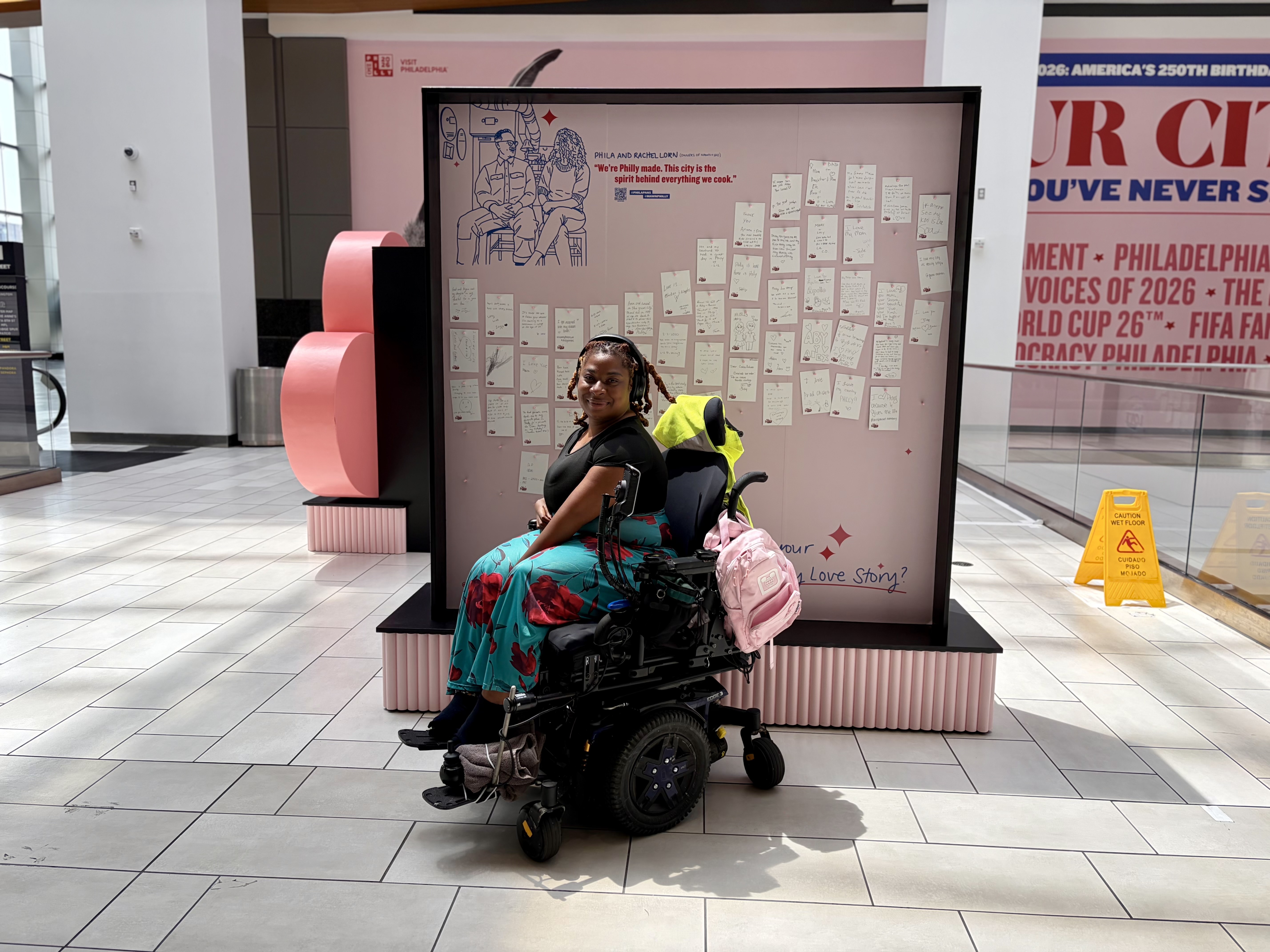
    Binta Willoughby, 48, hugged her youngest son, Quamire, for the last time in early May.

    The 26-year-old was sitting outside his home in North Philly with his friend when an unidentified car passed by and the driver opened fire at random, striking Quamire, Willoughby said.

    “He was very friendly, will help you out any way he can,” she said.

    Binta Willoughby lost her son to gun violence in May, but her love for the city has not diminished.Michelle Myers / Staff

    Far from pushing her away from the city, the incident only deepened her connection to Philly.

    On Saturday, she and Quamire’s girlfriend wrote on the wall about their love for the city and for Quamire.

    “It was an unfortunate thing, but we have been here our whole lives, and there has always been more good than bad,” Willoughby said. “Philly is my home, my whole life, the city where my kids were brought up. People here are kind.”

    A city of reunion

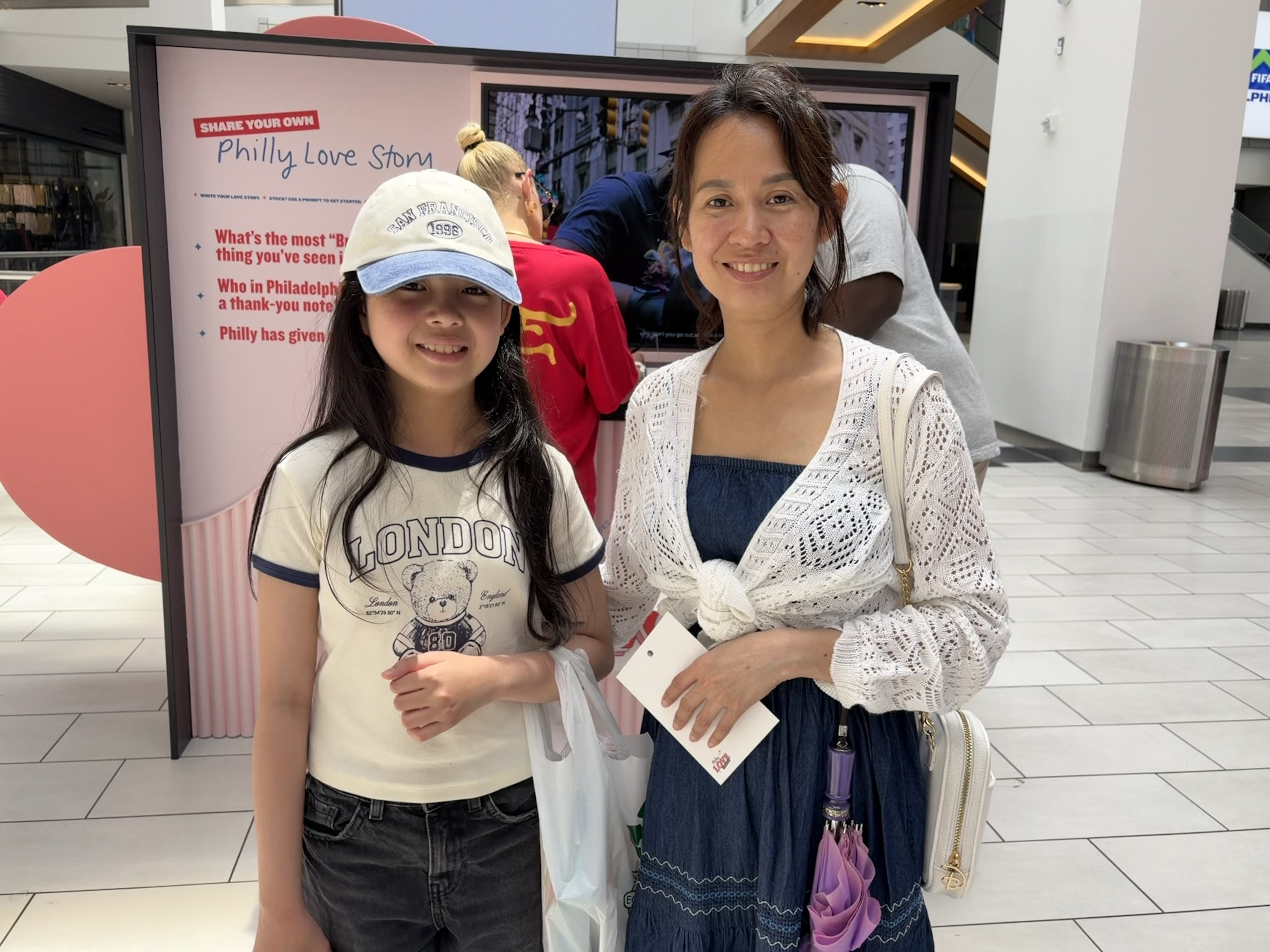
    In 2016, Sophear Chansath held her newborn daughter and kissed her husband goodbye as he left Cambodia to work in the U.S.

    After a decade apart, Philly has now become the city where the high school sweethearts, now both 38, have reunited and are raising their family.

    With the help of her daughter Jessica, 10, Chansath wrote about how charming and kind her husband is, and what Philly means to them.

    Sophear Chansath (right) and her daughter Jessica moved from Cambodia seven months ago to reunite with Jessica’s father.Michelle Myers / Staff

    “We love the food and the people are kind,” Jessica, 10, said, translating for her mother.

    The family loves walking in Center City parks and visiting Chinatown. Handmade noodles are Jessica’s favorite meal.

    Raising her daughter in a city so far from her home, Chansath has faith that Philly will provide a safe and nurturing space where Jessica can grow up.

    “She takes good care of me and wants me to be a good kid and have a nice job here,” the daughter said.

    Going the distance

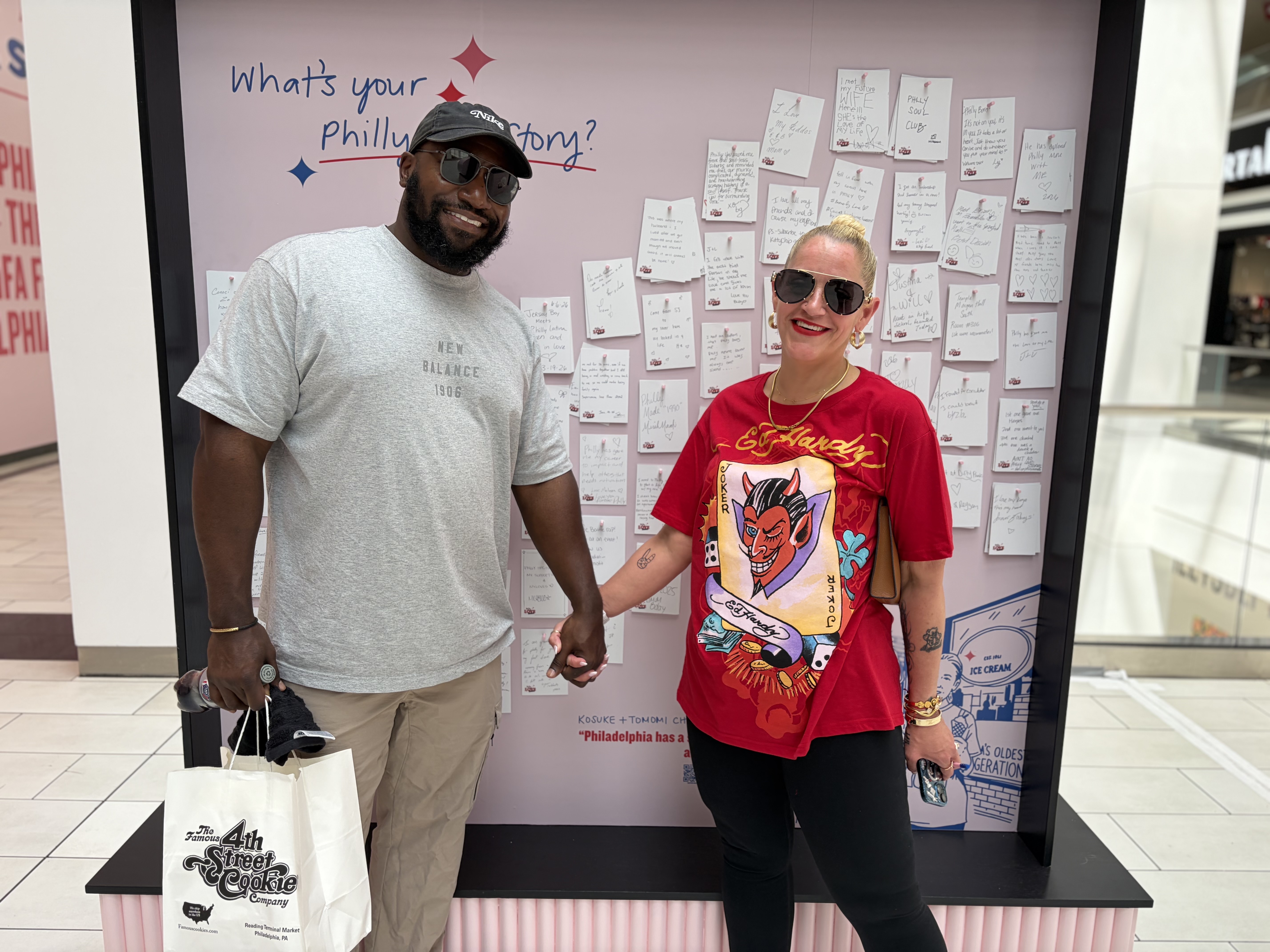
    For Damaris and Andres Outlaw, love in Philadelphia involves a long-distance marriage.

    “I’m writing about a Jersey boy that fell in love with a Philly Latina queen and now has to travel,” Damaris Outlaw said while attaching her note to the exhibit’s wall.

    Her husband’s job keeps him in New Jersey and he often commutes 45 minutes each way, multiple times a week, to be with his Philly-born and -raised wife.

    Andres Outlaw (left) commutes 45 minutes each way from New Jersey to spend time with his wife Damaris (right).Michelle Myers / Staff

    “I want to be there for her because I love her,” Andres Outlaw said. “It is a sacrifice, but we can see one another.”

    “Philadelphia has a lot to give,” Damaris Outlaw said. “We are full of friendly people, good food, and great experiences — think about the pretzels and water ice.”

    Pheline love

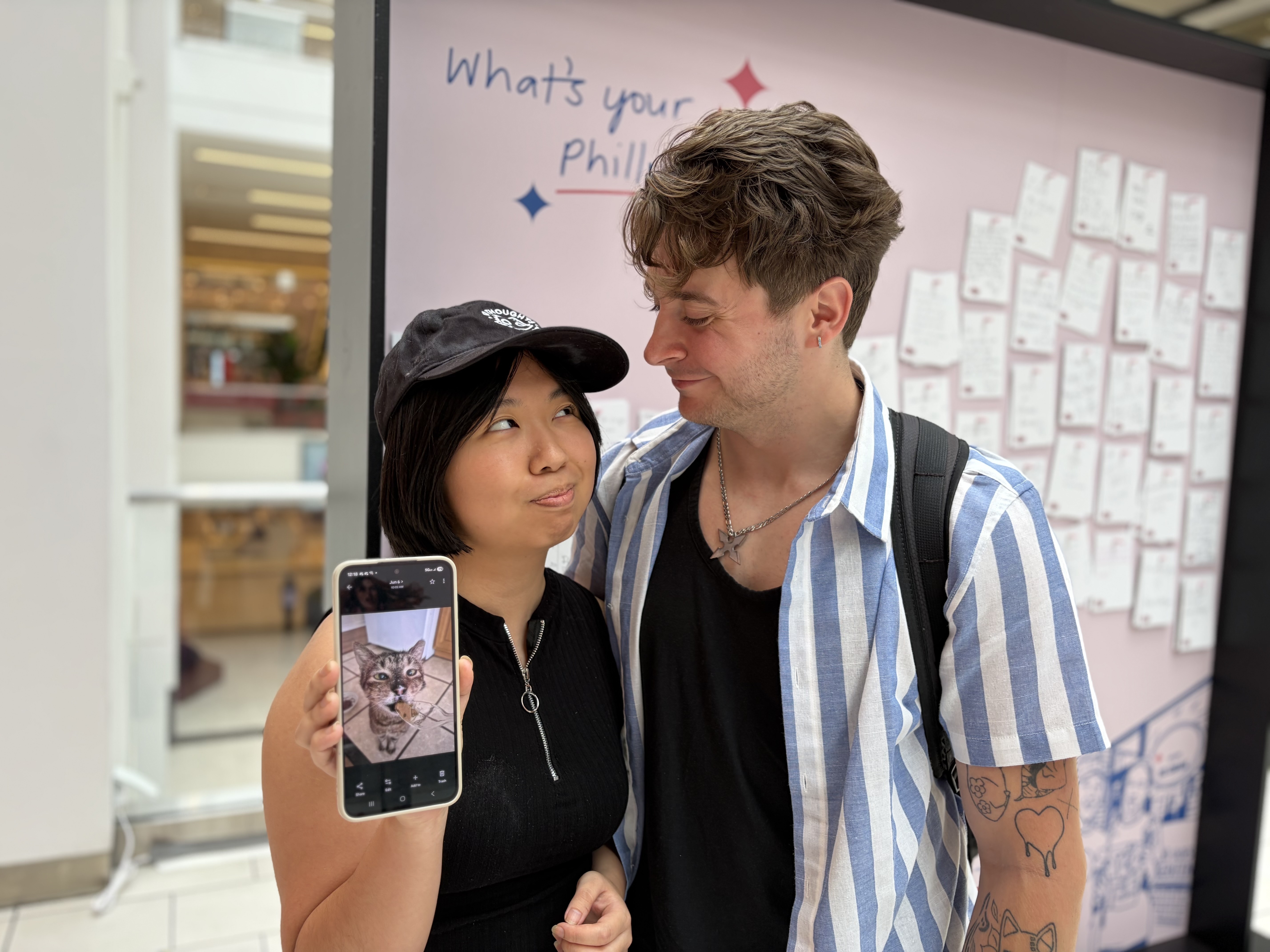
    Staring at the wall of notes, Wen Lee, 24, and Matt DeMarco, 31, couldn’t help but think about what they love most about Philly: cats.

    DeMarco grew up in the city, while Lee moved from Texas two years ago for work.

    They met at an anime conference in the suburbs and soon began dating. Lee eventually decided to move to Philly, wanting to experience the city’s art, music, and food scene. They also found themselves doing something they hadn’t planned for: rescuing stray cats and taking them to shelters.

    “Philly cats are wonderful. We like looking at them, taking care of them, and helping them,” Lee said.

    For Wen Lee (left) and her boyfriend Matt DeMarco (right) cats are the best part of Philly.Michelle Myers / Staff

    Last winter, they found a cat in the middle of a snowstorm and gave him a forever home.

    “His name is Moos. We don’t know how old he is because he has no teeth, so they can’t tell,” she said. “He is our little baby boy.”

    With the city’s incoming surge of tourists, they hope more people fall in love with Philly’s cats and help find them homes.

    “Give the cats food and water, and if you can catch them, take them to a shelter,” DeMarco said. “And if you want a cheesesteak, don’t go to Pat’s or Geno’s.”