Category: News

  • Longtime Philly State Sen. Anthony Williams is running for the last time — and won’t commit to fulfilling his full term

    Longtime Philly State Sen. Anthony Williams is running for the last time — and won’t commit to fulfilling his full term

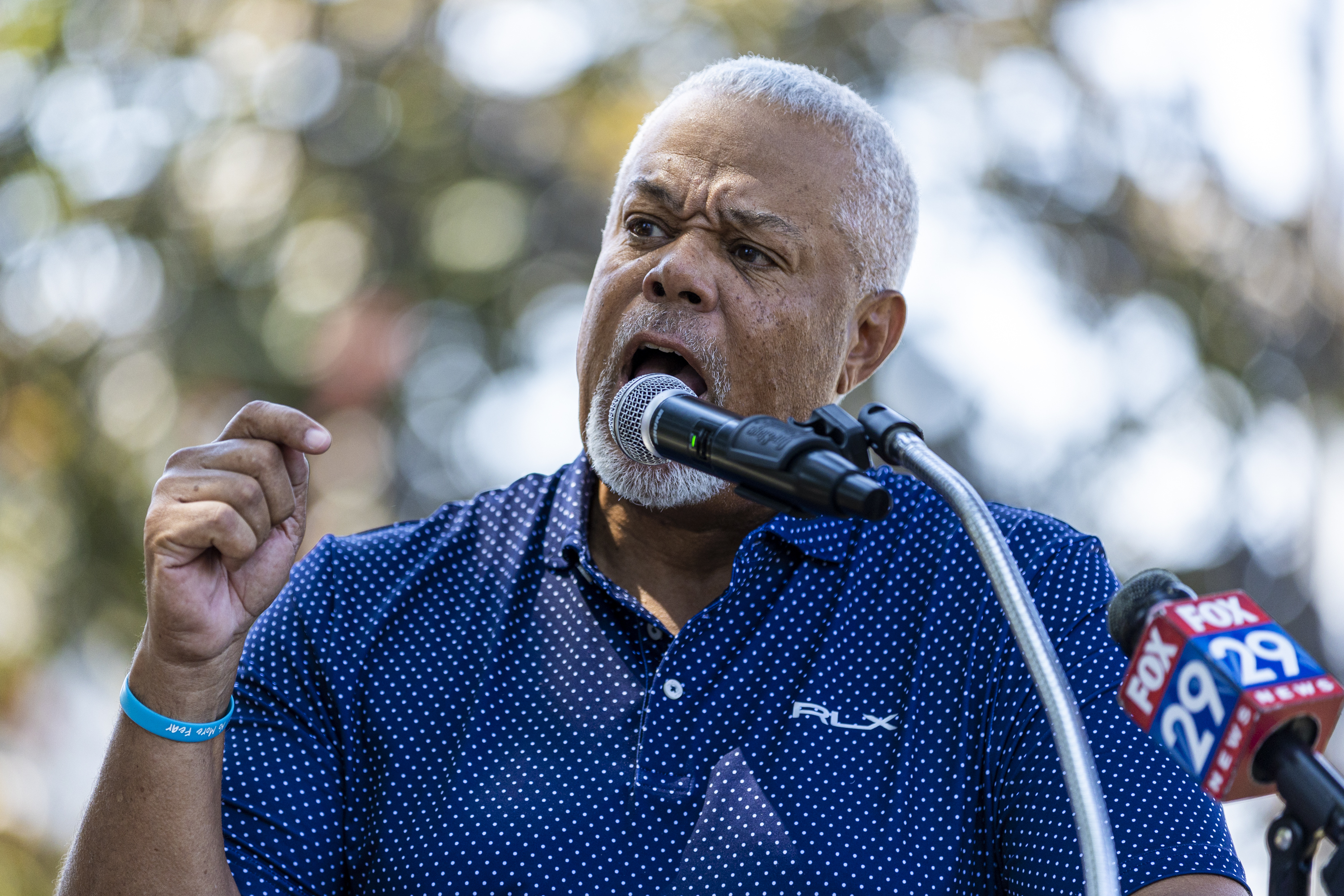
    State Sen. Anthony H. Williams, a veteran state senator from Philadelphia known for his advocacy on school choice and who has led one of the city’s most muscular political factions for decades, says November will be his last time running for reelection.

    But first, he has more work to do for the advancement of Black Philadelphians and the Democratic Party before he retires, he added in an interview this week.

    Williams, 69, did not commit to completing another four-year term, opening up the possibility that he could handpick his successor if he decides to retire early.

    “I’m thinking about getting reelected and serving, that’s all I’m thinking about,” he said. “I’m here, I’m gonna run to November, and we’ll see what happens after that.”

    Williams ran unopposed in 1998 for the seat after his father, the late Hardy Williams, decided within hours of the filing deadline he would not run for reelection. At the time, the move was was widely seen as an intentional play by the late Williams to hold the seat for his son. Now, Anthony H. Williams says that recollection excluded a key piece of information as to why his father retired so suddenly: He had been diagnosed with dementia just before he decided not to run.

    “We didn’t have a plan for me to take over,” the younger Williams said, noting that former State Rep. James Roebuck Jr. had filed to run, too, but ultimately withdrew from the race due issues with his petitions. “It wasn’t like I got a free pass.”

    When a state legislator resigns before the end of his or her term, a special election is called to fill the vacancy. The ward leaders in that district then get to choose who should take over the seat, dodging a competitive primary and largely deciding the outcome in closed-door meetings.
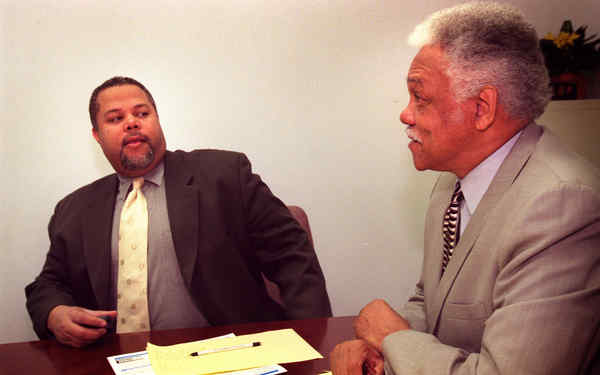
    Anthony Hardy Williams (left), seen here in 1998, when he was a state representative and his father (right) was a state senator.File photo

    Williams —who has been in state government, both as a representative and senator, for nearly four decades — is seeking his sixth term to represent parts of Southwest Philadelphia and Delaware County in Harrisburg. He recently won his primary election over Democratic challenger David Goldsmith Jr. and will not face a Republican challenge in November.

    Williams has had a far-reaching — and at times, turbulent — legacy in Harrisburg and the city, running twice unsuccessfully for Philadelphia mayor in 2015 and 2019 and once unsuccessfully for governor in 2010.

    Over 37 years in Harrisburg, Williams has mentored numerous young Philadelphians who started as aides in his Senate office, who have gone on to become top legislative leaders. That list includes: House Speaker Joanna McClinton, Philadelphia City Council President Kenyatta Johnson, House Appropriations Chair Jordan Harris, Superior Court Judge Timika Lane and more.
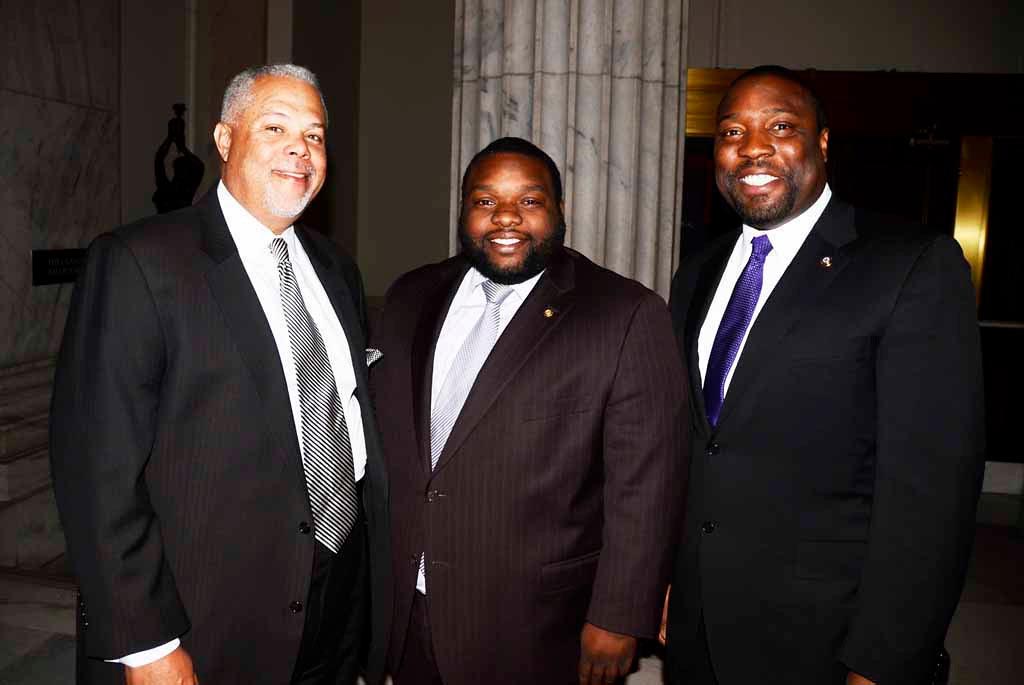
    State Sen. Anthony H. Williams, State Rep. Jordan Harris and Councilman Kenyatta Johnson at the Inaugural Dorys Erving Fit Youth Foundation Celebration at the Ritz-Carlton on Friday, November 15, 2013. (HughE Dillon/Philly.com)

    “It’s a testament to his dedication and his commitment to seeing Black independent politics grow and mentoring young people to get into office — not to just be there, but to do something,” Harris said Friday.

    Looking at Williams’ list of mentees who now outrank him in office shows his legacy and humility, Harris added. And Williams is willing to have spirited disagreements with his mentees, Harris said.

    “He’s mentored people who vehemently disagree with him on certain issues, but the endgame of upward mobility for underrepresented people is all the same,” Harris said.

    Johnson, in a statement, credited Williams for playing a formative role in his political climb, and for always being willing to “share his wisdom, offer candid advice, and invest in the next generation of leaders.”

    “Philadelphia is a better city because of [Williams’] service, and I am proud to call him both a colleague and a friend,” Johnson added.

    In an interview, Williams said that he’s seen Harrisburg change tremendously since he first was elected to as a state representative in 1989. Today, Democrats control the state House after flipping the chamber in 2022 for the first time in 12 years, a Black woman from Philadelphia leads the House, and a democratic socialist leads Philadelphia’s delegation to Harrisburg in the Senate. Democratic lawmakers successfully fought to change how Pennsylvania’s public education system is funded, and they’ve advanced gun reforms.

    And, he said, it’s no longer a place for career politicians like him.
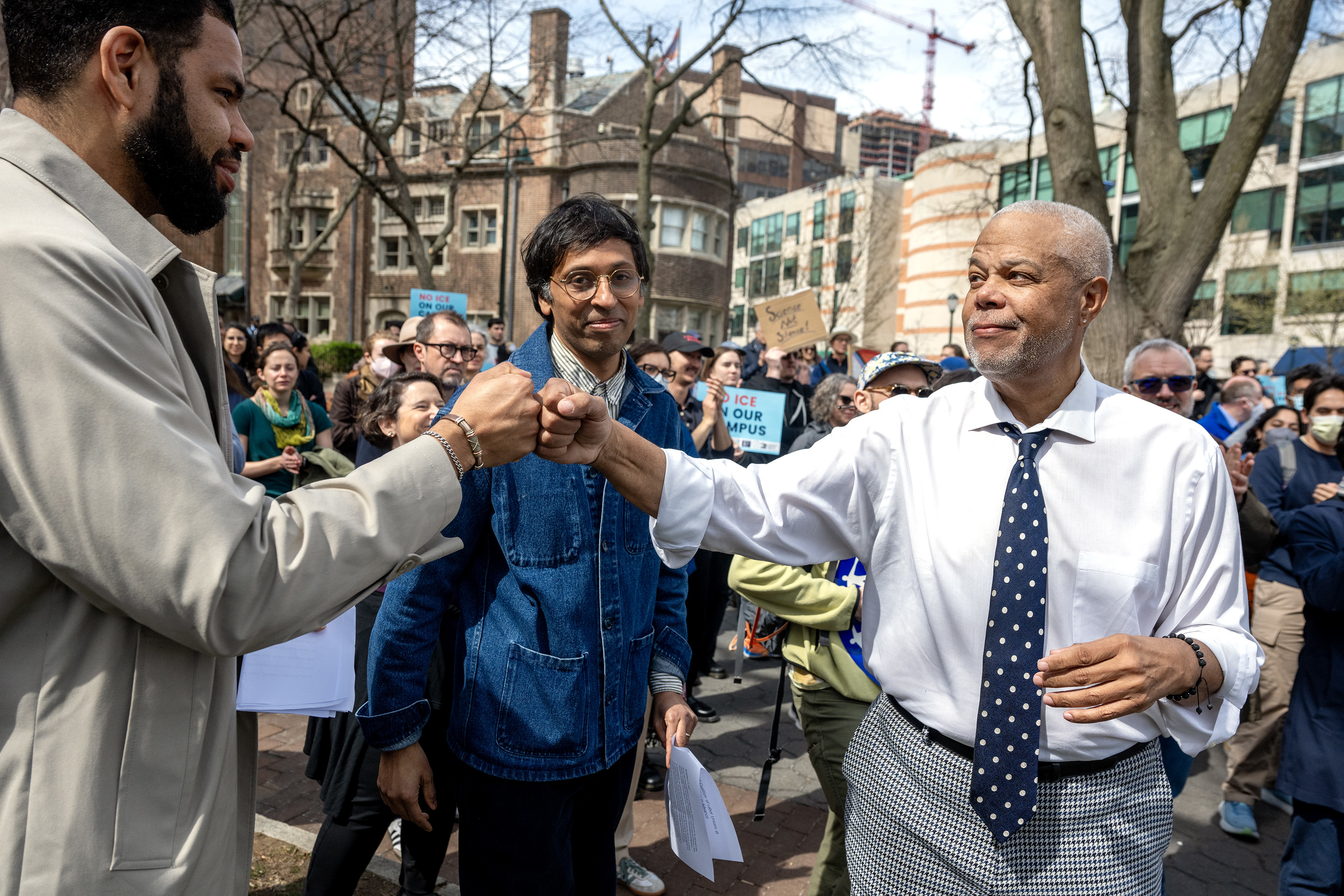
    Philadelphia elected officials State Rep. Rick Krajewski (from left), State Sen. Nikil Saval, and State Sen. Anthony Williams attend a rally at the University of Pennsylvania Mar. 20, 2025.Tom Gralish / Staff Photographer

    But Williams said there are still critical issues of policy and politics that he wants to address with his time left in office.

    First, he wants to be a bridge between generations of Democratic leaders — though he dislikes how Democrats currently label themselves as “progressive” or “moderate” to differentiate their views. He said he’s been speaking frequently with progressive leaders since State Rep. Chris Rabb, a democratic socialist, won the party’s nomination to represent Pennsylvania’s 3rd Congressional District in Congress.

    “The Democratic Party as it’s currently constituted is something that’s not current, and not visionary about moving forward,” Williams said.

    “I want to spend time working with those folks who are in that progressive community who will identify with the fact we have common ground on a lot of these areas. We have a different rhythm, or as they say, a different vibe,” he added.

    Throughout his time in office, he said he’s had his ideas stolen and boasted by white leaders, including a successful illegal gun task force. He’s cut deals with top Republicans for impactful programs that still exist today, such as an apprenticeship program that helped increase diversity in the building trades. He’s been an outcast at times as one of few Democrats to advocate for school choice options, a label that he knows follows him.
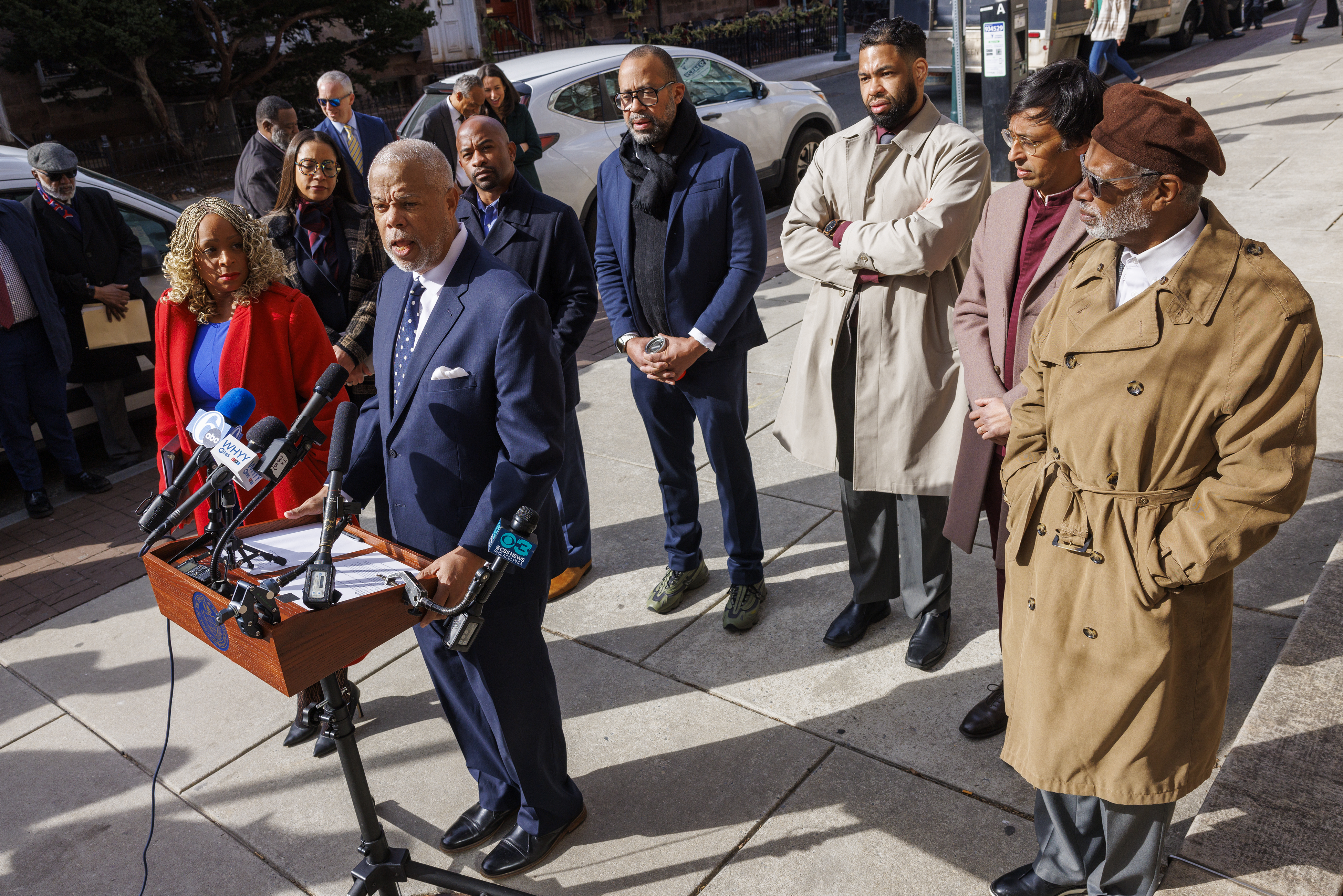
    News conference hosted by Pennsylvania State Senator Anthony H. Williams (podium) outside the Penn Carey Law School, Tuesday, Feb. 25, 2025. At rear from left are Councilmember Jamie Gauthier, law professor Stacy Hawkins, State Rep. Napoleon Nelson, Rev. Marshall Mitchell, Penn Trustee Board, State Rep. Rick Krajewski, State Sens. Nikil Saval and Art Haywood.Alejandro A. Alvarez / Staff Photographer

    Now, he wants the buy-in of state legislators and the private sector to address economic inequities among Black Philadelphians. Black residents make up the largest racial or ethnic groups in Philadelphia, but have one of the highest poverty rates in the city with 22.3% of Black residents living in poverty in 2024, according to a Pew Charitable Trusts survey released this year. Instead, Black residents should be driving the economy, Williams said.

    “Fundamentally, we have to take hold of the economy in the city,” he said. “We collectively have the power to do something about it. Not individually, collectively.”

    He sees more school choice options — and reimagining the whole public school system if necessary — as part of this solution. He’s faced criticism throughout his career for his support of school choice efforts, citing his big-dollar support from Pennsylvania’s richest man Jeffrey Yass, who solely supports candidates willing to send state money to private schools.

    Yass, who usually supports Republican candidates, was among the sole funders of Williams’ failed bids for governor and mayor. Williams has been criticized for taking money from a top GOP supporter who wants to divert money away from Pennsylvania’s public school system.

    “People think I’m a one-hit wonder,” Williams said of his support for using public dollars to send some students to private schools. “We have to be honest about what we’re doing and not doing and have honest, hard conversations about how we’re gonna change how we do this.”


  • FDR Park’s massive slide didn’t meet new safety standards, keeping the playground closed for months

    FDR Park’s massive slide didn’t meet new safety standards, keeping the playground closed for months

    A real-life lesson in patience is here for Philly’s young playground users.

    Already closed since the winter, FDR Park’s Anna C. Verna Playground will be fenced in for at least another few weeks while it awaits the arrival of new parts for its massive 30-foot slide, after an inspection found the equipment did not meet updated voluntary safety guidelines. The award-winning playground and home of the largest “Megaswing” swing set in North America was a signature piece of FDR Park’s $250 million revamp.

    The playground’s construction was overseen by the nonprofit Fairmount Park Conservancy, and Verna opened to the public in October 2023. Following its completion, ownership of and responsibility for the playground passed over to the city. A final safety audit before opening day found it to be in compliance with the voluntary guidelines in place at the time, according to Meghan Talarowski, the playground designer and executive director of Studio Ludo.

    Last year, two organizations issuing standards and recommendations for playgrounds — the Consumer Product Safety Commission and American Society of Testing and Materials— each created new safety recommendations regarding tall towers, like the Verna slide. Previously, there was no such guidance, Talarowski said.

    After Philadelphia Parks and Recreation conducted a routine inspection of the playground in January, it found the slide did not meet those new recommendations, which included having safety guards along the structure.

    The department immediately shut the entire playground down and put chain-link fences around it, according to Parks and Recreation Commissioner Sue Slawson, who began her role in 2024. The inspector also determined the structure users climb to get to the top of the slide had many missing or loosened bolts, she said.

    Previous Philadelphia Parks and Recreation inspectors had identified missing or loose bolts and replaced them, but this was the first time the guard issue has been raised, she said. Last summer, a video went viral of a little boy climbing the outside of the slide and falling to the ground, luckily without major injury.

    “Once we realized that there was an issue and we were concerned about liability and safety for the young people that were using it, we put up the fence. And our goal was to ensure that it was not used until we got the necessary pieces to ensure that the playground was safe,” Slawson said.

    Nicky Talarowski, 8, plays on a slide at the new Anna C. Verna Playground at FDR Park in Philadelphia, Pa. on Sunday, Feb. 4, 2024.Monica Herndon / Staff Photographer

    The city ordered the necessary bolts and guards from the playground’s parts manufacturer in Germany in March, and they are expected to arrive later this month. Installation will begin upon their arrival, according to parks and recreation department spokesperson Ra’Chelle Rogers.

    Philadelphia Parks and Recreation has put up signage informing visitors the playground was closed “for maintenance,” Slawson said. But the precise cause of the closure has not been well known or advertised. Visitors have regularly pried open the fence to use the playground despite the department resealing it multiple times, Slawson said.

    While Verna could reopen relatively soon, another significant Philadelphia Parks and Recreation closure does not figure to be remedied in time for this summer. Towey Recreation Center in North Philadelphia announced its closure last week, after an assessment determined its roof was structurally compromised and required immediate repairs, Rogers said.

    Towey will be closed indefinitely while the city determines a renovation plan. Repair work could take several months.

    In the meantime, its playground will remain open, Rogers said. Towey’s summer camp will be moved to Cruz Recreation Center, which has the capacity to accommodate campers from both sites. Other programming will be accommodated at nearby Philadelphia Parks and Recreation facilities.

  • 23-year-old man dies in Kensington double shooting, police say

    23-year-old man dies in Kensington double shooting, police say

    A man was killed in a double shooting in Kensington over the weekend, authorities said.

    Rymir Ibn-Allah Shaw, 23, was shot on the 3500 block of F Street, police said Monday.

    Officers responded to the scene Saturday around 11:50 p.m. to find Shaw in the street with multiple gunshot wounds.

    He was taken to Temple University Hospital, where he was pronounced dead at midnight.

    Another man, whom police did not identify, was also shot, they said. He was struck once in the back.

    Officers found the man injured near G Street and Erie Avenue and took him to Temple University Hospital, where he was listed in stable condition, the department said.

    Investigators believe the shooting was related to an argument. They have not named any suspects or announced an arrest.

    Anyone with information on the incident is urged to contact the Philadelphia Police Department’s Homicide Unit at 215-686-3334 or submit an anonymous tip.

  • Police ID pizza delivery man shot and killed in North Philadelphia

    Police ID pizza delivery man shot and killed in North Philadelphia

    The pizza delivery driver who was shot and killed while dropping off food to an unoccupied property in North Philadelphia last week was identified by police Monday as Anshul Kunsha.

    The shooting happened just after 12:30 a.m. Friday on the 2300 block of Edgley Street in Strawberry Mansion. Responding officers arrived to the scene to find Kuncha lying on the ground with a gunshot wound to the back of his head.

    He was taken to Temple University Hospital, where he was pronounced dead at about 12:45 a.m., police said.

    No weapon was recovered, and no arrests have been made.

    At the time of the shooting, Kuncha was making a delivery to a vacant apartment at the Raymond Rosen Homes. Surveillance footage from the area showed two people following him as he walked to the property’s door, Philadelphia Police Chief Inspector Scott Small told 6abc.

    Police were later able to identify the phone number associated with the order Kuncha was delivering, and said the food was found untouched inside the property.

    Investigators are asking anyone with information about the incident to contact the Homicide Unit 215-686-3334, or the PPD tip line at 215-686-TIPS. Tips can be made anonymously, and a $20,000 reward is available for information leading to an arrest and conviction in the case, police said.

    Staff writer Jesse Bunch contributed to this article.

  • Real estate giants Compass and Zillow fight over the future of the market

    Real estate giants Compass and Zillow fight over the future of the market

    Over the past year, Zillow, the country’s largest real estate portal, and Compass, the biggest real estate brokerage in the world, have traded lawsuits and allegations of antitrust violations, all while waving the banner of consumer protection. Both companies have gobbled up competitors and become so dominant that when they shift their rules and practices, they have the power to change how homes in the United States are bought, rented, and sold.

    Zillow owns listing websites including StreetEasy and Trulia and receives about 220 million unique visitors every month. Its scale means it can dictate practices that agents say are bad for their businesses and confusing for consumers.

    Compass was already the largest real estate brokerage in the country when, this year, it bought Anywhere Real Estate for $1.6 billion, making it by far the biggest real estate brokerage in the world with about 340,000 real estate professionals. It controls brands that include Christie’s International Real Estate, Century 21, Coldwell Banker, and Corcoran. It has come under fire for pushing the practice of private listings, which go to a select group of people before they reach the public.

    The National Association of Realtors was the longtime gatekeeper of real estate listings, but the organization was found guilty of antitrust violations in 2023, and its grip on the market has loosened. Now, Zillow and Compass are rushing in to fill the vacuum, battling over who gets control of the listings.

    “We have two behemoths in the industry,” said Jonathan J. Miller, a real estate appraiser and consultant. If the leaders of these companies were to quickly change, shifting their strategy or focus, he continued, the ramifications could be enormous. “The entire market — the biggest asset class in the world — is subject to potentially significant change overnight.”

    What is the controversy around Compass’ private listings?

    Private listings have existed for decades, but they were fairly rare. Perhaps a judge or a celebrity wanted to keep their home and address private, so instead of posting the house online, their broker would call other agents and quietly invite them to the property.

    Compass, however, has taken the practice wide. It offers its buyers the ability to share online listings only on the Compass website so its own agents and their clients can see them, before bringing the homes to the larger market. Those are what it calls Private Exclusive listings.

    Websites like Zillow list how many days a home has been for sale, and a property that’s been on the market for an unusually long time might give a potential buyer pause. Compass’ Private Exclusive listings allow sellers to test their price without starting the days-on-market clock.

    Compass’ critics say the practice disadvantages both buyers and sellers. Buyers won’t know if an overpriced home has been sitting at the same price for a year, and sellers won’t have the largest pool of potential buyers. Compass, on the other hand, does benefit, its critics say. Brokerages take a cut of their agents’ commissions, so by keeping both sides of the deal in-house, the company earns more money.

    Critics liken the practice of private listings to putting tape over the odometer before selling a car. Compass disputes this, and says it isn’t obscuring any information about the home itself.

    “Sellers should have the right to decide how their homes are marketed and where they are marketed,” Compass CEO Robert Reffkin said in a statement.

    Some states, including Connecticut and Wisconsin, have passed laws restricting private listings. New York’s version is on its way to the governor’s desk.

    Why do real estate agents complain about Zillow?

    When potential buyers look at a home on Zillow, they’re presented with the price, photographs, and a menu of information, including the number of bedrooms and a list of local schools. There are also big, bright buttons to click that will connect them with an agent.

    Most buyers assume that when they click those buttons, they are contacting the agent selling the home. But instead they are connected with a buyer’s agent, a person who might have nothing to do with the property, but pays Zillow a fee to be connected with potential clients. Some of those agents share their commissions with Zillow.

    Many buyers find this practice confusing. A study by Jerry Wind, a professor of marketing at the Wharton School at the University of Pennsylvania, surveyed more than 850 consumers about Zillow’s website and found that less than 1% of them correctly identified who would be contacting them when they expressed interest in a property on Zillow.

    Zillow says it’s important to connect buyers with their own broker.

    “When you go into a negotiation, you want to make sure that each party to the negotiation has somebody on their side who is advocating for them,” said Mischa Fisher, chief economist at Zillow. The listing agent’s information is available on Zillow for every property.

    Does it matter that these companies are so large?

    There has been an enormous amount of consolidation in the real estate industry. Last year, Rocket Cos., which provides mortgages, acquired Redfin, an online real estate brokerage in a deal valued at $1.75 billion. The Real Brokerage announced this spring that it plans to acquire RE/MAX in an $880 million deal.

    Many in the industry expected the Compass acquisition of Anywhere Real Estate to face antitrust scrutiny from federal regulators, but it sailed through the regulatory process. The office of New York Attorney General Letitia James, however, is investigating Compass over antitrust concerns, according to a person with knowledge of the investigation who was not authorized to speak publicly.

    James has concerns about Zillow, too. Last year, her office joined a group of states and the Federal Trade Commission in suing Zillow and Redfin, one of the largest players in the rental market, saying they had entered into an agreement to stop competing with each other.

    Zillow is also facing a class-action lawsuit alleging it incentivizes brokers who use its Flex Agent and Premier Agent programs to steer buyers toward its home loan products.

    Both Compass and Zillow have also sued each other on antitrust grounds, accusing one another of using market power to stifle competition. In the latest suit, Zillow accused Compass and Midwest Real Estate Data, a listing service, of hiding listings from buyers to shut out competition.

    The companies have all denied the allegations against them.

    “There is a huge multibillion dollar strategic power play playing out with these very large publicly traded companies, around the country and in court,” said Michael DelPrete, a real estate technology strategist who teaches at the University of Colorado Boulder. “At the end of the day, they’re fighting over content — but it’s not just content. It’s not a Star Wars movie. It’s somebody’s house.”

    This article originally appeared in The New York Times.

  • Fewer Americans say democracy is central to country’s identity, poll finds

    WASHINGTON — As the U.S. prepares for an extravagant celebration of its founding principles, fewer Americans see their country as exceptional, a new poll finds.

    The survey from the Associated Press-NORC Center for Public Affairs Research highlights many Americans’ feeling of unease over the future of its representative government — particularly among young people. It presents a jarring contrast as communities around the country commemorate the nation’s 250th anniversary.

    Only about one-quarter of Americans say the U.S. stands above all other countries in the world, the new poll found, while 44% say it’s one of the greatest countries in the world, along with some others. About 3 in 10 say there are better countries than the U.S., an increase from 19% in an AP-NORC poll conducted in June 2016.

    Americans remain divided about whether diversity is an essential feature of the U.S.’s identity, and agreement about other aspects of the country’s underlying character appears to be eroding, the survey found. Americans are less likely to see a democratically elected government as “extremely” or “very” important to the United States’ identity as a nation than they were just a few years ago. About two-thirds of U.S. adults now say a democratically elected government is highly important to the U.S.’s identity as a nation, down from 80% in 2021.

    “It’s not that the democracy part is not working,” said Derricka Wall, 24, of Chickasaw, Ala. ”It’s the people that are actually being put in office that is the problem.”

    Wall believes politicians have damaged America’s governing system, which was designed to ensure representation and guard against government misuse.

    America, she said, “is not what it used to be. I feel like our founding fathers would be kind of disappointed with how it is now.”

    Rising belief that democracy is not essential to American identity

    Young adults are much less likely than older Americans to believe the U.S. is special, compared with other nations, the poll found.

    About 4 in 10, 44%, of U.S. adults under 30 say there are other countries better than the U.S., compared with 22% of U.S. adults ages 60 and older.

    Fewer, too, see democracy as a key element of the U.S.’s identity. Only about half of Americans under 30 believe this, compared with 81% of those 60 and older.

    Wall said the people who established the government with co-equal branches thought they were erecting safeguards to keep any one person or group from attaining too much power. But she believes they didn’t foresee how easily those guardrails would crumble if the people in the system stopped enforcing them.

    “I feel like they would actually roll out of their graves,” she said. ”I feel they would be very disappointed in us.”

    The belief that politics isn’t working for everyday people extends beyond the youngest generations. Kent Stage, 62 and a retired senior enlisted man in the Army, is a registered Republican in Indiana. He does not think the current political system addresses the country’s problems. He’d like to see term limits on politicians and more working-class people serving.

    “I’ll trust the ambulance-chasing lawyer and a shady used car salesperson before I trust the politician,” he said.

    Stage, who is also a former Marine, believes public servants make self-serving choices for their families “while mine and yours still got to hit the old grindstone.”

    Many feel it’s harder to get ahead in the U.S.

    The survey also finds widespread cynicism about America as the land of opportunity. About half of U.S. adults, 51%, say the American Dream — the idea that if you work hard, you’ll get ahead — once held true but does not anymore. About one-third say it “still holds true” while 15% say it never held true.

    Jack Hermanson, a 27-year-old software developer in Denver, said his belief in the American Dream changed when he saw his engineer husband struggle to find a job. “That really shattered my impression that if you work hard, you get what you deserve,” Hermanson said.

    Only 22% of Americans under 30 say the American Dream still holds true, compared with 46% of Americans ages 60 and older.

    Angela Toombs, 31, works at a senior living facility in Atlanta where her clients talk about how easy it was to buy a house while working their first regular jobs in their 20s and are incredulous about the obstacles facing Toombs’ generation. Toombs recently gave up her own apartment to rent a room in order to save money.

    Skepticism about the American Dream is more widespread among Democrats and independents, compared with Republicans. Most Republicans, 57%, say the American Dream still holds true, compared with about one-quarter of independents and 17% of Democrats.

    Republicans are also much likelier than Democrats to see the U.S. as exceptional. About half of Republicans say the U.S. stands above all other countries in the world, compared with only 7% of Democrats.

    Quintin Sharpe, 28, lives in a resort town on Lake Geneva in Wisconsin. A financial planner who is Republican, he said the American Dream remains accessible and he is proud of the country. “It’s been a great experiment.”

    “The opportunity is there for those who want to work for it,” he said. Sharpe believes the country is “a meritocracy, and the best ideas, the best work ethic, those with the best succeed regardless of race, skin color, any of those factors.”

    He and his wife will celebrate the country’s 250th anniversary watching the fireworks over the lake.

    Divides on whether diversity is essential to U.S.

    Just over half of U.S. adults — 56% — say a shared American culture and set of values are “extremely” or “very” important to the country’s identity, down from 65% in 2017. Younger Americans are less likely than older ones to say a singular set of values is important to U.S. identity.

    But Americans remain sharply divided on the centrality of welcoming diverse perspectives: About half of adults, 51%, say the ability of people to come from other places in the world to escape violence or find economic opportunities is “extremely” or “very” important to American identity, while 55% say this about the mixing of cultures and values from around the world.

    Only about 4 in 10 Republicans see the mixing of cultures and values from around the world as central to the country’s identity, compared with 76% of Democrats.

    Rose Nunez, 70, of San Antonio, Texas, was a small-business owner but now is a caregiver for family members. Nunez, who tends to vote for Democrats, said there is an unease and tension that are just beneath the surface, especially focused on Hispanics. She said some people have started carrying their papers showing their immigration status in case they are challenged.

    “It is hard to celebrate when the feelings towards immigrants and communities of color are so strong,” she said of the upcoming America 250 celebrations.

    She said even citizens are questioned now. If it gets to a point where being naturalized is challenged, “guess what, my mom would be leaving. She’s been living in this country since she was maybe 4 years old. She’s 93.”

  • Israel and Iran appear to pause strikes after trading fire for the first time since April ceasefire

    DUBAI, United Arab Emirates — Israel and Iran appeared to back away from further strikes Monday, hours after they traded fire for the first time since the U.S. agreed to a ceasefire with Tehran two months ago. Both countries warned that they were ready to launch retaliatory attacks if provoked.

    The renewed hostilities raised concerns that the Middle East could plunge back into a full-scale war.

    Since the U.S. and Israel began striking Iran on Feb. 28, the war has shaken the global economy, driven up energy prices around the world, and made many basics, including food, more expensive. Officials have been unable to turn the April ceasefire into a deal to permanently end the conflict.

    The new attacks prompted U.S. President Donald Trump to call for an immediate stop to fighting between Israel and Iran.

    Soon after, the Iranian military’s joint command issued a statement that said it was halting offensive strikes. The statement said further “aggression and hostile acts” by Israel and its supporters, including in southern Lebanon, would be met with “much more severe and crushing measures than before.”

    Israeli Prime Minister Benjamin Netanyahu, speaking in a videotaped statement, implied that the current round of fighting was over. But he also warned that if Iran “makes the mistake and returns to attacking us, we will respond with force.”

    Netanyahu said Israel is continuing to operate in Lebanon against the Iranian-backed militant group Hezbollah, and that Israel “has full right to self-defense, and we will exercise it to the full extent necessary.”

    Meanwhile, the Lebanese Health Ministry said an Israeli airstrike on the village of Zefta killed seven people Monday, including a Syrian child. Eight people were wounded. Another strike on the coastal city of Tyre killed five and wounded eight, some of them members of the Lebanese Red Cross, the ministry said.

    Both countries lift restrictions

    Both countries lifted restrictions they had imposed as safety precautions. The Israeli military said most schools in Israel that closed Monday would reopen. Iran’s official Mizan news agency reported that the Islamic Republic had lifted airspace restrictions affecting civilian flights.

    During the truce, Iran has maintained its stranglehold on the Strait of Hormuz — a crucial passage for the world’s oil and natural gas whose closure was the primary reason global fuel prices skyrocketed. Israel has continued to strike Hezbollah, Iran’s ally in Lebanon, and pushed deeper into that country.

    The U.S. military continues to impose a blockade on Iranian ports. U.S. Central Command said its forces on Monday fired on and disabled a Palau-flagged oil tanker, the M/T Marivex, in the Gulf of Oman after the ship attempted to breach the blockade.

    Officials in India said the tanker’s crew of 24 Indian sailors were all reported safe after a fire broke out on the vessel. It was the seventh commercial vessel the U.S. military has disabled to enforce its blockade, which began in mid-April.

    Diplomats race to save the ceasefire

    Pakistani Prime Minister Shehbaz Sharif expressed concern Monday over the surge in violence. In a post on X, Sharif urged all parties to “exercise restraint and give peace a little more chance.”

    Two regional officials said Egypt, Saudi Arabia, Turkey, Pakistan, and Qatar had all urged the Trump administration to pressure Israel to halt strikes on Iran and Beirut.

    Those countries also pushed for Iran to stop attacking Israel, the officials said. Both spoke on condition of anonymity because they were not authorized to speak to reporters.

    Iran’s ambassador to the United Nations said Monday that Iran and the U.S. are still working to negotiate a peace deal. After speaking at a U.N. Security Council meeting, Amir Saeid Iravani told the Associated Press he was hopeful that “very soon” the two sides would reach “a conclusion.”

    Explosions sound in Tehran and central Israel

    Iran launched waves of attacks on Israel on Monday, and Israel launched strikes on central and western Iran.

    Iranian state media reported at least 15 people were wounded after explosions sounded in Tehran and other cities. There were no immediate reports of fatalities.

    The semiofficial Fars and Mehr news agencies said Israeli strikes hit a petrochemical factory in the city of Mahshahr. They did not elaborate on any damage. The Israeli military confirmed the strike on the plant, saying it targeted sites that produce materials for ballistic missiles. Israel said it also targeted truck-based missile launchers.

    Israel said its strikes were in response to an Iranian missile attack. Tehran warned Sunday that it would retaliate after Israel struck Beirut’s southern suburbs without warning. When Israel struck back, Iran fired again.

    Explosions could be heard in central Israel as air defenses sought to intercept incoming Iranian fire. Iran’s paramilitary Revolutionary Guard said it had targeted two military bases in Israel.

    Iran blamed the United States for the escalation.

    “No one believes that the Israeli regime would take any action without coordination with the United States,” Iranian Foreign Ministry spokesperson Esmail Baghaei told journalists in Tehran.

    Tensions appear to grow between Trump and Netanyahu

    Trump and Netanyahu launched the war in a closely coordinated attack, with Israeli officials proudly boasting of unprecedented “shoulder to shoulder” cooperation.

    The conflict reached 100 days on Monday, and the two leaders have moved in opposite directions, with tensions sometimes spilling out into the open.

    Netanyahu appears to have openly defied Trump with the strike Sunday in Beirut and subsequent attacks in Iran. Trump has voiced his displeasure with Israel, including belittling Netanyahu by declaring to the Financial Times that “I call all the shots.”

    Their differences appear to be rooted in each leader’s domestic considerations. Netanyahu faces elections this fall and is under public pressure to strike back against ongoing Hezbollah attacks on northern Israel. He also is wary of appearing too subservient to Trump.

    The U.S. president also faces elections — for Congress in November — and is eager to end a war that has jolted the global economy and raised prices for consumers.

  • Birthright citizenship is constitutional. But some Americans have always had to prove themselves worthy.

    Birthright citizenship is constitutional. But some Americans have always had to prove themselves worthy.

    As the Supreme Court considers President Donald Trump’s effort to narrow birthright citizenship, the administration has cast the issue as a defense of the value of U.S. citizenship rather than simply a change in immigration policy. In court, Solicitor General D. John Sauer argued that automatic citizenship “demeans the priceless and profound gift of American citizenship,” and Trump later called the current system “STUPID” on Truth Social.

    But the current fight is about much more than constitutional wording. It is the latest chapter in a long history of deciding that some people born in the United States still must prove they deserve to belong.

    That is not a new problem in American history. Birthright citizenship has long been one of the clearest places where the United States has worked out the boundaries of national belonging. On paper, the 14th Amendment seemed to settle the question after the Civil War. Anyone born in the United States and subject to its jurisdiction was a citizen. But almost immediately, that promise ran into a familiar problem: many Americans were willing to defend universal principles only until those principles extended to people they considered outsiders.

    That tension came into full view in United States v. Wong Kim Ark in 1898. Wong was born in San Francisco to Chinese immigrant parents. When he returned to the United States after a trip abroad, officials detained him and argued that his birth on American soil did not make him a citizen after all. The logic was plain enough. His parents were Chinese, Chinese immigrants were racially excluded from naturalization, and anti-Chinese officials insisted that the children of such immigrants could not truly belong either. The Supreme Court rejected that argument. It affirmed that birth in the United States, not the race or legal status of one’s parents, established citizenship. But the case mattered precisely because it revealed how badly exclusionists wanted a different outcome. They wanted citizenship to depend on lineage, not principle.

    Wong Kim Ark clarified the constitutional rule, but it did not end the effort to define the nation more narrowly. That effort moved simply moved elsewhere. Lawmakers could not easily strip citizenship from people born here, but they could still shape the nation by trying to restrict who could enter in the first place.

    The Johnson-Reed Act of 1924 did exactly that. It used national-origins quotas to privilege immigrants from northern and western Europe while sharply restricting others and effectively excluding most Asians on explicitly racial grounds. The law did not abolish birthright citizenship but rather worked around it. It sought to preserve a preferred vision of the nation by controlling the people who might one day reproduce it. Immigration control became a way to manage the future population of the nation.

    That narrowing of belonging did not stop at the border. During the Great Depression, Mexican repatriation campaigns pushed hundreds of thousands of people of Mexican descent out of the United States, including many U.S. citizens. As historian Adam Goodman argues, the long history of expulsion in the United States has always been about power: the power to determine who may remain, who can be removed, and who gets cast as outside the nation in the first place.

    That history is worth dwelling on because it makes something painfully clear. Even formal citizenship has not always guaranteed a person’s recognition as fully American. In moments of panic and xenophobia—such as when the U.S. forcibly removed and incarcerated Japanese-American citizens during World War II—race and presumed foreignness could override legal status.

    The United States also developed a more selective politics of inclusion. During the Cold War, the country welcomed many refugees, but it did so unevenly and strategically. As historians like Carl Bon Tempo have shown, this process was shaped by foreign policy goals, domestic political pressures, public attitudes toward newcomers, and changing ideas of American identity. For example, refugees fleeing communist regimes like Hungary and Cuba were often easier to recognize as worthy because their stories served a larger ideological purpose for the United States. Their flight to the U.S. helped tell a flattering story about the United States as a refuge of freedom standing against communism. On the other hand, asylum claims of those fleeing right-wing regimes such as El Salvador and Haiti, were denied en masse. The United States distinguished between the refugees it wanted and the refugees it preferred not to see.

    That is the longer history behind the present fight. American policy has repeatedly distinguished between the people imagined as rightful members of the nation and those treated as suspect, alien, or disposable. Sometimes exclusion worked through immigration restriction. Sometimes it worked through expulsion. Sometimes it worked through selective refuge. But the basic logic remained recognizable across time. Belonging was never simply given. It was sorted, ranked, and politically constructed.

    And that is still the case. In my current work as a fellow at the Public Religion Research Institute (PRRI), I study how immigration debates continue to function as debates over nationhood and belonging.

    On one level, Americans still describe the nation in civic terms. In PRRI’s 2025 American Values Survey, 93% said that believing in individual freedoms is important to being truly American, 91% said believing in the Constitution, and 89% said accepting people of diverse racial and religious backgrounds. Those are the kinds of answers Americans like to give about themselves. They describe a nation rooted in principle, rights, and pluralism.

    But the same survey points to another vision of the country, one that is narrower and more exclusionary. Seventy-five percent of Americans polled said speaking English is important to being truly American. Fifty-four percent said being born in America. And 57% said believing in God, with 43% explicitly saying being a Christian. Those numbers matter because they show that civic ideas of membership still coexist with older assumptions about inherited religious and cultural belonging. The nation may be described in universal terms, but many Americans still imagine it in more bounded ways.

    OLD IMAGE — DO NOT USE — Made By History sponsors. FOR USE ON MADE BY HISTORY STORIES ONLY.Inquirer Staff

    That same tension appears in immigration attitudes more broadly. PRRI found strong support for a pathway to citizenship for undocumented immigrants who meet certain requirements. But it also found that 37% of Americans support detaining undocumented immigrants in internment camps until they can be deported, and 32% favor deporting undocumented immigrants to foreign prisons without allowing them to challenge their deportation in court. Those are not just policy preferences. They reveal how easily legal exclusion and coercive state power remain available when migrants are cast as outside the circle of national concern.

    That is why the present debate over birthright citizenship matters so much. The Supreme Court case may seem technical or narrowly constitutional. The irony is that the legal principle itself is not especially ambiguous. Wong Kim Ark settled the matter more than a century ago.

    What remains unsettled is the political desire to narrow the boundaries of belonging. Again and again, Americans have used citizenship and immigration law to distinguish between those whose presence affirms the nation and those whose presence is treated as a problem. The country remains divided over a deeper question. Is the United States really a civic nation, or will it reserve full belonging for those who fit more narrow criteria of who Americans are supposed to be.

    E. Kyle Romero is an assistant professor of history at the University of North Florida where he writes and teaches on the history of U.S. foreign policy, immigration, and humanitarianism; he has previously served as a postdoctoral fellow at the Dickey Center for International Understanding at Dartmouth College, and is currently a fellow at the Public Religion Research Institute in Washington, D.C.

    Made by History takes readers beyond the headlines with articles written and edited by professional historians. Opinions expressed do not necessarily reflect the views of Inquirer editors.

  • What the colorful markings on Philly-area streets and sidewalks reveal about what’s underground

    What the colorful markings on Philly-area streets and sidewalks reveal about what’s underground

    On a hot Thursday morning, two Peco workers arrived in Conshohocken, tools in hand, to spray-paint brightly colored letters and numbers onto the sidewalk.

    The symbols might look like gibberish; but they are the language of utility companies that let anyone doing work in the area know what utilities are underground.

    The process starts when a business owner, contractor, or homeowner calls 811, the free Pennsylvania line that must by law be called before any digging work to prevent damage in utility lines.

    The call center takes in the who, when, where, and whys of the job, and the corresponding utility companies make sure their lines are labeled in the area.

    “If somebody is digging and they don’t know where our gas and electric lines are, there is a potential for property damage, loss of life, or injury — anything from cuts and scrapes to a fatality,” said damage prevention inspector Bryan Lloyd.

    This marking is usually a one-person job, but if the digging spans miles, a team will be sent out.

    In Conshohocken, the project near a plaza on a commercial strip is large enough for gas supervisor Michael Onimus to accompany Lloyd on this request.

    The men got out of their truck and put on protective gear, white Peco helmets, and reflective orange vests.

    Lloyd leaned into his truck, moving a 2½-foot-long blue bag with equipment out of the way, to reach a red metal marking wand that will later be loaded with spray paint to help him make the marks.

    Inside the bag, Lloyd keeps radiodetection equipment capable of locating cables, pipes, and lines of multiple materials.

    The machine has a box called a transmitter with two cables, and a current locator that works similar to the metal detectors folks use to scope the sand down the shore.

    Lloyd creates a circuit connecting a red clip to the gas meter. A black grounding tool — which looks like a long metallic turkey baster— is inserted into a dirt patch to complete the circuit.

    Lloyd pushes it into the soil, sending a current to detect precisely where the line was located.

    The type of soil, amount of rock, and pipe materials can change how easily the locator can pick up the signal.

    In this case, the locator picked up a signal about 20 steps from the meter.

    Locator in the right hand and marking wand with yellow spray paint in the left, Lloyd walked around the perimeter of an empty restaurant, following the frequency and spraying yellow spots along the way.

    The yellow color was not his choice. It’s part of a color-code system that lets contractors know which lines are in the areas they are digging. According to Onimus, each service has its own pigment:

    • Yellow: gas pipes
    • Red: electric lines
    • Blue: water pipes
    • Green: sewer lines

    Luckily, paint isn’t the only way to mark things. In areas where painting would be difficult, like grass, they can place small flags with the same color-coding system.

    Bryan Lloyd, Peco damage prevention inspector, marks the ground following the frequency of a gas line.Jose F. Moreno / Staff Photographer

    Once Lloyd has circled the area, he walked along the path of dots making long Z-shaped lines to connect them, before writing “½ P. GS. Peco” in yellow spray paint. This is called labeling the utility line.

    “You have the size of the facility, which is half an inch in this case. The material type, which here is plastic, so P. Then you have the service, in this case GS for gas. And then Peco to let everyone know this is our facility,” Onimus said.

    The order in which those elements are written down always follows the same pattern, but the information changes depending on how big the pipes are, type of line, utility company, or material they are made of.

    For example, “S” means the line is made out of steel, while “CI” stands for cast iron, Onimus said.

    With the gas all mapped out, it was time for the electric. The process is not much different, but the current-detection system does vary, since gas pipes are usually made of plastic, but electric lines have steel or metal inside the cables.

    Like with the gas line, he follows the signal, this time leaving bright red dots on the ground.

    The electrical current led them to a pole inches away from where digging is already taking place — markings of a light red spray from a different utility company already branded the concrete.

    Picking up the frequency from the electric line, Lloyd drew what looks like a red H on the ground. The mark signaled multiple electrical lines were connected to the nearby street light post, three in this case.

    PECO Damage prevention inspector Bryan Lloyd, writes “primary” on the ground signaling where the electric lines are.Jose F. Moreno / Staff Photographer

    Tracing back his steps, Lloyd drew more H’s in between the previously marked red dots. Before arriving back at the meter, he wrote: “Peco. Ele. Primary,” meaning a primary electrical line that belongs to Peco.

    Twenty minutes later, their work in Conshohocken is wrapped up. But not before Onimus stressed the importance of calling 811 before any digging job, even gardening, no matter how small it may seem.

    “People say ‘I was doing a couple inches,’ but before you know [it], you are 12 inches deep in the ground, and hitting a gas or electric line,” Onimus said. “If you hit a gas line, it may not necessarily injure you, but it could implicate a kind of injury to somebody else in the community, so calling makes sure everyone in the community is safe because we are all in this together.”

  • A Philly grandmother says $600 of EBT benefits were stolen in a skimming scheme. A solution for Pa. might be on the horizon.

    A Philly grandmother says $600 of EBT benefits were stolen in a skimming scheme. A solution for Pa. might be on the horizon.

    Keenya Banks lives in Philadelphia with her husband and the two grandchildren they care for. She has never been to Fishkill in New York’s Hudson Valley.

    Yet, that’s where someone spent more than $650 in food assistance benefits for her family at a Sam’s Club in April in an alleged case of EBT skimming, just one of the more than 5,100 cases reported in Pennsylvania between the start of the year and May. This year’s skimming incidents account for approximately $2.5 million in stolen benefits, according to the Pennsylvania Office of State Inspector General, which investigates the reports and seizes the skimming devices.

    It’s likely Banks used her EBT card in a point-of-sale machine rigged with a device designed to copy her card information and pin number. Someone then applied her EBT information to a different physical card and drained her monthly benefits the next day.

    “I was too numb to cry because I just couldn’t believe it,” said Banks, 56, who was alerted to the fraud as she tried to purchase food days after she had gotten her month’s benefits. “They said, ‘Ma’am, this is declined.’ I said, ‘No, no, I have at least 600-something dollars.’”

    Even more devastating to Banks: For a brief stretch of time, benefits were being reimbursed through a federal program, but that ended December 2024 because Congress did not extend funding. The most that the Pennsylvania Department of Human Services can do is direct victims to food banks and other food assistance programs. The end of the federal reimbursement program also means the skimming incident data Pennsylvania has on hand are likely an undercount: Victim advocates say people may simply skip reporting if they believe nothing can be done.

    Pennsylvania is looking at a possible solution, but without one immediately available, Banks spent a month scrambling to put food on the table with the help of food pantries and what she had on hand.

    “We had been storing up, like a lot of canned goods and water, and we had a deep freezer, and thank God we were able to really kind of make ends meet.”

    Victim advocates argue EBT skimming has risen to a nationwide crisis because the federal government has failed to invest in more secure card technology. Between October 2022 and the end of the reimbursement program in 2024, states reported $320 million in stolen Supplemental Nutrition Assistance Program benefits, according to the Government Accountability Office.

    EBT cards: From cutting-edge technology to scammers’ favorite

    The idea that someone’s food benefits could be loaded digitally onto something that worked like a debit card was once revolutionary.

    Before federal supplemental food assistance could be loaded onto a card, it used to come by way of coupon books or mailed checks, depending on the program. These methods not only came with high administrative costs but in the case of the coupons, also known as “food stamps,” there was an element of stigma and a risk of forgery.

    The federal government launched its first “electronic benefit transfer” pilot in Reading in 1984, yet it was not until 2002 that all states were required to make the switch.

    By then, scammers had already learned how to exploit the magnetic stripe technology used in debit, credit, and EBT cards. While banks have made cards more secure by adopting chip technology, the federal government has stuck with the magnetic stripes for EBT cards.

    In the absence of chip adoption, states have resorted to other added security measures. Last May, Pennsylvania launched ConnectEBT, an app that allows people to lock their cards until they are at the checkout line, ready to use them.

    Mackenzie Libbey, staff attorney in the health and independence unit at Community Legal Services, noted the current system places the onus on families, which are required to lock and unlock their cards, monitor their spending, and change their PIN regularly to stay ahead of fraudsters.

    “It’s just not something that anyone would expect of a middle-class consumer using a credit or debit card,” Libbey said. “It’s a lot of extra effort to protect benefits that they have shown they’re entitled and eligible to receive.”

    CLS has advocated for the federal government to reimburse victims of skimming again and for Pennsylvania to adopt chip cards.

    Pennsylvania eyes chip EBT cards

    The federal government did not approve the use of chip and tap-enabled EBT cards until 2024, largely due to concerns over the costs of upgrading the aging technological infrastructure in use.

    Some states were eager to become early adopters and tackle the skimming issue.

    In February 2025, California became the first state to begin replacing the magnetic stripe cards, with a handful of states following suit because of their own issues with skimming. Oklahoma launched a two-month pilot this March, and in April, Massachusetts announced its plan for a pilot later this year. New Jersey also has plans for a chip card rollout.

    But the U.S. Department of Agriculture has approved only two vendors for the new cards, and users in early adopter states have complained about issues with the chips and difficulties getting the cards to process.

    Those issues gave Pennsylvania Secretary of Human Services Val Arkoosh pause. She has previously said the technology was not quite ready.

    In a May hearing with the House Democratic Policy Committee, however, Arkoosh said Pennsylvania’s vendor had promising data. After Alabama adopted chip cards, the state saw an 83% reduction in theft in 60 days among the people using the chip, she said.

    “I do think I can now sit here and say to you, I believe that the technical issues have largely been solved,” she said at the hearing. “I didn’t want us to embark on this before we were confident that it would work, but I think we’re there now.”

    And there appears to be interest in Harrisburg to go after EBT skimming.

    A bipartisan bill that would require Pennsylvania to transition to chip-enabled EBT cards by 2028 moved out of committee Wednesday to the full House.

    A recent cost estimate puts the overhaul at about $14 million, according to the Pennsylvania Department of Human Services. It would take six to eight months to roll out chip cards after approval, barring any significant challenges, according to a December report by the department.

    Should legislators in Harrisburg choose to fund the transition, they would have an incentive to move fast. While the federal government used to split SNAP administrative costs evenly with states, come Oct. 1, states will be on the hook for 75% of these expenses because of the One Big Beautiful Bill Act.

    For now, the Pennsylvania Office of State Inspector General’s skimming response teams continue to search for these devices and prosecute fraudsters. Between April 2025 and March of this year, the agency said, it had prevented $8.3 million in potential losses.

    The USDA, meanwhile, said it is not stopping at card locking and chip adoption. It is combating skimming and other SNAP fraud with mobile payment pilots and encouraging states to block out-of-state and online SNAP transactions by default.

    These efforts, while welcome, cannot undo what Banks and her family went through the month after the theft they experienced. She hopes her story can alert other families to scammers targeting EBT users.

    Until chip cards come, even Banks’ 10-year-old grandson is on the lookout, monitoring their card benefits and inspecting point-of-sale machines at the grocery stores.

    “He’s so tech savvy and he’s very, very wary,” she said. “So he’s like, ‘Grandma, did you check and see if there’s a skimmer on there?’”